WO2024162441A1 - 方向性電磁鋼板の製造方法 - Google Patents
方向性電磁鋼板の製造方法 Download PDFInfo
- Publication number
- WO2024162441A1 WO2024162441A1 PCT/JP2024/003318 JP2024003318W WO2024162441A1 WO 2024162441 A1 WO2024162441 A1 WO 2024162441A1 JP 2024003318 W JP2024003318 W JP 2024003318W WO 2024162441 A1 WO2024162441 A1 WO 2024162441A1
- Authority
- WO
- WIPO (PCT)
- Prior art keywords
- steel sheet
- less
- sheet
- annealing
- hot
- Prior art date
- Legal status (The legal status is an assumption and is not a legal conclusion. Google has not performed a legal analysis and makes no representation as to the accuracy of the status listed.)
- Ceased
Links
Images


Classifications
-
- C—CHEMISTRY; METALLURGY
- C23—COATING METALLIC MATERIAL; COATING MATERIAL WITH METALLIC MATERIAL; CHEMICAL SURFACE TREATMENT; DIFFUSION TREATMENT OF METALLIC MATERIAL; COATING BY VACUUM EVAPORATION, BY SPUTTERING, BY ION IMPLANTATION OR BY CHEMICAL VAPOUR DEPOSITION, IN GENERAL; INHIBITING CORROSION OF METALLIC MATERIAL OR INCRUSTATION IN GENERAL
- C23G—CLEANING OR DE-GREASING OF METALLIC MATERIAL BY CHEMICAL METHODS OTHER THAN ELECTROLYSIS
- C23G1/00—Cleaning or pickling metallic material with solutions or molten salts
- C23G1/02—Cleaning or pickling metallic material with solutions or molten salts with acid solutions
- C23G1/08—Iron or steel
-
- C—CHEMISTRY; METALLURGY
- C21—METALLURGY OF IRON
- C21D—MODIFYING THE PHYSICAL STRUCTURE OF FERROUS METALS; GENERAL DEVICES FOR HEAT TREATMENT OF FERROUS OR NON-FERROUS METALS OR ALLOYS; MAKING METAL MALLEABLE, e.g. BY DECARBURISATION OR TEMPERING
- C21D1/00—General methods or devices for heat treatment, e.g. annealing, hardening, quenching or tempering
- C21D1/26—Methods of annealing
-
- C—CHEMISTRY; METALLURGY
- C21—METALLURGY OF IRON
- C21D—MODIFYING THE PHYSICAL STRUCTURE OF FERROUS METALS; GENERAL DEVICES FOR HEAT TREATMENT OF FERROUS OR NON-FERROUS METALS OR ALLOYS; MAKING METAL MALLEABLE, e.g. BY DECARBURISATION OR TEMPERING
- C21D1/00—General methods or devices for heat treatment, e.g. annealing, hardening, quenching or tempering
- C21D1/74—Methods of treatment in inert gas, controlled atmosphere, vacuum or pulverulent material
- C21D1/76—Adjusting the composition of the atmosphere
-
- C—CHEMISTRY; METALLURGY
- C21—METALLURGY OF IRON
- C21D—MODIFYING THE PHYSICAL STRUCTURE OF FERROUS METALS; GENERAL DEVICES FOR HEAT TREATMENT OF FERROUS OR NON-FERROUS METALS OR ALLOYS; MAKING METAL MALLEABLE, e.g. BY DECARBURISATION OR TEMPERING
- C21D6/00—Heat treatment of ferrous alloys
- C21D6/008—Heat treatment of ferrous alloys containing Si
-
- C—CHEMISTRY; METALLURGY
- C21—METALLURGY OF IRON
- C21D—MODIFYING THE PHYSICAL STRUCTURE OF FERROUS METALS; GENERAL DEVICES FOR HEAT TREATMENT OF FERROUS OR NON-FERROUS METALS OR ALLOYS; MAKING METAL MALLEABLE, e.g. BY DECARBURISATION OR TEMPERING
- C21D8/00—Modifying the physical properties of ferrous metals or ferrous alloys by deformation combined with, or followed by, heat treatment
- C21D8/12—Modifying the physical properties of ferrous metals or ferrous alloys by deformation combined with, or followed by, heat treatment during manufacturing of articles with special electromagnetic properties
-
- C—CHEMISTRY; METALLURGY
- C21—METALLURGY OF IRON
- C21D—MODIFYING THE PHYSICAL STRUCTURE OF FERROUS METALS; GENERAL DEVICES FOR HEAT TREATMENT OF FERROUS OR NON-FERROUS METALS OR ALLOYS; MAKING METAL MALLEABLE, e.g. BY DECARBURISATION OR TEMPERING
- C21D8/00—Modifying the physical properties of ferrous metals or ferrous alloys by deformation combined with, or followed by, heat treatment
- C21D8/12—Modifying the physical properties of ferrous metals or ferrous alloys by deformation combined with, or followed by, heat treatment during manufacturing of articles with special electromagnetic properties
- C21D8/1216—Modifying the physical properties of ferrous metals or ferrous alloys by deformation combined with, or followed by, heat treatment during manufacturing of articles with special electromagnetic properties characterised by the working steps
- C21D8/1222—Hot rolling
-
- C—CHEMISTRY; METALLURGY
- C21—METALLURGY OF IRON
- C21D—MODIFYING THE PHYSICAL STRUCTURE OF FERROUS METALS; GENERAL DEVICES FOR HEAT TREATMENT OF FERROUS OR NON-FERROUS METALS OR ALLOYS; MAKING METAL MALLEABLE, e.g. BY DECARBURISATION OR TEMPERING
- C21D8/00—Modifying the physical properties of ferrous metals or ferrous alloys by deformation combined with, or followed by, heat treatment
- C21D8/12—Modifying the physical properties of ferrous metals or ferrous alloys by deformation combined with, or followed by, heat treatment during manufacturing of articles with special electromagnetic properties
- C21D8/1244—Modifying the physical properties of ferrous metals or ferrous alloys by deformation combined with, or followed by, heat treatment during manufacturing of articles with special electromagnetic properties characterised by the heat treatment
- C21D8/1255—Modifying the physical properties of ferrous metals or ferrous alloys by deformation combined with, or followed by, heat treatment during manufacturing of articles with special electromagnetic properties characterised by the heat treatment with diffusion of elements, e.g. decarburising, nitriding
-
- C—CHEMISTRY; METALLURGY
- C21—METALLURGY OF IRON
- C21D—MODIFYING THE PHYSICAL STRUCTURE OF FERROUS METALS; GENERAL DEVICES FOR HEAT TREATMENT OF FERROUS OR NON-FERROUS METALS OR ALLOYS; MAKING METAL MALLEABLE, e.g. BY DECARBURISATION OR TEMPERING
- C21D8/00—Modifying the physical properties of ferrous metals or ferrous alloys by deformation combined with, or followed by, heat treatment
- C21D8/12—Modifying the physical properties of ferrous metals or ferrous alloys by deformation combined with, or followed by, heat treatment during manufacturing of articles with special electromagnetic properties
- C21D8/1244—Modifying the physical properties of ferrous metals or ferrous alloys by deformation combined with, or followed by, heat treatment during manufacturing of articles with special electromagnetic properties characterised by the heat treatment
- C21D8/1261—Modifying the physical properties of ferrous metals or ferrous alloys by deformation combined with, or followed by, heat treatment during manufacturing of articles with special electromagnetic properties characterised by the heat treatment following hot rolling
-
- C—CHEMISTRY; METALLURGY
- C21—METALLURGY OF IRON
- C21D—MODIFYING THE PHYSICAL STRUCTURE OF FERROUS METALS; GENERAL DEVICES FOR HEAT TREATMENT OF FERROUS OR NON-FERROUS METALS OR ALLOYS; MAKING METAL MALLEABLE, e.g. BY DECARBURISATION OR TEMPERING
- C21D8/00—Modifying the physical properties of ferrous metals or ferrous alloys by deformation combined with, or followed by, heat treatment
- C21D8/12—Modifying the physical properties of ferrous metals or ferrous alloys by deformation combined with, or followed by, heat treatment during manufacturing of articles with special electromagnetic properties
- C21D8/1244—Modifying the physical properties of ferrous metals or ferrous alloys by deformation combined with, or followed by, heat treatment during manufacturing of articles with special electromagnetic properties characterised by the heat treatment
- C21D8/1266—Modifying the physical properties of ferrous metals or ferrous alloys by deformation combined with, or followed by, heat treatment during manufacturing of articles with special electromagnetic properties characterised by the heat treatment between cold rolling steps
-
- C—CHEMISTRY; METALLURGY
- C21—METALLURGY OF IRON
- C21D—MODIFYING THE PHYSICAL STRUCTURE OF FERROUS METALS; GENERAL DEVICES FOR HEAT TREATMENT OF FERROUS OR NON-FERROUS METALS OR ALLOYS; MAKING METAL MALLEABLE, e.g. BY DECARBURISATION OR TEMPERING
- C21D8/00—Modifying the physical properties of ferrous metals or ferrous alloys by deformation combined with, or followed by, heat treatment
- C21D8/12—Modifying the physical properties of ferrous metals or ferrous alloys by deformation combined with, or followed by, heat treatment during manufacturing of articles with special electromagnetic properties
- C21D8/1244—Modifying the physical properties of ferrous metals or ferrous alloys by deformation combined with, or followed by, heat treatment during manufacturing of articles with special electromagnetic properties characterised by the heat treatment
- C21D8/1272—Final recrystallisation annealing
-
- C—CHEMISTRY; METALLURGY
- C21—METALLURGY OF IRON
- C21D—MODIFYING THE PHYSICAL STRUCTURE OF FERROUS METALS; GENERAL DEVICES FOR HEAT TREATMENT OF FERROUS OR NON-FERROUS METALS OR ALLOYS; MAKING METAL MALLEABLE, e.g. BY DECARBURISATION OR TEMPERING
- C21D8/00—Modifying the physical properties of ferrous metals or ferrous alloys by deformation combined with, or followed by, heat treatment
- C21D8/12—Modifying the physical properties of ferrous metals or ferrous alloys by deformation combined with, or followed by, heat treatment during manufacturing of articles with special electromagnetic properties
- C21D8/1277—Modifying the physical properties of ferrous metals or ferrous alloys by deformation combined with, or followed by, heat treatment during manufacturing of articles with special electromagnetic properties involving a particular surface treatment
- C21D8/1283—Application of a separating or insulating coating
-
- C—CHEMISTRY; METALLURGY
- C21—METALLURGY OF IRON
- C21D—MODIFYING THE PHYSICAL STRUCTURE OF FERROUS METALS; GENERAL DEVICES FOR HEAT TREATMENT OF FERROUS OR NON-FERROUS METALS OR ALLOYS; MAKING METAL MALLEABLE, e.g. BY DECARBURISATION OR TEMPERING
- C21D9/00—Heat treatment, e.g. annealing, hardening, quenching or tempering, adapted for particular articles; Furnaces therefor
- C21D9/46—Heat treatment, e.g. annealing, hardening, quenching or tempering, adapted for particular articles; Furnaces therefor for sheet metals
-
- C—CHEMISTRY; METALLURGY
- C22—METALLURGY; FERROUS OR NON-FERROUS ALLOYS; TREATMENT OF ALLOYS OR NON-FERROUS METALS
- C22C—ALLOYS
- C22C38/00—Ferrous alloys, e.g. steel alloys
- C22C38/001—Ferrous alloys, e.g. steel alloys containing N
-
- C—CHEMISTRY; METALLURGY
- C22—METALLURGY; FERROUS OR NON-FERROUS ALLOYS; TREATMENT OF ALLOYS OR NON-FERROUS METALS
- C22C—ALLOYS
- C22C38/00—Ferrous alloys, e.g. steel alloys
- C22C38/002—Ferrous alloys, e.g. steel alloys containing In, Mg, or other elements not provided for in one single group C22C38/001 - C22C38/60
-
- C—CHEMISTRY; METALLURGY
- C22—METALLURGY; FERROUS OR NON-FERROUS ALLOYS; TREATMENT OF ALLOYS OR NON-FERROUS METALS
- C22C—ALLOYS
- C22C38/00—Ferrous alloys, e.g. steel alloys
- C22C38/008—Ferrous alloys, e.g. steel alloys containing tin
-
- C—CHEMISTRY; METALLURGY
- C22—METALLURGY; FERROUS OR NON-FERROUS ALLOYS; TREATMENT OF ALLOYS OR NON-FERROUS METALS
- C22C—ALLOYS
- C22C38/00—Ferrous alloys, e.g. steel alloys
- C22C38/02—Ferrous alloys, e.g. steel alloys containing silicon
-
- C—CHEMISTRY; METALLURGY
- C22—METALLURGY; FERROUS OR NON-FERROUS ALLOYS; TREATMENT OF ALLOYS OR NON-FERROUS METALS
- C22C—ALLOYS
- C22C38/00—Ferrous alloys, e.g. steel alloys
- C22C38/04—Ferrous alloys, e.g. steel alloys containing manganese
-
- C—CHEMISTRY; METALLURGY
- C22—METALLURGY; FERROUS OR NON-FERROUS ALLOYS; TREATMENT OF ALLOYS OR NON-FERROUS METALS
- C22C—ALLOYS
- C22C38/00—Ferrous alloys, e.g. steel alloys
- C22C38/06—Ferrous alloys, e.g. steel alloys containing aluminium
-
- C—CHEMISTRY; METALLURGY
- C22—METALLURGY; FERROUS OR NON-FERROUS ALLOYS; TREATMENT OF ALLOYS OR NON-FERROUS METALS
- C22C—ALLOYS
- C22C38/00—Ferrous alloys, e.g. steel alloys
- C22C38/08—Ferrous alloys, e.g. steel alloys containing nickel
-
- C—CHEMISTRY; METALLURGY
- C22—METALLURGY; FERROUS OR NON-FERROUS ALLOYS; TREATMENT OF ALLOYS OR NON-FERROUS METALS
- C22C—ALLOYS
- C22C38/00—Ferrous alloys, e.g. steel alloys
- C22C38/12—Ferrous alloys, e.g. steel alloys containing tungsten, tantalum, molybdenum, vanadium, or niobium
-
- C—CHEMISTRY; METALLURGY
- C22—METALLURGY; FERROUS OR NON-FERROUS ALLOYS; TREATMENT OF ALLOYS OR NON-FERROUS METALS
- C22C—ALLOYS
- C22C38/00—Ferrous alloys, e.g. steel alloys
- C22C38/16—Ferrous alloys, e.g. steel alloys containing copper
-
- C—CHEMISTRY; METALLURGY
- C22—METALLURGY; FERROUS OR NON-FERROUS ALLOYS; TREATMENT OF ALLOYS OR NON-FERROUS METALS
- C22C—ALLOYS
- C22C38/00—Ferrous alloys, e.g. steel alloys
- C22C38/18—Ferrous alloys, e.g. steel alloys containing chromium
- C22C38/20—Ferrous alloys, e.g. steel alloys containing chromium with copper
-
- C—CHEMISTRY; METALLURGY
- C22—METALLURGY; FERROUS OR NON-FERROUS ALLOYS; TREATMENT OF ALLOYS OR NON-FERROUS METALS
- C22C—ALLOYS
- C22C38/00—Ferrous alloys, e.g. steel alloys
- C22C38/18—Ferrous alloys, e.g. steel alloys containing chromium
- C22C38/34—Ferrous alloys, e.g. steel alloys containing chromium with more than 1.5% by weight of silicon
-
- C—CHEMISTRY; METALLURGY
- C22—METALLURGY; FERROUS OR NON-FERROUS ALLOYS; TREATMENT OF ALLOYS OR NON-FERROUS METALS
- C22C—ALLOYS
- C22C38/00—Ferrous alloys, e.g. steel alloys
- C22C38/60—Ferrous alloys, e.g. steel alloys containing lead, selenium, tellurium, or antimony, or more than 0.04% by weight of sulfur
-
- C—CHEMISTRY; METALLURGY
- C23—COATING METALLIC MATERIAL; COATING MATERIAL WITH METALLIC MATERIAL; CHEMICAL SURFACE TREATMENT; DIFFUSION TREATMENT OF METALLIC MATERIAL; COATING BY VACUUM EVAPORATION, BY SPUTTERING, BY ION IMPLANTATION OR BY CHEMICAL VAPOUR DEPOSITION, IN GENERAL; INHIBITING CORROSION OF METALLIC MATERIAL OR INCRUSTATION IN GENERAL
- C23C—COATING METALLIC MATERIAL; COATING MATERIAL WITH METALLIC MATERIAL; SURFACE TREATMENT OF METALLIC MATERIAL BY DIFFUSION INTO THE SURFACE, BY CHEMICAL CONVERSION OR SUBSTITUTION; COATING BY VACUUM EVAPORATION, BY SPUTTERING, BY ION IMPLANTATION OR BY CHEMICAL VAPOUR DEPOSITION, IN GENERAL
- C23C22/00—Chemical surface treatment of metallic material by reaction of the surface with a reactive liquid, leaving reaction products of surface material in the coating, e.g. conversion coatings, passivation of metals
- C23C22/05—Chemical surface treatment of metallic material by reaction of the surface with a reactive liquid, leaving reaction products of surface material in the coating, e.g. conversion coatings, passivation of metals using aqueous solutions
- C23C22/06—Chemical surface treatment of metallic material by reaction of the surface with a reactive liquid, leaving reaction products of surface material in the coating, e.g. conversion coatings, passivation of metals using aqueous solutions using aqueous acidic solutions with pH less than 6
- C23C22/07—Chemical surface treatment of metallic material by reaction of the surface with a reactive liquid, leaving reaction products of surface material in the coating, e.g. conversion coatings, passivation of metals using aqueous solutions using aqueous acidic solutions with pH less than 6 containing phosphates
- C23C22/08—Orthophosphates
- C23C22/20—Orthophosphates containing aluminium cations
-
- C—CHEMISTRY; METALLURGY
- C23—COATING METALLIC MATERIAL; COATING MATERIAL WITH METALLIC MATERIAL; CHEMICAL SURFACE TREATMENT; DIFFUSION TREATMENT OF METALLIC MATERIAL; COATING BY VACUUM EVAPORATION, BY SPUTTERING, BY ION IMPLANTATION OR BY CHEMICAL VAPOUR DEPOSITION, IN GENERAL; INHIBITING CORROSION OF METALLIC MATERIAL OR INCRUSTATION IN GENERAL
- C23G—CLEANING OR DE-GREASING OF METALLIC MATERIAL BY CHEMICAL METHODS OTHER THAN ELECTROLYSIS
- C23G1/00—Cleaning or pickling metallic material with solutions or molten salts
- C23G1/02—Cleaning or pickling metallic material with solutions or molten salts with acid solutions
- C23G1/08—Iron or steel
- C23G1/081—Iron or steel solutions containing H2SO4
-
- C—CHEMISTRY; METALLURGY
- C23—COATING METALLIC MATERIAL; COATING MATERIAL WITH METALLIC MATERIAL; CHEMICAL SURFACE TREATMENT; DIFFUSION TREATMENT OF METALLIC MATERIAL; COATING BY VACUUM EVAPORATION, BY SPUTTERING, BY ION IMPLANTATION OR BY CHEMICAL VAPOUR DEPOSITION, IN GENERAL; INHIBITING CORROSION OF METALLIC MATERIAL OR INCRUSTATION IN GENERAL
- C23G—CLEANING OR DE-GREASING OF METALLIC MATERIAL BY CHEMICAL METHODS OTHER THAN ELECTROLYSIS
- C23G1/00—Cleaning or pickling metallic material with solutions or molten salts
- C23G1/02—Cleaning or pickling metallic material with solutions or molten salts with acid solutions
- C23G1/08—Iron or steel
- C23G1/083—Iron or steel solutions containing H3PO4
-
- C—CHEMISTRY; METALLURGY
- C23—COATING METALLIC MATERIAL; COATING MATERIAL WITH METALLIC MATERIAL; CHEMICAL SURFACE TREATMENT; DIFFUSION TREATMENT OF METALLIC MATERIAL; COATING BY VACUUM EVAPORATION, BY SPUTTERING, BY ION IMPLANTATION OR BY CHEMICAL VAPOUR DEPOSITION, IN GENERAL; INHIBITING CORROSION OF METALLIC MATERIAL OR INCRUSTATION IN GENERAL
- C23G—CLEANING OR DE-GREASING OF METALLIC MATERIAL BY CHEMICAL METHODS OTHER THAN ELECTROLYSIS
- C23G1/00—Cleaning or pickling metallic material with solutions or molten salts
- C23G1/02—Cleaning or pickling metallic material with solutions or molten salts with acid solutions
- C23G1/08—Iron or steel
- C23G1/085—Iron or steel solutions containing HNO3
-
- H—ELECTRICITY
- H01—ELECTRIC ELEMENTS
- H01F—MAGNETS; INDUCTANCES; TRANSFORMERS; SELECTION OF MATERIALS FOR THEIR MAGNETIC PROPERTIES
- H01F1/00—Magnets or magnetic bodies characterised by the magnetic materials therefor; Selection of materials for their magnetic properties
- H01F1/01—Magnets or magnetic bodies characterised by the magnetic materials therefor; Selection of materials for their magnetic properties of inorganic materials
- H01F1/03—Magnets or magnetic bodies characterised by the magnetic materials therefor; Selection of materials for their magnetic properties of inorganic materials characterised by their coercivity
- H01F1/12—Magnets or magnetic bodies characterised by the magnetic materials therefor; Selection of materials for their magnetic properties of inorganic materials characterised by their coercivity of soft-magnetic materials
- H01F1/14—Magnets or magnetic bodies characterised by the magnetic materials therefor; Selection of materials for their magnetic properties of inorganic materials characterised by their coercivity of soft-magnetic materials metals or alloys
- H01F1/147—Alloys characterised by their composition
-
- H—ELECTRICITY
- H01—ELECTRIC ELEMENTS
- H01F—MAGNETS; INDUCTANCES; TRANSFORMERS; SELECTION OF MATERIALS FOR THEIR MAGNETIC PROPERTIES
- H01F1/00—Magnets or magnetic bodies characterised by the magnetic materials therefor; Selection of materials for their magnetic properties
- H01F1/01—Magnets or magnetic bodies characterised by the magnetic materials therefor; Selection of materials for their magnetic properties of inorganic materials
- H01F1/03—Magnets or magnetic bodies characterised by the magnetic materials therefor; Selection of materials for their magnetic properties of inorganic materials characterised by their coercivity
- H01F1/12—Magnets or magnetic bodies characterised by the magnetic materials therefor; Selection of materials for their magnetic properties of inorganic materials characterised by their coercivity of soft-magnetic materials
- H01F1/14—Magnets or magnetic bodies characterised by the magnetic materials therefor; Selection of materials for their magnetic properties of inorganic materials characterised by their coercivity of soft-magnetic materials metals or alloys
- H01F1/147—Alloys characterised by their composition
- H01F1/14766—Fe-Si based alloys
- H01F1/14775—Fe-Si based alloys in the form of sheets
- H01F1/14783—Fe-Si based alloys in the form of sheets with insulating coating
-
- H—ELECTRICITY
- H01—ELECTRIC ELEMENTS
- H01F—MAGNETS; INDUCTANCES; TRANSFORMERS; SELECTION OF MATERIALS FOR THEIR MAGNETIC PROPERTIES
- H01F1/00—Magnets or magnetic bodies characterised by the magnetic materials therefor; Selection of materials for their magnetic properties
- H01F1/01—Magnets or magnetic bodies characterised by the magnetic materials therefor; Selection of materials for their magnetic properties of inorganic materials
- H01F1/03—Magnets or magnetic bodies characterised by the magnetic materials therefor; Selection of materials for their magnetic properties of inorganic materials characterised by their coercivity
- H01F1/12—Magnets or magnetic bodies characterised by the magnetic materials therefor; Selection of materials for their magnetic properties of inorganic materials characterised by their coercivity of soft-magnetic materials
- H01F1/14—Magnets or magnetic bodies characterised by the magnetic materials therefor; Selection of materials for their magnetic properties of inorganic materials characterised by their coercivity of soft-magnetic materials metals or alloys
- H01F1/147—Alloys characterised by their composition
- H01F1/14766—Fe-Si based alloys
- H01F1/14791—Fe-Si-Al based alloys, e.g. Sendust
-
- H—ELECTRICITY
- H01—ELECTRIC ELEMENTS
- H01F—MAGNETS; INDUCTANCES; TRANSFORMERS; SELECTION OF MATERIALS FOR THEIR MAGNETIC PROPERTIES
- H01F1/00—Magnets or magnetic bodies characterised by the magnetic materials therefor; Selection of materials for their magnetic properties
- H01F1/01—Magnets or magnetic bodies characterised by the magnetic materials therefor; Selection of materials for their magnetic properties of inorganic materials
- H01F1/03—Magnets or magnetic bodies characterised by the magnetic materials therefor; Selection of materials for their magnetic properties of inorganic materials characterised by their coercivity
- H01F1/12—Magnets or magnetic bodies characterised by the magnetic materials therefor; Selection of materials for their magnetic properties of inorganic materials characterised by their coercivity of soft-magnetic materials
- H01F1/14—Magnets or magnetic bodies characterised by the magnetic materials therefor; Selection of materials for their magnetic properties of inorganic materials characterised by their coercivity of soft-magnetic materials metals or alloys
- H01F1/16—Magnets or magnetic bodies characterised by the magnetic materials therefor; Selection of materials for their magnetic properties of inorganic materials characterised by their coercivity of soft-magnetic materials metals or alloys in the form of sheets
- H01F1/18—Magnets or magnetic bodies characterised by the magnetic materials therefor; Selection of materials for their magnetic properties of inorganic materials characterised by their coercivity of soft-magnetic materials metals or alloys in the form of sheets with insulating coating
-
- C—CHEMISTRY; METALLURGY
- C21—METALLURGY OF IRON
- C21D—MODIFYING THE PHYSICAL STRUCTURE OF FERROUS METALS; GENERAL DEVICES FOR HEAT TREATMENT OF FERROUS OR NON-FERROUS METALS OR ALLOYS; MAKING METAL MALLEABLE, e.g. BY DECARBURISATION OR TEMPERING
- C21D2201/00—Treatment for obtaining particular effects
- C21D2201/05—Grain orientation
-
- Y—GENERAL TAGGING OF NEW TECHNOLOGICAL DEVELOPMENTS; GENERAL TAGGING OF CROSS-SECTIONAL TECHNOLOGIES SPANNING OVER SEVERAL SECTIONS OF THE IPC; TECHNICAL SUBJECTS COVERED BY FORMER USPC CROSS-REFERENCE ART COLLECTIONS [XRACs] AND DIGESTS
- Y02—TECHNOLOGIES OR APPLICATIONS FOR MITIGATION OR ADAPTATION AGAINST CLIMATE CHANGE
- Y02P—CLIMATE CHANGE MITIGATION TECHNOLOGIES IN THE PRODUCTION OR PROCESSING OF GOODS
- Y02P10/00—Technologies related to metal processing
- Y02P10/20—Recycling
Definitions
- the present invention relates to a method for producing a grain-oriented electrical steel sheet.
- Grain-oriented electrical steel sheet contains approximately 0.5% to 7% silicon (Si) by mass, and is a steel sheet whose crystal orientation is concentrated in the ⁇ 110 ⁇ 001> (Goss) orientation by utilizing a phenomenon called secondary recrystallization. It is used as a soft magnetic material, mainly in the iron cores of transformers.
- the properties of grain-oriented electrical steel sheet have a significant effect on the performance of transformers, so extensive research has been conducted on grain-oriented electrical steel sheet in order to achieve good excitation properties and low iron loss.
- a typical method for manufacturing grain-oriented electrical steel sheets is as follows. First, a steel slab having a predetermined chemical composition is heated and hot-rolled to produce a hot-rolled steel sheet. The obtained hot-rolled steel sheet is annealed as necessary, and then pickled. The pickled hot-rolled steel sheet is cold-rolled to produce a cold-rolled steel sheet. The obtained cold-rolled steel sheet is decarburized and annealed to induce primary recrystallization. Then, an aqueous slurry containing an annealing separator mainly composed of MgO is applied to the surface of the cold-rolled steel sheet after decarburization annealing, and dried. The steel sheet is then wound into a coil and subjected to finish annealing to induce secondary recrystallization.
- the MgO in the annealing separator reacts with SiO2 in the internal oxide layer formed on the surface of the cold-rolled steel sheet during decarburization annealing, and a glass coating mainly composed of forsterite ( Mg2SiO4 ) (hereinafter also referred to as a "primary coating " ) is formed on the surface of the base steel sheet.
- a chemical solution mainly composed of, for example, silica and phosphate is applied to the upper layer of the primary coating and baked to form a tensioned insulating coating (hereinafter also referred to as the "secondary coating").
- the primary coating not only functions as an insulating coating, but also improves the adhesion of the secondary coating formed on top of the primary coating.
- the tension of both the primary and secondary coatings reduces iron loss.
- the primary coating is a non-magnetic phase, which is not desirable from the perspective of magnetic properties.
- the interface between the base steel sheet and the primary coating has an intricate interdigitated structure in which the roots of the primary coating are embedded in the base steel sheet, which can sometimes cause increased iron loss by inhibiting magnetic wall movement.
- Patent Document 1 discloses a manufacturing method in which chlorides are added to an annealing separator in an annealing separator application step before a secondary recrystallization annealing step, thereby suppressing the formation of a primary coating and aiming at its peeling.
- This manufacturing method is of high industrial value due to its simplicity.
- the adhesion of the secondary coating is still insufficient, so for example in the above-mentioned Patent Document 2, unevenness is formed on the surface of the base steel sheet after secondary recrystallization annealing and before the application and baking process of the secondary coating is performed.
- the coating adhesion is ensured by the anchor effect generated at the interface between the base steel sheet and the secondary coating.
- the unevenness at this interface can become an obstacle to magnetic domain wall movement when the grain-oriented electrical steel sheet is magnetized, and can be a factor preventing low iron loss.
- the base steel sheet is subjected to intermediate annealing prior to application of the chemical solution for the secondary coating.
- This manufacturing method forms an oxide film on the surface of the base steel sheet and uses it as a buffer layer when adhering the secondary coating, making it possible to achieve both high magnetic properties and high coating adhesion.
- the intermediate annealing step is essential in manufacturing, there is another problem in that the manufacturing load is high.
- the present invention was made in consideration of the above circumstances, and aims to provide a method for producing grain-oriented electrical steel sheets that can produce grain-oriented electrical steel sheets with high coating adhesion (secondary coating adhesion) without compromising magnetic properties, without intermediate annealing.
- a method for producing a grain-oriented electrical steel sheet according to one aspect of the present invention includes the steps of:
- the chemical composition, by mass%, is: C: 0.020% to 0.150%, Si: 3.00% to 4.00%, Mn: 0.01% to 0.50%, S: 0.0010% to 0.0400%, Acid-soluble Al: 0.010% to 0.050%, N: 0.002% to 0.020%, Bi: 0.0000% to 0.0200%, P: 0.000% to 0.100%, Sn: 0.00% to 0.50%, Cu: 0.00% to 0.50%, Cr: 0.00% to 0.50%, Sb: 0.00% to 0.20%, Mo: 0.00% to 0.10%, Nb: 0.0000% to 0.0200%, B: 0.0000% to 0.0200%, Te: 0.0000% to 0.0200%, Ni: 0.00% to 0.20%, Se: 0.0000% to 0.0200%, a hot
- the heat treatment in the baking step includes a temperature increasing step and a soaking step
- the average temperature rise rate of the steel sheet in the steel sheet temperature range of 100° C. to 600° C. is set to 10° C./sec to 400° C./sec in an atmosphere having an oxygen concentration of 1 vol% to 21 vol% and a dew point of 0° C. to 30° C.
- the holding time at a constant steel sheet temperature in the range of 800°C to 1000°C is set to 5 seconds to 200 seconds in a soaking atmosphere having a hydrogen concentration of 1 to 15 volume % and an atmospheric dew point of constant values in the range of -20 to +40°C.
- the MgO content may be 0.0 mass% or more and 79.5 mass% or less
- the Al2O3 content may be 20.0 mass% or more and 99.5 mass% or less
- the balance may be the chloride.
- the finish annealed sheet may be immersed for 3 to 60 seconds in a treatment solution containing at least one of hydrochloric acid, sulfuric acid, nitric acid, and phosphoric acid, having a total acid concentration of 1% by volume to 20% by volume, and having a liquid temperature of 50° C. to 90° C.
- the slab has a chemical composition, in mass%, Bi: more than 0.0000%, less than 0.0200%, P: more than 0.000%, less than 0.100%, Sn: more than 0.00%, 0.50% or less, Cu: more than 0.00%, less than 0.50%, Cr: more than 0.00%, less than 0.50%, Sb: more than 0.00%, less than 0.20%, Mo: more than 0.00%, less than 0.10%, Nb: more than 0.0000%, less than 0.0200%, B: more than 0.0000%, less than 0.0200%, Te: more than 0.0000%, less than 0.0200%, Ni: more than 0.00% and 0.20% or less; and Se: more than 0.0000%, less than 0.0200%, may contain at least one selected from the group consisting of:
- grain-oriented electrical steel sheets with high coating adhesion without compromising magnetic properties can be manufactured without intermediate annealing.
- FIG. 1 is a cross-sectional schematic diagram showing a grain-oriented electrical steel sheet obtained by a method for producing a grain-oriented electrical steel sheet according to an embodiment of the present invention.
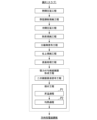
- FIG. 4 is a flowchart showing a method for manufacturing the grain-oriented electrical steel sheet according to the embodiment.
- FIG. 2 is a diagram for explaining the baking step in the manufacturing method, in which the horizontal axis indicates time and the vertical axis indicates the base steel sheet temperature.
- Fig. 1 is a cross-sectional schematic diagram showing a grain-oriented electrical steel sheet (grain-oriented electrical steel sheet according to the present embodiment) obtained by the manufacturing method of grain-oriented electrical steel sheet according to the present embodiment.
- the grain-oriented electrical steel sheet 1 according to the present embodiment when viewed on a cut surface whose cutting direction is parallel to the sheet thickness direction, has a base steel sheet 2 and a secondary coating 3 which is an insulating coating disposed on the surface of the base steel sheet 2.
- a secondary coating 3 which is an insulating coating disposed on the surface of the base steel sheet 2.
- the average thickness of the base steel plate 2 can be, for example, 0.17 mm to 0.29 mm.
- the average thickness of the secondary coating 3 can be, for example, 1.0 ⁇ m to 6.0 ⁇ m.
- the secondary coating 3 is arranged in contact with the base steel sheet 2 (there is no primary coating), thereby ensuring the surface smoothness of the base steel sheet 2.
- the grain-oriented electromagnetic steel sheet 1 according to this embodiment, has excellent iron loss characteristics and coating adhesion.
- Fe originates from the base steel components of the base steel sheet 2, while Al and P originate from the insulating coating forming liquid (insulating coating chemical liquid).
- Fe ions diffuse from the base steel side to the coating side, while Al and P ions diffuse and concentrate from the coating side to the base steel side.
- Chemical bonds are formed when Fe ions meet with Al or P ions, resulting in the formation of Fe-Al-P-O compounds.
- Fe-Al-P-O compounds are observed at the interface between the coating and the base steel.
- Figure 2 is a flowchart showing the manufacturing method of the grain-oriented electrical steel sheet according to this embodiment.
- Figure 3 is a diagram explaining the baking process in the same manufacturing method, with the horizontal axis showing time and the vertical axis showing the base steel sheet temperature.
- the manufacturing method of the grain-oriented electrical steel sheet according to this embodiment includes a hot rolling process in which a slab (steel piece) having a predetermined chemical composition is heated and hot rolled to obtain a hot rolled steel sheet, a hot rolled annealing process in which the hot rolled steel sheet is annealed to obtain a hot rolled annealed sheet, and then the hot rolled annealed sheet is immersed in an acid pickling solution for acid pickling, a cold rolling process in which the hot rolled annealed sheet is cold rolled to obtain a cold rolled steel sheet, a decarburization annealing process in which the cold rolled steel sheet is decarburized to obtain a decarburization annealed sheet, and an annealing separation process in which a surface of the decarburization annealed sheet is subjected to annealing.
- the average heating rate of the steel sheet in the steel sheet temperature range of 100°C to 600°C is set to 10°C/sec to 400°C/sec in an atmosphere with an oxygen concentration of 1% by volume to 21% by volume and a dew point of 0°C to 30°C.
- the holding time at a constant steel sheet temperature in the range of 800°C to 1000°C is set to 5 seconds to 200 seconds in a soaking atmosphere with a hydrogen concentration of 1 to 15% by volume and a constant atmospheric dew point in the range of -20 to +40°C.
- the slab (steel piece) to be subjected to the hot rolling process has, in mass %, the following chemical composition: C: 0.020% to 0.150%, Si: 3.00% to 4.00%, Mn: 0.01% to 0.50%, S: 0.0010% to 0.0400%, Acid-soluble Al: 0.010% to 0.050%, N: 0.002% to 0.020%, Bi: 0.0000% to 0.0200%, P: 0.000% to 0.100%, Sn: 0.00% to 0.50%, Cu: 0.00% to 0.50%, Cr: 0.00% to 0.50%, Sb: 0.00% to 0.20%, Mo: 0.00% to 0.10%, Nb: 0.0000% to 0.0200%, B: 0.0000% to 0.0200%, Te: 0.0000% to 0.0200%, Ni: 0.00% to 0.20%, Se: 0.0000% to 0.0200% with the remainder being Fe and impurities.
- the chemical composition of the above-mentioned slab (steel piece) is as follows, in mass%: Bi: more than 0.0000%, less than 0.0200%, P: more than 0.000%, less than 0.100%, Sn: more than 0.00%, less than 0.50%, Cu: more than 0.00%, less than 0.50%, Cr: more than 0.00%, less than 0.50%, Sb: more than 0.00%, less than 0.20%, Mo: more than 0.00%, less than 0.10%, Nb: more than 0.0000%, less than 0.0200%, B: more than 0.0000%, less than 0.0200%, Te: more than 0.0000%, less than 0.0200%, Ni: more than 0.00%, less than 0.20%, Se: more than 0.0000%, less than 0.0200%, may contain at least one selected from the group consisting of:
- C 0.020% to 0.150%
- C (carbon) is a basic element for steel slabs. C is included to increase the concentration of Goss orientation in secondary recrystallization.
- the C content required to improve the magnetic properties is as follows for a slab: The C content is 0.020% or more, preferably 0.040% or more, and more preferably 0.050% or more. However, if excessive C remains in the final product, it can be a factor in iron loss deterioration. Therefore, decarburization annealing is required. If the C content of the slab exceeds 0.150%, decarburization becomes difficult. Therefore, the C content of the slab is set to 0.150% or less, preferably 0. .120% or less, more preferably 0.100% or less.
- Si 3.00% to 4.00%
- Si is a basic element for steel slabs. If the Si content is less than 3.00%, the eddy current loss cannot be sufficiently reduced, and good magnetic properties cannot be obtained.
- the Si content is 3.00% or more.
- the Si content is preferably 3.10% or more, and more preferably 3.20% or more.
- the Si content is set to 4.00% or less.
- the Si content is preferably set to 3.80% or less, and more preferably set to 3. It is less than 60%.
- Mn 0.01% to 0.50%
- Mn manganese
- MnS manganese
- MnSe when Se is used as part of S
- the Mn content is set to 0.01% or more.
- the Mn content is preferably 0.03% or more.
- the Mn content is set to 0.50% or less, preferably 0.30% or less, and more preferably 0.20% or less.
- S 0.0010% to 0.0400% Se: 0.0000-0.0200%
- S is a basic element for steel slabs.
- S is an element that forms MnS, which is an inhibitor.
- the S content of the slab is 0.0010% or more, preferably 0.0100% or more. % or more, more preferably 0.0150% or more.
- the content is 0.0400% or less, preferably 0.0350% or less, and more preferably 0.0300% or less, as a slab. S also can cause magnetic deterioration if it remains in the final product in excess.
- Se selenium
- Se may be used as a part of S (the Se content may be more than 0.0000%).
- the Se content may be 0.0000% or more and 0.0200% or less.
- the Se content is preferably is 0.0000% or more and 0.0150% or less, more preferably 0.0000% or more and 0.0100% or less.
- Acid soluble Al 0.010% to 0.050%
- Acid-soluble Al (aluminum) (sol. Al) is a basic element for steel slabs.
- Acid-soluble Al is an element necessary for forming AlN, which is an inhibitor, and for improving magnetic properties.
- the soluble Al content is 0.010% or more, preferably 0.015% or more, and more preferably 0.020% or more, as a slab. On the other hand, if the slab contains an excessive amount of acid-soluble Al, embrittlement may occur.
- the acid-soluble Al content is 0.050% or less, preferably 0.040% or less, and more preferably 0.030% or less, in terms of the slab. Al needs to be removed (purified) from the base steel sheet during finish annealing.
- N is a basic element for steel slabs.
- N is an element necessary for forming AlN, which is an inhibitor, and for increasing the concentration of Goss orientation during secondary recrystallization. Inhibitor formation
- the N content required for the slab is 0.002% or more, preferably 0.004% or more, and more preferably 0.006% or more. If the N content exceeds 0.020, blisters (voids) are formed in the steel sheet during cold rolling, and the strength of the steel sheet increases, which may deteriorate the sheet passing property during production. %, preferably 0.015% or less, and more preferably 0.010% or less.
- C Like C, if excessive N remains in the final product, it can cause magnetic deterioration. It is necessary to remove (purify) these during final annealing.
- P phosphorus
- P is an optional element for steel slabs. If the P content exceeds 0.100%, the workability of the steel sheet may be significantly reduced. Therefore, the P content is set to 0.
- the P content is preferably 0.070% or less, and more preferably 0.030% or less.
- the lower limit of the P content is not particularly limited, and is 0. However, since P has the effect of improving the texture and the magnetic properties of the steel sheet, the P content may be more than 0.000% and may be 0.005% or more. It is also possible to use the following.
- Bi 0.0000% to 0.0200%
- Bi bismuth
- the Bi content is preferably 0.0150% or less.
- the Bi content is more preferably 0.0100% or less.
- the lower limit of the Bi content is not particularly limited and may be 0.0000%. However, Bi has an effect of improving magnetic properties. Therefore, the Bi content may be more than 0.0000%, or may be 0.0005% or more.
- Sn 0.00% to 0.50%
- Sn (tin) is an optional element for steel slabs. If the Sn content exceeds 0.50%, the secondary recrystallization becomes unstable and may adversely affect the magnetic properties.
- the Sn content may be 0.50% or less.
- the Sn content is preferably 0.40% or less, and more preferably 0.30% or less.
- the lower limit of the Sn content is There is no particular limitation, and it may be 0.00%. However, since Sn has the effect of increasing the concentration of Goss orientation and improving magnetic properties, the Sn content is set to be more than 0.00%. It may be 0.01% or more, or further it may be 0.03% or more.
- Cu 0.00% to 0.50%
- Cu copper
- the Cu content is preferably 0.40% or less, and more preferably 0.30% or less.
- the lower limit of the Cu content is not particularly limited, and is 0.
- the Cu content may be more than 0.00% and may be less than 0.01%. % or more, and furthermore, 0.03% or more.
- Cr 0.00% to 0.50% Cr (chromium) is an optional element for steel slabs. If the Cr content exceeds 0.50%, it may form Cr oxides and adversely affect the magnetic properties. Therefore, Cr-containing The Cr content is preferably 0.40% or less, and more preferably 0.30% or less. On the other hand, the lower limit of the Cr content is not particularly limited. However, since Cr has the effect of increasing the concentration of the Goss orientation and improving the magnetic properties, the Cr content may be more than 0.00%. It may be 0.01% or more, and further may be 0.03% or more.
- Sb 0.00% to 0.20%
- Sb antimony
- the Sb content is preferably 0.15% or less, and more preferably 0.10% or less.
- the lower limit of the Sb content is not particularly limited, and is not limited to 0.00%. However, since Sb functions as an inhibitor and has the effect of stabilizing secondary recrystallization, the Sb content may be more than 0.00% and may be 0.01% or more. .
- Mo 0.00% to 0.10%
- Mo molybdenum
- the Mo content is set to 0.10 % or less.
- the Mo content is preferably 0.05% or less, and more preferably 0.03% or less.
- the lower limit of the Mo content is not particularly limited, and is 0.00
- the Mo content may be more than 0.00%, and may be 0.01% or more. It is also possible to use the following.
- Nb 0.0000% to 0.0200%
- Nb niobium
- the Nb content is preferably 0.0100% or less, and more preferably 0.0050% or less.
- the lower limit of the Nb content is not particularly limited, and is 0. However, since Nb has the effect of stabilizing secondary recrystallization, the Nb content may be more than 0.0000% and may be 0.0005% or more.
- B 0.0000% to 0.0200%
- B boron
- the B content is preferably 0.0100% or less, and more preferably 0.0050% or less.
- the lower limit of the B content is not particularly limited, and is 0. However, since B has the effect of stabilizing secondary recrystallization, the B content may be more than 0.0000% and may be 0.0005% or more.
- Te 0.0000% to 0.0200% Te (tellurium) is an optional element for steel slabs. If the Te content exceeds 0.0200%, the slab may break during hot rolling or cold rolling. Therefore, the Te content is set to 0.0200 % or less.
- the Te content is preferably 0.0150% or less, and more preferably 0.0100% or less.
- the lower limit of the Te content is not particularly limited, and is 0.0000 However, since Tellurium has the effect of stabilizing secondary recrystallization, the Tellurium content may be more than 0.0000% and may be 0.0005% or more.
- Ni 0.00% to 0.20%
- Ni is an element of choice for steel slabs.
- Ni is an effective element for influencing the crystal orientation rotation that occurs during cold rolling and obtaining a texture favorable for secondary recrystallization.
- Ni is also an effective element for increasing resistivity and reducing iron loss. Therefore, Ni may be contained.
- the Ni content is set to 0.00 %, and more preferably 0.01% or more.
- the Ni content exceeds 0.20%, the secondary recrystallization may become unstable. Therefore, if Ni is contained, the Ni content is set to 0.20% or less.
- Ni Content is preferably 0.15% or less, and more preferably 0.10% or less.
- the steel slab to be subjected to the hot rolling process may contain impurities.
- impurities refers to substances that are mixed in from raw materials such as ores and scraps during industrial steel production, or from the production environment, etc.
- the chemical composition of the steel slab to be subjected to the hot rolling process may be measured by a general analytical method. For example, it may be measured using ICP-AES (Inductively Coupled Plasma-Atomic Emission Spectrometry). Acid-soluble Al may be measured by ICP-AES using the filtrate obtained by thermally decomposing a sample with acid.
- C and S may be measured using the combustion-infrared absorption method, and N may be measured using the inert gas fusion-thermal conductivity method.
- the slab (steel piece) is heat-treated.
- the heating temperature may be, for example, 1200°C or higher and 1600°C or lower.
- the heating temperature is preferably 1280°C or higher and 1500°C or lower.
- the heated slab is hot-rolled.
- the thickness of the hot-rolled steel sheet after hot rolling is preferably in the range of, for example, 2.0 mm or higher and 3.0 mm or lower.
- Hot-rolled sheet annealing process In the hot-rolled sheet annealing process, the hot-rolled steel sheet obtained in the hot rolling process is annealed. This hot-rolled sheet annealing causes recrystallization in the steel sheet, which ultimately makes it possible to realize good magnetic properties.
- the conditions for the hot-rolled sheet annealing are not particularly limited, but for example, the hot-rolled steel sheet may be annealed in a temperature range of 900°C to 1200°C for 10 seconds to 5 minutes.
- pickling is subsequently performed by immersing the surface of the hot-rolled steel sheet after the hot-rolled sheet annealing in a pickling solution to obtain an annealed hot-rolled sheet.
- Cold rolling process In the cold rolling process, the hot-rolled annealed sheet after the hot-rolled sheet annealing process is subjected to one cold rolling or multiple cold rollings with intermediate annealing in between.
- the term "one time” here means that one or multiple passes of cold rolling or intermediate annealing are performed once.
- the heating method of the intermediate annealing is not particularly limited.
- cold rolling may be performed three or more times with intermediate annealing in between, but since this increases the manufacturing cost, it is preferable to perform cold rolling once or twice.
- the final cold rolling reduction in cold rolling may be, for example, in the range of 80% to 95%.
- the thickness of the cold-rolled steel sheet after cold rolling is usually the thickness (final thickness) of the base steel sheet of the grain-oriented electrical steel sheet that is finally manufactured.
- the thickness of the cold-rolled steel sheet after cold rolling is preferably, for example, in the range of 0.15 mm to 0.30 mm.
- the cold-rolled steel sheet obtained in the cold rolling step is decarburized annealed.
- This decarburization annealing removes C contained in the cold-rolled steel sheet, causing primary recrystallization.
- the decarburization annealing is preferably performed in a moist atmosphere in order to remove C contained in the cold-rolled steel sheet.
- annealing may be performed in a moist atmosphere at a temperature range of 700°C to 1000°C for 10 seconds to 10 minutes.
- the temperature range of 500°C to 800°C may be set to 100°C/sec or more and 3000°C/sec or less in the heating step.
- nitriding may be performed after decarburization annealing and before applying the annealing separator.
- the decarburization annealed sheet after decarburization annealing is subjected to nitriding to produce a nitrided steel sheet.
- annealing may be performed for 10 to 60 seconds in a temperature range of 700°C to 850°C in an atmosphere containing gases with nitriding ability such as hydrogen, nitrogen, and ammonia.
- an annealing separator is applied to the decarburized annealed sheet obtained in the decarburization annealing process (which has been further subjected to nitriding treatment as necessary) and then dried prior to the finish annealing process.
- the annealing separator contains magnesia (MgO), alumina (Al 2 O 3 ), and chloride.
- the components in the annealing separator are preferably such that the total content of MgO and Al 2 O 3 is 80.0 mass% or more and 99.5 mass% or less, and the remainder is chloride, calculated as solid content.
- the content of chloride in the annealing separator is the value obtained by subtracting the total content of MgO and Al 2 O 3 from 100 mass%, and is preferably 0.5 mass% or more and 20.0 mass% or less. The remainder may contain impurities.
- the content of MgO alone is preferably 0.0% by mass or more and 79.5% by mass or less
- the content of Al 2 O 3 alone is preferably 20.0% by mass or more and 99.5% by mass or less.
- the total content of MgO and Al2O3 is more preferably 85.0 mass% or more, and even more preferably 90.0 mass% or more.
- the total content of MgO and Al2O3 is more preferably 99.0 mass% or less, and even more preferably 95.0 mass% or less.
- the content of the remainder, that is, the chloride content is more preferably 1.0 mass% or more, and even more preferably 5.0 mass% or more.
- the chloride content is more preferably 15.0 mass% or less, and even more preferably 10.0 mass% or less.
- possible chlorides include, for example, bismuth oxychloride (BiOCl), bismuth trichloride (BiCl 3 ), calcium chloride, iron chloride, cobalt chloride, nickel chloride, and the like.
- the decarburized annealed sheet to which the annealing separator has been applied in advance is subjected to final annealing.
- the steel sheet is wound into a coil and annealed for a long period of time.
- the annealing conditions for the finish annealing are not particularly limited, and known conditions may be appropriately adopted.
- the decarburized annealed sheet that has been coated with an annealing separator and dried may be held in a temperature range of 1000°C to 1300°C for 10 hours to 60 hours.
- the atmosphere during the finish annealing may be, for example, a nitrogen atmosphere or a mixed atmosphere of nitrogen and hydrogen.
- the surface of the finish annealed sheet may be washed with water to remove powder.
- This finish annealing causes secondary recrystallization in the steel sheet, and the crystal orientation is oriented in the ⁇ 110 ⁇ 001> direction.
- the axis of easy magnetization is aligned in the rolling direction, and the crystal grains are coarse.
- This secondary recrystallized structure results in excellent magnetic properties.
- the annealing separator contains chlorides, which suppresses the formation of a primary coating, and the surface of the finish annealed sheet becomes smooth.
- the atmosphere during the finish annealing may be changed to a hydrogen atmosphere for purification treatment, which purifies the steel sheet by discharging elements such as Al, N, and S (including Se when Se is used as part of S) contained in the steel sheet as a steel composition to the outside of the system.
- a hydrogen atmosphere for purification treatment which purifies the steel sheet by discharging elements such as Al, N, and S (including Se when Se is used as part of S) contained in the steel sheet as a steel composition to the outside of the system.
- the surface of the finish annealed sheet obtained in the finish annealing step is pickled to obtain a surface-treated steel sheet.
- the pickling conditions at this time are not particularly specified, but for example, the finish annealed sheet may be immersed in an acid (treatment liquid) of a specific concentration.
- the treatment liquid preferably contains at least one of hydrochloric acid, sulfuric acid, nitric acid, and phosphoric acid, has a total acid concentration of 1 volume % to 20 volume %, and has a liquid temperature of 50°C to 90°C.
- the finish annealed sheet is preferably surface-treated using this treatment liquid for 3 seconds to 60 seconds.
- the annealing separator adhering to the surface of the finish annealed sheet is removed.
- the above conditions can be controlled in a composite and inseparable manner. For example, if the pickling strength is to be increased for any of the above conditions, the other conditions can be changed to weaken the pickling strength to ensure a smooth surface.
- Those skilled in the art can perform surface control including the pickling behavior, and therefore, by taking into account the effect of each of the above conditions on the pickling strength, it is possible to control the surface condition by combining each of the above conditions.
- the total acid concentration of the treatment liquid is less than 1% by volume, it is difficult to remove the annealing separator from the surface of the finish annealed sheet. The annealing separator remaining on the surface makes it difficult to form internal oxide SiO 2 in the next tension-applied insulating coating formation process.
- the total acid concentration of the treatment liquid is more than 20% by volume, etch pits are likely to be formed on the surface of the finish annealed sheet.
- the liquid temperature of the treatment liquid is less than 50°C, an active surface state cannot be obtained, and if the liquid temperature of the treatment liquid is more than 90°C, etch pits are likely to be formed.
- the treatment time of the surface treatment is less than 3 seconds, an active surface state cannot be obtained, and if the treatment time of the surface treatment is more than 60 seconds, etch pits are likely to be formed.
- the tensioned insulating coating forming process is carried out following the surface treatment process, and forms a tensioned insulating coating containing aluminum phosphate and silica on the surface of the surface-treated steel sheet, and includes an insulating coating solution application process and a baking process.
- an insulating coating forming solution containing aluminum phosphate and silica (hereinafter also referred to as "insulating coating solution”) is applied to the surface of the surface-treated steel sheet.
- the total content of aluminum phosphate and silica is 80 mass% or more.
- the total content of aluminum phosphate and silica is preferably 90 mass% or more, more preferably 95 mass% or more.
- the insulating coating solution does not contain chromium.
- the silica is not limited to a specific type of silica.
- the particle size is also not limited to a specific particle size, but is preferably 200 nm (number average particle size) or less. For example, it may be 5 nm to 30 nm. If the particle size exceeds 200 nm, it may settle in the coating liquid.
- the surface-treated steel sheet to which the insulating coating solution has been applied is subjected to a heat treatment, forming an insulating coating (secondary coating 3) on the surface of the surface-treated steel sheet.
- This insulating coating applies tension to the grain-oriented electromagnetic steel sheet, thereby reducing the iron loss of the single steel sheet, and also ensures electrical insulation between the steel sheets when the grain-oriented electromagnetic steel sheets are stacked for use, thereby reducing the iron loss of the iron core.
- Fig. 3 is a diagram for explaining the baking step, in which the horizontal axis indicates time and the vertical axis indicates the base steel sheet temperature.
- the baking process includes a temperature-raising process P1 in which the surface-treated steel sheet is heated to raise its temperature, and a soaking process P2 carried out after the temperature-raising process P1.
- the temperature-raising process P1 is an important process for controlling the interaction between the surface of the surface-treated steel sheet and the insulating coating chemical solution in contact with this surface at the interface.
- the average temperature-raising rate of the steel sheet in the steel sheet temperature range of 100°C to 600°C is set to 10°C/sec to 400°C/sec in an atmosphere with an oxygen concentration of 1 vol% to 21 vol% and a dew point of 0°C to 30°C.
- the temperature rise process P1 by setting the atmosphere during the temperature rise within the above range, the reduction of Al(PO) 4 and SiO2 in the insulating coating chemical solution is suppressed, and high coating adhesion can be obtained.
- Fe dissolves from the surface-treated steel sheet into the insulating coating chemical solution, and Fe atoms diffuse into the insulating coating chemical solution.
- Fe dissolves in Al(PO) 4 , and nuclei of Fe-Al-P-O compounds are formed on the surface of the base steel sheet. If the average temperature-raising rate of the steel sheet in the temperature-raising process P1 exceeds 400°C/sec, Fe-Al-P-O compounds are not generated, so the average temperature-raising rate of the steel sheet is set to 400°C/sec or less.
- the average temperature-raising rate of the steel sheet is set to 10°C/sec or more.
- the average temperature-raising rate of the steel sheet is preferably 20°C/sec or more, and more preferably 50°C/sec or more.
- the steel sheet temperature at which FeO and Fe3O4 precipitate is 400°C to 600°C. Therefore, it is considered to control the average steel sheet temperature rise rate in the temperature range of at least 400°C to 600°C to a range of 10°C/sec to 400°C/sec.
- the start of control of the average steel sheet temperature rise rate may be set to a relatively low temperature range of about 100°C.
- the average steel sheet temperature rise rate in the temperature range of 400°C to 600°C is controlled to a range of 10°C/sec to 400°C/sec.
- oxide films of Fe2SiO4 and SiO2 are formed at the interface between the insulating coating solution and the steel sheet. These oxide films have the effect of suppressing the formation of Fe-Al-P- O , resulting in poor coating adhesion.
- oxygen concentration exceeds 21% by volume, FeO and Fe3O4 are formed at the interface between the insulating coating solution and the steel sheet, resulting in poor coating adhesion.
- the dew point of the atmosphere is less than 0° C., an oxide film of Fe 2 SiO 4 or SiO 2 is formed at the interface, resulting in poor coating adhesion.
- the dew point is more than 30° C., FeO or Fe 3 O 4 is formed at the interface, resulting in poor coating adhesion.
- the temperature may be increased even after the steel sheet temperature reaches 600°C, and the steel sheet may be heated to the soaking temperature T1 (a constant steel sheet temperature in the range of 800°C to 1000°C), and the soaking process P2 may be continued.
- the soaking temperature T1 a constant steel sheet temperature in the range of 800°C to 1000°C
- the soaking process P2 may be continued.
- the nuclei of Fe-Al-P-O compounds once formed remain on the surface of the base steel sheet.
- the steel sheet temperature is maintained at the soaking temperature T1 in Fig. 3.
- the soaking temperature T1 is a constant steel sheet temperature selected within a range of 800°C to 1000°C.
- the soaking atmosphere is, for example, a mixed gas of an inert gas (nitrogen or argon), hydrogen, and water vapor.
- the hydrogen concentration in the soaking atmosphere is set to 1 to 15 volume %, and the dew point is set to -20 to +40°C.
- the temperature retention time in the soaking process P2 is set to a range of 5 to 200 seconds.
- the holding time is less than 5 seconds, the time required for nucleation of the Fe-Al-P-O compound generated in the temperature rise process P1 cannot be secured, and the coating adhesion becomes poor.
- the holding time exceeds 200 seconds, the secondary coating is crystallized, and the coating adhesion becomes poor.
- This soaking process P2 is an important step for growing the nuclei of the Fe-Al-P-O compound generated in the heating process P1, and it is particularly important to control both the soaking temperature and the soaking atmosphere. If the soaking temperature T1 is less than 800°C, the nuclei of the Fe-Al-P-O compound cannot grow sufficiently, and as a result, sufficient coating adhesion cannot be ensured. Therefore, the soaking temperature T1 is set to 800°C or higher. The soaking temperature T1 is preferably 820°C or higher, and more preferably 840°C or higher.
- the soaking temperature T1 is set to 1000° C. or less.
- the soaking temperature T1 is preferably 950° C. or less, and more preferably 900° C. or less. For the above reasons, it is necessary to control the soaking temperature T1 in the soaking process P2 to a constant steel sheet temperature within the range of 800°C to 1000°C.
- the control of the soaking atmosphere is also important. Specifically, the hydrogen concentration of the annealing atmosphere is set to 1 to 15 vol.%, and the dew point of the atmosphere is controlled to be approximately constant (for example, ⁇ 5 vol.) in the range of -20 to +40 °C. This control allows the nuclei of the Fe-Al-P-O compound generated in the temperature increase process P1 to grow most stably. If the soaking process P2 is performed with the hydrogen concentration below 1%, there is a risk that Fe-based oxides such as FeO, which are a factor in deteriorating the coating adhesion, will be generated. Therefore, the hydrogen concentration is set to 1 vol.% or more.
- the hydrogen concentration is preferably 2 vol.% or more, more preferably 3 vol.% or more. Furthermore, if the atmospheric dew point is below -20°C, the nuclei of the Fe-Al-P-O compound generated in the temperature rise process P1 will be reduced, and the coating adhesion will deteriorate.
- the atmospheric dew point is set to -20°C or higher. The atmospheric dew point is preferably 0°C or higher, and more preferably 15°C or higher.
- the hydrogen concentration in the atmosphere exceeds 15% by volume, there is a possibility that FeP will be generated from the Fe-Al-P-O compound. FeP will cause voids to form in the secondary coating. If a large number of voids occur in the secondary coating, this will cause the coating to peel off and significantly reduce the coating adhesion. For this reason, the hydrogen concentration is set to 15% by volume or less.
- the hydrogen concentration is preferably 10% by volume or less, and more preferably 5% by volume or less.
- the atmospheric dew point exceeds +40° C., there is a risk of generating Fe-based oxides such as FeO, which are a factor in deteriorating the adhesion of the coating, so the atmospheric dew point is +40° C. or less.
- the atmospheric dew point is preferably +35° C. or less, and more preferably +30° C. or less.
- the grain-oriented electrical steel sheet 1 shown in FIG. 1 is manufactured.
- flattening annealing may be performed for shape correction, if necessary.
- a magnetic domain control treatment may be carried out before or after the secondary coating formation step, as necessary.
- the iron loss of the grain-oriented electrical steel sheet can be further reduced.
- linear or dot-like stress distortion portions extending in a direction intersecting the rolling direction may be formed at predetermined intervals along the rolling direction.
- the magnetic domain control process narrows the width of the 180° magnetic domains (subdivides the 180° magnetic domains).
- a mechanical groove forming method using gears or the like a chemical groove forming method using electrolytic etching, a thermal groove forming method using laser irradiation, etc. can be applied.
- laser beam irradiation, electron beam irradiation, etc. can be applied.
- the manufacturing method for grain-oriented electrical steel sheet described above makes it possible to manufacture grain-oriented electrical steel sheet with high magnetic properties and high coating adhesion without the intermediate annealing process that was previously required.
- the chemical composition of all slabs No. a to l is as follows, in mass%: C: 0.020% to 0.150%, Si: 3.00% to 4.00%, Mn: 0.01% to 0.50%, S: 0.0010% to 0.0400%, Acid-soluble Al: 0.010% to 0.050%, N: 0.002% to 0.020%, and the balance being Fe and impurities.
- c to l is as follows, in mass%: Bi: 0.0200% or less, P: 0.100% or less, Sn: 0.50% or less, Cu: 0.50% or less, Cr: 0.50% or less, Sb: 0.20% or less, Mo: 0.10% or less, Nb: 0.0200% or less, B: 0.0200% or less, Te: 0.0200% or less, Ni: 0.20% or less, Se: 0.0200% or less, At least one selected from the group consisting of: Then, these slabs Nos. a to 1 were heated to 1350° C. and subjected to hot rolling to obtain hot-rolled steel sheets having a thickness of 2.3 mm.
- the hot-rolled steel sheet obtained in the hot rolling process was subjected to hot-rolled sheet annealing at 1100°C for 120 seconds, and the surface was further pickled by immersing it in a pickling solution. In this way, a hot-rolled sheet annealed sheet was obtained.
- the hot-rolled annealed sheet after the hot-rolled sheet annealing process is subjected to one cold rolling or multiple cold rollings with intermediate annealing therebetween to obtain a cold-rolled steel sheet having a final sheet thickness shown in Tables 2A to 2C and Tables 3A to 3C.
- the decarburization annealing step the cold-rolled steel sheet obtained in the cold rolling step was subjected to decarburization annealing at 830° C. for 100 seconds in a wet hydrogen atmosphere.
- an annealing separating agent containing the components shown in Tables 2A to 2C and Tables 3A to 3C was applied to the surface of the decarburized annealed steel sheet, and then dried.
- the final annealing step the decarburized annealed sheet to which the annealing separator had been applied in advance was subjected to final annealing.
- the surface treatment step was carried out successively without intermediate annealing.
- the finish annealed steel sheet was immersed in a treatment liquid for 3 to 60 seconds to obtain a surface-treated steel sheet.
- the treatment liquid used here contained sulfuric acid, had a total acid concentration of 3 to 5% by volume, and had a liquid temperature of 70 to 90° C.
- the surface treatment step was performed under conditions of an acid concentration of 5% by volume and a liquid temperature of 30° C.
- an insulating coating solution coating process and a baking process were performed.
- an insulating coating solution coating process an insulating coating solution containing 100 mass % of silica and aluminum phosphate in terms of solid content was applied to the surface of the surface-treated steel sheet.
- the surface-treated steel sheet coated with the insulating coating solution was subjected to a heat treatment to form an insulating coating (secondary coating 3) on the surface of the surface-treated steel sheet.
- This baking process included a temperature-raising process P1 in which the surface-treated steel sheet was heated to raise its temperature, and a soaking process P2 carried out after the temperature-raising process P1.
- the temperature rising process P1 the average temperature rising rate of the steel sheet, the dew point, and the oxygen concentration were set to the conditions shown in Tables 2A to 2C and Tables 3A to 3C described later.
- the annealing temperature, annealing time, hydrogen concentration, and atmospheric dew point were set to the conditions shown in Tables 2A to 2C and Tables 3A to 3C described later.
- the test pieces obtained through the above-mentioned tensioned insulating coating forming process were evaluated for coating adhesion, core loss, and magnetic flux density.
- the average thickness of the secondary coating was 1.0 to 5.0 ⁇ m.
- the coating adhesion was evaluated by wrapping the test piece around a cylinder with a diameter of 20 mm and bending it 180°, and then calculating the area ratio of the coating remaining surface relative to the area of the steel sheet in contact with the cylinder. The area of the steel sheet in contact with the roll was calculated. The area of the remaining surface was calculated by taking a photograph of the steel sheet after the test and performing image analysis on the photographic image.
- the coating remaining area rate was rated as Very Good (VG) when it was 90% or more, Good (G) when it was 85% or more and less than 90%, Fair (F) when it was 80% or more and less than 85%, and Poor (P) when it was less than 80%.
- VG Very Good
- G Good
- F Fair
- P Poor
- the coating remaining area rate of 80% or more was judged to be excellent in coating adhesion.
- the iron loss W17/50 (W/kg), defined as the power loss per unit weight (1 kg) of the steel sheet, was measured under the conditions of an AC frequency of 50 Hz and an excitation magnetic flux density of 1.7 T.
- the magnetic flux density was measured by applying a magnetic field of 800 A/m to the test piece and measuring the magnetic flux density B8 (T) in the rolling direction.
- the manufacturing conditions in the temperature-raising process P1 and the soaking process P2 were within the ranges described in the above embodiment. That is, in the temperature-raising process P1, the average temperature-raising rate of the steel sheet in the steel sheet temperature range of 100°C to 600°C was set to 10°C/sec to 400°C/sec in an atmosphere with an oxygen concentration of 1 vol% to 21 vol% and a dew point of 0°C to 30°C.
- the holding time at a constant steel sheet temperature in the range of 800°C to 1000°C was set to 5 seconds to 200 seconds in a soaking atmosphere with a hydrogen concentration of 1 to 15 vol% and a constant atmospheric dew point in the range of -20 to +40°C.
- the steel compositions were changed in various ways, but since the manufacturing conditions satisfied the above ranges, relatively good coating adhesion was obtained.
- Test No. 27 which is a comparative example, the average temperature rise rate of the steel sheet in the temperature rise process P1 was 5° C./sec, which was below the lower limit of the range of the present invention, 10° C./sec. As a result, both the coating adhesion and the iron loss were insufficient.
- Test No. 28 which is a comparative example, the average heating rate of the steel sheet in the heating process P1 was 450° C./sec, which exceeded the upper limit of the range of the present invention, 400° C./sec. As a result, both the coating adhesion and the core loss were insufficient.
- Test No. 28 which is a comparative example
- the dew point in the temperature rise process P1 was ⁇ 22° C., which was below the lower limit of the range of the present invention, that is, ⁇ 20° C. As a result, although the iron loss satisfied the pass standard, the coating adhesion was insufficient.
- the dew point in the temperature rise process P1 was 32° C., which exceeded the upper limit of the range of the present invention, 30° C. As a result, both the coating adhesion and the core loss were insufficient.
- the annealing temperature in the soaking step P2 was 780° C., which was below the lower limit of the range of the present invention, 800° C. As a result, both the coating adhesion and the core loss were insufficient.
- the annealing temperature in the soaking step P2 was 1020° C., which exceeded the upper limit of the range of the present invention, 1000° C. As a result, although the iron loss satisfied the pass criteria, the coating adhesion was insufficient.
- Test No. 31 which is a comparative example, the annealing temperature in the soaking step P2 was 780° C., which was below the lower limit of the range of the present invention, 800° C. As a result, both the coating adhesion and the core loss were insufficient.
- the annealing temperature in the soaking step P2 was 1020° C., which exceeded the upper limit of the range of the present invention, 1000° C. As a result, although the iron loss satisfied the pass criteria, the coating adhesion was insufficient.
- the atmospheric dew point in the soaking step P2 was ⁇ 30° C., which was below the lower limit of the range of the present invention, that is, ⁇ 20° C. As a result, although the iron loss satisfied the pass criteria, the coating adhesion was insufficient.
- Test No. 34 the atmospheric dew point in the soaking step P2 was +45° C., which exceeded the upper limit of the range of the present invention, which is +40° C. As a result, although the iron loss satisfied the pass criteria, the coating adhesion was insufficient.
- the conditions of both the heating process P1 and the soaking process P2 should be appropriately controlled.
- the average heating rate of the steel sheet in the steel sheet temperature range of 100°C to 600°C must be 10°C/sec to 400°C/sec in an atmosphere with an oxygen concentration of 1% to 21% by volume and a dew point of 0°C to 30°C.
- the holding time at a constant steel sheet temperature in the range of 800°C to 1000°C must be 5 seconds to 200 seconds in a constant soaking atmosphere with a hydrogen concentration of 1 to 15% and an atmospheric dew point of -20 to +40°C.
- grain-oriented electrical steel sheets with high coating adhesion without compromising magnetic properties can be manufactured without intermediate annealing. Therefore, it has high industrial applicability.
Landscapes
- Chemical & Material Sciences (AREA)
- Engineering & Computer Science (AREA)
- Organic Chemistry (AREA)
- Mechanical Engineering (AREA)
- Materials Engineering (AREA)
- Metallurgy (AREA)
- Physics & Mathematics (AREA)
- Electromagnetism (AREA)
- Crystallography & Structural Chemistry (AREA)
- Thermal Sciences (AREA)
- Manufacturing & Machinery (AREA)
- General Chemical & Material Sciences (AREA)
- Chemical Kinetics & Catalysis (AREA)
- Dispersion Chemistry (AREA)
- Power Engineering (AREA)
- Manufacturing Of Steel Electrode Plates (AREA)
Priority Applications (4)
| Application Number | Priority Date | Filing Date | Title |
|---|---|---|---|
| KR1020257021525A KR20250116696A (ko) | 2023-02-01 | 2024-02-01 | 방향성 전자 강판의 제조 방법 |
| JP2024575002A JP7804241B2 (ja) | 2023-02-01 | 2024-02-01 | 方向性電磁鋼板の製造方法 |
| CN202480005998.6A CN120418458A (zh) | 2023-02-01 | 2024-02-01 | 方向性电磁钢板的制造方法 |
| EP24750390.7A EP4660329A1 (en) | 2023-02-01 | 2024-02-01 | Method for manufacturing grain-oriented electromagnetic steel sheet |
Applications Claiming Priority (2)
| Application Number | Priority Date | Filing Date | Title |
|---|---|---|---|
| JP2023013747 | 2023-02-01 | ||
| JP2023-013747 | 2023-02-01 |
Publications (1)
| Publication Number | Publication Date |
|---|---|
| WO2024162441A1 true WO2024162441A1 (ja) | 2024-08-08 |
Family
ID=92146782
Family Applications (1)
| Application Number | Title | Priority Date | Filing Date |
|---|---|---|---|
| PCT/JP2024/003318 Ceased WO2024162441A1 (ja) | 2023-02-01 | 2024-02-01 | 方向性電磁鋼板の製造方法 |
Country Status (5)
| Country | Link |
|---|---|
| EP (1) | EP4660329A1 (https=) |
| JP (1) | JP7804241B2 (https=) |
| KR (1) | KR20250116696A (https=) |
| CN (1) | CN120418458A (https=) |
| WO (1) | WO2024162441A1 (https=) |
Citations (9)
| Publication number | Priority date | Publication date | Assignee | Title |
|---|---|---|---|---|
| JPH08269560A (ja) | 1995-03-31 | 1996-10-15 | Nippon Steel Corp | グラス被膜を有しない鉄損の優れた一方向性電磁鋼板の製造方法 |
| WO2019182149A1 (ja) | 2018-03-22 | 2019-09-26 | 日本製鉄株式会社 | 方向性電磁鋼板及び方向性電磁鋼板の製造方法 |
| WO2020149345A1 (ja) | 2019-01-16 | 2020-07-23 | 日本製鉄株式会社 | 方向性電磁鋼板及びその製造方法 |
| JP2020111809A (ja) * | 2019-01-16 | 2020-07-27 | 日本製鉄株式会社 | 方向性電磁鋼板 |
| JP2020111813A (ja) * | 2019-01-16 | 2020-07-27 | 日本製鉄株式会社 | 方向性電磁鋼板 |
| WO2020162611A1 (ja) * | 2019-02-08 | 2020-08-13 | 日本製鉄株式会社 | 方向性電磁鋼板、方向性電磁鋼板の絶縁被膜形成方法、及び方向性電磁鋼板の製造方法 |
| CN114686766A (zh) * | 2022-03-31 | 2022-07-01 | 武汉钢铁有限公司 | 一种可耐800℃去应力退火的无硅酸镁底涂层取向硅钢及生产方法 |
| JP2023013747A (ja) | 2021-07-16 | 2023-01-26 | 株式会社竹中工務店 | 吹付作業用ブース |
| WO2023204269A1 (ja) * | 2022-04-21 | 2023-10-26 | 日本製鉄株式会社 | 方向性電磁鋼板およびその製造方法 |
-
2024
- 2024-02-01 KR KR1020257021525A patent/KR20250116696A/ko active Pending
- 2024-02-01 WO PCT/JP2024/003318 patent/WO2024162441A1/ja not_active Ceased
- 2024-02-01 JP JP2024575002A patent/JP7804241B2/ja active Active
- 2024-02-01 CN CN202480005998.6A patent/CN120418458A/zh active Pending
- 2024-02-01 EP EP24750390.7A patent/EP4660329A1/en active Pending
Patent Citations (9)
| Publication number | Priority date | Publication date | Assignee | Title |
|---|---|---|---|---|
| JPH08269560A (ja) | 1995-03-31 | 1996-10-15 | Nippon Steel Corp | グラス被膜を有しない鉄損の優れた一方向性電磁鋼板の製造方法 |
| WO2019182149A1 (ja) | 2018-03-22 | 2019-09-26 | 日本製鉄株式会社 | 方向性電磁鋼板及び方向性電磁鋼板の製造方法 |
| WO2020149345A1 (ja) | 2019-01-16 | 2020-07-23 | 日本製鉄株式会社 | 方向性電磁鋼板及びその製造方法 |
| JP2020111809A (ja) * | 2019-01-16 | 2020-07-27 | 日本製鉄株式会社 | 方向性電磁鋼板 |
| JP2020111813A (ja) * | 2019-01-16 | 2020-07-27 | 日本製鉄株式会社 | 方向性電磁鋼板 |
| WO2020162611A1 (ja) * | 2019-02-08 | 2020-08-13 | 日本製鉄株式会社 | 方向性電磁鋼板、方向性電磁鋼板の絶縁被膜形成方法、及び方向性電磁鋼板の製造方法 |
| JP2023013747A (ja) | 2021-07-16 | 2023-01-26 | 株式会社竹中工務店 | 吹付作業用ブース |
| CN114686766A (zh) * | 2022-03-31 | 2022-07-01 | 武汉钢铁有限公司 | 一种可耐800℃去应力退火的无硅酸镁底涂层取向硅钢及生产方法 |
| WO2023204269A1 (ja) * | 2022-04-21 | 2023-10-26 | 日本製鉄株式会社 | 方向性電磁鋼板およびその製造方法 |
Non-Patent Citations (1)
| Title |
|---|
| See also references of EP4660329A1 |
Also Published As
| Publication number | Publication date |
|---|---|
| KR20250116696A (ko) | 2025-08-01 |
| CN120418458A (zh) | 2025-08-01 |
| EP4660329A1 (en) | 2025-12-10 |
| JP7804241B2 (ja) | 2026-01-22 |
| JPWO2024162441A1 (https=) | 2024-08-08 |
Similar Documents
| Publication | Publication Date | Title |
|---|---|---|
| US6562473B1 (en) | Electrical steel sheet suitable for compact iron core and manufacturing method therefor | |
| JP5692479B2 (ja) | 方向性電磁鋼板の製造方法 | |
| JP6915689B2 (ja) | 方向性電磁鋼板及びその製造方法 | |
| KR101949626B1 (ko) | 방향성 전기 강판의 제조 방법 및 방향성 전기 강판 제조용의 1 차 재결정 강판 | |
| JP7312249B2 (ja) | 二方向性電磁鋼板およびその製造方法 | |
| JP4943559B2 (ja) | 方向性電磁鋼板の製造方法 | |
| JP6436316B2 (ja) | 方向性電磁鋼板の製造方法 | |
| WO2011102455A1 (ja) | 方向性電磁鋼板の製造方法 | |
| CN115066508A (zh) | 方向性电磁钢板的制造方法 | |
| JP2020111816A (ja) | 方向性電磁鋼板及びその製造方法 | |
| JP7804241B2 (ja) | 方向性電磁鋼板の製造方法 | |
| WO2023195517A1 (ja) | 方向性電磁鋼板及び絶縁被膜の形成方法 | |
| JP3893766B2 (ja) | 均質なフォルステライト質被膜を有する方向性けい素鋼板の製造方法 | |
| JP3885428B2 (ja) | 方向性電磁鋼板の製造方法 | |
| JP5939156B2 (ja) | 方向性電磁鋼板の製造方法 | |
| WO2024162442A1 (ja) | 方向性電磁鋼板の製造方法 | |
| JP5928362B2 (ja) | 方向性電磁鋼板の製造方法および方向性電磁鋼板製造用の一次再結晶鋼板 | |
| JP2724094B2 (ja) | 方向性けい素鋼板の製造方法 | |
| JP7800777B2 (ja) | 方向性電磁鋼板 | |
| JP2006144042A (ja) | 磁気特性および被膜特性に優れた方向性電磁鋼板の製造方法 | |
| WO2023204267A1 (ja) | 方向性電磁鋼板およびその製造方法 | |
| KR20250078231A (ko) | 방향성 전기강판 및 그의 제조방법 | |
| KR20250078216A (ko) | 방향성 전기강판 및 그의 제조방법 | |
| WO2025211393A1 (ja) | 方向性電磁鋼板およびその製造方法 | |
| WO2026014484A1 (ja) | 方向性電磁鋼板の製造方法 |
Legal Events
| Date | Code | Title | Description |
|---|---|---|---|
| 121 | Ep: the epo has been informed by wipo that ep was designated in this application |
Ref document number: 24750390 Country of ref document: EP Kind code of ref document: A1 |
|
| WWE | Wipo information: entry into national phase |
Ref document number: 2024575002 Country of ref document: JP |
|
| WWE | Wipo information: entry into national phase |
Ref document number: 202480005998.6 Country of ref document: CN |
|
| REG | Reference to national code |
Ref country code: BR Ref legal event code: B01A Ref document number: 112025014409 Country of ref document: BR |
|
| WWE | Wipo information: entry into national phase |
Ref document number: 202517070101 Country of ref document: IN |
|
| WWP | Wipo information: published in national office |
Ref document number: 1020257021525 Country of ref document: KR Ref document number: 202480005998.6 Country of ref document: CN |
|
| WWP | Wipo information: published in national office |
Ref document number: 202517070101 Country of ref document: IN |
|
| WWE | Wipo information: entry into national phase |
Ref document number: 2025120863 Country of ref document: RU |
|
| NENP | Non-entry into the national phase |
Ref country code: DE |
|
| WWP | Wipo information: published in national office |
Ref document number: 2025120863 Country of ref document: RU |
|
| WWP | Wipo information: published in national office |
Ref document number: 2024750390 Country of ref document: EP |
|
| REG | Reference to national code |
Ref country code: BR Ref legal event code: B01E Ref document number: 112025014409 Country of ref document: BR Free format text: APRESENTE NOVAS FOLHAS DE DESENHOS ADAPTADAS AO ART. 16 DA PORTARIA/INPI/NO 14/2024, UMA VEZ QUE O CONTEUDO ENVIADO ENCONTRA-SE FORA DA NORMA NO QUE SE REFERE A NUMERACAO DAS PAGINAS. A EXIGENCIA DEVE SER RESPONDIDA EM ATE 60 (SESSENTA) DIAS DE SUA PUBLICACAO E DEVE SER REALIZADA POR MEIO DA PETICAO GRU CODIGO DE SERVICO 207. |