WO2024150780A1 - 半透膜および半透膜モジュール - Google Patents
半透膜および半透膜モジュール Download PDFInfo
- Publication number
- WO2024150780A1 WO2024150780A1 PCT/JP2024/000353 JP2024000353W WO2024150780A1 WO 2024150780 A1 WO2024150780 A1 WO 2024150780A1 JP 2024000353 W JP2024000353 W JP 2024000353W WO 2024150780 A1 WO2024150780 A1 WO 2024150780A1
- Authority
- WO
- WIPO (PCT)
- Prior art keywords
- semipermeable membrane
- polyarylene ether
- membrane
- ether copolymer
- sulfonated polyarylene
- Prior art date
- Legal status (The legal status is an assumption and is not a legal conclusion. Google has not performed a legal analysis and makes no representation as to the accuracy of the status listed.)
- Ceased
Links
Images
Classifications
-
- B—PERFORMING OPERATIONS; TRANSPORTING
- B01—PHYSICAL OR CHEMICAL PROCESSES OR APPARATUS IN GENERAL
- B01D—SEPARATION
- B01D61/00—Processes of separation using semi-permeable membranes, e.g. dialysis, osmosis or ultrafiltration; Apparatus, accessories or auxiliary operations specially adapted therefor
- B01D61/24—Dialysis ; Membrane extraction
- B01D61/243—Dialysis
-
- A—HUMAN NECESSITIES
- A61—MEDICAL OR VETERINARY SCIENCE; HYGIENE
- A61M—DEVICES FOR INTRODUCING MEDIA INTO, OR ONTO, THE BODY; DEVICES FOR TRANSDUCING BODY MEDIA OR FOR TAKING MEDIA FROM THE BODY; DEVICES FOR PRODUCING OR ENDING SLEEP OR STUPOR
- A61M1/00—Suction or pumping devices for medical purposes; Devices for carrying-off, for treatment of, or for carrying-over, body-liquids; Drainage systems
- A61M1/14—Dialysis systems; Artificial kidneys; Blood oxygenators ; Reciprocating systems for treatment of body fluids, e.g. single needle systems for hemofiltration or pheresis
- A61M1/16—Dialysis systems; Artificial kidneys; Blood oxygenators ; Reciprocating systems for treatment of body fluids, e.g. single needle systems for hemofiltration or pheresis with membranes
-
- B—PERFORMING OPERATIONS; TRANSPORTING
- B01—PHYSICAL OR CHEMICAL PROCESSES OR APPARATUS IN GENERAL
- B01D—SEPARATION
- B01D71/00—Semi-permeable membranes for separation processes or apparatus characterised by the material; Manufacturing processes specially adapted therefor
- B01D71/06—Organic material
- B01D71/44—Polymers obtained by reactions only involving carbon-to-carbon unsaturated bonds, not provided for in a single one of groups B01D71/26-B01D71/42
- B01D71/441—Polyvinylpyrrolidone
-
- B—PERFORMING OPERATIONS; TRANSPORTING
- B01—PHYSICAL OR CHEMICAL PROCESSES OR APPARATUS IN GENERAL
- B01D—SEPARATION
- B01D71/00—Semi-permeable membranes for separation processes or apparatus characterised by the material; Manufacturing processes specially adapted therefor
- B01D71/06—Organic material
- B01D71/66—Polymers having sulfur in the main chain, with or without nitrogen, oxygen or carbon only
- B01D71/68—Polysulfones; Polyethersulfones
-
- C—CHEMISTRY; METALLURGY
- C08—ORGANIC MACROMOLECULAR COMPOUNDS; THEIR PREPARATION OR CHEMICAL WORKING-UP; COMPOSITIONS BASED THEREON
- C08L—COMPOSITIONS OF MACROMOLECULAR COMPOUNDS
- C08L81/00—Compositions of macromolecular compounds obtained by reactions forming in the main chain of the macromolecule a linkage containing sulfur with or without nitrogen, oxygen or carbon only; Compositions of polysulfones; Compositions of derivatives of such polymers
- C08L81/06—Polysulfones; Polyethersulfones
-
- A—HUMAN NECESSITIES
- A61—MEDICAL OR VETERINARY SCIENCE; HYGIENE
- A61M—DEVICES FOR INTRODUCING MEDIA INTO, OR ONTO, THE BODY; DEVICES FOR TRANSDUCING BODY MEDIA OR FOR TAKING MEDIA FROM THE BODY; DEVICES FOR PRODUCING OR ENDING SLEEP OR STUPOR
- A61M1/00—Suction or pumping devices for medical purposes; Devices for carrying-off, for treatment of, or for carrying-over, body-liquids; Drainage systems
- A61M1/14—Dialysis systems; Artificial kidneys; Blood oxygenators ; Reciprocating systems for treatment of body fluids, e.g. single needle systems for hemofiltration or pheresis
- A61M1/16—Dialysis systems; Artificial kidneys; Blood oxygenators ; Reciprocating systems for treatment of body fluids, e.g. single needle systems for hemofiltration or pheresis with membranes
- A61M1/1621—Constructional aspects thereof
-
- B—PERFORMING OPERATIONS; TRANSPORTING
- B01—PHYSICAL OR CHEMICAL PROCESSES OR APPARATUS IN GENERAL
- B01D—SEPARATION
- B01D2323/00—Details relating to membrane preparation
- B01D2323/15—Use of additives
- B01D2323/18—Pore-control agents or pore formers
-
- B—PERFORMING OPERATIONS; TRANSPORTING
- B01—PHYSICAL OR CHEMICAL PROCESSES OR APPARATUS IN GENERAL
- B01D—SEPARATION
- B01D2323/00—Details relating to membrane preparation
- B01D2323/15—Use of additives
- B01D2323/218—Additive materials
- B01D2323/2182—Organic additives
- B01D2323/21839—Polymeric additives
- B01D2323/2187—Polyvinylpyrolidone
-
- B—PERFORMING OPERATIONS; TRANSPORTING
- B01—PHYSICAL OR CHEMICAL PROCESSES OR APPARATUS IN GENERAL
- B01D—SEPARATION
- B01D71/00—Semi-permeable membranes for separation processes or apparatus characterised by the material; Manufacturing processes specially adapted therefor
- B01D71/06—Organic material
- B01D71/76—Macromolecular material not specifically provided for in a single one of groups B01D71/08 - B01D71/74
- B01D71/80—Block polymers
-
- B—PERFORMING OPERATIONS; TRANSPORTING
- B01—PHYSICAL OR CHEMICAL PROCESSES OR APPARATUS IN GENERAL
- B01D—SEPARATION
- B01D71/00—Semi-permeable membranes for separation processes or apparatus characterised by the material; Manufacturing processes specially adapted therefor
- B01D71/06—Organic material
- B01D71/76—Macromolecular material not specifically provided for in a single one of groups B01D71/08 - B01D71/74
- B01D71/82—Macromolecular material not specifically provided for in a single one of groups B01D71/08 - B01D71/74 characterised by the presence of specified groups, e.g. introduced by chemical after-treatment
-
- C—CHEMISTRY; METALLURGY
- C08—ORGANIC MACROMOLECULAR COMPOUNDS; THEIR PREPARATION OR CHEMICAL WORKING-UP; COMPOSITIONS BASED THEREON
- C08L—COMPOSITIONS OF MACROMOLECULAR COMPOUNDS
- C08L2203/00—Applications
- C08L2203/02—Applications for biomedical use
-
- C—CHEMISTRY; METALLURGY
- C08—ORGANIC MACROMOLECULAR COMPOUNDS; THEIR PREPARATION OR CHEMICAL WORKING-UP; COMPOSITIONS BASED THEREON
- C08L—COMPOSITIONS OF MACROMOLECULAR COMPOUNDS
- C08L2205/00—Polymer mixtures characterised by other features
- C08L2205/02—Polymer mixtures characterised by other features containing two or more polymers of the same C08L -group
-
- C—CHEMISTRY; METALLURGY
- C08—ORGANIC MACROMOLECULAR COMPOUNDS; THEIR PREPARATION OR CHEMICAL WORKING-UP; COMPOSITIONS BASED THEREON
- C08L—COMPOSITIONS OF MACROMOLECULAR COMPOUNDS
- C08L2205/00—Polymer mixtures characterised by other features
- C08L2205/03—Polymer mixtures characterised by other features containing three or more polymers in a blend
Definitions
- the present invention relates to semipermeable membranes and semipermeable membrane modules.
- Continuous renal replacement therapy is known for treating acute renal failure, organ dysfunction syndrome, etc., and involves correcting fluid levels gradually (by reducing the circulating flow rate) over a longer period of time than is the case with normal hemodialysis or hemofiltration.
- CRRT is not only used to replace renal functions such as removing water, waste products, and correcting electrolyte balance, but is also used to remove inflammatory mediators. For example, a single treatment of 24 to 48 hours is performed under conditions of a blood flow rate of 50 to 150 mL/min and a filtration rate of 5 to 50 mL/min.
- Sepxilis (registered trademark) manufactured by Baxter Corporation is known as a semipermeable membrane (blood treatment device) used in CRRT.
- the semipermeable membrane used in Sepxilis contains a copolymer of acrylonitrile and sodium methacrylic sulfonate as its constituent material.
- This semipermeable membrane is thought to have the ability to adsorb mainly positively charged cytokines because the negatively charged sulfonate groups ionically bond with the amino groups of positively charged cytokines (see Artificial Organs, Vol. 43, No. 3, pp. 233-237, 2014 (Non-Patent Document 1)).
- Japanese Patent No. 6817240 JP Patent Publication No. 2018-171431 (Patent Document 1) discloses a hollow fiber membrane for blood purification that is blood compatible and has cytokine adsorption ability.
- This hollow fiber membrane contains polymethyl methacrylate and sodium parastyrene sulfonate, and has negatively charged sulfonate groups, so it is thought to have the ability to mainly adsorb positively charged cytokines.
- Patent Document 2 discloses an ultrafiltration membrane for surface water treatment, which is made of a composition containing polyethersulfone, polyvinylpyrrolidone, and sulfonated polyethersulfone, but it is an ultrafiltration membrane for water treatment and there is no mention of a membrane for medical use.
- Patent Document 3 describes that when the hydration energy density, etc. of the copolymer is within a certain range, the "copolymer" is excellent at inhibiting adhesion of proteins, etc., and describes using the copolymer as a material for medical separation membranes.
- the above-mentioned conventional semipermeable membranes for continuous renal replacement therapy have a high adsorption capacity (removal performance) for positively charged substances, but have the problem of low adsorption capacity for negatively charged substances.
- the present invention therefore aims to provide a semipermeable membrane that has high adsorption capacity for inflammatory mediators (both negatively charged and positively charged substances).
- a semipermeable membrane comprising a sulfonated polyarylene ether copolymer
- the sulfonated polyarylene ether copolymer contains, as copolymerization components, a repeating unit of a hydrophobic segment represented by the following formula (1) and a repeating unit of a hydrophilic segment represented by the following formula (2):
- R 1 and R 2 represent "-SO 3 M", where M represents a metal element;
- [6] A semipermeable membrane according to any one of [1] to [5], having a non-uniform structure in the thickness direction.
- a semipermeable membrane module comprising a semipermeable membrane according to any one of [1] to [6].
- the present invention provides a semipermeable membrane that has high adsorption capacity for both negatively and positively charged substances.
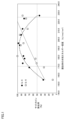
- 1 is a graph showing the relationship between the solvation energy density of the entire membrane and the cytokine removal rate in an example.
- the solvation energy density of the entire semipermeable membrane of this embodiment is 170 to 225 kJ ⁇ mol -1 ⁇ nm -3 , preferably 175 to 220 kJ ⁇ mol -1 ⁇ nm -3 , more preferably 178 to 215 kJ ⁇ mol -1 ⁇ nm -3 , and even more preferably 180 to 210 kJ ⁇ mol -1 ⁇ nm -3 .
- the solvation energy refers to the amount of energy change that occurs in a system when a target substance (solute) is placed in water (solvent).
- solvent For example, J ⁇ mol ⁇ 1 is used as the unit of solvation energy.
- the solvation energy density of the copolymer is calculated based on the following formula (1):
- the "solvation energy of monomer unit i" is the absolute value of the energy of monomer unit i in water minus the energy of monomer unit i in a vacuum
- N represents the total number of monomer species that make up the copolymer
- i represents an integer between 1 and N.
- Solvation energy of a monomer unit means the absolute value of the energy of the monomer unit in water minus the energy of the monomer unit in a vacuum.
- the energy of a monomer unit in a vacuum and in water can be calculated using the following method:
- DFT Density functional theory
- the energy in a vacuum and the energy in water are calculated for the optimized structure.
- the energy in vacuum is calculated using density functional theory, with B3LYP as the functional and 6+31G(d,p) as the basis set.
- the energy in water is calculated using density functional theory.
- the functional is B3LYP, and the basis function is 6+31G(d,p).
- the "solvation energy of a monomer unit” is calculated as the absolute value of the energy of the monomer unit in water (SCF energy) minus the energy of the monomer unit in a vacuum (SCF energy).
- SCF energy is the value of E written on the line that reads "SCF Done:”.
- the "molar fraction of monomer units" in the above formula (1) can be calculated from the peak area obtained by measurement using a nuclear magnetic resonance (NMR) device. If the above mole fraction cannot be calculated by NMR measurement due to peaks overlapping, etc., the above mole fraction may be calculated by elemental analysis.
- NMR nuclear magnetic resonance
- the solvation energy density of the entire semipermeable membrane is the volume average value of the solvation energy densities of each component constituting the semipermeable membrane.
- the solvation energy density of the entire semipermeable membrane is the volume average value of the solvation energy density of SPN calculated based on the above formula (1), the solvation energy density of polyethersulfone calculated based on the above formula (2), and the solvation energy density of polyvinylpyrrolidone calculated based on the above formula (2).
- solvation energy tends to be larger when there are more polarized functional groups, such as carbonyl groups (e.g., ester groups and amide groups), in a molecule compared to alkyl groups. Also, for the same solvation energy, the smaller the volume of the monomer, the larger the solvation energy density value.
- polarized functional groups such as carbonyl groups (e.g., ester groups and amide groups)
- the solvation energy density of the entire semipermeable membrane can be adjusted by adjusting the types of polymers constituting the semipermeable membrane and the molar fractions of the various polymers.
- the solvation energy density of the entire semipermeable membrane can be adjusted by adjusting the mole fractions of each of polyethersulfone, SPN, and polyvinylpyrrolidone.
- the solvation energy density of the entire copolymer (eg, SPN) can be adjusted by adjusting the molar fraction of each monomer unit constituting the copolymer.
- the semipermeable membrane of this embodiment contains a sulfonated polyarylene ether copolymer (hereinafter, sometimes abbreviated as "SPN").
- SPN is a negatively charged polymer.
- the semipermeable membrane of this embodiment preferably contains polyethersulfone (hydrophobic polymer), sulfonated polyarylene ether copolymer (SPN: negatively charged polymer), and polyvinylpyrrolidone (hydrophilic polymer).
- polyethersulfone hydrophobic polymer
- SPN sulfonated polyarylene ether copolymer
- polyvinylpyrrolidone hydrophilic polymer
- Polyethersulfone is a compound containing a structural unit represented by the following formula (3): Polyethersulfone is expected to have the effect of adsorbing inflammatory mediators through hydrophobic interaction.
- the sulfonated polyarylene ether copolymer is a compound containing a repeating unit of a hydrophobic segment represented by the following formula (1) and a repeating unit of a hydrophilic segment represented by the following formula (2).
- R 1 and R 2 each independently represent "--SO 3 M" or "--SO 3 H,” where M represents a metal element.
- the constituent ratio (molar ratio) of the above formula (1) is preferably 0.40 to 0.70, more preferably 0.45 to 0.67, and further preferably 0.50 to 0.60.
- the constituent ratio (molar ratio) of the above formula (2) is preferably 0.30 to 0.60, more preferably 0.33 to 0.55, and further preferably 0.40 to 0.50.
- the sum of the constituent ratio (molar ratio) of the above formula (1) and the constituent ratio (molar ratio) of the above formula (2) is 1.00.
- the sulfonated polyarylene ether copolymer may be a random copolymer, a block copolymer, an alternating copolymer, or the like.
- M metal element
- examples include sodium, potassium, and lithium.
- R 1 and R 2 in formula (2) are more preferably "--SO 3 Na” or "--SO 3 K".
- sulfonated polyarylene ether copolymer is a material that undergoes little change over time when the membrane is used for a long period of time.
- the sulfonated polyarylene ether copolymer can be obtained by a conventionally known method, etc.
- 2,6-dichlorobenzonitrile, 3,3'-disulfo-4,4'-dichlorodiphenylsulfone metal salt, and 4,4'-biphenol can be reacted in the presence of a basic compound to polymerize through an aromatic nucleophilic substitution reaction, thereby obtaining a copolymer composed of a hydrophobic segment represented by the above formula (1) and a hydrophilic segment represented by the above formula (2).
- the polymerization can be carried out in the temperature range of 0 to 350° C., but preferably at a temperature of 50 to 250° C.
- the reaction can be carried out without a solvent, but is preferably carried out in a solvent.
- solvents include, but are not limited to, N-methyl-2-pyrrolidone, N,N-dimethylacetamide, N,N-dimethylformamide, dimethylsulfoxide, diphenylsulfone, sulfolane, etc., and any solvent that can be used as a stable solvent in an aromatic nucleophilic substitution reaction may be used.
- Examples of basic compounds include sodium hydroxide, potassium hydroxide, sodium carbonate, potassium carbonate, sodium hydrogen carbonate, and potassium hydrogen carbonate.
- any basic compound that can convert aromatic diols into active phenoxide structures can be used without being limited to these.
- water may be produced as a by-product. In this case, water can be removed from the system as an azeotrope by coexisting toluene or the like in the reaction system, regardless of the polymerization solvent. Water can also be removed from the system using a water-absorbing material such as a molecular sieve.
- the concentration of the resulting polymer is 5 to 50 mass %. If the concentration is less than 5 mass %, the degree of polymerization tends to be difficult to increase. On the other hand, if the concentration is more than 50 mass %, the viscosity of the reaction system becomes too high, and post-treatment of the reaction product tends to become difficult.
- the solvent is removed from the reaction solution by evaporation, and the residue is washed as necessary to obtain the desired polymer (sulfonated polyarylene ether copolymer).
- the reaction solution can be added to a solvent in which the polymer has low solubility to precipitate the polymer as a solid, and the polymer can be obtained by filtering the precipitate.
- Polyvinylpyrrolidone is a polymer of monomers containing at least N-vinylpyrrolidone.
- the polyvinylpyrrolidone preferably contains a structural unit represented by the following formula (4):
- the polyvinylpyrrolidone may be, for example, one manufactured by BASF with a weight average molecular weight of 9,000 (K17), 450,000 (K60), or 1,200,000 (K90).
- the content ratio of polyethersulfone/sulfonated polyarylene ether copolymer/polyvinylpyrrolidone in the entire semipermeable membrane is preferably 75-90/7-22/3-18% by mass.
- the semipermeable membrane preferably has a non-uniform structure in the thickness direction (asymmetric structure). It is more preferable that the membrane has a dense layer on the inner surface side and that the pore size increases continuously or discontinuously from the inner surface to the outer surface (asymmetric structure).
- Semipermeable membranes having an asymmetric structure include membranes in which the dense layer is a separation active layer that essentially determines the pore size of the semipermeable membrane. Although the pore size of the dense layer cannot be measured directly, the dense layer is defined by the molecular weight cutoff of SC dextran measured using a semipermeable membrane having a dense layer. In the present invention, it is preferable that the molecular weight cutoff of SC dextran measured in this manner is 100 kDa or less. From the viewpoint of membrane durability (filtration stability), it is preferable that the semipermeable membrane is an asymmetric membrane.
- semipermeable membranes with an asymmetric structure may have different constituent components in the thickness direction of the membrane.
- the porosity of the inner surface is different from the porosity of the outer surface.
- the porosity of the outer surface of the hollow fiber membrane is preferably 29% or more, and more preferably 30% or more.
- the porosity of the outer surface of the hollow fiber membrane is determined from an image taken with a scanning electron microscope (SEM) as described below.
- semipermeable membranes examples include those called nanofiltration membranes (NF membranes), ultrafiltration membranes (UF membranes), and microfiltration membranes (MF membranes).
- NF membranes nanofiltration membranes
- UF membranes ultrafiltration membranes
- MF membranes microfiltration membranes
- the semipermeable membrane is preferably an ultrafiltration membrane.
- the pore size of an NF membrane is about 1-2 nm
- the pore size of an UF membrane is about 2-100 nm
- the pore size of an MF membrane is about 0.1 ⁇ m or more.
- the shape of the semipermeable membrane is not particularly limited.
- the semipermeable membrane may be a flat membrane or a hollow fiber membrane (hollow fiber type semipermeable membrane), but is preferably a hollow fiber membrane.
- Hollow fiber membranes are advantageous in that they can provide a larger membrane area per module than flat membranes.
- the semipermeable membrane of this embodiment is preferably a semipermeable membrane for continuous renal replacement therapy that has the ability to remove inflammatory mediators.
- Inflammatory mediators are physiologically active substances (pain-inducing substances, prostanoids, cytokines) released from leukocytes, mast cells, macrophages, etc. that infiltrate into damaged tissues or inflammatory sites.
- Inflammatory mediators include positively charged substances and negatively charged substances.
- positively charged substances include interleukin-8 (IL-8), interleukin-10 (IL-10), transforming growth factor ⁇ (TGF- ⁇ ), monocyte chemotactic protein 1 (MCP1), and platelet-derived growth factor (PDGF).
- negatively charged substances include interleukin-6 (IL-6), interleukin-18 (IL-18), interleukin-1 ⁇ (IL-1 ⁇ ), High Mobility Group Box 1 (HMGB1), and tumor necrosis factor- ⁇ (TNF- ⁇ ).
- the present invention also relates to a semipermeable membrane module (membrane separator, membrane separation device) including the semipermeable membrane.
- the semipermeable membrane module is not particularly limited as long as it is a separator (separation device) capable of performing separation (solid-liquid separation, liquid-liquid separation, etc.) using the semipermeable membrane.
- the dialysis fluid flows on the outside of the hollow fiber membrane and the blood flows on the inside of the hollow fiber membrane (hollow portion).
- SPN sulfonated polyarylene ether copolymer
- 3,3'-disulfo-4,4'-dichlorodiphenylsulfone disodium salt, 2,6-dichlorobenzonitrile, 4,4'-biphenol, potassium carbonate, and molecular sieves were weighed and placed in a four-neck flask, and nitrogen was poured into the flask. NMP was added and the mixture was stirred at 150°C for 50 minutes, after which the reaction temperature was raised to 195°C to 200°C, and the reaction was continued until the viscosity of the system was sufficiently increased.
- SPN sulfonated polyarylene ether copolymer
- the SPN (copolymer of the above formula (1) and formula (2)) used in each of the Examples and Comparative Examples was any one of SPN15, SPN33, SPN44, SPN55, and SPN65 shown in Table 1.
- these SPNs were prepared by changing the charging ratio of 3,3'-disulfo-4,4'-dichlorodiphenylsulfone disodium salt and 2,6-dichlorobenzonitrile.
- SPN15 the constituent molar ratio of (1) is 0.85
- the constituent molar ratio of (2) is 0.15.
- SPN33 the constituent molar ratio of (1) is 0.67, and the constituent molar ratio of (2) is 0.33.
- SPN44 the constituent molar ratio of (1) is 0.56, and the constituent molar ratio of (2) is 0.44.
- SPN55 the constituent molar ratio of (1) is 0.45, and the constituent molar ratio of (2) is 0.55.
- SPN65 the constituent molar ratio of (1) is 0.35, and the constituent molar ratio of (2) is 0.65.
- the charging ratios of polyethersulfone (PES), sulfonated polyarylene ether copolymer (SPN), and polyvinylpyrrolidone (PVP) are as shown in Table 1.
- the obtained hollow fiber membrane (bundle) was washed with warm water at 70 ° C. to remove excess solvent, etc., and then immersed in a 60 mass% glycerin solution at 60 ° C. to fill the pores with an aqueous glycerin solution. After removing excess glycerin aqueous solution adhering to the hollow fiber membrane surface by centrifugal deliquation, it was dried at 60 ° C.
- the obtained hollow fiber membrane had a dense layer on the inner surface side, an inner diameter of 0.240 mm, and an outer diameter of 0.350 mm.
- the charging ratios of polyethersulfone (PES), sulfonated polyarylene ether copolymer (SPN), and polyvinylpyrrolidone (PVP) are as shown in Table 1.
- the other conditions were the same as in Example 1 to produce a hollow fiber membrane.
- composition (composition ratio) of the components constituting the semipermeable membranes of the above examples and comparative examples, and the solvation energy density of the entire semipermeable membrane (and the solvation energy density of the SPN) are as shown in Table 1.
- the method for measuring the solvation energy density is as described above.
- cytokine removal rate The removal rates of cytokines (IL-6 and IL-8) were measured using semipermeable membrane modules (hollow fiber membrane modules) prepared using the hollow fiber membranes of the above Examples and Comparative Examples. Specifically, the cytokine removal rates were measured as follows. A blood sample was prepared by adding 24 ⁇ g each of IL-6 and IL-8 to 1000 mL of heparinized porcine whole blood.
- the sample blood was circulated for 1 hour under the conditions of a blood flow rate (Qb) of 100 mL/min and a filtrate flow rate (Qf) of 10 mL/min. After the circulation, all the sample blood was collected and IL-6 and IL-8 in the sample blood were measured by enzyme-linked immunosorbent assay (ELISA). From the measured values and the amounts of the blood added to the sample blood, the reduction rates of IL-6 and IL-8 were calculated and used as the removal rates (adsorption rates) of IL-6 and IL-8.
- Qb blood flow rate
- Qf filtrate flow rate
- FIG. 1 is a graph showing the relationship between the solvation energy density of the entire membrane (semipermeable membrane) and the cytokine removal rate for those results in Table 1 for which measurement results of the cytokine removal rate are available.
- the IL-8 removal rate is 50% or more if the solvation energy density of the entire membrane (semipermeable membrane) is 170 kJ ⁇ mol ⁇ 1 ⁇ nm ⁇ 3 or more. This is believed to be because IL-8 has a positive charge, and therefore when the ratio of the hydrophilic portion (the repeating unit of the hydrophilic segment represented by the above formula (2)) of the sulfonated polyarylene ether copolymer (SPN) increases (the solvation energy density of the entire semipermeable membrane increases), the amount of IL-8 adsorbed to the semipermeable membrane increases.
- SPN sulfonated polyarylene ether copolymer
- the IL-6 removal rate is 50% or more if the solvation energy density of the entire semipermeable membrane is 170 to 225 kJ ⁇ mol ⁇ 1 ⁇ nm ⁇ 3 . This is because IL-6 has a negative charge, and is removed by hydrophobic interactions between the semipermeable membrane and IL-6 and by the intrusion of IL-6 into the pores of the semipermeable membrane.
- the ratio of the hydrophobic portion of SPN (the repeating unit of the hydrophobic segment represented by the following formula (1)) increases (the solvation energy density of the entire semipermeable membrane decreases)
- the amount of IL-6 adsorbed to the semipermeable membrane increases, but when the ratio of the hydrophobic portion of SPN becomes too high, the effect of electrostatic repulsion by the sulfonic acid group increases, and the amount of IL-6 adsorbed to the semipermeable membrane decreases.
- a lower limit of the range of solvation energy density of the entire semipermeable membrane is set, and within this range, high adsorption ability (removal performance) is exhibited for both negatively charged substances (e.g., negatively charged cytokines such as IL-6) and positively charged substances (e.g., positively charged cytokines such as IL-8).
- negatively charged substances e.g., negatively charged cytokines such as IL-6
- positively charged substances e.g., positively charged cytokines such as IL-8
Landscapes
- Health & Medical Sciences (AREA)
- Chemical & Material Sciences (AREA)
- Chemical Kinetics & Catalysis (AREA)
- Urology & Nephrology (AREA)
- Engineering & Computer Science (AREA)
- Heart & Thoracic Surgery (AREA)
- Organic Chemistry (AREA)
- Polymers & Plastics (AREA)
- Medicinal Chemistry (AREA)
- Life Sciences & Earth Sciences (AREA)
- Animal Behavior & Ethology (AREA)
- General Health & Medical Sciences (AREA)
- Public Health (AREA)
- Veterinary Medicine (AREA)
- Vascular Medicine (AREA)
- Emergency Medicine (AREA)
- Water Supply & Treatment (AREA)
- Hematology (AREA)
- Biomedical Technology (AREA)
- Anesthesiology (AREA)
- Separation Using Semi-Permeable Membranes (AREA)
- Polymers With Sulfur, Phosphorus Or Metals In The Main Chain (AREA)
Priority Applications (4)
| Application Number | Priority Date | Filing Date | Title |
|---|---|---|---|
| US19/147,020 US20260216670A1 (en) | 2023-01-13 | 2024-01-11 | Semipermeable membrane and semipermeable membrane module |
| EP24741552.4A EP4650040A4 (en) | 2023-01-13 | 2024-01-11 | SEMI-PERMEABLE MEMBRANE AND SEMI-PERMEABLE MEMBRANE MODULUS |
| CN202480007633.7A CN120513133A (zh) | 2023-01-13 | 2024-01-11 | 半透膜及半透膜模块 |
| JP2024570207A JPWO2024150780A1 (cg-RX-API-DMAC10.html) | 2023-01-13 | 2024-01-11 |
Applications Claiming Priority (2)
| Application Number | Priority Date | Filing Date | Title |
|---|---|---|---|
| JP2023003986 | 2023-01-13 | ||
| JP2023-003986 | 2023-01-13 |
Publications (1)
| Publication Number | Publication Date |
|---|---|
| WO2024150780A1 true WO2024150780A1 (ja) | 2024-07-18 |
Family
ID=91897019
Family Applications (1)
| Application Number | Title | Priority Date | Filing Date |
|---|---|---|---|
| PCT/JP2024/000353 Ceased WO2024150780A1 (ja) | 2023-01-13 | 2024-01-11 | 半透膜および半透膜モジュール |
Country Status (5)
| Country | Link |
|---|---|
| US (1) | US20260216670A1 (cg-RX-API-DMAC10.html) |
| EP (1) | EP4650040A4 (cg-RX-API-DMAC10.html) |
| JP (1) | JPWO2024150780A1 (cg-RX-API-DMAC10.html) |
| CN (1) | CN120513133A (cg-RX-API-DMAC10.html) |
| WO (1) | WO2024150780A1 (cg-RX-API-DMAC10.html) |
Citations (7)
| Publication number | Priority date | Publication date | Assignee | Title |
|---|---|---|---|---|
| JP2001070767A (ja) | 1999-08-31 | 2001-03-21 | Nitto Denko Corp | 限外濾過膜とその製造方法及びそれに用いるドープ組成物 |
| JP2016064122A (ja) * | 2014-09-19 | 2016-04-28 | 東洋紡株式会社 | 人工透析液の製造方法および人工透析液製造システム |
| WO2017064936A1 (ja) * | 2015-10-13 | 2017-04-20 | 東洋紡株式会社 | 複合分離膜 |
| WO2018003949A1 (ja) * | 2016-07-01 | 2018-01-04 | 東洋紡株式会社 | 中空糸複合膜モジュール及びその製造方法 |
| WO2018025979A1 (ja) | 2016-08-05 | 2018-02-08 | 東レ株式会社 | 共重合体並びにそれを用いた分離膜、医療デバイス及び血液浄化器 |
| WO2018066631A1 (ja) * | 2016-10-06 | 2018-04-12 | 東洋紡株式会社 | 分離膜モジュールの再生方法 |
| JP2018171431A (ja) | 2017-03-31 | 2018-11-08 | 旭化成メディカル株式会社 | 中空糸膜型血液浄化器 |
Family Cites Families (3)
| Publication number | Priority date | Publication date | Assignee | Title |
|---|---|---|---|---|
| JP5168758B2 (ja) * | 2005-03-11 | 2013-03-27 | 東洋紡株式会社 | イオン交換膜の製造方法 |
| JP7305712B2 (ja) * | 2021-07-15 | 2023-07-10 | 東洋紡株式会社 | 半透膜 |
| JP2024030515A (ja) * | 2022-08-24 | 2024-03-07 | 東洋紡株式会社 | 多孔質膜および精製方法 |
-
2024
- 2024-01-11 WO PCT/JP2024/000353 patent/WO2024150780A1/ja not_active Ceased
- 2024-01-11 EP EP24741552.4A patent/EP4650040A4/en active Pending
- 2024-01-11 CN CN202480007633.7A patent/CN120513133A/zh active Pending
- 2024-01-11 US US19/147,020 patent/US20260216670A1/en active Pending
- 2024-01-11 JP JP2024570207A patent/JPWO2024150780A1/ja active Pending
Patent Citations (8)
| Publication number | Priority date | Publication date | Assignee | Title |
|---|---|---|---|---|
| JP2001070767A (ja) | 1999-08-31 | 2001-03-21 | Nitto Denko Corp | 限外濾過膜とその製造方法及びそれに用いるドープ組成物 |
| JP2016064122A (ja) * | 2014-09-19 | 2016-04-28 | 東洋紡株式会社 | 人工透析液の製造方法および人工透析液製造システム |
| WO2017064936A1 (ja) * | 2015-10-13 | 2017-04-20 | 東洋紡株式会社 | 複合分離膜 |
| WO2018003949A1 (ja) * | 2016-07-01 | 2018-01-04 | 東洋紡株式会社 | 中空糸複合膜モジュール及びその製造方法 |
| WO2018025979A1 (ja) | 2016-08-05 | 2018-02-08 | 東レ株式会社 | 共重合体並びにそれを用いた分離膜、医療デバイス及び血液浄化器 |
| WO2018066631A1 (ja) * | 2016-10-06 | 2018-04-12 | 東洋紡株式会社 | 分離膜モジュールの再生方法 |
| JP2018171431A (ja) | 2017-03-31 | 2018-11-08 | 旭化成メディカル株式会社 | 中空糸膜型血液浄化器 |
| JP6817240B2 (ja) | 2017-03-31 | 2021-01-20 | 旭化成メディカル株式会社 | 中空糸膜型血液浄化器 |
Non-Patent Citations (2)
| Title |
|---|
| See also references of EP4650040A1 |
| THE JOURNAL OF ARTIFICIAL ORGANS, vol. 43, no. 3, 2014, pages 233 - 237 |
Also Published As
| Publication number | Publication date |
|---|---|
| US20260216670A1 (en) | 2026-07-30 |
| JPWO2024150780A1 (cg-RX-API-DMAC10.html) | 2024-07-18 |
| EP4650040A4 (en) | 2026-04-15 |
| CN120513133A (zh) | 2025-08-19 |
| EP4650040A1 (en) | 2025-11-19 |
Similar Documents
| Publication | Publication Date | Title |
|---|---|---|
| JP6036882B2 (ja) | 分離膜および分離膜モジュール並びに分離膜の製造方法および分離膜モジュールの製造方法 | |
| CN100457242C (zh) | 改良的除去中分子的透析膜 | |
| JPH0647262A (ja) | 全血からの低密度リポタンパク質の高効率除去 | |
| WO2023286729A1 (ja) | 半透膜 | |
| CN1921929A (zh) | 具有改进的分离性能的高通量渗析膜 | |
| EP4061519B1 (en) | Porous membranes comprising sorbent particles for improved urea capture | |
| KR20160065047A (ko) | 다공질막, 다공질막을 내장하는 혈액 정화용 모듈 및 다공질막의 제조 방법 | |
| JP5857407B2 (ja) | 中空糸膜および中空糸膜の製造方法 | |
| Ismail et al. | Hemodialysis membrane for blood purification process | |
| JP2003320229A (ja) | 改質された中空糸膜 | |
| CN1140327C (zh) | 选择性渗透膜及其制造方法 | |
| CN119455703A (zh) | 一种改性中空纤维膜及其应用 | |
| CN119730946A (zh) | 多孔膜和纯化方法 | |
| JP3617194B2 (ja) | 選択透過性分離膜及びその製造方法 | |
| CN117018878B (zh) | 一种高贯通性含扭曲结构合金中空纤维超滤膜的制备方法 | |
| CN110461449A (zh) | 体外血液回路 | |
| CN113069598A (zh) | 血液透析器的抗凝改性方法 | |
| EP4650040A1 (en) | Semipermeable membrane and semipermeable membrane module | |
| JP3948993B2 (ja) | ポリスルホン系共重合体 | |
| JP4164730B2 (ja) | 選択分離膜 | |
| WO2024150779A1 (ja) | 半透膜および半透膜モジュール | |
| CN118079667A (zh) | 一种膜型血浆成分分离器及其制备方法 | |
| JP2005261601A (ja) | 蛋白吸着量が少ない中空糸型血漿成分分離器 | |
| CN120437848A (zh) | 一种基于聚醚砜血液透析用中空纤维超滤膜及其制备方法 | |
| HK40073794A (en) | Porous membranes comprising sorbent particles for improved urea capture |
Legal Events
| Date | Code | Title | Description |
|---|---|---|---|
| 121 | Ep: the epo has been informed by wipo that ep was designated in this application |
Ref document number: 24741552 Country of ref document: EP Kind code of ref document: A1 |
|
| ENP | Entry into the national phase |
Ref document number: 2024570207 Country of ref document: JP Kind code of ref document: A |
|
| WWE | Wipo information: entry into national phase |
Ref document number: 2024570207 Country of ref document: JP |
|
| WWE | Wipo information: entry into national phase |
Ref document number: 202480007633.7 Country of ref document: CN |
|
| NENP | Non-entry into the national phase |
Ref country code: DE |
|
| WWP | Wipo information: published in national office |
Ref document number: 202480007633.7 Country of ref document: CN |
|
| WWP | Wipo information: published in national office |
Ref document number: 2024741552 Country of ref document: EP |