WO2024090205A1 - ガス吸着剤ならびにそれを用いたガス吸着シート、濾材およびエアフィルター - Google Patents
ガス吸着剤ならびにそれを用いたガス吸着シート、濾材およびエアフィルター Download PDFInfo
- Publication number
- WO2024090205A1 WO2024090205A1 PCT/JP2023/036837 JP2023036837W WO2024090205A1 WO 2024090205 A1 WO2024090205 A1 WO 2024090205A1 JP 2023036837 W JP2023036837 W JP 2023036837W WO 2024090205 A1 WO2024090205 A1 WO 2024090205A1
- Authority
- WO
- WIPO (PCT)
- Prior art keywords
- activated carbon
- impregnated activated
- adsorbent
- acid
- gas
- Prior art date
- Legal status (The legal status is an assumption and is not a legal conclusion. Google has not performed a legal analysis and makes no representation as to the accuracy of the status listed.)
- Ceased
Links
Images
Classifications
-
- B—PERFORMING OPERATIONS; TRANSPORTING
- B01—PHYSICAL OR CHEMICAL PROCESSES OR APPARATUS IN GENERAL
- B01J—CHEMICAL OR PHYSICAL PROCESSES, e.g. CATALYSIS OR COLLOID CHEMISTRY; THEIR RELEVANT APPARATUS
- B01J20/00—Solid sorbent compositions or filter aid compositions; Sorbents for chromatography; Processes for preparing, regenerating or reactivating thereof
- B01J20/02—Solid sorbent compositions or filter aid compositions; Sorbents for chromatography; Processes for preparing, regenerating or reactivating thereof comprising inorganic material
- B01J20/20—Solid sorbent compositions or filter aid compositions; Sorbents for chromatography; Processes for preparing, regenerating or reactivating thereof comprising inorganic material comprising free carbon; comprising carbon obtained by carbonising processes
-
- B—PERFORMING OPERATIONS; TRANSPORTING
- B01—PHYSICAL OR CHEMICAL PROCESSES OR APPARATUS IN GENERAL
- B01D—SEPARATION
- B01D39/00—Filtering material for liquid or gaseous fluids
- B01D39/14—Other self-supporting filtering material ; Other filtering material
-
- B—PERFORMING OPERATIONS; TRANSPORTING
- B01—PHYSICAL OR CHEMICAL PROCESSES OR APPARATUS IN GENERAL
- B01D—SEPARATION
- B01D39/00—Filtering material for liquid or gaseous fluids
- B01D39/14—Other self-supporting filtering material ; Other filtering material
- B01D39/16—Other self-supporting filtering material ; Other filtering material of organic material, e.g. synthetic fibres
-
- B—PERFORMING OPERATIONS; TRANSPORTING
- B01—PHYSICAL OR CHEMICAL PROCESSES OR APPARATUS IN GENERAL
- B01D—SEPARATION
- B01D46/00—Filters or filtering processes specially modified for separating dispersed particles from gases or vapours
- B01D46/0027—Filters or filtering processes specially modified for separating dispersed particles from gases or vapours with additional separating or treating functions
- B01D46/0036—Filters or filtering processes specially modified for separating dispersed particles from gases or vapours with additional separating or treating functions by adsorption or absorption
-
- B—PERFORMING OPERATIONS; TRANSPORTING
- B01—PHYSICAL OR CHEMICAL PROCESSES OR APPARATUS IN GENERAL
- B01D—SEPARATION
- B01D53/00—Separation of gases or vapours; Recovering vapours of volatile solvents from gases; Chemical or biological purification of waste gases, e.g. engine exhaust gases, smoke, fumes, flue gases, aerosols
- B01D53/02—Separation of gases or vapours; Recovering vapours of volatile solvents from gases; Chemical or biological purification of waste gases, e.g. engine exhaust gases, smoke, fumes, flue gases, aerosols by adsorption, e.g. preparative gas chromatography
-
- B—PERFORMING OPERATIONS; TRANSPORTING
- B01—PHYSICAL OR CHEMICAL PROCESSES OR APPARATUS IN GENERAL
- B01J—CHEMICAL OR PHYSICAL PROCESSES, e.g. CATALYSIS OR COLLOID CHEMISTRY; THEIR RELEVANT APPARATUS
- B01J20/00—Solid sorbent compositions or filter aid compositions; Sorbents for chromatography; Processes for preparing, regenerating or reactivating thereof
- B01J20/28—Solid sorbent compositions or filter aid compositions; Sorbents for chromatography; Processes for preparing, regenerating or reactivating thereof characterised by their form or physical properties
-
- B—PERFORMING OPERATIONS; TRANSPORTING
- B01—PHYSICAL OR CHEMICAL PROCESSES OR APPARATUS IN GENERAL
- B01J—CHEMICAL OR PHYSICAL PROCESSES, e.g. CATALYSIS OR COLLOID CHEMISTRY; THEIR RELEVANT APPARATUS
- B01J20/00—Solid sorbent compositions or filter aid compositions; Sorbents for chromatography; Processes for preparing, regenerating or reactivating thereof
- B01J20/28—Solid sorbent compositions or filter aid compositions; Sorbents for chromatography; Processes for preparing, regenerating or reactivating thereof characterised by their form or physical properties
- B01J20/28014—Solid sorbent compositions or filter aid compositions; Sorbents for chromatography; Processes for preparing, regenerating or reactivating thereof characterised by their form or physical properties characterised by their form
- B01J20/28016—Particle form
-
- B—PERFORMING OPERATIONS; TRANSPORTING
- B01—PHYSICAL OR CHEMICAL PROCESSES OR APPARATUS IN GENERAL
- B01J—CHEMICAL OR PHYSICAL PROCESSES, e.g. CATALYSIS OR COLLOID CHEMISTRY; THEIR RELEVANT APPARATUS
- B01J20/00—Solid sorbent compositions or filter aid compositions; Sorbents for chromatography; Processes for preparing, regenerating or reactivating thereof
- B01J20/28—Solid sorbent compositions or filter aid compositions; Sorbents for chromatography; Processes for preparing, regenerating or reactivating thereof characterised by their form or physical properties
- B01J20/28054—Solid sorbent compositions or filter aid compositions; Sorbents for chromatography; Processes for preparing, regenerating or reactivating thereof characterised by their form or physical properties characterised by their surface properties or porosity
- B01J20/28078—Pore diameter
- B01J20/28083—Pore diameter being in the range 2-50 nm, i.e. mesopores
-
- B—PERFORMING OPERATIONS; TRANSPORTING
- B01—PHYSICAL OR CHEMICAL PROCESSES OR APPARATUS IN GENERAL
- B01D—SEPARATION
- B01D2239/00—Aspects relating to filtering material for liquid or gaseous fluids
- B01D2239/06—Filter cloth, e.g. knitted, woven non-woven; self-supported material
- B01D2239/0604—Arrangement of the fibres in the filtering material
- B01D2239/0618—Non-woven
-
- B—PERFORMING OPERATIONS; TRANSPORTING
- B01—PHYSICAL OR CHEMICAL PROCESSES OR APPARATUS IN GENERAL
- B01D—SEPARATION
- B01D2253/00—Adsorbents used in seperation treatment of gases and vapours
- B01D2253/10—Inorganic adsorbents
- B01D2253/102—Carbon
Definitions
- the present invention relates to a gas adsorbent and a gas adsorption sheet, filter medium, and air filter that use the gas adsorbent.
- Air purifiers are used to remove dust particles and odorous gas components in the home.
- the deodorizing function of home air purifiers is required to have deodorizing performance against volatile organic compounds (VOCs) generated in the living environment where the air purifier is used.
- VOCs volatile organic compounds
- formaldehyde have been shown to have undesirable effects on the human body, and it is stipulated by laws and ministerial orders in each country that indoor environmental concentrations should be controlled below a certain level.
- Air purifiers are expected to perform as devices that remove these VOCs.
- there is a demand for high deodorizing efficiency and long life for formaldehyde which is said to be the cause of sick house syndrome and is at risk of being released from building materials such as wallpaper.
- High deodorizing efficiency refers to the short operating time of the air purifier required to reduce the gas concentration in a specified space. Long life refers to maintaining the above deodorizing efficiency even after a specified amount of gas has been adsorbed.
- Deodorizing efficiency is measured by the spatial purification capacity (CADR: Clean Air Delivery Rate), and lifespan is measured by the cumulative purification volume (CCM: Accumulate Clean Mass), and evaluation standards are given in GB/T 18801 2015 (Chinese national standard) etc.
- air filters obtained based on the above design concept actually had the problem that odorous components adsorbed in the air filter were detached from the air filter and released into the air (secondary odor generation), and furthermore, the inclusion of an adsorbent caused an increase in airflow resistance.
- the present invention aims to provide an adsorbent that maintains the ability to remove odorous components such as formaldehyde for a long period of time and can prevent adsorbed gas components from escaping from the air filter during use, i.e., is effective in preventing secondary odor generation and reduces airflow resistance.
- the gas adsorbent of the present invention which solves the above problems,
- the gas adsorbent of the present invention preferably satisfies at least one of the following: (A1) the ratio of the pore volume of pores with a pore diameter of 0.4 to 2.0 nm calculated by the MP method in the acid-impregnated activated carbon is 75 to 100% of the pore volume of pores with a pore diameter of 0.4 nm or more calculated by the MP method and the BJH method in the acid-impregnated activated carbon (A1); and (A2) the ratio of the pore volume of pores with a pore diameter of 0.4 to 2.0 nm calculated by the MP method in the base-impregnated activated carbon is 75 to 100% of the pore volume of pores with a pore diameter of 0.4 nm or more calculated by the MP method and the BJH method in the base-impregnated activated carbon (A2).
- the gas adsorption sheet of the present invention contains the gas adsorbent of the present invention.
- the filter medium of the present invention is a filter medium comprising two or more layers of nonwoven fabric and a gas adsorbent, the gas adsorbent being the gas adsorbent described in claim 1 or 2, and the gas adsorbent being held in at least one of the spaces between one or more layers formed by the two or more layers of nonwoven fabric.
- the air filter of the present invention is equipped with the filter medium of the present invention.
- the present invention provides a gas adsorbent that can suppress the desorption of gas components such as aldehyde, ammonia, and acetic acid adsorbed on an air filter from the air filter, that is, it can suppress secondary odor generation and the deterioration of the aldehyde adsorbent over time, prolong the life of the formaldehyde gas removal performance, and further suppress an increase in air resistance.
- gas components such as aldehyde, ammonia, and acetic acid adsorbed on an air filter from the air filter
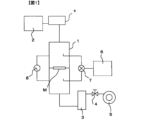
- FIG. 1 is a schematic diagram of a collection efficiency measuring device.
- the present invention was arrived at as a result of extensive research into the above-mentioned problem, namely, the provision of a gas adsorbent that can prevent odorous components such as aldehyde, ammonia, and acetic acid that have been adsorbed onto an air filter from escaping from the air filter, i.e., that can extend the life of the formaldehyde gas removal performance while suppressing secondary odor generation, and that can also suppress air resistance.
- a gas adsorbent that can prevent odorous components such as aldehyde, ammonia, and acetic acid that have been adsorbed onto an air filter from escaping from the air filter, i.e., that can extend the life of the formaldehyde gas removal performance while suppressing secondary odor generation, and that can also suppress air resistance.
- the gas adsorbent of the present invention includes (A1) acid-impregnated activated carbon, (A2) base-impregnated activated carbon, and (B) an aldehyde adsorbent.
- activated carbon that is not impregnated with an acid or base has only a so-called physical adsorption effect, in which gas is adsorbed onto the pore surface by intermolecular forces generated by contact with gas in the air due to its pore structure. Therefore, when gas is adsorbed in excess of the physical adsorption capacity of the activated carbon, the same components as the adsorbed gas are re-released.
- Acid-impregnated activated carbon is activated carbon that has been impregnated with an acidic agent, which causes the acid to be present on the surface of the pores of the activated carbon. In addition to the physical adsorption action of activated carbon, this gives the carbon a chemical adsorption action, which neutralizes basic gases such as ammonia and converts them into non-volatile components that are different from the state before adsorption.
- the acid in the acid-impregnated activated carbon (A1) used in the gas adsorbent of the present invention is not particularly limited, and examples include inorganic acids such as phosphoric acid, hydrochloric acid, sulfuric acid, nitric acid, and boric acid, and organic acids such as citric acid, oxalic acid, and malic acid.
- inorganic acids selected from phosphoric acid, hydrochloric acid, sulfuric acid, and nitric acid are more preferable in terms of deodorizing effect.
- Base-impregnated activated carbon is activated carbon that is impregnated with a chemical consisting of a base, and the base is present on the surface of the pores of the activated carbon. In addition to the physical adsorption action of activated carbon, this gives the carbon a chemical adsorption action, which neutralizes acidic gases such as acetic acid and converts them into non-volatile components different from those before adsorption.
- the base of the base-impregnated activated carbon (A2) used in the gas adsorbent of the present invention is not particularly limited, and examples thereof include hydroxides or salts of alkali metal and alkaline earth metal ions such as potassium, calcium, sodium, and magnesium, and examples thereof include potassium hydroxide, sodium hydroxide, potassium carbonate, sodium carbonate, potassium bicarbonate, and sodium bicarbonate.
- bicarbonates such as potassium bicarbonate and sodium bicarbonate are preferred because they are less likely to cause pore blockage in the activated carbon due to the deliquescence phenomenon.
- the method for impregnating the acid or base drug is not particularly limited, but a preferred method is to spray an aqueous solution or dispersion of the acid or base onto the activated carbon, and then dry it to remove the moisture, thereby adhering the drug component to the pores of the activated carbon.
- the (A1) acid-impregnated activated carbon and/or (A2) base-impregnated activated carbon in the present invention preferably have the following pore structure. That is, it is preferable that the ratio of the pore volume of pores with a pore diameter of 0.4 to 2.0 nm in the (A1) acid-impregnated activated carbon calculated by the MP method is 75 to 100% of the pore volume of pores with a pore diameter of 0.4 nm or more in the (A1) acid-impregnated activated carbon calculated by the MP method and the BJH method, and the ratio of the pore volume of pores with a pore diameter of 0.4 to 2.0 nm in the (A2) base-impregnated activated carbon calculated by the MP method is 75 to 100% of the pore volume of pores with a pore diameter of 0.4 nm or more in the (A2) base-impregnated activated carbon calculated by the MP method and the BJH method.
- Methods for analyzing the pore diameter and pore volume of activated carbon include the MP (MICROPORE) method and the BJH (Barrett-Joyner-Halenda) method.
- Measurement by the MP method gives the pore volume of micropores with a pore diameter of 0.4 to 2.0 nm, which do not cause capillary condensation, among the pores in activated carbon.
- Measurement by the BJH method gives the pore volume of macropores with a pore diameter of 2.0 to 200 nm, among the pores in activated carbon.
- the sum of the pore volume calculated by the MP method and the pore volume calculated by the BJH method is called the "pore volume of pores with a pore diameter of 0.4 nm or more calculated by the MP method and the BJH method.”
- an adsorbent containing this activated carbon has excellent physical adsorption of organic gas components such as toluene and chemical adsorption performance of acidic gases or basic gases, and furthermore, re-release of gas components once adsorbed from the adsorbent is further suppressed.
- pores with a pore diameter of more than 2.0 nm are inferior in the performance of suppressing the desorption of odorous components adsorbed within the pores (hereinafter sometimes referred to as desorption suppression performance).
- (A1) acid-impregnated activated carbon and/or (A2) base-impregnated activated carbon which have a pore structure in which the ratio of the pore volume of pores with a pore diameter of 0.4 to 2.0 nm to the pore volume of pores with a pore diameter of 0.4 nm or more is 75 to 100%, the ratio of pores with excellent odor component desorption suppression performance among the pores with a pore diameter of 0.4 nm or more present in these activated carbons is a specific or higher.
- the pore structure has a ratio of pores with poor odor component desorption suppression performance that is smaller than a specific value. It is presumed that this will result in a gas adsorbent containing this activated carbon having excellent odor component desorption suppression performance.
- the specific surface area of the (A1) acid-impregnated activated carbon and/or (A2) base-impregnated activated carbon is preferably in the range of 400 to 1300 m 2 /g, more preferably in the range of 600 to 1000 m 2 /g.
- the specific surface area of the acid-impregnated activated carbon and/or base-impregnated activated carbon in the above range is preferable because it can achieve both chemical adsorption performance with the agent for gas components in the air and physical adsorption performance with the activated carbon pores.
- the specific surface area can be measured according to the BET multipoint method specified in JIS R 1626-1996 (constant volume method described in 6.1 Volumetric method, heated pretreatment is performed, N 2 is used as an adsorbate, and measurement is performed by the constant volume method).
- the amount of the acid or base impregnated agent to obtain the above specific surface area is preferably 2 to 40 mass% of the total impregnated activated carbon, more preferably 5 to 25 mass%.
- Activated carbon with the above-mentioned pore structure can be obtained by adjusting the activation conditions, which can be selected from known raw materials such as coconut shells, charcoal, coal pitch, and phenolic resin, and form pores through high-temperature treatment with water vapor or treatment with chemicals such as phosphoric acid or zinc chloride.
- the activation conditions can be selected from known raw materials such as coconut shells, charcoal, coal pitch, and phenolic resin, and form pores through high-temperature treatment with water vapor or treatment with chemicals such as phosphoric acid or zinc chloride.
- An aldehyde adsorbent is a chemical adsorbent that uses inorganic particles as a carrier and is loaded with a chemical that has chemical reactivity with aldehyde components such as acetaldehyde or formaldehyde. Inorganic particles that are less reactive with the loaded chemical are preferred.
- the specific surface area of the inorganic particles used in the present invention is preferably 50 to 1000 m 2 /g, more preferably 100 to 800 m 2 /g.
- the specific surface area can be measured according to the BET multipoint method specified in JIS R 1626-1996 (constant volume method described in 6.1 Volumetric method, heat pretreatment is performed, N 2 is used as the adsorbate, and measurement is performed by the constant volume method).
- the inorganic particles preferably have a pore volume of 0.3 to 2.5 cc/g, and more preferably 1.0 to 2.0 cc/g.
- a pore volume of the inorganic particles 0.3 to 2.5 cc/g, it is possible to increase the amount of drug impregnation while maintaining pores that are excellent for reacting with aldehyde gas in the air, and this is preferable because it is possible to increase the adsorption efficiency and adsorption capacity as an aldehyde adsorbent.
- the pore volume referred to here can be measured by the BJH method described above.
- the inorganic particles preferably have an average pore diameter in the range of 0.5 to 100 nm, more preferably 2 to 50 nm.
- the average pore diameter of the inorganic particles By setting the average pore diameter of the inorganic particles to 0.5 to 100 nm, it is possible to ensure mechanical strength even in a porous body, while allowing a large specific surface area for supporting a drug, and the drug is more likely to penetrate into the pores, which is preferable.
- pores with a diameter of 2 to 50 nm are called mesopores, and particles having mesopores are excellent in efficiently promoting the reaction of the attached drug with acetaldehyde.
- the average diameter of the pores here can be calculated as the average pore diameter (D) from the above-mentioned specific surface area (S) and the above-mentioned pore volume (V) using the following formula.
- the inorganic particles used in the present invention can be selected according to the purpose from among porous silicon dioxide (silica), zeolite, sepiolite, activated alumina, aluminum silicate, silica gel, alumina gel, activated clay, layered compounds such as zirconium phosphate and ammonium polytriphosphate, and porous clay minerals, among others.
- porous silicon dioxide (silica) is preferred because particles having the above-mentioned preferred average pore diameter, specific surface area, and pore volume can be procured at low cost.
- hydrazide compounds such as adipic acid dihydrazide, dodecanedioic acid dihydrazide, succinic acid dihydrazide, p-aminobenzenesulfonic acid, ethylene urea condensate chemicals, tris(hydroxymethyl)aminomethane, etc.
- adipic acid dihydrazide is preferred in terms of the adsorption performance of aldehydes.
- the amount of adipic acid dihydrazide used in the present invention is preferably 7 mg to 120 mg per 1 g of inorganic particles, more preferably 35 to 90 mg.
- the gas adsorbent of the present invention is composed of the above two types of drug-impregnated activated carbon and aldehyde adsorbent.
- the first is that when the gas adsorbent is used as an air filter, the gas in the air is composed of an extremely large number of components, among which basic gases such as ammonia, acidic gases such as acetic acid, and aldehyde gases such as acetaldehyde and formaldehyde have a low concentration threshold at which humans sense odor, and as a means of suppressing the re-release of these gases from the adsorbent, it is most effective to use chemical adsorption by acids, bases, and aldehyde adsorbents, and to adsorb various gases other than acidic and basic gases using the physical adsorption action of activated carbon.
- the second point is that many of the chemicals that react with the aldehyde components that are impregnated with inorganic particles are highly reactive with aldehyde gases in the air when the pH is weakly acidic to near neutral. Therefore, compared to using an aldehyde adsorbent in combination with either an acid-impregnated activated carbon or a base-impregnated activated carbon alone, using an aldehyde adsorbent in combination with both makes it possible to maintain an appropriate pH, allowing the chemical to exhibit its inherent aldehyde adsorption performance and to maintain that performance even after long-term storage.
- the amount of adsorbed gas re-released when used as a filter is reduced, and deterioration of the performance of (A1) acid-impregnated activated carbon and (A2) base-impregnated activated carbon due to contact with each other can be suppressed.
- the ratio of (M A ) is set to 95 or less, it is possible to reduce the neutralization reaction caused by contact between (A1) acid-impregnated activated carbon and (A2) base-impregnated activated carbon in the gas adsorbent, and it is preferable to suppress the decrease in the chemical adsorption performance of each of them.
- the pH of the gas adsorbent of the present invention is preferably 3 to 7, and more preferably 5 to 7.
- a pH of 3 to 7 is preferable because it does not cause bias in the adsorption-desorption characteristics of acidic gases, basic gases, and non-polar gases such as formaldehyde.
- the pH of the gas adsorbent can be measured by adding 0.3 g of the gas adsorbent to 5 g of ultrapure water at a temperature of 20°C and measuring the pH of the water using a glass electrode pH meter.
- the average particle diameter of the (A1) acid-impregnated activated carbon used in the gas adsorbent of the present invention is 0.5 to 1.5 mm, and the average particle diameter of the (A2) base-impregnated activated carbon is 0.5 to 1.5 mm.
- the average particle diameter of the (B) aldehyde adsorbent is 100
- the average particle diameter of the (A1) acid-impregnated activated carbon is 120 to 1500
- the average particle diameter of the (B) aldehyde adsorbent is 100
- the average particle diameter of the (A2) base-impregnated activated carbon is 120 to 1500.
- the number of activated carbon particles can be appropriately suppressed.
- the frequency of contact between (A1) acid-impregnated activated carbon and (A2) base-impregnated activated carbon is reduced, so that performance degradation can be suppressed.
- this gas adsorbent is formed into a sheet, the increase in air resistance is suppressed and breathability can be ensured.
- the average particle diameter of (A1) acid-impregnated activated carbon to 1.5 mm or less, preferably 1.2 mm or less
- the average particle diameter of (A2) base-impregnated activated carbon to 1.5 mm or less, preferably 1.2 mm or less
- the ratio of the average particle size of (A1) acid-impregnated activated carbon to the average particle size of (A2) base-impregnated activated carbon is close; specifically, it is preferable that the average particle size of (A2) base-impregnated activated carbon is 80 to 120, with the average particle size of (A1) acid-impregnated activated carbon being 100.
- the breathability can be made more sufficient when formed into a sheet.
- the average particle size of (B) aldehyde adsorbent By setting the average particle size of (B) aldehyde adsorbent to 100 and the average particle size of (A1) acid-impregnated activated carbon to 1500 or less, preferably 1200 or less, more preferably 1000 or less, and by setting the average particle size of (A2) base-impregnated activated carbon to 1500 or less, preferably 1200 or less, more preferably 1000 or less, when the average particle size of (B) aldehyde adsorbent is 100, the number of inorganic particles compared to the number of activated carbon particles becomes more appropriate, and the function of intermediate particles that suppress contact between (A1) acid-impregnated activated carbon and (A2) base-impregnated activated carbon can be more fully achieved.
- the specific surface area of the inorganic particles used in (B) the aldehyde adsorbent is relatively small compared to the specific surface area of (A1) the acid-impregnated activated carbon and/or (A2) the base-impregnated activated carbon, and that the adsorption rate is slow. Therefore, by setting the average particle size of the inorganic particles used in (B) the aldehyde adsorbent to be smaller than the average particle size of (A1) the acid-impregnated activated carbon and/or (A2) the base-impregnated activated carbon, it is possible to obtain a gas adsorbent with an excellent balance of the adsorption rates of aldehydes and other gases.
- the average particle size referred to here is the particle size measured by measuring the particle size distribution according to JIS-Z-8815 (1994) for each of the granular (A1) acid-impregnated activated carbon, (A2) base-impregnated activated carbon, and (B) aldehyde adsorbent, and corresponds to the size of the sieve through which 50% of the total mass passes.
- the shapes of the (A1) acid-impregnated activated carbon, (A2) base-impregnated activated carbon, and (B) aldehyde adsorbent can be arbitrarily selected from known shapes such as spherical, crushed, and columnar.
- the gas adsorbent of the present invention is preferably used in a sheet form. That is, the gas adsorbent of the present invention is suitably used in a gas adsorption sheet.
- the gas adsorbent being formed in a sheet form may be formed by dispersing gas adsorbent particles between the fibers of a fabric to form a sheet form, or by connecting the surface of a composite gas adsorbent with an adhesive or the like to form a sheet form.
- the form of the fabric is not particularly limited, and may be selected from woven fabrics, knitted fabrics, molded nets, nonwoven fabrics, and the like.
- nonwoven fabrics are preferred because the desired physical properties can be easily obtained by selecting and combining the fiber diameters and fiber lengths of the fibers used.
- nonwoven fabrics include chemical bond nonwoven fabrics, wet-laid nonwoven fabrics, spunbond nonwoven fabrics, meltblown nonwoven fabrics, spunlace nonwoven fabrics, and airlaid nonwoven fabrics.
- the basis weight of the gas adsorbent is preferably in the range of 15 to 400 g/m 2. Furthermore, when the basis weight is in the range of 30 to 300 g/m 2 , the gas adsorption capacity is high and the obtained sheet-like filter material has excellent pleat (folding) processability when processed into an air filter, which is more preferable.
- the gas adsorbent is preferably in particulate form, and the shape can be selected from any of the well-known shapes, such as spherical, crushed, or columnar.
- the gas adsorbent of the present invention is suitable for use in a filter medium.
- This filter medium comprises two or more layers of nonwoven fabric and the gas adsorbent of the present invention.
- the gas adsorbent of the present invention is held in at least one of the layers between the one or more layers formed by the two or more layers of nonwoven fabric.
- the amount of gas adsorbent used in the filter medium of the present invention is preferably in the range of 40 to 400 g/ m2 , more preferably 100 to 200 g/ m2 , from the viewpoint of obtaining gas removal efficiency and adsorption capacity when used as a filter medium.
- the nonwoven fabric of the above filter medium is preferably an electret nonwoven fabric. This is preferable because the above filter medium can capture dust particles in the air with higher efficiency by using an electret nonwoven fabric.
- Specific methods for manufacturing the filter medium include, but are not limited to, a method in which gas adsorbent particles and powdered heat-bonded resin particles are uniformly dispersed on one nonwoven fabric, the heat-bonded resin particles are heated and melted with a heater, and then another nonwoven fabric is laminated and pressed to integrate the two, or a method in which gas adsorbent particles are dispersed on one nonwoven fabric while spraying heat-molten resin onto the other nonwoven fabric, and then the two nonwoven fabrics are laminated and pressed to integrate the two.
- the thickness of the nonwoven fabric is preferably 0.08 to 0.60 mm from the viewpoint of having a certain strength and increasing the area that can be accommodated in a certain volume when pleated, with the lower limit being more preferably 0.15 mm or more and the upper limit being more preferably 0.50 mm or less.
- the filter medium has two or more layers of nonwoven fabric, and the thicknesses of these nonwoven fabrics may be the same or different.
- the fibers used in the nonwoven fabric may be natural fibers, synthetic fibers, or inorganic fibers such as glass fibers or metal fibers, and among these, synthetic fibers made of thermoplastic resins that can be melt-spun are preferred.
- the air filter of the present invention comprises the gas adsorption sheet of the present invention or the filter medium of the present invention and an outer frame. It is preferable that the filter medium is fixed on all four sides to the outer frame.
- the gas adsorption sheet or filter medium may be used as is in sheet form, or may be pleated to form a three-dimensional shape with peaks and valleys.
- a gas adsorbent and a polyethylene adhesive powder (Abifor 1200 manufactured by Abifor AG) (hereinafter referred to as adhesive powder) are blended in a mass ratio of 2 parts gas adsorbent:1 part adhesive powder, and a predetermined amount of the blend is uniformly spread on a spunbond nonwoven fabric made of polyester fibers (Acstar (registered trademark) H2070-1S manufactured by Toray Industries, Inc., thickness 0.27 mm).
- the adhesive powder is melted by heating in a heating furnace at 110°C to 130°C, and an electret meltblown nonwoven fabric (basis weight 30 g/m 2 , thickness 0.25 mm) is laminated on the spread surface, and then pressed by a nip roll to obtain a sheet-like filter medium of a predetermined thickness.
- an electret meltblown nonwoven fabric (basis weight 30 g/m 2 , thickness 0.25 mm) is laminated on the spread surface, and then pressed by a nip roll to obtain a sheet-like filter medium of a predetermined thickness.
- Toluene saturated adsorption capacity (m2 - ml) / (0.1 x 0.1) (g/m 2 ).
- the toluene concentration (ppm) of the air downstream of the filter medium sample was measured at 10-second intervals for 25 minutes using an infrared absorption gas concentration meter (MIRANSapphlRe, manufactured by Nippon Thermo Co., Ltd.), at which point the passage of gas was stopped and the cumulative amount of toluene adsorption (g/ m2 ) per unit area (1 m2 ) of the filter medium was calculated from the toluene concentration in the air detected from the downstream side during those 25 minutes.
- MIRANSapphlRe infrared absorption gas concentration meter
- the cumulative adsorption amount of toluene After measuring the cumulative adsorption amount of toluene, only the air with a temperature of 20°C and a humidity of 50%RH is passed through the filter medium sample at a wind speed of 0.06m/sec. 20 seconds after air is passed through the filter medium sample, the toluene concentration (ppm) of the air downstream of the filter medium sample (the other surface side of the filter medium sample) is measured for 5 minutes at 2-second intervals using the same infrared absorption gas concentration meter as above, and the cumulative desorption amount of toluene is measured from the toluene concentration in the air detected during this 5 minutes, and the cumulative desorption amount (g/ m2 ) of toluene per unit area ( 1m2 ) of the filter medium is calculated from the measurement result obtained.
- the ammonia concentration (ppm) of the air downstream of the filter medium sample (the other side of the filter medium sample) is measured at 10-second intervals for 60 minutes using an infrared absorption gas concentration meter (MIRANSapphlRe manufactured by Nippon Thermo Co., Ltd.) until the ammonia gas concentration downstream of the sample reaches 9 ppm, that is, the ammonia adsorption efficiency of the filter medium reaches 10%. From the measurement results obtained, the cumulative adsorption amount (g/ m2 ) of ammonia per unit area (1 m2 ) of the filter medium is calculated, which is the saturated adsorption amount.
- MIRANSapphlRe manufactured by Nippon Thermo Co., Ltd.
- the acetic acid concentration (ppm) of the air downstream of the filter medium sample was measured at 10-second intervals for 25 minutes using an infrared absorption gas concentration meter (MIRANSapphlRe, manufactured by Nippon Thermo Co., Ltd.), at which point the passage of gas was stopped and the cumulative adsorption amount (g/ m2 ) of acetic acid per unit area (1 m2 ) of the filter medium was calculated from the concentration of acetic acid in the air detected from the downstream side during the 25 minutes.
- MIRANSapphlRe infrared absorption gas concentration meter
- the filter medium sample After measuring the cumulative adsorption amount of acetic acid, only the air with a temperature of 20°C and a humidity of 50%RH is passed through the filter medium sample at a wind speed of 0.06m/s.From 20 seconds after air is passed through the filter medium sample, the acetic acid concentration (ppm) of the air downstream of the filter medium sample (the other surface side of the filter medium sample) is measured at 2-second intervals for 5 minutes using the same infrared absorption gas concentration meter as above, and the cumulative desorption amount of acetic acid is measured from the concentration of acetic acid in the air detected during this 5 minutes, and the cumulative desorption amount (g/ m2 ) of acetic acid per unit area ( 1m2 ) of the filter medium is calculated from the measurement result obtained.
- the acetic acid desorption rate (%) was calculated from the obtained integrated amount of acetic acid adsorbed (g/m 2 ) per unit area (1 m 2 ) and the integrated amount of acetic acid desorbed (g/m 2 ) per unit area (1 m 2 ) according to the following formula.
- Acetic acid desorption rate (%) [accumulated amount of acetic acid desorbed per unit area (1 m 2 ) (g/m 2 )/accumulated amount of acetic acid adsorbed per unit area (1 m 2 ) (g/m 2 )] ⁇ 100.
- Formaldehyde spatial purification capacity (F-CADR) New ( m3 /hr)
- the sheet-like filter medium using the gas adsorbent obtained in the above [Production method of filter medium using gas adsorbent] was prepared with a width of 289 mm and a length of 7.8 m, and then pleated with a reciprocating pleating machine (W650 manufactured by Hoptec Co., Ltd.) with a folding height of 58 mm in the length direction of the filter medium for 66 peaks.
- the filter medium was then unfolded once, and a polyolefin resin (Hitachi Chemical Polymer Co., Ltd., Hibon 9500) was heated and melted to 180 ° C.
- a polyester thermal bond nonwoven fabric with a basis weight of 260 g/ m2 and a thickness of 1 mm was cut to a width of 60 mm to create an outer frame, which was heated to 200°C using a roll coater (Epic R2) and melted with a polyolefin adhesive (Hibone YH450-1, Hitachi Chemical Polymer Co., Ltd.) and attached to all four sides of the pleated filter medium, to obtain an air filter with an opening size of 372 mm length, 291 mm width, and 60 mm height.
- the air filter was mounted on a commercially available air purifier (rated air volume: 450 m 3 /hr), which was then placed in a 30 m 3 test room, and the formaldehyde CADR (m 3 /hr) was measured using a method in accordance with "GB/T 18001-2015 Air cleaner".
- Formaldehyde spatial purification capacity (F-CADR) after long-term storage ( m3 /hr)
- the air filter obtained in the same manner as in (5) above was left for 30 days in an environment of a temperature of 60°C and a relative humidity of 60% RH, and then mounted in the same air purifier as in (5) above, and the formaldehyde CADR ( m3 /hr) was measured using the same test method as in (5) above.
- the air purifier after capturing the tobacco combustion smoke was left in a test room with a volume of 30 m3 for 24 hours without being operated, and then the air purifier was operated and the odor intensity and pleasantness/unpleasantness of the exhausted air were scored by five panelists according to the criteria shown in Tables 1 and 2, and the average values were calculated.
- Pore volume of activated carbon pores 0.10 g of activated carbon was placed in a glass cell and degassed at 150°C for 5 hours, and then the activated carbon was placed in a BELSORP-18PLUS device manufactured by BEL JAPAN Co., Ltd., and the isothermal adsorption and desorption processes of nitrogen were measured under conditions set at a liquid nitrogen temperature of 77K, an internal temperature of the device of 35°C, and a saturated vapor pressure of 101.3 kPa. From the measurement results, the pore volume of pores with a pore diameter of 0.4 to 2.0 nm was calculated by the MP method, and the pore volume of pores with a pore diameter of 0.4 to 200 nm was calculated by the BJH method.
- the sample holder 1 is equipped with a pressure gauge 8, and the static pressure difference between the upstream and downstream sides of the measurement sample M can be read.
- the measurement sample M is set in the sample holder 1, and the flow rate is adjusted with the flow control valve 4 so that the filter passing speed is 6.5 m / min, and the static pressure difference of the pressure gauge 8 is read.
- the average value of the values measured for the three measurement samples was taken as the final pressure loss.
- the result of the evaluation of this pressure loss was taken as an index of the superiority or inferiority of the breathability of the prepared filter medium.
- the evaluation of the pressure loss corresponds to the breathability of the filter medium. If the pressure loss is large, the airflow resistance of the filter medium increases, and the air permeability decreases.
- Example 1 As the acid-impregnated activated carbon, granular activated carbon (manufactured by Man-ei Kogyo Co., Ltd., average particle size according to JIS Z8815 method 0.6 mm, specific surface area measured by BET multipoint method 1200 m 2 /g) was impregnated with citric acid to account for 40 mass% of the total, resulting in an acid-impregnated activated carbon with a specific surface area of 450 m 2 /g.
- granular activated carbon manufactured by Man-ei Kogyo Co., Ltd., average particle size according to JIS Z8815 method 0.6 mm, specific surface area measured by BET multipoint method 1200 m 2 /g
- the same granular activated carbon as the above-mentioned impregnated activated carbon was impregnated with potassium carbonate to account for 7 mass% of the total, resulting in a base-impregnated activated carbon with a specific surface area of 800 m 2 /g.
- an adsorbent As the aldehyde adsorbent, an adsorbent was used in which porous silica particles (pore volume measured by BJH method 1.0 cc/g, specific surface area measured by BET multipoint method 500 m 2 /g, average particle size according to JIS Z8815 method 0.4 mm) were impregnated with adipic acid dihydrazide (manufactured by Nippon Kasei Co., Ltd.) to account for 7 mass% of the total.
- porous silica particles pore volume measured by BJH method 1.0 cc/g, specific surface area measured by BET multipoint method 500 m 2 /g, average particle size according to JIS Z8815 method 0.4 mm
- adipic acid dihydrazide manufactured by Nippon Kasei Co., Ltd.
- the gas adsorbent is used, and the filter medium having the gas adsorbent is manufactured by the method described in the above [Production method of filter medium using gas adsorbent].
- the gas adsorbent is used in an amount of 150g/m 2 , so that the acid-impregnated activated carbon is 30g/m 2 , the base-impregnated activated carbon is 30g/m 2 , and the aldehyde adsorbent is 90g/m 2 , and the mass ratio of the impregnated activated carbon total: aldehyde adsorbent is 40:
- the gas adsorbent is used, and the filter medium having the gas adsorbent is manufactured by the method described in the above [Production method of filter medium using gas adsorbent].
- the gas adsorbent is used in an amount of 80g/m 2 , so that the acid-impregnated activated carbon is 36g/m 2 , the base-impregnated activated carbon is 36g/m 2 , and the aldehyde adsorbent is 8g/m 2 , so that the mass ratio of the total impregnated activated carbon: aldehyde adsorbent is 90:
- the acid-impregnated activated carbon was prepared by impregnating granular activated carbon (manufactured by Man-ei Kogyo Co., Ltd., average particle size according to JIS Z8815 method: 0.6 mm, specific surface area measured by BET multipoint method: 1200 m2 /g) with orthophosphoric acid to account for 20 mass% of the total, and the base-impregnated activated carbon was prepared by impregnating the same granular activated carbon as the above-mentioned impregnated activated carbon with sodium bicarbonate to account for 5 mass% of the total, and the base-impregnated activated carbon was prepared by impregnating the same granular activated carbon as the above-mentioned impregnated activated carbon with a specific surface area of 950 m2 /g.
- Example 5 The same acid-impregnated activated carbon and base-impregnated activated carbon as in Example 4 are used, and the adsorbent used is that the porous silica particles (pore volume measured by BJH method 1.0cc/g, specific surface area measured by BET multipoint method 500m2 /g, average particle diameter measured by JISZ8815 method 0.06mm) are impregnated with adipic acid dihydrazide (manufactured by Nippon Kasei Co., Ltd.) to be 7 mass% of the total.
- the porous silica particles pore volume measured by BJH method 1.0cc/g, specific surface area measured by BET multipoint method 500m2 /g, average particle diameter measured by JISZ8815 method 0.06mm
- adipic acid dihydrazide manufactured by Nippon Kasei Co., Ltd.
- a filter medium having a gas adsorbent is manufactured by the method described in the above [Production method of filter medium using gas adsorbent].
- the thickness of this filter medium was 0.7 mm.
- the acid-impregnated activated carbon used was an acid-impregnated activated carbon with a specific surface area of 600 m 2 /g, which was obtained by impregnating granular activated carbon (manufactured by Kuraray Co., Ltd., average particle size according to JIS Z8815 method: 0.6 mm, specific surface area measured by BET multipoint method: 950 m 2 /g) with orthophosphoric acid in an amount of 20 mass% of the total, as in Example 4.
- the base-impregnated activated carbon used was a base-impregnated activated carbon with a specific surface area of 850 m 2 /g, which was obtained by impregnating the same granular activated carbon as the above-mentioned impregnated activated carbon with sodium bicarbonate in an amount of 5 mass% of the total, as in Example 4.
- the aldehyde adsorbent As the aldehyde adsorbent, the adsorbent is used, which is made by impregnating porous silica particles (pore volume measured by BJH method: 1.0 cc/g, specific surface area measured by BET multipoint method: 500 m 2 /g, average particle diameter measured by JIS Z8815 method: 0.3 mm) with adipic acid dihydrazide (manufactured by Nippon Kasei Co., Ltd.) to 7 mass% of the total.
- porous silica particles pore volume measured by BJH method: 1.0 cc/g, specific surface area measured by BET multipoint method: 500 m 2 /g, average particle diameter measured by JIS Z8815 method: 0.3 mm
- adipic acid dihydrazide manufactured by Nippon Kasei Co., Ltd.
- a filter medium having a gas adsorbent is manufactured by the method described in the above [Production method of filter medium using gas adsorbent].
- the thickness of this filter medium was 1.2 mm.
- the thickness of this filter medium was 1.0 mm.
- the acid-impregnated activated carbon was 30 g/ m2
- the base-impregnated activated carbon was 30 g/ m2
- the aldehyde adsorbent was 90 g/ m2
- the mass ratio of impregnated activated carbon:aldehyde adsorbent was 40:60.
- the thickness of this filter medium was 1.0 mm.
- the gas adsorbents of Examples 1 to 6, and the filter media and air filters using the gas adsorbents of Examples 1 to 6 are summarized in Tables 3 and 4, while the gas adsorbents of Comparative Examples 1 to 4, and the filter media and air filters using the gas adsorbents of Comparative Examples 1 to 4 are summarized in Tables 5 and 6.
- Example 1 a gas adsorbent that combines acid-impregnated activated carbon, base-impregnated activated carbon, and an aldehyde adsorbent was used, so the desorption rate of toluene and acetic acid after adsorption was low.
- citric acid used as the acid adsorbs ammonia gas in the air through an acid-base reaction, so it has excellent ammonia adsorption capacity
- potassium carbonate used as the base adsorbs acetic acid gas in the air through an acid-base reaction, so the desorption rate after acetic acid adsorption was low.
- the presence of inorganic particles suppresses the neutralization reaction caused by contact between citric acid and potassium carbonate, which are the components impregnated with the activated carbon, so the adsorption performance of ammonia gas and acetic acid gas was maintained even after long-term storage.
- the filter processed from the obtained filter medium also had good formaldehyde purification performance (F-CADR) when installed in an air purifier, and the odor intensity of the secondary odor after tobacco odor adsorption was low and unpleasant odors were not easily felt, which means it was a long-life air filter.
- Example 2 the amount of acid-impregnated activated carbon and base-impregnated activated carbon used and their proportion in the total gas adsorbent were increased compared to Example 1, so the saturated adsorption amount of ammonia increased and the desorption rate of acetic acid after acetic acid adsorption decreased compared to Example 1. Therefore, the filter processed from the obtained filter medium had a low odor intensity of the secondary odor after tobacco odor adsorption when installed in an air purifier, which made the user less likely to feel uncomfortable, i.e., it was an air filter with a long life.
- Example 4 activated carbon impregnated with orthophosphoric acid, which has better reactivity with ammonia gas in the air than in Example 1, was used, and therefore the saturated adsorption amount of ammonia was improved.
- sodium bicarbonate which is less likely to clog the pores of the activated carbon than in Example 1, a base-impregnated activated carbon with high physical adsorption capacity was obtained, and the amount of acetic acid desorbed was low and the saturated adsorption amount of toluene was improved.
- the filter processed from the obtained filter medium had a low odor intensity of the secondary odor after adsorption of tobacco odor when installed in an air purifier, and was an air filter that was less likely to cause discomfort to the user, i.e., a long-life air filter.
- Example 5 the average particle size of the aldehyde adsorbent made of inorganic particles was 1/10 of the average particle size of the acid-impregnated activated carbon and the base-impregnated activated carbon, that is, the average particle size of the (B) aldehyde adsorbent was 100 and the average particle size of the (A1) acid-impregnated activated carbon was 1000, and the average particle size of the (B) aldehyde adsorbent was 100 and the average particle size of the (A2) base-impregnated activated carbon was 1000.
- the filter processed from the obtained filter medium also had good formaldehyde purification performance (F-CADR) when installed in an air purifier, and the odor intensity of the secondary odor after tobacco odor adsorption was small and unpleasant odors were not easily felt, that is, it was a long-life air filter.
- F-CADR formaldehyde purification performance
- Example 6 compared to Examples 1 to 5, a higher ratio of the pore volume of pores with diameters of 0.4 to 2.0 nm was used to the total pore volume of the acid- and base-impregnated activated carbon, and therefore the desorption rates after toluene and acetic acid adsorption were reduced compared to Examples 1 to 5.
- the filter processed from the obtained filter medium also had good formaldehyde purification performance (F-CADR) when installed in an air purifier, and the secondary odor intensity after tobacco odor adsorption was low and unpleasant odors were not easily felt, meaning that it was a long-life air filter.
- F-CADR formaldehyde purification performance
- Comparative Example 1 did not contain base-impregnated activated carbon, so all of the acetic acid gas in the air was adsorbed by the physical adsorption properties of the activated carbon, and the desorption rate of acetic acid after adsorption was extremely high. Therefore, when it was processed into a filter and installed in an air purifier, the secondary odor intensity after adsorption of tobacco odor was high, and a very unpleasant odor was felt.
- Comparative Example 2 did not contain acid-impregnated activated carbon, and therefore had a significantly low saturated adsorption capacity for ammonia.
- the secondary odor intensity after adsorption of tobacco odor which contains a high concentration of ammonia components, was high, and an extremely unpleasant odor was felt.
- the pH of the entire gas adsorbent shifted to the alkaline side due to the effect of the base-impregnated activated carbon, which is thought to have caused a decrease in formaldehyde adsorption performance, and a decrease in formaldehyde purification capacity (F-CADR) was observed.
- F-CADR formaldehyde purification capacity
- Comparative Example 3 did not use an aldehyde chemical adsorbent, and therefore had poor formaldehyde purification performance (F-CADR) when processed into a filter and installed in an air purifier.
- F-CADR formaldehyde purification performance
- the acid-impregnated activated carbon and base-impregnated activated carbon were in close contact with each other, and the neutralization reaction of the impregnated chemicals reduced the adsorption performance of ammonia and acetic acid.
- the amount of gas components re-emitted after absorbing tobacco odor increased, the secondary odor was strong, and a very unpleasant odor was felt.
- Comparative Example 4 used a gas adsorbent that was a blend of acid-impregnated activated carbon, base-impregnated activated carbon, and an aldehyde adsorbent.
- the filter When processed into a filter and installed in an air purifier, the filter had good formaldehyde purification performance (F-CADR), low secondary odor intensity after tobacco odor adsorption, and was an air filter that was difficult to detect an unpleasant odor.
- F-CADR formaldehyde purification performance
- the average particle size of the acid-impregnated activated carbon and base-impregnated activated carbon was smaller than 0.5 mm, the filter had a high sheet pressure loss and high airflow resistance.
- the acid- and base-impregnated activated carbons of Comparative Examples 1 to 4 had smaller particle sizes than the impregnated activated carbons used in the Examples, i.e., the average particle size of the acid- and base-impregnated activated carbons was smaller than 0.5 mm, resulting in higher pressure loss than in the Examples.
- the amounts of aldehyde adsorbent and chemical-impregnated activated carbon were the same as in Comparative Examples 1 to 4, but the average particle size of the acid- and base-impregnated activated carbons was 0.6 mm, which was larger than the average particle size in the Comparative Examples, resulting in lower pressure loss than in Comparative Examples 1 to 4.
- the gas adsorbent according to the present invention is mainly installed in home air purifiers and used in air filters and filter media to purify indoor air.
Landscapes
- Chemical & Material Sciences (AREA)
- Chemical Kinetics & Catalysis (AREA)
- Analytical Chemistry (AREA)
- Organic Chemistry (AREA)
- Engineering & Computer Science (AREA)
- Inorganic Chemistry (AREA)
- General Chemical & Material Sciences (AREA)
- Oil, Petroleum & Natural Gas (AREA)
- Nanotechnology (AREA)
- Disinfection, Sterilisation Or Deodorisation Of Air (AREA)
- Solid-Sorbent Or Filter-Aiding Compositions (AREA)
Priority Applications (3)
| Application Number | Priority Date | Filing Date | Title |
|---|---|---|---|
| CN202380069447.1A CN119968232A (zh) | 2022-10-25 | 2023-10-11 | 气体吸附剂以及使用其的气体吸附片材、滤材和空气过滤器 |
| JP2023565482A JPWO2024090205A1 (https=) | 2022-10-25 | 2023-10-11 | |
| KR1020257002349A KR20250088701A (ko) | 2022-10-25 | 2023-10-11 | 가스 흡착제, 및 그것을 사용한 가스 흡착 시트, 여과재 및 에어 필터 |
Applications Claiming Priority (2)
| Application Number | Priority Date | Filing Date | Title |
|---|---|---|---|
| JP2022-170329 | 2022-10-25 | ||
| JP2022170329 | 2022-10-25 |
Publications (1)
| Publication Number | Publication Date |
|---|---|
| WO2024090205A1 true WO2024090205A1 (ja) | 2024-05-02 |
Family
ID=90830727
Family Applications (1)
| Application Number | Title | Priority Date | Filing Date |
|---|---|---|---|
| PCT/JP2023/036837 Ceased WO2024090205A1 (ja) | 2022-10-25 | 2023-10-11 | ガス吸着剤ならびにそれを用いたガス吸着シート、濾材およびエアフィルター |
Country Status (4)
| Country | Link |
|---|---|
| JP (1) | JPWO2024090205A1 (https=) |
| KR (1) | KR20250088701A (https=) |
| CN (1) | CN119968232A (https=) |
| WO (1) | WO2024090205A1 (https=) |
Citations (8)
| Publication number | Priority date | Publication date | Assignee | Title |
|---|---|---|---|---|
| JPH0810315A (ja) * | 1994-06-28 | 1996-01-16 | Midori Anzen Co Ltd | 空気浄化剤およびこれを用いた空気清浄機用脱臭フィルター |
| JPH09308813A (ja) * | 1996-05-21 | 1997-12-02 | Laser Matsushita:Kk | カセット式空気浄化フィルタ及び脱臭装置 |
| JPH10296043A (ja) * | 1997-04-28 | 1998-11-10 | Toshiba Corp | 空気調和装置用ガス吸着フィルタ |
| JP2010260045A (ja) * | 2009-04-09 | 2010-11-18 | Toyota Boshoku Corp | 表皮材 |
| JP2013094367A (ja) * | 2011-10-31 | 2013-05-20 | Toyobo Co Ltd | 空気清浄用濾材 |
| JP2017064048A (ja) * | 2015-09-30 | 2017-04-06 | 住江織物株式会社 | 消臭剤及び該消臭剤を備えた消臭フィルター |
| JP2019166128A (ja) * | 2018-03-23 | 2019-10-03 | 三菱製紙株式会社 | 脱臭剤封入濾材及びエアフィルター |
| WO2023054012A1 (ja) * | 2021-09-30 | 2023-04-06 | 東レ株式会社 | ガス吸着剤ならびにそれを用いたガス吸着シート、濾材およびエアフィルター |
Family Cites Families (2)
| Publication number | Priority date | Publication date | Assignee | Title |
|---|---|---|---|---|
| JP2008148804A (ja) | 2006-12-15 | 2008-07-03 | Suminoe Textile Co Ltd | たばこ臭の除去性能に優れた消臭剤 |
| JP6257547B2 (ja) | 2015-03-17 | 2018-01-10 | 三菱製紙株式会社 | 脱臭剤封入濾材 |
-
2023
- 2023-10-11 JP JP2023565482A patent/JPWO2024090205A1/ja active Pending
- 2023-10-11 KR KR1020257002349A patent/KR20250088701A/ko active Pending
- 2023-10-11 WO PCT/JP2023/036837 patent/WO2024090205A1/ja not_active Ceased
- 2023-10-11 CN CN202380069447.1A patent/CN119968232A/zh active Pending
Patent Citations (8)
| Publication number | Priority date | Publication date | Assignee | Title |
|---|---|---|---|---|
| JPH0810315A (ja) * | 1994-06-28 | 1996-01-16 | Midori Anzen Co Ltd | 空気浄化剤およびこれを用いた空気清浄機用脱臭フィルター |
| JPH09308813A (ja) * | 1996-05-21 | 1997-12-02 | Laser Matsushita:Kk | カセット式空気浄化フィルタ及び脱臭装置 |
| JPH10296043A (ja) * | 1997-04-28 | 1998-11-10 | Toshiba Corp | 空気調和装置用ガス吸着フィルタ |
| JP2010260045A (ja) * | 2009-04-09 | 2010-11-18 | Toyota Boshoku Corp | 表皮材 |
| JP2013094367A (ja) * | 2011-10-31 | 2013-05-20 | Toyobo Co Ltd | 空気清浄用濾材 |
| JP2017064048A (ja) * | 2015-09-30 | 2017-04-06 | 住江織物株式会社 | 消臭剤及び該消臭剤を備えた消臭フィルター |
| JP2019166128A (ja) * | 2018-03-23 | 2019-10-03 | 三菱製紙株式会社 | 脱臭剤封入濾材及びエアフィルター |
| WO2023054012A1 (ja) * | 2021-09-30 | 2023-04-06 | 東レ株式会社 | ガス吸着剤ならびにそれを用いたガス吸着シート、濾材およびエアフィルター |
Also Published As
| Publication number | Publication date |
|---|---|
| JPWO2024090205A1 (https=) | 2024-05-02 |
| CN119968232A (zh) | 2025-05-09 |
| KR20250088701A (ko) | 2025-06-17 |
Similar Documents
| Publication | Publication Date | Title |
|---|---|---|
| JP5428857B2 (ja) | 脱臭性繊維構造物およびエアフィルター | |
| KR20010078018A (ko) | 흡착제와 그것을 사용한 흡착 장치와 기타 물품 및 흡착방법 | |
| WO2017114687A1 (en) | A component for an air filter | |
| WO2019167975A1 (ja) | 空気清浄用活性炭シート | |
| JPWO2019151283A1 (ja) | ガス吸着剤、消臭繊維シートおよびガス吸着剤の製造方法 | |
| JP6988477B2 (ja) | 空気清浄用濾材 | |
| CN105517702A (zh) | 气体吸附剂和气体吸附片以及空气过滤器 | |
| WO2020203508A1 (ja) | ガス吸着剤 | |
| JP2015029770A (ja) | 空気清浄用濾材 | |
| US20240382929A1 (en) | Gas adsorbent and gas adsorption sheet, filter medium, and air filter using same | |
| WO2024090205A1 (ja) | ガス吸着剤ならびにそれを用いたガス吸着シート、濾材およびエアフィルター | |
| JP6115413B2 (ja) | フィルターエレメント | |
| JP3407748B2 (ja) | 吸着性シート | |
| WO2021193137A1 (ja) | 濾材 | |
| JP2021142481A (ja) | ガス吸着剤 | |
| JP2000246095A (ja) | 吸着処理剤を備えた物品 | |
| JP2009028718A (ja) | エアフィルター濾材、エアフィルター、ならびに空気清浄機 | |
| JP2000153131A (ja) | 光触媒を用いた除塵脱臭フィルター | |
| JP2950683B2 (ja) | 空気浄化剤及び空気浄化装置 | |
| JP2016215168A (ja) | 有害ガス除去フィルター | |
| JP2014073439A (ja) | ガス吸着剤 | |
| JP2010125401A (ja) | アルデヒド除去材 | |
| KR20210103449A (ko) | 산소 발생 융복합필터 | |
| JP2006192388A (ja) | ガス吸着濾材 | |
| JPS6048138A (ja) | 気相中のアルデヒド類の吸着剤 |
Legal Events
| Date | Code | Title | Description |
|---|---|---|---|
| ENP | Entry into the national phase |
Ref document number: 2023565482 Country of ref document: JP Kind code of ref document: A |
|
| 121 | Ep: the epo has been informed by wipo that ep was designated in this application |
Ref document number: 23882414 Country of ref document: EP Kind code of ref document: A1 |
|
| WWE | Wipo information: entry into national phase |
Ref document number: 202380069447.1 Country of ref document: CN |
|
| WWE | Wipo information: entry into national phase |
Ref document number: 202547043515 Country of ref document: IN |
|
| WWP | Wipo information: published in national office |
Ref document number: 202380069447.1 Country of ref document: CN |
|
| NENP | Non-entry into the national phase |
Ref country code: DE |
|
| WWP | Wipo information: published in national office |
Ref document number: 202547043515 Country of ref document: IN |
|
| WWP | Wipo information: published in national office |
Ref document number: 1020257002349 Country of ref document: KR |
|
| 122 | Ep: pct application non-entry in european phase |
Ref document number: 23882414 Country of ref document: EP Kind code of ref document: A1 |