WO2024069955A1 - 獣医療支援システム、獣医療支援方法及びプログラム - Google Patents
獣医療支援システム、獣医療支援方法及びプログラム Download PDFInfo
- Publication number
- WO2024069955A1 WO2024069955A1 PCT/JP2022/036756 JP2022036756W WO2024069955A1 WO 2024069955 A1 WO2024069955 A1 WO 2024069955A1 JP 2022036756 W JP2022036756 W JP 2022036756W WO 2024069955 A1 WO2024069955 A1 WO 2024069955A1
- Authority
- WO
- WIPO (PCT)
- Prior art keywords
- owner
- message
- test
- veterinary medical
- user terminal
- Prior art date
- Legal status (The legal status is an assumption and is not a legal conclusion. Google has not performed a legal analysis and makes no representation as to the accuracy of the status listed.)
- Ceased
Links
Images


Classifications
-
- G—PHYSICS
- G16—INFORMATION AND COMMUNICATION TECHNOLOGY [ICT] SPECIALLY ADAPTED FOR SPECIFIC APPLICATION FIELDS
- G16H—HEALTHCARE INFORMATICS, i.e. INFORMATION AND COMMUNICATION TECHNOLOGY [ICT] SPECIALLY ADAPTED FOR THE HANDLING OR PROCESSING OF MEDICAL OR HEALTHCARE DATA
- G16H80/00—ICT specially adapted for facilitating communication between medical practitioners or patients, e.g. for collaborative diagnosis, therapy or health monitoring
Definitions
- the present invention relates to a veterinary medical support system, a veterinary medical support method, and a program.
- Patent document 1 describes cashless payment at medical institutions.
- the present invention was made in light of this background, and aims to reduce the time that animals spend in veterinary clinics.
- the main invention of the present invention for solving the above problem is a veterinary medical support system, characterized by comprising an examination message sending unit that outputs a message to an owner who visits a veterinary medical institution, instructing the owner to have their animal examined, a home message sending unit that outputs a message to the owner instructing the owner to return home when the examination is completed, an examination result input unit that accepts input of the examination results, and an examination result sending unit that transmits the examination results to the owner's user terminal.
- the present invention can reduce the time animals spend in veterinary clinics.
- FIG. 1 is a diagram showing an example of the overall configuration of a veterinary medical support system.
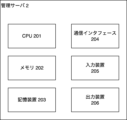
- FIG. 2 illustrates an example of a hardware configuration of a management server 2.
- FIG. 2 illustrates an example of the software configuration of a management server 2.
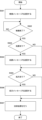
- FIG. 2 is a diagram illustrating the operation of the management server 2.
- the veterinary medical support system a treatment plan input unit that receives an input of a treatment plan for the animal from the veterinarian; a treatment plan transmission unit that transmits the treatment plan to the user terminal;
- a veterinary medical support system comprising: [Item 4] Item 1, a veterinary medical support system comprising: a payment processing unit that transmits a fee for the examination to the user terminal and performs a payment process for the fee;
- a veterinary medical support system that features: [Item 5] outputting a message to the owner who visits the veterinary medical institution, instructing the owner to have the animal examined; outputting a message to the owner instructing the owner to go home in response to the completion of the test; receiving an input of a result of the test; transmitting the results of the test to a user terminal of the owner;
- a veterinary medical support method characterized in that the above steps are executed by a computer.
- a veterinary medical support system according to an embodiment of the present invention will be described below.
- the veterinary medical support system of the present embodiment supports an improvement in the experience of animal patients and their owners visiting veterinary medical institutions.
- FIG. 1 is a diagram showing an example of the overall configuration of a veterinary medical support system.
- the veterinary medical support system of this embodiment is configured to include a management server 2.
- the management server 2 is communicatively connected to a user terminal 1 via a communication network.
- the communication network is, for example, the Internet, and is constructed using a public telephone line network, a mobile phone line network, a wireless communication path, Ethernet (registered trademark), etc.
- the user terminal 1 is a computer operated by a veterinarian or other veterinary medical professional.
- the user terminal 1 is, for example, a smartphone, tablet computer, notebook computer, desktop computer, etc.
- the management server 2 may be a general-purpose computer such as a workstation or a personal computer, or may be logically realized by cloud computing.
- the management server 2 includes a CPU 201, a memory 202, a storage device 203, a communication interface 204, an input device 205, and an output device 206.
- the storage device 203 is, for example, a hard disk drive, a solid state drive, or a flash memory that stores various data and programs.
- the communication interface 204 is an interface for connecting to a communication network, for example, an adapter for connecting to Ethernet (registered trademark), a modem for connecting to a public telephone line network, a wireless communication device for wireless communication, a USB (Universal Serial Bus) connector or an RS232C connector for serial communication, etc.
- the input device 205 is, for example, a keyboard, a mouse, a touch panel, a button, a microphone, etc. that input data.
- the output device 206 is, for example, a display, a printer, a speaker, etc. that output data.
- Each functional unit of the management server device 2 which will be described later, is realized by the CPU 201 reading a program stored in the storage device 203 into the memory 202 and executing it, and each storage unit of the management server 2 is realized as part of the storage area provided by the memory 202 and the storage device 203.
- ⁇ Software configuration> 3 is a diagram showing an example of the software configuration of the management server 2.
- the management server 2 can include a medical record information storage unit 231, a treatment plan storage unit 232, an examination message transmission unit 211, a home message transmission unit 212, an examination result input unit 213, an examination result transmission unit 214, a diagnosis input unit 215, a diagnosis transmission unit 216, a treatment plan input unit 217, a treatment plan transmission unit 218, and a settlement processing unit 219.
- the medical record information storage unit 231 manages the medical record information of animals that visit a veterinary medical institution. Note that medical record information is created for animals that have visited a veterinary medical institution at least once. Items included in the medical record information may include, for example, basic owner information (name, address, email, etc.), animal information (name, sex, animal species, breed, weight, etc.), interview information, physical findings, medical history, examination information, diagnosis information, treatment information, prescription information, memos, image information, etc., associated with an animal ID that identifies an animal patient and a consultation date (date).
- the medical record information storage unit 231 may be managed in a medical record information management system separate from the management server 2, and may be configured to access the medical record information management system.
- Physical findings are physical information that can be examined by veterinarians at animal hospitals and other facilities and can be expressed in objective numerical values. Examples include “weight,” “body temperature,” “heart rate,” and “respiratory rate.”
- the medical history is subjective information obtained by a veterinarian or other professional.
- the medical history may include items that are difficult for the owner to actually confirm on their own, such as "the throat is red.”
- the medical interview information is subjective information (chief complaint) obtained from the owner, such as “not eating much,” “has scrapes on the legs,” “gaining weight,” “not energetic,” “runny nose,” etc., and is a symptom observed when the owner looks at the animal. Even if the medical interview information obtains information such as "blood in the urine,” a veterinarian may examine the animal and hear a current medical history such as "bleeding from the anus.”
- the medical interview information may be obtained from the owner using a medical interview form or a medical interview terminal when the owner visits the veterinary clinic, or may be obtained by having the owner enter the information in advance on a mobile terminal owned by the owner.
- the test information includes at least the details (results) of tests that the animal patient has undergone in the past.
- Test information can include tests that the animal has undergone during previous visits to the hospital, hospitalizations, or surgeries, or tests that the animal has undergone during medical checkups.
- the information may be stored in association with the animal's reaction to the test (information regarding the acceptability and tolerance of the test itself, such as whether the animal disliked the test).
- the diagnostic information may include at least a history of past judgments (diagnoses) made by the veterinarian 4 regarding the animal patient.
- the diagnostic information may include information such as the names of specific diseases or injuries suffered in the past.
- the diagnostic information may also include information regarding suspected diagnoses during past visits, hospitalizations, or surgeries.
- the treatment information includes information about treatments (including medication) that the animal patient has received in the past.
- the treatment information may also be stored in association with the reaction to the treatment or medication (information about the acceptability or tolerance of the treatment or medication itself, such as whether the patient disliked the treatment or medication, whether it affected the patient's physical condition, etc.).
- treatments include, but are not limited to, anal gland treatment, nail clipping, foot sole treatment, ear treatment, hair removal, eye treatment, dental treatment, Elizabethan collar/abdominal band, acupuncture, retention, stool removal, stitch removal, disinfection, oxygen treatment, emetic treatment, emergency resuscitation, water removal, force-feeding, cleaning, compression, massage, microchipping, trimming, catheterization, rehabilitation, surgery, anesthesia, hospitalization, injections, blood transfusions, drip infusions, examinations, radiation therapy, various types of dog checkups, nursing care, hygiene treatment, shampooing, training, supplements, treats, spay/neuter, flea and tick removal, rabies medication, vaccines, food, internal medication, ear drops, nasal drops, eye drops, external medications (ointments/creams), external medications (disinfectants/sprays), external medications, and heartworm prevention.
- the prescription information includes the prescription drug prescribed for the animal patient and the prescription period.
- the prescription information can also include medications that the animal patient has been prescribed in the past.
- Information regarding the acceptability and tolerance of the treatment or medication itself, such as whether the patient was able to take the prescribed medication at home, whether the patient disliked it, whether it affected the patient's physical condition, etc., may be acquired via the user terminal 10 and added to the prescription information.
- Memos are text data entered by the doctor, nurse, or administrative staff responsible for the consultation, hospitalization, or surgery.
- the image information is an image of the animal patient.
- the image information may be a still image or a moving image.
- the treatment plan storage unit 232 stores a treatment plan for an animal patient. As shown in Fig. 3, the treatment plan storage unit 232 can store a treatment plan in association with an animal patient ID indicating the animal patient.
- the treatment plan can be, for example, text data or image data describing a schedule of examinations, medical examinations, tests, treatments, surgeries, medications, and the like to be performed on the animal patient.
- the treatment plan can be created by a veterinarian.
- the examination message sending unit 211 outputs a message (examination message) to an owner who visits the veterinary medical institution, instructing them to have the animal patient examined.
- the examination message sending unit 211 may, for example, output the examination message on a display installed in the veterinary medical institution, output the examination message by voice from a speaker installed in the veterinary medical institution, or transmit the examination message to the owner's user terminal 1.
- the examination message sending unit 211 can, for example, accept the designation of the next animal patient to be examined from a medical professional such as a veterinarian, a medical technician, or a nurse, and output an examination message to the owner of the animal patient.
- the home message sending unit 212 outputs a message (home message) instructing the owner to go home.
- the home message sending unit 212 can output the home message in response to the end of the examination.
- the home message sending unit 212 may, for example, output the home message on a display installed in the veterinary medical institution, output the home message by voice from a speaker installed in the veterinary medical institution, or send the home message to the owner's user terminal 1.
- the home message sending unit 212 accepts inputs indicating that the examination has been completed and an animal patient ID indicating the animal patient who underwent the examination, and can output a home message to the owner of the animal patient who has completed the examination in response to these inputs.
- the test result input unit 213 accepts the input of test results.
- the test result input unit 213 may receive input of test results from medical professionals such as veterinarians, laboratory technicians, and nurses, or may read the test results for the day contained in the medical record information from the medical record information storage unit 231.
- the test result sending unit 214 sends the test results to the owner's user terminal 1.
- the test result sending unit 214 can send a message including the test results to the owner's user terminal 1 by email or chat.
- the test result sending unit 214 may also provide the test results as a so-called web application to the owner's user terminal 1 that has accessed the management server 2 so that they can be viewed.
- the diagnosis input unit 215 accepts the contents of the diagnosis according to the results of the examination from the veterinarian.
- the diagnosis input unit 215 may accept the contents of the diagnosis directly from the veterinarian in the form of text data or numerical data, or may identify the day's medical record information from the medical record information storage unit 231 and read out the diagnosis contents (examination contents, physical findings, diagnosis, prescription, etc.) included in the identified medical record information.
- the diagnosis sending unit 216 sends the diagnosis contents to the user terminal 1.
- the diagnosis sending unit 216 can send a message including the diagnosis contents to the owner's user terminal 1 by email or chat.
- the diagnosis sending unit 216 may also provide the diagnosis contents as a so-called web application to the owner's user terminal 1 that has accessed the management server 2 so that the diagnosis contents can be viewed.
- the treatment plan input unit 217 accepts input of a treatment plan for an animal from a veterinarian.
- the treatment plan input unit 217 can register the accepted treatment plan in the treatment plan storage unit 232 in association with an animal patient ID that indicates the animal patient to be treated.
- the treatment plan sending unit 218 sends the treatment plan to the user terminal 1.
- the treatment plan sending unit 218 can send a message including the treatment plan to the owner's user terminal 1 by email or chat.
- the treatment plan sending unit 218 may provide the treatment plan as a so-called web application to the owner's user terminal 1 that has accessed the management server 2 so that the treatment plan can be viewed.
- the payment processing unit 219 can transmit the cost of the inspection to the user terminal 1 and process the payment of the cost.
- the payment processing unit 219 can, for example, use a known technical report to process the payment using a credit card.
- the payment processing unit 219 may also be provided in the user terminal 1.
- FIG. 4 is a diagram illustrating the operation of the management server 2.
- the management server 2 detects that an animal patient can be examined and transmits an examination message to the user terminal 1 of the animal patient's owner (S301). Note that the availability of an animal patient can be detected, for example, by receiving input from a medical professional.
- the management server 2 detects that the examination has ended (S302: YES), it determines whether there is any further treatment (S303), and if there is (S303: YES), it detects whether the treatment is possible or not, and sends a message indicating that the treatment should be performed (treatment message) to the user terminal 1 of the animal patient's owner (S304).
- the end of the examination can be detected, for example, by accepting input of an animal patient ID indicating the animal patient that underwent the completed examination from a veterinary medical professional.
- whether treatment is possible or not can be determined, for example, by accepting input of the animal patient ID from a veterinary medical professional such as a veterinarian or nurse, along with input that treatment is possible for the animal patient indicated by the animal patient ID.
- the management server 2 determines whether or not a medicine has been prescribed for the animal patient (S305), and if a medicine has been prescribed (S305: YES), it sends a message (prescription message) to the user terminal 1 of the owner of the animal patient instructing the owner to receive the prescription (S306).
- the management server 2 can perform payment processing related to the cost of veterinary care received by the animal patient at the veterinary medical institution (S307).
- the veterinary medical support system of this embodiment eliminates the need for a medical examination to hear the results of the examination after the test, allowing the visit to the veterinary medical institution to be completed smoothly.
Landscapes
- Health & Medical Sciences (AREA)
- Engineering & Computer Science (AREA)
- Medical Informatics (AREA)
- Biomedical Technology (AREA)
- Pathology (AREA)
- Epidemiology (AREA)
- General Health & Medical Sciences (AREA)
- Primary Health Care (AREA)
- Public Health (AREA)
- Medical Treatment And Welfare Office Work (AREA)
Priority Applications (2)
| Application Number | Priority Date | Filing Date | Title |
|---|---|---|---|
| PCT/JP2022/036756 WO2024069955A1 (ja) | 2022-09-30 | 2022-09-30 | 獣医療支援システム、獣医療支援方法及びプログラム |
| JP2024549043A JPWO2024069955A1 (https=) | 2022-09-30 | 2022-09-30 |
Applications Claiming Priority (1)
| Application Number | Priority Date | Filing Date | Title |
|---|---|---|---|
| PCT/JP2022/036756 WO2024069955A1 (ja) | 2022-09-30 | 2022-09-30 | 獣医療支援システム、獣医療支援方法及びプログラム |
Publications (1)
| Publication Number | Publication Date |
|---|---|
| WO2024069955A1 true WO2024069955A1 (ja) | 2024-04-04 |
Family
ID=90476694
Family Applications (1)
| Application Number | Title | Priority Date | Filing Date |
|---|---|---|---|
| PCT/JP2022/036756 Ceased WO2024069955A1 (ja) | 2022-09-30 | 2022-09-30 | 獣医療支援システム、獣医療支援方法及びプログラム |
Country Status (2)
| Country | Link |
|---|---|
| JP (1) | JPWO2024069955A1 (https=) |
| WO (1) | WO2024069955A1 (https=) |
Citations (4)
| Publication number | Priority date | Publication date | Assignee | Title |
|---|---|---|---|---|
| JP2006004404A (ja) * | 2004-05-18 | 2006-01-05 | Jcb:Kk | 医療費会計処理方法、医療費会計処理システム、会計スキップ端末 |
| JP2021082339A (ja) * | 2018-09-28 | 2021-05-27 | 昌顕 高山 | 情報処理装置及びプログラム |
| JP6969837B1 (ja) * | 2020-03-31 | 2021-11-24 | 株式会社Peco | 動物診療支援システム、動物診療支援サーバおよび動物診療支援プログラム |
| JP2022103426A (ja) * | 2020-03-30 | 2022-07-07 | 株式会社Peco | 動物患者用電子カルテの提供方法 |
-
2022
- 2022-09-30 JP JP2024549043A patent/JPWO2024069955A1/ja active Pending
- 2022-09-30 WO PCT/JP2022/036756 patent/WO2024069955A1/ja not_active Ceased
Patent Citations (4)
| Publication number | Priority date | Publication date | Assignee | Title |
|---|---|---|---|---|
| JP2006004404A (ja) * | 2004-05-18 | 2006-01-05 | Jcb:Kk | 医療費会計処理方法、医療費会計処理システム、会計スキップ端末 |
| JP2021082339A (ja) * | 2018-09-28 | 2021-05-27 | 昌顕 高山 | 情報処理装置及びプログラム |
| JP2022103426A (ja) * | 2020-03-30 | 2022-07-07 | 株式会社Peco | 動物患者用電子カルテの提供方法 |
| JP6969837B1 (ja) * | 2020-03-31 | 2021-11-24 | 株式会社Peco | 動物診療支援システム、動物診療支援サーバおよび動物診療支援プログラム |
Also Published As
| Publication number | Publication date |
|---|---|
| JPWO2024069955A1 (https=) | 2024-04-04 |
Similar Documents
| Publication | Publication Date | Title |
|---|---|---|
| JP6989997B1 (ja) | 動物患者用検査提案システム、動物患者用検査提案端末、動物患者用検査提案プログラム及び動物患者用検査提案方法 | |
| JP6989999B1 (ja) | 情報共有支援システム、情報共有支援方法及びプログラム | |
| JP6964379B1 (ja) | 健康管理支援システム | |
| JP6999995B1 (ja) | 動物患者用対応提案システム、動物患者用対応提案端末及び動物患者用対応提案プログラム | |
| JP7182831B1 (ja) | 受付システム、受付方法及びプログラム | |
| WO2024069955A1 (ja) | 獣医療支援システム、獣医療支援方法及びプログラム | |
| JP6982924B1 (ja) | 動物患者の状態管理システム | |
| JP7173652B1 (ja) | 獣医療支援システム、獣医療支援方法及びプログラム | |
| JP6994801B1 (ja) | 電子カルテシステム、方法、プログラム | |
| JP7005086B1 (ja) | 動物患者用待ち時間提供システム、動物患者用待ち時間提供方法、プログラム | |
| JP7360219B1 (ja) | 獣医療支援システム、獣医療支援方法及びプログラム | |
| JP7240066B1 (ja) | 獣医療支援システム、獣医療支援方法及びプログラム | |
| JP7202050B1 (ja) | 獣医療支援システム、獣医療支援方法及びプログラム | |
| JP7301437B1 (ja) | 獣医療支援システム、獣医療支援方法及びプログラム | |
| JP7182833B1 (ja) | 獣医療支援システム、獣医療支援方法及びプログラム | |
| JP7193899B1 (ja) | 獣医療支援システム、獣医療支援方法及びプログラム | |
| WO2022123735A1 (ja) | セカンドオピニオン支援システム | |
| JP6994800B1 (ja) | 動物患者用電子カルテシステム、プログラム及び情報共有支援方法 | |
| WO2021199266A1 (ja) | 動物患者情報管理システム | |
| WO2022123733A1 (ja) | セカンドオピニオン支援システム | |
| WO2022123734A1 (ja) | 診断支援システム |
Legal Events
| Date | Code | Title | Description |
|---|---|---|---|
| 121 | Ep: the epo has been informed by wipo that ep was designated in this application |
Ref document number: 22961014 Country of ref document: EP Kind code of ref document: A1 |
|
| WWE | Wipo information: entry into national phase |
Ref document number: 2024549043 Country of ref document: JP |
|
| NENP | Non-entry into the national phase |
Ref country code: DE |
|
| 122 | Ep: pct application non-entry in european phase |
Ref document number: 22961014 Country of ref document: EP Kind code of ref document: A1 |