WO2024053537A1 - 水素検知素子及びその製造方法 - Google Patents
水素検知素子及びその製造方法 Download PDFInfo
- Publication number
- WO2024053537A1 WO2024053537A1 PCT/JP2023/031689 JP2023031689W WO2024053537A1 WO 2024053537 A1 WO2024053537 A1 WO 2024053537A1 JP 2023031689 W JP2023031689 W JP 2023031689W WO 2024053537 A1 WO2024053537 A1 WO 2024053537A1
- Authority
- WO
- WIPO (PCT)
- Prior art keywords
- terminal
- electrode
- sensing element
- hydrogen
- hydrogen sensing
- Prior art date
- Legal status (The legal status is an assumption and is not a legal conclusion. Google has not performed a legal analysis and makes no representation as to the accuracy of the status listed.)
- Ceased
Links
Images







Classifications
-
- G—PHYSICS
- G01—MEASURING; TESTING
- G01N—INVESTIGATING OR ANALYSING MATERIALS BY DETERMINING THEIR CHEMICAL OR PHYSICAL PROPERTIES
- G01N27/00—Investigating or analysing materials by the use of electric, electrochemical, or magnetic means
- G01N27/02—Investigating or analysing materials by the use of electric, electrochemical, or magnetic means by investigating impedance
- G01N27/04—Investigating or analysing materials by the use of electric, electrochemical, or magnetic means by investigating impedance by investigating resistance
- G01N27/12—Investigating or analysing materials by the use of electric, electrochemical, or magnetic means by investigating impedance by investigating resistance of a solid body in dependence upon absorption of a fluid; of a solid body in dependence upon reaction with a fluid, for detecting components in the fluid
- G01N27/125—Composition of the body, e.g. the composition of its sensitive layer
-
- G—PHYSICS
- G01—MEASURING; TESTING
- G01N—INVESTIGATING OR ANALYSING MATERIALS BY DETERMINING THEIR CHEMICAL OR PHYSICAL PROPERTIES
- G01N27/00—Investigating or analysing materials by the use of electric, electrochemical, or magnetic means
- G01N27/02—Investigating or analysing materials by the use of electric, electrochemical, or magnetic means by investigating impedance
- G01N27/04—Investigating or analysing materials by the use of electric, electrochemical, or magnetic means by investigating impedance by investigating resistance
- G01N27/12—Investigating or analysing materials by the use of electric, electrochemical, or magnetic means by investigating impedance by investigating resistance of a solid body in dependence upon absorption of a fluid; of a solid body in dependence upon reaction with a fluid, for detecting components in the fluid
-
- G—PHYSICS
- G01—MEASURING; TESTING
- G01N—INVESTIGATING OR ANALYSING MATERIALS BY DETERMINING THEIR CHEMICAL OR PHYSICAL PROPERTIES
- G01N27/00—Investigating or analysing materials by the use of electric, electrochemical, or magnetic means
- G01N27/02—Investigating or analysing materials by the use of electric, electrochemical, or magnetic means by investigating impedance
- G01N27/04—Investigating or analysing materials by the use of electric, electrochemical, or magnetic means by investigating impedance by investigating resistance
- G01N27/12—Investigating or analysing materials by the use of electric, electrochemical, or magnetic means by investigating impedance by investigating resistance of a solid body in dependence upon absorption of a fluid; of a solid body in dependence upon reaction with a fluid, for detecting components in the fluid
- G01N27/128—Microapparatus
-
- G—PHYSICS
- G01—MEASURING; TESTING
- G01N—INVESTIGATING OR ANALYSING MATERIALS BY DETERMINING THEIR CHEMICAL OR PHYSICAL PROPERTIES
- G01N27/00—Investigating or analysing materials by the use of electric, electrochemical, or magnetic means
- G01N27/26—Investigating or analysing materials by the use of electric, electrochemical, or magnetic means by investigating electrochemical variables; by using electrolysis or electrophoresis
- G01N27/416—Systems
-
- G—PHYSICS
- G01—MEASURING; TESTING
- G01N—INVESTIGATING OR ANALYSING MATERIALS BY DETERMINING THEIR CHEMICAL OR PHYSICAL PROPERTIES
- G01N33/00—Investigating or analysing materials by specific methods not covered by groups G01N1/00 - G01N31/00
- G01N33/0004—Gaseous mixtures, e.g. polluted air
- G01N33/0009—General constructional details of gas analysers, e.g. portable test equipment
- G01N33/0027—General constructional details of gas analysers, e.g. portable test equipment concerning the detector
- G01N33/0036—General constructional details of gas analysers, e.g. portable test equipment concerning the detector specially adapted to detect a particular component
- G01N33/005—H2
Definitions
- the present disclosure relates to a hydrogen sensing element and a method for manufacturing the same, and particularly relates to a hydrogen sensing element having a structure in which a metal oxide layer is sandwiched between two electrodes.
- the hydrogen sensing element of Patent Document 1 has a structure in which a first electrode, a metal oxide layer, a second electrode, and an insulating film are stacked from below. By opening a portion of the insulating film, an exposed portion that serves as a hydrogen gas introduction port to the second electrode is formed. The concentration of hydrogen gas is detected by utilizing the fact that the resistance value of the hydrogen sensing element changes depending on the concentration of hydrogen gas introduced into the exposed portion.
- the hydrogen sensing element of Patent Document 1 has a problem in that individual variations occur in the reaction characteristics to hydrogen (that is, the amount of change in resistance value) for each hydrogen sensing element.
- individual variation refers to variation in characteristics among manufactured hydrogen sensing elements, and hereinafter also simply referred to as "variation.”
- an object of the present disclosure is to provide a hydrogen sensing element having a characteristic structure in which variations in reaction characteristics are suppressed, and a method for manufacturing the same.
- a hydrogen sensing element includes a planar first electrode, and a second electrode formed opposite to the first electrode and having a main surface covered with an insulating film. two electrodes, a planar second electrode having a plurality of exposed portions that become hydrogen gas introduction ports by opening a part of the insulating film on the main surface; and the first electrode and the second electrode. and a first terminal and a second terminal that are electrically connected to the second electrode at positions sandwiching the plurality of exposed parts in a plan view of the second electrode.
- a method for manufacturing a hydrogen sensing element includes steps of forming a planar first electrode, and forming a metal oxide layer on the first electrode. forming a second electrode on the metal oxide layer; forming a first terminal and a second terminal electrically connected to the second electrode; and insulating the second electrode. forming a film, and removing a plurality of portions of the insulating film that sandwich the first terminal and the second terminal in a plan view of the second electrode, thereby forming a main surface of the second electrode. forming a plurality of exposed portions on the top serving as a plurality of hydrogen gas introduction ports, and when hydrogen gas is introduced into the plurality of exposed portions, the resistance between the first terminal and the second terminal changes. do.
- the present disclosure provides a hydrogen sensing element having a characteristic structure in which variations in reaction characteristics are suppressed, and a method for manufacturing the same.
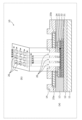
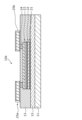
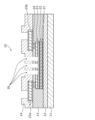
- FIG. 1 is a diagram showing the structure of a hydrogen sensing element according to an embodiment.
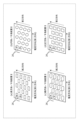
- FIG. 2A is a diagram showing variations in the number, shape, and arrangement position of a plurality of exposed parts of one hydrogen sensing element according to the embodiment.
- FIG. 2B is a diagram showing other variations in the number, shape, and arrangement position of a plurality of exposed parts of one hydrogen sensing element according to the embodiment.
- FIG. 2C is a diagram showing other variations in the number, shape, and arrangement position of a plurality of exposed parts of one hydrogen sensing element according to the embodiment.
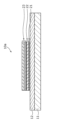
- FIG. 3A is a cross-sectional view showing a method for manufacturing a hydrogen sensing element according to an embodiment.
- FIG. 3A is a cross-sectional view showing a method for manufacturing a hydrogen sensing element according to an embodiment.
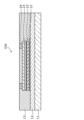
- FIG. 3B is a cross-sectional view showing the method for manufacturing the hydrogen sensing element (continued) according to the embodiment.
- FIG. 3C is a cross-sectional view showing the method for manufacturing the hydrogen sensing element according to the embodiment (continued).
- FIG. 3D is a cross-sectional view showing the method for manufacturing the hydrogen sensing element according to the embodiment (continued).
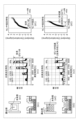
- FIG. 4 is a diagram showing experimental results regarding variations in reaction characteristics of hydrogen sensing elements according to the conventional technology and the embodiment.
- FIG. 5A is a diagram showing the distribution of variations in sensor resistance for each wafer of a hydrogen sensing element having a main body portion of 5 ⁇ m square and one exposed portion of 3 ⁇ m square.
- FIG. 5B is a diagram showing the distribution of variations in sensor resistance for each wafer of a hydrogen sensing element having a main body portion of 3 ⁇ m square and one exposed portion of 1.8 ⁇ m square.
- FIG. 5C is a diagram showing the distribution of variations in sensor resistance for each wafer of a hydrogen sensing element having a main body portion of 2 ⁇ m square and one exposed portion of 1.2 ⁇ m square.
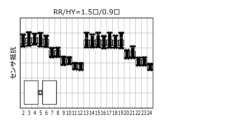
- FIG. 5D is a diagram showing a distribution of variations in sensor resistance for each wafer of a hydrogen sensing element having a main body portion of 1.5 ⁇ m square and one exposed portion of 0.9 ⁇ m square.
- FIG. 5E is a diagram showing a distribution of sensor resistance variations for each wafer of a hydrogen sensing element having a main body portion of 5 ⁇ m square and four exposed portions of 1.5 ⁇ m square.
- FIG. 5F is a diagram showing a distribution of variations in sensor resistance for each wafer of a hydrogen sensing element having a main body portion of 5 ⁇ m square and nine exposed portions of 1 ⁇ m square.
- FIG. 6 is a diagram showing experimental results regarding the dependence of the sensor resistance variation of the hydrogen sensing element according to the embodiment and the dimension of the exposed portion in the second direction.
- FIG. 7 is a diagram showing an example of the arrangement of a plurality of exposed parts of one hydrogen sensing element according to an embodiment that reflects the knowledge obtained from the experimental results shown in FIG. 6.
- FIG. 6 is a diagram showing experimental results regarding the dependence of the sensor resistance variation of the hydrogen sensing element according to the embodiment and the dimension of the exposed portion in the second direction.
- FIG. 7 is a diagram showing an example of the arrangement of a pluralit
- FIG. 8 is a diagram illustrating experimental results regarding the dependence of the resistance variation of a hydrogen sensing element having a square pattern of exposed portions and the opening size of the exposed portion.
- FIG. 9 is a diagram illustrating experimental results regarding the total opening area of the exposed portion of one hydrogen sensing element according to the embodiment.
- the inventors attempted to manufacture a hydrogen sensing element by making the opening size of the insulating film smaller than before. It was confirmed that this reduced variation in reaction characteristics. However, when the area of the opening is small, the amount of reaction to hydrogen decreases, and the sensor characteristics (that is, the sensitivity to hydrogen) of the hydrogen sensing element deteriorates.
- the inventors made the opening size of the insulating film smaller than before, and by increasing the number of openings per hydrogen sensing element to multiple instead of one as in the conventional case.
- FIG. 1 is a diagram showing the structure of a hydrogen sensing element 10 according to an embodiment. More specifically, FIG. 1(a) is a cross-sectional view showing the stacked structure of the hydrogen sensing element 10, and FIG. 1(b) is a cross-sectional view showing the stacked structure of the hydrogen sensing element 10.
- FIG. 3 is a top view of the area in between (i.e. looking at the exposed portion 26); In addition, in (a) and (b) of FIG. 1, the broken line arrow has shown the direction in which a current flows.
- the hydrogen sensing element 10 includes, from below, a semiconductor substrate 11, a first insulating film 12, a first electrode 21, a metal oxide layer 22, a second electrode 23, an inter-wiring plug 24, a first It has a structure in which the terminal 25a, the second terminal 25b, and the protective film 14 are stacked.
- the first electrode 21 , the metal oxide layer 22 , the second electrode 23 , the sides of the inter-wiring plug 24 , and the upper surface of the second electrode 23 are covered with a second insulating film 13 .
- a plurality of locations in the region sandwiched between the first terminal 25a and the second terminal 25b, A part (upper layer part) of the uppermost protective film 14 , the second insulating film 13 under it, and the second electrode 23 under it is removed and opened, and the main surface of the second electrode 23 is opened.
- An exposed portion 26 is formed to serve as a hydrogen gas introduction port (that is, the upper surface).
- a portion of the protective film 14 is also removed on a portion of the upper surface of the first terminal 25a and the second terminal 25b, and holes for electrical contact with the first terminal 25a and the second terminal 25b are formed. ing.
- the hydrogen sensing element 10 having such a structure is a variable resistance element in which the resistance between the first terminal 25a and the second terminal 25b changes when hydrogen gas is introduced into the plurality of exposed parts 26. That is, by applying a voltage between the first terminal 25a and the second terminal 25b of the hydrogen sensing element 10 and flowing a current in the direction shown in the figure, in a hydrogen atmosphere where the plurality of exposed parts 26 are exposed to hydrogen gas. , obtain the resistance value between the first terminal 25a and the second terminal 25b. The obtained resistance value corresponds to the concentration of hydrogen gas.
- the hydrogen sensing element 10 has the following minimum components: (1) a planar first electrode 21; (2) a surface facing the first electrode 21; The second electrode 23 has a main surface covered with an insulating film (protective film 14 and second insulating film 13), and a part of the insulating film on the main surface is opened to introduce a plurality of hydrogen gases. (3) a metal oxide layer 22 sandwiched between the first electrode 21 and the second electrode 23; In a plan view, it is sufficient to include a first terminal 25a and a second terminal 25b that are electrically connected to the second electrode 23 at positions sandwiching the plurality of exposed portions 26 therebetween.
- the number, shape, and arrangement position of the plurality of exposed parts 26 are not limited to those shown in FIG. 1(b).
- 2A to 2C are diagrams showing variations in the number, shape, and arrangement position of the plurality of exposed portions 26 of one hydrogen sensing element 10 according to the embodiment.
- the current direction connecting the first terminal 25a and the second terminal 25b is called a first direction, which is perpendicular to the first direction and parallel to the main surface of the second electrode 23. This direction is called the second direction.
- the plurality of exposed parts 26 are arranged in a straight line when viewed in either the first direction or the second direction, and are arranged in a grid pattern as a whole. More specifically, in (a) of FIG. 2A, three rectangular exposed portions 26 extending in the first direction are arranged in a row, and four in the second direction, for a total of twelve. In FIG. 2A (b), four circular exposed portions 26 are arranged in the first direction, three in the second direction, and a total of twelve circular exposed portions 26 are arranged. In (c) of FIG.
- one exposed portion 26 in the shape of an ellipse (“elliptical I”) extending in the first direction is arranged in the first direction, and three exposed portions 26 are arranged in the second direction, for a total of three exposed portions 26. has been done.
- three elliptical exposed portions 26 (“elliptical II”) extending in the first direction are arranged in the first direction, and three in the second direction, for a total of nine exposed portions 26. There is.
- the plurality of exposed portions 26 are arranged in a straight line when viewed in either the first direction or the second direction, and are generally arranged in a staggered manner (“staggered arrangement I”) in which each row is shifted in the first direction. ). More specifically, in (a) of FIG. 2B, the rectangular exposed portions 26 extending long in the first direction are arranged such that rows of four rows in the first direction and rows of three rows in the second direction are alternately arranged, and a total of 18 are arranged. In FIG. 2B (b), a total of 18 circular exposed portions 26 are arranged, with rows of four in the first direction and rows of three in the second direction alternately. In (c) of FIG.
- a total of 18 elliptical exposed portions 26 extending in the first direction are arranged such that rows of four in the first direction and rows of three in the second direction are alternately arranged.
- a total of 18 square exposed portions 26 are arranged, with rows of four in the first direction and rows of three in the second direction alternately.
- the plurality of exposed portions 26 are lined up in a straight line when viewed in either the first direction or the second direction, and are generally arranged in a staggered manner in which every other row is shifted in the second direction ("staggered arrangement II"). ). More specifically, in (a) of FIG. 2C, the rectangular exposed portions 26 extending long in the first direction are alternately arranged in rows of four and three in the second direction, and have a total of 18 are arranged. In FIG. 2C (b), a total of 18 circular exposed portions 26 are arranged, with rows of four circular exposed portions 26 arranged in the second direction and rows of three circular exposed portions alternated in the first direction. In (c) of FIG.
- a total of 18 elliptical exposed portions 26 extending in the first direction are arranged in a row of four rows and a row of three rows in the second direction, which are alternately arranged in the first direction. has been done.
- a total of 18 square exposed portions 26 are arranged, with rows of four squares arranged in the second direction and rows of three rows arranged alternately in the first direction.
- the shape of the plurality of exposed portions 26 of one hydrogen sensing element 10 is not limited to the rectangular, circular, and elliptical shapes shown in FIGS. 2A to 2C, but may also be rhombic or other polygonal shapes. It may be.
- 3A to 3D are cross-sectional views showing a method of manufacturing the hydrogen sensing element 10 according to the embodiment.
- TiN is deposited on a first insulating film 12 such as P-TEOS formed on a semiconductor substrate 11 using a CVD (Chemical Vapor Deposition) method or the like using, for example, a sputtering method or the like.
- a layer of the first electrode 21 made of a metal compound such as TaN a metal oxide layer 22 made of a laminate of Ta 2 O 5 or TaO x and Ta 2 O 5 , and a layer of Pt and TiN.
- the layer of the second electrode 23 composed of a laminate or the like
- the layer of the first electrode 21, the metal oxide layer 22, and the second electrode 23 are etched using a photolithography method, a dry etching method, or the like.
- the main body portion 10a of the hydrogen sensing element is formed by processing into a desired pattern.
- the main body 10a of the formed hydrogen sensing element is covered with a second insulating film 13 such as P-TEOS using a CVD method or the like, and then a lithography method, a dry etching method, etc.
- a hole-shaped opening is formed using a method such as CVD, and the opening is filled with a laminate of TiN and W using a CVD method or the like, and then a CMP (Chemical Mechanical Polishing) method or an etchback method is performed.
- CMP Chemical Mechanical Polishing
- a metal film such as a stack of AlCu, TiN, and Ti is formed on the inter-wiring plug 24 and the second insulating film 13 using a sputtering method, and the metal film is
- the first terminal 25a and the second terminal 25b are formed by processing into a desired pattern using a photolithography method, a dry etching method, or the like. Thereby, the second electrode 23 of the hydrogen sensing element, the first terminal 25a, and the second terminal 25b are electrically connected through the inter-wiring plug 24.
- a protective film 14 of P-SiON or the like is formed using a CVD method or the like, and a desired pattern is formed on the protective film 14 using a photolithography method, a dry etching method, or the like.
- a protective film 14 having an opening partially above the first terminal 25a and the second terminal 25b is formed, and finally, the main body of the hydrogen sensing element is formed using a photolithography method, a dry etching method, etc.
- an opening is formed to expose the Pt layer of the second electrode 23, which serves as a catalyst layer for hydrogen detection.
- the hydrogen sensing element 10 is completed.
- FIG. 4 is a diagram showing experimental results regarding variations in reaction characteristics of hydrogen sensing elements according to the conventional and embodiments. Here, variations in reaction characteristics measured for hydrogen sensing elements according to the conventional and embodiments manufactured by the same manufacturing process except for the formation of exposed portions are shown.
- (a1) in FIG. 4 shows a top view of the conventional hydrogen sensing element used in the experiment
- (b1) in FIG. 4 shows a cross-sectional view of the conventional hydrogen sensing element used in the experiment
- (c1) of FIG. 4 shows experimental results (horizontal axis is measurement time, vertical axis is reaction amount, number of measurement samples is 10) showing the hydrogen reaction characteristics (time change of reaction amount) of the conventional hydrogen sensing element
- (d1) in FIG. 4 shows the variation in resistance characteristics of the hydrogen sensing element (horizontal axis is sensor resistance, vertical axis is standard deviation, The number of measurement samples is 240).
- FIG. 4 shows a top view of the hydrogen sensing element according to the embodiment used in the experiment
- (b2) of FIG. 4 shows a cross-sectional view of the hydrogen sensing element according to the embodiment used in the experiment.
- (c2) of FIG. 4 shows the experimental results showing the hydrogen reaction characteristics (changes in reaction amount over time) of the hydrogen sensing element according to the embodiment (the horizontal axis is the measurement time, the vertical axis is the reaction amount, and the measurement sample is 10
- Figure 4 (d2) shows the variation in resistance characteristics of the hydrogen sensing element that has a correlation with the hydrogen reaction characteristics (reaction amount) obtained in Figure 4 (c2) (horizontal axis is sensor resistance, vertical axis is sensor resistance). The axis shows the standard deviation (240 measurement samples).
- the conventional hydrogen sensing element used in the experiment has one large-sized (3 ⁇ m square) exposed portion opened on the upper surface of the main body.
- the hydrogen sensing element according to the embodiment used in the experiment has a smaller size (1 ⁇ m ⁇ ) has nine exposed parts.
- ⁇ means a square.
- the total opening area of the exposed portion is 9 ⁇ m 2 in both the conventional case and the embodiment.
- the main body corresponds to a region of the second electrode sandwiched between the first terminal and the second terminal when the hydrogen sensing element is viewed from above.
- the sensor resistance variation of the hydrogen sensing element is approximately It is suppressed to 1/2.
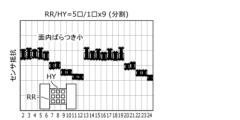
- FIGS. 5A to 5F are diagrams showing experimental results regarding variations in sensor resistance of hydrogen sensing elements having body portions and exposed portions of various sizes and numbers.
- the horizontal axis indicates the slice number that specifies the wafer on which the hydrogen sensing element was manufactured.
- the vertical axis indicates the value of the sensor resistance measured for the hydrogen sensing element obtained for each wafer.
- the sensor resistance values x mark
- median value square frame
- maximum value maximum value
- minimum value horizontal bar
- the dimensions and number of the main body portion (“RR”) and exposed portion (“HY”) of the hydrogen sensing element are shown.
- slice No. 2-6 and 13-19 slice no. 7, 8, 20, 21, slice No. 9, 10, 20, 21, slice No. Wafers Nos. 11, 12, and 24 were manufactured by intentionally changing the Pt film thickness, so that the median values of the sensor resistances were different.
- FIG. 5A shows a hydrogen sample having a body portion (“RR”) of 5 ⁇ m square and one exposed portion (“HY”) of 3 ⁇ m square, as shown in the pattern diagram at the bottom left. It shows the distribution of variations in sensor resistance for each wafer (that is, every 60 sensing elements). Note that the structure of the hydrogen sensing element shown in this figure is the conventional hydrogen sensing element shown in (a1) and (b1) of FIG.
- FIG. 5B shows a hydrogen sensing element having a main body portion (“RR”) of 3 ⁇ m square and one exposed portion (“HY”) of 1.8 ⁇ m square, as shown in the pattern diagram at the lower left. It shows the distribution of variations in sensor resistance for each wafer (that is, every 60 wafers).
- FIG. 5C shows a hydrogen sensing element having a main body portion (“RR”) of 2 ⁇ m square and one exposed portion (“HY”) of 1.2 ⁇ m square, as shown in the pattern diagram at the bottom left. The distribution of variations in sensor resistance for each wafer (that is, every 60 wafers) is shown.
- RR main body portion
- HY exposed portion
- FIG. 5D shows hydrogen having a body portion (“RR”) of 1.5 ⁇ m square and one exposed portion (“HY”) of 0.9 ⁇ m square, as shown in the pattern diagram at the bottom left. It shows the distribution of variations in sensor resistance for each wafer (that is, every 60 sensing elements).
- FIG. 5E shows an embodiment having a body portion (“RR”) of 5 ⁇ m square and four exposed portions (“HY”) of 1.5 ⁇ m square, as shown in the pattern diagram at the bottom left.
- RR body portion
- HY exposed portions
- 3 shows a distribution of variations in sensor resistance for each wafer (that is, every 60 pieces) of hydrogen sensing elements according to the invention.
- FIG. 5F shows an embodiment having a body portion (“RR”) of 5 ⁇ m square and nine exposed portions (“HY”) of 1 ⁇ m square, as shown in the pattern diagram at the bottom left. It shows the distribution of variations in sensor resistance for each wafer (that is, every 60 hydrogen sensing elements). Note that the structure of the hydrogen sensing element shown in this figure is the hydrogen sensing element according to the embodiment shown in (a2) and (b2) of FIG. 4.
- FIG. 5A shows the case of 3 ⁇ m ⁇
- Fig. 5B shows the case of 1.8 ⁇ m ⁇
- Fig. 5E shows the case of 1.5 ⁇ m ⁇
- 5C showing the case of 1.2 ⁇ m ⁇
- FIG. 5F showing the case of 1 ⁇ m ⁇
- FIG. 5D showing the case of 0.9 ⁇ m ⁇ .
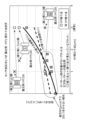
- FIG. 6 is a diagram showing experimental results regarding the dependence of the sensor resistance variation of the hydrogen sensing element according to the embodiment and the dimension of the exposed portion 26 in the second direction.
- the horizontal axis indicates the opening size ( ⁇ m) of the exposed portion (“HY”) 26, and the vertical axis indicates the measured value for 60 hydrogen sensing elements manufactured from one wafer having such an exposed portion 26. It shows the coefficient variation (C.V.; ratio (%) of standard deviation to the average value).
- “ ⁇ ” indicates the vertical dimension of the exposed portion (“HY”) 26
- “X” indicates the horizontal dimension of the exposed portion (“HY”) 26.
- horizontal in “horizontal dimension” means the first direction (that is, the current direction connecting the first terminal 25a and second terminal 25b), and “vertical” in “vertical dimension” means the second direction. direction (that is, a direction perpendicular to the first direction and parallel to the main surface of the second electrode 23).
- FIG. 6 the resistance variations of hydrogen sensing elements having four types of exposed portion 26 shapes are plotted.
- the first type is one hydrogen sensing element in which three exposed parts 26 with dimensions of 3 vertically and 1 horizontally are formed, as shown in the pattern diagram at the upper left of the graph.
- the second type is one hydrogen sensing element in which two exposed portions 26 with dimensions of 3 ⁇ 1.5 are formed, as shown in the pattern diagram at the upper center of the graph.
- the third type is one hydrogen sensing element in which three exposed portions 26 with dimensions of 1 vertically and 3 horizontally are formed, as shown in the pattern diagram at the lower right of the graph.
- the fourth type is a plot in which a pattern diagram is not shown, and " ⁇ " indicates the vertical dimension of the exposed section ("HY") 26, and "" indicates the horizontal dimension of the exposed section ("HY") 26.
- ⁇ indicates the vertical dimension of the exposed section ("HY") 26
- HY the exposed section
- HY the horizontal dimension of the exposed section
- FIG. 6 also shows an approximate curve (“HY vertical dimension correlation line”, a solid curve) showing the correlation between the vertical dimension of the exposed portion (“HY”) 26 and the resistance variation, and An approximate curve (“HY lateral dimension correlation line”, broken line curve) showing the correlation between the lateral dimension of No. 26 and resistance variation is illustrated.
- HY vertical dimension correlation line a solid curve
- HY lateral dimension correlation line broken line curve
- the resistance variation of the hydrogen sensing element largely depends on the vertical dimension of the exposed portion 26. Furthermore, in FIG. 6, the plot of the rectangular pattern of the exposed portion 26 (the plot of the three hydrogen sensing elements whose patterns are shown in the graph) deviates significantly from the "HY lateral dimension correlation line”. From these facts, it can be seen that resistance variations can be reduced by reducing the dimension in the vertical direction (that is, the second direction perpendicular to the current direction).
- the vertical dimension of the exposed portion 26 (that is, the second It is preferable that the dimension (direction dimension) is 2 ⁇ m or less.
- FIG. 7 shows one hydrogen sensing element according to an embodiment that reflects the knowledge obtained from the experimental results shown in FIG. 3 is a diagram illustrating an example arrangement of a plurality of exposed portions 26.
- FIG. 7 shows one hydrogen sensing element according to an embodiment that reflects the knowledge obtained from the experimental results shown in FIG. 3 is a diagram illustrating an example arrangement of a plurality of exposed portions 26.
- FIG. 7A nine square exposed portions 26 are formed in total by lining up three square exposed portions 26 in the current direction (horizontal direction; first direction) and three in the vertical direction (second direction). .
- FIG. 7B three rectangular exposed portions 26 extending in the current direction (horizontal direction; first direction) are lined up in the vertical direction (second direction), so that three in total are formed.
- FIG. 7C a total of nine circular exposed portions 26 are formed by lining up three circular exposed portions 26 in the current direction (horizontal direction; first direction) and three in the vertical direction (second direction).
- the dimensions A1, A2, and A3 of each exposed portion 26 in the vertical direction (second direction) are 2 ⁇ m or less.
- FIG. 8 is a diagram illustrating the experimental results regarding the dependence of the resistance variation of a hydrogen sensing element having a square pattern of exposed parts and the opening size of the exposed parts. More specifically, FIG. 8A is a diagram showing experimental results regarding the dependence of sensor resistance variation measured on a hydrogen sensing element having a square pattern of exposed portions and the opening size of the exposed portion. The horizontal axis shows the opening size of the exposed part (the length of one side of the square pattern ( ⁇ m)), and the vertical axis shows the size of the 60 hydrogen sensing elements manufactured from one wafer with such an exposed part. Resistance variation (CV (%) similar to FIG. 6) is shown. In (a) of FIG. 8, data regarding 60 hydrogen sensing elements obtained for each of 25 wafers are plotted, as shown in the legend.
- FIG. 8B shows a top view (exposed portion, main body portion) of a hydrogen sensing element having exposed portions of four types of square patterns (4 ⁇ m ⁇ , 3 m ⁇ , 2 ⁇ m ⁇ , 1 ⁇ m ⁇ ).
- the dimension of the main body portion (the length of one side of the square) is the dimension of the exposed portion + 1 ⁇ m.
- the resistance variation be below the "target level" shown in the figure. That is, it is preferable that the dimension of the square pattern of the exposed portion (that is, the dimension of one side) is 2 ⁇ m or less.
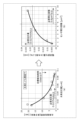
- FIG. 9 is a diagram illustrating experimental results regarding the total opening area of the exposed portion of one hydrogen sensing element according to the embodiment.
- reaction characteristics are shown when hydrogen at a concentration of 0.1% is introduced into hydrogen sensing elements having exposed parts with various total opening areas. More specifically, (a) in FIG. 9 shows the sensor current (horizontal axis; The relationship between hydrogen reaction amount (mA) and detection time (vertical axis; hydrogen detection time (element unit) (sec)) is shown.
- FIG. 9(b) shows the data of the experimental results shown in FIG. 9(a) in terms of the opening area of the exposed portion of the hydrogen sensing element (horizontal axis; "sensor opening area ( ⁇ m 2 )”) and the sensor opening area ( ⁇ m 2 ).
- a graph rewritten with data showing the relationship with current (vertical axis; "current change amount (@hydrogen 0.1%) (mA)" is shown.
- the total opening area of the exposed portion is required to be 5.6 ⁇ m 2 or more.
- the total opening area of the exposed portion 26 of the hydrogen sensing element according to the embodiment is preferably 5.6 ⁇ m 2 or more.
- the hydrogen sensing element 10 includes a planar first electrode 21 formed opposite to the first electrode 21, and an insulating film (protective film 14 and second insulating film 13).
- a planar second electrode 23 having a covered principal surface and having a plurality of exposed portions 26 that become a plurality of hydrogen gas introduction ports by opening a portion of the insulating film on the principal surface.
- the metal oxide layer 22 sandwiched between the first electrode 21 and the second electrode 23 is electrically connected to the second electrode 23 at a position sandwiching the plurality of exposed parts 26 in a plan view of the second electrode 23.
- each exposed portion 26 can be made smaller than in the past, while the total opening area of the exposed portions 26 can be kept the same as in the past. can be secured. Therefore, a hydrogen sensing element having a characteristic structure in which variations in reaction characteristics are suppressed is realized.
- the plurality of exposed parts 26 may have the same shape when the second electrode 23 is viewed from above.
- the shape may be rectangular or elliptical. This simplifies the mask pattern for forming the plurality of exposed portions 26.
- the plurality of exposed portions 26 have a maximum dimension in a second direction perpendicular to the first direction connecting the first terminal 25a and the second terminal 25b and parallel to the main surface as the maximum dimension in the first direction. They may be the same. As a result, a plurality of exposed portions 26 having the same length and width are formed.
- the plurality of exposed portions 26 have a maximum dimension in a second direction perpendicular to the first direction connecting the first terminal 25a and the second terminal 25b and parallel to the main surface that is larger than the maximum dimension in the first direction. may also be small. As a result, a plurality of exposed portions 26 that are long in the current direction are formed.
- the plurality of exposed portions 26 may have a maximum dimension of 2 ⁇ m or less in a second direction that is perpendicular to the first direction connecting the first terminal 25a and the second terminal 25b and parallel to the main surface. . Thereby, resistance variations can be suppressed to meet the specifications realistically required of a hydrogen sensing element.
- the plurality of exposed parts 26 may include a plurality of exposed parts 26 lined up along the first direction connecting the first terminal 25a and the second terminal 25b. It may include a plurality of exposed portions 26 arranged along a second direction that is perpendicular to the first direction connecting the second terminal 25b and the second terminal 25b and parallel to the main surface.
- the method for manufacturing the hydrogen sensing element 10 includes the following steps:) forming a planar first electrode 21; forming a metal oxide layer 22 on the first electrode 21; and forming a metal oxide layer 22 on the first electrode 21. forming a second electrode 23 on the material layer 22; forming a first terminal 25a and a second terminal 25b electrically connected to the second electrode 23; and forming an insulating film covering the second electrode 23.
- a layer is formed on the main surface of the second electrode 23.
- forming a plurality of exposed portions 26 serving as a plurality of hydrogen gas introduction ports, and when hydrogen gas is introduced into the plurality of exposed portions 26, the resistance between the first terminal 25a and the second terminal 25b changes. .
- each exposed portion 26 can be made smaller than in the past, while the total opening area of the exposed portions 26 can be kept the same as in the past. can be secured. Therefore, a method for manufacturing a hydrogen sensing element having a characteristic structure in which variations in reaction characteristics are suppressed is realized.
- the present disclosure is not limited to the embodiments.
- the scope of the present disclosure also includes various modifications that can be thought of by those skilled in the art to the present embodiment, and other forms constructed by combining some of the constituent elements of the embodiments, as long as they do not depart from the spirit of the present disclosure. contained within.
- the plurality of exposed portions 26 have an elliptical shape extending in the current direction, but the elliptical shape is not limited to this shape, and may be an ellipse extending in a direction perpendicular to the current direction. It may be.
- the plurality of exposed portions 26 all have the same shape and the same size, but at least one of the shape and size may be different.
- the hydrogen sensing element according to the present disclosure can be used as a hydrogen sensing element having a characteristic structure in which variations in reaction characteristics are suppressed, for example, as a hydrogen sensor used in fuel cell vehicles, hydrogen stations, hydrogen plants, etc.
- Hydrogen sensing element 10a Main body of hydrogen sensing element 11
- Semiconductor substrate 12 First insulating film 13
- Second insulating film 14 Protective film 21
- First electrode 22 Metal oxide layer 23
- Second electrode 24 Inter-wiring plug 25a First terminal 25b 2 terminals 26 exposed part
Landscapes
- Chemical & Material Sciences (AREA)
- Life Sciences & Earth Sciences (AREA)
- Health & Medical Sciences (AREA)
- Pathology (AREA)
- General Physics & Mathematics (AREA)
- Immunology (AREA)
- Physics & Mathematics (AREA)
- Analytical Chemistry (AREA)
- Biochemistry (AREA)
- General Health & Medical Sciences (AREA)
- Chemical Kinetics & Catalysis (AREA)
- Electrochemistry (AREA)
- Engineering & Computer Science (AREA)
- Combustion & Propulsion (AREA)
- Food Science & Technology (AREA)
- Medicinal Chemistry (AREA)
- Molecular Biology (AREA)
- Investigating Or Analyzing Materials By The Use Of Electric Means (AREA)
- Investigating Or Analyzing Materials By The Use Of Fluid Adsorption Or Reactions (AREA)
Priority Applications (3)
| Application Number | Priority Date | Filing Date | Title |
|---|---|---|---|
| JP2024545617A JPWO2024053537A1 (https=) | 2022-09-06 | 2023-08-31 | |
| CN202380063346.3A CN119907915A (zh) | 2022-09-06 | 2023-08-31 | 氢检测元件及其制造方法 |
| US19/058,748 US20250208080A1 (en) | 2022-09-06 | 2025-02-20 | Hydrogen detection element and method for manufacturing the same |
Applications Claiming Priority (2)
| Application Number | Priority Date | Filing Date | Title |
|---|---|---|---|
| US202263404049P | 2022-09-06 | 2022-09-06 | |
| US63/404,049 | 2022-09-06 |
Related Child Applications (1)
| Application Number | Title | Priority Date | Filing Date |
|---|---|---|---|
| US19/058,748 Continuation US20250208080A1 (en) | 2022-09-06 | 2025-02-20 | Hydrogen detection element and method for manufacturing the same |
Publications (1)
| Publication Number | Publication Date |
|---|---|
| WO2024053537A1 true WO2024053537A1 (ja) | 2024-03-14 |
Family
ID=90190932
Family Applications (1)
| Application Number | Title | Priority Date | Filing Date |
|---|---|---|---|
| PCT/JP2023/031689 Ceased WO2024053537A1 (ja) | 2022-09-06 | 2023-08-31 | 水素検知素子及びその製造方法 |
Country Status (4)
| Country | Link |
|---|---|
| US (1) | US20250208080A1 (https=) |
| JP (1) | JPWO2024053537A1 (https=) |
| CN (1) | CN119907915A (https=) |
| WO (1) | WO2024053537A1 (https=) |
Citations (7)
| Publication number | Priority date | Publication date | Assignee | Title |
|---|---|---|---|---|
| WO2017037984A1 (ja) * | 2015-08-28 | 2017-03-09 | パナソニックIpマネジメント株式会社 | 気体センサ、及び燃料電池自動車 |
| JP2017151091A (ja) * | 2016-02-22 | 2017-08-31 | パナソニックIpマネジメント株式会社 | 気体センサ及び水素濃度判定方法 |
| JP2017198660A (ja) * | 2016-04-26 | 2017-11-02 | パナソニックIpマネジメント株式会社 | 気体検出装置及び気体検出方法 |
| JP2017215312A (ja) * | 2016-05-25 | 2017-12-07 | パナソニックIpマネジメント株式会社 | 気体センサ装置、気体センサモジュール、及び気体検知方法 |
| JP2018124170A (ja) * | 2017-01-31 | 2018-08-09 | パナソニックIpマネジメント株式会社 | 気体センサ |
| WO2020179226A1 (ja) * | 2019-03-07 | 2020-09-10 | パナソニックセミコンダクターソリューションズ株式会社 | 気体センサとその製造方法、および燃料電池自動車 |
| WO2021210453A1 (ja) * | 2020-04-16 | 2021-10-21 | ヌヴォトンテクノロジージャパン株式会社 | 水素センサ、水素検知方法および水素検知装置 |
-
2023
- 2023-08-31 JP JP2024545617A patent/JPWO2024053537A1/ja active Pending
- 2023-08-31 CN CN202380063346.3A patent/CN119907915A/zh active Pending
- 2023-08-31 WO PCT/JP2023/031689 patent/WO2024053537A1/ja not_active Ceased
-
2025
- 2025-02-20 US US19/058,748 patent/US20250208080A1/en active Pending
Patent Citations (7)
| Publication number | Priority date | Publication date | Assignee | Title |
|---|---|---|---|---|
| WO2017037984A1 (ja) * | 2015-08-28 | 2017-03-09 | パナソニックIpマネジメント株式会社 | 気体センサ、及び燃料電池自動車 |
| JP2017151091A (ja) * | 2016-02-22 | 2017-08-31 | パナソニックIpマネジメント株式会社 | 気体センサ及び水素濃度判定方法 |
| JP2017198660A (ja) * | 2016-04-26 | 2017-11-02 | パナソニックIpマネジメント株式会社 | 気体検出装置及び気体検出方法 |
| JP2017215312A (ja) * | 2016-05-25 | 2017-12-07 | パナソニックIpマネジメント株式会社 | 気体センサ装置、気体センサモジュール、及び気体検知方法 |
| JP2018124170A (ja) * | 2017-01-31 | 2018-08-09 | パナソニックIpマネジメント株式会社 | 気体センサ |
| WO2020179226A1 (ja) * | 2019-03-07 | 2020-09-10 | パナソニックセミコンダクターソリューションズ株式会社 | 気体センサとその製造方法、および燃料電池自動車 |
| WO2021210453A1 (ja) * | 2020-04-16 | 2021-10-21 | ヌヴォトンテクノロジージャパン株式会社 | 水素センサ、水素検知方法および水素検知装置 |
Also Published As
| Publication number | Publication date |
|---|---|
| JPWO2024053537A1 (https=) | 2024-03-14 |
| CN119907915A (zh) | 2025-04-29 |
| US20250208080A1 (en) | 2025-06-26 |
Similar Documents
| Publication | Publication Date | Title |
|---|---|---|
| CN102318058B (zh) | 交叉点存储器结构及形成存储器阵列的方法 | |
| US20100295149A1 (en) | Integrated circuit structure with capacitor and resistor and method for forming | |
| CN101432879B (zh) | 可变电阻元件及其制造方法 | |
| WO2007102341A1 (ja) | 抵抗変化型素子、半導体装置、およびその製造方法 | |
| US9716223B1 (en) | RRAM device and method for manufacturing the same | |
| US8658463B2 (en) | Memristor with embedded switching layer | |
| US6940111B2 (en) | Radiation protection in integrated circuits | |
| US11114351B2 (en) | Dummy element and method of examining defect of resistive element | |
| JP4634678B2 (ja) | コンタクト抵抗測定用テストパターン及びその製造方法 | |
| WO2024053537A1 (ja) | 水素検知素子及びその製造方法 | |
| CN119452250A (zh) | 氢检测装置及其制造方法 | |
| JP2025526291A (ja) | 3次元クロスポイント不揮発性メモリ | |
| JP2020021909A (ja) | 抵抗素子及びその製造方法 | |
| KR20100121098A (ko) | 가스 센서 | |
| JP4500262B2 (ja) | 半導体装置及びその製造方法 | |
| CN114141641A (zh) | 半导体器件及其制作方法 | |
| US12402325B2 (en) | MRAM structure with contact plug protruding out of contact hole and method of fabricating the same | |
| JP6655469B2 (ja) | 半導体装置およびその製造方法 | |
| US20140084948A1 (en) | Test vehicles for evaluating resistance of thin layers | |
| US12490660B2 (en) | Structures for three-terminal memory cells | |
| US12362096B2 (en) | Chip parts | |
| US20250224365A1 (en) | Semiconductor structure including micro wells with different heights | |
| JP2009021514A (ja) | 積層型薄膜キャパシタおよびその製造方法 | |
| TW202547344A (zh) | 電阻式隨機存取記憶體裝置及其製作方法 | |
| WO2025079597A1 (ja) | 水素検知装置及びその製造方法 |
Legal Events
| Date | Code | Title | Description |
|---|---|---|---|
| 121 | Ep: the epo has been informed by wipo that ep was designated in this application |
Ref document number: 23863075 Country of ref document: EP Kind code of ref document: A1 |
|
| WWE | Wipo information: entry into national phase |
Ref document number: 2024545617 Country of ref document: JP |
|
| WWE | Wipo information: entry into national phase |
Ref document number: 202380063346.3 Country of ref document: CN |
|
| NENP | Non-entry into the national phase |
Ref country code: DE |
|
| WWP | Wipo information: published in national office |
Ref document number: 202380063346.3 Country of ref document: CN |
|
| 122 | Ep: pct application non-entry in european phase |
Ref document number: 23863075 Country of ref document: EP Kind code of ref document: A1 |