WO2024009448A1 - パッケージ - Google Patents
パッケージ Download PDFInfo
- Publication number
- WO2024009448A1 WO2024009448A1 PCT/JP2022/026918 JP2022026918W WO2024009448A1 WO 2024009448 A1 WO2024009448 A1 WO 2024009448A1 JP 2022026918 W JP2022026918 W JP 2022026918W WO 2024009448 A1 WO2024009448 A1 WO 2024009448A1
- Authority
- WO
- WIPO (PCT)
- Prior art keywords
- package
- varnish
- water
- coated
- package according
- Prior art date
- Legal status (The legal status is an assumption and is not a legal conclusion. Google has not performed a legal analysis and makes no representation as to the accuracy of the status listed.)
- Ceased
Links
Images

Classifications
-
- B—PERFORMING OPERATIONS; TRANSPORTING
- B65—CONVEYING; PACKING; STORING; HANDLING THIN OR FILAMENTARY MATERIAL
- B65D—CONTAINERS FOR STORAGE OR TRANSPORT OF ARTICLES OR MATERIALS, e.g. BAGS, BARRELS, BOTTLES, BOXES, CANS, CARTONS, CRATES, DRUMS, JARS, TANKS, HOPPERS, FORWARDING CONTAINERS; ACCESSORIES, CLOSURES, OR FITTINGS THEREFOR; PACKAGING ELEMENTS; PACKAGES
- B65D85/00—Containers, packaging elements or packages, specially adapted for particular articles or materials
- B65D85/07—Containers, packaging elements or packages, specially adapted for particular articles or materials for compressible or flexible articles
- B65D85/08—Containers, packaging elements or packages, specially adapted for particular articles or materials for compressible or flexible articles rod-shaped or tubular
- B65D85/10—Containers, packaging elements or packages, specially adapted for particular articles or materials for compressible or flexible articles rod-shaped or tubular for cigarettes
Definitions
- the present invention relates to a package.
- Patent Document 1 relates to a package for tobacco products, etc., and includes a base paper that constitutes the package body, a colored ink layer applied to the base paper, a smooth glossy layer that gives gloss to the colored ink layer, and a glossy layer. It is described that a convex layer formed by printing a transparent varnish in a convex shape under predetermined conditions is provided thereon.
- Most tobacco products are made by packaging 20 cigarettes wrapped in paper (paper with an aluminum layer inside) in either a hard package consisting of a box made of cardboard or a soft package consisting of a box made of thin paper.
- the package is further wrapped in a film such as a shrink film (see prior art such as FIG. 2 of Patent Document 1).
- a film such as a shrink film
- a film it is necessary to supplement the functions that films have played in packaging tobacco products, such as water resistance and water vapor barrier properties, to protect tobacco products from environmental moisture.
- An object of the present invention is to provide packaging for tobacco products that is not adversely affected by moisture in the external environment even when a film on the package is not used.
- the first feature of the present invention which has been completed for this purpose, is a package that houses a tobacco product and includes an area on at least a portion of the surface of which is coated with a water-soluble varnish containing an acrylic resin.
- the second feature is that the amount of water vapor permeation in the area coated with the varnish after 24-hour storage may be 400 g/(m 2 ⁇ day) or less.
- the third feature may be that the water resistance and abrasion resistance of the area coated with the varnish is measured 40 times or more by the following measuring method. ⁇ Measurement of water resistance and abrasion resistance> Attach No. 3 gold cloth with a load of 200 g to the varnished surface. After dropping 5 drops of tap water onto the coated surface from a distance of 5 cm, move the No.
- a fourth feature is that the sliding angle between the coated surfaces of the area coated with the varnish according to the JIS P8147:2010 tilting method may be 24° or less.
- the varnish may be a water-soluble varnish containing acrylic resin and water as main components.
- the varnish may be applied to 60% or more of the package surface.
- the package may be a hard package made of cardboard.
- An eighth feature is that the package may be a soft package made of thin paper.
- the ninth feature is that the surface does not need to be wrapped with a film.
- the first feature it is possible to provide a package that can impart water vapor barrier properties and water resistance to the package, and can maintain the quality of tobacco products even without film packaging.
- water vapor barrier properties can be imparted to the package.
- water resistance can be imparted to the package.
- the fourth feature it is possible to provide a package having a coating layer that has good slipperiness on the package surface and is difficult to peel off during the manufacturing process or when handling the package.
- the sixth feature it is possible to impart superior water vapor barrier properties and water resistance to the package.
- a package with high water vapor barrier properties can be provided.
- the ninth feature it is possible to provide a package with reduced environmental impact without using a film.
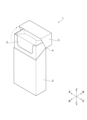
- FIG. 2 is a perspective view showing an example of the hard package in a closed state according to the first embodiment.
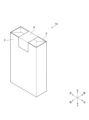
- FIG. 2 is a perspective view showing an example of the hard package in an open state according to the first embodiment.
- FIG. 7 is a perspective view showing an example of a software package seen diagonally from above according to a second embodiment.
- the tobacco products accommodated in each embodiment of the present invention are not particularly limited.
- tobacco products include cigarettes (filter cigarettes, double-cut tobacco (no filter)), cigars, cigarillos, electronic cigarettes, smokeless tobacco (chewing tobacco, snuff), and the like.
- the package in the first embodiment houses a tobacco product and includes, on at least a portion of its surface, an area coated with a water-soluble varnish containing acrylic resin.
- 1 and 2 are perspective views showing an example of the hard package according to the first embodiment.
- FIG. 1 shows the lid closed
- FIG. 2 shows the lid opened.
- the package 1 has a substantially rectangular parallelepiped shape and includes a main body 2 and a lid 3.
- the lid part 3 is formed to be able to be opened and closed about a hinge 4 located at the upper part of the back surface of the main body 2. Note that, as shown in FIG. 1, the surface on which the hinge 4 connecting the main body 2 and the lid part 3 is provided is the back surface of the package 1, and the direction in which the back surface faces is the rear surface.
- FIG. 2 shows the package 1 with the lid open. As shown in FIG. 2, the object 5 appears from below the lid 3.
- the to-be-accommodated item 5 is a package 1 containing 20 tobacco products such as cigarettes (not shown) wrapped in wrapping paper.
- An example of the inner wrapping paper is one in which an aluminum layer is laminated on the inside of a paper base layer containing a fibrous cellulose material.
- Examples of the aluminum layer include a layer made of aluminum foil, a layer formed by vapor-depositing aluminum on a paper base material, and the like.
- the package 1 is also called a hard pack, box, hard box type package, etc., and is formed by assembling base paper into a box shape consisting of a main body 2 and a lid part 3 as shown in FIGS. 1 and 2. It is.
- the base paper used as the material for the package 1 may be cardboard such as single-sided coated paper, art post paper, cast coated paper, or the like. Since the brightness of the package 1 can be enhanced, the base paper is preferably paper with a smooth surface. The thickness of the base paper is not particularly limited.
- the basis weight of the base paper is preferably 100 gsm or more, more preferably 180 gsm or more, more preferably 400 gsm or less, and 240 gsm or less, from the viewpoint of strength and formability for assembling into a box shape. It is even more preferable.
- the surface of the package 1 is coated with the varnish of this embodiment.
- the varnished area is at least a part of the surface of the package 1, but even if a film on the package is not used, from the viewpoint of providing packaging that is not adversely affected by moisture in the external environment, the area where the varnish is applied is at least part of the surface of the package 1.
- the varnish of this embodiment is preferably applied to 60% or more of the entire surface of the package 1, more preferably 70% or more, particularly 80% or more of the entire surface, and the varnish of this embodiment is applied to substantially all the surfaces of the package 1. Most preferably, it is coated.
- the varnish can be applied, for example, by printing. When applying to the surface of the package 1, any location can be selected; for example, the entire front surface, the entire back surface, etc.
- the amount of varnish applied in a dry state after varnish application is preferably 1 g/m 2 or more and 20 g/m 2 or less, and more preferably 2 g/m 2 It is preferably 10 g/m 2 or more, particularly 4 g/m 2 or more and 8 g/m 2 or less.
- the varnish of this embodiment is a water-soluble varnish containing an acrylic resin.
- the acrylic resin is not particularly limited as long as it satisfies the water vapor permeation rate, water resistance, friction resistance, sliding angle, etc. described below. Particularly suitable is a water-soluble varnish whose main components are acrylic resin and water.
- HYDBAR registered trademark
- Acrylic resins can be obtained, for example, by addition polymerization of one or more acrylic monomers selected from acrylic acid, methacrylic acid, acrylic esters, and methacrylic esters.
- a comonomer having a functional group such as a hydroxyl group, an epoxy group, or an amino group in its molecular structure can be used.
- the varnish may be colorless, or may be colored by containing a pigment.
- the varnish of this embodiment preferably has a water vapor permeation amount of 400 g/(m 2 ⁇ day) or less after being stored for 24 hours in a dry state after being applied by printing or the like.
- a low water vapor permeation amount such as 400 g/(m 2 ⁇ day) or less, indicates that the water vapor barrier property of the varnished area increases.
- the amount of water vapor permeation after storage for 24 hours is more preferably 350 g/(m 2 ⁇ day) or less, further preferably 300 g/(m 2 ⁇ day) or less, particularly preferably 250 g/(m 2 ⁇ day) or less.
- the lower limit of water vapor permeation is theoretically most preferably 0g/(m 2 ⁇ day), but the practical range is 20g/(m 2 ⁇ day) or more, usually 50g/(m 2 ⁇ day). That's all.
- the amount of water vapor permeation after storage for 72 hours is preferably 350 g/(m 2 ⁇ day) or less, more preferably 300 g/(m 2 ⁇ day) or less.
- the lower limit is most preferably 0 g/(m 2 ⁇ day) as after 24-hour storage, but the practical range is 20 g/(m 2 ⁇ day) or more, usually 50 g/(m 2 ⁇ day). That's all.
- the amount of water vapor permeation is measured in accordance with JIS Z 0208:2021 "Moisture permeability test method for moisture-proof packaging materials (cup method)". The measurement method is as follows. A cup-shaped container made of a material that does not permeate water vapor is coated with a sealant such as beeswax by melting all the edges of the opening of the container, and ion-exchanged water is poured into the container.
- a test piece capable of covering the opening of the container, with one side coated with the varnish of this embodiment is prepared. Place the varnished side of the test piece on the container with the varnished side facing the container side (lower side), and bond the varnished part and the beeswax part of the container by melting the beeswax to seal the container. Measure the mass of the entire container. Next, store it at 25°C and 50% humidity, measure the mass of the container after 24 hours and 72 hours, divide the mass difference by the surface area of the container, and calculate the water vapor per unit area and unit time. The amount of permeation is calculated and determined in units of g/(m 2 ⁇ day). Details are described in Examples.
- the varnish of this embodiment is preferably coated 40 times or more in terms of water resistance and abrasion resistance in a dry state after being applied by printing or the like.
- This number of times indicates the degree to which the varnish is peeled off by friction in the presence of moisture, and the greater the number of times, the more difficult it is for the applied varnish to peel off from the base paper.
- the number of times of taking is preferably 50 or more, particularly preferably 70 or more. Theoretically, the larger the number, the better, and there is no upper limit.
- the method for measuring water resistance and abrasion resistance is as described below. Attach No. 3 gold cloth with a load of 200 g to the varnished surface. After dropping 5 drops of tap water onto the coated surface from a distance of 5 cm, move the No. 3 metal cloth back and forth to find the number of times it takes for the varnish to be removed. Details are described in Examples.
- the varnish of this embodiment preferably has a sliding angle of 24° or less between the varnished surfaces measured by the JIS P8147:2010 tilting method in a dry state after being applied by printing or the like.
- the smaller the sliding angle value the better the sliding property.
- the coated surface has good slipperiness, and since the substance slides on the surface when it comes into contact, it is difficult to peel off by the manufacturing equipment during the manufacturing process. Another advantage is that the package does not easily peel off when the user holds the package.
- the sliding angle is more preferably 22° or less, and even more preferably 20° or less.
- the sliding angle between the varnished surfaces is 18° or less. is preferable, and more preferably 16° or less. The smaller the sliding angle, the more difficult it is for the varnish to peel off when it comes into contact with other items during the manufacturing process, or when a user holds the package.
- the varnish of this embodiment was dried, and when water droplets were wiped off and observed 1 hour after the water droplets were applied, not a single drop of water was found on the varnished surface. It is preferable that no water droplets penetrate the varnished surface, and it is particularly preferable that no water droplets penetrate the varnished surface after 2 hours have elapsed. Drip resistance measures the degree to which water droplets do not penetrate into the varnished surface, and measures whether the varnish surface is exposed to rain, sweat, or other water when the user carries the package in a bag or pocket, or when carrying it by hand. However, it can exhibit waterproof properties even without film packaging.
- the brand, company name, contents, etc. of the tobacco product are usually printed with ink or the like (not shown in the figure).
- ink such as brand name, company name, content display, etc. is applied (printed) directly onto the base paper that is the material of the package 1.
- OP Over Print varnish may be applied to the areas where ink is applied and the areas where ink is not applied, and OP varnish processing may be performed.
- OP varnishing can protect the layer under the OP varnishing from scratches and stains, and when OP varnish is applied over ink printing, it can protect the ink and add gloss to the surface of the ink.
- OP varnish is roughly divided into three types: oil-based, water-based, and UV. The three types of OP varnishes are further classified into gloss type and matte type. Gloss type is preferable to make the surface smoother. Examples of properties required of the OP varnish in the package 1 include slipperiness, abrasion resistance, heat resistance, and light resistance. It is preferable to select and use an OP varnish that has the desired properties. Further, a plurality of OP varnishes with different characteristics may be used simultaneously, or OP varnishes with different characteristics can be varnished separately for each region.
- the varnish of this embodiment is preferably applied to the entire surface of the package 1, so if there is ink printing, the varnish of this embodiment can protect it from damage, peeling, etc. of the ink.
- the varnish of this embodiment without performing OP varnishing, the total number of steps can be reduced by simply changing the OP varnishing process to the varnish application (printing) process of this embodiment in the package manufacturing process.
- Package 1 can be manufactured without changing. Therefore, there is no need for additional investment in manufacturing equipment, and the package of this embodiment can be obtained without changing the number of manufacturing steps, the time required for manufacturing, etc.
- the varnish of this embodiment no film is required, and the inner wrapping paper and cardboard used as hard packaging materials, which are conventionally used for packaging tobacco products, can be used as they are, and manufacturing costs can be reduced.
- the soft package according to the second embodiment also accommodates a tobacco product and includes an area coated with a water-soluble varnish containing acrylic resin on at least a portion of the surface. .
- FIG. 3 is a perspective view showing an example of the soft package according to the second embodiment as a package 1A as seen from one side (for convenience, it is taken as the front side).
- Package 1A contains 20 tobacco products such as cigarettes (not shown) wrapped in inner wrapping paper, and a blockage formed by folding a part of the inner wrapping paper into one end of the tobacco product.
- An object 5 having a surface is accommodated therein.
- An example of the inner wrapping paper is one in which an aluminum layer is laminated on the inside of a paper base layer containing a fibrous cellulose material, similar to the inner wrapping paper in the hard package of the first embodiment.
- the package 1A is formed from a main body 2 and has a substantially rectangular parallelepiped shape.
- the package 1A does not have a portion corresponding to a lid, and the closed surface of the contained object 5 is exposed from a portion corresponding to the upper surface of the rectangular parallelepiped.
- the package 1A includes a paper seal 6 pasted on the main body 2 so as to cross over the closed surface of the object 5. When opening the package 1A, the user often cuts off at least a portion of the object 5 that corresponds to the closed surface.
- a soft package is also called a soft pack, and is made of thin paper formed into a substantially rectangular parallelepiped shape with the top surface missing, as shown in package 1A in FIG.
- the base paper for the package 1A ordinary paper can be used without any restriction.
- the base paper is preferably paper with a smooth surface because it can enhance the brightness of the package 1A.
- the thickness of the base paper is not particularly limited.
- the basis weight of the base paper is preferably 50 gsm or more, more preferably 70 gsm or more, more preferably 150 gsm or less, and 120 gsm or less, from the viewpoint of strength and formability for assembling into a box shape. It is even more preferable.
- the varnish of this embodiment is applied to the surface of the package 1A.
- the area coated with varnish is at least a part of the surface of the main body 2 of the package 1A, but even if a film on the package is not used, from the viewpoint of providing packaging that is not adversely affected by moisture in the external environment, It is preferable that 60% or more of the entire surface area of the main body 2 of the package 1A is coated, more preferably 70% or more, particularly 80% or more of the whole surface area. Most preferably, substantially all the surfaces of the main body 2 are coated with the varnish of this embodiment. Furthermore, it is preferable that at least one of the exposed surface of the object to be accommodated 5 and the sealing paper 6, particularly both, be coated with varnish.
- the varnish can be applied, for example, by printing.
- any location can be selected; for example, the entire front surface, the entire back surface, etc. of the package 1A can be selected.
- the varnish of the second embodiment is also a water-soluble varnish containing an acrylic resin as in the first embodiment, and a water-soluble varnish containing an acrylic resin and water as main components is particularly suitable.
- the acrylic resin that can be used is the same as in the first embodiment.
- the varnish of this embodiment also has the same values as the varnish of the first embodiment, such as the amount of varnish applied, the amount of water vapor permeation, the number of scratches due to water resistance and abrasion resistance, the sliding angle of the JIS P8147:2010 slope method, and the dripping water resistance. , range, etc. are preferred.
- ink printing, OP varnishing, etc. are performed.
- the varnish of this embodiment is applied over the entire surface of the package 1A over the ink printing.
- by applying the varnish of this embodiment instead of the conventional OP varnishing without using the conventionally used film there is no need for additional investment in manufacturing equipment, and the number of manufacturing steps is reduced. The manufacturing cost can be further reduced without changing the time required for the process.
- the package 1 that opens on the top side has been described as an example, but a package that opens on the right side or the left side can also be applied, for example.
- the first and second embodiments can also be applied to packages with chamfered corners.
- the surface of the package may be subjected to embossing, stamping, or the like.
- the visual appearance of the varnish of this embodiment can be made high gloss or conversely low gloss.
- Example 1 a printed matter of Comparative Example 1 was obtained in the same manner as in Example 2 except that the water-soluble varnish was replaced with Dicksafe G350.
- Dicksafe G350 is a type of varnish that has been commonly used as an overprint varnish to be applied to packages of tobacco products.
- the coating amounts in Table 1 are theoretical values based on the assumed transfer rate under the printing conditions in Table 1.
- the theoretical coating values for Examples 1 to 3 are within the range of 2 to 10 g/m 3 recommended by the supplier for the varnish used.
- ⁇ Dripping water resistance> For each printed test piece, 0.1 ml of tap water was dropped onto the coating surface from a distance of 5 cm. After being left for each period of time, water droplets were wiped off with a paper wiper (trade name: Kimwipe, manufactured by Nippon Paper Crecia Co., Ltd.), and the surface condition was visually observed and evaluated using the following criteria. -Evaluation criteria- A: No swelling, no strike-through. B: Swelling, no show-through. C: Swelling and see-through. “Swelling” refers to a state in which water droplets penetrate the paper but do not reach the back side of the printed material and remain inside the paper. “Bleed through” refers to a state in which water droplets penetrate the paper and do not reach the back side of the printed material. Refers to the state where wetness comes out from the back side.
- the printed matter of Examples 1 to 3 coated with a water-soluble varnish containing acrylic resin and water as main components exhibits favorable water vapor barrier properties and water resistance, so the package constructed from the printed matter has It will be appreciated that even without the use of a film on the package, it is possible to provide packaging that is not adversely affected by moisture in the external environment.
Landscapes
- Engineering & Computer Science (AREA)
- Mechanical Engineering (AREA)
- Packaging Of Annular Or Rod-Shaped Articles, Wearing Apparel, Cassettes, Or The Like (AREA)
Abstract
たばこ商品を収容し、表面の少なくとも一部に、アクリル樹脂を含有する水溶性ワニスが塗布された領域を含むパッケージ。
Description
本発明は、パッケージに関する。
特許文献1には、たばこ商品等のパッケージに関するものであり、パッケージ本体を構成する原紙と、原紙に塗布した色インキ層と、色インキ層に光沢感を付与する平滑な光沢層と、光沢層の上に、透明なニスを所定条件で凸状に印刷した凸層を備えることが記載されている。
たばこ商品の多くは、内包紙(アルミニウム層を内側に有する紙)で包んだたばこ20本を、厚紙でできた箱からなるハードパッケージ又は薄紙でできた箱からなるソフトパッケージにより包装し、いずれかのパッケージを更にシュリンクフィルム等のフィルムにより包装している(特許文献1の図2等の従来技術参照)。
地球環境の保護の観点から、脱プラスチックスが求められており、今後、たばこ商品においてもフィルムを用いないことが求められる可能性がある。フィルムを用いない場合、たばこ商品の包装においてフィルムが担ってきた耐水機能、水蒸気バリア性等のたばこ商品を環境水分から保護する機能を補う必要がある。
本発明は、たばこ商品の包装においてパッケージ上のフィルムを使用しない場合においても、外部環境の水分による悪影響を受けない包装を提供することを目的とする。
地球環境の保護の観点から、脱プラスチックスが求められており、今後、たばこ商品においてもフィルムを用いないことが求められる可能性がある。フィルムを用いない場合、たばこ商品の包装においてフィルムが担ってきた耐水機能、水蒸気バリア性等のたばこ商品を環境水分から保護する機能を補う必要がある。
本発明は、たばこ商品の包装においてパッケージ上のフィルムを使用しない場合においても、外部環境の水分による悪影響を受けない包装を提供することを目的とする。
かかる目的のもと完成させた本発明の第1の特徴は、たばこ商品を収容し、表面の少なくとも一部に、アクリル樹脂を含有する水溶性ワニスが塗布された領域を含むパッケージである。
第2の特徴は、前記ワニスが塗布された領域の24時間保管後の水蒸気透過量は400g/(m2×day)以下であってもよい。
第3の特徴は、前記ワニスが塗布された領域の下記測定法による耐水耐摩擦性の取られ回数が40回以上であってもよい。
<耐水耐摩擦性の測定>
ワニスが塗布された面に対して荷重200gで金巾3号を取り付ける。塗布面に高さ5cmの距離から水道水を5滴滴下した後、前記金巾3号を往復させ、ワニスが取られるまでの回数を求める。
第4の特徴は、前記ワニスが塗布された領域のJIS P8147:2010傾斜法による塗布面同士の滑り角が24°以下であってもよい。
第5の特徴は、前記ワニスはアクリル樹脂と水とを主成分とする水溶性ワニスであってもよい。
第6の特徴は、前記ワニスはパッケージ表面の60%以上に塗布されていてもよい。
第7の特徴は、前記パッケージは厚紙からなるハードパッケージであってもよい。
第8の特徴は、前記パッケージは薄紙から構成されるソフトパッケージであってもよい。
第9の特徴は、前記表面がフィルムにて包装されていなくてもよい。
第1の特徴によれば、パッケージに水蒸気バリア性、耐水性を付与でき、フィルム包装が無くてもたばこ商品の品質維持ができるパッケージを提供することができる。
第2の特徴によれば、パッケージに水蒸気バリア性を付与することができる。
第3の特徴によれば、パッケージに耐水性を付与することができる。
第4の特徴によれば、パッケージ表面の滑り性がよく、製造工程やパッケージ取り扱いの際にはがれにくい塗布層を有するパッケージを提供することができる。
第5の特徴によれば、パッケージにより優れた水蒸気バリア性、耐水性を付与することができる。
第6の特徴によれば、パッケージにより優れた水蒸気バリア性、耐水性を付与することができる。
第7の特徴によれば、水蒸気バリア性が高いパッケージを提供することができる。
第8の特徴によれば、扱いやすく、たばこ商品の味がマイルドに感じるパッケージを提供することができる。
第9の特徴によれば、フィルムを用いず、環境負荷を低減したパッケージを提供することができる。
以下、添付図面を参照して、本発明に係る実施の形態について詳細に説明する。以下に示す実施形態は例示であり、本発明の技術的範囲を以下の態様に限定するものではない。各図面には、同一の部分に同一の符号を付して示す。
本開示において、数値範囲を表す「〇〇以上〇〇以下」や「〇〇~〇〇」の記載は、特に断りのない限り、記載された上限及び下限を含む数値範囲を意味する。
本開示において、数値範囲を表す「〇〇以上〇〇以下」や「〇〇~〇〇」の記載は、特に断りのない限り、記載された上限及び下限を含む数値範囲を意味する。
<たばこ商品>
本発明の各実施形態において収容されるたばこ商品は特に限定されない。たばこ商品の例として、紙巻たばこ(フィルタシガレット、両切たばこ(フィルタ無し))、シガー(葉巻)、シガリロ、電子たばこ、無煙たばこ(かみたばこ、かぎたばこ)等が挙げられる。
本発明の各実施形態において収容されるたばこ商品は特に限定されない。たばこ商品の例として、紙巻たばこ(フィルタシガレット、両切たばこ(フィルタ無し))、シガー(葉巻)、シガリロ、電子たばこ、無煙たばこ(かみたばこ、かぎたばこ)等が挙げられる。
<第1実施形態:ハードパッケージ>
第1の実施形態におけるパッケージは、たばこ商品を収容し、表面の少なくとも一部に、アクリル樹脂を含有する水溶性ワニスが塗布された領域を含む。
図1及び図2は、第1実施形態に係るハードパッケージの一例を示す斜視図である。図1は、蓋を閉じた状態を示しており、図2は、蓋を開けた状態を示している。パッケージ1は、本体2と蓋部3とからなるほぼ直方体形状である。本体2の背面上部にあるヒンジ4を軸として、蓋部3が開閉自在な構造に形成されている。
なお、図1にも方向を示すように、本体2と蓋部3とが接続されているヒンジ4の設けられた面をパッケージ1の背面とし、背面が向く方向を後とする。背面の反対側の面を正面(前面)とし、正面が向く方向を前とする。また、蓋部3が設けられ、開蓋時に現れる本体2の開口部から収容物を取り出す方向の面を上面(天面)、その反対側の面を底面とし、上面及び底面が向く方向をそれぞれ上及び下とする。パッケージ1を正面から見たときの左右の面を、それぞれ左側面、右側面とする。
図2は、蓋を開けた状態のパッケージ1を表している。図2に示されるように、蓋部3の下から被収容物5が現れる。本実施態様では、被収容物5は、パッケージ1内部に紙巻たばこ等のたばこ商品20本(図省略)を内包紙により包装した状態で収容されている。内包紙の例としては、繊維質セルロース系材料を含む紙基材層に、アルミニウム層を内側に積層したものが挙げられる。前記アルミニウム層としてはアルミニウム箔から構成される層、アルミニウムを紙基材上に蒸着して形成した層、等が挙げられる。
ハードパッケージの場合のパッケージ1は、ハードパック、ボックス、ハードボックス型パッケージ等とも呼ばれ、原紙を図1、図2に示すように本体2と蓋部3からなる箱型に組み立てて形成したものである。
パッケージ1の材料となる原紙には、片面コート紙、アートポスト紙、キャストコート紙等の厚紙を用いることができる。パッケージ1の輝度感を高めることができるため、原紙は表面が平滑な紙が好ましい。原紙の厚さは特に限定されない。原紙の坪量は、箱型に組み立てるための強度と成形性の観点から、100gsm以上であることが好ましく、180gsm以上であることがより好ましく、400gsm以下であることがより好ましく、240gsm以下であることがさらに好ましい。
パッケージ1の材料となる原紙には、片面コート紙、アートポスト紙、キャストコート紙等の厚紙を用いることができる。パッケージ1の輝度感を高めることができるため、原紙は表面が平滑な紙が好ましい。原紙の厚さは特に限定されない。原紙の坪量は、箱型に組み立てるための強度と成形性の観点から、100gsm以上であることが好ましく、180gsm以上であることがより好ましく、400gsm以下であることがより好ましく、240gsm以下であることがさらに好ましい。
パッケージ1の表面に、本実施形態のワニスが塗布されている。
ワニスが塗布された領域は、パッケージ1の表面の少なくとも一部であるが、パッケージ上のフィルムを使用しない場合においても、外部環境の水分による悪影響を受けない包装を提供する観点からは、パッケージ1の表面全体の60%以上の面積に塗布されていることが好ましく、更には全体の70%以上、特には80%以上が好ましく、実質的全てのパッケージ1の表面に、本実施形態のワニスが塗布されていることが最も好ましい。
ワニスは、例えば印刷によって塗布することができる。パッケージ1の表面の部分に塗布する場合は、任意の箇所を選択できるが、例えば、パッケージ1の前面全体、背面全体等を選択することができる。
本実施形態のワニスによる水蒸気バリア性、耐水性等の効果を得るために、ワニス塗布後、乾燥した状態におけるワニス塗布量は1g/m2以上20g/m2以下が好ましく、更に2g/m2以上10g/m2以下が好ましく、特には4g/m2以上8g/m2以下が好ましい。
本実施形態のワニスは、アクリル樹脂を含有する水溶性ワニスである。アクリル樹脂は、以下に説明する水蒸気透過量、耐水耐摩擦性、滑り角等を満たすものであれば、特に制限はない。
特には、アクリル樹脂と水とを主成分とする水溶性ワニスが適している。本実施形態ではDICグラフィックス株式会社製のHYDBAR(登録商標)等が挙げられる。
アクリル樹脂は、例えばアクリル酸、メタクリル酸、アクリル酸エステル、メタクリル酸エステルから選ばれる1種以上のアクリルモノマーを付加重合して得ることができる。水酸基、エポキシ基、アミノ基等の官能基を分子構造中に有するコモノマーを使用することができる。得られたアクリル樹脂が水溶性でない場合、塩基性化合物で中和する等のことが好ましい。
ワニスは無色であってもよく、顔料を含有させることにより、有色としてもよい。
特には、アクリル樹脂と水とを主成分とする水溶性ワニスが適している。本実施形態ではDICグラフィックス株式会社製のHYDBAR(登録商標)等が挙げられる。
アクリル樹脂は、例えばアクリル酸、メタクリル酸、アクリル酸エステル、メタクリル酸エステルから選ばれる1種以上のアクリルモノマーを付加重合して得ることができる。水酸基、エポキシ基、アミノ基等の官能基を分子構造中に有するコモノマーを使用することができる。得られたアクリル樹脂が水溶性でない場合、塩基性化合物で中和する等のことが好ましい。
ワニスは無色であってもよく、顔料を含有させることにより、有色としてもよい。
本実施形態のワニスは、当該ワニスを印刷等により塗布した後、乾燥した状態において、24時間保管後の水蒸気透過量は400g/(m2×day)以下が好ましい。水蒸気透過量が400g/(m2×day)以下等の低い値となることは、ワニスを塗布した領域の水蒸気バリア性が増すことを示す。水蒸気の透過を抑制し、パッケージ上へのフィルム包装を実施しない場合でも、たばこ商品を水分から保護し、たばこ商品の喫味への影響を防ぐことが可能となる。
24時間保管後の水蒸気透過量は、より好ましくは350g/(m2×day)以下、さらには300g/(m2×day)以下、特には250g/(m2×day)以下が好ましい。また、水蒸気透過量の下限は理論的に0g/(m2×day)が最も好ましいが、実用的な範囲としては20g/(m2×day)以上、通常は50g/(m2×day)以上である。
また、72時間保管後の水蒸気透過量は、350g/(m2×day)以下が好ましく、300g/(m2×day)以下がより好ましい。下限は、24時間保管後と同様に、0g/(m2×day)が最も好ましいが、実用的な範囲としては20g/(m2×day)以上、通常は50g/(m2×day)以上である。
なお、水蒸気透過量はJIS Z 0208:2021「防湿包装材料の透湿度試験方法(カップ法)」に準じて測定する。測定方法は次の通りである。
水蒸気を透過しない材質のカップ型の容器を、容器開口部の縁全てに蜜ろう等の封ろう剤を溶融により塗布した状態とし、容器内にイオン交換水を投入する。一方、前記容器の開口部を覆うことができる試験片の一方の面に本実施形態のワニスを塗布したものを準備する。当該試験片のワニス面を前記容器側(下側)に向けて容器上に置き、ワニス塗布部と容器の蜜ろう部とを、蜜ろうを溶融させ接着して容器を密封状態としたのち、容器全体の質量を測定する。
次いで、25℃、湿度50%の条件にて保管し、24時間後及び72時間後それぞれに容器の質量を測定し、質量差分を容器の表面積で除し、単位面積当たり、単位時間当たりの水蒸気透過量を算出して、g/(m2×day)を単位として求める。詳細は、実施例に記載する。
また、本実施形態のワニスは、当該ワニスを印刷等により塗布した後、乾燥した状態において、耐水耐摩擦性による取られ回数は40回以上が好ましい。この回数は水分が存在する場合において、ワニスが摩擦によって剥がされる度合いを示し、回数が多いほど塗布されたワニスが原紙からはがれにくいことを示す。前記取られ回数は50回以上が好ましく、特には70回以上が好ましい。理論上、回数は大きいほど好ましく上限はない。
なお、耐水耐摩擦性の測定方法は、次の記載通りである。
ワニスが塗布された面に対して荷重200gで金巾3号を取り付ける。塗布面に高さ5cmの距離から水道水を5滴滴下した後、前記金巾3号を往復させ、ワニスが取られるまでの回数を求める。詳細は、実施例に記載する。
なお、耐水耐摩擦性の測定方法は、次の記載通りである。
ワニスが塗布された面に対して荷重200gで金巾3号を取り付ける。塗布面に高さ5cmの距離から水道水を5滴滴下した後、前記金巾3号を往復させ、ワニスが取られるまでの回数を求める。詳細は、実施例に記載する。
本実施形態のワニスは、当該ワニスを印刷等により塗布した後、乾燥した状態において、JIS P8147:2010傾斜法によるワニス塗布面同士の滑り角が24°以下であることが好ましい。滑り角は数値が小さいほど、滑り性が良いことを示す。
本実施形態では前記滑り角が24°以下であることにより、塗布面の滑り性が良く、物質が接触した際に表面を滑るため製造工程において製造装置により剥がれにくいという効果がある。また、使用者がパッケージを持った場合にも剥がれにくいことも、好ましい点である。前記滑り角は22°以下がより好ましく、更には20°以下が好ましい。
なお、以上の記載はワニス塗布面同士の間の滑り角であるが、ワニス塗布面とワニスを塗布していない面(原紙が直接露出している領域)との間の滑り角は18°以下が好ましく、より好ましくは16°以下である。この滑り角も小さい方が製造工程等で他の物品と接触した際、使用者がパッケージを持った際、等でワニスがはがれにくい効果がある。
本実施形態のワニスは、当該ワニスを印刷等により塗布した後、乾燥した状態において、滴下耐水性の評価として、水滴滴下後1時間で水滴をふき取り観察した時に、一滴もワニス塗布面に水が浸透していないことが好ましく、特には2時間経過後にワニス塗布面に透過した水滴が無いことが好ましい。滴下耐水性は、ワニス面への水滴が浸透しない程度を観察するものであり、使用者がパッケージを鞄やポケットに入れて持ち運ぶ際や、手で持ち運ぶ際に、雨、汗等の水がかかっても、フィルム包装が無くても防水性を示すことができる。
滴下耐水性試験は、ワニス塗布物の上5cmの距離より塗膜表面に水道水を0.1ml滴下する。各経時で放置後、ふき取り表面状態を目視で観察する。詳細な評価方法、基準は、実施例に記載する。
滴下耐水性試験は、ワニス塗布物の上5cmの距離より塗膜表面に水道水を0.1ml滴下する。各経時で放置後、ふき取り表面状態を目視で観察する。詳細な評価方法、基準は、実施例に記載する。
本実施形態のワニスを塗布した下(ワニスとパッケージ1との間)又は上には、通常、たばこ商品の銘柄、社名、内容表示等がインキ等によって印刷される(図では省略)。パッケージデザインに応じて、インキの種類、印刷パターン、インキの印刷回数等を適宜変更できる。これらの変更によって外観を変化させることができ、例えばブランドイメージの表現の幅が広がる。
好ましい形態では、銘柄、社名、内容表示等のインキ印刷は、パッケージ1の材料である原紙の上に直接塗布(印刷)される。
また、従来のパッケージ1と同様に、インキが塗布された領域および塗布されない領域にOP(Over Print)ニスを塗布し、OPニス加工を施してもよい。インキが塗布された領域上に、OPニス加工を行うことが好ましい。
OPニス加工により、OPニス加工の下の層を傷や汚れから保護でき、インキ印刷上にOPニスを塗布した場合は、インキを保護し、インキの表面に光沢を付与することができる。OPニスは、油性、水性、UVの3種類に大別される。前記3種類のOPニスは、それぞれがグロスタイプとマットタイプに更に区別される。表面をより平滑化するためにはグロスタイプが望ましい。パッケージ1におけるOPニスに求められる特性としては、滑り性、耐摩擦性、耐熱性、耐光性などが例示される。望まれる特性を有するOPニスを選択して使用することが好ましい。
また、特性の異なるOPニスを複数同時に用いてもよく、また、特性の異なるOPニスを領域毎にわけてニス加工することも可能である。
OPニスに代えて、本実施形態のワニスを使用することが特に好ましい。本実施形態のワニスは、パッケージ1の全面に塗布することが好ましいため、インキ印刷がある場合は、本実施形態のワニスが、インキの傷つき、剥がれ等から保護することができる。
OPニス加工を行わず、本実施形態のワニスを使用することにより、パッケージの製造工程において、OPニス加工の工程の本実施形態のワニス塗布(印刷)工程への変更のみにより、全体の工程数を変更せずにパッケージ1を製造することができる。従って、製造設備の追加投資が不要であり、製造工程数、製造に要する時間等を変化せずに本実施形態のパッケージを得ることができる。更に、本実施形態のワニス適用により、フィルムが不要となり、従来たばこ商品の包装に使用している内包紙、ハードパッケージ材料の厚紙をそのまま使用できる、製造コストも低減できる。
本実施形態のパッケージの製造方法としては、パッケージ1の材料となる原紙に予めインキ、本実施形態のワニス等を印刷し、その原紙を包装機によりパッケージを組み立てることが好ましい。
<第2実施形態:ソフトパッケージ>
第2の実施形態におけるソフトパッケージにおいても、第1実施形態のハードパッケージと同様に、たばこ商品を収容し、表面の少なくとも一部に、アクリル樹脂を含有する水溶性ワニスが塗布された領域を含む。
第2の実施形態におけるソフトパッケージにおいても、第1実施形態のハードパッケージと同様に、たばこ商品を収容し、表面の少なくとも一部に、アクリル樹脂を含有する水溶性ワニスが塗布された領域を含む。
図3は、第2実施形態に係るソフトパッケージの一例をパッケージ1Aとして示す、一方(便宜上、正面側とする)から見た斜視図である。
パッケージ1Aには、内部に紙巻たばこ等のたばこ商品20本(図省略)を内包紙により包み込んで包装し、たばこ商品の一方の端部側に内包紙の一部を折り込むことで形成される閉塞面を有する被収容物5が収容されている。内包紙は第1実施形態のハードパッケージにおける内包紙と同様に、繊維質セルロース系材料を含む紙基材層に、アルミニウム層を内側に積層したものが例として挙げられる。
パッケージ1Aは本体2から形成され、ほぼ直方体形状である。パッケージ1と異なり、パッケージ1Aには蓋に相当する部分はなく、直方体の上面に相当する部分からは前記被収容物5の閉塞面が露出している。そして、パッケージ1Aは、被収容物5の閉塞面上を横切るように本体2に張り付けられた封緘紙6を含む。
パッケージ1Aを開封する際、使用者は被収容物5のうち、閉塞面に対応する部位の少なくとも一部を切り取る場合が多い。
ソフトパッケージは、ソフトパックとも呼ばれ、薄紙を図3のパッケージ1Aに示すように、上面を欠いたほぼ直方体形状に形成したものである。パッケージ1Aの材料となる原紙には、通常の紙を制限なく使用することができる。パッケージ1Aの輝度感を高めることができるため、原紙は表面が平滑な紙が好ましい。原紙の厚さは特に限定されない。原紙の坪量は、箱型に組み立てるための強度と成形性の観点から、50gsm以上であることが好ましく、70gsm以上であることがより好ましく、150gsm以下であることがより好ましく、120gsm以下であることがさらに好ましい。
パッケージ1Aの表面に、本実施形態のワニスが塗布されている。
ワニスが塗布された領域は、パッケージ1Aの本体2の表面の少なくとも一部であるが、パッケージ上のフィルムを使用しない場合においても、外部環境の水分による悪影響を受けない包装を提供する観点からは、パッケージ1Aの本体2の表面全体の60%以上の面積に塗布されていることが好ましく、更には全体の70%以上、特には80%以上が好ましい。実質的全ての本体2の表面に、本実施形態のワニスが塗布されていることが最も好ましい。更に、被収容物5の露出している面、封緘紙6の少なくとも一方、特には双方ともワニスが塗布されていることが好ましい。
ワニスが塗布された領域は、パッケージ1Aの本体2の表面の少なくとも一部であるが、パッケージ上のフィルムを使用しない場合においても、外部環境の水分による悪影響を受けない包装を提供する観点からは、パッケージ1Aの本体2の表面全体の60%以上の面積に塗布されていることが好ましく、更には全体の70%以上、特には80%以上が好ましい。実質的全ての本体2の表面に、本実施形態のワニスが塗布されていることが最も好ましい。更に、被収容物5の露出している面、封緘紙6の少なくとも一方、特には双方ともワニスが塗布されていることが好ましい。
ワニスは、例えば印刷によって塗布することができる。パッケージ1Aの表面の部分に塗布する場合は、任意の箇所を選択できるが、例えば、パッケージ1Aの前面全体、背面全体等を選択可能である。第2実施形態のワニスも第1実施形態と同様にアクリル樹脂を含有する水溶性ワニスであり、特には、アクリル樹脂と水とを主成分とする水溶性ワニスが適している。使用可能なアクリル樹脂は前記第1実施形態と同様である。
本実施形態のワニスにおいても、ワニス塗布量、水蒸気透過量、耐水耐摩擦性による取られ回数、JIS P8147:2010傾斜法の滑り角、滴下耐水性等は第1実施形態のワニスと同様の数値、範囲等が好ましい。
本実施形態のワニスにおいても、ワニス塗布量、水蒸気透過量、耐水耐摩擦性による取られ回数、JIS P8147:2010傾斜法の滑り角、滴下耐水性等は第1実施形態のワニスと同様の数値、範囲等が好ましい。
また、本実施形態においても、インキ印刷、OPニス加工等が行われる。好ましくは、インキ印刷の上に、本実施形態のワニスをパッケージ1Aの表面全体の上に塗布する。
本実施形態においても、従来使用されているフィルムを用いず、従来のOPニス加工に代えて本実施形態のワニスを塗布することにより、製造設備の追加投資が不要であり、製造工程数、製造に要する時間等を変化させず、更に製造コストも低減できる。
本実施形態のパッケージの製造方法としては、パッケージ1Aの材料となる原紙に予めインキ、本実施形態のワニス等を印刷し、その原紙を包装機によりパッケージを組み立てることが好ましい。
本実施形態においても、従来使用されているフィルムを用いず、従来のOPニス加工に代えて本実施形態のワニスを塗布することにより、製造設備の追加投資が不要であり、製造工程数、製造に要する時間等を変化させず、更に製造コストも低減できる。
本実施形態のパッケージの製造方法としては、パッケージ1Aの材料となる原紙に予めインキ、本実施形態のワニス等を印刷し、その原紙を包装機によりパッケージを組み立てることが好ましい。
<その他の変形>
上記第1実施形態では、上側が開くパッケージ1を例に挙げて説明したが、例えば、右側あるいは左側が開くパッケージも適用することができる。第1及び第2実施形態で、角が面取りされているパッケージ等に対しても適用することができる。
また、パッケージの表面にはインキ等による印刷の他、エンボス加工、型押し加工等を施してもよい。また、本実施形態のワニスの視感を、高光沢とすること、逆に低光沢とすること、等も可能である。
上記第1実施形態では、上側が開くパッケージ1を例に挙げて説明したが、例えば、右側あるいは左側が開くパッケージも適用することができる。第1及び第2実施形態で、角が面取りされているパッケージ等に対しても適用することができる。
また、パッケージの表面にはインキ等による印刷の他、エンボス加工、型押し加工等を施してもよい。また、本実施形態のワニスの視感を、高光沢とすること、逆に低光沢とすること、等も可能である。
以下、実施例により発明の実施形態を詳細に説明するが、発明の実施形態は、これら実施例に何ら限定されるものではない。以下の説明において、特に断りのない限り、「部」、「%」は質量基準である。
実施例、比較例に使用した材料を以下に記載する。
1.厚紙
片面コート紙。商品名Promina。米国ウェストロック社製。坪量215gsm。
2.水溶性ワニス
(1)アクリル樹脂と水とを主成分とする水溶性ワニス。商品名:HYDBAR(登録商標)。DICグラフィックス株式会社製。
(2)OPニス。商品名:ディックセーフG350。DICグラフィックス株式会社製。
<実施例1~3、比較例1>
表1記載の条件のグラビアロールを用い、前記厚紙に、水溶性ワニスHYDBARをグラビア印刷により塗布して、実施例1~3の印刷物を得た。
また、水溶性ワニスをディックセーフG350に代えた以外は実施例2と同様にして、比較例1の印刷物を得た。なお、ディックセーフG350は、たばこ商品のパッケージに塗布するオーバープリントワニスとして従来からよく使用されてきたワニスの1種である。
表1の塗布量は、表1の印刷条件での想定転移率に基づく理論値である。実施例1~3の塗布理論値は、用いたワニスについての供給会社による推奨塗布量2~10g/m3の範囲内である。

得られた各印刷物について、水蒸気透過性、耐水耐摩擦性、滑り角、滴下耐水性を、以下の方法で評価した。なお、得られた印刷物から各測定に適した寸法の試験片を作成した。
結果を表2に示す。
<水蒸気透過量>
JIS Z 0208:2021「防湿包装材料の透湿度試験方法(カップ法)」に準じて測定した。
具体的には、面積5.72cm2、深さ1.8cmの金属製(陶器製、樹脂製も使用可能である。)容器を準備し、容器の縁に蜜ろうを100℃にて溶融させ塗布した。次いで前記容器内にイオン交換水6~7gを投入した後、各印刷物の試験片(実施例1~3、比較例1)のワニス塗布部と容器の蜜ろう部を100℃のホットプレートにて溶融接着して容器を密封状態としたのち、精密天秤にて容器全体の質量を測定した。
25℃、湿度50%の条件にて保管し、24時間後、72時間後それぞれの質量を精密天秤で測定した。次の計算式
(開始前と保管後の質量差)×(10000/5.72)
により、単位面積(m2)当たりの水蒸気透過量を算出し、g/(m2×day)を単位として表2に示す。
<耐水耐摩擦性>
学振型ラボテスター(東洋精機製作所製)のテーブル上に印刷物を、ワニス塗布面を上にして取付けた。一方、ラボテスターの摩擦子に金巾3号を取り付け、当該金巾3号に荷重200gをかけた。
塗布面に水道水を高さ5cmより5滴滴下した後、前記金巾3号を往復させ、印刷物表面のワニスが金巾3号に取られるまでの回数を求めた。初めに、比較例1の試験片について取られるまでの回数を求めた。比較例1の取られた度合いを目標として往復させ、実施例1~3の試験片それぞれについての取られるまでの往復回数を測定した。
学振型ラボテスター(東洋精機製作所製)のテーブル上に印刷物を、ワニス塗布面を上にして取付けた。一方、ラボテスターの摩擦子に金巾3号を取り付け、当該金巾3号に荷重200gをかけた。
塗布面に水道水を高さ5cmより5滴滴下した後、前記金巾3号を往復させ、印刷物表面のワニスが金巾3号に取られるまでの回数を求めた。初めに、比較例1の試験片について取られるまでの回数を求めた。比較例1の取られた度合いを目標として往復させ、実施例1~3の試験片それぞれについての取られるまでの往復回数を測定した。
<滑り角>
HEIDON滑り角試験機を用い、JIS P8147:2010傾斜法により測定した。
試験片は、各印刷物について本体用とおもり用を準備し、おもり用は、ワニス塗布面を表面に出したもの、ワニスが塗布されず厚紙が露出したもの、の2種類を準備した。これら試験片を使用し、実施例1~3,比較例1それぞれにおいて、ワニス塗布面同士と、ワニス塗布面とワニスを塗布していない面(厚紙が露出している領域)との滑り角を求めた。
HEIDON滑り角試験機を用い、JIS P8147:2010傾斜法により測定した。
試験片は、各印刷物について本体用とおもり用を準備し、おもり用は、ワニス塗布面を表面に出したもの、ワニスが塗布されず厚紙が露出したもの、の2種類を準備した。これら試験片を使用し、実施例1~3,比較例1それぞれにおいて、ワニス塗布面同士と、ワニス塗布面とワニスを塗布していない面(厚紙が露出している領域)との滑り角を求めた。
<滴下耐水性>
各印刷物の試験片に対して5cmの距離より塗膜表面に水道水を0.1ml滴下した。各経時で放置後、水滴を紙ワイパー(商品名:キムワイプ。日本製紙クレシア株式会社製)でふき取り、表面状態を目視で観察し、以下の基準で評価した。
-判断基準-
A:膨潤無し、裏抜け無し。
B:膨潤有り、裏抜け無し。
C:膨潤有り、裏抜け有り。
なお、「膨潤」とは、水滴は紙に浸透するが、印刷物の裏側まで到達せず紙の内部に留まる状態を指し、「裏抜け」とは、水滴の浸透が印刷物の裏側まで到達し、裏側から濡れ出た状態を指す。
各印刷物の試験片に対して5cmの距離より塗膜表面に水道水を0.1ml滴下した。各経時で放置後、水滴を紙ワイパー(商品名:キムワイプ。日本製紙クレシア株式会社製)でふき取り、表面状態を目視で観察し、以下の基準で評価した。
-判断基準-
A:膨潤無し、裏抜け無し。
B:膨潤有り、裏抜け無し。
C:膨潤有り、裏抜け有り。
なお、「膨潤」とは、水滴は紙に浸透するが、印刷物の裏側まで到達せず紙の内部に留まる状態を指し、「裏抜け」とは、水滴の浸透が印刷物の裏側まで到達し、裏側から濡れ出た状態を指す。
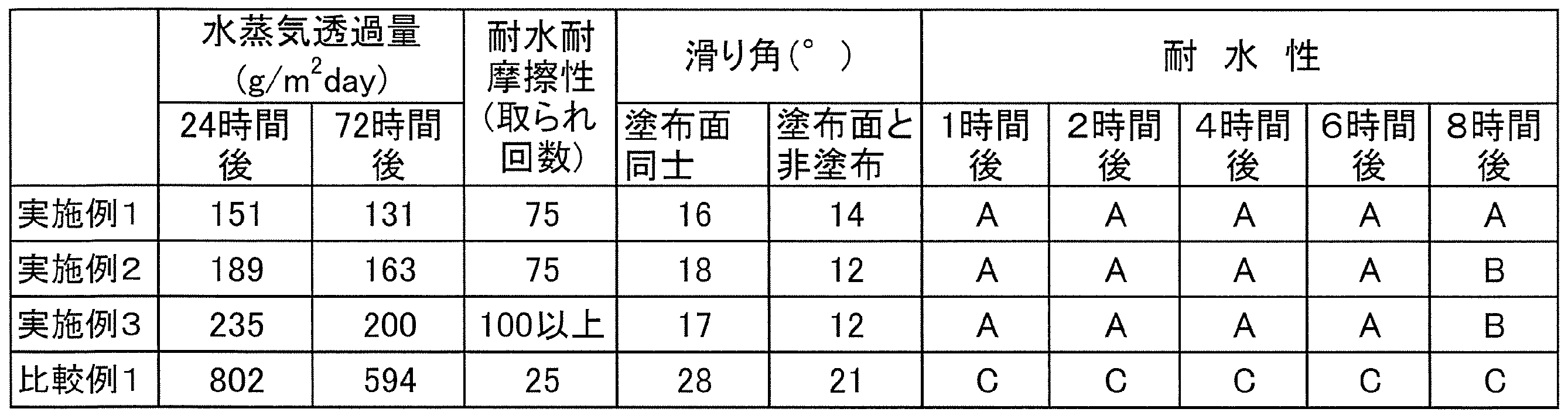
表2に示すように、実施例1~3アクリル樹脂と水とを主成分とする水溶性ワニスを塗布した印刷物は、好ましい水蒸気バリア性、耐水性を示すため、当該印刷物から構成したパッケージは、パッケージ上のフィルムを使用しない場合においても、外部環境の水分による悪影響を受けない包装を提供できることが理解される。
1、1A:パッケージ、2:本体、3:蓋部、4:ヒンジ、5:被収容物、6:封緘紙
Claims (9)
- たばこ商品を収容し、
表面の少なくとも一部に、アクリル樹脂を含有する水溶性ワニスが塗布された領域を含む
パッケージ。 - 前記ワニスが塗布された領域の24時間保管後の水蒸気透過量は400g/(m2×day)以下である
請求項1に記載のパッケージ。 - 前記ワニスが塗布された領域の下記測定法による耐水耐摩擦性の取られ回数が40回以上である
請求項1又は2記載のパッケージ。
<耐水耐摩擦性の測定>
ワニスが塗布された面に対して荷重200gで金巾3号を取り付ける。塗布面に高さ5cmの距離から水道水を5滴滴下した後、前記金巾3号を往復させ、ワニスが取られるまでの回数を求める。 - 前記ワニスが塗布された領域のJIS P8147:2010傾斜法による塗布面同士の滑り角が24°以下である
請求項1乃至3のいずれか1項に記載のパッケージ。 - 前記ワニスはアクリル樹脂と水とを主成分とする水溶性ワニスである
請求項1乃至4のいずれか1項に記載のパッケージ。 - 前記ワニスはパッケージ表面の60%以上に塗布されている
請求項1乃至5のいずれか1項に記載のパッケージ。 - 前記パッケージは厚紙からなるハードパッケージである
請求項1乃至6のいずれか1項に記載のパッケージ。 - 前記パッケージは薄紙から構成されるソフトパッケージである
請求項1乃至6のいずれか1項に記載のパッケージ。 - 前記表面がフィルムにて包装されていない、
請求項1乃至8のいずれか1項に記載のパッケージ。
Priority Applications (1)
| Application Number | Priority Date | Filing Date | Title |
|---|---|---|---|
| PCT/JP2022/026918 WO2024009448A1 (ja) | 2022-07-07 | 2022-07-07 | パッケージ |
Applications Claiming Priority (1)
| Application Number | Priority Date | Filing Date | Title |
|---|---|---|---|
| PCT/JP2022/026918 WO2024009448A1 (ja) | 2022-07-07 | 2022-07-07 | パッケージ |
Publications (1)
| Publication Number | Publication Date |
|---|---|
| WO2024009448A1 true WO2024009448A1 (ja) | 2024-01-11 |
Family
ID=89453073
Family Applications (1)
| Application Number | Title | Priority Date | Filing Date |
|---|---|---|---|
| PCT/JP2022/026918 Ceased WO2024009448A1 (ja) | 2022-07-07 | 2022-07-07 | パッケージ |
Country Status (1)
| Country | Link |
|---|---|
| WO (1) | WO2024009448A1 (ja) |
Citations (3)
| Publication number | Priority date | Publication date | Assignee | Title |
|---|---|---|---|---|
| JPH11115965A (ja) * | 1997-10-16 | 1999-04-27 | Toppan Printing Co Ltd | 複合容器 |
| JP2004204366A (ja) * | 2002-12-24 | 2004-07-22 | Toppan Printing Co Ltd | 防湿紙およびそれを用いた包装紙、包装袋または紙製容器。 |
| WO2016038674A1 (ja) * | 2014-09-09 | 2016-03-17 | 日本たばこ産業株式会社 | パッケージ |
-
2022
- 2022-07-07 WO PCT/JP2022/026918 patent/WO2024009448A1/ja not_active Ceased
Patent Citations (3)
| Publication number | Priority date | Publication date | Assignee | Title |
|---|---|---|---|---|
| JPH11115965A (ja) * | 1997-10-16 | 1999-04-27 | Toppan Printing Co Ltd | 複合容器 |
| JP2004204366A (ja) * | 2002-12-24 | 2004-07-22 | Toppan Printing Co Ltd | 防湿紙およびそれを用いた包装紙、包装袋または紙製容器。 |
| WO2016038674A1 (ja) * | 2014-09-09 | 2016-03-17 | 日本たばこ産業株式会社 | パッケージ |
Similar Documents
| Publication | Publication Date | Title |
|---|---|---|
| CA2039970C (en) | High barrier packages for smoking articles and other products | |
| ES2903075T3 (es) | Papel translúcido o transparente reciclable y reempastable para su uso en aplicaciones de embalaje | |
| RU2711460C2 (ru) | Емкость с улучшенным устройством для закрытия | |
| SK50032012U1 (sk) | Touch of consumer goods packaging | |
| RS53098B (sr) | Klizno pakovanje sa dve fioke | |
| US6048829A (en) | Soap wrappers | |
| JP2004204366A (ja) | 防湿紙およびそれを用いた包装紙、包装袋または紙製容器。 | |
| JP5210736B2 (ja) | ブリスターパック用水性接着組成物およびそれを用いたブリスターパック用包装容器 | |
| CZ291213B6 (cs) | Lepenkový substrát pro ukládání potravin a lepenkový obal na potraviny | |
| RU2743022C2 (ru) | Тара с усовершенствованным закрывающим элементом многократного действия | |
| RU2671651C1 (ru) | Упаковка для табачного изделия | |
| CA2347240C (en) | Soap wrappers | |
| WO2024009449A1 (ja) | 包装体及び包装体の製造方法 | |
| JPH10305532A (ja) | 食品包装用材および食品包装容器 | |
| JP2022035757A (ja) | 蓋用積層材、包装体 | |
| TWI558630B (zh) | 菸草商品的包裝體 | |
| KR100471656B1 (ko) | 빵용효모의포장지 | |
| HK1239643B (en) | Package for tobacco products | |
| WO2023135479A1 (en) | Dispensing package for loose items | |
| Attwood | Graphic Products | |
| JP4756167B2 (ja) | 包装体 | |
| JP2023006257A (ja) | 印刷物並びにその評価方法及び選別方法 | |
| HK1239643A1 (en) | Package for tobacco products | |
| JP6171592B2 (ja) | 吸油機能付き容器 | |
| JP2022027377A (ja) | 蓋用積層材、包装体 |
Legal Events
| Date | Code | Title | Description |
|---|---|---|---|
| 121 | Ep: the epo has been informed by wipo that ep was designated in this application |
Ref document number: 22950242 Country of ref document: EP Kind code of ref document: A1 |
|
| NENP | Non-entry into the national phase |
Ref country code: DE |
|
| 122 | Ep: pct application non-entry in european phase |
Ref document number: 22950242 Country of ref document: EP Kind code of ref document: A1 |
|
| NENP | Non-entry into the national phase |
Ref country code: JP |