WO2023281985A1 - 筋肉量増加用組成物 - Google Patents
筋肉量増加用組成物 Download PDFInfo
- Publication number
- WO2023281985A1 WO2023281985A1 PCT/JP2022/023571 JP2022023571W WO2023281985A1 WO 2023281985 A1 WO2023281985 A1 WO 2023281985A1 JP 2022023571 W JP2022023571 W JP 2022023571W WO 2023281985 A1 WO2023281985 A1 WO 2023281985A1
- Authority
- WO
- WIPO (PCT)
- Prior art keywords
- mass
- composition
- guar gum
- guar
- molecular weight
- Prior art date
- Legal status (The legal status is an assumption and is not a legal conclusion. Google has not performed a legal analysis and makes no representation as to the accuracy of the status listed.)
- Ceased
Links
Images

Classifications
-
- A—HUMAN NECESSITIES
- A23—FOODS OR FOODSTUFFS; TREATMENT THEREOF, NOT COVERED BY OTHER CLASSES
- A23K—FODDER
- A23K20/00—Accessory food factors for animal feeding-stuffs
- A23K20/10—Organic substances
- A23K20/142—Amino acids; Derivatives thereof
- A23K20/147—Polymeric derivatives, e.g. peptides or proteins
-
- A—HUMAN NECESSITIES
- A23—FOODS OR FOODSTUFFS; TREATMENT THEREOF, NOT COVERED BY OTHER CLASSES
- A23L—FOODS, FOODSTUFFS OR NON-ALCOHOLIC BEVERAGES, NOT OTHERWISE PROVIDED FOR; PREPARATION OR TREATMENT THEREOF
- A23L2/00—Non-alcoholic beverages; Dry compositions or concentrates therefor; Preparation or treatment thereof
- A23L2/52—Adding ingredients
-
- A—HUMAN NECESSITIES
- A23—FOODS OR FOODSTUFFS; TREATMENT THEREOF, NOT COVERED BY OTHER CLASSES
- A23L—FOODS, FOODSTUFFS OR NON-ALCOHOLIC BEVERAGES, NOT OTHERWISE PROVIDED FOR; PREPARATION OR TREATMENT THEREOF
- A23L33/00—Modifying nutritive qualities of foods; Dietetic products; Preparation or treatment thereof
- A23L33/10—Modifying nutritive qualities of foods; Dietetic products; Preparation or treatment thereof using additives
- A23L33/105—Plant extracts, their artificial duplicates or their derivatives
-
- A—HUMAN NECESSITIES
- A61—MEDICAL OR VETERINARY SCIENCE; HYGIENE
- A61K—PREPARATIONS FOR MEDICAL, DENTAL OR TOILETRY PURPOSES
- A61K31/00—Medicinal preparations containing organic active ingredients
- A61K31/70—Carbohydrates; Sugars; Derivatives thereof
- A61K31/715—Polysaccharides, i.e. having more than five saccharide radicals attached to each other by glycosidic linkages; Derivatives thereof, e.g. ethers, esters
- A61K31/736—Glucomannans or galactomannans, e.g. locust bean gum, guar gum
-
- A—HUMAN NECESSITIES
- A61—MEDICAL OR VETERINARY SCIENCE; HYGIENE
- A61K—PREPARATIONS FOR MEDICAL, DENTAL OR TOILETRY PURPOSES
- A61K36/00—Medicinal preparations of undetermined constitution containing material from algae, lichens, fungi or plants, or derivatives thereof, e.g. traditional herbal medicines
- A61K36/18—Magnoliophyta (angiosperms)
- A61K36/185—Magnoliopsida (dicotyledons)
- A61K36/48—Fabaceae or Leguminosae (Pea or Legume family); Caesalpiniaceae; Mimosaceae; Papilionaceae
-
- A—HUMAN NECESSITIES
- A61—MEDICAL OR VETERINARY SCIENCE; HYGIENE
- A61K—PREPARATIONS FOR MEDICAL, DENTAL OR TOILETRY PURPOSES
- A61K38/00—Medicinal preparations containing peptides
- A61K38/01—Hydrolysed proteins; Derivatives thereof
-
- A—HUMAN NECESSITIES
- A61—MEDICAL OR VETERINARY SCIENCE; HYGIENE
- A61P—SPECIFIC THERAPEUTIC ACTIVITY OF CHEMICAL COMPOUNDS OR MEDICINAL PREPARATIONS
- A61P21/00—Drugs for disorders of the muscular or neuromuscular system
Definitions
- the present invention relates to a composition for increasing muscle mass.
- PGC-1 Peroxisome proliferator activated receptor ⁇ coactivator-1
- PPAR ⁇ Peroxisome proliferator activated receptor ⁇ coactivator-1
- Branched-chain amino acids are essential amino acids that cannot be produced in the body, are endurance amino acids, and are known to act as energy in muscles during exercise (Patent Document 2). If it is possible to effectively increase PGC-1 and branched chain amino acids, it will effectively act on muscle metabolism, muscle mass increasing action, muscle mass decrease suppressing action, anti-sarcopenic action, anti-frailty action, and anti-metabolic effect based on metabolism improvement. Since it has a syndrome effect, an anti-fatigue effect, and an anti-aging effect, it can be useful not only for athletes, but also for the elderly, the sick, domestic animals and pets.
- Patent Document 1 uses a special strain, Enterococcus faecium R30 strain, and lacks versatility.
- Patent Document 2 a plurality of substances containing branched-chain amino acids are to be ingested, and a large amount of substances must be ingested, imposing a burden on the ingester.
- the present invention has been made to solve the above problems, and an object of the present invention is to provide a composition or the like that can be easily ingested and that can increase muscle mass.
- the composition for increasing muscle mass comprises (A) a guar gum decomposition product having an average molecular weight of 1.8 ⁇ 10 3 to 2.0 ⁇ 10 5 and containing 70% by mass or more of those within the average molecular weight range, and (B) guar bean protein, and the viscosity of a 1% by mass aqueous solution is 50 mPa s or less when measured using a Brookfield viscometer at 25 ° C.
- guar gum decomposition product is derived from guar Galactomannan polysaccharide contained in the endosperm and having a content ratio of galactose and mannose (galactose:mannose) in the range of 1:1.5 to 1:2.1 is hydrolyzed using microbial-derived ⁇ -mannanase to reduce the molecular weight.
- the composition has a dietary fiber content of at least 70% by mass and a content of oligosaccharides of guar gum degradation product of 15% by mass or less as defined by the enzyme-HPLC method, and among the amino acids in the protein containing ( glutamic acid + glutamine + aspartic acid + asparagine) ⁇ 100 mg/100 g, (cystine + tyrosine + serine + threonine) ⁇ 40 mg/100 g, total amino acids ⁇ 150 mg/100 g, and (A)/(B) above is 1000 or less.
- the ratio of (A)/(B) is 25-1000, preferably 100-600, more preferably 200-500. This range provides a sufficient muscle mass-enhancing effect.
- the composition preferably has an effect of increasing the expression level of PGC-1 and promoting the production of branched-chain amino acids.
- a food or drink according to another invention is characterized by containing the muscle mass-increasing composition. Furthermore, it should have PGC-1 expression level increasing action, branched chain amino acid production promoting action, muscle mass decrease suppressing action, anti-sarcopenia action, anti-frailty action, anti-metabolic syndrome action, anti-fatigue action and anti-aging action. is preferred.
- a pharmaceutical product according to another invention is characterized by containing the muscle mass-increasing composition. Furthermore, it should have PGC-1 expression level increasing action, branched chain amino acid production promoting action, muscle mass decrease suppressing action, anti-sarcopenia action, anti-frailty action, anti-metabolic syndrome action, anti-fatigue action and anti-aging action. is preferred.
- the food and drink in the present invention includes food and beverages, such as nutritional supplements, health foods, foods for specified health uses, foods with function claims, foods for diet therapy, general health foods, supplements, tea beverages, and coffee. Beverages, juices, soft drinks, drinks, cooked rice, bread, noodles, dairy products, processed eggs, processed marine and livestock foods, confectionery, oils and fats and processed foods, seasonings, side dishes and the like.
- Pharmaceuticals include pharmaceuticals or quasi-drugs, and are preferably oral formulations or enteral formulations, and can be in the form of liquids, tablets, granules, pills, syrups, and the like.
- the feed in the present invention refers to food to be fed to organisms other than humans, and its form is not particularly limited.
- the organisms to which the feed can be applied are not particularly limited, but examples include farmed animals and pet animals.
- Farmed animals include livestock such as horses, cattle, pigs, sheep, goats, camels, and llamas, experimental animals such as mice, rats, guinea pigs, and rabbits, and poultry such as chickens, ducks, turkeys, and ostriches. be.
- Pet animals include, for example, dogs and cats.
- composition or the like that can be easily ingested and that can promote an increase in muscle mass.
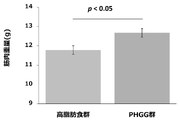
- Fig. 10 is a graph showing the measurement results of muscle weights in a high-fat diet group and a PHGG group in a PHGG intake test using lifestyle-related disease model mice.
- 2 is a graph showing LDL-C measurement results in a high-fat diet group and a PHGG group.
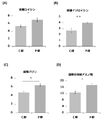
- 1 is a graph showing the results of examining free amino acids in a control group (group C) and a PHGG group (group P) in a PHGG intake test to pigs. Results for (A) free leucine, (B) free isoleucine, (C) free valine, and (D) free branched-chain amino acids are shown, respectively.
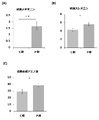
- Fig. 2 is a graph showing the results of examining free amino acids in a control group (group C) and a PHGG group (group P). Results for (A) free methionine, (B) free threonine, and (C) free essential amino acids are shown, respectively.
- Guar gum is a water-soluble natural polysaccharide obtained from the endosperm (more precisely, the cotyledons) of guar beans, and has two molecules of mannose linked in a linear chain and one molecule of galactose as a side chain. It is a polysaccharide and has an average molecular weight of about 2.0 ⁇ 10 5 to 3.0 ⁇ 10 5 . Guar gum is known to have physiological effects such as blood sugar level elevation inhibitory effect, cholesterol lowering effect, and bowel movement improving effect.
- the guar gum hydrolyzate is made from beans derived from the annual leguminous plant guar (scientific name: Cyanopsis tetragoloba), which is used for food in India, Pakistan, etc., and the galactomannan polysaccharide contained in the endosperm is hydrolyzed. and water-soluble dietary fiber obtained by reducing the molecular weight.
- the method for hydrolyzing guar gum is not particularly limited and may be an enzymatic decomposition method, an acid decomposition method, or the like.
- the enzyme used in the enzymatic decomposition method is not particularly limited as long as it is an enzyme that hydrolyzes linear mannose chains, but it is preferable to use ⁇ -mannanase derived from bacteria belonging to the genus Aspergillus or Rhizopus.
- the upper limit of the average molecular weight distribution of the guar gum decomposition product is 2 ⁇ 10 5 or less, preferably 1.0 ⁇ 10 5 or less, more preferably 2.5 ⁇ 10 4 or less.
- the lower limit of the average molecular weight distribution of the guar gum decomposition products is 1.8 ⁇ 10 2 or more, preferably 3.0 ⁇ 10 3 or more.
- the method for measuring the molecular weight distribution is not particularly limited. There is a method using a liquid chromatography method, and the like.
- the guar gum decomposition product of the present invention contains 70% by mass or more, preferably 80% by mass or more of those having the average molecular weight within the above range.
- Galactose is a type of monosaccharide classified as aldohexose, and has a molecular formula of C 6 H 12 O 6 and a molecular weight of 180 (both of which are the same as glucose).
- the configuration is 2nd (2nd from the top in the Fisher projection formula), the -OH at the 5th position is in the same direction, and the 3rd and 4th positions are in the opposite direction, and the 5th position of D-galactose is D-glycerol.
- Mannose is a kind of monosaccharide classified as aldohexose, and has a molecular formula of C 6 H 12 O 6 and a molecular weight of 180 (both of which are the same as glucose).
- the steric configuration is such that the —OH at the 2nd and 3rd positions are in the same direction and the 4th and 5th positions are in the opposite direction, and the steric configuration at the 5th position of D-mannose is the same as that of D-glyceraldehyde.
- Mannose is poorly metabolized in humans and hardly enters the glycolysis system when orally ingested.
- the oligosaccharide content was 6 to 15% by mass (15% by mass or less) according to the high-performance liquid chromatograph analysis chart.
- Amino acid composition in proteins can be measured by a known method using, for example, HPLC.
- Asparagine and glutamine are converted to aspartic acid and glutamic acid, respectively, during protein hydrolysis in pretreatment for amino acid analysis, and asparagine and aspartic acid, and glutamic acid and glutamine cannot be distinguished during measurement. Therefore, these are collectively quantified as aspartic acid and glutamic acid.
- the muscle mass-increasing composition of the present invention can be orally ingested as it is or mixed with foods, beverages, and the like.
- the dosage for oral administration is not particularly limited, but is 0.5 g to 70 g (preferably 3 g to 30 g, more preferably 6 g to 18 g) per adult per day.
- guar gum degradation product PHGG
- Example 1 After adjusting the pH to 4.5 by adding 0.1 N hydrochloric acid to 900 g of water, 0.2 g of ⁇ -mannanase derived from bacteria belonging to the genus Aspergillus (manufactured by Novo Nordisk Bioindustry) and 100 g of guar gum powder were added and mixed. The mixture was reacted at 40-45°C for 24 hours. After the reaction, the enzyme was deactivated by heating at 90°C for 15 minutes. The reaction solution was separated by suction filtration, and the clear solution obtained by removing insoluble matter was concentrated under reduced pressure (Yamato evaporator). A solid content of 20% by mass was obtained.
- glutamic acid + glutamine Glu + Gln
- aspartic acid + asparagine Asparagine
- cysteine cystine
- Example 2 After adjusting the pH to 3 by adding 0.1 N hydrochloric acid to 900 g of water, 0.15 g of ⁇ -mannanase derived from bacteria belonging to the genus Aspergillus (manufactured by Novo Nordisk Bioindustry) and 100 g of guar gum powder were added and mixed. The mixture was reacted at 40-45°C for 24 hours. After the reaction, the enzyme was deactivated by heating at 90°C for 15 minutes. The reaction solution was separated by suction filtration, and the clear solution obtained by removing insoluble matter was concentrated under reduced pressure (Yamato evaporator). A solid content of 20% by mass was obtained.
- Example 3 After adjusting the pH to 4 by adding 0.1 N hydrochloric acid to 900 g of water, 0.25 g of ⁇ -mannanase derived from bacteria belonging to the genus Aspergillus (manufactured by Novo Nordisk Bioindustry) and 100 g of guar gum powder were added and mixed. The mixture was reacted at 50-55°C for 12 hours. After the reaction, the enzyme was deactivated by heating at 90°C for 15 minutes. The reaction solution was separated by suction filtration, and the clear solution obtained by removing insoluble matter was concentrated under reduced pressure (Yamato evaporator). A solid content of 20% by mass was obtained.
- amino acid analysis of the guar bean protein in this example revealed (glutamic acid + glutamine + aspartic acid + asparagine) / total amino acids, (glutamic acid + glutamine + aspartic acid + asparagine) / (arginine + lysine + histidine).
- (cystine+tyrosine)/total amino acids, and (valine+histidine+proline+leucine)/total amino acids were 0.48, 9.6, 0.17 and 0.05, respectively.
- Test Method (1) Experimental Animals, Test Feeds, and Breeding Method Four-week-old C57BL/6NJcl strain male mice (CLEA Japan, Inc.) were used. After one week of preliminary breeding with the AIN-93G feed, the animals were divided into groups and fed the test feed ad libitum for 12 weeks. In the control high-fat diet group, approximately 30% of lard was added to the AIN-93G composition so that fat-derived calories were 60%. In the PHGG group, 5% of the dietary fiber cellulose in the composition of the high-fat diet group was completely replaced with PHGG. As PHGG, the one of Example 3 was used.
- Body fat percentage and muscle weight were measured by computed tomography (CT) scanning on the 77th day of rearing. An autopsy was performed on the 84th day, and blood was collected and organs were extracted. A block of about 5 mm square was taken from the liver for microarray analysis, immersed in RNAlater (Thermo Fisher Scientific Co., Ltd.) at 4°C overnight, and then stored at -80°C.
- CT computed tomography
- RNA microarray of liver After immersion in RNAlater, total RNA was extracted from a liver sample stored at -80°C, fragmented and labeled sense strand cDNA was synthesized, and subjected to DNA microarray analysis. After normalizing the obtained data, comparison between the two groups was performed, and genes whose expression varied significantly between the high-fat diet group and the PHGG group were extracted. Furthermore, enrichment analysis was performed to investigate the function of the expression-changed genes.
- Muscle weight Fig. 1 shows the measurement results of muscle weight. Muscle weight was significantly (p ⁇ 0.05) higher in the PHGG group than in the high-fat diet group.
- Serum Components FIG. 2 shows the measurement results of LDL-C. LDL cholesterol was significantly (p ⁇ 0.05) lower in the PHGG group than in the high-fat diet group.
- DNA microarray analysis of liver Table 2 shows genes that were significantly increased ( ⁇ ) or decreased ( ⁇ ) by DNA microarray analysis of liver.
- the PHGG group showed decreased expression of Cd36, SREBP1, Cyp51, Fdft1, Hmgscs1, and Nsdh1, which are genes involved in fat accumulation and cholesterol biosynthesis.
- Cd36 Cd36
- SREBP1 Cyp51
- Fdft1 Fdft1
- Hmgscs1 genes involved in fat accumulation and cholesterol biosynthesis.
- PHGG intake significantly increased the expression of PGC1 ⁇ and AMPK, which regulate mitochondrial biogenesis and energy metabolism.
- Test method (1) Experimental animal, test feed, and breeding method A test was conducted on meat pigs raised on a general farm. The control group was fed a normal diet for meat pigs, and the PHGG group was fed the same diet as the control group with 0.06% PHGG added without interruption from weaning to shipping. As PHGG, the one of Example 1 was used. Three animals were randomly selected from each group, totaling six animals, and slaughtered on the 160th day of rearing. After 5 days from slaughter, about 30 g of skeletal muscle was collected from the shoulder and analyzed for free amino acids. served to (2) Measurement of Free Amino Acids Except for tryptophan, amino acid automatic analysis was used, and tryptophan was analyzed using high performance liquid chromatography.
- FIG. 3 shows the measurement results of leucine, isoleucine, valine and branched chain amino acids.
- the PHGG group (P group) had significantly more free leucine, free isoleucine, free valine, and free branched-chain amino acids in skeletal muscle, and also significantly more free methionine, free threonine, and free essential amino acids.
- Branched-chain amino acids are essential amino acids that cannot be produced in the body, are endurance amino acids, and are known to work as energy in muscles during exercise.
- PHGG is known to promote muscle synthesis, so we found that PHGG works favorably for muscle building in the elderly and infirm.
Landscapes
- Health & Medical Sciences (AREA)
- Life Sciences & Earth Sciences (AREA)
- Chemical & Material Sciences (AREA)
- Engineering & Computer Science (AREA)
- Polymers & Plastics (AREA)
- Medicinal Chemistry (AREA)
- Natural Medicines & Medicinal Plants (AREA)
- Veterinary Medicine (AREA)
- Public Health (AREA)
- General Health & Medical Sciences (AREA)
- Animal Behavior & Ethology (AREA)
- Pharmacology & Pharmacy (AREA)
- Proteomics, Peptides & Aminoacids (AREA)
- Epidemiology (AREA)
- Food Science & Technology (AREA)
- Nutrition Science (AREA)
- Bioinformatics & Cheminformatics (AREA)
- Botany (AREA)
- Mycology (AREA)
- Alternative & Traditional Medicine (AREA)
- Orthopedic Medicine & Surgery (AREA)
- Molecular Biology (AREA)
- Zoology (AREA)
- Immunology (AREA)
- Biotechnology (AREA)
- Medical Informatics (AREA)
- Microbiology (AREA)
- Neurology (AREA)
- Animal Husbandry (AREA)
- Physical Education & Sports Medicine (AREA)
- Chemical Kinetics & Catalysis (AREA)
- General Chemical & Material Sciences (AREA)
- Nuclear Medicine, Radiotherapy & Molecular Imaging (AREA)
- Organic Chemistry (AREA)
- Coloring Foods And Improving Nutritive Qualities (AREA)
- Pharmaceuticals Containing Other Organic And Inorganic Compounds (AREA)
Priority Applications (1)
| Application Number | Priority Date | Filing Date | Title |
|---|---|---|---|
| JP2023533482A JPWO2023281985A1 (https=) | 2021-07-09 | 2022-06-13 |
Applications Claiming Priority (2)
| Application Number | Priority Date | Filing Date | Title |
|---|---|---|---|
| JP2021-114431 | 2021-07-09 | ||
| JP2021114431 | 2021-07-09 |
Publications (1)
| Publication Number | Publication Date |
|---|---|
| WO2023281985A1 true WO2023281985A1 (ja) | 2023-01-12 |
Family
ID=84800275
Family Applications (1)
| Application Number | Title | Priority Date | Filing Date |
|---|---|---|---|
| PCT/JP2022/023571 Ceased WO2023281985A1 (ja) | 2021-07-09 | 2022-06-13 | 筋肉量増加用組成物 |
Country Status (2)
| Country | Link |
|---|---|
| JP (1) | JPWO2023281985A1 (https=) |
| WO (1) | WO2023281985A1 (https=) |
Cited By (1)
| Publication number | Priority date | Publication date | Assignee | Title |
|---|---|---|---|---|
| JPWO2024034424A1 (https=) * | 2022-08-08 | 2024-02-15 |
Citations (3)
| Publication number | Priority date | Publication date | Assignee | Title |
|---|---|---|---|---|
| JP2012162482A (ja) * | 2011-02-07 | 2012-08-30 | Taiyo Kagaku Co Ltd | 遺伝子発現促進剤 |
| JP2012162483A (ja) * | 2011-02-07 | 2012-08-30 | Taiyo Kagaku Co Ltd | ステロール−o−アシルトランスフェラーゼ抑制剤 |
| JP2017088527A (ja) * | 2015-11-06 | 2017-05-25 | 花王株式会社 | 乳脂肪球皮膜成分含有造粒物の製造方法 |
-
2022
- 2022-06-13 JP JP2023533482A patent/JPWO2023281985A1/ja active Pending
- 2022-06-13 WO PCT/JP2022/023571 patent/WO2023281985A1/ja not_active Ceased
Patent Citations (3)
| Publication number | Priority date | Publication date | Assignee | Title |
|---|---|---|---|---|
| JP2012162482A (ja) * | 2011-02-07 | 2012-08-30 | Taiyo Kagaku Co Ltd | 遺伝子発現促進剤 |
| JP2012162483A (ja) * | 2011-02-07 | 2012-08-30 | Taiyo Kagaku Co Ltd | ステロール−o−アシルトランスフェラーゼ抑制剤 |
| JP2017088527A (ja) * | 2015-11-06 | 2017-05-25 | 花王株式会社 | 乳脂肪球皮膜成分含有造粒物の製造方法 |
Non-Patent Citations (1)
| Title |
|---|
| SANAI, KAZUKO ET AL.: "Effects of an Enzymatic Hydrolysate of Guar Gum on Postprandial Blood Glucose Level and Intestinal Transport in Mice and Rats", NIPPON EIYO SHOKURYO GAKKAISHI - JOURNAL OF JAPANESE SOCIETY OFNUTRITION AND FOOD SCIENCE, TOKYO., JP, vol. 45, no. 5, 1 January 1992 (1992-01-01), JP , pages 417 - 422, XP009542326, ISSN: 0287-3516, DOI: 10.4327/jsnfs.45.417 * |
Cited By (3)
| Publication number | Priority date | Publication date | Assignee | Title |
|---|---|---|---|---|
| JPWO2024034424A1 (https=) * | 2022-08-08 | 2024-02-15 | ||
| WO2024034424A1 (ja) * | 2022-08-08 | 2024-02-15 | 太陽化学株式会社 | やる気増加用組成物 |
| JP7811272B2 (ja) | 2022-08-08 | 2026-02-04 | 太陽化学株式会社 | やる気増加用組成物 |
Also Published As
| Publication number | Publication date |
|---|---|
| JPWO2023281985A1 (https=) | 2023-01-12 |
Similar Documents
| Publication | Publication Date | Title |
|---|---|---|
| US9101639B2 (en) | Food composition comprising glucosamine | |
| JP7400171B2 (ja) | 胃腸代謝物を調節する方法 | |
| JP5990631B2 (ja) | 家畜用動物飼料中に存在する脂肪の吸収率を向上させる添加剤及び動物飼料 | |
| JP7495985B2 (ja) | ペットフード組成物 | |
| JP7564859B2 (ja) | ペットフード組成物 | |
| JP5712393B2 (ja) | コラーゲン類吸収促進剤及びその利用 | |
| WO2023281985A1 (ja) | 筋肉量増加用組成物 | |
| Oso et al. | Growth performance, nutrient digestibility, metabolizable energy, and intestinal morphology of growing turkeys fed diet supplemented with arginine | |
| US8338389B2 (en) | Agent for preventing or ameliorating obesity | |
| CN1809369A (zh) | 水芹科植物的提取物及其制备方法 | |
| JP2022111399A (ja) | ユビキチンリガーゼ阻害組成物、及びこれを含有しガンによって誘導されたカヘキシアを改善するための予防及び/又は治療用組成物 | |
| WO2007148631A1 (ja) | エコール産生促進組成物 | |
| JPWO2018207741A1 (ja) | PGC−1α生合成促進剤および遅筋速筋化抑制剤 | |
| JP6742981B2 (ja) | 免疫調節剤及びその用途 | |
| JP5240810B2 (ja) | D−プシコースの血中d−フラクトース濃度上昇抑制への使用 | |
| WO2023063033A1 (ja) | サルコペニア肥満抑制組成物、及びこれを含有し糖尿病によって誘導されたサルコペニア肥満を改善するための予防及び/又は治療用組成物 | |
| JPWO2008123417A1 (ja) | 抗疲労剤 | |
| Mujnisa et al. | Clitoria ternatea extract as natural antibiotic growth promoter (AGP) on broiler concerning carcass quality and intestine morphometric | |
| JP6024942B2 (ja) | テストステロン分泌促進剤、抗疲労剤及びその製造方法と利用 | |
| JP2007238581A (ja) | 関節炎改善用組成物 | |
| Ibrahim et al. | Effects of Stevia Leaf Powder on Growth Performance, Intestinal Fluid Viscosity and Jejunal Histology in Broiler Chickens | |
| JP6032662B2 (ja) | 脂肪蓄積抑制用組成物 | |
| JP5118316B2 (ja) | 肥満予防・改善剤 | |
| JP5982087B2 (ja) | 内臓脂肪蓄積予防または蓄積改善剤 | |
| JP5982087B6 (ja) | 内臓脂肪蓄積予防または蓄積改善剤 |
Legal Events
| Date | Code | Title | Description |
|---|---|---|---|
| 121 | Ep: the epo has been informed by wipo that ep was designated in this application |
Ref document number: 22837403 Country of ref document: EP Kind code of ref document: A1 |
|
| WWE | Wipo information: entry into national phase |
Ref document number: 2023533482 Country of ref document: JP |
|
| NENP | Non-entry into the national phase |
Ref country code: DE |
|
| 122 | Ep: pct application non-entry in european phase |
Ref document number: 22837403 Country of ref document: EP Kind code of ref document: A1 |