WO2023276757A1 - リチウム二次電池 - Google Patents
リチウム二次電池 Download PDFInfo
- Publication number
- WO2023276757A1 WO2023276757A1 PCT/JP2022/024524 JP2022024524W WO2023276757A1 WO 2023276757 A1 WO2023276757 A1 WO 2023276757A1 JP 2022024524 W JP2022024524 W JP 2022024524W WO 2023276757 A1 WO2023276757 A1 WO 2023276757A1
- Authority
- WO
- WIPO (PCT)
- Prior art keywords
- negative electrode
- current collector
- lithium
- positive electrode
- electrode current
- Prior art date
- Legal status (The legal status is an assumption and is not a legal conclusion. Google has not performed a legal analysis and makes no representation as to the accuracy of the status listed.)
- Ceased
Links
Images

Classifications
-
- H—ELECTRICITY
- H01—ELECTRIC ELEMENTS
- H01M—PROCESSES OR MEANS, e.g. BATTERIES, FOR THE DIRECT CONVERSION OF CHEMICAL ENERGY INTO ELECTRICAL ENERGY
- H01M10/00—Secondary cells; Manufacture thereof
- H01M10/05—Accumulators with non-aqueous electrolyte
- H01M10/052—Li-accumulators
- H01M10/0525—Rocking-chair batteries, i.e. batteries with lithium insertion or intercalation in both electrodes; Lithium-ion batteries
-
- H—ELECTRICITY
- H01—ELECTRIC ELEMENTS
- H01M—PROCESSES OR MEANS, e.g. BATTERIES, FOR THE DIRECT CONVERSION OF CHEMICAL ENERGY INTO ELECTRICAL ENERGY
- H01M10/00—Secondary cells; Manufacture thereof
- H01M10/05—Accumulators with non-aqueous electrolyte
- H01M10/052—Li-accumulators
-
- H—ELECTRICITY
- H01—ELECTRIC ELEMENTS
- H01M—PROCESSES OR MEANS, e.g. BATTERIES, FOR THE DIRECT CONVERSION OF CHEMICAL ENERGY INTO ELECTRICAL ENERGY
- H01M10/00—Secondary cells; Manufacture thereof
- H01M10/05—Accumulators with non-aqueous electrolyte
- H01M10/056—Accumulators with non-aqueous electrolyte characterised by the materials used as electrolytes, e.g. mixed inorganic/organic electrolytes
- H01M10/0564—Accumulators with non-aqueous electrolyte characterised by the materials used as electrolytes, e.g. mixed inorganic/organic electrolytes the electrolyte being constituted of organic materials only
- H01M10/0566—Liquid materials
- H01M10/0569—Liquid materials characterised by the solvents
-
- H—ELECTRICITY
- H01—ELECTRIC ELEMENTS
- H01M—PROCESSES OR MEANS, e.g. BATTERIES, FOR THE DIRECT CONVERSION OF CHEMICAL ENERGY INTO ELECTRICAL ENERGY
- H01M10/00—Secondary cells; Manufacture thereof
- H01M10/05—Accumulators with non-aqueous electrolyte
- H01M10/058—Construction or manufacture
- H01M10/0587—Construction or manufacture of accumulators having only wound construction elements, i.e. wound positive electrodes, wound negative electrodes and wound separators
-
- H—ELECTRICITY
- H01—ELECTRIC ELEMENTS
- H01M—PROCESSES OR MEANS, e.g. BATTERIES, FOR THE DIRECT CONVERSION OF CHEMICAL ENERGY INTO ELECTRICAL ENERGY
- H01M4/00—Electrodes
- H01M4/02—Electrodes composed of, or comprising, active material
- H01M4/64—Carriers or collectors
- H01M4/66—Selection of materials
- H01M4/669—Steels
-
- H—ELECTRICITY
- H01—ELECTRIC ELEMENTS
- H01M—PROCESSES OR MEANS, e.g. BATTERIES, FOR THE DIRECT CONVERSION OF CHEMICAL ENERGY INTO ELECTRICAL ENERGY
- H01M50/00—Constructional details or processes of manufacture of the non-active parts of electrochemical cells other than fuel cells, e.g. hybrid cells
- H01M50/40—Separators; Membranes; Diaphragms; Spacing elements inside cells
- H01M50/46—Separators, membranes or diaphragms characterised by their combination with electrodes
-
- H—ELECTRICITY
- H01—ELECTRIC ELEMENTS
- H01M—PROCESSES OR MEANS, e.g. BATTERIES, FOR THE DIRECT CONVERSION OF CHEMICAL ENERGY INTO ELECTRICAL ENERGY
- H01M50/00—Constructional details or processes of manufacture of the non-active parts of electrochemical cells other than fuel cells, e.g. hybrid cells
- H01M50/40—Separators; Membranes; Diaphragms; Spacing elements inside cells
- H01M50/489—Separators, membranes, diaphragms or spacing elements inside the cells, characterised by their physical properties, e.g. swelling degree, hydrophilicity or shut down properties
-
- H—ELECTRICITY
- H01—ELECTRIC ELEMENTS
- H01M—PROCESSES OR MEANS, e.g. BATTERIES, FOR THE DIRECT CONVERSION OF CHEMICAL ENERGY INTO ELECTRICAL ENERGY
- H01M10/00—Secondary cells; Manufacture thereof
- H01M10/05—Accumulators with non-aqueous electrolyte
- H01M10/056—Accumulators with non-aqueous electrolyte characterised by the materials used as electrolytes, e.g. mixed inorganic/organic electrolytes
- H01M10/0564—Accumulators with non-aqueous electrolyte characterised by the materials used as electrolytes, e.g. mixed inorganic/organic electrolytes the electrolyte being constituted of organic materials only
- H01M10/0566—Liquid materials
- H01M10/0567—Liquid materials characterised by the additives
-
- H—ELECTRICITY
- H01—ELECTRIC ELEMENTS
- H01M—PROCESSES OR MEANS, e.g. BATTERIES, FOR THE DIRECT CONVERSION OF CHEMICAL ENERGY INTO ELECTRICAL ENERGY
- H01M10/00—Secondary cells; Manufacture thereof
- H01M10/05—Accumulators with non-aqueous electrolyte
- H01M10/056—Accumulators with non-aqueous electrolyte characterised by the materials used as electrolytes, e.g. mixed inorganic/organic electrolytes
- H01M10/0564—Accumulators with non-aqueous electrolyte characterised by the materials used as electrolytes, e.g. mixed inorganic/organic electrolytes the electrolyte being constituted of organic materials only
- H01M10/0566—Liquid materials
- H01M10/0568—Liquid materials characterised by the solutes
-
- H—ELECTRICITY
- H01—ELECTRIC ELEMENTS
- H01M—PROCESSES OR MEANS, e.g. BATTERIES, FOR THE DIRECT CONVERSION OF CHEMICAL ENERGY INTO ELECTRICAL ENERGY
- H01M4/00—Electrodes
- H01M4/02—Electrodes composed of, or comprising, active material
- H01M2004/021—Physical characteristics, e.g. porosity, surface area
-
- H—ELECTRICITY
- H01—ELECTRIC ELEMENTS
- H01M—PROCESSES OR MEANS, e.g. BATTERIES, FOR THE DIRECT CONVERSION OF CHEMICAL ENERGY INTO ELECTRICAL ENERGY
- H01M4/00—Electrodes
- H01M4/02—Electrodes composed of, or comprising, active material
- H01M2004/026—Electrodes composed of, or comprising, active material characterised by the polarity
- H01M2004/027—Negative electrodes
-
- H—ELECTRICITY
- H01—ELECTRIC ELEMENTS
- H01M—PROCESSES OR MEANS, e.g. BATTERIES, FOR THE DIRECT CONVERSION OF CHEMICAL ENERGY INTO ELECTRICAL ENERGY
- H01M2300/00—Electrolytes
- H01M2300/0017—Non-aqueous electrolytes
- H01M2300/0025—Organic electrolyte
- H01M2300/0028—Organic electrolyte characterised by the solvent
-
- H—ELECTRICITY
- H01—ELECTRIC ELEMENTS
- H01M—PROCESSES OR MEANS, e.g. BATTERIES, FOR THE DIRECT CONVERSION OF CHEMICAL ENERGY INTO ELECTRICAL ENERGY
- H01M2300/00—Electrolytes
- H01M2300/0017—Non-aqueous electrolytes
- H01M2300/0025—Organic electrolyte
- H01M2300/0028—Organic electrolyte characterised by the solvent
- H01M2300/0034—Fluorinated solvents
-
- Y—GENERAL TAGGING OF NEW TECHNOLOGICAL DEVELOPMENTS; GENERAL TAGGING OF CROSS-SECTIONAL TECHNOLOGIES SPANNING OVER SEVERAL SECTIONS OF THE IPC; TECHNICAL SUBJECTS COVERED BY FORMER USPC CROSS-REFERENCE ART COLLECTIONS [XRACs] AND DIGESTS
- Y02—TECHNOLOGIES OR APPLICATIONS FOR MITIGATION OR ADAPTATION AGAINST CLIMATE CHANGE
- Y02E—REDUCTION OF GREENHOUSE GAS [GHG] EMISSIONS, RELATED TO ENERGY GENERATION, TRANSMISSION OR DISTRIBUTION
- Y02E60/00—Enabling technologies; Technologies with a potential or indirect contribution to GHG emissions mitigation
- Y02E60/10—Energy storage using batteries
Definitions
- This disclosure relates to lithium secondary batteries.
- Non-aqueous electrolyte secondary batteries are used for applications such as ICT such as personal computers and smartphones, vehicles, and power storage. In such applications, the non-aqueous electrolyte secondary battery is required to have a higher capacity.
- Lithium ion batteries are known as high-capacity non-aqueous electrolyte secondary batteries.
- a high capacity lithium ion battery can be achieved by using, for example, graphite and an alloy active material such as a silicon compound together as a negative electrode active material.
- increasing the capacity of lithium-ion batteries is reaching its limit.
- a lithium secondary battery (lithium metal secondary battery) is promising as a high-capacity non-aqueous electrolyte secondary battery that exceeds that of lithium-ion batteries.
- lithium metal is deposited on the negative electrode during charging, and this lithium metal dissolves in the non-aqueous electrolyte during discharging.
- Patent Document 1 a positive electrode having a positive electrode active material made of a lithium-containing transition metal oxide, a negative electrode current collector, and a negative electrode on which lithium metal is deposited on the negative electrode current collector during charging, and between the positive electrode and the negative electrode
- a non-aqueous electrolyte secondary battery comprising a separator arranged in a non-aqueous electrolyte, wherein the molar ratio of the total amount of lithium in the positive electrode and the negative electrode to the amount of transition metal contained in the positive electrode is 1.1 or less
- There is a space layer between the negative electrode and the separator in a discharged state and the positive electrode capacity ⁇ (mAh/cm 2 ) per unit area of the positive electrode and the average thickness X ( ⁇ m) of the space layer
- a non-aqueous electrolyte secondary battery has been proposed that satisfies 0.05 ⁇ /X ⁇ 0.2.
- the negative electrode current collector breaks during charging and discharging, and the cycle characteristics deteriorate.
- One aspect of the present disclosure includes a positive electrode including a positive electrode active material capable of intercalating and deintercalating lithium ions, a negative electrode including a negative electrode current collector, a separator disposed between the positive electrode and the negative electrode, and a lithium ion conductive material.
- a non-aqueous electrolyte having a specific property wherein the negative electrode deposits lithium metal during charging, and the lithium metal dissolves during discharging, and the negative electrode current collector contains austenitic stainless steel.
- FIG. 1 is a vertical cross-sectional view schematically showing a lithium secondary battery according to an embodiment of the present disclosure
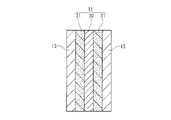
- FIG. 2 is an enlarged cross-sectional view of region II in FIG. 1
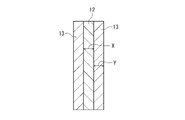
- FIG. 2 is an enlarged cross-sectional view of region III in FIG. 1;
- An embodiment of the present disclosure relates to a lithium secondary battery (lithium metal secondary battery) using lithium metal as a negative electrode active material. That is, the lithium secondary battery according to the embodiment of the present disclosure is arranged between a positive electrode including a positive electrode active material capable of intercalating and deintercalating lithium ions, a negative electrode including a negative electrode current collector, and the positive electrode and the negative electrode. It comprises a separator and a non-aqueous electrolyte having lithium ion conductivity. In the negative electrode, lithium metal is deposited during charging, and the lithium metal is dissolved during discharging.
- the negative electrode of the lithium secondary battery according to the present disclosure is different from the negative electrode in which electron movement in the negative electrode during charging and discharging is mainly due to the absorption and release of lithium ions by the negative electrode active material (such as graphite).
- the negative electrode of the lithium secondary battery according to the present disclosure may not contain a negative electrode active material (such as graphite) that absorbs and releases lithium ions.
- the open circuit voltage (OCV: Open Circuit Voltage) of the negative electrode when fully charged is, for example, 70 mV or less with respect to lithium metal (lithium dissolution deposition potential).
- a fully charged state is a state in which the battery is charged to a state of charge (SOC) of, for example, 0.98 ⁇ C or more, where C is the rated capacity of the battery.
- SOC state of charge
- the open circuit potential (OCV) of the negative electrode when fully charged can be measured by disassembling a fully charged battery in an argon atmosphere, taking out the negative electrode, and assembling a cell using lithium metal as a counter electrode.
- the non-aqueous electrolyte of the cell may be of the same composition as the non-aqueous electrolyte in the disassembled battery.
- “swelling of the negative electrode” means an increase in the total volume of the volume of the negative electrode and the volume of the deposited lithium metal.
- the amount of expansion is further increased. As a result, stress is likely to occur in the negative electrode.
- the inventors diligently studied the factors that cause the negative electrode current collector to rupture during charging and discharging. As a result, the inventors obtained new knowledge that the negative electrode current collector becomes embrittled with repeated charging and discharging, and that the stress generated in the negative electrode and the embrittlement of the negative electrode current collector are the factors that cause the negative electrode current collector to fracture. According to SEM observation, at the fractured portion of the negative electrode current collector, deformation in the ductile direction of the crystal grains when the negative electrode current collector is stretched and fractured and almost no tapering deformation of the negative electrode current collector are observed, and brittle fracture is exhibited. It became clear for the first time that
- the inventors of the present invention further conducted extensive studies focusing on the crystal structure of stainless steel (ferrite, austenite, and martensite with different slip planes, etc.), and found that austenite has the effect of suppressing the embrittlement of the negative electrode current collector. We newly found that .
- the negative electrode current collector contains austenitic stainless steel. In this case, embrittlement of the negative electrode current collector is suppressed, the negative electrode current collector has appropriate strength and flexibility, and a negative electrode current collector having excellent resistance to stress generated in the negative electrode can be obtained. As a result, it is possible to suppress the occurrence of fracture of the negative electrode current collector during charging and discharging and the accompanying decrease in cycle characteristics.
- the above "austenitic stainless steel” means stainless steel with an austenite rate of 50% or more.
- the austenite ratio means the ratio (mass ratio) of the austenite phase in the stainless steel.
- the austenite ratio is calculated by ⁇ x/(x+y+z) ⁇ 100, where x, y, and z are the contents of the austenite phase, ferrite phase, and martensite phase in the stainless steel.
- the austenite structure has a face-centered cubic lattice structure (FCC structure), and the ferrite structure and martensite structure have a body-centered cubic lattice structure (BCC structure).
- the austenite rate may be 70% or more, 90% or more, or 100%.
- the austenite rate can be obtained by the following method. Prepare a negative electrode current collector (stainless steel foil) sample (for example, size: 25 mm square), perform X-ray diffraction (XRD) measurement using a two-dimensional detection function for the sample, and obtain an XRD pattern (vertical axis: X-ray Diffraction intensity, horizontal axis: diffraction angle 2 ⁇ ) are obtained.
- the size of the measurement area (minute portion) is, for example, 15 mm square.
- Desirable XRD measurement conditions are shown below.
- Tube Co Monochromatic: Use a monochromator (CoK ⁇ ) Tube output: 40kV-30mA
- the XRD pattern may have diffraction peaks corresponding to at least one of the austenite, ferrite, and martensite phases.
- the analysis can be performed using software attached to the analyzer. Through the analysis, the ratio (mass ratio) of the austenite phase to the total of the austenite phase, ferrite phase, and martensite phase is determined as the austenite ratio. Several measurement regions are arbitrarily selected from the sample, the austenite ratio in each measurement region is determined, and the average value thereof is calculated.
- the negative electrode current collector preferably has a breaking strength of 850 MPa or less and a breaking elongation of 3% or more. In this case, it is easy to obtain a negative electrode current collector that has good strength and flexibility and is excellent in resistance to stress generated in the negative electrode.
- an austenitic stainless steel foil may be heat treated to obtain a breaking strength and breaking elongation within the above ranges. In general, heat treatment tends to increase grain size due to recrystallization, reduce strength, and improve elongation at break.
- the breaking strength of the negative electrode current collector may be 700 MPa or less, or 650 MPa or less. From the viewpoint of improving the reliability of battery production, the breaking strength of the negative electrode current collector may be 400 MPa or more.
- the range of the breaking strength may be a range in which the above upper limit and lower limit are arbitrarily combined.
- the breaking elongation of the negative electrode current collector may be 5% or more, or may be 10% or more. From the viewpoint of improving the reliability of battery production, the elongation at break of the negative electrode current collector may be 60% or less.
- the range of elongation at break may be a range in which the above upper limit and lower limit are arbitrarily combined.
- breaking strength tensile strength
- breaking elongation are obtained in accordance with JIS Z 2241 (metal material tensile test method).
- JIS Z 2241 metal material tensile test method.
- the measurement of elongation at break requires a skillful technique, and it is desirable that the measurement be performed at an institution with a proven track record.
- the ratio of the thickness Y of the separator to the thickness X of the negative electrode current collector may be 2.5 or more, 3 or more, or 4 or more.
- Y/X is, for example, 5 or less.
- the range of Y/X may be a range in which the above upper limit and lower limit are arbitrarily combined.
- the thickness Y of the separator refers to the thickness of the separator before forming the electrode group (before housing the electrode group in the battery case).
- Y is the sum of the thicknesses of the plurality of materials.
- Y is the maximum value of the thickness.
- the region where the separator has thickness Y (maximum value) has an area of, for example, 20% to 80% of the total area of the separator facing the negative electrode.
- the thickness X of the negative electrode current collector is, for example, 5 ⁇ m or more and 30 ⁇ m or less.
- the cycle characteristics are greatly improved.
- Y/X satisfies 2.5 or more (when the separator has a thickness of 2.5 times or more the thickness of the negative electrode current collector)
- the expansion of the negative electrode (expansion of dendrites) during charging is buffered by the separator.
- the stress generated in the negative electrode (negative electrode current collector) is relaxed.
- Austenitic stainless steel suppresses embrittlement of the negative electrode current collector, improves resistance to stress generated in the negative electrode, and relieves stress generated in the negative electrode (negative electrode current collector) when Y/X is 2.5 or more. Together with this, the effect of improving the cycle characteristics can be obtained remarkably. If the austenite ratio is less than 50%, the negative electrode current collector is more likely to be ruptured, and if Y/X is 2.5 or more, the effect of relaxing the stress generated in the negative electrode is less likely to be exhibited.
- the thickness X of the negative electrode current collector is obtained by measuring the thickness of the negative electrode current collector at arbitrary 10 points using a scanning electron microscope (SEM) and calculating the average value thereof.
- the thickness Y of the separator is similarly obtained. When the separator has a plurality of regions with different thicknesses, the thickness of ten arbitrary points in the region having the maximum thickness may be measured, and the average value thereof may be calculated.
- the negative electrode has a negative electrode current collector.
- lithium metal deposits on the surface of the negative electrode during charging. More specifically, lithium ions contained in the non-aqueous electrolyte receive electrons on the negative electrode current collector during charging to become lithium metal, which is deposited on the surface of the negative electrode current collector. Lithium metal deposited on the surface of the negative electrode current collector dissolves as lithium ions in the non-aqueous electrolyte due to discharge.
- the lithium ions contained in the non-aqueous electrolyte may be derived from the lithium salt added to the non-aqueous electrolyte, or may be supplied from the positive electrode active material during charging. There may be.
- the negative electrode current collector is usually an austenitic stainless steel foil (sheet).
- Austenitic stainless steel may contain, for example, C, Si, Mn, P, S, Ni, Cr, Mn, Mo, Cu, N, etc., as components other than Fe.
- the stainless steel may be a low-carbon, ultra-low-carbon, or nitrogen-added stainless steel, or may be a duplex stainless steel containing austenite.
- austenitic stainless steel examples include SUS301, SUS302, SUS303, SUS304, SUS305, SUS309, SUS310, SUS312, SUS315, SUS316L, SUS317, SUS321, and SUS347. Among them, SUS304 and SUS316L are preferable.
- the austenite fraction can be measured by the XRD method, but can also be estimated by Schaeffler's organization chart, which shows the relationship between ferrite-stabilizing elements, austenite-stabilizing elements, and the organization.
- the structure chart shows the structure ratio with the ferrite stabilizing element and the austenite stabilizing element on both axes.
- the vertical axis of the organization chart indicates the Ni equivalent, and the horizontal axis indicates the Cr equivalent.
- a lithium metal sheet may be placed in advance on the surface of the negative electrode current collector before the initial charge.
- the lithium metal sheet is formed, for example, by attaching lithium metal to the surface of the negative electrode current collector and then electrodepositing or vapor-depositing the same.
- a negative electrode mixture layer may be formed on the surface of the negative electrode current collector. In this case, the negative electrode mixture layer is formed so thin that lithium metal can be deposited on the negative electrode during charging.
- the negative electrode mixture layer is formed by applying a negative electrode mixture slurry containing a negative electrode active material such as graphite onto the surface of the negative electrode current collector.
- the thickness of the lithium metal sheet (or negative electrode mixture layer) is not particularly limited, and is, for example, 3 to 300 ⁇ m.
- the lithium metal sheet (negative electrode mixture layer) may be formed on one surface of the negative electrode current collector, or may be formed on both surfaces of the negative electrode current collector.
- the surface of the negative electrode current collector may be smooth. This facilitates uniform deposition of lithium metal derived from the positive electrode on the negative electrode current collector during charging.
- Smooth means that the maximum height roughness Rz of the negative electrode current collector is 20 ⁇ m or less.
- the maximum height roughness Rz of the negative electrode current collector may be 10 ⁇ m or less.
- the maximum height roughness Rz is measured according to JIS B 0601:2013.
- the positive electrode includes, for example, a positive electrode current collector and a positive electrode mixture layer supported by the positive electrode current collector.
- the positive electrode mixture layer includes, for example, a positive electrode active material, a conductive material, and a binder.
- the positive electrode mixture layer may be formed only on one side of the positive electrode current collector, or may be formed on both sides.
- the positive electrode is obtained, for example, by applying a positive electrode mixture slurry containing a positive electrode active material, a conductive material, and a binder on both sides of a positive electrode current collector, drying the coating film, and then rolling.
- a positive electrode active material is a material that absorbs and releases lithium ions.
- positive electrode active materials include lithium-containing transition metal oxides, transition metal fluorides, polyanions, fluorinated polyanions, and transition metal sulfides. Among them, lithium-containing transition metal oxides are preferable in terms of low production cost and high average discharge voltage.
- the transition metal elements contained in the lithium-containing transition metal oxide include Sc, Ti, V, Cr, Mn, Fe, Co, Ni, Cu, Y, Zr, W, and the like.
- the lithium-containing transition metal oxide may contain one or more transition metal elements.
- the transition metal elements may be Co, Ni and/or Mn.
- the lithium-containing transition metal oxide may contain one or more main group elements as needed. Typical elements include Mg, Al, Ca, Zn, Ga, Ge, Sn, Sb, Pb, and Bi. A typical element may be Al or the like.
- the conductive material is, for example, a carbon material.
- carbon materials include carbon black, acetylene black, ketjen black, carbon nanotubes, and graphite.
- binders include fluorine resins, polyacrylonitrile, polyimide resins, acrylic resins, polyolefin resins, and rubber-like polymers.
- fluororesins include polytetrafluoroethylene and polyvinylidene fluoride.
- Foil, film, etc. are used for the positive electrode current collector.
- a carbon material may be applied to the surface of the positive electrode current collector.
- Examples of the material of the positive electrode current collector include metal materials containing Al, Ti, Fe, and the like.
- the metal material may be Al, Al alloy, Ti, Ti alloy, Fe alloy, or the like.
- the Fe alloy may be stainless steel (SUS).
- the thickness of the positive electrode current collector is not particularly limited, and is, for example, 5 ⁇ m or more and 30 ⁇ m or less.
- a porous sheet having ion permeability and insulation is used for the separator.
- porous sheets include thin films, woven fabrics, and non-woven fabrics having microporosity.
- the material of the separator is not particularly limited, but may be a polymer material.
- polymeric materials include olefin resins, polyamide resins, and cellulose.
- olefin resins include polyethylene, polypropylene, and copolymers of ethylene and propylene.
- a separator may also contain an additive as needed. An inorganic filler etc. are mentioned as an additive.
- the separator may be composed of multiple layers that differ in morphology and/or composition.
- a non-aqueous electrolyte having lithium ion conductivity includes, for example, a non-aqueous solvent and a lithium salt dissolved in the non-aqueous solvent.
- the non-aqueous electrolyte may be liquid or gel.
- a liquid non-aqueous electrolyte is prepared by dissolving a lithium salt in a non-aqueous solvent. Lithium ions and anions are generated by dissolving the lithium salt in the non-aqueous solvent.
- a gel-like non-aqueous electrolyte contains a lithium salt and a matrix polymer, or a lithium salt, a non-aqueous solvent and a matrix polymer.
- the matrix polymer for example, a polymer material that gels by absorbing a non-aqueous solvent is used. Examples of polymer materials include fluorine resins, acrylic resins, polyether resins, and the like.
- lithium salt or anion known ones used for non-aqueous electrolytes of lithium secondary batteries can be used. Specific examples include BF 4 ⁇ , ClO 4 ⁇ , PF 6 ⁇ , CF 3 SO 3 ⁇ , CF 3 CO 2 ⁇ , anions of imides, and anions of oxalate complexes.
- the anion of the oxalate complex may contain boron and/or phosphorus.
- the anion of the oxalate complex includes bisoxalate borate anion, BF 2 (C 2 O 4 ) ⁇ , PF 4 (C 2 O 4 ) ⁇ , PF 2 (C 2 O 4 ) 2 ⁇ and the like.
- the non-aqueous electrolyte may contain these anions singly or in combination of two or more.
- the non-aqueous electrolyte preferably contains at least an anion of an oxalate complex. Due to the interaction between the anion of the oxalate complex and lithium, the lithium metal is easily precipitated uniformly in the form of fine particles. Therefore, it becomes easier to suppress local deposition of lithium metal. You may combine the anion of an oxalate complex with another anion. Other anions may be PF 6 - and/or imide class anions.
- non-aqueous solvents examples include ester compounds, ether compounds, nitrile compounds, and amide compounds. These compounds include halogen-substituted compounds and the like. Fluoride etc. are mentioned as a halogen substitution body.
- the non-aqueous electrolyte may contain one of these non-aqueous solvents, or two or more of them.
- the non-aqueous solvent may contain an ether compound as a main component.
- the term "main component" as used herein means that the content of the ether compound in the non-aqueous solvent is 50% by mass or more, and may be 80% by mass or more. Moreover, the content of the ether compound in the non-aqueous solvent may be 95% by mass or less, or may be 100% by mass or less.
- the range of the content of the ether compound in the non-aqueous solvent may be a range in which the above upper limit and lower limit are arbitrarily combined.
- the ether compound has excellent stability (especially resistance to reduction), suppresses the formation of decomposition products on the surface of the negative electrode current collector, and has little effect on the negative electrode current collector.
- a non-aqueous electrolyte containing an ether compound as a main component is used for a negative electrode current collector containing austenitic stainless steel, the embrittlement suppression of the negative electrode current collector can significantly improve cycle characteristics. If the austenite ratio is less than 50%, the negative electrode current collector is more likely to be fractured, and the effect of the ether compound is less likely to be exhibited.
- Ether compounds include cyclic ethers and chain ethers.
- Cyclic ethers include 1,3-dioxolane, 4-methyl-1,3-dioxolane, tetrahydrofuran, 2-methyltetrahydrofuran and the like.
- Chain ethers include 1,2-dimethoxyethane, diethyl ether, ethyl vinyl ether, methylphenyl ether, benzyl ethyl ether, diphenyl ether, dibenzyl ether, 1,2-diethoxyethane, diethylene glycol dimethyl ether, 1,1,2, 2-tetrafluoroethyl-2,2,2-trifluoroethyl ether, 1,1,2,2-tetrafluoroethyl-2,2,3,3-tetrafluoropropyl ether and the like.
- 1,2-dimethoxyethane and 1,1,2,2-tetrafluoroethyl-2,2,2-trifluoroethyl ether are preferable from the viewpoint of suppressing embrittlement of the negative electrode current collector.
- ester compounds include carbonic acid esters and carboxylic acid esters.
- cyclic carbonates include ethylene carbonate and propylene carbonate.
- Chain carbonic acid esters include dimethyl carbonate (DMC), ethylmethyl carbonate (EMC), diethyl carbonate and the like.
- Cyclic carboxylic acid esters include ⁇ -butyrolactone, ⁇ -valerolactone and the like.
- chain carboxylic acid esters include ethyl acetate, methyl propionate, and methyl fluoropropionate.
- the concentration of the lithium salt in the non-aqueous electrolyte is, for example, 0.5 mol/L or more and 3.5 mol/L or less.
- the anion concentration in the non-aqueous electrolyte may be 0.5 mol/L or more and 3.5 mol/L or less.
- the concentration of the anion of the oxalate complex in the non-aqueous electrolyte may be 0.05 mol/L or more and 1 mol/L or less.
- the non-aqueous electrolyte may contain additives.
- the additive may form a film on the negative electrode. Formation of the film derived from the additive on the negative electrode facilitates suppression of the formation of dendrites.
- examples of such additives include vinylene carbonate, fluoroethylene carbonate (FEC), vinyl ethyl carbonate (VEC), and the like.
- lithium secondary battery lithium secondary battery
- the configuration of the lithium secondary battery according to the present disclosure will be described with reference to the drawings, taking a cylindrical battery including a wound electrode group as an example.
- the present disclosure is not limited to the following configurations.
- FIG. 1 is a vertical cross-sectional view schematically showing an example of a lithium secondary battery according to an embodiment of the present disclosure.
- FIG. 2 is an enlarged view of a portion (a portion including the positive electrode) surrounded by region II in FIG.
- FIG. 3 is an enlarged view of a portion (part including the negative electrode) surrounded by region III in FIG.
- each figure is shown schematically, and the ratio of the dimension (for example, thickness) of each component may be different from the actual one.
- the lithium secondary battery 10 includes a cylindrical battery case, a wound electrode group 14 housed in the battery case, and a non-aqueous electrolyte (not shown).
- the electrode group 14 is configured by winding a strip-shaped positive electrode 11 and a strip-shaped negative electrode 12 with a separator 13 interposed between the positive electrode 11 and the negative electrode 12 .
- the negative electrode 12 is composed of a negative electrode current collector.
- the negative electrode 12 (negative electrode current collector) has a thickness X and faces the separator 13 having a thickness Y. Note that the thickness Y in FIG. 3 indicates the thickness of the separator 13 before housing the electrode group 14 in the case body 15 .
- the negative electrode 12 is composed only of the negative electrode current collector.
- the negative electrode may be configured by supporting the negative electrode mixture layer on the surface of the electric body.
- the negative electrode 12 is electrically connected via a negative electrode lead 20 to a case body 15 that also serves as a negative electrode terminal.
- One end of the negative electrode lead 20 is connected to, for example, a longitudinal end of the negative electrode 12 , and the other end is welded to the inner bottom surface of the case body 15 .
- the positive electrode 11 includes a positive electrode current collector 30 and a positive electrode mixture layer 31, and is electrically connected via a positive electrode lead 19 to a cap 26 that also serves as a positive electrode terminal.
- One end of the positive electrode lead 19 is connected, for example, near the center of the positive electrode 11 in the longitudinal direction.
- a positive electrode lead 19 extending from the positive electrode 11 extends to the filter 22 through a through hole (not shown) formed in the insulating plate 17 .
- the other end of the positive electrode lead 19 is welded to the surface of the filter 22 on the electrode group 14 side.
- the battery case is composed of a case body 15 which is a bottomed cylindrical metal container and a sealing member 16 which seals the opening of the case body 15 .
- a gasket 27 is arranged between the case main body 15 and the sealing member 16 to ensure the airtightness of the battery case.
- Insulating plates 17 and 18 are arranged at both ends of the electrode group 14 in the winding axis direction in the case main body 15 .
- the case body 15 has, for example, a stepped portion 21 formed by partially pressing the side wall of the case body 15 from the outside.
- the stepped portion 21 may be annularly formed on the side wall of the case body 15 along the circumferential direction of the case body 15 .
- the sealing member 16 is supported by the surface of the stepped portion 21 on the opening side.
- the sealing body 16 includes a filter 22, a lower valve body 23, an insulating member 24, an upper valve body 25 and a cap 26. In the sealing member 16, these members are laminated in this order.
- the sealing member 16 is attached to the opening of the case body 15 so that the cap 26 is positioned outside the case body 15 and the filter 22 is positioned inside the case body 15 .
- Each of the members constituting the sealing member 16 is, for example, disk-shaped or ring-shaped.
- the lower valve body 23 and the upper valve body 25 are connected to each other at their central portions, and an insulating member 24 is interposed between their peripheral edge portions.
- the filter 22 and the lower valve body 23 are connected to each other at their peripheral edges.
- the upper valve body 25 and the cap 26 are connected to each other at their peripheral edge portions. That is, each member except the insulating member 24 is electrically connected to each other.
- a ventilation hole (not shown) is formed in the lower valve body 23 . Therefore, when the internal pressure of the battery case rises due to abnormal heat generation or the like, the upper valve body 25 swells toward the cap 26 side and separates from the lower valve body 23 . Thereby, the electrical connection between the lower valve body 23 and the upper valve body 25 is cut off. When the internal pressure further increases, the upper valve body 25 is broken, and gas is discharged from an opening (not shown) formed in the cap 26 .
- a cylindrical lithium secondary battery has been described, but the present embodiment can be applied without being limited to this case.
- the shape of the lithium secondary battery can be appropriately selected from various shapes such as a cylindrical shape, a coin shape, a rectangular shape, a sheet shape, a flat shape, etc., depending on the application.
- a wound electrode group configured by winding a positive electrode and a negative electrode with a separator interposed therebetween is shown. It may also be a stacked electrode group configured by stacking via layers.
- known ones can be used without particular limitation.
- NCA positive electrode Lithium-containing transition metal oxide containing Li, Ni, Co and Al
- AB positive electrode active material
- PVdF polyvinylidene fluoride
- NMP N-methyl-2-pyrrolidone
- the obtained positive electrode mixture slurry was applied to both surfaces of an Al foil functioning as a positive electrode current collector, dried, and a coating film of the positive electrode mixture was rolled using a roller. Finally, the obtained laminate of the positive electrode current collector and the positive electrode mixture was cut into a predetermined electrode size to prepare a positive electrode having positive electrode mixture layers on both sides of the positive electrode current collector.
- E1 SUS304 modified 2 (Ni content: 5% by mass)
- E2 SUS304 modified 1 (Ni content: 6.5% by mass)
- E3 SUS304
- E4 SUS316
- SUS316L SUS316L
- Non-Aqueous Electrolyte LiPF 6 and LiBF 2 (C 2 O 4 ) were dissolved to 1 mol/L and 0.1 mol/L of LiBF 2 (C 2 O 4 ), respectively, in a non-aqueous solvent to form a liquid non-aqueous electrolyte.
- a water electrolyte was prepared.
- Table 1 in the ether-based non-aqueous electrolyte, 1,2-dimethoxyethane and 1,1,2,2-tetrafluoroethyl-2,2,2-trifluoroethyl ether were used as non-aqueous solvents.
- dimethyl carbonate was used as the non-aqueous solvent.
- Table 1 shows the evaluation results.
- the discharge capacity at 100 cycles of each battery is shown as a relative value when the discharge capacity at 100 cycles of E1 is 100.
- E1 to E6 with an austenite rate of 50% or more had a higher discharge capacity at 100 cycles and improved cycle characteristics than C1 to C4 with an austenite rate of less than 50%.
- E4 using an ether-based non-aqueous electrolyte has further improved cycle characteristics compared to E3 using a carbonate-based non-aqueous electrolyte.
- C2 to C3 with an austenite rate of less than 50% are compared
- C3 using an ether-based non-aqueous electrolyte shows no improvement in cycle characteristics compared to C2 using a carbonate-based non-aqueous electrolyte. I didn't. From the above, it was shown that when an ether-based non-aqueous electrolyte is used for a negative electrode current collector having an austenite ratio of 50% or more, the effect of improving cycle characteristics is significantly obtained.
- the lithium secondary battery of the present disclosure can be used for electronic devices such as mobile phones, smartphones, and tablet terminals, electric vehicles including hybrids and plug-in hybrids, household storage batteries combined with solar cells, and the like. While the invention has been described in terms of presently preferred embodiments, such disclosure is not to be construed in a limiting sense. Various alterations and modifications will no doubt become apparent to those skilled in the art to which the invention pertains after reading the above disclosure. Therefore, the appended claims are to be interpreted as covering all variations and modifications without departing from the true spirit and scope of the invention.
Landscapes
- Chemical & Material Sciences (AREA)
- Chemical Kinetics & Catalysis (AREA)
- Electrochemistry (AREA)
- General Chemical & Material Sciences (AREA)
- Engineering & Computer Science (AREA)
- Manufacturing & Machinery (AREA)
- Materials Engineering (AREA)
- Physics & Mathematics (AREA)
- General Physics & Mathematics (AREA)
- Inorganic Chemistry (AREA)
- Condensed Matter Physics & Semiconductors (AREA)
- Secondary Cells (AREA)
- Battery Electrode And Active Subsutance (AREA)
Priority Applications (4)
| Application Number | Priority Date | Filing Date | Title |
|---|---|---|---|
| US18/574,244 US20240322217A1 (en) | 2021-06-30 | 2022-06-20 | Lithium secondary battery |
| EP22832905.8A EP4366017A4 (en) | 2021-06-30 | 2022-06-20 | LITHIUM SECONDARY BATTERY |
| CN202280045419.1A CN117561627A (zh) | 2021-06-30 | 2022-06-20 | 锂二次电池 |
| JP2023531820A JPWO2023276757A1 (https=) | 2021-06-30 | 2022-06-20 |
Applications Claiming Priority (2)
| Application Number | Priority Date | Filing Date | Title |
|---|---|---|---|
| JP2021109588 | 2021-06-30 | ||
| JP2021-109588 | 2021-06-30 |
Publications (1)
| Publication Number | Publication Date |
|---|---|
| WO2023276757A1 true WO2023276757A1 (ja) | 2023-01-05 |
Family
ID=84691740
Family Applications (1)
| Application Number | Title | Priority Date | Filing Date |
|---|---|---|---|
| PCT/JP2022/024524 Ceased WO2023276757A1 (ja) | 2021-06-30 | 2022-06-20 | リチウム二次電池 |
Country Status (5)
| Country | Link |
|---|---|
| US (1) | US20240322217A1 (https=) |
| EP (1) | EP4366017A4 (https=) |
| JP (1) | JPWO2023276757A1 (https=) |
| CN (1) | CN117561627A (https=) |
| WO (1) | WO2023276757A1 (https=) |
Citations (14)
| Publication number | Priority date | Publication date | Assignee | Title |
|---|---|---|---|---|
| JPH05182650A (ja) * | 1991-12-27 | 1993-07-23 | Yuasa Corp | 薄形電池 |
| JPH06111820A (ja) * | 1992-09-25 | 1994-04-22 | Sanyo Electric Co Ltd | 非水系電池 |
| JPH07161382A (ja) * | 1993-12-13 | 1995-06-23 | Toshiba Battery Co Ltd | 非水電解液二次電池 |
| JPH08130036A (ja) * | 1994-09-08 | 1996-05-21 | Fuji Photo Film Co Ltd | 非水二次電池 |
| JP2001035537A (ja) * | 1998-07-10 | 2001-02-09 | Hitachi Maxell Ltd | 非水二次電池 |
| JP2005063731A (ja) * | 2003-08-08 | 2005-03-10 | Japan Storage Battery Co Ltd | 非水電解質二次電池およびその製造方法 |
| WO2013080988A1 (ja) * | 2011-11-29 | 2013-06-06 | 古河電気工業株式会社 | 電極用集電体、非水電解質二次電池用電極、非水電解質二次電池 |
| JP2013114825A (ja) * | 2011-11-25 | 2013-06-10 | Nisshin Steel Co Ltd | 電極積層体およびそれを用いたリチウムイオン二次電池 |
| JP2016184572A (ja) * | 2015-03-26 | 2016-10-20 | パナソニック株式会社 | 電気化学エネルギー蓄積デバイス |
| JP2016219255A (ja) * | 2015-05-20 | 2016-12-22 | 日産自動車株式会社 | 電池、電池モジュールおよび電池の設計方法 |
| JP2018206541A (ja) * | 2017-05-31 | 2018-12-27 | 日本碍子株式会社 | 電池要素の封止方法及びそれを用いたフィルム外装電池の製造方法 |
| WO2019017331A1 (ja) * | 2017-07-18 | 2019-01-24 | 株式会社Gsユアサ | 電極、蓄電素子、及び電極の製造方法 |
| WO2019087709A1 (ja) | 2017-10-30 | 2019-05-09 | パナソニックIpマネジメント株式会社 | 非水電解質二次電池及びその製造方法 |
| JP2020024877A (ja) * | 2018-08-08 | 2020-02-13 | Fdk株式会社 | 蓄電素子 |
Family Cites Families (1)
| Publication number | Priority date | Publication date | Assignee | Title |
|---|---|---|---|---|
| EP3579325B1 (en) * | 2018-06-07 | 2021-03-10 | Panasonic Intellectual Property Management Co., Ltd. | Lithium secondary battery |
-
2022
- 2022-06-20 JP JP2023531820A patent/JPWO2023276757A1/ja active Pending
- 2022-06-20 WO PCT/JP2022/024524 patent/WO2023276757A1/ja not_active Ceased
- 2022-06-20 EP EP22832905.8A patent/EP4366017A4/en active Pending
- 2022-06-20 CN CN202280045419.1A patent/CN117561627A/zh active Pending
- 2022-06-20 US US18/574,244 patent/US20240322217A1/en active Pending
Patent Citations (14)
| Publication number | Priority date | Publication date | Assignee | Title |
|---|---|---|---|---|
| JPH05182650A (ja) * | 1991-12-27 | 1993-07-23 | Yuasa Corp | 薄形電池 |
| JPH06111820A (ja) * | 1992-09-25 | 1994-04-22 | Sanyo Electric Co Ltd | 非水系電池 |
| JPH07161382A (ja) * | 1993-12-13 | 1995-06-23 | Toshiba Battery Co Ltd | 非水電解液二次電池 |
| JPH08130036A (ja) * | 1994-09-08 | 1996-05-21 | Fuji Photo Film Co Ltd | 非水二次電池 |
| JP2001035537A (ja) * | 1998-07-10 | 2001-02-09 | Hitachi Maxell Ltd | 非水二次電池 |
| JP2005063731A (ja) * | 2003-08-08 | 2005-03-10 | Japan Storage Battery Co Ltd | 非水電解質二次電池およびその製造方法 |
| JP2013114825A (ja) * | 2011-11-25 | 2013-06-10 | Nisshin Steel Co Ltd | 電極積層体およびそれを用いたリチウムイオン二次電池 |
| WO2013080988A1 (ja) * | 2011-11-29 | 2013-06-06 | 古河電気工業株式会社 | 電極用集電体、非水電解質二次電池用電極、非水電解質二次電池 |
| JP2016184572A (ja) * | 2015-03-26 | 2016-10-20 | パナソニック株式会社 | 電気化学エネルギー蓄積デバイス |
| JP2016219255A (ja) * | 2015-05-20 | 2016-12-22 | 日産自動車株式会社 | 電池、電池モジュールおよび電池の設計方法 |
| JP2018206541A (ja) * | 2017-05-31 | 2018-12-27 | 日本碍子株式会社 | 電池要素の封止方法及びそれを用いたフィルム外装電池の製造方法 |
| WO2019017331A1 (ja) * | 2017-07-18 | 2019-01-24 | 株式会社Gsユアサ | 電極、蓄電素子、及び電極の製造方法 |
| WO2019087709A1 (ja) | 2017-10-30 | 2019-05-09 | パナソニックIpマネジメント株式会社 | 非水電解質二次電池及びその製造方法 |
| JP2020024877A (ja) * | 2018-08-08 | 2020-02-13 | Fdk株式会社 | 蓄電素子 |
Also Published As
| Publication number | Publication date |
|---|---|
| JPWO2023276757A1 (https=) | 2023-01-05 |
| CN117561627A (zh) | 2024-02-13 |
| EP4366017A4 (en) | 2024-12-11 |
| US20240322217A1 (en) | 2024-09-26 |
| EP4366017A1 (en) | 2024-05-08 |
Similar Documents
| Publication | Publication Date | Title |
|---|---|---|
| US20180006322A1 (en) | Electrode plate and secondary battery | |
| JP5748193B2 (ja) | 二次電池 | |
| JP6024457B2 (ja) | 二次電池およびそれに用いる二次電池用電解液 | |
| WO2011040443A1 (ja) | 二次電池 | |
| JP5867396B2 (ja) | 二次電池 | |
| JP2013201077A (ja) | 非水電解質二次電池 | |
| JP5867398B2 (ja) | 二次電池 | |
| JP5920217B2 (ja) | 二次電池 | |
| US20250055041A1 (en) | Lithium secondary battery | |
| EP3322024A1 (en) | Nonaqueous electrolyte battery and battery pack | |
| US20250226417A1 (en) | Lithium secondary battery | |
| WO2023026482A1 (ja) | 電極、電池、及び電池パック | |
| JP6168356B2 (ja) | リチウムイオン二次電池 | |
| US20240145761A1 (en) | Lithium secondary battery | |
| US10243204B2 (en) | Negative electrode active material, and negative electrode and lithium ion secondary battery using the negative electrode active material | |
| WO2012049889A1 (ja) | 二次電池およびそれに用いる二次電池用電解液 | |
| KR101229229B1 (ko) | 원통형 이차전지용 탑 캡 및 이를 포함하는 이차전지 | |
| JP6227168B1 (ja) | リチウムイオン電池およびその製造方法 | |
| EP4503244A1 (en) | Secondary battery | |
| US20240421283A1 (en) | Lithium secondary battery | |
| WO2023276757A1 (ja) | リチウム二次電池 | |
| WO2012029645A1 (ja) | 二次電池およびそれに用いる二次電池用電解液 | |
| WO2024143221A1 (ja) | リチウム二次電池 |
Legal Events
| Date | Code | Title | Description |
|---|---|---|---|
| 121 | Ep: the epo has been informed by wipo that ep was designated in this application |
Ref document number: 22832905 Country of ref document: EP Kind code of ref document: A1 |
|
| WWE | Wipo information: entry into national phase |
Ref document number: 2023531820 Country of ref document: JP |
|
| WWE | Wipo information: entry into national phase |
Ref document number: 18574244 Country of ref document: US Ref document number: 202280045419.1 Country of ref document: CN |
|
| WWE | Wipo information: entry into national phase |
Ref document number: 2022832905 Country of ref document: EP |
|
| NENP | Non-entry into the national phase |
Ref country code: DE |
|
| ENP | Entry into the national phase |
Ref document number: 2022832905 Country of ref document: EP Effective date: 20240130 |