WO2023190663A1 - 高純度化合物の製造方法および精製方法 - Google Patents
高純度化合物の製造方法および精製方法 Download PDFInfo
- Publication number
- WO2023190663A1 WO2023190663A1 PCT/JP2023/012761 JP2023012761W WO2023190663A1 WO 2023190663 A1 WO2023190663 A1 WO 2023190663A1 JP 2023012761 W JP2023012761 W JP 2023012761W WO 2023190663 A1 WO2023190663 A1 WO 2023190663A1
- Authority
- WO
- WIPO (PCT)
- Prior art keywords
- dihydro
- pyrido
- salt
- benzodiazepin
- diethylamino
- Prior art date
- Legal status (The legal status is an assumption and is not a legal conclusion. Google has not performed a legal analysis and makes no representation as to the accuracy of the status listed.)
- Ceased
Links
Images

Classifications
-
- C—CHEMISTRY; METALLURGY
- C07—ORGANIC CHEMISTRY
- C07D—HETEROCYCLIC COMPOUNDS
- C07D471/00—Heterocyclic compounds containing nitrogen atoms as the only ring hetero atoms in the condensed system, at least one ring being a six-membered ring with one nitrogen atom, not provided for by groups C07D451/00 - C07D463/00
- C07D471/02—Heterocyclic compounds containing nitrogen atoms as the only ring hetero atoms in the condensed system, at least one ring being a six-membered ring with one nitrogen atom, not provided for by groups C07D451/00 - C07D463/00 in which the condensed system contains two hetero rings
- C07D471/04—Ortho-condensed systems
-
- A—HUMAN NECESSITIES
- A61—MEDICAL OR VETERINARY SCIENCE; HYGIENE
- A61K—PREPARATIONS FOR MEDICAL, DENTAL OR TOILETRY PURPOSES
- A61K31/00—Medicinal preparations containing organic active ingredients
- A61K31/33—Heterocyclic compounds
- A61K31/395—Heterocyclic compounds having nitrogen as a ring hetero atom, e.g. guanethidine or rifamycins
- A61K31/55—Heterocyclic compounds having nitrogen as a ring hetero atom, e.g. guanethidine or rifamycins having seven-membered rings, e.g. azelastine, pentylenetetrazole
- A61K31/551—Heterocyclic compounds having nitrogen as a ring hetero atom, e.g. guanethidine or rifamycins having seven-membered rings, e.g. azelastine, pentylenetetrazole having two nitrogen atoms, e.g. dilazep
- A61K31/5513—1,4-Benzodiazepines, e.g. diazepam or clozapine
-
- A—HUMAN NECESSITIES
- A61—MEDICAL OR VETERINARY SCIENCE; HYGIENE
- A61P—SPECIFIC THERAPEUTIC ACTIVITY OF CHEMICAL COMPOUNDS OR MEDICINAL PREPARATIONS
- A61P27/00—Drugs for disorders of the senses
- A61P27/02—Ophthalmic agents
-
- A—HUMAN NECESSITIES
- A61—MEDICAL OR VETERINARY SCIENCE; HYGIENE
- A61P—SPECIFIC THERAPEUTIC ACTIVITY OF CHEMICAL COMPOUNDS OR MEDICINAL PREPARATIONS
- A61P27/00—Drugs for disorders of the senses
- A61P27/02—Ophthalmic agents
- A61P27/06—Antiglaucoma agents or miotics
-
- A—HUMAN NECESSITIES
- A61—MEDICAL OR VETERINARY SCIENCE; HYGIENE
- A61P—SPECIFIC THERAPEUTIC ACTIVITY OF CHEMICAL COMPOUNDS OR MEDICINAL PREPARATIONS
- A61P27/00—Drugs for disorders of the senses
- A61P27/02—Ophthalmic agents
- A61P27/10—Ophthalmic agents for accommodation disorders, e.g. myopia
Definitions
- the present invention provides highly purified (R)-11-[2-[2-[(diethylamino)methyl]-1-piperidinyl]acetyl]-5,11-dihydro-6H-pyrido[2,3-b][ 1,4] benzodiazepin-6-one (hereinafter sometimes referred to as "AFDX0250”) or a salt thereof.
- the present invention includes highly purified AFDX0250 or a salt thereof, and 11-(2-chloroacetyl)-5,11-dihydro-6H-pyrido[2,3-b ] [1,4] Benzodiazepine-6-one (hereinafter also referred to as "Compound 1”) and the like, relates to a pharmaceutical composition that is substantially free of impurities.
- AFDX0250 is (+)-11-[2-[2-[(diethylamino)methyl]-1-piperidinyl]acetyl]-5,11-dihydro-6H-pyrido[2,3-b][1,4] It is a benzodiazepine-6-one, has the structure shown below, and is known to be useful for treating eye diseases such as glaucoma, ocular hypertension, and myopia (Patent Document 1 and Patent Document 2).
- Non-Patent Document 1 describes that 11-(chloroacetyl)-5,11-dihydro-6H-pyrido[2,3-b][1, 4] It is disclosed that AFDX0250 is produced by reacting benzodiazepin-6-one with (-)-2-[(diethylamino)methyl]piperidine.
- Patent Document 3 11-(chloroacetyl)-5,11-dihydro-6H-pyrido[2,3-b][1,4 ]
- a method for producing AFDX0250 by reacting benzodiazepin-6-one with (-)-2-[(diethylamino)methyl]piperidine is disclosed, but the yield is shown to be as low as 59%. .
- AFDX0250 In order to manufacture and sell AFDX0250 as a pharmaceutical product, it is necessary to produce AFDX0250 in high yield and purify it effectively, and also to remove impurities from the crude product to prevent undesirable effects from occurring. It is important to manufacture with high purity.
- Non-Patent Document 1 and Patent Document 3 disclose methods for producing AFDX0250, but show that the yield of the produced AFDX0250 is low. Therefore, there was room for improvement in the conventional manufacturing method of AFDX0250 in order to use it as a pharmaceutical product.
- the present invention provides a high-yield method that does not contain impurities, especially 11-(2-chloroacetyl)-5,11-dihydro-6H-pyrido[2,3-b][1,4]benzodiazepin-6-one.
- Another object of the present invention is to provide an effective method for producing and/or purifying highly pure AFDX0250 or a salt thereof.
- Another object of the present invention is to provide a high yield and high purity AFDX0250 or a salt thereof that is substantially free of impurities, and a highly safe pharmaceutical composition containing the high purity AFDX0250.
- the present invention provides the following.
- the organic solvent comprising: A manufacturing method comprising 15 to 50 mL of acetonitrile per gram of 11-(2-chloroacetyl)-5,11-dihydro-6H-pyrido[2,3-b][1,4]benzodiazepin-6-one or its salt. .
- the organic solvent is 15 to 15% per gram of 11-(2-chloroacetyl)-5,11-dihydro-6H-pyrido[2,3-b][1,4]benzodiazepin-6-one or its salt. 50 mL of acetonitrile, the manufacturing method according to item 1.
- the production method according to Item 1 or 2 which includes the step of adjusting the pH by adding water and an acid to the reaction mixture, and then extracting with an organic solvent.
- the production method according to Item 3 wherein the extraction with an organic solvent is performed two or more times.
- the organic solvent is ethyl acetate.
- [Item 13] The pharmaceutical composition according to Item 12, wherein the content of impurities is less than 1%.
- (R)-11-[2-[2-[(diethylamino)methyl]-1-piperidinyl]acetyl]-5,11-dihydro-6H-pyrido[2,3-b][1,4 ] A pharmaceutical composition comprising benzodiazepine-6-one or a salt thereof, comprising 11-(2-chloroacetyl)-5,11-dihydro-6H-pyrido[2,3-b][1,4]benzodiazepine- A pharmaceutical composition substantially free of 6-one or a salt thereof.
- [Item 16] The medicament according to Item 14 or 15, further comprising substantially no 5,11-dihydro-6H-pyrido[2,3-b][1,4]benzodiazepin-6-one or a salt thereof.
- Composition [Item 17] The pharmaceutical composition according to Item 16, wherein the content of 5,11-dihydro-6H-pyrido[2,3-b][1,4]benzodiazepin-6-one or a salt thereof is less than 1000 ppm. thing.
- the present invention provides the following.
- [Item 18] The pharmaceutical composition according to any one of Items 12 to 17, which is an eye drop.
- [Item 19] The pharmaceutical composition according to any one of Items 12 to 18 for treating glaucoma, ocular hypertension, or myopia.
- -5,11-dihydro-6H-pyrido[2,3-b][1,4]benzodiazepin-6-one or a salt thereof can be produced.
- the content of impurities such as 11-(2-chloroacetyl)-5,11-dihydro-6H-pyrido[2,3-b][1,4]benzodiazepin-6-one can be suppressed.
- the present invention provides highly purified (R)-11-[2-[2-[(diethylamino)methyl]-1-piperidinyl]acetyl]-5,11-dihydro-6H-pyrido[2,3-b ][1,4]Benzodiazepin-6-one or its salt, and high purity (R)-11-[2-[2-[(diethylamino)methyl]-1-piperidinyl]acetyl]-5,11-
- a pharmaceutical composition comprising dihydro-6H-pyrido[2,3-b][1,4]benzodiazepin-6-one or a salt thereof can be provided.
- the present invention provides (R)-11-[2-[2-[(diethylamino)methyl]-1-piperidinyl]acetyl]-5,11-dihydro-6H-pyrido[2,3-b][1,4 ]
- Provides a method for producing benzodiazepine-6-one or a salt thereof, 11-(2-chloroacetyl)-5,11-dihydro-6H-pyrido[2,3-b][1,4]benzodiazepine -6-one or a salt thereof and (R)-2-(diethylamino)methylpiperidine or a salt thereof are reacted in an organic solvent containing acetonitrile, preferably acetonitrile, in the presence of an alkali metal iodide under basic conditions.
- 11-(2-chloroacetyl)-5,11-dihydro-6H-pyrido[2,3-b][1,4]benzodiazepin-6-one or a salt thereof, (R)-2-( Diethylamino)methylpiperidine or a salt thereof, an organic solvent containing acetonitrile, preferably acetonitrile, an alkali metal iodide, and a base can be mixed, heated and stirred, and then concentrated to obtain a reaction mixture.
- the "organic solvent” in this step includes acetonitrile, and preferably only acetonitrile.
- the amount of acetonitrile added is 15v/w to 50v/w, preferably 15v/w to 40v/w, more preferably 15v/w to 30v/w, even more preferably 18v/w to 25v/w. w, most preferably 20v/w.
- v/w of the amount of acetonitrile added is 11-(2-chloroacetyl)-5,11-dihydro-6H-pyrido[2,3-b][1,4]benzodiazepin-6-one. It means the volume (mL) of acetonitrile per mass (1 g). The same applies hereinafter unless otherwise specified.
- alkali metal iodide examples include sodium iodide, potassium iodide, calcium iodide, lithium iodide, and the like, with sodium iodide being preferred. Further, the alkali metal iodides may be used alone or two or more thereof may be used in any combination and ratio.
- the amount of alkali metal iodide added is, for example, 0.01 to 2 equivalents, preferably 0.05 to 1.5 equivalents, more preferably 0.1 to 1 equivalent, and even more preferably 0. .15 to 0.5 equivalent, particularly preferably 0.2 to 0.4 equivalent, most preferably 0.25 equivalent.
- the "equivalent" of the amount of alkali metal iodide added is 11-(2-chloroacetyl)-5,11-dihydro-6H-pyrido[2,3-b][1,4]benzodiazepine-6- It means the amount (mol) of alkali metal iodide relative to the amount (1 mol) of iodide. The same applies hereinafter unless otherwise specified.
- the “basic conditions” in this step include, for example, lithium carbonate, sodium carbonate, cesium carbonate, potassium carbonate, lithium hydrogen carbonate, sodium hydrogen carbonate, potassium hydrogen carbonate, lithium hydride, sodium hydride, potassium hydride, water Lithium oxide, sodium hydroxide, potassium hydroxide, lithium tert-butoxide, sodium tert-butoxide, potassium tert-butoxide, alkyl lithium (e.g.
- the basic conditions include basic conditions using sodium bicarbonate, triethylamine or diisopropylethylamine.
- the bases may be used alone, or two or more bases may be used in any combination and ratio.
- the amount of the base added is, for example, 1 to 20 equivalents, preferably 1.5 to 15 equivalents, more preferably 2 to 10 equivalents, still more preferably 2.5 to 8 equivalents, and particularly preferably 3 to 5 equivalents, most preferably 3.15 equivalents.
- the "equivalent" of the amount of base added refers to the amount of 11-(2-chloroacetyl)-5,11-dihydro-6H-pyrido[2,3-b][1,4]benzodiazepin-6-one. It means the amount (mol) of the base relative to (1 mol). The same applies hereinafter unless otherwise specified.
- the reaction temperature in this step is, for example, 40 to 100°C, preferably 50 to 90°C, more preferably 60 to 80°C, still more preferably 65 to 78°C, and most preferably 70 to 75°C. It is °C.
- the reaction time in this step is not particularly limited as it varies depending on conditions such as reaction temperature, but is appropriately selected, for example, from 1 to 48 hours, preferably from 3 to 36 hours, more preferably from 6 to 30 hours.
- the time is more preferably 12 to 27 hours, particularly preferably 18 to 24 hours, and most preferably 20 hours.
- the reaction mixture obtained in the above step is, for example, 3 to 12 v/w, preferably 4 to 10 v/w, more preferably 5 to 8 v/w, most preferably 6 to 7 v/w.
- Concentrate, add water and acid to give (R)-11-[2-[2-[(diethylamino)methyl]-1-piperidinyl]acetyl]-5,11-dihydro-6H-pyrido[2,3- b] [1,4]Benzodiazepin-6-one or a salt thereof is adjusted to a pH that allows it to be dissolved in water, and then extracted with an organic solvent.
- water is added to the reaction mixture, and then an acid is added to adjust the pH to acidic, for example, 3.0 or less, more preferably 2.0 or less, most preferably 1.0 or less, one or more times.
- the extraction is carried out with an organic solvent, preferably two or more times, more preferably three or more times, and most preferably four or more times.
- "v/w" of the content of the reaction mixture is 11-(2-chloroacetyl)-5,11-dihydro-6H-pyrido[2,3-b][1,4]benzodiazepin-6-one. It means the volume (mL) of the reaction mixture relative to the mass (1 g).
- the amount of water added in this step is, for example, 3 to 50 v/w, preferably 5 to 30 v/w, more preferably 7 to 20 v/w, even more preferably 8 to 15 v/w, Most preferably it is 10v/w.
- v/w of the amount of water added is 11-(2-chloroacetyl)-5,11-dihydro-6H-pyrido[2,3-b][1,4]benzodiazepin-6-one. It means the volume of water (mL) relative to mass (1 g). The same applies hereinafter unless otherwise specified.
- the acid in this step includes (R)-11-[2-[2-[(diethylamino)methyl]-1-piperidinyl]acetyl]-5,11-dihydro-6H-pyrido[2,3-b][ 1,4] benzodiazepine-6-one or its salt can be dissolved in water without any particular limitation, examples include hydrochloric acid, sulfuric acid, nitric acid, etc., and hydrochloric acid is preferred.
- the amount of acid added is (R)-11-[2-[2-[(diethylamino)methyl]-1-piperidinyl]acetyl]-5,11-dihydro-6H-pyrido[2,3-b][1 , 4] is not particularly limited as long as the amount can be adjusted to a pH that allows benzodiazepine-6-one or its salt to be dissolved in water.
- Examples of the organic solvent in this step include chloroform, dichloromethane, diethyl ether, tetrahydrofuran (THF), ethyl acetate, hexane, and toluene, with ethyl acetate being preferred.
- the amount of the organic solvent added is, for example, 5v/w to 50v/w, preferably 10v/w to 40v/w, and most preferably 10v/w.
- "v/w" of the amount of organic solvent added is 11-(2-chloroacetyl)-5,11-dihydro-6H-pyrido[2,3-b][1,4]benzodiazepin-6-one. It means the volume (mL) of organic solvent per mass (1 g) of .
- the temperature when adding water and acid in this step is, for example, -10 to 30°C, preferably -5 to 20°C, more preferably 0 to 15°C, and most preferably 0 to 10°C.
- the manufacturing method of the present invention includes the step of adding a solvent to the organic layer obtained in the above step and crystallizing it.
- a solvent is added to the organic layer, and then a base is added to adjust the pH to alkaline, preferably 8 to 12, more preferably 9 to 11, and stirring is performed to (R)-11-[2 -[2-[(diethylamino)methyl]-1-piperidinyl]acetyl]-5,11-dihydro-6H-pyrido[2,3-b][1,4]benzodiazepin-6-one or its salt is crystallized can be done.
- Examples of the solvent in this step include water, a mixture of methanol and water, a mixture of ethanol and water, a mixture of acetone and water, a mixture of methyl ethyl ketone and water, a mixture of acetonitrile and water, N,N- Examples include a mixture of dimethylformamide and water, and preferably a mixture of acetonitrile and water.
- the volume ratio of acetonitrile to water is, for example, 1:1 to 1:10, preferably 1:2 to 1:6, most preferably 1:3 to It's 1:5.
- the amount of solvent added is, for example, 5 to 20 v/w, preferably 8 to 16 v/w, and more preferably 10 to 14 v/w.
- "v/w" of the amount of solvent added is 11-(2-chloroacetyl)-5,11-dihydro-6H-pyrido[2,3-b][1,4]benzodiazepin-6-one.
- the base in this step is not particularly limited as long as it is a base that can adjust the pH to alkaline, preferably 8 to 12, more preferably 9 to 11, but examples include lithium carbonate, sodium carbonate, potassium carbonate, sodium hydroxide, Examples include potassium hydroxide, lithium hydroxide, etc., and potassium hydroxide is preferred.
- the amount of base added is not particularly limited as long as it can adjust the pH to alkaline, preferably 8 to 12, more preferably 9 to 11.
- the temperature during stirring in this step is, for example, -10 to 20°C, preferably -5 to 15°C, and most preferably 0 to 10°C.
- the stirring time in this step is not particularly limited as it varies depending on reaction conditions such as temperature, but is appropriately selected, for example, from 1 to 24 hours, preferably from 1 to 12 hours, more preferably from 2 to 8 hours, most preferably. is 3 to 5 hours.
- the drying temperature in this step is not particularly limited as long as the adhering moisture or solution can be removed, but is, for example, 30 to 100°C, preferably about 50°C.
- the present invention also provides 11-(2-iodoacetyl)-5,11-dihydro-6H-pyrido[2,3-b][1,4]benzodiazepin-6-one or a salt thereof and (R)-2- (R)-11-[2-[(diethylamino)methyl]-1-piperidinyl]acetyl] comprising a step of reacting with (diethylamino)methylpiperidine or a salt thereof in an organic solvent under basic conditions.
- the present invention provides a method for producing -5,11-dihydro-6H-pyrido[2,3-b][1,4]benzodiazepin-6-one or a salt thereof.
- Examples of the "organic solvent” in this production method include acetonitrile, dimethylformamide (DMF), dimethylacetamide (DMA), dimethyl sulfoxide (DMSO), and ethyl acetate.
- the amount of the organic solvent added is, for example, 3v/w to 50v/w, preferably 5v/w to 30v/w, more preferably 7v/w to 20v/w, even more preferably 8v/w to 15v/w, most preferably 10v/w.
- v/w of the amount of organic solvent added is 11-(2-iodoacetyl)-5,11-dihydro-6H-pyrido[2,3-b][1,4]benzodiazepin-6-one. It means the volume (mL) of organic solvent per mass (1 g) of .
- the "basic conditions" in this production method include, for example, sodium carbonate, cesium carbonate, potassium carbonate, sodium hydrogen carbonate, potassium hydrogen carbonate, sodium hydride, potassium hydride, sodium hydroxide, potassium hydroxide, sodium tert- butoxide, potassium tert-butoxide, alkyllithium (e.g. n-butyllithium, sec-butyllithium, tert-butyllithium, n-hexyllithium), lithium amide (e.g.
- the bases may be used alone, or two or more bases may be used in any combination and ratio.
- the amount of base added is 1 to 20 equivalents, preferably 1.5 to 15 equivalents, more preferably 2 to 10 equivalents, still more preferably 2.5 to 8 equivalents, particularly preferably 3 equivalents. ⁇ 5 equivalents, most preferably 3.15 equivalents.
- the “equivalent” of the amount of base added refers to the amount of 11-(2-iodoacetyl)-5,11-dihydro-6H-pyrido[2,3-b][1,4]benzodiazepin-6-one. It means the amount (mol) of the base relative to (1 mol).
- the reaction temperature in this production method is, for example, 40 to 100°C, preferably 50 to 90°C, more preferably 60 to 80°C, still more preferably 65 to 78°C, and most preferably 70 to 78°C.
- the temperature is 75°C.
- the reaction time in this production method is not particularly limited as it varies depending on conditions such as reaction temperature, but is appropriately selected, for example, from 1 to 48 hours, preferably from 3 to 36 hours, more preferably from 6 to 30 hours.
- the time period is more preferably 12 to 27 hours, particularly preferably 18 to 24 hours, and most preferably 20 hours.
- the present invention relates to the crude product (R)-11-[2-[2-[(diethylamino)methyl]-1-piperidinyl]acetyl]-5,11-dihydro-6H obtained by the production method of the present invention. - crystallizing pyrido[2,3-b][1,4]benzodiazepine-6-one or a salt thereof in a mixture of 1-propanol and water. Purification of 2-[2-[(diethylamino)methyl]-1-piperidinyl]acetyl]-5,11-dihydro-6H-pyrido[2,3-b][1,4]benzodiazepin-6-one or its salt The present invention provides a method.
- the amount of 1-propanol added is, for example, 1 to 10 v/w, preferably 2 to 8 v/w, more preferably 3 to 15 v/w, and most preferably 4 v/w. be.
- the amount of water added is, for example, 1 to 15 v/w, preferably 2 to 10 v/w, more preferably 4 to 8 v/w, and most preferably 6 v/w.
- v/w of the amount of 1-propanol and water added is (R)-11-[2-[2-[(diethylamino)methyl]-1-piperidinyl]acetyl]-5,11-dihydro It means the volume (mL) of 1-propanol and water relative to the mass (1 g) of -6H-pyrido[2,3-b][1,4]benzodiazepin-6-one or its salt.
- the temperature of each step in this purification method can be adjusted as appropriate. For example, when stirring in 1-propanol, the mixture is heated to, for example, 80 to 100°C, preferably 85 to 95°C. Thereafter, it is cooled to 40-60°C, preferably 45-55°C, and water is added and stirred. Thereafter, it may be further cooled to -5 to 10°C, preferably 0 to 5°C, for ripening.
- the drying temperature may be any range as long as it can remove the attached moisture or solution, but is, for example, 80°C or lower, preferably about 50°C.
- the time for stirring in 1-propanol in this purification method is not particularly limited, but is appropriately selected, for example, from 1 to 5 hours, preferably from 2 to 4 hours, and most preferably from 3 hours.
- the stirring time after adding water is appropriately selected, for example, from 10 minutes to 5 hours, preferably from 20 minutes to 4 hours, and most preferably from 30 minutes to 3 hours.
- the present invention also provides (R)-11-[2-[(diethylamino)methyl]-1-piperidinyl]acetyl]-5,11-dihydro- High purity (R)-11-[2-[2- Provides a method for purifying [(diethylamino)methyl]-1-piperidinyl]acetyl]-5,11-dihydro-6H-pyrido[2,3-b][1,4]benzodiazepin-6-one or a salt thereof It is.
- (R)-11-[2-[2-[(diethylamino)methyl]-1-piperidinyl]acetyl]-5,11-dihydro-6H-pyrido[2,3-b][1, 4] A step of treating benzodiazepin-6-one or its salt with activated carbon in an alcoholic solvent and/or a step of recrystallizing it in a mixture of an alcoholic solvent and a ketone solvent.
- the activated carbon treatment step includes a step of mixing AFDX0250 and activated carbon with an alcoholic solvent serving as a good solvent, heating and stirring, filtering through charcoal, and concentrating.
- a ketone solvent as a poor solvent is added to the concentrated mixture, heated and stirred, and cooled to crystallize AFDX0250.
- the precipitated crystals are aged, separated by filtration, washed, and dried.
- high purity AFDX0250 can be obtained.
- the same operation except for the addition of activated carbon and charcoal filtration can be repeated multiple times.
- only the recrystallization step may be performed without performing the activated carbon treatment step.
- Examples of the "alcoholic solvent” in this purification method include methanol, ethanol, 1-propanol, 2-propanol, 1-butanol, 2-butanol, and the like, with ethanol and 1-propanol being preferred.
- the amount of alcohol solvent added is, for example, 5 to 50 v/w, preferably 10 to 40 v/w, more preferably 15 to 30 v/w, and most preferably 20 v/w.
- v/w of the amount of alcoholic solvent added is (R)-11-[2-[2-[(diethylamino)methyl]-1-piperidinyl]acetyl]-5,11-dihydro-6H- It means the volume (mL) of alcoholic solvent relative to the mass (1 g) of pyrido[2,3-b][1,4]benzodiazepin-6-one or its salt.
- Examples of the "activated carbon" in this purification method include Shirasagi A, Shirasagi P, and the like, with Shirasagi A being preferred.
- the amount of activated carbon added is, for example, 0.01 to 0.3 w/w, preferably 0.03 to 0.2 w/w, and most preferably 0.05 to 0.15 w/w.
- w/w of the amount of activated carbon added is (R)-11-[2-[2-[(diethylamino)methyl]-1-piperidinyl]acetyl]-5,11-dihydro-6H-pyrido[ It means the mass (g) of activated carbon relative to the mass (1 g) of 2,3-b][1,4]benzodiazepin-6-one or its salt.
- the mixed solution is concentrated until the alcohol solvent becomes, for example, 0.5 to 3 v/w, preferably 1 to 3 v/w, more preferably 2 to 2.5 v/w.
- a ketone solvent can be added in an amount of, for example, 3 to 15 v/w, preferably 5 to 10 v/w, more preferably 7 to 8 v/w, thereby reducing the concentration of alcohol and ketone solvents. It becomes a mixed liquid.
- the recrystallization solvent is a mixture of an alcohol solvent and a ketone solvent, and the amount of alcohol solvent added is, for example, 0.5 -3v/w, preferably 1-3v/w, more preferably 2-2.5v/w, and the amount of ketone solvent added is, for example, 3-15v/w, preferably 5-10v/w, more Preferably it is 7 to 8 v/w.
- the content of the alcoholic solvent in the mixed solution and the amount of alcoholic solvent and ketone solvent added (v/w) are (R)-11-[2-[2-[(diethylamino)methyl]-1 -piperidinyl]acetyl]-5,11-dihydro-6H-pyrido[2,3-b][1,4]benzodiazepin-6-one or its salt by mass (1 g), alcoholic solvent, and ketone Means the volume of solvent (mL).
- ketone solvent examples include acetone, methyl ethyl ketone (MEK), methyl isobutyl ketone (MIBK), diethyl ketone, etc., with acetone, MEK, and MIBK being preferred.
- the temperature of each step in this purification method can be adjusted as appropriate.
- the activated carbon treatment step can be carried out by heating and stirring at a temperature of 50 to 90°C, preferably 60 to 80°C, more preferably 65 to 75°C.
- the recrystallization step after crystallization is performed at a temperature of, for example, 50 to 80°C, preferably 60 to 70°C, more preferably 63 to 67°C, stirring is performed as necessary, and the temperature is, for example, -10 to 15°C, preferably It can be carried out by cooling from -5°C to 10°C, more preferably from 0 to 5°C.
- the aging in the recrystallization step may be carried out at, for example, -10 to 15°C, preferably -5 to 10°C, more preferably 0 to 5°C.
- the heating and stirring time in the activated carbon treatment step in this purification method is not particularly limited as it varies depending on the conditions, but is appropriately selected, for example, between 30 minutes and 24 hours, preferably between 40 minutes and 12 hours, and more preferably.
- the time period is 50 minutes to 6 hours, more preferably 1 hour to 3 hours, and most preferably 1 hour.
- Aging in the recrystallization step is, for example, 6 to 48 hours, preferably 12 to 36 hours, and most preferably 24 hours.
- the starting material, intermediate, and/or production compound may be in the form of a salt.
- the production method of the present invention also includes production methods that include their salt forms.
- the salts of these compounds are not particularly limited as long as they are pharmaceutically acceptable salts. Examples of their salts include salts with inorganic acids such as hydrochloric acid, hydrobromic acid, hydroiodic acid, nitric acid, sulfuric acid, and phosphoric acid; acetic acid, oxalic acid, fumaric acid, maleic acid, succinic acid, and malic acid.
- citric acid tartaric acid, adipic acid, gluconic acid, glucoheptic acid, glucuronic acid, terephthalic acid, methanesulfonic acid, alanine, lactic acid, hippuric acid, 1,2-ethanedisulfonic acid, isethionic acid, lactobionic acid, oleic acid, gallic acid.
- salts with organic acids such as pamoic acid, polygalacturonic acid, stearic acid, tannic acid, trifluoromethanesulfonic acid, benzenesulfonic acid, p-toluenesulfonic acid, lauryl sulfate, methyl sulfate, naphthalenesulfonic acid, sulfosalicylic acid;
- organic acids such as pamoic acid, polygalacturonic acid, stearic acid, tannic acid, trifluoromethanesulfonic acid, benzenesulfonic acid, p-toluenesulfonic acid, lauryl sulfate, methyl sulfate, naphthalenesulfonic acid, sulfosalicylic acid
- Examples include salts with metals such as sodium, potassium, calcium, and magnesium; salts with inorganic compounds such as ammonia; and salts with organic amines such
- the starting material, intermediate, and/or manufactured compound (AFDX0250) or a salt thereof may be in the form of a hydrate or a solvate.
- impurity means (R)-11-[2-[(diethylamino)methyl]-1-piperidinyl]acetyl]-5,11-dihydro-6H-pyrido[2 ,3-b][1,4]It is an impurity derived from benzodiazepin-6-one or its salt, and (R)-11-[2-[(diethylamino)methyl]-1-piperidinyl]acetyl] 11-(2-chloroacetyl)-5, which is mixed during the production or purification process of -5,11-dihydro-6H-pyrido[2,3-b][1,4]benzodiazepin-6-one or its salt.
- the purity and impurity content of benzodiazepine-6-one or its salt can be determined by quantifying the peak area ratio in liquid chromatography (HPLC) using the area percentage method, which is a well-known method in the field of analytical chemistry, and by liquid chromatography. It can be measured by quantifying by mass spectrometry (LC/MS).
- ⁇ Mobile phase B Acetonitrile
- ⁇ Dissolution solution A Mobile phase A: Mobile phase B (1:1) (v/v)
- ⁇ Preparation of AFDX0250 standard solution> Weigh accurately about 10 mg of AFDX0250, and add solution A to make exactly 100 mL.
- ⁇ Preparation of sample solution> Prepare the sample solution using the following method.
- Sample solution A Take 100 to 200 mg of the reaction suspension containing AFDX0250 (reaction solution obtained in step 1 of Example 1 below) and dissolve in 10 mL of solution A.
- ⁇ Sample solution B Take about 200 ⁇ L of the reaction suspension containing AFDX0250 (reaction solution obtained in Step 1 of Example 1 below), and place it in a Kiriyama funnel (S-40), Kiriyama filter paper (No. 3), and a suction bottle. Filter under reduced pressure using a filter, and dissolve about 10 mg of the filtered material in 10 mL of solution A.
- - Sample solution C Accurately weigh approximately 10 mg of the obtained solid (AFDX0250 obtained in Step 3 of Example 1 below), and dissolve by adding solution A to make exactly 100 mL.
- Sample solution D Accurately weigh about 100 ⁇ L of the aqueous layer (obtained in step 2 of Example 1 below), and add solution A to make exactly 10 mL.
- -Mobile phase C 10mM ammonium acetate solution Dissolve 0.77g of ammonium acetate in 1000mL of water.
- ⁇ Mobile phase B Acetonitrile
- ⁇ Dissolution solution B Mobile phase C: Mobile phase B (7:3) (v/v)
- ⁇ Compound 1 standard stock solution Accurately weigh about 20 mg of Compound 1, add solution B to dissolve, and make exactly 100 mL. If it is difficult to dissolve, use ultrasound for about 1 minute to dissolve it. Measure 2 mL of this solution accurately and add solution B to make exactly 20 mL. Accurately measure 1 mL of this solution and add solution B to make exactly 20 mL.
- ⁇ Compound 1 standard solution 1 Accurately measure 4 mL of the standard stock solution, and add solution B to make exactly 20 mL.
- - Compound 1 standard solution 2 Accurately measure 2 mL of standard solution 1, and add solution B to make exactly 10 mL.
- - Compound 1 standard solution 3 Accurately measure 2 mL of standard solution 2, and add solution B to make exactly 20 mL.
- ⁇ Sample solution E (when the measurement target is an aqueous layer): Calculated from the AFDX0250 content (%) of the aqueous layer obtained according to the measurement method in (1) above, and the aqueous layer was adjusted to contain approximately 100 mg of AFDX0250. Measure accurately and add solution B to make exactly 25 mL.
- ⁇ Sample solution F (when the measurement target is a crystal): Accurately weigh about 100 mg of AFDX0250, add 5 mL of solution B and 0.2 mL of diluted hydrochloric acid to dissolve, and add solution B to make exactly 25 mL (AFDX0250 concentration: approximately 4 mg/mL). If it is difficult to dissolve, use ultrasound to dissolve it.
- the present invention also provides (R)-11-[2-[2-[(diethylamino)methyl]-1-piperidinyl]acetyl]-5,11-dihydro-6H-pyrido[2,3-b][1, 4]
- the pharmaceutical composition of the present invention has (R)-11-[2-[2-[ (diethylamino)methyl]-1-piperidinyl]acetyl]-5,11-dihydro-6H-pyrido[2,3-b][1,4]benzodiazepin-6-one or a salt thereof.
- the pharmaceutical composition of the present invention substantially contains 11-(2-chloroacetyl)-5,11-dihydro-6H-pyrido[2,3-b][1,4]benzodiazepin-6-one or a salt thereof.
- it does not contain 5,11-dihydro-6H-pyrido[2,3-b][1,4]benzodiazepin-6-one or a salt thereof, and it is even more preferable that it does not substantially contain 5,11-dihydro-6H-pyrido[2,3-b][1,4]benzodiazepin-6-one or a salt thereof.
- substantially free means 11-(2-chloroacetyl)-5,11-dihydro-6H-pyrido[2,3-b][1,4]benzodiazepin-6-one, etc.
- impurities cannot be detected by methods commonly used in pharmaceutical analysis, such as liquid column chromatography using a chiral column (detector: ultraviolet absorption photometer), or its effects and side effects.
- the content of impurities in the pharmaceutical composition is (R)-11-[2-[2-[(diethylamino)methyl]-1-piperidinyl]acetyl]-5,11-dihydro-6H-pyrido[2 ,3-b][1,4]benzodiazepin-6-one or its salt, less than 5%, preferably less than 3%, more preferably less than 1%, most preferably 0.5 less than %.
- the content of 11-(2-chloroacetyl)-5,11-dihydro-6H-pyrido[2,3-b][1,4]benzodiazepin-6-one or a salt thereof in the pharmaceutical composition is (R)-11-[2-[2-[(diethylamino)methyl]-1-piperidinyl]acetyl]-5,11-dihydro-6H-pyrido[2,3-b][1,4]benzodiazepine -6-one or a salt thereof, for example less than 1000 ppm, preferably less than 700 ppm, more preferably less than 500 ppm, even more preferably less than 300 ppm, even more preferably less than 100 ppm, especially Preferably it is less than 10 ppm, most preferably less than 2 ppm.
- the content of 5,11-dihydro-6H-pyrido[2,3-b][1,4]benzodiazepin-6-one or a salt thereof in the pharmaceutical composition is determined as follows: (R)-11-[ For 2-[2-[(diethylamino)methyl]-1-piperidinyl]acetyl]-5,11-dihydro-6H-pyrido[2,3-b][1,4]benzodiazepin-6-one or its salts For example, it is less than 1000 ppm, preferably less than 800 ppm, more preferably less than 600 ppm, and most preferably less than 500 ppm.
- the total amount of -6H-pyrido[2,3-b][1,4]benzodiazepin-6-one is (R)-11-[2-[2-[(diethylamino)methyl]-1-piperidinyl]acetyl ]-5,11-dihydro-6H-pyrido[2,3-b][1,4]benzodiazepin-6-one or its salt, for example, less than 2000 ppm, preferably less than 1000 ppm, more preferably is less than 700 ppm, most preferably less than 500 ppm.
- composition of the present invention unless otherwise specified, (R)-11-[2-[(diethylamino)methyl]-1-piperidinyl]acetyl]-5,11-dihydro-6H-pyrido[ Although it may contain a pharmaceutically acceptable active ingredient other than 2,3-b][1,4]benzodiazepine-6-one or a salt thereof, in one embodiment, (R)-11-[2-[ 2-[(diethylamino)methyl]-1-piperidinyl]acetyl]-5,11-dihydro-6H-pyrido[2,3-b][1,4]benzodiazepin-6-one or a salt thereof. Contains no acceptable active ingredients.
- Additives can be used in the pharmaceutical composition of the present invention as necessary, and additives include surfactants, isotonic agents, stabilizers, preservatives, antioxidants, and high molecular weight polymers. , a pH adjuster, a base, etc. can be added.
- the pharmaceutical composition of the present invention is preferably an aqueous pharmaceutical composition, but may be a non-aqueous pharmaceutical composition.
- the pharmaceutical composition of the present invention can be administered orally or parenterally.
- Administration routes include oral administration, intravenous administration, transdermal administration, topical ocular administration (e.g., eye drops, eye ointment, intraconjunctival sac administration, intravitreal administration, subconjunctival administration, sub-Tenon's administration, intraconjunctival sac insertion, eyelid application), etc.
- the dosage form of the pharmaceutical composition of the present invention is not particularly limited as long as it can be used as a pharmaceutical, and examples thereof include eye drops, eye gels, injections, and the like.
- the pharmaceutical composition of the present invention is particularly preferably used as eye drops.
- the pharmaceutical composition of the present invention when used as a non-aqueous pharmaceutical composition, it may be formulated as a non-aqueous preparation. These can be manufactured according to conventional methods in the art.
- the desired eye drops can be prepared by adding the active ingredient to a medium such as purified water or a buffer solution, stirring, and then adjusting the pH with a pH adjuster.
- a medium such as purified water or a buffer solution
- additives commonly used in eye drops may be used as needed. Examples of additives include tonicity agents, buffering agents, surfactants, stabilizers, preservatives, solubilizing agents, and the like.
- fillers, lubricants, binders, disintegrants, coating agents, film agents, etc. can be added as necessary.
- Extending agents include lactose, crystalline cellulose, starch, vegetable oil, etc.
- lubricants include magnesium stearate, talc, etc.
- binders include hydroxypropylcellulose, polyvinylpyrrolidone, etc.
- disintegrants include carboxymethyl cellulose calcium, low-substituted hydroxypropyl methyl cellulose, etc.
- Coating agents include hydroxypropyl methyl cellulose, macrogol (polyethylene glycol), silicone resins, etc.
- Film agents include gelatin film, etc. can be mentioned.
- the dosage of the pharmaceutical composition of the present invention can be changed as appropriate depending on the dosage form, patient's symptoms, age, body weight, age at onset of disease, physician's judgment, etc.
- the pharmaceutical composition of the present invention is administered topically to the eye as an eye drop, there is no particular restriction on the dosage as long as it is sufficient to exert the desired medicinal effect, but one drop to several drops should be administered once a day.
- the eye drops can be applied several times to several times (eg, 1 to 4 times, 1 to 6 times, 1 to 8 times). It can also be used when wearing contact lenses.
- the pharmaceutical composition of the present invention can be used to treat eye diseases such as glaucoma, ocular hypertension, and myopia.
- HPLC (UHPLC) analysis and LC/MS analysis were performed under the following conditions.
- Example 1 Production of AFDX0250 (1) According to the following steps, (R)-11-[2-[2-[(diethylamino)methyl]-1-piperidinyl]acetyl]-5,11-dihydro-6H-pyrido[2,3-b][1 , 4] benzodiazepin-6-one (AFDX0250) was produced.
- Process 1 11-(2-chloroacetyl)-5,11-dihydro-6H-pyrido[2,3-b][1,4]benzodiazepin-6-one (compound 1) (200 g, 0 .695 mol) in acetonitrile solution (3200 g), (R)-2-(diethylamino)methylpiperidine dihydrochloride (hereinafter sometimes referred to as "Compound 2"; 178 g, 0.732 mol), sodium iodide (26 .0 g, 0.174 mol) and sodium hydrogen carbonate (184 g, 2.19 mol) were added and heated at an internal temperature of 73.0 to 74.5°C.
- Process 2 After allowing the reaction to proceed for 5 hours in step 1, the reaction solution was cooled and concentrated to obtain crude product AFDX0250 (1231.56 g). Water (1800 g) was added, concentrated hydrochloric acid (155 mL) was added dropwise at an internal temperature of 4.0 to 5.5°C until the pH became 1 or less (pH 0.8), and the liquid was separated three times with ethyl acetate (1800 g). . The aqueous layer of each liquid separation was measured by liquid chromatography (UHPLC), and AFDX0250 and Compound 3 were quantified by area percentage method. In addition, the content of Compound 1 was measured by liquid chromatography mass spectrometry (LC/MS).
- LC/MS liquid chromatography mass spectrometry
- Process 3 Water (1400 g) and acetonitrile (780 g) were added to the aqueous layer obtained in step 2, and the mixture was stirred at an internal temperature of 2.0 to 5.0°C, and then a 3.25N aqueous potassium hydroxide solution was added until the pH was 11. It was added dropwise until the amount was below, and stirred for 5 hours.
- the precipitated solid was filtered under reduced pressure, and the filtered product was washed with water (2000 g) and then dried under reduced pressure at 50° C. to obtain crude AFDX0250 (274.35 g, yield 93.3%) as a pale brown solid.
- the obtained pale brown solid was measured by liquid chromatography (UHPLC), and AFDX0250 and Compound 3 were quantified by area percentage method.
- the content of Compound 1 was measured by liquid chromatography mass spectrometry (LC/MS).
- the content of AFDX0250 and compound 3 in the reaction solution obtained in step 1, the aqueous layer obtained in step 2, and the solid obtained in step 3, and the content of compound 1 in the reaction solution obtained in step 1 The content was measured according to the method for measuring the content of (1) AFDX0250 or its salt in this specification. Further, the content of Compound 1 contained in AFDX0250 in the aqueous layer obtained in Step 2 and the solid obtained in Step 3 was measured according to (2) Method for measuring Compound 1 content in this specification.
- Table 7 shows the results of UHPLC analysis and LC/MS analysis of the reaction solution and sample solution in each step.
- Table 7 shows the contents of AFDX0250, Compound 1 and Compound 3. Note that a) in the table indicates the content of Compound 1 measured by liquid chromatography mass spectrometry.
- Example 2 Quantitative analysis of AFDX0250 produced by the production method of the present invention and known production methods. Quantitative analysis was performed on AFDX0250 produced using 10 mL of acetonitrile per 1 g of compound 1, and the area percentages of AFDX0250 and impurities were compared. Specifically, AFDX0250 was manufactured by changing the batch amount of Compound 1 from 200 g to 95 g, and changing the amount of Compound 2 and the reagent (equivalent amount per 1 substance amount of Compound 1) in the same manner as in Example 1. (Example 2).
- AFDX0250 was produced in the same manner as in Example 2, except that 10 mL of acetonitrile was used instead of 20 mL of acetonitrile per 1 g of Compound 1 (Comparative Example 1).
- a test solution was prepared from the obtained reaction solution in the same manner as in Example 1. UHPLC analysis was performed on each test solution.
- Table 8 shows the results of UHPLC analysis of AFDX0250 obtained by the production method of the present invention (Example 2) and the known production method (Comparative Example 1).
- Example 3 Production of AFDX0250 (2) 11-(2-iodoacetyl)-5,11-dihydro-6H-pyrido[2,3-b][1,4]benzodiazepin-6-one (hereinafter referred to as "compound 4”) at room temperature under a nitrogen atmosphere.
- Compound 2 (135 g, 5.53 mol) and sodium hydrogen carbonate (140 g, 16.6 mol) were added to an acetonitrile solution (40.0 mL) of (2.00 g, 5.27 mol), and the internal temperature was 73. Heated at 0°C for 23 hours. The reaction solution was filtered under reduced pressure, and the filtered material was washed with acetonitrile (2.0 mL) five times.
- Example 4 Purification of AFDX0250 (1) A solution of the crude AFDX0250 (250 g, 0.593 mol) obtained in Example 1 in 1-propanol (800 g) was heated and stirred at an internal temperature of 89.7 to 90.1°C for 3 hours at room temperature under a nitrogen atmosphere. , cooled to an internal temperature of 50.1°C at a cooling rate of 0.5°C/min, added water (1500 g) over 30 minutes at an internal temperature of 48.1 to 50.9°C, and then .Stirred at 9°C for 30 minutes.
- Example 5 Purification of AFDX0250 (2)
- color which is one of the items that indicate the properties of drug substances, needs to be controlled during the manufacturing process of drug substances. Therefore, crude AFDX0250 was heated and dissolved in an organic solvent, activated carbon was added and stirred, and the activated carbon was removed and decolorized by filtration to remove colored components and AFDX0250 was purified.
- Shirasagi A (0.05w/w, 0.10w/w and 0.15w/w) and Shirasagi P (0.10w/w and 0.15w/w) were used as activated carbon, and organic
- Each sample was prepared using ethanol (EtOH), 1-propanol (1-PrOH) and N-methylpyrrolidone (NMP) as solvents. Note that, regarding samples containing NMP as a solvent, those using Shirasagi A (0.15 w/w) and Shirasagi P (0.10 w/w and 0.15 w/w) were not prepared.
- the amount of ethanol and 1-propanol added was 20 mL per 1 g of crude AFDX0250, and the stirring temperature was 70°C.
- the amount of NMP added was 2.5 mL per 1 g of crude AFDX0250, and the stirring temperature was 70°C.
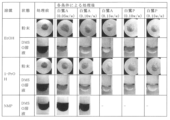
- the properties of samples containing ethanol, 1-propanol, and NMP were checked before and after the activated carbon treatment. Furthermore, HPLC analysis was performed on each sample at each time point (before addition of activated carbon, 1 hour after addition of activated carbon, and 3 hours after addition of activated carbon).
- Figure 1 shows the properties of each sample (powder and DMSO solution) before and after activated carbon treatment.
- each sample containing each organic solvent was filtered under reduced pressure, the filtrate was concentrated under reduced pressure, and the obtained wet solid was dried under reduced pressure at 50 ° C. to confirm its properties.
- DMSO solution the obtained solid was It was dissolved in 10% dimethyl sulfoxide (DMSO) to form a solution and its properties were confirmed.
- EtOH ethanol
- samples containing 1-propanol (1-PrOH) samples containing NMP are shown in Tables 10 to 12.
- Example 6 Purification of AFDX0250 (3) Activated carbon Shirasagi A (30.0 g) was added to a solution of crude AFDX0250 (200 g, 0.474 mol) purified in Example 4 in ethanol (3200 g) at room temperature under a nitrogen atmosphere, and the internal temperature was 69.0. After heating and stirring at ⁇ 72.4°C for 1 hour, the mixture was filtered under reduced pressure using a filtration device filled with a filter aid, and washed with ethanol (320 g) previously heated to 70°C. The filtrate was concentrated under reduced pressure to obtain a concentrated residue (989.04 g).
- the recrystallization process was performed using a combination of the alcohol used in the activated carbon treatment and a poor solvent.
- MEK methyl ethyl ketone
- MIBK methyl isobutyl ketone
- n-heptane n-heptane
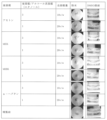
- each dried product and DMSO solution obtained in the recrystallization step using ethanol and 1-propanol as alcoholic solvents and the properties of the dried product and DMSO solution before purification are shown in FIGS. 2 and 3, respectively. Further, the results and yields of HPLC analysis of each dried product obtained in the recrystallization step using ethanol and 1-propanol as alcoholic solvents and the dried product before purification are shown in Tables 13 and 14, respectively.
- Example 7 Purification of AFDX0250 (4) Methyl isobutyl ketone (MIBK) (640 g) was added to a solution of AFDX0250 treated with activated carbon in Example 6 in ethanol and concentrated. The mass volume percent of ethanol and MIBK with respect to AFDX0250 was calculated by 1 H-NMR measurement, and the amount of ethanol was adjusted so that the total amount of ethanol was 2.5 v/w. The reaction mixture was then heated to 63-67°C and stirred for 30 minutes. MIBK was added dropwise over 48 minutes to a total of 7.5 v/w, and the mixture was stirred at 63 to 67°C for 1 hour.
- MIBK Methyl isobutyl ketone
- a test solution of the obtained AFDX0250 was prepared according to (1) Method for measuring the content of AFDX0250 or its salt in this specification, and HPLC analysis was performed on the test solution.
- the obtained AFDX0250 was dissolved in ethanol, and the solution was recrystallized a second time in the same manner as the first recrystallization.
- the obtained wet solid AFDX0250 was dried under reduced pressure at 90° C. for 14 hours and 35 minutes to obtain AFDX0250 (152.27 g, yield 76.1%).
- the obtained AFDX0250 is obtained by preparing a test solution according to (1) method for measuring the content of AFDX0250 or its salt in this specification, and HPLC analysis was performed.
- Table 15 shows the results of HPLC analysis of AFDX0250 obtained in the first and second recrystallizations.
- N.D. in the table means “not detected”, and a) indicates the content of Compound 1 measured by liquid chromatography mass spectrometry.
- (R)-11-[2-[2-[(diethylamino)methyl]-1-piperidinyl]acetyl]-5,11-dihydro -6H-pyrido[2,3-b][1,4]benzodiazepin-6-one or a salt thereof can be produced. Furthermore, the content of impurities such as 11-(2-chloroacetyl)-5,11-dihydro-6H-pyrido[2,3-b][1,4]benzodiazepin-6-one can be suppressed.
Landscapes
- Health & Medical Sciences (AREA)
- Chemical & Material Sciences (AREA)
- Organic Chemistry (AREA)
- Medicinal Chemistry (AREA)
- Pharmacology & Pharmacy (AREA)
- Life Sciences & Earth Sciences (AREA)
- Animal Behavior & Ethology (AREA)
- General Health & Medical Sciences (AREA)
- Public Health (AREA)
- Veterinary Medicine (AREA)
- Ophthalmology & Optometry (AREA)
- Engineering & Computer Science (AREA)
- Bioinformatics & Cheminformatics (AREA)
- Chemical Kinetics & Catalysis (AREA)
- General Chemical & Material Sciences (AREA)
- Nuclear Medicine, Radiotherapy & Molecular Imaging (AREA)
- Epidemiology (AREA)
- Nitrogen Condensed Heterocyclic Rings (AREA)
Priority Applications (5)
| Application Number | Priority Date | Filing Date | Title |
|---|---|---|---|
| JP2024512662A JPWO2023190663A1 (https=) | 2022-03-30 | 2023-03-29 | |
| KR1020247035203A KR20240168375A (ko) | 2022-03-30 | 2023-03-29 | 고순도 화합물의 제조 방법 및 정제 방법 |
| US18/851,293 US20250214992A1 (en) | 2022-03-30 | 2023-03-29 | High-purity compound production method and purification method |
| CN202380031604.XA CN118946564A (zh) | 2022-03-30 | 2023-03-29 | 高纯度化合物的制造方法及纯化方法 |
| EP23780672.4A EP4506347A4 (en) | 2022-03-30 | 2023-03-29 | PROCESS FOR THE PRODUCTION AND PURIFICATION OF HIGH-PURITY COMPOUNDS |
Applications Claiming Priority (2)
| Application Number | Priority Date | Filing Date | Title |
|---|---|---|---|
| JP2022-056754 | 2022-03-30 | ||
| JP2022056754 | 2022-03-30 |
Publications (1)
| Publication Number | Publication Date |
|---|---|
| WO2023190663A1 true WO2023190663A1 (ja) | 2023-10-05 |
Family
ID=88202044
Family Applications (1)
| Application Number | Title | Priority Date | Filing Date |
|---|---|---|---|
| PCT/JP2023/012761 Ceased WO2023190663A1 (ja) | 2022-03-30 | 2023-03-29 | 高純度化合物の製造方法および精製方法 |
Country Status (7)
| Country | Link |
|---|---|
| US (1) | US20250214992A1 (https=) |
| EP (1) | EP4506347A4 (https=) |
| JP (1) | JPWO2023190663A1 (https=) |
| KR (1) | KR20240168375A (https=) |
| CN (1) | CN118946564A (https=) |
| TW (1) | TW202402753A (https=) |
| WO (1) | WO2023190663A1 (https=) |
Citations (5)
| Publication number | Priority date | Publication date | Assignee | Title |
|---|---|---|---|---|
| JPS60215683A (ja) | 1984-03-14 | 1985-10-29 | ドクトル.カール トーメー ゲゼルシヤフト ミツト ベシユレンクテル ハフツング | 新規縮合ジアゼピノン |
| JPS6335573A (ja) * | 1986-07-31 | 1988-02-16 | ドクトル カルル ト−マエ ゲゼルシヤフト ミツト ベシユレンクテル ハフツング | 新規置換ピリド〔2,3−b〕〔1,4〕ベンゾジアゼピン−6−オン,その製法及びその化合物を含む医薬 |
| WO1993018772A1 (en) | 1992-03-18 | 1993-09-30 | Allergan, Inc. | Method for reducing intraocular pressure in the mammalian eye by administration of muscarinic antagonists |
| WO2016078770A1 (en) * | 2014-11-21 | 2016-05-26 | Laboratorios Del Dr. Esteve, S.A. | Spiro-isoquinoline-1,4'-piperidine compounds having multimodal activity against pain |
| WO2022030489A1 (en) | 2020-08-04 | 2022-02-10 | Santen Pharmaceutical Co., Ltd. | Agent for treating myopia, preventing myopia and/or suppressing myopia progression |
Family Cites Families (4)
| Publication number | Priority date | Publication date | Assignee | Title |
|---|---|---|---|---|
| JPH09318772A (ja) | 1996-05-28 | 1997-12-12 | Rhythm Watch Co Ltd | 装飾装置 |
| JP7253813B2 (ja) | 2020-08-07 | 2023-04-07 | 株式会社ユニバーサルエンターテインメント | 遊技機 |
| WO2022080397A1 (ja) * | 2020-10-14 | 2022-04-21 | 参天製薬株式会社 | 安定な医薬組成物 |
| EP4501329A4 (en) * | 2022-03-30 | 2026-03-25 | Santen Pharmaceutical Co Ltd | METHOD FOR STERILIZING AND PACKAGING A PHARMACEUTICAL PREPARATION |
-
2023
- 2023-03-29 CN CN202380031604.XA patent/CN118946564A/zh active Pending
- 2023-03-29 TW TW112111992A patent/TW202402753A/zh unknown
- 2023-03-29 JP JP2024512662A patent/JPWO2023190663A1/ja active Pending
- 2023-03-29 EP EP23780672.4A patent/EP4506347A4/en active Pending
- 2023-03-29 WO PCT/JP2023/012761 patent/WO2023190663A1/ja not_active Ceased
- 2023-03-29 KR KR1020247035203A patent/KR20240168375A/ko active Pending
- 2023-03-29 US US18/851,293 patent/US20250214992A1/en active Pending
Patent Citations (6)
| Publication number | Priority date | Publication date | Assignee | Title |
|---|---|---|---|---|
| JPS60215683A (ja) | 1984-03-14 | 1985-10-29 | ドクトル.カール トーメー ゲゼルシヤフト ミツト ベシユレンクテル ハフツング | 新規縮合ジアゼピノン |
| JPS6335573A (ja) * | 1986-07-31 | 1988-02-16 | ドクトル カルル ト−マエ ゲゼルシヤフト ミツト ベシユレンクテル ハフツング | 新規置換ピリド〔2,3−b〕〔1,4〕ベンゾジアゼピン−6−オン,その製法及びその化合物を含む医薬 |
| WO1993018772A1 (en) | 1992-03-18 | 1993-09-30 | Allergan, Inc. | Method for reducing intraocular pressure in the mammalian eye by administration of muscarinic antagonists |
| JPH07504915A (ja) * | 1992-03-18 | 1995-06-01 | アラーガン、インコーポレイテッド | ムスカリン拮抗物質投与による,哺乳動物の眼における眼内圧低下法 |
| WO2016078770A1 (en) * | 2014-11-21 | 2016-05-26 | Laboratorios Del Dr. Esteve, S.A. | Spiro-isoquinoline-1,4'-piperidine compounds having multimodal activity against pain |
| WO2022030489A1 (en) | 2020-08-04 | 2022-02-10 | Santen Pharmaceutical Co., Ltd. | Agent for treating myopia, preventing myopia and/or suppressing myopia progression |
Non-Patent Citations (6)
| Title |
|---|
| ENGEL W W ET AL: "Tricyclic Compounds as Selective Muscarinic Receptor Antagonists. 3. Structure-Selectivity Relationships in a Series of Cardioselective (M2) Antimuscarinics", JOURNAL OF MEDICINAL CHEMISTRY, AMERICAN CHEMICAL SOCIETY, US, vol. 32, no. 8, 1 January 1989 (1989-01-01), US , pages 1718 - 1724, XP002166482, ISSN: 0022-2623, DOI: 10.1021/jm00128a008 * |
| MANDELLI GIACOMINA R., STEFANO MAIORANA, PATRIZIA TERNI, GIUSEPPINA LAMPERTI, MARIA LUISA COLIBRETTI, BRUNO P. IMBIMBO: "Synthesis of New Cardioselective M2 Muscarinic Receptor Antagonists ", CHEMICAL AND PHARMACEUTICAL BULLETIN, JP, vol. 48, no. 11, 1 November 2000 (2000-11-01), JP , pages 1611 - 1622, XP093095104, ISSN: 1347-5223, DOI: 10.1248/cpb.48.1611 * |
| See also references of EP4506347A4 |
| WATANABE TOSHIHIRO, AKIO KAKEFUDA, ISAO KINOYAMA, KENJI TAKIZAWA, SEIKO HIRANO, HIROSHI SHIBATA, ISAO YANAGISAWA: "Synthesis of Novel Succinamide Derivatives Having a 5, 11-Dihydro-6H-pyrido[2, 3-b][1, 4]benzodiazepin-6-one Skeleton as Potent and Selective M2 Muscarinic Receptor Antagonists. II ", CHEMICAL AND PHARMACEUTICAL BULLETIN, PHARMACEUTICAL SOCIETY OF JAPAN, JP, vol. 45, no. 9, 1 January 1997 (1997-01-01), JP , pages 1458 - 1469, XP093095132, ISSN: 0009-2363, DOI: 10.1248/cpb.45.1458 * |
| WATANABE TOSHIHIRO, ISAO KINOYAMA, KENJI TAKIZAWA, SEIKO HIRANO, TADAO SHIBANUMA: "Synthesis and Biological Evaluation of 1, 2, 3, 4-Tetrahydroisoquinoline Derivatives as Potent and Selective M2 Muscarinic Receptor Antagonist", CHEMICAL AND PHARMACEUTICAL BULLETIN, PHARMACEUTICAL SOCIETY OF JAPAN, JP, vol. 47, no. 5, 15 May 1999 (1999-05-15), JP , pages 672 - 677, XP093095127, ISSN: 0009-2363, DOI: 10.1248/cpb.47.672 * |
| WOLFNARD W. ENGEL ET AL., J. MED. CHEM., vol. 32, no. 8, 1989, pages 1718 - 1724 |
Also Published As
| Publication number | Publication date |
|---|---|
| EP4506347A4 (en) | 2026-03-25 |
| US20250214992A1 (en) | 2025-07-03 |
| KR20240168375A (ko) | 2024-11-29 |
| CN118946564A (zh) | 2024-11-12 |
| TW202402753A (zh) | 2024-01-16 |
| JPWO2023190663A1 (https=) | 2023-10-05 |
| EP4506347A1 (en) | 2025-02-12 |
Similar Documents
| Publication | Publication Date | Title |
|---|---|---|
| JP2024540080A (ja) | Irak4分解剤およびその合成 | |
| KR102442536B1 (ko) | 리나글립틴 결정형 및 이의 제조방법 | |
| JP2017061578A (ja) | 有機化合物 | |
| US7897613B2 (en) | Crystalline polymorphs of clopidogrel | |
| EP2468750A1 (en) | Polymorphic forms of asenapine maleate and processes for their preparation | |
| EP0579681A1 (en) | Crystalline tiagabine hydrochloride monohydrate, its preparation and use | |
| JP2014051517A (ja) | デフェラシロックス(icl670a)の多形形態 | |
| US20210238195A1 (en) | Crystalline polymorphs of a muscarinic acetylcholine receptor agonist | |
| US20210171460A1 (en) | Crystalline form of sofpironium bromide and preparation method thereof | |
| WO2023193563A1 (zh) | 一种噻吩并吡啶化合物的晶型a、制备方法及其药物组合物 | |
| JP6275644B2 (ja) | N−[2−({2−[(2S)−2−シアノピロリジン−1−イル]−2−オキソエチル}アミノ)−2−メチルプロピル]−2−メチルピラゾロ[1,5−a]ピリミジン−6−カルボキサミドの結晶 | |
| CN117377658A (zh) | 喹啉衍生物化合物的制备方法 | |
| NO330528B1 (no) | Nye salter av benzazepinforbindelser, fremgangsmater for fremstilling derav, og anvendelse av slike i farmasoytiske sammensetninger | |
| WO2023190663A1 (ja) | 高純度化合物の製造方法および精製方法 | |
| JP2023536911A (ja) | O-糖タンパク質-2-アセトアミド-2-デオキシ-3-d-グルコピラノシダーゼ阻害剤の結晶形態 | |
| CN111004255A (zh) | 一种头孢卡品内酯化合物或其盐酸盐的制备方法 | |
| CN107540589B (zh) | 一种艾尔骨化醇晶型、药物组合物及制备方法和应用 | |
| CN111670191B (zh) | 吡啶酮衍生物的晶型及制备方法和应用 | |
| KR20180129851A (ko) | 나트륨-포도당 연계된 트랜스포터 억제제의 아민 용매화물 및 그의 제조 방법 및 애플리케이션 | |
| US20120059034A1 (en) | Novel crystalline hydrate, amorphous and polymorphic forms of dihydro-benzoxazole-6-yl-acetamide derivative and processes for their preparation | |
| DE60303603T2 (de) | Benzolsulfonatsalz eines morpholinharnstoff-derivats zur verwendung als ccr-3 antagonist bei der behandlung von entzündlichen erkrankungen | |
| WO2026018176A1 (en) | 2-(4-chloro-2 methoxyphenyl)-2-((3-methoxy-5-(methylsulfonyl)phenyl)amino)-1-(5-(trifluoro¬methoxy)-1h-indol-3-yl)ethanone and pharmaceutical compositions comprising the same | |
| TW202527934A (zh) | 醫藥上活性化合物之固體形式 | |
| WO2024125361A1 (zh) | N-取代苯基磺酰胺类化合物的固体形式 | |
| HK40068368B (zh) | 索吡溴铵的晶型及其制备方法 |
Legal Events
| Date | Code | Title | Description |
|---|---|---|---|
| 121 | Ep: the epo has been informed by wipo that ep was designated in this application |
Ref document number: 23780672 Country of ref document: EP Kind code of ref document: A1 |
|
| WWE | Wipo information: entry into national phase |
Ref document number: 18851293 Country of ref document: US |
|
| ENP | Entry into the national phase |
Ref document number: 2024512662 Country of ref document: JP Kind code of ref document: A |
|
| WWE | Wipo information: entry into national phase |
Ref document number: 202380031604.X Country of ref document: CN |
|
| ENP | Entry into the national phase |
Ref document number: 20247035203 Country of ref document: KR Kind code of ref document: A |
|
| WWE | Wipo information: entry into national phase |
Ref document number: 2023780672 Country of ref document: EP |
|
| NENP | Non-entry into the national phase |
Ref country code: DE |
|
| ENP | Entry into the national phase |
Ref document number: 2023780672 Country of ref document: EP Effective date: 20241030 |
|
| WWP | Wipo information: published in national office |
Ref document number: 18851293 Country of ref document: US |