WO2023175718A1 - 第1無線通信装置及び第2無線通信装置 - Google Patents
第1無線通信装置及び第2無線通信装置 Download PDFInfo
- Publication number
- WO2023175718A1 WO2023175718A1 PCT/JP2022/011603 JP2022011603W WO2023175718A1 WO 2023175718 A1 WO2023175718 A1 WO 2023175718A1 JP 2022011603 W JP2022011603 W JP 2022011603W WO 2023175718 A1 WO2023175718 A1 WO 2023175718A1
- Authority
- WO
- WIPO (PCT)
- Prior art keywords
- wireless communication
- communication device
- resource
- data
- terminal device
- Prior art date
- Legal status (The legal status is an assumption and is not a legal conclusion. Google has not performed a legal analysis and makes no representation as to the accuracy of the status listed.)
- Ceased
Links
Images








Classifications
-
- H—ELECTRICITY
- H04—ELECTRIC COMMUNICATION TECHNIQUE
- H04W—WIRELESS COMMUNICATION NETWORKS
- H04W72/00—Local resource management
- H04W72/04—Wireless resource allocation
-
- H—ELECTRICITY
- H04—ELECTRIC COMMUNICATION TECHNIQUE
- H04W—WIRELESS COMMUNICATION NETWORKS
- H04W4/00—Services specially adapted for wireless communication networks; Facilities therefor
- H04W4/30—Services specially adapted for particular environments, situations or purposes
- H04W4/38—Services specially adapted for particular environments, situations or purposes for collecting sensor information
-
- H—ELECTRICITY
- H04—ELECTRIC COMMUNICATION TECHNIQUE
- H04W—WIRELESS COMMUNICATION NETWORKS
- H04W72/00—Local resource management
- H04W72/12—Wireless traffic scheduling
Definitions
- the present invention relates to a first wireless communication device and a second wireless communication device.
- Wireless communication systems using radio have been used.
- Wireless communication systems are also used, for example, within facilities such as factories.
- IoT Internet of Things
- a network may be configured on the terminal device side, and the terminal device side GW (UE-GW) may be responsible for communication.
- Traffic (data) in a terminal device occurs periodically (planned) (PDT: Periodic Deterministic Traffic), for example.
- Traffic is transmitted using, for example, CG (configured grant) radio resources (hereinafter sometimes referred to as CG resources) for uplink radio transmission and SPS (semi-persistent scheduling) for downlink radio transmission.
- CG configured grant radio resources
- SPS sub-persistent scheduling
- 3GPP TS36.133 LTE-A wireless measurement specifications 3GPP TS36.300 LTE-A Overview Specifications 3GPP TS36.211 LTE-A PHY channel specifications 3GPP TS36.212 LTE-A PHY encoding specification 3GPP TS36.213 LTE-A PHY procedure specifications 3GPP TS36.214 LTE-A PHY measurement specifications 3GPP TS36.321 LTE-A MAC specifications 3GPP TS36.322 LTE-A RLC specifications 3GPP TS36.323 LTE-A PDCP specifications 3GPP TS36.331 LTE-A RRC specifications 3GPP TS36.413 LTE-A S1 specifications 3GPP TS36.423 LTE-A X2 specifications 3GPP TS36.425 LTE-A Xn specifications 3GPP TR36.912 NR Radio Access Overview 3GPP TR38.913 NR requirements 3GPP TR38.913 NR requirements 3GPP TR38.801 NR Network Architecture Overview 3GP
- traffic may arrive at a timing other than periodic (quasi-periodic) (ADT: Aperiodic Deterministic Traffic).
- ADT Aperiodic Deterministic Traffic
- the above-mentioned CG may not be able to be transmitted. Therefore, it has been considered to allocate CG resources at times other than the periodic timing for transmitting ADT data, or to allocate dynamic grant (DG) radio resources.
- DG dynamic grant
- problems such as a decrease in the usage efficiency of radio resources due to the allocation of many unused CG resources, and a decrease in the control signal due to the execution of the allocation sequence when using DG radio resources (hereinafter sometimes referred to as DG resources). Overhead of monitoring processing occurs.
- a first wireless communication device and a second wireless communication device are provided that suppress a decrease in radio resource use efficiency and overhead due to monitoring processing in transmitting ADT data.
- the timing of the preset wireless resources is set at a predetermined different time. It has a control unit that can receive data transmitted using coordinated radio resources that are time-adjusted.
- One disclosure is capable of suppressing a decrease in radio resource usage efficiency and overhead due to monitoring processing in ADT data transmission.
- FIG. 1 is a diagram showing an example of wireless communication in the wireless communication system 3.
- FIG. 2 is a diagram illustrating an example of radio resources.
- FIG. 3 is a diagram showing a configuration example of the wireless communication system 10.
- FIG. 4 is a diagram illustrating a configuration example of the base station device 200.
- FIG. 5 is a diagram illustrating an example of radio resources in the DG pre-allocation method.
- FIG. 6 is a diagram illustrating an example of radio resources in the multiple CG pre-allocation method.
- FIG. 7 is a diagram showing an example of radio resources in the CG shift method.
- FIG. 8 is a diagram illustrating an example of a processing procedure of the CG shift method in the terminal device 100.
- FIG. 9 is a diagram illustrating an example of a processing procedure of the CG shift method in the base station device 200.
- FIG. 10 is a diagram showing an example of each frame configuration.
- FIG. 11 is a diagram illustrating an example of an LCH mapping configuration.
- FIG. 12 is a diagram illustrating an example of system operation of the base station device 200 and the terminal device 100.
- FIG. 13 is a diagram illustrating an example of radio resources having non-shiftable resources.
- FIG. 14 is a diagram showing an example in which a control signal is transmitted every time a shift is made.
- FIG. 15 is a diagram showing an example in which PRACH becomes a control signal.
- FIG. 16 is a diagram showing an example in which no control signal is transmitted.
- FIG. 17 is a diagram showing an example of CGT values.
- the wireless communication system 3 is a wireless communication system that includes a first wireless communication device 1 and a second wireless communication device 2.
- the first wireless communication device and the second wireless communication device 2 communicate wirelessly.
- the first wireless communication device and the second wireless communication device 2 perform pre-allocation type communication in which data is transmitted and received using wireless resources set in advance.
- FIG. 1 is a diagram showing an example of wireless communication in the wireless communication system 3.
- FIG. 1A is a diagram showing an example of a sequence for transmitting data from the second wireless communication device 2 to the first wireless communication device 1.
- the second wireless communication device 2 transmits data to the first wireless communication device 1 using wireless resources allocated in advance (hereinafter sometimes referred to as advance wireless resources) (S1). However, if data cannot be transmitted using the advance radio resources (for example, when the data does not arrive in time), the second wireless communication device 2 does not use the advance radio resources (S1). Then, the second wireless communication device 2 adjusts the transmission timing of the advance wireless resource to a later time (S2) and sets the adjusted wireless resource. The second wireless communication device 2 uses the adjusted wireless resources to transmit data to the first wireless communication device 1 (S3).
- FIG. 1(B) is a diagram showing an example of radio resources.
- the horizontal axis of radio resources indicates time (transmission timing).
- the second wireless communication device 2 adjusts the transmission timing (pre-adjustment transmission timing) of the advance radio resource (for example, shifts it backward in the time axis) (S2), and sets the transmission timing (post-adjustment transmission timing) of the adjusted radio resource. do.
- the advance radio resource and the adjusted radio resource may be in the same frequency band, for example.
- the transmission timing of advance radio resources is adjusted and data is transmitted using the adjusted radio resources.
- the wireless communication system 3 can transmit delayed data without performing a new allocation process and without allocating a plurality of wireless resources in advance.
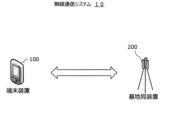
- FIG. 2 is a diagram showing a configuration example of the wireless communication system 10.
- the wireless communication system 10 includes a base station device 200 and a terminal device 100.
- the wireless communication system 10 is, for example, a wireless communication system that is installed within the system and supports IIOT.
- the terminal device 100 is a communication device attached to equipment (device) within the system.
- Base station device 200 is a communication device installed within the system.
- the base station device 200 is compatible with various communication generations (eg, 5G, Beyond 5G, etc.), for example. Further, the base station device 200 may be configured with one device, or may be configured with a plurality of devices such as a CU (Central Unit) and a DU (Distributed Unit).
- CU Central Unit
- DU Distributed Unit
- the terminal device 100 periodically transmits data to the base station device 200.
- the terminal device 100 uses CG radio resources in periodic (PDT) data transmission.
- the terminal device 100 also supports semi-regular (ADT) data transmission.
- Semi-regular data transmission includes, for example, data transmission delayed from regular data transmission timing.
- terminal device 100 there is one terminal device 100 in FIG. 2, there may be a plurality of terminal devices. Further, in the following embodiments, data transmission from the terminal device 100 to the base station device 200 will be explained as an example, but communication between the terminal devices 100 and data transmission from the base station device 200 to the terminal device 100 will also be described. Similar processing can be applied.
- FIG. 3 is a diagram showing a configuration example of the terminal device 100.
- the terminal device 100 includes a CPU (Central Processing Unit) 110, a storage 120, a memory 130, a wireless communication circuit 150, and an antenna 151.
- CPU Central Processing Unit
- the storage 120 is an auxiliary storage device such as a flash memory, an HDD (Hard Disk Drive), or an SSD (Solid State Drive) that stores programs and data.
- the storage 120 stores a terminal communication program 121 and a terminal control program 122.
- the memory 130 is an area into which programs stored in the storage 120 are loaded.
- the memory 130 may also be used as an area for programs to store data.
- the wireless communication circuit 150 is a device that performs wireless communication with the base station device 200 and other terminal devices 100.
- the wireless communication circuit 150 includes an antenna 151.
- the antenna 151 includes, for example, a directional antenna that can control the direction of transmission and reception of radio waves.
- the CPU 110 is a processor that loads a program stored in the storage 120 into the memory 130, executes the loaded program, constructs each part, and implements each process.
- the CPU 110 executes the terminal communication program 121 to construct a second communication unit and perform terminal communication processing.
- the terminal communication process is a process of wirelessly communicating with the base station device 200 and other terminal devices 100.
- the terminal control process is a process for controlling wireless communication of the terminal device 100.
- the terminal device 100 transmits, for example, PDT data and ADT data.
- the terminal device 100 has, for example, a DG pre-allocation method, a multiple CG pre-allocation method, and a CG shift method as ADT data transmission methods. Details of each method will be explained below.
- the terminal device 100 does not necessarily have to have three methods; for example, it may have only the CG shift method, or it may have the CG shift method and one other method.
- the CPU 110 executes the CG shift method module 1221 included in the terminal control program 122 to construct a second control unit and perform CG shift method processing.
- the CG shift method process is a process of transmitting ADT data using the CG shift method.
- the CPU 110 executes the DG pre-allocation method module 1222 included in the terminal control program 122 to construct the second control unit and perform DG pre-allocation method processing.
- the DG pre-allocation method process is a process of transmitting ADT data using the DG pre-allocation method.
- the CPU 110 executes the multiple CG pre-allocation method module 1223 included in the terminal control program 122 to construct a second control unit and perform multiple CG pre-allocation method processing.
- the multiple CG pre-allocation method process is a process for transmitting ADT data using the multiple CG pre-allocation method.
- FIG. 4 is a diagram illustrating a configuration example of the base station device 200.
- Base station device 200 includes CPU 210, storage 220, memory 230, wireless communication circuit 250, and antenna 251.
- the storage 220 is an auxiliary storage device such as a flash memory, HDD, or SSD that stores programs and data.
- the storage 220 stores a base station communication program 221 and a base station control program 222.
- the memory 230 is an area into which programs stored in the storage 220 are loaded.
- the memory 230 may also be used as an area for programs to store data.
- the wireless communication circuit 250 is a device that performs wireless communication with the terminal device 100.
- the wireless communication circuit 250 includes an antenna 251.
- the antenna 251 includes, for example, a directional antenna that can control the direction of transmission and reception of radio waves.
- the CPU 210 is a processor that loads a program stored in the storage 220 into the memory 230, executes the loaded program, constructs each part, and implements each process.
- the CPU 210 executes the base station communication program 221 to build a communication unit and perform communication processing.
- the base station communication process is a process of performing wireless communication with the terminal device 100.
- the base station device 200 wirelessly connects with the terminal device 100, transmits data and control signals to the terminal device 100, and receives data from the terminal device 100.
- the CPU 210 executes the base station control program 222 to build a control unit and perform base station control processing.
- the base station control process is a process for controlling wireless communication performed by the base station device 200.
- the base station device 200 receives, for example, PDT data and ADT data.
- the base station device 200 performs reception in accordance with the ADT data transmission method in the terminal device 100.
- the CPU 210 executes the CG shift method reception module 2221 included in the base station control program 222 to build a control unit and perform CG shift method reception processing.
- the CG shift method receiving process is a process of receiving ADT data transmitted using the CG shift method.
- the CPU 210 executes the DG pre-allocation method reception module 2222 included in the base station control program 222 to build a control unit and perform DG pre-allocation method reception processing.
- the DG pre-allocation method reception process is a process of receiving ADT data transmitted using the DG pre-allocation method.
- the CPU 210 executes the multiple CG pre-allocation method reception module 2223 included in the base station control program 222 to construct a control unit and perform the multiple CG pre-allocation method reception process.
- the multiple CG pre-allocation method receiving process is a process of receiving ADT data transmitted using the multiple CG pre-allocation method.
- Radio resources when ADT data is generated will be explained. Each allocation method will be explained below.
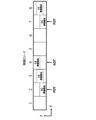
- FIG. 5 is a diagram illustrating an example of radio resources in the DG pre-allocation method.
- the vertical direction indicates frequency (f), and the horizontal direction indicates time (t).
- radio resources are divided into slots, and the above numerical values indicate slot numbers.
- periodic transmission of PDT data is performed at a period of 5 slots, and CG resources allocated in advance are used.
- the subsequent diagrams of radio resources are the same as those in FIG. 5 unless otherwise specified.
- DG resources are allocated in advance for ADT data transmission.
- PDT data is sent periodically in slots 2 and 7.
- a DG resource is allocated in advance to slot 4 (two slots after the CG resource for transmitting PDT data).
- the terminal device 100 transmits data using the DG resource allocated to slot 4, for example, when PDT data cannot be transmitted in slot 2 due to a delay in the arrival of traffic, or when new data is generated. Send.
- the terminal device 100 receives a UL grant (radio resource allocation procedure) using SR (Scheduling Requests)/PDCCH (Physical Downlink Control CHannel), so the terminal device 100 transmits the SR procedure to the base station device 200. Execute between.
- SR Service Requests
- PDCCH Physical Downlink Control CHannel
- the processing load on the base station device 200 and the terminal device 100 increases as the base station device 200 and the terminal device 100 monitor messages sent and received in the radio resource allocation procedure. Moreover, time constraints also occur by executing the radio resource allocation procedure.
- FIG. 6 is a diagram illustrating an example of radio resources in the multiple CG pre-allocation method.
- CG resources are allocated in advance for transmitting ADT data.
- CG resources for ADT data transmission are allocated in advance to slots 3 and 4 (one slot and two slots after the CG resource for PDT data transmission).
- the terminal device 100 when the terminal device 100 cannot transmit PDT data in slot 2 due to a delay in the arrival of traffic, or when new data is generated, the terminal device 100 transmits data using the CG resource allocated to slot 3. Send. Furthermore, if the terminal device 100 cannot transmit data even with the CG resource of slot 3, it transmits data using the CG resource of slot 4.
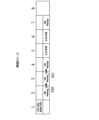
- FIG. 7 is a diagram showing an example of radio resources in the CG shift method.
- CG resources for PDT data transmission whose time direction (slot number) is shifted within the PDT cycle are used as radio resources for ADT data transmission.
- the terminal device 100 recognizes that data cannot be transmitted using the CG resource of slot 2 for PDT data transmission (ADT data is generated).
- the terminal device 100 shifts the CG resource for PDT data transmission in slot 2 according to the shift amount (two slots) (S10), and reserves the CG resource for ADT data transmission in slot 4.
- the shift amount is set in advance between the terminal device 100 and the base station device 200, for example. Furthermore, when selecting one shift amount from a plurality of shift amount candidates, the terminal device 100 may include the selected shift amount in a control signal and transmit it.
- the terminal device 100 Since the terminal device 100 cannot transmit data using the CG resource of slot 2, it notifies using the control signal (CTL Sig. Shift Ind.) of slot 1 before slot 2 to shift the CG resource for PDT data transmission. do. Then, the terminal device 100 uses the secured CG resource of slot 4 to transmit ADT data.
- CTL Sig. Shift Ind. control signal
- the base station device 200 By receiving the control signal, the base station device 200 recognizes that a shift of the CG resource occurs, receives the CG resource at a timing corresponding to the amount of shift, and acquires ADT data. Note that when the base station device 200 has allocated the resource to which the CG resource is shifted to another terminal device, etc., the base station device 200 may cancel the wireless resource allocated to the other terminal device and give priority to shifting the CG resource. .
- the terminal device 100 transmits subsequent PDT data (PDT data after slot 7) according to the cycle (every 5 slots) unless new ADT data is generated.
- CG shift method since CG resources for ADT data transmission are not allocated, unused CG resources are not generated, and a decrease in radio resource efficiency can be suppressed. Furthermore, in the CG shift method, since the CG resource for PDT data is shifted when ADT data is generated, an allocation procedure like that for DG resources does not occur, and an increase in processing load can be suppressed. The execution procedure of the CG shift method will be described below.
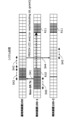
- FIG. 8 is a diagram illustrating an example of the processing procedure of the CG shift method in the terminal device 100.
- FIG. 8A is a diagram illustrating an example of radio resources when a shift occurs once.
- the terminal device 100 uses the PUCCH (control signal) of slot 1 to notify that a shift of CG resources has occurred (S20).
- the terminal device 100 shifts the CG resource of slot 2 to slot 3 according to the shift amount (S21).
- the terminal device 100 uses the CG resource shifted to slot 3 to transmit ADT data to the base station device 200.
- FIG. 8(B) is a diagram showing an example of radio resources when a second shift occurs. If the terminal device 100 cannot transmit data (no data is generated) even with the CG resource of slot 3 shifted in FIG. 8(A), the terminal device 100 continues shifting (S22).
- the terminal device 100 uses the PUCCH (control signal) in slot 2 to notify that a shift of CG resources has occurred.
- PUCCH control signal
- the terminal device 100 further shifts the CG resource of slot 3 shifted in FIG. 8(A) to slot 4 according to the shift amount (S23).
- the terminal device 100 uses the CG resource shifted to slot 4 to transmit ADT data to the base station device 200. In this way, the terminal device 100 continues shifting until data is generated.
- FIG. 9 is a diagram illustrating an example of the processing procedure of the CG shift method in the base station device 200.
- FIG. 9A is a diagram illustrating an example of radio resources when a shift occurs once.
- the base station device 200 receives the PUCCH of slot 1 from the terminal device 100 (S30), and recognizes that the CG resource has been shifted.
- the base station device 200 waits (monitors) for data to be transmitted using the CG resource of slot 3 shifted by the terminal device 100 according to the shift amount (S31). Then, the terminal device 100 receives the ADT data transmitted using the CG resource shifted to slot 3.
- FIG. 9(B) is a diagram showing an example of radio resources when a second shift occurs. If the base station apparatus 200 cannot transmit data (no data is generated) even with the CG resource of slot 3 shifted by the terminal apparatus 100 in FIG. 9(A), the base station apparatus 200 further continues the shift (S32).
- the base station device 200 receives the PUCCH (control signal) in slot 2 and recognizes that a shift of CG resources has occurred.
- the base station device 200 waits for (monitors) the CG resource of slot 4, which is further shifted, from the CG resource of slot 3, which is shifted by the terminal device 100. Then, the terminal device 100 receives the ADT data transmitted using the CG resource shifted to slot 4. In this way, base station device 200 continues shifting until it receives data.
- FIG. 10 is a diagram showing an example of each frame configuration.
- FIG. 10(A) is a diagram showing an example of the first frame configuration.
- the first frame configuration is a configuration in which all PUCCHs can be used for purposes other than SR (PUCCH Non-SR).
- PUCCH Non-SR SR
- PUCCH Non-SR an RRC message
- FIG. 10(B) is a diagram showing an example of the second frame configuration.
- the second frame configuration is a configuration in which a PUCCH a predetermined number of times before the CG resource for PDT data transmission is set as PUCCH Non-SR.
- the predetermined number is set by RRC, for example, and is one slot in FIG. 10(B).
- PUCCH resources are common to SR and Non-SR.
- the base station device 200 can recognize that a shift occurs by receiving the PUCCH Non-SR. Therefore, in the base station apparatus 200, even if the shift continues thereafter, one PUCCH Non-SR resource is sufficient for each cycle.
- FIG. 10(C) is a diagram showing an example of the third frame configuration.
- a dedicated resource for PUCCH Non-SR is set in a predetermined number of slots before the CG resource for PDT data transmission. If the transmission timings of PUCCH Non-SR and PUCCH SR overlap, the terminal device 100 may give priority to the transmission of PUCCH Non-SR.
- FIG. 11 is a diagram illustrating an example of an LCH mapping configuration.
- FIG. 11(A) shows a configuration in which one SR ID corresponds to one LCH.
- the SR ID indicates either SR or Non-SR.
- FIG. 11(B) shows a configuration in which two SR IDs correspond to one LCH. Two IDs correspond to LCH X: an SR ID indicating SR and an SR ID indicating Non-SR.
- FIG. 12 is a diagram illustrating an example of system operation of the base station device 200 and the terminal device 100.
- there are two terminal devices 100 referred to as terminal devices 100-1 and 100-2, respectively.
- the terminal device 100-1 recognizes that the arrival of the traffic has been delayed, decides to shift the CG resource R10 to the CG resource R11, and transmits the PUCCH Non-SR to the base station device 200.
- -Perform SR transmission processing S40
- the terminal device 100-1 requires a processing unit of 4sym to perform processing S40.
- the processing unit indicates, for example, a CPU processing cycle or processing time required to perform the processing.
- the base station device 200 When the base station device 200 receives PUCCH Non-SR (S41), it recognizes that it will shift and performs PUCCH Non-SR reception processing (S42). For example, the base station device 200 requires a processing unit of 4sym to perform processing S42.
- the base station device 200 when the base station device 200 has allocated the wireless resource to which the CG resource is shifted to the terminal device 100-2, the base station device 200 cancels the allocation of the wireless resource to which the CG resource is shifted to the terminal device 100-2, and assigns a new wireless resource to the terminal device 100-2.
- a reallocation process is performed to allocate radio resources and notify the terminal device 100-2 (S43).
- the base station device 200 requires a processing unit of 4sym to perform processing S43.
- the terminal device 100-2 When the terminal device 100-2 receives the reallocation notification from the base station device 200 (S44), the terminal device 100-2 cancels the originally allocated CG resource R11 and uses (or uses) the newly allocated radio resource. (S45). For example, the terminal device 100-2 requires a processing unit of 4sym to perform processing S45.
- TBS, rx indicates the processing time in the PUCCH Non-SR reception process in the base station device 200.
- TBS, tx indicates the processing time in the reallocation process in the base station device 200.
- TUE, rx indicates the processing time in the reallocation reception process in the terminal device 100 to be reallocated.
- the CG resource shift interval indicates the shift width (time) of the CG resource for PDT by the terminal device 100.
- the shift width of CG resources is adjusted so that condition 1 is satisfied so that the reallocation process to other terminal devices 100 can be completed in time. Note that when reassigning to another terminal device 100 is not performed, but only canceling the same (including partially overlapping) resource as the CG resource of the shift destination, the reassignment process of Condition 1 is replaced by cancellation process. .
- FIG. 13 is a diagram illustrating an example of radio resources having non-shiftable resources.
- the terminal device 100 sets slots 5 and 6 to be unshiftable.
- the terminal device 100 is able to shift the CG resource from slot 2 to slot 3 (S50) and from slot 3 to slot 4 (S51), but it is possible to shift the CG resource from slot 2 to slot 3 (S51). Don't shift.
- FIG. 13 shows an example in which the shift amount is 1 slot and the number of shifts is limited to 2, for example, if the shift amount is 2 slots and the number of shifts is limited to 1, Similarly, slots 5 and 6 may be set to be unshiftable.
- the shift amount (width) and number of shifts can be limited by making specific slots unshiftable. Furthermore, the terminal device 100 may directly limit the shift amount or the number of shifts. In either case, information regarding the restriction is shared with the base station device 200. Information sharing with the base station device 200 is performed using, for example, an RRC message. Further, the shift amount may be determined, for example, with reference to the parameter Burst Spread.
- the control signal notifying the shift may be transmitted every time the shift is performed.
- FIG. 14 is a diagram showing an example in which a control signal is transmitted every time a shift is made.
- the terminal device 100 transmits a control signal in slot 1 when performing shift processing S60. Then, when the terminal device 100 further performs the shift process S61, it transmits a control signal in slot 2.
- the base station device 200 recognizes that the CG resource will be shifted to slot 2 by receiving the control signal for slot 1. Then, by receiving the control signal in slot 2, base station device 200 recognizes that the CG resource shifted to slot 2 will be further shifted to slot 3.
- the terminal device 100 may transmit the control signal only once.
- base station device 200 recognizes that further shifting will be performed if data cannot be received in the shift destination slot.
- control signal may be, for example, a PRACH occupied in the slot in addition to the PUCCH. Either a slot or a preamble is allocated in advance between the terminal device 100 and the base station device 200.
- FIG. 15 is a diagram showing an example in which PRACH becomes a control signal. The terminal device 100 notifies via PRACH that the shift process S70 will occur.
- a CGT Configured Grant Timer
- the terminal device 100 transmits data using the CG resource, it starts CGT.
- the terminal device 100 continues to transmit the corresponding data while the CGT is activated, that is, other data cannot overwrite the data (the other data does not overwrite the data held in the HARQ buffer). ). If the start timing of the CGT is shifted due to shifting, the next data may not be able to be transmitted using the CG resource. Therefore, when using the shifted CG resource, the terminal device 100 starts with the initial value of CGT set to a minus value corresponding to the shifted amount.
- FIG. 17 is a diagram showing an example of CGT values.
- the terminal device 100 shifts the CG resource of slot 3 to slot 5 (S90).
- slot 3 the terminal device 100 activates the CGT with an initial value N, but in slot 5, it activates the CGT with an initial value N-2, which is decreased by an amount corresponding to the shift amount. This shortens the startup time of the CGT, allowing the CG resources to be used for the next data transmission.
- the terminal device 100 may not set (start) the CGT.
- the shift amount (width) described in the first embodiment, the second embodiment, and other embodiments is similar to the shift amount (width) described in the first embodiment, the second embodiment, and other embodiments. , frame).
- First wireless communication device 2 Second wireless communication device 3: Wireless communication system 10: Wireless communication system 100: Terminal device 110: CPU 120: Storage 121: Terminal communication program 122: Terminal control program 1221: CG shift method module 1222: DG pre-allocation method module 1223: Multiple CG pre-allocation method module 130: Memory 150: Wireless communication circuit 151: Antenna 200: Base station device 210: CPU 220: Storage 221: Base station communication program 222: Base station control program 2221: CG shift method receiving module 2222: DG pre-allocation method receiving module 2223: Multiple CG pre-allocating method receiving module 230: Memory 250: Wireless communication circuit 251: Antenna
Landscapes
- Engineering & Computer Science (AREA)
- Computer Networks & Wireless Communication (AREA)
- Signal Processing (AREA)
- Mobile Radio Communication Systems (AREA)
Priority Applications (3)
| Application Number | Priority Date | Filing Date | Title |
|---|---|---|---|
| JP2024507252A JP7846410B2 (ja) | 2022-03-15 | 2022-03-15 | 第1無線通信装置及び第2無線通信装置 |
| PCT/JP2022/011603 WO2023175718A1 (ja) | 2022-03-15 | 2022-03-15 | 第1無線通信装置及び第2無線通信装置 |
| US18/829,524 US20250024432A1 (en) | 2022-03-15 | 2024-09-10 | First wireless communication device and second wireless communication device |
Applications Claiming Priority (1)
| Application Number | Priority Date | Filing Date | Title |
|---|---|---|---|
| PCT/JP2022/011603 WO2023175718A1 (ja) | 2022-03-15 | 2022-03-15 | 第1無線通信装置及び第2無線通信装置 |
Related Child Applications (1)
| Application Number | Title | Priority Date | Filing Date |
|---|---|---|---|
| US18/829,524 Continuation US20250024432A1 (en) | 2022-03-15 | 2024-09-10 | First wireless communication device and second wireless communication device |
Publications (1)
| Publication Number | Publication Date |
|---|---|
| WO2023175718A1 true WO2023175718A1 (ja) | 2023-09-21 |
Family
ID=88022871
Family Applications (1)
| Application Number | Title | Priority Date | Filing Date |
|---|---|---|---|
| PCT/JP2022/011603 Ceased WO2023175718A1 (ja) | 2022-03-15 | 2022-03-15 | 第1無線通信装置及び第2無線通信装置 |
Country Status (3)
| Country | Link |
|---|---|
| US (1) | US20250024432A1 (https=) |
| JP (1) | JP7846410B2 (https=) |
| WO (1) | WO2023175718A1 (https=) |
Families Citing this family (2)
| Publication number | Priority date | Publication date | Assignee | Title |
|---|---|---|---|---|
| WO2023003206A1 (en) * | 2021-07-22 | 2023-01-26 | Lg Electronics Inc. | Method and apparatus for transmitting uplink control information multiplexed data by ue in wireless communication system |
| EP4712623A4 (en) * | 2023-05-11 | 2026-03-25 | Quectel Wireless Solutions Co Ltd | WIRELESS COMMUNICATION METHOD AND APPARATUS |
Citations (3)
| Publication number | Priority date | Publication date | Assignee | Title |
|---|---|---|---|---|
| WO2019215956A1 (ja) * | 2018-05-08 | 2019-11-14 | パナソニック インテレクチュアル プロパティ コーポレーション オブ アメリカ | 端末及び送信方法 |
| WO2021149159A1 (ja) * | 2020-01-21 | 2021-07-29 | 株式会社Nttドコモ | 端末、基地局及び通信方法 |
| JP2022505296A (ja) * | 2018-10-17 | 2022-01-14 | 華為技術有限公司 | データ送信方法および端末デバイス |
-
2022
- 2022-03-15 JP JP2024507252A patent/JP7846410B2/ja active Active
- 2022-03-15 WO PCT/JP2022/011603 patent/WO2023175718A1/ja not_active Ceased
-
2024
- 2024-09-10 US US18/829,524 patent/US20250024432A1/en active Pending
Patent Citations (3)
| Publication number | Priority date | Publication date | Assignee | Title |
|---|---|---|---|---|
| WO2019215956A1 (ja) * | 2018-05-08 | 2019-11-14 | パナソニック インテレクチュアル プロパティ コーポレーション オブ アメリカ | 端末及び送信方法 |
| JP2022505296A (ja) * | 2018-10-17 | 2022-01-14 | 華為技術有限公司 | データ送信方法および端末デバイス |
| WO2021149159A1 (ja) * | 2020-01-21 | 2021-07-29 | 株式会社Nttドコモ | 端末、基地局及び通信方法 |
Non-Patent Citations (1)
| Title |
|---|
| NOKIA, NOKIA SHANGHAI BELL: "CG/SPS alignment with TSN periodicity", 3GPP DRAFT; R2-1915692, 3RD GENERATION PARTNERSHIP PROJECT (3GPP), MOBILE COMPETENCE CENTRE ; 650, ROUTE DES LUCIOLES ; F-06921 SOPHIA-ANTIPOLIS CEDEX ; FRANCE, vol. RAN WG2, no. Reno, USA; 20191118 - 20191122, 7 November 2019 (2019-11-07), Mobile Competence Centre ; 650, route des Lucioles ; F-06921 Sophia-Antipolis Cedex ; France , XP051816067 * |
Also Published As
| Publication number | Publication date |
|---|---|
| US20250024432A1 (en) | 2025-01-16 |
| JPWO2023175718A1 (https=) | 2023-09-21 |
| JP7846410B2 (ja) | 2026-04-15 |
Similar Documents
| Publication | Publication Date | Title |
|---|---|---|
| JP5152472B2 (ja) | 無線通信システムにおけるリソース割当制御方法および装置 | |
| JP6060978B2 (ja) | 無線通信装置および無線通信方法 | |
| US20250024432A1 (en) | First wireless communication device and second wireless communication device | |
| WO2021155527A1 (en) | Methods and apparatus of ue coordination based resource allocation | |
| JP7357722B2 (ja) | 複数送信のスケジューリング | |
| WO2015115197A1 (ja) | ユーザ装置及び送信制御方法 | |
| WO2022131981A1 (en) | Configured grant with user equipment selectable patterns | |
| US20220239448A1 (en) | Methods, devices and computer storage media for communication | |
| WO2017142446A1 (en) | Triggering/initiating backoff procedure(s) based on congestion indication(s) to defer scheduling request transmission | |
| KR20210123934A (ko) | Rar에의해 수신한 상향링크 자원을 고려한 단말 내 우선화를 위한 방법 및 장치 | |
| JP2009105571A (ja) | 伝送速度制御方法、移動通信システム及び無線基地局 | |
| JP6851537B2 (ja) | サブセット制限を伴う広帯域幅でのueランダム・アクセスのためのシステムおよび方法 | |
| WO2014125880A1 (ja) | ユーザ装置、基地局及び方法 | |
| WO2014125875A1 (ja) | 基地局及び方法 | |
| JP7742060B2 (ja) | 第1無線通信装置及び第2無線通信装置 | |
| WO2014125906A1 (ja) | 基地局及び方法 | |
| EP3197229B1 (en) | Data channel scheduling method and device | |
| CN110139364A (zh) | 数据传输方法、装置、存储介质、基站及终端 | |
| WO2023181137A1 (ja) | 第1無線通信装置及び第2無線通信装置 | |
| JP7791457B2 (ja) | 第1無線通信装置、第2無線通信装置、無線通信システム、及び無線通信方法 | |
| CN112586069B (zh) | 非调度传输的资源向调度传输的分配 | |
| JP5805786B2 (ja) | 無線通信システム、無線通信システムの制御方法、及び基地局 | |
| WO2012093428A1 (ja) | 中継ノード装置、通信システム及びそれらに用いる干渉低減方法 | |
| US11528689B2 (en) | Base station apparatus capable of effectively using uplink resources, method for controlling the same, and computer-readable storage medium | |
| RU2780815C1 (ru) | Передача управляющей информации восходящего канала |
Legal Events
| Date | Code | Title | Description |
|---|---|---|---|
| 121 | Ep: the epo has been informed by wipo that ep was designated in this application |
Ref document number: 22932003 Country of ref document: EP Kind code of ref document: A1 |
|
| ENP | Entry into the national phase |
Ref document number: 2024507252 Country of ref document: JP Kind code of ref document: A |
|
| NENP | Non-entry into the national phase |
Ref country code: DE |
|
| 122 | Ep: pct application non-entry in european phase |
Ref document number: 22932003 Country of ref document: EP Kind code of ref document: A1 |