WO2023112671A1 - 化粧用色材およびそれを用いた化粧料 - Google Patents
化粧用色材およびそれを用いた化粧料 Download PDFInfo
- Publication number
- WO2023112671A1 WO2023112671A1 PCT/JP2022/044100 JP2022044100W WO2023112671A1 WO 2023112671 A1 WO2023112671 A1 WO 2023112671A1 JP 2022044100 W JP2022044100 W JP 2022044100W WO 2023112671 A1 WO2023112671 A1 WO 2023112671A1
- Authority
- WO
- WIPO (PCT)
- Prior art keywords
- group
- cosmetic
- carbon atoms
- formula
- derivative represented
- Prior art date
- Legal status (The legal status is an assumption and is not a legal conclusion. Google has not performed a legal analysis and makes no representation as to the accuracy of the status listed.)
- Ceased
Links
Classifications
-
- A—HUMAN NECESSITIES
- A61—MEDICAL OR VETERINARY SCIENCE; HYGIENE
- A61K—PREPARATIONS FOR MEDICAL, DENTAL OR TOILETRY PURPOSES
- A61K8/00—Cosmetics or similar toiletry preparations
- A61K8/18—Cosmetics or similar toiletry preparations characterised by the composition
- A61K8/30—Cosmetics or similar toiletry preparations characterised by the composition containing organic compounds
- A61K8/33—Cosmetics or similar toiletry preparations characterised by the composition containing organic compounds containing oxygen
- A61K8/39—Derivatives containing from 2 to 10 oxyalkylene groups
-
- A—HUMAN NECESSITIES
- A61—MEDICAL OR VETERINARY SCIENCE; HYGIENE
- A61K—PREPARATIONS FOR MEDICAL, DENTAL OR TOILETRY PURPOSES
- A61K8/00—Cosmetics or similar toiletry preparations
- A61K8/18—Cosmetics or similar toiletry preparations characterised by the composition
- A61K8/30—Cosmetics or similar toiletry preparations characterised by the composition containing organic compounds
- A61K8/40—Cosmetics or similar toiletry preparations characterised by the composition containing organic compounds containing nitrogen
- A61K8/44—Aminocarboxylic acids or derivatives thereof, e.g. aminocarboxylic acids containing sulfur; Salts; Esters or N-acylated derivatives thereof
-
- A—HUMAN NECESSITIES
- A61—MEDICAL OR VETERINARY SCIENCE; HYGIENE
- A61K—PREPARATIONS FOR MEDICAL, DENTAL OR TOILETRY PURPOSES
- A61K8/00—Cosmetics or similar toiletry preparations
- A61K8/18—Cosmetics or similar toiletry preparations characterised by the composition
- A61K8/30—Cosmetics or similar toiletry preparations characterised by the composition containing organic compounds
- A61K8/49—Cosmetics or similar toiletry preparations characterised by the composition containing organic compounds containing heterocyclic compounds
-
- A—HUMAN NECESSITIES
- A61—MEDICAL OR VETERINARY SCIENCE; HYGIENE
- A61K—PREPARATIONS FOR MEDICAL, DENTAL OR TOILETRY PURPOSES
- A61K8/00—Cosmetics or similar toiletry preparations
- A61K8/18—Cosmetics or similar toiletry preparations characterised by the composition
- A61K8/72—Cosmetics or similar toiletry preparations characterised by the composition containing organic macromolecular compounds
- A61K8/84—Cosmetics or similar toiletry preparations characterised by the composition containing organic macromolecular compounds obtained by reactions otherwise than those involving only carbon-carbon unsaturated bonds
- A61K8/86—Polyethers
-
- A—HUMAN NECESSITIES
- A61—MEDICAL OR VETERINARY SCIENCE; HYGIENE
- A61Q—SPECIFIC USE OF COSMETICS OR SIMILAR TOILETRY PREPARATIONS
- A61Q1/00—Make-up preparations; Body powders; Preparations for removing make-up
-
- A—HUMAN NECESSITIES
- A61—MEDICAL OR VETERINARY SCIENCE; HYGIENE
- A61Q—SPECIFIC USE OF COSMETICS OR SIMILAR TOILETRY PREPARATIONS
- A61Q1/00—Make-up preparations; Body powders; Preparations for removing make-up
- A61Q1/02—Preparations containing skin colorants, e.g. pigments
- A61Q1/04—Preparations containing skin colorants, e.g. pigments for lips
-
- A—HUMAN NECESSITIES
- A61—MEDICAL OR VETERINARY SCIENCE; HYGIENE
- A61Q—SPECIFIC USE OF COSMETICS OR SIMILAR TOILETRY PREPARATIONS
- A61Q1/00—Make-up preparations; Body powders; Preparations for removing make-up
- A61Q1/02—Preparations containing skin colorants, e.g. pigments
- A61Q1/10—Preparations containing skin colorants, e.g. pigments for eyes, e.g. eyeliner, mascara
Definitions
- the present invention relates to a cosmetic coloring material that produces bright fluorescent color and has transparency (clear feeling), and cosmetics using the same. More specifically, the present invention relates to a cosmetic coloring material obtained by combining a dye having a specific structure and a predetermined material, and a cosmetic containing the same.
- Lip cosmetics such as lipsticks and glosses that color the lips, and makeup cosmetics such as cheeks (blushers) and eye shadows are cosmetics that exert such an important cosmetic effect as to completely change the impression of the user's appearance. Color is one of the key factors in choosing a product. BACKGROUND ART In recent years, there has been a demand for makeup cosmetics that give vivid and transparent (clear) impressions.
- Coloring materials blended in cosmetics include organic synthetic pigments (also called tar pigments) and inorganic pigments, and organic synthetic pigments are classified into dyes and organic pigments. Among them, dyes are often used as raw materials for coloring materials exhibiting fluorescent coloration. Attempts have been made to obtain excellent fluorescent color development by combining specific materials with specific dyes.
- One of such dyes is a dye having a fluorescein skeleton.
- Red No. 218, Orange No. 201 and the like are generally known as dyes having a fluorescein skeleton.
- coloring materials in which inorganic materials such as hydroxyapatite and calcium carbonate are combined with dyes, and specific polyglycerol fatty acid esters are combined Patent Documents 1 and 2).
- Patent Documents 1 and 2 the properties of the resulting colorant vary greatly depending on the materials combined with the dye.
- such a coloring material is used as a coloring material for cosmetics, it is required that the properties required for the cosmetic are satisfied and at the same time, the fluorescent color development excellent as the cosmetic is exhibited.
- the cosmetic coloring material according to the present invention has been studied from such a point of view, and one of its purposes is to realize a color and brightness different from those of conventional coloring materials as a cosmetic coloring material, To provide cosmetics that meet the needs of users by increasing variations as materials. Another object is to develop a coloring material that is less subject to such restrictions, since the solubility of the coloring material in water, oil, etc. changes depending on the material combined with the dye, which may limit the application of the coloring material. to provide.
- R 1 is a hydrocarbon group having 1 to 6 carbon atoms which may be substituted with a hydroxyl group, or a hydrogen atom
- X is —CH 2 — or —N(R 2 )—, wherein R 2 is a hydrocarbon group having 1 to 6 carbon atoms which may be substituted with a hydroxyl group, or a hydrogen atom
- n1 is an integer from 1 to 3
- R 2 is an alkylene chain having 1 to 5 carbon atoms
- n2 is an integer from 1 to 3
- a cosmetic coloring material comprising a compound selected from the group consisting of: [2] The coloring material according to [1], wherein the component (A) is oil-soluble. [3] The colorant of [1] or [2], wherein component (A) is selected from the group consisting of fluorescein, carboxylated fluorescein, halogenated fluorescein, and salts thereof. [4] Component (B) is a compound selected from the group consisting of hydroxyethylimidazolidinone, 1-piperidinepropionic acid, glycylglycine, and PEG/poly-1,2-butanediol-52/32 dimethyl ether The colorant according to any one of [1] to [3].
- a cosmetic comprising one or more compounds selected from the group consisting of [6]
- the cosmetic according to [5] wherein the content of component (A) is 0.0001 to 5.0% by mass based on the total mass of the cosmetic.
- the cosmetic according to any one of [5] to [7] which is an oily cosmetic.
- the cosmetic according to any one of [5] to [7] which is an aqueous cosmetic, an oil-in-water cosmetic, or a water-in-oil cosmetic in which the coloring material is blended.
- the cosmetic according to any one of [5] to [9] which is substantially free of powder.
- the cosmetic coloring material according to the present invention can provide vivid color development, particularly fluorescent color development and transparency (clear feeling), and cosmetics using it can provide novel cosmetic effects. It is a thing.
- This coloring material can be combined with a wide range of base materials for cosmetics, and can provide a higher degree of freedom in designing cosmetics.
- the cosmetic coloring material according to the present invention is It contains (A) a dye having a fluorescein skeleton and (B) a specific material, and exhibits vivid color development, particularly fluorescence color development. Each of these components is described below.
- the (A) component blended in the cosmetic colorant according to the present invention is a dye having a fluorescein skeleton.
- Component (A) is not particularly limited as long as it is a dye having a fluorescein skeleton, but is preferably selected from the group consisting of fluorescein, carboxylated fluorescein, halogenated fluorescein, and salts thereof, since it exhibits particularly excellent color development. . More specific examples include tetrachlorotetrabromofluorescein (Red No. 218), tetrabromofluorescein (Red No. 223), dibromofluorescein (Orange No.
- halogenated fluoresceins such as tetrachlorotetrabromofluorescein (Red No. 218), tetrabromofluorescein (Red No. 223), and dibromofluorescein (Orange No. 201) are particularly preferred.
- Coloring materials containing these halogenated fluoresceins and derivatives thereof have high oil solubility and are suitable for use in oily cosmetics. In addition, it can be easily blended into the oil phase of a water-in-oil type cosmetic or an oil-in-water type cosmetic.
- fluorescein, carboxylated fluorescein, and salts thereof tend to exhibit strong fluorescent coloration even when combined with an aqueous solvent, they can also be used in aqueous cosmetics. In addition, it can be easily blended into the aqueous phase of a water-in-oil type cosmetic or an oil-in-water type cosmetic.
- (A) component can also combine two or more types of dyes as needed. New colors can be achieved by combining dyes.
- (B) Component The (B) component blended in the cosmetic colorant according to the present invention, when combined with the (A) component, achieves characteristic coloration, particularly fluorescent coloration.
- This component (B) is that it has an amide group, an amino group, a quaternary ammonium structure, a lactam ring structure, a polyoxyalkylene structure, etc., but if it has them, it does not necessarily produce an effect. do not have.
- excellent fluorescent color development can be achieved by using at least one of the following (B1) to (B4) as the component (B).
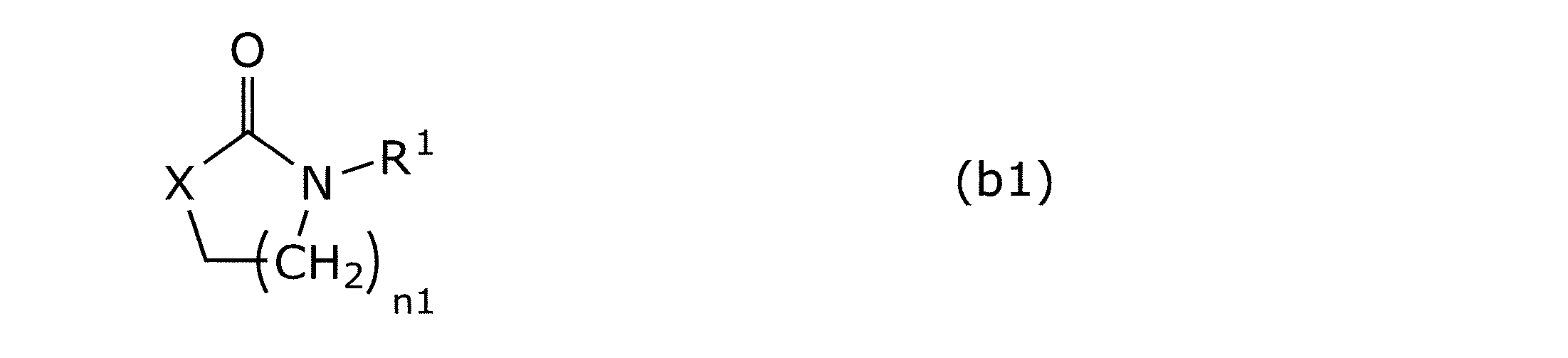
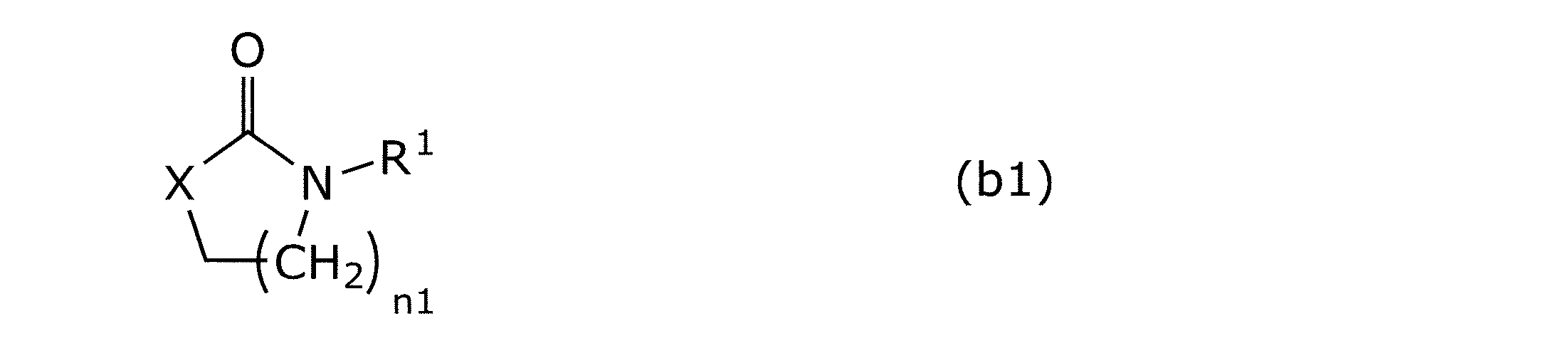
- the component (B1) that can be used in the coloring material according to the present invention is represented by formula (b1).
- R 1 is a hydrocarbon group having 1 to 6 carbon atoms which may be substituted with a hydroxyl group, or a hydrogen atom
- X is —CH 2 — or —N(R 2 )—
- R 2 is a hydrocarbon group having 1 to 6 carbon atoms which may be substituted with a hydroxyl group, or a hydrogen atom
- n1 is an integer from 1 to 3
- the above hydrocarbon group is not particularly limited, and may be, for example, an alkyl group, a cycloalkyl group, an alkenyl group, an alkynyl group, a cycloalkylalkyl group, a haloalkyl group, an alkoxyalkyl group, or an alkoxycarbonylalkyl group, preferably is an alkyl group.
- R 1 is a hydroxyalkyl group having 1 to 3 carbon atoms
- X is —CH 2 — or —NH— and n1 is 1.
- cyclic carboxamide derivative represented by formula (b1) include the following.
- the most preferred component (B1) is 1-(2-hydroxyethyl)-2-imidazolidinone.
- (B2) Cyclic Amino Group-Containing Carboxylic Acid Derivative or Its Salt
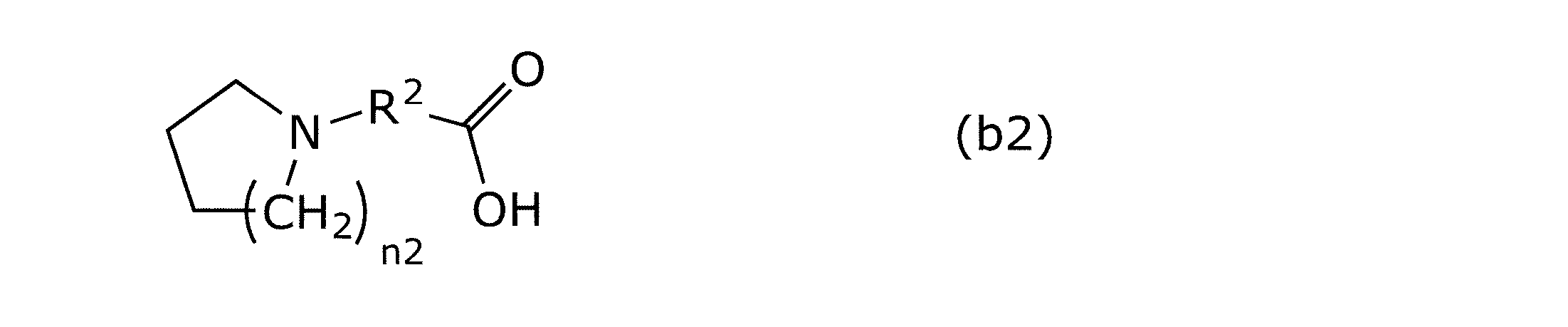
- the component (B2) that can be used in the coloring material according to the present invention is represented by formula (b2).
- R 2 is an alkylene chain having 1 to 5 carbon atoms
- n2 is an integer from 1 to 3
- R 2 is methylene, ethylene, or propylene, n2 is 2;
- the most preferred (B2) component is piperidine propionic acid.
- (B3) a glycylglycine derivative or a salt thereof
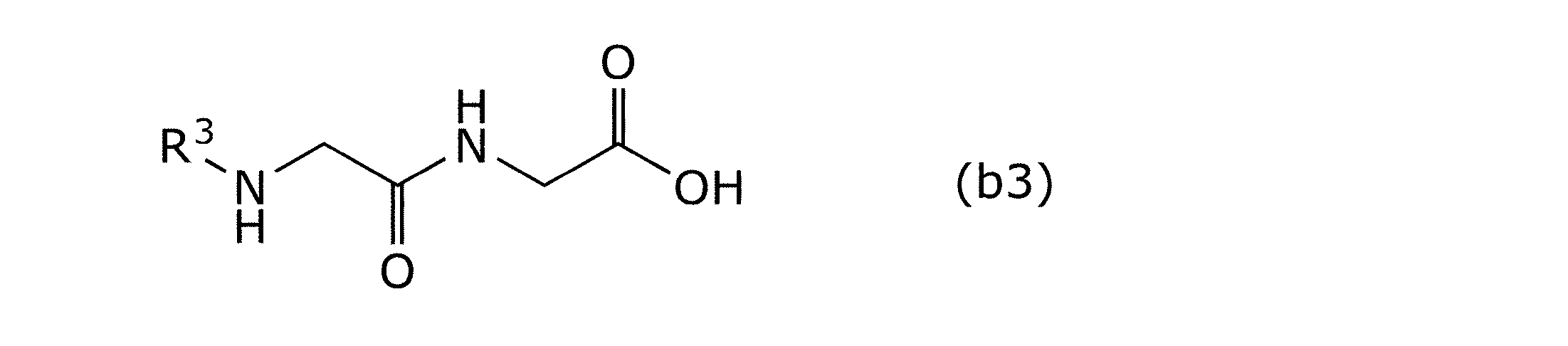
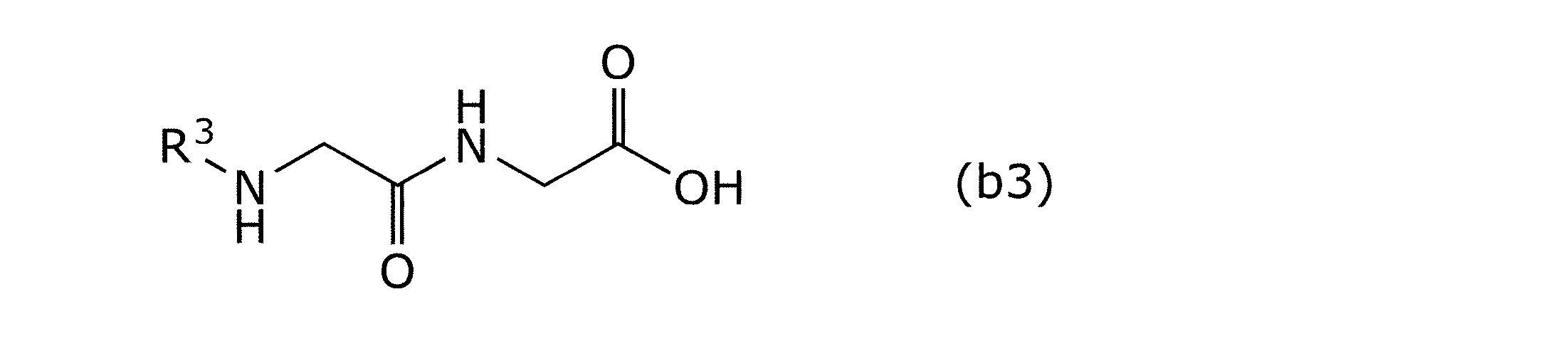
- the (B3) component that can be used in the coloring material according to the present invention is represented by the formula (b3).
- R 3 is hydrogen, an alkyl group having 1 to 6 carbon atoms, an aryl group having 6 to 10 carbon atoms, an acyl group having 2 to 7 carbon atoms, or an aroyl group having 7 to 11 carbon atoms
- a preferred form is (b3) in which R 3 is hydrogen, methyl, or ethyl.
- the most preferred (B3) component is glycylglycine where R3 is hydrogen.
- (B4) an alkylene oxide derivative
- the (B4) component that can be used in the coloring material according to the present invention is represented by the formula (b4).
- R 4 O—[BO) l (EO) m (BO) n ]—R 4 (b4)
- R 4 is each independently hydrogen or a hydrocarbon group having 1 to 4 carbon atoms
- BO is an oxybutylene group
- EO is an oxyethylene group
- m and n are the average added moles of BO and EO, respectively; 1 ⁇ m ⁇ 70, 1 ⁇ l + n ⁇ 70,
- the ratio of EO to the total number of BO and EO is 20-80% by mass.
- this alkylene oxide derivative has a block-type polymer main chain in which EO, which is an oxyethylene group, and BO, which is an oxybutylene group, form blocks.
- R4 is preferably hydrogen, a methyl group, or an ethyl group.
- BO can have a linear or branched structure. Specifically, BO can have a structure derived from an alkyldiol having 4 carbon atoms. Specifically, derived from 1,2-butanediol, 1,3-butanediol, 1,4-butanediol, 2-methyl-1,3-propanediol, 1-dimethyl-1,2-ethanediol takes an oxyalkylene structure.
- m is preferably 5 to 150.
- the most preferred (B4) component is PEG/poly-1,2-butanediol-52/32 dimethyl ether.
- the component (B) may be a salt of the compounds represented by the formulas (b1) to (b4) other than those described above.
- the type of salt is not particularly limited as long as it is a pharmacologically acceptable salt, and may be an inorganic salt or an organic salt.
- inorganic salts include hydrochlorides, sulfates, phosphates, hydrobromides, sodium salts, potassium salts, magnesium salts, calcium salts, magnesium salts, ammonium salts and the like.
- organic salts include acetates, lactates, maleates, fumarates, tartrates, methanesulfonates, p-toluenesulfonates, triethanolamine salts, amino acid salts and the like.
- the component (B) can be blended either alone or in combination of two or more.
- the cosmetic colorant according to the present invention contains a combination of the above-described components (A) and (B). These generally exhibit fluorescent coloration when they come into contact with each other in solution or dispersion. Therefore, the cosmetic coloring material is generally in the form of a solution or a dispersion liquid, but may be in the form of a powder mixture containing no solvent or dispersion medium. Further, when it is blended in cosmetics, it may be blended in the form of a solution or dispersion with other ingredients of the cosmetic, or it may be blended in the form of a powder mixture. ) components may be blended separately.
- the solvent or dispersion medium used when the cosmetic coloring material according to the present invention takes the form of a solution or dispersion can be arbitrarily selected from those used for cosmetics.
- water or an organic solvent, especially an oily component generally used in cosmetics is preferably used.
- the oily component includes liquid oil, solid oil and semi-solid oil. These are classified according to their hardness, and when the hardness at 25° C. is 0.1 to 10 N, they are classified as semi-solid oils. This hardness can be measured with a rheometer manufactured by Rheotec, with a pressure-sensitive axis of 5 ⁇ , a penetration speed of 2 cm/min, and a penetration of 3 mm.
- Liquids such as olive oil, avocado oil, camellia oil, macadamia nut oil, evening primrose oil, jojoba oil, rapeseed oil, egg yolk oil, sesame oil, castor oil, safflower oil, cottonseed oil, soybean oil, teaseed oil, rice bran oil, or germ oil Fats and oils; Hydrocarbon oils such as squalane, isododecane, hydrogenated polyisobutene, hydrogenated polydecene, or liquid paraffin; Pentaerythrityl tetraethylhexanoate, di(phytosteryl/octyldodecyl) lauroyl glutamate, triisostearin, glyceryl diisostearate, triethylhexanoin, dimer dilinoleic acid (phytosteryl/behenyl), dimer dilinoleic acid (phytosteryl/isostearyl/cet
- Solid or semi-solid oils include solid oils, waxes, hydrocarbons, higher alcohols and fatty acids.
- Solid oils such as Japanese wax, cocoa butter, or hydrogenated castor oil
- Waxes such as carnauba wax, beeswax, candelilla wax, rice bran wax, or jojoba wax:
- Hydrocarbon waxes and semi-solid oils such as polyethylene wax, paraffin wax, ceresin, ozokerite, microcrystalline wax, or petrolatum;
- Higher alcohols such as behenyl alcohol, cetanol, or batyl alcohol; Dipentaerythrityl hexahydroxystearate, macadamia nut fatty acid phytosteryl, tetra (behenate/benzoate/ethylhexanoate) pentaerythrityl, dimer dilinoleate (phytosteryl/behenyl), or macadamia nut oil polyglyceryl-6 ester subbehenate semi-solid
- the cosmetic coloring material according to the present invention exhibits fluorescent coloration due to interaction between the components (A) and (B)
- the compounding ratio of the components (A) and (B) must be within a specific range. is preferred.
- the ratio of the content of component (B) to the content of component (A) is preferably 0.002 to 120,000, more preferably 0.05 to 2,500. is more preferable.
- the form of the formulation is not particularly limited. That is, the cosmetic according to the present invention can take any form such as an oily cosmetic, an aqueous cosmetic, an oil-in-water emulsified cosmetic, or a water-in-oil emulsified cosmetic. Moreover, the cosmetic according to the present invention may be a liquid cosmetic or a solid cosmetic. Depending on the solubility of the cosmetic coloring material, it can be blended in the cosmetic oil phase or in the aqueous phase. However, since the cosmetic colorant according to the present invention is generally highly oil-soluble, it is preferably blended with oily solid cosmetics and oily liquid cosmetics.
- emulsified cosmetics it is preferable to blend the cosmetic coloring material according to the present invention in the oil phase.
- the cosmetic according to the present invention exhibits excellent fluorescent color development in any form, oil-based cosmetics or aqueous cosmetics tend to achieve better transparency than emulsified cosmetics, and are therefore preferable.
- the cosmetic according to the present invention can give a unique and vivid impression due to fluorescence coloration, it is preferably a makeup cosmetic, particularly lipstick, lip gloss, eye shadow, or mascara. It is preferably a makeup cosmetic.
- the cosmetic according to the present invention contains various components to be described later.
- the content of component (A) should be 0.0001 based on the total weight of the cosmetic. is preferably from 0.001 to 1.0% by mass, preferably from 0.001 to 1.0% by mass, and preferably from 0.01 to 15% by mass, It is more preferably 0.05 to 13% by mass.
- the cosmetic according to the present invention can contain various ingredients that can be generally used in cosmetics, depending on the form of the formulation.
- oily components oily thickeners, ultraviolet absorbers, moisturizing agents, film-forming agents, water-soluble polymers, water-soluble agents, oil-soluble agents, sequestering agents, antioxidants, water, perfumes, and cosmetics according to the present invention.
- a coloring material or the like different from the coloring material can be appropriately blended as needed.
- oil-based component those listed in the section on the cosmetic colorant can be used.
- Oily thickeners include dextrin palmitate, dextrin stearate, dextrin palmitate stearate, dextrin isostearate, (palmitate/2-ethylhexanoate) dextrin, silica silylate, disteardimonium hectorite, dimethylalkyl ammonium hectorite, distearyldimethylammonium chloride-treated aluminum magnesium silicate, and the like.
- UV absorbers include benzoic acid UV absorbers such as para-aminobenzoic acid, anthranilic acid UV absorbers such as methyl anthramylate, salicylic acid UV absorbers such as octyl salicylate and phenyl salicylate, isopropyl paramethoxycinnamate, Octyl paramethoxycinnamate (ethylhexyl methoxycinnamate), cinnamic acid UV absorbers such as glyceryl mono-2-ethylhexanoate di-paramethoxycinnamate, 2,4-dihydroxybenzophenone, 2-hydroxy-4 -Methoxybenzophenone, benzophenone UV absorbers such as 2-hydroxy-4-methoxybenzophenone-5-sulfonic acid, urocanic acid, 2-(2'-hydroxy-5'-methylphenyl)benzotriazole, 4-tert-butyl -4'-Methoxybenzoylmethane and the like
- Moisturizers include 1,3-butylene glycol, polyethylene glycol, propylene glycol, dipropylene glycol, hexylene glycol, hexanediol, glycerin, diglycerin, xylitol, maltitol, maltose, and D-mannite.
- Coating agents include pullulan tri(trimethylsiloxy)silylpropylcarbamate, polymethylsilsesquioxane, polypropylsilsesquioxane, trimethylsiloxysilicate, (acrylates/dimethicone) copolymer, (ethylene/propylene) copolymer, isostearic acid.
- Silicone resins such as dextrin, fluorine-modified silicone and acrylic silicone, latexes of polyvinyl alcohol, polyvinylpyrrolidone, polyvinyl acetate and polyvinyl acetate, dextrin, cellulose derivatives such as alkyl cellulose and nitrocellulose, and the like.
- Water-soluble polymers include plant-based polymers such as gum arabic, carrageenan, pectin, agar, quince seed (quince), starch, algae colloid (brown algae extract), microbial-based polymers such as dextran and pullulan, collagen, and casein. , animal polymers such as gelatin, starch polymers such as carboxymethyl starch and methylhydroxypropyl starch, alginic acid polymers such as sodium alginate, vinyl polymers such as carboxyvinyl polymer (CARBOPOL, etc.), polyoxyethylene acrylic polymers such as polyoxyethylene-polyoxypropylene copolymers, sodium polyacrylate, polyacrylamide, and polymethyl methacrylate; molecules and the like.
- plant-based polymers such as gum arabic, carrageenan, pectin, agar, quince seed (quince), starch, algae colloid (brown algae extract), microbial-based polymers such as dextran and pullulan, collagen, and casein.
- Water-soluble drugs include inosit, pyridoxine hydrochloride, benzyl nicotinate, nicotinamide, dl- ⁇ -tocopherol nicotinate, magnesium ascorbate phosphate, ascorbate 2-glucoside, vitamin D2 (ergocasiferol), dl- ⁇ - Vitamins such as tocopherol 2-L ascorbic acid phosphate potassium salt, pantothenic acid, biotin, anti-inflammatory agents such as allantoin and glycyrrhetinic acid, whitening agents such as arbutin, astringents such as zinc oxide and tannic acid, sulfur, Examples include lysozyme chloride, pyridoxine hydrochloride, ⁇ -oryzanol and the like.
- Oil-soluble drugs include vitamin A, retinol, retinol palmitate, dl- ⁇ -tocopherol, dl- ⁇ -tocopherol acetate, azulene, glucosylhesperidin, and stearyl glycyrrhetinate.
- Sequestering agents include sodium edetate, sodium metaphosphate, phosphoric acid, and the like.
- Antioxidants include ascorbic acid, ⁇ -tocopherol, dibutylhydroxytoluene, and butylhydroxyanisole.
- dispersants examples include surfactants for stably dispersing oily ingredients and powder ingredients in cosmetics.
- the surfactant can be arbitrarily selected from cationic, anionic, nonionic, amphoteric surfactants, etc. according to the purpose.
- the cosmetic according to the present invention contains a coloring material obtained by combining the components (A) and (B), but may contain other coloring materials, such as dyes, in order to adjust the coloring.
- powdered ingredients are sometimes added to common cosmetics.
- powders include inorganic powders, organic powders, copolymer resin powders, inorganic pigments and organic pigments.
- these powders can also be blended as needed, but the powders may impair the vividness and transparency of the fluorescent coloration of the cosmetic of the present invention. Therefore, when the cosmetic according to the present invention contains a powder component, it is preferable that the blending ratio of the powder component is 5% by mass or less based on the total mass of the cosmetic, and it is particularly preferred that the powder component is not included at all. preferable.
- non-colored powders other than pigments have a strong tendency to impair the fluorescent color development of the cosmetic composition according to the present invention, so the blending ratio thereof is preferably small. Therefore, when a powder component is blended into the cosmetic according to the present invention, the blending ratio of the non-colored powder is preferably 5% by mass or less based on the total mass of the powder component.
- the non-colored powder is a colorless or white powder, such as polyamide powder, hydroxyapatite, and calcium carbonate.
- Examples 101-107, Comparative Examples 101-105 An oily solid cosmetic was prepared by blending the components shown in Table 1 below.
- a panel of 10 persons evaluated the "appearance color development", “transparency”, “applied color”, and “staining" of the cosmetics of each example according to the following criteria.
- D 5 or less judged to be effective.
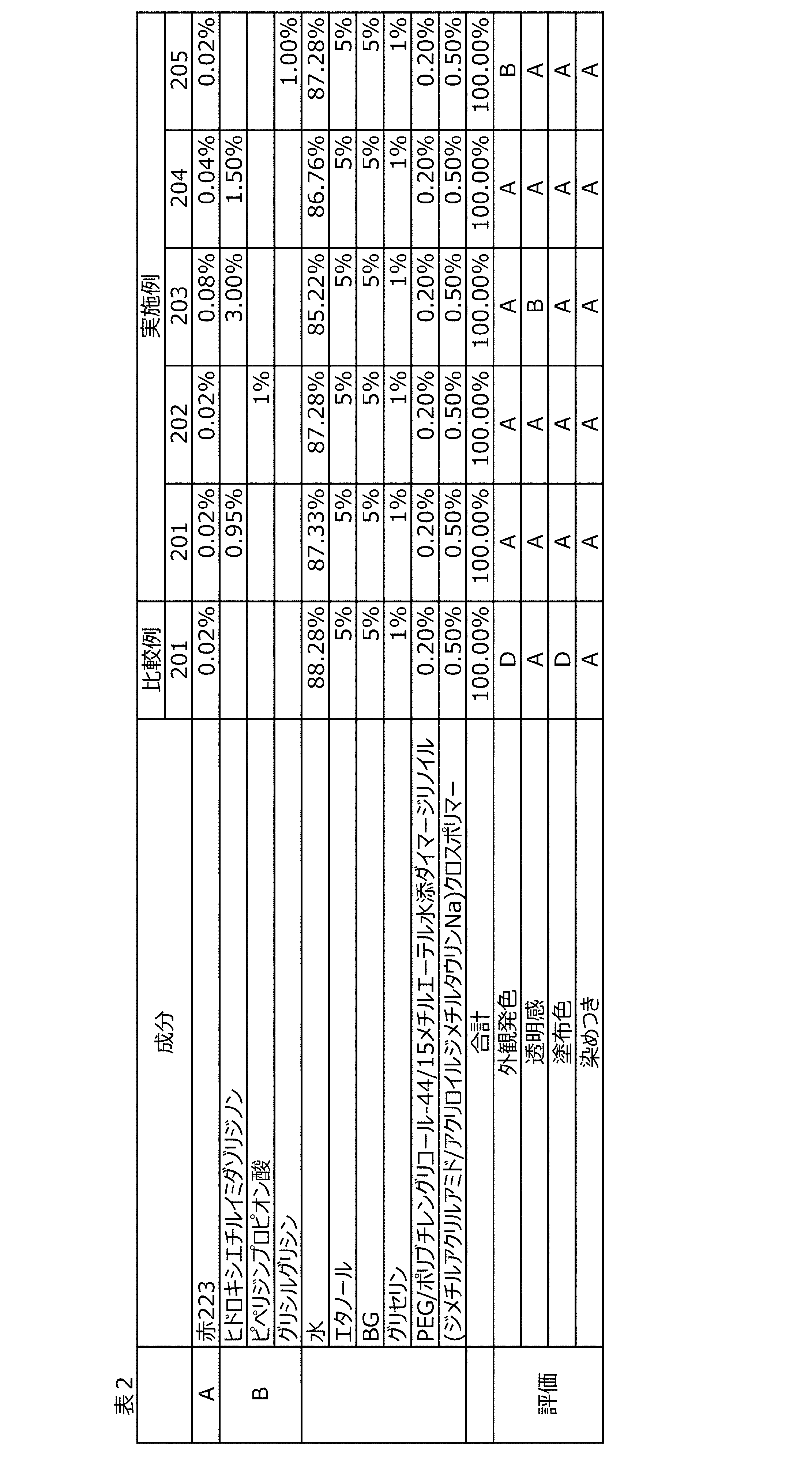
- Examples 201 to 205, Comparative Example 201 Aqueous cosmetics were prepared by blending the components shown in Table 2 below. The cosmetics of each example were evaluated according to the same criteria as in Example 101.
- Examples 301-304, Comparative Examples 301-303 An oily cosmetic was prepared by blending the components shown in Table 3 below. The cosmetics of each example were evaluated according to the same criteria as in Example 101.
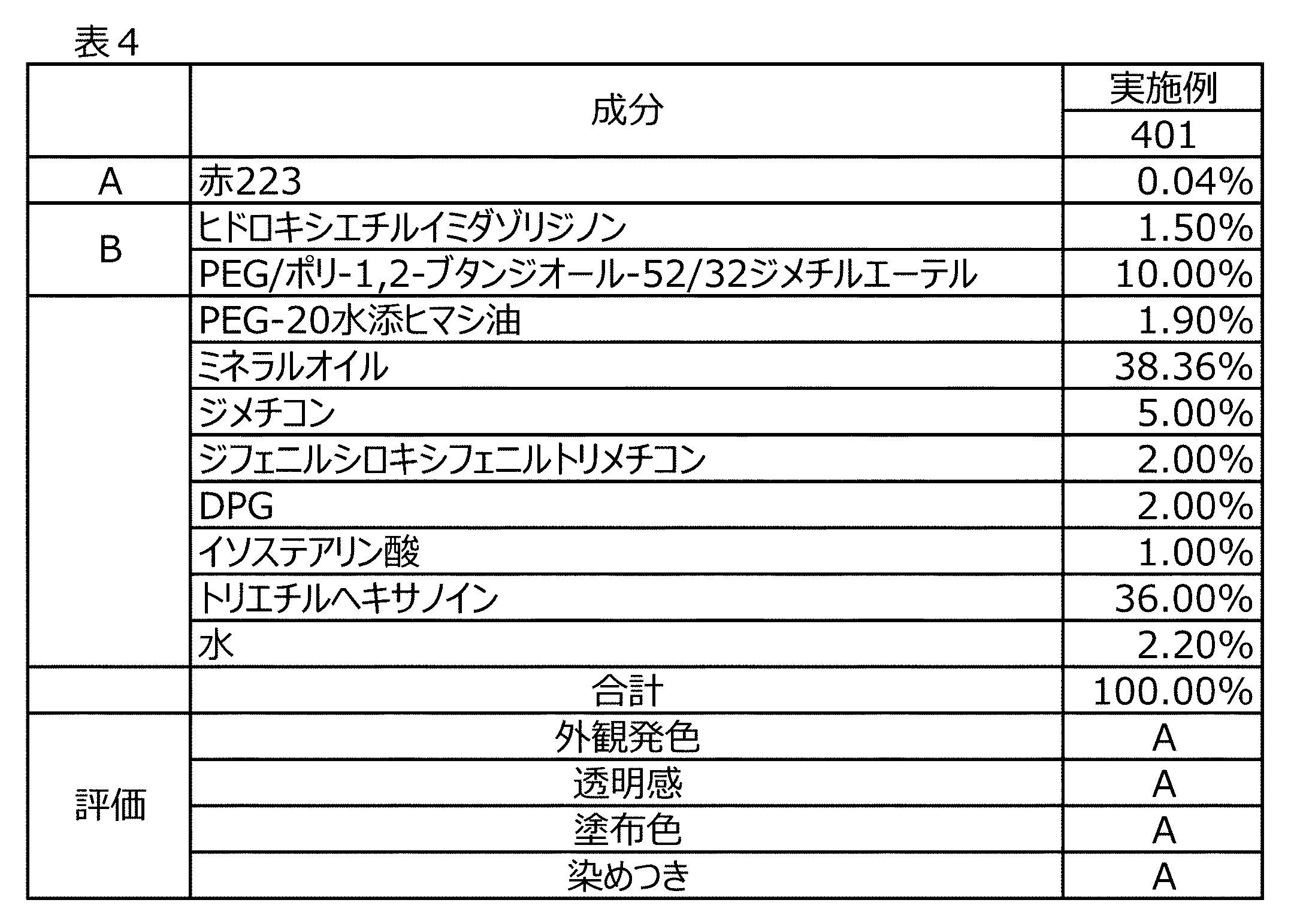
- Example 401 An oily cosmetic was prepared by blending the components shown in Table 4 below. The cosmetics of each example were evaluated according to the same criteria as in Example 101.
- Examples 501-503, Comparative Example 501 An oil-in-water cosmetic was prepared by blending the components shown in Table 5 below. The cosmetics of each example were evaluated according to the same criteria as in Example 101.
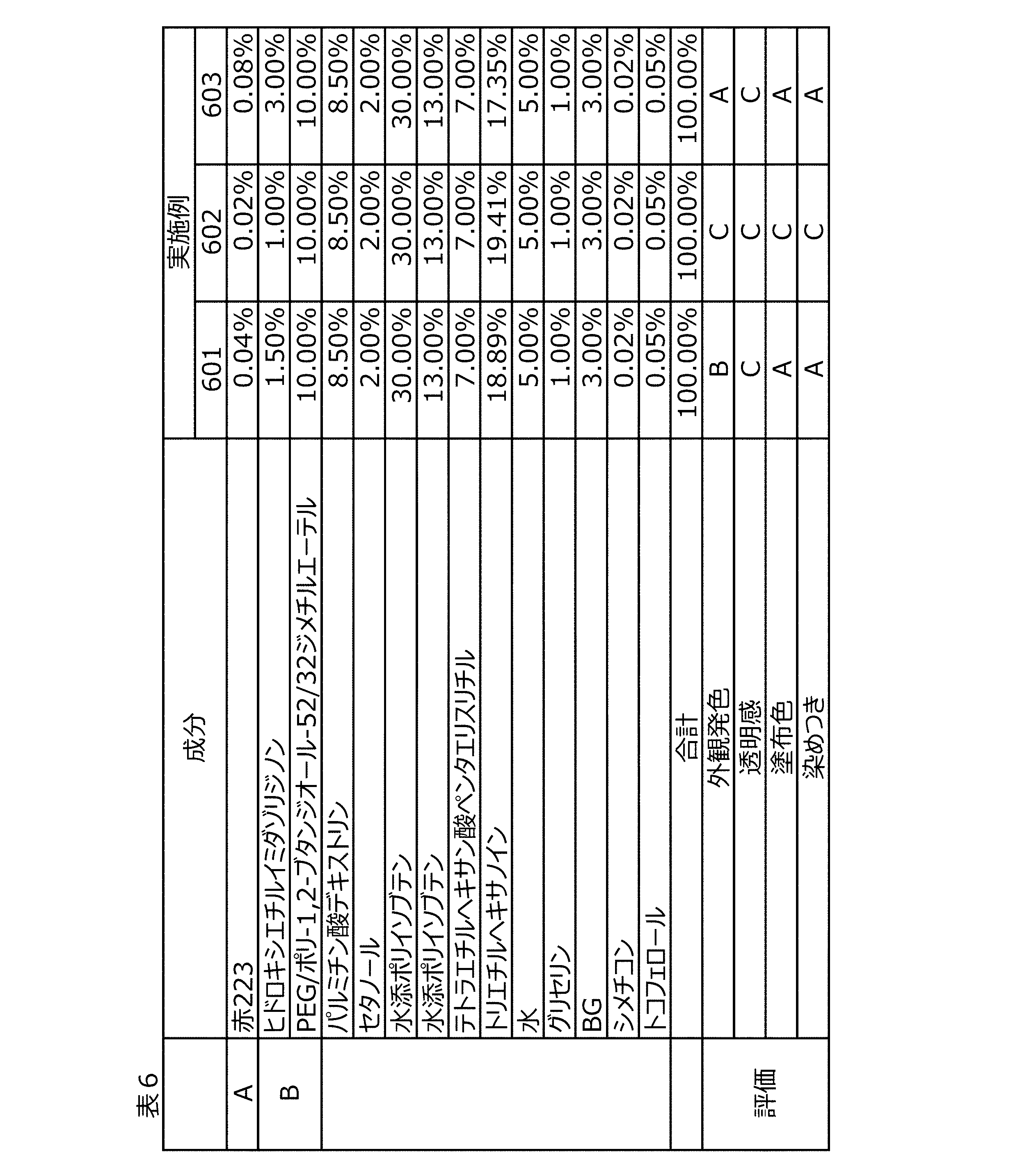
- Examples 601-603 A water-in-oil type cosmetic was prepared by blending the components shown in Table 6 below. The cosmetics of each example were evaluated according to the same criteria as in Example 101.
Landscapes
- Health & Medical Sciences (AREA)
- Life Sciences & Earth Sciences (AREA)
- Animal Behavior & Ethology (AREA)
- General Health & Medical Sciences (AREA)
- Public Health (AREA)
- Veterinary Medicine (AREA)
- Birds (AREA)
- Epidemiology (AREA)
- Emergency Medicine (AREA)
- Cosmetics (AREA)
Abstract
Description
[1] (A)フルオレセイン骨格を持つ染料、および
(B)下記(B1)~(B4)からなる群から選択される化合物:
(B1)式(b1)で表される環状カルボキサミド誘導体またはその塩
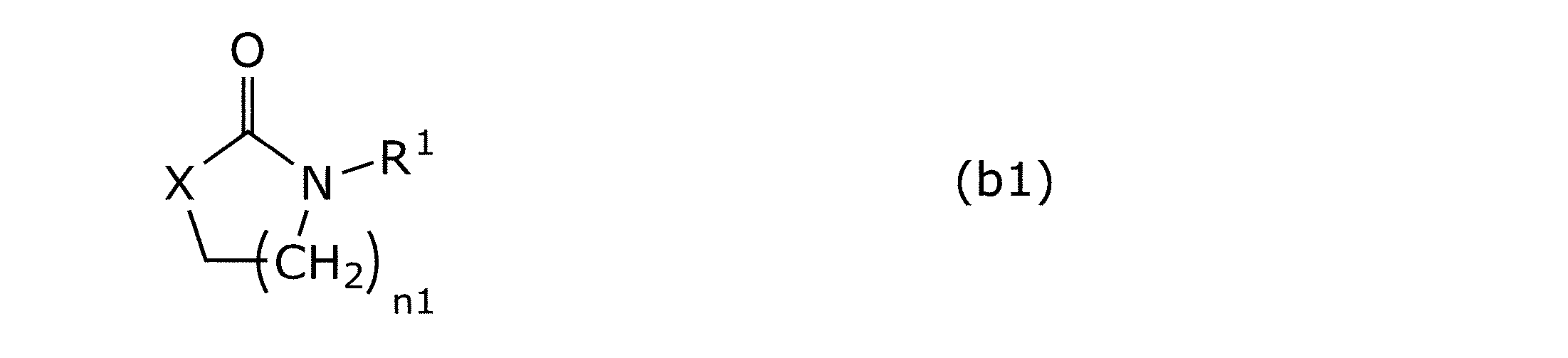
R1は、水酸基で置換されていてもよい炭素数1~6の炭化水素基、または水素原子であり、
Xは、-CH2-または-N(R2)-であり、ここで、R2は、水酸基で置換されていてもよい炭素数1~6の炭化水素基、または水素原子であり、かつ
n1は、1~3の整数である)、
(B2)式(b2)で表される環状アミノ基含有カルボン酸誘導体またはその塩、

R2は、炭素数1~5のアルキレン鎖であり、
n2は1~3の整数である)、
(B3)式(b3)で表されるグリシルグリシン誘導体またはその塩、

R3は、水素、炭素数1~6のアルキル基、炭素数6~10のアリール基、炭素数2~7のアシル基、または炭素数7~11のアロイル基である)
(B4)式(b4)で表されるアルキレンオキシド誘導体、
R4O-[(BO)l(EO)m(BO)n]-R4 (b4)
(式中、
R4は、それぞれ独立に、水素、または炭素数1~4の炭化水素基であり、 BOはオキシブチレン基、EOはオキシエチレン基であり、
l、mおよびnは、それぞれBOおよびEOの平均付加モル数であり、
1≦m≦70、
1≦l+n≦70であり、
BOとEOの合計数に対するEOの割合は20~80質量%である。)からなる群から選択される化合物
を含んでなる、化粧料用色材。
[2] (A)成分が、油溶性である、[1]に記載の色材。
[3] (A)成分が、フルオレセイン、カルボキシル化フルオレセイン、ハロゲン化フルオレセイン、およびそれらの塩からなる群から選択される、[1]または[2]に記載の色材。
[4] (B)成分が、ヒドロキシエチルイミダゾリジノン、1-ピペリジンプロピオン酸、グリシルグリシン、およびPEG/ポリ-1,2-ブタンジオール-52/32ジメチルエーテルからなる群から選択される化合物である、[1]~[3]いずれかに記載の色材。
[5] (A)フルオレセイン骨格を持つ染料、および
(B)下記(B1)~(B4)からなる群から選択される化合物:
(B1)式(b1)で表される環状カルボキサミド誘導体またはその塩
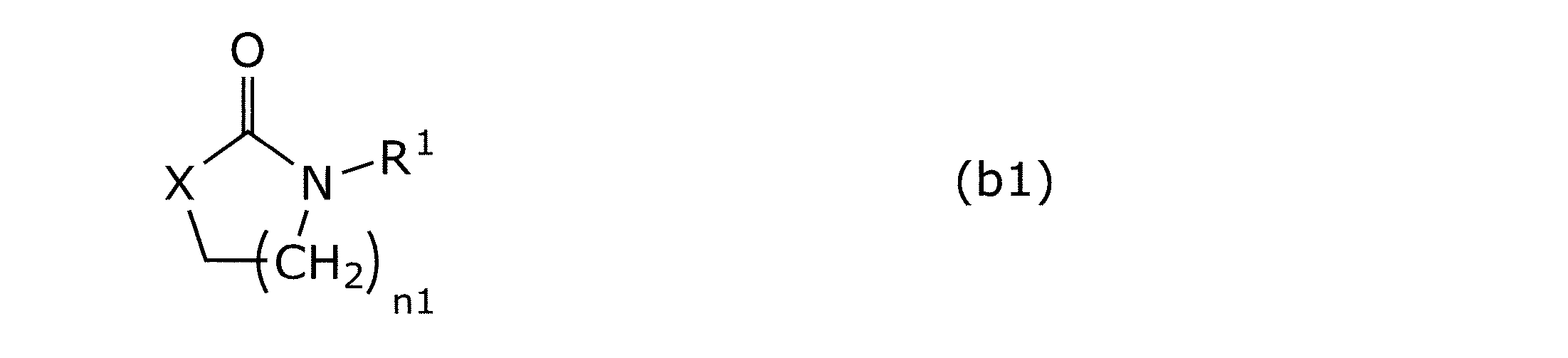
R1は、水酸基で置換されていてもよい炭素数1~6の炭化水素基、または水素原子であり、
Xは、-CH2-または-N(R2)-であり、ここで、R2は、水酸基で置換されていてもよい炭素数1~6の炭化水素基、または水素原子であり、かつ
n1は、1~3の整数である)、
(B2)式(b2)で表される環状アミノ基含有カルボン酸誘導体またはその塩、

R2は、炭素数1~5のアルキレン鎖であり、
n2は1~3の整数である)、
(B3)式(b3)で表されるグリシルグリシン誘導体またはその塩、
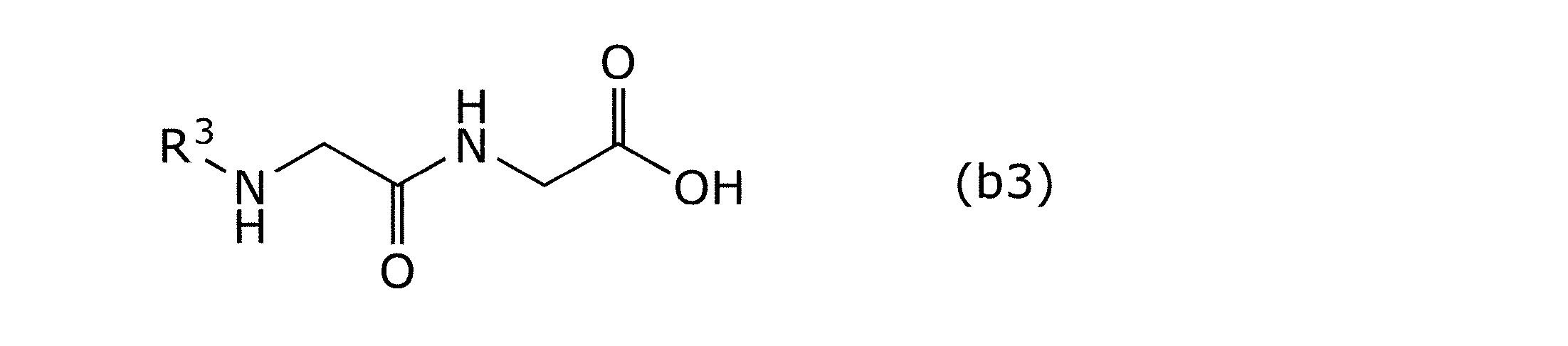
R3は、水素、炭素数1~6のアルキル基、炭素数6~10のアリール基、炭素数2~7のアシル基、または炭素数7~11のアロイル基である)
(B4)式(b4)で表されるアルキレンオキシド誘導体、
R4O-[(BO)l(EO)m(BO)n]-R4 (b4)
(式中、
R4は、それぞれ独立に、水素、または炭素数1~4の炭化水素基であり、 BOはオキシブチレン基、EOはオキシエチレン基であり、
l、mおよびnは、それぞれBOおよびEOの平均付加モル数であり、
1≦m≦70、
1≦l+n≦70であり、
BOとEOの合計数に対するEOの割合は20~80質量%である。)
からなる群から選択される化合物
を1種または2種以上含んでなる、化粧料。
[6] 前記化粧料の総質量を基準とした、(A)成分の含有率が、0.0001~5.0質量%である、[5]に記載の化粧料。
[7] 前記化粧料の総質量を基準とした、(B)成分の含有率が、0.01~15質量%である、[5]または[6]に記載の化粧料。
[8] 油性化粧料である、[5]~[7]のいずれかに記載の化粧料。
[9] 前記色材が配合された、水性化粧料、水中油型化粧料または油中水型化粧料である、[5]~[7]のいずれか1項に記載の化粧料。
[10] 粉末を実質的に含まない、[5]~[9]のいずれかに記載の化粧料。
本発明による化粧用色材は、
(A)フルオレセイン骨格を持つ染料、および(B)特定の材料を含み、鮮やかな発色、特に蛍光発色を呈するのである。これらの各成分について説明すると以下のとおりである。
本発明による化粧用色材に配合される(A)成分は、フルオレセイン骨格を持つ染料である。(A)成分は、フルオレセイン骨格を有する染料であれば特に限定されないが、フルオレセイン、カルボキシル化フルオレセイン、ハロゲン化フルオレセイン、およびそれらの塩からなる群から選択されるものが特に優れた発色を呈するので好ましい。さらに具体的には、テトラクロロテトラブロモフルオレセイン(赤色218号)、テトラブロモフルオレセイン(赤色223号)、ジブロモフルオレセイン(橙色201号)、フルオロセイン、5-カルボキシフルオロセインなどが挙げられる。これらのフルオロセイン骨格を有する染料は、それ自体が蛍光発色を呈するものであるが、後述する(B)成分と組み合わせることで、化合物自体が呈する発色とは異なった、鮮やかな蛍光発色が実現できる。
本発明により化粧用色材に配合される(B)成分は、(A)成分と組み合わせることで、特徴的な発色、特に蛍光発色を実現するものである。この(B)成分は、アミド基、アミノ基、4級アンモニウム構造、ラクタム環構造、ポリオキシアルキレン構造などを有することをひとつの特徴とするが、それらを有すれば必ず効果が発現するものではない。一方、本発明者らの検討によれば、以下の(B1)~(B4)の少なくともひとつを(B)成分として用いることで、優れた蛍光発色を実現できることがわかった。
本発明による色材に用いることができる(B1)成分は、式(b1)で表されるものである。
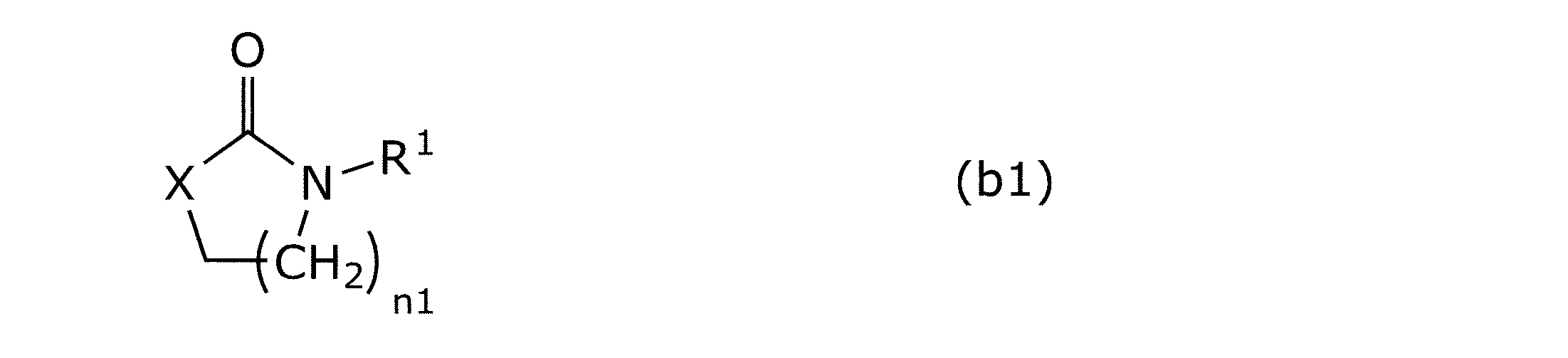
R1は、水酸基で置換されていてもよい炭素数1~6の炭化水素基、または水素原子であり、
Xは、-CH2-または-N(R2)-であり、ここで、R2は、水酸基で置換されていてもよい炭素数1~6の炭化水素基、または水素原子であり、かつ
n1は、1~3の整数である)、
R1が、炭素数1~3のヒドロキシアルキル基であり、
Xが、-CH2-または-NH-であり、かつ
n1が、1である。

本発明による色材に用いることができる(B2)成分は、式(b2)で表されるものである。

R2は、炭素数1~5のアルキレン鎖であり、
n2は1~3の整数である)
R2が、メチレン、エチレン、またはプロピレン、であり、
n2が、2である。
本発明による色材に用いることができる(B3)成分は、式(b3)で表されるものである。
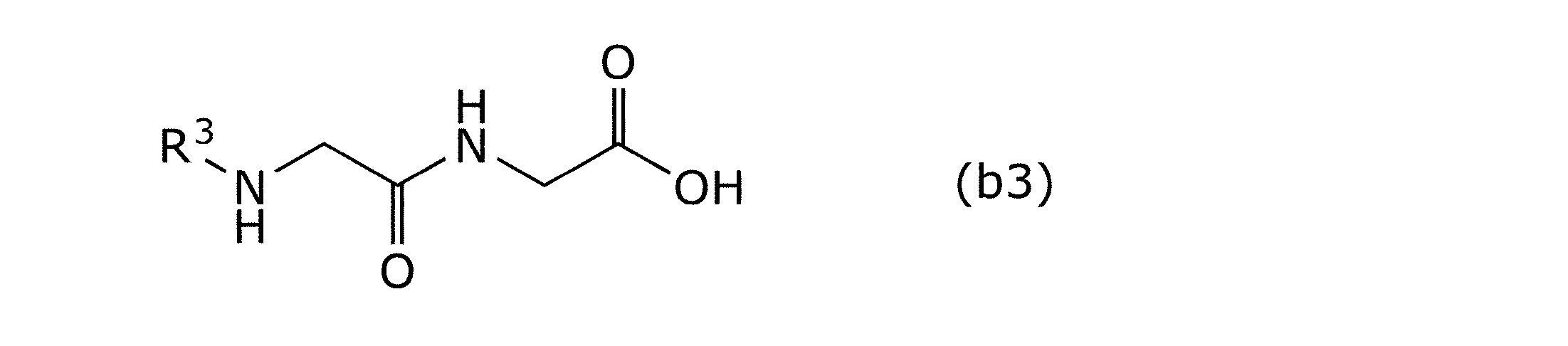
R3は、水素、炭素数1~6のアルキル基、炭素数6~10のアリール基、炭素数2~7のアシル基、または炭素数7~11のアロイル基である)
本発明による色材に用いることができる(B4)成分は、式(b4)で表されるものである。
R4O-[BO)l(EO)m(BO)n]-R4 (b4)
(式中、
R4は、それぞれ独立に、水素、または炭素数1~4の炭化水素基であり、 BOはオキシブチレン基、EOはオキシエチレン基であり、
l、mおよびnは、それぞれBOおよびEOの平均付加モル数であり、
1≦m≦70、
1≦l+n≦70であり、
BOとEOの合計数に対するEOの割合は20~80質量%である。)
オリーブ油、アボカド油、ツバキ油、マカデミアナッツ油、月見草油、ホホバ油、ナタネ油、卵黄油、ゴマ油、ヒマシ油、サフラワー油、綿実油、大豆油、茶実油、コメヌカ油、または胚芽油等の液体油脂類;
スクワラン、イソドデカン、水添ポリイソブテン、水添ポリデセン、または流動パラフィン等の炭化水素油;
テトラエチルヘキサン酸ペンタエリスリチル、ラウロイルグルタミン酸ジ(フィトステリル/オクチルドデシル)、トリイソステアリン、ジイソステアリン酸グリセリル、トリエチルヘキサノイン、ダイマージリノール酸(フィトステリル/ベヘニル)、ダイマージリノール酸(フィトステリル/イソステアリル/セチル/ステアリル/ベヘニル)、パルミチン酸イソプロピル、トリイソステアリン、パルミチン酸エチルヘキシル、ミリスチン酸ミリスチル、ミリスチン酸イソプロピル、ジピバリン酸トリプロピレングリコール、セバシン酸ジイソプロピル、ネオペンタン酸イソデシル、イソステアリン酸イソセチル、2-エチルヘキサン酸セチル、2-ヘプチルウンデシルパルミテート、アジピン酸ジイソブチル、セバシン酸2-ヘキシルデシル、イソプロピルミリステート、2-オクチルドデシルオレエート、リンゴ酸ジイソステアリル、ジ-2-エチルヘキサン酸エチレングリコール、トリ-2-ヘプチルウンデカン酸グリセライド、グリセリルジイソステアレート、グリセリルトリイソステアレート、トリオクタン酸グリセリン、トリイソパルミチン酸グリセリン、トリ-2-エチルヘキサン酸トリメチロールプロパン、またはテトラ-2-エチルヘキサン酸ペンタエリスリトール等のエステル油類;
ジメチルポリシロキサン、またはメチルフェニルポリシロキサン(ジフェニルシロキシフェニルトリメチコン)等の鎖状シリコーン油;
オクタメチルシクロテトラシロキサン、またはデカメチルシクロペンタシロキサン等の環状シリコーン油;
高級アルコール、脂肪酸、トリグリセリン、ならびに
フッ素変性油
等が挙げられる。
モクロウ、カカオ脂、または硬化ヒマシ油等の固体油脂;
カルナウバロウ、ミツロウ、キャンデリラロウ、コメヌカロウ、またはホホバ(jojoba)ロウ等のロウ類:
ポリエチレンワックス、パラフィンワックス、セレシン、オゾケライト、マイクロクリスタリンワックス、またはワセリン等の炭化水素系ワックスおよび半固形油分;
ベヘニルアルコール、セタノール、またはバチルアルコール等の高級アルコール;
ヘキサヒドロキシステアリン酸ジペンタエリスリチル、マカダミアナッツ脂肪酸フィトステリル、テトラ(ベヘン酸/安息香酸/エチルヘキサン酸)ペンタエリスリチル、ダイマージリノール酸(フィトステリル/ベヘニル)、またはマカダミアナッツ油ポリグリセリルー6エステルズベヘネート等の半固形のエステル油類;
シリコンワックス、
ならびに
ショ糖脂肪酸エステル
等が挙げられる。
本発明による化粧料は、上記した、本発明による化粧用色材を含むものであれば、その製剤の形態は時に限定されない。すなわち、本発明による化粧料は、油性化粧料、水性化粧料、水中油型乳化化粧料、油中水型乳化化粧料など、任意の形態を取ることができる。また、本発明による化粧料は液状化粧料であっても、固形化粧料であってもよい。そして、化粧用色材の溶解性に応じて、それらの化粧用の油相に配合することも、水相に配合することもできる。しかしながら、本発明による化粧用色材は一般に油溶性が高いので、それを油性固形化粧料、油性液状化粧料に配合することが好ましい。また、乳化化粧料においては、油相に本発明による化粧用色材を配合することが好ましい。また、本発明による化粧料はいずれの形態であっても優れた蛍光発色を呈するが、油性化粧料または水性化粧料は、乳化化粧料よりも優れた透明性を実現できる傾向にあるので好ましい。また、乳化化粧料においては、外相、すなわち油中水型乳化化粧料においては油相に、水中油型乳化化粧料においては水相に、本発明による化粧用色材を配合することが好ましい。
下記の表1に示された成分を配合して、油性固形化粧料を調製した。各例の化粧料について、10人のパネラーが「外観発色」、「透明感」、「塗布色」、および「染めつき」について判定を行い、以下の基準で評価した。
A: 9人以上が効果があると判定した。
B: 7~8人が効果があると評判定した。
C: 6人が評価があると判定した。
D: 5人以下が効果があると判定した。
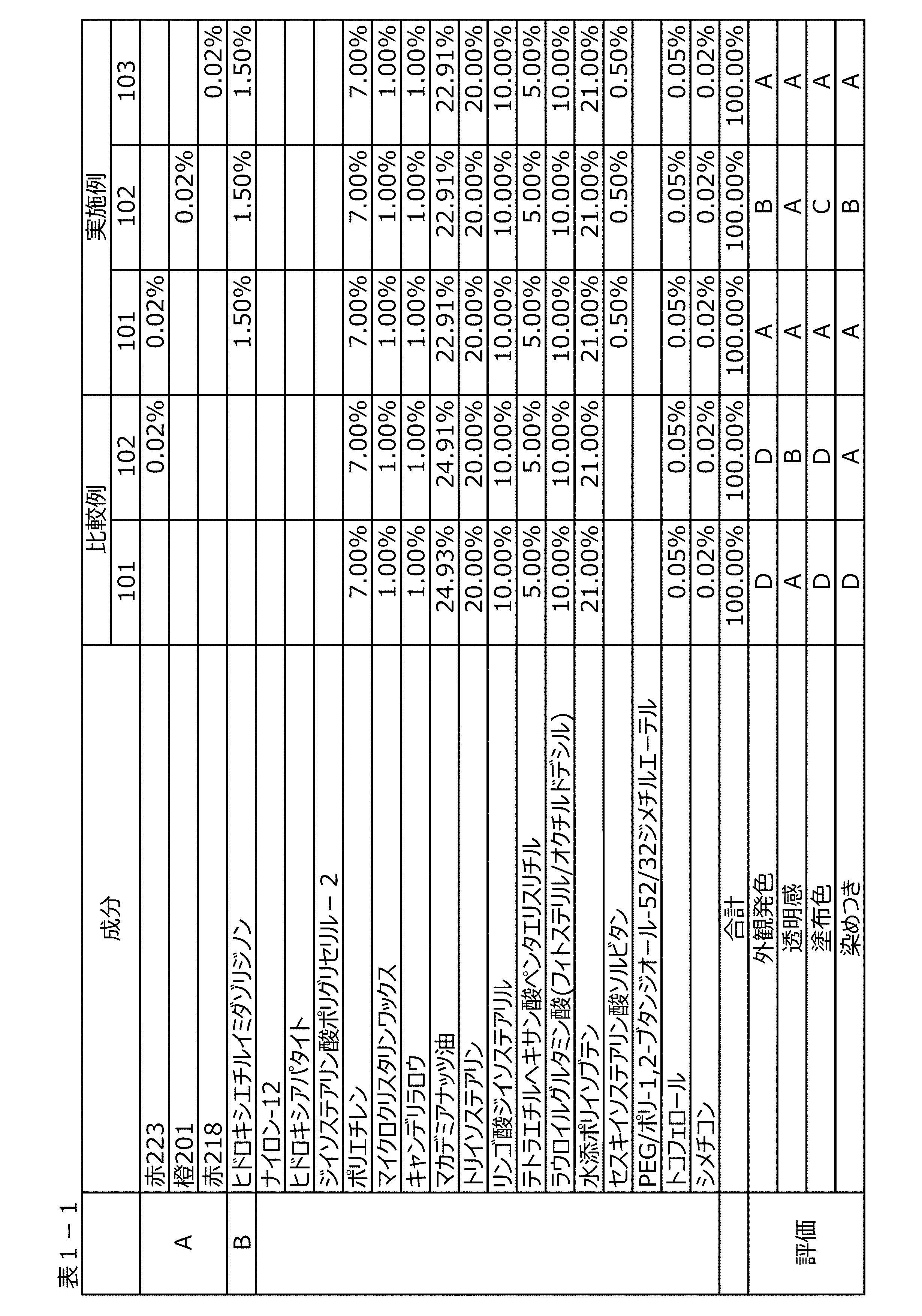
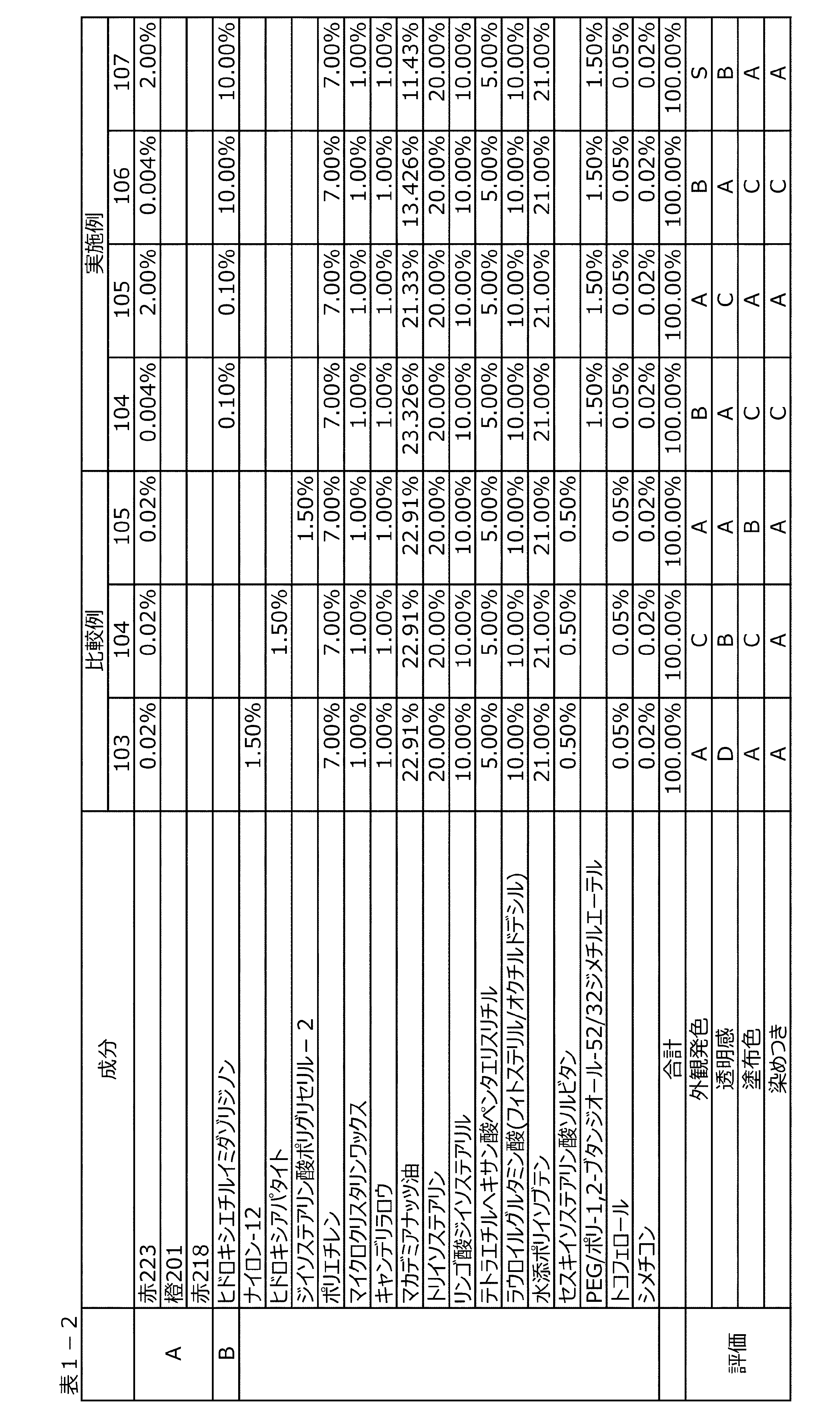
下記の表2に示された成分を配合して、水性化粧料を調製した。各例の化粧料について、実施例101と同じ基準によって評価を行った。
下記の表3に示された成分を配合して、油性化粧料を調製した。各例の化粧料について、実施例101と同じ基準によって評価を行った。
下記の表4に示された成分を配合して、油性化粧料を調製した。各例の化粧料について、実施例101と同じ基準によって評価を行った。
下記の表5に示された成分を配合して、水中油型化粧料を調製した。各例の化粧料について、実施例101と同じ基準によって評価を行った。

下記の表6に示された成分を配合して、油中水型化粧料を調製した。各例の化粧料について、実施例101と同じ基準によって評価を行った。
Claims (9)
- (A)フルオレセイン骨格を持つ染料、および
(B)下記(B1)~(B4)からなる群から選択される化合物:
(B1)式(b1)で表される環状カルボキサミド誘導体またはその塩
R1は、水酸基で置換されていてもよい炭素数1~6の炭化水素基、または水素原子であり、
Xは、-CH2-または-N(R2)-であり、ここで、R2は、水酸基で置換されていてもよい炭素数1~6の炭化水素基、または水素原子であり、かつ
n1は、1~3の整数である)、
(B2)式(b2)で表される環状アミノ基含有カルボン酸誘導体またはその塩、
R2は、炭素数1~5のアルキレン鎖であり、
n2は1~3の整数である)、
(B3)式(b3)で表されるグリシルグリシン誘導体またはその塩、
R3は、水素、炭素数1~6のアルキル基、炭素数6~10のアリール基、炭素数2~7のアシル基、または炭素数7~11のアロイル基である)
(B4)式(b4)で表されるアルキレンオキシド誘導体、
R4O-[(BO)l(EO)m(BO)n]-R4 (b4)
(式中、
R4は、それぞれ独立に、水素、または炭素数1~4の炭化水素基であり、 BOはオキシブチレン基、EOはオキシエチレン基であり、
l、mおよびnは、それぞれBOおよびEOの平均付加モル数であり、
1≦m≦70、
1≦l+n≦70であり、
BOとEOの合計数に対するEOの割合は20~80質量%である。)
からなる群から選択される化合物
を1種または2種以上含んでなる、化粧料用色材。 - (A)成分が、油溶性である、請求項1に記載の色材。
- (A)成分が、フルオレセイン、カルボキシル化フルオレセイン、ハロゲン化フルオレセイン、およびそれらの塩からなる群から選択される、請求項1または2に記載の色材。
- (B)成分が、ヒドロキシエチルイミダゾリジノン、1-ピペリジンプロピオン酸、グリシルグリシン、およびPEG/ポリ-1,2-ブタンジオール-52/32ジメチルエーテルからなる群から選択される化合物である、請求項1または2に記載の色材。
- (A)フルオレセイン骨格を持つ染料、および
(B)下記(B1)~(B4)からなる群から選択される化合物:
(B1)式(b1)で表される環状カルボキサミド誘導体またはその塩
R1は、水酸基で置換されていてもよい炭素数1~6の炭化水素基、または水素原子であり、
Xは、-CH2-または-N(R2)-であり、ここで、R2は、水酸基で置換されていてもよい炭素数1~6の炭化水素基、または水素原子であり、かつ
n1は、1~3の整数である)、
(B2)式(b2)で表される環状アミノ基含有カルボン酸誘導体またはその塩、

R2は、炭素数1~5のアルキレン鎖であり、
n2は1~3の整数である)、
(B3)式(b3)で表されるグリシルグリシン誘導体またはその塩、
R3は、水素、炭素数1~6のアルキル基、炭素数6~10のアリール基、炭素数2~7のアシル基、または炭素数7~11のアロイル基である)
(B4)式(b4)で表されるアルキレンオキシド誘導体、
R4O-[(BO)l(EO)m(BO)n]-R4 (b4)
(式中、
R4は、それぞれ独立に、水素、または炭素数1~4の炭化水素基であり、 BOはオキシブチレン基、EOはオキシエチレン基であり、
l、mおよびnは、それぞれBOおよびEOの平均付加モル数であり、
1≦m≦70、
1≦l+n≦70であり、
BOとEOの合計数に対するEOの割合は20~80質量%である。)
からなる群から選択される化合物
を1種または2種以上含んでなる、化粧料。 - 前記化粧料の総質量を基準とした、(A)成分の含有率が、0.0001~5.0質量%である、請求項5に記載の化粧料。
- 前記化粧料の総質量を基準とした、(B)成分の含有率が、0.01~15質量%である、請求項5または6に記載の化粧料。
- 油性化粧料である、請求項5または6に記載の化粧料。
- 粉末を実質的に含まない、水性化粧料、水中油型化粧料または油中水型化粧料である、請求項5または6に記載の化粧料。
Priority Applications (2)
| Application Number | Priority Date | Filing Date | Title |
|---|---|---|---|
| CN202280075560.6A CN118251205A (zh) | 2021-12-13 | 2022-11-30 | 化妆用色料及使用其的化妆品 |
| JP2023567666A JPWO2023112671A1 (ja) | 2021-12-13 | 2022-11-30 |
Applications Claiming Priority (2)
| Application Number | Priority Date | Filing Date | Title |
|---|---|---|---|
| JP2021-201954 | 2021-12-13 | ||
| JP2021201954 | 2021-12-13 |
Publications (1)
| Publication Number | Publication Date |
|---|---|
| WO2023112671A1 true WO2023112671A1 (ja) | 2023-06-22 |
Family
ID=86774157
Family Applications (1)
| Application Number | Title | Priority Date | Filing Date |
|---|---|---|---|
| PCT/JP2022/044100 Ceased WO2023112671A1 (ja) | 2021-12-13 | 2022-11-30 | 化粧用色材およびそれを用いた化粧料 |
Country Status (3)
| Country | Link |
|---|---|
| JP (1) | JPWO2023112671A1 (ja) |
| CN (1) | CN118251205A (ja) |
| WO (1) | WO2023112671A1 (ja) |
Citations (2)
| Publication number | Priority date | Publication date | Assignee | Title |
|---|---|---|---|---|
| WO2020032243A1 (ja) * | 2018-08-10 | 2020-02-13 | 株式会社 資生堂 | 乳化化粧料 |
| WO2020204191A1 (ja) * | 2019-04-05 | 2020-10-08 | 株式会社 資生堂 | 紫外線波長変換物質と薬剤を含有する化粧料 |
-
2022
- 2022-11-30 CN CN202280075560.6A patent/CN118251205A/zh active Pending
- 2022-11-30 WO PCT/JP2022/044100 patent/WO2023112671A1/ja not_active Ceased
- 2022-11-30 JP JP2023567666A patent/JPWO2023112671A1/ja active Pending
Patent Citations (2)
| Publication number | Priority date | Publication date | Assignee | Title |
|---|---|---|---|---|
| WO2020032243A1 (ja) * | 2018-08-10 | 2020-02-13 | 株式会社 資生堂 | 乳化化粧料 |
| WO2020204191A1 (ja) * | 2019-04-05 | 2020-10-08 | 株式会社 資生堂 | 紫外線波長変換物質と薬剤を含有する化粧料 |
Non-Patent Citations (1)
| Title |
|---|
| DATABASE GNPD 27 July 2018 (2018-07-27), COPARCOS: "Long Wear Lipcolour", XP093072088, retrieved from MINTEL Database accession no. 5852211 * |
Also Published As
| Publication number | Publication date |
|---|---|
| JPWO2023112671A1 (ja) | 2023-06-22 |
| CN118251205A (zh) | 2024-06-25 |
Similar Documents
| Publication | Publication Date | Title |
|---|---|---|
| US7083800B1 (en) | Use of a silicone surfactant of alkyl-dimethicone copolyol type for preparing solid water-in-oil cosmetic emulsions and resulting solid water-in-oil emulsions | |
| JP4021561B2 (ja) | フルオロシリコーンを含有する化粧料または皮膚科学的組成物 | |
| US8293222B2 (en) | Silicone-modified wax-containing composition and cosmetic preparation containing the composition | |
| US8992953B2 (en) | Cosmetic compositions having volatile linear alkanes | |
| JP5649051B2 (ja) | 微粒子金属酸化物分散組成物 | |
| KR100318658B1 (ko) | 신규한 안료를 함유하는 화장품용 조성물 | |
| JP5770492B2 (ja) | 微粒子金属酸化物分散組成物 | |
| WO2013147113A1 (ja) | 樹脂組成物および当該樹脂組成物を配合する化粧料 | |
| JP2012017317A (ja) | 皮膜形成性重合体を含む化粧料 | |
| US6395262B1 (en) | Cosmetic composition comprising a copolymer and utilization of the copolymer in a cosmetic composition | |
| JP2009256616A (ja) | グリセリン変性シリコーン及びそれを含む化粧料 | |
| CN112739312A (zh) | 油包水型乳化固体化妆品 | |
| KR20210144773A (ko) | 유성 혼합 조성물, 화장료 및 화장료의 제조 방법 | |
| US20170319454A1 (en) | Makeup cosmetic | |
| US20110070177A1 (en) | Cosmetic packaging and application combination for shear-thinning compositions | |
| JP2000212042A (ja) | 無水組成物、その化粧品としての、薬剤学的、または衛生品としての使用 | |
| JP2000119134A (ja) | 油性固型化粧料 | |
| US20020015714A1 (en) | Composition comprising a hydrophilic component and a combination of a volatile compound and a phenylated silicone oil, and use thereof | |
| WO2021171735A1 (ja) | 化粧料 | |
| US20110150801A1 (en) | Coloured composition for concealing skin imperfections | |
| JP2004339217A (ja) | 化粧品に使用するための固形油中水型エマルション | |
| JP2002128628A (ja) | 粉体化粧料 | |
| JP2009029721A (ja) | 1−ブテン単独重合体を含む化粧料 | |
| JP5653058B2 (ja) | 油中水型乳化メーキャップ化粧料 | |
| WO2023112670A1 (ja) | 化粧用色材およびそれを用いた化粧料 |
Legal Events
| Date | Code | Title | Description |
|---|---|---|---|
| 121 | Ep: the epo has been informed by wipo that ep was designated in this application |
Ref document number: 22907200 Country of ref document: EP Kind code of ref document: A1 |
|
| ENP | Entry into the national phase |
Ref document number: 2023567666 Country of ref document: JP Kind code of ref document: A |
|
| WWE | Wipo information: entry into national phase |
Ref document number: 202280075560.6 Country of ref document: CN |
|
| NENP | Non-entry into the national phase |
Ref country code: DE |
|
| 122 | Ep: pct application non-entry in european phase |
Ref document number: 22907200 Country of ref document: EP Kind code of ref document: A1 |