WO2023074295A1 - 光ファイバ被覆用の樹脂組成物、光ファイバの着色被覆材料、及び光ファイバ - Google Patents
光ファイバ被覆用の樹脂組成物、光ファイバの着色被覆材料、及び光ファイバ Download PDFInfo
- Publication number
- WO2023074295A1 WO2023074295A1 PCT/JP2022/037342 JP2022037342W WO2023074295A1 WO 2023074295 A1 WO2023074295 A1 WO 2023074295A1 JP 2022037342 W JP2022037342 W JP 2022037342W WO 2023074295 A1 WO2023074295 A1 WO 2023074295A1
- Authority
- WO
- WIPO (PCT)
- Prior art keywords
- meth
- acrylate
- resin layer
- resin composition
- optical fiber
- Prior art date
- Legal status (The legal status is an assumption and is not a legal conclusion. Google has not performed a legal analysis and makes no representation as to the accuracy of the status listed.)
- Ceased
Links
Images

Classifications
-
- C—CHEMISTRY; METALLURGY
- C09—DYES; PAINTS; POLISHES; NATURAL RESINS; ADHESIVES; COMPOSITIONS NOT OTHERWISE PROVIDED FOR; APPLICATIONS OF MATERIALS NOT OTHERWISE PROVIDED FOR
- C09D—COATING COMPOSITIONS, e.g. PAINTS, VARNISHES OR LACQUERS; FILLING PASTES; CHEMICAL PAINT OR INK REMOVERS; INKS; CORRECTING FLUIDS; WOODSTAINS; PASTES OR SOLIDS FOR COLOURING OR PRINTING; USE OF MATERIALS THEREFOR
- C09D135/00—Coating compositions based on homopolymers or copolymers of compounds having one or more unsaturated aliphatic radicals, each having only one carbon-to-carbon double bond, and at least one being terminated by a carboxyl radical, and containing at least another carboxyl radical in the molecule, or of salts, anhydrides, esters, amides, imides or nitriles thereof; Coating compositions based on derivatives of such polymers
- C09D135/02—Homopolymers or copolymers of esters
-
- C—CHEMISTRY; METALLURGY
- C09—DYES; PAINTS; POLISHES; NATURAL RESINS; ADHESIVES; COMPOSITIONS NOT OTHERWISE PROVIDED FOR; APPLICATIONS OF MATERIALS NOT OTHERWISE PROVIDED FOR
- C09D—COATING COMPOSITIONS, e.g. PAINTS, VARNISHES OR LACQUERS; FILLING PASTES; CHEMICAL PAINT OR INK REMOVERS; INKS; CORRECTING FLUIDS; WOODSTAINS; PASTES OR SOLIDS FOR COLOURING OR PRINTING; USE OF MATERIALS THEREFOR
- C09D7/00—Features of coating compositions, not provided for in group C09D5/00; Processes for incorporating ingredients in coating compositions
- C09D7/40—Additives
- C09D7/60—Additives non-macromolecular
- C09D7/61—Additives non-macromolecular inorganic
-
- C—CHEMISTRY; METALLURGY
- C03—GLASS; MINERAL OR SLAG WOOL
- C03C—CHEMICAL COMPOSITION OF GLASSES, GLAZES OR VITREOUS ENAMELS; SURFACE TREATMENT OF GLASS; SURFACE TREATMENT OF FIBRES OR FILAMENTS MADE FROM GLASS, MINERALS OR SLAGS; JOINING GLASS TO GLASS OR OTHER MATERIALS
- C03C25/00—Surface treatment of fibres or filaments made from glass, minerals or slags
- C03C25/10—Coating
- C03C25/24—Coatings containing organic materials
- C03C25/26—Macromolecular compounds or prepolymers
- C03C25/28—Macromolecular compounds or prepolymers obtained by reactions involving only carbon-to-carbon unsaturated bonds
- C03C25/285—Acrylic resins
-
- C—CHEMISTRY; METALLURGY
- C03—GLASS; MINERAL OR SLAG WOOL
- C03C—CHEMICAL COMPOSITION OF GLASSES, GLAZES OR VITREOUS ENAMELS; SURFACE TREATMENT OF GLASS; SURFACE TREATMENT OF FIBRES OR FILAMENTS MADE FROM GLASS, MINERALS OR SLAGS; JOINING GLASS TO GLASS OR OTHER MATERIALS
- C03C13/00—Fibre or filament compositions
- C03C13/04—Fibre optics, e.g. core and clad fibre compositions
-
- C—CHEMISTRY; METALLURGY
- C03—GLASS; MINERAL OR SLAG WOOL
- C03C—CHEMICAL COMPOSITION OF GLASSES, GLAZES OR VITREOUS ENAMELS; SURFACE TREATMENT OF GLASS; SURFACE TREATMENT OF FIBRES OR FILAMENTS MADE FROM GLASS, MINERALS OR SLAGS; JOINING GLASS TO GLASS OR OTHER MATERIALS
- C03C25/00—Surface treatment of fibres or filaments made from glass, minerals or slags
- C03C25/10—Coating
- C03C25/104—Coating to obtain optical fibres
- C03C25/1065—Multiple coatings
-
- C—CHEMISTRY; METALLURGY
- C03—GLASS; MINERAL OR SLAG WOOL
- C03C—CHEMICAL COMPOSITION OF GLASSES, GLAZES OR VITREOUS ENAMELS; SURFACE TREATMENT OF GLASS; SURFACE TREATMENT OF FIBRES OR FILAMENTS MADE FROM GLASS, MINERALS OR SLAGS; JOINING GLASS TO GLASS OR OTHER MATERIALS
- C03C25/00—Surface treatment of fibres or filaments made from glass, minerals or slags
- C03C25/10—Coating
- C03C25/24—Coatings containing organic materials
- C03C25/26—Macromolecular compounds or prepolymers
- C03C25/32—Macromolecular compounds or prepolymers obtained otherwise than by reactions involving only carbon-to-carbon unsaturated bonds
- C03C25/36—Epoxy resins
-
- C—CHEMISTRY; METALLURGY
- C03—GLASS; MINERAL OR SLAG WOOL
- C03C—CHEMICAL COMPOSITION OF GLASSES, GLAZES OR VITREOUS ENAMELS; SURFACE TREATMENT OF GLASS; SURFACE TREATMENT OF FIBRES OR FILAMENTS MADE FROM GLASS, MINERALS OR SLAGS; JOINING GLASS TO GLASS OR OTHER MATERIALS
- C03C25/00—Surface treatment of fibres or filaments made from glass, minerals or slags
- C03C25/10—Coating
- C03C25/42—Coatings containing inorganic materials
-
- C—CHEMISTRY; METALLURGY
- C03—GLASS; MINERAL OR SLAG WOOL
- C03C—CHEMICAL COMPOSITION OF GLASSES, GLAZES OR VITREOUS ENAMELS; SURFACE TREATMENT OF GLASS; SURFACE TREATMENT OF FIBRES OR FILAMENTS MADE FROM GLASS, MINERALS OR SLAGS; JOINING GLASS TO GLASS OR OTHER MATERIALS
- C03C25/00—Surface treatment of fibres or filaments made from glass, minerals or slags
- C03C25/10—Coating
- C03C25/465—Coatings containing composite materials
- C03C25/47—Coatings containing composite materials containing particles, fibres or flakes, e.g. in a continuous phase
-
- C—CHEMISTRY; METALLURGY
- C03—GLASS; MINERAL OR SLAG WOOL
- C03C—CHEMICAL COMPOSITION OF GLASSES, GLAZES OR VITREOUS ENAMELS; SURFACE TREATMENT OF GLASS; SURFACE TREATMENT OF FIBRES OR FILAMENTS MADE FROM GLASS, MINERALS OR SLAGS; JOINING GLASS TO GLASS OR OTHER MATERIALS
- C03C25/00—Surface treatment of fibres or filaments made from glass, minerals or slags
- C03C25/10—Coating
- C03C25/465—Coatings containing composite materials
- C03C25/475—Coatings containing composite materials containing colouring agents
-
- C—CHEMISTRY; METALLURGY
- C08—ORGANIC MACROMOLECULAR COMPOUNDS; THEIR PREPARATION OR CHEMICAL WORKING-UP; COMPOSITIONS BASED THEREON
- C08F—MACROMOLECULAR COMPOUNDS OBTAINED BY REACTIONS ONLY INVOLVING CARBON-TO-CARBON UNSATURATED BONDS
- C08F2/00—Processes of polymerisation
- C08F2/44—Polymerisation in the presence of compounding ingredients, e.g. plasticisers, dyestuffs, fillers
-
- C—CHEMISTRY; METALLURGY
- C08—ORGANIC MACROMOLECULAR COMPOUNDS; THEIR PREPARATION OR CHEMICAL WORKING-UP; COMPOSITIONS BASED THEREON
- C08F—MACROMOLECULAR COMPOUNDS OBTAINED BY REACTIONS ONLY INVOLVING CARBON-TO-CARBON UNSATURATED BONDS
- C08F2/00—Processes of polymerisation
- C08F2/46—Polymerisation initiated by wave energy or particle radiation
- C08F2/48—Polymerisation initiated by wave energy or particle radiation by ultraviolet or visible light
-
- C—CHEMISTRY; METALLURGY
- C08—ORGANIC MACROMOLECULAR COMPOUNDS; THEIR PREPARATION OR CHEMICAL WORKING-UP; COMPOSITIONS BASED THEREON
- C08F—MACROMOLECULAR COMPOUNDS OBTAINED BY REACTIONS ONLY INVOLVING CARBON-TO-CARBON UNSATURATED BONDS
- C08F2/00—Processes of polymerisation
- C08F2/46—Polymerisation initiated by wave energy or particle radiation
- C08F2/48—Polymerisation initiated by wave energy or particle radiation by ultraviolet or visible light
- C08F2/50—Polymerisation initiated by wave energy or particle radiation by ultraviolet or visible light with sensitising agents
-
- C—CHEMISTRY; METALLURGY
- C08—ORGANIC MACROMOLECULAR COMPOUNDS; THEIR PREPARATION OR CHEMICAL WORKING-UP; COMPOSITIONS BASED THEREON
- C08F—MACROMOLECULAR COMPOUNDS OBTAINED BY REACTIONS ONLY INVOLVING CARBON-TO-CARBON UNSATURATED BONDS
- C08F222/00—Copolymers of compounds having one or more unsaturated aliphatic radicals, each having only one carbon-to-carbon double bond, and at least one being terminated by a carboxyl radical and containing at least one other carboxyl radical in the molecule; Salts, anhydrides, esters, amides, imides, or nitriles thereof
- C08F222/10—Esters
- C08F222/1006—Esters of polyhydric alcohols or polyhydric phenols
- C08F222/106—Esters of polycondensation macromers
- C08F222/1063—Esters of polycondensation macromers of alcohol terminated polyethers
-
- C—CHEMISTRY; METALLURGY
- C08—ORGANIC MACROMOLECULAR COMPOUNDS; THEIR PREPARATION OR CHEMICAL WORKING-UP; COMPOSITIONS BASED THEREON
- C08F—MACROMOLECULAR COMPOUNDS OBTAINED BY REACTIONS ONLY INVOLVING CARBON-TO-CARBON UNSATURATED BONDS
- C08F222/00—Copolymers of compounds having one or more unsaturated aliphatic radicals, each having only one carbon-to-carbon double bond, and at least one being terminated by a carboxyl radical and containing at least one other carboxyl radical in the molecule; Salts, anhydrides, esters, amides, imides, or nitriles thereof
- C08F222/10—Esters
- C08F222/1006—Esters of polyhydric alcohols or polyhydric phenols
- C08F222/106—Esters of polycondensation macromers
- C08F222/1065—Esters of polycondensation macromers of alcohol terminated (poly)urethanes, e.g. urethane(meth)acrylates
-
- C—CHEMISTRY; METALLURGY
- C08—ORGANIC MACROMOLECULAR COMPOUNDS; THEIR PREPARATION OR CHEMICAL WORKING-UP; COMPOSITIONS BASED THEREON
- C08F—MACROMOLECULAR COMPOUNDS OBTAINED BY REACTIONS ONLY INVOLVING CARBON-TO-CARBON UNSATURATED BONDS
- C08F222/00—Copolymers of compounds having one or more unsaturated aliphatic radicals, each having only one carbon-to-carbon double bond, and at least one being terminated by a carboxyl radical and containing at least one other carboxyl radical in the molecule; Salts, anhydrides, esters, amides, imides, or nitriles thereof
- C08F222/10—Esters
- C08F222/12—Esters of phenols or saturated alcohols
- C08F222/20—Esters containing oxygen in addition to the carboxy oxygen
-
- C—CHEMISTRY; METALLURGY
- C08—ORGANIC MACROMOLECULAR COMPOUNDS; THEIR PREPARATION OR CHEMICAL WORKING-UP; COMPOSITIONS BASED THEREON
- C08K—Use of inorganic or non-macromolecular organic substances as compounding ingredients
- C08K3/00—Use of inorganic substances as compounding ingredients
- C08K3/18—Oxygen-containing compounds, e.g. metal carbonyls
- C08K3/20—Oxides; Hydroxides
- C08K3/22—Oxides; Hydroxides of metals
-
- C—CHEMISTRY; METALLURGY
- C08—ORGANIC MACROMOLECULAR COMPOUNDS; THEIR PREPARATION OR CHEMICAL WORKING-UP; COMPOSITIONS BASED THEREON
- C08K—Use of inorganic or non-macromolecular organic substances as compounding ingredients
- C08K9/00—Use of pretreated ingredients
- C08K9/02—Ingredients treated with inorganic substances
-
- C—CHEMISTRY; METALLURGY
- C09—DYES; PAINTS; POLISHES; NATURAL RESINS; ADHESIVES; COMPOSITIONS NOT OTHERWISE PROVIDED FOR; APPLICATIONS OF MATERIALS NOT OTHERWISE PROVIDED FOR
- C09D—COATING COMPOSITIONS, e.g. PAINTS, VARNISHES OR LACQUERS; FILLING PASTES; CHEMICAL PAINT OR INK REMOVERS; INKS; CORRECTING FLUIDS; WOODSTAINS; PASTES OR SOLIDS FOR COLOURING OR PRINTING; USE OF MATERIALS THEREFOR
- C09D4/00—Coating compositions, e.g. paints, varnishes or lacquers, based on organic non-macromolecular compounds having at least one polymerisable carbon-to-carbon unsaturated bond ; Coating compositions, based on monomers of macromolecular compounds of groups C09D183/00 - C09D183/16
-
- C—CHEMISTRY; METALLURGY
- C09—DYES; PAINTS; POLISHES; NATURAL RESINS; ADHESIVES; COMPOSITIONS NOT OTHERWISE PROVIDED FOR; APPLICATIONS OF MATERIALS NOT OTHERWISE PROVIDED FOR
- C09D—COATING COMPOSITIONS, e.g. PAINTS, VARNISHES OR LACQUERS; FILLING PASTES; CHEMICAL PAINT OR INK REMOVERS; INKS; CORRECTING FLUIDS; WOODSTAINS; PASTES OR SOLIDS FOR COLOURING OR PRINTING; USE OF MATERIALS THEREFOR
- C09D7/00—Features of coating compositions, not provided for in group C09D5/00; Processes for incorporating ingredients in coating compositions
- C09D7/40—Additives
- C09D7/60—Additives non-macromolecular
- C09D7/61—Additives non-macromolecular inorganic
- C09D7/62—Additives non-macromolecular inorganic modified by treatment with other compounds
-
- G—PHYSICS
- G02—OPTICS
- G02B—OPTICAL ELEMENTS, SYSTEMS OR APPARATUS
- G02B6/00—Light guides; Structural details of arrangements comprising light guides and other optical elements, e.g. couplings
- G02B6/02—Optical fibres with cladding with or without a coating
- G02B6/02395—Glass optical fibre with a protective coating, e.g. two layer polymer coating deposited directly on a silica cladding surface during fibre manufacture
-
- G—PHYSICS
- G02—OPTICS
- G02B—OPTICAL ELEMENTS, SYSTEMS OR APPARATUS
- G02B6/00—Light guides; Structural details of arrangements comprising light guides and other optical elements, e.g. couplings
- G02B6/44—Mechanical structures for providing tensile strength and external protection for fibres, e.g. optical transmission cables
-
- C—CHEMISTRY; METALLURGY
- C03—GLASS; MINERAL OR SLAG WOOL
- C03C—CHEMICAL COMPOSITION OF GLASSES, GLAZES OR VITREOUS ENAMELS; SURFACE TREATMENT OF GLASS; SURFACE TREATMENT OF FIBRES OR FILAMENTS MADE FROM GLASS, MINERALS OR SLAGS; JOINING GLASS TO GLASS OR OTHER MATERIALS
- C03C2213/00—Glass fibres or filaments
-
- C—CHEMISTRY; METALLURGY
- C08—ORGANIC MACROMOLECULAR COMPOUNDS; THEIR PREPARATION OR CHEMICAL WORKING-UP; COMPOSITIONS BASED THEREON
- C08F—MACROMOLECULAR COMPOUNDS OBTAINED BY REACTIONS ONLY INVOLVING CARBON-TO-CARBON UNSATURATED BONDS
- C08F222/00—Copolymers of compounds having one or more unsaturated aliphatic radicals, each having only one carbon-to-carbon double bond, and at least one being terminated by a carboxyl radical and containing at least one other carboxyl radical in the molecule; Salts, anhydrides, esters, amides, imides, or nitriles thereof
- C08F222/10—Esters
- C08F222/1006—Esters of polyhydric alcohols or polyhydric phenols
- C08F222/106—Esters of polycondensation macromers
- C08F222/1067—Esters of polycondensation macromers of alcohol terminated epoxy functional polymers, e.g. epoxy(meth)acrylates
-
- C—CHEMISTRY; METALLURGY
- C08—ORGANIC MACROMOLECULAR COMPOUNDS; THEIR PREPARATION OR CHEMICAL WORKING-UP; COMPOSITIONS BASED THEREON
- C08F—MACROMOLECULAR COMPOUNDS OBTAINED BY REACTIONS ONLY INVOLVING CARBON-TO-CARBON UNSATURATED BONDS
- C08F2800/00—Copolymer characterised by the proportions of the comonomers expressed
- C08F2800/20—Copolymer characterised by the proportions of the comonomers expressed as weight or mass percentages
-
- C—CHEMISTRY; METALLURGY
- C08—ORGANIC MACROMOLECULAR COMPOUNDS; THEIR PREPARATION OR CHEMICAL WORKING-UP; COMPOSITIONS BASED THEREON
- C08K—Use of inorganic or non-macromolecular organic substances as compounding ingredients
- C08K3/00—Use of inorganic substances as compounding ingredients
- C08K3/18—Oxygen-containing compounds, e.g. metal carbonyls
- C08K3/20—Oxides; Hydroxides
- C08K3/22—Oxides; Hydroxides of metals
- C08K2003/2237—Oxides; Hydroxides of metals of titanium
- C08K2003/2241—Titanium dioxide
Definitions
- the present disclosure relates to resin compositions for coating optical fibers, colored coating materials for optical fibers, and optical fibers.
- This application claims priority based on Japanese application No. 2021-174345 filed on October 26, 2021, and incorporates all the descriptions described in the Japanese application.
- an optical fiber has a coating resin layer to protect the glass fiber, which is an optical transmission medium.
- the coating resin layer has, for example, a primary resin layer and a secondary resin layer.
- the outermost layer of the coating resin layer is composed of a colored resin layer for identifying the optical fiber (see, for example, Patent Documents 1 and 2).
- a resin composition for optical fiber coating according to an aspect of the present disclosure contains a photopolymerizable compound and a photopolymerization initiator, wherein the photopolymerizable compound is an epoxy di(meth)acrylate having a bisphenol skeleton, It contains an alkylene oxide-modified di(meth)acrylate having a bisphenol skeleton, and the mass ratio of the content of the alkylene oxide-modified di(meth)acrylate to the content of the epoxy di(meth)acrylate is 0.3 or more and 8.0 or less. .
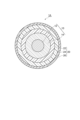
- FIG. 1 is a schematic cross-sectional view showing an example of an optical fiber according to this embodiment.
- FIG. 2 is a schematic cross-sectional view showing an example of the optical fiber according to this embodiment.
- An object of the present disclosure is to provide a resin composition capable of forming a resin layer having excellent mineral oil resistance, a colored coating material for an optical fiber, and an optical fiber in which an increase in transmission loss is reduced.
- a resin composition for optical fiber coating according to one aspect of the present disclosure contains a photopolymerizable compound and a photopolymerization initiator, and the photopolymerizable compound has an epoxy di(meth) It contains acrylate and an alkylene oxide-modified di(meth)acrylate having a bisphenol skeleton, and the mass ratio of the content of the alkylene oxide-modified di(meth)acrylate to the content of the epoxy di(meth)acrylate is 0.3 or more and 8.0. It is below.
- Such a resin composition forms a resin layer with excellent resistance to mineral oil by using a (meth)acrylate compound having a specific structure as a photopolymerizable compound instead of a commonly used urethane (meth)acrylate. can do.
- the alkylene oxide-modified di(meth)acrylate has at least one selected from the group consisting of ethylene oxide chains and propylene oxide chains. good too.
- the resin composition according to the present embodiment may further contain titanium oxide.
- the titanium oxide may be surface-treated titanium oxide from the viewpoint of improving the dispersibility in the resin composition.
- the resin composition is cured with an integrated light amount of 900 mJ/cm 2 or more and 1100 mJ/cm 2 or less.
- the resin film may have an elongation at break of 7% or more and 50% or less at 23°C, and a Young's modulus of 700 MPa or more and 2000 MPa or less at 23°C.
- a colored coating material for an optical fiber according to one aspect of the present disclosure includes the resin composition according to any one of (1) to (5) above.
- the resin composition according to the present embodiment for the colored resin layer it is possible to form a coating resin layer capable of reducing an increase in transmission loss of an optical fiber.
- An optical fiber according to an aspect of the present disclosure includes a glass fiber including a core and a clad, a primary resin layer that is in contact with the glass fiber and covers the glass fiber, a secondary resin layer that covers the primary resin layer, and a colored resin layer covering the secondary resin layer, wherein the colored resin layer contains a cured product of the resin composition according to any one of (1) to (5) above.
- An optical fiber according to an aspect of the present disclosure includes a glass fiber including a core and a clad, a primary resin layer that is in contact with the glass fiber and coats the glass fiber, a secondary resin layer that coats the primary resin layer, and the secondary resin layer contains a cured product of the resin composition according to any one of (1) to (5) above.
- the resin composition according to the present embodiment contains a photopolymerizable compound and a photopolymerization initiator, and the photopolymerizable compound is epoxy di(meth)acrylate having a bisphenol skeleton and alkylene oxide-modified having a bisphenol skeleton. It contains a di(meth)acrylate, and the mass ratio of the content of the alkylene oxide-modified di(meth)acrylate to the content of the epoxy di(meth)acrylate is 0.3 or more and 8.0 or less.
- epoxy (dimeth)acrylate As the epoxy (dimeth)acrylate according to the present embodiment, a reaction product of a diglycidyl ether compound having a bisphenol skeleton and a compound having a (meth)acryloyl group such as (meth)acrylic acid can be used.
- epoxy di(meth)acrylates examples include (meth)acrylic acid adducts of bisphenol A diglycidyl ether, (meth)acrylic acid adducts of bisphenol AF diglycidyl ether, and (meth)acrylic acid additions of bisphenol F diglycidyl ether. things are mentioned.
- the content of the epoxy di(meth)acrylate is 10% by mass or more and 70% by mass or less, 20% by mass or more and 60% by mass or less, or 30% by mass based on the total amount of the photopolymerizable compound. It may be more than or equal to 50% by mass or less.
- the alkylene oxide-modified di(meth)acrylate according to the present embodiment has at least one selected from the group consisting of ethylene oxide (EO) chains and propylene oxide (PO) chains from the viewpoint of adjusting the Young's modulus of the resin layer. is preferred.
- An ethylene oxide chain can be represented as "(EO)n” and a propylene oxide chain as "(PO)n".
- n is an integer of 1 or more, may be 2 or more or 3 or more, and may be 40 or less, 35 or less, or 30 or less.
- alkylene oxide-modified di(meth)acrylate examples include EO-modified di(meth)acrylate of bisphenol A, PO-modified di(meth)acrylate of bisphenol A, and EO/PO-modified di(meth)acrylate of bisphenol A. .
- the mass ratio of the content of the alkylene oxide-modified di(meth)acrylate to the content of the epoxy di(meth)acrylate is 0.3 or more and 8.0 or less, a resin layer having excellent mineral oil resistance can be formed. can.
- the mass ratio of the content of alkylene oxide-modified di(meth)acrylate to the content of epoxy di(meth)acrylate is 0.4 or more, 0.5 or more, or 1.0 or more. may be 7.0 or less, 6.0 or less, or 5.0 or less.
- the photopolymerizable compound according to the present embodiment includes a photopolymerizable compound (hereinafter referred to as "monomer") other than epoxy di(meth)acrylate having a bisphenol skeleton and alkylene oxide-modified di(meth)acrylate having a bisphenol skeleton. be able to.
- monomer a photopolymerizable compound other than epoxy di(meth)acrylate having a bisphenol skeleton and alkylene oxide-modified di(meth)acrylate having a bisphenol skeleton.
- a monofunctional monomer having one polymerizable group and a polyfunctional monomer having two or more polymerizable groups can be used. You may use a monomer in mixture of 2 or more types.
- Examples of monofunctional monomers include methyl (meth) acrylate, ethyl (meth) acrylate, propyl (meth) acrylate, n-butyl (meth) acrylate, s-butyl (meth) acrylate, tert-butyl (meth) acrylate, isobutyl (meth)acrylate, n-pentyl (meth)acrylate, isopentyl (meth)acrylate, hexyl (meth)acrylate, heptyl (meth)acrylate, isoamyl (meth)acrylate, 2-ethylhexyl (meth)acrylate, n-octyl (meth)acrylate, isooctyl (meth)acrylate, isodecyl (meth)acrylate, lauryl (meth)acrylate, 2-phenoxyethyl (meth)acrylate, 3-phenoxybenzyl acrylate, phenoxyd
- polyfunctional monomers include ethylene glycol di(meth)acrylate, polyethylene glycol di(meth)acrylate, polypropylene glycol di(meth)acrylate, neopentyl glycol di(meth)acrylate, tripropylene glycol di(meth)acrylate, Tetraethylene glycol di(meth)acrylate, neopentyl glycol hydroxypivalate di(meth)acrylate, 1,4-butanediol di(meth)acrylate, 1,6-hexanediol di(meth)acrylate, 1,9-nonane Diol di(meth)acrylate, 1,12-dodecanediol di(meth)acrylate, 1,14-tetradecanediol di(meth)acrylate, 1,16-hexadecanediol di(meth)acrylate, 1,20-eicosandiol Di(meth)acrylate, isopentyldiol di
- the photopolymerization initiator can be appropriately selected from known radical photopolymerization initiators and used.
- photopolymerization initiators include 1-hydroxycyclohexylphenyl ketone (Omnirad 184, manufactured by IGM Resins), 2,2-dimethoxy-2-phenylacetophenone, 1-(4-isopropylphenyl)-2-hydroxy-2- Methylpropan-1-one, bis(2,6-dimethoxybenzoyl)-2,4,4-trimethylpentylphosphine oxide, 2-methyl-1-[4-(methylthio)phenyl]-2-morpholino-propane-1 -one (Omnirad 907, manufactured by IGM Resins), 2,4,6-trimethylbenzoyldiphenylphosphine oxide (Omnirad TPO, manufactured by IGM Resins), and bis(2,4,6-trimethylbenzoyl)phenylphosphine oxide (Omnirad 819, manufactured
- the content of the photopolymerization initiator is 0.2% by mass or more and 10% by mass or less, 0.4% by mass or more and 8% by mass or less, or 0.6% by mass or more and 6% by mass, based on the total amount of the photopolymerizable compound. % or less. That is, the content of the photopolymerization initiator is 0.2 parts by mass or more and 10 parts by mass or less, 0.4 parts by mass or more and 8 parts by mass or less, or 0.6 parts by mass with respect to the total amount of 100 parts by mass of the photopolymerizable compound. It may be more than 6 parts by mass and less than 6 parts by mass.
- the resin composition may further contain silane coupling agents, leveling agents, antifoaming agents, antioxidants, sensitizers, and the like.
- the silane coupling agent is not particularly limited as long as it does not interfere with curing of the resin composition.
- Silane coupling agents such as tetramethylsilicate, tetraethylsilicate, mercaptopropyltrimethoxysilane, vinyltrichlorosilane, vinyltriethoxysilane, vinyltris( ⁇ -methoxy-ethoxy)silane, ⁇ -(3,4-epoxycyclohexyl) -ethyltrimethoxysilane, dimethoxydimethylsilane, diethoxydimethylsilane, 3-acryloxypropyltrimethoxysilane, ⁇ -glycidoxypropyltrimethoxysilane, ⁇ -glycidoxypropylmethyldiethoxysilane, ⁇ -methacryloxypropyl trimethoxysilane, N-( ⁇ -aminoethyl)- ⁇ -aminopropyltrimethoxysi
- the resin composition according to the present embodiment can further contain titanium oxide particles.
- Surface-treated titanium oxide particles may be used as the titanium oxide particles.
- the surface-treated titanium oxide particles are particles obtained by surface-treating titanium oxide with an inorganic substance, and are excellent in dispersibility in the resin composition.
- Inorganic substances used for surface treatment include, for example, aluminum oxide, silicon dioxide, and zirconium dioxide.
- the surface-treated titanium oxide particles have a surface-treated layer containing at least one selected from the group consisting of aluminum oxide, silicon dioxide, and zirconium dioxide, the dispersibility can be further improved.
- the surface treatment layer may be formed on at least a portion of the surface of titanium oxide, or may be formed on the entire surface of titanium oxide.
- the surface treatment layer is formed by surface treatment of titanium oxide.
- the amount of the surface-treated layer in the surface-treated titanium oxide particles may be 1% by mass or more, 1.5% by mass or more, or 2% by mass or more from the viewpoint of improving dispersibility, and from the viewpoint of increasing hiding power. , 10% by mass or less, 9% by mass or less, or 8% by mass or less.
- the amount of the surface-treated layer can be calculated by measuring the amounts of the titanium element and inorganic elements other than titanium contained in the surface-treated titanium oxide particles using inductively coupled mass spectrometry (ICP-MS).
- the average primary particle diameter of the surface-treated titanium oxide particles may be 300 nm or less, 295 nm or less, or 290 nm or less from the viewpoint of further improving the lateral pressure resistance of the coating resin layer. From the viewpoint of increasing hiding power, the average primary particle size of the surface-treated titanium oxide particles may be 100 nm or more, 150 nm or more, or 200 nm or more, preferably 200 nm or more and 300 nm or less.
- the average primary particle size can be measured, for example, by image analysis of electron micrographs, light scattering method, BET method, and the like.
- the content of the surface-treated titanium oxide particles is 0.6% by mass or more, 0.8% by mass or more, 1% by mass or more, based on the total amount of the resin composition. It may be 5% by mass or more, 2% by mass or more, or 3% by mass or more. From the viewpoint of enhancing the curability of the resin composition, the content of the surface-treated titanium oxide particles is less than 25% by mass, 24% by mass or less, 20% by mass or less, or 18% by mass or less, or It may be 10% by mass or less.
- the breaking elongation of the resin film obtained by curing the resin composition according to the present embodiment with an integrated amount of light of 900 mJ/cm 2 or more and 1100 mJ/cm 2 or less is 6% or more and 50% or less at 23 ° C.
- Resin excellent in toughness Layers can be formed.
- the elongation at break of the resin film may be 6.5% or more, 7% or more, or 10% or more, and may be 45% or less, 40% or less, or 30% or less.
- the Young's modulus of the resin film When the Young's modulus of the resin film is 700 MPa or more and 2000 MPa or less at 23°C, a resin layer having excellent toughness can be formed.
- the Young's modulus of the resin film may be 750 MPa or more, 800 MPa or more, or 850 MPa or more, and may be 1950 MPa or less, 1900 MPa or less, or 1850 MPa or less.
- the resin composition according to this embodiment can be suitably used as a colored coating material for optical fibers.
- a colored coating material for optical fibers By forming the outermost layer of the coating resin layer using the colored coating material containing the resin composition according to the present embodiment, it is possible to reduce an increase in transmission loss of the optical fiber.
- FIG. 1 is a schematic cross-sectional view showing the configuration of an optical fiber according to one embodiment.
- the optical fiber 1 of this embodiment includes a glass fiber 10 and a coating resin layer 20 that is in contact with the glass fiber 10 and covers the outer periphery of the glass fiber 10 .
- the glass fiber 10 is a light-guiding optical transmission body that transmits light introduced into the optical fiber 1 .
- the glass fiber 10 is a member made of glass, and is configured using, for example, silica (SiO 2 ) glass as a base material (main component).
- a glass fiber 10 has a core 12 and a clad 14 covering the core 12 .
- the glass fiber 10 transmits light introduced into the optical fiber 1 .
- the core 12 is provided, for example, in a region including the central axis of the glass fiber 10 .
- the core 12 is made of, for example, pure SiO 2 glass, or SiO 2 glass containing GeO 2 , elemental fluorine, or the like.
- a clad 14 is provided in a region surrounding the core 12 .
- Cladding 14 has a refractive index lower than that of core 12 .
- the clad 14 is made of, for example, pure SiO 2 glass or SiO 2 glass doped with elemental fluorine.
- the outer diameter of the glass fiber 10 is approximately 100 ⁇ m to 125 ⁇ m, and the diameter of the core 12 constituting the glass fiber 10 is approximately 7 ⁇ m to 15 ⁇ m.
- the coating resin layer 20 is an ultraviolet curable resin layer that covers the clad 14 .
- the coating resin layer 20 includes a primary resin layer 22 that covers the outer circumference of the glass fiber 10 and a secondary resin layer 24 that covers the outer circumference of the primary resin layer 22 .
- the primary resin layer 22 is in contact with the outer peripheral surface of the clad 14 and covers the entire clad 14 .
- the secondary resin layer 24 is in contact with the outer peripheral surface of the primary resin layer 22 and covers the entire primary resin layer 22 .
- the thickness of the primary resin layer 22 is, for example, 10 ⁇ m or more and 50 ⁇ m or less.
- the thickness of the secondary resin layer 24 is, for example, 10 ⁇ m or more and 40 ⁇ m or less.
- the resin composition according to this embodiment can be applied to the secondary resin layer 24 .
- the secondary resin layer 24 can be formed by curing the resin composition. Since the secondary resin layer 24 contains the cured product of the resin composition according to the present embodiment, the surface of the secondary resin layer is damaged when the large bobbin is rewound to the small bobbin. It can prevent the layer from being destroyed.
- the coating resin layer 20 may further include a colored resin layer 26 that covers the outer circumference of the secondary resin layer 24 .
- FIG. 2 is a schematic cross-sectional view showing the configuration of an optical fiber according to one embodiment.
- the optical fiber 1A of this embodiment includes a glass fiber 10 and a coating resin layer 20 that is in contact with the glass fiber 10 and covers the outer periphery of the glass fiber 10.
- the coating resin layer 20 includes a primary resin layer 22 , a secondary resin layer 24 and a colored resin layer 26 .
- the thickness of the colored resin layer 26 is, for example, 3 ⁇ m or more and 10 ⁇ m or less.
- the resin composition according to this embodiment can be applied to the colored resin layer 26.
- the colored resin layer 26 can be formed by curing the resin composition.
- the colored resin layer 26 can improve the lateral pressure characteristics of the optical fiber by including the cured product of the resin composition according to the present embodiment.
- the secondary resin layer 24 in the optical fiber 1A may not contain titanium particles, and may be formed by curing a resin composition containing urethane (meth)acrylate, a monomer, and a photopolymerization initiator, for example.
- a conventionally known technique can be used for the resin composition for the secondary resin layer in this case.
- the primary resin layer 22 can be formed, for example, by curing a resin composition containing urethane (meth)acrylate, a monomer, a photopolymerization initiator and a silane coupling agent.
- a conventionally known technique can be used for the resin composition for the primary resin layer.
- epoxy acrylate (EA) which is an acrylic acid adduct of bisphenol A diglycidyl ether
- EA-modified di(meth)acrylate of bisphenol A shown in Table 1 were prepared.
- titanium oxide particles surface-treated titanium oxide particles having a surface treatment layer containing aluminum oxide (Al 2 O 3 ) were prepared.
- the average primary particle size of the surface-treated titanium oxide particles was 200 to 300 nm, and the amount of Al 2 O 3 calculated by ICP-MS measurement was 2.5% by mass.
- Test Examples 1 to 10 correspond to Examples, and Test Examples 11 and 12 correspond to Comparative Examples.
- the resin film is punched into a dumbbell shape of JIS K 7127 type 5, and under the conditions of 23 ⁇ 2 ° C and 50 ⁇ 10% RH, using a tensile tester at a tensile speed of 1 mm / min and a gauge line distance of 25 mm Tensile and stress-strain curves were obtained. Young's modulus was determined by the 2.5% secant line.
- a resin layer having a thickness of 50 ⁇ 5 ⁇ m was formed on the PET film by the same operation as in the preparation of the resin film.
- the resin layer was peeled off from the PET film to obtain a resin film.
- the resin film was punched into a dumbbell shape of JIS Z 6251 Type 3, and pulled at a speed of 1 mm/min under the conditions of 23 ⁇ 2° C. and 50 ⁇ 10% RH using a material testing machine 5985 manufactured by INSTRON. .
- the elongation at break was measured with a high-precision video extensometer AVE manufactured by INSTRON.
- Resin composition for primary resin layer A urethane acrylate obtained by reacting polypropylene glycol having a molecular weight of 4000, isophorone diisocyanate, hydroxyethyl acrylate, and methanol was prepared. 75 parts by mass of this urethane acrylate, 12 parts by mass of nonylphenol EO-modified acrylate, 6 parts by mass of N-vinylcaprolactam, 2 parts by mass of 1,6-hexanediol diacrylate, 1 part by mass of Omnirad TPO, and 3-mercapto A resin composition P was prepared by mixing 1 part by mass of propyltrimethoxysilane.
- Resin composition for secondary resin layer Polypropylene glycol having a molecular weight of 600, 40 parts by mass of urethane acrylate which is a reaction product of 2,4-tolylene diisocyanate and 2-hydroxyethyl acrylate, 35 parts by mass of isobornyl acrylate, and an acrylic acid adduct of bisphenol A diglycidyl ether Resin composition S was prepared by mixing 24 parts by mass of epoxy acrylate, 1 part by mass of Omnirad TPO, and 1 part by mass of Omnirad 184.
- a primary resin layer having a thickness of 17.5 ⁇ m is formed using the resin composition P on the outer periphery of a glass fiber having a diameter of 125 ⁇ m composed of a core and a clad.
- a resin layer was formed to produce an optical fiber.
- the colored resin layer having a thickness of 5 ⁇ m was formed on the outer circumference of the secondary resin layer using the resin compositions of Test Examples 1 to 12 while feeding the optical fiber again with a coloring machine.
- An optical fiber having a diameter of 200 ⁇ m and having a colored resin layer (hereinafter referred to as “colored optical fiber”) was produced.
- the line speed for forming each resin layer was 1500 m/min.
- the Young's modulus of the primary resin layer was measured by the Pullout Modulus (POM) method at 23°C.
- Two locations of the optical fiber are fixed with two chuck devices, the coating resin layer (primary resin layer and secondary resin layer) portion between the two chuck devices is removed, one chuck device is fixed, and the other chuck device is removed.
- the chucking device was gently moved in the opposite direction of the fixed chucking device.
- L is the length of the portion sandwiched between the moving chuck devices in the optical fiber
- Z is the movement amount of the chuck
- Dp is the outer diameter of the primary resin layer
- Df is the outer diameter of the glass fiber
- Df is the Poisson's ratio of the primary resin layer.
- the Young's modulus of the primary resin layer was obtained from the following formula, where n and the load during movement of the chuck device were W.
- the Young's modulus of the primary resin layer was 0.2 MPa.
- Young's modulus (MPa) ((1 + n) W / ⁇ LZ) ⁇ ln (Dp / Df)
Landscapes
- Chemical & Material Sciences (AREA)
- Organic Chemistry (AREA)
- Life Sciences & Earth Sciences (AREA)
- Chemical Kinetics & Catalysis (AREA)
- Engineering & Computer Science (AREA)
- Materials Engineering (AREA)
- General Chemical & Material Sciences (AREA)
- Geochemistry & Mineralogy (AREA)
- Medicinal Chemistry (AREA)
- Polymers & Plastics (AREA)
- Health & Medical Sciences (AREA)
- General Life Sciences & Earth Sciences (AREA)
- Physics & Mathematics (AREA)
- Wood Science & Technology (AREA)
- Optics & Photonics (AREA)
- Inorganic Chemistry (AREA)
- General Physics & Mathematics (AREA)
- Composite Materials (AREA)
- Macromonomer-Based Addition Polymer (AREA)
- Surface Treatment Of Glass Fibres Or Filaments (AREA)
- Optical Fibers, Optical Fiber Cores, And Optical Fiber Bundles (AREA)
Priority Applications (5)
| Application Number | Priority Date | Filing Date | Title |
|---|---|---|---|
| KR1020247011839A KR20240088813A (ko) | 2021-10-26 | 2022-10-05 | 광파이버 피복용의 수지 조성물, 광파이버의 착색 피복 재료, 및 광파이버 |
| CN202280067724.0A CN118076568A (zh) | 2021-10-26 | 2022-10-05 | 光纤被覆用的树脂组合物、光纤的着色被覆材料以及光纤 |
| EP22886627.3A EP4424652A4 (en) | 2021-10-26 | 2022-10-05 | Resin composition for glass fiber coating, colored coating material for glass fiber and glass fiber |
| JP2023556256A JPWO2023074295A1 (https=) | 2021-10-26 | 2022-10-05 | |
| US18/701,647 US20240392155A1 (en) | 2021-10-26 | 2022-10-05 | Resin composition for optical fiber coating, colored coating material for optical fiber, and optical fiber |
Applications Claiming Priority (2)
| Application Number | Priority Date | Filing Date | Title |
|---|---|---|---|
| JP2021-174345 | 2021-10-26 | ||
| JP2021174345 | 2021-10-26 |
Publications (1)
| Publication Number | Publication Date |
|---|---|
| WO2023074295A1 true WO2023074295A1 (ja) | 2023-05-04 |
Family
ID=86159276
Family Applications (1)
| Application Number | Title | Priority Date | Filing Date |
|---|---|---|---|
| PCT/JP2022/037342 Ceased WO2023074295A1 (ja) | 2021-10-26 | 2022-10-05 | 光ファイバ被覆用の樹脂組成物、光ファイバの着色被覆材料、及び光ファイバ |
Country Status (7)
| Country | Link |
|---|---|
| US (1) | US20240392155A1 (https=) |
| EP (1) | EP4424652A4 (https=) |
| JP (1) | JPWO2023074295A1 (https=) |
| KR (1) | KR20240088813A (https=) |
| CN (1) | CN118076568A (https=) |
| TW (1) | TW202328240A (https=) |
| WO (1) | WO2023074295A1 (https=) |
Cited By (1)
| Publication number | Priority date | Publication date | Assignee | Title |
|---|---|---|---|---|
| WO2025041663A1 (ja) * | 2023-08-24 | 2025-02-27 | 住友電気工業株式会社 | 光ファイバ |
Citations (10)
| Publication number | Priority date | Publication date | Assignee | Title |
|---|---|---|---|---|
| JPH06242355A (ja) | 1993-02-17 | 1994-09-02 | Sumitomo Electric Ind Ltd | 被覆光ファイバ心線及び被覆光ファイバユニット |
| JP2012021055A (ja) * | 2010-07-13 | 2012-02-02 | Pilot Ink Co Ltd | ボールペン用水性インキ組成物及びそれを内蔵したボールペン |
| JP2015182912A (ja) * | 2014-03-24 | 2015-10-22 | 住友電気工業株式会社 | 光ファイバ |
| WO2016047002A1 (ja) | 2014-09-26 | 2016-03-31 | 住友電気工業株式会社 | 光ファイバ心線及び光ファイバテープ心線 |
| JP2017095531A (ja) * | 2015-11-18 | 2017-06-01 | サカタインクス株式会社 | 光硬化型インクジェット印刷用インク組成物 |
| WO2019064659A1 (ja) * | 2017-09-26 | 2019-04-04 | 国立大学法人北海道大学 | 高靭性繊維複合エラストマー |
| WO2021145102A1 (ja) * | 2020-01-14 | 2021-07-22 | 住友電気工業株式会社 | 樹脂組成物、光ファイバ及び光ファイバの製造方法 |
| WO2021145103A1 (ja) * | 2020-01-14 | 2021-07-22 | 住友電気工業株式会社 | 樹脂組成物、光ファイバ及び光ファイバの製造方法 |
| WO2021145104A1 (ja) * | 2020-01-14 | 2021-07-22 | 住友電気工業株式会社 | 樹脂組成物、光ファイバ及び光ファイバの製造方法 |
| JP2021174345A (ja) | 2020-04-28 | 2021-11-01 | 株式会社ファーストリテイリング | スキャナー、スキャナーの制御方法、プログラム、および、スキャンシステム |
Family Cites Families (5)
| Publication number | Priority date | Publication date | Assignee | Title |
|---|---|---|---|---|
| CN106134013B (zh) * | 2014-03-27 | 2019-05-07 | 莫列斯有限公司 | 插座组件、插头组件和连接器系统 |
| CN107635943A (zh) * | 2016-01-12 | 2018-01-26 | 住友电气工业株式会社 | 光纤芯线和光纤带芯线 |
| JP2019040119A (ja) * | 2017-08-28 | 2019-03-14 | 住友電気工業株式会社 | 光ファイバ心線 |
| JP7367698B2 (ja) * | 2018-11-16 | 2023-10-24 | 住友電気工業株式会社 | 樹脂組成物及び光ファイバ |
| JP7609066B2 (ja) * | 2019-06-17 | 2025-01-07 | 住友電気工業株式会社 | 樹脂組成物、光ファイバ及び光ファイバの製造方法 |
-
2022
- 2022-10-05 CN CN202280067724.0A patent/CN118076568A/zh active Pending
- 2022-10-05 KR KR1020247011839A patent/KR20240088813A/ko active Pending
- 2022-10-05 WO PCT/JP2022/037342 patent/WO2023074295A1/ja not_active Ceased
- 2022-10-05 US US18/701,647 patent/US20240392155A1/en active Pending
- 2022-10-05 JP JP2023556256A patent/JPWO2023074295A1/ja active Pending
- 2022-10-05 EP EP22886627.3A patent/EP4424652A4/en active Pending
- 2022-10-20 TW TW111139863A patent/TW202328240A/zh unknown
Patent Citations (10)
| Publication number | Priority date | Publication date | Assignee | Title |
|---|---|---|---|---|
| JPH06242355A (ja) | 1993-02-17 | 1994-09-02 | Sumitomo Electric Ind Ltd | 被覆光ファイバ心線及び被覆光ファイバユニット |
| JP2012021055A (ja) * | 2010-07-13 | 2012-02-02 | Pilot Ink Co Ltd | ボールペン用水性インキ組成物及びそれを内蔵したボールペン |
| JP2015182912A (ja) * | 2014-03-24 | 2015-10-22 | 住友電気工業株式会社 | 光ファイバ |
| WO2016047002A1 (ja) | 2014-09-26 | 2016-03-31 | 住友電気工業株式会社 | 光ファイバ心線及び光ファイバテープ心線 |
| JP2017095531A (ja) * | 2015-11-18 | 2017-06-01 | サカタインクス株式会社 | 光硬化型インクジェット印刷用インク組成物 |
| WO2019064659A1 (ja) * | 2017-09-26 | 2019-04-04 | 国立大学法人北海道大学 | 高靭性繊維複合エラストマー |
| WO2021145102A1 (ja) * | 2020-01-14 | 2021-07-22 | 住友電気工業株式会社 | 樹脂組成物、光ファイバ及び光ファイバの製造方法 |
| WO2021145103A1 (ja) * | 2020-01-14 | 2021-07-22 | 住友電気工業株式会社 | 樹脂組成物、光ファイバ及び光ファイバの製造方法 |
| WO2021145104A1 (ja) * | 2020-01-14 | 2021-07-22 | 住友電気工業株式会社 | 樹脂組成物、光ファイバ及び光ファイバの製造方法 |
| JP2021174345A (ja) | 2020-04-28 | 2021-11-01 | 株式会社ファーストリテイリング | スキャナー、スキャナーの制御方法、プログラム、および、スキャンシステム |
Non-Patent Citations (1)
| Title |
|---|
| See also references of EP4424652A4 |
Cited By (1)
| Publication number | Priority date | Publication date | Assignee | Title |
|---|---|---|---|---|
| WO2025041663A1 (ja) * | 2023-08-24 | 2025-02-27 | 住友電気工業株式会社 | 光ファイバ |
Also Published As
| Publication number | Publication date |
|---|---|
| TW202328240A (zh) | 2023-07-16 |
| CN118076568A (zh) | 2024-05-24 |
| EP4424652A4 (en) | 2025-03-19 |
| KR20240088813A (ko) | 2024-06-20 |
| US20240392155A1 (en) | 2024-11-28 |
| EP4424652A1 (en) | 2024-09-04 |
| JPWO2023074295A1 (https=) | 2023-05-04 |
Similar Documents
| Publication | Publication Date | Title |
|---|---|---|
| JP7327405B2 (ja) | 光ファイバ | |
| JP7322874B2 (ja) | 光ファイバ | |
| JP7513028B2 (ja) | 樹脂組成物、光ファイバのセカンダリ被覆材料、光ファイバ及び光ファイバの製造方法 | |
| KR102682991B1 (ko) | 수지 조성물 및 광섬유 | |
| WO2020255570A1 (ja) | 光ファイバ | |
| KR102881276B1 (ko) | 수지 조성물, 광파이버 및 광파이버의 제조 방법 | |
| WO2020101028A1 (ja) | 樹脂組成物、光ファイバ及び光ファイバの製造方法 | |
| WO2021019908A1 (ja) | 光ファイバリボン及び光ファイバケーブル | |
| WO2020101029A1 (ja) | 樹脂組成物、光ファイバ及び光ファイバの製造方法 | |
| WO2023195295A1 (ja) | 光ファイバ被覆用の樹脂組成物、光ファイバの着色被覆材料、光ファイバ、及び光ファイバリボン | |
| JP7609066B2 (ja) | 樹脂組成物、光ファイバ及び光ファイバの製造方法 | |
| WO2023074296A1 (ja) | 光ファイバ被覆用の樹脂組成物、光ファイバの着色被覆材料、及び光ファイバ | |
| WO2023074295A1 (ja) | 光ファイバ被覆用の樹脂組成物、光ファイバの着色被覆材料、及び光ファイバ | |
| JP7567789B2 (ja) | 樹脂組成物、光ファイバのセカンダリ被覆材料、光ファイバ及び光ファイバの製造方法 | |
| WO2022130855A1 (ja) | 樹脂組成物、光ファイバのセカンダリ被覆材料、光ファイバ及び光ファイバの製造方法 | |
| WO2023195296A1 (ja) | 光ファイバ被覆用の樹脂組成物、光ファイバの着色被覆材料、光ファイバ、及び光ファイバリボン | |
| WO2024043060A1 (ja) | 光ファイバ着色被覆用の樹脂組成物、光ファイバ、及び光ファイバリボン | |
| WO2024219126A1 (ja) | 光ファイバおよび光ファイバリボン | |
| WO2024043059A1 (ja) | 光ファイバ着色被覆用の樹脂組成物、光ファイバ、及び光ファイバリボン | |
| JP2024162346A (ja) | 光ファイバおよび光ファイバリボン | |
| WO2024135207A1 (ja) | 光ファイバ着色被覆用の樹脂組成物、光ファイバおよび光ファイバリボン | |
| WO2024135280A1 (ja) | 光ファイバ着色被覆用の樹脂組成物、光ファイバおよび光ファイバリボン | |
| WO2024154414A1 (ja) | 光ファイバ着色被覆用の樹脂組成物、光ファイバ、および光ファイバリボン | |
| WO2025037582A1 (ja) | 光ファイバ被覆用の樹脂組成物、光ファイバの着色被覆材料、光ファイバ、および光ファイバリボン |
Legal Events
| Date | Code | Title | Description |
|---|---|---|---|
| 121 | Ep: the epo has been informed by wipo that ep was designated in this application |
Ref document number: 22886627 Country of ref document: EP Kind code of ref document: A1 |
|
| ENP | Entry into the national phase |
Ref document number: 2023556256 Country of ref document: JP Kind code of ref document: A |
|
| WWE | Wipo information: entry into national phase |
Ref document number: 202280067724.0 Country of ref document: CN |
|
| WWE | Wipo information: entry into national phase |
Ref document number: 18701647 Country of ref document: US |
|
| WWE | Wipo information: entry into national phase |
Ref document number: 2022886627 Country of ref document: EP |
|
| NENP | Non-entry into the national phase |
Ref country code: DE |
|
| ENP | Entry into the national phase |
Ref document number: 2022886627 Country of ref document: EP Effective date: 20240527 |