WO2023068226A1 - 抗cd37抗体-薬物コンジュゲート - Google Patents
抗cd37抗体-薬物コンジュゲート Download PDFInfo
- Publication number
- WO2023068226A1 WO2023068226A1 PCT/JP2022/038604 JP2022038604W WO2023068226A1 WO 2023068226 A1 WO2023068226 A1 WO 2023068226A1 JP 2022038604 W JP2022038604 W JP 2022038604W WO 2023068226 A1 WO2023068226 A1 WO 2023068226A1
- Authority
- WO
- WIPO (PCT)
- Prior art keywords
- antibody
- amino acid
- acid sequence
- heavy chain
- seq
- Prior art date
- Legal status (The legal status is an assumption and is not a legal conclusion. Google has not performed a legal analysis and makes no representation as to the accuracy of the status listed.)
- Ceased
Links
Images







Classifications
-
- A—HUMAN NECESSITIES
- A61—MEDICAL OR VETERINARY SCIENCE; HYGIENE
- A61K—PREPARATIONS FOR MEDICAL, DENTAL OR TOILETRY PURPOSES
- A61K47/00—Medicinal preparations characterised by the non-active ingredients used, e.g. carriers or inert additives; Targeting or modifying agents chemically bound to the active ingredient
- A61K47/50—Medicinal preparations characterised by the non-active ingredients used, e.g. carriers or inert additives; Targeting or modifying agents chemically bound to the active ingredient the non-active ingredient being chemically bound to the active ingredient, e.g. polymer-drug conjugates
- A61K47/51—Medicinal preparations characterised by the non-active ingredients used, e.g. carriers or inert additives; Targeting or modifying agents chemically bound to the active ingredient the non-active ingredient being chemically bound to the active ingredient, e.g. polymer-drug conjugates the non-active ingredient being a modifying agent
- A61K47/68—Medicinal preparations characterised by the non-active ingredients used, e.g. carriers or inert additives; Targeting or modifying agents chemically bound to the active ingredient the non-active ingredient being chemically bound to the active ingredient, e.g. polymer-drug conjugates the non-active ingredient being a modifying agent the modifying agent being an antibody, an immunoglobulin or a fragment thereof, e.g. an Fc-fragment
- A61K47/6835—Medicinal preparations characterised by the non-active ingredients used, e.g. carriers or inert additives; Targeting or modifying agents chemically bound to the active ingredient the non-active ingredient being chemically bound to the active ingredient, e.g. polymer-drug conjugates the non-active ingredient being a modifying agent the modifying agent being an antibody, an immunoglobulin or a fragment thereof, e.g. an Fc-fragment the modifying agent being an antibody or an immunoglobulin bearing at least one antigen-binding site
- A61K47/6851—Medicinal preparations characterised by the non-active ingredients used, e.g. carriers or inert additives; Targeting or modifying agents chemically bound to the active ingredient the non-active ingredient being chemically bound to the active ingredient, e.g. polymer-drug conjugates the non-active ingredient being a modifying agent the modifying agent being an antibody, an immunoglobulin or a fragment thereof, e.g. an Fc-fragment the modifying agent being an antibody or an immunoglobulin bearing at least one antigen-binding site the antibody targeting a determinant of a tumour cell
-
- A—HUMAN NECESSITIES
- A61—MEDICAL OR VETERINARY SCIENCE; HYGIENE
- A61K—PREPARATIONS FOR MEDICAL, DENTAL OR TOILETRY PURPOSES
- A61K31/00—Medicinal preparations containing organic active ingredients
- A61K31/33—Heterocyclic compounds
- A61K31/395—Heterocyclic compounds having nitrogen as a ring hetero atom, e.g. guanethidine or rifamycins
- A61K31/435—Heterocyclic compounds having nitrogen as a ring hetero atom, e.g. guanethidine or rifamycins having six-membered rings with one nitrogen as the only ring hetero atom
- A61K31/47—Quinolines; Isoquinolines
- A61K31/4738—Quinolines; Isoquinolines ortho- or peri-condensed with heterocyclic ring systems
- A61K31/4745—Quinolines; Isoquinolines ortho- or peri-condensed with heterocyclic ring systems condensed with ring systems having nitrogen as a ring hetero atom, e.g. phenantrolines
-
- A—HUMAN NECESSITIES
- A61—MEDICAL OR VETERINARY SCIENCE; HYGIENE
- A61K—PREPARATIONS FOR MEDICAL, DENTAL OR TOILETRY PURPOSES
- A61K39/00—Medicinal preparations containing antigens or antibodies
- A61K39/395—Antibodies; Immunoglobulins; Immune serum, e.g. antilymphocytic serum
-
- A—HUMAN NECESSITIES
- A61—MEDICAL OR VETERINARY SCIENCE; HYGIENE
- A61K—PREPARATIONS FOR MEDICAL, DENTAL OR TOILETRY PURPOSES
- A61K45/00—Medicinal preparations containing active ingredients not provided for in groups A61K31/00 - A61K41/00
-
- A—HUMAN NECESSITIES
- A61—MEDICAL OR VETERINARY SCIENCE; HYGIENE
- A61K—PREPARATIONS FOR MEDICAL, DENTAL OR TOILETRY PURPOSES
- A61K47/00—Medicinal preparations characterised by the non-active ingredients used, e.g. carriers or inert additives; Targeting or modifying agents chemically bound to the active ingredient
- A61K47/50—Medicinal preparations characterised by the non-active ingredients used, e.g. carriers or inert additives; Targeting or modifying agents chemically bound to the active ingredient the non-active ingredient being chemically bound to the active ingredient, e.g. polymer-drug conjugates
- A61K47/51—Medicinal preparations characterised by the non-active ingredients used, e.g. carriers or inert additives; Targeting or modifying agents chemically bound to the active ingredient the non-active ingredient being chemically bound to the active ingredient, e.g. polymer-drug conjugates the non-active ingredient being a modifying agent
- A61K47/68—Medicinal preparations characterised by the non-active ingredients used, e.g. carriers or inert additives; Targeting or modifying agents chemically bound to the active ingredient the non-active ingredient being chemically bound to the active ingredient, e.g. polymer-drug conjugates the non-active ingredient being a modifying agent the modifying agent being an antibody, an immunoglobulin or a fragment thereof, e.g. an Fc-fragment
-
- A—HUMAN NECESSITIES
- A61—MEDICAL OR VETERINARY SCIENCE; HYGIENE
- A61K—PREPARATIONS FOR MEDICAL, DENTAL OR TOILETRY PURPOSES
- A61K47/00—Medicinal preparations characterised by the non-active ingredients used, e.g. carriers or inert additives; Targeting or modifying agents chemically bound to the active ingredient
- A61K47/50—Medicinal preparations characterised by the non-active ingredients used, e.g. carriers or inert additives; Targeting or modifying agents chemically bound to the active ingredient the non-active ingredient being chemically bound to the active ingredient, e.g. polymer-drug conjugates
- A61K47/51—Medicinal preparations characterised by the non-active ingredients used, e.g. carriers or inert additives; Targeting or modifying agents chemically bound to the active ingredient the non-active ingredient being chemically bound to the active ingredient, e.g. polymer-drug conjugates the non-active ingredient being a modifying agent
- A61K47/68—Medicinal preparations characterised by the non-active ingredients used, e.g. carriers or inert additives; Targeting or modifying agents chemically bound to the active ingredient the non-active ingredient being chemically bound to the active ingredient, e.g. polymer-drug conjugates the non-active ingredient being a modifying agent the modifying agent being an antibody, an immunoglobulin or a fragment thereof, e.g. an Fc-fragment
- A61K47/6801—Drug-antibody or immunoglobulin conjugates defined by the pharmacologically or therapeutically active agent
- A61K47/6803—Drugs conjugated to an antibody or immunoglobulin, e.g. cisplatin-antibody conjugates
-
- A—HUMAN NECESSITIES
- A61—MEDICAL OR VETERINARY SCIENCE; HYGIENE
- A61K—PREPARATIONS FOR MEDICAL, DENTAL OR TOILETRY PURPOSES
- A61K47/00—Medicinal preparations characterised by the non-active ingredients used, e.g. carriers or inert additives; Targeting or modifying agents chemically bound to the active ingredient
- A61K47/50—Medicinal preparations characterised by the non-active ingredients used, e.g. carriers or inert additives; Targeting or modifying agents chemically bound to the active ingredient the non-active ingredient being chemically bound to the active ingredient, e.g. polymer-drug conjugates
- A61K47/51—Medicinal preparations characterised by the non-active ingredients used, e.g. carriers or inert additives; Targeting or modifying agents chemically bound to the active ingredient the non-active ingredient being chemically bound to the active ingredient, e.g. polymer-drug conjugates the non-active ingredient being a modifying agent
- A61K47/68—Medicinal preparations characterised by the non-active ingredients used, e.g. carriers or inert additives; Targeting or modifying agents chemically bound to the active ingredient the non-active ingredient being chemically bound to the active ingredient, e.g. polymer-drug conjugates the non-active ingredient being a modifying agent the modifying agent being an antibody, an immunoglobulin or a fragment thereof, e.g. an Fc-fragment
- A61K47/6801—Drug-antibody or immunoglobulin conjugates defined by the pharmacologically or therapeutically active agent
- A61K47/6803—Drugs conjugated to an antibody or immunoglobulin, e.g. cisplatin-antibody conjugates
- A61K47/68037—Drugs conjugated to an antibody or immunoglobulin, e.g. cisplatin-antibody conjugates the drug being a camptothecin [CPT] or derivatives
-
- A—HUMAN NECESSITIES
- A61—MEDICAL OR VETERINARY SCIENCE; HYGIENE
- A61K—PREPARATIONS FOR MEDICAL, DENTAL OR TOILETRY PURPOSES
- A61K47/00—Medicinal preparations characterised by the non-active ingredients used, e.g. carriers or inert additives; Targeting or modifying agents chemically bound to the active ingredient
- A61K47/50—Medicinal preparations characterised by the non-active ingredients used, e.g. carriers or inert additives; Targeting or modifying agents chemically bound to the active ingredient the non-active ingredient being chemically bound to the active ingredient, e.g. polymer-drug conjugates
- A61K47/51—Medicinal preparations characterised by the non-active ingredients used, e.g. carriers or inert additives; Targeting or modifying agents chemically bound to the active ingredient the non-active ingredient being chemically bound to the active ingredient, e.g. polymer-drug conjugates the non-active ingredient being a modifying agent
- A61K47/68—Medicinal preparations characterised by the non-active ingredients used, e.g. carriers or inert additives; Targeting or modifying agents chemically bound to the active ingredient the non-active ingredient being chemically bound to the active ingredient, e.g. polymer-drug conjugates the non-active ingredient being a modifying agent the modifying agent being an antibody, an immunoglobulin or a fragment thereof, e.g. an Fc-fragment
- A61K47/6835—Medicinal preparations characterised by the non-active ingredients used, e.g. carriers or inert additives; Targeting or modifying agents chemically bound to the active ingredient the non-active ingredient being chemically bound to the active ingredient, e.g. polymer-drug conjugates the non-active ingredient being a modifying agent the modifying agent being an antibody, an immunoglobulin or a fragment thereof, e.g. an Fc-fragment the modifying agent being an antibody or an immunoglobulin bearing at least one antigen-binding site
- A61K47/6849—Medicinal preparations characterised by the non-active ingredients used, e.g. carriers or inert additives; Targeting or modifying agents chemically bound to the active ingredient the non-active ingredient being chemically bound to the active ingredient, e.g. polymer-drug conjugates the non-active ingredient being a modifying agent the modifying agent being an antibody, an immunoglobulin or a fragment thereof, e.g. an Fc-fragment the modifying agent being an antibody or an immunoglobulin bearing at least one antigen-binding site the antibody targeting a receptor, a cell surface antigen or a cell surface determinant
-
- A—HUMAN NECESSITIES
- A61—MEDICAL OR VETERINARY SCIENCE; HYGIENE
- A61K—PREPARATIONS FOR MEDICAL, DENTAL OR TOILETRY PURPOSES
- A61K47/00—Medicinal preparations characterised by the non-active ingredients used, e.g. carriers or inert additives; Targeting or modifying agents chemically bound to the active ingredient
- A61K47/50—Medicinal preparations characterised by the non-active ingredients used, e.g. carriers or inert additives; Targeting or modifying agents chemically bound to the active ingredient the non-active ingredient being chemically bound to the active ingredient, e.g. polymer-drug conjugates
- A61K47/51—Medicinal preparations characterised by the non-active ingredients used, e.g. carriers or inert additives; Targeting or modifying agents chemically bound to the active ingredient the non-active ingredient being chemically bound to the active ingredient, e.g. polymer-drug conjugates the non-active ingredient being a modifying agent
- A61K47/68—Medicinal preparations characterised by the non-active ingredients used, e.g. carriers or inert additives; Targeting or modifying agents chemically bound to the active ingredient the non-active ingredient being chemically bound to the active ingredient, e.g. polymer-drug conjugates the non-active ingredient being a modifying agent the modifying agent being an antibody, an immunoglobulin or a fragment thereof, e.g. an Fc-fragment
- A61K47/6889—Conjugates wherein the antibody being the modifying agent and wherein the linker, binder or spacer confers particular properties to the conjugates, e.g. peptidic enzyme-labile linkers or acid-labile linkers, providing for an acid-labile immuno conjugate wherein the drug may be released from its antibody conjugated part in an acidic, e.g. tumoural or environment
-
- A—HUMAN NECESSITIES
- A61—MEDICAL OR VETERINARY SCIENCE; HYGIENE
- A61P—SPECIFIC THERAPEUTIC ACTIVITY OF CHEMICAL COMPOUNDS OR MEDICINAL PREPARATIONS
- A61P35/00—Antineoplastic agents
-
- A—HUMAN NECESSITIES
- A61—MEDICAL OR VETERINARY SCIENCE; HYGIENE
- A61P—SPECIFIC THERAPEUTIC ACTIVITY OF CHEMICAL COMPOUNDS OR MEDICINAL PREPARATIONS
- A61P35/00—Antineoplastic agents
- A61P35/02—Antineoplastic agents specific for leukemia
-
- C—CHEMISTRY; METALLURGY
- C07—ORGANIC CHEMISTRY
- C07K—PEPTIDES
- C07K16/00—Immunoglobulins [IG], e.g. monoclonal or polyclonal antibodies
-
- C—CHEMISTRY; METALLURGY
- C07—ORGANIC CHEMISTRY
- C07K—PEPTIDES
- C07K16/00—Immunoglobulins [IG], e.g. monoclonal or polyclonal antibodies
- C07K16/18—Immunoglobulins [IG], e.g. monoclonal or polyclonal antibodies against material from animals or humans
- C07K16/28—Immunoglobulins [IG], e.g. monoclonal or polyclonal antibodies against material from animals or humans against receptors, cell surface antigens or cell surface determinants
-
- C—CHEMISTRY; METALLURGY
- C07—ORGANIC CHEMISTRY
- C07K—PEPTIDES
- C07K16/00—Immunoglobulins [IG], e.g. monoclonal or polyclonal antibodies
- C07K16/18—Immunoglobulins [IG], e.g. monoclonal or polyclonal antibodies against material from animals or humans
- C07K16/28—Immunoglobulins [IG], e.g. monoclonal or polyclonal antibodies against material from animals or humans against receptors, cell surface antigens or cell surface determinants
- C07K16/2896—Immunoglobulins [IG], e.g. monoclonal or polyclonal antibodies against material from animals or humans against receptors, cell surface antigens or cell surface determinants against molecules with a "CD"-designation, not provided for elsewhere
-
- C—CHEMISTRY; METALLURGY
- C07—ORGANIC CHEMISTRY
- C07K—PEPTIDES
- C07K16/00—Immunoglobulins [IG], e.g. monoclonal or polyclonal antibodies
- C07K16/46—Hybrid immunoglobulins
-
- C—CHEMISTRY; METALLURGY
- C07—ORGANIC CHEMISTRY
- C07K—PEPTIDES
- C07K19/00—Hybrid peptides, i.e. peptides covalently bound to nucleic acids, or non-covalently bound protein-protein complexes
-
- C—CHEMISTRY; METALLURGY
- C12—BIOCHEMISTRY; BEER; SPIRITS; WINE; VINEGAR; MICROBIOLOGY; ENZYMOLOGY; MUTATION OR GENETIC ENGINEERING
- C12N—MICROORGANISMS OR ENZYMES; COMPOSITIONS THEREOF; PROPAGATING, PRESERVING, OR MAINTAINING MICROORGANISMS; MUTATION OR GENETIC ENGINEERING; CULTURE MEDIA
- C12N15/00—Mutation or genetic engineering; DNA or RNA concerning genetic engineering, vectors, e.g. plasmids, or their isolation, preparation or purification; Use of hosts therefor
- C12N15/09—Recombinant DNA-technology
- C12N15/11—DNA or RNA fragments; Modified forms thereof; Non-coding nucleic acids having a biological activity
- C12N15/62—DNA sequences coding for fusion proteins
Definitions
- the present invention relates to an anti-CD37 antibody that binds to CD37, a method for producing the antibody, an antibody-drug conjugate containing the antibody, an antitumor agent containing the antibody-drug conjugate, and the like.
- Cancer is a leading cause of death, and the number of cancer patients is expected to increase as the population ages, but the treatment needs are still not fully met.
- Conventional chemotherapeutic agents have side effects due to their low selectivity, which is toxic not only to tumor cells but also to normal cells. The problem is that it can't be done. For this reason, in recent years, the development of highly selective molecular-targeted drugs and antibody drugs that target specific molecules that are involved in the canceration of cells and molecules that show mutations characteristic of cancer cells or that are highly expressed have been promoted. It is
- Rituximab is an antibody drug that targets CD20, and was approved by the FDA in 1997 as a therapeutic agent for B-cell non-Hodgkin's lymphoma (NHL) (Non-Patent Document 1).
- the main modes of action of rituximab are direct apoptosis induction, ADCC (antibody-dependent cellular cytotoxicity), CDC (complement-dependent cytotoxicity), and target CD20-expressing diffuse large B-cell lymphoma. (DLBCL) and other B-cell NHL are shown to have dramatic therapeutic effects, and are still widely used today.
- Antibodies are highly stable in the blood and are expected to reduce side effects because they specifically bind to target antigens, and many antibody drugs have been developed against molecules that are highly expressed on the surface of cancer cells.
- Antibody-Drug Conjugate is one of the techniques utilizing the antigen-specific binding ability of antibodies.
- An ADC is an antibody that binds to an antigen expressed on the surface of cancer cells and that binds to an antibody capable of internalizing the antigen into cells through binding to a drug having cytotoxic activity.
- ADCs are expected to accumulate drugs in cancer cells and kill cancer cells by efficiently delivering drugs to cancer cells (Non-Patent Document 3, Patent Documents 1 and 2).
- a calicheamicin derivative is bound to a monoclonal antibody
- Mylotarg registered trademark
- (gemtuzumab ozogamicin) targeting CD33 is used as a therapeutic agent for acute myeloid leukemia
- Vesponsa registered trademark
- Inotuzumab ozogamicin
- ADCETRIS registered trademark
- Brentuximab vedotin which is a monoclonal antibody conjugated to monomethylauristatin E and targets CD30, has been approved as a therapeutic agent for Hodgkin's lymphoma and anaplastic large cell lymphoma.
- Kadcyla registered trademark
- trastuzumab emtansine which is an anti-HER2 monoclonal antibody conjugated with emtansine
- Conjugated Trodelvy® is used to treat advanced triple-negative breast cancer.
- target antigens suitable for ADCs as antitumor agents include specific high expression on the surface of cancer cells, low expression or no expression on normal cells, ability to internalize inside cells, For example, it is not secreted from the surface.
- Important features of antibodies suitable for ADCs include specific binding to target antigens and high internalization potential. Antibody internalization ability depends on the properties of both the target antigen and the antibody. It is difficult to speculate on highly potent antibodies. Therefore, obtaining an antibody with high internalization ability against a target antigen is an important issue in developing highly effective ADCs (Non-Patent Document 4).
- CD37 is a four-transmembrane protein of the tetraspanin superfamily (Non-Patent Document 5). According to previous studies, it has been reported that cell survival is regulated through activation of the PI3K/Akt pathway, or that CD37-deficient mice are analyzed to decrease IgG1 production. It is unknown (Non-Patent Documents 6 and 7). CD37 is widely expressed in differentiation stages from precursor B cells to mature B cells, but not in plasma cells. Expression is also observed in T cells, NK cells, and monocytes, but the expression level is low, and it is not expressed in blood cells such as erythrocytes and platelets.
- Non-Patent Document 8 B-cell non-Hodgkin's lymphoma (NHL) and chronic lymphocytic leukemia (CLL), and such an expression profile is suggested to be a promising therapeutic target in B-cell malignant lymphoma.
- Non-Patent Document 8 several antibody drugs targeting CD37 have progressed to clinical trials.
- CD37 is considered to be a promising target for ADC because of its high internalization activity
- IMGN529 which is an anti-CD37 antibody conjugated with DM1
- IMGN529 showed efficacy only in certain patients, with an overall response rate of 12.8% in a Phase I trial targeting patients with relapsed/refractory B-cell non-Hodgkin's lymphoma (NHL) ( Non-Patent Document 10).
- CD37-targeted drugs Betalutin (Lutetium-177-labeled anti-CD37 antibody), GEN3009 (anti-CD37 biparatopic antibody), and CAR37 T cells (CD37-targeted CAR T cells) are currently undergoing clinical trials (non-patent References 11, 12, 13).
- Enhertz registered trademark
- HER3-DXd Non-Patent Document 15
- Trop2-DXd Non-Patent Document 16
- deruxtecan-bound ADCs Furthermore, there has been no report on a deruxtecan-binding ADC targeting B-cell non-Hodgkin's lymphoma.
- An object of the present invention is to provide an antibody that specifically binds to CD37-positive tumor cells such as B-cell malignant lymphoma, an antibody-drug conjugate containing the antibody, and a therapeutic effect on tumors using the antibody-drug conjugate. , a method for treating tumors using the pharmaceutical composition, a method for producing the antibody, a method for producing the antibody-drug conjugate, and the like.
- the present inventors have made intensive studies to achieve the above objects, and found that an anti-CD37 antibody-drug conjugate in which an anti-CD37 antibody is bound to an intracellularly toxic drug via a linker with a specific structure.
- the inventors have completed the present invention by discovering that it exerts an antitumor effect against CD37-positive malignant tumors such as B-cell malignant lymphoma. That is, the present invention includes the following inventions.
- GGFG indicates an amino acid sequence linked by peptide bonds consisting of glycine-glycine-phenylalanine-glycine, -(NH-DX) is represented by the following formula:
- the anti-CD37 antibody has 90% or more homology with the 21st to 128th amino acid sequence of the full-length light chain amino acid sequence shown in SEQ ID NO: 2 or the 21st to 128th amino acid sequence of the full-length light chain amino acid sequence shown in SEQ ID NO: 2. and the 20th to 138th amino acids of the heavy chain full-length amino acid sequence shown in SEQ ID NO: 4 or the 20th to 138th amino acids of the heavy chain full-length amino acid sequence shown in SEQ ID NO: 4
- An antibody comprising a heavy chain variable region having an amino acid sequence that is 90% or more homologous to the sequence.
- the anti-CD37 antibody is an antibody comprising the heavy chain variable region and the light chain variable region according to any one selected from the group consisting of the following (h) to (j) [1] or [2 ] antibody-drug conjugate of: (h) consisting of a light chain variable region consisting of the 21st to 128th amino acid sequence of the full length light chain amino acid sequence shown in SEQ ID NO: 2 and the 20th to 138th amino acid sequence of the full length heavy chain amino acid sequence shown in SEQ ID NO: 6 heavy chain variable region; (i) consisting of a light chain variable region consisting of the 21st to 128th amino acid sequence of the full length light chain amino acid sequence shown in SEQ ID NO: 2 and the 20th to 138th amino acid sequence of the full length heavy chain amino acid sequence shown in SEQ ID NO: 8; heavy chain variable region; and (j) a light chain variable region consisting of the 21st to 128th amino acid sequence of the full length light chain amino acid sequence shown in SEQ ID NO: 2
- the anti-CD37 antibody is an antibody comprising a heavy chain and a light chain according to any one selected from the group consisting of (k) to (n) below or one antibody-drug conjugate: (k) a light chain consisting of the 21st to 234th amino acid sequences of the full-length light chain amino acid sequence shown in SEQ ID NO:2 and a heavy chain consisting of the 20th to 468th amino acid sequences of the full-length heavy chain amino acid sequence shown in SEQ ID NO:4 ; (l) A light chain consisting of the 21st to 234th amino acid sequences of the full-length light chain amino acid sequence shown in SEQ ID NO: 2 and a heavy chain consisting of the 20th to 468th amino acid sequences of the full-length heavy chain amino acid sequence shown in SEQ ID NO: 6 ; (m) a light chain consisting of the 21st to 234th amino acid sequences of the full-length light chain amino acid sequence shown in SEQ ID NO:
- the anti-CD37 antibody is an antibody comprising a heavy chain and a light chain according to any one selected from the group consisting of the following (l) to (n): or one antibody-drug conjugate:
- Antibody heavy chain undergoes N-linked glycosylation, O-linked glycosylation, amino-terminal processing, carboxyl-terminal processing, deamidation, aspartic acid isomerization, methionine oxidation, tryptophan oxidation, amino having undergone one or two or more modifications selected from the group consisting of addition of a methionine residue at the end, amidation of a proline residue, and deletion of one or two amino acids at the carboxyl terminus, [1] to [ 9]. [11] The antibody-drug conjugate of [10] wherein one or two amino acids are deleted at the carboxyl terminus of the antibody heavy chain.
- [12] The antibody-drug conjugate of [10] or [11] in which one amino acid is deleted at the carboxyl terminus of both of the two antibody heavy chains.
- [13] The antibody-drug conjugate of any one of [10] to [12], wherein the carboxyl-terminal proline residue of the antibody heavy chain is further amidated.
- [15] The antibody-drug conjugate of any one of [1] to [14], wherein the drug-linker structure has an average binding number of 2 to 8 per antibody.
- a pharmaceutical composition comprising the antibody-drug conjugate of any one of [1] to [18], a pharmacologically acceptable salt thereof, or a hydrate thereof.
- the pharmaceutical composition of [19] which is an antitumor drug.
- the pharmaceutical composition of [20], wherein the tumor is a CD37-expressing tumor is any one tumor selected from the group consisting of diffuse large B-cell lymphoma, follicular lymphoma, mantle cell lymphoma, limbic lymphoma, Burkitt's lymphoma and chronic lymphocytic leukemia.
- the tumor is any one selected from the group consisting of peripheral T-cell lymphoma, T-cell lymphoma such as cutaneous T-cell lymphoma, myelodysplastic syndrome and acute myelogenous leukemia, The pharmaceutical composition of [20] or [21].
- a method of treating a tumor comprising the step of administering the antibody-drug conjugate of any one of [1] to [18], a pharmacologically acceptable salt thereof, or a hydrate thereof to an individual. .
- the tumor is any one tumor selected from the group consisting of diffuse large B-cell lymphoma, follicular lymphoma, mantle cell lymphoma, limbic lymphoma, Burkitt's lymphoma and chronic lymphocytic leukemia.
- the tumor is any one selected from the group consisting of peripheral T-cell lymphoma, T-cell lymphoma such as cutaneous T-cell lymphoma, myelodysplastic syndrome and acute myelogenous leukemia, The therapeutic method of [24] or [25].
- a tumor therapeutic agent comprising the antibody-drug conjugate of any one of [1] to [18], a pharmacologically acceptable salt thereof, or a hydrate thereof.
- [30] The antibody-drug conjugate of any one of [1] to [18], a pharmacologically acceptable salt thereof, or a hydrate thereof for the preparation of a medicament for treating tumors use.
- the present invention also includes the following inventions.
- An antibody or a function of the antibody characterized by comprising a step of culturing the host cell according to (v) or (vi), and a step of collecting the antibody of interest from the culture obtained in said step A method for producing a sex fragment.
- (viii) An antibody or a functional fragment of the antibody, which is obtained by the production method described in (vii).
- the antibody of (viii) comprising one or more modifications selected from the group consisting of addition of a group, amidation of proline residues, and deletion of one or two amino acids at the carboxyl terminus, or the function of the antibody sex fragment.
- (xiv) a step of culturing the host cell according to (v) or (vi), a step of collecting the antibody of interest or a functional fragment of the antibody from the culture obtained in the step, and A method for producing an antibody-drug conjugate, comprising the step of reacting an antibody or a functional fragment of said antibody with a drug-linker intermediate compound.
- the anti-CD37 antibody of the present invention is characterized by specific binding to CD37-positive tumor cells such as B-cell malignant lymphoma.
- An anti-CD37 antibody-drug conjugate in which an intracellularly toxic drug is bound to the antibody via a linker of a specific structure, is administered to a patient having cancer cells expressing CD37, resulting in an excellent It can be expected to achieve antitumor efficacy and safety. That is, the anti-CD37 antibody-drug conjugate of the present invention is useful as an antitumor agent against B-cell malignant lymphoma and the like.
- the anti-CD37 antibody-drug conjugate of the present invention has a good recovery rate in physiological saline and can be handled in physiological saline.
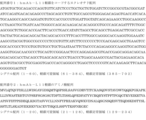
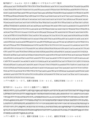
- FIG. 1 shows the nucleotide sequence encoding the hmAb-L11 light chain and the amino acid sequence of the hmAb-L11 light chain.
- FIG. 1 shows the nucleotide sequence encoding the hmAb-H11 heavy chain and the amino acid sequence of the hmAb-H11 heavy chain.
- FIG. 1 shows the nucleotide sequence encoding hmAb-H541 heavy chain and the amino acid sequence of hmAb-H541 heavy chain.
- FIG. 1 shows the nucleotide sequence encoding hmAb-H551 heavy chain and the amino acid sequence of hmAb-H551 heavy chain.
- FIG. 10 is a diagram evaluating the binding of humanized anti-CD37 antibody-drug conjugates to the CD37-positive human diffuse large B-cell lymphoma cell line OCI-LY7.
- Figure 10 is a diagram evaluating the in vitro cytostatic activity of humanized anti-CD37 antibody-drug conjugates against the CD37-positive human diffuse large B-cell lymphoma cell line OCI-LY7.
- FIG. 4 shows the in vivo anti-tumor effects of humanized anti-CD37 antibody-drug conjugates on SCID mice engrafted with the CD37-positive human diffuse large B-cell lymphoma cell line OCI-LY7.
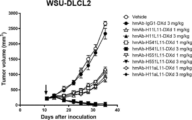
- FIG. 4 shows the in vivo anti-tumor effects of humanized anti-CD37 antibody-drug conjugates on SCID mice engrafted with the CD37-positive human diffuse large B-cell lymphoma cell line WSU-DLCL2.
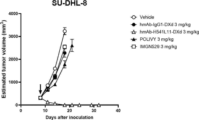
- FIG. 4 shows the in vivo anti-tumor effects of humanized anti-CD37 antibody-drug conjugates on SCID mice engrafted with the CD37-positive human diffuse large B-cell lymphoma cell line SU-DHL-8.
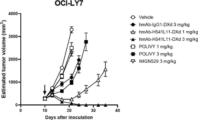
- Humanized anti-CD37 antibody-drug conjugates, POLIVY® and IMGN529 exhibit in vivo anti-tumor effects against SCID mice engrafted with the CD37-positive human diffuse large B-cell lymphoma cell line OCI-LY7. It is a diagram showing. Humanized anti-CD37 antibody-drug conjugates, POLIVY and IMGN529, demonstrated in vivo antitumor effects against SCID mice engrafted with the CD37-positive human diffuse large B-cell lymphoma cell line SU-DHL-8 It is a diagram.
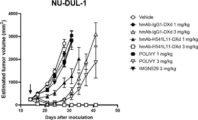
- FIG. 4 shows the in vivo anti-tumor effects of humanized anti-CD37 antibody-drug conjugates on SCID mice engrafted with the CD37-positive human diffuse large B-cell lymphoma cell line SU-DHL-4.
- FIG. 2 shows the antitumor effect.
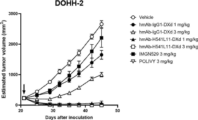
- FIG. 4 shows the in vivo anti-tumor effects of humanized anti-CD37 antibody-drug conjugates, POLIVY and IMGN529, on SCID mice engrafted with the CD37-positive human follicular lymphoma cell line DOHH-2.
- the term "gene” means a nucleic acid molecule containing a nucleotide sequence encoding an amino acid of a protein or a complementary strand thereof.
- Polynucleotides, oligonucleotides, DNA, mRNA, cDNA, cRNA, etc. having a sequence are included within the meaning of "gene.”
- Such genes are single-stranded, double-stranded, or triple- or more-stranded nucleotides, aggregates of DNA strands and RNA strands, and ribonucleotides (RNA) and deoxyribonucleotides (DNA) mixed on one nucleotide strand.
- CD37 gene includes, for example, DNA, mRNA, cDNA, cRNA, etc. containing a nucleotide sequence that encodes the amino acid sequence of the CD37 protein.
- nucleotide “nucleic acid” and “nucleic acid molecule” are synonymous, and include, for example, DNA, RNA, probes, oligonucleotides, polynucleotides, primers and the like.
- Such nucleotides are single-stranded, double-stranded, or three- or more-stranded nucleotides, and are aggregates of DNA strands and RNA strands, and ribonucleotides (RNA) and deoxyribonucleotides (DNA) on one nucleotide strand.
- RNA ribonucleotides
- DNA deoxyribonucleotides
- polypeptide In the present invention, “polypeptide”, “peptide” and “protein” are synonymous.
- protein refers to “protein” from any vertebrate source, including mammals such as primates (e.g. humans and monkeys) and rodents (e.g. mice and rats). .
- antigen may be used to mean “immunogen”.
- cells include various cells derived from individual animals, subcultured cells, primary cultured cells, cell lines, recombinant cells, microorganisms, and the like.
- the "site" to which an antibody binds that is, the "site” recognized by an antibody means a partial peptide or partial conformation on an antigen that is bound or recognized by an antibody. In the present invention, such sites are also referred to as epitopes or antibody binding sites.
- the site on the CD37 protein to which the anti-CD37 antibody of the present invention binds or recognizes can be exemplified by partial peptides or partial higher-order structures on the CD37 protein.
- CDR Complementarity Determining Region
- FR Framework Region
- Heavy and light chains of antibody molecules are known to each have three CDRs.
- a CDR also called a hypervariable domain, is a site of particularly high primary structural variability within the variable regions of the heavy and light chains of an antibody. On the primary structure of , each is usually separated into three places.
- the complementarity determining region of an antibody the heavy chain complementarity determining region is denoted as CDRH1, CDRH2, and CDRH3 from the amino terminal side of the heavy chain amino acid sequence, and the light chain complementarity determining region is denoted as light chain amino acid sequence.
- CDRL1, CDRL2 and CDRL3 are designated from the amino terminal side of the sequence. These sites are sterically close to each other and determine the specificity for the binding antigen.
- the portion other than CDRH1 to CDRH3 in the heavy chain variable region amino acid sequence is called FR, and from the amino terminus to before CDRH1, from after CDRH1 to before CDRH2, from after CDRH2 to before CDRH3, and after CDRH3. to the carboxyl terminus are referred to as FRH1 through FRH4, respectively.
- portions other than CDRL1 to CDRL3 in the light chain variable region amino acid sequence are also FRs, from the amino terminus to before CDRL1, from after CDRL1 to before CDRL2, from after CDRL2 to before CDRL3, and Following CDRL3 to the carboxyl terminus are referred to as FRL1 to FRL4, respectively. That is, in the (amino acid sequences of) the variable regions of the heavy and light chains, the amino-terminal They line up continuously from the side toward the carboxyl terminus.
- antibody functional fragment means an antibody fragment that exhibits at least part of the functions of the original antibody.
- antibody functional fragments include, but are not limited to, Fab, F(ab')2, scFv, Fab', single-chain immunoglobulins, and the like.
- Such antibody functional fragments include not only those obtained by treating full-length antibody protein molecules with enzymes such as papain and pepsin, but also recombinant proteins produced in suitable host cells using recombinant genes. There may be.
- antibody functional fragments those having antigen-binding activity, that is, human CD37 are referred to as "antibody binding fragments”.
- CD37 is a four transmembrane protein belonging to the tetraspanin superfamily (Charrin S., et al., J Cell Sci. 3641-3648, 127, 2014). It is a membrane protein consisting of 281 amino acids, has both amino-terminal side and carboxyl-terminal side in cells, and can be referenced by accession numbers such as NM_001774 and NP_001765 (NCBI).
- the CD37 protein used in the present invention can be used by directly purifying from CD37-expressing cells of human or non-human mammals (rat, mouse, monkey, etc.), or by preparing a cell membrane fraction of the cells. It can also be obtained by synthesizing CD37 in vitro or producing it in a host cell by genetic engineering. Specifically, in genetic engineering, CD37 cDNA is incorporated into an expressible vector and then synthesized in a solution containing enzymes, substrates and energy substances necessary for transcription and translation, or other prokaryotic or eukaryotic The protein can be obtained by expressing CD37 by transforming an organism's host cell. It is also possible to use the genetically engineered CD37-expressing cells or cell lines expressing CD37 as the CD37 protein. Alternatively, an expression vector incorporating the CD37 cDNA can be directly administered to an immunized animal to express CD37 in the body of the immunized animal.
- CD37 also includes proteins consisting of an amino acid sequence in which one or several amino acids are substituted, deleted and/or added in the amino acid sequence of the above CD37 protein and having biological activity equivalent to that of the protein.
- "several" in this specification means 1 to 10, 1 to 9, 1 to 8, 1 to 7, 1 to 6, 1 to 5, 1 to 4, 1 to 3, or 1 or 2.
- the human CD37 protein has the amino acid sequence set forth in SEQ ID NO:18.
- the extracellular region of the human CD37 protein has an extracellular domain 1 (herein also referred to as EC1) having an amino acid sequence of positions 39 to 59 of the amino acid sequence set forth in SEQ ID NO: 18, the amino acid set forth in SEQ ID NO: 18. It is composed of extracellular domain 2 (also referred to herein as EC2) having a sequence of amino acids 112-241.
- anti-CD37 antibody both the antibody that binds to CD37 and the antibody that recognizes CD37 can be referred to as “anti-CD37 antibody” or abbreviated as “CD37 antibody”. be.
- the anti-CD37 antibody of the present invention may be derived from any species, preferably human, rat, mouse and rabbit. If derived from a species other than human, chimerization or humanization is desirable using known techniques.
- Antibodies of the present invention may be polyclonal antibodies or monoclonal antibodies, but monoclonal antibodies are preferred.
- the anti-CD37 antibody of the present invention is an antibody that can target tumor cells, that is, it has properties such as the ability to recognize tumor cells, the ability to bind to tumor cells, and the ability to be taken up and internalized within tumor cells. Therefore, the anti-CD37 antibody of the present invention and a compound having antitumor activity can be combined via a linker to form an antibody-drug conjugate.
- Antibody uptake into tumor cells is performed by (1) an assay in which a secondary antibody (fluorescently labeled) that binds to a therapeutic antibody is used to visualize the antibody uptake into cells with a fluorescence microscope (Cell Death and Differentiation (2008) 15, 751-761), (2) an assay that measures the amount of fluorescence taken up into cells using a secondary antibody (fluorescent label) that binds to a therapeutic antibody (Molecular Biology of the Cell Vol. 15, 5268-5282 , December 2004) or (3) using an immunotoxin that binds to a therapeutic antibody, a Mab-ZAP assay (Bio Techniques 28: 162-165, January 2000).
- an immunotoxin a recombinant complex protein of the catalytic domain of diphtheria toxin and protein G can also be used.
- high internalization potential refers to the survival rate of CD37-expressing cells administered with the antibody and saporin-labeled anti-rat IgG antibody (expressed as a relative rate with the cell survival rate when the antibody is not added being 100%). is preferably 70% or less, more preferably 60% or less.
- the antibody-drug conjugate of the present invention is bound to a compound that exerts an antitumor effect, it is preferable, but not essential, that the antibody itself has an antitumor effect.
- the antibody For the purpose of specifically and selectively exerting the cytotoxicity of anti-tumor compounds on tumor cells, it is important and preferable for the antibody to have the property of being internalized and transferred to tumor cells.
- An anti-CD37 antibody can be obtained by immunizing an animal with a polypeptide antigen and collecting and purifying the antibody produced in vivo using methods practiced in this field. Since it is a transmembrane protein, it is preferable to use CD37 that retains its three-dimensional structure as an antigen. Such methods include DNA immunization.
- antigens are not limited to humans, and animals can also be immunized with antigens derived from non-human animals such as mice and rats.
- antibodies applicable to human diseases can be selected by testing the cross-reactivity between the obtained antibodies that bind to heterologous antigens and human antigens.
- a monoclonal antibody can be obtained by fusing an antibody-producing cell that produces an antibody against an antigen with a myeloma cell to establish a hybridoma.
- a method for obtaining an antibody against CD37 will be specifically described below.
- An antigen can be obtained by genetically engineering a gene encoding an antigen protein to produce it in a host cell. Specifically, a vector capable of expressing an antigen gene may be prepared, introduced into a host cell to express the gene, and the expressed antigen purified. Antibodies can also be obtained by immunizing animals with the above-described genetically engineered antigen-expressing cells or antigen-expressing cell lines.
- Antibodies can also be produced by inserting the cDNA of the antigen protein into an expression vector without using the antigen protein, administering it to an animal to be immunized, expressing the antigen protein in the body of the animal, and producing an antibody against the antigen protein. can be obtained.
- (2) Production of anti-CD37 monoclonal antibody The anti-CD37 antibody used in the present invention is not particularly limited, but for example, an antibody specified by the amino acid sequence shown in the sequence listing of the present application can be preferably used. can.
- Anti-CD37 antibodies used in the present invention preferably have the following properties. (1) an antibody characterized by having the following properties; (a) specifically binds to CD37;
- the method for obtaining an antibody against CD37 of the present invention is not particularly limited as long as an anti-CD37 antibody can be obtained. Since CD37 is a transmembrane protein, CD37 retaining a higher-order structure can be used as an antigen. preferable.
- a DNA immunization method can be mentioned as an example of a preferable method for obtaining antibodies.
- the DNA immunization method is a method of inducing immunity to an antigen by transfecting an antigen-expressing plasmid into an individual animal such as a mouse or rat and expressing the antigen within the individual.
- Gene transfer methods include direct muscle injection of plasmids, intravenous injection of transfer reagents such as liposomes and polyethyleneimine, methods using viral vectors, and injection of plasmid-attached gold particles using Gene Gun. methods, such as the Hydrodynamic method, in which a large volume of plasmid solution is injected intravenously rapidly.
- a technique called in vivo electroporation is known as a technique for improving the expression level, in which electroporation is applied to the same site after intramuscular injection of the plasmid (Aihara H, Miyazaki J.; Nat Biotechnol.1998 Sep;16(9):867-70 or Mir LM, Bureau MF, Gehl J, Rangara R, Rouy D, Caillaud JM, Delaere P, Branellec D, Schwartz B, Schermana P.D. U S A. 1999 Apr 13;96(8):4262-7.).
- hybridomas can be produced by known methods, for example, by using Hybridune Hybridoma Production System (Cyto Pulse Sciences).
- CD37 cDNA is incorporated into an expression vector, and the vector is directly administered to an animal to be immunized by electroporation, gene gun, or other method, thereby expressing CD37 in the animal body to elicit an immune response.
- Administration of the vector by electroporation or the like may be performed once or multiple times, preferably multiple times, as long as it is necessary to raise the antibody titer.
- tissue e.g., lymph nodes
- myeloma preparation of myeloma cells
- cell fusion between antibody-producing cells and myeloma selection of a group of hybridomas producing the antibody of interest
- division into single cell clones cloning
- Hybridoma culture for the production of large amounts of monoclonal antibodies, or breeding of animals implanted with hybridomas.
- the resulting monoclonal antibody has high antigen specificity for CD37.
- the monoclonal antibody is not particularly limited, but an anti-CD37 mouse monoclonal antibody HH1 (Smeland E, et al., Scand J Immunol, 21(3), 205-214 (1985)) can be mentioned.
- Production of anti-CD37 antibody are repeated to separately and independently acquire monoclonal antibodies, or by other methods Even when a monoclonal antibody is separately obtained by the method, it is possible to obtain an antibody having cytotoxic activity equivalent to that of the anti-CD37 antibody obtained in step (g).
- An example of such an antibody is an antibody that binds to the same epitope as the anti-CD37 antibody obtained in step (g). If the newly prepared monoclonal antibody binds to the partial peptide or partial conformation to which the anti-CD37 antibody binds, it can be determined that the monoclonal antibody binds to the same epitope.
- the monoclonal antibody competes with the binding of the anti-CD37 antibody to CD37 (that is, the monoclonal antibody prevents the binding of the anti-CD37 antibody to CD37)
- a specific epitope can be identified. Even if the sequence or structure has not been determined, it can be determined that the monoclonal antibody binds to the same epitope as said anti-CD37. If the epitope is confirmed to be identical, it is highly expected that the monoclonal antibody has the same antigen-binding ability or biological activity as the anti-CD37 antibody.
- the antibody of the present invention includes artificially modified genes for the purpose of reducing the heteroantigen potential against humans, improving the physical properties of antibody-drug conjugates, etc.
- Recombinant antibodies such as Chimeric antibodies, Humanized antibodies, Human antibodies, etc. are also included. These antibodies can be produced using known methods.
- chimeric antibodies include antibodies in which the variable region and constant region of an antibody are different from each other, such as chimeric antibodies in which a mouse- or rat-derived antibody variable region is conjugated to a human-derived constant region (Proc. Natl. Acad. Sci USA, 81, 6851-6855, (1984)).
- Humanized antibodies include antibodies in which only CDRs are incorporated into human-derived antibodies (see Nature (1986) 321, p. 522-525), and amino acid residues of some frameworks in addition to CDR sequences by CDR transplantation. Antibodies in which groups are also grafted to human antibodies (International Publication No. 90/07861), and antibodies in which the amino acid sequences of some CDRs are modified while maintaining antigen-binding ability can be mentioned.
- humanized antibodies of the anti-CD37 murine monoclonal antibody HH1 include the light chain variable region of hmAb-L11 and the heavy chain variable region of either hmAb-H11, hmAb-H541, hmAb-H551 or hmAb-H11a. including an antibody consisting of The amino acid sequence of hmAb-L11 is shown in SEQ ID NO:2, and the amino acid sequence of hmAb-H11, hmAb-H541, hmAb-H551 or hmAb-H11a is shown in SEQ ID NO:4, 6, 8 or 10, respectively.
- the light chain variable region consists of amino acid numbers 21 to 128 of the amino acid sequence shown in SEQ ID NO: 2
- the heavy chain variable region consists of amino acid numbers 20 to 138 of the amino acid sequence shown in each SEQ ID NO. consists of the sequences shown.
- antibodies of the invention include antibodies comprising the full length light chain of hmAb-L11 and the full length heavy chain of either hmAb-H11, hmAb-H541, hmAb-H551 or hmAb-H11a.
- the light chain full-length amino acid sequence of hmAb-L11 comprises the sequence shown in amino acid numbers 21 to 234 of the amino acid sequence shown in SEQ ID NO: 2, hmAb-H11, hmAb-H541, hmAb-H551 or hmAb-H11a
- the heavy chain full-length amino acid sequence comprises the sequence shown in amino acid numbers 20-468 of the amino acid sequence shown in SEQ ID NO: 4, 6, 8 or 10, respectively.
- Specific examples include hmAb-H11L11, hmAb-H541L11, hmAb-H551L11 and hmAb-H11aL11.
- SEQ ID NO: 2 the sequence consisting of amino acid residues 44 to 54 (KASQDVSTAVD: SEQ ID NO: 19) is CDRL1, the sequence consisting of amino acid residues 70 to 76 (WASTRHT: SEQ ID NO: 20) is CDRL2, and 109 to 117.
- a sequence (RQHYSTPFT: SEQ ID NO: 21) consisting of the th amino acid residue represents CDRL3.
- the sequence consisting of 45th to 54th amino acid residues is CDRH1
- the sequence consisting of 69th to 78th amino acid residues indicates CDRH2
- the sequence consisting of amino acid residues 118 to 127 indicates CDRH3.
- the described CDR sequences are described according to the AbM definition (Handbook of Therapeutic Antibodies, Chapter 5, Bioinformatics Tools for Antibody Engineering, Andrew C. R. Martin, James Allen, 2007).
- amino acid substitutions are substitutions that occur within a group of amino acids that are related in their amino acid side chains.
- Such amino acid substitutions are preferably carried out to the extent that the properties of the substance having the original amino acid sequence are not degraded.
- antibodies that have biological activities equivalent to those of each of the above antibodies are generally 80% or more homology, preferably 85% or more homology, more preferably 90% or more homology, still more preferably 95% or more homology. Homology, most preferably 99% or more homology.
- Antibodies having biological activities equivalent to those of the above antibodies can also be selected by combining amino acid sequences in which one to several amino acid residues are substituted, deleted, or added to the amino acid sequence of the heavy or light chain. It is possible to
- the homology between two types of amino acid sequences is determined by Blast algorithm version 2.2.2 (Altschul, Stephen F., Thomas L. Madden, Alejandro A. Schaffer, Jinghui Zhang, Zheng Zhang, Webb Miller, and David Lipman J. (1997), "Gapped BLAST and PSI-BLAST: a new generation of protein database search programs", Nucleic Acids Res. 25:3389-3402).
- the Blast algorithm is available on the Internet at www. ncbi. nlm. nih. It can also be used by accessing gov/blast.
- amino acid sequence consisting of amino acid residues 1 to 20 is a signal sequence
- amino acid sequence consisting of amino acid residues 21 to 128 is variable.
- the amino acid sequence consisting of the 129th to 234th amino acid residues is the constant region.
- sequence of SEQ ID NO:2 is set forth in FIG.
- the amino acid sequence consisting of the 1st to 19th amino acid sequences is a signal sequence
- the amino acid sequence consisting of the 20th to 138th amino acid residues is the variable region
- the amino acid sequence consisting of the 139th to 468th amino acid residues is the constant region.
- the sequences of SEQ ID NO: 3, 5, 7 or 9 are set forth in Figures 2, 3, 4 or 5.
- the antibodies of the present invention further include human antibodies that bind to CD37.
- An anti-CD37 human antibody means a human antibody that has only antibody gene sequences derived from human chromosomes.
- Anti-CD37 human antibody is produced by a method using a human antibody-producing mouse having a human chromosome fragment containing human antibody heavy chain and light chain genes (Tomizuka, K. et al., Nature Genetics (1997) 16, p. 133 -143,; Kuroiwa, Y. et al., Nucl. Acids Res.(1998) 26, p.3447-3448; Yoshida, H. et. p.69-73 (Kitagawa, Y., Matsuda, T. and Iijima, S. eds.), Kluwer Academic Publishers, 1999.; 2000) 97, p.722-727).
- Such human antibody-producing mice have disrupted endogenous immunoglobulin heavy chain and light chain loci, and instead, human immunoglobulin via a yeast artificial chromosome (YAC) vector or the like.
- Genetically modified animals into which the heavy chain and light chain loci have been introduced can be produced by producing knockout animals and transgenic animals and mating these animals.
- a recombinant human monoclonal antibody is produced by transforming a eukaryotic cell with a cDNA encoding each of the heavy and light chains of such a human antibody, preferably with a vector containing the cDNA, by gene recombination technology.
- This antibody can also be obtained from the culture supernatant by culturing the transformed cells.
- eukaryotic cells preferably CHO cells
- mammalian cells such as lymphocytes and myeloma can be used.
- phage display-derived human antibodies selected from a human antibody library (Wormstone, IM et al, Investigative Ophthalmology & Visual Science. (2002) 43 (7), p. 2301-2308; Carmen, S. et al., Briefings in Functional Genomics and Proteomics (2002), 1(2), p.189-203; 427-431, etc.) are also known.
- a phage display method (Nature Biotechnology (2005), 23, (9), p. 1105), in which the variable region of a human antibody is expressed on the surface of a phage as a single-chain antibody (scFv) and phage that binds to an antigen is selected. -1116) can be used.
- a human antibody can be obtained by constructing an expression vector having the sequence and introducing it into an appropriate host for expression (International Publication No. 92/01047). 92/20791, 93/06213, 93/11236, 93/19172, 95/01438, 95/15388, Annu.Rev.Immunol (1994) 12, p. 433-455, Nature Biotechnology (2005) 23(9), p.1105-1116).
- a newly produced human antibody binds to the partial peptide or partial conformation bound by the CD37 antibody described herein, it can be determined that the human antibody binds to the same epitope. Also confirming that the human antibody competes for the binding of the CD37 antibody described herein to CD37 (i.e., the human antibody prevents the binding of the CD37 antibody described herein to CD37). can be determined that the human antibody binds to the same epitope as the CD37 antibodies described herein, without determining the sequence or structure of the specific epitope. If the epitopes are confirmed to be identical, it is highly expected that the human antibody will have similar antigen binding capacity or biological activity to the CD37 antibodies described herein.
- the chimeric antibody, humanized antibody, or human antibody obtained by the above methods can be evaluated for antigen binding by known methods, etc., and a suitable antibody can be selected.
- DSC Differential scanning calorimetry
- Tm thermal denaturation midpoint
- Antibody storage stability is known to show some correlation with antibody thermal stability (Lori Burton, et al., Pharmaceutical Development and Technology (2007) 12, p.265-273).
- Suitable antibodies can be selected using stability as an index.
- Other criteria for selecting antibodies include high yield in suitable host cells and low aggregation in aqueous solution. For example, the antibody with the highest yield does not always exhibit the highest thermal stability, so it is necessary to make a comprehensive judgment based on the indicators described above and select the most suitable antibody for administration to humans. .
- the antibodies of the present invention also include modified antibodies.
- the modified form means an antibody obtained by chemically or biologically modifying the antibody of the present invention.
- Chemical modifications include attachment of chemical moieties to the amino acid backbone, chemical modifications of N-linked or O-linked carbohydrate chains, and the like.
- Biological modifications include post-translational modifications (e.g., N- or O-linked glycosylation, amino- or carboxyl-terminal processing, deamidation, aspartic acid isomerization, methionine oxidation, tryptophan oxidized), and those with a methionine residue added to the amino terminus by expression in a prokaryotic host cell.
- modified antibodies of the present invention are useful for improving antibody stability and blood retention, reducing antigenicity, and detecting or isolating antibodies or antigens.
- Antibodies of the present invention also include antibodies with regulated sugar chain modifications.
- antibody production method When an antibody gene is once isolated and then introduced into an appropriate host to produce an antibody, a combination of an appropriate host and an expression vector can be used.
- antibody genes include a combination of the genes encoding the heavy chain sequences and the genes encoding the light chain sequences of the antibodies described herein.
- the heavy chain sequence gene and the light chain sequence gene can be inserted into the same expression vector, or can be inserted into separate expression vectors. be.
- animal cells When using eukaryotic cells as hosts, animal cells, plant cells, and eukaryotic microorganisms can be used.
- animal cells include mammalian cells such as monkey cells COS cells (Gluzman, Y. Cell (1981) 23, p. 175-182, ATCC CRL-1650), mouse fibroblast NIH3T3 (ATCC No. CRL-1658) and dihydrofolate reductase-deficient strains of Chinese hamster ovary cells (CHO cells, ATCC CCL-61) (Urlaub, G. and Chasin, LA Proc. Natl. Acad. Sci. US. A. (1980) 77, p.4126-4220), FreeStyle 293F cells (Invitrogen).
- COS cells Gluzman, Y. Cell (1981) 23, p. 175-182, ATCC CRL-1650
- mouse fibroblast NIH3T3 ATCC No. CRL-1658
- examples include Escherichia coli and Bacillus subtilis.
- Antibodies can be obtained by introducing the desired antibody gene into these cells by transformation and culturing the transformed cells in vitro.
- the yield may vary depending on the antibody sequence, and it is possible to select antibodies with equivalent binding activity that can be easily produced as pharmaceuticals, using the yield as an indicator. Therefore, the antibody of the present invention is characterized by comprising the steps of culturing the transformed host cell and collecting the antibody of interest or a functional fragment of the antibody from the culture obtained in the step.
- Antibodies obtained by the method for producing the antibody are also included.
- the antibody according to the present invention also includes the modified antibody and the functional fragment of the antibody, such as deletions in which one or two amino acids are deleted at the heavy chain carboxyl terminus, and amidated Such deletions (eg, heavy chains in which the proline residue at the carboxyl terminal site is amidated) are also included.
- the carboxyl-terminal deletion form of the heavy chain of the antibody according to the present invention is not limited to the above types.
- the two heavy chains constituting the antibody according to the present invention may be either one of the heavy chains selected from the group consisting of the full-length and the deletion forms, or a combination of any two can be anything.
- the quantitative ratio of each deletion product can be affected by the type and culture conditions of cultured mammalian cells that produce the antibody of the present invention. Examples include cases where one terminal amino acid residue is deleted.
- Examples of the isotype of the antibody of the present invention include IgG (IgG1, IgG2, IgG3, IgG4) and the like, preferably IgG1 or IgG2.
- Biological activities of antibodies generally include antigen-binding activity, activity of internalizing into cells expressing the antigen by binding to the antigen, activity of neutralizing antigen activity, activity of enhancing antigen activity, Antibody-dependent cellular cytotoxicity (ADCC) activity, complement-dependent cytotoxicity (CDC) activity and antibody-dependent cell-mediated phagocytosis (ADCP) can be mentioned, and the function possessed by the antibody according to the present invention is against CD37.
- a binding activity preferably an activity that internalizes into CD37-expressing cells by binding to CD37.
- the antibody of the present invention may have ADCC activity, CDC activity and/or ADCP activity in addition to cell internalization activity.
- the obtained antibody can be purified to homogeneity. Separation and purification of antibodies may be carried out using separation and purification methods commonly used for proteins. For example, by appropriately selecting and combining column chromatography, filter filtration, ultrafiltration, salting out, dialysis, preparative polyacrylamide gel electrophoresis, isoelectric focusing, etc., antibodies can be separated and purified (Strategies for Protein Purification and Characterization: A Laboratory Course Manual, Daniel R. Marshak et al., Cold Spring Harbor Laboratory Press (1996); David Lane, Cold Spring Harbor Laboratory (1988)) However, it is not limited to these.
- Chromatography includes affinity chromatography, ion exchange chromatography, hydrophobic chromatography, gel filtration chromatography, reverse phase chromatography, adsorption chromatography, and the like.
- Columns used for affinity chromatography include protein A columns and protein G columns.
- Columns used for affinity chromatography include protein A columns and protein G columns.
- Hyper D Hyper D
- POROS Sepharose F. F. (Pharmacia) and the like.
- Anti-CD37 antibody-drug conjugate (1) Drug The anti-CD37 antibody obtained in “2. can be The drug is not particularly limited as long as it has a substituent or a partial structure that can bind to the linker structure. Anti-CD37 antibody-drug conjugates can be used in a variety of applications depending on the drug to which they are attached. Examples of such drugs include substances with anti-tumor activity, substances with effect on hematologic diseases, substances with effect on autoimmune diseases, anti-inflammatory substances, anti-bacterial substances, anti-fungal substances, anti-parasitic substances, anti-inflammatory substances. Viral substances, anti-anesthetic substances and the like can be mentioned.
- antitumor compounds examples of using antitumor compounds as compounds to be bound to the anti-CD37 antibody-drug conjugate of the present invention are described below.
- the antitumor compound is not particularly limited as long as it is a compound having an antitumor effect and has a substituent or partial structure that can be bound to the linker structure.
- a part or all of the linker of the antitumor compound is cleaved in tumor cells to liberate the antitumor compound portion, thereby exerting an antitumor effect.
- the linker is cleaved at the drug-binding portion, the antitumor compound is liberated in its original structure and exerts its original antitumor effect.
- an antitumor compound for use in the present invention is the camptothecin derivative exatecan ((1S,9S)-1-amino-9-ethyl-5-fluoro-2,3-dihydro-9-hydroxy- 4-methyl-1H,12H-benzo[de]pyrano[3′,4′:6,7]indolizino[1,2-b]quinoline-10,13(9H,15H)-dione;
- the compound can be preferably used.
- the compound can be easily obtained, for example, by the method described in US Patent Publication No. 2016/0297890 or other known methods, and the amino group at position 1 can be suitably used as a binding site to the linker structure. .
- exatecan is sometimes released into tumor cells in a state in which a portion of the linker is bound, and even in such a state, it is a compound that exerts excellent antitumor effects.
- exatecan has a camptothecin structure
- an acidic aqueous medium for example, about pH 3
- the equilibrium is biased towards a structure with a lactone ring (closed-ring form). It is known that the equilibrium is biased toward the ring-opened structure (open-ring isomer).
- antitumor compounds include, for example, antitumor compounds described in the literature (Pharmacological Reviews, 68, p3-19, 2016), examples of which include Doxorubicin, Calicheamicin, Dorastatin ) 10, Auristatins such as monomethylauristatin E (MMAE), monomethylauristatin F (MMAF), Maytansinoids such as DM1, DM4, Pyrrolobenzodiazepine dimer SG2000 (SJG-136), camptothecin derivatives SN-38, Duocarmycins such as CC-1065, Amanitin, Daunorubicin, Mitomycin C, Bleomycin, Cytidine, Vincristine, Vinblastine, Methotrexate, Platinum system antitumor agents (cisplatin or derivatives thereof), taxol or derivatives thereof, and the like.
- MMAE monomethylauristatin E
- MMAF monomethylauristatin F
- Maytansinoids such as DM1, DM
- the number of drugs bound to one antibody molecule is an important factor that affects its efficacy and safety.
- the production of antibody-drug conjugates is carried out by specifying the reaction conditions such as the amount of raw materials and reagents to be reacted so that the number of bindings of the drug is constant. Different, usually obtained as mixtures with different numbers of drugs bound.
- the number of drug binding to one antibody molecule is specified and expressed as the mean value, ie, the average drug binding number. Unless otherwise specified in principle in the present invention, i.e., unless an antibody-drug conjugate with a specific drug binding number contained in an antibody-drug conjugate mixture with a different drug binding number is indicated, the binding number of the drug is Mean value.
- the binding number of exatecan to an antibody molecule can be controlled, and the average drug binding number per antibody can be about 1 to 10 exatecans, preferably 2 to 8, 3 to 8. , 4 to 8, 5 to 8, 6 to 8, 7 to 8, more preferably 5 to 8, still more preferably 7 to 8, even more preferably about 8 or eight.
- a person skilled in the art can design a reaction for binding a necessary number of drugs to an antibody from the description of the examples of the present application, and obtain an antibody-drug conjugate in which the binding number of exatecan is controlled. .
- the linker structure that binds the anti-CD37 antibody and the drug is not particularly limited as long as it can be used as an antibody-drug conjugate, and can be appropriately selected and used according to the purpose of use.
- An example of the linker structure includes linkers described in known literature (Pharmacol Rev 68:3-19, January 2016, Protein Cell DOI 10.1007/s13238-016-0323-0, etc.).
- Examples include VC (valine-citrulline), MC (maleimidocaproyl), SMCC (succinimidyl 4-(N-maleimidomethyl)cyclohexane-1-carboxylate: succinimidyl 4-(N- maleimidomethyl)cyclohexane-1-carboxylate), SPP (N-succinimidyl 4-(2-pyridyldithio)pentanoic acid: N-succinimidyl 4-(2-pyridyldithio)pentanoate, SS (disulfide), SPDB (4N-succinimidyl -(2-pyridyldithio)butyrate)N-succinimidyl 4-(2-pyridyldithio)butyrate, SS/hydrazone, hydrazone, carbonate.
- VC valine-citrulline
- MC maleimidocaproyl
- SMCC succ
- linker structure described in US Patent Publication 2016/0297890 (an example is described in paragraphs [0260] to [0289] of the publication), and the following structure can be preferably used.
- the left end of the structure shown below is the antibody-binding site, and the right end is the drug-binding site.
- GGFG in the linker structure below indicates an amino acid sequence linked by a peptide bond consisting of glycine-glycine-phenylalanine-glycine (GGFG).
- the 3rd position in this partial structure is the binding site for the anti-CD37 antibody.
- the 3-position binding to the antibody is characterized by the formation of a thioether.
- the 1-position nitrogen atom of this structural moiety is attached to the methylene carbon atom present in the linker containing this structure.
- the drug-linker structural portion having the following structure is preferably bound to the antibody.
- These drug-linker structural moieties may be bonded in an average number of 1 to 10 per antibody, preferably 2 to 8, more preferably 5 to 8, still more preferably 7. to 8, and even more preferably 8.
- Antibodies that can be used for the antibody-drug conjugate of the present invention have the internalization activity described in the above section "2. Production of anti-CD37 antibody” and Examples. There is no particular limitation as long as it is an anti-CD37 antibody and a functional fragment of the antibody.
- AB represents an antibody having a sulfhydryl group.
- L 1 is -(Succinimid-3-yl-N)-.
- L 1 ' represents a maleimidyl group represented by the following formula.
- -L 1 -L X has any structure represented by the formula below.
- the antibody-drug conjugate (1) is described as a structure in which one structural portion from the drug to the linker end is bound to one antibody, but this is for the sake of explanation. is a convenient description, and in practice, a plurality of such structural moieties are often bound to one antibody molecule. This situation also applies to the following description of the manufacturing method.
- compound (2) that can be obtained by a known method (for example, available by the method described in US Patent Publication No. 2016/297890 (for example, the method described in paragraphs [0336] to [0374])) ) with an antibody having a sulfhydryl group, an antibody-drug conjugate (1) can be produced.
- An antibody having a sulfhydryl group can be obtained by a method well known to those skilled in the art (Hermanson, GT, Bioconjugate Techniques, pp.56-136, pp.456-493, Academic Press (1996)).
- Traut's reagent is allowed to act on amino groups of antibodies;
- N-succinimidyl S-acetylthioalkanoates are allowed to act on amino groups of antibodies, followed by hydroxylamine;
- TCEP is used as a reducing agent in an amount of 0.3 to 3 molar equivalents per one interchain disulfide in the antibody, and reacted with the antibody in a buffer solution containing a chelating agent, thereby reducing the antibody inner chain.
- Antibodies can be obtained in which the intermediate disulfides have been partially or completely reduced.
- Chelating agents include, for example, ethylenediaminetetraacetic acid (EDTA) and diethylenetriaminepentaacetic acid (DTPA). These may be used at concentrations of 1 mM to 20 mM.
- EDTA ethylenediaminetetraacetic acid
- DTPA diethylenetriaminepentaacetic acid
- As a buffer solution sodium phosphate, sodium borate, sodium acetate solution, or the like can be used.
- antibodies can be reacted with TCEP at 4°C to 37°C for 1 to 4 hours to obtain antibodies with partially or completely reduced sulfhydryl groups.
- the drug-linker moiety can be bound via a thioether bond by carrying out a reaction that adds a sulfhydryl group to the drug-linker moiety here.
- Antibody-drug conjugates (1) with 2 to 8 drugs attached per antibody are then prepared using 2 to 20 molar equivalents of compound (2) per antibody having a sulfhydryl group.
- a solution in which compound (2) is dissolved may be added to a buffer solution containing an antibody having a sulfhydryl group for reaction.
- a sodium acetate solution, sodium phosphate, sodium borate, or the like may be used as the buffer solution.
- the pH during the reaction is 5 to 9, more preferably around pH 7.
- Organic solvents such as dimethylsulfoxide (DMSO), dimethylformamide (DMF), dimethylacetamide (DMA), and N-methyl-2-pyridone (NMP) can be used as solvents for dissolving compound (2).
- An organic solvent solution in which compound (2) is dissolved may be added to a buffer solution containing an antibody having a sulfhydryl group at 1 to 20% v/v for reaction.
- the reaction temperature is 0° C. to 37° C., more preferably 10° C. to 25° C., and the reaction time is 0.5 hours to 2 hours.
- the reaction can be terminated by quenching the reactivity of unreacted compound (2) with a thiol-containing reagent.
- Thiol-containing reagents are eg cysteine or N-acetyl-L-cysteine (NAC). More specifically, the reaction can be terminated by adding 1 to 2 molar equivalents of NAC to the compound (2) used and incubating at room temperature for 10 to 30 minutes.
- the manufactured antibody-drug conjugate (1) was subjected to concentration, buffer exchange, purification, and measurement of antibody concentration and average drug binding number per antibody molecule by the following common procedures. , the identification of the antibody-drug conjugate (1) can be performed.
- the total absorbance at a given wavelength is equal to the sum of the absorbances of all absorbing species present in the system [absorbance additivity], there is a change in the molar extinction coefficients of the antibody and the drug before and after conjugation of the antibody and the drug. Assuming that there is no antibody-drug conjugate, the antibody concentration and drug concentration in the antibody-drug conjugate are given by the following relationship.
- a Formula (2) where A 280 represents the absorbance of the aqueous antibody-drug conjugate solution at 280 nm , A 370 represents the absorbance of the aqueous antibody-drug conjugate solution at 370 nm, A A,280 represents the absorbance of the antibody at 280 nm, and A A ,370 is the absorbance of the antibody at 370 nm, AD ,280 is the absorbance of the conjugate precursor at 280 nm, AD, 370 is the absorbance of the conjugate precursor at 370 nm, and ⁇ A,280 is the absorbance of the conjugate precursor at 280 nm.
- ⁇ A,370 is the molar extinction coefficient of the antibody at 370 nm
- ⁇ D,280 is the molar extinction coefficient of the conjugate precursor at 280 nm
- ⁇ D,370 is the molar extinction coefficient of the conjugate at 370 nm. Molar extinction coefficients of the precursors are shown, C A is the antibody concentration in the antibody-drug conjugate, and CD is the drug concentration in the antibody-drug conjugate.
- ⁇ A,280, ⁇ A,370, ⁇ D,280, and ⁇ D,370 values prepared in advance (calculated estimated values or measured values obtained from UV measurement of compounds) are used.
- ⁇ A,280 can be estimated from the amino acid sequence of an antibody by a known calculation method (Protein Science, 1995, vol.4, 2411-2423).
- ⁇ A, 370 is typically zero.
- C A and C D can be determined by measuring the A 280 and A 370 of the aqueous antibody-drug conjugate solution, substituting these values into equations (1) and (2) and solving the simultaneous equations. Further, by dividing CD by CA , the average number of drug binding per antibody can be obtained.
- HPLC analysis is performed under the following measurement conditions.
- HPLC system Agilent 1290 HPLC system (Agilent Technologies) Detector: UV absorbance meter (measurement wavelength: 280 nm)
- Mobile phase A aqueous solution containing 0.10% trifluoroacetic acid (TFA), 15% 2-propanol
- Mobile phase B acetonitrile solution containing 0.075% TFA, 15% 2-propanol
- Gradient program 14%-36% (0 min-15 min), 36%-80% (15 min-17 min), 80%-14% (17 min-17.01 min), 14% (17.01 min-25 min)
- Sample injection volume 10 ⁇ L F-3.
- Drug-bound light chains i drug-bound light chains: L i
- a heavy chain a heavy chain bound with i drugs: H i
- H3 is eluted in order.
- Detection peaks can be assigned to any of L0, L1, H0, H1, H2, H3 by retention time comparison with L0 and H0.
- the drug binding numbers can be defined by those skilled in the art, but are preferably L0, L1, H0, H1, H2, H3.
- the peak area value is corrected according to the following formula using the molar extinction coefficients of the light chain, heavy chain and drug linker according to the number of bonds of the drug linker.
- the molar extinction coefficient (280 nm) of the light chain and heavy chain in each antibody is determined by a known calculation method (Protein Science, 1995, vol.4, 2411-2423), amino acids of the light chain and heavy chain of each antibody Values inferred from arrays can be used.
- H01L02 according to its amino acid sequence, a light chain molar extinction coefficient of 31710 and a heavy chain molar extinction coefficient of 79990 were used as estimates.
- the measured molar extinction coefficient (280 nm) of the compound obtained by reacting each drug linker with mercaptoethanol or N-acetylcysteine to convert the maleimide group to succinimide thioether is used. board.
- the wavelength for measuring absorbance can be appropriately set by those skilled in the art, but is preferably a wavelength at which the peak of the antibody can be measured, more preferably 280 nm.
- F-3-3 Calculate the peak area ratio (%) of each chain to the total peak area correction value according to the following formula.
- F-3-4 Calculate the average number of drug binding per antibody molecule in the antibody-drug conjugate according to the following formula.
- Drug average binding number (L 0 peak area ratio x 0 + L 1 peak area ratio x 1 + H 0 peak area ratio x 0 + H 1 peak area ratio x 1 + H 2 peak area ratio x 2 + H 3 peak area ratio x 3)/100 x 2
- a plurality of antibody-drug conjugates having approximately the same average number of drug bindings (for example, about ⁇ 1) prepared under the same conditions were mixed. It can be made into a new lot. In that case, the drug average binding number falls between the drug average binding numbers before mixing.
- antibody-drug conjugate of the present invention is the following formula:
- AB indicates the anti-CD37 antibody disclosed herein, attached to the binding linker via the antibody-derived sulfhydryl group.
- n is synonymous with the so-called DAR (Drug-to-Antibody Ratio) and indicates the drug-antibody ratio per antibody. That is, the number of drug binding to one antibody molecule is shown, which is a numerical value specified and expressed as an average value, ie, the average drug binding number.
- n may be from 2 to 8, preferably from 5 to 8, more preferably from 7 to 8, and even more preferably 8.
- the antibody represented by AB is any selected from the group consisting of the following (a) to (e)
- Antibody-drug conjugates or pharmacologically acceptable salts thereof comprising the heavy and light chain antibodies or functional fragments thereof according to 1 can include: (a) A light chain consisting of the 21st to 234th amino acid sequences of the full-length light chain amino acid sequence shown in SEQ ID NO: 2 and a heavy chain consisting of the 20th to 468th amino acid sequences of the full-length heavy chain amino acid sequence shown in SEQ ID NO: 4 an antibody consisting of; (b) a light chain consisting of the 21st to 234th amino acid sequences of the full-length light chain amino acid sequence shown in SEQ ID NO: 2 and a heavy chain consisting of the 20th to 468th amino acid sequences of the full-length heavy chain amino acid sequence shown in SEQ ID NO: 6 an antibody consisting of; (c)
- B-cell non-Hodgkin's lymphoma such as diffuse large B-cell lymphoma (DLBCL), follicular lymphoma (FL), mantle cell lymphoma (MCL), limbic lymphoma (MZL) ), Burkitt's lymphoma (BL), or chronic lymphocytic leukemia (CLL), T-cell lymphomas (TCL) such as peripheral T-cell lymphoma (PTCL), cutaneous T-cell lymphoma (CTCL), and myelodysplastic syndrome (MDS) can be used as a therapeutic agent for acute myeloid leukemia (AML).
- AML acute myeloid leukemia
- anti-CD37 antibody of the present invention and its functional fragment have internalization activity, they can be used as an antibody for antibody-drug conjugates.
- anti-CD37 antibody-drug conjugates of the present invention described in the above section "3.
- Anti-CD37 antibody-drug conjugate” and Examples a drug having anti-tumor activity such as cytotoxic activity is used as the drug.
- the anti-CD37 antibody-drug conjugate of the present invention When the anti-CD37 antibody-drug conjugate of the present invention is left in the air or subjected to recrystallization or purification, it absorbs water or adheres to adsorbed water, resulting in a hydrate. Such water-containing compounds or pharmacologically acceptable salts are also included in the present invention.
- acid addition salts include, for example, hydrohalides such as hydrofluorides, hydrochlorides, hydrobromides, hydroiodes; nitrates, perchlorates, sulfates, phosphates; inorganic acid salts such as; lower alkanesulfonates such as methanesulfonate, trifluoromethanesulfonate and ethanesulfonate; arylsulfonates such as benzenesulfonate and p-toluenesulfonate; formates organic acid salts such as , acetate, trifluoroacetate, malate, fumarate, succinate, citrate, tartrate, oxalate, maleate; or ornitinate, glutamate, asparagine Examples include amino acid salts such as acid
- the anti-CD37 antibody-drug conjugate of the present invention can optionally form a pharmacologically acceptable base addition salt.
- base addition salts include, for example, alkali metal salts such as sodium, potassium and lithium salts; alkaline earth metal salts such as calcium and magnesium salts; inorganic salts such as ammonium salts; salt, phenylglycine alkyl ester salt, ethylenediamine salt, N-methylglucamine salt, diethylamine salt, triethylamine salt, cyclohexylamine salt, dicyclohexylamine salt, N,N'-dibenzylethylenediamine salt, diethanolamine salt, N-benzyl-N -(2-phenylethoxy)amine salts, piperazine salts, tetramethylammonium salts, tris(hydroxymethyl)aminomethane salts, and other organic amine salts.
- the present invention also includes anti-CD37 antibody-drug conjugates in which one or more atoms constituting the antibody-drug conjugate are substituted with isotopes of those atoms.
- isotopes There are two types of isotopes: radioactive isotopes and stable isotopes. Examples of isotopes include hydrogen isotopes (2H and 3H), carbon isotopes (11C, 13C and 14C), nitrogen (13N and 15N), isotopes of oxygen (15O, 17O and 18O), isotopes of fluorine (18F), and the like.
- compositions comprising isotopically-labeled antibody-drug conjugates are useful, eg, as therapeutic agents, prophylactic agents, research reagents, assay reagents, diagnostic agents, in vivo imaging agents, and the like.
- Isotopically labeled antibody-drug conjugates and mixtures of isotopically labeled antibody-drug conjugates in any proportion are all encompassed by the present invention.
- Isotope-labeled antibody-drug conjugates can be produced by methods known in the art, for example, by substituting isotopically-labeled raw materials for raw materials in the production method of the present invention described below. can be done.
- In vitro cell-killing activity can be measured, for example, by cell growth inhibitory activity.
- cell growth inhibitory activity for example, it is possible to culture cancer cell lines overexpressing CD37, add anti-CD37 antibody-drug conjugates at various concentrations to the culture system, and measure focal activity, colony formation, and inhibitory activity on spheroid proliferation.
- DLBCL diffuse large B-cell lymphoma
- FL follicular lymphoma
- CLL chronic lymphocytic leukemia
- DLBCL diffuse large B-cell lymphoma
- FL follicular lymphoma
- CLL chronic lymphocytic leukemia
- CLL chronic lymphocytic leukemia
- Therapeutic effect on cancer using experimental animals in vivo is, for example, administration of an anti-CD37 antibody-drug conjugate to SCID mice transplanted with tumor cell lines that highly express CD37, and changes in cancer cells.
- DLBCL diffuse large B-cell lymphoma
- FL follicular lymphoma
- MCL mantle cell lymphoma
- MZL limbic lymphoma
- B-cell lymphoma such as Burkitt's lymphoma (BL) non-Hodgkin's lymphoma (NHL) or chronic lymphocytic leukemia (CLL), peripheral T-cell lymphoma (PTCL), T-cell lymphoma (TCL) such as cutaneous T-cell lymphoma (CTCL), myelodysplastic syndrome (MDS),
- CTCL cutaneous T-cell lymphoma
- MDS myelodysplastic syndrome
- the type of cancer to which the anti-CD37 antibody-drug conjugate of the present invention is applied is not particularly limited as long as it expresses CD37 in the cancer cells to be treated.
- Cells from type B-cell lymphoma, follicular lymphoma, mantle cell lymphoma, limbic lymphoma, Burkitt's lymphoma, or chronic lymphocytic leukemia can include, but are not limited to, so long as they express CD37.
- Examples of more preferred cancer types to which the anti-CD37 antibody-drug conjugate of the present invention is applied include diffuse large B-cell lymphoma, follicular lymphoma, mantle cell lymphoma, and chronic lymphocytic leukemia. can.
- the anti-CD37 antibody-drug conjugate of the present invention can be suitably administered to mammals, more preferably humans.
- the substance used in the pharmaceutical composition containing the anti-CD37 antibody-drug conjugate of the present invention can be appropriately selected from formulation additives and others commonly used in this field in terms of dosage and concentration. can be done.
- the anti-CD37 antibody-drug conjugate of the present invention can be administered as a pharmaceutical composition comprising one or more pharmaceutically compatible ingredients.
- the pharmaceutical compositions typically comprise one or more pharmaceutical carriers, such as sterile liquids, such as water and oils (including oils of petroleum, animal, vegetable, or synthetic origin, such as arachis oil). , soybean oil, mineral oil, sesame oil, etc.) Water is a more typical carrier when the pharmaceutical composition is administered intravenously, saline solution, and aqueous dextrose and glycerol solutions. can also be used as a liquid carrier, especially for injectable solutions.
- suitable pharmaceutical excipients are known in the art.
- the above compositions may also contain, if desired, a minor amount of a wetting agent. Alternatively, it may contain emulsifying agents, or pH buffering agents.Examples of suitable pharmaceutical carriers are described in "Remington's Pharmaceutical Sciences" by EW Martin, the formulation of which corresponds to the mode of administration.
- Methods of introduction can include, but are not limited to, intradermal, intramuscular, intraperitoneal, intravenous, and subcutaneous routes. Administration can be, for example, by infusion or bolus injection. In certain preferred embodiments, administration of the antibody-drug conjugate is by injection. Parenteral administration is a preferred route of administration.
- the pharmaceutical composition is formulated in accordance with routine procedures as a pharmaceutical composition adapted for intravenous administration to humans.
- compositions for intravenous administration are solutions in sterile isotonic aqueous buffer.
- the medicament may also contain a solubilizing agent and a local anesthetic (eg, lignocaine) to relieve pain at the injection site.
- a local anesthetic eg, lignocaine
- the above ingredients are administered separately or together in unit dosage form (e.g., as a dry lyophilized powder or anhydrous concentrate in a hermetically sealed container such as an ampoule or sachet indicating the quantity of active agent).
- the drug can be dispensed, for example, in an infusion bottle containing sterile pharmaceutical grade water or saline.
- an ampoule of sterile water for injection or saline can be provided, for example, so that the components can be mixed prior to administration.
- the saline can be, for example, physiological saline. .
- compositions may be formulated as lyophilized formulations or liquid formulations with the selected composition and required purity.
- the formulation may contain appropriate formulation additives used in this field.
- Liquid preparations can also be similarly formulated as liquid preparations containing various formulation additives used in this field.
- the anti-CD37 antibody-drug conjugate contained in the pharmaceutical composition of the present invention has an affinity for the antigen of the antibody-drug conjugate, that is, dissociation to the antigen.
- Kd value the higher the affinity (lower the Kd value), the more effective the drug can be exhibited even at a small dose. Therefore, in determining the dosage of the antibody-drug conjugate, the dosage can also be set based on the state of affinity between the antibody-drug conjugate and the antigen.
- about 0.001 to 100 mg/kg may be administered once or multiple times at intervals of once every 1 to 180 days.
- 0.1 to 50 mg/kg, more preferably 0.1 to 30 mg/kg is administered once every 1 to 4 weeks, preferably once every 2 to 3 weeks, in multiple doses. Just do it.
- Example 1 Production of humanized anti-CD37 antibody
- 1)-1 Design of anti-CD37 humanized antibody 1-1 Molecular modeling of variable region of anti-CD37 antibody A method known as homology modeling (Methods in Enzymology, 203, 121-153 (1991)) was used. Registered in Protein data Bank (Nuc. Acid Res. 35, D301-D303 (2007)) with high sequence homology to the variable region using a commercially available protein structure analysis program Discovery Studio (manufactured by Dassault Systdiags) We searched for structures that are A three-dimensional model structure was created using the hit heavy chain, light chain, and interface structure between the heavy chain and the light chain as a template.
- variable region of the designed anti-CD37 humanized antibody light chain is designed with a humanized antibody light chain connected to the ⁇ chain constant region of human IgG1, hmAb- named L11.
- the full length amino acid sequence of hmAb-L11 is set forth in SEQ ID NO:2.
- the nucleotide sequence encoding the amino acid sequence of SEQ ID NO:2 is set forth in SEQ ID NO:1.
- hmAb-H11 of anti-CD37 human chimeric antibody heavy chain A human IgG1 ⁇ chain constant region connected to the designed anti-CD37 humanized antibody heavy chain variable region by grafting onto the human ⁇ chain subgroup 1 consensus sequence, which has the highest homology with the anti-CD37 human chimeric antibody.
- a modified antibody heavy chain was designed and named hmAb-H11.
- the full length amino acid sequence of hmAb-H11 is set forth in SEQ ID NO:4.
- the nucleotide sequence encoding the amino acid sequence of SEQ ID NO:4 is set forth in SEQ ID NO:3.
- the full length amino acid sequence of hmAb-H551 is set forth in SEQ ID NO:8.
- a nucleotide sequence encoding the amino acid sequence of SEQ ID NO:8 is set forth in SEQ ID NO:7.
- the full length amino acid sequence of hmAb-H11a is set forth in SEQ ID NO:10.
- the nucleotide sequence encoding the amino acid sequence of SEQ ID NO:10 is set forth in SEQ ID NO:9.
- pCMA-LK was constructed by removing the neomycin resistance gene from pcDNA3.3/LK.
- hmAb-L11 expression vector A DNA fragment having the nucleotide sequence of the hmAb-L11 variable region shown in SEQ ID NO: 12 was synthesized (manufactured by Thermo Fisher Scientific). Using the In-Fusion HD PCR cloning kit, hmAb-L11 expression vector was constructed by inserting the synthesized DNA fragment into the site where pCMA-LK constructed in Example 1)-2-1 was cleaved with restriction enzyme BsiWI. bottom.
- Example 1 A fragment of about 3.4 kb obtained by digesting pCMA-LK constructed in -2-1 with restriction enzymes XbaI and PmeI and a DNA fragment of 1.1 kb were ligated using Ligation High (manufactured by Toyobo Co., Ltd.). ligated together to construct pCMA-G1.
- hmAb-H541 Expression Vector A DNA fragment having the nucleotide sequence of hmAb-H541 shown in SEQ ID NO: 15 was synthesized. Using the In-Fusion HD PCR cloning kit, the hmAb-H541 expression vector was created by inserting the synthesized DNA fragment into the site where the pCMA-G1 constructed in Example 1)-2-2 was cleaved with the restriction enzyme BlpI. It was constructed.
- hmAb-H551 Expression Vector A DNA fragment having the nucleotide sequence of hmAb-H551 shown in SEQ ID NO: 16 was synthesized. Using the In-Fusion HD PCR cloning kit, the hmAb-H551 expression vector was created by inserting the synthesized DNA fragment into the site where the pCMA-G1 constructed in Example 1)-2-2 was cleaved with the restriction enzyme BlpI. It was constructed.
- hmAb-H11a Expression Vector A DNA fragment having the nucleotide sequence of hmAb-H11a shown in SEQ ID NO: 17 was synthesized. Using the In-Fusion HD PCR cloning kit, the hmAb-H11a expression vector was created by inserting the synthesized DNA fragment into the site where the pCMA-G1 constructed in Example 1)-2-2 was cleaved with the restriction enzyme BlpI. It was constructed.
- FreeStyle 293F cells (manufactured by Thermo Fisher Scientific) were subcultured and cultured according to the manual. FreeStyle 293F cells in exponential growth phase were diluted with FreeStyle293 expression medium (manufactured by Thermo Fisher Scientific) to adjust to 2.0 ⁇ 10 6 cells/mL, and 600 mL of the cells were seeded in a 3 L Fernbach Erlenmeyer Flask (manufactured by CORNING). 1.8 mg of Polyethyleneimine (Polysciences) was added to 20 mL of Opti-Pro SFM medium (Thermo Fisher Scientific).
- 300 ⁇ g of heavy chain expression vector and 300 ⁇ g of light chain expression vector were then added to 20 mL of Opti-Pro SFM medium.
- the expression vector/Opti-Pro SFM mixture was added to the Polyethyleneimine/Opti-Pro SFM mixture, gently stirred, allowed to stand for 5 minutes, and then added to the FreeStyle 293F cells. After culturing with shaking at 95 rpm for 4 hours at 37° C. in an 8% CO 2 incubator, 600 mL of EX-CELL VPRO medium (manufactured by SAFC Biosciences) and 43.4 g/L of BD Recharge CD (manufactured by BD Biosciences) were added. 30 mL was added, and cultured with shaking at 95 rpm in an 8% CO 2 incubator at 37° C. for 6 days.
- the antibody-containing fraction was dialyzed using Slide-A-Lyzer Dialysis Cassette (manufactured by Thermo Fisher Scientific) to replace the buffer with PBS, and diluted 5-fold with a buffer of 5 mM sodium phosphate/50 mM MES/pH 7.0. After that, it was applied to a ceramic hydroxyapatite column (manufactured by Bio-Rad Laboratories) equilibrated with a buffer of 5 mM NaPi/50 mM MES/30 mM NaCl/pH 7.0. A linear gradient elution with sodium chloride was performed, and antibody-containing fractions were collected.
- the fraction was buffer-exchanged with HBSor (25 mM histidine/5% sorbitol, pH 6.0) by dialysis using Dialysis Cassette.
- the antibody was concentrated with VIVASPIN 20 (fractionation molecular weight UF10K, manufactured by Sartorius Stedim Biotech) to adjust the IgG concentration to 20-25 mg/mL. Finally, it was filtered with Minisart Plus (manufactured by Sartorius Stedim Biotech) to obtain a purified sample.
- hmAb-H11L11 prepared in Example 1)-2 was subjected to common procedures B (using 1.50 mL mg ⁇ 1 cm ⁇ 1 as the 280 nm extinction coefficient) and C described in Production Method 1, Prepared to 10.67 mg/mL in PBS6.0/EDTA.
- This solution (0.5 mL) was added with 1 M dipotassium hydrogen phosphate aqueous solution (Nacalai Tesque, Inc.; 0.0075 mL) and 10 mM TCEP (Tokyo Chemical Industry Co., Ltd.) aqueous solution (0.022 mL; .0 eq.) was added. After confirming that the pH of this solution was within 7.0 ⁇ 0.1, the solution was incubated at 37° C. for 2 hours to reduce the disulfide bonds between the chains of the antibody.
- hmAb-H11L11 prepared in Example 1)-2 was subjected to common procedures B (using 1.50 mL mg ⁇ 1 cm ⁇ 1 as the 280 nm extinction coefficient) and C described in Production Method 1, Prepared to 10.67 mg/mL in PBS6.0/EDTA.
- This solution (0.5 mL) was added with 1 M dipotassium hydrogen phosphate aqueous solution (Nacalai Tesque, Inc.; 0.0075 mL) and 10 mM TCEP (Tokyo Chemical Industry Co., Ltd.) aqueous solution (0.0294 mL; .0 eq.) was added. After confirming that the pH of this solution was within 7.0 ⁇ 0.1, the solution was incubated at 37° C. for 2 hours to reduce disulfide bonds in the interchain regions of the antibody.
- hmAb-H11L11 prepared in Example 1)-2 was subjected to common procedures B (using 1.50 mL mg ⁇ 1 cm ⁇ 1 as the 280 nm extinction coefficient) and C described in Production Method 1, Prepared to 10.67 mg/mL in PBS6.0/EDTA.
- This solution (8.3 mL) was added with 1 M dipotassium hydrogen phosphate aqueous solution (Nacalai Tesque, Inc.; 0.124 mL) and 10 mM TCEP (Tokyo Chemical Industry Co., Ltd.) aqueous solution (0.486 mL; .0 eq.) was added. After confirming that the pH of this solution was within 7.0 ⁇ 0.1, the solution was incubated at 37° C. for 2 hours to reduce disulfide bonds in the interchain regions of the antibody.
- Antibody reduction hmAb-H541L11 prepared in Example 1)-2 was subjected to common procedures B (using 1.50 mL mg ⁇ 1 cm ⁇ 1 as the 280 nm extinction coefficient) and C described in Production Method 1.
- This solution (8.9 mL) was added with 1 M dipotassium hydrogen phosphate aqueous solution (Nacalai Tesque, Inc.; 0.133 mL) and 10 mM TCEP (Tokyo Chemical Industry Co., Ltd.) aqueous solution (0.389 mL; .0 eq.) was added. After confirming that the pH of this solution was within 7.0 ⁇ 0.1, the solution was incubated at 37° C. for 2 hours to reduce disulfide bonds in the interchain regions of the antibody.
- hmAb-H551L11 prepared in Example 1)-2 was subjected to common procedures B (using 1.50 mL mg ⁇ 1 cm ⁇ 1 as the 280 nm extinction coefficient) and C described in Production Method 1, Prepared to 10.62 mg/mL in PBS6.0/EDTA.
- This solution (9.4 mL) was added with 1 M dipotassium hydrogen phosphate aqueous solution (Nacalai Tesque, Inc.; 0.141 mL) and 10 mM TCEP (Tokyo Chemical Industry Co., Ltd.) aqueous solution (0.411 mL; .0 eq.) was added. After confirming that the pH of this solution was within 7.0 ⁇ 0.1, the solution was incubated at 37° C. for 2 hours to reduce disulfide bonds in the interchain regions of the antibody.
- hmAb-H11aL11 prepared in Example 1)-2 was subjected to common procedures B (using 1.50 mL mg ⁇ 1 cm ⁇ 1 as the 280 nm extinction coefficient) and C described in Production Method 1, Prepared to 10.59 mg/mL in PBS6.0/EDTA.
- This solution (10.0 mL) was added with 1 M dipotassium hydrogen phosphate aqueous solution (Nacalai Tesque, Inc.; 0.150 mL) and 10 mM TCEP (Tokyo Chemical Industry Co., Ltd.) aqueous solution (0.510 mL; .0 eq.) was added. After confirming that the pH of this solution was within 7.0 ⁇ 0.1, the solution was incubated at 37° C. for 2 hours to reduce the disulfide bonds between the chains of the antibody.
- the average drug binding number was 7.5 when 10 mM TCEP aqueous solution and 6.0 equivalents per antibody molecule were used on the 5 mg scale. Therefore, when the 10 mM TCEP aqueous solution was increased to 8.0 equivalents per antibody molecule, the average drug binding number was improved to 7.7. However, in the production on a 100 mg scale, the average drug binding number was 7.4 even when 10 mM TCEP aqueous solution and 8.0 equivalents per antibody molecule were used.
- Example 3 Evaluation of recovery rate of anti-CD37 humanized antibody-drug conjugate in saline
- Anti-CD37 humanized antibody-drug conjugate dissolved in ABSor manufactured by Nacalai Tesque
- Otsuka physiological saline manufactured by Otsuka Pharmaceutical Factory
- Recovery rate (%) (recovery rate of specimens left at 4°C/recovery rate of specimens left at room temperature) x 100
- the antibody-drug conjugate containing the antibody whose amino acid sequence was designed in Example 1)-1-5 for the purpose of improving the physical properties of the anti-CD37 humanized antibody-drug conjugate was obtained in Example 1)- Recovery in saline at 4° C. was improved over antibody-drug conjugates containing antibodies whose amino acid sequences were designed in 1-4. Improved recovery at 4° C. in saline indicated that the anti-CD37 humanized antibody-drug conjugates are manageable in saline.
- hmAb-H11L11-DXd was shown to be difficult to handle in saline.
- the use of a glucose solution is considered, but the solution is known to cause glycation of antibodies (MAbs, v.9(4), 586-594, (2017)), and antibody- It may lead to decreased efficacy of the drug conjugate.
- some antibody drugs have been reported to cause protein aggregation when mixed with glucose solution, so it is desirable to have a choice of diluents.
- careful administration is required in patients with diabetes mellitus, diabetes insipidus, and renal failure due to the risk of electrolyte loss.
- hmAb-H11L11 was humanized using the human consensus sequence with the highest homology to the anti-CD37 mouse monoclonal antibody HH1 as an acceptor, and maintained antigen-binding activity. . However, considering the necessity of modification for the reasons described above, the amino acid sequence shown in Example 1)-1-5 was newly designed.
- Example 4 In vitro activity evaluation of antibody-drug conjugate
- the binding properties of the four antibody-drug conjugates prepared in Example 2 were analyzed by flow cytometry. evaluated.
- FIG. 6 the horizontal axis indicates the antibody concentration ( ⁇ g/ml), and the vertical axis indicates the antibody binding amount by MFI (mean fluorescence intensity).
- MFI mean fluorescence intensity
- FIG. 7 shows concentration-dependent cytostatic activity upon addition of each antibody-drug conjugate.
- the hmAb-IgG-DXd in the experiment an antibody-drug conjugate made from human IgG1 that recognizes an antigen unrelated to CD37, was used as a negative control.
- Antibody-drug conjugate in vivo antitumor effect 1 Anti-tumor effects of antibody-drug conjugates were evaluated using an animal model in which cells of a CD37-positive human tumor cell line were transplanted into immunodeficient mice. Five-week-old SCID mice (CB17/Icr-Prkdc[scid]/CrlCrlj, Charles River Laboratories Japan, Inc.) were acclimated for 3 days or more under SPF conditions before use in experiments. Mice were fed sterile chow (FR-2, Funabashi Farms Co., Ltd.) and were given sterile tap water (prepared with 5-15 ppm sodium hypochlorite solution).
- the major axis and minor axis of the transplanted tumor were measured with an electronic digital caliper (CD-15CX, Mitutoyo Corp.) twice a week, and the tumor volume was calculated according to the following formula.
- Tumor volume (mm 3 ) 1/2 x major axis (mm) x [minor axis (mm)] 2
- All antibody-drug conjugates were diluted with ABS buffer (10 mM-Acetate Buffer, 5% Sorbitol, pH 5.5) (NACALAI) and administered via the tail vein at the doses indicated in each example.
- ABS buffer 10 mM-Acetate Buffer, 5% Sorbitol, pH 5.5
- CD37-positive human diffuse large B-cell lymphoma cell line OCI-LY7 (DSMZ) was suspended in 50% Matrigel (Corning, diluted with physiological saline), and 1 ⁇ 10 7 cells were placed on the right flank of female SCID mice. It was subcutaneously implanted (Day 0) and randomly grouped on Day 9.
- the four antibody-drug conjugates prepared in Example 2 were added at 1 mg/ kg and doses of 3 mg/kg were administered via the tail vein.
- An antibody-drug conjugate (hmAb-IgG1-DXd) made with human IgG as a negative control was similarly administered at a dose of 3 mg/kg.
- the results are shown in FIG.
- the horizontal axis indicates the number of days, the vertical axis indicates the tumor volume, and the error range indicates the SE value.
- Example 5 -2 Antitumor effect (2)
- 1 ⁇ 10 7 cells of CD37-positive diffuse large B-cell lymphoma cell line WSU-DLCL2 (DSMZ) were subcutaneously transplanted into the right flank of female SCID mice (Day 0), Grouping was performed randomly on Day11.
- the four antibody-drug conjugates prepared in Example 2 and hmAb-IgG1-DXd (negative control) were administered to the tail vein at doses of 1 mg/kg and 3 mg/kg.
- the results are shown in FIG.
- the horizontal axis indicates the number of days
- the vertical axis indicates the tumor volume
- the error range indicates the SE value.
- Example 5 -3 Antitumor effect (3)
- 5 ⁇ 10 6 cells of CD37-positive diffuse large B-cell lymphoma cell line SU-DHL-8 (ATCC) were subcutaneously transplanted into the right flank of female SCID mice (Day 0 ), grouping was performed randomly on Day7.
- the four antibody-drug conjugates prepared in Example 2 and hmAb-IgG1-DXd (negative control) were administered to the tail vein at doses of 1 mg/kg and 3 mg/kg.
- the results are shown in FIG.
- the horizontal axis indicates the number of days
- the vertical axis indicates the tumor volume
- the error range indicates the SE value.
- IMGN529 was synthesized by the steps shown below.
- Naratuximab anti-CD37 antibody, IMGT/2Dstructure-DB card for INN 10239) was combined with common procedure B (using 1.531 mL mg -1 cm -1 as the 280 nm extinction coefficient) and C described in Manufacturing Method 1. was adjusted to 12.12 mg/mL in PBS 6.0/EDTA using
- Example 7 Antibody-drug conjugate in vivo antitumor effect 2
- Anti-tumor effects of antibody-drug conjugates were evaluated using an animal model in which cells of a CD37-positive human tumor cell line were transplanted into immunodeficient mice.
- 4-6 week-old SCID mice CB17/Icr-Prkdc [scid]/CrlCrlj: Charles River Japan, CB17/IcrJcl-Prkdc [scid]: Clea Japan
- SCID mice CB17/IcrJcl-Prkdc [scid]: Clea Japan
- mice were fed sterile chow (FR-2, Funabashi Farms Co., Ltd.) and were given sterile tap water (prepared with 5-15 ppm sodium hypochlorite solution).
- the major axis and minor axis of the transplanted tumor were measured with an electronic digital caliper (CD-15CX, Mitutoyo Corp.) twice a week, and the tumor volume was calculated according to the following formula.
- Tumor volume (mm 3 ) 1/2 x major axis (mm) x [minor axis (mm)] 2
- All antibody-drug conjugates were diluted with ABS buffer (10 mM Acetate Buffer, 5% Sorbitol, pH 5.5) (NACALAI) and administered via the tail vein at the doses indicated in each example.
- a control group As a control group (vehicle group), an ABS buffer was similarly administered.
- POLIVY manufactured by Genentech
- IMGN529 As a control group, POLIVY (manufactured by Genentech), IMGN529, and RITUXAN (manufactured by Zenyaku Kogyo Co., Ltd.) were administered to the tail vein
- Ibrutinib (synthesized by a method well known to those skilled in the art)
- Venetoclax was orally administered once a day
- TREAKISYM manufactured by SymBio Pharmaceuticals Co., Ltd.
- CD37-positive human diffuse large B-cell lymphoma cell line OCI-LY7 (DSMZ) was suspended in 50% Matrigel (Corning, diluted with physiological saline), and 1 ⁇ 10 7 cells were placed on the right flank of female SCID mice. It was subcutaneously implanted (Day 0), and randomly grouped on Day 10. Each antibody-drug conjugate was administered via the tail vein on the day of grouping. The results are shown in FIG. The horizontal axis indicates the number of days, the vertical axis indicates the tumor volume, and the error range indicates the SE value.
- Example 7 -2 Antitumor effect (2)
- 1 ⁇ 10 7 cells of CD37-positive diffuse large B-cell lymphoma cell line SU-DHL-8 (ATCC) were subcutaneously transplanted into the right flank of female SCID mice (Day 0 ), grouping was performed randomly on Day8.
- Each antibody-drug conjugate was administered via the tail vein on the day of grouping.
- the results are shown in FIG.
- the horizontal axis indicates the number of days
- the vertical axis indicates the tumor volume
- the error range indicates the SE value.
- Example 7 -3 Antitumor effect (3)
- 1 ⁇ 10 7 cells of CD37-positive diffuse large B-cell lymphoma cell line NU-DUL-1 (DSMZ) were subcutaneously transplanted into the right flank of female SCID mice (Day 0 ), and grouping was performed at random on Day 14.
- Each antibody-drug conjugate was administered via the tail vein on the day of grouping.
- the results are shown in FIG.
- the horizontal axis indicates the number of days
- the vertical axis indicates the tumor volume
- the error range indicates the SE value.
- Example 7 -4 Antitumor effect (4)
- 1 ⁇ 10 7 cells of CD37-positive diffuse large B-cell lymphoma cell line SU-DHL-4 (DSMZ) were subcutaneously transplanted into the right flank of female SCID mice (Day 0 ), and grouping was performed at random on Day 16.
- Each antibody-drug conjugate was administered via the tail vein on the day of grouping.
- the results are shown in FIG. The horizontal axis indicates the number of days, the vertical axis indicates the tumor volume, and the error range indicates the SE value.
- the hmAb-H541L11-DXd 3 mg/kg administration group prepared in Example 2)-4 showed an antitumor effect equal to or greater than that of the IMGN529 10 mg/kg administration group.
- Example 7 -5 Antitumor effect (5)
- 3 ⁇ 10 6 cells of CD37-positive human chronic lymphocytic leukemia cell line JVM-3 (DSMZ) were subcutaneously transplanted into the right flank of female SCID mice (Day 0), and randomized on Day 13. grouping was carried out. Each antibody-drug conjugate was administered via the tail vein on the day of grouping.
- RITUXAN was administered through the tail vein
- Ibrutinib and Venetoclax were administered orally once a day
- TREAKISYM was administered intraperitoneally once a day for 2 days.
- the horizontal axis indicates the number of days
- the vertical axis indicates the tumor volume
- the error range indicates the SE value.
- Example 7 -6 Antitumor effect (6)
- 1 ⁇ 10 6 cells of CD37-positive human follicular lymphoma cell line DOHH-2 (DSMZ) were subcutaneously transplanted into the right flank of female SCID mice (Day 0), and randomized on Day 21. Grouping was performed. On the day of grouping, hmAb-H541L11-DXd was administered via tail vein. The results are shown in FIG. The horizontal axis indicates the number of days, the vertical axis indicates the tumor volume, and the error range indicates the SE value.
- IMGN529 while no tumor regression was observed in the negative control hmAb-IgG1-DXd administration group, in the hmAb-H541L11-DXd administration group prepared in Example 2)-4, tumor regression at 1 mg / kg and 3 mg /kg administration resulted in complete tumor regression, similar to the POLIVY administration group.
- the present invention provides an anti-CD37 antibody with internalization activity and an antibody-drug conjugate comprising the antibody.
- the antibody-drug conjugate can be used as a therapeutic drug for B-cell malignant lymphoma and the like.
- SEQ ID NO: 1 nucleotide sequence encoding hmAb-L11 light chain
- SEQ ID NO: 2 amino acid sequence of hmAb-L11 light chain
- SEQ ID NO: 3 nucleotide sequence encoding hmAb-H11 heavy chain
- SEQ ID NO: 4 hmAb-H11 heavy chain amino acid sequence
- SEQ ID NO: 5 nucleotide sequence encoding hmAb-H541 heavy chain
- SEQ ID NO: 6 amino acid sequence of hmAb-H541 heavy chain
- SEQ ID NO: 7 nucleotide sequence encoding hmAb-H551 heavy chain
- SEQ ID NO: 8 hmAb-H551 heavy chain
- SEQ ID NO: 9 nucleotide sequence encoding hmAb-H11a heavy chain
- SEQ ID NO: 10 amino acid sequence of hmAb-H11a heavy chain
- SEQ ID NO: 11 nucleotide sequence encoding light chain signal
Landscapes
- Health & Medical Sciences (AREA)
- Chemical & Material Sciences (AREA)
- Life Sciences & Earth Sciences (AREA)
- Medicinal Chemistry (AREA)
- General Health & Medical Sciences (AREA)
- Engineering & Computer Science (AREA)
- Bioinformatics & Cheminformatics (AREA)
- Organic Chemistry (AREA)
- Pharmacology & Pharmacy (AREA)
- Veterinary Medicine (AREA)
- Public Health (AREA)
- Animal Behavior & Ethology (AREA)
- Immunology (AREA)
- Genetics & Genomics (AREA)
- Epidemiology (AREA)
- Molecular Biology (AREA)
- Biochemistry (AREA)
- Biophysics (AREA)
- Proteomics, Peptides & Aminoacids (AREA)
- General Chemical & Material Sciences (AREA)
- Chemical Kinetics & Catalysis (AREA)
- Nuclear Medicine, Radiotherapy & Molecular Imaging (AREA)
- Biomedical Technology (AREA)
- Microbiology (AREA)
- Biotechnology (AREA)
- Zoology (AREA)
- Wood Science & Technology (AREA)
- General Engineering & Computer Science (AREA)
- Cell Biology (AREA)
- Mycology (AREA)
- Hematology (AREA)
- Oncology (AREA)
- Physics & Mathematics (AREA)
- Plant Pathology (AREA)
- Peptides Or Proteins (AREA)
- Medicinal Preparation (AREA)
- Medicines Containing Antibodies Or Antigens For Use As Internal Diagnostic Agents (AREA)
Priority Applications (11)
| Application Number | Priority Date | Filing Date | Title |
|---|---|---|---|
| MX2024004048A MX2024004048A (es) | 2021-10-18 | 2022-10-17 | Conjugado anticuerpo-farmaco anti-cd37. |
| JP2023554675A JPWO2023068226A1 (https=) | 2021-10-18 | 2022-10-17 | |
| IL312237A IL312237A (en) | 2021-10-18 | 2022-10-17 | Anti-CD37 antibody-drug conjugate |
| AU2022368385A AU2022368385A1 (en) | 2021-10-18 | 2022-10-17 | Anti-cd37 antibody-drug conjugate |
| KR1020247012280A KR20240099178A9 (ko) | 2021-10-18 | 2022-10-17 | 항 cd37 항체-약물 콘주게이트 |
| EP22883530.2A EP4420683A1 (en) | 2021-10-18 | 2022-10-17 | Anti-cd37 antibody-drug conjugate |
| CA3235358A CA3235358A1 (en) | 2021-10-18 | 2022-10-17 | Anti-cd37 antibody-drug conjugate |
| CN202280070329.8A CN118119408A (zh) | 2021-10-18 | 2022-10-17 | 抗cd37抗体-药物缀合物 |
| US18/411,436 US12138315B2 (en) | 2021-10-18 | 2024-01-12 | Anti-CD37 antibody-drug conjugate |
| CONC2024/0003299A CO2024003299A2 (es) | 2021-10-18 | 2024-03-18 | Conjugado anticuerpo-fármaco anti-cd37 |
| US18/907,786 US20250025571A1 (en) | 2021-10-18 | 2024-10-07 | Anti-cd37 antibody-drug conjugate |
Applications Claiming Priority (2)
| Application Number | Priority Date | Filing Date | Title |
|---|---|---|---|
| JP2021170114 | 2021-10-18 | ||
| JP2021-170114 | 2021-10-18 |
Related Child Applications (1)
| Application Number | Title | Priority Date | Filing Date |
|---|---|---|---|
| US18/411,436 Continuation US12138315B2 (en) | 2021-10-18 | 2024-01-12 | Anti-CD37 antibody-drug conjugate |
Publications (1)
| Publication Number | Publication Date |
|---|---|
| WO2023068226A1 true WO2023068226A1 (ja) | 2023-04-27 |
Family
ID=86059233
Family Applications (1)
| Application Number | Title | Priority Date | Filing Date |
|---|---|---|---|
| PCT/JP2022/038604 Ceased WO2023068226A1 (ja) | 2021-10-18 | 2022-10-17 | 抗cd37抗体-薬物コンジュゲート |
Country Status (12)
| Country | Link |
|---|---|
| US (2) | US12138315B2 (https=) |
| EP (1) | EP4420683A1 (https=) |
| JP (1) | JPWO2023068226A1 (https=) |
| KR (1) | KR20240099178A9 (https=) |
| CN (1) | CN118119408A (https=) |
| AU (1) | AU2022368385A1 (https=) |
| CA (1) | CA3235358A1 (https=) |
| CO (1) | CO2024003299A2 (https=) |
| IL (1) | IL312237A (https=) |
| MX (1) | MX2024004048A (https=) |
| TW (1) | TW202330041A (https=) |
| WO (1) | WO2023068226A1 (https=) |
Cited By (4)
| Publication number | Priority date | Publication date | Assignee | Title |
|---|---|---|---|---|
| CN117264072A (zh) * | 2023-11-22 | 2023-12-22 | 江苏迈威康新药研发有限公司 | 一种抗sn38单抗及其应用 |
| WO2024219442A1 (ja) * | 2023-04-19 | 2024-10-24 | 第一三共株式会社 | 抗体-薬物コンジュゲートと他の薬剤との組み合わせ |
| WO2025005240A1 (ja) | 2023-06-30 | 2025-01-02 | 第一三共株式会社 | 活性炭材料を使用する精製工程を含む抗体-薬物コンジュゲートの製造方法 |
| WO2025083205A1 (en) | 2023-10-18 | 2025-04-24 | Debiopharm International S.A. | Drug combination comprising anti-cd37 antibody maytansine conjugate and bcl2 inhibitor or pi3k inhibitor |
Citations (21)
| Publication number | Priority date | Publication date | Assignee | Title |
|---|---|---|---|---|
| WO1990007861A1 (en) | 1988-12-28 | 1990-07-26 | Protein Design Labs, Inc. | CHIMERIC IMMUNOGLOBULINS SPECIFIC FOR p55 TAC PROTEIN OF THE IL-2 RECEPTOR |
| WO1992001047A1 (en) | 1990-07-10 | 1992-01-23 | Cambridge Antibody Technology Limited | Methods for producing members of specific binding pairs |
| WO1992020791A1 (en) | 1990-07-10 | 1992-11-26 | Cambridge Antibody Technology Limited | Methods for producing members of specific binding pairs |
| WO1993006213A1 (en) | 1991-09-23 | 1993-04-01 | Medical Research Council | Production of chimeric antibodies - a combinatorial approach |
| WO1993011236A1 (en) | 1991-12-02 | 1993-06-10 | Medical Research Council | Production of anti-self antibodies from antibody segment repertoires and displayed on phage |
| WO1993019172A1 (en) | 1992-03-24 | 1993-09-30 | Cambridge Antibody Technology Limited | Methods for producing members of specific binding pairs |
| WO1995001438A1 (en) | 1993-06-30 | 1995-01-12 | Medical Research Council | Sbp members with a chemical moiety covalently bound within the binding site; production and selection thereof |
| WO1995015388A1 (en) | 1993-12-03 | 1995-06-08 | Medical Research Council | Recombinant binding proteins and peptides |
| WO1999054342A1 (en) | 1998-04-20 | 1999-10-28 | Pablo Umana | Glycosylation engineering of antibodies for improving antibody-dependent cellular cytotoxicity |
| WO2000061739A1 (fr) | 1999-04-09 | 2000-10-19 | Kyowa Hakko Kogyo Co., Ltd. | Methode de regulation de l'activite d'une molecule immunologiquement fonctionnelle |
| WO2002031140A1 (en) | 2000-10-06 | 2002-04-18 | Kyowa Hakko Kogyo Co., Ltd. | Cells producing antibody compositions |
| WO2007133855A2 (en) | 2006-03-27 | 2007-11-22 | University Of Maryland Biotechnology Institute | Glycoprotein synthesis and remodeling by enzymatic transglycosylation |
| JP2009502171A (ja) * | 2005-07-25 | 2009-01-29 | トゥルビオン・ファーマシューティカルズ・インコーポレーテッド | Cd37特異的及びcd20特異的結合分子を用いたb細胞の減少 |
| JP2010535483A (ja) * | 2007-08-09 | 2010-11-25 | ベーリンガー インゲルハイム インターナショナル ゲゼルシャフト ミット ベシュレンクテル ハフツング | 抗cd37抗体 |
| WO2013120066A1 (en) | 2012-02-10 | 2013-08-15 | University Of Maryland, Baltimore | Chemoenzymatic glycoengineering of antibodies and fc fragments thereof |
| JP2014515742A (ja) * | 2011-04-01 | 2014-07-03 | イミュノジェン, インコーポレイテッド | Cd37結合性分子及びその免疫複合体 |
| JP2015501654A (ja) * | 2011-12-13 | 2015-01-19 | ノルディック ナノベクター アーエス | 治療用キメラ型抗cd37抗体hh1 |
| US20160297890A1 (en) | 2013-12-25 | 2016-10-13 | Daiichi Sankyo Company, Limited | Anti-trop2 antibody-drug conjugate |
| JP2016532688A (ja) * | 2013-08-01 | 2016-10-20 | アジェンシス,インコーポレイテッド | Cd37タンパク質に結合する抗体薬物結合体(adc) |
| WO2017002776A1 (ja) * | 2015-06-29 | 2017-01-05 | 第一三共株式会社 | 抗体-薬物コンジュゲートの選択的製造方法 |
| WO2020022363A1 (ja) * | 2018-07-25 | 2020-01-30 | 第一三共株式会社 | 抗体-薬物コンジュゲートの効果的な製造方法 |
Family Cites Families (2)
| Publication number | Priority date | Publication date | Assignee | Title |
|---|---|---|---|---|
| SG10201501803YA (en) | 2010-03-12 | 2015-05-28 | Immunogen Inc | Cd37-binding molecules and immunoconjugates thereof |
| ES2773710T3 (es) | 2012-10-11 | 2020-07-14 | Daiichi Sankyo Co Ltd | Enlazadores para conjugados de anticuerpo - fármaco |
-
2022
- 2022-10-17 KR KR1020247012280A patent/KR20240099178A9/ko active Pending
- 2022-10-17 CA CA3235358A patent/CA3235358A1/en active Pending
- 2022-10-17 EP EP22883530.2A patent/EP4420683A1/en active Pending
- 2022-10-17 WO PCT/JP2022/038604 patent/WO2023068226A1/ja not_active Ceased
- 2022-10-17 IL IL312237A patent/IL312237A/en unknown
- 2022-10-17 TW TW111139216A patent/TW202330041A/zh unknown
- 2022-10-17 AU AU2022368385A patent/AU2022368385A1/en active Pending
- 2022-10-17 MX MX2024004048A patent/MX2024004048A/es unknown
- 2022-10-17 CN CN202280070329.8A patent/CN118119408A/zh active Pending
- 2022-10-17 JP JP2023554675A patent/JPWO2023068226A1/ja active Pending
-
2024
- 2024-01-12 US US18/411,436 patent/US12138315B2/en active Active
- 2024-03-18 CO CONC2024/0003299A patent/CO2024003299A2/es unknown
- 2024-10-07 US US18/907,786 patent/US20250025571A1/en active Pending
Patent Citations (21)
| Publication number | Priority date | Publication date | Assignee | Title |
|---|---|---|---|---|
| WO1990007861A1 (en) | 1988-12-28 | 1990-07-26 | Protein Design Labs, Inc. | CHIMERIC IMMUNOGLOBULINS SPECIFIC FOR p55 TAC PROTEIN OF THE IL-2 RECEPTOR |
| WO1992001047A1 (en) | 1990-07-10 | 1992-01-23 | Cambridge Antibody Technology Limited | Methods for producing members of specific binding pairs |
| WO1992020791A1 (en) | 1990-07-10 | 1992-11-26 | Cambridge Antibody Technology Limited | Methods for producing members of specific binding pairs |
| WO1993006213A1 (en) | 1991-09-23 | 1993-04-01 | Medical Research Council | Production of chimeric antibodies - a combinatorial approach |
| WO1993011236A1 (en) | 1991-12-02 | 1993-06-10 | Medical Research Council | Production of anti-self antibodies from antibody segment repertoires and displayed on phage |
| WO1993019172A1 (en) | 1992-03-24 | 1993-09-30 | Cambridge Antibody Technology Limited | Methods for producing members of specific binding pairs |
| WO1995001438A1 (en) | 1993-06-30 | 1995-01-12 | Medical Research Council | Sbp members with a chemical moiety covalently bound within the binding site; production and selection thereof |
| WO1995015388A1 (en) | 1993-12-03 | 1995-06-08 | Medical Research Council | Recombinant binding proteins and peptides |
| WO1999054342A1 (en) | 1998-04-20 | 1999-10-28 | Pablo Umana | Glycosylation engineering of antibodies for improving antibody-dependent cellular cytotoxicity |
| WO2000061739A1 (fr) | 1999-04-09 | 2000-10-19 | Kyowa Hakko Kogyo Co., Ltd. | Methode de regulation de l'activite d'une molecule immunologiquement fonctionnelle |
| WO2002031140A1 (en) | 2000-10-06 | 2002-04-18 | Kyowa Hakko Kogyo Co., Ltd. | Cells producing antibody compositions |
| JP2009502171A (ja) * | 2005-07-25 | 2009-01-29 | トゥルビオン・ファーマシューティカルズ・インコーポレーテッド | Cd37特異的及びcd20特異的結合分子を用いたb細胞の減少 |
| WO2007133855A2 (en) | 2006-03-27 | 2007-11-22 | University Of Maryland Biotechnology Institute | Glycoprotein synthesis and remodeling by enzymatic transglycosylation |
| JP2010535483A (ja) * | 2007-08-09 | 2010-11-25 | ベーリンガー インゲルハイム インターナショナル ゲゼルシャフト ミット ベシュレンクテル ハフツング | 抗cd37抗体 |
| JP2014515742A (ja) * | 2011-04-01 | 2014-07-03 | イミュノジェン, インコーポレイテッド | Cd37結合性分子及びその免疫複合体 |
| JP2015501654A (ja) * | 2011-12-13 | 2015-01-19 | ノルディック ナノベクター アーエス | 治療用キメラ型抗cd37抗体hh1 |
| WO2013120066A1 (en) | 2012-02-10 | 2013-08-15 | University Of Maryland, Baltimore | Chemoenzymatic glycoengineering of antibodies and fc fragments thereof |
| JP2016532688A (ja) * | 2013-08-01 | 2016-10-20 | アジェンシス,インコーポレイテッド | Cd37タンパク質に結合する抗体薬物結合体(adc) |
| US20160297890A1 (en) | 2013-12-25 | 2016-10-13 | Daiichi Sankyo Company, Limited | Anti-trop2 antibody-drug conjugate |
| WO2017002776A1 (ja) * | 2015-06-29 | 2017-01-05 | 第一三共株式会社 | 抗体-薬物コンジュゲートの選択的製造方法 |
| WO2020022363A1 (ja) * | 2018-07-25 | 2020-01-30 | 第一三共株式会社 | 抗体-薬物コンジュゲートの効果的な製造方法 |
Non-Patent Citations (54)
| Title |
|---|
| "Antibodies: A Laboratory Manual", 1988, COLD SPRING HARBOR LABORATORY |
| "Kluwer Academic Publishers", 1999 |
| "Strategies for Protein Purification and Characterization: A Laboratory Course", 1996, COLD SPRING HARBOR LABORATORY PRESS |
| AIHARA HMIYAZAKI, J. NAT BIOTECHNOL, vol. 16, no. 9, September 1998 (1998-09-01), pages 867 - 367 |
| ALEXANDRE P ET AL., LEUKEMIA, vol. 34, 2020, pages 1315 - 1328 |
| ALTSCHUL, STEPHEN F.THOMAS L. MADDENALEJANDRO A. SCHAFFERJINGHUI ZHANGZHENG ZHANGWEBB MILLERDAVID J. LIPMAN: "Gapped BLAST and PSI-BLAST: a new generation of protein database search programs", NUCLEIC ACIDS RES., vol. 25, 1997, pages 3389 - 3402, XP002905950, DOI: 10.1093/nar/25.17.3389 |
| ANALYTICAL BIOCHEMISTRY, vol. 360, 2007, pages 75 - 83 |
| ANASTASIOS S ET AL., INVEST NEW DRUGS, vol. 36, 2018, pages 869 - 876 |
| ANDREW R. ET AL., BEST PRACT RES CLIN HAEMATOL, vol. 24, 2011, pages 203 - 216 |
| ARROYO-OLARTE RUBEN D., BRAVO RODRÍGUEZ RICARDO, MORALES-RÍOS EDGAR: "Genome Editing in Bacteria: CRISPR-Cas and Beyond", MICROORGANISMS, vol. 9, no. 4, pages 844, XP093058119, DOI: 10.3390/microorganisms9040844 * |
| BIO TECHNIQUES, vol. 28, January 2000 (2000-01-01), pages 162 - 165 |
| CARMEN, S ET AL., BRIEFINGS IN FUNCTIONAL GENOMICS AND PROTEOMICS, vol. 1, no. 2, 2002, pages 189 - 203 |
| CELL DEATH AND DIFFERENTIATION, vol. 15, 2008, pages 751 - 761 |
| CHARRIN S. ET AL., J CELL SCI, vol. 127, 2014, pages 3641 - 3648 |
| CHARRIN S. ET AL., J CELL SCI., vol. 127, 2014, pages 3641 - 3648 |
| GILLES S. ET AL., ADV THE, vol. 34, 2017, pages 2232 - 2273 |
| GLUZMAN, Y., CELL, vol. 23, 1981, pages 175 - 182 |
| IMMUNOL, vol. 12, no. 9, 1994, pages 433 - 455 |
| IRENE S ET AL., BLOOD, vol. 132, 2018, pages 1495 - 1506 |
| JOURNAL OF CHROMATOGRAPHY A, vol. 705, 1995, pages 129 - 134 |
| JUTTA D ET AL., BLOOD, vol. 122, 2013, pages 3500 - 3510 |
| KABAT ET AL.: "Sequences of Proteins of Immunological Interest", 1991, SERVICE NATIONAL INSTITUTES OF HEALTH |
| KIMIO Y ET AL., ONCOGENE, vol. 38, 2019, pages 1398 - 1409 |
| KNOBELOCH KP ET AL., MOLL CELL BIOL, vol. 20, 2000, pages 5363 - 5369 |
| KOHLERMILSTEIN, NATURE, vol. 256, 1975, pages 495 - 497 |
| KUROIWA, Y ET AL., NUCL. ACIDS RES, vol. 26, 1998, pages 3447 - 3448 |
| LORI BURTON ET AL., PHARMACEUTICAL DEVELOPMENT AND TECHNOLOGY, vol. 12, 2007, pages 265 - 273 |
| MABS, vol. 9, no. 4, 2017, pages 586 - 594 |
| MAGDALENA. ET AL., EXPERT OPIN INVESTIG DRUG, vol. 27, 2018, pages 171 - 177 |
| MCMAHON JM1SIGNORI EWELLS KEFAZIO VMWELLS DJ., GENE THER, vol. 8, no. 16, August 2001 (2001-08-01), pages 1264 - 70 |
| METHODS IN ENZYMOLOGY, vol. 203, 1991, pages 121 - 153 |
| MIR LMBUREAU MFGEHL JRANGARA RROUY DCAILLAUD JMDELAERE PBRANELLEC DSCHWARTZ BSCHERMAN D, PROC NATL ACAD SCI U S A., vol. 96, no. 8, 13 April 1999 (1999-04-13), pages 4262 - 7 |
| MOLECULAR BIOLOGY OF THE CELL, vol. 15, December 2004 (2004-12-01), pages 5268 - 5282 |
| NATURE BIOTECHNOLOGY, vol. 23, no. 9, 2005, pages 1105 - 1116 |
| NATURE, vol. 321, 1986, pages 522 - 525 |
| NUC. ACID RES, vol. 35, 2007, pages 301 - 303 |
| PETERS C ET AL., BIOSCIENCE REPORTS, vol. 35, 2015, pages 1 - 20 |
| PHARMACOL REV, vol. 68, January 2016 (2016-01-01), pages 3 - 19 |
| PHARMACOLOGICAL REVIEWS, vol. 68, 19 March 2016 (2016-03-19) |
| POLAKIS P., PHARMACOLOGICAL REVIEWS, vol. 68, 2016, pages 3 - 19 |
| PROC. NATL. ACAD. SCI. U.S.A., vol. 81, 1984, pages 6851 - 6855 |
| PROTEIN SCIENCE, vol. 4, 1995, pages 2411 - 2423 |
| QUEEN ET AL., PROC. NATL. ACAD. SCI. USA, vol. 86, 1989, pages 10029 - 10033 |
| SIMONE C ET AL., BLOOD CANCER JOURNAL, vol. 10, 2020, pages 30 |
| SIRIWARDENA, D. ET AL., OPHTHALMOLOGY, vol. 109, no. 3, 2002, pages 427 - 431 |
| SMELAND E ET AL., SCAND J IMMUNOL, vol. 21, no. 3, 1985, pages 205 - 214 |
| SUSAN J ET AL., DRUGS, vol. 80, 2020, pages 501 - 508 |
| TOMIZUKA, K ET AL., PROC. NATL. ACAD. SCI. USA, vol. 97, 2000, pages 722 - 727 |
| TOMIZUKA, K. ET AL., NATURE GENETICS, vol. 16, 1997, pages 133 - 143 |
| TOSHINORI AGATSUMA: "Development of New ADC Technology with Topoisomerase I Inhibitor", THE PHARMACEUTICAL SOCIETY OF JAPAN, vol. 137, no. 5, 1 January 2017 (2017-01-01), pages 545 - 550, XP055698408, DOI: 10.1248/yakushi.16-00255-4 * |
| URLAUB, GCHASIN, L, A. PROC. NATL. ACAD. SCI. U.S.A., vol. 77, 1980, pages 4126 - 4220 |
| WORMSTONE, I. M ET AL., INVESTIGATIVE OPHTHALMOLOGY & VISUAL SCIENCE, vol. 43, no. 7, 2002, pages 2301 - 2308 |
| YOSHIDA, H ET AL., ANIMAL CELL TECHNOLOGY: BASIC AND APPLIED ASPECTS, vol. 10, pages 69 - 73 |
| ZAHRA P ET AL., BIOTECHNOLOGY LETTERS, vol. 40, 2018, pages 1459 - 1466 |
Cited By (5)
| Publication number | Priority date | Publication date | Assignee | Title |
|---|---|---|---|---|
| WO2024219442A1 (ja) * | 2023-04-19 | 2024-10-24 | 第一三共株式会社 | 抗体-薬物コンジュゲートと他の薬剤との組み合わせ |
| WO2025005240A1 (ja) | 2023-06-30 | 2025-01-02 | 第一三共株式会社 | 活性炭材料を使用する精製工程を含む抗体-薬物コンジュゲートの製造方法 |
| WO2025083205A1 (en) | 2023-10-18 | 2025-04-24 | Debiopharm International S.A. | Drug combination comprising anti-cd37 antibody maytansine conjugate and bcl2 inhibitor or pi3k inhibitor |
| CN117264072A (zh) * | 2023-11-22 | 2023-12-22 | 江苏迈威康新药研发有限公司 | 一种抗sn38单抗及其应用 |
| CN117264072B (zh) * | 2023-11-22 | 2024-03-22 | 江苏迈威康新药研发有限公司 | 一种抗sn38单抗及其应用 |
Also Published As
| Publication number | Publication date |
|---|---|
| CN118119408A (zh) | 2024-05-31 |
| US20240165254A1 (en) | 2024-05-23 |
| CO2024003299A2 (es) | 2024-04-08 |
| KR20240099178A (ko) | 2024-06-28 |
| KR20240099178A9 (ko) | 2025-12-10 |
| IL312237A (en) | 2024-06-01 |
| US20250025571A1 (en) | 2025-01-23 |
| CA3235358A1 (en) | 2023-04-27 |
| AU2022368385A1 (en) | 2024-04-11 |
| EP4420683A1 (en) | 2024-08-28 |
| JPWO2023068226A1 (https=) | 2023-04-27 |
| TW202330041A (zh) | 2023-08-01 |
| US12138315B2 (en) | 2024-11-12 |
| MX2024004048A (es) | 2024-04-25 |
Similar Documents
| Publication | Publication Date | Title |
|---|---|---|
| US12233155B2 (en) | Polynucleotides encoding antibodies which bind the EC3 domain of cadherin-6 (CDH6) and possess internalization ability | |
| US12138315B2 (en) | Anti-CD37 antibody-drug conjugate | |
| JP2025090684A (ja) | 化学療法抵抗性癌の治療方法における使用のための抗体-薬物コンジュゲート | |
| WO2024219442A1 (ja) | 抗体-薬物コンジュゲートと他の薬剤との組み合わせ | |
| HK40109571A (en) | Anti-cd37 antibody-drug conjugate | |
| HK40104414A (en) | Anti-cdh6 antibody and anti-cdh6 antibody-drug conjugate | |
| HK40027154A (en) | Anti-cdh6 antibody and anti-cdh6 antibody-drug conjugate | |
| HK40027154B (en) | Anti-cdh6 antibody and anti-cdh6 antibody-drug conjugate |
Legal Events
| Date | Code | Title | Description |
|---|---|---|---|
| 121 | Ep: the epo has been informed by wipo that ep was designated in this application |
Ref document number: 22883530 Country of ref document: EP Kind code of ref document: A1 |
|
| WWE | Wipo information: entry into national phase |
Ref document number: 18578705 Country of ref document: US |
|
| WWE | Wipo information: entry into national phase |
Ref document number: NC2024/0003299 Country of ref document: CO |
|
| WWE | Wipo information: entry into national phase |
Ref document number: 2022368385 Country of ref document: AU Ref document number: AU2022368385 Country of ref document: AU |
|
| WWE | Wipo information: entry into national phase |
Ref document number: 809665 Country of ref document: NZ |
|
| ENP | Entry into the national phase |
Ref document number: 2023554675 Country of ref document: JP Kind code of ref document: A |
|
| WWP | Wipo information: published in national office |
Ref document number: NC2024/0003299 Country of ref document: CO |
|
| REG | Reference to national code |
Ref country code: BR Ref legal event code: B01A Ref document number: 112024006135 Country of ref document: BR |
|
| WWE | Wipo information: entry into national phase |
Ref document number: 2401002322 Country of ref document: TH |
|
| ENP | Entry into the national phase |
Ref document number: 2022368385 Country of ref document: AU Date of ref document: 20221017 Kind code of ref document: A |
|
| WWE | Wipo information: entry into national phase |
Ref document number: 12024550915 Country of ref document: PH Ref document number: 312237 Country of ref document: IL Ref document number: 3235358 Country of ref document: CA |
|
| WWE | Wipo information: entry into national phase |
Ref document number: 202417031023 Country of ref document: IN Ref document number: 202280070329.8 Country of ref document: CN |
|
| WWE | Wipo information: entry into national phase |
Ref document number: 2022883530 Country of ref document: EP |
|
| NENP | Non-entry into the national phase |
Ref country code: DE |
|
| ENP | Entry into the national phase |
Ref document number: 2022883530 Country of ref document: EP Effective date: 20240521 |
|
| WWE | Wipo information: entry into national phase |
Ref document number: 11202402305Y Country of ref document: SG |
|
| ENP | Entry into the national phase |
Ref document number: 112024006135 Country of ref document: BR Kind code of ref document: A2 Effective date: 20240327 |