WO2023058337A1 - 新規ビャクシン花粉タンパク質 - Google Patents
新規ビャクシン花粉タンパク質 Download PDFInfo
- Publication number
- WO2023058337A1 WO2023058337A1 PCT/JP2022/031310 JP2022031310W WO2023058337A1 WO 2023058337 A1 WO2023058337 A1 WO 2023058337A1 JP 2022031310 W JP2022031310 W JP 2022031310W WO 2023058337 A1 WO2023058337 A1 WO 2023058337A1
- Authority
- WO
- WIPO (PCT)
- Prior art keywords
- pollen
- juniper
- protein
- juniper pollen
- amino acid
- Prior art date
- Legal status (The legal status is an assumption and is not a legal conclusion. Google has not performed a legal analysis and makes no representation as to the accuracy of the status listed.)
- Ceased
Links
Images

Classifications
-
- C—CHEMISTRY; METALLURGY
- C07—ORGANIC CHEMISTRY
- C07K—PEPTIDES
- C07K14/00—Peptides having more than 20 amino acids; Gastrins; Somatostatins; Melanotropins; Derivatives thereof
- C07K14/415—Peptides having more than 20 amino acids; Gastrins; Somatostatins; Melanotropins; Derivatives thereof from plants
-
- A—HUMAN NECESSITIES
- A61—MEDICAL OR VETERINARY SCIENCE; HYGIENE
- A61K—PREPARATIONS FOR MEDICAL, DENTAL OR TOILETRY PURPOSES
- A61K38/00—Medicinal preparations containing peptides
- A61K38/16—Peptides having more than 20 amino acids; Gastrins; Somatostatins; Melanotropins; Derivatives thereof
-
- A—HUMAN NECESSITIES
- A61—MEDICAL OR VETERINARY SCIENCE; HYGIENE
- A61K—PREPARATIONS FOR MEDICAL, DENTAL OR TOILETRY PURPOSES
- A61K39/00—Medicinal preparations containing antigens or antibodies
- A61K39/35—Allergens
- A61K39/36—Allergens from pollen
-
- A—HUMAN NECESSITIES
- A61—MEDICAL OR VETERINARY SCIENCE; HYGIENE
- A61P—SPECIFIC THERAPEUTIC ACTIVITY OF CHEMICAL COMPOUNDS OR MEDICINAL PREPARATIONS
- A61P11/00—Drugs for disorders of the respiratory system
- A61P11/02—Nasal agents, e.g. decongestants
-
- A—HUMAN NECESSITIES
- A61—MEDICAL OR VETERINARY SCIENCE; HYGIENE
- A61P—SPECIFIC THERAPEUTIC ACTIVITY OF CHEMICAL COMPOUNDS OR MEDICINAL PREPARATIONS
- A61P37/00—Drugs for immunological or allergic disorders
- A61P37/02—Immunomodulators
- A61P37/04—Immunostimulants
-
- A—HUMAN NECESSITIES
- A61—MEDICAL OR VETERINARY SCIENCE; HYGIENE
- A61P—SPECIFIC THERAPEUTIC ACTIVITY OF CHEMICAL COMPOUNDS OR MEDICINAL PREPARATIONS
- A61P37/00—Drugs for immunological or allergic disorders
- A61P37/08—Antiallergic agents
-
- C—CHEMISTRY; METALLURGY
- C07—ORGANIC CHEMISTRY
- C07K—PEPTIDES
- C07K16/00—Immunoglobulins [IG], e.g. monoclonal or polyclonal antibodies
- C07K16/16—Immunoglobulins [IG], e.g. monoclonal or polyclonal antibodies against material from plants
-
- C—CHEMISTRY; METALLURGY
- C12—BIOCHEMISTRY; BEER; SPIRITS; WINE; VINEGAR; MICROBIOLOGY; ENZYMOLOGY; MUTATION OR GENETIC ENGINEERING
- C12N—MICROORGANISMS OR ENZYMES; COMPOSITIONS THEREOF; PROPAGATING, PRESERVING, OR MAINTAINING MICROORGANISMS; MUTATION OR GENETIC ENGINEERING; CULTURE MEDIA
- C12N15/00—Mutation or genetic engineering; DNA or RNA concerning genetic engineering, vectors, e.g. plasmids, or their isolation, preparation or purification; Use of hosts therefor
- C12N15/09—Recombinant DNA-technology
- C12N15/63—Introduction of foreign genetic material using vectors; Vectors; Use of hosts therefor; Regulation of expression
-
- C—CHEMISTRY; METALLURGY
- C12—BIOCHEMISTRY; BEER; SPIRITS; WINE; VINEGAR; MICROBIOLOGY; ENZYMOLOGY; MUTATION OR GENETIC ENGINEERING
- C12N—MICROORGANISMS OR ENZYMES; COMPOSITIONS THEREOF; PROPAGATING, PRESERVING, OR MAINTAINING MICROORGANISMS; MUTATION OR GENETIC ENGINEERING; CULTURE MEDIA
- C12N15/00—Mutation or genetic engineering; DNA or RNA concerning genetic engineering, vectors, e.g. plasmids, or their isolation, preparation or purification; Use of hosts therefor
- C12N15/09—Recombinant DNA-technology
- C12N15/63—Introduction of foreign genetic material using vectors; Vectors; Use of hosts therefor; Regulation of expression
- C12N15/74—Vectors or expression systems specially adapted for prokaryotic hosts other than E. coli, e.g. Lactobacillus, Micromonospora
-
- C—CHEMISTRY; METALLURGY
- C12—BIOCHEMISTRY; BEER; SPIRITS; WINE; VINEGAR; MICROBIOLOGY; ENZYMOLOGY; MUTATION OR GENETIC ENGINEERING
- C12N—MICROORGANISMS OR ENZYMES; COMPOSITIONS THEREOF; PROPAGATING, PRESERVING, OR MAINTAINING MICROORGANISMS; MUTATION OR GENETIC ENGINEERING; CULTURE MEDIA
- C12N15/00—Mutation or genetic engineering; DNA or RNA concerning genetic engineering, vectors, e.g. plasmids, or their isolation, preparation or purification; Use of hosts therefor
- C12N15/09—Recombinant DNA-technology
- C12N15/63—Introduction of foreign genetic material using vectors; Vectors; Use of hosts therefor; Regulation of expression
- C12N15/79—Vectors or expression systems specially adapted for eukaryotic hosts
- C12N15/80—Vectors or expression systems specially adapted for eukaryotic hosts for fungi
-
- C—CHEMISTRY; METALLURGY
- C12—BIOCHEMISTRY; BEER; SPIRITS; WINE; VINEGAR; MICROBIOLOGY; ENZYMOLOGY; MUTATION OR GENETIC ENGINEERING
- C12N—MICROORGANISMS OR ENZYMES; COMPOSITIONS THEREOF; PROPAGATING, PRESERVING, OR MAINTAINING MICROORGANISMS; MUTATION OR GENETIC ENGINEERING; CULTURE MEDIA
- C12N15/00—Mutation or genetic engineering; DNA or RNA concerning genetic engineering, vectors, e.g. plasmids, or their isolation, preparation or purification; Use of hosts therefor
- C12N15/09—Recombinant DNA-technology
- C12N15/63—Introduction of foreign genetic material using vectors; Vectors; Use of hosts therefor; Regulation of expression
- C12N15/79—Vectors or expression systems specially adapted for eukaryotic hosts
- C12N15/80—Vectors or expression systems specially adapted for eukaryotic hosts for fungi
- C12N15/81—Vectors or expression systems specially adapted for eukaryotic hosts for fungi for yeasts
-
- C—CHEMISTRY; METALLURGY
- C12—BIOCHEMISTRY; BEER; SPIRITS; WINE; VINEGAR; MICROBIOLOGY; ENZYMOLOGY; MUTATION OR GENETIC ENGINEERING
- C12N—MICROORGANISMS OR ENZYMES; COMPOSITIONS THEREOF; PROPAGATING, PRESERVING, OR MAINTAINING MICROORGANISMS; MUTATION OR GENETIC ENGINEERING; CULTURE MEDIA
- C12N5/00—Undifferentiated human, animal or plant cells, e.g. cell lines; Tissues; Cultivation or maintenance thereof; Culture media therefor
- C12N5/10—Cells modified by introduction of foreign genetic material
-
- C—CHEMISTRY; METALLURGY
- C12—BIOCHEMISTRY; BEER; SPIRITS; WINE; VINEGAR; MICROBIOLOGY; ENZYMOLOGY; MUTATION OR GENETIC ENGINEERING
- C12P—FERMENTATION OR ENZYME-USING PROCESSES TO SYNTHESISE A DESIRED CHEMICAL COMPOUND OR COMPOSITION OR TO SEPARATE OPTICAL ISOMERS FROM A RACEMIC MIXTURE
- C12P21/00—Preparation of peptides or proteins
- C12P21/02—Preparation of peptides or proteins having a known sequence of two or more amino acids, e.g. glutathione
-
- G—PHYSICS
- G01—MEASURING; TESTING
- G01N—INVESTIGATING OR ANALYSING MATERIALS BY DETERMINING THEIR CHEMICAL OR PHYSICAL PROPERTIES
- G01N33/00—Investigating or analysing materials by specific methods not covered by groups G01N1/00 - G01N31/00
- G01N33/48—Biological material, e.g. blood, urine; Haemocytometers
- G01N33/50—Chemical analysis of biological material, e.g. blood, urine; Testing involving biospecific ligand binding methods; Immunological testing
- G01N33/53—Immunoassay; Biospecific binding assay; Materials therefor
-
- G—PHYSICS
- G01—MEASURING; TESTING
- G01N—INVESTIGATING OR ANALYSING MATERIALS BY DETERMINING THEIR CHEMICAL OR PHYSICAL PROPERTIES
- G01N33/00—Investigating or analysing materials by specific methods not covered by groups G01N1/00 - G01N31/00
- G01N33/48—Biological material, e.g. blood, urine; Haemocytometers
- G01N33/50—Chemical analysis of biological material, e.g. blood, urine; Testing involving biospecific ligand binding methods; Immunological testing
- G01N33/68—Chemical analysis of biological material, e.g. blood, urine; Testing involving biospecific ligand binding methods; Immunological testing involving proteins, peptides or amino acids
- G01N33/6854—Immunoglobulins
-
- A—HUMAN NECESSITIES
- A61—MEDICAL OR VETERINARY SCIENCE; HYGIENE
- A61K—PREPARATIONS FOR MEDICAL, DENTAL OR TOILETRY PURPOSES
- A61K39/00—Medicinal preparations containing antigens or antibodies
- A61K2039/57—Medicinal preparations containing antigens or antibodies characterised by the type of response, e.g. Th1, Th2
-
- A—HUMAN NECESSITIES
- A61—MEDICAL OR VETERINARY SCIENCE; HYGIENE
- A61K—PREPARATIONS FOR MEDICAL, DENTAL OR TOILETRY PURPOSES
- A61K39/00—Medicinal preparations containing antigens or antibodies
-
- G—PHYSICS
- G01—MEASURING; TESTING
- G01N—INVESTIGATING OR ANALYSING MATERIALS BY DETERMINING THEIR CHEMICAL OR PHYSICAL PROPERTIES
- G01N2800/00—Detection or diagnosis of diseases
- G01N2800/24—Immunology or allergic disorders
Definitions
- the present disclosure relates to a novel protein derived from juniper pollen and uses of the protein.
- Hay fever is an allergic disease that develops by inhaling pollen scattered in the air and presents with symptoms such as allergic conjunctivitis such as itching and pain in the eyes, rhinitis, skin inflammation, and asthma. Plants of the Cupressaceae family are the main cause of pollinosis worldwide, and in Japan, pollinosis caused by cedar of the genus Sugi and cypress of the genus Hinoki is well known (Non-Patent Document 1).
- Non-Patent Document 2 Juniperus ashei, which belongs to the genus Juniperus of the Cupressaceae family, is the main cause of hay fever, and measures such as banning tree planting are being taken. Also in Japan, it has been reported that 26.5% of allergic patients are sensitized to juniper in areas where juniperus juniper (Juniperus rigida) is widely distributed. Therefore, pollinosis caused by juniper genus plants is suggested to be an allergen that should be emphasized like cedar and cypress (Non-Patent Document 3).
- Antihistamines, steroidal anti-inflammatory drugs, anti-leukotriene drugs, degranulation inhibitors, Th2 cytokine inhibitors, etc. are used to treat these allergic diseases, but all are symptomatic.
- allergen immunotherapies such as subcutaneous allergen immunotherapy (SCIT) and sublingual allergen immunotherapy (SLIT) have been developed one after another and have been approved under the Pharmaceutical Affairs Law.
- SCIT subcutaneous allergen immunotherapy
- SLIT sublingual allergen immunotherapy
- Allergen immunotherapy is a therapeutic method that controls the immune response to allergens by administering small amounts of allergens into the body. At present, it is considered the only method that can completely cure allergic diseases, and is a treatment option for hay fever. is increasing.
- Non-Patent Documents 7 and 8 Non-Patent Documents 7 and 8
- allergen immunotherapy uses pollen-specific allergens that cause allergies. It is considered essential to use Therefore, there is a high medical need for novel Juniperus allergen immunotherapy using allergens specific to the Juniperus genus.
- the present disclosure relates to providing a novel juniper pollen protein, and diagnostic, preventive, and therapeutic agents for allergic diseases caused by juniper pollen using the same.
- the present disclosure relates to the discovery of a novel protein from juniper pollen crude antigen that exhibits high reactivity with lymphocytes derived from Japanese cypress pollinosis patients and serum IgE, and diagnostic and prophylactic agents for allergic diseases caused by juniper pollen. , or for being useful as a therapeutic agent.
- (b) consisting of an amino acid sequence in which one or several amino acids are substituted, deleted or added in the amino acid sequence represented by SEQ ID NO: 2, and juniper Protein having pollen allergen activity
- (c) A protein consisting of an amino acid sequence having 90% or more identity with the amino acid sequence shown in SEQ ID NO: 2 and having Juniperus pollen allergen activity
- a protein consisting of the amino acid sequence represented by SEQ ID NO: 2 (b) consisting of an amino acid sequence in which one or several amino acids are substituted, deleted or added in the amino acid sequence represented by SEQ ID NO: 2, and juniper Protein having pollen allergen activity (c) A protein consisting of an amino acid sequence having 90% or more identity with the amino acid sequence shown in SEQ ID NO: 2 and having Juniperus pollen allergen activity [3] A polynucleotide selected from (d) to (f) below.
- [5] A transformant containing the recombinant vector described in [4].
- [6] A method for producing a protein, which comprises culturing the transformant according to [5] and collecting juniper pollen protein from the resulting culture.
- a prophylactic or therapeutic agent for allergic diseases caused by juniper pollen comprising the juniper pollen protein of [1] as an active ingredient.
- a prophylactic or therapeutic agent for allergic diseases caused by cedar pollen and/or cypress pollen containing the juniper pollen protein of [1] as an active ingredient.
- a diagnostic agent for allergic diseases caused by juniper pollen containing the juniper pollen protein of [1] as an active ingredient.
- a diagnostic kit for allergic diseases caused by juniper pollen comprising the juniper pollen protein of [1] as an active ingredient.
- a method for detecting an allergic disease caused by juniper pollen which comprises reacting the protein of juniper pollen according to [1] with a sample.
- a diagnostic agent for allergic diseases caused by cedar pollen and/or cypress pollen containing the juniper pollen protein according to [1] as an active ingredient.
- juniper pollen protein according to [1] for producing a prophylactic or therapeutic agent for allergic diseases caused by juniper pollen.
- the juniper pollen protein of [1] for preventing or treating allergic diseases caused by juniper pollen.
- a method for preventing or treating an allergic disease caused by juniper pollen which comprises administering the protein of juniper pollen according to [1] to a patient.
- a method for diagnosing an allergic disease caused by juniper pollen which comprises administering the protein of juniper pollen according to [1] to a patient.
- one aspect of the present disclosure includes the following.
- a kit for detecting juniper pollen protein comprising the antibody of [13] or [14] as an active ingredient.
- a method for detecting juniper pollen protein which comprises reacting the antibody of [13] or [14] with juniper pollen protein to detect the juniper pollen protein.
- the juniper pollen protein of the present disclosure can be used as a diagnostic agent, preventive agent, therapeutic agent, etc. for allergic diseases caused by juniper pollen.
- FIG. 10 is a diagram showing the results of measuring the proliferative response of the cells by addition of purified juniper protein using peripheral blood mononuclear cells of two subjects having tree allergy symptoms (hay fever symptoms) in spring and one healthy subject.
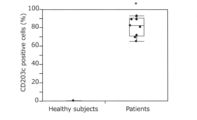
- FIG. 4 shows the results of flow cytometry; Basophils in the peripheral blood of 9 subjects with tree allergy symptoms in spring were activated by the purified recombinant protein, and CD203c expression was enhanced. On the other hand, it was shown that the expression of CD203c did not change in basophils in the peripheral blood of two healthy subjects.
- Juniperus pollen protein of the present disclosure is a protein selected from (a) to (c) below.
- (a) a protein consisting of the amino acid sequence represented by SEQ ID NO: 2
- (b) consisting of an amino acid sequence in which one or several amino acids are substituted, deleted or added in the amino acid sequence represented by SEQ ID NO: 2, and juniper Protein having pollen allergen activity
- (c) A protein consisting of an amino acid sequence having 90% or more identity with the amino acid sequence shown in SEQ ID NO: 2 and having Juniperus pollen allergen activity
- the juniper pollen protein of the present disclosure includes a protein consisting of an amino acid sequence in which one or several amino acids are substituted, deleted or added in the amino acid sequence shown in SEQ ID NO: 2, as long as it has juniper pollen allergen activity ( (b) above is included.
- the juniper pollen protein having such an amino acid sequence includes, for example, an isoform of the juniper pollen protein having the amino acid sequence shown in SEQ ID NO:2.
- "one or several amino acids" to be deleted, substituted or added means, for example, 1 to 10, more preferably 1 to 5 amino acids.
- the above addition or deletion includes addition or deletion of one to several amino acids to both ends.
- Specific examples of isoforms include, for example, a deletion of 4 residues at the C-terminus.
- junction pollen allergen activity refers to the activity of binding to IgE on mast cells and causing immediate allergic reactions in atopic humans (De Weck, AL. et al., Int. Arch. Allergy Immunol. , 146:177-189, 2008) as well as activity that simply binds to IgE in serum.
- activity to bind to IgE can be measured by the method described in International Publication No. 2012/105541 pamphlet and the like.
- the juniper pollen protein of the present disclosure has 90% or more of the amino acid sequence shown in SEQ ID NO: 2 when the corresponding sequences in the amino acid sequence shown in SEQ ID NO: 2 are properly aligned, as long as it has juniper pollen allergen activity.
- a protein consisting of a protein having the identity of ((c) above) is included.
- the identity with the amino acid sequence shown by SEQ ID NO: 2 is preferably 95% or more, more preferably 98% or more.
- BLAST Basic Local Alignment Search Tool at the National Center for Biological Information
- juniper pollen proteins of the present disclosure may form fusions with sequences useful for purification such as multiple histidine residues, proteins for ensuring stability during recombinant production, and the like.
- juniper pollen protein of the present disclosure can be obtained by an artificial process.
- juniper pollen proteins of the present disclosure can be obtained as recombinant proteins.
- juniper pollen proteins of the present disclosure can be obtained by artificially extracting, isolating and purifying pollen.
- Known plants belonging to the Juniperus genus include mountain cedar (Juniperus ashei), Japanese juniper (Juniperus chinensis), common juniper (Juniperus communis), and Japanese juniper (Juniperus conferta), but are not limited to these.
- Polynucleotide encoding juniper pollen protein encodes the above juniper pollen protein, preferably (d) a polynucleotide consisting of the nucleotide sequence shown in SEQ ID NO: 1, (e) SEQ ID NO: (f) a polynucleotide that hybridizes under stringent conditions with a polynucleotide consisting of a nucleotide sequence complementary to the nucleotide sequence represented by 1 and that encodes a protein having juniper pollen allergen activity, (f) represented by SEQ ID NO: 1
- Polynucleotides comprising a nucleotide sequence having 90% or more identity with the nucleotide sequence and encoding a protein having juniper pollen allergen activity can be mentioned.
- the polynucleotides of (e) and (f) include variants of the polynucleotide of (d). Such variants include naturally occurring allelic variants as well as non-naturally occurring variants that can be generated using mutagenesis techniques well known in the art.
- Polynucleotides of the present disclosure include not only double-stranded DNA, but also various single-stranded DNAs and RNAs such as the sense strand and antisense strand that constitute it. Antisense strands can be used as probes and the like.
- DNA includes isolated cDNAs, such as those obtained by cloning or chemical synthesis techniques, or a combination thereof. DNA also includes genomic DNA.
- nucleotide sequences such as untranslated region (UTR) sequences and vector sequences (including expression vector sequences) are added. may be
- stringent conditions include, for example, the conditions described in Molecular Cloning: A Laboratory Manual (Fourth Edition, J. Sambrook et.al, 2012). That is, in a solution containing 6 ⁇ SSC (1 ⁇ SSC composition: 0.15 M sodium chloride, 0.015 M sodium citrate, pH 7.0), 0.5% SDS, 5 ⁇ Denhardt and 100 mg / mL herring sperm DNA Examples include conditions such as incubating with the probe at a constant temperature of 65° C. for 8 to 16 hours for hybridization.
- the identity with the base sequence shown by SEQ ID NO: 1 is 90% or more, preferably 95% or more, more preferably 98% or more.
- identity of the base sequence for example, BLAST can be used, and a method of calculating optional parameters with default values can be applied.
- the 86th g of the nucleotide sequence shown in SEQ ID NO: 1 is replaced with t
- the 154th g is replaced with c
- the 242nd g is replaced with c
- the 265th a is replaced with g.
- a polynucleotide encoding a juniper pollen protein of the present disclosure can be cloned from juniper pollen, and cloning methods include known means such as the shotgun method and the PCR method. and a method using
- a probe that specifically hybridizes with a portion of the nucleotide sequence of the polynucleotide of the present disclosure may be prepared, and a genomic DNA library or cDNA library may be screened using the probe.
- Such probes may be of any sequence and length as long as they specifically hybridize to at least a portion of the polynucleotides of the present disclosure or their complementary strands.
- Another example is a method of artificially synthesizing a polynucleotide. (Kosuri S et. al., Nature Methods 11, 499-507, 2014)
- Polynucleotides of the present disclosure can also be obtained by using appropriate principles to obtain sequences that hybridize to polynucleotides containing part or all of the polynucleotides of the present disclosure. Examples include a PCR method using a polynucleotide containing a portion of the polynucleotide of the present disclosure as a primer, and a method of using a polynucleotide containing a portion of the polynucleotide of the present disclosure as a probe.
- primers are prepared from the 5′ and 3′ sequences of the polynucleotide of the present disclosure (or their complementary sequences), and genomic DNA ( or cDNA) or the like as a template to amplify the DNA region sandwiched between the two primers, a large amount of DNA fragments containing the polynucleotide can be obtained.
- the polynucleotide provided in the present disclosure can also be produced by modifying a polynucleotide consisting of the base sequence shown in SEQ ID NO: 1 by methods such as deliberate or random mutagenesis.
- mutation planning when introducing mutations intentionally can be carried out, for example, by taking into account characteristic sequences on the polynucleotide sequence.
- Methods for randomly introducing mutations include, for example, PCR and mutagen treatment.
- a method for systematically introducing mutations includes site-directed mutagenesis, more specifically, for example, using Site-Directed Mutagenesis System Mutan-Super Express Km kit (Takara Bio). can be done.
- a recombinant PCR method (PCR protocols, Academic Press, New York, 1990) can also be used.
- juniper pollen protein of the present disclosure can be obtained by separating and purifying juniper pollen.
- the separation and purification method is not particularly limited, but for example, juniper pollen extract may be separated and purified using conventionally known techniques such as gel filtration, ion exchange chromatography, affinity chromatography, and the like.
- Pollen sources include, but are not limited to, mountain cedar (Juniperus ashei), Japanese juniper (Juniperus chinensis), common juniper (Juniperus communis), common juniper (Juniperus conferta), and the like. Mountain cedar (Juniperus ashei) is preferred.
- a recombinant vector prepared by incorporating the polynucleotide of the present disclosure into an appropriate vector can be introduced into host cells to express juniper pollen proteins intracellularly or extracellularly and collect them. .
- the vector into which the polynucleotide of the present disclosure is inserted is not particularly limited as long as it is replicable in the host described above, and can be appropriately determined according to the type of host into which it is introduced, the method of introduction, and the like.
- Examples include plasmid DNA, phage DNA, virus vectors and the like. Widely used and easily available vector DNAs are used for construction of expression vectors. Examples include pUC19 (Takara Bio), pTV118N (Takara Bio), pMAMneo (Clontech), pGEX (GE Healthcare), pET160 (Invitrogen), pDEST (Invitrogen), pIEx (Merck Millipore), pBacPAK (Clontech), etc.
- viral vectors examples include baculovirus vectors, retrovirus vectors, lentivirus vectors such as human immunodeficiency virus (HIV), adenovirus vectors, adeno-associated virus vectors (AAV vectors), herpes virus, vaccinia virus, Examples include DNA viruses and RNA viruses such as poxvirus, poliovirus, Simbis virus, Sendai virus, and simian virus-40 (SV-40).
- HIV human immunodeficiency virus
- AAV vectors adeno-associated virus vectors
- herpes virus examples include DNA viruses and RNA viruses such as poxvirus, poliovirus, Simbis virus, Sendai virus, and simian virus-40 (SV-40).
- the host is not particularly limited as long as it is a living cell that can be transformed. Examples include animal cells, plants or plant-derived cells.
- the host can be transformed with the recombinant vector using the protoplast method, the competent cell method, the electroporation method, or the like.
- the resulting transformant may be cultured under appropriate conditions using a medium containing assimilable carbon sources, nitrogen sources, metal salts, vitamins and the like.
- the juniper pollen protein of the present disclosure can be obtained by collecting and purifying the protein from the culture medium thus obtained (Sambroock et al., Molecular Cloning: A Laboratory Manual, Fourth Edition, Cold Spring Harbor Laboratory Press, 2012). For example, when Escherichia coli is used as the host, the method described in pET System Manual, 10th edition (Novagen) and the like can be used.
- juniper pollen protein of the present disclosure serves as a preventive or therapeutic agent for allergic diseases caused by juniper pollen, and is administered to a human (patient) in need thereof. It can be used to prevent or treat allergic diseases caused by pollen.
- Allergic diseases caused by juniper pollen include all allergic diseases caused by specific antigens of juniper pollen. dermatitis and the like.
- a prophylactic or therapeutic agent for allergic diseases caused by juniper pollen can be used, for example, as a desensitization therapeutic agent for allergic diseases caused by juniper pollen.
- the juniper pollen protein of the present disclosure is reported as a major pollen allergen related to the onset of cedar pollinosis and cypress pollinosis as a result of amino acid homology analysis using GENETYX Ver.12 Cry j 1, Cry j 2 , Cryj 3, Chao 1 and Chao 2, a protein having an amino acid sequence different from that of conventionally known Cryj 1, Cryj 2, Cryj 3, Chao 1 and Chao 2 become. Therefore, by combining the juniper pollen protein of the present disclosure with the known protein described above, a more effective desensitization treatment becomes possible. In addition, since the juniper pollen protein of the present disclosure is different from known proteins, it becomes possible to newly detect allergic diseases caused by juniper pollen that cannot be detected with known proteins.
- the juniper pollen protein of the present disclosure showed a positive reaction in all subjects with tree allergy symptoms in spring as a result of BAT (basophil activation test) that measures the phenomenon induced in basophil cells by IgE binding. (Example 2). This is clearly higher than the IgE binding of Juna 1 (71.4%, Non-Patent Document 2) and Juna 3 (42.9%, Non-Patent Document 6), which are known pollen proteins. Regarding Juna2, it has been reported that the IgE binding positive rate of its homolog Chao2 is 82.5% (Allergology International, 70 [2021]:281-290). Therefore, the prophylactic or therapeutic agent for allergic diseases caused by juniper pollen using the juniper pollen protein of the present disclosure has applicability to a wider range of patients and can be said to be a useful means capable of solving the current problems.
- allergen identification has traditionally been based on the detection of specific IgE on total extracts containing allergenic and non-allergenic components extracted from allergen sources, but in recent years patients have become sensitized individuals.
- Molecular or component-resolved diagnostics which detects IgE antibodies against molecules (allergen components) of, that is, analyzes and diagnoses allergens at the causative protein level, has come to be performed.
- novel allergenic protein of the present disclosure it is not necessary to consider the effect compared with conventional allergenic proteins, and if it has an allergenic activity that is clearly different from that of conventional allergenic proteins, it can be used like CRD. It can be said that it can contribute to the diagnosis of various allergic diseases and the treatment based thereon, and its industrial utility value will be high.
- the juniper pollen protein of the present disclosure is used as it is, or dried and powdered, or if necessary, general Adjuvants and various additives such as stabilizers, excipients, solubilizers, emulsifiers, buffers, soothing agents, preservatives, coloring agents, etc. preferably.
- powdery purified Juniperus pollen protein can be dissolved in phenol-added physiological saline and used as a stock solution of antigen for desensitization treatment.
- prophylactic or therapeutic agents for allergic diseases caused by juniper pollen of the present disclosure are administered via normal administration routes, for example, oral or parenteral (transdermal, transmucosal, intradermal, subcutaneous, intramuscular, intraperitoneal, etc.) topical or Systemic administration methods can be used.
- Dosage forms applicable to these administration methods include, for example, troches, sublingual tablets, injections, eye drops, intranasal sprays, poultices, creams, lotions and the like.
- the method of diagnosing an allergic disease caused by juniper pollen of the present disclosure includes a normal administration route, for example, oral or parenteral (transdermal, transmucosal, intradermal, subcutaneous, intramuscular, intraperitoneal, etc.) local or systemic It can be performed according to the administration method.
- Dosage forms applicable to these administration methods include, for example, troches, sublingual tablets, injections, eye drops, intranasal sprays, poultices, creams, lotions and the like.
- the dosage and administration frequency of the preventive or therapeutic agent for allergic diseases caused by juniper pollen of the present disclosure vary depending on the route of administration, symptoms, etc., but for example, the range is about 0.1 to 1000 ⁇ g per adult. , and administered once to several times a week.
- Juniper pollen is also known as an allergen for hay fever caused by Mountain Cedar pollen, and is a cypress family plant that causes hay fever in regions such as France, Italy, and Australia.
- the present disclosure can be expected to be effective in treating hay fever caused not only by juniper pollen, cedar pollen and cypress pollen, but also by Mountain Cedar pollen.
- Japanese cedar pollinosis patients have a high positive rate of juniper antibody, and it is known that the positive rate of juniper antibody is particularly high in Japanese cypress pollinosis patients.
- INDUSTRIAL APPLICABILITY The present disclosure can be used to treat Japanese cedar pollinosis and cypress pollinosis, and effects can be expected.
- the juniper pollen protein of the present disclosure serves as a diagnostic agent for allergic disease caused by juniper pollen, and can be used for diagnosing allergic disease caused by juniper pollen.
- a diagnostic agent for allergic diseases caused by juniper pollen is used, for example, as a skin reaction diagnosis for allergic diseases caused by juniper pollen, that is, as an intradermal test or prick test reagent.
- diagnosis using patient serum or plasma is possible by preparing a specific IgE antibody test reagent.
- the juniper pollen protein of the present disclosure obtained by the above method is, for example, dried and powdered, which is dissolved in a physiological saline containing phenol or glycerin, diluted and used. .
- the IgE antibody in the patient specimen is bound to the juniper pollen protein of the present disclosure in the aqueous phase or on the solid phase, Fluoro enzyme immunoassay, Chemiluminescence enzyme immunoassay, enzyme immunoassay, etc. Based on the principle Detection methods include, but are not limited to.
- the present disclosure provides a skin reaction detection method characterized by reacting a juniper pollen protein with a sample.
- the present disclosure also provides a skin reaction detection kit comprising juniper pollen protein.
- "reacting” includes any aspect of contacting the juniper pollen protein of the present disclosure with a patient sample and binding the IgE antibody in the sample to the juniper pollen protein of the present disclosure.
- the protein can be combined with other solvents and solutes to form a composition.
- distilled water, pH buffer reagents, surfactants and the like can be combined.
- Juniperus pollen protein can also be used after being labeled with an enzyme or biotin.
- HRP horseradish peroxidase
- alkaline phosphatase malate dehydratase
- ⁇ -glucosidase ⁇ -galactosidase
- colloidal gold and the like can be used as labeling enzymes.
- the solvent, solute, enzyme labeling reagent, substrate solution, reaction stop solution, washing solution, instructions for use, etc. can be included.
- Antibodies to Juniper Pollen Proteins are antibodies capable of specifically binding junixin pollen proteins of the present disclosure.
- the above antibody means immunoglobulin (IgA, IgD, IgE, IgG, IgM and antigen-binding fragments thereof (Fab fragment, F(ab')2 fragment, Fc fragment, scFv, etc.), for example, polyclonal antibody , monoclonal antibodies, single-chain antibodies, anti-idiotypic antibodies, humanized antibodies, and the like, but are not limited to these.
- the above antibodies can be produced using various known methods, and the production method is not particularly limited.
- a non-human mammal is immunized with a juniper pollen protein or a partial peptide thereof, and antibody-producing cells (eg, B cells) are collected from the immunized animal.
- antibody-producing cells eg, B cells
- myeloma cells are fused to produce a hybridoma (fused cell line).
- Antibodies produced from this hybridoma are collected to obtain the desired monoclonal antibody.
- the basic amino acid sequence for synthesizing the antigenic peptide is a partial sequence of the full-length amino acid sequence of the juniper pollen protein, and an arbitrarily continuous amino acid sequence with a length of about 10 to 50 is selected from the amino acid sequence.
- a partial peptide can be synthesized by methods known to those skilled in the art, such as the Fmoc method and the tBoc method.
- the type of non-human mammal to be immunized is not particularly limited, and examples thereof include mice, rats, guinea pigs, rabbits, dogs, goats, etc. Mice are preferred.
- the total dose of antigen per animal is 10-150 ⁇ g.
- an adjuvant and an antigen solution are generally mixed, and examples of adjuvants include Freund's complete adjuvant (FCA), Freund's incomplete adjuvant (FIA), and aluminum hydroxide adjuvant.
- FCA Freund's complete adjuvant
- FIA Freund's incomplete adjuvant
- Immunization is performed mainly by intravenous, subcutaneous, intraperitoneal, intramuscular, or subcutaneous injection into the footpad.
- the immunization interval is not particularly limited, and 1 to 10 immunizations are performed at intervals of several days to several weeks, preferably 2 to 3 weeks.
- Antibody-producing cells are prepared from spleen cells, etc., or regional lymph nodes, etc. of immunized non-human mammals.
- Cell fusion is a work performed to fuse the antibody-producing cells and myeloma cells (myeloma cells) described above to produce cells (hybridoma) that continue to proliferate semipermanently while producing antibodies.
- myeloma cells myeloma cells
- Those skilled in the art can fuse antibody-producing cells and myeloma cells using known cell fusion methods.
- hybridomas producing the desired antibody are selected from the cells after the cell fusion treatment. 10-14 days after cell fusion, cells selected in HAT medium form colonies. The culture supernatant of each well of the colony-positive culture plate is collected, and the antibody titer against juniper pollen protein is confirmed by ELISA or the like.
- the cells in the final selected well are cloned to make them into single cells.
- cloning for example, after appropriately diluting the cell suspension with RPMI1640 medium containing 10 to 20% FCS, cells are seeded into each well of a 96-well culture plate so that one cell can fit into each well. After seeding the cells, collect the culture supernatant of the colony-positive wells. Furthermore, the cells in the selected wells are increased to some extent to establish a hybridoma strain. Cloning may be performed several times as needed.
- the epitope (antigenic determinant) of the antibody against the juniper pollen protein of the present disclosure is not limited as long as it is at least a part of the juniper pollen protein that is the antigen.
- the antibody against juniper pollen protein is not limited to the monoclonal antibody itself against juniper pollen protein produced by the above hybridoma, as long as it binds to the epitope recognized by the monoclonal antibody produced by these hybridomas, included in the antibodies of the present disclosure.
- the term "epitope" refers to an epitope recognized by a monoclonal antibody produced by the hybridoma.
- the monoclonal antibodies of the present disclosure can also be genetically engineered antibodies or antigen-binding fragments that are prepared and expressed by recombinant means.
- the antibodies of this disclosure can be chimeric, humanized, or fully human.
- Recombinant antibodies of this disclosure can be produced by recombinant expression of heavy and light chains.
- a recombinant expression vector having nucleic acids encoding antibody heavy and light chains is introduced into a host cell, and the host cell into which the vector has been introduced is cultured. Then, the antibody of interest is recovered from the culture of the host cell.
- a recombinant expression vector having nucleic acids encoding antibody heavy and light chains is introduced into a host cell, and the host cell into which the vector has been introduced is cultured. Then, the antibody of interest is recovered from the culture of the host cell.
- standard recombinant methods in the art Standard recombinant methods in the art (Sambroock et al., Molecular Cloning: A Laboratory Manual, Fourth Edition, Cold Spring Harbor Laboratory Press, 2012) can be adopted.
- a non-human mammal is immunized with a juniper pollen protein or a partial peptide thereof, blood is collected after 3 to 4 immunizations, and an ELISA method or the like is performed. Measure the antibody titer. After confirming that the antibody titer has sufficiently increased, the whole blood is collected and the antibody is separated and purified by a conventional method.
- the above antibodies can be used to identify organisms expressing the juniper pollen protein of the present disclosure, or their tissues or cells. For example, it can be used to measure the presence or absence of juniper pollen protein in the atmosphere, indoor space, or human mucosa. The measurement can be performed by a known immunological method, such as ELISA.
- Juniperus pollen protein is an allergen in Japanese cypress pollinosis, so the antibody of the present disclosure is allowed to react with a sample, and the juniperus pollen protein in the sample is measured to detect the juniperus pollen protein. Accordingly, the present disclosure provides a method for detecting a juniper pollen protein, which comprises reacting the antibody of the present disclosure or a fragment thereof with the juniper pollen protein to detect the juniper pollen protein. Also, in the present disclosure, antibodies against juniper pollen proteins or fragments thereof can be used as reagents or kits for detecting juniper pollen proteins. The kit in the present disclosure is applicable in the same way as juniper pollen protein is used as a kit.
- Example 1 Purification of Juniperus protein Add 200 mL of extraction buffer (25 mM Tris buffer, pH 8.0) to 5 g of juniper pollen (Juniperus ashei), crush with an ultrasonic generator (UD-201, TOMY), and centrifuge (10,000 x g). , 10 min) and the supernatant was collected. This supernatant was added to Vivapure Q Maxi H (Sartorius) equilibrated with 25 mM Tris buffer (pH 8.0), and the non-adsorbed fraction was collected.
- extraction buffer 25 mM Tris buffer, pH 8.0
- UD-201, TOMY ultrasonic generator
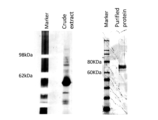
- Fig. 1 shows the results of electrophoresis of the purified juniper protein by SDS-PAGE.
- Example 2 Confirmation of allergen activity of purified juniper protein (i) lymphocyte proliferation response to purified juniper protein
- the cells were suspended in RPMI-1640 medium containing 10% inactivated autologous plasma at 1 ⁇ 10 6 cells/mL. 180 ⁇ L of the prepared cell suspension and 20 ⁇ L of purified juniper protein solution (concentration 100 ⁇ g/ml) were seeded in a 96-well plate (2 ⁇ 10 5 cells/well). After culturing for 3 days at 37°C and 5% CO2, 3H-thymidine was added, and cell proliferation was evaluated by measuring radioactivity uptake up to 16 hours later.
- Fig. 2 shows the results of calculation of a value obtained by dividing the amount of 3H-thymidine uptake with the addition of purified juniper protein by the amount of uptake without addition as a stimulation index.
- a stimulation index of 1.8 or higher is considered a positive criterion (Shigeyuki Uchida et al., Liver Vol. 30, No. 4, 439-443, 1989). According to this criterion, 2 out of 2 subjects with allergic symptoms (100%) were determined to be positive. On the other hand, healthy subjects were negative. From the above results, it was shown that people with tree allergy symptoms in spring are frequently sensitized to the protein of the present disclosure at the T cell level.
- 20 ⁇ L of the purified juniper protein solution of the present disclosure was added to 100 ⁇ L of heparinized whole blood to a final concentration of 100 ng/mL, and 20 ⁇ L of PBS (-) was added to the negative control sample. All samples were then added with 20 ⁇ L of antibody cocktail containing CD3-PC7, CRTH2-FITC and CD203c-PE and incubated at 37° C. for 15 minutes. 100 ⁇ L of reaction stop solution and 2 mL of hemolyzed fixative were added, and reacted at room temperature for 10 minutes. After centrifugation (200 x g, 5 minutes), the supernatant was removed, 3 mL of phosphate buffered saline (PBS) was added, and centrifugation was performed again.
- PBS phosphate buffered saline
- the cells were suspended in 0.1% formaldehyde-added PBS and measured using a flow cytometer (FACSVerse, BD Biosciences). Based on the obtained data, basophils in the blood cells were selected by using CD3-PC7 negative and CRTH2-FITC positive as an index, and the expression intensity of CD203c was analyzed.
- the data show the percentage of CD203c-positive basophils in the protein solution-stimulated samples of the present disclosure minus the percentage of CD203c-positive basophils in each negative control sample, with a maximum value of 0.75% in healthy subjects. A value of 1.5 or more, which is twice the value, was determined to be positive.
- Example 3 Determination of Partial Internal Amino Acid Sequence of Purified Juniperus Protein
- a peptide mixture obtained by trypsin digestion of the purified juniperus protein was analyzed. After the purified juniper protein was subjected to SDS-PAGE, the protein band to be analyzed was excised from the SDS gel. A peptide mixture was obtained from the excised gel piece through tryptic hydrolysis.
- the peptide mixture was analyzed by LC-MS/MS, LPLLAR [partial amino acid sequence 1 (SEQ ID NO: 3)], WIVDETTGL [partial amino acid sequence 2 (SEQ ID NO: 4)], ATVGETFAR [partial amino acid sequence 3 (SEQ ID NO: 5 )], YFNPNTWVK [partial amino acid sequence 4 (SEQ ID NO: 6)], and IRNPDFIAR [partial amino acid sequence 5 (SEQ ID NO: 7)] were obtained.
- Example 4 Determination of the Nucleotide Sequence of Purified Juniperus Protein ⁇ Extraction of Juniperus total RNA>
- 25 mL of Plant RNA Isolation Reagent Invitrogen
- the upper layer was decanted and filtered through a mesh with a mesh size of 100 ⁇ m.
- 1/5 volume of 5M NaCl and 3/5 volume of chloroform were added to the recovered filtrate.
- RNA pellet was washed with 10 mL of 75% ethanol. After further centrifugation at 4°C (2600 xg, 5 minutes), the supernatant was removed, the total RNA was dried at room temperature, and dissolved in 200 ⁇ L of RNase free water.
- RNeasy Mini kit Qiagen
- RNA was synthesized from the resulting cleaned-up total RNA using Superscript IV First-Strand Synthesis System for RT-PCR (Invitrogen). 2 ⁇ g of total RNA was dissolved in 11 ⁇ L of purified water, 1 ⁇ L of 50 ⁇ M oligo(dT)20 and 1 ⁇ L of 10 mM dNTP were added, and incubated at 65° C. for 5 minutes. After cooling the sample on ice, 4 ⁇ L of 5 x SSIV Buffer, 1 ⁇ L of 100 mM DTT, 1 ⁇ L of Ribonuclease Inhibitor, and 1 ⁇ L of SuperScript IV Reverse Transcriptase were added and mixed.
- PCR was performed by KOD Fx Neo (TOYOBO) using juniper cDNA as a template, Primer 1 (ATGACGATGGCGGCGCTA: SEQ ID NO: 8) as a sense primer, and Primer 2 (TCAAAGTTGATGCAACAATTGTTTGTTG: SEQ ID NO: 9) as an antisense primer.
- PCR reaction solution composition 5 ⁇ PrimeSTAR GXL Buffer 10 ⁇ L, dNTP Mixture (2.5 mM each) 4 ⁇ L, cDNA 0.5 ⁇ L, Primer 10 mM each 1.5 ⁇ L, PrimeSTAR GXL DNA Polymerase 1 ⁇ l, sterilized purified water up to 50 ⁇ l Cycle conditions: 35 cycles of 98°C for 10 sec and 68°C for 2 min
- the PCR product was purified with Wizard SV Gel and PCR Clean-Up System (Promega).
- the purified PCR product was incorporated into the pCR 2.1-TOPO TA Vector using the TOPO TA Cloning Kit for Sequencing (Thermo Fischer) kit. Sequence information was obtained by analyzing the nucleotide sequence of the obtained vector.
- 5'/3' RACE kit 2nd generation (Roche) was used to construct juniper cDNA with an anchor sequence added to the 3' end.
- Nested PCR was performed with KOD Fx neo using two-step primers Primer 3 (AGTGGATGTGTTTAGATGGG: SEQ ID NO: 10) and Primer 4 (AGCAGTGGTTTAAAGTCATAA: SEQ ID NO: 11).
- the PCR product was purified with Wizard SV Gel and PCR Clean-Up System (Promega).
- the purified PCR product was incorporated into the pCR 2.1-TOPO TA Vector using the TOPO TA Cloning Kit for Sequencing (Thermo Fischer) kit.
- the nucleotide sequence of the resulting vector was analyzed to obtain the 3' terminal sequence.
- the cDNA encoding the juniper protein of the present disclosure was encoded by the polynucleotide shown in SEQ ID NO:1.
- the amino acid sequence encoded by SEQ ID NO:1 (SEQ ID NO:2) contained partial amino acid sequences 1-5, indicating that the disclosed protein was the protein encoded by the polynucleotide of SEQ ID NO:1.
- SEQ ID NOs: 1-7 synthetic peptides
- SEQ ID NOs: 8-11 synthetic DNA
Landscapes
- Health & Medical Sciences (AREA)
- Life Sciences & Earth Sciences (AREA)
- Chemical & Material Sciences (AREA)
- Engineering & Computer Science (AREA)
- Organic Chemistry (AREA)
- Genetics & Genomics (AREA)
- General Health & Medical Sciences (AREA)
- Immunology (AREA)
- Bioinformatics & Cheminformatics (AREA)
- Biomedical Technology (AREA)
- Biotechnology (AREA)
- Molecular Biology (AREA)
- Zoology (AREA)
- Wood Science & Technology (AREA)
- Biochemistry (AREA)
- General Engineering & Computer Science (AREA)
- Medicinal Chemistry (AREA)
- Microbiology (AREA)
- Proteomics, Peptides & Aminoacids (AREA)
- Biophysics (AREA)
- Physics & Mathematics (AREA)
- General Chemical & Material Sciences (AREA)
- Urology & Nephrology (AREA)
- Hematology (AREA)
- Chemical Kinetics & Catalysis (AREA)
- Veterinary Medicine (AREA)
- Public Health (AREA)
- Animal Behavior & Ethology (AREA)
- Pharmacology & Pharmacy (AREA)
- Plant Pathology (AREA)
- Nuclear Medicine, Radiotherapy & Molecular Imaging (AREA)
- Cell Biology (AREA)
- Mycology (AREA)
- Botany (AREA)
- Analytical Chemistry (AREA)
- General Physics & Mathematics (AREA)
- Pathology (AREA)
- Food Science & Technology (AREA)
- Gastroenterology & Hepatology (AREA)
- Epidemiology (AREA)
Priority Applications (4)
| Application Number | Priority Date | Filing Date | Title |
|---|---|---|---|
| JP2023552725A JP7744998B2 (ja) | 2021-10-07 | 2022-08-19 | 新規ビャクシン花粉タンパク質 |
| US18/699,112 US20250074954A1 (en) | 2021-10-07 | 2022-08-19 | New juniper pollen protein |
| MX2024004272A MX2024004272A (es) | 2021-10-07 | 2022-08-19 | Nueva proteina de polen de junipero. |
| CA3234667A CA3234667A1 (en) | 2021-10-07 | 2022-08-19 | New juniper pollen protein |
Applications Claiming Priority (2)
| Application Number | Priority Date | Filing Date | Title |
|---|---|---|---|
| JP2021-165659 | 2021-10-07 | ||
| JP2021165659 | 2021-10-07 |
Publications (1)
| Publication Number | Publication Date |
|---|---|
| WO2023058337A1 true WO2023058337A1 (ja) | 2023-04-13 |
Family
ID=85803364
Family Applications (1)
| Application Number | Title | Priority Date | Filing Date |
|---|---|---|---|
| PCT/JP2022/031310 Ceased WO2023058337A1 (ja) | 2021-10-07 | 2022-08-19 | 新規ビャクシン花粉タンパク質 |
Country Status (5)
| Country | Link |
|---|---|
| US (1) | US20250074954A1 (https=) |
| JP (1) | JP7744998B2 (https=) |
| CA (1) | CA3234667A1 (https=) |
| MX (1) | MX2024004272A (https=) |
| WO (1) | WO2023058337A1 (https=) |
Cited By (1)
| Publication number | Priority date | Publication date | Assignee | Title |
|---|---|---|---|---|
| CN116904495A (zh) * | 2023-05-26 | 2023-10-20 | 四川农业大学 | 白芷原生质体高效瞬时转化的方法 |
Citations (2)
| Publication number | Priority date | Publication date | Assignee | Title |
|---|---|---|---|---|
| JP2001231580A (ja) * | 1999-12-17 | 2001-08-28 | Meiji Milk Prod Co Ltd | マウンテンシダー花粉アレルゲンタンパク質及び該タンパク質をコードする核酸分子 |
| WO2021004885A1 (en) * | 2019-07-05 | 2021-01-14 | Phadia Ab | Novel allergen |
-
2022
- 2022-08-19 MX MX2024004272A patent/MX2024004272A/es unknown
- 2022-08-19 US US18/699,112 patent/US20250074954A1/en active Pending
- 2022-08-19 JP JP2023552725A patent/JP7744998B2/ja active Active
- 2022-08-19 CA CA3234667A patent/CA3234667A1/en active Pending
- 2022-08-19 WO PCT/JP2022/031310 patent/WO2023058337A1/ja not_active Ceased
Patent Citations (2)
| Publication number | Priority date | Publication date | Assignee | Title |
|---|---|---|---|---|
| JP2001231580A (ja) * | 1999-12-17 | 2001-08-28 | Meiji Milk Prod Co Ltd | マウンテンシダー花粉アレルゲンタンパク質及び該タンパク質をコードする核酸分子 |
| WO2021004885A1 (en) * | 2019-07-05 | 2021-01-14 | Phadia Ab | Novel allergen |
Non-Patent Citations (3)
| Title |
|---|
| MIDORO-HORIUTI T,ET AL: "Variable expression of pathogenesis-related protein allergen in mountain cedar (Juniperus ashei) pollen.", THE JOURNAL OF IMMUNOLOGY, WILLIAMS & WILKINS CO., US, vol. 164, 15 February 2000 (2000-02-15), US , pages 2188 - 2192, XP002251834, ISSN: 0022-1767 * |
| MIDORO-HORIUTI, T. GOLDBLUM, R.M. KUROSKY, A. GOETZ, D.W. BROOKS, E.G.: "Isolation and characterization of the mountain cedar (Juniperus ashei) pollen major allergen, Jun a 1", JOURNAL OF ALLERGY AND CLINICAL IMMUNOLOGY, ELSEVIER, AMSTERDAM, NL, vol. 104, no. 3, 1 September 1999 (1999-09-01), AMSTERDAM, NL , pages 608 - 612, XP005687672, ISSN: 0091-6749, DOI: 10.1016/S0091-6749(99)70331-3 * |
| RISA GOTO, YUKI TANAKA, TOSHIHIRO NAGATA, FUMIHITO HOSOI: "MS7-4. Identification of Cha o 3 homologous Mountain cedar pollen allergen Jun a cellulase 4 (JAC4)", ARERUGI - JAPANESE JOURNAL OF ALLERGOLOGY, TOKYO., JP, vol. 70, no. 6-7, 20 August 2021 (2021-08-20), JP , pages 787, XP009546269, ISSN: 0021-4884 * |
Cited By (1)
| Publication number | Priority date | Publication date | Assignee | Title |
|---|---|---|---|---|
| CN116904495A (zh) * | 2023-05-26 | 2023-10-20 | 四川农业大学 | 白芷原生质体高效瞬时转化的方法 |
Also Published As
| Publication number | Publication date |
|---|---|
| MX2024004272A (es) | 2024-04-25 |
| CA3234667A1 (en) | 2023-04-13 |
| JP7744998B2 (ja) | 2025-09-26 |
| US20250074954A1 (en) | 2025-03-06 |
| JPWO2023058337A1 (https=) | 2023-04-13 |
Similar Documents
| Publication | Publication Date | Title |
|---|---|---|
| ES2537323T3 (es) | Péptido CDCA1 y agente farmacéutico que lo comprende | |
| CN103608030A (zh) | 用于治疗和诊断癌症的组合物和方法 | |
| Närkiö-Mäkelä et al. | Complement-regulator factor H and related proteins in otitis media with effusion | |
| JP2004147649A (ja) | 頭頚部癌の抗原 | |
| JP7744998B2 (ja) | 新規ビャクシン花粉タンパク質 | |
| WO2011038689A1 (zh) | 人类新细胞因子VSTM1-v2及其应用 | |
| KR100465382B1 (ko) | 말라세지아에서 유래된 항원성 단백질 | |
| JP5937970B2 (ja) | 新規ヒノキ花粉アレルゲン | |
| CN115927275B (zh) | 一种果糖二磷酸醛缩酶类型的花粉过敏原及其应用 | |
| JP6296650B2 (ja) | 免疫疾患に対する医薬組成物 | |
| US5698204A (en) | Recombinant allergenic proteins from ragweed pollen | |
| JP6813359B2 (ja) | 新規コナヒョウヒダニタンパク質 | |
| JP6813577B2 (ja) | 新規スギ花粉タンパク質 | |
| KR20240162578A (ko) | 다발성 경화증 및 MOG 항체 질환의 새로운 치료제로서 MHC Ib-매개 미엘린-특이적인 면역억제 | |
| KR101019865B1 (ko) | IgE 결합이 감소되었지만, T-세포 항원성은 저하되지않은 재조합 알레르겐 | |
| KR20240167684A (ko) | 새로운 1형 당뇨병 치료제로서 MHC Ib-매개의 섬-항원-특이적인 면역억제 | |
| JP2012528591A (ja) | 組換え生産されたアレルゲン | |
| HK1238653A1 (en) | Novel dermatophagoides farinae protein | |
| HK40000836A (en) | New cedar pollen protein | |
| HK40000836B (en) | New cedar pollen protein | |
| HK1238653B (zh) | 新型粉尘蟎蛋白质 | |
| Punyadee et al. | Complement opsonized immune complexes trigger red blood cells (RBC) to shed microparticles (MPs): a potential mechanism for high levels of RBC-derived MPs in severe dengue infection: 041 | |
| JPWO2006054748A1 (ja) | 腎炎の治療剤 | |
| JP2013504746A (ja) | 黄色ブドウ球菌アレルゲン | |
| JP2009082061A (ja) | スギ花粉由来の新規ポリペプチドおよび当該ポリペプチドをコードするポリヌクレオチド、並びにそれらの利用 |
Legal Events
| Date | Code | Title | Description |
|---|---|---|---|
| 121 | Ep: the epo has been informed by wipo that ep was designated in this application |
Ref document number: 22878208 Country of ref document: EP Kind code of ref document: A1 |
|
| ENP | Entry into the national phase |
Ref document number: 2023552725 Country of ref document: JP Kind code of ref document: A |
|
| WWE | Wipo information: entry into national phase |
Ref document number: MX/A/2024/004272 Country of ref document: MX Ref document number: 3234667 Country of ref document: CA |
|
| NENP | Non-entry into the national phase |
Ref country code: DE |
|
| 122 | Ep: pct application non-entry in european phase |
Ref document number: 22878208 Country of ref document: EP Kind code of ref document: A1 |
|
| WWP | Wipo information: published in national office |
Ref document number: 18699112 Country of ref document: US |