WO2023053698A1 - 撮影制御装置、撮影制御方法、及び撮影制御プログラム - Google Patents
撮影制御装置、撮影制御方法、及び撮影制御プログラム Download PDFInfo
- Publication number
- WO2023053698A1 WO2023053698A1 PCT/JP2022/028856 JP2022028856W WO2023053698A1 WO 2023053698 A1 WO2023053698 A1 WO 2023053698A1 JP 2022028856 W JP2022028856 W JP 2022028856W WO 2023053698 A1 WO2023053698 A1 WO 2023053698A1
- Authority
- WO
- WIPO (PCT)
- Prior art keywords
- imaging
- photographing
- image information
- control device
- image
- Prior art date
- Legal status (The legal status is an assumption and is not a legal conclusion. Google has not performed a legal analysis and makes no representation as to the accuracy of the status listed.)
- Ceased
Links
Images




Classifications
-
- H—ELECTRICITY
- H04—ELECTRIC COMMUNICATION TECHNIQUE
- H04N—PICTORIAL COMMUNICATION, e.g. TELEVISION
- H04N23/00—Cameras or camera modules comprising electronic image sensors; Control thereof
- H04N23/60—Control of cameras or camera modules
- H04N23/61—Control of cameras or camera modules based on recognised objects
-
- G—PHYSICS
- G03—PHOTOGRAPHY; CINEMATOGRAPHY; ANALOGOUS TECHNIQUES USING WAVES OTHER THAN OPTICAL WAVES; ELECTROGRAPHY; HOLOGRAPHY
- G03B—APPARATUS OR ARRANGEMENTS FOR TAKING PHOTOGRAPHS OR FOR PROJECTING OR VIEWING THEM; APPARATUS OR ARRANGEMENTS EMPLOYING ANALOGOUS TECHNIQUES USING WAVES OTHER THAN OPTICAL WAVES; ACCESSORIES THEREFOR
- G03B15/00—Special procedures for taking photographs; Apparatus therefor
-
- G—PHYSICS
- G03—PHOTOGRAPHY; CINEMATOGRAPHY; ANALOGOUS TECHNIQUES USING WAVES OTHER THAN OPTICAL WAVES; ELECTROGRAPHY; HOLOGRAPHY
- G03B—APPARATUS OR ARRANGEMENTS FOR TAKING PHOTOGRAPHS OR FOR PROJECTING OR VIEWING THEM; APPARATUS OR ARRANGEMENTS EMPLOYING ANALOGOUS TECHNIQUES USING WAVES OTHER THAN OPTICAL WAVES; ACCESSORIES THEREFOR
- G03B19/00—Cameras
- G03B19/02—Still-picture cameras
- G03B19/04—Roll-film cameras
- G03B19/07—Roll-film cameras having more than one objective
-
- H—ELECTRICITY
- H04—ELECTRIC COMMUNICATION TECHNIQUE
- H04N—PICTORIAL COMMUNICATION, e.g. TELEVISION
- H04N23/00—Cameras or camera modules comprising electronic image sensors; Control thereof
- H04N23/60—Control of cameras or camera modules
- H04N23/66—Remote control of cameras or camera parts, e.g. by remote control devices
-
- H—ELECTRICITY
- H04—ELECTRIC COMMUNICATION TECHNIQUE
- H04N—PICTORIAL COMMUNICATION, e.g. TELEVISION
- H04N23/00—Cameras or camera modules comprising electronic image sensors; Control thereof
- H04N23/90—Arrangement of cameras or camera modules, e.g. multiple cameras in TV studios or sports stadiums
Definitions
- the present invention relates to an imaging control device, an imaging control method, and an imaging control program.
- Patent Document 1 discloses a camera control system having a plurality of cameras.
- a plurality of cameras have shooting control means capable of controlling shooting states.
- At least one of the photographing control means of the plurality of cameras is manually controllable from the outside of the camera, and the camera control system determines the photographing states of the remaining cameras based on information obtained from the manually controlled cameras. It is characterized by controlling.
- Patent Document 2 describes a camera position detection method.
- a camera position detection method uses a plurality of cameras, a panoramic camera, and a data processing device, and obtains the positional relationship of the cameras from images taken from the plurality of cameras and the panoramic camera.
- Each of the cameras has a drive mechanism that controls the operation of the camera.
- a panorama camera captures images of the plurality of cameras.
- the data processing device controls the plurality of cameras and the panorama camera, inputs the captured images of each camera, and performs data processing.
- Patent Document 3 describes an imaging apparatus having an imaging target installation area for setting an imaging target and a plurality of imaging devices for imaging different sides of the imaging target.
- a plurality of imaging devices are arranged on the communication path so as to image the sides of the imaging target from a plurality of directions.
- the imaging apparatus automatically controls pan, tilt, and focus so that when one camera tracks an object to be photographed, the remaining cameras also track the object to be photographed.
- Patent Document 4 describes an image processing device that is communicably connected to a plurality of cameras, performs image synthesis processing on a plurality of captured images acquired from the plurality of cameras, and outputs a panoramic synthesized image.
- the image processing apparatus includes a reference camera determining section, an imaging condition acquiring section, an imaging condition setting section, and an image synthesizing section.
- a reference camera determination unit determines one of the plurality of cameras as a reference camera.
- the imaging condition acquisition unit acquires imaging conditions related to exposure and white balance set in the reference camera.
- the image capturing condition setting unit sends an image capturing condition setting command relating to exposure and white balance to the cameras other than the reference camera among the plurality of cameras, based on the image capturing conditions of the reference camera.
- the image synthesizing unit performs image synthesizing processing on the plurality of captured images acquired from the plurality of cameras, and outputs the panoramic synthesized image.
- Patent Document 5 describes an automatic photographing system.
- the automatic photographing system is characterized by comprising a photographing camera, background storage means, detection means, extraction means, and photographing control means.
- a photographing camera is installed at a predetermined position and photographs a subject.
- the background storage means stores a background image of a range that can be photographed using the photographing camera at the predetermined position.
- the detection means detects at least a Detects when part of the subject enters.
- the extraction means extracts a part to be imaged from the subject detected by the detection means.
- the photographing control means controls the photographing camera so that the part of the subject to be photographed falls within a desired range within the photographed image of the photographing camera.
- JP-A-2000-083246 Japanese Patent Application Laid-Open No. 2007-327750 Japanese Patent Application Laid-Open No. 2006-086671 JP 2016-208306 A JP 2005-099164 A
- An imaging control device of one aspect disclosed includes a processor and a memory, wherein the processor stores first image information, which is information about an image captured in a reference state by any one of a plurality of imaging devices; Based on second image information, which is information about an image captured by any one of the plurality of imaging devices in a non-reference state, any one of the plurality of imaging devices is controlled.
- a photographing control device of one aspect disclosed includes a processor and a memory, and the processor stores a first image which is information about an image photographed in a reference state by another photographing device different from the plurality of photographing devices. Any one of the plurality of photographing devices is controlled based on the information and the second image information, which is information regarding an image photographed by the other photographing device in a non-reference state.
- the photographing control method controls a plurality of photographing devices, wherein first image information is information regarding an image photographed in a reference state by one of the plurality of photographing devices. and second image information, which is information about an image captured by any one of the plurality of imaging devices in a non-reference state, to control one of the plurality of imaging devices.
- a disclosed imaging control method of one aspect is a imaging control method for controlling a plurality of imaging devices, and is information about an image captured in a reference state by another imaging device different from the plurality of imaging devices. Based on the first image information and the second image information, which is information about an image captured by the other imaging device in a non-reference state, any one of the plurality of imaging devices is controlled.
- An imaging control program of one aspect disclosed is an imaging control program for controlling a plurality of imaging devices, wherein a processor stores information about an image captured in a reference state by one of the plurality of imaging devices. executing a step of controlling any one of the plurality of photographing devices based on the first image information and second image information that is information regarding an image photographed by one of the plurality of photographing devices in a non-reference state; It is a thing to let you.
- An imaging control program of one aspect disclosed is an imaging control program for controlling a plurality of imaging devices, wherein a processor is provided with an image captured in a reference state by another imaging device different from the plurality of imaging devices. a step of controlling any one of the plurality of photographing devices based on first image information, which is information, and second image information, which is information regarding an image photographed by the other photographing device in a non-reference state; It is something that makes you execute.
- FIG. 1 is a diagram showing a schematic configuration of an imaging system 100 including an imaging control device 5 that is an embodiment of an imaging control device of the present invention
- FIG. FIG. 2 is a schematic diagram showing an example in which the photography system 100 is applied to a photography studio
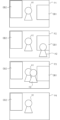
- 3 is a diagram showing an example of an image based on image information photographed by the photographing device 1c of FIG. 2
- FIG. 3 is a diagram showing an example of an image based on image information photographed by the photographing device 1c of FIG. 2
- FIG. 1 is a schematic diagram showing an example in which the imaging system 100 is applied to an event site
- FIG. FIG. 6 is a schematic diagram showing a state in which the arrangement pattern of the person H3 has changed in FIG.
- FIG. 1 is a diagram showing a schematic configuration of an imaging system 100 including an imaging control device 5, which is an embodiment of the imaging control device of the present invention.
- a photographing system 100 includes a plurality of photographing devices 1 for automatically photographing, a photographing device 2 for manually photographing, a network 3 such as the Internet or a LAN (Local Area Network), an image storage server 4, and photographing control.
- the plurality of imaging devices 1 includes five imaging devices: imaging device 1a, imaging device 1b, imaging device 1c, imaging device 1d, and imaging device 1e.
- the photographing device 2 may be omitted.
- the photographing device 1 and the photographing device 2 are arranged, for example, at an event site where an event such as a concert is held, or at a photographing studio.
- the five photographing devices 1 and 2 are arranged at different positions in the same installation place, and configured to photograph a subject at the installation place from different directions.
- the imaging device 1 and the imaging device 2 each include an imaging device, an image processing circuit, and a communication interface connectable to the network 3 .
- the image processing circuit generates image data by processing a captured image signal obtained by capturing an image of a subject with an image sensor.
- the photographing device 1 and the photographing device 2 are each configured by, for example, a digital camera or a smartphone.
- the image data generated by the imaging devices 1 and 2 and the information associated therewith are also referred to as image information captured by the imaging devices 1 and 2, respectively.
- the image information generated by each of the imaging devices 1 and 2 includes identification information and imaging setting information of the imaging device that generated the image data. It is also possible to recognize the number of subjects included in the image or the types of the subjects based on the image information.
- the shooting setting information includes an exposure value, shooting mode, zoom magnification, shooting interval for continuous shooting, shooting direction (pan/tilt angle), and the like.
- Shooting modes include a normal mode, a wide dynamic range mode, a plurality of image processing modes, and the like.
- the normal mode is a mode in which the dynamic range is used as a reference value.
- the wide dynamic range mode is a mode that makes the dynamic range wider than the reference value.
- the image processing mode is a mode in which at least one of color and gradation is different when image processing is performed.
- the imaging device 1 and the imaging device 2 each transmit the generated image information to the image storage server 4 via the network 3 .
- the image storage server 4 includes a processor, a communication interface connectable to the network 3, and a storage device such as an SSD (Solid State Drive) or HDD (Hard Disk Drive).
- This storage device may be a network storage device connected to the network 3 .
- the processor of the image storage server 4 acquires the image information transmitted from the imaging devices 1 and 2 and stores the acquired image information in the storage device.
- the imaging control device 5 controls the imaging device 1 based on the image information stored in the storage device of the image storage server 4 .
- the parameters of the imaging device 1 controlled by the imaging control device 5 include imaging conditions of the imaging device 1 .
- the shooting conditions include at least one of shooting interval, angle of view (zoom magnification), shooting direction (pan/tilt angle), exposure value, color, gradation, dynamic range, and shooting mode.
- Shooting modes include single shot, continuous shot, electronic shutter, electronic front curtain shutter, mechanical shutter, and the like.
- a personal computer, a smart phone, a tablet terminal, or the like is used as the imaging control device 5, for example.
- the imaging control device 5 includes a communication interface 51 for connecting to the network 3, a memory 52 including RAM (Random Access Memory) and ROM (Read Only Memory), and a processor 53.
- a communication interface 51 for connecting to the network 3
- a memory 52 including RAM (Random Access Memory) and ROM (Read Only Memory)
- ROM Read Only Memory
- the processor 53 is a CPU (Central Processing Unit), a programmable logic device (PLD), a dedicated electric circuit, or the like.
- a CPU is a general-purpose processor that executes software (programs) to perform various functions.
- a PLD is a processor such as an FPGA (Field Programmable Gate Array) whose circuit configuration can be changed after manufacturing.
- a dedicated electric circuit is a processor, such as an ASIC (Application Specific Integrated Circuit), having a circuit configuration specially designed to execute specific processing.
- the processor 53 may be composed of one processor, or may be composed of a combination of two or more processors of the same type or different types.
- the processor 53 may be composed of multiple FPGAs or a combination of a CPU and an FPGA.
- the hardware structure of the processor 53 is an electrical circuit that combines circuit elements such as semiconductor elements.
- the processor 53 may perform control for displaying image information stored in the image storage server 4 on a display (not shown), in addition to the imaging control described later.
- FIG. 2 is a schematic diagram showing an example in which the photography system 100 is applied to a photography studio.
- Five photographing devices 1 and 2 that constitute the photographing system 100 are installed in a photographing studio.
- the main subject photographed in the photography studio and the background subject forming the background of the main subject are defined as specific subjects.
- the specific subject is the subject to be photographed.
- a non-specific subject is defined as a subject that can be photographed other than the specific subject existing in the photography studio.
- a main subject includes a person, an animal, a robot, or the like.
- the photography studio includes a person H1, objects OB1 and OB2, a person H2, a cameraman (not shown), and various types of equipment (not shown).
- a person H1 is a specific subject.
- Object OB1 and object OB2 are a photographing set and are placed behind person H1.
- Object OB1 and object OB2 are also specific subjects.
- the person H2 sets the costume or hairstyle of the person H1.
- the person H2, the cameraman, the equipment, etc. constitute non-specific subjects.
- the five photographing devices 1 photograph the person H1 from different directions.
- FIG. 2 shows the imaging regions Av of the imaging devices 1 and 2, respectively.
- Each shooting area Av includes a person H1, an object OB1, and an object OB2.
- the photographing device 2 is arranged in front of the person H1.
- the photographing device 2 is manually operated by a cameraman.
- the five photographing devices 1 automatically and continuously perform photographing under the control of the photographing control device 5, respectively.
- the processor 53 receives information (first image information) about the first image captured in the reference state and information about the second image (second image information) captured in the non-reference state by any of the five imaging devices 1 ), the imaging conditions for any one of the five imaging devices 1 are controlled.
- a reference state is a state in which a predetermined condition is satisfied.
- the reference state is defined as a state in which the angle of view of each photographing device 1 (in other words, the photographing area Av) includes only the specific subject among the specific subject and the non-specific subject.
- the predetermined condition means that the angles of view of all the photographing devices 1 include only the subject to be photographed.
- the processor 53 issues a shooting start instruction to each of the five shooting devices 1 to start shooting. Automatic continuous photographing by the device 1 is started. Continuous shooting is performed by setting the shooting mode, shooting interval, exposure value, zoom magnification, and shooting direction to predetermined reference values.
- the reference state can also be said to be a state in which shooting of only the specific subject among the specific subject and the non-specific subject is started.
- the reference state is a state indicated by the image information obtained from the imaging device 1 at the imaging start timing (first timing) of the imaging device 1 . That is, the reference state is a state grasped by the information of the first image captured by each imaging device 1 .
- the processor 53 stores any one of the five image information captured initially as the image capturing device 1 is registered as the first image information photographed in the reference state.
- the first image information means an image (image information) first photographed by one photographing device set by the user.
- the first image information is image information obtained from an arbitrary one of the information regarding the images captured by each imaging device 1 at the first timing. In the following description, it is assumed that the image information captured first by the imaging device 1c is registered as the first image information.
- the processor 53 may cause each imaging device 1 to start automatic imaging when the cameraman operates the shutter button of the imaging device 2 to issue a shooting instruction or an autofocus instruction to the imaging device 2 .
- the processor 53 After registering the first image information, the processor 53 performs recognition processing of the subject included in the image data of the first image information.
- three specific subjects namely the person H1, the object OB1, and the object OB2, are recognized by this recognition processing.
- the second image information refers to image information successively captured by the imaging device 1c, excluding the first image information (that is, the first image information).
- the cameraman or the person H2 may enter the photographing area Av of the photographing device 1, or the equipment may enter the photographing region Av of the photographing device 1 due to movement of the equipment.
- the state after the start of photographing of the specific subject that is, the state in which the subject photographed by the photographing apparatus 1 can change is defined as the non-reference state.
- the non-reference state is a state indicated by the image information obtained from the imaging device 1 at a timing (second timing) after the first timing.
- the second image information is image information captured by the imaging device 1c in this non-reference state.
- the processor 53 sequentially acquires the second image information from the image storage server 4 and controls the imaging conditions of each imaging device 1 based on the acquired second image information and first image information. In other words, the processor 53 combines information about the image obtained from any one photographing device 1 at the first timing and information about the image obtained from any one photographing device 1 at the second timing. , the imaging conditions of each imaging device 1 are controlled. Specific control contents will be described below with reference to FIGS. 3 and 4. FIG.
- FIG. 3 illustrates an image P1 based on the first image information, and an image P2, an image P3, and an image P4 based on the second image information.
- Image P1 includes person H1, object OB1, and object OB2.
- the person H1, the object OB1, and the object OB2 are all specific subjects, as described above.
- the image P2 and the image P3 include the person H2 who is a non-specific subject in addition to all the specific subjects included in the image P1.
- the distance between person H1 and person H2 is greater than in image P3.
- image P3 the distance between person H1 and person H2 is smaller than in image P2.
- the image P4 is assumed to be taken while the object OB1 is being changed to another object by the person H2, for example.
- image P4 contains only object OB2 and person H1.
- FIG. 4 illustrates an image P5 and an image P6 based on the second image information.
- the image P5 corresponds to an image captured with a part of the specific subject blocked by an object OB3 such as equipment.
- the image P6 corresponds to an image captured in a state where the object OB1 forming the background is changed to another object OB4.
- the processor 53 determines matching or non-matching of subjects based on the first image information and the second image information, and controls the imaging conditions of each imaging device 1 based on the determination result. For example, the processor 53 controls the imaging conditions of each imaging device 1 based on the number of subjects included in the image data of the first image information and the number of subjects included in the image data of the second image information. . That is, the processor 53 determines whether the number of subjects matches or does not match, and when the number of subjects does not match, controls the photographing conditions so that the photographing frequency of each photographing device 1 changes. More specifically, when the number of subjects recognized from the second image information is greater than the number of subjects recognized from the first image information, the processor 53 sets the photographing interval of each photographing device 1 from the reference value.
- the photographing conditions are controlled so as to reduce the photographing frequency of each photographing device 1 when the number of subjects does not match.
- the imaging conditions may be controlled so as to increase .
- the imaging interval may be set smaller than the reference value.
- control of imaging conditions is also an example, and other controls may be used.
- the processor 53 changes the background subject to an image P4 shown in FIG. It may be determined that the state is in the process of being taken, and the photographing interval of each photographing device 1 may be made larger than the reference value.
- the number of subjects to be photographed is decreasing, it is assumed that some kind of preparation is being made. be able to.
- Control example 2 When the processor 53 determines that the number of subjects does not match and determines that the number of subjects in the second image information is greater than the number of subjects in the first image information, the processor 53 determines that the distance between the subjects in the second image information Based on this, the imaging conditions of each imaging device 1 may be controlled. Specifically, when the number of subjects recognized from the second image information is larger than the number of subjects recognized from the first image information, as shown in the image P2 or the image P3, the processor 53 Based on the distance between the non-specified subject (person H2 in the example of FIG. 3) included in the image data of the information and the specified subject (person H1) included in the image data of the second image information, the photographing of each photographing device 1 is performed. Conditions may be controlled.
- the processor 53 determines that the number of subjects recognized in the second image information is large, the distance between the specified subject and the non-specified subject included in the second image information exceeds the predetermined threshold value.
- the photographing interval may be changed based on the above.
- the processor 53 may keep the photographing interval at the reference value when the distance is equal to or greater than the threshold, and may reduce the photographing interval from the reference value when the distance is less than the threshold.
- Image P2 shows an example in which the distance between the specific subject and the non-specific subject is equal to or greater than the threshold.
- image P3 shows an example in which the distance between the specific subject and the non-specific subject is less than the threshold.
- the processor 53 may make the photographing interval larger than the reference value when the distance is equal to or greater than the threshold, and may make the photographing interval smaller than the reference value when the distance is less than the threshold.
- a situation in which the person H1 and the person H2 are close to each other is considered to be a situation in which the person H2 is adjusting the costume and hairstyle of the person H1. In such a situation, by increasing the frequency of photographing, it is possible to photograph many of the natural appearances of the person H1 that have not been photographed by the photographer, making it possible to obtain valuable images.
- the processor 53 determines whether the subjects do not match each other. 1 may be changed. In other words, the processor 53 may change the imaging conditions of each imaging device 1 when the identity of the subjects cannot be confirmed even when the number of subjects matches.
- the control when the image based on the second image information is the image P6 in FIG. 4 will be described.
- the number of subjects in image P6 matches the number of subjects in image P1.
- the image P6 includes an object OB4, which is a non-specific subject, instead of the object OB1, which is a specific subject.
- the processor 53 changes the imaging conditions of each imaging device 1 to imaging conditions suitable for the second image information. Specifically, the processor 53 changes the exposure value of each photographing device 1 to a value suitable for the object OB2 and the object OB4, and sets the color or gradation of each photographing device 1 to a value suitable for the object OB2 and the object OB4. value, the dynamic range of each photographing device 1 is changed to a value suitable for the object OB2 and the object OB4, and the angle of view of each photographing device 1 is changed so that the entire object OB1 and object OB4 are photographed.
- the processor 53 may change the photographing conditions of each photographing device 1 based on the positional relationship of the subjects even when the matching of the number of subjects and the identity of the subjects can be confirmed.
- the positional relationship of the subject includes the relative positional relationship between the main subject and the background subject and the positional relationship of the specific subject with respect to the angle of view. Specifically, even if the number of subjects included in the image data of the first image information and the number of subjects included in the image data of the second image information are the same and the subjects match, If the position of the background subject has changed significantly, the shooting direction of each imaging device 1 may be changed so that the background subject is included in the angle of view.
- the processor 53 may change the imaging conditions of each imaging device 1 based on the color information obtained from the first image information and the second image information regardless of the number of subjects and the identity of the subjects. good. Specifically, in the image data of the second image information, when the color of the specific subject is changed from the image data of the first image information, the processor 53 changes the imaging conditions of each imaging device 1. good. For example, when a brightly colored figurine is added to the photographing set, which is a specific subject, the processor 53 may perform a filtering process for emphasizing the coloring of the image data, thereby emphasizing the colors of the figurine. . Alternatively, the processor 53 may filter the image data into a black and white image if the color of the shot set has been weakened.
- the processor 53 may change the photographing conditions of each photographing device 1 when the brightness of the specific subject in the first image information and the second image information do not match.
- the imaging conditions of each imaging device 1 may be changed. For example, when a light that emits strong light is added to a photography set that is a specific subject, the photography conditions may be changed so that each photography device 1 performs HDR (High Dynamic Range) photography.
- the processor 53 may change the imaging direction of each imaging device 1 according to the movement of the imaging set.
- the shooting conditions may be controlled in the same manner as described above.
- the processor 53 changes the photographing direction as well as the photographing conditions of each photographing device 1 so as to perform HDR photographing.
- the processor 53 may increase the photographing interval of each photographing device 1 beyond the reference value. For example, in the example of image P5 in FIG. 4, part of person H1 is blocked by object OB3. In such a case, by setting the shooting interval of each shooting device 1 larger than the reference value, it is possible to prevent many images in which the specific subject is hidden from being shot. It should be noted that the photographing device whose photographing condition is changed may be a part of the plurality of photographing devices.
- a specific subject photographed by a part of the plurality of photographing devices 1 is at least partially blocked by a non-specific subject, and a specific subject photographed by the other photographing devices is blocked by the non-specific subject.
- the photographing intervals of only some of the photographing devices may be made larger than the reference value, and the photographing intervals of the other photographing devices may be the same as or shorter than the reference value. If the photographing intervals of other photographing devices are set to be shorter than the reference value, it is possible to compensate for the decrease in the total number of photographs taken by some of the photographing devices whose photographing intervals are longer than the reference value.
- the processor 53 may change the angle of view when at least part of the specific subject is blocked by the non-specific subject (object OB3).
- the processor 53 may control the photographing device 1 to zoom out so that the size of the image of the non-specific subject becomes smaller.
- the angle of view may be changed instead of changing the imaging interval, or may be performed in addition to changing the imaging interval.
- the image information first captured by the imaging device 1c is referred to as the first image information
- the image information captured by the imaging device 1c after the first image information is obtained is referred to as the second image information.
- the processor 53 controls the imaging conditions of each of the five imaging devices 1 based on the first image information and the second image information.
- the processor 53 controls the imaging conditions of all the imaging devices 1 included in the imaging system 100 based on the first image information and the second image information obtained by one imaging device 1c.
- the processor 53 may control the imaging conditions of each of the four imaging devices 1 other than the imaging device 1c based on the first image information and the second image information.
- the photographing device 1c is used as a dedicated device for acquiring the first image information and the second image information, and the processor 53, based on the first image information and the second image information, You may control each of the imaging device 1d and the imaging device 1e.
- the photographing condition of the photographing device 1c is not changed from the initial setting, and the photographing conditions of the other photographing devices 1a, 1b, 1d, and 1e are changed based on the first image information and the second image information. changes depending on the situation. That is, since the specific subject is photographed under two types of photographing conditions by the five photographing devices 1, various image data can be obtained.
- the imaging device 1a, the imaging device 1b, the imaging device 1d, and the imaging device 1e may be controlled so as not to perform imaging under the same imaging conditions. That is, the processor 53 may control the imaging conditions of at least one of the imaging devices 1a, 1b, 1d, and 1e based on the first image information and the second image information. By doing so, more diverse image data can be obtained.
- the processor 53 is based on the difference between the shooting setting information included in the first image information and the shooting setting information included in the second image information, at least one of the shooting devices 1a, 1b, 1d, and 1e Shooting conditions may be controlled. For example, if the brightness of the specific subject when the first image information is captured is different from the brightness of the specific subject when the second image information is captured, the image capturing apparatus 1c can capture images according to the difference in brightness. Conditions are changed automatically.
- the processor 53 adds at least one imaging condition (for example, exposure value) of the imaging device 1a, the imaging device 1b, the imaging device 1d, and the imaging device 1e to the second image information. Control is performed to approximate the included shooting setting information (for example, exposure value). By doing so, it is possible to perform photographing suitable for the brightness of the specific subject by the photographing devices 1a, 1b, 1d, and 1e.
- the image information captured first by the imaging device 1 is registered as the first image information, but the image information captured first by the imaging device 2 may be registered as the first image information. .
- the first image information and the second image information were taken by the same photographing device 1 (the photographing device 1c)
- the present invention is not limited to this.
- image information captured first by the imaging device 1c is defined as first image information
- image information captured subsequently by the imaging device 1b is defined as second image information
- the processor 53 may control at least one of the five imaging devices 1 .
- the photographing conditions of the photographing device 1 are the second image information photographed by the photographing device 1 and the first image information photographed by the photographing device 1 or photographing device 2. can be changed automatically based on Therefore, the photographing conditions can be changed in real time in response to changes in the subject to be photographed, making it possible to perform optimum photographing according to the state of the subject.
- FIGS. 5 and 6 are schematic diagrams showing an example in which the imaging system 100 is applied to an event venue where a concert is held.
- the photographing device 2 is removed from the photographing system 100, and the photographing device 1f is added instead.
- the photographing device 1 f is a photographing device that automatically and continuously takes pictures under the control of the photographing control device 5 .
- the six photographing devices 1 constituting the photographing system 100 are installed at an event venue where a group of five persons H3 holds a concert.
- FIG. 5 shows the imaging area Av of each imaging device 1 .
- Each shooting area Av includes five persons H3.
- the imaging device 1f is installed at a position higher in the vertical direction than the imaging devices 1a, 1b, 1c, 1d, and 1e. Further, the photographing device 1f is configured to be capable of photographing substantially the entire area of the stage SG. That is, the imaging area Av of imaging device 1f overlaps part or all of at least one imaging region Av of imaging device 1a, imaging device 1b, imaging device 1c, imaging device 1d, and imaging device 1e.
- the imaging area Av of the imaging device 1f constitutes an inclusive imaging area.
- the inclusive imaging area means an imaging area that includes at least part of the imaging areas Av of the plurality of imaging devices 1a to 1e.
- the inclusive imaging area includes all of the imaging area Av by at least one of the imaging apparatuses 1a to 1e or part of the imaging area Av by at least one imaging apparatus.
- the photographing device 1f is a photographing device that captures a bird's-eye view of the stage SG.
- the imaging device 1f may be a flying object such as a drone.
- the photographing device 1f may be a device that is attached near the ceiling of the stage SG and that is movable in the horizontal and planar directions.
- the six photographing devices 1 automatically and continuously perform photographing under the control of the photographing control device 5, respectively.
- an imaging apparatus produces different images even when the same region is photographed, depending on the type of lens, the type of imaging device, the configuration of the image processing engine, and the like.
- the six photographing devices 1 may have the same configuration, or may be a photographing device having photographing characteristics different from those of the others, only the photographing device 1f for bird's-eye photographing. In other words, the six photographing devices 1 may have the same configuration of lenses, imaging devices, image processing engines, etc., or only the photographing device 1f may differ.
- the processor 53 uses the first image information photographed by the photographing device 1f in the reference state and the second image information photographed by the photographing device 1f in the non-reference state. It controls each of the device 1b, the photographing device 1c, the photographing device 1d, and the photographing device 1e.
- the reference state and the non-reference state are determined based on the schedule of events.
- the reference state is a state in which a concert rehearsal is being performed
- the non-reference state is a state in which the actual concert is being performed.
- the reference state is a state indicated by image information captured by the imaging device 1f during the rehearsal.
- Rehearsal is the first timing.
- the non-reference state is a state indicated by image information captured by the imaging device 1f during the performance.
- the actual performance is the timing (second timing) after the first timing.
- FIG. 5 shows an arrangement pattern in which five persons H3 are gathered in the center of the stage SG and stand still in two lines.
- FIG. 6 shows an arrangement pattern in which five persons H3 stand still in a line on the stage SG.
- the arrangement pattern of the groups is scheduled to shift to the arrangement pattern shown in FIG. 6 after becoming the arrangement pattern shown in FIG. 5 during the concert.
- the processor 53 causes at least the shooting device 1f among the six shooting devices 1 to start shooting. give instructions.
- the processor 53 causes the photographing device 1f to start automatic continuous photographing.
- continuous photography is photography in which the photography mode, photography interval, exposure value, zoom magnification, and photography direction are set to predetermined reference values.
- the processor 53 acquires the image information photographed at the timing immediately before the arrangement pattern of the groups changes greatly among the image information photographed during the rehearsal, and registers this image information as the first image information.
- the schedule determines that the arrangement pattern largely changes from the arrangement pattern shown in FIG. 5 to the arrangement pattern shown in FIG.
- the processor 53 acquires the image information captured by the imaging device 1f in the arrangement pattern shown in FIG. 5 and registers it as the first image information.
- This first image information is taken during the rehearsal with the subject (person H3) of the predetermined arrangement pattern included in the angle of view.
- the processor 53 registers a plurality of pieces of image information as the first image information. That is, the number of pieces of first image information varies according to the number and types of predetermined array patterns.
- the staff When starting the actual performance of the concert, the staff inputs information indicating the start of the actual performance to the photographing control device 5 .
- the processor 53 Upon detection of the input of information indicating the start of the actual shooting, the processor 53 issues a shooting start instruction to the six shooting devices 1 to cause these shooting devices 1 to automatically start continuous shooting.
- continuous photography is photography in which the photography mode, photography interval, exposure value, zoom magnification, and photography direction are set to predetermined reference values.
- the image information that is sequentially captured by the imaging device 1f during the performance is referred to as second image information.
- the processor 53 After starting automatic photographing by each photographing device 1, the processor 53 sequentially acquires the second image information photographed by the photographing device 1f, and based on the acquired second image information and the registered first image information, The photographing conditions of each of the five photographing devices 1 other than the photographing device 1f are controlled.
- the processor 53 selects the five image capturing devices 1 other than the image capturing device 1f based on the group arrangement pattern included in the first image information and the group arrangement pattern included in the second image information. control the shooting conditions for each of the For example, the processor 53 derives the degree of similarity between the arrangement pattern of the groups included in the second image information and the arrangement pattern of the groups included in the first image information.
- the imaging conditions of each of the five imaging devices 1 are maintained at the reference value, and when the degree of similarity is equal to or greater than the threshold, the imaging conditions of each of the five imaging devices 1 are changed from the reference value. In the array pattern shown in FIG. 6, five persons H3 can be photographed individually. Therefore, when the second image information includes an arrangement pattern similar to the arrangement pattern shown in FIG.
- the processor 53 changes the shooting mode of each of the five imaging devices 1 to a shooting mode suitable for individual shooting. .
- the processor 53 changes the focus position or zoom magnification of each of the five photographing devices 1 so that each of the five persons H3 can be photographed in close-up.
- Shooting modes suitable for individual shooting include, for example, portrait mode and skin-beautifying mode.
- the processor 53 zooms the photographing device 1 so that all five persons H3 are captured in the arrangement pattern shown in FIG. Magnification may be controlled.
- the arrangement pattern as shown in FIG. 6 is obtained, or when the subject continuously takes the same pose, it is often an important scene in the event.
- the processor 53 sets the photographing apparatus 1 to the continuous shooting mode when the second image information includes an arrangement pattern similar to the arrangement pattern shown in FIG. can be Alternatively, the processor 53 may set the photographing device 1 to the continuous shooting mode when the second image information includes an arrangement pattern similar to the arrangement pattern immediately before the subject continuously takes the same pose. Alternatively, the processor 53 may control the photographing conditions so that the photographing timings of the plurality of photographing devices 1 are the same in the scene of the arrangement pattern as shown in FIG. Also, the processor 53 may control the imaging conditions such that the imaging timings of the respective imaging devices 1 are slightly different.
- the photographing timings of the plurality of photographing devices 1 are the same, it is possible to obtain images simultaneously photographed from various angles in a scene of interest. Also, the timing at which the subject moves quickly may be determined based on the difference between the plurality of pieces of first image information captured during the rehearsal. In this case, if the similarity between the arrangement pattern of the groups included in the first image information immediately before the movement of the subject becomes fast and the arrangement pattern of the groups included in the second image information (for example, FIG. 5) is equal to or greater than a threshold, the photographing conditions may be controlled such that a plurality of photographing devices 1 use mechanical shutters. By controlling in this way, it is possible to prevent rolling distortion when using a rolling shutter.
- the processor 53 controls the imaging conditions of each of the five imaging devices 1 excluding the imaging device 1f based on the first image information and the second image information.
- the processor 53 sets the imaging conditions for at least one of the imaging devices 1a, 1b, 1c, 1d, and 1e based on the first image information and the second image information. may be controlled. In this way, the group is photographed under a plurality of types of photographing conditions by the photographing devices 1a, 1b, 1c, 1d, and 1e. As a result, various image data can be obtained.
- the processor 53 selects the photographing device 1a, the photographing device 1b, the photographing device 1c, the photographing device 1d, and the photographing device 1e whose photographing region Av of the photographing device 1f partially or wholly overlaps with the photographing device 1f.
- Only the imaging conditions may be controlled. For example, it is conceivable that the photographing direction, angle of view, etc. of the photographing devices 1a to 1f are changed in the middle. In this case, the imaging area Av of any one of the imaging devices 1a, 1b, 1c, 1d, and 1e may not overlap with the imaging region Av of the imaging device 1f.
- the imaging device that captures the imaging region Av that does not overlap with the imaging region Av of the imaging device 1f.
- the information about the imaging device whose imaging region Av does not overlap with the imaging region Av of the imaging device 1f may be registered in advance by the user, or may be determined using image recognition processing.
- the photographing device 1f for photographing the first image information and the second image information may be configured so as to automatically change the photographing settings such as the exposure value during the performance according to the photographing environment.
- the processor 53 may change the photographing settings (for example, exposure) of the five photographing devices 1 other than the photographing device 1f based on the second image information.
- the processor 53 stores the shooting setting information (for example, exposure value) included in the second image information and the shooting setting information (for example, exposure value) included in each of the image information shot by the five shooting devices 1 other than the shooting device 1f. ), the photographing settings (for example, exposure values) of the five photographing devices 1 are changed.
- the processor 53 changes the exposure of the five imaging devices 1 so that the exposure values of the five imaging devices 1 other than the imaging device 1f approach the exposure value of the imaging device 1f. By doing so, it is possible to photograph the event with proper exposure using the six photographing devices 1 .
- the photographing device for photographing the first image information and the second image information may be configured to automatically change the photographing settings such as the exposure value according to the photographing environment based on the schedule of the event.
- an event schedule may include, in addition to the arrangement patterns described above, factors that change the brightness of the shooting environment, such as video display and lighting changes. In this case, the exposure value of the photographing device 1 may be automatically changed in consideration of the event schedule.
- the schedule of events may determine scenes of particular interest other than the array pattern and the brightness of the shooting environment. For example, if the event is a concert, the schedule may determine when the performers all pose in the same pose. In this case, in order to increase the number of shots during a time period that includes a scene in which the same pose is taken based on the schedule, the photographing apparatus 1 may be placed in continuous shooting mode for several seconds before and after the scene in which the same pose is taken. Alternatively, if the event is a wedding ceremony, the photographing device 1 may similarly be set to continuous shooting mode for a scene where the bride and groom enter.
- control may be performed so that the photographing timings of the plurality of photographing devices 1 for a specific scene are the same based on a schedule, or the photographing timings of the plurality of photographing devices 1 may be controlled to be slightly different. Also, if a time period in which the subject moves quickly is known based on the schedule, control may be performed so that the mechanical shutter is preferentially used only in that time period.
- the photographing conditions of the five photographing devices 1 other than the photographing device 1f are the second image information photographed by the photographing device 1f and the first image information photographed by the photographing device 1f. It can be changed automatically based on image information. Therefore, the photographing conditions can be changed in real time in response to changes in the subject to be photographed, making it possible to perform optimum photographing according to the state of the subject.
- the processor 53 may further change the photographing conditions of the photographing device 1f based on the first image information and the second image information photographed by the photographing device 1f. For example, it is assumed that after the arrangement pattern shown in FIG. 5 is changed to the arrangement pattern shown in FIG. 6, the stage SG is illuminated brighter. In such a case, the processor 53 first determines whether or not the degree of similarity between the arrangement pattern of groups included in the second image information and the arrangement pattern of groups included in the first image information is equal to or greater than a threshold. If the degree of similarity is equal to or greater than the threshold, the processor 53 changes the imaging conditions of the imaging devices 1a, 1b, 1c, 1d, and 1e from the reference values.
- the processor 53 changes the exposure value of the photographing device 1f in consideration of subsequent changes in the brightness of the stage SG.
- the second image information can be of high quality, and the control of the imaging devices 1a, 1b, 1c, 1d, and 1e by the processor 53 can be performed with high accuracy. can be done.
- a processor and a memory (memory 52)
- the processor includes first image information, which is information about an image captured in a reference state by one of the plurality of image capturing devices (image capturing device 1) (image capturing device 1c or image capturing device 1f), and based on the second image information that is information about an image captured by any one of the imaging devices (imaging device 1c or imaging device 1f) in a non-reference state, any of the plurality of imaging devices (imaging device 1a, imaging device 1b, Control the imaging device 1c, imaging device 1d, imaging device 1e, or imaging device 1f), an imaging control device (imaging control device 5);
- the imaging control device is a state that satisfies a predetermined condition, Shooting control device.
- the imaging control device is a state in which only the specific subjects (person H1, object OB1, and object OB2) are included in the angle of view. Shooting control device.
- the imaging control device controls any one of the plurality of photographing devices based on the number of subjects included in the first image information and the number of subjects included in the second image information. Shooting control device.
- the imaging control device according to (4), The processor further controls any one of the plurality of photographing devices based on the distance between the subjects included in the second image information. Shooting control device.
- the imaging control device controls any one of the plurality of photographing devices based on the specific subject included in the first image information and a subject (object OB3) other than the specific subject included in the second image information. I do, Shooting control device.
- the imaging control device according to any one of (1) to (6), The plurality of photographing devices are installed in a photographing studio,
- the reference state is a state in which photography of only specific subjects (person H1, object OB1, and object OB2) to be photographed has started,
- the non-reference state is a state after the start of photography of the specific subject to be photographed.
- Shooting control device is a state after the start of photography of the specific subject to be photographed.
- the imaging control device includes a state in which the background of the specific subject photographed by the plurality of photographing devices has changed with respect to the reference state. Shooting control device.
- the imaging control device is a state in which a subject with a predetermined pattern is included in the angle of view. Shooting control device.
- the imaging control device controls any one of the plurality of photographing devices based on the subject pattern included in the first image information and the subject pattern included in the second image information. Shooting control device.
- the imaging control device according to The above multiple shooting devices are installed at the event venue
- the reference state is a state in which an event rehearsal is being performed
- the non-reference state is a state in which the event is in production, Shooting control device.
- the imaging control device according to (1), The plurality of photographing devices photograph the event held at the venue, The imaging control apparatus, wherein the reference state and the non-reference state are determined based on the schedule of the event.
- the imaging control device according to (1) or (2), The processor controls any one of the plurality of photographing devices based on a difference between the photographing settings included in the first image information and the photographing settings included in the second image information.
- Shooting control device The imaging control device according to (1) or (2), The processor controls any one of the plurality of photographing devices based on a difference between the photographing settings included in the first image information and the photographing settings included in the second image information.
- the imaging control device according to (1) or (2), The processor, based on the difference between the photographing settings of the photographing device that photographed the first image information and the second image information, and the photographing settings of another photographing device other than the photographing device, control shooting settings, Shooting control device.
- the imaging control device according to any one of (1) to (14), The imaging device that captured the first image information and the imaging device that captured the second image information are the same. Shooting control device.
- the imaging control device according to any one of (1) to (15), A photographing control device in which a photographing device controlled based on the first image information and the second image information and a photographing device photographing the first image information and the second image information are different.
- the imaging control device according to any one of (1) to (16),
- the parameters of the imaging device controlled by the processor include imaging conditions of the imaging device, Shooting control device.
- the imaging control device according to (17), The shooting conditions include at least one of shooting interval, angle of view, shooting direction, exposure, and shooting mode. Shooting control device.
- the imaging control device causes the plurality of photographing devices to perform photographing based on a photographing-related operation (a photographing instruction or an autofocus instruction) of a manually operated photographing device (photographing device 2) different from the plurality of photographing devices. to run Shooting control device.
- a photographing-related operation a photographing instruction or an autofocus instruction
- photographing device 2 a manually operated photographing device
- the imaging control device according to any one of (1) to (19),
- the imaging device (imaging device 1f) that captures the first image information can capture the imaging region (imaging region Av) of all the imaging devices other than the imaging device, and
- the processor changes the photographing settings of the photographing device other than the photographing device based on the image information photographed by the photographing device photographing the first image information.
- Shooting control device
- a processor (processor 53) and a memory (memory 52), The above processor is photographed in a reference state by another imaging device (imaging device 1f) different from the plurality of imaging devices (imaging device 1a, photographic device 1b, photographic device 1c, photographic device 1d, and photographic device 1e). Control any one of the plurality of photographing devices based on first image information that is information about an image and second image information that is information about an image photographed by the other photographing device in a non-reference state. , Shooting control device.
- the imaging control device according to (21), The other imaging device captures an inclusive imaging region including at least part of the imaging regions of the plurality of imaging devices, Shooting control device.
- the imaging control device according to (21), The other imaging device is located at a position higher in the vertical direction than the plurality of imaging devices, Shooting control device.
- a photographing control method for controlling a plurality of photographing devices for controlling a plurality of photographing devices, first image information that is information about an image captured in a reference state by any one of the plurality of image capturing devices; and second image information that is information about an image captured in a non-reference state by any one of the plurality of image capturing devices 2 control any one of the plurality of imaging devices based on the image information; Shooting control method.
- a photographing control method for controlling a plurality of photographing devices for controlling a plurality of photographing devices, first image information that is information about an image shot in a reference state by another imaging device different from the plurality of imaging devices; and information about an image shot in a non-reference state by the other imaging device. Control any one of the plurality of imaging devices based on the second image information, Shooting control method.
- An imaging control program for controlling a plurality of imaging devices A processor is provided with first image information, which is information about an image captured in a reference state by any one of the plurality of image capturing devices, and information about an image captured in a non-reference state by any one of the plurality of image capturing devices. executing a step of controlling any one of the plurality of imaging devices based on the second image information that is Shooting control program.
- An imaging control program for controlling a plurality of imaging devices,
- the processor is provided with first image information, which is information relating to an image captured in a reference state by another imaging device different from the plurality of imaging devices, and information relating to an image captured in a non-reference state by the other imaging device. executing a step of controlling any one of the plurality of imaging devices based on the second image information, which is information; Shooting control program.
Landscapes
- Engineering & Computer Science (AREA)
- Multimedia (AREA)
- Signal Processing (AREA)
- Physics & Mathematics (AREA)
- General Physics & Mathematics (AREA)
- Studio Devices (AREA)
Priority Applications (2)
| Application Number | Priority Date | Filing Date | Title |
|---|---|---|---|
| JP2023550413A JPWO2023053698A1 (https=) | 2021-09-30 | 2022-07-27 | |
| US18/618,573 US20240244339A1 (en) | 2021-09-30 | 2024-03-27 | Imaging control device, imaging control method, and imaging control program |
Applications Claiming Priority (2)
| Application Number | Priority Date | Filing Date | Title |
|---|---|---|---|
| JP2021-162016 | 2021-09-30 | ||
| JP2021162016 | 2021-09-30 |
Related Child Applications (1)
| Application Number | Title | Priority Date | Filing Date |
|---|---|---|---|
| US18/618,573 Continuation US20240244339A1 (en) | 2021-09-30 | 2024-03-27 | Imaging control device, imaging control method, and imaging control program |
Publications (1)
| Publication Number | Publication Date |
|---|---|
| WO2023053698A1 true WO2023053698A1 (ja) | 2023-04-06 |
Family
ID=85782242
Family Applications (1)
| Application Number | Title | Priority Date | Filing Date |
|---|---|---|---|
| PCT/JP2022/028856 Ceased WO2023053698A1 (ja) | 2021-09-30 | 2022-07-27 | 撮影制御装置、撮影制御方法、及び撮影制御プログラム |
Country Status (3)
| Country | Link |
|---|---|
| US (1) | US20240244339A1 (https=) |
| JP (1) | JPWO2023053698A1 (https=) |
| WO (1) | WO2023053698A1 (https=) |
Families Citing this family (1)
| Publication number | Priority date | Publication date | Assignee | Title |
|---|---|---|---|---|
| US20240080566A1 (en) * | 2022-09-02 | 2024-03-07 | OnstageAI, INC. | System and method for camera handling in live environments |
Citations (5)
| Publication number | Priority date | Publication date | Assignee | Title |
|---|---|---|---|---|
| JP2003348428A (ja) * | 2002-05-24 | 2003-12-05 | Sharp Corp | 撮影システム、撮影方法、撮影プログラムおよび撮影プログラムを記録したコンピュ−タ読取可能な記録媒体 |
| JP2010011223A (ja) * | 2008-06-27 | 2010-01-14 | Sony Corp | 信号処理装置、信号処理方法、プログラム及び記録媒体 |
| JP2011188210A (ja) * | 2010-03-08 | 2011-09-22 | Olympus Imaging Corp | 撮影機器及び撮影システム |
| JP2018023683A (ja) * | 2016-08-12 | 2018-02-15 | 辰巳電子工業株式会社 | 遊戯用撮影装置および遊戯用撮影方法 |
| JP2019050523A (ja) * | 2017-09-11 | 2019-03-28 | キヤノン株式会社 | 生成装置、情報処理方法及びプログラム |
-
2022
- 2022-07-27 WO PCT/JP2022/028856 patent/WO2023053698A1/ja not_active Ceased
- 2022-07-27 JP JP2023550413A patent/JPWO2023053698A1/ja active Pending
-
2024
- 2024-03-27 US US18/618,573 patent/US20240244339A1/en active Pending
Patent Citations (5)
| Publication number | Priority date | Publication date | Assignee | Title |
|---|---|---|---|---|
| JP2003348428A (ja) * | 2002-05-24 | 2003-12-05 | Sharp Corp | 撮影システム、撮影方法、撮影プログラムおよび撮影プログラムを記録したコンピュ−タ読取可能な記録媒体 |
| JP2010011223A (ja) * | 2008-06-27 | 2010-01-14 | Sony Corp | 信号処理装置、信号処理方法、プログラム及び記録媒体 |
| JP2011188210A (ja) * | 2010-03-08 | 2011-09-22 | Olympus Imaging Corp | 撮影機器及び撮影システム |
| JP2018023683A (ja) * | 2016-08-12 | 2018-02-15 | 辰巳電子工業株式会社 | 遊戯用撮影装置および遊戯用撮影方法 |
| JP2019050523A (ja) * | 2017-09-11 | 2019-03-28 | キヤノン株式会社 | 生成装置、情報処理方法及びプログラム |
Also Published As
| Publication number | Publication date |
|---|---|
| US20240244339A1 (en) | 2024-07-18 |
| JPWO2023053698A1 (https=) | 2023-04-06 |
Similar Documents
| Publication | Publication Date | Title |
|---|---|---|
| CN106791420B (zh) | 一种拍摄控制方法及装置 | |
| US7436438B2 (en) | Digital still camera and method of forming a panoramic image | |
| US8305453B2 (en) | Imaging apparatus and HDRI method | |
| US9013589B2 (en) | Digital image processing apparatus and digital image processing method capable of obtaining sensibility-based image | |
| KR101776702B1 (ko) | 3차원 영상을 생성하는 감시 카메라 및 그 방법 | |
| JP6401324B2 (ja) | ダイナミックフォトの撮影方法及び装置 | |
| JP2010010936A (ja) | 画像記録装置、画像記録方法、画像処理装置、画像処理方法、プログラム | |
| US10375298B2 (en) | Imaging apparatus | |
| US20100302428A1 (en) | Imaging device | |
| JP7383438B2 (ja) | 撮像制御装置、撮像装置、及び撮像制御方法 | |
| CN107124551A (zh) | 一种移动终端拍照自动合成的方法、存储装置及移动终端 | |
| CN110944101A (zh) | 摄像装置及图像记录方法 | |
| JP7353864B2 (ja) | 情報処理装置、情報処理装置の制御方法およびプログラム、撮像システム | |
| JP7451122B2 (ja) | 撮像制御装置、撮像装置、及び撮像制御方法 | |
| JP2010081260A (ja) | 撮像装置及びそのプログラム | |
| JP5423186B2 (ja) | 撮像装置、領域検知方法、及びプログラム | |
| US20170214847A1 (en) | Method for Setting Shooting Parameters of HDR mode and Electronic Device Using the Same | |
| US20240244339A1 (en) | Imaging control device, imaging control method, and imaging control program | |
| JP2014068081A (ja) | 撮像装置及びその制御方法、プログラム、並びに記憶媒体 | |
| WO2016011861A1 (zh) | 物体运动轨迹的拍摄方法及拍摄终端 | |
| JP2019193209A (ja) | 制御装置及び撮影方法 | |
| JP2003060982A (ja) | 撮像装置およびその制御方法 | |
| JP7175772B2 (ja) | 撮像装置及び撮像方法 | |
| JP7616211B2 (ja) | 情報処理装置、情報処理方法、及び、プログラム | |
| WO2023047645A1 (ja) | 情報処理装置、映像処理方法、プログラム |
Legal Events
| Date | Code | Title | Description |
|---|---|---|---|
| 121 | Ep: the epo has been informed by wipo that ep was designated in this application |
Ref document number: 22875575 Country of ref document: EP Kind code of ref document: A1 |
|
| WWE | Wipo information: entry into national phase |
Ref document number: 2023550413 Country of ref document: JP |
|
| NENP | Non-entry into the national phase |
Ref country code: DE |
|
| 122 | Ep: pct application non-entry in european phase |
Ref document number: 22875575 Country of ref document: EP Kind code of ref document: A1 |