WO2023026937A1 - 車室内モニタ装置 - Google Patents
車室内モニタ装置 Download PDFInfo
- Publication number
- WO2023026937A1 WO2023026937A1 PCT/JP2022/031135 JP2022031135W WO2023026937A1 WO 2023026937 A1 WO2023026937 A1 WO 2023026937A1 JP 2022031135 W JP2022031135 W JP 2022031135W WO 2023026937 A1 WO2023026937 A1 WO 2023026937A1
- Authority
- WO
- WIPO (PCT)
- Prior art keywords
- vehicle
- environment
- unit
- determined
- vehicle interior
- Prior art date
- Legal status (The legal status is an assumption and is not a legal conclusion. Google has not performed a legal analysis and makes no representation as to the accuracy of the status listed.)
- Ceased
Links
Images


Classifications
-
- B—PERFORMING OPERATIONS; TRANSPORTING
- B60—VEHICLES IN GENERAL
- B60H—ARRANGEMENTS OF HEATING, COOLING, VENTILATING OR OTHER AIR-TREATING DEVICES SPECIALLY ADAPTED FOR PASSENGER OR GOODS SPACES OF VEHICLES
- B60H1/00—Heating, cooling or ventilating devices
- B60H1/00642—Control systems or circuits; Control members or indication devices for heating, cooling or ventilating devices
- B60H1/00978—Control systems or circuits characterised by failure of detection or safety means; Diagnostic methods
-
- B—PERFORMING OPERATIONS; TRANSPORTING
- B60—VEHICLES IN GENERAL
- B60R—VEHICLES, VEHICLE FITTINGS, OR VEHICLE PARTS, NOT OTHERWISE PROVIDED FOR
- B60R21/00—Arrangements or fittings on vehicles for protecting or preventing injuries to occupants or pedestrians in case of accidents or other traffic risks
- B60R21/01—Electrical circuits for triggering passive safety arrangements, e.g. airbags, safety belt tighteners, in case of vehicle accidents or impending vehicle accidents
- B60R21/015—Electrical circuits for triggering passive safety arrangements, e.g. airbags, safety belt tighteners, in case of vehicle accidents or impending vehicle accidents including means for detecting the presence or position of passengers, passenger seats or child seats, and the related safety parameters therefor, e.g. speed or timing of airbag inflation in relation to occupant position or seat belt use
- B60R21/01512—Passenger detection systems
- B60R21/01542—Passenger detection systems detecting passenger motion
-
- B—PERFORMING OPERATIONS; TRANSPORTING
- B60—VEHICLES IN GENERAL
- B60H—ARRANGEMENTS OF HEATING, COOLING, VENTILATING OR OTHER AIR-TREATING DEVICES SPECIALLY ADAPTED FOR PASSENGER OR GOODS SPACES OF VEHICLES
- B60H1/00—Heating, cooling or ventilating devices
- B60H1/00357—Air-conditioning arrangements specially adapted for particular vehicles
- B60H1/00385—Air-conditioning arrangements specially adapted for particular vehicles for vehicles having an electrical drive, e.g. hybrid or fuel cell
- B60H1/00392—Air-conditioning arrangements specially adapted for particular vehicles for vehicles having an electrical drive, e.g. hybrid or fuel cell for electric vehicles having only electric drive means
-
- B—PERFORMING OPERATIONS; TRANSPORTING
- B60—VEHICLES IN GENERAL
- B60H—ARRANGEMENTS OF HEATING, COOLING, VENTILATING OR OTHER AIR-TREATING DEVICES SPECIALLY ADAPTED FOR PASSENGER OR GOODS SPACES OF VEHICLES
- B60H1/00—Heating, cooling or ventilating devices
- B60H1/00642—Control systems or circuits; Control members or indication devices for heating, cooling or ventilating devices
- B60H1/00735—Control systems or circuits characterised by their input, i.e. by the detection, measurement or calculation of particular conditions, e.g. signal treatment, dynamic models
- B60H1/00742—Control systems or circuits characterised by their input, i.e. by the detection, measurement or calculation of particular conditions, e.g. signal treatment, dynamic models by detection of the vehicle occupants' presence; by detection of conditions relating to the body of occupants, e.g. using radiant heat detectors
-
- B—PERFORMING OPERATIONS; TRANSPORTING
- B60—VEHICLES IN GENERAL
- B60L—PROPULSION OF ELECTRICALLY-PROPELLED VEHICLES; SUPPLYING ELECTRIC POWER FOR AUXILIARY EQUIPMENT OF ELECTRICALLY-PROPELLED VEHICLES; ELECTRODYNAMIC BRAKE SYSTEMS FOR VEHICLES IN GENERAL; MAGNETIC SUSPENSION OR LEVITATION FOR VEHICLES; MONITORING OPERATING VARIABLES OF ELECTRICALLY-PROPELLED VEHICLES; ELECTRIC SAFETY DEVICES FOR ELECTRICALLY-PROPELLED VEHICLES
- B60L58/00—Methods or circuit arrangements for monitoring or controlling batteries or fuel cells, specially adapted for electric vehicles
- B60L58/10—Methods or circuit arrangements for monitoring or controlling batteries or fuel cells, specially adapted for electric vehicles for monitoring or controlling batteries
- B60L58/12—Methods or circuit arrangements for monitoring or controlling batteries or fuel cells, specially adapted for electric vehicles for monitoring or controlling batteries responding to state of charge [SoC]
-
- B—PERFORMING OPERATIONS; TRANSPORTING
- B60—VEHICLES IN GENERAL
- B60R—VEHICLES, VEHICLE FITTINGS, OR VEHICLE PARTS, NOT OTHERWISE PROVIDED FOR
- B60R21/00—Arrangements or fittings on vehicles for protecting or preventing injuries to occupants or pedestrians in case of accidents or other traffic risks
- B60R21/01—Electrical circuits for triggering passive safety arrangements, e.g. airbags, safety belt tighteners, in case of vehicle accidents or impending vehicle accidents
- B60R21/015—Electrical circuits for triggering passive safety arrangements, e.g. airbags, safety belt tighteners, in case of vehicle accidents or impending vehicle accidents including means for detecting the presence or position of passengers, passenger seats or child seats, and the related safety parameters therefor, e.g. speed or timing of airbag inflation in relation to occupant position or seat belt use
- B60R21/01512—Passenger detection systems
- B60R21/0153—Passenger detection systems using field detection presence sensors
Definitions
- the present disclosure relates to a vehicle interior monitor device.
- Patent Document 1 discloses a vehicle interior monitor device that monitors the interior of the vehicle while the vehicle is parked.
- the cabin monitoring device determines that the environment inside the cabin is deteriorating unfavorably for the living creatures, and causes the air conditioner ECU and the air conditioner unit to adjust the temperature, for example.
- the in-vehicle monitor device attempts to secure power by requesting other vehicles parked around the vehicle to wirelessly transmit power.
- a vehicle interior monitor device is a vehicle interior monitor device that monitors the interior of a vehicle in a parked state, and includes a living thing detection unit that detects living things left in the vehicle interior. an environment determination unit for determining occurrence of deterioration of the vehicle interior environment unfavorable for the organisms when the organism left in the vehicle interior is detected; and determination of occurrence of deterioration of the vehicle interior environment.
- an environment improvement unit for driving at least one of a high power improvement device and a low power improvement device provided in the vehicle; and a remaining amount determination unit for determining a decrease in the remaining amount of the battery, wherein the environment improvement unit determines that the decrease in the remaining amount of the battery is not determined when it is determined that the environment in the vehicle interior has deteriorated. and drives only the low power improvement device based on the determination that the remaining amount of the battery is low.
- the high power improvement device when it is determined that the environment in the vehicle interior has deteriorated, the high power improvement device is driven based on the fact that it is not determined that the remaining amount of the battery is low. Improvements can be made. Further, when it is determined that the environment in the vehicle interior has deteriorated, only the low power improvement device is driven based on the determination that the remaining battery level is low. The indoor environment can be improved. Therefore, it is possible to improve the environment inside the vehicle as much as possible while preventing the battery from running out early.
- FIG. 1 is a block diagram of a system including a vehicle interior monitor device in one embodiment
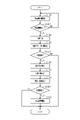
- FIG. 2 is a flowchart showing an example of processing executed by the vehicle interior monitor ECU in one embodiment
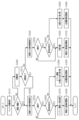
- FIG. 3 is a flowchart showing an example of processing executed by the vehicle interior monitor ECU in one embodiment
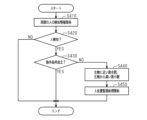
- FIG. 4 is a flowchart showing an example of processing executed by the vehicle interior monitor ECU in one embodiment
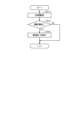
- FIG. 5 is a flowchart showing an example of processing executed by the vehicle interior monitor ECU in one embodiment
- FIG. 6 is a flowchart showing an example of processing executed by the vehicle interior monitor ECU in one embodiment.
- the vehicle interior monitor device is configured by a vehicle interior monitor ECU 100, which is a computer installed in the vehicle Va.
- the in-vehicle monitor ECU 100 monitors the inside of the vehicle, particularly in the parked vehicle Va, and monitors the state of animals P such as pets such as dogs and cats and infants left in the vehicle.
- the vehicle Va of the present embodiment is an electric vehicle equipped with a motor as a driving source.
- the vehicle Va of the present embodiment has an automatic driving function, and is an automatically driving vehicle capable of autonomously traveling in a state in which there is no driving operation by the driver.
- the in-vehicle monitor ECU 100 is connected to other in-vehicle devices such as the in-vehicle sensor 10, the air conditioner ECU 20, the power window ECU 30, the light control glass device 35, and the verification ECU 40 so as to be able to communicate with each other via an in-vehicle network. Also, the in-vehicle monitor ECU 100 is connected to other in-vehicle devices such as the automatic operation control unit 50, the external communication device 80, and the battery ECU 90 via an in-vehicle network so as to be able to communicate with each other.
- Each ECU and control unit is mainly composed of a microcomputer having a processor, a RAM, a memory device, an input/output interface, and a bus connecting them.
- the in-vehicle sensor 10 is a sensor that detects various information regarding the environment inside the vehicle and outputs it as vehicle-interior monitor information.
- the in-vehicle sensor 10 includes, for example, an in-vehicle camera 11, a microphone 12, a thermometer 13, and a room temperature gauge .
- the vehicle interior camera 11 captures an image of the interior of the vehicle and sequentially outputs the imaged data to the vehicle interior monitor ECU 100 .
- the microphone 12 detects sounds in the vehicle interior and sequentially outputs detection results to the vehicle interior monitor ECU 100 .
- the thermometer 13 detects the body temperature of the living body in the vehicle compartment and sequentially outputs the detection results to the vehicle interior monitor ECU 100 .
- the thermometer 13 may be a contact-type sensor attached to a living body, or a non-contact-type sensor such as a thermography.
- the room temperature meter 14 detects the temperature in the vehicle interior and sequentially outputs the detection results to the vehicle interior monitor ECU 100 .
- the in-vehicle sensor 10 may include other sensors such as a CO sensor that detects the concentration of carbon monoxide and the like, and a seat sensor that detects an object on the seat.
- the air conditioner ECU 20 controls the operation of the air conditioner unit 21 and the mist generator 22.
- the air conditioner unit 21 is an air conditioner that includes a blower and a heat pump cycle device that adjusts the temperature of air blown from the blower.
- the air conditioner unit 21 blows out temperature-controlled blowing air from outlets that open at a plurality of locations in the passenger compartment.
- the air conditioner unit 21 can individually adjust the air volume from each outlet using a damper or the like.
- the mist generator 22 is a device that injects misty water into the passenger compartment.
- the vehicle Va may be provided with other air conditioners such as a seat air conditioner that jets air from a seat, and the air conditioner ECU 20 may control these air conditioners.
- the power window ECU 30 is a control device that controls opening and closing of side windows, which are windows provided on each door of the vehicle Va.
- the power window ECU 30 is connected to a plurality of power window motors 31 installed on each door via signal lines.
- the power window ECU 30 is configured to be able to individually control each power window motor 31, and can individually adjust the opening degrees of the plurality of side windows.
- the system composed of the power window ECU 30 and the power window motor 31 has a pinch prevention control function and a trapping prevention control function, and prevents pinching and trapping when opening and closing the side windows.
- the light control glass device 35 includes a light control glass ECU and the like, and switches at least one of the front window, side window, rear window, and roof glass, which are windows provided on the vehicle Va, to a transparent state or an opaque state by an electric signal. It is a switchable device.
- the verification ECU 40 executes verification of the transmitter based on a signal transmitted from a transmitter outside the vehicle such as an electronic key, and if the verification is successful, controls to permit operation of predetermined on-vehicle equipment such as unlocking of the door. It is a device.
- the collation ECU 40 is connected to a plurality of antennas 41 provided on each door handle of the vehicle Va. The collation ECU 40 performs collation based on the signal from the transmitter received by the antenna 41 . Further, the verification ECU 40 can estimate whether or not the transmitter has left the vehicle Va and the moving direction of the transmitter based on the difference in the reception strength of the signals received by the respective antennas 41 .
- the automatic operation control unit 50 is connected to the travel control unit 60 and the vehicle exterior sensor 70 via a communication bus.
- the automatic driving control unit 50 generates a travel plan for the vehicle Va by combining information acquired from the vehicle exterior sensor 70, map information, vehicle current position information, and the like.
- the automatic operation control unit 50 sequentially outputs control commands for the vehicle Va based on the generated travel plan to the travel control unit 60 .
- the vehicle exterior sensor 70 is an autonomous sensor that monitors the surrounding environment of the vehicle Va.
- the vehicle exterior sensor 70 includes, for example, an exterior camera 71, a sonar 72, a lidar, a millimeter wave radar, and the like.
- the vehicle exterior sensor 70 detects moving objects such as people and other vehicles existing around the vehicle Va and stationary objects such as road installations and lane markings, and outputs detection results to the automatic operation control unit 50 .
- the vehicle exterior sensor 70 may include a solar radiation sensor that detects the amount of solar radiation, an outside temperature sensor that detects the outside temperature, and the like.
- the traveling control unit 60 is directly or indirectly electrically connected to the vehicle-mounted sensor group and the vehicle-mounted actuator group mounted on the vehicle Va.
- the vehicle-mounted sensor group is a plurality of sensors that detect the state of the vehicle Va.
- the vehicle-mounted sensor group includes, for example, a vehicle speed sensor, an acceleration sensor, a yaw rate sensor, and the like.
- the in-vehicle actuator group executes acceleration/deceleration control, operation control, and the like of the vehicle Va.
- the in-vehicle actuator group includes, for example, a motor generator drive motor for drive and regeneration, a brake actuator, a steering actuator, and the like.
- the travel control unit 60 is an in-vehicle computer mainly composed of a control circuit having a processor, a RAM, a memory device, and an input/output interface.
- the travel control unit 60 sequentially provides the automatic driving interface unit with state information of the vehicle Va based on the outputs of the vehicle-mounted sensors.
- the travel control unit 60 acquires control commands for driving, braking, steering, etc. from the automatic driving control unit 50 .
- the travel control unit 60 operates the vehicle-mounted actuator group based on the acquired control command, and implements automatic travel based on the travel plan.
- the vehicle-external communication device 80 is configured to enable wireless communication between the vehicle-mounted device and the vehicle-external system.
- the external communication device 80 includes an LTE communication module 81 and a BLE communication module 82 .
- the LTE communication module 81 has a V2N (Vehicle to Cellular Network) communication function in accordance with the LTE (Long Term Evolution) communication standard, and is capable of wireless communication with a communication network NW outside the vehicle.
- a system of an emergency center such as a hospital is connected to the communication network NW.
- the LTE communication module 81 can wirelessly communicate with the terminal MU carried by the user of the vehicle Va via the communication network NW.
- the external communication device 80 may include a communication module capable of wireless communication with the communication network NW in accordance with other communication standards such as 5G, instead of the LTE communication module 81 .
- the BLE communication module 82 is a module that performs communication according to the short-range wireless communication standard of Bluetooth Low Energy (Bluetooth is a registered trademark).
- the BLE communication module 82 can mutually communicate with the mobile terminal M around the vehicle Va, the other parked vehicle Vb, the charging facility CS, etc., by short-range wireless communication.
- the external communication device 80 may be provided with a communication module that performs short-range wireless communication in accordance with other standards such as Wi-Fi (registered trademark) or ZigBee (registered trademark) instead of the BLE communication module 82. good.
- the battery ECU 90 is electrically connected to the battery 92 and the power receiving coil 91 .
- Battery 92 is electrically connected to power receiving coil 91 via a relay.
- the power receiving coil 91 outputs to the battery 92 the power received from the power feeding coils CLv and CLc of the other external vehicle Vb, the charging facility CS, and the like.
- the battery ECU 90 monitors the behavior of the battery 92 of the vehicle Va and controls charging and discharging. When the remaining amount of the battery 92 falls below a preset threshold, the battery ECU 90 notifies the in-vehicle monitor ECU 100 that the remaining amount of the battery 92 is low.
- the battery ECU 90 turns on the relay between the battery 92 and the power receiving coil 91 to start charging the battery 92 by wireless power transmission.
- the in-vehicle monitor ECU 100 is mainly composed of a microcomputer having a processor 101, a RAM 102, a memory device 103, and a bus connecting them, and is connected to the in-vehicle LAN.
- the in-vehicle monitor ECU 100 executes a control program stored in the memory device 103 to implement various controls related to coping with deterioration of the indoor environment according to the situation of the vehicle Va.
- the memory device 103 is a storage medium that non-temporarily stores computer-readable programs and data. Also, the storage medium is implemented by, for example, a semiconductor memory or a magnetic disk.
- the in-vehicle monitor ECU 100 includes, as functional blocks realized by executing the control program described above, a living thing detection unit 110, an environment determination unit 120, an environment improvement unit 130, a remaining amount determination unit 140, a power transmission request unit 150, and a vehicle exterior detection unit. 160.
- the creature detection unit 110 detects creatures P left behind in the vehicle, based on various vehicle interior monitor information acquired by the vehicle interior sensor 10 . More specifically, the living thing detection unit 110 acquires presence/absence information about the living thing P, type information, current position information in the vehicle interior, living body information, and the like.
- the living thing detection unit 110 determines the presence or absence of the living thing P and the type of the living thing P by, for example, image recognition using the imaging data of the vehicle interior camera 11 .
- the living thing detection unit 110 determines the type of the living thing P, for example, the type of animal such as a person, dog, or cat, and the breed such as dog or cat.
- the creature detection unit 110 may determine the presence or absence and type of the creature P based on the signal from the transmitter.
- the creature detection unit 110 identifies the current position of the creature P inside the vehicle.
- the living thing detection unit 110 identifies, as the current position, an area in which the living thing P exists among a plurality of predetermined areas in the vehicle interior, for example, based on the imaging data of the vehicle interior camera 11 .
- the biological detection unit 110 acquires body temperature information detected by the thermometer 13 as biological information.
- the creature detection unit 110 estimates the health condition of the creature P from the breathing sound of the creature P detected by the microphone 12 and acquires it as biological information.
- the living thing detection unit 110 estimates the breathing condition such as the rhythm and depth of breathing from the breathing sound, and calculates the health condition of the living thing P based on the breathing condition as level information of multiple stages such as presence or absence of abnormality.
- the environment determination unit 120 determines the occurrence of deterioration of the vehicle interior environment that is undesirable for the creature P based on the information detected by the vehicle interior sensor 10 . For example, the environment determination unit 120 determines an excessive increase in room temperature as occurrence of environmental deterioration in the vehicle interior. Based on the room temperature information detected by the room temperature meter 14, the environment determination unit 120 determines that environmental deterioration has occurred when the room temperature exceeds the threshold temperature. When the environment in the vehicle interior is unfavorable for the living thing P, the environment determination unit 120 determines whether the environment in the vehicle interior has deteriorated, regardless of whether the environment has become worse than before. Further, the environment determination unit 120 may determine whether or not environmental deterioration has occurred by combining the room temperature information with the biological information.
- the environment determination unit 120 determines whether the health condition of the creature P is deteriorating based on the biological information. For example, the environment determination unit 120 determines deterioration of the health condition based on an excessive increase in body temperature of the organism P, occurrence of an abnormal respiratory condition, or the like. The environment determination unit 120 determines deterioration of the health condition, particularly after starting improvement measures described later.
- the environment improvement unit 130 reduces the electric power of the battery 92 when the environment determination unit 120 determines that the environment has deteriorated when the creature P left in the vehicle interior of the vehicle Va in the parked state is detected.
- the on-vehicle equipment is made to perform improvement measures for improving the environment in the vehicle compartment.
- the environment improvement unit 130 performs a high power improvement device provided in the vehicle Va and a low power Drive at least one of the power improvement devices.
- the high power improvement device consumes a lot of power, but can greatly improve the environment inside the vehicle. It is a device that can improve the environment of
- the high power improvement device of this embodiment includes the air conditioner unit 21 and the low power improvement device includes the power window motor 31 .
- the environment improvement unit 130 of the present embodiment drives at least one of the air conditioner unit 21 and the power window motor 31 according to the conditions described later when the environment determination unit 120 determines that the environment has deteriorated. . Further, when the vehicle Va is parked, the environment improvement unit 130 of the present embodiment determines that the transmitter such as the electronic key has left the vehicle Va before the detection of the creature P is performed by the verification ECU 40. , drives the power window motor 31 to close all the side windows.
- the environment improvement unit 130 may perform other improvement measures, for example, may cause the automatic driving control unit 50 to move the vehicle Va into the shade by autonomous driving as an improvement measure.
- the identification of the shade is performed by the automatic driving control unit 50 or the like based on the information detected by the sensor 70 outside the vehicle, the map information, the position information of the sun, and the like.
- the environment improvement unit 130 may cause the automatic operation control unit 50 to move the vehicle Va to the installation location of the charging facility CS capable of wireless power transmission.
- the information on the installation location of the charging facility CS is acquired through communication with the charging facility CS via the external communication device 80 .
- Position adjustment of the vehicle Va for charging is performed by the automatic driving control unit 50 and the like based on image recognition by the exterior camera 71 .
- the environment improvement unit 130 may operate the mist generator 22 as an improvement measure.
- the environment improvement unit 130 may operate another air conditioner, such as a seat air conditioner that jets air from the seat, as an improvement measure.
- the remaining amount determination unit 140 determines whether the remaining amount of the battery 92 is low. The remaining amount determination unit 140 determines whether or not the remaining amount has decreased based on whether or not there is a notification of remaining amount decrease from the battery ECU 90 .
- the power transmission request unit 150 transmits the on-vehicle device of another vehicle Vb parked around the vehicle Va. Request the IVU to implement wireless transmission of power.
- the power transmission request unit 150 requests the vehicle-mounted IVU to move to a position where wireless power transmission is possible.
- the power transmission request unit 150 becomes capable of wireless power transmission, the power transmission request unit 150 causes the battery ECU 90 to start receiving power from the other vehicle Vb.
- the vehicle exterior detection unit 160 acquires detection information of people present around the vehicle Va based on various detection information from the vehicle exterior sensor 70 . In addition, the vehicle exterior detection unit 160 determines whether or not a person detected around the vehicle Va satisfies an exclusion condition registered in advance as requiring no warning. For example, the outside detection unit 160 communicates with the mobile terminal M possessed by the detected person via the BLE communication module 82, and sets the exclusion condition when the mobile terminal M is authenticated as a pre-registered terminal. It is determined that the conditions are satisfied.
- the environment improvement unit 130 drives the air conditioner unit 21 based on the fact that the remaining amount of the battery 92 has not been determined to be low, and determines that the remaining amount of the battery 92 is low. Only the power window motor 31 is driven based on what has been done.
- the environment improvement unit 130 instructs the air conditioner ECU 20 and the power window ECU 30 to control the air conditioner unit 21 and the power window based on the fact that the battery 92 is not determined to be low in the remaining amount.
- the motor 31 is driven. That is, when it is determined that the environment in the vehicle interior has deteriorated, the environment improvement unit 130 blows temperature-controlled air into the vehicle interior based on the fact that the remaining amount of the battery 92 has not been determined to be low. Open the side window which is a window.
- the environment improvement unit 130 does not drive the air conditioner unit 21 based on the determination that the remaining amount of the battery 92 is low, and the power window ECU 30 supplies power to the power window ECU 30 .
- the window motor 31 is driven. That is, when it is determined that the environment in the vehicle interior has deteriorated, the environment improvement unit 130 opens the side window, which is a window, based on the determination that the remaining amount of the battery 92 is low.
- the environment improvement unit 130 performs power reception based on the request from the power transmission request unit 150. If so, the air conditioner unit 21 is driven. For example, the environment improvement unit 130 determines in advance that power reception based on the request of the power transmission request unit 150 is performed even when it is determined that the environment in the vehicle interior has deteriorated and the remaining amount of the battery 92 is low. If it is determined that it will be executed within the specified time, the air conditioner unit 21 is driven.
- the environment improving unit 130 will turn off the air conditioner. Do not drive the unit 21.
- the environment improvement unit 130 determines whether a person is detected around the vehicle Va. Make the opening of the side window smaller than without it. For example, the environment improvement unit 130 fully opens the side windows when it is determined that the environment in the vehicle interior has deteriorated and no person is detected around the vehicle Va. When it is determined that the environment in the vehicle interior has deteriorated and a person is detected around the vehicle Va, the environment improvement unit 130 sets the opening amount of the side window to, for example, 1 cm. .
- the environment improvement unit 130 increases the degree of opening of the window more than when only a person not satisfying the exclusion condition is detected. do.
- the environment improvement unit 130 fully opens the side windows when a person detected around the vehicle Va satisfies an exclusion condition.
- the environment improvement unit 130 sets the opening amount of the side window to, for example, 1 cm when only a person who does not satisfy the exclusion condition is detected.
- the environment improvement unit 130 changes the opening degree of one of the plurality of side windows that is closer to the current position of the creature P to the other side window that is farther from the current position. less than the opening of one side window of
- the environment improvement unit 130 fully closes the side window of the passenger seat, for example. is, for example, 1 cm.
- the environment improvement unit 130 performs the above-described improvement measures, and then Monitor your current location. Then, if the current position of the creature P changes during monitoring of the current position of the creature P, the environment improvement unit 130 changes the opening degree of one side window closer to the latest current position to the other side window farther from the latest current position. less than the opening of one side window. For example, when the creature P moves from the front passenger seat to the driver's seat, the environment improvement unit 130 fully closes the side window of the driver's seat, and sets the opening amount of the side windows other than the driver's seat to 1 cm, for example.
- the environment improvement unit 130 performs the above-described improvement measures, and after that, when it is determined that the health condition of the living thing P has deteriorated, the automatic driving function provided in the vehicle Va is used in an emergency place such as a hospital or a police station. Execute the move to K. That is, the environment improvement unit 130 performs the above-described improvement measures, and after that, when it is determined that the health condition of the creature P has deteriorated, the automatic operation control unit 50 instructs the automatic driving control unit 50 to move the vehicle Va to the emergency location K by autonomous driving. let it run.
- the environment improvement unit 130 of the present embodiment turns on the light control glass device 35 regardless of whether or not it is determined that the environment in the vehicle interior has deteriorated when the creature P left in the vehicle interior is detected. Drive to make the window opaque.
- FIG. 2 The in-vehicle monitor ECU 100 first executes, as shown in FIG. 2, a determination process as to whether or not improvement measures are to be started. This process is executed, for example, when the vehicle Va enters a parked state, or after a certain period of time has passed since the vehicle Va entered the parked state, or repeatedly executed while the vehicle is parked.
- the in-vehicle monitor ECU 100 first acquires the transmitter information detected by the verification ECU 40 in step S110, and proceeds to step S120.
- the transmitter information includes information indicating whether or not a transmitter such as an electronic key has left the vehicle Va.
- step S120 the in-vehicle monitor ECU 100 determines whether or not a transmitter such as an electronic key has left the vehicle Va. If the in-vehicle monitor ECU 100 determines that the transmitter has not left, the process returns to step S110, and if it determines that the transmitter has left, the process proceeds to step S130.
- step S130 the in-vehicle monitor ECU 100 outputs a control signal to the power window ECU 30 to drive the power window motor 31 to close all the side windows, and the process proceeds to step S140.
- step S140 the in-vehicle monitor ECU 100 acquires the in-vehicle monitor information detected by the in-vehicle sensor 10, and proceeds to step S150.
- step S150 the in-vehicle monitor ECU 100 determines whether or not a creature P has been detected in the vehicle interior based on the in-vehicle monitor information. If it is determined that the living thing P has not been detected, the in-vehicle monitor ECU 100 terminates this flow because it is not necessary to take corrective action.
- step S150 the in-vehicle monitor ECU 100 proceeds to step S160.
- step S160 the in-vehicle monitor ECU 100 drives the light control glass device 35 to make at least one of the windows such as the front window, the side window, the rear window, and the roof glass, for example, all windows opaque. The process proceeds to step S170.
- step S170 the in-vehicle monitor ECU 100 identifies the type and current position of the creature P from the in-vehicle monitor information, and proceeds to step S180.
- step S180 the vehicle interior monitor ECU 100 estimates the environment in the vehicle interior based on room temperature information and the like, and proceeds to step S190.
- step S190 the vehicle interior monitor ECU 100 determines whether the vehicle interior environment has deteriorated based on the estimated vehicle interior environment. If it is determined that the condition has not deteriorated, the flow ends.
- step S190 when it is determined in step S190 that the vehicle interior environment has deteriorated, the vehicle interior monitor ECU 100 proceeds to step S200, starts improvement measures described later, and ends this determination process.
- the in-vehicle monitor ECU 100 performs improvement measures. In-vehicle monitor ECU 100 first acquires information on the remaining amount of battery 92 in step S210, and proceeds to step S220. Next, in step S220, vehicle interior monitor ECU 100 determines whether or not the remaining amount of battery 92 exceeds a threshold. When the in-vehicle monitor ECU 100 determines that the remaining amount of the battery 92 exceeds the threshold, it proceeds to step S230, and when it determines that it falls below the threshold, it proceeds to step S240.
- step S230 the in-vehicle monitor ECU 100 acquires detection information about people present around the vehicle Va based on various detection information from the vehicle exterior sensor 70, and proceeds to step S250.
- step S250 the in-vehicle monitor ECU 100 determines the presence or absence of a person around the vehicle Va based on the detection information. If so, the process proceeds to step S270.
- step S260 the in-vehicle monitor ECU 100 determines whether or not a person detected around the vehicle Va satisfies an exclusion condition registered in advance as requiring no warning. Then, the in-vehicle monitor ECU 100 proceeds to step S270 when it is determined that the exclusion condition is satisfied, and proceeds to step S280 when it is determined that the exclusion condition is not satisfied.
- step S270 the in-vehicle monitor ECU 100 drives the air conditioner unit 21 and the power window motor 31 to fully open all the side windows, and proceeds to step S290.
- step S290 the in-vehicle monitor ECU 100 starts surrounding person monitoring processing, which will be described later, and ends this flow.
- step S280 the in-vehicle monitor ECU 100 drives the air conditioner unit 21 and the power window motor 31 to set the opening amount of the side window far from the current position of the creature P to, for example, 1 cm, and the process proceeds to step S300. do. At this time, the in-vehicle monitor ECU 100 keeps the side window near the current position of the creature P fully closed. In step S300, the in-vehicle monitor ECU 100 starts a human position monitoring process, which will be described later, and ends this flow.
- step S240 the in-vehicle monitor ECU 100 requests the other vehicle Vb parked around the vehicle Va to wirelessly transmit electric power, and proceeds to step S310.
- step S310 vehicle interior monitor ECU 100 determines whether power reception based on the request in step S240 is executed. When the in-vehicle monitor ECU 100 determines that power reception is to be performed, it proceeds to step S230, and when it determines that power reception is not to be performed, it proceeds to step S320.
- step S320 the in-vehicle monitor ECU 100 acquires detection information about people present around the vehicle Va based on various detection information from the vehicle exterior sensor 70, and proceeds to step S330.
- step S330 the in-vehicle monitor ECU 100 determines whether or not there is a person around the vehicle Va based on the detection information.
- the in-vehicle monitor ECU 100 proceeds to step S340 when it is determined that a person is detected, and proceeds to step S350 when it is determined that a person is not detected.
- step S340 the in-vehicle monitor ECU 100 determines whether or not a person detected around the vehicle Va satisfies an exclusion condition registered in advance as requiring no warning. When it is determined that the exclusion condition is satisfied, the in-vehicle monitor ECU 100 proceeds to step S350, and when it is determined that the exclusion condition is not satisfied, the vehicle interior monitor ECU 100 proceeds to step S360.
- step S350 the vehicle interior monitor ECU 100 drives the power window motor 31 to fully open all side windows, and proceeds to step S370.
- step S370 the in-vehicle monitor ECU 100 starts a surrounding person monitoring process, which will be described later, and ends this flow.
- step S360 the in-vehicle monitor ECU 100 drives the power window motor 31 to set the opening amount of the side window far from the current position of the creature P to, for example, 1 cm, and proceeds to step S380. At this time, the in-vehicle monitor ECU 100 keeps the side window near the current position of the creature P fully closed.
- step S380 the in-vehicle monitor ECU 100 starts a human position monitoring process, which will be described later, and ends this flow.
- the in-vehicle monitor ECU 100 executes surrounding person monitoring processing.
- the vehicle interior monitor ECU 100 acquires detection information of people existing around the vehicle Va based on various detection information of the vehicle exterior sensor 70, and proceeds to step S420.
- the in-vehicle monitor ECU 100 determines the presence or absence of a person around the vehicle Va based on the detection information. If so, end this flow.
- step S430 the in-vehicle monitor ECU 100 determines whether or not a person detected around the vehicle Va satisfies an exclusion condition registered in advance as requiring no warning. Then, the in-vehicle monitor ECU 100 terminates this flow when it is determined that the exclusion condition is satisfied, and proceeds to step S440 when it is determined that the exclusion condition is not satisfied.
- step S440 the in-vehicle monitor ECU 100 drives the power window motor 31 to fully close the side window closer to the current position of the creature P, and set the opening amount of the side window farther from the current position of the creature P to 1 cm, for example.
- step S450 the in-vehicle monitor ECU 100 starts a human position monitoring process, which will be described later, and ends this flow. It should be noted that this surrounding person monitoring process is repeatedly executed unless the person position monitoring process is started.
- the in-vehicle monitor ECU 100 executes human position monitoring processing.
- step S510 the in-vehicle monitor ECU 100 specifies the latest current position of the creature P from the in-vehicle monitor information, and proceeds to step S520.
- step S520 the in-vehicle monitor ECU 100 determines whether or not the current position of the creature P has changed. If the vehicle interior monitor ECU 100 determines that the current position has changed, the process proceeds to step S530, and if it determines that the current position has not changed, this flow ends.
- step S530 the in-vehicle monitor ECU 100 drives the power window motor 31, fully closes the side window close to the latest current position of the creature P, and adjusts the opening amount of the side window far from the latest current position of the creature P to, for example, As 1 cm, the flow ends. It should be noted that this human position monitoring process is repeatedly executed unless the parking state of the vehicle Va ends.
- the in-vehicle monitor ECU 100 repeatedly executes the health condition monitoring process after starting the improvement action.
- the in-vehicle monitor ECU 100 first acquires biological information of the creature P in step S610, and proceeds to step S620.
- step S620 the in-vehicle monitor ECU 100 determines whether the health condition of the creature P has deteriorated.
- step S630 the in-vehicle monitor ECU 100 proceeds to step S630 if it is determined that the health condition has deteriorated, and terminates this flow if it is determined that the health condition has not deteriorated.
- step S630 the in-vehicle monitor ECU 100 causes the automatic driving control unit 50, which is an automatic driving function provided in the vehicle Va, to move the vehicle Va to an emergency site K such as a hospital or a police station. finish.
- an emergency site K such as a hospital or a police station. finish.
- the air conditioner unit 21 as a high power improvement device is driven based on the fact that the remaining amount of the battery 92 has not been determined to be low. can be significantly improved.
- the power window motor 31 as a low power improvement device is driven based on the determination that the remaining amount of the battery 92 is low. It is possible to improve the environment inside the vehicle while suppressing the decrease in the amount. Therefore, the environment inside the vehicle can be improved as much as possible while preventing the battery 92 from running out of power at an early stage.
- the side windows are opened. Further, when a person is detected around the vehicle Va, the opening degree of the side window is made smaller than when no person is detected around the vehicle Va. Therefore, even if the side window is opened in order to improve the environment inside the vehicle, it is possible to prevent, for example, the creatures P and articles in the vehicle from being harmed.
- the opening degree of the side window is made larger than when only a person is detected. In this way, when a person detected around the vehicle Va satisfies the exclusion condition, that is, when there is a low possibility of harming living things P and articles in the vehicle interior, the opening degree of the side window is increased more than necessary. It is possible to avoid making the size too small, and the environment in the vehicle can be favorably improved.
- one side window close to the current position of the creature P is opened at the current position. is made smaller than the opening of other side windows far from. For example, in this embodiment, one side window near the current position of the creature P is fully closed. Therefore, for example, it is further suppressed that the organisms P in the passenger compartment are harmed.
- one side window closer to the latest current position is more open than the other side windows farther from the latest current position. made smaller.
- one side window close to the latest current position is fully closed. Therefore, for example, even if the living thing P moves in the vehicle interior, it is further suppressed that the living thing P in the vehicle interior is harmed.
- the vehicle Va is moved to an emergency site K such as a hospital or a police station by the automatic driving function. Therefore, for example, further deterioration of the health condition of the organism P can be suppressed.
- the processor of the above-described embodiment is a processing unit including one or more CPUs (Central Processing Units).
- a processor may be a processing unit including a GPU (Graphics Processing Unit), a DFP (Data Flow Processor), etc., in addition to the CPU.
- the processor may be a processing unit including an FPGA (Field-Programmable Gate Array) and an IP core specialized for specific processing such as AI learning and inference.
- Each arithmetic circuit unit of such a processor may be configured to be individually mounted on a printed circuit board, or may be configured to be mounted on an ASIC (Application Specific Integrated Circuit), FPGA, or the like.
- ASIC Application Specific Integrated Circuit
- the high power improving device is the air conditioner unit 21 and the low power improving device is the power window motor 31, but the present invention is not limited to this.
- the high power improvement device consumes a lot of power, but can greatly improve the environment inside the vehicle.
- the device may be changed as long as it is capable of improving the environment.
- the high power improvement device may include a mist generator 22, a seat air conditioner, and the like. That is, when it is determined that the environment in the vehicle interior has deteriorated, the environment improvement unit 130 drives the air conditioner unit 21, the mist generator 22, and the seat air conditioner based on the fact that the remaining amount of the battery 92 has not been determined to be low. You can let it run.
- the environment improvement unit 130 of the above-described embodiment drives the air conditioner unit 21 and the power window motor 31 based on the fact that the remaining amount of the battery 92 is not determined to be low when it is determined that the environment in the vehicle interior has deteriorated.
- the environment improvement unit 130 drives only the air conditioner unit 21 and the power window motor 31 based on the fact that the battery 92 is not determined to be low. You can choose not to let it happen.
- the vehicle Va is an electric vehicle having a motor as a drive source, but is not limited to this.
- the vehicle Va may be an internal combustion engine vehicle having an internal combustion engine, or a hybrid vehicle having a motor as a drive source and an internal combustion engine.
- the in-vehicle monitor ECU 100 determines in step S220 that the remaining amount of the battery 92 is below the threshold. You may transfer to S320.
- the vehicle interior monitor ECU 100 may start the internal combustion engine to charge the battery 92 when it is determined that the remaining amount of the battery 92 is below the threshold value during improvement measures. .
- the environment improvement unit 130 opens the side windows when it is determined that the environment in the vehicle interior has deteriorated, and when a person is detected around the vehicle Va, the , the opening degree of the side window is reduced, but the present invention is not limited to this.
- the in-vehicle monitor ECU 100 may be configured without the vehicle exterior detector 160 .
- the environment improvement unit 130 may determine the degree of opening of the side window regardless of whether or not a person is detected around the vehicle Va.
- the environment improvement unit 130 when a person detected around the vehicle Va satisfies the exclusion condition, is more sensitive to the side window than when only a person not satisfying the exclusion condition is detected.
- the degree of opening is large, the present invention is not limited to this.
- the environment improvement unit 130 may determine the degree of opening of the side windows regardless of whether the people detected around the vehicle Va satisfy the exclusion condition.
- the environment improvement unit 130 changes the opening degree of one side window closer to the current position of the creature P to the opening degree of the other side window farther from the current position.
- the environment improvement unit 130 may set the opening degree of one side window near the current position of the creature P to the same opening degree of another side window far from the current position of the creature P.
- the environment improvement unit 130 performs improvement measures when it is determined that the environment in the vehicle interior has deteriorated and when a person is detected around the vehicle Va. Although the present position of P is monitored, it is not limited to this. For example, the environment improvement unit 130 does not have to change the opening degree of the side window when the creature P moves.
- the environment improvement unit 130 when it is determined that the health condition of the creature P has deteriorated after the improvement treatment is started, causes the automatic driving function provided in the vehicle Va to perform an emergency operation such as a hospital or a police station.
- an emergency operation such as a hospital or a police station.
- the present invention is not limited to this.
- the environment improvement unit 130 sends a rescue request from the BLE communication module 82 to the mobile terminals M around the vehicle Va, for example. A notification may be sent.
- the environment improvement unit 130 turns on the light control glass device 35 regardless of whether or not it is determined that the environment in the vehicle interior has deteriorated when the creature P left in the vehicle interior is detected.
- the window is made opaque by driving, the present invention is not limited to this.
- the vehicle Va may not include the light control glass device 35 .
- the environment improvement unit 130 may maintain the window in the transparent state, or may change the window from the opaque state to the transparent state when the creature P left in the vehicle interior is detected.
Landscapes
- Engineering & Computer Science (AREA)
- Mechanical Engineering (AREA)
- Physics & Mathematics (AREA)
- Thermal Sciences (AREA)
- Life Sciences & Earth Sciences (AREA)
- Sustainable Development (AREA)
- Sustainable Energy (AREA)
- Power Engineering (AREA)
- Transportation (AREA)
- Air-Conditioning For Vehicles (AREA)
- Fittings On The Vehicle Exterior For Carrying Loads, And Devices For Holding Or Mounting Articles (AREA)
Priority Applications (3)
| Application Number | Priority Date | Filing Date | Title |
|---|---|---|---|
| DE112022004104.8T DE112022004104T5 (de) | 2021-08-23 | 2022-08-17 | Fahrzeuginnenraumüberwachungseinrichtung |
| CN202280057453.0A CN117881575A (zh) | 2021-08-23 | 2022-08-17 | 车室内监控装置 |
| US18/585,253 US20240246503A1 (en) | 2021-08-23 | 2024-02-23 | Vehicle inside view monitor |
Applications Claiming Priority (2)
| Application Number | Priority Date | Filing Date | Title |
|---|---|---|---|
| JP2021-135370 | 2021-08-23 | ||
| JP2021135370A JP2023030311A (ja) | 2021-08-23 | 2021-08-23 | 車室内モニタ装置 |
Related Child Applications (1)
| Application Number | Title | Priority Date | Filing Date |
|---|---|---|---|
| US18/585,253 Continuation US20240246503A1 (en) | 2021-08-23 | 2024-02-23 | Vehicle inside view monitor |
Publications (1)
| Publication Number | Publication Date |
|---|---|
| WO2023026937A1 true WO2023026937A1 (ja) | 2023-03-02 |
Family
ID=85321966
Family Applications (1)
| Application Number | Title | Priority Date | Filing Date |
|---|---|---|---|
| PCT/JP2022/031135 Ceased WO2023026937A1 (ja) | 2021-08-23 | 2022-08-17 | 車室内モニタ装置 |
Country Status (5)
| Country | Link |
|---|---|
| US (1) | US20240246503A1 (cg-RX-API-DMAC7.html) |
| JP (1) | JP2023030311A (cg-RX-API-DMAC7.html) |
| CN (1) | CN117881575A (cg-RX-API-DMAC7.html) |
| DE (1) | DE112022004104T5 (cg-RX-API-DMAC7.html) |
| WO (1) | WO2023026937A1 (cg-RX-API-DMAC7.html) |
Families Citing this family (1)
| Publication number | Priority date | Publication date | Assignee | Title |
|---|---|---|---|---|
| JP2025103440A (ja) * | 2023-12-27 | 2025-07-09 | トヨタ自動車株式会社 | 情報処理装置 |
Citations (4)
| Publication number | Priority date | Publication date | Assignee | Title |
|---|---|---|---|---|
| JP2017218032A (ja) * | 2016-06-08 | 2017-12-14 | 三菱電機株式会社 | 車載装置 |
| JP2018095228A (ja) * | 2016-12-15 | 2018-06-21 | 大日本印刷株式会社 | 移動体用調光システム、移動体、調光フィルムの制御方法、調光フィルムの制御プログラム |
| JP2019150529A (ja) * | 2018-03-06 | 2019-09-12 | 三菱自動車工業株式会社 | 体調異常検出システム及び体調異常検出方法 |
| JP2020128124A (ja) * | 2019-02-07 | 2020-08-27 | 株式会社デンソー | 車室内モニタ装置 |
Family Cites Families (4)
| Publication number | Priority date | Publication date | Assignee | Title |
|---|---|---|---|---|
| JP2005112129A (ja) * | 2003-10-07 | 2005-04-28 | Seiko Epson Corp | 車載モニタシステム及び車内温度制御方法 |
| JP6666376B2 (ja) * | 2018-03-26 | 2020-03-13 | 本田技研工業株式会社 | 車両浄化装置、車両浄化方法、及びプログラム |
| JP7526547B2 (ja) | 2020-02-26 | 2024-08-01 | Hoya株式会社 | マスクブランク、モールド用マスクブランクの製造方法、及びインプリントモールドの製造方法 |
| CN112109653A (zh) * | 2020-07-07 | 2020-12-22 | 上海纳恩汽车技术有限公司 | 一种保障车内滞留人员安全的控制系统及方法 |
-
2021
- 2021-08-23 JP JP2021135370A patent/JP2023030311A/ja active Pending
-
2022
- 2022-08-17 WO PCT/JP2022/031135 patent/WO2023026937A1/ja not_active Ceased
- 2022-08-17 CN CN202280057453.0A patent/CN117881575A/zh active Pending
- 2022-08-17 DE DE112022004104.8T patent/DE112022004104T5/de active Pending
-
2024
- 2024-02-23 US US18/585,253 patent/US20240246503A1/en active Pending
Patent Citations (4)
| Publication number | Priority date | Publication date | Assignee | Title |
|---|---|---|---|---|
| JP2017218032A (ja) * | 2016-06-08 | 2017-12-14 | 三菱電機株式会社 | 車載装置 |
| JP2018095228A (ja) * | 2016-12-15 | 2018-06-21 | 大日本印刷株式会社 | 移動体用調光システム、移動体、調光フィルムの制御方法、調光フィルムの制御プログラム |
| JP2019150529A (ja) * | 2018-03-06 | 2019-09-12 | 三菱自動車工業株式会社 | 体調異常検出システム及び体調異常検出方法 |
| JP2020128124A (ja) * | 2019-02-07 | 2020-08-27 | 株式会社デンソー | 車室内モニタ装置 |
Also Published As
| Publication number | Publication date |
|---|---|
| CN117881575A (zh) | 2024-04-12 |
| DE112022004104T5 (de) | 2024-06-27 |
| JP2023030311A (ja) | 2023-03-08 |
| US20240246503A1 (en) | 2024-07-25 |
Similar Documents
| Publication | Publication Date | Title |
|---|---|---|
| JP7230552B2 (ja) | 車室内モニタ装置 | |
| US9475360B2 (en) | Vehicle safety arrangement, vehicle and a method for increasing vehicle safety | |
| CN112997126B (zh) | 一种车辆召唤方法、智能车以及设备 | |
| EP3736786A1 (en) | Vehicle and method for protecting person left in vehicle | |
| CN107650905A (zh) | 带有乘客探测的车辆远程停车辅助 | |
| US12115908B2 (en) | Passenger protection method and apparatus | |
| US10821937B1 (en) | Active approach detection with macro capacitive sensing | |
| CN103595086B (zh) | 深度放电保护方法和机动车 | |
| CN113859171B (zh) | 车辆的控制方法、装置、设备和存储介质 | |
| CN117711394A (zh) | 车辆的控制方法及控制装置 | |
| CN205239484U (zh) | 基于智能手环的车辆防撞预警系统 | |
| US11872957B2 (en) | Child presence detection warning suppression | |
| KR20200020035A (ko) | 차량내 승객 안전 시스템 | |
| US20190163203A1 (en) | Method and apparatus for vehicle assisted pet tracking | |
| CN108366434A (zh) | 将移动设备通信地联接到车辆的无线局域网 | |
| CN113954598A (zh) | 车辆控制方法、系统、车辆及计算机可读存储介质 | |
| CN114987379A (zh) | 车辆的控制方法、车辆以及计算机存储介质 | |
| CN118306168A (zh) | 基于动物位置的车辆气候控制 | |
| US20240246503A1 (en) | Vehicle inside view monitor | |
| CN115427268B (zh) | 用于检测被锁在车内的乘客的具有人工智能功能的警报 | |
| US12522202B2 (en) | Adaptive vehicle occupant detection and monitoring | |
| US20250024828A1 (en) | Systems and methods to monitor animals in a garage | |
| US12530957B2 (en) | Vehicle occupancy sensor systems and methods | |
| US20240241241A1 (en) | Vehicle occupant detection system | |
| CN118368600A (zh) | 协作传感器共享 |
Legal Events
| Date | Code | Title | Description |
|---|---|---|---|
| 121 | Ep: the epo has been informed by wipo that ep was designated in this application |
Ref document number: 22861225 Country of ref document: EP Kind code of ref document: A1 |
|
| WWE | Wipo information: entry into national phase |
Ref document number: 202280057453.0 Country of ref document: CN |
|
| 122 | Ep: pct application non-entry in european phase |
Ref document number: 22861225 Country of ref document: EP Kind code of ref document: A1 |