WO2023017586A1 - 制御装置、制御方法及び記録媒体 - Google Patents
制御装置、制御方法及び記録媒体 Download PDFInfo
- Publication number
- WO2023017586A1 WO2023017586A1 PCT/JP2021/029648 JP2021029648W WO2023017586A1 WO 2023017586 A1 WO2023017586 A1 WO 2023017586A1 JP 2021029648 W JP2021029648 W JP 2021029648W WO 2023017586 A1 WO2023017586 A1 WO 2023017586A1
- Authority
- WO
- WIPO (PCT)
- Prior art keywords
- autonomous action
- action device
- autonomous
- destination
- task
- Prior art date
- Legal status (The legal status is an assumption and is not a legal conclusion. Google has not performed a legal analysis and makes no representation as to the accuracy of the status listed.)
- Ceased
Links
Images








Classifications
-
- G—PHYSICS
- G05—CONTROLLING; REGULATING
- G05B—CONTROL OR REGULATING SYSTEMS IN GENERAL; FUNCTIONAL ELEMENTS OF SUCH SYSTEMS; MONITORING OR TESTING ARRANGEMENTS FOR SUCH SYSTEMS OR ELEMENTS
- G05B19/00—Program-control systems
- G05B19/02—Program-control systems electric
- G05B19/18—Numerical control [NC], i.e. automatically operating machines, in particular machine tools, e.g. in a manufacturing environment, so as to execute positioning, movement or co-ordinated operations by means of program data in numerical form
- G05B19/4155—Numerical control [NC], i.e. automatically operating machines, in particular machine tools, e.g. in a manufacturing environment, so as to execute positioning, movement or co-ordinated operations by means of program data in numerical form characterised by program execution, i.e. part program or machine function execution, e.g. selection of a program
-
- G—PHYSICS
- G05—CONTROLLING; REGULATING
- G05D—SYSTEMS FOR CONTROLLING OR REGULATING NON-ELECTRIC VARIABLES
- G05D1/00—Control of position, course, altitude or attitude of land, water, air or space vehicles, e.g. using automatic pilots
- G05D1/20—Control system inputs
- G05D1/22—Command input arrangements
- G05D1/221—Remote-control arrangements
-
- G—PHYSICS
- G05—CONTROLLING; REGULATING
- G05D—SYSTEMS FOR CONTROLLING OR REGULATING NON-ELECTRIC VARIABLES
- G05D1/00—Control of position, course, altitude or attitude of land, water, air or space vehicles, e.g. using automatic pilots
- G05D1/60—Intended control result
- G05D1/644—Optimisation of travel parameters, e.g. of energy consumption, journey time or distance
- G05D1/6445—Optimisation of travel parameters, e.g. of energy consumption, journey time or distance for optimising payload operation, e.g. camera or spray coverage
-
- G—PHYSICS
- G05—CONTROLLING; REGULATING
- G05D—SYSTEMS FOR CONTROLLING OR REGULATING NON-ELECTRIC VARIABLES
- G05D1/00—Control of position, course, altitude or attitude of land, water, air or space vehicles, e.g. using automatic pilots
- G05D1/60—Intended control result
- G05D1/69—Coordinated control of the position or course of two or more vehicles
- G05D1/698—Control allocation
-
- G—PHYSICS
- G05—CONTROLLING; REGULATING
- G05D—SYSTEMS FOR CONTROLLING OR REGULATING NON-ELECTRIC VARIABLES
- G05D1/00—Control of position, course, altitude or attitude of land, water, air or space vehicles, e.g. using automatic pilots
- G05D1/60—Intended control result
- G05D1/69—Coordinated control of the position or course of two or more vehicles
- G05D1/698—Control allocation
- G05D1/6985—Control allocation using a lead vehicle, e.g. primary-secondary arrangements
-
- G—PHYSICS
- G06—COMPUTING OR CALCULATING; COUNTING
- G06Q—INFORMATION AND COMMUNICATION TECHNOLOGY [ICT] SPECIALLY ADAPTED FOR ADMINISTRATIVE, COMMERCIAL, FINANCIAL, MANAGERIAL OR SUPERVISORY PURPOSES; SYSTEMS OR METHODS SPECIALLY ADAPTED FOR ADMINISTRATIVE, COMMERCIAL, FINANCIAL, MANAGERIAL OR SUPERVISORY PURPOSES, NOT OTHERWISE PROVIDED FOR
- G06Q10/00—Administration; Management
- G06Q10/06—Resources, workflows, human or project management; Enterprise or organisation planning; Enterprise or organisation modelling
- G06Q10/063—Operations research, analysis or management
- G06Q10/0631—Resource planning, allocation, distributing or scheduling for enterprises or organisations
- G06Q10/06311—Scheduling, planning or task assignment for a person or group
- G06Q10/063112—Skill-based matching of a person or a group to a task
-
- G—PHYSICS
- G06—COMPUTING OR CALCULATING; COUNTING
- G06Q—INFORMATION AND COMMUNICATION TECHNOLOGY [ICT] SPECIALLY ADAPTED FOR ADMINISTRATIVE, COMMERCIAL, FINANCIAL, MANAGERIAL OR SUPERVISORY PURPOSES; SYSTEMS OR METHODS SPECIALLY ADAPTED FOR ADMINISTRATIVE, COMMERCIAL, FINANCIAL, MANAGERIAL OR SUPERVISORY PURPOSES, NOT OTHERWISE PROVIDED FOR
- G06Q10/00—Administration; Management
- G06Q10/06—Resources, workflows, human or project management; Enterprise or organisation planning; Enterprise or organisation modelling
- G06Q10/063—Operations research, analysis or management
- G06Q10/0631—Resource planning, allocation, distributing or scheduling for enterprises or organisations
- G06Q10/06312—Adjustment or analysis of established resource schedule, e.g. resource or task levelling, or dynamic rescheduling
-
- G—PHYSICS
- G08—SIGNALLING
- G08G—TRAFFIC CONTROL SYSTEMS
- G08G1/00—Traffic control systems for road vehicles
-
- G—PHYSICS
- G05—CONTROLLING; REGULATING
- G05B—CONTROL OR REGULATING SYSTEMS IN GENERAL; FUNCTIONAL ELEMENTS OF SUCH SYSTEMS; MONITORING OR TESTING ARRANGEMENTS FOR SUCH SYSTEMS OR ELEMENTS
- G05B2219/00—Program-control systems
- G05B2219/30—Nc systems
- G05B2219/50—Machine tool, machine tool null till machine tool work handling
- G05B2219/50391—Robot
-
- G—PHYSICS
- G05—CONTROLLING; REGULATING
- G05D—SYSTEMS FOR CONTROLLING OR REGULATING NON-ELECTRIC VARIABLES
- G05D2109/00—Types of controlled vehicles
- G05D2109/10—Land vehicles
Definitions
- the present invention relates to a control device, a control method, and a recording medium, and more particularly to a control device, a control method, and a recording medium for controlling the operation of an autonomous action device.
- a multi-agent system is a system that allows multiple robots to work together to perform tasks even in a distributed situation by controlling the actions of multiple robots in a distributed situation. Specific examples of tasks are guidance and guidance of guests, transportation of luggage, cleaning, infrastructure inspection, security, or customer communication (Non-Patent Document 1, Non-Patent Document 2).
- An object of the present invention is to make a plurality of autonomous action devices efficiently execute tasks even in a situation where the plurality of autonomous action devices are dispersed. is.
- a control device includes acquisition means for acquiring information indicating the ability of another autonomous action device to execute a task, the ability of the first autonomous action device to execute the task, and determining means for determining a destination of the first autonomous action device based on the ability of the other autonomous action device to execute the task; Communicate between the first autonomous action device and a second autonomous action device with which the first autonomous action device maintains a communication connection among the other autonomous action devices with which one autonomous action device can communicate. connection means for connecting; and movement control means for moving the first autonomous action device to the destination while maintaining the communication connection between the second autonomous action device and the first autonomous action device.
- information indicating a task execution capability possessed by another autonomous action device is acquired, and the task execution capability possessed by a first autonomous action device and the other A destination of a first autonomous action device is determined based on the ability of the autonomous action device to execute the task, and the first autonomous action device communicates based on the destination of the first autonomous action device.
- a recording medium acquires information indicating a task execution capability possessed by another autonomous action device, the task execution capability possessed by a first autonomous action device, and Determining a destination of a first autonomous action device based on the ability of another autonomous action device to perform the task; and Based on the destination of the first autonomous action device, the first autonomous action device establishing a communication connection between the first autonomous action device and a second autonomous action device with which the first autonomous action device maintains a communication connection among other autonomous action devices with which the action device can communicate; and moving the first autonomous action device to the destination while maintaining the communication connection between the second autonomous action device and the first autonomous action device. contains a program for
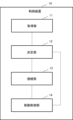
- FIG. 2 is a block diagram showing the configuration of a control device according to Embodiment 1;
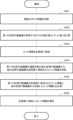
- FIG. 4 is a flowchart showing the operation of the control device according to Embodiment 1;
- 8 is a block diagram showing the configuration of a control device according to Embodiment 2;
- FIG. FIG. 4 is a diagram showing an example of task information for three tasks;
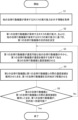
- FIG. 10 is a diagram showing an example of transition of bit information of each of eight autonomous action devices in steps 0 to k; 9 is a flow chart showing the operation of the control device according to the second embodiment;
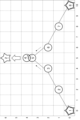
- FIG. 10 is a diagram showing initial position distributions of three tasks and eight autonomous action devices in Embodiment 2;
- FIG. 10 is a diagram showing position distributions of three tasks and eight autonomous action devices after one flow in Embodiment 2;
- FIG. 11 is a block diagram showing the configuration of a control device according to Embodiment 3;
- 10 is a flow chart showing the operation of the control device according to Embodiment 3.
- FIG. 10 is a diagram showing initial position distributions of three tasks and eight autonomous action devices in Embodiment 3;
- FIG. 10 is a diagram showing position distributions of three tasks and eight autonomous action devices after one flow in Embodiment 3;
- FIG. 10 is a diagram showing position distributions of three tasks and eight autonomous action devices after two flows in Embodiment 3;
- FIG. 10 is a diagram showing position distributions of three tasks and eight autonomous action devices after three flows in Embodiment 3;
- FIG. 12 is a diagram showing position distributions of three tasks and eight autonomous action devices after four flows in Embodiment 3;
- FIG. 12 is a diagram showing position distributions of three tasks and eight autonomous action devices after five flows in Embodiment 3;
- 3 is a diagram schematically showing the hardware configuration of a control device according to any one of Embodiments 1-3;
- FIG. 12 is a diagram showing position distributions of three tasks and eight autonomous action devices after four flows in Embodiment 3;
- FIG. 12 is a diagram showing position distributions of three tasks and eight autonomous action devices after five flows in Embodiment 3;
- 3 is a diagram schematically showing the hardware configuration of a control device according to any one of Embodiments 1-3;
- an “autonomous action device” means a device that can act independently and perform tasks such as movement to a destination, avoidance of obstacles, operation, transportation, or communication. means capable equipment.
- autonomous action devices are examples of "autonomous action devices" in each embodiment.
- autonomous action devices are not limited to humanoid robots such as so-called androids.
- the application of the autonomous action device is not limited to any industrial field.
- Embodiment 1 Embodiment 1 will be described with reference to FIGS. 1 and 2.
- FIG. 1 An illustration of an exemplary computing system
- FIG. 1 is a block diagram showing the configuration of a control device 10 according to the first embodiment.
- the control device 10 includes an acquisition unit 11, a determination unit 12, a connection unit 13, and a movement control unit .
- the functions corresponding to each part of the control device 10 are hardware resources such as one or more processors and memories provided in an autonomous action device (hereinafter referred to as a first autonomous action device), and software such as programs and data. It is realized by cooperating with resources to perform information processing.
- the acquisition unit 11 acquires information indicating the task execution ability possessed by other autonomous action devices.
- Acquisition unit 11 is an example of acquisition means. Here, “other" means different from the "first autonomous action device”. Further, the acquisition unit 11 acquires task information.
- Task information is information about the task to be executed.
- the task information includes position information indicating the execution point of the task.
- the acquisition unit 11 uses local communication such as short-range wireless communication from other autonomous action devices within an effective communication range (that is, capable of communication) from the current position of the first autonomous action device. , receives information indicating the task execution ability possessed by another autonomous action device.
- Local communication is, for example, infrared communication, Wi-Fi (registered trademark), Wi-SUN, radio waves, or optical communication.
- the information indicating the ability of other autonomous action devices to execute tasks is information about whether or not the other autonomous action devices are capable of executing tasks, and how efficiently the other autonomous action devices (that is, which to indicate whether the task can be completed in as little time as possible.
- index indicating task execution ability may be the shortness of the process time from the arrival of another autonomous action device to the task execution point until the completion of task execution.
- the acquisition unit 11 outputs to the determination unit 12 information indicating the ability of other autonomous action devices to execute tasks.
- the information indicating the task execution ability possessed by the other autonomous action device includes at least an index indicating the task execution ability possessed by the other autonomous action device.
- the determination unit 12 determines the destination of the first autonomous action device based on the task execution ability of the first autonomous action device and the task execution ability of the other autonomous action devices.
- the determination unit 12 is an example of determination means.
- the determination unit 12 receives from the acquisition unit 11 information indicating the task execution capabilities possessed by other autonomous action devices.
- the determination unit 12 also refers to a storage unit (not shown) to obtain information indicating the task execution capability of the first autonomous action device.
- the determination unit 12 may calculate the ability of the first autonomous action device to execute the task, using the current position of the first autonomous action device and the task execution point as parameters.
- the determination unit 12 acquires information indicating the current position of the first autonomous action device from a GPS (Global Positioning System) signal receiver or the like provided in the first autonomous action device. Then, the determination unit 12 calculates the distance from the current position of the first autonomous action device to the task execution point, and then, based on the length of the distance, the task held by the first autonomous action device Calculate a measure of the ability to execute.
- GPS Global Positioning System
- the determination unit 12 compares the task execution ability of the first autonomous action device acquired as described above with the task execution abilities of the other autonomous action devices. Specifically, the determination unit 12 examines the magnitude relationship between the index indicating the task execution ability possessed by the first autonomous action device and the index of the task execution ability possessed by the other autonomous action devices. .
- the determining unit 12 sets the task execution point to the first autonomous action device. destination.
- the determining unit 12 determines the current position of the other autonomous action device as the first 1 is determined as the destination of the autonomous action device.
- the determination unit 12 notifies the first autonomous action device of the autonomous action device having the highest task execution ability among the other autonomous action devices.
- the current location of the device may be determined as the destination of the first autonomous action device (embodiment 2).
- the determination unit 12 outputs information indicating the determined destination of the first autonomous action device to the connection unit 13 and the movement control unit 14 .
- the information indicating the destination of the first autonomous action device includes at least location information indicating the destination of the first autonomous action device.
- the connection unit 13 is a partner with which the first autonomous action device maintains a communication connection among other autonomous action devices with which the first autonomous action device can communicate, based on the destination of the first autonomous action device. A communication connection is established between the second autonomous action device and the first autonomous action device.
- the connecting portion 13 is an example of connecting means.
- connection unit 13 receives information indicating the destination of the first autonomous action device from the determination unit 12 . If the destination of the first autonomous action device is the task execution point, the connection unit 13 selects any one of the other autonomous action devices that can communicate with the first autonomous action device (this (defined as a second autonomous action device) and the first autonomous action device are connected for communication.
- the connection unit 13 connects the second autonomous action device at the destination A communication connection is established between the action device and the first autonomous action device.
- connection unit 13 sends information specifying the second autonomous action device with which the first autonomous action device should maintain communication connection (for example, the identifier of the second autonomous action device) to the movement control unit. 14.
- connection unit 13 may manage a list of other autonomous action devices with which the first autonomous action device can communicate.
- the connection unit 13 sequentially updates this list according to the current state. For example, if an autonomous action device in the list becomes unable to communicate, the connection unit 13 removes the identification number of that autonomous action device from the list. On the other hand, if it becomes possible to communicate with an autonomous action device that is not on the list, the connection unit 13 adds the autonomous action device number to the list.
- the movement control unit 14 moves the first autonomous action device to the destination while maintaining the communication connection between the second autonomous action device and the first autonomous action device.
- the movement control unit 14 is an example of movement control means.
- the movement control unit 14 receives information indicating the destination of the first autonomous action device from the determination unit 12 .
- the movement control unit 14 also receives, from the connection unit 13, information specifying the second autonomous action device with which the first autonomous action device should maintain communication connection.
- the movement control unit 14 performs control input to the first autonomous action device so as to move the first autonomous action device toward the destination determined by the determination unit 12 .
- the movement control unit 14 controls movement of the first autonomous action device so that the first autonomous action device can maintain communication connection with the second autonomous action device.
- the movement control unit 14 controls the first autonomous action device so that the distance between the first autonomous action device and the second autonomous action device, which is the communication connection destination, does not go out of the communication effective range.
- FIG. 2 is a flowchart showing the flow of processing executed by the control device 10. As shown in FIG.
- the acquisition unit 11 acquires information indicating the task execution ability possessed by another autonomous action device (S1).
- the acquisition unit 11 outputs to the determination unit 12 information indicating the task execution ability possessed by another autonomous action device.
- the determination unit 12 receives from the acquisition unit 11 information indicating the task execution capabilities possessed by other autonomous action devices. Then, the determining unit 12 determines the destination of the first autonomous action device based on the task execution ability of the first autonomous action device and the task execution ability of the other autonomous action devices. (S2). The determination unit 12 outputs information indicating the determined destination of the first autonomous action device to the connection unit 13 and the movement control unit 14 .
- connection unit 13 receives information indicating the destination of the first autonomous action device from the determination unit 12 .
- the connection unit 13 establishes a communication connection with the second autonomous action device with which the first autonomous action device maintains communication among other autonomous action devices with which the first autonomous action device can communicate (S3). ).
- the connection unit 13 outputs information specifying the second autonomous action device to the movement control unit 14 .
- the movement control unit 14 receives information indicating the destination of the first autonomous action device from the determination unit 12 .
- the movement control unit 14 also receives information specifying the second autonomous action device from the connection unit 13 .
- the movement control unit 14 moves the first autonomous action device to the destination while maintaining the communication connection between the second autonomous action device and the first autonomous action device (S4).
- the acquisition unit 11 acquires information indicating the task execution ability possessed by another autonomous action device.
- the determining unit 12 determines the destination of the first autonomous action device based on the task execution ability of the first autonomous action device and the task execution ability of the other autonomous action devices.
- the connection unit 13 is a partner with which the first autonomous action device maintains a communication connection among other autonomous action devices with which the first autonomous action device can communicate, based on the destination of the first autonomous action device.
- a communication connection is established between the second autonomous action device and the first autonomous action device.
- the movement control unit 14 moves the first autonomous action device to the destination while maintaining the communication connection between the second autonomous action device and the first autonomous action device.
- the first autonomous action device based on the comparison result of the task execution ability possessed by the self-autonomous action device with respect to the task execution ability possessed by the other autonomous action devices, Determine your destination. Also, the first autonomous action device moves to the destination of the self-autonomous action device while maintaining the communication connection with the second autonomous action device. Therefore, even in a situation where a plurality of autonomous action devices are dispersed, it is possible to have the plurality of autonomous action devices execute tasks efficiently.
- Embodiment 2 will be described with reference to FIGS. 3 to 8.
- FIG. 1 the same reference numerals are assigned to the same components as in the first embodiment, and the description thereof is omitted.
- the index indicating task execution ability is called a "bit value".
- bit value the index indicating task execution ability. The shorter the distance from the current position of an autonomous action device to the task execution point, the larger the bit value. In other words, the faster an autonomous action device can reach the task execution point, the higher the bit value of that autonomous action device.
- FIG. 3 is a block diagram showing the configuration of the control device 20 according to the second embodiment.
- the control device 20 includes an acquisition section 21 , a determination section 22 , a connection section 13 and a movement control section 14 .
- Functions corresponding to each part of the control device 20 are hardware resources such as one or more processors and memories provided in an autonomous action device (hereinafter referred to as a first autonomous action device) and software such as programs and data. It is realized by cooperating with resources to perform information processing such as analysis.
- a first autonomous action device an autonomous action device
- software such as programs and data. It is realized by cooperating with resources to perform information processing such as analysis.
- the acquisition unit 21 acquires, from other autonomous action devices with which the first autonomous action device can communicate, information indicating task execution capabilities possessed by other autonomous action devices. Acquisition unit 21 is an example of acquisition means. Furthermore, the acquisition unit 21 acquires task information. Task information is information about the task to be executed.
- the task information may be directly input in advance to the first autonomous action device.
- the task information may be obtained by observation by each autonomous action device, or may be input to the first action action device by an operator via a remote network. The operator inputs the latest task information to only one autonomous action device.
- the latest task information is propagated from the autonomous action device that receives the latest task information from the outside to other autonomous action devices. In this way, the latest task information is transmitted to all autonomous action devices.
- the task information is stored in storage units provided in each of the plurality of autonomous action devices.
- FIG. 4 shows an example of task information.
- the task information includes task execution points and priorities, models of autonomous action devices capable of executing tasks, task priorities, bit value calculation methods (formulas), and task statuses (not done, running, achieved).
- the "execution position” in the task information is position coordinates indicating the execution position of the task (for example, the execution point of task No. 1 is (0, 0)).
- "Model” represents the model of the autonomous action device capable of executing the task. Depending on the task, only a specific type may be able to perform the task, or only a specific type may not be able to perform the task.
- the "priority" of a task is an indicator of how important or urgent the task is. The higher the “priority” of a task, the more priority it has to perform over others.
- “Status” of the task information shown in FIG. 4 represents the progress of the task.
- the status for the task is "not executed”.
- the status of that task is "executing”.
- the status of that task becomes "accomplished.”
- the "bit value" of task information is an index that indicates the execution ability of the task.
- a larger bit value indicates a higher task execution ability, and a smaller bit value indicates a lower task execution ability.
- the bit value is obtained by a formula of “(upper limit value) ⁇ (distance from the current position of the autonomous action device to the task execution point)”. This indicates how quickly the first autonomous action device can reach the task execution point.
- the acquisition unit 21 outputs the acquired task information to the determination unit 22 . After that, the acquiring unit 21 regularly or irregularly outputs the latest task information to the determining unit 22 . In one example, the acquisition unit 21 outputs updated task information to the determination unit 22 each time a new task is added.
- the determination unit 22 determines the destination of the first autonomous action device based on the task execution ability of the first autonomous action device and the task execution ability of the other autonomous action devices.
- the determination unit 22 is an example of determination means.
- the determination unit 22 receives task information from the acquisition unit 21 .
- the determining unit 22 calculates an index indicating the ability of the first autonomous action device to execute the task according to the bit value calculation formula (FIG. 4) indicated in the task information.
- the determination unit 22 generates bit information including bit values, and stores the bit information (FIG. 5) in the storage unit (not shown) of the first autonomous action device.
- the determination unit 22 periodically or irregularly receives the latest task information from the acquisition unit 21 .
- the determination unit 22 updates the bit information stored in the storage unit of the first autonomous action device each time the latest task information is received from the acquisition unit 21 .
- An example of bit information update processing will be described later.
- FIG. 1 to No. 8 is a list of bit information stored in respective memory units by up to 8 autonomous action devices.
- step 0 bit information in the storage unit of each autonomous action device.
- bit information of step 0 is [(1, n, n, n) (2, n, n, n) (3, n, n, n)].
- n represents a non-number.
- Each pair of parentheses that make up the bit information ([]) corresponds to one task.
- the four numbers in parentheses represent, from the left, the task number, the identification number of the autonomous action device having the maximum bit value, the maximum bit value, and the source.
- the autonomous action device having the maximum bit value means the autonomous action device with the highest task execution ability.
- Bit information update processing (FIG. 6), which will be described later, is executed by the determination unit 22 for each step from 1 to k (k is a positive integer). 1 to No. Up to 8 autonomous action devices update the bit information stored in their respective storage units.
- FIG. 6 is a flowchart showing the flow of bit information update processing.
- the "first autonomous action device” refers to the No. 1 shown in FIG. 1 to No. Any of up to 8 autonomous action devices.
- the “second autonomous action device” means the No. 1 to No. Among the autonomous action devices up to 8, it is different from the “first autonomous action device”.
- No. for the control device 10 that controls No. 1 autonomous action device No. 1 is the “first autonomous action device”; 2 to No. Autonomous action devices up to 8 are “second autonomic action devices" or "other autonomic action devices”.
- the acquisition unit 21 regularly or irregularly outputs the latest task information to the determination unit 22 .
- the determination unit 22 starts updating the bit information.
- the determination unit 22 receives the latest task information from the acquisition unit 21 (S201).
- the determination unit 22 stores the latest task information received from the acquisition unit 21 in the storage unit of the first autonomous action device as bit information of step 0 shown in FIG.
- the determination unit 22 calculates a bit value, which is an index indicating the ability of the first autonomous action device to execute the task (S202).
- the determination unit 22 stores the calculated bit value in the storage unit of the first autonomous action device as the bit information of step 1 shown in FIG. 5 (S203).
- the bit information of the autonomous action device of 1 is [(1,7.8,1,1) (2,4.2,1,1) (3,3.9,1,1)].
- the contents of the bit information will be described by taking up the left parenthesis.
- the two numbers on the left are for the task identified by the identification number "1" (hereinafter referred to as No. 1 task) with a maximum bit value of "7.8". represents something.
- the two numbers on the right side indicate that the autonomous action device having the maximum bit value is the autonomous action device specified by the identification number "1" (here, No. 1 It indicates that the source of the bit information is the autonomous action device specified by the identification number "1" (that is, the autonomous action device No. 1).
- step 1 each autonomous action device has not yet communicated with other autonomous action devices, so the rightmost number in the parentheses of the bit information in step 1 is always its own identification number. .
- the determination unit 22 receives bit information stored in the storage unit of the other autonomous action device from another autonomous action device with which the first autonomous action device can communicate (S204). Then, the determination unit 22 compares the bit information stored in the storage unit of the first autonomous action device and the bit information received from other autonomous action devices (S205).
- the determination unit 22 updates the bit information stored in the storage unit based on the comparison result in step S205 (S206). Specifically, when the bit value included in the bit information received from the other autonomous action device is greater than the bit value included in the bit information stored in the storage unit of the first autonomous action device, the determination unit 22 updates the bit information stored in the memory of the first autonomous action device.
- No. No. 1 autonomous action device is No. 1; Assume that communication with only the autonomous action device No. 3 is possible.
- the bit information of the autonomous action device 3 is [(1,5.9,3,3) (2,4.9,3,3) (3,3.9,3,3)]. From now on, No. Regarding task No. 2, The bit value of the autonomous action device of 3 is "4.9".
- the determination unit 22 selects No. No. 1 stored in the storage unit of the autonomous action device No. 1; 2 update the bit information about the task (Fig. 5).
- the determination unit 22 determines No. Among the four numbers forming the bit information related to task 2, the second number from the left (representing the maximum bit value) is replaced from "4.2" to "4.9".
- the determination unit 22 determines No. Of the four numbers that make up the bit information related to task 2, the third number from the left (representing the identification number of the autonomous action device that holds the maximum bit value) and the rightmost number (representing the identification number of the sender ) and are both replaced with “3”. In this way, no. No. 1 stored in the storage unit of the autonomous action device No. 1; 2 tasks are updated in step 2 (FIG. 5).
- the determination unit 22 repeats each process from step S204 to step S206.
- step k shown in FIG. 1 to No. The bit information stored in the storage units of the autonomous action device groups up to 8 match. However, among the four numbers forming the bit information, the rightmost number (identification number of the autonomous action device of the transmission source) is excluded. Note that the value of k is determined according to the number of autonomous action device groups.
- bit information can be transmitted by step (m ⁇ 1) even between the two most distant autonomous action devices in the communication network of the autonomous action device group.
- the determination unit 22 determines the destination of the first autonomous action device by referring to the bit information stored in the storage unit of the first autonomous action device.
- the determination unit 22 determines whether the second number from the right (identification number of the autonomous action device having the maximum bit value) of the four numbers that make up the bit information about the task is "1"
- the determination unit 22 determines whether the execution point of the task is set as the destination of the first autonomous action device.
- the determining unit 22 determines the current position of the other autonomous action device specified by the rightmost number (identification number of the sender's autonomous action device) among the four numbers forming the bit information related to the task. , as the destination of the first autonomous action device.
- the determination unit 22 determines the destination of the first autonomous action device for the task with the highest priority (FIG. 4) according to the above-described procedure. decide.
- the connection unit 13 selects a partner with which the first autonomous action device maintains a communication connection among other autonomous action devices with which the first autonomous action device can communicate.
- the second autonomous action device and the first autonomous action device are connected for communication.
- the movement control unit 14 moves the first autonomous action device to the destination while maintaining the communication connection between the second autonomous action device and the first autonomous action device.
- FIG. 7 An example of movement control of an autonomous action device
- FIG. 4 An example of movement control of the autonomous action device by the movement control unit 14 will be described with reference to FIGS. 7 and 8.
- FIG. 4 No. which has the highest priority (FIG. 4). How each autonomous action device is moved when task 3 has not been executed will be specifically described with reference to the drawings.
- Fig. 7 shows No. 1 to No. Execution points of tasks up to 3 and task numbers.
- 1 to No. 8 is a map showing the initial positions of autonomous action devices up to 8; No. Regarding task No. 3, Eight autonomous devices possess the maximum bit value (FIG. 5).
- the autonomous action device No. 8 is No. 8. Let the execution point of the task of 3 be a destination.
- the autonomous action device 8 corresponds to the partner with which the communication connection is maintained. Therefore, No. By the connection unit 13 of the control device 20 provided in the autonomous action device No. 7, No. 7 autonomous action device and No. A communication connection is established with the autonomous action device of 8 .
- No. No. 8 autonomous action device is No. 8; Start moving toward the execution point of task 3.
- No. The movement control unit 14 of the control device 20 provided in the No. 8 autonomous action device is Move the 8 autonomous action devices.
- thin arrows indicate the direction of tracking, and thick arrows indicate the direction of the destination.
- No. No. 7 autonomous behavior device is No. 7. Head to the current position of the autonomous action device 8 and start moving. No. The movement control unit 14 of the control device 20 provided in No. 7 autonomous action device is Move the 7 autonomous action devices.
- Fig. 8 shows No. No. 8 autonomous action device. It shows that the execution point of task 3 has been reached. At this point, or before or after that, No. No. 7 autonomous behavior device is No. 7. It has arrived at the position where the 8 autonomous action device was.
- No. No. 7 autonomous action device is No. 7; By moving so as to track the No. 8 autonomous action device, No. No. 7 autonomous behavior device is No. 7. A communication connection with 8 autonomous action devices can be maintained. Also, No. No. 8 autonomous action device is No. 8; 7 without going outside the effective range of communication with the No. 7 autonomous action device. It is possible to move to the execution point of task 3.
- No. No. 7 autonomous action device is No. 7; Since it moves so as to track the autonomous action device of No. 8, It is possible to reduce restrictions on the movement of the autonomous action device of No. 8.
- the acquisition unit 21 acquires information indicating the task execution ability possessed by another autonomous action device.
- the determining unit 22 determines the destination of the first autonomous action device based on the task execution ability of the first autonomous action device and the task execution ability of the other autonomous action devices.
- the connection unit 13 is a partner with which the first autonomous action device maintains a communication connection among other autonomous action devices with which the first autonomous action device can communicate, based on the destination of the first autonomous action device.
- a communication connection is established between the second autonomous action device and the first autonomous action device.
- the movement control unit 14 moves the first autonomous action device to the destination while maintaining the communication connection between the second autonomous action device and the first autonomous action device.
- the first autonomous action device based on the comparison result of the task execution ability possessed by the self-autonomous action device with respect to the task execution ability possessed by the other autonomous action devices, Determine your destination. Also, the first autonomous action device moves to the destination of the self-autonomous action device while maintaining the communication connection with the second autonomous action device. Therefore, even in a situation in which a plurality of autonomous action devices are dispersed, it is possible to cause the plurality of autonomous action devices to efficiently execute tasks.
- information indicating the task execution ability of each autonomous action device is exchanged between groups of autonomous action devices. can be executed efficiently.
- Embodiment 3 will be described with reference to FIGS. 9 to 16.
- FIG. in the third embodiment the same reference numerals are given to the same constituent elements as in the first or second embodiment, and the description thereof is omitted.
- a configuration capable of dynamically changing the communication connection destination of the first autonomous action device will be described.
- FIG. 9 is a block diagram showing the configuration of the control device 30 according to the third embodiment.
- the control device 30 includes an acquisition section 11, a determination section 12, a connection section 13, and a movement control section .
- the control device 30 further includes a determination section 35 .
- Functions corresponding to each part of the control device 30 are hardware resources such as one or more processors and memories provided in an autonomous action device (hereinafter referred to as a first autonomous action device) and software such as programs and data. It is realized by cooperating with resources to perform information processing such as analysis.
- a first autonomous action device an autonomous action device
- the determination unit 35 determines whether the first autonomous action device can reach the destination while maintaining the communication connection between the second autonomous action device and the first autonomous action device.
- the determination unit 35 is an example of determination means.
- the determination unit 35 determines a first control input for moving the first autonomous action device to the destination, and a second control input in consideration of maintaining a communication connection with the second autonomous action device. , respectively. When the difference between the first control input and the second control input is equal to or less than the threshold, the determination unit 35 determines that the first autonomous action device can reach the destination.
- the determination unit 35 determines that the first autonomous action device maintains communication connection with the second autonomous action device. determines that it is impossible to reach the destination. This is because the first autonomous action device cannot reach the destination considering that the first autonomous action device cannot leave the effective range of communication with the second autonomous action device.
- the determination unit 35 determines whether the first autonomous action device establishes a communication connection with the second autonomous action device based on the restrictions on the movement of the second autonomous action device and the effective range of communication. It is determined whether or not it is possible to reach the destination while maintaining.
- the determination unit 35 instructs the connection unit 13 to It instructs to release the communication connection between the second autonomous action device and the first autonomous action device.
- FIG. 10 is a flowchart showing the flow of processing executed by the control device 30. As shown in FIG.
- the acquisition unit 11 acquires information indicating the task execution ability possessed by another autonomous action device (S1).
- the acquisition unit 11 outputs to the determination unit 12 information indicating the task execution ability possessed by another autonomous action device.
- the determination unit 12 receives from the acquisition unit 11 information indicating the task execution capabilities possessed by other autonomous action devices. Then, the determining unit 12 determines the destination of the first autonomous action device based on the task execution ability of the first autonomous action device and the task execution ability of the other autonomous action devices. (S2). The determination unit 12 outputs information indicating the determined destination of the first autonomous action device to the connection unit 13 and the movement control unit 14 .
- connection unit 13 receives information indicating the destination of the first autonomous action device from the determination unit 12 .
- the connection unit 13 establishes a communication connection with the second autonomous action device with which the first autonomous action device maintains communication among other autonomous action devices with which the first autonomous action device can communicate (S3). ).
- the connection unit 13 outputs information specifying the second autonomous action device to the movement control unit 14 .
- the movement control unit 14 receives information indicating the destination of the first autonomous action device from the determination unit 12 .
- the movement control unit 14 also receives information specifying the second autonomous action device from the connection unit 13 .
- the movement control unit 14 moves the first autonomous action device to the destination while maintaining the communication connection between the second autonomous action device and the first autonomous action device (S4).
- the determination unit 35 determines whether the first autonomous action device can reach the destination while maintaining the communication connection between the second autonomous action device and the first autonomous action device ( S5).
- the flow returns to step S3.
- the connection unit 13 reselects the second autonomous action device with which the first autonomous action device maintains communication from other autonomous action devices with which the first autonomous action device can communicate. do.
- connection unit 13 establishes communication connection between the reselected second autonomous action device and the first autonomous action device. After that, the flow proceeds to step S4 described above.
- FIG. 11 An example of movement control of an autonomous action device
- FIG. 4 An example of the movement control of the autonomous action device by the movement control unit 14 will be described with reference to FIGS. 11 to 16.
- FIG. 4 No. which has the highest priority (FIG. 4). How each autonomous action device is moved when task 3 is being executed will be specifically described with reference to the drawings.
- connection unit 13 the “movement control unit 14", or the “determination unit 35", No. It means the connection unit 13, the movement control unit 14, or the determination unit 35 of the control device 30 provided in one autonomous action device.
- Fig. 11 shows No. 1 to No. Execution points of tasks up to 3 and task numbers.
- 1 to No. 8 is a map showing the initial positions of autonomous action devices up to 8; No. No. 8 autonomous action device is No. 8; It is at the execution point of the 3 tasks.
- No. 1 has the second highest priority, No. Let the execution point of task 1 be the destination.
- other autonomous action devices are No.
- the current position of the autonomous action device which is the source of the bit information related to task 1, is set as the destination.
- No. 1 to No. Focus on the movement of the autonomous action device of 3.
- No. 2 to No. For the autonomous action device of No. 3, No.
- the autonomous action device No. 1 is No. 1. Since it is the source of the bit information related to task 1, it corresponds to the other party with which the communication connection is maintained.
- No. 2 to No. 3 autonomous action device and No. A communication connection is established with one autonomous action device.
- the connection unit 13 of the control device 30 provided in the No. 2 autonomous action device is the No. 2 autonomous action device. 1 autonomous action device and No. 2 autonomous action devices are connected for communication.
- No. The connection unit 13 of the control device 30 provided in the autonomous action device No. 3 is connected to No. 3. 1 autonomous action device and No. 3 autonomous action devices are connected for communication.
- No. The autonomous action device No. 1 is No. 1. Start moving toward the execution point of task 1. When the movement control unit 14 selects No. Move the autonomous action device 1 to the destination.
- thin arrows indicate the direction of tracking, and thick arrows indicate the direction of the destination.
- No. 2 to No. 3 are both No. 3 autonomous action devices. Start moving toward the current position of the autonomous action device 1. No. The movement control unit 14 of the control device 30 provided in No. 2 autonomous action device is Move the 2 autonomous action devices. Also, No. The movement control unit 14 of the control device 30 provided in the autonomous action device No. 3 is Move the autonomous action device of 3.
- the determination unit 35 determines No. 2 to No. 3 autonomous action device (which is an example of the second autonomous action device) and No. While maintaining the communication connection with the No. 1 autonomous action device (which is an example of the first autonomous action device), the No. It is determined whether or not one autonomous action device can reach the destination.
- the determination unit 35 determines No. 3 autonomous action device and No. 1 while maintaining the communication connection with the No. 1 autonomous action device. 1 autonomous action device determines that it is impossible to reach the destination. In this case, the determination unit 35 determines No. 3 autonomous action device and No. It instructs to release the communication connection with one autonomous action device.
- the connection unit 13 receives the No. 3 autonomous action device and No. receive an instruction to release a communication connection with one autonomous action device;
- the connecting portion 13 is No. 2 autonomous action device and No. No. 3 autonomous action device (both of which are examples of the second autonomous action device).
- 3 autonomous action device and No. The communication connection with the first autonomous action device (which is an example of the first autonomous action device) is released.
- the cross mark indicates the release of the communication connection.
- the connecting part 13 is No. 2 and the connection unit 13 of the control device 30 provided in the No. 2 autonomous action device; No. 3 with respect to the connection unit 13 of the control device 30 provided in the No. 3 autonomous action device. 2 autonomous action device and No. Request communication connection with 3 autonomous action devices.
- the movement control unit 14 uses No. 1 autonomous action device, which is the destination No. Move to the execution point of task 1.
- Fig. 12 shows No. 1 autonomous behavior device is No. It indicates that the execution point of task 1 has been reached. At this point, or before or after that, No. No. 2 autonomous action device. It has arrived at the position where the autonomous action device of 1 was.
- No. No. 2 autonomous action device is No. 2; By moving so as to track the autonomous action device of No. 1, No. 2 autonomous action device. A communication connection can be maintained with one autonomous action device. Also, No. The autonomous action device No. 1 is No. 1. 2 without going outside the effective range of communication with the No. 2 autonomous action device. It can move to the execution point of one task.
- No. No. 2 autonomous action device is No. 2; Since it moves so as to track the autonomous action device of No. 1, It is possible to reduce restrictions on the movement of one autonomous action device.
- connection unit 13 the connection unit 13
- movement control unit 14 or the “determination unit 35”
- determination unit 35 the connection unit 13
- the movement control unit 14 or the determination unit 35 of the control device 30 provided in the autonomous action device 4.
- No. 1 autonomous behavior device is No. After arriving at the execution point of task No. 1, The autonomous action device No. 4 has the lowest priority. Start moving toward the execution point of task 2. When the movement control unit 14 selects No. Move the autonomous action device of 4 to the destination.
- thin arrows indicate the direction of tracking, and thick arrows indicate the direction of the destination.
- No. 3, No. 5, and no. No. 6 autonomous action device is No. 6; Start moving toward the current position of the autonomous action device 4.
- the movement control unit 14 of the control device 30 provided in the autonomous action device No. 3 is Move the autonomous action device of 3.
- No. The movement control unit 14 of the control device 30 provided in the autonomous action device of No. 5 is Move the 5 autonomous action devices.
- No. The movement control unit 14 of the control device 30 provided in No. 6 autonomous action device is Move 6 autonomous action devices.
- Fig. 13 shows the No. 3 to No. 6 autonomous action devices have started to move toward their own destinations.
- the determination unit 35 determines No. 3, No. 5, and no. 6 autonomous action device (which is an example of the second autonomous action device) and No. While maintaining the communication connection with the No. 4 autonomous action device (which is an example of the first autonomous action device), the No. 4 determines whether or not it is possible to reach the destination.
- the determination unit 35 determines No. 3 and no. 6 autonomous action device and No. 4 while maintaining the communication connection with the No. 4 autonomous action device. 4 autonomous action devices determine that it is impossible to reach the destination. In this case, the determination unit 35 determines No. 3 and no. 6 autonomous action devices and No. 4 instructs to release the communication connection with the autonomous action device.
- the connection unit 13 receives the No. 3 and no. 6 autonomous action device and No. 4 receives an instruction to release the communication connection with the autonomous action device.
- the connecting portion 13 is No. 3 autonomous action device and No. 5 autonomous action device (both of which are examples of the second autonomous action device); 3 autonomous action device and No. 4 (which is an example of the first autonomous action device) is disconnected.
- the movement control unit 14 uses No. 4 autonomous action device, which is the destination No. Move to the execution point of task 2.
- Fig. 14 shows No. 3 autonomous action device, and No. 4 indicates that the communication connection with the autonomous action device No. 4 has been released.
- connection part 13 is No. 6 autonomous action device and No. 5 autonomous action device (both of which are examples of the second autonomous action device); 6 autonomous action device and No. 4 (which is an example of the first autonomous action device) is disconnected. More precisely, the connection 13 is No. 5 and the connection unit 13 of the control device 30 provided in the No. 5 autonomous action device; No. 6 with respect to the connection unit 13 of the control device 30 provided in the No. 6 autonomous action device. 6 autonomous action device and No. Request communication connection with 5 autonomous action devices.
- Fig. 15 shows No. 6 autonomous action device, and No. 4 indicates that the communication connection with the autonomous action device No. 4 has been released.
- No. 5 autonomous action device and No. Communication connection is established between 4 autonomous action devices.
- No. 3 and no. 6 autonomous action devices and No. Communication connection is established between 5 autonomous action devices.
- Fig. 16 shows No. No. 4 autonomous action device. 2 indicates that the execution point of the task No. 2 has been reached. At this point, or before or after that, No. No. 5 autonomous action device is No. 5; 4 has arrived at the position where the autonomous action device was. No. No. 5 autonomous action device is No. 5; By moving so as to track the autonomous action device of No. 4, No. 5 autonomous action device is No. 5; A communication connection can be maintained with 4 autonomous action devices. Also, No. No. 4 autonomous action device. Without going out of the effective range of communication with the autonomous action device of No. 5, 2 can be moved to the execution point of the task.
- No. No. 5 autonomous action device is No. 5; No. 4 moves so as to track the autonomous action device No. 4. 4, it is possible to reduce restrictions on the movement of the autonomous action device.
- the movable range of the first autonomous action device is reduced. can be expanded. As a result, the first autonomous action device can reach its destination while maintaining communication connections with the remaining second autonomous action devices.
- the acquisition unit 21 acquires information indicating the task execution ability possessed by another autonomous action device.
- the determining unit 22 determines the destination of the first autonomous action device based on the task execution ability of the first autonomous action device and the task execution ability of the other autonomous action devices.
- the connection unit 13 is a partner with which the first autonomous action device maintains a communication connection among other autonomous action devices with which the first autonomous action device can communicate, based on the destination of the first autonomous action device.
- a communication connection is established between the second autonomous action device and the first autonomous action device.
- the movement control unit 14 moves the first autonomous action device to the destination while maintaining the communication connection between the second autonomous action device and the first autonomous action device.
- the first autonomous action device based on the comparison result of the task execution ability possessed by the self-autonomous action device with respect to the task execution ability possessed by the other autonomous action devices, Determine your destination. Also, the first autonomous action device moves to the destination of the self-autonomous action device while maintaining the communication connection with the second autonomous action device. Therefore, even in a situation where a plurality of autonomous action devices are dispersed, it is possible to have the plurality of autonomous action devices execute tasks efficiently.
- the determination unit 35 maintains the communication connection between the second autonomous action device and the first autonomous action device, while the first autonomous action device reaches the destination. is reachable. According to the determination result, the connection unit 13 releases the communication connection between the part of the second autonomous action device and the first autonomous action device. As a result, the first autonomous action device can reach the destination while maintaining communication connections with the remaining second autonomous action devices.
- FIG. 17 is a block diagram showing an example of the hardware configuration of the information processing device 900. As shown in FIG. 17
- the information processing device 900 includes the following configuration as an example.
- a program 904 that implements the function of each component is stored in advance in the storage device 905 or the ROM 902, for example, and is loaded into the RAM 903 and executed by the CPU 901 as necessary.
- the program 904 may be supplied to the CPU 901 via the communication network 909 or may be stored in the recording medium 906 in advance, and the drive device 907 may read the program and supply it to the CPU 901 .
- control devices 10, 20, and 30 described in the first to third embodiments are implemented as hardware. Therefore, the same effects as those described in the above embodiment can be obtained.
- (Appendix 1) Acquisition means for acquiring information indicating a task execution ability possessed by another autonomous action device; determining means for determining the destination of the first autonomous action device based on the task execution ability of the first autonomous action device and the task execution ability of the other autonomous action device; , Based on the destination of the first autonomous action device, out of other autonomous action devices with which the first autonomous action device can communicate, the first autonomous action device maintains a communication connection with the first connection means for connecting the second autonomous action device and the first autonomous action device for communication; a movement control means for moving the first autonomous action device to the destination while maintaining a communication connection between the second autonomous action device and the first autonomous action device. .
- connection means selects a partner with which the first autonomous action device communicates from the second autonomous action device to the first autonomous action device.
- the control device according to appendix 1, wherein the control device is changed to any other autonomous action device with which the device can communicate.
- the connecting means may connect any two of the second autonomous action devices that can communicate with each other between the second autonomous action devices.
- the determining means determines whether or not the first autonomous action device can reach the destination, based on restrictions on movement of the second autonomous action device and an effective communication range.
- the control device according to appendix 4.
- the determining means determines the destination of the first autonomous action device based on the execution point of the task with the highest priority among the plurality of tasks and the current position of the other autonomous action device.
- the control device according to any one of appendices 1 to 7, characterized in that:
- (Appendix 11) Acquiring information indicating a task execution ability possessed by another autonomous action device; determining a destination of the first autonomous action device based on the ability of the first autonomous action device to execute the task and the ability of the other autonomous action device to execute the task; Based on the destination of the first autonomous action device, out of other autonomous action devices with which the first autonomous action device can communicate, the first autonomous action device maintains a communication connection with the first communicatively connecting the second autonomous action device and the first autonomous action device; causing a computer to move the first autonomous action device to the destination while maintaining the communication connection between the second autonomous action device and the first autonomous action device.
- a non-transitory recording medium that stores a program.
- control device 11 acquisition unit 12 determination unit 13 connection unit 14 movement control unit 20 control device 21 acquisition unit 22 determination unit 30 control device 35 determination unit
Landscapes
- Engineering & Computer Science (AREA)
- Business, Economics & Management (AREA)
- Human Resources & Organizations (AREA)
- Physics & Mathematics (AREA)
- General Physics & Mathematics (AREA)
- Automation & Control Theory (AREA)
- Aviation & Aerospace Engineering (AREA)
- Radar, Positioning & Navigation (AREA)
- Remote Sensing (AREA)
- Entrepreneurship & Innovation (AREA)
- Economics (AREA)
- Strategic Management (AREA)
- Educational Administration (AREA)
- Manufacturing & Machinery (AREA)
- Human Computer Interaction (AREA)
- Operations Research (AREA)
- Marketing (AREA)
- Quality & Reliability (AREA)
- Tourism & Hospitality (AREA)
- General Business, Economics & Management (AREA)
- Theoretical Computer Science (AREA)
- Game Theory and Decision Science (AREA)
- Development Economics (AREA)
- Control Of Position, Course, Altitude, Or Attitude Of Moving Bodies (AREA)
- Traffic Control Systems (AREA)
Priority Applications (3)
| Application Number | Priority Date | Filing Date | Title |
|---|---|---|---|
| US18/294,598 US12487585B2 (en) | 2021-08-11 | 2021-08-11 | Control device, control method, and recording medium |
| JP2023541171A JP7586330B2 (ja) | 2021-08-11 | 2021-08-11 | 制御装置、制御方法及びプログラム |
| PCT/JP2021/029648 WO2023017586A1 (ja) | 2021-08-11 | 2021-08-11 | 制御装置、制御方法及び記録媒体 |
Applications Claiming Priority (1)
| Application Number | Priority Date | Filing Date | Title |
|---|---|---|---|
| PCT/JP2021/029648 WO2023017586A1 (ja) | 2021-08-11 | 2021-08-11 | 制御装置、制御方法及び記録媒体 |
Publications (1)
| Publication Number | Publication Date |
|---|---|
| WO2023017586A1 true WO2023017586A1 (ja) | 2023-02-16 |
Family
ID=85200114
Family Applications (1)
| Application Number | Title | Priority Date | Filing Date |
|---|---|---|---|
| PCT/JP2021/029648 Ceased WO2023017586A1 (ja) | 2021-08-11 | 2021-08-11 | 制御装置、制御方法及び記録媒体 |
Country Status (3)
| Country | Link |
|---|---|
| US (1) | US12487585B2 (https=) |
| JP (1) | JP7586330B2 (https=) |
| WO (1) | WO2023017586A1 (https=) |
Citations (6)
| Publication number | Priority date | Publication date | Assignee | Title |
|---|---|---|---|---|
| JP2000295168A (ja) * | 1999-04-09 | 2000-10-20 | Matsushita Electric Ind Co Ltd | 移動体通信レベルデータ管理方法及び移動体通信レベルデータ管理装置 |
| JP2009205644A (ja) * | 2008-02-29 | 2009-09-10 | Mitsubishi Electric Corp | 複数ロボットによる探索監視方法 |
| JP2017182188A (ja) * | 2016-03-28 | 2017-10-05 | 株式会社ダイヘン | 移動体配置装置 |
| JP2018197731A (ja) * | 2017-05-25 | 2018-12-13 | ホーチキ株式会社 | 防災連携システム |
| JP2019003602A (ja) * | 2017-05-17 | 2019-01-10 | サビオーク インコーポレイテッドSavioke, Inc. | 非ローカル情報を用いてロボットサービスを制約するシステムおよび方法 |
| JP2019075066A (ja) * | 2017-09-15 | 2019-05-16 | サビオーク インコーポレイテッドSavioke, Inc. | 構成に基づく優先傾向を用いたモバイルロボットのためのルート計画 |
Family Cites Families (5)
| Publication number | Priority date | Publication date | Assignee | Title |
|---|---|---|---|---|
| JP4613345B2 (ja) | 2005-05-31 | 2011-01-19 | 独立行政法人産業技術総合研究所 | センサネットワークロボットシステム |
| JP6532279B2 (ja) * | 2015-04-28 | 2019-06-19 | パナソニック インテレクチュアル プロパティ コーポレーション オブ アメリカPanasonic Intellectual Property Corporation of America | 移動制御方法および移動制御装置 |
| US10814474B2 (en) * | 2018-12-20 | 2020-10-27 | Autonomous Roadway Intelligence, Llc | Identification and localization of mobile robots |
| US12253860B2 (en) * | 2020-11-12 | 2025-03-18 | Accenture Global Solutions Limited | Fault tolerant systems for distributed supervision of robots |
| US20220171385A1 (en) * | 2020-11-30 | 2022-06-02 | At&T Intellectual Property I, L.P. | Competitive and collaborative autonomous vehicle task performance |
-
2021
- 2021-08-11 JP JP2023541171A patent/JP7586330B2/ja active Active
- 2021-08-11 WO PCT/JP2021/029648 patent/WO2023017586A1/ja not_active Ceased
- 2021-08-11 US US18/294,598 patent/US12487585B2/en active Active
Patent Citations (6)
| Publication number | Priority date | Publication date | Assignee | Title |
|---|---|---|---|---|
| JP2000295168A (ja) * | 1999-04-09 | 2000-10-20 | Matsushita Electric Ind Co Ltd | 移動体通信レベルデータ管理方法及び移動体通信レベルデータ管理装置 |
| JP2009205644A (ja) * | 2008-02-29 | 2009-09-10 | Mitsubishi Electric Corp | 複数ロボットによる探索監視方法 |
| JP2017182188A (ja) * | 2016-03-28 | 2017-10-05 | 株式会社ダイヘン | 移動体配置装置 |
| JP2019003602A (ja) * | 2017-05-17 | 2019-01-10 | サビオーク インコーポレイテッドSavioke, Inc. | 非ローカル情報を用いてロボットサービスを制約するシステムおよび方法 |
| JP2018197731A (ja) * | 2017-05-25 | 2018-12-13 | ホーチキ株式会社 | 防災連携システム |
| JP2019075066A (ja) * | 2017-09-15 | 2019-05-16 | サビオーク インコーポレイテッドSavioke, Inc. | 構成に基づく優先傾向を用いたモバイルロボットのためのルート計画 |
Also Published As
| Publication number | Publication date |
|---|---|
| JP7586330B2 (ja) | 2024-11-19 |
| US12487585B2 (en) | 2025-12-02 |
| US20240345564A1 (en) | 2024-10-17 |
| JPWO2023017586A1 (https=) | 2023-02-16 |
Similar Documents
| Publication | Publication Date | Title |
|---|---|---|
| EP4141599B1 (en) | Multi-robot route planning | |
| US9354631B2 (en) | Handheld device rendering of plant model portion based on task | |
| US9945677B1 (en) | Automated lane and route network discovery for robotic actors | |
| WO2017077621A1 (ja) | 移動体移動システム及び移動経路選択方法 | |
| CN116700298B (zh) | 路径规划方法、系统、设备及存储介质 | |
| JP7485192B2 (ja) | 制御装置、制御システム、制御方法および制御プログラム | |
| CN106597881A (zh) | 基于分布式决策算法的云服务机器人 | |
| Abbenseth et al. | Cloud-based cooperative navigation for mobile service robots in dynamic industrial environments | |
| Tian et al. | ihero: Interactive human-oriented exploration and supervision under scarce communication | |
| Sim et al. | Safe interval rrt* for scalable multi-robot path planning in continuous space | |
| CN118672283A (zh) | 一种零碳仓库无人机巡检方法、系统、设备及存储介质 | |
| WO2023017586A1 (ja) | 制御装置、制御方法及び記録媒体 | |
| Anant et al. | Automated guided vehicle in an industrial environment | |
| CN115061439A (zh) | 任务调度方法和装置、计算设备及存储介质 | |
| WO2020188818A1 (ja) | 無人機制御システム、方法、無人機、指示端末、及びコンピュータ可読媒体 | |
| KR20240120349A (ko) | 다수 이동체 운영을 위한 동적 맵 기반 통합 계획 최적화 시스템 및 방법 | |
| Kenzin et al. | Situational awareness for distributed mobile robot teams under limited communication. | |
| Marinica et al. | Distributed collision avoidance for autonomous vehicles: world automata representation | |
| CN112985414A (zh) | 一种多智能体导航方法、装置、设备和介质 | |
| Barman et al. | Multi-agent path finding using time-extended graphs using auctions | |
| Subramanian et al. | A Study on seamless information sharing between robots in identifying the optimal path: An agent based approach | |
| Kenzin et al. | Emergency broadcasting strategies for distributed robotic groups under limited communication | |
| Zhang et al. | Multi-agent combinatorial path finding with heterogeneous task duration | |
| Romeo et al. | Multirobot persistent patrolling in communication-restricted environments | |
| Omiya et al. | Development of Agent System for Multi-robot Search. |
Legal Events
| Date | Code | Title | Description |
|---|---|---|---|
| 121 | Ep: the epo has been informed by wipo that ep was designated in this application |
Ref document number: 21953481 Country of ref document: EP Kind code of ref document: A1 |
|
| WWE | Wipo information: entry into national phase |
Ref document number: 2023541171 Country of ref document: JP |
|
| WWE | Wipo information: entry into national phase |
Ref document number: 18294598 Country of ref document: US |
|
| NENP | Non-entry into the national phase |
Ref country code: DE |
|
| 122 | Ep: pct application non-entry in european phase |
Ref document number: 21953481 Country of ref document: EP Kind code of ref document: A1 |