WO2022230792A1 - 感光性着色樹脂組成物、硬化物、隔壁及び画像表示装置 - Google Patents
感光性着色樹脂組成物、硬化物、隔壁及び画像表示装置 Download PDFInfo
- Publication number
- WO2022230792A1 WO2022230792A1 PCT/JP2022/018667 JP2022018667W WO2022230792A1 WO 2022230792 A1 WO2022230792 A1 WO 2022230792A1 JP 2022018667 W JP2022018667 W JP 2022018667W WO 2022230792 A1 WO2022230792 A1 WO 2022230792A1
- Authority
- WO
- WIPO (PCT)
- Prior art keywords
- group
- less
- mass
- acid
- preferable
- Prior art date
- Legal status (The legal status is an assumption and is not a legal conclusion. Google has not performed a legal analysis and makes no representation as to the accuracy of the status listed.)
- Ceased
Links
Classifications
-
- G—PHYSICS
- G03—PHOTOGRAPHY; CINEMATOGRAPHY; ANALOGOUS TECHNIQUES USING WAVES OTHER THAN OPTICAL WAVES; ELECTROGRAPHY; HOLOGRAPHY
- G03F—PHOTOMECHANICAL PRODUCTION OF TEXTURED OR PATTERNED SURFACES, e.g. FOR PRINTING, FOR PROCESSING OF SEMICONDUCTOR DEVICES; MATERIALS THEREFOR; ORIGINALS THEREFOR; APPARATUS SPECIALLY ADAPTED THEREFOR
- G03F7/00—Photomechanical, e.g. photolithographic, production of textured or patterned surfaces, e.g. printing surfaces; Materials therefor, e.g. comprising photoresists; Apparatus specially adapted therefor
- G03F7/004—Photosensitive materials
- G03F7/027—Non-macromolecular photopolymerisable compounds having carbon-to-carbon double bonds, e.g. ethylenic compounds
- G03F7/032—Non-macromolecular photopolymerisable compounds having carbon-to-carbon double bonds, e.g. ethylenic compounds with binders
-
- C—CHEMISTRY; METALLURGY
- C08—ORGANIC MACROMOLECULAR COMPOUNDS; THEIR PREPARATION OR CHEMICAL WORKING-UP; COMPOSITIONS BASED THEREON
- C08F—MACROMOLECULAR COMPOUNDS OBTAINED BY REACTIONS ONLY INVOLVING CARBON-TO-CARBON UNSATURATED BONDS
- C08F2/00—Processes of polymerisation
- C08F2/44—Polymerisation in the presence of compounding ingredients, e.g. plasticisers, dyestuffs, fillers
-
- C—CHEMISTRY; METALLURGY
- C08—ORGANIC MACROMOLECULAR COMPOUNDS; THEIR PREPARATION OR CHEMICAL WORKING-UP; COMPOSITIONS BASED THEREON
- C08F—MACROMOLECULAR COMPOUNDS OBTAINED BY REACTIONS ONLY INVOLVING CARBON-TO-CARBON UNSATURATED BONDS
- C08F2/00—Processes of polymerisation
- C08F2/46—Polymerisation initiated by wave energy or particle radiation
- C08F2/48—Polymerisation initiated by wave energy or particle radiation by ultraviolet or visible light
- C08F2/50—Polymerisation initiated by wave energy or particle radiation by ultraviolet or visible light with sensitising agents
-
- C—CHEMISTRY; METALLURGY
- C08—ORGANIC MACROMOLECULAR COMPOUNDS; THEIR PREPARATION OR CHEMICAL WORKING-UP; COMPOSITIONS BASED THEREON
- C08F—MACROMOLECULAR COMPOUNDS OBTAINED BY REACTIONS ONLY INVOLVING CARBON-TO-CARBON UNSATURATED BONDS
- C08F290/00—Macromolecular compounds obtained by polymerising monomers on to polymers modified by introduction of aliphatic unsaturated end or side groups
- C08F290/08—Macromolecular compounds obtained by polymerising monomers on to polymers modified by introduction of aliphatic unsaturated end or side groups on to polymers modified by introduction of unsaturated side groups
- C08F290/14—Polymers provided for in subclass C08G
-
- G—PHYSICS
- G02—OPTICS
- G02B—OPTICAL ELEMENTS, SYSTEMS OR APPARATUS
- G02B5/00—Optical elements other than lenses
- G02B5/20—Filters
-
- G—PHYSICS
- G03—PHOTOGRAPHY; CINEMATOGRAPHY; ANALOGOUS TECHNIQUES USING WAVES OTHER THAN OPTICAL WAVES; ELECTROGRAPHY; HOLOGRAPHY
- G03F—PHOTOMECHANICAL PRODUCTION OF TEXTURED OR PATTERNED SURFACES, e.g. FOR PRINTING, FOR PROCESSING OF SEMICONDUCTOR DEVICES; MATERIALS THEREFOR; ORIGINALS THEREFOR; APPARATUS SPECIALLY ADAPTED THEREFOR
- G03F7/00—Photomechanical, e.g. photolithographic, production of textured or patterned surfaces, e.g. printing surfaces; Materials therefor, e.g. comprising photoresists; Apparatus specially adapted therefor
- G03F7/004—Photosensitive materials
- G03F7/027—Non-macromolecular photopolymerisable compounds having carbon-to-carbon double bonds, e.g. ethylenic compounds
- G03F7/028—Non-macromolecular photopolymerisable compounds having carbon-to-carbon double bonds, e.g. ethylenic compounds with photosensitivity-increasing substances, e.g. photoinitiators
-
- G—PHYSICS
- G03—PHOTOGRAPHY; CINEMATOGRAPHY; ANALOGOUS TECHNIQUES USING WAVES OTHER THAN OPTICAL WAVES; ELECTROGRAPHY; HOLOGRAPHY
- G03F—PHOTOMECHANICAL PRODUCTION OF TEXTURED OR PATTERNED SURFACES, e.g. FOR PRINTING, FOR PROCESSING OF SEMICONDUCTOR DEVICES; MATERIALS THEREFOR; ORIGINALS THEREFOR; APPARATUS SPECIALLY ADAPTED THEREFOR
- G03F7/00—Photomechanical, e.g. photolithographic, production of textured or patterned surfaces, e.g. printing surfaces; Materials therefor, e.g. comprising photoresists; Apparatus specially adapted therefor
- G03F7/004—Photosensitive materials
- G03F7/09—Photosensitive materials characterised by structural details, e.g. supports, auxiliary layers
- G03F7/105—Photosensitive materials characterised by structural details, e.g. supports, auxiliary layers having substances, e.g. indicators, for forming visible images
-
- H—ELECTRICITY
- H10—SEMICONDUCTOR DEVICES; ELECTRIC SOLID-STATE DEVICES NOT OTHERWISE PROVIDED FOR
- H10K—ORGANIC ELECTRIC SOLID-STATE DEVICES
- H10K50/00—Organic light-emitting devices
- H10K50/10—OLEDs or polymer light-emitting diodes [PLED]
-
- H—ELECTRICITY
- H10—SEMICONDUCTOR DEVICES; ELECTRIC SOLID-STATE DEVICES NOT OTHERWISE PROVIDED FOR
- H10K—ORGANIC ELECTRIC SOLID-STATE DEVICES
- H10K59/00—Integrated devices, or assemblies of multiple devices, comprising at least one organic light-emitting element covered by group H10K50/00
- H10K59/10—OLED displays
- H10K59/12—Active-matrix OLED [AMOLED] displays
- H10K59/122—Pixel-defining structures or layers, e.g. banks
-
- Y—GENERAL TAGGING OF NEW TECHNOLOGICAL DEVELOPMENTS; GENERAL TAGGING OF CROSS-SECTIONAL TECHNOLOGIES SPANNING OVER SEVERAL SECTIONS OF THE IPC; TECHNICAL SUBJECTS COVERED BY FORMER USPC CROSS-REFERENCE ART COLLECTIONS [XRACs] AND DIGESTS
- Y10—TECHNICAL SUBJECTS COVERED BY FORMER USPC
- Y10S—TECHNICAL SUBJECTS COVERED BY FORMER USPC CROSS-REFERENCE ART COLLECTIONS [XRACs] AND DIGESTS
- Y10S430/00—Radiation imagery chemistry: process, composition, or product thereof
- Y10S430/1053—Imaging affecting physical property or radiation sensitive material, or producing nonplanar or printing surface - process, composition, or product: radiation sensitive composition or product or process of making binder containing
- Y10S430/1055—Radiation sensitive composition or product or process of making
- Y10S430/114—Initiator containing
Definitions
- the present invention relates to a photosensitive colored resin composition.
- the present invention also relates to a cured product obtained by curing the photosensitive colored resin composition, partition walls formed of the cured product, and an image display device comprising the partition walls.
- An image display device including an organic electroluminescent element (also called organic electroluminescence or organic EL) has excellent visibility and responsiveness such as contrast and viewing angle, low power consumption, reduction in thickness and weight, and display main body. It is attracting attention as a next-generation flat panel display (FPD) because it can be made flexible.
- An organic electroluminescent element has a structure in which an organic layer including a light-emitting layer or various functional layers is sandwiched between a pair of electrodes, at least one of which is translucent. 2. Description of the Related Art
- An image display device displays an image by driving a panel in which an organic electroluminescence element is arranged for each pixel. Conventionally, such an organic electroluminescence device is manufactured by forming partition walls (banks) on a substrate and then laminating a light-emitting layer or various functional layers in a region surrounded by the partition walls.
- Patent Document 1 describes a photosensitive colored resin composition in which a specific organic pigment, a specific dispersant and a specific resin are combined.
- Patent Document 2 describes a photosensitive colored resin composition containing a specific resin and a specific initiator.
- Patent Document 3 describes a photosensitive colored resin composition in which two specific resins are combined.
- Patent Document 4 describes a photosensitive colored resin composition in which a specific resin and an organic pigment having a specific specific surface area are combined.
- the photosensitive colored resin composition When producing colored barrier ribs by photolithography, the photosensitive colored resin composition is coated on a substrate, dried under reduced pressure in a vacuum drying apparatus, then heated and dried on a hot plate, further image-exposed, and developed. It is cured by high temperature treatment.
- a vacuum drying apparatus In the above-described development process, depending on the combination of the developer and the photosensitive colored resin composition, film-like peeling occurs, causing problems such as clogging of the piping of the developing device.
- TMAH tetramethylammonium hydroxide
- the partition walls In order to suppress display defects of the image display device, the partition walls must have low surface roughness and excellent surface smoothness.
- the present invention has been made in view of the above circumstances, and an object of the present invention is to provide a photosensitive colored resin composition capable of forming a cured product excellent in development form and surface smoothness.
- An object of the present invention is to provide a cured product obtained by curing a photosensitive colored resin composition, partition walls formed from the cured product, and an image display device comprising the partition walls.
- the present inventors found that the above problems can be solved by including a specific alkali-soluble resin in the photosensitive colored resin composition, leading to the present invention.
- a photosensitive colored resin composition containing (a) an alkali-soluble resin, (b) a photopolymerization initiator, (c) an ethylenically unsaturated compound and (d) a coloring agent,
- the (a) alkali-soluble resin is characterized by containing an alkali-soluble resin (a1) having a cardo skeleton and an alkali-soluble resin (a2) having a partial structure represented by the following general formula (a2-1).
- a photosensitive colored resin composition containing an alkali-soluble resin, (b) a photopolymerization initiator, (c) an ethylenically unsaturated compound and (d) a coloring agent.
- the benzene ring in formula (a1-1) may be further substituted with any substituent.
- R 1 represents a hydrogen atom or a methyl group.
- X represents O, S, CO, or a direct bond.
- n represents an integer of 0 to 4 and * represents a bond.
- a photosensitive colored resin composition capable of forming a cured product having excellent development form and surface smoothness.
- it comprises a cured product with excellent development form and surface smoothness, partition walls formed from a cured product with excellent development form and surface smoothness, and partition walls formed from a cured product with excellent development form and surface smoothness.
- An image display device can be provided.
- (meth)acryl means “one or both of acryl and methacryl”.
- Total solid content means all components other than the solvent in the photosensitive colored resin composition. Even if a component other than the solvent is liquid at normal temperature, the component is not included in the solvent but is included in the total solid content.
- a numerical range represented by "-" means a range including the numerical values before and after "-" as lower and upper limits.
- a partition wall material means a bank material, a wall material, and a wall material, and similarly, a partition wall means a bank, a wall, and a wall.
- a partition wall is for partitioning a functional layer (organic layer) in, for example, an active drive type organic electroluminescence device. It is used to form pixels and the like comprising a functional layer and partition walls by applying and drying by means of the above.
- the weight average molecular weight refers to the polystyrene equivalent weight average molecular weight (Mw) by GPC (gel permeation chromatography).
- the acid value represents an acid value in terms of effective solid content, unless otherwise specified, and is calculated by neutralization titration.
- the photosensitive colored resin composition of the present invention is (a) an alkali-soluble resin (b) a photopolymerization initiator (c) an ethylenically unsaturated compound (d) a colorant, and optionally, for example, a dispersant, a pigment derivative, a surfactant, and a liquid repellent , ultraviolet absorbers, polymerization inhibitors, thermal polymerization initiators, amino compounds, silane coupling agents, inorganic fillers, adhesion improvers, and other compounding ingredients. Each compounding component is usually used in a state of being dissolved or dispersed in a solvent.
- the photosensitive colored resin composition of the present invention contains (a) an alkali-soluble resin.
- an alkali-soluble resin By containing an alkali-soluble resin, it becomes possible to develop with an alkali developer, and patterns such as partition walls can be formed.
- the (a) alkali-soluble resin in the photosensitive colored resin composition of the present invention includes an alkali-soluble resin (a1) having a cardo skeleton, and an alkali-soluble resin having a partial structure represented by the following general formula (a2-1) ( Contains a2).
- R 2 in formula (a2-1) represents a hydrogen atom or a methyl group. * represents a bond.
- the development form and surface smoothness during development are improved.
- alkali-soluble resin (a1) is not particularly limited as long as it contains a cardo skeleton, but from the viewpoint of surface smoothness, it preferably has a partial structure represented by the following general formula (a1-1). .
- the benzene ring in formula (a1-1) may be further substituted with any substituent.
- R 1 represents a hydrogen atom or a methyl group.
- X represents O, S, CO, or a direct bond.
- n represents an integer of 0 to 4, and * represents a bond.
- R 1 is preferably a hydrogen atom.
- X is preferably a direct bond from the viewpoint of surface smoothness.
- the benzene ring in formula (a1-1) may be unsubstituted or further substituted with any substituent.
- Optional substituents include, for example, a methyl group and a methoxy group. From the viewpoint of surface roughness, a methyl group is preferred.
- repeating unit structure represented by formula (a1-1) is preferably a repeating unit structure represented by general formula (a1-2) below.
- the benzene ring in formula (a1-2) may be unsubstituted or optionally substituted with any substituent.
- R 1 , X, n, and the optional substituents are the same as in formula (a1-1).
- R X1 , R X2 and R X3 each independently represent a hydrogen atom or a polybasic acid residue. * represents a bond.
- a polybasic acid residue means a monovalent group obtained by removing one OH group from a polybasic acid.
- polybasic acids include maleic acid, succinic acid, itaconic acid, phthalic acid, tetrahydrophthalic acid, hexahydrophthalic acid, pyromellitic acid, trimellitic acid, benzophenonetetracarboxylic acid, methylhexahydrophthalic acid, and endomethylene. Tetrahydrophthalic acid, chlorendic acid, methyltetrahydrophthalic acid, biphenyltetracarboxylic acid.
- maleic acid, succinic acid, itaconic acid, phthalic acid, tetrahydrophthalic acid, hexahydrophthalic acid, pyromellitic acid, trimellitic acid, and biphenyltetracarboxylic acid are preferred, and tetrahydrophthalic acid and biphenyltetracarboxylic acid are preferred. is more preferred, and tetrahydrophthalic acid is even more preferred.
- the acid value of the alkali-soluble resin (a1) is not particularly limited, but is preferably 20 mgKOH/g or more, more preferably 40 mgKOH/g or more, still more preferably 60 mgKOH/g or more, even more preferably 80 mgKOH/g or more, and 100 mgKOH/g.
- the above are particularly preferred.
- it is preferably 150 mgKOH/g or less, more preferably 140 mgKOH/g or less, still more preferably 130 mgKOH/g or less, and even more preferably 120 mgKOH/g or less.
- the above upper and lower limits can be combined arbitrarily. For example, 20 to 150 mgKOH/g is preferred, 40 to 150 mgKOH/g is more preferred, 60 to 140 mgKOH/g is even more preferred, 80 to 130 mgKOH/g is even more preferred, and 100 to 120 mgKOH/g is particularly preferred.
- the weight average molecular weight (Mw) of the alkali-soluble resin (a1) is not particularly limited, it is preferably 1000 or more, more preferably 2000 or more, even more preferably 3000 or more, even more preferably 4000 or more, and particularly preferably 5000 or more. Also, it is preferably 20,000 or less, more preferably 15,000 or less, even more preferably 10,000 or less, even more preferably 8,000 or less, and particularly preferably 6,000 or less. When the content is equal to or higher than the lower limit, the development adhesion tends to be improved, and when the content is equal to or lower than the upper limit, the developability tends to be improved.
- the above upper and lower limits can be combined arbitrarily. For example, 1,000 to 20,000 is preferred, 2,000 to 15,000 is more preferred, 3,000 to 10,000 is even more preferred, 4,000 to 8,000 is even more preferred, and 5,000 to 6,000 is particularly preferred.
- the content of the alkali-soluble resin (a1) relative to the total amount of the alkali-soluble resin is preferably 10% by mass or more, more preferably 20% by mass or more, still more preferably 30% by mass or more, and even more preferably 40% by mass or more.
- 60% by mass or more is particularly preferable, 90% by mass or less is preferable, 80% by mass or less is more preferable, 75% by mass or less is even more preferable, and 70% by mass or less is particularly preferable.
- the surface smoothness tends to be improved by setting it to the above lower limit or more, and the developing form tends to be improved by setting it to the above upper limit or less.
- the above upper and lower limits can be combined arbitrarily. For example, 10 to 90% by mass is preferable, 20 to 80% by mass is more preferable, 40 to 75% by mass is even more preferable, and 60 to 70% by mass is particularly preferable.
- alkali-soluble resin (a2) The alkali-soluble resin (a2) in the photosensitive colored resin composition of the present invention has a partial structure represented by the following general formula (a2-1).
- R 2 in formula (a2-1) represents a hydrogen atom or a methyl group. * represents a bond.
- R 2 is preferably a methyl group from the viewpoint of reducing residues.
- repeating unit structure represented by formula (a2-1) is preferably a repeating unit structure represented by general formula (a2-2) below.
- R 2 in formula (a2-2) has the same definition as R 2 in formula (a2-1). * represents a bond. RY represents a hydrogen atom or a polybasic acid residue.
- Polybasic acid residue is synonymous with formula (a1-2).
- Examples of polybasic acids include maleic acid, succinic acid, itaconic acid, phthalic acid, tetrahydrophthalic acid, hexahydrophthalic acid, pyromellitic acid, trimellitic acid, benzophenonetetracarboxylic acid, methylhexahydrophthalic acid, and endomethylene. Tetrahydrophthalic acid, chlorendic acid, methyltetrahydrophthalic acid, biphenyltetracarboxylic acid.
- maleic acid, succinic acid, itaconic acid, phthalic acid, tetrahydrophthalic acid, hexahydrophthalic acid, pyromellitic acid, trimellitic acid, and biphenyltetracarboxylic acid are preferred, and tetrahydrophthalic acid and biphenyltetracarboxylic acid are preferred. is more preferred, and tetrahydrophthalic acid is even more preferred.
- the acid value of the alkali-soluble resin (a2) is not particularly limited, but is preferably 20 mgKOH/g or more, more preferably 40 mgKOH/g or more, still more preferably 60 mgKOH/g or more, even more preferably 80 mgKOH/g or more, and 90 mgKOH/g.
- the above are particularly preferred.
- it is preferably 150 mgKOH/g or less, more preferably 140 mgKOH/g or less, still more preferably 130 mgKOH/g or less, and even more preferably 120 mgKOH/g or less.
- the above upper and lower limits can be combined arbitrarily. For example, 20 to 150 mgKOH/g is preferred, 40 to 150 mgKOH/g is more preferred, 60 to 140 mgKOH/g is even more preferred, 80 to 130 mgKOH/g is even more preferred, and 90 to 120 mgKOH/g is particularly preferred.
- the weight average molecular weight (Mw) of the alkali-soluble resin (a2) is not particularly limited, it is preferably 1000 or more, more preferably 1500 or more, even more preferably 2000 or more, even more preferably 2500 or more, and particularly preferably 3000 or more. Also, it is preferably 20,000 or less, more preferably 15,000 or less, even more preferably 10,000 or less, even more preferably 6,000 or less, and particularly preferably 4,000 or less. When the content is equal to or higher than the lower limit, the development adhesion tends to be improved, and when the content is equal to or lower than the upper limit, the developability tends to be improved.
- the above upper and lower limits can be combined arbitrarily. For example, 1,000 to 20,000 is preferred, 1,500 to 15,000 is more preferred, 2,000 to 10,000 is even more preferred, 2,500 to 6,000 is even more preferred, and 3,000 to 4,000 is particularly preferred.
- the content of the alkali-soluble resin (a2) with respect to the total amount of the alkali-soluble resin is preferably 10% by mass or more, more preferably 20% by mass or more, still more preferably 25% by mass or more, and particularly preferably 30% by mass or more.
- the content is preferably 90% by mass or less, more preferably 70% by mass or less, still more preferably 50% by mass or less, and particularly preferably 40% by mass or less.
- the content is at least the above lower limit, the development pattern tends to be improved, and when the content is at most the above upper limit, the surface smoothness tends to be improved.
- the above upper and lower limits can be combined arbitrarily. For example, 10 to 90% by mass is preferable, 20 to 70% by mass is more preferable, 25 to 50% by mass is even more preferable, and 30 to 40% by mass is particularly preferable.
- the content ratio of the alkali-soluble resin (a2) to the alkali-soluble resin (a1) is not particularly limited, but is preferably 5 parts by mass or more, more preferably 15 parts by mass or more, relative to 100 parts by mass of the alkali-soluble resin (a1). It is more preferably 30 parts by mass or more, preferably 300 parts by mass or less, more preferably 150 parts by mass or less, and even more preferably 100 parts by mass or less.
- the content is at least the above lower limit, the development pattern tends to be improved, and when the content is at most the above upper limit, the surface smoothness tends to be improved.
- the above upper and lower limits can be combined arbitrarily. For example, it is preferably 5 to 300 parts by mass, more preferably 15 to 150 parts by mass, and even more preferably 30 to 100 parts by mass.
- the (a) alkali-soluble resin in the photosensitive colored resin composition of the present invention is an alkali-soluble resin other than the alkali-soluble resin (a1) and the alkali-soluble resin (a2) (hereinafter, sometimes referred to as "other alkali-soluble resin" There is.) may be contained.
- acrylic copolymer resin (A11) having an ethylenically unsaturated group in the side chain (hereinafter, sometimes abbreviated as "acrylic copolymer resin (A11)") .) is preferably included. From the viewpoint of the linearity of the pattern, it is preferable that the epoxy (meth)acrylate resin (A12) is included.
- the (a) alkali-soluble resin includes an acrylic copolymer resin (A11) and an epoxy (meth)acrylate resin (A12).
- Acrylic copolymer resin (A11) has an ethylenically unsaturated group in a side chain. By having an ethylenically unsaturated group, it is believed that photocuring by exposure occurs to form a stronger film, thermal deformation during post-baking after development is suppressed, and resolution is improved. In addition, since photocuring by exposure occurs to form a strong film, there is a tendency to reduce the residue generated when weakly hardenable portions in the film are scraped off during development and adhere to the substrate.
- the partial structure containing a side chain having an ethylenically unsaturated group, which the acrylic copolymer resin (A11) has, is not particularly limited. It preferably has a partial structure represented by (I).
- R 111 and R 112 each independently represent a hydrogen atom or a methyl group. * represents a bond.
- partial structures represented by formula (I) partial structures represented by the following general formula (I') are preferable from the viewpoint of sensitivity and alkali developability.
- R 111 and R 112 each independently represent a hydrogen atom or a methyl group.
- R x represents a hydrogen atom or a polybasic acid residue. * represents a bond.
- R x represents a hydrogen atom or a polybasic acid residue.
- a polybasic acid residue means a monovalent group obtained by removing one OH group from a polybasic acid or its anhydride.
- polybasic acids include maleic acid, succinic acid, itaconic acid, phthalic acid, tetrahydrophthalic acid, hexahydrophthalic acid, pyromellitic acid, trimellitic acid, benzophenonetetracarboxylic acid, methylhexahydrophthalic acid, and endomethylene. Tetrahydrophthalic acid, chlorendic acid, methyltetrahydrophthalic acid, biphenyltetracarboxylic acid.
- maleic acid, succinic acid, itaconic acid, phthalic acid, tetrahydrophthalic acid, hexahydrophthalic acid, pyromellitic acid, trimellitic acid, and biphenyltetracarboxylic acid are preferred, and tetrahydrophthalic acid and succinic acid are more preferred. preferable.
- the content ratio is not particularly limited, but 10 mol with respect to the total number of moles of the structural units of the acrylic copolymer resin (A11). % or more, more preferably 20 mol% or more, more preferably 30 mol% or more, even more preferably 40 mol% or more, particularly preferably 50 mol% or more, and preferably 90 mol% or less, 85 mol%
- 80 mol% or less is more preferable
- 75 mol% or less is even more preferable
- 70 mol% or less is particularly preferable.
- the content of the partial structure represented by formula (I) is preferably 10 to 90 mol%, preferably 20 to 85 mol. %, more preferably 30 to 80 mol %, even more preferably 40 to 75 mol %, and particularly preferably 50 to 70 mol %.
- the content is not particularly limited, but 10 mol% or more is preferable, 20 mol% or more is more preferable, 25 mol% or more is more preferable, 30 mol% or more is even more preferable, 35 mol% or more is particularly preferable, and 80 mol% or less is preferable, and 75 mol % or less, more preferably 70 mol % or less, and particularly preferably 65 mol % or less.
- the content is at least the above lower limit, the alkali developability tends to be improved, and when the content is at most the above upper limit, development adhesion tends to be easily ensured.
- the above upper and lower limits can be combined arbitrarily.
- the content of the partial structure represented by formula (I') is preferably 10 to 80 mol%, and 20 to 80 mol % is more preferred, 25 to 75 mol % is more preferred, 30 to 70 mol % is even more preferred, and 35 to 65 mol % is particularly preferred.
- R 113 represents a hydrogen atom or a methyl group
- R 114 represents an optionally substituted alkyl group, an optionally substituted aromatic ring group, or a substituent represents an alkenyl group which may be present.
- * represents a bond.
- R 114 represents an optionally substituted alkyl group, an optionally substituted aromatic ring group, or an optionally substituted alkenyl group.
- the alkyl group for R 114 includes linear, branched and cyclic alkyl groups.
- the number of carbon atoms is preferably 1 or more, more preferably 3 or more, further preferably 5 or more, particularly preferably 8 or more, and preferably 20 or less, It is more preferably 18 or less, even more preferably 16 or less, even more preferably 14 or less, and particularly preferably 12 or less.
- the content is equal to or higher than the lower limit, the film strength tends to increase and the development adhesion tends to be improved.
- the above upper and lower limits can be combined arbitrarily.
- the number of carbon atoms in the alkyl group is preferably 1-20, more preferably 3-18, even more preferably 5-16, even more preferably 8-14, and particularly preferably 8-12.
- alkyl groups include methyl, ethyl, cyclohexyl, dicyclopentanyl, and dodecanyl groups. From the viewpoint of developability, a dicyclopentanyl group and a dodecanyl group are preferred, and a dicyclopentanyl group is more preferred.
- Substituents that the alkyl group may have include, for example, methoxy group, ethoxy group, chloro group, bromo group, fluoro group, hydroxy group, amino group, epoxy group, oligoethylene glycol group, phenyl group and carboxy group. , acryloyl group, and methacryloyl group. A hydroxyl group and an oligoethylene glycol group are preferable from the viewpoint of developability.
- the aromatic ring group for R 114 includes monovalent aromatic hydrocarbon ring groups and monovalent aromatic heterocyclic groups.
- the carbon number is preferably 6 or more, preferably 24 or less, more preferably 22 or less, even more preferably 20 or less, and particularly preferably 18 or less.
- the aromatic ring group preferably has 6 to 24 carbon atoms, more preferably 6 to 22 carbon atoms, still more preferably 6 to 20 carbon atoms, and particularly preferably 6 to 18 carbon atoms.
- the aromatic hydrocarbon ring in the aromatic hydrocarbon ring group may be a single ring or a condensed ring.
- Examples include benzene ring, naphthalene ring, anthracene ring, phenanthrene ring, perylene ring, tetracene ring, pyrene ring, benzpyrene ring, chrysene ring, triphenylene ring, acenaphthene ring, fluoranthene ring, and fluorene ring.
- the aromatic heterocyclic ring in the aromatic heterocyclic group may be a single ring or a condensed ring, such as furan ring, benzofuran ring, thiophene ring, benzothiophene ring, pyrrole ring, pyrazole ring and imidazole ring.
- oxadiazole ring indole ring, carbazole ring, pyrroloimidazole ring, pyrrolopyrazole ring, pyrrolopyrrole ring, thienopyrrole ring, thienothiophene ring, furopyrrole ring, furofuran ring, thienofuran ring, benzoisoxazole ring, benzoisothiazole ring, benzimidazole ring, pyridine ring, pyrazine ring, pyridazine ring, pyrimidine ring, triazine ring, quinoline ring, isoquinoline ring, shinoline ring, quinoxaline ring, phenanthridine ring, perimidine ring, quinazoline ring, quinazolinone ring, azulene ring .
- a benzene ring and a naphthalene ring are preferred, and a benzene ring is more preferred.
- Substituents which the aromatic ring group may have include, for example, methyl group, ethyl group, propyl group, methoxy group, ethoxy group, chloro group, bromo group, fluoro group, hydroxy group, amino group and epoxy group. , an oligoethylene glycol group, a phenyl group, and a carboxy group. A hydroxyl group and an oligoethylene glycol group are preferable from the viewpoint of developability.
- Alkenyl groups for R 114 include linear, branched and cyclic alkenyl groups.
- the number of carbon atoms is preferably 2 or more, preferably 22 or less, more preferably 20 or less, further preferably 18 or less, even more preferably 16 or less, and 14 or less. is particularly preferred.
- the content is equal to or higher than the lower limit, the development adhesion tends to be improved, and when the content is equal to or lower than the upper limit, the residue tends to be reduced.
- the above upper and lower limits can be combined arbitrarily.
- the alkenyl group preferably has 2 to 22 carbon atoms, more preferably 2 to 20 carbon atoms, still more preferably 2 to 18 carbon atoms, even more preferably 2 to 16 carbon atoms, and particularly preferably 2 to 14 carbon atoms.
- Substituents that the alkenyl group may have include, for example, a methoxy group, an ethoxy group, a chloro group, a bromo group, a fluoro group, a hydroxy group, an amino group, an epoxy group, an oligoethylene glycol group, a phenyl group and a carboxy group. is mentioned.
- a hydroxyl group and an oligoethylene glycol group are preferable from the viewpoint of developability.
- R 114 represents an optionally substituted alkyl group, an optionally substituted aryl group, or an optionally substituted alkenyl group, from the viewpoint of developability and film strength. , an alkyl group and an alkenyl group are preferred, and an alkyl group is more preferred.
- the content ratio is not particularly limited, but 1 mol with respect to the total number of moles of the structural units of the acrylic copolymer resin (A11) % or more, more preferably 5 mol% or more, more preferably 10 mol% or more, particularly preferably 20 mol% or more, and preferably 70 mol% or less, more preferably 60 mol% or less, and 50 mol% or less. is more preferable, and 40 mol % or less is particularly preferable.
- the content is equal to or higher than the lower limit, the development adhesion tends to be improved, and when the content is equal to or lower than the upper limit, the residue tends to be reduced.
- the acrylic copolymer resin (A11) contains the partial structure represented by formula (II), for example, the content of the partial structure represented by formula (II) is preferably 1 to 70 mol%, and 5 to 60 mol. %, more preferably 10 to 50 mol %, particularly preferably 20 to 40 mol %.
- R 115 represents a hydrogen atom or a methyl group
- R 116 represents an optionally substituted alkyl group, an optionally substituted alkenyl group, or an optionally substituted represents an optionally substituted alkynyl group, a hydroxy group, a carboxy group, a halogen atom, an optionally substituted alkoxy group, a thiol group, or an optionally substituted alkylsulfide group.
- t represents an integer of 0 to 5; * represents a bond.
- R 116 is an optionally substituted alkyl group, an optionally substituted alkenyl group, an optionally substituted alkynyl group, a hydroxy group, a carboxy group, represents a halogen atom, an optionally substituted alkoxy group, a thiol group, or an optionally substituted alkylsulfide group.
- the alkyl group for R 116 includes linear, branched and cyclic alkyl groups.
- the number of carbon atoms is preferably 1 or more, more preferably 3 or more, further preferably 5 or more, preferably 20 or less, more preferably 18 or less, It is more preferably 16 or less, even more preferably 14 or less, and particularly preferably 12 or less.
- the number of carbon atoms in the alkyl group is preferably 1-20, more preferably 3-18, even more preferably 5-16, even more preferably 5-14, and particularly preferably 5-12.
- alkyl groups include methyl, ethyl, cyclohexyl, dicyclopentanyl, and dodecanyl groups. From the viewpoint of developability and film strength, a dicyclopentanyl group and a dodecanyl group are preferred, and a dicyclopentanyl group is more preferred.
- Substituents that the alkyl group may have include, for example, methoxy group, ethoxy group, chloro group, bromo group, fluoro group, hydroxy group, amino group, epoxy group, oligoethylene glycol group, phenyl group and carboxy group. , an acryloyl group, a methacryloyl group, and the like. A hydroxyl group and an oligoethylene glycol group are preferable from the viewpoint of developability.
- Alkenyl groups for R 116 include linear, branched and cyclic alkenyl groups.
- the number of carbon atoms is preferably 2 or more, preferably 22 or less, more preferably 20 or less, further preferably 18 or less, even more preferably 16 or less, and 14 or less. is particularly preferred.
- the content is equal to or higher than the lower limit, the development adhesion tends to be improved, and when the content is equal to or lower than the upper limit, the residue tends to be reduced.
- the above upper and lower limits can be combined arbitrarily.
- the alkenyl group preferably has 2 to 22 carbon atoms, more preferably 2 to 20 carbon atoms, still more preferably 2 to 18 carbon atoms, even more preferably 2 to 16 carbon atoms, and particularly preferably 2 to 14 carbon atoms.
- Substituents that the alkenyl group may have include, for example, a methoxy group, an ethoxy group, a chloro group, a bromo group, a fluoro group, a hydroxy group, an amino group, an epoxy group, an oligoethylene glycol group, a phenyl group and a carboxy group. is mentioned.
- a hydroxyl group and an oligoethylene glycol group are preferable from the viewpoint of developability.
- Alkynyl groups for R 116 include linear, branched and cyclic alkynyl groups.
- the number of carbon atoms is preferably 2 or more, preferably 22 or less, more preferably 20 or less, further preferably 18 or less, even more preferably 16 or less, and 14 or less. is particularly preferred.
- the content is equal to or higher than the lower limit, the development adhesion tends to be improved, and when the content is equal to or lower than the upper limit, the residue tends to be reduced.
- the above upper and lower limits can be combined arbitrarily.
- the alkynyl group preferably has 2 to 22 carbon atoms, more preferably 2 to 20 carbon atoms, still more preferably 2 to 18 carbon atoms, even more preferably 2 to 16 carbon atoms, and particularly preferably 2 to 14 carbon atoms.
- alkynyl group may have include, for example, methoxy group, ethoxy group, chloro group, bromo group, fluoro group, hydroxy group, amino group, epoxy group, oligoethylene glycol group, phenyl group and carboxy group. is mentioned.
- a hydroxyl group and an oligoethylene glycol group are preferable from the viewpoint of developability.
- Halogen atoms for R 116 include, for example, fluorine, chlorine, bromine and iodine atoms.
- a fluorine atom is preferable from the viewpoint of resolution.
- the alkoxy group for R 116 includes linear, branched and cyclic alkoxy groups.
- the number of carbon atoms is preferably 1 or more, preferably 20 or less, more preferably 18 or less, further preferably 16 or less, even more preferably 14 or less, and 12 or less. is particularly preferred.
- the content is equal to or higher than the lower limit, the development adhesion tends to be improved, and when the content is equal to or lower than the upper limit, the residue tends to be reduced.
- the above upper and lower limits can be combined arbitrarily.
- the alkoxy group preferably has 1 to 20 carbon atoms, more preferably 1 to 18 carbon atoms, still more preferably 1 to 16 carbon atoms, even more preferably 1 to 14 carbon atoms, and particularly preferably 1 to 12 carbon atoms.
- Substituents that the alkoxy group may have include, for example, a methoxy group, an ethoxy group, a chloro group, a bromo group, a fluoro group, a hydroxy group, an amino group, an epoxy group, an oligoethylene glycol group, a phenyl group, and a carboxy group. , acryloyl group, and methacryloyl group. A hydroxyl group and an oligoethylene glycol group are preferable from the viewpoint of developability.
- the alkylsulfide group for R 116 includes linear, branched and cyclic alkylsulfide groups.
- the number of carbon atoms is preferably 1 or more, preferably 20 or less, more preferably 18 or less, further preferably 16 or less, and even more preferably 14 or less. , 12 or less.
- the alkylsulfide group preferably has 1 to 20 carbon atoms, more preferably 1 to 18 carbon atoms, still more preferably 1 to 16 carbon atoms, even more preferably 1 to 14 carbon atoms, and particularly preferably 1 to 12 carbon atoms.
- substituents that the alkyl group in the alkylsulfide group may have include methoxy, ethoxy, chloro, bromo, fluoro, hydroxy, amino, epoxy, oligoethylene glycol, phenyl group, carboxy group, acryloyl group, and methacryloyl group.
- a hydroxyl group and an oligoethylene glycol group are preferable from the viewpoint of developability.
- R 116 is an optionally substituted alkyl group, an optionally substituted alkenyl group, an optionally substituted alkynyl group, a hydroxy group, a carboxy group, a halogen atom, an alkoxy group; , a hydroxyalkyl group, a thiol group, or an optionally substituted alkylsulfide group, preferably a hydroxy group or a carboxy group, more preferably a carboxy group, from the viewpoint of developability.
- t represents an integer of 0 to 5, but t is preferably 0 from the viewpoint of ease of production.
- the content is not particularly limited, but it is 0.00 to the total number of moles of the structural units of the acrylic copolymer resin (A11). 5 mol % or more is preferable, 1 mol % or more is more preferable, and 2 mol % or more is even more preferable. Also, it is preferably 50 mol % or less, more preferably 30 mol % or less, even more preferably 20 mol % or less, still more preferably 10 mol % or less, and particularly preferably 5 mol % or less.
- the acrylic copolymer resin (A11) contains the partial structure represented by formula (III), for example, the content of the partial structure represented by formula (III) is preferably 0.5 to 50 mol %, and 0.5 to 50 mol %. 5 to 30 mol % is more preferable, 1 to 20 mol % is more preferable, 1 to 10 mol % is even more preferable, and 2 to 5 mol % is particularly preferable.
- R 117 represents a hydrogen atom or a methyl group. * represents a bond.
- the content ratio is not particularly limited, but 5 mol relative to the total number of moles of the structural units of the acrylic copolymer resin (A11) % or more, more preferably 10 mol % or more, still more preferably 20 mol % or more, preferably 80 mol % or less, more preferably 70 mol % or less, and even more preferably 60 mol % or less.
- the content is equal to or higher than the lower limit, the developability tends to be improved, and when the content is equal to or lower than the upper limit, the development adhesion tends to be improved.
- the above upper and lower limits can be combined arbitrarily.
- the content of the partial structure represented by formula (IV) is preferably 5 to 80 mol%, and 10 to 70 mol. %, more preferably 20 to 60 mol %.
- the acid value of the acrylic copolymer resin (A11) is not particularly limited, but is preferably 30 mgKOH/g or more, more preferably 40 mgKOH/g or more, still more preferably 50 mgKOH/g or more, even more preferably 60 mgKOH/g or more, and 150 mgKOH/g or less is preferable, 140 mgKOH/g or less is more preferable, 130 mgKOH/g or less is still more preferable, and 120 mgKOH/g or less is even more preferable.
- the content is equal to or higher than the lower limit, the developability tends to be improved, and when the content is equal to or lower than the upper limit, the development adhesion tends to be improved.
- the above upper and lower limits can be combined arbitrarily.
- the acid value of the acrylic copolymer resin (A11) is preferably 30-150 mgKOH/g, more preferably 40-140 mgKOH/g, even more preferably 50-130 mgKOH/g, and particularly preferably 60-120 mgKOH/g.
- the weight average molecular weight (Mw) of the acrylic copolymer resin (A11) is not particularly limited, but is preferably 1000 or more, more preferably 2000 or more, still more preferably 4000 or more, even more preferably 6000 or more, and even more preferably 7000 or more. , 8000 or more is particularly preferable, 30000 or less is preferable, 20000 or less is more preferable, 15000 or less is more preferable, and 10000 or less is particularly preferable.
- the content is equal to or higher than the lower limit, the development adhesion tends to be improved, and when the content is equal to or lower than the upper limit, the amount of residue tends to be reduced.
- the above upper and lower limits can be combined arbitrarily.
- the weight average molecular weight (Mw) of the acrylic copolymer resin (A11) is preferably 1,000 to 30,000, more preferably 2,000 to 20,000, still more preferably 4,000 to 15,000, even more preferably 6,000 to 15,000, and preferably 7,000 to 10,000. More preferably, 8,000 to 10,000 is particularly preferred.
- the content of the acrylic copolymer resin (A11) with respect to the total amount of the alkali-soluble resin is not particularly limited, but is preferably 3% by mass or more, more preferably 5% by mass or more, further preferably 8% by mass or more, and 10% by mass. % or more is particularly preferable, 70% by mass or less is preferable, 50% by mass or less is more preferable, 30% by mass or less is even more preferable, and 20% by mass or less is particularly preferable.
- the content is equal to or higher than the lower limit, there is a tendency for the amount of residue to be reduced, and when the content is equal to or lower than the upper limit, there is a tendency for adhesion to improve.
- the above upper and lower limits can be combined arbitrarily.
- the content of the acrylic copolymer resin (A11) contained in (a) the alkali-soluble resin is preferably 3 to 70% by mass, more preferably 5 to 50% by mass, even more preferably 8 to 30% by mass, and 10 to 20% by weight is particularly preferred.
- acrylic copolymer resin (A11) examples include, for example, the resins described in Japanese Patent Application Laid-Open Nos. 8-297366 and 2001-89533.
- Epoxy (meth)acrylate resin (A12) is obtained by adding an ethylenically unsaturated monocarboxylic acid or an ester compound to an epoxy resin, optionally reacting an isocyanate group-containing compound, and then reacting a polybasic acid or its anhydride. It is a resin that has been Among them, an epoxy (meth)acrylate resin having an aromatic ring in the main chain can be preferably used.
- ring-opening addition of a carboxyl group of an unsaturated monocarboxylic acid to an epoxy group of an epoxy resin results in addition of an ethylenically unsaturated bond to the epoxy compound via an ester bond (-COO-),
- One carboxyl group of the polybasic acid anhydride is added to the hydroxyl group generated at that time.
- adding a polybasic acid anhydride the thing added by adding a polyhydric alcohol simultaneously is mentioned.
- a resin obtained by further reacting a compound having a reactive functional group with the carboxy group of the resin obtained by the above reaction is also included in the epoxy (meth)acrylate resin (A12).
- the epoxy (meth)acrylate resin has substantially no epoxy group due to its chemical structure, and is not limited to "(meth)acrylate", but an epoxy compound (epoxy resin) is a raw material. and "(meth)acrylate” is a typical example, so it is named in this way according to common practice.
- the epoxy resin includes a raw material compound before forming a resin by thermosetting, and the epoxy resin can be appropriately selected and used from known epoxy resins.
- the epoxy resin a compound obtained by reacting a phenolic compound and epihalohydrin can be used.
- the phenolic compound is preferably a compound having a divalent or more divalent phenolic hydroxyl group, and may be a monomer or a polymer.
- bisphenol A epoxy resin bisphenol F epoxy resin, bisphenol S epoxy resin, phenol novolac epoxy resin, cresol novolac epoxy resin, biphenyl novolak epoxy resin, trisphenol epoxy resin, dihydroxylfluorene type epoxy resin
- examples include dihydroxylalkyleneoxylfluorene type epoxy resins and diglycidyl etherified products of 1,1-bis(4′-hydroxyphenyl)adamantane, and those having an aromatic ring in the main chain can be preferably used.
- epoxy resins include bisphenol A type epoxy resins (e.g., "jER (registered trademark, hereinafter the same) 828", “jER1001", “jER1002”, “jER1004" manufactured by Mitsubishi Chemical Corporation, manufactured by Nippon Kayaku Co., Ltd.).
- NER-1302 epoxy equivalent 323, softening point 76 ° C.
- bisphenol F type resin for example, Mitsubishi Chemical "jER807”, “jER4004P”, “jER4005P”, “jER4007P”, Nippon Kayaku "NER-7406” (epoxy equivalent 350, softening point 66 ° C.), etc.
- EOCN triglycidyl isocyanate Nurate
- TEPIC trisphenolmethane type epoxy resin
- EPPN-501 e.g., "EPPN-502”, “EPPN-503” manufactured by Nippon Kayaku Co., Ltd.
- alicyclic epoxy resin e.g., "Celoxide (registered trademark, hereinafter the same) 2021P” and “Celoxide EHPE” manufactured by Daicel
- a resin can be preferably used.
- NC-3000 manufactured by Nippon Kayaku Co., Ltd. can be mentioned as an epoxy resin represented by the following general formula (i-12).
- b is an average value and represents a number from 0 to 10.
- Each R 121 independently represents a hydrogen atom, a halogen atom, an alkyl group having 1 to 8 carbon atoms, a cycloalkyl group having 3 to 10 carbon atoms, a phenyl group, a naphthyl group or a biphenyl group. Plural R 121 in one molecule may be the same or different.
- X represents a linking group represented by general formula (i-13-1) or (i-13-2) below. However, it contains one or more adamantane structures in its molecular structure.
- c represents 2 or 3;
- R 131 to R 134 and R 135 to R 137 each independently represent an optionally substituted adamantyl group, a hydrogen atom, It represents an optionally substituted alkyl group having 1 to 12 carbon atoms, or an optionally substituted phenyl group. * represents a bond.
- Examples of ethylenically unsaturated monocarboxylic acids include (meth)acrylic acid, crotonic acid, maleic acid, fumaric acid, itaconic acid, citraconic acid, pentaerythritol tri(meth)acrylate succinic anhydride adduct, penta Erythritol tri(meth)acrylate tetrahydrophthalic anhydride adduct, dipentaerythritol penta(meth)acrylate succinic anhydride adduct, dipentaerythritol penta(meth)acrylate phthalic anhydride adduct, dipentaerythritol penta(meth)acrylate tetrahydro Examples include phthalic anhydride adducts and reaction products of (meth)acrylic acid and ⁇ -caprolactone. From the viewpoint of sensitivity, (meth)acrylic acid is preferred.
- polybasic acids examples include succinic acid, maleic acid, itaconic acid, phthalic acid, tetrahydrophthalic acid, 3-methyltetrahydrophthalic acid, 4-methyltetrahydrophthalic acid, 3-ethyltetrahydrophthalic acid, 4 - ethyltetrahydrophthalic acid, hexahydrophthalic acid, 3-methylhexahydrophthalic acid, 4-methylhexahydrophthalic acid, 3-ethylhexahydrophthalic acid, 4-ethylhexahydrophthalic acid, trimellitic acid, pyromellitic acid , benzophenonetetracarboxylic acid, biphenyltetracarboxylic acid, and their anhydrides.
- succinic anhydride succinic anhydride, maleic anhydride, tetrahydrophthalic anhydride, and hexahydrophthalic anhydride are preferable, and succinic anhydride and tetrahydrophthalic anhydride are more preferable.
- the molecular weight of the epoxy (meth)acrylate resin (A12) can be increased, branching can be introduced into the molecule, and the molecular weight and viscosity can be improved. I tend to be able to strike a balance.
- the rate of introduction of acid groups into the molecule can be increased, and there is a tendency to easily balance sensitivity, adhesion, and the like.
- Preferred polyhydric alcohols include, for example, trimethylolpropane, ditrimethylolpropane, pentaerythritol, dipentaerythritol, trimethylolethane, and 1,2,3-propanetriol.
- epoxy (meth)acrylate resins examples include those described in Korean Patent Publication No. 10-2013-0022955, in addition to those described above.
- the acid value of the epoxy (meth)acrylate resin (A12) is not particularly limited, but is preferably 10 mgKOH/g or more, more preferably 20 mgKOH/g or more, still more preferably 30 mgKOH/g or more, and even more preferably 40 mgKOH/g or more. Especially preferably 50 mgKOH/g or more, preferably 200 mgKOH/g or less, more preferably 180 mgKOH/g or less, still more preferably 150 mgKOH/g or less, even more preferably 120 mgKOH/g or less, and particularly preferably 110 mgKOH/g or less.
- the acid value of the epoxy (meth)acrylate resin (A12) is preferably 10 to 200 mgKOH/g, more preferably 20 to 180 mgKOH/g, still more preferably 30 to 150 mgKOH/g, even more preferably 40 to 120 mgKOH/g. , 50 to 110 mg KOH/g are particularly preferred.
- the weight average molecular weight (Mw) of the epoxy (meth)acrylate resin (A12) is not particularly limited, but is preferably 1000 or more, more preferably 2000 or more, still more preferably 3000 or more, particularly preferably 3500 or more, and 30000 or less. It is preferably 15,000 or less, more preferably 10,000 or less, even more preferably 8,000 or less, and particularly preferably 6,000 or less.
- Mw weight average molecular weight
- the weight average molecular weight (Mw) of the epoxy (meth)acrylate resin (A12) is preferably 1,000 to 30,000, more preferably 2,000 to 15,000, still more preferably 3,000 to 10,000, even more preferably 3,500 to 8,000, and 3,500 to 6,000. is particularly preferred.
- the content of the epoxy (meth)acrylate resin (A12) relative to the total amount of (a) the alkali-soluble resin is not particularly limited, but is 3% by mass. is preferably 5% by mass or more, more preferably 10% by mass or more, particularly preferably 15% by mass or more, and preferably 90% by mass or less, more preferably 50% by mass or less, and 30% by mass or less. More preferred.
- the content is equal to or higher than the lower limit, there is a tendency to reduce the amount of residue, and when the content is equal to or lower than the upper limit, there is a tendency to improve the resolution.
- the above upper and lower limits can be combined arbitrarily. For example, 3 to 90% by mass is preferable, 5 to 90% by mass is more preferable, 10 to 50% by mass is even more preferable, and 15 to 30% by mass is particularly preferable.
- Epoxy (meth)acrylate resin (A12) can be synthesized by a conventionally known method. Specifically, the epoxy resin is dissolved in an organic solvent, and in the presence of a catalyst and a thermal polymerization inhibitor, the acid or ester compound having the ethylenically unsaturated bond is added for addition reaction, and further polybasic acid or its A method of continuing the reaction by adding anhydride can be used. For example, the methods described in Japanese Patent No. 3938375 and Japanese Patent No. 5169422 can be mentioned.
- Examples of the organic solvent used for the reaction include one or more organic solvents such as methyl ethyl ketone, cyclohexanone, diethylene glycol ethyl ether acetate, and propylene glycol monomethyl ether acetate.
- Examples of catalysts include tertiary amines such as triethylamine, benzyldimethylamine and tribenzylamine; One or more of class ammonium salts, phosphorus compounds such as triphenylphosphine, stibines such as triphenylstibine, and the like can be used.
- Examples of thermal polymerization inhibitors include one or more of hydroquinone, hydroquinone monomethyl ether, and methylhydroquinone.
- the amount of the acid or ester compound having an ethylenically unsaturated bond to be used is preferably 0.7 to 1.3 chemical equivalents, more preferably 0.9 to 1 chemical equivalent, with respect to 1 chemical equivalent of the epoxy group of the epoxy resin. .1 chemical equivalent.
- the temperature during the addition reaction is preferably 60 to 150°C, more preferably 80 to 120°C.
- the amount of the polybasic acid (anhydride) to be used is preferably 0.1 to 1.2 chemical equivalents, more preferably 0.2 to 1.5 chemical equivalents, relative to 1 chemical equivalent of the hydroxyl group produced by the addition reaction. The amount can be set to 1 chemical equivalent.
- epoxy (meth)acrylate resins (A12) from the viewpoint of film strength and linearity, the following general formula (i), the following general formula (ii-1), the following general formula (ii-2), the following general formula ( Epoxy (meth)acrylate resins having at least one of the partial structures represented by iii) are preferred.
- R a represents a hydrogen atom or a methyl group.
- R b is an optionally substituted linear or branched divalent aliphatic group, an optionally substituted divalent aromatic cyclic group, or an optionally substituted It represents a group in which one or more divalent aliphatic groups and one or more divalent aromatic ring groups are linked.
- the benzene ring in formula (i) may be further substituted with any substituent. * represents a bond.
- each R c independently represents a hydrogen atom or a methyl group.
- R ⁇ represents a monovalent cyclic hydrocarbon group which may have a substituent.
- n is an integer of 1 or more.
- the benzene ring in formula (ii-1) may be further substituted with any substituent.
- each R c independently represents a hydrogen atom or a methyl group.
- R ⁇ represents a divalent cyclic hydrocarbon group which may have a substituent.
- the benzene ring in formula (ii-2) may be further substituted with any substituent.
- R e represents a hydrogen atom or a methyl group.
- ⁇ represents a single bond, —CO—, an optionally substituted alkylene group, or an optionally substituted divalent cyclic hydrocarbon group.
- the benzene ring in formula (iii) may be further substituted with any substituent. * represents a bond.
- epoxy (meth)acrylate resin having a partial structure represented by the following general formula (i) (hereinafter sometimes referred to as "epoxy (meth)acrylate resin (A12-1)") will be described in detail.
- R a represents a hydrogen atom or a methyl group.
- R b is an optionally substituted linear or branched divalent aliphatic group, an optionally substituted divalent aromatic cyclic group, or an optionally substituted It represents a group in which one or more divalent aliphatic groups and one or more divalent aromatic ring groups are linked.
- the benzene ring in formula (i) may be further substituted with any substituent. * represents a bond.
- R b is an optionally substituted linear or branched divalent aliphatic group, an optionally substituted divalent aromatic cyclic group, or a substituted It represents a group in which one or more divalent aliphatic groups which may have a group and one or more divalent aromatic ring groups are linked.
- Divalent aliphatic groups include linear and branched aliphatic groups.
- the number of carbon atoms is preferably 1 or more, more preferably 3 or more, still more preferably 6 or more, and preferably 20 or less, more preferably 15 or less, and still more preferably 10 or less.
- the film strength tends to be improved
- the resolution tends to be improved.
- the above upper and lower limits can be combined arbitrarily.
- the number of carbon atoms in the divalent aliphatic group is preferably 1-20, more preferably 1-15, even more preferably 1-10.
- divalent linear aliphatic groups examples include methylene group, ethylene group, n-propylene group, n-butylene group, n-hexylene group and n-heptylene group.
- a methylene group is preferred from the viewpoint of resolution and production cost.
- the divalent branched aliphatic group includes, for example, the aforementioned divalent straight-chain aliphatic group, and side chains of methyl, ethyl, n-propyl, isopropyl, n-butyl, and isobutyl. structures having a group, a sec-butyl group, and a tert-butyl group.
- substituents that the divalent aliphatic group may have include an alkoxy group having 1 to 5 carbon atoms such as a methoxy group and an ethoxy group; a hydroxyl group; a nitro group; a cyano group; and a carboxy group. From the viewpoint of ease of synthesis, it is preferably unsubstituted.
- Divalent aromatic ring groups include divalent aromatic hydrocarbon ring groups and divalent aromatic heterocyclic groups.
- the number of carbon atoms is preferably 4 or more, more preferably 5 or more, still more preferably 6 or more, preferably 20 or less, more preferably 15 or less, and still more preferably 10 or less.
- the divalent aromatic ring group preferably has 4 to 20 carbon atoms, more preferably 5 to 15 carbon atoms, and even more preferably 6 to 10 carbon atoms.
- the aromatic hydrocarbon ring in the divalent aromatic hydrocarbon ring group may be a monocyclic ring or a condensed ring.
- the divalent aromatic hydrocarbon ring group includes, for example, benzene ring, naphthalene ring, anthracene ring, phenanthrene ring, perylene ring, tetracene ring, pyrene ring, benzpyrene ring, chrysene ring, which have two free valences, triphenylene ring, acenaphthene ring, fluoranthene ring, and fluorene ring.
- the aromatic heterocyclic ring in the aromatic heterocyclic group may be a monocyclic ring or a condensed ring.
- divalent aromatic heterocyclic groups include furan ring, benzofuran ring, thiophene ring, benzothiophene ring, pyrrole ring, pyrazole ring, imidazole ring, oxadiazole ring, and indole ring having two free valences.
- substituents that the divalent aromatic ring group may have include a hydroxy group, a methyl group, a methoxy group, an ethyl group, an ethoxy group, a propyl group, and a propoxy group. From the viewpoint of curability, non-substitution is preferred.
- one or more of the above-mentioned divalent aliphatic groups and the above-mentioned divalent aromatic ring groups is linked to one or more.
- the number of divalent aliphatic groups is not particularly limited, it is preferably 1 or more, more preferably 2 or more, and preferably 10 or less, more preferably 5 or less, and even more preferably 3 or less.
- the number of divalent aliphatic groups is preferably 1-10, more preferably 1-5, even more preferably 1-3.
- the number of divalent aromatic ring groups is not particularly limited, it is preferably 1 or more, preferably 2 or more, and preferably 10 or less, more preferably 5 or less, and still more preferably 3 or less.
- the content is equal to or higher than the lower limit, the film strength tends to be improved, and when the content is equal to or lower than the upper limit, developability tends to be improved.
- the above upper and lower limits can be combined arbitrarily.
- the number of divalent aromatic ring groups is preferably 1-10, more preferably 1-5, even more preferably 1-3.
- groups in which one or more divalent aliphatic groups and one or more divalent aromatic ring groups are linked are represented by the following general formulas (iA) to (iF).
- group a group represented by the following general formula (iA) is preferable from the viewpoint of rigidity of the skeleton and hydrophobicity of the membrane.
- the benzene ring in formula (i) may be further substituted with any substituent.
- Substituents include, for example, hydroxy, methyl, methoxy, ethyl, ethoxy, propyl, and propoxy groups.
- the number of substituents is also not particularly limited, and may be one or two or more. From the viewpoint of curability, it is preferably unsubstituted.
- the partial structure represented by formula (i) is preferably a partial structure represented by the following general formula (i-1) from the viewpoint of development solubility.
- R a and R b have the same definitions as R a and R b in formula (i).
- R y represents a hydrogen atom or a polybasic acid residue. * represents a bond.
- the benzene ring in formula (i-1) may be further substituted with any substituent.
- ( Ry ) Ry represents a hydrogen atom or a polybasic acid residue.
- a polybasic acid residue means a monovalent group obtained by removing one OH group from a polybasic acid or its anhydride.
- polybasic acids include maleic acid, succinic acid, itaconic acid, phthalic acid, tetrahydrophthalic acid, hexahydrophthalic acid, pyromellitic acid, trimellitic acid, benzophenonetetracarboxylic acid, methylhexahydrophthalic acid, and endomethylene. Tetrahydrophthalic acid, chlorendic acid, methyltetrahydrophthalic acid, biphenyltetracarboxylic acid.
- maleic acid, succinic acid, itaconic acid, phthalic acid, tetrahydrophthalic acid, hexahydrophthalic acid, pyromellitic acid, trimellitic acid, and biphenyltetracarboxylic acid are preferred, and tetrahydrophthalic acid and biphenyltetracarboxylic acid are preferred. is more preferred.
- the number of repeating unit structures represented by formula (i-1) contained in one molecule of the epoxy (meth)acrylate resin (A12-1) may be one or two or more.
- the number of partial structures represented by formula (i) contained in one molecule of the epoxy (meth)acrylate resin (A12-1) is not particularly limited, but is preferably 1 or more, more preferably 2 or more, and 3 or more. More preferably, 10 or less is preferable, and 8 or less is even more preferable.
- concentration is equal to or higher than the lower limit, the developability tends to be improved, and when the concentration is equal to or lower than the upper limit, the film strength tends to be improved.
- the above upper and lower limits can be combined arbitrarily.
- the number of partial structures represented by formula (i) contained in one molecule of the epoxy (meth)acrylate resin (A12-1) is preferably 1 to 10, more preferably 2 to 8, and 3 to 8. More preferred.
- the number of partial structures represented by formula (i-1) contained in one molecule of the epoxy (meth)acrylate resin (A12-1) is not particularly limited, but is preferably 1 or more, more preferably 2 or more, and 3. Above is more preferable, 10 or less is preferable, and 8 or less is more preferable. When the concentration is equal to or higher than the lower limit, the developability tends to be improved, and when the concentration is equal to or lower than the upper limit, the film strength tends to be improved. The above upper and lower limits can be combined arbitrarily.
- the number of partial structures represented by formula (i-1) contained in one molecule of epoxy (meth)acrylate resin (A12-1) is preferably 1 to 10, more preferably 2 to 8, and 3 to 8 is more preferred.
- epoxy (meth)acrylate resin (A12-1) Specific examples of the epoxy (meth)acrylate resin (A12-1) are given below.
- epoxy (meth)acrylate resin having a partial structure represented by the following general formula (ii-1) and the epoxy (meth)acrylate resin having a partial structure represented by general formula (ii-2) are described in detail. do. (Hereinafter, both may be collectively referred to as "epoxy (meth)acrylate resin (A12-2)".)
- R c represents a hydrogen atom or a methyl group.
- R ⁇ represents a monovalent cyclic hydrocarbon group which may have a substituent.
- n is an integer of 1 or more.
- the benzene ring in formula (ii-1) may be further substituted with any substituent.
- R ⁇ represents a monovalent cyclic hydrocarbon group which may have a substituent.
- the monovalent cyclic hydrocarbon group for R ⁇ includes an aliphatic ring group and an aromatic ring group.
- the number of rings possessed by the aliphatic ring group is not particularly limited, it is preferably 1 or more, more preferably 2 or more, and preferably 6 or less, more preferably 4 or less, and still more preferably 3 or less.
- the content is equal to or higher than the lower limit, the film strength tends to be improved, and when the content is equal to or lower than the upper limit, developability tends to be improved.
- the above upper and lower limits can be combined arbitrarily.
- the number of rings possessed by the aliphatic ring group is preferably 1-6, more preferably 1-4, still more preferably 1-3, and particularly preferably 2-3.
- the number of carbon atoms in the aliphatic ring group is preferably 4 or more, more preferably 6 or more, still more preferably 8 or more, preferably 40 or less, more preferably 30 or less, still more preferably 20 or less, and particularly preferably 15 or less.
- the content is equal to or higher than the lower limit, the film strength tends to be improved, and when the content is equal to or lower than the upper limit, developability tends to be improved.
- the above upper and lower limits can be combined arbitrarily.
- the number of carbon atoms in the aliphatic ring group is preferably 4-40, more preferably 4-30, still more preferably 6-20, and particularly preferably 8-15.
- Examples of the aliphatic ring in the aliphatic ring group include cyclohexane ring, cycloheptane ring, cyclodecane ring, cyclododecane ring, norbornane ring, isobornane ring, adamantane ring, and cyclododecane ring.
- An adamantane ring is preferable from the viewpoint of compatibility between film strength and developability.
- the number of rings possessed by the aromatic ring group is not particularly limited, it is preferably 1 or more, more preferably 2 or more, still more preferably 3 or more, and preferably 10 or less, more preferably 5 or less.
- the content is equal to or higher than the lower limit, the film strength tends to be improved, and when the content is equal to or lower than the upper limit, developability tends to be improved.
- the above upper and lower limits can be combined arbitrarily.
- the number of rings possessed by the aromatic ring group is preferably 1-10, more preferably 1-5, even more preferably 2-5.
- Aromatic ring groups include aromatic hydrocarbon ring groups and aromatic heterocyclic groups.
- the number of carbon atoms in the aromatic ring group is usually 4 or more, preferably 5 or more, more preferably 6 or more, and preferably 30 or less, more preferably 20 or less, and even more preferably 15 or less.
- the number of carbon atoms in the aromatic ring group is preferably 4-30, more preferably 5-20, even more preferably 6-15.
- aromatic ring in the aromatic ring group examples include benzene ring, naphthalene ring, anthracene ring, phenanthrene ring, and fluorene ring.
- a fluorene ring is preferable from the viewpoint of achieving both film strength and developability.
- Substituents that the cyclic hydrocarbon group may have include, for example, hydroxy group, methyl group, ethyl group, n-propyl group, isopropyl group, n-butyl group, sec-butyl group, tert-butyl group, Alkyl groups having 1 to 5 carbon atoms such as amyl group and isoamyl group; alkoxy groups having 1 to 5 carbon atoms such as methoxy group and ethoxy group; nitro group; cyano group; and carboxy group. Unsubstituted is preferred from the viewpoint of ease of synthesis.
- n represents an integer of 1 or more, preferably 2 or more, and preferably 3 or less.
- concentration is equal to or higher than the lower limit, the developability tends to be improved, and when the concentration is equal to or lower than the upper limit, the film strength tends to be improved.
- n is preferably an integer of 1 or more and 3 or less, more preferably an integer of 2 or more and 3 or less.
- R ⁇ is preferably a monovalent aliphatic cyclic group, more preferably an adamantyl group.
- the benzene ring in formula (ii-1) may be further substituted with any substituent.
- Substituents include, for example, hydroxy, methyl, methoxy, ethyl, ethoxy, propyl, and propoxy groups.
- the number of substituents is also not particularly limited, and may be one or two or more. From the viewpoint of curability, it is preferably unsubstituted.
- R c represents a hydrogen atom or a methyl group.
- R ⁇ represents a divalent cyclic hydrocarbon group which may have a substituent.
- the benzene ring in formula (ii-2) may be further substituted with any substituent.
- R ⁇ represents a divalent cyclic hydrocarbon group which may have a substituent.
- the divalent cyclic hydrocarbon group for R ⁇ includes a divalent aliphatic cyclic group and a divalent aromatic cyclic group.
- the number of rings possessed by the divalent aliphatic ring group is not particularly limited, it is preferably 1 or more, more preferably 2 or more, and preferably 10 or less, more preferably 5 or less.
- the content is equal to or higher than the lower limit, the film strength tends to be improved, and when the content is equal to or lower than the upper limit, developability tends to be improved.
- the above upper and lower limits can be combined arbitrarily.
- the number of rings possessed by the divalent aliphatic cyclic group is preferably 1-10, more preferably 1-5, even more preferably 2-5.
- the number of carbon atoms in the divalent aliphatic ring group is preferably 4 or more, more preferably 6 or more, still more preferably 8 or more, and preferably 40 or less, more preferably 35 or less, and still more preferably 30 or less.
- the content is equal to or higher than the lower limit, the film strength tends to be improved, and when the content is equal to or lower than the upper limit, developability tends to be improved.
- the above upper and lower limits can be combined arbitrarily.
- the divalent aliphatic cyclic group preferably has 4 to 40 carbon atoms, more preferably 6 to 35 carbon atoms, and even more preferably 8 to 30 carbon atoms.
- Examples of the aliphatic ring in the divalent aliphatic ring group include cyclohexane ring, cycloheptane ring, cyclodecane ring, cyclododecane ring, norbornane ring, isobornane ring, adamantane ring, and cyclododecane ring.
- An adamantane ring is preferable from the viewpoint of compatibility between film strength and developability.
- the number of rings possessed by the divalent aromatic ring group is not particularly limited, it is preferably 1 or more, more preferably 2 or more, still more preferably 3 or more, and preferably 10 or less, more preferably 5 or less.
- the content is equal to or higher than the lower limit, the film strength tends to be improved, and when the content is equal to or lower than the upper limit, developability tends to be improved.
- the above upper and lower limits can be combined arbitrarily.
- the number of rings possessed by the divalent aromatic ring group is preferably 1-10, more preferably 1-5, still more preferably 2-5, and particularly preferably 3-5.
- Divalent aromatic ring groups include aromatic hydrocarbon ring groups and aromatic heterocyclic groups.
- the number of carbon atoms in the divalent aromatic ring group is preferably 4 or more, more preferably 6 or more, still more preferably 8 or more, particularly preferably 10 or more, preferably 40 or less, more preferably 30 or less, and 20 The following is more preferable, and 15 or less is particularly preferable.
- the divalent aromatic ring group preferably has 4 to 40 carbon atoms, more preferably 6 to 30 carbon atoms, still more preferably 8 to 20 carbon atoms, and particularly preferably 10 to 15 carbon atoms.
- aromatic ring in the divalent aromatic ring group examples include benzene ring, naphthalene ring, anthracene ring, and phenanthrene ring.
- a benzene ring is preferred from the viewpoint of film strength and developability.
- Substituents which the divalent cyclic hydrocarbon group may have include a hydroxy group, a methyl group, an ethyl group, an n-propyl group, an isopropyl group, an n-butyl group, a sec-butyl group and a tert-butyl group. , an amyl group, an isoamyl group, and other C1-5 alkyl groups; a C1-5 alkoxy group, such as a methoxy group and an ethoxy group; a nitro group; a cyano group; and a carboxy group. Unsubstituted is preferred from the viewpoint of ease of synthesis.
- R ⁇ is preferably a divalent aliphatic cyclic group, more preferably a divalent adamantane cyclic group.
- the benzene ring in formula (ii-2) may be further substituted with any substituent.
- Substituents include, for example, hydroxy, methyl, methoxy, ethyl, ethoxy, propyl, and propoxy groups.
- the number of substituents is also not particularly limited, and may be one or two or more. From the viewpoint of curability, it is preferably unsubstituted.
- the partial structure represented by formula (ii-1) is preferably a partial structure represented by general formula (ii-3) below.
- R c , R ⁇ and n have the same meanings as in formula (ii-1) above.
- R z1 and R z2 each independently represent a hydrogen atom or a polybasic acid residue.
- the partial structure represented by formula (ii-2) is preferably a partial structure represented by general formula (ii-4) below.
- R c and R ⁇ have the same definitions as R c and R ⁇ in formula (ii-2).
- R v1 and R v2 each independently represent a hydrogen atom or a polybasic acid residue.
- a polybasic acid residue means a monovalent group obtained by removing one OH group from a polybasic acid or its anhydride.
- polybasic acids include maleic acid, succinic acid, itaconic acid, phthalic acid, tetrahydrophthalic acid, hexahydrophthalic acid, pyromellitic acid, trimellitic acid, benzophenonetetracarboxylic acid, methylhexahydrophthalic acid, and endomethylene. Tetrahydrophthalic acid, chlorendic acid, methyltetrahydrophthalic acid, biphenyltetracarboxylic acid.
- maleic acid, succinic acid, itaconic acid, phthalic acid, tetrahydrophthalic acid, hexahydrophthalic acid, pyromellitic acid, trimellitic acid, and biphenyltetracarboxylic acid are preferred, and tetrahydrophthalic acid and biphenyltetracarboxylic acid are preferred. is more preferred.
- the partial structure may be of one type or two or more types.
- the number of partial structures represented by formula (ii-1) contained in one molecule of the epoxy (meth)acrylate resin (A12-2) is not particularly limited, but is preferably 1 or more, more preferably 3 or more, and , is preferably 20 or less, more preferably 15 or less, and even more preferably 10 or less.
- the resolution tends to improve
- the content is at the upper limit or less
- the developability tends to improve.
- the above upper and lower limits can be combined arbitrarily.
- the number of partial structures represented by formula (ii-1) contained in one molecule of the epoxy (meth)acrylate resin (A12-2) is preferably 1 to 20, more preferably 1 to 15, and 3 to 10 is more preferred.
- the number of partial structures represented by formula (ii-2) contained in one molecule of the epoxy (meth)acrylate resin (A12-2) is not particularly limited, but is preferably 1 or more, more preferably 3 or more, and , is preferably 20 or less, more preferably 15 or less, and even more preferably 10 or less.
- the resolution tends to improve
- the content is at the upper limit or less
- the developability tends to improve.
- the above upper and lower limits can be combined arbitrarily.
- the number of partial structures represented by formula (ii-2) contained in one molecule of the epoxy (meth)acrylate resin (A12-2) is preferably 1 to 20, more preferably 1 to 15, and 3 to 10 is more preferred.
- the number of partial structures represented by formula (ii-3) contained in one molecule of the epoxy (meth)acrylate resin (A12-2) is not particularly limited, but is preferably 1 or more, more preferably 3 or more, and , is preferably 20 or less, more preferably 15 or less, and even more preferably 10 or less.
- the resolution tends to improve
- the content is at the upper limit or less
- the developability tends to improve.
- the above upper and lower limits can be combined arbitrarily.
- the number of partial structures represented by formula (ii-3) contained in one molecule of the epoxy (meth)acrylate resin (A12-2) is preferably 1 to 20, more preferably 1 to 15, and 3 to 10 is more preferred.
- the number of partial structures represented by formula (ii-4) contained in one molecule of the epoxy (meth)acrylate resin (A12-2) is not particularly limited, but is preferably 1 or more, more preferably 3 or more, and , is preferably 20 or less, more preferably 15 or less, and even more preferably 10 or less.
- the resolution tends to improve
- the content is at the upper limit or less
- the developability tends to improve.
- the above upper and lower limits can be combined arbitrarily.
- the number of partial structures represented by formula (ii-4) contained in one molecule of the epoxy (meth)acrylate resin (A12-2) is preferably 1 to 20, more preferably 1 to 15, and 3 to 10 is more preferred.
- epoxy (meth)acrylate resin having a partial structure represented by the following general formula (iii) (hereinafter sometimes referred to as "epoxy (meth)acrylate resin (A12-3)") will be described in detail. .
- R e represents a hydrogen atom or a methyl group.
- ⁇ represents a single bond, —CO—, an optionally substituted alkylene group, or an optionally substituted divalent cyclic hydrocarbon group.
- the benzene ring in formula (iii) may be further substituted with any substituent. * represents a bond.
- ⁇ represents a single bond, —CO—, an optionally substituted alkylene group, or an optionally substituted divalent cyclic hydrocarbon group.
- the alkylene group in ⁇ may be linear or branched, preferably linear from the viewpoint of development solubility, and preferably branched from the viewpoint of development adhesion.
- the number of carbon atoms is not particularly limited, it is preferably 1 or more, more preferably 2 or more, and preferably 6 or less, and more preferably 4 or less.
- the content is equal to or higher than the lower limit, the film strength tends to be improved, and when the content is equal to or lower than the upper limit, developability tends to be improved.
- the above upper and lower limits can be combined arbitrarily.
- the number of carbon atoms in the alkylene group is preferably 1-6, more preferably 1-4, even more preferably 2-4.
- alkylene groups examples include methylene, ethylene, propylene, butylene, hexylene, and heptylene groups. From the viewpoint of achieving both film strength and developability, an ethylene group and a propylene group are preferred, and a propylene group is more preferred.
- substituents that the alkylene group may have include an alkoxy group having 1 to 5 carbon atoms such as a methoxy group and an ethoxy group; a hydroxyl group; a nitro group; a cyano group; and a carboxy group. From the viewpoint of ease of synthesis, it is preferably unsubstituted.
- the divalent cyclic hydrocarbon group for ⁇ includes a divalent aliphatic ring group and a divalent aromatic ring group.
- the number of rings possessed by the divalent aliphatic ring group is not particularly limited, it is preferably 1 or more, more preferably 2 or more, and preferably 10 or less, more preferably 5 or less.
- the content is equal to or higher than the lower limit, the film strength tends to be improved, and when the content is equal to or lower than the upper limit, developability tends to be improved.
- the above upper and lower limits can be combined arbitrarily.
- the number of rings possessed by the divalent aliphatic cyclic group is preferably 1-10, more preferably 1-5, even more preferably 2-5.
- the number of carbon atoms in the divalent aliphatic ring group is preferably 4 or more, more preferably 6 or more, still more preferably 8 or more, and preferably 40 or less, more preferably 35 or less, and still more preferably 30 or less.
- the content is equal to or higher than the lower limit, the film strength tends to be improved, and when the content is equal to or lower than the upper limit, developability tends to be improved.
- the above upper and lower limits can be combined arbitrarily.
- the divalent aliphatic cyclic group preferably has 4 to 40 carbon atoms, more preferably 6 to 35 carbon atoms, and even more preferably 8 to 30 carbon atoms.
- Examples of the aliphatic ring in the divalent aliphatic ring group include cyclohexane ring, cycloheptane ring, cyclodecane ring, cyclododecane ring, norbornane ring, isobornane ring, adamantane ring, and cyclododecane ring.
- An adamantane ring is preferable from the viewpoint of compatibility between film strength and developability.
- the number of rings possessed by the divalent aromatic ring group is not particularly limited, it is preferably 1 or more, more preferably 2 or more, still more preferably 3 or more, and preferably 10 or less, more preferably 5 or less.
- the content is equal to or higher than the lower limit, the film strength tends to be improved, and when the content is equal to or lower than the upper limit, developability tends to be improved.
- the above upper and lower limits can be combined arbitrarily.
- the number of rings possessed by the divalent aromatic ring group is preferably 1-10, more preferably 1-5, still more preferably 2-5, and particularly preferably 3-5.
- the divalent aromatic ring group includes a divalent aromatic hydrocarbon ring group and a divalent aromatic heterocyclic group.
- the number of carbon atoms in the divalent aromatic ring group is preferably 4 or more, more preferably 6 or more, more preferably 8 or more, particularly preferably 10 or more, and preferably 40 or less, more preferably 30 or less, and 20 or less. More preferably, 15 or less is particularly preferable.
- the divalent aromatic ring group preferably has 4 to 40 carbon atoms, more preferably 6 to 30 carbon atoms, still more preferably 8 to 20 carbon atoms, and particularly preferably 10 to 15 carbon atoms.
- aromatic ring in the divalent aromatic ring group examples include benzene ring, naphthalene ring, anthracene ring, and phenanthrene ring.
- a benzene ring is preferred from the viewpoint of achieving both film strength and developability.
- Substituents that the divalent cyclic hydrocarbon group may have include, for example, hydroxy group, methyl group, ethyl group, n-propyl group, isopropyl group, n-butyl group, sec-butyl group, tert- C1-5 alkyl groups such as butyl group, amyl group and isoamyl group; C1-5 alkoxy groups such as methoxy group and ethoxy group; hydroxyl group; nitro group; cyano group; Unsubstituted is preferred from the viewpoint of ease of synthesis.
- ⁇ is preferably an optionally substituted alkylene group, more preferably a dimethylmethylene group.
- the benzene ring in formula (iii) may be further substituted with any substituent.
- Substituents include, for example, hydroxy, methyl, methoxy, ethyl, ethoxy, propyl, and propoxy groups.
- the number of substituents is also not particularly limited, and may be one or two or more. From the viewpoint of curability, it is preferably unsubstituted.
- the partial structure represented by formula (iii) is preferably a partial structure represented by the following general formula (iii-1) from the viewpoint of development solubility.
- R e and ⁇ have the same definitions as R e and ⁇ in formula (iii) above.
- R W represents a hydrogen atom or a polybasic acid residue. * represents a bond.
- the benzene ring in formula (iii-1) may be further substituted with any substituent.
- a polybasic acid residue means a monovalent group obtained by removing one OH group from a polybasic acid or its anhydride.
- polybasic acids include maleic acid, succinic acid, itaconic acid, phthalic acid, tetrahydrophthalic acid, hexahydrophthalic acid, pyromellitic acid, trimellitic acid, benzophenonetetracarboxylic acid, methylhexahydrophthalic acid, and endomethylene. Tetrahydrophthalic acid, chlorendic acid, methyltetrahydrophthalic acid, biphenyltetracarboxylic acid.
- maleic acid, succinic acid, itaconic acid, phthalic acid, tetrahydrophthalic acid, hexahydrophthalic acid, pyromellitic acid, trimellitic acid, and biphenyltetracarboxylic acid are preferred, and tetrahydrophthalic acid and biphenyltetracarboxylic acid are preferred. is more preferred.
- the number of repeating unit structures represented by formula (iii) contained in one molecule of the epoxy (meth)acrylate resin (A12-3) is not particularly limited, but is preferably 1 or more, more preferably 5 or more, and 10 or more. is more preferred, 18 or less is preferred, and 15 or less is even more preferred.
- the resolution tends to improve
- the content is at the upper limit or less, the developability tends to improve.
- the above upper and lower limits can be combined arbitrarily.
- the number of repeating unit structures represented by the formula (iii) contained in one molecule of the epoxy (meth)acrylate resin (A12-3) is preferably 1 to 18, more preferably 5 to 15, and 10 to 15 is more preferred.
- the number of repeating unit structures represented by formula (iii-1) contained in one molecule of the poxy(meth)acrylate resin (A12-3) is not particularly limited, but is preferably 1 or more, more preferably 3 or more, 5 or more is more preferable, 18 or less is preferable, and 15 or less is more preferable.
- the resolution tends to improve
- the content is at the upper limit or less, the developability tends to improve.
- the above upper and lower limits can be combined arbitrarily.
- the number of repeating unit structures represented by the formula (iii-1) contained in one molecule of the epoxy (meth)acrylate resin (A12-3) is preferably 1 to 18, more preferably 3 to 15, 5 to 15 are more preferred.
- epoxy (meth)acrylate resin (A12-3) Specific examples of the epoxy (meth)acrylate resin (A12-3) are given below.
- the content of (a) the alkali-soluble resin in the photosensitive colored resin composition of the present invention is not particularly limited, but is preferably 5% by mass or more, and 10% by mass, based on the total solid content of the photosensitive colored resin composition. 20% by mass or more is more preferable, 30% by mass or more is even more preferable, 40% by mass or more is particularly preferable, 50% by mass or more is particularly preferable, and 90% by mass or less is preferable, and 80% by mass % or less is more preferable, and 70% by mass or less is even more preferable.
- the content is equal to or higher than the lower limit, the resolution tends to be improved, and when the content is equal to or lower than the upper limit, the surface hardness tends to be improved.
- the content of (a) alkali-soluble resin relative to the total solid content of the photosensitive colored resin composition is preferably 5 to 90% by mass, more preferably 10 to 90% by mass, more preferably 20 to 80% by mass, and 30 ⁇ 80% by mass is more preferable, 40 to 70% by mass is particularly preferable, and 50 to 70% by mass is particularly preferable.
- the total content of (c) ethylenically unsaturated compound and (a) alkali-soluble resin relative to the total solid content of the photosensitive colored resin composition is not particularly limited, but is preferably 10% by mass or more, and 30% by mass. % or more, more preferably 50% by mass or more, particularly preferably 60% by mass or more, preferably 90% by mass or less, more preferably 85% by mass or less, further preferably 80% by mass or less, and 75% by mass. More preferred are: Adhesion tends to be improved by making it equal to or higher than the lower limit, and the shape of the partition wall tends to be improved by making it equal to or lower than the upper limit. The above upper and lower limits can be combined arbitrarily.
- the sum of the content ratio of (c) ethylenically unsaturated compound and the content ratio of (a) alkali-soluble resin with respect to the total solid content of the photosensitive colored resin composition is preferably 10 to 90% by mass, and 30 to 80% by mass. is more preferable, 50 to 80% by mass is more preferable, and 60 to 75% by mass is particularly preferable.
- the photosensitive colored resin composition of the present invention contains (b) a photopolymerization initiator.
- the photopolymerization initiator is a component that has the function of directly absorbing light, causing a decomposition reaction or a hydrogen abstraction reaction, and generating polymerization active radicals. If necessary, in addition to the photopolymerization initiator (b), additives such as a polymerization accelerator (chain transfer agent) and a sensitizing dye may be added for use.
- the photosensitive colored resin composition of the present invention can use a photopolymerization initiator commonly used in this field as (b) the photopolymerization initiator.
- photopolymerization initiators include metallocene compounds including titanocene compounds described in JP-A-59-152396 and JP-A-61-151197; JP-A-2000-56118. Hexaarylbiimidazole derivatives described in JP-A-10-39503; halomethylated oxadiazole derivatives, halomethyl-s-triazine derivatives, and N-aryl- ⁇ -amino acids such as N-phenylglycine described in JP-A-10-39503.
- N-aryl- ⁇ -amino acid salts radical activators such as N-aryl- ⁇ -amino acid esters, ⁇ -aminoalkylphenone derivatives; Examples thereof include oxime ester compounds described in publications and the like.
- Titanocene derivatives include, for example, dicyclopentadienyl titanium dichloride, dicyclopentadienyl titanium bisphenyl, dicyclopentadienyl titanium bis(2,3,4,5,6-pentafluorophenyl), dicyclo Pentadienyl titanium bis(2,3,5,6-tetrafluorophenyl), dicyclopentadienyl titanium bis(2,4,6-trifluorophenyl), dicyclopentadienyl titanium di(2,6- difluorophenyl), dicyclopentadienyl titanium di(2,4-difluorophenyl), di(methylcyclopentadienyl) titanium bis(2,3,4,5,6-pentafluorophenyl), di(methylcyclo pentadienyl) titanium bis(2,6-difluorophenyl), dicyclopentadienyl titanium [2,6-di-fluoro-3-(pyro-1-
- Biimidazole derivatives include, for example, 2-(2'-chlorophenyl)-4,5-diphenylimidazole dimer, 2-(2'-chlorophenyl)-4,5-bis(3'-methoxyphenyl)imidazole dimer, 2-(2′-fluorophenyl)-4,5-diphenylimidazole dimer, 2-(2′-methoxyphenyl)-4,5-diphenylimidazole dimer, (4′-methoxyphenyl )-4,5-diphenylimidazole dimer.
- halomethylated oxadiazole derivatives examples include 2-trichloromethyl-5-(2'-benzofuryl)-1,3,4-oxadiazole, 2-trichloromethyl-5-[ ⁇ -(2'- benzofuryl)vinyl]-1,3,4-oxadiazole, 2-trichloromethyl-5-[ ⁇ -(2′-(6′′-benzofuryl)vinyl)]-1,3,4-oxadiazole, 2-trichloromethyl-5-furyl-1,3,4-oxadiazole.
- halomethyl-s-triazine derivatives examples include 2-(4-methoxyphenyl)-4,6-bis(trichloromethyl)-s-triazine, 2-(4-methoxynaphthyl)-4,6-bis( trichloromethyl)-s-triazine, 2-(4-ethoxynaphthyl)-4,6-bis(trichloromethyl)-s-triazine, 2-(4-ethoxycarbonylnaphthyl)-4,6-bis(trichloromethyl) -s-triazines.
- ⁇ -aminoalkylphenone derivatives include 2-methyl-1[4-(methylthio)phenyl]-2-morpholinopropan-1-one, 2-benzyl-2-dimethylamino-1-(4- morpholinophenyl)-butanone-1,2-benzyl-2-dimethylamino-1-(4-morpholinophenyl)butan-1-one, 4-dimethylaminoethylbenzoate, 4-dimethylaminoisoamylbenzoate -, 4-diethylaminoacetophenone, 4-dimethylaminopropiophenone, 2-ethylhexyl-1,4-dimethylaminobenzoate, 2,5-bis(4-diethylaminobenzal)cyclohexanone, 7-diethylamino-3-(4 -diethylaminobenzoyl)coumarin, 4-(diethylamino)chalcone.
- an oxime ester compound As a photopolymerization initiator, an oxime ester compound is effective in terms of sensitivity and plate-making properties. In the case of using an alkali-soluble resin containing a phenolic hydroxyl group, the sensitivity is disadvantageous, so an oxime ester compound having excellent sensitivity is particularly useful.
- Oxime ester compounds have a structure that absorbs ultraviolet light, a structure that transmits light energy, and a structure that generates radicals. Since the activity of is high, it is possible to obtain a photosensitive colored resin composition which is highly sensitive and stable against thermal reaction, and which is highly sensitive even in a small amount.
- oxime ester compounds examples include compounds represented by the following general formula (b1).
- R 21a represents a hydrogen atom, an optionally substituted alkyl group, or an optionally substituted aromatic ring group.
- R 21b represents any substituent containing an aromatic ring.
- R 22a represents an optionally substituted alkanoyl group or an optionally substituted aryloyl group.
- n represents an integer of 0 or 1;
- R 21a represents a hydrogen atom, an optionally substituted alkyl group, or an optionally substituted aromatic ring group.
- the number of carbon atoms in the alkyl group in R 21a is not particularly limited, but from the viewpoint of solubility in solvents and sensitivity, it is preferably 1 or more, more preferably 2 or more, and preferably 20 or less, more preferably 15 or less, and 10. More preferred are: Examples of alkyl groups include methyl, ethyl, propyl, butyl, pentyl, hexyl, cyclopentylmethyl, cyclopentylethyl, cyclohexylmethyl and cyclohexylethyl groups.
- the aromatic ring group for R 21a includes aromatic hydrocarbon ring groups and aromatic heterocyclic groups.
- the number of carbon atoms in the aromatic ring group is not particularly limited, it is preferably 5 or more from the viewpoint of solubility in the photosensitive colored resin composition. From the viewpoint of developability, it is preferably 30 or less, more preferably 20 or less, and even more preferably 12 or less.
- the above upper and lower limits can be combined arbitrarily.
- the number of carbon atoms in the aromatic ring group is preferably 5-30, more preferably 5-20, even more preferably 5-12.
- aromatic ring groups examples include phenyl, naphthyl, pyridyl and furyl groups. From the viewpoint of developability, a phenyl group and a naphthyl group are preferred, and a phenyl group is more preferred.
- substituents that the aromatic ring group may have include hydroxyl groups, carboxyl groups, halogen atoms, amino groups, amido groups, alkyl groups, alkoxy groups, and groups in which these substituents are linked. From the viewpoint of developability, an alkyl group, an alkoxy group, or a group in which these are linked is preferable, and a linked alkoxy group is more preferable.
- R 21b represents any substituent containing an aromatic ring.
- R 21b is preferably an optionally substituted carbazolyl group, an optionally substituted thioxanthonyl group, an optionally substituted fluorenyl group, an optionally substituted diphenylsulfide group, an optionally substituted A fluorenyl group or an optionally substituted indolyl group can be mentioned.
- An optionally substituted carbazolyl group is preferred from the viewpoint of sensitivity.
- R 22a represents an optionally substituted alkanoyl group or an optionally substituted aryloyl group.
- the number of carbon atoms in the alkanoyl group in R 22a is not particularly limited, but from the viewpoint of solubility in solvents and sensitivity, it is preferably 1 or more, more preferably 2 or more, and preferably 20 or less, more preferably 15 or less, and 10. The following are more preferable, and 5 or less are particularly preferable.
- Alkanoyl groups include, for example, an acetyl group, an ethyloyl group, a propanoyl group, and a butanoyl group.
- alkanoyl group may have include an aromatic ring group, a hydroxyl group, a carboxy group, a halogen atom, an amino group, and an amide group. From the viewpoint of ease of synthesis, it is preferably unsubstituted.
- the number of carbon atoms in the aryloyl group in R 22a is not particularly limited, it is preferably 7 or more, preferably 20 or less, more preferably 15 or less, and even more preferably 10 or less, from the viewpoint of solubility in solvents and sensitivity.
- the aryloyl group includes, for example, a benzoyl group and a naphthoyl group.
- substituents that the aryloyl group may have include a hydroxyl group, a carboxy group, a halogen atom, an amino group, an amide group, and an alkyl group. From the viewpoint of ease of synthesis, it is preferably unsubstituted.
- R 22a is preferably an optionally substituted alkanoyl group, more preferably an unsubstituted alkanoyl group, and even more preferably an acetyl group.
- Photopolymerization initiators may be used singly or in combination of two or more.
- the photopolymerization initiator may optionally contain a sensitizing dye and a polymerization accelerator suitable for the wavelength of the image exposure light source for the purpose of increasing sensitivity.
- sensitizing dyes include the xanthene dyes described in JP-A-4-221958 and JP-A-4-219756, JP-A-3-239703 and JP-A-5-289335. JP-A-3-239703, 3-ketocoumarin compounds described in JP-A-5-289335, and JP-A-6-19240.
- pyrromethene dye, and others Japanese Patent Laid-Open Publication No. 47-2528, Japanese Patent Laid-Open Publication No. 54-155292, Japanese Patent Publication No.
- Japanese Patent Laid-Open Publication No. 48-84183 Japan Japanese Unexamined Patent Publication No. 52-112681, Japanese Unexamined Patent Publication No. 58-15503, Japanese Unexamined Patent Publication No. 60-88005, Japanese Unexamined Patent Publication No. 59-56403, Japanese Unexamined Patent Publication No. 2-69 JP, JP-A-57-168088, JP-A-5-107761, JP-A-5-210240, and JP-A-4-288818. can be mentioned.
- an amino group-containing sensitizing dye is preferable, and a compound having an amino group and a phenyl group in the same molecule is more preferable.
- 4,4′-dimethylaminobenzophenone, 4,4′-diethylaminobenzophenone, 2-aminobenzophenone, 4-aminobenzophenone, 4,4′-diaminobenzophenone, 3,3′-diaminobenzophenone, 3,4-diamino Benzophenone compounds such as benzophenone; 2-(p-dimethylaminophenyl)benzoxazole, 2-(p-diethylaminophenyl)benzoxazole, 2-(p-dimethylaminophenyl)benzo[4,5]benzoxazole, 2- (p-dimethylaminophenyl)benzo[6,7]benzoxazole, 2,5-bis(p-diethylaminophenyl)-1
- polymerization accelerators examples include aromatic amines such as ethyl 4-dimethylaminobenzoate, 2-ethylhexyl 4-dimethylaminobenzoate, 4-dimethylaminoacetophenone, and 4-dimethylaminopropiophenone, and n-butylamine. , N-methyldiethanolamine, and 2-dimethylaminoethyl benzoate are used.
- a polymerization accelerator may be used individually by 1 type, or may be used in combination of 2 or more type.
- a chain transfer agent may be used in combination with the photopolymerization initiator.
- chain transfer agents include mercapto group-containing compounds and carbon tetrachloride.
- a mercapto group-containing compound is more preferable because it tends to have a high chain transfer effect. It is believed that this is because bond cleavage is likely to occur due to the small SH bond energy, and hydrogen abstraction reaction and chain transfer reaction are likely to occur, which is effective in improving sensitivity and surface curability.
- Mercapto group-containing compounds include 2-mercaptobenzothiazole, 2-mercaptobenzimidazole, 2-mercaptobenzoxazole, 3-mercapto-1,2,4-triazole, 2-mercapto-4(3H)-quinazoline, ⁇ - Mercapto group-containing compounds having an aromatic ring such as mercaptonaphthalene and 1,4-dimethylmercaptobenzene; hexanedithiol, decanedithiol, butanediol bis(3-mercaptopropionate), butanediol bisthioglycolate, ethylene glycol Bis(3-mercaptopropionate), ethylene glycol bisthioglycolate, trimethylolpropane tris(3-mercaptopropionate), trimethylolpropane tristhioglycolate, trishydroxyethyl tristhiopropionate, pentaerythritol tetrakis (3-mercaptoprop
- 2-mercaptobenzothiazole and 2-mercaptobenzimidazole are preferred, and among aliphatic mercapto group-containing compounds, trimethylolpropane tris (3-mercaptopropionate) , pentaerythritol tetrakis (3-mercaptopropionate), pentaerythritol tris (3-mercaptopropionate), trimethylolpropane tris (3-mercaptobutyrate), pentaerythritol tetrakis (3-mercaptobutyrate), pentaerythritol Tris(3-mercaptobutyrate), 1,3,5-tris(3-mercaptobutyloxyethyl)-1,3,5-triazine-2,4,6(1H,3H,5H)-trione are preferred.
- a chain transfer agent may be used individually by 1 type, or may be used in combination of 2 or more type.
- the chain transfer agent from the viewpoint of increasing the taper angle, one or more selected from the group consisting of 2-mercaptobenzothiazole, 2-mercaptobenzimidazole, and 2-mercaptobenzoxazole, and a photopolymerization initiator. It is preferred to use them in combination as a photoinitiator system.
- 2-mercaptobenzothiazole may be used
- 2-mercaptobenzimidazole may be used
- 2-mercaptobenzothiazole and 2-mercaptobenzimidazole may be used in combination.
- pentaerythritol tetrakis (3-mercaptopropionate) and pentaerythritol tetrakis (3-mercaptobutyrate).
- one or more selected from the group consisting of 2-mercaptobenzothiazole, 2-mercaptobenzimidazole, and 2-mercaptobenzoxazole, and pentaerythritol tetrakis (3-mercaptopropionate) It is preferable to use one or more selected from the group consisting of pentaerythritol tetrakis(3-mercaptobutyrate) in combination with a photopolymerization initiator.
- the content of the photopolymerization initiator (b) in the photosensitive colored resin composition of the present invention is not particularly limited, but the total solid content of the photosensitive colored resin composition is preferably 0.01% by mass or more, and 0 .1% by mass or more is more preferable, 1% by mass or more is more preferable, 2% by mass or more is even more preferable, 3% by mass or more is particularly preferable, 25% by mass or less is preferable, and 20% by mass or less is more preferable. % by mass or less is more preferable, 10% by mass or less is even more preferable, 7% by mass or less is particularly preferable, and 5% by mass or less is particularly preferable.
- the surface smoothness tends to be improved by making it equal to or higher than the lower limit, and the resolution tends to be improved by making it equal to or lower than the upper limit.
- the above upper and lower limits can be combined arbitrarily. For example, 0.01 to 25% by mass is preferable, 0.01 to 20% by mass is more preferable, 0.1 to 15% by mass is more preferable, 1 to 10% by mass is even more preferable, and 2 to 7% by mass is More preferably, 3 to 5% by mass is particularly preferable.
- the mixing ratio of the (b) photopolymerization initiator to the (c) ethylenically unsaturated compound in the photosensitive colored resin composition is 5 parts by mass or more with respect to 100 parts by mass of the (c) ethylenically unsaturated compound.
- 10 parts by mass or more is more preferable, 20 parts by mass or more is more preferable, 25 parts by mass or more is even more preferable, 30 parts by mass or more is particularly preferable, and 200 parts by mass or less is preferable, and 100 parts by mass or less is more preferable. It is preferably 50 parts by mass or less, more preferably 40 parts by mass or less.
- the surface smoothness tends to be improved by making it equal to or higher than the lower limit, and the resolution tends to improve by making it equal to or lower than the upper limit.
- the above upper and lower limits can be combined arbitrarily. For example, it is preferably 5 to 200 parts by mass, more preferably 10 to 100 parts by mass, even more preferably 20 to 100 parts by mass, even more preferably 25 to 50 parts by mass, and particularly preferably 30 to 40 parts by mass.
- the photosensitive colored resin composition of the present invention contains (c) an ethylenically unsaturated compound. (c) It is thought that the inclusion of the ethylenically unsaturated compound increases the curability of the coating film and improves the adhesion.
- the ethylenically unsaturated compound means a compound having one or more ethylenically unsaturated bonds in the molecule, and expands the difference in polymerizability, crosslinkability, and accompanying developer solubility between exposed and unexposed areas.
- a compound having two or more ethylenically unsaturated bonds in the molecule is preferred because it can be used.
- the unsaturated bond is preferably derived from a (meth)acryloyloxy group, that is, the ethylenically unsaturated compound is preferably a (meth)acrylate compound.
- the ethylenically unsaturated compound it is particularly desirable to use a polyfunctional ethylenic monomer having two or more ethylenically unsaturated bonds in one molecule.
- the number of ethylenically unsaturated groups possessed by the polyfunctional ethylenic monomer is not particularly limited, but is preferably 2 or more, more preferably 3 or more, and preferably 15 or less, more preferably 10. Below, more preferably 8 or less, particularly preferably 6 or less.
- the content is at least the lower limit, the surface smoothness tends to improve, and when the content is at most the upper limit, the developability tends to be better.
- the above upper and lower limits can be combined arbitrarily.
- the number of ethylenically unsaturated groups possessed by the polyfunctional ethylenic monomer is preferably 2 to 15, more preferably 2 to 10, still more preferably 2 to 8, even more preferably 3 to 8. , 3 to 6 are particularly preferred.
- Ethylenically unsaturated compounds include, for example, esters of aliphatic polyhydroxy compounds and unsaturated carboxylic acids; esters of aromatic polyhydroxy compounds and unsaturated carboxylic acids; aliphatic polyhydroxy compounds, aromatic polyhydroxy compounds, etc. and esters obtained by an esterification reaction of polyhydric hydroxy compounds with unsaturated carboxylic acids and polybasic carboxylic acids.
- esters of aliphatic polyhydroxy compounds and unsaturated carboxylic acids include ethylene glycol diacrylate, triethylene glycol diacrylate, trimethylolpropane triacrylate, trimethylol ethane triacrylate, pentaerythritol diacrylate, and pentaerythritol triacrylate.
- pentaerythritol tetraacrylate dipentaerythritol tetraacrylate, dipentaerythritol pentaacrylate, dipentaerythritol hexaacrylate
- acrylic acid esters of aliphatic polyhydroxy compounds such as glycerol acrylate, methacrylic acid esters obtained by replacing these acrylates with methacrylates
- methacrylic acid esters obtained by replacing these acrylates with methacrylates examples include itaconic acid esters obtained by replacing these acrylates with itaconates, crotonic acid esters obtained by replacing these acrylates with crotonates, and maleic acid esters obtained by replacing these acrylates with maleates.
- Esters of aromatic polyhydroxy compounds and unsaturated carboxylic acids include acrylic acid esters and methacryl esters of aromatic polyhydroxy compounds such as hydroquinone diacrylate, hydroquinone dimethacrylate, resorcin diacrylate, resorcin dimethacrylate, and pyrogallol triacrylate. acid esters. Esters obtained by the esterification reaction of polyvalent hydroxy compounds such as aliphatic polyhydroxy compounds and aromatic polyhydroxy compounds with unsaturated carboxylic acids and polybasic carboxylic acids are not necessarily single substances, but are representative.
- condensates of acrylic acid, phthalic acid and ethylene glycol condensates of acrylic acid, maleic acid and diethylene glycol, condensates of methacrylic acid, terephthalic acid and pentaerythritol, acrylic acid and adipic acid.
- condensates of butanediol and glycerin condensates of butanediol and glycerin.
- polyfunctional ethylenic monomer used in the present invention include, for example, a reaction of a polyisocyanate compound and a hydroxyl group-containing (meth)acrylic acid ester or a polyisocyanate compound with a polyol and a hydroxyl group-containing (meth)acrylic acid ester.
- urethane (meth)acrylates such as those obtained by exfoliation
- epoxy acrylates such as addition reaction products of polyepoxy compounds and hydroxy (meth)acrylate or (meth)acrylic acid
- acrylamides such as ethylenebisacrylamide
- allyl esters such as diallyl acid
- vinyl group-containing compounds such as divinyl phthalate.
- Urethane (meth)acrylates include, for example, DPHA-40H, UX-5000, UX-5002D-P20, UX-5003D, UX-5005 (manufactured by Nippon Kayaku Co., Ltd.), U-2PPA, U-6LPA, U- 10PA, U-33H, UA-53H, UA-32P, UA-1100H (manufactured by Shin-Nakamura Chemical Co., Ltd.), UA-306H, UA-510H, UF-8001G (manufactured by Kyoeisha Chemical Co., Ltd.), UV-1700B, Examples include UV-7600B, UV-7605B, UV-7630B, and UV7640B (manufactured by Mitsubishi Chemical Corporation).
- esters or urethane (meth)acrylates of an aliphatic polyhydroxy compound and an unsaturated carboxylic acid as the (c) ethylenically unsaturated compound, trimethylolpropane triacrylate, Dipentaerythritol hexa(meth)acrylate, dipentaerythritol penta(meth)acrylate, 2,2,2-tris(meth)acryloyloxymethylethyl phthalate, pentaerythritol tetra(meth)acrylate, pentaerythritol tri(meth) It is more preferable to use an acrylate, a dibasic anhydride adduct of dipentaerythritol penta(meth)acrylate, or a dibasic anhydride adduct of pentaerythritol tri(meth)acrylate.
- the molecular weight of (c) the ethylenically unsaturated compound is not particularly limited, but from the viewpoint of resolution, it is preferably 100 or more, more preferably 150 or more, still more preferably 200 or more, and still more preferably 300 or more. , particularly preferably 400 or more, most preferably 500 or more, and preferably 1000 or less, more preferably 700 or less.
- the above upper and lower limits can be combined arbitrarily.
- the molecular weight of the (c) ethylenically unsaturated compound is preferably 100 to 1000, more preferably 150 to 1000, still more preferably 200 to 1000, even more preferably 300 to 700, even more preferably 400 to 700, particularly preferably 500 to 700 is particularly preferred.
- the number of carbon atoms in the ethylenically unsaturated compound is not particularly limited, but from the viewpoint of resolution, it is preferably 7 or more, more preferably 10 or more, still more preferably 15 or more, and more preferably 50 or less. is 40 or less, more preferably 30 or less, and particularly preferably 20 or less.
- the above upper and lower limits can be combined arbitrarily.
- the (c) ethylenically unsaturated compound preferably has 7 to 50 carbon atoms, more preferably 10 to 40 carbon atoms, still more preferably 15 to 30 carbon atoms, and even more preferably 15 to 20 carbon atoms.
- the content of the (c) ethylenically unsaturated compound in the photosensitive colored resin composition of the present invention is not particularly limited, but is preferably 1% by mass or more with respect to the total solid content of the photosensitive colored resin composition, 5% by mass or more is more preferable, 8% by mass or more is more preferable, 12% by mass or more is particularly preferable, 80% by mass or less is preferable, 60% by mass or less is more preferable, and 40% by mass or less is even more preferable. % by mass or less is particularly preferred.
- the content is at least the lower limit, the surface smoothness tends to be improved, and when the content is at most the upper limit, the developability tends to be improved.
- the above upper and lower limits can be combined arbitrarily.
- the content of the (c) ethylenically unsaturated compound relative to the total solid content of the photosensitive colored resin composition is preferably 1 to 80% by mass, more preferably 5 to 60% by mass, and even more preferably 8 to 40% by mass. , 12 to 20% by weight are particularly preferred.
- the content ratio of the ethylenically unsaturated compound (c) to 100 parts by mass of the alkali-soluble resin is not particularly limited, but is preferably 1 part by mass or more, more preferably 5 parts by mass or more, and further preferably 10 parts by mass or more. More preferably 15 parts by mass or more, particularly preferably 20 parts by mass or more, preferably 150 parts by mass or less, more preferably 100 parts by mass or less, further preferably 70 parts by mass or less, and even more preferably 50 parts by mass or less , 40 parts by mass or less is particularly preferred.
- the content is at least the lower limit, the surface smoothness tends to be good, and when the content is at most the upper limit, the developability tends to be good.
- the content ratio of (c) ethylenically unsaturated compound to 100 parts by mass of (a) alkali-soluble resin is preferably 1 to 150 parts by mass, more preferably 5 to 100 parts by mass, further preferably 10 to 70 parts by mass, 15 to 50 parts by mass is more preferable, and 20 to 40 parts by mass is particularly preferable.
- the photosensitive colored resin composition of the present invention contains (d) a colorant.
- a coloring agent By containing a coloring agent, it is possible to obtain an appropriate light-absorbing property, particularly an appropriate light-shielding property when used for forming a light-shielding member such as a colored partition wall.
- the content of the coloring agent is not particularly limited, but from the viewpoint of light-shielding properties, it is preferably 5% by mass or more, more preferably 10% by mass or more, based on the total solid content of the photosensitive colored resin composition. 20% by mass or more is more preferable, and 25% by mass or more is particularly preferable. From the viewpoint of surface smoothness and developability, it is preferably 60% by mass or less, more preferably 50% by mass or less, even more preferably 40% by mass or less, even more preferably 35% by mass or less, and particularly preferably 30% by mass or less. The above upper and lower limits can be combined arbitrarily. For example, 5 to 60% by mass is preferable, 5 to 50% by mass is more preferable, 10 to 40% by mass is more preferable, 20 to 35% by mass is even more preferable, and 25 to 30% by mass is particularly preferable.
- the coloring agent is not particularly limited, but from the viewpoint of dielectric constant and resolution, it is preferable to contain an organic pigment.
- organic pigment is not particularly limited, but from the viewpoint of light-shielding properties, organic black pigments and organic coloring pigments are preferable, and organic black pigments are more preferable.
- the organic coloring pigment means an organic pigment exhibiting a color other than black, and examples thereof include red pigment, orange pigment, blue pigment, purple pigment, green pigment, and yellow pigment.
- the organic coloring pigments may be used singly or in combination of two or more.
- the chemical structure of the organic pigment is not particularly limited, examples thereof include azo-based, phthalocyanine-based, quinacridone-based, benzimidazolone-based, isoindolinone-based, dioxazine-based, indanthrene-based, and perylene-based pigments. Specific examples of pigments that can be used are shown below by pigment number. In the following, terms such as "C.I. Pigment Red 2" refer to the Color Index (C.I.).
- red pigments examples include C.I. I. Pigment Red 1, 2, 3, 4, 5, 6, 7, 8, 9, 12, 14, 15, 16, 17, 21, 22, 23, 31, 32, 37, 38, 41, 47, 48, 48:1, 48:2, 48:3, 48:4, 49, 49:1, 49:2, 50:1, 52:1, 52:2, 53, 53:1, 53:2, 53: 3, 57, 57:1, 57:2, 58:4, 60, 63, 63:1, 63:2, 64, 64:1, 68, 69, 81, 81:1, 81:2, 81: 3, 81:4, 83, 88, 90:1, 101, 101:1, 104, 108, 108:1, 109, 112, 113, 114, 122, 123, 144, 146, 147, 149, 151, 166, 168, 169, 170, 172, 173, 174, 175, 176, 177, 178, 179, 181, 184, 185, 187, 188, 190, 193, 194, 200
- C.I. I. Pigment Red 48 1, 122, 149, 168, 177, 179, 194, 202, 206, 207, 209, 224, 242, 254, more preferably C.I. I. Pigment Red 177, 209, 224, 254 may be mentioned.
- C.I. I. Pigment Red 177, 254, 272 is preferably used, and when the photosensitive colored resin composition is cured with ultraviolet rays, it is preferable to use a red pigment having a low ultraviolet absorption rate. . I. Pigment Red 254, 272 is more preferably used.
- an orange (orange) pigment for example, C.I. I. Pigment Orange 1, 2, 5, 13, 16, 17, 19, 20, 21, 22, 23, 24, 34, 36, 38, 39, 43, 46, 48, 49, 61, 62, 64, 65, 67, 68, 69, 70, 71, 72, 73, 74, 75, 77, 78, 79 can be mentioned.
- C.I. I. Pigment Orange 13, 43, 64, 72 is preferably used, and when the photosensitive colored resin composition is cured with ultraviolet rays, it is preferable to use an orange pigment having a low ultraviolet absorption rate.
- C.I. I. Pigment Orange 64 and 72 are more preferred, and C.I. I. Pigment Orange 64 is more preferably used.
- blue pigments examples include C.I. I. Pigment Blue 1, 1:2, 9, 14, 15, 15:1, 15:2, 15:3, 15:4, 15:6, 16, 17, 19, 25, 27, 28, 29, 33, 35, 36, 56, 56:1, 60, 61, 61:1, 62, 63, 66, 67, 68, 71, 72, 73, 74, 75, 76, 78, 79 can be mentioned. From the viewpoint of light-shielding properties, C.I. I. Pigment Blue 15, 15:1, 15:2, 15:3, 15:4, 15:6, 60, more preferably C.I. I. Pigment Blue 15:6 may be mentioned. C.I. I.
- Pigment Blue 15:6, 16, 60 is preferably used, and when the photosensitive colored resin composition is cured with ultraviolet rays, it is preferable to use a blue pigment having a low ultraviolet absorption rate. is C.I. I. Pigment Blue 60 is more preferably used.
- Examples of purple pigments include C.I. I. Pigment Violet 1, 1:1, 2, 2:2, 3, 3:1, 3:3, 5, 5:1, 14, 15, 16, 19, 23, 25, 27, 29, 31, 32, 37, 39, 42, 44, 47, 49, 50 can be mentioned. From the viewpoint of light-shielding properties, C.I. I. Pigment Violet 19, 23, more preferably C.I. I. Pigment Violet 23 may be mentioned. C.I. I. Pigment Violet 23, 29 is preferably used, and when the photosensitive colored resin composition is cured with ultraviolet rays, it is preferable to use a purple pigment having a low ultraviolet absorption rate. I. Pigment Violet 29 is more preferably used.
- organic coloring pigments that can be used in addition to red pigments, orange pigments, blue pigments, and violet pigments include green pigments and yellow pigments.
- green pigments include C.I. I. Pigment Green 1, 2, 4, 7, 8, 10, 13, 14, 15, 17, 18, 19, 26, 36, 45, 48, 50, 51, 54, 55 can be mentioned.
- C.I. I. Pigment Green 7, 36 can be mentioned.
- yellow pigments include C.I. I.
- C.I. I. Pigment Yellow 83, 117, 129, 138, 139, 150, 154, 155, 180, 185, more preferably C.I. I. Pigment Yellow 83, 138, 139, 150, 180 can be mentioned.
- Red pigment C.I. I. Pigment Red 177, 254, 272
- Orange pigment C.I. I. Pigment Orange 43, 64, 72
- Blue pigment C.I. I. pigment blue 15:6,60 Purple pigment: C.I. I. Pigment Violet 23, 29
- the organic black pigment is not particularly limited, but from the viewpoint of light-shielding properties, a compound represented by the following general formula (1) (hereinafter also referred to as “compound (1)”), and geometric isomerism of compound (1) an organic black pigment containing at least one selected from the group consisting of isomers, salts of compound (1), and salts of geometric isomers of compound (1) (hereinafter referred to as “organic black pigment represented by general formula (1) ) is preferably used.
- R 11 and R 16 each independently represent a hydrogen atom, CH 3 , CF 3 , a fluorine atom, or a chlorine atom;
- compound (1) When compound (1) is anionic, its charge can be transferred to any known suitable cation such as metallic, organic, inorganic or metal-organic cations, particularly alkali metals, alkaline earth metals, transition metals, primary ammonium , secondary ammonium, tertiary ammonium such as trialkylammonium, quaternary ammonium such as tetraalkylammonium or a salt compensated by an organometallic complex. When the geometric isomers of compound (1) are anionic, similar salts are preferred.
- suitable cation such as metallic, organic, inorganic or metal-organic cations, particularly alkali metals, alkaline earth metals, transition metals, primary ammonium , secondary ammonium, tertiary ammonium such as trialkylammonium, quaternary ammonium such as tetraalkylammonium or a salt compensated by an organometallic complex.
- suitable cation such as metallic, organic, inorgan
- R 12 , R 14 , R 15 , R 17 , R 19 and R 20 are each independently preferably hydrogen, fluorine or chlorine, more preferably hydrogen.
- R 13 and R 18 are each independently preferably hydrogen atom, NO 2 , OCH 3 , OC 2 H 5 , bromine atom, chlorine atom, CH 3 , C 2 H 5 , N(CH 3 ) 2 , N(CH 3 ) (C 2 H 5 ), N(C 2 H 5 ) 2 , ⁇ -naphthyl, ⁇ -naphthyl, SO 3 H, or SO 3 - , more preferably a hydrogen atom or SO 3 H, especially A hydrogen atom is preferred.
- R 11 and R 16 are each independently preferably a hydrogen atom, CH 3 or CF 3 , more preferably a hydrogen atom.
- at least one combination selected from the group consisting of R 11 and R 16 , R 12 and R 17 , R 13 and R 18 , R 14 and R 19 , and R 15 and R 20 is the same, more preferably is the same as R 16 , R 12 is the same as R 17 , R 13 is the same as R 18 , R 14 is the same as R 19 , and R 15 is the same as R 20 are identical.
- Alkyl groups having 1 to 12 carbon atoms are, for example, methyl group, ethyl group, n-propyl group, isopropyl group, n-butyl group, sec-butyl group, isobutyl group, tert-butyl group, 2-methylbutyl group, n -pentyl group, 2-pentyl group, 3-pentyl group, 2,2-dimethylpropyl group, n-hexyl group, n-heptyl group, n-octyl group, 1,1,3,3-tetramethylbutyl group, 2-ethylhexyl group, nonyl group, decyl group, undecyl group and dodecyl group.
- Cycloalkyl groups having 3 to 12 carbon atoms are, for example, cyclopropyl, cyclopropylmethyl, cyclobutyl, cyclopentyl, cyclohexyl, methylcyclohexyl, trimethylcyclohexyl, thuzyl, norbornyl, bornyl and norcalyl groups. , karyl group, menthyl group, norpinyl group, pinyl group, adamantan-1-yl group and adamantan-2-yl group.
- Alkenyl groups having 2 to 12 carbon atoms are, for example, vinyl group, allyl group, 2-propen-2-yl group, 2-buten-1-yl group, 3-buten-1-yl group, 1,3-butadiene -2-yl group, 2-penten-1-yl group, 3-penten-2-yl group, 2-methyl-1-buten-3-yl group, 2-methyl-3-buten-2-yl group, 3-methyl-2-buten-1-yl group, 1,4-pentadien-3-yl group, hexenyl group, octenyl group, nonenyl group, decenyl group and dodecenyl group.
- Cycloalkenyl groups having 3 to 12 carbon atoms are, for example, 2-cyclobuten-1-yl, 2-cyclopenten-1-yl, 2-cyclohexen-1-yl, 3-cyclohexen-1-yl, 2 , 4-cyclohexadien-1-yl group, 1-p-menthen-8-yl group, 4(10)-thugen-10-yl group, 2-norbornen-1-yl group, 2,5-norbornadiene-1 -yl group, 7,7-dimethyl-2,4-norcaladien-3-yl group, and camphenyl group.
- Alkynyl groups having 2 to 12 carbon atoms are, for example, 1-propyn-3-yl, 1-butyn-4-yl, 1-pentyn-5-yl, 2-methyl-3-butyn-2-yl group, 1,4-pentadiyn-3-yl group, 1,3-pentadiyn-5-yl group, 1-hexyn-6-yl group, cis-3-methyl-2-penten-4-yn-1-yl group, trans-3-methyl-2-penten-4-yn-1-yl group, 1,3-hexadiyn-5-yl group, 1-octin-8-yl group, 1-nonin-9-yl group, 1-decyn-10-yl group and 1-dodecyn-12-yl group.
- a halogen atom is, for example, a fluorine atom, a chlorine atom, a bromine atom, or an iodine atom.
- the organic black pigment represented by formula (1) is preferably a compound represented by the following general formula (2) (hereinafter also referred to as "compound (2)”), and a geometric isomer of compound (2)
- compound (2) a compound represented by the following general formula (2)
- organic black pigment is Irgaphor (registered trademark) Black S 0100 CF (manufactured by BASF).
- This organic black pigment is preferably used by dispersing it with a dispersant, solvent, and method, which will be described later.
- a sulfonic acid derivative of compound (1) particularly a sulfonic acid derivative of compound (2), is present during dispersion, the dispersibility and storage stability may be improved. It is preferred to include
- organic black pigments other than the organic black pigment represented by formula (1) include aniline black and perylene black.
- Inorganic pigments may be contained in addition to these organic pigments.
- As an inorganic pigment it is preferable to contain an inorganic black pigment from a light-shielding viewpoint.
- inorganic black pigments include carbon black, acetylene black, lamp black, bone black, graphite, iron black, cyanine black, and titanium black.
- carbon black can be preferably used from the viewpoint of light shielding properties and image characteristics.
- examples of carbon black include the following carbon blacks.
- Carbon black that is coated with resin may be used.
- the use of resin-coated carbon black has the effect of improving the adhesion to the glass substrate and the volume resistivity.
- resin-coated carbon black for example, carbon black described in Japanese Patent Application Laid-Open No. 09-71733 can be preferably used.
- Resin-coated carbon black is preferably used in terms of volume resistance and dielectric constant.
- the total content of Na and Ca is preferably 100 ppm or less as the carbon black to be coated with the resin.
- Carbon black usually contains Na, Ca, K, Mg, Al, Fe, etc. mixed from raw material oil, combustion oil (or gas), reaction stop water and granulation water at the time of production, and furnace materials of reactors. Contains ash with a composition of Of these, Na and Ca are generally contained in amounts of several hundred ppm or more, respectively. tend to prevent short circuits.
- carbon black is mixed and dispersed in water, hydrochloric acid, or hydrogen peroxide solution, and then a solvent that is sparingly soluble in water is added. Carbon black migrates to the solvent side and is completely separated from water. Most of Na and Ca present in the carbon black together with the carbon black are dissolved and removed in water and acid. In order to reduce the total amount of Na and Ca to 100 ppm or less, it may be possible to use the carbon black manufacturing process alone with carefully selected raw materials, or the water or acid dissolution method alone. The total amount of Na and Ca can be easily made 100 ppm or less.
- the resin-coated carbon black is preferably so-called acidic carbon black having a pH of 6 or less. Since the dispersion diameter (agglomerate diameter) in water becomes small, it is possible to coat even fine units, which is preferable. Furthermore, it is preferable that the average particle diameter is 40 nm or less and the dibutyl phthalate (DBP) absorption amount is 140 mL/100 g or less. Within the above range, there is a tendency to obtain a coating film having good light-shielding properties.
- the average particle diameter means the number average particle diameter. Particle image analysis is performed by taking photographs taken at tens of thousands of times by electron microscope observation and measuring about 2000 to 3000 particles in these photographs with an image processing device. means the equivalent circle diameter determined by
- a carboxylic acid such as maleic acid or fumaric acid is dissolved in the solvent exemplified above, carbon black is added, mixed and dried, the solvent is removed to obtain a carboxylic acid-impregnated carbon black, and a resin is added thereto. 4.
- a reactive group-containing monomer component constituting the resin to be coated and water are stirred at high speed to prepare a suspension, which is cooled after polymerization to obtain a reactive group-containing resin from the polymer suspension.
- a method of adding carbon black, kneading, reacting the carbon black with a reactive group (grafting the carbon black), cooling, and pulverizing can be adopted.
- the type of resin to be coated is not particularly limited, but synthetic resins are common, and resins having a benzene ring in the structure have a stronger amphoteric surfactant-like action. It is preferable in terms of dispersibility and dispersion stability.
- thermosetting resins such as phenol resin, melamine resin, xylene resin, diallyl phthalate resin, glyptal resin, epoxy resin, alkylbenzene resin, polystyrene, polycarbonate, polyethylene terephthalate, polybutylene terephthalate, Thermoplastic resins such as modified polyphenylene oxide, polysulfone, polyparaphenylene terephthalamide, polyamideimide, polyimide, polyaminobismaleimide, polyethersulfopolyphenylenesulfone, polyarylate, and polyetheretherketone can be used.
- the amount of coating resin is preferably 1 to 30% by mass with respect to the total amount of carbon black and resin.
- the coverage can be made sufficient by making it equal to or higher than the above lower limit.
- the content is equal to or less than the above upper limit, there is a tendency that adhesion between resins can be prevented and dispersibility can be improved.
- Carbon black coated with a resin in this way can be used as a coloring agent for colored partition walls according to a conventional method.
- carbon black When such carbon black is used, there is a tendency that colored partition walls having a high light shielding rate and a low surface reflectance can be formed at low cost. It is also presumed that the coating of the carbon black surface with a resin has a function of confining ash containing Na and Ca in the carbon black.
- the average particle size of the pigment is preferably 0.2 ⁇ m or less, more preferably 0.1 ⁇ m or less, and even more preferably 0.05 ⁇ m or less.
- the average primary particle size of the pigment is measured by using a transmission electron microscope (TEM) or a scanning electron microscope (SEM) and directly measuring the size of the primary particles from the electron micrograph.
- a dye may be used in addition to an organic coloring pigment and a black pigment.
- Dyes that can be used as colorants include, for example, azo dyes, anthraquinone dyes, phthalocyanine dyes, quinoneimine dyes, quinoline dyes, nitro dyes, carbonyl dyes, and methine dyes.
- azo dyes include C.I. I. Acid Yellow 11, C.I. I. Acid Orange 7, C.I. I. Acid Red 37, C.I. I. Acid Red 180, C.I. I. Acid Blue 29, C.I. I. Direct Red 28, C.I. I. Direct Red 83, C.I. I. Direct Yellow 12, C.I. I.
- Direct Orange 26 C.I. I. Direct Green 28, C.I. I. Direct Green 59, C.I. I. Reactive Yellow 2, C.I. I. Reactive Red 17, C.I. I. Reactive Red 120, C.I. I. Reactive Black 5, C.I. I. Disperse Orange 5, C.I. I. disperse thread 58, C.I. I. Disperse Blue 165, C.I. I. Basic Blue 41, C.I. I. Basic Red 18, C.I. I. Mordan Tread 7, C.I. I. Mordant Yellow 5, C.I. I. Mordant Black 7 is mentioned.
- anthraquinone dyes examples include C.I. I. bat blue 4, C.I. I. Acid Blue 40, C.I. I. Acid Green 25, C.I. I. Reactive Blue 19, C.I. I. Reactive Blue 49, C.I. I. disperse thread 60, C.I. I. Disperse Blue 56, C.I. I. Disperse Blue 60 may be mentioned.
- phthalocyanine dyes examples include C.I. I. Bat Blue 5 is mentioned.
- quinone imine dyes examples include C.I. I. Basic Blue 3, C.I. I. Basic Blue 9 is mentioned.
- quinoline dyes examples include C.I. I. Solvent Yellow 33, C.I. I. Acid Yellow 3, C.I. I. Disperse Yellow 64 is mentioned.
- nitro-based dyes examples include C.I. I. Acid Yellow 1, C.I. I. Acid Orange 3, C.I. I. Disperse Yellow 42 is mentioned.
- the photosensitive colored resin composition of the present invention preferably contains (d) a dispersant in order to finely disperse the colorant and stabilize its dispersion state.
- a dispersant in the present invention a polymeric dispersant having a functional group is preferable.
- Polymeric dispersants having functional groups such as amino groups; quaternary ammonium bases; groups derived from nitrogen-containing heterocycles such as pyridine, pyrimidine and pyrazine are preferred.
- polymer dispersants having basic functional groups such as primary, secondary or tertiary amino groups; quaternary ammonium bases; groups derived from nitrogen-containing heterocycles such as pyridine, pyrimidine and pyrazine disperse pigments. It is particularly preferable from the viewpoint that it can be dispersed with a small amount of dispersant.
- Polymer dispersants include, for example, urethane dispersants, acrylic dispersants, polyethyleneimine dispersants, polyallylamine dispersants, dispersants composed of amino group-containing monomers and macromonomers, and polyoxyethylene alkyl ether dispersants. agents, polyoxyethylene diester dispersants, polyether phosphate dispersants, polyester phosphate dispersants, sorbitan aliphatic ester dispersants, and aliphatic modified polyester dispersants.
- dispersants examples include trade names such as EFKA (registered trademark, manufactured by BASF), DISPERBYK (registered trademark, manufactured by BYK-Chemie), Disparlon (registered trademark, manufactured by Kusumoto Kasei), and SOLSPERSE (registered trademark). Lubrizol Co., Ltd.), KP (Shin-Etsu Chemical Co., Ltd.), Polyflow (Kyoeisha Chemical Co., Ltd.), and Ajisper (registered trademark, Ajinomoto Co.). Polymer dispersants may be used alone or in combination of two or more.
- the weight average molecular weight (Mw) of the polymeric dispersant is preferably 700 or more, more preferably 1000 or more, and preferably 100,000 or less, more preferably 50,000 or less.
- the above upper and lower limits can be combined arbitrarily.
- the weight average molecular weight (Mw) of the polymeric dispersant is preferably 700-100,000, more preferably 1,000-50,000.
- the dispersant preferably contains one or both of a functional group-containing urethane polymer dispersant and an acrylic polymer dispersant, and may contain an acrylic polymer dispersant.
- a polymer dispersant having a basic functional group and either one or both of a polyester bond and a polyether bond is preferred.
- Urethane-based and acrylic-based polymer dispersants include, for example, DISPERBYK-160 to 167, 182 series (all urethane-based), DISPERBYK-2000, 2001, BYK-LPN21116 (all acrylic-based) (all manufactured by BYK-Chemie) ).
- the urethane polymer dispersant for example, a polyisocyanate compound, a compound having a number average molecular weight of 300 to 10000 having one or two hydroxyl groups in the molecule, and active hydrogen and a tertiary amino group in the same molecule.
- examples thereof include dispersion resins having a weight average molecular weight of 1,000 to 200,000 obtained by reacting with a compound. By treating these with a quaternizing agent such as benzyl chloride, all or part of the tertiary amino groups can be converted to quaternary ammonium bases.
- polyisocyanate compounds include aromatic compounds such as paraphenylene diisocyanate, 2,4-tolylene diisocyanate, 2,6-tolylene diisocyanate, 4,4'-diphenylmethane diisocyanate, naphthalene-1,5-diisocyanate, and tolidine diisocyanate.
- Aliphatic diisocyanates such as diisocyanate, hexamethylene diisocyanate, lysine methyl ester diisocyanate, 2,4,4-trimethylhexamethylene diisocyanate, dimer acid diisocyanate, isophorone diisocyanate, 4,4′-methylenebis(cyclohexyl isocyanate), ⁇ , ⁇ ′- Alicyclic diisocyanates such as diisocyanate dimethylcyclohexane, xylylene diisocyanate, aliphatic diisocyanates having aromatic rings such as ⁇ , ⁇ , ⁇ ', ⁇ '-tetramethylxylylene diisocyanate, lysine ester triisocyanate, 1,6,11- Triisocyanates such as undecane triisocyanate, 1,8-diisocyanate-4-isocyanatomethyloctane, 1,3,6-hexamethylene triisocyanate, bicycloheptane
- the polyisocyanate is preferably a trimer of organic diisocyanate, more preferably a trimer of tolylene diisocyanate and a trimer of isophorone diisocyanate.
- Polyisocyanate compounds may be used alone or in combination of two or more.
- trimerization catalyst such as tertiary amines, phosphines, alkoxides, metal oxides, carboxylates, etc. to convert the isocyanate group part
- trimerization is terminated by adding a catalyst poison, unreacted polyisocyanate is removed by solvent extraction and thin film distillation to obtain the desired isocyanurate group-containing polyisocyanate.
- Compounds having a number average molecular weight of 300 to 10000 and having one or two hydroxyl groups in the same molecule include, for example, polyether glycol, polyester glycol, polycarbonate glycol, polyolefin glycol, etc., and one terminal hydroxyl group of these compounds has a carbon number. Examples include those alkoxylated with 1 to 25 alkyl groups and mixtures of two or more of these.
- Polyether glycols include, for example, polyether diols, polyether ester diols, and mixtures of two or more thereof.
- polyether diols examples include those obtained by homopolymerizing or copolymerizing alkylene oxides, such as polyethylene glycol, polypropylene glycol, polyethylene-propylene glycol, polyoxytetramethylene glycol, polyoxyhexamethylene glycol, and polyoxyoctamethylene glycol. and mixtures of two or more thereof.
- polyether ester diols include those obtained by reacting ether group-containing diols or mixtures with other glycols with dicarboxylic acids or their anhydrides, or by reacting polyester glycols with alkylene oxides, such as poly (Polyoxytetramethylene) adipate and the like.
- polyether glycol polyethylene glycol, polypropylene glycol, polyoxytetramethylene glycol or compounds obtained by alkoxylating one terminal hydroxyl group of these compounds with an alkyl group having 1 to 25 carbon atoms are particularly preferable.
- Polyester glycols include dicarboxylic acids (succinic acid, glutaric acid, adipic acid, sebacic acid, fumaric acid, maleic acid, phthalic acid, etc.) or their anhydrides and glycols (ethylene glycol, diethylene glycol, triethylene glycol, propylene glycol, Dipropylene glycol, tripropylene glycol, 1,2-butanediol, 1,3-butanediol, 1,4-butanediol, 2,3-butanediol, 3-methyl-1,5-pentanediol, neopentyl glycol , 2-methyl-1,3-propanediol, 2-methyl-2-propyl-1,3-propanediol, 2-butyl-2-ethyl-1,3-propanediol, 1,5-pentanediol, 1 ,6-hexanediol, 2-methyl-2,4-pentane
- polycarbonate glycols examples include poly(1,6-hexylene) carbonate and poly(3-methyl-1,5-pentylene) carbonate
- polyolefin glycols examples include polybutadiene glycol, hydrogenated polybutadiene glycol, and hydrogenated polyisoprene glycol. are mentioned.
- One type of polycarbonate glycol may be used alone, or two or more types may be used in combination.
- the compound having one or two hydroxyl groups in the same molecule preferably has a number average molecular weight of 300 to 10,000, more preferably 500 to 6,000, and even more preferably 1,000 to 4,000.
- Active hydrogen that is, a hydrogen atom directly bonded to an oxygen atom, a nitrogen atom or a sulfur atom, includes a hydrogen atom in a functional group such as a hydroxyl group, an amino group, a thiol group, an amino group, particularly a primary A hydrogen atom of an amino group is preferred.
- the tertiary amino group is not particularly limited, but includes, for example, an amino group having an alkyl group having 1 to 4 carbon atoms, and a heterocyclic structure (eg, imidazole ring or triazole ring).
- Compounds having active hydrogen and a tertiary amino group in the same molecule include, for example, N,N-dimethyl-1,3-propanediamine, N,N-diethyl-1,3-propanediamine, N,N-dipropyl -1,3-propanediamine, N,N-dibutyl-1,3-propanediamine, N,N-dimethylethylenediamine, N,N-diethylethylenediamine, N,N-dipropylethylenediamine, N,N-dibutylethylenediamine, N,N-dimethyl-1,4-butanediamine, N,N-diethyl-1,4-butanediamine, N,N-dipropyl-1,4-butanediamine, N,N-dibutyl-1,4-butane diamines.
- Nitrogen-containing heterocycles when the tertiary amino group is a nitrogen-containing heterocyclic structure include pyrazole ring, imidazole ring, triazole ring, tetrazole ring, indole ring, carbazole ring, indazole ring, benzimidazole ring, benzotriazole ring, Nitrogen-containing hetero 5-membered rings such as benzoxazole ring, benzothiazole ring and benzothiadiazole ring, and nitrogen-containing hetero 6-membered rings such as pyridine ring, pyridazine ring, pyrimidine ring, triazine ring, quinoline ring, acridine ring and isoquinoline ring. be done.
- an imidazole ring and a triazole ring are preferred.
- Examples of compounds having an imidazole ring and an amino group include 1-(3-aminopropyl)imidazole, histidine, 2-aminoimidazole and 1-(2-aminoethyl)imidazole.
- Compounds having a triazole ring and an amino group include, for example, 3-amino-1,2,4-triazole, 5-(2-amino-5-chlorophenyl)-3-phenyl-1H-1,2,4-triazole , 4-amino-4H-1,2,4-triazole-3,5-diol, 3-amino-5-phenyl-1H-1,3,4-triazole, 5-amino-1,4-diphenyl-1 , 2,3-triazole, 3-amino-1-benzyl-1H-2,4-triazole and the like.
- Compounds having active hydrogen and a tertiary amino group in the same molecule include N,N-dimethyl-1,3-propanediamine, N,N-diethyl-1,3-propanediamine, 1-(3-aminopropyl ) imidazole, 3-amino-1,2,4-triazole are preferred.
- a compound having an active hydrogen and a tertiary amino group in the same molecule may be used singly or in combination of two or more.
- the mixing ratio of the raw materials when producing the urethane-based polymer dispersant is 10 to 10 parts of a compound having a number average molecular weight of 300 to 10,000 and having one or two hydroxyl groups in the same molecule, per 100 parts by mass of the polyisocyanate compound. 200 parts by mass is preferable, 20 to 190 parts by mass is more preferable, 30 to 180 parts by mass is more preferable, and 0.2 to 25 parts by mass of a compound having active hydrogen and a tertiary amino group in the same molecule is preferable, and 0 .3 to 24 parts by mass is more preferable.
- the urethane polymer dispersant is produced according to a known method for producing polyurethane resins.
- Solvents used for production include ketones such as acetone, methyl ethyl ketone, methyl isobutyl ketone, cyclopentanone, cyclohexanone, and isophorone; esters such as ethyl acetate, butyl acetate, and cellosolve acetate; and benzene, toluene, xylene, hexane, and the like.
- Hydrocarbons some alcohols such as diacetone alcohol, isopropanol, sec-butanol, tert-butanol, chlorides such as methylene chloride and chloroform, ethers such as tetrahydrofuran and diethyl ether, dimethylformamide, N-methylpyrrolidone, Aprotic polar solvents such as dimethylsulfoxide are preferably used.
- a solvent may be used individually by 1 type, and may use 2 or more types together.
- a urethanization reaction catalyst is preferably used in the production of the urethane polymer dispersant.
- catalysts include tin-based catalysts such as dibutyltin dilaurate, dioctyltin dilaurate, dibutyltin dioctoate and stannus octoate; iron-based catalysts such as iron acetylacetonate and ferric chloride; and tertiary catalysts such as triethylamine and triethylenediamine.
- An amine system is mentioned.
- a catalyst may be used individually by 1 type, and may use 2 or more types together.
- the introduction amount of the compound having an active hydrogen and a tertiary amino group in the same molecule is preferably controlled within the range of 1 to 100 mgKOH/g, more preferably 5 to 95 mgKOH/g, based on the amine value after the reaction.
- the amine value is a value expressed in mg of KOH corresponding to the acid value obtained by neutralizing and titrating the basic amino group with an acid.
- the weight average molecular weight (Mw) of the urethane polymer dispersant is preferably 1,000 to 200,000, more preferably 2,000 to 100,000, even more preferably 3,000 to 50,000.
- an unsaturated group-containing monomer having a functional group (the functional group here is the functional group described above as the functional group contained in the polymer dispersant), It is preferable to use random copolymers, graft copolymers and block copolymers with unsaturated group-containing monomers having no functional groups. These copolymers can be produced by known methods.
- unsaturated group-containing monomers having functional groups examples include (meth) acrylic acid, 2-(meth) acryloyloxyethyl succinic acid, 2-(meth) acryloyloxyethyl phthalate, 2-(meth) ) Acryloyloxyethyl hexahydrophthalic acid, unsaturated monomers having a carboxy group such as acrylic acid dimer, tertiary amino such as dimethylaminoethyl (meth)acrylate, diethylaminoethyl (meth)acrylate and quaternary products thereof groups, unsaturated monomers with a quaternary ammonium base.
- the unsaturated group-containing monomer having a functional group may be used alone or in combination of two or more.
- unsaturated group-containing monomers having no functional group examples include methyl (meth) acrylate, ethyl (meth) acrylate, propyl (meth) acrylate, isopropyl (meth) acrylate, n-butyl (meth) acrylate, isobutyl (meth)acrylate, t-butyl (meth)acrylate, benzyl (meth)acrylate, phenyl (meth)acrylate, cyclohexyl (meth)acrylate, phenoxyethyl (meth)acrylate, phenoxymethyl (meth)acrylate, 2-ethylhexyl ( meth)acrylate, isobornyl (meth)acrylate, tricyclodecane (meth)acrylate, tetrahydrofurfuryl (meth)acrylate, N-vinylpyrrolidone, styrene and its derivatives, ⁇ -methylstyrene, N-cycl
- the acrylic polymer dispersant is preferably an AB or BAB block copolymer consisting of an A block having a functional group and a B block having no functional group.
- the A block in addition to the partial structure derived from the unsaturated group-containing monomer containing the functional group, the A block contains a partial structure derived from the unsaturated group-containing monomer that does not contain the functional group. These may be contained in the A block in any form of random copolymerization or block copolymerization.
- the content of the partial structure containing no functional group in the A block is preferably 80% by mass or less, more preferably 50% by mass or less, and even more preferably 30% by mass or less.
- the B block consists of a partial structure derived from an unsaturated group-containing monomer that does not contain the above functional group. Partial structures derived from two or more types of monomers may be contained in one B block, and these may be contained in either form of random copolymerization or block copolymerization in the B block. .
- the AB or BAB block copolymer is prepared, for example, by the following living polymerization method.
- the living polymerization method includes an anion living polymerization method, a cationic living polymerization method, and a radical living polymerization method.
- the acrylic polymer dispersant may be an AB block copolymer or a BAB block copolymer, and the A block/B block ratio constituting the copolymer is 1/ It is preferably from 99 to 80/20, particularly from 5/95 to 60/40 (mass ratio), and within this range there is a tendency to ensure a balance between dispersibility and storage stability.
- the amount of the quaternary ammonium base in 1 g of the AB block copolymer or the BAB block copolymer is preferably 0.1 to 10 mmol, and good dispersibility is obtained within this range. tend to be able to secure
- the weight average molecular weight (Mw) of the block copolymer is preferably in the range of 1,000 to 100,000. Within the above range, there is a tendency to ensure good dispersibility.
- the specific structure of the polymer dispersant is not particularly limited, but from the viewpoint of dispersibility, a repeating unit represented by the following general formula (e1) (hereinafter referred to as " It is preferable to have a repeating unit (e1)”.
- R 31 to R 33 are each independently a hydrogen atom, an optionally substituted alkyl group, an optionally substituted aryl group, or a substituted represents an aralkyl group which may be two or more of R 31 to R 33 may bond together to form a cyclic structure;
- R 34 is a hydrogen atom or a methyl group;
- X is a divalent linking group;
- Y ⁇ is a counter anion.
- the number of carbon atoms in the optionally substituted alkyl group in R 31 to R 33 of formula (e1) is not particularly limited, but is preferably 1 or more, preferably 10 or less, and 6 or less. It is more preferable to have The above upper and lower limits can be combined arbitrarily.
- the number of carbon atoms in the alkyl group is preferably 1-10, more preferably 1-6.
- alkyl groups include methyl, ethyl, propyl, butyl, pentyl, hexyl, heptyl and octyl groups, and methyl, ethyl, propyl, butyl, pentyl and hexyl groups.
- the alkyl group is preferred, and methyl group, ethyl group, propyl group and butyl group are more preferred.
- the alkyl group may be linear or branched, and may contain a cyclic structure such as a cyclohexyl group or a cyclohexylmethyl group.
- the number of carbon atoms in the optionally substituted aryl group in R 31 to R 33 of formula (e1) is not particularly limited, but is preferably 6 or more, preferably 16 or less, and 12 or less. It is more preferable to have The above upper and lower limits can be combined arbitrarily.
- the aryl group preferably has 6 to 16 carbon atoms, more preferably 6 to 12 carbon atoms.
- aryl group examples include phenyl group, methylphenyl group, ethylphenyl group, dimethylphenyl group, diethylphenyl group, naphthyl group and anthracenyl group, and phenyl group, methylphenyl group, ethylphenyl group, dimethylphenyl group, A diethylphenyl group is preferred, and a phenyl group, a methylphenyl group and an ethylphenyl group are more preferred.
- the number of carbon atoms in the optionally substituted aralkyl group in R 31 to R 33 of formula (e1) is not particularly limited, but is preferably 7 or more, preferably 16 or less, and 12 or less. It is more preferable to have The above upper and lower limits can be combined arbitrarily.
- the aralkyl group preferably has 7 to 16 carbon atoms, more preferably 7 to 12 carbon atoms.
- the aralkyl group includes, for example, a phenylmethyl group (benzyl group), a phenylethyl group (phenethyl group), a phenylpropyl group, a phenylbutyl group, a phenylisopropyl group, a phenylmethyl group, a phenylethyl group, a phenylpropyl group, A phenylbutyl group is preferred, and a phenylmethyl group and a phenylethyl group are more preferred.
- each of R 31 to R 33 is preferably an alkyl group or an aralkyl group.
- R 31 and R 33 are each independently a methyl group or an ethyl group
- R 32 is preferably a phenylmethyl group or a phenylethyl group, more preferably R 31 and R 33 are methyl groups and R 32 is a phenylmethyl group.
- repeating unit (e2) a repeating unit represented by the following general formula (e2) (hereinafter sometimes referred to as “repeating unit (e2)"). It is preferred to have
- R 35 and R 36 are each independently a hydrogen atom, an optionally substituted alkyl group, an optionally substituted aryl group, or a substituted is an aralkyl group which may be R 35 and R 36 may be linked together to form a cyclic structure;
- R 37 is a hydrogen atom or a methyl group;
- Z is a divalent linking group.
- the alkyl groups exemplified as R 31 to R 33 in formula (e1) can be preferably employed.
- the optionally substituted aryl group for R 35 and R 36 in formula (e2) the aryl groups exemplified as R 31 to R 33 in formula (e1) above can be preferably employed.
- the optionally substituted aralkyl group for R 35 and R 36 in formula (e2) the aralkyl groups exemplified for R 31 to R 33 in formula (e1) above can be preferably employed.
- Each of R 35 and R 36 is preferably an optionally substituted alkyl group, more preferably a methyl group or an ethyl group.
- substituents that the alkyl group, aralkyl group or aryl group in R 31 to R 33 of formula (e1) and R 35 and R 36 of formula (e2) may have include a halogen atom, an alkoxy group, A benzoyl group and a hydroxyl group are mentioned.
- the divalent linking groups X and Z include, for example, an alkylene group having 1 to 10 carbon atoms, an arylene group having 6 to 12 carbon atoms, a —CONH—R 43 — group, —COO—R 44 — group (where R 43 and R 44 are a single bond, an alkylene group having 1 to 10 carbon atoms, or an ether group (alkyloxyalkyl group) having 2 to 10 carbon atoms), --COO--R 44 -- group is preferred.
- examples of the counter anion Y ⁇ include Cl ⁇ , Br ⁇ , I ⁇ , ClO 4 ⁇ , BF 4 ⁇ , CH 3 COO ⁇ and PF 6 ⁇ .
- the content ratio of the repeating unit represented by the formula (e1) is not particularly limited, but from the viewpoint of dispersibility, the content ratio of the repeating unit represented by the formula (e1) and the repeating unit represented by the formula (e2)
- the total content is preferably 60 mol% or less, more preferably 50 mol% or less, still more preferably 40 mol% or less, particularly preferably 35 mol% or less, and also preferably is 5 mol % or more, more preferably 10 mol % or more, still more preferably 20 mol % or more, and particularly preferably 30 mol % or more.
- the above upper and lower limits can be combined arbitrarily.
- the content ratio of the repeating unit represented by the formula (e1) to the sum of the content ratio of the repeating unit represented by the formula (e1) and the content ratio of the repeating unit represented by the formula (e2) is 5 to 60 mol. %, more preferably 10 to 50 mol %, even more preferably 20 to 40 mol %, particularly preferably 30 to 35 mol %.
- the content of the repeating unit represented by the formula (e1) in the total repeating units of the polymer dispersant is not particularly limited, but from the viewpoint of dispersibility, it is preferably 1 mol% or more, and 5 mol% or more. more preferably 10 mol% or more, preferably 50 mol% or less, more preferably 30 mol% or less, and even more preferably 20 mol% or less , 15 mol % or less.
- the above upper and lower limits can be combined arbitrarily.
- the content of the repeating unit represented by formula (e1) in the total repeating units of the polymeric dispersant is preferably 1 to 50 mol%, more preferably 5 to 30 mol%, and further preferably 10 to 20 mol%. 10 to 15 mol % is particularly preferred.
- the content of the repeating unit represented by the formula (e2) in the total repeating units of the polymer dispersant is not particularly limited, but from the viewpoint of dispersibility, it is preferably 5 mol% or more, and 10 mol% or more. more preferably 15 mol% or more, particularly preferably 20 mol% or more, and preferably 60 mol% or less, more preferably 40 mol% or less , is more preferably 30 mol % or less, and particularly preferably 25 mol % or less.
- the above upper and lower limits can be combined arbitrarily.
- the content of the repeating unit represented by the formula (e2) in the total repeating units of the polymeric dispersant is preferably 5 to 60 mol%, more preferably 10 to 40 mol%, and further preferably 15 to 30 mol%. Preferably, 20 to 25 mol % is particularly preferred.
- the polymer dispersant is a repeating unit represented by the following general formula (e3) (hereinafter referred to as "repeating unit (e3)" It is preferable to have
- R40 is an ethylene group or a propylene group;
- R 41 is an optionally substituted alkyl group;
- R 42 is a hydrogen atom or a methyl group;
- n is an integer from 1 to 20;
- the number of carbon atoms in the optionally substituted alkyl group in R 41 of formula (e3) is not particularly limited, but is preferably 1 or more, more preferably 2 or more, and 10 or less. is preferred, and 6 or less is more preferred.
- the above upper and lower limits can be combined arbitrarily.
- the number of carbon atoms in the alkyl group is preferably 1-10, more preferably 2-6.
- alkyl groups include methyl, ethyl, propyl, butyl, pentyl, hexyl, heptyl and octyl groups, and methyl, ethyl, propyl, butyl, pentyl and hexyl groups.
- methyl group is preferred, and methyl group, ethyl group, propyl group and butyl group are more preferred. Moreover, it may be linear or branched, and may contain a cyclic structure such as a cyclohexyl group or a cyclohexylmethyl group.
- n in the formula (e3) is preferably 1 or more, more preferably 2 or more, and preferably 10 or less, and 5 or less, from the viewpoint of compatibility and dispersibility in a binder component such as a solvent. is more preferred.
- the above upper and lower limits can be combined arbitrarily.
- n is preferably 1-10, more preferably 2-5.
- the content ratio of the repeating unit represented by the formula (e3) in the total repeating units of the polymer dispersant is not particularly limited, but is preferably 1 mol% or more, more preferably 2 mol% or more, It is more preferably 4 mol % or more, preferably 30 mol % or less, more preferably 20 mol % or less, and even more preferably 10 mol % or less. Within the above range, it tends to be possible to achieve both compatibility with a binder component such as a solvent and dispersion stability. The above upper and lower limits can be combined arbitrarily.
- the content of the repeating unit represented by the formula (e3) in the total repeating units of the polymer dispersant is preferably 1 to 30 mol%, more preferably 2 to 20 mol%, and 4 to 10 mol%. More preferred.
- the polymer dispersant is a repeating unit represented by the following general formula (e4) (hereinafter referred to as "repeating unit (e4) ).
- R 38 is an optionally substituted alkyl group, an optionally substituted aryl group, or an optionally substituted aralkyl group;
- R39 is a hydrogen atom or a methyl group.
- the number of carbon atoms in the optionally substituted alkyl group in R 38 of formula (e4) is not particularly limited, but is 1 or more, preferably 2 or more, more preferably 4 or more. It is preferably 10 or less, more preferably 8 or less.
- the above upper and lower limits can be combined arbitrarily.
- the number of carbon atoms in the alkyl group is preferably 1-10, more preferably 2-8, even more preferably 4-8.
- Specific examples of alkyl groups include methyl, ethyl, propyl, butyl, pentyl, hexyl, heptyl and octyl groups, and methyl, ethyl, propyl, butyl and pentyl groups.
- hexyl groups are preferred, and methyl, ethyl, propyl and butyl groups are more preferred. Moreover, it may be linear or branched, and may contain a cyclic structure such as a cyclohexyl group or a cyclohexylmethyl group.
- the number of carbon atoms in the optionally substituted aryl group in R 38 of formula (e4) is not particularly limited, but is preferably 6 or more, preferably 16 or less, and preferably 12 or less. More preferably, it is 8 or less.
- the above upper and lower limits can be combined arbitrarily.
- the number of carbon atoms in the aryl group is preferably 6-16, more preferably 6-12, even more preferably 8-12.
- aryl group examples include phenyl group, methylphenyl group, ethylphenyl group, dimethylphenyl group, diethylphenyl group, naphthyl group, anthracenyl group, phenyl group, methylphenyl group, ethylphenyl group, dimethylphenyl group, A diethylphenyl group is preferred, and a phenyl group, a methylphenyl group and an ethylphenyl group are more preferred.
- the number of carbon atoms in the optionally substituted aralkyl group in R 38 of formula (e4) is not particularly limited, but is preferably 7 or more, preferably 16 or less, and preferably 12 or less. More preferably, it is 10 or less.
- the above upper and lower limits can be combined arbitrarily.
- the aralkyl group preferably has 7 to 16 carbon atoms, more preferably 7 to 12 carbon atoms, and even more preferably 7 to 10 carbon atoms.
- the aralkyl group includes, for example, a phenylmethyl group (benzyl group), a phenylethyl group (phenethyl group), a phenylpropyl group, a phenylbutyl group, a phenylisopropyl group, a phenylmethyl group, a phenylethyl group, a phenylpropyl group, A phenylbutyl group is preferable, and a phenylmethyl group and a phenylethyl group are more preferable.
- R 38 is preferably an alkyl group or an aralkyl group, more preferably a methyl group, an ethyl group or a phenylmethyl group.
- substituents that the alkyl group in R 38 may have include a halogen atom and an alkoxy group.
- substituents that the aryl group and aralkyl group may have include an alkyl group, a halogen atom, and an alkoxy group.
- the alkyl group represented by R 38 includes both straight-chain and branched-chain.
- the content of the repeating unit represented by the formula (e4) in the total repeating units of the polymer dispersant is preferably 30 mol% or more, more preferably 40 mol% or more. It is preferably 50 mol % or more, more preferably 80 mol % or less, and more preferably 70 mol % or less.
- the above upper and lower limits can be combined arbitrarily.
- the content of the repeating unit represented by formula (e4) in the total repeating units of the polymeric dispersant is preferably 30 to 80 mol%, more preferably 40 to 70 mol%, and further 50 to 70 mol%. preferable.
- the polymeric dispersant may have repeating units other than the repeating unit (e1), the repeating unit (e2), the repeating unit (e3) and the repeating unit (e4).
- repeating units include, for example, styrene-based monomers such as styrene and ⁇ -methylstyrene; (meth)acrylate-based monomers such as (meth)acrylic acid chloride; (meth)acrylamide; Repeating units derived from monomers such as (meth)acrylamide-based monomers such as N-methylolacrylamide; vinyl acetate; acrylonitrile; allyl glycidyl ether, glycidyl crotonate; and N-methacryloylmorpholine.
- the polymer dispersant includes an A block having the repeating unit (e1) and the repeating unit (e2) and a B block having no repeating unit (e1) and the repeating unit (e2) and is preferably a block copolymer.
- the block copolymer is an AB block copolymer or a BAB block copolymer. Introducing not only a quaternary ammonium base but also a tertiary amino group into the A block tends to significantly improve the dispersing ability of the dispersant.
- the B block preferably has the repeating unit (e3), and more preferably has the repeating unit (e4).
- the repeating unit (e1) and the repeating unit (e2) may be contained in either random copolymerization or block copolymerization mode. Two or more types of repeating units (e1) and repeating units (e2) may be contained in one A block. It may be contained in any mode of block copolymerization.
- Repeating units other than the repeating unit (e1) and the repeating unit (e2) may be contained in the A block, and such repeating units include, for example, the above-mentioned (meth)acrylic ester monomer and repeating units derived from
- the content of the repeating units other than the repeating unit (e1) and the repeating unit (e2) in the A block is preferably 0 to 50 mol%, more preferably 0 to 20 mol%. It is preferably not contained in the block.
- Repeating units other than the repeating units (e3) and (e4) may be contained in the B block, and examples of such repeating units include styrene-based monomers such as styrene and ⁇ -methylstyrene; (Meth)acrylate-based monomers such as meth)acrylic acid chloride; (meth)acrylamide-based monomers such as (meth)acrylamide and N-methylolacrylamide; vinyl acetate; acrylonitrile; allyl glycidyl ether, glycidyl crotonate Examples include repeating units derived from monomers such as ether; N-methacryloylmorpholine.
- the content of the repeating units other than the repeating unit (e3) and the repeating unit (e4) in the B block is preferably 0 to 50 mol%, more preferably 0 to 20 mol%. It is preferably not contained in the block.
- the amine value of the dispersant is preferably 1 to 100 mgKOH/g, and from the viewpoint of dispersibility, more preferably 10 mgKOH/g or more, more preferably 30 mgKOH/g or more, particularly preferably 50 mgKOH/g or more, and more preferably 90 mgKOH. /g or less, more preferably 80 mgKOH/g or less, particularly preferably 75 mgKOH/g or less.
- the above upper and lower limits can be combined arbitrarily.
- the amine value of the dispersant is preferably 1 to 100 mgKOH/g, more preferably 10 to 90 mgKOH/g, even more preferably 30 to 80 mgKOH/g, particularly preferably 50 to 75 mgKOH/g.
- the amine value of the dispersant is expressed by the mass of KOH equivalent to the amount of base per 1 g of the solid content excluding the solvent in the dispersant sample, and is measured by the following method. Accurately weigh 0.5 to 1.5 g of a dispersant sample in a 100 mL beaker and dissolve it in 50 mL of acetic acid. Using an automatic titrator equipped with a pH electrode, this solution is neutralized and titrated with a 0.1 mol/L HClO 4 acetic acid solution. The inflection point of the titration pH curve is defined as the end point of the titration, and the amine value is obtained by the following formula.
- Amine value [mgKOH / g] (561 ⁇ V) / (W ⁇ S) [W: dispersant sample weighed amount [g], V: titration amount at the end point of titration [mL], S: dispersant It represents the solid content concentration [mass %] of the sample. ]
- the acid value of the dispersant depends on the presence and type of acidic groups that are the source of the acid value, it is generally preferable that it is low, preferably 10 mgKOH/g or less.
- the dispersant may be used singly or in combination of two or more.
- the content is not particularly limited, relative to the total solid content of the photosensitive colored resin composition, preferably 1 wt% or more, 3 wt%
- the above is more preferable, 5% by mass or more is even more preferable, and 7% by mass or more is particularly preferable. Also, it is preferably 12% by mass or less, more preferably 10% by mass or less, even more preferably 9% by mass or less, and particularly preferably 8% by mass or less.
- the content is at least the lower limit, the generation of residue due to aggregates tends to be suppressed, and when the content is at most the upper limit, the developability tends to be improved.
- the above upper and lower limits can be combined arbitrarily.
- the content of the dispersant relative to the total solid content of the photosensitive colored resin composition is preferably 1 to 12% by mass, more preferably 3 to 10% by mass, 5 to 9 mass % is more preferred, and 7 to 8 mass % is particularly preferred.
- the photosensitive colored resin composition of the present invention may contain a pigment derivative as a dispersing aid in order to improve dispersibility and storage stability.
- pigment derivatives include azo-based, phthalocyanine-based, quinacridone-based, benzimidazolone-based, quinophthalone-based, isoindolinone-based, dioxazine-based, anthraquinone-based, indanthrene-based, perylene-based, perinone-based, and diketopyrrolopyrroles. and dioxazine-based derivatives, among which phthalocyanine-based and quinophthalone-based derivatives are preferred.
- Substituents of pigment derivatives include, for example, sulfonic acid groups, sulfonamide groups and their quaternary salts, phthalimidomethyl groups, dialkylaminoalkyl groups, hydroxyl groups, carboxyl groups, amide groups, etc., directly on the pigment skeleton or alkyl groups, aryl groups, etc. groups, heterocyclic groups, etc., preferably sulfonic acid groups.
- a single pigment skeleton may be substituted with a plurality of these substituents.
- pigment derivatives examples include phthalocyanine sulfonic acid derivatives, quinophthalone sulfonic acid derivatives, anthraquinone sulfonic acid derivatives, quinacridone sulfonic acid derivatives, diketopyrrolopyrrole sulfonic acid derivatives, and dioxazine sulfonic acid derivatives.
- Pigment derivatives may be used alone or in combination of two or more.
- the photosensitive colored resin composition of the present invention may contain a surfactant in order to improve coating properties.
- surfactants examples include anionic surfactants, cationic surfactants, nonionic surfactants, and amphoteric surfactants.
- Nonionic surfactants are preferred because they are less likely to adversely affect various properties, and fluorine-based or silicone-based surfactants are effective in terms of coatability.
- commercially available products include "BM-1000” and “BM-1100” manufactured by BM Chemie, "Megafac F-142D”, “Megafac F-172”, and “Megafac F-173" manufactured by DIC.
- silicone surfactants examples include “DC3PA”, “SH7PA”, “DC11PA”, “SH21PA”, “SH28PA”, “SH29PA”, “8032Additive”, and “SH8400” manufactured by Dow Corning Toray Co., Ltd. "BYK300”, “BYK323”, “BYK325", “BYK330” manufactured by Shin-Etsu Silicone Co., Ltd., and “KP340” manufactured by Shin-Etsu Silicone Co., Ltd. can be mentioned.
- Surfactants other than fluorine-based surfactants and silicone-based surfactants may be included, and other surfactants include, for example, nonionic surfactants, anionic surfactants, cationic surfactants, surfactants and amphoteric surfactants.
- One type of surfactant may be used alone, or two or more types may be used together in any combination and ratio. Among them, a combination of silicone surfactant/fluorosurfactant is preferable. In this combination of silicone surfactant / fluorine surfactant, for example, BYK-Chemie "BYK-300" or "BYK-330" / DIC "F-475""F-478""F-554" ” or “F-559”.
- the photosensitive colored resin composition of the present invention may contain a liquid repellent agent.
- a liquid repellent agent When the photosensitive colored resin composition of the present invention is used as a partition wall material to form partition walls and an organic electroluminescence element is produced by an inkjet method, it is preferable to contain a liquid-repellent agent. Since the liquid-repellent agent can impart liquid repellency to the surface of the partition wall, the resulting partition wall can prevent color mixture in each pixel of the organic layer.
- liquid repellent agents include silicone-containing compounds and fluorine-based compounds, and preferably liquid repellent agents having a cross-linking group (hereinafter sometimes referred to as "cross-linking group-containing liquid repellent agent").
- cross-linking group examples include an epoxy group and an ethylenically unsaturated group, preferably an ethylenically unsaturated group from the viewpoint of suppressing outflow of the liquid-repellent component of the developer.
- a cross-linking group-containing liquid-repellent agent is used, the cross-linking reaction on the surface of the formed coating film can be accelerated when exposed to light, and the liquid-repellent agent is less likely to flow out during the development process. can exhibit high liquid repellency.
- the fluorine-based compound When a fluorine-based compound is used as the liquid-repellent agent, the fluorine-based compound tends to be oriented on the surface of the partition wall and work to prevent ink bleeding and color mixing. More specifically, groups containing fluorine atoms tend to repel ink and prevent ink bleeding and color mixing due to ink crossing the partition walls and entering adjacent regions.
- Crosslinking group-containing liquid repellent agents particularly ethylenically unsaturated group-containing fluorine-based compounds, include, for example, perfluoroalkylsulfonic acid, perfluoroalkylcarboxylic acid, perfluoroalkylalkylene oxide adduct, perfluoroalkyltrialkylammonium salt, and perfluoroalkyltrialkylammonium salt.
- Oligomer containing fluoroalkyl group and hydrophilic group Oligomer containing perfluoroalkyl group and lipophilic group, oligomer containing perfluoroalkyl group, hydrophilic group and lipophilic group, urethane containing perfluoroalkyl and hydrophilic group, perfluoroalkyl Fluorine-containing organic compounds such as esters and perfluoroalkyl phosphates can be mentioned.
- fluorine-containing compounds include, for example, DIC's "DEFENSAMCF-300”, “DEFENSAMCF-310", “DEFENSAMCF-312”, “DEFENSAMCF-323”, “Megafac RS-72-K”, and 3M Japan. "Florado FC-431”, “Florado FC-4430”, “Florado FC-4432” manufactured by Asahi Glass Co., Ltd.
- the content of fluorine atoms in the liquid-repellent agent is not particularly limited. More preferably, it is 50% by mass or less, and more preferably 25% by mass or less. When it is equal to or higher than the lower limit, there is a tendency to exhibit a high contact angle, and when it is equal to or lower than the upper limit, there is a tendency that outflow to the pixel portion can be suppressed.
- the above upper and lower limits can be combined arbitrarily. For example, 1 to 50% by mass is preferable, and 5 to 25% by mass is more preferable.
- the molecular weight of the liquid-repellent agent is not particularly limited, and it may be a low-molecular-weight compound or a high-molecular-weight compound.
- a high-molecular-weight liquid-repellent agent is preferred because it suppresses the fluidity of the liquid-repellent agent due to baking, and tends to suppress the outflow of the liquid-repellent agent to the outside of the partition walls.
- the above upper and lower limits can be combined arbitrarily. For example, 100 to 100,000 is preferable, and 500 to 10,000 is more preferable.
- the content of the liquid-repellent agent in the photosensitive colored resin composition of the present invention is 0.00% relative to the total solid content of the photosensitive colored resin composition. 01% by mass or more is preferable, 0.05% by mass or more is more preferable, 0.1% by mass or more is further preferable, and 1% by mass or less is preferable, 0.5% by mass or less is more preferable, and 0.3% by mass % or less is more preferable.
- concentration is equal to or higher than the lower limit, high liquid repellency tends to be exhibited, and when the concentration is equal to or lower than the upper limit, the outflow of the liquid repellent agent to the pixel portion tends to be suppressed.
- the above upper and lower limits can be combined arbitrarily. For example, 0.01 to 1% by mass is preferable, 0.05 to 0.5% by mass is more preferable, and 0.1 to 0.3% by mass is even more preferable.
- the photosensitive colored resin composition of the present invention may contain an ultraviolet absorber.
- the ultraviolet absorber is added for the purpose of controlling the photocuring distribution by absorbing a specific wavelength of the light source used for exposure by the ultraviolet absorber. Addition of an ultraviolet absorber provides effects such as improving the verticality of the partition wall side surface after development and eliminating residues remaining in non-exposed areas after development.
- the ultraviolet absorber from the viewpoint of (b) inhibition of light absorption by the photopolymerization initiator, for example, a compound having an absorption maximum between wavelengths of 250 nm and 400 nm can be used.
- the UV absorber contains either one or both of a benzotriazole-based compound and a triazine-based compound.
- the benzotriazole-based compound and the triazine-based compound By including one or both of the benzotriazole-based compound and the triazine-based compound, the light absorptivity at the bottom of the film of the initiator decreases, and the line width at the bottom of the coating film becomes smaller, thereby reducing the verticality effect of the side walls of the barrier ribs. It is considered to be obtained.
- benzotriazole compounds include 2-(5methyl-2-hydroxyphenyl)benzotriazole, 2-(2-hydroxy-5-t-butylphenyl)-2H-benzotriazole, 3-[3-tert- Butyl-5-(5-chloro-2H-benzotriazol-2-yl)-4-hydroxyphenyl]octyl propionate, 3-[3-tert-butyl-5-(5-chloro-2H-benzotriazole-2 -yl)-4-hydroxyphenyl]ethylhexyl propionate, 2-[2-hydroxy-3,5-bis( ⁇ , ⁇ -dimethylbenzyl)phenyl]-2H-benzotriazole, 2-(3-tbutyl-5 -methyl-2-hydroxyphenyl)-5-chlorobenzotriazole, 2-(3,5-di-t-amyl-2-hydroxyphenyl)benzotriazole, 2-(2'-hydroxy-5'-t-octyl
- benzotriazole compounds include, for example, Sumisorb (registered trademark, hereinafter the same) 200, Sumisorb 250, Sumisorb 300, Sumisorb 340, Sumisorb 350 (manufactured by Sumitomo Chemical Co., Ltd.), JF77, JF78, JF79, JF80, JF83 (manufactured by Johoku Chemical Industry Co., Ltd.), TINUVIN (registered trademark, hereinafter the same.) PS, TINUVIN99-2, TINUVIN109, TINUVIN384-2, TINUVIN326, TINUVIN900, "TINUVIN928", TINUVIN1130 (manufactured by BASF), EVERSORB70, EVERSORB71 , EVERSORB72, EVERSORB73, EVERSORB74, EVERSORB75, EVERSORB76, EVERSORB234, EVERSORB77, EVERSORB78, EVERSORB80, EVERSORB81 (
- triazine compounds examples include 2-[4,6-di(2,4-xylyl)-1,3,5-triazin-2-yl]-5-octyloxyphenol, 2-[4,6- Bis(2,4-dimethylphenyl)-1,3,5-triazin-2-yl]-5-[3-(dodecyloxy)-2-hydroxypropoxy]phenol, 2-(2,4-dihydroxyphenyl) -4,6-bis(2,4-dimethylphenyl)-1,3,5-triazine and 2-ethylhexyl glycidyl ether reaction product, 2,4-bis[2-hydroxy-4-butoxyphenyl]-6 -(2,4-dibutoxyphenyl)-1,3-5-triazine.
- a hydroxyphenyltriazine compound is preferable from the viewpoint of the verticality of the partition wall side surface and the resolution.
- examples of commercially available triazine compounds include TINUVIN400, TINUVIN405, TINUVIN460, TINUVIN477, and TINUVIN479 (manufactured by BASF).
- ultraviolet absorbers include, for example, benzophenone compounds, benzoate compounds, cinnamic acid derivatives, naphthalene derivatives, anthracene and its derivatives, dinaphthalene compounds, phenanthroline compounds, and dyes.
- SEESORB151 manufactured by Cipro Kasei Co., Ltd.
- other benzophenone compounds such as Cipro Kasei Co., Ltd.
- Sumisorb 400 manufactured by Sumitomo Chemical Co., Ltd.
- benzoate compounds such as phenyl salicylate
- cinnamic acid derivatives such as isoamyl mic acid
- naphthalene derivatives anthracene, anthracene such as 9,10-dihydroxyanthracene and derivatives thereof; azo dyes, benzophenone dyes, aminoketone dyes, quinoline dyes, anthraquinone dyes, diphenylcyanoacrylate dyes, triazine dyes, p- dyes such as aminobenzoic acid dyes; From the viewpoint of resolution, it is preferable to use cinnamic acid derivatives and naphthalene derivatives, and it is particularly preferable to use cinnamic acid derivatives.
- a benzotriazole compound and a hydroxyphenyltriazine compound as the ultraviolet absorber, and a benzotriazole compound is particularly preferable.
- one type of compound may be used alone, or two or more types of compounds may be used in combination.
- the content is not particularly limited, relative to the total solid content of the photosensitive colored resin composition, preferably 0.01 wt% or more, 0.05% by mass or more is more preferable, 0.1% by mass or more is more preferable, 0.5% by mass or more is even more preferable, 1% by mass or more is particularly preferable, and 15% by mass or less is preferable, and 10% by mass % or less is more preferable, 5 mass % or less is still more preferable, and 3 mass % or less is particularly preferable.
- the content is at least the lower limit, the verticality of the side walls of the partition walls tends to be improved, and when the content is at most the upper limit, the curability tends to be high.
- the content of the ultraviolet absorbent relative to the total solid content of the photosensitive colored resin composition is preferably 0.01 to 15% by mass, and 0.05 to 10 % by mass is more preferred, 0.1 to 5% by mass is more preferred, 0.5 to 3% by mass is even more preferred, and 1 to 3% by mass is particularly preferred.
- the blending ratio for the photopolymerization initiator is as follows: 1 part by mass or more is preferred, 10 parts by mass or more is more preferred, 30 parts by mass or more is even more preferred, 50 parts by mass or more is even more preferred, 80 parts by mass or more is particularly preferred, and 500 parts by mass or less is preferred. It is more preferably 200 parts by mass or less, and particularly preferably 100 parts by mass or less.
- the amount of the ultraviolet absorber per 100 parts by weight of the photopolymerization initiator is preferably 1 to 500 parts by weight, and 10 to 300 parts by weight. 30 to 200 parts by weight is more preferred, 50 to 100 parts by weight is even more preferred, and 80 to 100 parts by weight is particularly preferred.
- the photosensitive colored resin composition of the present invention preferably contains a polymerization inhibitor.
- a polymerization inhibitor inhibits radical polymerization and tends to increase the taper angle of the obtained partition walls.
- Polymerization inhibitors include, for example, hydroquinone, hydroquinone monomethyl ether, methylhydroquinone, methoxyphenol, and 2,6-di-tert-butyl-4-cresol (BHT). From the viewpoint of the ability to inhibit polymerization, hydroquinone and methoxyphenol are preferred, and methylhydroquinone is more preferred.
- the polymerization inhibitor preferably contains one or two or more. Normally, (a) when producing an alkali-soluble resin, a polymerization inhibitor may be contained in the resin, and it may be used as it is, or in addition to the polymerization inhibitor contained in the resin, the same or A different polymerization inhibitor may be added during the production of the photosensitive colored resin composition.
- the content is not particularly limited, relative to the total solid content of the photosensitive colored resin composition, preferably 0.0005 wt% or more, 0.001% by mass or more is more preferable, 0.01% by mass or more is more preferable, 0.1% by mass or less is preferable, 0.08% by mass or less is more preferable, and 0.05% by mass or less is even more preferable.
- the content is at least the lower limit, the resolution tends to be improved, and when the content is at most the upper limit, the curability tends to be improved. The above upper and lower limits can be combined arbitrarily.
- the content of the polymerization inhibitor relative to the total solid content of the photosensitive colored resin composition is preferably 0.0005 to 0.1 wt%, 0.001 ⁇ 0.08% by mass is more preferred, and 0.01 to 0.05% by mass is even more preferred.
- Thermal polymerization initiator The photosensitive colored resin composition of the present invention may contain a thermal polymerization initiator. Inclusion of a thermal polymerization initiator tends to increase the degree of cross-linking of the coating film. Specific examples of thermal polymerization initiators include azo compounds, organic peroxides, and hydrogen peroxide. The thermal polymerization initiator may be used singly or in combination of two or more.
- the total content of the thermal polymerization initiator is in the photosensitive colored resin composition. It is preferable that the content of the photopolymerization initiator is the same, and the ratio of the photopolymerization initiator and the thermal polymerization initiator used together is, from the viewpoint of reducing the residue, to 100 parts by mass of the photopolymerization initiator. It is preferable that the amount of the thermal polymerization initiator is 5 to 300 parts by mass.
- the photosensitive colored resin composition of the present invention may contain an amino compound in order to accelerate thermosetting.
- the content of the amino compound, relative to the total solid content of the photosensitive colored resin composition preferably 40 wt% or less, 30 wt% or less is more preferable, 0.5% by mass or more is preferable, and 1% by mass or more is more preferable.
- the content is equal to or less than the upper limit, storage stability tends to be maintained, and when the content is equal to or greater than the lower limit, sufficient thermosetting property tends to be ensured.
- the above upper and lower limits can be combined arbitrarily.
- the content ratio with respect to the total solid content of the photosensitive colored resin composition is preferably 0.5 to 40% by mass, more preferably 1 to 30% by mass.
- amino compounds include amino compounds having a methylol group as a functional group and at least two alkoxymethyl groups obtained by subjecting the methylol group to condensation-denaturation with an alcohol having 1 to 8 carbon atoms.
- melamine resin obtained by polycondensation of melamine and formaldehyde
- benzoguanamine resin obtained by polycondensation of benzoguanamine and formaldehyde
- glycoluril resin obtained by polycondensation of glycoluril and formaldehyde
- Polycondensed urea resins resins obtained by co-polycondensing two or more of melamine, benzoguanamine, glycoluril, or urea with formaldehyde
- modified resins obtained by modifying methylol groups of the above resins by alcohol condensation.
- An amino compound may be used individually by 1 type, and may use 2 or more types together.
- melamine resins and modified resins thereof are preferred as amino compounds, modified resins having a modified ratio of methylol groups of 70% or more are more preferred, and modified resins having a modified ratio of methylol groups of 80% or more are particularly preferred.
- amino compounds include melamine resins and modified resins thereof, such as "Cymel” (registered trademark, hereinafter the same) 300, 301, 303, 350, 736, 738, 370, 771, 325 manufactured by Cytec Co., Ltd. , 327, 703, 701, 266, 267, 285, 232, 235, 238, 1141, 272, 254, 202, 1156, 1158, Sanwa Chemical Co., Ltd. "Nikalac” (registered trademark, hereinafter the same) MW- 390, MW-100LM, MX-750LM, MW-30M, MX-45, MX-302.
- Examples of benzoguanamine resins and modified resins thereof include “Cymel” 1123, 1125 and 1128 manufactured by Cytec.
- Examples of glycoluril resins and modified resins thereof include “Cymel” 1170, 1171, 1174, 1172 manufactured by Cytech, and “Nikalac” MX-270 manufactured by Sanwa Chemical.
- Urea resins and modified resins thereof include, for example, “UFR” (registered trademark) 65, 300 manufactured by Cytec Co., Ltd., and “Nikalac” MX-290 manufactured by Sanwa Chemical Co., Ltd.
- silane coupling agent may be added to the photosensitive colored resin composition of the present invention in order to improve adhesion to the substrate.
- Various types of silane coupling agents such as epoxy, methacrylic, amino, and imidazole can be used. From the viewpoint of improving adhesion, epoxy and imidazole silane coupling agents are particularly preferred.
- the photosensitive colored resin composition of the present invention contains a silane coupling agent, the content of the silane coupling agent, from the viewpoint of adhesion, relative to the total solid content of the photosensitive colored resin composition, 20 mass % or less is preferable, and 15 mass % or less is more preferable.
- Inorganic filler The photosensitive colored resin composition of the present invention has an improved strength as a cured product and an excellent coating film due to moderate interaction (formation of a matrix structure) with an alkali-soluble resin.
- Inorganic fillers may be contained for the purpose of improving verticality and taper angle. Examples of inorganic fillers include talc, silica, alumina, barium sulfate, magnesium oxide, titanium oxide, and those surface-treated with various silane coupling agents.
- the average particle size of the inorganic filler is preferably 0.005-2 ⁇ m, more preferably 0.01-1 ⁇ m.
- the average particle size is a value measured with a laser diffraction scattering particle size distribution analyzer manufactured by Beckman Coulter.
- silica sol and silica sol-modified materials tend to be excellent in the effect of improving the taper angle as well as the dispersion stability, and thus are preferred.
- the content of the inorganic filler from the viewpoint of resolution, relative to the total solid content of the photosensitive colored resin composition, 5 mass% 10% by mass or more is preferable, and 80% by mass or less is preferable, and 70% by mass or less is more preferable.
- the above upper and lower limits can be combined arbitrarily.
- the content ratio relative to the total solid content of the photosensitive colored resin composition is preferably 5 to 80% by mass, more preferably 10 to 70% by mass.
- the photosensitive colored resin composition of the present invention may contain a phosphoric acid-based ethylenic monomer for the purpose of imparting adhesion to a substrate.
- a phosphoric acid-based ethylenic monomer (meth)acryloyloxy group-containing phosphates are preferable, and compounds represented by the following general formulas (g1), (g2) and (g3) are preferable.
- R 51 represents a hydrogen atom or a methyl group
- l and l' are integers of 1-10
- m is 1, 2 or 3.
- the phosphoric acid-based ethylenic monomers may be used singly or in combination of two or more.
- the content is preferably 0.02% by mass or more, more preferably 0.05% by mass or more, and 0.1 based on the total solid content of the photosensitive colored resin composition. It is more preferably at least 0.2% by mass, particularly preferably at least 0.2% by mass, preferably at most 4% by mass, more preferably at most 3% by mass, still more preferably at most 2% by mass, and particularly preferably at most 1% by mass.
- the photosensitive colored resin composition contains a phosphoric acid-based ethylenic monomer
- the content ratio relative to the total solid content of the photosensitive colored resin composition is preferably 0.02 to 4% by mass, and 0.05 to 3 % by mass is more preferable, 0.1 to 2% by mass is more preferable, and 0.2 to 1% by mass is particularly preferable.
- the photosensitive colored resin composition of the present invention preferably contains a solvent, and is used in a state in which each component described above is dissolved or dispersed in the solvent.
- the solvent is not particularly limited, and examples thereof include the organic solvents described below.
- Ethylene glycol monomethyl ether ethylene glycol monoethyl ether, ethylene glycol monopropyl ether, ethylene glycol monobutyl ether, propylene glycol monomethyl ether, propylene glycol monoethyl ether, propylene glycol mono-n-butyl ether, propylene glycol-t-butyl ether, diethylene glycol monomethyl ether, diethylene glycol monoethyl ether, diethylene glycol mono-n-butyl ether, dipropylene glycol monoethyl ether, dipropylene glycol monomethyl ether, 3-methyl-3-methoxybutanol, 3-methoxy-1-butanol, triethylene glycol monomethyl ether, Glycol monoalkyl ethers such as triethylene glycol monoethyl ether, tripropylene glycol methyl ether; Glycol dialkyl ethers such as ethylene glycol dimethyl ether, ethylene glycol diethyl ether,
- solvents include, for example, Mineral Spirit, Valsol #2, Apco #18 Solvent, Apco Thinner, Socal Solvent No. 1 and no. 2, Solvesso #150, Shell TS28 solvent, carbitol, ethyl carbitol, butyl carbitol, methyl cellosolve, ethyl cellosolve, ethyl cellosolve acetate, methyl cellosolve acetate, diglyme (all trade names).
- the solvent is capable of dissolving or dispersing each component in the photosensitive colored resin composition, and is selected according to the usage method of the photosensitive colored resin composition of the present invention. From the viewpoint of coatability, it is preferable to select a solvent having a boiling point in the range of 60 to 280° C. under atmospheric pressure. Solvents having a boiling point of 70° C. or more and 260° C. or less are more preferable, and for example, propylene glycol monomethyl ether, 3-methoxy-1-butanol, propylene glycol monomethyl ether acetate, and 3-methoxy-1-butyl acetate are preferable.
- a solvent can be used individually by 1 type or in mixture of 2 or more types.
- the proportion of the total solid content of the photosensitive colored resin composition of the solvent is preferably 10% by mass or more, more preferably 15% by mass or more, still more preferably 20% by mass or more, particularly preferably 25% by mass or more, and It is preferably used in an amount of 90% by mass or less, more preferably 50% by mass or less, even more preferably 40% by mass or less, and particularly preferably 35% by mass or less.
- the solvent preferably has a proportion of the total solid content of the photosensitive colored resin composition of 10 to 90% by mass, more preferably 15 to 50% by mass, still more preferably 20 to 40% by mass, particularly preferably 25 to It is preferably used in an amount of 35% by weight.
- the photosensitive colored resin composition of the present invention can be prepared by mixing the above components with a stirrer.
- a stirrer for example, when the (d) colorant contains a solvent-insoluble component such as a pigment, it is preferable to previously disperse it using a paint conditioner, sand grinder, ball mill, roll mill, stone mill, jet mill, homogenizer, or the like. Since the (d) colorant is finely divided by the dispersion treatment, the application properties of the photosensitive colored resin composition are improved.
- Dispersion treatment is usually preferably carried out in a system in which (d) a colorant, a solvent, and a dispersant, a dispersing aid, and (a) a part or all of an alkali-soluble resin are used in combination (hereinafter referred to as dispersion
- the mixture subjected to the treatment and the composition obtained by the dispersion treatment are sometimes referred to as "ink” or "pigment dispersion”).
- a polymer dispersant as the dispersant because it suppresses the thickening of the obtained ink and photosensitive colored resin composition over time, in other words, provides excellent dispersion stability.
- the step of producing the photosensitive colored resin composition it is preferable to produce (d) a pigment dispersion containing at least a colorant, a solvent and a dispersant.
- a colorant, solvent, and dispersant that can be used in the pigment dispersion those described as those that can be used in the photosensitive colored resin composition can be preferably employed.
- the content ratio of each colorant in the (d) colorant in the pigment dispersion those described as the content ratio in the photosensitive colored resin composition can be preferably employed.
- the temperature is preferably from 0°C to 100°C, more preferably from room temperature to 80°C.
- the appropriate dispersion time varies depending on the composition of the liquid, the size of the dispersion treatment apparatus, etc., and is therefore adjusted as appropriate.
- the index of dispersion is to control the gloss of the ink so that the 20 degree specular gloss (JIS Z8741) of the photosensitive colored resin composition is in the range of 50-300.
- the dispersed particle size of the pigment dispersed in the ink is preferably 0.03 to 0.3 ⁇ m.
- the dispersed particle size is measured, for example, by a dynamic light scattering method.
- Dispersed particle size measurement by dynamic light scattering (DLS) is a sufficiently diluted photosensitive colored resin composition (usually diluted to prepare a pigment concentration of about 0.005 to 0.2% by mass. However, If there is a concentration recommended by the measuring instrument, follow that concentration.) and measure at 25°C.
- the ink obtained by the dispersion treatment is mixed with the above other components contained in the photosensitive colored resin composition to form a uniform solution or dispersion. In the manufacturing process of the photosensitive colored resin composition, since fine dust may be mixed in the liquid, it is desirable to filter the obtained photosensitive colored resin composition with a filter or the like.
- the cured product of the present invention can be obtained by curing the photosensitive colored resin composition of the present invention.
- the photosensitive colored resin composition of the present invention can be used to form partition walls by using itself as a partition wall material, and is particularly suitable for forming partition walls for partitioning the organic layers of an organic electroluminescence device. be able to.
- the method for forming partition walls using the photosensitive colored resin composition of the present invention is not particularly limited, and conventionally known methods can be employed.
- a method for forming the partition walls for example, a photosensitive colored resin composition is applied onto a substrate to form a photosensitive colored resin composition layer, and an exposure step of exposing the photosensitive colored resin composition layer. , and the like. Methods for forming such banks include, for example, an inkjet method and a photolithographic method.
- a photosensitive colored resin composition whose viscosity has been adjusted by dilution with a solvent or the like is used as an ink, and ink droplets are ejected onto a substrate along a predetermined partition pattern by an inkjet method to obtain a photosensitive colored resin.
- the composition is applied onto a substrate to form a pattern of uncured barrier ribs.
- the pattern of uncured barrier ribs is then exposed to form cured barrier ribs on the substrate.
- the exposure of the uncured barrier rib pattern is performed in the same manner as the exposure step in the photolithography method described later, except that no mask is used.
- a photosensitive colored resin composition is applied to the entire area of the substrate where the partition walls are to be formed to form a photosensitive colored resin composition layer. After the formed photosensitive colored resin composition layer is exposed according to a predetermined partition pattern, the exposed photosensitive colored resin composition layer is developed to form partitions on the substrate.
- a contact transfer type coating device such as a roll coater, reverse coater, bar coater, etc. or a spinner (rotating Coating device)
- a photosensitive colored resin composition is applied using a non-contact coating device such as a curtain flow coater, and if necessary, the solvent is removed by drying to form a photosensitive colored resin composition layer.
- a negative mask is used to irradiate the photosensitive colored resin composition with active energy rays such as ultraviolet rays and excimer laser beams, thereby partially exposing the photosensitive colored resin composition layer according to the bank pattern.
- active energy rays such as ultraviolet rays and excimer laser beams
- a light source that emits ultraviolet rays such as a high-pressure mercury lamp, an extra-high pressure mercury lamp, a xenon lamp, or a carbon arc lamp, can be used.
- the amount of exposure varies depending on the composition of the photosensitive colored resin composition, it is preferably about 10 to 400 mJ/cm 2 , for example.
- the barrier ribs are formed by developing the exposed photosensitive colored resin composition layer according to the pattern of the barrier ribs with a developer.
- the developing method is not particularly limited, and for example, an immersion method or a spray method can be used.
- the developer include organic developers such as dimethylbenzylamine, monoethanolamine, diethanolamine, and triethanolamine, and aqueous solutions such as sodium hydroxide, potassium hydroxide, sodium carbonate, ammonia, and quaternary ammonium salts. mentioned. Antifoaming agents and surfactants can also be added to the developer.
- the barrier ribs are post-baked and cured by heating. Post-baking is preferably performed at 150 to 250° C. for 15 to 60 minutes.
- the substrate used for forming the partition is not particularly limited, and is appropriately selected, for example, according to the type of organic electroluminescence device manufactured using the substrate on which the partition is formed.
- Suitable substrate materials include glass and various resin materials.
- resin materials include polyester such as polyethylene terephthalate; polyolefin such as polyethylene and polypropylene; polycarbonate; poly(meth)methacrylic resin; polysulfone; and polyimide. Glass and polyimide are preferable because of their excellent heat resistance.
- a transparent electrode layer such as ITO or ZnO may be provided in advance on the surface of the substrate on which the barrier ribs are formed, depending on the type of organic electroluminescence element to be manufactured.
- the thickness of the barrier ribs of the present invention is preferably 0.1 ⁇ m or more, more preferably 0.5 ⁇ m or more, still more preferably 1 ⁇ m or more, particularly preferably 1.5 ⁇ m or more, preferably 10 ⁇ m or less, more preferably 8 ⁇ m or less, 4 ⁇ m or less is more preferable, 3 ⁇ m or less is even more preferable, and 2 ⁇ m or less is particularly preferable.
- the light-shielding property tends to be improved, and when it is at most the upper limit, the adhesion tends to be improved.
- the film thickness of the partition wall is measured by a level difference/surface roughness/fine shape measuring device, a scanning white light interference microscope, an ellipsometer, a reflection spectroscopic film thickness meter, and an electron microscope.
- the above upper and lower limits can be combined arbitrarily. For example, 0.1 to 10 ⁇ m is preferable, 0.1 to 8 ⁇ m is more preferable, 0.5 to 4 ⁇ m is still more preferable, 1 to 3 ⁇ m is even more preferable, and 1.5 to 2 ⁇ m is particularly preferable.
- the image display device of the present invention includes the partition wall of the present invention.
- the image display device is not particularly limited as long as it displays an image or video, and examples thereof include a liquid crystal display device and an organic EL display device.
- the image display device of the present invention is formed, for example, by a method as described in "Organic EL Display” (Ohmsha, August 20, 2004, by Shizushi Tokito, Chihaya Adachi, and Hideyuki Murata). can do.
- An image may be displayed by combining an organic electroluminescent element that emits white light and a color filter, or an image may be displayed by combining organic electroluminescent elements emitting different colors such as RGB.
- the present invention will be described more specifically with reference to Synthesis Examples, Examples and Comparative Examples.
- the present invention is not limited to the following examples as long as the gist thereof is not exceeded.
- the constituent components of the photosensitive colored resin composition used in the following examples and comparative examples are as follows.
- Alkali-soluble resin-I has a partial structure represented by general formula (a2-1).
- Alkali-soluble resin-II has a partial structure represented by general formula (a2-1).
- alkali-soluble resin-IV having a solid content acid value of 110 mgKOH/g and a polystyrene equivalent weight average molecular weight (Mw) of 5200 measured by GPC.
- Alkali-soluble resin-IV has a cardo skeleton.
- oxime ester An oxime derivative (2.22 g, 4.77 mmol) and acetyl chloride (1.34 g, 17.0 mmol) were added to 20 ml of dichloromethane, cooled to 2°C with ice, and triethylamine (1.77 g, 17.5 mmol) was added dropwise. , was left to react for 1 hour. After confirming the disappearance of the raw materials by thin-layer chromatography, water was added to stop the reaction. The reaction solution was washed twice with 5 ml of a saturated sodium bicarbonate aqueous solution and twice with 5 ml of a saturated saline solution, and dried over anhydrous sodium sulfate.
- photoinitiator-I The structure of photoinitiator-I is as follows.
- the constituent components of the photosensitive colored resin compositions used in the following examples and comparative examples are as follows.
- Dispersant-I> An acrylic AB block copolymer comprising an A block having a quaternary ammonium base and a tertiary amino group in a side chain and a B block having no quaternary ammonium base and a tertiary amino group.
- Amine value is 70 mgKOH/g.
- Acid value is 1 mgKOH/g or less.
- the A block of Dispersant-I contains repeating units of the following formulas (1a) and (2a), and the B block contains repeating units of the following formula (3a).
- the content ratios of the repeating units of the following formulas (1a), (2a), and (3a) in the total repeating units of Dispersant-I are 11.1 mol%, 22.2 mol%, and 6.7 mol%, respectively. be.
- Alkali-soluble resin-I Resin described in Synthesis Example 1
- Alkali-soluble resin-II Resin described in Synthesis Example 2
- Alkali-soluble resin-IV resin described in Synthesis Example 3
- Photopolymerization initiator-I the photopolymerization initiator described in Synthesis Example 4
- Pigment Dispersions 1 to 4 The pigment, dispersant, alkali-soluble resin and solvent shown in Table 1 were mixed so as to have the mass ratio shown in Table 1 to obtain a mixture.
- the mixing ratio of the solvent in Table 1 also includes the amount of the solvent derived from the dispersant and the alkali-soluble resin.
- This mixed liquid was subjected to dispersion treatment for 3 hours in the range of 25 to 45° C. using a paint shaker.
- As the beads 0.5 mm ⁇ zirconia beads were used, and 2.5 times the mass of the dispersion liquid was added. After completion of dispersion, the beads and the dispersion liquid were separated by a filter to prepare pigment dispersion liquids 1 to 4.
- ITO with a film thickness of 8 nm, silver with a film thickness of 120 nm, and ITO with a film thickness of 10 nm were deposited in this order on the electrode substrate, and the film thickness after heating and curing the photosensitive colored resin composition was It was applied with a spin coater so as to have a thickness of 1.5 ⁇ m, dried under reduced pressure for 1 minute, and then dried with a hot plate at 100° C. for 120 seconds.
- the coating film thus obtained was subjected to an overall exposure treatment without using a mask, using ultraviolet rays having a wavelength of 365 nm and an intensity of 45 mW/cm 2 to give an exposure amount of 40 mJ/cm 2 .
- a developer consisting of a 2.38% by mass aqueous solution of TMAH (tetramethylammonium hydroxide)
- shower development was performed at 24° C. with a water pressure of 0.05 MPa, development was stopped with pure water, and a washing spray was applied. was washed with The shower development time was twice the time required for dissolving and removing the unexposed portion of the coating film.
- the substrate was cured by heating in an oven at 230° C.
- the arithmetic mean surface roughness (Sa) of the coating film surface in the range of 10 ⁇ m ⁇ 10 ⁇ m of the obtained substrate was measured with a scanning white interference microscope VS1530 manufactured by Hitachi High Technology, and Sa was taken as the roughness of the coating film surface. .
- surface smoothness was evaluated according to the following criteria. Table 2 shows the measurement results and evaluation results.
- the measurement mode was the Focus mode, the magnification of the objective lens was 50, and the central wavelength of the measurement light was 520 nm. Sa is obtained by dividing the volume of the portion surrounded by the curved surface and the average surface by the measured area, and the smaller the value, the higher the surface smoothness of the coating film.
- ITO with a film thickness of 8 nm, silver with a film thickness of 120 nm, and ITO with a film thickness of 10 nm were deposited in this order on the electrode substrate, and the film thickness after heating and curing the photosensitive colored resin composition was It was applied with a spin coater so as to have a thickness of 1.5 ⁇ m, dried under reduced pressure for 1 minute, and then dried with a hot plate at 100° C. for 120 seconds. Subsequently, using a developer consisting of a 2.38% by mass aqueous solution of TMAH (tetramethylammonium hydroxide), shower development was performed at 24° C.
- TMAH tetramethylammonium hydroxide
- A The boundary between the wiped portion and the non-wiped portion is unknown. (ie, no residue is left on the ITO after development).
- B The boundary line between the wiped portion and the non-wiped portion can be visually recognized. (That is, there is a residue on the ITO after development.) The residue was evaluated for composition 1, and the evaluation was A.
- an alkali-soluble resin (a1) having a partial structure represented by general formula (a1-1) and general formula (a1-2) By using a photosensitive colored resin composition containing an alkali-soluble resin (a2) having a partial structure represented by, it is possible to form a cured product excellent in development form and roughness.
- the inclusion of the alkali-soluble resin (a1) having a cardo skeleton as the alkali-soluble resin improves the surface smoothness of the coating film. This is because the alkali-soluble resin (a1) has high hydrophobicity, so that it suppresses the penetration of the developer into the exposed portion of the coating film during development, and suppresses the decrease in surface smoothness due to surface roughness. Conceivable.
- the alkali-soluble resin (a2) has lower hydrophobicity than the alkali-soluble resin (a1), but has a sterically bulky partial structure, so aggregation of the resins in the coating film is suppressed, and aggregates This is probably because the surface smoothness does not deteriorate due to dissolution.
- the content of the alkali-soluble resin (a2) is 5 to 300 parts by mass with respect to 100 parts by mass of the alkali-soluble resin (a1), the surface smoothness of the coating film It can be seen that the development form becomes good with In particular, when the content was 48 parts by mass, the surface smoothness was the best. This is because the hydrophobicity of the coating film is moderate, so that while suppressing excessive penetration of the developer into the exposed part of the coating film, aggregates that deteriorate the surface smoothness are appropriately dissolved. it is conceivable that.
Landscapes
- Physics & Mathematics (AREA)
- Chemical & Material Sciences (AREA)
- General Physics & Mathematics (AREA)
- Polymers & Plastics (AREA)
- Health & Medical Sciences (AREA)
- Organic Chemistry (AREA)
- Medicinal Chemistry (AREA)
- Chemical Kinetics & Catalysis (AREA)
- Spectroscopy & Molecular Physics (AREA)
- Engineering & Computer Science (AREA)
- Optics & Photonics (AREA)
- Architecture (AREA)
- Structural Engineering (AREA)
- Microelectronics & Electronic Packaging (AREA)
- Materials For Photolithography (AREA)
- Optical Filters (AREA)
Abstract
Description
本願は、2021年4月28日に日本に出願された特願2021-076303号に基づき優先権を主張し、その内容をここに援用する。
有機電界発光素子は、少なくとも一方が透光性を有する一対の電極間に、発光層あるいは種々の機能層を含む有機層が狭持された構造を有するものである。画像表示装置は画素毎に有機電界発光素子が配置されたパネルを駆動させることにより、画像表示を行うものである。
従来からこのような有機電界発光素子は、基板上に、隔壁(バンク)を形成した後に、隔壁に囲まれた領域内に、発光層あるいは種々の機能層を積層して製造されている。
特許文献3には2種の特定の樹脂を組み合わせた感光性着色樹脂組成物が記載されている。
特許文献4には特定の樹脂と特定の比表面積を有する有機顔料を組み合わせた感光性着色樹脂組成物が記載されている。
上記の現像工程にて、現像液と感光性着色樹脂組成物の組み合わせによっては、膜状の剥離が発生し、現像装置の配管に詰まりが発生するなどの問題があった。特に、現像液に不溶な着色剤を含有する感光性着色樹脂組成物の場合や、現像液にTMAH(水酸化テトラメチルアンモニウム)を使用した場合は、膜状の剥離が発生しやすい。
本発明は、感光性着色樹脂組成物を硬化して得られる硬化物、硬化物から形成される隔壁、隔壁を備える画像表示装置を提供することを目的とする。
[1](a)アルカリ可溶性樹脂、(b)光重合開始剤、(c)エチレン性不飽和化合物及び(d)着色剤を含有する感光性着色樹脂組成物であって、
前記(a)アルカリ可溶性樹脂が、カルド骨格を有するアルカリ可溶性樹脂(a1)、及び下記一般式(a2-1)で表される部分構造を有するアルカリ可溶性樹脂(a2)を含有することを特徴とする感光性着色樹脂組成物。
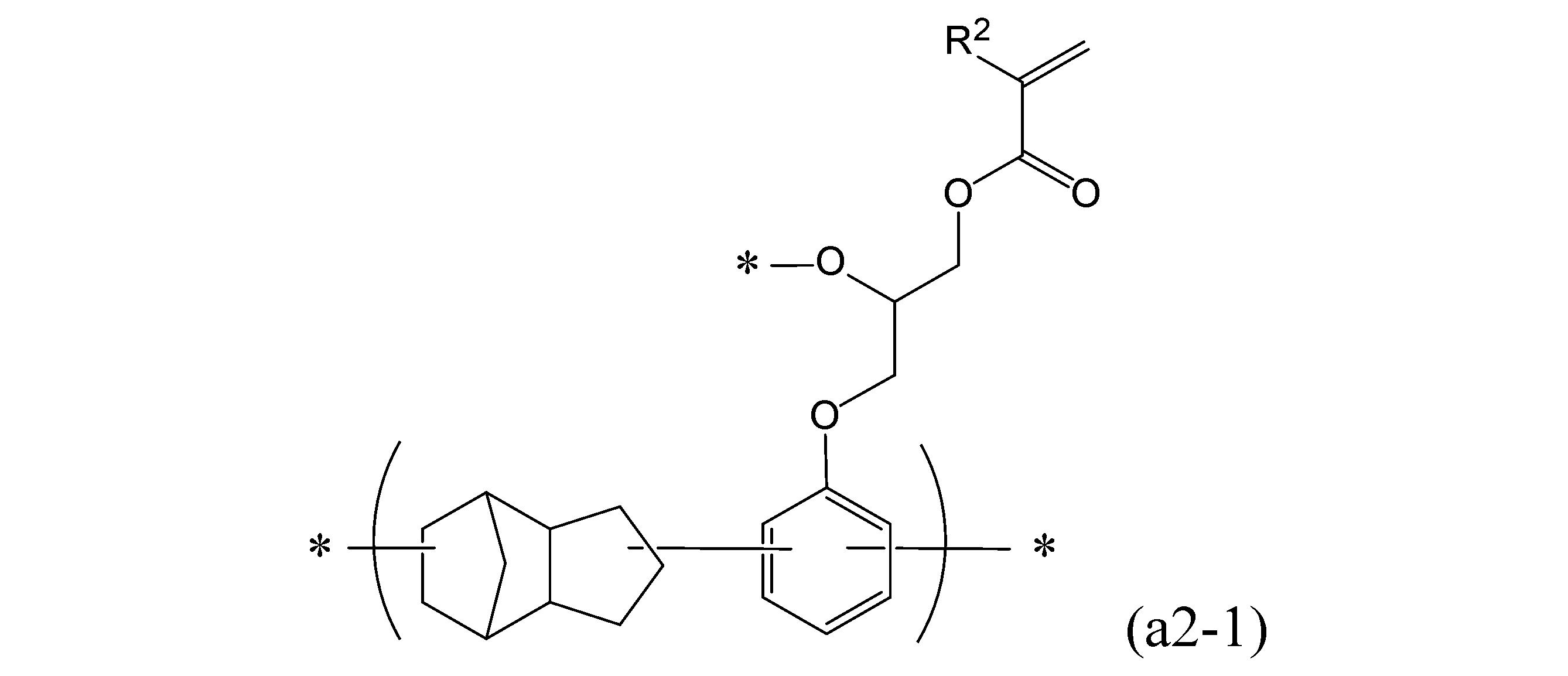
[2]前記カルド骨格を有するアルカリ可溶性樹脂(a1)が、下記一般式(a1-1)で表される部分構造を有する[1]の感光性着色樹脂組成物。

[3]アルカリ可溶性樹脂(a1)100質量部に対する、アルカリ可溶性樹脂(a2)の含有割合が、5~300質量部である、[1]又は[2]の感光性着色樹脂組成物。
[4]前記(d)着色剤が、有機黒色顔料を含有する、[1]~[3]のいずれかの感光性着色樹脂組成物。
[5]溶剤を含有する、[1]~[4]のいずれかの感光性着色樹脂組成物。
[6][1]~[5]のいずれかの感光性着色樹脂組成物を硬化して得られる硬化物。
[7][6]の硬化物から形成される隔壁。
[8][7]の隔壁を備える画像表示装置。
本発明において、「(メタ)アクリル」とは、「アクリル及びメタクリルのいずれか一方又は両方」を意味する。
「全固形分」とは、感光性着色樹脂組成物における溶剤以外の全成分を意味する。溶剤以外の成分が常温で液体であっても、その成分は溶剤には含めず、全固形分に含める。
本発明において「~」を用いて表される数値範囲は、「~」の前後に記載される数値を下限値及び上限値として含む範囲を意味する。
本発明において、「(共)重合体」とは、単一重合体(ホモポリマー)と共重合体(コポリマー)の双方を含むことを意味する。
本発明において、「(酸)無水物」、「(無水)…酸」とは、酸とその無水物の双方を含むことを意味する。
本発明において、隔壁材とはバンク材、壁材、ウォール材をさし、同様に、隔壁とはバンク、壁、ウォールをさす。
隔壁とは、例えば、アクティブ駆動型有機電界発光素子における機能層(有機層)を区画するためのものであり、区画された領域(画素領域)に機能層を構成するための材料を蒸着あるいはインクジェット等による塗布、乾燥を行うことで、機能層及び隔壁からなる画素等を形成させていくために使用されるものである。
本発明において、重量平均分子量とは、GPC(ゲルパーミエーションクロマトグラフィー)によるポリスチレン換算の重量平均分子量(Mw)をさす。
本発明において、酸価とは、特に断りのない限り有効固形分換算の酸価を表し、中和滴定により算出される。
本発明の感光性着色樹脂組成物は、
(a)アルカリ可溶性樹脂
(b)光重合開始剤
(c)エチレン性不飽和化合物
(d)着色剤
を含有し、さらに必要に応じて、例えば、分散剤、顔料誘導体、界面活性剤、撥液剤、紫外線吸収剤、重合禁止剤、熱重合開始剤、アミノ化合物、シランカップリング剤、無機充填材、密着向上剤、その他の配合成分を含む。通常、各配合成分が、溶剤に溶解又は分散した状態で使用される。
本発明の感光性着色樹脂組成物を構成する成分及びその組成について順に説明する。
本発明の感光性着色樹脂組成物は、(a)アルカリ可溶性樹脂を含有する。(a)アルカリ可溶性樹脂を含有することにより、アルカリ現像液で現像可能となり、隔壁等のパターンを作成することができる。

アルカリ可溶性樹脂(a1)としては、カルド骨格を含有するものであれば、特に限定されないが、表面平滑性の観点からは下記一般式(a1-1)で表される部分構造を有することが好ましい。
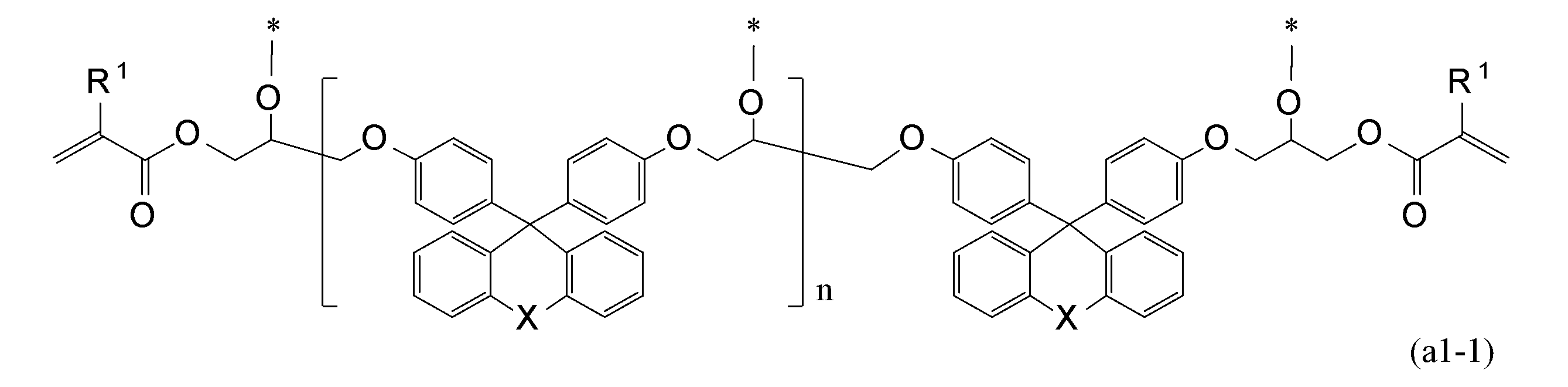
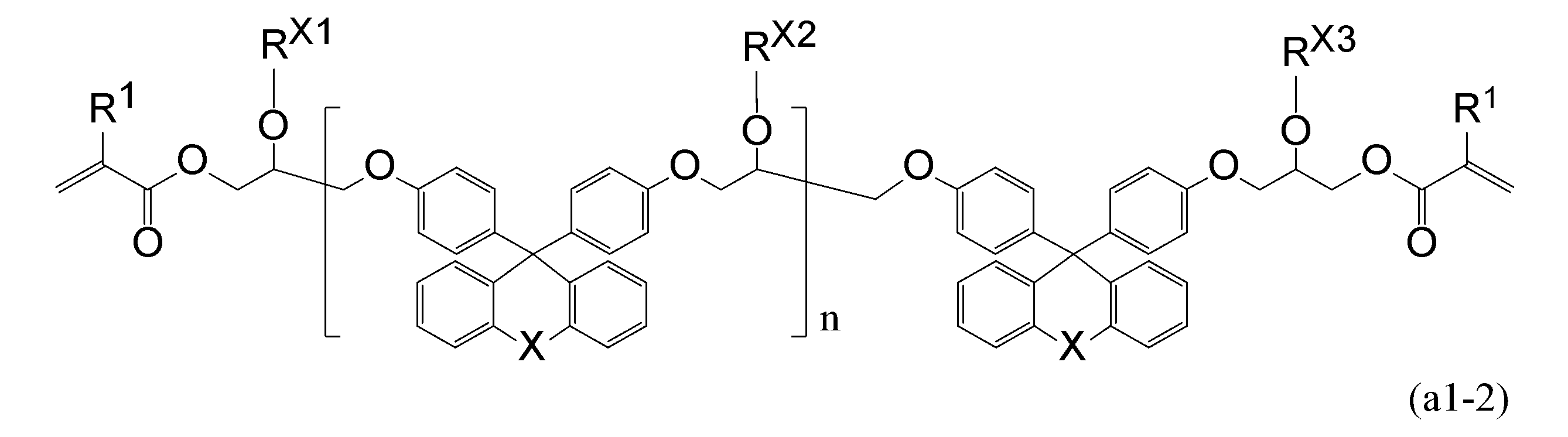
多塩基酸としては、例えば、マレイン酸、コハク酸、イタコン酸、フタル酸、テトラヒドロフタル酸、ヘキサヒドロフタル酸、ピロメリット酸、トリメリット酸、ベンゾフェノンテトラカルボン酸、メチルヘキサヒドロフタル酸、エンドメチレンテトラヒドロフタル酸、クロレンド酸、メチルテトラヒドロフタル酸、ビフェニルテトラカルボン酸が挙げられる。
パターニング特性の観点から、マレイン酸、コハク酸、イタコン酸、フタル酸、テトラヒドロフタル酸、ヘキサヒドロフタル酸、ピロメリット酸、トリメリット酸、ビフェニルテトラカルボン酸が好ましく、テトラヒドロフタル酸、ビフェニルテトラカルボン酸がより好ましく、テトラヒドロフタル酸がさらに好ましい。
本発明の感光性着色樹脂組成物におけるアルカリ可溶性樹脂(a2)は、下記一般式(a2-1)で表される部分構造を有する。
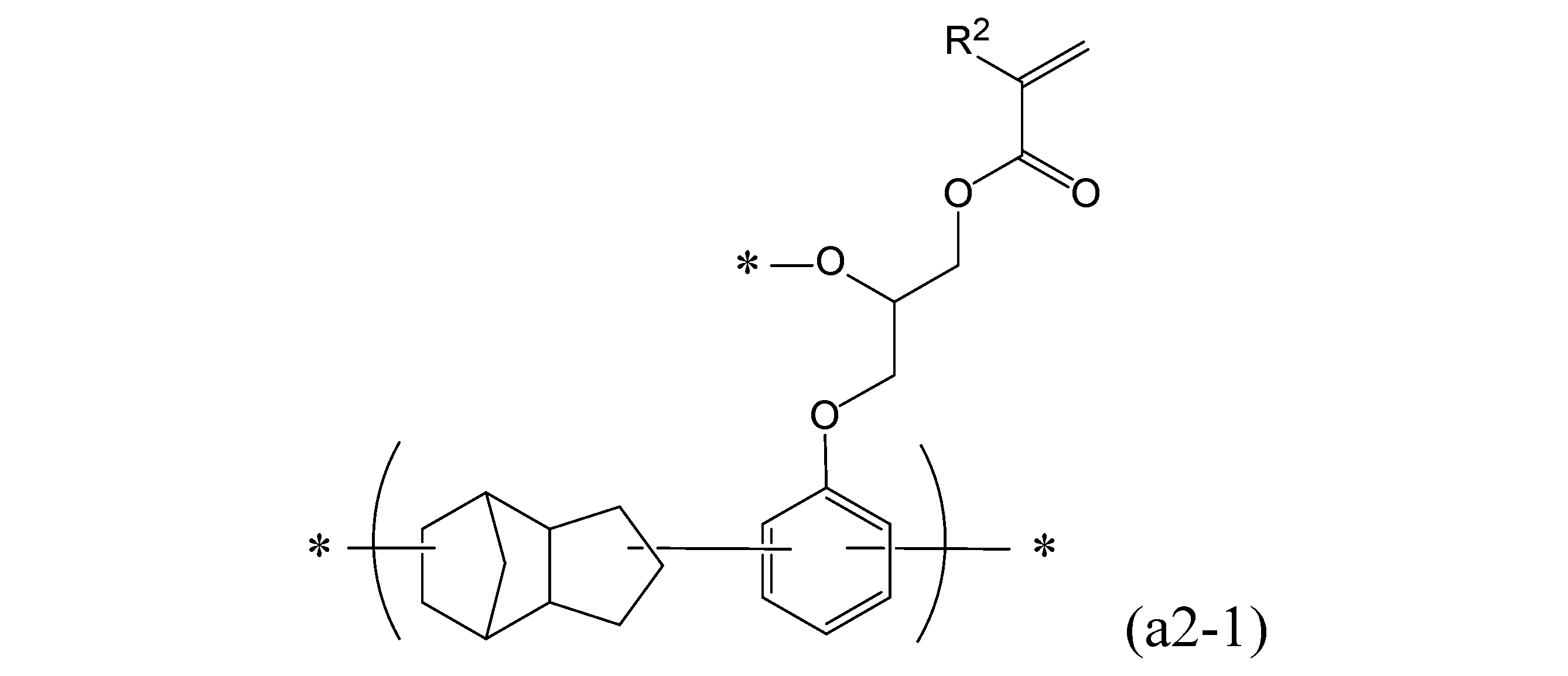
式(a2-1)において、残渣を低減する観点からはR2はメチル基が好ましい。

多塩基酸としては、例えば、マレイン酸、コハク酸、イタコン酸、フタル酸、テトラヒドロフタル酸、ヘキサヒドロフタル酸、ピロメリット酸、トリメリット酸、ベンゾフェノンテトラカルボン酸、メチルヘキサヒドロフタル酸、エンドメチレンテトラヒドロフタル酸、クロレンド酸、メチルテトラヒドロフタル酸、ビフェニルテトラカルボン酸が挙げられる。
パターニング特性の観点から、マレイン酸、コハク酸、イタコン酸、フタル酸、テトラヒドロフタル酸、ヘキサヒドロフタル酸、ピロメリット酸、トリメリット酸、ビフェニルテトラカルボン酸が好ましく、テトラヒドロフタル酸、ビフェニルテトラカルボン酸がより好ましく、テトラヒドロフタル酸がさらに好ましい。
アクリル共重合樹脂(A11)は、側鎖にエチレン性不飽和基を有する。エチレン性不飽和基を有するものとすることで、露光による光硬化が起こってより強固な膜となり、現像後のポストベーク時の熱変形が抑制され、解像性が向上すると考えられる。また、露光による光硬化が起こって強固な膜となることで、膜中の硬化性の弱い部分が現像時に削られて基板上に付着することで発生する残渣も低減する傾向にある。
アクリル共重合樹脂(A11)が有する、エチレン性不飽和基を有する側鎖を含む部分構造は特に限定されないが、膜の柔軟性に伴うラジカルの発散しやすさの観点から、例えば、下記一般式(I)で表される部分構造を有することが好ましい。
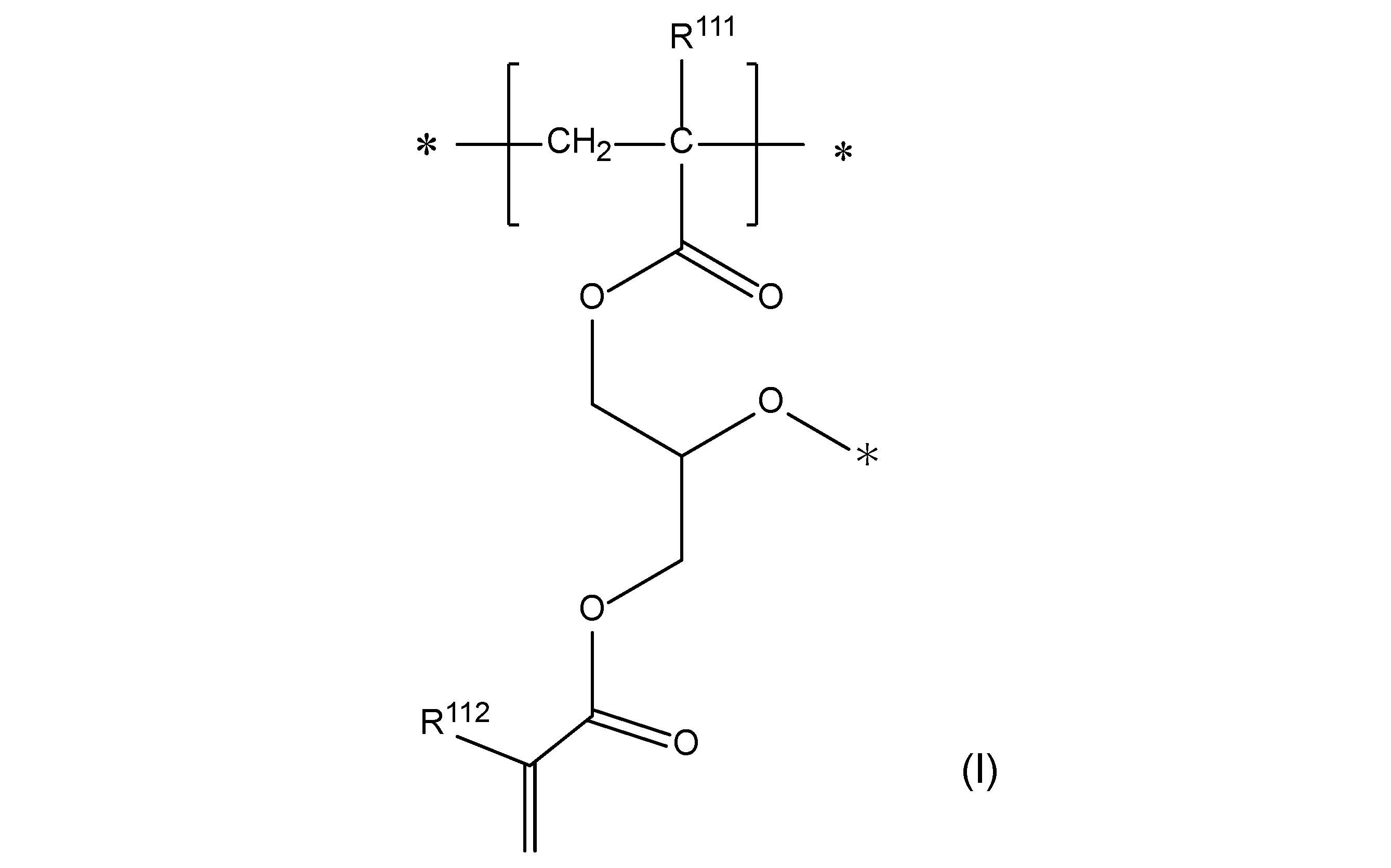
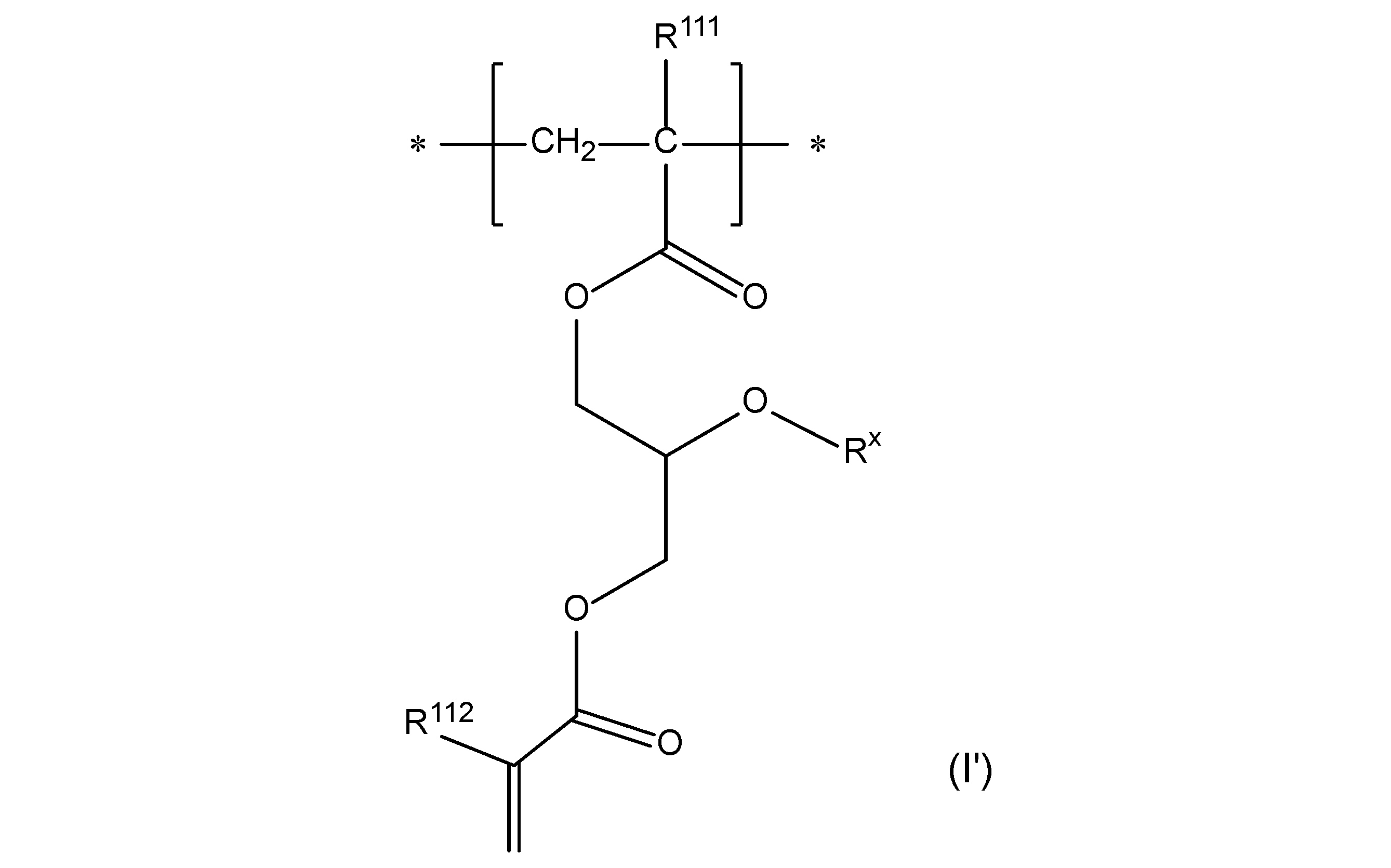
式(I’)において、Rxは水素原子又は多塩基酸残基を表す。
多塩基酸残基とは、多塩基酸又はその無水物からOH基を1つ除した1価の基を意味する。
多塩基酸としては、例えば、マレイン酸、コハク酸、イタコン酸、フタル酸、テトラヒドロフタル酸、ヘキサヒドロフタル酸、ピロメリット酸、トリメリット酸、ベンゾフェノンテトラカルボン酸、メチルヘキサヒドロフタル酸、エンドメチレンテトラヒドロフタル酸、クロレンド酸、メチルテトラヒドロフタル酸、ビフェニルテトラカルボン酸が挙げられる。
パターニング特性の観点から、マレイン酸、コハク酸、イタコン酸、フタル酸、テトラヒドロフタル酸、ヘキサヒドロフタル酸、ピロメリット酸、トリメリット酸、ビフェニルテトラカルボン酸が好ましく、テトラヒドロフタル酸、コハク酸がより好ましい。
アクリル共重合樹脂(A11)が式(I)で表される部分構造を含む場合、他に含まれる部分構造は特に限定されないが、現像密着性の観点から、例えば、下記一般式(II)で表される部分構造を有することも好ましい。
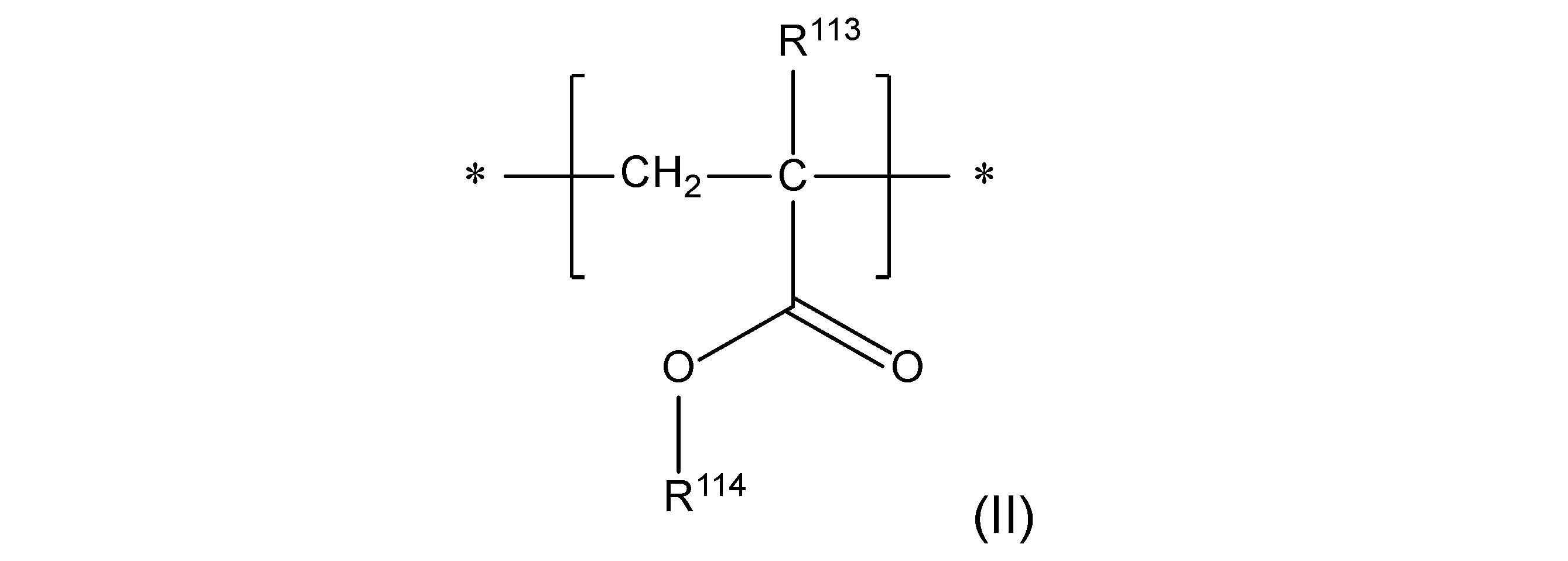
式(II)において、R114は置換基を有していてもよいアルキル基、置換基を有していてもよい芳香族環基、又は置換基を有していてもよいアルケニル基を表す。
R114におけるアルキル基としては直鎖状、分岐鎖状又は環状のアルキル基が挙げられる。その炭素数は、1以上であることが好ましく、3以上であることがより好ましく、5以上であることがさらに好ましく、8以上であることが特に好ましく、また、20以下であることが好ましく、18以下であることがより好ましく、16以下であることがさらに好ましく、14以下であることがよりさらに好ましく、12以下であることが特に好ましい。前記下限値以上とすることで膜強度が高くなり、現像密着性が向上する傾向があり、また、前記上限値以下とすることで残渣が低減する傾向がある。上記の上限及び下限は任意に組み合わせることができる。例えば、アルキル基の炭素数は1~20が好ましく、3~18がより好ましく、5~16がさらに好ましく、8~14がよりさらに好ましく、8~12が特に好ましい。
アルキル基が有していてもよい置換基としては、例えば、メトキシ基、エトキシ基、クロロ基、ブロモ基、フルオロ基、ヒドロキシ基、アミノ基、エポキシ基、オリゴエチレングリコール基、フェニル基、カルボキシ基、アクリロイル基、メタクリロイル基が挙げられる。現像性の観点から、ヒドロキシ基、オリゴエチレングリコール基が好ましい。
芳香族炭化水素環基における芳香族炭化水素環としては、単環であっても縮合環であってもよく、例えば、ベンゼン環、ナフタレン環、アントラセン環、フェナントレン環、ペリレン環、テトラセン環、ピレン環、ベンズピレン環、クリセン環、トリフェニレン環、アセナフテン環、フルオランテン環、フルオレン環が挙げられる。
芳香族複素環基における芳香族複素環としては、単環であっても縮合環であってもよく、例えば、フラン環、ベンゾフラン環、チオフェン環、ベンゾチオフェン環、ピロール環、ピラゾール環、イミダゾール環、オキサジアゾール環、インドール環、カルバゾール環、ピロロイミダゾール環、ピロロピラゾール環、ピロロピロール環、チエノピロール環、チエノチオフェン環、フロピロール環、フロフラン環、チエノフラン環、ベンゾイソオキサゾール環、ベンゾイソチアゾール環、ベンゾイミダゾール環、ピリジン環、ピラジン環、ピリダジン環、ピリミジン環、トリアジン環、キノリン環、イソキノリン環、シノリン環、キノキサリン環、フェナントリジン環、ペリミジン環、キナゾリン環、キナゾリノン環、アズレン環が挙げられる。現像性の観点から、ベンゼン環、ナフタレン環が好ましく、ベンゼン環がより好ましい。
芳香族環基が有していてもよい置換基としては、例えば、メチル基、エチル基、プロピル基、メトキシ基、エトキシ基、クロロ基、ブロモ基、フルオロ基、ヒドロキシ基、アミノ基、エポキシ基、オリゴエチレングリコール基、フェニル基、カルボキシ基が挙げられる。現像性の観点から、ヒドロキシ基、オリゴエチレングリコール基が好ましい。
アクリル共重合樹脂(A11)が式(I)で表される部分構造を含む場合、他に含まれる部分構造として、耐熱性、膜強度の観点から下記一般式(III)で表される部分構造が含まれることが好ましい。
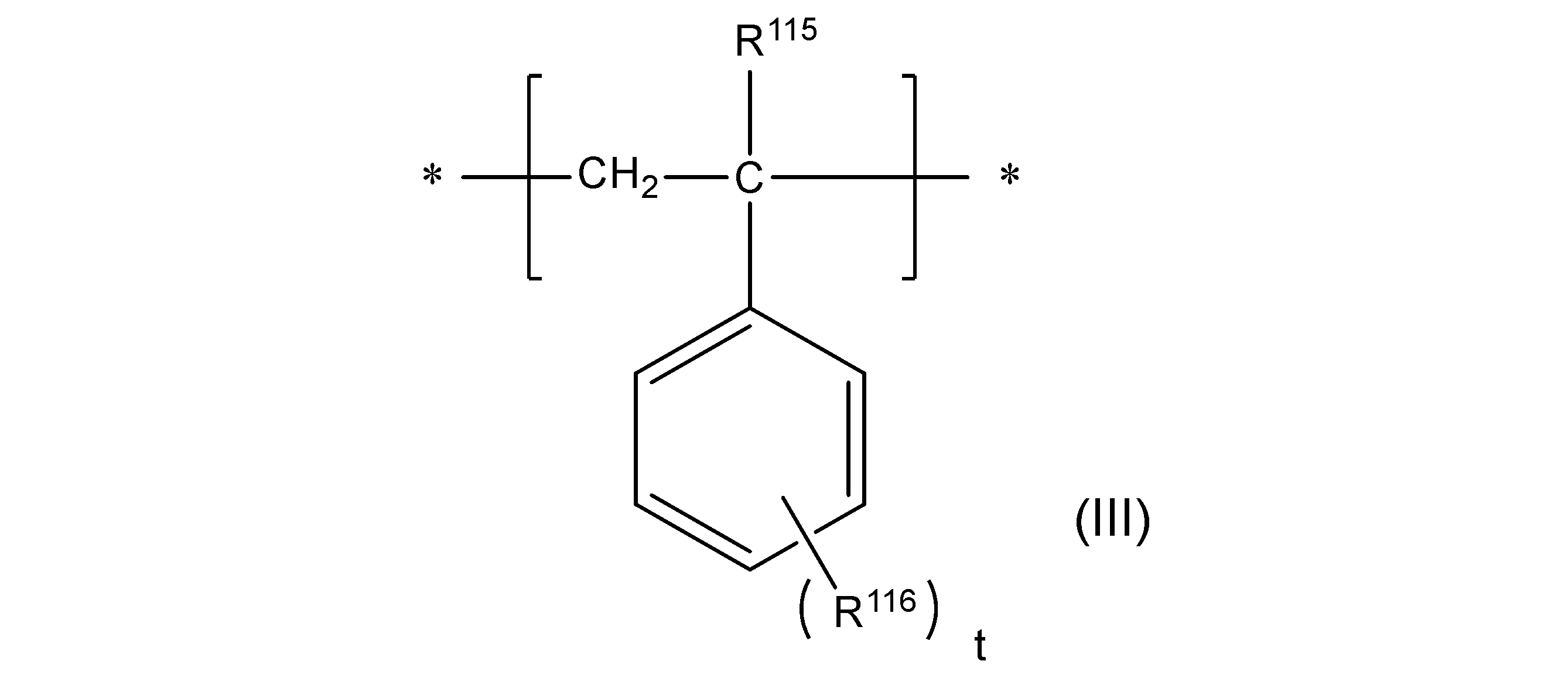
式(III)においてR116は置換基を有していてもよいアルキル基、置換基を有していてもよいアルケニル基、置換基を有していてもよいアルキニル基、ヒドロキシ基、カルボキシ基、ハロゲン原子、置換基を有していてもよいアルコキシ基、チオール基、又は置換基を有していてもよいアルキルスルフィド基を表す。
R116におけるアルキル基としては、直鎖状、分岐鎖状又は環状のアルキル基が挙げられる。その炭素数は、1以上であることが好ましく、3以上であることがより好ましく、5以上であることがさらに好ましく、また、20以下であることが好ましく、18以下であることがより好ましく、16以下であることがさらに好ましく、14以下であることがよりさらに好ましく、12以下であることが特に好ましい。前記下限値以上とすることで現像密着性が向上する傾向があり、また、前記上限値以下とすることで残渣が低減する傾向がある。上記の上限及び下限は任意に組み合わせることができる。例えば、アルキル基の炭素数は1~20が好ましく、3~18がより好ましく、5~16がさらに好ましく、5~14がよりさらに好ましく、5~12が特に好ましい。
アルキル基が有していてもよい置換基としては、例えば、メトキシ基、エトキシ基、クロロ基、ブロモ基、フルオロ基、ヒドロキシ基、アミノ基、エポキシ基、オリゴエチレングリコール基、フェニル基、カルボキシ基、アクリロイル基、メタクリロイル基などが挙げられる。現像性の観点から、ヒドロキシ基、オリゴエチレングリコール基が好ましい。
アクリル共重合樹脂(A11)が式(I)で表される部分構造を有する場合、他に含まれる部分構造として、現像性の観点から下記一般式(IV)で表される部分構造を有することも好ましい。
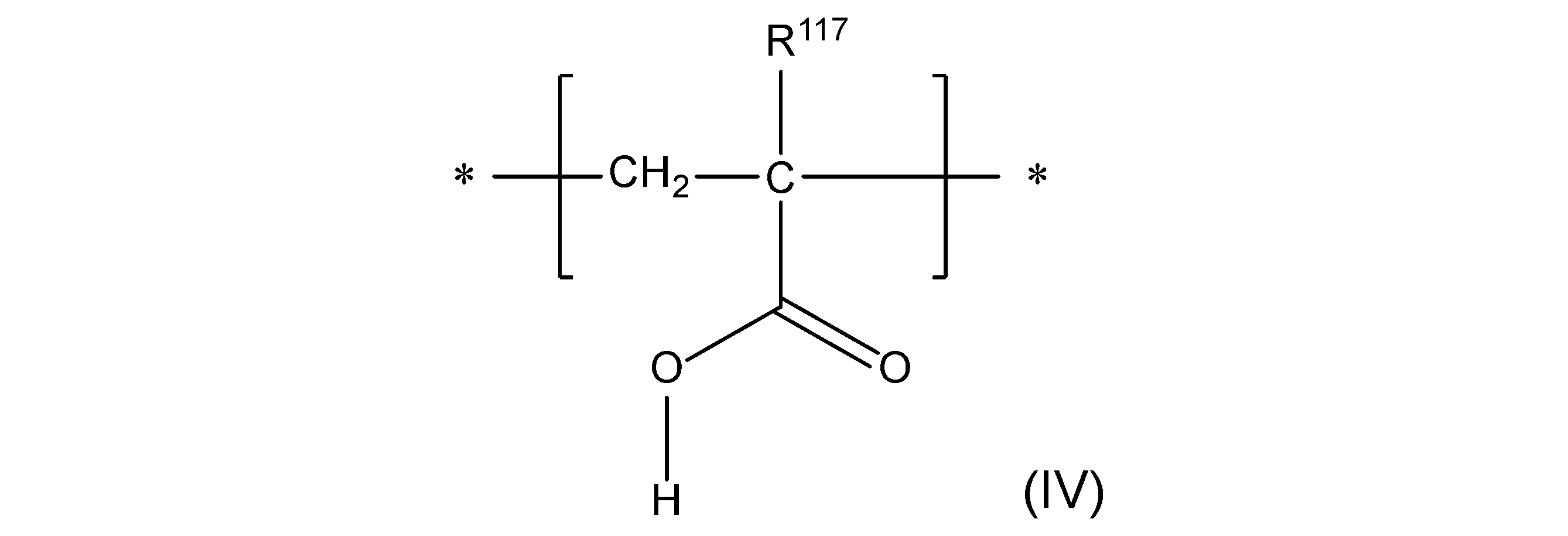
エポキシ(メタ)アクリレート樹脂(A12)は、エポキシ樹脂にエチレン性不飽和モノカルボン酸又はエステル化合物を付加し、任意でイソシアネート基含有化合物を反応させた後、さらに多塩基酸又はその無水物を反応させた樹脂である。中でも主鎖に芳香族環を有するエポキシ(メタ)アクリレート樹脂を好適に用いることができる。
例えば、エポキシ樹脂のエポキシ基に、不飽和モノカルボン酸のカルボキシ基が開環付加されることにより、エポキシ化合物にエステル結合(-COO-)を介してエチレン性不飽和結合が付加されると共に、その際生じた水酸基に、多塩基酸無水物の一方のカルボキシ基が付加されたものが挙げられる。また多塩基酸無水物を付加するときに、多価アルコールを同時に添加して付加されたものも挙げられる。
このように、エポキシ(メタ)アクリレート樹脂は化学構造上、実質的にエポキシ基を有さず、かつ「(メタ)アクリレート」に限定されるものではないが、エポキシ化合物(エポキシ樹脂)が原料であり、かつ、「(メタ)アクリレート」が代表例であるので慣用に従いこのように命名されている。
具体的には、例えば、ビスフェノールAエポキシ樹脂、ビスフェノールFエポキシ樹脂、ビスフェノールSエポキシ樹脂、フェノールノボラックエポキシ樹脂、クレゾールノボラックエポキシ樹脂、ビフェニルノボラックエポキシ樹脂、トリスフェノールエポキシ樹脂、ジハイドロオキシルフルオレン型エポキシ樹脂、ジハイドロオキシルアルキレンオキシルフルオレン型エポキシ樹脂、1,1-ビス(4’-ヒドロキシフェニル)アダマンタンのジグリシジルエーテル化物が挙げられ、主鎖に芳香族環を有するものを好適に用いることができる。
エポキシ樹脂としては、例えば、ビスフェノールA型エポキシ樹脂(例えば、三菱ケミカル社製の「jER(登録商標、以下同じ。)828」、「jER1001」、「jER1002」、「jER1004」、日本化薬社製の「NER-1302」(エポキシ当量323,軟化点76℃)等)、ビスフェノールF型樹脂(例えば、三菱ケミカル社製の「jER807」、「jER4004P」、「jER4005P」、「jER4007P」、日本化薬社製の「NER-7406」(エポキシ当量350,軟化点66℃)等)、ビスフェノールS型エポキシ樹脂、ビフェニルグリシジルエーテル(例えば、三菱ケミカル社製の「jERYX-4000」)、フェノールノボラック型エポキシ樹脂(例えば、日本化薬社製の「EPPN(登録商標、以下同じ。)-201」、三菱ケミカル社製の「jER152」、「jER154」、ダウケミカル社製の「DEN-438」)、(o,m,p-)クレゾールノボラック型エポキシ樹脂(例えば、日本化薬社製の「EOCN(登録商標、以下同じ。)-102S」、「EOCN-1020」、「EOCN-104S」)、トリグリシジルイソシアヌレート(例えば、日産化学社製の「TEPIC(登録商標)」)、トリスフェノールメタン型エポキシ樹脂(例えば、日本化薬社製の「EPPN-501」、「EPPN-502」、「EPPN-503」)、脂環式エポキシ樹脂(ダイセル社製の「セロキサイド(登録商標、以下同じ。)2021P」、「セロキサイドEHPE」)、下記一般式(i-12)及び(i-13)で表されるエポキシ樹脂を好適に用いることができる。具体的には、下記一般式(i-12)で表されるエポキシ樹脂として日本化薬社製の「NC-3000」が挙げられる。
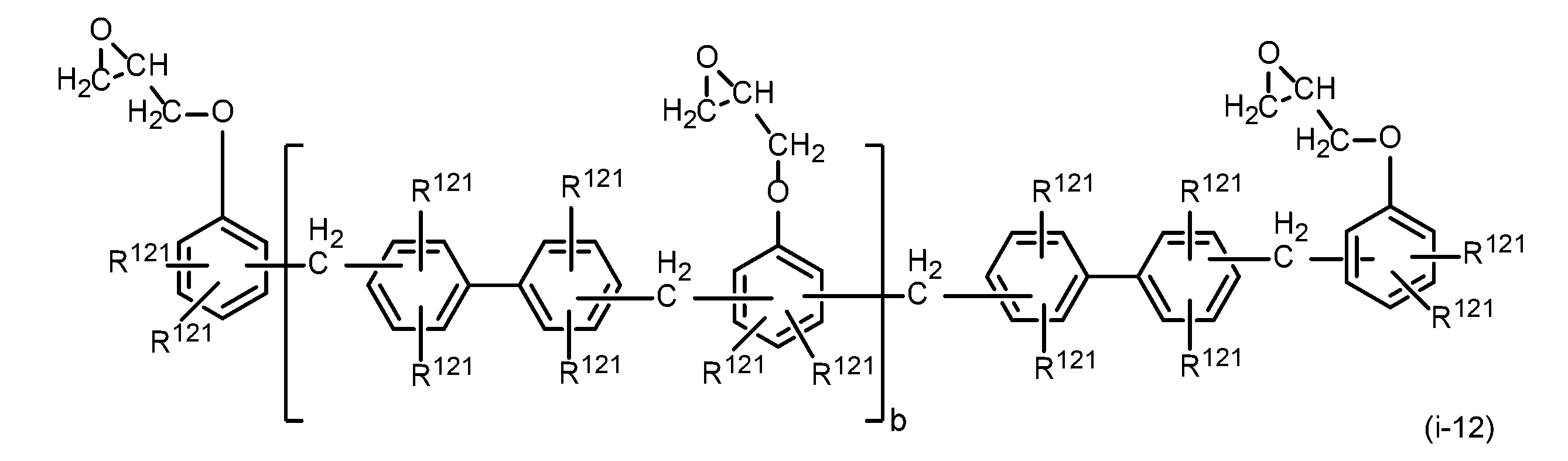


多価アルコールとしては、例えば、トリメチロールプロパン、ジトリメチロールプロパン、ペンタエリスリトール、ジペンタエリスリトール、トリメチロールエタン、1,2,3-プロパントリオールが好ましい。
触媒としては、例えば、トリエチルアミン、ベンジルジメチルアミン、トリベンジルアミン等の第3級アミン類、テトラメチルアンモニウムクロライド、メチルトリエチルアンモニウムクロライド、テトラエチルアンモニウムクロライド、テトラブチルアンモニウムクロライド、トリメチルベンジルアンモニウムクロライドなどの第4級アンミニウム塩類、トリフェニルホスフィンなどの燐化合物、トリフェニルスチビンなどのスチビン類などの1種又は2種以上が挙げられる。
熱重合禁止剤としては、例えば、ハイドロキノン、ハイドロキノンモノメチルエーテル、メチルハイドロキノンなどの1種又は2種以上が挙げられる。
付加反応時の温度としては、好ましくは60~150℃、より好ましくは80~120℃の温度とすることができる。さらに、多塩基酸(無水物)の使用量としては、付加反応で生じた水酸基の1化学当量に対して、好ましくは0.1~1.2化学当量、より好ましくは0.2~1.1化学当量となる量とすることができる。
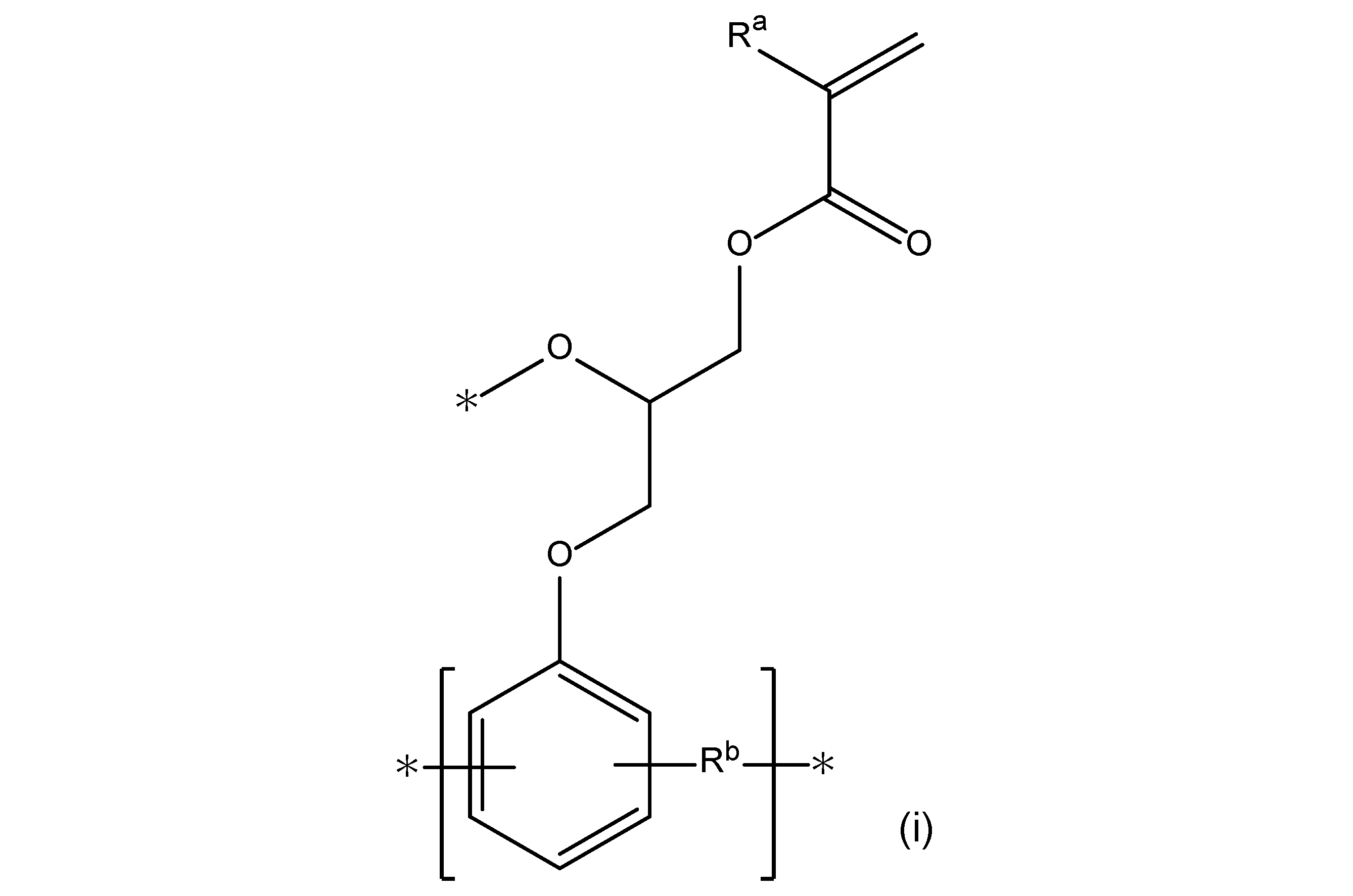
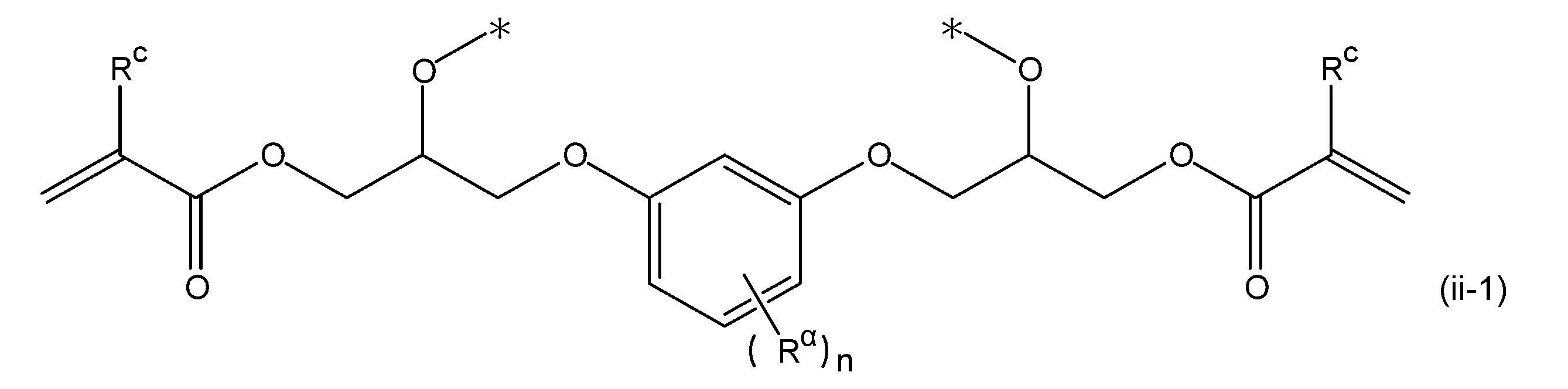


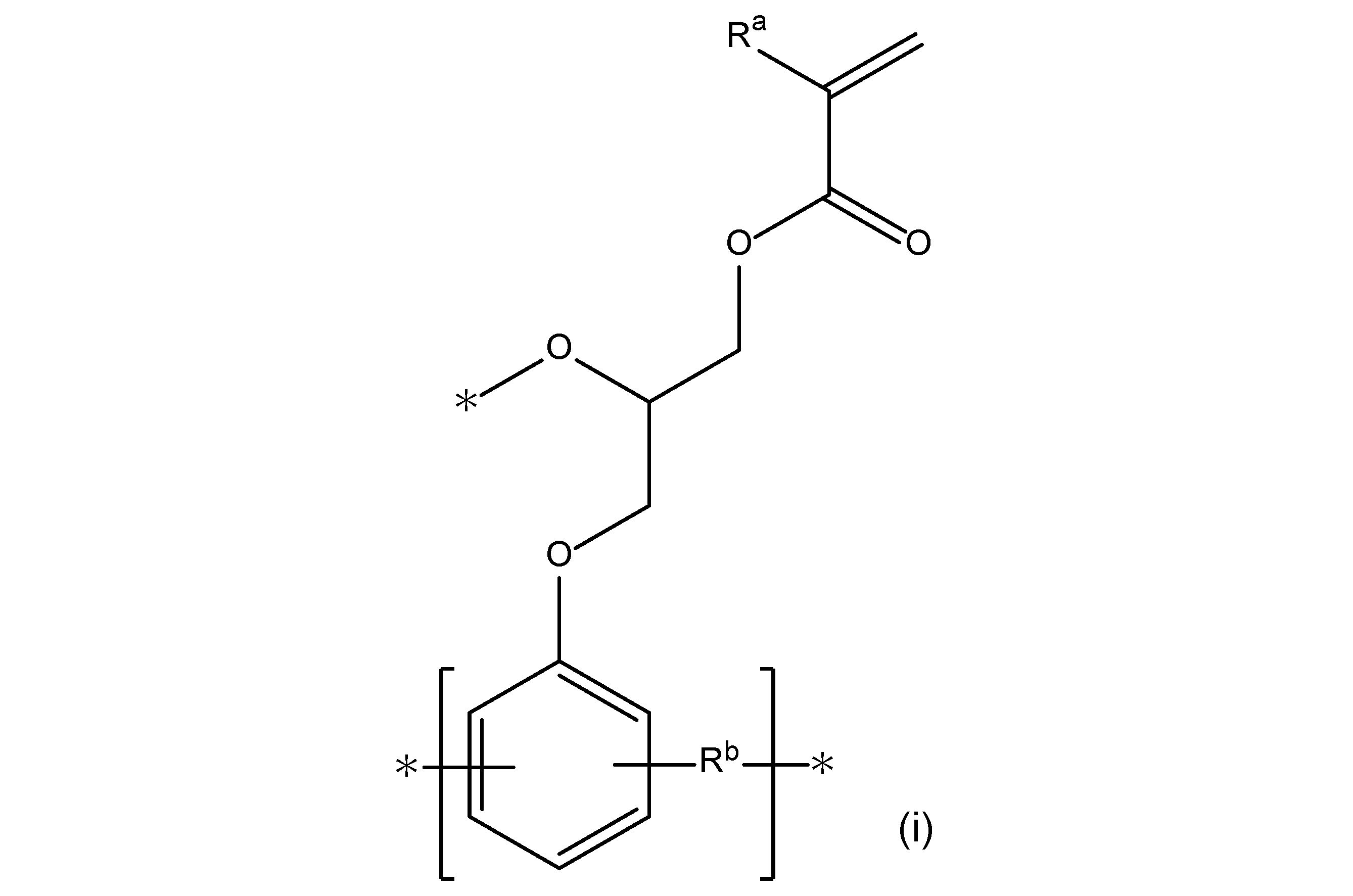
式(i)において、Rbは置換基を有してもよい直鎖状若しくは分岐鎖状の2価の脂肪族基、置換基を有してもよい2価の芳香族環基、又は置換基を有してもよい1以上の2価の脂肪族基と1以上の2価の芳香族環基とを連結した基を表す。
2価の分岐鎖状脂肪族基としては、例えば、前述の2価の直鎖状脂肪族基に、側鎖としてメチル基、エチル基、n-プロピル基、イソプロピル基、n-ブチル基、イソブチル基、sec-ブチル基、tert-ブチル基を有する構造が挙げられる。
2価の脂肪族基の数は特に限定されないが、1以上が好ましく、2以上がより好ましく、また、10以下が好ましく、5以下がより好ましく、3以下がさらに好ましい。前記下限値以上とすることで現像性が向上する傾向があり、また、前記上限値以下とすることで膜強度が向上する傾向がある。上記の上限及び下限は任意に組み合わせることができる。例えば、2価の脂肪族基の数は1~10が好ましく、1~5がより好ましく、1~3がさらに好ましい。
2価の芳香族環基の数は特に限定されないが、1以上が好ましく、2以上が好ましく、また、10以下が好ましく、5以下がより好ましく、3以下がさらに好ましい。前記下限値以上とすることで膜強度が向上する傾向があり、また、前記上限値以下とすることで現像性が向上する傾向がある。上記の上限及び下限は任意に組み合わせることができる。例えば、2価の芳香族環基の数は1~10が好ましく、1~5がより好ましく、1~3がさらに好ましい。
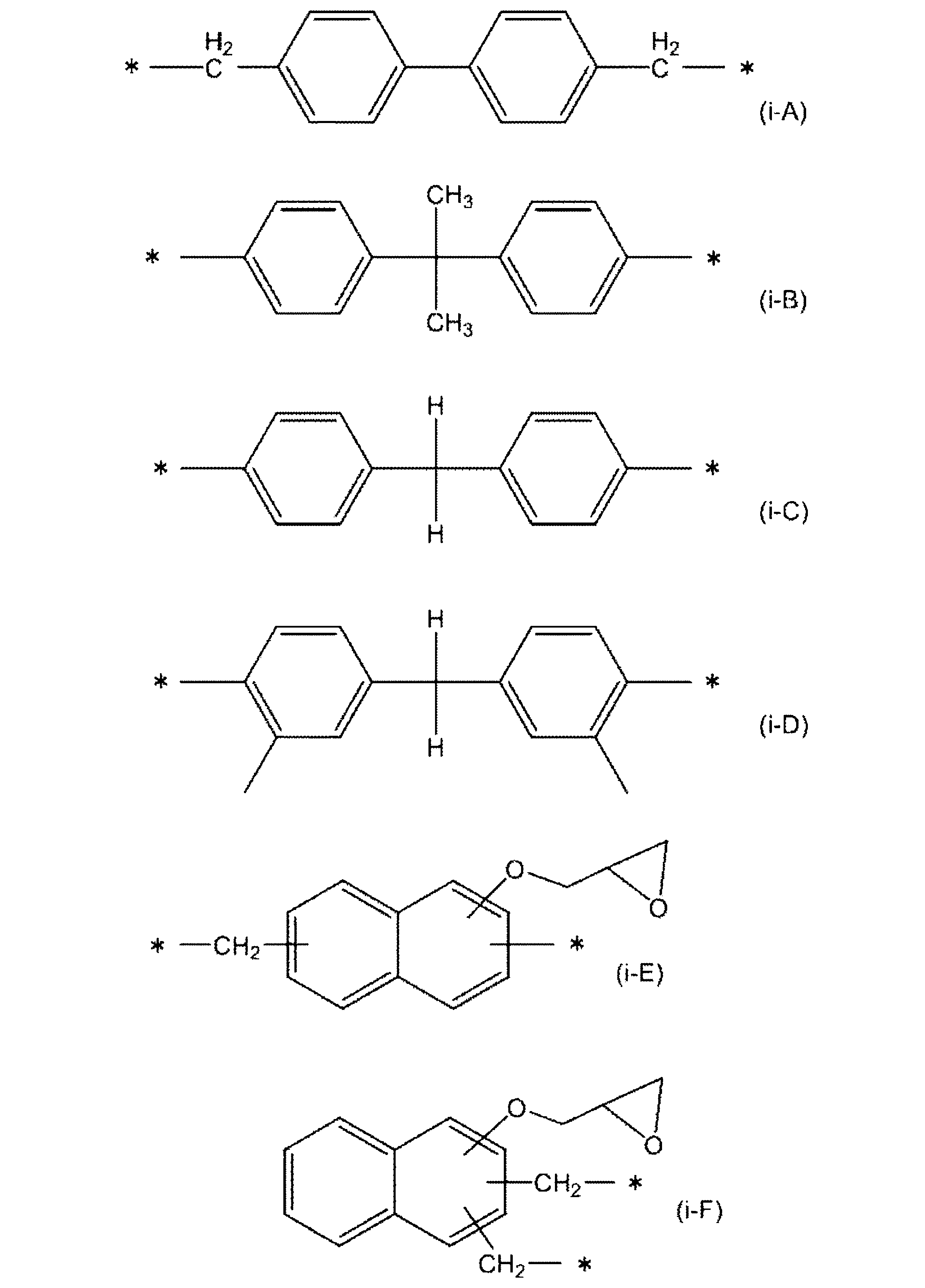
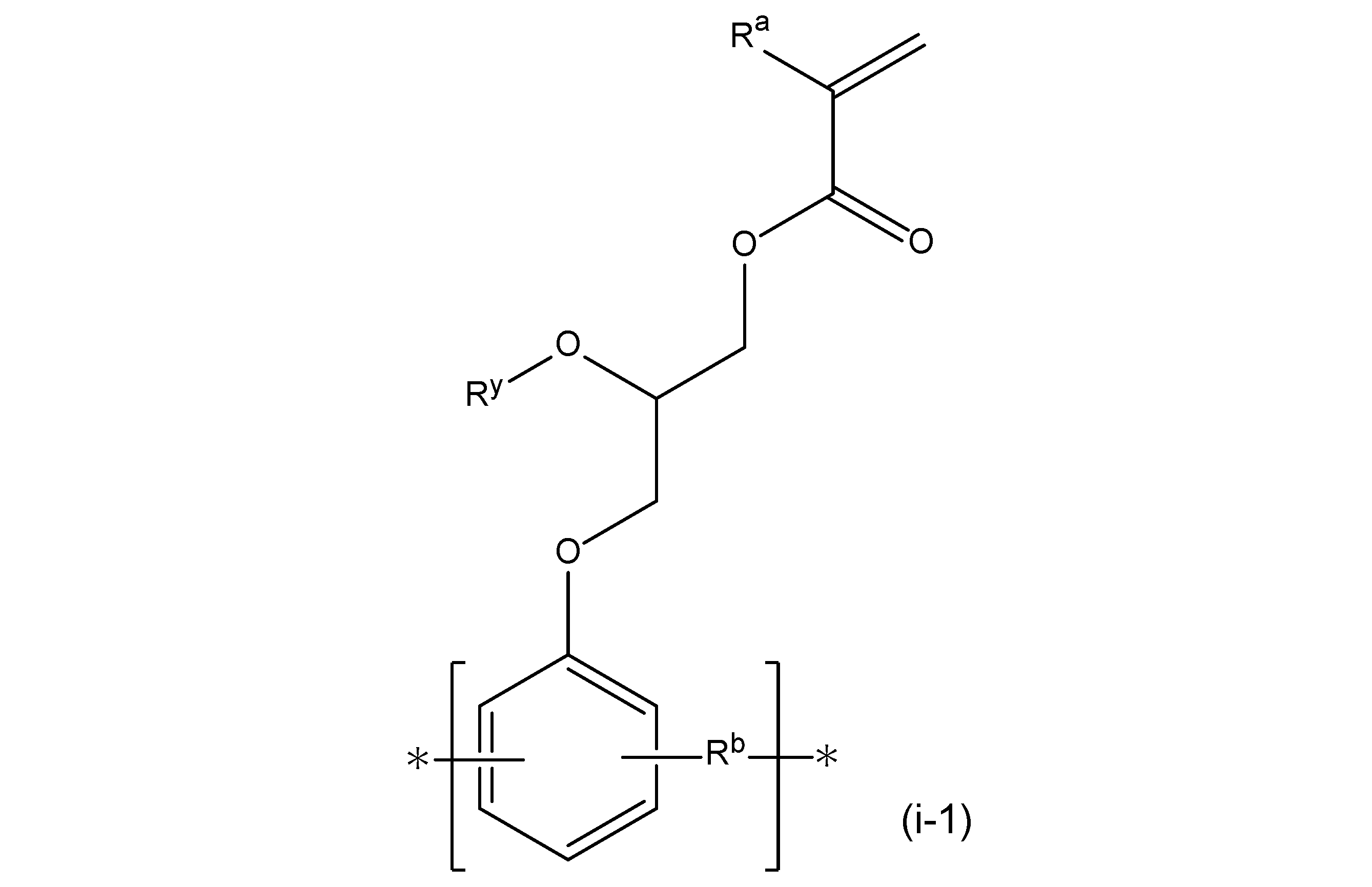
Ryは水素原子又は多塩基酸残基を表す。
多塩基酸残基とは、多塩基酸又はその無水物からOH基を1つ除した1価の基を意味する。
多塩基酸としては、例えば、マレイン酸、コハク酸、イタコン酸、フタル酸、テトラヒドロフタル酸、ヘキサヒドロフタル酸、ピロメリット酸、トリメリット酸、ベンゾフェノンテトラカルボン酸、メチルヘキサヒドロフタル酸、エンドメチレンテトラヒドロフタル酸、クロレンド酸、メチルテトラヒドロフタル酸、ビフェニルテトラカルボン酸が挙げられる。
パターニング特性の観点から、マレイン酸、コハク酸、イタコン酸、フタル酸、テトラヒドロフタル酸、ヘキサヒドロフタル酸、ピロメリット酸、トリメリット酸、ビフェニルテトラカルボン酸が好ましく、テトラヒドロフタル酸、ビフェニルテトラカルボン酸がより好ましい。
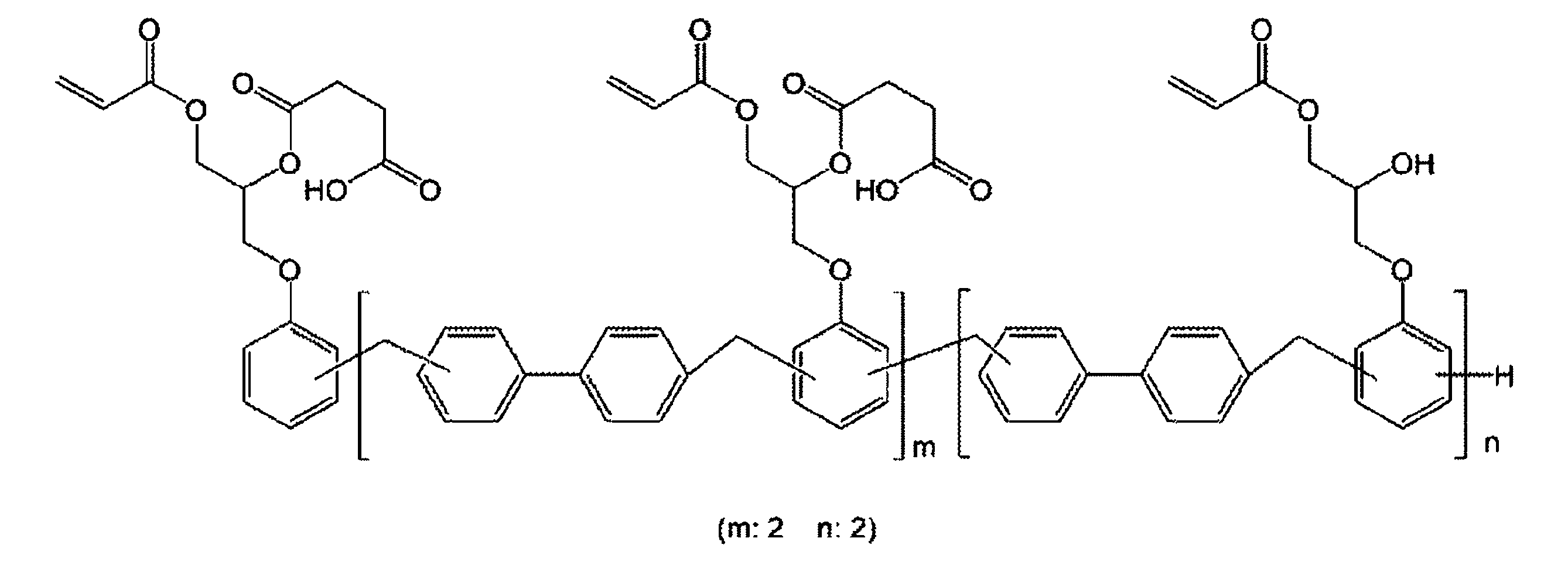
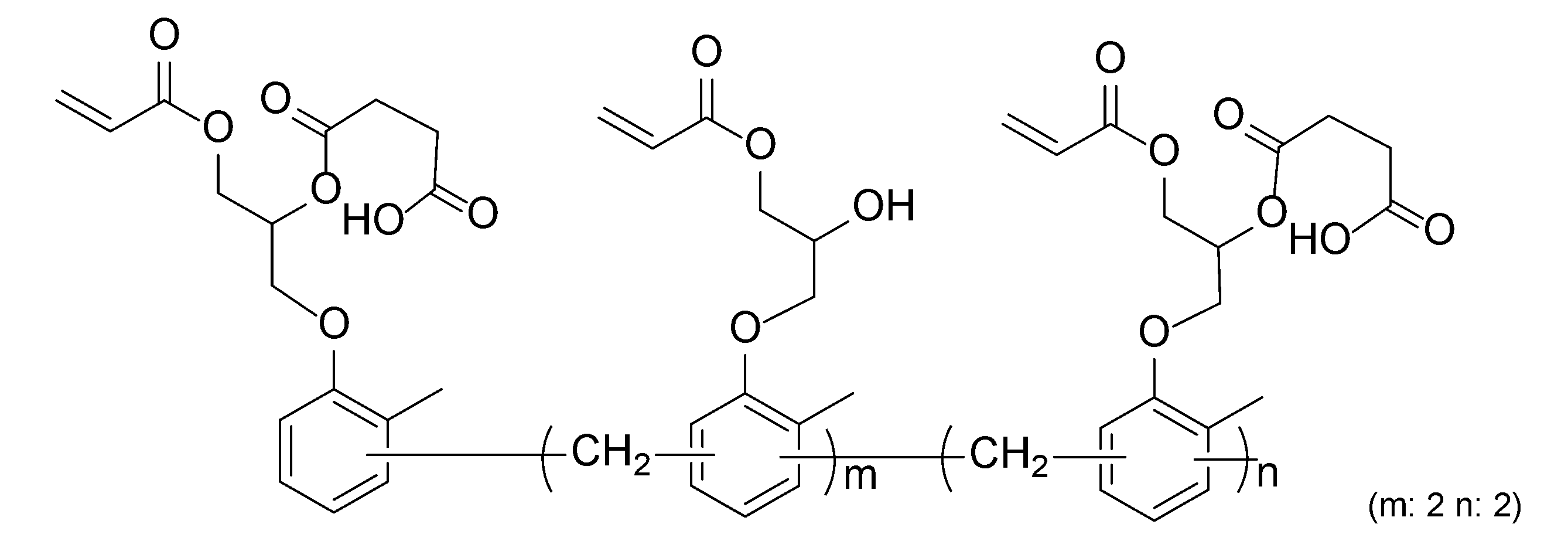

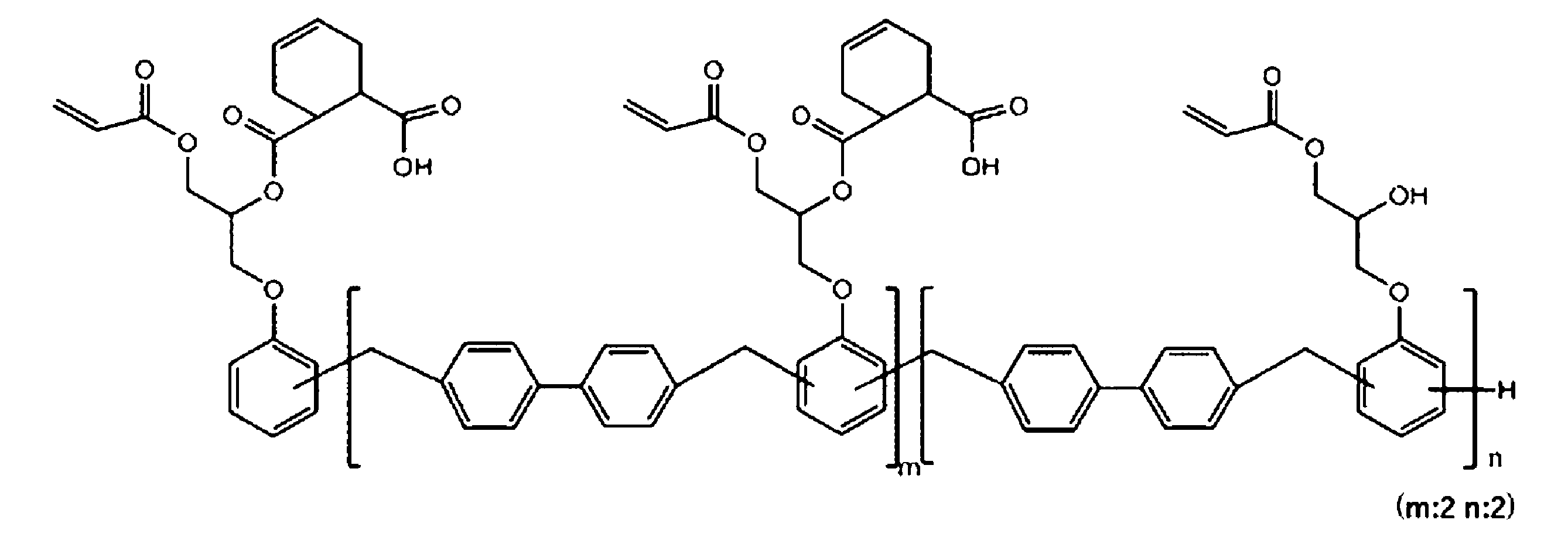
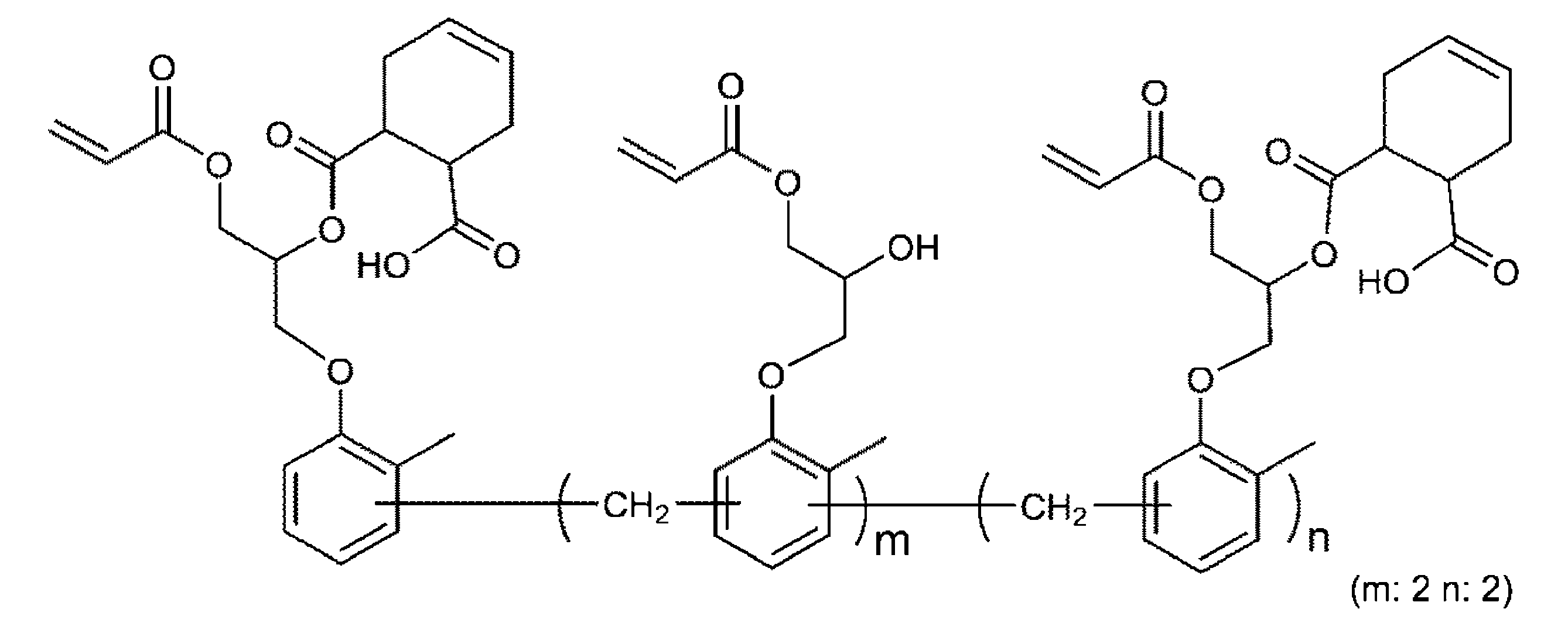
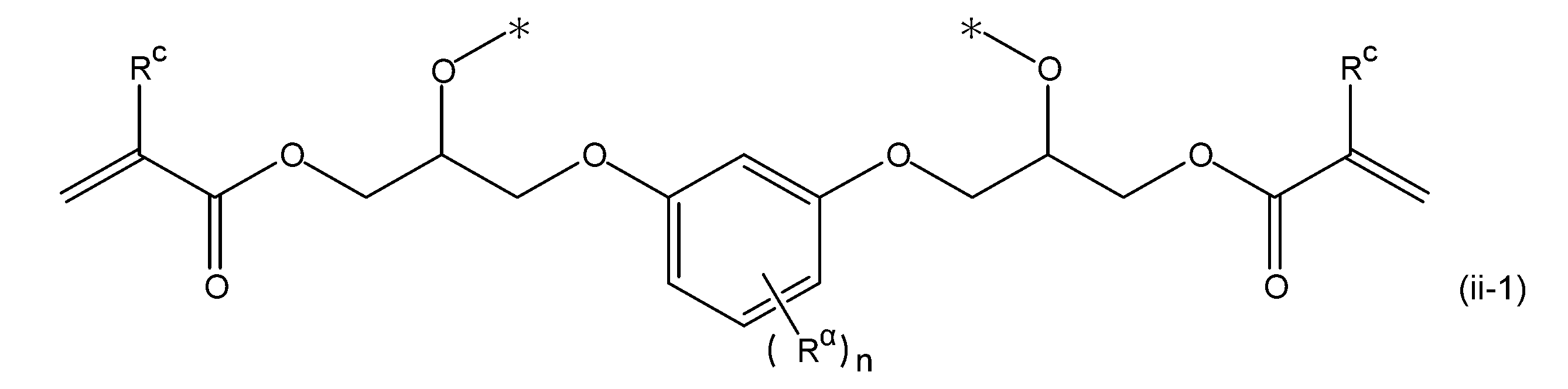
式(ii-1)において、Rαは、置換基を有していてもよい1価の環状炭化水素基を表す。
Rαにおける1価の環状炭化水素基としては、脂肪族環基、芳香族環基が挙げられる。
脂肪族環基の炭素数は4以上が好ましく、6以上がより好ましく、8以上がさらに好ましく、また、40以下が好ましく、30以下がより好ましく、20以下がさらに好ましく、15以下が特に好ましい。前記下限値以上とすることで膜強度が向上する傾向があり、また、前記上限値以下とすることで現像性が向上する傾向がある。上記の上限及び下限は任意に組み合わせることができる。例えば、脂肪族環基の炭素数は4~40が好ましく、4~30がより好ましく、6~20がさらに好ましく、8~15が特に好ましい。
芳香族環基としては、芳香族炭化水素環基、芳香族複素環基が挙げられる。また、芳香族環基の炭素数は通常4以上であり、5以上が好ましく、6以上がより好ましく、また、30以下が好ましく、20以下がより好ましく、15以下がさらに好ましい。前記下限値以上とすることで膜強度が向上する傾向があり、また、前記上限値以下とすることで現像性が向上する傾向がある。芳香族環基の炭素数は4~30が好ましく、5~20がより好ましく、6~15がさらに好ましい。



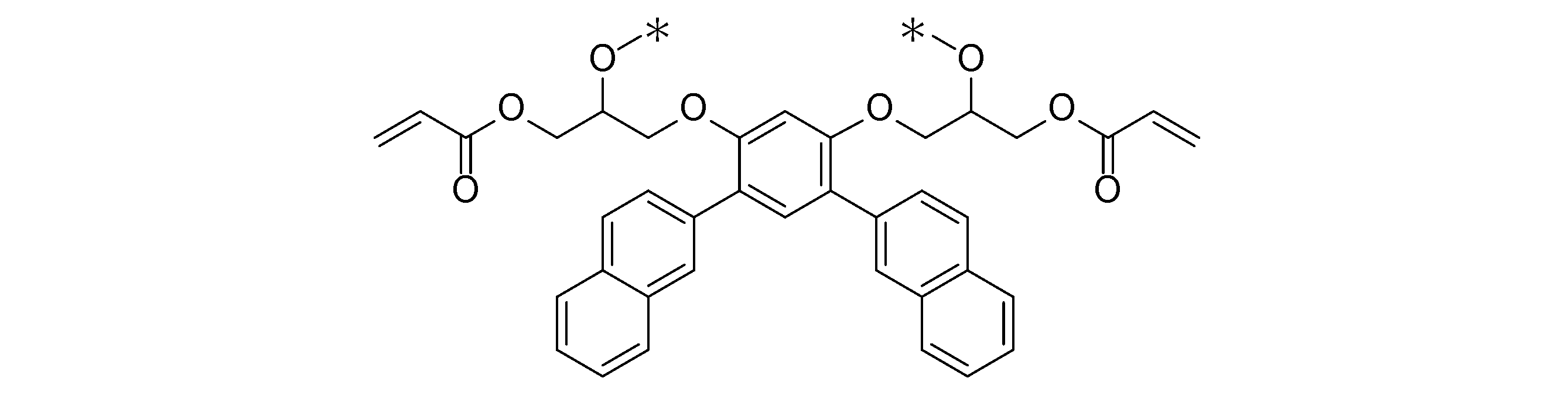
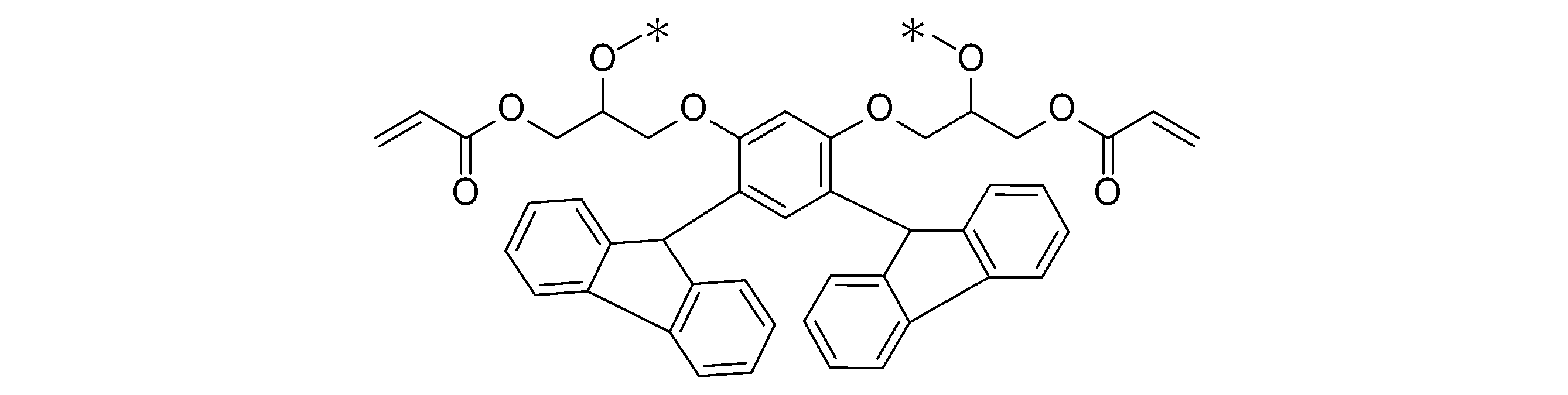

前記式(ii-2)において、Rβは、置換基を有していてもよい2価の環状炭化水素基を表す。
Rβにおける2価の環状炭化水素基としては、2価の脂肪族環基、2価の芳香族環基が挙げられる。
2価の脂肪族環基の炭素数は4以上が好ましく、6以上がより好ましく、8以上がさらに好ましく、また、40以下が好ましく、35以下がより好ましく、30以下がさらに好ましい。前記下限値以上とすることで膜強度が向上する傾向があり、また、前記上限値以下とすることで現像性が向上する傾向がある。上記の上限及び下限は任意に組み合わせることができる。例えば、2価の脂肪族環基の炭素数は4~40が好ましく、6~35がより好ましく、8~30がさらに好ましい。
2価の脂肪族環基における脂肪族環としては、例えば、シクロヘキサン環、シクロヘプタン環、シクロデカン環、シクロドデカン環、ノルボルナン環、イソボルナン環、アダマンタン環、シクロドデカン環が挙げられる。膜強度と現像性の両立の観点から、アダマンタン環が好ましい。
2価の芳香族環基としては、芳香族炭化水素環基、芳香族複素環基が挙げられる。また、2価の芳香族環基の炭素数は4以上が好ましく、6以上がより好ましく、8以上がさらに好ましく、10以上が特に好ましく、また、40以下が好ましく、30以下がより好ましく、20以下がさらに好ましく、15以下が特に好ましい。前記下限値以上とすることで膜強度が向上する傾向があり、また、前記上限値以下とすることで現像性が向上する傾向がある。上記の上限及び下限は任意に組み合わせることができる。例えば、2価の芳香族環基の炭素数は4~40が好ましく、6~30がより好ましく、8~20がさらに好ましく、10~15が特に好ましい。
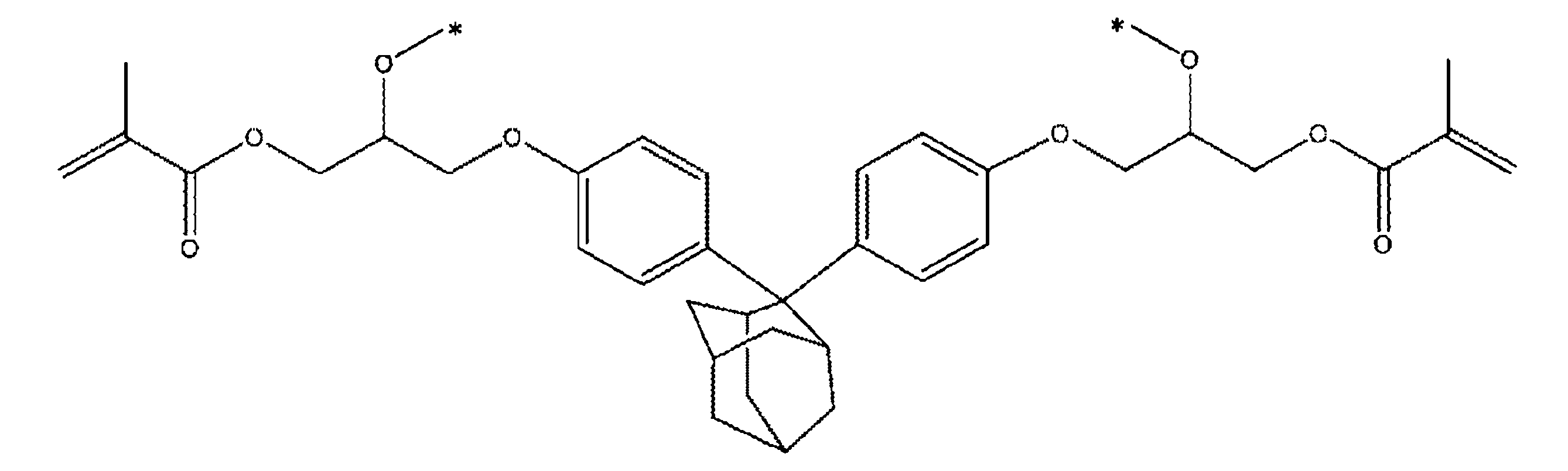


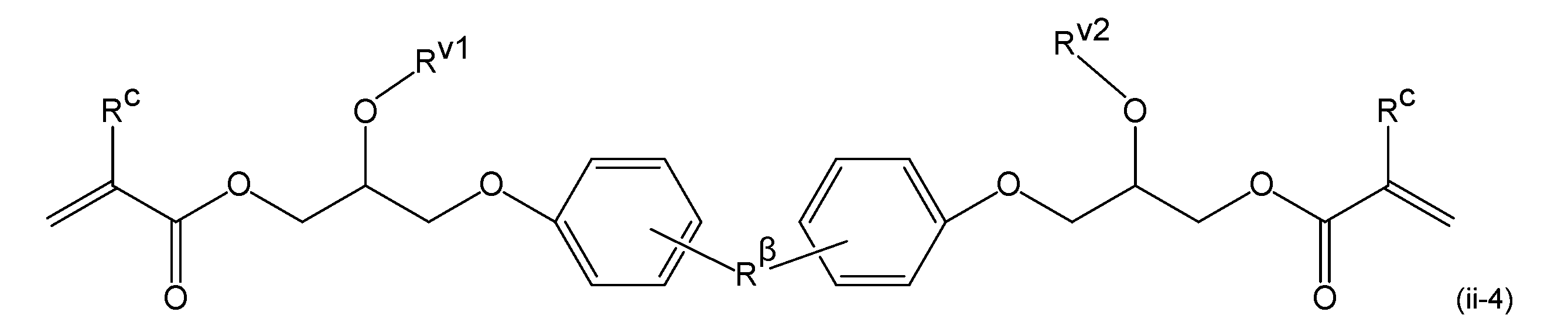
多塩基酸としては、例えば、マレイン酸、コハク酸、イタコン酸、フタル酸、テトラヒドロフタル酸、ヘキサヒドロフタル酸、ピロメリット酸、トリメリット酸、ベンゾフェノンテトラカルボン酸、メチルヘキサヒドロフタル酸、エンドメチレンテトラヒドロフタル酸、クロレンド酸、メチルテトラヒドロフタル酸、ビフェニルテトラカルボン酸が挙げられる。パターニング特性の観点から、マレイン酸、コハク酸、イタコン酸、フタル酸、テトラヒドロフタル酸、ヘキサヒドロフタル酸、ピロメリット酸、トリメリット酸、ビフェニルテトラカルボン酸が好ましく、テトラヒドロフタル酸、ビフェニルテトラカルボン酸がより好ましい。

前記式(iii)において、δは単結合、-CO-、置換基を有していてもよいアルキレン基、又は置換基を有していてもよい2価の環状炭化水素基を表す。
2価の脂肪族環基の炭素数は4以上が好ましく、6以上がより好ましく、8以上がさらに好ましく、また、40以下が好ましく、35以下がより好ましく、30以下がさらに好ましい。前記下限値以上とすることで膜強度が向上する傾向があり、また、前記上限値以下とすることで現像性が向上する傾向がある。上記の上限及び下限は任意に組み合わせることができる。例えば、2価の脂肪族環基の炭素数は4~40が好ましく、6~35がより好ましく、8~30がさらに好ましい。
2価の脂肪族環基における脂肪族環としては、例えば、シクロヘキサン環、シクロヘプタン環、シクロデカン環、シクロドデカン環、ノルボルナン環、イソボルナン環、アダマンタン環、シクロドデカン環が挙げられる。膜強度と現像性の両立の観点から、アダマンタン環が好ましい。
2価の芳香族環基としては、2価の芳香族炭化水素環基、2価の芳香族複素環基が挙げられる。2価の芳香族環基の炭素数は4以上が好ましく、6以上がより好ましく、8以上がさらに好ましく、10以上が特に好ましく、また、40以下が好ましく、30以下がより好ましく、20以下がさらに好ましく、15以下が特に好ましい。前記下限値以上とすることで膜強度が向上する傾向があり、また、前記上限値以下とすることで現像性が向上する傾向がある。上記の上限及び下限は任意に組み合わせることができる。例えば、2価の芳香族環基の炭素数は4~40が好ましく、6~30がより好ましく、8~20がさらに好ましく、10~15が特に好ましい。
2価の芳香族環基における芳香族環としては、例えば、ベンゼン環、ナフタレン環、アントラセン環、フェナントレン環が挙げられる。膜強度と現像性の両立の観点から、ベンゼン環が好ましい。
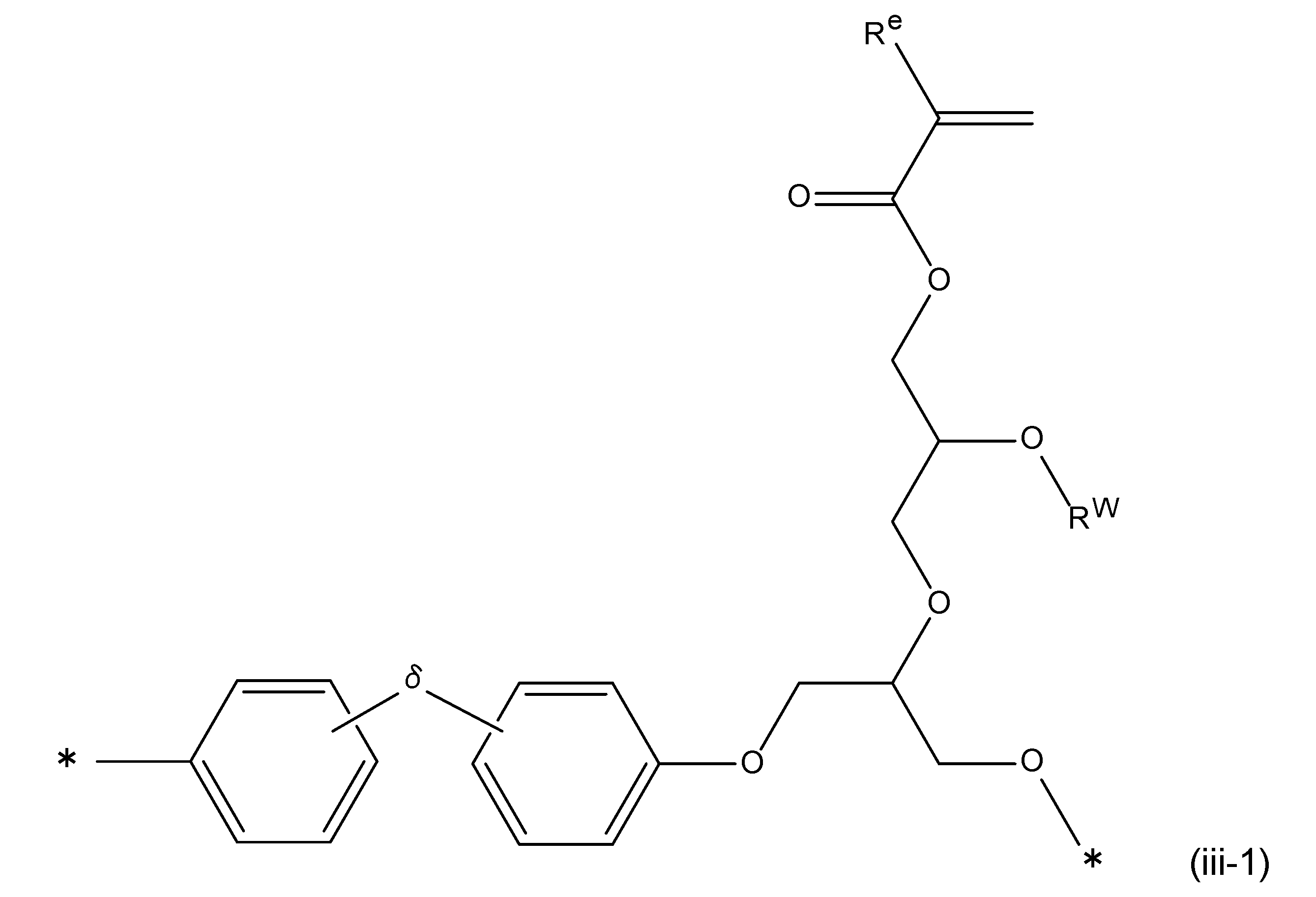
多塩基酸としては、例えば、マレイン酸、コハク酸、イタコン酸、フタル酸、テトラヒドロフタル酸、ヘキサヒドロフタル酸、ピロメリット酸、トリメリット酸、ベンゾフェノンテトラカルボン酸、メチルヘキサヒドロフタル酸、エンドメチレンテトラヒドロフタル酸、クロレンド酸、メチルテトラヒドロフタル酸、ビフェニルテトラカルボン酸が挙げられる。パターニング特性の観点から、マレイン酸、コハク酸、イタコン酸、フタル酸、テトラヒドロフタル酸、ヘキサヒドロフタル酸、ピロメリット酸、トリメリット酸、ビフェニルテトラカルボン酸が好ましく、テトラヒドロフタル酸、ビフェニルテトラカルボン酸がより好ましい。

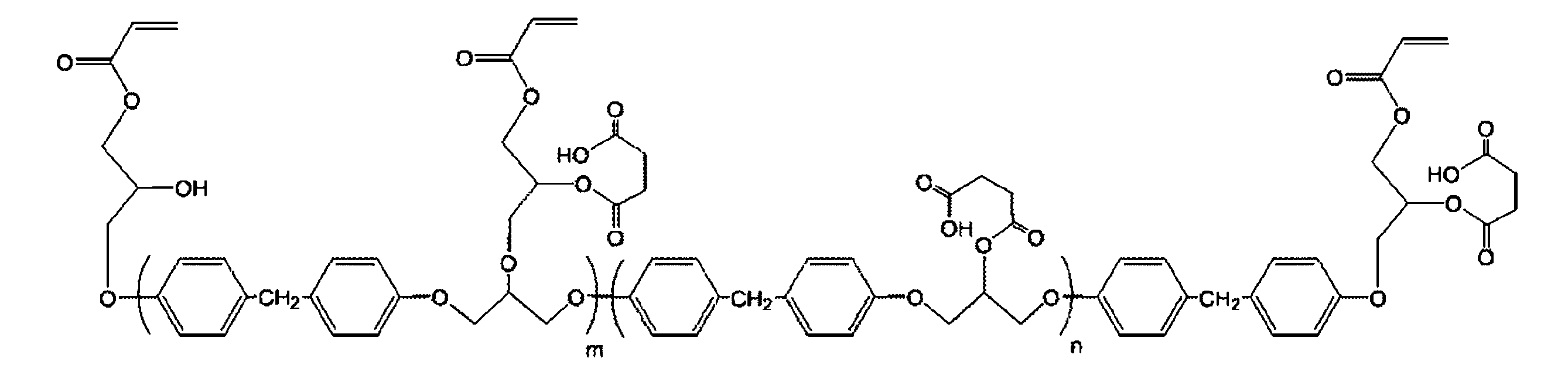
本発明の感光性着色樹脂組成物は、(b)光重合開始剤を含有する。(b)光重合開始剤は、光を直接吸収し、分解反応又は水素引き抜き反応を起こし、重合活性ラジカルを発生する機能を有する成分である。必要に応じて、(b)光重合開始剤に加えて、重合促進剤(連鎖移動剤)、増感色素等の付加剤を添加して使用してもよい。

R21bは芳香環を含む任意の置換基を表す。
R22aは、置換基を有していてもよいアルカノイル基、又は置換基を有していてもよいアリーロイル基を表す。
nは0又は1の整数を表す。
R21aにおけるアルキル基の炭素数は特に限定されないが、溶媒への溶解性や感度の観点から、1以上が好ましく、2以上がより好ましく、また、20以下が好ましく、15以下がより好ましく、10以下がさらに好ましい。
アルキル基としては、例えば、メチル基、エチル基、プロピル基、ブチル基、ペンチル基、ヘキシル基、シクロペンチルメチル基、シクロペンチルエチル基、シクロヘキシルメチル基、シクロヘキシルエチル基が挙げられる。
アルキル基が有していてもよい置換基としては、例えば、芳香族環基、水酸基、カルボキシ基、ハロゲン原子、アミノ基、アミド基、4-(2-メトキシ-1-メチル)エトキシ-2-メチルフェニル基、N-アセチル-N-アセトキシアミノ基が挙げられる。感度の観点からは、N-アセチル-N-アセトキシアミノ基であることが好ましい。
芳香族環基が有していてもよい置換基としては、例えば、水酸基、カルボキシ基、ハロゲン原子、アミノ基、アミド基、アルキル基、アルコキシ基、これらの置換基が連結した基が挙げられる。現像性の観点からアルキル基、アルコキシ基、これらを連結した基が好ましく、連結したアルコキシ基がより好ましい。
R21bとしては、好ましくは置換されていてもよいカルバゾリル基、置換されていてもよいチオキサントニル基、置換されていてもよいフルオレニル基、置換されていてもよいジフェニルスルフィド基、置換されていてもよいフルオレニル基又は置換されていてもよいインドリル基が挙げられる。感度の観点から、置換されていてもよいカルバゾリル基が好ましい。
R22aにおけるアルカノイル基の炭素数は特に限定されないが、溶媒への溶解性や感度の観点から、1以上が好ましく、2以上がより好ましく、また、20以下が好ましく、15以下がより好ましく、10以下がさらに好ましく、5以下が特に好ましい。
アルカノイル基としては、例えば、アセチル基、エチロイル基、プロパノイル基、ブタノイル基が挙げられる。
アルカノイル基が有していてもよい置換基としては、例えば、芳香族環基、水酸基、カルボキシ基、ハロゲン原子、アミノ基、アミド基が挙げられる。合成容易性の観点からは、無置換であることが好ましい。
アリーロイル基としては、例えば、ベンゾイル基、ナフトイル基が挙げられる。
アリーロイル基が有していてもよい置換基としては、例えば、水酸基、カルボキシ基、ハロゲン原子、アミノ基、アミド基、アルキル基が挙げられる。合成容易性の観点からは、無置換であることが好ましい。
感度の観点から、R22aが置換基を有していてもよいアルカノイル基であることが好ましく、無置換のアルカノイル基であることがより好ましく、アセチル基であることがさらに好ましい。
増感色素としては、例えば、日本国特開平4-221958号公報、日本国特開平4-219756号公報に記載のキサンテン色素、日本国特開平3-239703号公報、日本国特開平5-289335号公報に記載の複素環を有するクマリン色素、日本国特開平3-239703号公報、日本国特開平5-289335号公報に記載の3-ケトクマリン化合物、日本国特開平6-19240号公報に記載のピロメテン色素、その他、日本国特開昭47-2528号公報、日本国特開昭54-155292号公報、日本国特公昭45-37377号公報、日本国特開昭48-84183号公報、日本国特開昭52-112681号公報、日本国特開昭58-15503号公報、日本国特開昭60-88005号公報、日本国特開昭59-56403号公報、日本国特開平2-69号公報、日本国特開昭57-168088号公報、日本国特開平5-107761号公報、日本国特開平5-210240号公報、日本国特開平4-288818号公報に記載のジアルキルアミノベンゼン骨格を有する色素を挙げることができる。
増感色素は1種を単独で用いてもよく、2種以上を併用してもよい。
重合促進剤は、1種類を単独で用いても、2種以上を組み合わせて使用してもよい。
連鎖移動剤としては、例えば、メルカプト基含有化合物や、四塩化炭素が挙げられる。連鎖移動効果が高い傾向があることから、メルカプト基含有化合物がより好ましい。S-H結合エネルギーが小さいことによって結合開裂が起こりやすく、水素引きぬき反応や連鎖移動反応を起こしやすいためであると考えられ、感度向上や表面硬化性に有効である。
連鎖移動剤は、1種類を単独で用いても、2種以上を組み合わせて使用してもよい。
また、感度の観点から、ペンタエリスリトールテトラキス(3-メルカプトプロピオネート)、ペンタエリスリトールテトラキス(3-メルカプトブチレート)よりなる群から選択された1又は2以上を用いることが好ましい。さらに、感度の観点から、2-メルカプトベンゾチアゾール、2-メルカプトベンゾイミダゾール、及び2-メルカプトベンゾオキサゾールよりなる群から選択された1又は2以上と、ペンタエリスリトールテトラキス(3-メルカプトプロピオネート)、ペンタエリスリトールテトラキス(3-メルカプトブチレート)よりなる群から選択された1又は2以上と、光重合開始剤とを組み合わせて用いることが好ましい。
本発明の感光性着色樹脂組成物は、(c)エチレン性不飽和化合物を含有する。(c)エチレン性不飽和化合物を含むことで、塗膜の硬化性が上がり、また密着性が向上すると考えられる。
エチレン性不飽和化合物は、エチレン性不飽和結合を分子内に1個以上有する化合物を意味するが、重合性、架橋性、及びそれに伴う露光部と非露光部の現像液溶解性の差異を拡大できる等の点から、エチレン性不飽和結合を分子内に2個以上有する化合物であることが好ましい。その不飽和結合は(メタ)アクリロイルオキシ基に由来するものが好ましく、つまり、エチレン性不飽和化合物は(メタ)アクリレート化合物であることが好ましい。
エチレン性不飽和化合物としては、例えば、脂肪族ポリヒドロキシ化合物と不飽和カルボン酸とのエステル;芳香族ポリヒドロキシ化合物と不飽和カルボン酸とのエステル;脂肪族ポリヒドロキシ化合物、芳香族ポリヒドロキシ化合物等の多価ヒドロキシ化合物と、不飽和カルボン酸及び多塩基性カルボン酸とのエステル化反応により得られるエステルが挙げられる。
脂肪族ポリヒドロキシ化合物、芳香族ポリヒドロキシ化合物等の多価ヒドロキシ化合物と、不飽和カルボン酸及び多塩基性カルボン酸とのエステル化反応により得られるエステルとしては必ずしも単一物ではないが、代表的な具体例としては、例えば、アクリル酸、フタル酸、及びエチレングリコールの縮合物、アクリル酸、マレイン酸、及びジエチレングリコールの縮合物、メタクリル酸、テレフタル酸及びペンタエリスリトールの縮合物、アクリル酸、アジピン酸、ブタンジオール及びグリセリンの縮合物が挙げられる。
ウレタン(メタ)アクリレート類としては、例えば、DPHA-40H、UX-5000、UX-5002D-P20、UX-5003D、UX-5005(日本化薬社製)、U-2PPA、U-6LPA、U-10PA、U-33H、UA-53H、UA-32P、UA-1100H(新中村化学工業社製)、UA-306H、UA-510H、UF-8001G(協栄社化学社製)、UV-1700B、UV-7600B、UV-7605B、UV-7630B、UV7640B(三菱ケミカル社製)が挙げられる。
(c)エチレン性不飽和化合物は1種を単独で用いてもよく、2種以上を併用してもよい。
本発明の感光性着色樹脂組成物は、(d)着色剤を含有する。(d)着色剤を含有することで、適度な光吸収性、特に着色隔壁などの遮光部材を形成する用途に用いる場合には適度な遮光性を得ることができる。
有機着色顔料は、1種を単独で使用してもよいが、2種以上を併用してもよい。
以下、使用できる顔料の具体例をピグメントナンバーで示す。以下に挙げる「C.I.ピグメントレッド2」等の用語は、カラーインデックス(C.I.)を意味する。
分散性や遮光性の点で、C.I.ピグメントレッド177、254、272を用いることが好ましく、感光性着色樹脂組成物を紫外線で硬化させる場合には、赤色顔料としては紫外線吸収率の低いものを使用することが好ましく、係る観点からはC.I.ピグメントレッド254、272を用いることがより好ましい。
分散性や遮光性の点で、C.I.ピグメントブルー15:6、16、60を用いることが好ましく、感光性着色樹脂組成物を紫外線で硬化させる場合には、青色顔料としては紫外線吸収率の低いものを使用することが好ましく、係る観点からはC.I.ピグメントブルー60を用いることがより好ましい。
分散性や遮光性の点で、C.I.ピグメントバイオレット23、29を用いることが好ましく、感光性着色樹脂組成物を紫外線で硬化させる場合には、紫色顔料としては紫外線吸収率の低いものを使用することが好ましく、係る観点からはC.I.ピグメントバイオレット29を用いることがより好ましい。
緑色顔料としては、例えば、C.I.ピグメントグリーン1、2、4、7、8、10、13、14、15、17、18、19、26、36、45、48、50、51、54、55を挙げることができる。好ましくはC.I.ピグメントグリーン7、36を挙げることができる。
黄色顔料としては、例えば、C.I.ピグメントイエロー1、1:1、2、3、4、5、6、9、10、12、13、14、16、17、24、31、32、34、35、35:1、36、36:1、37、37:1、40、41、42、43、48、53、55、61、62、62:1、63、65、73、74、75、81、83、87、93、94、95、97、100、101、104、105、108、109、110、111、116、117、119、120、126、127、127:1、128、129、133、134、136、138、139、142、147、148、150、151、153、154、155、157、158、159、160、161、162、163、164、165、166、167、168、169、170、172、173、174、175、176、180、181、182、183、184、185、188、189、190、191、191:1、192、193、194、195、196、197、198、199、200、202、203、204、205、206、207、208を挙げることができる。好ましくはC.I.ピグメントイエロー83、117、129、138、139、150、154、155、180、185、さらに好ましくはC.I.ピグメントイエロー83、138、139、150、180を挙げることができる。
赤色顔料:C.I.ピグメントレッド177、254、272
橙色顔料:C.I.ピグメントオレンジ43、64、72
青色顔料:C.I.ピグメントブルー15:6、60
紫色顔料:C.I.ピグメントバイオレット23、29
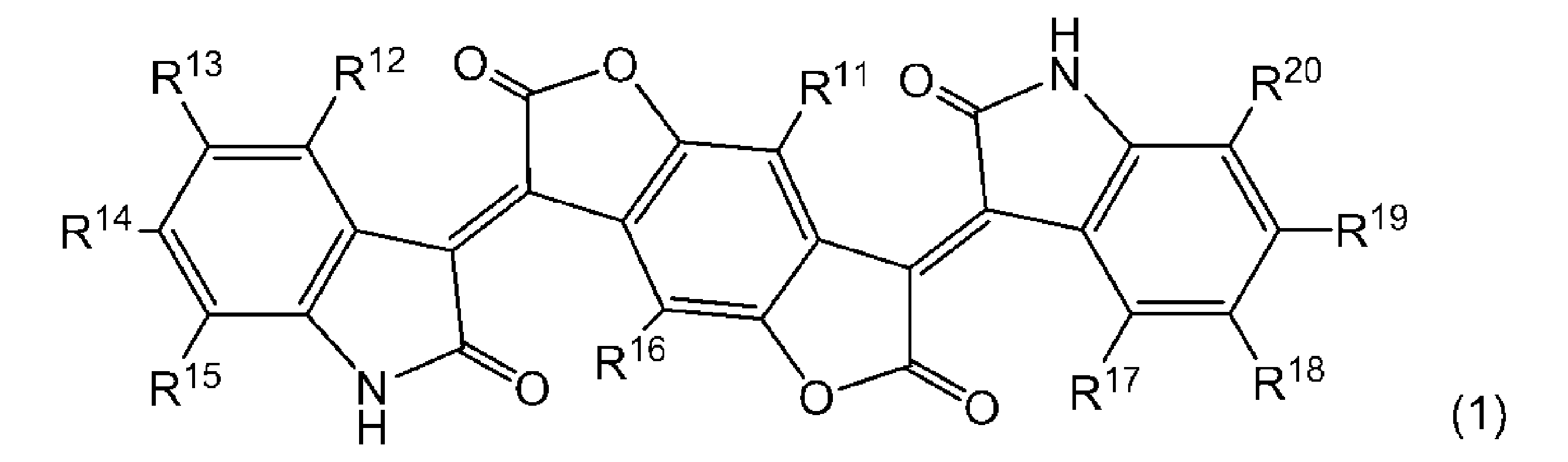
R12、R13、R14、R15、R17、R18、R19及びR20は各々独立に、水素原子、ハロゲン原子、R21、COOH、COOR21、COO-、CONH2、CONHR21、CONR21R22、CN、OH、OR21、COCR21、OOCNH2、OOCNHR21、OOCNR21R22、NO2、NH2、NHR21、NR21R22、NHCOR22、NR21COR22、N=CH2、N=CHR21、N=CR21R22、SH、SR21、SOR21、SO2R21、SO3R21、SO3H、SO3 -、SO2NH2、SO2NHR21、又はSO2NR21R22を表し;
R12とR13、R13とR14、R14とR15、R17とR18、R18とR19、及びR19とR20からなる群から選ばれる少なくとも1つの組み合わせは、互いに直接結合してもよく、又は酸素原子、硫黄原子、NH若しくはNR21ブリッジによって互いに結合してもよく;
R21及びR22は各々独立に、炭素数1~12のアルキル基、炭素数3~12のシクロアルキル基、炭素数2~12のアルケニル基、炭素数3~12のシクロアルケニル基、又は炭素数2~12のアルキニル基を表す。
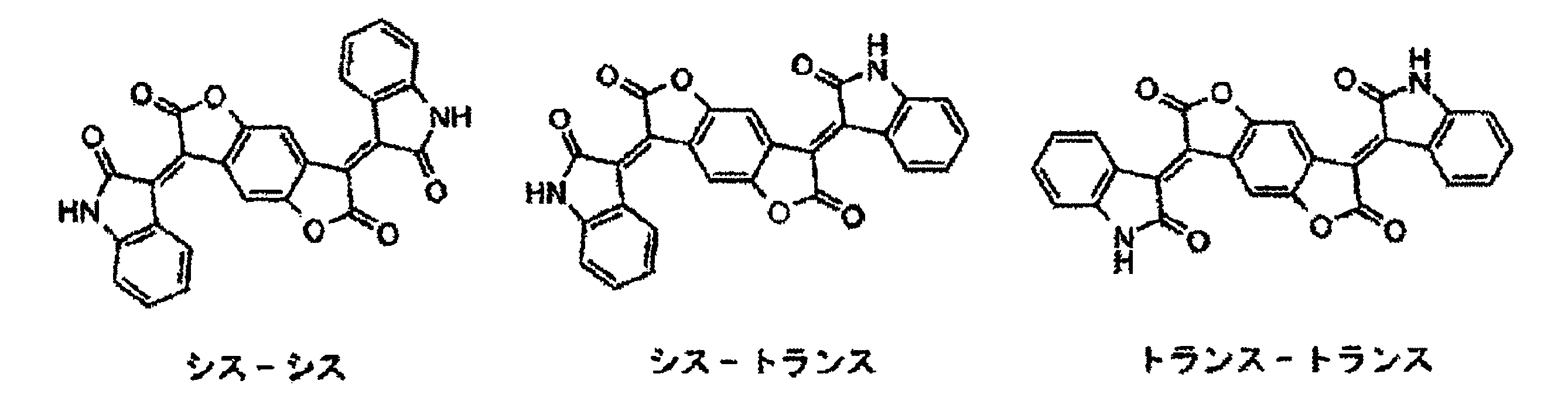
R12、R14、R15、R17、R19及びR20は各々独立に、好ましくは水素原子、フッ素原子、又は塩素原子であり、さらに好ましくは水素原子である。
R13及びR18は各々独立に、好ましくは水素原子、NO2、OCH3、OC2H5、臭素原子、塩素原子、CH3、C2H5、N(CH3)2、N(CH3)(C2H5)、N(C2H5)2、α-ナフチル、β-ナフチル、SO3H、又はSO3 -であり、さらに好ましくは水素原子又はSO3Hであり、特に好ましくは水素原子である。
好ましくは、R11とR16、R12とR17、R13とR18、R14とR19、及びR15とR20からなる群から選ばれる少なくとも1つの組み合わせが同一であり、より好ましくは、R11はR16と同一であり、R12はR17と同一であり、R13はR18と同一であり、R14はR19と同一であり、かつ、R15はR20と同一である。

この有機黒色顔料は、好ましくは後述される分散剤、溶剤、方法によって分散して使用される。また、分散の際に化合物(1)のスルホン酸誘導体、特に化合物(2)のスルホン酸誘導体が存在すると、分散性や保存性が向上する場合があるため、有機黒色顔料がこれらのスルホン酸誘導体を含むことが好ましい。
デグサ社製:Printex(登録商標、以下同じ。)3、Printex3OP、Printex30、Printex30OP、Printex40、Printex45、Printex55、Printex60、Printex75、Printex80、Printex85、Printex90、Printex A、Printex L、Printex G、Printex P、Printex U、Printex V、PrintexG、SpecialBlack550、SpecialBlack350、SpecialBlack250、SpecialBlack100、SpecialBlack6、SpecialBlack5、SpecialBlack4、Color Black FW1、Color Black FW2、Color Black FW2V、Color Black FW18、Color Black FW200、Color Black S160、Color Black S170、
キャボット社製:Monarch(登録商標、以下同じ。)120、Monarch280、Monarch460、Monarch800、Monarch880、Monarch900、Monarch1000、Monarch1100、Monarch1300、Monarch1400、Monarch4630、REGAL(登録商標、以下同じ。)99、REGAL99R、REGAL415、REGAL415R、REGAL250、REGAL250R、REGAL330、REGAL400R、REGAL550R、REGAL660R、BLACK PEARLS(登録商標、以下同じ。)480、BLACK PEARLS130、VULCAN(登録商標、以下同じ。) XC72R、ELFTEX(登録商標)-8、
ビルラー社製:RAVEN(登録商標、以下同じ。)11、RAVEN14、RAVEN15、RAVEN16、RAVEN22、RAVEN30、RAVEN35、RAVEN40、RAVEN410、RAVEN420、RAVEN450、RAVEN500、RAVEN780、RAVEN850、RAVEN890H、RAVEN1000、RAVEN1020、RAVEN1040、RAVEN1060U、RAVEN1080U、RAVEN1170、RAVEN1190U、RAVEN1250、RAVEN1500、RAVEN2000、RAVEN2500U、RAVEN3500、RAVEN5000、RAVEN5250、RAVEN5750、RAVEN7000。
具体的な合成樹脂としては、例えば、フェノール樹脂、メラミン樹脂、キシレン樹脂、ジアリルフタレート樹脂、グリプタル樹脂、エポキシ樹脂、アルキルベンゼン樹脂等の熱硬化性樹脂や、ポリスチレン、ポリカーボネート、ポリエチレンテレフタレート、ポリブチレンテレフタレート、変性ポリフェニレンオキサイド、ポリスルフォン、ポリパラフェニレンテレフタルアミド、ポリアミドイミド、ポリイミド、ポリアミノビスマレイミド、ポリエーテルスルフォポリフェニレンスルフォン、ポリアリレート、ポリエーテルエーテルケトン、等の熱可塑性樹脂が使用できる。被覆樹脂の量は、カーボンブラックと樹脂の合計量に対し1~30質量%が好ましい。前記下限値以上とすることで被覆を十分なものとすることができる傾向がある。一方、前記上限値以下とすることで、樹脂同士の粘着を防ぎ、分散性が良好なものとすることができる傾向がある。
アゾ系染料としては、例えば、C.I.アシッドイエロー11、C.I.アシッドオレンジ7、C.I.アシッドレッド37、C.I.アシッドレッド180、C.I.アシッドブルー29、C.I.ダイレクトレッド28、C.I.ダイレクトレッド83、C.I.ダイレクトイエロー12、C.I.ダイレクトオレンジ26、C.I.ダイレクトグリーン28、C.I.ダイレクトグリーン59、C.I.リアクティブイエロー2、C.I.リアクティブレッド17、C.I.リアクティブレッド120、C.I.リアクティブブラック5、C.I.ディスパースオレンジ5、C.I.ディスパースレッド58、C.I.ディスパースブルー165、C.I.ベーシックブルー41、C.I.ベーシックレッド18、C.I.モルダントレッド7、C.I.モルダントイエロー5、C.I.モルダントブラック7が挙げられる。
フタロシアニン系染料として、例えば、C.I.バットブルー5が挙げられる。
キノンイミン系染料として、例えば、C.I.ベーシックブルー3、C.I.ベーシックブルー9が挙げられる。
キノリン系染料として、例えば、C.I.ソルベントイエロー33、C.I.アシッドイエロー3、C.I.ディスパースイエロー64が挙げられる。
ニトロ系染料として、例えば、C.I.アシッドイエロー1、C.I.アシッドオレンジ3、C.I.ディスパースイエロー42が挙げられる。
本発明の感光性着色樹脂組成物は、(d)着色剤を微細に分散させ、かつその分散状態を安定化させるため、分散剤を含むことが好ましい。
本発明における分散剤としては、官能基を有する高分子分散剤が好ましく、さらに、分散安定性の面からカルボキシ基;リン酸基;スルホン酸基;又はこれらの塩基;一級、二級又は三級アミノ基;四級アンモニウム塩基;ピリジン、ピリミジン、ピラジン等の含窒素ヘテロ環由来の基、等の官能基を有する高分子分散剤が好ましい。特に、一級、二級又は三級アミノ基;四級アンモニウム塩基;ピリジン、ピリミジン、ピラジン等の含窒素ヘテロ環由来の基、等の塩基性官能基を有する高分子分散剤が顔料を分散する際に少量の分散剤で分散することができるとの観点から特に好ましい。
高分子分散剤は1種を単独で使用してもよく、又は2種以上を併用してもよい。
顔料の分散性の観点から、分散剤は官能基を有するウレタン系高分子分散剤及びアクリル系高分子分散剤のいずれか一方又は両方を含むことが好ましく、アクリル系高分子分散剤を含むことが特に好ましい。
分散性、保存性の面から、塩基性官能基を有し、ポリエステル結合及びポリエーテル結合のいずれか一方又は両方を有する高分子分散剤が好ましい。
ウレタン系高分子分散剤としては、例えば、ポリイソシアネート化合物と、分子内に水酸基を1個又は2個有する数平均分子量300~10000の化合物と、同一分子内に活性水素と3級アミノ基を有する化合物とを反応させることによって得られる、重量平均分子量1000~200000の分散樹脂が挙げられる。これらをベンジルクロリド等の四級化剤で処理することで、3級アミノ基の全部又は一部を4級アンモニウム塩基にすることができる。
ポリイソシアネート化合物は1種を単独で用いてもよく、2種以上を併用してもよい。
ポリエーテルグリコールとしては、例えば、ポリエーテルジオール、ポリエーテルエステルジオール、及びこれら2種類以上の混合物が挙げられる。
ポリエーテルエステルジオールとしては、例えば、エーテル基含有ジオール若しくは他のグリコールとの混合物をジカルボン酸又はそれらの無水物と反応させるか、又はポリエステルグリコールにアルキレンオキシドを反応させることによって得られるもの、例えばポリ(ポリオキシテトラメチレン)アジペート等が挙げられる。
ポリエーテルグリコールとしてはポリエチレングリコール、ポリプロピレングリコール、ポリオキシテトラメチレングリコール又はこれらの化合物の片末端水酸基が炭素数1~25のアルキル基でアルコキシ化された化合物が特に好ましい。
ポリカーボネートグリコールは1種を単独で用いてもよく、2種以上を併用してもよい。
活性水素、即ち、酸素原子、窒素原子又は硫黄原子に直接結合している水素原子としては、水酸基、アミノ基、チオール基等の官能基中の水素原子が挙げられ、アミノ基、特に1級のアミノ基の水素原子が好ましい。
トリアゾール環とアミノ基を有する化合物としては、例えば、3-アミノ-1,2,4-トリアゾール、5-(2-アミノ-5-クロロフェニル)-3-フェニル-1H-1,2,4-トリアゾール、4-アミノ-4H-1,2,4-トリアゾール-3,5-ジオール、3-アミノ-5-フェニル-1H-1,3,4-トリアゾール、5-アミノ-1,4-ジフェニル-1,2,3-トリアゾール、3-アミノ-1-ベンジル-1H-2,4-トリアゾール等が挙げられる。
同一分子内に活性水素と3級アミノ基を有する化合物としては、N,N-ジメチル-1,3-プロパンジアミン、N,N-ジエチル-1,3-プロパンジアミン、1-(3-アミノプロピル)イミダゾール、3-アミノ-1,2,4-トリアゾールが好ましい。
同一分子内に活性水素と3級アミノ基を有する化合物は1種を単独で用いてもよく、2種以上を併用してもよい。
溶媒は1種を単独で用いてもよく、2種以上を併用してもよい。
触媒は1種を単独で用いてもよく、2種以上を併用してもよい。
ウレタン系高分子分散剤の重量平均分子量(Mw)は1000~200000が好ましく、2000~100000がより好ましく、3000~50000がさらに好ましい。前記下限値以上とすることで分散性及び分散安定性が良化する傾向があり、前記上限値以下とすることで溶解性が向上し分散性が良化する傾向がある。
官能基を有する不飽和基含有単量体は1種を単独で用いてもよく、2種以上を併用してもよい。
官能基を有さない不飽和基含有単量体は1種を単独で用いてもよく、2種以上を併用してもよい。
A-B又はB-A-Bブロック共重合体は、例えば、以下に示すリビング重合法にて調製される。
リビング重合法には、アニオンリビング重合法、カチオンリビング重合法、ラジカルリビング重合法がある。
A-Bブロック共重合体、B-A-Bブロック共重合体1g中の4級アンモニウム塩基の量は、0.1~10mmolであることが好ましく、この範囲内にすることで良好な分散性を確保できる傾向がある。
ブロック共重合体の重量平均分子量(Mw)は、1000~100000の範囲が好ましい。前記範囲内とすることで良好な分散性を確保できる傾向がある。

R31~R33のうち2つ以上が互いに結合して環状構造を形成してもよく;
R34は水素原子又はメチル基であり;
Xは2価の連結基であり;
Y-は対アニオンである。
アルキル基としては、例えば、メチル基、エチル基、プロピル基、ブチル基、ペンチル基、ヘキシル基、ヘプチル基、オクチル基が挙げられ、メチル基、エチル基、プロピル基、ブチル基、ペンチル基、ヘキシル基が好ましく、メチル基、エチル基、プロピル基、ブチル基がより好ましい。アルキル基は、直鎖状、分枝状のいずれであってもよく、シクロヘキシル基、シクロヘキシルメチル基などの環状構造を含んでもよい。
アリール基としては、例えば、フェニル基、メチルフェニル基、エチルフェニル基、ジメチルフェニル基、ジエチルフェニル基、ナフチル基、アントラセニル基が挙げられ、フェニル基、メチルフェニル基、エチルフェニル基、ジメチルフェニル基、ジエチルフェニル基が好ましく、フェニル基、メチルフェニル基、エチルフェニル基がより好ましい。
アラルキル基としては、例えば、フェニルメチル基(ベンジル基)、フェニルエチル基(フェネチル基)、フェニルプロピル基、フェニルブチル基、フェニルイソプロピル基が挙げられ、フェニルメチル基、フェニルエチル基、フェニルプロピル基、フェニルブチル基が好ましく、フェニルメチル基、フェニルエチル基がより好ましい。
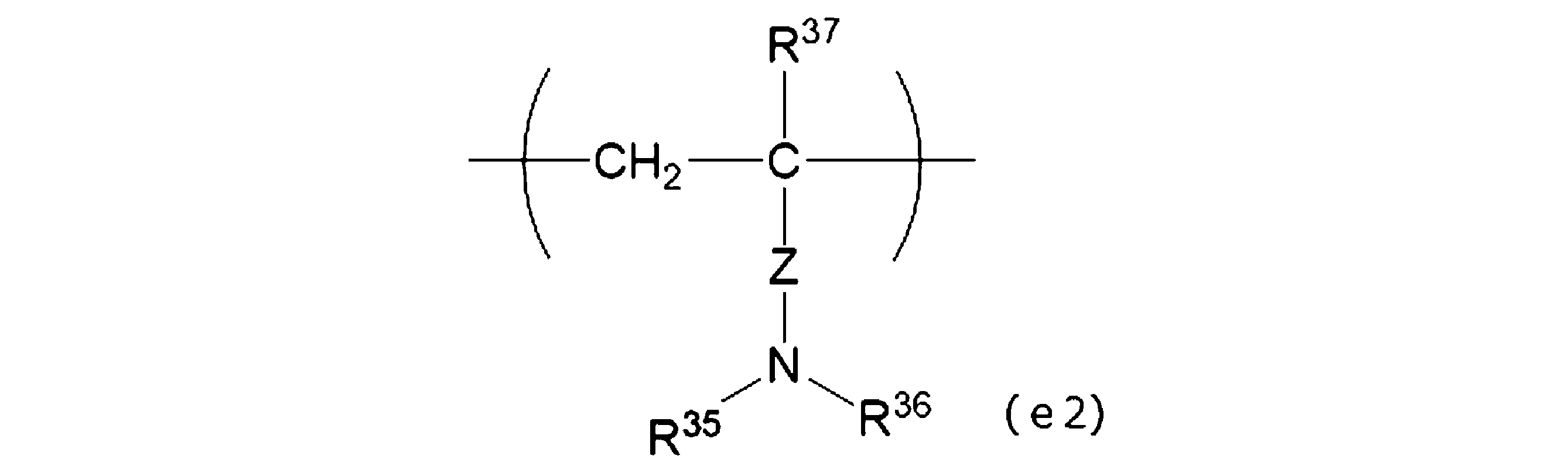
R35及びR36が互いに結合して環状構造を形成してもよく;
R37は水素原子又はメチル基であり;
Zは2価の連結基である。
式(e2)のR35及びR36における、置換基を有していてもよいアリール基としては、上記式(e1)のR31~R33として例示したアリール基を好ましく採用することができる。
式(e2)のR35及びR36における、置換基を有していてもよいアラルキル基としては、上記式(e1)のR31~R33として例示したアラルキル基を好ましく採用することができる。
式(e1)において、対アニオンのY-としては、例えば、Cl-、Br-、I-、ClO4 -、BF4 -、CH3COO-、PF6 -が挙げられる。
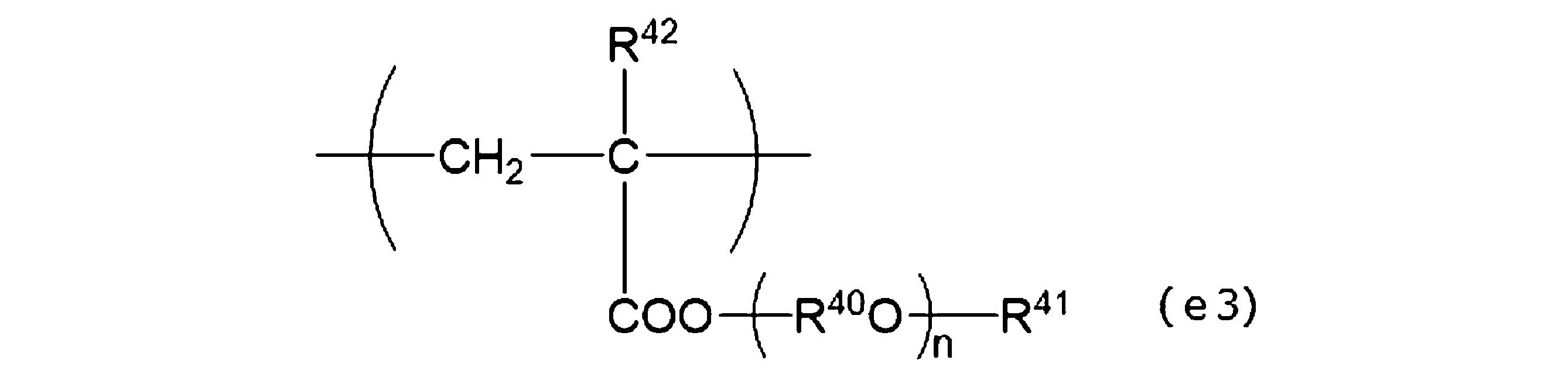
R41は置換基を有していてもよいアルキル基であり;
R42は水素原子又はメチル基であり;
nは1~20の整数である。
アルキル基としては、例えば、メチル基、エチル基、プロピル基、ブチル基、ペンチル基、ヘキシル基、ヘプチル基、オクチル基が挙げられ、メチル基、エチル基、プロピル基、ブチル基、ペンチル基、ヘキシル基が好ましく、メチル基、エチル基、プロピル基、ブチル基がより好ましい。また、直鎖状、分枝状のいずれであってもよく、シクロヘキシル基、シクロヘキシルメチル基などの環状構造を含んでもよい。

R39は水素原子又はメチル基である。
アルキル基の具体例としては、例えば、メチル基、エチル基、プロピル基、ブチル基、ペンチル基、ヘキシル基、ヘプチル基、オクチル基が挙げられ、メチル基、エチル基、プロピル基、ブチル基、ペンチル基、ヘキシル基が好ましく、メチル基、エチル基、プロピル基、ブチル基がより好ましい。また、直鎖状、分枝状のいずれであってもよく、シクロヘキシル基、シクロヘキシルメチル基などの環状構造を含んでもよい。
アリール基としては、例えば、フェニル基、メチルフェニル基、エチルフェニル基、ジメチルフェニル基、ジエチルフェニル基、ナフチル基、アントラセニル基が挙げられ、フェニル基、メチルフェニル基、エチルフェニル基、ジメチルフェニル基、ジエチルフェニル基が好ましく、フェニル基、メチルフェニル基、エチルフェニル基がより好ましい。
アラルキル基としては、例えば、フェニルメチル基(ベンジル基)、フェニルエチル基(フェネチル基)、フェニルプロピル基、フェニルブチル基、フェニルイソプロピル基が挙げられ、フェニルメチル基、フェニルエチル基、フェニルプロピル基、フェニルブチル基であることが好ましく、フェニルメチル基、フェニルエチル基であることがより好ましい。
R38における、アルキル基が有していてもよい置換基としては、例えば、ハロゲン原子、アルコキシ基が挙げられる。
アリール基、アラルキル基が有していてもよい置換基としては、例えば、アルキル基、ハロゲン原子、アルコキシ基が挙げられる。
R38で示されるアルキル基には、直鎖状及び分岐鎖状のいずれも含まれる。
分散剤のアミン価は、分散剤試料中の溶剤を除いた固形分1gあたりの塩基量と当量のKOHの質量で表し、次の方法により測定する。
100mLのビーカーに分散剤試料の0.5~1.5gを精秤し、50mLの酢酸で溶解する。pH電極を備えた自動滴定装置を使って、この溶液を0.1mol/LのHClO4酢酸溶液にて中和滴定する。滴定pH曲線の変曲点を滴定終点とし次式によりアミン価を求める。
本発明の感光性着色樹脂組成物には、分散性、保存性向上のため、分散助剤として顔料誘導体を含有させてもよい。
顔料誘導体としては、例えば、アゾ系、フタロシアニン系、キナクリドン系、ベンズイミダゾロン系、キノフタロン系、イソインドリノン系、ジオキサジン系、アントラキノン系、インダンスレン系、ペリレン系、ペリノン系、ジケトピロロピロール系、ジオキサジン系の誘導体が挙げられるが、中でもフタロシアニン系、キノフタロン系が好ましい。
顔料誘導体の置換基としては、例えば、スルホン酸基、スルホンアミド基及びその4級塩、フタルイミドメチル基、ジアルキルアミノアルキル基、水酸基、カルボキシ基、アミド基等が顔料骨格に直接又はアルキル基、アリール基、複素環基等を介して結合したものが挙げられ、好ましくはスルホン酸基である。またこれら置換基は一つの顔料骨格に複数置換していてもよい。
顔料誘導体は1種を単独で用いてもよく、2種以上を併用してもよい。
本発明の感光性着色樹脂組成物には、塗布性向上ため、界面活性剤を含有させてもよい。
市販品としては、例えば、BM Chemie社製「BM-1000」、「BM-1100」、DIC社製「メガファックF-142D」、「メガファックF-172」、「メガファックF-173」、「メガファックF-183」、「メガファックF-470」、「メガファックF-475」、「メガファックF-478」、「メガファックF-554」、「メガファックF-559」、スリーエムジャパン社製「FC430」、ネオス社製「DFX-18」を挙げることができる。
界面活性剤として、フッ素系界面活性剤及びシリコーン系界面活性剤以外のものを含んでいてもよく、その他の界面活性剤としては、例えば、非イオン系界面活性剤、アニオン系界面活性剤、カチオン系界面活性剤、両性界面活性剤が挙げられる。
界面活性剤は、1種類を単独で用いてもよく、2種類以上を任意の組み合わせ及び比率で併用してもよい。中でも、シリコーン系界面活性剤/フッ素系界面活性剤の組み合わせが好ましい。このシリコーン系界面活性剤/フッ素系界面活性剤の組み合わせでは、例えば、ビックケミー社製「BYK-300」又は「BYK-330」/DIC社製「F-475」「F-478」「F-554」又は「F-559」が挙げられる。
本発明の感光性着色樹脂組成物は、撥液剤を含有していてもよい。本発明の感光性着色樹脂組成物を隔壁材として用いて隔壁を作成し、インクジェット法で有機電界発光素子を作成する場合には、撥液剤を含有することが好ましい。撥液剤を含有することでそれが隔壁の表面に撥液性を付与できることから、得られる隔壁を有機層の画素ごとの混色を防ぐものとすることができる。
撥液剤としては、シリコーン含有化合物やフッ素系化合物が挙げられ、好ましくは、架橋基を有する撥液剤(以下、「架橋基含有撥液剤」と称す場合がある。)が挙げられる。架橋基としては、エポキシ基又はエチレン性不飽和基が挙げられ、現像液の撥液成分の流出抑制の観点から、好ましくはエチレン性不飽和基である。
架橋基含有撥液剤を用いる場合には、形成した塗膜を露光する際にその表面での架橋反応を加速することができ、撥液剤が現像処理で流出しにくくなり、その結果、得られる隔壁を高い撥液性を示すものとすることができると考えられる。
本発明の感光性着色樹脂組成物は、紫外線吸収剤を含有してもよい。紫外線吸収剤は、露光に用いられる光源の特定の波長を紫外線吸収剤によって吸収させることにより、光硬化分布を制御する目的で添加されるものである。紫外線吸収剤の添加により、現像後の隔壁側面の垂直性を改善したり、現像後に非露光部に残る残渣をなくしたりするなどの効果が得られる。紫外線吸収剤としては、(b)光重合開始剤の光吸収の阻害の観点から、例えば、波長250nmから400nmの間に吸収極大を有する化合物を用いることができる。
紫外線吸収剤としては、ベンゾトリアゾール系化合物及びトリアジン系化合物のいずれか一方又は両方を含むことが望ましい。ベンゾトリアゾール系化合物及びトリアジン系化合物のいずれか一方又は両方を含むことで開始剤の膜底部での光吸収率が減少し、塗膜下部の線幅が小さくなることにより隔壁側面の垂直性効果が得られると考えられる。
市販されているトリアジン系化合物としては、例えば、TINUVIN400、TINUVIN405、TINUVIN460、TINUVIN477、TINUVIN479(BASF社製)を挙げることができる。
例えば、スミソーブ130(住友化学社製)、EVERSORB10、EVERSORB11、EVERSORB12(台湾永光化学工業社製)、トミソーブ800(エーピーアイコーポレーション社製)、SEESORB100、SEESORB101、SEESORB101S、SEESORB102、SEESORB103、SEESORB105、SEESORB106、SEESORB107、SEESORB151(シプロ化成社製)などのベンゾフェノン化合物;スミソーブ400(住友化学社製)、サリチル酸フェニルなどのベンゾエート化合物;桂皮酸2-エチルヘキシル、パラメトキシ桂皮酸2-エチルヘキシル、メトキシケイ皮酸イソプロピル、メトキシケイ皮酸イソアミル等の桂皮酸誘導体;α-ナフトール、β-ナフトール、α-ナフトールメチルエーテル、α-ナフトールエチルエーテル、1,2-ジヒドロキシナフタレン、1,3-ジヒドロキシナフタレン、1,4-ジヒドロキシナフタレン、1,5-ジヒドロキシナフタレン、1,6-ジヒドロキシナフタレン、1,7-ジヒドロキシナフタレン、1,8-ジヒドロキシナフタレン、2,3-ジヒドロキシナフタレン、2,6-ジヒドロキシナフタレン、2,7-ジヒドロキシナフタレン等のナフタレン誘導体;アントラセン、9,10-ジヒドロキシアントラセン等のアントラセン及びその誘導体;アゾ系染料、ベンゾフェノン系染料、アミノケトン系染料、キノリン系染料、アントラキノン系染料、ジフェニルシアノアクリレート系染料、トリアジン系染料、p-アミノ安息香酸系染料等の染料;が挙げられる。解像性の観点から、桂皮酸誘導体、ナフタレン誘導体を用いることが好ましく、桂皮酸誘導体を用いることが特に好ましい。
本発明の感光性着色樹脂組成物は、重合禁止剤を含有することが好ましい。重合禁止剤を含有することでそれがラジカル重合を阻害することから、得られる隔壁のテーパ角を大きくすることができる傾向がある。
重合禁止剤としては、例えば、ハイドロキノン、ハイドロキノンモノメチルエーテル、メチルハイドロキノン、メトキシフェノール、2,6-ジ-tert-ブチル-4-クレゾール(BHT)が挙げられる。重合禁止能力の観点から、ハイドロキノン、メトキシフェノールが好ましく、メチルハイドロキノンがより好ましい。
本発明の感光性着色樹脂組成物には、熱重合開始剤が含有されていてもよい。熱重合開始剤を含有することで、塗膜の架橋度を高くできる傾向がある。熱重合開始剤の具体例としては、例えば、アゾ系化合物、有機過酸化物、過酸化水素が挙げられる。
熱重合開始剤は1種を単独で用いてもよく、2種以上を併用してもよい。
本発明の感光性着色樹脂組成物には、熱硬化を促進するためにアミノ化合物が含まれていてもよい。
本発明の感光性着色樹脂組成物がアミノ化合物を含有する場合、アミノ化合物の含有割合としては、感光性着色樹脂組成物の全固形分に対して、40質量%以下が好ましく、30質量%以下がより好ましく、また、0.5質量%以上が好ましく、1質量%以上がより好ましい。前記上限値以下とすることで保存安定性を維持できる傾向があり、前記下限値以上とすることで十分な熱硬化性を確保できる傾向がある。上記の上限及び下限は任意に組み合わせることができる。例えば、感光性着色樹脂組成物がアミノ化合物を含有する場合、感光性着色樹脂組成物の全固形分に対する含有割合は、0.5~40質量%が好ましく、1~30質量%がより好ましい。
アミノ化合物は1種を単独で用いてもよく、2種以上を併用してもよい。中でも、アミノ化合物としてはメラミン樹脂及びその変性樹脂が好ましく、メチロール基の変性割合が、70%以上の変性樹脂がさらに好ましく、80%以上の変性樹脂が特に好ましい。
ベンゾグアナミン樹脂及びその変性樹脂としては、例えば、サイテック社製の「サイメル」1123、1125、1128が挙げられる。
グリコールウリル樹脂及びその変性樹脂としては、例えば、サイテック社製の「サイメル」1170、1171、1174、1172、三和ケミカル社製の「ニカラック」MX-270が挙げられる。
尿素樹脂及びその変性樹脂としては、例えば、サイテック社製の「UFR」(登録商標)65、300、三和ケミカル社製の「ニカラック」MX-290が挙げられる。
本発明の感光性着色樹脂組成物には、基板との密着性を改善するため、シランカップリング剤を添加してもよい。シランカップリング剤の種類としては、エポキシ系、メタクリル系、アミノ系、イミダゾール系など種々の物が使用できるが、密着性向上の観点から、特にエポキシ系、イミダゾール系のシランカップリング剤が好ましい。
本発明の感光性着色樹脂組成物がシランカップリング剤を含有する場合、シランカップリング剤の含有量は、密着性の観点から、感光性着色樹脂組成物の全固形分に対して、20質量%以下が好ましく、15質量%以下がより好ましい。
本発明の感光性着色樹脂組成物は、硬化物としての強度の向上と共に、アルカリ可溶性樹脂との適度な相互作用(マトリックス構造の形成)による塗膜の優れた垂直性とテーパ角の向上等を目的として、無機充填材を含有してもよい。
無機充填材としては、例えば、タルク、シリカ、アルミナ、硫酸バリウム、酸化マグネシウム、酸化チタン、或いは、これらを各種シランカップリング剤により表面処理したものが挙げられる。
本発明の感光性着色樹脂組成物には、基板との密着性を付与する目的でリン酸系のエチレン性単量体を含有させてもよい。
リン酸系のエチレン性単量体としては、(メタ)アクリロイルオキシ基含有ホスフェート類が好ましく、下記一般式(g1)、(g2)、(g3)で表される化合物が好ましい。

リン酸系エチレン性単量体用いる場合の含有割合は、感光性着色樹脂組成物の全固形分に対して0.02質量%以上が好ましく、0.05質量%以上がより好ましく、0.1質量%以上がさらに好ましく、0.2質量%以上が特に好ましく、また、4質量%以下が好ましく、3質量%以下がより好ましく、2質量%以下がさらに好ましく、1質量%以下が特に好ましい。前記下限値以上とすることで基板との密着性の改善効果が十分となる傾向があり、一方上記上限値以下とすることで基板との密着性の悪化を抑制しやすい傾向がある。上記の上限及び下限は任意に組み合わせることができる。例えば、感光性着色樹脂組成物がリン酸系エチレン性単量体を含む場合、感光性着色樹脂組成物の全固形分に対する含有割合は0.02~4質量%が好ましく、0.05~3質量%がより好ましく、0.1~2質量%がさらに好ましく、0.2~1質量%が特に好ましい。
本発明の感光性着色樹脂組成物は、溶剤を含有し、前述の各成分を溶剤に溶解又は分散させた状態で使用されることが好ましい。溶剤としては、特に制限は無いが、例えば、以下に記載する有機溶剤が挙げられる。
エチレングリコールジメチルエーテル、エチレングリコールジエチルエーテル、ジエチレングリコールジメチルエーテル、ジエチレングリコールエチルメチルエーテル、ジエチレングリコールジエチルエーテル、ジエチレングリコールジプロピルエーテル、ジエチレングリコールジブチルエーテル、ジプロピレングリコールジメチルエーテルのようなグリコールジアルキルエーテル類;
エチレングリコールモノメチルエーテルアセテート、エチレングリコールモノエチルエーテルアセテート、エチレングリコールモノ-n-ブチルエーテルアセテート、プロピレングリコールモノメチルエーテルアセテート、プロピレングリコールモノエチルエーテルアセテート、プロピレングリコールモノプロピルエーテルアセテート、プロピレングリコールモノブチルエーテルアセテート、3-メトキシ-1-ブチルアセテート、メトキシペンチルアセテート、ジエチレングリコールモノメチルエーテルアセテート、ジエチレングリコールモノエチルエーテルアセテート、ジエチレングリコールモノ-n-ブチルエーテルアセテート、ジプロピレングリコールモノメチルエーテルアセテート、トリエチレングリコールモノメチルエーテルアセテート、トリエチレングリコールモノエチルエーテルアセテート、3-メチル-3-メトキシブチルアセテートのようなグリコールアルキルエーテルアセテート類;
エチレングリコールジアセテート、プロピレングリコールジアセテート、1,3-ブチレングリコールジアセテート、1,4-ブタンジオールジアセテート、1,6-ヘキサノールジアセテートなどのグリコールジアセテート類;
シクロヘキサノールアセテートなどのアルキルアセテート類;
アミルエーテル、ジエチルエーテル、ジプロピルエーテル、ジイソプロピルエーテル、ジブチルエーテル、ジアミルエーテル、エチルイソブチルエーテル、ジヘキシルエーテルのようなエーテル類;
アセトン、メチルエチルケトン、メチルイソプロピルケトン、メチルアミルケトン、メチルイソアミルケトン、ジイソプロピルケトン、ジイソブチルケトン、メチルイソブチルケトン、シクロヘキサノン、エチルアミルケトン、メチルブチルケトン、メチルヘキシルケトン、メチルノニルケトン、メトキシメチルペンタノンのようなケトン類;
メタノール、エタノール、プロパノール、ブタノール、ヘキサノール、シクロヘキサノール、エチレングリコール、プロピレングリコール、ブタンジオール、ジエチレングリコール、ジプロピレングリコール、トリエチレングリコール、メトキシメチルペンタノール、グリセリン、ベンジルアルコールのような1価又は多価アルコール類;
n-ペンタン、n-オクタン、ジイソブチレン、n-ヘキサン、ヘキセン、イソプレン、ジペンテン、ドデカンのような脂肪族炭化水素類;
シクロヘキサン、メチルシクロヘキサン、メチルシクロヘキセン、ビシクロヘキシルのような脂環式炭化水素類;
ベンゼン、トルエン、キシレン、クメンのような芳香族炭化水素類;
アミルホルメート、エチルホルメート、酢酸エチル、酢酸プロピル、酢酸ブチル、酢酸アミル、メチルイソブチレート、エチルプロピオネート、プロピルプロピオネート、酪酸ブチル、酪酸イソブチル、イソ酪酸メチル、エチルカプリレート、安息香酸エチル、3-エトキシプロピオン酸メチル、3-エトキシプロピオン酸エチル、3-メトキシプロピオン酸メチル、3-メトキシプロピオン酸エチル、3-メトキシプロピオン酸プロピル、3-メトキシプロピオン酸ブチル、γ-ブチロラクトンのような鎖状又は環状エステル類;
3-メトキシプロピオン酸、3-エトキシプロピオン酸のようなアルコキシカルボン酸類;
ブチルクロライド、アミルクロライドのようなハロゲン化炭化水素類;
メトキシメチルペンタノンのようなエーテルケトン類;
アセトニトリル、ベンゾニトリルのようなニトリル類;
テトラヒドロフラン、ジメチルテトラヒドロフラン、ジメトキシテトラヒドロフランのようなテトラヒドロフラン類。
溶剤は、感光性着色樹脂組成物の全固形分の割合が、好ましくは10質量%以上、より好ましくは15質量%以上、さらに好ましくは20質量%以上、特に好ましくは25質量%以上、また、好ましくは90質量%以下、より好ましくは50質量%以下、さらに好ましくは40質量%以下、特に好ましくは35質量%以下となるように使用されることが好ましい。前記下限値以上とすることで塗布ムラの発生を抑制できる傾向があり、また、前記上限値以下とすることで異物、ハジキ等の発生を抑制できる傾向がある。上記の上限及び下限は任意に組み合わせることができる。例えば、溶剤は、感光性着色樹脂組成物の全固形分の割合が、好ましくは10~90質量%、より好ましくは15~50質量%、さらに好ましくは20~40質量%、特に好ましくは25~35質量%となるように使用されることが好ましい。
本発明の感光性着色樹脂組成物は、上記の各成分を撹拌機で混合することにより調製され得る。
例えば、(d)着色剤として顔料等の溶剤不溶成分を含む場合には、予めペイントコンディショナー、サンドグラインダー、ボールミル、ロールミル、ストーンミル、ジェットミル、ホモジナイザー等を用いて分散処理することが好ましい。分散処理により(d)着色剤が微粒子化されるため、感光性着色樹脂組成物の塗布特性が向上する。
感光性着色樹脂組成物を製造する工程において、(d)着色剤、溶剤、及び分散剤を少なくとも含有する顔料分散液を製造することが好ましい。
顔料分散液に用いることができる(d)着色剤、溶剤、及び分散剤としては、それぞれ感光性着色樹脂組成物に用いることができるものとして記載したものを好ましく採用することができる。顔料分散液における(d)着色剤の各着色剤の含有割合としては、感光性着色樹脂組成物における含有割合として記載したものを好ましく採用することができる。
分散処理により得られたインクは、感光性着色樹脂組成物中に含まれる、上記の他の成分と混合し、均一な溶液又は分散液とする。感光性着色樹脂組成物の製造工程においては、微細なゴミが液中に混じることがあるため、得られた感光性着色樹脂組成物はフィルター等により濾過処理することが望ましい。
本発明の感光性着色樹脂組成物を硬化させることで、本発明の硬化物を得ることができる。本発明の感光性着色樹脂組成物は、それ自身を隔壁材として隔壁を形成するために用いることができ、特に有機電界発光素子の有機層を区画するための隔壁を形成するために好適に用いることができる。
本発明の感光性着色樹脂組成物を用いて隔壁を形成する方法は特に限定されず、従来公知の方法を採用することができる。隔壁の形成方法としては、例えば、感光性着色樹脂組成物を、基板上に塗布し、感光性着色樹脂組成物層を形成する塗布工程と、感光性着色樹脂組成物層を露光する露光工程と、を含む方法が挙げられる。このようなバンクの形成方法としては、例えば、インクジェット法とフォトリソグラフィー法とが挙げられる。
本発明の画像表示装置は、本発明の隔壁を備える。画像表示装置としては、画像や映像を表示する装置であれば特に限定されないが、例えば、液晶表示装置や有機EL表示装置が挙げられる。
本発明の画像表示装置は、例えば、「有機ELディスプレイ」(オーム社、平成16年8月20日発行、時任静士、安達千波矢、村田英幸著)に記載されているような方法で形成することができる。白色光を発光する有機電界発光素子とカラーフィルターとを組み合わせて画像表示させてもよいし、RGB等の発光色の異なる有機電界発光素子を組み合わせて画像表示させてもよい。
以下の実施例及び比較例で用いた感光性着色樹脂組成物の構成成分は次の通りである。
DIC社製EPICLON HP7200HH(ジシクロペンタジエン・フェノール重合物のポリグリシジルエーテル、重量平均分子量1000、エポキシ当量270)155質量部、メタクリル酸49質量部、p-メトキシフェノール0.1質量部、トリフェニルホスフィン2.5質量部、プロピレングリコールモノメチルエーテルアセテート280質量部を反応容器に仕込み、100℃で酸価が3.0mgKOH/g以下になるまで加熱撹拌をした。酸価が目標に達するまで9時間を要した(酸価2.9mgKOH/g)。次いでさらにテトラヒドロ無水フタル酸77gを添加し、120℃で4時間反応させ、酸価100mgKOH/g、重量平均分子量3500のアルカリ可溶性樹脂-Iを得た。
アルカリ可溶性樹脂-Iは一般式(a2-1)で表わされる部分構造を有する。
DIC社製EPICLON HP7200HH(ジシクロペンタジエン・フェノール重合物のポリグリシジルエーテル、重量平均分子量1000、エポキシ当量270)155質量部、アクリル酸41質量部、p-メトキシフェノール0.1質量部、トリフェニルホスフィン2.5質量部、プロピレングリコールモノメチルエーテルアセテート270質量部を反応容器に仕込み、100℃で酸価が3.0mgKOH/g以下になるまで加熱撹拌をした。酸価が目標に達するまで9時間を要した(酸価2.9mgKOH/g)。次いでさらにテトラヒドロ無水フタル酸74gを添加し、120℃で4時間反応させ、酸価100mgKOH/g、重量平均分子量3500のアルカリ可溶性樹脂-IIを得た。
アルカリ可溶性樹脂-IIは一般式(a2-1)で表わされる部分構造を有する。

次いで、ビフェニルテトラカルボン酸2無水物(BPDA)82.4質量部、テトラヒドロフタル酸無水物(THPA)30.4質量部、及びメトキシブチルアセテート120質量部を入れ、攪拌しながら105℃までゆっくり昇温し反応させ、固形分酸価110mgKOH/g、GPCで測定したポリスチレン換算の重量平均分子量(Mw)5200であるアルカリ可溶性樹脂-IVを得た。
アルカリ可溶性樹脂-IVはカルド骨格を有する。
エチルカルバゾール(5g、25.61mmol)とo-ナフトイルクロリド(5.13g、26.89mmol)を30mlのジクロロメタンに溶解し、氷水バスにて2℃に冷却して攪拌し、AlCl3(3.41g、25.61mmol)を添加した。さらに室温にて3時間攪拌後、反応液にクロトノイルクロリド(2.81g、26.89mmol)の15mlジクロロメタン溶液を加え、AlCl3(4.1g、30.73mmol)を添加し、さらに1時間30分攪拌した。反応液を氷水200mlにあけ、ジクロロメタン200mlを添加し有機層を分液した。回収した有機層を無水硫酸マグネシウムで乾燥後、減圧下濃縮し、白色固体(10g)のジケトン体を得た。
ジケトン体(3.00g、7.19mmol)、NH2OH・HCl(1.09g、15.81mmol)、及び酢酸ナトリウム(1.23g、15.08mmol)を溶剤としてイソプロパノール30mlを用いて、3時間還流した。
反応終了後、反応液を濃縮し、得られた残渣に酢酸エチル30mlを加え、飽和炭酸水素ナトリウム水溶液30ml、飽和食塩水30mlで洗浄、無水硫酸マグネシウムで乾燥した。ろ過後、有機層を減圧下濃縮し、固体1.82gを得た。これをカラムクロマトグラフィーで精製し、淡黄色固体2.22gのオキシム体を得た。
オキシム体(2.22g、4.77mmol)とアセチルクロリド(1.34g、17.0mmol)をジクロロメタン20mlに加えて2℃まで氷冷し、トリエチルアミン(1.77g、17.5mmol)を滴下して、そのまま1時間反応した。薄層クロマトグラフィーにより原料の消失を確認した後、水を加えて反応を停止した。反応液を飽和炭酸水素ナトリウム水溶液5mlで2回、飽和食塩水5mlで2回洗浄し、無水硫酸ナトリウムで乾燥した。濾過後、有機層を減圧下濃縮し、得られた残渣をカラムクロマトグラフィー(酢酸エチル/ヘキサン=2/1)で精製して、0.79gの淡黄色固体の光重合開始剤-I(オキシムエステル体)を得た。
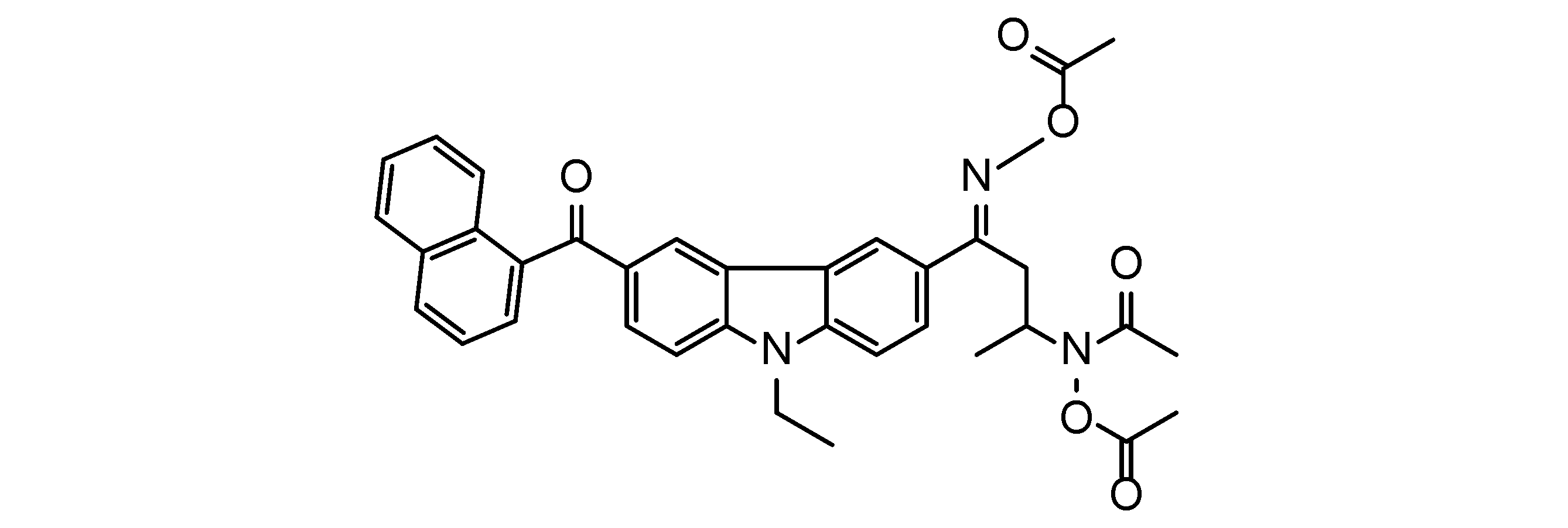
有機黒色顔料、BASF社製、Irgaphor(登録商標) Black S 0100 CF
側鎖に4級アンモニウム塩基及び3級アミノ基を有するAブロックと、4級アンモニウム塩基及び3級アミノ基を有さないBブロックからなる、アクリル系A-Bブロック共重合体。アミン価は70mgKOH/g。酸価は1mgKOH/g以下。
分散剤-IのAブロック中には、下記式(1a)及び(2a)の繰り返し単位が含まれ、Bブロック中には下記式(3a)の繰り返し単位が含まれる。分散剤-Iの全繰り返し単位に占める下記式(1a)、(2a)、及び(3a)の繰り返し単位の含有割合はそれぞれ11.1モル%、22.2モル%、6.7モル%である。
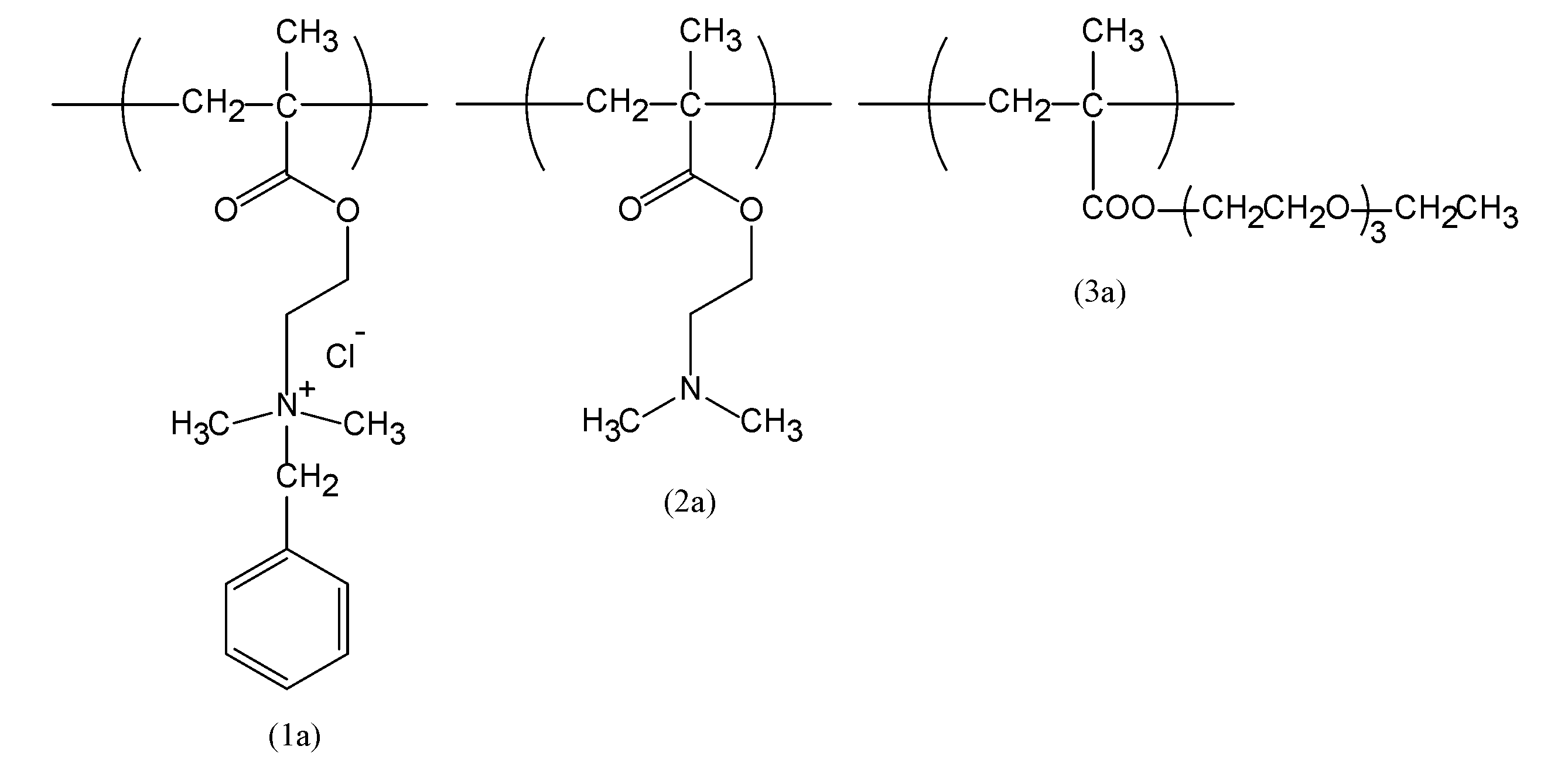
PGMEA:プロピレングリコールモノメチルエーテルアセテート
MB:3-メトキシブタノール
アルカリ可溶性樹脂-I:合成例1に記載の樹脂
アルカリ可溶性樹脂-II:合成例2に記載の樹脂
アルカリ可溶性樹脂-III:日本化薬社製「ZCR-1569H」(重量平均分子量(Mw)=4500、固形分酸価=98mgKOH/g)。部分構造としてビフェニル基を有する。
アルカリ可溶性樹脂-IV:合成例3に記載の樹脂
DPHA-40H:日本化薬社製「KAYARAD DPHA-40H」(多官能アクリレート)
TMP-A:共栄社化学社製「ライトアクリレート TMP-A」(多官能アクリレート)
光重合開始剤-I:合成例4に記載の光重合開始剤
BYK-330:ビックケミー社製 「BYK-330」
表1に記載の顔料、分散剤、アルカリ可溶性樹脂及び溶剤を、表1に記載の質量比となるように混合して混合液を得た。なお表1中の溶剤の配合割合には、分散剤及びアルカリ可溶性樹脂由来の溶剤の量も含まれる。
この混合液をペイントシェーカーにより25~45℃の範囲で3時間分散処理を行った。ビーズとしては、0.5mmφのジルコニアビーズを用い、分散液の2.5倍の質量を加えた。分散終了後、フィルターによりビーズと分散液を分離して、顔料分散液1~4を調製した。
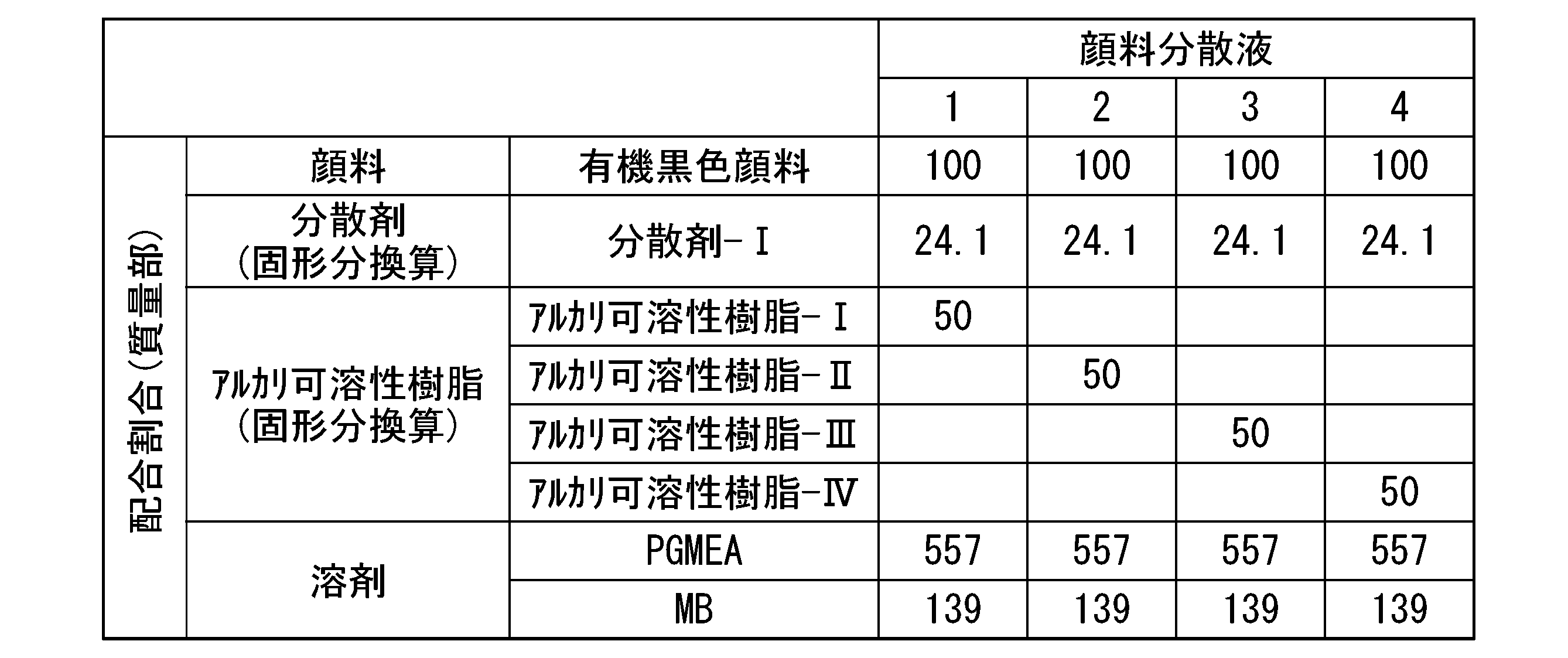
[実施例1~5及び比較例1~3]
上記調製した顔料分散液1~4を用いて、全固形分に対する各成分の固形分の比率が表2の配合割合となるように各成分を加え、さらに全固形分の含有割合が19質量%となり、さらには溶剤中の比率がPGMEA/MBが80/20質量%となるようにPGMEAとMBを加え、攪拌、溶解させて、感光性着色樹脂組成物である組成物1~8を調製した。
組成物1~8について、後述する方法で評価を行った。
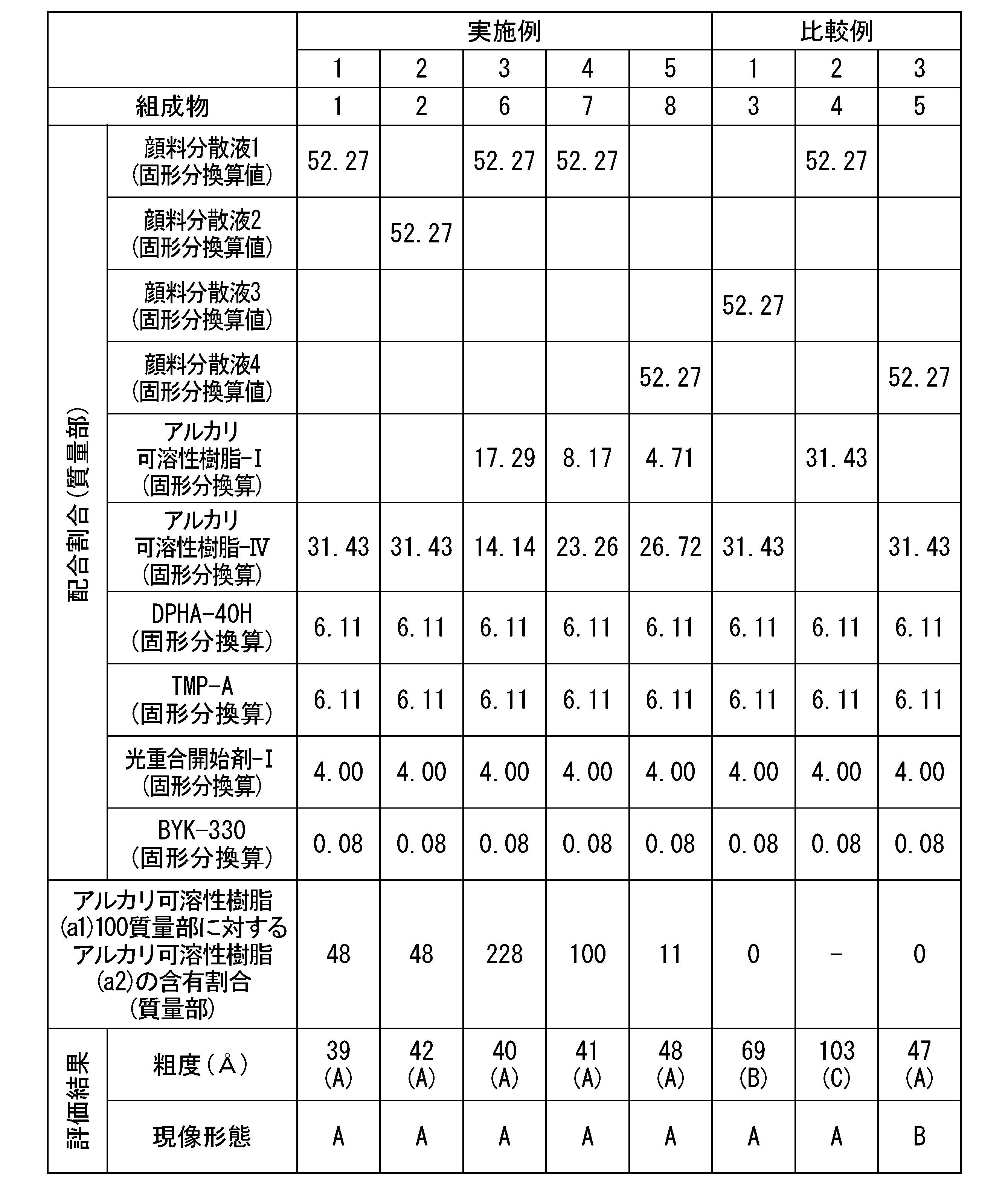
ガラス基板上の全面に膜厚8nmのITO、膜厚120nmの銀、膜厚10nmのITOがこの順で蒸着された電極基板の上に、感光性着色樹脂組成物を加熱硬化後の膜厚が1.5μmとなるようにスピンコーターにて塗布し、1分間減圧乾燥した後に、ホットプレートで100℃にて120秒間乾燥した。得られた塗膜に、マスクを使用せず、波長365nmでの強度が45mW/cm2である紫外線を用いて、露光量が40mJ/cm2となるよう全面露光処理を施した。
続いて、2.38質量%のTMAH(水酸化テトラメチルアンモニウム)水溶液よりからなる現像液を用い、24℃において水圧0.05MPaのシャワー現像した後、純水にて現像を停止し、水洗スプレーにて洗浄した。シャワー現像時間は未露光部の塗膜が溶解除去される時間の2倍とした。
その後、当該基板をオーブン中、230℃で30分間加熱硬化(キュア)させることで、粗度評価用基板を得た。
得られた基板の10μm×10μmの範囲の塗膜表面の算術平均表面粗さ(Sa)を日立ハイテクノロジー社製の走査型白色干渉顕微鏡 VS1530により測定し、Saを塗膜表面の粗度とした。また、以下の基準で表面平滑性の評価を行った。測定結果と評価結果を表2に示した。なお、測定モードはFocusモードとし、対物レンズの倍率は50倍、測定光の中心波長は520nmとした。Saは、表面形状曲面と平均面で囲まれた部分の体積を測定面積で割ったものであり、数値が小さいほど塗膜の表面平滑性が高いことを示す。
A:Saが50Å未満
B:Saが50Å以上、100Å未満
C:Saが100Å以上
ガラス基板上の全面に膜厚8nmのITO、膜厚120nmの銀、膜厚10nmのITOがこの順で蒸着された電極基板の上に、感光性着色樹脂組成物を加熱硬化後の膜厚が1.5μmとなるようにスピンコーターにて塗布し、1分間減圧乾燥した後に、ホットプレートで100℃にて120秒間乾燥した。その後、2.38質量%のTMAH(水酸化テトラメチルアンモニウム)水溶液よりからなる現像液を用い、24℃において水圧0.05MPaのシャワー現像を施した際の現像の様子を目視で観察し、以下の基準で評価を行った。
A:均一に溶解する。
B:膜状の剥離が見られる。
ガラス基板上の全面に膜厚8nmのITO、膜厚120nmの銀、膜厚10nmのITOがこの順で蒸着された電極基板の上に、感光性着色樹脂組成物を加熱硬化後の膜厚が1.5μmとなるようにスピンコーターにて塗布し、1分間減圧乾燥した後に、ホットプレートで100℃にて120秒間乾燥した。続いて、2.38質量%のTMAH(水酸化テトラメチルアンモニウム)水溶液よりからなる現像液を用い、24℃において水圧0.05MPaのシャワー現像した後、純水にて現像を停止し、水洗スプレーにて洗浄し、残渣評価用基板を得た。シャワー現像時間は未露光部の塗膜が溶解除去される時間の2倍とした。
得られた残渣評価用基板を、クリーニングクロスにエチルアルコールを染み込ませ、基板上をふき取った。その後白色灯下で、拭き取った部分と拭き取らない部分の境界部を観察した。
A:拭き取った部分と拭き取らない部分の境界がわからない。(すなわち現像後にITO上に残渣が生じない。)
B:拭き取った部分と拭き取らない部分の境界線が目視で認識できる。
(すなわち現像後にITO上に残渣が生じている。)
組成物1にて残渣の評価を行ったところ、評価はAであった。
一方、実施例1~5と比較例3との比較から、アルカリ可溶性樹脂として、アルカリ可溶性樹脂(a1)に加えて、一般式(a2-1)で表される部分構造を有するアルカリ可溶性樹脂(a2)を含むことで現像形態が良好となる。これは、アルカリ可溶性樹脂(a1)は疎水性が高すぎることから、単独では塗膜の未露光部分への現像液浸透が起こりづらく、均一な溶解が起こらないが、アルカリ可溶性樹脂(a2)を含むことで適度に塗膜の疎水性が調整されるため、現像形態が改善されると考えられる。
また、実施例1~5と比較例1、3の比較から、現像形態改善のためアルカリ可溶性樹脂(a2)以外の樹脂を用いて、アルカリ可溶性樹脂(a1)比率を低下させると塗膜の表面平滑性が低下するが、アルカリ可溶性樹脂(a2)を用いて、アルカリ可溶性樹脂(a1)比率を低下させると表面平滑性は維持できることがわかる。これは、アルカリ可溶性樹脂(a2)は、疎水性はアルカリ可溶性樹脂(a1)より低いものの、立体的にかさ高い部分構造を有するため、塗膜中の樹脂同士の凝集が抑制され、凝集物の溶解による表面平滑性の低下が生じないためだと考えられる。
実施例1、3、4及び5の結果より、アルカリ可溶性樹脂(a1)100質量部に対する、アルカリ可溶性樹脂(a2)の含有割合が、5~300質量部であれば、塗膜の表面平滑性と現像形態が良好となることがわかる。特に含有割合が48質量部の場合に、表面平滑性が最もよくなった。これは、塗膜の疎水性が適度であるため、塗膜の露光部分への現像液の過度な浸透を抑制しつつも、表面平滑性を悪化させる凝集物などを適度に溶解させるためであると考えられる。
Claims (8)
- (a)アルカリ可溶性樹脂、(b)光重合開始剤、(c)エチレン性不飽和化合物及び(d)着色剤を含有する感光性着色樹脂組成物であって、
前記(a)アルカリ可溶性樹脂が、カルド骨格を有するアルカリ可溶性樹脂(a1)、及び下記一般式(a2-1)で表される部分構造を有するアルカリ可溶性樹脂(a2)を含有することを特徴とする感光性着色樹脂組成物。
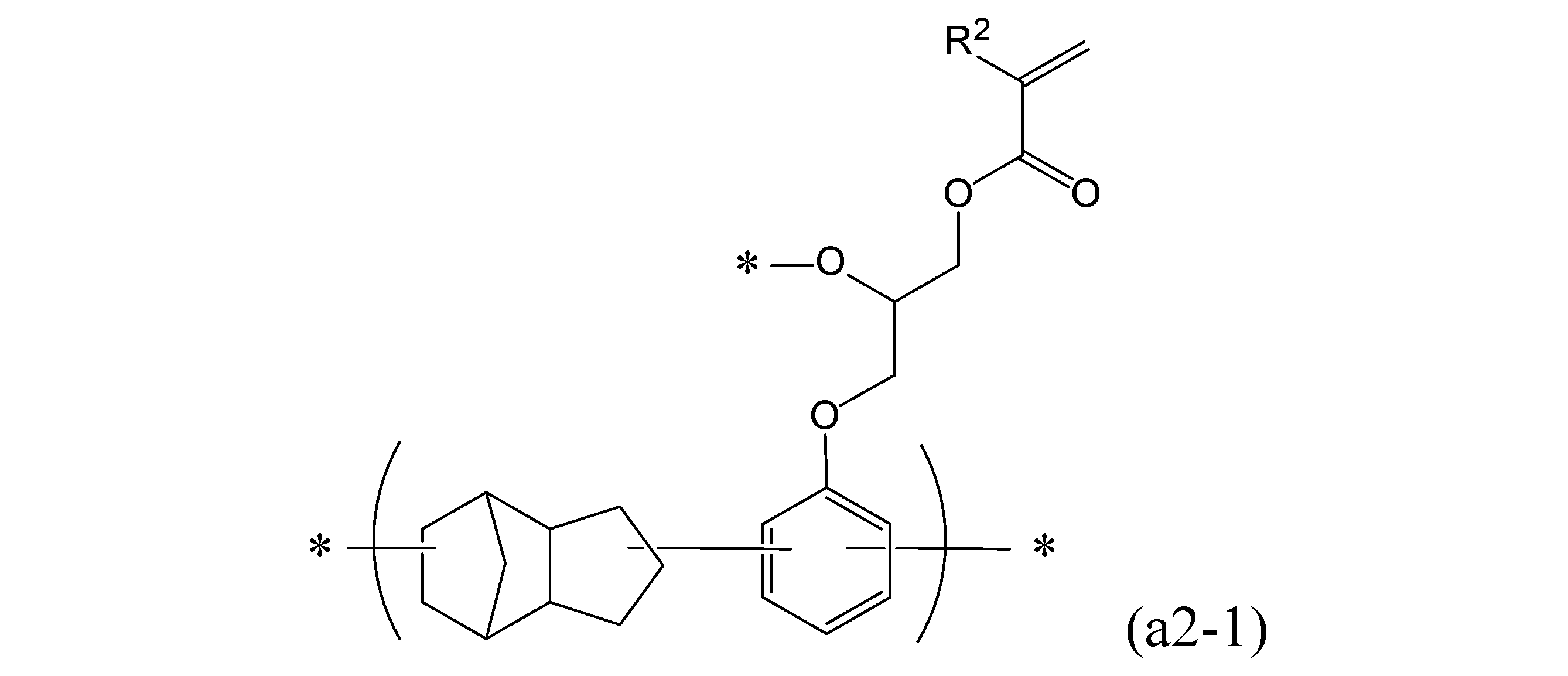
- 前記カルド骨格を有するアルカリ可溶性樹脂(a1)が、下記一般式(a1-1)で表される部分構造を有する請求項1に記載の感光性着色樹脂組成物。
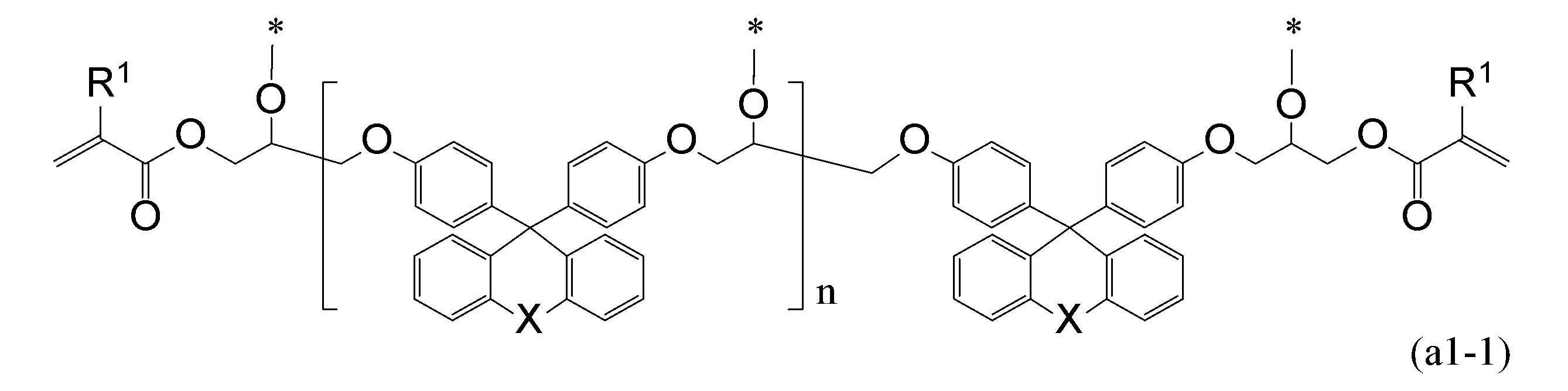
- アルカリ可溶性樹脂(a1)100質量部に対する、アルカリ可溶性樹脂(a2)の含有割合が、5~300質量部である、請求項1又は2に記載の感光性着色樹脂組成物。
- 前記(d)着色剤が、有機黒色顔料を含有する、請求項1~3のいずれか1項に記載の感光性着色樹脂組成物。
- 溶剤を含有する、請求項1~4のいずれか1項に記載の感光性着色樹脂組成物。
- 請求項1~5のいずれか1項に記載の感光性着色樹脂組成物を硬化して得られる硬化物。
- 請求項6に記載の硬化物から形成される隔壁。
- 請求項7に記載の隔壁を備える画像表示装置。
Priority Applications (3)
| Application Number | Priority Date | Filing Date | Title |
|---|---|---|---|
| KR1020237037150A KR102998926B1 (ko) | 2021-04-28 | 2022-04-25 | 감광성 착색 수지 조성물, 경화물, 격벽 및 화상 표시 장치 |
| CN202280031399.2A CN117222943A (zh) | 2021-04-28 | 2022-04-25 | 感光性着色树脂组合物、固化物、间隔壁及图像显示装置 |
| JP2023517497A JPWO2022230792A1 (ja) | 2021-04-28 | 2022-04-25 |
Applications Claiming Priority (2)
| Application Number | Priority Date | Filing Date | Title |
|---|---|---|---|
| JP2021076303 | 2021-04-28 | ||
| JP2021-076303 | 2021-04-28 |
Publications (1)
| Publication Number | Publication Date |
|---|---|
| WO2022230792A1 true WO2022230792A1 (ja) | 2022-11-03 |
Family
ID=83847245
Family Applications (1)
| Application Number | Title | Priority Date | Filing Date |
|---|---|---|---|
| PCT/JP2022/018667 Ceased WO2022230792A1 (ja) | 2021-04-28 | 2022-04-25 | 感光性着色樹脂組成物、硬化物、隔壁及び画像表示装置 |
Country Status (5)
| Country | Link |
|---|---|
| JP (1) | JPWO2022230792A1 (ja) |
| KR (1) | KR102998926B1 (ja) |
| CN (1) | CN117222943A (ja) |
| TW (1) | TW202248255A (ja) |
| WO (1) | WO2022230792A1 (ja) |
Citations (6)
| Publication number | Priority date | Publication date | Assignee | Title |
|---|---|---|---|---|
| WO2006121062A1 (ja) * | 2005-05-11 | 2006-11-16 | Toppan Printing Co., Ltd. | アルカリ現像型感光性樹脂組成物、それを用いて形成した液晶分割配向制御突起付き基板及びカラーフィルタ、並びに液晶表示装置 |
| JP2006350153A (ja) * | 2005-06-20 | 2006-12-28 | Mitsubishi Chemicals Corp | 感光性組成物、感光性着色成物、カラーフィルタ、及び液晶表示装置 |
| JP2009037003A (ja) * | 2007-08-01 | 2009-02-19 | Adeka Corp | アルカリ現像性感光性樹脂組成物 |
| JP2009037234A (ja) * | 2007-07-10 | 2009-02-19 | Nippon Steel Chem Co Ltd | カラーフィルター隔壁形成用感光性樹脂組成物及びこれを用いて形成した遮光性カラーフィルター隔壁並びにカラーフィルター |
| JP2014052599A (ja) * | 2012-09-10 | 2014-03-20 | Tamura Seisakusho Co Ltd | 感光性樹脂組成物及び感光性樹脂組成物の硬化被膜を有するプリント配線板 |
| JP2017015890A (ja) * | 2015-06-30 | 2017-01-19 | 太陽ホールディングス株式会社 | 光硬化性熱硬化性樹脂組成物、その硬化物、およびプリント配線板 |
Family Cites Families (4)
| Publication number | Priority date | Publication date | Assignee | Title |
|---|---|---|---|---|
| JP3935446B2 (ja) | 2002-04-18 | 2007-06-20 | 松下電器産業株式会社 | 半導体装置及びその製造方法 |
| JP5096814B2 (ja) | 2007-07-04 | 2012-12-12 | 東京応化工業株式会社 | 着色感光性組成物 |
| JP6361331B2 (ja) | 2014-07-04 | 2018-07-25 | 富士通株式会社 | 情報処理装置、情報処理プログラム及び情報処理方法 |
| CN118151488A (zh) | 2016-12-02 | 2024-06-07 | 三菱化学株式会社 | 着色感光性树脂组合物、颜料分散液、间隔壁、有机场致发光元件、图像显示装置及照明 |
-
2022
- 2022-04-25 WO PCT/JP2022/018667 patent/WO2022230792A1/ja not_active Ceased
- 2022-04-25 CN CN202280031399.2A patent/CN117222943A/zh active Pending
- 2022-04-25 JP JP2023517497A patent/JPWO2022230792A1/ja active Pending
- 2022-04-25 KR KR1020237037150A patent/KR102998926B1/ko active Active
- 2022-04-26 TW TW111115775A patent/TW202248255A/zh unknown
Patent Citations (6)
| Publication number | Priority date | Publication date | Assignee | Title |
|---|---|---|---|---|
| WO2006121062A1 (ja) * | 2005-05-11 | 2006-11-16 | Toppan Printing Co., Ltd. | アルカリ現像型感光性樹脂組成物、それを用いて形成した液晶分割配向制御突起付き基板及びカラーフィルタ、並びに液晶表示装置 |
| JP2006350153A (ja) * | 2005-06-20 | 2006-12-28 | Mitsubishi Chemicals Corp | 感光性組成物、感光性着色成物、カラーフィルタ、及び液晶表示装置 |
| JP2009037234A (ja) * | 2007-07-10 | 2009-02-19 | Nippon Steel Chem Co Ltd | カラーフィルター隔壁形成用感光性樹脂組成物及びこれを用いて形成した遮光性カラーフィルター隔壁並びにカラーフィルター |
| JP2009037003A (ja) * | 2007-08-01 | 2009-02-19 | Adeka Corp | アルカリ現像性感光性樹脂組成物 |
| JP2014052599A (ja) * | 2012-09-10 | 2014-03-20 | Tamura Seisakusho Co Ltd | 感光性樹脂組成物及び感光性樹脂組成物の硬化被膜を有するプリント配線板 |
| JP2017015890A (ja) * | 2015-06-30 | 2017-01-19 | 太陽ホールディングス株式会社 | 光硬化性熱硬化性樹脂組成物、その硬化物、およびプリント配線板 |
Also Published As
| Publication number | Publication date |
|---|---|
| CN117222943A (zh) | 2023-12-12 |
| TW202248255A (zh) | 2022-12-16 |
| JPWO2022230792A1 (ja) | 2022-11-03 |
| KR102998926B1 (ko) | 2026-07-31 |
| KR20240004389A (ko) | 2024-01-11 |
Similar Documents
| Publication | Publication Date | Title |
|---|---|---|
| JP7294146B2 (ja) | 着色感光性樹脂組成物、隔壁、有機電界発光素子、画像表示装置及び照明 | |
| JP6451918B2 (ja) | 着色感光性樹脂組成物、顔料分散液、隔壁、有機電界発光素子、画像表示装置及び照明 | |
| JP7435445B2 (ja) | 感光性着色樹脂組成物、硬化物、画像表示装置及び照明 | |
| JP7201019B2 (ja) | 感光性着色樹脂組成物、硬化物、隔壁及び画像表示装置 | |
| JP7658276B2 (ja) | 感光性樹脂組成物、硬化物、隔壁、有機電界発光素子、カラーフィルタ及び画像表示装置 | |
| JP7331371B2 (ja) | 感光性着色樹脂組成物、硬化物、及び画像表示装置 | |
| JP2021124704A (ja) | 感光性着色樹脂組成物、硬化物、隔壁及び画像表示装置 | |
| JP7841536B2 (ja) | 感光性樹脂組成物、硬化物、隔壁、有機電界発光素子、カラーフィルター、画像表示装置、及び硬化物の形成方法 | |
| JP7443713B2 (ja) | 感光性樹脂組成物、硬化物、及び画像表示装置 | |
| JP7247676B2 (ja) | 感光性着色樹脂組成物、硬化物、及び画像表示装置 | |
| JP7563029B2 (ja) | 感光性着色樹脂組成物、硬化物、隔壁及び画像表示装置 | |
| WO2023249070A1 (ja) | 感光性樹脂組成物、硬化物及びその形成方法、隔壁並びに画像表示装置 | |
| WO2024143067A1 (ja) | 感光性樹脂組成物、硬化物、隔壁、有機電界発光素子、カラーフィルター、画像表示装置、及び硬化物の形成方法 | |
| JP2022114818A (ja) | 感光性着色樹脂組成物、硬化物、隔壁及び画像表示装置 | |
| KR20240144187A (ko) | 착색 감광성 수지 조성물, 경화물, 격벽, 유기 전계 발광 소자, 컬러 필터 및 화상 표시 장치 | |
| CN117222943A (zh) | 感光性着色树脂组合物、固化物、间隔壁及图像显示装置 | |
| WO2025084352A1 (ja) | 感光性着色組成物、硬化物、隔壁、有機電界発光素子、カラーフィルター、及び画像表示装置 |
Legal Events
| Date | Code | Title | Description |
|---|---|---|---|
| 121 | Ep: the epo has been informed by wipo that ep was designated in this application |
Ref document number: 22795705 Country of ref document: EP Kind code of ref document: A1 |
|
| ENP | Entry into the national phase |
Ref document number: 2023517497 Country of ref document: JP Kind code of ref document: A |
|
| WWE | Wipo information: entry into national phase |
Ref document number: 202280031399.2 Country of ref document: CN |
|
| NENP | Non-entry into the national phase |
Ref country code: DE |
|
| 122 | Ep: pct application non-entry in european phase |
Ref document number: 22795705 Country of ref document: EP Kind code of ref document: A1 |