WO2022210893A1 - 樹脂微粒子、塗膜軟質化剤、塗料用艶消し剤、硬化性樹脂用応力緩和剤、光拡散剤、光拡散性樹脂組成物及び樹脂組成物 - Google Patents
樹脂微粒子、塗膜軟質化剤、塗料用艶消し剤、硬化性樹脂用応力緩和剤、光拡散剤、光拡散性樹脂組成物及び樹脂組成物 Download PDFInfo
- Publication number
- WO2022210893A1 WO2022210893A1 PCT/JP2022/016042 JP2022016042W WO2022210893A1 WO 2022210893 A1 WO2022210893 A1 WO 2022210893A1 JP 2022016042 W JP2022016042 W JP 2022016042W WO 2022210893 A1 WO2022210893 A1 WO 2022210893A1
- Authority
- WO
- WIPO (PCT)
- Prior art keywords
- resin
- mass
- meth
- parts
- monomer
- Prior art date
- Legal status (The legal status is an assumption and is not a legal conclusion. Google has not performed a legal analysis and makes no representation as to the accuracy of the status listed.)
- Ceased
Links
Images





Classifications
-
- C—CHEMISTRY; METALLURGY
- C08—ORGANIC MACROMOLECULAR COMPOUNDS; THEIR PREPARATION OR CHEMICAL WORKING-UP; COMPOSITIONS BASED THEREON
- C08F—MACROMOLECULAR COMPOUNDS OBTAINED BY REACTIONS ONLY INVOLVING CARBON-TO-CARBON UNSATURATED BONDS
- C08F220/00—Copolymers of compounds having one or more unsaturated aliphatic radicals, each having only one carbon-to-carbon double bond, and only one being terminated by only one carboxyl radical or a salt, anhydride ester, amide, imide or nitrile thereof
- C08F220/02—Monocarboxylic acids having less than ten carbon atoms; Derivatives thereof
- C08F220/10—Esters
- C08F220/12—Esters of monohydric alcohols or phenols
- C08F220/16—Esters of monohydric alcohols or phenols of phenols or of alcohols containing two or more carbon atoms
- C08F220/18—Esters of monohydric alcohols or phenols of phenols or of alcohols containing two or more carbon atoms with acrylic or methacrylic acids
- C08F220/1818—C13or longer chain (meth)acrylate, e.g. stearyl (meth)acrylate
-
- C—CHEMISTRY; METALLURGY
- C08—ORGANIC MACROMOLECULAR COMPOUNDS; THEIR PREPARATION OR CHEMICAL WORKING-UP; COMPOSITIONS BASED THEREON
- C08L—COMPOSITIONS OF MACROMOLECULAR COMPOUNDS
- C08L101/00—Compositions of unspecified macromolecular compounds
-
- C—CHEMISTRY; METALLURGY
- C08—ORGANIC MACROMOLECULAR COMPOUNDS; THEIR PREPARATION OR CHEMICAL WORKING-UP; COMPOSITIONS BASED THEREON
- C08L—COMPOSITIONS OF MACROMOLECULAR COMPOUNDS
- C08L33/00—Compositions of homopolymers or copolymers of compounds having one or more unsaturated aliphatic radicals, each having only one carbon-to-carbon double bond, and only one being terminated by only one carboxyl radical, or of salts, anhydrides, esters, amides, imides or nitriles thereof; Compositions of derivatives of such polymers
- C08L33/04—Homopolymers or copolymers of esters
- C08L33/06—Homopolymers or copolymers of esters of esters containing only carbon, hydrogen and oxygen, which oxygen atoms are present only as part of the carboxyl radical
-
- C—CHEMISTRY; METALLURGY
- C09—DYES; PAINTS; POLISHES; NATURAL RESINS; ADHESIVES; COMPOSITIONS NOT OTHERWISE PROVIDED FOR; APPLICATIONS OF MATERIALS NOT OTHERWISE PROVIDED FOR
- C09D—COATING COMPOSITIONS, e.g. PAINTS, VARNISHES OR LACQUERS; FILLING PASTES; CHEMICAL PAINT OR INK REMOVERS; INKS; CORRECTING FLUIDS; WOODSTAINS; PASTES OR SOLIDS FOR COLOURING OR PRINTING; USE OF MATERIALS THEREFOR
- C09D133/00—Coating compositions based on homopolymers or copolymers of compounds having one or more unsaturated aliphatic radicals, each having only one carbon-to-carbon double bond, and at least one being terminated by only one carboxyl radical, or of salts, anhydrides, esters, amides, imides, or nitriles thereof; Coating compositions based on derivatives of such polymers
- C09D133/04—Homopolymers or copolymers of esters
- C09D133/06—Homopolymers or copolymers of esters of esters containing only carbon, hydrogen and oxygen, the oxygen atom being present only as part of the carboxyl radical
- C09D133/10—Homopolymers or copolymers of methacrylic acid esters
-
- C—CHEMISTRY; METALLURGY
- C09—DYES; PAINTS; POLISHES; NATURAL RESINS; ADHESIVES; COMPOSITIONS NOT OTHERWISE PROVIDED FOR; APPLICATIONS OF MATERIALS NOT OTHERWISE PROVIDED FOR
- C09D—COATING COMPOSITIONS, e.g. PAINTS, VARNISHES OR LACQUERS; FILLING PASTES; CHEMICAL PAINT OR INK REMOVERS; INKS; CORRECTING FLUIDS; WOODSTAINS; PASTES OR SOLIDS FOR COLOURING OR PRINTING; USE OF MATERIALS THEREFOR
- C09D133/00—Coating compositions based on homopolymers or copolymers of compounds having one or more unsaturated aliphatic radicals, each having only one carbon-to-carbon double bond, and at least one being terminated by only one carboxyl radical, or of salts, anhydrides, esters, amides, imides, or nitriles thereof; Coating compositions based on derivatives of such polymers
- C09D133/04—Homopolymers or copolymers of esters
- C09D133/06—Homopolymers or copolymers of esters of esters containing only carbon, hydrogen and oxygen, the oxygen atom being present only as part of the carboxyl radical
- C09D133/10—Homopolymers or copolymers of methacrylic acid esters
- C09D133/12—Homopolymers or copolymers of methyl methacrylate
-
- C—CHEMISTRY; METALLURGY
- C09—DYES; PAINTS; POLISHES; NATURAL RESINS; ADHESIVES; COMPOSITIONS NOT OTHERWISE PROVIDED FOR; APPLICATIONS OF MATERIALS NOT OTHERWISE PROVIDED FOR
- C09D—COATING COMPOSITIONS, e.g. PAINTS, VARNISHES OR LACQUERS; FILLING PASTES; CHEMICAL PAINT OR INK REMOVERS; INKS; CORRECTING FLUIDS; WOODSTAINS; PASTES OR SOLIDS FOR COLOURING OR PRINTING; USE OF MATERIALS THEREFOR
- C09D201/00—Coating compositions based on unspecified macromolecular compounds
-
- C—CHEMISTRY; METALLURGY
- C09—DYES; PAINTS; POLISHES; NATURAL RESINS; ADHESIVES; COMPOSITIONS NOT OTHERWISE PROVIDED FOR; APPLICATIONS OF MATERIALS NOT OTHERWISE PROVIDED FOR
- C09D—COATING COMPOSITIONS, e.g. PAINTS, VARNISHES OR LACQUERS; FILLING PASTES; CHEMICAL PAINT OR INK REMOVERS; INKS; CORRECTING FLUIDS; WOODSTAINS; PASTES OR SOLIDS FOR COLOURING OR PRINTING; USE OF MATERIALS THEREFOR
- C09D7/00—Features of coating compositions, not provided for in group C09D5/00; Processes for incorporating ingredients in coating compositions
- C09D7/40—Additives
- C09D7/42—Gloss-reducing agents
-
- C—CHEMISTRY; METALLURGY
- C09—DYES; PAINTS; POLISHES; NATURAL RESINS; ADHESIVES; COMPOSITIONS NOT OTHERWISE PROVIDED FOR; APPLICATIONS OF MATERIALS NOT OTHERWISE PROVIDED FOR
- C09D—COATING COMPOSITIONS, e.g. PAINTS, VARNISHES OR LACQUERS; FILLING PASTES; CHEMICAL PAINT OR INK REMOVERS; INKS; CORRECTING FLUIDS; WOODSTAINS; PASTES OR SOLIDS FOR COLOURING OR PRINTING; USE OF MATERIALS THEREFOR
- C09D7/00—Features of coating compositions, not provided for in group C09D5/00; Processes for incorporating ingredients in coating compositions
- C09D7/40—Additives
- C09D7/65—Additives macromolecular
-
- C—CHEMISTRY; METALLURGY
- C08—ORGANIC MACROMOLECULAR COMPOUNDS; THEIR PREPARATION OR CHEMICAL WORKING-UP; COMPOSITIONS BASED THEREON
- C08F—MACROMOLECULAR COMPOUNDS OBTAINED BY REACTIONS ONLY INVOLVING CARBON-TO-CARBON UNSATURATED BONDS
- C08F212/00—Copolymers of compounds having one or more unsaturated aliphatic radicals, each having only one carbon-to-carbon double bond, and at least one being terminated by an aromatic carbocyclic ring
- C08F212/02—Monomers containing only one unsaturated aliphatic radical
- C08F212/04—Monomers containing only one unsaturated aliphatic radical containing one ring
- C08F212/06—Hydrocarbons
- C08F212/08—Styrene
-
- C—CHEMISTRY; METALLURGY
- C08—ORGANIC MACROMOLECULAR COMPOUNDS; THEIR PREPARATION OR CHEMICAL WORKING-UP; COMPOSITIONS BASED THEREON
- C08F—MACROMOLECULAR COMPOUNDS OBTAINED BY REACTIONS ONLY INVOLVING CARBON-TO-CARBON UNSATURATED BONDS
- C08F220/00—Copolymers of compounds having one or more unsaturated aliphatic radicals, each having only one carbon-to-carbon double bond, and only one being terminated by only one carboxyl radical or a salt, anhydride ester, amide, imide or nitrile thereof
- C08F220/02—Monocarboxylic acids having less than ten carbon atoms; Derivatives thereof
- C08F220/10—Esters
- C08F220/12—Esters of monohydric alcohols or phenols
- C08F220/14—Methyl esters, e.g. methyl (meth)acrylate
-
- C—CHEMISTRY; METALLURGY
- C08—ORGANIC MACROMOLECULAR COMPOUNDS; THEIR PREPARATION OR CHEMICAL WORKING-UP; COMPOSITIONS BASED THEREON
- C08F—MACROMOLECULAR COMPOUNDS OBTAINED BY REACTIONS ONLY INVOLVING CARBON-TO-CARBON UNSATURATED BONDS
- C08F220/00—Copolymers of compounds having one or more unsaturated aliphatic radicals, each having only one carbon-to-carbon double bond, and only one being terminated by only one carboxyl radical or a salt, anhydride ester, amide, imide or nitrile thereof
- C08F220/02—Monocarboxylic acids having less than ten carbon atoms; Derivatives thereof
- C08F220/10—Esters
- C08F220/12—Esters of monohydric alcohols or phenols
- C08F220/16—Esters of monohydric alcohols or phenols of phenols or of alcohols containing two or more carbon atoms
- C08F220/18—Esters of monohydric alcohols or phenols of phenols or of alcohols containing two or more carbon atoms with acrylic or methacrylic acids
- C08F220/1804—C4-(meth)acrylate, e.g. butyl (meth)acrylate, isobutyl (meth)acrylate or tert-butyl (meth)acrylate
-
- C—CHEMISTRY; METALLURGY
- C08—ORGANIC MACROMOLECULAR COMPOUNDS; THEIR PREPARATION OR CHEMICAL WORKING-UP; COMPOSITIONS BASED THEREON
- C08F—MACROMOLECULAR COMPOUNDS OBTAINED BY REACTIONS ONLY INVOLVING CARBON-TO-CARBON UNSATURATED BONDS
- C08F222/00—Copolymers of compounds having one or more unsaturated aliphatic radicals, each having only one carbon-to-carbon double bond, and at least one being terminated by a carboxyl radical and containing at least one other carboxyl radical in the molecule; Salts, anhydrides, esters, amides, imides, or nitriles thereof
- C08F222/10—Esters
- C08F222/1006—Esters of polyhydric alcohols or polyhydric phenols
- C08F222/102—Esters of polyhydric alcohols or polyhydric phenols of dialcohols, e.g. ethylene glycol di(meth)acrylate or 1,4-butanediol dimethacrylate
Definitions
- the present invention relates to resin fine particles, coating film softening agents, matting agents for paints, stress relaxation agents for curable resins, light diffusing agents, light diffusing resin compositions, and resin compositions.
- a coating film has been formed on the surface of a molded product made of synthetic resin or metal in order to improve its appearance and texture. Further, the properties of the coating film are improved by incorporating resin fine particles into the coating film.
- resin fine particles are contained as cosmetic powder in cosmetics such as body cosmetics such as body powder and makeup cosmetics such as foundation.
- Patent Document 1 describes 50 to 90% by weight of a monofunctional (meth)acrylic monomer (A) having a linear or branched alkyl group having 8 to 18 carbon atoms and a (meth)acrylic group. Obtained by polymerizing a monomer composition containing 10 to 50% by weight of a monomer (B) having two or more, and a 10% compression strength of a microcompression tester is 1 to 5 MPa (meth) acrylic A system microparticle is disclosed.
- Patent Document 2 at least one monomer selected from acrylic acid esters and methacrylic acid esters and a monomer component containing a monomer having a carboxyl group are copolymerized, and at least one surface A crosslinked (meth)acrylic acid ester-based resin particle is disclosed in which the part is coated with a surfactant having a predetermined structural formula.
- resin fine particles are also included in order to impart elasticity to the coating film. Resin fine particles excellent in both softness and strength are desired, but when one tries to improve softness and brittleness, the other tends to decrease. Fine particles are desired.
- the present invention provides resin fine particles that can be used by being contained in paints, cosmetics, etc., and that have excellent softness and improved brittleness.
- the fine resin particles of the present invention comprise an alkyl (meth)acrylate monomer (A) unit having an alkyl group having 10 to 30 carbon atoms and an alkyl acrylate monomer (B) unit having an alkyl group having 1 to 5 carbon atoms. and a vinyl monomer (C) unit having a homopolymer glass transition temperature Tg of 70° C. or higher and having one polymerizable unsaturated bond, and a polyfunctional (meth)acrylate monomer (D) unit.
- Including coalescence hereinafter sometimes simply referred to as "copolymer").
- the content of the copolymer in the fine resin particles is preferably 60% by mass or more, more preferably 70% by mass or more, more preferably 80% by mass or more, more preferably 90% by mass or more, and more preferably 95% by mass or more. It is more preferably 99% by mass or more, and more preferably 100% by mass.
- the content of the copolymer is 60% by mass or more, excellent softness can be imparted to the fine resin particles, and the brittleness of the fine resin particles can be improved.
- alkyl (meth)acrylate monomer (A) unit The copolymer has an alkyl (meth)acrylate monomer (A) unit having an alkyl group with 10 to 30 carbon atoms.
- alkyl (meth)acrylate monomer (A) having an alkyl group having 10 to 30 carbon atoms is sometimes simply referred to as "alkyl (meth)acrylate monomer (A)".
- (meth)acrylate means an acrylate or a methacrylate.
- the alkyl (meth)acrylate monomer (A) has only one polymerizable unsaturated bond and does not form a crosslinked structure with other monomer units.
- the polymerizable unsaturated bond of the alkyl (meth)acrylate monomer (A) means an unsaturated bond capable of undergoing radical polymerization.
- the polymerizable unsaturated bond is not particularly limited as long as it can be radically polymerized with other monomer units. Examples include ethylenically unsaturated double bonds (carbon atom-carbon atom double bonds), ethylenically unsaturated A triple bond (a carbon atom-carbon atom triple bond) is included, and an ethylenically unsaturated double bond is preferred.
- the alkyl group of the alkyl (meth)acrylate monomer (A) may be linear or branched.
- the number of carbon atoms in the alkyl group is 10 or more, preferably 11 or more, more preferably 12 or more, and more preferably 13 or more.
- the number of carbon atoms in the alkyl group is 30 or less, preferably 26 or less, more preferably 22 or less, and more preferably 20 or less. When the number of carbon atoms in the alkyl group is within the above range, the flexibility of the fine resin particles can be improved.
- the alkyl group having an appropriate length in the copolymer alleviates excessive concentration of the crosslink density and prevents the brittleness of the fine resin particles from decreasing. Softness can be improved.
- the alkyl group is not particularly limited, and examples thereof include decyl, undecyl, dodecyl, tridecyl, tetradecyl, 2-decyltetradecanyl, pentadecyl, hexadecyl, heptadecyl, 1-methylnonyl, 1 -ethyldecyl group, 1,2-dimethyloctyl group, 1,2-diethylhexyl group, cetyl group, stearyl group, eicosyl group, behenyl group and the like, decyl group, undecyl group, dodecyl group, tridecyl group, tetradecyl group , 2-decyltetradecanyl group and pentadecyl group are preferred, dodecyl group, tridecyl group and tetradecyl group are more preferred, and tridecyl group is more preferred.
- the hydrogen of the alkyl group of the alkyl (meth)acrylate monomer (A) is not substituted.
- the oil absorption of the copolymer can be reduced.
- a resin composition can be formed by mixing resin fine particles and a synthetic resin, and in the resin composition, the resin fine particles stably maintain excellent flexibility and improved brittleness over a long period of time. do.
- the alkyl (meth)acrylate monomer (A) is not particularly limited, and examples include decyl (meth)acrylate, undecyl (meth)acrylate, lauryl (meth)acrylate, tridecyl (meth)acrylate, tetradecyl (meth)acrylate, 2-decyltetradecanyl (meth)acrylate, pentadecyl (meth)acrylate, hexadecyl (meth)acrylate, heptadecyl (meth)acrylate, stearyl (meth)acrylate, nonadecyl (meth)acrylate, 1-methylnonyl (meth)acrylate, 1 -Ethyldecyl (meth)acrylate, 1,2-dimethyloctyl (meth)acrylate, 1,2-diethylhexyl (meth)acrylate, eicosyl (meth)acrylate, behenyl (meth)acrylate
- the alkyl (meth)acrylate monomer (A) preferably does not have a hydrophilic structure, which will be described later.
- the homopolymer of the alkyl (meth)acrylate monomer (A) preferably has a biomass degree of 60% or more.
- a biomass degree of 60% or more is preferable because the amount of fossil fuel used can be reduced and the environmental load can be reduced.
- the degree of biomass of monomers and polymers is measured according to method (B) of ASTM D6866, and refers to the content of biomass-derived carbon (14C) in all carbon atoms.
- the biomass degree of a mixture of monomers is the degree of biomass measured in accordance with ASTM D6866 method (B) for a polymer obtained by polymerizing a mixture of monomers having the same mixing ratio (% by mass) as the monomer mixture to be measured.
- the biomass degree of the copolymer is preferably 20% or more.
- a biomass degree of 20% or more is preferable because the amount of fossil fuel used can be reduced and the environmental load can be reduced.
- the glass transition temperature Tg of the homopolymer of the alkyl (meth)acrylate monomer (A) is preferably less than 70°C, more preferably less than 50°C, more preferably 40°C or less, and more preferably 30°C or less.
- the glass transition temperature Tg of the homopolymer of the alkyl (meth)acrylate monomer (A) is preferably ⁇ 70° C. or higher, more preferably ⁇ 60° C. or higher, and more preferably ⁇ 50° C. or higher.
- the homopolymer of the alkyl (meth)acrylate monomer (A) has a glass transition temperature Tg of ⁇ 70° C. or higher, excessive softness of the fine resin particles is suppressed, and fusion of the fine resin particles during drying is suppressed. can be done.
- the glass transition temperature Tg of the homopolymer of the monomer for example, the numerical value described in Coating and Coating (Painting Publisher, 10 (No. 358), 1982) can be adopted.
- the glass transition temperature Tg of a homopolymer of a monomer whose homopolymer glass transition temperature Tg is not known is a value measured in the following manner.
- the glass transition temperature Tg is measured by the method described in JIS K7121:2012.
- the sampling method and temperature conditions were as follows. After filling 5.5 ⁇ 0.5 mg of the sample into the bottom of the aluminum measurement container without any gap, the container was covered with an aluminum lid. Then, differential scanning calorimetry was performed using a differential scanning calorimeter. A DSC curve was obtained by heating and cooling the sample in the following steps under a nitrogen gas flow rate of 20 mL/min. (Step 1) The temperature was raised from -70°C to 200°C at a rate of 20°C/min and held for 10 minutes.
- Step 2 The sample was quickly taken out and allowed to cool in an environment of 25 ⁇ 10°C.
- Step 3 The temperature was raised from -70°C to 200°C at a rate of 20°C/min. From the obtained DSC curve, the intermediate point glass transition temperature observed in the second heating process was calculated using analysis software attached to the apparatus. At this time, alumina was used as a reference material. This midpoint glass transition temperature was obtained from the standard (Section 9.3).
- the differential scanning calorimeter for example, a device commercially available from Hitachi High-Tech Science Co., Ltd. under the trade name “DSC7000X, AS-3” can be used.
- the glass transition temperature Tg refers to the glass transition temperature Tg of a polymer composed of multiple types of monomers.
- the glass transition temperature Tg is the glass transition temperature Tg at the absolute temperature [K (Kelvin)] calculated by the following formula (1) in degrees Celsius. It is defined as a temperature obtained by converting to temperature (°C).
- Formula (1) is a formula called the FOX formula, and is a formula for calculating the glass transition temperature Tga of the copolymer based on the glass transition temperature Tgi of the homopolymer of each monomer constituting the copolymer. The details are described in Bulletin of the American Physical Society, Series 2, Vol. 1, No. 3, p. 123 (1956).
- Tga is the glass transition temperature Tg (K) of the copolymer.
- Wi is the content (mass fraction) of the i-th monomer.
- Tgi is the glass transition temperature Tg (K) of the homopolymer of the i-th monomer.
- W 1 +W 2 + . . . +Wn 1.
- the weight average molecular weight of the polymer refers to a value measured in the following manner. 50 mg of polymer is dissolved overnight in 10 mL primary THF (mobile phase) and filtered through a 0.45 ⁇ m or 0.20 ⁇ m filter.
- the weight average molecular weight of the polymer is then measured using gel permeation chromatography (GPC).
- the weight average molecular weight of a polymer means the weight average molecular weight of polystyrene (PS) conversion.
- GPC HLC-8020 manufactured by Tosoh Corporation Guard column: TOSOH TSKguardcolumn HHR (S) x 1 (7.5 mm ID x 7.5 cm)
- Measurement condition Column temperature (40°C) Mobile phase (primary THF/45°C) S. PUMP/R.
- the content of the alkyl (meth)acrylate monomer (A) unit in the copolymer is preferably 20 parts by mass or more, more preferably 30 parts by mass or more, and 40 parts by mass with respect to 100 parts by mass of all monomer units. The above is more preferable.
- the content of the alkyl (meth)acrylate monomer (A) unit in the copolymer is preferably 85 parts by mass or less, more preferably 80 parts by mass or less, and 70 parts by mass with respect to 100 parts by mass of all monomer units. The following are more preferred.
- the content of the alkyl (meth)acrylate monomer (A) unit is 20 parts by mass or more, the flexibility of the fine resin particles is improved.
- the content of the alkyl (meth)acrylate monomer (A) unit is 85 parts by mass or less, the brittleness of the fine resin particles is improved, which is preferable.
- the content of alkyl (meth)acrylate-based monomer (A) units in the copolymer includes alkyl (meth)acrylate-based monomer (A) units, alkyl acrylate-based monomer (B) units, vinyl monomer (C) units and 20 parts by mass or more is preferable, 30 parts by mass or more is more preferable, and 40 parts by mass or more is more preferable with respect to a total of 100 parts by mass of functional (meth)acrylate monomer (D) units.
- the content of alkyl (meth)acrylate-based monomer (A) units in the copolymer includes alkyl (meth)acrylate-based monomer (A) units, alkyl acrylate-based monomer (B) units, vinyl monomer (C) units and polyfunctional It is preferably 85 parts by mass or less, more preferably 80 parts by mass or less, and more preferably 70 parts by mass or less with respect to a total of 100 parts by mass of (meth)acrylate-based monomer (D) units.
- the content of the alkyl (meth)acrylate monomer (A) unit is 20 parts by mass or more, the flexibility of the fine resin particles is improved.
- the content of the alkyl (meth)acrylate monomer (A) unit is 85 parts by mass or less, the brittleness of the fine resin particles is improved, which is preferable.
- Alkyl acrylate monomer (B) unit The copolymer has an alkyl acrylate monomer (B) unit having an alkyl group with 1 to 5 carbon atoms.
- alkyl acrylate monomer (B) unit having an alkyl group having 1 to 5 carbon atoms may be simply referred to as "alkyl acrylate monomer (B)".
- the alkyl acrylate monomer (B) has only one polymerizable unsaturated bond and does not form a crosslinked structure with other monomer units.
- the polymerizable unsaturated bond of the alkyl acrylate monomer (B) means a radically polymerizable unsaturated bond.
- the polymerizable unsaturated bond is not particularly limited as long as it can be radically polymerized with other monomer units. Examples include ethylenically unsaturated double bonds (carbon atom-carbon atom double bonds), ethylenically unsaturated A triple bond (a carbon atom-carbon atom triple bond) is included, and an ethylenically unsaturated double bond is preferred.
- the alkyl acrylate monomer (B) is not particularly limited, and examples include methyl acrylate, ethyl acrylate, propyl acrylate, isopropyl acrylate, n-butyl acrylate, isobutyl acrylate, sec-butyl acrylate, ter-butyl acrylate, and n-pentyl. Examples include acrylates and isopentyl acrylates, with methyl acrylate and butyl acrylate being preferred.
- the alkyl acrylate monomer (B) may be used alone or in combination of two or more.
- the number of carbon atoms in the alkyl group of the alkyl acrylate monomer (B) is 1 or more, preferably 2 or more, and more preferably 3 or more.
- the number of carbon atoms in the alkyl group of the alkyl acrylate monomer (B) is 5 or less, preferably 4 or less.
- the alkyl acrylate monomer (B) preferably does not have a hydrophilic structure, which will be described later.
- the glass transition temperature Tg of the homopolymer of the alkyl acrylate monomer (B) is preferably less than 50°C, more preferably 40°C or less, and more preferably 30°C or less.
- the glass transition temperature Tg of the homopolymer of the alkyl (meth)acrylate monomer (A) is preferably ⁇ 80° C. or higher, more preferably ⁇ 70° C. or higher, and more preferably ⁇ 60° C. or higher.
- the resin fine particles have improved flexibility.
- the homopolymer of the alkyl acrylate monomer (B) has a glass transition temperature Tg of ⁇ 80° C. or higher, the fine resin particles can be imparted with appropriate softness and can be prevented from fusing during drying.
- the content of the alkyl acrylate monomer (B) unit in the copolymer is preferably 5 parts by mass or more, more preferably 10 parts by mass or more, relative to 100 parts by mass of all monomer units.
- the content of the alkyl acrylate monomer (B) unit in the copolymer is preferably 40 parts by mass or less, more preferably 30 parts by mass or less, and more preferably 25 parts by mass or less with respect to 100 parts by mass of all monomer units. Preferably, 20 parts by mass or less is more preferable.
- the content of the alkyl acrylate-based monomer (B) unit is 5 parts by mass or more, the flexibility of the fine resin particles is improved.
- the content of the alkyl acrylate-based monomer (B) unit is 40 parts by mass or less, excessive softness of the fine resin particles can be suppressed, and fusion of the fine resin particles during drying can be suppressed.
- the content of alkyl acrylate-based monomer (B) units in the copolymer includes alkyl (meth)acrylate-based monomer (A) units, alkyl acrylate-based monomer (B) units, vinyl monomer (C) units and polyfunctional (meth) ) is preferably 5 parts by mass or more, more preferably 10 parts by mass or more, relative to a total of 100 parts by mass of the acrylate-based monomer (D) units.
- the content of alkyl acrylate-based monomer (B) units in the copolymer includes alkyl (meth)acrylate-based monomer (A) units, alkyl acrylate-based monomer (B) units, vinyl monomer (C) units and polyfunctional (meth) ) is preferably 40 parts by mass or less, more preferably 30 parts by mass or less, more preferably 25 parts by mass or less, and more preferably 20 parts by mass or less relative to a total of 100 parts by mass of the acrylate monomer (D) units.
- the content of the alkyl acrylate-based monomer (B) unit is 5 parts by mass or more, the flexibility of the fine resin particles is improved.
- the content of the alkyl acrylate-based monomer (B) unit is 40 parts by mass or less, excessive softness of the fine resin particles can be suppressed, and fusion of the fine resin particles during drying can be suppressed.
- the copolymer has a vinyl monomer (C) unit having a homopolymer glass transition temperature Tg of 70° C. or higher and having one polymerizable unsaturated bond.
- a vinyl monomer (C) having a homopolymer glass transition temperature Tg of 70° C. or higher and having one polymerizable unsaturated bond may be simply referred to as “vinyl monomer (C)”.
- the vinyl monomer (C) has only one polymerizable unsaturated bond and does not form a crosslinked structure with other monomer units.
- the polymerizable unsaturated bond of the vinyl monomer (C) means a radically polymerizable unsaturated bond.
- the polymerizable unsaturated bond is not particularly limited as long as it can be radically polymerized with other monomer units. Examples include ethylenically unsaturated double bonds (carbon atom-carbon atom double bonds), ethylenically unsaturated A triple bond (a carbon atom-carbon atom triple bond) is included, and an ethylenically unsaturated double bond is preferred.
- the glass transition temperature Tg of the homopolymer of the vinyl monomer (C) is 70°C or higher, preferably 80°C or higher, more preferably 90°C or higher.
- the glass transition temperature Tg of the homopolymer of the vinyl monomer (C) is preferably 150°C or lower, more preferably 120°C or lower. It is considered that when the homopolymer of the vinyl monomer (C) has a glass transition temperature Tg of 70° C. or higher, it greatly contributes to improving the brittleness of the fine resin particles.
- the vinyl monomer (C) is not particularly limited as long as the homopolymer has a glass transition temperature Tg of 70°C or higher and has one polymerizable unsaturated bond.
- the vinyl monomer (C) include methyl methacrylate, styrene, acrylamide, acrylonitrile, dicyclopentanyl (meth)acrylate, glycerol formal (meth)acrylate and the like, which can improve the brittleness of fine resin particles. , styrene and methyl methacrylate are preferred.
- the vinyl monomer (C) may be used alone or in combination of two or more.
- the vinyl monomer (C) preferably does not have a hydrophilic structure, which will be described later.
- the content of vinyl monomer (C) units in the copolymer is preferably 5 parts by mass or more, more preferably 10 parts by mass or more, relative to 100 parts by mass of all monomer units.
- the content of vinyl monomer (C) units in the copolymer is preferably 30 parts by mass or less, more preferably 25 parts by mass or less, with respect to 100 parts by mass of all monomer units.
- the content of the vinyl monomer (C) unit is 5 parts by mass or more, it is considered that the contribution to improving the brittleness of the fine resin particles is large.
- the content of the vinyl monomer (C) unit is 30 parts by mass or less, the flexibility of the fine resin particles can be improved.
- the content of vinyl monomer (C) units in the copolymer includes alkyl (meth)acrylate monomer (A) units, alkyl acrylate monomer (B) units, vinyl monomer (C) units and polyfunctional (meth)acrylates. 5 parts by mass or more is preferable, and 10 parts by mass or more is preferable with respect to a total of 100 parts by mass of the system monomer (D) units.
- the content of vinyl monomer (C) units in the copolymer includes alkyl (meth)acrylate monomer (A) units, alkyl acrylate monomer (B) units, vinyl monomer (C) units and polyfunctional (meth)acrylates.
- the content of the vinyl monomer (C) unit is 5 parts by mass or more, it is considered that the contribution to improving the brittleness of the fine resin particles is large.
- the content of the vinyl monomer (C) unit is 30 parts by mass or less, the flexibility of the fine resin particles can be improved.
- the content of alkyl (meth)acrylate monomer units having an alkyl group having 1 to 3 carbon atoms is 25 parts by mass or less with respect to a total of 100 parts by mass of alkyl (meth)acrylate monomer units. is preferred.
- the total content of alkyl (meth)acrylate monomer units having an alkyl group having 1 to 3 carbon atoms is 25 parts by mass or less, the flexibility of the fine resin particles can be improved.
- the content of alkyl (meth)acrylate monomer units having an alkyl group having 1 to 3 carbon atoms is 5 parts by mass or more with respect to a total of 100 parts by mass of alkyl (meth)acrylate monomer units. is preferred.
- the total content of alkyl (meth)acrylate monomer units having an alkyl group having 1 to 3 carbon atoms is 5 parts by mass or more, the brittleness of the fine resin particles can be improved.
- the content of the vinyl monomer (C) unit having a homopolymer glass transition temperature Tg of 70° C. or higher and having one polymerizable unsaturated bond and the polyfunctional (meth)acrylate monomer (D) unit The mass ratio of the content of [vinyl monomer (C) unit content/polyfunctional (meth)acrylate monomer (D) unit content] is preferably 0.3 or more, more preferably 0.4 or more, 0.5 or more is more preferable.
- the mass ratio of the vinyl monomer (C) unit content to the polyfunctional (meth)acrylate monomer (D) unit content is 0.3 or more, the resin fine particles can be improved in flexibility and Brittleness can also be sufficiently improved.
- the unit content mass ratio [content of vinyl monomer (C) units/content of polyfunctional (meth)acrylate monomer (D) units] is preferably 2 or less, more preferably 1 or less.
- the mass ratio of the vinyl monomer (C) unit content to the polyfunctional (meth)acrylate monomer (D) unit content is 2 or less, coalescence of the resin fine particles occurs during the drying process during the production of the resin fine particles. can be reduced, and the flexibility of the fine resin particles can be improved.
- the copolymer has polyfunctional (meth)acrylate monomer (D) units.
- the polyfunctional (meth)acrylate monomer (D) unit has a plurality of polymerizable unsaturated bonds in the molecule, and preferably has a plurality of (meth)acryloyl groups in the molecule. .
- the polyfunctional (meth)acrylate-based monomer (D) forms a crosslinked structure by polymerizing the polyfunctional (meth)acrylate-based monomer (D) with itself or with another monomer, thereby improving the brittleness of the fine resin particles. At the same time, the oil resistance of the fine resin particles is improved.
- a (meth)acryloyl group means an acryloyl group or a methacryloyl group.
- the polymerizable unsaturated bond of the polyfunctional (meth)acrylate monomer (D) means a radically polymerizable unsaturated bond.
- the polymerizable unsaturated bond is not particularly limited as long as it can be radically polymerized with other monomer units. Examples include ethylenically unsaturated double bonds (carbon atom-carbon atom double bonds), ethylenically unsaturated A triple bond (a carbon atom-carbon atom triple bond) is included, and an ethylenically unsaturated double bond is preferred.
- the polyfunctional (meth)acrylate monomer (D) is not particularly limited, and examples thereof include ethylene glycol di(meth)acrylate, diethylene glycol di(meth)acrylate, triethylene glycol di(meth)acrylate, decaethylene glycol di( meth)acrylate, pentadecaethylene glycol di(meth)acrylate, pentacontahectorethylene glycol di(meth)acrylate, 1,3-butylene di(meth)acrylate, 1,6-hexadi(meth)acrylate, 1,9-nonanedi (meth)acrylate, 1,10-decanedi(meth)acrylate, allyl(meth)acrylate, trimethylolpropane tri(meth)acrylate, pentaerythritol tetraacrylate, dipentaerythritol hexa(meth)acrylate and the like.
- ethylene glycol di(meth)acrylate ethylene glycol dimethacrylate
- 1,6-hexane di(meth)acrylate 1,9-nonane di(meth)acrylate
- 1,10-decane di(meth)acrylate allyl (meth)
- Difunctional (meth)acrylate monomers such as acrylates (allyl methacrylate) are preferred.
- These polyfunctional (meth)acrylate monomers (D) may be used alone or in combination of two or more.
- the content of the polyfunctional (meth)acrylate monomer (D) unit in the copolymer is preferably 5 parts by mass or more, more preferably 7 parts by mass or more, and 9 parts by mass with respect to 100 parts by mass of all monomer units. Part or more is more preferable, and 10 mass parts or more is more preferable.
- the content of the polyfunctional (meth)acrylate monomer (D) unit in the copolymer is preferably 50 parts by mass or less, more preferably 40 parts by mass or less, and more preferably 30 parts by mass or less.
- the content of the polyfunctional (meth)acrylate monomer (D) unit is 5 parts by mass or more, the brittleness of the fine resin particles can be improved, and the oil resistance of the fine resin particles can be improved.
- the content of the polyfunctional (meth)acrylate monomer (D) unit is 50 parts by mass or less, the flexibility of the fine resin particles can be improved.
- the content of polyfunctional (meth)acrylate-based monomer (D) units in the copolymer includes alkyl (meth)acrylate-based monomer (A) units, alkyl acrylate-based monomer (B) units, vinyl monomer (C) units and It is preferably 5 parts by mass or more, more preferably 7 parts by mass or more, more preferably 9 parts by mass or more, and preferably 10 parts by mass or more with respect to a total of 100 parts by mass of the polyfunctional (meth)acrylate monomer (D) units. .
- the content of polyfunctional (meth)acrylate-based monomer (D) units in the copolymer includes alkyl (meth)acrylate-based monomer (A) units, alkyl acrylate-based monomer (B) units, vinyl monomer (C) units and It is more preferably 50 parts by mass or less, more preferably 40 parts by mass or less, and more preferably 30 parts by mass or less with respect to a total of 100 parts by mass of the polyfunctional (meth)acrylate monomer (D) units.
- the content of the polyfunctional (meth)acrylate monomer (D) unit is 5 parts by mass or more, the brittleness of the fine resin particles can be improved, and the oil resistance of the fine resin particles can be improved.
- the content of the polyfunctional (meth)acrylate monomer (D) unit is 50 parts by mass or less, the flexibility of the fine resin particles can be improved.
- the copolymer contains alkyl (meth)acrylate monomer (A) units, alkyl acrylate monomer (B) units, vinyl monomer (C) units, and monomers (E) other than polyfunctional (meth)acrylate monomers (D). May contain units.
- the monomer (E) can be actively present on the surface of the resin fine particles, it has only one polymerizable unsaturated bond and does not form a crosslinked structure with other monomer units.
- the polymerizable unsaturated bond of the monomer (E) means a radically polymerizable unsaturated bond.
- the polymerizable unsaturated bond is not particularly limited as long as it can be radically polymerized with other monomer units. Examples include ethylenically unsaturated double bonds (carbon atom-carbon atom double bonds), ethylenically unsaturated A triple bond (a carbon atom-carbon atom triple bond) is included, and an ethylenically unsaturated double bond is preferred.
- the polymerizable unsaturated bonds of the monomer (E), the vinyl monomer (C) and the polyfunctional (meth)acrylate monomer (D) may be the same or different.
- the monomer (E) unit can improve the dispersibility in an aqueous medium while maintaining the dispersibility of the copolymer in an organic medium, it preferably has a hydrophilic structure in the molecule.
- a hydrophilic structure is a molecular structure having excellent affinity with water, and examples thereof include a hydroxyl group (--OH), a carboxy group (--COOH), a polyoxyalkylene structure, and the like.
- a polyoxyalkylene structure means a structure shown in (1) below. -(OR 1 ) n - (1) (In the formula, R 1 represents an alkylene group having 1 to 4 carbon atoms, and n is the number of repeating units and is a positive integer.)
- alkylene group is a divalent atomic group formed by removing (abstracting) two hydrogen atoms bonded to two different carbon atoms in an aliphatic saturated hydrocarbon, both linear and branched contains the atomic group of The term "branched" includes the case where one carbon (methyl group) is bonded as a side chain.
- the alkylene group includes, for example, an ethylene group, a propylene group [--CH.sub.2--CH.sub.2--CH.sub.2-- ( trimethylene group) , --CH ( CH.sub.3 )--CH.sub.2--], and a butylene group.
- the polyoxyalkylene structure may consist of only one kind of repeating unit, or may consist of two or more kinds of repeating units.
- the polyoxyalkylene structure includes a polyoxyethylene structure, a polyoxypropylene structure, a polyoxybutylene structure, a polyoxytetramethylene structure, a polyoxyethylene-polyoxypropylene structure, a polyoxypropylene-polyoxybutylene structure and the like.
- the monomer (E) is not particularly limited, and examples thereof include (meth)acrylic acid, 2-methacryloyloxyethylsuccinic acid, polyethylene glycol-monomethacrylate, polypropylene glycol-monomethacrylate, polyethylene glycol-propylene glycol-monomethacrylate, polyethylene glycol-tetramethylene glycol-monomethacrylate, propylene-polybutylene glycol-monomethacrylate, and the like.
- the content of the monomer (E) unit in the copolymer is preferably 1 part by mass or more, more preferably 5 parts by mass or more, with respect to 100 parts by mass of all monomer units.
- the content of the monomer (E) unit in the copolymer is preferably 40 parts by mass or less, more preferably 30 parts by mass or less, and more preferably 20 parts by mass or less with respect to 100 parts by mass of all monomer units.
- the content of the monomer (E) unit is 1 part by mass or more, the affinity of the copolymer for an aqueous medium is improved.
- the content of the monomer (E) unit is 40 parts by mass or less, the affinity of the copolymer for organic media is improved.
- the content of monomer (E) units in the copolymer includes alkyl (meth)acrylate monomer (A) units, alkyl acrylate monomer (B) units, vinyl monomer (C) units, polyfunctional (meth)acrylate 1 part by mass or more is preferable, and 5 parts by mass or more is more preferable with respect to a total of 100 parts by mass of monomer (D) units and monomer (E) units.
- the content of monomer (E) units in the copolymer includes alkyl (meth)acrylate monomer (A) units, alkyl acrylate monomer (B) units, vinyl monomer (C) units, polyfunctional (meth)acrylate 40 parts by mass or less is preferable, 30 parts by mass or less is more preferable, and 20 parts by mass or less is more preferable with respect to a total of 100 parts by mass of monomer (D) units and monomer (E) units.
- the content of the monomer (E) unit is 1 part by mass or more, the affinity of the copolymer for an aqueous medium is improved.
- the content of the monomer (E) unit is 40 parts by mass or less, the affinity of the copolymer for organic media is improved.
- the copolymer contains an alkyl (meth)acrylate monomer (A) unit, an alkyl acrylate monomer (B) unit, a vinyl monomer (C) unit and a polyfunctional (meth)acrylate monomer (D). It may contain a compound (F) unit.
- the thiol-based compound (F) functions as a chain transfer agent during polymerization of the copolymer and becomes a constituent unit of the fine polymer particles.
- the thiol compound includes an alkyl (meth)acrylate monomer (A) having an alkyl group having 10 to 30 carbon atoms, an alkyl acrylate monomer (B) having an alkyl group having 1 to 5 carbon atoms, and homopolymer glass.
- a radical polymerization system in which a vinyl monomer (C) having a transition temperature Tg of 70° C. or higher and having one polymerizable unsaturated bond and a polyfunctional (meth)acrylate monomer (D) are polymerized, radicals are generated from the growing polymer chain. Receiving it stops the elongation of the polymer chain and generates new radicals to initiate the growth reaction of another polymer chain.
- the thiol-based compound (F) is not particularly limited as long as it is a compound having one or more thiol groups in its molecule.
- Thiol-based compounds (F) include monofunctional thiols and polyfunctional thiols.
- the thiol-based compound (F) may be used alone or in combination of two or more.
- a monofunctional thiol has only one thiol group (-SH) in the molecule.
- monofunctional thiols include thiol compounds such as 1-butanethiol, 1-octanethiol (n-octylmercaptan), 1-decanethiol, 1-dodecanethiol, 1-hexadecanethiol, and tert-dodecanethiol; thioglycol acid, acid compounds having a thiol group such as 3-mercaptopropionic acid and mercaptosuccinic acid, and esters thereof.
- a multifunctional thiol has multiple thiol groups (-SH) in its molecule.
- polyfunctional thiols include 1,2-ethanedithiol, 1,3-propanedithiol, 1,4-butanedithiol, 1,6-hexanedithiol, 1,8-octanedithiol, and 1,2-cyclohexanedithiol.
- decanedithiol ethylene glycol bisthioglycolate, ethylene glycol bisthiopropionate, ethylene glycol bisthioglycolate (EGTG), 1,4-butanediol bisthiopropionate (BDTG), trimethylolpropane tristhioglyco (TMTG), trimethylolpropane tristhiopropionate, pentaerythritol tetrakisthioglycolate (PETG), pentaerythritol tetrakisthiopropionate, dipentaerythritol hexathiopropionate, trimercaptopropionate tris(2-hydroxy ethyl)isocyanurate, 1,4-dimethylmercaptobenzene, 2,4,6-trimercapto-s-triazine, 2-(N,N-dibutylamino)-4,6-dimercapto-s-triazine, etc. .
- Thiol compounds include ethylene glycol bisthioglycolate (EGTG), 1,4-butanediol bisthiopropionate (BDTG), trimethylolpropane tristhioglycolate (TMTG), and pentaerythritol tetrakisthioglycolate.
- EGTG ethylene glycol bisthioglycolate
- BDTG 1,4-butanediol bisthiopropionate
- TMTG trimethylolpropane tristhioglycolate
- PETG pentaerythritol tetrakisthioglycolate
- PETG pentaerythritol tetrakisthioglycolate
- n-octylmercaptan are more preferred.
- the content of the thiol-based compound (F) unit in the copolymer is preferably 0.1 parts by mass or more, more preferably 0.2 parts by mass or more, more preferably 0.3 parts by mass with respect to 100 parts by mass of all monomer units. Part by mass or more is more preferable.
- the content of the thiol-based compound (F) unit in the copolymer is preferably 3 parts by mass or less, more preferably 2 parts by mass or less, and more preferably 1 part by mass or less with respect to 100 parts by mass of all monomer units. .
- the resin fine particles have improved heat resistance in an air atmosphere and a nitrogen atmosphere (especially in a nitrogen atmosphere).
- the content of the thiol-based compound (F) is 3 parts by mass or less, the odor caused by the thiol-based compound can be reduced in the fine resin particles.
- the thiol-based compound (F) is not included in the above "all monomer units".
- the content of thiol-based compound (F) units in the copolymer includes alkyl (meth)acrylate monomer (A) units, alkyl acrylate monomer (B) units, vinyl monomer (C) units and polyfunctional (meth) 0.1 parts by mass or more is preferable, 0.2 parts by mass or more is more preferable, and 0.3 parts by mass or more is more preferable with respect to a total of 100 parts by mass of the acrylate-based monomer (D) units.
- the content of thiol-based compound (F) units in the copolymer includes alkyl (meth)acrylate monomer (A) units, alkyl acrylate monomer (B) units, vinyl monomer (C) units and polyfunctional (meth) 3 parts by mass or less is preferable, 2 parts by mass or less is more preferable, and 1 part by mass or less is more preferable with respect to a total of 100 parts by mass of the acrylate-based monomer (D) units.
- the content of the thiol-based compound (F) unit is 0.1 parts by mass or more, the resin fine particles have improved heat resistance in an air atmosphere and a nitrogen atmosphere (especially in a nitrogen atmosphere).
- the content of the thiol-based compound (F) is 3 parts by mass or less, the odor caused by the thiol-based compound can be reduced in the fine resin particles.
- the resin fine particles contain a copolymer.
- the copolymer has (meth)acrylate-based monomer (A) units, alkyl acrylate-based monomer (B) units, vinyl monomer (C) units, and polyfunctional (meth)acrylate-based monomer (D) units. .
- the copolymer contains the monomer (A) to (D) units, and by having these monomer (A) to (D) units, the resin fine particles have excellent flexibility. brittleness is also improved.
- the (meth)acrylate monomer (A) has an alkyl group with 10 to 30 carbon atoms and a long chain alkyl group.
- Alkyl (meth)acrylate monomer (A) having a long-chain alkyl group has a relatively low homopolymer glass transition temperature Tg, so the copolymer exhibits flexibility.
- Tg homopolymer glass transition temperature
- the presence of alkyl groups with long chain lengths prevents the formation of excessive crosslink density. It is speculated that the We are not bound by this speculation.
- the copolymer has a polyfunctional (meth)acrylate monomer (D) unit, and the monomer (D) unit forms a crosslinked structure. Merely forming a crosslinked structure by units cannot improve the brittleness of the fine resin particles.
- a specific alkyl acrylate monomer (B) unit is added to the copolymer to improve the flexibility of the resin fine particles, and a vinyl monomer (C ) unit to improve the brittleness of resin fine particles.
- the copolymer uses a combination of specific monomer units to impart excellent softness to the fine resin particles and improve brittleness.
- the glass transition temperature Tg calculated by the formula (1) is less than 30° C.
- less than 10°C is more preferable.
- the glass transition temperature Tg of the copolymer is calculated in the same manner as for calculating the glass transition temperature Tg of the copolymer when the monomer units contain multiple types of monomers. Based on the glass transition temperature Tg (K) of the homopolymer of the monomer contained in the copolymer and the content (mass fraction) of the monomer, the glass transition temperature Tg of the copolymer is obtained by formula (1). Calculated.
- the primary particles of resin fine particles do not have fluidity.
- fluidity means that resin fine particles have the property of being irreversibly deformed when a load of 9.81 mN is applied, or that they are viscous or liquid. Therefore, the fine resin particles do not deform when a load of 9.81 mN is applied, or even if they are deformed, they restore their original shape when the pressing force is removed.
- the fine resin particles can be mixed with a synthetic resin to form a resin composition, and stably maintain excellent flexibility and improved brittleness in the synthetic resin for a long period of time. be able to.
- the initial compressive strength (S10 strength) at 25° C. of primary particles at 10% compressive strength (hereinafter sometimes simply referred to as “compressive strength at 10% compressive strength” or “S10 strength”) is 1 MPa or more is preferable, 2 MPa or more is more preferable, and 3 MPa or more is more preferable.
- the initial compressive strength of the primary particles at 25° C. at 10% compressive strength is preferably 10 MPa or less, preferably 8 MPa or less, and preferably 7 MPa or less. When the compressive strength is within the above range, it is possible to impart appropriate softness to the fine resin particles and suppress the fusion of the fine resin particles during drying.
- the S10 strength is measured for primary particles having a particle diameter from 0.95 times the volume average particle diameter of the primary particles of the resin fine particles to 1.05 times the volume average particle diameter of the primary particles of the resin fine particles [formula ( 2)].
- the particle diameter of a primary particle to be measured is the length of the longest straight line among the straight lines connecting any two points on the contour line forming the outer shape of the particle when viewed from the plane. (Volume average particle size of primary particles) x 0.95 ⁇ Particle diameter of measurement target ⁇ (volume average particle diameter of primary particles) ⁇ 1.05 (2)
- the compressive strength of the primary particles at 25°C at the initial 10% compressive strength is measured in the following manner.
- the compressive strength at 10% compressive strength was measured under the following measurement conditions using a micro-compression tester "MCTM-210" manufactured by Shimadzu Corporation. Specifically, the resin fine particles are set on a mirror-finished SKS flat plate, and an optical microscope is used to examine one independent primary particle (with a diameter of at least 100 ⁇ m) under an environment of room temperature 25° C. and relative humidity 50 ⁇ 20%. state in which other resin fine particles do not exist inside). The diameter (particle size) of the selected primary particles is measured with a particle size measurement cursor of a microcompression tester to confirm that the above formula (2) is satisfied.
- Compressive strength (S10 strength) is calculated by the following equation based on the load when the diameter of the primary particles is displaced by 10% (1 ⁇ m displacement). The primary particles are measured six times, and the arithmetic mean value of the four compressive strengths, excluding the maximum and minimum compressive strengths, is defined as the "compressive strength at 10% compressive strength".
- the S10 strength of the primary particles preferably falls within the range shown in Table 1 according to the volume average particle diameter of the primary particles of the resin fine particles.
- the range of S10 intensity shown in tables other than Table 1 includes both upper and lower limits. In the volume average particle diameters shown in Table 1, the upper limit of the range is not included, but the lower limit of the range is included.
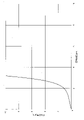
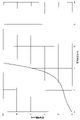
- the fine resin particles it is preferable that there is no curved portion when the resin fine particles are compressed to a load of 9.81 mN in the compression displacement-compression load curve in the compression test. Without the bent portion, the brittleness of the fine resin particles is improved, and damage to the fine resin particles can be reduced even if a shear stress is applied to the fine resin particles.
- the bent portion is a portion where the compressive displacement abruptly increases in the compressive displacement-compressive load curve in the compression test.
- a portion where the compression displacement increases rapidly (exceeds 0.3 ⁇ m) with a slight change in the compressive load (change of 0.1 mN) is referred to as a “flexion portion. ”.
- the compressive displacement-compressive load curve in the compression test can be obtained according to the measurement procedure for compressive strength at 10% compressive strength described above.
- the volume average particle size of the primary particles of the resin fine particles may be adjusted as appropriate according to the application.
- the volume average particle diameter of the primary particles of the fine resin particles is preferably 1 ⁇ m or more, more preferably 3 ⁇ m or more, and even more preferably 5 ⁇ m or more.
- the volume average particle diameter of the primary particles of the fine resin particles is preferably 100 ⁇ m or less, more preferably 50 ⁇ m or less, and even more preferably 30 ⁇ m or less.
- the coefficient of variation (CV value) of the primary particles of the resin fine particles may be appropriately adjusted according to the application.
- the coefficient of variation (CV value) of the primary particles of the fine resin particles is preferably 50% or less, more preferably 45% or less, and even more preferably 40% or less.
- the volume average particle size and coefficient of variation (CV value) of the primary particles of the fine resin particles are measured in the following manner.
- the volume average particle size and coefficient of variation (CV value) of the primary particles of the fine resin particles are measured using a measuring device commercially available from Beckman Coulter under the trade name "Coulter Multisizer III". Measurements shall be performed with an aperture calibrated according to the MultisizerTM 3 User's Manual published by Beckman Coulter.
- the aperture used for measurement when the assumed volume average particle diameter of the resin fine particles to be measured is 1 ⁇ m or more and 10 ⁇ m or less, an aperture having a size of 50 ⁇ m is selected, and when the assumed volume average particle diameter of the resin fine particles to be measured is 10 ⁇ m. If the diameter is larger than 30 ⁇ m, an aperture having a size of 100 ⁇ m is selected, and if the assumed volume average particle diameter of the fine resin particles is larger than 30 ⁇ m and 90 ⁇ m or less, an aperture having a size of 280 ⁇ m is selected. Select aperture. If the volume-average particle size after measurement differs from the expected volume-average particle size, the aperture is changed to an appropriate size, and the measurement is performed again.
- a beaker filled with ISOTON (registered trademark) II electrophilyte solution for measurement manufactured by Beckman Coulter, Inc.
- ISOTON registered trademark
- the inside of the beaker is gently agitated to the extent that air bubbles do not enter, and the measurement is terminated when 100,000 resin fine particles are measured.
- the volume average particle diameter of the resin fine particles is the arithmetic mean value in the volume-based particle size distribution of 100,000 particles.
- the coefficient of variation (CV value) is a numerical value obtained from Equation (3) and represents the distribution width of data.
- Coefficient of variation (CV value) (%) standard deviation ⁇ 100 / volume average particle size of primary particles (3)
- the total amount of residual monomers is preferably 1000 ppm or less with respect to the total mass of the fine resin particles. If the total amount of residual monomers in the fine resin particles is 1,000 ppm or less, when the fine resin particles are used as a coating film softening agent or a matting agent for paints, the affinity between the residual monomers in the fine resin particles and the synthetic resin may cause problems. It is possible to suppress the permeation of the synthetic resin into the resin fine particles, and stably maintain the excellent softness and brittleness-improving effect of the resin fine particles in the synthetic resin for a long time.
- the total amount of residual monomers is preferably 1000 ppm or less with respect to the total mass of the fine resin particles. If the total amount of residual monomers in the fine resin particles is 1,000 ppm or less, when the fine resin particles are used as a coating film softening agent or a matting agent for paints, the affinity between the residual monomers in the fine resin particles and the synthetic resin may cause problems. It is possible to suppress the permeation of the synthetic resin into the resin fine particles, and stably maintain the excellent softness and brittleness-improving effect of the resin fine particles in the synthetic resin for a long time.
- the total amount of residual monomers of alkyl (meth)acrylate monomer (A) units, alkyl acrylate monomer (B) units and vinyl monomer (C) units is 1000 ppm or less with respect to the total mass of the resin fine particles. is preferred. If the total amount of residual monomers in the fine resin particles is 1,000 ppm or less, when the fine resin particles are used as a coating film softening agent or a matting agent for paints, the affinity between the residual monomers in the fine resin particles and the synthetic resin may cause problems. It is possible to suppress the permeation of the synthetic resin into the resin fine particles, and stably maintain the excellent softness and brittleness-improving effect of the resin fine particles in the synthetic resin for a long time.
- the amount of residual monomers in the resin fine particles can be measured using an ultra high performance liquid chromatograph (UHPLC). Specifically, 5 mL of methanol is added to 0.01 g of resin fine particles, and the mixture is sufficiently mixed, and then allowed to stand still for 24 hours to prepare a dispersion liquid. Then, the dispersion is treated with a centrifuge at a stirring speed of 18,500 rpm for 30 minutes to precipitate insoluble matter and obtain a supernatant. By analyzing 2 ⁇ L of the supernatant using an ultrafast liquid chromatogram La Chrom Ultra (manufactured by Hitachi High-Technologies Corporation), the residual monomer amount in the fine resin particles is measured.
- UHPLC ultra high performance liquid chromatograph
- a La Chrom Ultra C18 2 ⁇ m column is used, and the column temperature is 40°C.
- a mixture of 0.05% trifluoroacetic acid aqueous solution and acetonitrile at a mass ratio of 1:1 is used as the solvent, and the flow rate is 0.6 mL/min.
- the thermal decomposition initiation temperature of the fine resin particles in a nitrogen atmosphere is preferably 280°C or higher, more preferably 300°C or higher.
- the thermal decomposition starting temperature of the fine resin particles in a nitrogen atmosphere is preferably 360° C. or lower, more preferably 350° C. or lower.
- the thermal decomposition initiation temperature of resin fine particles in an air atmosphere is preferably 280°C or higher, more preferably 300°C or higher.
- the thermal decomposition starting temperature of the fine resin particles in an air atmosphere is preferably 330° C. or lower, more preferably 320° C. or lower. If the thermal decomposition initiation temperature of the fine resin particles in an air atmosphere is 280° C. or higher, the breakage of the main chain and the crosslinked chain of the copolymer constituting the fine resin particles is reduced even in a heated atmosphere, The brittleness of resin fine particles can be improved.
- the thermal decomposition initiation temperature of the fine resin particles under a nitrogen atmosphere or an air atmosphere is obtained from the TG/DTA curve obtained by thermally decomposing the fine resin particles under the following measurement conditions using a simultaneous differential thermogravimetric analyzer. Using the analysis software attached to the apparatus, the thermal decomposition start temperature is determined.
- the thermal decomposition initiation temperature of the resin fine particles is measured using a differential thermal thermogravimetric simultaneous measurement device "TG/DTA6200" (manufactured by SII Nano Technology Co., Ltd.).
- the sampling method and temperature conditions were as follows. About 15 mg of the sample is filled in the bottom of an aluminum measuring container without leaving any gaps, and the sample is measured under an air or nitrogen gas flow rate of 230 mL/min using alumina as a reference substance.
- a TG/DTA curve is obtained when the temperature is raised from 30° C. to 500° C. at a rate of 10° C./min. From this obtained curve, the thermal decomposition start temperature is determined using analysis software attached to the apparatus.
- the thermal decomposition start temperature here is the mass reduction start temperature described in JIS K7120: 1987 "Method for measuring thermogravimetry of plastics" (8 "How to read the TG curve"), and the value obtained from the standard. is.
- the resin fine particles When the copolymer contained in the resin fine particles contains thiol compound (F) units, the resin fine particles contain elemental sulfur derived from the thiol compound (F).
- the content of the thiol-based compound in the resin fine particles is measured by high frequency inductively coupled plasma (ICP) emission spectrometry or fluorescent X-ray analysis.
- ICP inductively coupled plasma
- the content of elemental sulfur is not particularly limited, and is appropriately set according to the purpose or application of the fine resin particles.
- the content of elemental sulfur in the fine resin particles is preferably 0.05 parts by mass or more, more preferably 0.1 parts by mass or more, relative to 100 parts by mass of the copolymer.
- the content of elemental sulfur in the fine resin particles is preferably 2 parts by mass or less, more preferably 1 part by mass or less, relative to 100 parts by mass of the copolymer.
- the thiol-based compound (F) units are sufficiently contained in the fine resin particles, and the heat resistance of the fine resin particles can be improved. If the content of elemental sulfur in the resin fine particles is 2 parts by mass or less, the odor generated from the resin fine particles can be reduced.
- the content of elemental sulfur in the resin fine particles is measured by high frequency inductively coupled plasma (ICP) emission spectrometry. Specifically, about 0.5 to 1.0 g of a precisely weighed sample was heated at 450° C. for 3 hours to be incinerated. The resulting ash and conc. 2 mL of hydrochloric acid (Ultrapur-100 ultrapure reagent manufactured by Kanto Kagaku Co., Ltd.) was mixed. The insoluble matter in the mixture was filtered by ADAVANTEC No. After filtration with No. 7 filter paper, the filtrate was diluted to 50 mL with pure water to obtain a test solution. The metal element concentration of the test solution was measured under the following conditions. Metal element concentrations were obtained from calibration curves.
- ICP inductively coupled plasma
- the amount of metal elements in the sample was calculated from the following formula.
- Amount of metal element ( ⁇ g/g) metal element concentration ( ⁇ g / mL) ⁇ 50 (mL) ⁇ sample mass (g) (ICP measurement conditions)
- Measuring device "ICPE-9000" multi-type ICP emission spectrometer manufactured by Shimadzu Corporation Measuring element: sulfur Observation direction: axial direction High-frequency output: 1.20 kW Carrier flow rate: 0.7 L/min Plasma flow rate: 10.0 L/min Auxiliary flow rate: 0.6 L/min Exposure time: 30 seconds
- the elemental sulfur content in the fine resin particles was measured by fluorescent X-ray analysis as follows. Using a fluorescent X-ray measuring device "ZSX Primus IV" (manufactured by Rigaku Corporation), the intensity of S-K ⁇ was measured under the following conditions, and the content of sulfur element was measured by the order analysis method with C7H10O3 as the balance.
- a measurement sample is prepared in the following manner. That is, 10 mg of a sample is weighed out on a carbon sample stand (manufactured by Nissin EM Co., Ltd.), and the sample is adjusted so as not to expand by 10 mm ⁇ or more. After that, the sample was covered with a polypropylene film "Cat No. 3399G003" (manufactured by Rigaku) and set in a 10 mm ⁇ sample case attached to the apparatus to obtain a measurement sample.
- Apparatus X-ray fluorescence measurement apparatus "ZSX PrimusIV" (manufactured by Rigaku)
- X-ray tube vertical Rh tube (3.0 KW)
- the resin fine particles may contain a hindered phenol-based antioxidant.
- Hindered phenol-based antioxidants have a structure in which a tert-butyl group is bonded to the ortho-position of phenol.
- Hindered phenol antioxidants include, for example, pentaerythritol tetrakis [3-(3,5-di-tert-butyl-4-hydroxyphenyl) propionate], octadecyl-3-(3,5-di-tert- Butyl- 1-hydroxyphenyl)propionate, N,N'-hexane-1,6-diylbis[ 3-(3,5-di-tert-butyl-4-hydroxyphenyl)propionamide], benzenepropanoic acid, 3 , 5-bis(1,1-dimethylethyl)-4-hydroxy, C7-C9 side chain alkyl ester, 3,3′,3′′,5,5′,5′′-hexa-tert-butyl-a, a′,a′′-(mesitylene-2,4,6-tolyl)tri-p-cresol, calcium diethylbis[[[3,5-bis(1,1-dimethylethy
- the content of the hindered phenol-based antioxidant in the fine resin particles is preferably 0.3 parts by mass or more, more preferably 0.5 parts by mass or more, and 0.8 parts by mass with respect to 100 parts by mass of the copolymer. The above is more preferable.
- the content of the hindered phenol-based antioxidant in the fine resin particles is preferably 5.0 parts by mass or less, more preferably 4.0 parts by mass or less, and 3.0 parts by mass with respect to 100 parts by mass of the copolymer. The following are more preferred.
- the content of the hindered phenol-based antioxidant is 0.3 parts by mass or more, the heat resistance of the fine resin particles under a nitrogen atmosphere can be improved.
- the content of the hindered phenol-based antioxidant is 5.0 parts by mass or less, cutting of the main chain and crosslinked chain of the copolymer constituting the fine resin particles is reduced even in a heated atmosphere. , the brittleness of the resin fine particles can be improved.
- the method for producing the resin fine particles is not particularly limited, and a raw material containing a (meth)acrylate monomer (A), an alkyl acrylate monomer (B), a vinyl monomer (C) and a polyfunctional (meth)acrylate monomer (D) It can be produced by polymerizing monomers in the presence of a polymerization initiator, if necessary, in a general manner.
- the raw material monomers contain the monomer (E) and/or the thiol-based compound (F) as necessary.
- suspension polymerization is preferable because resin fine particles having a sufficiently large particle diameter can be obtained.
- the polymerization initiator is not particularly limited as long as it can initiate the polymerization of raw material monomers.
- a radical polymerization initiator is preferred, and a thermal radical polymerization initiator is more preferred.
- polymerization initiators include persulfates (eg, ammonium persulfate, potassium persulfate, sodium persulfate, etc.), hydrogen peroxide, organic peroxides, and azo compounds.
- polymerization initiators include cumene hydroperoxide, di-tert-butyl peroxide, dicumyl peroxide, benzoyl peroxide, lauroyl peroxide, dimethylbis(tert-butylperoxy)hexane, dimethylbis(tert- butylperoxy)hexyne-3, bis(tert-butylperoxyisopropyl)benzene, bis(tert-butylperoxy)trimethylcyclohexane, butyl-bis(tert-butylperoxy)valerate, 2-ethylhexaneperoxyacid tert- Organic peroxides such as butyl, dibenzoyl peroxide, paramenthane hydroperoxide and tert-butyl peroxybenzoate; 2,2'-azobisisobutyronitrile, 2,2'-azobis(2-methylbutyro nitrile), 2,2′-azobis(2-isopropylbuty
- the amount of the polymerization initiator used is preferably 0.1 to 3 parts by mass, more preferably 0.2 to 1.0 parts by mass, with respect to 100 parts by mass of the raw material monomer, since the polymerization of the raw material monomer can be started smoothly. is more preferred.
- Resin fine particles can be produced by polymerizing raw material monomers in a polymerization medium (aqueous medium or organic medium) in the presence of a polymerization initiator.
- the fine resin particles are preferably produced by suspension polymerization of raw material monomers in an aqueous medium in the presence of a polymerization initiator.
- suspension polymerization droplets of a raw material mixture (oil phase) containing raw material monomers and a polymerization initiator are dispersed in an aqueous medium (aqueous phase) to obtain a dispersion, and the raw material monomers are polymerized in this dispersion. It is preferably done by allowing
- the aqueous medium is not particularly limited, and examples include water, water-soluble organic media (lower alcohols (alcohols having 5 or less carbon atoms) such as methanol, ethanol, and isopropyl alcohol), and mixtures of water and water-soluble organic media. Examples include a medium and the like, and it is preferable to include water.
- the amount of the aqueous medium used is preferably 100 to 2,000 parts by mass, preferably 200 to 1,000 parts by mass, per 100 parts by mass of the raw material monomer. By adjusting the amount of the aqueous medium to be used within the above range, the dispersion stability of the monomers during polymerization can be improved, and the generation of aggregates of fine resin particles can be suppressed during polymerization.
- the organic medium is not particularly limited, and examples include toluene, benzene, and ethyl acetate.
- a dispersion stabilizer may be included in the aqueous medium.
- Dispersion stabilizers include phosphates such as calcium phosphate, magnesium phosphate, aluminum phosphate and zinc phosphate; pyrophosphates such as calcium pyrophosphate, magnesium pyrophosphate, aluminum pyrophosphate and zinc pyrophosphate; calcium carbonate; , magnesium oxide, colloidal silica, calcium hydroxide, magnesium hydroxide, aluminum hydroxide, calcium metasilicate, calcium sulfate, barium sulfate, colloidal silica and other water-insoluble inorganic compounds, polyvinylpyrrolidone, partially saponified polyvinyl alcohol, polyacrylic acid , carboxymethylcellulose, and water-soluble polymers such as methylcellulose.
- the dispersion stabilizer can be easily removed after the polymerization process. It is preferable because it becomes possible to The dispersion stabilizers may be used alone or in combination of two or more.
- the amount of the dispersion stabilizer to be used is 0.1 per 100 parts by mass of the raw material monomer, since the liquidity of the suspension is ensured and the dispersion of the droplets of the raw material mixture in the suspension is excellent. 20 parts by mass is preferable, and 0.5 to 10 parts by mass is more preferable.
- a surfactant may be contained in the aqueous medium in order to further stabilize the suspension (reaction solution) during suspension polymerization.
- Any of anionic surfactants, cationic surfactants, nonionic surfactants and zwitterionic surfactants can be used as surfactants.
- the surfactant it is preferable to use a reactive surfactant having reactivity with the raw material monomer. When a reactive surfactant is used, the surfactant can remain on the surface of the resulting resin fine particles, and when the resin composition described later contains the aqueous medium, the resin fine particles aggregate in the synthetic resin. can be dispersed evenly without
- the surfactants may be used alone or in combination of two or more.
- anionic surfactants include sodium oleate; fatty acid soaps such as castor oil potash soap; alkyl sulfate ester salts such as sodium lauryl sulfate and ammonium lauryl sulfate; alkyl benzene sulfonates such as sodium dodecylbenzene sulfonate; Alkane sulfonate; Dialkyl sulfosuccinate; Alkyl phosphate ester salt; Naphthalene sulfonic acid formalin condensate; Polyoxyethylene alkyl phenyl ether sulfate ester salt; Polyoxyethylene sulfonated phenyl ether phosphate; Alkyl sulfate salts and the like can be mentioned.
- anionic reactive surfactants can be used.
- anionic reactive surfactants include KH-10, KH-1025, KH-05, HS-10, HS-1025, BC-0515, BC-10 of Aqualon (registered trademark) manufactured by Daiichi Kogyo Seiyaku Co., Ltd., BC-1025, BC-20, BC-2020, AR-1025 and AR-2025, Latemul (registered trademark) S-120, S-180A, S-180 and PD-104 manufactured by Kao Corporation, ADEKA Corporation SR-1025 and SE-10N from Adekaria Soap (registered trademark), KAYAMER PM-2 and KAYAMER PM-21 (registered trademark) from Nippon Kayaku Co., Ltd., and the like.
- cationic surfactants include alkylamine salts such as laurylamine acetate and stearylamine acetate; quaternary ammonium salts such as lauryltrimethylammonium chloride.
- Nonionic surfactants include, for example, (meth)acrylate sulfate surfactants (commercially available products include RMA-564, RMA-568, RMA-1114 manufactured by Nippon Nyukazai Co., Ltd.), and polyoxyalkylenes.
- nonionic reactive surfactants include, for example, alkyl ether surfactants (commercially available products include ADEKA Adekari Soap ER-10, ER-20, ER-30 and ER-40, Latemul PD-420, PD-430 and PD-450 manufactured by Kao Corporation); -10, RN-20, RN-30, RN-50, AN-10, AN-20, AN-30 and AN-5065, ADEKA NE-10, NE-20, NE-30 of Adekaria Soap and NE-40, etc.).
- alkyl ether surfactants commercially available products include ADEKA Adekari Soap ER-10, ER-20, ER-30 and ER-40, Latemul PD-420, PD-430 and PD-450 manufactured by Kao Corporation
- amphoteric surfactants examples include lauryl dimethylamine oxide, phosphate surfactants, and phosphite surfactants.
- the amount of surfactant used is preferably 0.001 to 5 parts by mass, more preferably 0.005 to 3 parts by mass, and more preferably 0.01 to 1 part by mass, based on 100 parts by mass of the raw material monomer.
- the resin fine particles can be obtained through washing, drying, pulverization, classification, etc., if necessary.
- the polymerization medium is separated and reduced from the reaction liquid containing the resin fine particles obtained by the polymerization reaction to produce a cake containing the resin fine particles.
- the method for separating and reducing the polymerization medium from the reaction liquid is not particularly limited, and examples thereof include a method for separating and reducing the polymerization medium from the reaction liquid by suction filtration, centrifugation, pressure separation, or the like. be done.
- the cake can be washed with an aqueous medium and/or an organic solvent, if necessary, and then dried to obtain fine resin particles.
- the method for washing the resin particles is not particularly limited, and for example, a method of supplying the cake to a centrifugal separator, supplying an aqueous medium to the cake to wash the resin particles, and removing the aqueous medium after washing by centrifugation. are mentioned. Incidentally, when a reactive surfactant is used, the washing of the cake with an aqueous medium can be omitted.
- An anti-blocking agent may be adhered to the surface of the resin fine particles in order to prevent coalescence of the resin fine particles when the resin fine particles are dried.
- the anti-blocking agent is not particularly limited, and examples thereof include inorganic powders such as silica fine particles, alumina fine particles, titania fine particles, zirconia fine particles, ceria fine particles, iron oxide fine particles and zinc oxide fine particles.
- the obtained fine resin particles may be pulverized or classified as necessary.
- the pulverizer used for pulverizing the resin fine particles is not particularly limited, and examples thereof include mechanical pulverizers (e.g., blade mills, super rotors) and jet pulverizers [e.g., nano-grinding mills (jet mills)]. and wet pulverizers such as bead mills, ball mills and hammer mills.
- the method of classifying the resin fine particles is not particularly limited, and examples thereof include wind classification and screen classification.
- Air classification is a method of classifying fine resin particles using air flow.
- Screen classification refers to a method of supplying fine resin particles onto a screen and vibrating the screen to classify the fine resin particles on the screen into particles that pass through the mesh of the screen and particles that do not.
- the fine resin particles contain a copolymer containing specific monomer units, so they have excellent flexibility and improved brittleness. Therefore, the fine resin particles can be used for various purposes. Resin fine particles can be suitably used as a light diffusing agent, a coating film softening agent, and a delustering agent for paints.
- a coating film softening agent is an additive that softens a coating film and imparts elasticity to the coating film.
- the resin fine particles can be used as a stress relaxation agent.
- Resin fine particles can be suitably used as a stress relaxation agent for curable resins.
- Resin fine particles are incorporated into the adhesive to impart flexibility to the solidified adhesive, thereby exerting an excellent effect of relieving external stress.
- Resin fine particles can be used as a light diffusing agent. Light diffusibility can be imparted to the coating film or the synthetic resin molding by incorporating the resin fine particles into the coating film or the synthetic resin molding.
- Resin fine particles can be mixed with a synthetic resin to form a resin composition.
- the synthetic resin may be an ionizing radiation curable resin such as an ultraviolet curable resin or an electron beam curable resin, a thermoplastic resin, or a thermosetting resin.
- the synthetic resins may be used alone or in combination of two or more.
- thermoplastic resins examples include (meth)acrylic resins, alkyd resins, polycarbonates, polyester resins, and polyolefin resins (e.g., polyethylene resins, polypropylene resins, chlorinated polyolefin resins, amorphous polyolefin resins, etc.).
- polyolefin resins e.g., polyethylene resins, polypropylene resins, chlorinated polyolefin resins, amorphous polyolefin resins, etc.
- polystyrene resins polystyrene resins, (meth)acrylic-urethane resins, urethane resins, polyvinyl chloride resins, polyvinylidene chloride resins, melamine resins, styrene resins, alkyd resins, phenol resins, epoxy resins, Polyester-based resins, silicone-based resins (alkylpolysiloxane-based resins, etc.), modified silicone resins [(meth)acrylic-silicone-based resins, silicone-alkyd-based resins, silicone-urethane-based resins, silicone-polyester resins, etc.], fluorine-based resins (polyvinylidene fluoride, fluoroolefin vinyl ether polymer, etc.) and the like.
- Acrylic resins, polycarbonates, polyester resins, and polystyrene resins are preferred because of their excellent transparency.
- the thermoplastic resin may be used alone or in combination of two or
- the term "synthetic resin” is a concept that includes monomers that are raw materials for synthetic resins and oligomers that are obtained by polymerizing these monomers. Therefore, the resin composition may contain monomers that are raw materials for synthetic resins, or oligomers obtained by polymerizing these monomers.
- Thermosetting resins include thermosetting urethane resins composed of acrylic polyol and isocyanate prepolymer, phenolic resins, urea melamine resins, epoxy resins, unsaturated polyester resins, and silicone resins.
- polyfunctional (meth)acrylate resin such as polyhydric alcohol polyfunctional (meth)acrylate; and polyfunctional urethane acrylate resins such as
- a polyfunctional (meth)acrylate resin is preferable, and a polyhydric alcohol polyfunctional (meth)acrylate resin having 3 or more (meth)acryloyl groups in one molecule is more preferable.
- Specific examples of polyhydric alcohol polyfunctional (meth)acrylate resins having 3 or more (meth)acryloyl groups in one molecule include trimethylolpropane tri(meth)acrylate and trimethylolethane tri(meth)acrylate.
- the ionizing radiation-curable resins may be used alone or in combination of two or more.
- the ionizing radiation-curable resin in addition to the above, there are polyether resins having acrylate-based functional groups, polyester resins having acrylate-based functional groups, epoxy resins having acrylate-based functional groups, and acrylate-based functional groups. alkyd resins having acrylate functional groups, spiroacetal resins having acrylate functional groups, polybutadiene resins having acrylate functional groups, and polythiol polyene resins having acrylate functional groups.
- a synthetic resin is obtained by adding a photopolymerization initiator to the ultraviolet curable resin.
- a photoinitiator is not specifically limited.
- photopolymerization initiators include acetophenones, benzoins, benzophenones, phosphine oxides, ketals, ⁇ -hydroxyalkylphenones, ⁇ -aminoalkylphenones, anthraquinones, thioxanthones, azo compounds, peroxides, (described in JP-A-2001-139663, etc.), 2,3-dialkyldione compounds, disulfide compounds, fluoroamine compounds, aromatic sulfoniums, onium salts, borate salts, active halogen compounds, ⁇ -acyloxy and the like.
- acetophenones examples include acetophenone, 2,2-diethoxyacetophenone, p-dimethylacetophenone, 1-hydroxydimethylphenyl ketone, 1-hydroxycyclohexylphenyl ketone, 2-methyl-4-methylthio-2-morpholinopropio phenone, 2-benzyl-2-dimethylamino-1-(4-morpholinophenyl)-butanone, and the like.
- benzoins examples include benzoin, benzoin benzoate, benzoin benzenesulfonate, benzoin toluene sulfonate, benzoin methyl ether, benzoin ethyl ether, and benzoin isopropyl ether.
- benzophenones include benzophenone, 2,4-dichlorobenzophenone, 4,4-dichlorobenzophenone, p-chlorobenzophenone and the like.
- Phosphine oxides include, for example, 2,4,6-trimethylbenzoyldiphenylphosphine oxide.
- Ketals include, for example, benzylmethyl ketals such as 2,2-dimethoxy-1,2-diphenylethan-1-one.
- ⁇ -hydroxyalkylphenones include 1-hydroxycyclohexylphenyl ketone.
- ⁇ -aminoalkylphenones include 2-methyl-1-[4-(methylthio)phenyl]-2-(4-morpholinyl)-1-propanone.
- the amount of the photopolymerization initiator used is preferably 0.5 to 20 parts by mass, more preferably 1 to 10 parts by mass, and more preferably 1.5 to 8 parts by mass with respect to 100 parts by mass of the ultraviolet curable resin.
- the resin composition preferably contains a solvent in order to adjust the viscosity of the resin composition.
- the solvent is not particularly limited, and examples thereof include water and organic solvents.
- the organic solvent is not particularly limited, and examples thereof include monohydric alcohols such as methanol, ethanol, n-propanol, isopropanol, n-butanol, isobutanol and tert-butanol, ethylene glycol, propylene glycol, butylene glycol, propylene glycol monomethyl.
- Polyhydric alcohols such as ethers, ethers of polyhydric alcohols such as dioxane, ethylene glycol diethyl ether, ethylene glycol monobutyl ether, ethylene glycol monoethyl ether, ethylene glycol monobutyl ether, acetone, methyl ethyl ketone, methyl isobutyl ketone, cyclohexanone, cyclopentanone and other ketone solvents, esters such as ethyl acetate and butyl acetate, toluene, xylene, and benzene.
- the solvent may be used alone or in combination of two or more.
- the content of the solvent in the resin composition is appropriately adjusted according to the application, and is preferably 20-60% by mass.
- the content of resin fine particles in the resin composition is appropriately adjusted according to the application.
- the content of the resin fine particles in the resin composition is preferably 100 parts by mass or more, more preferably 110 parts by mass or more, more preferably 120 parts by mass or more, and more preferably 140 parts by mass or more with respect to 100 parts by mass of the synthetic resin.
- Preferably, 150 parts by mass or more is more preferable.
- the content of the fine resin particles in the resin composition is preferably 1900 parts by mass or less, more preferably 900 parts by mass or less, and more preferably 400 parts by mass or less based on 100 parts by mass of the synthetic resin.
- the resulting coating film can be imparted with excellent flexibility or a matte effect.
- the content of the fine resin particles is 1900 parts by mass or less, the dispersibility of the fine resin particles is improved, so that when the resin composition is used as a paint, the resulting coating film has an excellent appearance without microcracks and roughness. have.
- the resin composition may contain pigments.
- Pigments include inorganic pigments such as titanium oxide, calcium carbonate, aluminum powder, copper powder, mica powder, iron oxide, and carbon black, phthalocyanine blue, phthalocyanine green, dioxazine violet, toluidine red, perylene, quinacridone, and benzidine yellow.
- organic pigments such as The pigments may be used alone or in combination of two or more.
- the resin composition contains a coating surface modifier, a fluidity modifier, a viscosity modifier, an antifoaming agent, a curing catalyst, a light stabilizer, a weather stabilizer, a heat stabilizer, and an ultraviolet absorber, as long as the physical properties of the resin composition are not impaired. , antioxidants, leveling agents, pigment dispersants, and other additives.
- the resin composition is preferably used as a coating composition.
- the synthetic resin serves as a binder.
- a coating film is formed by applying the resin composition to an arbitrary coating surface such as a substrate, drying the coating film, and then curing the coating film as necessary to form a coating film. can do.
- the method of applying the resin composition to the coated surface includes a reverse roll coating method, a gravure coating method, a die coating method, a comma coating method, a spray coating method, a brush coating method, a bar coating method, a blade coating method and a spin coating.
- well-known methods such as coating method, reverse coating method, roll coating method, micro gravure coating method, lip coating method, air knife coating method and dipping coating method can be used.
- the synthetic resin contained in the resin composition is an ionizing radiation-curable resin
- the solvent is dried if necessary, and the ionizing radiation-curable resin is cured by irradiating active energy rays. All you have to do is
- Examples of active energy rays include ultraviolet rays emitted from light sources such as xenon lamps, low-pressure mercury lamps, high-pressure mercury lamps, ultra-high-pressure mercury lamps, metal halide lamps, carbon arc lamps, and tungsten lamps; , resonance transformer type, insulated core transformer type, linear type, dynamitron type, high frequency type electron beam accelerators, ⁇ rays, ⁇ rays, ⁇ rays, etc. can be used.
- the resin fine particles contained in the coating film formed from the coating composition are less likely to collapse or crack due to stress applied to the coating film (for example, pressing force, etc.). Furthermore, since the fine resin particles maintain excellent softness, they smoothly absorb the stress applied to the coating film. Therefore, the coating film stably maintains the desired softness (elasticity) over a long period of time, smoothly absorbs the applied stress, and prevents unexpected situations such as buckling of the coating film surface. can be largely prevented from occurring.
- the fine resin particles smoothly absorb the stress applied to the coating film and have improved brittleness. Therefore, the matting effect of the coating film is stably maintained over a long period of time, and a situation in which the matting effect becomes uneven can generally be prevented.
- the resin fine particles have excellent oil resistance and oil absorption is reduced, even in a state where the resin fine particles are mixed with synthetic resin, the resin fine particles absorb the synthetic resin. Degradation is also suppressed, excellent softness and excellent stress relaxation action against external stress are exhibited, and the resulting coating film stably maintains excellent properties over a long period of time.
- the resin fine particles have a reduced amount of residual monomers due to a combination of predetermined monomer units, and due to the oil absorption resistance of the resin fine particles, the monomers remaining in the resin fine particles are eluted out of the resin fine particles. It is possible to prevent discoloration of the coating film due to elution of the residual monomer into the synthetic resin.
- the substrate on which the coating film is formed by coating the resin composition is not particularly limited.
- Materials for the substrate include cement, tiles, metals, synthetic resins, and glass.
- Synthetic resins used for the substrate are not particularly limited, and examples thereof include polyester resins such as polyethylene terephthalate, triacetylcellulose resins, polystyrene resins, acrylic resins, polycarbonate resins, cycloolefin resins, and the like.
- the substrate When the substrate is a film, it is preferably transparent.
- materials constituting the transparent film include polyester resins such as polyethylene terephthalate (PET) and polyethylene naphthalate, cellulose resins such as diacetyl cellulose and triacetyl cellulose (TAC), polycarbonate resins, and (meth)acrylic.
- -based resin polymethyl methacrylate, etc.
- styrene-based resin polystyrene, acrylonitrile-styrene copolymer, etc.
- polyolefin-based resin polyethylene, polypropylene, polyolefin-based resin having a cyclic or norbornene structure, ethylene-propylene copolymer
- Vinyl chloride resin amide resin (nylon, aromatic polyamide, etc.), imide resin, sulfone resin, polyether sulfone resin, polyether ether ketone resin, polyphenyl sulfide resin, vinyl alcohol resin, vinylidene chloride-based resins, vinyl butyral-based resins, arylate-based resins, polyoxymethylene-based resins, epoxy-based resins, and the like.
- the material constituting the film preferably has a low birefringence.
- the materials constituting the transparent film may be used alone or in combination of two or more.
- the thickness of the film is adjusted appropriately.
- the thickness of the film is generally preferably from 10 to 500 ⁇ m, more preferably from 20 to 300 ⁇ m, more preferably from 30 to 200 ⁇ m, from the viewpoint of strength, workability such as handleability, and thinness.
- Additives may be added to the film.
- Additives include, for example, ultraviolet absorbers, infrared absorbers, antistatic agents, refractive index modifiers, enhancers, and the like.
- An optical film can be constructed by using a film as a base material and forming a coating film on the film in the manner described above.
- An optical film can be used suitably as a light-diffusion film or an anti-glare film.
- the synthetic resin used in the resin composition must have the properties required (e.g., transparency, dispersibility of fine resin particles, light resistance, moisture resistance, heat resistance, etc.). It is not particularly limited as long as it is used in the field according to.
- the synthetic resin is preferably a curable resin that can form a crosslinked structure through a crosslinking reaction.
- the curable resin can be cured under various curing conditions.
- the above curable resins are classified into ultraviolet curable resins, ionizing radiation curable resins such as electron beam curable resins, thermosetting resins, temperature curable resins, and the like, depending on the type of curing.
- the content of fine resin particles in the resin composition is preferably 10 to 300 parts by weight with respect to 100 parts by weight of the synthetic resin.
- the thickness of the coating film is not particularly limited.
- the thickness of the coating film is appropriately determined depending on the particle size of the resin fine particles, preferably 1 to 50 ⁇ m, more preferably 3 to 30 ⁇ m.
- the resin composition can also be used for other purposes.
- the resin composition may optionally contain known coating surface modifiers, fluidity modifiers, ultraviolet absorbers, light stabilizers, curing catalysts, extender pigments, color pigments, and metal pigments. , mica powder pigments, dyes, and the like.
- the resin fine particles can be used by being contained in the resin molding.
- a resin molding is a molding of a resin composition containing fine resin particles and a synthetic resin. By using the resin composition as a light diffusing resin composition, the resin fine particles can function as a light diffusing agent in the resin molding.
- the resin molding functions as a light diffuser such as a light diffusion plate, and can be used as an LED lighting cover or the like.
- the synthetic resin that constitutes the resin molding is preferably transparent.
- transparent synthetic resins include (meth)acrylic resins, polycarbonate resins, polystyrene resins, (meth)acrylic-styrene resins [copolymers of (meth)acrylic acid esters and styrene], and the like.
- (meth)acrylic acid ester means acrylic acid ester or methacrylic acid ester.
- the content of the fine resin particles contained in the resin molded body is preferably 0.01 to 5 parts by weight, more preferably 0.1 to 5 parts by weight, based on 100 parts by weight of the synthetic resin constituting the resin molded body.
- the resin composition may contain additives such as ultraviolet absorbers, antioxidants, heat stabilizers, light stabilizers, and fluorescent whitening agents.
- the thickness and shape of the resin molding can be appropriately selected depending on the application of the resin molding.
- a resin molding can be obtained by supplying a resin composition to an extruder (single-screw extruder, twin-screw extruder, etc.) and melt-kneading it.
- a resin molded article may be produced by molding the resin composition obtained by melt-kneading into a plate shape or the like through a T-die and a roll unit.
- the resin composition obtained by melt-kneading may be pelletized, and the pellets may be injection-molded, press-molded, or the like to produce a plate-shaped resin molding.
- the resin molded product is a molded product of the resin composition for molding containing the resin fine particles of the present invention with excellent uniform dispersibility
- the resin molded product has uniform optical properties (light diffusion, antiglare, etc.). properties, light transmittance, etc.).
- the resin fine particles of the present invention have excellent softness and improved brittleness, and can be suitably used for various purposes.
- a composition containing resin fine particles of the present invention can be suitably used as a coating composition.
- a coating film formed from a coating composition can stably maintain excellent softness (elasticity) and appearance over a long period of time.
- FIG. 4 is a compression displacement-compression load curve relating to resin fine particles of Example 1.
- FIG. 4 is a compressive displacement-compressive load curve for the fine resin particles of Example 2.
- FIG. 10 is a compression displacement-compression load curve for the fine resin particles of Example 3.
- FIG. 10 is a compression displacement-compression load curve relating to resin fine particles of Example 4.
- FIG. 10 is a compressive displacement-compressive load curve for the fine resin particles of Example 5.
- FIG. 10 is a compression displacement-compression load curve for the fine resin particles of Example 6.
- FIG. 10 is a compression displacement-compression load curve relating to the fine resin particles of Example 7.
- FIG. 4 is a compression displacement-compression load curve relating to resin fine particles of Comparative Example 1.
- FIG. 4 is a compression displacement-compression load curve relating to resin fine particles of Comparative Example 1.
- FIG. 4 is a compression displacement-compression load curve relating to resin fine particles of Comparative Example 2.
- FIG. 4 is a compression displacement-compression load curve for resin fine particles of Comparative Example 3.
- FIG. 10 is a compressive displacement-compressive load curve for resin fine particles of Comparative Example 4.
- Alkyl (meth)acrylate (A) Alkyl methacrylate having a tridecyl group (carbon number: 13) as an alkyl group (C13.0-MA, trade name "VISIOMER Terra (registered trademark) C13.0-MA” manufactured by EVONIK, glass transition temperature Tg of homopolymer: -46°C, biomass degree: 76%) -
- Alkyl acrylate monomer (B) ⁇ Methyl acrylate (MA, homopolymer glass transition temperature Tg: 8 ° C.) ⁇ Butyl acrylate (BA, homopolymer glass transition temperature Tg: -55 ° C.)
- Examples 1 to 7, Comparative Examples 1 to 4 A water phase was prepared by supplying 400 parts by mass of ion-exchanged water and 2.5 parts by mass of magnesium pyrophosphate as a dispersion stabilizer into a polymerization vessel equipped with a stirrer, a thermometer and a cooling mechanism.
- the degree of biomass of the copolymer was measured in the manner described above, and the results are shown in Table 2.
- alkyl (meth)acrylate monomer units having an alkyl group having a carbon number of 1 to 3 with respect to a total of 100 parts by mass of the alkyl (meth)acrylate monomer units in the copolymer constituting the obtained resin fine particles The amount is shown in Table 2 in the column of "Alkyl (meth)acrylate monomer (C1-3) unit".
- the compressive strength (S10 strength) at 10% compressive strength, the volume average particle diameter and coefficient of variation (CV value) of the primary particles, and the total amount of residual monomers relative to the total mass of the resin fine particles were measured as described above. The results are shown in Table 2.
- the resin fine particles of Examples 2 to 7 were below the measurement limit. In Table 1, "below measurement limit” is indicated by "-”.
- the thermal decomposition initiation temperatures of the obtained resin fine particles were measured in the above-described manner in a nitrogen atmosphere and an air atmosphere, and the results are shown in Table 2.
- the resin fine particles of the present invention have excellent softness and improved brittleness, so they can be used for various purposes. Resin fine particles can be suitably used for coating composition applications. The fine resin particles can be suitably used as a coating film softening agent and a matting agent for coatings.
Landscapes
- Chemical & Material Sciences (AREA)
- Organic Chemistry (AREA)
- Life Sciences & Earth Sciences (AREA)
- Engineering & Computer Science (AREA)
- Materials Engineering (AREA)
- Wood Science & Technology (AREA)
- Health & Medical Sciences (AREA)
- Chemical Kinetics & Catalysis (AREA)
- Medicinal Chemistry (AREA)
- Polymers & Plastics (AREA)
- Addition Polymer Or Copolymer, Post-Treatments, Or Chemical Modifications (AREA)
- Paints Or Removers (AREA)
Priority Applications (4)
| Application Number | Priority Date | Filing Date | Title |
|---|---|---|---|
| US18/284,692 US20240158553A1 (en) | 2021-03-31 | 2022-03-30 | Fine resin particle, coating film-softening agent, matting agent for paints, stress reliever for curable resins, light diffuser, light diffusing resin composition, and resin composition |
| JP2023511485A JP7574410B2 (ja) | 2021-03-31 | 2022-03-30 | 樹脂微粒子、塗膜軟質化剤、塗料用艶消し剤、硬化性樹脂用応力緩和剤、光拡散剤、光拡散性樹脂組成物及び樹脂組成物 |
| EP22781103.1A EP4317224A4 (en) | 2021-03-31 | 2022-03-30 | RESIN FINE PARTICLES, PAINT SOFTENERS, MATTING AGENT FOR THE CURABLE RESIN, LIGHT DIFFUSION AGENT, LIGHT DIFFUSION RESIN COMPOSITION AND RESIN COMPOSITION |
| KR1020237032779A KR102956774B1 (ko) | 2021-03-31 | 2022-03-30 | 수지 미립자, 도막 연질화제, 도료용 소광제, 경화성 수지용 응력 완화제, 광확산제, 광확산성 수지 조성물, 및 수지 조성물 |
Applications Claiming Priority (2)
| Application Number | Priority Date | Filing Date | Title |
|---|---|---|---|
| JP2021060983 | 2021-03-31 | ||
| JP2021-060983 | 2021-03-31 |
Publications (1)
| Publication Number | Publication Date |
|---|---|
| WO2022210893A1 true WO2022210893A1 (ja) | 2022-10-06 |
Family
ID=83459540
Family Applications (1)
| Application Number | Title | Priority Date | Filing Date |
|---|---|---|---|
| PCT/JP2022/016042 Ceased WO2022210893A1 (ja) | 2021-03-31 | 2022-03-30 | 樹脂微粒子、塗膜軟質化剤、塗料用艶消し剤、硬化性樹脂用応力緩和剤、光拡散剤、光拡散性樹脂組成物及び樹脂組成物 |
Country Status (4)
| Country | Link |
|---|---|
| US (1) | US20240158553A1 (https=) |
| EP (1) | EP4317224A4 (https=) |
| JP (1) | JP7574410B2 (https=) |
| WO (1) | WO2022210893A1 (https=) |
Cited By (2)
| Publication number | Priority date | Publication date | Assignee | Title |
|---|---|---|---|---|
| JP7510098B1 (ja) | 2022-12-26 | 2024-07-03 | ダイキン工業株式会社 | 撥水耐油剤、繊維製品および繊維製品の製造方法 |
| WO2025023151A1 (ja) * | 2023-07-21 | 2025-01-30 | 積水化成品工業株式会社 | 樹脂粒子および半導体部材用樹脂組成物 |
Citations (12)
| Publication number | Priority date | Publication date | Assignee | Title |
|---|---|---|---|---|
| JPH0565429A (ja) * | 1991-07-05 | 1993-03-19 | Nippon Paint Co Ltd | 塗料の艶下げ方法、塗料および塗装品 |
| JP2001139663A (ja) | 1999-11-12 | 2001-05-22 | Daicel Chem Ind Ltd | 光学的造形用樹脂組成物、その製造方法及び光学的造形物 |
| JP2002080774A (ja) * | 2000-06-19 | 2002-03-19 | Toyota Motor Corp | 反応型プライマー |
| JP2008255072A (ja) | 2007-04-09 | 2008-10-23 | Kao Corp | 樹脂粒子 |
| US20110160383A1 (en) * | 2009-12-31 | 2011-06-30 | Cheil Industries Inc. | Transparent Thermoplastic Resin Composition with Improved Impact Strength and Melt Flow Index |
| JP2013227561A (ja) * | 2012-03-29 | 2013-11-07 | Sekisui Plastics Co Ltd | 樹脂粒子、並びに、この樹脂粒子を含む塗料及び外用剤 |
| JP2016534131A (ja) * | 2013-09-03 | 2016-11-04 | ミリアント・コーポレイションMyriant Corporation | 1,3−プロパンジオールからアクリル酸、アクリロニトリルおよび1,4−ブタンジオールを製造する方法 |
| WO2017141653A1 (ja) * | 2016-02-19 | 2017-08-24 | 松本油脂製薬株式会社 | 熱膨張性微小球およびその用途 |
| JP2018024786A (ja) | 2016-08-10 | 2018-02-15 | アイカ工業株式会社 | 有機微粒子 |
| JP2019219646A (ja) * | 2018-06-13 | 2019-12-26 | キヤノン株式会社 | トナー及び該トナーの製造方法 |
| JP2020105309A (ja) * | 2018-12-27 | 2020-07-09 | 日東電工株式会社 | 粘着シート |
| JP2021060983A (ja) | 2019-09-14 | 2021-04-15 | テクトロニクス・インコーポレイテッドTektronix,Inc. | 試験測定システム及びタスク同期方法 |
Family Cites Families (8)
| Publication number | Priority date | Publication date | Assignee | Title |
|---|---|---|---|---|
| CN101974117B (zh) * | 2010-10-27 | 2012-08-29 | 常州光辉化工有限公司 | 带羧酸基团的苯丙乳液和苯丙乳液内墙涂料及其制备方法 |
| US9206552B2 (en) * | 2012-02-17 | 2015-12-08 | International Paper Company | Absorbent plastic pigment with improved print density containing and recording sheet containing same |
| JP5955787B2 (ja) * | 2012-06-20 | 2016-07-20 | 富士フイルム株式会社 | 転写フィルム、静電容量型入力装置の製造方法および静電容量型入力装置、並びに、これを備えた画像表示装置 |
| CN107386007B (zh) * | 2017-07-07 | 2019-07-19 | 广东玉兰集团股份有限公司 | 一种抗污墙纸及其制备方法 |
| CN108752514B (zh) * | 2018-05-05 | 2020-10-23 | 长沙市原鹏化工科技有限公司 | 一种环氧改性丙烯酸乳液及其制备方法 |
| US10732530B2 (en) * | 2018-06-13 | 2020-08-04 | Canon Kabushiki Kaisha | Toner and method for producing toner |
| CN109134740A (zh) * | 2018-07-18 | 2019-01-04 | 奥美医疗用品股份有限公司 | 一种适用于皮肤的可反复粘贴的胶黏剂 |
| JP7267740B2 (ja) * | 2018-12-28 | 2023-05-02 | キヤノン株式会社 | トナー |
-
2022
- 2022-03-30 JP JP2023511485A patent/JP7574410B2/ja active Active
- 2022-03-30 EP EP22781103.1A patent/EP4317224A4/en active Pending
- 2022-03-30 US US18/284,692 patent/US20240158553A1/en active Pending
- 2022-03-30 WO PCT/JP2022/016042 patent/WO2022210893A1/ja not_active Ceased
Patent Citations (12)
| Publication number | Priority date | Publication date | Assignee | Title |
|---|---|---|---|---|
| JPH0565429A (ja) * | 1991-07-05 | 1993-03-19 | Nippon Paint Co Ltd | 塗料の艶下げ方法、塗料および塗装品 |
| JP2001139663A (ja) | 1999-11-12 | 2001-05-22 | Daicel Chem Ind Ltd | 光学的造形用樹脂組成物、その製造方法及び光学的造形物 |
| JP2002080774A (ja) * | 2000-06-19 | 2002-03-19 | Toyota Motor Corp | 反応型プライマー |
| JP2008255072A (ja) | 2007-04-09 | 2008-10-23 | Kao Corp | 樹脂粒子 |
| US20110160383A1 (en) * | 2009-12-31 | 2011-06-30 | Cheil Industries Inc. | Transparent Thermoplastic Resin Composition with Improved Impact Strength and Melt Flow Index |
| JP2013227561A (ja) * | 2012-03-29 | 2013-11-07 | Sekisui Plastics Co Ltd | 樹脂粒子、並びに、この樹脂粒子を含む塗料及び外用剤 |
| JP2016534131A (ja) * | 2013-09-03 | 2016-11-04 | ミリアント・コーポレイションMyriant Corporation | 1,3−プロパンジオールからアクリル酸、アクリロニトリルおよび1,4−ブタンジオールを製造する方法 |
| WO2017141653A1 (ja) * | 2016-02-19 | 2017-08-24 | 松本油脂製薬株式会社 | 熱膨張性微小球およびその用途 |
| JP2018024786A (ja) | 2016-08-10 | 2018-02-15 | アイカ工業株式会社 | 有機微粒子 |
| JP2019219646A (ja) * | 2018-06-13 | 2019-12-26 | キヤノン株式会社 | トナー及び該トナーの製造方法 |
| JP2020105309A (ja) * | 2018-12-27 | 2020-07-09 | 日東電工株式会社 | 粘着シート |
| JP2021060983A (ja) | 2019-09-14 | 2021-04-15 | テクトロニクス・インコーポレイテッドTektronix,Inc. | 試験測定システム及びタスク同期方法 |
Non-Patent Citations (2)
| Title |
|---|
| "Multisizer TM 3 User's Manual", BECKMAN COULTER, INC |
| BULLETIN OF THE AMERICAN PHYSICAL SOCIETY, vol. 1, no. 3, 1956, pages 123 |
Cited By (4)
| Publication number | Priority date | Publication date | Assignee | Title |
|---|---|---|---|---|
| JP7510098B1 (ja) | 2022-12-26 | 2024-07-03 | ダイキン工業株式会社 | 撥水耐油剤、繊維製品および繊維製品の製造方法 |
| WO2024143275A1 (ja) * | 2022-12-26 | 2024-07-04 | ダイキン工業株式会社 | 撥水耐油剤、繊維製品および繊維製品の製造方法 |
| JP2024096032A (ja) * | 2022-12-26 | 2024-07-11 | ダイキン工業株式会社 | 撥水耐油剤、繊維製品および繊維製品の製造方法 |
| WO2025023151A1 (ja) * | 2023-07-21 | 2025-01-30 | 積水化成品工業株式会社 | 樹脂粒子および半導体部材用樹脂組成物 |
Also Published As
| Publication number | Publication date |
|---|---|
| EP4317224A1 (en) | 2024-02-07 |
| JP7574410B2 (ja) | 2024-10-28 |
| EP4317224A4 (en) | 2025-03-05 |
| US20240158553A1 (en) | 2024-05-16 |
| KR20230159449A (ko) | 2023-11-21 |
| JPWO2022210893A1 (https=) | 2022-10-06 |
Similar Documents
| Publication | Publication Date | Title |
|---|---|---|
| KR101588226B1 (ko) | 수지 입자 집합체, 그 제조 방법 및 그 용도 | |
| JP6612417B2 (ja) | 重合体粒子及びその用途 | |
| JP7197563B2 (ja) | 中空粒子分散体 | |
| JP2007289943A (ja) | 金属酸化物微粒子用反応性分散剤、反応性分散体、当該反応性分散体の製造方法、活性エネルギー線硬化型コーティング剤組成物および硬化被膜 | |
| WO2022210893A1 (ja) | 樹脂微粒子、塗膜軟質化剤、塗料用艶消し剤、硬化性樹脂用応力緩和剤、光拡散剤、光拡散性樹脂組成物及び樹脂組成物 | |
| JPWO2017056529A1 (ja) | 重合体粒子及びその用途 | |
| WO2018061374A1 (ja) | 導電性樹脂粒子及びその用途 | |
| TW201137021A (en) | Composition for a low-refractive-index film | |
| CN115003711B (zh) | 树脂微粒及其制造方法 | |
| JPWO2019177075A1 (ja) | 硬化性樹脂組成物、硬化物、回折光学素子、多層型回折光学素子、および硬化性樹脂組成物の製造方法 | |
| KR102956774B1 (ko) | 수지 미립자, 도막 연질화제, 도료용 소광제, 경화성 수지용 응력 완화제, 광확산제, 광확산성 수지 조성물, 및 수지 조성물 | |
| WO2022131052A1 (ja) | 樹脂微粒子及びその用途 | |
| JP2017111271A (ja) | 光硬化性防眩樹脂組成物 | |
| CN105461847A (zh) | 聚合物颗粒及其用途 | |
| CN103030731A (zh) | 树脂粒子及其用途 | |
| JP7618919B2 (ja) | 樹脂微粒子及び樹脂微粒子含有組成物 | |
| JP7652352B2 (ja) | 重合体粒子及びその用途 | |
| KR101596254B1 (ko) | 가교 아크릴계 수지 입자 및 그 제조 방법, 수지 조성물 및 포장 물품 | |
| WO2025023151A1 (ja) | 樹脂粒子および半導体部材用樹脂組成物 | |
| WO2026034578A1 (ja) | 中空樹脂粒子、およびその用途 | |
| JPWO2021171669A5 (https=) |
Legal Events
| Date | Code | Title | Description |
|---|---|---|---|
| 121 | Ep: the epo has been informed by wipo that ep was designated in this application |
Ref document number: 22781103 Country of ref document: EP Kind code of ref document: A1 |
|
| ENP | Entry into the national phase |
Ref document number: 2023511485 Country of ref document: JP Kind code of ref document: A |
|
| ENP | Entry into the national phase |
Ref document number: 20237032779 Country of ref document: KR Kind code of ref document: A |
|
| WWE | Wipo information: entry into national phase |
Ref document number: 18284692 Country of ref document: US |
|
| WWE | Wipo information: entry into national phase |
Ref document number: 2022781103 Country of ref document: EP |
|
| ENP | Entry into the national phase |
Ref document number: 2022781103 Country of ref document: EP Effective date: 20231031 |
|
| NENP | Non-entry into the national phase |
Ref country code: DE |