WO2022186024A1 - 車両の制御装置、車両の制御方法、及びプログラム - Google Patents
車両の制御装置、車両の制御方法、及びプログラム Download PDFInfo
- Publication number
- WO2022186024A1 WO2022186024A1 PCT/JP2022/007484 JP2022007484W WO2022186024A1 WO 2022186024 A1 WO2022186024 A1 WO 2022186024A1 JP 2022007484 W JP2022007484 W JP 2022007484W WO 2022186024 A1 WO2022186024 A1 WO 2022186024A1
- Authority
- WO
- WIPO (PCT)
- Prior art keywords
- oil pump
- driven
- drive source
- electric oil
- started
- Prior art date
- Legal status (The legal status is an assumption and is not a legal conclusion. Google has not performed a legal analysis and makes no representation as to the accuracy of the status listed.)
- Ceased
Links
Images



Classifications
-
- G—PHYSICS
- G07—CHECKING-DEVICES
- G07C—TIME OR ATTENDANCE REGISTERS; REGISTERING OR INDICATING THE WORKING OF MACHINES; GENERATING RANDOM NUMBERS; VOTING OR LOTTERY APPARATUS; ARRANGEMENTS, SYSTEMS OR APPARATUS FOR CHECKING NOT PROVIDED FOR ELSEWHERE
- G07C5/00—Registering or indicating the working of vehicles
- G07C5/08—Registering or indicating performance data other than driving, working, idle, or waiting time, with or without registering driving, working, idle or waiting time
- G07C5/0808—Diagnosing performance data
-
- B—PERFORMING OPERATIONS; TRANSPORTING
- B60—VEHICLES IN GENERAL
- B60W—CONJOINT CONTROL OF VEHICLE SUB-UNITS OF DIFFERENT TYPE OR DIFFERENT FUNCTION; CONTROL SYSTEMS SPECIALLY ADAPTED FOR HYBRID VEHICLES; ROAD VEHICLE DRIVE CONTROL SYSTEMS FOR PURPOSES NOT RELATED TO THE CONTROL OF A PARTICULAR SUB-UNIT
- B60W50/00—Details of control systems for road vehicle drive control not related to the control of a particular sub-unit, e.g. process diagnostic or vehicle driver interfaces
- B60W50/02—Ensuring safety in case of control system failures, e.g. by diagnosing, circumventing or fixing failures
- B60W50/0205—Diagnosing or detecting failures; Failure detection models
-
- F—MECHANICAL ENGINEERING; LIGHTING; HEATING; WEAPONS; BLASTING
- F16—ENGINEERING ELEMENTS AND UNITS; GENERAL MEASURES FOR PRODUCING AND MAINTAINING EFFECTIVE FUNCTIONING OF MACHINES OR INSTALLATIONS; THERMAL INSULATION IN GENERAL
- F16H—GEARING
- F16H61/00—Control functions within control units of change-speed- or reversing-gearings for conveying rotary motion ; Control of exclusively fluid gearing, friction gearing, gearings with endless flexible members or other particular types of gearing
- F16H61/12—Detecting malfunction or potential malfunction, e.g. fail safe ; Circumventing or fixing failures
-
- Y—GENERAL TAGGING OF NEW TECHNOLOGICAL DEVELOPMENTS; GENERAL TAGGING OF CROSS-SECTIONAL TECHNOLOGIES SPANNING OVER SEVERAL SECTIONS OF THE IPC; TECHNICAL SUBJECTS COVERED BY FORMER USPC CROSS-REFERENCE ART COLLECTIONS [XRACs] AND DIGESTS
- Y02—TECHNOLOGIES OR APPLICATIONS FOR MITIGATION OR ADAPTATION AGAINST CLIMATE CHANGE
- Y02T—CLIMATE CHANGE MITIGATION TECHNOLOGIES RELATED TO TRANSPORTATION
- Y02T10/00—Road transport of goods or passengers
- Y02T10/60—Other road transportation technologies with climate change mitigation effect
- Y02T10/62—Hybrid vehicles
Definitions
- the present invention relates to a vehicle control device, a vehicle control method, and a program.
- Patent Document 1 discloses a control device for an automatic transmission for a hybrid vehicle, which determines that an electric oil pump is malfunctioning at predetermined time intervals, and determines that the electric oil pump is malfunctioning when the number of malfunction occurrences exceeds a predetermined number. is disclosed.
- the state diagnosis of the electric oil pump is performed at predetermined time intervals, the electric oil pump will be driven even when there is no request to drive the electric oil pump, which may cause the driver to feel uncomfortable.
- the present invention has been made in view of such problems, and an object of the present invention is to make it possible to diagnose the state of the electric oil pump while reducing the sense of discomfort given to the driver.
- the automatic transmission includes a first oil pump driven by a first drive source that drives drive wheels, and a second oil pump driven by a second drive source.
- a control device for controlling a vehicle when the first drive source is started, and when the second oil pump is not driven for a predetermined time or longer after the start of the first drive source.
- the driving time of the second oil pump when the second oil pump is driven and the first driving source is started is the driving time when the second oil pump is not driven for the predetermined time or longer.
- a longer than time vehicle controller is provided.
- the automatic transmission includes a first oil pump driven by a first drive source that drives drive wheels, and a second oil pump driven by a second drive source.
- a first oil pump driven by a first drive source that drives drive wheels
- a second oil pump driven by a second drive source.
- the state diagnosis of the second oil pump can be executed and completed while the second oil pump is being driven when the first drive source is started. Further, by executing the state diagnosis of the second oil pump when the first drive source is started, it becomes unnecessary to execute the state diagnosis of the second oil pump afterward. Therefore, it is not necessary to lengthen the drive time of the second oil pump when the second oil pump is not driven for a predetermined time or longer in order to diagnose the state of the second oil pump. It is possible to reduce discomfort given to the driver when the pump is driven. Therefore, according to these aspects, the state diagnosis of the electric oil pump can be performed while reducing the sense of discomfort given to the driver.
- FIG. 1 is a schematic configuration diagram of a vehicle equipped with a control device according to an embodiment of the invention.
- FIG. 2 is a flowchart showing the details of the first air removal process.
- FIG. 3 is a time chart showing how the electric oil pump is determined to be normal.
- FIG. 4 is a time chart showing how the electric oil pump is determined to be abnormal.
- FIG. 5 is a time chart showing how the state diagnosis of the electric oil pump is stopped.
- FIG. 6 is a flowchart showing the details of the second air bleeding process.
- FIG. 1 is a schematic configuration diagram of a vehicle 100.
- Vehicle 100 includes an engine ENG as a first drive source, a torque converter TC, a forward/reverse switching mechanism SWM, a variator VA, and a controller 2 as a control device.
- automatic transmission TM is a belt continuously variable transmission having torque converter TC, forward/reverse switching mechanism SWM, and variator VA.
- the engine ENG constitutes the driving source of the vehicle 100 .
- Engine ENG is, for example, a gasoline engine or a diesel engine.
- the power of the engine ENG is transmitted to the drive wheels DW via the torque converter TC, the forward/reverse switching mechanism SWM, and the variator VA.
- torque converter TC, forward/reverse switching mechanism SWM, and variator VA are provided in a power transmission path connecting engine ENG and drive wheels DW.
- the torque converter TC transmits power through fluid.
- the power transmission efficiency is enhanced by engaging the lockup clutch LU.
- the forward/reverse switching mechanism SWM is provided in the power transmission path connecting the engine ENG and the variator VA.
- the forward/rearward travel switching mechanism SWM switches the forward/rearward travel of the vehicle 100 by switching the rotational direction of the input rotation.
- the forward/reverse switching mechanism SWM includes a forward clutch FWD/C that is engaged when the forward (D) range is selected, and a reverse brake REV/B that is engaged when the reverse (R) range is selected.
- the forward clutch FWD/C and the reverse brake REV/B are released, the automatic transmission TM is put into a neutral state, that is, a power cutoff state.
- the variator VA constitutes a belt continuously variable transmission mechanism having a primary pulley PRI, a secondary pulley SEC, and a belt BLT wound around the primary pulley PRI and the secondary pulley SEC.
- a primary pulley pressure which is the hydraulic pressure of the primary pulley PRI
- a secondary pulley pressure which is the hydraulic pressure of the secondary pulley SEC
- the automatic transmission TM includes a mechanical oil pump MP as a first oil pump, an electric oil pump EP as a second oil pump, a motor M as a second drive source, and provided on the discharge port side of the mechanical oil pump MP. and a check valve 50 provided on the discharge port side of the electric oil pump EP.
- the mechanical oil pump MP draws up hydraulic oil from a reservoir (oil pan) 70 through a strainer 61 and an oil passage 62 and pumps the hydraulic oil to the hydraulic control circuit 1 .
- Mechanical oil pump MP is driven by the power of engine ENG.
- the power of the motor M drives the electric oil pump EP.
- the electric oil pump EP is driven alone or together with the mechanical oil pump MP, sucks up hydraulic oil from the reservoir 70 through the strainer 63 and the oil passage 64, and pumps the hydraulic oil to the hydraulic control circuit 1.
- the electric oil pump EP is provided auxiliary to the mechanical oil pump MP. It may be understood that the electric oil pump EP is configured with the motor M.
- the check valve 40 allows hydraulic oil to flow from the mechanical oil pump MP to the hydraulic control circuit 1 and prevents backflow.
- the check valve 50 allows hydraulic oil to flow from the electric oil pump EP to the hydraulic control circuit 1 and prevents backflow.
- the automatic transmission TM further comprises a hydraulic control circuit 1.
- the hydraulic control circuit 1 is composed of a plurality of flow paths and a plurality of hydraulic control valves, regulates the pressure of hydraulic oil supplied from the mechanical oil pump MP and the electric oil pump EP, and supplies it to each part of the automatic transmission TM. do.
- the controller 2 consists of a microcomputer equipped with a central processing unit (CPU), read-only memory (ROM), random access memory (RAM), and an input/output interface (I/O interface).
- the controller 2 performs various processes by reading and executing programs stored in the ROM by the CPU.
- the controller 2 can also be composed of a plurality of microcomputers. Specifically, the controller 2 may be configured by an ATCU that controls the automatic transmission TM, an SCU that controls the shift range, an ECU that controls the engine ENG, and the like.
- the controller 2 controls the operations of the engine ENG, hydraulic control circuit 1, motor M, etc. based on signals input from various sensors.
- the hydraulic control circuit 1 performs hydraulic control of the lockup clutch LU, the forward clutch FWD/C, the reverse brake REV/B, the primary pulley PRI, the secondary pulley SEC, etc., based on instructions from the controller 2 .
- the mechanical oil pump MP and the electric oil pump EP do not operate when the ignition power is OFF. Therefore, for example, when the vehicle 100 is parked in the parking lot of the home for a long period of time, the working oil will leak out from the oil passages and the like in the automatic transmission TM.
- the electric oil pump EP is driven to supply hydraulic oil to the oil passage on the electric oil pump EP side of the check valve 50 (the oil passage on the upstream side of the check valve 50). It is conceivable to perform an air bleeding process for filling. However, even if the air bleeding process is performed, if the electric oil pump EP continues to be in a non-driven state after that, hydraulic oil will flow out of the oil passage on the electric oil pump EP side of the check valve 50 .
- the controller 2 of the present embodiment drives the electric oil pump EP when the engine ENG is started and when the electric oil pump EP is not driven for a predetermined time or longer after the engine ENG is started. Then, the air bleeding process is executed to fill the oil passage closer to the electric oil pump EP than the check valve 50 with hydraulic oil.
- to start the engine ENG means to start the engine ENG for the first time after the ignition power of the vehicle 100 is turned on, and to restart the engine ENG after performing idle stop. is not included in "start engine ENG".
- controller 2 of the present embodiment executes state diagnosis of the electric oil pump EP by utilizing the fact that the electric oil pump EP is driven when executing the air bleeding process when the engine ENG is started.
- FIG. 2 is a flowchart showing the details of the first air removal process.
- the controller 2 determines whether the engine ENG has been started.
- step S11 the process of step S11 is repeated.
- the controller 2 determines whether or not the air bleeding start condition is met.
- step S13 When the controller 2 determines that the air bleeding start condition is met, the process proceeds to step S13. Further, when the controller 2 determines that the air bleeding start condition is not satisfied, the process of step S12 is repeated.
- step S13 the controller 2 starts diagnosing the state of the electric oil pump EP. Specifically, the controller 2 starts normality diagnosis and part of the abnormality diagnosis in the state diagnosis of the electric oil pump EP.
- the controller 2 controls the motor M to drive the electric oil pump EP. Specifically, the controller 2 controls the indicated rotational speed (first indicated rotational speed TNp1) of the electric oil pump EP in the first air bleeding process, and the indicated rotational speed (first indicated rotational speed TNp1) of the electric oil pump EP in the state diagnosis of the electric oil pump EP ( The motor M is controlled based on whichever is higher of the second instructed rotational speed TNp2).
- the first instructed rotation speed TNp1 and the second instructed rotation speed TNp2 are set in advance based on the specifications of the vehicle 100 and experimental results.
- the first instructed rotation speed TNp1 and the second instructed rotation speed TNp2 may be corrected based on the oil temperature or the like.
- the instructed rotational speed that is finally used to control the motor M will be referred to as a control instructed rotational speed TNpc.
- the controller 2 determines whether or not the air bleeding has been completed. Specifically, the controller 2 determines that the air bleeding has been completed when the number of rotations of the electric oil pump EP after the drive of the electric oil pump EP is started reaches or exceeds a predetermined number of rotations.
- the number of revolutions of the electric oil pump EP required to fill the oil passage on the electric oil pump EP side of the check valve 50 with hydraulic oil is determined by design.
- the predetermined number of rotations is a value at which the oil passage on the side of the electric oil pump EP with respect to the check valve 50 is filled with hydraulic oil when the number of rotations of the electric oil pump EP reaches or exceeds the predetermined number of rotations.
- the predetermined number of rotations is set in advance so that the space above the oil surface in the strainer 63 that sucks up the hydraulic oil from the oil passage 64 and the reservoir 70 on the upstream side of the electric oil pump EP is filled with the hydraulic oil. set.
- the predetermined number of rotations is about 30 to 40 times for general vehicles. Also, the time from the start of driving the electric oil pump EP to the completion of air bleeding is about 1 [sec].
- step S16 When the controller 2 determines that the air bleeding has been completed, the process proceeds to step S16. Further, when the controller 2 determines that the air removal is not completed, the process of step S15 is repeated.
- the controller 2 starts abnormality diagnosis of the state diagnosis of the electric oil pump EP. Specifically, the controller 2 starts abnormality diagnosis other than the abnormality diagnosis started in step S13.
- the controller 2 controls the motor M based on the second command rotation speed TNp2. That is, after step S16, the second instructed rotational speed TNp2 becomes the control instructed rotational speed TNpc.
- the controller 2 determines whether the electric oil pump EP is abnormal.
- the controller 2 determines that the electric oil pump EP is abnormal when, for example, one of the following conditions (a) and (b) is satisfied.
- the abnormality diagnosis of the electric oil pump EP is performed under the condition (a) that starts when the condition for starting air bleeding is satisfied (step S12) and in the case of condition (b) that starts when the air bleeding is completed (step S15). , to quickly determine the abnormality of condition (a) and to prevent erroneous determination of condition (b).
- step S20 When the controller 2 determines that the electric oil pump EP is abnormal, the process proceeds to step S20. Further, when the controller 2 determines that the electric oil pump EP is normal, the process proceeds to step S18.
- the controller 2 controls the motor M to stop the electric oil pump EP.
- the controller 2 determines whether the electric oil pump EP is normal.
- the controller 2 determines that the electric oil pump EP is normal, for example, when both of the following conditions (c) and (d) are satisfied.
- Each predetermined value in the conditions (a) and (c) is set in advance based on the specifications of the vehicle 100 and experimental results.
- Each predetermined value is, for example, several tens to several hundreds [rpm] and is the same value.
- each predetermined judgment time in conditions (a) to (d) is set in advance based on the specifications of the vehicle 100 and experimental results.
- Each predetermined determination time is, for example, 1 to 2 [sec], and may all be the same time or different times.
- step S20 When the controller 2 determines that the electric oil pump EP is normal, the process proceeds to step S20. Further, when the controller 2 determines that the electric oil pump EP is not normal, the process proceeds to step S19.
- step S19 the controller 2 determines whether a predetermined diagnosis time has elapsed after air bleeding is completed (step S15).
- step S20 determines that the predetermined diagnosis time has elapsed since the air bleeding was completed. Further, when the controller 2 determines that the predetermined diagnosis time has not elapsed since the air bleeding was completed, the process returns to step S17.
- the controller 2 stops the state diagnosis and stops the electric oil pump EP when the predetermined diagnosis time has elapsed after the air bleeding is completed.
- the predetermined diagnostic time is, for example, 3 to 5 [sec].
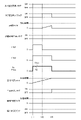
- FIG. 3 is a time chart showing how the electric oil pump EP is determined to be normal.
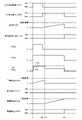
- FIG. 4 is a time chart showing how the electric oil pump EP is determined to be abnormal.
- FIG. 5 is a time chart showing how the state diagnosis of the electric oil pump EP is stopped. 3 to 5 illustrate the case where the state diagnosis of the electric oil pump EP is executed based on the differential rotation between the actual rotation speed Np and the control instructed rotation speed TNpc.
- the air bleeding request flag is turned ON and the first command rotation speed TNp1 increases. Further, the normal diagnosis is started and the second command rotation speed TNp2 is increased.
- the motor M is controlled based on the higher one of the first instructed rotational speed TNp1 and the second instructed rotational speed TNp2 (control instructed rotational speed TNpc), and the actual rotational speed Np of the electric oil pump EP increases. do. 3 to 5, the first instructed rotational speed TNp1 and the second instructed rotational speed TNp2 are the same value.
- the normality determination timer starts counting.
- the air bleeding request flag is turned off and the first instructed rotational speed TNp1 becomes zero. Therefore, after that, the second instructed rotational speed TNp2 becomes the control instructed rotational speed TNpc.
- the air bleeding end flag turns ON.
- the diagnostic timer starts counting.
- the normality determination flag is turned ON. This confirms the normality determination. The normality determination flag is maintained until the ignition power is turned off.
- the air bleeding end flag is turned OFF, the diagnosis timer is reset, the second indicated rotational speed TNp2 becomes zero, and the actual rotational speed Np becomes zero.
- the differential rotation between the actual rotation speed Np and the control instruction rotation speed TNpc becomes larger than a predetermined value, so that the normality determination timer is reset and the abnormality determination timer starts counting.
- the abnormality determination flag is turned ON. This confirms the abnormality determination.
- the abnormality determination flag is maintained until the ignition power is turned off.
- the air bleeding end flag is turned OFF, the diagnosis timer is reset, the second indicated rotational speed TNp2 becomes zero, and the actual rotational speed Np becomes zero.
- the abnormality determination timer is reset and the normality determination timer starts counting.
- the actual rotation speed Np is not stabilized after that, and at time t35 the normality determination timer is reset and the abnormality determination timer starts counting, and at time t36 the abnormality determination timer is reset and normality is determined A timer starts counting.
- the status diagnosis stop flag is turned ON. This terminates the state diagnosis.
- the state diagnosis stop flag is maintained until the ignition power is turned off.
- the air bleeding end flag is turned OFF, the second command rotational speed TNp2 becomes zero, and the actual rotational speed Np becomes zero. Also, the count of the normality judgment timer is reset. If the abnormality determination timer is counting at the timing when the state diagnosis is stopped, the count of the abnormality determination timer is reset.
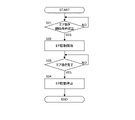
- FIG. 6 is a flowchart showing the details of the second air bleeding process.
- step S21 the controller 2 determines whether or not the air bleeding start condition is satisfied. Specifically, the controller 2 determines that the air bleeding start condition is met when the electric oil pump EP is not driven for a predetermined time or longer after the engine ENG is started.
- the predetermined time is, for example, several tens [min].
- step S22 When the controller 2 determines that the air bleeding start condition is met, the process proceeds to step S22. Further, when the controller 2 determines that the air bleeding start condition is not satisfied, the process of step S21 is repeated.
- the controller 2 controls the motor M to drive the electric oil pump EP. Specifically, the controller 2 controls the motor M based on the instructed rotational speed (third instructed rotational speed TNp3) of the electric oil pump EP in the second air bleeding process.
- Third command rotation speed TNp3 is set in advance based on the specifications of vehicle 100 and experimental results. The third command rotation speed TNp3 may be corrected based on the oil temperature or the like.
- step S23 the controller 2 determines whether or not the air bleeding has been completed.
- the specific processing contents of step S23 are the same as step S15 of the first air bleeding process shown in FIG.
- step S24 the process of step S23 is repeated.
- the controller 2 controls the motor M to stop the electric oil pump EP.
- the driving time of the electric oil pump EP is lengthened until the state diagnosis is completed.
- the state diagnosis of the electric oil pump EP can be executed and completed while the electric oil pump EP is being driven. I'm trying
- the setting of the first instructed rotational speed TNp1, the second instructed rotational speed TNp2, and the third instructed rotational speed TNp3 is the driving time of the electric oil pump EP in the second air bleeding process.
- the shortest driving time of the electric oil pump EP in the first air bleeding process is set to be longer than the time.
- the shortest driving time of the electric oil pump EP in the first air bleeding process is the shortest driving time of the electric oil pump EP when it is determined that the electric oil pump EP is normal.
- the driving time may be shorter than the shortest driving time of the electric oil pump EP in the first air bleeding process.
- a controller 2 that controls a vehicle 100 equipped with an automatic transmission TM has a predetermined period of time or more in which the electric oil pump EP is not driven when the first drive source is started and after the first drive source is started.
- the driving time of the electric oil pump EP when the electric oil pump EP is driven and the first drive source is started is the driving time when the electric oil pump EP is not driven for a predetermined time or longer. longer than In this embodiment, the first drive source is the engine ENG. Also, the second driving source is the motor M. As shown in FIG.
- the drive time of the electric oil pump EP when the first drive source is started is longer than the drive time when the electric oil pump EP is not driven for a predetermined time or longer. Therefore, the state diagnosis of the electric oil pump EP can be executed and completed while the electric oil pump EP is being driven when the first drive source is started. Further, by executing the state diagnosis of the electric oil pump EP when the first drive source is started, it becomes unnecessary to execute the state diagnosis of the electric oil pump EP thereafter. Therefore, it is not necessary to lengthen the drive time of the electric oil pump EP when the time in which the electric oil pump EP is not driven continues for a predetermined time or more in order to execute the state diagnosis of the electric oil pump EP. It is possible to reduce discomfort given to the driver when the EP is driven. Therefore, according to this, the state diagnosis of the electric oil pump EP can be executed while reducing the sense of discomfort given to the driver.
- the controller 2 diagnoses the state of the electric oil pump EP while the electric oil pump EP is being driven when the first drive source is started.
- the state diagnosis of the electric oil pump EP can be executed and completed while the electric oil pump EP is being driven when the first drive source is started. Further, by executing the state diagnosis of the electric oil pump EP when the first drive source is started, it becomes unnecessary to execute the state diagnosis of the electric oil pump EP thereafter. Therefore, the driving time of the electric oil pump EP when the electric oil pump EP is not driven for a predetermined time or longer after the start of the first drive source is lengthened in order to perform the state diagnosis of the electric oil pump EP. This eliminates the need for this, and can reduce the sense of discomfort given to the driver when the electric oil pump EP is driven.
- the check valve 50 is provided on the discharge port side of the electric oil pump EP.
- the check valve 50 may be provided on the reservoir 70 side of the electric oil pump EP.
- the controller 2 controls the command rotation speed (first command rotation speed TNp1) of the electric oil pump EP in the first air bleeding process and the command rotation speed of the electric oil pump EP in the state diagnosis of the electric oil pump EP.
- the case where the motor M is controlled based on whichever is higher of the speed (the second command rotation speed TNp2) has been described.
- the command rotation speed (first command rotation speed TNp1) of the electric oil pump EP in the first air bleeding process may continue.
- the air bleeding process and the state diagnosis can be performed at the same rotational speed, so that the feeling of discomfort given to the driver can be reduced.
- Various programs executed by the controller 2 may be stored in a non-transitory recording medium such as a CD-ROM.
Landscapes
- Engineering & Computer Science (AREA)
- Automation & Control Theory (AREA)
- Mechanical Engineering (AREA)
- Human Computer Interaction (AREA)
- Transportation (AREA)
- Physics & Mathematics (AREA)
- General Physics & Mathematics (AREA)
- General Engineering & Computer Science (AREA)
- Control Of Transmission Device (AREA)
Priority Applications (3)
| Application Number | Priority Date | Filing Date | Title |
|---|---|---|---|
| JP2023503748A JP7538941B2 (ja) | 2021-03-05 | 2022-02-24 | 車両の制御装置、車両の制御方法、及びプログラム |
| US18/548,272 US20250276704A1 (en) | 2021-03-05 | 2022-02-24 | Vehicle control device, vehicle control method, and non-transitory computer-readable medium |
| CN202280017627.0A CN116888393A (zh) | 2021-03-05 | 2022-02-24 | 车辆的控制装置、车辆的控制方法及程序 |
Applications Claiming Priority (2)
| Application Number | Priority Date | Filing Date | Title |
|---|---|---|---|
| JP2021-035861 | 2021-03-05 | ||
| JP2021035861 | 2021-03-05 |
Publications (1)
| Publication Number | Publication Date |
|---|---|
| WO2022186024A1 true WO2022186024A1 (ja) | 2022-09-09 |
Family
ID=83155040
Family Applications (1)
| Application Number | Title | Priority Date | Filing Date |
|---|---|---|---|
| PCT/JP2022/007484 Ceased WO2022186024A1 (ja) | 2021-03-05 | 2022-02-24 | 車両の制御装置、車両の制御方法、及びプログラム |
Country Status (4)
| Country | Link |
|---|---|
| US (1) | US20250276704A1 (https=) |
| JP (1) | JP7538941B2 (https=) |
| CN (1) | CN116888393A (https=) |
| WO (1) | WO2022186024A1 (https=) |
Citations (3)
| Publication number | Priority date | Publication date | Assignee | Title |
|---|---|---|---|---|
| JP2004084742A (ja) * | 2002-08-26 | 2004-03-18 | Nissan Motor Co Ltd | 自動変速機の油圧供給装置 |
| JP2011038452A (ja) * | 2009-08-10 | 2011-02-24 | Honda Motor Co Ltd | 燃料供給システム |
| JP2017227297A (ja) * | 2016-06-23 | 2017-12-28 | ジヤトコ株式会社 | 車両の制御装置及び車両の制御方法 |
Family Cites Families (5)
| Publication number | Priority date | Publication date | Assignee | Title |
|---|---|---|---|---|
| JP4249147B2 (ja) * | 2005-02-18 | 2009-04-02 | 本田技研工業株式会社 | ハイブリッド車両の電動オイルポンプ制御装置 |
| CN101158346A (zh) * | 2007-11-07 | 2008-04-09 | 奇瑞汽车有限公司 | 一种油泵性能检测系统 |
| JP5359036B2 (ja) * | 2008-06-03 | 2013-12-04 | 日産自動車株式会社 | エンジン自動停止制御装置付き車両の変速機に用いる電動オイルポンプの故障判定装置 |
| US9353692B2 (en) * | 2011-12-12 | 2016-05-31 | Fca Us Llc | Start-up strategy for hybrid powertrain |
| JP7052690B2 (ja) * | 2018-11-22 | 2022-04-12 | トヨタ自動車株式会社 | ハイブリッド車両の制御装置 |
-
2022
- 2022-02-24 JP JP2023503748A patent/JP7538941B2/ja active Active
- 2022-02-24 CN CN202280017627.0A patent/CN116888393A/zh active Pending
- 2022-02-24 WO PCT/JP2022/007484 patent/WO2022186024A1/ja not_active Ceased
- 2022-02-24 US US18/548,272 patent/US20250276704A1/en active Pending
Patent Citations (3)
| Publication number | Priority date | Publication date | Assignee | Title |
|---|---|---|---|---|
| JP2004084742A (ja) * | 2002-08-26 | 2004-03-18 | Nissan Motor Co Ltd | 自動変速機の油圧供給装置 |
| JP2011038452A (ja) * | 2009-08-10 | 2011-02-24 | Honda Motor Co Ltd | 燃料供給システム |
| JP2017227297A (ja) * | 2016-06-23 | 2017-12-28 | ジヤトコ株式会社 | 車両の制御装置及び車両の制御方法 |
Also Published As
| Publication number | Publication date |
|---|---|
| US20250276704A1 (en) | 2025-09-04 |
| CN116888393A (zh) | 2023-10-13 |
| JP7538941B2 (ja) | 2024-08-22 |
| JPWO2022186024A1 (https=) | 2022-09-09 |
Similar Documents
| Publication | Publication Date | Title |
|---|---|---|
| JP4365427B2 (ja) | エコラン制御装置、エコラン制御システム及び制御方法 | |
| JP5225252B2 (ja) | 車両の駆動源停止制御装置 | |
| KR100476146B1 (ko) | 자동변속기의 제어장치 | |
| JP5257389B2 (ja) | アイドルストップシステムの異常診断装置 | |
| US11046324B2 (en) | Device for controlling vehicle equipped with multi-stage automatic transmission | |
| US10718432B2 (en) | Method for controlling shifting by wire transmission vehicle | |
| CN116964359B (zh) | 车辆的控制装置、车辆的控制方法及程序 | |
| JP2006153091A (ja) | 車両の制御装置 | |
| JP4226543B2 (ja) | 車両の制御装置 | |
| JP5396319B2 (ja) | 自動変速機の油圧供給装置 | |
| JP7538941B2 (ja) | 車両の制御装置、車両の制御方法、及びプログラム | |
| JP6363620B2 (ja) | エンジンの制御装置及び制御方法 | |
| JP4626073B2 (ja) | エンジンの自動停止始動装置 | |
| CN102537326A (zh) | 具有isg系统的车辆的自动变速器的辅助泵的控制方法 | |
| JP5095810B2 (ja) | 車両の制御装置 | |
| KR101534656B1 (ko) | Isg 제어 장치 및 방법 | |
| JP3808364B2 (ja) | アイドルストップ装置 | |
| JP2008303949A (ja) | 油圧供給装置 | |
| JP3767504B2 (ja) | 車両の制御装置 | |
| CN107089232B (zh) | 车辆泵状况响应方法和总成 | |
| JP5721656B2 (ja) | 車両の制御装置 | |
| KR20230012187A (ko) | Mdps시스템의 모터 제어방법 및 시스템 | |
| WO2023176249A1 (ja) | 車両の制御装置、車両の制御方法及びプログラム | |
| JP6673145B2 (ja) | 電子制御装置及び電子制御システム | |
| JP2008050948A (ja) | 車両の制御装置 |
Legal Events
| Date | Code | Title | Description |
|---|---|---|---|
| 121 | Ep: the epo has been informed by wipo that ep was designated in this application |
Ref document number: 22763080 Country of ref document: EP Kind code of ref document: A1 |
|
| WWE | Wipo information: entry into national phase |
Ref document number: 2023503748 Country of ref document: JP |
|
| WWE | Wipo information: entry into national phase |
Ref document number: 202280017627.0 Country of ref document: CN |
|
| NENP | Non-entry into the national phase |
Ref country code: DE |
|
| 122 | Ep: pct application non-entry in european phase |
Ref document number: 22763080 Country of ref document: EP Kind code of ref document: A1 |
|
| WWP | Wipo information: published in national office |
Ref document number: 18548272 Country of ref document: US |