WO2022153803A1 - 需要調整制御システム、需要調整制御方法、及びプログラム - Google Patents
需要調整制御システム、需要調整制御方法、及びプログラム Download PDFInfo
- Publication number
- WO2022153803A1 WO2022153803A1 PCT/JP2021/047444 JP2021047444W WO2022153803A1 WO 2022153803 A1 WO2022153803 A1 WO 2022153803A1 JP 2021047444 W JP2021047444 W JP 2021047444W WO 2022153803 A1 WO2022153803 A1 WO 2022153803A1
- Authority
- WO
- WIPO (PCT)
- Prior art keywords
- demand adjustment
- adjustment control
- target
- demand
- control
- Prior art date
- Legal status (The legal status is an assumption and is not a legal conclusion. Google has not performed a legal analysis and makes no representation as to the accuracy of the status listed.)
- Ceased
Links
Images





Classifications
-
- H—ELECTRICITY
- H02—GENERATION; CONVERSION OR DISTRIBUTION OF ELECTRIC POWER
- H02J—CIRCUIT ARRANGEMENTS OR SYSTEMS FOR SUPPLYING OR DISTRIBUTING ELECTRIC POWER; SYSTEMS FOR STORING ELECTRIC ENERGY
- H02J3/00—Circuit arrangements for AC mains or AC distribution networks
- H02J3/12—Circuit arrangements for AC mains or AC distribution networks for adjusting voltage in AC networks by changing a characteristic of the network load
- H02J3/14—Circuit arrangements for AC mains or AC distribution networks for adjusting voltage in AC networks by changing a characteristic of the network load by switching loads on to, or off from, network, e.g. progressively balanced loading
-
- G—PHYSICS
- G05—CONTROLLING; REGULATING
- G05B—CONTROL OR REGULATING SYSTEMS IN GENERAL; FUNCTIONAL ELEMENTS OF SUCH SYSTEMS; MONITORING OR TESTING ARRANGEMENTS FOR SUCH SYSTEMS OR ELEMENTS
- G05B19/00—Programme-control systems
- G05B19/02—Programme-control systems electric
- G05B19/04—Programme control other than numerical control, i.e. in sequence controllers or logic controllers
- G05B19/042—Programme control other than numerical control, i.e. in sequence controllers or logic controllers using digital processors
-
- G—PHYSICS
- G06—COMPUTING OR CALCULATING; COUNTING
- G06Q—INFORMATION AND COMMUNICATION TECHNOLOGY [ICT] SPECIALLY ADAPTED FOR ADMINISTRATIVE, COMMERCIAL, FINANCIAL, MANAGERIAL OR SUPERVISORY PURPOSES; SYSTEMS OR METHODS SPECIALLY ADAPTED FOR ADMINISTRATIVE, COMMERCIAL, FINANCIAL, MANAGERIAL OR SUPERVISORY PURPOSES, NOT OTHERWISE PROVIDED FOR
- G06Q50/00—Information and communication technology [ICT] specially adapted for implementation of business processes of specific business sectors, e.g. utilities or tourism
- G06Q50/06—Energy or water supply
-
- H—ELECTRICITY
- H02—GENERATION; CONVERSION OR DISTRIBUTION OF ELECTRIC POWER
- H02J—CIRCUIT ARRANGEMENTS OR SYSTEMS FOR SUPPLYING OR DISTRIBUTING ELECTRIC POWER; SYSTEMS FOR STORING ELECTRIC ENERGY
- H02J13/00—Circuit arrangements for providing remote indication of network conditions, e.g. an instantaneous record of the open or closed condition of each circuitbreaker in the network; Circuit arrangements for providing remote control of switching means in a power distribution network, e.g. switching in and out of current consumers by using a pulse code signal carried by the network
-
- H—ELECTRICITY
- H02—GENERATION; CONVERSION OR DISTRIBUTION OF ELECTRIC POWER
- H02J—CIRCUIT ARRANGEMENTS OR SYSTEMS FOR SUPPLYING OR DISTRIBUTING ELECTRIC POWER; SYSTEMS FOR STORING ELECTRIC ENERGY
- H02J13/00—Circuit arrangements for providing remote indication of network conditions, e.g. an instantaneous record of the open or closed condition of each circuitbreaker in the network; Circuit arrangements for providing remote control of switching means in a power distribution network, e.g. switching in and out of current consumers by using a pulse code signal carried by the network
- H02J13/00004—Circuit arrangements for providing remote indication of network conditions, e.g. an instantaneous record of the open or closed condition of each circuitbreaker in the network; Circuit arrangements for providing remote control of switching means in a power distribution network, e.g. switching in and out of current consumers by using a pulse code signal carried by the network characterised by the power network being locally controlled
-
- H—ELECTRICITY
- H02—GENERATION; CONVERSION OR DISTRIBUTION OF ELECTRIC POWER
- H02J—CIRCUIT ARRANGEMENTS OR SYSTEMS FOR SUPPLYING OR DISTRIBUTING ELECTRIC POWER; SYSTEMS FOR STORING ELECTRIC ENERGY
- H02J3/00—Circuit arrangements for AC mains or AC distribution networks
- H02J3/003—Load forecast, e.g. methods or systems for forecasting future load demand
-
- H—ELECTRICITY
- H02—GENERATION; CONVERSION OR DISTRIBUTION OF ELECTRIC POWER
- H02J—CIRCUIT ARRANGEMENTS OR SYSTEMS FOR SUPPLYING OR DISTRIBUTING ELECTRIC POWER; SYSTEMS FOR STORING ELECTRIC ENERGY
- H02J3/00—Circuit arrangements for AC mains or AC distribution networks
- H02J3/12—Circuit arrangements for AC mains or AC distribution networks for adjusting voltage in AC networks by changing a characteristic of the network load
- H02J3/14—Circuit arrangements for AC mains or AC distribution networks for adjusting voltage in AC networks by changing a characteristic of the network load by switching loads on to, or off from, network, e.g. progressively balanced loading
- H02J3/144—Demand-response operation of the power transmission or distribution network
-
- G—PHYSICS
- G05—CONTROLLING; REGULATING
- G05B—CONTROL OR REGULATING SYSTEMS IN GENERAL; FUNCTIONAL ELEMENTS OF SUCH SYSTEMS; MONITORING OR TESTING ARRANGEMENTS FOR SUCH SYSTEMS OR ELEMENTS
- G05B2219/00—Program-control systems
- G05B2219/20—Pc systems
- G05B2219/26—Pc applications
- G05B2219/2639—Energy management, use maximum of cheap power, keep peak load low
-
- H—ELECTRICITY
- H02—GENERATION; CONVERSION OR DISTRIBUTION OF ELECTRIC POWER
- H02J—CIRCUIT ARRANGEMENTS OR SYSTEMS FOR SUPPLYING OR DISTRIBUTING ELECTRIC POWER; SYSTEMS FOR STORING ELECTRIC ENERGY
- H02J2310/00—The network for supplying or distributing electric power characterised by its spatial reach or by the load
- H02J2310/10—The network having a local or delimited stationary reach
- H02J2310/12—The local stationary network supplying a household or a building
-
- H—ELECTRICITY
- H02—GENERATION; CONVERSION OR DISTRIBUTION OF ELECTRIC POWER
- H02J—CIRCUIT ARRANGEMENTS OR SYSTEMS FOR SUPPLYING OR DISTRIBUTING ELECTRIC POWER; SYSTEMS FOR STORING ELECTRIC ENERGY
- H02J2310/00—The network for supplying or distributing electric power characterised by its spatial reach or by the load
- H02J2310/10—The network having a local or delimited stationary reach
- H02J2310/12—The local stationary network supplying a household or a building
- H02J2310/14—The load or loads being home appliances
-
- H—ELECTRICITY
- H02—GENERATION; CONVERSION OR DISTRIBUTION OF ELECTRIC POWER
- H02J—CIRCUIT ARRANGEMENTS OR SYSTEMS FOR SUPPLYING OR DISTRIBUTING ELECTRIC POWER; SYSTEMS FOR STORING ELECTRIC ENERGY
- H02J2310/00—The network for supplying or distributing electric power characterised by its spatial reach or by the load
- H02J2310/50—The network for supplying or distributing electric power characterised by its spatial reach or by the load for selectively controlling the operation of the loads
- H02J2310/56—The network for supplying or distributing electric power characterised by its spatial reach or by the load for selectively controlling the operation of the loads characterised by the condition upon which the selective controlling is based
- H02J2310/58—The condition being electrical
- H02J2310/60—Limiting power consumption in the network or in one section of the network, e.g. load shedding or peak shaving
Definitions
- This disclosure relates to a demand adjustment control system, a demand adjustment control method, and a program that control a device so as to adjust the demand when a demand adjustment request is made.
- Patent Document 1 discloses an electronic device for power saving control.
- This electronic device includes a transmitter / receiver, a data analysis block, a display control block, a power saving activation line control block, and a command signal output block.
- the transmitter / receiver acquires the actual power consumption data and the power consumption prediction data for each time zone provided by the power supply management system.
- the data analysis block analyzes changes in the actual power consumption data and the power usage prediction data, and creates graph data that displays the analysis results.
- the display control block displays a graph on the display and also displays a power saving activation setting line on the graph.
- the power saving activation line control block adjusts the power saving activation setting line, determines it at an arbitrary position, and sets the value at the determined position as the power saving activation value. Then, when the value of the power consumption actual data and / or the power consumption prediction data exceeds the power saving activation value, the command signal output block outputs the power saving command signal to the device to be the power saving target.
- This disclosure provides a demand adjustment control system, etc. that can easily reduce the impact on facilities when a demand adjustment request is made.
- the demand adjustment control system includes an acquisition unit, a determination unit, and a control unit.
- the acquisition unit acquires the target adjustment amount based on the temporary demand adjustment request.
- the determination unit determines a target device to be subject to demand adjustment control based on the target adjustment amount acquired by the acquisition unit from a group of devices installed in the facility.
- the control unit executes the demand adjustment control of the target device so that the adjustment amount by the target device falls within the range of the target adjustment amount during the execution period of the demand adjustment request.
- the device group includes a first device whose mode of demand adjustment control is not changed during the implementation period, and a second device whose mode of demand adjustment control can be changed during the implementation period.
- the demand adjustment control method includes an acquisition step, a determination step, and a control step.
- the acquisition step the target adjustment amount based on the temporary demand adjustment request is acquired.
- the determination step the target equipment to be subject to the demand adjustment control is determined from the equipment group installed in the facility based on the target adjustment amount acquired in the acquisition step.
- the control step the demand adjustment control of the target device is executed so that the adjustment amount by the target device falls within the range of the target adjustment amount during the execution period of the demand adjustment request.
- the device group includes a first device whose mode of demand adjustment control is not changed during the implementation period, and a second device whose mode of demand adjustment control can be changed during the implementation period.
- the program according to one aspect of the present disclosure causes the processor to execute the demand adjustment control method.
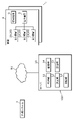
- FIG. 1 is a block diagram showing an overall configuration including a demand adjustment control system according to the first embodiment.
- FIG. 2 is a schematic diagram showing an example of demand adjustment control by the demand adjustment control system according to the first embodiment.
- FIG. 3 is a flowchart showing an operation example of the demand adjustment control system according to the first embodiment.
- FIG. 4 is a graph showing an example of demand adjustment control by the demand adjustment control system according to the first embodiment when the electric power demand is tight.
- FIG. 5 is a graph showing an example of demand adjustment control by the demand adjustment control system according to the first embodiment when the fluctuation of the electric power demand is suppressed.
- FIG. 6 is a graph showing another example of demand adjustment control by the demand adjustment control system according to the first embodiment when the fluctuation of the electric power demand is suppressed.
- FIG. 1 is a block diagram showing an overall configuration including a demand adjustment control system according to the first embodiment.
- FIG. 2 is a schematic diagram showing an example of demand adjustment control by the demand adjustment control system according to the first embodiment.
- FIG. 7 is a graph showing an example of the result of demand adjustment control by the demand adjustment control system of the comparative example.
- FIG. 8 is a graph showing an example of the result of demand adjustment control by the demand adjustment control system according to the first embodiment.
- FIG. 9 is a block diagram showing a configuration of the demand adjustment control system according to the second embodiment.
- FIG. 10A is an explanatory diagram of problems that may occur in the demand adjustment control by the demand adjustment control system according to the first embodiment.
- FIG. 10B is an explanatory diagram of problems that may occur in the demand adjustment control by the demand adjustment control system according to the first embodiment.
- FIG. 11 is a graph showing an example of the result of demand adjustment control by the demand adjustment control system according to the second embodiment.
- FIG. 12 is a block diagram showing a configuration of a demand adjustment control system according to a modified example of the first embodiment.
- the power saving request is made by stopping the operation of the power saving target device or changing the operation mode of the power saving target device.
- the power saving control was performed accordingly.
- VPP Virtual Power Plant
- VPP Virtual Power Plant
- VPP Virtual Power Plant
- in principle in order to keep the magnitude and frequency of the voltage supplied by the electric power company, etc. constant, it is a principle to achieve the same amount at the same time so that the demand and supply and demand of electric power are always matched, and only the power saving request is made. Instead, a power increase request may be made to consume the excess power generated.
- the demand adjustment (power saving) target is obtained by repeatedly changing the operation of the device subject to the demand adjustment (power saving) so as to fall within the adjustment amount (power saving amount) commanded by the demand adjustment request (power saving request). It can affect the facility where the equipment is installed.
- the facility is a store such as a convenience store
- the equipment to be saved power is a lighting fixture installed in the sales floor.
- the dimming rate of the lighting equipment is repeatedly increased or decreased in response to a request for power saving, the customer may feel uncomfortable because the customer visually senses a change in the lighting environment of the store.
- a predetermined numerical value for example, an integrated value of the adjustment amount described later
- a threshold value for example, a target adjustment amount described later
- a threshold value may be included in the other branching condition.
- one of the branching conditions may be "a predetermined numerical value is above (or below) a threshold value" or "a predetermined numerical value is above (or below) the threshold value”.
- FIG. 1 is a block diagram showing an overall configuration including the demand adjustment control system 100 according to the first embodiment.
- the demand adjustment control system 100 determines the target device 3 to be subject to the demand adjustment control from the device group 2 in response to the demand adjustment request from the external system 7 operated by, for example, an electric power company or an aggregator, and determines the target device 3 to be the target device 3 of the target device 3. It is a system for executing demand adjustment control.
- the demand adjustment control of the target device 3 may include not intentionally controlling the target device 3 when, for example, a demand adjustment request is required that the demand adjustment control is unnecessary.
- the number of the target devices 3 that execute the demand adjustment control may be zero, but such a case can also be included in the demand adjustment control of the target device 3.
- the demand adjustment request is not a permanent request, but a temporary request such as the above-mentioned DR.
- the demand adjustment request may include a peak cut for keeping the power consumption low during the time period when the power demand peaks.
- the demand adjustment request may include a request for keeping the power consumption low during the time when the power price is relatively high, based on the power price in the power supply and demand market.
- the device group 2 includes the device 20 installed in the facility 4 that can be subject to demand adjustment control. For example, when there is one facility 4, the device group 2 includes the device 20 installed in the facility 4. Further, for example, when there are a plurality of facilities 4, the device group 2 includes all the devices 20 installed in each of the plurality of facilities 4.
- Facility 4 includes stores such as convenience stores and supermarkets, for example.
- the facility 4 is not limited to a store, but may be a residential facility such as a detached house or an apartment house, or may include a non-residential facility such as an office, a school, a welfare facility, a hospital, and a factory. In the first embodiment, it is assumed that the facility 4 is a convenience store unless otherwise specified.
- FIG. 2 is a schematic diagram showing an example of demand adjustment control by the demand adjustment control system 100 according to the first embodiment.
- a plurality of devices 20 are installed in each facility 4.
- the device group 2 includes the first device 21 (device 20 marked with a triangle in the figure), the second device 22 (device 20 marked with a circle in the figure), and the third device group 2.
- the device 23 (device 20 marked with a cross in the figure) and the device 23 are included.
- the devices 20 that can be the target device 3 in the device group 2 are the first device 21 and the second device 22.
- the device 20 that cannot be the target device 3 is the third device 23.
- all the first equipment 21 and the second equipment 22 of each facility 4 are the target equipment 3.
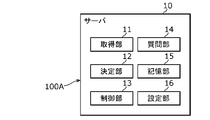
- the demand adjustment control system 100 includes an acquisition unit 11, a determination unit 12, a control unit 13, a question unit 14, and a storage unit 15.
- the demand adjustment control system 100 may include at least the acquisition unit 11, the determination unit 12, and the control unit 13, and may not include other components.
- the above other components can be realized by a system other than the demand adjustment control system 100.
- the demand adjustment control system 100 is realized by the server 10.
- the server 10 can communicate with each facility 4 via a network N1 such as the Internet.
- the server 10 can also communicate with the external system 7 via the network N1.
- the communication between the server 10 and each facility 4 and between the server 10 and the external system 7 is, for example, wireless communication, and the communication standard is not particularly limited.
- the communication between the server 10 and each facility 4 and between the server 10 and the external system 7 may be wired communication.
- the server 10 has a processor and a memory, and realizes various functions by executing a computer program stored in the memory by the processor.
- the memory is the storage unit 15.
- the acquisition unit 11 acquires the target adjustment amount based on the temporary demand adjustment request.
- the target adjustment amount refers to the target value of the integrated value of the power amount for which the demand is adjusted during the implementation period of the demand adjustment request.
- the acquisition unit 11 acquires the command value of the adjustment amount received at the same time when the demand adjustment request is received from the external system 7 as the target adjustment amount.
- the number of devices 20 that can participate in the demand adjustment control can be obtained from the answers from each facility 4 to the inquiry by the question unit 14 described later.
- the adjustment amount will be a positive value when the power is saved, and the adjustment amount will be a negative value when the power is increased. That is, when the target adjustment amount is a positive value, the demand adjustment request corresponds to a power saving request, and when the target adjustment amount is a negative value, the demand adjustment request corresponds to a power increase request.
- the determination unit 12 determines the target device 3 to be subject to the demand adjustment control from the device group 2 installed in the facility 4 based on the target adjustment amount acquired by the acquisition unit 11. In the first embodiment, the determination unit 12 determines the target device 3 in response to the response to the inquiry by the question unit 14. As already mentioned, the above answer includes information about the device 20 that can participate in the demand adjustment control. Therefore, the determination unit 12 determines the target device 3 from the devices 20 that can participate in the demand adjustment control.
- the device group 2 includes the first device 21 and the second device 22.
- the first device 21 and the second device 22 are installed in each facility 4.
- the facility 4 in which the first device 21 is not installed may exist, or the facility 4 in which the second device 22 is not installed may exist. ..
- power saving control such as dimming to suppress the illuminance
- power increase control demand adjustment control
- Adjustment control can be executed.
- the first device 21 or the second device 22 is an air conditioner such as an air conditioner
- the set temperature is raised during the cooling operation
- the set temperature is lowered during the heating operation
- the air volume is lowered
- the dry operation is performed.
- power saving control such as switching to cooling operation or turning off the power can be executed.
- power increase control such as lowering the set temperature during cooling operation, raising the set temperature during heating operation, increasing the air volume, switching to dry operation during cooling operation, or turning on the power.
- power increase control can be executed.
- the first device 21 is a device in which the mode of demand adjustment control is not changed during the implementation period of the demand adjustment request.
- the first device 21 is a lighting device, and power saving control (demand adjustment control) of dimming so as to suppress the illuminance is executed.
- the control for returning the illuminance to the original value is not executed during the execution period of the power saving request (demand adjustment request).
- the first device 21 is a device that can affect the users of the facility 4 by changing the mode of the demand adjustment control during the implementation period of the demand adjustment request. For example, in the lighting fixture, the lighting environment of the facility 4 may change by repeatedly increasing and decreasing the dimming rate during the implementation period of the demand adjustment request, which may have a visual effect on the users of the facility 4.
- the second device 22 is a device whose mode of demand adjustment control can be changed during the implementation period of the demand adjustment request.
- the second device 22 is an air conditioner and power saving control (demand adjustment control) of weakening the air volume is executed.
- the air conditioner may execute control to restore the air volume during the execution period of the power saving request (demand adjustment request).
- the second device 22 is a device that has a relatively small effect on the users of the facility 4 even if the mode of the demand adjustment control is changed during the implementation period of the demand adjustment request.
- the air conditioner repeats the control of changing the strength of the air volume during the implementation period of the demand adjustment request, the temperature change of the facility 4 is difficult for the user of the facility 4 to perceive and affects the user of the facility 4. Is hard to exert.
- the second equipment 22 is a refrigerating equipment, a refrigerating equipment, or other cold-requiring equipment, and power saving control (demand adjustment control) of raising the temperature inside the refrigerator is executed.
- the cold equipment may execute the control to return the temperature inside the refrigerator to the original temperature during the execution period of the power saving request (demand adjustment request). That is, even if the cold-requiring equipment repeats the control of changing the increase / decrease of the temperature inside the refrigerator during the implementation period of the demand adjustment request, the change in the temperature inside the refrigerator is difficult to be perceived by the user of the facility 4, and the use of the facility 4 is performed. It is hard to affect people.
- the first device 21 may include a lighting fixture installed in an office or a sales floor, a ventilation fan installed in a kitchen, or the like. Further, when the facility 4 is, for example, an office, the first device 21 may include lighting equipment, ventilation equipment, and the like.
- the second device 22 includes, for example, a power storage device, an air conditioner installed in an office or a sales floor, a drink warmer, a fryer, a refrigerating device, or a freezing device. obtain. Further, when the facility 4 is, for example, an office, the second device 22 may include an air conditioner or the like.
- the device group 2 may include devices other than the first device 21 and the second device 22. That is, the device group 2 may include a third device 23 that is not subject to demand adjustment control.
- the third device 23 is a device that can affect the users of the facility 4 even if the demand adjustment is controlled only during the implementation period of the demand adjustment request. For example, when the facility 4 is a store that handles food such as a convenience store, the warmer, coffee machine, microwave oven, etc. of the cooked food (for example, oden) is the third device 23. That is, since the third device 23 is a device that cannot be used by the user of the facility 4 by executing the demand adjustment control, which can have a great influence on the operation of the facility 4, etc., the third device 23 is subject to the demand adjustment control. Excluded.
- the determination unit 12 determines the second device 22 to be included in the target device 3 based on the past results of demand adjustment control. Specifically, the determination unit 12 sets priorities for each of the plurality of second devices 22 that can participate in the demand adjustment control, based on the past results of the demand adjustment control. For example, the determination unit 12 sets a high priority for the second device 22 having a large amount of adjustment that can be expected during the implementation period of the demand adjustment request. Further, for example, the determination unit 12 sets a high priority for the second device 22 having a high participation rate in the past demand adjustment control. Then, the determination unit 12 includes the second device 22 in the target device 3 in order from the second device 22 having the highest priority.
- the determination unit 12 does not have to include all the second devices 22 that can participate in the demand adjustment control in the target device 3. In this case, if the power saving amount (adjustment amount) is insufficient with respect to the command value of the power saving amount (adjustment amount) during the execution period of the demand adjustment request, the determination unit 12 first sends the target device 3 to the target device 3.
- the second device 22 other than the included second device 22 may be further included in the target device 3.
- the facility 4 first determined by the determination unit 12
- the second device 22 of the facility 4 other than the above may be further included in the target device 3.
- the additional facility 4 is a facility 4 that can participate in demand adjustment control.
- the determination unit 12 may determine the second device 22 to be included in the target device 3 in response to an operation input by, for example, the administrator of the demand adjustment control system 100.
- the control unit 13 executes the demand adjustment control of the target device 3 so that the adjustment amount by the target device 3 falls within the range of the target adjustment amount during the execution period of the demand adjustment request.
- the control unit 13 controls the target device 3 by transmitting a control signal including a demand adjustment control command to the target device 3.
- each target device 3 executes the demand adjustment control according to the demand adjustment control command included in the control signal.
- control unit 13 transmits a control signal to the target device 3 when the execution period of the demand adjustment request is started. Further, when the adjustment amount by the target device 3 is likely to deviate from the range of the target adjustment amount during the execution period of the demand adjustment request, the control unit 13 further sends a control signal to the second device 22 of the target device 3. Send.
- the control signal includes a command for changing the mode of demand adjustment control.
- the control unit 13 acquires electric power information periodically transmitted from the electric energy meter 5 such as a smart meter installed in each facility 4, and the target device 3 uses the acquired electric power information based on the acquired electric power information. Compare the integrated value of the adjustment amount with the target adjustment amount.
- the electric power information is, for example, the amount of electric power consumed by each facility 4.
- the control unit 13 calculates the adjustment amount based on the power information from each facility 4. Then, for example, when the integrated value of the adjustment amount is likely to exceed the target adjustment amount, the control unit 13 executes the demand adjustment control according to the difference between the integrated value of the adjustment amount and the target adjustment amount. The operation of the 22 is stopped, or the demand adjustment control of the second device 22 executing the demand adjustment control is released.
- the integrated value of the adjustment amount exceeds the target adjustment amount means that when the target adjustment amount is a positive value (that is, the power saving amount), the integrated value exceeds the target adjustment amount.
- the target adjustment amount is a negative value (that is, the power increase amount)
- the integrated value corresponds to being less than the target adjustment amount.
- the first device 21 When the first device 21 receives the control signal at the start of the execution period of the demand adjustment request, the first device 21 executes the demand adjustment control according to the demand adjustment control command included in the control signal. Then, the first device 21 does not change the mode of the demand adjustment control until the implementation period of the demand adjustment request ends.
- the second device 22 when the second device 22 receives the control signal at the start of the execution period of the demand adjustment request, the second device 22 executes the demand adjustment control according to the demand adjustment control command included in the control signal. Then, when the second device 22 further receives a control signal during the execution period of the demand adjustment request, the second device 22 changes the mode of the demand adjustment control according to the command of the control signal.
- the second device 22 When the demand adjustment request is a power saving request, the second device 22 does not always execute only the power saving control during the execution period of the power saving request, and may execute the power increase control in the middle. Further, when the demand adjustment request is a power increase request, the second device 22 does not always execute only the power increase control during the execution period of the power increase request, and may execute the power saving control in the middle.
- Question unit 14 inquires of facility 4 whether or not to participate in demand adjustment control.
- the question unit 14 includes a notification that the demand adjustment request has been received, and a command for requesting information about the devices 20 (first device 21 and second device 22) that can participate in the demand adjustment control.
- the question signal is transmitted to each facility 4.
- the question unit 14 may limit the facility 4 to which the question signal is transmitted, for example, depending on the area where the facility 4 is located, the location condition of the facility 4, or the like. That is, the question unit 14 may transmit the question signal to only some of the facilities 4 instead of transmitting the question signal to all the facilities 4.
- a tablet terminal or an information terminal 6 such as a personal computer receives a question signal.
- the information terminal 6 Upon receiving the question signal, the information terminal 6 returns a response signal including information about the device 20 capable of participating in the demand adjustment control to the demand adjustment control system 100.
- the manager or the like of the facility 4 may operate the information terminal 6 or ask a question. This may be done in advance before receiving the signal. Further, the reply of the response signal may be performed according to the operation of the manager of the facility 4, or may be automatically performed.
- a time zone in which the device 20 is desired to be excluded from the participation in the demand adjustment control may be set during the execution period of the demand adjustment request. For example, assume that the demand adjustment request is implemented from 1:00 pm to 2:00 pm. In this case, the time zone from 1:30 pm to 2:00 pm may be set as the above time zone.
- the storage unit 15 is a storage device that stores information (computer programs, etc.) necessary for the processor of the server 10 to perform various controls.
- the storage unit 15 is realized by, for example, a semiconductor memory, but a known electronic information storage means can be used without particular limitation.
- the storage unit 15 stores, for example, data related to the device 20 that can participate in the demand adjustment control during the execution period of the demand adjustment request.
- FIG. 3 is a flowchart showing an operation example of the demand adjustment control system 100 according to the first embodiment.
- the demand adjustment control system 100 receives the DR as a demand adjustment request from the external system 7.
- the following operations are also executed when receiving a demand adjustment request other than DR from the external system 7.
- the target device 3 determined by the determination unit 12 includes the first device 21 and the second device 22.
- the acquisition unit 11 receives the demand adjustment request from the external system 7 (S1). At this time, the acquisition unit 11 also receives the command value of the adjustment amount (that is, the target adjustment amount) together with the demand adjustment request.
- the process S1 corresponds to the acquisition step ST1 of the demand adjustment control method.
- the question unit 14 inquires each facility 4 whether or not to participate in the demand adjustment control by transmitting a question signal to each facility 4 (S2). .. If, for example, the response to the inquiry has already been obtained from each facility 4 in a predetermined period (for example, one day) before the time when the demand adjustment request is received, the process S2 may be omitted.
- the determination unit 12 determines the target device 3 from the devices 20 that can participate in the demand adjustment control based on the target adjustment amount acquired by the acquisition unit 11 (S3).
- the determination unit 12 includes the second device 22 in the target device 3 in order from the second device 22 having the highest priority.
- the process S3 corresponds to the determination step ST2 of the demand adjustment control method.
- the control unit 13 starts the demand adjustment control of the target device 3 by transmitting the control signal to the target device 3 (S4). After that, the control unit 13 periodically acquires power information from the watt hour meter 5 installed in each facility 4 (S5), and based on the acquired power information, the integrated value of the adjustment amount by the target device 3 and the target adjustment. Compare with quantity (S6).
- the control unit 13 executes the demand adjustment control according to the difference between the integrated value of the adjustment amount and the target adjustment amount. 2 The mode of demand adjustment control of the device 22 is changed (S7). On the other hand, when the integrated value of the adjustment amount is unlikely to exceed the target adjustment amount (S6: No), the control unit 13 maintains the demand adjustment control of the second device 22 executing the demand adjustment control (S8). ..
- control unit 13 repeats the above series of processes S5 to S8 until the execution period of the demand adjustment request ends (S9: No). Then, when the execution period of the demand adjustment request ends (S9: Yes), the control unit 13 releases the demand adjustment control by the target device 3 (S10).
- the processes S4 to S10 correspond to the control step ST3 of the demand adjustment control method.
- FIG. 4 is a graph showing an example of demand adjustment control by the demand adjustment control system 100 according to the first embodiment when the electric power demand is tight.
- the vertical axis on the left side represents the adjustment amount per unit time
- the vertical axis on the right side represents the number of devices 20 executing the demand adjustment control
- the horizontal axis represents the time.
- the solid line represents the adjustment amount per unit time
- the broken line represents the number of the first devices 21 executing the demand adjustment control
- the dotted line represents the target adjustment amount.
- the target adjustment amount represents a positive value, that is, the amount of power saving.
- the alternate long and short dash line is the number of second devices 22 executing power saving control as demand adjustment control
- the alternate long and short dash line is the number of second devices 22 executing power increase control as demand adjustment control.
- the alternate long and short dash line represents the number of second devices 22 that are not performing demand adjustment control.
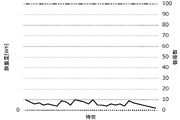
- FIG. 5 is a graph showing an example of demand adjustment control by the demand adjustment control system 100 according to the first embodiment when the fluctuation of the electric power demand is suppressed.
- the vertical axis on the left side represents the adjustment amount per unit time
- the vertical axis on the right side represents the number of devices 20 executing the demand adjustment control
- the horizontal axis represents the time.
- the solid line represents the adjustment amount per unit time
- the three-dot chain line represents the number of the second devices 22 that do not execute the demand adjustment control
- the dotted line represents the target adjustment amount.
- the target adjustment amount is zero in order to suppress fluctuations in power demand, that is, to maintain the current power demand.
- FIG. 5 the target adjustment amount is zero in order to suppress fluctuations in power demand, that is, to maintain the current power demand.
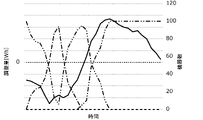
- FIG. 6 is a graph showing another example of demand adjustment control by the demand adjustment control system 100 according to the first embodiment when the fluctuation of the electric power demand is suppressed.
- the vertical axis on the left side represents the adjustment amount per unit time
- the vertical axis on the right side represents the number of devices 20 executing the demand adjustment control
- the horizontal axis represents the time.
- the solid line represents the adjustment amount per unit time
- the broken line represents the number of the first devices 21 executing the demand adjustment control
- the dotted line represents the target adjustment amount.
- the target adjustment amount is zero in order to suppress fluctuations in power demand, that is, to maintain the current power demand.
- the alternate long and short dash line is the number of second devices 22 executing power saving control as demand adjustment control
- the alternate long and short dash line is the number of second devices 22 executing power increase control as demand adjustment control.
- the alternate long and short dash line represents the number of second devices 22 that are not performing demand adjustment control.
- the adjustment amount per unit time is not within the range of the target adjustment amount, it is controlled so as to be within the range of the target adjustment amount.
- the number of the second devices 22 that execute the power saving control as the demand adjustment control and the power increase control that executes the power increase control as the demand adjustment control according to the fluctuation of the adjustment amount per unit time can both increase or decrease.
- the demand adjustment control system of the comparative example increases the number of devices 20 that perform demand adjustment control stepwise based on the integrated value of the adjustment amount during the implementation period of the demand adjustment request, and the demand adjustment control according to the first embodiment. Different from system 100. Further, in the demand adjustment control system of the comparative example, once the demand adjustment control of the device 20 is started during the demand adjustment request implementation period, the demand adjustment control of the device 20 is released until the demand adjustment request implementation period ends. This is different from the demand adjustment control system 100 according to the first embodiment. That is, the demand adjustment control system of the comparative example is different from the demand adjustment control system 100 according to the first embodiment in that the demand adjustment control is executed only for the first device 21 during the execution period of the demand adjustment request. It can be said that.
- FIG. 7 is a graph showing an example of demand adjustment control by the demand adjustment control system of the comparative example.
- the vertical axis on the left side represents the integrated value of the adjustment amount
- the vertical axis on the right side represents the number of devices 20 executing the demand adjustment control
- the horizontal axis represents the time.
- the solid line represents the integrated value of the adjustment amount
- the broken line represents the number of devices 20 executing the demand adjustment control
- the dotted line represents the target adjustment amount.
- the demand adjustment control system of the comparative example when the implementation period of the demand adjustment request is started, the demand adjustment control of the device group A is started first. Then, when the integrated value of the adjustment amount in the device group A reaches the first threshold value Th1, the demand adjustment control system of the comparative example further starts the demand adjustment control of the device group B. Then, when the integrated value of the adjustment amounts in the device group A and the device group B reaches the second threshold value Th2, the demand adjustment control system of the comparative example further starts the demand adjustment control of the device group C.
- the demand adjustment control is executed even though the integrated value of the adjustment amount in the device group A to the device group C exceeds the target adjustment amount during the execution period of the demand adjustment request.
- the number of devices 20 executing the demand adjustment control cannot be increased or decreased during the execution period of the demand adjustment request, and the integrated value of the adjustment amount is made to follow the target adjustment amount. There is a problem that it cannot be done.
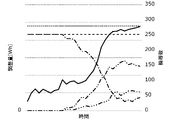
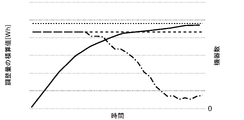
- FIG. 8 is a graph showing an example of demand adjustment control by the demand adjustment control system 100 according to the first embodiment.
- the vertical axis on the left side represents the integrated value of the adjustment amount
- the vertical axis on the right side represents the number of devices 20 executing the demand adjustment control
- the horizontal axis represents the time.
- the solid line is the integrated value of the adjustment amount
- the broken line is the number of the first equipment 21 executing the demand adjustment control
- the alternate long and short dash line is the number of the second equipment 22 executing the demand adjustment control
- the dotted line Represents the target adjustment amount.
- the demand adjustment control system 100 when the implementation period of the demand adjustment request is started, the demand adjustment control of both the first device 21 and the second device 22 is started. .. Then, in the demand adjustment control system 100 according to the first embodiment, the demand adjustment control is continuously executed for the first device 21 and the demand adjustment control is executed for the second device 22 during the execution period of the demand adjustment request. The number of the second equipment 22 is appropriately increased or decreased.
- the demand adjustment control system 100 reduces the number of the second devices 22 executing the demand adjustment control as the integrated value of the adjustment amount approaches the target adjustment amount. .. Therefore, in the example shown in FIG. 8, the integrated value of the adjustment amount does not exceed the target adjustment amount during the execution period of the demand adjustment request. That is, in the demand adjustment control system 100 according to the first embodiment, the number of the second device 22 executing the demand adjustment control can be increased or decreased during the execution period of the demand adjustment request, so that the adjustment amount can be flexibly adjusted. There is an advantage that the integrated value of the adjustment amount can be easily made to follow the target adjustment amount.
- the target device 3 is determined from the device group 2 including the first device 21 and the second device 22 as described above. Therefore, in the demand adjustment control system 100 according to the first embodiment, even if the mode of the demand adjustment control of the second device 22 is repeatedly changed in order to adjust the adjustment amount during the implementation period of the demand adjustment request, the facility 4 The impact on users is relatively small. Therefore, the demand adjustment control system 100 according to the first embodiment has an advantage that the influence on the facility 4 at the time of requesting the demand adjustment can be easily reduced.
- FIG. 9 is a block diagram showing a configuration of the demand adjustment control system 100A according to the second embodiment.
- the demand adjustment control system 100A according to the second embodiment further includes a setting unit 16 that predicts a tendency of power consumption during the execution period of the demand adjustment request and sets an intermediate demand adjustment target value based on the predicted tendency. , It is different from the demand adjustment control system 100 according to the first embodiment. Further, in the demand adjustment control system 100A according to the second embodiment, the control unit 13 satisfies the intermediate demand adjustment target value during the implementation period so that the adjustment amount per unit time (for example, 1 minute) by the target device 3 is satisfied. It differs from the demand adjustment control system 100 according to the first embodiment in that the demand adjustment control of the target device 3 is executed.
- the integrated value of the adjustment amount falls within the range of the target adjustment amount during the execution period of the demand adjustment request, similarly to the demand adjustment control system 100 according to the first embodiment.
- Demand adjustment control of the target device 3 is executed so as to fit.
- the demand adjustment control system 100A according to the second embodiment controls the target device 3 so that the adjustment amount per unit time further satisfies the intermediate demand adjustment target value during the execution period of the demand adjustment request.
- FIGS. 10A and 10B are explanatory views of problems that may occur in the demand adjustment control by the demand adjustment control system 100 according to the first embodiment, respectively.
- the vertical axis on the left side is the adjustment amount per unit time
- the vertical axis on the right side is the number of facilities 4 performing demand adjustment control (in other words, the number of devices 20 performing demand adjustment control).
- the horizontal axis represents time.
- the solid line represents the adjustment amount per unit time
- the broken line represents the number of facilities 4 performing the demand adjustment control
- the dotted line represents the target adjustment amount per unit time.
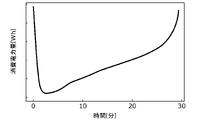
- the vertical axis represents the power consumption per unit time of each facility 4 as a whole
- the horizontal axis represents time.
- the demand adjustment control system 100 determines that the target adjustment amount per unit time will be exceeded if the current demand adjustment control is maintained, and the demand adjustment control is performed during the execution period of the demand adjustment request.
- the number of facilities 4 in other words, the second device 22) that implements the above is reduced.
- the power consumption per unit time in each facility 4 may temporarily increase during the implementation period of the demand adjustment request.
- Such an event can occur, for example, when the facility 4 is a store that handles food, due to the defrosting of the freezing equipment. Further, such an event may occur, for example, due to an increase or decrease in the load of the air conditioning equipment due to a change in the outside air temperature.
- the power consumption per unit time of each facility 4 increases in this way, the adjustment amount per unit time relatively decreases.
- the power consumption per unit time of each facility 4 as a whole rises sharply in the latter half of the implementation period of the demand adjustment request.
- the adjustment amount per unit time decreases in the latter half of the implementation period of the demand adjustment request, and the adjustment amount per unit time does not reach the target adjustment amount per unit time. There is a problem.
- the setting unit 16 estimates the tendency of power consumption during the implementation period of the demand adjustment request.
- the tendency of power consumption can be estimated by using a model learned to output the tendency of power consumption by inputting, for example, the history of power consumption for each facility 4 in the past or the history of outside air temperature. Is.
- the setting unit 16 calculates and sets the intermediate demand adjustment target value based on the estimated tendency of power consumption. For example, suppose that it was estimated that power consumption was relatively low in the first half of the demand adjustment request implementation period, while power consumption tended to increase in the second half. In this case, the setting unit 16 sets the intermediate demand adjustment target value so as to temporarily exceed the target adjustment amount per unit time in preparation for the increase in power consumption in the latter half of the execution period of the demand adjustment request. .. Then, the control unit 13 executes the demand adjustment control of the target device 3 so that the adjustment amount per unit time by the target device 3 follows the intermediate demand adjustment target value during the execution period of the demand adjustment request.
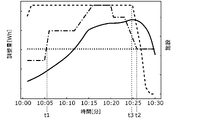
- FIG. 11 is a graph showing an example of the result of the demand adjustment control by the demand adjustment control system 100A according to the second embodiment.
- the vertical axis on the left side is the adjustment amount per unit time
- the vertical axis on the right side is the number of facilities 4 performing demand adjustment control (in other words, the number of devices 20 performing demand adjustment control).
- the horizontal axis represents time.
- the solid line indicates the adjustment amount per unit time
- the broken line indicates the number of facilities 4 performing the demand adjustment control
- the alternate long and short dash line indicates the intermediate demand adjustment target value
- the dotted line indicates the target adjustment amount per unit time. ing.
- the setting unit 16 estimates that the power consumption per unit time of each facility 4 as a whole increases in the latter half of the execution period of the demand adjustment request. Therefore, the setting unit 16 sets the intermediate demand adjustment target value so that it temporarily becomes larger than the target adjustment amount per unit time in the period from the time t1 to the time t2. Therefore, in the example shown in FIG. 11, the control unit 13 executes the demand adjustment control until the time t3 even if the adjustment amount per unit time exceeds the target adjustment amount per unit time. In other words, the number of second devices 22) is maintained without being reduced.
- the adjustment amount per unit time finally satisfies the target adjustment amount per unit time during the implementation period of the demand adjustment request.
- the demand adjustment control system 100A according to the second embodiment it is easy to avoid the situation where the adjustment amount per unit time does not satisfy the target adjustment amount per unit time during the implementation period of the demand adjustment request. There is an advantage.
- the luminaire is the first device 21, but not all the luminaires need to be the first device 21, and some luminaires are the second device 22 depending on the time zone. It may be classified into. That is, depending on the conditions, the first device 21 may be classified into the second device 22, and the second device 22 may be classified into the first device 21.
- the demand adjustment control system 100 determines the device 20 included in the device group 2 as either the first device 21 or the second device 22. 17 may be further provided.
- FIG. 12 is a block diagram showing the configuration of the demand adjustment control system 100 according to the modified example of the first embodiment.
- the type determination unit 17 determines the device 20 included in the device group 2 as either the first device 21 or the second device 22 based on, for example, the season or the time zone. Specifically, when the facility 4 is, for example, a convenience store or the like and has a kitchen, the type determination unit 17 determines the flyer installed in the kitchen as the second device 22 only in the summer, and the second device 22 in other seasons. It may be determined as one device 21.
- the type determination unit 17 may determine the device 20 included in the device group 2 as either the first device 21 or the second device 22 based on the past results of demand adjustment control.
- the type determination unit 17 may be provided in the demand adjustment control system 100A according to the second embodiment.
- the control unit 13 executes the demand adjustment control of the second device 22 without depending on the facility 4, but this is limited to this. I can't.
- the control unit 13 may execute the demand adjustment control of the second device 22 under the conditions according to the facility 4 in which the second device 22 is installed. ..
- the control unit 13 may change the content of the demand adjustment control of the second device 22 according to the area where the facility 4 is located.
- control unit 13 executes demand adjustment control for the air conditioning equipment as the second equipment 22 in winter, if the facility 4 in which the second equipment 22 is installed is in a cold region, the air conditioning equipment Demand adjustment control is executed to lower the set temperature of. On the other hand, the control unit 13 executes the demand adjustment control of stopping the operation of the air conditioning equipment if the facility 4 in which the second equipment 22 is installed is not in a cold region.
- the control unit 13 may sequentially execute the demand adjustment control of the plurality of second devices 22.
- the target device 3 includes three second devices 22 and are “A”, “B”, and “C”, respectively.
- the control unit 13 executes the demand adjustment control of "A”, then the demand adjustment control of "B”, and then executes the demand adjustment control of "C”.
- the control unit 13 controls so that the demand adjustment control of each of the plurality of second devices 22 is not performed at the same time.
- the determination unit 12 determines the second device 22 to be included in the target device 3 based on the past results of demand adjustment control, but the present invention is not limited to this.
- the determination unit 12 may randomly determine the second device 22 to be included in the target device 3 from the plurality of second devices 22 that can participate in the demand adjustment control.
- the determination unit 12 assigns consecutive numbers to each of the plurality of second devices 22, and the second device is numbered to match the pseudo-random numbers generated by an appropriate pseudo-random number algorithm. 22 is included in the target device 3.
- the demand adjustment control systems 100 and 100A are realized as a single device, but may be realized by a plurality of devices.
- the components included in the demand adjustment control system 100, 100A may be distributed to the plurality of devices in any way.
- the present disclosure may be realized by cloud computing or edge computing.
- all or a part of the components of the demand adjustment control systems 100 and 100A in the present disclosure may be configured by dedicated hardware, or software suitable for each component. It may be realized by executing a program. Even if each component is realized by a program execution unit such as a CPU (Central Processing Unit) or a processor reading and executing a software program recorded on a recording medium such as an HDD (Hard Disk Drive) or a semiconductor memory. good.
- a program execution unit such as a CPU (Central Processing Unit) or a processor reading and executing a software program recorded on a recording medium such as an HDD (Hard Disk Drive) or a semiconductor memory. good.
- the component of the demand adjustment control system 100 in the present disclosure may be composed of one or a plurality of electronic circuits.
- the one or more electronic circuits may be general-purpose circuits or dedicated circuits, respectively.
- One or more electronic circuits may include, for example, a semiconductor device, an IC (Integrated Circuit), an LSI (Large Scale Integration), or the like.
- the IC or LSI may be integrated on one chip or may be integrated on a plurality of chips. Here, it is called IC or LSI, but the name changes depending on the degree of integration, and it may be called system LSI, VLSI (Very Large Scale Integration), or ULSI (Ultra Large Scale Integration).
- an FPGA Field Programmable Gate Array programmed after manufacturing the LSI can also be used for the same purpose.
- the general or specific aspects of the present disclosure may be realized by a system, an apparatus, a method, an integrated circuit or a computer program.
- it may be realized by a computer-readable non-temporary recording medium such as an optical disk, HDD or semiconductor memory in which the computer program is stored.
- the present disclosure may be realized as a program for executing the demand adjustment control method in the above embodiment by a computer.
- this program may be recorded on a non-temporary recording medium such as a computer-readable CD-ROM, or may be distributed on a communication path such as the Internet.
- the demand adjustment control systems 100 and 100A include an acquisition unit 11, a determination unit 12, and a control unit 13.
- the acquisition unit 11 acquires the target adjustment amount based on the temporary demand adjustment request.
- the determination unit 12 determines the target device 3 to be subject to the demand adjustment control from the device group 2 installed in the facility 4 based on the target adjustment amount acquired by the acquisition unit 11.
- the control unit 13 executes the demand adjustment control of the target device 3 so that the adjustment amount by the target device 3 falls within the range of the target adjustment amount during the execution period of the demand adjustment request.
- the device group 2 includes a first device 21 in which the mode of demand adjustment control is not changed during the implementation period, and a second device 22 in which the mode of demand adjustment control can be changed during the implementation period.
- the influence on the user of the facility 4 can be relatively small. Therefore, there is an advantage that the influence on the facility 4 at the time of requesting the demand adjustment can be easily reduced.
- the determination unit 12 determines the second device 22 to be included in the target device 3 based on the past results of demand adjustment control.
- the second device 22 that can easily secure the adjustment amount can be included in the target device 3 during the implementation period of the demand adjustment request, there is an advantage that the adjustment amount can be easily adjusted.
- the demand adjustment control systems 100 and 100A further include a question unit 14 asking the facility 4 whether or not to participate in the demand adjustment control.
- the determination unit 12 determines the target device 3 in response to the response to the inquiry by the question unit 14.
- the demand adjustment control system 100A further includes a setting unit 16 that predicts a tendency of power consumption during the implementation period and sets an intermediate demand adjustment target value based on the predicted tendency.
- the control unit 13 executes the demand adjustment control of the target device 3 so that the adjustment amount per unit time by the target device 3 satisfies the intermediate demand adjustment target value during the implementation period.
- the demand adjustment control systems 100 and 100A further include a type determination unit 17 that determines the device 20 included in the device group 2 as either the first device 21 or the second device 22.
- the control unit 13 executes the demand adjustment control of the second device 22 under the conditions according to the facility 4 in which the second device 22 is installed.
- control unit 13 sequentially executes demand adjustment control of the plurality of second devices 22.
- the demand adjustment control method includes acquisition step ST1, determination step ST2, and control step ST3.
- acquisition step ST1 the target adjustment amount based on the temporary demand adjustment request is acquired.
- determination step ST2 the target device 3 to be subject to the demand adjustment control is determined from the device group 2 installed in the facility 4 based on the target adjustment amount acquired in the acquisition step ST1.
- control step ST3 the demand adjustment control of the target device 3 is executed so that the adjustment amount by the target device 3 falls within the range of the target adjustment amount during the execution period of the demand adjustment request.
- the device group 2 includes a first device 21 in which the mode of demand adjustment control is not changed during the implementation period, and a second device 22 in which the mode of demand adjustment control can be changed during the implementation period.
- the influence on the user of the facility 4 can be relatively small. Therefore, there is an advantage that the influence on the facility 4 at the time of requesting the demand adjustment can be easily reduced.
- the program according to the embodiment causes the processor to execute the above-mentioned demand adjustment control method.
- the influence on the user of the facility 4 can be relatively small. Therefore, there is an advantage that the influence on the facility 4 at the time of requesting the demand adjustment can be easily reduced.
- the present disclosure is applicable to a demand adjustment control system or the like that executes demand adjustment control for a large number of devices included in a large number of facilities such as a convenience store.
Landscapes
- Engineering & Computer Science (AREA)
- Power Engineering (AREA)
- General Physics & Mathematics (AREA)
- Physics & Mathematics (AREA)
- Business, Economics & Management (AREA)
- Automation & Control Theory (AREA)
- Health & Medical Sciences (AREA)
- Economics (AREA)
- Strategic Management (AREA)
- Primary Health Care (AREA)
- Marketing (AREA)
- Tourism & Hospitality (AREA)
- Human Resources & Organizations (AREA)
- General Business, Economics & Management (AREA)
- General Health & Medical Sciences (AREA)
- Theoretical Computer Science (AREA)
- Water Supply & Treatment (AREA)
- Public Health (AREA)
- Supply And Distribution Of Alternating Current (AREA)
- Remote Monitoring And Control Of Power-Distribution Networks (AREA)
- Management, Administration, Business Operations System, And Electronic Commerce (AREA)
Priority Applications (3)
| Application Number | Priority Date | Filing Date | Title |
|---|---|---|---|
| US18/018,443 US20230231381A1 (en) | 2021-01-15 | 2021-12-21 | Demand adjustment control system, demand adjustment control method, and recording medium |
| EP21919690.4A EP4280423A4 (en) | 2021-01-15 | 2021-12-21 | DEMAND ADJUSTMENT CONTROL SYSTEM, DEMAND ADJUSTMENT CONTROL METHOD AND PROGRAM |
| CN202180057368.XA CN116057810A (zh) | 2021-01-15 | 2021-12-21 | 需求调整控制系统、需求调整控制方法以及程序 |
Applications Claiming Priority (2)
| Application Number | Priority Date | Filing Date | Title |
|---|---|---|---|
| JP2021-005013 | 2021-01-15 | ||
| JP2021005013A JP7417868B2 (ja) | 2021-01-15 | 2021-01-15 | 需要調整制御システム、需要調整制御方法、及びプログラム |
Publications (1)
| Publication Number | Publication Date |
|---|---|
| WO2022153803A1 true WO2022153803A1 (ja) | 2022-07-21 |
Family
ID=82447264
Family Applications (1)
| Application Number | Title | Priority Date | Filing Date |
|---|---|---|---|
| PCT/JP2021/047444 Ceased WO2022153803A1 (ja) | 2021-01-15 | 2021-12-21 | 需要調整制御システム、需要調整制御方法、及びプログラム |
Country Status (5)
| Country | Link |
|---|---|
| US (1) | US20230231381A1 (enExample) |
| EP (1) | EP4280423A4 (enExample) |
| JP (1) | JP7417868B2 (enExample) |
| CN (1) | CN116057810A (enExample) |
| WO (1) | WO2022153803A1 (enExample) |
Families Citing this family (2)
| Publication number | Priority date | Publication date | Assignee | Title |
|---|---|---|---|---|
| AU2022329719A1 (en) * | 2021-08-16 | 2024-03-07 | Zodiac Pool Systems Llc | Pool and spa energy demand response systems and methods |
| WO2025259847A1 (en) * | 2024-06-13 | 2025-12-18 | Utilidata, Inc. | Natural language interactive electric metering platform |
Citations (5)
| Publication number | Priority date | Publication date | Assignee | Title |
|---|---|---|---|---|
| JP2013003732A (ja) | 2011-06-14 | 2013-01-07 | Toshiba Corp | 節電制御用の電子装置及び対象装置の節電制御方法 |
| WO2013114601A1 (ja) * | 2012-02-02 | 2013-08-08 | 株式会社日立製作所 | 電力需要調整システム及び電力需要調整方法 |
| JP2016123189A (ja) * | 2014-12-25 | 2016-07-07 | 住友電気工業株式会社 | 需要家装置、電力消費管理装置、電力消費管理システム、電力消費管理方法および電力消費管理プログラム |
| JP2017028775A (ja) * | 2015-07-16 | 2017-02-02 | パナソニックIpマネジメント株式会社 | 機器選定装置、機器選定方法及び制御プログラム |
| JP2017135824A (ja) * | 2016-01-27 | 2017-08-03 | 住友電気工業株式会社 | 電力消費管理装置、電力消費管理システムおよび電力消費管理プログラム |
Family Cites Families (6)
| Publication number | Priority date | Publication date | Assignee | Title |
|---|---|---|---|---|
| US20090187499A1 (en) * | 2008-01-21 | 2009-07-23 | David Mulder | System, Method and Computer Program Product for Providing Demand Response Functionality |
| US9134353B2 (en) * | 2009-02-26 | 2015-09-15 | Distributed Energy Management Inc. | Comfort-driven optimization of electric grid utilization |
| US9171256B2 (en) * | 2010-12-17 | 2015-10-27 | ABA Research Ltd. | Systems and methods for predicting customer compliance with demand response requests |
| JP5744317B2 (ja) * | 2012-03-14 | 2015-07-08 | 三菱電機株式会社 | 制御装置、空調システム、設備機器システム、制御方法及びプログラム |
| US9807099B2 (en) * | 2013-03-15 | 2017-10-31 | Google Inc. | Utility portals for managing demand-response events |
| CA2899375A1 (en) * | 2013-04-12 | 2014-10-16 | Neurio Technology Inc. | System and method for performing demand response optimizations |
-
2021
- 2021-01-15 JP JP2021005013A patent/JP7417868B2/ja active Active
- 2021-12-21 US US18/018,443 patent/US20230231381A1/en active Pending
- 2021-12-21 CN CN202180057368.XA patent/CN116057810A/zh active Pending
- 2021-12-21 WO PCT/JP2021/047444 patent/WO2022153803A1/ja not_active Ceased
- 2021-12-21 EP EP21919690.4A patent/EP4280423A4/en not_active Withdrawn
Patent Citations (5)
| Publication number | Priority date | Publication date | Assignee | Title |
|---|---|---|---|---|
| JP2013003732A (ja) | 2011-06-14 | 2013-01-07 | Toshiba Corp | 節電制御用の電子装置及び対象装置の節電制御方法 |
| WO2013114601A1 (ja) * | 2012-02-02 | 2013-08-08 | 株式会社日立製作所 | 電力需要調整システム及び電力需要調整方法 |
| JP2016123189A (ja) * | 2014-12-25 | 2016-07-07 | 住友電気工業株式会社 | 需要家装置、電力消費管理装置、電力消費管理システム、電力消費管理方法および電力消費管理プログラム |
| JP2017028775A (ja) * | 2015-07-16 | 2017-02-02 | パナソニックIpマネジメント株式会社 | 機器選定装置、機器選定方法及び制御プログラム |
| JP2017135824A (ja) * | 2016-01-27 | 2017-08-03 | 住友電気工業株式会社 | 電力消費管理装置、電力消費管理システムおよび電力消費管理プログラム |
Non-Patent Citations (1)
| Title |
|---|
| See also references of EP4280423A4 |
Also Published As
| Publication number | Publication date |
|---|---|
| CN116057810A (zh) | 2023-05-02 |
| EP4280423A1 (en) | 2023-11-22 |
| US20230231381A1 (en) | 2023-07-20 |
| EP4280423A4 (en) | 2024-07-31 |
| JP2022109614A (ja) | 2022-07-28 |
| JP7417868B2 (ja) | 2024-01-19 |
Similar Documents
| Publication | Publication Date | Title |
|---|---|---|
| US10095207B2 (en) | System and method of energy management control | |
| EP3040633A1 (en) | Air conditioning system | |
| US20140277763A1 (en) | System for Controlling Building Services Based on Occupant | |
| JP5887549B2 (ja) | エネルギー管理装置、エネルギー管理方法、プログラム | |
| WO2022153803A1 (ja) | 需要調整制御システム、需要調整制御方法、及びプログラム | |
| US11353232B2 (en) | Control method, control apparatus, and non-transitory computer-readable storage medium for storing program | |
| US20160170428A1 (en) | Display device, power control system, display method, power control method, display program, and power control program | |
| US20130289773A1 (en) | Control device and control method | |
| US9852484B1 (en) | Providing demand response participation | |
| US20160290673A1 (en) | Apparatus and method for adaptively applying central hvac system and individual hvac system | |
| JP2019143909A (ja) | 制御装置、空調制御システム、制御方法及びプログラム | |
| JPWO2014115247A1 (ja) | システムコントローラ、設備管理システム、デマンド制御方法及びプログラム | |
| Alizadeh et al. | Least laxity first scheduling of thermostatically controlled loads for regulation services | |
| WO2020159471A1 (en) | Building management system with hybrid edge-cloud processing | |
| US20190199130A1 (en) | Electric device, power consumption reduction system, communication adapter, and power consumption reduction method | |
| JP7215070B2 (ja) | 制御プログラム、制御方法および制御装置 | |
| Granitsas et al. | Controlling air conditioners for frequency regulation: A real-world example | |
| KR102480280B1 (ko) | 건물 에너지 관리 시스템 | |
| JP6098026B2 (ja) | 電力制御システム、プログラムおよび電力制御装置 | |
| Urban et al. | Energy savings from five home automation technologies: A scoping study of technical potential | |
| JP5935003B2 (ja) | 電力制御装置、電力管理システムおよびプログラム | |
| CN117202618A (zh) | 机房空调的控制方法、装置、空调器及存储介质 | |
| JP6548175B2 (ja) | 電力管理装置、電力管理システム及びプログラム | |
| Gaonkar et al. | Energy budget constrained comfort optimization for smart buildings | |
| CN114526537A (zh) | 一种设备节能控制方法和装置 |
Legal Events
| Date | Code | Title | Description |
|---|---|---|---|
| 121 | Ep: the epo has been informed by wipo that ep was designated in this application |
Ref document number: 21919690 Country of ref document: EP Kind code of ref document: A1 |
|
| NENP | Non-entry into the national phase |
Ref country code: DE |
|
| ENP | Entry into the national phase |
Ref document number: 2021919690 Country of ref document: EP Effective date: 20230816 |
|
| WWW | Wipo information: withdrawn in national office |
Ref document number: 2021919690 Country of ref document: EP |