WO2022138700A1 - アトピー性皮膚疾患改善剤、皮膚外用剤、及び、化粧料 - Google Patents
アトピー性皮膚疾患改善剤、皮膚外用剤、及び、化粧料 Download PDFInfo
- Publication number
- WO2022138700A1 WO2022138700A1 PCT/JP2021/047502 JP2021047502W WO2022138700A1 WO 2022138700 A1 WO2022138700 A1 WO 2022138700A1 JP 2021047502 W JP2021047502 W JP 2021047502W WO 2022138700 A1 WO2022138700 A1 WO 2022138700A1
- Authority
- WO
- WIPO (PCT)
- Prior art keywords
- compound represented
- compound
- general formula
- formula
- group
- Prior art date
- Legal status (The legal status is an assumption and is not a legal conclusion. Google has not performed a legal analysis and makes no representation as to the accuracy of the status listed.)
- Ceased
Links
Images




Classifications
-
- A—HUMAN NECESSITIES
- A61—MEDICAL OR VETERINARY SCIENCE; HYGIENE
- A61K—PREPARATIONS FOR MEDICAL, DENTAL OR TOILETRY PURPOSES
- A61K31/00—Medicinal preparations containing organic active ingredients
- A61K31/16—Amides, e.g. hydroxamic acids
- A61K31/165—Amides, e.g. hydroxamic acids having aromatic rings, e.g. colchicine, atenolol, progabide
- A61K31/166—Amides, e.g. hydroxamic acids having aromatic rings, e.g. colchicine, atenolol, progabide having the carbon of a carboxamide group directly attached to the aromatic ring, e.g. procainamide, procarbazine, metoclopramide, labetalol
-
- A—HUMAN NECESSITIES
- A61—MEDICAL OR VETERINARY SCIENCE; HYGIENE
- A61K—PREPARATIONS FOR MEDICAL, DENTAL OR TOILETRY PURPOSES
- A61K31/00—Medicinal preparations containing organic active ingredients
- A61K31/33—Heterocyclic compounds
- A61K31/395—Heterocyclic compounds having nitrogen as a ring hetero atom, e.g. guanethidine or rifamycins
- A61K31/435—Heterocyclic compounds having nitrogen as a ring hetero atom, e.g. guanethidine or rifamycins having six-membered rings with one nitrogen as the only ring hetero atom
- A61K31/4353—Heterocyclic compounds having nitrogen as a ring hetero atom, e.g. guanethidine or rifamycins having six-membered rings with one nitrogen as the only ring hetero atom ortho- or peri-condensed with heterocyclic ring systems
- A61K31/437—Heterocyclic compounds having nitrogen as a ring hetero atom, e.g. guanethidine or rifamycins having six-membered rings with one nitrogen as the only ring hetero atom ortho- or peri-condensed with heterocyclic ring systems the heterocyclic ring system containing a five-membered ring having nitrogen as a ring hetero atom, e.g. indolizine, beta-carboline
-
- A—HUMAN NECESSITIES
- A61—MEDICAL OR VETERINARY SCIENCE; HYGIENE
- A61K—PREPARATIONS FOR MEDICAL, DENTAL OR TOILETRY PURPOSES
- A61K31/00—Medicinal preparations containing organic active ingredients
- A61K31/33—Heterocyclic compounds
- A61K31/395—Heterocyclic compounds having nitrogen as a ring hetero atom, e.g. guanethidine or rifamycins
- A61K31/435—Heterocyclic compounds having nitrogen as a ring hetero atom, e.g. guanethidine or rifamycins having six-membered rings with one nitrogen as the only ring hetero atom
- A61K31/44—Non condensed pyridines; Hydrogenated derivatives thereof
-
- A—HUMAN NECESSITIES
- A61—MEDICAL OR VETERINARY SCIENCE; HYGIENE
- A61K—PREPARATIONS FOR MEDICAL, DENTAL OR TOILETRY PURPOSES
- A61K31/00—Medicinal preparations containing organic active ingredients
- A61K31/33—Heterocyclic compounds
- A61K31/395—Heterocyclic compounds having nitrogen as a ring hetero atom, e.g. guanethidine or rifamycins
- A61K31/435—Heterocyclic compounds having nitrogen as a ring hetero atom, e.g. guanethidine or rifamycins having six-membered rings with one nitrogen as the only ring hetero atom
- A61K31/44—Non condensed pyridines; Hydrogenated derivatives thereof
- A61K31/4427—Non condensed pyridines; Hydrogenated derivatives thereof containing further heterocyclic ring systems
- A61K31/4439—Non condensed pyridines; Hydrogenated derivatives thereof containing further heterocyclic ring systems containing a five-membered ring with nitrogen as a ring hetero atom, e.g. omeprazole
-
- A—HUMAN NECESSITIES
- A61—MEDICAL OR VETERINARY SCIENCE; HYGIENE
- A61K—PREPARATIONS FOR MEDICAL, DENTAL OR TOILETRY PURPOSES
- A61K8/00—Cosmetics or similar toiletry preparations
- A61K8/18—Cosmetics or similar toiletry preparations characterised by the composition
- A61K8/30—Cosmetics or similar toiletry preparations characterised by the composition containing organic compounds
- A61K8/40—Cosmetics or similar toiletry preparations characterised by the composition containing organic compounds containing nitrogen
- A61K8/42—Amides
-
- A—HUMAN NECESSITIES
- A61—MEDICAL OR VETERINARY SCIENCE; HYGIENE
- A61K—PREPARATIONS FOR MEDICAL, DENTAL OR TOILETRY PURPOSES
- A61K8/00—Cosmetics or similar toiletry preparations
- A61K8/18—Cosmetics or similar toiletry preparations characterised by the composition
- A61K8/30—Cosmetics or similar toiletry preparations characterised by the composition containing organic compounds
- A61K8/49—Cosmetics or similar toiletry preparations characterised by the composition containing organic compounds containing heterocyclic compounds
-
- A—HUMAN NECESSITIES
- A61—MEDICAL OR VETERINARY SCIENCE; HYGIENE
- A61P—SPECIFIC THERAPEUTIC ACTIVITY OF CHEMICAL COMPOUNDS OR MEDICINAL PREPARATIONS
- A61P17/00—Drugs for dermatological disorders
-
- A—HUMAN NECESSITIES
- A61—MEDICAL OR VETERINARY SCIENCE; HYGIENE
- A61P—SPECIFIC THERAPEUTIC ACTIVITY OF CHEMICAL COMPOUNDS OR MEDICINAL PREPARATIONS
- A61P37/00—Drugs for immunological or allergic disorders
- A61P37/08—Antiallergic agents
-
- A—HUMAN NECESSITIES
- A61—MEDICAL OR VETERINARY SCIENCE; HYGIENE
- A61Q—SPECIFIC USE OF COSMETICS OR SIMILAR TOILETRY PREPARATIONS
- A61Q19/00—Preparations for care of the skin
Definitions
- the present invention relates to an atopic skin disease improving agent, an external skin agent, and a cosmetic.
- Atopic dermatitis is a chronic disease in which itchy eczema repeatedly worsens and improves, and it is thought that various causes affect each other in a complicated manner. Atopic dermatitis is thought to be exacerbated, for example, by the production of lipid mediators that induce allergic reactions. However, it is believed that this is not the only cause of exacerbation of atopic dermatitis.
- an ointment containing docosahexaenoic acid (DHA) and / or eicosapentaenoic acid (EPA) and a tacrolimus ointment are known (Patent Document 1). ..
- the atopic skin disease improving agent described in Patent Document 1 can suppress the production of leukotriene B4, which is one of the lipid mediators that induces an allergic reaction, and thus can improve the symptoms of atopic skin disease.
- an object of the present invention to provide an atopic skin disease improving agent, an external skin preparation agent, and a cosmetic that can improve the atopic skin disease.
- the atopic skin disease improving agent according to the present invention is a compound represented by the following general formula (A), a compound represented by the following general formula (B), a compound represented by the following general formula (C), and the following formula. It is characterized by containing at least one selected from the group consisting of the compound represented by (D) and the compound represented by the following formula (E).
- D 1 to D 4 are independently H, CH 3 or NO 2
- E 1 to E 5 are independently H, OH, NH 2 , respectively.
- X 1 , X 2 , and X 3 are independently H, NH 2 , NO 2 , or NH-G, respectively, and the G is CH 3 , a pyridinyl group.
- Phenyl group methylphenyl group, methoxyphenyl group, ethoxyphenyl group, monohalogenated phenyl group, or benzoic acid ester group, where A is CH, CNO 2 , or N, and Z 1 , Z 2 , And Z 3 are CH, CR or N independently, respectively, and the R is OCH 3 , Cl, Br, NO 2 , NHCOCH 3 , or when the CRs are adjacent to each other, the Rs are five.
- a member ring or a six-membered ring may be formed, the five-membered ring is a heterocycle in which a ring is formed by a carbon atom and two nitrogen atoms, and the six-membered ring is a ring formed by a carbon atom. It is a benzene ring.)
- L is OH or OCH 3
- Q 1 , Q 2 and Q 3 are independently CH or CR', and the CR'is adjacent to each other.
- R's form a six-membered ring
- the six-membered ring is a benzene ring in which a ring is formed by a carbon atom
- T 1 to T 5 are independently H, OH, or T 5 respectively.
- the external skin preparation and cosmetics according to the present invention include the above-mentioned atopic skin disease improving agent.
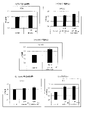
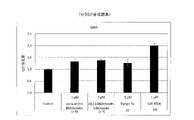
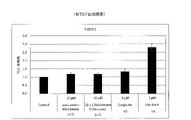
- the graph which shows the evaluation test result (in vitro test) about the expression of the barrier function-related factor of the epidermal keratinocyte The graph which shows the evaluation test result (in vitro test) about the expression of the barrier function-related factor (Filaggrin) of the epidermal keratinized cell. The graph which shows the evaluation test result (in vitro test) about the expression of the barrier function-related factor (GBA) of the epidermal keratinocyte. The graph which shows the evaluation test result (in vitro test) about the expression of the barrier function-related factor (SPLTC2) of the epidermal keratinocyte.
- (S)-(-)-Graph showing the results of an evaluation test (in vivo test) of efficacy against atopic dermatitis when Blebbistatin O-Benzoate is used.
- a photograph showing a tissue observation image of filaggrin protein immunostained.
- (S)-(-)-Photograph showing the tissue observation image of the lesion part of the mouse to which Blebbistatin O-Benzoate etc. was applied.
- a graph showing the effect of (S)-(-)-Blebbistatin O-Benzoate on blood IgE concentration.
- an atopic skin disease improving agent an external skin agent, and a cosmetic (hereinafter, also simply referred to as a composition) according to the present invention will be described below.
- the composition of the present embodiment has a compound represented by the following general formula (A), a compound represented by the following general formula (B), a compound represented by the following formula (C), and a compound represented by the following formula (D). It contains at least one selected from the group consisting of the compounds to be used and the compounds represented by the following formula (E). Since the composition of the present embodiment contains at least one of the above-mentioned compounds, it can improve atopic skin diseases.
- D 1 to D 4 are independently H, CH 3 or NO 2
- E 1 to E 5 are independently H, OH, NH 2 , respectively. Or NO 2 , where J is an OH, H, or benzoic acid ester group, and * indicates a bond which may be an enantiomer of either S or R.
- X 1 , X 2 , and X 3 are independently H, NH 2 , NO 2 , or NH-G, respectively, and the G is CH 3 , a pyridinyl group.
- Phenyl group methylphenyl group, methoxyphenyl group, ethoxyphenyl group, monohalogenated phenyl group, or benzoic acid ester group, where A is CH, CNO 2 , or N, and Z 1 , Z 2 , And Z 3 are CH, CR or N independently, respectively, and the R is OCH 3 , Cl, Br, NO 2 , NHCOCH 3 , or if the CRs are adjacent to each other, a five-membered ring or A six-membered ring is formed, the five-membered ring is a heterocycle in which a ring is formed by a carbon atom and two nitrogen atoms, and the six-membered ring is a benzene ring in which a ring is formed by a carbon atom.
- L is OH or OCH 3
- Q 1 , Q 2 and Q 3 are independently CH or CR'and the CR'is each other.
- T 1 to T 5 are independently H, OH, or OCH 3 respectively.
- D 1 and D 4 are both H, one of D 2 and D 3 is CH 3 or NO 2 , and the other is H.
- all of E 1 to E 5 are H, or any one of E 2 or E 3 of E 1 to E 5 is OH, NH 2 or NO. It is preferably 2 and the others are H.
- J is a benzoic acid ester group (see formula (A-7)), H, or OH.
- the compound represented by the general formula (A) is preferably the S-form of the enantiomers for the bond in *.
- the compound represented by the general formula (A) is more preferably a compound represented by any of the following formulas (A-1) to (A-18). This has the advantage that atopic skin diseases can be further improved.
- the compound represented by the formula (A-1) is a compound called (-)-Blebbistatin.
- the compound name is (3aS) -3a-hydroxy-6-methyl-1-phenyl-2,3-dihydropyrrolo [2,3-b] quinolin-4-one.
- the CAS number is 856925-71-8.
- the compound represented by the formula (A-2) is a compound called (S) -3'-hydroxy Blebbistatin.
- the compound name is (3aS) -3a-hydroxy-1- (3-hydroxyphenyl) -6-methyl-2,3-dihydropyrrolo [2,3-b] quinolin-4-one.
- the CAS number is 2097136-42-8.
- the compound represented by the formula (A-3) is a compound called (S) -3'-amino Blebbistatin.
- the compound name is (3aS) -1- (3-aminophenyl) -3a-hydroxy-6-methyl-2,3-dihydropyrrolo [2,3-b] quinolin-4-one.
- the CAS number is 2097141-18-7.
- the compound represented by the formula (A-4) is a compound called (S) -4'-nitro-Blebbistatin.
- the compound name is (3aS) -3a-hydroxy-6-methyl-1- (4-nitrophenyl) -2,3-dihydropyrrolo [2,3-b] quinolin-4-one.
- the CAS number is 1621326-32-6.
- the compound represented by the formula (A-5) is a compound called para-amino-Blebbistatin.
- the compound name is (3aS) -1- (4-aminophenyl) -3a-hydroxy-6-methyl-2,3-dihydropyrrolo [2,3-b] quinolin-4-one.
- the CAS number is 2097734-03-5.
- the compound represented by the formula (A-6) is a compound called (S) -nitro-Blebbistatin.
- the compound name is (3aS) -3a-hydroxy-7-nitro-1-phenyl-2,3-dihydropyrrolo [2,3-b] quinolin-4-one.
- the CAS number is 856925-75-2.
- the compound represented by the formula (A-7) is a compound called (S)-(-)-Blebbistatin O-Benzoate.
- the compound name is [(3aS) -6-methyl-4-oxo-1-phenyl-2,3-dihydropyrrolo [2,3-b] quinolin-3a-yl] benzoate.
- the CAS number is 1217832-61-5.
- the compound represented by the formula (A-8) is a compound called Deoxy Blebbistatin.
- the compound name is 6-methyl-1-phenyl-3,3a-dihydro-2H-pyrrolo [2,3-b] quinolin-4-one.
- the CAS number is 856925-72-9.
- X 1 is H or NH-G.
- NH-G is more preferably NH-CH 3 .
- X 2 and X 3 are independently H, NO 2 or NH 2 , respectively.
- A is CH.
- two of Z 1 to Z 3 form a five-membered ring or a six-membered ring, or Z 1 to Z 3 are independently CH or CR. It is preferable to have.
- At least one of X1 to X3 is NH-G, and two of Z1 to Z3 form a five-membered ring or a six-membered ring. Or, it is preferable that two of Z 1 to Z 3 are CH and one is CR.
- the compound represented by the general formula (B) is more preferably a compound represented by any of the following formulas (B-1) to (B-18). This has the advantage that atopic skin diseases can be further improved.
- the compound represented by the general formula (B-1) is a compound called KRIBB11.
- the compound name is 2-N- (1H-indazol-5-yl) -6-N-methyl-3-nitropyridine-2,6-diamine.
- the CAS number is 342639-96-7.
- the compound represented by the formula (B-2) is a compound called Z86253669.
- the compound name is N- (3-nitropyridin-2-yl) -1H-indazol-6-amine.
- the compound represented by the formula (B-3) is a compound called Z86332512.
- the compound name is N- (3-nitropyridin-2-yl) -1H-indazol-5-amine.
- the compound represented by the formula (B-4) is a compound called STK067130.
- the compound name is Diethyl 4,4'-[(3,5-dinitropyridine-2,6-diyl) diimino] dibenzoate.
- the compound represented by the formula (B-5) is a compound called STK372678.
- the compound name is (3,5-Dinitro (2-pyridyl)) naphthylamine.
- the compound name of the compound represented by the formula (B-6) is N- ⁇ 4-[(3,5-Dinitropyridin-2-yl) amino] phenyl ⁇ acetamide.
- the compound name of the compound represented by the formula (B-7) is 2-N, 6-N-Bis (4-methoxyphenyl) -3-nitropyridine-2,6-diamine.
- the compound name of the compound represented by the formula (B-8) is 3-Nitro-N2, N6-diphenylpyridine-2,6-diamine.
- the compound name of the compound represented by the formula (B-9) is 2-N, 6-N-Bis (4-chlorophenyl) -3,5-dinitropyridine-2,6-diamine.
- the compound name of the compound represented by the formula (B-10) is 3,5-Dinitro-N- (2,4,6-trinitrophenyl) pyridin-2-amine.
- the compound name of the compound represented by the formula (B-11) is 3,5-Dinitro-N-phenylpyridin-2-amine.
- the compound name of the compound represented by the formula (B-12) is 3,5-Dinitro-2-N, 6-N-dipyridin-2-ylpyridine-2,6-diamine.
- the compound name of the compound represented by the formula (B-13) is 2-N, 6-N-Bis (4-bromophenyl) -3,5-dinitropyridine-2,6-diamine.
- the compound name of the compound represented by the formula (B-14) is 2-N, 6-N-Bis (4-bromophenyl) -3,5-dinitropyridine-2,4,6-triamine.
- the compound name of the compound represented by the formula (B-15) is N2, N6-Bis (4-chlorophenyl) -3,5-dinitro-2,4,6-pyridinetriamine.
- the compound name of the compound represented by the formula (B-16) is (2-Chlorophenyl) ⁇ 6-[(2-chlorophenyl) amino] -3,5-dinitro (2-pyridyl) ⁇ amine.
- the compound name of the compound represented by the formula (B-17) is 3,5-Dinitro-2-N, 6-N-diphenylpyridine-2,4,6-triamine.
- the compound name of the compound represented by the formula (B-18) is 2-N,6-N-Bis (4-methylphenyl) -3,5-dinitropyridine-2,4,6-triamine.
- one of Q1 to Q3 is CH and two adjacent compounds are CR', forming a benzene ring, or Q1 to Q. It is preferable that all of 3 are CH.
- L is preferably OH.
- two or three of T 1 to T 5 are OH or OCH 3 and the other is H.
- the compound represented by the general formula (C) is more preferably a compound represented by any of the following formulas (C-1) to (C-5). This has the advantage that atopic skin diseases can be further improved.
- the compound represented by the formula (C-1) is a compound called Dyngo-4a.
- the compound name is 3-hydroxy-N-[(Z)-(2,4,5-trihydroxyphenyl) methylideneamino] naphthalene-2-carboxamide.
- the CAS number is 1256493-34-1.
- the compound represented by the formula (C-2) is a compound called Dynasore.
- the compound name is N-[(3,4-dihydroxyphenyl) methylideneamino] -3-hydroxynaphthalene-2-carboxamide.
- the CAS number is 304448-55-3.
- the compound name of the compound represented by the formula (C-3) is 3-Methoxy-N'-(3,4-dimethoxybenzylidene) -2-naphthohydrazide.
- the compound name of the compound represented by the formula (C-4) is Pyrocatechol-1-carbaldehyde salicyloylhydrazone.
- the CAS number is 92071-89-1.
- the compound name of the compound represented by the formula (C-5) is N-[(Z)-(2,3-Dimethoxyphenyl) methylideneamino] -1-hydroxynaphthalene-2-carboxamide.
- the compound represented by the formula (D) is a compound called GW4064.
- the compound name is 3-[(E) -2- [2-chloro-4-[[3- (2,6-dichlorophenyl) -5-propan-2-yl-1,2-oxazol-4-yl]]. methoxy] phenyl] ethenyl] benzoic acid.
- the CAS number is 278779-30-9.
- the compound represented by the formula (E) is a compound called Venetoclax (ABT-199, GDC-0199).
- the compound name is 4- [4- [[2- (4-chlorophenyl) -4,4-dimethylcyclohexen-1-yl] methyl] piperazin-1-yl] -N- [3-nitro-4- (oxan-).
- the CAS number is 1257044-40-8.
- the concentration of the total amount of the above-mentioned compounds may be, for example, 0.001% by mass or more and 5% by mass or less, and 0.01% by mass or more and 2.0% by mass or less. More preferred.
- the above-mentioned content concentration has an advantage that atopic skin disease can be further improved.
- the above composition usually contains water, and may further contain a thickener, a surfactant, a preservative, etc. in addition to the above components.
- composition of this embodiment are not particularly limited, but are, for example, liquid.
- the composition of the present embodiment may be in a solid state.
- the composition of this embodiment can be produced by a general method.
- the above composition can be produced by mixing and stirring each component to be blended.
- a general device can be used. If necessary, the mixture may be stirred while being heated.
- the above composition is preferably a skin external preparation (transdermal administration agent) or a cosmetic.
- skin preparations or cosmetics are usually applied to the skin for use.
- the above-mentioned external skin preparations or cosmetics may be applied to, for example, facial skin, neck skin, limb skin, scalp, hair, and mucous membranes in the nose, lips, ears, genital organs, anus, etc. good.
- the above-mentioned external skin preparation or cosmetic may be used as a bath salt or as a skin patch.
- composition of this embodiment is not necessarily bound by the classification of cosmetics, quasi-drugs, pharmaceuticals, etc. specified by laws related to pharmaceutical affairs around the world.
- the matters disclosed herein include: (1) The compound represented by the above general formula (A), the compound represented by the above general formula (B), the compound represented by the above general formula (C), and the compound represented by the above formula (D). , And an atopic skin disease improving agent containing at least one selected from the group consisting of the compound represented by the above formula (E).
- D 1 and D 4 are both H, one of D 2 and D 3 is CH 3 or NO 2 , and the other is H.
- the atopic skin disease improving agent according to 1).
- E 1 to E 5 are H, or any one of E 2 or E 3 of E 1 to E 5 is OH, NH 2 or
- the atopic skin disease improving agent according to (1) or (2) above, which is NO 2 and the others are H.
- the compound represented by the above general formula (A) is a compound represented by the above general formula (A-1), a compound represented by the above general formula (A-4), and the above general formula (A).
- the atopic skin disease improving agent according to any one of (1) to (4) above.
- X 1 is H or NH-G and X 1 is NH-G
- NH-G is NH-CH 3
- X 2 and X 3 are independently H, NO 2 or NH 2
- A is CH.
- Two of Z 1 to Z 3 form a five-membered ring or a six-membered ring, or Z 1 to Z 3 are independently CH or CR, respectively.
- At least one of X1 to X3 is NH-G, and two of Z1 to Z3 form a five-membered or six -membered ring, or two of Z1 to Z3.
- One of Q1 to Q3 is CH and two adjacent ones are CR'and form a benzene ring, or all of Q1 to Q3 are CH and L is OH.
- An external skin preparation containing the same components as those contained in the atopic skin disease improving agent according to any one of (1) to (7) above.
- a cosmetic containing the same components as those contained in the atopic skin disease improving agent according to any one of (1) to (7) above.
- composition of the present invention is as illustrated above, but the present invention is not limited to the embodiment described above. Further, in the present invention, various forms adopted in a general composition for external use on the skin, a composition for oral administration, and the like can be adopted as long as the effects of the present invention are not impaired.
- Test Examples 1 to 9 By dissolving each of the following components in a solvent (dimethyl sulfoxide, propylene glycol, water, etc.), the composition of each Test Example (for example, it can be used as a skin external preparation) was produced.
- a solvent dimethyl sulfoxide, propylene glycol, water, etc.
- SMPD1 acidic sphingomyelinase
- HAS3 Barrier function related protein
- RNA is purified from the cells and reversed to cDNA using the product name "ReverTra AceTM qPCR RT Master Mix” (manufactured by TOYOBO). I copied it.
- the mRNA expression level of the barrier function-related factor was quantitatively evaluated.
- GAPDH was used as the internal standard correction.
- DMSO dimethyl sulfoxide
- FIG. 1 and FIGS. 2 to 6 The graphs of the above in vitro test results are shown in FIG. 1 and FIGS. 2 to 6.
- each of the above compounds (a-1), (b), and (e) expresses skin barrier function-related factors that are strongly associated with the improvement of atopic dermatitis. It was enhanced. Further, as can be seen from FIGS. 2 to 6, of the above (a-4), (a-5), (a-7), (a-8), (c), and (d).
- Each compound enhanced the expression of skin barrier function-related factors that are strongly associated with the improvement of atopic dermatitis.
- ⁇ Evaluation of efficacy for atopic skin diseases (in vivo test)> 1-1.
- Preparation of pathological model mice NC / NgaTndCrlj 10-week-old females were used. 10 individuals were used for each group.
- Atopic skin disease model mice were prepared by applying mite antigen ointment to each mouse twice a week for a total of 6 times. That is, a dermatitis model was prepared by applying mite antigen ointment to pathological model mice from the 0th day to the 20th day. 1-2.
- the mite antigen ointment was not applied to the pathological model mice, but a paste containing each compound was applied daily and the transition of dermatitis was observed.
- the paste was prepared by dissolving each compound in propylene glycol (PG) and then mixing with petrolatum so that each compound had a concentration of 0.5% by mass. A 100 mg paste was applied per day.
- PG propylene glycol
- a paste a mixture of propylene glycol and petrolatum in which a compound was replaced with PG was used.
- the applied sites were the back and auricle.
- the condition of dermatitis on a particular day was scored. 1-3. Score Criteria Each of the following items was evaluated on a 4-point scale and scored (0: asymptomatic, 1: mild, 2: moderate, 3: severe). ⁇ Redness and bleeding of the back ⁇ Crust formation and dryness of the back ⁇ Edema of the auricle ⁇ Abrasion of the auricle, tissue defect The smaller the score, the better the skin disease (dermatitis). 1-4. Observation of the condition of the lesion tissue On the final day (30th day), the skin tissue on the back was collected. The collected sample was fixed with a neutral buffered formalin solution having a concentration of 10% by mass.
- a tissue section of the lesion was prepared by preparing a paraffin-embedded block. Hematoxylin and eosin staining (HE staining) and immunostaining with anti-Filaggrin antibody were performed, and the condition of the lesion tissue was observed using an optical microscope. The observation image is shown in FIG. It was observed that the cells of the epidermis were strongly stained with the anti-filaggrin antibody by the application of the compound ((-)-Blebbistatin) of the above (a-1). Filaggrin is known to be a protein that plays an important role in the barrier function of the skin. It is also known that the amount of filaggrin decreases in the skin with atopic dermatitis.
- the above compound (a-1) increased the expression of filaggrin in epidermal cells in both in vitro and in vivo tests. This is considered to have improved dermatitis. It is considered that the above compound (a-1) increased the amount of filaggrin in the epidermis, which improved the barrier function and suppressed the symptoms of dermatitis.
- FIG. 8 shows a photograph of the skin of the pathological model mouse on the final day (30th day) of the above in vivo test.
- FIG. 10 shows a graph showing the measurement results of the epidermal thickening of the lesion.
- the compound (a) described above improved atopic skin disease. Specifically, improvement of epidermal thickening and reduction of scabs were observed from the skin section images. In addition, it was observed from the photograph of the back that there was no improvement in edema and bleeding in the auricle and no tissue damage.
- FIG. 11 shows a graph of the results of the above in vivo test (1-3. Total score as a result of scoring).
- the horizontal axis in the graph represents the number of days since the paste containing each compound was started to be applied.
- each of the above compounds (a-1) and (b) to (e) improved atopic skin disease.
- ⁇ Evaluation of efficacy for atopic skin diseases (in vivo test)> 2-1.
- Preparation of pathological model mice NC / Nga slc 8-week-old females were used as mice. Eight individuals were used for each group.
- Atopy skin disease model mice were prepared by administering the mite antigen to the auricle of each mouse twice a week for a total of 5 times. That is, a dermatitis model was prepared by administering the mite antigen to the pathological model mice from the 0th day to the 14th day. After the model was created, the groups were grouped using the stratified allocation method so that the average values of the auricle thickness and the auricle skin symptom score of each group were as even as possible.
- Hematoxylin and eosin staining were performed, and the condition of the lesion tissue was observed using a microscope. 2-5.
- Blood was collected on the final day (35th day) of measurement of blood IgE concentration. The collected sample was allowed to stand at room temperature for 30 minutes or more, and then centrifuged to collect serum. For serum, the IgE concentration was measured using a mouse IgE measurement kit (manufactured by Yamasa Corporation).
- a histological observation photograph (immunostaining using an anti-Filaggrin antibody) of the lesion portion in FIG. 13 is shown in FIG. 2-4.
- a histological observation photograph (staining with hematoxylin and eosin) of the lesion in the above is shown in FIG. 2-5 above.
- the graph of the result in FIG. 15 is shown in FIG.
- the above-mentioned compound (a-7) also improved the atopic skin disease like the above-mentioned compound (a-1).
- the atopic skin disease improving agent (external skin preparation, cosmetics) of the present embodiment was able to sufficiently improve the atopic skin disease.
- the atopic skin disease improving agent of the present invention can be used, for example, as an external skin preparation or a cosmetic.
- the external skin preparation and cosmetics of the present invention are applied to and used on the skin, for example, to prevent and reduce dry skin and to prevent and reduce inflammatory rough skin.
- the external skin preparation of the present invention is applied directly to the stratum corneum, for example, and is suitably used for cosmetics and the like.
Landscapes
- Health & Medical Sciences (AREA)
- Life Sciences & Earth Sciences (AREA)
- Animal Behavior & Ethology (AREA)
- General Health & Medical Sciences (AREA)
- Public Health (AREA)
- Veterinary Medicine (AREA)
- Pharmacology & Pharmacy (AREA)
- Epidemiology (AREA)
- Medicinal Chemistry (AREA)
- Chemical & Material Sciences (AREA)
- Bioinformatics & Cheminformatics (AREA)
- Engineering & Computer Science (AREA)
- Chemical Kinetics & Catalysis (AREA)
- General Chemical & Material Sciences (AREA)
- Dermatology (AREA)
- Nuclear Medicine, Radiotherapy & Molecular Imaging (AREA)
- Organic Chemistry (AREA)
- Birds (AREA)
- Pulmonology (AREA)
- Immunology (AREA)
- Pharmaceuticals Containing Other Organic And Inorganic Compounds (AREA)
Priority Applications (1)
| Application Number | Priority Date | Filing Date | Title |
|---|---|---|---|
| JP2022571538A JPWO2022138700A1 (https=) | 2020-12-23 | 2021-12-22 |
Applications Claiming Priority (2)
| Application Number | Priority Date | Filing Date | Title |
|---|---|---|---|
| JP2020214234 | 2020-12-23 | ||
| JP2020-214234 | 2020-12-23 |
Publications (1)
| Publication Number | Publication Date |
|---|---|
| WO2022138700A1 true WO2022138700A1 (ja) | 2022-06-30 |
Family
ID=82159735
Family Applications (1)
| Application Number | Title | Priority Date | Filing Date |
|---|---|---|---|
| PCT/JP2021/047502 Ceased WO2022138700A1 (ja) | 2020-12-23 | 2021-12-22 | アトピー性皮膚疾患改善剤、皮膚外用剤、及び、化粧料 |
Country Status (2)
| Country | Link |
|---|---|
| JP (1) | JPWO2022138700A1 (https=) |
| WO (1) | WO2022138700A1 (https=) |
Citations (6)
| Publication number | Priority date | Publication date | Assignee | Title |
|---|---|---|---|---|
| JP2008500991A (ja) * | 2004-05-29 | 2008-01-17 | 7ティーエム ファーマ エイ/エス | 医学的使用のためのcrth2レセプターリガンド |
| US20100075923A1 (en) * | 2008-09-16 | 2010-03-25 | Jung San Huang | Method of enhancing tgf-beta signalling |
| CN102940631A (zh) * | 2012-11-02 | 2013-02-27 | 清华大学 | Blebbistatin在促进干细胞存活和维持干细胞干性中的应用 |
| US20170226095A1 (en) * | 2009-06-12 | 2017-08-10 | Abivax | Compounds for preventing, inhibiting, or treating cancer, aids and/or premature aging |
| JP2017532285A (ja) * | 2014-01-28 | 2017-11-02 | バック インスティテュート フォー リサーチ オン エイジング | 老化細胞を殺し、老化関連疾患および障害を処置するための方法と組成物 |
| WO2020198537A1 (en) * | 2019-03-28 | 2020-10-01 | Escient Pharmaceuticals, Inc. | Modulators of mas-related g-protein receptor x4 and related products and methods |
Family Cites Families (2)
| Publication number | Priority date | Publication date | Assignee | Title |
|---|---|---|---|---|
| JPH07118151A (ja) * | 1993-10-21 | 1995-05-09 | Kureha Chem Ind Co Ltd | アトピー性皮膚炎治療剤 |
| JP2001354567A (ja) * | 2000-04-13 | 2001-12-25 | Nippon Zoki Pharmaceut Co Ltd | 皮膚炎治療剤 |
-
2021
- 2021-12-22 JP JP2022571538A patent/JPWO2022138700A1/ja active Pending
- 2021-12-22 WO PCT/JP2021/047502 patent/WO2022138700A1/ja not_active Ceased
Patent Citations (6)
| Publication number | Priority date | Publication date | Assignee | Title |
|---|---|---|---|---|
| JP2008500991A (ja) * | 2004-05-29 | 2008-01-17 | 7ティーエム ファーマ エイ/エス | 医学的使用のためのcrth2レセプターリガンド |
| US20100075923A1 (en) * | 2008-09-16 | 2010-03-25 | Jung San Huang | Method of enhancing tgf-beta signalling |
| US20170226095A1 (en) * | 2009-06-12 | 2017-08-10 | Abivax | Compounds for preventing, inhibiting, or treating cancer, aids and/or premature aging |
| CN102940631A (zh) * | 2012-11-02 | 2013-02-27 | 清华大学 | Blebbistatin在促进干细胞存活和维持干细胞干性中的应用 |
| JP2017532285A (ja) * | 2014-01-28 | 2017-11-02 | バック インスティテュート フォー リサーチ オン エイジング | 老化細胞を殺し、老化関連疾患および障害を処置するための方法と組成物 |
| WO2020198537A1 (en) * | 2019-03-28 | 2020-10-01 | Escient Pharmaceuticals, Inc. | Modulators of mas-related g-protein receptor x4 and related products and methods |
Also Published As
| Publication number | Publication date |
|---|---|
| JPWO2022138700A1 (https=) | 2022-06-30 |
Similar Documents
| Publication | Publication Date | Title |
|---|---|---|
| JP6858286B2 (ja) | ライソゾーム蓄積症を治療するためのシクロデキストリン | |
| JP6876047B2 (ja) | ミトコンドリアの活性酸素種(ros)産生に関連する疾患の治療のための化合物 | |
| TW200930412A (en) | Topical compositions comprising non-proteogenic amino acids and methods of treating skin | |
| JP2026063541A (ja) | 真皮再生促進剤 | |
| JP4748164B2 (ja) | スフィンゴシンキナーゼ活性剤及びこれを含む皮膚疾患治療薬組成物、皮膚疾患治療薬、並びにその製造方法。 | |
| Jäger et al. | Enzymes of urea synthesis are expressed at the ocular surface, and decreased urea in the tear fluid is associated with dry-eye syndrome | |
| WO2022138700A1 (ja) | アトピー性皮膚疾患改善剤、皮膚外用剤、及び、化粧料 | |
| FR3026011B1 (fr) | Composition contenant au moins un inhibiteur de certaines chimiokines, son procede d'obtention et son utilisation dermocosmetique pharmaceutique | |
| JP7795613B2 (ja) | Jak阻害剤、その塩または結晶形を含有する局部用外用製剤、ならびにその製造方法および使用 | |
| Lee et al. | Sphingolipid identification and skin barrier recovery capacity of a milk sphingolipid‐enriched fraction (MSEF) from buttermilk powder | |
| JP7034036B2 (ja) | 美白剤のスクリーニング方法 | |
| JP2021530465A (ja) | プロテアソーム活性増強化合物 | |
| RU2567041C2 (ru) | ФАРМАЦЕВТИЧЕСКИЕ КОМПОЗИЦИИ И ТЕРАПЕВТИЧЕСКОЕ ПРИМЕНЕНИЕ ПРОИЗВОДНОГО ГИДРОКОРТИЗОНА, ОБОЗНАЧЕННОГО КАК Deina | |
| CN118574620B (zh) | 促进毛发生长的方法 | |
| KR101373714B1 (ko) | 각화막 형성 촉진용 화장료 조성물 | |
| Peng et al. | Phosphatidylethanolamine/PKA signal axis mediated human milk extracellular vesicles enhance adipose thermogenesis and lipolysis via mitochondrial remodeling: Adipocyte and Cell Biology | |
| TWI910994B (zh) | 一種RNA m6A調控劑組合物及其製備方法與應用 | |
| KR101373715B1 (ko) | 각화막 형성 촉진용 화장료 조성물 | |
| JP2025161202A (ja) | コーヌリン発現促進剤 | |
| KR20240166979A (ko) | 아토피성 피부염 개선제, 인터류킨 생산억제제, 및 인터류킨 유전자발현의 억제제 | |
| AU2020312746A1 (en) | Glycopeptides increasing lipid synthesis | |
| FR3068893A1 (fr) | Extrait de tulipe | |
| EP4431160A1 (en) | Biphasic composition for topical use | |
| JP2024507852A (ja) | Scd1阻害剤による非アルコール性脂肪性肝炎の処置方法 | |
| CN121243031A (zh) | 皮肤修护组合物及其制备方法 |
Legal Events
| Date | Code | Title | Description |
|---|---|---|---|
| 121 | Ep: the epo has been informed by wipo that ep was designated in this application |
Ref document number: 21910840 Country of ref document: EP Kind code of ref document: A1 |
|
| ENP | Entry into the national phase |
Ref document number: 2022571538 Country of ref document: JP Kind code of ref document: A |
|
| NENP | Non-entry into the national phase |
Ref country code: DE |
|
| 122 | Ep: pct application non-entry in european phase |
Ref document number: 21910840 Country of ref document: EP Kind code of ref document: A1 |