WO2022107750A1 - プログラム、方法、情報処理装置、及びシステム - Google Patents
プログラム、方法、情報処理装置、及びシステム Download PDFInfo
- Publication number
- WO2022107750A1 WO2022107750A1 PCT/JP2021/042033 JP2021042033W WO2022107750A1 WO 2022107750 A1 WO2022107750 A1 WO 2022107750A1 JP 2021042033 W JP2021042033 W JP 2021042033W WO 2022107750 A1 WO2022107750 A1 WO 2022107750A1
- Authority
- WO
- WIPO (PCT)
- Prior art keywords
- information
- user
- product
- medical examination
- health
- Prior art date
- Legal status (The legal status is an assumption and is not a legal conclusion. Google has not performed a legal analysis and makes no representation as to the accuracy of the status listed.)
- Ceased
Links
Images


Classifications
-
- G—PHYSICS
- G06—COMPUTING OR CALCULATING; COUNTING
- G06Q—INFORMATION AND COMMUNICATION TECHNOLOGY [ICT] SPECIALLY ADAPTED FOR ADMINISTRATIVE, COMMERCIAL, FINANCIAL, MANAGERIAL OR SUPERVISORY PURPOSES; SYSTEMS OR METHODS SPECIALLY ADAPTED FOR ADMINISTRATIVE, COMMERCIAL, FINANCIAL, MANAGERIAL OR SUPERVISORY PURPOSES, NOT OTHERWISE PROVIDED FOR
- G06Q30/00—Commerce
- G06Q30/02—Marketing; Price estimation or determination; Fundraising
-
- G—PHYSICS
- G16—INFORMATION AND COMMUNICATION TECHNOLOGY [ICT] SPECIALLY ADAPTED FOR SPECIFIC APPLICATION FIELDS
- G16H—HEALTHCARE INFORMATICS, i.e. INFORMATION AND COMMUNICATION TECHNOLOGY [ICT] SPECIALLY ADAPTED FOR THE HANDLING OR PROCESSING OF MEDICAL OR HEALTHCARE DATA
- G16H10/00—ICT specially adapted for the handling or processing of patient-related medical or healthcare data
-
- G—PHYSICS
- G16—INFORMATION AND COMMUNICATION TECHNOLOGY [ICT] SPECIALLY ADAPTED FOR SPECIFIC APPLICATION FIELDS
- G16H—HEALTHCARE INFORMATICS, i.e. INFORMATION AND COMMUNICATION TECHNOLOGY [ICT] SPECIALLY ADAPTED FOR THE HANDLING OR PROCESSING OF MEDICAL OR HEALTHCARE DATA
- G16H20/00—ICT specially adapted for therapies or health-improving plans, e.g. for handling prescriptions, for steering therapy or for monitoring patient compliance
Definitions
- the present invention relates to programs, methods, information processing devices, and systems.
- Patent Document 1 discloses that a system for managing an image forming apparatus installed in a business establishment holds a plurality of application information and proposes a recommended application based on user-specific data. ..
- the invention described in Patent Document 1 is intended for a system for managing an image forming apparatus installed in a business establishment, it is a suitable method for finding an application for managing the health of a user. do not have.
- the purpose of this disclosure is to effectively support the utilization of products related to the health of users.
- the program of the present disclosure is a program for causing a computer having a processor and a memory to execute the program, and the program includes a first step of acquiring medical examination information regarding the result of a user's medical examination and a medical examination. Based on the information, the second step of presenting the recommended information of the product for managing health to the user and the third step of managing the usage status of the product included in the recommended information are executed.
- the system 1 provides information on products useful to the user based on the result of the user's health diagnosis.
- the product is application software used for health management (hereinafter, simply referred to as an application) or a product used for health management.
- Products used for health management include health foods, health appliances, various measuring instruments, and various other products used to promote health. That is, the system 1 provides information on an application or product that can be used to improve a lifestyle when the user's health condition is impaired or is likely to be impaired in the future. Further, the system 1 manages whether or not the user actually uses the application or product that provided the information.
- FIG. 1 is a diagram showing an overall configuration of the system 1 of the present embodiment.
- the system 1 includes a terminal device 10 used by a user and a server 20.
- the terminal device 10 and the server 20 are connected to each other so as to be able to communicate with each other via the network 80 by using a wireless or priority communication standard.
- a plurality of terminal devices 10 are included in the system 1.
- the quantity of the terminal device 10 can be arbitrarily changed according to the number of users.
- the terminal device 10 is a general-purpose computer used by the user for business.
- the terminal device 10 is realized by a computer having excellent portability, such as a smartphone or a tablet terminal. Further, the terminal device 10 may be a computer such as a stationary PC (Personal Computer), a laptop PC, or a head-mounted display.
- the terminal device 10 includes a communication IF (Interface) 12, an input device 13, an output device 14, a memory 15, a storage 16, and a processor 19.
- IF Interface
- the terminal device 10 includes a communication IF (Interface) 12, an input device 13, an output device 14, a memory 15, a storage 16, and a processor 19.
- the communication IF 12 is an interface for transmitting and receiving signals because the terminal device 10 communicates with an external device.
- the input device 13 is a device for receiving an input operation from the user.
- the input device 13 includes, for example, a touch panel, a touch pad, a pointing device such as a mouse, a keyboard, and the like.
- the output device 14 is a device for presenting information to the user.
- the output device 14 includes, for example, a display, a speaker, and the like.
- the memory 15 is for temporarily storing a program, data processed by the program or the like, and is realized by, for example, a volatile memory such as a DRAM (Dynamic Random Access Memory).
- DRAM Dynamic Random Access Memory
- the storage 16 is a storage device for storing data, and is realized by, for example, a flash memory or an HDD (Hard Disc Drive).
- the processor 19 is hardware for executing an instruction set described in a program, and is composed of an arithmetic unit, registers, peripheral circuits, and the like.
- the server 20 is a device that executes a process described later based on the information input by the user.
- the server 20 is a computer connected to the network 80.
- the server 20 includes a communication IF 22, an input / output IF 23, a memory 25, a storage 26, and a processor 29.
- the communication IF 22 is an interface for transmitting and receiving signals because the server 20 communicates with an external device.
- the input / output IF 23 functions as an interface with an input device 13 for receiving an input operation from the user and an output device 14 for presenting information to the user.
- the memory 25 is for temporarily storing a program, data processed by the program, or the like, and is realized by, for example, a volatile memory such as a DRAM.
- the storage 26 is a storage device for storing data, and is realized by, for example, a flash memory or an HDD.
- the processor 29 is hardware for executing an instruction set described in a program, and is composed of an arithmetic unit, registers, peripheral circuits, and the like.
- FIG. 2 is a block diagram showing a configuration of a terminal device 10 included in the system 1 of the present embodiment.
- the terminal device 10 includes a wireless communication unit 121, an operation input unit 130 (including a touch sensitive device 131 and a display 132), a voice processing unit 140, a microphone 141, and a speaker 142.
- a position information sensor 150, a camera 160, a storage unit 170, and a control unit 180 are provided.
- the terminal device 10 also includes functions and configurations (for example, a battery for holding electric power, a power supply circuit for controlling the supply of electric power from the battery to each circuit, and the like) which are not shown in FIG.
- Each block included in the terminal device 10 is electrically connected by, for example, a bus or the like.
- the wireless communication unit 121 performs a process for the terminal device 10 to communicate with another device.
- the wireless communication unit 121 performs transmission processing on the signal generated by the control unit 180 via the antenna 122, and transmits the signal to the outside (for example, the server 20).
- the wireless communication unit 121 performs reception processing on a signal received from the outside and outputs the signal to the control unit 180.
- the operation input unit 130 has a mechanism for receiving an input operation from a user who owns the terminal device 10. Specifically, for example, when the operation input unit 130 is a touch screen, the touch sensitive device 131 and the display 132 are included. When the terminal device 10 is a PC, the operation input unit 130 may include a mouse, a keyboard, and the like.
- the touch-sensitive device 131 detects the user's contact position with respect to the touch panel, for example, by using a capacitive touch panel.
- the touch-sensitive device 131 outputs a signal indicating the contact position of the user detected by the touch panel to the control unit 180 as an input operation.
- the display 132 displays data such as images, moving images, and texts according to the control of the control unit 180.
- the display 132 is realized by, for example, an LCD (Liquid Crystal Display) or an organic EL (Electro-Luminescence) display.
- the voice processing unit 140 performs modulation / demodulation of the voice signal.
- the voice processing unit 140 is realized by, for example, a processor for voice processing.
- the voice processing unit 140 modulates the voice signal given from the microphone 141 and outputs the modulated signal to the control unit 180. Further, the voice processing unit 140 demodulates the voice signal given from the control unit 180, and gives the demodulated signal to the speaker 142.
- the microphone 141 receives the voice input and outputs the voice signal corresponding to the voice input to the voice processing unit 140.
- the speaker 142 converts the voice signal given from the voice processing unit 140 into voice and outputs the voice to the outside of the terminal device 10.
- the position information sensor 150 is a sensor that detects the position of the terminal device 10, and is, for example, a GPS (Global Positioning System) module.
- the GPS module is a receiving device used in a satellite positioning system.
- the satellite positioning system receives signals from at least three or four satellites and detects the current position of the terminal device 10 on which the GPS module is mounted based on the received signals.
- the camera 160 is a device that receives light from an image sensor and outputs it as an image signal.
- the camera 160 is arranged, for example, at a position facing the user who uses the terminal device 10.
- the camera 160 captures, for example, a user's health certificate and outputs an image signal.
- the storage unit 170 is configured by the storage 16 shown in FIG. 1 and stores data and programs used by the terminal device 10.
- the storage unit 170 stores the user's medical examination information 171.
- the user's health check information is information related to the user's health check. Specific examples of the medical examination information will be described in the medical examination information DB described later.
- the information related to the health diagnosis in this explanation includes the test items in the general routine health diagnosis, and the user's biological information such as DNA information, which is not included in the test items in the general regular health check. It may contain information.
- the control unit 180 is realized by the processor 19 reading the program stored in the storage unit 170 and executing the instructions included in the program.
- the control unit 180 controls the operation of the terminal device 10. Specifically, for example, the control unit 180 exerts functions as an operation reception unit 181, a transmission / reception unit 182, an acquisition unit 183, and a display unit 184.
- the operation reception unit 181 performs a process for receiving the user's operation input from the input device 13. For example, the operation reception unit 181 may perform a flick operation, a tap operation, or a drag (drag) based on the information of the coordinates when the user touches the touch sensitive device 131 with a finger or the like. Swipe) Determines the type of operation, such as whether it is an operation, and accepts the operation.
- the transmission / reception unit 182 performs processing for the terminal device 10 to transmit / receive data to / from an external device such as a server 20 according to a communication protocol.
- the acquisition unit 183 acquires medical examination information of a user who uses the terminal device 10. For example, the acquisition unit 183 acquires the medical examination information input by the user by operating the operation input unit 130 with respect to the input format of the medical examination information displayed on the display 132. In addition, the acquisition unit 183 performs image analysis using character recognition processing on the image data input by the user by photographing at least a part of the medical certificate using the camera 160, and acquires the medical examination information. You may. At this time, the acquisition unit 183 inputs the medical examination information input by the user by operating the operation input unit 130 with respect to the input format of the medical examination information for the part of the medical certificate that is not included in the image data. get. The image data acquired by the acquisition unit 183 may be transmitted to the server 20 via the transmission / reception unit 182.
- the acquisition unit 183 presents to the terminal device 10 information that urges (reminds) to upload the medical examination information.
- the acquisition unit 183 acquires the medical examination information input according to the presentation of the arousal or the image data taken according to the presentation of the arousal.
- the acquisition unit 183 presents the aroused information to the terminal device 10 at a predetermined time, for example.
- the predetermined time is, for example, a predetermined month, a predetermined season, or the like.
- the acquisition unit 183 may present the information to be aroused based on the elapsed time from the previous upload. For example, the acquisition unit 183 presents the information to be aroused to the terminal device 10 one year after the previous upload. The user may arbitrarily set a predetermined period for uploading the medical examination information.
- the acquisition unit 183 may access the system of the external medical examination center by the operation of the user and acquire the medical examination information of the user.
- the acquisition unit 183 acquires operation information when the user operates the terminal device 10. Specifically, the acquisition unit 183 acquires operation information when the user purchases a product from the EC site. Further, for example, the acquisition unit 183 acquires operation information when the user downloads the application from the distribution site. Further, for example, the acquisition unit 183 acquires operation information when using the application downloaded by the user.
- the acquisition unit 183 may acquire purchase information of the product. Specifically, when the user purchases a product at a store without using the EC site, the acquisition unit 183 accepts input of information about the purchased product from the user. The acquisition unit 183 acquires the input information as purchase information indicating that the user has purchased the product. The acquisition unit 183 acquires product usage information. Specifically, when the user uses the product, the acquisition unit 183 accepts the input of information about the used product from the user. The acquisition unit 183 acquires the input information as usage information indicating that the user has used the product. Information acquired by the acquisition unit 183, for example, medical examination information, operation information, purchase information, or usage information, is attached with user identification information and is transmitted to the server 20 via the transmission / reception unit 182.
- the display unit 184 displays various information to the user by displaying various data on the output device 14.
- FIG. 3 is a block diagram showing a functional configuration of the server 20 included in the system 1 of the present embodiment. As shown in FIG. 3, the server 20 functions as a communication unit 201, a storage unit 202, and a control unit 203.
- the communication unit 201 performs processing for the server 20 to communicate with an external device.
- the storage unit 202 is configured by the storage 26 shown in FIG. 1 and stores data and programs used by the server 20.
- the storage unit 202 may include a medical examination information database (DB) 281, a product information database (DB) 282, an application information database (DB) 283, a log information database 284, a user information database (DB) 285, and a product usage information database ( DB) 286 and application usage information database (DB) 287 are stored.
- DB medical examination information database
- DB product information database
- DB application information database
- DB log information database
- DB user information database
- DB product usage information database
- DB application usage information database
- the medical examination information DB 281 is a database for holding the user's medical examination information. Details will be described later.
- the product information DB 282 is a database for holding information on products used for health management. Details will be described later.
- the application information DB 283 is a database for holding information about the application used for health management. Details will be described later.
- the log information DB 284 is a database for holding operation information about a user's product as an operation log.
- the operation information about the product is, for example, the operation information when the user purchases the product from the EC site, the operation information when the user downloads the application, and the operation information when the user uses the downloaded application. include. Details will be described later.
- the user information DB 285 is a database for holding information obtained about the user. Details will be described later.
- the product usage information DB 286 is a database for holding information regarding the use of the product by the user. Details will be described later.
- the application usage information DB 287 is a database for holding information regarding the use of the application by the user. Details will be described later.
- the storage unit 202 stores the trained model 288 generated by machine learning.
- the trained model 288 is stored in the storage unit 202 in advance when, for example, the server 20 provides a service to the user in response to an access from the user of the terminal device 10.
- the trained model 288 may be generated at any time based on the operation log transmitted by the terminal device 10 to the server 20 or the medical examination information.
- the trained model 288 is a model for discriminating a product for managing health, which is useful for improving the health condition of the user, for example, based on the medical examination information of the user.
- the trained model 288 is obtained by having a machine learning model perform machine learning according to a model learning program based on training data.
- the trained model 288 is useful for input medical examination information with information about a disease of concern and to prevent the disease from becoming a disease of concern or to improve a disease of concern. It is learned to output information about various products.
- the diseases of concern are diseases that are determined to be affected by the user and diseases that are determined to have a high probability of being affected by the user.
- the learning data for example, the value of each item in the medical examination information is used as input data, and the disease information of concern for the input value of each item and the product information related to the disease information are correctly output. Let it be data.
- the time-dependent change of each item in the medical examination information is used as input data, and the correct answer is the disease information that is concerned about the time-dependent change of each input item and the product information related to the disease information. It may be output data.
- the correct answer output data is, for example, an application that manages the measures to be taken for the estimated diseases, the products for taking the measures, and the execution of the measures. Etc. are judged by experts.
- the trained model 288 is, for example, a composite function with parameters in which a plurality of functions are synthesized.
- a parameterized composition function is defined by a plurality of adjustable functions and a combination of parameters.
- the trained model 288 according to the present embodiment may be a synthetic function with any parameter that satisfies the above requirements, but is assumed to be a multi-layered network model (hereinafter referred to as a multi-layered network).
- the trained model 288 using the multi-layered network has an input layer, an output layer, and at least one intermediate layer or a hidden layer provided between the input layer and the output layer.
- the trained model 288 is expected to be used as a program module that is part of artificial intelligence software.
- a deep neural network which is a multi-layered neural network targeted for deep learning
- a convolutional neural network CNN
- CNN convolutional neural network
- the control unit 203 is realized by the processor 29 reading the program stored in the storage unit 202 and executing the instruction included in the program.
- the control unit 203 controls the operation of the server 20.
- the control unit 203 functions as a transmission / reception unit 2031, a storage control unit 2032, an inference unit 2033, a presentation unit 2034, an aggregation unit 2035, a grant unit 2036, and an acquisition unit 2037.
- the transmission / reception unit 2031 controls a process in which the server 20 transmits / receives data to / from an external device such as a terminal device 10 according to a communication protocol. Specifically, for example, the transmission / reception unit 2031 receives the medical examination information transmitted from the terminal device 10. Further, the transmission / reception unit 2031 receives the operation information transmitted from the terminal device 10. Further, the transmission / reception unit 2031 receives the purchase information of the product transmitted from the terminal device 10. Further, the transmission / reception unit 2031 receives the product usage information transmitted from the terminal device 10. Further, the transmission / reception unit 2031 may receive image data related to the health certificate taken by the camera 160.
- the storage control unit 2032 stores various information received by the transmission / reception unit 2031 in the storage unit 202. Specifically, the memory control unit 2032 stores the medical examination information received by the transmission / reception unit 2031 in the medical examination information DB 281. Further, the storage control unit 2032 stores the operation information received by the transmission / reception unit 2031 in the log information DB 284 as an operation log. Further, the storage control unit 2032 stores the product purchase information received by the transmission / reception unit 2031 in the user information DB 285. Further, the storage control unit 2032 stores the product usage information received by the transmission / reception unit in the product usage information DB 286.
- the inference unit 2033 executes a process of inferring a disease of concern and a useful product based on the result of the user's medical examination. Specifically, for example, the inference unit 2033 inputs the medical examination information stored in the medical examination information DB 281 of the storage unit 202 into the learned model 288, and infers a disease of concern and a product useful to the user. do. Specifically, for example, the inference unit 2033 inputs the medical examination information into the trained model 288, and acquires the identification information for identifying the disease and the product of concern output from the trained model 288. In addition, a plurality of diseases of concern may be output from the trained model 288. In addition, a plurality of products useful for the disease of concern may be output from the trained model 288.
- the presentation unit 2034 creates recommended information from the information about the disease and the product inferred by the reasoning unit 2033, and presents it to the user via the terminal device 10. Specifically, for example, the presentation unit 2034 reads information about the product or the application from the product information DB 282 and the application information DB 283 based on the disease and the identification information for identifying the product acquired by the inference unit 2033. The presentation unit 2034 creates recommended information to include the inferred disease and information about the read product or app.
- the presentation unit 2034 may refer to the evaluation score and the usage score in each of the product information DB 282 and the application information DB 283 and give a priority when enumerating. That is, the presentation unit 2034 may treat popular products in an advantageous manner over unpopular products.
- the evaluation score is calculated based on, for example, the usage status of the application or product, the evaluation from the user, or the like.
- the usage score is calculated based on how much all users are actually using it.
- the presentation unit 2034 may point out that the purchased product is not used.
- the presentation unit 2034 refers to the user information DB 285 and points out to the user that the purchased product is not used when it has not been used for a preset period of time.
- the aggregation unit 2035 aggregates the usage history of the product included in the recommended information by the user. Specifically, the aggregation unit 2035 refers to the log information DB 284 stored in the storage unit 202, sorts and aggregates the operation logs related to the corresponding product, and extracts the usage history of the application. The storage control unit 2032 stores the extracted information regarding the usage history of the application as a new record of the application usage information DB 287. Further, the aggregation unit 2035 refers to the product usage information DB 286 and the application usage information DB 287, and sorts and aggregates the products and applications that have been used by the user most often. Products or apps that are used frequently within a certain period of time are given a high usage score value.
- the memory control unit 2032 updates the usage score value in the product information DB 282 by using the usage score value based on the frequency of use of the product. Further, the memory control unit 2032 updates the usage score value in the application information DB 283 by using the usage score value based on the usage frequency of the application.
- the granting unit 2036 grants advantageous information (privilege) to the user according to the usage status of the system 1 of the user.
- the granting unit 2036 can confirm that the usage mode of the product meets a predetermined requirement based on the usage history of the user, for example, the granting unit 2036 can confirm that the product is used in the recommended usage.
- the first privilege is given to the user.
- the first benefit is points of monetary value that can be used for various health-related services. Specifically, for example, the first benefit is a benefit that is applied to the premium of an external insurance service and, for example, can receive a service such that the premium is partially deducted. This is because the attitude of maintaining a healthy habit is evaluated in insurance services.
- the granting unit 2036 may grant the first privilege when the user uses the application or product included in the recommended information a predetermined number of times, for example.
- the granting unit 2036 grants the second privilege to the user corresponding to the medical examination information.
- the second benefit is the point of monetary value that can be used to receive a medical examination.
- the second benefit is a benefit that is applied to the cost of a health examination conducted by an external health examination center and can receive a service such that the cost is partially deducted. This is because the attitude of regularly undergoing health examinations and striving for health management is evaluated.
- the acquisition unit 2037 acquires information about a product used by another user who has a good health condition. Specifically, for example, the acquisition unit 2037 extracts other users who are concerned about the same disease as a predetermined user. The acquisition unit 2037 extracts the user whose health condition is improved from among the extracted other users. The acquisition unit 2037 acquires information about the product used by the other extracted user from the user information BD285 of the user.
- the predetermined user is, for example, a user who has requested information via the terminal device 10, or a user selected based on a predetermined requirement.
- the predetermined requirements are, for example, that the product usage period reaches a preset period, that a preset period has passed since the medical examination was received, that the health condition does not improve for a preset period, and the like. ..
- Data structure> 4 to 7 are diagrams showing the data structure of the database stored in the server 20. Note that FIGS. 4 to 7 are examples of each data structure, and do not exclude data not described.
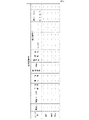
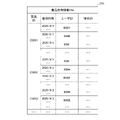
- FIG. 4 is a diagram showing the data structure of the medical examination information DB 281.
- each of the records of the medical examination information DB 281 has an item "user ID”, an item “acquisition date”, an item “diagnosis date”, an item “name”, an item “age”, and an item “gender”.
- the item "user ID” stores an ID for identifying a user.
- the item "acquisition date” stores the date when the server 20 acquired the medical examination information.
- diagnosis date is information indicating the date when the user received the health examination.
- the item “name” is information indicating the user's name.
- the item “age” is information indicating the age of the user.
- the item “gender” is information indicating the gender of the user.
- the item blood test value includes various analysis items analyzed in the blood test such as the " ⁇ -GTP" value as a sub-item.
- Information other than the information shown in FIG. 4 may be stored in the medical examination information DB 281.
- it may include information on a moving image taken in the body by an endoscope, information on a determination result of the presence or absence of Helicobacter pylori performed using cells collected by the endoscope, and the like.
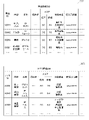
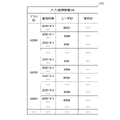
- FIG. 5 is a diagram showing a data structure of the product information DB 282 and a data structure of the application information DB 283 as information about the product.
- the product information DB 282 stores information about the product that can be output from the trained model 288.
- the application information DB 283 stores information about the application that can be output from the trained model 288.
- the product information DB 282 includes an item "product ID”, an item “content”, an item “name”, an item “provider”, an item “score”, an item “target disease”, and an item “purchase source information”. ”, Etc. are included.
- the product information DB 282 may include items related to efficacy, price, and release date.
- the item "product ID” is information indicating the product ID.
- the sub-item "content” is information indicating the content of the product.
- the sub-item "name” is information indicating the name of the product.
- the sub-item "provider” is information indicating the provider of the product.
- the sub-item "score” is information indicating the evaluation of the product.
- the sub-item “use” is a value that quantitatively indicates the frequency of use by the user of this system 1. This value is aggregated from the aggregated usage record.
- the sub-item “evaluation” is information about product evaluation. This value is aggregated from word-of-mouth from users of the product.
- the sub-item "target disease” is a value indicating a disease for which the product is useful.
- the disease may be a disease (for example, hypertension) judged from any of the test items indicated by abnormal values among the test items of the medical examination information, or a disease derived from the entire contents of the medical examination information. It may be (for example, a lifestyle-related disease).
- the sub-item "Purchaser information” is information indicating the Internet address of the EC site for purchasing the product.
- the application information DB 283 includes an item “app ID”, an item “content”, an item “name”, an item “provider”, an item “score”, an item “target disease”, and an item “purchase source information”. ”, Etc. are included.
- the application information DB 283 may include items related to the effect, price, and release date.
- the item "app ID” is information indicating the ID of the app.
- the sub-item "content” is information indicating the content of the application.
- the sub-item "name" is information indicating the name of the application.
- the sub-item "provider” is information indicating the provider of the application.
- the sub-item "score” is information indicating the evaluation of the application.
- the sub-item “use” is a value that quantitatively indicates the frequency of use by the user of this system 1. This value is aggregated from the aggregated usage record.
- the sub-item “evaluation” is information about the evaluation of the application. This value is aggregated from word-of-mouth from the user of the application.
- the sub-item "target disease” is a value indicating a disease for which the application is useful.
- the disease may be a disease (for example, hypertension) judged from any of the test items indicated by abnormal values among the test items of the medical examination information, or a disease derived from the entire contents of the medical examination information. It may be (for example, a lifestyle-related disease).
- the sub-item "Distributor information" is information indicating the Internet address of the distributor for purchasing the application.
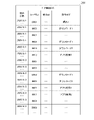
- FIG. 6 is a diagram showing a data structure of the log information DB 284.
- the product information DB 282 includes an item "operation date and time", an item “user ID”, an item “terminal ID”, and an item "operation log”.
- Each item to be stored is stored in a new record by the storage control unit 2032 at the timing when the user performs an operation.
- the item "operation date and time” stores the date and time (time stamp) when the operation by the user occurred.
- the item “time” includes, for example, the time when the hardware is operated, the time when the application is operated, or the time when the OS is operated.
- the item "user ID” is information that identifies the user who operated.
- terminal ID stores the ID of the terminal device 10 operated by the user.
- the item "operation log” stores a predetermined operation by the user. Specifically, the item “operation log” stores, for example, an operation of downloading an application, an operation of purchasing a product from an EC site, and an operation of using the purchased application.
- the operation for purchasing a product includes, for example, information on the EC site used at the time of purchase, information on the purchased product, purchase date, purchase quantity, and the like.
- the operation using the app includes, for example, if the app as a product is an exercise guidance app, information such as the guidance date, the content of the exercise instructed, and the exercise time recorded by the app.
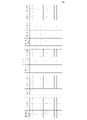
- FIG. 7 is a diagram showing a data structure of the user information DB 285.
- the user information DB 285 has the item “medical examination information acquisition date”, the item “disease of concern”, the item “presentation date”, the item “recommendation history”, the item “in use application”, and the item “download date”. , Item “date and time of use”, item “product in use”, item “purchase date”, item “date and time of use”, item “grant date”, item “privilege information”.
- the information of one user is shown in FIG. 7, the information of a plurality of users is stored in the user information DB 285.
- Each item stored in the user information DB 285 is stored in a new record by the storage control unit 2032 at the timing when the respective data is obtained.
- the item "date of acquisition of medical examination information" is information indicating the date of acquisition of the latest medical examination information.
- the item "disease of concern” is a disease of concern inferred from the user's medical examination information.
- the item "presentation date” is information indicating the date when the recommended information was presented to the user.
- the item "recommendation history” is information indicating the content of the information presented as recommended information to the user. Specifically, it includes information about the disease of concern presented and useful products.
- the item "apps used" is information indicating the apps actually used by the user among the apps included in the recommended information.
- the item "download date” is information indicating the date when the application in use was downloaded.
- the item "date and time of use” is information about the date and time when the application in use was used.
- the item "Products used” is information indicating the products actually used by the user among the products included in the recommended information.
- the item "purchase date” is information indicating the date when the product in use was purchased.
- the item "date and time of use” is information about the date and time when the product in use was used.
- the item "grant date” is information indicating the date when the privilege was granted.
- the item "privilege information” is information indicating the content of the privilege.
- FIG. 8 is a diagram showing the data structure of the product usage information DB 286.
- the product usage information DB 286 includes an item "product ID”, an item “date and time of use”, an item “user ID”, and an item "terminal ID”.
- the item "product ID” is information indicating the product ID.
- the item "date and time of use” is information indicating the date and time when the user used the corresponding product.
- the item "user ID” is information that identifies the user who used the corresponding product.
- terminal ID is information for identifying the terminal device 10 into which the user has input usage information.
- FIG. 9 is a diagram showing the data structure of the application usage information DB 287.
- the application usage information DB 287 includes an item "application ID”, an item “use date and time”, an item “user ID”, and an item "terminal ID”.
- the item "app ID” is information indicating the ID of the app.
- the item "date and time of use” is information indicating the date and time when the user used the corresponding application.
- the item "user ID” is information that identifies the user who used the corresponding application.
- terminal ID is information for identifying the terminal device 10 used by the user when using the application. ⁇ 3. Operation>
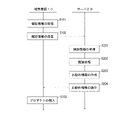
- FIG. 9 a process of presenting recommended information to the user based on the user's medical examination information by the system 1 and totaling the usage history of the product included in the recommended information will be described.
- FIG. 9 is a diagram illustrating an example of the operation of the terminal device 10 and the server 20 in the system 1.
- the terminal device 10 acquires medical examination information (step S101). Specifically, when an execution instruction is received from the user, the display unit 184 displays an image related to the input format on the display 132. The user operates the terminal device 10 to input medical examination information. At this time, the user may input text information, or may shoot and input using the camera 160. In addition, the user may enter authentication information for inquiring to an external medical examination center.
- the acquisition unit 183 acquires the medical examination information input from the user. Specifically, when the medical examination information is input as text information by the user, the text information is acquired. Further, when the medical examination information is input as image information by the user, character recognition processing is performed and the recognized text information is acquired. In addition, when the user inputs the authentication information for inquiring to the external medical examination center, the authentication information is used to access the external medical examination center and the medical examination information stored in the medical examination center is used. read out.
- the transmission / reception unit 182 of the terminal device 10 transmits the acquired medical examination information to the server 20 (step S102).
- the transmission / reception unit 2031 of the server 20 receives the transmitted medical examination information (step S201).
- the storage control unit 2032 stores the medical examination information received by the transmission / reception unit 2031 in a new record of the medical examination information DB 281 of the storage unit 202.
- the reasoning unit 2033 of the server 20 infers a disease of concern and a useful product based on the latest medical examination information stored in the storage unit 202 (step S202). Specifically, the inference unit 2033 reads the medical examination information necessary for inference from the medical examination information DB 281 of the storage unit 202, inputs it into the trained model 288, and identifies the disease and the product of concern. Is output. The inferred disease and the identification information that identifies the product are stored in the user information DB 285 by the memory control unit 2032.
- the presentation unit 2034 of the server 20 creates recommended information (step S203). Specifically, the presentation unit 2034 reads information about the product from the product information DB 282 based on the identification information for identifying the product acquired by the inference unit 2033. Information about a product includes, for example, the name of the product, efficacy, price, link of the purchaser, and the like. Alternatively, the presentation unit 2034 reads information about the application from the application information DB 283 based on the identification information for identifying the product acquired by the inference unit 2033. Information about the app includes, for example, the name of the app, the effect, the price, the link of the distributor, and the like.
- the presentation unit 2034 creates recommended information so as to include the inferred disease and the information about the read product or application. At this time, if a plurality of products are inferred, the presentation unit 2034 prioritizes and lists the recommended information. The order of listing at this time is determined based on, for example, the height of the evaluation score value and the usage score value in the product information DB 282 and the application information DB 283. That is, the presentation unit 2034 may treat popular products in an advantageous manner over unpopular products.
- the presentation unit 2034 presents the created recommended information to the user (step S204). Specifically, the presentation unit 2034 transmits the recommended information to the terminal device 10 via the transmission / reception unit 2031 to display the recommended information on the display 132.
- the presentation unit 2034 may include the usage status of the product included in the recommended information in the recommended information presented to the user. Specifically, the presentation unit 2034 refers to the product usage information DB 286 or the application usage information DB 287 for the product or application included in the recommended information, and the product or the application is in a health state similar to that of the user. Include information about how much other users are actually using in your recommendations.
- the presentation section 2034 may not include unpopular products in the recommended information.
- An unpopular product represents, for example, a product having an evaluation score value lower than a predetermined value, a usage score value lower than a predetermined value, or both values lower than a predetermined value.
- the presentation unit 2034 does not include the product in the recommended information when the usage score values in the product information DB 282 and the application information DB 283 do not meet the reference points (for example, 60 points).
- the user operates the terminal device 10 to purchase the product presented in the recommended information (step S103). Specifically, the user accesses the URL of the purchase source included in the recommended information and purchases the product included in the recommended information. Alternatively, the user accesses the URL of the distribution site that is the distribution source included in the recommended information, and purchases the application included in the recommended information.
- the storage control unit 2032 stores the operation logs of these purchase operations in the log information DB 284. The user may purchase the recommended product from the actual store without accessing the URL of the purchase source included in the recommended information. In this case, the user inputs to the terminal device 10 that the product has been purchased.
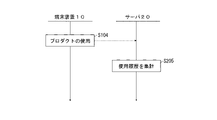
- FIG. 11 is a diagram illustrating another example of processing in the system 1.
- the user uses the purchased product (step S104).
- the product is a product
- the user operates the terminal device 10 and inputs to the terminal device 10 that the product has been used.
- the product is an application, for example, the user inputs an operation using the downloaded application to the terminal device 10.
- the aggregation unit 2035 of the server 20 aggregates the history of the user's use of the product (step S205). Specifically, when the product is a product, the aggregation unit 2035 refers to the product usage information DB 286, aggregates the products frequently used by the user, and calculates the usage score value. The storage control unit 2032 updates the usage score of the product information DB 282. Further, when the product is an application, the aggregation unit 2035 refers to the log information DB 284, extracts the usage history of the application, and stores it in the application usage information DB 287. The aggregation unit 2035 refers to the application usage information DB 287, aggregates the products frequently used by the user, and calculates the usage score value. The memory control unit 2032 updates the usage score of the application information DB 283.
- the presentation unit 2034 may point out that the product is not used. Specifically, for example, the presentation unit 2034 refers to the user information DB 285 and determines whether or not a predetermined period has elapsed since the product was last used. When the predetermined period has passed, the presentation unit 2034 points out to the user that the product is not used. Whether or not the product is unused may be checked after a preset period of time.
- the presentation unit 2034 refers to the product usage information DB 286 and the application usage information DB 287, and if the frequency of use of the product already purchased by the user does not reach the specified number of times within a predetermined period, the presentation unit 2034 is included in the recommended information.
- the products other products different from the already purchased products may be presented to the user again as recommended information.
- the frequency of use is extremely low (for example, the number of times of use per month is 3 times or less)
- another product is presented to the user.
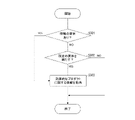
- FIG. 12 is a flowchart showing an example of processing when the acquisition unit 2037 acquires information about a product that is effective for the user. As shown in FIG. 12, first, the acquisition unit 2037 confirms whether or not there is an input from the user to request information about a product effective for improving the health condition (step S301).
- the acquisition unit 2037 executes a process of acquiring information about an effective product (step S303).
- the predetermined requirements are, for example, that the product usage period reaches a preset period, that a preset period has elapsed after receiving a medical examination, or that the health condition is improved for a preset period. Do not do it.
- Predetermined requirements can be arbitrarily set in advance, and a plurality of requirements may be set.
- step S302 If there is no user who meets the predetermined requirements (NO in step S302), the processing of the acquisition unit 2037 ends.
- the acquisition unit 2037 executes a process of acquiring information about a product effective for the user (step S303).
- the acquisition unit 2037 acquires information about a product used by another user who has the same disease of concern and has a good course of health. Specifically, the acquisition unit 2037 refers to the user information DB 285 and identifies another user who is concerned about the same disease as the own user. Next, the acquisition unit 2037 confirms the change over time of the medical examination information in the specified other user. Next, the acquisition unit 2037 extracts the other user who has the best improvement in health condition among the identified other users. Next, the acquisition unit 2037 refers to the user information DB 285 and acquires information about the extracted product used by another user. Information about a product includes, for example, the name of the product being used or how to use the product. The usage of the product includes, for example, the time of use, the frequency of use, and the like. The presentation unit 2034 presents the acquired information about the product to the requested user or the user who meets the predetermined requirements.
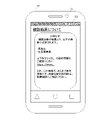
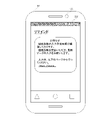
- FIG. 13 is a diagram illustrating a first screen example displayed on the display 132 of the terminal device 10.
- a disease of concern is displayed from the medical examination information.
- hypertension and lifestyle-related diseases are displayed as diseases of concern.
- a URL for accessing the recommended information is displayed in the center of the display screen. It should be noted that what is displayed is not limited to the URL, and may be an object for screen transition.
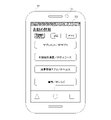
- FIG. 14 is a diagram illustrating a second screen example displayed on the display 132 of the terminal device 10.
- recommended information to be accessed in response to contact with the URL is displayed on the screen shown in FIG.
- a plurality of products including a product and an application are presented as recommended information. That is, in this system 1, both the product and the application can be included in the recommended information. Also, by selecting the "Product" object or "App" object at the top of the screen, you can switch between displaying only the product and displaying only the app among the products included in the recommended information.
- the detailed information includes a URL for purchase source information or distribution source information. By contacting the displayed URL, the user can directly access the corresponding Internet site and purchase the corresponding product.
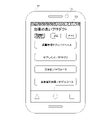
- FIG. 15 is a diagram illustrating a third screen example displayed on the display 132 of the terminal device 10.
- information on a product that is highly effective in improving the health condition is displayed.
- information about a product used by another user who is concerned about the same disease as the user and has a good course of health is displayed.
- the screen example shown in FIG. 15 represents a display when the "all" object at the top of the screen is selected.
- the "Products" object at the top of the screen is selected, only the products are displayed, and when the "Apps" object is selected, only the apps are displayed.
- FIG. 16 is a diagram illustrating a fourth screen example displayed on the display 132 of the terminal device 10.
- the content for urging the upload of the medical examination information is displayed.
- the fact that the scheduled input time has passed and the URL for accessing the input format are described.
- the steps of each processing can be arbitrarily changed as long as the flow of each processing does not contradict.
- the user may input the latest medical examination information without waiting for the update time of the medical examination information.
- the inference unit 2033 infers a product useful to the user based on the medical examination information acquired by the storage control unit 2032 of the server 20, and the presentation unit 2034 determines.
- the recommended information of the inferred product is presented to the user, and the aggregation unit 2035 aggregates the usage history of the product of the user. Then, if the user is not using the product, the presentation unit 2034 points out to that effect. Therefore, it is possible to propose an appropriate lifestyle-related improvement based on the result of the user's health diagnosis and contribute to the user's health management. According to System 1, in this way, it is possible to effectively support the utilization of products related to the user's health.
- the memory control unit 2032 acquires the medical examination information at a preset timing, it is possible to present an appropriate product as recommended information based on the latest health condition.
- the period for updating the medical examination information by the user is set in advance, and when the period is exceeded, the presentation unit 2034 presents to the user that the period has been exceeded. Therefore, it is possible to prevent the user from forgetting to update the latest medical examination information.
- the acquisition unit 183 acquires the medical examination information by performing character recognition processing on at least a part of the image data of the medical certificate input by the user, a predetermined input is performed.
- the user input work to the format can be reduced.
- the inference unit 2033 identifies changes in the medical examination information along the time series, and based on the changes, the presentation unit 2034 presents the appropriate product to the user as recommended information. For this reason, even if the test items show the range of the standard value at the time of receiving the medical examination, it is expected that the test item will be out of the range of the standard value in the future including the past test values. In some cases, the appropriate product will be presented. As a result, it is possible to prevent the user from falling into an unhealthy state and contribute to appropriate health management.
- the recommended information presented to the user is a product that meets certain evaluation criteria, it is possible to prevent the presentation of a poor product or application to the user and ensure the convenience of the user. ..
- the presentation unit 2034 refers to the aggregated usage history, and among the products included in the recommended information, the products that are used infrequently are excluded from the candidates for the recommended information presented to other users. Therefore, it is possible not to present the product not used to the user in the same health condition to the user, and the convenience of the user can be ensured.
- the presentation unit 2034 refers to the aggregated usage history, and among the products included in the recommended information, the products that are frequently used are prioritized as candidates for the recommended information to be presented to other users. Raise. Therefore, it is possible to present to the user a product that is actually often used by users with similar health conditions, and it is possible to ensure the convenience of the user.
- the presentation unit 2034 refers to the aggregated usage history, and among the products included in the recommended information, presents other apps that are different from the less frequently used apps to the user as recommended information. Therefore, even if the user cannot comfortably use the previously presented product, by presenting another product, it is possible to search for a product that is easy for the user to use.
- the presentation unit 2034 shares information about the user's usage history with other users. Therefore, the popularity of the presented product can be confirmed, and the product that suits oneself can be selected while referring to the usage history of other users.
- the granting unit 2036 grants the user a first privilege which is advantageous information about the insurance premium of the insurance service. .. This can provide motivation for the user to use the product.
- the granting unit 2036 acquires the medical examination information from the user, the acquired medical examination information and the second privilege which is advantageous information about the medical examination are given. As a result, it is possible to obtain motivation for the user to undergo a medical examination and to input the medical examination information.
- the acquisition unit 2037 acquires information on products used by other users who are in good health. For this reason, it becomes possible to share information about effective products with users by referring to improvement examples of other users, eliminating the trouble of users trying various products and improving their health condition efficiently. can do.
- the trained model 288 may output a product useful to the user without outputting the disease of concern from the input medical examination information. Further, the trained model 288 may output a disease of concern without outputting a useful product from the input medical examination information.
- the inference unit 2033 presents the product as recommended information by using the table data in which the relationship between the disease of concern and the product useful for the disease is uniquely set. You may infer.
- the control unit 203 may select an application or product having a high evaluation from the applications or products associated with the disease.
- the product information DB 282 stores the product associated with the disease
- the application information DB 283 stores the application associated with the disease.
- the trained model 288 may be learned by using the information about the user (age, gender, place of residence) included in the medical examination information DB together with the medical examination information of the user.
- the difference in taste according to age or gender can be taken into consideration as the product included in the recommended information presented to the user.
- a place of residence for example, a large health appliance is presented to a user in a rural area where the residence is generally large, and a small health appliance is presented to a user in a city center where the residence is generally small. It is possible to make such a judgment.
- the acquisition unit 183 of the terminal device 10 can acquire information about the user's place of residence from the position information sensor 150 of the terminal device 10.
- a recommended product may be preset for a predetermined test item in the medical examination information. If there is a problem with the test item in the acquired medical examination information, that is, if there is a test item that is out of the range of the standard value, the server 20 identifies the product set for the problematic test item. do. The server 20 creates recommended information to include the identified product. Since it is sufficient to associate the inspection item with the product, it is possible to present a wide range of recommended product candidates to the user.
- an example of purchasing a product from an external EC site has been described, but a system design that allows the product to be purchased directly from this system may be performed.
- the example of downloading the application from the distribution site that distributes the application has been described, but the system may be designed so that the application can be directly downloaded from this system.
- the acquisition unit 183 of the terminal device 10 acquires the operation log related to the purchase to the system.
- (Appendix 1) It is a program to be executed by a computer including a processor and a memory, and the program is used in the first step (step S102) of acquiring the medical examination information regarding the result of the user's medical examination and the medical examination information. Based on this, the second step (step S204) of presenting the recommended information of the product for managing health to the user, the third step (step S205) of managing the usage status of the product included in the recommended information, and Program to execute.
- step S102 the program according to (Appendix 1), which acquires medical examination information at a preset timing.
- step S102 a period for the user to input the medical examination information is set in advance, and when the period is exceeded, the user is presented with the fact that the period has been exceeded (Appendix 1) or (Appendix 1).
- step S102 any one of (Appendix 1) to (Appendix 3), in which at least a part of the health certificate is subjected to character recognition processing on the captured image data to acquire the health certificate information.
- step S204 any one of (Appendix 2) to (Appendix 4), which identifies changes in the medical examination information along the time series and presents recommended information to the user based on the changes.
- step S204 if a recommended product is preset for a predetermined test item of the medical examination information and there is a problem in any of the acquired medical examination information, a problem occurs.
- step S204 the program according to any one of (Appendix 1) to (Appendix 6), which includes products that meet certain evaluation criteria in the recommended information.
- step S204 the program according to any one of (Appendix 1) to (Appendix 7), which does not include products that are not popular with users in the recommended information.
- step S204 the program according to any one of (Appendix 1) to (Appendix 8), wherein the product popular from the user is treated in an advantageous manner over the other products in the recommended information.
- step S204 the aggregated usage history is referred to, and among the products included in the recommended information, other application software different from the infrequently used application software is presented to the user as recommended information.
- step S102 when the medical examination information is acquired, advantageous information is given to the user corresponding to the acquired medical examination information, according to any one of (Appendix 1) to (Appendix 13). ..
- step S102 It is a method of causing a computer equipped with a processor and a memory to execute the first step (step S102) in which the processor acquires the medical examination information regarding the result of the user's medical examination, and manages the health based on the medical examination information.
- step S204 A method of executing the second step (step S204) of presenting the recommended product information to the user and the third step (step S205) of managing the usage status of the product included in the recommended information.
- An information processing device 20 including a control unit (203) and a storage unit (202), wherein the control unit (203) obtains medical examination information regarding the result of a user's medical examination, and a medical examination.
- An information processing device that executes the second step of presenting recommended information of a product for managing health to the user based on the information and the third step of managing the usage status of the product included in the recommended information. 20.
- the first means acquisition unit 183 for acquiring the health examination information regarding the result of the user's health examination, and the second means (the second means) for presenting the recommended information of the product for managing the health to the user based on the health examination information.
- a system 1 including a presentation unit 2034) and a third means (aggregation unit 2035) for managing the usage status of products included in the recommended information.
- Aggregation unit 2036 ... Granting unit 2037 ... Acquisition unit 25 ... Memory 26 ... Storage 281 ... Medical examination information DB 282 ... Product information DB 283 ... App information DB 284 ... Log information DB 285 ... User information DB 286 ... Product usage information DB 287 ... Application usage information DB 288 ... Trained model 29 ... Processor
Landscapes
- Engineering & Computer Science (AREA)
- Business, Economics & Management (AREA)
- Epidemiology (AREA)
- Accounting & Taxation (AREA)
- Public Health (AREA)
- Finance (AREA)
- Primary Health Care (AREA)
- Strategic Management (AREA)
- Medical Informatics (AREA)
- General Health & Medical Sciences (AREA)
- Development Economics (AREA)
- Health & Medical Sciences (AREA)
- General Physics & Mathematics (AREA)
- Theoretical Computer Science (AREA)
- General Business, Economics & Management (AREA)
- Physics & Mathematics (AREA)
- Marketing (AREA)
- Economics (AREA)
- Game Theory and Decision Science (AREA)
- Entrepreneurship & Innovation (AREA)
- Medical Treatment And Welfare Office Work (AREA)
- Management, Administration, Business Operations System, And Electronic Commerce (AREA)
Applications Claiming Priority (2)
| Application Number | Priority Date | Filing Date | Title |
|---|---|---|---|
| JP2020-191714 | 2020-11-18 | ||
| JP2020191714A JP6913810B1 (ja) | 2020-11-18 | 2020-11-18 | プログラム、方法、情報処理装置、及びシステム |
Publications (1)
| Publication Number | Publication Date |
|---|---|
| WO2022107750A1 true WO2022107750A1 (ja) | 2022-05-27 |
Family
ID=77057573
Family Applications (1)
| Application Number | Title | Priority Date | Filing Date |
|---|---|---|---|
| PCT/JP2021/042033 Ceased WO2022107750A1 (ja) | 2020-11-18 | 2021-11-16 | プログラム、方法、情報処理装置、及びシステム |
Country Status (2)
| Country | Link |
|---|---|
| JP (2) | JP6913810B1 (enExample) |
| WO (1) | WO2022107750A1 (enExample) |
Families Citing this family (3)
| Publication number | Priority date | Publication date | Assignee | Title |
|---|---|---|---|---|
| JP2023121986A (ja) * | 2022-02-22 | 2023-09-01 | 株式会社ヘルスケアシステムズ | 情報処理装置、情報処理方法、およびプログラム |
| JP7430752B1 (ja) | 2022-08-25 | 2024-02-13 | 楽天グループ株式会社 | 情報提供サーバ、情報提供システム、情報提供方法及びプログラム |
| JP7726493B1 (ja) | 2024-06-03 | 2025-08-20 | 医療法人社団明芳会 | 健診ポイント交換システム、方法、及びプログラム |
Citations (9)
| Publication number | Priority date | Publication date | Assignee | Title |
|---|---|---|---|---|
| JP2002149830A (ja) * | 2000-11-13 | 2002-05-24 | Matsushita Electric Ind Co Ltd | 健康管理方法、アドバイス装置および健康管理システム |
| JP2013117941A (ja) * | 2011-10-31 | 2013-06-13 | Sony Corp | 体質判定装置、体質判定方法、健康支援装置、健康支援方法、プログラム、端末装置および健康支援システム |
| JP2015187764A (ja) * | 2014-03-26 | 2015-10-29 | 住友商事株式会社 | 健康情報提供サーバ、プログラム及びシステム |
| JP2018106403A (ja) * | 2016-12-26 | 2018-07-05 | 大日本印刷株式会社 | 情報処理装置、プログラム、情報処理システム及び情報処理端末 |
| JP2019101654A (ja) * | 2017-11-30 | 2019-06-24 | オムロンヘルスケア株式会社 | 健康管理支援装置、方法およびプログラム |
| WO2020039769A1 (ja) * | 2018-08-24 | 2020-02-27 | 株式会社鈴康 | 情報処理装置、プログラム及び情報処理方法 |
| WO2020044686A1 (ja) * | 2018-08-28 | 2020-03-05 | 株式会社カネカ | 情報処理方法、プログラム及び情報処理装置 |
| JP2020060803A (ja) * | 2018-10-04 | 2020-04-16 | 株式会社カネカ | 健康情報処理方法、健康情報処理装置、コンピュータプログラム、及び学習モデル |
| JP2020155136A (ja) * | 2014-01-17 | 2020-09-24 | 任天堂株式会社 | 情報処理システム、情報処理サーバ、情報処理プログラム、および情報提供方法 |
Family Cites Families (5)
| Publication number | Priority date | Publication date | Assignee | Title |
|---|---|---|---|---|
| JPS61211760A (ja) * | 1985-03-18 | 1986-09-19 | Sekisui Chem Co Ltd | コンピユ−タ−による健康診断方法 |
| JPH11232359A (ja) * | 1998-02-12 | 1999-08-27 | Forward Inku:Kk | 在宅血液検査における血液の検査結果の処理方法とその処理システム |
| JP7671482B2 (ja) | 2019-03-28 | 2025-05-02 | 株式会社タニタ | 情報提供システム及び情報提供プログラム |
| JP7126472B2 (ja) | 2019-03-28 | 2022-08-26 | 株式会社スギ薬局 | 生体情報に基づく健康状態推定方法および健康状態推定装置 |
| JP6741321B1 (ja) | 2019-10-30 | 2020-08-19 | 株式会社プレシジョン | 薬剤例検索装置、薬剤例検索方法及び薬剤例検索プログラム |
-
2020
- 2020-11-18 JP JP2020191714A patent/JP6913810B1/ja active Active
-
2021
- 2021-07-12 JP JP2021114940A patent/JP7641691B2/ja active Active
- 2021-11-16 WO PCT/JP2021/042033 patent/WO2022107750A1/ja not_active Ceased
Patent Citations (9)
| Publication number | Priority date | Publication date | Assignee | Title |
|---|---|---|---|---|
| JP2002149830A (ja) * | 2000-11-13 | 2002-05-24 | Matsushita Electric Ind Co Ltd | 健康管理方法、アドバイス装置および健康管理システム |
| JP2013117941A (ja) * | 2011-10-31 | 2013-06-13 | Sony Corp | 体質判定装置、体質判定方法、健康支援装置、健康支援方法、プログラム、端末装置および健康支援システム |
| JP2020155136A (ja) * | 2014-01-17 | 2020-09-24 | 任天堂株式会社 | 情報処理システム、情報処理サーバ、情報処理プログラム、および情報提供方法 |
| JP2015187764A (ja) * | 2014-03-26 | 2015-10-29 | 住友商事株式会社 | 健康情報提供サーバ、プログラム及びシステム |
| JP2018106403A (ja) * | 2016-12-26 | 2018-07-05 | 大日本印刷株式会社 | 情報処理装置、プログラム、情報処理システム及び情報処理端末 |
| JP2019101654A (ja) * | 2017-11-30 | 2019-06-24 | オムロンヘルスケア株式会社 | 健康管理支援装置、方法およびプログラム |
| WO2020039769A1 (ja) * | 2018-08-24 | 2020-02-27 | 株式会社鈴康 | 情報処理装置、プログラム及び情報処理方法 |
| WO2020044686A1 (ja) * | 2018-08-28 | 2020-03-05 | 株式会社カネカ | 情報処理方法、プログラム及び情報処理装置 |
| JP2020060803A (ja) * | 2018-10-04 | 2020-04-16 | 株式会社カネカ | 健康情報処理方法、健康情報処理装置、コンピュータプログラム、及び学習モデル |
Also Published As
| Publication number | Publication date |
|---|---|
| JP6913810B1 (ja) | 2021-08-04 |
| JP2022080572A (ja) | 2022-05-30 |
| JP7641691B2 (ja) | 2025-03-07 |
| JP2022080832A (ja) | 2022-05-30 |
Similar Documents
| Publication | Publication Date | Title |
|---|---|---|
| US11886318B1 (en) | Personalizing digital health monitoring technologies for diverse populations to reduce health disparities | |
| US10740845B2 (en) | System for mobile device enabled biometric monitoring | |
| CA2910621C (en) | Systems and methods for facilitating integrated behavioral support | |
| Scott et al. | Mixed-methods analysis of factors impacting use of a postoperative mHealth app | |
| US11605038B1 (en) | Selecting digital health technology to achieve data collection compliance in clinical trials | |
| WO2022107750A1 (ja) | プログラム、方法、情報処理装置、及びシステム | |
| US20150134344A1 (en) | Personal Health Data Gathering for Incentive and Insurance Rating Purposes | |
| Henkel et al. | Rewarding fitness tracking—The communication and promotion of health insurers’ bonus programs and the use of self-tracking data | |
| US20200135304A1 (en) | Information processing device, information processing method, and computer program | |
| Daniore et al. | From wearable sensor data to digital biomarker development: ten lessons learned and a framework proposal | |
| US20180032674A1 (en) | Diagnostic system, diagnostic method, and storage medium | |
| CN110741439A (zh) | 针对相关性提供建议的行为修改 | |
| JP2024063744A (ja) | プログラム、方法、情報処理装置 | |
| Hollander et al. | The physician-patient relationship in an electronic environment: a regional snapshot | |
| US20130130789A1 (en) | User-interactive application framework for electronic devices | |
| CN117480518A (zh) | 机器学习驱动的实时数据分析 | |
| JP2018120394A (ja) | 診断装置、プログラム及び診断システム | |
| Emaliyawati et al. | A systematic review of internet-based remote patient monitoring systems for chronic disease management in Asian | |
| Godbharle et al. | FoodLog: Development and evaluation of a smartphone-based application for dietary tracking | |
| Jimu et al. | MENTAL HEALTH SUPPORT APP WITH MOOD TRACKING AND RESOURCES. | |
| Geyer | Enhancing understanding of digital traces | |
| WO2025062232A1 (en) | Personal profile generator and recommendation engine | |
| Malvey et al. | Research Evidence and Other Information Sources | |
| Sathanandam et al. | Rapid literature review for National Information Board workstream 1.2 | |
| Behara et al. | Investigating The Efficacy of Menstrual Health Applications In Promoting Informed Decision-Making And Comprehensive Sex Education |
Legal Events
| Date | Code | Title | Description |
|---|---|---|---|
| 121 | Ep: the epo has been informed by wipo that ep was designated in this application |
Ref document number: 21894624 Country of ref document: EP Kind code of ref document: A1 |
|
| NENP | Non-entry into the national phase |
Ref country code: DE |
|
| 122 | Ep: pct application non-entry in european phase |
Ref document number: 21894624 Country of ref document: EP Kind code of ref document: A1 |