WO2022045072A1 - 撮像装置、撮像指示方法、及び撮像指示プログラム - Google Patents
撮像装置、撮像指示方法、及び撮像指示プログラム Download PDFInfo
- Publication number
- WO2022045072A1 WO2022045072A1 PCT/JP2021/030828 JP2021030828W WO2022045072A1 WO 2022045072 A1 WO2022045072 A1 WO 2022045072A1 JP 2021030828 W JP2021030828 W JP 2021030828W WO 2022045072 A1 WO2022045072 A1 WO 2022045072A1
- Authority
- WO
- WIPO (PCT)
- Prior art keywords
- imaging
- moving image
- instruction
- image
- unit
- Prior art date
- Legal status (The legal status is an assumption and is not a legal conclusion. Google has not performed a legal analysis and makes no representation as to the accuracy of the status listed.)
- Ceased
Links
Images








Classifications
-
- H—ELECTRICITY
- H04—ELECTRIC COMMUNICATION TECHNIQUE
- H04N—PICTORIAL COMMUNICATION, e.g. TELEVISION
- H04N23/00—Cameras or camera modules comprising electronic image sensors; Control thereof
- H04N23/60—Control of cameras or camera modules
- H04N23/64—Computer-aided capture of images, e.g. transfer from script file into camera, check of taken image quality, advice or proposal for image composition or decision on when to take image
-
- H—ELECTRICITY
- H04—ELECTRIC COMMUNICATION TECHNIQUE
- H04N—PICTORIAL COMMUNICATION, e.g. TELEVISION
- H04N23/00—Cameras or camera modules comprising electronic image sensors; Control thereof
- H04N23/60—Control of cameras or camera modules
- H04N23/63—Control of cameras or camera modules by using electronic viewfinders
- H04N23/633—Control of cameras or camera modules by using electronic viewfinders for displaying additional information relating to control or operation of the camera
-
- H—ELECTRICITY
- H04—ELECTRIC COMMUNICATION TECHNIQUE
- H04N—PICTORIAL COMMUNICATION, e.g. TELEVISION
- H04N23/00—Cameras or camera modules comprising electronic image sensors; Control thereof
- H04N23/60—Control of cameras or camera modules
- H04N23/667—Camera operation mode switching, e.g. between still and video, sport and normal or high- and low-resolution modes
-
- H—ELECTRICITY
- H04—ELECTRIC COMMUNICATION TECHNIQUE
- H04N—PICTORIAL COMMUNICATION, e.g. TELEVISION
- H04N5/00—Details of television systems
- H04N5/76—Television signal recording
- H04N5/765—Interface circuits between an apparatus for recording and another apparatus
- H04N5/77—Interface circuits between an apparatus for recording and another apparatus between a recording apparatus and a television camera
- H04N5/772—Interface circuits between an apparatus for recording and another apparatus between a recording apparatus and a television camera the recording apparatus and the television camera being placed in the same enclosure
Definitions
- the present invention relates to an image pickup device for capturing a moving image, an image pickup instruction method, and an image pickup instruction program.
- Patent Document 1 describes an imaging device for displaying a menu screen for changing the setting of shooting conditions on a display means.
- One embodiment according to the technique of the present disclosure provides an imaging device, an imaging instruction method, and an imaging instruction program capable of easily recording a plurality of moving images having different imaging parameters.
- the image pickup apparatus is an image pickup apparatus including an image pickup unit and a processor, wherein the image pickup unit is in the process of capturing a first moving image based on a first image pickup parameter.
- 1 Accepts the first instruction to instruct the setting of the second imaging parameter different from the imaging parameter, and after receiving the first instruction, accepts the second instruction to start the imaging of the second moving image based on the second imaging parameter.
- the imaging unit starts capturing the second moving image and receives the second instruction, the imaging unit is made to capture the first moving image until the third instruction to end the imaging of the first moving image is received.
- the imaging unit ends the imaging of the first moving image.
- the processor accepts an instruction by the user and situation data which is regarded as a third instruction when a predetermined condition is satisfied as the third instruction.
- the processor detects the scene of the moving image captured by the image pickup unit, and the first time elapses after the scene is switched and / or after the switch. When the scene continues for the second time, it is determined that the predetermined condition is satisfied and the situation data is generated.
- the image pickup apparatus determines that the scene has been switched when the predetermined parameter exceeds the threshold value.
- the image pickup apparatus is in any one of the second to fourth aspects, in which the processor has the remaining capacity of the recording medium for recording the first moving image as long as the remaining scheduled time for capturing the first moving image. If the data size is smaller than the recorded data size, status data is generated.
- the image pickup apparatus is the first moving image after the processor finishes the image pickup of the first moving image in the image pickup unit and accepts the third instruction.
- the second moving image is recorded as an image.
- the processor causes the image pickup unit to finish the acquisition of the second moving image.
- the processor terminates the image pickup of the second moving image in the image pickup unit, and receives the second moving image and the second instruction. It is recorded in association with the first moving image recorded from the time when the third instruction is received until the third instruction is received.
- the image pickup apparatus is in any one of the first to eighth aspects, in which the processor performs image processing and compression processing based on the first image pickup parameter on a single moving image data output from the image pickup unit.
- the first moving image data for the first moving image is generated, and the single moving image data is subjected to image processing and compression processing based on the second imaging parameter to obtain the second moving image data for the second moving image.
- the processor performs image processing and compression processing based on the first image pickup parameter on a single moving image data output from the image pickup unit.
- the first moving image data for the first moving image is generated, and the single moving image data is subjected to image processing and compression processing based on the second imaging parameter to obtain the second moving image data for the second moving image.
- the image pickup apparatus is the first moving image data and the second moving image data in the period in which the processor records the first moving image and the second moving image in parallel. Generate and record a frame.
- the image pickup apparatus is one of the first to tenth aspects, in which the processor records the first moving image and the second moving image on a single recording medium.
- the image pickup apparatus has the remaining recording time and the first moving image when the processor records only one of the first moving image and the second moving image.
- the display device displays the remaining recording time when both the image and the second moving image are recorded.
- the imaging device is one of the first to twelfth aspects, and the processor causes the display device to display the first moving image and the second moving image.
- the imaging instruction method is an imaging instruction method by an imaging instruction device including a processor, which gives an imaging instruction to an imaging unit of the imaging device, and the processor is used as a first imaging parameter of the imaging unit.
- the imaging instruction device including a processor, which gives an imaging instruction to an imaging unit of the imaging device, and the processor is used as a first imaging parameter of the imaging unit.
- the first instruction for setting the second imaging parameter different from the first imaging parameter is received
- the accepted first instruction is instructed to the imaging unit, and after the first instruction is received.
- the second instruction to start the imaging of the second moving image based on the second imaging parameter is accepted, the imaging unit is started to capture the second moving image, and when the second instruction is accepted, the imaging of the first moving image is received.
- the image pickup unit is made to image the first moving image until the third instruction is received, and when the third instruction is received, the image pickup unit is made to finish the imaging of the first moving image.
- the image pickup instruction program is an image pickup instruction program for causing the processor of the image pickup instruction device to execute an image pickup instruction to the image pickup unit of the image pickup device, and the processor is based on the first image pickup parameter of the image pickup unit.
- the function of receiving the first instruction to set the second imaging parameter different from the first imaging parameter and instructing the image pickup unit of the accepted first instruction and after receiving the first instruction.
- the function of accepting the second instruction to start the imaging of the second moving image based on the second imaging parameter and causing the imaging unit to start the imaging of the second moving image, and the first moving image when the second instruction is received.
- the imaging instruction program according to the fourteenth aspect may cause a processor (computer) to execute the same configuration as that of the second to thirteenth aspects.
- a non-temporary recording medium on which a computer-readable code of the imaging instruction program of these embodiments is recorded can also be mentioned as an embodiment of the present invention.
- FIG. 1 is a front perspective view of the image pickup apparatus according to the first embodiment.
- FIG. 2 is a rear view of the image pickup apparatus.
- FIG. 3 is a partial top view of the image pickup apparatus.
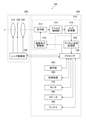
- FIG. 4 is a block diagram showing a schematic configuration of the image pickup apparatus.
- FIG. 5 is a diagram showing a functional configuration of the processor.
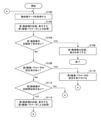
- FIG. 6 is a flowchart showing the processing of the imaging instruction method in the first embodiment.
- FIG. 7 is a flowchart showing the processing of the imaging instruction method in the first embodiment.
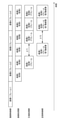
- FIG. 8 is a diagram showing a process for recording I-frames and P-frames during the parallel recording period of moving images.
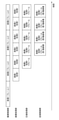
- FIG. 9 is a diagram showing a process in which only an I frame is recorded during the parallel recording period of moving images.
- FIG. 1 is a front perspective view of the image pickup apparatus according to the first embodiment.
- FIG. 2 is a rear view of the image pickup apparatus.
- FIG. 3 is a partial top view of the
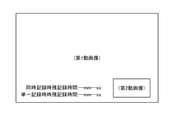
- FIG. 10 is a diagram showing a state of displaying a moving image and a remaining recording time.
- FIG. 11 is a diagram showing how the first moving image and the second moving image are recorded in a file.
- FIG. 12 is a flowchart showing the processing of the imaging instruction method in the second embodiment.
- FIG. 13 is a flowchart showing the processing of the imaging instruction method in the second embodiment.
- FIG. 14 is a diagram showing a state of parallel recording before and after switching of an imaging scene.
- FIG. 15 is a flowchart showing the processing of the imaging instruction method in the third embodiment.
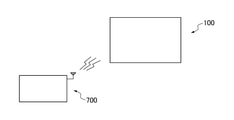
- FIG. 16 is a diagram showing how the image pickup apparatus is controlled by using the remote controller.
- FIG. 17 is a diagram showing a configuration of a remote controller.
- FIG. 18 is an external view of the smartphone according to the second embodiment.
- FIG. 19 is a diagram showing a schematic configuration of a smartphone.
- FIG. 1 is a front perspective view of the image pickup apparatus 100 according to the first embodiment of the present invention
- FIG. 2 is a rear view of the image pickup apparatus 100
- FIG. 3 is a partial top view of the image pickup apparatus 100.
- the image pickup apparatus 100 includes an image pickup apparatus main body 300 and an interchangeable lens 200 mounted on the image pickup apparatus main body 300.
- the image pickup apparatus main body 300 and the interchangeable lens 200 are attached by combining the mount 301 provided on the image pickup apparatus main body 300 and the mount (not shown) on the interchangeable lens 200 side corresponding to the mount 301, and this combination is provided. It is removed by releasing.
- the mount 301 is provided with a terminal 302, and the mount on the interchangeable lens 200 side is also provided with a terminal (not shown).
- these terminals come into contact with each other. Communication is possible.
- a finder window 303 and the like are provided in addition to the mount 301 and the terminal 302.
- the MENU / OK key 356 is an operation key that has both a function as a menu button for instructing to display a menu on the screen of the monitor 370 and a function as an OK button for instructing confirmation and execution of selection contents. Is.
- the cross key 357 is an operation unit for inputting instructions in four directions of up, down, left, and right, and is used as a button (cursor movement operation means) for selecting an item from the menu screen or instructing selection of various setting items from each menu. Function. Further, the up / down keys of the cross key 357 function as a zoom switch at the time of shooting or a reproduction zoom switch at the time of reproduction mode, and the left / right key functions as a frame advance (forward or reverse advance) button in the reproduction mode.
- the BACK key 355 is used when erasing a desired object such as a selected item, canceling an instruction content, or returning to the previous operation state.
- the Q button 358 also functions as a button for issuing a command to display a menu screen on the screen of the monitor 370.
- a release button 351, a dial 352 for setting a shooting mode and a shutter speed, a function button 353 to which a desired function can be assigned, and an exposure compensation dial 354 are provided on the upper surface of the image pickup apparatus main body 300.
- the release button 351 is a two-step stroke type button capable of pushing in the middle of the stroke (so-called "half-pressing” operation) and pushing all the strokes (so-called “full-pressing” operation).
- the user uses these buttons and dials provided on the upper surface and the back surface of the image pickup apparatus main body 300 to start, capture, and set the first and second imaging parameters of the first and second moving images, which will be described later. Operations such as (first instruction to third instruction) can be performed.
- FIG. 4 is a block diagram showing a schematic configuration of the image pickup device 100 (imaging device).
- the image pickup device 100 is composed of an interchangeable lens 200 and an image pickup device main body 300, and a subject image (optical image) is transmitted to a light receiving unit 312 of the image pickup element 310 (image pickup element) by an image pickup lens including a zoom lens 210 and a focus lens 230 described later. Make an image.
- the lens apparatus optical system
- the lens apparatus optical system
- the interchangeable lens 200 includes a zoom lens 210, a diaphragm 220, a focus lens 230, and a lens driving unit 240.
- the lens drive unit 240 adjusts the zoom (optical zoom) by driving the zoom lens 210 and the focus lens 230 forward and backward in the direction of the optical axis L in response to a command from the processor 330 (lens drive control unit 346 in FIG. 5; processor). , Adjust the focus.
- the zoom adjustment and the focus adjustment may be performed according to a zoom operation or a focus operation (zoom ring (not shown, rotation of the focus ring, etc.)) performed by the user, in addition to the zoom adjustment and the focus adjustment performed in response to a command from the processor 330.
- the lens driving unit 240 controls the aperture 220 in response to a command from the processor 330 to adjust the exposure.
- information such as the positions of the zoom lens 210 and the focus lens 230 and the degree of opening of the aperture 220 is input to the processor 330.
- the image pickup device main body 300 includes an image pickup element 310 (imaging unit), a digital signal processing unit 320, a processor 330 (processor), an operation unit 350, a recording device 360 (recording device, memory), a monitor 370 (display device), and a speaker 380.
- the image pickup device main body 300 may have a shutter (not shown) for blocking light transmitted through the image pickup device 310.
- the shutter may be a mechanical shutter or an electronic shutter. In the case of an electronic shutter, the exposure time (shutter speed) can be adjusted by controlling the charge accumulation period of the image sensor 310 by the processor 330.
- the image sensor 310 includes a light receiving unit 312, an analog amplification unit 314, an A / D converter 316, and an image sensor drive unit 318.
- the light receiving unit 312 includes a light receiving surface in which a large number of light receiving elements are arranged in a matrix. Then, the subject light transmitted through the zoom lens 210, the aperture 220, and the focus lens 230 is imaged on the light receiving surface of the light receiving unit 312, and is converted into an electric signal by each light receiving element.
- An R (red), G (green), or B (blue) color filter is provided on the light receiving surface of the light receiving unit 312, and a color image of the subject can be acquired based on the signals of each color.
- a CMOS Complementary Metal-Oxide Semiconductor
- an analog amplification unit 314 is provided for each pixel or a plurality of pixels constituting the light receiving unit 312.
- the pixel signal is amplified by the analog amplification unit 314, read out in units of rows, and supplied to the A / D converter 316 (Analog-to-Digital Converter).
- the A / D converter 316 converts the supplied pixel signal into a digital pixel signal and supplies it to the digital signal processing unit 320.
- the digital signal processing unit 320 converts the digital pixel signal into a digital image signal by performing digital correlation double sampling processing, digital gain processing, correction processing, and the like.
- the image sensor driving unit 318 drives the image sensor 310 in response to a command from the processor 330 (imaging control unit 336; processor).
- the image sensor drive unit, the analog amplification unit, and the A / D converter are often included in the image sensor package.
- Image sensors with different configurations may be used.
- a color image sensor such as an XY address type or a CCD (Charge-Coupled Device) type can be used in addition to the CMOS type.
- CCD Charge-Coupled Device
- FIG. 5 is a diagram showing a functional configuration of a processor 330 (processor, computer).
- the processor 330 includes a reception unit 332, an image pickup parameter setting unit 334, an image pickup control unit 336, an image processing unit 338, a compression processing unit 340, a recording control unit 342, a display control unit 344, a communication control unit 345, and a lens drive control unit 346.
- the processor 330 performs processing such as imaging, image processing, compression, and recording of moving images based on the digital image signal input from the digital signal processing unit 320. Details of the processing using the processor 330 will be described later.
- the above-mentioned function of the processor 330 can be realized by using various processors.
- the various processors include, for example, a CPU (Central Processing Unit), which is a general-purpose processor that executes software (programs) to realize various functions.
- the various processors described above include a GPU (Graphics Processing Unit), which is a processor specialized in image processing.
- the various processors described above include PLD (Programmable Logic Device), which is a processor whose circuit configuration can be changed after manufacturing such as FPGA (Field Programmable Gate Array).
- the above-mentioned various processors include a dedicated electric circuit, which is a processor having a circuit configuration specially designed for executing a specific process such as an ASIC (Application Specific Integrated Circuit).
- each function of the processor 330 may be realized by one processor or may be realized by a plurality of processors. Further, one processor may support a plurality of functions. Further, each function of the processor 330 may be realized by a circuit, or a part of each function may be realized by a circuit and the rest may be realized by a processor.
- the above-mentioned processor or electric circuit executes software (program)
- the code that can be read by the processor (computer) of the software to be executed and the data necessary for executing the software are stored in non-temporary such as Flash Memory. It is stored in a recording medium, and the processor refers to the software or data.
- the software stored in the non-temporary recording medium includes an image pickup instruction program (a program for operating the image pickup apparatus) for executing the image pickup instruction method according to the present embodiment. Codes and data may be recorded on a non-temporary recording medium using various optical magnetic recording devices, semiconductor memories, or the like instead of the flash memory.
- the "semiconductor memory” includes a ROM (Read Only Memory) and an EEPROM (Electronically Erasable and Programmable ROM) in addition to the flash memory.
- ROM Read Only Memory
- EEPROM Electrically Erasable and Programmable ROM
- RAM RandomAccessMemory
- RAM RandomAccessMemory
- the processor 330 includes a flash memory 348 (non-temporary recording medium, memory).
- the flash memory 348 is a computer (for example, various processors constituting the processor 330) of a program (including a program for executing the imaging instruction method according to the present embodiment) necessary for image capture, recording, display, and the like.
- the code that can be read by the user and the data necessary for executing the program (for example, frame compression and recording patterns, data of the first time and the second time described later) are recorded.
- the processor 330 includes a temporary storage area and a RAM 349 (memory) as a work area.
- the operation unit 350 is composed of buttons, keys, dials, etc. shown in FIGS. Image processing; It is possible to perform various operations such as setting (first imaging parameter, second imaging parameter), moving image imaging instruction, still image imaging instruction, and the like. Further, the processor 330 can receive the instructions of these users.
- the monitor 370 display device
- the recording device 360 (recording device, memory) is composed of various optical magnetic recording media, a non-temporary recording medium such as a semiconductor memory, and a control circuit thereof, and can store moving images, still images, and the like.
- the first moving image and the second moving image can be recorded on the recording device 360.
- As the recording medium constituting the recording device 360 a type that can be attached to and detached from the image pickup device main body 300 can be used.
- the captured images (moving images, still images) are recorded on an external recording medium or recording device (for example, recording on the cloud) by wired and / or wireless communication via the antenna 390 under the control of the recording control unit 342 and the communication control unit 345. It may be configured so that it can be transmitted to (other than the recording device 360, such as a device) and can be recorded on them.
- the monitor 370 (display device) is composed of, for example, a touch panel type liquid crystal display panel, and displays a screen for setting an image pickup parameter, set image pickup parameters, a moving image, a still image, a remaining recording time, a warning message to a user, and the like. be able to. This message may be output by voice from the speaker 380.
- Imaging conditions of moving images and the method of the present invention The user may want to change the imaging conditions (imaging parameters) such as white balance when the scene changes during imaging of a moving image or when the amount of light (light source type, brightness, etc.) changes. ..
- changing these settings during imaging poses, for example, the following problems.
- changing the settings risks losing the sense of unity of the work (image), and it may be difficult for the user to determine whether the settings should be changed.
- the judgment time is limited and it becomes difficult to make a correct judgment.
- the timing of reflecting the setting change in the moving image may deviate from the intended timing.
- the conventional techniques such as Patent Document 1 described above do not take such circumstances into consideration.
- the "first imaging parameter” is, for example, shutter speed (exposure time), frame rate, aperture, white balance (type of light source), content and degree of image processing such as film simulation, and the like, but is limited to these. It's not a thing.
- the reception unit 332 accepts the first imaging parameter setting operation by the user, and the imaging parameter setting unit 334 (processor) sets the parameter contents according to the received contents. The user can perform the setting operation by the above-mentioned buttons and switches, and the display control unit 344 (processor) can display the setting screen on the monitor 370 (display device).
- the image pickup control unit 336 acquires moving image data (single moving image data) output from the image pickup element 310 (imaging unit) in response to a user operation (0th operation) (step S100). .. That is, the image pickup control unit 336 causes the image pickup element 310 to start taking a picture of the first moving image.
- imaging includes image processing, compression processing, and recording processing.
- the fully pressed operation of the release button 351 can be referred to as this "0th operation”.
- RAW data moving image data before development processing
- the image processing unit 338 and the compression processing unit 340 combine the image data of the first moving image (first moving image data) and the image data of the second moving image (second moving image). Data) can be generated.
- the image processing unit 338, the compression processing unit 340, and the recording control unit 342 perform image processing and compression processing based on the first imaging parameter, and record the processed image data (first moving image data) in the recording device 360.
- the compression processing unit 340 may generate only an I frame, or may generate an I frame and a P frame and / or a B frame.
- the display control unit 344 causes the monitor 370 to display the first moving image (step S102). As will be described in detail later, the display control unit 344 can simultaneously display these moving images on the monitor 370 during the period in which the first moving image and the second moving image are recorded in parallel.
- the reception unit 332 determines whether or not the third instruction to end the imaging of the first moving image has been accepted (step S104).
- the reception unit 332 can receive the end instruction operation (for example, pressing and pressing the release button 351; the third operation) by the user as the third instruction.
- the image processing unit 338, the compression processing unit 340, and the recording control unit 342 end the recording of the first moving image (step S106). ..
- the recording of the first moving image ends before the recording of the second moving image starts.
- the situation data regarded as the third instruction which is automatically generated when the predetermined condition is satisfied, may be accepted as the third instruction. ..
- the reception unit 332 determines whether or not the first operation (first instruction) by the user has been accepted during the acquisition of the first moving image (step S108).
- the first operation is an operation for instructing the setting of the second imaging parameter different from the first imaging parameter, and the reception unit 332 makes a determination when the above-mentioned buttons and switches (for example, the function button 353) are operated. Can be affirmed. If the determination is affirmed (YES in step S108), the reception unit 332 and the image pickup parameter setting unit 334 (processor) set the contents of the second image pickup parameter according to the received contents (step S110).
- the display control unit 344 can display a screen for setting the second image pickup parameter on the monitor 370 (display device), and the user operates the above-mentioned buttons and switches while looking at this screen to operate the second image pickup parameter. You can perform the setting operation of.
- the monitor 370 is a touch panel type display device, the user can perform a setting operation via the monitor 370.
- the reception unit 332 determines whether or not the second operation (second instruction) by the user has been received after the reception of the first operation (first instruction) described above (step S112).
- the second operation is an operation of causing the image pickup element 310 and the image pickup control unit 336 (imaging unit) to start imaging (including image processing, compression, and recording) of the second moving image based on the second image pickup parameter, and is an operation of receiving unit.
- the 332 may accept the first operation and the second instruction at the same time.
- the image processing unit 338, the compression processing unit 340, and the recording control unit 342 perform image processing based on the second imaging parameter on the above-mentioned "single moving image data" (the same image data as the first moving image).
- the compression is performed and the second moving image data is recorded in the recording device 360 (step S114).
- the second moving image may be recorded on the same recording medium (single recording medium) as the first moving image in this way, or may be recorded on a recording medium separate from the first moving image (separate memory card or network). It may be recorded in the above recording device, etc.).
- FIG. 8 shows an image pickup control unit 336, an image processing unit 338, a compression processing unit 340, and a recording control unit 342 when an intra frame (I frame) and a reference frame (P frame) are recorded in such a parallel recording period. It is a figure which shows the processing in (processor). When processing, compressing, and recording an I frame and a P frame, in the P frame compression, the difference information between the immediately preceding frame and the input frame is generated as a P frame.
- the compression processing unit 340 when the frame of "image 1, processing 2" is input in the blank period ⁇ T1, the compression processing unit 340 generates the difference information between the immediately preceding frame and the input frame as a P frame, so that "image 1, processing 2". And “Image 2, processing 1" are generated, and appropriate image data cannot be obtained. Therefore, "image 1, process 2" is not input immediately, but “image 1, process 2” is input after waiting for the creation of "image 2, process 1". Further, in the recording control unit 342, the compressed P frame cannot be recorded until the compression (P frame) of "image 2, processing 1" is completed in the compression processing unit 340, so that a blank period ⁇ T2 occurs. In this way, when generating a P frame in addition to an I frame in the parallel recording period, a blank period occurs in compression and recording, and the image data in that period must be stored in the memory, so that a large amount of memory is used. Will be needed.
- FIG. 9 is a diagram showing a state of processing when only an I frame is compressed and recorded during the parallel recording period of the first moving image and the second moving image. In this case, there is no blank period and the memory capacity is less constrained.
- the image processing unit 338, the compression processing unit 340, and the recording control unit 342 are shown in FIG. 9 during the period in which the first moving image and the second moving image are recorded in parallel.
- I-frames are generated and recorded as the first moving image data and the second moving image data.
- the processor 330 includes a plurality of compression processing units, the image of "processing 1" and the image of "processing 2" can be assigned to the respective compression processing units, so that a reference frame (P frame) is used. no problem.
- the display control unit 344 causes the monitor 370 to display the second moving image (step S114).
- the display control unit 344 can simultaneously display the first moving image and the second moving image during the period in which the first moving image and the second moving image are recorded in parallel.
- FIG. 10 is an example of such simultaneous display, and shows a state in which the second moving image is displayed in the first moving image.
- the first moving image may be displayed in half of the display area of the monitor 370, and the second moving image may be displayed in the other half.
- the recording control unit 342 and the display control unit 344 record the remaining recording time when only one of the first moving image and the second moving image is recorded ("" in the same figure.
- Monitor 370 display device for the remaining recording time when both the first moving image and the second moving image are recorded (“remaining recording time at the time of simultaneous recording” in the figure). ) Can be displayed.
- the reception unit 332 determines whether or not the third instruction to end the acquisition of the first moving image has been accepted (step S116).
- the reception unit 332 receives the third instruction by the user and the situation data which is regarded as the third instruction when the predetermined condition is satisfied, as the third instruction.
- the reception unit 332 can receive the operation of the release button 351 and other buttons and dials (third operation) as the third instruction.
- information indicating a third instruction is generated and accepted based on the switching of the imaging scene.
- step S116 When the determination in step S116 is affirmed, the image processing unit 338, the compression processing unit 340, and the recording control unit 342 (processor) finish recording the first moving image (including image processing and compression processing), and press the button.
- the association between the third operation and the third instruction for the switches and switches is released (step S118). For example, the association with "end recording of the first moving image when the release button 351 is pressed down" is released.
- the image processing unit 338, the compression processing unit 340, and the recording control unit 342 do not receive the fourth instruction (instruction to end the imaging of the second moving image) and the third instruction (first moving image).
- the imaging of the first moving image is ended, and the second moving image is recorded as the first moving image after the third instruction is received (step S120).
- recording the second moving image in the continuation of the image file of the first moving image setting the file name of the image file so that it can be understood that it is the continuation of the first moving image, operating and processing buttons and switches.
- Correspondence such as (start and end of imaging) can be made the same as the first moving image, display of the moving image and other user interfaces can be made the same as the first moving image, and the like.
- step S120 when the operation and processing (capture start / end) of buttons and switches for the second moving image are the same as those of the first moving image, depending on the user's operation (for example, recording end). (When the button to which is assigned is held down) The trigger for ending recording (third instruction) continues to be issued, and the second moving image that started recording as the first moving image ends recording immediately. there is a possibility. Therefore, in step S118, the association between the third operation and the third instruction is temporarily released.
- the image processing unit 338, the compression processing unit 340, and the recording control unit 342 may generate and record only an I frame during the period in which only the second moving image is recorded after the recording of the first moving image is completed. Then, an I frame and a P frame and / or a B frame may be generated and recorded.
- the reception unit 332 determines whether or not the fourth instruction to end the imaging of the second moving image has been received (step S122). Recording of the second moving image is continued until the judgment is affirmed (while YES).
- the reception unit 332 can receive the user's operation on the determined buttons and switches, such as pressing down the function button 353, as the fourth instruction.
- the image processing unit 338, the compression processing unit 340, and the recording control unit 342 end the recording (including image processing and compression processing) and display of the second moving image. (Step S124). Similar to the case of the first moving image (step S118), the association between the user's operation and the fourth instruction (instruction to end the imaging of the second moving image; end trigger) may be canceled (step S124). ..
- the user can end only the recording of the second moving image during the parallel recording of the first moving image and the second moving image.
- FIG. 11 is a diagram showing how the first moving image and the second moving image are recorded in a file (note that the moving image can be displayed in the same manner as in FIG. 10).
- a first recording folder 364 and a second recording folder 366 are mounted on a memory card 362 (a non-temporary recording medium, one aspect of a “single recording medium”) mounted on the recording device 360.
- a memory card 362 a non-temporary recording medium, one aspect of a “single recording medium” mounted on the recording device 360.
- Is created and shows how the video file "0001.MOV” and the video file "SUB_0001.MOV” are recorded respectively.
- These video files share a part of the file name (“0001” part), and the user can easily grasp the relevance of the video files.
- the part (b) in FIG. 11 shows the recorded contents of the file in each period.
- the image processing unit 338, the compression processing unit 340, and the recording control unit 342 (processor) generate a moving image (first moving image) based on the first imaging parameter as a moving image file. Generate and record in "0001.MOV".
- Each of these parts starts recording the second moving image in the moving image file "SUB_0001.MOV" at time t1 (timing when the second instruction is received) (step S114), and in the period (2) from time t1 to time t2.
- the moving image (first moving image) based on the first imaging parameter (“setting 1”) is recorded in the moving image file “0001.MOV”, and the moving image (second) based on the second imaging parameter (“setting 2”). Video) is recorded in the video file "0001.MOV”.
- the image processing unit 338, the compression processing unit 340, and the recording control unit 342 finish recording the first moving image at time t2 (timing when the third instruction is received) (step S118), and start from time t2. In the period (3) up to the time t3, the second moving image is recorded as the first moving image (step S112).
- the above-mentioned parts are based on the second imaging parameter in the moving image file "0001.MOV" in which the first moving image was recorded until the time t2 in the period (3) from the time t2 to the time t3. Record the second moving image. That is, the image processing unit 338, the compression processing unit 340, and the recording control unit 342 (processor) recorded the second moving image from the second instruction at time t1 to the third instruction at time t2. Record in association with moving images.
- the moving image based on the second imaging parameter is recorded in the moving image file "0001.MOV" in which the moving image based on the first imaging parameter is recorded until the time t2.
- the image processing unit 338, the compression processing unit 340, and the recording control unit 342 may continue recording the second moving image in the moving image file “SUB_0001.MOV” even after the time t2 (FIG. See example 14).
- the first moving image and the second moving image are recorded in parallel before and after the switching of the imaging parameters (period (2) in the example of FIG. 11), so that the original settings are maintained. It is possible to separately leave a moving image (second moving image based on the second imaging parameter) having different settings while continuing to keep the moving image (first moving image based on the first imaging parameter). This allows the user to select a moving image with better settings suitable for the imaging scene when editing the moving image. Specifically, for example, the user can join the first moving image and the second moving image at a desired timing.
- the user can easily record a plurality of moving images having different imaging parameters.
- the reception unit 332 accepts the setting of the end of recording of the second moving image by switching the scene (step S111).
- the reception unit 332 can receive, for example, a user's operation regarding the setting of an imaging condition (predetermined parameter) that is a reference for scene switching, and the setting of the first time, the second time, and the like, which will be described later.
- the reception unit 332 receives the recording start instruction (second operation by the user; second instruction) of the second moving image (YES in step S112), the image processing unit 338, the compression processing unit 340, and the recording control unit 342 (processor). ) Starts imaging (including image processing, compression, and recording) of the second moving image (step S114).
- This start of imaging corresponds to time t1 in FIG. 14 (a diagram showing the state of parallel recording before and after switching of the imaging scene).
- the period from time t1 to time t3 is a period for recording the first moving image and the second moving image in parallel, and as described above, both the first moving image and the second moving image have only an I frame (intra frame). Record.
- the image processing unit 338 detects the scene of the moving image and determines whether or not the scene switching has occurred (step S115 in FIG. 13).
- the image processing unit 338 can determine that the scene switching has occurred when a predetermined parameter (for example, the brightness of the field of view, etc.) exceeds the threshold value (time t2 in FIG. 14).
- a predetermined parameter for example, the brightness of the field of view, etc.
- time t2 in FIG. 14 For example, when the light source changes from a fluorescent lamp to an incandescent lamp indoors, when the light source goes out from a relatively dark room to a bright outdoor area in the daytime, or when the light source moves from the sun to the shade even outdoors, the brightness of the field of view becomes brighter. It may change drastically and it may be judged that "the scene has changed".
- the image processing unit 338 may determine the switching by a parameter other than the brightness.
- the recording control unit 342 determines "whether or not sufficient parallel recording was possible for the period before and after the scene switching" (whether or not the predetermined conditions were satisfied). Determine (step S117). For example, when the first time elapses after the scene is switched (time t3 in FIG. 14), the recording control unit 342 determines that "sufficient parallel recording was possible" (satisfied the predetermined conditions), and the user. Data (situation data regarded as a third instruction) for terminating the imaging of the first moving image is generated without the operation of. As a result, the image processing unit 338, the compression processing unit 340, and the recording control unit 342 (processor) end the recording of the first moving image in the same manner as in the flowchart of FIG. Condition ”) is released (step S118).
- the imaging of the first moving image is automatically terminated according to the switching of the scene, so that the user can concentrate on the imaging without performing an extra operation. Further, in the editing after imaging, the user appropriately (desired) using the first moving image (“Main2” in FIG. 14) and the second moving image (“Sub1” in FIG. 14) during the parallel recording period. ) It is possible to combine moving images into one at the timing.
- each of the above-mentioned parts records the second moving image as the first moving image (step S120).
- the recording control unit 342 may determine that "sufficient parallel recording was possible" ("satisfied a predetermined condition") when the scene after switching continues for the second time. The reason for making a judgment based on the duration of the scene in this way is that the processing may not follow immediately after the scene is switched and the brightness and color of the image may not be stable.
- the reception unit 332 gives an instruction to end recording of the second moving image in the image processing unit 338, the compression processing unit 340, the recording control unit 342, and the display control unit 344.
- the recording and display of the second moving image is continued, and when the receiving unit 332 receives the recording end instruction of the second moving image, the recording and display are ended (step S124).
- the association between the user's operation and the fourth instruction instruction to end the imaging of the second moving image; end trigger) may be canceled.
- the user can easily record a plurality of moving images having different imaging parameters as in the first embodiment.
- FIG. 15 is a flowchart showing the processing of the imaging instruction method in the third embodiment (since the processing in steps S100 to S114 is the same as the flowchart of FIG. 6, the description thereof is omitted).
- status data for terminating the recording of the first moving image is generated according to the remaining capacity of the recording medium without any operation by the user.
- step S116A the recording control unit 342 (processor) determines whether or not the remaining capacity of the recording medium for recording the first moving image is sufficient. When, for example, the remaining capacity of the memory card mounted on the recording device 360 is larger than the data size when the first moving image is recorded for the remaining scheduled imaging time, the recording control unit 342 states that "the remaining capacity is sufficient. (YES in step 116A; in this case, the process proceeds to step S122).
- the recording control unit 342 can determine that "the remaining capacity of the recording medium is sufficient” when there is no capacity limitation (or very low) such as a recording device on the cloud. Further, the recording control unit 342 can grasp the scheduled imaging time by a method such as using a predetermined value or having the user input the value before the start of imaging. Further, the recording control unit 342 can calculate the data size based on the scheduled imaging time, the compression rate, and the like.
- the recording control unit 342 has a data size larger than that when the remaining capacity of the recording medium for recording the first moving image is insufficient (for example, the remaining capacity of the memory card records the first moving image for the remaining scheduled imaging time). If the number is small; NO in step S116A) determines that the "predetermined condition" is satisfied, and the situation data for ending the recording of the first moving image (ending the parallel recording) without any operation by the user. To generate. As a result, it is possible to reduce the possibility that the capacity of the recording medium is insufficient and the image cannot be imaged for a desired time.
- the user can easily record a plurality of moving images having different imaging parameters, as in the first and second embodiments.
- a single moving image data (RAW data or the like) is recorded by performing processing (image processing, compression processing) based on the first imaging parameter and the second imaging parameter.
- Two image pickup elements may be provided, and the moving image data output from the two image pickup elements may be recorded by performing processing (image processing, compression processing) based on the first image pickup parameter and the second image pickup parameter, respectively. ..
- FIG. 16 is a diagram showing how the image pickup device 100 is controlled by using the remote controller 700 (imaging instruction device), and FIG. 17 is a diagram showing the configuration of the remote controller 700.
- the remote controller 700 includes a processor 710 (processor) including a reception unit 712 and a communication control unit 714, a flash memory 720, a RAM 722, an operation unit 730, an antenna 740 for wireless communication, and the like.
- a processor 710 processor
- the user operates the operation unit 730 (buttons, switches) to perform various operations (imaging parameter setting instruction, moving image recording start / end instruction, etc.), and the reception unit 712 accepts the operation.
- the communication control unit 714 gives an instruction to the image pickup apparatus 100 according to the image pickup instruction program according to the present invention stored in the flash memory 720 (non-temporary recording medium, memory).
- the image pickup instruction program gives the processor 710 an image pickup instruction (first to third instructions; each of the image pickup instruction methods according to the present invention) to the image pickup unit (specifically, each part of the image pickup element 310 and the processor 330) of the image pickup apparatus 100. Process) is executed. During processing, RAM722 is used as a work area and a temporary recording area. Each process of the image pickup instruction method is the same as in Examples 1 to 3.
- the communication between the remote controller 700 and the image pickup device 100 may be wired.
- the user can easily record a plurality of moving images having different imaging parameters, as in the above-described first to third embodiments.
- the image pickup device 100 which is a digital camera, has been described, but the configuration of the image pickup device is not limited to this.
- the other imaging device may be, for example, a built-in or external PC camera (PC: Personal Computer), or a portable terminal device having an imaging function as described below.
- Examples of the mobile terminal device according to the embodiment of the image pickup device of the present invention include mobile phones, smartphones, PDAs (Personal Digital Assistants), portable game machines, and smart watches.
- a smartphone will be taken as an example and will be described in detail with reference to the drawings.
- FIG. 18 is an external view of the smartphone 1 (imaging device) according to the second embodiment.
- the part (a) is a front view and the part (b) is a rear view.
- the smartphone 1 shown in FIG. 18 has a flat plate-shaped housing 2, and has a display panel 21 (display device) as a display unit and an operation panel 22 (operation unit) as an input unit on one surface of the housing 2. Is provided with a display input unit 20 integrated with the above.
- the housing 2 includes a speaker 31 (speaker), a microphone 32, an operation unit 40 (operation unit), camera units 41 and 42 (imaging device), and a strobe 43.
- the configuration of the housing 2 is not limited to this, and for example, a configuration in which the display unit and the input unit are independent may be adopted, or a configuration having a folding structure or a slide mechanism may be adopted.
- FIG. 19 is a diagram showing a schematic configuration of the smartphone 1.
- the smartphone 1 includes a wireless communication unit 11, a display input unit 20, a call unit 30, an operation unit 40, camera units 41 and 42, a strobe 43, a storage unit 50, and an external device. It includes an input / output unit 60, a GPS receiving unit 70 (GPS: Global Positioning System), a motion sensor unit 80, and a power supply unit 90.
- the smartphone 1 includes a main control unit 101 (processor). Further, as a main function of the smartphone 1, it is provided with a wireless communication function for performing mobile wireless communication via a base station device and a mobile communication network.
- the wireless communication unit 11 performs wireless communication with the base station device housed in the mobile communication network according to the instruction of the main control unit 101.
- various file data such as voice data and image data, e-mail data and the like are transmitted and received, and Web data and streaming data and the like are received.
- the display input unit 20 displays images (still images and / or moving images), character information, and the like to visually convey information to the user, and also performs user operations on the displayed information. It is a so-called touch panel for detection, and includes a display panel 21 and an operation panel 22.
- an LCD Liquid Crystal Display
- OLED Organic Light-Emitting Diode
- the operation panel 22 is a device that visually mounts an image displayed on the display surface of the display panel 21 and detects one or a plurality of coordinates operated by a conductor such as a user's finger or a pen.
- a conductor such as a user's finger or a pen
- the operation panel 22 outputs a detection signal generated due to the operation to the main control unit 101.
- the main control unit 101 detects the operation position (coordinates) on the display panel 21 based on the received detection signal.
- the display panel 21 and the operation panel 22 of the smartphone 1 exemplified as an embodiment of the image pickup apparatus of the present invention integrally form a display input unit 20, but the operation panel is formed. 22 is arranged to completely cover the display panel 21.
- the operation panel 22 may have a function of detecting a user operation even in an area outside the display panel 21.
- the operation panel 22 has a detection area (hereinafter referred to as a display area) for the overlapping portion overlapping the display panel 21 and a detection area (hereinafter, non-display area) for the outer edge portion not overlapping the other display panel 21. ) And may be provided.
- the call unit 30 includes a speaker 31 and a microphone 32, converts the user's voice input through the microphone 32 into voice data that can be processed by the main control unit 101, and outputs the data to the main control unit 101.
- the audio data received by the 11 or the external input / output unit 60 can be decoded and output from the speaker 31.
- the speaker 31 can be mounted on the same surface as the surface provided with the display input unit 20, and the microphone 32 can be mounted on the side surface of the housing 2.
- the operation unit 40 is a hardware key using a key switch or the like, and is a device that receives instructions from the user.
- the operation unit 40 is mounted on the side surface of the housing 2 of the smartphone 1, and is turned on when pressed with a finger or the like, and turned off by a restoring force such as a spring when the finger is released. It is a button type switch.
- the storage unit 50 (recording device, memory) includes a control program of the main control unit 101 (for example, an image pickup instruction program that causes the main control unit 101 to execute the image pickup instruction method of the present embodiment) and control data (the first time described above, Information such as the second time may be included), application software, address data associated with the name and phone number of the communication partner, sent / received e-mail data, web data downloaded by web browsing, and downloaded. Stores content data and temporarily stores streaming data.
- the storage unit 50 stores moving images (first moving image, second moving image) captured by the imaging instruction method of the present embodiment.
- the storage unit 50 is composed of an internal storage unit 51 built in the smartphone and an external storage unit 52 having a detachable external memory slot. Each of the internal storage unit 51 and the external storage unit 52 constituting the storage unit 50 is realized by using a known storage medium.
- the external input / output unit 60 serves as an interface with all external devices connected to the smartphone 1.
- the smartphone 1 is directly or indirectly connected to another external device via an external input / output unit 60 by communication or the like.
- Examples of means for communication and the like include Universal Serial Bus, IEEE1394, and networks (for example, wired LAN and wireless LAN).
- Bluetooth Bluetooth
- RFID Radio Frequency Identification
- infrared communication Infrared Data Association
- UWB Ultra Wide Band
- ZigBee registered trademark
- the like can also be mentioned as means for communication and the like.
- Examples of the external device connected to the smartphone 1 include a wired / wireless headset, a wired / wireless external charger, and a wired / wireless data port. Further, a memory card (Memory card) and a SIM (Subscriber Identity Module Card) / UIM (User Identity Module Card) card connected via a card socket can also be mentioned as external devices. Also, external audio and video equipment connected via audio and video I / O (Input / Output) terminals, external audio and video equipment wirelessly connected, smartphones wired / wirelessly connected, and wired / wireless connection. External devices such as PDAs, wired / wirelessly connected personal computers, and earphones can also be connected. The external input / output unit 60 can transmit the data transmitted from such an external device to each component inside the smartphone 1 and can transmit the data inside the smartphone 1 to the external device.
- a memory card Memory card
- SIM Subscriber Identity Module Card
- UIM User Identity Module Card
- the motion sensor unit 80 includes, for example, a 3-axis acceleration sensor, an inclination sensor, or the like, and detects the physical movement of the smartphone 1 according to the instruction of the main control unit 101. By detecting the physical movement of the smartphone 1, the moving direction, acceleration, and posture of the smartphone 1 are detected. Such a detection result is output to the main control unit 101.
- the power supply unit 90 supplies electric power stored in a battery (not shown) to each unit of the smartphone 1 according to the instruction of the main control unit 101.
- the main control unit 101 includes a microprocessor and a memory (memory) such as RAM and flash memory, operates according to the control program and control data stored in the storage unit 50, and controls each part of the smartphone 1 including the camera unit 41. To control. Information such as the repetition pattern of the I frame and the P frame may be stored in the memory of the main control unit 101. Further, the main control unit 101 includes a mobile communication control function for controlling each unit of the communication system and an application processing function for performing voice communication and data communication through the wireless communication unit 11.
- a memory such as RAM and flash memory
- the main control unit 101 is provided with an image processing function such as displaying an image on the display input unit 20 based on image data (still image or moving image data) such as received data or downloaded streaming data.
- the image processing function refers to a function in which the main control unit 101 decodes image data, performs image processing on the decoding result, and displays the image on the display input unit 20.
- the camera units 41 and 42 are digital cameras (imaging devices) that perform electronic imaging using an image pickup element such as CMOS or CCD. Further, the camera units 41 and 42 convert the image data (moving image, still image) obtained by imaging into compressed image data such as MPEG or JPEG under the control of the main control unit 101, and record the image data in the storage unit 50. In addition, it can be output through the external input / output unit 60 and the wireless communication unit 11 (at the time of such compression and recording, by the image pickup instruction method of the present embodiment, the same as the first embodiment, the first 1 / Secondly, it is possible to set imaging parameters, capture images of the first and second moving images, determine scene switching, compress image data, record, display, and the like). In the smartphone 1 shown in FIGS. 18 and 19, one of the camera units 41 and 42 can be used for image capture, or the camera units 41 and 42 can be used at the same time for image capture. When the camera unit 42 is used, the strobe 43 can be used.
- the camera units 41 and 42 can be used for various functions of the smartphone 1.
- the smartphone 1 can display the images acquired by the camera units 41 and 42 on the display panel 21. Further, the smartphone 1 can use the images of the camera units 41 and 42 as one of the operation inputs of the operation panel 22.
- the GPS receiving unit 70 detects the position based on the positioning information from the GPS satellites ST1, ST2, ..., STn
- the smartphone 1 detects the position by referring to the images from the camera units 41 and 42. You can also do it.
- the smartphone 1 refers to the images from the camera units 41 and 42, and the light of the camera unit 41 of the smartphone 1 is used without using the 3-axis accelerometer or in combination with the 3-axis accelerometer.
- the smartphone 1 can also use the images from the camera units 41 and 42 in the application software.
- the smartphone 1 has image data of a still image or a moving image, position information acquired by the GPS receiving unit 70, and voice information acquired by the microphone 32 (voice text conversion is performed by the main control unit or the like to obtain text information. It is also possible to add posture information or the like acquired by the motion sensor unit 80 and record it in the storage unit 50. Further, the smartphone 1 can also output the image data of these still images or moving images through the external input / output unit 60 and the wireless communication unit 11.
- the processing of the imaging instruction method according to the present embodiment (setting of the 1st and 2nd imaging parameters, the 1st and 2nd moving images) is the same as that of the imaging apparatus 100 according to the first embodiment.
- Image imaging, scene switching determination, image data compression, recording, display, etc. can be executed.
- the camera units 41 and 42 and the main control unit 101 mainly perform the processing (including the processing of the above-mentioned flowchart) executed by the processor 330 (each unit shown in FIG. 5) in the first embodiment. Can be executed.
- the functions of the operation unit 350, the recording device 360, the monitor 370, and the speaker 380 in the first embodiment are the operation unit 40, the storage unit 50 and the operation panel 22, the display panel 21, the operation panel 22, and the speaker 31 in the smartphone 1. Each can be realized by.
- the smartphone 1 according to the second embodiment can also obtain the same effect as the image pickup device 100 according to the first embodiment (the imaging conditions for moving images can be easily changed).
- Smartphone 2 Housing 11 Wireless communication unit 20 Display input unit 21 Display panel 22 Operation panel 30 Call unit 31 Speaker 32 Microphone 40 Operation unit 41 Camera unit 42 Camera unit 43 Strobe 50 Storage unit 51 Internal storage unit 52 External Input / output unit 70 GPS receiver 80 Motion sensor unit 90 Power supply unit 100 Image sensor 101 Main control unit 116A Step 200 Interchangeable lens 210 Zoom lens 220 Aperture 230 Focus lens 232 Reception unit 240 Lens drive unit 300 Image sensor body 301 Mount 302 Terminal 303 Finder window 304 Finder Eyepiece 305 Monitor 310 Image sensor 312 Light receiving unit 314 Analog amplification unit 316 A / D converter 318 Image sensor drive unit 320 Digital signal processing unit 330 Processor 332 Reception unit 334 Image sensor setting unit 336 Image control unit 338 Image processing unit 340 Compression processing unit 342 Recording control unit 344 Display control unit 345 Communication control unit 346 Lens drive control unit 348 Flash memory 349 RAM 350 Operation unit 351 Release button 352 Dial 353 Function button 354 Exposure compensation dial 355 BACK
Landscapes
- Engineering & Computer Science (AREA)
- Multimedia (AREA)
- Signal Processing (AREA)
- Studio Devices (AREA)
Priority Applications (4)
| Application Number | Priority Date | Filing Date | Title |
|---|---|---|---|
| JP2022544590A JP7352034B2 (ja) | 2020-08-28 | 2021-08-23 | 撮像装置、撮像指示方法、及び撮像指示プログラム |
| CN202180053362.5A CN115989670B (zh) | 2020-08-28 | 2021-08-23 | 摄像装置、摄像指示方法及记录介质 |
| US18/166,699 US12170838B2 (en) | 2020-08-28 | 2023-02-09 | Imaging device, imaging instruction method, and imaging instruction program |
| US18/945,737 US20250071413A1 (en) | 2020-08-28 | 2024-11-13 | Imaging device, imaging instruction method, and imaging instruction program |
Applications Claiming Priority (2)
| Application Number | Priority Date | Filing Date | Title |
|---|---|---|---|
| JP2020144570 | 2020-08-28 | ||
| JP2020-144570 | 2020-08-28 |
Related Child Applications (1)
| Application Number | Title | Priority Date | Filing Date |
|---|---|---|---|
| US18/166,699 Continuation US12170838B2 (en) | 2020-08-28 | 2023-02-09 | Imaging device, imaging instruction method, and imaging instruction program |
Publications (1)
| Publication Number | Publication Date |
|---|---|
| WO2022045072A1 true WO2022045072A1 (ja) | 2022-03-03 |
Family
ID=80353342
Family Applications (1)
| Application Number | Title | Priority Date | Filing Date |
|---|---|---|---|
| PCT/JP2021/030828 Ceased WO2022045072A1 (ja) | 2020-08-28 | 2021-08-23 | 撮像装置、撮像指示方法、及び撮像指示プログラム |
Country Status (4)
| Country | Link |
|---|---|
| US (2) | US12170838B2 (https=) |
| JP (1) | JP7352034B2 (https=) |
| CN (1) | CN115989670B (https=) |
| WO (1) | WO2022045072A1 (https=) |
Families Citing this family (1)
| Publication number | Priority date | Publication date | Assignee | Title |
|---|---|---|---|---|
| CN119052628A (zh) * | 2023-05-29 | 2024-11-29 | 荣耀终端有限公司 | 一种拍摄方法及电子设备 |
Citations (4)
| Publication number | Priority date | Publication date | Assignee | Title |
|---|---|---|---|---|
| JP2007037050A (ja) * | 2005-07-29 | 2007-02-08 | Canon Inc | 撮像装置及び撮像方法 |
| JP2008072491A (ja) * | 2006-09-14 | 2008-03-27 | Sony Corp | 電子機器及び電子機器の設定内容を表示し、変更する方法 |
| JP2008288830A (ja) * | 2007-05-17 | 2008-11-27 | Fujifilm Corp | 撮像装置及びその記録方法 |
| JP2017055388A (ja) * | 2015-09-09 | 2017-03-16 | キヤノン株式会社 | 撮像装置及び再生装置 |
Family Cites Families (6)
| Publication number | Priority date | Publication date | Assignee | Title |
|---|---|---|---|---|
| JP2006094145A (ja) | 2004-09-24 | 2006-04-06 | Casio Comput Co Ltd | 撮影装置及びそのプログラム |
| JP4953603B2 (ja) * | 2005-09-09 | 2012-06-13 | キヤノン株式会社 | 撮像装置及びその制御方法 |
| JP4983961B2 (ja) * | 2010-05-25 | 2012-07-25 | 株式会社ニコン | 撮像装置 |
| JP5975771B2 (ja) * | 2012-07-26 | 2016-08-23 | キヤノン株式会社 | 表示制御装置及び表示制御方法、プログラム、並びに記憶媒体 |
| KR101815164B1 (ko) | 2014-03-27 | 2018-01-04 | 인텔 코포레이션 | 이미지의 생성을 위해 다수의 서브-이미지를 캡처하기 위한 카메라 |
| US11184551B2 (en) * | 2018-11-07 | 2021-11-23 | Canon Kabushiki Kaisha | Imaging apparatus and control method thereof |
-
2021
- 2021-08-23 CN CN202180053362.5A patent/CN115989670B/zh active Active
- 2021-08-23 WO PCT/JP2021/030828 patent/WO2022045072A1/ja not_active Ceased
- 2021-08-23 JP JP2022544590A patent/JP7352034B2/ja active Active
-
2023
- 2023-02-09 US US18/166,699 patent/US12170838B2/en active Active
-
2024
- 2024-11-13 US US18/945,737 patent/US20250071413A1/en active Pending
Patent Citations (4)
| Publication number | Priority date | Publication date | Assignee | Title |
|---|---|---|---|---|
| JP2007037050A (ja) * | 2005-07-29 | 2007-02-08 | Canon Inc | 撮像装置及び撮像方法 |
| JP2008072491A (ja) * | 2006-09-14 | 2008-03-27 | Sony Corp | 電子機器及び電子機器の設定内容を表示し、変更する方法 |
| JP2008288830A (ja) * | 2007-05-17 | 2008-11-27 | Fujifilm Corp | 撮像装置及びその記録方法 |
| JP2017055388A (ja) * | 2015-09-09 | 2017-03-16 | キヤノン株式会社 | 撮像装置及び再生装置 |
Also Published As
| Publication number | Publication date |
|---|---|
| JP7352034B2 (ja) | 2023-09-27 |
| JPWO2022045072A1 (https=) | 2022-03-03 |
| CN115989670A (zh) | 2023-04-18 |
| CN115989670B (zh) | 2025-10-21 |
| US20250071413A1 (en) | 2025-02-27 |
| US12170838B2 (en) | 2024-12-17 |
| US20230188835A1 (en) | 2023-06-15 |
Similar Documents
| Publication | Publication Date | Title |
|---|---|---|
| US10368003B2 (en) | Imaging device and time-lapse imaging method | |
| US10334157B2 (en) | Method of setting initial position of camera, camera, and camera system | |
| US8750674B2 (en) | Remotely controllable digital video camera system | |
| JP6063093B2 (ja) | 画像処理装置、撮像装置、画像処理方法及びプログラム | |
| JP6063092B2 (ja) | 画像処理装置、撮像装置、画像処理方法及びプログラム | |
| CN111050062B (zh) | 一种拍摄方法及电子设备 | |
| WO2019208155A1 (ja) | 画像処理装置、方法、及びプログラム並びに撮像装置 | |
| CN107211090B (zh) | 操作装置、跟踪系统、操作方法及介质 | |
| KR20120090431A (ko) | 휴대단말기의 영상 촬영 방법 | |
| JP7112529B2 (ja) | 撮像装置、撮像方法、及びプログラム | |
| JP2021192544A (ja) | 画像処理装置、撮影装置、画像処理方法及び画像処理プログラム | |
| US20250071413A1 (en) | Imaging device, imaging instruction method, and imaging instruction program | |
| US12279046B2 (en) | Imaging device, imaging method, and imaging program | |
| JP2007208903A (ja) | 撮影システム及び撮影指示装置 | |
| JP6590605B2 (ja) | 撮像装置、撮像装置の制御方法、撮像システム、携帯表示機器、撮像装置の制御プログラム、携帯表示機器の制御方法、及びウエアラブル表示機器 | |
| JP7764560B2 (ja) | 撮像装置、撮像方法、及びプログラム | |
| KR20120060677A (ko) | 휴대단말기의 영상 촬영 방법 | |
| WO2022004573A1 (ja) | 撮像装置、撮像方法、及び撮像プログラム | |
| WO2020003944A1 (ja) | 撮像装置、撮像方法、及びプログラム | |
| JP2010081028A (ja) | 撮像装置 |
Legal Events
| Date | Code | Title | Description |
|---|---|---|---|
| 121 | Ep: the epo has been informed by wipo that ep was designated in this application |
Ref document number: 21861497 Country of ref document: EP Kind code of ref document: A1 |
|
| ENP | Entry into the national phase |
Ref document number: 2022544590 Country of ref document: JP Kind code of ref document: A |
|
| NENP | Non-entry into the national phase |
Ref country code: DE |
|
| 122 | Ep: pct application non-entry in european phase |
Ref document number: 21861497 Country of ref document: EP Kind code of ref document: A1 |
|
| WWG | Wipo information: grant in national office |
Ref document number: 202180053362.5 Country of ref document: CN |