WO2022014584A1 - 樹脂組成物、プリプレグ、樹脂付きフィルム、樹脂付き金属箔、金属張積層板、及び配線板 - Google Patents
樹脂組成物、プリプレグ、樹脂付きフィルム、樹脂付き金属箔、金属張積層板、及び配線板 Download PDFInfo
- Publication number
- WO2022014584A1 WO2022014584A1 PCT/JP2021/026273 JP2021026273W WO2022014584A1 WO 2022014584 A1 WO2022014584 A1 WO 2022014584A1 JP 2021026273 W JP2021026273 W JP 2021026273W WO 2022014584 A1 WO2022014584 A1 WO 2022014584A1
- Authority
- WO
- WIPO (PCT)
- Prior art keywords
- resin composition
- group
- particle size
- resin
- polyphenylene ether
- Prior art date
- Legal status (The legal status is an assumption and is not a legal conclusion. Google has not performed a legal analysis and makes no representation as to the accuracy of the status listed.)
- Ceased
Links
- 0 CCC(C)(*)C1CC(C)(C)CC1 Chemical compound CCC(C)(*)C1CC(C)(C)CC1 0.000 description 2
Images



Classifications
-
- C—CHEMISTRY; METALLURGY
- C08—ORGANIC MACROMOLECULAR COMPOUNDS; THEIR PREPARATION OR CHEMICAL WORKING-UP; COMPOSITIONS BASED THEREON
- C08L—COMPOSITIONS OF MACROMOLECULAR COMPOUNDS
- C08L71/00—Compositions of polyethers obtained by reactions forming an ether link in the main chain; Compositions of derivatives of such polymers
- C08L71/08—Polyethers derived from hydroxy compounds or from their metallic derivatives
- C08L71/10—Polyethers derived from hydroxy compounds or from their metallic derivatives from phenols
- C08L71/12—Polyphenylene oxides
- C08L71/123—Polyphenylene oxides not modified by chemical after-treatment
-
- B—PERFORMING OPERATIONS; TRANSPORTING
- B32—LAYERED PRODUCTS
- B32B—LAYERED PRODUCTS, i.e. PRODUCTS BUILT-UP OF STRATA OF FLAT OR NON-FLAT, e.g. CELLULAR OR HONEYCOMB, FORM
- B32B15/00—Layered products comprising a layer of metal
- B32B15/04—Layered products comprising a layer of metal comprising metal as the main or only constituent of a layer, which is next to another layer of the same or of a different material
- B32B15/08—Layered products comprising a layer of metal comprising metal as the main or only constituent of a layer, which is next to another layer of the same or of a different material of synthetic resin
-
- B—PERFORMING OPERATIONS; TRANSPORTING
- B32—LAYERED PRODUCTS
- B32B—LAYERED PRODUCTS, i.e. PRODUCTS BUILT-UP OF STRATA OF FLAT OR NON-FLAT, e.g. CELLULAR OR HONEYCOMB, FORM
- B32B27/00—Layered products comprising a layer of synthetic resin
-
- B—PERFORMING OPERATIONS; TRANSPORTING
- B32—LAYERED PRODUCTS
- B32B—LAYERED PRODUCTS, i.e. PRODUCTS BUILT-UP OF STRATA OF FLAT OR NON-FLAT, e.g. CELLULAR OR HONEYCOMB, FORM
- B32B27/00—Layered products comprising a layer of synthetic resin
- B32B27/18—Layered products comprising a layer of synthetic resin characterised by the use of special additives
- B32B27/20—Layered products comprising a layer of synthetic resin characterised by the use of special additives using fillers, pigments, thixotroping agents
-
- B—PERFORMING OPERATIONS; TRANSPORTING
- B32—LAYERED PRODUCTS
- B32B—LAYERED PRODUCTS, i.e. PRODUCTS BUILT-UP OF STRATA OF FLAT OR NON-FLAT, e.g. CELLULAR OR HONEYCOMB, FORM
- B32B27/00—Layered products comprising a layer of synthetic resin
- B32B27/18—Layered products comprising a layer of synthetic resin characterised by the use of special additives
- B32B27/26—Layered products comprising a layer of synthetic resin characterised by the use of special additives using curing agents
-
- C—CHEMISTRY; METALLURGY
- C08—ORGANIC MACROMOLECULAR COMPOUNDS; THEIR PREPARATION OR CHEMICAL WORKING-UP; COMPOSITIONS BASED THEREON
- C08F—MACROMOLECULAR COMPOUNDS OBTAINED BY REACTIONS ONLY INVOLVING CARBON-TO-CARBON UNSATURATED BONDS
- C08F290/00—Macromolecular compounds obtained by polymerising monomers on to polymers modified by introduction of aliphatic unsaturated end or side groups
- C08F290/02—Macromolecular compounds obtained by polymerising monomers on to polymers modified by introduction of aliphatic unsaturated end or side groups on to polymers modified by introduction of unsaturated end groups
- C08F290/06—Polymers provided for in subclass C08G
-
- C—CHEMISTRY; METALLURGY
- C08—ORGANIC MACROMOLECULAR COMPOUNDS; THEIR PREPARATION OR CHEMICAL WORKING-UP; COMPOSITIONS BASED THEREON
- C08J—WORKING-UP; GENERAL PROCESSES OF COMPOUNDING; AFTER-TREATMENT NOT COVERED BY SUBCLASSES C08B, C08C, C08F, C08G or C08H
- C08J5/00—Manufacture of articles or shaped materials containing macromolecular substances
- C08J5/24—Impregnating materials with prepolymers which can be polymerised in situ, e.g. manufacture of prepregs
- C08J5/241—Impregnating materials with prepolymers which can be polymerised in situ, e.g. manufacture of prepregs using inorganic fibres
- C08J5/244—Impregnating materials with prepolymers which can be polymerised in situ, e.g. manufacture of prepregs using inorganic fibres using glass fibres
-
- C—CHEMISTRY; METALLURGY
- C08—ORGANIC MACROMOLECULAR COMPOUNDS; THEIR PREPARATION OR CHEMICAL WORKING-UP; COMPOSITIONS BASED THEREON
- C08J—WORKING-UP; GENERAL PROCESSES OF COMPOUNDING; AFTER-TREATMENT NOT COVERED BY SUBCLASSES C08B, C08C, C08F, C08G or C08H
- C08J5/00—Manufacture of articles or shaped materials containing macromolecular substances
- C08J5/24—Impregnating materials with prepolymers which can be polymerised in situ, e.g. manufacture of prepregs
- C08J5/249—Impregnating materials with prepolymers which can be polymerised in situ, e.g. manufacture of prepregs characterised by the additives used in the prepolymer mixture
-
- C—CHEMISTRY; METALLURGY
- C08—ORGANIC MACROMOLECULAR COMPOUNDS; THEIR PREPARATION OR CHEMICAL WORKING-UP; COMPOSITIONS BASED THEREON
- C08K—Use of inorganic or non-macromolecular organic substances as compounding ingredients
- C08K3/00—Use of inorganic substances as compounding ingredients
-
- C—CHEMISTRY; METALLURGY
- C08—ORGANIC MACROMOLECULAR COMPOUNDS; THEIR PREPARATION OR CHEMICAL WORKING-UP; COMPOSITIONS BASED THEREON
- C08K—Use of inorganic or non-macromolecular organic substances as compounding ingredients
- C08K3/00—Use of inorganic substances as compounding ingredients
- C08K3/01—Use of inorganic substances as compounding ingredients characterized by their specific function
- C08K3/013—Fillers, pigments or reinforcing additives
-
- C—CHEMISTRY; METALLURGY
- C08—ORGANIC MACROMOLECULAR COMPOUNDS; THEIR PREPARATION OR CHEMICAL WORKING-UP; COMPOSITIONS BASED THEREON
- C08K—Use of inorganic or non-macromolecular organic substances as compounding ingredients
- C08K3/00—Use of inorganic substances as compounding ingredients
- C08K3/18—Oxygen-containing compounds, e.g. metal carbonyls
- C08K3/20—Oxides; Hydroxides
- C08K3/22—Oxides; Hydroxides of metals
-
- C—CHEMISTRY; METALLURGY
- C08—ORGANIC MACROMOLECULAR COMPOUNDS; THEIR PREPARATION OR CHEMICAL WORKING-UP; COMPOSITIONS BASED THEREON
- C08K—Use of inorganic or non-macromolecular organic substances as compounding ingredients
- C08K3/00—Use of inorganic substances as compounding ingredients
- C08K3/28—Nitrogen-containing compounds
-
- C—CHEMISTRY; METALLURGY
- C08—ORGANIC MACROMOLECULAR COMPOUNDS; THEIR PREPARATION OR CHEMICAL WORKING-UP; COMPOSITIONS BASED THEREON
- C08K—Use of inorganic or non-macromolecular organic substances as compounding ingredients
- C08K3/00—Use of inorganic substances as compounding ingredients
- C08K3/34—Silicon-containing compounds
- C08K3/36—Silica
-
- C—CHEMISTRY; METALLURGY
- C08—ORGANIC MACROMOLECULAR COMPOUNDS; THEIR PREPARATION OR CHEMICAL WORKING-UP; COMPOSITIONS BASED THEREON
- C08K—Use of inorganic or non-macromolecular organic substances as compounding ingredients
- C08K3/00—Use of inorganic substances as compounding ingredients
- C08K3/38—Boron-containing compounds
-
- C—CHEMISTRY; METALLURGY
- C08—ORGANIC MACROMOLECULAR COMPOUNDS; THEIR PREPARATION OR CHEMICAL WORKING-UP; COMPOSITIONS BASED THEREON
- C08L—COMPOSITIONS OF MACROMOLECULAR COMPOUNDS
- C08L25/00—Compositions of, homopolymers or copolymers of compounds having one or more unsaturated aliphatic radicals, each having only one carbon-to-carbon double bond, and at least one being terminated by an aromatic carbocyclic ring; Compositions of derivatives of such polymers
- C08L25/02—Homopolymers or copolymers of hydrocarbons
-
- C—CHEMISTRY; METALLURGY
- C08—ORGANIC MACROMOLECULAR COMPOUNDS; THEIR PREPARATION OR CHEMICAL WORKING-UP; COMPOSITIONS BASED THEREON
- C08L—COMPOSITIONS OF MACROMOLECULAR COMPOUNDS
- C08L71/00—Compositions of polyethers obtained by reactions forming an ether link in the main chain; Compositions of derivatives of such polymers
- C08L71/08—Polyethers derived from hydroxy compounds or from their metallic derivatives
- C08L71/10—Polyethers derived from hydroxy compounds or from their metallic derivatives from phenols
- C08L71/12—Polyphenylene oxides
-
- C—CHEMISTRY; METALLURGY
- C08—ORGANIC MACROMOLECULAR COMPOUNDS; THEIR PREPARATION OR CHEMICAL WORKING-UP; COMPOSITIONS BASED THEREON
- C08L—COMPOSITIONS OF MACROMOLECULAR COMPOUNDS
- C08L71/00—Compositions of polyethers obtained by reactions forming an ether link in the main chain; Compositions of derivatives of such polymers
- C08L71/08—Polyethers derived from hydroxy compounds or from their metallic derivatives
- C08L71/10—Polyethers derived from hydroxy compounds or from their metallic derivatives from phenols
- C08L71/12—Polyphenylene oxides
- C08L71/126—Polyphenylene oxides modified by chemical after-treatment
-
- H—ELECTRICITY
- H05—ELECTRIC TECHNIQUES NOT OTHERWISE PROVIDED FOR
- H05K—PRINTED CIRCUITS; CASINGS OR CONSTRUCTIONAL DETAILS OF ELECTRIC APPARATUS; MANUFACTURE OF ASSEMBLAGES OF ELECTRICAL COMPONENTS
- H05K1/00—Printed circuits
- H05K1/02—Details
- H05K1/03—Use of materials for the substrate
- H05K1/0313—Organic insulating material
- H05K1/0353—Organic insulating material consisting of two or more materials, e.g. two or more polymers, polymer + filler, + reinforcement
- H05K1/0373—Organic insulating material consisting of two or more materials, e.g. two or more polymers, polymer + filler, + reinforcement containing additives, e.g. fillers
-
- C—CHEMISTRY; METALLURGY
- C08—ORGANIC MACROMOLECULAR COMPOUNDS; THEIR PREPARATION OR CHEMICAL WORKING-UP; COMPOSITIONS BASED THEREON
- C08J—WORKING-UP; GENERAL PROCESSES OF COMPOUNDING; AFTER-TREATMENT NOT COVERED BY SUBCLASSES C08B, C08C, C08F, C08G or C08H
- C08J2371/00—Characterised by the use of polyethers obtained by reactions forming an ether link in the main chain; Derivatives of such polymers
- C08J2371/08—Polyethers derived from hydroxy compounds or from their metallic derivatives
- C08J2371/10—Polyethers derived from hydroxy compounds or from their metallic derivatives from phenols
-
- C—CHEMISTRY; METALLURGY
- C08—ORGANIC MACROMOLECULAR COMPOUNDS; THEIR PREPARATION OR CHEMICAL WORKING-UP; COMPOSITIONS BASED THEREON
- C08J—WORKING-UP; GENERAL PROCESSES OF COMPOUNDING; AFTER-TREATMENT NOT COVERED BY SUBCLASSES C08B, C08C, C08F, C08G or C08H
- C08J2371/00—Characterised by the use of polyethers obtained by reactions forming an ether link in the main chain; Derivatives of such polymers
- C08J2371/08—Polyethers derived from hydroxy compounds or from their metallic derivatives
- C08J2371/10—Polyethers derived from hydroxy compounds or from their metallic derivatives from phenols
- C08J2371/12—Polyphenylene oxides
-
- C—CHEMISTRY; METALLURGY
- C08—ORGANIC MACROMOLECULAR COMPOUNDS; THEIR PREPARATION OR CHEMICAL WORKING-UP; COMPOSITIONS BASED THEREON
- C08J—WORKING-UP; GENERAL PROCESSES OF COMPOUNDING; AFTER-TREATMENT NOT COVERED BY SUBCLASSES C08B, C08C, C08F, C08G or C08H
- C08J2453/00—Characterised by the use of block copolymers containing at least one sequence of a polymer obtained by reactions only involving carbon-to-carbon unsaturated bonds; Derivatives of such polymers
- C08J2453/02—Characterised by the use of block copolymers containing at least one sequence of a polymer obtained by reactions only involving carbon-to-carbon unsaturated bonds; Derivatives of such polymers of vinyl aromatic monomers and conjugated dienes
-
- C—CHEMISTRY; METALLURGY
- C08—ORGANIC MACROMOLECULAR COMPOUNDS; THEIR PREPARATION OR CHEMICAL WORKING-UP; COMPOSITIONS BASED THEREON
- C08K—Use of inorganic or non-macromolecular organic substances as compounding ingredients
- C08K3/00—Use of inorganic substances as compounding ingredients
- C08K3/38—Boron-containing compounds
- C08K2003/382—Boron-containing compounds and nitrogen
- C08K2003/385—Binary compounds of nitrogen with boron
-
- H—ELECTRICITY
- H05—ELECTRIC TECHNIQUES NOT OTHERWISE PROVIDED FOR
- H05K—PRINTED CIRCUITS; CASINGS OR CONSTRUCTIONAL DETAILS OF ELECTRIC APPARATUS; MANUFACTURE OF ASSEMBLAGES OF ELECTRICAL COMPONENTS
- H05K1/00—Printed circuits
- H05K1/02—Details
- H05K1/03—Use of materials for the substrate
- H05K1/0313—Organic insulating material
- H05K1/032—Organic insulating material consisting of one material
- H05K1/0326—Organic insulating material consisting of one material containing O
-
- H—ELECTRICITY
- H05—ELECTRIC TECHNIQUES NOT OTHERWISE PROVIDED FOR
- H05K—PRINTED CIRCUITS; CASINGS OR CONSTRUCTIONAL DETAILS OF ELECTRIC APPARATUS; MANUFACTURE OF ASSEMBLAGES OF ELECTRICAL COMPONENTS
- H05K1/00—Printed circuits
- H05K1/02—Details
- H05K1/03—Use of materials for the substrate
- H05K1/0313—Organic insulating material
- H05K1/0353—Organic insulating material consisting of two or more materials, e.g. two or more polymers, polymer + filler, + reinforcement
- H05K1/0366—Organic insulating material consisting of two or more materials, e.g. two or more polymers, polymer + filler, + reinforcement reinforced, e.g. by fibres, fabrics
-
- H—ELECTRICITY
- H05—ELECTRIC TECHNIQUES NOT OTHERWISE PROVIDED FOR
- H05K—PRINTED CIRCUITS; CASINGS OR CONSTRUCTIONAL DETAILS OF ELECTRIC APPARATUS; MANUFACTURE OF ASSEMBLAGES OF ELECTRICAL COMPONENTS
- H05K2201/00—Indexing scheme relating to printed circuits covered by H05K1/00
- H05K2201/02—Fillers; Particles; Fibers; Reinforcement materials
- H05K2201/0203—Fillers and particles
- H05K2201/0206—Materials
- H05K2201/0209—Inorganic, non-metallic particles
Definitions
- the present invention relates to a resin composition, a prepreg, a film with a resin, a metal foil with a resin, a metal-clad laminate, and a wiring board.
- the wiring board used for various electronic devices is required to be a wiring board compatible with high frequency, for example, a millimeter wave radar board for in-vehicle use.
- Wiring boards used in various electronic devices are required to reduce loss during signal transmission in order to increase the signal transmission speed, and wiring boards compatible with high frequencies are particularly required to do so.
- the base material for constituting the base material of the wiring board used in various electronic devices is required to have a low dielectric constant and a low dielectric loss tangent.
- a base material for example, a PPE-containing resin composition containing PPE (polyphenylene ether), a crosslinkable curable compound, and a phosphaphenanthrene derivative has been reported (Patent Document 1).
- the boron nitride filler described in Patent Documents 3 and 4 certainly improves the thermal conductivity of the resin composition, but when the amount of boron nitride added is increased, the peel strength of the resin composition decreases. There was a problem. Therefore, it was difficult to achieve both high thermal conductivity and peel strength simply by increasing the amount of boron nitride added.
- the present invention has been made in view of such circumstances, and an object of the present invention is to provide a resin composition capable of obtaining a cured product having low dielectric properties, high thermal conductivity, and excellent peel strength. And. Another object of the present invention is to provide a prepreg, a film with a resin, a metal foil with a resin, a metal-clad laminated board, and a wiring board obtained by using the resin composition.
- the resin composition according to one aspect of the present invention contains a polyphenylene ether compound, a curing agent capable of reacting with the polyphenylene ether compound, and an inorganic filler containing a boron nitride filler, and the particle size of the inorganic filler.
- the distribution there are at least two peaks of the particle size distribution measured by the laser diffraction type particle size distribution measurement method in the particle size range of 0.8 to 30.0 ⁇ m, and the peaks have the particle size of 0.8 to 5.0 ⁇ m. It is characterized by having at least one in the range and at least one in the range of particle size 5.0 to 30.0 ⁇ m.
- FIG. 1 is a schematic cross-sectional view showing an example of a prepreg according to an embodiment of the present invention.
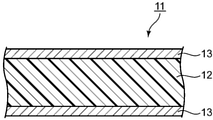
- FIG. 2 is a schematic cross-sectional view showing an example of a metal-clad laminate according to an embodiment of the present invention.
- FIG. 3 is a schematic cross-sectional view showing an example of a wiring board according to an embodiment of the present invention.
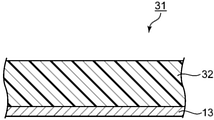
- FIG. 4 is a schematic cross-sectional view showing an example of a metal leaf with a resin according to an embodiment of the present invention.
- FIG. 5 is a schematic cross-sectional view showing an example of a film with a resin according to an embodiment of the present invention.
- the resin composition according to the embodiment of the present invention contains a polyphenylene ether compound, a curing agent capable of reacting with the polyphenylene ether compound, and an inorganic filler containing a boron nitride filler, and in the particle size distribution of the inorganic filler.
- a cured product having low dielectric properties, high thermal conductivity, and excellent peel strength can be obtained, and a resin composition can be obtained. Further, by using the resin composition, it is possible to provide a prepreg having excellent performance, a film with a resin, a metal foil with a resin, a metal-clad laminate, and a wiring board.
- the polyphenylene ether compound of the present embodiment is not particularly limited, but is preferably a modified polyphenylene ether compound from the viewpoint of lowering the dielectric property. More preferably, a polyphenylene ether compound having a group represented by the formula (1) or the formula (2) described later is more preferable. It is considered that the inclusion of such a polyphenylene ether compound provides a resin composition capable of obtaining a cured product having low dielectric properties and high heat resistance.
- s represents an integer of 0 to 10.
- Z represents an arylene group.
- R 1 to R 3 are independent of each other. That is, R 1 to R 3 may be the same group or different groups, respectively. Further, R 1 to R 3 indicate a hydrogen atom or an alkyl group.
- the above-mentioned Z allylene group is not particularly limited.
- the arylene group include a monocyclic aromatic group such as a phenylene group and a polycyclic aromatic group in which the aromatic is not a monocyclic but a polycyclic aromatic such as a naphthalene ring.
- the arylene group also includes a derivative in which the hydrogen atom bonded to the aromatic ring is replaced with a functional group such as an alkenyl group, an alkynyl group, a formyl group, an alkylcarbonyl group, an alkenylcarbonyl group, or an alkynylcarbonyl group. include.
- the alkyl group is not particularly limited, and for example, an alkyl group having 1 to 18 carbon atoms is preferable, and an alkyl group having 1 to 10 carbon atoms is more preferable. Specific examples thereof include a methyl group, an ethyl group, a propyl group, a hexyl group, a decyl group and the like.
- R 4 represents a hydrogen atom or an alkyl group.
- the alkyl group is not particularly limited, and for example, an alkyl group having 1 to 18 carbon atoms is preferable, and an alkyl group having 1 to 10 carbon atoms is more preferable. Specific examples thereof include a methyl group, an ethyl group, a propyl group, a hexyl group, a decyl group and the like.
- Preferred specific examples of the substituent represented by the above formula (1) include, for example, a substituent containing a vinylbenzyl group and the like.
- Examples of the substituent containing the vinylbenzyl group include a substituent represented by the following formula (6).
- Examples of the substituent represented by the formula (2) include an acrylate group and a methacrylate group.
- the substituent includes a vinylbenzyl group (ethenylbenzyl group) such as a p-ethenylbenzyl group and an m-ethenylbenzyl group, a vinylphenyl group, an acrylate group, a methacrylate group and the like. Can be mentioned.
- ethenylbenzyl group such as a p-ethenylbenzyl group and an m-ethenylbenzyl group
- a vinylphenyl group such as a p-ethenylbenzyl group and an m-ethenylbenzyl group
- a vinylphenyl group such as a p-ethenylbenzyl group and an m-ethenylbenzyl group
- a vinylphenyl group such as a p-ethenylbenzyl group and an m-ethenylbenzyl group
- a vinylphenyl group such as a
- the polyphenylene ether compound has a polyphenylene ether chain in the molecule, and for example, it is preferable that the repeating unit represented by the following formula (7) is contained in the molecule.
- t represents 1 to 50.
- R 5 to R 8 are independent of each other. That is, R 5 to R 8 may be the same group or different groups, respectively.
- R 5 to R 8 represent a hydrogen atom, an alkyl group, an alkenyl group, an alkynyl group, a formyl group, an alkylcarbonyl group, an alkenylcarbonyl group, or an alkynylcarbonyl group. Of these, a hydrogen atom and an alkyl group are preferable.
- R 5 ⁇ R 8 as each of the functional groups listed, and specific examples thereof include the following.
- the alkyl group is not particularly limited, but for example, an alkyl group having 1 to 18 carbon atoms is preferable, and an alkyl group having 1 to 10 carbon atoms is more preferable. Specific examples thereof include a methyl group, an ethyl group, a propyl group, a hexyl group, a decyl group and the like.
- the alkenyl group is not particularly limited, but for example, an alkenyl group having 2 to 18 carbon atoms is preferable, and an alkenyl group having 2 to 10 carbon atoms is more preferable. Specific examples thereof include a vinyl group, an allyl group, a 3-butenyl group and the like.
- the alkynyl group is not particularly limited, but for example, an alkynyl group having 2 to 18 carbon atoms is preferable, and an alkynyl group having 2 to 10 carbon atoms is more preferable. Specific examples thereof include an ethynyl group and a propa-2-in-1-yl group (propargyl group).
- the alkylcarbonyl group is not particularly limited as long as it is a carbonyl group substituted with an alkyl group, but for example, an alkylcarbonyl group having 2 to 18 carbon atoms is preferable, and an alkylcarbonyl group having 2 to 10 carbon atoms is more preferable. Specific examples thereof include an acetyl group, a propionyl group, a butyryl group, an isobutyryl group, a pivaloyl group, a hexanoyl group, an octanoyl group, a cyclohexylcarbonyl group and the like.
- the alkenylcarbonyl group is not particularly limited as long as it is a carbonyl group substituted with an alkenyl group, but for example, an alkenylcarbonyl group having 3 to 18 carbon atoms is preferable, and an alkenylcarbonyl group having 3 to 10 carbon atoms is more preferable. Specific examples thereof include an acryloyl group, a methacryloyl group, and a crotonoyl group.
- the alkynylcarbonyl group is not particularly limited as long as it is a carbonyl group substituted with an alkynyl group, but for example, an alkynylcarbonyl group having 3 to 18 carbon atoms is preferable, and an alkynylcarbonyl group having 3 to 10 carbon atoms is more preferable. Specifically, for example, a propioloyl group and the like can be mentioned.
- the weight average molecular weight (Mw) and the number average molecular weight (Mn) of the polyphenylene ether compound are not particularly limited. Specifically, it is preferably 500 to 5000, more preferably 800 to 4000, and even more preferably 1000 to 3000.
- the weight average molecular weight and the number average molecular weight may be those measured by a general molecular weight measuring method, and specific examples thereof include values measured by gel permeation chromatography (GPC). Be done.
- GPC gel permeation chromatography
- t has a weight average molecular weight and a number average molecular weight of the polyphenylene ether compound within such a range. It is preferable that the value is as follows. Specifically, t is preferably 1 to 50.
- the polyphenylene ether compound When the molecular weight of the polyphenylene ether compound is within such a range, the polyphenylene ether has excellent low-dielectric properties, and not only the heat resistance of the cured product is excellent, but also the moldability is excellent. This is considered to be due to the following.
- the weight average molecular weight and the number average molecular weight of ordinary polyphenylene ethers are within such a range, they have a relatively low molecular weight, and therefore the heat resistance of the cured product tends to decrease.
- the polyphenylene ether compound according to the present embodiment has one or more unsaturated double bonds at the ends, it is considered that a cured product having sufficiently high heat resistance can be obtained.
- the molecular weight of the polyphenylene ether compound is within such a range, it is considered to be excellent in moldability because it has a relatively low molecular weight. Therefore, it is considered that such a polyphenylene ether compound is not only excellent in heat resistance of the cured product but also excellent in moldability.
- the average number of substituents (number of terminal functional groups) at the molecular ends per molecule of the polyphenylene ether compound is not particularly limited. Specifically, the number is preferably 1 to 5, more preferably 1 to 3, and even more preferably 1.5 to 3. If the number of terminal functional groups is too small, it tends to be difficult to obtain sufficient heat resistance of the cured product. Further, if the number of terminal functional groups is too large, the reactivity becomes too high, and there is a possibility that problems such as deterioration of the storage stability of the resin composition and deterioration of the fluidity of the resin composition may occur. .. That is, when such a polyphenylene ether compound is used, molding defects such as voids generated during multi-layer molding occur due to insufficient fluidity, etc., and it is difficult to obtain a highly reliable printed wiring board. Problems may occur.
- the number of terminal functional groups of the polyphenylene ether compound may be a numerical value representing the average value of the substituents per molecule of all the modified polyphenylene ether compounds present in 1 mol of the polyphenylene ether compound.
- the number of terminal functional groups can be measured, for example, by measuring the number of hydroxyl groups remaining in the obtained modified polyphenylene ether compound and calculating the amount of decrease from the number of hydroxyl groups of the polyphenylene ether before modification. The decrease from the number of hydroxyl groups of the polyphenylene ether before this modification is the number of terminal functional groups.
- the method for measuring the number of hydroxyl groups remaining in the modified polyphenylene ether compound is to add a quaternary ammonium salt (tetraethylammonium hydroxide) associated with the hydroxyl group to the solution of the modified polyphenylene ether compound and measure the UV absorbance of the mixed solution. By doing so, it can be obtained.
- a quaternary ammonium salt tetraethylammonium hydroxide
- the intrinsic viscosity of the polyphenylene ether compound of this embodiment is not particularly limited. Specifically, it may be 0.03 to 0.12 dl / g, preferably 0.04 to 0.11 dl / g, and more preferably 0.06 to 0.095 dl / g. .. If this intrinsic viscosity is too low, the molecular weight tends to be low, and it tends to be difficult to obtain low dielectric constants such as low dielectric constant and low dielectric loss tangent. Further, if the intrinsic viscosity is too high, the viscosity is high, sufficient fluidity cannot be obtained, and the moldability of the cured product tends to decrease. Therefore, if the intrinsic viscosity of the polyphenylene ether compound is within the above range, excellent heat resistance and moldability of the cured product can be realized.
- the intrinsic viscosity here is the intrinsic viscosity measured in methylene chloride at 25 ° C., more specifically, for example, a 0.18 g / 45 ml methylene chloride solution (liquid temperature 25 ° C.) is used with a viscometer. These are the values measured in. Examples of this viscometer include AVS500 Visco System manufactured by Schott.
- polyphenylene ether compound of the present embodiment examples include a modified polyphenylene ether compound represented by the following formula (8), a modified polyphenylene ether compound represented by the following formula (9), and the like. Moreover, as the polyphenylene ether compound of this embodiment, these modified polyphenylene ether compounds may be used alone, or these two kinds of modified polyphenylene ether compounds may be used in combination.
- R 9 to R 16 and R 17 to R 24 are independently hydrogen atoms, alkyl groups, alkenyl groups, alkynyl groups, formyl groups, alkylcarbonyl groups, and alkenylcarbonyls. Indicates a group or an alkynylcarbonyl group.
- X 1 and X 2 each independently represent a substituent having a carbon-carbon unsaturated double bond.
- a and B represent repeating units represented by the following equations (10) and (11), respectively.
- Y represents a linear, branched, or cyclic hydrocarbon having 20 or less carbon atoms.
- R 25 to R 28 and R 29 to R 32 independently represent a hydrogen atom, an alkyl group, an alkenyl group, an alkynyl group, a formyl group, an alkylcarbonyl group, an alkenylcarbonyl group, or an alkynylcarbonyl group.
- the modified polyphenylene ether compound represented by the formula (8) and the modified polyphenylene ether compound represented by the formula (9) are not particularly limited as long as they satisfy the above constitution.
- R 9 to R 16 and R 17 to R 24 are independent of each other as described above. That is, R 9 to R 16 and R 17 to R 24 may be the same group or different groups, respectively.
- R 9 to R 16 and R 17 to R 24 indicate a hydrogen atom, an alkyl group, an alkenyl group, an alkynyl group, a formyl group, an alkylcarbonyl group, an alkenylcarbonyl group, or an alkynylcarbonyl group. Of these, a hydrogen atom and an alkyl group are preferable.
- m and n preferably represent 0 to 20, respectively, as described above. Further, it is preferable that m and n represent numerical values in which the total value of m and n is 1 to 30. Therefore, it is more preferable that m indicates 0 to 20, n indicates 0 to 20, and the total of m and n indicates 1 to 30. Further, R 25 to R 28 and R 29 to R 32 are independent of each other. That is, R 25 to R 28 and R 29 to R 32 may be the same group or different groups, respectively.
- R 25 to R 28 and R 29 to R 32 indicate a hydrogen atom, an alkyl group, an alkenyl group, an alkynyl group, a formyl group, an alkylcarbonyl group, an alkenylcarbonyl group, or an alkynylcarbonyl group. Of these, a hydrogen atom and an alkyl group are preferable.
- R 9 ⁇ R 32 are the same as R 5 ⁇ R 8 in the formula (7).
- Y is a linear, branched, or cyclic hydrocarbon having 20 or less carbon atoms, as described above.
- Examples of Y include a group represented by the following formula (12).
- R 33 and R 34 each independently represent a hydrogen atom or an alkyl group.
- the alkyl group include a methyl group and the like.
- the group represented by the formula (12) include a methylene group, a methylmethylene group, a dimethylmethylene group and the like, and among these, a dimethylmethylene group is preferable.
- X 1 and X 2 are substituents each independently having a carbon-carbon unsaturated double bond.
- the substituents X 1 and X 2 are not particularly limited as long as they are substituents having a carbon-carbon unsaturated double bond.
- Examples of the substituents X 1 and X 2 include a substituent represented by the above formula (1) and a substituent represented by the above formula (2).
- X 1 and X 2 may be the same substituent or are different. It may be a substituent.
- modified polyphenylene ether compound represented by the above formula (8) for example, a modified polyphenylene ether compound represented by the following formula (13) can be mentioned.
- modified polyphenylene ether compound represented by the formula (9) are, for example, a modified polyphenylene ether compound represented by the following formula (14) and a modified polyphenylene represented by the following formula (15).
- examples include ether compounds.
- m and n are the same as m and n in the above formula (10) and the above formula (11).
- R 1 to R 3 , p and Z are the same as R 1 to R 3 , s and Z in the above formula (1), respectively.
- Y is the same as Y in the above formula (9).
- R 4 is the same as R 4 in the above formula (2).
- the method for synthesizing the polyphenylene ether compound used in the present embodiment is not particularly limited as long as the polyphenylene ether compound terminally modified by the groups represented by the formulas (1) and / or the formula (2) can be synthesized. Specific examples thereof include a method of reacting a polyphenylene ether with a compound in which a substituent having a carbon-carbon unsaturated double bond and a halogen atom are bonded.
- Examples of the compound in which the substituent having a carbon-carbon unsaturated double bond and the halogen atom are bonded include the substituent represented by the above formulas (1), (2) and (6) and the halogen atom. Examples thereof include bound compounds. Specific examples of the halogen atom include a chlorine atom, a bromine atom, an iodine atom, and a fluorine atom, and among these, a chlorine atom is preferable. More specific examples of the compound in which a substituent having a carbon-carbon unsaturated double bond and a halogen atom are bonded include p-chloromethylstyrene and m-chloromethylstyrene.
- the polyphenylene ether as a raw material is not particularly limited as long as it can finally synthesize a predetermined modified polyphenylene ether compound.
- a polyphenylene ether composed of at least one of 2,6-dimethylphenol, bifunctional phenol and trifunctional phenol, and polyphenylene ether such as poly (2,6-dimethyl-1,4-phenylene oxide) can be used. Examples thereof include those having a main component.
- the bifunctional phenol is a phenol compound having two phenolic hydroxyl groups in the molecule, and examples thereof include tetramethylbisphenol A and the like.
- the trifunctional phenol is a phenol compound having three phenolic hydroxyl groups in the molecule.
- Examples of the method for synthesizing the polyphenylene ether compound of the present embodiment include the methods described above. Specifically, the above-mentioned polyphenylene ether and a compound in which a substituent having a carbon-carbon unsaturated double bond and a halogen atom are bonded are dissolved in a solvent and stirred. By doing so, the polyphenylene ether is reacted with the compound in which the substituent having a carbon-carbon unsaturated double bond and the halogen atom are bonded to obtain the polyphenylene ether compound used in the present embodiment.
- the alkali metal hydroxide functions as a dehalogenating agent, specifically, a dehydrochlorating agent. That is, the alkali metal hydroxide desorbs hydrogen halide from the phenol group of the polyphenylene ether and the compound in which the substituent having a carbon-carbon unsaturated double bond and the halogen atom are bonded to do so. Thereby, it is considered that the substituent having a carbon-carbon unsaturated double bond is bonded to the oxygen atom of the phenol group instead of the hydrogen atom of the phenol group of the polyphenylene ether.
- the alkali metal hydroxide is not particularly limited as long as it can act as a dehalogenating agent, and examples thereof include sodium hydroxide. Further, the alkali metal hydroxide is usually used in the state of an aqueous solution, and specifically, it is used as an aqueous solution of sodium hydroxide.
- Reaction conditions such as reaction time and reaction temperature differ depending on the compound or the like in which a substituent having a carbon-carbon unsaturated double bond and a halogen atom are bonded, and the above-mentioned reaction may proceed favorably.
- the reaction temperature is preferably room temperature to 100 ° C, more preferably 30 to 100 ° C.
- the reaction time is preferably 0.5 to 20 hours, more preferably 0.5 to 10 hours.
- the solvent used in the reaction can dissolve the polyphenylene ether and the compound in which the substituent having a carbon-carbon unsaturated double bond and the halogen atom are bonded, and the polyphenylene ether and the carbon-carbon unsaturated double bond can be dissolved. It is not particularly limited as long as it does not inhibit the reaction between the substituent having a bond and the compound to which the halogen atom is bonded. Specific examples thereof include toluene and the like.
- the above reaction is preferably carried out in the presence of not only the alkali metal hydroxide but also the phase transfer catalyst. That is, the above reaction is preferably carried out in the presence of an alkali metal hydroxide and a phase transfer catalyst. By doing so, it is considered that the above reaction proceeds more preferably. This is considered to be due to the following.
- the phase transfer catalyst has the function of taking up alkali metal hydroxide and is soluble in both the phase of a polar solvent such as water and the phase of a non-polar solvent such as an organic solvent. It is thought that it is a catalyst that can move.
- aqueous sodium hydroxide solution when used as the alkali metal hydroxide and an organic solvent such as toluene, which is incompatible with water, is used as the solvent, the aqueous sodium hydroxide solution is subjected to the reaction. It is considered that the solvent and the aqueous sodium hydroxide solution are separated even when the solution is added dropwise to the solvent, and it is difficult for the sodium hydroxide to transfer to the solvent. In that case, it is considered that the sodium hydroxide aqueous solution added as the alkali metal hydroxide is less likely to contribute to the reaction promotion.
- the reaction when the reaction is carried out in the presence of the alkali metal hydroxide and the phase transfer catalyst, the alkali metal hydroxide is transferred to the solvent in a state of being incorporated into the phase transfer catalyst, and the sodium hydroxide aqueous solution reacts. It is thought that it will be easier to contribute to promotion. Therefore, it is considered that the above reaction proceeds more preferably when the reaction is carried out in the presence of an alkali metal hydroxide and a phase transfer catalyst.
- phase transfer catalyst is not particularly limited, and examples thereof include quaternary ammonium salts such as tetra-n-butylammonium bromide.
- the resin composition used in this embodiment preferably contains the modified polyphenylene ether compound obtained as described above as the polyphenylene ether compound.
- the resin composition of the present embodiment further contains a curing agent capable of reacting with the polyphenylene ether compound.
- the curing agent is not particularly limited as long as it is a curing agent capable of reacting with the polyphenylene ether compound to cure the resin composition containing the polyphenylene ether compound.
- the curing agent include a curing agent having at least one functional group in the molecule that contributes to the reaction with the polyphenylene ether compound.
- a compound having two or more unsaturated double bonds in the molecule can be mentioned. More specifically, a styrene derivative, a compound having an acryloyl group in the molecule, a compound having a methacryloyl group in the molecule, a compound having a vinyl group in the molecule, a compound having an allyl group in the molecule, and a maleimide group in the molecule. Examples thereof include a compound having an acenaphthalene structure in the molecule, an isocyanurate compound having an isocyanurate group in the molecule, and the like.
- styrene derivative examples include bromostyrene and dibromostyrene.
- the compound having an acryloyl group in the molecule is an acrylate compound.
- the acrylate compound include a monofunctional acrylate compound having one acryloyl group in the molecule and a polyfunctional acrylate compound having two or more acryloyl groups in the molecule.
- the monofunctional acrylate compound include methyl acrylate, ethyl acrylate, propyl acrylate, and butyl acrylate.
- Examples of the polyfunctional acrylate compound include tricyclodecanedimethanol diacrylate and the like.
- the compound having a methacryloyl group in the molecule is a methacrylate compound.
- the methacrylate compound include a monofunctional methacrylate compound having one methacryloyl group in the molecule and a polyfunctional methacrylate compound having two or more methacryloyl groups in the molecule.
- the monofunctional methacrylate compound include methyl methacrylate, ethyl methacrylate, propyl methacrylate, butyl methacrylate and the like.
- Examples of the polyfunctional methacrylate compound include tricyclodecanedimethanol dimethacrylate and the like.
- the compound having a vinyl group in the molecule is a vinyl compound.
- the vinyl compound include a monofunctional vinyl compound (monovinyl compound) having one vinyl group in the molecule and a polyfunctional vinyl compound having two or more vinyl groups in the molecule.
- the polyfunctional vinyl compound include divinylbenzene and polybutadiene.
- the compound having an allyl group in the molecule is an allyl compound.
- the allyl compound include a monofunctional allyl compound having one allyl group in the molecule and a polyfunctional allyl compound having two or more allyl groups in the molecule.
- the polyfunctional allyl compound include diallyl phthalate (DAP) and the like.
- the compound having a maleimide group in the molecule is a maleimide compound.
- the maleimide compound include a monofunctional maleimide compound having one maleimide group in the molecule, a polyfunctional maleimide compound having two or more maleimide groups in the molecule, and a modified maleimide compound.
- the modified maleimide compound include a modified maleimide compound in which a part of the molecule is modified with an amine compound, a modified maleimide compound in which a part of the molecule is modified with a silicone compound, and a part of the molecule of amine. Examples thereof include a modified maleimide compound modified with a compound and a silicone compound.
- the compound having an acenaphthylene structure in the molecule is an acenaphthylene compound.
- the acenaphthylene compound include acenaphthylene, alkylacenaphthylenes, halogenated acenaphthylenes, and phenylacenaphthylenes.
- the alkyl acenaftylenes include 1-methylacenaftylene, 3-methylacenaftylene, 4-methylacenaftylene, 5-methylacenaftylene, 1-ethylacenaftylene, and 3-ethylacena.
- Examples thereof include phthalene, 4-ethylacenaftylene, 5-ethylacenaftylene and the like.
- Examples of the halogenated asenaftylenes include 1-chloroacenaftylene, 3-chloroacenaftylene, 4-chloroacenaftylene, 5-chloroacenaftylene, 1-bromoacenaftylene, and 3-bromoacenafuchi. Examples thereof include len, 4-bromoacenaftylene, 5-bromoacenaftylene and the like.
- phenylacenaftylenes examples include 1-phenylacenaftylene, 3-phenylacenaftylene, 4-phenylacenaftylene, 5-phenylacenaftylene and the like.
- the acenaphthylene compound may be a monofunctional acenaphthylene compound having one acenaphthylene structure in the molecule as described above, or a polyfunctional acenaphthylene compound having two or more acenaphthylene structures in the molecule. ..
- the compound having an isocyanurate group in the molecule is an isocyanurate compound.
- the isocyanurate compound include compounds having an alkenyl group in the molecule (alkenyl isocyanurate compound), and examples thereof include trialkenyl isocyanurate compounds such as triallyl isocyanurate (TAIC).
- the curing agent used in the present embodiment is, for example, a polyfunctional acrylate compound having two or more acryloyl groups in the molecule, a polyfunctional methacrylate compound having two or more methacryloyl groups in the molecule, and the molecule.
- Isocyanurate compounds having a nurate group are preferred.
- the curing agent may be used alone or in combination of two or more.
- the curing agent preferably has a weight average molecular weight of 100 to 5000, more preferably 100 to 4000, and even more preferably 100 to 3000. If the weight average molecular weight of the curing agent is too low, the curing agent may easily volatilize from the compounding component system of the resin composition. Further, if the weight average molecular weight of the curing agent is too high, the viscosity of the varnish of the resin composition and the melt viscosity at the time of heat molding may become too high. Therefore, when the weight average molecular weight of the curing agent is within such a range, a resin composition having better heat resistance of the cured product can be obtained.
- the resin composition containing the polyphenylene ether compound can be suitably cured by the reaction with the polyphenylene ether compound.
- the weight average molecular weight may be measured by a general molecular weight measuring method, and specific examples thereof include values measured by gel permeation chromatography (GPC).
- the average number (number of functional groups) of the functional groups contributing to the reaction of the curing agent with the polyphenylene ether compound per molecule of the curing agent varies depending on the weight average molecular weight of the curing agent, and is, for example, 1 to 20.
- the number is preferably 2, and more preferably 2 to 18. If the number of functional groups is too small, it tends to be difficult to obtain sufficient heat resistance of the cured product. Further, if the number of functional groups is too large, the reactivity becomes too high, and there is a possibility that problems such as deterioration of the storage stability of the resin composition and deterioration of the fluidity of the resin composition may occur.
- the resin composition according to the present embodiment further contains an inorganic filler containing boron nitride.
- the boron nitride can be used as an inorganic filler contained in the resin composition, and is not particularly limited as long as it satisfies the regulations of the particle size distribution described later.
- Examples of the boron nitride include a hexagonal normal pressure phase (h-BN) and a cubic high pressure phase (c-BN).
- the particle size distribution is a value measured by particle size distribution measurement by a laser diffraction / scattering method, and is, for example, a wet particle size distribution measuring device manufactured by Shimadzu Corporation (“SALD-2100”) used in Examples described later. ”) And so on.
- SALD-2100 a wet particle size distribution measuring device manufactured by Shimadzu Corporation
- the peak refers to the maximum value in the graph of the particle size distribution, specifically, the graph of the particle size distribution when the horizontal axis is the particle size and the vertical axis is the relative particle amount (frequency). It is a numerical value obtained by the maximum value in.
- the integrated ratio of the particles having a particle size in the range of 0.1 to 5.0 ⁇ m is 20 to 80% with respect to the entire particle size distribution of the inorganic filler, and the particles having a particle size of 5.0 to 150.0 ⁇ m.
- the integration ratio is preferably 20 to 80%.
- the integrated ratio (%) of each of these is a value obtained by calculating from the integrated value of the relative particle amount in each particle size range.
- the boron nitride contained in the inorganic filler of the present embodiment can be obtained by performing energy dispersive X-ray analysis (EDX analysis observation) on a vertical cross-sectional view of a cured product of the resin composition of the present embodiment.
- EDX analysis observation energy dispersive X-ray analysis
- the longest length from one end to the other of the boron nitride is in the range of 3 to 30 with a length of 10 ⁇ m or more and 50 ⁇ m or less. Is more preferable. This has the advantage that the copper foil peel strength can be ensured while maintaining high thermal conductivity.
- the resin composition of the present embodiment may contain only the boron nitride, or may contain an inorganic filler other than the boron nitride.
- the particle size of the boron nitride and the particle size of the inorganic filler other than the boron nitride are adjusted so that the particle size distribution of the inorganic filler satisfies the above-mentioned regulations. You may.
- the inorganic filler other than the boron nitride is not particularly limited as long as it can be used as an inorganic filler contained in the resin composition.
- Examples of the inorganic filler other than boron nitride include metal oxides such as silica, alumina, titanium oxide, magnesium oxide and mica, metal hydroxides such as aluminum hydroxide and magnesium hydroxide, talc and aluminum borate. , Magnesium carbonate such as barium sulfate, aluminum nitride, silicon nitride, anhydrous magnesium carbonate, calcium carbonate and the like.
- silica, anhydrous magnesium carbonate, alumina, silicon nitride and the like are preferable as the inorganic filler other than the boron nitride.
- the silica is not particularly limited, and examples thereof include crushed silica and silica particles, and silica particles are preferable.
- the magnesium carbonate is not particularly limited, but anhydrous magnesium carbonate (synthetic magnesite) is preferable.
- the inorganic filler other than the boron nitride may be a surface-treated inorganic filler or an unsurface-treated inorganic filler.
- examples of the surface treatment include treatment with a silane coupling agent.
- silane coupling agent examples include a silane coupling agent having at least one functional group selected from the group consisting of a vinyl group, a styryl group, a methacryloyl group, an acryloyl group, and a phenylamino group. That is, this silane coupling agent has at least one of a vinyl group, a styryl group, a methacryloyl group, an acryloyl group, and a phenylamino group as a reactive functional group, and further contains a methoxy group, an ethoxy group, and the like. Examples thereof include compounds having a hydrolyzable group.
- silane coupling agent having a vinyl group examples include vinyltriethoxysilane and vinyltrimethoxysilane.
- silane coupling agent having a styryl group examples include p-styryltrimethoxysilane and p-styryltriethoxysilane.
- silane coupling agent examples include those having a methacryloyl group, such as 3-methacryloxypropyltrimethoxysilane, 3-methacryloxypropylmethyldimethoxysilane, 3-methacryloxypropyltriethoxysilane, and 3-methacryloxypropylmethyl.
- Examples thereof include diethoxysilane and 3-methacryloxypropyl ethyldiethoxysilane.
- Examples of the silane coupling agent having an acryloyl group include 3-acryloxypropyltrimethoxysilane and 3-acryloxypropyltriethoxysilane.
- Examples of the silane coupling agent having a phenylamino group include N-phenyl-3-aminopropyltrimethoxysilane and N-phenyl-3-aminopropyltriethoxysilane.
- the content of the boron nitride in the inorganic filler is 25 to 25 to 100 parts by volume of the inorganic filler. It is preferably 80 parts by volume. As a result, it is considered that high thermal conductivity can be achieved more reliably. A more preferable range is 30 to 70 parts by volume.
- the average particle size of the boron nitride and / or the average particle size of the inorganic filler other than the boron nitride described satisfies the above-mentioned regulation by the particle size distribution of the inorganic filler of the present embodiment. As long as it is within such a range, there is no particular limitation.
- the peak of the particle size distribution as described above is not only present in the particle size range of 0.8 to 5.0 ⁇ m and the particle size in the range of 5.0 to 30.0 ⁇ m, but is further different.
- a third peak may be present in the particle size range of. In that case, the third peak preferably exists in the particle size range of 0.1 to 0.8 ⁇ m.
- the resin composition of the present embodiment preferably contains the boron nitride and silica as the inorganic filler.
- the particle size distribution of the inorganic filler containing boron nitride and silica at least three peaks of the particle size distribution measured by the laser diffraction type particle size distribution measurement method exist in the range of 0.8 to 30.0 ⁇ m. However, at least one of these peaks is present in the particle size range of 0.8 to 5.0 ⁇ m, at least one in the particle size range of 5.0 to 30.0 ⁇ m, and at least one in the particle size range of 0.1 to 0.8 ⁇ m. It is more preferable to do so.
- the particle size distribution of the inorganic filler of the present embodiment has at least three peaks, but by containing boron nitride having at least two different particle sizes and silica, the particle size distribution is described. It is preferable to adjust. It is considered that such a configuration further has an advantage that the filler having high thermal conductivity is uniformly dispersed in the resin component to improve the thermal conductivity.
- the resin composition of the present embodiment may further contain a styrene-based polymer in addition to the components as described above. It is considered that the inclusion of the styrene-based polymer has an advantage of further lowering the dielectric constant of the cured resin composition.
- the styrene-based polymer used in the present embodiment is, for example, a polymer obtained by polymerizing a monomer containing a styrene-based monomer, and may be a styrene-based copolymer. Further, as the styrene-based copolymer, for example, one or more kinds of styrene-based monomers and one or more kinds of other monomers copolymerizable with the styrene-based monomers are copolymerized. Examples thereof include the obtained copolymer. Examples of the styrene-based monomer include styrene, styrene derivatives, and those in which a part of hydrogen atom of styrene is substituted with a substituent.
- styrene-based polymer As the specific styrene-based polymer, conventionally known ones can be widely used, and are not particularly limited, but for example, a structural unit represented by the following formula (3) (structure derived from a styrene-based monomer) can be contained in the molecule. Examples thereof include the polymer contained in.
- R 35 to R 37 each independently represent a hydrogen atom or an alkyl group
- R 38 is selected from the group consisting of a hydrogen atom, an alkyl group, an alkenyl group, and an isopropenyl group. Shows the group.
- the alkyl group is not particularly limited, and for example, an alkyl group having 1 to 18 carbon atoms is preferable, and an alkyl group having 1 to 10 carbon atoms is more preferable.
- the alkenyl group is preferably an alkenyl group having 1 to 10 carbon atoms. Specific examples thereof include a methyl group, an ethyl group, a propyl group, a hexyl group, a decyl group and the like.
- the styrene-based polymer of the present embodiment preferably contains at least one structural unit represented by the above formula (3), but may contain two or more different types in combination. Further, it is preferable to include a structure in which the structural unit represented by the above formula (3) is repeated.
- the styrene-based polymer of the present embodiment has the following formula (4), as another monomer copolymerizable with the styrene-based monomer, in addition to the structural unit represented by the above formula (3). It may have at least one of a repeating structure in which the structural units represented by (17) and (18) and the structural units represented by the formulas (4), (17) and (18) are repeated. ..
- R 39 to R 56 are independently selected from the group consisting of a hydrogen atom, an alkyl group, an alkenyl group, and an isopropenyl group. Indicates either group.
- the alkyl group is not particularly limited, and for example, an alkyl group having 1 to 18 carbon atoms is preferable, and an alkyl group having 1 to 10 carbon atoms is more preferable. Specific examples thereof include a methyl group, an ethyl group, a propyl group, a hexyl group, a decyl group and the like.
- the alkenyl group is preferably an alkenyl group having 1 to 10 carbon atoms.
- the styrene-based polymer of the present embodiment preferably contains at least one structural unit represented by the above formulas (4), (17) and (18), and two or more of these are different. May be included in combination. Further, it may include a structure in which the structural units represented by the above formulas (4), (17) and / or the formula (18) are repeated.
- the structural unit represented by the above formula (3) more specifically, for example, the structural unit represented by the following formulas (19) to (21) and the structural units represented by the formulas (19) to (21) are represented. Examples thereof include a structure in which the structural units to be formed are repeated.
- the styrene-based polymer of the present embodiment is not particularly limited, but preferably has one or more selected from a repeating structure in which the structural units represented by the formulas (19) to (21) are repeated. ..
- the structural unit represented by the above formula (4) includes, for example, the structural units represented by the following formulas (5), (22) to (27), and formulas (22) to (27). Examples thereof include a structure in which the structural units represented by are repeated.
- the structure is not particularly limited, but is preferably the structure represented by the formulas (5), (22) to (27). It is preferable to have one or more selected from a group of repeating structures in which each unit is repeated, and it is more preferable to include the formula (5).
- the structural unit represented by the above formula (17) more specifically, for example, the structural unit represented by the following formulas (28) to (29) and the structural units represented by the formulas (28) to (29) are represented. Examples thereof include a structure in which the structural units to be formed are repeated.
- the styrene-based polymer of the present embodiment contains the structural unit of the above formula (17), it is not particularly limited, but preferably, it has a repeating structure in which the structural units represented by the formulas (28) to (29) are repeated. It is preferable to have one or more selected from the group of.
- the structural unit represented by the above formula (18) more specifically, for example, the structural unit represented by the following formulas (30) to (31) and the structural units represented by the formulas (30) to (31) are represented.
- An example is a structure in which the structural units to be formed are repeated.
- the styrene-based polymer of the present embodiment contains the structural unit of the formula (18), it is not particularly limited, but preferably, it has a repeating structure in which the structural units represented by the formulas (30) to (31) are repeated. It is preferable to have one or more selected from the group.
- styrene-based polymer is obtained by polymerizing or copolymerizing one or more of styrene-based monomers such as styrene, vinyl toluene, ⁇ -methylstyrene, isopropenyltoluene, divinylbenzene, and allylstyrene.
- styrene-based monomers such as styrene, vinyl toluene, ⁇ -methylstyrene, isopropenyltoluene, divinylbenzene, and allylstyrene.
- examples include polymers or copolymers. More specifically, styrene-butadiene copolymer, styrene-isobutylene copolymer and the like can be mentioned.
- styrene-based polymer for example, a hydrogenated methylstyrene (ethylene / butylene) methylstyrene copolymer and a hydrogenated methylstyrene (ethylene-ethylene / propylene) methylstyrene.
- styrene-based polymer for example, a hydrogenated methylstyrene (ethylene / butylene) methylstyrene copolymer and a hydrogenated methylstyrene (ethylene-ethylene / propylene) methylstyrene.
- the above-exemplified one may be used alone, or two or more kinds thereof may be used in combination.
- the styrene-based polymer of the preferred embodiment contains at least one of the structural units represented by the formulas (19) to (21), the molar fraction of the structural unit is 10 with respect to the entire polymer. It is preferably about 70%, more preferably 15 to 65%. As a result, there is a further advantage that the uniformity of the characteristics inside the resin composition is maintained because the compatibility with the resin is maintained.
- the polymerization form of the styrene-based polymer is not particularly limited, and may be a block copolymer, an alternate copolymer, a random copolymer, a graft copolymer, or the like. It may also be in the form of an elastomer.
- the weight average molecular weight and the number average molecular weight of the styrene-based polymer of the present embodiment are preferably about 10,000 to 200,000, more preferably about 20,000 to 150,000.
- the average molecular weight is in the above range, there is an advantage that appropriate resin fluidity can be ensured in the B stage of the cured resin product.
- the weight average molecular weight and the number average molecular weight may be those measured by a general molecular weight measuring method, and specific examples thereof include values measured by gel permeation chromatography.
- the styrene-based polymer preferably contains a styrene-isobutylene-styrene-based block copolymer (SIBS) containing a structural unit represented by the following formula (16).
- SIBS styrene-isobutylene-styrene-based block copolymer
- equation (16) the sum of a1 and a2 represents an integer of 1,000 to 60,000, b represents an integer of 1,000 to 70,000, and the sum of a1, a2 and b is 10, It indicates 000 to 130,000.
- the method for producing the styrene-based polymer used in the present embodiment is not particularly limited.
- isobutylene is polymerized by the living cationic polymerization method, and then styrene is continuously added. It can be synthesized by polymerizing.
- styrene-based polymers of the present embodiment can also be used.
- SIBSTAR registered trademark
- SIBSTAR registered trademark
- 103T registered trademark
- SIBSTAR registered trademark
- Kaneka Corporation can be used.
- 102T “ Septon V9827 ”manufactured by Kuraray Corporation, and the like.
- the content of the polyphenylene ether compound is 100 parts by mass in total of the polyphenylene ether compound, the curing agent, and (when the styrene-based polymer is contained, the styrene-based polymer).
- it is preferably 50 to 90 parts by mass, more preferably 55 to 85 parts by mass, and further preferably 60 to 80 parts by mass. That is, the content of the polyphenylene ether compound is preferably 50 to 90% by mass with respect to the components other than the inorganic filler in the resin composition.
- the content of the polyphenylene ether compound is within the above range, it is considered that a resin composition capable of obtaining a cured product having low dielectric properties and high heat resistance can be obtained more reliably.
- the content of the curing agent is 100 parts by mass in total of the polyphenylene ether compound, the curing agent and (in the case of containing the styrene-based polymer, the styrene-based polymer) in the resin composition. It is preferably 10 to 40 parts by mass, and more preferably 15 to 35 parts by mass. When the content of the curing agent is within the above range, the resin composition is more excellent in heat resistance of the cured product. It is considered that this is because the curing reaction between the resin component of the present embodiment and the curing agent proceeds favorably.
- the content of the inorganic filler in the resin composition of the present embodiment is 100 in total of the polyphenylene ether compound, the curing agent, and the inorganic filler (when the styrene-based polymer is contained, the styrene-based polymer). It is 20 to 60 parts by volume with respect to the volume part.
- the content of the inorganic filler (filler content) is preferably 20 to 60 parts by volume with respect to 100 parts by volume of the resin composition. A more preferable content is 25 to 55 parts by volume. If the content is less than 20 parts by volume, sufficient thermal conductivity cannot be obtained, while if it exceeds 60 parts by volume, the moldability is considered to be deteriorated. That is, when the content of the inorganic filler is within the above range, a cured product having high thermal conductivity can be obtained, and a resin composition having excellent moldability can be provided.
- the content of the boron nitride in the resin composition of the present embodiment includes the resin component (including the polyphenylene ether compound, the curing agent, and the styrene-based polymer when it is contained). It is preferably 15 to 30 parts by volume with respect to 100 parts by volume in total with the inorganic filler. As a result, it is considered that high thermal conductivity can be obtained more reliably.
- the content of the inorganic filler other than the boron nitride in the resin composition is a resin component (the polyphenylene ether compound, the curing).
- the agent and the styrene-based polymer are contained, the total amount is 5 to 40 parts by volume, more preferably 15 to 40 parts by volume, based on 100 parts by volume of the total of the styrene-based polymer) and the inorganic filler. It is more preferably 30 parts by volume.
- the content of the styrene-based polymer is the polyphenylene ether compound, the curing agent, and the styrene-based polymer in the resin composition. It is preferably 5 to 25 parts by mass, and more preferably 10 to 20 parts by mass with respect to 100 parts by mass in total.
- the resin composition according to the present embodiment may contain components (other components) other than the above-mentioned components, if necessary, as long as the effects of the present invention are not impaired.
- Other components contained in the resin composition according to the present embodiment include, for example, a reaction initiator, a silane coupling agent, a flame retardant, a defoaming agent, an antioxidant, a heat stabilizer, an antistatic agent, and ultraviolet absorption. Additives such as agents, dyes and pigments, dispersants and lubricants may be further included.
- the resin composition of the present embodiment contains other heats such as epoxy resin, maleimide resin, aromatic hydrocarbon resin, and aliphatic hydrocarbon resin. It may contain a curable resin.
- the resin composition according to the present embodiment may contain a reaction initiator (initiator). Even if the resin composition contains the polyphenylene ether compound, the curing agent, and the polymer, the curing reaction can proceed. However, depending on the process conditions, it may be difficult to raise the temperature until curing progresses, so a reaction initiator may be added.
- a reaction initiator may be added.
- the reaction initiator is not particularly limited as long as it can accelerate the curing reaction of the resin composition. Specific examples thereof include metal oxides, azo compounds, organic peroxides and the like.
- metal oxide examples include a carboxylic acid metal salt and the like.
- organic peroxide examples include ⁇ , ⁇ '-di (t-butylperoxy) diisopropylbenzene, 2,5-dimethyl-2,5-di (t-butylperoxy) -3-hexine, and benzoyl peroxide. 3,3', 5,5'-tetramethyl-1,4-diphenoquinone, chloranyl, 2,4,6-tri-t-butylphenoxyl, t-butylperoxyisopropyl monocarbonate, azobisisobutyronitrile, etc. Can be mentioned.
- azo compound examples include 2,2'-azobis (2,4,4-trimethylpentane), 2,2'-azobis (N-butyl-2-methylpropionamide), and 2,2'-.
- examples thereof include azobis (2-methylbutyronitrile).
- reaction initiators are 2,2'-azobis (2,4,4-trimethylpentane), 2,2'-azobis (N-butyl-2-methylpropionamide) and the like. These reaction initiators have a small effect on the dielectric properties. Further, since the reaction start temperature is relatively high, it is possible to suppress the promotion of the curing reaction at a time when curing is not necessary, such as during prepreg drying, and it is possible to suppress the deterioration of the storage stability of the resin composition. This is because it has the advantage of being able to do it.
- reaction initiator as described above may be used alone or in combination of two or more.
- the content thereof is not particularly limited, but for example, with respect to a total of 100 parts by mass of the polyphenylene ether compound, the curing agent and the styrene-based polymer.
- the amount is preferably 0.5 to 2.0 parts by mass, more preferably 0.8 to 1.5 parts by mass, and even more preferably 0.9 to 1.0 parts by mass.
- the method for producing the resin composition is not particularly limited, and for example, a method of mixing the polyphenylene ether compound, the curing agent, and other organic components as necessary, and then adding an inorganic filler and the like. Can be mentioned. Specifically, in the case of obtaining a varnish-like composition containing an organic solvent, the method described in the description of the prepreg described later may be mentioned.
- a prepreg, a metal-clad laminate, a wiring plate, a metal foil with a resin, and a film with a resin can be obtained as follows.
- the cured product of the resin composition preferably has a thermal conductivity of 1.0 W / m ⁇ K or more and a relative permittivity of 4.0 or less at a frequency of 10 GHz.
- a thermal conductivity of 1.0 W / m ⁇ K or more and a relative permittivity of 4.0 or less at a frequency of 10 GHz As described above, by using the resin composition of the present embodiment, it is possible to achieve both high thermal conductivity and low dielectric properties in the cured product, and also to achieve high peel strength.
- FIG. 1 is a schematic cross-sectional view showing an example of a prepreg 1 according to an embodiment of the present invention.
- each reference numeral is 1 prepreg, 2 resin composition or semi-cured product of resin composition, 3 fibrous base material, 11 metal-clad laminate, 12 insulating layer, 13 metal foil, 14 wiring. , 21 wiring board, 31 metal foil with resin, 32, 42 resin layer, 41 film with resin, 43 support film.
- the prepreg 1 includes the resin composition or the semi-cured product 2 of the resin composition, and the fibrous base material 3.
- the prepreg 1 includes the resin composition or the semi-cured product 2 of the resin composition, and the fibrous base material 3 present in the resin composition or the semi-cured product 2 of the resin composition.
- the semi-cured product is a state in which the resin composition is partially cured to the extent that it can be further cured. That is, the semi-cured product is a semi-cured (B-staged) resin composition. For example, when the resin composition is heated, the viscosity gradually decreases first, then the curing starts, and then the curing starts, and the viscosity gradually increases. In such a case, the semi-curing state includes a state between the time when the viscosity starts to increase and the time before it is completely cured.
- the prepreg obtained by using the resin composition according to the present embodiment may include the semi-cured product of the resin composition as described above, or the uncured resin. It may include the composition itself. That is, it may be a prepreg comprising a semi-cured product of the resin composition (the resin composition of the B stage) and a fibrous base material, or the resin composition before curing (the resin composition of the A stage). It may be a prepreg including a thing) and a fibrous base material. Further, the resin composition or the semi-cured product of the resin composition may be a dried or heat-dried resin composition.
- the resin composition 2 When producing a prepreg, the resin composition 2 is often prepared and used in the form of a varnish in order to impregnate the fibrous base material 3 which is a base material for forming the prepreg. That is, the resin composition 2 is usually a resin varnish prepared in the form of a varnish.
- a varnish-like resin composition (resin varnish) is prepared, for example, as follows.
- each component of the composition of the resin composition that can be dissolved in the organic solvent is put into the organic solvent and dissolved. At this time, heating may be performed if necessary. Then, if necessary, a component that does not dissolve in an organic solvent (for example, an inorganic filler) is added, and the mixture is dispersed until a predetermined dispersion state is obtained using a ball mill, a bead mill, a planetary mixer, a roll mill, or the like. By allowing the resin composition to be prepared, a varnish-like resin composition is prepared.
- the organic solvent used here is not particularly limited as long as it dissolves the modified polyphenylene ether compound, the curing agent and the like and does not inhibit the curing reaction. Specific examples thereof include toluene, methyl ethyl ketone (MEK) and the like.
- the method for producing the prepreg is not particularly limited as long as the prepreg can be produced. Specifically, when producing a prepreg, the resin composition used in the present embodiment described above is often prepared in the form of a varnish and used as a resin varnish as described above.
- the fibrous substrate include glass cloth, aramid cloth, polyester cloth, glass non-woven fabric, aramid non-woven fabric, polyester non-woven fabric, pulp paper, and linter paper.
- a glass cloth is used, a laminated board having excellent mechanical strength can be obtained, and a flattened glass cloth is particularly preferable.
- Specific examples of the flattening process include a method in which a glass cloth is continuously pressed with a press roll at an appropriate pressure to flatten the yarn.
- the thickness of the generally used fibrous base material is, for example, 0.01 mm or more and 0.3 mm or less.
- the method for producing the prepreg is not particularly limited as long as the prepreg can be produced. Specifically, when producing a prepreg, the resin composition according to the present embodiment described above is often prepared in the form of a varnish and used as a resin varnish as described above.
- Examples of the method for producing the prepreg 1 include a method in which the resin composition 2, for example, the resin composition 2 prepared in the form of a varnish is impregnated into the fibrous base material 3 and then dried.
- the resin composition 2 is impregnated into the fibrous base material 3 by dipping, coating or the like. It is also possible to repeat impregnation multiple times as needed. Further, at this time, it is also possible to finally adjust the desired composition and impregnation amount by repeating impregnation using a plurality of resin compositions having different compositions and concentrations.
- the fibrous base material 3 impregnated with the resin composition (resin varnish) 2 is heated under desired heating conditions, for example, 80 ° C. or higher and 180 ° C. or lower for 1 minute or more and 10 minutes or less.
- desired heating conditions for example, 80 ° C. or higher and 180 ° C. or lower for 1 minute or more and 10 minutes or less.
- prepreg 1 before curing (A stage) or in a semi-cured state (B stage) is obtained.
- the heating can volatilize the organic solvent from the resin varnish to reduce or remove the organic solvent.
- the prepreg comprising the resin composition according to the present embodiment or the semi-cured product of this resin composition is a prepreg from which a cured product having low dielectric properties, high thermal conductivity, and excellent peel strength can be preferably obtained.
- FIG. 2 is a schematic cross-sectional view showing an example of the metal-clad laminate 11 according to the embodiment of the present invention.
- the metal-clad laminate 11 is composed of an insulating layer 12 containing a cured product of the prepreg 1 shown in FIG. 1 and a metal foil 13 laminated together with the insulating layer 12. That is, the metal-clad laminate 11 has an insulating layer 12 containing a cured product of the resin composition, and a metal foil 13 provided on the insulating layer 12. Further, the insulating layer 12 may be made of a cured product of the resin composition or may be made of a cured product of the prepreg. Further, the thickness of the metal foil 13 varies depending on the performance and the like required for the finally obtained wiring board, and is not particularly limited.
- the thickness of the metal foil 13 can be appropriately set according to a desired purpose, and is preferably 0.2 to 70 ⁇ m, for example.
- Examples of the metal foil 13 include a copper foil and an aluminum foil.
- the metal foil 13 is a copper foil with a carrier provided with a release layer and a carrier for improving handleability. May be good.
- the method for manufacturing the metal-clad laminate 11 is not particularly limited as long as the metal-clad laminate 11 can be manufactured. Specifically, a method of manufacturing the metal-clad laminate 11 using the prepreg 1 can be mentioned. In this method, one or a plurality of prepregs 1 are stacked, and further, a metal foil 13 such as a copper foil is laminated on both upper and lower surfaces or one side thereof, and the metal foil 13 and the prepreg 1 are heat-pressed and integrated. By doing so, a method of manufacturing a laminated plate 11 covered with double-sided metal leaf or single-sided metal leaf can be mentioned. That is, the metal-clad laminate 11 is obtained by laminating a metal foil 13 on a prepreg 1 and heat-pressing molding.
- the heating and pressurizing conditions can be appropriately set depending on the thickness of the metal-clad laminate 11 to be manufactured, the type of the composition of the prepreg 1, and the like.
- the temperature can be 170 to 210 ° C.
- the pressure can be 3.5 to 4 MPa
- the time can be 60 to 150 minutes.
- the metal-clad laminate may be manufactured without using a prepreg. For example, a method of applying a varnish-like resin composition on a metal foil, forming a layer containing the resin composition on the metal foil, and then heating and pressurizing the metal foil can be mentioned.
- the metal-clad laminate provided with an insulating layer containing a cured product of the resin composition according to the present embodiment is a metal-clad laminate provided with an insulating layer having low dielectric properties, high thermal conductivity, and excellent peel strength. ..
- FIG. 3 is a schematic cross-sectional view showing an example of the wiring board 21 according to the embodiment of the present invention.
- the wiring board 21 As shown in FIG. 3, the wiring board 21 according to the present embodiment is laminated with the insulating layer 12 used by curing the prepreg 1 shown in FIG. 1 and the insulating layer 12, and the metal foil 13 is partially removed. It is composed of the wiring 14 formed in the above. That is, the wiring board 21 has an insulating layer 12 containing a cured product of the resin composition, and a wiring 14 provided on the insulating layer 12. Further, the insulating layer 12 may be made of a cured product of the resin composition or may be made of a cured product of the prepreg.
- the method for manufacturing the wiring board 21 is not particularly limited as long as the wiring board 21 can be manufactured. Specifically, a method of manufacturing the wiring board 21 using the prepreg 1 and the like can be mentioned. As this method, for example, wiring is provided as a circuit on the surface of the insulating layer 12 by forming wiring by etching the metal foil 13 on the surface of the metal-clad laminate 11 produced as described above. Examples thereof include a method of manufacturing the wiring board 21. That is, the wiring board 21 is obtained by forming a circuit by partially removing the metal foil 13 on the surface of the metal-clad laminate 11.
- examples of the circuit forming method include circuit formation by a semi-additive method (SAP: Semi Adaptive Process) and a modified semi-additive method (MSAP: Modified Semi Adaptive Process).
- the wiring board 21 has an insulating layer 12 having low dielectric properties, high heat resistance, and capable of suitably maintaining low dielectric properties even after water absorption treatment.
- Such a wiring board is a wiring board provided with an insulating layer having low dielectric properties, high thermal conductivity, and excellent peel strength.
- FIG. 4 is a schematic cross-sectional view showing an example of the metal leaf 31 with resin according to the present embodiment.
- the resin-attached metal foil 31 includes a resin layer 32 containing the resin composition or a semi-cured product of the resin composition, and the metal foil 13.
- the resin-attached metal foil 31 has a metal foil 13 on the surface of the resin layer 32. That is, the resin-attached metal foil 31 includes the resin layer 32 and the metal foil 13 laminated together with the resin layer 32. Further, the resin-attached metal foil 31 may be provided with another layer between the resin layer 32 and the metal foil 13.
- the resin layer 32 may include the semi-cured product of the resin composition as described above, or may contain the uncured resin composition. .. That is, the resin-attached metal foil 31 may include a resin layer containing a semi-cured product of the resin composition (the resin composition of the B stage) and the metal foil, or the resin before curing. It may be a metal foil with a resin including a resin layer containing the composition (the resin composition of the A stage) and the metal foil. Further, the resin layer may contain the resin composition or the semi-cured product of the resin composition, and may or may not contain the fibrous base material. Further, the resin composition or the semi-cured product of the resin composition may be a dried or heat-dried resin composition. Further, as the fibrous base material, the same one as that of the prepreg fibrous base material can be used.
- the metal foil used for the metal-clad laminate can be used without limitation.
- the metal foil include copper foil and aluminum foil.
- the resin-attached metal foil 31 and the resin-attached film 41 may be provided with a cover fill or the like, if necessary.
- a cover film By providing a cover film, it is possible to prevent foreign matter from entering.
- the cover film is not particularly limited, and examples thereof include a polyolefin film, a polyester film, a polymethylpentene film, and a film formed by providing a release agent layer on these films.
- the method for manufacturing the resin-attached metal foil 31 is not particularly limited as long as the resin-attached metal foil 31 can be manufactured.
- Examples of the method for producing the resin-attached metal foil 31 include a method in which the varnish-like resin composition (resin varnish) is applied onto the metal foil 13 and heated.
- the varnish-like resin composition is applied onto the metal foil 13 by using, for example, a bar coater.
- the applied resin composition is heated under the conditions of, for example, 80 ° C. or higher and 180 ° C. or lower, 1 minute or longer and 10 minutes or lower.
- the heated resin composition is formed on the metal foil 13 as an uncured resin layer 32. The heating can volatilize the organic solvent from the resin varnish to reduce or remove the organic solvent.
- the resin-attached metal foil provided with the resin composition according to the present embodiment or the resin layer containing the semi-cured product of the resin composition is preferably a cured product having low dielectric properties, high thermal conductivity, and excellent peel strength. It is a metal leaf with a resin obtained in.
- FIG. 5 is a schematic cross-sectional view showing an example of the resin-attached film 41 according to the present embodiment.
- the resin-attached film 41 includes a resin layer 42 containing the resin composition or a semi-cured product of the resin composition, and a support film 43.
- the resin-attached film 41 includes the resin layer 42 and a support film 43 laminated together with the resin layer 42. Further, the resin-attached film 41 may be provided with another layer between the resin layer 42 and the support film 43.
- the resin layer 42 may include the semi-cured product of the resin composition as described above, or may contain the uncured resin composition. .. That is, the resin-attached film 41 may include a resin layer containing a semi-cured product of the resin composition (the resin composition of the B stage) and a support film, or the resin composition before curing. It may be a film with a resin including a resin layer containing a substance (the resin composition of the A stage) and a support film. Further, the resin layer may contain the resin composition or the semi-cured product of the resin composition, and may or may not contain the fibrous base material. Further, the resin composition or the semi-cured product of the resin composition may be a dried or heat-dried resin composition. Further, as the fibrous base material, the same one as that of the prepreg fibrous base material can be used.
- the support film used for the film with resin can be used without limitation.
- the support film include a polyester film, a polyethylene terephthalate (PET) film, a polyimide film, a polyparavanic acid film, a polyether ether ketone film, a polyphenylene sulfide film, a polyamide film, a polycarbonate film, and a polyarylate film. Examples include films.
- the resin-attached film 41 may be provided with a cover film or the like, if necessary. By providing a cover film, it is possible to prevent foreign matter from entering.
- the cover film is not particularly limited, and examples thereof include a polyolefin film, a polyester film, and a polymethylpentene film.
- the support film and cover film may be subjected to surface treatment such as matte treatment, corona treatment, mold release treatment, and roughening treatment, if necessary.
- the method for producing the resin-attached film 41 is not particularly limited as long as the resin-attached film 41 can be produced.
- Examples of the method for producing the resin-attached film 41 include a method in which the varnish-like resin composition (resin varnish) is applied onto the support film 43 and heated.
- the varnish-like resin composition is applied onto the support film 43, for example, by using a bar coater.
- the applied resin composition is heated under the conditions of, for example, 80 ° C. or higher and 180 ° C. or lower, 1 minute or longer and 10 minutes or lower.
- the heated resin composition is formed on the support film 43 as an uncured resin layer 42. The heating can volatilize the organic solvent from the resin varnish to reduce or remove the organic solvent.
- a film with a resin having a resin composition according to the present embodiment or a resin layer containing a semi-cured product of the resin composition is preferably a cured product having low dielectric properties, high thermal conductivity, and excellent peel strength. It is a film with a resin obtained. Further, the moldability is also good.
- each component used when preparing a resin composition will be described.
- the specific gravity of each component is the specific gravity when pure water is used as a reference substance.
- Polyphenylene ether compound PPE1 A polyphenylene ether compound having a methacryloyl group at the terminal (modified polyphenylene ether in which the terminal hydroxyl group of the polyphenylene ether is modified with a methacryloyl group, represented by the above formula (15), where Y in the formula (15) is a dimethylmethylene group (formula).
- polyphenylene ether (SA90 manufactured by SABIC Innovative Plastics, 2 terminal hydroxyl groups, weight average molecular weight Mw1700). 200 g, 30 g of a mixture of p-chloromethylstyrene and m-chloromethylstyrene having a mass ratio of 50:50 (chloromethylstyrene: CMS manufactured by Tokyo Kasei Kogyo Co., Ltd.), tetra-n-butylammonium as an interphase transfer catalyst. 1.227 g of bromide and 400 g of toluene were charged and stirred.
- polyphenylene ether, chloromethylstyrene, and tetra-n-butylammonium bromide were stirred until they were dissolved in toluene. At that time, it was gradually heated and finally heated until the liquid temperature reached 75 ° C. Then, a sodium hydroxide aqueous solution (sodium hydroxide 20 g / water 20 g) was added dropwise to the solution as an alkali metal hydroxide over 20 minutes. Then, the mixture was further stirred at 75 ° C. for 4 hours. Next, after neutralizing the contents of the flask with 10% by mass of hydrochloric acid, a large amount of methanol was added.
- the obtained solid was analyzed by 1 H-NMR (400 MHz, CDCl 3 , TMS). As a result of NMR measurement, a peak derived from a vinylbenzyl group (ethenylbenzyl group) was confirmed at 5 to 7 ppm. As a result, it was confirmed that the obtained solid was a modified polyphenylene ether compound having a vinylbenzyl group (ethenylbenzyl group) as the substituent at the end of the molecule. Specifically, it was confirmed that the polyphenylene ether was ethenylbenzylated.
- the obtained modified polyphenylene ether compound is represented by the above formula (14), Y is represented by a dimethylmethylene group (formula (12), and R 33 and R 34 in the formula (12) are methyl groups. ), Z is a phenylene group, R 1 to R 3 are hydrogen atoms, and n is a modified polyphenylene ether compound.
- TEAH tetraethylammonium hydroxide
- Residual OH amount ( ⁇ mol / g) [(25 ⁇ Abs) / ( ⁇ ⁇ OPL ⁇ X)] ⁇ 10 6
- ⁇ indicates the absorption coefficient, which is 4700 L / mol ⁇ cm.
- the OPL is the cell optical path length, which is 1 cm.
- the calculated residual OH amount (number of terminal hydroxyl groups) of the modified polyphenylene ether was almost zero, it was found that the hydroxyl groups of the polyphenylene ether before modification were almost modified. From this, it was found that the decrease from the number of terminal hydroxyl groups of the polyphenylene ether before modification was the number of terminal hydroxyl groups of the polyphenylene ether before modification. That is, it was found that the number of terminal hydroxyl groups of the modified polyphenylene ether before modification is the number of terminal functional groups of the modified polyphenylene ether. That is, the number of terminal functional groups was two.
- the intrinsic viscosity (IV) of the modified polyphenylene ether was measured in methylene chloride at 25 ° C. Specifically, the intrinsic viscosity (IV) of the modified polyphenylene ether is measured by using a 0.18 g / 45 ml methylene chloride solution (liquid temperature 25 ° C.) of the modified polyphenylene ether with a viscometer (AVS500 Visco System manufactured by Schott). It was measured. As a result, the intrinsic viscosity (IV) of the modified polyphenylene ether was 0.086 dl / g.
- Mw weight average molecular weight
- reaction initiator -Peroxide initiator: PBP (1,3-bis (butylperoxyisopropyl) benzene; perbutyl P manufactured by NOF CORPORATION), specific gravity 0.91
- each organic resin component other than the inorganic filler is added to toluene as a solvent and mixed so that the solid content concentration is 60 to 70% by mass in the compositions (parts by mass) shown in Tables 1 and 2. rice field. The mixture was stirred for 60 minutes. Then, each filler was added to the obtained liquid according to the formulations (volume parts) shown in Tables 1 and 2, and the inorganic filler was dispersed by a bead mill. By doing so, a varnish-like resin composition (varnish) was obtained.
- Table 1 and Table 1 and the content ratio of the organic component excluding the solvent (part by volume), the content ratio of boron nitride (part by volume), and the content ratio of the inorganic filler other than boron nitride (part by volume) in each Example and Comparative Example are also shown. It is shown in Table 2.
- an evaluation substrate (cured product of prepreg) was obtained as follows.
- a prepreg was prepared by impregnating the obtained varnish with a fibrous base material (glass cloth: # 1078 type manufactured by Asahi Kasei Corporation, L glass) and then heating and drying at 110 ° C. for 3 minutes. Then, although 1, 2 or 4 of the obtained prepregs were stacked, copper foil (“FV-WS” copper foil thickness: 35 ⁇ m manufactured by Furukawa Electric Co., Ltd.) was laminated on both sides, and the temperature rise rate was 4 ° C./min. By heating to a temperature of 200 ° C. and heating and pressurizing at 200 ° C. for 120 minutes at a pressure of 3 MPa, copper-clad laminated plates having three different plate thicknesses were prepared.
- a fibrous base material glass cloth: # 1078 type manufactured by Asahi Kasei Corporation, L glass
- copper foil (“FV-WS” copper foil thickness: 35 ⁇ m manufactured by Furukawa Electric Co., Ltd.) was laminated on both sides, and the temperature rise rate was 4 ° C
- the copper-clad laminate prepared as described above was used as an evaluation substrate, and evaluation was performed by the method shown below.
- a cured product of one prepreg and a copper foil removed from a copper-clad laminate of two prepregs are used in the measurement of peel strength.
- the copper foil is removed from the copper-clad laminate with four prepregs (cured product of prepreg). used.
- the relative permittivity (Dk) of the evaluation substrate (cured product of prepreg) at 10 GHz was measured by the cavity resonator perturbation method. Specifically, a network analyzer (N5230A manufactured by Keysight Technology Co., Ltd.) was used to measure the relative permittivity of the evaluation substrate at 10 GHz. The acceptance criteria in this example was Dk ⁇ 4.0.
- the thermal conductivity of the obtained evaluation substrate was measured by a method according to ASTM D5470. Specifically, using a thermal characteristic evaluation device (T3Star DynaTIM Tester manufactured by Mentor Graphics), the thermal resistance of the obtained evaluation substrate (cured product of one prepreg, cured product of two prepregs) and The thickness was measured, the measured values were plotted on a graph, approximated by a straight line, and the thermal conductivity was calculated from the increase in thermal resistance and thickness.
- the acceptance criteria for thermal conductivity in this example was 1.0 W / m ⁇ K or higher.
- a copper-clad laminated plate (CCL) was prepared using the prepregs of each Example and Comparative Example. Specifically, four prepregs are stacked, and a copper foil with a thickness of 35 ⁇ m (“FV-WS” manufactured by Furukawa Electric Co., Ltd.) is bonded to both surfaces thereof under vacuum conditions, a temperature of 200 ° C., and a pressure of 3 MPa.
- a copper-clad laminate (CCL) (evaluation substrate) having a thickness of 580 ⁇ m was obtained by heating and pressurizing for 120 minutes with copper foil adhered to both sides.
- the peeling strength of the copper foil from the insulating layer was measured according to JIS C 6481.
- a pattern having a width of 10 mm and a length of 100 mm was formed, peeled off at a speed of 50 mm / min by a tensile tester, and the peeling strength (peeling strength) at that time was measured.
- the measurement unit is N / mm.
- the acceptance criteria for peel strength in this example was 0.40 N / mm or more.
- the particle size distribution of the inorganic filler in each Example and Comparative Example was determined by measuring using a laser diffraction type particle size distribution measuring device SALD-2100 (manufactured by Shimadzu Corporation). The specifications of the device are as follows. Measurement method: Laser diffraction and laser scattering method Measurement range: 0.03 ⁇ m to 1000 ⁇ m Light source: Semiconductor laser (wavelength 680 nm, output 3 mW) Participation: 76 elements Deformed concentric circle sensor, side sensor, rear sensor (4 elements), total 81 elements Optical sensor Refractive index: 1.70-0.20i
- the specifications of the batch cell used for the measurement are as follows. External dimensions (width x depth x height): 40 mm x 90 mm x 14 mm Inner dimensions (width x depth x height): 36 mm x 88 mm x 9 mm Cell material: Quartz glass Stirring mechanism: Stirring by vertical movement of stirrer plate Material: SUS304
- the particle size distribution measurement conditions are as follows.
- Each measurement sample was put into a batch cell using toluene as a dispersion solvent, and laser diffraction type particle size distribution measurement was performed in a stirred state.
- the particle size distribution was analyzed and calculated using the standard function program Wing-1 of the analysis software WingSALD attached to SALD-2100.
- the peak in the particle size distribution was obtained by calculating using the volume ratio of the measured particle size distribution.
- the present invention has a wide range of industrial applicability in the technical field of electronic materials and various devices using the same.
Landscapes
- Chemical & Material Sciences (AREA)
- Health & Medical Sciences (AREA)
- Chemical Kinetics & Catalysis (AREA)
- Medicinal Chemistry (AREA)
- Polymers & Plastics (AREA)
- Organic Chemistry (AREA)
- Engineering & Computer Science (AREA)
- Materials Engineering (AREA)
- Manufacturing & Machinery (AREA)
- Inorganic Chemistry (AREA)
- Microelectronics & Electronic Packaging (AREA)
- General Chemical & Material Sciences (AREA)
- Compositions Of Macromolecular Compounds (AREA)
- Reinforced Plastic Materials (AREA)
Priority Applications (3)
| Application Number | Priority Date | Filing Date | Title |
|---|---|---|---|
| CN202180048833.3A CN115803352A (zh) | 2020-07-17 | 2021-07-13 | 树脂组合物、预浸料、带树脂的膜、带树脂的金属箔、覆金属箔层压板、以及布线板 |
| JP2022536387A JP7724461B2 (ja) | 2020-07-17 | 2021-07-13 | 樹脂組成物、プリプレグ、樹脂付きフィルム、樹脂付き金属箔、金属張積層板、及び配線板 |
| US18/015,864 US20230257578A1 (en) | 2020-07-17 | 2021-07-13 | Resin composition, prepreg, film provided with resin, metal foil provided with resin, metal-clad laminate, and wiring board |
Applications Claiming Priority (2)
| Application Number | Priority Date | Filing Date | Title |
|---|---|---|---|
| JP2020122560 | 2020-07-17 | ||
| JP2020-122560 | 2020-07-17 |
Publications (1)
| Publication Number | Publication Date |
|---|---|
| WO2022014584A1 true WO2022014584A1 (ja) | 2022-01-20 |
Family
ID=79555516
Family Applications (1)
| Application Number | Title | Priority Date | Filing Date |
|---|---|---|---|
| PCT/JP2021/026273 Ceased WO2022014584A1 (ja) | 2020-07-17 | 2021-07-13 | 樹脂組成物、プリプレグ、樹脂付きフィルム、樹脂付き金属箔、金属張積層板、及び配線板 |
Country Status (5)
| Country | Link |
|---|---|
| US (1) | US20230257578A1 (https=) |
| JP (1) | JP7724461B2 (https=) |
| CN (1) | CN115803352A (https=) |
| TW (1) | TW202214730A (https=) |
| WO (1) | WO2022014584A1 (https=) |
Cited By (5)
| Publication number | Priority date | Publication date | Assignee | Title |
|---|---|---|---|---|
| CN116285296A (zh) * | 2023-01-10 | 2023-06-23 | 中山大学 | 一种高导热、低介电复合材料及其制备方法与应用 |
| WO2023119805A1 (ja) * | 2021-12-24 | 2023-06-29 | パナソニックIpマネジメント株式会社 | 樹脂組成物、プリプレグ、樹脂付きフィルム、樹脂付き金属箔、金属張積層板、及び配線板 |
| JP2024011655A (ja) * | 2022-07-15 | 2024-01-25 | 株式会社カネカ | 熱硬化性樹脂組成物、プリプレグ及び積層体 |
| WO2024057803A1 (ja) * | 2022-09-16 | 2024-03-21 | パナソニックIpマネジメント株式会社 | 樹脂組成物、プリプレグ、樹脂付きフィルム、樹脂付き金属箔、金属張積層板、及び配線板 |
| JP7517582B1 (ja) | 2023-12-19 | 2024-07-17 | Dic株式会社 | 樹脂組成物、シート、金属ベース基板 |
Citations (3)
| Publication number | Priority date | Publication date | Assignee | Title |
|---|---|---|---|---|
| JP2007224269A (ja) * | 2006-01-27 | 2007-09-06 | Shin Kobe Electric Mach Co Ltd | 加熱加圧成形用プリプレグおよび積層板 |
| WO2019208129A1 (ja) * | 2018-04-27 | 2019-10-31 | 三菱瓦斯化学株式会社 | 熱硬化性組成物、プリプレグ、金属箔張積層板、樹脂シート及びプリント配線板 |
| WO2021059911A1 (ja) * | 2019-09-27 | 2021-04-01 | パナソニックIpマネジメント株式会社 | 樹脂組成物、プリプレグ、樹脂付きフィルム、樹脂付き金属箔、金属張積層板、及び配線板 |
Family Cites Families (11)
| Publication number | Priority date | Publication date | Assignee | Title |
|---|---|---|---|---|
| DE102004040840A1 (de) * | 2004-08-23 | 2006-03-02 | Henkel Kgaa | Wärmeleitfähige Haftklebstoffe |
| TWI627876B (zh) * | 2012-08-06 | 2018-06-21 | Jx Nippon Mining & Metals Corp | Metal foil with carrier |
| JP6132198B2 (ja) | 2013-05-30 | 2017-05-24 | 大日本印刷株式会社 | プリプレグおよびそれを用いた成形体の製造方法 |
| JP6657616B2 (ja) * | 2014-07-02 | 2020-03-04 | 住友ベークライト株式会社 | 熱伝導性シート、熱伝導性シートの硬化物および半導体装置 |
| TWI710595B (zh) * | 2014-12-08 | 2020-11-21 | 日商昭和電工材料股份有限公司 | 環氧樹脂組成物、樹脂薄片、預浸體、附有樹脂的金屬箔、金屬基板、及電力半導體裝置 |
| JP2016124908A (ja) | 2014-12-26 | 2016-07-11 | 株式会社トクヤマ | 樹脂成形体 |
| JP6772841B2 (ja) | 2015-02-05 | 2020-10-21 | 味の素株式会社 | 樹脂組成物 |
| JP6231031B2 (ja) | 2015-02-24 | 2017-11-15 | デンカ株式会社 | 熱伝導性粒子組成物、熱伝導性粒子組成物の製造方法、熱伝導性樹脂組成物および熱伝導性樹脂硬化体 |
| WO2019012953A1 (ja) * | 2017-07-12 | 2019-01-17 | パナソニックIpマネジメント株式会社 | 金属張積層板、樹脂付き金属箔、及び配線板 |
| US11312858B2 (en) | 2017-07-12 | 2022-04-26 | Panasonic Intellectual Property Management Co., Ltd. | Resin composition, prepreg, film including resin, metal foil including resin, metal-clad laminate, and wiring board |
| WO2019065942A1 (ja) * | 2017-09-29 | 2019-04-04 | パナソニックIpマネジメント株式会社 | プリプレグ、並びに、それを用いた金属張積層板及び配線基板 |
-
2021
- 2021-07-13 WO PCT/JP2021/026273 patent/WO2022014584A1/ja not_active Ceased
- 2021-07-13 US US18/015,864 patent/US20230257578A1/en active Pending
- 2021-07-13 CN CN202180048833.3A patent/CN115803352A/zh active Pending
- 2021-07-13 JP JP2022536387A patent/JP7724461B2/ja active Active
- 2021-07-15 TW TW110126068A patent/TW202214730A/zh unknown
Patent Citations (3)
| Publication number | Priority date | Publication date | Assignee | Title |
|---|---|---|---|---|
| JP2007224269A (ja) * | 2006-01-27 | 2007-09-06 | Shin Kobe Electric Mach Co Ltd | 加熱加圧成形用プリプレグおよび積層板 |
| WO2019208129A1 (ja) * | 2018-04-27 | 2019-10-31 | 三菱瓦斯化学株式会社 | 熱硬化性組成物、プリプレグ、金属箔張積層板、樹脂シート及びプリント配線板 |
| WO2021059911A1 (ja) * | 2019-09-27 | 2021-04-01 | パナソニックIpマネジメント株式会社 | 樹脂組成物、プリプレグ、樹脂付きフィルム、樹脂付き金属箔、金属張積層板、及び配線板 |
Cited By (7)
| Publication number | Priority date | Publication date | Assignee | Title |
|---|---|---|---|---|
| WO2023119805A1 (ja) * | 2021-12-24 | 2023-06-29 | パナソニックIpマネジメント株式会社 | 樹脂組成物、プリプレグ、樹脂付きフィルム、樹脂付き金属箔、金属張積層板、及び配線板 |
| JP2024011655A (ja) * | 2022-07-15 | 2024-01-25 | 株式会社カネカ | 熱硬化性樹脂組成物、プリプレグ及び積層体 |
| WO2024057803A1 (ja) * | 2022-09-16 | 2024-03-21 | パナソニックIpマネジメント株式会社 | 樹脂組成物、プリプレグ、樹脂付きフィルム、樹脂付き金属箔、金属張積層板、及び配線板 |
| CN116285296A (zh) * | 2023-01-10 | 2023-06-23 | 中山大学 | 一种高导热、低介电复合材料及其制备方法与应用 |
| CN116285296B (zh) * | 2023-01-10 | 2025-12-02 | 中山大学 | 一种高导热、低介电复合材料及其制备方法与应用 |
| JP7517582B1 (ja) | 2023-12-19 | 2024-07-17 | Dic株式会社 | 樹脂組成物、シート、金属ベース基板 |
| JP2025097475A (ja) * | 2023-12-19 | 2025-07-01 | Dic株式会社 | 樹脂組成物、シート、金属ベース基板 |
Also Published As
| Publication number | Publication date |
|---|---|
| US20230257578A1 (en) | 2023-08-17 |
| JP7724461B2 (ja) | 2025-08-18 |
| JPWO2022014584A1 (https=) | 2022-01-20 |
| CN115803352A (zh) | 2023-03-14 |
| TW202214730A (zh) | 2022-04-16 |
Similar Documents
| Publication | Publication Date | Title |
|---|---|---|
| JP7557841B2 (ja) | 樹脂組成物、プリプレグ、樹脂付きフィルム、樹脂付き金属箔、金属張積層板、及び配線板 | |
| JP7756324B2 (ja) | 樹脂組成物、プリプレグ、樹脂付きフィルム、樹脂付き金属箔、金属張積層板、及び配線板 | |
| JP7316569B2 (ja) | プリプレグ、金属張積層板、及び配線板 | |
| EP3715393B1 (en) | Resin composition, prepreg, resin-including film, resin-including metal foil, metal-clad laminate, and wiring board | |
| JP7724461B2 (ja) | 樹脂組成物、プリプレグ、樹脂付きフィルム、樹脂付き金属箔、金属張積層板、及び配線板 | |
| JP7724460B2 (ja) | 樹脂組成物、プリプレグ、樹脂付きフィルム、樹脂付き金属箔、金属張積層板、及び配線板 | |
| US11905409B2 (en) | Resin composition, and prepreg, resin-coated film, resin-coated metal foil, metal-clad laminate, and wiring board each obtained using said resin composition | |
| JPWO2019130735A1 (ja) | ポリフェニレンエーテル樹脂組成物、並びに、それを用いたプリプレグ、樹脂付きフィルム、樹脂付き金属箔、金属張積層板及び配線基板 | |
| JP7550381B2 (ja) | プリプレグ、金属張積層板、及び配線板 | |
| JP7780726B2 (ja) | 樹脂組成物、プリプレグ、樹脂付きフィルム、樹脂付き金属箔、金属張積層板、及び配線板 | |
| JP7796374B2 (ja) | 樹脂組成物、プリプレグ、樹脂付きフィルム、樹脂付き金属箔、金属張積層板、及び配線板 | |
| WO2021010431A1 (ja) | 樹脂組成物、プリプレグ、樹脂付きフィルム、樹脂付き金属箔、金属張積層板、及び配線板 | |
| JP7511163B2 (ja) | 樹脂組成物、プリプレグ、樹脂付きフィルム、樹脂付き金属箔、金属張積層板、及び配線板 | |
| WO2021059911A1 (ja) | 樹脂組成物、プリプレグ、樹脂付きフィルム、樹脂付き金属箔、金属張積層板、及び配線板 | |
| WO2023119805A1 (ja) | 樹脂組成物、プリプレグ、樹脂付きフィルム、樹脂付き金属箔、金属張積層板、及び配線板 | |
| WO2020203320A1 (ja) | 樹脂組成物、並びに、それを用いたプリプレグ、樹脂付きフィルム、樹脂付き金属箔、金属張積層板及び配線基板 | |
| JP7792613B2 (ja) | 樹脂組成物、プリプレグ、樹脂付きフィルム、樹脂付き金属箔、金属張積層板、及び配線板 | |
| TWI918680B (zh) | 樹脂組成物、預浸體、附樹脂之薄膜、附樹脂之金屬箔、覆金屬積層板及配線板 | |
| WO2025205272A1 (ja) | 樹脂組成物、プリプレグ、樹脂付きフィルム、樹脂付き金属箔、金属張積層板および配線板 |
Legal Events
| Date | Code | Title | Description |
|---|---|---|---|
| 121 | Ep: the epo has been informed by wipo that ep was designated in this application |
Ref document number: 21841731 Country of ref document: EP Kind code of ref document: A1 |
|
| ENP | Entry into the national phase |
Ref document number: 2022536387 Country of ref document: JP Kind code of ref document: A |
|
| NENP | Non-entry into the national phase |
Ref country code: DE |
|
| 122 | Ep: pct application non-entry in european phase |
Ref document number: 21841731 Country of ref document: EP Kind code of ref document: A1 |