WO2022013952A1 - 表示制御装置、表示制御方法、及びコンピュータ可読媒体 - Google Patents
表示制御装置、表示制御方法、及びコンピュータ可読媒体 Download PDFInfo
- Publication number
- WO2022013952A1 WO2022013952A1 PCT/JP2020/027407 JP2020027407W WO2022013952A1 WO 2022013952 A1 WO2022013952 A1 WO 2022013952A1 JP 2020027407 W JP2020027407 W JP 2020027407W WO 2022013952 A1 WO2022013952 A1 WO 2022013952A1
- Authority
- WO
- WIPO (PCT)
- Prior art keywords
- display device
- situation
- target information
- voice
- feature amount
- Prior art date
- Legal status (The legal status is an assumption and is not a legal conclusion. Google has not performed a legal analysis and makes no representation as to the accuracy of the status listed.)
- Ceased
Links
Images




Classifications
-
- G—PHYSICS
- G06—COMPUTING OR CALCULATING; COUNTING
- G06F—ELECTRIC DIGITAL DATA PROCESSING
- G06F21/00—Security arrangements for protecting computers, components thereof, programs or data against unauthorised activity
- G06F21/60—Protecting data
- G06F21/62—Protecting access to data via a platform, e.g. using keys or access control rules
- G06F21/6218—Protecting access to data via a platform, e.g. using keys or access control rules to a system of files or objects, e.g. local or distributed file system or database
- G06F21/6245—Protecting personal data, e.g. for financial or medical purposes
-
- G—PHYSICS
- G06—COMPUTING OR CALCULATING; COUNTING
- G06F—ELECTRIC DIGITAL DATA PROCESSING
- G06F21/00—Security arrangements for protecting computers, components thereof, programs or data against unauthorised activity
- G06F21/30—Authentication, i.e. establishing the identity or authorisation of security principals
- G06F21/31—User authentication
- G06F21/32—User authentication using biometric data, e.g. fingerprints, iris scans or voiceprints
-
- G—PHYSICS
- G06—COMPUTING OR CALCULATING; COUNTING
- G06F—ELECTRIC DIGITAL DATA PROCESSING
- G06F21/00—Security arrangements for protecting computers, components thereof, programs or data against unauthorised activity
- G06F21/60—Protecting data
-
- G—PHYSICS
- G06—COMPUTING OR CALCULATING; COUNTING
- G06F—ELECTRIC DIGITAL DATA PROCESSING
- G06F21/00—Security arrangements for protecting computers, components thereof, programs or data against unauthorised activity
- G06F21/70—Protecting specific internal or peripheral components, in which the protection of a component leads to protection of the entire computer
- G06F21/82—Protecting input, output or interconnection devices
- G06F21/84—Protecting input, output or interconnection devices output devices, e.g. displays or monitors
-
- G—PHYSICS
- G06—COMPUTING OR CALCULATING; COUNTING
- G06F—ELECTRIC DIGITAL DATA PROCESSING
- G06F3/00—Input arrangements for transferring data to be processed into a form capable of being handled by the computer; Output arrangements for transferring data from processing unit to output unit, e.g. interface arrangements
- G06F3/01—Input arrangements or combined input and output arrangements for interaction between user and computer
- G06F3/048—Interaction techniques based on graphical user interfaces [GUI]
- G06F3/0484—Interaction techniques based on graphical user interfaces [GUI] for the control of specific functions or operations, e.g. selecting or manipulating an object, an image or a displayed text element, setting a parameter value or selecting a range
-
- G—PHYSICS
- G06—COMPUTING OR CALCULATING; COUNTING
- G06F—ELECTRIC DIGITAL DATA PROCESSING
- G06F3/00—Input arrangements for transferring data to be processed into a form capable of being handled by the computer; Output arrangements for transferring data from processing unit to output unit, e.g. interface arrangements
- G06F3/16—Sound input; Sound output
-
- G—PHYSICS
- G06—COMPUTING OR CALCULATING; COUNTING
- G06V—IMAGE OR VIDEO RECOGNITION OR UNDERSTANDING
- G06V20/00—Scenes; Scene-specific elements
- G06V20/50—Context or environment of the image
- G06V20/52—Surveillance or monitoring of activities, e.g. for recognising suspicious objects
-
- G—PHYSICS
- G06—COMPUTING OR CALCULATING; COUNTING
- G06V—IMAGE OR VIDEO RECOGNITION OR UNDERSTANDING
- G06V40/00—Recognition of biometric, human-related or animal-related patterns in image or video data
- G06V40/10—Human or animal bodies, e.g. vehicle occupants or pedestrians; Body parts, e.g. hands
-
- G—PHYSICS
- G06—COMPUTING OR CALCULATING; COUNTING
- G06V—IMAGE OR VIDEO RECOGNITION OR UNDERSTANDING
- G06V40/00—Recognition of biometric, human-related or animal-related patterns in image or video data
- G06V40/70—Multimodal biometrics, e.g. combining information from different biometric modalities
-
- G—PHYSICS
- G09—EDUCATION; CRYPTOGRAPHY; DISPLAY; ADVERTISING; SEALS
- G09G—ARRANGEMENTS OR CIRCUITS FOR CONTROL OF INDICATING DEVICES USING STATIC MEANS TO PRESENT VARIABLE INFORMATION
- G09G3/00—Control arrangements or circuits, of interest only in connection with visual indicators other than cathode-ray tubes
- G09G3/20—Control arrangements or circuits, of interest only in connection with visual indicators other than cathode-ray tubes for presentation of an assembly of a number of characters, e.g. a page, by composing the assembly by combination of individual elements arranged in a matrix no fixed position being assigned to or needed to be assigned to the individual characters or partial characters
-
- G—PHYSICS
- G10—MUSICAL INSTRUMENTS; ACOUSTICS
- G10L—SPEECH ANALYSIS TECHNIQUES OR SPEECH SYNTHESIS; SPEECH RECOGNITION; SPEECH OR VOICE PROCESSING TECHNIQUES; SPEECH OR AUDIO CODING OR DECODING
- G10L17/00—Speaker identification or verification techniques
- G10L17/02—Preprocessing operations, e.g. segment selection; Pattern representation or modelling, e.g. based on linear discriminant analysis [LDA] or principal components; Feature selection or extraction
-
- G—PHYSICS
- G10—MUSICAL INSTRUMENTS; ACOUSTICS
- G10L—SPEECH ANALYSIS TECHNIQUES OR SPEECH SYNTHESIS; SPEECH RECOGNITION; SPEECH OR VOICE PROCESSING TECHNIQUES; SPEECH OR AUDIO CODING OR DECODING
- G10L17/00—Speaker identification or verification techniques
- G10L17/06—Decision making techniques; Pattern matching strategies
-
- G—PHYSICS
- G06—COMPUTING OR CALCULATING; COUNTING
- G06F—ELECTRIC DIGITAL DATA PROCESSING
- G06F2218/00—Aspects of pattern recognition specially adapted for signal processing
- G06F2218/12—Classification; Matching
-
- G—PHYSICS
- G06—COMPUTING OR CALCULATING; COUNTING
- G06V—IMAGE OR VIDEO RECOGNITION OR UNDERSTANDING
- G06V40/00—Recognition of biometric, human-related or animal-related patterns in image or video data
- G06V40/10—Human or animal bodies, e.g. vehicle occupants or pedestrians; Body parts, e.g. hands
- G06V40/16—Human faces, e.g. facial parts, sketches or expressions
- G06V40/172—Classification, e.g. identification
-
- G—PHYSICS
- G09—EDUCATION; CRYPTOGRAPHY; DISPLAY; ADVERTISING; SEALS
- G09G—ARRANGEMENTS OR CIRCUITS FOR CONTROL OF INDICATING DEVICES USING STATIC MEANS TO PRESENT VARIABLE INFORMATION
- G09G2320/00—Control of display operating conditions
- G09G2320/06—Adjustment of display parameters
- G09G2320/0626—Adjustment of display parameters for control of overall brightness
-
- G—PHYSICS
- G09—EDUCATION; CRYPTOGRAPHY; DISPLAY; ADVERTISING; SEALS
- G09G—ARRANGEMENTS OR CIRCUITS FOR CONTROL OF INDICATING DEVICES USING STATIC MEANS TO PRESENT VARIABLE INFORMATION
- G09G2354/00—Aspects of interface with display user
-
- G—PHYSICS
- G09—EDUCATION; CRYPTOGRAPHY; DISPLAY; ADVERTISING; SEALS
- G09G—ARRANGEMENTS OR CIRCUITS FOR CONTROL OF INDICATING DEVICES USING STATIC MEANS TO PRESENT VARIABLE INFORMATION
- G09G2358/00—Arrangements for display data security
-
- G—PHYSICS
- G10—MUSICAL INSTRUMENTS; ACOUSTICS
- G10L—SPEECH ANALYSIS TECHNIQUES OR SPEECH SYNTHESIS; SPEECH RECOGNITION; SPEECH OR VOICE PROCESSING TECHNIQUES; SPEECH OR AUDIO CODING OR DECODING
- G10L17/00—Speaker identification or verification techniques
- G10L17/26—Recognition of special voice characteristics, e.g. for use in lie detectors; Recognition of animal voices
Definitions
- the present invention relates to a technique for preventing information leakage.
- Some of the information handled at work etc. is limited to those who are permitted to view it. For example, information that should only be viewed by people within the same company or group. When dealing with information that is limited to those who are permitted to view it, it is necessary to prevent information leakage by preventing the information from being viewed by people who are not permitted to view it.
- Patent Document 1 discloses a technique of determining whether or not a user of an electronic device is a person who has the authority to use a camera by using a camera, and controlling the display of a display screen according to the determination. More specifically, in the electronic device of Patent Document 1, the user has the right to use the electronic device by comparing the face image of the user of the electronic device obtained from the camera with the face image of the person who has the right to use the device. Judge whether or not the person is a person. Then, if it is detected that the user is not a person who has the right to use and the line of sight of the user is directed to the display screen, the visibility of the image displayed on the display screen is deteriorated.
- Patent Document 2 discloses a technique for changing the display on the display screen to an undecipherable state when a person other than the operator is detected by the motion sensor.
- the motion sensor is provided so as to detect a person in a predetermined range around the display screen and in a range where there is no operator.
- the situation where the information displayed on the display screen is leaked depends on the situation where a camera that captures the surroundings of the display screen captures a person who does not have the right to use it, or the motion sensor that detects the people around the display screen. It is not limited to the situation where a person other than the operator is detected.
- the present invention has been made in view of the above problems, and one of the purposes thereof is to provide a new technique for preventing leakage of information displayed on a display screen.
- the display control device of the present disclosure detects a first situation in which the target information displayed by the display device can be viewed by a person other than a specific person by using voice data including sounds around the display device.
- the detection unit for detecting a second situation in which the target information displayed by the display device can be captured by the camera by using the image data including the surroundings of the display device, and the first. It has a state changing unit that changes the output state of the target information in the display device according to the detection of the situation or the second situation.
- the change of the output state is a process of stopping the output of the target information or a process of lowering the visibility of the target information as compared with the process before the change.
- the display control method of the present disclosure is executed by a computer.
- the display control method uses voice data including sounds around the display device to detect a first situation in which the target information displayed by the display device can be viewed by a person other than a specific person.
- the change of the output state is a process of stopping the output of the target information or a process of lowering the visibility of the target information as compared with the process before the change.
- the computer-readable medium of the present disclosure stores a program that causes a computer to execute the display control method of the present disclosure.
- a new technique for preventing leakage of information displayed on a display screen is provided.
- FIG. It is a figure which illustrates the outline of the display control apparatus of Embodiment 1.
- FIG. It is a block diagram which illustrates the functional structure of a display control device. It is a block diagram which illustrates the hardware composition of the computer which realizes a display control device. It is a flowchart which illustrates the flow of the process executed by the display control apparatus of Embodiment 1.
- FIG. It is a figure which illustrates the case where the target information is provided via a network.
- FIG. 1 is a diagram illustrating an outline of the display control device of the first embodiment (display control device 2000 of FIG. 2 described later). The following description given with reference to FIG. 1 is for facilitating the understanding of the display control device 2000 of the first embodiment, and the operation of the display control device 2000 of the first embodiment will be described below. Not limited to things.
- the display control device 2000 controls the display of information by the display device 10.
- the information whose display is controlled by the display control device 2000 is referred to as target information.
- the target information may be all the information displayed on the display device 10, or may be a part of the information.
- the target information is information that should be avoided from being viewed by anyone other than those who are permitted to view it. For example, information that is permitted to be viewed only by employees, information that is permitted to be viewed only by a specific group, and the like.
- the display control device 2000 is 1) in the first situation where the target information displayed on the display device 10 may be viewed by a person other than the specific person 30, or 2) displayed on the display device 10. It detects that the target information is in a second situation where it may be imaged by the camera.
- the display control device 2000 may be configured to detect only one of these two situations, or may be configured to detect both of them.
- the first situation and the second situation are collectively referred to as a “predetermined situation”.
- a plurality of specific persons 30 may be defined.
- the first situation and the second situation are detected by using the sensor data obtained from the sensor 20.
- the sensor 20 is provided so as to obtain data on the surrounding situation of the display device 10 as sensor data.
- the sensor 20 is a camera, a microphone, or the like.
- the sensor data is image data or video data.
- the sensor 20 is a microphone, the sensor data is voice data.
- the display control device 2000 controls so that the output state of the target information by the display device 10 is changed.
- the change of the output state is a process of making the target information inaccessible, or a process of making it difficult to view the target information.
- the former is, for example, a process of stopping the display of information by the display device 10.
- the latter is, for example, a process of dimming the display brightness of the display device 10 or processing the display.
- the first situation is detected when a person other than the specific person 30 appears at a position where the display device 10 can be viewed. As a result, the information is not displayed on the display device 10.
- the second situation is detected when the specific person 30 tries to capture the information displayed on the display device 10 with the camera of the smartphone. As a result, a control process for superimposing a dot pattern on the information displayed on the display device 10 is performed.
- the display control differs between the case where the first situation is detected and the case where the second situation is detected.
- the control of the display may be the same depending on whether the first situation is detected or the second situation is detected.
- the target information displayed on the display device 10 may be viewed by a person other than the specific person 30, or 2) the display device.
- a situation in which the target information displayed on the display 10 may be imaged by the camera is detected, and the target information displayed on the display device 10 cannot be viewed or the visibility of the target information is improved according to the detection. It can be lowered. This makes it possible to prevent leakage of the target information displayed on the display device 10.
- FIG. 2 is a block diagram illustrating a functional configuration of the display control device 2000.
- the display control device 2000 has a detection unit 2020 and a state change unit 2040.
- the detection unit 2020 detects whether or not the target information displayed by the display device 10 is in a predetermined situation (first situation or second situation) by using the sensor data obtained from the sensor 20.
- the state change unit 2040 controls so that the output state of the target information in the display device 10 is changed in response to the above detection.
- the output state after the change is a state in which the target information is not displayed, or a state in which the visibility of the target information is lower than that before the change.
- Each functional component of the display control device 2000 may be realized by hardware that realizes each functional component (eg, a hard-wired electronic circuit, etc.), or a combination of hardware and software (eg, example). It may be realized by a combination of an electronic circuit and a program that controls it).
- a case where each functional component of the display control device 2000 is realized by a combination of hardware and software will be further described.
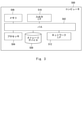
- FIG. 3 is a block diagram illustrating a hardware configuration of a computer 500 that realizes the display control device 2000.
- the computer 500 is any computer.
- the computer 500 is a stationary computer such as a PC (Personal Computer) or a server machine.
- the computer 500 is a portable computer such as a smartphone or a tablet terminal.
- the computer 500 may be a controller built in the display device 10.
- the computer 500 may be a dedicated computer designed to realize the display control device 2000, or may be a general-purpose computer.
- each function of the display control device 2000 is realized on the computer 500.
- the above application is composed of a program for realizing the functional component of the display control device 2000.
- the computer 500 has a bus 502, a processor 504, a memory 506, a storage device 508, an input / output interface 510, and a network interface 512.
- the bus 502 is a data transmission path for the processor 504, the memory 506, the storage device 508, the input / output interface 510, and the network interface 512 to transmit and receive data to and from each other.
- the method of connecting the processors 504 and the like to each other is not limited to the bus connection.
- the processor 504 is various processors such as a CPU (Central Processing Unit), a GPU (Graphics Processing Unit), or an FPGA (Field-Programmable Gate Array).
- the memory 506 is a main storage device realized by using RAM (RandomAccessMemory) or the like.
- the storage device 508 is an auxiliary storage device realized by using a hard disk, SSD (Solid State Drive), memory card, ROM (Read Only Memory), or the like.
- the input / output interface 510 is an interface for connecting the computer 500 and the input / output device.
- an input device such as a keyboard and an output device such as a display device are connected to the input / output interface 510.
- the network interface 512 is an interface for connecting the computer 500 to the network.
- This network may be a LAN (Local Area Network) or a WAN (Wide Area Network).
- the storage device 508 stores a program (a program that realizes the above-mentioned application) that realizes each functional component of the display control device 2000.
- the processor 504 reads this program into the memory 506 and executes it to realize each functional component of the display control device 2000.
- the display control device 2000 may be realized by one computer 500 or may be realized by a plurality of computers 500. In the latter case, the configurations of the computers 500 do not have to be the same and can be different.
- FIG. 4 is a flowchart illustrating the flow of processing executed by the display control device 2000 of the first embodiment.
- the detection unit 2020 acquires the sensor data of the sensor 20 (S102).
- the detection unit 2020 uses the sensor data to determine whether or not a predetermined situation has occurred (S104).
- S104 determines whether or not a predetermined situation has occurred (S104).
- S104 determines whether or not a predetermined situation has occurred (S104: YES)
- the state changing unit 2040 executes a control process so that the output state of the target information in the display device 10 is changed (S106).
- the detection unit 2020 uses the sensor data obtained from the sensor 20 to determine whether or not a predetermined situation has occurred.
- the predetermined situation is the first situation (the situation where the target information displayed on the display device 10 may be viewed by a person other than the specific person 30) or the second situation (the display device 10).
- the situation where the displayed target information may be captured by the camera).
- the detection method will be illustrated for each of the first situation and the second situation.
- the detection of the first situation can be realized by detecting the existence of a person other than the specific person 30 by using the sensor data obtained from the sensor 20.
- a specific description will be given.
- ⁇ Case using camera For example, suppose that a camera provided to take an image of the surroundings of the display device 10 is used as the sensor 20. In this case, the detection unit 2020 acquires the image data generated by the camera as the sensor data. As a method of acquiring image data from the camera, various existing methods can be adopted.
- the camera is provided so that the place where the display device 10 can be viewed is included in the imaging range.
- the camera may be built in the display device 10 or may be installed around the display device 10.
- the image data referred to here also includes video frames constituting the video data. That is, the sensor data may be still image data generated by the still camera, or may be video data generated by the video camera. Further, the camera is not limited to the one that captures visible light, and may be one that captures invisible light (for example, an infrared camera).
- the detection unit 2020 determines that the first situation has occurred when the number of persons included in the image data is larger than a predetermined threshold value (for example, 1). In this case, the detection unit 2020 determines whether or not the number of people included in the image data is larger than the threshold value. When the number of people included in the image data is larger than the threshold value, the detection unit 2020 determines that the first situation has occurred. On the other hand, when the number of persons included in the image data is equal to or less than the threshold value, the detection unit 2020 determines that the first situation has not occurred.
- a predetermined threshold value for example, 1).
- the detection unit 2020 determines whether or not the number of people included in the image data is larger than the threshold value.
- the detection unit 2020 determines that the first situation has occurred.
- the detection unit 2020 determines that the first situation has occurred when the image data obtained from the camera includes a person other than the specific person 30.
- the detection unit 2020 calculates the feature amount on the image (hereinafter referred to as the image feature amount) for one or more persons included in the image data.
- the detection unit 2020 compares the image feature amount of each person included in the image data with the image feature amount of the specific person 30 stored in the storage device accessible from the detection unit 2020 in advance.
- the detection unit 2020 is the first. It is determined that the situation of 1 has occurred.
- the image feature amount of each person detected from the image data matches the image feature amount of the specific person 30 (for example, the similarity is equal to or more than the threshold value)
- the detection unit 2020 is in the first situation. Is not generated.
- the sensor data is voice data.
- the microphone is provided to detect the sound around the display device 10.
- the microphone is provided so as to detect the sound coming from the direction in which the person viewing the display device 10 is located (the front of the display screen of the display device 10).
- various existing methods can be adopted.
- the detection unit 2020 determines that the first situation has occurred when the number of persons whose voice is included in the voice data is larger than a predetermined threshold value (for example, 1).
- a predetermined threshold value for example, 1
- the detection unit 2020 analyzes the voice data obtained from the microphone, calculates the number of people whose voice is included in the voice data, and compares it with the threshold value.
- the detection unit 2020 determines that the first situation has occurred.
- the detection unit 2020 determines that the first situation has not occurred.
- the detection unit 2020 determines that the first situation has occurred when the voice data includes the voice of a person other than the specific person 30. In this case, the detection unit 2020 calculates a voice feature amount (hereinafter, voice feature amount) for each person's voice included in the voice data. The detection unit 2020 compares the voice feature amount of each person's voice detected from the voice data with the voice feature amount of the voice of the specific person 30 stored in the storage device accessible from the detection unit 2020 in advance. When the voice features of each person's voice included in the voice data do not match the voice features of the voice of the specific person 30 (for example, the similarity is less than the threshold value), the detection unit 2020 Determines that the first situation has occurred.
- voice feature amount hereinafter, voice feature amount
- the detection unit 2020 is the first. It is determined that the situation of 1 has not occurred.
- the detection of the second situation can be realized by detecting the existence of a camera other than the camera provided as the sensor 20 by using the sensor data obtained from the sensor 20. For example, suppose a camera is used as the sensor 20. In this case, the detection unit 2020 determines that the second situation has occurred if the image data obtained as the sensor data includes an object of a specific type capable of capturing the display screen of the display device 10. do.
- the specific type of object is a camera or an object in which a camera may be provided (for example, a mobile terminal such as a smartphone or a tablet terminal). In this case, the image feature amount of the specific type of object is stored in the storage device accessible from the detection unit 2020.
- the detection unit 2020 determines whether or not the image data obtained from the camera provided as the sensor 20 includes the image feature amount of a specific type of object. When it is determined that the image feature amount of the specific type of object is included, the detection unit 2020 determines that the second situation has occurred. On the other hand, when it is determined that the image feature amount of the specific type of object is not included, the detection unit 2020 determines that the second situation has not occurred.
- the specific person 30 may be different for each target information.
- the user U1 may be the specific person 30, and for the target information of the file B, the user U2 may be the specific person 30.
- the identification information of the target information and the identification information of the specific person 30 are stored in the storage device accessible from the detection unit 2020. Pairs are stored in advance.
- the detection unit 2020 acquires the identification information of the target information displayed on the display device 10, acquires the identification information of the specific person 30 associated with the identification information, and obtains the acquired identification information of the specific person 30. It is used to detect a predetermined situation.
- the detection unit 2020 may constantly repeat the detection of a predetermined situation (for example, perform the detection process at predetermined time intervals), or may detect the predetermined situation only when the predetermined condition is satisfied. For example, suppose that the target information is limited to some information, not all information. In this case, the detection unit 2020 performs a process of detecting a predetermined situation only when the target information is displayed on the display device 10. In this case, the identification information of each information (for example, a file) to be treated as the target information is stored in advance in a storage device accessible from the detection unit 2020.
- the detection unit 2020 acquires the identification information of each information displayed on the display device 10 at the timing of detecting the predetermined situation, and determines whether or not the identification information of the target information is included in the identification information. When the identification information of the target information is included, the detection unit 2020 detects a predetermined situation. On the other hand, when the identification information of the target information is not included, the detection unit 2020 does not detect the predetermined situation.
- the detection unit 2020 may constantly repeat the detection of the predetermined situation and add the condition that "the target information is displayed on the display device 10" to the condition that the predetermined situation is detected. For example, the detection unit 2020 is the first when the condition that "the target information is displayed on the display device 10 and the image data obtained from the camera includes a person other than the specific person 30" is satisfied. Judge that the situation of is occurring.
- the state changing unit 2040 performs a control process so that the output state of the target information in the display device 10 is changed.
- the state change unit 2040 performs a control process so that all the information is not output from the display device 10. By doing so, all the information displayed on the display device 10 cannot be viewed, so that no one other than the specific person 30 can view the target information. In addition, the target information cannot be captured by the camera.
- Such a control process is, for example, a process of turning off the power of the display device 10 or blocking the transmission of screen data to the display device 10.
- the state changing unit 2040 performs control processing so that the visibility of the information output from the display device 10 is lowered. By doing so, even if a person other than the specific person 30 browses the target information, it is possible to make it difficult to grasp the content. Similarly, even if the target information is captured by the camera, it can be difficult to grasp the content of the captured information.
- the control process for reducing the visibility of information is, for example, a process for lowering the brightness of the display device 10 or a process for processing screen data displayed on the display device 10.
- the processing to be added to the screen data is, for example, a process of changing the color tone of the screen data (such as changing to a dark color as a whole), a process of superimposing other image data (dot pattern, etc.) on the screen data, or a predetermined process. Processing to make changes to screen data according to an algorithm (such as applying a mosaic).
- the state change unit 2040 changes the output state of only the target information. You may do so.
- a process is, for example, a process of minimizing the window of the target information, a process of making the window transparent (making the opacity zero), and the like. Further, the processing added to the screen data described above may be added only to the window of the target information.
- the state changing unit 2040 controls the hardware of the display device 10.
- the information can be prevented from being displayed on the display device 10 by turning off the power of the display device 10, or the visibility of the information displayed on the display device 10 can be lowered by lowering the brightness of the display device 10.
- the state changing unit 2040 is connected to the display device 10 and controls a machine (for example, a PC operated by a specific person 30) that outputs screen data to the display device 10. May be good.
- the process of blocking the output of screen data to the display device 10 or processing the screen data is performed by a program (for example, a device driver) in the operating system running on the machine that outputs the screen data. Can be done with. Can be processed.
- FIG. 5 is a diagram illustrating a case where the target information is provided via the network.
- the target information is a file in the company machine 110.
- the specific person 30 remotely connects from the home-side machine 100 to the company-side machine 110 via a VPN (virtual private network).
- the VPN connection is realized by the company-side VPN device 120 installed in the company and the home-side VPN device 130 installed in the home of the specific person 30.
- the screen data generated by the company-side machine 110 is transmitted to the home-side machine 100 via the company-side VPN device 120 and the home-side VPN device 130. Then, the screen data is output from the home-side machine 100 to the display device 10. Therefore, the above-mentioned control process is realized by blocking the transmission of screen data or processing the screen data in any of the company side machine 110, the company side VPN device 120, or the home side VPN device 130. can do.
- the company side machine 110 the company side VPN device 120, or the home side VPN device 130 functions as the display control device 2000.
- the sensor data is transmitted from the sensor 20 to these devices.
- the home side machine 100 may be provided with the function of the detection unit 2020, and the company side machine 110, the company side VPN device 120, or the home side VPN device 130 may be provided with the function of the state change unit 2040.
- the home-side machine 100 detects a predetermined situation, and notifies the device provided with the function of the state changing unit 2040 that the predetermined situation is detected. Then, the device that receives the notification performs a process of controlling the display.
- Non-temporary computer-readable media include various types of tangible storage mediums.
- Examples of non-temporary computer readable media are magnetic recording media (eg, flexible disks, magnetic tapes, hard disk drives), magneto-optical recording media (eg, magneto-optical disks), CD-ROMs, CD-Rs, CD-Rs. / W, including semiconductor memory (for example, mask ROM, PROM (Programmable ROM), EPROM (Erasable PROM), flash ROM, RAM).
- the program may also be provided to the computer by various types of transient computer readable medium.
- Examples of temporary computer readable media include electrical, optical, and electromagnetic waves.
- the temporary computer-readable medium can supply the program to the computer via a wired communication path such as an electric wire and an optical fiber, or a wireless communication path.
- (Appendix 1) Using voice data including sounds around the display device, the first situation in which the target information displayed by the display device can be viewed by a person other than a specific person is detected, or the display device is used.
- a detection unit that detects a second situation in which the target information displayed by the display device can be captured by the camera using image data including the surroundings. It has a state changing unit that changes the output state of the target information in the display device according to the detection of the first situation or the second situation.
- the display control device for changing the output state is a process of stopping the output of the target information or a process of lowering the visibility of the target information as compared with the process before the change.
- the detection unit detects when a number of voices of a predetermined threshold or more are detected from the voice data, or a voice having a voice feature amount that does not match the voice feature amount of the voice of the specific person from the voice data.
- the display control device according to Appendix 1, wherein it is determined that the first situation has occurred.
- Appendix 3 The detection unit From a storage device that stores a plurality of correspondences between the target information and the voice feature amount of the specific person, the voice feature amount of the specific person corresponding to the target information displayed on the display device is acquired.
- the display control device according to Appendix 2 which detects the first situation when the voice data includes a voice feature amount that does not match the acquired voice feature amount of the specific person.
- the second situation occurs when the detection unit detects an image feature amount of a specific type of object capable of capturing the target information displayed on the display device from the image data.
- the process of lowering the visibility of the target information is the process of lowering the brightness of the display device or the process of processing the screen data output to the display device, according to any one of Supplementary note 1 to 5.
- Display control device. (Appendix 7) The display device displays screen data transmitted via a network.
- the state changing unit is a process of blocking the transmission of the screen data or processing the screen data in the device of the transmission source of the screen data or the device of relaying the transmission of the screen data by the device.
- the display control device according to any one of Supplementary note 1 to 6.
- a display control method performed by a computer. Using voice data including sounds around the display device, the first situation in which the target information displayed by the display device can be viewed by a person other than a specific person is detected, or the display device is used. A detection step of detecting a second situation in which the target information displayed by the display device can be captured by a camera using image data including surroundings.
- the display control method has a state change step of changing the output state of the target information in the display device according to the detection of the first situation or the second situation.
- the display control method wherein the change of the output state is a process of stopping the output of the target information or a process of lowering the visibility of the target information as compared with the process before the change.
- Appendix 10 In the detection step, when the number of voices of a person equal to or more than a predetermined threshold is detected from the voice data, or the voice of the voice feature amount that does not match the voice feature amount of the voice of the specific person is detected from the voice data.
- the display control method according to Appendix 9, wherein it is determined that the first situation has occurred.
- the change of the output state is a computer-readable medium, which is a process of stopping the output of the target information or a process of lowering the visibility of the target information as compared with the process before the change.
- Appendix 18 In the detection step, when the number of voices of a person equal to or more than a predetermined threshold is detected from the voice data, or the voice of the voice feature amount that does not match the voice feature amount of the voice of the specific person is detected from the voice data.
- the computer-readable medium according to Appendix 17, wherein it is determined that the first situation has occurred.
- Display device 20 Sensor 30 Specific person 100 Home side machine 110 Company side machine 120 Device 130 Device 500 Computer 502 Bus 504 Processor 506 Memory 508 Storage device 510 Input / output interface 512 Network interface 2000 Display control device 2020 Detection unit 2040 Status change unit
Landscapes
- Engineering & Computer Science (AREA)
- Theoretical Computer Science (AREA)
- Physics & Mathematics (AREA)
- General Physics & Mathematics (AREA)
- Health & Medical Sciences (AREA)
- Computer Hardware Design (AREA)
- General Engineering & Computer Science (AREA)
- Human Computer Interaction (AREA)
- General Health & Medical Sciences (AREA)
- Computer Security & Cryptography (AREA)
- Multimedia (AREA)
- Bioethics (AREA)
- Software Systems (AREA)
- Audiology, Speech & Language Pathology (AREA)
- Computer Vision & Pattern Recognition (AREA)
- Acoustics & Sound (AREA)
- Medical Informatics (AREA)
- Databases & Information Systems (AREA)
- Business, Economics & Management (AREA)
- Game Theory and Decision Science (AREA)
- Controls And Circuits For Display Device (AREA)
- User Interface Of Digital Computer (AREA)
- Image Analysis (AREA)
- Alarm Systems (AREA)
- Digital Computer Display Output (AREA)
- Closed-Circuit Television Systems (AREA)
Priority Applications (5)
| Application Number | Priority Date | Filing Date | Title |
|---|---|---|---|
| PCT/JP2020/027407 WO2022013952A1 (ja) | 2020-07-14 | 2020-07-14 | 表示制御装置、表示制御方法、及びコンピュータ可読媒体 |
| US18/015,299 US12455977B2 (en) | 2020-07-14 | 2020-07-14 | Display control apparatus, display control method, and computer readable medium |
| JP2022536025A JP7464125B2 (ja) | 2020-07-14 | 2020-07-14 | 表示制御装置、表示制御方法、及びプログラム |
| JP2024051858A JP7639963B2 (ja) | 2020-07-14 | 2024-03-27 | 表示制御装置、表示制御方法、及びプログラム |
| JP2025025697A JP2025081545A (ja) | 2020-07-14 | 2025-02-20 | 表示制御システム、表示制御方法、及びプログラム |
Applications Claiming Priority (1)
| Application Number | Priority Date | Filing Date | Title |
|---|---|---|---|
| PCT/JP2020/027407 WO2022013952A1 (ja) | 2020-07-14 | 2020-07-14 | 表示制御装置、表示制御方法、及びコンピュータ可読媒体 |
Publications (1)
| Publication Number | Publication Date |
|---|---|
| WO2022013952A1 true WO2022013952A1 (ja) | 2022-01-20 |
Family
ID=79555361
Family Applications (1)
| Application Number | Title | Priority Date | Filing Date |
|---|---|---|---|
| PCT/JP2020/027407 Ceased WO2022013952A1 (ja) | 2020-07-14 | 2020-07-14 | 表示制御装置、表示制御方法、及びコンピュータ可読媒体 |
Country Status (3)
| Country | Link |
|---|---|
| US (1) | US12455977B2 (https=) |
| JP (3) | JP7464125B2 (https=) |
| WO (1) | WO2022013952A1 (https=) |
Cited By (1)
| Publication number | Priority date | Publication date | Assignee | Title |
|---|---|---|---|---|
| WO2024048228A1 (ja) * | 2022-09-01 | 2024-03-07 | パナソニックIpマネジメント株式会社 | 電子機器及び電子機器の制御方法 |
Families Citing this family (1)
| Publication number | Priority date | Publication date | Assignee | Title |
|---|---|---|---|---|
| US12093410B1 (en) * | 2020-12-07 | 2024-09-17 | United Services Automobile Association (Usaa) | Confidential information tracking system |
Citations (6)
| Publication number | Priority date | Publication date | Assignee | Title |
|---|---|---|---|---|
| JP2009140051A (ja) * | 2007-12-04 | 2009-06-25 | Sony Corp | 情報処理装置、情報処理システム、推薦装置、情報処理方法および記憶媒体 |
| US20100124363A1 (en) * | 2008-11-20 | 2010-05-20 | Sony Ericsson Mobile Communications Ab | Display privacy system |
| JP2011134137A (ja) * | 2009-12-24 | 2011-07-07 | Konica Minolta Business Technologies Inc | 情報表示装置及び表示制御プログラム |
| JP2016503208A (ja) * | 2013-01-02 | 2016-02-01 | シマンテック コーポレーションSymantec Corporation | モバイルセンサを用いてデータ損失防止ポリシーを強化するためのシステム及び方法 |
| JP2016177464A (ja) * | 2015-03-19 | 2016-10-06 | 日本電気株式会社 | 通信システムおよびその制御方法 |
| JP2019137972A (ja) * | 2018-02-06 | 2019-08-22 | 日本電気株式会社 | 情報処理装置 |
Family Cites Families (15)
| Publication number | Priority date | Publication date | Assignee | Title |
|---|---|---|---|---|
| JP2008217675A (ja) | 2007-03-07 | 2008-09-18 | Nec Corp | 情報閲覧システム、端末、その制御方法、その制御プログラム、及び記録媒体 |
| JP2009080668A (ja) | 2007-09-26 | 2009-04-16 | Sky Kk | 覗き見防止システム及び覗き見防止プログラム |
| JP2010122754A (ja) | 2008-11-17 | 2010-06-03 | Chugoku Electric Power Co Inc:The | 情報処理装置における覗き見防止装置 |
| JP5322288B2 (ja) | 2009-05-29 | 2013-10-23 | Necシステムテクノロジー株式会社 | 通信処理装置、通信処理方法、及びプログラム |
| JP2011150456A (ja) * | 2010-01-20 | 2011-08-04 | Seiko Epson Corp | コンテンツ表示装置及びその表示制御方法 |
| US20150170446A1 (en) * | 2013-12-12 | 2015-06-18 | Microsoft Corporation | Access tracking and restriction |
| US9443102B2 (en) * | 2015-01-19 | 2016-09-13 | International Business Machines Corporation | Protecting content displayed on a mobile device |
| US11055445B2 (en) * | 2015-04-10 | 2021-07-06 | Lenovo (Singapore) Pte. Ltd. | Activating an electronic privacy screen during display of sensitve information |
| JP6716207B2 (ja) | 2015-07-06 | 2020-07-01 | パラマウントベッド株式会社 | 表示制御装置、表示制御方法、プログラム及び表示システム |
| CN105827820B (zh) * | 2015-12-25 | 2019-06-07 | 维沃移动通信有限公司 | 一种移动终端的防偷窥方法及移动终端 |
| JP6792910B2 (ja) * | 2016-08-24 | 2020-12-02 | 桂子 竹田 | コンテンツの撮影防止システム |
| WO2018084835A1 (en) | 2016-11-01 | 2018-05-11 | GS Holistic, LLC | Handheld vaporizer |
| US11295026B2 (en) * | 2018-11-20 | 2022-04-05 | Forcepoint, LLC | Scan, detect, and alert when a user takes a photo of a computer monitor with a mobile phone |
| CN110096972A (zh) * | 2019-04-12 | 2019-08-06 | 重庆科芮智能科技有限公司 | 数据保护方法、装置及系统 |
| US20210182440A1 (en) * | 2019-12-17 | 2021-06-17 | Citrix Systems, Inc. | System for preventing access to sensitive information and related techniques |
-
2020
- 2020-07-14 WO PCT/JP2020/027407 patent/WO2022013952A1/ja not_active Ceased
- 2020-07-14 US US18/015,299 patent/US12455977B2/en active Active
- 2020-07-14 JP JP2022536025A patent/JP7464125B2/ja active Active
-
2024
- 2024-03-27 JP JP2024051858A patent/JP7639963B2/ja active Active
-
2025
- 2025-02-20 JP JP2025025697A patent/JP2025081545A/ja active Pending
Patent Citations (6)
| Publication number | Priority date | Publication date | Assignee | Title |
|---|---|---|---|---|
| JP2009140051A (ja) * | 2007-12-04 | 2009-06-25 | Sony Corp | 情報処理装置、情報処理システム、推薦装置、情報処理方法および記憶媒体 |
| US20100124363A1 (en) * | 2008-11-20 | 2010-05-20 | Sony Ericsson Mobile Communications Ab | Display privacy system |
| JP2011134137A (ja) * | 2009-12-24 | 2011-07-07 | Konica Minolta Business Technologies Inc | 情報表示装置及び表示制御プログラム |
| JP2016503208A (ja) * | 2013-01-02 | 2016-02-01 | シマンテック コーポレーションSymantec Corporation | モバイルセンサを用いてデータ損失防止ポリシーを強化するためのシステム及び方法 |
| JP2016177464A (ja) * | 2015-03-19 | 2016-10-06 | 日本電気株式会社 | 通信システムおよびその制御方法 |
| JP2019137972A (ja) * | 2018-02-06 | 2019-08-22 | 日本電気株式会社 | 情報処理装置 |
Non-Patent Citations (1)
| Title |
|---|
| ANZAI, TAIKI: "Proposal of Personal Authentication Technique Based on Images", JOURNAL OF THE INSTITUTE OF IMAGE ELECTRONICS ENGINEERS OF JAPAN, vol. 38, no. 5, 25 September 2009 (2009-09-25), JP , pages 608 - 613, XP009534029, ISSN: 0285-9831, DOI: 10.11371/iieej.38.608 * |
Cited By (1)
| Publication number | Priority date | Publication date | Assignee | Title |
|---|---|---|---|---|
| WO2024048228A1 (ja) * | 2022-09-01 | 2024-03-07 | パナソニックIpマネジメント株式会社 | 電子機器及び電子機器の制御方法 |
Also Published As
| Publication number | Publication date |
|---|---|
| JP2025081545A (ja) | 2025-05-27 |
| JPWO2022013952A1 (https=) | 2022-01-20 |
| JP7464125B2 (ja) | 2024-04-09 |
| JP2024081730A (ja) | 2024-06-18 |
| US20230342490A1 (en) | 2023-10-26 |
| JP7639963B2 (ja) | 2025-03-05 |
| US12455977B2 (en) | 2025-10-28 |
Similar Documents
| Publication | Publication Date | Title |
|---|---|---|
| JP7639963B2 (ja) | 表示制御装置、表示制御方法、及びプログラム | |
| US9635255B1 (en) | Display as adjustable light source | |
| CN114641982B (zh) | 用于执行环境光图像校正的系统 | |
| US12525053B2 (en) | Detection system, detection method, and computer-readable recording medium | |
| CN104052965B (zh) | 用于将视频呼叫切换至音频呼叫的装置和方法 | |
| US10956553B2 (en) | Method of unlocking an electronic device, unlocking device and system and storage medium | |
| CN110458062A (zh) | 人脸识别方法及装置、电子设备和存储介质 | |
| US20160328627A1 (en) | Imaging device, recording device, and moving image output control device | |
| US10592759B2 (en) | Object recognition apparatus and control method therefor | |
| US10497396B2 (en) | Detecting and correcting whiteboard images while enabling the removal of the speaker | |
| US20180240213A1 (en) | Information processing system, information processing method, and program | |
| JPWO2019163066A1 (ja) | なりすまし検知装置、なりすまし検知方法、及びプログラム | |
| US20210044756A1 (en) | Display and imaging device | |
| WO2019104551A1 (zh) | 指纹识别方法及终端设备 | |
| US20220171889A1 (en) | Controlling display devices based on viewing angles | |
| US10127440B1 (en) | Insect indicia-based alert suppression apparatus, system, and method of operation | |
| JP2020123280A (ja) | 画像処理装置、画像処理方法、およびプログラム | |
| WO2017039250A1 (en) | Video communication device and operation thereof | |
| US11436862B2 (en) | Privacy protection capturing module | |
| JP6826281B2 (ja) | 情報処理装置、情報処理方法、プログラム | |
| CN119399681A (zh) | 基于级联检测的屏幕偷拍识别方法 | |
| CN110718185A (zh) | 一种led显示屏装置、显示方法及电视机设备 | |
| CN113596420B (zh) | 投影仪镜片的检测方法、装置、投影仪及可读存储介质 | |
| WO2023172808A1 (en) | Color and brightness adjustment algorithms | |
| WO2019041183A1 (zh) | 一种移动终端防窥屏方法、移动终端及存储介质 |
Legal Events
| Date | Code | Title | Description |
|---|---|---|---|
| 121 | Ep: the epo has been informed by wipo that ep was designated in this application |
Ref document number: 20945455 Country of ref document: EP Kind code of ref document: A1 |
|
| ENP | Entry into the national phase |
Ref document number: 2022536025 Country of ref document: JP Kind code of ref document: A |
|
| NENP | Non-entry into the national phase |
Ref country code: DE |
|
| 122 | Ep: pct application non-entry in european phase |
Ref document number: 20945455 Country of ref document: EP Kind code of ref document: A1 |
|
| WWG | Wipo information: grant in national office |
Ref document number: 18015299 Country of ref document: US |