WO2022009806A1 - 正極材料及び電池 - Google Patents
正極材料及び電池 Download PDFInfo
- Publication number
- WO2022009806A1 WO2022009806A1 PCT/JP2021/025191 JP2021025191W WO2022009806A1 WO 2022009806 A1 WO2022009806 A1 WO 2022009806A1 JP 2021025191 W JP2021025191 W JP 2021025191W WO 2022009806 A1 WO2022009806 A1 WO 2022009806A1
- Authority
- WO
- WIPO (PCT)
- Prior art keywords
- positive electrode
- solid electrolyte
- active material
- electrode active
- layer
- Prior art date
- Legal status (The legal status is an assumption and is not a legal conclusion. Google has not performed a legal analysis and makes no representation as to the accuracy of the status listed.)
- Ceased
Links
Images


Classifications
-
- H—ELECTRICITY
- H01—ELECTRIC ELEMENTS
- H01M—PROCESSES OR MEANS, e.g. BATTERIES, FOR THE DIRECT CONVERSION OF CHEMICAL ENERGY INTO ELECTRICAL ENERGY
- H01M4/00—Electrodes
- H01M4/02—Electrodes composed of, or comprising, active material
- H01M4/62—Selection of inactive substances as ingredients for active masses, e.g. binders, fillers
-
- H—ELECTRICITY
- H01—ELECTRIC ELEMENTS
- H01M—PROCESSES OR MEANS, e.g. BATTERIES, FOR THE DIRECT CONVERSION OF CHEMICAL ENERGY INTO ELECTRICAL ENERGY
- H01M10/00—Secondary cells; Manufacture thereof
- H01M10/05—Accumulators with non-aqueous electrolyte
- H01M10/052—Li-accumulators
-
- H—ELECTRICITY
- H01—ELECTRIC ELEMENTS
- H01M—PROCESSES OR MEANS, e.g. BATTERIES, FOR THE DIRECT CONVERSION OF CHEMICAL ENERGY INTO ELECTRICAL ENERGY
- H01M10/00—Secondary cells; Manufacture thereof
- H01M10/05—Accumulators with non-aqueous electrolyte
- H01M10/052—Li-accumulators
- H01M10/0525—Rocking-chair batteries, i.e. batteries with lithium insertion or intercalation in both electrodes; Lithium-ion batteries
-
- H—ELECTRICITY
- H01—ELECTRIC ELEMENTS
- H01M—PROCESSES OR MEANS, e.g. BATTERIES, FOR THE DIRECT CONVERSION OF CHEMICAL ENERGY INTO ELECTRICAL ENERGY
- H01M10/00—Secondary cells; Manufacture thereof
- H01M10/05—Accumulators with non-aqueous electrolyte
- H01M10/056—Accumulators with non-aqueous electrolyte characterised by the materials used as electrolytes, e.g. mixed inorganic/organic electrolytes
- H01M10/0561—Accumulators with non-aqueous electrolyte characterised by the materials used as electrolytes, e.g. mixed inorganic/organic electrolytes the electrolyte being constituted of inorganic materials only
- H01M10/0562—Solid materials
-
- H—ELECTRICITY
- H01—ELECTRIC ELEMENTS
- H01M—PROCESSES OR MEANS, e.g. BATTERIES, FOR THE DIRECT CONVERSION OF CHEMICAL ENERGY INTO ELECTRICAL ENERGY
- H01M4/00—Electrodes
- H01M4/02—Electrodes composed of, or comprising, active material
- H01M4/13—Electrodes for accumulators with non-aqueous electrolyte, e.g. for lithium-accumulators; Processes of manufacture thereof
- H01M4/131—Electrodes based on mixed oxides or hydroxides, or on mixtures of oxides or hydroxides, e.g. LiCoOx
-
- H—ELECTRICITY
- H01—ELECTRIC ELEMENTS
- H01M—PROCESSES OR MEANS, e.g. BATTERIES, FOR THE DIRECT CONVERSION OF CHEMICAL ENERGY INTO ELECTRICAL ENERGY
- H01M4/00—Electrodes
- H01M4/02—Electrodes composed of, or comprising, active material
- H01M4/36—Selection of substances as active materials, active masses, active liquids
- H01M4/362—Composites
- H01M4/366—Composites as layered products
-
- H—ELECTRICITY
- H01—ELECTRIC ELEMENTS
- H01M—PROCESSES OR MEANS, e.g. BATTERIES, FOR THE DIRECT CONVERSION OF CHEMICAL ENERGY INTO ELECTRICAL ENERGY
- H01M4/00—Electrodes
- H01M4/02—Electrodes composed of, or comprising, active material
- H01M2004/026—Electrodes composed of, or comprising, active material characterised by the polarity
- H01M2004/028—Positive electrodes
-
- H—ELECTRICITY
- H01—ELECTRIC ELEMENTS
- H01M—PROCESSES OR MEANS, e.g. BATTERIES, FOR THE DIRECT CONVERSION OF CHEMICAL ENERGY INTO ELECTRICAL ENERGY
- H01M2300/00—Electrolytes
- H01M2300/0017—Non-aqueous electrolytes
- H01M2300/0065—Solid electrolytes
- H01M2300/0068—Solid electrolytes inorganic
-
- H—ELECTRICITY
- H01—ELECTRIC ELEMENTS
- H01M—PROCESSES OR MEANS, e.g. BATTERIES, FOR THE DIRECT CONVERSION OF CHEMICAL ENERGY INTO ELECTRICAL ENERGY
- H01M2300/00—Electrolytes
- H01M2300/0017—Non-aqueous electrolytes
- H01M2300/0065—Solid electrolytes
- H01M2300/0068—Solid electrolytes inorganic
- H01M2300/008—Halides
-
- H—ELECTRICITY
- H01—ELECTRIC ELEMENTS
- H01M—PROCESSES OR MEANS, e.g. BATTERIES, FOR THE DIRECT CONVERSION OF CHEMICAL ENERGY INTO ELECTRICAL ENERGY
- H01M4/00—Electrodes
- H01M4/02—Electrodes composed of, or comprising, active material
- H01M4/36—Selection of substances as active materials, active masses, active liquids
- H01M4/48—Selection of substances as active materials, active masses, active liquids of inorganic oxides or hydroxides
- H01M4/485—Selection of substances as active materials, active masses, active liquids of inorganic oxides or hydroxides of mixed oxides or hydroxides for inserting or intercalating light metals, e.g. LiTi2O4 or LiTi2OxFy
-
- H—ELECTRICITY
- H01—ELECTRIC ELEMENTS
- H01M—PROCESSES OR MEANS, e.g. BATTERIES, FOR THE DIRECT CONVERSION OF CHEMICAL ENERGY INTO ELECTRICAL ENERGY
- H01M4/00—Electrodes
- H01M4/02—Electrodes composed of, or comprising, active material
- H01M4/36—Selection of substances as active materials, active masses, active liquids
- H01M4/48—Selection of substances as active materials, active masses, active liquids of inorganic oxides or hydroxides
- H01M4/50—Selection of substances as active materials, active masses, active liquids of inorganic oxides or hydroxides of manganese
- H01M4/505—Selection of substances as active materials, active masses, active liquids of inorganic oxides or hydroxides of manganese of mixed oxides or hydroxides containing manganese for inserting or intercalating light metals, e.g. LiMn2O4 or LiMn2OxFy
-
- H—ELECTRICITY
- H01—ELECTRIC ELEMENTS
- H01M—PROCESSES OR MEANS, e.g. BATTERIES, FOR THE DIRECT CONVERSION OF CHEMICAL ENERGY INTO ELECTRICAL ENERGY
- H01M4/00—Electrodes
- H01M4/02—Electrodes composed of, or comprising, active material
- H01M4/36—Selection of substances as active materials, active masses, active liquids
- H01M4/48—Selection of substances as active materials, active masses, active liquids of inorganic oxides or hydroxides
- H01M4/52—Selection of substances as active materials, active masses, active liquids of inorganic oxides or hydroxides of nickel, cobalt or iron
- H01M4/525—Selection of substances as active materials, active masses, active liquids of inorganic oxides or hydroxides of nickel, cobalt or iron of mixed oxides or hydroxides containing iron, cobalt or nickel for inserting or intercalating light metals, e.g. LiNiO2, LiCoO2 or LiCoOxFy
-
- Y—GENERAL TAGGING OF NEW TECHNOLOGICAL DEVELOPMENTS; GENERAL TAGGING OF CROSS-SECTIONAL TECHNOLOGIES SPANNING OVER SEVERAL SECTIONS OF THE IPC; TECHNICAL SUBJECTS COVERED BY FORMER USPC CROSS-REFERENCE ART COLLECTIONS [XRACs] AND DIGESTS
- Y02—TECHNOLOGIES OR APPLICATIONS FOR MITIGATION OR ADAPTATION AGAINST CLIMATE CHANGE
- Y02E—REDUCTION OF GREENHOUSE GAS [GHG] EMISSIONS, RELATED TO ENERGY GENERATION, TRANSMISSION OR DISTRIBUTION
- Y02E60/00—Enabling technologies; Technologies with a potential or indirect contribution to GHG emissions mitigation
- Y02E60/10—Energy storage using batteries
Definitions
- This application discloses positive electrode materials and batteries.
- Patent Document 1 discloses a positive electrode material that covers at least a part of the surface of the positive electrode active material and contains a coating layer containing a first solid electrolyte and a second solid electrolyte. There is. As disclosed in Patent Document 1, by coating the surface of the positive electrode active material with the first solid electrolyte, the formation of a high resistance layer due to the direct contact between the positive electrode active material and the second solid electrolyte is suppressed. Can be done.
- the positive electrode material disclosed in Patent Document 1 may increase its calorific value when exposed to a high temperature.
- a positive electrode material containing a positive electrode active material, a first solid electrolyte, and a second solid electrolyte contains a lithium-containing oxide and contains The first solid electrolyte contains Li and X as constituent elements and does not contain S. X is at least one element selected from the group consisting of F, Cl, Br and I.
- the second solid electrolyte contains Li and S as constituent elements, and contains Li and S as constituent elements.
- the first solid electrolyte covers at least a part of the surface of the positive electrode active material.
- the second solid electrolyte comes into contact with the positive electrode active material via the first solid electrolyte.
- the average coating thickness of the first solid electrolyte is 104 nm or more. Disclose the positive electrode material.
- the first solid electrolyte may contain M as a constituent element.
- the M may be at least one element selected from the group consisting of metal elements other than Li and metalloid elements.
- the first solid electrolyte may have a chemical composition represented by Li ⁇ M ⁇ X ⁇ . ⁇ , ⁇ and ⁇ may be independently larger than 0.
- the M may contain yttrium.
- the X may be at least one of Cl and Br.
- the second solid electrolyte may contain Li, P and S as constituent elements.
- the positive electrode material of the present disclosure suppresses an increase in calorific value when exposed to high temperatures.
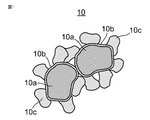
- An example of the composition of the positive electrode material is shown schematically.
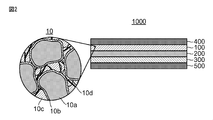
- An example of the battery configuration is shown schematically.
- the configurations of the batteries according to the examples and the comparative examples are shown schematically.
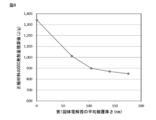
- the relationship between the average thickness of the coating layer and the calorific value of the positive electrode material is shown. It is a graph which compared the resistance value of the battery which concerns on Example and the comparative example.
- the positive electrode material 10 includes a positive electrode active material 10a, a first solid electrolyte 10b, and a second solid electrolyte 10c.
- the positive electrode active material 10a contains a lithium-containing oxide.
- the first solid electrolyte 10b contains Li and X as constituent elements and does not contain S.
- X is at least one element selected from the group consisting of F, Cl, Br and I.
- the second solid electrolyte 10c contains Li and S as constituent elements.
- the first solid electrolyte 10b covers at least a part of the surface of the positive electrode active material 10a.
- the second solid electrolyte 10c is in contact with the positive electrode active material 10a via the first solid electrolyte 10b.
- the average coating thickness of the first solid electrolyte 10b is 104 nm or more.
- the positive electrode active material 10a contains a lithium-containing oxide.
- the lithium-containing oxide is an oxide containing lithium as a constituent element, and may contain other elements in addition to lithium and oxygen.
- the lithium-containing oxide may be any material that can function as the positive electrode active material of the battery. Specific examples of the lithium-containing oxide include lithium cobalt oxide, lithium nickel oxide, lithium manganate, and Li (Ni, Co, Mn) O 2 ⁇ ⁇ (for example, LiNi 1/3 Co 1/3 Mn 1/3 O). 2 ⁇ ⁇ ) and the like.
- the lithium-containing oxide may have, for example, a layered rock salt type crystal phase, a spinel type crystal phase, or a crystal phase other than these.
- the lithium-containing oxide may be one that releases oxygen at any temperature in the range of, for example, 80 ° C. or higher and 260 ° C. or lower.
- the positive electrode active material 10a may contain a positive electrode active material other than the lithium-containing oxide in addition to the lithium-containing oxide.
- the surface of the positive electrode active material 10a may be composed of a protective layer containing a Li ion conductive oxide. That is, a complex provided with the above-mentioned lithium-containing oxide and a protective layer provided on the surface thereof may be used as the positive electrode active material 10a. This makes it easier to suppress the reaction between the positive electrode active material and the sulfide solid electrolyte.
- the Li ion conductive oxide for example, Li 3 BO 3, LiBO 2 , Li 2 CO 3, LiAlO 2, Li 4 SiO 4, Li 2 SiO 3, Li 3 PO4, Li 2 SO 4, Li 2 TiO 3 , Li 4 Ti 5 O 12 , Li 2 Ti 2 O 5 , Li 2 ZrO 3 , LiNbO 3 , Li 2 MoO 4 , Li 2 WO 4 .
- the coverage (area ratio) of the protective layer may be, for example, 70% or more, 80% or more, or 90% or more.
- the thickness of the protective layer may be, for example, 0.1 nm or more, or 1 nm or more. On the other hand, the thickness of the protective layer may be, for example, 100 nm or less, or 20 nm or less.
- the shape of the positive electrode active material 10a is not particularly limited.
- the positive electrode active material 10a may be, for example, in the form of particles or in the form of layers. Further, the positive electrode active material 10a may be in the form of primary particles or in the form of secondary particles in which primary particles are aggregated.
- the positive electrode active material 10a is small (the specific surface area of the positive electrode active material 10a is large), the total area to be covered with the first solid electrolyte 10b increases, and the volume of the first solid electrolyte 10b in the positive electrode material 10 also increases. .. Considering this point, process cost, material cost, energy density, and the like, the positive electrode active material 10a may be large.
- the positive electrode active material 10a may be small.
- the average particle size (D 50 ) may be, for example, 0.1 ⁇ m or more, 0.5 ⁇ m or more, or 1 ⁇ m or more, and 100 ⁇ m or less, 50 ⁇ m or less, or 20 ⁇ m or less. There may be.
- the positive electrode active material 10a When the positive electrode active material 10a is in the form of particles, its BET specific surface area may be, for example, 0.1 m 2 / g or more or 0.2 m 2 / g or more, 5.0 m 2 / g or less, or It may be 2.0 m 2 / g or less.
- the average particle size (D 50 ) means a median size (50% volume average particle size) derived from a particle size distribution measured by a particle size distribution measuring device based on a laser scattering / diffraction method.
- the content of the positive electrode active material 10a in the positive electrode material 10 is not particularly limited, and may be appropriately determined according to the desired performance.
- the content of the positive electrode active material 10a may be 30% by mass or more, 40% by mass or more, or 50% by mass or more, 95. It may be 0% by mass or less, 90% by mass or less, or 85% by mass or less.
- the first solid electrolyte 10b covers at least a part of the surface of the positive electrode active material 10a.
- the positive electrode active material 10a may have a portion not covered with the first solid electrolyte 10b.
- the first solid electrolyte 10b may cover 50% or more, 70% or more, or 90% or more of the surface of the positive electrode active material 10a. Further, as shown in FIG. 1, the first solid electrolyte 10b may cover the entire surface (100%) of the positive electrode active material 10a.
- the first solid electrolyte 10b contains Li and X as constituent elements.
- X is at least one element selected from the group consisting of F, Cl, Br and I.
- the first solid electrolyte 10b may be an inorganic halide solid electrolyte.
- the Li content and the X content in the first solid electrolyte 10b are not particularly limited, and may be appropriately determined according to the target ionic conductivity.
- the first solid electrolyte 10b does not contain S as a constituent element. "Does not contain S" means that S is substantially not contained.
- the first solid electrolyte 10b may contain S as an impurity. For example, when the ratio of S to all the elements constituting the first solid electrolyte 10b is 0.1 mol% or less, the first solid electrolyte 10b is considered to contain no S. The same applies to elements other than S.
- the first solid electrolyte 10b may contain M as a constituent element.
- M is at least one element selected from the group consisting of metal elements other than Li and metalloid elements.
- Metallic elements other than Li means all elements contained in groups 1 to 12 of the periodic table except H and Li, as well as B, Si, Ge, Al, Sb, Te, C, N and P. , O, S and Se, all elements contained in the 13th to 16th groups of the periodic table.
- the "metalloid element” is B, Si, Ge, As, Sb and Te. These metallic elements and metalloid elements can become cations when forming halides.
- the content of M in the first solid electrolyte 10b is not particularly limited, and may be appropriately determined according to the target ionic conductivity.
- the first solid electrolyte 10b may have a chemical composition represented by Li ⁇ M ⁇ X ⁇ , and ⁇ , ⁇ and ⁇ may each independently have a value larger than 0.
- the first solid electrolyte 10b having such a chemical composition has an even higher ionic conductivity.
- Specific values of ⁇ , ⁇ and ⁇ are not particularly limited. From the viewpoint of ensuring higher ionic conductivity in the first solid electrolyte 10b, ⁇ may be 2.5 or more or 2.8 or more, and may be 3.5 or less, 3.3 or less or 3.0 or less. You may. Further, ⁇ may be 0.5 or more, 0.8 or more or 1.0 or more, and may be 1.5 or less, 1.3 or less or 1.1 or less. ⁇ may be determined according to the valences of ⁇ , ⁇ and M.
- the M may contain yttrium, or the M may be yttrium only. As a result, the ionic conductivity of the first solid electrolyte 10b is further improved.
- the above X may be at least one of Cl and Br. That is, the first solid electrolyte 10b may not contain F as a constituent element, may not contain I, or may not contain F and I.
- X constituting the first solid electrolyte 10b is one or both of Cl and Br, the oxidative stability of the first solid electrolyte 10b is improved.
- the first solid electrolyte 10b may have, for example, the chemical composition represented by Li a Me b Y c X d.
- Me may be at least one element selected from the group consisting of Mg, Ca, Sr, Ba, Zn, Sc, Al, Ga, Bi, Zr, Hf, Ti, Sn, Ta and Nb.
- the first solid electrolyte 10b having such a chemical composition also has a high ionic conductivity.
- the first solid electrolyte 10b may, for example, may have a chemical composition represented by Li 6-3e Y e X f. Here, 0 ⁇ e ⁇ 2, and f is determined according to e.
- the first solid electrolyte 10b having such a chemical composition also has a high ionic conductivity.
- the first solid electrolyte 10b may have the chemical composition represented by Li 3 YX 6.
- the first solid electrolyte 10b having such a chemical composition also has a high ionic conductivity.
- the first solid electrolyte 10b may be crystalline or amorphous. It may be appropriately selected according to the target ionic conductivity. As the first solid electrolyte 10b, only one kind may be used alone, or two or more kinds may be used.
- the average coating thickness of the first solid electrolyte 10b with respect to the positive electrode active material 10a is 104 nm or more. According to the findings of the present inventor, the positive electrode active material 10a releases oxygen when exposed to high temperatures. If the oxygen released from the positive electrode active material 10a reaches the second solid electrolyte 10c, the oxygen and the second solid electrolyte 10c cause an exothermic reaction.
- the surface of the positive electrode active material 10a is provided with the first solid electrolyte 10b having an average coating thickness of 104 nm or more, so that the oxygen is released even if oxygen is released from the positive electrode active material 10a.
- the average coating thickness of the first solid electrolyte 10b may be 110 nm or more, 115 nm or more, 120 nm or more, 125 nm or more, 130 nm or more, or 135 nm or more.
- the upper limit of the average coating thickness of the first solid electrolyte 10b is not particularly limited, and may be appropriately determined in consideration of ionic conductivity and the like.
- the average coating thickness of the first solid electrolyte 10b may be 300 nm or less, 250 nm or less, or 200 nm or less.
- the minimum value of the coating thickness of the first solid electrolyte 10b may be less than 104 nm, or the minimum value may be 104 nm or more.
- the coating thickness may be 104 nm or more on the entire surface thereof.
- the "average coating thickness of the first solid electrolyte 10b" can be specified as follows. First, the positive electrode material 10 is observed with a scanning electron microscope, a transmission electron microscope, or the like to acquire a cross-sectional two-dimensional image of the positive electrode material 10. One positive electrode active material 10a and a first solid electrolyte 10b covering the positive electrode active material 10a are extracted from the two-dimensional image by element mapping or the like. In the two-dimensional image, for example, the region where oxygen is present corresponds to the positive electrode active material 10a, the region where halogen is present and sulfur is not present corresponds to the first solid electrolyte 10b, and the region where sulfur is present. Can be determined to correspond to the second solid electrolyte 10c.
- the area A1 of the extracted positive electrode active material 10a and the area A2 of the first solid electrolyte 10b that covers the periphery of the positive electrode active material 10a are specified.
- the radius R1 of the circle corresponding to the area A1 is specified.
- the radius R2 of the circle corresponding to the area A1 + A2 is specified.
- the value obtained by subtracting R1 from R2 (R2-R1) can be used as the average coating thickness of the first solid electrolyte 10b.
- the portion of the hollow structure may become a “void surrounded by the active material component” (region in which the active material component is not extracted).
- the positive electrode active material 10a has a hollow structure and the area A1 of the positive electrode active material 10a is specified by element mapping or the like, the above-mentioned "voids surrounded by the active material component" are also active materials. Is considered to be present, and is included in the area A1 of the positive electrode active material 10a.
- the first solid electrolyte 10b continuously covers at least a part of the surface of the positive electrode active material 10a along the surface shape of the positive electrode active material 10a.
- a film-like first solid electrolyte 10b may cover the surface of the positive electrode active material 10a, or particles of the first solid electrolyte 10b may be attached or deposited along the surface shape of the positive electrode active material 10a. This is the case.
- the positive electrode material 10 of the present disclosure is different from the one in which the positive electrode active material 10a, the first solid electrolyte 10b, and the second solid electrolyte 10c are mixed and dispersed with each other.
- the method of coating the surface of the positive electrode active material 10a with the first solid electrolyte 10b is not particularly limited.
- a form in which the positive electrode active material 10a and the first solid electrolyte 10b are mixed and the particles of the first solid electrolyte 10b are attached to the surface of the positive electrode active material 10a can be mentioned.
- a conductive auxiliary agent may be added. That is, a coating layer made of the first solid electrolyte 10b may be formed on the surface of the positive electrode active material 10a, or the first solid electrolyte 10b may form a coating layer together with the conductive auxiliary agent.
- the second solid electrolyte 10c was mixed with the positive electrode active material 10a and the first solid electrolyte 10b before the surface of the positive electrode active material 10a was coated with the first solid electrolyte 10b.
- the resistance of the positive electrode material as a whole is significantly increased.
- Second solid electrolyte The second solid electrolyte 10c comes into contact with the positive electrode active material 10a via the first solid electrolyte 10b. That is, the first solid electrolyte 10b is interposed between the positive electrode active material 10a and the second solid electrolyte 10c.
- an ion conduction path is formed between the positive electrode active material 10a, the first solid electrolyte 10b and the second solid electrolyte 10c. Therefore, the ionic conductivity of the positive electrode material 10 as a whole can be improved.
- the second solid electrolyte 10c contains Li and S as constituent elements.
- the second solid electrolyte 10c may be an inorganic sulfide solid electrolyte.
- Examples of such a second solid electrolyte 10c include Li 2 SP 2 S 5 , Li 2 S-SiS 2 , LiI-Li 2 S-SiS 2 , LiI-Si 2 SP 2 S 5 , Li 2 S. -P 2 S 5 -LiI-LiBr, LiI-Li 2 S-P 2 S 5, LiI-Li 2 S-P 2 O 5, LiI-Li 3 PO 4 -P 2 S 5, Li 2 S-P 2 S 5- GeS 2 and the like are exemplified.
- the second solid electrolyte 10c may contain Li, P and S as constituent elements, or may contain Li 2 SP 2 S 5.
- the content ratio of Li 2 S and P 2 S 5 it is not particularly limited.
- the second solid electrolyte 10c may be crystalline or amorphous. It may be appropriately selected according to the target ionic conductivity. As the second solid electrolyte 10c, only one type may be used alone, or two or more types may be mixed and used.
- the shape of the second solid electrolyte 10c is not particularly limited. For example, it may be in the form of particles, may be in the form of needles, may be in the form of layers, or may be indefinite. When the second solid electrolyte 10c is in the form of particles, its average particle size (D 50 ) may be 0.1 ⁇ m or more or 1 ⁇ m or more, and may be 100 ⁇ m or less or 10 ⁇ m or less. Further, the second solid electrolyte 10c may be larger or smaller than the positive electrode active material 10a.
- the content of the second solid electrolyte 10c in the positive electrode material 10 is not particularly limited, and may be appropriately determined according to the desired performance.
- the content of the second solid electrolyte 10c may be 5% by mass or more or 10% by mass or more, 65% by mass or less, or It may be 45% by mass or less.
- the positive electrode material 10 may contain a conductive auxiliary agent 10d (see FIG. 2).
- the conductive auxiliary agent 10d may form a coating layer together with the first solid electrolyte 10b on the surface of the positive electrode active material 10a, or may be arranged outside the coating layer.
- any known conductive auxiliary agent used in the positive electrode of the battery can be adopted.
- carbon such as acetylene black (AB), furnace black, channel black, thermal black, Ketjen black (KB), vapor phase carbon fiber (VGCF), carbon nanotube (CNT), carbon nanofiber (CNF), and graphite.
- Material Metallic materials such as nickel, aluminum and stainless steel can be used.
- the conductive auxiliary agent 10d only one kind may be used alone, or two or more kinds may be mixed and used.
- shape of the conductive auxiliary agent 10d various shapes such as powder and fibrous can be adopted.
- the content of the conductive auxiliary agent 10d in the positive electrode material 10 is not particularly limited, and may be appropriately determined according to the desired performance. For example, when the total content of the positive electrode material 10 (total solid content) is 100% by mass, the content of the conductive auxiliary agent 10d may be 0.5% by mass or more or 1% by mass or more, and 20% by mass or less. Alternatively, it may be 10% by mass or less.
- the positive electrode material 10 may contain a binder.
- any known binder can be used as the binder used in the positive electrode of the battery.
- SBR styrene-butadiene rubber
- CMC carboxymethyl cellulose
- ABR acrylonitrile-butadiene rubber
- BR butadiene rubber
- PVDF polyvinylidene fluoride
- At least one selected from PTFE PTFE
- the content of the binder in the positive electrode material 10 is not particularly limited, and may be appropriately determined according to the desired performance. For example, when the entire positive electrode material 10 (total solid content) is 100% by mass, the content of the binder may be 1% by mass or more or 2% by mass or more, and is 30% by mass or less or 15% by mass or less. There may be.
- the positive electrode material 10 may contain a positive electrode active material other than the positive electrode active material 10a. At least a part of the surface of the positive electrode active material other than the positive electrode active material 10a may or may not be coated with the first solid electrolyte 10b.
- the positive electrode material 10 may contain a solid electrolyte other than the first solid electrolyte 10b and the second solid electrolyte 10c.
- a solid electrolyte other than the first solid electrolyte 10b and the second solid electrolyte 10c.
- it may contain an oxide solid electrolyte such as lithium lanthanum dilconate, LiPON, Li 1 + X Al X Ge 2-X (PO 4 ) 3 , Li-SiO glass, Li-Al-SO glass and the like. ..
- the positive electrode material 10 may be, for example, powder as a whole, or may be molded into an appropriate form depending on the application.
- the positive electrode material 10 may contain a plurality of particulate positive electrode active materials 10a. As will be described later, the positive electrode material 10 may be the positive electrode active material layer 100.
- the positive electrode material 10 may be made into a paste or a slurry by adding a solvent or the like.
- the battery 1000 includes a positive electrode active material layer 100, a solid electrolyte layer 200, and a negative electrode active material layer 300.
- the positive electrode active material layer 100 is made of the above positive electrode material 10.
- the positive electrode active material layer 100 is made of the above-mentioned positive electrode material 10.
- the thickness of the positive electrode active material layer 100 may be, for example, 0.1 ⁇ m or more, 1 ⁇ m or more, or 10 ⁇ m or more, or 1 mm or less, 500 ⁇ m or less, or 100 ⁇ m or less.
- the positive electrode material 10 is put in a solvent and kneaded to obtain a positive electrode paste or slurry, which is then used on the surface of the positive electrode current collector 400 and / or on the surface of the solid electrolyte layer 200. It can be easily manufactured by subjecting it to a process such as coating it on the surface and drying it.
- the present invention is not limited to such a wet method, and it is also possible to manufacture the positive electrode active material layer 100 by powder molding by a dry method or the like.
- the solid electrolyte layer 200 contains a solid electrolyte and optionally a binder.
- the solid electrolyte constituting the solid electrolyte layer 200 the same ones as those exemplified as the second solid electrolyte 10c described above are exemplified.
- the solid electrolyte constituting the solid electrolyte layer 200 may be the same as or different from the above-mentioned second solid electrolyte 10c. Further, depending on the purpose, a plurality of types of solid electrolytes may be used in combination.
- the binder the same binder as the above-mentioned binder can be appropriately selected and used.
- the content of each component in the solid electrolyte layer 200 may be the same as that in the solid electrolyte layer in the conventional battery.
- the shape of the solid electrolyte layer 200 may be the same as before.
- the sheet-shaped solid electrolyte layer 200 is preferable.
- the thickness of the solid electrolyte layer 200 may be, for example, 0.1 ⁇ m or more, 300 ⁇ m or less, or 100 ⁇ m or less.
- a solid electrolyte and optionally a binder are put in a solvent and kneaded to obtain a solid electrolyte paste or slurry, which is then applied to the surface of the base material and dried, or a positive electrode active material. It can be easily manufactured by applying it to the surface of the layer 100 and / or the negative electrode active material layer 300 and drying it. Alternatively, it can be easily produced by undergoing a process such as dry powder molding of the solid electrolyte and optionally the binder.
- the negative electrode active material layer 300 is a layer containing at least the negative electrode active material, and may further optionally contain a solid electrolyte, a binder, a conductive auxiliary agent, and the like in addition to the negative electrode active material.
- a known active material may be used as the negative electrode active material.
- known active materials those having a potential (charge / discharge potential) for storing and discharging predetermined ions having a potential lower than that of the above-mentioned positive electrode active material 10a can be used as the negative electrode active material.
- the negative electrode active material a Si-based active material such as Si or Si alloy; a carbon-based active material such as graphite or hard carbon; an oxide-based active material such as lithium titanate; a metallic lithium or a lithium alloy can be used. ..
- the solid electrolyte, the binder and the conductive auxiliary agent can be appropriately selected and used from those exemplified as those used for the positive electrode material 10.
- the content of each component in the negative electrode active material layer 300 may be the same as in the conventional case.
- the shape of the negative electrode active material layer 300 may be the same as before. In particular, from the viewpoint that the battery 1000 can be easily configured, the sheet-shaped negative electrode active material layer 300 may be used.
- the thickness of the negative electrode active material layer 300 may be, for example, 0.1 ⁇ m or more, 1 ⁇ m or more, or 10 ⁇ m or more, or 1 mm or less, 500 ⁇ m or less, or 100 ⁇ m or less. Further, the thickness of the negative electrode active material layer 300 may be determined so that the capacity of the negative electrode active material layer 300 is larger than the capacity of the positive electrode active material layer 100.
- the negative electrode active material layer 300 for example, a negative electrode active material and optionally a solid electrolyte, a binder, and a conductive auxiliary agent are put into a solvent and kneaded to obtain a negative electrode paste or a slurry, which is then used in the negative electrode current collector 500. It can be easily produced by applying it to the surface and / or the surface of the solid electrolyte layer 200 and drying it.
- the present invention is not limited to such a wet method, and it is also possible to manufacture the negative electrode active material layer 300 by powder molding by a dry method or the like.
- the positive electrode current collector 400 may be formed of, for example, a metal foil, a metal mesh, or the like.
- the metal constituting the positive electrode current collector 400 include Ni, Cr, Au, Pt, Al, Fe, Ti, Zn, stainless steel and the like.
- the positive electrode current collector 400 may have some kind of coat layer on the surface.
- the thickness of the positive electrode current collector 400 is not particularly limited. For example, it may be 0.1 ⁇ m or more or 1 ⁇ m or more, or 1 mm or less or 100 ⁇ m or less.
- the negative electrode current collector 500 may be formed of, for example, a metal foil, a metal mesh, or the like. Examples of the metal constituting the negative electrode current collector 500 include Cu, Ni, Fe, Ti, Co, Zn, and stainless steel. The negative electrode current collector 500 may have some kind of coat layer on the surface. The thickness of the negative electrode current collector 500 is not particularly limited. For example, it may be 0.1 ⁇ m or more or 1 ⁇ m or more, or 1 mm or less or 100 ⁇ m or less.
- the battery 1000 includes a positive electrode active material layer 100, a solid electrolyte layer 200, a negative electrode active material layer 300, a positive electrode current collector 400 and a negative electrode current collector 500, as well as necessary terminals and a battery case. You may.
- the shape of the battery 1000 is not particularly limited, and various shapes such as a coin type, a cylindrical type, a square type, a sheet type, a button type, a flat type, and a laminated type can be adopted.
- the battery 1000 may be an all-solid-state battery.
- the positive electrode material of the present disclosure can be manufactured by, for example, the following manufacturing method. That is, the manufacturing method of the present disclosure is Covering at least a part of the surface of the positive electrode active material 10a with the first solid electrolyte 10b, and Mixing the positive electrode active material 10a coated with the first solid electrolyte 10b and the second solid electrolyte 10c, where the second solid electrolyte 10c is the positive electrode active material via the first solid electrolyte 10b.
- the manufacturing method of the present disclosure is Covering at least a part of the surface of the positive electrode active material 10a with the first solid electrolyte 10b, and Mixing the positive electrode active material 10a coated with the first solid electrolyte 10b and the second solid electrolyte 10c, where the second solid electrolyte 10c is the positive electrode active material via the first solid electrolyte 10b.
- the positive electrode active material 10a contains a lithium-containing oxide and contains The first solid electrolyte 10b contains Li and X as constituent elements and
- the second solid electrolyte 10c contains Li and S as constituent elements, and contains Li and S as constituent elements.
- the average coating thickness of the first solid electrolyte 10b is 104 nm or more.
- Patent Document 1 when a coating layer made of a first solid electrolyte is provided on the surface of a positive electrode active material, it is conventional practice to reduce the thickness of the coating layer in order to reduce internal resistance. be.
- Patent Document 1 specifies that the thickness of the coating layer made of the first solid electrolyte is 100 nm or less.
- the positive electrode active material is used.
- a sufficient lithium ion conduction path is formed between the first solid electrolyte and the second solid electrolyte, and even if the average coating thickness of the first solid electrolyte is increased to 104 nm or more, the resistance does not increase so much.
- the positive electrode material of the present disclosure it is possible to suppress an increase in resistance due to the first solid electrolyte and to suppress an exothermic reaction between oxygen released from the positive electrode active material at a high temperature and the second solid electrolyte.
- Example 1 1.1.1 Preparation of positive electrode active material with protective layer 20.8 g of ethoxylithium (manufactured by High Purity Chemical Laboratory) and 127.3 g of pentaethoxyniobium (manufactured by High Purity Chemical Laboratory) (1: 1 in molar ratio) Weighed and dissolved in 2 L of ultrapure water ethanol (manufactured by Wako Pure Chemical Industries, Ltd.) to prepare a solution containing a material forming a protective layer.
- ethoxylithium manufactured by High Purity Chemical Laboratory
- pentaethoxyniobium manufactured by High Purity Chemical Laboratory
- the solution was used as a positive electrode active material, Li (Ni, Co, Mn) O 2 (Sigma-Ardrich, average particles). Diameter D50: 4.6 ⁇ m) 1 kg was sprayed to attach the solution to the surface of the positive electrode active material particles.
- the operating conditions of the coating device were that nitrogen was used as the intake gas, the intake air temperature was 120 ° C., the intake air volume was 0.4 m 3 / min, the rotor rotation speed was 400 rpm, and the spray speed was 4.8 g / min.
- the obtained powder was calcined in the air at 200 ° C. for 5 hours and then reground in an agate mortar to obtain a positive electrode active material having a protective layer.
- the composition of the protective layer was LiNbO 3.
- a negative electrode material was prepared by mixing Si (manufactured by High Purity Chemical Co., Ltd.), VGCF, and the above-mentioned second solid electrolyte in an agate mortar.
- FIG. 3 shows the configuration of the battery for evaluation.
- the second solid electrolyte was powder-molded in a cylinder having a diameter of 11.28 mm at a pressure of 1 ton / cm 2 to prepare a solid electrolyte layer.
- powder molding was performed at a pressure of 4 ton / cm 2 to prepare a bonded body of the solid electrolyte layer and the negative electrode active material layer.
- the positive electrode material was powder-molded in a cylinder of ⁇ 10.0 mm at a pressure of 1 ton / cm 2 to prepare a positive electrode active material layer (positive electrode pellet).
- a positive electrode pellet was placed on the surface of the solid electrolyte layer on the opposite side of the negative electrode active material layer and restrained to obtain a battery for evaluation.
- Example 2 The positive electrode material and the positive electrode material and the same as in Example 1 except that the mixing ratio and the mixing time of the positive electrode active material and the first solid electrolyte were changed to change the thickness of the first solid electrolyte covering the positive electrode active material.
- a battery was prepared and the calorific value was evaluated.
- the positive electrode active material after being coated with the first solid electrolyte was observed by SEM, the entire surface of the particles of the positive electrode active material was covered with the first solid electrolyte.
- the average coating thickness of the first solid electrolyte was 140 nm.
- Example 3 The positive electrode material and the positive electrode material and the same as in Example 1 except that the mixing ratio and the mixing time of the positive electrode active material and the first solid electrolyte were changed to change the thickness of the first solid electrolyte covering the positive electrode active material.
- a battery was prepared and the calorific value was evaluated.
- the positive electrode active material after being coated with the first solid electrolyte was observed by SEM, the entire surface of the particles of the positive electrode active material was covered with the first solid electrolyte.
- the average coating thickness of the first solid electrolyte was 176 nm.
- a positive electrode material is prepared by mixing a positive electrode active material not coated with the first solid electrolyte, VGCF (manufactured by Showa Denko KK) of 1.5 wt% of the active material, and a second solid electrolyte in a Menou dairy pot. did.
- the compounding ratio of the active material, VGCF, and the second solid electrolyte was the same as in Example 1.
- a battery was produced in the same manner as in Example 1 using the positive electrode material, and the calorific value was evaluated.
- Comparative Example 2 The positive electrode material and the positive electrode material and the same as in Example 1 except that the mixing ratio and the mixing time of the positive electrode active material and the first solid electrolyte were changed to change the thickness of the first solid electrolyte covering the positive electrode active material. A battery was prepared and the calorific value was evaluated. When the positive electrode active material after being coated with the first solid electrolyte was observed by SEM, the entire surface of the particles of the positive electrode active material was covered with the first solid electrolyte. The average coating thickness of the first solid electrolyte was 67 nm.
- Example 3 The positive electrode active material not coated with the first solid electrolyte, VGCF (manufactured by Showa Denko Co., Ltd.) of 1.5 wt% of the active material, the first solid electrolyte, and the second solid electrolyte are simultaneously mixed in a Menou dairy pot. By doing so, a positive electrode material was produced.
- the content ratio of the active material, VGCF, the first solid electrolyte, and the second solid electrolyte was the same as the content ratio in the positive electrode material according to Example 1.
- a battery was produced in the same manner as in Example 1 using the positive electrode material, and the DCIR battery resistance was evaluated.
- FIG. 5 shows the resistance measurement results.
- the resistance value of the battery according to Comparative Example 1 was set as 100 and indexed.
- the batteries according to Examples 1 to 3 had increased resistance with respect to the batteries according to Comparative Example 1, but the increase amount could be suppressed.
- the surface of the positive electrode active material is coated with the first solid electrolyte and the second solid electrolyte is connected to the first solid electrolyte, sufficient lithium ion conduction between the positive electrode active material, the first solid electrolyte and the second solid electrolyte.
- the resistance does not increase so much even if the path is formed and the thickness of the coating layer is increased to 104 nm or more.
- Comparative Example 3 when the first solid electrolyte was mixed and dispersed in the positive electrode material without coating the positive electrode active material with the first solid electrolyte, the resistance of the battery increased remarkably. ..
- the battery of the present disclosure can be widely used, for example, from a small power source for mobile devices to a large power source for mounting on a car.
Landscapes
- Chemical & Material Sciences (AREA)
- Electrochemistry (AREA)
- General Chemical & Material Sciences (AREA)
- Chemical Kinetics & Catalysis (AREA)
- Engineering & Computer Science (AREA)
- Manufacturing & Machinery (AREA)
- Inorganic Chemistry (AREA)
- Materials Engineering (AREA)
- Physics & Mathematics (AREA)
- Condensed Matter Physics & Semiconductors (AREA)
- General Physics & Mathematics (AREA)
- Composite Materials (AREA)
- Secondary Cells (AREA)
- Battery Electrode And Active Subsutance (AREA)
Priority Applications (4)
| Application Number | Priority Date | Filing Date | Title |
|---|---|---|---|
| EP21837988.1A EP4181230A4 (en) | 2020-07-08 | 2021-07-02 | Positive electrode material and battery |
| US18/014,684 US20230231124A1 (en) | 2020-07-08 | 2021-07-02 | Positive electrode material and battery |
| JP2022535302A JP7420949B2 (ja) | 2020-07-08 | 2021-07-02 | 正極材料及び電池 |
| CN202180048077.4A CN115769397A (zh) | 2020-07-08 | 2021-07-02 | 正极材料和电池 |
Applications Claiming Priority (2)
| Application Number | Priority Date | Filing Date | Title |
|---|---|---|---|
| JP2020-117896 | 2020-07-08 | ||
| JP2020117896 | 2020-07-08 |
Publications (1)
| Publication Number | Publication Date |
|---|---|
| WO2022009806A1 true WO2022009806A1 (ja) | 2022-01-13 |
Family
ID=79552572
Family Applications (1)
| Application Number | Title | Priority Date | Filing Date |
|---|---|---|---|
| PCT/JP2021/025191 Ceased WO2022009806A1 (ja) | 2020-07-08 | 2021-07-02 | 正極材料及び電池 |
Country Status (5)
| Country | Link |
|---|---|
| US (1) | US20230231124A1 (https=) |
| EP (1) | EP4181230A4 (https=) |
| JP (1) | JP7420949B2 (https=) |
| CN (1) | CN115769397A (https=) |
| WO (1) | WO2022009806A1 (https=) |
Cited By (2)
| Publication number | Priority date | Publication date | Assignee | Title |
|---|---|---|---|---|
| WO2023139897A1 (ja) * | 2022-01-21 | 2023-07-27 | トヨタ自動車株式会社 | 電池 |
| WO2024029216A1 (ja) * | 2022-08-02 | 2024-02-08 | パナソニックIpマネジメント株式会社 | 被覆活物質、正極材料、および電池 |
Families Citing this family (1)
| Publication number | Priority date | Publication date | Assignee | Title |
|---|---|---|---|---|
| US20230387453A1 (en) * | 2022-05-25 | 2023-11-30 | GM Global Technology Operations LLC | Solid-state electrolyte materials for all-solid-state batteries |
Citations (5)
| Publication number | Priority date | Publication date | Assignee | Title |
|---|---|---|---|---|
| JP2016207567A (ja) * | 2015-04-27 | 2016-12-08 | トヨタ自動車株式会社 | 活物質複合粒子、電極活物質層および全固体リチウム電池 |
| WO2017141735A1 (ja) * | 2016-02-19 | 2017-08-24 | 富士フイルム株式会社 | 固体電解質組成物、全固体二次電池用電極シートおよび全固体二次電池、並びに、全固体二次電池用電極シートおよび全固体二次電池の製造方法 |
| JP2018032621A (ja) * | 2016-08-23 | 2018-03-01 | パナソニックIpマネジメント株式会社 | 電極材料、および、電池 |
| WO2019146216A1 (ja) * | 2018-01-26 | 2019-08-01 | パナソニックIpマネジメント株式会社 | 電池 |
| WO2019146236A1 (ja) | 2018-01-26 | 2019-08-01 | パナソニックIpマネジメント株式会社 | 正極材料、および、電池 |
Family Cites Families (5)
| Publication number | Priority date | Publication date | Assignee | Title |
|---|---|---|---|---|
| WO2012077225A1 (ja) * | 2010-12-10 | 2012-06-14 | トヨタ自動車株式会社 | 電極体および全固体電池 |
| CN103094552B (zh) * | 2012-10-12 | 2016-08-03 | 合肥国轩高科动力能源有限公司 | 一种5V锂离子电池正极材料LiNi0.5-x Mn1.5MxO4的表面包覆方法 |
| CN104157831B (zh) * | 2014-08-19 | 2016-08-24 | 哈尔滨工业大学 | 一种核壳结构的尖晶石镍锰酸锂、层状富锂锰基复合正极材料及其制备方法 |
| US10541453B2 (en) * | 2016-10-31 | 2020-01-21 | Grst International Limited | Battery module for starting a power equipment |
| WO2021199618A1 (ja) * | 2020-03-30 | 2021-10-07 | パナソニックIpマネジメント株式会社 | 被覆正極活物質およびそれを用いた電池 |
-
2021
- 2021-07-02 US US18/014,684 patent/US20230231124A1/en active Pending
- 2021-07-02 JP JP2022535302A patent/JP7420949B2/ja active Active
- 2021-07-02 WO PCT/JP2021/025191 patent/WO2022009806A1/ja not_active Ceased
- 2021-07-02 EP EP21837988.1A patent/EP4181230A4/en active Pending
- 2021-07-02 CN CN202180048077.4A patent/CN115769397A/zh active Pending
Patent Citations (5)
| Publication number | Priority date | Publication date | Assignee | Title |
|---|---|---|---|---|
| JP2016207567A (ja) * | 2015-04-27 | 2016-12-08 | トヨタ自動車株式会社 | 活物質複合粒子、電極活物質層および全固体リチウム電池 |
| WO2017141735A1 (ja) * | 2016-02-19 | 2017-08-24 | 富士フイルム株式会社 | 固体電解質組成物、全固体二次電池用電極シートおよび全固体二次電池、並びに、全固体二次電池用電極シートおよび全固体二次電池の製造方法 |
| JP2018032621A (ja) * | 2016-08-23 | 2018-03-01 | パナソニックIpマネジメント株式会社 | 電極材料、および、電池 |
| WO2019146216A1 (ja) * | 2018-01-26 | 2019-08-01 | パナソニックIpマネジメント株式会社 | 電池 |
| WO2019146236A1 (ja) | 2018-01-26 | 2019-08-01 | パナソニックIpマネジメント株式会社 | 正極材料、および、電池 |
Non-Patent Citations (1)
| Title |
|---|
| See also references of EP4181230A4 |
Cited By (3)
| Publication number | Priority date | Publication date | Assignee | Title |
|---|---|---|---|---|
| WO2023139897A1 (ja) * | 2022-01-21 | 2023-07-27 | トヨタ自動車株式会社 | 電池 |
| EP4468391A4 (en) * | 2022-01-21 | 2025-08-06 | Toyota Motor Co Ltd | BATTERY |
| WO2024029216A1 (ja) * | 2022-08-02 | 2024-02-08 | パナソニックIpマネジメント株式会社 | 被覆活物質、正極材料、および電池 |
Also Published As
| Publication number | Publication date |
|---|---|
| JP7420949B2 (ja) | 2024-01-23 |
| EP4181230A1 (en) | 2023-05-17 |
| EP4181230A4 (en) | 2024-08-21 |
| JPWO2022009806A1 (https=) | 2022-01-13 |
| US20230231124A1 (en) | 2023-07-20 |
| CN115769397A (zh) | 2023-03-07 |
Similar Documents
| Publication | Publication Date | Title |
|---|---|---|
| JP6724571B2 (ja) | 固体電池 | |
| JP7331443B2 (ja) | 全固体電池 | |
| JP6376068B2 (ja) | 負極合材および全固体電池 | |
| CN105977449B (zh) | 固体电池用正极活性物质的制造方法 | |
| JP5928252B2 (ja) | 全固体電池用負極体および全固体電池 | |
| JP7821994B2 (ja) | 電池および電池の製造方法 | |
| JP6738121B2 (ja) | リチウムイオン(lithiumion)二次電池 | |
| JP7096197B2 (ja) | 被覆正極活物質及び全固体電池 | |
| JP7167488B2 (ja) | 正極、全固体電池及びこれらの製造方法 | |
| JP2019207793A (ja) | 正極、全固体電池及びこれらの製造方法 | |
| JP7420949B2 (ja) | 正極材料及び電池 | |
| JP7796340B2 (ja) | 被覆活物質、正極材料、正極および電池 | |
| CN115443555A (zh) | 正极材料和电池 | |
| JP6576033B2 (ja) | リチウムイオン二次電池、およびリチウムイオン二次電池用正極活物質の製造方法 | |
| CN118020171A (zh) | 负极活性物质、负极材料及电池 | |
| JP7632352B2 (ja) | 固体電池および固体電池システム | |
| WO2023002759A1 (ja) | 負極活物質および電池 | |
| JP7507385B2 (ja) | 正極材料、および、電池 | |
| JP7843472B2 (ja) | 被覆活物質、正極材料、正極および電池 | |
| JP7666411B2 (ja) | イオン伝導体、全固体電池およびイオン伝導体の製造方法 | |
| JP7789785B2 (ja) | 負極活物質および電池 | |
| CN116072836B (zh) | 锂离子电池用正极活性物质及其制造方法以及锂离子电池 | |
| JPWO2024195636A5 (https=) | ||
| JP7653671B2 (ja) | 電池およびその製造方法 | |
| JP2024153377A (ja) | 二次電池 |
Legal Events
| Date | Code | Title | Description |
|---|---|---|---|
| 121 | Ep: the epo has been informed by wipo that ep was designated in this application |
Ref document number: 21837988 Country of ref document: EP Kind code of ref document: A1 |
|
| ENP | Entry into the national phase |
Ref document number: 2022535302 Country of ref document: JP Kind code of ref document: A |
|
| WWE | Wipo information: entry into national phase |
Ref document number: 202317001201 Country of ref document: IN |
|
| NENP | Non-entry into the national phase |
Ref country code: DE |
|
| ENP | Entry into the national phase |
Ref document number: 2021837988 Country of ref document: EP Effective date: 20230208 |