WO2022004812A1 - ペリレン二量体化合物及びその製造方法、ペリレン二量体化合物の重合体及びその製造方法、有機薄膜太陽電池、電極材料、並びにアルカリイオン二次電池 - Google Patents
ペリレン二量体化合物及びその製造方法、ペリレン二量体化合物の重合体及びその製造方法、有機薄膜太陽電池、電極材料、並びにアルカリイオン二次電池 Download PDFInfo
- Publication number
- WO2022004812A1 WO2022004812A1 PCT/JP2021/024826 JP2021024826W WO2022004812A1 WO 2022004812 A1 WO2022004812 A1 WO 2022004812A1 JP 2021024826 W JP2021024826 W JP 2021024826W WO 2022004812 A1 WO2022004812 A1 WO 2022004812A1
- Authority
- WO
- WIPO (PCT)
- Prior art keywords
- substituent
- group
- dimer compound
- aryl
- indicates
- Prior art date
- Legal status (The legal status is an assumption and is not a legal conclusion. Google has not performed a legal analysis and makes no representation as to the accuracy of the status listed.)
- Ceased
Links
Images



Classifications
-
- H—ELECTRICITY
- H10—SEMICONDUCTOR DEVICES; ELECTRIC SOLID-STATE DEVICES NOT OTHERWISE PROVIDED FOR
- H10K—ORGANIC ELECTRIC SOLID-STATE DEVICES
- H10K85/00—Organic materials used in the body or electrodes of devices covered by this subclass
-
- C—CHEMISTRY; METALLURGY
- C07—ORGANIC CHEMISTRY
- C07B—GENERAL METHODS OF ORGANIC CHEMISTRY; APPARATUS THEREFOR
- C07B61/00—Other general methods
-
- C—CHEMISTRY; METALLURGY
- C07—ORGANIC CHEMISTRY
- C07C—ACYCLIC OR CARBOCYCLIC COMPOUNDS
- C07C67/00—Preparation of carboxylic acid esters
- C07C67/30—Preparation of carboxylic acid esters by modifying the acid moiety of the ester, such modification not being an introduction of an ester group
- C07C67/333—Preparation of carboxylic acid esters by modifying the acid moiety of the ester, such modification not being an introduction of an ester group by isomerisation; by change of size of the carbon skeleton
- C07C67/343—Preparation of carboxylic acid esters by modifying the acid moiety of the ester, such modification not being an introduction of an ester group by isomerisation; by change of size of the carbon skeleton by increase in the number of carbon atoms
-
- C—CHEMISTRY; METALLURGY
- C07—ORGANIC CHEMISTRY
- C07C—ACYCLIC OR CARBOCYCLIC COMPOUNDS
- C07C69/00—Esters of carboxylic acids; Esters of carbonic or haloformic acids
- C07C69/76—Esters of carboxylic acids having a carboxyl group bound to a carbon atom of a six-membered aromatic ring
-
- C—CHEMISTRY; METALLURGY
- C07—ORGANIC CHEMISTRY
- C07D—HETEROCYCLIC COMPOUNDS
- C07D519/00—Heterocyclic compounds containing more than one system of two or more relevant hetero rings condensed among themselves or condensed with a common carbocyclic ring system not provided for in groups C07D453/00 or C07D455/00
-
- Y—GENERAL TAGGING OF NEW TECHNOLOGICAL DEVELOPMENTS; GENERAL TAGGING OF CROSS-SECTIONAL TECHNOLOGIES SPANNING OVER SEVERAL SECTIONS OF THE IPC; TECHNICAL SUBJECTS COVERED BY FORMER USPC CROSS-REFERENCE ART COLLECTIONS [XRACs] AND DIGESTS
- Y02—TECHNOLOGIES OR APPLICATIONS FOR MITIGATION OR ADAPTATION AGAINST CLIMATE CHANGE
- Y02E—REDUCTION OF GREENHOUSE GAS [GHG] EMISSIONS, RELATED TO ENERGY GENERATION, TRANSMISSION OR DISTRIBUTION
- Y02E10/00—Energy generation through renewable energy sources
- Y02E10/50—Photovoltaic [PV] energy
- Y02E10/549—Organic PV cells
Definitions
- the present disclosure relates to a perylene dimer compound and a method for producing the same, a polymer of the perylene dimer compound and a method for producing the same, an organic thin-film solar cell, an electrode material, and an alkaline ion secondary battery.
- the perylene bisimide compound Since the perylene bisimide compound has high stability and electron transportability, it is expected to be applied to n-type organic semiconductors constituting organic thin-film solar cells (for example, Non-Patent Document 1).
- the basic skeleton of the perylene bisimide significantly reduces the solubility of the compound, it imparts solubility, such as a long chain branched alkyl group or a bulky substituent, for the synthesis of the perylene bisimide compound. It was necessary to introduce a substituent to do so. However, such substituents tend to increase the insulating property and inhibit the interaction between molecules, and thus tend to cause a decrease in power generation efficiency.
- one aspect of the present disclosure relates to a method for efficiently producing a perylene bisimide compound with few restrictions on the types of substituents.
- One aspect of the present disclosure comprises a step of dimerizing a perylene tetracarboxylic acid ester compound represented by the following formula 1 to produce a perylene dimer compound represented by the following formula 2, a perylene having an ester group.
- a method for producing a dimeric compound is provided.
- the perylene dimer compound 2 having an ester group obtained by this method is useful as an intermediate for producing a perylene dimer compound having an imide group.
- X represents a halogen atom
- R 1 , R 2 , R 3 , R 4 , R 5 , R 6 and R 7 are independent hydrogen atoms and alkyl groups which may have a substituent, respectively.
- An aryl group which may have a substituent, an alkyloxy group which may have a substituent, or an aryloxy group which may have a substituent is shown, and R 8 has a substituent. Indicates an alkyl group which may be used.
- Another aspect of the present disclosure is an acid anhydride comprising a step of producing a perylene dimer compound represented by the following formula 3 by a dealcohol condensation reaction of the perylene dimer compound represented by the above formula 2.
- a method for producing a perylene dimer compound having a group is provided.
- the perylene dimer compound 3 having an acid anhydride group obtained by this method is useful as an intermediate for producing a perylene dimer compound having an imide group or a polymer thereof.
- R 1 , R 2 , R 3 , R 4 , R 5 , R 6 and R 7 are R 1 , R 2 , R 3 , R 4 , R 5 , R 6 and R in Equation 2, respectively. It is the same as 7.
- the perylene dimer compound represented by the following formula 5 is obtained by reacting the perylene dimer compound represented by the above formula 3 with the amine compound represented by the following formula 30.
- a method for producing a perylene dimer compound having an imide group which comprises a step of producing. Since the perylene dimer compound 3 having an acid anhydride group has relatively good solubility, it contains the basic skeleton of perylene bisimide without the need to introduce a substituent for imparting solubility.
- the perylene dimer compound of the formula 5 can be easily produced by a usual imidization reaction using an amine compound.
- R 30 represents an alkyl group which may have a substituent or an aryl group which may have a substituent.
- R 30 is a linear alkyl group having 1 or more carbon atoms which may have a substituent, a cycloalkyl group which may have a substituent, and an aryl group which may have a substituent (however, however). Excluding phenyl groups having substituents at the 2- and 6-positions), or formula 35 :. It may be a branched alkyl group represented by.
- R 33 and R 34 in the formula 35 each independently represent an alkyl group having 1 to 7 carbon atoms which may have a substituent.
- the perylene dimer compound 5 can have good solubility and is useful as an acceptor material constituting, for example, an n-type organic semiconductor.
- Yet another aspect of the present disclosure is to generate a perylene dimer compound represented by the following formula 21 by a cross-coupling reaction between the compound represented by the following formula 11 and the compound represented by the following formula 12.
- a method for producing a perylene dimer compound having an imide group and an ester group which comprises a step.
- the perylene dimer compound 21 obtained by this method is useful as an intermediate for producing a perylene dimer compound having an imide group.
- R 1 , R 2 , R 3 , R 4 , R 5 , R 6 and R 7 each have a hydrogen atom, an alkyl group which may have a substituent, and a substituent, respectively. also aryl group, the substituent alkyl group which may have, or show the aryloxy group which may have a substituent, R 11, R 12, R 13, R 14, R 15, R 16 and R 17 are independent hydrogen atoms, an alkyl group which may have a substituent, an aryl group which may have a substituent, an alkyloxy group which may have a substituent, or an alkyl group which may have a substituent.
- R 18 indicates an alkyl group which may have a substituent
- R 31 indicates an alkyl group or a substituent which may have a substituent.
- Q 1 is a halogen atom and Q 2 is a group represented by -B (OR 40 ) 2
- Q 1 is a group represented by -B (OR 40 ) 2
- Q 2 is a halogen atom.
- the two R 40s each independently represent a hydrogen atom or an alkyl group having 1 to 6 carbon atoms, or the two R 40s are bonded to each other to form an alkylene group which may be substituted with an alkyl group. There is.
- Yet another aspect of the present disclosure is an imide group comprising a step of producing a perylene dimer compound represented by the following formula 22 by a dealcohol condensation reaction of the perylene dimer compound represented by the above formula 21. And a method for producing a perylene dimer compound having an acid anhydride group.
- the perylene dimer compound 22 obtained by this method is useful as an intermediate for producing a perylene dimer compound having an imide group or a polymer thereof.
- Yet another aspect of the present disclosure provides a perylene dimer compound 22 having an imide group and an acid anhydride group.
- the perylene dimer compound represented by the following formula 23 is obtained by reacting the perylene dimer compound represented by the above formula 22 with the amine compound represented by the following formula 32.
- a method for producing a perylene dimer compound having an imide group which comprises a step of producing. Since the perylene dimer compound 22 having an imide group and an acid anhydride group has relatively good solubility, the basics of perylene bisimide without the need to introduce a substituent for imparting solubility.
- the perylene dimer compound of formula 23 containing a skeleton can be easily produced by a conventional imidization reaction using an amine compound.
- the perylene dimer compound 23 can have good solubility and is useful as an acceptor material constituting, for example, an n-type organic semiconductor.
- R 1, R 2, R 3 , R 4, R 5, R 6, R 7 and R 31 in the formula 23, respectively formula 11, R 1 in Formula 21 and Formula 22, R 2, R 3, R 4 , R 5 , R 6 , R 7 and R 31 are the same.
- R 11 in the formula 23, R 12, R 13, R 14, R 15, R 16 and R 17 are each formula 12, R 11 in Formula 21 and Formula 22, R 12, R 13, R 14, R It is the same as 15 , R 16 and R 17.
- R 32 indicates an alkyl group which may have a substituent or an aryl group which may have a substituent.
- the perylene dimer compound 23 may be an asymmetric dimer composed of two perylene bisimide compounds having different structures.
- the perylene dimer compound 23 is R 1 , R 2 , R 3 , R 4 , R 5 , R 6 , R 7 and R 31 , all of which are R 11 , R 12 , R 13 , R 14 , and R 14. It may be a compound other than those having the same group as R 15 , R 16 , R 17 and R 32, respectively.
- the perylene dimer compound represented by the following formula 6 is obtained by reacting the perylene dimer compound represented by the following formula 3 with the diamine compound represented by the following formula 35.
- a method for producing a polymer 6 of a perylene dimer compound having an imide group which comprises a step of producing a polymer.
- R 1, R 2, R 3 in Formula 6, R 4, R 5, R 6, and R 7, R 1 in each formula 3, R 2, R 3, R 4, R 5, R 6, and R 7 and are identical.
- R 35 may have an alkylene group which may have a substituent, an arylene group which may have a substituent, or an alkylene group and a substituent which may have a substituent.
- a divalent group including an arylene group is shown.
- m and n each independently represent an integer of 2 or more, and these are the number of repetitions of the structural units derived from the perylene dimer compound 3 and the diamine compound 35.
- the perylene dimer compound represented by the following formula 26 is obtained by reacting the perylene dimer compound represented by the following formula 22 with the diamine compound represented by the following formula 35.
- a method for producing a polymer of a perylene dimer compound having an imide group which comprises a step of producing a polymer.
- R 1 , R 2 , R 3 , R 4 , R 5 , R 6 , R 7 , R 31 , R 11 , R 12 , R 13 , R 14 , R 15 , R 16 and R 17 in Equation 26 are R 1 , R 2 , R 3 , R 4 , R 5 , R 6 , R 7 , R 31 , R 11 , R 12 , R 13 , R 14 , R 15 , R 16 and R 17 , respectively, in Equation 22. It is the same.
- R 35 may have an alkylene group which may have a substituent, an arylene group which may have a substituent, or an alkylene group and a substituent which may have a substituent.
- a divalent group including an arylene group is shown.
- n represents an integer of 2 or more, which is the number of repetitions of the structural unit derived from the perylene dimer compound 22 and the diamine compound 35.
- Yet another aspect of the present disclosure is a charge generation layer containing a polymer of the perylene dimer compound represented by the formula 5 or the formula 23 or the polymer of the perylene dimer compound represented by the formula 6 or the formula 26.
- a charge generation layer containing a polymer of the perylene dimer compound represented by the formula 5 or the formula 23 or the polymer of the perylene dimer compound represented by the formula 6 or the formula 26.
- an organic thin-film solar cell is provided.
- Yet another aspect of the present disclosure is an electrode material comprising a perylene dimer compound represented by formula 5 or 23, or a polymer of a perylene dimer compound represented by formula 6 or 26. And an alkali ion secondary battery including an electrode containing the same.
- One aspect of the present disclosure provides a method for efficiently producing a perylene bisimide compound useful as an acceptor material for an n-type organic semiconductor with few restrictions on the types of substituents.
- the synthesized perylene bisimide compound and its polymer are also useful as an electrode material for forming an electrode of an alkaline ion secondary battery.
- the present invention is not limited to the following examples.
- the following reaction formula shows an example of a method for producing a perylene dimer compound having an imide group.
- the method represented by these reaction formulas is a step of dimerizing the perylene tetracarboxylic acid ester compound 1 to produce the perylene dimer compound 2 and a dealcohol condensation reaction of the perylene dimer compound 2 to produce perylene dimer. From the step of producing the perylene dimer compound 3 and the step of producing the perylene dimer compound 5 represented by the following formula 5 by the reaction between the perylene dimer compound 3 and the amine compound represented by the following formula 30. Mainly composed.
- R 1 , R 2 , R 3 , R 4 , R 5 , R 6 and R 7 each independently have a hydrogen atom and an alkyl group and a substituent which may have a substituent.
- An aryl group which may have an aryl group, an alkyloxy group which may have a substituent, or an aryloxy group which may have a substituent is shown, and R 8 may have a substituent.
- R 1 , R 2 , R 3 , R 4 , R 5 , R 6 and R 7 may be hydrogen atoms.
- R 1 may be a substituent other than a hydrogen atom
- R 2 , R 3 , R 4 , R 5 , R 6 and R 7 may be a hydrogen atom.
- X may be, for example, a bromine atom, a chlorine atom or an iodine atom, or may be a bromine atom.
- the alkyl group as R 1 , R 2 , R 3 , R 4 , R 5 , R 6 or R 7 may be an alkyl group having 1 to 6, 1 to 5, 1 to 4 or 1 to 3 carbon atoms. It may contain an alicyclic group, and may be a linear or branched alkyl group.
- the substituent of the alkyl group is, for example, a halogen atom, an aryl group which may have a substituent (for example, a substituted or unsubstituted phenyl group), an alkoxy group, or an aryloxy group (for example, a substituted or unsubstituted phenyloxy group). ) May be.
- the aryl group as R 1 , R 2 , R 3 , R 4 , R 5 , R 6 or R 7 may be, for example, a phenyl group.
- the substituent of the aryl group is, for example, a halogen atom, an alkyl group, an aryl group which may have a substituent (for example, a substituted or unsubstituted phenyl group), an alkoxy group, or an aryloxy group (for example, substituted or unsubstituted). It may be a phenyloxy group).
- the aryloxy group as R 1 , R 2 , R 3 , R 4 , R 5 , R 6 or R 7 may be, for example, a phenyloxy group.
- the substituent of the aryloxy group may have, for example, a halogen atom, an alkyl group, an aryl group which may have a substituent (for example, a substituted or unsubstituted phenyl group), an alkoxy group, or a substituent. It may be an aryloxy group (eg, a substituted or unsubstituted phenyloxy group).
- the aryloxy group having a substituent may be a p-methylphenyloxy group.
- the alkyloxy group as R 1 , R 2 , R 3 or R 4 may be an alkyl oxy group having 1 to 6, 1 to 5, 1 to 4 or 1 to 3 carbon atoms, and includes an alicyclic group. You may be.
- the substituent of the alkyloxy group is, for example, a halogen atom, an aryl group which may have a substituent (for example, a substituted or unsubstituted phenyl group), an alkoxy group, or an aryloxy group (for example, a substituted or unsubstituted phenyloxy). It may be a group).
- the alkyl group as R 8 may be an alkyl group having 1 to 6, 1 to 5, 1 to 4 or 1 to 3 carbon atoms, may contain an alicyclic group, and may be a linear or branched alkyl group. It may be a group.
- the substituent of the alkyl group is, for example, a halogen atom, an aryl group which may have a substituent (for example, a substituted or unsubstituted phenyl group), an alkoxy group, or an aryloxy group (for example, a substituted or unsubstituted phenyloxy group). ) May be.
- Specific examples of R 8 include a benzyl group (Bn).
- the perylenetetracarboxylic dian ester compound 1 can be synthesized by a usual method.
- the dimerization reaction of the perylenetetracarboxylic dian ester compound 1 can be carried out in the presence of a normally applied catalyst, if necessary, while heating.
- the perylenetetracarboxylic dian ester compound 1 can be quantified in a reaction solution containing a copper and palladium catalyst.
- catalysts for dimerization reactions include nickel catalysts.
- the reaction solvent for the dimerization reaction may be, for example, dimethyl sulfoxide, N, N-dimethylformamide, N, N-dimethylacetamide, or N-methylpyrrolidone.
- the dealcohol condensation reaction of the perylene dimer compound 2 can be carried out, for example, in the presence of an acid catalyst while heating if necessary.
- the acid catalyst is not particularly limited, but may be, for example, p-toluenesulfonic acid, trifluoroacetic acid, concentrated sulfuric acid, or concentrated hydrochloric acid.
- the solvent may be, for example, toluene, dichloromethane, chloroform, or chlorobenzene.
- R 30 in the formula 30 and the formula 5 indicate an alkyl group which may have a substituent or an aryl group which may have a substituent.
- R 30 is a linear alkyl group having 1 or more carbon atoms which may have a substituent, a cycloalkyl group which may have a substituent, and an aryl group which may have a substituent (however, however). Excluding phenyl groups having substituents at the 2- and 6-positions), or formula 35 :. It may be a branched alkyl group represented by.
- R 33 and R 34 in the formula 35 each independently represent an alkyl group having 1 to 7 carbon atoms which may have a substituent.
- Perylene bisimide compound substituent R 30 attached to the nitrogen of the imide groups are those relatively bulky not high alkyl groups are generally very low solubility, synthesis, and use as a material that is difficult many.
- Substituent R 30 has the following formula: When it is a phenyl group having a substituent R (R is an arbitrary monovalent organic group) at the 2-position and the 6-position as represented by, the perylene bisimide compound tends to have relatively good solubility. However, even when R 30 is another aryl group such as a phenyl group having no substituent at the 2-position and the 6-position, the solubility of the perylene bisimide compound is generally low.
- R 30 is a linear alkyl group having 1 to 7, 1 to 6, 1 to 5 or 1 to 4 carbon atoms, a cycloalkyl group having 3 to 8 or 3 to 6 carbon atoms, or the formula 35. It may be a branched alkyl group.
- the linear alkyl group may have 2 or more carbon atoms.
- R 33 and R 34 in the formula 35 may be independently linear alkyl groups having 1 to 7 carbon atoms.
- the substituent of the alkyl group as R 30 may be, for example, an aryl group which may have a substituent (eg, a substituted or unsubstituted phenyl group), an alkoxy group, or an aryl which may have a substituent. It may be an oxy group (eg, a substituted or unsubstituted phenyloxy group).
- the substituent of the aryl group as R 30 is, for example, a halogen atom, an alkyl group, an aryl group which may have a substituent (for example, a substituted or unsubstituted phenyl group), an alkoxy group, or an aryloxy group (for example).
- R 30 may be an arylalkyl group which may have a substituent.
- the arylalkyl group may be, for example, a group represented by the following formula.
- Ar represents an aryl group which may have a substituent (for example, a substituted or unsubstituted phenyl group).
- R 30 include a methyl group, an ethyl group, an n-propyl group, an isopropyl group, an n-butyl group, a sec-butyl group, an isobutyl group, a t-butyl group, an n-pentyl group, and an n-hexyl group.
- Examples thereof include 2-ethylhexyl group, 1-pentylhexyl group, n-octyl group, benzyl group, cyclohexyl group, cyclopentyl group, cyclohexylmethyl group, and cyclopentylmethyl group.
- R 30 is a methyl group, an ethyl group, an n-propyl group, an n-butyl group, an isobutyl group, an n-pentyl group, an n-hexyl group, a 2-ethylhexyl group, an n-octyl group, a benzyl group, a cyclohexyl group, or It may be a cyclopentyl group.
- the imidization reaction of the perylene dimer compound 3 can proceed in the presence of a catalyst, if necessary.
- the catalyst for the imidization reaction may be, for example, imidazole.
- the amine compound 30 When the amine compound 30 is liquid at the reaction temperature, the amine compound may be used as a solvent.
- the reaction temperature of the imidization reaction may be, for example, 80 to 180 ° C.
- the following reaction formula also shows an example of a method for producing a perylene dimer compound having an imide group.
- the perylene dimer compound represented by the following formula 21 is produced by a cross-coupling reaction between the compound represented by the following formula 11 and the compound represented by the following formula 12.
- R 11 , R 12 , R 13 , R 14 , R 15 , R 16 and R 17 are similar to R 1 , R 2 , R 3 , R 4 , R 5 , R 6 and R 7 in Equation 1. It is the basis.
- R 18 is the same group as R 8 in Equation 1.
- R 31 and R 32 are the same groups as R 30 in Formula 30 and Formula 5.
- R 1 , R 2 , R 3 , R 4 , R 5 , R 6 , and R 7 are the same as, but different from , R 11 , R 12 , R 13 , R 14 , R 15 , R 16, and R 17 , respectively. May be good.
- R 31 and R 32 may be the same or different from each other.
- the perylene dimer compound 23 is an asymmetric dimer composed of two perylene bisimide compounds having different structures, R 1 , R 2 , R 3 , R 4 , R 5 , R 6 , R. At least one of 7 and R 31 is different from the substituent at the corresponding position of R 11 , R 12 , R 13 , R 14 , R 15 , R 16 , R 17 and R 32.
- R 1 may be different from R 11
- R 2 may be different from R 12
- R 3 may be different from R 13, and R 4 may be different from R 14.
- R 5 may be different from R 15
- R 6 may be different from R 16
- R 7 may be different from R 17,
- R 31 may be different from R 32.
- R 31 and R 32 may be different from each other.
- R 1 , R 2 , R 3 , R 4 , R 5 , R 6 , R 7 , R 11 , R 12 , R 13 , R 14 , R 15 , R 16 and R 17 may be hydrogen atoms.
- R 1 and R 12 may be substituents other than hydrogen atoms
- R 1 and R 11 may be identical to each other
- R 2 , R 3 , R 4 , R 5 , R 6 and R 7 may be hydrogen atoms. ..
- Q 1 is a halogen atom and Q 2 is a group represented by ⁇ B (OR 40 ) 2.
- Q 1 is a group represented by ⁇ B (OR 40 ) 2
- Q 2 is a halogen atom.
- the two R 40s each independently represent a hydrogen atom or an alkyl group having 1 to 6 carbon atoms, or the two R 40s are bonded to each other to form an alkyl group. It forms an alkylene group that may be substituted.
- the perylene dimer compound 21 can be easily produced by the cross-coupling reaction of the compounds 11 and 12 having Q 1 and Q 2, respectively.
- the halogen atom as Q 1 or Q 2 may be a bromine atom or a chlorine atom, or may be a bromine atom.
- -B (OR 40 ) 2 can be selected from the boron-containing groups commonly applied for cross-coupling reactions. Two alkylene group R 40 is formed by bonding may be, for example, 1,1,2,2-tetramethylethylene group.
- the cross-coupling reaction can be carried out, for example, in the presence of a palladium catalyst.
- palladium catalysts include Pd (PPh 3 ) 4 (Ph is a phenyl group) and Pd (dpppf) Cl 2 (dppf is 1,1'-bis (diphenylphosphino) ferrocene).
- Compound 11 and compound 12 can be easily synthesized from the above-mentioned perylenetetracarboxylic dian ester compound 1.
- Compound 12 may be obtained by reacting perylene tetracarboxylic acid ester compound 1 and (R 40) 2 -B-B- (R 40) a boron compound represented by 2.
- the dealcohol condensation reaction of the perylene dimer compound 21 can be carried out by the same method as the dealcohol condensation reaction of the perylene dimer compound 2.
- the imidization reaction of the perylene dimer compound 22 can be carried out by the same method as the imidization reaction of the perylene dimer compound 3.
- a polymer composed of a perylene dimer compound and a structural unit derived from a diamine can also be obtained by an imidization reaction using a diamine compound.
- the polymer 6 of the perylene dimer compound can be produced by the reaction of the perylene dimer compound 3 with the diamine compound 35 represented by the following formula 35.
- the polymer 26 of the perylene dimer compound can be produced by the reaction of the perylene dimer compound 22 and the diamine compound 35.
- R 1 , R 2 , R 3 , R 4 , R 5 , R 6 , R 7 , R 31 , R 11 , R 12 , R 13 , R 14 , R 15 , R 16 and R 17 in Equation 26 are R 1 , R 2 , R 3 , R 4 , R 5 , R 6 , R 7 , R 31 , R 11 , R 12 , R 13 , R 14 , R 15 , R 16 and R 17 , respectively, in Equation 22. It is the same.
- R 35 represents a divalent group consisting of an alkylene group which may have a substituent, an arylene group which may have a substituent, or a combination thereof.
- m and n each independently represent an integer of 2 or more, and these are the number of repetitions of the structural unit derived from the perylene dimer compound 3 or 22 and the diamine compound 35.
- R 35 may be a linear alkylene group having 1 to 7, 1 to 6, 1 to 5 or 1 to 4, a cycloalkylene group having 3 to 8 or 3 to 6 carbon atoms, or a branched alkylene group. ..
- the substituent contained in the alkyl group contained in R 35 may have, for example, an aryl group which may have a substituent (for example, a substituted or unsubstituted phenyl group), an alkoxy group, or a substituent. It may be an aryloxy group (for example, a substituted or unsubstituted phenyloxy group).
- Substituent having an arylene group contained in R 35 represents, for example, a halogen atom, an alkyl group, an optionally substituted aryl group (e.g., a substituted or unsubstituted phenyl group), an alkoxy group, or an aryloxy group ( For example, it may be a substituted or unsubstituted phenyloxy group).
- the perylene dimer compound 5 or 23 containing the basic skeleton of perylene bisimide and the polymer 6 or 26 of the perylene dimer compound obtained by the method exemplified above may be, for example, an organic thin film solar cell. It is useful as an electrode material for forming an electrode of an n-type organic semiconductor (acceptor material) and an alkali ion secondary battery.
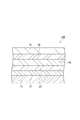
- FIG. 1 is a cross-sectional view showing an example of an organic thin film solar cell.
- the organic thin-film solar cell 100 shown in FIG. 1 has a support substrate 11, a cathode 21, a hole blocking layer 22, a charge generation layer 50, an electron blocking layer 32, and an anode 31 provided on the support substrate 11.
- the cathode 21, the hole blocking layer 22, the charge generation layer 50, the electron blocking layer 32, and the anode 31 are laminated in this order.
- the charge generation layer 50 contains a perylene dimer compound 5 or 23 as an acceptor material and a donor material.
- the donor material is not particularly limited.
- the other layers are constructed using the usual materials that make up organic thin film solar cells.
- the present invention is not limited to the following examples.
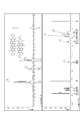
- FIG. 3 is a 1 H NMR spectrum of perylene dimer compound V in CDCl 3. Perylene dimer compound V had good solubility.
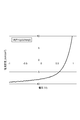
- FIG. 5 is a graph showing the current-voltage characteristics of an organic thin-film solar cell using the perylene dimer compound IV
- FIG. 6 is a graph showing the current-voltage characteristics of an organic thin-film solar cell using the perylene dimer compound VI.
- Table 1 shows the values of each parameter (short-circuit current density J SC , open-circuit voltage V OC , curve factor FF, conversion efficiency PCE) that represents the solar cell performance obtained from these measurement results. All organic thin-film solar cells showed good solar cell performance.
Landscapes
- Chemical & Material Sciences (AREA)
- Organic Chemistry (AREA)
- Engineering & Computer Science (AREA)
- Materials Engineering (AREA)
- Indole Compounds (AREA)
Priority Applications (1)
| Application Number | Priority Date | Filing Date | Title |
|---|---|---|---|
| JP2022534094A JPWO2022004812A1 (https=) | 2020-07-03 | 2021-06-30 |
Applications Claiming Priority (2)
| Application Number | Priority Date | Filing Date | Title |
|---|---|---|---|
| JP2020115744 | 2020-07-03 | ||
| JP2020-115744 | 2020-07-03 |
Publications (1)
| Publication Number | Publication Date |
|---|---|
| WO2022004812A1 true WO2022004812A1 (ja) | 2022-01-06 |
Family
ID=79316323
Family Applications (1)
| Application Number | Title | Priority Date | Filing Date |
|---|---|---|---|
| PCT/JP2021/024826 Ceased WO2022004812A1 (ja) | 2020-07-03 | 2021-06-30 | ペリレン二量体化合物及びその製造方法、ペリレン二量体化合物の重合体及びその製造方法、有機薄膜太陽電池、電極材料、並びにアルカリイオン二次電池 |
Country Status (2)
| Country | Link |
|---|---|
| JP (1) | JPWO2022004812A1 (https=) |
| WO (1) | WO2022004812A1 (https=) |
Citations (7)
| Publication number | Priority date | Publication date | Assignee | Title |
|---|---|---|---|---|
| JP2001005204A (ja) * | 1999-05-21 | 2001-01-12 | Xerox Corp | 光導電性画像形成部材 |
| JP2013534938A (ja) * | 2010-06-09 | 2013-09-09 | 海洋王照明科技股▲ふん▼有限公司 | ペリレンテトラカルボン酸ジイミドおよびベンゾジチオフェンによる共役ポリマーならびにその調製方法および用途 |
| US20160233448A1 (en) * | 2013-09-23 | 2016-08-11 | The Regents Of The University Of California | Multiple donor/acceptor bulk heterojunction solar cells |
| JP2016534190A (ja) * | 2013-08-23 | 2016-11-04 | フルロソル インダストリーズ ピーティーワイ リミテッド | 光捕集アレイ |
| WO2017191468A1 (en) * | 2016-05-06 | 2017-11-09 | Imperial Innovations Limited | Non-fullerene electron acceptors |
| CN108250221A (zh) * | 2018-01-29 | 2018-07-06 | 南昌大学 | 一类硒取代的苯并二苝酰亚胺及合成方法和在太阳能电池中的应用 |
| WO2021065374A1 (ja) * | 2019-10-01 | 2021-04-08 | 住友化学株式会社 | 光電変換素子 |
-
2021
- 2021-06-30 WO PCT/JP2021/024826 patent/WO2022004812A1/ja not_active Ceased
- 2021-06-30 JP JP2022534094A patent/JPWO2022004812A1/ja active Pending
Patent Citations (7)
| Publication number | Priority date | Publication date | Assignee | Title |
|---|---|---|---|---|
| JP2001005204A (ja) * | 1999-05-21 | 2001-01-12 | Xerox Corp | 光導電性画像形成部材 |
| JP2013534938A (ja) * | 2010-06-09 | 2013-09-09 | 海洋王照明科技股▲ふん▼有限公司 | ペリレンテトラカルボン酸ジイミドおよびベンゾジチオフェンによる共役ポリマーならびにその調製方法および用途 |
| JP2016534190A (ja) * | 2013-08-23 | 2016-11-04 | フルロソル インダストリーズ ピーティーワイ リミテッド | 光捕集アレイ |
| US20160233448A1 (en) * | 2013-09-23 | 2016-08-11 | The Regents Of The University Of California | Multiple donor/acceptor bulk heterojunction solar cells |
| WO2017191468A1 (en) * | 2016-05-06 | 2017-11-09 | Imperial Innovations Limited | Non-fullerene electron acceptors |
| CN108250221A (zh) * | 2018-01-29 | 2018-07-06 | 南昌大学 | 一类硒取代的苯并二苝酰亚胺及合成方法和在太阳能电池中的应用 |
| WO2021065374A1 (ja) * | 2019-10-01 | 2021-04-08 | 住友化学株式会社 | 光電変換素子 |
Non-Patent Citations (2)
| Title |
|---|
| WANG HELIN, SONG JUN, LI ZIKANG, LI LUDONG, LI JIAHUA, LI XIAOBIN, QU JUNLE, WONG WAI-YEUNG: "A linear conjugated tetramer as a surface-modification layer to increase perovskite solar cell performance and stability", JOURNAL OF MATERIALS CHEMISTRY A, vol. 8, no. 23, 16 June 2020 (2020-06-16), GB , pages 11728 - 11733, XP055897229, ISSN: 2050-7488, DOI: 10.1039/C9TA13262G * |
| YELI FAN, KOSTIANTYN ZIABREV, SIYUAN ZHANG, BAOPING LIN, STEPHEN BARLOW, SETH R. MARDER: "Comparison of the Optical and Electrochemical Properties of Bi(perylene diimide)s Linked through Ortho and Bay Positions", ACS OMEGA, vol. 2, no. 2, 28 February 2017 (2017-02-28), US , pages 377 - 385, XP055637354, ISSN: 2470-1343, DOI: 10.1021/acsomega.6b00537 * |
Also Published As
| Publication number | Publication date |
|---|---|
| JPWO2022004812A1 (https=) | 2022-01-06 |
Similar Documents
| Publication | Publication Date | Title |
|---|---|---|
| JP5591996B2 (ja) | 新規化合物、電荷輸送材料および有機デバイス | |
| JP4450630B2 (ja) | ロジウム錯体およびイリジウム錯体とその生産方法およびこれを用いた電子部品 | |
| CN111704624B (zh) | 吲哚并[3,2,1-kl]吩噁嗪化合物、其制备方法与应用以及电子器件 | |
| KR101859123B1 (ko) | 유기소자의 정공차단층 및/또는 전자수송층에 사용될 수 있는 신규한 화합물 및 이를 포함하는 유기박막의 제조방법 및 유기발광소자 | |
| KR102422398B1 (ko) | 축합 다환 화합물 및 그 제조방법과 용도 | |
| CN108546267A (zh) | 一种端基含环烷基链的有机共轭小分子材料及其制备方法与在太阳能电池中的应用 | |
| Wang et al. | Heterologous perylene diimide arrays: potential non-fullerene acceptors in organic solar cells | |
| JP5757609B2 (ja) | ドナー―π―アクセプター型化合物、蛍光色素化合物及び色素増感太陽電池用蛍光色素化合物 | |
| KR102691872B1 (ko) | 유기 반도전성 물질 및 이의 합성 및 이러한 물질을 갖는 유기 반도전성 부품 | |
| JP2011165963A (ja) | 有機色素及び有機薄膜太陽電池 | |
| CN104163785A (zh) | 一系列含吲哚啉衍生物结构的不对称方酸菁小分子及其应用 | |
| CN114907383B (zh) | 一类二(苯并吡咯)并吩噻嗪有机染料及其制备方法与应用 | |
| JP7827785B2 (ja) | 縮合環カルバゾール四座金属白金(ii)錯体及びその使用 | |
| KR20160003566A (ko) | 감광성 포르피린계 염료 및 염료-감응형 태양 전지 | |
| WO2022004812A1 (ja) | ペリレン二量体化合物及びその製造方法、ペリレン二量体化合物の重合体及びその製造方法、有機薄膜太陽電池、電極材料、並びにアルカリイオン二次電池 | |
| KR101406009B1 (ko) | 플러렌 유도체 및 이의 제조방법 | |
| JP2012236777A (ja) | インドロカルバゾール含有イミド化合物及び合成中間体、これらの製造方法、有機半導体組成物、ならびに有機太陽電池素子 | |
| JP2024169322A (ja) | 含フッ素四座配位白金(ii)錯体、電子デバイス、装置及びその使用 | |
| CN105694855A (zh) | 一种有机光电材料及其制备方法、应用 | |
| JP5776099B2 (ja) | 遷移金属錯体、光増感色素及び該色素を含む酸化物半導体電極及び色素増感太陽電池 | |
| CN105131641A (zh) | 一类用于染料敏化太阳能电池的吲哚啉基卟啉类染料及其制备 | |
| CN118894884A (zh) | 功能材料、钝化膜、太阳能电池、光伏组件及光伏系统 | |
| EP4092034A1 (en) | Novel compound and organic light-emitting device using same | |
| EP4092033A1 (en) | Novel compound and organic light-emitting device using same | |
| JP2022013911A (ja) | ペリレン化合物、及びその製造方法 |
Legal Events
| Date | Code | Title | Description |
|---|---|---|---|
| 121 | Ep: the epo has been informed by wipo that ep was designated in this application |
Ref document number: 21832275 Country of ref document: EP Kind code of ref document: A1 |
|
| DPE2 | Request for preliminary examination filed before expiration of 19th month from priority date (pct application filed from 20040101) | ||
| ENP | Entry into the national phase |
Ref document number: 2022534094 Country of ref document: JP Kind code of ref document: A |
|
| NENP | Non-entry into the national phase |
Ref country code: DE |
|
| 122 | Ep: pct application non-entry in european phase |
Ref document number: 21832275 Country of ref document: EP Kind code of ref document: A1 |