WO2021241523A1 - Th2介在性疾患を治療または予防するためのPD-1アゴニスト含有医薬組成物 - Google Patents
Th2介在性疾患を治療または予防するためのPD-1アゴニスト含有医薬組成物 Download PDFInfo
- Publication number
- WO2021241523A1 WO2021241523A1 PCT/JP2021/019676 JP2021019676W WO2021241523A1 WO 2021241523 A1 WO2021241523 A1 WO 2021241523A1 JP 2021019676 W JP2021019676 W JP 2021019676W WO 2021241523 A1 WO2021241523 A1 WO 2021241523A1
- Authority
- WO
- WIPO (PCT)
- Prior art keywords
- cells
- antibody
- human
- agonist
- cell
- Prior art date
- Legal status (The legal status is an assumption and is not a legal conclusion. Google has not performed a legal analysis and makes no representation as to the accuracy of the status listed.)
- Ceased
Links
Images





Classifications
-
- C—CHEMISTRY; METALLURGY
- C07—ORGANIC CHEMISTRY
- C07K—PEPTIDES
- C07K16/00—Immunoglobulins [IG], e.g. monoclonal or polyclonal antibodies
- C07K16/18—Immunoglobulins [IG], e.g. monoclonal or polyclonal antibodies against material from animals or humans
- C07K16/28—Immunoglobulins [IG], e.g. monoclonal or polyclonal antibodies against material from animals or humans against receptors, cell surface antigens or cell surface determinants
- C07K16/2803—Immunoglobulins [IG], e.g. monoclonal or polyclonal antibodies against material from animals or humans against receptors, cell surface antigens or cell surface determinants against the immunoglobulin superfamily
- C07K16/2818—Immunoglobulins [IG], e.g. monoclonal or polyclonal antibodies against material from animals or humans against receptors, cell surface antigens or cell surface determinants against the immunoglobulin superfamily against CD28 or CD152
-
- A—HUMAN NECESSITIES
- A61—MEDICAL OR VETERINARY SCIENCE; HYGIENE
- A61P—SPECIFIC THERAPEUTIC ACTIVITY OF CHEMICAL COMPOUNDS OR MEDICINAL PREPARATIONS
- A61P29/00—Non-central analgesic, antipyretic or antiinflammatory agents, e.g. antirheumatic agents; Non-steroidal antiinflammatory drugs [NSAID]
-
- A—HUMAN NECESSITIES
- A61—MEDICAL OR VETERINARY SCIENCE; HYGIENE
- A61P—SPECIFIC THERAPEUTIC ACTIVITY OF CHEMICAL COMPOUNDS OR MEDICINAL PREPARATIONS
- A61P37/00—Drugs for immunological or allergic disorders
- A61P37/02—Immunomodulators
- A61P37/06—Immunosuppressants, e.g. drugs for graft rejection
-
- A—HUMAN NECESSITIES
- A61—MEDICAL OR VETERINARY SCIENCE; HYGIENE
- A61P—SPECIFIC THERAPEUTIC ACTIVITY OF CHEMICAL COMPOUNDS OR MEDICINAL PREPARATIONS
- A61P37/00—Drugs for immunological or allergic disorders
- A61P37/08—Antiallergic agents
-
- A—HUMAN NECESSITIES
- A61—MEDICAL OR VETERINARY SCIENCE; HYGIENE
- A61K—PREPARATIONS FOR MEDICAL, DENTAL OR TOILETRY PURPOSES
- A61K39/00—Medicinal preparations containing antigens or antibodies
- A61K2039/505—Medicinal preparations containing antigens or antibodies comprising antibodies
-
- C—CHEMISTRY; METALLURGY
- C07—ORGANIC CHEMISTRY
- C07K—PEPTIDES
- C07K2317/00—Immunoglobulins specific features
- C07K2317/70—Immunoglobulins specific features characterized by effect upon binding to a cell or to an antigen
-
- C—CHEMISTRY; METALLURGY
- C07—ORGANIC CHEMISTRY
- C07K—PEPTIDES
- C07K2317/00—Immunoglobulins specific features
- C07K2317/70—Immunoglobulins specific features characterized by effect upon binding to a cell or to an antigen
- C07K2317/75—Agonist effect on antigen
Definitions
- the present invention relates to a PD-1 agonist-containing pharmaceutical composition for treating or preventing Th2-mediated diseases.
- the immune response has an aspect that its improper control leads to disease.
- Insufficient immune response to pathogens such as bacteria and viruses that have invaded the body leads to infectious diseases, and conversely, autoimmune diseases develop when a harmful immune response to one's own tissues is established.
- the immune system suppresses the function of the immune cell, which is contrary to the mechanism of activating the function of the immune cell and promoting the immune response. It has both mechanisms to reduce the immune response. Diseases resulting from inadequate or excessive immune responses may also be contributed by impaired these endogenous regulatory mechanisms.
- Non-Patent Document 1 Okazaki et al. Nat. Immunol., 2013
- Inflammatory adverse reactions resulting from an excessive immune response have also been observed at a constant rate during cancer treatment with PD-1 inhibitors
- Non-Patent Document 2 Young et al. Cancer Immunol. Res., 2018.
- PD-1 is expressed on activated T cells, and when ligand molecules such as PD-L1 and PD-L2 are expressed on the cell surface of the other party during antigen recognition, T cell activity is activated by interaction with these.
- the mechanism of action that interferes with the conversion signal is known.
- PD-1 itself has the property of inducing immunosuppressive signals may lead to the treatment of inflammatory diseases if it can be artificially stimulated.
- Anti-PD-1 antibodies used in cancer treatment inhibit the binding to ligand molecules, but for active immunosuppression, the function of PD-1 is enhanced by binding to PD-1.
- PD-1 agonists that can induce are predominant.
- One of the purposes of the present invention is to search for a new physiological activity of an agonist antibody against PD-1 and to find a new use based on the activity.
- the present invention has been completed based on these findings, and the gist thereof is as follows.
- a pharmaceutical composition for treating or preventing a Th2-mediated disease which comprises an effective amount of a PD-1 agonist.
- the pharmaceutical composition according to (1), wherein the PD-1 agonist is an anti-PD-1 agonist antibody or a functional fragment thereof.
- the pharmaceutical composition according to (1) or (2), wherein the Th2-mediated disease is a type I allergy.
- the pharmaceutical composition according to (1) or (2), wherein the Th2-mediated disease is an eosinophil disease.
- the Th2-mediated disease is bronchial asthma, atopic dermatitis, allergic rhinitis, drug allergy, food allergy, anaphylaxis, allergic conjunctivitis, urticaria, eosinophil sinusitis, eosinophil digestion.
- the pharmaceutical composition according to (1) or (2) which is a disease selected from organ diseases and allergic bronchopulmonary aspergillosis.
- a method for preventing and / or treating a Th2-mediated disease which comprises administering an effective amount of a PD-1 agonist to a subject.
- PD-1 agonist for use in the prevention and / or treatment of Th2-mediated diseases.
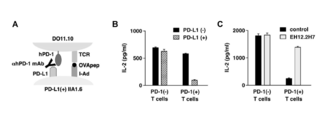
- Cytokine production inhibitory activity evaluation system for T cells stimulated by PD-1 The Cytokine production inhibitory activity evaluation system for T cells stimulated by PD-1.
- A DO11.10 T cell hybridomas expressing human PD-1 (hPD-1) and IIA 1.6 B lymphoma cells were used. DO11.10 T cell hybridomas are activated in response to the OVA 323-339 peptide presented by the MHC class II molecule (IA d ) of IIA 1.6 cells, but activation is suppressed when stimulated to PD-1. Will be done.
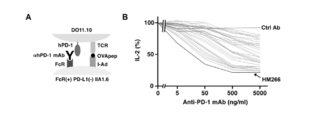
- the figure shows only clones having immunosuppressive activity among these anti-human PD-1 antibodies. Comparison of anti-human PD-1 agonist antibody activity.
- A Among the anti-human PD-1 antibodies found to have immunosuppressive activity this time, those with relatively high activity were selected and IC 50 was determined.
- all commercially available antibodies J116, MIH4 found to have agonist activity are mouse IgG, but IL-2 production is based on the antibody concentration-dependent suppression curve of IL-2 production. The concentration was determined to reach 50% suppression, assuming that there was no antibody at all.
- the Fv portion of the novel antibody is a chimeric antibody with the Fc portion of human IgG1-K322A (B) or human IgG4-S228P (C), and other known anti-PD- PD- reported as agonist antibodies.
- One antibody (PD1AB6, PD1-17: Special Table 2018-533973, Special Table 2006-521783) was added, and IC 50 was examined from the antibody concentration-dependent suppression of IL-2 production. Immunosuppressive effect of anti-human PD-1 agonist antibody on human T cells.
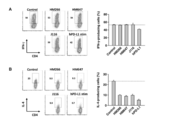
- CD4 + CD62L + cells prepared from DO11.10 mouse splenocytes were stimulated with OVA 323-339 using PD-L1 (-) Fc ⁇ RIIB (+) IIA 1.6 cells as antigen-presenting cells. At that time, Th1 or Th2 cells were selectively induced by adding cytokines and anti-cytokine antibodies.
- Th1 and Th2 cells were induced in the presence of anti-PD-1 agonist antibody, the proportion of Th1 cells shown in IFN- ⁇ production did not change much (A), but the proportion of Th2 cells producing IL-4. was greatly suppressed (B).
- the functional differentiation of Th2 is particularly sensitive to PD-1 stimulation, suggesting that anti-PD-1 agonist antibodies may be able to artificially adjust the Th1 / Th2 balance. Similar changes were observed when PD-1 was stimulated with PD-L1 (+) IIA 1.6 cells, as was the case with anti-PD-1 agonist antibodies.
- Antibody production in mice immunized with the antigen and the action of anti-PD-1 agonist antibodies on it Human PD-1 knock-in mice were immunized with NP-OVA (4-hydroxy-3-nitrophenylacetyl hapten bound to ovalbumin), and at the same time, administration of anti-PD-1 agonist antibody (HM266) was started. HM266 was administered 3 days and 7 days later, and hapten-specific antibody titers in blood were measured 10 days later, and comparisons were made between IgG subclasses.
- A Blood antigen-specific antibody titer after 10 days. Administration of HM266 reduced both IgG1 and IgG2c antibody concentrations, but the inhibitory effect on IgG1 antibody was particularly remarkable.
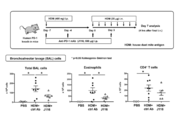
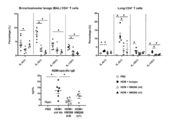
- Allergic asthma was induced in human PD-1 knock-in mice by exposure to the dust mite antigen using the same method as in FIG. At this time, when HM266 was administered and the suppression of inflammation was observed, HM266 infiltrated eosinophils and CD4 + T cells into the alveoli by 4 doses (HM266 (x4)) as in FIG. Suppressed. Furthermore, even when HM266 was administered only once 3 days after the induction of inflammation in the lung tissue to observe the therapeutic effect (HM266 (x1)), the infiltration of inflammatory cells into the alveoli was suppressed. Admitted. Anti-inflammatory effect of HM266 on allergic asthma and suppression of Th2-type immune response. Induction of allergic asthma was induced according to the same schedule as in FIG.
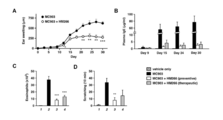
- HM266 Anti-inflammatory effect of HM266 on atopic dermatitis.
- MC903 was applied to the auricles of human PD-1 knock-in mice once every 3 days to induce allergic dermatitis.
- A By starting administration of anti-PD-1 agonist antibody (HM266) at the same time as MC903, swelling of the auricle was significantly suppressed.
- B Changes in blood IgE concentration over time due to administration of MC903. Continuous application of MC903 significantly increased IgE concentration, but co-administration of HM266 (prophylactic administration) significantly decreased this. Furthermore, in the therapeutic setting in which HM266 was administered from the 12th day after the swelling of the auricle, a significant decrease in IgE concentration also occurred.
- the present invention provides a pharmaceutical composition comprising an effective amount of a PD-1 agonist, particularly an anti-PD-1 agonist antibody, for treating or preventing a Th2-mediated disease.
- the present invention provides a method for the prevention and / or treatment of Th2-mediated diseases, which comprises administering an effective amount of a PD-1 agonist to a subject.
- the present invention provides PD-1 agonists for use in the prevention and / or treatment of Th2-mediated diseases.
- the present invention provides the use of PD-1 agonists for the prevention and / or treatment of Th2-mediated diseases.
- PD-1 Programmed cell death 1
- PD-1 and PD-L2 which are ligands for PD-1, are expressed on the surface of antigen-presenting cells.
- PD-L1 or PD-L2 binds to PD-1, the immune activity of T cells is suppressed via signal transduction pathways.
- the PD-1 agonist is a substance that exhibits an action (enhancement of activation signal) on a PD-1 molecule like PD-L1 and the like, and the pharmaceutical composition of the present invention is effective against a PD-1 agonist. It is contained as an ingredient.
- the PD-1 agonist is not particularly limited, and the antibody, its antigen-binding fragment, solubilized PD-L1 / L2 (for example, Fc fusion protein), peptide, nucleic acid molecule, other compound, PD-L1 / Any PD-1 agonist such as PD-1 ligand-expressing cells with artificially enhanced L2 expression may be used, preferably an antibody (anti-PD-1 agonist antibody) or a functional fragment thereof.
- the present inventors combined anti-human PD-1 with a combination of DO11.10 T cell hybridoma expressing human PD-1 and IIA 1.6 B lymphoma cells expressing human Fc ⁇ RIIB without expressing PD-L1.
- OVA 323-339 peptide which is a peptide antigen derived from ovoalbumin
- the immunosuppressive effect was observed, including those with high activity (IL-2 production inhibitory activity) to those with low activity.
- Multiple clones having were obtained (see Examples below).
- J116 a commercially available anti-human PD-1 monoclonal antibody
- IC 50 was about 1000 ng / ml. Therefore, for example, in the above assay system, the IL-2 production inhibitory activity is equal to or higher than that of J116 under the condition that the IC 50 of J116 is calculated to be 50 ng / ml to 5000 ng / ml.
- An antibody showing inhibitory activity (that is, an IC 50 value equal to or lower than J116) can be said to be an "anti-PD-1 agonist antibody".
- any one that is scientifically recognized to have IL-2 production inhibitory activity equal to or higher than J116 may be used.
- the anti-PD-1 agonist antibody or functional fragment thereof may be bound only to the # 7 region of human PD-1 (the region from the 38th amino acid to the 48th amino acid of the amino acid sequence of SEQ ID NO: 24).
- the # 6 region of human PD-1 (the region from the 109th amino acid to the 120th amino acid of the amino acid sequence of SEQ ID NO: 24) and the # 1 region (the 129th region of the amino acid sequence of SEQ ID NO: 24). It may bind to the region from the second amino acid to the 139th amino acid), but it is preferable to bind only to the # 7 region of human PD-1.
- Binding ability of anti-human PD-1 antibody by substituting the # 7 region of human PD-1 represented by SEQ ID NO: 24 with the sequence of the corresponding region of the amino acid sequence of mouse PD-1 (SEQ ID NO: 25).
- the registration database and registration number of the amino acid sequence of human PD-1 is NCBI accession number: NP_005009.2, and the registration database and registration number of the amino acid sequence of mouse PD-1 is NCBI accession number: NP_032824.1.
- Anti-PD-1 agonist antibodies or functional fragments thereof are also mouse PD-1 substitutions (Mouse PD-1 (hu38)) in which the # 7 region of mouse PD-1 is replaced with the amino acid sequence of the # 7 region of human PD-1. -48))) and / or human PD-1 (R143A point mutant) in which arginine at position 143 of human PD-1 is mutated to alanine is also preferable.
- MIH4 and J116 which are commercially available anti-human PD-1 monoclonal antibodies, showed activity as PD-1 agonists.
- the anti-human PD-1 monoclonal antibodies HM266, HM647 and HM698 newly prepared by the present inventors showed good agonist activity. These antibodies are useful as anti-PD-1 agonist antibodies and can be used as the active ingredient of the pharmaceutical composition of the present invention.
- MIH4, J116, HM266 and HM268 bind to the # 7 region of human PD-1
- HM647 binds to the # 6 and # 7 regions of human PD-1.
- amino acids and nucleotide sequences of the heavy chain variable region and the light chain variable region of HM266, HM647 and HM698 are numbered as follows and are shown in the sequence listing.
- HM266, HM647 and HM698 can be produced using hybridomas, but they can also be produced as recombinant antibodies by genetic engineering techniques. That is, the heavy chain and light chain genes of an antibody are synthesized, inserted into a vector (for example, a plasmid), introduced into a host cell (for example, CHO cell, HEK cell, etc.), and the host cell is cultured. Allows the recombinant antibody to be harvested from the culture. Codon optimization is preferred in synthesizing heavy and light chain genes for antibodies.
- a vector for example, a plasmid
- a host cell for example, CHO cell, HEK cell, etc.
- Codon optimization is preferred in synthesizing heavy and light chain genes for antibodies.
- the anti-PD-1 agonist antibody may be either a polyclonal antibody or a monoclonal antibody, but is preferably a monoclonal antibody.
- an antigen (PD-1) is injected into an animal, the antibody is repeatedly produced in the blood, and then the blood (plasma, serum) is collected and the antibody is purified from the blood (plasma, serum). good.
- B cells producing the antibody are removed from the spleen or lymph node, and immortalized cancer cells (myeloma) are artificially produced.
- mice and rabbits animals used for immunization include various mammals such as rats, hamsters, guinea pigs, chickens, goats, sheep, donkeys, llamas, and sharks, birds, and fish.
- Monoclonal antibodies can also be produced as recombinant antibodies by genetic engineering techniques.
- Monoclonal antibodies are antibodies and chimeras of non-human animals (eg, various mammals, birds, fish such as mice, rabbits, rats, hamsters, guinea pigs, goats, sheep, donkeys, llamas, camels, chickens, ostriches, sharks). It may be an antibody, a humanized antibody, or a fully human antibody.
- the variable portion (Fv) of an anti-PD-1 agonist antibody can be found in non-human animals (eg, mice, rabbits, rats, hamsters, guinea pigs, goats, sheep, donkeys, llamas, camels, chickens, butterflies, sharks, etc.).
- Humanization can be performed by transplanting the CDRs of VH and VL of non-human animal-derived antibodies into the framework of VH and VL of human antibodies (Nature, 332, 323-327, 1988). Humanization may be performed as long as the sequence of the CDR is maintained, but the amino acid residues directly involved in the binding to the antigen, the amino acid residues interacting with the CDR, and the three-dimensional structure of the CDR are maintained.
- the amino acid residue involved in the disease may be identified and replaced with the amino acid residue of the non-humanized antibody to improve the antigen binding (MABS, 8 (7), 1302-1318). , 2016).
- a chimeric antibody was prepared by linking the variable region of a novel antibody (HM266, HM647 and HM698) to the constant region of human IgG1 or human IgG4.
- the amino acid sequences and nucleotide sequences of the heavy chain constant region (IgG1-K322A) of human IgG1 used to prepare the chimeric antibody are shown in SEQ ID NOs: 17 and 18, respectively, and the amino acid sequences of the heavy chain constant region (IgG4-S228P) of human IgG4 are shown.
- base sequences are shown in SEQ ID NOs: 19 and 20, respectively, and amino acid sequences and base sequences of the light chain ( ⁇ chain: Ig ⁇ ) constant region of human immunoglobulin are shown in SEQ ID NOs: 21 and 22, respectively.
- the anti-PD-1 agonist antibody may be functionally modified.
- antibody function modification techniques include amino acid mutation introduction, subclass substitution, antibody drug conjugate, sugar chain-modified antibody, and combinations thereof.
- amino acid mutation introduction an anti-PD-1 agonist antibody is administered. It is preferable to introduce a mutation that improves the affinity of the target human or non-human animal for the Fc receptor.
- the Fc receptor is preferably an Fc ⁇ receptor, more preferably Fc ⁇ RII, and even more preferably Fc ⁇ RIIB.
- the binding ability (binding affinity) of anti-PD-1 agonist antibody to human Fc receptor can be determined by Fc receptor binding affinity measurement test using surface plasmon resonance technology using Biacore 8K (Cytiva) and human Fc using a flow cytometer.
- the affinity of the anti-PD-1 agonist antibody for human Fc ⁇ RIIB is the GMFI ratio to the antibody (control antibody) having the Fc region of human IgG1-K322A.
- the anti-PD-1 agonist antibody showed more than twice the GMFI with control antibody having the same Fv region.
- the affinity of the anti-PD-1 agonist antibody for human FcRIIB is equilibrium with the antibody (control antibody) having the Fc region of human IgG1-K322A. It can be expressed as a dissociation constant (Kd) ratio, and the anti-PD-1 agonist antibody has an affinity of 1.5 times or more that of the control antibody, preferably 2 times or more that of the control antibody, and is more preferable. Has an affinity of 2.5 times or more that of the control antibody.
- the anti-PD-1 agonist antibody is a sequence from the 100th amino acid to the 330th amino acid in the amino acid sequence of IgG1 represented by SEQ ID NO: 17 in the Fc region of a human antibody (for example, IgG1, IgG4, etc.), SEQ ID NO: It is preferable that the antibody has a region corresponding to the sequence from the 100th amino acid to the 327th amino acid in the amino acid sequence of IgG4 represented by 19), and the Fc region of the human antibody has an affinity for the human Fc receptor. It is preferably an Fc region variant modified to improve the properties. By modifying the Fc region of the antibody, the affinity for the human Fc receptor can be improved. In addition, the affinity for the human Fc receptor can be improved by the defucose treatment of the antibody.
- the anti-PD-1 agonist antibody as a means for improving the affinity for the human Fc receptor, for example, at positions 236, 268, 239, 328, 332, and 233 in the amino acid sequence of the Fc region of human IgG1. Mutations are introduced in any one or more of the ranks, 237th, 238th, 271st, 330th, 267th, 326th, 234th, 323th and 296th (according to Kabat's EU numbering; the same applies hereinafter). It is often done, preferably a combination of these. Moreover, you may combine these mutations with fucosylation.
- K322A and Fc ⁇ RIIIA which are mutations known to suppress complement-dependent cellular cytotoxicity (CDC) activity by further reducing the binding of complement C1q. May be combined with other mutations such as E293A, a mutation known to suppress ADCC activity by reducing the binding of.
- E293A a mutation known to suppress ADCC activity by reducing the binding of.
- the heavy chain constant region of human IgG1 having an amino acid mutation of Lys322Ala which is said to suppress complement-dependent cytotoxic activity, was used, but the following using an antibody having a human heavy chain constant region. It is understood that these mutations have no significant effect in the test system shown in the examples.
- positions 236, 239, 268, 328, and 332 in the amino acid sequence of the Fc region of human IgG4 (according to Kabat's EU numbering; the same applies hereinafter).
- the mutation is introduced into any one or more of them, and a combination of these is preferable.
- Anti-PD-1 agonist antibodies include Fab regions in which the Fab regions of the heavy and light chains of antibodies derived from non-human animals (eg, mice) (exhibiting PD-1 agonist activity) are humanized, and human IgG1. Alternatively, it may have an Fc region of an Fc region variant of IgG4.
- a functional fragment of an anti-PD-1 agonist antibody is derived from an antibody molecule and refers to a protein fragment capable of binding to PD-1 and a fusion protein containing the protein fragment, and has bispecificity (bispecificity ( Bispecific) antibodies, small molecule antibodies (scFv, Fv, F (ab') 2, Fab', Fab, diabody, etc.) can be mentioned, but are not limited to these.
- a molecule having one or more of scFv, Fv, F (ab') 2, Fab', Fab, etc. of an anti-PD-1 agonist antibody and which also binds to an Fc receptor may be used, for example, anti-PD-1 agonist antibody.
- Fusion of PD-1 agonist antibody and drug antibody drug complex polypeptide having scFv of anti-PD-1 agonist antibody and scFv of anti-Fc receptor antibody, scFv of anti-PD-1 agonist antibody and Fc region Proteins and the like can be mentioned, but are not limited to these. If the functional fragment has an Fc region, such as a fusion protein of scFv and Fc region of an anti-PD-1 agonist antibody, the Fc region is the Fc region of the Fc region variant described herein. Is desirable. Protein improvement and optimization techniques as described above can also be applied to functional fragments.
- the anti-PD-1 agonist antibody may be an immunoglobulin molecule, and is preferably an immunoglobulin molecule of the animal species in which the antibody is used.
- the immunoglobulin molecule may be any class of molecule, preferably IgG in humans, and may be any subclass, but IgG1 or IgG4 is preferred.
- the affinity of the anti-PD-1 agonist antibody for PD-1 is preferably such that the binding constant (Kd) is 10 -7 M or less, preferably 10 -8 M or less.
- the binding constant is preferably measured by the surface plasmon resonance (SPR) method, but can be simply obtained by flow cytometry from the concentration dependence of binding to PD-1-expressing cells.
- an anti-PD-1 agonist antibody can suppress Th2 cell induction by PD-1 stimulation (Examples described later, FIG. 5).
- Th2 cells produce IL-4, IL-5, and IL-13, and immune function is regulated through these cytokines.
- Th2-mediated disease refers to an immune response induced by cells producing Th2-type cytokines such as IL-4, IL-5, and IL-13 (for example, Th2 cells) playing a central role.
- Th2-type cytokines such as IL-4, IL-5, and IL-13 (for example, Th2 cells) playing a central role.
- Related diseases specifically, inflammatory diseases caused by type I allergic reactions and eosinophil diseases (proliferation of eosinophils controlled by Th2-type cytokines, granule protein release and migration) are the pathological conditions. Diseases involved) that are thought to be directly related to Th2-type immunity.
- Such diseases include bronchial asthma, atopic dermatitis, allergic rhinitis (pollinosis, etc.), drug / food allergies, anaphylaxis, allergic conjunctivitis, urticaria, eosinusitis, and eosinophilia.
- Gastrointestinal disorders, allergic bronchopulmonary aspergillosis, etc. can be exemplified.
- composition of the present invention can be administered to a subject (human or non-human animal) orally or parenterally, systemically or topically.
- the pharmaceutical composition of the present invention may contain an effective amount of PD-1 agonist, but may be formulated and produced by mixing, dissolving, emulsifying, encapsulating, freeze-drying, etc. together with a pharmaceutically acceptable carrier. be able to.
- the pharmaceutical composition of the present invention may be administered by either oral administration or parenteral administration, but a suitable preparation for oral administration is a diluted anti-PD-1 agonist antibody such as water or physiological saline.
- anti-PD-1 agonist antibodies are injectable solutions, suspensions, emulsions, creams. It can be formulated into a dosage form such as an agent, an ointment, an inhalant, or a suppository.
- the antibodies of the invention can be dissolved in an aqueous solution, preferably in a physiologically compatible buffer such as Hanks solution, Ringer solution, or physiological saline buffer.
- the pharmaceuticals of the invention can take the form of suspensions, solutions, emulsions, etc. in oily or aqueous vehicles.
- the antibody of the present invention may be produced in the form of a powder, and an aqueous solution or suspension may be prepared using sterile water or the like before use.
- the antibodies of the invention can be powdered into a powder mixture with a suitable base such as lactose or starch.
- the suppository formulation can be prepared by mixing the antibody of the present invention with a conventional suppository base such as cocoa butter.
- the therapeutic agent of the present invention can be encapsulated in a polymer matrix or the like and formulated as a continuous release preparation.
- the dose may be about 0.1 to 100 mg / kg (body weight) once to a human adult, or multiple times at intervals of 1 day to 6 months.
- the administration route may be either oral administration or parenteral administration, but in the case of parenteral administration, intravenous, intramuscular, subcutaneous, rectal, nasal, oral, transdermal administration and the like may be mentioned. Can be done.
- non-human animals to which the pharmaceutical composition of the present invention is administered include dogs, cats, cows, pigs, mammals such as horses, and birds.
- the pharmaceutical composition of the present invention may be used alone, but it may be an antihistamine drug, an antiallergic drug, a vasocontractant nasal drop drug, a steroid drug, a small molecule immunosuppressant (cyclosporin, tachlorimus, etc.), an antibody drug (anti-IgE).
- Antibodies, anti-IL-4 antibodies, anti-IL-5 antibodies, anti-IL-13 antibodies, anti-IL-4 receptor antibodies, anti-IL-5 receptor antibodies, anti-IL-22 antibodies, anti-IL-25 antibodies, anti-IL-33 It may be used in combination with other therapeutic agents such as antibody, anti-TSLP antibody, anti-BAFF antibody, etc.) and recombinant soluble fusion protein (CTLA-4-Ig, etc.). As a result, a synergistic effect of medicinal effects can be expected.
- Example 1 Methods Commercially available antibody Anti-human PD-1 antibody (clone name: EH12.2H7, Biolegend), anti-human PD-1 antibody (clone name: J116, Invitrogen), anti-human PD-1 antibody (clone name: MIH4, Invitrogen), control Mouse IgG1 (clone name: MOPC-21, Biolegend), control human IgG1 (clone name: QA16A12, Biolegend), control human IgG4 (clone name: QA16A15, Biolegend)
- each hybridoma culture supernatant was added to HEK293 cells in which human PD-1 was forcibly expressed, and R-phycoerythrin-labeled goat anti-mouse IgG (R-phycoerythrin-labeled goat anti-mouse IgG) was used as a secondary antibody.
- R-phycoerythrin-labeled goat anti-mouse IgG R-phycoerythrin-labeled goat anti-mouse IgG
- H + L) F (ab') 2 fragment was used for staining, and then analysis was performed using a flow cytometer.
- the finally selected hybridoma is cloned by the limiting dilution method, and after high-density culture in a cell line bioreactor (Wheaton), anti-antibody is used from the culture supernatant using Ab-Capture ExTra (P-003-10; Protenova). Human PD-1 antibody was purified.
- variable region sequences of the anti-human PD-1 antibodies HM647 and HM698 were determined by sending the frozen hybridoma to Visicom Japan Co., Ltd. and using the commissioned analysis service of Fusion Antibodies. Furthermore, the variable region sequences of the anti-human PD-1 antibodies HM266 and HM698 were determined by the method described in A Doenecke, EL Winnacker and M Hallek Leukemia (1997) 11, 1787-1792. Briefly, Total RNA is prepared from hybridoma cells, and the cDNA in the antibody variable region is PCR amplified by the 5'-RACE method using the SMARTer (TM) RACE cDNA Amplification Kit (Clontech), and then the cDNA sequence is obtained. Decided. The obtained sequence was expressed as a recombinant human IgG1 antibody, and specific binding to human PD-1 was confirmed. The variable region sequence of HM698 was the same sequence by either method.
- a heavy chain expression vector was constructed using DNA encoding a heavy chain sequence and an expression vector (pcDNA3.4, Thermo Fisher Scientific).
- a light chain expression vector was constructed using a DNA encoding the light chain sequence and an expression vector (pcDNA3.4, Thermo Fisher Scientific).
- the above two expression vectors were introduced into CHO cells or HEK293 cells by the lipofection method, the transformed cells were cultured, and then the cells were removed by centrifugation and filtration to recover the culture medium.
- Antibody purification was performed by combining affinity chromatography with a Protein A or Capture Select kappa XL column with gel filtration chromatography. The combinations of each antibody and purification method are as follows.
- Protein A Purified by gel filtration: HM266-hIgG4-S228P, HM647-hIgG1-K322A, PD1AB6-hIgG1-K322A, PD1AB6-hIgG4-S228P, PD1-17 Capture Select kappa XL ⁇ Purified by gel filtration: HM266-hIgG1-K322A, HM647-hIgG4-S228P, HM698-hIgG1-K322A, HM698-hIgG4-S228P
- the activity of anti-human PD-1 antibody was evaluated as an effect on cytokine production by the interaction between T cells expressing human PD-1 and antigen-presenting cells.
- a strain in which mouse PD-1 was knocked out using Cas9 (Invitrogen) against a DO11.10 T cell hybriddoma strain (from the Department of Immunogenomic Medicine, graduate School of Medicine, Kyoto University) as T cells, and a human PD-1. was forcibly expressed.
- a strain in which mouse PD-L1 was knocked out against an IIA 1.6 B cell line from the Department of Immunogenomic Medicine, graduate School of Medicine, Kyoto University
- human PD-L1 or mouse Fc ⁇ RIIB were added to this.
- Mouse Fc ⁇ RIIB-expressing IIA 1.6 cells were used to evaluate human PD-1 agonist activity, and human PD-L1 expressing IIA 1.6 cells were used to evaluate antagonist activity.
- Human PD-1 expressing DO11.10 T cell hybridomas and each IIA 1.6 cell were suspended in medium (RPMI1640 medium containing 10% fetal bovine serum) and DO11.10 T cell hybridomas were dispensed in 5x10 4 cells / well / 50 ⁇ l.
- IIA 1.6 cells were seeded in 1x10 4 cells / well / 50 ⁇ l in a round bottom 96-well plate.
- Anti-human PD-1 antibody was added to this at 50 ⁇ l / well to a final concentration of 5, 0.5, 0.05, 0.005 ⁇ g / ml. Then, OVA 323-339 peptide (Eurofin) was added as an antigen at a final concentration of 3 ⁇ g / ml at 50 ⁇ l / well. After 18 hours, the IL-2 concentration in the culture supernatant was measured using mouse IL-2 DuoSet ELISA (R & D Systems).
- cytokine suppression obtained when human PD-L1 expression IIA 1.6 was used was used as a positive control, and DO11.10 T cell hybridomas that did not express human PD-1 were used. The result of was used as a negative control.
- human PD-1 antagonist activity an anti-human PD-1 antibody (clone name: EH12.2H7) whose antagonist activity is known was used.
- THP-1 cells were suspended at 1x10 7 cells / ml in a medium supplemented with 500 ⁇ g / ml mitomycin C, left at 37 ° C for 2 hours to stop their growth, and then used as antigen-presenting cells.
- Activated human CD4 + T cells and mitomycin-treated THP-1 cells were suspended in medium and seeded on round-bottomed 96-well plates at 5x10 4 , 2.5x10 4 cells / well / 50 ⁇ l, respectively.
- Anti-human PD-1 antibody was added to this at 50 ⁇ l / well to a final concentration of 5, 0.5, 0.05, 0.005 ⁇ g / ml.
- Cytostim (Miltenyi Biotec) as an antigen was added at a final concentration of 0.2 ⁇ l / well at a final concentration of 0.2 ⁇ l / well. After 18 hours, IL-2 in the culture supernatant was measured using an ELISA MAX Standard Set Human (BioLegend).
- naive helper T cells (CD4 + CD62L + ) After recovering the spleen from DO11.10 mice (OVA 323-339 peptide-specific T cell receptor transgenic mice; The Jackson Laboratory) and preparing cell suspensions. Hemolyzed. The resulting cells were stained with antibodies against FITC-labeled CD8, CD19, CD49b, IA / IE. After washing the cells, anti-FITC antibodies labeled with magnetic beads were bound to the cells, and these were separated by magnetic separation to separate the CD4 + T cell fraction.
- This CD4 + T cell fraction is stained with PerCp-Cy5.5-labeled anti-CD4 antibody and APC-labeled anti-CD62L antibody, and CD4 + CD62L + cells are recovered using FACS to be naive. Obtained helper T cells. The resulting naive helper T cells were stimulated with Dynabeads mouse T activator (Invitrogen) for 24 hours to force expression of human PD-1.
- Dynabeads mouse T activator Invitrogen
- a retrovirus supernatant was prepared by transfecting MSCV-hPD-1-IRES-Thy1.1 into human PD-1 forced expression Plat-E cells infected with retrovirus.
- the retrovirus supernatant was added to a culture plate coated with Retronectin (registered trademark) and centrifuged at 32 ° C. at 2500 rpm for 2 hours.
- the centrifuged plates were washed with PBS, CD4 + T cells stimulated by the above method were added, and the cells were centrifuged at 32 ° C, 2000 rpm, and 10 minutes.
- Human PD-1 was forcibly expressed by repeating this retrovirus infection operation twice at 24-hour intervals.
- llA1.6-mFc ⁇ RIIb (+) PD-L1 (-) and hPD-L1 (+) cells were prepared to a concentration of 2x10 7 cells / mL, and an equal amount of mitomycin C (1 mg) was prepared. / mL) was mixed and treated at 37 ° C. for 2 hours. These cells were washed 3 times with PBS and used as antigen presenting cells.
- OVA 323-339 peptide (final 5 ⁇ g / mL) with antigen-presenting cells (1x10 6 ) for CD4 + T cells (1x10 6 ) forcibly expressing human PD-1
- Anti-human PD-1 antibody (final 5 ⁇ g / mL) was added to the culture plate.
- IL-2 final 2 ng / mL; Peprotech
- IL-12 final 1 ng / mL; Peprotech
- IFN- ⁇ final 1 ng / mL; Peprotech
- anti-IL-4 for induction to Th1 cells
- Neutralizing antibody (final 5 ⁇ g / mL; clone name 11B11, BioXcell) was added.
- IL-2 final 2 ng / mL
- IL-4 final 1 ng / mL
- Peprotech anti-IFN- ⁇ neutralizing antibody
- BioXcell anti-IL-12 neutralizing antibody
- Culturing was performed using a 12-well plate, and the volume of the culture solution was 2 mL.
- the cells were collected from the plate, the Fc receptor was blocked with the anti-mouse CD16 / 32 antibody, the cell surface was stained with PerCp-Cy5.5-anti-mouse CD4 antibody, Fixable Viability Dye eFluor780, and washed with PBS. Fixed with 4% paraformaldehyde for 15 minutes. The fixed cells were washed with PBS and then subjected to cell membrane permeation treatment for 10 minutes, washed again with PBS, stained with FITC-labeled anti-IFN- ⁇ antibody and PE-labeled anti-IL-4 antibody for 45 minutes, and subjected to FACS. Was analyzed.
- mice Preparation of human PD-1 knock-in mice using genome editing gRNA (5'-GCCAGGGGCTCTGGGCATGT-3') (SEQ ID NO: 23) and a donor vector containing the human PD-1 gene were added to C57BL together with Cas9 protein (Invitrogen). It was introduced into a 6N mouse-derived pronuclear stage fertilized egg by microinjection and transplanted into the oviduct of a foster parent mouse. For the mice (F0) obtained from this, indel mice were selected and crossed with wild-type mice to obtain F1 mice. The homozygous type obtained by further mating F1 mice with confirmed gene transfer was used in the experiment as a human PD-1 knock-in mouse.
- genome editing gRNA 5'-GCCAGGGGCTCTGGGCATGT-3'
- Cas9 protein Invitrogen
- HDM House dust mite extract
- Greer House dust mite extract
- HDM From 7 days after intraperitoneal administration of HDM, 25 ⁇ g / 25 ⁇ L of total HDM protein was nasally administered under anesthesia. This nasal administration was performed for 8 consecutive days, and 4 hours after the final nasal administration, blood was collected from the mice and then euthanized, and the alveolar lavage fluid and lungs were collected. The alveolar lavage fluid was centrifuged and then mononuclear cells were counted.
- MC903 Evaluation of PD-1 agonist by MC903-induced atopic dermatitis model MC903 was used as an ethanol solution and applied to both auricles of hPD-1 knock-in mice so as to be MC903 5 nmol / 10 ⁇ L, and at the same time, anti-human PD-1.
- the antibody was intraperitoneally administered at 500 ⁇ g (day 0).
- the same amount of MC903 was applied and anti-human PD-1 antibody was administered every 3 days from the 0th day to the 27th day.
- administration of anti-human PD-1 antibody was started on day 12. Auricular thickening was measured every 3 days during the test period. On the 29th day, the number of scratching actions for 10 minutes was visually measured.
- Plasma IgE concentration was measured by ELISA (ELISAMAX Standard Set Mouse IgE; BioLegend). After 30 days, the mice were euthanized and the pinna was recovered. After shredding the auricle, immune cells were collected by enzymatic treatment, and the number of eosinophils (CD45 + CD11b + SiglecF +) infiltrating into the tissue was calculated by FACS analysis.
- DO11.10 T cell hybridomas are made from CD4 + T cells of DO11.10 mice that express MHC class II (IA d ) -restricted T cell receptors that recognize the peptide derived from ovoalbumin (OVA 323-339). It is a T cell hybridoma.
- DO11.10 T cell hybridomas produce IL-2 in response to the antigenic peptide presented in MHC class II (IA d ) expressed in the B lymphoma cell line IIA1.6 (FIG. 1A). This means that T cell activation in this combination is triggered by antigen recognition, reproducing a physiological activation mechanism not available in experimental systems that promote non-specific T cell activation. There is a merit.
- anti-human PD-1 antibody can be obtained by forcibly expressing human PD-1 in DO11.10 T cell hybridomas lacking mouse PD-1. It can be an experimental system for examining the function. DO11.10 T-cell hybridomas expressing human PD-1 have a marked decrease in IL-2 production when stimulated with antigens by IIA1.6 expressing PD-L1, and this change is PD-1 specific. It was also confirmed that the reaction was positive (Fig. 1B). PD-1 and PD-L1 expressed on the cell membrane should have the original three-dimensional structure of the membrane protein, which is also superior to the artificial experimental system using the solubilized membrane protein. ..
- Detection of agonist antibodies with immunosuppressive activity should be performed under conditions where suppression by PD-L1 has not occurred. Therefore, we prepared a system different from the detection of blocking antibody, and the cells used here were DO11.10 T cell hybridoma expressing human PD-1 and IIA1 in which PD-L1 was deficient and Fc ⁇ RIIB was expressed. A combination of 6 cells was used. Anti-human PD-1 monoclonal antibodies were screened using these two systems, one for blocking antibody detection and the other for agonist antibody detection. The sample monoclonal antibody was prepared from mice immunized with human PD-1. As a result, a number of monoclonal antibodies having various levels of activity were obtained (Fig. 2).
- CD4 + helper T cells are diverse, but it is the subset of helper T cells that play a specific role in each immune function that covers these diverse functions.
- cell groups with different roles such as Th1, Th2, Th17, and Treg are known.
- Th1 cells that promote cell-mediated immunity, mainly the direct cytotoxic activity of CD8 + T cells and NK cells, and class switch to IgE by enhancing humoral immunity and eosinophils.
- Helper T cell subsets are specialized for immune functions with very different personalities, such as that it is Th2 cells that promote allergic reactions by activation.
- Each helper T cell subset produces significantly different cytokines, with IFN- ⁇ characteristic of Th1 cells, whereas IL-4, IL-5, IL-13, and Th17 cells are characteristic of Th2 cells. Each has its own characteristic pattern of cytokine production, such as IL-17. Through these cytokines, helper T cell subsets regulate different immune functions.
- Cytokine production from a subset of helper T cells is also one of the functions under the control of PD-1. It has been reported that the amount of cytokine production increases when PD-1 or PD-1 ligands (PD-L1, PD-L2) are blocked. In many cases, the increase is not different for each cytokine, and even when peripheral blood lymphocytes of various allergic patients are restimulated with the causative allergen, IFN- ⁇ , TNF- ⁇ , IL- are blocked by the block of PD-1 signal. 4, IL-10 and IL-13 have all been reported to increase [1]. In addition, in the paper pointing out the difference between cytokines, it is stated that IFN- ⁇ exceeds IL-4, IL-5, IL-13, etc.
- Th1 cells are superior to Th2 cells.
- Th1 type No significant difference was shown between the and Th2 type cytokines [6-8]. It has been reported that IFN- ⁇ , IL-2, IL-10, and IL-13 are uniformly suppressed in experiments using PD1-17 (Wyeth) as an hPD-1 agonist antibody [9]. These experimental results indicate the function of PD-1 / PD-1 ligands for the ability to produce cytokines from Th1 cells, Th2 cells, etc. that were already present in the sample. However, before that, in order for such Th1 and Th2 cells to exist, there is a process in which they are completed, and another kind of study is required to elucidate the effects of PD-1 stimulation at that stage. Is.
- Helper T cell subsets such as Th1 and Th2 are thought to be derived from naive helper T cells of the same origin, for example, the same naive helper T cells that become Th1 cells when activated in the presence of IL-12. It becomes Th2 cells in the presence of IL-4. This is functional differentiation.
- naive helper T cells can be either Th1 cell predominant or Th2 cell predominant depending on the environment at the time of activation, and the relative immune response depends on the cytotoxic immune response. Whether it is directed to inflammation or an allergic inflammatory response mainly composed of antibodies and eosinophils is determined by the functional differentiation of naive helper T cells. Therefore, if the existence balance of Th1 and Th2 is changed by PD-1 stimulation, not only the immune response is quantitatively suppressed, but also the qualitative part is changed.
- Th2-type immune response by PD-1 agonist was also shown from in vivo experiments. Antibodies whose production is induced from B cells in response to antigens mature through mechanisms such as class switching with the help of T cells. It is known that the class switch to is specifically induced.
- NP-OVA When NP-OVA was immunized in human PD-1 knock-in mice and NP-specific IgG was analyzed, the overall production was suppressed by the administration of anti-PD-1 agonist antibody.
- the inhibitory effect on IgG1 was superior to that on IgG2c, and the IgG1 / IgG2c ratio was lowered (FIG. 6). This result suggests that the use of PD-1 agonists may actually realize changes in the Th1 / Th2 balance in the immune response in vivo and highly selective suppression of Th2-type immunity.
- allergic diseases are derived as one of the diseases for which the effectiveness of PD-1 agonists can be expected.
- Allergic diseases are diseases with a very large number of patients including asthma, atopic dermatitis, hay fever, and food / drug allergies, but the number of patients has been increasing rapidly in recent years on a global scale, and this disease There is a strong demand for effective treatments for allergies.
- These allergic diseases are immune responses induced by Th2-type cytokine production, the characteristic changes of which are eosinophil-dominant inflammatory images and increased blood IgE antibody levels. The increased IgE antibody promotes the activation of mast cells and spreads inflammation.
- the increase in IgE antibody concentration is directly caused by the increase in B cells that produce it, but it is the cytokines such as IL-4 and IL-13 released from Th2 cells that induce the class switch of the antibody to IgE.
- Th2 cells can induce eosinophil activation by producing IL-5 in addition to them. That is, since Th2 cells increase IgE production in B cells by IL-4 and IL-13, and at the same time promote eosinophil-dominant inflammation by using IL-5, Th2 cells are a pathological condition of allergic diseases. It is believed that the increase in eosinophils plays a central role. Therefore, if the balance of functional differentiation of helper T cells is significantly biased toward Th2, it is considered that it will soon lead to the onset of allergic diseases. From the above background, it is suggested that suppression of excessive Th2 type immune response is effective for the treatment of allergic diseases.
- PD-1 agonists have a particularly strong inhibitory effect on functional differentiation into Th2 cells, they are useful for suppressing and treating allergic diseases caused by the central role of Th2 cells.
- PD-1 agonists are expected to be effective. Therefore, we used an animal experimental model of asthma that induces the pathological condition by inhaling the dust mite antigen in mice, and verified the effect on allergic asthma. This experiment was carried out on a schedule of sensitizing with the dust mite antigen and inhaling the same antigen every day from one week later. First, in order to examine the efficacy of the anti-PD-1 agonist antibody against this disease, anti-PD- 1 Agonist antibody was started at the timing of sensitization.
- HM266 which has a stronger agonist activity
- J116 the anti-inflammatory effect against allergic inflammation was also enhanced.
- Administration of HM266 suppressed the infiltration of eosinophils and CD4 + T cells into the alveoli, and the number of CD4 + T cells producing IL-4, IL-5, and IL-13 was reduced. (Figs. 9 and 10).
- the blood concentration of mite antigen-specific IgE was also significantly reduced in correlation with the decrease in Th2 cells, indicating that Th2-type immunity was actually suppressed (Fig. 10).
- the efficacy of the anti-PD-1 agonist antibody in the therapeutic setting was examined.
- HM266 was administered only once 3 days after the start of daily inhalation of the antigen, but infiltration of CD4 + T cells that produce eosinophils and Th2 type cytokines was significantly suppressed. (Figs. 9 and 10).
- PD-1 agonists are useful as prophylactic and therapeutic agents for allergic inflammation.
- HM266 As another type I allergic disease model, the anti-inflammatory effect of anti-PD-1 agonist antibody on the induction of atopic dermatitis was investigated.
- MC903 was applied to the auricle of human PD-1 knock-in mice to induce allergic dermatitis
- HM266 was administered at the same time, and the swelling of the auricle was significantly suppressed (Fig. 11).
- the suppression of allergic inflammatory response at that time is noteworthy, as seen in the marked decrease in blood IgE concentration, the number of eosinophils infiltrated into the auricular tissue, and the decrease in curettage behavior by mice. rice field.
- HM266 administration was started after the swelling of the auricle was induced (day 12) in order to examine the therapeutic effect of HM266, the IgE concentration was also significantly large in this therapeutic setting. A decrease in the number of eosinophils and a decrease in the number of eosinophils were observed (Fig. 11). These results suggest that PD-1 agonists may be useful in the treatment of all Th2-type immune-mediated diseases such as type I allergy.
- Th2 helper T cell (Th2) bias at the maternal-fetal interface Hum. Reprod. 31: 700-11 (2016).
- PD-L1 and PD-L2 modulate airway inflammation and iNKT-cell-dependent airway hyperreactivity in indicating directions .
- Lewkowich IP Lajoie S, Stoffers SL, Suzuki Y, Richgels PK, Dienger K, Sproles AA, Yagita H, Hamid Q, Wills-Karp M.
- PD-L2 modulates asthma severity by directly decreasing dendritic cell IL-12 production.
- All publications, patents and patent applications cited herein are incorporated herein by reference in their entirety.
- the present invention can be used for the treatment and / or prevention of Th2-mediated diseases such as type I allergy and eosinophil disease.
Landscapes
- Health & Medical Sciences (AREA)
- Immunology (AREA)
- Chemical & Material Sciences (AREA)
- Organic Chemistry (AREA)
- Medicinal Chemistry (AREA)
- Life Sciences & Earth Sciences (AREA)
- General Health & Medical Sciences (AREA)
- Pharmacology & Pharmacy (AREA)
- Public Health (AREA)
- Veterinary Medicine (AREA)
- Animal Behavior & Ethology (AREA)
- Nuclear Medicine, Radiotherapy & Molecular Imaging (AREA)
- General Chemical & Material Sciences (AREA)
- Engineering & Computer Science (AREA)
- Bioinformatics & Cheminformatics (AREA)
- Chemical Kinetics & Catalysis (AREA)
- Pulmonology (AREA)
- Biophysics (AREA)
- Biochemistry (AREA)
- Proteomics, Peptides & Aminoacids (AREA)
- Genetics & Genomics (AREA)
- Molecular Biology (AREA)
- Transplantation (AREA)
- Pain & Pain Management (AREA)
- Rheumatology (AREA)
- Medicines Containing Antibodies Or Antigens For Use As Internal Diagnostic Agents (AREA)
- Peptides Or Proteins (AREA)
Priority Applications (5)
| Application Number | Priority Date | Filing Date | Title |
|---|---|---|---|
| US17/923,996 US20230183347A1 (en) | 2020-05-25 | 2021-05-24 | PD-1 Agonist-Containing Pharmaceutical Composition for Treating or PReventing TH2-Mediated Disease |
| JP2022526545A JP7754455B2 (ja) | 2020-05-25 | 2021-05-24 | Th2介在性疾患を治療または予防するためのPD-1アゴニスト含有医薬組成物 |
| KR1020227040648A KR20230015348A (ko) | 2020-05-25 | 2021-05-24 | Th2 개재성 질환을 치료 또는 예방하기 위한 PD-1 작용제 함유 의약 조성물 |
| EP21811909.7A EP4159235A4 (en) | 2020-05-25 | 2021-05-24 | PHARMACEUTICAL COMPOSITION CONTAINING PD-1 AGONIST FOR TREATING OR PREVENTING TH2-MEDIATED DISEASE |
| CN202180037220.XA CN115697405A (zh) | 2020-05-25 | 2021-05-24 | 用于治疗或预防Th2介导的疾病的含有PD-1激动剂的药物组合物 |
Applications Claiming Priority (2)
| Application Number | Priority Date | Filing Date | Title |
|---|---|---|---|
| JP2020090526 | 2020-05-25 | ||
| JP2020-090526 | 2020-05-25 |
Publications (1)
| Publication Number | Publication Date |
|---|---|
| WO2021241523A1 true WO2021241523A1 (ja) | 2021-12-02 |
Family
ID=78744780
Family Applications (1)
| Application Number | Title | Priority Date | Filing Date |
|---|---|---|---|
| PCT/JP2021/019676 Ceased WO2021241523A1 (ja) | 2020-05-25 | 2021-05-24 | Th2介在性疾患を治療または予防するためのPD-1アゴニスト含有医薬組成物 |
Country Status (7)
| Country | Link |
|---|---|
| US (1) | US20230183347A1 (https=) |
| EP (1) | EP4159235A4 (https=) |
| JP (1) | JP7754455B2 (https=) |
| KR (1) | KR20230015348A (https=) |
| CN (1) | CN115697405A (https=) |
| TW (1) | TWI890796B (https=) |
| WO (1) | WO2021241523A1 (https=) |
Cited By (3)
| Publication number | Priority date | Publication date | Assignee | Title |
|---|---|---|---|---|
| WO2022239820A1 (ja) * | 2021-05-13 | 2022-11-17 | 公益財団法人神戸医療産業都市推進機構 | 炎症性疾患を治療又は予防するための抗ヒトpd-1アゴニスト抗体及びこれを含有する医薬組成物 |
| US12312405B2 (en) | 2020-05-26 | 2025-05-27 | Boehringer Ingelheim International Gmbh | Anti-PD-1 antibodies |
| EP4466291A4 (en) * | 2022-01-28 | 2025-07-16 | Georgiamune Inc | ANTIBODIES DIRECTED AGAINST PROGRAMMED CELL DEATH PROTEIN 1, PD-1 AGONISTS |
Citations (5)
| Publication number | Priority date | Publication date | Assignee | Title |
|---|---|---|---|---|
| CN106924718A (zh) * | 2017-04-27 | 2017-07-07 | 中山大学 | B7‑dc突变体在治疗哮喘中的应用 |
| CN107149530A (zh) * | 2016-03-04 | 2017-09-12 | 吴东 | 一种洗头装置 |
| WO2019168745A1 (en) * | 2018-03-02 | 2019-09-06 | Eli Lilly And Company | Pd-1 agonist antibodies and uses thereof |
| JP2019531284A (ja) * | 2016-09-19 | 2019-10-31 | セルジーン コーポレイション | Pd−1結合タンパク質を使用して免疫障害を治療する方法 |
| JP2020090526A (ja) | 2012-10-23 | 2020-06-11 | シンアフィックス ビー.ブイ. | 修飾抗体、抗体コンジュゲート及びそれらを調製する方法 |
Family Cites Families (3)
| Publication number | Priority date | Publication date | Assignee | Title |
|---|---|---|---|---|
| ES2893855T3 (es) | 2011-08-11 | 2022-02-10 | Ono Pharmaceutical Co | Agente terapéutico para enfermedades autoinmunes que comprende agonista de PD-1 |
| CN107149680A (zh) | 2017-04-27 | 2017-09-12 | 中山大学 | Pd‑1h激动剂在哮喘治疗中的应用 |
| WO2022239820A1 (ja) * | 2021-05-13 | 2022-11-17 | 公益財団法人神戸医療産業都市推進機構 | 炎症性疾患を治療又は予防するための抗ヒトpd-1アゴニスト抗体及びこれを含有する医薬組成物 |
-
2021
- 2021-05-24 US US17/923,996 patent/US20230183347A1/en active Pending
- 2021-05-24 WO PCT/JP2021/019676 patent/WO2021241523A1/ja not_active Ceased
- 2021-05-24 CN CN202180037220.XA patent/CN115697405A/zh active Pending
- 2021-05-24 KR KR1020227040648A patent/KR20230015348A/ko active Pending
- 2021-05-24 EP EP21811909.7A patent/EP4159235A4/en active Pending
- 2021-05-24 JP JP2022526545A patent/JP7754455B2/ja active Active
- 2021-05-25 TW TW110118921A patent/TWI890796B/zh active
Patent Citations (5)
| Publication number | Priority date | Publication date | Assignee | Title |
|---|---|---|---|---|
| JP2020090526A (ja) | 2012-10-23 | 2020-06-11 | シンアフィックス ビー.ブイ. | 修飾抗体、抗体コンジュゲート及びそれらを調製する方法 |
| CN107149530A (zh) * | 2016-03-04 | 2017-09-12 | 吴东 | 一种洗头装置 |
| JP2019531284A (ja) * | 2016-09-19 | 2019-10-31 | セルジーン コーポレイション | Pd−1結合タンパク質を使用して免疫障害を治療する方法 |
| CN106924718A (zh) * | 2017-04-27 | 2017-07-07 | 中山大学 | B7‑dc突变体在治疗哮喘中的应用 |
| WO2019168745A1 (en) * | 2018-03-02 | 2019-09-06 | Eli Lilly And Company | Pd-1 agonist antibodies and uses thereof |
Non-Patent Citations (26)
| Title |
|---|
| "NCBI", Database accession no. NP-005009.2 |
| A DOENECKEE-L WINNACKERM HALLEK, LEUKEMIA, vol. 11, 1997, pages 1787 - 1792 |
| AKBARI OSTOCK PSINGH AKLOMBARDI VLEE WLFREEMAN GJSHARPE AHUMETSU DTDEKRUYFF RH: "PD-L 1 and PD-L2 modulate airway inflammation and iNKT-cell-dependent airway hyperreactivity in opposing directions", MUCOSAL IMMUNOL, vol. 3, 2010, pages 81 - 91 |
| CHEMNITZ JMPARRY RVNICHOLS KEJUNE CHRILEY JL: "SHP-1 and SHP-2 associate with immunoreceptor tyrosine-based switch motif of programmed death 1 upon primary human T cell stimulation,but only receptor ligation prevents T cell activation", J. IMMUNOL., vol. 173, 2004, pages 945 - 54 |
| DULOS JCARVEN GJVAN BOXTEL SJEVERS SDRIESSEN-ENGELS LJHOBO WGORECKA MADE HAAN AFMULDERS PPUNT CJ: "PD-1 blockade augments Th 1 and Th 17 and suppresses Th2 responses in peripheral blood from patients with prostate and advanced melanoma cancer", J. IMMUNOTHER., vol. 35, 2012, pages 169 - 78, XP008171910, DOI: 10.1097/CJI.0b013e318247a4e7 |
| GODING: "Monoclonal Antibodies: Principles and Practice", 1986, ACADEMIC PRESS, pages: 59 - 103 |
| HELOU, D. G. ET AL.: "PD-1 pathway regulates ILC2 metabolism and PD-1 agonist treatment ameliorates airway hyperreactivity", NAT. COMMUN., vol. 11, no. 1, 10 August 2020 (2020-08-10), XP055880243 * |
| HEROLD MPOSEVITZ YCHUDYKA DHUCKE SGRO0 CKURTH FLEDER CLOSER KKURTS CKNOLLE P: "B7-H1 Selectively Controls TH17 Differentiation and Central Nervous System Autoimmunity via a Novel Non-PD-1-Mediated Pathway", J. IMMUNOL., vol. 195, 2015, pages 3584 - 95 |
| KUBO SYAMADA TOSAWA YITO YNARITA NFUJIEDA S: "Cytosine-phosphate-guanosine-DNA induces CD274 expression in human B cells and suppresses T helper type 2 cytokine production in pollen antigen-stimulated CD4-positive cells", CLIN. EXP. IMMUNOL., vol. 169, 2012, pages 1 - 9 |
| LEWKOWICH IPLAJOIE SSTOFFERS SLSUZUKI YRICHGELS PKDIENGER KSPROLES AAYAGITA HHAMID QWILLS-KARP M: "PD-L2 modulates asthma severity by directly decreasing dendritic cell IL-12 production", MUCOSAL IMMUNOL, vol. 6, 2013, pages 728 - 39, XP055386098, DOI: 10.1038/mi.2012.111 |
| LEWKOWICH, IP. ET AL.: "PD-L2 modulates asthma severity by directly decreasing dendritic cell 1L- 12 production", MUCOSAL IMMUNOL., vol. 6, no. 4, 2013, pages 728 - 739, XP055386098, DOI: 10.1038/mi.2012.111 * |
| MABS, vol. 8, no. 7, 2016, pages 1302 - 1318 |
| MATSUMOTO KINOUE HNAKANO TTSUDA MYOSHIURA YFUKUYAMA STSUSHIMA FHOSHINO TAIZAWA HAKIBA H: "B7-DC regulates asthmatic response by an IFN-gamma-dependent mechanism", J. IMMUNOL., vol. 172, 2004, pages 2530 - 1, XP002491039 |
| MCALEES JWLAJOIE SDIENGER KSPROLES AARICHGELS PKYANG YKHODOUN MAZUMA MYAGITA HFULKERSON PC: "Differential control of CD4(+) T-cell subsets by the PD-1/PD-L1 axis in a mouse model of allergic asthma", EUR. J. IMMUNOL., vol. 45, 2015, pages 1019 - 29 |
| MCALEES, J. W. ET AL.: "Differential control of CD 4+ T- cell subsets by the PD-1/PD-L1 axis in a mouse model of allergic asthma", EUR. J. IMMUNOL., vol. 45, 2015, pages 1019 - 1029, XP071227616, DOI: 10.1002/eji.201444778 * |
| NATURE, vol. 332, 1988, pages 323 - 327 |
| OFLAZOGLU E, SWART DA, ANDERS-BARTHOLO P, JESSUP HK, NORMENT AM, LAWRENCE WA, BRASEL K, TOCKER JE, HORAN T, WELCHER AA, FITZPATRIC: "Paradoxical role of programmed death-1 ligand 2 in Th2 immune responses in vitro and in a mouse asthma model in vivo", J. IMMUNOL., vol. 34, 2004, pages 3326 - 36, XP071222068, DOI: 10.1002/eji.200425197 |
| OFLAZOGLU, E. ET AL.: "Paradoxical role of programmed death-1 ligand 2 in Th2 immune responses in vitro and in a mouse asthma model in vivo", EUR. J. IMMUNOL ., vol. 34, 2004, pages 3326 - 3336, XP071222068, DOI: 10.1002/eji.200425197 * |
| OKAZAKI TCHIKUMA SIWAI YFAGARASAN SHONJO T: "A rheostat for immune responses: the unique properties of PD-1 and their advantages for clinical application", NAT. IMMUNOL., vol. 14, 2013, pages 1212 - 1218 |
| RAJAMANICKAM AMUNISANKAR SDOLLA CNUTMAN TBBABU S: "Cytotoxic T-Lymphocyte-Associated Antigen 4 (CTLA-4) and Programmed Death 1 (PD-1) mediated regulation of mono- and dual functional CD4+ and CD8+ T-cell responses in a chronic helminth infection", INFECT. IMMUN., vol. 87, 2019, pages e00469 - 19 |
| ROSENBLATT JGLOTZBECKER BMILLS HVASIR BTZACHANIS DLEVINE JDJOYCE RMWELLENSTEIN KKEEFE WSCHICKLER M: "PD-1 blockade by CT-011, anti-PD-1 antibody, enhances ex vivo T-cell responses to autologous dendritic cell/myeloma fusion vaccine", J. IMMUNOTHER., vol. 34, 2011, pages 409 - 18, XP008175988, DOI: 10.1097/CJI.0b013e31821ca6ce |
| ROSSKOPF SJAHN-SCHMID BSCHMETTERER KGZLABINGER GJSTEINBERGER P: "PD-1 has a unique capacity to inhibit allergen-specific human CD4+ T cell responses", SCI. REP., vol. 8, 2018, pages 13543 |
| See also references of EP4159235A4 |
| WANG SZHU XXU YZHANG DLI YTAO YPIAO HLI DDU M: "Programmed cell death-1 (PD-1) and T-cell immunoglobulin mucin-3 (Tim-3) regulate CD4+ T cells to induce Type 2 helper T cell (Th2) bias at the maternal-fetal interface", HUM. REPROD., vol. 31, 2016, pages 700 - 11 |
| YOUNG AQUANDT ZBLUESTONE JA: "The Balancing Act between Cancer Immunity and Autoimmunity in Response to Immunotherapy", CANCER IMMUNOL. RES., vol. 6, 2018, pages 1445 - 1452 |
| ZHU BGULERIA IKHOSROSHAHI ACHITNIS TIMITOLA JAZUMA MYAGITA HSAYEGH MHKHOURY SJ: "Differential role of programmed death-ligand 1 [corrected] and programmed death-ligand 2 [corrected] in regulating the susceptibility and chronic progression of experimental autoimmune encephalomyelitis", J. IMMUNOL., vol. 176, 2006, pages 3480 - 9 |
Cited By (5)
| Publication number | Priority date | Publication date | Assignee | Title |
|---|---|---|---|---|
| US12312405B2 (en) | 2020-05-26 | 2025-05-27 | Boehringer Ingelheim International Gmbh | Anti-PD-1 antibodies |
| WO2022239820A1 (ja) * | 2021-05-13 | 2022-11-17 | 公益財団法人神戸医療産業都市推進機構 | 炎症性疾患を治療又は予防するための抗ヒトpd-1アゴニスト抗体及びこれを含有する医薬組成物 |
| JPWO2022239820A1 (https=) * | 2021-05-13 | 2022-11-17 | ||
| EP4339289A4 (en) * | 2021-05-13 | 2025-10-08 | Foundation For Biomedical Res And Innovation At Kobe | HUMAN ANTI-PD-1 AGONIST ANTIBODY FOR THE TREATMENT OR PREVENTION OF INFLAMMATORY DISEASES, AND PHARMACEUTICAL COMPOSITION CONTAINING SAME |
| EP4466291A4 (en) * | 2022-01-28 | 2025-07-16 | Georgiamune Inc | ANTIBODIES DIRECTED AGAINST PROGRAMMED CELL DEATH PROTEIN 1, PD-1 AGONISTS |
Also Published As
| Publication number | Publication date |
|---|---|
| US20230183347A1 (en) | 2023-06-15 |
| TW202210099A (zh) | 2022-03-16 |
| CN115697405A (zh) | 2023-02-03 |
| EP4159235A1 (en) | 2023-04-05 |
| TWI890796B (zh) | 2025-07-21 |
| KR20230015348A (ko) | 2023-01-31 |
| EP4159235A4 (en) | 2024-07-10 |
| JPWO2021241523A1 (https=) | 2021-12-02 |
| JP7754455B2 (ja) | 2025-10-15 |
Similar Documents
| Publication | Publication Date | Title |
|---|---|---|
| RU2203682C2 (ru) | Фармацевтическая композиция для лечения иммунных заболеваний | |
| KR101704865B1 (ko) | 항-ox40 항체 및 그의 용도 | |
| TW202535924A (zh) | 抗dll3嵌合抗原受體及其用途 | |
| US20040092718A1 (en) | Use of a CD28 binding substance for making a pharmaceutical composition | |
| Ke et al. | Evolving antibody therapies for the treatment of type 1 diabetes | |
| CN116425876A (zh) | Bcma结合分子及其使用方法 | |
| TW201920275A (zh) | 藉由細胞表現之調控生物活性的抗體 | |
| TWI890796B (zh) | 用於治療或預防Th2介導性疾病之含PD-1激動劑之醫藥組合物 | |
| CA3158025A1 (en) | Anti-bcma chimeric antigen receptors | |
| WO2019164891A1 (en) | Bcma-binding antibodies and uses thereof | |
| WO2023104099A1 (zh) | 靶向bcma的p329g抗体及其与嵌合抗原受体细胞的组合和应用 | |
| JP4808712B2 (ja) | ヒトil−4に対するヒトモノクローナル抗体 | |
| US20240317859A1 (en) | Anti-human pd-1 agonist antibody and pharmaceutical composition comprising the antibody for treating or preventing inflammatory diseases | |
| CN116162168A (zh) | 分子开关调控型嵌合抗原受体细胞和抗体的组合及其应用 | |
| CN117715935A (zh) | 抗cd33抗体及其用途 | |
| CN116669751A (zh) | 靶向爱泼斯坦-巴尔病毒的tcr-t细胞疗法 | |
| CN117693528A (zh) | 抗cll1抗体及其构建体 | |
| CN117203341A (zh) | 用于治疗或预防炎症性疾病的抗人pd-1激动剂抗体和含有其的药物组合物 | |
| US20240350630A1 (en) | Compositions and methods of treating disease with chimeric antigen receptors to b cell maturation antigen (bcma) | |
| TW202540189A (zh) | 在組合療法中能夠結合ox40之抗體 | |
| TW202607042A (zh) | 多特異性抗原結合蛋白 | |
| WO2024140836A1 (zh) | 靶向nkg2d配体的融合蛋白与嵌合抗原受体细胞的组合及其用途 | |
| Paluch | Manipulating immune checkpoint signalling pathways with antibodies | |
| HK40106942A (en) | Anti-human pd-1 agonist antibody for treating or preventing inflammatory diseases, and pharmaceutical composition containing same | |
| AU2024276506A1 (en) | Immune effector cell and use thereof |
Legal Events
| Date | Code | Title | Description |
|---|---|---|---|
| 121 | Ep: the epo has been informed by wipo that ep was designated in this application |
Ref document number: 21811909 Country of ref document: EP Kind code of ref document: A1 |
|
| ENP | Entry into the national phase |
Ref document number: 2022526545 Country of ref document: JP Kind code of ref document: A |
|
| NENP | Non-entry into the national phase |
Ref country code: DE |
|
| ENP | Entry into the national phase |
Ref document number: 2021811909 Country of ref document: EP Effective date: 20230102 |