WO2021210614A1 - ケトン体測定用酵素剤、ケトン体測定用センサ及び試料中のケトン体を測定する方法 - Google Patents
ケトン体測定用酵素剤、ケトン体測定用センサ及び試料中のケトン体を測定する方法 Download PDFInfo
- Publication number
- WO2021210614A1 WO2021210614A1 PCT/JP2021/015467 JP2021015467W WO2021210614A1 WO 2021210614 A1 WO2021210614 A1 WO 2021210614A1 JP 2021015467 W JP2021015467 W JP 2021015467W WO 2021210614 A1 WO2021210614 A1 WO 2021210614A1
- Authority
- WO
- WIPO (PCT)
- Prior art keywords
- polypeptide
- measuring
- hbdh
- sample
- ketone bodies
- Prior art date
- Legal status (The legal status is an assumption and is not a legal conclusion. Google has not performed a legal analysis and makes no representation as to the accuracy of the status listed.)
- Ceased
Links
Images
Classifications
-
- C—CHEMISTRY; METALLURGY
- C12—BIOCHEMISTRY; BEER; SPIRITS; WINE; VINEGAR; MICROBIOLOGY; ENZYMOLOGY; MUTATION OR GENETIC ENGINEERING
- C12M—APPARATUS FOR ENZYMOLOGY OR MICROBIOLOGY; APPARATUS FOR CULTURING MICROORGANISMS FOR PRODUCING BIOMASS, FOR GROWING CELLS OR FOR OBTAINING FERMENTATION OR METABOLIC PRODUCTS, i.e. BIOREACTORS OR FERMENTERS
- C12M1/00—Apparatus for enzymology or microbiology
- C12M1/34—Measuring or testing with condition measuring or sensing means, e.g. colony counters
-
- C—CHEMISTRY; METALLURGY
- C12—BIOCHEMISTRY; BEER; SPIRITS; WINE; VINEGAR; MICROBIOLOGY; ENZYMOLOGY; MUTATION OR GENETIC ENGINEERING
- C12N—MICROORGANISMS OR ENZYMES; COMPOSITIONS THEREOF; PROPAGATING, PRESERVING, OR MAINTAINING MICROORGANISMS; MUTATION OR GENETIC ENGINEERING; CULTURE MEDIA
- C12N9/00—Enzymes; Proenzymes; Compositions thereof; Processes for preparing, activating, inhibiting, separating or purifying enzymes
- C12N9/0004—Oxidoreductases (1.)
-
- C—CHEMISTRY; METALLURGY
- C12—BIOCHEMISTRY; BEER; SPIRITS; WINE; VINEGAR; MICROBIOLOGY; ENZYMOLOGY; MUTATION OR GENETIC ENGINEERING
- C12Q—MEASURING OR TESTING PROCESSES INVOLVING ENZYMES, NUCLEIC ACIDS OR MICROORGANISMS; COMPOSITIONS OR TEST PAPERS THEREFOR; PROCESSES OF PREPARING SUCH COMPOSITIONS; CONDITION-RESPONSIVE CONTROL IN MICROBIOLOGICAL OR ENZYMOLOGICAL PROCESSES
- C12Q1/00—Measuring or testing processes involving enzymes, nucleic acids or microorganisms; Compositions therefor; Processes of preparing such compositions
- C12Q1/26—Measuring or testing processes involving enzymes, nucleic acids or microorganisms; Compositions therefor; Processes of preparing such compositions involving oxidoreductase
- C12Q1/32—Measuring or testing processes involving enzymes, nucleic acids or microorganisms; Compositions therefor; Processes of preparing such compositions involving oxidoreductase involving dehydrogenase
-
- G—PHYSICS
- G01—MEASURING; TESTING
- G01N—INVESTIGATING OR ANALYSING MATERIALS BY DETERMINING THEIR CHEMICAL OR PHYSICAL PROPERTIES
- G01N33/00—Investigating or analysing materials by specific methods not covered by groups G01N1/00 - G01N31/00
- G01N33/48—Biological material, e.g. blood, urine; Haemocytometers
- G01N33/50—Chemical analysis of biological material, e.g. blood, urine; Testing involving biospecific ligand binding methods; Immunological testing
- G01N33/64—Chemical analysis of biological material, e.g. blood, urine; Testing involving biospecific ligand binding methods; Immunological testing involving ketones
Definitions
- the present invention relates to a novel 3-hydroxybutyric acid dehydrogenase for measuring ketone bodies, and more specifically, to an enzyme agent for measuring ketone bodies, a sensor for measuring ketone bodies, and a method for measuring ketone bodies in a sample.
- HBDH is an industrially important enzyme reagent for the measurement of ketone bodies.
- HBDH is isolated from various microorganisms.
- Patent Document 1 discloses HBDH derived from Rhodobacter sphaeroides.
- HBDH derived from Paracoccus denitrificans (optimal pH of oxidation reaction is 8.5) in Non-Patent Document 1
- HBDH derived from Ralstonia pickettii T1 (optimum pH of oxidation reaction is 8.5) in Non-Patent Document 2.
- Non-Patent Document 3 HBDH derived from Mycobacterium phlei ATCC354 (optimal pH of oxidation reaction is 8.4)
- Non-Patent Document 4 HBDH derived from Staphylococcus xylosus (optimum pH of oxidation reaction is 8.6).
- Non-Patent Document 5 contains HBDH derived from Pseudomonas fragi (optimal pH of oxidation reaction is 8.5), and Non-Patent Document 6 contains HBDH derived from Alcaligenes faecalis (optimum pH of oxidation reaction is 8.5).
- Document 7 contains HBDH derived from Acidovorax sp. Strain SA1 (optimal pH of oxidation reaction is 8.5), and Non-Patent Document 8 contains HBDH derived from Bacillus cereus T (optimum pH of oxidation reaction is 8), non-patented.
- Document 9 discloses HBDH derived from Zoogloea ramigera I-16-M (the optimum pH of the oxidation reaction is 8).
- Patent Documents 2 and 3 disclose HBDH derived from Alcaligenes faecalis and HBDH derived from Pseudomonas species, respectively, as HBDH having excellent thermal stability that is stable even at 37 ° C.
- HBDH of Patent Documents 1 to 3 has been put on the market and is now the standard for enzymes for measuring ketone bodies.
- Patent Document 4 discloses that the triple mutant of HBDH derived from Alcaligenes faecalis was stable up to 87 ° C.
- Patent Document 5 discloses that the 6-fold mutant of HBDH derived from Lord Bacter sphaeroides was stable up to 54 ° C.
- HBDH is recognized for its industrial importance for measuring ketone bodies, it still exists only slightly as a commercial product. All of the HBDHs found so far, including commercially available products, have room for improvement in their usefulness.
- an object of the present invention is to provide a new HBDH having usefulness as an enzyme for measuring ketone bodies.
- the present inventor happens to have a special HBDH having an optimum pH in the neutral region, which has an optimum pH characteristic different from that of the previously known 3-hydroxybutyric acid dehydrogenase. I found.
- HBDH is highly useful in that it has an optimum pH that overlaps with the pH range of many ketone body measurement samples. That is, the present invention provides the inventions of the following aspects.
- Item 3 a polypeptide having a sequence identity of 60% or more with respect to the amino acid sequence shown in SEQ ID NO: 1 and having 3-hydroxybutyric acid dehydrogenase activity and thermal stability.
- Item 3. The enzyme preparation for measuring ketone bodies according to Item 1 or 2, which does not contain a pH adjuster.
- Item 4. A sensor for measuring ketone bodies, which comprises a polypeptide having 3-hydroxybutyric acid dehydrogenase activity and having an optimum pH of the oxidation reaction of the activity of 6.5 or more and less than 8.0.
- Item 5. The sensor for measuring ketone bodies according to Item 4, wherein the polypeptide is the polypeptide shown in any of the following (1) to (3).
- Item 8. A ketone body measurement kit comprising the ketone body measurement enzyme agent according to any one of Items 1 to 3 or the ketone body measurement sensor according to any one of Items 4 to 7.
- Item 9. 3-Hydroxybutyric acid dehydrogenase A sample to be measured for a ketone body under active conditions, an enzyme agent for measuring a ketone body according to any one of Items 1 to 3, or an enzyme agent for measuring a ketone body according to any one of Items 4 to 7.
- a method of measuring ketone bodies in a sample which comprises the step of contacting with a sensor.
- Item 10. Item 9.
- Item 9 which does not use a pH adjuster.
- Item 11 Item 9. The method according to Item 9 or 10, wherein the sample is a blood sample.
- Item 12. Item 9. The method according to any one of Items 9 to 11, wherein the sample is a sample derived from a diabetic ketoacidosis patient.
- a new enzyme agent for measuring ketone bodies using HBDH which has usefulness as an enzyme for measuring ketone bodies, a sensor for measuring ketone bodies, a kit for measuring ketone bodies, and the enzyme for measuring ketone bodies.
- a method for measuring a ketone body in a sample using an agent or a sensor for measuring a ketone body is provided.
- glycine G
- alanine A
- valine Val
- Leu L
- isoleucine I
- Phe phenylalanine
- Tyr tyrosine
- Trp Tryptophan
- Serin Serin
- Seronin Thr
- Cysteine Cysteine
- Met Methionin
- Met Methionin
- Glutamic acid Glu
- Aspartic acid Aspartic acid (Asn) is N
- glutamine Gln
- lysine Lys
- arginine Arg
- Histidine Histidine
- Pro proline
- amino acid sequence to be displayed has the N-terminal at the left end and the C-terminal at the right end.
- non-polar amino acids include alanine, valine, leucine, isoleucine, proline, methionine, phenylalanine, and tryptophan.
- Uncharged amino acids include glycine, serine, threonine, cysteine, tyrosine, asparagine, and glutamine.
- Acid amino acids include aspartic acid and glutamic acid.
- Basic amino acids include lysine, arginine, and histidine.
- the enzyme preparation for measuring ketone bodies of the present invention contains a polypeptide having 3-hydroxybutyric acid dehydrogenase activity and an optimum pH of the oxidation reaction of the activity of 6.5 or more and less than 8.0 as an active ingredient (HBDH). include.
- the optimum pH range for the oxidation reaction of the activity of the enzyme agent for measuring ketone bodies of the present invention is 6.7 to 7.8, more preferably 7 to 7.5.
- the HBDH contained in the enzyme agent for measuring ketone bodies of the present invention preferably includes the polypeptide shown in any of the following (1) to (3).
- the polypeptide of (1) is 3-hydroxybutyric acid dehydrogenase (HBDH) derived from Paraburkholderia NBRC102489.
- HBDH 3-hydroxybutyric acid dehydrogenase
- This HBDH has significantly higher thermal stability as well as 3-hydroxybutyric acid dehydrogenase activity.
- thermal stability of wild-type HBDH obtained from microorganisms has an essential limit, and it is genetically modified in order to improve the thermal stability.
- it is extremely characteristic that the polypeptide of (1) exhibits remarkably high thermostability despite being a wild type.
- the bacterium from which the polypeptide of (1) is derived is a room temperature bacterium that is not heat resistant, despite the fact that the polypeptide of (1) is a wild type. It can be said that it is a surprising feature that it exhibits remarkably high thermal stability.
- polypeptide of (1) does not react with 2-hydroxybutyrate, lactic acid, and malic acid.
- the modification of the amino acid introduced into the polypeptide of (2) may include only one type of modification (for example, substitution) from substitutions, additions, insertions, and deletions, and two or more types. Modifications (eg, substitution and insertion) may be included.
- the number of amino acids substituted, added, inserted or deleted may be one, more than one, or several, for example, 1 to 10, preferably 1 to 8, 1 to 1. Examples thereof include 6, 1 to 5, or 1 to 4, more preferably 1 to 3, and particularly preferably 1 or 2 or 1.
- sequence identity with respect to the amino acid sequence shown in SEQ ID NO: 1 may be 60% or more, preferably 70% or more, more preferably 80% or more, still more preferably 90. % Or more. More preferably, the sequence identity is preferably 93% or more, more preferably 95% or more, still more preferably 96% or more, still more preferably 97% or more, still more preferably 98% or more, and particularly preferably 99% or more. Can be mentioned.
- sequence identity is defined as BLAST PACKAGE [sgi32 bit edition, Version 2.0.12; available from National Center for Biotechnology Information (NCBI)] bl2sex The values of amino acid sequence identity obtained by Microbiol. Lett., Vol. 174, p247-250, 1999) are shown. The parameters may be set to Gap insertion Cost value: 11 and Gap extension Cost value: 1.
- the 22nd position (I), the 160th position (Y), the 164th position (K), the 190th position (P), and the amino acid sequence shown in SEQ ID NO: 1 are present.
- the amino acids at positions 193 (V) and 195 (T) are considered to contribute to the binding of NAD, and are considered to contribute to the binding of NAD at positions 98 (Q), 147 (S), 149 (H), and 149 (H).
- the amino acids at positions 157 (K) and 160 (Y) are thought to contribute to substrate binding, and both are thought to contribute to 3-hydroxybutyric acid dehydrogenase activity, and thus these sites. It is desirable not to introduce substitutions or deletions into the.
- "having 3-hydroxybutyric acid dehydrogenase activity” means having an activity sufficient to exert a function as 3-hydroxybutyric acid dehydrogenase. Specifically, it means that the activity can be confirmed by the following measurement method, and the specific value of the specific activity is not limited, but usually, the specific activity of HBDH calculated by the following measurement method is 50 U / It means that it is mg or more, preferably 100 to 1200 U / mg.
- HBDH activity measurement method 0.1 mol / L Tris- containing 145 mmol / L (final concentration) of 3-hydroxybutyric acid, 5.8 mmol / L (final concentration) of hydrazine sulfate, and 0.1 g / dL (final concentration) of TritonX-100.
- HCl buffer pH 8.5
- the HBDH activity (U / mg polypeptide) is calculated based on the following enzyme activity calculation formula.
- 6.22 is the mmol reduction coefficient of NADH at 340 nm.
- the dilution ratio for example, when 40 ⁇ L of water is added to 10 ⁇ L of the polypeptide solution to prepare a 50 ⁇ L sample solution, the dilution ratio is 5.
- the residual activity at 50 ° C. obtained by the following measurement method is 80% or more, preferably 85% or more, more preferably. It means that it is 90% or more, more preferably 95% or more, further preferably 97% or more, even more preferably 99% or more, and particularly preferably 99.5% or more.
- a polypeptide solution was prepared by dissolving the polypeptide in 100 mmol / L phosphate buffer (pH 7.0) so as to be 0.1 mg / mL, and the HBDH activity of the prepared polypeptide solution was adjusted to the above-mentioned HBDH activity. Calculated based on the measurement method.
- the polypeptide solution is heat-treated at 50 ° C. for 20 minutes, and the HBDH activity of the polypeptide solution after the heat treatment is calculated based on the above-mentioned HBDH activity measurement method.
- the relative value (residual activity at 50 ° C.) of the polypeptide solution after the heat treatment is calculated based on the following formula.
- polypeptides of (2) and (3) are preferably those that do not react with 2-hydroxybutyrate, lactic acid, and malic acid, similarly to the polypeptide of (1). ..
- the polypeptides (2) and (3) may be wild-type like the polypeptide of (1), or may be variants of the polypeptide of (1).
- the polypeptide used in the enzyme agent for measuring ketone bodies of the present invention exhibits excellent heat resistance even if it is a wild type derived from Parabark honova phangolam like the polypeptide of (1). From this point of view, a preferable example of the polypeptides of (2) and (3) used in the enzyme preparation for measuring ketone bodies of the present invention is wild-type HBDH.
- the above-mentioned polypeptide may contain one kind alone or a plurality of kinds in combination.
- the above-mentioned polypeptides (1) to (3) can be used as a host using, for example, a recombinant vector obtained by introducing a DNA encoding the polypeptide into an expression vector. It can be produced by transforming and culturing the resulting transformant.
- the above-mentioned polypeptides (1) to (3) are produced by culturing the producing bacteria (in the case of the polypeptide of (1), Parabark hogradea phangolam) for wild-type ones. You can also do it.
- the DNA encoding the polypeptide can be obtained by obtaining the region encoding the polypeptide by PCR or the like, or by artificial synthesis using a gene synthesis method or the like.
- a mutation introduction method is known, and for example, a site-specific mutation introduction method of DNA can be used.
- the base sequence of DNA in which a mutation has been introduced into the base sequence can be confirmed using a DNA sequencer. Once the base sequence is determined, DNA encoding the above polypeptide is obtained by chemical synthesis, PCR using a cloned probe as a template, or hybridization using a DNA fragment having the base sequence as a probe. be able to.
- a person skilled in the art can appropriately design the base sequence of the DNA encoding the above-mentioned polypeptide according to the amino acid sequence of the above-mentioned polypeptide.
- SEQ ID NO: 2 is a specific example of the DNA encoding the polypeptide of (1) above.
- “Stringent conditions” are 0.5% SDS, 5x Denhartz [Denhartz's, 0.1% bovine serum albumin (BSA), 0.1% polyvinylpyrrolidone, 0.1% ficol 400] and Conditions for keeping warm at 50 ° C. to 65 ° C. for 4 hours to overnight in 6 ⁇ SSC (1 ⁇ SSC is 0.15 M NaCl, 0.015 M sodium citrate, pH 7.0) containing 100 ⁇ g / ml salmon sperm DNA. To say.
- the "homology" of DNA is defined as BLAST PACKAGE [sgi32 bit edition, Version 2.0.12; available from the National Center for Biotechnology Information (NCBI)] bl2sequ. The values of identity obtained by Lett., Vol. 174, 247-250, 1999) are shown. The parameters may be set to Gap insertion Cost value: 11 and Gap extension Cost value: 1.
- the above DNA is preferably one in which the codon utilization frequency is optimized for the host.
- DNA whose codon utilization frequency is optimized for Escherichia coli is suitable.
- the recombinant vector contains a regulator such as a promoter operably linked to the above DNA.
- a promoter is typically used as a regulator, but if necessary, a transcription element such as an enhancer, a CCAAT box, a TATA box, or an SPI site may be included.
- operably linked means that various regulatory factors such as promoters and enhancers that regulate the DNA of the present invention are linked to the above-mentioned DNA in a state in which they can operate in a host cell.
- the expression vector a vector constructed from phages, plasmids, or viruses that can grow autonomously in the host for gene recombination is preferable.
- Such expression vectors are known, and for example, commercially available expression vectors include pQE-based vector (Qiagen Co., Ltd.), pDR540, pRIT2T (GE Healthcare Bioscience Co., Ltd.), and pET-based vector (Merck). Co., Ltd.) etc.
- the expression vector may be used by selecting an appropriate combination with the host cell.
- Escherichia coli when Escherichia coli is used as the host cell, a combination of a pET vector and a BL21 (DE3) Escherichia coli strain, or a pDR540 vector and JM109 Escherichia coli. A combination of strains and the like is preferable.
- the host used for producing the transformant is not particularly limited as long as the gene can be introduced, autonomously proliferates, and the trait of the gene of the present invention can be expressed.
- Escherichia coli Bacteria belonging to the genus Escherichia such as Bacillus subtilis, Pseudomonas putida and the like; Pseudomonas putta; yeast etc.; filamentous fungi and the like are preferable examples. However, it may also be animal cells, insect cells, plants, or the like. Of these, Escherichia coli is particularly preferable. Further, the host may be a bacterium derived from the above-mentioned polypeptide.
- the transformant of the present invention can be obtained by introducing the above-mentioned DNA or the above-mentioned recombinant vector of the present invention into a host.
- the method for introducing the DNA of the present invention or the recombinant vector of the present invention is not particularly limited as long as the gene of interest can be introduced into the host. Further, the place where the DNA is introduced is not particularly limited as long as the gene of interest can be expressed, and may be on a plasmid or on the genome. Specific methods for introducing the DNA of the present invention or the recombinant vector of the present invention include, for example, a recombinant vector method and a genome editing method.
- the conditions for introducing the above DNA or recombinant vector into the host may be appropriately set according to the introduction method, the type of host, and the like.
- the host is a bacterium, for example, a method using competent cells treated with calcium ions, an electroporation method, and the like can be mentioned.
- yeast for example, an electroporation method, a spheroplast method, a lithium acetate method and the like can be mentioned.
- the host is an animal cell, for example, an electroporation method, a calcium phosphate method, a lipofection method and the like can be mentioned.
- the host is an insect cell, for example, a calcium phosphate method, a lipofection method, an electroporation method and the like can be mentioned.
- the host is a plant, for example, an electroporation method, an Agrobacterium method, a particle gun method, a PEG method and the like can be mentioned.
- the culture conditions of the transformant may be appropriately set in consideration of the nutritional and physiological properties of the host, but liquid culture is preferable. Further, in the case of industrial production, aeration stirring culture is preferable.
- the culture supernatant or bacterial cells can be collected by a method such as centrifugation of the culture solution. If the above polypeptide is accumulated in the cells, the cells are treated with a mechanical method such as ultrasonic waves or French press or a lytic enzyme such as lysozyme, and if necessary, an enzyme such as protease or the like is used. It can be solubilized by using a surfactant such as sodium dodecyl sulfate (SDS) to obtain a water-soluble fraction containing the target polypeptide.
- SDS sodium dodecyl sulfate
- the expressed target polypeptide can be secreted into the culture medium.
- the culture solution or water-soluble fraction containing the polypeptide obtained as described above may be subjected to the purification treatment as it is, but after the polypeptide in the culture solution or the water-soluble fraction is concentrated, it is subjected to the purification treatment. May be served.
- Concentration can be performed by, for example, vacuum concentration, membrane concentration, salting out treatment, fractional precipitation method using a hydrophilic organic solvent (for example, methanol, ethanol and acetone), or the like.
- a hydrophilic organic solvent for example, methanol, ethanol and acetone
- the purification treatment of the polypeptide can be performed, for example, by appropriately combining methods such as gel filtration, hydrophobic chromatography, ion exchange chromatography, and affinity chromatography.
- the polypeptide thus purified may be pulverized by freeze-drying, vacuum-drying, spray-drying or the like, if necessary.
- the enzyme preparation for measuring ketone bodies of the present invention may contain other ingredients depending on the type of active ingredient, the form of the drug, and the like.
- the enzyme agent for measuring ketone bodies of the present invention comprises a group consisting of excipients, suspending agents, stabilizers, preservatives, preservatives, pH adjusters, buffer solutions, and physiological saline in addition to the above active ingredients. It can contain the additive of choice.
- excipient include starch, dextrin, maltose, trehalose, lactose, D-glucose, sorbitol, D-mannitol, sucrose, glycerol and the like.
- the stabilizer include propylene glycol, ascorbic acid and the like.
- Examples of the preservative include sodium chloride, phenol, benzalkonium chloride, benzyl alcohol, chlorobutanol, methylparaben and the like.
- Examples of the preservative include sodium chloride, ethanol, benzalkonium chloride, paraoxybenzoic acid, chlorobutanol and the like.
- Examples of the pH adjusting agent include acid adjusting agents such as citric acid, hydrochloric acid, phosphoric acid and sulfuric acid; and alkaline adjusting agents such as sodium hydroxide, sodium carbonate and potassium hydroxide.
- Examples of the buffer solution include acetate buffer solution, phosphate buffer solution, citrate buffer solution, citrate phosphate buffer solution, borate buffer solution, tartrate buffer solution, Tris buffer solution, phosphate buffered physiological saline and the like.
- an enzyme agent having a neutral optimum pH for an oxidation reaction such as the polypeptide of (1) above, can be used.
- a reaction system can be constructed without using a pH adjuster.
- the pH adjuster can be excluded from other components contained in the enzyme agent for measuring ketone bodies of the present invention. That is, a preferable example of the enzyme agent for measuring ketone bodies of the present invention is one that does not contain a pH adjuster.
- Does not contain a pH adjuster means that it does not contain a substance used for the purpose of adjusting the pH
- adjusting the pH corresponds to at least the optimum pH of conventional HBDH. That is, adjusting the pH to a range outside the pH range of a general sample for measuring ketone bodies (specifically, pH 8 or higher). Therefore, in the preferred embodiment of the present invention, the optimum pH (6.5 or more and 8.0 or more) of the active ingredient HBDH used in the present invention is not contained even when the pH adjusting agent used for adjusting the pH to 8 or more is not contained. It is permissible to include less than, preferably 6.7 to 7.8, more preferably 7 to 7.5) of substances used for the purpose of adjusting the pH.
- the pH used for adjusting the pH to 8 or higher can be excluded.
- the content of the active ingredient in the enzyme preparation for measuring ketone bodies of the present invention is appropriately set within the range in which the 3-hydroxybutyric acid dehydrogenase activity of the active ingredient is exhibited.
- the formulation form of the enzyme preparation for measuring ketone bodies of the present invention is not particularly limited, and examples thereof include liquids, powders, and granules.
- the enzyme preparation for measuring ketone bodies of the present invention can be prepared by a generally known method.
- the enzyme agent for measuring ketone bodies of the present invention is used for the purpose of measuring ketone bodies.
- the ketone body to be measured is 3-hydroxybutyric acid (R-3-hydroxybutyric acid).
- the specific method of using the enzyme agent for measuring ketone bodies of the present invention will be described in detail in "4. Method for measuring ketone bodies in a sample” described later.
- the sensor for measuring ketone bodies of the present invention has 3-hydroxybutyric acid dehydrogenase activity, and the optimum pH of the oxidation reaction of the activity is 6.5 or more and less than 8.0 (preferably 6.7 to 6.7 to 6.7). It contains a polypeptide of 7.8, more preferably 7 to 7.5) as an active ingredient (HBDH).
- the HBDH contained in is preferably a polypeptide shown in any of the following (1) to (3).
- the sensor for measuring ketone bodies of the present invention contains the above-mentioned polypeptide, and 3-hydroxybutyric acid (R-3-hydroxybutyric acid) and NAD + (nicotinamide adenine dinucleotide) and / or a derivative thereof according to the above-mentioned polypeptide. It can be configured as an object that converts a change based on the reaction with and its amount into a readable signal.
- Examples of the electrochemical signal include those in which a chemical state (for example, the presence of 3-hydroxybutyric acid) is converted into an electric signal (for example, an electric current).
- the optical signal, NAD + and / or a derivative redox state e.g., NAD + and / or a derivative thereof, and / or the presence of NADH and / or a derivative thereof
- NAD + and / or a derivative thereof include absorption and / or emission based .
- the above polypeptide is immobilized on an insoluble support.
- the fixation mode of the polypeptide is not particularly limited, and examples thereof include physical fixation by adhesion, adsorption, absorption, swelling, etc., chemical or biochemical fixation by specific non-covalent bond, and chemical fixation by covalent bond. ..
- polypeptide may be immobilized on the insoluble support in the form of a single polypeptide, or the polypeptide may be immobilized on the insoluble support in the form of a composition together with other components.
- Specific embodiments when the polypeptide is immobilized on the insoluble support in the form of a composition include an embodiment in which the composition is physically immobilized (preferably immobilized by adhesion) on the insoluble support. ..
- the point that the composition preferably does not contain a pH adjuster is as described in "1-3. Other components" above.
- the insoluble support is composed of a solid or solid material whose surface at least is insoluble in the reaction system of the above-mentioned polypeptide and 3-hydroxybutyric acid and can fix the above-mentioned polypeptide.
- the material constituting at least the surface of the insoluble support include a swellable material (for example, gelatin), a porous base material (for example, cellulose, filter paper, etc.), a resin, glass, and a redox polymer (that is, a redox mediator). Polymer), metal, carbon and the like.
- the shape of the insoluble carrier is not particularly limited, and examples thereof include a substrate shape, a flaky shape, a stick shape, and a bead shape.
- a preferable example of the above-mentioned insoluble carrier is an electrode whose surface is made of the above-mentioned material.
- the polypeptide is preferably physically fixed to such an electrode, and more preferably, the composition containing the polypeptide is physically fixed (preferably fixed by adhesion).
- a specific embodiment of the ketone body measurement sensor of the present invention may be any form adopted as a biosensor, and examples thereof include a sensor chip, a microtiter plate, a test strip, an electrochemical flow cell, and the like. Be done.
- Ketone body measurement kit of the present invention is the ketone body measurement enzyme agent described in the above “1. Ketone body measurement enzyme agent” or the ketone body described in the above “2. Ketone body measurement sensor”. Includes body measurement sensors.
- the ketone body measurement kit of the present invention may further include a ketone body measurement enzyme agent or a ketone body measurement sensor, as well as other suitable items used for measurement and / or sample collection.
- NAD + nicotinamide adenin dinucleotide
- NAD + derivatives eg, nicotinamide adenin dinucleotide phosphate, thionicotinamide-NAD, pyridinealdehyde-NAD, acetylpyridine-NAD, etc. Carba-NAD, etc.
- Redox mediator Redox mediator
- fluorescent probe deproteinized solution
- buffer solution for example, acetate buffer solution, phosphate buffer solution, citrate buffer solution, citrate phosphate buffer solution, borate buffer solution, tartrate buffer solution
- Tris buffer phosphate buffer physiological saline, etc.
- lancet device and the like.
- the kit for measuring ketone bodies of the present invention may contain one kind alone or a plurality of kinds in combination as these other items.
- the method for measuring ketone bodies in samples of the present invention is a sample for which ketone bodies should be measured under 3-hydroxybutyric acid dehydrogenase active conditions, and the above-mentioned "1.
- the step includes contacting the enzyme agent for measuring ketone bodies described in "Enzyme agent” or the sensor for measuring ketone bodies described in "3. Sensor for measuring ketone bodies” above.
- the method for measuring a ketone body in a sample of the present invention is carried out based on the following reaction catalyzed by the enzyme agent for measuring ketone bodies or the active ingredient (HBDH) described in the sensor for measuring ketone bodies.
- the method for measuring a ketone body in a sample of the present invention is to use (a) a sample containing 3-hydroxybutyric acid with the above-mentioned enzyme agent for measuring ketone bodies or the above-mentioned sensor for measuring ketone bodies. Steps of contacting; (b) 3-hydroxybutyric acid in the sample and NAD + (nicotinamide adenine dinucleotide) and / by the active ingredient (HBDH) in the ketone body measurement enzyme agent or the ketone body measurement sensor.
- NAD + nicotinamide adenine dinucleotide
- the sample is not particularly limited as long as it is a sample for which a ketone body should be measured, and examples thereof include a biological sample derived from a target for which a ketone body should be measured. Mammals such as humans can be mentioned as targets for which ketone bodies should be measured.
- Biological samples include body fluids, excreta and tissues, and specifically include blood samples (whole blood, serum, plasma), urine, semen, prostatic fluid, tears, saliva, sweat, ascites, cerebrospinal fluid, etc. Examples include plasma, lymph, and tissue extraction samples. Since the optimum pH of the oxidation reaction of the active ingredient HBDH used in the present invention is less than 8, the biological sample preferably has a pH within the optimum pH range, and a blood sample is particularly preferable.
- the pH of blood is 7.35 to 7.5 in healthy subjects, but decreases as the blood ketone body concentration increases, and in severe diabetic ketoacidosis, the pH can be 7.0 or less, for example, about 6.7. .. Therefore, the pH of the blood sample for which the ketone body should be measured includes pH 6.7 to 7.8.
- the lower limit of the pH range of the blood sample may be 6.8 or more, or 6.9 or more, and the upper limit of the pH range of the blood sample is 7.5 or less, 7.3 or less, or 7.0. It may be as follows.
- the contact between the sample and the enzyme agent for measuring ketone bodies can be performed by preparing a mixed solution of the sample and the enzyme agent for measuring ketone bodies. Further, the contact between the sample and the ketone body measurement sensor causes the sample to be dropped, placed, flowed, or absorbed on an insoluble support to which the active ingredient (HBDH) is fixed in the ketone body measurement sensor. Or by immersing the insoluble support in the sample.
- HBDH active ingredient
- the temperature and pH conditions that cause the 3-hydroxybutyric acid dehydrogenase activity of the active ingredient (HBDH) are appropriately selected by those skilled in the art.
- the reaction temperature is specifically 20 to 40 ° C, preferably 23 to 30 ° C, and more preferably 25 to 27 ° C.
- the reaction pH can be based on the optimum pH of the active ingredient (HBDH), and specific examples thereof include less than 8, preferably 6.5 to 7.5, and more preferably 7 to 7.5.
- the reaction time is not particularly limited, and examples thereof include 5 seconds to 3 hours, preferably 10 seconds to 10 minutes.
- the pH of the reaction system in step (b) is preferably less than pH 8. Further, as a preferable example of the pH of the reaction system in the step (b), pH 6.7 to 7.8 can be mentioned.
- the lower limit of the pH range may be 6.8 or more, or 6.9 or more, and the upper limit of the pH range may be 7.5 or less, 7.3 or less, or 7.0 or less. ..
- steps (a) and (b) may be performed in this order or may be performed at the same time.
- the active ingredient (HBDH) that catalyzes the above reaction in the method for measuring ketone bodies in the sample of the present invention the optimum pH of the oxidation reaction is neutral, such as the polypeptide of (1) above. Can be used.
- the pH adjuster is used in both steps (a) and (b).
- the reaction system can be constructed without using. That is, a preferred example of the method for measuring ketone bodies in the sample of the present invention is an embodiment in which a pH adjuster is not used.
- the Derivatives of NAD +, a NAD + as a basic skeleton, like the NAD + results in simultaneous reduction when the active ingredient (HBDH) 3-hydroxybutyric acid is converted to acetoacetic acid material
- the present invention is not particularly limited, and examples thereof include nicotinamide adenine dinucleotide phosphate, thionicotinamide-NAD, pyridinealdehyde-NAD, acetylpyridine-NAD, and carba-NAD.
- the amount of NADH and / or a derivative thereof produced and the amount of NAD + and / or a derivative thereof consumed correlate with the amount of 3-hydroxybutyric acid present in the sample. Based on this, the amount of NADH and / or its derivatives produced; the amount of consumed NAD + and / or its derivatives; and / or the ratio of those amounts shall be measured as the amount of change based on the above reaction. Can be done. Those skilled in the art can appropriately determine the method for calculating these amounts and ratios.
- Test Example 1 Screening of active ingredient (HBDH)
- a strain having HBDH activity was selected from the culture medium of a preserved strain (7606 strain) of Amano Enzyme Co., Ltd., and the temperature stability was confirmed.
- the medium composition used for the culture is as follows. 1g / dL Urea 1g / dL Monosodium glutamate 0.4g / dL Yeast extract 1.0g / dL Potassium phosphate pH 5.5 (Autoclaved at 121 ° C for 20 minutes.)
- the HBDH active fraction obtained thereby was derived from Paraburkholderia fungorum NBRC102489.
- HBDH activity measurement method 0 containing 3-hydroxybutyric acid at 145 mmol / L (final concentration), hydrazine sulfate at 5.8 mmol / L (final concentration), and TritonX-100 at 0.1 g / dL (final concentration).
- concentration decreases at 340 nm per minute. Dilution was measured.
- the HBDH activity (U / mL) was calculated based on the following enzyme activity calculation formula. In the enzyme activity calculation formula, 6.22 is the mmol reduction coefficient of NADH at 340 nm.
- the HBDH active fraction was developed by SDS-PAGE, and it was confirmed that almost a single enzyme component was contained.
- the molecular weight (derived from the molecular weight marker) of the enzyme component contained in the HBDH active fraction obtained from the Paraburkholderia fungorum NBRC102489 was about 28,000.
- Example 1 Optimal pH
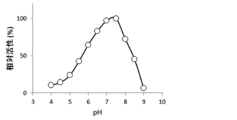
- the HBDH of Example 1 was dissolved in Britton-Robinson buffer whose pH was adjusted to 4 to 9 (in 0.5 increments) at the same concentration, and the HBDH activity was measured according to the method (3) above to obtain the maximum activity (1).
- the relative value (%) of HBDH at each pH was derived when the HBDH activity at pH 7.5) was set to 100. The results are shown in FIG.
- the optimum pH of the oxidation reaction of HBDH in Example 1 was 7 to 7.5.
- the pH of the oxidation reaction of commercially available HBDH is any of HBDH of Comparative Example 1, HBDH of Comparative Example 2, HBDH derived from Pseudomonas species (manufactured by Toyobo), and HBDH derived from Lord Bacter sphaeroides (manufactured by Roche).
- the pH of the known HBDH oxidation reaction is 8 to 8.6
- the HBDH of Example 1 has a special optimum pH in the neutral range. It turned out that.
- the HBDH of Example 1 maintains high HBDH activity in the vicinity of pH 7 (for example, about pH 6.7) even when the pH is less than 7, and therefore, diabetes that can be lower than pH 7.
- a measurement system with high HBDH activity can be constructed without using a pH adjuster.
- Test Example 2 Various characteristics of the active ingredient (HBDH) In this Test Example, various characteristics of HBDH obtained in Test Example 1 were confirmed.
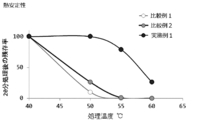
- Example 1 in Table 1 is one of the HBDHs acquired and confirmed in the procedures (1) to (3) above, and Comparative Example 1 (manufactured by Amano Enzyme) and Comparative Example 2 (manufactured by Asahi Kasei) , HBDH has high thermal stability among commercially available products. The results of the thermal stability test are shown in FIG.
- the HBDH of Example 1 showed remarkably high thermal stability despite being a wild type.
- the thermal stability (residual rate after 20-minute treatment) when the treatment temperature was 50 ° C. was as shown in Table 1 below.
- Test Example 3 Identification of the active ingredient (HBDH) In this test example, the sequence of HBDH of Example 1 was identified.
- Genomic DNA was prepared using 2 (manufactured by Kaneka Corporation).
- the above-acquired gene was inserted into the multicloning site of the Escherichia coli expression vector pTrc99A according to a conventional method.
- the vector into which the HBDH gene was introduced was introduced into Escherichia coli DH5 ⁇ by the competent cell method.
- the obtained transgenic Escherichia coli was cultured in LB medium for 17 hours, collected by centrifugation, and then the intracellular enzyme was extracted by crushing beads.
- SEQ ID Nos: 3 and 4 are primers.
Landscapes
- Life Sciences & Earth Sciences (AREA)
- Chemical & Material Sciences (AREA)
- Health & Medical Sciences (AREA)
- Engineering & Computer Science (AREA)
- Organic Chemistry (AREA)
- Bioinformatics & Cheminformatics (AREA)
- Wood Science & Technology (AREA)
- Zoology (AREA)
- Biotechnology (AREA)
- General Health & Medical Sciences (AREA)
- Biomedical Technology (AREA)
- Genetics & Genomics (AREA)
- Microbiology (AREA)
- Biochemistry (AREA)
- Molecular Biology (AREA)
- General Engineering & Computer Science (AREA)
- Analytical Chemistry (AREA)
- Medicinal Chemistry (AREA)
- Immunology (AREA)
- Physics & Mathematics (AREA)
- Proteomics, Peptides & Aminoacids (AREA)
- Hematology (AREA)
- Urology & Nephrology (AREA)
- Cell Biology (AREA)
- Food Science & Technology (AREA)
- General Physics & Mathematics (AREA)
- Pathology (AREA)
- Biophysics (AREA)
- Sustainable Development (AREA)
- Measuring Or Testing Involving Enzymes Or Micro-Organisms (AREA)
Priority Applications (1)
| Application Number | Priority Date | Filing Date | Title |
|---|---|---|---|
| JP2022515417A JPWO2021210614A1 (https=) | 2020-04-17 | 2021-04-14 |
Applications Claiming Priority (2)
| Application Number | Priority Date | Filing Date | Title |
|---|---|---|---|
| JP2020-074212 | 2020-04-17 | ||
| JP2020074212 | 2020-04-17 |
Publications (1)
| Publication Number | Publication Date |
|---|---|
| WO2021210614A1 true WO2021210614A1 (ja) | 2021-10-21 |
Family
ID=78084987
Family Applications (1)
| Application Number | Title | Priority Date | Filing Date |
|---|---|---|---|
| PCT/JP2021/015467 Ceased WO2021210614A1 (ja) | 2020-04-17 | 2021-04-14 | ケトン体測定用酵素剤、ケトン体測定用センサ及び試料中のケトン体を測定する方法 |
Country Status (2)
| Country | Link |
|---|---|
| JP (1) | JPWO2021210614A1 (https=) |
| WO (1) | WO2021210614A1 (https=) |
Cited By (1)
| Publication number | Priority date | Publication date | Assignee | Title |
|---|---|---|---|---|
| WO2025105408A1 (ja) * | 2023-11-15 | 2025-05-22 | 天野エンザイム株式会社 | 改変型酵素 |
Citations (2)
| Publication number | Priority date | Publication date | Assignee | Title |
|---|---|---|---|---|
| JPH11318438A (ja) * | 1998-04-08 | 1999-11-24 | Roche Diagnostics Gmbh | 組換え微生物3―ヒドロキシ酪酸デヒドロゲナ―ゼ、その製造方法およびその使用 |
| JP2003339385A (ja) * | 2002-05-29 | 2003-12-02 | Toyobo Co Ltd | 新規3−ヒドロキシ酪酸脱水素酵素遺伝子、新規3−ヒドロキシ酪酸脱水素酵素の製造法、ならびに、新規3−ヒドロキシ酪酸脱水素酵素を用いたケトン体の測定方法および測定用組成物 |
-
2021
- 2021-04-14 JP JP2022515417A patent/JPWO2021210614A1/ja active Pending
- 2021-04-14 WO PCT/JP2021/015467 patent/WO2021210614A1/ja not_active Ceased
Patent Citations (2)
| Publication number | Priority date | Publication date | Assignee | Title |
|---|---|---|---|---|
| JPH11318438A (ja) * | 1998-04-08 | 1999-11-24 | Roche Diagnostics Gmbh | 組換え微生物3―ヒドロキシ酪酸デヒドロゲナ―ゼ、その製造方法およびその使用 |
| JP2003339385A (ja) * | 2002-05-29 | 2003-12-02 | Toyobo Co Ltd | 新規3−ヒドロキシ酪酸脱水素酵素遺伝子、新規3−ヒドロキシ酪酸脱水素酵素の製造法、ならびに、新規3−ヒドロキシ酪酸脱水素酵素を用いたケトン体の測定方法および測定用組成物 |
Non-Patent Citations (2)
| Title |
|---|
| DATABASE UNIPROTKB 18 July 2018 (2018-07-18), ANONYMOUS : "A0A2T1AW67 (A0A2T1AW67_9BURK)", XP055857219, retrieved from UNIPROT Database accession no. A0A2T1AW67 * |
| DATABASE UNIPROTKB 27 May 2015 (2015-05-27), ANONYMOUS : "A0A0D5VD31 (A0A0D5VD31_9BURK)", XP055857217, retrieved from UNIPROT Database accession no. A0A0D5VD31 * |
Cited By (1)
| Publication number | Priority date | Publication date | Assignee | Title |
|---|---|---|---|---|
| WO2025105408A1 (ja) * | 2023-11-15 | 2025-05-22 | 天野エンザイム株式会社 | 改変型酵素 |
Also Published As
| Publication number | Publication date |
|---|---|
| JPWO2021210614A1 (https=) | 2021-10-21 |
Similar Documents
| Publication | Publication Date | Title |
|---|---|---|
| US8039248B2 (en) | Modified flavin adenine dinucleotide dependent glucose dehydrogenase | |
| CN101454449B (zh) | 葡萄糖脱氢酶 | |
| CN101535476B (zh) | 修饰型黄素腺嘌呤二核苷酸依赖性葡萄糖脱氢酶 | |
| US9404144B2 (en) | Glucose dehydrogenase | |
| US9260699B2 (en) | Glucose dehydrogenase | |
| US9365834B2 (en) | Glucose oxidase variants | |
| US9506042B2 (en) | Glucose dehydrogenase | |
| US9657325B2 (en) | Glucose dehydrogenase | |
| JP6311270B2 (ja) | 耐熱性に優れたフラビンアデニンジヌクレオチド依存性グルコースデヒドロゲナーゼ | |
| JP6465156B2 (ja) | 新規なグルコース脱水素酵素 | |
| WO2021149675A1 (ja) | 3-ヒドロキシ酪酸脱水素酵素及びその製造方法 | |
| JP6455134B2 (ja) | 新規なグルコースデヒドロゲナーゼ | |
| WO2021210614A1 (ja) | ケトン体測定用酵素剤、ケトン体測定用センサ及び試料中のケトン体を測定する方法 | |
| CN104066843B (zh) | 新型l-氨基酸氧化酶、l-赖氨酸的测定方法、试剂盒和酶传感器 | |
| JP7842407B2 (ja) | 変異グルコースデヒドロゲナーゼ | |
| JP6342174B2 (ja) | 新規なグルコースデヒドロゲナーゼ | |
| JP5793841B2 (ja) | フラビンアデニンジヌクレオチド依存性グルコースデヒドロゲナーゼの比活性を向上する方法 | |
| WO2025105408A1 (ja) | 改変型酵素 | |
| JP6390776B2 (ja) | 耐熱性に優れたフラビンアデニンジヌクレオチド依存性グルコースデヒドロゲナーゼ |
Legal Events
| Date | Code | Title | Description |
|---|---|---|---|
| 121 | Ep: the epo has been informed by wipo that ep was designated in this application |
Ref document number: 21788113 Country of ref document: EP Kind code of ref document: A1 |
|
| ENP | Entry into the national phase |
Ref document number: 2022515417 Country of ref document: JP Kind code of ref document: A |
|
| NENP | Non-entry into the national phase |
Ref country code: DE |
|
| 122 | Ep: pct application non-entry in european phase |
Ref document number: 21788113 Country of ref document: EP Kind code of ref document: A1 |