WO2021187526A1 - 粒子状吸水性樹脂組成物、吸収体及び吸収性物品の製造方法 - Google Patents
粒子状吸水性樹脂組成物、吸収体及び吸収性物品の製造方法 Download PDFInfo
- Publication number
- WO2021187526A1 WO2021187526A1 PCT/JP2021/010818 JP2021010818W WO2021187526A1 WO 2021187526 A1 WO2021187526 A1 WO 2021187526A1 JP 2021010818 W JP2021010818 W JP 2021010818W WO 2021187526 A1 WO2021187526 A1 WO 2021187526A1
- Authority
- WO
- WIPO (PCT)
- Prior art keywords
- water
- absorbent resin
- particles
- mass
- granulated
- Prior art date
- Legal status (The legal status is an assumption and is not a legal conclusion. Google has not performed a legal analysis and makes no representation as to the accuracy of the status listed.)
- Ceased
Links
Images

Classifications
-
- A—HUMAN NECESSITIES
- A61—MEDICAL OR VETERINARY SCIENCE; HYGIENE
- A61F—FILTERS IMPLANTABLE INTO BLOOD VESSELS; PROSTHESES; DEVICES PROVIDING PATENCY TO, OR PREVENTING COLLAPSING OF, TUBULAR STRUCTURES OF THE BODY, e.g. STENTS; ORTHOPAEDIC, NURSING OR CONTRACEPTIVE DEVICES; FOMENTATION; TREATMENT OR PROTECTION OF EYES OR EARS; BANDAGES, DRESSINGS OR ABSORBENT PADS; FIRST-AID KITS
- A61F13/00—Bandages or dressings; Absorbent pads
- A61F13/15—Absorbent pads, e.g. sanitary towels, swabs or tampons for external or internal application to the body; Supporting or fastening means therefor; Tampon applicators
-
- A—HUMAN NECESSITIES
- A61—MEDICAL OR VETERINARY SCIENCE; HYGIENE
- A61F—FILTERS IMPLANTABLE INTO BLOOD VESSELS; PROSTHESES; DEVICES PROVIDING PATENCY TO, OR PREVENTING COLLAPSING OF, TUBULAR STRUCTURES OF THE BODY, e.g. STENTS; ORTHOPAEDIC, NURSING OR CONTRACEPTIVE DEVICES; FOMENTATION; TREATMENT OR PROTECTION OF EYES OR EARS; BANDAGES, DRESSINGS OR ABSORBENT PADS; FIRST-AID KITS
- A61F13/00—Bandages or dressings; Absorbent pads
- A61F13/15—Absorbent pads, e.g. sanitary towels, swabs or tampons for external or internal application to the body; Supporting or fastening means therefor; Tampon applicators
- A61F13/53—Absorbent pads, e.g. sanitary towels, swabs or tampons for external or internal application to the body; Supporting or fastening means therefor; Tampon applicators characterised by the absorbing medium
-
- C—CHEMISTRY; METALLURGY
- C08—ORGANIC MACROMOLECULAR COMPOUNDS; THEIR PREPARATION OR CHEMICAL WORKING-UP; COMPOSITIONS BASED THEREON
- C08J—WORKING-UP; GENERAL PROCESSES OF COMPOUNDING; AFTER-TREATMENT NOT COVERED BY SUBCLASSES C08B, C08C, C08F, C08G or C08H
- C08J3/00—Processes of treating or compounding macromolecular substances
- C08J3/12—Powdering or granulating
Definitions
- the present invention relates to a method for producing a particulate water-absorbent resin composition, an absorber and an absorbent article.
- Absorbents containing water-absorbent resin particles are used for absorbent articles for absorbing water-based liquids such as urine.
- a step of pulverizing the block-shaped polymer obtained by the polymerization into particles by a treatment such as pulverization is performed.
- Small particles such as particles having a particle size of less than 180 ⁇ m generated by pulverization are used by increasing the particle size by granulation (for example, Patent Document 1).
- Absorbent articles are required to have excellent liquid absorbency under pressure in consideration of the usage mode in which pressure is applied due to body weight or the like.
- An object of the present invention is to provide a particulate water-absorbent resin composition capable of providing an absorbent article having excellent absorbency under pressure.
- the method for producing a particulate water-absorbent resin composition of the present invention comprises polymerizing a monomer containing an ethylenically unsaturated monomer to obtain a hydrogel polymer, and granulating the hydrogel polymer. To obtain a particle group containing fine particles having a particle size of less than 180 ⁇ m, to obtain a granulated particle group containing granulated particles by granulating the particle group, and to re-particle the granulated particle group to obtain a polymer.
- Water-absorbent resin particles containing polymer particles obtained through a granulation step can be obtained by a method including obtaining particles, and water-absorbent resin particles containing polymer particles obtained by obtaining the granulation step.
- the water-absorbent resin particles containing the polymer particles obtained without going through the granulation step are mixed to obtain a particulate water-absorbent resin composition.
- the abundance rate of the granulated particles that do not pass through the JIS standard sieve having an opening of 850 ⁇ m is 70% by mass or more
- the mixing ratio of the water-absorbent resin particles obtained through the granulation step is the particulate water-absorbent resin composition. It is 40 to 80% by mass with respect to the total amount.
- the abundance rate of the granulated particles that do not pass through the JIS standard sieve having a mesh size of 31.5 mm is 5% by mass or more in the granulated particle group before repartitioning.
- the present invention also provides a method for producing an absorber, which comprises obtaining a particulate water-absorbent resin composition by the above method and obtaining an absorber containing the particulate water-absorbent resin composition.
- the present invention also provides a method for producing an absorbent article, which comprises obtaining an absorber by the above method and arranging the absorber between a liquid permeable sheet and a liquid permeable sheet.
- Water-soluble means that it exhibits a solubility in water of 5% by mass or more at 25 ° C.
- the materials exemplified in the present specification may be used alone or in combination of two or more.
- the content of each component in the composition means the total amount of the plurality of substances present in the composition when a plurality of substances corresponding to each component are present in the composition, unless otherwise specified.
- “Saline” refers to a 0.9% by mass sodium chloride aqueous solution.
- the particles that pass through the sieve of the opening X mean that the particles have a size that allows them to pass through the sieve of the opening X, and a step of actually passing the particles through the sieve of the opening X is required. It is not something to do.
- the method for producing a particulate water-absorbent resin composition according to the present embodiment includes water-absorbent resin particles containing polymer particles obtained by obtaining a granulation step (hereinafter, also referred to as “granulated water-absorbent resin particles”). Includes mixing with water-absorbent resin particles (hereinafter, also referred to as “non-granulated water-absorbent resin particles”) obtained without undergoing a granulation step.
- the particulate water-absorbent resin composition according to the present embodiment is a mixture containing at least the above two types of water-absorbent resin particles.
- the method for producing the granulated water-absorbent resin particles is to polymerize a monomer containing an ethylenically unsaturated monomer to obtain a hydrogel polymer, and to granulate the hydrogel polymer to have a particle diameter of 180 ⁇ m. To obtain a particle group containing less than fine powder, to obtain a granulated particle group containing granulated particles by granulating the particle group, and to obtain a polymer particle by granulating the granulated particle group again. And, including.
- the method for producing the granulated water-absorbent resin particles will be described in detail.
- a monomer containing an ethylenically unsaturated monomer is polymerized to obtain a hydrogel polymer.
- the hydrogel-like polymer may be a crosslinked polymer formed by polymerization of a monomer containing an ethylenically unsaturated monomer, which contains water and becomes a gel.
- the water-absorbent resin particles can contain a crosslinked polymer formed by polymerizing a monomer containing an ethylenically unsaturated monomer.
- the crosslinked polymer has a monomeric unit derived from an ethylenically unsaturated monomer. That is, the water-absorbent resin particles can have a structural unit derived from the ethylenically unsaturated monomer.
- Polymerization can be carried out by, for example, an aqueous solution polymerization method.
- an aqueous solution polymerization method the polymerization of the monomer by the aqueous solution polymerization method will be described.
- the ethylenically unsaturated monomer is preferably water-soluble.
- examples of the ethylenically unsaturated monomer include ⁇ , ⁇ -unsaturated carboxylic acids such as (meth) acrylic acid, maleic acid, maleic anhydride and fumaric acid, and carboxylic acid-based monomers such as salts thereof; (meth).
- Nonionic monomers such as acrylamide, N, N-dimethyl (meth) acrylamide, 2-hydroxyethyl (meth) acrylate, N-methylol (meth) acrylamide, polyethylene glycol mono (meth) acrylate; N, N- Amino group-containing unsaturated monomers such as diethylaminoethyl (meth) acrylate, N, N-diethylaminopropyl (meth) acrylate, diethylaminopropyl (meth) acrylamide and quaternized products thereof; vinyl sulfonic acid, styrene sulfonic acid, 2 Examples thereof include sulfonic acid-based monomers such as- (meth) acrylamide-2-methylpropanesulfonic acid, 2- (meth) acryloylethanesulfonic acid and salts thereof.
- the ethylenically unsaturated monomer one type may be used alone, or two or more types may be used
- the ethylenically unsaturated monomer preferably contains at least one selected from the group consisting of (meth) acrylic acid and salts thereof, (meth) acrylamide, and N, N-dimethylacrylamide, and is preferably (meth) acrylic acid. It is more preferable to contain at least one selected from and salts thereof. Further, (meth) acrylic acid and a salt thereof may be copolymerized with another ethylenically unsaturated monomer. In this case, 70 to 100 mol% of the above (meth) acrylic acid and a salt thereof are preferably used, more preferably 80 to 100 mol%, and 90 to 90 to 100 mol% of the total amount of the ethylenically unsaturated monomer. It is more preferable to use 100 mol%.
- the ethylenically unsaturated monomer preferably contains at least one of acrylic acid and a salt thereof.
- the acid group is an alkaline neutralizer in advance if necessary.
- an alkaline neutralizer include alkali metal salts such as sodium hydroxide, sodium carbonate, sodium hydrogencarbonate, potassium hydroxide and potassium carbonate; ammonia and the like.
- alkaline neutralizers may be used in the form of an aqueous solution in order to simplify the neutralization operation.
- One type of alkaline neutralizer may be used alone, or two or more types may be used in combination.
- the acid group may be neutralized before the polymerization of the ethylenically unsaturated monomer as a raw material, or during or after the polymerization.
- the degree of neutralization of the ethylenically unsaturated monomer by the alkaline neutralizer enhances the water absorption performance by increasing the osmotic pressure of the obtained water-absorbent resin particles, and is safe due to the presence of the excess alkaline neutralizer. From the viewpoint of preventing problems such as, usually, it is preferably 10 to 100 mol%, more preferably 30 to 90 mol%, further preferably 40 to 85 mol%, and 50. It is even more preferably ⁇ 80 mol%.
- the degree of neutralization is the degree of neutralization for all the acid groups of the ethylenically unsaturated monomer.
- the ethylenically unsaturated monomer is usually preferably used in the state of an aqueous solution.
- concentration of the ethylenically unsaturated monomer in the aqueous solution containing the ethylenically unsaturated monomer may be 20% by mass or more and the saturation concentration or less, and is 25 to 70% by mass. %, More preferably 30 to 50% by mass.
- the amount of the ethylenically unsaturated monomer used is the total amount of the monomers (the total amount of the monomers for obtaining the water-absorbent resin particles. For example, the total amount of the monomers giving the structural unit of the crosslinked polymer. The same shall apply hereinafter). It may be 70 to 100 mol%, 80 to 100 mol%, 90 to 100 mol%, 95 to 100 mol%, or 100 mol%. Among them, the ratio of (meth) acrylic acid and its salt may be 70 to 100 mol% with respect to the total amount of the monomer, 80 to 100 mol%, 90 to 100 mol%, 95 to 100 mol%, or It may be 100 mol%. "Ratio of (meth) acrylic acid and its salt” means the ratio of the total amount of (meth) acrylic acid and its salt.
- the water-absorbent resin particles are, for example, water-absorbent resin particles containing a crosslinked polymer having a structural unit derived from an ethylenically unsaturated monomer, and the ethylenically unsaturated monomer is composed of (meth) acrylic acid and It contains at least one compound selected from the group consisting of the salts, and the ratio of (meth) acrylic acid and its salts is 70 to 100 mol% with respect to the total amount of monomers for obtaining water-absorbent resin particles. It may be a thing.
- the monomer aqueous solution may contain a polymerization initiator.
- the polymerization of the monomer contained in the aqueous monomer solution is started by adding a polymerization initiator to the aqueous monomer solution and, if necessary, heating, irradiating with light or the like.
- the polymerization initiator include a photopolymerization initiator and a radical polymerization initiator, and among them, a water-soluble radical polymerization initiator is preferably used.
- the polymerization initiator may be, for example, an azo compound, a peroxide or the like.
- Examples of the azo compound include 2,2'-azobis [2- (N-phenylamidino) propane] dihydrochloride and 2,2'-azobis ⁇ 2- [N- (4-chlorophenyl) amidino] propane ⁇ .
- 2,2'-azobis (2-amidinopropane) dihydrochloride 2,2'-azobis ⁇ 2- [1- (2-hydroxy) Ethyl) -2-imidazolin-2-yl] propane ⁇ dihydrochloride and 2,2'-azobis [N- (2-carboxyethyl) -2-methylpropion amidine] tetrahydrate are preferred.
- One of these azo compounds may be used alone, or two or more thereof may be used in combination.
- peroxide examples include persulfates such as potassium persulfate, ammonium persulfate, and sodium persulfate; methyl ethyl ketone peroxide, methyl isobutyl ketone peroxide, di-t-butyl peroxide, t-butyl cumyl peroxide, t. -Organic peroxides such as butylperoxyacetate, t-butylperoxyisobutyrate, t-butylperoxypivalate; peroxides such as hydrogen peroxide can be mentioned.
- persulfates such as potassium persulfate, ammonium persulfate, and sodium persulfate
- methyl ethyl ketone peroxide methyl isobutyl ketone peroxide
- di-t-butyl peroxide di-t-butyl peroxide
- t-butyl cumyl peroxide t.
- potassium persulfate, ammonium persulfate, sodium persulfate or hydrogen peroxide is preferably used from the viewpoint of obtaining water-absorbent resin particles having good water absorption performance, and potassium persulfate and persulfate are preferable. It is more preferable to use ammonium sulfate or sodium persulfate.
- One of these peroxides may be used alone, or two or more thereof may be used in combination.
- a redox polymerization initiator can also be used as a redox polymerization initiator by using a polymerization initiator and a reducing agent in combination.
- the reducing agent include sodium sulfite, sodium hydrogen sulfite, ferrous sulfate, L-ascorbic acid and the like.
- the total amount of the polymerization initiator used is preferably 0.001 to 1 mol with respect to 100 mol of the ethylenically unsaturated monomer used for the polymerization from the viewpoint of avoiding a rapid polymerization reaction and shortening the polymerization reaction time. , 0.005 to 0.5 mol, more preferably 0.008 to 0.3 mol, even more preferably 0.01 to 0.2 mol.
- the monomer aqueous solution preferably contains an internal cross-linking agent.
- the obtained cross-linked polymer can have cross-linking by the internal cross-linking agent in addition to self-cross-linking by the polymerization reaction as its internal cross-linking structure.
- the internal cross-linking agent for example, a compound having two or more polymerizable unsaturated groups is used, and preferably, a compound having two polymerizable unsaturated groups is used.
- di or tri (meth) acrylic acid esters of polyols such as (poly) ethylene glycol, (poly) propylene glycol, trimethylpropane, glycerin polyoxyethylene glycol, polyoxypropylene glycol, and (poly) glycerin; Unsaturated polyesters obtained by reacting the above polyol with unsaturated acids such as maleic acid and fumaric acid; bisacrylamides such as N, N'-methylenebis (meth) acrylamide; polyepoxide and (meth) acrylic acid.
- Di or tri (meth) acrylic acid esters obtained by reaction carbamil di (meth) acrylic acid obtained by reacting polyisocyanate such as tolylene diisocyanate or hexamethylene diisocyanate with hydroxyethyl (meth) acrylic acid.
- Esters allylicated starch; allylated cellulose; diallyl phthalate; N, N', N "-triallyl isocyanurate; divinylbenzene and the like.
- a compound having two or more reactive functional groups can be used as an internal cross-linking agent.
- glycidyl group-containing compounds such as (poly) ethylene glycol diglycidyl ether, (poly) propylene glycol diglycidyl ether, and (poly) glycerin diglycidyl ether; (poly) ethylene glycol, (poly) propylene glycol, (poly). Examples thereof include glycerin, pentaerythritol, ethylenediamine, polyethyleneimine, and glycidyl (meth) acrylate.
- (poly) ethylene glycol diglycidyl ether, (poly) propylene glycol diglycidyl ether, and (poly) glycerin diglycidyl ether are preferable from the viewpoint of excellent reactivity at low temperature.
- These internal cross-linking agents may be used alone or in combination of two or more.
- the amount used is 0.0001 mol with respect to 100 mol of the ethylenically unsaturated monomer in order to sufficiently enhance the water absorption performance such as the water absorption capacity of the obtained water-absorbent resin particles.
- the above is preferable, 0.001 mol or more is more preferable, 0.003 mol or more is further preferable, and 0.01 mol or more is further preferable.
- the addition of the internal cross-linking agent insolubilizes the cross-linked polymer and brings about a suitable water absorption capacity, but an increase in the amount of the internal cross-linking agent added leads to a decrease in the water absorption capacity of the obtained water-absorbent resin particles. Therefore, the amount of the internal cross-linking agent is preferably, for example, 0.50 mol or less, more preferably 0.25 mol or less, and further preferably 0. It is 10 mol or less.
- the monomer aqueous solution may contain additives such as a chain transfer agent and a thickener, if necessary.
- a chain transfer agent include thiols, thiol acids, secondary alcohols, hypophosphorous acid, phosphorous acid and the like.
- the thickener include carboxymethyl cellulose, hydroxyethyl cellulose, hydroxypropyl cellulose, methyl cellulose, polyethylene glycol, polyacrylic acid, neutralized polyacrylic acid, polyacrylamide and the like. One of these may be used alone, or two or more thereof may be used in combination.
- a solvent other than water such as a water-soluble organic solvent, may be appropriately added to the monomer aqueous solution.
- the polymerization method is, for example, a static polymerization method in which the monomer aqueous solution is polymerized without stirring (for example, a static state), or a stirring polymerization method in which the monomer aqueous solution is polymerized while being stirred in the reaction apparatus. It's okay. It is preferable to obtain a hydrogel-like polymer by aqueous solution static polymerization, which is a static polymerization method. In the static polymerization method, when the polymerization is completed, a single block-shaped hydrogel-like polymer occupying substantially the same volume as the monomer aqueous solution existing in the reaction vessel can be obtained.
- the form of production may be batch, semi-continuous, continuous, etc.
- a polymerization reaction can be carried out while continuously supplying a monomer aqueous solution to a belt conveyor-shaped continuous polymerization apparatus to obtain a hydrogel having a continuous shape such as a band shape. ..
- the polymerization temperature varies depending on the polymerization initiator used, but is preferably 0 to 130 ° C., more preferably 10 to 110 ° C. from the viewpoint of increasing the productivity by rapidly advancing the polymerization and shortening the polymerization time.
- the polymerization time is appropriately set according to the type and amount of the polymerization initiator used, the reaction temperature, and the like, but is preferably 1 to 200 minutes, more preferably 5 to 100 minutes.
- the water content of the block-shaped water-containing gel-like polymer obtained by polymerizing the monomers is preferably 30 to 80% by mass, more preferably 40 to 75% by mass, from the viewpoint that the coarse crushing step can be easily carried out. 50 to 70% by mass is more preferable.
- the water content of the water-containing gel-like polymer is adjusted by operations such as the water content of the monomer aqueous solution, drying after polymerization, and humidification.
- the water content of the hydrogel polymer is the content of water in the total mass of the hydrogel polymer in% by mass.
- the hydrogel polymer is atomized to obtain a particle group containing fine particles having a particle size of less than 180 ⁇ m.
- a group of particles containing fine particles having a particle diameter of less than 180 ⁇ m is finally obtained.
- a step of obtaining a particle group and a step of further crushing the coarsely crushed product to obtain a particle group may be included.
- the particle swarming step may include the step of drying the hydrogel polymer, the crude product and / or the particle group.
- the coarsely crushed product is preferably subjected to crushing after undergoing a drying step.
- the particle swarming step may further include a step of classifying the particle group obtained by pulverization.
- the particle group obtained by the particle swarming step may consist only of fine particles having a particle size of less than 180 ⁇ m.
- the particleization step can include a step of coarsely crushing the hydrogel polymer to obtain a coarsely crushed product.
- the crude product obtained by coarsely crushing the hydrogel-like polymer may be in the form of a hydrogel.
- the coarsely crushed product may be in the form of particles, or may have an elongated shape in which particles are connected.
- the size of the minimum side of the coarsely crushed product may be, for example, about 0.1 to 15 mm, preferably about 1.0 to 10 mm.
- the size of the maximum side of the coarsely crushed product may be about 0.1 to 200 mm, preferably about 1.0 to 150 mm.
- a kneader for example, a pressurized kneader, a double-armed kneader, etc.
- a meat chopper for example, a meat chopper, and a cutter mill are more preferable.
- the crushing device may be of the same type as the crushing device described later.
- the hydrogel polymer may be cut into a size of, for example, about 5 cm square using a cutting machine. After cutting the hydrogel polymer with a cutting machine, it may be further coarsely crushed using a crushing device.
- the polymerization step and the coarse crushing step may be carried out substantially at the same time.
- the particleization step can include the step of drying the hydrogel polymer, the coarsely crushed product and / or the pulverized product. These dried products can be obtained by removing the solvent containing water in the hydrogel polymer, coarsely crushed product or crushed product by heating and / or blowing air. Drying is preferably carried out after the hydrogel polymer is roughly crushed and before crushing. That is, the particle-forming step preferably includes a step of drying the hydrogel-like coarse crushed product to obtain a dry crushed product.
- the drying method may be natural drying, heat drying, or vacuum drying.
- the drying may be performed under normal pressure or reduced pressure, for example, and may be performed under an air flow such as nitrogen in order to improve the drying efficiency.
- a plurality of methods may be used in combination.
- the drying temperature is preferably 70 to 250 ° C, more preferably 80 to 200 ° C.
- the drying step is carried out until the water content of the coarsely crushed product is 20% by mass or less, preferably 10% by mass or less, and more preferably 5% by mass or less.
- the drying temperature may be 120 ° C. or higher, 150 ° C. or higher, or 180 ° C. or higher.
- the particleization step can include a step of crushing a hydrogel polymer, a coarsely crushed product and / or a dried product thereof. By pulverizing the hydrogel polymer, coarsely crushed product and / or dried product thereof, a particle group containing fine powder can be obtained.
- the pulverization is preferably carried out after coarse crushing and drying. That is, the particle swarming step preferably includes a step of pulverizing the dried coarse crushed product to obtain a particle group containing fine powder.
- roller mill roller mill
- stamp mill stamp mill
- jet mill high-speed rotary crusher
- hammer mill pin mill, rotor beater mill, etc.
- container-driven mill rotary mill, vibration mill, planetary mill, etc.
- Crusher can be used.
- a high speed rotary grinder is used.
- the crusher may have an opening on the outlet side, such as a perforated plate, a screen, or a grid, for controlling the maximum particle size of the crushed particles.
- the shape of the opening may be polygonal, circular, or the like, and the maximum diameter of the opening may be 0.1 to 5 mm, 0.3 to 3.0 mm, or 0.5 to 1.5 mm.
- Grinding may be performed so that at least a part of the particle group becomes fine powder having a particle size of less than 180 ⁇ m.
- the pulverization for example, while pulverizing for the main purpose of obtaining polymer particles having a particle size of less than 850 ⁇ m and having an appropriate particle size that can be used without granulation, some fine particles having a particle size of less than 180 ⁇ m are generated. It can be done in such a way.
- the abundance of fine particles having a particle size of less than 180 ⁇ m in the total amount of the particle group obtained by the particle swarming step may be, for example, 1 to 100% by mass, preferably 30 to 60% by mass.
- the particle size of less than 180 ⁇ m means that the particle size can pass through a JIS standard sieve having a mesh size of 180 ⁇ m.
- the particle group obtained by the particle formation step may include particles having a particle diameter of 180 ⁇ m or more and less than 850 ⁇ m (particles that pass through a JIS standard sieve having a mesh size of 850 ⁇ m and do not pass through a JIS standard sieve having a mesh size of 180 ⁇ m).
- Particles having a particle diameter of 250 ⁇ m or more and less than 850 ⁇ m may be included.
- the particle swarming step may further include a step of classifying a group of particles containing fine particles having a particle size of less than 180 ⁇ m obtained by grinding.
- Classification refers to an operation of dividing a certain particle group into two or more particle groups having different particle size distributions according to the particle size.
- a particle group consisting of only fine particles having a particle size of less than 180 ⁇ m may be separated, or the abundance of fine particles having a particle size of less than 180 ⁇ m in the particle group may be increased. If necessary, a part of the classified particles may be pulverized again, or the pulverization step and the classification step may be repeated.
- a known classification method can be used for the classification of the particle group, and for example, screen classification, wind power classification, or the like may be used.
- Screen classification is a method of classifying particles on a screen into particles that pass through the mesh of the screen and particles that do not pass through the screen by vibrating the screen.
- Wind power classification is a method of classifying particles using the flow of air.
- the classification method it is preferable to use screen classification. Examples of the screen classification include a vibrating sieve, a rotary shifter, a cylindrical stirring sieve, a blower shifter, a low-tap type shaker, an electric vibration type shaker, and the like.
- a group of particles containing fine particles having a particle size of less than 180 ⁇ m is granulated to obtain a group of granulated particles containing the granulated particles.
- Granulation is performed so that the abundance of granulated particles that do not pass through the JIS standard sieve having a mesh size of 850 ⁇ m is 70% by mass or more in the obtained granulated particle group.
- granulation means agglomerating particles to obtain particles having a larger particle size than the original particles.
- the abundance of fine powder having a particle diameter of less than 180 ⁇ m is 10% by mass or more, 20% by mass or more, 30% by mass or more, 40% by mass or more, 50% by mass or more, 60% by mass or more. It may be 70% by mass or more, 80% by mass or more, 90% by mass or more, 95% by mass or more or 98% by mass or more, 100% by mass, 98% by mass or less, 95% by mass or less, 90% by mass or less, 80% by mass. % Or less, 70% by mass or less, 60% by mass or less, 50% by mass or less, 40% by mass or less, or 30% by mass or less.
- Granulation can be performed, for example, by mixing a group of particles and water.
- Water may be used as an aqueous solution containing components such as water-soluble polymerizable monomers such as water-soluble salts and ethylenically unsaturated monomers, cross-linking agents and hydrophilic organic solvents.
- the cross-linking agent for example, the above-mentioned internal cross-linking agent or the later-described surface cross-linking agent can be used.
- the proportion of water in the aqueous liquid may be, for example, 90 to 100% by mass.
- a method of mixing the particle group and water for example, water may be dropped little by little, the whole amount may be added at once, sprayed, or mixed in the state of steam.
- the mixed amount of water is preferably 55 parts by mass or more, and more preferably 60 parts by mass or more with respect to 100 parts by mass of the particle group. When the mixing amount of water is 55 parts by mass or more, the particle group and water can be mixed more uniformly.
- the mixing amount of water is preferably 115 parts by mass or less, and more preferably 105 parts by mass or less with respect to 100 parts by mass of the particle group. When the mixing amount of water is 115 parts by mass or less, the subsequent drying can be performed more efficiently.
- the temperature at the time of mixing may be, for example, 40 to 150 ° C, preferably 60 to 100 ° C.
- the temperature at the time of mixing may be 80 to 95 ° C.
- Granulation is preferably carried out by mixing water that has been preheated to a mixing temperature with a group of particles. From the viewpoint of more uniform granulation, it is preferable that the granulation is carried out by putting all the preheated water into the pre-stirred particle group in the mixing container at one time.
- the mixing time of the particle group and water is such that the entire amount of the particle group and water used for mixing is put into the same mixing container. After that, it is preferably 10 to 100 seconds, and more preferably 15 to 90 seconds.
- Mixing of the particle group and water can be performed using, for example, various stirrers having stirring blades.
- the stirring blade flat plate blades, lattice blades, paddle blades, propeller blades, anchor blades, turbine blades, Faudler blades, ribbon blades, full zone blades, Maxblend blades and the like can be used.
- the flat plate blade has a shaft (stirring shaft) and a flat plate portion (stirring portion) arranged around the shaft. Further, the flat plate portion may have a slit or the like.
- the stirring type mixer include a mortar mixer, a continuous kneader, a ladyge mixer and the like.
- the mixing conditions of the particle group and water are as follows, for example, the mixing amount of water is 55 to 115 parts by mass with respect to 100 parts by mass of the particle group, and the mixing temperature.
- the mixing time may be 40 to 150 ° C., and the mixing time may be 10 to 100 seconds after the entire amount of the particle group and water is put into the same container, and the mixing amount of water is 60 to 100 parts by mass with respect to 100 parts by mass of the particle group. It may be a combination of 105 parts by mass, a mixing temperature of 60 to 100 ° C., and a mixing time of 15 to 90 seconds after the entire amount of the particle group and water is put into the same container.
- the mixing conditions of the particle group and water may be set so that the ratio of the granulated particles having a predetermined particle size in the obtained granulated particle group is a certain value or more.
- the particles may be confirmed with the naked eye during or after mixing, and if necessary, further mixing may be performed by heating, adding water, adding particle groups, or the like.
- the particle size distribution of the granulated particles can be measured after the granulation step.
- the granulated particle group obtained by granulation it is preferable to use the granulated particle group obtained by granulation as it is without drying.
- the particle size distribution can be measured using all or part of the granulated particle group obtained by granulation.
- the amount of the granulated particle group used for measuring the particle size distribution may be, for example, 30 g or more or 100 g or more, and may be 30 to 100 g.
- the particle size distribution of the granulated particle group is measured by classifying the granulated particle group using a JIS standard sieve with each opening.
- classification for example, using an electromagnetic vibration type sieve shaker Octagon 200 (manufactured by endcotts) in which the vibration intensity is set to 7, a JIS standard sieve and a saucer having a predetermined opening into which measurement samples are placed are placed in the vertical direction. This can be done by vibrating for 10 minutes to shake the particles.
- the abundance rate of the granulated particles that do not pass through the JIS standard sieve having an opening of 850 ⁇ m is 70% by mass or more, preferably 75% by mass or more, and 77% by mass or more. It may be 80% by mass or more, 85% by mass or more, or 88% by mass or more.
- the abundance rate of the granulated particles that do not pass through the JIS standard sieve having an opening of 850 ⁇ m may be, for example, 100% by mass, 98% by mass or less, 95% by mass or less, 90% by mass or less, 88% by mass. % Or less, 85% by mass or less, or 80% by mass or less.
- the abundance rate of the granulated particles that do not pass through the JIS standard sieve having a mesh size of 9.5 mm may be, for example, 55% by mass or more, preferably 60% by mass or more. .. The abundance rate may be 70% by mass or more, 80% by mass or more, or 85% by mass or more.
- the abundance rate of the granulated particles that do not pass through the JIS standard sieve having a mesh size of 9.5 mm may be, for example, 100% by mass, 98% by mass or less, 95% by mass or less, 93% by mass or less. It may be 90% by mass or less, 88% by mass or less, 85% by mass or less, 80% by mass or less, 75% by mass or less, or 70% by mass or less.
- the abundance rate of the granulated particles that do not pass through the JIS standard sieve having a mesh size of 31.5 mm may be, for example, 5% by mass or more, and 10% by mass or more or 15% by mass or more. Is preferable.
- the abundance rate is 20% by mass or more, 25% by mass or more, 30% by mass or more, 35% by mass or more, 40% by mass or more, 45% by mass or more, 50% by mass or more, 55% by mass or more, 60% by mass or more. It may be 65% by mass or more, 70% by mass or more, 75% by mass or more, 80% by mass or more, 85% by mass or more, or 90% by mass or more.
- the abundance rate of the granulated particles that do not pass through the JIS standard sieve having a mesh size of 31.5 mm may be, for example, 100% by mass, 98% by mass or less, 95% by mass or less. 93% by mass or less, 90% by mass or less, 85% by mass or less, 80% by mass or less, 75% by mass or less, 70% by mass or less, 65% by mass or less, 60% by mass or less, 55% by mass or less, 50% by mass or less, It may be 45% by mass or less, 40% by mass or less, 35% by mass or less, 30% by mass or less, or 25% by mass or less.
- the granulated particles used for measuring the particle size distribution may be returned to the manufacturing process of the granulated water-absorbent resin particles and used continuously in the production of the granulated water-absorbent resin particles.
- the granulated particles used for measuring the particle size distribution do not need to be used for producing the granulated water-absorbent resin particles. good.
- the granulated particle group obtained by granulation is re-granulated to obtain polymer particles.
- Polymer particles having a desired particle size can be obtained by re-granulating the particles whose particle size has been increased by granulation.
- the step of further crushing the granulated coarse crushed product to obtain the granulated crushed product (polymer particles) may be included.
- the re-granulation step may include a step of drying the granulated particles, the granulated coarse crushed product, or the pulverized granulated product.
- the granulated coarse crushed product is preferably subjected to pulverization after undergoing a drying step.
- the repartitioning step may further include a step of classifying the granulated pulverized product obtained by pulverization.
- the re-granulation step can include a step of coarsely crushing the granulated particles to obtain a granulated coarse crushed product.
- the granulated coarse crushed product may be in the form of a hydrogel.
- the size of the minimum side of the granulated coarse crushed product may be, for example, about 0.1 to 15 mm, preferably about 1.0 to 10 mm.
- the coarse crushing may be performed only on granulated particles having a large size, such as those having a minimum side size of more than 5 mm or more than 10 mm.
- the coarsening apparatus used in the repartitioning may be the same as that used for the coarsening in the above-mentioned particleization step.
- the re-granulation step can include a step of drying the granulated particles, the granulated coarse crushed product, or the pulverized granulated product. By drying, a granulated dried product can be obtained. Drying in the repartitioning step is preferably performed on the granulated coarse crushed product. That is, the drying step in the repartitioning step is preferably performed after coarse crushing.
- the drying temperature may be 120 ° C. or higher, 150 ° C. or higher, or 180 ° C. or higher. When the drying is carried out at normal pressure, the drying temperature is preferably 70 to 250 ° C, more preferably 80 to 200 ° C. The drying is preferably carried out until the water content of the finally obtained polymer particles is 10% by mass or less, and more preferably 5% by mass or less.
- the same method as the drying in the above-mentioned particleization step can be applied.
- the re-granulation step can include a step of crushing granulated particles, granulated coarse crushed products and / or dried products thereof.
- pulverization is preferably performed after coarse pulverization and drying.
- the repartitioning step preferably includes a step of drying the granulated coarse crushed product and then pulverizing it to obtain polymer particles.
- the pulverizer used for pulverization in the repartitioning step may be the same as that used for pulverization in the above-mentioned particleization step.
- the particle size distribution of the polymer particles obtained by repartitioning tends to be more suitable. Specifically, in the polymer particles obtained by repartitioning, the yield of particles having a particle size of 180 ⁇ m or more and less than 850 ⁇ m can be improved, and the generation rate of fine particles having a particle size of less than 180 ⁇ m can be suppressed. .. A high yield of polymer particles having a particle size of 180 ⁇ m or more and less than 850 ⁇ m indicates that the granulation strength is higher.
- the repartitioning step may include a step of further classifying the polymer particles after crushing.
- the method for classifying the particles after re-particle formation may be the same as the classification method shown in the above-mentioned particle-forming step, and it is preferable to use screen classification.
- the particle size may be increased to a desired particle size by performing granulation again.
- the granulation performed after the re-granulation it is not necessary to obtain granulated particles having a large particle size as in the first granulation described above, and the final required particle size (for example, the particle size is 180 ⁇ m or more and less than 850 ⁇ m).
- Granulation may be performed until the range) is reached. The steps of reparticle formation and granulation may be repeated a plurality of times.
- the method for producing the water-absorbent resin particles may include a step of performing surface cross-linking of the polymer particles.
- the surface cross-linking can be performed, for example, by adding a cross-linking agent (surface cross-linking agent) for performing the surface cross-linking to the polymer particles and reacting them.
- the surface cross-linking agent may be added at any timing after pulverization in the repartitioning step, and may be performed before or after drying in the reparticlening step, or before or after classification. good.
- the addition of the surface cross-linking agent is preferably performed after the drying and classification in the reparticle step.
- the surface cross-linking may be performed on the granulated water-absorbent resin particles alone, or may be performed collectively after mixing the granulated water-absorbent resin particles and the non-granulated water-absorbent resin particles described later.
- a surface cross-linking agent By adding a surface cross-linking agent and performing the surface cross-linking treatment, the cross-linking density in the vicinity of the surface of the polymer particles is increased, so that the water absorption performance of the obtained water-absorbent resin particles can be improved.
- the surface cross-linking agent can be added, for example, by adding a surface cross-linking agent solution or by spraying the surface cross-linking agent solution.
- the surface cross-linking agent is preferably added as a surface cross-linking agent solution by dissolving the surface cross-linking agent in a solvent such as water and / or alcohol.
- the surface cross-linking step may be carried out once or divided into a plurality of times of two or more times.
- the surface cross-linking agent may contain, for example, two or more functional groups (reactive functional groups) having reactivity with a functional group derived from an ethylenically unsaturated monomer.
- functional groups reactive functional groups
- examples of the surface cross-linking agent include polyols such as ethylene glycol, propylene glycol, 1,4-butanediol, trimethylolpropane, glycerin, polyoxyethylene glycol, polyoxypropylene glycol, and polyglycerin; (poly) ethylene glycol di.
- Polyglycidyl compounds such as glycidyl ether, (poly) glycerin diglycidyl ether, (poly) glycerin triglycidyl ether, (poly) propylene glycol polyglycidyl ether, (poly) glycerol polyglycidyl ether; epichlorohydrin, epibromhydrin, ⁇ - Haloepoxy compounds such as methyl epichlorohydrin; compounds having two or more reactive functional groups such as isocyanate compounds such as 2,4-tolylene diisocyanate and hexamethylene diisocyanate; 3-methyl-3-oxetanemethanol, 3-ethyl-3- Oxetane compounds such as oxetane methanol, 3-butyl-3-oxetane methanol, 3-methyl-3-oxetane ethanol, 3-ethyl-3-oxetane ethanol, 3-butyl-3-ox
- the amount of the surface cross-linking agent added is usually based on 100 mol of the total amount of the ethylenically unsaturated monomer used for the polymerization from the viewpoint of appropriately increasing the cross-linking density near the surface of the water-absorbent resin particles (polymer particles). , Preferably 0.0001 to 4.0 mol, more preferably 0.001 to 2.0 mol.
- the surface cross-linking step is preferably carried out in the presence of water in the range of 1 to 200 parts by mass with respect to 100 parts by mass of the ethylenically unsaturated monomer.
- the amount of water can be adjusted by appropriately using a water-soluble organic solvent such as water and / or alcohol.
- the water-absorbent resin particles can be more preferably cross-linked in the vicinity of the particle surface.
- the treatment temperature of the surface cross-linking agent is appropriately set according to the surface cross-linking agent used, and may be 20 to 250 ° C.
- the treatment time with the surface cross-linking agent may be 1 to 200 minutes or 5 to 100 minutes.
- Surface cross-linking may be performed only once or at multiple timings.
- the surface cross-linking may be carried out after the pulverization step and before the pulverization in addition to the execution after the pulverization step or after the pulverization step.
- the method for producing the non-granulated water-absorbent resin particles is, for example, polymerizing an ethylenically unsaturated monomer to obtain a hydrogel polymer (polymerization step), and granulating the hydrogel polymer into a polymer. It may include obtaining particles (particulation step).
- the polymerization step in the production of the non-granulated water-absorbent resin particles the same embodiment as the polymerization in the above-mentioned granulated water-absorbent resin particles can be applied.
- the particle-forming step in the production of non-granulated water-absorbent resin particles is, for example, a step of coarsely crushing a hydrogel polymer obtained by polymerization to obtain a coarse crushed product, and a step of further crushing the coarse crushed product to obtain a crushed product. It may include a step of obtaining (polymer particles).
- the particleization step may include a step of drying the hydrogel polymer, coarsely crushed product and / or crushed product. The coarsely crushed product is preferably subjected to crushing after undergoing a drying step.
- the particleization step may further include a step of classifying the polymer particles obtained by pulverization.
- the particle formation step for the non-granulated water-absorbent resin particles has the same embodiment as the particle formation step for the granulated water-absorbent resin particles described above, except that the obtained particle group does not need to contain fine particles having a particle size of less than 180 ⁇ m. Applicable.
- the method for producing the non-granulated water-absorbent resin particles may further include a step of surface cross-linking of the polymer particles.
- the surface cross-linking agent may be added at any time after pulverization, before or after drying, or before or after classification.
- the same embodiments as those of the surface cross-linking step for the above-mentioned granulated water-absorbent resin particles can be applied.
- the particle size is 180 ⁇ m or more and 850 ⁇ m or less by adjusting the particle size such as polymer particle classification obtained without going through the granulation step.
- the granulated water-absorbent resin particles and the non-granulated water-absorbent resin particles contained in the particulate water-absorbent resin composition can be obtained without the above-mentioned polymer particles obtained through the granulation step and the granulation step. Each contains polymer particles.
- Granulated water-absorbent resin particles and non-granulated water-absorbent resin particles may be collectively referred to simply as water-absorbent resin particles.
- the granulated water-absorbent resin particles and the non-granulated water-absorbent resin particles may be composed of only the respective polymer particles, and in addition to the polymer particles, for example, a gel stabilizer and a metal chelating agent (ethylenediamine 4). Additional components such as acetic acid and salts thereof, diethylenetriamine-5 acetic acid and salts thereof, such as diethylenetriamine-5 sodium acetate), and fluidity improvers (lubricants) may be further included. Additional components may be placed inside, on the surface, or both of the polymer particles.
- the water-absorbent resin particles may contain a plurality of inorganic particles arranged on the surface of the polymer particles.
- the inorganic particles may be silica particles such as amorphous silica.
- Inorganic particles usually have a small size as compared with the size of polymer particles.
- the average particle size of the inorganic particles may be 0.1 to 50 ⁇ m, 0.5 to 30 ⁇ m, or 1 to 20 ⁇ m.
- the average particle size can be measured by the pore electric resistance method or the laser diffraction / scattering method depending on the characteristics of the particles.
- the content of the inorganic particles is 0.05 parts by mass or more and 0.1 parts by mass or more based on 100 parts by mass of the total mass of the polymer particles. , 0.15 parts by mass or more or 0.2 parts by mass or more, 5.0 parts by mass or less, 3.0 parts by mass or less, 1.0 parts by mass or less, 0.5 parts by mass or less or 0.3 It may be less than or equal to a mass part.
- the shape of the water-absorbent resin particles may be, for example, a crushed shape, an amorphous shape, an amorphous crushed shape, or a shape formed by aggregating these particles.
- the medium particle size of these water-absorbent resin particles may be 130 to 800 ⁇ m, 200 to 850 ⁇ m, 250 to 700 ⁇ m, 300 to 600 ⁇ m, or 300 to 450 ⁇ m.
- the CRC (centrifuge retention capacity) of the water-absorbent resin particles may be, for example, 25 g / g or more, 28 g / g or more, 30 g / g or more, or 32 g / g or more, and 40 g / g or less. It may be 38 g / g or less, 36 g / g or less, 34 g / g or less, or 33 g / g or less. CRC is measured by the method described in Examples described later with reference to the EDANA method (NWSP 241.0.R2 (15), page.769-778).
- the absorption ratio (AAP, Absorption against Pressure) of the water-absorbent resin particles under pressure of 2.07 kPa is, for example, 10 g / g or more, 18 g / g or more, 20 g / g or more, or 22 g / g or more. It may be 30 g / g or less, 28 g / g or less, 26 g / g or less, 24 g / g or less, 20 g / g or less, or 15 g / g or less.
- the absorption ratio of the water-absorbent resin particles under 2.07 kPa pressurization is measured by the method described in Examples described later.
- the water absorption rate of the water-absorbent resin particles by Vortex is, for example, 30 seconds or more, 32 seconds or more, 34 seconds or more, 36 seconds or more, 38 seconds, 40 seconds or more, 42 seconds or more, 44 seconds or more, 46 seconds or more, 48. It may be 90 seconds or less, 80 seconds or less, 70 seconds or less, 60 seconds or less, 55 seconds or less, 50 seconds or less, or 40 seconds or less.
- the water absorption rate by the Vortex method is measured in accordance with (Japanese Industrial Standard JIS K 7224 (1996)).
- the method for producing a particulate water-absorbent resin composition according to the present embodiment includes a step of mixing granulated water-absorbent resin particles and non-granulated water-absorbent resin particles.
- the mixing ratio of the granulated water-absorbent resin particles and the non-granulated water-absorbent resin particles was 40 to 80% by mass of the granulated water-absorbent resin particles with respect to the total amount of the particulate water-absorbent resin composition, and the granulated water-absorbent resin particles were not granulated.
- the water-absorbent resin particles are 20 to 60% by mass.
- Mixing of the water-absorbent resin particles can be performed, for example, by stirring the two types of water-absorbent resin particles using a commercially available shaker.
- the mixing ratio of the granulated water-absorbent resin particles is preferably 45% by mass or more, preferably 48% by mass or more, 50% by mass or more, 60% by mass or more, or 70% by mass with respect to the total amount of the particulate water-absorbent resin composition. It may be% or more.
- the mixing ratio of the granulated water-absorbent resin particles is preferably 77% by mass or less, preferably 75% by mass or less, 70% by mass or less, 65% by mass or less, or 60% by mass with respect to the total amount of the particulate water-absorbent resin composition. It may be less than or equal to%.
- the mixing ratio of the granulated water-absorbent resin particles is preferably 45% by mass or more, preferably 48% by mass or more and 50% by mass, based on the total amount of the granulated water-absorbent resin particles and the non-granulated water-absorbent resin particles. % Or more, 60% by mass or more, or 70% by mass or more.
- the mixing ratio of the granulated water-absorbent resin particles is preferably 77% by mass or less, preferably 75% by mass or less, 70% by mass or less, 65% by mass or less, or 60% by mass with respect to the total amount of the particulate water-absorbent resin composition. It may be less than or equal to%.
- the medium particle size of the particulate water-absorbent resin composition obtained by the production method according to the present embodiment may be 130 to 800 ⁇ m, 200 to 850 ⁇ m, 250 to 700 ⁇ m, 300 to 600 ⁇ m, or 400 to 500 ⁇ m.
- the CRC (centrifuge retention capacity) of the particulate water-absorbent resin composition may be, for example, 25 g / g or more, 28 g / g or more, 30 g / g or more, or 32 g / g or more, and 40 g / g / g. It may be g or less, 38 g / g or less, 36 g / g or less, 34 g / g or less, or 33 g / g or less.
- the absorption ratio of the particulate water-absorbent resin composition under pressure of 2.07 kPa may be, for example, 15 g / g or more, 18 g / g or more, 20 g / g or more, or 22 g / g or more, and is 30 g. It may be / g or less, 28 g / g or less, 26 g / g or less, 24 g / g or less, 22 g / g or less, or 18 g / g or less.
- the water absorption rate of the particulate water-absorbent resin composition by Vortex is, for example, 30 seconds or more, 32 seconds or more, 34 seconds or more, 36 seconds or more, 38 seconds, 40 seconds or more, 42 seconds or more, 44 seconds or more, 46 seconds or more. , 48 seconds or more, 90 seconds or less, 80 seconds or less, 70 seconds or less, 60 seconds or less, 55 seconds or less, 50 seconds or less, or 40 seconds or less.
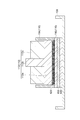
- the three-minute value of the absorption amount (AUL, Absorption Under Load) of the particulate water-absorbent resin composition under a load of 2.07 kPa is, for example, 8 ml / g or more, 10 ml / g or more, 13 ml / g or more, 15 ml / g. It may be more than or equal to 17 ml / g or more, and may be 22 ml / g or less, 20 ml / g or less, 18 ml / g or less, or 15 ml / g or less.
- the 15-minute value of the absorption amount of the particulate water-absorbent resin composition under a load of 2.07 kPa is, for example, 14 ml / g or more, 16 ml / g or more, 20 ml / g or more, 22 ml / g or more, or 24 ml / g or more. It may be 30 ml / g or less, 28 ml / g or less, 26 ml / g or less, 24 ml / g or less, or 20 ml / g or less. Specific measurement methods for the 3-minute value and the 15-minute value of the absorbed amount under load will be shown in Examples described later.
- the ratio of the three-minute value to the 15-minute value of the absorption amount under a load of 2.07 kPa of the particulate water-absorbent resin composition is, for example, 50% or more, 55% or more, 60% or more, 65% or more, or 70% or more. It may be 80% or less, 75% or less, 70% or less, or 65% or less.
- the particulate water-absorbent resin composition obtained by the production method according to the present embodiment has excellent absorption performance when used under pressure.
- the reason why such an effect is obtained is not clear, but the present inventor speculates as follows.
- the present invention is not limited to the following mechanism.
- granulation is performed by sufficiently kneading granulated particles having a large particle size to a certain ratio or more. ..
- the fact that more granulated particles with a large particle size can be obtained means that the degree of kneading is higher.
- the particles that have undergone such a granulation step have a more complicated shape, such that the particles obtained by re-granulation after that have more fine voids inside and have a plurality of protrusions.
- the particulate water-absorbent resin composition obtained by the production method according to the present embodiment has excellent absorbability of body fluids such as urine and blood, and includes, for example, disposable diapers, sanitary napkins, sanitary products such as tampons, pet sheets, and the like. It can be applied to fields such as animal excrement treatment materials such as toilet formulations for dogs or cats.
- the particulate water-absorbent resin composition can be suitably used for an absorber.
- the absorber containing the particulate water-absorbent resin composition obtained by the production method according to the present embodiment has excellent water-absorbing performance.
- the method for producing an absorber according to the present embodiment includes, for example, obtaining a particulate water-absorbent resin composition by the above-mentioned method and obtaining an absorber containing the particulate water-absorbent resin composition.
- the content of the particulate water-absorbent resin composition in the absorber is 100 to 1000 g (that is, 100 to 100 g) per square meter of the absorber from the viewpoint of obtaining sufficient liquid absorption performance when the absorber is used for an absorbent article. It is preferably 1000 g / m 2 ), more preferably 150 to 800 g / m 2 , and even more preferably 200 to 700 g / m 2 . From the viewpoint of exhibiting sufficient liquid absorption performance as an absorbent article, the content is preferably 100 g / m 2 or more. From the viewpoint of suppressing the occurrence of the gel blocking phenomenon, the content is preferably 1000 g / m 2 or less.
- the mass ratio of the particulate water-absorbent resin composition in the absorber may be 2% to 100% and 10% to 80% with respect to the total of the particulate water-absorbent resin composition and the fibrous material. It is preferably 20% to 70%, more preferably 20% to 70%.
- the structure of the absorber may be, for example, a form in which the particulate water-absorbent resin composition and the fibrous material are uniformly mixed, and the particulate water-absorbent resin is formed between the fibrous material formed in a sheet or layer.
- the composition may be in a sandwiched form or in any other form.
- fibrous material examples include finely pulverized wood pulp, cotton, cotton linter, rayon, cellulosic fibers such as cellulose acetate, and synthetic fibers such as polyamide, polyester, and polyolefin.
- the fibers may be adhered to each other by adding an adhesive binder to the fibrous material.
- the adhesive binder include heat-sealing synthetic fibers, hot melt adhesives, adhesive emulsions, and the like.
- the heat-bondable synthetic fiber examples include a total fusion type binder such as polyethylene, polypropylene, and an ethylene-propylene copolymer, and a non-total fusion type binder having a side-by-side or core-sheath structure of polypropylene and polyethylene.
- a total fusion type binder such as polyethylene, polypropylene, and an ethylene-propylene copolymer
- non-total fusion type binder having a side-by-side or core-sheath structure of polypropylene and polyethylene.
- hot melt adhesives examples include ethylene-vinyl acetate copolymer, styrene-isoprene-styrene block copolymer, styrene-butadiene-styrene block copolymer, styrene-ethylene-butylene-styrene block copolymer, and styrene-ethylene-propylene-styrene block copolymer.
- a compounding of a base polymer such as amorphous polypropylene and a tackifier, a plasticizer, an antioxidant and the like.
- Adhesive emulsions include, for example, polymers of at least one monomer selected from the group consisting of methyl methacrylate, styrene, acrylonitrile, 2-ethylhexyl acrylate, butyl acrylate, butadiene, ethylene, and vinyl acetate. Be done. These adhesive binders may be used alone or in combination of two or more.
- the absorber may further contain additives such as inorganic particles (for example, amorphous silica), deodorants, pigments, dyes, antibacterial agents, fragrances, and adhesives. These additives can impart various functions to the absorber.
- inorganic particles for example, amorphous silica
- deodorants for example, amorphous silica
- pigments for example, amorphous silica
- dyes for example, amorphous silica
- antibacterial agents for example, a amorphous silica
- fragrances for example, amorphous silica
- adhesives such as inorganic particles (for example, amorphous silica), deodorants, pigments, dyes, antibacterial agents, fragrances, and adhesives. These additives can impart various functions to the absorber.
- the absorber may contain inorganic particles in addition to the inorganic particles in the water-absorbent resin particles. Examples of the inorganic particles include silicon dioxide, zeolite, kaolin,
- the shape of the absorber is not particularly limited, and may be, for example, a sheet shape.
- the thickness of the absorber (for example, the thickness of the sheet-shaped absorber) may be, for example, 0.1 to 20 mm and 0.3 to 15 mm.
- the above absorber can be suitably used for an absorbent article.
- the method for producing an absorbent article according to the present embodiment includes, for example, arranging an absorber between a liquid permeable sheet and a liquid permeable sheet.
- the absorbent article containing the particulate water-absorbent resin composition obtained by the production method according to the present embodiment exhibits excellent water-absorbing performance particularly under pressure.
- the absorbent article may include an absorber, a liquid permeable sheet and a liquid permeable sheet.
- the liquid permeable sheet (liquid permeable top sheet) is arranged on the outermost side on the side where the liquid to be absorbed enters.
- the liquid impermeable sheet (liquid impermeable back sheet) is arranged on the outermost side opposite to the side on which the liquid to be absorbed enters.
- the absorbent article may further include a core wrap. The core wrap retains the shape of the absorber.
- absorbent articles examples include diapers (for example, paper diapers), toilet training pants, incontinence pads, sanitary products (sanitary napkins, tampons, etc.), sweat pads, pet sheets, toilet materials, animal excrement treatment materials, and the like. ..
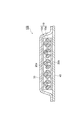
- FIG. 1 is a cross-sectional view showing an example of an absorbent article.
- the absorbent article 100 shown in FIG. 1 includes an absorbent body 10, core wraps 20a and 20b, a liquid permeable top sheet 30, and a liquid permeable back sheet 40.
- the liquid permeable back sheet 40, the core wrap 20b, the absorbent body 10, the core wrap 20a, and the liquid permeable top sheet 30 are laminated in this order.
- FIG. 1 there is a portion shown so that there is a gap between the members, but the members may be in close contact with each other without the gap.
- the absorber 10 has a particulate water-absorbent resin composition 10a and a fiber layer 10b containing a fibrous material.
- the particulate water-absorbent resin composition 10a is dispersed in the fiber layer 10b.
- the core wrap 20a is arranged on one side of the absorber 10 (upper side of the absorber 10 in FIG. 1) in contact with the absorber 10.
- the core wrap 20b is arranged on the other side of the absorber 10 (lower side of the absorber 10 in FIG. 1) in contact with the absorber 10.
- the absorber 10 is arranged between the core wrap 20a and the core wrap 20b.
- the core wrap 20a and the core wrap 20b have, for example, a main surface having the same size as the absorber 10.
- the core wrap By using the core wrap, it is possible to maintain the shape retention of the absorber and prevent the particulate water-absorbent resin composition or the like constituting the absorber from falling off or flowing.
- the core wrap include non-woven fabrics, woven fabrics, tissues, synthetic resin films having liquid permeation holes, net-like sheets having a mesh, and the like, and from the viewpoint of economy, a tissue made by wet-molding crushed pulp is preferable. Used.
- the liquid permeable top sheet 30 is arranged on the outermost side on the side where the liquid to be absorbed enters.
- the liquid permeable top sheet 30 is arranged on the core wrap 20a in contact with the core wrap 20a.
- the liquid permeable back sheet 40 is arranged on the outermost side of the absorbent article 100 on the opposite side of the liquid permeable top sheet 30.
- the liquid impermeable back sheet 40 is arranged under the core wrap 20b in contact with the core wrap 20b.
- the liquid permeable top sheet 30 and the liquid permeable back sheet 40 have, for example, a main surface wider than the main surface of the absorber 10, and the liquid permeable top sheet 30 and the liquid permeable back sheet 40 have.
- the outer edge extends around the absorber 10 and the core wraps 20a, 20b.
- liquid permeable top sheet 30 examples include non-woven fabrics and porous sheets.
- non-woven fabric examples include thermal-bonded non-woven fabric, air-through non-woven fabric, resin-bonded non-woven fabric, spunbond non-woven fabric, melt-blow non-woven fabric, spunbond / melt-blow / spunbond non-woven fabric, air-laid non-woven fabric, spunlace non-woven fabric, point-bond non-woven fabric and the like.
- thermal bond non-woven fabrics, air-through non-woven fabrics, spunbond non-woven fabrics, and spunbond / melt blow / spunbond non-woven fabrics are preferably used.
- a resin or fiber known in the art can be used, and polyethylene (from the viewpoint of liquid permeability, flexibility and strength when used in an absorbent article, polyethylene ( Polyester such as PE), polypropylene (PP), polyethylene terephthalate (PET), polytrimethylene terephthalate (PTT), polyester such as polyethylene naphthalate (PEN), polyamide such as nylon, rayon, and other synthetic resins or fibers. Examples include cotton, silk, linen and pulp (cellulose) fibers.
- synthetic fibers are preferably used from the viewpoint of increasing the strength of the liquid permeable top sheet 30, and among them, polyolefin and polyester are preferable. These materials may be used alone or in combination of two or more kinds of materials.
- the non-woven fabric used for the liquid permeable top sheet 30 has appropriate hydrophilicity from the viewpoint of improving the liquid absorption performance of the absorbent article. From this point of view, it is preferable that the hydrophilicity when measured according to the "hydrophilicity of the non-woven fabric" described in International Publication No. 2011/086843 (based on the pulp and paper test method No. 68 (2000)) is 5 to 200. Those of 10 to 150 are more preferable.
- the non-woven fabric having such hydrophilicity among the above-mentioned non-woven fabrics, those in which the material itself exhibits appropriate hydrophilicity such as rayon fiber may be used, and hydrophobic chemistry such as polyolefin fiber and polyester fiber may be used.
- a fiber may be used which has been hydrophilized by a known method to impart an appropriate degree of hydrophilicity.
- Examples of the method for hydrophilizing chemical fibers include a method of obtaining a non-woven fabric by a spunbond method obtained by mixing a hydrophobic chemical fiber with a hydrophilic agent in a spunbonded non-woven fabric, and a spunbonded non-woven fabric using hydrophobic chemical fibers. Examples thereof include a method of accommodating a hydrophilic agent when producing the above, a method of impregnating the spunbonded non-woven fabric with a hydrophobic chemical fiber, and then impregnating the hydrophilic agent.
- Hydrophilic agents include anionic surfactants such as aliphatic sulfonates and higher alcohol sulfates, cationic surfactants such as quaternary ammonium salts, polyethylene glycol fatty acid esters, polyglycerin fatty acid esters, and sorbitan fatty acids.
- Nonionic surfactants such as esters, silicone-based surfactants such as polyoxyalkylene-modified silicones, and stain-releasing agents made of polyester-based, polyamide-based, acrylic-based, and urethane-based resins are used.
- the non-woven fabric used for the liquid permeable top sheet 30 is appropriately bulky from the viewpoint of imparting good liquid permeability, flexibility, strength and cushioning property to the absorbent article and increasing the liquid penetration rate of the absorbent article. It is preferably high and has a large amount of grain.
- the basis weight of the non-woven fabric is preferably 5 to 200 g / m 2 , more preferably 8 to 150 g / m 2 , and even more preferably 10 to 100 g / m 2 .
- the thickness of the non-woven fabric is preferably 20 to 1400 ⁇ m, more preferably 50 to 1200 ⁇ m, and even more preferably 80 to 1000 ⁇ m.
- the liquid impermeable back sheet 40 prevents the liquid absorbed by the absorber 10 from leaking from the back sheet 40 side to the outside.
- the liquid impermeable back sheet 40 is made of a liquid impermeable film mainly composed of a polyolefin resin such as polyethylene (PE) and polypropylene (PP), a breathable resin film, and a non-woven fabric such as spunbond or spunlace.
- PE polyethylene
- PP polypropylene
- a non-woven fabric such as spunbond or spunlace.
- a composite film to which the above resin films are bonded, a spunbond / melt blow / spunbond (SMS) non-woven fabric in which a water-resistant melt-blown non-woven fabric is sandwiched between high-strength spun-bonded non-woven fabrics can be used.
- the back sheet 40 should use a resin film having a basis weight of 10 to 50 g / m 2 mainly made of low density polyethylene (LDPE) resin. Can be done. In addition, when a breathable material is used, the stuffiness at the time of wearing is reduced, and the discomfort given to the wearer can be reduced.
- LDPE low density polyethylene
- the magnitude relationship between the absorbent body 10, the core wraps 20a and 20b, the liquid permeable top sheet 30, and the liquid permeable back sheet 40 is not particularly limited, and is appropriately adjusted according to the use of the absorbent article and the like. Further, the method of retaining the shape of the absorber 10 by using the core wraps 20a and 20b is not particularly limited, and as shown in FIG. 1, the absorber may be sandwiched by a plurality of core wraps, and the absorber may be sandwiched by one core wrap. May be coated.
- the absorber 10 may be adhered to the liquid permeable top sheet 30.
- the liquid is guided to the absorbent body more smoothly, so that it is easy to obtain an excellent absorbent article by preventing liquid leakage.
- the absorber 10 is sandwiched or covered by the core wrap, it is preferable that at least the core wrap and the liquid permeable top sheet 30 are adhered to each other, and it is more preferable that the core wrap and the absorber 10 are adhered to each other.
- Examples of the bonding method include a method of applying a hot melt adhesive to the liquid permeable top sheet 30 at predetermined intervals in the width direction in a vertical stripe shape, a spiral shape, or the like, and bonding starch or carboxymethyl cellulose. , Polyvinyl alcohol, polyvinylpyrrolidone, and other methods of bonding using a water-soluble binder selected from water-soluble polymers.
- a method of adhering by heat-sealing may be adopted.
- Production Example 1 (Production of non-granulated water-absorbent resin particles) [polymerization] 509.71 g (7.07 mol) of 100% acrylic acid was placed in a round bottom cylindrical separable flask having an inner diameter of 11 cm and an internal volume of 2 L equipped with a stirrer. After adding 436.47 g of ion-exchanged water into the separable flask while stirring this acrylic acid, 444.68 g of 48% by mass sodium hydroxide was added dropwise under an ice bath to give a monomer concentration of 45.1. 1390.86 g of a mass% acrylic acid partial neutralizing solution (neutralization rate 75.4 mol%) was prepared. The preparation of this acrylic acid partial neutralizing solution was repeated to obtain a required amount.
- the above reaction solution was supplied to the stainless steel double-armed kneader, and the system was replaced with nitrogen gas while keeping the reaction solution at 30 ° C. Subsequently, while stirring the reaction solution, 92.63 g (7.780 mmol) of a 2.0 mass% sodium persulfate aqueous solution and 15.85 g of a 0.5 mass% L-ascorbic acid aqueous solution were added. After 1 minute, the temperature began to rise and polymerization started. After 6 minutes, the maximum temperature during the polymerization was 93 ° C., and then stirring was continued while maintaining the jacket temperature at 60 ° C., and 60 minutes after the start of the polymerization, the produced hydrogel-like polymer was taken out.
- the obtained hydrogel-like polymer was sequentially charged into a meat chopper 12VR-750SDX manufactured by Kiren Royal Co., Ltd. and subdivided (coarse) to obtain a hydrogel-like coarsely crushed product.
- the diameter of the hole in the plate located at the outlet of the meat chopper was 6.4 mm.
- the hydrogel-like coarsely crushed product was spread on a wire mesh having a mesh size of 0.8 cm ⁇ 0.8 cm and dried with hot air at 160 ° C. for 60 minutes to obtain a coarsely crushed and dried product.
- the particle group (A) was classified using a JIS standard sieve having a mesh size of 850 ⁇ m, a JIS standard sieve having a mesh size of 250 ⁇ m, and a JIS standard sieve having a mesh size of 180 ⁇ m.
- the fraction passed through a JIS standard sieve with a mesh size of 850 ⁇ m and did not pass through a JIS standard sieve with a mesh size of 250 ⁇ m, and passed through a water-absorbent resin particle (A1) and a JIS standard sieve with a mesh size of 180 ⁇ m.
- a fraction (a1) was obtained.
- a surface cross-linking agent solution consisting of 0.0783 g of ethylene carbonate, 0.125 g of propylene glycol, and 0.5 g of ion-exchanged water is mixed and mixed with 25 g of the water-absorbent resin particles (A1) after classification at 25 ° C. for 35 minutes. I got the liquid. Then, the mixture was heat-treated at 200 ° C. for 35 minutes to obtain surface-crosslinked water-absorbent resin particles (A2).
- the surface-crosslinked water-absorbent resin particles (A2) were classified with a JIS standard sieve having an opening of 850 ⁇ m and a JIS standard sieve having an opening of 250 ⁇ m.
- water-absorbent resin particles (A3) were obtained, which were fractions that passed through a JIS standard sieve having a mesh size of 850 ⁇ m and did not pass through a JIS standard sieve having a mesh size of 250 ⁇ m.
- non-granulated water-absorbent resin particles (A4) were obtained as Production Example 1. ..
- 25 g of water-absorbent resin particles were placed in a mayonnaise bottle having a capacity of 225 ml together with silicon dioxide, and the mixture was shaken for 3 minutes under the condition of 750 (cycle / min (CPM)) using a paint shaker (manufactured by Toyo Seiki Seisakusho). This was done by stirring well.
- the CRC of the water-absorbent resin particles (A4) was 34 g / g, and the medium particle size was 467 ⁇ m.
- Production Example 2 (Production of granulated water-absorbent resin particles) [Granulation] 40 g of the fine powder (a1) was placed in a round-bottomed cylindrical separable flask having an inner diameter of 11 cm and an internal volume of 2 L (the 2 L container was kept warm in a bath at 80 ° C.) equipped with a stirrer.
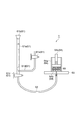
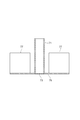
- the stirrer was equipped with a stirrer 200 as a stirrer, which is generally shown in FIG.
- the stirring blade 200 includes a shaft 200a and a flat plate portion 200b.
- the flat plate portion 200b is welded to the shaft 200a and has a curved tip.
- the flat plate portion 200b is formed with four slits S extending along the axial direction of the shaft 200a.
- the four slits S are arranged in the width direction of the flat plate portion 200b, the width of the two inner slits S is 1 cm, and the width of the two outer slits S is 0.5 cm.
- the length of the flat plate portion 200b is about 10 cm, and the width of the flat plate portion 200b is about 6 cm.
- the water-absorbent resin particles (B1) were classified with a JIS standard sieve having an opening of 850 ⁇ m and a JIS standard sieve having an opening of 180 ⁇ m.
- water-absorbent resin particles (B2) were obtained, which were fractions that passed through a JIS standard sieve having a mesh size of 850 ⁇ m and did not pass through a JIS standard sieve having a mesh size of 180 ⁇ m.
- the particle yield after granulation and crushing described later was measured.
- a surface cross-linking agent solution consisting of 0.0783 g of ethylene carbonate, 0.125 g of propylene glycol, and 0.5 g of ion-exchanged water is mixed with 25 g of water-absorbent resin particles (B2) at 25 ° C. for 35 minutes to obtain a mixed solution. rice field. Then, the mixture was heat-treated at 200 ° C. for 35 minutes to obtain surface-crosslinked water-absorbent resin particles (B3).
- the surface-crosslinked water-absorbent resin particles (B3) were classified with a JIS standard sieve having an opening of 850 ⁇ m and a JIS standard sieve having an opening of 250 ⁇ m.
- water-absorbent resin particles (B4) were obtained, which were fractions that passed through a JIS standard sieve having a mesh size of 850 ⁇ m and did not pass through a JIS standard sieve having a mesh size of 250 ⁇ m.
- Granulated water-absorbent resin particles (B5) were obtained as Production Example 2 by mixing 0.075 g of silicon dioxide (product name Aerosil 200, manufactured by Nippon Aerosil) with 25 g of water-absorbent resin particles (B4). Mixing was carried out in the same manner as in Production Example 1.
- the CRC of the water-absorbent resin particles (B5) was 31 g / g, and the medium particle size was 419 ⁇ m.
- Production Example 3 (Production of granulated water-absorbent resin particles)
- the same procedure as in Production Example 2 was carried out except that the stirring time in the round-bottomed cylindrical separable flask having an internal volume of 2 L was changed to 15 seconds. (B6) was obtained.
- the CRC of the water-absorbent resin particles (B6) was 30 g / g, and the medium particle size was 467 ⁇ m.
- Production Example 4 (Production of granulated water-absorbent resin particles)
- the same procedure as in Production Example 2 was carried out except that the amount of ion-exchanged water heated to 90 ° C. was changed to 25 g, and granulated water-absorbent resin particles (B7) were obtained as Production Example 4.
- the CRC of the water-absorbent resin particles (B7) was 32 g / g, and the medium particle size was 446 ⁇ m.
- Production Example 5 (Production of non-granulated water-absorbent resin particles) [polymerization] 509.09 g (7.06 mol) of 100% acrylic acid was placed in a round bottom cylindrical separable flask having an inner diameter of 11 cm and an internal volume of 2 L equipped with a stirrer. After adding 435.98 g of ion-exchanged water into the separable flask while stirring this acrylic acid, 447.03 g of 48% by mass sodium hydroxide was added dropwise under an ice bath to give a monomer concentration of 45.0. 1392.10 g of a mass% acrylic acid partial neutralizing solution (neutralization rate 75.9 mol%) was prepared. The preparation of this acrylic acid partial neutralizing solution was repeated to obtain a required amount.
- the above reaction solution was supplied to the kneader, and the system was replaced with nitrogen gas while keeping the reaction solution at 30 ° C. Subsequently, while stirring the reaction solution, 92.52 g (7.771 mmol) of a 2.0 mass% sodium persulfate aqueous solution and 15.83 g of a 0.5 mass% L-ascorbic acid aqueous solution were added. After minutes, the temperature began to rise and polymerization began. After 3 minutes, the maximum temperature during polymerization was 90 ° C., after which stirring was continued while maintaining the jacket temperature at 60 ° C. 60 minutes after the start of the polymerization, the produced hydrogel-like polymer was taken out.
- the hydrogel-like coarsely crushed product was spread on a wire mesh having a mesh size of 0.8 cm ⁇ 0.8 cm and dried with hot air at 160 ° C. for 60 minutes to obtain a coarsely crushed and dried product.
- An amorphous crushed pulverized product (D) was classified using a JIS standard sieve having a mesh size of 850 ⁇ m, a JIS standard sieve having a mesh size of 250 ⁇ m, and a JIS standard sieve having a mesh size of 180 ⁇ m.
- water-absorbent resin particles (D1) were obtained, which were fractions that passed through a JIS standard sieve having a mesh size of 850 ⁇ m and did not pass through a JIS standard sieve having a mesh size of 250 ⁇ m.
- a surface cross-linking agent solution consisting of 0.235 g of ethylene carbonate, 0.125 g of propylene glycol, and 2.0 g of ion-exchanged water was mixed with 25 g of water-absorbent resin particles (D1) at 25 ° C. for 35 minutes to obtain a mixture. .. Then, the mixture was heat-treated at 200 ° C. for 35 minutes to obtain surface-crosslinked water-absorbent resin particles (D2).
- Production Example 6 (Production of granulated water-absorbent resin particles) [polymerization] 509.71 g (7.07 mol) of 100% acrylic acid was placed in a round bottom cylindrical separable flask having an inner diameter of 11 cm and an internal volume of 2 L equipped with a stirrer. After adding 436.47 g of ion-exchanged water into the separable flask while stirring this acrylic acid, 444.68 g of 48% by mass sodium hydroxide was added dropwise under an ice bath to give a monomer concentration of 45.1. 1390.86 g of a mass% acrylic acid partial neutralizing solution (neutralization rate 75.4 mol%) was prepared. The preparation of this acrylic acid partial neutralizing solution was repeated to obtain a required amount.
- the above reaction solution was supplied to the kneader, and the system was replaced with nitrogen gas while keeping the reaction solution at 30 ° C. Subsequently, while stirring the reaction solution, 92.63 g (7.780 mmol) of a 2.0 mass% sodium persulfate aqueous solution and 15.85 g of a 0.5 mass% L-ascorbic acid aqueous solution were added. After 1 minute, the temperature began to rise and polymerization started. After 5 minutes, the maximum temperature during polymerization was 80.9 ° C, after which stirring was continued while maintaining the jacket temperature at 60 ° C. 60 minutes after the start of the polymerization, the produced hydrogel-like polymer was taken out.
- the hydrogel-like coarsely crushed product was spread on a wire mesh having a mesh size of 0.8 cm ⁇ 0.8 cm and dried with hot air at 160 ° C. for 60 minutes to obtain a coarsely crushed and dried product.
- An amorphous crushed pulverized product (E) was classified using a JIS standard sieve having a mesh size of 850 ⁇ m, a JIS standard sieve having a mesh size of 250 ⁇ m, and a JIS standard sieve having a mesh size of 180 ⁇ m.
- the water-absorbent resin particles (E1) which are fractions that passed through a JIS standard sieve with a mesh size of 850 ⁇ m and did not pass through a JIS standard sieve with a mesh size of 250 ⁇ m, and a JIS standard sieve with a mesh size of 180 ⁇ m were passed.
- a fraction (e1) was obtained.
- the water-absorbent resin particles (F1) were further classified with a JIS standard sieve having an opening of 850 ⁇ m and a JIS standard sieve having an opening of 180 ⁇ m.
- water-absorbent resin particles (F2) were obtained, which were fractions that passed through a JIS standard sieve having a mesh size of 850 ⁇ m and did not pass through a JIS standard sieve having a mesh size of 180 ⁇ m.
- a surface cross-linking agent solution consisting of 0.0783 g of ethylene carbonate, 0.125 g of propylene glycol, and 0.5 g of ion-exchanged water was mixed with 25 g of water-absorbent resin particles (F2) at 25 ° C. for 35 minutes to obtain a mixture. .. Then, the mixture was heat-treated at 200 ° C. for 35 minutes to obtain surface-crosslinked water-absorbent resin particles (F3).
- the surface-crosslinked water-absorbent resin particles (F3) were classified with a JIS standard sieve having an opening of 850 ⁇ m and a JIS standard sieve having an opening of 250 ⁇ m.
- water-absorbent resin particles (F4) were obtained, which were fractions that passed through a JIS standard sieve having a mesh size of 850 ⁇ m and did not pass through a JIS standard sieve having a mesh size of 250 ⁇ m.
- Granulated water-absorbent resin particles (F5) were obtained as Production Example 6 by mixing 0.075 g of silicon dioxide (product name Aerosil 200, manufactured by Nippon Aerosil) with 25 g of water-absorbent resin particles (F4). Mixing was carried out in the same manner as in Production Example 1.
- the CRC of the water-absorbent resin particles (F5) was 37 g / g, and the medium particle size was 413 ⁇ m.
- ⁇ Measurement of particle size distribution of granulated particles In the process of producing granulated water-absorbent resin particles, the total amount of the granulated particle group obtained by granulation or an arbitrary amount (about 30 g to 100 g) is sampled for measuring the particle size distribution of the granulated particle group. It was used as a sample. Sieves with JIS standard meshes of 106 mm, 53 mm, 31.5 mm, 9.5 mm, 2.8 mm, 850 ⁇ m, and 180 ⁇ m, and a saucer are placed in this order from the top, and the measurement sample is placed on a sieve with a mesh size of 106 mm. I put it in.
- Formula (2): "% of granulated particles abundance of 850 ⁇ m or more” (total of granulated particles remaining on each sieve having a mesh size of 106 mm, 53 mm, 31.5 mm, 9.5 mm, 2.8 mm, and 850 ⁇ m) Amount) / (Amount of sample used for measurement)
- Formula (3): "% of granulated particles abundance of 9.5 mm or more” (total amount of granulated particles remaining on each sieve having a mesh size of 106 mm, 53 mm, 31.5 mm, and 9.5 mm) / ( Sample amount used for measurement)
- the medium particle size of the water-absorbent resin particles and the particulate water-absorbent resin composition was measured by the following procedure. From the top of the JIS standard sieve, a sieve with a mesh size of 600 ⁇ m, a sieve with a mesh size of 500 ⁇ m, a sieve with a mesh size of 425 ⁇ m, a sieve with a mesh size of 300 ⁇ m, a sieve with a mesh size of 250 ⁇ m, a sieve with a mesh size of 180 ⁇ m, a sieve with a mesh size of 150 ⁇ m and a saucer. Combined in the order of.
- a non-woven fabric with a size of 60 mm x 170 mm (product name: Heat Pack MWA-18, manufactured by Nippon Paper Papylia Co., Ltd.) was folded in half in the longitudinal direction to adjust the size to 60 mm x 85 mm.
- a 60 mm ⁇ 85 mm non-woven fabric bag was produced by crimping the non-woven fabrics to each other on both sides extending in the longitudinal direction with a heat seal (a crimped portion having a width of 5 mm was formed on both sides along the longitudinal direction). 0.2 g of the particles to be measured were precisely weighed and contained inside the non-woven fabric bag. Then, the non-woven fabric bag was closed by crimping the remaining one side extending in the lateral direction with a heat seal.
- the entire non-woven fabric bag was completely moistened by floating the non-woven fabric bag on 1000 g of physiological saline contained in a stainless steel vat (240 mm ⁇ 320 mm ⁇ 45 mm) without folding the non-woven fabric bag.
- a stainless steel vat 240 mm ⁇ 320 mm ⁇ 45 mm
- the measuring device 110 provided with the wire mesh 116 of the above was prepared.
- the weight 112 includes a disc portion 112a, a rod-shaped portion 112b extending from the center of the disc portion 112a in a direction perpendicular to the disc portion 112a, and a cylindrical portion 112c having a through hole inserted into the rod-shaped portion 112b in the center. have.
- the disk portion 112a of the weight 112 has a diameter substantially equal to the inner diameter of the cylinder 114 so that it can be moved in the longitudinal direction of the cylinder 114 inside the cylinder 114.
- the diameter of the cylindrical portion 112c is smaller than the diameter of the disc portion 112a.
- One end of the cylinder 114 is open but shielded by a wire mesh 116, and the other end of the cylinder 114 is open so that the weight 112 can be inserted.
- 0.90 g of particles 120 to be measured were uniformly sprayed on the wire mesh 116.
- the total mass of the measuring device 110 (the total mass of the measuring device 110 and the measurement target particle 120 before liquid absorption). Wa [g] was measured.
- a glass filter 140 (ISO4793 P-250) with a diameter of 90 mm and a thickness of 7 mm in the center of the bottom surface of the recess of the stainless petri dish 130 with a diameter of 150 mm, 0 so that the water surface is at the same height as the upper surface of the glass filter 140.
- a 90% by mass aqueous sodium chloride solution (25 ° C ⁇ 2 ° C) was added.
- a sheet of filter paper 150 (ADVANTEC Toyo Co., Ltd., product name: (No. 3), thickness 0.23 mm, reserved particle diameter 5 ⁇ m) with a diameter of 90 mm is placed on the glass filter 140 so that the entire surface is wet and the surface is completely wet. , Excess liquid was removed.
- the above-mentioned measuring device 110 was placed on the filter paper 150, and the liquid was absorbed by the particles 120 to be measured under a load. After 1 hour, the measuring device 110 was lifted, and the total mass of the measuring device 110 (total mass of the measuring device 110 and the particles 120 to be measured after absorbing the liquid) Wb [g] was measured.
- ⁇ Vortex water absorption rate The water absorption rate of the water-absorbent resin particles and the physiological saline of the particulate water-absorbent resin composition was measured by the following procedure based on the Vortex method. The measurement was carried out in an environment where the temperature was 25 ° C. ⁇ 2 ° C. and the humidity was 50% ⁇ 10%. First, 50 ⁇ 0.1 g of a 0.9 mass% sodium chloride aqueous solution (physiological saline) adjusted to a temperature of 25 ⁇ 0.2 ° C. in a constant temperature water tank was weighed in a beaker having an internal volume of 100 mL.
- a vortex was generated by stirring at a rotation speed of 600 rpm using a magnetic stirrer bar (8 mm ⁇ ⁇ 30 mm, without ring).
- 2.0 ⁇ 0.002 g of measurement particles were added to the aqueous sodium chloride solution at one time.
- the time [seconds] from the addition of the measurement particles to the time when the vortex on the liquid surface converged was measured, and the time was obtained as the water absorption rate of the water-absorbent resin particles or the particulate water-absorbent resin composition.
- Tables 1 and 3 The results are shown in Tables 1 and 3.
- Example 1 After putting 10 g of the water-absorbent resin particles (A4) of Production Example 1 and 10 g of the water-absorbent resin particles (B5) of Production Example 2 into a 100 mL mayonnaise bottle, shake with a paint shaker (manufactured by Toyo Seiki Seisakusho Co., Ltd.) for 30 minutes. The particles were uniformly mixed to obtain the particulate water-absorbent resin composition of Example 1. The CRC of this particulate water-absorbent resin composition was 32 g / g, and the medium particle size was 443 ⁇ m.
- Example 2 After putting 5 g of the water-absorbent resin particles (A4) of Production Example 1 and 15 g of the water-absorbent resin particles (B5) of Production Example 2 into a 100 mL mayonnaise bottle, shake with a paint shaker (manufactured by Toyo Seiki Seisakusho Co., Ltd.) for 30 minutes. The mixture was uniformly mixed to obtain a particulate water-absorbent resin composition of Example 2. The CRC of this particulate water-absorbent resin composition was 32 g / g, and the medium particle size was 431 ⁇ m.
- Example 3 After putting 10 g of the water-absorbent resin particles (A4) of Production Example 1 and 10 g of the water-absorbent resin particles (B7) of Production Example 4 into a 100 mL mayonnaise bottle, shake with a paint shaker (manufactured by Toyo Seiki Seisakusho Co., Ltd.) for 30 minutes. The mixture was uniformly mixed to obtain a particulate water-absorbent resin composition of Example 3. The CRC of this particulate water-absorbent resin composition was 33 g / g, and the medium particle size was 467 ⁇ m.
- Example 4 After putting 10 g of the water-absorbent resin particles (D4) of Production Example 5 and 10 g of the water-absorbent resin particles (F5) of Production Example 6 into a 100 mL mayonnaise bottle, shake for 30 minutes with a paint shaker (manufactured by Toyo Seiki Seisakusho Co., Ltd.). The particles were uniformly mixed to obtain the particulate water-absorbent resin composition of Example 4. The CRC of this particulate water-absorbent resin composition was 36 g / g, and the medium particle size was 459 ⁇ m.
- the water absorption amount (room temperature, 25 ° C. ⁇ 2 ° C.) of the physiological saline under the load of the water-absorbent resin particles and the particulate water-absorbent resin composition was measured using the measuring device Y shown in FIG. The measurement was carried out in an environment where the temperature was 25 ° C. ⁇ 2 ° C. and the humidity was 50% ⁇ 10%.
- the measuring device Y is composed of a burette unit 61, a conduit 62, a measuring table 63, and a measuring unit 64 placed on the measuring table 63.
- the burette portion 61 has a burette 61a extending in the vertical direction, a rubber stopper 61b arranged at the upper end of the burette 61a, a cock 61c arranged at the lower end of the burette 61a, and one end extending into the burette 61a in the vicinity of the cock 61c. It has an air introduction pipe 61d and a cock 61e arranged on the other end side of the air introduction pipe 61d.
- the conduit 62 is attached between the burette portion 61 and the measuring table 63.
- the inner diameter of the conduit 62 is 6 mm.
- a hole having a diameter of 2 mm is formed in the central portion of the measuring table 63, and the conduit 62 is connected to the hole.
- the measuring unit 64 has a cylinder 64a (made of acrylic resin), a nylon mesh 64b adhered to the bottom of the cylinder 64a, and a weight 64c.
- the inner diameter of the cylinder 64a is 20 mm.
- the opening of the nylon mesh 64b is 75 ⁇ m (200 mesh).
- the weight 64c has a diameter of 19 mm and the weight 64c has a mass of 59.8 g.
- the weight 64c is placed on the particle 65 to be measured, and a load of 2.07 kPa can be applied to the particle 65 to be measured.
- the weight 64c was placed and the measurement was started. Since the same volume of air as the physiological saline absorbed by the particles 65 to be measured is quickly and smoothly supplied to the inside of the burette 61a from the air introduction pipe, the water level of the physiological saline inside the burette 61a is reduced. , The amount of physiological saline absorbed by the particle 65 to be measured.
- the scale of the burette 61a is engraved from top to bottom in 0 mL to 0.5 mL increments.
- Ratio of 3-minute value to 15-minute value (%) (3-minute value of saline water absorption under load / 15-minute value of saline water absorption under load) x 100
- an air-through type porous liquid permeable sheet made of polyethylene-polypropylene having a basis weight of 22 g / m 2 and having the same size as the absorber is placed on the upper surface of the laminate, and both ends are cut to a size of 30 cm ⁇ 10 cm.
- the absorption time under short-time pressurization was measured by the method outlined in FIG.
- the absorbent article was placed on a horizontal table in a room with a temperature of 25 ⁇ 2 ° C. and a humidity of 50% ⁇ 10%.
- a measuring jig provided with a cylinder 71 and an acrylic plate 75 was placed at the center of the main surface of the absorbent article.
- the cylinder 71 has an inner diameter of 4 cm, an outer diameter of 5 cm, and a height of 18 cm.
- the cylinder 71 has a mesh 73 with an opening of 2 mm on the bottom surface.
- the acrylic plate 75 has a size of 30 cm ⁇ 10 cm and has a hole with a diameter of 5 cm in the center.
- a cylinder 71 is installed in the hole of the acrylic plate 75. Subsequently, by placing two weights 77 of 10 cm ⁇ 10 cm and a weight of 2492.25 g on both ends of the measuring jig, a load of 2.07 kPa (0.3 psi) is applied to the entire 30 cm ⁇ 10 cm absorbent article. I called.
- the absorbent article using the particulate water-absorbent resin composition obtained in the examples had a short absorption time under pressure and had high absorption performance.
- Weight 100 ... Absorbent article, 110 ... Measuring device, 112a ... Disc part, 112b ... Rod-shaped part, 112c ... Cylindrical part, 114 ... Cylinder, 116 ... Wire mesh, 120 ... Particles to be measured, 130 ... Stainless steel, 140 ... Glass filter, 150 ... Filter paper, 200 ... Stirring blade, 200a ... Shaft, 200b ... Flat plate, S ... Slit.
Landscapes
- Health & Medical Sciences (AREA)
- Epidemiology (AREA)
- Engineering & Computer Science (AREA)
- Biomedical Technology (AREA)
- Heart & Thoracic Surgery (AREA)
- Vascular Medicine (AREA)
- Life Sciences & Earth Sciences (AREA)
- Animal Behavior & Ethology (AREA)
- General Health & Medical Sciences (AREA)
- Public Health (AREA)
- Veterinary Medicine (AREA)
- Chemical & Material Sciences (AREA)
- Chemical Kinetics & Catalysis (AREA)
- Medicinal Chemistry (AREA)
- Polymers & Plastics (AREA)
- Organic Chemistry (AREA)
- Solid-Sorbent Or Filter-Aiding Compositions (AREA)
Abstract
造粒工程を経て得られる重合体粒子を含む吸水性樹脂粒子を得ること、及び該造粒工程を得て得られる重合体粒子を含む吸水性樹脂粒子と、造粒工程を経ずに得られる重合体粒子を含む吸水性樹脂粒子とを混合することにより、粒子状吸水性樹脂組成物を得ることを含み、再粒子化前の造粒粒子群のうち、目開き850μmのJIS標準篩を通過しない造粒粒子の存在率が70質量%以上であり、造粒工程を経て得られる吸水性樹脂粒子の割合が、粒子状吸水性樹脂組成物の全量に対して40~80質量%である、粒子状吸水性樹脂組成物の製造方法が開示される。
Description
本発明は、粒子状吸水性樹脂組成物、吸収体及び吸収性物品の製造方法に関する。
尿等の水を主成分とする液体を吸収するための吸収性物品には、吸水性樹脂粒子を含む吸収体が用いられている。吸水性樹脂粒子の製造においては、重合により得られたブロック状の重合体を粉砕等の処理により粒子化する工程が行われている。粉砕により発生する、粒子径180μm未満の粒子等の小さい粒子は、造粒により粒子径を増大させて使用されている(例えば特許文献1)。
吸収性物品は、体重等により加圧される使用態様を考慮して、加圧下における液体吸収性に優れることが求められる。
本発明は、加圧下での吸収性に優れる吸収性物品をもたらすことのできる粒子状吸水性樹脂組成物を提供することを目的とする。
本発明の粒子状吸水性樹脂組成物の製造方法は、エチレン性不飽和単量体を含む単量体を重合して含水ゲル状重合体を得ることと、該含水ゲル状重合体を粒子化して粒子径180μm未満の微粉を含む粒子群を得ることと、該粒子群を造粒して造粒粒子を含む造粒粒子群を得ることと、該造粒粒子群を再度粒子化して重合体粒子を得ることと、を含む方法によって、造粒工程を経て得られる重合体粒子を含む吸水性樹脂粒子を得ること、及び該造粒工程を得て得られる重合体粒子を含む吸水性樹脂粒子と、造粒工程を経ずに得られる重合体粒子を含む吸水性樹脂粒子とを混合することにより、粒子状吸水性樹脂組成物を得ることを含み、再粒子化前の造粒粒子群のうち、目開き850μmのJIS標準篩を通過しない造粒粒子の存在率が70質量%以上であり、造粒工程を経て得られる吸水性樹脂粒子の混合割合が、粒子状吸水性樹脂組成物の全量に対して40~80質量%である。
上記方法において、再粒子化前の造粒粒子群のうち、目開き31.5mmのJIS標準篩を通過しない造粒粒子の存在率が5質量%以上であることが好ましい。
本発明はまた、上記方法により粒子状吸水性樹脂組成物を得ることと、該粒子状吸水性樹脂組成物を含む吸収体を得ることと、を含む、吸収体の製造方法を提供する。
本発明はまた、上記方法により吸収体を得ることと、該吸収体を液体不透過性シート及び液体透過性シートの間に配置することと、を含む、吸収性物品の製造方法を提供する。
本発明により、加圧下での吸収性に優れる吸収性物品をもたらすことのできる粒子状吸水性樹脂組成物を提供することができる。
以下、本発明の好適な実施形態について詳細に説明する。ただし、本発明は以下の実施形態に限定されるものではない。
本明細書において、「アクリル」及び「メタクリル」を合わせて「(メタ)アクリル」と表記する。「アクリレート」及び「メタクリレート」も同様に「(メタ)アクリレート」と表記する。「(ポリ)」とは、「ポリ」の接頭語がある場合及びない場合の双方を意味するものとする。本明細書に段階的に記載されている数値範囲において、ある段階の数値範囲の上限値又は下限値は、他の段階の数値範囲の上限値又は下限値と任意に組み合わせることができる。本明細書に記載されている数値範囲において、その数値範囲の上限値又は下限値は、実施例に示されている値に置き換えてもよい。「水溶性」とは、25℃において水に5質量%以上の溶解性を示すことをいう。本明細書に例示する材料は、単独で用いられてもよく、2種以上を組み合わせて用いられてもよい。組成物中の各成分の含有量は、組成物中に各成分に該当する物質が複数存在する場合、特に断らない限り、組成物中に存在する当該複数の物質の合計量を意味する。「生理食塩水」とは、0.9質量%塩化ナトリウム水溶液をいう。目開きXの篩を通過する粒子とは、粒子が目開きXの篩を通過可能な大きさを有していることを意味し、実際に粒子が目開きXの篩を通過する工程を必要とするものではない。
本実施形態に係る粒子状吸水性樹脂組成物の製造方法は、造粒工程を得て得られる重合体粒子を含む吸水性樹脂粒子(以下、「造粒吸水性樹脂粒子」ともいう。)と、造粒工程を経ずに得られる吸水性樹脂粒子(以下、「無造粒吸水性樹脂粒子」ともいう。)とを混合することを含む。本実施形態係る粒子状吸水性樹脂組成物は、少なくとも上記2種の吸水性樹脂粒子を含む混合物である。
<造粒吸水性樹脂粒子>
造粒吸水性樹脂粒子の製造方法は、エチレン性不飽和単量体を含む単量体を重合して含水ゲル状重合体を得ることと、該含水ゲル状重合体を粒子化して粒子径180μm未満の微粉を含む粒子群を得ることと、該粒子群を造粒して造粒粒子を含む造粒粒子群を得ることと、該造粒粒子群を再度粒子化して重合体粒子を得ることと、を含む。以下、造粒吸水性樹脂粒子の製造方法について詳述する。
造粒吸水性樹脂粒子の製造方法は、エチレン性不飽和単量体を含む単量体を重合して含水ゲル状重合体を得ることと、該含水ゲル状重合体を粒子化して粒子径180μm未満の微粉を含む粒子群を得ることと、該粒子群を造粒して造粒粒子を含む造粒粒子群を得ることと、該造粒粒子群を再度粒子化して重合体粒子を得ることと、を含む。以下、造粒吸水性樹脂粒子の製造方法について詳述する。
[重合]
まず、エチレン性不飽和単量体を含む単量体を重合させて含水ゲル状重合体を得る。含水ゲル状重合体は、エチレン性不飽和単量体を含む単量体の重合により形成された架橋重合体が水を含みゲル状となったものであってよい。吸水性樹脂粒子は、エチレン性不飽和単量体を含む単量体の重合により形成された架橋重合体を含むことができる。架橋重合体は、エチレン性不飽和単量体に由来する単量体単位を有する。すなわち、吸水性樹脂粒子は、エチレン性不飽和単量体に由来する構造単位を有することができる。
まず、エチレン性不飽和単量体を含む単量体を重合させて含水ゲル状重合体を得る。含水ゲル状重合体は、エチレン性不飽和単量体を含む単量体の重合により形成された架橋重合体が水を含みゲル状となったものであってよい。吸水性樹脂粒子は、エチレン性不飽和単量体を含む単量体の重合により形成された架橋重合体を含むことができる。架橋重合体は、エチレン性不飽和単量体に由来する単量体単位を有する。すなわち、吸水性樹脂粒子は、エチレン性不飽和単量体に由来する構造単位を有することができる。
重合は、例えば水溶液重合法により行うことができる。以下、水溶液重合法による単量体の重合について説明する。
エチレン性不飽和単量体は水溶性であることが好ましい。エチレン性不飽和単量体としては例えば、(メタ)アクリル酸、マレイン酸、無水マレイン酸、フマル酸等のα,β-不飽和カルボン酸及びその塩等のカルボン酸系単量体;(メタ)アクリルアミド、N,N-ジメチル(メタ)アクリルアミド、2-ヒドロキシエチル(メタ)アクリレート、N-メチロール(メタ)アクリルアミド、ポリエチレングリコールモノ(メタ)アクリレート等の非イオン性単量体;N,N-ジエチルアミノエチル(メタ)アクリレート、N,N-ジエチルアミノプロピル(メタ)アクリレート、ジエチルアミノプロピル(メタ)アクリルアミド等のアミノ基含有不飽和単量体及びその4級化物等;ビニルスルホン酸、スチレンスルホン酸、2-(メタ)アクリルアミド-2-メチルプロパンスルホン酸、2-(メタ)アクリロイルエタンスルホン酸及びそれらの塩等のスルホン酸系単量体等が挙げられる。エチレン性不飽和単量体は、1種を単独で使用してもよく、2種以上を併用してもよい。
エチレン性不飽和単量体は、(メタ)アクリル酸及びその塩、(メタ)アクリルアミド、並びにN,N-ジメチルアクリルアミドからなる群から選ばれる少なくとも1種を含むことが好ましく、(メタ)アクリル酸及びその塩から選択される少なくとも1種を含むことがより好ましい。また、(メタ)アクリル酸及びその塩と、他のエチレン性不飽和単量体を共重合させてもよい。この場合、エチレン性不飽和単量体の総量のうち、上記(メタ)アクリル酸及びその塩が70~100モル%用いられることが好ましく、80~100モル%用いられることがより好ましく、90~100モル%用いられることが更に好ましい。エチレン性不飽和単量体は、アクリル酸及びその塩の少なくとも一方を含むことが好ましい。
エチレン性不飽和単量体が(メタ)アクリル酸、2-(メタ)アクリルアミド-2-メチルプロパンスルホン酸等のように酸基を有する場合、必要に応じてその酸基があらかじめアルカリ性中和剤により中和されたものを用いることができる。このようなアルカリ性中和剤としては、例えば水酸化ナトリウム、炭酸ナトリウム、炭酸水素ナトリウム、水酸化カリウム、炭酸カリウム等のアルカリ金属塩;アンモニア等が挙げられる。これらのアルカリ性中和剤は、中和操作を簡便にするために水溶液の状態にして用いてもよい。アルカリ性中和剤は1種を単独で使用してもよく、2種以上を併用してもよい。なお、酸基の中和は、原料であるエチレン性不飽和単量体の重合前に行ってもよく、重合中又は重合後に行ってもよい。
アルカリ性中和剤によるエチレン性不飽和単量体の中和度は、得られる吸水性樹脂粒子の浸透圧を高めることで吸水性能を高め、かつ余剰のアルカリ性中和剤の存在に起因する安全性等に問題が生じないようにする観点から、通常、10~100モル%であることが好ましく、30~90モル%であることがより好ましく、40~85モル%であることが更に好ましく、50~80モル%であることがより更に好ましい。ここで、中和度は、エチレン性不飽和単量体が有する全ての酸基に対する中和度とする。
エチレン性不飽和単量体は、通常、水溶液の状態で用いることが好適である。エチレン性不飽和単量体を含む水溶液(以下、単に「単量体水溶液」という)におけるエチレン性不飽和単量体の濃度は、20質量%以上飽和濃度以下とすればよく、25~70質量%が好ましく、30~50質量%がより好ましい。
エチレン性不飽和単量体の使用量は、単量体全量(吸水性樹脂粒子を得るための単量体全量。例えば、架橋重合体の構造単位を与える単量体の全量。以下同様。)に対して70~100モル%であってよく、80~100モル%、90~100モル%、95~100モル%、又は100モル%であってよい。なかでも、(メタ)アクリル酸及びその塩の割合が単量体全量に対して70~100モル%であってよく、80~100モル%、90~100モル%、95~100モル%、又は100モル%であってよい。「(メタ)アクリル酸及びその塩の割合」は、(メタ)アクリル酸及びその塩の合計量の割合を意味する。
吸水性樹脂粒子は、例えば、エチレン性不飽和単量体に由来する構造単位を有する架橋重合体を含む吸水性樹脂粒子であって、エチレン性不飽和単量体が、(メタ)アクリル酸及びその塩からなる群より選ばれる少なくとも1種の化合物を含み、(メタ)アクリル酸及びその塩の割合が、吸水性樹脂粒子を得るための単量体全量に対して70~100モル%であるものであってよい。
単量体水溶液は、重合開始剤を含んでいてよい。単量体水溶液に含まれる単量体の重合は、単量体水溶液に重合開始剤を添加し、必要により加熱、光照射等を行うことで開始される。重合開始剤としては、光重合開始剤又はラジカル重合開始剤が挙げられ、なかでも水溶性ラジカル重合開始剤が好ましく用いられる。重合開始剤は、例えばアゾ系化合物、過酸化物等であってよい。
アゾ系化合物としては、例えば、2,2’-アゾビス[2-(N-フェニルアミジノ)プロパン]二塩酸塩、2,2’-アゾビス{2-[N-(4-クロロフェニル)アミジノ]プロパン}二塩酸塩、2,2’-アゾビス{2-[N-(4-ヒドロキシフェニル)アミジノ]プロパン}二塩酸塩、2,2’-アゾビス[2-(N-ベンジルアミジノ)プロパン]二塩酸塩、2,2’-アゾビス[2-(N-アリルアミジノ)プロパン]二塩酸塩、2,2’-アゾビス(2-アミジノプロパン)二塩酸塩、2,2’-アゾビス{2-[N-(2-ヒドロキシエチル)アミジノ]プロパン}二塩酸塩、2,2’-アゾビス[2-(5-メチル-2-イミダゾリン-2-イル)プロパン]二塩酸塩、2,2’-アゾビス[2-(2-イミダゾリン-2-イル)プロパン]二塩酸塩、2,2’-アゾビス[2-(4,5,6,7-テトラヒドロ-1H-1,3-ジアゼピン-2-イル)プロパン]二塩酸塩、2,2’-アゾビス[2-(5-ヒドロキシ-3,4,5,6-テトラヒドロピリミジン-2-イル)プロパン]二塩酸塩、2,2’-アゾビス{2-[1-(2-ヒドロキシエチル)-2-イミダゾリン-2-イル]プロパン}二塩酸塩、2,2’-アゾビス(2-メチルプロピオンアミド)二塩酸塩、2,2’-アゾビス[2-(2-イミダゾリン-2-イル)プロパン]二硫酸塩二水和物、2,2’-アゾビス[N-(2-カルボキシエチル)-2-メチルプロピオンアミジン]四水和物、2,2’-アゾビス[2-メチル-N-(2-ヒドロキシエチル)プロピオンアミド]等のアゾ系化合物等を挙げることができる。良好な吸水性能を有する吸水性樹脂粒子が得られやすいという観点から、2,2’-アゾビス(2-アミジノプロパン)二塩酸塩、2,2’-アゾビス{2-[1-(2-ヒドロキシエチル)-2-イミダゾリン-2-イル]プロパン}二塩酸塩及び2,2’-アゾビス[N-(2-カルボキシエチル)-2-メチルプロピオンアミジン]四水和物が好ましい。これらのアゾ系化合物は、1種を単独で使用してもよく、2種以上を併用してもよい。
過酸化物としては、例えば、過硫酸カリウム、過硫酸アンモニウム、過硫酸ナトリウム等の過硫酸塩類;メチルエチルケトンパーオキシド、メチルイソブチルケトンパーオキシド、ジ-t-ブチルパーオキシド、t-ブチルクミルパーオキシド、t-ブチルパーオキシアセテート、t-ブチルパーオキシイソブチレート、t-ブチルパーオキシピバレート等の有機過酸化物類;過酸化水素等の過酸化物が挙げられる。これらの過酸化物のなかでも、良好な吸水性能を有する吸水性樹脂粒子が得られる観点から、過硫酸カリウム、過硫酸アンモニウム、過硫酸ナトリウム又は過酸化水素を用いることが好ましく、過硫酸カリウム、過硫酸アンモニウム又は過硫酸ナトリウムを用いることがより好ましい。これらの過酸化物は、1種を単独で使用してもよく、2種以上を併用してもよい。
重合開始剤と還元剤とを組み合わせて用いて、レドックス重合開始剤として用いることもできる。還元剤としては、例えば、亜硫酸ナトリウム、亜硫酸水素ナトリウム、硫酸第一鉄、及びL-アスコルビン酸等が挙げられる。
重合開始剤の総使用量は、急激な重合反応を回避し、重合反応時間を短縮する観点から、重合に用いられるエチレン性不飽和単量体100モルに対して0.001~1モルが好ましく、0.005~0.5モルがより好ましく、0.008~0.3モルが更に好ましく、0.01~0.2モルがより更に好ましい。
単量体水溶液は、内部架橋剤を含むことが好ましい。内部架橋剤を含むことにより、得られる架橋重合体が、その内部架橋構造として、重合反応による自己架橋に加え、内部架橋剤による架橋を有することができる。内部架橋剤としては、例えば重合性不飽和基を2個以上有する化合物が用いられ、好ましくは、重合性不飽和基を2個有する化合物が使用される。例えば、(ポリ)エチレングリコール、(ポリ)プロピレングリコール、トリメチロールプロパン、グリセリンポリオキシエチレングリコール、ポリオキシプロピレングリコール、及び(ポリ)グリセリン等のポリオール類のジ又はトリ(メタ)アクリル酸エステル類;上記ポリオールとマレイン酸及びフマル酸等の不飽和酸類とを反応させて得られる不飽和ポリエステル類;N,N’-メチレンビス(メタ)アクリルアミド等のビスアクリルアミド類;ポリエポキシドと(メタ)アクリル酸とを反応させて得られるジ又はトリ(メタ)アクリル酸エステル類;トリレンジイソシアネートやヘキサメチレンジイソシアネート等のポリイソシアネートと(メタ)アクリル酸ヒドロキシエチルとを反応させて得られるジ(メタ)アクリル酸カルバミルエステル類;アリル化澱粉;アリル化セルロース;ジアリルフタレート;N,N’,N”-トリアリルイソシアヌレート;ジビニルベンゼン等が挙げられる。
また、上記重合性不飽和基を2個以上有する化合物の他に、反応性官能基を2個以上有する化合物を内部架橋剤として用いることができる。例えば、(ポリ)エチレングリコールジグリシジルエーテル、(ポリ)プロピレングリコールジグリシジルエーテル、及び(ポリ)グリセリンジグリシジルエーテル等のグリシジル基含有化合物;(ポリ)エチレングリコール、(ポリ)プロピレングリコール、(ポリ)グリセリン、ペンタエリスリトール、エチレンジアミン、ポリエチレンイミン、グリシジル(メタ)アクリレート等が挙げられる。これらのなかでは、低温での反応性に優れている観点から、(ポリ)エチレングリコールジグリシジルエーテル、(ポリ)プロピレングリコールジグリシジルエーテル、及び(ポリ)グリセリンジグリシジルエーテルが好ましい。これら内部架橋剤は、1種を単独で使用してもよく、2種以上を併用してもよい。
内部架橋剤を使用する場合、その使用量は、得られる吸水性樹脂粒子の吸水能等の吸水性能を十分に高めるために、エチレン性不飽和単量体100モルに対して、0.0001モル以上が好ましく、0.001モル以上がより好ましく、0.003モル以上が更に好ましく、0.01モル以上がより更に好ましい。
内部架橋剤の添加は、架橋重合体を不溶化させ、好適な吸水能をもたらすものの、内部架橋剤の添加量の増大は、得られる吸水性樹脂粒子の吸水能の低下につながる。したがって、内部架橋剤の量は、エチレン性不飽和単量体100モルに対して、例えば0.50モル以下であることが好ましく、より好ましくは0.25モル以下であり、更に好ましくは0.10モル以下である。
単量体水溶液には、必要に応じて、連鎖移動剤、増粘剤等の添加剤が含まれていてもよい。連鎖移動剤としては、例えば、チオール類、チオール酸類、第2級アルコール類、次亜リン酸、亜リン酸等が挙げられる。増粘剤としては、カルボキシメチルセルロース、ヒドロキシエチルセルロース、ヒドロキシプロピルセルロース、メチルセルロース、ポリエチレングリコール、ポリアクリル酸、ポリアクリル酸中和物、ポリアクリルアミド等が挙げられる。これらは1種を単独で使用してもよく、2種以上を併用してもよい。単量体水溶液には、水溶性有機溶媒等の、水以外の溶媒が適宜配合されてもよい。
重合方式としては、例えば、単量体水溶液を撹拌しない状態(例えば、静置状態)で重合する静置重合方式、又は反応装置内で単量体水溶液を撹拌しながら重合する撹拌重合方式であってよい。静置重合方式である水溶液静置重合により含水ゲル状重合体を得ることが好ましい。静置重合方式では、重合完了時、反応容器中に存在した単量体水溶液と略同じ体積を占める単一のブロック状の含水ゲル状重合体を得ることができる。
製造の形態は、回分、半連続、連続等であってよい。例えば、水溶液静置連続重合においては、ベルトコンベア状の連続重合装置に単量体水溶液を連続的に供給しながら重合反応を行い、例えば帯状等の連続的な形状の含水ゲルを得ることができる。
重合温度は、使用する重合開始剤によって異なるが、重合を迅速に進行させ、重合時間を短くすることにより生産性を高める観点から、0~130℃が好ましく、10~110℃がより好ましい。重合時間は、使用する重合開始剤の種類や量、反応温度等に応じて適宜設定されるが、1~200分が好ましく、5~100分がより好ましい。
単量体を重合して得られるブロック状の含水ゲル状重合体の含水率は、粗砕工程が実施しやすいという観点から、30~80質量%が好ましく、40~75質量%がより好ましく、50~70質量%が更に好ましい。含水ゲル状重合体の含水率は、単量体水溶液の水分量、重合後の乾燥、加湿等の操作により調整される。なお、含水ゲル状重合体の含水率とは、含水ゲル状重合体の総質量に占める水の含量を質量%で表したものである。
[粒子化]
次に、含水ゲル状重合体を粒子化して、粒子径180μm未満の微粉を含む粒子群を得る。粒子化工程は、最終的に粒子径180μm未満の微粉を含む粒子群が得られればよく、粒子化工程中に、例えば、重合して得られた含水ゲル状重合体を粗砕して粗砕物を得る工程、及び、粗砕物を更に粉砕して粒子群を得る工程を含んでいてよい。粒子化工程は、含水ゲル状重合体、粗砕物及び/又は粒子群を乾燥する工程を含んでいてよい。粗砕物は、乾燥工程を経た後で粉砕に供されることが好ましい。粒子化工程はさらに、粉砕して得られた粒子群を分級する工程を含んでいてもよい。粒子化工程により得られる粒子群は、粒子径180μm未満である微粉のみからなっていてもよい。以下、粒子化工程中の各工程について詳述する。
次に、含水ゲル状重合体を粒子化して、粒子径180μm未満の微粉を含む粒子群を得る。粒子化工程は、最終的に粒子径180μm未満の微粉を含む粒子群が得られればよく、粒子化工程中に、例えば、重合して得られた含水ゲル状重合体を粗砕して粗砕物を得る工程、及び、粗砕物を更に粉砕して粒子群を得る工程を含んでいてよい。粒子化工程は、含水ゲル状重合体、粗砕物及び/又は粒子群を乾燥する工程を含んでいてよい。粗砕物は、乾燥工程を経た後で粉砕に供されることが好ましい。粒子化工程はさらに、粉砕して得られた粒子群を分級する工程を含んでいてもよい。粒子化工程により得られる粒子群は、粒子径180μm未満である微粉のみからなっていてもよい。以下、粒子化工程中の各工程について詳述する。
(粗砕)
粒子化工程は、含水ゲル状重合体を粗砕して粗砕物を得る工程を含むことができる。含水ゲル状重合体を粗砕して得られる粗砕物は、含水ゲル状であってよい。粗砕物は、粒子状であってよく、粒子が連なったような細長い形状であってもよい。粗砕物の最小辺のサイズは、例えば、0.1~15mm程度であってよく、1.0~10mm程度であることが好ましい。粗砕物の最大辺のサイズは、0.1~200mm程度であってよく、1.0~150mm程度であることが好ましい。
粒子化工程は、含水ゲル状重合体を粗砕して粗砕物を得る工程を含むことができる。含水ゲル状重合体を粗砕して得られる粗砕物は、含水ゲル状であってよい。粗砕物は、粒子状であってよく、粒子が連なったような細長い形状であってもよい。粗砕物の最小辺のサイズは、例えば、0.1~15mm程度であってよく、1.0~10mm程度であることが好ましい。粗砕物の最大辺のサイズは、0.1~200mm程度であってよく、1.0~150mm程度であることが好ましい。
粗砕装置としては、例えば、ニーダー(例えば、加圧式ニーダー、双腕型ニーダー等)、ミートチョッパー、カッターミル、ファーマミル等を用いることができる。なかでも、双腕型ニーダー、ミートチョッパー、カッターミルがより好ましい。粗砕装置は後述の粉砕装置と同一種類であってもよい。粗砕工程においては、裁断機を用いて含水ゲル状重合体を例えば5cm角程度の大きさに裁断してもよい。裁断機によって含水ゲル状重合体を裁断した後に、粗砕装置を用いて更に粗砕してもよい。上述の重合工程が、ニーダー等の装置によって撹拌重合により行われる場合は、重合工程及び粗砕工程が実質的に同時に行われてもよい。
(乾燥)
粒子化工程は、含水ゲル状重合体、粗砕物及び/又は粉砕物を乾燥する工程を含むことができる。含水ゲル重合体、粗砕物又は粉砕物中の、水を含む溶媒を加熱及び/又は送風により除去することで、これらの乾燥物を得ることができる。乾燥は、含水ゲル状重合体を粗砕した後、かつ粉砕前に行うことが好ましい。すなわち粒子化工程は、含水ゲル状の粗砕物を乾燥して乾燥粗砕物を得る工程を含むことが好ましい。
粒子化工程は、含水ゲル状重合体、粗砕物及び/又は粉砕物を乾燥する工程を含むことができる。含水ゲル重合体、粗砕物又は粉砕物中の、水を含む溶媒を加熱及び/又は送風により除去することで、これらの乾燥物を得ることができる。乾燥は、含水ゲル状重合体を粗砕した後、かつ粉砕前に行うことが好ましい。すなわち粒子化工程は、含水ゲル状の粗砕物を乾燥して乾燥粗砕物を得る工程を含むことが好ましい。
乾燥の方法は、自然乾燥、加熱乾燥、減圧乾燥の方法であってよい。乾燥は、例えば常圧下又は減圧下であってよく、乾燥効率を高めるために窒素等の気流下等で行ってもよい。乾燥は、複数の方法を組み合わせて用いてもよい。乾燥が常圧で行われる場合の乾燥温度は、好ましくは70~250℃であり、より好ましくは80~200℃である。乾燥工程は粗砕物の含水率が20質量%以下、好ましくは10質量%以下、より好ましくは5質量%以下になるまで行う。乾燥温度は、120℃以上、150℃以上又は180℃以上であってよい。
(粉砕)
粒子化工程は、含水ゲル状重合体、粗砕物及び/又はこれらの乾燥物を粉砕する工程を含むことができる。含水ゲル状重合体、粗砕物及び/又はこれらの乾燥物を粉砕することにより、微粉を含む粒子群が得られる。粉砕は、粗砕及び乾燥の後に行われることが好ましい。すなわち粒子化工程は、乾燥粗砕物を粉砕して微粉を含む粒子群を得る工程を含むことが好ましい。
粒子化工程は、含水ゲル状重合体、粗砕物及び/又はこれらの乾燥物を粉砕する工程を含むことができる。含水ゲル状重合体、粗砕物及び/又はこれらの乾燥物を粉砕することにより、微粉を含む粒子群が得られる。粉砕は、粗砕及び乾燥の後に行われることが好ましい。すなわち粒子化工程は、乾燥粗砕物を粉砕して微粉を含む粒子群を得る工程を含むことが好ましい。
粉砕には、例えば、ローラーミル(ロールミル)、スタンプミル、ジェットミル、高速回転粉砕機(ハンマーミル、ピンミル、ロータビータミル等)、容器駆動型ミル(回転ミル、振動ミル、遊星ミル等)等の粉砕機を使用することができる。好ましくは、高速回転粉砕機が使用される。粉砕機は、出口側に多孔板やスクリーン、グリッド等の、粉砕粒子の最大粒子径を制御する開口部を有していてもよい。開口部の形状は多角形、円形等であってよく、開口部の最大径は0.1~5mm、0.3~3.0mm、又は0.5~1.5mmであってよい。
粉砕は、粒子群の少なくとも一部が粒子径180μm未満の微粉となるように行えばよい。粉砕は、例えば、粒子径850μm未満程度の、造粒せずに使用可能な適切な粒子径を有する重合体粒子を得ることを主目的として粉砕しつつ、粒子径180μm未満の微粉が一部発生するような方法で行うことができる。
粒子化工程により得られる粒子群全量のうち、粒子径180μm未満である微粉の存在率は、例えば1~100質量%であってよく、30~60質量%であることが好ましい。なお、粒子径180μm未満とは、目開き180μmのJIS標準篩を通過できるものをいう。
粒子化工程により得られる粒子群には、粒子径180μm以上850μm未満の粒子(目開き850μmのJIS標準篩を通過し、かつ目開き180μmのJIS標準篩を通過しない粒子)が含まれていてよく、粒子径250μm以上850μm未満の粒子(目開き850μmのJIS標準篩を通過し、かつ目開き250μmのJIS標準篩を通過しない粒子)が含まれていてよい。
(分級)
粒子化工程はさらに、粉砕により得られた、粒子径180μm未満の微粉を含む粒子群を分級する工程を含んでいてよい。分級とは、ある粒子群を粒子径に応じて粒度分布の異なる2つ以上の粒子群に分ける操作のことをいう。分級により、粒子径180μm未満である微粉のみからなる粒子群を分取してもよく、粒子群における粒子径180μm未満である微粉の存在率を高めてもよい。必要に応じて分級後の粒子の一部を再度粉砕してもよく、粉砕工程と分級工程とを繰り返してもよい。
粒子化工程はさらに、粉砕により得られた、粒子径180μm未満の微粉を含む粒子群を分級する工程を含んでいてよい。分級とは、ある粒子群を粒子径に応じて粒度分布の異なる2つ以上の粒子群に分ける操作のことをいう。分級により、粒子径180μm未満である微粉のみからなる粒子群を分取してもよく、粒子群における粒子径180μm未満である微粉の存在率を高めてもよい。必要に応じて分級後の粒子の一部を再度粉砕してもよく、粉砕工程と分級工程とを繰り返してもよい。
粒子群の分級には、公知の分級方法を使用することができ、例えば、スクリーン分級、風力分級等であってよい。スクリーン分級とはスクリーンを振動させることによって、スクリーン上の粒子を、スクリーンの網目を通過する粒子と通過しない粒子とに分級する方法をいう。風力分級とは、空気の流れを利用して粒子を分級する方法をいう。分級方法としては、スクリーン分級を用いることが好ましい。スクリーン分級としては、振動篩、ロータリシフタ、円筒撹拌篩、ブロワシフタ、ロータップ式振とう器、電動振動式振とう機等が挙げられる。
[造粒]
次いで、粒子径180μm未満の微粉を含む粒子群を造粒して、造粒粒子を含む造粒粒子群を得る。造粒は、得られる造粒粒子群のうち、目開き850μmのJIS標準篩を通過しない造粒粒子の存在率が70質量%以上となるように行う。本明細書において造粒とは、粒子同士を凝集させて、元の粒子よりも粒子径が大きい粒子を得ることをいう。
次いで、粒子径180μm未満の微粉を含む粒子群を造粒して、造粒粒子を含む造粒粒子群を得る。造粒は、得られる造粒粒子群のうち、目開き850μmのJIS標準篩を通過しない造粒粒子の存在率が70質量%以上となるように行う。本明細書において造粒とは、粒子同士を凝集させて、元の粒子よりも粒子径が大きい粒子を得ることをいう。
造粒に供する粒子群において、粒子径180μm未満である微粉の存在率は、10質量%以上、20質量%以上、30質量%以上、40質量%以上、50質量%以上、60質量%以上、70質量%以上、80質量%以上、90質量%以上、95質量%以上又は98質量%以上であってよく、100質量%、98質量%以下、95質量%以下、90質量%以下、80質量%以下、70質量%以下、60質量%以下、50質量%以下、40質量%以下又は30質量%以下であってよい。
造粒は、例えば、粒子群と水とを混合することにより行うことができる。水は、水溶性塩類、エチレン性不飽和単量体等の水溶性の重合性単量体、架橋剤又は親水性有機溶媒等の成分を含む水性液として用いられてもよい。架橋剤としては、例えば上述の内部架橋剤又は後述の表面架橋剤を用いることができる。水性液中の水の割合は、例えば90~100質量%であってよい。粒子群と水とを混合する方法としては、例えば水を少量ずつ滴下してもよく、全量を一度に添加してもよく、噴霧してもよく、水蒸気の状態で混合してもよい。
水の混合量は、粒子群100質量部に対して55質量部以上であることが好ましく、60質量部以上であることがより好ましい。水の混合量が55質量部以上であることによって、より均一に粒子群と水とを混合することができる。水の混合量は、粒子群100質量部に対して115質量部以下であることが好ましく、105質量部以下であることがより好ましい。水の混合量が115質量部以下であることにより、その後行われる乾燥をより効率的に行うことができる。
混合時の温度は、例えば40~150℃であってよく、60~100℃が好ましい。混合時の温度は、80~95℃であってもよい。造粒は、あらかじめ混合温度まで加温された水と、粒子群とを混合することにより行うことが好ましい。より均一に造粒を行う観点から、造粒は、混合容器内であらかじめ撹拌されている粒子群中に、あらかじめ加温された水を一度に全量投入することにより行うことが好ましい。
得られる造粒粒子の粒子径をより増大させ、混合をより均一に行う観点から、粒子群と水との混合時間は、混合に用いる粒子群及び水の全量を同一の混合容器内に投入してから、10~100秒であることが好ましく、15~90秒であることがより好ましい。
粒子群と水との混合は、例えば、撹拌翼を有する各種撹拌機を用いて行うことができる。撹拌翼としては、平板翼、格子翼、パドル翼、プロペラ翼、アンカー翼、タービン翼、ファウドラー翼、リボン翼、フルゾーン翼、マックスブレンド翼等を用いることができる。平板翼は、軸(撹拌軸)と、軸の周囲に配置された平板部(撹拌部)とを有している。さらに、平板部は、スリット等を有していてもよい。撹拌翼として平板翼を用いると、より均一に造粒を行うことができ、比較的大きいサイズの造粒粒子群が得られやすい傾向がある。撹拌型混合機としては、例えば、モルタルミキサー、連続ニーダー、レディゲミキサー等が挙げられる。
得られる造粒粒子の粒度分布をより好ましい範囲とする観点から、粒子群と水との混合条件は、例えば、水の混合量が粒子群100質量部に対して55~115質量部、混合温度が40~150℃、混合時間が粒子群及び水の全量を同一容器内に投入してから10~100秒の組合せであってよく、水の混合量が粒子群100質量部に対して60~105質量部、混合温度が60~100℃、混合時間が粒子群及び水の全量を同一容器内に投入してから15~90秒の組合せであってもよい。粒子群と水との混合条件は、得られる造粒粒子群において所定の粒子径を有する造粒粒子の割合が一定以上となるように設定すればよい。混合中又は混合後に肉眼等で粒子を確認し、必要であれば、加温、加水、粒子群の追加等を行って更に混合してもよい。
[造粒粒子群の粒度分布の測定]
造粒粒子の粒度分布の測定は、造粒工程後に行うことができる。造粒粒子群の粒度分布の測定には、造粒により得られた造粒粒子群を乾燥せずにそのまま用いることが好ましい。粒度分布の測定は、造粒によって得られた造粒粒子群の全部又は一部を用いて行うことができる。粒度分布の測定に用いる造粒粒子群の量は、例えば30g以上又は100g以上であってよく、30~100gであってもよい。
造粒粒子の粒度分布の測定は、造粒工程後に行うことができる。造粒粒子群の粒度分布の測定には、造粒により得られた造粒粒子群を乾燥せずにそのまま用いることが好ましい。粒度分布の測定は、造粒によって得られた造粒粒子群の全部又は一部を用いて行うことができる。粒度分布の測定に用いる造粒粒子群の量は、例えば30g以上又は100g以上であってよく、30~100gであってもよい。
造粒粒子群の粒度分布は、各目開きのJIS標準篩を用いて造粒粒子群を分級することにより測定する。分級は、例えば振動強度を7に設定した電磁振動式ふるい振とう機オクタゴン200(endecotts社製)を用いて、測定サンプルが投入された所定の目開きを有するJIS標準篩及び受け皿を上下方向に10分間振動させて粒子を振とうさせることにより行うことができる。
造粒により得られる造粒粒子群において、目開き850μmのJIS標準篩を通過しない造粒粒子の存在率は70質量%以上であり、75質量%以上であることが好ましく、77質量%以上、80質量%以上、85質量%以上又は88質量%以上であってもよい。造粒粒子群において、目開き850μmのJIS標準篩を通過しない造粒粒子の存在率は、例えば100質量%であってよく、98質量%以下、95質量%以下、90質量%以下、88質量%以下、85質量%以下又は80質量%以下であってもよい。
造粒により得られる造粒粒子群において、目開き9.5mmのJIS標準篩を通過しない造粒粒子の存在率は、例えば55質量%以上であってよく、60質量%以上であることが好ましい。該存在率は70質量%以上、80質量%以上又は85質量%以上であってもよい。造粒粒子群において、目開き9.5mmのJIS標準篩を通過しない造粒粒子の存在率は、例えば100質量%であってよく、98質量%以下、95質量%以下、93質量%以下、90質量%以下、88質量%以下、85質量%以下、80質量%以下、75質量%以下又は70質量%以下であってもよい。
造粒により得られる造粒粒子群において、目開き31.5mmのJIS標準篩を通過しない造粒粒子の存在率は、例えば5質量%以上であってよく、10質量%以上又は15質量%以上であることが好ましい。該存在率は、20質量%以上、25質量%以上、30質量%以上、35質量%以上、40質量%以上、45質量%以上、50質量%以上、55質量%以上、60質量%以上、65質量%以上、70質量%以上、75質量%以上、80質量%以上、85質量%以上又は90質量%以上であってもよい。
造粒により得られる造粒粒子群において、目開き31.5mmのJIS標準篩を通過しない造粒粒子の存在率は、例えば100質量%であってよく、98質量%以下、95質量%以下、93質量%以下、90質量%以下、85質量%以下、80質量%以下、75質量%以下、70質量%以下、65質量%以下、60質量%以下、55質量%以下、50質量%以下、45質量%以下、40質量%以下、35質量%以下、30質量%以下又は25質量%以下であってもよい。
粒度分布の測定に用いた造粒粒子は、造粒吸水性樹脂粒子の製造工程に戻し、造粒吸水性樹脂粒子の製造に続けて用いてもよい。造粒によって得られた造粒粒子群のうち一部のみを粒度分布の測定に用いた場合は、粒度分布の測定に用いた造粒粒子を造粒吸水性樹脂粒子の製造に用いなくてもよい。
[再粒子化]
次いで、造粒により得られた造粒粒子群を再度粒子化して重合体粒子を得る。造粒によって粒子径が増大した粒子を再度粒子化することにより、所望の粒子径を有する重合体粒子を得ることができる。
次いで、造粒により得られた造粒粒子群を再度粒子化して重合体粒子を得る。造粒によって粒子径が増大した粒子を再度粒子化することにより、所望の粒子径を有する重合体粒子を得ることができる。
再粒子化工程は、最終的に所望の粒子径を有する重合体粒子が得られればよく、再粒子化工程中に、例えば、造粒粒子を粗砕して造粒粗砕物を得る工程、及び、造粒粗砕物を更に粉砕して造粒粉砕物(重合体粒子)を得る工程を含んでいてよい。再粒子化工程は、造粒粒子、造粒粗砕物又は造粒粉砕物を乾燥する工程を含んでいてもよい。造粒粗砕物は、乾燥工程を経てから粉砕に供されることが好ましい。再粒子化工程はさらに、粉砕して得られた造粒粉砕物を分級する工程を含んでいてもよい。
再粒子化工程は、造粒粒子を粗砕して造粒粗砕物を得る工程を含むことができる。造粒粗砕物は含水ゲル状であってよい。造粒粗砕物の最小辺のサイズは、例えば0.1~15mm程度であってよく、1.0~10mm程度であることが好ましい。粗砕は、例えば、造粒粒子のうち最小辺のサイズが5mmを超えるもの又は10mmを超えるもの等の、サイズが大きいもののみに対して行ってもよい。再粒子化において用いる粗砕装置は、上述の粒子化工程における粗砕に用いられるものと同様であってよい。
再粒子化工程は、造粒粒子、造粒粗砕物又は造粒粉砕物を乾燥する工程を含むことができる。乾燥により、造粒乾燥物を得ることができる。再粒子化工程における乾燥は、造粒粗砕物に対して行うことが好ましい。すなわち再粒子化工程における乾燥工程は、粗砕後に行うことが好ましい。乾燥温度は、120℃以上、150℃以上、又は180℃以上であってよい。乾燥が常圧で行われる場合の乾燥温度は、好ましくは70~250℃であり、より好ましくは80~200℃である。乾燥は、最終的に得られる重合体粒子の含水率が、10質量%以下になるまで行うことが好ましく、5質量%以下になるまで行うことがより好ましい。乾燥方法としては、上述の粒子化工程における乾燥と同様の方法を適用できる。
再粒子化工程は、造粒粒子、造粒粗砕物及び/又はこれらの乾燥物を粉砕する工程を含むことができる。再粒子化工程において、粉砕は、粗砕及び乾燥の後に行われることが好ましい。再粒子化工程は、造粒粗砕物を乾燥後、粉砕して重合体粒子を得る工程を含むことが好ましい。再粒子化工程における粉砕に用いられる粉砕機は、上述の粒子化工程における粉砕に用いられるものと同様であってよい。
上記製造方法によれば、再粒子化によって得られる重合体粒子の粒度分布がより好適なものとなりやすい。具体的には、再粒子化によって得られる重合体粒子において、粒子径180μm以上850μm未満である粒子の収率を向上させることができ、粒子径180μm未満の微粉の発生率を抑制することができる。粒子径180μm以上850μm未満である重合体粒子の収率が高いことは、造粒強度がより高いことを示す。
再粒子化工程は、粉砕後の重合体粒子を更に分級する工程を含んでもよい。再粒子化後の粒子の分級方法は、上述の粒子化工程において示した分級方法と同様であってよく、スクリーン分級を用いることが好ましい。
再粒子化によって粒子径180μm未満である微粉が再度得られた場合、造粒を再度行うことにより、所望の粒子径まで粒子径を増大させてもよい。再粒子化後に行われる造粒では、上述の一度目の造粒のように粒子径の大きい造粒粒子を得る必要はなく、最終的に必要とする粒子径(例えば粒子径180μm以上850μm未満の範囲)になるまで造粒を行えばよい。再粒子化及び造粒の工程は複数回繰り返してもよい。
[表面架橋]
吸水性樹脂粒子の製造方法は、重合体粒子の表面架橋を行う工程を含んでもよい。表面架橋は、例えば、表面架橋を行うための架橋剤(表面架橋剤)を重合体粒子に対して添加して反応させることにより行うことができる。表面架橋剤の添加は、再粒子化工程における粉砕後のいずれかのタイミングで行えばよく、再粒子化工程の中で、乾燥の前又は後に行ってもよく、分級の前又は後に行ってもよい。再粒子化工程において粉砕後に分級を行う場合は、表面架橋剤の添加は、再粒子化工程における乾燥及び分級の後に行うことが好ましい。また、表面架橋は、造粒吸水性樹脂粒子単独に対して行ってもよく、後述の造粒吸水性樹脂粒子と無造粒吸水性樹脂粒子との混合後にまとめて行ってもよい。表面架橋剤を添加し表面架橋処理を行うことにより、重合体粒子の表面近傍の架橋密度が高まるため、得られる吸水性樹脂粒子の吸水性能を高めることができる。
吸水性樹脂粒子の製造方法は、重合体粒子の表面架橋を行う工程を含んでもよい。表面架橋は、例えば、表面架橋を行うための架橋剤(表面架橋剤)を重合体粒子に対して添加して反応させることにより行うことができる。表面架橋剤の添加は、再粒子化工程における粉砕後のいずれかのタイミングで行えばよく、再粒子化工程の中で、乾燥の前又は後に行ってもよく、分級の前又は後に行ってもよい。再粒子化工程において粉砕後に分級を行う場合は、表面架橋剤の添加は、再粒子化工程における乾燥及び分級の後に行うことが好ましい。また、表面架橋は、造粒吸水性樹脂粒子単独に対して行ってもよく、後述の造粒吸水性樹脂粒子と無造粒吸水性樹脂粒子との混合後にまとめて行ってもよい。表面架橋剤を添加し表面架橋処理を行うことにより、重合体粒子の表面近傍の架橋密度が高まるため、得られる吸水性樹脂粒子の吸水性能を高めることができる。
表面架橋剤の添加は、例えば、表面架橋剤溶液の添加、又は表面架橋剤溶液の噴霧添加により行うことができる。表面架橋剤の添加形態は、表面架橋剤を均一に分散する観点から、表面架橋剤を水及び/又はアルコール等の溶媒に溶解し、表面架橋剤溶液として添加することが好ましい。また、表面架橋工程は、1回又は2回以上の複数回に分割して実施してもよい。
表面架橋剤は、例えば、エチレン性不飽和単量体由来の官能基との反応性を有する官能基(反応性官能基)を2個以上含有するものであってよい。表面架橋剤としては、例えば、エチレングリコール、プロピレングリコール、1,4-ブタンジオール、トリメチロールプロパン、グリセリン、ポリオキシエチレングリコール、ポリオキシプロピレングリコール、ポリグリセリン等のポリオール類;(ポリ)エチレングリコールジグリシジルエーテル、(ポリ)グリセリンジグリシジルエーテル、(ポリ)グリセリントリグリシジルエーテル、(ポリ)プロピレングリコールポリグリシジルエーテル、(ポリ)グリセロールポリグリシジルエーテル等のポリグリシジル化合物;エピクロルヒドリン、エピブロムヒドリン、α-メチルエピクロルヒドリン等のハロエポキシ化合物;2,4-トリレンジイソシアネート、ヘキサメチレンジイソシアネート等のイソシアネート化合物等の反応性官能基を2個以上有する化合物;3-メチル-3-オキセタンメタノール、3-エチル-3-オキセタンメタノール、3-ブチル-3-オキセタンメタノール、3-メチル-3-オキセタンエタノール、3-エチル-3-オキセタンエタノール、3-ブチル-3-オキセタンエタノール等のオキセタン化合物;1,2-エチレンビスオキサゾリン等のオキサゾリン化合物;エチレンカーボネート等のカーボネート化合物;ビス[N,N-ジ(β-ヒドロキシエチル)]アジプアミド等のヒドロキシアルキルアミド化合物等が挙げられる。これらのなかでも、(ポリ)エチレングリコールジグリシジルエーテル、(ポリ)エチレングリコールトリグリシジルエーテル、(ポリ)グリセリンジグリシジルエーテル、(ポリ)グリセリントリグリシジルエーテル、(ポリ)プロピレングリコールポリグリシジルエーテル、(ポリ)グリセロールポリグリシジルエーテル等のポリグリシジル化合物及び/又はエチレングリコール、プロピレングリコール、1,4-ブタンジオール、トリメチロールプロパン、ポリオキシエチレングリコール、ポリオキシプロピレングリコール等のポリオール類が好ましく、ポリグリシジル化合物がより好ましい。これらの表面架橋剤は、1種を単独で使用してもよく、2種以上を併用してもよい。例えばポリグリシジル化合物とポリオール類とを組み合わせて使用してよい。
表面架橋剤の添加量は、吸水性樹脂粒子(重合体粒子)の表面近傍の架橋密度を適度に高める観点から、通常、重合に使用したエチレン性不飽和単量体の総量100モルに対して、好ましくは0.0001~4.0モル、より好ましくは0.001~2.0モルである。
表面架橋工程は、エチレン性不飽和単量体100質量部に対して1~200質量部の範囲の水の存在下で行うことが好ましい。適宜、水及び/又はアルコール等の水溶性有機溶媒を用いることで水分量を調整することができる。表面架橋工程時の水分量を調整することによって、より好適に吸水性樹脂粒子(重合体粒子)の粒子表面近傍における架橋を施すことができる。
表面架橋剤の処理温度は、使用する表面架橋剤に応じて適宜設定され、20~250℃であってよい。表面架橋剤による処理時間は、1~200分又は5~100分であってよい。
表面架橋は、一度のみ行ってもよく、複数のタイミングで行ってもよい。表面架橋は、粉砕工程後の実施に代えて、又は粉砕工程後の実施に加えて、粗砕後粉砕前に実施してもよい。
<無造粒吸水性樹脂粒子>
無造粒吸水性樹脂粒子の製造方法は、例えば、エチレン性不飽和単量体を重合して含水ゲル状重合体を得ること(重合工程)と、含水ゲル状重合体を粒子化して重合体粒子を得ること(粒子化工程)とを含んでいてよい。無造粒吸水性樹脂粒子の製造における重合工程は、上述の造粒吸水性樹脂粒子における重合と同様の態様を適用できる。
無造粒吸水性樹脂粒子の製造方法は、例えば、エチレン性不飽和単量体を重合して含水ゲル状重合体を得ること(重合工程)と、含水ゲル状重合体を粒子化して重合体粒子を得ること(粒子化工程)とを含んでいてよい。無造粒吸水性樹脂粒子の製造における重合工程は、上述の造粒吸水性樹脂粒子における重合と同様の態様を適用できる。
無造粒吸水性樹脂粒子の製造における粒子化工程は、例えば、重合して得られた含水ゲル状重合体を粗砕して粗砕物を得る工程、及び、粗砕物を更に粉砕して粉砕物(重合体粒子)を得る工程を含んでいてよい。粒子化工程は、含水ゲル状重合体、粗砕物及び/又は粉砕物を乾燥する工程を含んでいてよい。粗砕物は、乾燥工程を経た後で粉砕に供されることが好ましい。粒子化工程はさらに、粉砕して得られた重合体粒子を分級する工程を含んでいてもよい。無造粒吸水性樹脂粒子における粒子化工程は、得られる粒子群が粒子径180μm未満の微粉を含む必要がないこと以外は、上述の造粒吸水性樹脂粒子における粒子化工程と同様の態様を適用できる。
無造粒吸水性樹脂粒子の製造方法は、さらに、重合体粒子の表面架橋を行う工程を含んでもよい。表面架橋剤の添加は、粉砕後のいずれかのタイミングで行えばよく、乾燥の前又は後に行ってもよく、分級の前又は後に行ってもよい。その他の表面架橋の具体的な態様は上述の造粒吸水性樹脂粒子における表面架橋工程と同様の態様を適用できる。
造粒工程を経ずに得られる重合体粒子分級等の粒度調整により、粒子径が180μm以上850μm以下とされていることが好ましい。
<吸水性樹脂粒子>
粒子状吸水性樹脂組成物に含まれる、造粒吸水性樹脂粒子及び無造粒吸水性樹脂粒子は、上述の、造粒工程を経て得られる重合体粒子及び造粒工程を経ずに得られる重合体粒子をそれぞれ含む。以下、造粒吸水性樹脂粒子及び無造粒吸水性樹脂粒子に共通しうる事項について説明する。造粒吸水性樹脂粒子及び無造粒吸水性樹脂粒子を総称して単に吸水性樹脂粒子と称する場合もある。
粒子状吸水性樹脂組成物に含まれる、造粒吸水性樹脂粒子及び無造粒吸水性樹脂粒子は、上述の、造粒工程を経て得られる重合体粒子及び造粒工程を経ずに得られる重合体粒子をそれぞれ含む。以下、造粒吸水性樹脂粒子及び無造粒吸水性樹脂粒子に共通しうる事項について説明する。造粒吸水性樹脂粒子及び無造粒吸水性樹脂粒子を総称して単に吸水性樹脂粒子と称する場合もある。
造粒吸水性樹脂粒子及び無造粒吸水性樹脂粒子は、それぞれの重合体粒子のみからなるものであってもよく、重合体粒子に加えて、例えば、ゲル安定剤、金属キレート剤(エチレンジアミン4酢酸及びその塩、ジエチレントリアミン5酢酸及びその塩、例えばジエチレントリアミン5酢酸5ナトリウム等)、流動性向上剤(滑剤)等の追加成分を更に含んでもよい。追加成分は、重合体粒子の内部、表面上又はこれらの両方に配置され得る。
吸水性樹脂粒子は、重合体粒子の表面上に配置された複数の無機粒子を含んでいてもよい。例えば、重合体粒子と無機粒子とを混合することにより、重合体粒子の表面上に無機粒子を配置することができる。無機粒子は、非晶質シリカ等のシリカ粒子であってよい。無機粒子は、通常、重合体粒子の大きさと比較して微小な大きさを有する。例えば、無機粒子の平均粒子径は、0.1~50μm、0.5~30μm、又は、1~20μmであってよい。平均粒子径は、粒子の特性に応じて、細孔電気抵抗法又はレーザー回折・散乱法によって測定できる。
吸水性樹脂粒子が、表面上に配置された無機粒子を含む場合、無機粒子の含有量は、重合体粒子の全質量100部を基準として、0.05質量部以上、0.1質量部以上、0.15質量部以上又は0.2質量部以上であってよく、5.0質量部以下、3.0質量部以下、1.0質量部以下、0.5質量部以下又は0.3質量部以下であってよい。
吸水性樹脂粒子の形状は、例えば、破砕状、不定形状、不定形破砕状、又はこれらの粒子が凝集して形成された形状であってよい。これらの吸水性樹脂粒子の中位粒子径は、130~800μm、200~850μm、250~700μm、300~600μm又は300~450μmであってよい。
吸水性樹脂粒子のCRC(遠心分離機保持容量、Centrifuge Retention Capacity)は、例えば、25g/g以上、28g/g以上、30g/g以上又は32g/g以上であってよく、40g/g以下、38g/g以下、36g/g以下、34g/g以下又は33g/g以下であってよい。CRCは、EDANA法(NWSP 241.0.R2(15)、page.769~778)を参考に、後述の実施例に記載の方法によって測定される。
吸水性樹脂粒子の、2.07kPa(0.3psi)加圧下の吸収倍率(AAP、Absorption Against Pressure)は、例えば、10g/g以上、18g/g以上、20g/g以上又は22g/g以上であってよく、30g/g以下、28g/g以下、26g/g以下、24g/g以下、20g/g以下又は15g/g以下であってよい。吸水性樹脂粒子の2.07kPa加圧下の吸収倍率は、後述の実施例に記載の方法によって測定される。
吸水性樹脂粒子の、Vortexによる吸水速度は、例えば、30秒以上、32秒以上、34秒以上、36秒以上、38秒、40秒以上、42秒以上、44秒以上、46秒以上、48秒以上であってよく、90秒以下、80秒以下、70秒以下、60秒以下、55秒以下、50秒以下、又は40秒以下であってよい。Vortex法による吸水速度は、(日本工業規格JIS K 7224(1996))に準拠して測定する。具体的には、底面が平らな100mLビーカーにおいて、600rpm(rpm=min-1)で撹拌された生理食塩水50±0.1g中に吸水性樹脂粒子2.0±0.002gを添加し、吸水性樹脂粒子の添加後から、渦が消失し液面が平坦になるまでの時間[秒]として吸水速度を得ることができる。
<吸水性樹脂粒子の混合>
本実施形態に係る粒子状吸水性樹脂組成物の製造方法は、造粒吸水性樹脂粒子と無造粒吸水性樹脂粒子とを混合する工程を含む。造粒吸水性樹脂粒子と無造粒吸水性樹脂粒子との混合割合は、粒子状吸水性樹脂組成物全量に対して、造粒吸水性樹脂粒子が40~80質量%であり、無造粒吸水性樹脂粒子が20~60質量%である。
本実施形態に係る粒子状吸水性樹脂組成物の製造方法は、造粒吸水性樹脂粒子と無造粒吸水性樹脂粒子とを混合する工程を含む。造粒吸水性樹脂粒子と無造粒吸水性樹脂粒子との混合割合は、粒子状吸水性樹脂組成物全量に対して、造粒吸水性樹脂粒子が40~80質量%であり、無造粒吸水性樹脂粒子が20~60質量%である。
吸水性樹脂粒子同士の混合は、例えば市販のシェーカーを用いて2種の吸水性樹脂粒子を撹拌することにより行うことができる。
造粒吸水性樹脂粒子の混合割合は、粒子状吸水性樹脂組成物全量に対して、45質量%以上であることが好ましく、48質量%以上、50質量%以上、60質量%以上又は70質量%以上であってよい。造粒吸水性樹脂粒子の混合割合は、粒子状吸水性樹脂組成物全量に対して、77質量%以下であることが好ましく、75質量%以下、70質量%以下、65質量%以下又は60質量%以下であってよい。
造粒吸水性樹脂粒子の混合割合は、造粒吸水性樹脂粒子と無造粒吸水性樹脂粒子との合計量に対して、45質量%以上であることが好ましく、48質量%以上、50質量%以上、60質量%以上又は70質量%以上であってよい。造粒吸水性樹脂粒子の混合割合は、粒子状吸水性樹脂組成物全量に対して、77質量%以下であることが好ましく、75質量%以下、70質量%以下、65質量%以下又は60質量%以下であってよい。
<粒子状吸水性樹脂組成物>
本実施形態に係る製造方法により得られる粒子状吸水性樹脂組成物の中位粒子径は、130~800μm、200~850μm、250~700μm、300~600μm又は400~500μmであってよい。
本実施形態に係る製造方法により得られる粒子状吸水性樹脂組成物の中位粒子径は、130~800μm、200~850μm、250~700μm、300~600μm又は400~500μmであってよい。
粒子状吸水性樹脂組成物のCRC(遠心分離機保持容量、Centrifuge Retention Capacity)は、例えば、25g/g以上、28g/g以上、30g/g以上又は32g/g以上であってよく、40g/g以下、38g/g以下、36g/g以下、34g/g以下又は33g/g以下であってよい。
粒子状吸水性樹脂組成物の2.07kPa(0.3psi)加圧下の吸収倍率は、例えば、15g/g以上、18g/g以上、20g/g以上又は22g/g以上であってよく、30g/g以下、28g/g以下、26g/g以下、24g/g以下、22g/g以下又は18g/g以下であってよい。
粒子状吸水性樹脂組成物のVortexによる吸水速度は、例えば、30秒以上、32秒以上、34秒以上、36秒以上、38秒、40秒以上、42秒以上、44秒以上、46秒以上、48秒以上であってよく、90秒以下、80秒以下、70秒以下、60秒以下、55秒以下、50秒以下又は40秒以下であってよい。
粒子状吸水性樹脂組成物の2.07kPa荷重下での吸収量(AUL、Absorption Under Load)の3分値は、例えば、8ml/g以上、10ml/g以上、13ml/g以上、15ml/g以上又は17ml/g以上であってよく、22ml/g以下、20ml/g以下、18ml/g以下又は15ml/g以下であってよい。
粒子状吸水性樹脂組成物の2.07kPa荷重下での吸収量の15分値は、例えば、14ml/g以上、16ml/g以上、20ml/g以上、22ml/g以上又は24ml/g以上であってよく、30ml/g以下、28ml/g以下、26ml/g以下、24ml/g以下又は20ml/g以下であってよい。荷重下吸収量の3分値及び15分値の具体的な測定方法は後述の実施例に示す。
粒子状吸水性樹脂組成物の、2.07kPa荷重下吸収量の15分値に対する3分値の割合は、例えば、50%以上、55%以上、60%以上、65%以上又は70%以上であってよく、80%以下、75%以下、70%以下又は65%以下であってよい。
本実施形態に係る製造方法により得られる粒子状吸水性樹脂組成物は、加圧下での使用時の吸収性能に優れる。このような効果が得られる理由は明らかではないが、本発明者は次のように推察している。ただし、本発明は以下の機構に限定されない。本実施形態に係る造粒吸水性樹脂粒子の製造方法では、微粉を造粒する際に、粒子径の大きい造粒粒子が一定以上の割合で得られる程度に十分に混練して造粒を行う。粒子径の大きい造粒粒子がより多く得られるということは、それだけ混錬の程度が高いといえる。一旦そのような造粒工程を経た粒子は、その後再度粒子化して得られる粒子が、内部により多くの細かい空隙を有し、複数の突起を有するなど、より複雑な形状を有すると考えられる。このような形状を有する重合体粒子を含む造粒吸水性樹脂粒子を、無造粒吸水性樹脂粒子と特定の割合で混合することにより、加圧下で吸水して膨潤した際に形成されるゲル層の空隙が比較的大きく、液通りが良好になると考えられる。
本実施形態に係る製造方法により得られる粒子状吸水性樹脂組成物は、尿、血液等の体液の吸収性に優れており、例えば、紙おむつ、生理用ナプキン、タンポン等の衛生用品、ペットシート、犬又は猫のトイレ配合物等の動物排泄物処理材などの分野に応用することができる。
粒子状吸水性樹脂組成物は、吸収体に好適に用いることができる。本実施形態に係る製造方法により得られる粒子状吸水性樹脂組成物を含む吸収体は、吸水性能に優れる。本実施形態に係る吸収体の製造方法は、例えば、上述の方法により粒子状吸水性樹脂組成物を得ることと、粒子状吸水性樹脂組成物を含む吸収体を得ることとを含む。
吸収体における粒子状吸水性樹脂組成物の含有量は、吸収体が吸収性物品に使用された際に十分な液体吸収性能を得る観点から、吸収体の1平米あたり100~1000g(すなわち100~1000g/m2)であることが好ましく、より好ましくは150~800g/m2、更に好ましくは200~700g/m2である。吸収性物品としての十分な液体吸収性能を発揮させる観点から、上記含有量は100g/m2以上であることが好ましい。ゲルブロッキング現象の発生を抑制する観点から、上記含有量は1000g/m2以下であることが好ましい。
吸収体における粒子状吸水性樹脂組成物の質量割合は、粒子状吸水性樹脂組成物及び繊維状物の合計に対し、2%~100%であってよく、10%~80%であることが好ましく、20%~70%であることがより好ましい。吸収体の構成としては、例えば、粒子状吸水性樹脂組成物及び繊維状物が均一混合された形態であってよく、シート状又は層状に形成された繊維状物の間に粒子状吸水性樹脂組成物が挟まれた形態であってもよく、その他の形態であってもよい。
繊維状物としては、例えば、微粉砕された木材パルプ、コットン、コットンリンター、レーヨン、セルロースアセテート等のセルロース系繊維、ポリアミド、ポリエステル、ポリオレフィン等の合成繊維が挙げられる。
吸収体の使用前及び使用中における形態保持性をより高めるために、繊維状物に接着性バインダーを添加することによって繊維同士を接着させてもよい。接着性バインダーとしては、例えば、熱融着性合成繊維、ホットメルト接着剤、接着性エマルジョン等が挙げられる。
熱融着性合成繊維としては、例えば、ポリエチレン、ポリプロピレン、エチレン-プロピレン共重合体等の全融型バインダー、ポリプロピレンとポリエチレンとのサイドバイサイドや芯鞘構造からなる非全融型バインダーが挙げられる。上述の非全融型バインダーにおいては、ポリエチレン部分のみ熱融着する。ホットメルト接着剤としては、例えば、エチレン-酢酸ビニルコポリマー、スチレン-イソプレン-スチレンブロックコポリマー、スチレン-ブタジエン-スチレンブロックコポリマー、スチレン-エチレン-ブチレン-スチレンブロックコポリマー、スチレン-エチレン-プロピレン-スチレンブロックコポリマー、アモルファスポリプロピレン等のベースポリマーと粘着付与剤、可塑剤、酸化防止剤等との配合物が挙げられる。
接着性エマルジョンとしては、例えば、メチルメタクリレート、スチレン、アクリロニトリル、2-エチルヘキシルアクリレート、ブチルアクリレート、ブタジエン、エチレン、及び酢酸ビニルからなる群より選択される少なくとも1つ以上の単量体の重合物が挙げられる。これら接着性バインダーは、単独で用いられてもよいし、2種以上を組み合わせて用いられてもよい。
吸収体は、無機粒子(例えば非晶質シリカ)、消臭剤、顔料、染料、抗菌剤、香料、粘着剤等の添加剤を更に含んでいてもよい。これらの添加剤により、吸収体に種々の機能を付与することができる。粒子状吸水性樹脂組成物中の吸水性樹脂粒子自体が無機粒子を含む場合、吸収体は吸水性樹脂粒子中の無機粒子とは別に無機粒子を含んでいてもよい。無機粒子としては、例えば、二酸化ケイ素、ゼオライト、カオリン、クレイ等が挙げられる。
吸収体の形状は、特に限定されず、例えばシート状であってよい。吸収体の厚さ(例えば、シート状の吸収体の厚さ)は、例えば0.1~20mm、0.3~15mmであってよい。
上記吸収体は、吸収性物品に好適に用いることができる。本実施形態に係る吸収性物品の製造方法は、例えば、吸収体を液体不透過性シート及び液体透過性シートの間に配置することを含む。本実施形態に係る製造方法により得られる粒子状吸水性樹脂組成物を含む吸収性物品は、特に加圧下において優れた吸水性能を発揮する。
吸収性物品は、吸収体、液体不透過性シート及び液体透過性シートを備えていてよい。液体透過性シート(液体透過性トップシート)は、吸液対象の液体が浸入する側の最外部に配置されるものである。液体不透過性シート(液体不透過性バックシート)は、吸液対象の液体が浸入する側とは反対側の最外部に配置されるものである。吸収性物品は更にコアラップを備えていてよい。コアラップは、吸収体を保形するものである。
吸収性物品としては、おむつ(例えば紙おむつ)、トイレトレーニングパンツ、失禁パッド、衛生用品(生理用ナプキン、タンポン等)、汗取りパッド、ペットシート、簡易トイレ用部材、動物排泄物処理材などが挙げられる。
図1は、吸収性物品の一例を示す断面図である。図1に示す吸収性物品100は、吸収体10と、コアラップ20a,20bと、液体透過性トップシート30と、液体不透過性バックシート40と、を備える。吸収性物品100において、液体不透過性バックシート40、コアラップ20b、吸収体10、コアラップ20a、及び液体透過性トップシート30がこの順に積層している。図1において、部材間に間隙があるように図示されている部分があるが、当該間隙が存在することなく部材間が密着していてよい。
吸収体10は、粒子状吸水性樹脂組成物10aと、繊維状物を含む繊維層10bと、を有する。粒子状吸水性樹脂組成物10aは、繊維層10b内に分散している。
コアラップ20aは、吸収体10に接した状態で吸収体10の一方面側(図1中、吸収体10の上側)に配置されている。コアラップ20bは、吸収体10に接した状態で吸収体10の他方面側(図1中、吸収体10の下側)に配置されている。吸収体10は、コアラップ20aとコアラップ20bとの間に配置されている。
コアラップ20a及びコアラップ20bは、例えば、吸収体10と同等の大きさの主面を有している。コアラップを用いることにより、吸収体の保形性を維持し、吸収体を構成する粒子状吸水性樹脂組成物等の脱落や流動を防止することができる。コアラップとしては、例えば、不織布、織布、ティッシュ、液体透過孔を有する合成樹脂フィルム、網目を有するネット状シート等が挙げられ、経済性の観点から、粉砕パルプを湿式成形してなるティッシュが好ましく用いられる。
液体透過性トップシート30は、吸収対象の液体が浸入する側の最外部に配置されている。液体透過性トップシート30は、コアラップ20aに接した状態でコアラップ20a上に配置されている。液体不透過性バックシート40は、吸収性物品100において液体透過性トップシート30とは反対側の最外部に配置されている。液体不透過性バックシート40は、コアラップ20bに接した状態でコアラップ20bの下側に配置されている。液体透過性トップシート30及び液体不透過性バックシート40は、例えば、吸収体10の主面よりも広い主面を有しており、液体透過性トップシート30及び液体不透過性バックシート40の外縁部は、吸収体10及びコアラップ20a,20bの周囲に延在している。
液体透過性トップシート30としては、不織布、多孔質シートなどが挙げられる。不織布としては、例えば、サーマルボンド不織布、エアスルー不織布、レジンボンド不織布、スパンボンド不織布、メルトブロー不織布、スパンボンド/メルトブロー/スパンボンド不織布、エアレイド不織布、スパンレース不織布、ポイントボンド不織布等が挙げられる。なかでも、サーマルボンド不織布、エアスルー不織布、スパンボンド不織布、スパンボンド/メルトブロー/スパンボンド不織布が好ましく用いられる。
液体透過性トップシート30の構成素材としては、当該技術分野で公知の樹脂又は繊維を用いることができ、吸収性物品に用いられた際の液体浸透性、柔軟性及び強度の観点から、ポリエチレン(PE)、ポリプロピレン(PP)等のポリオレフィン、ポリエチレンテレフタレート(PET)、ポリトリメチレンテレフタレート(PTT)、ポリエチレンナフタレート(PEN)等のポリエステル、ナイロン等のポリアミド、レーヨン、その他の合成樹脂又は合成繊維、綿、絹、麻、パルプ(セルロース)繊維などが挙げられる。構成素材としては、液体透過性トップシート30の強度を高める等の観点から、合成繊維が好ましく用いられ、なかでもポリオレフィン、ポリエステルであることが好ましい。これらの素材は、単独で用いられてもよく、2種以上の素材を組み合わせて用いられてもよい。
液体透過性トップシート30に用いられる不織布は、吸収性物品の液体吸収性能を向上させる観点から、適度な親水性を有していることが望ましい。当該観点から、国際公開第2011/086843号に記載の「不織布の親水度」(紙パルプ試験方法No.68(2000)に準拠)に従って測定したときの親水度が、5~200のものが好ましく、10~150のものがより好ましい。このような親水性を有する不織布は、上述の不織布のうち、レーヨン繊維のように素材自身が適度な親水度を示すものを用いたものでもよく、ポリオレフィン繊維、ポリエステル繊維のような疎水性の化学繊維に、公知の方法で親水化処理し、適度な親水度を付与したものを用いたものであってもよい。
化学繊維の親水化処理の方法としては、例えば、スパンボンド不織布において、疎水性の化学繊維に親水化剤を混合したものをスパンボンド法にて不織布を得る方法、疎水性化学繊維でスパンボンド不織布を作製する際に親水化剤を同伴させる方法、又は疎水性化学繊維でスパンボンド不織布を得た後に親水化剤を含浸させる方法等が挙げられる。親水化剤としては、脂肪族スルホン酸塩、高級アルコール硫酸エステル塩等のアニオン系界面活性剤、第4級アンモニウム塩等のカチオン系界面活性剤、ポリエチレングリコール脂肪酸エステル、ポリグリセリン脂肪酸エステル、ソルビタン脂肪酸エステル等のノニオン系界面活性剤、ポリオキシアルキレン変性シリコーン等のシリコーン系界面活性剤、及びポリエステル系、ポリアミド系、アクリル系、ウレタン系の樹脂からなるステイン・リリース剤等が用いられる。
液体透過性トップシート30に用いられる不織布は、吸収性物品に良好な液体浸透性、柔軟性、強度及びクッション性を付与すること、並びに吸収性物品の液体浸透速度を速める観点から、適度に嵩高く、目付量が大きいことが好ましい。不織布の目付量は、好ましくは5~200g/m2であり、より好ましくは8~150g/m2であり、更に好ましくは10~100g/m2である。また、不織布の厚さは、20~1400μmであることが好ましく、50~1200μmであることがより好ましく、80~1000μmであることが更に好ましい。
液体不透過性バックシート40は、吸収体10に吸収された液体がバックシート40側から外部へ漏れ出すのを防止する。液体不透過性バックシート40には、ポリエチレン(PE)、ポリプロピレン(PP)等のポリオレフィン樹脂を主体とした液不透過性フィルム、通気性の樹脂フィルム、スパンボンド又はスパンレース等の不織布に通気性の樹脂フィルムが接合された複合フィルム、耐水性のメルトブローン不織布を高強度のスパンボンド不織布で挟んだスパンボンド/メルトブロー/スパンボンド(SMS)不織布などを用いることができる。吸収性物品の着用感を損なわないよう、柔軟性を確保する観点から、バックシート40は、低密度ポリエチレン(LDPE)樹脂を主体とした目付量10~50g/m2の樹脂フィルムを使用することができる。また、通気性素材を用いた場合、装着時のムレが低減されて、着用者に与える不快感を軽減することもできる。
吸収体10、コアラップ20a,20b、液体透過性トップシート30、及び、液体不透過性バックシート40の大小関係は、特に限定されず、吸収性物品の用途等に応じて適宜調整される。また、コアラップ20a,20bを用いて吸収体10を保形する方法は、特に限定されず、図1に示すように複数のコアラップにより吸収体が挟持されていてよく、1枚のコアラップにより吸収体が被覆されていてもよい。
吸収体10は、液体透過性トップシート30に接着されていてもよい。吸収体10と液体透過性トップシート30とを接着することで、液体がより円滑に吸収体に導かれるため、液体漏れ防止により優れた吸収性物品が得られやすい。吸収体10がコアラップにより挟持又は被覆されている場合、少なくともコアラップと液体透過性トップシート30とが接着されていることが好ましく、更にコアラップと吸収体10とが接着されていることがより好ましい。接着方法としては、例えば、ホットメルト接着剤を液体透過性トップシート30に対してその幅方向へ所定間隔で縦方向ストライプ状、スパイラル状等の形状に塗布して接着する方法、デンプン、カルボキシメチルセルロース、ポリビニルアルコール、ポリビニルピロリドン及びその他の水溶性高分子から選ばれる水溶性バインダーを用いて接着する方法等が挙げられる。また、吸収体10が熱融着性合成繊維を含む場合は、その熱融着によって接着する方法を採用してもよい。
以下に実施例を掲げて本発明を更に詳しく説明するが、本発明はこれら実施例のみに限定されるものではない。
製造例1(無造粒吸水性樹脂粒子の製造)
[重合]
撹拌機を備えた内径11cm、内容積2Lの丸底円筒型セパラブルフラスコに、509.71g(7.07モル)の100%アクリル酸を入れた。このアクリル酸を撹拌しながらセパラブルフラスコ内にイオン交換水436.47gを加えた後、氷浴下で444.68gの48質量%水酸化ナトリウムを滴下することにより、単量体濃度45.1質量%のアクリル酸部分中和液(中和率75.4モル%)1390.86gを調製した。このアクリル酸部分中和液の調製を繰り返し行い、必要量を得た。
[重合]
撹拌機を備えた内径11cm、内容積2Lの丸底円筒型セパラブルフラスコに、509.71g(7.07モル)の100%アクリル酸を入れた。このアクリル酸を撹拌しながらセパラブルフラスコ内にイオン交換水436.47gを加えた後、氷浴下で444.68gの48質量%水酸化ナトリウムを滴下することにより、単量体濃度45.1質量%のアクリル酸部分中和液(中和率75.4モル%)1390.86gを調製した。このアクリル酸部分中和液の調製を繰り返し行い、必要量を得た。
上記で調製したアクリル酸部分中和液2781.72gに、イオン交換水406.89g及びポリエチレングリコールジアクリレート(n=9)2.90g(日油株式会社、ブレンマーADE-400A)を加えて反応液(単量体水溶液)を得た。次に、この反応液を窒素ガス雰囲気下で30分間窒素ガス置換した。次いで、温度計及び窒素吹込み管を備えた、開閉可能な蓋付きのシグマ型羽根を2本有するジャケット付きステンレス製双腕型ニーダーを用意した。該ステンレス製双腕型ニーダーに上記反応液を供給し、反応液を30℃に保ちながら系を窒素ガス置換した。続いて、反応液を撹拌しながら、2.0質量%の過硫酸ナトリウム水溶液92.63g(7.780ミリモル)及び0.5質量%のL-アスコルビン酸水溶液15.85gを加えたところ、およそ1分後に温度が上昇し始め、重合が開始した。6分後に重合中の最高温度は93℃を示し、その後、ジャケット温度を60℃に保ちながら撹拌し続け、重合を開始してから60分後に、生成した含水ゲル状重合体を取り出した。得られた含水ゲル状重合体を喜連ローヤル社製ミートチョッパー12VR-750SDXに順次投入して細分化(粗砕)し、含水ゲル状粗砕物を得た。ミートチョッパーの出口に位置するプレートの穴の径は6.4mmとした。
[乾燥]
含水ゲル状粗砕物を目開き0.8cm×0.8cmの金網上に広げ、160℃で60分間熱風乾燥して、粗砕乾燥物を得た。
含水ゲル状粗砕物を目開き0.8cm×0.8cmの金網上に広げ、160℃で60分間熱風乾燥して、粗砕乾燥物を得た。
[粉砕]
次いで、遠心粉砕機(Retsch社製ZM200、スクリーン口径1mm、12000rpm)を用いて上記粗砕乾燥物を粉砕することにより、不定形破砕状の微粉を含む粒子群(A)を得た。
次いで、遠心粉砕機(Retsch社製ZM200、スクリーン口径1mm、12000rpm)を用いて上記粗砕乾燥物を粉砕することにより、不定形破砕状の微粉を含む粒子群(A)を得た。
[分級]
目開き850μmのJIS標準篩、目開き250μmのJIS標準篩、及び目開き180μmのJIS標準篩を用いて粒子群(A)を分級した。分級により、目開き850μmのJIS標準篩を通過し、かつ目開き250μmのJIS標準篩を通過しなかった画分である吸水性樹脂粒子(A1)、及び目開き180μmのJIS標準篩を通過した画分である微粉(a1)を得た。
目開き850μmのJIS標準篩、目開き250μmのJIS標準篩、及び目開き180μmのJIS標準篩を用いて粒子群(A)を分級した。分級により、目開き850μmのJIS標準篩を通過し、かつ目開き250μmのJIS標準篩を通過しなかった画分である吸水性樹脂粒子(A1)、及び目開き180μmのJIS標準篩を通過した画分である微粉(a1)を得た。
分級後の吸水性樹脂粒子(A1)25gに、エチレンカーボネート0.0783gと、プロピレングリコール0.125gと、イオン交換水0.5gとからなる表面架橋剤溶液を25℃で35分間混合して混合液を得た。その後、該混合物を200℃で35分間加熱処理することにより、表面架橋された吸水性樹脂粒子(A2)を得た。
表面架橋された吸水性樹脂粒子(A2)を、目開き850μmのJIS標準篩及び目開き250μmのJIS標準篩で分級した。分級により、目開き850μmのJIS標準篩を通過し、かつ目開き250μmのJIS標準篩を通過しなかった画分である吸水性樹脂粒子(A3)を得た。
吸水性樹脂粒子(A3)25gに対して、二酸化ケイ素(製品名アエロジル200、日本アエロジル製)0.075gを混合することにより、製造例1として無造粒吸水性樹脂粒子(A4)を得た。混合は吸水性樹脂粒子25gを容量225mlのマヨネーズ瓶に二酸化ケイ素とともに入れ、ペイントシェーカー(東洋製機製作所製)を用いて750(cycle/min(CPM))の条件下で3分間振とうして十分撹拌することにより行った。吸水性樹脂粒子(A4)のCRCは34g/gであり、中位粒子径は467μmであった。
製造例2(造粒吸水性樹脂粒子の製造)
[造粒]
微粉(a1)のうち40gを、撹拌機を備えた内径11cm、内容積2Lの丸底円筒型セパラブルフラスコ(2L容器は80℃のバスで保温されている)に入れた。撹拌機には、撹拌翼として図2に概形を示す撹拌翼200を取り付けた。撹拌翼200は、軸200a及び平板部200bを備えている。平板部200bは、軸200aに溶接されるとともに、湾曲した先端を有している。平板部200bには、軸200aの軸方向に沿って延びる4つのスリットSが形成されている。4つのスリットSは平板部200bの幅方向に配列されており、内側の二つのスリットSの幅は1cmであり、外側二つのスリットSの幅は0.5cmである。平板部200bの長さは約10cmであり、平板部200bの幅は約6cmである。
[造粒]
微粉(a1)のうち40gを、撹拌機を備えた内径11cm、内容積2Lの丸底円筒型セパラブルフラスコ(2L容器は80℃のバスで保温されている)に入れた。撹拌機には、撹拌翼として図2に概形を示す撹拌翼200を取り付けた。撹拌翼200は、軸200a及び平板部200bを備えている。平板部200bは、軸200aに溶接されるとともに、湾曲した先端を有している。平板部200bには、軸200aの軸方向に沿って延びる4つのスリットSが形成されている。4つのスリットSは平板部200bの幅方向に配列されており、内側の二つのスリットSの幅は1cmであり、外側二つのスリットSの幅は0.5cmである。平板部200bの長さは約10cmであり、平板部200bの幅は約6cmである。
上記撹拌機の撹拌翼を284rpmで回転させながら、上記フラスコ内に90℃に加熱したイオン交換水40gを一度に投入した。90秒間上記フラスコ中で微粉と水とを撹拌することにより、造粒粒子を得た。フラスコから、得られた内容物(造粒粒子群)の全量を取り出し、その全量を用いて後述の造粒粒子群の粒度分布を測定した。
[再粒子化]
粒度分布測定後、造粒粒子のうち10mmを超えるものを3~10mmの大きさになるよう裁断(粗砕)した。裁断したものを含む造粒粒子の全量を150℃で60分間熱風乾燥して、造粒粒子の粗砕乾燥物を得た。次いで、遠心粉砕機(Retsch社製ZM200、スクリーン口径1mm、6000rpm)を用いて当該粗砕乾燥物を粉砕し、造粒及び再粉砕を経た吸水性樹脂粒子(B1)を得た。吸水性樹脂粒子(B1)を目開き850μmのJIS標準篩及び目開き180μmのJIS標準篩で分級した。分級により、目開き850μmのJIS標準篩を通過し、かつ目開き180μmのJIS標準篩を通過しなかった画分である吸水性樹脂粒子(B2)を得た。この段階で、後述の造粒粉砕後の粒子収率を測定した。
粒度分布測定後、造粒粒子のうち10mmを超えるものを3~10mmの大きさになるよう裁断(粗砕)した。裁断したものを含む造粒粒子の全量を150℃で60分間熱風乾燥して、造粒粒子の粗砕乾燥物を得た。次いで、遠心粉砕機(Retsch社製ZM200、スクリーン口径1mm、6000rpm)を用いて当該粗砕乾燥物を粉砕し、造粒及び再粉砕を経た吸水性樹脂粒子(B1)を得た。吸水性樹脂粒子(B1)を目開き850μmのJIS標準篩及び目開き180μmのJIS標準篩で分級した。分級により、目開き850μmのJIS標準篩を通過し、かつ目開き180μmのJIS標準篩を通過しなかった画分である吸水性樹脂粒子(B2)を得た。この段階で、後述の造粒粉砕後の粒子収率を測定した。
[表面架橋]
吸水性樹脂粒子(B2)25gに、エチレンカーボネート0.0783gと、プロピレングリコール0.125gと、イオン交換水0.5gとからなる表面架橋剤溶液を25℃で35分間混合して混合液を得た。その後、該混合物を200℃で35分間加熱処理することにより、表面架橋された吸水性樹脂粒子(B3)を得た。
吸水性樹脂粒子(B2)25gに、エチレンカーボネート0.0783gと、プロピレングリコール0.125gと、イオン交換水0.5gとからなる表面架橋剤溶液を25℃で35分間混合して混合液を得た。その後、該混合物を200℃で35分間加熱処理することにより、表面架橋された吸水性樹脂粒子(B3)を得た。
表面架橋された吸水性樹脂粒子(B3)を、目開き850μmのJIS標準篩及び目開き250μmのJIS標準篩で分級した。分級により、目開き850μmのJIS標準篩を通過し、かつ目開き250μmのJIS標準篩を通過しなかった画分である吸水性樹脂粒子(B4)を得た。
吸水性樹脂粒子(B4)25gに対して、二酸化ケイ素(製品名アエロジル200、日本アエロジル製)0.075gを混合することにより、製造例2として造粒吸水性樹脂粒子(B5)を得た。混合は製造例1と同様に行った。吸水性樹脂粒子(B5)のCRCは31g/gであり、中位粒子径は419μmであった。
製造例3(造粒吸水性樹脂粒子の製造)
造粒工程において、内容積2Lの丸底円筒型セパラブルフラスコ中での撹拌時間を15秒間に変更したこと以外は、製造例2と同様に実施し、製造例3として造粒吸水性樹脂粒子(B6)を得た。吸水性樹脂粒子(B6)のCRCは30g/gであり、中位粒子径は467μmであった。
造粒工程において、内容積2Lの丸底円筒型セパラブルフラスコ中での撹拌時間を15秒間に変更したこと以外は、製造例2と同様に実施し、製造例3として造粒吸水性樹脂粒子(B6)を得た。吸水性樹脂粒子(B6)のCRCは30g/gであり、中位粒子径は467μmであった。
製造例4(造粒吸水性樹脂粒子の製造)
造粒工程において、90℃に加熱したイオン交換水の添加量を25gに変更したこと以外は製造例2と同様に実施し、製造例4として造粒吸水性樹脂粒子(B7)を得た。吸水性樹脂粒子(B7)のCRCは32g/gであり、中位粒子径は446μmであった。
造粒工程において、90℃に加熱したイオン交換水の添加量を25gに変更したこと以外は製造例2と同様に実施し、製造例4として造粒吸水性樹脂粒子(B7)を得た。吸水性樹脂粒子(B7)のCRCは32g/gであり、中位粒子径は446μmであった。
製造例5(無造粒吸水性樹脂粒子の製造)
[重合]
撹拌機を備えた内径11cm、内容積2Lの丸底円筒型セパラブルフラスコに509.09g(7.06モル)の100%アクリル酸を入れた。このアクリル酸を撹拌しながらセパラブルフラスコ内にイオン交換水435.98gを加えた後、氷浴下で447.03gの48質量%水酸化ナトリウムを滴下することにより、単量体濃度45.0質量%のアクリル酸部分中和液(中和率75.9モル%)1392.10gを調製した。このアクリル酸部分中和液の調製を繰り返し行い、必要量を得た。
[重合]
撹拌機を備えた内径11cm、内容積2Lの丸底円筒型セパラブルフラスコに509.09g(7.06モル)の100%アクリル酸を入れた。このアクリル酸を撹拌しながらセパラブルフラスコ内にイオン交換水435.98gを加えた後、氷浴下で447.03gの48質量%水酸化ナトリウムを滴下することにより、単量体濃度45.0質量%のアクリル酸部分中和液(中和率75.9モル%)1392.10gを調製した。このアクリル酸部分中和液の調製を繰り返し行い、必要量を得た。
上記で調製したアクリル酸部分中和液2784.19gに、イオン交換水406.49g及びポリエチレングリコールジアクリレート(n=9)0.970g(日油株式会社、ブレンマーADE-400A)を加えて反応液(単量体水溶液)を得た。次に、この反応液を窒素ガス雰囲気下で30分間窒素ガス置換した。次いで、温度計と窒素吹込み管を備えた、開閉可能な蓋付きのシグマ型羽根を2本有するジャケット付きステンレス製双腕型ニーダーを用意した。該ニーダーに上記反応液を供給し、反応液を30℃に保ちながら系を窒素ガス置換した。続いて、反応液を撹拌しながら、2.0質量%の過硫酸ナトリウム水溶液92.52g(7.771ミリモル)及び0.5質量%L-アスコルビン酸水溶液15.83gを加えたところ、およそ1分後に温度が上昇し始め、重合が開始した。3分後に重合中の最高温度は90℃を示し、その後、ジャケット温度を60℃に保ちながら撹拌し続けた。重合を開始してから60分後に、生成した含水ゲル状重合体を取り出した。
[粗砕]
得られた含水ゲル状重合体を喜連ローヤル社製ミートチョッパー12VR-750SDXに順次投入して細分化(粗砕)し、含水ゲル状粗砕物を得た。ミートチョッパーの出口に位置するプレートの穴の径は6.4mmとした。
得られた含水ゲル状重合体を喜連ローヤル社製ミートチョッパー12VR-750SDXに順次投入して細分化(粗砕)し、含水ゲル状粗砕物を得た。ミートチョッパーの出口に位置するプレートの穴の径は6.4mmとした。
[乾燥]
含水ゲル状粗砕物を目開き0.8cm×0.8cmの金網上に広げ、160℃で60分間熱風乾燥して、粗砕乾燥物を得た。
含水ゲル状粗砕物を目開き0.8cm×0.8cmの金網上に広げ、160℃で60分間熱風乾燥して、粗砕乾燥物を得た。
[粉砕]
次いで、遠心粉砕機(Retsch社製ZM200、スクリーン口径1mm、12000rpm)を用いて粗砕乾燥物を粉砕することにより、不定形破砕状の粉砕物(D)を得た。
次いで、遠心粉砕機(Retsch社製ZM200、スクリーン口径1mm、12000rpm)を用いて粗砕乾燥物を粉砕することにより、不定形破砕状の粉砕物(D)を得た。
[分級]
目開き850μmのJIS標準篩、目開き250μmのJIS標準篩、及び目開き180μmのJIS標準篩を用いて、不定形破砕状の粉砕物(D)を分級した。分級により、目開き850μmのJIS標準篩を通過し、かつ目開き250μmのJIS標準篩を通過しなかった画分である吸水性樹脂粒子(D1)を得た。
目開き850μmのJIS標準篩、目開き250μmのJIS標準篩、及び目開き180μmのJIS標準篩を用いて、不定形破砕状の粉砕物(D)を分級した。分級により、目開き850μmのJIS標準篩を通過し、かつ目開き250μmのJIS標準篩を通過しなかった画分である吸水性樹脂粒子(D1)を得た。
[表面架橋]
吸水性樹脂粒子(D1)25gに、エチレンカーボネート0.235gと、プロピレングリコール0.125gと、イオン交換水2.0gとからなる表面架橋剤溶液を25℃で35分間混合して混合物を得た。その後、該混合物を200℃で35分間加熱処理することにより、表面架橋された吸水性樹脂粒子(D2)を得た。
吸水性樹脂粒子(D1)25gに、エチレンカーボネート0.235gと、プロピレングリコール0.125gと、イオン交換水2.0gとからなる表面架橋剤溶液を25℃で35分間混合して混合物を得た。その後、該混合物を200℃で35分間加熱処理することにより、表面架橋された吸水性樹脂粒子(D2)を得た。
表面架橋された吸水性樹脂粒子(D2)を目開き850μmのJIS標準篩及び目開き250μmのJIS標準篩で分級することにより、目開き850μmのJIS標準篩を通過し、かつ目開き250μmのJIS標準篩を通過しなかった画分である吸水性樹脂粒子(D3)を得た。
吸水性樹脂粒子(D3)25gに対して、二酸化ケイ素(製品名アエロジル200、日本アエロジル製)0.075gを混合することにより、製造例5として無造粒吸水性樹脂粒子(D4)を得た。混合は製造例1と同様に行った。吸水性樹脂粒子(D4)のCRCは35g/gであり、中位粒子径は505μmであった。
製造例6(造粒吸水性樹脂粒子の製造)
[重合]
撹拌機を備えた内径11cm、内容積2Lの丸底円筒型セパラブルフラスコに509.71g(7.07モル)の100%アクリル酸を入れた。このアクリル酸を撹拌しながらセパラブルフラスコ内にイオン交換水436.47gを加えた後、氷浴下で444.68gの48質量%水酸化ナトリウムを滴下することにより、単量体濃度45.1質量%のアクリル酸部分中和液(中和率75.4モル%)1390.86gを調製した。このアクリル酸部分中和液の調製を繰り返し行い、必要量を得た。
[重合]
撹拌機を備えた内径11cm、内容積2Lの丸底円筒型セパラブルフラスコに509.71g(7.07モル)の100%アクリル酸を入れた。このアクリル酸を撹拌しながらセパラブルフラスコ内にイオン交換水436.47gを加えた後、氷浴下で444.68gの48質量%水酸化ナトリウムを滴下することにより、単量体濃度45.1質量%のアクリル酸部分中和液(中和率75.4モル%)1390.86gを調製した。このアクリル酸部分中和液の調製を繰り返し行い、必要量を得た。
上記で調製したアクリル酸部分中和液2781.72gに、イオン交換水407.89g及びポリエチレングリコールジアクリレート(n=9)1.90g(日油株式会社、ブレンマーADE-400A)を加えて反応液(単量体水溶液)を得た。次に、この反応液を窒素ガス雰囲気下で30分間窒素ガス置換した。次いで、温度計と窒素吹込み管を備えた、開閉可能な蓋付きのシグマ型羽根を2本有するジャケット付きステンレス製双腕型ニーダーを用意した。該ニーダーに上記反応液を供給し、反応液を30℃に保ちながら系を窒素ガス置換した。続いて、反応液を撹拌しながら、2.0質量%の過硫酸ナトリウム水溶液92.63g(7.780ミリモル)及び0.5質量%のL-アスコルビン酸水溶液15.85gを加えたところ、およそ1分後に温度が上昇し始め、重合が開始した。5分後に重合中の最高温度は80.9℃を示し、その後、ジャケット温度を60℃に保ちながら撹拌し続けた。重合を開始してから60分後に、生成した含水ゲル状重合体を取り出した。
[粗砕]
得られた含水ゲル状重合体を喜連ローヤル社製ミートチョッパー12VR-750SDXに順次投入して細分化(粗砕)し、含水ゲル状粗砕物を得た。ミートチョッパーの出口に位置するプレートの穴の径は6.4mmとした。
得られた含水ゲル状重合体を喜連ローヤル社製ミートチョッパー12VR-750SDXに順次投入して細分化(粗砕)し、含水ゲル状粗砕物を得た。ミートチョッパーの出口に位置するプレートの穴の径は6.4mmとした。
[乾燥]
含水ゲル状粗砕物を目開き0.8cm×0.8cmの金網上に広げ、160℃で60分間熱風乾燥して、粗砕乾燥物を得た。
含水ゲル状粗砕物を目開き0.8cm×0.8cmの金網上に広げ、160℃で60分間熱風乾燥して、粗砕乾燥物を得た。
[粉砕]
次いで、遠心粉砕機(Retsch社製ZM200、スクリーン口径1mm、12000rpm)を用いて粗砕乾燥物を粉砕することにより、不定形破砕状の粉砕物(E)を得た。
次いで、遠心粉砕機(Retsch社製ZM200、スクリーン口径1mm、12000rpm)を用いて粗砕乾燥物を粉砕することにより、不定形破砕状の粉砕物(E)を得た。
[分級]
目開き850μmのJIS標準篩、目開き250μmのJIS標準篩及び目開き180μmのJIS標準篩を用いて、不定形破砕状の粉砕物(E)を分級した。分級により、目開き850μmのJIS標準篩を通過し、かつ目開き250μmのJIS標準篩を通過しなかった画分である吸水性樹脂粒子(E1)と、目開き180μmのJIS標準篩を通過した画分である微粉(e1)を得た。
目開き850μmのJIS標準篩、目開き250μmのJIS標準篩及び目開き180μmのJIS標準篩を用いて、不定形破砕状の粉砕物(E)を分級した。分級により、目開き850μmのJIS標準篩を通過し、かつ目開き250μmのJIS標準篩を通過しなかった画分である吸水性樹脂粒子(E1)と、目開き180μmのJIS標準篩を通過した画分である微粉(e1)を得た。
[造粒]
微粉(e1)のうち40gを、撹拌機を備えた内径11cm、内容積2Lの丸底円筒型セパラブルフラスコ(2L容器は80℃のバスで保温されている)に入れた。撹拌機には、撹拌翼として図2に概形を示す撹拌翼200を取り付けた。撹拌翼200は、製造例1で用いたものと同様である。
微粉(e1)のうち40gを、撹拌機を備えた内径11cm、内容積2Lの丸底円筒型セパラブルフラスコ(2L容器は80℃のバスで保温されている)に入れた。撹拌機には、撹拌翼として図2に概形を示す撹拌翼200を取り付けた。撹拌翼200は、製造例1で用いたものと同様である。
撹拌機の撹拌翼を284rpmで回転させながら、上記フラスコ内に、90℃に加熱したイオン交換水40gを一度に投入した。90秒間上記フラスコ中で微粉と水とを撹拌することにより、造粒粒子を得た。上記フラスコから内容物(造粒粒子)全量を取り出し、その全量を用いて後述の造粒粒子粒度分布を測定した。
[再粒子化]
粒度分布測定後、造粒粒子のうち10mmを超えるものを3~10mmの大きさになるよう裁断(粗砕)した。裁断したものを含む造粒粒子の全量を150℃で60分間熱風乾燥して、造粒粒子の粗砕乾燥物を得た。次いで、遠心粉砕機(Retsch社製ZM200、スクリーン口径1mm、6000rpm)を用いて当該粗砕乾燥物を粉砕し、造粒及び再粉砕を経た吸水性樹脂粒子(F1)を得た。吸水性樹脂粒子(F1)をさらに目開き850μmのJIS標準篩及び目開き180μmのJIS標準篩で分級した。分級により、目開き850μmのJIS標準篩を通過し、かつ目開き180μmのJIS標準篩を通過しなかった画分である吸水性樹脂粒子(F2)を得た。
粒度分布測定後、造粒粒子のうち10mmを超えるものを3~10mmの大きさになるよう裁断(粗砕)した。裁断したものを含む造粒粒子の全量を150℃で60分間熱風乾燥して、造粒粒子の粗砕乾燥物を得た。次いで、遠心粉砕機(Retsch社製ZM200、スクリーン口径1mm、6000rpm)を用いて当該粗砕乾燥物を粉砕し、造粒及び再粉砕を経た吸水性樹脂粒子(F1)を得た。吸水性樹脂粒子(F1)をさらに目開き850μmのJIS標準篩及び目開き180μmのJIS標準篩で分級した。分級により、目開き850μmのJIS標準篩を通過し、かつ目開き180μmのJIS標準篩を通過しなかった画分である吸水性樹脂粒子(F2)を得た。
[表面架橋]
吸水性樹脂粒子(F2)25gに、エチレンカーボネート0.0783gと、プロピレングリコール0.125gと、イオン交換水0.5gとからなる表面架橋剤溶液を25℃で35分間混合して混合物を得た。その後、該混合物を200℃で35分間加熱処理することにより、表面架橋された吸水性樹脂粒子(F3)を得た。
吸水性樹脂粒子(F2)25gに、エチレンカーボネート0.0783gと、プロピレングリコール0.125gと、イオン交換水0.5gとからなる表面架橋剤溶液を25℃で35分間混合して混合物を得た。その後、該混合物を200℃で35分間加熱処理することにより、表面架橋された吸水性樹脂粒子(F3)を得た。
表面架橋された吸水性樹脂粒子(F3)を、目開き850μmのJIS標準篩及び目開き250μmのJIS標準篩で分級した。分級により、目開き850μmのJIS標準篩を通過し、かつ目開き250μmのJIS標準篩を通過しなかった画分である吸水性樹脂粒子(F4)を得た。
吸水性樹脂粒子(F4)25gに対して、二酸化ケイ素(製品名アエロジル200、日本アエロジル製)0.075gを混合することにより、製造例6として造粒吸水性樹脂粒子(F5)を得た。混合は製造例1と同様に行った。吸水性樹脂粒子(F5)のCRCは37g/gであり、中位粒子径は413μmであった。
<造粒粒子群の粒度分布の測定>
造粒吸水性樹脂粒子の製造過程において、造粒により得られた造粒粒子群の全量、又は任意の量(30g~100g程度)をサンプリングしたものを、造粒粒子群の粒度分布測定用のサンプルとした。JIS規格の目開きがそれぞれ106mm、53mm、31.5mm、9.5mm、2.8mm、850μm、及び180μmの篩、並びに受け皿を上からこの順に設置し、目開き106mmの篩上に測定サンプルを投入した。振動強度を7に設定した電磁振動式ふるい振とう機オクタゴン200(endecotts社製)を用いて、上記篩及び受け皿を上下方向に10分間振動させて測定サンプルを10分間振とうすることにより測定サンプルを分級した。
造粒吸水性樹脂粒子の製造過程において、造粒により得られた造粒粒子群の全量、又は任意の量(30g~100g程度)をサンプリングしたものを、造粒粒子群の粒度分布測定用のサンプルとした。JIS規格の目開きがそれぞれ106mm、53mm、31.5mm、9.5mm、2.8mm、850μm、及び180μmの篩、並びに受け皿を上からこの順に設置し、目開き106mmの篩上に測定サンプルを投入した。振動強度を7に設定した電磁振動式ふるい振とう機オクタゴン200(endecotts社製)を用いて、上記篩及び受け皿を上下方向に10分間振動させて測定サンプルを10分間振とうすることにより測定サンプルを分級した。
各篩上に残存した造粒粒子の合計量及び測定に供したサンプル量に基づき、式(1)、(2)、(3)より31.5mm以上の造粒粒子存在率、850μm以上の造粒粒子存在率及び9.5mm以上の造粒粒子存在率をそれぞれ算出した。結果を表1に示す。なお、測定サンプルは測定後に元の製造工程に戻して、吸水性樹脂粒子の製造に引き続き用いた。
式(1):「31.5mm以上の造粒粒子存在率%」=(目開き106mm、53mm、及び31.5mmの各篩上に残存した造粒粒子の合計量)/(測定に供したサンプル量)
式(2):「850μm以上の造粒粒子存在率%」=(目開き106mm、53mm、31.5mm、9.5mm、2.8mm、及び850μmの各篩上に残存した造粒粒子の合計量)/(測定に供したサンプル量)
式(3):「9.5mm以上の造粒粒子存在率%」=(目開き106mm、53mm、31.5mm、及び9.5mmの各篩上に残存した造粒粒子の合計量)/(測定に供したサンプル量)
式(1):「31.5mm以上の造粒粒子存在率%」=(目開き106mm、53mm、及び31.5mmの各篩上に残存した造粒粒子の合計量)/(測定に供したサンプル量)
式(2):「850μm以上の造粒粒子存在率%」=(目開き106mm、53mm、31.5mm、9.5mm、2.8mm、及び850μmの各篩上に残存した造粒粒子の合計量)/(測定に供したサンプル量)
式(3):「9.5mm以上の造粒粒子存在率%」=(目開き106mm、53mm、31.5mm、及び9.5mmの各篩上に残存した造粒粒子の合計量)/(測定に供したサンプル量)
<造粒粉砕後の粒子収率>
造粒吸水性樹脂粒子の製造過程において、造粒、乾燥及び再粉砕を経た後であって、表面架橋前である粒子を回収し、目開き180μm及び850μmのJIS標準篩を用いて分級した。回収した全粒子のうち、目開き850μmの篩を通過し、かつ目開き180μmの篩を通過しない粒子の質量割合を算出し、粒子径180μm以上850μm未満の粒子の収率とした。結果を表1に示す。造粒及び再粉砕後における、粒子径180μm以上850μm未満の粒子の収率が高いほど、造粒強度が高いといえ好ましい。
造粒吸水性樹脂粒子の製造過程において、造粒、乾燥及び再粉砕を経た後であって、表面架橋前である粒子を回収し、目開き180μm及び850μmのJIS標準篩を用いて分級した。回収した全粒子のうち、目開き850μmの篩を通過し、かつ目開き180μmの篩を通過しない粒子の質量割合を算出し、粒子径180μm以上850μm未満の粒子の収率とした。結果を表1に示す。造粒及び再粉砕後における、粒子径180μm以上850μm未満の粒子の収率が高いほど、造粒強度が高いといえ好ましい。

<中位粒子径>
吸水性樹脂粒子及び粒子状吸水性樹脂組成物の中位粒子径は下記手順により測定した。JIS標準篩を上から、目開き600μmの篩、目開き500μmの篩、目開き425μmの篩、目開き300μmの篩、目開き250μmの篩、目開き180μmの篩、目開き150μmの篩及び受け皿の順に組み合わせた。組み合わせた最上の篩に、粒子50gを入れ、ロータップ式振とう器(株式会社飯田製作所製)を用いてJIS Z 8815(1994)に準じて分級した。分級後、各篩上に残った粒子の質量を全量に対する質量百分率として算出し粒度分布を求めた。この粒度分布に関して粒子径の大きい方から順に篩上を積算することにより、篩の目開きと篩上に残った粒子の質量百分率の積算値との関係を対数確率紙にプロットした。確率紙上のプロットを直線で結ぶことにより、積算質量百分率50質量%に相当する粒子径を中位粒子径として得た。
吸水性樹脂粒子及び粒子状吸水性樹脂組成物の中位粒子径は下記手順により測定した。JIS標準篩を上から、目開き600μmの篩、目開き500μmの篩、目開き425μmの篩、目開き300μmの篩、目開き250μmの篩、目開き180μmの篩、目開き150μmの篩及び受け皿の順に組み合わせた。組み合わせた最上の篩に、粒子50gを入れ、ロータップ式振とう器(株式会社飯田製作所製)を用いてJIS Z 8815(1994)に準じて分級した。分級後、各篩上に残った粒子の質量を全量に対する質量百分率として算出し粒度分布を求めた。この粒度分布に関して粒子径の大きい方から順に篩上を積算することにより、篩の目開きと篩上に残った粒子の質量百分率の積算値との関係を対数確率紙にプロットした。確率紙上のプロットを直線で結ぶことにより、積算質量百分率50質量%に相当する粒子径を中位粒子径として得た。
<CRC>
EDANA法(NWSP 241.0.R2(15)、page.769~778)を参考に、吸水性樹脂粒子及び粒子状吸水性樹脂組成物のCRCを下記の手順で測定した。測定は、温度25℃±2℃、湿度50%±10%の環境下で行った。
EDANA法(NWSP 241.0.R2(15)、page.769~778)を参考に、吸水性樹脂粒子及び粒子状吸水性樹脂組成物のCRCを下記の手順で測定した。測定は、温度25℃±2℃、湿度50%±10%の環境下で行った。
60mm×170mmの大きさの不織布(製品名:ヒートパックMWA-18、日本製紙パピリア株式会社製)を長手方向に半分に折ることで60mm×85mmの大きさに調整した。長手方向に延びる両辺のそれぞれにおいて不織布同士をヒートシールで圧着することにより60mm×85mmの不織布バッグを作製した(幅5mmの圧着部を長手方向に沿って両辺に形成した)。不織布バッグの内部に測定対象粒子を0.2g精秤し収容した。その後、短手方向に延びる残りの一辺をヒートシールで圧着することにより不織布バッグを閉じた。
不織布バッグが折り重ならない状態で、ステンレス製バット(240mm×320mm×45mm)に収容された生理食塩水1000g上に不織布バッグを浮かべることにより、不織布バッグの全体を完全に湿らせた。不織布バッグを生理食塩水に投入してから1分後にスパチュラにて不織布バッグを生理食塩水に浸漬することにより、ゲルが収容された不織布バッグを得た。
不織布バッグを生理食塩水に投入してから30分(浮かべた時間1分、及び、浸漬時間29分の合計)後に生理食塩水の中から不織布バッグを取り出した。そして、遠心分離機(株式会社コクサン製、型番:H-122)に不織布バッグを入れた。遠心分離機における遠心力が250Gに到達した後、3分間不織布バッグの脱水を行った。脱水後、ゲルの質量を含む不織布バッグの質量Maを秤量した。測定対象粒子を収容することなく不織布バッグに対して上述の操作と同様の操作を施し、不織布バッグの質量Mbを測定した。下記式に基づきCRCを算出した。Mcは、測定に用いた粒子の質量0.2gの精秤値である。
CRC[g/g]={(Ma-Mb)-Mc}/Mc
CRC[g/g]={(Ma-Mb)-Mc}/Mc
<加圧下吸収倍率(AAP)>
図3に示す測定装置110を用いて、吸水性樹脂粒子及び粒子状吸水性樹脂組成物の2.07kPa(0.3psi)加圧下の吸収倍率(AAP)を測定した。測定は、温度25℃±2℃、湿度50%±10%の環境下で行った。まず、2.07kPaの圧力になるように調整した重り112(断面:円形)、内径60mmのプラスチック製の円筒114、及び、円筒114の一端(底面)に配置された400メッシュ(目開き38μm)の金網116を備える測定装置110を準備した。重り112は、円板部112aと、円板部112aに垂直な方向に円板部112aの中央から延びる棒状部112bと、棒状部112bに挿入される貫通孔を中央に有する円柱部112cと、を有している。重り112の円板部112aは、円筒114の内部において円筒114の長手方向に移動可能であるように円筒114の内径と略同等の径を有している。円柱部112cの径は円板部112aの径よりも小さい。円筒114の一端は、開放されているものの金網116によって遮蔽されており、円筒114の他端は、重り112が挿入できるように開放されている。円筒114の内部において金網116上に0.90gの測定対象粒子120を均一に散布した。そして、円筒114の内部に重り112を挿入して測定対象粒子120上に重り112を載せた後、測定装置110の全体の質量(測定装置110及び吸液前の測定対象粒子120の総質量)Wa[g]を測定した。
図3に示す測定装置110を用いて、吸水性樹脂粒子及び粒子状吸水性樹脂組成物の2.07kPa(0.3psi)加圧下の吸収倍率(AAP)を測定した。測定は、温度25℃±2℃、湿度50%±10%の環境下で行った。まず、2.07kPaの圧力になるように調整した重り112(断面:円形)、内径60mmのプラスチック製の円筒114、及び、円筒114の一端(底面)に配置された400メッシュ(目開き38μm)の金網116を備える測定装置110を準備した。重り112は、円板部112aと、円板部112aに垂直な方向に円板部112aの中央から延びる棒状部112bと、棒状部112bに挿入される貫通孔を中央に有する円柱部112cと、を有している。重り112の円板部112aは、円筒114の内部において円筒114の長手方向に移動可能であるように円筒114の内径と略同等の径を有している。円柱部112cの径は円板部112aの径よりも小さい。円筒114の一端は、開放されているものの金網116によって遮蔽されており、円筒114の他端は、重り112が挿入できるように開放されている。円筒114の内部において金網116上に0.90gの測定対象粒子120を均一に散布した。そして、円筒114の内部に重り112を挿入して測定対象粒子120上に重り112を載せた後、測定装置110の全体の質量(測定装置110及び吸液前の測定対象粒子120の総質量)Wa[g]を測定した。
直径150mmのステンレスシャーレ130の凹部における底面の中央に直径90mm、厚さ7mmのガラスフィルター140(ISO4793 P-250)を置いた後、水面がガラスフィルター140の上面と同じ高さになるように0.90質量%の塩化ナトリウム水溶液(25℃±2℃)を加えた。ガラスフィルター140上に直径90mmの1枚のろ紙150(ADVANTEC東洋株式会社、製品名:(No.3)、厚さ0.23mm、保留粒子径5μm)を載せ、表面が全て濡れるようにし、かつ、過剰の液を除いた。そして、ろ紙150上に上述の測定装置110を載せ、測定対象粒子120に液を荷重下で吸収させた。1時間後、測定装置110を持ち上げ、測定装置110の全体の質量(測定装置110及び吸液後の測定対象粒子120の総質量)Wb[g]を測定した。
Wa及びWbから、下記式に基づき2.07kPa加圧下の吸収倍率(AAP)[g/g]を算出した。結果を表1及び3に示す。
AAP[g/g]=(Wb[g]-Wa[g])/0.90[g]
AAP[g/g]=(Wb[g]-Wa[g])/0.90[g]
<Vortex吸水速度>
吸水性樹脂粒子及び粒子状吸水性樹脂組成物の生理食塩水の吸水速度をVortex法に基づき下記手順で測定した。測定は、温度25℃±2℃、湿度50%±10%の環境下で行った。まず、恒温水槽にて25±0.2℃の温度に調整した0.9質量%塩化ナトリウム水溶液(生理食塩水)50±0.1gを内容積100mLのビーカーに量りとった。次に、マグネチックスターラーバー(8mmφ×30mm、リング無し)を用いて回転数600rpmで撹拌することにより渦を発生させた。測定粒子2.0±0.002gを塩化ナトリウム水溶液中に一度に添加した。測定粒子の添加後から、液面の渦が収束する時点までの時間[秒]を測定し、当該時間を吸水性樹脂粒子又は粒子状吸水性樹脂組成物の吸水速度として得た。結果を表1及び3に示す。
吸水性樹脂粒子及び粒子状吸水性樹脂組成物の生理食塩水の吸水速度をVortex法に基づき下記手順で測定した。測定は、温度25℃±2℃、湿度50%±10%の環境下で行った。まず、恒温水槽にて25±0.2℃の温度に調整した0.9質量%塩化ナトリウム水溶液(生理食塩水)50±0.1gを内容積100mLのビーカーに量りとった。次に、マグネチックスターラーバー(8mmφ×30mm、リング無し)を用いて回転数600rpmで撹拌することにより渦を発生させた。測定粒子2.0±0.002gを塩化ナトリウム水溶液中に一度に添加した。測定粒子の添加後から、液面の渦が収束する時点までの時間[秒]を測定し、当該時間を吸水性樹脂粒子又は粒子状吸水性樹脂組成物の吸水速度として得た。結果を表1及び3に示す。
<粒子状吸水性樹脂組成物>
(比較例1)
製造例1の吸水性樹脂粒子(A4)を単独で比較例1として用いた。
(比較例1)
製造例1の吸水性樹脂粒子(A4)を単独で比較例1として用いた。
(比較例2)
製造例1の吸水性樹脂粒子(A4)15g及び製造例2の吸水性樹脂粒子(B5)5gを100mLのマヨネーズ瓶に投入した後、ペイントシェーカー(株式会社東洋精機製作所製)にて30分振盪することにより均一混合して、比較例2の粒子状吸水性樹脂組成物を得た。この粒子状吸水性樹脂組成物のCRCは33g/gであり、中位粒子径は455μmであった。
製造例1の吸水性樹脂粒子(A4)15g及び製造例2の吸水性樹脂粒子(B5)5gを100mLのマヨネーズ瓶に投入した後、ペイントシェーカー(株式会社東洋精機製作所製)にて30分振盪することにより均一混合して、比較例2の粒子状吸水性樹脂組成物を得た。この粒子状吸水性樹脂組成物のCRCは33g/gであり、中位粒子径は455μmであった。
(比較例3)
製造例1の吸水性樹脂粒子(A4)13g及び製造例2の吸水性樹脂粒子(B5)7gを100mLのマヨネーズ瓶に投入した後、ペイントシェーカー(株式会社東洋精機製作所製)にて30分振盪することにより均一混合して、比較例3の粒子状吸水性樹脂組成物を得た。この粒子状吸水性樹脂組成物のCRCは33g/gであり、中位粒子径は450μmであった。
製造例1の吸水性樹脂粒子(A4)13g及び製造例2の吸水性樹脂粒子(B5)7gを100mLのマヨネーズ瓶に投入した後、ペイントシェーカー(株式会社東洋精機製作所製)にて30分振盪することにより均一混合して、比較例3の粒子状吸水性樹脂組成物を得た。この粒子状吸水性樹脂組成物のCRCは33g/gであり、中位粒子径は450μmであった。
(比較例4)
製造例2の吸水性樹脂粒子(B5)を単独で比較例4として用いた。
製造例2の吸水性樹脂粒子(B5)を単独で比較例4として用いた。
(比較例5)
製造例3の吸水性樹脂粒子(B6)を単独で比較例5として用いた。
製造例3の吸水性樹脂粒子(B6)を単独で比較例5として用いた。
(比較例6)
製造例4の吸水性樹脂粒子(B7)を単独で比較例6として用いた。
製造例4の吸水性樹脂粒子(B7)を単独で比較例6として用いた。
(比較例7)
製造例5の吸水性樹脂粒子(D4)を単独で比較例7として用いた。
製造例5の吸水性樹脂粒子(D4)を単独で比較例7として用いた。
(比較例8)
製造例6の吸水性樹脂粒子(F5)を単独で比較例8として用いた。
製造例6の吸水性樹脂粒子(F5)を単独で比較例8として用いた。
(実施例1)
製造例1の吸水性樹脂粒子(A4)10g及び製造例2の吸水性樹脂粒子(B5)10gを100mLのマヨネーズ瓶に投入した後、ペイントシェーカー(株式会社東洋精機製作所製)にて30分振盪することにより均一混合して、実施例1の粒子状吸水性樹脂組成物を得た。この粒子状吸水性樹脂組成物のCRCは32g/gであり、中位粒子径は443μmであった。
製造例1の吸水性樹脂粒子(A4)10g及び製造例2の吸水性樹脂粒子(B5)10gを100mLのマヨネーズ瓶に投入した後、ペイントシェーカー(株式会社東洋精機製作所製)にて30分振盪することにより均一混合して、実施例1の粒子状吸水性樹脂組成物を得た。この粒子状吸水性樹脂組成物のCRCは32g/gであり、中位粒子径は443μmであった。
(実施例2)
製造例1の吸水性樹脂粒子(A4)5g及び製造例2の吸水性樹脂粒子(B5)15gを100mLのマヨネーズ瓶に投入した後、ペイントシェーカー(株式会社東洋精機製作所製)にて30分振盪することにより均一混合して、実施例2の粒子状吸水性樹脂組成物を得た。この粒子状吸水性樹脂組成物のCRCは32g/gであり、中位粒子径は431μmであった。
製造例1の吸水性樹脂粒子(A4)5g及び製造例2の吸水性樹脂粒子(B5)15gを100mLのマヨネーズ瓶に投入した後、ペイントシェーカー(株式会社東洋精機製作所製)にて30分振盪することにより均一混合して、実施例2の粒子状吸水性樹脂組成物を得た。この粒子状吸水性樹脂組成物のCRCは32g/gであり、中位粒子径は431μmであった。
(実施例3)
製造例1の吸水性樹脂粒子(A4)10g及び製造例4の吸水性樹脂粒子(B7)10gを100mLのマヨネーズ瓶に投入した後、ペイントシェーカー(株式会社東洋精機製作所製)にて30分振盪することにより均一混合して、実施例3の粒子状吸水性樹脂組成物を得た。この粒子状吸水性樹脂組成物のCRCは33g/gであり、中位粒子径は467μmであった。
製造例1の吸水性樹脂粒子(A4)10g及び製造例4の吸水性樹脂粒子(B7)10gを100mLのマヨネーズ瓶に投入した後、ペイントシェーカー(株式会社東洋精機製作所製)にて30分振盪することにより均一混合して、実施例3の粒子状吸水性樹脂組成物を得た。この粒子状吸水性樹脂組成物のCRCは33g/gであり、中位粒子径は467μmであった。
(実施例4)
製造例5の吸水性樹脂粒子(D4)10g及び製造例6の吸水性樹脂粒子(F5)10gを100mLのマヨネーズ瓶に投入した後、ペイントシェーカー(株式会社東洋精機製作所製)にて30分振盪することにより均一混合して、実施例4の粒子状吸水性樹脂組成物を得た。この粒子状吸水性樹脂組成物のCRCは36g/gであり、中位粒子径は459μmであった。
製造例5の吸水性樹脂粒子(D4)10g及び製造例6の吸水性樹脂粒子(F5)10gを100mLのマヨネーズ瓶に投入した後、ペイントシェーカー(株式会社東洋精機製作所製)にて30分振盪することにより均一混合して、実施例4の粒子状吸水性樹脂組成物を得た。この粒子状吸水性樹脂組成物のCRCは36g/gであり、中位粒子径は459μmであった。
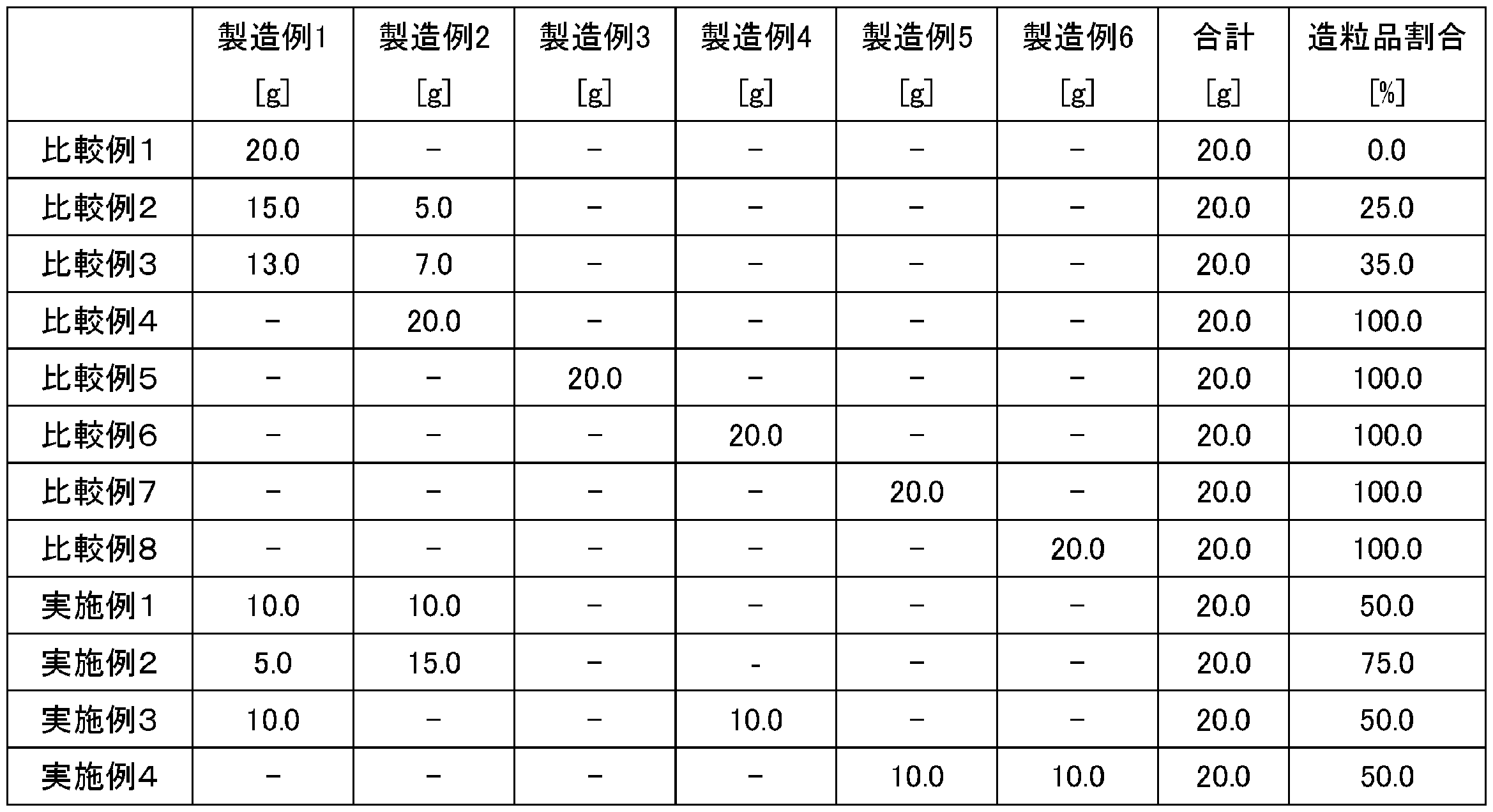
<2.07kPa荷重下での生理食塩水吸水量(AUL)の測定>
吸水性樹脂粒子及び粒子状吸水性樹脂組成物の荷重下の生理食塩水の吸水量(室温、25℃±2℃)を、図4に示す測定装置Yを用いて測定した。測定は、温度25℃±2℃、湿度50%±10%の環境下で行った。測定装置Yは、ビュレット部61、導管62、測定台63、及び、測定台63上に置かれた測定部64から構成される。ビュレット部61は、鉛直方向に伸びるビュレット61aと、ビュレット61aの上端に配置されたゴム栓61bと、ビュレット61aの下端に配置されたコック61cと、コック61cの近傍において一端がビュレット61a内に伸びる空気導入管61dと、空気導入管61dの他端側に配置されたコック61eとを有している。導管62は、ビュレット部61と測定台63との間に取り付けられている。導管62の内径は6mmである。測定台63の中央部には、直径2mmの穴があいており、導管62が連結されている。測定部64は、円筒64a(アクリル樹脂製)と、円筒64aの底部に接着されたナイロンメッシュ64bと、重り64cとを有している。円筒64aの内径は20mmである。ナイロンメッシュ64bの目開きは75μm(200メッシュ)である。そして、測定時にはナイロンメッシュ64b上に測定対象粒子65が均一に撒布される。重り64cの直径は19mmであり、重り64cの質量は59.8gである。重り64cは、測定対象粒子65上に置かれ、測定対象粒子65に対して2.07kPaの荷重を加えることができる。
吸水性樹脂粒子及び粒子状吸水性樹脂組成物の荷重下の生理食塩水の吸水量(室温、25℃±2℃)を、図4に示す測定装置Yを用いて測定した。測定は、温度25℃±2℃、湿度50%±10%の環境下で行った。測定装置Yは、ビュレット部61、導管62、測定台63、及び、測定台63上に置かれた測定部64から構成される。ビュレット部61は、鉛直方向に伸びるビュレット61aと、ビュレット61aの上端に配置されたゴム栓61bと、ビュレット61aの下端に配置されたコック61cと、コック61cの近傍において一端がビュレット61a内に伸びる空気導入管61dと、空気導入管61dの他端側に配置されたコック61eとを有している。導管62は、ビュレット部61と測定台63との間に取り付けられている。導管62の内径は6mmである。測定台63の中央部には、直径2mmの穴があいており、導管62が連結されている。測定部64は、円筒64a(アクリル樹脂製)と、円筒64aの底部に接着されたナイロンメッシュ64bと、重り64cとを有している。円筒64aの内径は20mmである。ナイロンメッシュ64bの目開きは75μm(200メッシュ)である。そして、測定時にはナイロンメッシュ64b上に測定対象粒子65が均一に撒布される。重り64cの直径は19mmであり、重り64cの質量は59.8gである。重り64cは、測定対象粒子65上に置かれ、測定対象粒子65に対して2.07kPaの荷重を加えることができる。
測定装置Yの円筒64aの中に0.100gの測定対象粒子65を入れた後、重り64cを載せて測定を開始した。測定対象粒子65が吸水した生理食塩水と同容積の空気が、空気導入管より、速やかにかつスムーズにビュレット61aの内部に供給されるため、ビュレット61aの内部の生理食塩水の水位の減量が、測定対象粒子65が吸水した生理食塩水量となる。ビュレット61aの目盛は、上から下方向に0mLから0.5mL刻みで刻印されている。生理食塩水の水位として、吸水開始前のビュレット61aの目盛りVaと、吸水開始から3分後及び15分後のビュレット61aの目盛りVbとをそれぞれ読み取り、下記式より荷重下吸水量の3分値及び15分値を算出した。結果を表3に示す。
荷重下の吸水量[mL/g]=(Vb-Va)/0.1
荷重下の吸水量[mL/g]=(Vb-Va)/0.1
また、以下の式により荷重下吸水量の15分値に対する3分値の割合を算出した。結果を表3に示す。
15分値に対する3分値の割合(%)=(荷重下生理食塩水吸水量の3分値/荷重下生理食塩水吸水量の15分値)×100
15分値に対する3分値の割合(%)=(荷重下生理食塩水吸水量の3分値/荷重下生理食塩水吸水量の15分値)×100
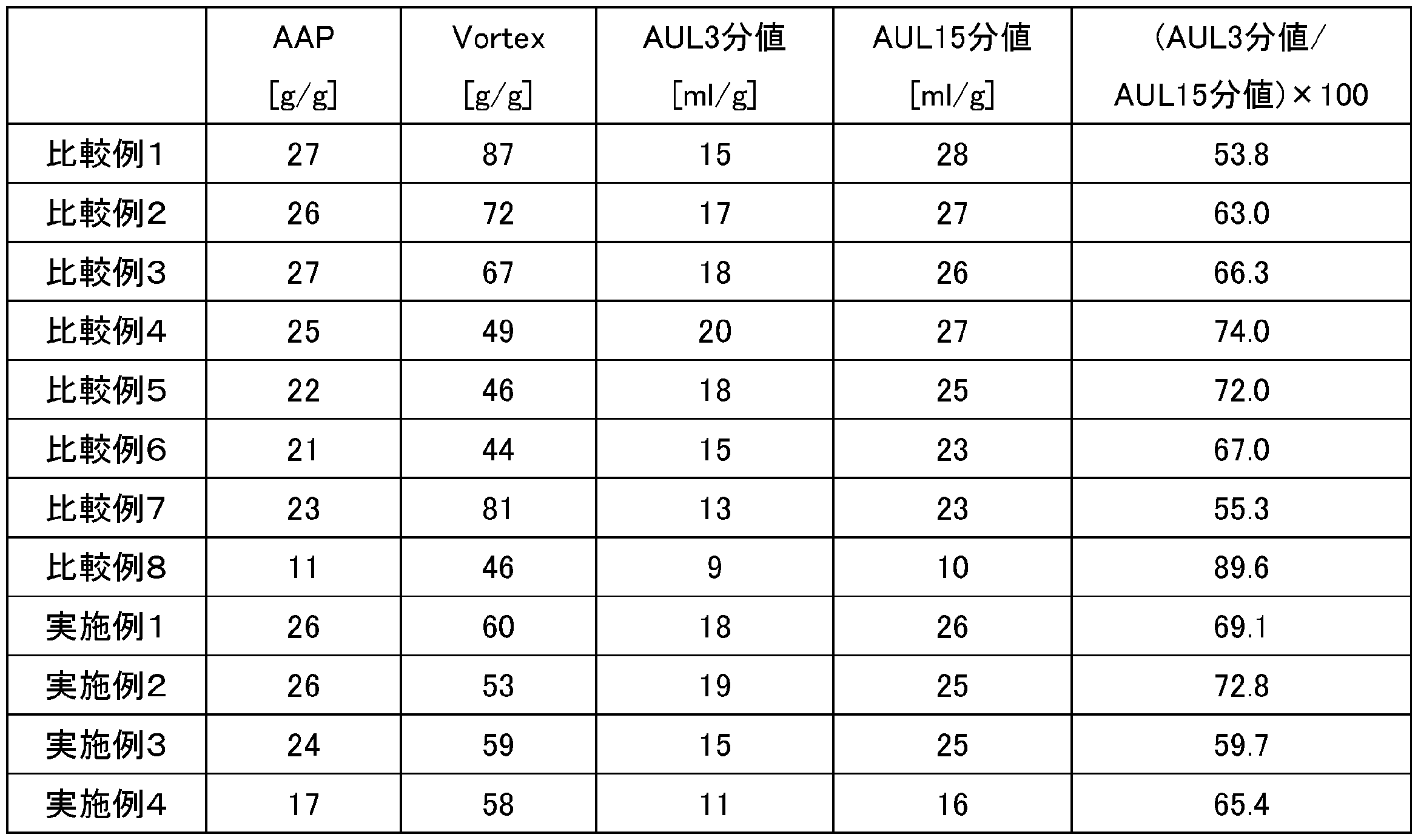
<短時間加圧下吸収時間の評価>
気流型混合装置(有限会社オーテック社製、パッドフォーマー)を用いて、実施例又は比較例の粒子状吸水性樹脂組成物8g及び粉砕パルプ8gを空気抄造によって均一混合することにより、40cm×12cmの大きさのシート状の吸収体を作製した。次に、シート状の吸収体と同じ大きさを有する坪量16g/m2の2枚のティッシュッペーパーで吸収体の上下を挟んだ状態で全体に141kPaの荷重を30秒間加えてプレスすることにより積層体を得た。さらに、吸収体と同じ大きさを有する坪量22g/m2のポリエチレン-ポリプロピレン製のエアスルー型多孔質液体透過性シートを積層体の上面に配置し、両端をカットして30cm×10cmの大きさにすることにより吸収性物品を作製した。
気流型混合装置(有限会社オーテック社製、パッドフォーマー)を用いて、実施例又は比較例の粒子状吸水性樹脂組成物8g及び粉砕パルプ8gを空気抄造によって均一混合することにより、40cm×12cmの大きさのシート状の吸収体を作製した。次に、シート状の吸収体と同じ大きさを有する坪量16g/m2の2枚のティッシュッペーパーで吸収体の上下を挟んだ状態で全体に141kPaの荷重を30秒間加えてプレスすることにより積層体を得た。さらに、吸収体と同じ大きさを有する坪量22g/m2のポリエチレン-ポリプロピレン製のエアスルー型多孔質液体透過性シートを積層体の上面に配置し、両端をカットして30cm×10cmの大きさにすることにより吸収性物品を作製した。
短時間加圧下吸収時間は、図5に概略を示す方法で測定した。温度25±2℃、湿度50%±10%の室内において、水平の台の上に吸収性物品を配置した。次に、該吸収性物品の主面の中心部に、シリンダー71、アクリル板75を備える測定治具を置いた。シリンダー71は、内径4cmかつ外径5cmであり、高さが18cmである。シリンダー71は、底面に、目開き2mmのメッシュ73を有する。アクリル板75は、30cm×10cmの大きさであり、中央に径5cmの穴を有する。アクリル板75の該穴には、シリンダー71が設置されている。続いて、測定治具の両端に、それぞれ10cm×10cm、重さ2492.25gの重り77を2つ載せることで、30cm×10cmの吸収性物品全体に2.07kPa(0.3psi)の荷重をかけた。
少量の青色1号で着色して25±1℃に調整した30mLの生理食塩水をシリンダー71内に一度に投入した。ストップウォッチを用いて、投入から生理食塩水がシリンダー71内から完全に消失するまでの時間を測定し、当該時間を吸収時間(単位:秒)として得た。この操作を3分間隔で更に2回(計3回)行い、吸収時間の合計値を短時間加圧下吸収時間(単位:秒)として得た。短時間吸収時間は短い方が好ましい。結果を表4に示す。
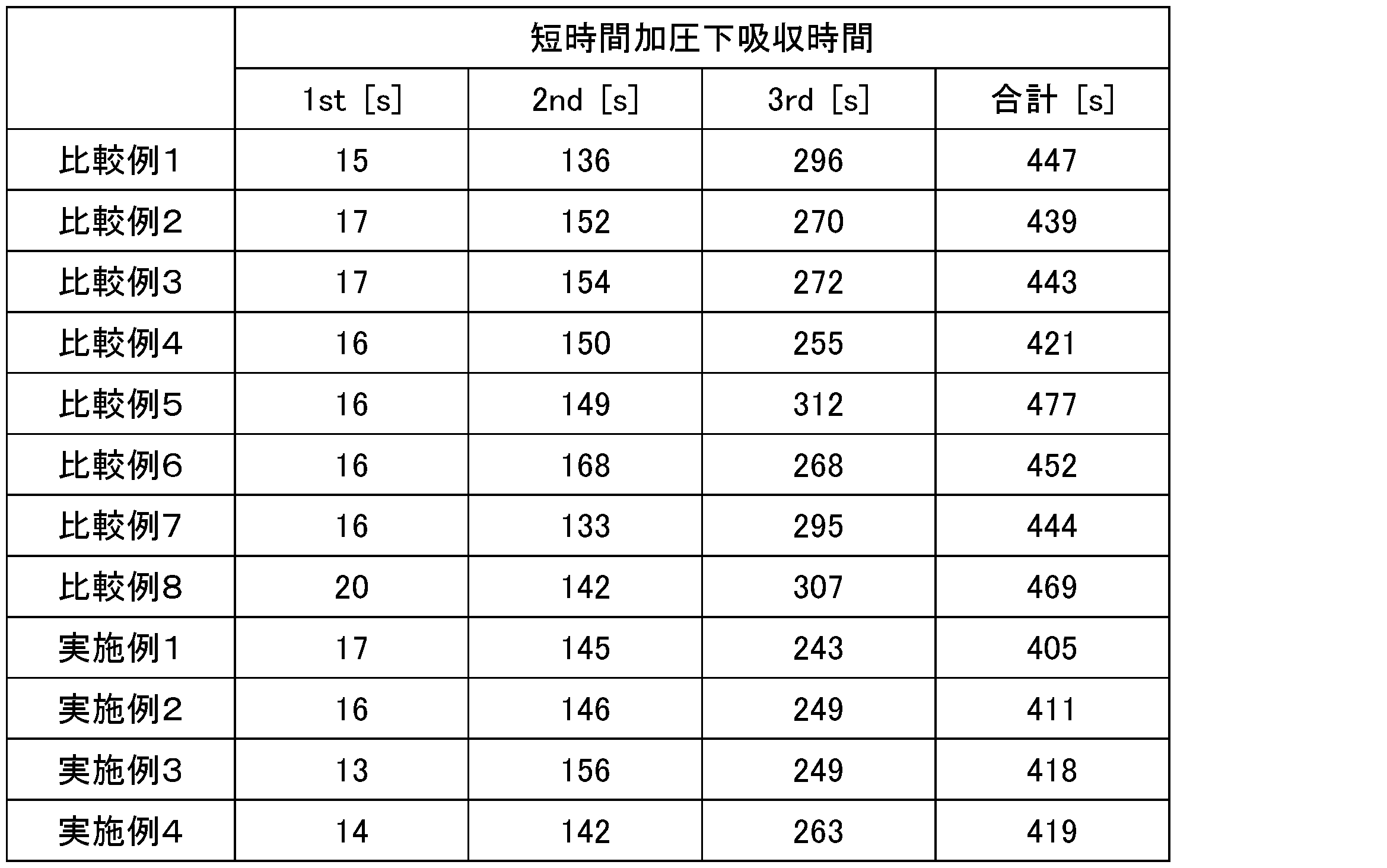
実施例で得られた粒子状吸水性樹脂組成物を用いた吸収性物品は、加圧下での吸収時間が短く、高い吸収性能を有することが示された。
10…吸収体、10a…粒子状吸水性樹脂組成物、10b…繊維層、20a,20b…コアラップ、30…液体透過性トップシート、40…液体不透過性バックシート、61…ビュレット部、61a…ビュレット、61b…ゴム栓、61c…コック、61d…空気導入管、61e…コック、62…導管、63…測定台、64…測定部、64a…円筒、64b…ナイロンメッシュ、64c…重り、65…測定対象粒子、71…シリンダー、73…メッシュ、75…アクリル板、77,112…重り、100…吸収性物品、110…測定装置、112a…円板部、112b…棒状部、112c…円柱部、114…円筒、116…金網、120…測定対象粒子、130…ステンレスシャーレ、140…ガラスフィルター、150…ろ紙、200…撹拌翼、200a…軸、200b…平板部、S…スリット。
Claims (4)
- エチレン性不飽和単量体を含む単量体を重合して含水ゲル状重合体を得ることと、
前記含水ゲル状重合体を粒子化して粒子径180μm未満の微粉を含む粒子群を得ることと、
前記粒子群を造粒して造粒粒子を含む造粒粒子群を得ることと、
前記造粒粒子群を再度粒子化して重合体粒子を得ることと、を含む方法によって、造粒工程を経て得られる重合体粒子を含む吸水性樹脂粒子を得ること、及び
前記造粒工程を得て得られる重合体粒子を含む吸水性樹脂粒子と、造粒工程を経ずに得られる重合体粒子を含む吸水性樹脂粒子とを混合することにより、粒子状吸水性樹脂組成物を得ることを含み、
再粒子化前の前記造粒粒子群のうち、目開き850μmのJIS標準篩を通過しない造粒粒子の存在率が70質量%以上であり、
前記造粒工程を経て得られる吸水性樹脂粒子の混合割合が、粒子状吸水性樹脂組成物の全量に対して40~80質量%である、粒子状吸水性樹脂組成物の製造方法。 - 再粒子化前の前記造粒粒子群のうち、目開き31.5mmのJIS標準篩を通過しない造粒粒子の存在率が5質量%以上である、請求項1に記載の方法。
- 請求項1又は2に記載の方法により粒子状吸水性樹脂組成物を得ることと、
前記粒子状吸水性樹脂組成物を含む吸収体を得ることと、を含む、吸収体の製造方法。 - 請求項3に記載の方法により、吸収体を得ることと、
前記吸収体を液体不透過性シート及び液体透過性シートの間に配置することと、を含む、吸収性物品の製造方法。
Priority Applications (1)
| Application Number | Priority Date | Filing Date | Title |
|---|---|---|---|
| JP2022508411A JPWO2021187526A1 (ja) | 2020-03-18 | 2021-03-17 |
Applications Claiming Priority (2)
| Application Number | Priority Date | Filing Date | Title |
|---|---|---|---|
| JP2020047376 | 2020-03-18 | ||
| JP2020-047376 | 2020-03-18 |
Publications (1)
| Publication Number | Publication Date |
|---|---|
| WO2021187526A1 true WO2021187526A1 (ja) | 2021-09-23 |
Family
ID=77772100
Family Applications (1)
| Application Number | Title | Priority Date | Filing Date |
|---|---|---|---|
| PCT/JP2021/010818 Ceased WO2021187526A1 (ja) | 2020-03-18 | 2021-03-17 | 粒子状吸水性樹脂組成物、吸収体及び吸収性物品の製造方法 |
Country Status (2)
| Country | Link |
|---|---|
| JP (1) | JPWO2021187526A1 (ja) |
| WO (1) | WO2021187526A1 (ja) |
Cited By (1)
| Publication number | Priority date | Publication date | Assignee | Title |
|---|---|---|---|---|
| WO2023153402A1 (ja) * | 2022-02-14 | 2023-08-17 | ユニ・チャーム株式会社 | 吸収性シート、及び、吸収性シートの製造方法 |
Citations (6)
| Publication number | Priority date | Publication date | Assignee | Title |
|---|---|---|---|---|
| WO1996013542A1 (en) * | 1994-10-26 | 1996-05-09 | Nippon Shokubai Co., Ltd. | Water absorptive resin composition and method of manufacturing the same |
| JPH11106514A (ja) * | 1997-06-18 | 1999-04-20 | Nippon Shokubai Co Ltd | 吸水性樹脂造粒物の製造方法 |
| JPH11140194A (ja) * | 1997-06-23 | 1999-05-25 | Nippon Shokubai Co Ltd | 吸水性樹脂組成物およびその製造方法 |
| JP2005015787A (ja) * | 2003-06-03 | 2005-01-20 | Nippon Shokubai Co Ltd | 吸水材の製造方法 |
| JP2013034942A (ja) * | 2011-08-08 | 2013-02-21 | Nippon Shokubai Co Ltd | 粒子状吸水剤の製造方法 |
| JP2016529368A (ja) * | 2013-08-27 | 2016-09-23 | エルジー・ケム・リミテッド | 高吸水性樹脂の製造方法 |
-
2021
- 2021-03-17 JP JP2022508411A patent/JPWO2021187526A1/ja active Pending
- 2021-03-17 WO PCT/JP2021/010818 patent/WO2021187526A1/ja not_active Ceased
Patent Citations (6)
| Publication number | Priority date | Publication date | Assignee | Title |
|---|---|---|---|---|
| WO1996013542A1 (en) * | 1994-10-26 | 1996-05-09 | Nippon Shokubai Co., Ltd. | Water absorptive resin composition and method of manufacturing the same |
| JPH11106514A (ja) * | 1997-06-18 | 1999-04-20 | Nippon Shokubai Co Ltd | 吸水性樹脂造粒物の製造方法 |
| JPH11140194A (ja) * | 1997-06-23 | 1999-05-25 | Nippon Shokubai Co Ltd | 吸水性樹脂組成物およびその製造方法 |
| JP2005015787A (ja) * | 2003-06-03 | 2005-01-20 | Nippon Shokubai Co Ltd | 吸水材の製造方法 |
| JP2013034942A (ja) * | 2011-08-08 | 2013-02-21 | Nippon Shokubai Co Ltd | 粒子状吸水剤の製造方法 |
| JP2016529368A (ja) * | 2013-08-27 | 2016-09-23 | エルジー・ケム・リミテッド | 高吸水性樹脂の製造方法 |
Cited By (2)
| Publication number | Priority date | Publication date | Assignee | Title |
|---|---|---|---|---|
| WO2023153402A1 (ja) * | 2022-02-14 | 2023-08-17 | ユニ・チャーム株式会社 | 吸収性シート、及び、吸収性シートの製造方法 |
| JP2023117774A (ja) * | 2022-02-14 | 2023-08-24 | ユニ・チャーム株式会社 | 吸収性シート、及び、吸収性シートの製造方法 |
Also Published As
| Publication number | Publication date |
|---|---|
| JPWO2021187526A1 (ja) | 2021-09-23 |
Similar Documents
| Publication | Publication Date | Title |
|---|---|---|
| JP4261853B2 (ja) | 吸水性樹脂、吸水性樹脂粒子、およびその製造方法 | |
| JP7588579B2 (ja) | 吸水性樹脂粒子、吸収体、吸収性物品、吸水性樹脂粒子の通液維持率の測定方法、及び吸水性樹脂粒子の製造方法 | |
| JP7561117B2 (ja) | 吸水性樹脂粒子 | |
| JP6828222B1 (ja) | 吸水性樹脂粒子、吸収性物品、吸水性樹脂粒子を製造する方法、及び吸収体の加圧下での吸収量を高める方法 | |
| JP7811844B2 (ja) | 吸水性樹脂粒子、吸収性物品、吸水性樹脂粒子を製造する方法、及び吸収体への生理食塩水の浸透速度を速める方法 | |
| JP2021104344A (ja) | 吸水性樹脂粒子 | |
| US12515191B2 (en) | Particulate water-absorbent resin composition | |
| EP3936540A1 (en) | Water absorbing resin particles and method for producing same, absorbent body, and absorbent article | |
| WO2020122219A1 (ja) | 吸水性樹脂粒子、吸収体、吸収性物品、及び液吸引力測定方法 | |
| WO2020122202A1 (ja) | 吸収性物品 | |
| US12246303B2 (en) | Water-absorbing resin particles and absorbent article | |
| EP3936530A1 (en) | Absorbent body, absorbent article and method for adjusting permeation speed | |
| US12533658B2 (en) | Water-absorbent resin particles | |
| JP7554748B2 (ja) | 架橋重合体ゲル及びその製造方法、単量体組成物、並びに、架橋重合体粒子の製造方法 | |
| JP7470496B2 (ja) | 粒子状吸水性樹脂組成物 | |
| EP3936537A1 (en) | Water-absorbing resin particles and method for producing same | |
| EP3896117A1 (en) | Water-absorbing resin particles, method for evaluating water-absorbing resin particles for liquid leakage, method for producing water-absorbing resin particles, and absorbent article | |
| JP7448553B2 (ja) | 架橋重合体粒子の製造方法、吸水性樹脂粒子の製造方法、及び、荷重下吸水量の向上方法 | |
| WO2021187525A1 (ja) | 吸水性樹脂粒子、吸収体及び吸収性物品の製造方法 | |
| WO2021006149A1 (ja) | 架橋重合体粒子の製造方法、及び、架橋重合体ゲル | |
| JP7470494B2 (ja) | 吸水性樹脂粒子 | |
| JP6775050B2 (ja) | 吸収性物品 | |
| WO2021049465A1 (ja) | 荷重下吸水量の向上方法、架橋重合体粒子の製造方法、及び、吸水性樹脂粒子の製造方法 | |
| WO2022071503A1 (ja) | 架橋重合体粒子を製造する方法 | |
| WO2021187501A1 (ja) | 吸水シート及び吸収性物品 |
Legal Events
| Date | Code | Title | Description |
|---|---|---|---|
| 121 | Ep: the epo has been informed by wipo that ep was designated in this application |
Ref document number: 21771076 Country of ref document: EP Kind code of ref document: A1 |
|
| ENP | Entry into the national phase |
Ref document number: 2022508411 Country of ref document: JP Kind code of ref document: A |
|
| NENP | Non-entry into the national phase |
Ref country code: DE |
|
| 122 | Ep: pct application non-entry in european phase |
Ref document number: 21771076 Country of ref document: EP Kind code of ref document: A1 |