WO2021167028A1 - カルキ臭を低減するためのミネラル含有組成物 - Google Patents
カルキ臭を低減するためのミネラル含有組成物 Download PDFInfo
- Publication number
- WO2021167028A1 WO2021167028A1 PCT/JP2021/006221 JP2021006221W WO2021167028A1 WO 2021167028 A1 WO2021167028 A1 WO 2021167028A1 JP 2021006221 W JP2021006221 W JP 2021006221W WO 2021167028 A1 WO2021167028 A1 WO 2021167028A1
- Authority
- WO
- WIPO (PCT)
- Prior art keywords
- mineral
- water
- containing composition
- less
- minutes
- Prior art date
- Legal status (The legal status is an assumption and is not a legal conclusion. Google has not performed a legal analysis and makes no representation as to the accuracy of the status listed.)
- Ceased
Links
Images

Classifications
-
- A—HUMAN NECESSITIES
- A23—FOODS OR FOODSTUFFS; TREATMENT THEREOF, NOT COVERED BY OTHER CLASSES
- A23L—FOODS, FOODSTUFFS OR NON-ALCOHOLIC BEVERAGES, NOT OTHERWISE PROVIDED FOR; PREPARATION OR TREATMENT THEREOF
- A23L33/00—Modifying nutritive qualities of foods; Dietetic products; Preparation or treatment thereof
- A23L33/10—Modifying nutritive qualities of foods; Dietetic products; Preparation or treatment thereof using additives
- A23L33/16—Inorganic salts, minerals or trace elements
-
- C—CHEMISTRY; METALLURGY
- C02—TREATMENT OF WATER, WASTE WATER, SEWAGE, OR SLUDGE
- C02F—TREATMENT OF WATER, WASTE WATER, SEWAGE, OR SLUDGE
- C02F1/00—Treatment of water, waste water, or sewage
- C02F1/68—Treatment of water, waste water, or sewage by addition of specified substances, e.g. trace elements, for ameliorating potable water
-
- A—HUMAN NECESSITIES
- A23—FOODS OR FOODSTUFFS; TREATMENT THEREOF, NOT COVERED BY OTHER CLASSES
- A23L—FOODS, FOODSTUFFS OR NON-ALCOHOLIC BEVERAGES, NOT OTHERWISE PROVIDED FOR; PREPARATION OR TREATMENT THEREOF
- A23L2/00—Non-alcoholic beverages; Dry compositions or concentrates therefor; Preparation or treatment thereof
- A23L2/52—Adding ingredients
- A23L2/56—Flavouring or bittering agents
-
- A—HUMAN NECESSITIES
- A23—FOODS OR FOODSTUFFS; TREATMENT THEREOF, NOT COVERED BY OTHER CLASSES
- A23L—FOODS, FOODSTUFFS OR NON-ALCOHOLIC BEVERAGES, NOT OTHERWISE PROVIDED FOR; PREPARATION OR TREATMENT THEREOF
- A23L27/00—Spices; Flavouring agents or condiments; Artificial sweetening agents; Table salts; Dietetic salt substitutes; Preparation or treatment thereof
- A23L27/84—Flavour masking or reducing agents
-
- A—HUMAN NECESSITIES
- A23—FOODS OR FOODSTUFFS; TREATMENT THEREOF, NOT COVERED BY OTHER CLASSES
- A23L—FOODS, FOODSTUFFS OR NON-ALCOHOLIC BEVERAGES, NOT OTHERWISE PROVIDED FOR; PREPARATION OR TREATMENT THEREOF
- A23L33/00—Modifying nutritive qualities of foods; Dietetic products; Preparation or treatment thereof
- A23L33/10—Modifying nutritive qualities of foods; Dietetic products; Preparation or treatment thereof using additives
- A23L33/105—Plant extracts, their artificial duplicates or their derivatives
-
- C—CHEMISTRY; METALLURGY
- C02—TREATMENT OF WATER, WASTE WATER, SEWAGE, OR SLUDGE
- C02F—TREATMENT OF WATER, WASTE WATER, SEWAGE, OR SLUDGE
- C02F5/00—Softening water; Preventing scale; Adding scale preventatives or scale removers to water, e.g. adding sequestering agents
- C02F5/08—Treatment of water with complexing chemicals or other solubilising agents for softening, scale prevention or scale removal, e.g. adding sequestering agents
- C02F5/083—Mineral agents
-
- C—CHEMISTRY; METALLURGY
- C02—TREATMENT OF WATER, WASTE WATER, SEWAGE, OR SLUDGE
- C02F—TREATMENT OF WATER, WASTE WATER, SEWAGE, OR SLUDGE
- C02F1/00—Treatment of water, waste water, or sewage
- C02F1/66—Treatment of water, waste water, or sewage by neutralisation; pH adjustment
-
- C—CHEMISTRY; METALLURGY
- C02—TREATMENT OF WATER, WASTE WATER, SEWAGE, OR SLUDGE
- C02F—TREATMENT OF WATER, WASTE WATER, SEWAGE, OR SLUDGE
- C02F2103/00—Nature of the water, waste water, sewage or sludge to be treated
- C02F2103/02—Non-contaminated water, e.g. for industrial water supply
-
- C—CHEMISTRY; METALLURGY
- C02—TREATMENT OF WATER, WASTE WATER, SEWAGE, OR SLUDGE
- C02F—TREATMENT OF WATER, WASTE WATER, SEWAGE, OR SLUDGE
- C02F2303/00—Specific treatment goals
- C02F2303/02—Odour removal or prevention of malodour
Definitions
- the present invention relates to a mineral-containing composition capable of reducing the chlorine odor by adding it to water. Furthermore, the present invention relates to water in which the odor of chlorine is reduced by a mineral-containing composition having such a function, and a method for producing the same.
- Patent Document 1 discloses that drinking water containing a high concentration of magnesium is produced by mixing a concentrated solution having a high magnesium content with purified water.
- Patent Document 2 discloses that a beverage is produced by adding a mineral component composed of magnesium and calcium to water derived from deep sea water.
- divalent metal ions bring about unpleasant tastes such as bitterness and harshness, and water, foods or beverages containing a high concentration of these minerals have a drawback that they are difficult to ingest.
- Patent Document 3 discloses a method for producing mineral water, which comprises immersing a natural ore such as barley stone, Tenju stone, or tourmaline in water to elute a mineral component.
- a natural ore such as barley stone, Tenju stone, or tourmaline
- Patent Document 4 discloses a method for producing mineral water by heat-extracting chicken manure with water, but chicken manure is not suitable as a raw material for food use.
- Patent Document 5 discloses a method for producing mineral water by boiling and extracting bamboo charcoal
- Patent Document 6 discloses a method for producing alkaline water by boiling and extracting charcoal.
- the methods disclosed in these prior arts have failed to efficiently extract mineral components to obtain mineral water containing only the desired mineral components. So far, there is no known mineral-containing composition capable of reducing the chlorine odor of water and improving the flavor by adding it to water.
- An object of the present invention is to provide water having a reduced scaly odor and an improved flavor.
- the present inventors have recently found activated carbon, which is a plant-derived raw material such as coconut shell activated carbon, as a natural material capable of elution of minerals using pure water, and as a result of diligent examination of its extraction conditions, it is extremely important for humans.
- activated carbon which is a plant-derived raw material such as coconut shell activated carbon
- the present inventors not only contain abundant potassium as a mineral component, but also the mineral extract and the mineral concentrate obtained by concentrating the mineral extract are divalent, which bring about unpleasant tastes such as bitterness and harshness. It was found that the contents of metal ions and chloride ions were significantly low.
- the present inventors have found that the mineral-containing composition having such a composition has a pH of weakly alkaline to weakly acidic with respect to the added water.
- the gist of the present invention lies in the following.
- a mineral-containing composition for reducing the odor of karuki which comprises the highest concentration of potassium ions among the metal ions present in the mineral-containing composition.
- Containing composition [2] The above-mentioned 1, wherein the mineral-containing composition further contains chloride ion, calcium ion, magnesium ion, sodium ion, iron ion, zinc ion, silicon ion, and / or sulfate ion.
- Mineral-containing composition [3] The mineral-containing composition according to 1 or 2, wherein the content of chloride ions in the mineral-containing composition is 50% or less of the potassium ion concentration.
- the mineral-containing composition according to any one of 1 to 3 wherein the content of calcium ions in the mineral-containing composition is 2.0% or less of the potassium ion concentration.
- the mineral-containing composition according to any one of 1 to 4 wherein the content of magnesium ions in the mineral-containing composition is 1.0% or less of the potassium ion concentration.
- the mineral-containing composition according to any one of 1 to 5 wherein the content of sodium in the mineral-containing composition is 5 to 45% of the potassium ion concentration.
- the plant-derived raw material is coco palm, palm palm, almond, walnut or plum fruit shell; wood selected from sawdust, charcoal, resin or lignin; nest ash; bamboo wood; bagasse, rice husk, coffee beans or molasses. 7.
- the mineral-containing composition according to any one of 1 to 8 which comprises at least one component selected from cyclodextrin, finely ground activated carbon, sodium L-ascorbic acid, and sodium erythorbate.
- a method for producing water having reduced chlorine odor which comprises a step of adding the mineral-containing composition according to any one of 1 to 9 to water for which chlorine odor should be reduced.
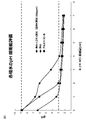
- FIG. 1 shows the buffering capacity of a water composition to which a mineral concentrated extract from each concentration of coconut shell activated carbon was added and a control (KOH and commercially available alkaline ionized water).
- FIG. 2 shows the buffering capacity of a water composition containing a mineral concentrated extract derived from coconut shell activated carbon prepared so that the final potassium concentration is 100 ppm, and a control (purified water and commercially available alkaline ionized water).
- the present invention is a mineral-containing composition for reducing the odor of karuki, and is characterized in that potassium ions are contained in the highest concentration among the metal ions present in the mineral-containing composition. Concerning mineral-containing compositions.
- ammoniacal nitrogen contained in raw tap water reacts with residual chlorine such as hypochlorous acid molecule (HCLO) to form inorganic chloramines (monochloramine, dichloramine, trichloramine), which have a chlorine odor. It is the main cause of spoiling the flavor of water.
- HCLO hypochlorous acid molecule
- the present inventors have now provided the added water with a significant buffering ability in the pH range from weakly alkaline to weakly acidic, and reduced the odor of karuki. I got a surprising finding that it improves the flavor.
- pH7.5 above HClO in water CLOs - for ionizing, in a mineral-containing composition becomes to weak alkaline adding water of the present invention, since the formation of inorganic chloramines is unlikely to occur, generation of chlorine smell Is considered to be reduced. No such surprising finding has been known so far.
- Potassium is one of the minerals necessary for the living body, and most of it is present in the intracellular body, and it maintains the osmotic pressure of the cell while interacting with sodium which is abundant in the extracellular fluid. It plays an important role in retaining water in cells. Potassium, along with sodium, maintains the osmotic pressure of cells, maintains acid-base balance, transmits nerve stimulation, regulates heart function and muscle function, and regulates intracellular enzyme reactions. There is. In addition, potassium is known to have an effect of lowering blood pressure because it suppresses the reabsorption of sodium in the kidney and promotes excretion into urine. Thus, potassium is a very important mineral component for humans, but excess potassium ions bring about unpleasant tastes such as bitterness and harshness.
- the potassium concentration added to water is, for example, 50 to 100 ppm, 50 to 95 ppm, 50 to 90 ppm, 50 to 50.
- the mineral-containing composition of the present invention may further contain chloride ion, calcium ion, magnesium ion, sodium ion, iron ion, zinc ion, silicon ion, and / or sulfate ion in addition to potassium ion.
- Naturally occurring water contains a certain amount of chloride ions, most of which are derived from geology and seawater.
- the chloride ion When the chloride ion is present in an amount of 250 to 400 mg / l or more, it may give a salty taste to a person who is sensitive to taste and impair the taste. Therefore, the content of chloride ion in the mineral-containing composition of the present invention is determined. It is preferable to have as few as possible.
- the content of chloride ions in the mineral-containing composition of the present invention is, for example, 50% or less, 49% or less, 48% or less, 47% or less, 46% or less, 45% or less, 44% of the potassium ion concentration.
- Calcium is known to form a skeleton as hydroxyapatite together with phosphorus in the living body and to be involved in muscle contraction.
- Magnesium is known to be involved in the formation of bones and teeth, as well as many in-vivo enzymatic reactions and energy production in vivo.
- the content of calcium ions and magnesium ions in water affects the taste of water, and the index (hardness) of the total content of calcium and magnesium among the minerals contained in water is at a certain level. When it is less, it is called soft water, and when it is more, it is called hard water. In general, most mineral water produced in Japan is soft water, and most mineral water produced in Europe is hard water.
- the content of calcium ions in the mineral-containing composition of the present invention is, for example, 2.0% or less of the potassium ion concentration, 1.9% or less, 1.8% or less, 1.7% or less, 1.6. % Or less, 1.5% or less, 1.4% or less, 1.3% or less, 1.2% or less, 1.1% or less, 1.0% or less, 0.9% or less, 0.8% or less , 0.7% or less, 0.6% or less, 0.5% or less, 0.4% or less, 0.3% or less, 0.2% or less, 0.1% or less, 0.09% or less, 0 .08% or less, 0.07% or less, 0.06% or less, 0.05% or less, 0.04% or less, 0.03% or less, 0.02% or less, or 0.01% or less. good.
- the magnesium ion content in the mineral-containing composition of the present invention is, for example, 1.0% or less, 0.9% or less, 0.8% or less, 0.7% or less, 0 of the potassium ion concentration. 6.6% or less, 0.5% or less, 0.4% or less, 0.3% or less, 0.2% or less, 0.1% or less, 0.09% or less, 0.08% or less, 0.07 % Or less, 0.06% or less, 0.05% or less, 0.04% or less, 0.03% or less, 0.02% or less, or 0.01% or less.
- the content of sodium in the mineral-containing composition is, for example, 5 to 45%, 5 to 40%, 5 to 35%, 5 to 30%, 5 to 25%, 5 to 20% of the potassium ion concentration.
- the mineral-containing composition of the present invention can be produced from an activated carbon extract of a plant-derived raw material.
- Activated carbon is a porous substance consisting of oxygen, hydrogen, calcium, etc. in addition to most carbon, and has a large surface area per volume, so it has the property of adsorbing many substances. Everywhere, it is widely produced industrially.
- activated carbon is produced by forming micropores on the order of nm inside a carbon material as a raw material (activation).
- Activated carbon is produced by a gas activation method in which the raw material is carbonized and then activated at a high temperature using an activating gas such as steam or carbon dioxide, and an inert gas after adding chemicals such as zinc chloride and phosphoric acid to the raw material.
- Non-Patent Document 1 a chemical activation method in which carbonization and activation are performed at the same time by heating in an atmosphere.
- the activated carbon used in the present invention can be produced by either the above gas activation method or the chemical activation method using a plant-derived raw material as a carbon material.
- the raw material of the activated charcoal used in the present invention is not particularly limited as long as it is a plant-derived raw material, and for example, fruit shell (coco palm, palm palm, almond, walnut, plum), wood (sawdust, charcoal, resin, lignin), nest ash. (Charcoal of sawdust), bamboo, food residue (bagasse, rice husks, coffee beans, waste sugar honey), waste (pulp factory effluent, construction waste), etc., typically coconut husks, sawdust, bamboo, Alternatively, it is selected from a combination thereof, preferably coconut shell. Palm husk means a shell called a shell in the coconut or palm coconut.
- the shape of the activated carbon used in the present invention is not particularly limited, and examples thereof include powdered activated carbon, granular activated carbon (crushed carbon, granular charcoal, molded carbon), fibrous activated carbon, and special molded activated carbon.
- the step of extracting minerals from the activated carbon of the plant-derived raw material using an aqueous solvent is achieved by bringing the activated carbon of the plant-derived raw material into contact with the aqueous solvent to elute the minerals present in the activated carbon of the plant-derived raw material.
- a step is not particularly limited as long as the minerals present in the activated carbon of the plant-derived raw material can be eluted.
- the activated carbon of the plant-derived raw material is immersed in an aqueous solvent, or the activated carbon of the plant-derived raw material is filled. This can be done by passing an aqueous solvent through the column.
- the aqueous solvent may be stirred in order to increase the extraction efficiency.
- the method for producing the mineral extract of the present invention includes a step of extracting minerals from activated charcoal, which is a plant-derived raw material, using an aqueous solvent, and then centrifuging the obtained extract in order to remove impurities. / Or may further include a step of filtering and the like.
- the aqueous solvent used in the process of extracting minerals from activated carbon, which is a plant-derived raw material, using an aqueous solvent basically refers to something other than an HCl solution. It is typically an aqueous solvent, particularly preferably pure water. Pure water means highly pure water that contains or hardly contains impurities such as salts, residual chlorine, insoluble fine particles, organic substances, and non-electrolytic gas. Pure water includes RO water (water that has passed through a reverse osmosis membrane), deionized water (water from which ions have been removed with an ion exchange resin, etc.), distilled water (water distilled with a distiller, etc.), etc. Is included. Since pure water does not contain mineral components, it does not show the effect of replenishing minerals.
- the extraction temperature is not particularly limited as long as the mineral can be extracted from the activated carbon of the plant-derived raw material using an aqueous solvent. 15 ° C or higher, 20 ° C or higher, 25 ° C or higher, 30 ° C or higher, 35 ° C or higher, 40 ° C or higher, 45 ° C or higher, 50 ° C or higher, 55 ° C or higher, 60 ° C or higher, 65 ° C or higher, 70 ° C or higher, 75 ° C
- the above can be carried out at a temperature of 80 ° C. or higher, 85 ° C. or higher, 90 ° C. or higher, or 95 ° C.
- the extraction time is not particularly limited as long as the mineral can be extracted from the activated carbon of the plant-derived material using the aqueous solvent, but the step of extracting the mineral from the activated carbon of the plant-derived material using the aqueous solvent is 5 minutes or more and 10 minutes or more. 15 minutes or more, 20 minutes or more, 25 minutes or more, 30 minutes or more, 35 minutes or more, 40 minutes or more, 45 minutes or more, 50 minutes or more, 55 minutes or more, 60 minutes or more, 65 minutes or more, 70 minutes or more, 75 minutes.
- the above or 80 minutes or more can be performed, for example, 5 to 80 minutes, 5 to 75 minutes, 5 to 70 minutes, 5 to 65 minutes, 5 to 60 minutes, 5 to 55 minutes, 5 to 50 minutes.
- the extract thus obtained can be concentrated by a method well known in the art, such as boiling concentration, vacuum concentration, freeze concentration, membrane concentration, or ultrasonic atomization. Separation etc. can be mentioned.
- a mineral concentrate composition containing a desired mineral such as high concentration potassium can be obtained with almost no change in its composition.
- the mineral-containing composition of the present invention can also be prepared by adding an alkaline potassium salt to an aqueous solvent, preferably pure water.
- alkaline potassium salt include potassium carbonate, potassium hydrogen carbonate, dipotassium hydrogen phosphate, or a combination thereof.
- an alkaline sodium salt or an alkaline calcium salt may be further added to the mineral-containing composition of the present invention.
- alkaline sodium salt include sodium hydrogen carbonate, sodium carbonate, sodium hydroxide, disodium hydrogen phosphate, trisodium phosphate, or a combination thereof.
- Examples of the alkaline calcium salt include calcium hydroxide.
- the mineral-containing composition of the present invention further contains at least one component selected from cyclodextrin, finely ground activated carbon, sodium L-ascorbic acid, and sodium erythorbate in order to further increase the effect of reducing the odor of karuki. It may be.
- Cyclodextrin can be selected from ⁇ -cyclodextrin, ⁇ -cyclodextrin, ⁇ -cyclodextrin, or a combination thereof, but ⁇ -cyclodextrin is preferable.
- the concentration of cyclodextrin added to water for which the odor of karuki should be reduced is, for example, 0.25 to 1.00 g / L, 0.25 to 0.95 g / L, 0. 25 to 0.90 g / L, 0.25 to 0.85 g / L, 0.25 to 0.80 g / L, 0.25 to 0.75 g / L, 0.25 to 0.70 g / L, 0.
- the finely pulverized activated carbon in the mineral-containing composition of the present invention may be, for example, the above-mentioned activated carbon derived from a plant.
- the concentration of finely pulverized activated carbon added to water for which the odor of karuki should be reduced is typically 0.1 to 15.0 mg / L, preferably 1.0 to 1. 15.0 mg / L, for example, 1.0 to 14.0 mg / L, 1.0 to 13.0 mg / L, 1.0 to 12.0 mg / L, 1.0 to 11.0 mg / L, 1.
- 0 to 10.0 mg / L 1.0 to 9.0 mg / L, 1.0 to 8.0 mg / L, 1.0 to 7.0 mg / L, 1.0 to 6.0 mg / L, 1. 0-5.0 mg / L, 1.0-4.0 mg / L, 1.0-3.0 mg / L, 1.0-2.0 mg / L, 2.0-15.0 mg / L, 2. 0 to 14.0 mg / L, 2.0 to 13.0 mg / L, 2.0 to 12.0 mg / L, 2.0 to 11.0 mg / L, 2.0 to 10.0 mg / L, 2. 0 to 9.0 mg / L, 2.0 to 8.0 mg / L, 2.0 to 7.0 mg / L, 2.0 to 6.0 mg / L, 2.0 to 5.0 mg / L, 2.
- 0 to 4.0 mg / L 2.0 to 3.0 mg / L, 3.0 to 15.0 mg / L, 3.0 to 14.0 mg / L, 3.0 to 13.0 mg / L, 3. 0 to 12.0 mg / L, 3.0 to 11.0 mg / L, 3.0 to 10.0 mg / L, 3.0 to 9.0 mg / L, 3.0 to 8.0 mg / L, 3. 0 to 7.0 mg / L, 3.0 to 6.0 mg / L, 3.0 to 5.0 mg / L, 3.0 to 4.0 mg / L, 4.0 to 15.0 mg / L, 4.
- 0 to 10.0 mg / L 5.0 to 9.0 mg / L, 5.0 to 8.0 mg / L, 5.0 to 7.0 mg / L, 5.0 to 6.0 mg / L, 6. 0 to 15.0 mg / L, 6.0 to 14.0 mg / L, 6.0 to 13.0 mg / L, 6.0 to 12.0 mg / L, 6.0 to 11.0 mg / L, 6. 0 to 10.0 mg / L, 6.0 to 9.0 mg / L, 6.0 to 8.0 mg / L, 6.0 to 7.0 mg / L, 7.0 to 15.0 mg / L, 7.
- the concentration of sodium L-ascorbic acid added to water for which the odor of karuki should be reduced is, for example, 10 to 50 mg / L, 10 to 45 mg / L, 10 to 40 mg / L, 10 ⁇ 30mg / L, 10 ⁇ 35mg / L, 10 ⁇ 30mg / L, 10 ⁇ 25mg / L, 10 ⁇ 20mg / L, 10 ⁇ 15mg / L, 15 ⁇ 50mg / L, 15 ⁇ 45mg / L, 15 ⁇ 40mg / L, 15-30 mg / L, 15-35 mg / L, 15-30 mg / L, 15-25 mg / L, 15-20 mg / L, 20-50 mg / L, 20-45 mg / L, 20-40 mg / L , 20-30 mg / L, 20-35 mg / L, 20-30 mg / L, 20-25 mg / L, 25-50 mg / L, 25-45 mg
- the concentration of sodium erythorbate added to water for which the odor of karuki should be reduced is, for example, 10 to 50 mg / L, 10 to 45 mg / L, 10 to 40 mg / L, and 10 to 30 mg.
- the form of the container for providing the mineral-containing composition of the present invention is not particularly limited, and for example, a metal container (can), a drop type, a spray type, a resin container such as a spoid type or a lotion bottle type, and a paper container ( (Including with cable top), PET bottle, pouch container, glass bottle, airless container, portion container, preservative-free (PF) eye drop container, stick, small pump container, large pump container, portion cup container, bottle with built-in inner bag, Examples include a plastic single-use container and a water-soluble film container.
- the mineral-containing composition of the present invention can produce weakly alkaline water by adding it to water.
- the water to which the mineral-containing composition of the present invention is added is typically 7.5 to 10.5, 7.5 to 10.0, 7.5 to 9.5, 7.5 to 9. 0, 7.5 to 8.5, 7.5 to 8.0, 8.0 to 10.5, 8.0 to 10.0, 8.0 to 9.5, 8.0 to 9.0, 8.0 to 8.5, 8.5 to 10.5, 8.5 to 10.0, 8.5 to 9.5, 8.5 to 9.0, 9.0 to 10.5, 9. It may have a pH of 0 to 10.0, 9.0 to 9.5, 9.5 to 10.5, 9.5 to 10.0, or 10.0 to 10.5, preferably.
- the water to which the mineral-containing composition of the present invention is added has a buffering capacity, and preferably has a significant buffering capacity in a weakly alkaline to weakly acidic pH range.
- a sodium hydroxide solution adjusted to pH 9.2 is titrated with 0.1 M hydrochloric acid, and the amount of liquid required from pH 9.2 to pH 3.0 is defined as (A) mL, and the mineral-containing composition of the present invention is defined.
- the water to which the substance is added is titrated with 0.1 M hydrochloric acid and the ratio (B) / (A) when the amount of liquid required from pH 9.2 to pH 3.0 is (B) mL is used as the buffering capacity.
- the water to which the mineral-containing composition of the present invention is added is, for example, 1.5 or more, 1.6 or more, 1.7 or more, 1.8 or more, 1.9 or more, 2.0 or more, 2.1 or more.
- the water produced in this way contains substantially no organic matter.
- a typical index of the amount of organic matter contained in water is total organic carbon (TOC).
- TOC can be obtained by oxidizing organic carbon contained in sample water to carbon dioxide and measuring the amount of carbon dioxide.
- the TOC of the mineral-containing water composition of the present invention is, for example, 3.0 mg / l or less, 2.9 mg / l or less, 2.8 mg / l or less, 2.7 mg / l or less, 2.6 mg / l or less, 2.5 mg / l or less, 2.4 mg / l or less, 2.3 mg / l or less, 2.2 mg / l or less, 2.1 mg / l or less, 2.0 mg / l or less, 1.9 mg / l or less, 1 It may be 0.8 mg / l or less, 1.7 mg / l or less, 1.6 mg / l or less, or 1.5 mg / l or less.
- the water with reduced karuki odor of the present invention may be drunk as it is, but it can be used as water for cooking rice, miso soup, etc., or as water for leaching / extracting tea leaves, barley tea, coffee beans, etc., or tea. It may be used as water for diluting extracts and powders of coffee and fruits, and as water for beverages such as whiskey. Further, by freezing such water, it becomes possible to easily produce ice having a reduced chlorine odor and an improved flavor even at home.
- Example 1 Preparation of mineral extract from coconut shell activated carbon> Put 30 g of coconut shell activated carbon (“Taiko CW type” unwashed product / manufactured by Futamura Chemical Co., Ltd.) and 400 g of distilled water heated to 90 ° C into a 1 L Erlenmeyer flask, and stir at 100 rpm for 15 minutes while heating at 90 ° C. Stirred by the child. The resulting suspension was suction filtered through a polyester 500 mesh (25 ⁇ m) and the resulting filtrate was centrifuged at 3000 rpm for 10 minutes. The supernatant after centrifugation was suction-filtered with a filter paper to obtain a mineral extract.
- Example 2 Comparison of activated carbon> A mineral extract was prepared in the same manner as in Example 1 except that the coconut shell activated carbon was changed to Kuraraycol (registered trademark) GG (unwashed product / manufactured by Kuraray Co., Ltd.).
- Kuraraycol registered trademark
- GG unwashed product / manufactured by Kuraray Co., Ltd.
- Example 3-6 Comparison of extraction time> A mineral extract was prepared in the same manner as in Example 1 except that the extraction time was changed to 10, 20, 40, and 80 minutes.
- Example 7-9 Comparison of distilled water amount and extraction time> A mineral extract was prepared in the same manner as in Example 1 except that the distilled water was 130, 200, 400 g and the extraction time was changed to 5 minutes.
- Example 10-12 Comparison of extraction temperature and extraction time> A mineral extract was prepared in the same manner as in Example 1 except that the extraction temperature was changed to 30, 60, 90 ° C. and the extraction time was changed to 5 minutes.
- the mineral extract prepared in Example 1-12 was analyzed according to the following method. ⁇ ICP analysis of metals> ICP emission spectroscopic analyzer: iCAP6500Duo (manufactured by Thermo Fisher Scientific) was used. The ICP general-purpose mixture XSTC-622B was diluted to prepare 4 inspection quantity lines of 0, 0.1, 0.5 and 1.0 mg / L. The sample was diluted with dilute nitric acid so as to be within the calibration curve range, and ICP measurement was performed.
- Ion chromatograph system ICS-5000K (manufactured by Nippon Dionex Co., Ltd.) was used.
- Dionex Ion Pac AG20 and Dionex Ion Pac AS20 were used.
- the eluate was eluted with a potassium hydroxide aqueous solution of 5 mmol / L for 0 to 11 minutes, 13 mmol / L for 13 to 18 minutes, and 45 mmol / L for 20 to 30 minutes at a flow rate of 0.25 mL / min.
- Anion mixed standard solution 1 (Cl - 20mg / L, SO 4 2- 100mg / L containing 7 ionic species containing: manufactured by Fuji Film Wako Pure Chemical Industries) was diluted, Cl - is 0,0.1,0. 5 inspection quantity lines of 2 , 0.4 and 1.0 mg / L were prepared, and 5 inspection quantity lines of 0, 0.5, 1.0, 2.0 and 5.0 mg / L were prepared for SO 4 2-. .. The sample was diluted so as to be within the calibration curve range, and 25 ⁇ L was injected to perform IC measurement.
- the characteristic that the potassium concentration was significantly high did not change even if the activated carbon, the extraction time, the amount of the extract with respect to the activated carbon, and the extraction temperature were changed. Moreover, while a significant amount of chloride ion was extracted when HCl was used (data not shown), the concentration of chloride ion was low in all the examples. In any of the above examples, heavy metals (lead, cadmium, arsenic, mercury, etc.) were not detected (data not shown).
- Example 13 Preparation of concentrated solution> Put 174 g of coconut shell activated carbon ("Taiko CW type" unwashed product / manufactured by Futamura Chemical Co., Ltd.) and 753 g of distilled water heated to 30 ° C in a 1 L Erlenmeyer flask, and stir at 100 rpm for 5 minutes while heating at 30 ° C. Stirred by the child. The resulting suspension was suction filtered through a polyester 500 mesh (25 ⁇ m) and the resulting filtrate was centrifuged at 3000 rpm for 10 minutes. The supernatant after centrifugation was suction-filtered with a filter paper to obtain a mineral extract. Similarly, it was carried out twice more. The obtained mineral extracts were mixed three times and concentrated 62 times by an evaporator to obtain the mineral concentrated extract shown below.
- Example 13 The mineral extract and mineral concentrated extract prepared in Example 13 were diluted 62-fold and analyzed according to the above method. The results are shown in the table below.
- Example 14 Preparation of mineral concentrated extract from coconut shell activated carbon> Put 200 g of coconut shell activated carbon (“Taiko CW type” unwashed product / manufactured by Futamura Chemical Co., Ltd.) and 1500 g of distilled water heated to 90 ° C into a 1 L Erlenmeyer flask, and stir at 100 rpm for 15 minutes while heating at 90 ° C. Stirred by the child. The resulting suspension was suction filtered through a polyester 500 mesh (25 ⁇ m) and the resulting filtrate was centrifuged at 3000 rpm for 10 minutes. The supernatant after centrifugation was suction-filtered with a filter paper to obtain a mineral extract. The obtained mineral extract was concentrated 14 times by an evaporator to obtain the mineral concentrated extract shown below.
- Example 15 Buffer capacity evaluation-I> (1) Preparation of Evaluation Sample A sample for evaluation was prepared by adding the mineral concentrated extract obtained above to ultrapure water (MilliQ water) so that the potassium concentration would be the concentration shown below.
- the titration was carried out with 1 M hydrochloric acid, and the ratio (B) / (A) when the amount of liquid required from pH 9.2 to pH 3.0 was (B) mL was used as the buffering capacity. As shown in FIG. 1, it was found that the water to which the mineral concentrated extract derived from coconut shell activated carbon was added had an excellent buffering capacity.
- Example 16 Buffer capacity evaluation-II> (1) Preparation of Comparative Example and Evaluation Sample As comparative examples, purified water (tap water treated with a water purifier manufactured by Water Stand) and commercially available alkaline ionized water as in Example 1 were prepared. Further, the mineral concentrated extract obtained in Example 1 was added to purified water (same as above) so that the potassium concentration became 100 ppm, and an evaluation sample was prepared. (2) Measurement of pH The sample obtained above was evaluated for its buffer capacity in the same manner as in Example 2. That is, to 100 ml of each sample, 1 ml of 0.1N HCl was added while stirring with a stirrer, and the pH was measured. As shown in FIG. 2, it was found that water obtained by adding a mineral concentrated extract derived from coconut shell activated carbon to purified tap water has an excellent buffering capacity as compared with purified water and alkaline ionized water.
- the potassium ion concentration, sodium ion concentration, calcium ion concentration, and magnesium ion concentration of the obtained mineral concentration-treated extract are according to ICP emission spectroscopy, the chloride ion concentration is ion chromatograph method, and TOC is total organic carbon meter measurement method. analyzed. In addition, after storing the obtained mineral-concentrated extract in a refrigerator for 2 weeks, "-" (highly transparent and no suspended matter or precipitate is observed) and "+" (slightly suspended matter or precipitate are observed).
- the obtained suspension is suction-filtered with a filter paper (ADVANTEC quantitative filter paper No.
- Hydrochloric acid was added to this mineral concentrate to adjust the pH to about 9.5, and the vial was filled with 10 mL in small portions and stored in a refrigerator for 2 days. Then, it was filtered cold with a filter paper (ADVANTEC 25ASO20AN 0.2 ⁇ m of Toyo Filter Paper Co., Ltd.) and heat-treated at 80 ° C. for 30 minutes to obtain a mineral concentrated extract.
- the potassium ion concentration, sodium ion concentration, calcium ion concentration, and magnesium ion concentration of the obtained mineral concentration-treated extract were analyzed according to high-frequency inductively coupled plasma emission spectroscopy (ICP-AES), and the chloride ion concentration and sulfate ion concentration were determined.
- ICP-AES high-frequency inductively coupled plasma emission spectroscopy
- a filter paper ADVANTEC A080A090C, Toyo Filter Paper Co., Ltd.
- Hydrochloric acid was added thereto to adjust the pH to be around 9.5, and further diluted with pure water to adjust the potassium ion concentration to about 100,000 ppm. This was heat-treated at 80 ° C. for 30 minutes to obtain a mineral-concentrated extract.
- the potassium ion concentration, sodium ion concentration, calcium ion concentration, magnesium ion concentration, and sulfate ion of the obtained mineral concentration-treated extract are according to ion chromatography (IC), the chloride ion concentration is ion chromatograph method, and TOC is total organic carbon. It was analyzed by the meter measurement method.
- Example 17 a mineral extract having a potassium concentration of 60994 ppm, a chloride ion concentration of 3030 ppm and a pH of 11.1 was obtained, and in Example 18, a potassium concentration of 87500 ppm and a chloride ion concentration of 32890 ppm were obtained.
- a mineral extract having a pH of 9.50 was obtained, and in Example 19, a mineral extract having a potassium concentration of 100,000 ppm, a chloride ion concentration of 13132 ppm and a pH of 9.51 was obtained, and in Example 20, a potassium concentration of 111747 ppm and chloride were obtained.
- Example 17 A mineral extract having a substance ion concentration of 8545 ppm and a pH of 9.48 was obtained. From the viewpoint of turbidity, in Example 17, it was evaluated as "++++" (a lot of suspended matter was accumulated and agglomerates were accumulated, and the transparency was low), while in Example 18 that refrigerated storage and cold filtration were performed. In both Example 19 and Example 20, the evaluation was "++" (many suspended substances and agglomerates were observed). In particular, in Example 18 in which the pH was adjusted prior to refrigerated storage and cold filtration, the value was "-" (highly transparent and no suspended matter or precipitate was observed). From this, it was found that in order to obtain a highly transparent mineral extract, it is desirable to carry out refrigerated storage and cold filtration, and when adjusting the pH, it is desirable to carry out before refrigerated storage and cold filtration. bottom.
- Example 21 Sensory evaluation in water-effect of potassium concentration>
- purified water tap water treated with a water purifier
- tap water tap water
- a mineral concentrated extract obtained in the same manner as in Example 17 so that the concentration of potassium added in the water becomes the concentration shown below.
- Potassium concentration: 104000 ppm was added and the sensory evaluation of water was carried out.
- the sensory evaluation was carried out by four trained evaluation panelists after the evaluation criteria were adjusted among the evaluation panelists in advance.
- the case of 1 or more and 2 or less was evaluated as ⁇ , the case of 2.1 or more and 3 or less was evaluated as ⁇ , and the case of 3.1 or more was evaluated as ⁇ .
- Example 22 Sensory evaluation in water-pH effect>
- purified water tap water treated with a water purifier
- tap water were prepared, and the mineral concentrated extract (potassium concentration: 53375 ppm) obtained in the same manner as in Example 17 was mixed with hydrochloric acid at each pH (pH 11.2, 10).
- hydrochloric acid pH 11.2, 10
- the water was added so that the concentration of potassium added in the water was the concentration shown below, and the sensory evaluation of water was carried out.
- the sensory evaluation was carried out by five trained evaluation panelists after the evaluation criteria were adjusted among the evaluation panelists in advance.
- the case of 1 or more and 2 or less was evaluated as ⁇ , the case of 2.1 or more and 3 or less was evaluated as ⁇ , and the case of 3.1 or more was evaluated as ⁇ .
- the flavor was significantly improved in a wide potassium concentration range in mineral water containing a mineral concentrated extract adjusted to pH 8.1 to 11.2, particularly pH 8.1 to 10.2. Further, in tap water, at a potassium concentration of 50 ppm or more, a significant reduction in the scaly odor was confirmed at any pH as compared with before the addition of the mineral concentrated extract. -Potassium concentration regions were obtained respectively. Also in purified water, a pH-potassium concentration range with good flavor was obtained depending on each pH and potassium concentration.
- Example 23 taste improving effect on beverages on ice>
- purified water tap water treated with a water purifier
- tap water tap water
- commercially available mineral water natural water
- concentration of potassium added in the water is as shown below, respectively.
- 10 ml each was placed in a cup and frozen overnight, and 5 minutes after taking out, a sensory evaluation was performed on the flavor of ice.
- the sensory evaluation was carried out by four trained evaluation panelists after the evaluation criteria were adjusted among the evaluation panelists in advance.
- the case of 1 or more and 2 or less was evaluated as ⁇ , the case of 2.1 or more and 3 or less was evaluated as ⁇ , and the case of 3.1 or more was evaluated as ⁇ .
- the flavor of the ice itself was significantly improved at a potassium concentration of 50 to 100 ppm.
- Each ice obtained above was added to 360 ⁇ l of whiskey having an alcohol concentration of 40%, and a sensory evaluation was performed on the flavor (taste, aroma) of the whiskey.
- the sensory evaluation was carried out by four trained evaluation panelists after the evaluation criteria were adjusted among the evaluation panelists in advance.
- the case of 1 or more and 2 or less was evaluated as ⁇ , the case of 2.1 or more and 3 or less was evaluated as ⁇ , and the case of 3.1 or more was evaluated as ⁇ .
- ice produced by adding mineral concentrated extract to purified water, tap water and commercially available mineral water (natural water) was added to whiskey, 50 to 100 ppm of potassium was compared with ice without mineral concentrated extract. The flavor of the whiskey was significantly improved at the concentration.
- Each ice obtained above was added to 1400 ⁇ l of shochu having an alcohol concentration of 25%, and a sensory evaluation was performed on the flavor (taste, aroma) of the shochu.
- the sensory evaluation was carried out by four trained evaluation panelists after the evaluation criteria were adjusted among the evaluation panelists in advance.
- the case of 1 or more and 2 or less was evaluated as ⁇ , the case of 2.1 or more and 3 or less was evaluated as ⁇ , and the case of 3.1 or more was evaluated as ⁇ .
- ice produced by adding mineral concentrated extract to purified water, tap water and commercially available mineral water (natural water) was added to shochu, 50 to 100 ppm of potassium was compared with ice without mineral concentrated extract. The flavor of the shochu was significantly improved at the concentration.
- Each ice obtained above was added to 1400 ⁇ l of lemon sour, and a sensory evaluation was performed on the flavor (taste, aroma) of lemon sour.
- the sensory evaluation was carried out by four trained evaluation panelists after the evaluation criteria were adjusted among the evaluation panelists in advance.
- Example 24 Sensory evaluation in extraction-based beverages> As water, purified water (tap water treated with a water purifier), tap water, and commercially available mineral water (natural water) are prepared, and the concentration of potassium added in the water is as shown below, respectively.
- the mineral concentrated extract (potassium concentration: 53375 ppm) obtained in the same manner as above was added and then boiled to prepare water for extracting coffee and green tea (100 ml). Coffee extraction is performed by weighing 10 g of Brazilian coffee beans in each cup, crushing them with a crusher, and then pouring the above-mentioned boiling extraction water, and after leaving them for 4 minutes, sensory evaluation of the coffee extract is performed. rice field.
- the case of 1 or more and 2 or less was evaluated as ⁇ , the case of 2.1 or more and 3 or less was evaluated as ⁇ , and the case of 3.1 or more was evaluated as ⁇ .
- the coffee flavor was significantly improved at a potassium concentration of ⁇ 300 ppm.
- the green tea was extracted by weighing 2 g of tea leaves in each cup and pouring the above-mentioned boiling water, and after leaving it for 3 minutes, the sensory evaluation of the green tea extract was performed.
- the case of 1 or more and 2 or less was evaluated as ⁇ , the case of 2.1 or more and 3 or less was evaluated as ⁇ , and the case of 3.1 or more was evaluated as ⁇ .
- the tea flavor was significantly improved at a potassium concentration of ⁇ 100 ppm.
- the flavor was significantly improved at a potassium concentration of 50 to 100 ppm in cola beverages or lemon-based carbonated beverages, and the flavor was significantly improved at a potassium concentration of 50 to 300 ppm in orange-based fruit juice beverages.
- the flavor was significantly improved at a potassium concentration of 50 to 100 ppm
- black coffee beverages the flavor was significantly improved at a potassium concentration of 50 to 300 ppm
- the flavor was significantly improved.
- Flavor was significantly improved at potassium concentrations of 50-300 ppm.
- Example 26 Evaluation of foam quality of carbonated beverage>
- purified water tap water treated with a water purifier
- tap water were prepared, and mineral concentration obtained in the same manner as in Example 17 so that the concentration of potassium added in the water was as shown below.
- an extract potassium concentration: 104000 ppm
- carbonate the sample with a soda siphon whose gas pressure is adjusted to 2.1 ⁇ 0.2 kg / cm 2, and use it as a sample.
- “Easy to swallow carbonated water” and “Sharpness of aftertaste” were evaluated. The evaluation was carried out by four trained evaluation panelists after the evaluation criteria were adjusted among the evaluation panelists in advance.
- the case of is ⁇ , the case of 2.1 or more and 3 or less is ⁇ , and the case of 3.1 or more is ⁇ .
- the foam quality was significantly improved at a potassium concentration of 50 to 300 ppm.
- Example 27 Preparation of pseudo extract and sensory evaluation> An extract mixed with a potassium salt was prepared as a pseudo-extract of a concentrated mineral extract. Specifically, potassium carbonate (K 2 CO 3 ) 40.9 mg / L (pure water) and potassium hydrogen carbonate (KHCO 3 ) 196.8 mg / L (pure water) are mixed to have a potassium concentration of 100,000 ppm and a pH of 9.41. Pseudo-extract 1 of the solution of was obtained. Further, as a pseudo extract having the same pH, 1.265 mg / L (pure water) of sodium hydroxide (NaOH) was adjusted to obtain a pseudo extract 2 having a pH of 9.45.
- K 2 CO 3 potassium carbonate
- KHCO 3 potassium hydrogen carbonate
- a sensory evaluation was carried out using each extract immediately after preparation and a storage test in which each extract was stored at 5 ° C. for 1 month and 45 ° C. for 1 month.
- purified water tap water treated with a water purifier
- tap water were prepared, and a mineral concentrated extract (potassium concentration) obtained in the same manner as in Example 20 so that the potassium concentration added in the water was 100 ppm. : 88000 ppm) was added to carry out a sensory evaluation of water.
- the pseudo extract 1 was diluted 1000 times so that the potassium concentration was 100 ppm
- the pseudo extract 2 was diluted 1000 times in the same manner as the pseudo extract 1 to prepare each functional sample.
- the sensory evaluation was carried out by four trained evaluation panelists after the evaluation criteria were adjusted among the evaluation panelists in advance.
- the case of 1 or more and 2 or less was evaluated as ⁇ , the case of 2.1 or more and 3 or less was evaluated as ⁇ , and the case of 3.1 or more was evaluated as ⁇ .
- tap water significantly reduced the odor of chlorine.
- the pseudo-extract containing potassium ions though not as much as the concentrated mineral extract, also has a function for improving the flavor and reducing the odor of chlorine. These were also confirmed in the case of storage at 5 ° C. and 45 ° C. for 1 month.
- Example 28 Effect of cyclodextrin on reducing chlorine odor of tap water>
- For water prepare tap water so that the ⁇ -, ⁇ -, and ⁇ -cyclodextrin added in the water are 0.25 g / L, 0.5 g / L, 0.75 g / L, and 1 g / L, respectively. Adjusted to. Further, water to which the mineral concentrated extract (potassium concentration: 88000 ppm) obtained in the same manner as in Example 20 was added so that the potassium concentration was 80 ppm, and ⁇ -cyclodextrin was further added to the water at the above concentration. A sensory evaluation of the water was carried out.
- the sensory evaluation was carried out by 6 to 7 trained evaluation panelists after the evaluation criteria were adjusted among the evaluation panelists in advance.
- Example 29 Effect of activated carbon on reducing chlorine odor of tap water>
- tap water was prepared, and the finely pulverized activated carbon added in the water was adjusted to 0.14 mg / L, 1.4 mg / L, 14 mg / L, and 140 mg / L.
- the finely pulverized activated carbon a fraction of coconut shell activated carbon (granular Shirasagi, manufactured by Osaka Gas Chemical Co., Ltd.) passed through 500 mesh after being pulverized by a pulverizer was used.
- the reduction rate of bleaching odor that comes out of the nose when drinking control tap water is set to 0%, and if you feel that the bleaching odor is not reduced at all compared to control: (remains 0%) ⁇ If you feel that the odor of chlorine is slightly reduced: 1% to 25% ⁇ If you feel that the odor of chlorine has decreased to some extent: 26% to 50% ⁇ If you feel that the odor of chlorine has decreased considerably: 51-75% ⁇ If you feel that the odor of chlorine is greatly reduced: 76-99% ⁇ If you feel that the odor of chlorine is completely gone: 100% It was evaluated as. It was confirmed that the chlorine odor was remarkably reduced by adding finely pulverized activated carbon together with the mineral concentrated extract.
- Example 30 Effect of reducing the chlorine odor of tap water by sodium L-ascorbic acid>
- tap water was prepared, and the mineral concentrated extract (potassium concentration: 88000 ppm) obtained in the same manner as in Example 20 was added to the water and its water so that the potassium concentration added in the water was 80 ppm.
- a sensory evaluation of water was carried out in which sodium L-ascorbate was adjusted to be 10 mg / L, 15 mg / L, 20 mg / L, 25 mg / L, 30 mg / L, and 50 mg / L.
- the sensory evaluation was carried out by five trained evaluation panelists after the evaluation criteria were adjusted among the evaluation panelists in advance.
- the case of 2 or less was evaluated as ⁇ , the case of 2.1 or more and 3 or less was evaluated as ⁇ , and the case of 3.1 or more was evaluated as ⁇ .
- Example 31 Effect of reducing the chlorine odor of tap water by mixing sodium L-ascorbic acid and sodium erythorbate>
- tap water was prepared, and the mineral concentrated extract (potassium concentration: 88000 ppm) obtained in the same manner as in Example 20 was added to the water and its water so that the potassium concentration added in the water was 80 ppm.
- a sensory evaluation of water mixed with L was carried out.
- the sensory evaluation was carried out by four trained evaluation panelists after the evaluation criteria were adjusted among the evaluation panelists in advance.
- the case of 2 or less was evaluated as ⁇ , the case of 2.1 or more and 3 or less was evaluated as ⁇ , and the case of 3.1 or more was evaluated as ⁇ .
Landscapes
- Life Sciences & Earth Sciences (AREA)
- Chemical & Material Sciences (AREA)
- Engineering & Computer Science (AREA)
- Health & Medical Sciences (AREA)
- Polymers & Plastics (AREA)
- Food Science & Technology (AREA)
- Nutrition Science (AREA)
- Mycology (AREA)
- Organic Chemistry (AREA)
- Inorganic Chemistry (AREA)
- Botany (AREA)
- Hydrology & Water Resources (AREA)
- Environmental & Geological Engineering (AREA)
- Water Supply & Treatment (AREA)
- Chemical Kinetics & Catalysis (AREA)
- General Chemical & Material Sciences (AREA)
- Medicinal Chemistry (AREA)
- Coloring Foods And Improving Nutritive Qualities (AREA)
- Non-Alcoholic Beverages (AREA)
- Food Preservation Except Freezing, Refrigeration, And Drying (AREA)
Priority Applications (4)
| Application Number | Priority Date | Filing Date | Title |
|---|---|---|---|
| AU2021223999A AU2021223999A1 (en) | 2020-02-18 | 2021-02-18 | Mineral-containing composition for reducing chlorine smell |
| JP2022501989A JP7645860B2 (ja) | 2020-02-18 | 2021-02-18 | カルキ臭を低減するためのミネラル含有組成物 |
| EP21757352.6A EP4108100A4 (en) | 2020-02-18 | 2021-02-18 | MINERAL COMPOSITION TO REDUCE CHLORINE ODOR |
| US17/800,280 US20230079874A1 (en) | 2020-02-18 | 2021-02-18 | Mineral-containing composition for reducing chlorine smell |
Applications Claiming Priority (8)
| Application Number | Priority Date | Filing Date | Title |
|---|---|---|---|
| JP2020-025724 | 2020-02-18 | ||
| JP2020-025725 | 2020-02-18 | ||
| JP2020025725 | 2020-02-18 | ||
| JP2020025724 | 2020-02-18 | ||
| JP2020-041409 | 2020-03-10 | ||
| JP2020041409 | 2020-03-10 | ||
| JP2020189886 | 2020-11-13 | ||
| JP2020-189886 | 2020-11-13 |
Publications (1)
| Publication Number | Publication Date |
|---|---|
| WO2021167028A1 true WO2021167028A1 (ja) | 2021-08-26 |
Family
ID=77392152
Family Applications (1)
| Application Number | Title | Priority Date | Filing Date |
|---|---|---|---|
| PCT/JP2021/006221 Ceased WO2021167028A1 (ja) | 2020-02-18 | 2021-02-18 | カルキ臭を低減するためのミネラル含有組成物 |
Country Status (6)
| Country | Link |
|---|---|
| US (1) | US20230079874A1 (https=) |
| EP (1) | EP4108100A4 (https=) |
| JP (1) | JP7645860B2 (https=) |
| AU (1) | AU2021223999A1 (https=) |
| TW (1) | TW202143862A (https=) |
| WO (1) | WO2021167028A1 (https=) |
Cited By (1)
| Publication number | Priority date | Publication date | Assignee | Title |
|---|---|---|---|---|
| EP4506277A4 (en) * | 2022-04-01 | 2025-10-08 | Suntory Holdings Ltd | PACKAGING CONTAINING AN AQUEOUS SOLUTION OF ASCORBIC ACID |
Citations (6)
| Publication number | Priority date | Publication date | Assignee | Title |
|---|---|---|---|---|
| JPH01176487A (ja) * | 1987-12-28 | 1989-07-12 | Sekisui Chem Co Ltd | 水道水脱臭剤 |
| JPH0440290A (ja) * | 1990-06-07 | 1992-02-10 | Shisayoshi Shimozaka | ミネラル水およびミネラル氷 |
| JPH06343981A (ja) * | 1993-06-03 | 1994-12-20 | Katsufumi Akizuki | ミネラルウオーターの製造方法 |
| JP2000248297A (ja) * | 1999-03-01 | 2000-09-12 | Chaco:Kk | 洗浄剤 |
| JP2000288533A (ja) * | 1999-04-09 | 2000-10-17 | Arsoa Honsya Corp | 浄活水器用充填剤の延命方法 |
| JP2004075863A (ja) * | 2002-08-19 | 2004-03-11 | Mokutanya:Kk | 洗浄剤 |
Family Cites Families (8)
| Publication number | Priority date | Publication date | Assignee | Title |
|---|---|---|---|---|
| JPS5874610A (ja) * | 1981-10-30 | 1983-05-06 | Nichirei:Kk | アルカリイオン氷及びその製造法 |
| JPS6295194A (ja) * | 1985-10-18 | 1987-05-01 | Sekisui Chem Co Ltd | ミネラルウオ−タ−製造剤 |
| EP0587972A1 (en) * | 1992-09-18 | 1994-03-23 | The Procter & Gamble Company | Sports drink without added sugar or artificial sweetener |
| US5306511A (en) * | 1993-03-18 | 1994-04-26 | Sang Whang Enterprises, Inc. | Alkaline additive for drinking water |
| JP2001259659A (ja) * | 2000-03-15 | 2001-09-25 | Chaco:Kk | アルカリ水 |
| JP4046288B2 (ja) * | 2004-01-22 | 2008-02-13 | 群逸 若槻 | 竹炭ミネラルウオーターの短時間、量産製造法及び無色透明な竹炭ミネラルウオーター用竹炭パック |
| US9986752B2 (en) * | 2008-05-23 | 2018-06-05 | Lawrence M. Green | Base medicinal liquid formulation for supporting the specific homeostatic acid-base balance of living tissue |
| JP6654855B2 (ja) * | 2015-10-26 | 2020-02-26 | 花王株式会社 | コーヒー抽出液の製造方法 |
-
2021
- 2021-02-18 WO PCT/JP2021/006221 patent/WO2021167028A1/ja not_active Ceased
- 2021-02-18 EP EP21757352.6A patent/EP4108100A4/en active Pending
- 2021-02-18 AU AU2021223999A patent/AU2021223999A1/en not_active Withdrawn
- 2021-02-18 JP JP2022501989A patent/JP7645860B2/ja active Active
- 2021-02-18 US US17/800,280 patent/US20230079874A1/en not_active Abandoned
- 2021-02-18 TW TW110105574A patent/TW202143862A/zh unknown
Patent Citations (6)
| Publication number | Priority date | Publication date | Assignee | Title |
|---|---|---|---|---|
| JPH01176487A (ja) * | 1987-12-28 | 1989-07-12 | Sekisui Chem Co Ltd | 水道水脱臭剤 |
| JPH0440290A (ja) * | 1990-06-07 | 1992-02-10 | Shisayoshi Shimozaka | ミネラル水およびミネラル氷 |
| JPH06343981A (ja) * | 1993-06-03 | 1994-12-20 | Katsufumi Akizuki | ミネラルウオーターの製造方法 |
| JP2000248297A (ja) * | 1999-03-01 | 2000-09-12 | Chaco:Kk | 洗浄剤 |
| JP2000288533A (ja) * | 1999-04-09 | 2000-10-17 | Arsoa Honsya Corp | 浄活水器用充填剤の延命方法 |
| JP2004075863A (ja) * | 2002-08-19 | 2004-03-11 | Mokutanya:Kk | 洗浄剤 |
Non-Patent Citations (2)
| Title |
|---|
| ABE, I: "Production methods of activated carbon", TANSO, no. 225, 2006, pages 373 - 381 |
| See also references of EP4108100A4 |
Cited By (1)
| Publication number | Priority date | Publication date | Assignee | Title |
|---|---|---|---|---|
| EP4506277A4 (en) * | 2022-04-01 | 2025-10-08 | Suntory Holdings Ltd | PACKAGING CONTAINING AN AQUEOUS SOLUTION OF ASCORBIC ACID |
Also Published As
| Publication number | Publication date |
|---|---|
| EP4108100A1 (en) | 2022-12-28 |
| EP4108100A4 (en) | 2024-04-24 |
| JPWO2021167028A1 (https=) | 2021-08-26 |
| AU2021223999A1 (en) | 2022-09-15 |
| JP7645860B2 (ja) | 2025-03-14 |
| TW202143862A (zh) | 2021-12-01 |
| US20230079874A1 (en) | 2023-03-16 |
Similar Documents
| Publication | Publication Date | Title |
|---|---|---|
| JP7109680B2 (ja) | 植物由来原料の活性炭からミネラルを抽出する方法 | |
| JP7189362B2 (ja) | ミネラル含有水組成物 | |
| JP7776396B2 (ja) | ミネラル濃縮液組成物 | |
| WO2021167028A1 (ja) | カルキ臭を低減するためのミネラル含有組成物 | |
| WO2021167026A1 (ja) | 水又は飲料の風味を改善するためのミネラル含有組成物 | |
| WO2021167033A1 (ja) | 炭酸水又は炭酸飲料の泡質を改善するためのミネラル含有組成物 | |
| JP7672383B2 (ja) | コーヒー又は茶の抽出溶媒を製造するためのミネラル含有組成物 | |
| WO2021167031A1 (ja) | 水又は飲料の風味を改善する氷を製造するためのミネラル含有組成物 | |
| JP2025094826A (ja) | 機能性成分を含むミネラル含有組成物 | |
| WO2024143293A1 (ja) | ミネラル水の製造方法及び微生物の繁殖抑制方法 | |
| TW202315530A (zh) | 用於食品添加之含礦物質的組成物 |
Legal Events
| Date | Code | Title | Description |
|---|---|---|---|
| 121 | Ep: the epo has been informed by wipo that ep was designated in this application |
Ref document number: 21757352 Country of ref document: EP Kind code of ref document: A1 |
|
| ENP | Entry into the national phase |
Ref document number: 2022501989 Country of ref document: JP Kind code of ref document: A |
|
| ENP | Entry into the national phase |
Ref document number: 2021223999 Country of ref document: AU Date of ref document: 20210218 Kind code of ref document: A |
|
| NENP | Non-entry into the national phase |
Ref country code: DE |
|
| ENP | Entry into the national phase |
Ref document number: 2021757352 Country of ref document: EP Effective date: 20220919 |