WO2021106646A1 - 推論装置、推論方法及び推論プログラム - Google Patents
推論装置、推論方法及び推論プログラム Download PDFInfo
- Publication number
- WO2021106646A1 WO2021106646A1 PCT/JP2020/042564 JP2020042564W WO2021106646A1 WO 2021106646 A1 WO2021106646 A1 WO 2021106646A1 JP 2020042564 W JP2020042564 W JP 2020042564W WO 2021106646 A1 WO2021106646 A1 WO 2021106646A1
- Authority
- WO
- WIPO (PCT)
- Prior art keywords
- inference
- series data
- unit
- time
- processing
- Prior art date
- Legal status (The legal status is an assumption and is not a legal conclusion. Google has not performed a legal analysis and makes no representation as to the accuracy of the status listed.)
- Ceased
Links
Images







Classifications
-
- G—PHYSICS
- G06—COMPUTING OR CALCULATING; COUNTING
- G06N—COMPUTING ARRANGEMENTS BASED ON SPECIFIC COMPUTATIONAL MODELS
- G06N5/00—Computing arrangements using knowledge-based models
- G06N5/04—Inference or reasoning models
- G06N5/045—Explanation of inference; Explainable artificial intelligence [XAI]; Interpretable artificial intelligence
-
- G—PHYSICS
- G05—CONTROLLING; REGULATING
- G05B—CONTROL OR REGULATING SYSTEMS IN GENERAL; FUNCTIONAL ELEMENTS OF SUCH SYSTEMS; MONITORING OR TESTING ARRANGEMENTS FOR SUCH SYSTEMS OR ELEMENTS
- G05B23/00—Testing or monitoring of control systems or parts thereof
- G05B23/02—Electric testing or monitoring
- G05B23/0205—Electric testing or monitoring by means of a monitoring system capable of detecting and responding to faults
- G05B23/0218—Electric testing or monitoring by means of a monitoring system capable of detecting and responding to faults characterised by the fault detection method dealing with either existing or incipient faults
- G05B23/0243—Electric testing or monitoring by means of a monitoring system capable of detecting and responding to faults characterised by the fault detection method dealing with either existing or incipient faults model based detection method, e.g. first-principles knowledge model
-
- G—PHYSICS
- G06—COMPUTING OR CALCULATING; COUNTING
- G06N—COMPUTING ARRANGEMENTS BASED ON SPECIFIC COMPUTATIONAL MODELS
- G06N5/00—Computing arrangements using knowledge-based models
- G06N5/04—Inference or reasoning models
-
- G—PHYSICS
- G05—CONTROLLING; REGULATING
- G05B—CONTROL OR REGULATING SYSTEMS IN GENERAL; FUNCTIONAL ELEMENTS OF SUCH SYSTEMS; MONITORING OR TESTING ARRANGEMENTS FOR SUCH SYSTEMS OR ELEMENTS
- G05B23/00—Testing or monitoring of control systems or parts thereof
- G05B23/02—Electric testing or monitoring
-
- G—PHYSICS
- G05—CONTROLLING; REGULATING
- G05B—CONTROL OR REGULATING SYSTEMS IN GENERAL; FUNCTIONAL ELEMENTS OF SUCH SYSTEMS; MONITORING OR TESTING ARRANGEMENTS FOR SUCH SYSTEMS OR ELEMENTS
- G05B23/00—Testing or monitoring of control systems or parts thereof
- G05B23/02—Electric testing or monitoring
- G05B23/0205—Electric testing or monitoring by means of a monitoring system capable of detecting and responding to faults
- G05B23/0218—Electric testing or monitoring by means of a monitoring system capable of detecting and responding to faults characterised by the fault detection method dealing with either existing or incipient faults
- G05B23/0221—Preprocessing measurements, e.g. data collection rate adjustment; Standardization of measurements; Time series or signal analysis, e.g. frequency analysis or wavelets; Trustworthiness of measurements; Indexes therefor; Measurements using easily measured parameters to estimate parameters difficult to measure; Virtual sensor creation; De-noising; Sensor fusion; Unconventional preprocessing inherently present in specific fault detection methods like PCA-based methods
-
- G—PHYSICS
- G06—COMPUTING OR CALCULATING; COUNTING
- G06N—COMPUTING ARRANGEMENTS BASED ON SPECIFIC COMPUTATIONAL MODELS
- G06N20/00—Machine learning
-
- G—PHYSICS
- G06—COMPUTING OR CALCULATING; COUNTING
- G06N—COMPUTING ARRANGEMENTS BASED ON SPECIFIC COMPUTATIONAL MODELS
- G06N3/00—Computing arrangements based on biological models
- G06N3/02—Neural networks
- G06N3/04—Architecture, e.g. interconnection topology
- G06N3/0464—Convolutional networks [CNN, ConvNet]
Definitions
- This disclosure relates to an inference device, an inference method, and an inference program.
- the state of an object after processing is based on measurement data (a data set of a plurality of types of time series data, hereinafter referred to as a time series data group) measured during processing of the object.
- measurement data a data set of a plurality of types of time series data, hereinafter referred to as a time series data group
- inference techniques for inferring events in the process being processed are known.
- a virtual measurement technology for inferring the state of the wafer after processing, an abnormality detection technology for inferring the presence or absence of an abnormality in the process during processing, and the like are known.
- the present disclosure provides an inference device, an inference method, and an inference program capable of inferring with high accuracy regardless of the application target.
- the inference device has, for example, the following configuration. That is, In a predetermined processing unit of the manufacturing process, an acquisition unit that acquires a time series data group measured with the processing of an object, and an acquisition unit. The inference result is output by processing the acquired time-series data group using a plurality of network units machine-learned in advance, adjusting each output data output from the plurality of network units, and then synthesizing the data. Has an inference part, The inference unit adjusts each output data by using correction parameters according to the error included in the inference result.
- an inference device an inference method, and an inference program capable of inferring with high accuracy regardless of the application target.
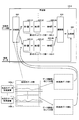
- FIG. 1 is a diagram showing an example of an overall configuration of a system to which a virtual measuring device is applied.
- FIG. 2 is a first diagram showing an example of a predetermined processing unit of a semiconductor manufacturing process.
- FIG. 3 is a second diagram showing an example of a predetermined processing unit of the semiconductor manufacturing process.
- FIG. 4 is a diagram showing an example of the acquired time series data group.
- FIG. 5 is a diagram showing an example of the hardware configuration of the virtual measuring device.
- FIG. 6 is a diagram showing an example of the functional configuration of the learning unit of the virtual measuring device.
- FIG. 7 is a first diagram showing a specific example of processing of the branch portion.
- FIG. 8 is a second diagram showing a specific example of the processing of the branch portion.
- FIG. 1 is a diagram showing an example of an overall configuration of a system to which a virtual measuring device is applied.
- FIG. 2 is a first diagram showing an example of a predetermined processing unit of a semiconductor manufacturing process.
- FIG. 9 is a third diagram showing a specific example of the processing of the branch portion.
- FIG. 10 is a diagram showing a specific example of processing of the normalization unit included in each network unit.
- FIG. 11 is a fourth diagram showing a specific example of processing of the branch portion.
- FIG. 12 is a diagram showing an example of the functional configuration of the inference unit of the virtual measuring device.
- FIG. 13 is a flowchart showing the flow of virtual measurement processing by the virtual measurement device.
- FIG. 14 is a first diagram showing an example of the functional configuration of the inference unit with a fine adjustment function of the virtual measuring device.
- FIG. 15 is a flowchart showing the flow of fine adjustment processing by the virtual measuring device.
- FIG. 16 is a second diagram showing an example of the functional configuration of the inference unit with a fine adjustment function of the virtual measuring device.
- a time-series data group measured during wafer processing is used for a specific semiconductor manufacturing process.
- -A virtual measurement model that infers the state of the wafer after processing, or ⁇ Anomaly detection model that infers the presence or absence of anomalies in the process Will be described.
- a model that realizes highly accurate inference is generated by performing multifaceted analysis by processing the time series data group using a plurality of network units.
- a case where a virtual measurement model is generated as a model based on a time series data group and a correction matrix is used as a fine adjustment function will be described. Further, in the second embodiment, a case where a neural network is used instead of the correction matrix as a fine adjustment function will be described. Further, in the third embodiment, a case where an abnormality detection model is generated instead of the virtual measurement model as a model based on the time series data group will be described.
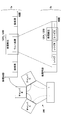
- FIG. 1 is a diagram showing an example of an overall configuration of a system to which a virtual measuring device is applied.
- the system 100A includes a semiconductor manufacturing process A, a time series data acquisition device 140A_1 to 140A_n, an inspection data acquisition device 150A, and a virtual measurement device 160A.
- a virtual measurement model that realizes highly accurate inference is generated for the semiconductor manufacturing process A, which is a specific process.
- the system 100B includes a semiconductor manufacturing process B, a time series data acquisition device 140B_1 to 140B_n, an inspection data acquisition device 150B, and a virtual measurement device 160B.
- the semiconductor manufacturing process B is another process of the same type as the semiconductor manufacturing process A, and in the present embodiment, a virtual measuring device (inference) in which a fine adjustment function is added to the virtual measuring model generated in the system 100A.
- the device is the applicable target.
- the semiconductor manufacturing process A processes the object (pre-processed wafer 110A) in the predetermined processing unit 120A and produces the result (post-processed wafer 130A).
- the processing unit 120A referred to here is an abstract concept, and the details will be described later.
- the pre-processed wafer 110A refers to a wafer (board) before being processed in the processing unit 120A
- the post-processed wafer 130A refers to a wafer (board) after being processed in the processing unit 120A.
- the time series data acquisition devices 140A_1 to 140A_n each measure the time series data with the processing of the unprocessed wafer 110A.
- the time-series data acquisition devices 140A_1 to 140A_n shall perform measurements for different types of measurement items.
- the number of measurement items measured by each of the time series data acquisition devices 140A_1 to 140A_n may be one or a plurality.
- the time-series data measured during the processing of the pre-processing wafer 110A includes the time-series data measured during the processing of the pre-processing wafer 110A, as well as the pre-processing and post-processing performed before and after the processing of the pre-processing wafer 110A.
- the time series data measured at the time of is also included. These processes may include pre-treatment and post-treatment performed in the absence of a wafer (base).
- the time-series data group measured by the time-series data acquisition devices 140A_1 to 140A_n is stored as learning data (input data) in the learning data storage unit 163A of the virtual measuring device 160A.
- the inspection data acquisition device 150A inspects a predetermined inspection item (for example, ER (Etch Rate)) of the processed wafer 130A processed in the processing unit 120A, and acquires the inspection data.
- the inspection data acquired by the inspection data acquisition device 150A is stored as learning data (correct answer data) in the learning data storage unit 163A of the virtual measurement device 160A.
- a virtual measurement program including a learning program and an inference program is installed in the virtual measurement device 160A.
- the virtual measurement device 160A functions as a learning unit 161A and an inference unit 162A.
- the learning unit 161A performs machine learning using the time-series data group measured by the time-series data acquisition devices 140A_1 to 140A_n and the inspection data acquired by the inspection data acquisition device 150A.
- the time-series data group is processed by using the plurality of network units of the learning unit 161A, and the plurality of such output data are combined so that the synthesis result of each output data output from the plurality of network units approaches the inspection data. Perform machine learning about the network part.
- the inference unit 162A acquires a time series data group measured by processing a new object (wafer before processing) and inputs it to a plurality of network units in which machine learning has been performed. As a result, the inference unit 162A infers the inspection data of the processed wafer based on the time series data acquired in connection with the processing of the new pre-processed wafer, and outputs the inference result (virtual measurement data).
- the virtual measurement device 160A analyzes the time-series data group from various aspects. Is possible. As a result, it is possible to generate a virtual measurement model (inference unit 162A) that realizes highly accurate inference as compared with the case where the time series data group is processed by using one network unit.
- the semiconductor manufacturing process B is the same type of process as the semiconductor manufacturing process A of the system 100A.
- the time-series data acquisition devices 140B_1 to 140B_n and the inspection data acquisition device 150B correspond to the time-series data acquisition devices 140A_1 to 140A_n and the inspection data acquisition device 150A of the system 100A, respectively.
- the virtual measuring device 160B corresponds to the virtual measuring device 160A of the system 100A.
- the virtual measuring device 160B of the system 100B does not have the learning unit 161A.
- an inference unit 162A instead of the inference unit 162A, there is an inference unit 162B with a fine adjustment function (a virtual measurement program that does not include a learning program and includes an inference program similar to the inference program installed in the virtual measurement device 160A). Installed).
- the virtual measurement model is not optimized by newly generating a virtual measurement model and performing machine learning using the time series data group, but is generated by the virtual measurement device 160A of the system 100A.
- a virtual measurement model (inference unit 162A) is applied.
- the semiconductor manufacturing process A and the semiconductor manufacturing process B are the same type of process as described above, but have individual differences. Therefore, even if the virtual measurement model (inference unit 162A) generated by the virtual measurement device 160A is applied as it is, the inference result (virtual measurement data) contains an error.
- the inference unit is generated by adding the fine adjustment function to the virtual measurement model (inference unit 162A) generated in the virtual measurement device 160A.
- the inference unit 162B with a fine adjustment function included in the virtual measurement device 160B is an example of an inference unit in which a fine adjustment function is added to a virtual measurement model (inference unit 162A) generated by the virtual measurement device 160A.
- the inference unit 162B with a fine adjustment function -Inference results output by processing time-series data groups using multiple network units included in the generated virtual measurement model, adjusting each output data output from multiple network units, and then synthesizing them.
- the correction parameters are updated so that the error of is reduced.
- -A model to which a virtual measurement model (inference unit 162A) that realizes highly accurate inference generated by the virtual measurement device 160A is applied.
- -A model that enables highly accurate inference even in the semiconductor manufacturing process B, which is the target of application. Can be realized.
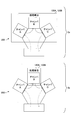
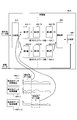
- FIG. 2 is a first diagram showing an example of a predetermined processing unit of a semiconductor manufacturing process.
- the semiconductor manufacturing apparatus 200 which is an example of the substrate processing apparatus, has a plurality of chambers (an example of a plurality of processing spaces. In the example of FIG. 2, “chamber A” to “chamber C”). Wafers are processed in each chamber.
- 2a in FIG. 2 shows a case where a plurality of chambers are defined as processing units 120A and 120B.
- the unprocessed wafers 110A and 110B refer to the wafers before being processed in the chamber A
- the post-processed wafers 130A and 130B refer to the wafers after being processed in the chamber C.
- the time series data group measured by the processing of the unprocessed wafers 110A and 110B is included in the time series data group.
- -Time-series data group measured with processing in chamber A first processing space
- -Time-series data group measured by processing in chamber B second processing space
- -Time-series data group measured by processing in chamber C third processing space
- 2b in FIG. 2 shows a case where the chamber 1 (“chamber B” in the example of 2b in FIG. 2) is defined as the processing units 120A and 120B.
- the unprocessed wafers 110A and 110B refer to the wafers before being processed in the chamber B (wafers after being processed in the chamber A).
- the processed wafers 130A and 130B refer to the wafers after being processed in the chamber B (wafers before being processed in the chamber C).
- time-series data group measured by the processing of the unprocessed wafers 110A and 110B is measured by the processing of the unprocessed wafers 110A and 110B in the chamber B. Time series data group is included.
- FIG. 3 is a second diagram showing an example of a predetermined processing unit in the semiconductor manufacturing process. Similar to FIG. 2, the semiconductor manufacturing apparatus 200 has a plurality of chambers, and wafers are processed in each chamber.
- 3a in FIG. 3 shows a case where the processing (referred to as “wafer processing”) excluding the pre-processing and the post-processing in the processing contents in the chamber B is defined as the processing units 120A and 120B.
- the unprocessed wafers 110A and 110B refer to the wafer before the wafer processing is performed (the wafer after the pretreatment is performed), and the post-processing wafers 130A and 130B are after the wafer processing is performed. Wafer (wafer before post-processing).
- the time-series data group measured with the processing of the unprocessed wafers 110A and 110B is measured in the chamber B with the wafer processing of the unprocessed wafers 110A and 110B.
- the time series data group to be used is included.
- the wafer processing is set to the processing units 120A and 120B. Indicated. However, when each treatment is performed in different chambers (for example, when pretreatment is performed in chamber A, wafer processing is performed in chamber B, and posttreatment is performed in chamber C), each treatment is performed in each chamber. The processing may be set to the processing units 120A and 120B.
- 3b in FIG. 3 shows a case where the processing of one recipe (“recipe III” in the example of 3b in FIG. 3) included in the wafer processing is defined as processing units 120A and 120B among the processing contents in the chamber B.
- the unprocessed wafers 110A and 110B refer to the wafers before the processing of Recipe III (wafers after the processing of Recipe II).
- the processed wafers 130A and 130B refer to wafers after the processing of Recipe III (wafers before the processing of Recipe IV (not shown)).
- the time series data group measured by the processing of the unprocessed wafers 110A and 110B includes the time series measured by the wafer processing according to the recipe III in the chamber B. Contains data groups.
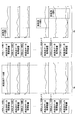
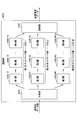
- FIG. 4 is a diagram showing an example of the acquired time series data group.
- the time series data acquisition devices 140A_1 to 140A_n and 140B_1 to 140B_n each measure one-dimensional data.
- one time-series data acquisition device may measure two-dimensional data (a data set of a plurality of types of one-dimensional data).
- 4a in FIG. 4 represents a time series data group when the processing units 120A and 120B are defined in any one of 2b in FIG. 2, 3a in FIG. 3, and 3b in FIG.
- the time-series data acquisition devices 140A_1 to 140A_n and 140B_1 to 140B_n each acquire time-series data measured during the processing in the chamber B.
- the time-series data acquisition devices 140A_1 to 140A_n acquire time-series data measured in the same time zone as a time-series data group.
- the time-series data acquisition devices 140B_1 to 140B_n acquire time-series data measured in the same time zone as a time-series data group.
- 4b in FIG. 4 represents a time series data group when the processing units 120A and 120B are defined in 2a in FIG.
- the time-series data acquisition devices 140A_1 to 140A_3 and 140B_1 to 140B_3 acquire, for example, the time-series data group 1 measured during the processing of the wafer in the chamber A.
- the time-series data acquisition devices 140A_n-2 and 140B_n-2 acquire, for example, the time-series data group 2 measured by processing the wafer in the chamber B.
- the time-series data acquisition devices 140A_n-1 to 140A_n and 140B_n-1 to 140B_n acquire, for example, the time-series data group 3 measured in association with the processing of the wafer in the chamber C.
- the time-series data acquisition devices 140A_1 to 140A_n and 140B_1 to 140B_n use time-series data in the same time range measured by processing the unprocessed wafer in the chamber B as a time-series data group. The case of acquisition is shown. However, the time-series data acquisition devices 140A_1 to 140A_n and 140B_1 to 140B_n may acquire time-series data in different time ranges measured by processing the unprocessed wafer in the chamber B as a time-series data group.
- the time-series data acquisition devices 140A_1 to 140A_n and 140B_1 to 140B_n may acquire a plurality of time-series data measured during the execution of the preprocessing as the time-series data group 1. Further, the time-series data acquisition devices 140A_1 to 140A_n and 140B_1 to 140B_n may acquire a plurality of time-series data measured during the execution of the wafer processing as the time-series data group 2. Further, the time-series data acquisition devices 140A_1 to 140A_n and 140B_1 to 140B_n may acquire a plurality of time-series data measured during the execution of post-processing as the time-series data group 3.
- the time-series data acquisition devices 140A_1 to 140A_n and 140B_1 to 140B_n may acquire a plurality of time-series data measured during the execution of Recipe I as the time-series data group 1. Further, the time-series data acquisition devices 140A_1 to 140A_n and 140B_1 to 140B_n may acquire a plurality of time-series data measured during the execution of Recipe II as the time-series data group 2. Further, the time-series data acquisition devices 140A_1 to 140A_n and 140B_1 to 140B_n may acquire a plurality of time-series data measured during the execution of Recipe III as the time-series data group 3.
- FIG. 5 is a diagram showing an example of the hardware configuration of the virtual measuring device.
- the virtual measuring devices 160A and 160B have a CPU (Central Processing Unit) 501, a ROM (Read Only Memory) 502, and a RAM (Random Access Memory) 503.
- the virtual measuring device 160 has a GPU (Graphics Processing Unit) 504.
- a processor processing circuit, Processing Circuit, Processing Circuitry
- CPU 501 and GPU 504 and a memory such as ROM 502 and RAM 503 form a so-called computer.
- the virtual measuring device 160 includes an auxiliary storage device 505, a display device 506, an operating device 507, an I / F (Interface) device 508, and a drive device 509.
- the hardware of the virtual measuring device 160 is connected to each other via the bus 510.
- the CPU 501 is an arithmetic device that executes various programs (for example, a virtual measurement program, etc.) installed in the auxiliary storage device 505.
- ROM 502 is a non-volatile memory and functions as a main storage device.
- the ROM 502 stores various programs, data, and the like necessary for the CPU 501 to execute various programs installed in the auxiliary storage device 505.
- the ROM 502 stores boot programs such as BIOS (Basic Input / Output System) and EFI (Extensible Firmware Interface).
- the RAM 503 is a volatile memory such as a DRAM (Dynamic Random Access Memory) or a SRAM (Static Random Access Memory), and functions as a main storage device.
- the RAM 503 provides a work area that is expanded when various programs installed in the auxiliary storage device 505 are executed by the CPU 501.
- the GPU 504 is an arithmetic device for image processing, and when a virtual measurement program is executed by the CPU 501, various image data (time series data group in this embodiment) are subjected to high-speed arithmetic by parallel processing.
- the GPU 504 is equipped with an internal memory (GPU memory), and temporarily holds information necessary for performing parallel processing on various image data.
- the auxiliary storage device 505 stores various programs, various data used when various programs are executed by the CPU 501, and the like.
- the display device 506 is a display device that displays the internal state of the virtual measuring devices 160A and 160B.
- the operation device 507 is an input device used by the administrator of the virtual measurement devices 160A and 160B when inputting various instructions to the virtual measurement devices 160A and 160B.
- the I / F device 508 is a connection device for connecting to and communicating with a network (not shown).
- the drive device 509 is a device for setting the recording medium 520.
- the recording medium 520 referred to here includes a medium such as a CD-ROM, a flexible disk, a magneto-optical disk, or the like that optically, electrically, or magnetically records information. Further, the recording medium 520 may include a semiconductor memory or the like for electrically recording information such as a ROM or a flash memory.
- the various programs installed in the auxiliary storage device 505 are installed, for example, by setting the distributed recording medium 520 in the drive device 509 and reading the various programs recorded in the recording medium 520 by the drive device 509. Will be done.
- the various programs installed in the auxiliary storage device 505 may be installed by being downloaded via the network.
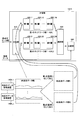
- FIG. 6 is a diagram showing an example of the functional configuration of the learning unit of the virtual measuring device.
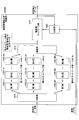
- the learning unit 161A has a branching unit 610, a first network unit 620_1 to a third network unit 620_M, a connecting unit 630, and a comparison unit 640.
- the branch unit 610 reads out a time series data group from the learning data storage unit 163A. Further, the branch unit 610 processes the time-series data group so that the read time-series data group is processed by using a plurality of network units from the first network unit 620_1 to the Mth network unit 620_M. ..
- the first network unit 620_1 to the Mth network unit 620_M are configured based on a convolutional neural network (CNN), and have a plurality of layers.
- CNN convolutional neural network
- the first network unit 620_1 has a first layer 620_1 to an Nth layer 620_1N.
- the second network unit 620_2 has a first layer 620_21 to an Nth layer 620_2N.
- the third network unit 620_M has a first layer 620_M1 to an Nth layer 620_MN.
- each layer of the first layer 620_1 to the Nth layer 620_1N of the first network unit 620_1 various processes such as a normalization process, a convolution process, an activation process, and a pooling process are performed. Further, the same various processes are performed in each layer of the second network unit 620_2 to the third network unit 620_M.
- the connecting unit 630 synthesizes each output data from the output data output from the Nth layer 620_1N of the first network unit 620_1 to the output data output from the Nth layer 620_MN of the Mth network unit 620_M.
- the synthesis result is output to the comparison unit 640.
- the comparison unit 640 compares the synthesis result output from the connection unit 630 with the inspection data (correct answer data) read from the learning data storage unit 163A, and calculates an error.
- the learning unit 161A performs machine learning on the first network unit 620_1 to the Mth network unit 620_M and the connecting unit 630 so that the error calculated by the comparison unit 640 satisfies a predetermined condition.
- the model parameters of the first layer to the Nth layer of the first network unit 620_1 to the Mth network unit 620_M and the model parameters of the connecting unit 630 are optimized.
- FIG. 7 is a first diagram showing a specific example of processing of the branch portion.
- the branch portion 610 processes the time-series data group measured by the time-series data acquisition devices 140A_1 to 140A_n according to the first reference, thereby performing the time-series data group 1 (first time).
- a series data group) is generated and input to the first network unit 620_1.
- the branch portion 610 processes the time-series data group measured by the time-series data acquisition devices 140A_1 to 140A_n according to the second reference, so that the time-series data group 2 (second time-series data group) ) Is generated and input to the second network unit 620_2.
- the time-series data group can be analyzed from multiple perspectives by processing the time-series data group according to different criteria, dividing it into different network units, and then performing machine learning. Is possible. As a result, it becomes possible to generate a virtual measurement model (inference unit 162A) that realizes highly accurate inference as compared with the case where the time series data group is input to one network unit and machine learning is performed.
- a virtual measurement model inference unit 162A
- FIG. 8 is a second diagram showing a specific example of the processing of the branch portion.
- the branching unit 610 groups the time-series data groups measured by the time-series data acquisition devices 140A_1 to 140A_n according to the data type.
- the branching unit 610 generates a time-series data group 1 (first time-series data group) and a time-series data group 2 (second time-series data group).
- the branching unit 610 inputs the generated time-series data group 1 to the third network unit 620_3, and inputs the generated time-series data group 2 to the fourth network unit 620_4.
- the time-series data group is divided into a plurality of groups according to the data type, and the time-series data group is analyzed from various aspects by performing machine learning after configuring the processing using different network units. It becomes possible to do. As a result, it becomes possible to generate a virtual measurement model (inference unit 162A) that realizes highly accurate inference as compared with the case where the time series data group is input to one network unit and machine learning is performed.
- a virtual measurement model inference unit 162A
- the time series data group was grouped according to the difference in the data type based on the difference in the time series data acquisition devices 140A_1 to 140A_n, but the time was changed according to the time range in which the data was acquired.
- the series data group may be grouped.
- the time-series data group is a time-series data group measured by processing by a plurality of recipes
- the time-series data group may be grouped according to the time range for each recipe.
- FIG. 9 is a third diagram showing a specific example of the processing of the branch portion.
- the branch unit 610 inputs the time series data group acquired by the time series data acquisition devices 140A_1 to 140A_n to both the fifth network unit 620_5 and the sixth network unit 620_6. Then, the fifth network unit 620_5 and the sixth network unit 620_6 perform different processing (normalization processing) on the same time series data group.
- FIG. 10 is a diagram showing a specific example of processing of the normalization unit included in each network unit.
- each layer of the fifth network unit 620_5 includes a normalization unit, a convolution unit, an activation function unit, and a pooling unit.
- the first layer 620_51 includes a normalization unit 1001, a convolution unit 1002, an activation function unit 1003, and a pooling unit 1004. It is shown that.
- the normalization unit 1001 performs the first normalization process on the time series data group input by the branch unit 610 to generate the normalized time series data group 1 (first time series data group). To do.
- the first layer 620_61 includes a normalization unit 1011, a convolution unit 1012, an activation function unit 1013, and a pooling unit 1014. And are included.
- the normalization unit 1011 performs a second normalization process on the time series data group input by the branch unit 610, and generates a normalized time series data group 2 (second time series data group). To do.
- the time-series data group can be created by performing machine learning after configuring the time-series data group to be processed using a plurality of network units, each of which includes a normalization unit that performs normalization processing by different methods. It is possible to analyze from multiple sides. As a result, a virtual measurement model (inference unit 162A) that realizes highly accurate inference is generated as compared with the case where the time series data group is input to the network unit of 1 that performs 1 normalization processing and machine learning is performed. It becomes possible to do.
- FIG. 11 is a fourth diagram showing a specific example of processing of the branch portion.
- the branch portion 610 is a time-series data group 1 (first time-series data) measured by processing in the chamber A among the time-series data groups measured by the time-series data acquisition devices 140A_1 to 140A_n. Group) is input to the seventh network unit 620_7.
- the branch portion 610 uses the time-series data group 2 (second time-series data group) measured by the processing in the chamber B among the time-series data groups measured by the time-series data acquisition devices 140A_1 to 140A_n. Input to the eighth network unit 620_8.
- FIG. 12 is a diagram showing an example of the functional configuration of the inference unit of the virtual measuring device.
- the inference unit 162A of the virtual measuring device 160A has a branch unit 1210, a first network unit 1220_1 to a third network unit 1220_M, and a connecting unit 1230.
- the branching unit 1210 acquires a time-series data group newly measured by the time-series data acquisition devices 140A_1 to 140A_N. Further, the branching unit 1210 controls so that the acquired time series data group is processed by using the first network unit 1220_1 to the Mth network unit 1220_M.
- Machine learning is performed by the learning unit 161A in the first network unit 1220_1 to the Mth network unit 1220_M, and the model parameters of each layer of the first network unit 620_1 to the Mth network unit 620_M are optimized. It is formed.
- the connecting unit 1230 is formed by the connecting unit 630 in which machine learning is performed by the learning unit 161A and the model parameters are optimized.
- the connecting unit 1230 synthesizes each output data from the output data output from the Nth layer 1220_1N of the first network unit 1220_1 to the output data output from the Nth layer 1220_MN of the third network unit 1220_M. Output virtual measurement data.
- FIG. 13 is a flowchart showing the flow of virtual measurement processing by the virtual measurement device.
- step S1301 the learning unit 161A acquires a time series data group and inspection data as learning data.
- step S1302 the learning unit 161A performs machine learning using the time-series data group as input data and the inspection data as correct answer data among the acquired learning data.
- step S1303 the learning unit 161A determines whether or not to continue machine learning. When further learning data is acquired and machine learning is continued (when YES in step S1303), the process returns to step S1301. On the other hand, when the machine learning is finished (NO in step S1303), the process proceeds to step S1304.
- step S1304 the inference unit 162A generates the first network unit 1220_1 to the Mth network unit 1220_M by reflecting the model parameters optimized by machine learning.
- step S1305 the inference unit 162A inputs a time series data group measured in association with the processing of the new unprocessed wafer 110A, and infers the virtual measurement data.
- step S1306 the inference unit 162A outputs the inferred virtual measurement data.
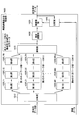
- FIG. 14 is a diagram showing an example of the functional configuration of the inference unit with a fine adjustment function of the virtual measuring device.
- the inference unit 162B with a fine adjustment function of the virtual measuring device 160B has a branch unit 1210 that functions as an acquisition unit. Further, the inference unit 162B with a fine adjustment function of the virtual measuring device 160B functions as an inference unit, from the first network unit 1220_1 to the Mth network unit 1220_M, the connection unit 1410, the individual adjustment unit 1420, and the fine adjustment unit 1430. It has a comparison unit 1440.
- branch portion 1210 is the same as the branch portion 1210 of the inference unit 162A and has already been explained with reference to FIG. 12, so the description thereof is omitted here.
- first network unit 1220_1 to the Mth network unit 1220_M are also the same as the first network unit 1220_1 to the Mth network unit 1220_M of the inference unit 162A.
- machine learning is performed by the learning unit 161A in the first network unit 1220_1 to the Mth network unit 1220_M, and the model parameters of each layer of the first network unit 620_1 to the Mth network unit 620_M are optimal. It is formed by being transformed.
- the connecting portion 1410 is formed by the connecting portion 630 in which machine learning is performed by the learning unit 161A and the model parameters are optimized. However, in the case of the connecting unit 1410, each output data from the output data output from the Nth layer 1220_1N of the first network unit 1220_1 to the output data output from the Nth layer 1220_MN of the Mth network unit 1220_M is input. Output without compositing.
- the individual adjustment unit 1420 adds a coefficient (“individual sensitivity”) to each output data output from the connecting unit 1410 according to the individual difference between the processing unit 120A of the semiconductor manufacturing process A and the processing unit 120B of the semiconductor manufacturing process B. Multiply (referred to).
- the fine adjustment unit 1430 calculates virtual measurement data, which is a scalar amount, by multiplying each output data obtained by multiplying the individual sensitivity by the individual adjustment unit 1420 by a correction matrix.
- the comparison unit 1440 acquires the virtual measurement data output by the fine adjustment unit 1430, and also acquires the inspection data for the processed wafer 130B. Further, the comparison unit 1440 calculates the difference between the acquired virtual measurement data and the inspection data, and notifies the fine adjustment unit 1430.
- the fine adjustment function inference unit 162B in the semiconductor manufacturing process B, a predetermined time period, on the basis of the inspection data for the processed wafer 130B, the fine adjustment portion 1430 corrects parameters (P 1 ⁇ P M) Update. Then, the fine adjustment part 430 of the fine adjustment function inference unit 162B, until the difference between the test data and the virtual measured data is equal to or less than a predetermined threshold value, it continues to update the correction parameter (P 1 ⁇ P M).
- the fine adjustment unit 1430 can reduce the error (error included in the inference result) caused by the individual difference between the processing unit 120A of the semiconductor manufacturing process A and the processing unit 120B of the semiconductor manufacturing process B. Become.
- the cost and time are compared with the case of optimizing by re-learning the virtual measurement model by using the time series data group measured in the semiconductor manufacturing process B as additional data. Can be reduced.
- FIG. 15 is a flowchart showing the flow of fine adjustment processing by the virtual measuring device.
- step S1501 the branching portion 1210 of the inference unit 162B with a fine adjustment function acquires a time series data group measured in the processing unit 120B of the semiconductor manufacturing process B in accordance with the processing of the new pre-processing wafer 110B. Further, the first to Mth network units 1220_1 to 1220_M of the inference unit 162B with a fine adjustment function process the acquired time series data group. As a result, each output data is output from the final layer of the first to Mth network units 1220_1 to 1220_M.
- step S1502 the individual adjustment unit 1420 of the inference unit 162B with a fine adjustment function multiplies each output data output from the final layer of the first to Mth network units 1220_1 to 1220_M by the individual sensitivity. Adjust the output data.
- step S1503 the fine adjustment unit 1430 of the inference unit 162B with a fine adjustment function calculates virtual measurement data by multiplying each output data to which individual sensitivities are applied by a correction matrix.
- step S1504 the inference unit 162B with a fine adjustment function acquires inspection data for the processed wafer 130B and notifies the comparison unit 1440. Further, the comparison unit 1440 compares the virtual measurement data output from the fine adjustment unit 1430 with the notified inspection data, and calculates a difference (error included in the inference result).
- step S1505 the comparison unit 1440 of the inference unit 162B with a fine adjustment function determines whether or not the difference is equal to or less than a predetermined threshold value based on the comparison result, thereby determining whether or not the correction parameter needs to be updated. ..
- step S1505 If the difference exceeds a predetermined threshold value in step S1505 and it is determined that the correction parameter needs to be updated (if YES in step S1505), the process proceeds to step S1506.
- step S1506 the fine adjustment portion 1430 of the fine adjustment function inference unit 162B in response to the calculated difference (error contained in the inference results) by the comparing unit 1440, the correction parameter of the correction matrix (P 1 ⁇ P M) To update. Then, the process proceeds to step S1507.
- step S1505 determines whether the difference is equal to or less than a predetermined threshold value and the correction parameter does not need to be updated (NO in step S1505). If it is determined in step S1505 that the difference is equal to or less than a predetermined threshold value and the correction parameter does not need to be updated (NO in step S1505), the process directly proceeds to step S1507.
- step S1507 the inference unit 162B with a fine adjustment function determines whether or not to end the fine adjustment process. If it is determined in step S1507 that the fine adjustment process is not completed (NO in step S1507), the process returns to step S1501.
- step S1507 determines whether the fine adjustment process is to be completed (if YES in step S1507). If it is determined in step S1507 that the fine adjustment process is to be completed (if YES in step S1507), the fine adjustment process is ended.
- the virtual measuring device 160A is -Acquire a time series data group measured with the processing of an object in a predetermined processing unit of the manufacturing process. -By processing the acquired time-series data group using multiple network units, the composite result of each output data output from each network unit approaches the inspection data of the result obtained by processing the object. As described above, machine learning is performed for each network unit.
- the virtual measurement device 160A can generate a virtual measurement model that realizes highly accurate inference.
- the virtual measuring device 160B (inference device) is -In a predetermined processing unit of another manufacturing process, a time series data group measured by processing an object is processed using a plurality of network units included in the generated virtual measurement model, and each output data is processed. Output. -Virtual measurement data is inferred by synthesizing each output data after making fine adjustments using correction parameters. -Update the correction parameters according to the error contained in the inferred virtual measurement data.
- the virtual measuring device 160B when the virtual measurement model generated by using the time series data group is applied to another manufacturing process in a predetermined processing unit of the manufacturing process, the virtual measuring device 160B outputs the virtual measurement model from a plurality of network units. Add a function to fine-tune each output data.
- each output data output from the final layer of each network unit has been described as being fine-tuned using the individual sensitivity and the correction matrix.
- the method of fine-tuning each output data by the inference unit with a fine-tuning function is not limited to this, and for example, each output data may be fine-tuned by using a network unit for fine-tuning.
- FIG. 16 is a second diagram showing an example of the functional configuration of the inference unit with a fine adjustment function of the virtual measuring device. The difference from FIG. 14 is that the inference unit 1600B with a fine adjustment function shown in FIG. 16 has a fine adjustment network unit 1610.
- the fine adjustment network unit 1610 is configured based on the convolutional neural network, and outputs virtual measurement data by inputting each output data output from the connection unit 1410.
- the fine-tuning network unit 1610 updates the correction parameter, which is a model parameter of the fine-tuning network unit 1610, based on the difference notified from the comparison unit 1440 in response to the output of the virtual measurement data.
- the fine adjustment network unit 1610 updates the correction parameters based on the inspection data of the processed wafer 130B for a predetermined period.
- the model parameters of the first network unit 1220_1 to the Mth network unit 1220_M shall be maintained in a fixed state.
- the fine adjustment network unit 1610 of the inference unit 1600B with a fine adjustment function continues updating the correction parameters until the difference between the virtual measurement data and the inspection data becomes equal to or less than a predetermined threshold value.
- the fine adjustment network unit 1610 it is possible to reduce the error (error included in the inference result) caused by the individual difference between the processing unit 120A of the semiconductor manufacturing process A and the processing unit 120B of the semiconductor manufacturing process B. become.
- the virtual measuring devices 160A and 160B described in the first and second embodiments are read as abnormality detection devices 160A and 160B, and the abnormality detection model generated by the abnormality detection device 160A is used for manufacturing another semiconductor. The case where it is applied to the process B will be described.
- the learning unit 161A performs machine learning on the anomaly detection model (inference unit 162A) using the time series data group as input data and the event (information indicating the presence or absence of an abnormality) as correct answer data. It is assumed that the anomaly detection model (inference unit 162A) has the same configuration as the virtual measurement model (inference unit 162A), and only the learning data used for machine learning is different.
- the time-series data acquisition devices 140A_1 to 140A_n that output the time-series data group used for machine learning may be used.
- -Emission spectroscopy analyzer that outputs OES (Optical Emission Spectrometry) data, which is a time series data group.
- -A process data acquisition device that outputs process data such as temperature data and pressure data, which are time series data groups.
- High-frequency power supply for plasma that outputs RF data, which is time-series data. Etc. are included.
- the inference unit 1600B with a fine adjustment function inputs a time series data group and infers information indicating the presence or absence of an abnormality.
- the time-series data acquisition devices 140A_1 to 140A_n that output the time-series data group used for inference may be used.
- -Emission spectroscopy analyzer that outputs OES (Optical Emission Spectrometry) data, which is a time series data group.
- -A process data acquisition device that outputs process data such as temperature data and pressure data, which are time series data groups.
- High-frequency power supply for plasma that outputs RF data, which is time-series data. Etc. are included.
- the abnormality detection device 160A is -Acquire a time series data group (OES data, process data, RF data) measured with the processing of an object in a predetermined processing unit of the manufacturing process. -By processing the acquired time-series data group using multiple network units, the composite result of each output data output from each network unit is an event (information indicating the presence or absence of an abnormality) that occurred during the processing of the object. ), Machine learning is performed for each network part.
- the anomaly detection device 160A can generate an anomaly detection model that realizes highly accurate inference.
- the abnormality detection device 160B (inference device) is -Multiple network units included in the generated anomaly detection model of time-series data groups (OES data, process data, RF data) measured in accordance with the processing of an object in a predetermined processing unit of another manufacturing process. Is processed and each output data is output. -By fine-tuning each output data using the correction parameters and then synthesizing it, information indicating the presence or absence of an abnormality is inferred. -Update the correction parameters according to the error contained in the inferred information indicating the presence or absence of the abnormality.
- OES data, process data, RF data time-series data groups
- the anomaly detection device 160B when the anomaly detection model generated using the time series data group is applied to another manufacturing process in a predetermined processing unit of the manufacturing process, the anomaly detection device 160B outputs the anomaly detection model from a plurality of network units. Add a function to fine-tune each output data.
- the abnormality detection device acquires OES data, process data, and RF data output from the emission spectrum analyzer, the process data acquisition device, and the high-frequency power supply device for plasma in accordance with the processing of the object.
- the combination of data acquired by the abnormality detection device is not limited to this, and either one data may be acquired or any two data combinations may be acquired.
- the inference unit 162B and 1600B with a fine adjustment function have the first to Mth network units 1220_1 to 1220_M.
- the inference unit 162B and 1600B with a fine adjustment function do not have to have all of the first to M network units 1220_1 to 1220_M, and have at least two or more network units. To do.
- the machine learning algorithm of each network unit of the learning unit 161A has been described as being configured based on the convolutional neural network.
- the machine learning algorithm of each network unit of the learning unit 161A is not limited to the convolutional neural network, and may be configured based on other machine learning algorithms.
- the virtual measuring device or the abnormality detecting device 160A has been described as functioning as the learning unit 161A and the inference unit 162A.
- the device that functions as the learning unit 161A and the device that functions as the inference unit 162A do not have to be integrated, and may be configured separately. That is, the virtual measurement device or the abnormality detection device 160A may function as a learning unit 161A that does not have the inference unit 162A, or may function as an inference unit 162A that does not have the learning unit 161A.
- the virtual measurement device (or abnormality detection device) in which the fine adjustment function is added to the virtual measurement model (or abnormality detection model) generated in the system 100A will be described as being applied to the system 100B. did.
- the application target to which the virtual measuring device (or abnormality detecting device) to which the fine adjustment function is added is applied is not limited to other systems, and may be the own system.
- the fine adjustment function may be added to the virtual measurement model (or abnormality detection model) generated by the own system and applied.
- a virtual measurement model generated by the own system such as when maintenance work such as parts replacement is performed on the device in the own system, or when the environment in the device changes due to wear of parts of the device in the own system, etc.
- it may be applied when the accuracy of the abnormality detection model) is lowered.
Landscapes
- Engineering & Computer Science (AREA)
- Theoretical Computer Science (AREA)
- General Physics & Mathematics (AREA)
- Physics & Mathematics (AREA)
- Software Systems (AREA)
- Evolutionary Computation (AREA)
- Data Mining & Analysis (AREA)
- Computing Systems (AREA)
- General Engineering & Computer Science (AREA)
- Mathematical Physics (AREA)
- Artificial Intelligence (AREA)
- Automation & Control Theory (AREA)
- Medical Informatics (AREA)
- Computational Linguistics (AREA)
- Computer Vision & Pattern Recognition (AREA)
- Testing Or Measuring Of Semiconductors Or The Like (AREA)
- Testing And Monitoring For Control Systems (AREA)
- General Factory Administration (AREA)
Priority Applications (4)
| Application Number | Priority Date | Filing Date | Title |
|---|---|---|---|
| JP2021561312A JP7224492B2 (ja) | 2019-11-29 | 2020-11-16 | 推論装置、推論方法及び推論プログラム |
| US17/756,373 US20230004837A1 (en) | 2019-11-29 | 2020-11-16 | Inference device, inference method and inference program |
| KR1020227021133A KR20220106999A (ko) | 2019-11-29 | 2020-11-16 | 추론 장치, 추론 방법 및 추론 프로그램 |
| CN202080082402.4A CN114746820B (zh) | 2019-11-29 | 2020-11-16 | 推论装置、推论方法以及推论程序 |
Applications Claiming Priority (2)
| Application Number | Priority Date | Filing Date | Title |
|---|---|---|---|
| JP2019217439 | 2019-11-29 | ||
| JP2019-217439 | 2019-11-29 |
Publications (1)
| Publication Number | Publication Date |
|---|---|
| WO2021106646A1 true WO2021106646A1 (ja) | 2021-06-03 |
Family
ID=76130232
Family Applications (1)
| Application Number | Title | Priority Date | Filing Date |
|---|---|---|---|
| PCT/JP2020/042564 Ceased WO2021106646A1 (ja) | 2019-11-29 | 2020-11-16 | 推論装置、推論方法及び推論プログラム |
Country Status (6)
| Country | Link |
|---|---|
| US (1) | US20230004837A1 (https=) |
| JP (1) | JP7224492B2 (https=) |
| KR (1) | KR20220106999A (https=) |
| CN (1) | CN114746820B (https=) |
| TW (1) | TWI867094B (https=) |
| WO (1) | WO2021106646A1 (https=) |
Cited By (1)
| Publication number | Priority date | Publication date | Assignee | Title |
|---|---|---|---|---|
| WO2025249225A1 (ja) * | 2024-05-29 | 2025-12-04 | 東京エレクトロン株式会社 | コンピュータプログラム、学習モデルの生成方法、情報処理方法及び情報処理装置 |
Families Citing this family (1)
| Publication number | Priority date | Publication date | Assignee | Title |
|---|---|---|---|---|
| KR102539835B1 (ko) * | 2023-01-10 | 2023-06-02 | (재) 한국건설품질연구원 | 3d 카메라를 이용한 디지털 트윈 생성 및 손상 분석 시스템 |
Citations (6)
| Publication number | Priority date | Publication date | Assignee | Title |
|---|---|---|---|---|
| JPH0736505A (ja) * | 1993-07-21 | 1995-02-07 | Nkk Corp | 制御対象の同定・制御方法 |
| JPH10260718A (ja) * | 1997-03-19 | 1998-09-29 | Fuji Electric Co Ltd | ダムにおける水量予測方法 |
| US20070100487A1 (en) * | 2005-10-31 | 2007-05-03 | Taiwan Semiconductor Manufacturing Company, Ltd. | Method and system for virtual metrology in semiconductor manufacturing |
| WO2010119894A1 (ja) * | 2009-04-14 | 2010-10-21 | シャープ株式会社 | 出来映え予測装置、出来映え予測方法、出来映え予測プログラム、及び、プログラム記録媒体 |
| JP2015127914A (ja) * | 2013-12-27 | 2015-07-09 | 三菱重工業株式会社 | 予測システム、監視システム、運転支援システム、ガスタービン設備及び予測方法 |
| WO2019159483A1 (ja) * | 2018-02-14 | 2019-08-22 | オムロン株式会社 | デバイス選択装置、データセット選択装置、デバイス選択方法及びプログラム |
Family Cites Families (7)
| Publication number | Priority date | Publication date | Assignee | Title |
|---|---|---|---|---|
| JP4635194B2 (ja) | 2004-12-02 | 2011-02-16 | 財団法人石油産業活性化センター | 異常検知装置 |
| KR101150791B1 (ko) * | 2007-09-11 | 2012-06-13 | 도쿄엘렉트론가부시키가이샤 | 정보 처리 장치, 정보 처리 방법 및, 프로그램이 기록된 컴퓨터 판독가능 기록매체 |
| KR102084930B1 (ko) * | 2015-06-03 | 2020-03-05 | 미쓰비시덴키 가부시키가이샤 | 추론 장치 및 추론 방법 |
| US10304154B2 (en) * | 2017-04-24 | 2019-05-28 | Intel Corporation | Coordination and increased utilization of graphics processors during inference |
| US11131989B2 (en) * | 2017-08-02 | 2021-09-28 | Strong Force Iot Portfolio 2016, Llc | Systems and methods for data collection including pattern recognition |
| US11187992B2 (en) * | 2017-10-23 | 2021-11-30 | Applied Materials, Inc. | Predictive modeling of metrology in semiconductor processes |
| KR102028093B1 (ko) * | 2017-10-25 | 2019-10-02 | 한국전자통신연구원 | 네트워크에 대한 이상행위 탐지 방법 및 이를 이용한 장치 |
-
2020
- 2020-11-16 US US17/756,373 patent/US20230004837A1/en active Pending
- 2020-11-16 CN CN202080082402.4A patent/CN114746820B/zh active Active
- 2020-11-16 WO PCT/JP2020/042564 patent/WO2021106646A1/ja not_active Ceased
- 2020-11-16 JP JP2021561312A patent/JP7224492B2/ja active Active
- 2020-11-16 KR KR1020227021133A patent/KR20220106999A/ko not_active Ceased
- 2020-11-17 TW TW109140051A patent/TWI867094B/zh active
Patent Citations (6)
| Publication number | Priority date | Publication date | Assignee | Title |
|---|---|---|---|---|
| JPH0736505A (ja) * | 1993-07-21 | 1995-02-07 | Nkk Corp | 制御対象の同定・制御方法 |
| JPH10260718A (ja) * | 1997-03-19 | 1998-09-29 | Fuji Electric Co Ltd | ダムにおける水量予測方法 |
| US20070100487A1 (en) * | 2005-10-31 | 2007-05-03 | Taiwan Semiconductor Manufacturing Company, Ltd. | Method and system for virtual metrology in semiconductor manufacturing |
| WO2010119894A1 (ja) * | 2009-04-14 | 2010-10-21 | シャープ株式会社 | 出来映え予測装置、出来映え予測方法、出来映え予測プログラム、及び、プログラム記録媒体 |
| JP2015127914A (ja) * | 2013-12-27 | 2015-07-09 | 三菱重工業株式会社 | 予測システム、監視システム、運転支援システム、ガスタービン設備及び予測方法 |
| WO2019159483A1 (ja) * | 2018-02-14 | 2019-08-22 | オムロン株式会社 | デバイス選択装置、データセット選択装置、デバイス選択方法及びプログラム |
Cited By (1)
| Publication number | Priority date | Publication date | Assignee | Title |
|---|---|---|---|---|
| WO2025249225A1 (ja) * | 2024-05-29 | 2025-12-04 | 東京エレクトロン株式会社 | コンピュータプログラム、学習モデルの生成方法、情報処理方法及び情報処理装置 |
Also Published As
| Publication number | Publication date |
|---|---|
| JP7224492B2 (ja) | 2023-02-17 |
| KR20220106999A (ko) | 2022-08-01 |
| CN114746820A (zh) | 2022-07-12 |
| US20230004837A1 (en) | 2023-01-05 |
| CN114746820B (zh) | 2025-06-03 |
| JPWO2021106646A1 (https=) | 2021-06-03 |
| TW202123057A (zh) | 2021-06-16 |
| TWI867094B (zh) | 2024-12-21 |
Similar Documents
| Publication | Publication Date | Title |
|---|---|---|
| JP7118170B2 (ja) | 仮想測定装置、仮想測定方法及び仮想測定プログラム | |
| CN112885740B (zh) | 异常检测装置、异常检测方法及记录介质 | |
| JP7412150B2 (ja) | 予測装置、予測方法及び予測プログラム | |
| TWI910923B (zh) | 高階半導體製程優化及製造期間適應性控制 | |
| US10734261B2 (en) | Search apparatus and search method | |
| US9934351B2 (en) | Wafer point by point analysis and data presentation | |
| KR102384189B1 (ko) | 머신러닝에 기초한 반도체 불량 시점 예측 장치 및 방법 | |
| JP7224492B2 (ja) | 推論装置、推論方法及び推論プログラム | |
| US12314653B2 (en) | Semiconductor process modeling system and method | |
| US20250053806A1 (en) | Sparsification target layer determination apparatus, sparsification target layer determination method, and program | |
| US11687066B2 (en) | Virtual cross metrology-based modeling of semiconductor fabrication processes | |
| US12510878B2 (en) | Physically-informed multi-system hardware operating windows | |
| JP2020025116A (ja) | 探索装置および探索方法 | |
| Bertelson et al. | Virtual metrology of critical dimensions in etch processes based on automated dynamics–inspired analysis of complete tool signals | |
| TW202534461A (zh) | 基於因果關係的機隊匹配 | |
| TW202538446A (zh) | 基於因果關係的機隊匹配 |
Legal Events
| Date | Code | Title | Description |
|---|---|---|---|
| 121 | Ep: the epo has been informed by wipo that ep was designated in this application |
Ref document number: 20894231 Country of ref document: EP Kind code of ref document: A1 |
|
| ENP | Entry into the national phase |
Ref document number: 2021561312 Country of ref document: JP Kind code of ref document: A |
|
| ENP | Entry into the national phase |
Ref document number: 20227021133 Country of ref document: KR Kind code of ref document: A |
|
| NENP | Non-entry into the national phase |
Ref country code: DE |
|
| 122 | Ep: pct application non-entry in european phase |
Ref document number: 20894231 Country of ref document: EP Kind code of ref document: A1 |
|
| WWG | Wipo information: grant in national office |
Ref document number: 202080082402.4 Country of ref document: CN |