WO2021059957A1 - 機能性シート及びこれを備えた吸収性物品、並びにこれらの製造方法 - Google Patents
機能性シート及びこれを備えた吸収性物品、並びにこれらの製造方法 Download PDFInfo
- Publication number
- WO2021059957A1 WO2021059957A1 PCT/JP2020/033902 JP2020033902W WO2021059957A1 WO 2021059957 A1 WO2021059957 A1 WO 2021059957A1 JP 2020033902 W JP2020033902 W JP 2020033902W WO 2021059957 A1 WO2021059957 A1 WO 2021059957A1
- Authority
- WO
- WIPO (PCT)
- Prior art keywords
- sheet
- liquid
- woven fabric
- resin film
- absorbent article
- Prior art date
- Legal status (The legal status is an assumption and is not a legal conclusion. Google has not performed a legal analysis and makes no representation as to the accuracy of the status listed.)
- Ceased
Links
Images




Classifications
-
- A—HUMAN NECESSITIES
- A61—MEDICAL OR VETERINARY SCIENCE; HYGIENE
- A61F—FILTERS IMPLANTABLE INTO BLOOD VESSELS; PROSTHESES; DEVICES PROVIDING PATENCY TO, OR PREVENTING COLLAPSING OF, TUBULAR STRUCTURES OF THE BODY, e.g. STENTS; ORTHOPAEDIC, NURSING OR CONTRACEPTIVE DEVICES; FOMENTATION; TREATMENT OR PROTECTION OF EYES OR EARS; BANDAGES, DRESSINGS OR ABSORBENT PADS; FIRST-AID KITS
- A61F13/00—Bandages or dressings; Absorbent pads
- A61F13/15—Absorbent pads, e.g. sanitary towels, swabs or tampons for external or internal application to the body; Supporting or fastening means therefor; Tampon applicators
-
- A—HUMAN NECESSITIES
- A61—MEDICAL OR VETERINARY SCIENCE; HYGIENE
- A61F—FILTERS IMPLANTABLE INTO BLOOD VESSELS; PROSTHESES; DEVICES PROVIDING PATENCY TO, OR PREVENTING COLLAPSING OF, TUBULAR STRUCTURES OF THE BODY, e.g. STENTS; ORTHOPAEDIC, NURSING OR CONTRACEPTIVE DEVICES; FOMENTATION; TREATMENT OR PROTECTION OF EYES OR EARS; BANDAGES, DRESSINGS OR ABSORBENT PADS; FIRST-AID KITS
- A61F13/00—Bandages or dressings; Absorbent pads
- A61F13/15—Absorbent pads, e.g. sanitary towels, swabs or tampons for external or internal application to the body; Supporting or fastening means therefor; Tampon applicators
- A61F13/15577—Apparatus or processes for manufacturing
-
- A—HUMAN NECESSITIES
- A61—MEDICAL OR VETERINARY SCIENCE; HYGIENE
- A61F—FILTERS IMPLANTABLE INTO BLOOD VESSELS; PROSTHESES; DEVICES PROVIDING PATENCY TO, OR PREVENTING COLLAPSING OF, TUBULAR STRUCTURES OF THE BODY, e.g. STENTS; ORTHOPAEDIC, NURSING OR CONTRACEPTIVE DEVICES; FOMENTATION; TREATMENT OR PROTECTION OF EYES OR EARS; BANDAGES, DRESSINGS OR ABSORBENT PADS; FIRST-AID KITS
- A61F13/00—Bandages or dressings; Absorbent pads
- A61F13/15—Absorbent pads, e.g. sanitary towels, swabs or tampons for external or internal application to the body; Supporting or fastening means therefor; Tampon applicators
- A61F13/51—Absorbent pads, e.g. sanitary towels, swabs or tampons for external or internal application to the body; Supporting or fastening means therefor; Tampon applicators characterised by the outer layers of the pads
-
- A—HUMAN NECESSITIES
- A61—MEDICAL OR VETERINARY SCIENCE; HYGIENE
- A61F—FILTERS IMPLANTABLE INTO BLOOD VESSELS; PROSTHESES; DEVICES PROVIDING PATENCY TO, OR PREVENTING COLLAPSING OF, TUBULAR STRUCTURES OF THE BODY, e.g. STENTS; ORTHOPAEDIC, NURSING OR CONTRACEPTIVE DEVICES; FOMENTATION; TREATMENT OR PROTECTION OF EYES OR EARS; BANDAGES, DRESSINGS OR ABSORBENT PADS; FIRST-AID KITS
- A61F13/00—Bandages or dressings; Absorbent pads
- A61F13/15—Absorbent pads, e.g. sanitary towels, swabs or tampons for external or internal application to the body; Supporting or fastening means therefor; Tampon applicators
- A61F13/51—Absorbent pads, e.g. sanitary towels, swabs or tampons for external or internal application to the body; Supporting or fastening means therefor; Tampon applicators characterised by the outer layers of the pads
- A61F13/511—Topsheet, i.e. the permeable cover or layer facing the skin
-
- A—HUMAN NECESSITIES
- A61—MEDICAL OR VETERINARY SCIENCE; HYGIENE
- A61F—FILTERS IMPLANTABLE INTO BLOOD VESSELS; PROSTHESES; DEVICES PROVIDING PATENCY TO, OR PREVENTING COLLAPSING OF, TUBULAR STRUCTURES OF THE BODY, e.g. STENTS; ORTHOPAEDIC, NURSING OR CONTRACEPTIVE DEVICES; FOMENTATION; TREATMENT OR PROTECTION OF EYES OR EARS; BANDAGES, DRESSINGS OR ABSORBENT PADS; FIRST-AID KITS
- A61F13/00—Bandages or dressings; Absorbent pads
- A61F13/15—Absorbent pads, e.g. sanitary towels, swabs or tampons for external or internal application to the body; Supporting or fastening means therefor; Tampon applicators
- A61F13/51—Absorbent pads, e.g. sanitary towels, swabs or tampons for external or internal application to the body; Supporting or fastening means therefor; Tampon applicators characterised by the outer layers of the pads
- A61F13/511—Topsheet, i.e. the permeable cover or layer facing the skin
- A61F13/51121—Topsheet, i.e. the permeable cover or layer facing the skin characterised by the material
-
- A—HUMAN NECESSITIES
- A61—MEDICAL OR VETERINARY SCIENCE; HYGIENE
- A61F—FILTERS IMPLANTABLE INTO BLOOD VESSELS; PROSTHESES; DEVICES PROVIDING PATENCY TO, OR PREVENTING COLLAPSING OF, TUBULAR STRUCTURES OF THE BODY, e.g. STENTS; ORTHOPAEDIC, NURSING OR CONTRACEPTIVE DEVICES; FOMENTATION; TREATMENT OR PROTECTION OF EYES OR EARS; BANDAGES, DRESSINGS OR ABSORBENT PADS; FIRST-AID KITS
- A61F13/00—Bandages or dressings; Absorbent pads
- A61F13/15—Absorbent pads, e.g. sanitary towels, swabs or tampons for external or internal application to the body; Supporting or fastening means therefor; Tampon applicators
- A61F13/51—Absorbent pads, e.g. sanitary towels, swabs or tampons for external or internal application to the body; Supporting or fastening means therefor; Tampon applicators characterised by the outer layers of the pads
- A61F13/511—Topsheet, i.e. the permeable cover or layer facing the skin
- A61F13/513—Topsheet, i.e. the permeable cover or layer facing the skin characterised by its function or properties, e.g. stretchability, breathability, rewet, visual effect; having areas of different permeability
-
- A—HUMAN NECESSITIES
- A61—MEDICAL OR VETERINARY SCIENCE; HYGIENE
- A61F—FILTERS IMPLANTABLE INTO BLOOD VESSELS; PROSTHESES; DEVICES PROVIDING PATENCY TO, OR PREVENTING COLLAPSING OF, TUBULAR STRUCTURES OF THE BODY, e.g. STENTS; ORTHOPAEDIC, NURSING OR CONTRACEPTIVE DEVICES; FOMENTATION; TREATMENT OR PROTECTION OF EYES OR EARS; BANDAGES, DRESSINGS OR ABSORBENT PADS; FIRST-AID KITS
- A61F13/00—Bandages or dressings; Absorbent pads
- A61F13/15—Absorbent pads, e.g. sanitary towels, swabs or tampons for external or internal application to the body; Supporting or fastening means therefor; Tampon applicators
- A61F13/51—Absorbent pads, e.g. sanitary towels, swabs or tampons for external or internal application to the body; Supporting or fastening means therefor; Tampon applicators characterised by the outer layers of the pads
- A61F13/514—Backsheet, i.e. the impermeable cover or layer furthest from the skin
-
- A—HUMAN NECESSITIES
- A61—MEDICAL OR VETERINARY SCIENCE; HYGIENE
- A61F—FILTERS IMPLANTABLE INTO BLOOD VESSELS; PROSTHESES; DEVICES PROVIDING PATENCY TO, OR PREVENTING COLLAPSING OF, TUBULAR STRUCTURES OF THE BODY, e.g. STENTS; ORTHOPAEDIC, NURSING OR CONTRACEPTIVE DEVICES; FOMENTATION; TREATMENT OR PROTECTION OF EYES OR EARS; BANDAGES, DRESSINGS OR ABSORBENT PADS; FIRST-AID KITS
- A61F13/00—Bandages or dressings; Absorbent pads
- A61F13/15—Absorbent pads, e.g. sanitary towels, swabs or tampons for external or internal application to the body; Supporting or fastening means therefor; Tampon applicators
- A61F13/53—Absorbent pads, e.g. sanitary towels, swabs or tampons for external or internal application to the body; Supporting or fastening means therefor; Tampon applicators characterised by the absorbing medium
-
- A—HUMAN NECESSITIES
- A61—MEDICAL OR VETERINARY SCIENCE; HYGIENE
- A61F—FILTERS IMPLANTABLE INTO BLOOD VESSELS; PROSTHESES; DEVICES PROVIDING PATENCY TO, OR PREVENTING COLLAPSING OF, TUBULAR STRUCTURES OF THE BODY, e.g. STENTS; ORTHOPAEDIC, NURSING OR CONTRACEPTIVE DEVICES; FOMENTATION; TREATMENT OR PROTECTION OF EYES OR EARS; BANDAGES, DRESSINGS OR ABSORBENT PADS; FIRST-AID KITS
- A61F13/00—Bandages or dressings; Absorbent pads
- A61F13/15—Absorbent pads, e.g. sanitary towels, swabs or tampons for external or internal application to the body; Supporting or fastening means therefor; Tampon applicators
- A61F13/84—Accessories, not otherwise provided for, for absorbent pads
- A61F13/8405—Additives, e.g. for odour, disinfectant or pH control
-
- A—HUMAN NECESSITIES
- A61—MEDICAL OR VETERINARY SCIENCE; HYGIENE
- A61L—METHODS OR APPARATUS FOR STERILISING MATERIALS OR OBJECTS IN GENERAL; DISINFECTION, STERILISATION OR DEODORISATION OF AIR; CHEMICAL ASPECTS OF BANDAGES, DRESSINGS, ABSORBENT PADS OR SURGICAL ARTICLES; MATERIALS FOR BANDAGES, DRESSINGS, ABSORBENT PADS OR SURGICAL ARTICLES
- A61L15/00—Chemical aspects of, or use of materials for, bandages, dressings or absorbent pads
- A61L15/16—Bandages, dressings or absorbent pads for physiological fluids such as urine or blood, e.g. sanitary towels, tampons
- A61L15/22—Bandages, dressings or absorbent pads for physiological fluids such as urine or blood, e.g. sanitary towels, tampons containing macromolecular materials
- A61L15/28—Polysaccharides or their derivatives
-
- A—HUMAN NECESSITIES
- A61—MEDICAL OR VETERINARY SCIENCE; HYGIENE
- A61F—FILTERS IMPLANTABLE INTO BLOOD VESSELS; PROSTHESES; DEVICES PROVIDING PATENCY TO, OR PREVENTING COLLAPSING OF, TUBULAR STRUCTURES OF THE BODY, e.g. STENTS; ORTHOPAEDIC, NURSING OR CONTRACEPTIVE DEVICES; FOMENTATION; TREATMENT OR PROTECTION OF EYES OR EARS; BANDAGES, DRESSINGS OR ABSORBENT PADS; FIRST-AID KITS
- A61F13/00—Bandages or dressings; Absorbent pads
- A61F13/15—Absorbent pads, e.g. sanitary towels, swabs or tampons for external or internal application to the body; Supporting or fastening means therefor; Tampon applicators
- A61F13/53—Absorbent pads, e.g. sanitary towels, swabs or tampons for external or internal application to the body; Supporting or fastening means therefor; Tampon applicators characterised by the absorbing medium
- A61F2013/530481—Absorbent pads, e.g. sanitary towels, swabs or tampons for external or internal application to the body; Supporting or fastening means therefor; Tampon applicators characterised by the absorbing medium having superabsorbent materials, i.e. highly absorbent polymer gel materials
Definitions
- the present invention relates to functional sheets, disposable diapers such as pants-type diapers and tape-type diapers, absorbent articles such as sanitary napkins, and methods for manufacturing the same.
- Patent Documents 2 and 3 such as disposable diapers and sanitary napkins, in which an aqueous dispersion of fine fibrous cellulose is applied to a desired site and dried for the purpose of adding functions such as moisture absorption.
- Patent Document 1 Absorbent articles
- the fine fibrous cellulose aggregate particles obtained by drying the aqueous dispersion of fine fibrous cellulose are hard, and this is a somewhat flexible sheet such as a non-woven fabric or a resin film (the sheet used for an absorbent article is like this). There is a problem that the adhered portion becomes hard when it is adhered to the attached portion.
- the main object of the present invention is to improve the flexibility without impairing the properties such as hygroscopicity of the fine fibrous cellulose as much as possible.
- the functional sheet that solved the above problems, the absorbent article equipped with the functional sheet, and the manufacturing method thereof are as follows.
- a functional sheet comprising a moisturizer, wherein at least one aggregate of fine fibrous cellulose and its aggregated particles is attached to the sheet.
- This functional sheet is characterized in that a moisturizer is used as a binder and at least one of the fine fibrous cellulose and its aggregated particles is attached to the sheet as an agglomerate that has not been completely dried and solidified. ..
- the agglomerates are moist and difficult to dry, making them flexible. Further, since the fine fibrous cellulose adheres to the sheet as agglomerates containing a moisturizer, properties such as hygroscopicity are not easily impaired.
- the agglutinin is The moisturizer contains 1 part by mass of the fine fibrous cellulose and 0.25 to 1.0 parts by mass of the total of the fine fibrous cellulose aggregate particles.
- the functional sheet according to the first aspect is the moisturizer.
- the combination of the amount of plasticizer and the amount of fine fibrous cellulose is appropriate for ensuring the flexibility of the functional sheet.
- the functional sheet containing the agglomerates of this composition has almost no sticky feeling.
- Absorbent article characterized by that.
- the functional sheet (the functional sheet in this case may be any of a top sheet, a liquid-impermeable resin film, and an exterior non-woven fabric). Even if it has fine fibrous cellulose, it does not become hard and has flexibility.
- the exterior nonwoven fabric is the functional sheet of the first aspect or the second aspect.
- the agglutinate is provided on one surface of the functional sheet in an amount of 13.0 g / m 2 or less.
- One of the surfaces is the outer surface of the exterior non-woven fabric.
- the exterior non-woven fabric has flexibility, wrinkles (wrinkles will be described later) formed by providing the conventional fine fibrous cellulose are inconspicuous, and the absorbent article has a natural textured exterior.
- the high moisture permeability of the liquid-impermeable resin film is a disaster to prevent stuffiness, and the moisture emitted from the excrement liquid absorbed by the absorber is applied to the outer surface of the product and the underwear. It retains moisture and can be mistaken for getting wet when touched. This can be solved by reducing the moisture permeability of the liquid-impermeable resin film, but in that case, the decrease in stuffiness prevention property cannot be avoided.
- fine fibrous cellulose is provided on the outer surface of the exterior non-woven fabric that covers the exterior of the product. Moisture that has permeated the liquid-impermeable resin film is absorbed by the fine fibrous cellulose. Therefore, the exterior non-woven fabric itself does not become damp, and it becomes difficult to feel that the outside of the product is wet.
- the exterior nonwoven fabric is the functional sheet of the first aspect or the second aspect.
- the aggregate is provided on one surface of the functional sheet, One of the surfaces is the inner surface of the exterior nonwoven fabric.
- the amount of the agglomerates applied is more than 13 g / m 2 , it may be sticky, but since the inner surface of the exterior non-woven fabric is a part that does not come into contact with the skin, the wearer does not feel sticky.
- the agglomerates are applied as much as possible, the amount of fine fibrous cellulose contained in the agglomerates is large, so that more moisture is absorbed.
- the liquid permeable top sheet is the functional sheet of the first aspect or the second aspect.
- the agglomerate is provided on one surface of the functional sheet in an amount of 13.6 g / m 2 or less.
- One of the surfaces is the inner surface of the liquid permeable top sheet.
- the inner surface of the top sheet is a portion that comes into direct contact with the wearer's crotch, and it is preferable that the wearer's skin is stuffy and unnoticeable. Then, it is preferable that the top sheet has hygroscopicity, but the top sheet provided with the cellulosic fibers disclosed in the conventional Patent Document 1 has hardness and does not have a good texture.
- the top sheet has excellent flexibility because it contains a moisturizer.
- moisture is absorbed by the hygroscopicity of the fine fibrous cellulose, it has the effect of suppressing stuffiness and making it difficult for the skin to come into contact with the top sheet.
- the agglomerates provided on the inner surface of the moisture-permeable top sheet are The linear portion continuous in the front-rear direction has a striped portion arranged at intervals in the width direction.
- the excrement liquid In a normal absorbent article, the excrement liquid is permeated from the top sheet toward the absorber and absorbed. However, if the wearer excretes in an unbalanced posture or the like, the excreted liquid may flow in the width direction of the top sheet, which may cause liquid leakage.
- the agglomerates are arranged in stripes in the anteroposterior direction at intervals in the width direction, and the excrement liquid is discharged in the anterior-posterior direction in which the aggregates are arranged due to the water adsorption effect of the fine fibrous cellulose. It becomes easy to diffuse, and as a result, it has an effect of suppressing the flow of excrement liquid in the width direction.
- ⁇ 8th aspect> The process of mixing the fine fibrous cellulose dispersion and the moisturizer to obtain aggregates, The step of applying the agglomerate to the sheet to obtain a functional sheet, and The functional sheet, A liquid-permeable top sheet that covers the inner surface of the absorber, A liquid-impermeable resin film that covers the outer surface of the absorber and has moisture permeability, At least one of the liquid-permeable top sheet, the liquid-impermeable resin film, and the exterior non-woven fabric in the absorbent article having the outer non-woven fabric that covers the outer surface of the liquid-impermeable resin film and has moisture permeability. It has one process and A method for producing an absorbent article.
- a functional sheet that improves flexibility without impairing properties such as hygroscopicity of fine fibrous cellulose as much as possible, an absorbent article provided with the functional sheet, and a method for producing the same.
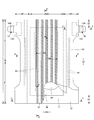
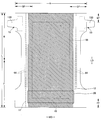
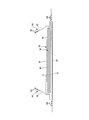
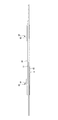
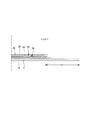
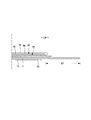
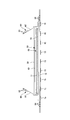
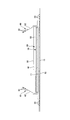
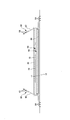
- FIG. 6 is a sectional view taken along line 6-6 of FIG.
- FIG. 7 is a cross-sectional view taken along the line 7-7 of FIG.
- FIG. 8 is a cross-sectional view taken along the line 8-8 of FIG. 9-9 is a cross-sectional view taken along the line 9-9 of FIG.
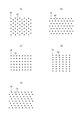
- FIG. 5 is a sectional view taken along line 5-5 of FIG. It is explanatory drawing which shows the arrangement of the fine fibrous cellulose aggregate particle. It is explanatory drawing which shows the other application example of the fine fibrous cellulose.
- FIG. 1 to 7 show an example of a tape-type disposable diaper, in which reference numeral X indicates the entire width of the diaper excluding the connecting tape, and reference numeral L indicates the total length of the diaper.
- Each component is joined by an adhesive as a joining means for joining.
- the adhesive is a solid, bead, curtain, summit or spiral coating of hot melt adhesive, or pattern coating (transfer of hot melt adhesive by letterpress method), or the fixed part of the elastic member is replaced or this.
- it is formed by coating an elastic member such as a comb gun or a sure wrap coating on the outer peripheral surface.
- hot melt adhesive examples include EVA type, adhesive rubber type (elastomer type), olefin type, polyester / polyamide type and the like, but they can be used without particular limitation.
- a joining means for joining each component a means by material welding such as a heat seal or an ultrasonic seal can also be used.
- the basis weight of the hot melt adhesive can be 1 to 40 g / m 2 . Within this range, the opposing surfaces of the two adjacent components are firmly adhered to each other at the adhesive application portion.
- the tape-type disposable diaper is composed of an absorber 56, a liquid-permeable top sheet 30 that covers the front side of the absorber 56, a liquid-impermeable resin film 11 that covers the outside of the absorber 56, and a liquid-impermeable resin film. It has an exterior non-woven fabric 12 that covers the outside and constitutes the outer surface of the product.
- Reference numeral F indicates a ventral portion located on the front side of the center in the front-rear direction
- reference numeral B indicates a dorsal portion located on the rear side of the center in the front-rear direction.
- the absorber 56 is a portion that absorbs and retains body fluids such as excrement and blood, and can be formed by aggregated particles of fibers.
- the fiber aggregate particles in addition to those obtained by stacking short fibers such as cotton pulp and synthetic fibers, filament aggregate particles obtained by opening tow (fiber bundle) of synthetic fibers such as cellulose acetate as necessary. Can also be used.
- the fiber basis weight can be, for example, about 100 to 300 g / m 2 in the case of stacking cotton-like pulp or short fibers, and about 30 to 120 g / m 2 in the case of filament aggregate particles. Can be done.
- the fineness is, for example, 1 to 16 dtex, preferably 1 to 10 dtex.
- the filament may be a non-crimped fiber, but is preferably a crimped fiber.
- the degree of crimping of the crimped fibers can be, for example, 5 to 75 fibers per 2.54 cm, preferably 10 to 50 fibers, and more preferably about 15 to 50 fibers.
- uniformly crimped crimped fibers can be used.
- the absorber 56 may contain highly absorbent polymer particles in part or all of it.
- the highly absorbent polymer particles include "powder” in addition to "particles".
- the particle size of the highly absorbent polymer particles is not particularly limited, but for example, sieving (shaking for 5 minutes) using a standard sieve (JIS Z8801-1: 2006) of 500 ⁇ m, and particles falling under the sieve by this sieving.
- the proportion of particles remaining on the 500 ⁇ m standard sieve is 30% by weight or less, and the 180 ⁇ m standard sieve. It is desirable that the proportion of particles remaining on the top is 60% by weight or more.
- the material of the highly absorbent polymer particles can be used without particular limitation, but a material having a water absorption of 30 g / g or more is preferable.
- Highly absorbent polymer particles include starch-based, cellulosic-based and synthetic polymer-based ones, which are starch-acrylic acid (salt) graft copolymers, saponified starch-acrylonitrile copolymers, and crosslinked sodium carboxymethyl cellulose.
- a substance or an acrylic acid (salt) polymer or the like can be used.
- As the shape of the highly absorbent polymer particles a commonly used powder or granular material is preferable, but other shapes can also be used.
- the highly absorbent polymer particles those having a water absorption rate of 70 seconds or less are preferably used. If the water absorption rate is too slow, so-called reversion, in which the liquid supplied into the absorber 56 returns to the outside of the absorber 56, is likely to occur.
- the highly absorbent polymer particles those having a gel strength of 1,000 Pa or more are preferably used. As a result, even when the bulky absorber 56 is used, the sticky feeling after liquid absorption can be effectively suppressed.
- the basis weight of the highly absorbent polymer particles can be appropriately determined according to the amount of absorption required for the application of the absorber 56. Therefore, although it cannot be said unconditionally, it can be set to 50 to 350 g / m 2 . If the basis weight of the polymer is less than this range, it becomes difficult to secure the absorption amount. Beyond this range, not only is the effect saturated, but the excess of highly absorbent polymer particles gives a jerky discomfort.
- the absorber 56 can be incorporated as an absorbent element 50 wrapped in a packaging sheet 58 in order to prevent the highly absorbent polymer particles from coming off or to improve the shape retention of the absorber 56.
- tissue paper particularly crepe paper, non-woven fabric, non-woven fabric of polylami, a sheet having small holes, or the like can be used. However, it is desirable that the sheet does not allow the highly absorbent polymer particles to escape.
- a non-woven fabric is used instead of the crepe paper, a hydrophilic SMMS (spunbond / meltblown / meltblown / spunbond) non-woven fabric is particularly preferable, and polypropylene, polyethylene / polypropylene or the like can be used as the material.
- the fiber basis weight is preferably 5 to 40 g / m 2 , especially 10 to 30 g / m 2 .
- the packaging sheet 58 may be formed by wrapping the entire absorber 56 with one sheet, or may wrap the entire absorber 56 with a plurality of sheets such as two upper and lower sheets. 58 may be omitted.
- the top sheet 30 has liquid permeability, and for example, a perforated or non-perforated non-woven fabric, a porous plastic sheet, or the like can be used.
- the non-woven fabric is not particularly limited as to what the raw material fiber is.
- olefin-based fibers such as polyethylene and polypropylene
- synthetic fibers such as polyester-based and polyamide-based fibers
- recycled fibers such as rayon and cupra
- natural fibers such as cotton
- mixed fibers and composite fibers in which two or more of these are used Etc. can be exemplified.
- the non-woven fabric may be produced by any processing.
- Examples of the processing method include known methods such as a spunlace method, a spunbond method, a thermal bond method, a melt blown method, a needle punch method, an air through method, and a point bond method.
- a spunlace method spunlace method
- a spunbond method spunbond method
- a thermal bond method melt blown method
- a needle punch method an air through method
- a point bond method if flexibility and drapeability are required, the span lace method is preferable, and if bulkiness and softness are required, the thermal bond method is preferable.
- the top sheet 30 extends from the front end to the rear end of the product in the front-rear direction and extends laterally from the absorber 56 in the width direction WD.
- the starting point of the rising gather 60 described later is more than the side edge of the absorber 56.
- the width of the top sheet 30 can be made shorter than the total width of the absorber 56, and the like can be appropriately deformed.
- an intermediate sheet (also referred to as a "second sheet") 40 having a faster liquid permeation speed than the top sheet 30 can be provided.
- the intermediate sheet 40 is for quickly transferring the liquid to the absorber, enhancing the absorption performance by the absorber, and preventing the phenomenon of "reversion" of the absorbed liquid from the absorber.
- the intermediate sheet 40 may be omitted.
- the intermediate sheet 40 examples include the same materials as the top sheet 30, spunlace non-woven fabric, spunbonded non-woven fabric, SMS non-woven fabric, pulp non-woven fabric, mixed sheet of pulp and rayon, point-bonded non-woven fabric or crepe paper.
- the air-through non-woven fabric is preferable because it is bulky. It is preferable to use a composite fiber having a core-sheath structure for the air-through non-woven fabric.
- the resin used for the core may be polypropylene (PP), but polyester (PET) having high rigidity is preferable.
- the basis weight is preferably 17 to 80 g / m 2.
- the thickness of the raw material fiber of the non-woven fabric is preferably 2.0 to 10 dtex.
- eccentric fibers having no core in the center, hollow fibers, and eccentric and hollow fibers as mixed fibers of all or a part of the raw material fibers.
- the intermediate sheet 40 in the illustrated example is arranged in the center shorter than the width of the absorber 56, it may be provided over the entire width. Further, the intermediate sheet 40 may be provided over the entire length of the diaper, but may be provided only in the intermediate portion including the excretion position as shown in the illustrated example.
- the liquid-impermeable resin film 11 is not particularly limited as long as it has moisture permeability, but for example, after kneading an inorganic filler in an olefin-based resin such as polyethylene or polypropylene to form a sheet, the film is uniaxial. Alternatively, a microporous sheet obtained by stretching in the biaxial direction can be preferably used. In particular, the liquid-impermeable resin film 11 can be used to have moisture permeability in the thickness direction. Needless to say, the liquid-impermeable resin film 11 is made of a non-woven fabric as a base material to improve waterproofness. Does not include.
- the liquid-impermeable resin film 11 made of a moisture-permeable resin film has a large number of characters (size, brand name, manufacturer name, pattern name, etc.) that are regularly repeated in the front-rear direction LD and the width direction WD, and a large number of patterns.
- characters size, brand name, manufacturer name, pattern name, etc.
- intermittent decorative printing that is placed only on one or both of the front and back of the product, such as product logos, character pictures, and photographs, may be applied.
- it is desirable that the liquid-impermeable resin film 11 has a small elongation.
- liquid-impermeable resin film 11 extends in the same or wider range as the absorber 56 in the front-rear direction LD and the width direction WD, but if necessary, such as when other impermeable means is present. It is also possible to form a form that does not cover the end portion of the absorber 56 in the front-rear direction LD and the width direction WD.
- the exterior non-woven fabric 12 covers the entire back side of the liquid-impermeable resin film 11 and gives the outer surface of the product a cloth-like appearance.
- the exterior non-woven fabric 12 is not particularly limited as long as it has moisture permeability, and the material fibers include, for example, olefin-based fibers such as polyethylene and polypropylene, synthetic fibers such as polyester-based and polyamide-based, and recycled fibers such as rayon and cupra. Natural fibers such as cotton can be used, and as the processing method, a spunlace method, a spunbond method, a thermal bond method, an air-through method, a needle punch method, or the like can be used.
- the non-woven fabric can be used alone or in layers. In the latter case, it is preferable to bond the non-woven fabrics to each other with a hot melt adhesive or the like.
- the fiber basis weight is preferably 15 to 25 g / m 2 , especially 18 to 20 g / m 2 .
- rising gathers 60 that stand up on the skin side of the wearer are provided on both sides of the surface widthwise WD. Is preferable. Of course, the rising gather 60 can be omitted.
- the rising gather 60 of the illustrated example is composed of a gather sheet 62 substantially continuous in the width direction WD and an elongated gather elastic member 63 fixed to the gather sheet 62 in an extended state along the front-rear direction LD. ing.
- a water-repellent non-woven fabric can be used as the gather sheet 62, and a rubber thread or the like can be used as the gather elastic member 63.
- a plurality of elastic members may be provided, and one elastic member may be provided.
- the inner surface of the gather sheet 62 has a joint start end in the width direction on the side portion of the top sheet 30, and the portion outside the width direction from the joint start end is the inner surface of each side flap portion SF, that is, liquid opaque in the illustrated example. It is bonded to the side portion of the sex resin film 11 and the side portion of the exterior nonwoven fabric 12 located outside in the width direction by a hot melt adhesive or the like.
- the inside of the rising gather 60 in the width direction from the joint start end is fixed on the top sheet 30 at both ends in the front-rear direction of the product, but the part between them is a non-fixed free part, and this free part is It rises due to the contraction force of the elastic member 63 and comes into close contact with the body surface.
- the tape-type disposable diaper of the illustrated example has a pair of end flap portions EF having no absorber 56 extending to the front side and the rear side of the absorber 56, respectively, and extending laterally from both side edges of the absorber 56, respectively. It has a pair of side flap portions SF that do not have an absorber 56.
- a leg circumference elastic member 64 made of an elongated elastic member such as rubber thread is fixed to each side flap portion SF in a state of being extended along the front-rear direction LD, whereby the leg circumference of each side flap portion SF is fixed.
- the part is configured as a flat gather.
- the leg circumference elastic member 64 is provided between the gather sheet 62 and the liquid-impermeable resin film 11 on the outer side of the joint portion of the gather sheet 62 in the width direction near the joint start end, and also has a side flap. It can also be provided between the liquid-impermeable resin film 11 and the exterior non-woven fabric 12 in the part SF.
- a plurality of elastic members 64 around the legs may be provided on each side as shown in the illustrated example, or only one elastic member 64 may be provided on each side.
- the side flap portion SF in the dorsal side portion B is provided with a connecting tape 13 that is detachably connected to the outer surface of the ventral side portion F.
- the connecting tape 13 is turned from both sides of the waist to the outer surface of the ventral portion F to connect the connecting portion 13A of the connecting tape 13 to an appropriate position on the outer surface of the ventral portion F.
- the structure of the connecting tape 13 is not particularly limited, but in the illustrated example, the tape mounting portion 13C fixed to the side flap portion SF, the sheet base material forming the tape main body portion 13B protruding from the tape mounting portion 13C, and this sheet. It has a connecting portion 13A with respect to the ventral side provided in the middle portion in the width direction of the tape main body portion 13B of the base material, and the tip side from the connecting portion 13A is a knob portion.
- a hook material male material for a mechanical fastener (hook-and-loop fastener) may be provided, or an adhesive layer may be provided.
- the hook material has a large number of engaging protrusions on its connecting surface, and the shapes of the engaging protrusions are (A) -shaped, (B) J-shaped, (C) mushroom-shaped, and (D).
- T-shapes There are T-shapes, (E) double J-shapes (shapes in which J-shapes are joined back to back), and the like, but any shape may be used.
- a non-woven fabric, a plastic film, a polylace non-woven fabric, paper or a composite material thereof can be used, but the fineness is 1.0 to 3.5 dtex.
- Spunbonded non-woven fabric, air-through non-woven fabric, or spunlaced non-woven fabric having a texture of 60 to 100 g / m 2 and a thickness of 1.0 mm or less is preferable.
- the target sheet 20 It is preferable to provide a target sheet 20 having a target for facilitating the connection at the connection portion of the connection tape 13 in the ventral portion F.
- the connecting portion 13A is a hook material
- the target sheet 20 can be a target sheet 20 in which a large number of loop threads are provided on the surface of a sheet base material made of a plastic film or a non-woven fabric so that the engaging protrusions of the hook material are entangled.
- the pressure-sensitive adhesive layer one in which the surface of a sheet base material made of a plastic film having a smooth surface, which is highly adhesive, is subjected to a peeling treatment can be used.
- the connecting portion of the connecting tape 13 on the ventral side portion F is made of a non-woven fabric
- the target sheet 20 is omitted and the hook material is used as the fiber of the exterior non-woven fabric 12. It can also be entwined and connected.
- the target sheet 20 as a mark may be provided between the exterior non-woven fabric 12 and the liquid-impermeable resin film 11.
- the fine fibrous cellulose refers to fine cellulose fibers obtained by defibrating pulp fibers, and generally refers to cellulose fibers containing cellulose fine fibers having an average fiber width of nano size (1 nm or more and 1000 nm or less).
- the average fiber width (median diameter) is preferably 100 nm or less (generally called cellulose nanofibril (CNF)), and particularly preferably 10 to 60 nm.
- CNF cellulose nanofibril
- cellulose fibers are innumerable ⁇ -glucose bonded in a chain mainly by ⁇ -1,4 glycosidic bonds. ⁇ -glucose has -H group, -OH group and the like.
- Microfibrous cellulose has the effect of adsorbing moisture (water molecules, etc.), absorbing moisture, and reducing odor. It is not clear why the fine fibrous cellulose has hygroscopicity and odor reduction. However, one reason is probably that the moisture component and the odor component are physically adsorbed on the surface of the fine fibrous cellulose and retained to deprive the degree of freedom. Further, since the fine fibrous cellulose has a molecular structure having a large number of ⁇ OH groups, the fine fibrous cellulose and moisture (water molecules, etc.) have a high affinity.
- the dispersion liquid of fine fibrous cellulose is obtained by dispersing fine fibrous cellulose in a solvent.
- concentration (mass / volume) of the dispersion liquid of the fine fibrous cellulose is preferably 0.1 to 10%, more preferably 1.0 to 5.0%, and 1.5 to 3.0%. Is particularly preferable. Dispersions greater than 10% are difficult to produce or costly to produce. Dispersions below 0.1% are not useful because the concentration of microfibrous cellulose is too low.
- the solvent for dispersing the fine fibrous cellulose is not particularly limited, but water, a lower alcohol such as ethanol, and a volatile organic solvent such as acetone can be used.
- the B-type viscosity (60 rpm, 20 ° C.) of the dispersion of fine fibrous cellulose is, for example, 700 cps or less, preferably 200 cps or less, and more preferably 50 cps or less.
- a method for measuring the average fiber width of the fine fibrous cellulose will be described. First, 100 ml of an aqueous dispersion of fine fibrous cellulose having a solid content concentration of 0.01 to 0.1% is filtered through a membrane filter made of Teflon (registered trademark), and the solvent is once with 100 ml of ethanol and three times with 20 ml of t-butanol. Replace. Next, it is freeze-dried and coated with osmium to prepare a sample. This sample is observed by an electron microscope SEM image at a magnification of 5000 times, 10000 times, or 30000 times (in this example, a magnification of 30000 times) depending on the width of the constituent fibers.
- the median diameter (median diameter) of the measured value is taken as the average fiber width.
- the diameter is not limited to the median diameter of the measured value, and for example, the number average diameter or the mode diameter (mode diameter) may be used as the average fiber diameter.
- Pulp fibers that can be used for producing fine fibrous cellulose include chemical pulps such as broadleaf pulp (LBKP) and coniferous pulp (NBKP), bleached thermomechanical pulp (BTMP), stone ground pulp (SGP), and pressurized stone ground.
- chemical pulps such as broadleaf pulp (LBKP) and coniferous pulp (NBKP), bleached thermomechanical pulp (BTMP), stone ground pulp (SGP), and pressurized stone ground.
- Pulp Pulp
- RGP Refiner Gland Pulp
- CGP ChemiGrand Pulp
- TGP Gland Pulp
- TMP Gland Pulp
- CMP Chemithermo Mechanical Pulp
- RMP Refiner Mechanical Pulp From machine pulp such as (RMP), brown waste paper, kraft envelope blind paper, magazine waste paper, newspaper waste paper, leaflet waste paper, office waste paper, cardboard waste paper, top white waste paper, Kent waste paper, imitation waste paper, ground ticket waste paper, sashimi waste paper, etc.
- DIP deinked pulp
- these may be used alone or in combination of a plurality of types as long as the effects of the present invention are not impaired.
- DIP deinked pulp
- Examples of the method for producing fine fibrous cellulose include mechanical methods such as a high-pressure homogenizer method, a microfluidizer method, a grinder grinding method, a bead mill freeze pulverization method, and an ultrasonic defibration method, but the method is limited to these methods. It's not a thing. Further, microfibration is promoted by the combined use of TEMPO oxidation treatment, phosphoric acid esterification treatment, acid treatment and the like.
- the agglomerate of this embodiment contains a moisturizer and at least one of microfibrous cellulose and aggregated particles thereof (hereinafter, may be referred to as “microfibrous cellulose or the like” in the present specification). ..
- the total of at least one of the fine fibrous cellulose and its aggregated particles and the moisturizer is 4 to 100 parts by mass, preferably 6 to 24 parts by mass, and more preferably 9 to 13 parts by mass. Partially included is preferable.
- the total amount of the fine fibrous cellulose and the fine fibrous cellulose aggregate particles is 0.25 parts by mass, more preferably 0.4 parts by mass, and further preferably 1. It can include those contained in 0 parts by mass. If it exceeds 1.0 part by mass, the aggregate becomes hard due to the hardness property of the fine fibrous cellulose.
- the moisturizer can contain polyhydric alcohol.
- the moisturizer may be entirely composed of a polyhydric alcohol, or a part of the moisturizer may be composed of a polyhydric alcohol.
- the polyhydric alcohol may be soluble in water.
- a polyhydric alcohol from a solution of water and a polyhydric alcohol, it can be separated by a known chemical separation method.
- polyhydric alcohol and water have different boiling points and freezing points, they can be separated by a fractional distillation method or a cooling method.
- the moisturizer is extracted from the agglomerates, it can be extracted by a known extraction method using an organic solvent. By separating and concentrating the extracted substance by a known method, various components contained in the moisturizer can be measured qualitatively and quantitatively.
- Ethanol can be mentioned as an example of a substance other than polyhydric alcohol that can be included in a moisturizer. Ethanol has some volatility, but can prevent the moisturizer from becoming too sticky. Further, a moisturizer containing ethanol is preferable because it has a relaxed quick-drying property and has a high moisturizing power.
- the volume ratio of ethanol to polyhydric alcohol may be, for example, 1: 1.5 to 1: 4.
- polyhydric alcohol a known one can be appropriately used.
- glycerin, diglycerin, ethylene glycol, polyethylene glycol, propylene glycol, 1,3-butylene glycol, hexylene glycol, mannitol, propylene glycol, dipropylene glycol, tripropylene glycol, 1,2-pentanediol, 1,3 -Propylene diol, sorbitol, polyethylene glycol can be exemplified.
- diglycerin, polyethylene glycol, dipropylene glycol, and 1,3-butylene glycol are preferable because they have high moisturizing power and transparency.
- polyhydric alcohols may be used alone or in combination of two or more. However, polyhydric alcohols are not limited to the substances listed above.
- nonionic surfactants can be exemplified as substances that can be contained in aggregates.
- the nonionic surfactants shown below are preferable because they have transparency and also have the effect of dispersing fine fibrous cellulose and the like and suppressing stickiness.
- examples of the nonionic surfactant include polyoxyethylene hydrogenated castor oil represented by hydrogenated castor oil of PEG-40 to PEG-60, PEG-20 sorbitan cocoate, sorbitan fatty acid ester, glycerin fatty acid ester, and polyglycerin fatty acid.
- examples thereof include oil, polyoxyethylene alkylamine, polyoxyethylene fatty acid amide, and alkyl glucoside. These nonionic surfactants may be used alone or in combination of two or more.
- the agglomerates When 0.01 to 4% by mass of the nonionic surfactant is contained in 100% by mass of the agglomerates, the agglomerates have a transparent feeling and the stickiness is suppressed, which is preferable. ..
- hydrogenated castor oils of PEG-40 to PEG-60 show a paste-like morphology and can be suitably included in agglomerates.
- one of the hydrogenated castor oils of PEG-40 to PEG-60 and the other nonionic surfactant may be blended in a mass ratio of 1: 1 to 1: 5. ..
- the following substances can also be included in the moisturizer.
- the moisturizer may be thickened to a suitable viscosity by adding a thickener.
- thickeners silica with hydrophobic treatment on the surface, fine particle silica with methylation treatment on the surface, aluminum silicate, swelling mica, clay-based thickeners such as bentonite and montmorillonite with hydrophobic treatment, magnesium stearate, calcium stearate.
- Fatty acid metal soaps such as aluminum stearate and zinc stearate, trivendilidene sorbitol, fatty acid amide, amide-modified polyethylene wax, hydrogenated castor oil, dextrin compounds such as fatty acid dextrin, cellulose compounds and the like.
- the moisturizer may contain water.
- Moisturizers include, but are not limited to, gels, colloids, pastes, slurries, cakes, creams, emulsions, which are non-volatile forms.
- the moisturizer may or may not be viscous. Further, the moisturizer can be deformed when an external force is applied, and may be deformed even if an external force is not applied, but it is preferable that the moisturizer is not easily deformed when an external force is not applied. ..
- the absorbent article provided with the functional sheet to which agglomerates such as fine fibrous cellulose containing the moisturizer which is hard to be deformed is attached, agglomerates even when it is placed vertically or horizontally for a long period of time, for example.
- the mixed form of the fine fibrous cellulose 101 and the fine fibrous cellulose aggregate particles 102 in the aggregate and other components can be shown below as an example. However, it is not limited to the following form.
- the first fine fibrous cellulose 101 or its aggregated particles 102 and the second fine fibrous cellulose 101 or its aggregated particles 102 are other components (for example, moisturizing). Examples thereof include forms in which they are connected via an agent 103).
- Other components for example, moisturizer 103 may be attached to a part of the fine fibrous cellulose 101 or the aggregated particles 102 thereof, or may be attached to the whole.
- other components for example, moisturizer 103) may be attached to the entire surface of the fine fibrous cellulose 101 or the entire surface of the aggregated particles 102 thereof.
- the microfibrous cellulose 101 shown by the broken line in FIG. 15B indicates that other components (for example, moisturizer 103) are attached to the entire surface of the microfibrous cellulose 101.
- the functional sheet can be used for sheets of various parts constituting the absorbent article.
- the functional sheet can be used for at least one of a liquid-permeable top sheet 30, an intermediate sheet 40, a liquid-impermeable resin film 11, and an exterior nonwoven fabric 12.
- the amount of cellulose-containing agglomerates applied to the non-woven fabric may differ depending on the use of the non-woven fabric, or may be the same regardless of the use of the non-woven fabric.
- the amount of adhesion is preferably 13 g / m 2 or less, preferably 10 g / m 2 or less.
- the amount of adhesion is preferably 2 g / m 2 or more. When the amount of adhesion is 13 g / m 2 or less, the adhered portion does not give a sticky impression, and a good texture is obtained.
- the agglomerates are attached to the non-woven fabric, it is not necessary to dare to set a lower limit of the amount of adhesion, but if it is 2 g / m 2 or more, for example, the hygroscopic effect of the fine fibrous cellulose becomes particularly good.
- the coating amount (adhesion amount) can be made larger than 13 g / m 2. Since the inner surface of the outer non-woven fabric 12 is located inside the product and the inner surface of the outer non-woven fabric 12 does not come into contact with the skin, it is difficult to feel stickiness.
- the agglomerate can be applied to the inner surface or the outer surface of the top sheet 30.
- the agglutinating surface that is, the inner surface of the top sheet 30 comes into contact with the skin.
- the coating amount (adhesion amount) of the agglomerate is 13 g / m 2 or less, it is difficult to feel stickiness in the coated portion.
- the amount of the agglomerate applied may be 13 g / m 2 or less.
- the excrement liquid excreted on the top sheet 30 is quickly permeated and absorbed by the absorber 56. If an amount of agglomerates exceeding 13 g / m 2 is applied to the outer surface of the top sheet, the agglomerates may hinder the rapid permeation of the excrement liquid.
- the agglutinating surface that is, the inner surface of the top sheet 30 comes into contact with the skin.
- the coating amount (adhesion amount) of the agglomerate is 13 g / m 2 or less, it is difficult to feel stickiness in the coated portion.
- the coating amount (adhesion amount) of the agglomerates may be 13 g / m 2 or less. It is preferable that the excrement liquid excreted on the top sheet 30 is quickly permeated and absorbed by the absorber 56. If the agglomerates exceed 13 g / m 2 and are applied to the outer surface of the top sheet, the agglomerates may hinder the rapid permeation of the excrement.
- the agglomerate can be applied to the inner surface or the outer surface of the intermediate sheet 40.
- the intermediate sheet 40 is for quickly transferring the liquid that has passed through the top sheet 30 to the absorber to enhance the absorption performance by the absorber.
- Glycerin is easily soluble in water, and when agglomerates are applied to the intermediate sheet 40, the liquid dissolves in the agglomerates due to the easy solubility of the glycerin, and the liquid in the anteroposterior direction and / or the width direction of the intermediate sheet 40 Diffusion is promoted. As a result, the transfer of the liquid to the absorber is made smoother, and the phenomenon of liquid reversion is suppressed.
- the amount of the agglomerates applied to the inner or outer surface of the intermediate sheet 40 can be, for example, 13 g / m 2 or less. If it exceeds 13 g / m 2 , the adhesive strength with other functional sheets may be weakened.
- Each of the constituent members in the cross-sectional views 3 to 7 is joined by an adhesive as a joining means for joining.
- an adhesive for example, the respective surfaces of the liquid permeable top sheet 30 and the intermediate sheet 40 facing each other, the respective surfaces of the liquid permeable top sheet 30 or the intermediate sheet 40 and the absorber 56 facing each other, the absorber 56 and the non-woven fabric.
- the surfaces of the permeable resin film 11 facing each other and the surfaces of the liquid-impermeable resin film 11 and the exterior non-woven fabric 12 facing each other are joined.
- the joint is not limited to each of these listed surfaces.
- the bonding by the adhesive may be weakened at the portion where the agglomerates are applied.
- bonding can be performed by reducing the amount of agglomerates applied.
- the amount of the adhesive applied without reducing the amount of the agglomerate applied, it is possible to join the constituent members to each other.
- the application of the agglomerates to the sheet it may be applied to both the front surface and the back surface of the sheet, or may be applied only to the front surface or the back surface.
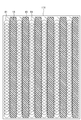
- linear portions continuous in the front-rear direction are arranged on both sides or one surface of the sheet 111 at intervals in the width direction so as to be striped portions.
- An agglomerate 15 is arranged in the agglomerate 15 and an adhesive 81 is arranged in the front-rear direction at each of these intervals, that is, the adhesive 81 is arranged so as to form a striped portion.
- one surface of the sheet 111 may be covered with another sheet to join the sheets to each other. In this way, since the agglomerates 15 do not intervene in the joints between the sheets, strong adhesion by the adhesive 81 is possible, and the adhesive strength between the constituent members is not weakened.
- the adhesive 81 is arranged so that the linear portions continuous in the front-rear direction become striped portions arranged at intervals in the width direction.
- the adhesive 81 may be arranged so as to pass through a place where agglomerates are not arranged, that is, a lattice hole, but the adhesive 81 is not limited to this. Further, although not shown, the adhesive 81 may be arranged only in the lattice holes.
- the agglomerates 15 are arranged linearly in the front-rear direction on one surface of the sheet 111, but the present invention is not limited to this embodiment, and the linear portion continuous in the width direction is arranged in the front-rear direction.
- the agglomerates 15 may be arranged so as to form striped portions arranged at intervals. Further, the direction in which the agglomerates 15 crawl may be arranged so as to be continuous in an oblique direction on the paper surface.
- the agglomerates 15 may be arranged on one surface of the sheet 111 at a large number of dots in a dot shape.
- the size of each dot is 1.0 to 4.0 mm and the distance between the dots is 5 to 30 mm, for example.
- the arrangement of the dots of the agglomerates 15 is not particularly limited, but for example, an arrangement in which an orthorhombic lattice is formed ((a), (b), (e) in the same figure) and an arrangement in which the dots are arranged in a lattice (the same figure (c), (d)). )) Etc. can be presented. In this case, it is advisable to appropriately provide the adhesive 81 in the portion where the dots are not arranged.
- the agglomerate When the agglomerate is applied to the sheet, it may be applied to only one side of the sheet or to both sides of the sheet. Further, the aggregate may be applied evenly to the entire sheet surface, or the aggregate may be applied to a part of the sheet surface. For example, the aggregate may be applied to at least a portion of the sheet surface that overlaps with the absorber 56.
- the absorber 56 is a place where the excrement liquid is absorbed, and it is considered that the humidity is high after the excretion.
- the fine fibrous cellulose or the like is provided on the portion of the sheet surface that overlaps with the absorbent body 56, the moisture emitted from the absorbent body 56 is effectively absorbed by the fine fibrous cellulose or the like, and the dryness of the sheet is improved. Be kept.
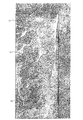
- FIG. 12 shows a region 80 coated with a fine fibrous cellulose dispersion containing no moisturizer.
- the relatively white portion 31 was formed with wrinkles that were convex toward the front in the depth direction in a plan view.
- wrinkles that are convex (concave in the front) in the depth direction and in the back are formed in the plan view, and uneven wrinkles are formed in the entire region 80.
- the feel of the sheet is glued, dried and stiff, so to speak, crisp.
- the coated portion where the agglomerates were applied to the sheet surface was moist even after several weeks, and the uneven wrinkles as shown in FIG. 12 were not formed (see FIG. 13).
- agglomerates having a ratio of microfibrous cellulose to a moisturizer of 3:10 are applied to the region 90. There was almost no unevenness in the region 90. The feel of the seat was almost non-greasy and gave a smooth impression.
- the method for producing the functional sheet and the absorbent article is not particularly limited, but it is preferable to follow the steps described below as an example.
- the functional sheet is a liquid-permeable top sheet that covers the inner surface of the absorber, a liquid-impermeable resin film that covers the outer surface of the absorber and has moisture permeability, and the liquid-impermeable resin film.
- the absorbent article can be produced through the above steps.
- the fine fibrous cellulose dispersion liquid and other components are mixed to prepare a mixed liquid.
- the mixing ratio may be as described above.
- the concentration of the fine fibrous cellulose contained in the fine fibrous cellulose dispersion may be, for example, 2 to 3%. It is preferable to stir with a stirrer such as a magnetic stirrer or a glass rod so that the mixed solution has a uniform concentration.
- a nonionic surfactant, petrolatum or other substance, and a thickener can be appropriately mixed with this mixed solution.
- the agglomerates obtained by stirring are applied to one or both sides of the target sheet. Then, it is dried for 3 hours to evaporate the water content in the agglomerates to obtain a functional sheet.
- a drying method of air-drying, a method of applying hot air using a dryer or the like can be applied.
- An absorbent article is produced by a known method using at least one of a liquid-permeable top sheet, a liquid-impermeable resin film, and an exterior nonwoven fabric as a functional sheet.
- a functional sheet having agglomerates coated on one side when used as an exterior nonwoven fabric, when the coated surface is outside the absorbent article, a member (for example, a liquid) provided inside the exterior nonwoven fabric of the absorbent article. It is preferable to join the surface of the exterior non-woven fabric that is not the coated surface to the impermeable resin film). Then, the coated surface of the exterior non-woven fabric becomes the outer surface of the product.
- Example 1 (Sample preparation) (1) The agglomerates were uniformly applied to the surface of the non-woven fabric 10 cm square so that the amount applied after air drying was 4 g / m 2.
- air drying means drying in a test room at 23 ° C. ⁇ 1 ° C. and normal pressure for 3 hours.
- the raw material of this non-woven fabric was polypropylene fiber (PP), which was spunbonded and had a basis weight of 15 g / m 2.
- PP polypropylene fiber
- Table 1 the blending ratio of the amount (g) of microfibrous cellulose (CNF) in the absolutely dry state and the amount (g) of glycerin was variously changed to form aggregates (Example 1 shown in Table 1). ⁇ 5).
- Comparative Example 1 As a comparative example, an aggregate consisting only of glycerin was used as Comparative Example 1, and an agglutinating material consisting only of fine fibrous cellulose was used as Comparative Example 2. It means the state cooled to room temperature.
- Comparative Example 2 A sample (test example) was prepared by air-drying the coated non-woven fabric at 23 ° C. ⁇ 1 ° C. and normal pressure for 3 hours. The inventors have stated that the weight of the non-woven fabric after coating, which is dried at 23 ° C. ⁇ 1 ° C. at normal pressure for 3 hours or more by air drying or a dryer, does not decrease any more and becomes almost constant. I know. (3) The flexibility, non-stickiness, transfer rate, and hygroscopicity of the obtained sample were measured.
- front-back (vertical) direction means the direction connecting the ventral side (front side) and the dorsal side (rear side)
- width direction means the direction orthogonal to the front-back direction (horizontal direction).
- ⁇ means the one closer to the wearer's skin, and "outside” means the one farther from the wearer's skin.
- the “inner surface” means the surface of the member closer to the wearer's skin, and the “outer surface” means the surface farther from the wearer's skin.
- the "LD direction” and "WD direction” mean the flow direction (LD direction) in the manufacturing equipment and the lateral direction (WD direction) orthogonal to the flow direction, and one of them is the front-rear direction of the product. The other is in the width direction of the product.
- the LD direction of the non-woven fabric is the direction of fiber orientation of the non-woven fabric.
- the fiber orientation is the direction along which the fibers of the non-woven fabric follow. For example, the measurement method based on the fiber orientation test method based on the zero-distance tensile strength of the TAPPI standard method T481 or the fiber orientation based on the tensile strength ratio in the anteroposterior direction and the width direction. It can be discriminated by a simple measuring method for determining the orientation direction.
- Unfolded state means a state in which it is unfolded flat without shrinkage or slack.
- Methodsuke is measured as follows. After pre-drying the sample or test piece, leave it in a test room or device under standard conditions (test location: temperature 23 ⁇ 1 ° C., relative humidity 50 ⁇ 2%) to bring it to a constant weight. Pre-drying refers to making a sample or test piece constant in an environment at a temperature of 100 ° C. It is not necessary to pre-dry the fibers having an official moisture content of 0.0%. A sample having a size of 100 mm ⁇ 100 mm is cut out from the test piece in a constant weight state using a sampling template (100 mm ⁇ 100 mm). The weight of the sample is measured and multiplied by 100 to calculate the weight per square meter, which is used as the basis weight.
- the "thickness" is automatically measured using an automatic thickness measuring device (KES-G5 handy compression tester) under the conditions of a load of 0.098 N / cm 2 and a pressurized area of 2 cm 2.
- KS-G5 handy compression tester automatic thickness measuring device
- Water absorption rate is the "time to the end point" when JIS K7224-1996 "Water absorption rate test method for highly water-absorbent resin” was performed using 2 g of highly absorbent polymer and 50 g of physiological saline. And.
- the coating amount g / m 2 of the agglomerates is a value after air drying.
- test or measurement shall be performed in a test room or equipment under standard conditions (test location: temperature 23 ⁇ 1 ° C, relative humidity 50 ⁇ 2%). To do.
- the dimensions of each part mean the dimensions in the unfolded state, not in the natural length state.
- the present invention can be applied to all disposable diapers such as pants-type disposable diapers and pad-type disposable diapers, in addition to tape-type disposable diapers as in the above example, and can be applied to other absorbent articles such as sanitary napkins. Needless to say, it can also be applied.
Landscapes
- Health & Medical Sciences (AREA)
- Engineering & Computer Science (AREA)
- General Health & Medical Sciences (AREA)
- Veterinary Medicine (AREA)
- Public Health (AREA)
- Epidemiology (AREA)
- Life Sciences & Earth Sciences (AREA)
- Animal Behavior & Ethology (AREA)
- Heart & Thoracic Surgery (AREA)
- Biomedical Technology (AREA)
- Vascular Medicine (AREA)
- Materials Engineering (AREA)
- Chemical & Material Sciences (AREA)
- Hematology (AREA)
- Manufacturing & Machinery (AREA)
- Dermatology (AREA)
- Absorbent Articles And Supports Therefor (AREA)
- Laminated Bodies (AREA)
Priority Applications (1)
| Application Number | Priority Date | Filing Date | Title |
|---|---|---|---|
| CN202080056230.3A CN114206283B (zh) | 2019-09-26 | 2020-09-08 | 功能性片和具备该功能性片的吸收性物品、以及它们的制造方法 |
Applications Claiming Priority (2)
| Application Number | Priority Date | Filing Date | Title |
|---|---|---|---|
| JP2019-176077 | 2019-09-26 | ||
| JP2019176077A JP7159141B2 (ja) | 2019-09-26 | 2019-09-26 | 機能性シート及びこれを備えた吸収性物品、並びにこれらの製造方法 |
Publications (1)
| Publication Number | Publication Date |
|---|---|
| WO2021059957A1 true WO2021059957A1 (ja) | 2021-04-01 |
Family
ID=75165713
Family Applications (1)
| Application Number | Title | Priority Date | Filing Date |
|---|---|---|---|
| PCT/JP2020/033902 Ceased WO2021059957A1 (ja) | 2019-09-26 | 2020-09-08 | 機能性シート及びこれを備えた吸収性物品、並びにこれらの製造方法 |
Country Status (4)
| Country | Link |
|---|---|
| JP (1) | JP7159141B2 (enExample) |
| CN (1) | CN114206283B (enExample) |
| TW (1) | TWI837420B (enExample) |
| WO (1) | WO2021059957A1 (enExample) |
Citations (3)
| Publication number | Priority date | Publication date | Assignee | Title |
|---|---|---|---|---|
| JPH10168230A (ja) * | 1996-12-13 | 1998-06-23 | Nippon Kyushutai Gijutsu Kenkyusho:Kk | 複合体組成物およびその製造方法 |
| JP2002011044A (ja) * | 2000-06-29 | 2002-01-15 | Oji Paper Co Ltd | おむつ |
| JP6488042B1 (ja) * | 2018-03-29 | 2019-03-20 | 大王製紙株式会社 | 吸収性物品 |
Family Cites Families (17)
| Publication number | Priority date | Publication date | Assignee | Title |
|---|---|---|---|---|
| US4429001A (en) * | 1982-03-04 | 1984-01-31 | Minnesota Mining And Manufacturing Company | Sheet product containing sorbent particulate material |
| FR2651783B1 (fr) * | 1989-09-12 | 1993-05-07 | Elysees Balzac Financiere | Materiau alveolaire cellulosique a retention d'eau amelioree et preparation de celui-ci. |
| TR199901328T2 (xx) * | 1996-12-13 | 2002-04-22 | Japon Absorbent Technology Institute | Y�ksek emi� g�c�ne sahip kompozit ve bunun yap�m�. |
| US6140550A (en) * | 1997-06-27 | 2000-10-31 | Basf Aktiengesellschaft | Water-absorbent article and method |
| US6710223B1 (en) * | 1997-09-10 | 2004-03-23 | The Procter & Gamble Company | Method for improving skin condition |
| US6287581B1 (en) * | 1999-04-23 | 2001-09-11 | Kimberly-Clark Worldwide, Inc. | Absorbent articles providing skin health benefits |
| EP1297809A4 (en) * | 2000-06-29 | 2005-01-19 | Oji Paper Co | ABSORBENT PRODUCT |
| US20020120242A1 (en) * | 2000-12-22 | 2002-08-29 | Tyrrell David John | Absorbent articles with hydrophilic compositions containing botanicals |
| US20030130636A1 (en) * | 2001-12-22 | 2003-07-10 | Brock Earl David | System for improving skin health of absorbent article wearers |
| JP3891930B2 (ja) * | 2002-12-25 | 2007-03-14 | 花王株式会社 | 吸収性物品 |
| US20050059941A1 (en) * | 2003-09-11 | 2005-03-17 | Kimberly-Clark Worldwide, Inc. | Absorbent product with improved liner treatment |
| WO2006006395A1 (ja) * | 2004-06-28 | 2006-01-19 | Daio Paper Corporation | 吸収体及び吸収性物品 |
| JP2006063508A (ja) * | 2004-07-30 | 2006-03-09 | Mitsubishi Chemicals Corp | 吸水性樹脂複合体およびその製造法並びに吸水性樹脂シートおよび吸水性物品 |
| JP4937572B2 (ja) * | 2005-11-30 | 2012-05-23 | 大王製紙株式会社 | 使い捨ておむつ |
| JP5702928B2 (ja) * | 2009-11-30 | 2015-04-15 | ユニ・チャーム株式会社 | 吸水性材料の集合体を薄くする方法およびその方法によって得られる厚さの薄い吸水性材料の集合体 |
| CN107630385B (zh) * | 2012-08-10 | 2020-12-11 | 王子控股株式会社 | 微细纤维状纤维素聚集体及其制造方法、以及微细纤维状纤维素分散液的再制造方法 |
| CN108368673B (zh) * | 2015-12-16 | 2020-11-17 | 花王株式会社 | 无纺布 |
-
2019
- 2019-09-26 JP JP2019176077A patent/JP7159141B2/ja active Active
-
2020
- 2020-09-08 WO PCT/JP2020/033902 patent/WO2021059957A1/ja not_active Ceased
- 2020-09-08 CN CN202080056230.3A patent/CN114206283B/zh active Active
- 2020-09-23 TW TW109132810A patent/TWI837420B/zh active
Patent Citations (3)
| Publication number | Priority date | Publication date | Assignee | Title |
|---|---|---|---|---|
| JPH10168230A (ja) * | 1996-12-13 | 1998-06-23 | Nippon Kyushutai Gijutsu Kenkyusho:Kk | 複合体組成物およびその製造方法 |
| JP2002011044A (ja) * | 2000-06-29 | 2002-01-15 | Oji Paper Co Ltd | おむつ |
| JP6488042B1 (ja) * | 2018-03-29 | 2019-03-20 | 大王製紙株式会社 | 吸収性物品 |
Also Published As
| Publication number | Publication date |
|---|---|
| JP2021052820A (ja) | 2021-04-08 |
| JP7159141B2 (ja) | 2022-10-24 |
| CN114206283A (zh) | 2022-03-18 |
| TWI837420B (zh) | 2024-04-01 |
| TW202112329A (zh) | 2021-04-01 |
| CN114206283B (zh) | 2023-07-04 |
Similar Documents
| Publication | Publication Date | Title |
|---|---|---|
| US11963857B2 (en) | Absorbent article | |
| KR101944579B1 (ko) | 흡수성 물품 | |
| WO2019188567A1 (ja) | 吸収性物品及びその製造方法 | |
| CN110944613B (zh) | 吸收性物品 | |
| KR102722131B1 (ko) | 흡수성 물품 | |
| JP7159141B2 (ja) | 機能性シート及びこれを備えた吸収性物品、並びにこれらの製造方法 | |
| JP6740309B2 (ja) | 凹凸を有するシート部材、及びこれを備えた吸収性物品、並びにこれらの製造方法 | |
| JP7713766B2 (ja) | 吸湿シート、使い捨て着用物品及びその製造方法 | |
| JP2020151352A5 (enExample) | ||
| JP7049154B2 (ja) | 使い捨て着用物品 | |
| JP6740310B2 (ja) | 連結式使い捨て着用物品 | |
| RU2771691C2 (ru) | Впитывающее изделие | |
| JP6808771B2 (ja) | 連結式使い捨て着用物品 | |
| JP6740311B2 (ja) | 吸収性物品 | |
| TW202237050A (zh) | 拋棄式穿著用物品及其製造方法 | |
| JP2020151351A5 (enExample) |
Legal Events
| Date | Code | Title | Description |
|---|---|---|---|
| 121 | Ep: the epo has been informed by wipo that ep was designated in this application |
Ref document number: 20868988 Country of ref document: EP Kind code of ref document: A1 |
|
| NENP | Non-entry into the national phase |
Ref country code: DE |
|
| 122 | Ep: pct application non-entry in european phase |
Ref document number: 20868988 Country of ref document: EP Kind code of ref document: A1 |