WO2021006259A1 - ワックス分散剤および熱可塑性樹脂組成物 - Google Patents
ワックス分散剤および熱可塑性樹脂組成物 Download PDFInfo
- Publication number
- WO2021006259A1 WO2021006259A1 PCT/JP2020/026514 JP2020026514W WO2021006259A1 WO 2021006259 A1 WO2021006259 A1 WO 2021006259A1 JP 2020026514 W JP2020026514 W JP 2020026514W WO 2021006259 A1 WO2021006259 A1 WO 2021006259A1
- Authority
- WO
- WIPO (PCT)
- Prior art keywords
- wax
- mass
- copolymer
- thermoplastic resin
- monomer
- Prior art date
- Legal status (The legal status is an assumption and is not a legal conclusion. Google has not performed a legal analysis and makes no representation as to the accuracy of the status listed.)
- Ceased
Links
Classifications
-
- C—CHEMISTRY; METALLURGY
- C08—ORGANIC MACROMOLECULAR COMPOUNDS; THEIR PREPARATION OR CHEMICAL WORKING-UP; COMPOSITIONS BASED THEREON
- C08F—MACROMOLECULAR COMPOUNDS OBTAINED BY REACTIONS ONLY INVOLVING CARBON-TO-CARBON UNSATURATED BONDS
- C08F212/00—Copolymers of compounds having one or more unsaturated aliphatic radicals, each having only one carbon-to-carbon double bond, and at least one being terminated by an aromatic carbocyclic ring
-
- C—CHEMISTRY; METALLURGY
- C08—ORGANIC MACROMOLECULAR COMPOUNDS; THEIR PREPARATION OR CHEMICAL WORKING-UP; COMPOSITIONS BASED THEREON
- C08L—COMPOSITIONS OF MACROMOLECULAR COMPOUNDS
- C08L91/00—Compositions of oils, fats or waxes; Compositions of derivatives thereof
- C08L91/06—Waxes
-
- C—CHEMISTRY; METALLURGY
- C08—ORGANIC MACROMOLECULAR COMPOUNDS; THEIR PREPARATION OR CHEMICAL WORKING-UP; COMPOSITIONS BASED THEREON
- C08F—MACROMOLECULAR COMPOUNDS OBTAINED BY REACTIONS ONLY INVOLVING CARBON-TO-CARBON UNSATURATED BONDS
- C08F212/00—Copolymers of compounds having one or more unsaturated aliphatic radicals, each having only one carbon-to-carbon double bond, and at least one being terminated by an aromatic carbocyclic ring
- C08F212/02—Monomers containing only one unsaturated aliphatic radical
- C08F212/04—Monomers containing only one unsaturated aliphatic radical containing one ring
- C08F212/06—Hydrocarbons
- C08F212/08—Styrene
-
- C—CHEMISTRY; METALLURGY
- C08—ORGANIC MACROMOLECULAR COMPOUNDS; THEIR PREPARATION OR CHEMICAL WORKING-UP; COMPOSITIONS BASED THEREON
- C08F—MACROMOLECULAR COMPOUNDS OBTAINED BY REACTIONS ONLY INVOLVING CARBON-TO-CARBON UNSATURATED BONDS
- C08F212/00—Copolymers of compounds having one or more unsaturated aliphatic radicals, each having only one carbon-to-carbon double bond, and at least one being terminated by an aromatic carbocyclic ring
- C08F212/02—Monomers containing only one unsaturated aliphatic radical
- C08F212/04—Monomers containing only one unsaturated aliphatic radical containing one ring
- C08F212/06—Hydrocarbons
- C08F212/08—Styrene
- C08F212/10—Styrene with nitriles
-
- C—CHEMISTRY; METALLURGY
- C08—ORGANIC MACROMOLECULAR COMPOUNDS; THEIR PREPARATION OR CHEMICAL WORKING-UP; COMPOSITIONS BASED THEREON
- C08F—MACROMOLECULAR COMPOUNDS OBTAINED BY REACTIONS ONLY INVOLVING CARBON-TO-CARBON UNSATURATED BONDS
- C08F220/00—Copolymers of compounds having one or more unsaturated aliphatic radicals, each having only one carbon-to-carbon double bond, and only one being terminated by only one carboxyl radical or a salt, anhydride ester, amide, imide or nitrile thereof
- C08F220/02—Monocarboxylic acids having less than ten carbon atoms; Derivatives thereof
- C08F220/10—Esters
- C08F220/12—Esters of monohydric alcohols or phenols
- C08F220/16—Esters of monohydric alcohols or phenols of phenols or of alcohols containing two or more carbon atoms
- C08F220/18—Esters of monohydric alcohols or phenols of phenols or of alcohols containing two or more carbon atoms with acrylic or methacrylic acids
-
- C—CHEMISTRY; METALLURGY
- C08—ORGANIC MACROMOLECULAR COMPOUNDS; THEIR PREPARATION OR CHEMICAL WORKING-UP; COMPOSITIONS BASED THEREON
- C08L—COMPOSITIONS OF MACROMOLECULAR COMPOUNDS
- C08L101/00—Compositions of unspecified macromolecular compounds
-
- C—CHEMISTRY; METALLURGY
- C08—ORGANIC MACROMOLECULAR COMPOUNDS; THEIR PREPARATION OR CHEMICAL WORKING-UP; COMPOSITIONS BASED THEREON
- C08L—COMPOSITIONS OF MACROMOLECULAR COMPOUNDS
- C08L25/00—Compositions of, homopolymers or copolymers of compounds having one or more unsaturated aliphatic radicals, each having only one carbon-to-carbon double bond, and at least one being terminated by an aromatic carbocyclic ring; Compositions of derivatives of such polymers
-
- C—CHEMISTRY; METALLURGY
- C08—ORGANIC MACROMOLECULAR COMPOUNDS; THEIR PREPARATION OR CHEMICAL WORKING-UP; COMPOSITIONS BASED THEREON
- C08L—COMPOSITIONS OF MACROMOLECULAR COMPOUNDS
- C08L25/00—Compositions of, homopolymers or copolymers of compounds having one or more unsaturated aliphatic radicals, each having only one carbon-to-carbon double bond, and at least one being terminated by an aromatic carbocyclic ring; Compositions of derivatives of such polymers
- C08L25/02—Homopolymers or copolymers of hydrocarbons
- C08L25/04—Homopolymers or copolymers of styrene
- C08L25/06—Polystyrene
-
- C—CHEMISTRY; METALLURGY
- C08—ORGANIC MACROMOLECULAR COMPOUNDS; THEIR PREPARATION OR CHEMICAL WORKING-UP; COMPOSITIONS BASED THEREON
- C08L—COMPOSITIONS OF MACROMOLECULAR COMPOUNDS
- C08L25/00—Compositions of, homopolymers or copolymers of compounds having one or more unsaturated aliphatic radicals, each having only one carbon-to-carbon double bond, and at least one being terminated by an aromatic carbocyclic ring; Compositions of derivatives of such polymers
- C08L25/02—Homopolymers or copolymers of hydrocarbons
- C08L25/04—Homopolymers or copolymers of styrene
- C08L25/08—Copolymers of styrene
-
- C—CHEMISTRY; METALLURGY
- C08—ORGANIC MACROMOLECULAR COMPOUNDS; THEIR PREPARATION OR CHEMICAL WORKING-UP; COMPOSITIONS BASED THEREON
- C08L—COMPOSITIONS OF MACROMOLECULAR COMPOUNDS
- C08L25/00—Compositions of, homopolymers or copolymers of compounds having one or more unsaturated aliphatic radicals, each having only one carbon-to-carbon double bond, and at least one being terminated by an aromatic carbocyclic ring; Compositions of derivatives of such polymers
- C08L25/02—Homopolymers or copolymers of hydrocarbons
- C08L25/04—Homopolymers or copolymers of styrene
- C08L25/08—Copolymers of styrene
- C08L25/14—Copolymers of styrene with unsaturated esters
-
- C—CHEMISTRY; METALLURGY
- C08—ORGANIC MACROMOLECULAR COMPOUNDS; THEIR PREPARATION OR CHEMICAL WORKING-UP; COMPOSITIONS BASED THEREON
- C08L—COMPOSITIONS OF MACROMOLECULAR COMPOUNDS
- C08L67/00—Compositions of polyesters obtained by reactions forming a carboxylic ester link in the main chain; Compositions of derivatives of such polymers
-
- C—CHEMISTRY; METALLURGY
- C08—ORGANIC MACROMOLECULAR COMPOUNDS; THEIR PREPARATION OR CHEMICAL WORKING-UP; COMPOSITIONS BASED THEREON
- C08L—COMPOSITIONS OF MACROMOLECULAR COMPOUNDS
- C08L2205/00—Polymer mixtures characterised by other features
- C08L2205/03—Polymer mixtures characterised by other features containing three or more polymers in a blend
Definitions
- the present invention relates to a wax dispersant having an excellent effect of imparting wax dispersibility to a thermoplastic resin, and a thermoplastic resin composition using the wax dispersant.
- thermoplastic resins such as polyester, polycarbonate, and polystyrene
- the mold releasability from the mold during molding is improved to suppress the contamination of the mold, and the resin is softened according to the thermal or mechanical load.
- Wax is added in order to adjust the physical properties such as.
- the wax for example, hydrocarbon wax, fatty acid ester and the like are used.
- the dispersed state of the wax in the thermoplastic resin is insufficient, not only the effects of improving the releasability and adjusting the physical characteristics of the resin are insufficient, but also the transparency is lowered and the wax is applied to the resin surface. Problems such as the occurrence of blocking due to the transition to.
- an electrophotographic toner formed of a thermoplastic resin composition in which components such as wax and a colorant are mixed with a thermoplastic resin can be mentioned.
- a resin composition for a toner since the amount of wax added is larger than that in a resin molding process, problems due to a decrease in wax dispersibility are more likely to occur, and various measures have been taken.
- Patent Document 1 a wax modified product obtained by modifying a polyolefin wax with a vinyl monomer is used as a dispersant in a thermoplastic resin composition containing a polyester resin and carnauba wax to obtain a wax for the thermoplastic resin. It discloses that it improves the dispersibility of.
- an acrylic resin having a specific monomer composition is used as a dispersant for a thermoplastic resin composition containing a polyester resin and a monoester wax.
- the wax dispersion effect can be obtained to some extent by the above-mentioned attempt, the wax cannot be sufficiently finely dispersed even if a relatively large amount of the dispersant is used, or the softness is improved. Even if it could be done, there was a problem that the storage stability was insufficient and both characteristics could not be compatible, and it was not sufficiently satisfactory.
- An object of the present invention is to improve the fluidity of the resin composition in a molten state when wax is added to the thermoplastic resin, and at the same time, to improve the transparency of the resin composition without lowering the transparency of the resin composition. It is to provide a wax dispersant capable of improving the stability of the wax during storage.
- the present inventors have found that the above problems can be solved by using a polymer having a specific structure as a wax dispersant. That is, the present invention is as follows.
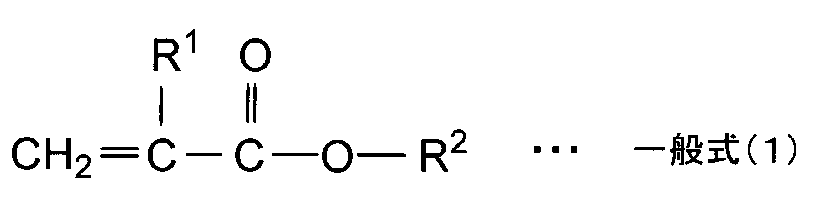
- the structural unit derived from the aromatic monomer (A1) is 40 to 94% by mass, and the (meth) acrylic acid long-chain alkyl ester (A2) represented by the following general formula (1). It has a copolymerization composition containing 5 to 40% by mass of a structural unit derived from and 1 to 20% by mass of a structural unit derived from (meth) acrylic acid alkyl ester (A3) represented by the following general formula (2).
- a wax dispersant which is a copolymer (A) having a weight average molecular weight of 3,000 to 50,000.
- R 1 represents a hydrogen atom or a methyl group
- R 2 represents an alkyl group having 9 to 22 carbon atoms.
- R 3 represents a hydrogen atom or a methyl group
- R 4 represents an alkyl group having 1 to 8 carbon atoms.
- thermoplastic resin composition containing the wax dispersant, the thermoplastic resin, and the wax according to the above [1].
- the fluidity of the thermoplastic resin composition containing wax in a molten state is improved, and at the same time, the thermoplastic resin composition is stored without deteriorating the transparency. It can improve stability over time.
- the wax dispersant of the present invention contains 40 to 94% by mass of a structural unit derived from the aromatic monomer (A1) based on the mass of the pre-polymerization monomer, and is a (meth) acrylic acid long chain represented by the following general formula (1).
- Copolymerization containing 5 to 40% by mass of the structural unit derived from the alkyl ester (A2) and 1 to 20% by mass of the structural unit derived from the (meth) acrylic acid alkyl ester (A3) represented by the following general formula (2). It is a copolymer (A) having a composition and having a weight average molecular weight of 3,000 to 50,000.
- R 1 represents a hydrogen atom or a methyl group
- R 2 represents an alkyl group having 9 to 22 carbon atoms.
- R 3 represents a hydrogen atom or a methyl group
- R 4 represents an alkyl group having 1 to 8 carbon atoms.
- (meth) acrylic is a general term including acrylic and methacrylic.
- the structural unit constituting the polymer means a unit having a chemical structure derived from the monomer used for synthesizing the polymer by a polymerization reaction and constituting a chain structure of the polymer chain. To do.
- the copolymerization ratio of the structural unit derived from each monomer based on the mass of the pre-polymerization monomer is incorporated into the copolymer with respect to the total mass of the monomer incorporated into the copolymer by the polymerization reaction before polymerization. It means the ratio of the mass of each of the obtained monomers before polymerization.
- the copolymerization ratio of the pre-polymerization monomer of the structural unit derived from each monomer based on the mass can be calculated from the amount of each monomer charged when synthesizing the copolymer.
- the copolymer is used.
- the amount of the incorporated monomer is considered to be equal to the amount charged.
- the polymerization conversion rate of the monomer at the time of synthesizing the copolymer is less than 100%, the value obtained by subtracting the amount of the monomer remaining in the unreacted state from the amount of the monomer charged is incorporated into the copolymer.
- the amount of monomer is calculated from the amount of each monomer charged in the synthesis of the copolymer.
- the total amount of monomers incorporated into the copolymer is calculated.
- the ratio of each monomer incorporated in the copolymer to the total amount of the monomers incorporated in the copolymer is calculated.
- the amount of structural units derived from each monomer present in the synthesized copolymer is analyzed by an appropriate method such as proton nuclear magnetic resonance spectroscopy or pyrolysis gas chromatography. From, it is possible to specify the copolymerization ratio of the pre-polymerization monomer of the structural unit derived from each monomer based on the mass. In this case, first, the amount of the structural unit derived from each monomer is measured or calculated from the analysis result of the copolymer. At this stage, the amount of structural units derived from each monomer is usually obtained as a molar value. Next, the amount of structural units derived from each monomer is converted into the mass of the monomer before polymerization. Then, using the obtained conversion value, the ratio of each monomer incorporated in the copolymer to the total amount of the monomers incorporated in the copolymer is calculated.
- an appropriate method such as proton nuclear magnetic resonance spectroscopy or pyrolysis gas chromatography.
- the aromatic monomer (A1) used in the present invention has both an aromatic group and a polymerizable unsaturated group, and is, for example, styrene, ⁇ -methylstyrene, p-methylstyrene, p-methoxystyrene, (. Meta) benzyl acrylate, phenylmaleimide and the like can be mentioned.
- One type of the monomer (A1) may be used alone, or two or more types may be used in combination. From the viewpoint of polymerizable property and compatibility with the thermoplastic resin, styrene and benzyl (meth) acrylate are preferable, and styrene is more preferable.
- the copolymerization ratio of the structural unit derived from the aromatic monomer (A1) in the structural units constituting the copolymer (A) is 40 to 94% by mass and 50 to 92% by mass based on the mass of the prepolymerized monomer. It is preferably by mass, more preferably 60 to 90% by mass. If the mass ratio of the aromatic monomer (A1) is lower than 40% by mass, the affinity with the thermoplastic resin is low, and if it is higher than 94% by mass, the affinity with wax is low.
- the (meth) acrylic acid long chain alkyl ester (A2) is represented by the following general formula (1).
- R 1 is a hydrogen atom or a methyl group, and a methyl group is preferable from the viewpoint of polymerizability.
- R 2 is an alkyl group having a carbon number of 9-22. Examples of the alkyl group having 9 to 22 carbon atoms include a nonyl group, a decyl group, a dodecyl group, and a stearyl group. The number of carbon atoms in the alkyl group constituting the R 2 from the viewpoint of affinity with the wax is preferably 12 or more, 16 or more is more preferable.
- R 2 may be a branched alkyl group, but is preferably a linear alkyl group.
- R 2 is a branched alkyl group
- the main chain portion of R 2 preferably has 9 or more carbon atoms.
- the (meth) acrylic acid long chain alkyl ester (A2) one type may be used alone, or two or more types may be used in combination.
- the copolymerization ratio of the structural unit derived from the (meth) acrylic acid long-chain alkyl ester (A2) in the structural unit constituting the copolymer (A) is 5 to 40% by mass based on the mass of the prepolymerized monomer. It is preferably 6 to 38% by mass, more preferably 7 to 30% by mass. If the mass ratio of the (meth) acrylic acid long-chain alkyl ester (A2) is lower than 5% by mass, the affinity with wax is low, and if it is higher than 40% by mass, the affinity with thermoplastic resin is low.
- the (meth) acrylic acid alkyl ester (A3) is represented by the following general formula (2).
- R 3 is a hydrogen atom or a methyl group, and a methyl group is preferable from the viewpoint of polymerizability.
- R 4 is an alkyl group having 1 to 8 carbon atoms. Examples of the alkyl group having 1 to 8 carbon atoms include a methyl group, an ethyl group, a propyl group, an isopropyl group, an n-butyl group, an iso-butyl group, a tert-butyl group, an n-hexyl group and a 2-ethylhexyl group. Can be mentioned.
- the alkyl group constituting R 4 preferably has 2 to 6 carbon atoms, more preferably 3 or 4, and even more preferably 4.
- R 4 may be a branched alkyl group, but is preferably a linear alkyl group. When R 4 is a branched alkyl group, the number of carbon atoms in the main chain portion of R 4 is preferably 2 to 6.
- the (meth) acrylic acid alkyl ester (A3) one type may be used alone, or two or more types may be used in combination.
- the copolymerization ratio of the structural unit derived from the (meth) acrylic acid alkyl ester (A3) in the structural units constituting the copolymer (A) is 1 to 20% by mass based on the mass of the prepolymerized monomer.
- R 3 is the R 3 monomers hydrogen atoms (a3-1) used in combination with a monomer of methyl group (a3-2) ..
- the ratio of (a3-1) to the total amount of (a3-1) and (a3-1) [(a3-1) / ⁇ (a3-1) + (a3-2) ⁇ ⁇ 100] is 1 to 99. It is by mass, preferably 50 to 90% by mass, more preferably 60 to 80% by mass. Within the above range, the melt viscosity of the composition can be lowered and the molding processability is improved.
- the copolymer (A) of the present invention is composed only of structural units derived from an aromatic monomer (A1), a (meth) acrylic acid long chain alkyl ester (A2) and a (meth) acrylic acid alkyl ester (A3).
- structural units derived from other monomers that can be polymerized with these monomers may be further contained in an amount of 30% by mass or less based on the mass of the prepolymerized monomer.
- the ratio of the other monomers is 30% by mass or less, more preferably 15% by mass or less, more preferably 5% by mass or less, and may be 0% by mass.
- examples of such other monomers include (meth) acrylic acid, acrylamide, acrylonitrile and the like. When (meth) acrylic acid is used as the other monomer, it is preferable because the dispersibility of the wax in the thermoplastic resin can be further improved.
- the weight average molecular weight, number average molecular weight, and dispersity of the copolymer (A) of the present invention can be determined in terms of polystyrene using gel permeation chromatography (GPC).
- the weight average molecular weight is 3,000 to 50,000, preferably 4,000 to 30,000, and more preferably 5,000 to 10,000. If the weight average molecular weight of the copolymer is too low, the storage stability of the thermoplastic resin composition is insufficient, and if the weight average molecular weight is too high, the transparency of the thermoplastic resin composition is lowered. There is a risk.
- the dispersity [weight average molecular weight / number average molecular weight] of the copolymer (A) of the present invention is 1.5 to 4.0, preferably 2.0 to 3.0, from the viewpoint of dispersibility.
- the copolymer (A) is obtained by radical polymerization of a monomer mixture containing at least an aromatic monomer (A1), a (meth) acrylic acid long chain alkyl ester (A2) and a (meth) acrylic acid alkyl ester (A3). Obtainable.
- the polymerization can be carried out by a known method. For example, solution polymerization, suspension polymerization, emulsion polymerization and the like can be mentioned, but solution polymerization and suspension polymerization are preferable in that the weight average molecular weight of the copolymer (A) can be easily adjusted within the above range.
- the polymerization initiator known ones can be used. Examples thereof include organic peroxides such as 1,1,3,3-tetramethylbutylperoxy-2-ethylhexanoate, and azo-based polymerization initiators such as 2,2'-azobisisobutyronitrile. be able to. Only one kind of these polymerization initiators may be used, or two or more kinds thereof may be used in combination. The amount of the polymerization initiator used can be appropriately set according to the combination of monomers used, the reaction conditions, and the like. When the polymerization initiator is added, for example, the entire amount may be charged in a batch, a part may be charged in a batch and the rest may be added dropwise, or the entire amount may be added dropwise.
- the polymerization initiator it is preferable to add the polymerization initiator together with the monomer because the reaction can be easily controlled, and further, it is preferable to add the polymerization initiator after dropping the monomer because the residual monomer can be reduced.
- the polymerization solvent used in solution polymerization one in which the monomer and the polymerization initiator are dissolved can be used, and specifically, methanol, ethanol, 1-propanol, acetone, methyl ethyl ketone, propylene glycol monomethyl ether and the like can be used. Can be mentioned.
- the concentration of the monomer (total amount) with respect to the polymerization solvent is preferably 10 to 60% by mass, particularly preferably 20 to 50% by mass. If the concentration of the monomer mixture is too low, the monomer tends to remain, and the molecular weight of the obtained copolymer may decrease. If the concentration of the monomer is too high, it may be difficult to control the heat generation.
- the monomer is added, for example, the entire amount may be charged in a batch, a part may be charged in a batch and the rest may be dropped, or the entire amount may be dropped. From the viewpoint of easy control of heat generation, it is preferable to prepare a part in a batch and drop the rest, or drop the whole amount.
- the polymerization temperature depends on the type of polymerization solvent and the like, and is, for example, 50 ° C. to 110 ° C.
- the polymerization time depends on the type of polymerization initiator and the polymerization temperature. For example, when 1,1,3,3-tetramethylbutylperoxy-2-ethylhexanoate is used as the polymerization initiator, the polymerization temperature is adjusted. When polymerizing at 90 ° C., the suitable polymerization time is about 6 hours.
- the polymer (A) of the present invention is suitably used as a dispersant for wax on a thermoplastic resin.
- the wax can be finely dispersed in the matrix of the thermoplastic resin, so that the fluidity of the resin composition in the molten state is improved at the same time. , It gives an excellent appearance without lowering the transparency of the resin composition, further improves the dispersion stability of the wax, and also improves the stability of the resin composition during storage.
- thermoplastic resin composition of the present invention contains the copolymer (A) of the present invention as a wax dispersant together with the thermoplastic resin and wax.
- thermoplastic resins include polyolefin resins such as polyethylene and polypropylene, acrylic resins such as polymethylmethacrylate and butylpolyacrylate, rubber-like (co) polymers such as polybutadiene and polyisoprene, polystyrene, and acrylonitrile / butadiene.
- Polystyrene resin such as styrene copolymer (ABS resin), polyester resin such as polyethylene terephthalate and polybutylene terephthalate, polycarbonate resin and the like can be mentioned.
- acrylic resin, polystyrene resin, and polyester resin are preferable, and polyester resin is more preferable.
- the wax include hydrocarbon compounds, fatty acid amide compounds, fatty acid ester compounds and the like. These may be used alone or in combination of two or more.
- the hydrocarbon compound include liquid paraffin, paraffin wax, microwax, polyethylene wax and the like.
- fatty acid amide compound a fatty acid monoamide or bisamide can be used, and for example, capric acid amide, lauric acid amide, myristic acid amide, palmitic acid amide, stearic acid amide, erucic acid amide, methylene bisstearic acid amide, Examples thereof include ethylene bisstearic acid amide, ethylene bisoleic acid amide, and ethylene bishydroxystearic acid amide.
- fatty acid ester compound examples include butyl stearate, butyl laurate, butyl palmitate, butyl montanate, propyl stearate, phenyl stearate, lauryl acetate, stearyl acetate, stearyl laurate, stearyl stearate, and behenyl behehe.
- the content of the copolymer (A) of the present invention in the thermoplastic resin composition is preferably 0.1 parts by mass to 10.0 parts by mass, and is 0 when the mass of the thermoplastic resin is 100 parts by mass. .3 parts by mass to 8.0 parts by mass is more preferable, and 0.5 parts by mass to 5.0 parts by mass is further preferable.
- the wax content in the thermoplastic resin composition is preferably 0.1 parts by mass to 10.0 parts by mass, preferably 0.5 parts by mass to 8 parts, when the mass of the thermoplastic resin is 100 parts by mass. .0 parts by mass is more preferable, and 1.0 part by mass to 5.0 parts by mass is further preferable.
- the melt flow rate (MFR) of the thermoplastic resin composition is preferably 1.0 g / 10 minutes or more and 15.0 g / 10 minutes or less.
- the melt flow rate (MFR) is a value measured under the conditions of a load of 21.18 N and a temperature of 150 ° C. in accordance with JIS K7210-1. If the melt flow rate (MFR) of the thermoplastic resin composition is larger than 15.0 g / 10 minutes, the strength of the thermoplastic resin composition may decrease. If the MFR is less than 1.0 g / 10 minutes, the storage stability and processability of the thermoplastic resin composition may decrease.
- thermoplastic resin composition of the present invention includes one or two other components that impart desired properties, such as pigments, antioxidants, heat stabilizers, ultraviolet absorbers, and plasticizers, depending on the purpose thereof. The above may be contained.
- the thermoplastic resin composition of the present invention can be used as a molding raw material for injection molding, blow molding and the like, and as a toner for electrophotographic.
- Example of production of copolymer (polymerization example 1: copolymer P1) 370 g of toluene was charged into a 1 L separable flask equipped with a stirrer, a thermometer, a cooler, a dropping funnel and a nitrogen introduction tube, and the inside of the flask was replaced with nitrogen to create a nitrogen atmosphere.
- Styrene product name: styrene monomer, manufactured by NS Styrene Co., Ltd. 272.8 g, stearyl methacrylate (product name: Blemmer SMA, manufactured by Nichiyu Co., Ltd.) 77.9 g, n-butyl acrylate (product name: BA) , Nippon Catalyst Co., Ltd.) 19.5 g, n-butyl methacrylate (product name: acrylic ester B, manufactured by Mitsubishi Chemical Co., Ltd.) 7.8 g, methacrylic acid (product name: MAA, manufactured by Mitsubishi Chemical Co., Ltd.) ) A monomer solution containing 11.7 g and a polymerization initiator solution containing 20.7 g of t-butylperoxy-2-ethylhexanoate (product name: Perbutyl O, manufactured by Nichiyu Co., Ltd.) and 20 g of toluene.
- stearyl methacrylate product
- Polymerization Example 2 Copolymer P2
- the copolymer was modified in the same manner as in Polymerization Example 1 except that the monomer solution was changed to 272.9 g of styrene, 78.0 g of stearyl methacrylate, 19.5 g of n-butyl acrylate, and 19.5 g of n-butyl methacrylate. Obtained P2.
- Copolymer P3 was obtained by the same method as in Polymerization Example 1 except that the monomer solution was changed to 272.9 g of styrene, 78.0 g of stearyl methacrylate, and 39.0 g of n-butyl methacrylate.
- Polymerization Example 6 Copolymer P6 Same as in Polymerization Example 1 except that the monomer solution was changed to 284.5 g of styrene, 58.5 g of stearyl methacrylate, 3.9 g of n-butyl acrylate, 3.9 g of n-butyl methacrylate, and 39.0 g of methacrylic acid. Copolymer P6 was obtained by the method.
- Polymerization Example 7 Copolymer P7 Except that the monomer solution was changed to 291.7 g of styrene, 77.8 g of stearyl acrylate, and 19.4 g of acrylonitrile, and the polymerization initiator solution was changed to a mixture of 22.0 g of t-butylperoxy-2-ethylhexanoate and 20 g of toluene. Obtained a copolymer P7 by the same method as in Polymerization Example 1.
- Polymerization Example 8 Copolymer P8
- the monomer solution was changed to 290.8 g of styrene, 77.6 g of n-butyl acrylate and 19.4 g of acrylonitrile, and the polymerization initiator solution was changed to a mixture of 10.0 g of t-butylperoxy-2-ethylhexanoate and 20 g of toluene.
- Copolymer P8 was obtained in the same manner as in Polymerization Example 1 except for the above.
- Table 1 shows the copolymerization composition, weight average molecular weight and dispersity of the copolymers P1 to P8.
- the copolymers P1 to P6 are the copolymers (A) of the present invention, and the copolymers P7 and P8 are copolymers corresponding to Comparative Examples.
- the copolymer P7 does not have a structural unit derived from the (meth) acrylic acid alkyl ester (A3) represented by the general formula (2).
- the copolymer P8 does not have a structural unit derived from the (meth) acrylic acid long chain alkyl ester (A2) represented by the general formula (1).
- the yield based on the crude ester product used for purification was 85%.
- the acid value of the obtained pentaerythritol tetrabehenate was 0.2 mgKOH / g, the hydroxyl value was 3.2 mgKOH / g, and the transparent melting point measured by MP80 manufactured by METTLER TOLEDO was 82 ° C.
- Behenyl alcohol (300 g, 0.94 mol) and behenic acid (337 g, 0.99 mol) were added to a 2 L four-necked flask equipped with a thermometer, a nitrogen introduction tube, a stirring spring and a cooling tube, and the temperature was 220 ° C. under a nitrogen stream. Was reacted for 18 hours.
- the crude ester product obtained was 604 g and had an acid value of 6.7 mgKOH / g.
- the yield based on the crude ester product used for purification was 91%.
- the acid value of the obtained behenyl behenate was 0.2 mgKOH / g, the hydroxyl value was 2.6 mgKOH / g, and the transparent melting point measured in the same manner as described above was 71 ° C.
- Thermoplastic Resin Composition (a) Melt-kneading of polyester resin composition (Examples 1, 3 to 9, Comparative Examples 1 to 4) Table 2 shows the composition of the materials in each experimental example. Rotate polyester resin (product name FC-2470, manufactured by Mitsubishi Rayon Co., Ltd.), wax and wax dispersant at a temperature of 120 ° C. using a thermoplastic mill (model: 4C150-01, manufactured by Toyo Seiki Seisakusho Co., Ltd.). A sample of the thermoplastic resin composition was obtained by kneading under the conditions of a speed of 60 rpm and a kneading time of 5 minutes.
- Table 2 shows the composition of the materials in each experimental example.
- Styrene acrylic resin product name: Dianal FB-1157, manufactured by Mitsubishi Rayon Co., Ltd.
- wax and wax dispersant using a labplast mill (model: 4C150-01, manufactured by Toyo Seiki Seisakusho Co., Ltd.) at a temperature of 120.
- a sample of the thermoplastic resin composition was obtained by kneading under the conditions of ° C., a rotation speed of 60 rpm, and a kneading time of 5 minutes.
- thermoplastic resin composition is processed to prepare the section surface using a glass knife, and cut out with a diamond knife using an ultramicrotome (model: UC7, manufactured by Leica). , An ultrathin section having a thickness of 80 nm or less was prepared. The ultrathin section floating on the water surface was collected on a grid mesh for TEM observation with an eyelid probe, and used as an observation sample of a transmission electron microscope (TEM; model: JEM-1300, manufactured by JEOL Ltd.). Ten points of dispersed wax particles in a field of view with a magnification of 1000 times were selected, and the diameters of the major axis and the minor axis of each dispersed particle were measured.
- TEM transmission electron microscope
- the average value of the major axis diameter and the minor axis diameter was taken as the dispersed particle size.
- the average value of the dispersed particle sizes measured at 10 points was taken as the average dispersed particle size and used as an index of wax dispersibility. The smaller the value of the average dispersion diameter of the wax-dispersed particles, the better the dispersibility of the wax.
- An average dispersion diameter of less than 90 ⁇ m was evaluated as very good ( ⁇ ), 90 ⁇ m or more and less than 110 ⁇ m was evaluated as good ( ⁇ ), 110 ⁇ m or more and less than 130 ⁇ m was evaluated as slightly defective ( ⁇ ), and 130 ⁇ m or more was evaluated as defective (x).
- thermoplastic resin composition (B) was formed into a flat sheet having a thickness of 1 mm by a hot press.
- the haze of the obtained sheet-shaped sample was measured using a spectroscopic haze meter (model: HSP-150VIR, manufactured by Murakami Color Technology Research Institute) in accordance with JIS-K7136. The smaller the haze (%) value, the better the transparency.
- a haze of less than 20% was evaluated as good ( ⁇ )
- a haze of 20% or more and less than 25% was evaluated as slightly defective ( ⁇ )
- a haze of 25% or more was evaluated as defective (x).
- melt flow rate (MFR, unit: g / 10 minutes) was adjusted according to the method specified in JIS K7210-1 as an apparatus manufactured by Toyo Seiki Seisakusho Co., Ltd. Model: F-F01 was used, and measurements were performed 5 times under the conditions of a load of 21.18 N and a temperature of 150 ° C., and the average value was taken as the MFR value. The larger the number, the greater the liquidity.
- MFR of 5.0 or more and less than 15.0 is very good ( ⁇ )
- 3.5 or more and less than 5.0 is good ( ⁇ )
- 1.0 or more and less than 3.5 is slightly poor ( ⁇ )
- 1.0 Less than was evaluated as defective (x).
- the thermoplastic resin composition of Comparative Example 1 contains a polyester resin as the thermoplastic resin and behenyl behenate as the wax, but does not contain a wax dispersant.
- the average dispersion diameter of the wax is 200 ⁇ m and the dispersibility is poor, the haze is 25% and the transparency is poor, the melt flow rate is 0.9 g / 10 minutes and the fluidity is poor, and storage by observing the aggregated state. The stability was evaluated as poor. Comparative Example 1 was evaluated as defective in all the evaluation items.
- the thermoplastic resin composition of Comparative Example 2 contains a polyester resin as the thermoplastic resin, behenyl behenate as the wax, and the copolymer P7 as the wax dispersant.
- the copolymer P7 is a wax dispersant corresponding to Comparative Example.
- the average dispersion diameter of the wax is 173 ⁇ m and the dispersibility is poor, the haze is 21% and the transparency is slightly poor, the melt flow rate is 2.3 g / 10 minutes and the fluidity is slightly poor, and the state of aggregation is observed.
- the storage stability was evaluated to be slightly good.
- Comparative Example 2 the dispersibility of the wax was slightly improved as compared with Comparative Example 1. However, the dispersibility, transparency and fluidity were evaluated as poor or slightly poor, and the effect of imparting wax dispersibility was insufficient.
- the thermoplastic resin composition of Comparative Example 3 contains a polyester resin as the thermoplastic resin, behenyl behenate as the wax, and the copolymer P7 as the wax dispersant in an amount twice as much as that of Comparative Example 2.
- the copolymer P7 is a wax dispersant corresponding to Comparative Example.
- the average dispersion diameter of the wax is 113 ⁇ m and the dispersibility is slightly poor, the haze is 20% and the transparency is slightly poor, the melt flow rate is 3.4 g / 10 minutes and the fluidity is slightly poor, and the wax is in an aggregated state. The storage stability by observation was evaluated as good.
- Comparative Example 3 since the same wax dispersant as in Comparative Example 2 was used in a large amount, the dispersibility of the wax was slightly improved as compared with Comparative Example 2. However, the dispersibility, transparency and fluidity were evaluated to be slightly poor, and the effect of imparting wax dispersibility was insufficient.
- the thermoplastic resin composition of Comparative Example 4 contains a polyester resin as the thermoplastic resin, behenyl behenate as the wax, and the copolymer P8 as the wax dispersant.
- the copolymer P8 is a wax dispersant corresponding to Comparative Example.
- the content of the copolymer P8 in Comparative Example 4 is the same as the content of the copolymer P7 in Comparative Example 3, and is relatively large.
- the average dispersion diameter of the wax is 121 ⁇ m and the dispersibility is slightly poor, the haze is 22% and the transparency is slightly poor, the melt flow rate is 2.8 g / 10 minutes and the fluidity is slightly poor, and the wax is in an aggregated state.
- the storage stability by observation was evaluated as good.
- the dispersibility of the wax was slightly improved as compared with Comparative Example 1. However, the dispersibility, transparency and fluidity were evaluated to be slightly poor, and the effect of imparting wax dispersibility was insufficient.
- polyester resin or styrene acrylic resin was used as the thermoplastic resin
- behenyl behenate, pentaerythritol tetrabehenate or hydrocarbon wax was used as the wax
- copolymers P1 to P6 were used as the wax dispersants. Contains any of the above.
- the content of the copolymer, which is a wax dispersant, is 1.5% by mass or 2% by mass.
- Examples 1 to 5 used the copolymer P1 or P2 as the wax dispersant.
- the copolymer P1 Compared with the copolymer P2, the copolymer P1 has a more preferable ratio of the monomer (a3-1) to the total amount of the monomer (a3-1) and the monomer (a3-2), and therefore has a copolymer weight.
- Example 1 using the coalesced P1 had an improved MFR as compared with Example 5, which was the same as Example 1 except that the copolymer P2 was used.
- the copolymer P3 and the copolymer P4 have the same monomer composition, but differ in weight average molecular weight.
- the weight average molecular weight of the copolymer P3 is 9700, and the weight average molecular weight of the copolymer P4 is 37500. Since the weight average molecular weight of the copolymer P3 is in a more preferable range as compared with the copolymer P4, Example 6 using the copolymer P3 is Example 1 except that the copolymer P4 is used. Compared with Example 7, which is the same as in Example 7, the dispersibility was slightly improved.
Landscapes
- Chemical & Material Sciences (AREA)
- Health & Medical Sciences (AREA)
- Chemical Kinetics & Catalysis (AREA)
- Medicinal Chemistry (AREA)
- Polymers & Plastics (AREA)
- Organic Chemistry (AREA)
- Oil, Petroleum & Natural Gas (AREA)
- Compositions Of Macromolecular Compounds (AREA)
- Addition Polymer Or Copolymer, Post-Treatments, Or Chemical Modifications (AREA)
Abstract
Description
特に、上述したワックスの機能を活かした用途としては、熱可塑性樹脂にワックス、着色剤等の成分を配合した熱可塑性樹脂組成物で形成された電子写真用トナーを挙げることができる。一般に、トナー用樹脂組成物では、樹脂の成型加工用途と比較してワックスの添加量が多いため、ワックスの分散性の低下に起因する問題がより発生しやすく、種々の工夫がなされてきた。
特許文献1では、ポリエステル樹脂とカルナウバワックスを含む熱可塑性樹脂組成物に対して、ポリオレフィンワックスをビニルモノマーで変性してなるワックス変性体を分散剤として使用することで、熱可塑性樹脂へのワックスの分散性を向上させることを開示している。同様に特許文献2では、ポリエステル樹脂とモノエステルワックスを含む熱可塑性樹脂組成物に対して特定のモノマー組成からなるアクリル樹脂を分散剤として使用している。
しかしながら、上記のような試みによって、ある程度のワックス分散効果は得られるものの、比較的多量に分散剤を使用してもワックスを十分には微細に分散することができなかったり、軟化性を向上させることができても保存安定性が不十分となり、双方の特性を両立できない場合があったりする問題があり、十分に満足できるものではなかった。
すなわち、本発明は以下のものである。


本発明のワックス分散剤は、重合前モノマーの質量基準で、芳香族モノマー(A1)に由来する構造単位を40~94質量%、下記一般式(1)で示される(メタ)アクリル酸長鎖アルキルエステル(A2)に由来する構造単位を5~40質量%および下記一般式(2)で示される(メタ)アクリル酸アルキルエステル(A3)に由来する構造単位を1~20質量%含む共重合組成を有し、重量平均分子量が3,000~50,000である共重合体(A)であることを特徴とする。

また、重合体を構成する構造単位とは、当該重合体を合成するために用いたモノマーから重合反応により誘導された化学構造を有し、重合体鎖の連鎖構造を構成する単位のことを意味する。
また、各モノマーに由来する構造単位の重合前モノマーの質量基準での共重合割合とは、重合反応によって共重合体中に組み込まれたモノマーの重合前における全質量に対する、当該共重合体に取り込まれた各モノマーの重合前における質量の割合を意味する。
仕込み量から計算する場合には、共重合体を合成する時のモノマーの重合転化率が100%(つまり、未反応状態のまま残存するモノマーの量がゼロ)の場合には、共重合体に組み込まれたモノマーの量は仕込み量と等しいと考える。一方、共重合体を合成する時のモノマーの重合転化率が100%未満の場合には、モノマーの仕込み量から未反応状態のまま残存するモノマーの量を差し引いた値を共重合体に組み込まれたモノマーの量と考える。
先ず、共重合体の合成に用いた各モノマーの仕込み量から、共重合体に組み込まれた各モノマーの量を計算する。次に、共重合体に組み込まれたモノマーの合計量を計算する。そして、共重合体に組み込まれたモノマーの合計量に対する、共重合体に組み込まれた各モノマーの割合を計算する。
この場合、先ず、共重合体の分析結果から、各モノマーに由来する構造単位の量を測定又は計算する。この段階では、通常、各モノマーに由来する構造単位の量は、モル単位の値として得られる。次に、各モノマーに由来する構造単位の量を、重合前のモノマーの質量に換算する。そして、得られた換算値を用いて、共重合体に組み込まれたモノマーの合計量に対する、共重合体に組み込まれた各モノマーの割合を計算する。
本発明で用いる芳香族モノマー(A1)としては、芳香族基と重合性不飽和基の両方を有するものであり、例えば、スチレン、α-メチルスチレン、p-メチルスチレン、p-メトキシスチレン、(メタ)アクリル酸ベンジル、フェニルマレイミドなどを挙げることができる。
モノマー(A1)は、一種類を単独で用いてもよく、2種類以上を併用してもよい。重合性の観点と熱可塑性樹脂への相溶性の観点から、スチレンおよび(メタ)アクリル酸ベンジルが好ましく、スチレンがより好ましい。
共重合体(A)を構成する構造単位に占める、芳香族モノマー(A1)に由来する構造単位の共重合割合は、重合前モノマーの質量基準で、40~94質量%であり、50~92質量%が好ましく、60~90質量%がより好ましい。芳香族モノマー(A1)の質量比が40質量%より低いと熱可塑性樹脂との親和性が低くなり、また94質量%よりも高いとワックスとの親和性が低くなる。
(メタ)アクリル酸長鎖アルキルエステル(A2)は下記一般式(1)で示される。

R2は、炭素数9~22のアルキル基である。炭素数9~22のアルキル基としては、例えば、ノニル基、デシル基、ドデシル基、ステアリル基などが挙げられる。ワックスとの親和性の観点からR2を構成するアルキル基の炭素数は12以上が好ましく、16以上がより好ましい。
R2は、分岐アルキル基であっても良いが、直鎖アルキル基であることが好ましい。また、R2が分岐アルキル基である場合には、R2の主鎖部分の炭素数が9以上であることが好ましい。
(メタ)アクリル酸長鎖アルキルエステル(A2)は、一種類を単独で用いてもよく、2種類以上を併用してもよい。
共重合体(A)を構成する構造単位に占める、(メタ)アクリル酸長鎖アルキルエステル(A2)に由来する構造単位の共重合割合は、重合前モノマーの質量基準で、5~40質量%であり、6~38質量%が好ましく、7~30質量%がより好ましい。(メタ)アクリル酸長鎖アルキルエステル(A2)の質量比が5質量%より低いとワックスとの親和性が低くなり、また40質量%よりも高いと熱可塑性樹脂との親和性が低くなる。
(メタ)アクリル酸アルキルエステル(A3)は下記一般式(2)で示される。
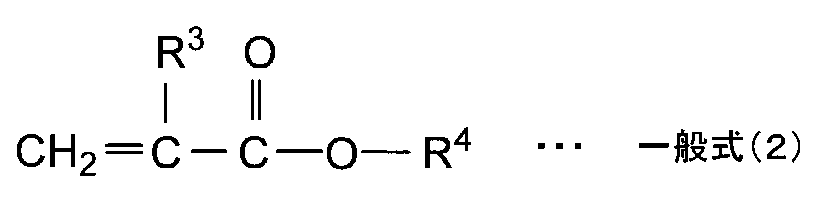
R4は炭素数1~8のアルキル基である。炭素数1~8のアルキル基としては、例えば、メチル基、エチル基、プロピル基、イソプロピル基、n-ブチル基、iso-ブチル基、tert-ブチル基、n-ヘキシル基、2-エチルヘキシル基などが挙げられる。R4を構成するアルキル基の炭素数は2~6が好ましく、より好ましくは3または4であり、さらに好ましくは4である。この範囲の炭素数のアルキル基とすることで、ワックスの分散性を向上させることができる。
R4は、分岐アルキル基であっても良いが、直鎖アルキル基であることが好ましい。また、R4が分岐アルキル基である場合には、R4の主鎖部分の炭素数が2~6であることが好ましい。
(メタ)アクリル酸アルキルエステル(A3)は、一種類を単独で用いてもよく、2種類以上を併用してもよい。
共重合体(A)を構成する構造単位に占める、(メタ)アクリル酸アルキルエステル(A3)に由来する構造単位の共重合割合は、重合前モノマーの質量基準で、1~20質量%であり、2~12質量%が好ましく、3~10質量%がより好ましい。この範囲にすることで、ワックスの分散性を向上させることができる。
さらに、熱可塑性樹脂組成物とした際の溶融粘度の観点からは、R3が水素原子のモノマー(a3-1)とR3がメチル基のモノマー(a3-2)とを併用することが好ましい。(a3-1)と(a3-2)の合計量に対する(a3-1)の比[(a3-1)/{(a3-1)+(a3-2)}×100]は、1~99質量%であり、50~90質量%が好ましく、60~80質量%がより好ましい。上記範囲とすることで組成物の溶融粘度を下げることができ、成型加工性が良好となる。
本発明の共重合体(A)は、芳香族モノマー(A1)、(メタ)アクリル酸長鎖アルキルエステル(A2)および(メタ)アクリル酸アルキルエステル(A3)に由来する構造単位だけで構成されていてよく、あるいはこれらのモノマーと重合可能な他のモノマーに由来する構造単位を、重合前モノマーの質量基準で、更に30質量%以下含有していてもよい。他のモノマーの比率は、30質量%以下とするが、15質量%以下が更に好ましく、5質量%以下がより好ましく、0質量%であってもよい。
こうした他のモノマーとしては、(メタ)アクリル酸、アクリルアミド、アクリロニトリルなどを挙げることができる。その他のモノマーとして、(メタ)アクリル酸を用いた場合、熱可塑性樹脂へのワックスの分散性をより向上させることができるため好ましい。
本発明の共重合体(A)の重量平均分子量、数平均分子量、分散度は、ゲルパーミエーションクロマトグラフィー(GPC)を用いてポリスチレン換算で求めることができる。重量平均分子量は、3,000~50,000であり、好ましくは4,000~30,000、より好ましくは5,000~10,000である。共重合体の重量平均分子量が低すぎると、熱可塑性樹脂組成物とした際の保存安定性が不足し、重量平均分子量が高すぎると、熱可塑性樹脂組成物とした際の透明性が低下するおそれがある。
本発明の共重合体(A)の分散度[重量平均分子量/数平均分子量]は、分散性の観点から、1.5~4.0であり、2.0~3.0が好ましい。
次に、本発明の共重合体(A)を製造する方法について説明する。
共重合体(A)は、芳香族モノマー(A1)、(メタ)アクリル酸長鎖アルキルエステル(A2)および(メタ)アクリル酸アルキルエステル(A3)を少なくとも含有するモノマー混合物をラジカル重合させることにより得ることができる。
重合は公知の方法で行うことができる。例えば、溶液重合、懸濁重合、乳化重合などが挙げられるが、共重合体(A)の重量平均分子量を上記範囲内に調整しやすいという面で、溶液重合や懸濁重合が好ましい。
重合開始剤は、公知のものを使用することができる。例えば、1,1,3,3-テトラメチルブチルパーオキシ-2-エチルヘキサノエートなどの有機過酸化物、2,2’-アゾビスイソブチロニトリルなどのアゾ系重合開始剤などを挙げることができる。これらの重合開始剤は1種類のみを用いてもよく、2種以上を併用してもよい。
重合開始剤の使用量は、用いるモノマーの組み合わせや、反応条件などに応じて適宜設定することができる。
なお、重合開始剤を投入するに際しては、例えば、全量を一括仕込みしてもよいし、一部を一括仕込みして残りを滴下してもよく、あるいは全量を滴下してもよい。また、前記モノマーとともに重合開始剤を滴下すると、反応の制御が容易となるので好ましく、さらにモノマー滴下後も重合開始剤を添加すると、残存モノマーを低減できるので好ましい。
溶液重合の際に使用する重合溶媒としては、モノマーと重合開始剤が溶解するものを使用することができ、具体的には、メタノール、エタノール、1-プロパノール、アセトン、メチルエチルケトン、プロピレングリコールモノメチルエーテルなどを挙げることができる。
モノマーを投入するに際しては、例えば、全量を一括仕込みしても良いし、一部を一括仕込みして残りを滴下しても良いし、あるいは全量を滴下しても良い。発熱の制御しやすさから、一部を一括仕込みして残りを滴下するか、または全量を滴下するのが好ましい。
重合温度は、重合溶媒の種類などに依存し、例えば、50℃~110℃である。重合時間は、重合開始剤の種類と重合温度に依存し、例えば、重合開始剤として1,1,3,3-テトラメチルブチルパーオキシ-2-エチルヘキサノエートを使用した場合、重合温度を90℃として重合すると、重合時間は6時間程度が適している。
以上の重合反応を行なうことにより、本発明のワックス分散剤の有効成分である共重合体(A)が得られる。得られた共重合体(A)は、そのまま用いてもよいし、重合反応後の反応液に、脱溶媒、ろ取や精製を施して単離してもよい。
本発明の重合体(A)は、熱可塑性樹脂へのワックスの分散剤として好適に用いられる。熱可塑性樹脂中にワックスとともに重合体(A)を共存させると、熱可塑性樹脂のマトリクス中にワックスを微細に分散させることができるため、樹脂組成物の溶融状態での流動性を向上させると同時に、樹脂組成物の透明性を低下させず優れた外観を与え、さらにワックスの分散安定性を向上させ樹脂組成物の保存時における安定性も向上する。
こうした熱可塑性樹脂としては、例えば、ポリエチレン、ポリプロピレン等のポリオレフィン樹脂、ポリメタクリル酸メチル、ポリアクリル酸ブチル等のアクリル樹脂、ポリブタジエン、ポリイソプレン等のゴム状(共)重合体、ポリスチレン、アクリロニトリル/ブタジエン/スチレン共重合体(ABS樹脂)等のポリスチレン樹脂、ポリエチレンテレフタレート、ポリブチレンテレフタレート等のポリエステル樹脂、ポリカーボネート樹脂等が挙げられる。これらのなかで、アクリル樹脂、ポリスチレン樹脂、ポリエステル樹脂が好ましく、ポリエステル樹脂がより好ましい。
また、ワックスとしては、例えば、炭化水素系化合物、脂肪酸アミド系化合物、脂肪酸エステル系化合物等が挙げられる。これらは、単独で用いてもよく、二種以上を混合して用いてもよい。
炭化水素系化合物としては、例えば、流動パラフィン、パラフィンワックス、マイクロワックス、ポリエチレンワックス等が挙げられる。
脂肪酸アミド系化合物としては、脂肪酸のモノアミド又はビスアミドを用いることができ、例えば、カプリン酸アミド、ラウリン酸アミド、ミリスチン酸アミド、パルミチン酸アミド、ステアリン酸アミド、エルカ酸アミド、メチレンビスステアリン酸アミド、エチレンビスステアリン酸アミド、エチレンビスオレイン酸アミド、エチレンビスヒドロキシステアリン酸アミド等が挙げられる。
脂肪酸エステル系化合物としては、例えば、ブチルステアレート、ブチルラウレート、ブチルパルミテート、ブチルモンタネート、プロピルステアレート、フェニルステアレート、ラウリルアセテート、ステアリルアセテート、ステアリルラウレート、ステアリルステアレート、ベヘニルベヘネート、ベヘニルベンゾエート、グリセリントリステアレート、ペンタエリスリトールテトラステアレート、ペンタエリスリトールテトラベヘネート、グリセリンジラウレート、グリセリンモノベヘネート、ペンタエリスリトールトリラウレート、ペンタエリスリトールジステアレート、ペンタエリスリトールモノベヘネート等が挙げられる。
これらの中で、脂肪酸アミド化合物および脂肪酸エステル化合物が好ましく、脂肪酸エステル化合物がより好ましい。
本発明において、熱可塑性樹脂組成物のメルトフローレート(MFR)が1.0g/10分以上15.0g/10分以下であることが好ましい。
なお、上記メルトフローレート(MFR)は、JIS K7210-1に準拠して、荷重21.18N、温度150℃の条件で測定した値である。
熱可塑性樹脂組成物のメルトフローレート(MFR)が15.0g/10分より大きい場合は、熱可塑性樹脂組成物の強度が低下する恐れがある。また、MFRが1.0g/10分より小さい場合は、熱可塑性樹脂組成物の保存安定性や加工性が低下する恐れがある。
本発明の熱可塑性樹脂組成物には、その目的に応じ、所望の特性を付与する他の成分、例えば、顔料、酸化防止剤、熱安定剤、紫外線吸収剤、可塑剤などの一種または二種以上を含有させてもよい。
本発明の熱可塑性樹脂組成物は、射出成形、ブロー成形などの成型原料として、また電子写真用トナーとして使用することが出来る。
1.共重合体の製造例
(重合例1:共重合体P1)
撹拌機、温度計、冷却器、滴下ロート及び窒素導入管を取り付けた1Lセパラブルフラスコに、トルエン370gを仕込み、フラスコ内を窒素置換して、窒素雰囲気下にした。
スチレン(製品名:スチレンモノマー、NSスチレン(株)製)272.8g、メタクリル酸ステアリル(製品名:ブレンマーSMA、日油(株)製)77.9g、アクリル酸n-ブチル(製品名:BA、(株)日本触媒製)19.5g、メタクリル酸n-ブチル(製品名:アクリルエステルB、三菱ケミカル(株)製)7.8g、メタクリル酸(製品名:MAA、三菱ケミカル(株)製)11.7gを混合したモノマー溶液、及びt-ブチルペルオキシ-2-エチルヘキサノエート(製品名:パーブチルO、日油(株)製)20.7gとトルエン20gを混合した重合開始剤溶液を、それぞれ調製した。
反応容器内を105℃まで昇温し、モノマー溶液及び重合開始剤溶液を同時にそれぞれ3時間かけて滴下し、その後105℃で3時間反応させた。反応後、減圧留去することでトルエンを約150g留去した。留去後の内容物を箱型真空乾燥機で110℃で8時間減圧乾燥することで、共重合体P1を得た。
モノマー溶液をスチレン272.9g、メタクリル酸ステアリル78.0g、アクリル酸n-ブチル19.5g、メタクリル酸n-ブチル19.5gに変更したこと以外は重合例1と同様の手法で、共重合体P2を得た。
モノマー溶液をスチレン272.9g、メタクリル酸ステアリル78.0g、メタクリル酸n-ブチル39.0gに変更したこと以外は重合例1と同様の手法で、共重合体P3を得た。
撹拌機、温度計、冷却器、滴下ロート及び窒素導入管を取り付けた1Lセパラブルフラスコに、トルエン370g、スチレン272.9g、メタクリル酸ステアリル78.0g、メタクリル酸n-ブチル39.0g、t-ブチルペルオキシ-2-エチルヘキサノエート5.7gを仕込み、フラスコ内を窒素置換して、窒素雰囲気下にした。反応容器を徐々に加熱し、内温105℃まで昇温し、105℃で3時間反応させた。反応後、重合例1と同様に脱溶剤操作を実施し、共重合体P4を得た。
モノマー溶液をメタクリル酸ベンジル(製品名:ライトエステルBz、共栄社化学(株))195.0g、アクリル酸ステアリル117.0g、アクリル酸n-ブチル58.5g、アクリロニトリル(製品名:アクリロニトリル、三菱ケミカル(株)製)19.5gに変更したこと以外は重合例1と同様の手法で、共重合体P5を得た。
モノマー溶液をスチレン284.5g、メタクリル酸ステアリル58.5g、アクリル酸n-ブチル3.9g、メタクリル酸n-ブチル3.9g、メタクリル酸39.0gに変更したこと以外は重合例1と同様の手法で、共重合体P6を得た。
モノマー溶液をスチレン291.7g、アクリル酸ステアリル77.8g、アクリロニトリル19.4gに、重合開始剤溶液をt-ブチルペルオキシ-2-エチルヘキサノエート22.0gとトルエン20gの混合物に変更したこと以外は重合例1と同様の手法で、共重合体P7を得た。
モノマー溶液をスチレン290.8g、アクリル酸n-ブチル77.6g、アクリロニトリル19.4gに、重合開始剤溶液をt-ブチルペルオキシ-2-エチルヘキサノエート10.0gとトルエン20gの混合物に変更したこと以外は重合例1と同様の手法で、共重合体P8を得た。
ゲルパーミエーションクロマトグラフィー(GPC)を用いて以下の条件により、共重合体P1~P8の重量平均分子量および分散度を求めた。
装置:東ソー(株)社製、HLC-8220
カラム:shodex社製、LF-804
標準物質:ポリスチレン
溶離液:THF(テトラヒドロフラン)
流量:1.0ml/min
カラム温度:40℃
検出器:RI(示差屈折率検出器)

(ペンタエリスリトールテトラベヘネートの製造例)
温度計、窒素導入管、攪拌ばねおよび冷却管を取り付けた2Lの四つ口フラスコに、ペンタエリスリトール(60g、0.43mol)、ベヘニン酸(612g、1.80mol)を加え、窒素気流下、220℃で22時間反応させた。得られたエステル粗生成物は635gであり、酸価が8.9mgKOH/gであった。
本エステル粗生成物にトルエン130gおよび2-プロパノール67gを入れ、エステル粗生成物の残存酸価の2.0倍当量に相当する量の水酸化カリウムを含む10質量%水酸化カリウム水溶液を加え、70℃で30分間攪拌した。攪拌後、30分間静置して水層部を分離・除去した。排水のpHが中性になるまで水洗を4回繰り返した。残ったエステル層の溶剤を180℃、1kPaの減圧条件下で留去し、ろ過を行い、ペンタエリスリトールテトラベヘネートを540g得た。精製に供したエステル粗生成物に対する収率は85%であった。
得られたペンタエリスリトールテトラベヘネートの酸価は0.2mgKOH/g、水酸基価は3.2mgKOH/g、メトラー・トレド社製MP80により測定した透明融点は82℃であった。
温度計、窒素導入管、攪拌ばねおよび冷却管を取り付けた2Lの四つ口フラスコに、ベヘニルアルコール(300g、0.94mol)、ベヘニン酸(337g、0.99mol)を加え、窒素気流下、220℃で18時間反応させた。得られたエステル粗生成物は604gであり、酸価が6.7mgKOH/gであった。
本エステル粗生成物にトルエン62gおよび2-プロパノール49gを入れ、エステル粗生成物の残存酸価の2.0倍当量に相当する量の水酸化カリウムを含む10質量%水酸化カリウム水溶液を加え、70℃で30分間攪拌した。攪拌後、30分間静置して水層部を分離・除去した。排水のpHが中性になるまで水洗を4回繰り返した。残ったエステル層の溶剤を180℃、1kPaの減圧条件下で留去し、ろ過を行い、ベヘニルベヘネートを550g得た。精製に供したエステル粗生成物に対する収率は91%であった。
得られたベヘニルベヘネートの酸価は0.2mgKOH/g、水酸基価は2.6mgKOH/g、前記と同様に測定した透明融点は71℃であった。
フィッシャートロプシュワックスであるSASOL C80(:製品名、Sasol社製)を用いた。
(1)熱可塑性樹脂組成物の調製
(a)ポリエステル樹脂組成物の溶融混練(実施例1、3~9、比較例1~4)
各実験例における材料の配合組成を表2に示す。ポリエステル樹脂(製品名FC-2470、三菱レイヨン(株)製)、ワックスおよびワックス分散剤を、ラボプラストミル(型式:4C150-01、(株)東洋精機製作所製)を用いて温度120℃、回転速度60rpm、混練時間5分間の条件で混練して、熱可塑性樹脂組成物のサンプルを得た。
(b)スチレンアクリル樹脂組成物の溶融混練(実施例2)
各実験例における材料の配合組成を表2に示す。スチレンアクリル樹脂(製品名ダイヤナール FB-1157、三菱レイヨン(株)製)、ワックスおよびワックス分散剤を、ラボプラストミル(型式:4C150-01、(株)東洋精機製作所製)を用いて温度120℃、回転速度60rpm、混練時間5分間の条件で混練して、熱可塑性樹脂組成物のサンプルを得た。
(a)分散性の評価
熱可塑性樹脂組成物のサンプルにガラスナイフを用いて切片面を整える加工を施し、ウルトラミクロトーム(型式:UC7、Leica製)を用いてダイヤモンドナイフで切り出し、厚さ80nm以下の超薄切片を作製した。水面に浮いた超薄切片を、まつげプローブでTEM観察用グリッドメッシュ上に回収し、透過型電子顕微鏡(TEM;型式:JEM-1300、日本電子(株)製)の観察試料とした。
倍率1000倍の視野におけるワックスの分散粒子を10点選び、各分散粒子の長軸と短軸それぞれの径を測定した。長軸径と短軸径との平均値を分散粒径とした。10点について測定した分散粒径の平均値を平均分散粒径とし、ワックス分散性の指標とした。ワックス分散粒子の平均分散径の値が小さいほど、ワックスの分散性に優れることを示す。
平均分散径が90μm未満を非常に良好(◎)、90μm以上110μm未満を良好(〇)、110μm以上130μm未満をやや不良(△)、130μm以上を不良(×)と評価した。
熱可塑性樹脂組成物のサンプルを熱プレスで平板1mmの厚みのシートに成形した。得られたシート状サンプルのヘイズをJIS-K7136に準拠して、分光ヘイズメーター(型式:HSP-150VIR、村上色彩技術研究所製)を用いて測定した。ヘイズ(%)値が小さいほど透明性が優れることを示す。
ヘイズが20%未満を良好(〇)、20%以上25%未満をやや不良(△)、25%以上を不良(×)と評価した。
熱可塑性樹脂組成物のサンプルについて、メルトフローレート(MFR、単位:g/10分)をJIS K7210-1に規定された方法に従い、装置として(株)東洋精機製作所製の型式:F-F01を用い、荷重21.18N、温度150℃の条件で5回測定を行い、平均値をMFR値とした。数値が大きいほど、流動性が大きいことを示す。
MFRが5.0以上15.0未満を非常に良好(◎)、3.5以上5.0未満を良好(〇)、1.0以上3.5未満をやや不良(△)、1.0未満を不良(×)と評価した。
熱可塑性樹脂組成物のサンプルについて、機械粉砕を行い目開き75μmの篩を通過させたものを試験サンプルとした。試験サンプル5gをガラス製50ml瓶に入れ、温度55℃/湿度30%で12時間保管し、凝集の程度を目視観察した。粒子が凝集しなかったものを良好(○)、部分的に凝集していたものをやや良好(△)、凝集していたものを不良(×)と評価した。
熱可塑性樹脂組成物の配合組成および評価結果を、表2に示す。

ワックスの平均分散径は200μmであり分散性が不良、ヘイズは25%であり透明性が不良、メルトフローレートは0.9g/10分であり流動性が不良、および、凝集状態の観察による保存安定性が不良と評価された。比較例1は、全ての評価項目において不良と評価された。
ワックスの平均分散径は173μmであり分散性が不良、ヘイズは21%であり透明性がやや不良、メルトフローレートは2.3g/10分であり流動性がやや不良、および、凝集状態の観察による保存安定性がやや良好と評価された。比較例2は、比較例1と比べてワックスの分散性が若干向上した。しかし、分散性、透明性および流動性について不良またはやや不良と評価され、ワックス分散性の付与効果は不十分であった。
ワックスの平均分散径は113μmであり分散性がやや不良、ヘイズは20%であり透明性がやや不良、メルトフローレートは3.4g/10分であり流動性がやや不良、および、凝集状態の観察による保存安定性が良好と評価された。比較例3は、比較例2と同じワックス分散剤を多量に使用したため、比較例2よりもワックスの分散性が若干向上した。しかし、分散性、透明性および流動性についてやや不良と評価され、ワックス分散性の付与効果は不十分であった。
ワックスの平均分散径は121μmであり分散性がやや不良、ヘイズは22%であり透明性がやや不良、メルトフローレートは2.8g/10分であり流動性がやや不良、および、凝集状態の観察による保存安定性が良好と評価された。比較例4は、比較例1と比べてワックスの分散性が若干向上した。しかし、分散性、透明性および流動性についてやや不良と評価され、ワックス分散性の付与効果は不十分であった。
実施例1~9は、ワックスの平均分散径が110μm未満でありワックスが微細に分散されていることが確認された。透明性はヘイズ20%未満で良好であった。流動性はMFRが3.5g/10分以上で良好であった。保存安定性は粉砕された粒子が凝集しなかったことが確認され、その理由はワックスが熱可塑性樹脂組成物の表面に移行しにくいためであると推測された。
以上の結果から、実施例1~9は分散性、透明性、流動性および保存安定性のすべての評価項目において、良好または非常に良好と評価された。
共重合体P1は、モノマー(A3)中のモノマー(a3-1)とモノマー(a3-2)の合計量に対するモノマー(a3-1)の比が、約71質量%(=5/(5+2))である。一方、共重合体P2は、同様の比が、50質量%(=5/(5+5))である。共重合体P1は、共重合体P2と比べて、モノマー(a3-1)とモノマー(a3-2)の合計量に対するモノマー(a3-1)の比が、より好ましい範囲にあるため、共重合体P1を用いた実施例1は、共重合体P2を用いたこと以外は実施例1と同じである実施例5と比べ、MFRが向上した。
共重合体P3は、共重合体P4と比べて重量平均分子量が、より好ましい範囲にあるため、共重合体P3を用いた実施例6は、共重合体P4を用いたこと以外は実施例1と同じである実施例7と比べ、分散性が若干向上した。
Claims (2)
- 重合前モノマーの質量基準で、芳香族モノマー(A1)に由来する構造単位を40~94質量%、下記一般式(1)で示される(メタ)アクリル酸長鎖アルキルエステル(A2)に由来する構造単位を5~40質量%および下記一般式(2)で示される(メタ)アクリル酸アルキルエステル(A3)に由来する構造単位を1~20質量%含む共重合組成を有し、重量平均分子量が3,000~50,000である共重合体(A)であることを特徴とする、ワックス分散剤。


- 請求項1記載のワックス分散剤、熱可塑性樹脂およびワックスを含有することを特徴とする、熱可塑性樹脂組成物。
Priority Applications (4)
| Application Number | Priority Date | Filing Date | Title |
|---|---|---|---|
| CN202080032125.6A CN113748142B (zh) | 2019-07-11 | 2020-07-07 | 蜡分散剂和热塑性树脂组合物 |
| JP2021530694A JP7537433B2 (ja) | 2019-07-11 | 2020-07-07 | ワックス分散剤および熱可塑性樹脂組成物 |
| KR1020217034769A KR102890772B1 (ko) | 2019-07-11 | 2020-07-07 | 왁스 분산제 및 열가소성 수지 조성물 |
| US17/606,872 US12338305B2 (en) | 2019-07-11 | 2020-07-07 | Wax dispersant and thermoplastic resin composition |
Applications Claiming Priority (2)
| Application Number | Priority Date | Filing Date | Title |
|---|---|---|---|
| JP2019129298 | 2019-07-11 | ||
| JP2019-129298 | 2019-07-11 |
Publications (1)
| Publication Number | Publication Date |
|---|---|
| WO2021006259A1 true WO2021006259A1 (ja) | 2021-01-14 |
Family
ID=74115081
Family Applications (1)
| Application Number | Title | Priority Date | Filing Date |
|---|---|---|---|
| PCT/JP2020/026514 Ceased WO2021006259A1 (ja) | 2019-07-11 | 2020-07-07 | ワックス分散剤および熱可塑性樹脂組成物 |
Country Status (6)
| Country | Link |
|---|---|
| US (1) | US12338305B2 (ja) |
| JP (1) | JP7537433B2 (ja) |
| KR (1) | KR102890772B1 (ja) |
| CN (1) | CN113748142B (ja) |
| TW (1) | TWI853970B (ja) |
| WO (1) | WO2021006259A1 (ja) |
Families Citing this family (1)
| Publication number | Priority date | Publication date | Assignee | Title |
|---|---|---|---|---|
| WO2022008730A1 (en) * | 2020-07-10 | 2022-01-13 | Basf Se | Recyclable composition for paper coating |
Citations (7)
| Publication number | Priority date | Publication date | Assignee | Title |
|---|---|---|---|---|
| JP2006030299A (ja) * | 2004-07-12 | 2006-02-02 | Mitsubishi Rayon Co Ltd | トナー樹脂組成物およびトナー |
| JP2006301177A (ja) * | 2005-04-19 | 2006-11-02 | Mitsubishi Rayon Co Ltd | トナー用樹脂組成物およびトナー |
| JP2007264621A (ja) * | 2006-02-28 | 2007-10-11 | Sanyo Chem Ind Ltd | 電子写真用トナーバインダーおよびトナー |
| JP2008518052A (ja) * | 2004-10-25 | 2008-05-29 | ザ ルブリゾル コーポレイション | 星形重合体およびそれらの組成物 |
| JP2011073341A (ja) * | 2009-09-30 | 2011-04-14 | Dainippon Printing Co Ltd | 熱転写受像シート |
| JP2014035506A (ja) * | 2012-08-10 | 2014-02-24 | Konica Minolta Inc | 静電荷像現像用トナー |
| JP2017102382A (ja) * | 2015-12-04 | 2017-06-08 | 三菱ケミカル株式会社 | トナー用相溶化剤、トナー用相溶化剤を含む静電荷像現像用トナー、及びトナーの製造方法 |
Family Cites Families (8)
| Publication number | Priority date | Publication date | Assignee | Title |
|---|---|---|---|---|
| JPH0862894A (ja) * | 1994-08-22 | 1996-03-08 | Konica Corp | 静電像現像用トナー及びそれを用いるトナー画像定着方法 |
| JP6478952B2 (ja) * | 2015-08-25 | 2019-03-06 | キヤノン株式会社 | トナー用ワックス分散剤及びトナー |
| US9733582B2 (en) * | 2015-11-10 | 2017-08-15 | Lexmark International, Inc. | Toner formulation using wax encapsulated with a styrene acrylate latex formulation and method of preparing the same |
| JP6700779B2 (ja) * | 2015-12-25 | 2020-05-27 | キヤノン株式会社 | トナー |
| JP6794753B2 (ja) | 2016-10-05 | 2020-12-02 | 株式会社リコー | 光輝性トナー、トナー収容ユニット、画像形成装置、及び画像形成方法 |
| JP6818573B2 (ja) | 2017-02-01 | 2021-01-20 | キヤノン株式会社 | トナーの製造方法 |
| JP2019060934A (ja) | 2017-09-25 | 2019-04-18 | キヤノン株式会社 | トナー |
| JP6953280B2 (ja) * | 2017-11-07 | 2021-10-27 | キヤノン株式会社 | トナー |
-
2020
- 2020-07-07 US US17/606,872 patent/US12338305B2/en active Active
- 2020-07-07 TW TW109122842A patent/TWI853970B/zh active
- 2020-07-07 KR KR1020217034769A patent/KR102890772B1/ko active Active
- 2020-07-07 WO PCT/JP2020/026514 patent/WO2021006259A1/ja not_active Ceased
- 2020-07-07 CN CN202080032125.6A patent/CN113748142B/zh active Active
- 2020-07-07 JP JP2021530694A patent/JP7537433B2/ja active Active
Patent Citations (7)
| Publication number | Priority date | Publication date | Assignee | Title |
|---|---|---|---|---|
| JP2006030299A (ja) * | 2004-07-12 | 2006-02-02 | Mitsubishi Rayon Co Ltd | トナー樹脂組成物およびトナー |
| JP2008518052A (ja) * | 2004-10-25 | 2008-05-29 | ザ ルブリゾル コーポレイション | 星形重合体およびそれらの組成物 |
| JP2006301177A (ja) * | 2005-04-19 | 2006-11-02 | Mitsubishi Rayon Co Ltd | トナー用樹脂組成物およびトナー |
| JP2007264621A (ja) * | 2006-02-28 | 2007-10-11 | Sanyo Chem Ind Ltd | 電子写真用トナーバインダーおよびトナー |
| JP2011073341A (ja) * | 2009-09-30 | 2011-04-14 | Dainippon Printing Co Ltd | 熱転写受像シート |
| JP2014035506A (ja) * | 2012-08-10 | 2014-02-24 | Konica Minolta Inc | 静電荷像現像用トナー |
| JP2017102382A (ja) * | 2015-12-04 | 2017-06-08 | 三菱ケミカル株式会社 | トナー用相溶化剤、トナー用相溶化剤を含む静電荷像現像用トナー、及びトナーの製造方法 |
Also Published As
| Publication number | Publication date |
|---|---|
| KR102890772B1 (ko) | 2025-11-24 |
| JP7537433B2 (ja) | 2024-08-21 |
| US12338305B2 (en) | 2025-06-24 |
| KR20220035024A (ko) | 2022-03-21 |
| US20220213242A1 (en) | 2022-07-07 |
| JPWO2021006259A1 (ja) | 2021-01-14 |
| CN113748142A (zh) | 2021-12-03 |
| TW202110905A (zh) | 2021-03-16 |
| TWI853970B (zh) | 2024-09-01 |
| CN113748142B (zh) | 2024-04-19 |
Similar Documents
| Publication | Publication Date | Title |
|---|---|---|
| JP7302685B2 (ja) | 共重合体、樹脂組成物、成形体、フィルム状成形体、及び共重合体の製造方法 | |
| JP5733817B2 (ja) | アリルエーテル及びビニルエーテルベースの非イオン性水溶性添加剤 | |
| Li et al. | Soap-free styrene-acrylic/carbon nanotubes composite latex by in situ emulsion polymerization: Preparation, properties and characterizations | |
| DE4016564A1 (de) | Harzzusammensetzungen fuer elektrophotographische toner | |
| WO2021006259A1 (ja) | ワックス分散剤および熱可塑性樹脂組成物 | |
| TWI682809B (zh) | 氧化鋯粒子分散體組成物及其硬化物 | |
| JP5198370B2 (ja) | 低複屈折性アクリル系共重合体の熱安定化された樹脂組成物 | |
| JP6361107B2 (ja) | 樹脂組成物およびフィルム | |
| Dicks et al. | Leveraging Itaconic acid in microcrystalline cellulose reinforced shape memory photopolymers for sustainable 4D printing | |
| JP5703567B2 (ja) | 架橋重合体微粒子の製造方法 | |
| KR101609503B1 (ko) | 프로필렌·α-올레핀 공중합체 및 그의 용도 | |
| JP2012111860A (ja) | 車両部材用メタクリル樹脂組成物 | |
| Hayashida et al. | Miscible blends of poly (butyl methacrylate) densely grafted on fumed silica with poly (vinyl chloride) | |
| CN102510868B (zh) | 在含水碱性条件下可溶的(甲基)丙烯酸酯共聚物的本体聚合 | |
| JP2022185521A (ja) | トナー樹脂用分散剤およびトナー樹脂組成物 | |
| JPWO2012036173A1 (ja) | 熱可塑性樹脂用加工助剤及びそれを含む熱可塑性樹脂組成物 | |
| JP3313674B2 (ja) | 重合体の製造法 | |
| JP2020066709A (ja) | 重合体粒子の製造方法および重合体粒子 | |
| JP3002861B2 (ja) | 重合体の製造法 | |
| JP3776462B2 (ja) | 共重合体の製造方法 | |
| JP6600192B2 (ja) | 静電荷像現像用トナー用結着樹脂の製造方法 | |
| EP3130617B1 (en) | Polymer nanoparticle preparation by miniemulsion polymerization | |
| JP2018159024A (ja) | マクロモノマー共重合体の製造方法 | |
| JP2024108522A (ja) | トナー用樹脂組成物 | |
| JP2021031672A (ja) | 紫外線吸収性ポリマー、成形用組成物、および成形体 |
Legal Events
| Date | Code | Title | Description |
|---|---|---|---|
| 121 | Ep: the epo has been informed by wipo that ep was designated in this application |
Ref document number: 20837371 Country of ref document: EP Kind code of ref document: A1 |
|
| ENP | Entry into the national phase |
Ref document number: 20217034769 Country of ref document: KR Kind code of ref document: A |
|
| ENP | Entry into the national phase |
Ref document number: 2021530694 Country of ref document: JP Kind code of ref document: A |
|
| 122 | Ep: pct application non-entry in european phase |
Ref document number: 20837371 Country of ref document: EP Kind code of ref document: A1 |
|
| WWG | Wipo information: grant in national office |
Ref document number: 17606872 Country of ref document: US |