WO2020209378A1 - Upe測定により皮膚状態を決定する方法 - Google Patents
Upe測定により皮膚状態を決定する方法 Download PDFInfo
- Publication number
- WO2020209378A1 WO2020209378A1 PCT/JP2020/016183 JP2020016183W WO2020209378A1 WO 2020209378 A1 WO2020209378 A1 WO 2020209378A1 JP 2020016183 W JP2020016183 W JP 2020016183W WO 2020209378 A1 WO2020209378 A1 WO 2020209378A1
- Authority
- WO
- WIPO (PCT)
- Prior art keywords
- upe
- skin
- intensity
- strength
- dark room
- Prior art date
- Legal status (The legal status is an assumption and is not a legal conclusion. Google has not performed a legal analysis and makes no representation as to the accuracy of the status listed.)
- Ceased
Links
Images


Classifications
-
- A—HUMAN NECESSITIES
- A61—MEDICAL OR VETERINARY SCIENCE; HYGIENE
- A61B—DIAGNOSIS; SURGERY; IDENTIFICATION
- A61B10/00—Instruments for taking body samples for diagnostic purposes; Other methods or instruments for diagnosis, e.g. for vaccination diagnosis, sex determination or ovulation-period determination; Throat striking implements
-
- A—HUMAN NECESSITIES
- A61—MEDICAL OR VETERINARY SCIENCE; HYGIENE
- A61B—DIAGNOSIS; SURGERY; IDENTIFICATION
- A61B5/00—Measuring for diagnostic purposes; Identification of persons
-
- G—PHYSICS
- G01—MEASURING; TESTING
- G01N—INVESTIGATING OR ANALYSING MATERIALS BY DETERMINING THEIR CHEMICAL OR PHYSICAL PROPERTIES
- G01N21/00—Investigating or analysing materials by the use of optical means, i.e. using sub-millimetre waves, infrared, visible or ultraviolet light
- G01N21/62—Systems in which the material investigated is excited whereby it emits light or causes a change in wavelength of the incident light
- G01N21/63—Systems in which the material investigated is excited whereby it emits light or causes a change in wavelength of the incident light optically excited
- G01N21/64—Fluorescence; Phosphorescence
-
- G—PHYSICS
- G01—MEASURING; TESTING
- G01N—INVESTIGATING OR ANALYSING MATERIALS BY DETERMINING THEIR CHEMICAL OR PHYSICAL PROPERTIES
- G01N33/00—Investigating or analysing materials by specific methods not covered by groups G01N1/00 - G01N31/00
- G01N33/48—Biological material, e.g. blood, urine; Haemocytometers
- G01N33/483—Physical analysis of biological material
-
- G—PHYSICS
- G01—MEASURING; TESTING
- G01N—INVESTIGATING OR ANALYSING MATERIALS BY DETERMINING THEIR CHEMICAL OR PHYSICAL PROPERTIES
- G01N33/00—Investigating or analysing materials by specific methods not covered by groups G01N1/00 - G01N31/00
- G01N33/48—Biological material, e.g. blood, urine; Haemocytometers
- G01N33/50—Chemical analysis of biological material, e.g. blood, urine; Testing involving biospecific ligand binding methods; Immunological testing
- G01N33/72—Chemical analysis of biological material, e.g. blood, urine; Testing involving biospecific ligand binding methods; Immunological testing involving blood pigments, e.g. haemoglobin, bilirubin or other porphyrins; involving occult blood
Definitions
- the present invention relates to a technique for measuring UPE that occurs on the entire face. It relates to a method of determining the skin condition in each part by measuring UPE in each part of the face.
- UPE Ultra-weak photon emission
- UPE Ultra-weak photon emission
- UPE is also sometimes called biophoton, biological photon, biological extremely weak chemiluminescence, biological extremely weak chemiluminescence, or the like.
- the light emission by UPE is mainly generated by the energy produced by the redox reaction in the biochemical reaction process.
- light emission by UPE occurs in a biochemical reaction involving the generation of active oxygen and free radicals, and actual light emission is due to the excitation of molecules generated in the oxidative modification process of various substances constituting the living body.
- the production of active oxygen in the living body is deeply related to the metabolic process in the living body and oxidative stress caused by external factors such as ultraviolet rays, radiation, drugs, and environmental pollutants.
- the increase in UPE due to the production of active oxygen in a living body is associated with stress such as oxidative damage.
- stress such as oxidative damage.
- the skin is oxidized by irradiation with electromagnetic waves such as ultraviolet rays, the amount of UPE released increases.
- UPE increased by an external stimulus is called delayed luminescence.
- Non-Patent Document 1 As part of the research that ultraviolet rays (UV) give to the skin, the results of research that measured the transmittance of ultraviolet rays to the stratum corneum and epidermis have been reported (Non-Patent Document 1).
- Non-Patent Document 2 a method using an ultrasensitive CCD (Charge Coupled Device, charge-coupled device) has been introduced (Non-Patent Document 2), and a photomultiplier tube (PMT) is provided. The method using the above is also introduced (Non-Patent Document 3).
- CCD Charge Coupled Device, charge-coupled device
- UPE which is a weak luminescence emitted from a living body and is a luminescence phenomenon associated with a biochemical reaction in the living body, has been locally measured.
- UPE since UPE is a very weak luminescence phenomenon, it is difficult to measure UPE in a wide range such as the entire face.
- the skin since the skin is constantly exposed to ultraviolet rays in daily life, the effect of delayed luminescence based on external stimuli such as ultraviolet rays is large, while the effect of only biochemical reactions on a wide range of skin by eliminating external stimuli is exerted. No investigation was done.
- the present inventors eliminate the influence based on external stimuli by undergoing a habituation process in a dark room, thereby detecting only UPE resulting from a biochemical reaction that originally occurs in the skin in a wide range such as the entire face. I found that I could do it.
- UPE imaging on the entire face the detected UPE intensity differs greatly for each facial part, and the detected UPE intensity represents the oxidized state of the skin for each facial part. And came to the present invention.
- the present invention relates to: [1] Step of acclimatizing the entire face in a dark room; A method for determining a skin condition, which comprises a step of measuring the UPE intensity of each part of the face by UPE imaging of the entire face or a photo counter in a dark room; and a step of determining the skin condition of each part based on the UPE intensity of each part.
- a method for determining a skin condition which comprises a step of measuring the UPE intensity of each part of the face by UPE imaging of the entire face or a photo counter in a dark room; and a step of determining the skin condition of each part based on the UPE intensity of each part.
- the step of determining the skin condition includes standardizing the UPE intensity for each part by the UPE intensity of the control portion and comparing it with a threshold value.
- the control portion is a non-exposed portion or a jaw portion.
- the process of acclimatizing the entire face in a dark room comprising measuring the UPE intensity of each part of the face by UPE imaging of the entire face or a photo counter in a dark room; and predicting the occurrence of future skin troubles in each part based on the UPE intensity of each part. .. [9] The method according to item 8, wherein the step of predicting the occurrence of future skin troubles includes standardizing the UPE intensity of each part by the UPE intensity of the control portion and comparing it with the threshold value. [10] The method according to item 9, wherein the control portion is a non-exposed portion or a jaw portion.
- Step of acclimatizing the entire face in a dark room In a dark room, the process of measuring the UPE intensity of each facial part by UPE imaging of the entire face or a photo counter; A method for estimating the amount of porphyrin in the skin, which includes a step of determining the amount of porphyrin in each part based on the UPE strength of each part.
- the step of determining the amount of porphyrin is determined based on a graph showing the relationship between the amount of porphyrin in each part and the UPE strength.
- the method of item 13 or 14, wherein the part is the cheek, nose, lower eyelid, glabella, or forehead.
- the skin care pack in which the components and their concentrations determined for each part are determined based on the UPE strength of each facial part.
- Step of acclimatizing the entire face in a dark room The process of measuring the UPE intensity of each part of the face by UPE imaging of the entire face or a photo counter; A process of determining a cosmetological ingredient suitable for each part and its concentration based on the UPE strength of each part;
- a method for manufacturing a skin care pack which comprises a step of providing a skin care pack containing a component determined for each part in a region corresponding to the part of the skin care pack at a determined concentration.
- the skin condition of each facial part can be determined.
- FIG. 1 shows the classification of facial parts in the UPE intensity analysis.
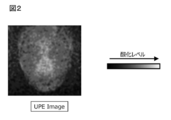
- FIG. 2 is a photograph showing the photon generation intensity in the entire face taken by UPE imaging.
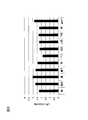
- FIG. 3 is a graph showing the average value of UPE intensity in each part of the face (forehead, glabellar, eyelid, upper eyelid, lower eyelid, nose, nose, under nose, cheek, lip, jaw). ..
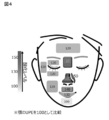
- FIG. 4 shows the UPE intensity of other parts when the UPE intensity of the jaw is 100.
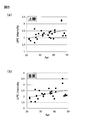
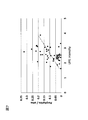
- FIG. 5 is a graph showing the correlation between UPE intensity in the upper eyelid and the eyelid and the skin aging state.
- FIG. 6 is a graph showing the correlation between the UPE intensity and the number of wrinkles per region in the region from the lower eyelid to the eyelid for subjects in their 20s to 40s.
- FIG. 7 is a graph showing the correlation between UPE intensity in the cheek, nose, lower eyelid, glabellar, and forehead and the number of porphyrins per region.
- the present invention relates to a method for determining a skin condition using UPE imaging of the entire face or a photo counter. Specifically, the following steps: The process of acclimatizing the entire face in a dark room; It includes a step of measuring the UPE of each part of the face by UPE imaging of the entire face or a photo counter in a dark room; and a step of determining the skin condition of each part based on the UPE intensity of each part.
- the skin condition of each part can be individually determined.
- the skin condition refers to the oxidation level of the skin. Depending on the oxidation level of the skin, skin troubles such as wrinkles, age spots, and acne can be determined according to the facial parts.
- the acclimation process in the dark room can eliminate the influence of delayed light emission due to ultraviolet rays.
- the acclimation time can be selected from 5 minutes or more, more preferably 10 minutes or more, still more preferably 15 minutes or more from the viewpoint of eliminating the influence of delayed light emission due to ultraviolet rays. From the viewpoint of simplification of the method, the acclimation time is usually 1 hour or less, more preferably 15 minutes or less. It can also be acclimated in a double darkroom to avoid external influences.
- the UPE intensity when the influence of delayed light emission due to ultraviolet rays is excluded reflects the light emission phenomenon associated with the biochemical reaction in the living body accompanied by the generation of active oxygen and free radicals. In the skin, the higher the biochemical reaction, the higher the oxidation level. Therefore, the UPE intensity measured through the habituation process indicates the oxidation level of the skin (Non-Patent Document 4: Medical Instrumentology vol. 68, No. 8). 1998).
- a charge-coupling element camera can be used as the imaging device for UPE imaging. Further, the charge coupling element camera is preferably a cooled CCD camera.
- UPE imaging imaging device in a dark room, UPE can be measured for the entire face. Examples of the facial part include areas such as the forehead, eyebrows, nose, under the nose, lips, chin, eyes, upper eyelids, lower eyelids, cheeks, and nose creases, and can be further classified into right side and left side. (Fig. 1).
- a photon counter equipped with a photomultiplier tube (PMT) can be used to measure the UPE intensity for each part. It was shown that the UPE intensity varies greatly depending on the facial part (Fig. 2).
- the UPE strength of each part can be standardized based on the UPE strength of the control part.
- a non-exposed portion such as an arm, abdomen, or back may be used, or an arbitrary portion of the face may be used.
- the chin can be used from the viewpoint of using a portion having a low UPE strength in the facial region.
- Non-Patent Document 5 Nikkikai Journal: (2008) 118 (1) 17-21.
- wrinkles are often formed in places where the skin moves, and especially the mouth, eyes, eyebrows, cheeks, forehead, upper eyelids, and lower eyelids are the areas where wrinkles frequently occur. Therefore, the high UPE intensity at these sites is associated with the development of wrinkles.
- the present invention relates to a method of predicting the occurrence of future skin troubles in a subject having a healthy skin condition.
- Specific methods for predicting future skin problems include: The process of acclimatizing the entire face in a dark room; In a dark room, the step of measuring the UPE of each part of the face by UPE imaging of the entire face or a photo counter; and the step of predicting the occurrence of future skin troubles in each part based on the UPE intensity of each part are included.
- the step of predicting the occurrence of skin troubles in the future can be performed by specifically comparing the measured UPE intensity of each part with the threshold value.
- Multiple threshold values can be set for each part, and it can be predicted as the possibility of trouble occurring.
- the UPE intensity is 2 or more, more preferably 2.5 or more, and further preferably 3.0 or more at the corner of the eye, the possibility of wrinkle formation in the future is high, and the possibility of wrinkle formation increases as the threshold value increases. Shown to increase.
- the UPE strength of each part can be standardized by the UPE strength of the control part. Constitutional effects can be eliminated by standardization using a control section. For example, when the chin is used as a control, it is useful in that it can eliminate the personal influence of the individual's constitution, for example, high or low UPE amount, and identify the part of the face where skin troubles are likely to occur. Is.
- the present invention relates to a method for estimating the amount of porphyrin in the skin.
- the amount of porphyrin in each part can be determined based on the amount of UPE for each part measured by performing UPE imaging or a photo counter of the entire face in a dark room. More specifically, the amount of porphyrin in each part can be determined based on the graph showing the relationship between the amount of UPE and the amount of porphyrin for each part.
- Porphyrins in the skin are mainly produced by P. acnes. Therefore, by determining the amount of porphyrin, it is possible to determine the likelihood of acne. For example, in the cheeks, nose, lower eyelids, glabella, forehead, etc., when the UPE intensity is 2.5 or more, more preferably 3.0 or more, it is shown that the possibility of acne formation is high. For those who are judged to have a high possibility of acne formation, it is possible to provide facial cleansing guidance and information on products such as facial cleansers containing anti-acne drugs.
- the invention also relates to a skin care pack.
- a skin care pack is a beauty product that administers beauty ingredients to the skin by sticking it on the face.
- the skin care pack of the present invention relates to a skin care pack containing a predetermined beauty ingredient determined for each part at a predetermined concentration in a region corresponding to each part of the face.
- the beauty ingredient and its concentration determined for each part are determined based on the amount of UPE for each facial part.
- a more excellent cosmetological effect can be expected by blending a highly effective cosmetological ingredient in a region having a high UPE amount, for example, the forehead and cheeks.
- the concentration of the cosmetological component can be increased in a region having a high UPE amount, for example, the forehead and cheeks.
- the amount of UPE for each part of the face can be determined by UPE imaging of the entire face in a dark room, and can also be determined by using a photo counter.
- antioxidant ingredient As an example of a beauty ingredient, an antioxidant ingredient can be mentioned.
- antioxidant components that can be incorporated into cosmetics include vitamin C, vitamin E, ⁇ -carotene, astaxanthin, and derivatives thereof.
- some plant extracts are known to exhibit antioxidant activity. Examples of such plant extracts include aloe extract, ginkgo extract, oolong tea extract, turmeric extract, corn rhizome extract, usbasaicin rhizome / root extract, edelweiss extract, olive leaf extract, hydrolyzed silk powder, kawarayomogi extract, kawarayomogi.
- the present invention may further relate to a method for producing a skin care pack.
- the method for manufacturing the skin care pack of the present invention is as follows: The process of acclimatizing the entire face in a dark room; The process of measuring the UPE intensity of each part of the face by UPE imaging of the entire face or a photo counter; A process of determining a cosmetological ingredient suitable for each part and its concentration based on the UPE strength of each part; It includes a step of providing a skin care pack containing a cosmetological ingredient determined for each part in a region corresponding to the part of the skin care pack at a determined concentration. This makes it possible to provide a skin care pack suitable for individual skin.
- the invention relates to skin care and / or sun care products and methods of providing them.
- This method is specifically The process of acclimatizing the entire face in a dark room; The process of measuring the UPE of each facial part by UPE imaging of the entire face or a photo counter in a dark room; The process of determining suitable skin care and sun care products for each part and how to use them based on the UPE strength of each part. including.
- This method it is possible to provide information on skin care and / or sun care products suitable for an individual's skin, and information on usage suitable for an individual's skin.
- UPE imaging since UPE imaging is performed in a dark room, it can generally be performed at a department store or a store-type beauty counter.
- the method for determining the skin condition, the method for predicting the occurrence of skin trouble, and the method for estimating porphyrin of the present invention can be carried out, and beauty counseling can be performed based on the results.
- a beauty essence for the eyes containing a large amount of cosmetic ingredients having an antioxidant effect can be provided together with information on the frequency of use thereof.
- cosmetics such as foundations containing anti-UV agents can be provided together with the usage method.
- the determination of skin care and sun care products and their usage is based on the correspondence between skin care and sun care products and their usage according to UPE strength.
- the UPE strength of each part and the corresponding relationship between the skin care and sun care products and their usage may be described in advance in the correspondence table as an example. ..
- Example 1 UPE imaging of the entire face The subjects were 50 women in their 20s and 60s. After washing the face, it was acclimatized in a double dark room for 15 minutes, and the entire face was photographed for 15 minutes with a cooled CCD camera (Spectral Instruments, Inc .: 600S Series). The shooting results are shown in FIG. It was shown that the photon emission intensity was strong and the generation of UPE was strong at the nose, near the nose, and between the eyebrows. The amount of UPE was shown on average for all subjects from their 20s to 60s for each site (Fig. 3).
- each part was compared using the chin part UPE as an index (Fig. 4).
- the amount of porphyrin on the face was measured by VISIA (Canfield scientific) in all subjects (50 subjects).
- VISIA Canfield scientific
Landscapes
- Health & Medical Sciences (AREA)
- Life Sciences & Earth Sciences (AREA)
- Engineering & Computer Science (AREA)
- Biomedical Technology (AREA)
- Molecular Biology (AREA)
- Chemical & Material Sciences (AREA)
- Physics & Mathematics (AREA)
- Pathology (AREA)
- General Health & Medical Sciences (AREA)
- Immunology (AREA)
- Hematology (AREA)
- Urology & Nephrology (AREA)
- Analytical Chemistry (AREA)
- General Physics & Mathematics (AREA)
- Biochemistry (AREA)
- Food Science & Technology (AREA)
- Medicinal Chemistry (AREA)
- Heart & Thoracic Surgery (AREA)
- Cell Biology (AREA)
- Microbiology (AREA)
- Biophysics (AREA)
- Biotechnology (AREA)
- Medical Informatics (AREA)
- Surgery (AREA)
- Animal Behavior & Ethology (AREA)
- Public Health (AREA)
- Veterinary Medicine (AREA)
- Nuclear Medicine, Radiotherapy & Molecular Imaging (AREA)
- Measuring And Recording Apparatus For Diagnosis (AREA)
Abstract
【課題】生体内での生化学反応に伴う発光現象であるUPEを測定し、測定したUPE強度に基づく皮膚状態の決定方法を提供することを課題とする。 【解決手段】暗室での馴化工程を経ることで、外部刺激に基づく影響を排除し、皮膚において本来生じている生化学反応の結果生じるUPEのみを検出することにより、皮膚状態の決定が可能となる。
Description
本発明は、顔全体において生じるUPEの測定技術に関する。顔の各パーツにおけるUPEを測定することで、各パーツにおける皮膚状態を決定する方法に関する。
UPE(Ultra-weak photon emission)とは、生体から放射される微弱な発光であり、生体内での生化学反応に伴う発光現象である。エネルギー代謝を始めとする、主に活性酸素が関与する生化学反応過程で放射される発光であり、そのメカニズムも多岐にわたる。またUPEはバイオフォトン、生物フォトン、生体極微弱発光、生体極微弱化学発光などと呼ばれることもある。
すなわち、UPEによる発光は主に、生化学反応過程における酸化還元反応により産生されるエネルギーにより生じる。特にUPEによる発光は、活性酸素やフリーラジカルの生成を伴う生化学反応において生じ、実際の発光は、生体を構成する多様な物質の酸化的修飾過程で生じる分子の励起による。
生体における活性酸素の産生は、生体内における代謝過程や、紫外線、放射線、薬剤、環境汚染物質などの外的要因が引き起こす酸化ストレスと深く関連している。また、生体における活性酸素の産生によるUPEの増加は、酸化ダメージなどのストレスと関連しており、例えば紫外線などの電磁波の照射によって皮膚の酸化が進むと、UPEの放出量が増加する。特に外部刺激によって増加したUPEは遅延発光と呼ばれる。
紫外線(UV)が皮膚に与える研究の一環として、角質層や表皮に対する紫外線の透過率を測定した研究結果が報告されている(非特許文献1)。
一方、UPEを計測する技術として、超高感度CCD(Charge Coupled Device、電荷結合素子)を用いた方法が紹介されており(非特許文献2)、光電子増倍管(PMT)を備えたフォトンカウンターを用いた方法も紹介されている(非特許文献3)。
Photochemistry and Photobiology Vol. 40, No. 4, pp. 485-494, 1984
Electrochemistry, 82(4), 294-298 (2014)
J Photochem Photobiol B. 2014 Oct 5;139:63-70. doi: 10.1016/j.jphotobiol.2013.10.003. Epub 2013 Oct 26.
医器学 vol. 68, No. 8 1998
日皮会誌:(2008)118(1)17-21
生体から放射される微弱な発光であり、生体内での生化学反応に伴う発光現象であるUPEを局所的に測定することが行われてきている。一方、UPEは非常に微弱な発光現象であるため、顔全体などの広い範囲において、UPEを測定することは難しかった。また、日常生活では皮膚は紫外線に常にさらされているため、紫外線などの外部刺激に基づく遅延発光の影響が大きい一方で、外部刺激を排除して広範囲の皮膚について、生化学反応のみの影響を調べることは行われていなかった。
本発明者らは、暗室での馴化工程を経ることで外部刺激に基づく影響を排除し、それにより皮膚において本来生じている生化学反応の結果生じるUPEのみを顔全体などの広い範囲で検出することができることを見出した。顔全体においてUPEイメージングを用いることにより、検出されるUPE強度が顔のパーツ毎に大きく異なること、並びにそうして検出されたUPE強度が、顔のパーツ毎の皮膚の酸化状態を表していることを見出し、本発明に至った。
具体的に、本発明は以下に関する:
[1] 暗室において顔全体を馴化する工程;
暗室において顔全体のUPEイメージング又はフォトカウンタにより顔のパーツ毎のUPE強度を測定する工程;及び
パーツ毎のUPE強度に基づき各パーツにおける皮膚状態を決定する工程
を含む、皮膚状態の決定方法。
[2] 前記皮膚状態を決定する工程が、パーツ毎のUPE強度を対照部のUPE強度により標準化し、閾値と比較することを含む、項目1に記載の方法。
[3] 対照部が、非露光部又は顎部である、項目2に記載の方法。
[4] 前記皮膚状態が、皮膚の酸化レベルである、項目1~3のいずれか一項に記載の方法。
[5] パーツが、上瞼又は目じりである場合に、前記皮膚状態が、皮膚加齢状態である、項目1~4のいずれか一項に記載の方法。
[6] パーツが、口もと、目じり、上瞼、下瞼、頬、眉間及び額である場合に、前記皮膚状態が、シワ状態である、項目1~4のいずれか一項に記載の方法。
[7] パーツが、目じり、頬、額、鼻からなる群から選ばれ、皮膚トラブルがシミである、項目1~4のいずれか一項に記載の方法。
[8] 皮膚状態が健常である対象において、将来の皮膚トラブルの発生を予測する方法であって、
暗室において顔全体を馴化する工程;
暗室において、顔全体のUPEイメージング又はフォトカウンタにより顔のパーツ毎のUPE強度を測定する工程;及び
パーツ毎のUPE強度に基づき各パーツにおける将来の皮膚トラブルの発生を予測する工程
を含む、前記方法。
[9] 将来の皮膚トラブルの発生を予測する工程が、パーツ毎のUPE強度を対照部のUPE強度により標準化し、閾値と比較することを含む、項目8に記載の方法。
[10] 対照部が、非露光部又は顎部である、項目9に記載の方法。
[11] パーツが、口もと、目じり、上瞼、下瞼、頬、眉間及び額からなる群から選ばれ、前記皮膚トラブルがシワである、項目8~10のいずれか一項に記載の方法。
[12] パーツが、目じり、頬、額、鼻からなる群から選ばれ、皮膚トラブルがシミである、項目8~10のいずれか一項に記載の方法。
[13] 暗室において顔全体を馴化する工程;
暗室において、顔全体のUPEイメージング又はフォトカウンタにより顔のパーツ毎のUPE強度を測定する工程;
パーツ毎のUPE強度に基づき各パーツにおけるポルフィリン量を決定する工程
を含む、皮膚のポルフィリン量の推測方法。
[14] 前記ポルフィリン量を決定する工程が、各パーツにおけるポルフィリン量と、UPE強度との関係を示すグラフに基づいて決定される、項目13に記載の方法。
[15] パーツが、頬、鼻、下瞼、眉間、又は額である、項目13又は14に記載の方法。
[16] 顔の各パーツに対応する領域に、パーツ毎に決定された所定の抗酸化成分を所定の濃度で含む、スキンケアパックであって、
パーツ毎に決定された成分及びその濃度が、顔のパーツ毎のUPE強度に基づき決定される、前記スキンケアパック。
[17] 顔のパーツ毎のUPE強度が、暗室において顔全体のUPEイメージング又はフォトカウンタにより決定される、項目16に記載のスキンケアパック。
[18] 暗室において顔全体を馴化する工程;
顔全体のUPEイメージング又はフォトカウンタにより顔のパーツ毎のUPE強度を測定する工程;
パーツ毎のUPE強度に基づき、各パーツに適した美容成分及びその濃度を決定する工程;
パーツ毎に決定された成分を、スキンケアパックの該パーツに対応する領域に決定された濃度で含有するスキンケアパックを提供する工程
を含む、スキンケアパックの製造方法。
[19] 暗室において顔全体を馴化する工程;
暗室において顔全体のUPEイメージング又はフォトカウンタにより顔のパーツ毎のUPE強度を測定する工程;
パーツ毎のUPE強度に基づき、各パーツ毎に適したスキンケア及びサンケア製品とその使用方法を決定する工程、
を含む、スキンケア及び/又はサンケア製品と、その使用方法を提供する方法。
[20] パーツ毎のUPE強度を対照部のUPE強度により標準化する工程をさらに含む、項目19に記載の方法。
[21] 対照部が、非露光部又は顎部である、項目20に記載の方法。
[22] スキンケア及びサンケア製品とその使用方法を決定する工程が、UPE強度に応じたキンケア及びサンケア製品とその使用方法についての対応関係に基づいて決定される、項目19~21のいずれか一項に記載の方法。
本発明によれば、顔のパーツ毎の皮膚状態を決定することができる。
本発明は、顔全体のUPEイメージング又はフォトカウンタを用いた皮膚状態の決定方法に関する。具体的に、下記の工程:
暗室において顔全体を馴化する工程;
暗室において顔全体のUPEイメージング又はフォトカウンタにより顔のパーツ毎のUPEを測定する工程;及び
パーツ毎のUPE強度に基づき各パーツにおける皮膚状態を決定する工程
を含む。本発明の方法により、パーツ毎における皮膚状態を個別に決定することができる。本発明において、皮膚状態とは、皮膚の酸化レベルのことをいう。皮膚の酸化レベルにより、顔のパーツに応じて、シワ、しみ、ニキビなどの皮膚トラブルを決定することができる。
暗室において顔全体を馴化する工程;
暗室において顔全体のUPEイメージング又はフォトカウンタにより顔のパーツ毎のUPEを測定する工程;及び
パーツ毎のUPE強度に基づき各パーツにおける皮膚状態を決定する工程
を含む。本発明の方法により、パーツ毎における皮膚状態を個別に決定することができる。本発明において、皮膚状態とは、皮膚の酸化レベルのことをいう。皮膚の酸化レベルにより、顔のパーツに応じて、シワ、しみ、ニキビなどの皮膚トラブルを決定することができる。
暗室における馴化工程は、紫外線による遅延発光の影響を排除することができる。馴化時間は、紫外線による遅延発光の影響を排除する観点から、5分以上、より好ましくは10分以上、さらに好ましくは15分以上から選ばれうる。方法の簡易化の観点から、通常、馴化時間は、1時間以内であり、より好ましくは15分以下である。外部の影響を避けるため、二重暗室において馴化することもできる。紫外線による遅延発光の影響を排除した場合のUPE強度は、活性酸素やフリーラジカルの生成を伴う生体内の生化学反応に伴う発光現象を反映している。皮膚においては、生化学反応が高いほど酸化レベルが高いことから、馴化工程を経て測定されたUPE強度は、皮膚の酸化レベルを示す(非特許文献4:医器学 vol. 68, No. 8 1998)。
UPEイメージングの撮影装置としては、電荷結合素子カメラを使用することができる。また、電荷結合素子カメラとしては、冷却CCDカメラであることが好ましい。UPEイメージングの撮影装置を暗室で用いることにより、顔全体についてUPEを測定することができる。顔の部位としては、例えば額、眉間、鼻、鼻下、唇、顎、目じり、上瞼、下瞼、頬、鼻きわ等の領域が挙げられ、さらに右側、左側など細かく分類することもできる(図1)。また、電荷結合素子カメラに代えて、光電子増倍管(PMT)を備えたフォトンカウンターを用いて、部位ごとにUPE強度を測定することもできる。顔の部位に応じて、UPE強度が大きく異なることが示された(図2)。鼻、鼻きわ、眉間にかけて高いUPE強度を示すことから、酸化レベルがこれらの部位で高いことが示された。理論に限定されることを意図するものではないが、これらの部位は脂質産生量の高いことが知られており、過酸化脂質によるストレスが酸化レベルに寄与すると考えられる。
パーツ毎のUPE強度を対照部のUPE強度に基づき標準化することができる。対照部としては、腕、腹、背中などの非露光部を用いてもよいし、顔の任意の部位を使用することもできる。一例として、顔部位においてUPE強度が低い部位を使用する観点から、顎部を使用することができる。非露光部を用いることで、日常生活における紫外線の影響を調べることができる。
皮膚における活性酸素は、表皮や真皮の細胞に影響を与えることが知られている。表皮に存在するケラチノサイトでは、活性酸素の影響により分裂速度が低下し、その結果、角層が菲薄化する。また表皮に存在するメラノサイトは、活性酸素により活性化され、メラニンの生成量が増大する。その結果、活性酸素が多い箇所では、シミを発生する可能性が高まる。真皮の線維芽細胞では、活性酸素の影響によりその分裂速度が低下するとともに、コラーゲンやエラスチンなどの間質成分の産生量が低下する。また活性酸素の影響により、マトリクスメタロプロテイナーゼ(MMP)が活性化され、それにより真皮マトリクスが破壊され、シワが形成する。これらの結果、活性酸素の影響により、シワやたるみの原因となりうる(非特許文献5:日皮会誌:(2008)118(1)17-21)。
上述のように、活性酸素は、シミやシワの発生と密接にかかわっているが、それぞれ発生しやすい箇所が異なる。シミは、顔の全体に出現しうるものの、特に目じり、頬、額、鼻がシミの頻出部位になる。したがって、これらの部位における高いUPE強度は、シミの発生に関連する。
一方、シワは、皮膚の動きのある場所に形成されることが多く、特に口もと、目じり、眉間、頬、額、上瞼、下瞼がシワの頻出部位となる。したがって、これらの部位における高いUPE強度は、シワの発生に関連する。
現状で特にシワやシミが形成されていない健常対象が、高いUPEを有する場合、将来的にシワやシミを発生するリスクが高いといえる。したがって、シワやシミが形成されていない健常対象において、シミ頻出部位又はシワ頻出部位のUPE量を検出することで、シミやシワの予測が可能となる。したがって、別の態様では、本発明は、皮膚状態が健常である対象において、将来の皮膚トラブルの発生を予測する方法に関する。将来の皮膚トラブルの発生を予測する方法は、具体的に以下の:
暗室において顔全体を馴化する工程;
暗室において、顔全体のUPEイメージング又はフォトカウンタにより顔のパーツ毎のUPEを測定する工程;及び
パーツ毎のUPE強度に基づき各パーツにおける将来の皮膚トラブルの発生を予測する工程
を含む。
暗室において顔全体を馴化する工程;
暗室において、顔全体のUPEイメージング又はフォトカウンタにより顔のパーツ毎のUPEを測定する工程;及び
パーツ毎のUPE強度に基づき各パーツにおける将来の皮膚トラブルの発生を予測する工程
を含む。
将来の皮膚トラブルの発生を予測する工程は、具体的にパーツ毎の測定されたUPE強度を、閾値と比較することにより行われうる。パーツ毎に閾値は複数設定することができ、トラブル発生の可能性として予測されうる。一例として、目じりにおいて、UPE強度が2以上、より好ましくは2.5以上、さらに好ましくは3.0以上である場合、将来のシワ形成可能性が高いこと、閾値が上がるに従いシワ形成可能性が高まることが示される。
UPE強度により予測される皮膚トラブルは、皮膚の部位に応じて異なる。目じり、下瞼、頬、鼻がシミの頻出部位となり、これらの部位での皮膚トラブルは、シミとなる。一方で、口もと、目じり、頬、眉間、額、上瞼、下瞼がシワの頻出部位となり、これらの部位での皮膚トラブルは、シワとなる。
パーツ毎のUPE強度を対照部のUPE強度により標準化することもできる。対照部を用いて標準化することにより、体質的な影響を排除することができる。例えば、顎部を対照とした場合には、その個人が有する体質、例えばUPE量が高い又は低いという個人的影響を排除し、顔の中で皮膚トラブルを発生しやすい部位を特定できる点で有用である。
さらに、頬、鼻、下瞼、眉間、及び額におけるUPE量は、ポルフィリン量と相関がみられた(図7)。したがって、本発明の更なる態様では、本発明は皮膚のポルフィリン量の推測方法に関する。皮膚のポルフィリン量の推測方法は、暗室において顔全体のUPEイメージング又はフォトカウンタを行い測定されたパーツ毎のUPE量に基づいて、各パーツにおけるポルフィリン量を決定することができる。より具体的にパーツ毎のUPE量とポルフィリン量との関係を示すグラフに基づいて、各パーツにおけるポルフィリン量を決定することができる。皮膚におけるポルフィリンは、主にアクネ菌(Propionibacterium acnes)により生産される。したがって、ポルフィリン量を決定することにより、ニキビのできやすさについても判断することができる。例えば、頬、鼻、下瞼、眉間、額などにおいて、UPE強度2.5以上、さらに好ましくは3.0以上である場合、ニキビ形成の可能性が高いことが示される。そのようにニキビ形成の可能性が高いと判断された対象には、洗顔の指導や、ニキビ予防薬配合洗顔剤などの製品についての情報の提供を行うことができる。
本発明のさらに別の態様では、本発明はスキンケアパックにも関する。スキンケアパックは、顔に張り付けることで美容成分を皮膚に投与する美容製品である。本発明のスキンケアパックには、顔の各パーツに対応する領域に、パーツ毎に決定された所定の美容成分を所定の濃度で含む、スキンケアパックに関する。ここでパーツ毎に決定される美容成分とその濃度は、顔のパーツ毎のUPE量に基づいて決定される。それにより、UPE量の高い領域、例えば額、頬などにおいて、効力の高い美容成分を配合することで、より優れた美容効果を期待することができる。また、UPE量の高い領域、例えば額、頬などにおいて、美容成分の濃度を高めることができる。顔のパーツ毎のUPE量は、暗室において顔全体のUPEイメージングにより決定することができ、フォトカウンタを用いて決定することもできる。
美容成分としては、一例として抗酸化成分が挙げられる。化粧料に配合されうる抗酸化成分としては、例えばビタミンC、ビタミンE、βカロテン、アスタキサンチンなど、及びそれらの誘導体が挙げられる。また、植物エキスの中には抗酸化作用を示すことが知られているものがある。そのような植物エキスとしては、一例として、アロエエキス、イチョウエキス、ウーロン茶エキス、ウコンエキス、ウコン根茎エキス、ウスバサイシン根茎/根エキス、エーデルワイスエキス、オリーブ葉エキス、加水分解シルク末、カワラヨモギエキス、カワラヨモギ花エキス、カンゾウエキス、キイチゴエキス、クチナシエキス、クワエキス、ゲンチアナ根エキス、ゲンノショウコエキス、チャエキス、コーヒーエキス、ゴマエキス、コメヌカエキス、ゴレンシ葉エキス、サイシンエキス、サクラ葉エキス、シロキクラゲ多糖体、スターフルーツ葉エキス、セイヨウノコギリソウエキス、セージエキス、セージ葉エキス、センキュウエキス、トウモロコシエキス、ドクダミエキス、トマトエキス、パセリエキス、ブドウ種子エキス、ベニバナエキス、ボタンエキス、マグワ根皮エキス、マドンナリリー根エキス、メマツヨイグサ種子エキス、ユリエキス、ルイボスエキス、ローズマリーエキスなどが挙げられる。
本発明は、さらにスキンケアパックの製造方法に関していてもよい。本発明のスキンケアパックの製造方法は、下記の:
暗室において顔全体を馴化する工程;
顔全体のUPEイメージング又はフォトカウンタにより顔のパーツ毎のUPE強度を測定する工程;
パーツ毎のUPE強度に基づき、各パーツに適した美容成分及びその濃度を決定する工程;
パーツ毎に決定された美容成分を、スキンケアパックの該パーツに対応する領域に決定された濃度で含有するスキンケアパックを提供する工程
を含む。これにより、個人の肌に適したスキンケアパックの提供が可能となる。
暗室において顔全体を馴化する工程;
顔全体のUPEイメージング又はフォトカウンタにより顔のパーツ毎のUPE強度を測定する工程;
パーツ毎のUPE強度に基づき、各パーツに適した美容成分及びその濃度を決定する工程;
パーツ毎に決定された美容成分を、スキンケアパックの該パーツに対応する領域に決定された濃度で含有するスキンケアパックを提供する工程
を含む。これにより、個人の肌に適したスキンケアパックの提供が可能となる。
さらに別の態様では、本発明はスキンケア及び/又はサンケア製品と、その使用方法提供する方法に関する。この方法は、具体的に、
暗室において顔全体を馴化する工程;
暗室において顔全体のUPEイメージング又はフォトカウンタにより顔のパーツ毎のUPEを測定する工程;
パーツ毎のUPE強度に基づき、各パーツ毎に適したスキンケア及びサンケア製品とその使用方法を決定する工程、
を含む。この方法により、個人の肌に適したスキンケア及び/又はサンケア製品についての情報を提供するとともに、個人の肌に適した使用方法についての情報を提供することができる。
暗室において顔全体を馴化する工程;
暗室において顔全体のUPEイメージング又はフォトカウンタにより顔のパーツ毎のUPEを測定する工程;
パーツ毎のUPE強度に基づき、各パーツ毎に適したスキンケア及びサンケア製品とその使用方法を決定する工程、
を含む。この方法により、個人の肌に適したスキンケア及び/又はサンケア製品についての情報を提供するとともに、個人の肌に適した使用方法についての情報を提供することができる。
本発明において、UPEイメージングは暗室で行われることから、一般にデパートや店舗型の美容カウンターで行われうる。本発明の皮膚状態の決定方法、皮膚トラブルの発生の予測方法、及びポルフィリン推測方法を実施し、その結果をもとに美容カウンセリングが行われうる。その際に、個人の皮膚状態や将来起こりうるトラブルに応じて、部位ごとにオーダーメイドされたスキンケアパックを製造し、提供することができる。また、様々な皮膚状態やトラブルを有する人に対するスキンケアパックをパターン化し準備しておくこともできる。また、パーツ毎のUPE強度に基づいて、適したスキンケア製品及び/又はサンケア製品を、その使用方法とともに提供することもできる。一例として、目じりのUPE強度が高い対象に対しては、抗酸化作用を有する化粧成分を多く含んだ目元用の美容液を、その使用頻度についての情報とともに提供することができる。また、頬や額などにおいてUPE強度が高い対象については、抗UV剤が配合されたファンデーションなどの化粧料を、使用方法とともに提供することができる。スキンケア及びサンケア製品とその使用方法の決定は、UPE強度に応じたスキンケア及びサンケア製品とその使用方法について対応関係に基づいて決定される。パーツ毎のUPE強度と、それに応じたスキンケア及びサンケア製品とその使用方法との対応関係は、一例として対応表に予め記されていてもよい。。かかる対応関係は、各部位に応じたUPE強度に対するスキンケア及びサンケア製品とその使用方法が、対象者の年齢、位置情報、スキンタイプ、性別等に応じて細分化して決定されており、対応関係に基づき、適切なスキンケア及びサンケア製品とその使用方法を提供することができる。
実施例1:顔全体のUPEイメージング
20~60代の女性50名を被験者とした。洗顔後、二重暗室下で15分間馴化させ、冷却CCDカメラ(Spectral Instruments, Inc製:600S Series)により15分間にわたり顔全体を撮影した。撮影結果を図2に示す。鼻や鼻際、眉間において、フォトン発生強度(photon emission intensity)が強く、UPEの発生が強いことが示された。UPE量を、部位ごとに20代から60代まですべての被験者で平均して示した(図3)。
20~60代の女性50名を被験者とした。洗顔後、二重暗室下で15分間馴化させ、冷却CCDカメラ(Spectral Instruments, Inc製:600S Series)により15分間にわたり顔全体を撮影した。撮影結果を図2に示す。鼻や鼻際、眉間において、フォトン発生強度(photon emission intensity)が強く、UPEの発生が強いことが示された。UPE量を、部位ごとに20代から60代まですべての被験者で平均して示した(図3)。
UPE量に基づいて、顔の酸化レベルを評価することを目的として、顎部位UPEを指標として各部位を比較した(図4)。
実施例2:フォトン発生強度と、その他の指数との相関
上瞼及び目じりについて、フォトン発生強度と、年齢との相関性を調べたところ、相関係数がそれぞれr=0.50及び0.46であった(図5)。
上瞼及び目じりについて、フォトン発生強度と、年齢との相関性を調べたところ、相関係数がそれぞれr=0.50及び0.46であった(図5)。
20~40代の被験者(30名)において、目じり及び下瞼のシワを、VISIA Evolution(Canfield scientific)により解析した。シワと、フォトン発生強度との相関を調べたところ、相関係数がr=0.52であった(図6)。
全被験者(50名)において、顔面のポルフィリン量をVISIA(Canfield scientific)により測定した。測定されたポルフィリン量とフォトン発生強度との相関を調べたところ、相関係数r=0.44であった(図7)。
Claims (22)
- 暗室において顔全体を馴化する工程;
暗室において顔全体のUPEイメージング又はフォトカウンタにより顔のパーツ毎のUPE強度を測定する工程;及び
パーツ毎のUPE強度に基づき各パーツにおける皮膚状態を決定する工程
を含む、皮膚状態の決定方法。 - 前記皮膚状態を決定する工程が、パーツ毎のUPE強度を対照部のUPE強度により標準化し、閾値と比較することを含む、請求項1に記載の方法。
- 対照部が、非露光部又はUPE強度が低い部位である、請求項2に記載の方法。
- 前記皮膚状態が、皮膚の酸化レベルである、請求項1~3のいずれか一項に記載の方法。
- パーツが、上瞼又は目じりである場合に、前記皮膚状態が、皮膚加齢状態である、請求項1~4のいずれか一項に記載の方法。
- パーツが、口もと、目じり、上瞼、下瞼、頬、眉間及び額である場合に、前記皮膚状態が、シワ状態である、請求項1~4のいずれか一項に記載の方法。
- パーツが、目じり、頬、額、鼻からなる群から選ばれ、皮膚トラブルがシミである、請求項1~4のいずれか一項に記載の方法。
- 皮膚状態が健常である対象において、将来の皮膚トラブルの発生を予測する方法であって、
暗室において顔全体を馴化する工程;
暗室において、顔全体のUPEイメージング又はフォトカウンタにより顔のパーツ毎のUPE強度を測定する工程;及び
パーツ毎のUPE強度に基づき各パーツにおける将来の皮膚トラブルの発生を予測する工程
を含む、前記方法。 - 将来の皮膚トラブルの発生を予測する工程が、パーツ毎のUPE強度を対照部のUPE強度により標準化し、閾値と比較することを含む、請求項8に記載の方法。
- 対照部が、非露光部又はUPE強度が低い部位である、請求項9に記載の方法。
- パーツが、口もと、目じり、上瞼、下瞼、頬、眉間及び額からなる群から選ばれ、前記皮膚トラブルがシワである、請求項8~10のいずれか一項に記載の方法。
- パーツが、目じり、頬、額、鼻からなる群から選ばれ、皮膚トラブルがシミである、請求項8~10のいずれか一項に記載の方法。
- 暗室において顔全体を馴化する工程;
暗室において、顔全体のUPEイメージング又はフォトカウンタにより顔のパーツ毎のUPE強度を測定する工程;
パーツ毎のUPE強度に基づき各パーツにおけるポルフィリン量を決定する工程
を含む、皮膚のポルフィリン量の推測方法。 - 前記ポルフィリン量を決定する工程が、各パーツにおけるポルフィリン量と、UPE強度との関係を示すグラフに基づいて決定される、請求項13に記載の方法。
- パーツが、頬、鼻、下瞼、眉間、額である、請求項13又は14に記載の方法。
- 顔の各パーツに対応する領域に、パーツ毎に決定された所定の抗酸化成分を所定の濃度で含む、スキンケアパックであって、
パーツ毎に決定された成分及びその濃度が、顔のパーツ毎のUPE強度に基づき決定される、前記スキンケアパック。 - 顔のパーツ毎のUPE強度が、暗室において顔全体のUPEイメージング又はフォトカウンタにより決定される、請求項16に記載のスキンケアパック。
- 暗室において顔全体を馴化する工程;
顔全体のUPEイメージング又はフォトカウンタにより顔のパーツ毎のUPE強度を測定する工程;
パーツ毎のUPE強度に基づき、各パーツに適した美容成分及びその濃度を決定する工程;
パーツ毎に決定された成分を、スキンケアパックの該パーツに対応する領域に決定された濃度で含有するスキンケアパックを提供する工程
を含む、スキンケアパックの製造方法。 - 暗室において顔全体を馴化する工程;
暗室において顔全体のUPEイメージング又はフォトカウンタにより顔のパーツ毎のUPE強度を測定する工程;
パーツ毎のUPE強度に基づき、各パーツ毎に適したスキンケア及びサンケア製品とその使用方法を決定する工程、
を含む、スキンケア及び/又はサンケア製品と、その使用方法を提供する方法。 - パーツ毎のUPE強度を対照部のUPE強度により標準化する工程をさらに含む、請求項19に記載の方法。
- 対照部が、非露光部又はUPE強度が低い部位である、請求項20に記載の方法。
- スキンケア及びサンケア製品とその使用方法を決定する工程が、UPE強度に応じたキンケア及びサンケア製品とその使用方法について対応関係に基づいて決定される、請求項19~21のいずれか一項に記載の方法。
Priority Applications (1)
| Application Number | Priority Date | Filing Date | Title |
|---|---|---|---|
| JP2021513725A JP7597706B2 (ja) | 2019-04-12 | 2020-04-10 | Upe測定により皮膚状態を決定する方法 |
Applications Claiming Priority (2)
| Application Number | Priority Date | Filing Date | Title |
|---|---|---|---|
| JP2019076401 | 2019-04-12 | ||
| JP2019-076401 | 2019-04-12 |
Publications (1)
| Publication Number | Publication Date |
|---|---|
| WO2020209378A1 true WO2020209378A1 (ja) | 2020-10-15 |
Family
ID=72751844
Family Applications (1)
| Application Number | Title | Priority Date | Filing Date |
|---|---|---|---|
| PCT/JP2020/016183 Ceased WO2020209378A1 (ja) | 2019-04-12 | 2020-04-10 | Upe測定により皮膚状態を決定する方法 |
Country Status (2)
| Country | Link |
|---|---|
| JP (1) | JP7597706B2 (ja) |
| WO (1) | WO2020209378A1 (ja) |
Cited By (2)
| Publication number | Priority date | Publication date | Assignee | Title |
|---|---|---|---|---|
| WO2022173056A1 (ja) * | 2021-02-15 | 2022-08-18 | 株式会社資生堂 | 肌状態推定方法、装置、プログラム、システム、学習済みモデル生成方法、および学習済みモデル |
| WO2025013876A1 (ja) * | 2023-07-13 | 2025-01-16 | 株式会社資生堂 | 肌状態予測方法、装置、およびプログラム |
Citations (5)
| Publication number | Priority date | Publication date | Assignee | Title |
|---|---|---|---|---|
| JPH05329133A (ja) * | 1992-06-03 | 1993-12-14 | Pola Chem Ind Inc | 皮膚表面形態特徴検出方法 |
| JPH10243935A (ja) * | 1997-03-06 | 1998-09-14 | Moritex Corp | スキンカウンセリングデータ入力装置 |
| JP2000095643A (ja) * | 1998-09-24 | 2000-04-04 | Pola Chem Ind Inc | 化粧料の選択方法 |
| JP2013212177A (ja) * | 2012-03-30 | 2013-10-17 | Shiseido Co Ltd | 画像解析方法、画像解析装置、及び画像解析プログラム |
| WO2016121518A1 (ja) * | 2015-01-29 | 2016-08-04 | ソニー株式会社 | 情報処理装置、情報処理方法、およびプログラム |
-
2020
- 2020-04-10 JP JP2021513725A patent/JP7597706B2/ja active Active
- 2020-04-10 WO PCT/JP2020/016183 patent/WO2020209378A1/ja not_active Ceased
Patent Citations (5)
| Publication number | Priority date | Publication date | Assignee | Title |
|---|---|---|---|---|
| JPH05329133A (ja) * | 1992-06-03 | 1993-12-14 | Pola Chem Ind Inc | 皮膚表面形態特徴検出方法 |
| JPH10243935A (ja) * | 1997-03-06 | 1998-09-14 | Moritex Corp | スキンカウンセリングデータ入力装置 |
| JP2000095643A (ja) * | 1998-09-24 | 2000-04-04 | Pola Chem Ind Inc | 化粧料の選択方法 |
| JP2013212177A (ja) * | 2012-03-30 | 2013-10-17 | Shiseido Co Ltd | 画像解析方法、画像解析装置、及び画像解析プログラム |
| WO2016121518A1 (ja) * | 2015-01-29 | 2016-08-04 | ソニー株式会社 | 情報処理装置、情報処理方法、およびプログラム |
Non-Patent Citations (4)
| Title |
|---|
| "Visualization of Sunscreen's Preventive Effects for Oxidative Damage Caused by UV Rays", SHISEIDO VISUALIZING PREVENTIVE EFFECTS OF SUNSCREEN FOR OXIDATIVE SKIN DAMAGE CAUSED BY UV RAYS, 7 June 2018 (2018-06-07), Retrieved from the Internet <URL:http://corp.shiseido.com/jp/newsing/2465_s5v42_jp.pdf> * |
| IWASA, TORAI ET AL.: "3. Result and Discussion", STUDY OF MEASUREMENT OF OXIDATIVE STRESS OF LIVING BODY BASED ON BIOPHOTON IMAGING AND SPECTROSCOPY. TRANSACTIONS OF THE JAPANESE SOCIETY FOR MEDICAL AND BIOLOGICAL ENGINEERING, vol. 56, 14 September 2018 (2018-09-14), pages 7 - 8 * |
| KOBAYASHI, MASAKI: "5. Biometrics Using Biophoton Imaging", BIOPHOTON IMAGING USING HIGH-SENSITIVITY CCD, vol. 82, no. 4, 5 April 2014 (2014-04-05), pages 294 - 298 * |
| MUGISAWA, SHUNSUKE: "Development of Human Body Surface Biophoton Emission Image Measurement System Using Super- High-Sensitivity CCD, and Application to Physiology Information Measurement: I", 2004 TOHOKU-SECTION JOINT CONVENTION RECORD OF INSTITUTES OF ELECTRICAL AND INFORMATION ENGINEERS, 27 July 2005 (2005-07-27), Japan, pages 349 * |
Cited By (6)
| Publication number | Priority date | Publication date | Assignee | Title |
|---|---|---|---|---|
| WO2022173056A1 (ja) * | 2021-02-15 | 2022-08-18 | 株式会社資生堂 | 肌状態推定方法、装置、プログラム、システム、学習済みモデル生成方法、および学習済みモデル |
| JPWO2022173056A1 (ja) * | 2021-02-15 | 2022-08-18 | ||
| CN116801800A (zh) * | 2021-02-15 | 2023-09-22 | 株式会社资生堂 | 皮肤状态推定方法、装置、程序、系统、已学习模型生成方法及已学习模型 |
| US20240074694A1 (en) * | 2021-02-15 | 2024-03-07 | Shiseido Company, Ltd. | Skin state estimation method, device, program, system, trained model generation method, and trained model |
| JP7779487B2 (ja) | 2021-02-15 | 2025-12-03 | 株式会社 資生堂 | 肌状態推定方法、装置、プログラム、システム、学習済みモデル生成方法、および学習済みモデル |
| WO2025013876A1 (ja) * | 2023-07-13 | 2025-01-16 | 株式会社資生堂 | 肌状態予測方法、装置、およびプログラム |
Also Published As
| Publication number | Publication date |
|---|---|
| JPWO2020209378A1 (ja) | 2020-10-15 |
| JP7597706B2 (ja) | 2024-12-10 |
Similar Documents
| Publication | Publication Date | Title |
|---|---|---|
| Darvin et al. | Optical methods for noninvasive determination of carotenoids in human and animal skin | |
| Tsuchida et al. | Imaging of ultraweak photon emission for evaluating the oxidative stress of human skin | |
| Nigam | Adverse reactions to cosmetics and methods of testing | |
| Darvin et al. | Comparison of two methods for noninvasive determination of carotenoids in human and animal skin: Raman spectroscopy versus reflection spectroscopy | |
| Mojeski et al. | Ultraviolet imaging in dermatology | |
| Tosato et al. | Confocal Raman spectroscopy: In vivo biochemical changes in the human skin by topical formulations under UV radiation | |
| Ou-Yang | The application of ultra-weak photon emission in dermatology | |
| US20200176099A1 (en) | Method and apparatus for establishing a body region state | |
| KR101374327B1 (ko) | 장수말벌독 추출물을 이용한 기능성 화장료 조성물 | |
| Bielfeldt et al. | An updated review of clinical methods in the assessment of ageing skin–new perspectives and evaluation for claims support | |
| Wu et al. | Quantitative assessment of age-dependent changes in porphyrins from fluorescence images of ultraviolet photography by image processing | |
| Nogueira et al. | Evaluation of the whitening effectiveness of violet illumination alone or combined with hydrogen peroxide gel | |
| He et al. | Smartphone-enabled snapshot multispectral autofluorescence imaging and its application for bacteria assessments in skin and oral cavity | |
| JP7597706B2 (ja) | Upe測定により皮膚状態を決定する方法 | |
| Nogueira et al. | Calculation of whiteness and yellowness indexes using colorimetric and photographic methods for tooth shade evaluation | |
| Li et al. | Multiphoton microscopy of live tissues with ultraviolet autofluorescence | |
| Nogueira et al. | Effectiveness of whitening treatments employing violet illumination alone or combined with bleaching agents | |
| Lopes et al. | In vivo confocal Raman spectroscopic analysis of the effects of infrared radiation in the human skin dermis | |
| Huixia et al. | Instrumental and clinical studies of the facial skin tone and pigmentation of Shanghaiese women. Changes induced by age and a cosmetic whitening product | |
| Mancuso et al. | Reflectance spectroscopy: a non-invasive strategy to explore skin reactions to topical products | |
| Ryu et al. | Improving lip wrinkles: lipstick‐related image analysis | |
| Fluhr et al. | Kinetics of carotenoid distribution in human skin in vivo after exogenous stress: disinfectant and wIRA-induced carotenoid depletion recovers from outside to inside | |
| Pedroso et al. | Niacinamide for the treatment of melasma: an integrative review of randomized clinical trials | |
| JP7509758B2 (ja) | スキンケアのための情報の提供システム | |
| Charipoor et al. | Evaluation of voltage effect on FE‐DBD plasma for skin treatment: biometrics analysis and hyperspectral investigation |
Legal Events
| Date | Code | Title | Description |
|---|---|---|---|
| 121 | Ep: the epo has been informed by wipo that ep was designated in this application |
Ref document number: 20787326 Country of ref document: EP Kind code of ref document: A1 |
|
| ENP | Entry into the national phase |
Ref document number: 2021513725 Country of ref document: JP Kind code of ref document: A |
|
| NENP | Non-entry into the national phase |
Ref country code: DE |
|
| 122 | Ep: pct application non-entry in european phase |
Ref document number: 20787326 Country of ref document: EP Kind code of ref document: A1 |