WO2020201798A1 - 配車車両抽出サーバ、配車車両抽出手段、配車車両抽出方法、ならびに、 配車車両表示端末 - Google Patents
配車車両抽出サーバ、配車車両抽出手段、配車車両抽出方法、ならびに、 配車車両表示端末 Download PDFInfo
- Publication number
- WO2020201798A1 WO2020201798A1 PCT/IB2019/000406 IB2019000406W WO2020201798A1 WO 2020201798 A1 WO2020201798 A1 WO 2020201798A1 IB 2019000406 W IB2019000406 W IB 2019000406W WO 2020201798 A1 WO2020201798 A1 WO 2020201798A1
- Authority
- WO
- WIPO (PCT)
- Prior art keywords
- vehicle
- user
- time
- dispatched
- waiting
- Prior art date
- Legal status (The legal status is an assumption and is not a legal conclusion. Google has not performed a legal analysis and makes no representation as to the accuracy of the status listed.)
- Ceased
Links
Images

Classifications
-
- G—PHYSICS
- G01—MEASURING; TESTING
- G01C—MEASURING DISTANCES, LEVELS OR BEARINGS; SURVEYING; NAVIGATION; GYROSCOPIC INSTRUMENTS; PHOTOGRAMMETRY OR VIDEOGRAMMETRY
- G01C21/00—Navigation; Navigational instruments not provided for in groups G01C1/00 - G01C19/00
- G01C21/26—Navigation; Navigational instruments not provided for in groups G01C1/00 - G01C19/00 specially adapted for navigation in a road network
- G01C21/34—Route searching; Route guidance
- G01C21/3407—Route searching; Route guidance specially adapted for specific applications
- G01C21/3438—Rendezvous; Ride sharing
-
- G—PHYSICS
- G01—MEASURING; TESTING
- G01C—MEASURING DISTANCES, LEVELS OR BEARINGS; SURVEYING; NAVIGATION; GYROSCOPIC INSTRUMENTS; PHOTOGRAMMETRY OR VIDEOGRAMMETRY
- G01C21/00—Navigation; Navigational instruments not provided for in groups G01C1/00 - G01C19/00
- G01C21/26—Navigation; Navigational instruments not provided for in groups G01C1/00 - G01C19/00 specially adapted for navigation in a road network
- G01C21/34—Route searching; Route guidance
- G01C21/3453—Special cost functions, i.e. other than distance or default speed limit of road segments
- G01C21/3461—Preferred or disfavoured areas, e.g. dangerous zones, toll or emission zones, intersections, manoeuvre types or segments such as motorways, toll roads or ferries
-
- G—PHYSICS
- G01—MEASURING; TESTING
- G01C—MEASURING DISTANCES, LEVELS OR BEARINGS; SURVEYING; NAVIGATION; GYROSCOPIC INSTRUMENTS; PHOTOGRAMMETRY OR VIDEOGRAMMETRY
- G01C21/00—Navigation; Navigational instruments not provided for in groups G01C1/00 - G01C19/00
- G01C21/26—Navigation; Navigational instruments not provided for in groups G01C1/00 - G01C19/00 specially adapted for navigation in a road network
- G01C21/34—Route searching; Route guidance
- G01C21/3453—Special cost functions, i.e. other than distance or default speed limit of road segments
- G01C21/3484—Personalized, e.g. from learned user behaviour or user-defined profiles
-
- G—PHYSICS
- G06—COMPUTING OR CALCULATING; COUNTING
- G06Q—INFORMATION AND COMMUNICATION TECHNOLOGY [ICT] SPECIALLY ADAPTED FOR ADMINISTRATIVE, COMMERCIAL, FINANCIAL, MANAGERIAL OR SUPERVISORY PURPOSES; SYSTEMS OR METHODS SPECIALLY ADAPTED FOR ADMINISTRATIVE, COMMERCIAL, FINANCIAL, MANAGERIAL OR SUPERVISORY PURPOSES, NOT OTHERWISE PROVIDED FOR
- G06Q50/00—Information and communication technology [ICT] specially adapted for implementation of business processes of specific business sectors, e.g. utilities or tourism
- G06Q50/10—Services
-
- G—PHYSICS
- G06—COMPUTING OR CALCULATING; COUNTING
- G06Q—INFORMATION AND COMMUNICATION TECHNOLOGY [ICT] SPECIALLY ADAPTED FOR ADMINISTRATIVE, COMMERCIAL, FINANCIAL, MANAGERIAL OR SUPERVISORY PURPOSES; SYSTEMS OR METHODS SPECIALLY ADAPTED FOR ADMINISTRATIVE, COMMERCIAL, FINANCIAL, MANAGERIAL OR SUPERVISORY PURPOSES, NOT OTHERWISE PROVIDED FOR
- G06Q50/00—Information and communication technology [ICT] specially adapted for implementation of business processes of specific business sectors, e.g. utilities or tourism
- G06Q50/40—Business processes related to the transportation industry
Definitions
- the present invention relates to a vehicle dispatch vehicle extraction server, a vehicle dispatch vehicle extraction means, a vehicle dispatch vehicle extraction method, and a vehicle dispatch vehicle display terminal.
- Patent Document 1 when the user makes a vehicle allocation reservation, the user selects by displaying the information of the vehicle allocation vehicle located within a predetermined range from the user's position on the user terminal and performing the call operation of the vehicle allocation vehicle by the user.
- a system for calling a dispatched vehicle that can call a dispatched vehicle has been proposed.
- Patent Document 1 uniformly displays the dispatched vehicles within a predetermined range from the user's position when displaying the dispatched vehicles on the user terminal. Therefore, for example, when the user himself / herself moves or the waiting time until the user gets on the dispatched vehicle is not taken into consideration, an inappropriate dispatched vehicle may be displayed depending on the user.
- the present invention has been made in view of the above problems, and an object of the present invention is to consider the movement of the user himself / herself and the waiting time until the user gets on the vehicle dispatch vehicle, and the object of the present invention is to use the vehicle dispatch system. It is an object of the present invention to provide a vehicle dispatch vehicle extraction server, a vehicle dispatch vehicle extraction means, a vehicle dispatch vehicle extraction method, and a vehicle dispatch vehicle display terminal capable of improving convenience.
- the vehicle dispatch vehicle extraction server, the vehicle dispatch vehicle extraction means, the vehicle dispatch vehicle extraction method, and the vehicle dispatch vehicle display terminal are waiting points where the user waits with the vehicle dispatch vehicle from the user position.
- the user's travel time up to, the user's waiting time obtained by subtracting the user's travel time from the time from the user's request for vehicle allocation to boarding the vehicle allocation vehicle, and the vehicle allocation vehicle after the user makes the vehicle allocation request.
- the total time of the user to get on the vehicle and arrive at the destination is calculated, and the dispatched vehicle is extracted based on the total time and the waiting time.
- the present invention it is possible to improve the convenience of the user who uses the vehicle dispatch system in consideration of the movement of the user himself / herself and the waiting time until the user gets on the vehicle dispatch vehicle.
- FIG. 1 is a block diagram showing a configuration of a vehicle allocation system including a vehicle allocation vehicle extraction server and a vehicle allocation vehicle display terminal according to an embodiment of the present invention.
- FIG. 2 is a graph showing user characteristics of a user who uses the vehicle allocation system.
- FIG. 3A is a diagram showing an example of a user position, a vehicle dispatching vehicle position, and a waiting point.
- FIG. 3B is a diagram in which a pair of the total time calculated in the positional relationship shown in FIG. 3A and the waiting time of the user is plotted on a graph showing the user characteristics.
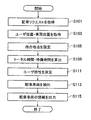
- FIG. 4 is a flowchart showing a processing procedure for extracting a vehicle dispatch vehicle according to an embodiment of the present invention.
- FIG. 1 is a block diagram showing a configuration of a vehicle allocation system including a vehicle allocation vehicle extraction server and a vehicle allocation vehicle display terminal according to the present embodiment.
- the vehicle allocation system includes a vehicle allocation vehicle display terminal 100 (operation terminal), a vehicle allocation vehicle extraction server 200, and a vehicle allocation vehicle 300, which are connected to each other by a wireless or priority network 400.
- the vehicle dispatch vehicle display terminal 100 receives a vehicle dispatch request from the user and transmits the received vehicle dispatch request.
- Examples of the vehicle dispatch vehicle display terminal 100 include mobile terminals (smartphones, tablets, etc.) that users use on a daily basis.
- the vehicle allocation vehicle extraction server 200 acquires the user's vehicle allocation request and information on the vehicle allocation vehicle 300, and extracts a combination (recommended combination) of the waiting point and the vehicle allocation vehicle 300 according to the vehicle allocation request based on the acquired information. Then, the extracted information on the combination of the waiting point and the dispatched vehicle 300 is output.
- the recommended combination is a combination of the recommended waiting point and the recommended vehicle dispatch vehicle, which is extracted from the combination of the waiting point and the vehicle dispatch vehicle 300.
- the waiting point is a place where the dispatched vehicle 300 can be stopped and the user can get on and off, and is a point on the map data registered in advance in the vehicle dispatch system.
- the vehicle dispatch vehicle 300 is a vehicle that provides a means of transportation to a destination (user's destination) designated by the user, and examples thereof include an autonomous driving vehicle.
- examples of the vehicle dispatch vehicle 300 include various means of transportation such as manned / unmanned taxis, buses, and trucks. It is assumed that a plurality of waiting points and a plurality of vehicle dispatch vehicles are registered in the vehicle dispatch system.
- the network 400 includes, for example, the Internet.
- the network 400 may use a mobile communication function such as 4G / LTE or 5G.
- a management server of a servicer for example, a vehicle dispatch service provider such as DeNA (registered trademark) or UBER (registered trademark)
- a vehicle dispatch service provider such as DeNA (registered trademark) or UBER (registered trademark)
- DeNA registered trademark
- UBER registered trademark
- the vehicle allocation request transmitted from the vehicle allocation vehicle display terminal 100 may be processed by the servicer management server, and the vehicle allocation request after being processed may be transmitted to the vehicle allocation vehicle extraction server 200.
- the information of the vehicle dispatch vehicle 300 may be processed by the management server of the servicer, and the information of the vehicle dispatch vehicle 300 after the processing may be transmitted to the vehicle dispatch vehicle extraction server 200.
- the information of the vehicle dispatch vehicle 300 output from the vehicle dispatch vehicle extraction server 200 may be processed by the servicer management server, and the processed information may be transmitted to the vehicle dispatch vehicle display terminal 100.
- the vehicle dispatch vehicle display terminal 100 can communicate bidirectionally with the vehicle dispatch vehicle extraction server 200 via the network 400, and further, it is assumed that the vehicle dispatch vehicle display terminal 100 can communicate bidirectionally with the vehicle dispatch vehicle extraction server 200 via the network 400. It is assumed that the vehicle dispatch vehicle 300 can communicate with the vehicle dispatch vehicle extraction server 200 in both directions.
- the vehicle dispatch vehicle display terminal 100 includes a sensor 150, a display unit 160, an operation unit 170, a communication unit 110, and a control unit 130 (controller).
- the sensor 150 is composed of a plurality of sensor groups, and includes a position detection sensor that acquires the position information of the vehicle dispatch vehicle display terminal 100.
- the position detection sensor is a sensor that measures an absolute position such as GPS (Global Positioning System).
- the sensor 150 may include an environment sensor that acquires environmental information regarding the environment in which the vehicle dispatch vehicle display terminal 100 is placed.
- environmental sensors include temperature sensors, humidity sensors, vibration sensors, acceleration sensors, microphones and the like.
- the display unit 160 displays information on the vehicle dispatch vehicle 300 provided by the vehicle dispatch system and information on a waiting point where the user meets with the vehicle dispatch vehicle 300.
- Information on the vehicle dispatch vehicle 300 and information on the waiting point are acquired from the vehicle dispatch vehicle extraction server 200 via the network 400 by the communication unit 110 described later.
- the display unit 160 may display route information necessary for heading to the waiting point and guidance information for guiding the movement of the user to the waiting point.
- the operation unit 170 accepts user operations corresponding to various commands from the user to the vehicle allocation system.
- the operation unit 170 may be an input interface having a plurality of buttons, or a touch panel having a touch interface.
- the display unit 160 displays an icon represented by a picture or a symbol so that the user can operate it, and the user touches or drags the displayed icon so that the operation unit 170 operates by the user. May be accepted.
- the communication unit 110 transmits / receives information to / from the network 400.
- the communication unit 110 stores the information acquired from the network 400 in a memory or the like (not shown), and outputs predetermined information such as a vehicle allocation request and environmental information to the network 400.
- the communication unit 110 may be an in-vehicle device having a 4G / LTE mobile communication function, or may be an in-vehicle device having a Wifi communication function.
- the control unit 130 is connected to the sensor 150, the display unit 160, the operation unit 170, and the communication unit 110. Information from the sensor 150, the operation unit 170, and the communication unit 110 is input to the control unit 130, and the control unit 130 receives information. Information is output from the 130 to the display unit 160 and the communication unit 110.
- the control unit 130 is a general-purpose microcomputer including a CPU (central processing unit), a memory, and an input / output unit.
- a computer program vehicle dispatch vehicle display program for functioning as a part of the vehicle dispatch vehicle display terminal 100 is installed in the control unit 130. By executing the computer program, the control unit 130 controls the display unit 160 and the communication unit 110.
- control unit 130 may be realized by software or by dedicated hardware.
- the control unit 130 acquires a vehicle allocation request from the user based on the user's operation on the operation unit 170.
- the vehicle allocation request may include the designation of the destination to which the user plans to go by using the vehicle allocation vehicle.
- the dispatch request may include designation of the number of passengers, specifications, type, etc. of the dispatched vehicle.
- the vehicle dispatch request may include user attribute information.
- the user attribute information may include information such as the user's preference, age, gender, occupation, physical characteristics, presence / absence of events before and after the vehicle allocation request, and event type.
- the vehicle dispatch vehicle display terminal 100 is a mobile terminal (smartphone, tablet, etc.) that the user uses on a daily basis
- the application as the vehicle dispatch vehicle display program is SNS (social network service) or other.
- SNS social network service
- the vehicle dispatch vehicle extraction server 200 includes a communication unit 210 (communication means), a database 220, and a control unit 230 (controller).
- the communication unit 210 transmits / receives information to / from the network 400.
- the communication unit 210 indicates a vehicle allocation request transmitted from the vehicle allocation vehicle display terminal 100 and vehicle information (for example, position information of the vehicle allocation vehicle, fuel remaining amount, and whether or not the vehicle allocation service is being provided) transmitted from the vehicle allocation vehicle 300.
- vehicle information for example, position information of the vehicle allocation vehicle, fuel remaining amount, and whether or not the vehicle allocation service is being provided
- Information and other predetermined information are acquired from the network 400, and the acquired information is recorded in the database 220.
- the database 220 stores the information acquired by the communication unit 210.
- the database 220 may store the user's past vehicle allocation requests, the usage history of the vehicle allocation system, the frequency, and the like.
- the database 220 may store various parameter tables for estimating user characteristics of the user.
- the control unit 230 (an example of a controller and a processing unit) is a general-purpose microcomputer including a CPU (central processing unit), a memory, and an input / output unit.
- a computer program vehicle dispatch vehicle extraction program for functioning as a part of the vehicle dispatch vehicle extraction server is installed in the control unit 230.
- the control unit 230 functions as a plurality of information processing circuits (231, 233, 235, 237, 239).
- a plurality of information processing circuits (231, 233, 235, 237, 239) included in the control unit 230 are realized by software.
- a plurality of information processing circuits (231, 233, 235, 237, 239) may be configured by individual hardware.
- the control unit 230 as a plurality of information processing circuits (231, 233, 235, 237, 239), has a waiting point setting unit 231, a position information acquisition unit 233, a time calculation unit 235, a user characteristic determination unit 237, and a vehicle extraction unit 239. To be equipped.
- the position information acquisition unit 233 acquires the user position and the vehicle position of the vehicle allocation vehicle 300 at the time of the vehicle allocation request via the communication unit 210.
- the waiting point setting unit 231 (waiting point setting means) is within a predetermined distance from the user position from the waiting points registered in the vehicle allocation system based on the user position acquired by the position information acquisition unit 233. A certain waiting point is selected as a calculation target by the time calculation unit 235. Further, based on the user position acquired by the position information acquisition unit 233 and the vehicle position of the vehicle dispatch vehicle 300, the vehicle dispatch vehicle within a predetermined distance from the user position is selected from the vehicle dispatch vehicles registered in the vehicle dispatch system. , Select as the calculation target by the time calculation unit 235.
- the reason why the entire waiting point registered in the vehicle allocation system is not included in the calculation is that it is not realistic for the user to move to a waiting point that is too far from the user's position. Also, the reason why the entire vehicle dispatched vehicle registered in the vehicle dispatch system is not included in the calculation is that a vehicle dispatched vehicle that is too far from the user position or the waiting point will take a long time to reach the waiting point. This is because it is assumed that it is not practically suitable for dispatching a vehicle. Furthermore, by limiting the calculation target, the total calculation cost can be reduced.
- the present invention can be implemented even if the waiting point setting unit 231 does not limit the calculation target and the entire registered waiting point is calculated.
- the time calculation unit 235 targets the waiting point and the dispatched vehicle to be calculated, the user's travel time from the user position to the waiting point, and the user gets on the dispatched vehicle after making a vehicle allocation request.
- the waiting time of the user obtained by subtracting the travel time from the time until is calculated.
- the time calculation unit 235 calculates the user's travel time, the user's waiting time, and the total time for each combination of the waiting point and the dispatched vehicle. It should be noted that the movement time of the user is the time required when the user moves from the user position to the waiting point without stopping.
- one waiting point and one dispatched vehicle are selected, and the user's travel time and the user's standby for the combination of the selected waiting point and the dispatched vehicle are selected.
- the case of calculating the time and the total time will be described.
- the time required for the dispatched vehicle to move to the waiting point is defined as the "vehicle-side moving time TC”
- the time required for the user to move to the waiting point is defined as the “user-side moving time TP" (user's moving time).
- the vehicle-side travel time TC is calculated based on the waiting point, the vehicle position of the dispatched vehicle, other road conditions, the direction of the dispatched vehicle with respect to the traveling direction of the road, and the like.
- the user-side travel time TP is calculated based on the waiting point and the user position.
- the time required for the user to board the dispatched vehicle after the user and the dispatched vehicle meet at the waiting point in order to derive the equation (1) is ignored as compared with the vehicle-side travel time TC and the user-side travel time TP. I'm assuming it's as small as possible.
- the waiting time TW (user waiting time) on the user side can be calculated by determining the waiting point, the vehicle position of the dispatched vehicle, and the user position.
- the waiting time of the user includes the time when the user waits at the user position when the vehicle allocation request is made, and the user stops while moving from the user position to the waiting point. The time of the case is also included.
- the waiting time TW on the user side can also be calculated based on the equation (3).
- TW Max (TC-TP, 0) ... (3)
- the “total time TA” is calculated as in the equation (4) (the equation (2) was used in the transformation of the equation in the middle).
- the boarding time TR is calculated based on the waiting point and the destination. Therefore, the total time TA can be calculated by determining the waiting point, the vehicle position of the dispatched vehicle, the user position, and the destination.
- the time calculation unit 235 calculates the user's travel time, the user's waiting time, and the total time for each combination of the waiting point and the dispatched vehicle.
- the user characteristic determination unit 237 determines the user characteristic based on the attribute information of the user. Specifically, the constraint conditions for the total time and the waiting time requested by the user who created the vehicle allocation request are estimated based on the attribute information of the user.
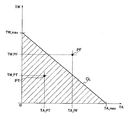
- FIG. 2 is a graph showing the user characteristics of the user who uses the vehicle allocation system.
- the constraint condition for the total time and the waiting time is represented as a region shown by a diagonal line in a coordinate system having two coordinate axes of the total time TA and the user-side waiting time TW as shown in FIG.
- the shaded area in FIG. 2 is expressed as a set of (TA, TW) satisfying all of the following equations (5-1), (5-2), and (5-3).
- the value "TA_max” represents the maximum value that the total time TA can take
- the value "TW_max” represents the maximum value that the user side standby time TW can take.
- the total time of the user calculated for the combination of a certain waiting point and the vehicle dispatched vehicle is "TA_PF”
- the calculated waiting time of the user is "TW_PF”
- the point PF is not within the shaded area, it can be said that the combination of the waiting point corresponding to the point PF and the dispatched vehicle does not satisfy the user characteristics.
- the total user time calculated for the combination of a certain waiting point and the dispatched vehicle is "TA_PT”
- the calculated waiting time of the user is "TW_PT”.
- the point PT is a point within the shaded area, it can be said that the combination of the waiting point and the dispatched vehicle corresponding to the point PT satisfies the user characteristics.
- the total user time and the user waiting time calculated for the combination of the waiting point and the dispatched vehicle satisfy all of the equations (5-1), (5-2), and (5-3). In some cases, it can be said that the combination of the waiting point and the dispatched vehicle satisfies the user characteristics, and in other cases, it does not satisfy the user characteristics.
- the user's demand for the vehicle allocation system varies from user to user.
- the user's request is "a request that you can wait until the dispatched vehicle arrives because you have time to spare"("a request to increase the waiting time"), or conversely, "a request to increase the waiting time”.
- the user's request for the vehicle allocation system includes a trade-off relationship between the user's total time and the user's waiting time.
- the user characteristic determination unit 237 adjusts the value "TW_max" and the value "TA_max” based on the user attribute information based on the user attribute information, thereby extracting the waiting point and the vehicle dispatch vehicle in the vehicle allocation system. Estimate or correct the user characteristics used.
- the boundary CL in the first quadrant is defined by a linear function, but is not limited to this.
- the boundary in the first quadrant may be defined by various monotonous decreasing functions such that the waiting time TW on the user side decreases as the total time TA increases.
- the user characteristic determination unit 237 adjusts the parameters that define the shape of the monotonous decrease function based on the attribute information of the user.
- the user characteristic determination unit 237 extracts the waiting point and the vehicle dispatch vehicle in the vehicle dispatch system based on the environmental information (information on the environment in which the user is placed) and the event type (event type before and after the vehicle dispatch request). It may estimate or correct the user characteristics to be used.
- the user characteristic determination unit 237 may determine the user characteristic based on an explicit instruction from the user.
- the vehicle extraction unit 239 extracts a recommended combination according to the vehicle allocation request from the combination of the waiting point and the vehicle allocation vehicle based on the total time calculated by the time calculation unit 235 and the waiting time of the user. ..
- the user characteristics estimated by the user characteristic determination unit 237 that is, the combination of the waiting point and the dispatched vehicle that satisfies the constraint conditions for the total time and the waiting time are extracted as the recommended combination.
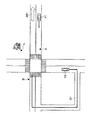
- FIG. 3A is a diagram showing an example of a user position, a vehicle dispatching vehicle position, and a waiting point.
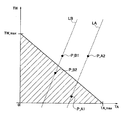
- FIG. 3B is a diagram in which a pair of the total time calculated in the positional relationship shown in FIG. 3A and the waiting time of the user is plotted on a graph showing the user characteristics.
- the user position at the time of the vehicle allocation request is indicated by point N, and the total time from point N is assumed to be shorter in the order of waiting point A and waiting point B. Specifically, since the waiting point A is located in the lane opposite to the destination direction AR1, the total time becomes longer, and the waiting point B is located in the same lane as the destination direction AR1. Since it is a lane, the total time tends to be short.
- the positional relationship between the vehicle dispatch vehicle V1 and the vehicle dispatch vehicle V2 at the time of the vehicle dispatch request is as shown in FIG. 3A. Due to the positional relationship between the waiting point and the dispatched vehicle, the time when each dispatched vehicle arrives at the waiting point is different. It is assumed that the travel time of each vehicle dispatched to the waiting point A increases in the order of the vehicle dispatched vehicle V1 and the vehicle dispatched vehicle V2, and the travel time to the waiting point B increases in the order of the vehicle dispatched vehicle V2 and the vehicle dispatched vehicle V1.
- the time calculation unit 235 calculates the time for each of the combinations of all the waiting points and the dispatched vehicles.
- the subscript clearly indicates which combination of the waiting point and the dispatched vehicle corresponds to (for example, since the subscript of the point P_A1 is A1, the waiting point A and the dispatched vehicle V1 It is said that it corresponds to the combination of).
- the straight line LA through which the points P_A1 and P_A2 pass and the straight line LB through which the points P_B1 and P_B2 pass are inclined lines. This is because the longer the TW, the longer the total time TA.
- the vehicle extraction unit 239 determines whether or not the plotted points are included in the shaded area indicating the user characteristic, that is, whether or not the calculated total time and standby time pair satisfies the constraint condition. ..
- the combination of the waiting point and the dispatched vehicle corresponding to the pair of the total time and the waiting time satisfying the constraint condition is extracted as the recommended combination.
- the combination of the waiting point and the dispatched vehicle corresponding to the pair of the total time and the waiting time that do not satisfy the constraint condition is not extracted as the recommended combination.
- the combination of the waiting point and the dispatched vehicle corresponding to the points P_A1 and P_B2 is extracted as the recommended combination. Therefore, two cases are extracted: when meeting with the dispatching vehicle V1 at the waiting point A and when meeting with the dispatching vehicle V2 at the waiting point B.
- the combination of the waiting point and the dispatched vehicle extracted by the vehicle extraction unit 239 can vary depending on the user characteristics estimated by the user characteristic determination unit 237.
- the vehicle extraction unit 239 may give a score (recommended degree) for each recommended combination based on the user characteristics. For example, in the shaded area representing the user characteristic shown in FIG. 2, the closer the point is to the origin, the higher the score is given so that the recommended combinations can be compared with each other.
- the recommended combination extracted by the vehicle extraction unit 239 is output to the outside of the vehicle allocation vehicle extraction server 200 via the communication unit 210. Then, the output recommended combination is acquired by the communication unit 110 of the vehicle dispatch vehicle display terminal 100 and displayed on the display unit 160.
- the vehicle dispatch vehicle extraction server is configured.
- the vehicle dispatch vehicle display terminal is provided with the time calculation unit 235, the user characteristic determination unit 237, and the vehicle extraction unit 239 in the control unit 130 of the vehicle dispatch vehicle display terminal 100.
- the recommended combination may be extracted.
- the user characteristics may be determined by the vehicle dispatch vehicle display terminal 100, and the recommended combination may be extracted by the vehicle dispatch vehicle display terminal 100 from the combinations of the waiting point and the vehicle dispatch vehicle delivered from the vehicle dispatch vehicle extraction server 200.
- step S101 the vehicle allocation vehicle extraction server 200 acquires the vehicle allocation request transmitted from the vehicle allocation vehicle display terminal 100 via the communication unit 210.
- step S103 the position information acquisition unit 233 acquires the user position and the vehicle position of the vehicle allocation vehicle 300 at the time of the vehicle allocation request via the communication unit 210.
- step S105 the waiting point setting unit 231 selects a waiting point to be calculated by the time calculation unit 235 from the waiting points registered in the vehicle allocation system. Further, among the vehicle allocation vehicles 300 registered in the vehicle allocation system, the vehicle allocation vehicle to be calculated by the time calculation unit 235 is selected.
- step S109 the time calculation unit 235 waits for the user obtained by subtracting the travel time from the travel time of the user from the user position to the waiting point and the time from the request for dispatch to the user getting on the dispatch vehicle. The time and the total time from the request for dispatch to the arrival of the user at the destination by boarding the dispatched vehicle are calculated.
- step S111 the user characteristic determination unit 237 determines the user characteristic based on the user attribute information. At that time, the user characteristics used for extracting the waiting point and the vehicle dispatch vehicle in the vehicle dispatch system are estimated or corrected based on the user attribute information and the environment information.
- step S113 the vehicle extraction unit 239 selects a recommended combination according to the vehicle allocation request from the combination of the waiting point and the vehicle allocation vehicle based on the user's travel time and the user's waiting time calculated by the time calculation unit 235. Extract.
- step S115 the recommended combination extracted by the vehicle extraction unit 239 is output to the outside of the vehicle allocation vehicle extraction server 200 via the communication unit 210.
- the user's request for the vehicle dispatch system varies from user to user. Therefore, it is necessary to estimate and correct the user characteristics used for extracting the waiting point and the vehicle dispatch vehicle in the vehicle dispatch system according to the user.
- the user's request varies depending on the environment in which the user is placed and the presence / absence and type of schedule before and after the vehicle allocation request. Therefore, it is necessary to estimate and correct according to the environmental information and event type.
- the user characteristic determination unit 237 estimates and corrects the user characteristics based on the "user attribute information", "environment information”, and "event type".
- the user characteristic determination unit 237 has a personality type that makes it easy for the user to make a "request to increase the waiting time" based on the user's preference, age, gender, occupation, physical characteristics, etc. among the user's attribute information. Estimate which of the personality types tends to make "requests to shorten the total time”.
- the occupation when the information of "occupation" can be obtained in the attribute information of the user, if the occupation is, for example, a student, a housewife, or unemployed, it is a personality type that makes it easy to make a "request to increase the waiting time". I presume. On the other hand, if the occupation is, for example, a company employee or a manager, it is presumed that the personality type is likely to make a "request to shorten the total time".
- the user characteristic determination unit 237 tends to be either a personality type in which the user is likely to make a "request to increase the waiting time” or a personality type in which the user is likely to make a "request to shorten the total time”. Estimate if you are doing it.
- the user characteristic determination unit 237 determines the value "TA_max" in which the user characteristic determination unit 237 determines the boundary CL in FIG. Is adjusted to be smaller than the default value.
- the user characteristic determination unit 237 when the user characteristic determination unit 237 has a personality type that makes it easy for the user to "request to increase the waiting time", the user characteristic determination unit 237 defaults to the value "TW_max" that defines the boundary CL in FIG. Adjust larger than.
- the degree of adjustment for the boundary CL compared to the default value may be changed according to the strength of the required level.
- the user characteristic determination unit 237 can move the waiting point and the vehicle to be dispatched in the vehicle dispatch system. Estimate or correct the user characteristics used for extraction.
- the user characteristic determination unit 237 estimates, based on the environmental information, which of the "request for shortening the total time” and the “request for shortening the waiting time” can be made by the user.
- the user can make a "request to shorten the waiting time" when the temperature is far from the temperature that humans feel comfortable with, when it is raining or snowing, or when the wind is strong. ..
- the user characteristic determination unit 237 adjusts the boundary CL in the same manner as the estimation / correction of the user characteristic based on the “user attribute information”.
- the schedule after using the vehicle dispatch service is "live”, "dressing shop”, “hospital examination”, “aircraft flight”, “entertainment golf”, etc.
- the user since it is considered that the user acts because it is not allowed to be late for the schedule, it is presumed that the user is likely to make a "request to shorten the total time”.
- the event type is determined from the user's calendar information and the user's starting point / destination, and the user characteristic determination unit 237 estimates / corrects the user characteristic according to the user's tendency according to the event type.
- the user characteristic determination unit 237 adjusts the boundary CL in the same manner as the estimation / correction of the user characteristic based on the “user attribute information”.
- the vehicle allocation request is made from the operation terminal on which the user performs a request operation.
- Acquire acquire the user position at the time of the vehicle allocation request and the vehicle position of the vehicle allocation vehicle, the user's travel time from the user position to the waiting point where the user meets the vehicle allocation vehicle, and the vehicle allocation vehicle after the user makes the vehicle allocation request.
- the user's waiting time obtained by subtracting the user's travel time from the time until boarding the vehicle, and the user's total time from when the user makes a vehicle allocation request to when the user gets on the vehicle and arrives at the destination. Calculate and extract the dispatched vehicles based on the total time and waiting time.
- the dispatched vehicle is extracted based on the total time from the request for dispatching to the user getting on the dispatched vehicle and the user's waiting time and the waiting time of the user, the user using the vehicle dispatching system Convenience can be improved.
- the user position and the vehicle position of the vehicle dispatch vehicle change dynamically, it is possible to propose to the user the vehicle dispatch vehicle according to the vehicle allocation request in response to the dynamically changed situation. Become.
- the waiting time and the total time are calculated for each combination of the waiting point and the vehicle dispatch vehicle.
- the recommended combination may be extracted from the combination based on the waiting time and the total time.
- the waiting point and the vehicle dispatched vehicle according to the vehicle allocation request are proposed to the user in response to the dynamically changed situation. Will be possible.
- the waiting point and the vehicle dispatched vehicle can be extracted in consideration of the trade-off relationship between the total time and the waiting time of the user in the request from the user, and the convenience of the user who uses the vehicle dispatching system can be improved.
- the constraint conditions regarding the total time and the waiting time are estimated based on the attribute information. Combinations that satisfy the constraint conditions may be extracted as recommended combinations. As a result, various user characteristics that differ depending on the user can be reflected in the extraction result of the waiting point and the vehicle allocation vehicle, and it becomes possible to provide a vehicle allocation service customized for each user.
- the vehicle allocation vehicle extraction server the vehicle allocation vehicle extraction means, the vehicle allocation vehicle extraction method, and the vehicle allocation vehicle display terminal according to the present embodiment
- environmental information around the user's position is acquired, and restrictions are imposed based on the environmental information.
- the condition may be corrected.
- the difference in the surrounding environment of the user can be reflected in the extraction result of the waiting point and the vehicle dispatched vehicle, and it becomes possible to provide the vehicle dispatching service customized for each user.
- the vehicle allocation vehicle extraction server the vehicle allocation vehicle extraction means, the vehicle allocation vehicle extraction method, and the vehicle allocation vehicle display terminal according to the present embodiment
- the information of the recommended combination may be output and displayed.
- the vehicle dispatch vehicle extraction server the vehicle dispatch vehicle extraction means, the vehicle dispatch vehicle extraction method, and the vehicle dispatch vehicle display terminal according to the present embodiment
- the time required for the vehicle dispatch vehicle to move from the vehicle position to the waiting point is determined.
- the value obtained by subtracting the travel time is 0 or more
- the value may be used as the standby time.
- the waiting time of the user can be calculated by a simple method, and the calculation cost can be reduced.
- the user position may be acquired from the operation terminal. This makes it possible to propose to the user a vehicle dispatch vehicle according to the vehicle dispatch request based on the accurate user position.
- a mobile terminal may be used as the operation terminal.
- the user position can be accurately evaluated based on the position information of the mobile terminal held by the user, and it becomes possible to propose to the user a vehicle allocation vehicle according to the vehicle allocation request based on the accurate user position. ..
- the processing circuit includes a programmed processing device such as a processing device including an electric circuit.
- Processing devices also include devices such as application specific integrated circuits (ASICs) and conventional circuit components arranged to perform the functions described in the embodiments.
- ASICs application specific integrated circuits
- Vehicle dispatch vehicle display terminal 110 Communication unit 130 Control unit 150 Sensor 160 Display unit 170 Operation unit 200 Vehicle dispatch vehicle extraction server 210 Communication unit 220 Database 230 Control unit 231 Waiting point setting unit 233 Location information acquisition unit 235 Time calculation unit 237 User characteristic determination Department 239 Vehicle Extraction Department 300 Vehicle Allocation Vehicle 400 Network
Landscapes
- Engineering & Computer Science (AREA)
- Radar, Positioning & Navigation (AREA)
- Remote Sensing (AREA)
- Physics & Mathematics (AREA)
- General Physics & Mathematics (AREA)
- Business, Economics & Management (AREA)
- Automation & Control Theory (AREA)
- General Health & Medical Sciences (AREA)
- Health & Medical Sciences (AREA)
- Tourism & Hospitality (AREA)
- Economics (AREA)
- Human Resources & Organizations (AREA)
- Marketing (AREA)
- Primary Health Care (AREA)
- Strategic Management (AREA)
- General Business, Economics & Management (AREA)
- Theoretical Computer Science (AREA)
- Social Psychology (AREA)
- Traffic Control Systems (AREA)
- Management, Administration, Business Operations System, And Electronic Commerce (AREA)
Abstract
Description
図1は、本実施形態に係る配車車両抽出サーバ、配車車両表示端末を含む、配車システムの構成を示すブロック図である。図1に示すように、配車システムは、無線又は優先のネットワーク400で互いに接続された、配車車両表示端末100(操作端末)と、配車車両抽出サーバ200と、配車車両300と、を備える。
次に、配車車両表示端末100について説明する。図1に示すように、本実施形態に係る配車車両表示端末100は、センサ150と、表示部160と、操作部170と、通信部110と、制御部130(コントローラ)と、を備える。
次に、配車車両抽出サーバ200について説明する。図1に示すように、本実施形態に係る配車車両抽出サーバ200は、通信部210(通信手段)と、データベース220と、制御部230(コントローラ)と、を備える。
=TP+TW+TR …(4)
TW≧0 …(5−2)
TA≧0 …(5−3)
というものがある。
次に、本実施形態に係る配車車両抽出の処理手順を、図4のフローチャートを参照して説明する。図4に示す配車車両抽出の処理は、配車システムの運用開始とともに開始され、配車システムが運用状態にある間、繰り返し実行される。
ユーザ特性決定部237が行う、ユーザ特性の推定・補正の例を説明する。
以上詳細に説明したように、本実施形態に係る配車車両抽出サーバ、配車車両抽出手段、配車車両抽出方法、ならびに、配車車両表示端末によれば、ユーザがリクエスト操作を行う操作端末から配車リクエストを取得し、配車リクエストの際のユーザ位置と配車車両の車両位置とを取得し、ユーザ位置からユーザが配車車両と待ち合わせる待合地点までのユーザの移動時間と、ユーザが配車リクエストを行ってから配車車両に乗車するまでの時間からユーザの移動時間を差し引いて得られるユーザの待機時間と、ユーザが配車リクエストを行ってから配車車両に乗車して目的地に到着するまでのユーザのトータル時間と、を算出し、トータル時間と待機時間に基づいて、配車車両を抽出する。
110 通信部
130 制御部
150 センサ
160 表示部
170 操作部
200 配車車両抽出サーバ
210 通信部
220 データベース
230 制御部
231 待合地点設定部
233 位置情報取得部
235 時間算出部
237 ユーザ特性決定部
239 車両抽出部
300 配車車両
400 ネットワーク
Claims (11)
- ユーザがリクエスト操作を行う操作端末から配車リクエストを取得し、前記配車リクエストの際のユーザ位置と配車車両の車両位置とを取得する通信部と、
前記配車リクエストを処理するコントローラと、
を備える配車車両抽出サーバであって、
前記コントローラは、
前記ユーザ位置から前記ユーザが前記配車車両と待ち合わせる待合地点までの、前記ユーザの移動時間と、
前記ユーザが前記配車リクエストを行ってから前記配車車両に乗車するまでの時間から、前記移動時間を差し引いて得られる、前記ユーザの待機時間と、
前記ユーザが前記配車リクエストを行ってから前記配車車両に乗車して目的地に到着するまでの、前記ユーザのトータル時間と、
を算出し、
前記トータル時間と前記待機時間に基づいて、前記配車車両を抽出すること
を特徴とする配車車両抽出サーバ。 - 請求項1に記載の配車車両抽出サーバであって、
前記コントローラは、
前記待合地点と前記配車車両の組合せ毎に、前記トータル時間と前記待機時間を算出し、
前記トータル時間と前記待機時間に基づいて、推奨組合せを前記組合せの中から抽出すること
を特徴とする配車車両抽出サーバ。 - 請求項2に記載の配車車両抽出サーバであって、
前記配車リクエストは前記ユーザの属性情報を含み、
前記コントローラは、
前記トータル時間と前記待機時間に関する制約条件を、前記属性情報に基づいて推定し、
前記制約条件を満たす前記組合せを、前記推奨組合せとして抽出すること
を特徴とする配車車両抽出サーバ。 - 請求項3に記載の配車車両抽出サーバであって、
前記ユーザ位置の周囲の環境情報を取得し、
前記環境情報に基づいて、前記制約条件を補正すること
を特徴とする配車車両抽出サーバ。 - 請求項2~4のいずれか一項に記載の配車車両抽出サーバであって、
前記通信部を介して、前記推奨組合せの情報を前記配車車両抽出サーバの外部に出力すること
を特徴とする配車車両抽出サーバ。 - 請求項1~5のいずれか一項に記載の配車車両抽出サーバであって、
前記車両位置から前記待合地点までの前記配車車両が移動するのに要する時間から、前記移動時間を差し引いて得られる値が、0以上である場合に、当該値を前記待機時間とすること
を特徴とする配車車両抽出サーバ。 - 請求項1~6のいずれか一項に記載の配車車両抽出サーバであって、
前記通信部は、前記操作端末から前記ユーザ位置を取得すること
を特徴とする配車車両抽出サーバ。 - 請求項1~7のいずれか一項に記載の配車車両抽出サーバであって、
前記操作端末は、携帯端末であること
を特徴とする配車車両抽出サーバ。 - ユーザがリクエスト操作を行う操作端末から配車リクエストを取得し、前記配車リクエストの際のユーザ位置と配車車両の車両位置とを取得する通信手段と、
前記ユーザ位置から前記ユーザが前記配車車両と待ち合わせる待合地点までの、前記ユーザの移動時間と、
前記ユーザが前記配車リクエストを行ってから前記配車車両に乗車するまでの時間から、前記移動時間を差し引いて得られる、前記ユーザの待機時間と、
前記ユーザが前記配車リクエストを行ってから前記配車車両に乗車して目的地に到着するまでの、前記ユーザのトータル時間と、
を算出する時間算出手段と、
前記トータル時間と前記待機時間に基づいて、前記配車車両を抽出する抽出手段と、
を備える配車車両抽出装置。 - ユーザがリクエスト操作を行う操作端末から配車リクエストを取得し、前記配車リクエストの際のユーザ位置と配車車両の車両位置とを取得し、
前記ユーザ位置から前記ユーザが前記配車車両と待ち合わせる待合地点までの、前記ユーザの移動時間と、
前記ユーザが前記配車リクエストを行ってから前記配車車両に乗車するまでの時間から、前記移動時間を差し引いて得られる、前記ユーザの待機時間と、
前記ユーザが前記配車リクエストを行ってから前記配車車両に乗車して目的地に到着するまでの、前記ユーザのトータル時間と、
を算出し、
前記トータル時間と前記待機時間に基づいて、前記配車車両を抽出すること
を特徴とする配車車両抽出方法。 - ユーザの配車リクエストを受け付ける操作部と、
前記配車リクエストの際のユーザ位置を送信し、配車車両の中から抽出して推奨配車車両を受信する通信部と、
前記推奨配車車両を表示する表示部と、
を備える配車車両表示端末であって、
前記推奨配車車両は、
前記ユーザ位置から前記ユーザが前記配車車両と待ち合わせる待合地点までの、前記ユーザの移動時間と、
前記ユーザが前記配車リクエストを行ってから前記配車車両に乗車するまでの時間から、前記移動時間を差し引いて得られる、前記ユーザの待機時間と、
前記ユーザが前記配車リクエストを行ってから前記配車車両に乗車して目的地に到着するまでの、前記ユーザのトータル時間と、
が算出された後に、前記トータル時間と前記待機時間に基づいて、前記配車車両の中から抽出されること
を特徴とする配車車両表示端末。
Priority Applications (4)
| Application Number | Priority Date | Filing Date | Title |
|---|---|---|---|
| CN201980094999.1A CN113678161B (zh) | 2019-03-29 | 2019-03-29 | 调配车辆提取服务器、装置、方法以及调配车辆显示终端 |
| US17/598,940 US12072195B2 (en) | 2019-03-29 | 2019-03-29 | Dispatched vehicle extraction server, dispatched vehicle extraction device, dispatched vehicle extraction method, and dispatched vehicle display terminal |
| JP2021510559A JP7367753B2 (ja) | 2019-03-29 | 2019-03-29 | 配車車両抽出サーバ、配車車両抽出手段、配車車両抽出方法、ならびに、配車車両表示端末 |
| PCT/IB2019/000406 WO2020201798A1 (ja) | 2019-03-29 | 2019-03-29 | 配車車両抽出サーバ、配車車両抽出手段、配車車両抽出方法、ならびに、 配車車両表示端末 |
Applications Claiming Priority (1)
| Application Number | Priority Date | Filing Date | Title |
|---|---|---|---|
| PCT/IB2019/000406 WO2020201798A1 (ja) | 2019-03-29 | 2019-03-29 | 配車車両抽出サーバ、配車車両抽出手段、配車車両抽出方法、ならびに、 配車車両表示端末 |
Publications (1)
| Publication Number | Publication Date |
|---|---|
| WO2020201798A1 true WO2020201798A1 (ja) | 2020-10-08 |
Family
ID=72666253
Family Applications (1)
| Application Number | Title | Priority Date | Filing Date |
|---|---|---|---|
| PCT/IB2019/000406 Ceased WO2020201798A1 (ja) | 2019-03-29 | 2019-03-29 | 配車車両抽出サーバ、配車車両抽出手段、配車車両抽出方法、ならびに、 配車車両表示端末 |
Country Status (4)
| Country | Link |
|---|---|
| US (1) | US12072195B2 (ja) |
| JP (1) | JP7367753B2 (ja) |
| CN (1) | CN113678161B (ja) |
| WO (1) | WO2020201798A1 (ja) |
Families Citing this family (2)
| Publication number | Priority date | Publication date | Assignee | Title |
|---|---|---|---|---|
| WO2020201794A1 (ja) * | 2019-04-02 | 2020-10-08 | 日産自動車株式会社 | 配車車両抽出サーバ、配車車両抽出手段、配車車両抽出方法、ならびに、配車車両表示端末 |
| WO2022158090A1 (ja) * | 2021-01-22 | 2022-07-28 | パナソニック インテレクチュアル プロパティ コーポレーション オブ アメリカ | 情報処理方法、情報処理装置及び情報処理プログラム |
Citations (5)
| Publication number | Priority date | Publication date | Assignee | Title |
|---|---|---|---|---|
| JP2005216155A (ja) * | 2004-01-30 | 2005-08-11 | Aruze Corp | タクシー配車予約システム及びタクシー配車予約システム用サーバ |
| JP2013134641A (ja) | 2011-12-27 | 2013-07-08 | Media Mobile Co Ltd | 携帯端末を用いたタクシー車両の呼び寄せシステム |
| JP2018163578A (ja) * | 2017-03-27 | 2018-10-18 | 株式会社日本総合研究所 | アクティブ迎車システムにおける迎車制御サーバ、車載端末、制御方法及び制御プログラム |
| WO2018230676A1 (ja) * | 2017-06-15 | 2018-12-20 | 本田技研工業株式会社 | ライドシェア管理装置、ライドシェア管理方法、およびプログラム |
| JP2018206177A (ja) * | 2017-06-07 | 2018-12-27 | パナソニック インテレクチュアル プロパティ コーポレーション オブ アメリカPanasonic Intellectual Property Corporation of America | 配車支援方法、配車支援装置、配車支援プログラム及び情報提示プログラム |
Family Cites Families (12)
| Publication number | Priority date | Publication date | Assignee | Title |
|---|---|---|---|---|
| JP3806322B2 (ja) * | 2001-08-22 | 2006-08-09 | 富士通テン株式会社 | 情報端末 |
| JP3951769B2 (ja) * | 2002-03-25 | 2007-08-01 | 日本電気株式会社 | タクシー配車方法,タクシー配車システム,タクシー端末,配車センタ端末およびプログラム |
| JP2005275678A (ja) * | 2004-03-24 | 2005-10-06 | Hitachi Software Eng Co Ltd | 配車サービス支援方法および装置 |
| JP2008146500A (ja) * | 2006-12-12 | 2008-06-26 | Sueo Imamura | 配車システム |
| JP5874414B2 (ja) * | 2012-01-30 | 2016-03-02 | 株式会社デンソー | ナビゲーションシステム、及びサーバ装置 |
| JP6061585B2 (ja) * | 2012-09-26 | 2017-01-18 | パイオニア株式会社 | 情報処理装置、情報処理方法、情報処理プログラム、情報処理プログラムを格納した記録媒体および情報提供装置、情報提供方法、情報提供プログラム、情報提供プログラムを格納した記録媒体 |
| JP6341533B2 (ja) * | 2014-04-15 | 2018-06-13 | Necプラットフォームズ株式会社 | 配車管理システム、配車管理装置、配車管理方法、及び、配車管理プログラム |
| CN106875674B (zh) * | 2017-04-14 | 2020-02-07 | 上海雷腾软件股份有限公司 | 一种用于车辆调度的方法及设备 |
| US10126138B1 (en) * | 2017-05-10 | 2018-11-13 | Lyft, Inc. | Dynamic geolocation optimization of pickup paths using curb segment data |
| CN108986446A (zh) * | 2017-06-01 | 2018-12-11 | 北京嘀嘀无限科技发展有限公司 | 上车点获取方法、司机乘客互联方法、以及装置、系统 |
| CN109213141B (zh) * | 2017-07-05 | 2024-02-02 | 松下电器(美国)知识产权公司 | 自主行驶车、行驶控制装置和方法及记录程序的记录介质 |
| JP6535713B2 (ja) * | 2017-08-28 | 2019-06-26 | 株式会社 ディー・エヌ・エー | 車両の配車を管理するためのシステム、方法、及びプログラム |
-
2019
- 2019-03-29 JP JP2021510559A patent/JP7367753B2/ja active Active
- 2019-03-29 US US17/598,940 patent/US12072195B2/en active Active
- 2019-03-29 CN CN201980094999.1A patent/CN113678161B/zh active Active
- 2019-03-29 WO PCT/IB2019/000406 patent/WO2020201798A1/ja not_active Ceased
Patent Citations (5)
| Publication number | Priority date | Publication date | Assignee | Title |
|---|---|---|---|---|
| JP2005216155A (ja) * | 2004-01-30 | 2005-08-11 | Aruze Corp | タクシー配車予約システム及びタクシー配車予約システム用サーバ |
| JP2013134641A (ja) | 2011-12-27 | 2013-07-08 | Media Mobile Co Ltd | 携帯端末を用いたタクシー車両の呼び寄せシステム |
| JP2018163578A (ja) * | 2017-03-27 | 2018-10-18 | 株式会社日本総合研究所 | アクティブ迎車システムにおける迎車制御サーバ、車載端末、制御方法及び制御プログラム |
| JP2018206177A (ja) * | 2017-06-07 | 2018-12-27 | パナソニック インテレクチュアル プロパティ コーポレーション オブ アメリカPanasonic Intellectual Property Corporation of America | 配車支援方法、配車支援装置、配車支援プログラム及び情報提示プログラム |
| WO2018230676A1 (ja) * | 2017-06-15 | 2018-12-20 | 本田技研工業株式会社 | ライドシェア管理装置、ライドシェア管理方法、およびプログラム |
Also Published As
| Publication number | Publication date |
|---|---|
| CN113678161B (zh) | 2023-08-29 |
| JPWO2020201798A1 (ja) | 2020-10-08 |
| US12072195B2 (en) | 2024-08-27 |
| CN113678161A (zh) | 2021-11-19 |
| US20220178709A1 (en) | 2022-06-09 |
| JP7367753B2 (ja) | 2023-10-24 |
Similar Documents
| Publication | Publication Date | Title |
|---|---|---|
| US9747797B1 (en) | Method and system for predicting availability of parking spot in parking area | |
| US20170265040A1 (en) | Verification of pickup times in real-time ride-sharing feeds | |
| US20140257989A1 (en) | Method and system for selecting in-vehicle advertisement | |
| JP7180754B2 (ja) | 配車車両抽出サーバ、配車車両抽出手段、配車車両抽出方法、ならびに、配車車両表示端末 | |
| US9201843B2 (en) | Control device | |
| JP2019106135A (ja) | プログラム、情報処理装置、及び配達管理システム | |
| JP7367753B2 (ja) | 配車車両抽出サーバ、配車車両抽出手段、配車車両抽出方法、ならびに、配車車両表示端末 | |
| JPWO2019058726A1 (ja) | 移動センサ管理ユニット、移動センサ装置、マッチング装置、センシングデータ流通システム、データ提供方法、およびデータ提供プログラム | |
| JP7468547B2 (ja) | 情報処理方法、情報処理システム、情報処理装置、及び、情報端末 | |
| JP7642061B2 (ja) | 乗車地設定装置、配車サービスシステム、乗車地設定方法、及び乗車地表示装置 | |
| CN111242711A (zh) | 信息提示方法、装置、电子设备和存储介质 | |
| CN113627680A (zh) | 一种智能班车交互方法、装置、电子设备及存储介质 | |
| JP7546142B2 (ja) | 情報処理装置及び情報処理方法 | |
| CN111143486A (zh) | 一种服务位置获取方法、装置、电子设备及存储介质 | |
| CN116155981A (zh) | 服务推荐方法、系统、设备和计算机程序产品 | |
| CN112333280B (zh) | 一种更新并显示定位的方法和系统 | |
| KR20130139623A (ko) | 스마트폰을 이용한 위치기반 정보 제공 장치 및 방법 | |
| KR20130091565A (ko) | 순환차량 관리 시스템 | |
| JP7170269B2 (ja) | 空調制御システム、及び、空調制御方法 | |
| JP7594964B2 (ja) | 情報処理装置及び情報処理方法 | |
| EP4685437A1 (en) | Planned route determination for an autonomous passenger vehicle | |
| JP2022046311A (ja) | 配車予約管理システム、配車システム、配車予約データ管理装置、及び配車予約データ管理プログラム | |
| JP7501478B2 (ja) | サーバ、方法、及びプログラム | |
| CN113239267B (zh) | 一种基于行程信息和位置信息的机票改签推荐方法和系统 | |
| KR20160016102A (ko) | 내비게이션 장치, 그 방법 및 컴퓨터 프로그램이 기록된 기록매체 |
Legal Events
| Date | Code | Title | Description |
|---|---|---|---|
| 121 | Ep: the epo has been informed by wipo that ep was designated in this application |
Ref document number: 19922230 Country of ref document: EP Kind code of ref document: A1 |
|
| ENP | Entry into the national phase |
Ref document number: 2021510559 Country of ref document: JP Kind code of ref document: A |
|
| NENP | Non-entry into the national phase |
Ref country code: DE |
|
| ENP | Entry into the national phase |
Ref document number: 2019922230 Country of ref document: EP Effective date: 20211029 |
|
| 122 | Ep: pct application non-entry in european phase |
Ref document number: 19922230 Country of ref document: EP Kind code of ref document: A1 |