WO2020183752A1 - 通信端末 - Google Patents
通信端末 Download PDFInfo
- Publication number
- WO2020183752A1 WO2020183752A1 PCT/JP2019/028979 JP2019028979W WO2020183752A1 WO 2020183752 A1 WO2020183752 A1 WO 2020183752A1 JP 2019028979 W JP2019028979 W JP 2019028979W WO 2020183752 A1 WO2020183752 A1 WO 2020183752A1
- Authority
- WO
- WIPO (PCT)
- Prior art keywords
- cpu
- abnormal state
- communication terminal
- data
- sleep mode
- Prior art date
- Legal status (The legal status is an assumption and is not a legal conclusion. Google has not performed a legal analysis and makes no representation as to the accuracy of the status listed.)
- Ceased
Links
Images








Classifications
-
- B—PERFORMING OPERATIONS; TRANSPORTING
- B60—VEHICLES IN GENERAL
- B60R—VEHICLES, VEHICLE FITTINGS, OR VEHICLE PARTS, NOT OTHERWISE PROVIDED FOR
- B60R16/00—Electric or fluid circuits specially adapted for vehicles and not otherwise provided for; Arrangement of elements of electric or fluid circuits specially adapted for vehicles and not otherwise provided for
- B60R16/02—Electric or fluid circuits specially adapted for vehicles and not otherwise provided for; Arrangement of elements of electric or fluid circuits specially adapted for vehicles and not otherwise provided for electric constitutive elements
-
- B—PERFORMING OPERATIONS; TRANSPORTING
- B60—VEHICLES IN GENERAL
- B60R—VEHICLES, VEHICLE FITTINGS, OR VEHICLE PARTS, NOT OTHERWISE PROVIDED FOR
- B60R25/00—Fittings or systems for preventing or indicating unauthorised use or theft of vehicles
- B60R25/10—Fittings or systems for preventing or indicating unauthorised use or theft of vehicles actuating a signalling device
- B60R25/102—Fittings or systems for preventing or indicating unauthorised use or theft of vehicles actuating a signalling device a signal being sent to a remote location, e.g. a radio signal being transmitted to a police station, a security company or the owner
-
- B—PERFORMING OPERATIONS; TRANSPORTING
- B60—VEHICLES IN GENERAL
- B60R—VEHICLES, VEHICLE FITTINGS, OR VEHICLE PARTS, NOT OTHERWISE PROVIDED FOR
- B60R25/00—Fittings or systems for preventing or indicating unauthorised use or theft of vehicles
- B60R25/30—Detection related to theft or to other events relevant to anti-theft systems
- B60R25/32—Detection related to theft or to other events relevant to anti-theft systems of vehicle dynamic parameters, e.g. speed or acceleration
-
- B—PERFORMING OPERATIONS; TRANSPORTING
- B60—VEHICLES IN GENERAL
- B60R—VEHICLES, VEHICLE FITTINGS, OR VEHICLE PARTS, NOT OTHERWISE PROVIDED FOR
- B60R25/00—Fittings or systems for preventing or indicating unauthorised use or theft of vehicles
- B60R25/30—Detection related to theft or to other events relevant to anti-theft systems
- B60R25/33—Detection related to theft or to other events relevant to anti-theft systems of global position, e.g. by providing GPS coordinates
-
- B—PERFORMING OPERATIONS; TRANSPORTING
- B60—VEHICLES IN GENERAL
- B60R—VEHICLES, VEHICLE FITTINGS, OR VEHICLE PARTS, NOT OTHERWISE PROVIDED FOR
- B60R25/00—Fittings or systems for preventing or indicating unauthorised use or theft of vehicles
- B60R25/40—Features of the power supply for the anti-theft system, e.g. anti-theft batteries, back-up power supply or means to save battery power
-
- G—PHYSICS
- G01—MEASURING; TESTING
- G01S—RADIO DIRECTION-FINDING; RADIO NAVIGATION; DETERMINING DISTANCE OR VELOCITY BY USE OF RADIO WAVES; LOCATING OR PRESENCE-DETECTING BY USE OF THE REFLECTION OR RERADIATION OF RADIO WAVES; ANALOGOUS ARRANGEMENTS USING OTHER WAVES
- G01S19/00—Satellite radio beacon positioning systems; Determining position, velocity or attitude using signals transmitted by such systems
- G01S19/01—Satellite radio beacon positioning systems transmitting time-stamped messages, e.g. GPS [Global Positioning System], GLONASS [Global Orbiting Navigation Satellite System] or GALILEO
- G01S19/13—Receivers
- G01S19/14—Receivers specially adapted for specific applications
- G01S19/16—Anti-theft; Abduction
-
- G—PHYSICS
- G01—MEASURING; TESTING
- G01S—RADIO DIRECTION-FINDING; RADIO NAVIGATION; DETERMINING DISTANCE OR VELOCITY BY USE OF RADIO WAVES; LOCATING OR PRESENCE-DETECTING BY USE OF THE REFLECTION OR RERADIATION OF RADIO WAVES; ANALOGOUS ARRANGEMENTS USING OTHER WAVES
- G01S19/00—Satellite radio beacon positioning systems; Determining position, velocity or attitude using signals transmitted by such systems
- G01S19/01—Satellite radio beacon positioning systems transmitting time-stamped messages, e.g. GPS [Global Positioning System], GLONASS [Global Orbiting Navigation Satellite System] or GALILEO
- G01S19/13—Receivers
- G01S19/34—Power consumption
-
- G—PHYSICS
- G08—SIGNALLING
- G08B—SIGNALLING SYSTEMS, e.g. PERSONAL CALLING SYSTEMS; ORDER TELEGRAPHS; ALARM SYSTEMS
- G08B13/00—Burglar, theft or intruder alarms
-
- G—PHYSICS
- G08—SIGNALLING
- G08B—SIGNALLING SYSTEMS, e.g. PERSONAL CALLING SYSTEMS; ORDER TELEGRAPHS; ALARM SYSTEMS
- G08B13/00—Burglar, theft or intruder alarms
- G08B13/02—Mechanical actuation
-
- G—PHYSICS
- G08—SIGNALLING
- G08G—TRAFFIC CONTROL SYSTEMS
- G08G1/00—Traffic control systems for road vehicles
- G08G1/123—Traffic control systems for road vehicles indicating the position of vehicles, e.g. scheduled vehicles; Managing passenger vehicles circulating according to a fixed timetable, e.g. buses, trains, trams
- G08G1/127—Traffic control systems for road vehicles indicating the position of vehicles, e.g. scheduled vehicles; Managing passenger vehicles circulating according to a fixed timetable, e.g. buses, trains, trams to a central station ; Indicators in a central station
- G08G1/13—Traffic control systems for road vehicles indicating the position of vehicles, e.g. scheduled vehicles; Managing passenger vehicles circulating according to a fixed timetable, e.g. buses, trains, trams to a central station ; Indicators in a central station the indicator being in the form of a map
-
- H—ELECTRICITY
- H04—ELECTRIC COMMUNICATION TECHNIQUE
- H04M—TELEPHONIC COMMUNICATION
- H04M1/00—Substation equipment, e.g. for use by subscribers
- H04M1/72—Mobile telephones; Cordless telephones, i.e. devices for establishing wireless links to base stations without route selection
- H04M1/725—Cordless telephones
- H04M1/73—Battery saving arrangements
-
- H—ELECTRICITY
- H04—ELECTRIC COMMUNICATION TECHNIQUE
- H04Q—SELECTING
- H04Q9/00—Arrangements in telecontrol or telemetry systems for selectively calling a substation from a main station, in which substation desired apparatus is selected for applying a control signal thereto or for obtaining measured values therefrom
-
- H—ELECTRICITY
- H04—ELECTRIC COMMUNICATION TECHNIQUE
- H04W—WIRELESS COMMUNICATION NETWORKS
- H04W4/00—Services specially adapted for wireless communication networks; Facilities therefor
- H04W4/30—Services specially adapted for particular environments, situations or purposes
- H04W4/38—Services specially adapted for particular environments, situations or purposes for collecting sensor information
-
- H—ELECTRICITY
- H04—ELECTRIC COMMUNICATION TECHNIQUE
- H04W—WIRELESS COMMUNICATION NETWORKS
- H04W4/00—Services specially adapted for wireless communication networks; Facilities therefor
- H04W4/30—Services specially adapted for particular environments, situations or purposes
- H04W4/40—Services specially adapted for particular environments, situations or purposes for vehicles, e.g. vehicle-to-pedestrians [V2P]
- H04W4/44—Services specially adapted for particular environments, situations or purposes for vehicles, e.g. vehicle-to-pedestrians [V2P] for communication between vehicles and infrastructures, e.g. vehicle-to-cloud [V2C] or vehicle-to-home [V2H]
-
- H—ELECTRICITY
- H04—ELECTRIC COMMUNICATION TECHNIQUE
- H04W—WIRELESS COMMUNICATION NETWORKS
- H04W52/00—Power management, e.g. Transmission Power Control [TPC] or power classes
- H04W52/02—Power saving arrangements
-
- Y—GENERAL TAGGING OF NEW TECHNOLOGICAL DEVELOPMENTS; GENERAL TAGGING OF CROSS-SECTIONAL TECHNOLOGIES SPANNING OVER SEVERAL SECTIONS OF THE IPC; TECHNICAL SUBJECTS COVERED BY FORMER USPC CROSS-REFERENCE ART COLLECTIONS [XRACs] AND DIGESTS
- Y02—TECHNOLOGIES OR APPLICATIONS FOR MITIGATION OR ADAPTATION AGAINST CLIMATE CHANGE
- Y02D—CLIMATE CHANGE MITIGATION TECHNOLOGIES IN INFORMATION AND COMMUNICATION TECHNOLOGIES [ICT], I.E. INFORMATION AND COMMUNICATION TECHNOLOGIES AIMING AT THE REDUCTION OF THEIR OWN ENERGY USE
- Y02D30/00—Reducing energy consumption in communication networks
- Y02D30/70—Reducing energy consumption in communication networks in wireless communication networks
Definitions
- the present invention relates to a technology of a communication terminal mounted on an automobile, a motorcycle, or the like and having an acceleration sensor, a current position acquisition function, and the like.
- Patent Document 1 discloses a vehicle anti-theft device and method, and a smart entry system.
- a portable device such as an electronic key transmits an ID code stored in advance to the vehicle-mounted machine in response to a request received from the vehicle-mounted machine.
- the vehicle-mounted machine mounted on the vehicle receives the ID code from the portable device, it collates the received ID code with the ID code stored in advance inside the own machine.
- the vehicle-based aircraft acquires the current position of the portable device to which the collated ID code is normally assigned and the current position of its own device by using the GPS function.
- the current position of the portable device to which the collated ID code is properly assigned is within a predetermined range from the current position of the vehicle-based aircraft, the use of the vehicle based on the collated ID code is permitted.
- Patent Document 2 discloses an anti-theft system.
- a predetermined distance or more occurs between the storage means for storing information, the position information stored by the storage means, and the position information acquired by the position information means after activation, in advance. Notify the set notification destination.
- An object of the present invention is to provide a technique for efficiently saving electric power.
- a communication terminal including an acceleration sensor, a position acquisition antenna, a communication antenna, and a processor
- the processor transmits the acceleration information acquired by using the acceleration sensor and the current position information acquired by using the position acquisition antenna in the normal operation mode via the communication antenna, and the acceleration information or the current position information in the sleep mode. Transmission is restricted, and when vibration is not detected for a predetermined time or longer via the acceleration sensor, the mode shifts from the normal operation mode to the sleep mode.
- the network system 1 is mainly mounted on a server 100 connected to the Internet for providing a vehicle state providing service and various vehicles 500 registered in the vehicle state providing service.
- the communication terminal 200 of the above and the second communication terminal 300 of the user who receives the provision of the vehicle state providing service are included.
- the network system 1 according to the present embodiment uses various measurement data measured by a plurality of first communication terminals 200, 200 ... Attached to each of the plurality of vehicles 500, 500 ....
- the vehicle state providing service is provided to a plurality of users and a plurality of second communication terminals 300, 300 ....
- the first communication terminal 200 is mounted on a vehicle 500 such as an automobile, a motorcycle, a bicycle, or a ship.
- the first communication terminal 200 is configured to be driven by the voltage of the battery of the vehicle 500 and to be able to measure the voltage of the battery. More specifically, it is preferable that the first communication terminal 200 is attached to the vehicle 500 at a predetermined position and in a predetermined posture in order to accurately measure the posture of the vehicle 500 and the like.
- the posture of the first communication terminal 200 with respect to the posture of the vehicle 500 is specified in advance, and thereby the first one thereafter.
- the posture of the vehicle 500 may be calculated based on the posture of the communication terminal 200 of the above.
- the first communication terminal 200 mainly includes a CPU (Central Processing Unit) 210, a memory 220, a position acquisition antenna 230, a communication antenna 260, a 6-axis acceleration sensor 270, and the like. It is equipped with a DC / DC converter 280, a battery voltage monitor 290, and the like.
- CPU Central Processing Unit
- the CPU 210 controls each part of the first communication terminal 200 based on the control program and data stored in the memory 220. For example, the CPU 210 executes various information processing described later while referring to various data according to a control program.
- the memory 220 is composed of various RAMs (Random Access Memory), various ROMs (Read-Only Memory), and the like, and stores control programs and various data.
- the memory 220 stores the history data 221 as shown in FIG. Every time the CPU 210 measures the current position information, the acceleration information, etc., the history data 221 includes the current position information, the direction and inclination (attitude) of the vehicle, the speed, and the information indicating the magnitude of the vibration of the vehicle 500. , The correspondence relationship between the voltage of the battery 501 and the acquisition date and time of such information is stored.
- the CPU 210 may acquire and store only the acceleration, store only the vibration, or acquire and store only the current position information. Alternatively, the timing and frequency of the accumulation of the current position information and the vibration may be different.
- the memory 220 stores the flag data 222 as shown in FIG.
- the flag data 222 includes a flag indicating that the vehicle is in the normal operation mode, a flag indicating that the product is in the sleep mode, a flag indicating that the warning mode is in a warning mode in which an accident such as a collision is likely to occur, and a highway.
- a flag indicating that the mode has a small change in posture, such as when driving, a flag indicating that the state is likely to be stolen, and new firmware that should be downloaded and installed from the server.
- the CPU 210 of the first communication terminal 200 may determine whether or not it is in the normal operation mode and turn on / off the corresponding flag, or based on an instruction from the server 100.
- the flag may be turned ON / OFF.
- the CPU 210 may determine whether or not it is in sleep mode and turn on / off the corresponding flag, or may turn on / off the flag based on an instruction from the server 100.
- the CPU 210 may determine whether or not the warning mode has a high possibility of an accident such as a collision and turn on / off the corresponding flag, or turn on / off the flag based on an instruction from the server 100. You may.
- the CPU 210 may determine whether or not the mode has a small change in posture, such as when traveling on a highway, and turn on / off the corresponding flag, or set the flag based on an instruction from the server 100. It may be turned ON / OFF. The CPU 210 may determine whether or not there is a high possibility of being stolen and turn on / off the corresponding flag, or turn on / off the flag based on an instruction from the server 100. Good. Further, when the CPU 210 receives data indicating that there is program update data from the server 100 via the communication antenna 260 in the normal operation mode, the CPU 210 turns on the update data flag of the memory 220 to download the update data. You may turn off the flag when the installation is complete.
- the interval of uploading the current position information to the server 100 and the interval of uploading the acceleration and vibration to the server 100 in the memory 220, as various parameter data 223, the interval of uploading the current position information to the server 100 and the interval of uploading the acceleration and vibration to the server 100.
- Threshold for detecting abnormal battery level predetermined period for determining whether to shift from normal operation mode to sleep mode, for determining whether to shift from normal operation mode to sleep mode.
- various parameters in the first communication terminal 200 can be changed from the server 100 on the cloud or the like.
- the CPU 210 of the first communication terminal 200 changes the upload interval of the current position information to the server 100 based on the instruction from the server 100 via the communication antenna 260.
- change the threshold for detecting abnormal battery level and determine whether to shift from normal operation mode to sleep mode.
- Change the predetermined period of change the degree of vibration to determine whether to shift from normal operation mode to sleep mode, change the intermittent startup time to return from sleep mode to normal operation mode Or change the degree of vibration to determine whether to shift from sleep mode to normal operation mode, or change other periodic data transmission intervals.
- the memory 220 stores predetermined position data 224 as shown in FIG.
- the predetermined position data 224 is from a position where the first communication terminal 200 or the vehicle 500 often stops, a position where it is easy to shift to the sleep mode, a position where the engine is often turned off, a user or a server 100.
- the CPU 210 acquires the current position by using the position acquisition antenna 230 when the period in which the vibration is determined to be small by using the acceleration sensor 270 is long, and the predetermined position data 224.
- the CPU 210 acquires the current position by using the position acquisition antenna 230 and stores it in the predetermined position data 224 when shifting to the sleep mode as described later.
- the CPU 210 determines that the engine is stopped by various methods such as when the voltage of the battery 501 of the vehicle 500 becomes constant, the CPU 210 acquires the current position by using the position acquisition antenna 230. It is stored in the predetermined position data 224. More specifically, as shown in FIG. 7, in the present embodiment, while the engine of the vehicle 500 is starting, the acceleration sensor 270 detects a small vibration due to the vibration of the engine and inputs it to the CPU 210. Then, while the vehicle 500 is traveling, the acceleration sensor 270 detects a large vibration caused by the shaking of the vehicle 500 and inputs it to the CPU 210.
- the battery voltage monitor 290 inputs a value of a fluctuating voltage to the CPU 210. While the engine of the vehicle 500 is stopped, the voltage of the battery 501 hardly fluctuates. That is, the CPU 210 can determine that the engine of the vehicle 500 is stopped when the vibration is small and the voltage fluctuation is small.
- the CPU 210 stores the command in the predetermined position data 224 when the command for designating the predetermined position is received from the server 100 via the communication antenna 260.
- the user's home address, store location, service area location, gas station location, and the like are provided.
- the position acquisition antenna 230 is, for example, a GNSS (Global Navigation Satellite System) antenna, and provides a signal acquired from the satellite to the CPU 210. Based on the signal, the CPU 210 calculates the current position and time of the first communication terminal 200, that is, the vehicle 500, stores it in the history data 221 or uploads it to the server 100 using the communication antenna 260. To do.
- GNSS Global Navigation Satellite System
- the acceleration sensor 270 periodically measures the posture and vibration of the vehicle 500, that is, the posture and vibration of the first communication terminal 200 itself attached to the vehicle 500 in a predetermined posture, and periodically transmits the measurement data to the CPU 210. Enter in.
- the CPU 210 calculates the posture and vibration of the first communication terminal 200, that is, the vehicle 500, stores it in the history data 221 and uploads it to the server 100 using the communication antenna 260.
- the DC / DC converter 280 supplies the electric power from the battery 501 to each part of the first communication terminal 200.
- the battery voltage monitor 290 measures the voltage of the battery 501 and outputs the measurement result to the CPU 210.
- the communication antenna 260 includes, for example, an LTE antenna and a SIM card, and transmits / receives data to / from the server 100 via a carrier network, the Internet, or another communication terminal.
- the CPU 210 periodically sends the communication antenna 260 the current position information acquired by the position acquisition antenna 230, the attitude and vibration information acquired by the acceleration sensor 270, the voltage information measured by the battery voltage monitor 290, and the like. Use it to upload to server 100.
- the first communication terminal 200 periodically acquires the current position information and the acceleration and vibration information in the normal operation mode and transmits them to the server 100, or is predetermined.
- the sleep mode is entered.
- the acceleration sensor 270, the position acquisition antenna 230, the communication antenna 260, etc. are periodically activated to acquire various data or transmit the data to the server 100 at a lower frequency than in the normal operation mode. It is something to do.
- the communication of the server 100 is suspended, the vibration is measured by the acceleration sensor 270, and the data is stored in the memory 220.
- the current position information may be acquired by the position acquisition antenna and the data may be stored in the memory 220.
- the current position information and the acceleration information may be transmitted at a frequency lower than that in the normal mode or with a data amount smaller than that in the normal mode.
- the frequency of transmitting the measurement result by the acceleration sensor is reduced, and when a large vibration is detected, the frequency of transmitting the measurement result by the acceleration sensor is reduced. Or raise it.
- the CPU 210 acquires the current position information periodically, for example, every second, using the position acquisition antenna 230 (step S102).
- the CPU 210 stores the current position information in the history data 221 (step S104).
- the CPU 210 uses the acceleration sensor 270 to acquire the posture, vibration, and speed of the first communication terminal 200 or the vehicle 500 (step S106).
- the CPU 210 stores the posture, vibration, and speed of the first communication terminal 200 or the vehicle 500 in the history data 221 (step S108).
- the CPU 210 transmits the current position information, the posture, and the vibration to the server 100 via the communication antenna 260 (step S110).
- the CPU 210 transmits the current position information every second, and the measurement data by the acceleration sensor 270 is collectively transmitted every 10 seconds. More specifically, the CPU 210 refers to the history data 221 every 10 seconds, calculates the maximum value, the minimum value, and the average value for each of the 6 axes of the measurement data of the acceleration sensor 270 in 10 seconds. Send the data to the server. As a result, in the present embodiment, the amount of data communication can be suppressed.
- the CPU 210 determines whether or not vibration has been detected based on the measured value of the acceleration sensor 270 (step S112). When the CPU 210 does not detect the vibration (NO in step S112), the CPU 210 determines whether or not the period during which the vibration is not detected reaches the first predetermined period, for example, 60 seconds. (Step S114). When the period in which vibration is not detected has not reached the first predetermined period (NO in step S114), the CPU 210 repeats the process from step S102.
- step S114 When the period during which vibration is not detected reaches a predetermined period (YES in step S114), the CPU 210 shifts to the sleep mode (step S116). That is, the position acquisition antenna 230 and the communication antenna 260 are suspended, and the detection and accumulation of vibration by the acceleration sensor 270 is continued.
- the CPU 210 determines whether or not a second predetermined period, for example, 10 minutes, has elapsed (step S118). When the second predetermined period elapses, the CPU 210 returns to the normal operation mode (step S140). That is, the CPU 210 activates the position acquisition antenna 230 and the acceleration sensor 270, and repeats the process from step S102.
- a second predetermined period for example, 10 minutes
- the CPU 210 detects the vibration based on the measured value of the acceleration sensor 270 (YES in step S112), the CPU 210 determines whether or not the vibration is larger than the predetermined value (step S120). If the vibration is larger than the predetermined value (step S120), the vehicle 500 or the like may have collided or fallen. Therefore, the CPU 210 refers to the history data 221 and accumulates detailed data from before the predetermined period. The data is transmitted to the server 100 (step S122), and the mode shifts to the accident warning mode (step S124).
- the CPU 210 In the accident warning mode, the CPU 210 accumulates more detailed data such as posture and vibration in the history data 221 via the acceleration sensor 270 until a third predetermined period, for example, 5 minutes, elapses. It is preferable that detailed data is sequentially transmitted to the server 100 via the communication antenna 260 without being stored. When a third predetermined period, for example, 5 minutes, has elapsed (YES in step S130), the CPU 210 cancels the warning mode and returns to the normal operation mode.
- a third predetermined period for example, 5 minutes
- the CPU 210 when the CPU 210 shifts to the warning mode and the vibration-free time continues for a fourth predetermined time, for example, 3 minutes (when YES in step S126), the CPU 210 is used for communication.
- the server 100 is notified via the antenna 260 that an abnormal situation has occurred (step S128).
- the server 100 can provide the police, the emergency server, and the like with the fact that an abnormality has occurred in the vehicle 500 and the current position of the vehicle 500.
- the CPU 210 measures the voltage of the battery 501 via the battery voltage monitor 290 and determines whether or not the voltage is less than a predetermined value. (Step S132). When the voltage is less than a predetermined value (YES in step S132), the CPU 210 shifts to the sleep mode (step S116). The position acquisition antenna 230 and the communication antenna 260 are suspended, and vibration detection and accumulation by the acceleration sensor 270 is continued.
- the predetermined time in step S118 When the voltage is less than a predetermined value, in the sleep mode, the lower the voltage, the more the position acquisition antenna 230, the acceleration sensor 270, the communication antenna 260, and the like are activated, that is, the predetermined time in step S118. Is preferably set long. For example, in the sleep mode, in a mode in which data is not transmitted / received to / from the server 100, it is preferable to start up the acceleration sensor 270 and set a long interval for detecting vibration.
- step S132 If the voltage is not less than a predetermined value (NO in step S132), the CPU 210 continues the normal operation mode and repeats the process from step S102.
- the CPU 210 determines whether or not it is determined to shift from the normal operation mode to the sleep mode (step S154). When it is determined that the CPU 210 shifts to the sleep mode (YES in step S154), the CPU 210 refers to the update data flag and determines whether or not there is update data such as firmware (step S156).
- the CPU 210 acquires the current position information using the position acquisition antenna 230 (step S160).
- the CPU 210 refers to the predetermined position data 224 and determines whether or not the current position coincides with the predetermined position or is in the vicinity of the predetermined position (step S162).
- the CPU 210 downloads and installs the program update data from the server 100 via the communication antenna 260 (step S166). ). The CPU 210 shifts to the sleep mode.
- the server 100 includes a CPU (Central Processing Unit) 110, a memory 120, an operation unit 140, and a communication interface 160 as main components.
- CPU Central Processing Unit
- the CPU 110 realizes the theft notification service while controlling each part of the server 100 by executing the program stored in the memory 120.
- the CPU 110 executes a program stored in the memory 120 and executes various processes described later by referring to various data.
- the memory 120 is realized by various RAMs, ROMs, etc., may be included in the server 100, may be detachable from various interfaces of the server 100, or may be accessed from the server 100. It may be a database in other possible devices.
- the memory 120 stores a program executed by the CPU 110, data generated by executing the program by the CPU 110, user information data 121, history data 122, and the like.
- the user information data 121 is registered in the vehicle state providing service with reference to FIG. 12, the user's identification information registered in the vehicle state providing service, the user's name, the user's age, the user's gender, and the vehicle state providing service.
- the correspondence between the identification information of the vehicle 500, the identification information of the first communication terminal 200, the identification information of the second communication terminal 300, the user's address, and the like is stored.
- the history data 122 provides current position information, data indicating the direction and inclination (attitude) of the vehicle, data indicating the speed, and vibration of the vehicle 500 for each first communication terminal 200.
- the correspondence between the indicated data, the data indicating the voltage of the battery 501, the acquisition date and time of the data, and the like is stored.
- the operation unit 140 receives an operation command from a service administrator or the like and inputs it to the CPU 110.
- the communication interface 160 transfers data from the CPU 110 to other devices such as the first communication terminals 200, 200 ... And the second communication terminals 300, 300 ... Via the Internet, a carrier network, a router, and the like. Send. On the contrary, the communication interface 160 receives data from another device via the Internet, a carrier network, a router, or the like, and passes the data to the CPU 110. ⁇ Information processing in server 100>
- the CPU 110 of the server 100 receives data from the first communication terminal 200 via the communication interface 160, the CPU 110 executes the following processing.
- the CPU 110 reads the identification information of the first communication terminal 200 from the data received from the first communication terminal 200, and identifies the user with reference to the user information data 121 (step S202).
- the CPU 110 acquires various measurement data from the data received from the first communication terminal 200 (step S204). For example, the CPU 110 acquires information indicating the voltage of the battery 501 of the vehicle 500 and information indicating the vibration of the vehicle 500.
- the CPU 110 determines whether or not an abnormal situation has occurred in the vehicle 500 based on the measurement data (step S206). For example, the CPU 110 determines whether or not the voltage of the battery of the vehicle 500 fluctuates to a predetermined value or more, for example, 5% or more, or determines whether or not the vehicle 500 is vibrating. Then, if the voltage of the battery of the vehicle 500 is hardly fluctuating but the vehicle 500 is vibrating, it is determined that the vehicle 500 is highly likely to have been stolen (YES in step S206). On the contrary, if the vehicle 500 is not vibrating, it is determined that the possibility of theft is low, and if the voltage of the battery 501 of the vehicle 500 fluctuates more than a predetermined value, it is determined that the possibility of theft is low. .. This determination method is particularly effective when the battery 501 of the vehicle 500 is charged by another driving force generator such as a gasoline engine.
- another driving force generator such as a gasoline engine.
- the CPU 110 communicates with the user of the vehicle 500 via the communication interface 160.
- a notification is transmitted to the terminal 300 to the effect that the vehicle 500 is likely to have been stolen and carried (step S208).
- the CPU 110 provides the user's second communication terminal 300 with the current position of the vehicle 500, the measurement result, and the like.
- the CPU 110 may also send a notification to the first communication terminal 200 itself via the communication interface 160 that the vehicle 500 is likely to be stolen and carried.
- the first communication terminal 200 may locally determine whether or not it has been stolen. For example, as in step S206, the CPU 210 of the first communication terminal 200 vibrates even though the engine is stopped, for example, the battery voltage is constant or the engine temperature is low. If it is detected, it can be determined that there is a high possibility that it has been stolen. Alternatively, the CPU 210 can determine that there is a high possibility that the engine has been stolen when the current position is moving even though the engine is stopped.
- the CPU 110 measures data from the next first communication terminal 200 via the communication interface 160. Wait for. ⁇ Configuration of second communication terminal 300>
- the second communication terminal 300 is a device capable of data communication with the server 100, such as a smartphone, a wearable terminal, a tablet, a personal computer, and a speaker.
- the second communication terminal 300 includes a CPU 310, a memory 320, a display 330, an operation unit 340, a communication interface 360, a speaker 370, a microphone 380, and the like as main components. ..
- the CPU 310 controls each part of the second communication terminal 300 by executing a program stored in the memory 320 or an external storage medium.
- the memory 320 is realized by various RAMs, various ROMs, and the like.
- the memory 320 stores a program executed by the CPU 310, data generated by executing the program by the CPU 310, text data, image data, audio data received from the server 100, data input via the operation unit 340, and the like.
- the display 330 outputs characters, images, and the like based on the signal from the CPU 310.
- the operation unit 340 receives a command from the user and inputs the command to the CPU 310.
- the display 330 and the operation unit 340 may be realized by the touch panel 350.
- the communication interface 360 is realized by a communication module such as wireless LAN communication or wired LAN.
- the communication interface 360 transmits / receives data to / from another device such as the server 100 by wired communication or wireless communication.
- the speaker 370 outputs audio based on the signal from the CPU 310.
- the microphone 380 creates a voice signal based on the voice from the outside and inputs it to the CPU 310.
- the CPU 310 receives the theft detection data from the server 100 via the communication interface 360. Based on the received data, the CPU 310 may output a warning sound from the speaker 370, may have been stolen by the display 330, the current position and moving direction of the user's vehicle 500, the degree of vibration, and the remaining battery level. Etc. are output. ⁇ Second Embodiment>
- the CPU 210 of the first communication terminal 200 is configured to be difficult to shift to the sleep mode or easily shift to the normal operation mode when there is a high possibility that the communication terminal 200 has been stolen. You may do it. As a result, the user, the manufacturer, the insurance company, the police, and the like can know the first communication terminal 200 and the vehicle 500 in detail even during sleep. For example, in step S132 of FIG. 9, when the theft flag is ON, the CPU 210 may set a low threshold value of the voltage for shifting to the sleep mode.
- step S114 of FIG. 9 when the theft flag is ON, the CPU 210 makes it difficult to shift to the sleep mode by setting a predetermined time longer.
- step S118 of FIG. 9 the CPU 210 sets the predetermined time short to shorten the interval until returning to the measurement or transmission of the acceleration information or the current position information, or the frequency of the acceleration measurement or the current position.
- the frequency of measurement and the frequency of data transmission may be increased.
- the CPU 210 of the first communication terminal 200 may easily shift to the sleep mode or make it difficult to shift to the normal operation mode when there is a high possibility that the first communication terminal 200 has been stolen. As a result, it is possible to prevent the remaining battery level from decreasing during theft. For example, in step S132 of FIG. 9, when the theft flag is ON, the CPU 210 may set a high threshold value of the voltage for shifting to the sleep mode.
- step S114 when the theft flag is ON, the CPU 210 facilitates the transition to the sleep mode by setting a short predetermined time, or sets the predetermined time in step S118 to be long to obtain acceleration information or present.
- the interval until the position information is measured or returned to transmission may be lengthened, or the frequency of acceleration measurement, the frequency of measurement of the current position, or the frequency of data transmission may be reduced.
- the CPU 210 of the first communication terminal 200 may further reduce the transmission frequency of the current position information, the acceleration information, and the like when the change in acceleration during traveling is small. As a result, the amount of data communication can be further suppressed.
- the CPU 210 turns on the highway mode flag when the period in which the vibration is small continues for a predetermined time based on the measured value of the acceleration sensor 270 (when YES in step S142). Then, the mode shifts to the highway mode (step S144).
- the current position information and acceleration information are used less frequently than in the normal mode, that is, at intervals longer than in the normal mode, using the position acquisition antenna 230, the 6-axis acceleration sensor 270, and the like. Etc. are measured and stored, and the current position information, acceleration information, etc. are transmitted to the server 100 via the communication antenna 260.
- Step S140 If the period in which the vibration is small is not continued based on the measured value of the acceleration sensor 270 (NO in step S142), the CPU 210 turns off the highway mode flag and returns to the normal operation mode. (Step S140). ⁇ Fourth Embodiment>
- the CPU 210 of the first communication terminal 200 may determine whether or not to download the updated data based on other condition determination when there is updated data. .. For example, as shown in FIG. 17, the CPU 210 detects that there is no vibration by using the acceleration sensor 270 independently of the determination of the transition to the sleep mode (when YES in step S164). ), You may download the update data. That is, the determination as to whether or not to shift to the sleep mode may be made based on other than vibration.
- the CPU 210 detects that the engine of the vehicle 500 is stopped, and then uses the acceleration sensor 270 to detect that there is no vibration, independently of the determination of the transition to the sleep mode. (If YES in step S164), the update data may be downloaded.
- the CPU 210 of the first communication terminal 200 does not download the updated data even if there is updated data if there is a possibility that the updated data has been stolen. As a result, it is possible to suppress the degree to which the remaining battery level decreases during theft.
- the CPU 210 updates data in an abnormal state (when YES in step S152) such as when the theft flag is turned on or when an accident occurs. Does not download.
- the CPU 210 determines whether or not it is determined to shift from the normal operation mode to the sleep mode (step S154). ).
- the CPU 210 determines whether or not there is update data (step S156).
- the CPU 210 determines whether or not the abnormal state has just been released (step S158). The CPU 210 may determine the release of the abnormal state, or may be instructed by the server 100. Immediately after the abnormal state is cleared (YES in step S158), the CPU 210 downloads and installs the program update data from the server 100 via the communication antenna 260 (step S166).
- step S158 If it is not immediately after the theft mode is released (NO in step S158), the CPU 210 executes the process from step S160. ⁇ Sixth Embodiment>
- Other devices may perform part or all of the roles of each device of the network system 1 of the above embodiment.
- another device may play a part or all of the roles of the server 100, the first communication terminals 200, 200 ..., The second communication terminals 300, 300 ..., Or one of the roles.
- a part or the whole may be carried by a plurality of devices.
- a communication terminal including an acceleration sensor, a position acquisition antenna, a communication antenna, and a processor.
- the processor transmits the acceleration information acquired by using the acceleration sensor and the current position information acquired by using the position acquisition antenna in the normal operation mode via the communication antenna, and the acceleration information or the current position information in the sleep mode. Transmission is restricted, and when vibration is not detected for a predetermined time or longer via the acceleration sensor, the mode shifts from the normal operation mode to the sleep mode.
- the processor shifts to the normal operation mode when vibration is detected by using the acceleration sensor in the sleep mode.
- the processor shifts to the sleep mode when the voltage value of the power supply is equal to or less than a predetermined value, and in the sleep mode, the lower the voltage value of the power supply, the longer the interval of using the acceleration sensor.
- the processor shifts to an abnormal state when a predetermined condition is satisfied, and changes various threshold values in the abnormal state so that it is more difficult to shift to the sleep mode than in the non-abnormal state.
- the processor shifts to an abnormal state when a predetermined condition is satisfied, and changes various threshold values in the abnormal state so that it is easier to shift to the normal operation mode than in the non-abnormal state.
- the processor shifts to an abnormal state when a predetermined condition is satisfied, and changes various threshold values in the abnormal state so that it is easier to shift to the sleep mode than in the non-abnormal state.
- the processor shifts to an abnormal state when a predetermined condition is satisfied, and changes various threshold values in the abnormal state so that it is more difficult to shift to the normal operation mode than in the non-abnormal state.
- the processor shifts to an abnormal state when a predetermined condition is satisfied, and further restricts the acquisition or transmission of acceleration information or current position information in the sleep mode during the abnormal state.
- Network system 100 Server 110: CPU 120: Memory 121: User information data 122: History data 140: Operation unit 160: Communication interface 200: First communication terminal 210: CPU 220: Memory 221: History data 222: Flag data 223: Parameter data 224: Predetermined position data 230: Position acquisition antenna 260: Communication antenna 270: 6-axis acceleration sensor 280: DC / DC converter 290: Battery voltage monitor 300: No. 2 communication terminal 310: CPU 320: Memory 330: Display 340: Operation unit 350: Touch panel 360: Communication interface 370: Speaker 380: Microphone 500: Vehicle 501: Battery
Landscapes
- Engineering & Computer Science (AREA)
- Computer Networks & Wireless Communication (AREA)
- Radar, Positioning & Navigation (AREA)
- Remote Sensing (AREA)
- Physics & Mathematics (AREA)
- General Physics & Mathematics (AREA)
- Mechanical Engineering (AREA)
- Signal Processing (AREA)
- Telephone Function (AREA)
- Burglar Alarm Systems (AREA)
- Traffic Control Systems (AREA)
Abstract
加速度センサ(270)と、位置取得アンテナ(230)と、通信用アンテナ(260)と、プロセッサ(210)とを備える通信端末(200)が提供される。プロセッサは、通常動作モードにおいて加速度センサを利用して取得した加速度情報および位置取得アンテナを利用して取得した現在位置情報を通信用アンテナを介して送信し、スリープモードにおいて加速度情報または現在位置情報の送信を制限し、加速度センサを介して所定の時間以上振動を検知しなかった場合に通常動作モードからスリープモードに移行する。
Description
本発明は、自動車やバイクなどに搭載されて、加速度センサや現在位置取得機能などを有する通信端末の技術に関する。
従来から、車両の盗難を検知したり防止したりするための技術が知られている。たとえば、特開2014-94680号公報(特許文献1)には、車両盗難防止装置および方法、並びにスマートエントリーシステムが開示されている。特許文献1によると、電子キーなどの携帯機が、車両搭載機から受信する要求に応じて、内部に予め記憶するIDコードを車両搭載機へ送信する。車両に搭載された車両搭載機は、携帯機からIDコードを受信すると、受信したIDコードと自機内部に予め記憶するIDコードとの照合を行う。双方のIDコードの照合が成立した場合、車両搭載機は、照合が成立したIDコードが正規に付与された携帯機の現在位置および自機の現在位置を、GPS機能を用いて取得する。照合が成立したIDコードが正規に付与された携帯機の現在位置が車両搭載機の現在位置から所定の範囲内にある場合に、この照合が成立したIDコードに基づく車両の使用を許可する。
また、特開2016-68939号公報(特許文献2)には、盗難防止システムが開示されている。特許文献2によると、端末の現在の位置情報を取得する位置情報取得手段と、前記端末を起動させる起動手段と、前記端末が起動された際に、前記位置情報取得手段によって取得された前記位置情報を記憶する記憶手段と、前記記憶手段によって記憶された前記位置情報と、起動後に前記位置情報手段とによって取得された前記位置情報との間に、所定の距離以上が生じた場合に、予め設定された通知先に対して、通知を行う。
本発明の目的は、電力を効率的に節約するための技術を提供することにある。
この発明のある態様に従うと、加速度センサと、位置取得アンテナと、通信用アンテナと、プロセッサとを備える通信端末が提供される。プロセッサは、通常動作モードにおいて加速度センサを利用して取得した加速度情報および位置取得アンテナを利用して取得した現在位置情報を通信用アンテナを介して送信し、スリープモードにおいて加速度情報または現在位置情報の送信を制限し、加速度センサを介して所定の時間以上振動を検知しなかった場合に通常動作モードからスリープモードに移行する。
以上のように、本発明によれば、電力を効率的に節約するための技術が提供される。
以下、図面を参照しつつ、本発明の実施の形態について説明する。以下の説明では、同一の部品には同一の符号を付してある。それらの名称および機能も同じである。したがって、それらについての詳細な説明は繰り返さない。
<第1の実施の形態>
<ネットワークシステムの全体構成>
<第1の実施の形態>
<ネットワークシステムの全体構成>
まず、本実施の形態にかかるネットワークシステム1の全体構成について説明する。図1を参照して、ネットワークシステム1は、主に、車両状態提供サービスを提供するためのインターネットに接続されたサーバ100と、車両状態提供サービスに登録された各種車両500に搭載された第1の通信端末200と、車両状態提供サービスの提供を受けるユーザの第2の通信端末300とを含む。そして、本実施の形態にかかるネットワークシステム1は、複数の車両500,500・・・のそれぞれに取り付けられる複数の第1の通信端末200,200・・・によって測定される各種の測定データを利用して、複数のユーザおよび複数の第2の通信端末300,300・・・に車両状態提供サービスを提供するものである。
たとえば、第1の通信端末200の各々が車両500の現在位置や姿勢や振動や速度やバッテリーの電圧などをサーバ100にアップロードすることによって、車両500が盗難されている可能性が高いか否かをサーバ100が判断するものである。そして、車両500が盗難されている可能性が高いと判断される場合に、サーバ100が、その旨の警告の通知を車両500のユーザの第2の通信端末300に送信するものである。
<第1の通信端末200の構成>
<第1の通信端末200の構成>
以下では、本実施の形態にかかるネットワークシステム1を構成する各装置の構成や機能について説明する。まず、本実施の形態にかかるネットワークシステム1における車両500に取り付けられる第1の通信端末200の構成について説明する。
まず、第1の通信端末200は、自動車やバイクや自転車や船舶などの車両500に搭載される。本実施の形態においては、第1の通信端末200は、当該車両500のバッテリーの電圧によって駆動するとともに、当該バッテリーの電圧を測定することができるように構成されている。より詳細には、第1の通信端末200は、車両500の姿勢などを正確に測定するために、予め定められた位置に、予め定められた姿勢で、車両500に取り付けられることが好ましい。ただし、第1の通信端末200が取り付けられた状態で車両500を数分間走行させることによって、車両500の姿勢に対する第1の通信端末200の姿勢を予め特定しておき、これによってその後の第1の通信端末200の姿勢に基づいて車両500の姿勢を計算する形態であってもよい。
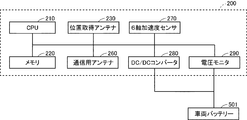
図2を参照して、第1の通信端末200は、主に、CPU(Central Processing Unit)210や、メモリ220や、位置取得アンテナ230や、通信用アンテナ260や、6軸加速度センサ270や、DC/DCコンバータ280や、バッテリー電圧モニタ290などを搭載する。
より詳細には、CPU210は、メモリ220に記憶される制御プログラムやデータに基づいて第1の通信端末200の各部を制御する。たとえば、CPU210は、制御プログラムに従って、各種のデータを参照しながら、後述する各種の情報処理を実行する。
メモリ220は、各種のRAM(Random Access Memory)、各種のROM(Read-Only Memory)などから構成され、制御プログラムや各種のデータを記憶する。
たとえば、本実施の形態においては、メモリ220は、図3に示すような履歴データ221を記憶する。CPU210は、現在位置情報や加速度情報などを測定するたびに、履歴データ221として、現在位置情報と、車両の向きや傾き(姿勢)と、速度と、車両500の振動に大きさを示す情報と、バッテリー501の電圧と、これらの情報の取得日時などとの対応関係を格納する。なお、CPU210は、加速度だけを取得して蓄積したり、振動だけを蓄積したり、現在位置情報だけを取得して蓄積したりしてもよい。あるいは、現在位置情報と振動の蓄積のタイミングや頻度が異なっていてもよい。
また、本実施の形態においては、メモリ220は、図4に示すようなフラグデータ222を記憶する。フラグデータ222は、通常運転モード中であることを示すフラグや、スリープモード中であることを示すフラグや、衝突などの事故が生じた可能性高い警告モードであることを示すフラグや、高速道路を走行中などのように姿勢の変化が小さいモードであることを示すフラグや、盗難されている可能性が高い状態であることを示すフラグや、サーバからダウンロードしてインストールすべきファームウェアの新たな更新データがあることを示すフラグや、その他の状態を示すフラグなどを格納する。
なお、後述するように、第1の通信端末200のCPU210が、通常運転モード中であるか否かを判断して対応するフラグをON/OFFしてもよいし、サーバ100からの指示に基づいてフラグをON/OFFしてもよい。CPU210は、スリープモード中であるか否かを判断して対応するフラグをON/OFFしてもよいし、サーバ100からの指示に基づいてフラグをON/OFFしてもよい。CPU210は、衝突などの事故が生じた可能性高い警告モードであるか否かを判断して対応するフラグをON/OFFしてもよいし、サーバ100からの指示に基づいてフラグをON/OFFしてもよい。CPU210は、高速道路を走行中などのように姿勢の変化が小さいモードであるか否かを判断して対応するフラグをON/OFFしてもよいし、サーバ100からの指示に基づいてフラグをON/OFFしてもよい。CPU210は、盗難されている可能性が高い状態であるか否かを判断して対応するフラグをON/OFFしてもよいし、サーバ100からの指示に基づいてフラグをON/OFFしてもよい。また、CPU210は、通常運転モードにおいて、通信用アンテナ260を介して、サーバ100からプログラムの更新データがある旨のデータを受けると、メモリ220の更新データフラグをONして、更新データのダウンロードやインストールが完了するとフラグをOFFしてもよい。
また、本実施の形態においては、メモリ220は、図5に示すように、各種のパラメータデータ223として、現在位置情報のサーバ100へのアップロードの間隔、加速度や振動のサーバ100へのアップロードの間隔、バッテリー残量の異常を検知するための閾値、通常動作モードからスリープモードに移行するか否かを判断するための所定期間、通常動作モードからスリープモードに移行するか否かを判断するための振動の程度、スリープモードから通常動作モードに復帰するための間欠起動時間、スリープモードから通常動作モードに移行するか否かを判断するための振動の程度、その他の定期的なデータの送信間隔、などを記憶する。
なお、本実施の形態においては、クラウド上のサーバ100などから、第1の通信端末200における各種のパラメータを変更できるように構成されている。たとえば、図5に示すように、第1の通信端末200のCPU210は、通信用アンテナ260を介して、サーバ100からの指示に基づいて、現在位置情報のサーバ100へのアップロードの間隔を変更したり、加速度や振動のサーバ100へのアップロードの間隔を変更したり、バッテリー残量の異常を検知するための閾値を変更したり、通常動作モードからスリープモードに移行するか否かを判断するための所定期間を変更したり、通常動作モードからスリープモードに移行するか否かを判断するための振動の程度を変更したり、スリープモードから通常動作モードに復帰するための間欠起動時間を変更したり、スリープモードから通常動作モードに移行するか否かを判断するための振動の程度を変更したり、その他の定期的なデータの送信間隔を変更したりする。
また、本実施の形態においては、メモリ220は、図6に示すように、所定位置データ224を記憶する。所定位置データ224は、第1の通信端末200や車両500が、停止することが多い位置や、スリープモードに移行しやすい位置や、エンジンをOFFすることが多い位置や、ユーザやサーバ100からの指示によって指定された位置などに関する情報を格納する。たとえば、本実施の形態においては、CPU210は、加速度センサ270を利用して振動が小さいと判断された期間が長いときに、位置取得アンテナ230を利用して現在位置を取得して所定位置データ224に格納する。あるいは、CPU210は、後述するようにスリープモードに移行する際に、位置取得アンテナ230を利用して現在位置を取得して所定位置データ224に格納する。
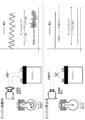
あるいは、CPU210は、車両500のバッテリー501の電圧が一定になったなど、各種の方法によってエンジンが停止していることを判断した際に、位置取得アンテナ230を利用して現在位置を取得して所定位置データ224に格納する。より詳細には、図7に示すように、本実施の形態においては、車両500のエンジン始動中は、エンジンの振動によって加速度センサ270は小さな振動を検知してCPU210に入力する。そして、車両500の走行中には、加速度センサ270は車両500のゆれに起因する大きな振動を検知してCPU210に入力する。また、車両500のエンジン始動中は、バッテリー501の電圧が上がったり下がったりするため、バッテリー電圧モニタ290は、変動する電圧の数値をCPU210に入力する。なお、車両500のエンジン停止中は、バッテリー501の電圧がほとんど変動しない。つまり、CPU210は、振動が小さく、電圧の変動が小さい場合に、車両500のエンジンが停止していると判断することができる。
あるいは、CPU210は、通信用アンテナ260を介してサーバ100から所定の位置を指定する命令を受け付けた際に所定位置データ224に格納する。たとえば、ユーザの自宅の住所や店舗の位置やサービスエリアの位置やガソリンスタンドの位置などが提供される。
図2に戻って、位置取得アンテナ230は、たとえばGNSS(Global Navigation Satellite System)アンテナであって、衛星から取得した信号をCPU210に提供する。CPU210は、当該信号に基づいて、第1の通信端末200すなわち車両500の現在の位置と時刻とを計算して、履歴データ221に格納したり、通信用アンテナ260を利用してサーバ100にアップロードしたりする。
加速度センサ270は、定期的に、車両500の姿勢や振動、すなわち所定の姿勢で車両500に取り付けられた第1の通信端末200自身の姿勢や振動を測定して、測定データをCPU210に定期的に入力する。CPU210は、第1の通信端末200すなわち車両500の姿勢や振動を計算して、履歴データ221に格納したり、通信用アンテナ260を利用してサーバ100にアップロードしたりする。
DC/DCコンバータ280は、バッテリー501からの電力を、第1の通信端末200の各部に供給する。
バッテリー電圧モニタ290は、バッテリー501の電圧を測定して、測定結果をCPU210に出力する。
通信用アンテナ260は、たとえば、LTEアンテナやSIMカードなどを含み、キャリア網やインターネットや他の通信端末を介してサーバ100との間でデータを送受信する。たとえば、CPU210は、定期的に、位置取得アンテナ230で取得した現在位置情報や加速度センサ270で取得した姿勢や振動を示す情報やバッテリー電圧モニタ290で測定された電圧情報などを通信用アンテナ260を利用してサーバ100にアップロードする。
<第1の通信端末200における情報処理>
<第1の通信端末200における情報処理>
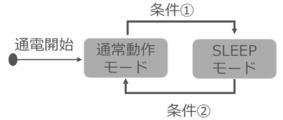
次に、本実施の形態にかかる第1の通信端末200における情報処理について説明する。本実施の形態においては、図8に示すように、第1の通信端末200は、通常運転モードにおいて定期的に現在位置情報や加速度や振動の情報を取得してサーバ100に送信したり、所定時間振動が検知されなかった場合にスリープモードに移行したりするものである。なお、スリープモードにおいては、加速度センサ270や位置取得アンテナ230や通信用アンテナ260などを定期的に起動して、通常運転モードよりも低い頻度で、各種のデータを取得したりサーバ100に送信したりするものである。
より詳細には、本実施の形態においては、スリープモードにおいては、サーバ100の通信を休止して、加速度センサ270による振動の測定およびメモリ220へのデータ蓄積が実行される。だだし、スリープモードにおいても、位置取得アンテナによる現在位置情報の取得およびメモリ220へのデータ蓄積が行われてもよい。あるいは、スリープモードにおいても、通常モードよりも低い頻度で、あるいは通常モードよりも少ないデータ量で、現在位置情報や加速度情報が送信されてもよい。
さらに、本実施の形態においては、後述するように、ファームウェアなどのプログラムの更新データがある場合にスリープモードに移行する前にダウンロードしたりインストールしたりする。
さらに、本実施の形態においては、後述するように、通常モードにおいては、加速度センサによる測定結果を送信する頻度を低くして、大きな振動を検知した際に、加速度センサによる測定結果を送信する頻度を高くしたりする。
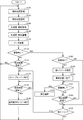
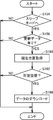
以下では、図9を参照して、通常動作モードとスリープモードとの切り替えに関する情報処理について説明する。CPU210は、通常動作モードにおいて、定期的に、たとえば1秒毎に、位置取得アンテナ230を利用して現在位置情報を取得する(ステップS102)。CPU210は、現在位置情報を履歴データ221に格納する(ステップS104)。
CPU210は、加速度センサ270を利用して、第1の通信端末200または車両500の姿勢や振動や速度を取得する(ステップS106)。CPU210は、第1の通信端末200または車両500の姿勢や振動や速度を履歴データ221に格納する(ステップS108)。
CPU210は、通信用アンテナ260を介して、現在位置情報や姿勢や振動をサーバ100に送信する(ステップS110)。本実施の形態においては、CPU210は、現在位置情報を毎秒送信し、加速度センサ270による測定データは10秒毎にまとめて送信する。より詳細には、CPU210は、10秒毎に、履歴データ221を参照して、10秒間における加速度センサ270の測定データの6軸毎の最大値と最小値と平均値とを計算して、当該データをサーバに送信する。これによって、本実施の形態においては、データ通信量を抑制することができる。
CPU210は、加速度センサ270の測定値に基づいて、振動を検知したか否かを判断する(ステップS112)。CPU210は、振動を検知しなかった場合(ステップS112にてNOである場合)、振動を検知していない期間が第1の所定の期間、たとえば60秒など、に達したか否かを判断する(ステップS114)。CPU210は、振動を検知していない期間が第1の所定の期間に達していない場合(ステップS114にてNOである場合)、ステップS102からの処理を繰り返す。
振動を検知していない期間が所定の期間に達した場合(ステップS114にてYESである場合)、CPU210は、スリープモードに移行する(ステップS116)。すなわち、位置取得アンテナ230と通信用アンテナ260とを休止させて、加速度センサ270による振動の検知と蓄積とを継続する。
CPU210は、第2の所定期間、たとえば10分など、が経過したか否かを判断する(ステップS118)。第2の所定期間が経過すると、CPU210は、通常動作モードに復帰する(ステップS140)。すなわち、CPU210は、位置取得アンテナ230と加速度センサ270を起動して、ステップS102からの処理を繰り返す。
一方、CPU210は、加速度センサ270の測定値に基づいて、振動を検知した場合(ステップS112にてYESである場合)、振動が所定値よりも大きいか否かを判断する(ステップS120)。振動が所定値よりも大きい場合(ステップS120)、車両500などが衝突したり転落したりした可能性があるため、CPU210は、履歴データ221を参照して、所定の期間前からの詳細な蓄積データをサーバ100に送信するとともに(ステップS122)、事故警告モードに移行する(ステップS124)。
事故警告モードにおいては、CPU210は、第3の所定期間、たとえば5分間など、が経過するまで、加速度センサ270を介して姿勢や振動などのより詳細なデータを履歴データ221に蓄積したり、当該詳細なデータを貯めずに逐次、通信用アンテナ260を介してサーバ100に送信したりすることが好ましい。CPU210は、第3の所定期間、たとえば5分間など、が経過すると(ステップS130にてYESである場合)、警告モードを解除して、通常動作モードに復帰する。
本実施の形態においては、CPU210は、警告モードに移行してから、振動がない時間が、第4の所定時間、たとえば3分など、連続すると(ステップS126にてYESである場合)、通信用アンテナ260を介してサーバ100に、異常事態が発生した旨を通知する(ステップS128)。これによって、サーバ100は、警察や救急のサーバなどに、車両500に異常が発生した旨や、当該車両500の現在位置を提供したりすることができる。
大きな振動を検知していない場合(ステップS120にてNOである場合)、CPU210は、バッテリー電圧モニタ290を介いてバッテリー501の電圧を測定し、電圧が所定値未満であるか否かを判断する(ステップS132)。電圧が所定値未満である場合(ステップS132にてYESである場合)、CPU210は、スリープモードに移行する(ステップS116)。位置取得アンテナ230と通信用アンテナ260とを休止させて、加速度センサ270による振動の検知と蓄積とを継続する。
なお、電圧が所定値未満である場合は、CPU210は、スリープモードにおいて、電圧が低いほど、位置取得アンテナ230や加速度センサ270や通信用アンテナ260などを起動する間隔、すなわちステップS118の所定時間、を長く設定することが好ましい。たとえば、スリープモードにおいて、サーバ100とのデータの送受信を行わない形態においては、加速度センサ270を立ち上げて振動を検知する間隔を長く設定することが好ましい。
電圧が所定値未満でない場合(ステップS132にてNOである場合)、CPU210は、通常運転モードを続行して、ステップS102からの処理を繰り返す。
次に、図10を参照して、ファームウェアなどのプログラムの更新データをダウンロードしてインストールする際の情報処理について説明する。
また、本実施の形態においては、CPU210は、通常動作モードからスリープモードに移行すると判断したか否かを判断する(ステップS154)。CPU210は、スリープモードに移行すると判断された場合(ステップS154にてYESである場合)、更新データフラグを参照して、ファームウェアなどの更新データがあるか否かを判断する(ステップS156)。
更新データがある場合(ステップS156にてYESである場合)、CPU210は、位置取得アンテナ230を利用して現在位置情報を取得する(ステップS160)。CPU210は、所定位置データ224を参照して、現在位置が所定位置と一致するか否か、または所定位置の近傍であるか否かを判断する(ステップS162)。
現在位置が所定位置と一致または近傍である場合(ステップS162にてYESである場合)、CPU210は、通信用アンテナ260を介して、サーバ100からプログラムの更新データをダウンロードしてインストールする(ステップS166)。CPU210は、スリープモードに移行する。
<サーバ100の構成>
<サーバ100の構成>
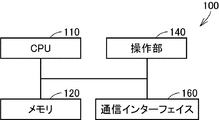
次に、本実施の形態にかかるネットワークシステム1におけるサーバ100の構成について説明する。図11に示すように、サーバ100は、主たる構成要素として、CPU(Central Processing Unit)110と、メモリ120と、操作部140と、通信インターフェイス160とを含む。
CPU110は、メモリ120に記憶されているプログラムを実行することによって、サーバ100の各部を制御しながら、盗難通知サービスを実現する。たとえば、CPU110は、メモリ120に格納されているプログラムを実行し、各種のデータを参照することによって、後述する各種の処理を実行する。
メモリ120は、各種のRAMやROMなどによって実現され、サーバ100に内包されているものであってもよいし、サーバ100の各種インターフェイスに着脱可能なものであってもよいし、サーバ100からアクセス可能な他の装置内のデータベースであってもよい。メモリ120は、CPU110によって実行されるプログラムや、CPU110によるプログラムの実行により生成されたデータ、ユーザ情報データ121、履歴データ122などを記憶する。
ユーザ情報データ121は、図12を参照して、車両状態提供サービスに登録されているユーザの識別情報と、ユーザの氏名と、ユーザの年齢と、ユーザの性別と、車両状態提供サービスに登録されている車両500の識別情報と、第1の通信端末200の識別情報と、第2の通信端末300の識別情報と、ユーザのアドレスなどとの対応関係を格納する。
履歴データ122は、図13を参照して、第1の通信端末200毎の、現在位置情報と、車両の向きや傾き(姿勢)を示すデータと、速度を示すデータと、車両500の振動を示すデータと、バッテリー501の電圧を示すデータと、当該データの取得日時などとの対応関係を格納する。
図11に戻って、操作部140は、サービスの管理者などからの操作命令を受け付けてCPU110に入力する。
通信インターフェイス160は、CPU110からのデータを、インターネットやキャリア網、ルータなどを介して第1の通信端末200,200・・・や第2の通信端末300,300・・・などの他の装置に送信する。逆に、通信インターフェイス160は、インターネット、キャリア網、ルータなどを介して他の装置からのデータを受信して、CPU110に受け渡す。
<サーバ100における情報処理>
<サーバ100における情報処理>
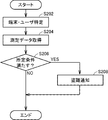
次に、図14を参照して、本実施の形態にかかるサーバ100の情報処理について説明する。サーバ100のCPU110は、通信インターフェイス160を介して、第1の通信端末200からデータを受信すると、以下の処理を実行する。
まず、CPU110は、第1の通信端末200からの受信データから第1の通信端末200の識別情報を読み出して、ユーザ情報データ121を参照してユーザを特定する(ステップS202)。CPU110は、第1の通信端末200からの受信データから各種の測定データを取得する(ステップS204)。たとえば、CPU110は、車両500のバッテリー501の電圧を示す情報と車両500の振動の示す情報とを取得する。
そして、CPU110は、測定データに基づいて、車両500に異常な事態が生じているか否かを判断する(ステップS206)。たとえば、CPU110は、車両500のバッテリーの電圧が所定以上、たとえば5%以上など、に変動しているか否かを判断したり、車両500が振動しているか否かを判断したりする。そして、車両500のバッテリーの電圧がほとんど変動していないのに、車両500が振動している場合には、車両500が盗難された可能性が高いと判断する(ステップS206にてYES)。逆に、車両500が振動していない場合には、盗難の可能性が低いと判断し、車両500のバッテリー501の電圧が所定以上に変動している場合は盗難の可能性が低いと判断する。この判断方法は、車両500のバッテリー501が、ガソリンエンジンなど別の駆動力発生装置によって充電される場合に特に有効である。
以上のように、車両500が盗難されて運ばれていると判断された場合(ステップS206にてYESである場合)、CPU110は、通信インターフェイス160を介して、車両500のユーザの第2の通信端末300に、車両500が盗難されて運ばれている可能性が高い旨の通知を送信する(ステップS208)。なおこのとき、CPU110は、ユーザの第2の通信端末300に、車両500の現在位置や測定結果などを提供することが好ましい。
また、CPU110は、通信インターフェイス160を介して、第1の通信端末200自身にも、車両500が盗難されて運ばれている可能性が高い旨の通知を送信してもよい。ただし、第1の通信端末200はローカルで盗難であるか否かを判断してもよい。たとえば、ステップS206と同様に、第1の通信端末200のCPU210は、エンジンが停止している、たとえばバッテリー電圧が一定であったり、エンジンの温度が低かったり、しているにも関わらず振動を検知した場合に盗難された可能性が高いと判断することができる。あるいは、CPU210は、エンジンが停止しているにも関わらず、現在位置が移動している場合に盗難された可能性が高いと判断することができる。
一方、車両500が盗難されて運ばれていると判断されなかった場合(ステップS206にてNOである場合)、CPU110は、通信インターフェイス160を介して次の第1の通信端末200からの測定データを待ち受ける。
<第2の通信端末300の構成>
<第2の通信端末300の構成>
次に、ネットワークシステム1を構成する第2の通信端末300の構成の一態様について説明する。第2の通信端末300は、スマートフォンや、ウェアラブル端末や、タブレットや、パーソナルコンピュータや、スピーカなどのような、サーバ100とデータ通信可能な装置である。第2の通信端末300は、図15に示すように、主たる構成要素として、CPU310と、メモリ320と、ディスプレイ330と、操作部340と、通信インターフェイス360と、スピーカ370と、マイク380などを含む。
CPU310は、メモリ320あるいは外部の記憶媒体に記憶されているプログラムを実行することによって、第2の通信端末300の各部を制御する。
メモリ320は、各種のRAMや、各種のROMなどによって実現される。メモリ320は、CPU310によって実行されるプログラムや、CPU310によるプログラムの実行により生成されたデータ、サーバ100から受信したテキストデータや画像データや音声データや、操作部340を介して入力されたデータなどを記憶する。
ディスプレイ330は、CPU310からの信号に基づいて、文字や画像などを出力する。操作部340は、ユーザからの命令を受け付けて、当該命令をCPU310に入力する。ディスプレイ330と操作部340は、タッチパネル350によって実現されてもよい。
通信インターフェイス360は、無線LAN通信あるいは有線LANなどの通信モジュールによって実現される。通信インターフェイス360は、有線通信あるいは無線通信によってサーバ100などの他の装置との間でデータを送受信する。
スピーカ370は、CPU310からの信号に基づいて、音声を出力する。マイク380は、外部からの音声に基づいて音声信号を作成し、CPU310に入力する。
本実施の形態においては、CPU310は、通信インターフェイス360を介して、サーバ100から盗難検知データを受信する。CPU310は、受信したデータに基づいて、スピーカ370から警告音を出力したり、ディスプレイ330に盗難された可能性があることやユーザの車両500の現在位置や移動方向や振動の程度やバッテリー残量などを出力させたりする。
<第2の実施の形態>
<第2の実施の形態>
上記の実施の形態に加えて、第1の通信端末200のCPU210は、盗難されている可能性が高い場合に、スリープモードに移行しにくいように構成したり、通常動作モードに移行しやすくしたりしてもよい。これによって、ユーザやメーカや保険会社や警察などが、スリープ中においても第1の通信端末200や車両500を詳細に知ることができる。たとえば、図9のステップS132において、CPU210は、盗難フラグがONの場合は、スリープモードに移行する電圧のしきい値を低く設定してもよい。
あるいは、図9のステップS114において、CPU210は、盗難フラグがONの場合は、所定時間を長く設定することによってスリープモードに移行しにくくする。
あるいは、図9のステップS118において、CPU210は、所定時間を短く設定することによって、加速度情報や現在位置情報の測定や送信に復帰するまでの間隔を短くしたり、加速度の測定の頻度や現在位置の測定頻度やデータの送信頻度を上げたりしてもよい。
あるいは、第1の通信端末200のCPU210は、盗難されている可能性が高い場合に、スリープモードに移行しやすくしたり、通常動作モードに移行しにくくしたりしてもよい。これによって、盗難中にバッテリーの残量が減っていく程度を抑制することができる。たとえば、図9のステップS132において、CPU210は、盗難フラグがONの場合は、スリープモードに移行する電圧のしきい値を高く設定してもよい。
あるいは、ステップS114において、CPU210は、盗難フラグがONの場合は、所定時間を短く設定することによってスリープモードに移行しやすくしたり、ステップS118の所定時間を長く設定することによって、加速度情報や現在位置情報の測定や送信に復帰するまでの間隔を長くしたり、加速度の測定の頻度や現在位置の測定頻度やデータの送信頻度を下げたりしてもよい。
<第3の実施の形態>
<第3の実施の形態>
上記の実施の形態に加えて、第1の通信端末200のCPU210は、走行中の加速度の変化が小さい場合は、現在位置情報や加速度情報などの送信頻度をさらに低減してもよい。これによって、さらにデータ通信量を抑制することができる。
具体的には、図16に示すように、CPU210は、加速度センサ270の測定値に基づいて振動が小さい期間が所定時間続くと(ステップS142にてYESである場合)、高速道路モードフラグをONにして、高速道路モードに移行する(ステップS144)。CPU210は、高速道路モードに移行すると、通常モードよりも少ない頻度で、すなわち通常モードよりも長い間隔をあけて、位置取得アンテナ230や6軸加速度センサ270などを利用して現在位置情報や加速度情報などを測定したり蓄積したり、通信用アンテナ260を介して現在位置情報や加速度情報などをサーバ100に送信するようにする。
なお、CPU210は、加速度センサ270の測定値に基づいて振動が小さい期間が継続していない場合(ステップS142にてNOである場合)、高速道路モードフラグをOFFにして、通常動作モードに復帰する(ステップS140)。
<第4の実施の形態>
<第4の実施の形態>
上記の実施の形態に加えて、第1の通信端末200のCPU210は、更新データがある場合に、さらに他の条件判断に基づいて、更新データのダウンロードを行うか否かを決定してもよい。たとえば、図17に示すように、CPU210は、スリープモードへの移行の判断とは独立して、加速度センサ270を利用して振動がないことを検知してから(ステップS164にてYESである場合)、更新データをダウンロードしてもよい。つまりスリープモードへ移行するか否かの判断が振動以外に基づいて行われてもよい。
あるいは、CPU210は、スリープモードへの移行の判断とは独立して、車両500のエンジンが停止していることを検知してから、加速度センサ270を利用して振動がないことを検知してから(ステップS164にてYESである場合)、更新データをダウンロードしてもよい。
<第5の実施の形態>
<第5の実施の形態>
上記の実施の形態に加えて、第1の通信端末200のCPU210は、更新データある場合にも、盗難されている可能性がある場合には更新データのダウンロードを行わないことが好ましい。これによって、盗難中にバッテリーの残量が減っていく程度を抑制することができる。
具体的には、図18に示すように、CPU210は、盗難フラグがONされている場合や事故が生じた場合などのように異常状態においては(ステップS152にてYESである場合)、更新データのダウンロードは実行しない。本実施の形態においては、CPU210は、盗難モードのフラグがOFFである場合(ステップS152にてNOである場合)、通常動作モードからスリープモードに移行すると判断したか否かを判断する(ステップS154)。CPU210は、スリープモードに移行すると判断された場合(ステップS154にてYESである場合)、更新データがあるか否かを判断する(ステップS156)。
更新データがある場合(ステップS156にてYESである場合)、CPU210は、異常状態が解除された直後であるか否かを判断する(ステップS158)。なお、異常状態の解除は、CPU210が判断してもよいし、サーバ100からの指示によって行われてもよい。異常状態が解除された直後である場合(ステップS158にてYESである場合)、CPU210は、通信用アンテナ260を介して、サーバ100からプログラムの更新データをダウンロードしてインストールする(ステップS166)。
盗難モードが解除された直後でない場合(ステップS158にてNOである場合)、CPU210は、ステップS160からの処理を実行する。
<第6の実施の形態>
<第6の実施の形態>
上記の実施の形態のネットワークシステム1の各装置の役割の一部または全部を他の装置が実行してもよい。たとえば、サーバ100や第1の通信端末200,200・・・や第2の通信端末300,300・・・の各々の役割の一部または全部を別の装置が担ったり、各々の役割の一部または全部を複数の装置で担ったりしてもよい。
また、上記の実施の形態に記載の通り、盗難の可能性の判断の方法や、車両500のエンジンの停止の判断の方法などは、適宜選択可能である。
<まとめ>
<まとめ>
上記の実施の形態においては、加速度センサと、位置取得アンテナと、通信用アンテナと、プロセッサとを備える通信端末が提供される。プロセッサは、通常動作モードにおいて加速度センサを利用して取得した加速度情報および位置取得アンテナを利用して取得した現在位置情報を通信用アンテナを介して送信し、スリープモードにおいて加速度情報または現在位置情報の送信を制限し、加速度センサを介して所定の時間以上振動を検知しなかった場合に通常動作モードからスリープモードに移行する。
好ましくは、プロセッサは、スリープモードにおいて、加速度センサを利用して振動が検知された場合に、通常動作モードに移行する。
好ましくは、プロセッサは、電源の電圧値が所定値以下である場合にスリープモードに移行し、スリープモードにおいて、電源の電圧値が低いほど加速度センサを利用する間隔を長くする。
好ましくは、プロセッサは、所定の条件が満たされた際に、異常状態に移行し、異常状態においては、異常状態でないときよりも、スリープモードに移行しにくいように各種の閾値を変更する。
好ましくは、プロセッサは、所定の条件が満たされた際に、異常状態に移行し、異常状態においては、異常状態でないときよりも、通常動作モードに移行しやすいように各種の閾値を変更する。
好ましくは、プロセッサは、所定の条件が満たされた際に、異常状態に移行し、異常状態においては、異常状態でないときよりも、スリープモードに移行しやすいように各種の閾値を変更する。
好ましくは、プロセッサは、所定の条件が満たされた際に、異常状態に移行し、異常状態においては、異常状態でないときよりも、通常動作モードに移行しにくいように各種の閾値を変更する。
好ましくは、プロセッサは、所定の条件が満たされた際に、異常状態に移行し、異常状態中のスリープモードにおいては、加速度情報または現在位置情報の取得または送信をさらに制限する。
今回開示された実施の形態はすべての点で例示であって制限的なものではないと考えられるべきである。本発明の範囲は、上記した説明ではなく、特許請求の範囲によって示され、特許請求の範囲と均等の意味および範囲内でのすべての変更が含まれることが意図される。
1 :ネットワークシステム
100 :サーバ
110 :CPU
120 :メモリ
121 :ユーザ情報データ
122 :履歴データ
140 :操作部
160 :通信インターフェイス
200 :第1の通信端末
210 :CPU
220 :メモリ
221 :履歴データ
222 :フラグデータ
223 :パラメータデータ
224 :所定位置データ
230 :位置取得アンテナ
260 :通信用アンテナ
270 :6軸加速度センサ
280 :DC/DCコンバータ
290 :バッテリー電圧モニタ
300 :第2の通信端末
310 :CPU
320 :メモリ
330 :ディスプレイ
340 :操作部
350 :タッチパネル
360 :通信インターフェイス
370 :スピーカ
380 :マイク
500 :車両
501 :バッテリー
100 :サーバ
110 :CPU
120 :メモリ
121 :ユーザ情報データ
122 :履歴データ
140 :操作部
160 :通信インターフェイス
200 :第1の通信端末
210 :CPU
220 :メモリ
221 :履歴データ
222 :フラグデータ
223 :パラメータデータ
224 :所定位置データ
230 :位置取得アンテナ
260 :通信用アンテナ
270 :6軸加速度センサ
280 :DC/DCコンバータ
290 :バッテリー電圧モニタ
300 :第2の通信端末
310 :CPU
320 :メモリ
330 :ディスプレイ
340 :操作部
350 :タッチパネル
360 :通信インターフェイス
370 :スピーカ
380 :マイク
500 :車両
501 :バッテリー
Claims (8)
- 加速度センサと、
位置取得アンテナと、
通信用アンテナと、
プロセッサとを備え、前記プロセッサは、
通常動作モードにおいて前記加速度センサを利用して取得した加速度情報および前記位置取得アンテナを利用して取得した現在位置情報を前記通信用アンテナを介して送信し、スリープモードにおいて前記加速度情報または前記現在位置情報の送信を制限し、
前記加速度センサを介して所定の時間以上振動を検知しなかった場合に前記通常動作モードから前記スリープモードに移行する、通信端末。 - 前記プロセッサは、前記スリープモードにおいて、前記加速度センサを利用して振動が検知された場合に、前記通常動作モードに移行する、請求項1に記載の通信端末。
- 前記プロセッサは、電源の電圧値が所定値以下である場合に前記スリープモードに移行し、前記スリープモードにおいて、前記電源の電圧値が低いほど前記加速度センサを利用する間隔を長くする、請求項2に記載の通信端末。
- 前記プロセッサは、所定の条件が満たされた際に、異常状態に移行し、
前記異常状態においては、前記異常状態でないときよりも、前記スリープモードに移行しにくいように各種の閾値を変更する、請求項1または2に記載の通信端末。 - 前記プロセッサは、所定の条件が満たされた際に、異常状態に移行し、
前記異常状態においては、前記異常状態でないときよりも、前記通常動作モードに移行しやすいように各種の閾値を変更する、請求項1または2に記載の通信端末。 - 前記プロセッサは、所定の条件が満たされた際に、異常状態に移行し、
前記異常状態においては、前記異常状態でないときよりも、前記スリープモードに移行しやすいように各種の閾値を変更する、請求項1または2に記載の通信端末。 - 前記プロセッサは、所定の条件が満たされた際に、異常状態に移行し、
前記異常状態においては、前記異常状態でないときよりも、前記通常動作モードに移行しにくいように各種の閾値を変更する、請求項1または2に記載の通信端末。 - 前記プロセッサは、所定の条件が満たされた際に、異常状態に移行し、
前記異常状態中の前記スリープモードにおいては、前記加速度情報または前記現在位置情報の取得または送信をさらに制限する、請求項1または2に記載の通信端末。
Applications Claiming Priority (2)
| Application Number | Priority Date | Filing Date | Title |
|---|---|---|---|
| JP2019-042586 | 2019-03-08 | ||
| JP2019042586A JP2020142743A (ja) | 2019-03-08 | 2019-03-08 | 通信端末 |
Publications (1)
| Publication Number | Publication Date |
|---|---|
| WO2020183752A1 true WO2020183752A1 (ja) | 2020-09-17 |
Family
ID=72353065
Family Applications (1)
| Application Number | Title | Priority Date | Filing Date |
|---|---|---|---|
| PCT/JP2019/028979 Ceased WO2020183752A1 (ja) | 2019-03-08 | 2019-07-24 | 通信端末 |
Country Status (2)
| Country | Link |
|---|---|
| JP (1) | JP2020142743A (ja) |
| WO (1) | WO2020183752A1 (ja) |
Families Citing this family (3)
| Publication number | Priority date | Publication date | Assignee | Title |
|---|---|---|---|---|
| JP6996800B1 (ja) | 2021-03-19 | 2022-02-14 | 株式会社スリークロス | 移動体遠隔制御システム及び移動体動作制御装置 |
| JP6902310B1 (ja) * | 2021-03-19 | 2021-07-14 | 株式会社スリークロス | 移動体遠隔制御システム及び移動体動作制御装置 |
| JP7755511B2 (ja) * | 2022-02-22 | 2025-10-16 | ニデックモビリティ株式会社 | 車両盗難検出システム、車両盗難検出方法、車載機 |
Citations (6)
| Publication number | Priority date | Publication date | Assignee | Title |
|---|---|---|---|---|
| JP2006166421A (ja) * | 2004-11-09 | 2006-06-22 | Matsushita Electric Ind Co Ltd | 位置情報検出装置および位置情報検出方法 |
| JP2007072597A (ja) * | 2005-09-05 | 2007-03-22 | Horiba Ltd | 車両追跡システム |
| JP2007108112A (ja) * | 2005-10-17 | 2007-04-26 | Denso Corp | 傾斜変動検出装置および盗難防止装置 |
| JP2008278308A (ja) * | 2007-05-01 | 2008-11-13 | Ntt Communications Kk | 無線通信システムおよび無線端末装置 |
| JP2014011658A (ja) * | 2012-06-29 | 2014-01-20 | Ricoh Co Ltd | 位置情報管理システム、通信装置、位置情報管理方法 |
| JP2018152762A (ja) * | 2017-03-14 | 2018-09-27 | 富士通コンポーネント株式会社 | 通信装置及び通信システム |
-
2019
- 2019-03-08 JP JP2019042586A patent/JP2020142743A/ja active Pending
- 2019-07-24 WO PCT/JP2019/028979 patent/WO2020183752A1/ja not_active Ceased
Patent Citations (6)
| Publication number | Priority date | Publication date | Assignee | Title |
|---|---|---|---|---|
| JP2006166421A (ja) * | 2004-11-09 | 2006-06-22 | Matsushita Electric Ind Co Ltd | 位置情報検出装置および位置情報検出方法 |
| JP2007072597A (ja) * | 2005-09-05 | 2007-03-22 | Horiba Ltd | 車両追跡システム |
| JP2007108112A (ja) * | 2005-10-17 | 2007-04-26 | Denso Corp | 傾斜変動検出装置および盗難防止装置 |
| JP2008278308A (ja) * | 2007-05-01 | 2008-11-13 | Ntt Communications Kk | 無線通信システムおよび無線端末装置 |
| JP2014011658A (ja) * | 2012-06-29 | 2014-01-20 | Ricoh Co Ltd | 位置情報管理システム、通信装置、位置情報管理方法 |
| JP2018152762A (ja) * | 2017-03-14 | 2018-09-27 | 富士通コンポーネント株式会社 | 通信装置及び通信システム |
Also Published As
| Publication number | Publication date |
|---|---|
| JP2020142743A (ja) | 2020-09-10 |
Similar Documents
| Publication | Publication Date | Title |
|---|---|---|
| US20200215930A1 (en) | Control apparatus, control method, and computer program | |
| KR102471498B1 (ko) | 차량을 진단하는 전자 장치 및 방법 | |
| JP5110149B2 (ja) | 車載器制御装置、車載器制御方法、及び、プログラム | |
| JP2013084143A (ja) | 車載通信機 | |
| US20110281545A1 (en) | In-vehicle terminal for emergency notification | |
| WO2020183752A1 (ja) | 通信端末 | |
| JP6465258B1 (ja) | 制御装置、制御方法、およびコンピュータプログラム | |
| CA2685970A1 (en) | Monitoring system for vehicle | |
| JP7120948B2 (ja) | 通信端末 | |
| JP2023119923A (ja) | 車両乗員検知装置、車両乗員検知方法、及び車両乗員検知プログラム | |
| KR20120129053A (ko) | 무선통신망을 이용한 차량 진단 시스템 및 그 진단방법 | |
| CN111770127A (zh) | 车辆控制系统 | |
| JP2006082649A (ja) | プログラム書き換えシステム | |
| JP4599952B2 (ja) | プログラム書き換えシステム及び車両コンピュータシステム | |
| JP4577637B2 (ja) | 接近警報方法、接近警報システム、ナビゲーション装置及びそのコンピュータ・プログラム | |
| WO2015194166A1 (ja) | 制御装置 | |
| JP2020144764A (ja) | 通信端末 | |
| WO2018189951A1 (ja) | 中継装置、中継方法、およびコンピュータプログラム | |
| JP4003589B2 (ja) | 自動車用ナビゲーションシステム | |
| JP7417891B2 (ja) | 報知制御装置、報知装置、報知制御方法、報知制御プログラム、および、車両情報送信装置 | |
| JP2023006936A (ja) | 管理装置および運用管理システム | |
| JP2007276573A (ja) | 車両盗難検知装置 | |
| JP2020047171A (ja) | ネットワークシステム | |
| US12428015B2 (en) | Information notification device, information notification method and non-transitory recording medium | |
| JP7313507B1 (ja) | 車載情報処理装置 |
Legal Events
| Date | Code | Title | Description |
|---|---|---|---|
| 121 | Ep: the epo has been informed by wipo that ep was designated in this application |
Ref document number: 19919118 Country of ref document: EP Kind code of ref document: A1 |
|
| NENP | Non-entry into the national phase |
Ref country code: DE |
|
| 122 | Ep: pct application non-entry in european phase |
Ref document number: 19919118 Country of ref document: EP Kind code of ref document: A1 |