WO2020179884A1 - 吸収性物品 - Google Patents
吸収性物品 Download PDFInfo
- Publication number
- WO2020179884A1 WO2020179884A1 PCT/JP2020/009513 JP2020009513W WO2020179884A1 WO 2020179884 A1 WO2020179884 A1 WO 2020179884A1 JP 2020009513 W JP2020009513 W JP 2020009513W WO 2020179884 A1 WO2020179884 A1 WO 2020179884A1
- Authority
- WO
- WIPO (PCT)
- Prior art keywords
- absorbent article
- individual
- sanitary napkin
- skin
- functional agent
- Prior art date
- Legal status (The legal status is an assumption and is not a legal conclusion. Google has not performed a legal analysis and makes no representation as to the accuracy of the status listed.)
- Ceased
Links
Images

Classifications
-
- A—HUMAN NECESSITIES
- A61—MEDICAL OR VETERINARY SCIENCE; HYGIENE
- A61F—FILTERS IMPLANTABLE INTO BLOOD VESSELS; PROSTHESES; DEVICES PROVIDING PATENCY TO, OR PREVENTING COLLAPSING OF, TUBULAR STRUCTURES OF THE BODY, e.g. STENTS; ORTHOPAEDIC, NURSING OR CONTRACEPTIVE DEVICES; FOMENTATION; TREATMENT OR PROTECTION OF EYES OR EARS; BANDAGES, DRESSINGS OR ABSORBENT PADS; FIRST-AID KITS
- A61F13/00—Bandages or dressings; Absorbent pads
- A61F13/15—Absorbent pads, e.g. sanitary towels, swabs or tampons for external or internal application to the body; Supporting or fastening means therefor; Tampon applicators
- A61F13/51—Absorbent pads, e.g. sanitary towels, swabs or tampons for external or internal application to the body; Supporting or fastening means therefor; Tampon applicators characterised by the outer layers of the pads
- A61F13/511—Topsheet, i.e. the permeable cover or layer facing the skin
-
- A—HUMAN NECESSITIES
- A61—MEDICAL OR VETERINARY SCIENCE; HYGIENE
- A61F—FILTERS IMPLANTABLE INTO BLOOD VESSELS; PROSTHESES; DEVICES PROVIDING PATENCY TO, OR PREVENTING COLLAPSING OF, TUBULAR STRUCTURES OF THE BODY, e.g. STENTS; ORTHOPAEDIC, NURSING OR CONTRACEPTIVE DEVICES; FOMENTATION; TREATMENT OR PROTECTION OF EYES OR EARS; BANDAGES, DRESSINGS OR ABSORBENT PADS; FIRST-AID KITS
- A61F13/00—Bandages or dressings; Absorbent pads
- A61F13/15—Absorbent pads, e.g. sanitary towels, swabs or tampons for external or internal application to the body; Supporting or fastening means therefor; Tampon applicators
- A61F13/51—Absorbent pads, e.g. sanitary towels, swabs or tampons for external or internal application to the body; Supporting or fastening means therefor; Tampon applicators characterised by the outer layers of the pads
- A61F13/514—Backsheet, i.e. the impermeable cover or layer furthest from the skin
Definitions
- the present invention relates to an absorbent article such as a sanitary napkin.
- Patent Document 1 describes at least one functional enhancement label that is a women's hygiene article having a body-facing surface, a first-terminal region, and a second-terminal region and is visible from the body-facing surface.
- a feminine hygiene article is disclosed, comprising, wherein the enhancement mark corresponds to at least one enhanced portion of the feminine hygiene article.
- an object of the present invention is to provide an individual package of an absorbent article in which a user of the absorbent article can easily recognize a predetermined function of the absorbent article from the state of the individual package before use. ..
- One aspect (Aspect 1) of the present invention is an individual packaging body for absorbent articles, which is obtained by folding an absorbent article,
- the individual package has a first surface and a second surface facing each other in the thickness direction.
- the absorbent article contains a predetermined functional agent in the first surface-corresponding portion corresponding to the first surface and the thickness direction in the folded state.
- the individual wrapping body wherein the first surface exhibits a color at least partially corresponding to the function of the functional agent.
- the individual package of the first aspect since the portion containing the functional agent and the first surface corresponding to the thickness direction exhibit a color corresponding to the function of the functional agent at least partially, the individual package before use is used. Even in the state of the body, it is easy for the user to recognize a predetermined function of the absorbent article by visually recognizing the above colors. Therefore, the individual wrapping body of the present aspect 1 allows the user to appropriately wear the absorbent article in consideration of the above functions, and therefore, steadily exhibit the intended effect of the absorbent article by the above functions. You can
- each of the skin facing surface and the non-skin facing surface of the first surface corresponding portion is at least a portion. It exhibits a color corresponding to the function of the functional agent.
- the absorbent article exhibits a color corresponding to the function of the functional agent at least partially on each of the skin-facing surface and the non-skin-facing surface of the first surface-compatible portion of the individual package. Therefore, by not only the state of the individual wrapping body before use, but also when the individual wrapping body is opened (that is, when the folded absorbent article is developed), the user visually recognizes the color. It is easier to recognize the predetermined function of the absorbent article.
- the absorbent article has creases formed when the absorbent article is folded on the skin-facing surface in the unfolded state. On both sides of the crease, there are a region exhibiting a color corresponding to the function of the functional agent and a region exhibiting another color.
- the individual wrapping body of the present aspect has a region where the absorbent article exhibits a color corresponding to the function of the functional agent with the fold as a boundary, and a region exhibiting other colors, and the boundary between these regions is the fold. This makes it easier to visually recognize, so that the user can more clearly recognize the color corresponding to the function of the functional agent when the folded absorbent article is developed.
- the region exhibiting a color corresponding to the function of the functional agent is larger than the plan-viewing area of the region exhibiting the other colors. It has a plan view area.
- the region exhibiting the color corresponding to the function of the functional agent has a planar view area larger than the planar view area of the region exhibiting other colors, so that the user can fold it.
- the absorbent article in the individual package according to any one of the above aspects 2 to 4, has the thickness of the first surface-corresponding portion and the said first in the unfolded state. 1
- the thickness of the portion adjacent to the surface-corresponding portion is different.
- the thickness of the portion corresponding to the first surface of the absorbent article and the thickness of the portion adjacent to the portion corresponding to the first surface are different, and the boundary between these portions has a three-dimensional visual sense based on the thickness difference. Since the difference and the difference in texture make it easier to visually recognize, the user can more clearly recognize the color corresponding to the function of the functional agent when the folded absorbent article is developed. If the absorbent articles have such a thickness difference, there is an advantage that the folded absorbent articles can be easily developed due to the difference in rigidity.
- the individual wrapping body of any one of the above aspects 1 to 5 is a wrapping material that wraps the folded absorbent article, A lead tape for maintaining an individually wrapped state, which is arranged across the end portion of the packaging material and other portions on the outer surface of the packaging material,
- the packaging material has a light transmittance of 45% or more.
- the lead tape is arranged on a portion of the outer surface of the packaging material corresponding to the first surface and the thickness direction.
- the lead tape which is easily noticed by the user, is arranged on the outer surface of the packaging material, which corresponds to the first surface in the thickness direction, so that the user can lead.
- the color of the first surface under the lead tape can be more reliably recognized.
- the light transmittance of the wrapping material is 45% or more, so that the color corresponding to the function of the functional agent is more easily recognized through the wrapping material.
- the absorbent article has an adhesive portion for fixing clothing on a non-skin facing surface
- the individual package has a packaging material that is attached to the absorbent article via the adhesive portion and wraps the folded absorbent article.
- the packaging material has a light transmittance of 45% or more and has a mold release treatment region on the surface facing the absorbent article.
- the light transmittance of the packaging material is 45% or more, the opposite side of the packaging material is transparent and easily visible, and the packaging material has a release treatment on the surface facing the absorbent article.
- the number of constituent members of the individual package can be reduced, and the function of the above-mentioned functional agent can be reduced. Corresponding colors can be more easily recognized through the packaging material.
- the present invention it is possible to provide the individual package of the absorbent article in which the user of the absorbent article can easily recognize the predetermined function of the absorbent article from the state of the individual package before use.
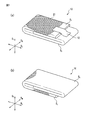
- FIG. 1 a perspective view of the individual package 10 comprising folding the sanitary napkin 1, FIG. 1 (a), the individual packaging body 10 from the first surface S 1 side is a perspective view
- FIG. 1 (b) is a perspective view of the individual package 10 from the second surface S 2 side.
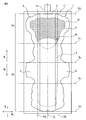
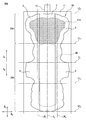
- FIG. 2 is a plan view of the sanitary napkin 1 as viewed from the surface sheet 2 side in the thickness direction DT in the unfolded state.
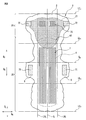
- FIG. 3 is a plan view of the sanitary napkin 1 as viewed from the back surface sheet 3 side in the thickness direction DT in the unfolded state.
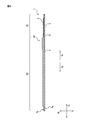
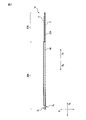
- the sanitary napkin 1 is an end view of a cross-section along the central axis C L extending in the longitudinal direction D L.
- FIG. 5 is a perspective view for explaining a folding method of the sanitary napkin 1 for forming the individual wrapping body 10.
- FIG. 6 is a plan view of a sanitary napkin 1A used in another embodiment of the present invention as viewed in the thickness direction D T from the topsheet 2 side in an unfolded state.
- the "longitudinal direction” is a direction in which a vertically long object in a plan view (for example, an individual wrapping body, an absorbent article in a developed state, various constituent members of the absorbent article, etc.) has a long length.
- the "width direction” refers to "the direction in which the length of the vertically long object in plan view is short”
- the “thickness direction” is “the direction perpendicular to the object placed on the horizontal plane in the unfolded state”. Refers to "directions”, and these directions are orthogonal to each other.
- the axis line located in the center of the longitudinal object in the width direction and extending in the longitudinal direction is referred to as "the central axis line in the longitudinal direction”
- the central axis of the longitudinal object is located in the longitudinal direction.
- the “axis extending in the width direction” is referred to as the “center axis in the width direction”.
- the absorbent article in the longitudinal direction of the absorbent article, one side in the longitudinal direction which is relatively proximal to the abdomen of the wearer when the wearer wears the absorbent article
- the "front side of the absorbent article” is referred to as "the distal side relative to the abdomen of the wearer when the wearer wears the absorbent article in the longitudinal direction of the absorbent article (that is, the wearer's abdomen).
- the other side “that is relatively proximal to the back” is referred to as the "rear side of the absorbent article”.
- in the thickness direction of the absorbent article in the unfolded state "when the absorbent article is worn, the position is relatively proximal to the wearer's skin surface”.
- a "user” includes a person who actually wears the absorbent article (that is, a wearer) and a person who wears the absorbent article to another person (for example, a caregiver). ..
- Each D W is formed by folding in three folds, and has a flat and substantially rectangular parallelepiped outer shape as shown in FIG.
- the individual wrapping body 10 of the present embodiment, as shown in FIG. 1A, is a lead tape 12 arranged on the outer surface of the wrapping material 11 so as to straddle the end of the wrapping material 11 and other portions. The individually wrapped state of the folded sanitary napkin 1 is maintained.
- the individual package 10 is folded so as to correspond to the longitudinal direction DL and the width direction D W of the sanitary napkin 1 in the state where the longitudinal direction DL and the width direction D W are expanded, respectively. Is not limited to such a folding form.
- individual packaging body 10 as shown in FIG. 1, the first surface S 1 located at one side in the thickness direction D T of the individual package 10, the other in the thickness direction D T of the individual package 10 It has a second surface S 2 that is located on the side, a.
- the sanitary napkin 1 corresponds to the first surface S 1 and the first surface corresponding portion corresponding to the thickness direction D T (specifically, the sanitary napkin 1 in a developed state described later).
- a predetermined functional agent (warming agent) is included in the functional agent.
- a portion exhibiting a color corresponding to the function of the functional agent may be at least a portion of the first surface S 1 of the individual packaging body 10.
- a second surface S 2 side e.g., the interior of the sanitary napkin 1
- colored portion located e.g, positioned between the topsheet 2 and the backsheet 3, colored functional member 21
- chromogen may be formed so as to be viewed through the first surface S 1.
- the portion including the predetermined functional agent and the first surface S 1 corresponding to the thickness direction DT exhibit a color corresponding at least partially to the function of the functional agent. Therefore, even in the state of the individual wrapping body 10 before use, the user visually recognizes the above-mentioned color, whereby a predetermined function of the sanitary napkin 1 (that is, a warming function of the warming agent which is a functional agent). ) Is easier to recognize. Therefore, in the individual package 10 of the present embodiment, the user can accurately attach the sanitary napkin 1 in consideration of the above functions, so that the desired effect of the sanitary napkin 1 by the above functions (that is, that is). The warmth effect) can be steadily exerted.
- the sanitary napkin 1 has a vertically long outer shape having a longitudinal direction DL and a width direction D W in a plan view, and further, a center of the width direction D W.
- each of one side end and the other side end of the width direction D W of the sanitary napkin 1 is substantially trapezoidal toward the outer side of the width direction D W. It has a pair of flap portions 6 and 6 protruding from the surface.
- the outer shape of the absorbent article is not limited to such an embodiment, and any vertically long shape according to various uses and the like can be used as long as it has a long shape having a longitudinal direction and a width direction.
- a rectangle, an ellipse, an hourglass, etc. can be adopted.
- Sanitary napkin 1 described above in the thickness direction D T, a liquid permeable topsheet 2 to form the skin-facing surface S F of the sanitary napkin 1; of the sanitary napkin 1 Non a liquid impermeable back sheet 3 forming the skin-facing surface S B; in the functional region 20 located on the front side D F of the sanitary napkin 1; these two sheets and the absorbent body 4 of absorbent located between the A functional member 21 located between the front surface sheet 2 and the back surface sheet 3 and containing a warming agent as a functional agent is provided as a main constituent member.
- the sanitary napkin 1 as shown in FIG. 2, comprise a pair of side sheets 5 and 5 respectively extending in the longitudinal direction D L at both ends in the width direction D W, further, shown in FIG. 3 as such, the absorbent body 4 in the thickness direction D duplicate T to and longitudinally D L garment fastening adhesive portion 7 which is arranged in a plurality of strip-shaped form extending in the non-skin-facing side S B of the backsheet 3 ; a pair of flap portions 6, 6 each of the non-skin facing surface S longitudinal D pair of flap portions fixing adhesive portion 71, 71 arranged in strip form extending in the L in B of; the front of the sanitary napkin 1 With a pair of front side first adhesive portions 72, 72 arranged at both ends of the width direction D W in the functional region 20 located on the side DF ; in the substantially central portion of the width direction D W of the functional region 20 in the longitudinal direction. It arranged in a plurality of strip-shaped form extending in D L and a front-side second adhesive portion 73,
- the above-mentioned sanitary napkin 1 is in the width direction D W so as to pass through the longitudinal front side end located at the most anterior side DF of the sanitary napkin 1 in a plan view. It has a front end virtual line LE 1 that extends and a rear end virtual line LE 2 that extends in the width direction D W so as to pass through a longitudinal rear end located on the rearmost side D B of the sanitary napkin 1, and these front end between the imaginary lines LE 1 and the rear end virtual line LE 2, to the longitudinal direction D functional area 20 comprising the functional member 21 providing a warming sensation to the wearer at the front side D F of the L, the
- the absorbent region 30 is adjacent to the rear side D B of the functional region 20 and includes the absorbent body 4 that absorbs liquid excrement such as menstrual blood discharged from the wearer.
- the absorbent body 4 of the absorbent region 30 does not extend beyond the boundary between these regions in the functional region 20, but the absorbent region 30 does not include the absorbent body 4 of the functional region 20.
- the functional member 21 extends beyond the boundary between these regions, and further, in a portion of the absorbent region 30 adjacent to the functional region 20, the absorbent body 4 located relatively on the skin facing surface side is relatively disposed. It has an overlapping portion 40 that overlaps with the functional member 21 located on the non-skin facing surface side in the thickness direction DT . Since the absorber 4 and the functional member 21 overlap in such a form, the overlapping portion 40 has an action of absorbing the liquid excrement discharged from the wearer as a main action.
- the absorbent region 30 is located substantially at the center of the absorbent region 30 in the longitudinal direction D L and overlaps the pair of flap portions 6 and 6 in the width direction D W , so that the wearer can wear the sanitary napkin 1 at the time of wearing the sanitary napkin 1.
- corresponding to the excretion area opposite to the excretory part and; the rear side absorption area adjacent to the rear side D B of the corresponding to the excretion area; the excretion corresponding region front absorbent region and adjacent to the front side D F of the It can be divided into three areas.
- the sanitary napkin 1 described above in plan view, for three fold the sanitary napkin 1 in the width direction D W, a first longitudinal fold line extending in the longitudinal direction D L LW 1 (phantom) and a second longitudinal fold line LW 2 and (phantom); for three fold the sanitary napkin 1 in the longitudinal direction D L, the width direction first fold line LL extending in the width direction D W 1 (virtual line) and the width direction second folding line LL 2 (virtual line).
- the sanitary napkin 1 is folded in three in each of the longitudinal direction DL and the width direction D W so that the skin facing surface S F is on the inside by each of these fold lines, and the above-mentioned individual package 10 is folded. Can be formed.
- the method of folding the sanitary napkin 1 that is, the method of forming the individual wrapping body 10) will be described later.
- Such sanitary napkin 1 constructed, when worn, the non-skin-facing side S B of the sanitary napkin 1, Suit fixing adhesive portion 7, a pair of front-side first adhesive portion 72 and the forward After being attached to the inner surface of the wearer's clothing (for example, underwear) via the side second adhesive portion 73, the pair of flap portions 6 and 6 are folded back to the outer surface side of the clothing and the pair of flap portions are fixed. It is fixed to the wearer's clothing by being attached to the outer surface of the clothing through the parts 71, 71.
- it is not an indispensable constituent requirement to have the pair of flap portions it is not always necessary to have such flap portions depending on the form of the absorbent article and the like.
- the surface sheet 2 extends from the anterior end to the posterior end of the sanitary napkin 1 in the longitudinal direction in a plan view, and is physiological.
- the napkin 1 has a vertically long outer shape extending from one side end portion of the width direction D W to the other side end portion.
- the surface sheet 2 is arranged at a position on the skin facing surface side in the thickness direction DT of the sanitary napkin 1 and has a contact surface that can come into contact with the wearer's skin surface (that is, menstruation).
- the napkin 1 is formed of a liquid-permeable sheet-like member that forms the skin-facing surface S F ).
- Such a liquid-permeable sheet member is not particularly limited as long as it has various properties that can be used as a surface sheet of an absorbent article (for example, liquid permeability, touch, flexibility, strength, etc.).
- various non-woven fabrics such as air-through non-woven fabric, spun lace non-woven fabric, spun-bonded non-woven fabric, point-bonded non-woven fabric, and porous resin film can be used.
- the structure of the sheet-shaped member is not particularly limited, and various sheet-shaped structures such as a flat sheet-shaped structure having a plurality of openings and a concavo-convex structure are adopted in addition to the flat non-perforated sheet-shaped structure. be able to.
- the light transmittance of the surface sheet is preferably 45% or more, more preferably 50% or more, further preferably 55% or more.
- the surface sheet has a light transmittance of 45% or more, even if the color-developing source corresponding to the function of the above-mentioned functional agent is located closer to the non-skin facing surface side than the surface sheet, such a color is generated. Can be made easier to see through the surface sheet. That is, when the folded absorbent article is unfolded, the skin-facing surface of the portion corresponding to the first surface of the individual package (the portion corresponding to the first surface) exhibits a color corresponding to the function of the above-mentioned functional agent. It is possible to make it easier to recognize that there is.
- the "light transmittance” means the “total light transmittance” measured according to the "measurement method A” of 5.5.2 of JIS K7105-1981, and the total light transmittance is, for example, Japan.
- a colorimetric color difference meter model NDH-300A manufactured by Denshoku Kogyo Co., Ltd.
- a predetermined condition light receiving element: silicon photocell conforming to JIS K7105-1981, filter: colored glass filter Y, measurement area: It can be measured with ⁇ 12 mm).
- the type of constituent fibers is not particularly limited, and examples thereof include cellulosic fibers and hydrophilized thermoplastic resin fibers (for example, hydrophilized olefin resin. , Polyester resin, etc.) and other hydrophilic fibers. These fibers may be used alone or in combination of two or more kinds of fibers.
- any outer shape, various dimensions, basis weight, etc. of the topsheet can be adopted according to the desired liquid permeability, touch, flexibility, etc.
- the absorber 4 has a longitudinal direction DL and a width direction centered on a substantially central portion of the area corresponding to the excretion port of the sanitary napkin 1 in a plan view. with a wide range extending in D W, it has a longitudinal D L elongated outer shape having both ends protruding to respectively draw an arc toward the outer side in the longitudinal direction D L of.
- the absorbent body 4 is disposed between the topsheet 2 and the backsheet 3 in the thickness direction D T of the sanitary napkin 1 and is a liquid such as menstrual blood that has passed through the topsheet 2. It is formed of a water-absorbing member having a predetermined water-absorbing property and liquid-retaining property capable of absorbing and holding excrement.
- Such a water-absorbent member is not particularly limited as long as it can absorb and retain liquid excrement such as menstrual blood discharged from the wearer, and any water-absorbent member known in the art is adopted. be able to.
- Examples of such a water-absorbent member include one in which at least one absorbent core made of an arbitrary water-absorbent material is covered with a hydrophilic core wrap sheet such as a tissue.
- examples of the water absorbent material forming the absorbent core include hydrophilic fibers and super absorbent polymers, and more specifically, cellulosic fibers such as crushed pulp, cotton, rayon and acetate; acrylic. Granules made of highly absorbent polymers such as sodium acid copolymers; and mixtures thereof.
- any outer shape, various dimensions, basis weight, etc. of the absorbent body can be adopted according to the desired absorption performance, flexibility, strength, etc.
- the back sheet 3 extends from the front end portion to the rear side end portion in the longitudinal direction of the sanitary napkin 1 in a plan view.
- the sanitary napkin 1 has a vertically long outer shape extending from one side end portion of the width direction D W to the other side end portion.
- the back sheet 3 is arranged at a position on the non-skin facing surface side in the thickness direction DT of the sanitary napkin 1 and is a non-contact surface with respect to the wearer's skin surface (that is, for sanitary use).
- forming a non-skin-facing surface S B) of the napkin 1 is formed by a liquid-impermeable sheet member.
- the liquid-impermeable sheet-like member is not particularly limited as long as it has at least a liquid impermeable property that can prevent the permeation of liquid excrement discharged from the wearer.
- a liquid impermeable property that can prevent the permeation of liquid excrement discharged from the wearer.
- heat Hydrophobic non-woven fabrics formed of plastic resin fibers (for example, polyolefin resin fibers such as polyethylene and polypropylene, polyester resin fibers such as polyethylene terephthalate, various composite fibers such as core sheath type); thermoplastics such as polyolefin resins.
- a hydrophobic resin film formed of a resin; a laminate obtained by laminating a nonwoven fabric on the resin film; a laminated nonwoven fabric such as an SMS nonwoven fabric can be used.
- the structure of the sheet-shaped member is not particularly limited, and in addition to the flat sheet-shaped structure having no holes, for example, a plurality of openings for ensuring air permeability while maintaining a predetermined liquid impermeability are provided.
- Various sheet-like structures such as a flat sheet-like structure and an uneven structure can be adopted.
- the back sheet preferably has a light transmittance of 45% or more, more preferably 50% or more, further preferably 55% or more.
- the back sheet has a light transmittance of 45% or more, even if the color development source of the color corresponding to the function of the above-mentioned functional agent is located on the skin facing surface side of the back sheet, such a color is produced. , It can be easily seen through the back sheet. That is, it can be more easily recognized that the first surface of the individual wrapping body obtained by folding the absorbent article has a color corresponding to the function of the functional agent.
- the coloring source of the color corresponding to the function of the functional agent is located on the non-skin facing surface of the back sheet (for example, when the non-skin facing surface of the back sheet is colored), the back sheet is , The above light transmittance requirements may not be satisfied.
- any outer shape, various dimensions, basis weight, etc. of the back sheet can be adopted according to desired leakproof performance, air permeability, etc.
- the pair of side sheets 5 and 5 extends in plan view, respectively in the longitudinal direction D L at both ends in the width direction D W of the sanitary napkin 1 It is formed by a pair of strip-shaped sheet-like members.
- Such a pair of side sheets 5, 5 are arranged in positions skin-facing surface side in the thickness direction D T of the sanitary napkin 1, together with the topsheet 2 to form a skin-facing surface S F of the sanitary napkin 1 ing.
- each of the pair of side sheets 5 and 5 the outer end in the width direction D W is joined to the skin-facing surface of the back sheet 3 to form a fixed end, while the side sheet in the width direction D W is formed.
- the center-side end is not joined to any of the constituent members such as the topsheet 2 and forms a free end.
- the pair of side sheets 5 and 5 have their center-side end portions (free end portions) in the width direction D W standing up when the sanitary napkin 1 is worn, so that liquid waste discharged from the wearer does not leak.
- a leak-proof wall portion for prevention can be formed.
- the strip-shaped sheet-shaped member used for the side sheet may have various characteristics (for example, liquid impermeable (leakage proof), touch, flexibility, strength, etc.) that can be used as a side sheet for an absorbent article.
- a liquid-impermeable sheet-like member similar to the back sheet that is, a sheet-like member such as a hydrophobic nonwoven fabric or a hydrophobic resin film
- cut into a band may be used. it can.
- the side sheet preferably has a light transmittance of 45% or more, more preferably 50% or more, and further preferably 55% or more.
- the side sheet has a light transmittance of 45% or more, even if the color-developing source corresponding to the function of the above-mentioned functional agent is located closer to the non-skin facing surface side than the side sheet, Can be easily seen through the side sheet. That is, when the folded absorbent article is unfolded, the skin-facing surface of the first surface-corresponding portion corresponding to the first surface of the individual package exhibits a color corresponding to the function of the above-mentioned functional agent. , Can be made easier to recognize.
- any outer shape, various dimensions, basis weight, etc. of the side sheet any outer shape, various dimensions, basis weight, etc. can be adopted according to the desired leak-proof property, touch, flexibility, and the like.
- the functional member 21 has a longitudinal direction DL and a width direction in at least the functional region 20 located on the front side DF of the sanitary napkin 1 in a plan view. It has a predetermined outer shape that extends over a wide range of D W. As shown in FIG. 4, the functional member 21 is arranged between the topsheet 2 and the backsheet 3 in the thickness direction DT of the sanitary napkin 1 and has a predetermined action (warming effect) on the wearer. It is formed by a sheet-like member containing a warming agent as a functional agent.
- the sheet-shaped member forming the functional member 21 has a warming agent as a functional agent, a base material capable of holding the warming agent, and a color corresponding to the function of the warming agent (warm feeling function) (that is,). It is composed of a colorant (a warm color).
- the sheet-like member forming the functional member has a liquid or solid (including paste, powder, etc.) functional agent and a structure capable of holding the functional agent.
- a colorant having a color corresponding to the function of the functional agent may not be included as long as it includes at least the base material. In that case, a color development source of a color corresponding to the function of the functional agent is provided on other constituent members (for example, a back sheet).
- the base material capable of holding the functional agent is not particularly limited as long as it can hold the liquid or solid functional agent, and examples thereof include cloth (for example, non-woven fabric, woven fabric, knitted fabric, etc.) and porous. Examples include quality resin sheets (for example, sponge sheets).
- Such a base material does not have to be used alone as a base material for a functional member, and is also used as another constituent member (for example, a surface sheet, a back sheet, an intermediate sheet, a core wrap sheet, etc.). May be good.
- the functional agent itself has a predetermined shape-retaining property and the like, and the functional agent alone can be arranged at a predetermined position of the absorbent article and can exert a predetermined function, the functional member may be used. It does not have to have a base material.
- the warming agent used as a functional agent does not generate heat by itself and stimulates the warming sensory receptor of the wearer's skin to make the wearer perceive warmth. It contains a sensory component.
- the warming agent is contained in substantially the entire functional member 21 in a plan view, but a part (for example,) if a predetermined warming function can be exhibited. , Only in the central part, etc.).
- the warming agent of the functional member 21 is eluted or dissolved when the sanitary napkin 1 is worn. Since it can pass through the surface sheet 2 by volatilization or the like and come into contact with the skin of the lower abdomen of the wearer, the warming sensation component of the warming sensitizer stimulates the heat sensory receptors of the skin and the lower abdomen of the wearer Can give a feeling of warmth to the skin.
- the wearer's menstrual pain can be alleviated, and symptoms such as premenstrual syndrome, poor circulation, and menopause can be alleviated. It is expected.
- the position of the thickness direction DT on which the functional member 21 is arranged is not particularly limited as long as the warming agent can come into contact with the wearer's skin when the sanitary napkin 1 is worn, but the wearer's skin. from the viewpoint of ease of contact with, is preferably located closer to the skin-facing surface S F.
- the warming component contained in the warming agent is preferably a plant-derived compound from the viewpoint of a sense of security for the wearer, for example, capsaicins, vanillyl alcohol alkyl ether derivatives (for example, vanillyl ethyl). Ether, vanillyl butyl ether, vanillyl pentyl ether, vanillyl hexyl ether, etc.), ginger extract, ginger oil and the like.
- vanillyl alcohol alkyl ether derivative, ginger extract, ginger oil and the like are preferably used from the viewpoint of skin irritation.
- these compounds may be used alone or in combination of 2 or more types.
- a solvent component capable of dissolving or dispersing the warming component together with the warming component can be used, and examples of such a solvent component include. , Lipophilic solvent, hydrophilic solvent and the like.
- the lipophilic solvent include fats and oils such as natural oils (for example, fatty acid esters such as triglycerides, coconut oil, linseed oil and the like) and hydrocarbons (for example, paraffin and the like).
- examples of the hydrophilic solvent include water and alcohol, and examples of the alcohol include lower alcohol (for example, methanol, ethanol, ethylene glycol, glycerin, etc.) and higher alcohol (for example, capryl alcohol).
- the solvent it is preferable to use a lipophilic solvent such as fat or oil or alcohol because it is easy to control the volatility, and further, it is easy to maintain the absorption performance of the absorbent article. It is more preferable to use an oily solvent.
- the solvent may remain in the application target site in a solidified state or a volatilized state.
- the concentration of the warming component in the warming agent is preferably 1 to 50% by mass, more preferably 3 to 30% by mass, and further preferably 5 to 15% by mass from the viewpoint of the warming effect. Is.
- the functional agent is not limited to the above-mentioned warming agent, and any functional agent according to a desired action can be adopted.
- functional agents include cold sensation agents, exothermic agents, agents (for example, skin astringents, anti-inflammatory agents, antibacterial agents, pH adjusters, moisturizers, etc.), deodorants and the like.
- These functional agents have, for example, one type of functional agent (for example, a warming agent) arranged in a part of the functional member and another type of functional agent (for example, a warming agent) in another part in a plan view. , Cooling agent) may be arranged in combination.
- the functional agent is contained in a water-disintegrating protective material (for example, a microcapsule) in order to prevent the functional agent from volatilizing or moving to another area before use.
- a water-disintegrating protective material for example, a microcapsule
- microcapsules containing a functional agent can disintegrate when in contact with a liquid (for example, menstrual blood, urine, sweat, etc.) and release the functional agent to the outside.
- the functional agent released in this way can exert a predetermined function on the wearer by vaporizing due to the wearer's body temperature or the like or by coming into contact with the wearer's skin.
- the material of the microcapsules is not particularly limited, but for example, monosaccharides (for example, glucose, etc.), disaccharides (for example, sucrose, etc.), polysaccharides (for example, dextrin, glucomannan, sodium alginate, water-soluble).
- Sugars such as starch); gelatin; water-soluble polymers such as polyvinyl alcohol and polyvinyl acetate.
- Microcapsules can be produced, for example, by dissolving the material of microcapsules in water to form an aqueous solution, mixing the aqueous solution with a functional agent and a surfactant, and drying the aqueous solution under reduced pressure while spraying. it can.
- microcapsules are commercially available, and examples thereof include INCAP (trademark) commercially available from Symrise.
- the cold sensation agent that can be used as the functional agent contains a cold sensation component that stimulates the cold sensation receptor of the wearer's skin without cooling itself and causes the wearer to perceive the cold sensation. It is a waste.
- the cooling sensation component include menthol (eg, 1-menthol); menthol derivatives (eg, menthyl lactate, menthyl glyceryl ether); methyl salicylate; essential oils derived from plants such as mint and eucalyptus.
- the solvent component that can be used when the cooling sensation agent is applied to the substrate by coating or the like can be the same as the above-described warming sensation agent.
- the concentration of the cooling sensation component in the cooling sensation agent is preferably 5 to 90% by mass, more preferably 10 to 80% by mass, and further preferably 30 to 70% by mass from the viewpoint of the cooling sensation effect. Is.
- the heating agent that can be used as the functional agent has an action of warming the wearer's skin by generating heat by itself, and for example, heat of oxidation of a metal powder such as iron powder, acid or alkali. Those that utilize chemical energy such as heat of neutralization and heat of hydration of inorganic salts can be mentioned.
- the exothermic agent may be used by being dissolved or dispersed in a solvent component or a dispersion medium.
- the agent that can be used as the functional agent has a predetermined pharmacological action on the skin of the wearer, and examples thereof include a skin astringent, an anti-inflammatory agent, an antibacterial agent, a pH adjuster, and a moisturizer.
- a skin astringent include zinc oxide, aluminum sulfate, tannic acid, and oil-soluble polyphenols (for example, Oobaku extract, Otogirisou extract, Chamomile extract, Shirakaba extract, Biwa leaf extract, Bodaiju extract, Hop extract, etc.). Examples include those containing.
- anti-inflammatory agent examples include naturally occurring anti-inflammatory components (eg, button extract, otogirisou extract, chamomile extract, yomogi extract, perilla extract, etc.) and synthetic anti-inflammatory components (eg, allantoin, dipotassium glycyrrhizinate, etc.). Examples include those containing anti-inflammatory components.
- antibacterial agent examples include naturally derived antibacterial components (for example, Oubaku extract, olive leaf extract, chamomile extract, bear zasa extract, sansho extract, perilla extract, dokudami extract, hop extract, eucalyptus extract, yomogi extract, etc.) and synthetic.
- Examples include those containing an antibacterial component such as an antibacterial component (eg, ethylhexylglycerin, etc.).
- Examples of the pH adjuster include those containing a weakly acidic component for keeping the skin weakly acidic, such as malic acid, succinic acid, citric acid, tartaric acid, and lactic acid.
- Examples of the moisturizer include those containing moisturizing components such as polyhydric alcohols (for example, glycerin, propylene glycol, butylene glycol, sorbitol, etc.), urea, and emollient components (for example, petrolatum).
- the deodorant that can be used as the functional agent has an action of physically or chemically adsorbing or absorbing the odor generated from the excrement discharged from the wearer, and for example, activated carbon, Zeolites, silica gel, alumina, porous glass, silver ions and the like can be mentioned.
- the content (basis weight) of the functional agent in the functional member a predetermined content depending on the type of the functional agent, the arrangement position of the functional member, etc. can be adopted.
- the functional agent is a warming sensation agent or a cooling sensation agent.
- the basis weight of the warming sensation component or the cooling sensation component contained in is preferably 0.001 to 30 g/m 2 , more preferably 0.01 to 20 g/m 2 , and further preferably 0.1 to 10 g/m 2 . It can be contained in the functional member with such a basis weight.
- the functional member 21 is colored with a color corresponding to the warming function of the warming agent as a functional agent, that is, a warm-colored colorant.
- the individual wrapping body 10 in which the sanitary napkin 1 is folded has a warm color system corresponding to the warm sensation function of the warming agent using the functional member 21 colored in a warm color system as a color source. Since the color can be visually recognized by the user through the first surface S 1 of the individual wrapping body 10, the user can easily recognize the warming function of the sanitary napkin 1 even in the state of the individual wrapping body. You can Further, the functional member 21 is formed by sandwiching air-laid pulp (white) with colored tissue in the thickness direction.
- the fiber density is higher than that of airlaid, and pigments and the like are easily diffused (that is, color is easily developed).
- a tissue By using a tissue, it is possible to make the above-mentioned color easily visible from both the surface sheet side and the back sheet side, rather than simply coloring the air-laid pulp (material having a low fiber density and excellent heat retention).
- the colored tissue may be sandwiched between sheets of air-laid pulp or a non-woven fabric to develop the color. As a result, the color can be developed without hindering the placement of the functional agent and the absorption of liquid excrement.
- the "color corresponding to the function of the functional agent” means a color reminiscent of the function of the functional agent.
- the functional agent when the functional agent is a warming agent or a heat-generating agent, a warm impression is given. Warm colors such as red, orange, and yellow that give a cold impression are applicable, and when the functional agent is a cold sensitizer, cold colors such as blue, bluish green, and bluish purple that give a cold impression are applicable.
- the functional agent is a drug or the like, a green-based neutral color such as green or yellow-green that gives a good health impression or a natural impression is applicable.
- the functional agent when the functional agent is a deodorant or the like, black or gray reminiscent of activated carbon or silver ions is applicable.
- the warm colors of the colored functional member 21 can be visually recognized from the non-skin facing surface side through the back sheet 3.
- the skin facing surface S F of the portion corresponding to the first surface S 1 of the individual wrapping body 10 formed by folding the sanitary napkin 1 (that is, the portion corresponding to the first surface) can be visually recognized from the skin facing surface side through the surface sheet 2.
- each of the non-skin-facing surface S B is, and has a warm colors corresponding to the function of the warming agent.
- the individual wrapping body 10 formed by folding the sanitary napkin 1 is not only used by the user in the state of the individual wrapping body before use but also when the individual wrapping body 10 is opened (that is, the folded sanitary napkin). Even when the napkin 1 is unfolded), the warming function of the sanitary napkin 1 can be easily recognized by visually recognizing the warm color.
- any outer shape, various dimensions, basis weight, etc. of the functional member any outer shape, various dimensions, basis weight, etc. can be adopted according to the type and arrangement form of the functional agent.
- the colorant used for coloring the functional member is not particularly limited, and any colorant known in the art (for example, pigment, dye, etc.) can be adopted. Further, the coloring means using this colorant is not particularly limited, and the functional member may be colored by, for example, coating or printing the colorant, or the colorant may be contained in the constituent components of the functional member. It may be colored by. The same applies to the case where a color development source corresponding to the function of the functional agent is formed other than the coloring of the functional member (for example, the case where the first surface of the individual package is directly colored).
- any pressure-sensitive adhesive known in the art can be adopted, for example, styrene-ethylene-butadiene-styrene (SEBS), styrene-butadiene-styrene (SBS).
- SEBS styrene-ethylene-butadiene-styrene
- SBS styrene-butadiene-styrene
- the pressure sensitive adhesive include a styrene-based copolymer such as styrene-isoprene-styrene (SIS).
- any arrangement form, outer shape, and various dimensions of various adhesive parts can be adopted in consideration of the ease of fixing to the clothes.
- the individual packaging body 10 As shown in FIG. 2, affixed to the sanitary napkin 1 through a plurality of adhesive portions arranged in the non-skin-facing side S B of the sanitary napkin 1 , Has a packaging material 11. Note that the packaging material 11 is not shown in FIGS. 3 and 4. The packaging material 11 is folded together with the sanitary napkin 1 and wraps the folded sanitary napkin 1, and is formed of a predetermined sheet-shaped member.
- the packaging material 11 has a light transmittance of 45% or more and has a mold release processing region on the surface facing the sanitary napkin 1.
- the individual package 10 can be easily seen through the opposite side of the packaging material 11, and it is not necessary to separately provide a release sheet for protecting the adhesive portion of the sanitary napkin 1, so that the individual package 10 is configured.
- the number of members can be reduced, and the color corresponding to the function of the functional agent of the individual wrapping body 10 can be more easily recognized through the wrapping material 11.
- the packaging material does not have to meet the above requirements for light transmittance.
- the packaging material when the portion exhibiting the color corresponding to the function of the functional agent is covered with the packaging material, the packaging material preferably has a light transmittance of 45% or more. It is more preferably% or more, and even more preferably 55% or more. When the light transmittance of the packaging material is 45% or more, the color corresponding to the function of the functional agent of the individual packaging body can be more easily recognized through the packaging material.
- the sheet-shaped member that can be used as the packaging material is not particularly limited, and for example, a resin sheet or a non-woven fabric can be used. Above all, from the viewpoint of airtightness of the individual package, it is preferable to use a resin sheet, and further preferably, a resin sheet made of a polyolefin resin such as polyethylene or polypropylene is used. Such a resin sheet may have a single-layer structure or a multi-layer laminated structure, and may further have a barrier layer formed of an ethylene vinyl alcohol copolymer (EVOH) resin or the like. ..
- EVOH ethylene vinyl alcohol copolymer
- any outer shape, various dimensions, basis weight, etc. of the packaging material any outer shape, various dimensions, basis weight, etc. can be adopted in consideration of ease of packaging, airtightness, and the like.
- the individual packaging body since it is not essential to provide such a packaging material, in the case of forming the individual packaging body only with the absorbent article, the individual packaging body is provided with such a packaging material. It does not have to be.
- the individual wrapping body 10 is arranged on the outer surface of the packaging material 11 so as to straddle the end of the packaging material 11 and other portions.
- a lead tape 12 is provided.
- the lead tape 12 seals the open end of the packaging material 11 folded together with the sanitary napkin 1 to maintain the individual packaging state of the folded sanitary napkin 1, and is formed by a band-shaped tape member. Has been done.
- any tape member known in the art can be adopted, for example, a strip-shaped tape base material (for example, film, non-woven fabric, paper, etc.) and the surface of the tape base material. And the like (for example, a rubber-based pressure-sensitive adhesive, an acrylic-based pressure-sensitive adhesive, etc.) disposed in the.
- the constituent materials of the film and the non-woven fabric that can be used as the tape base material are not particularly limited, and examples thereof include polyolefin resins such as polyethylene and polypropylene; polyester resins such as polyethylene terephthalate; polyamide resins; polyurethane resins and the like. Can be mentioned.
- Such a tape base material may have elasticity.
- the lead tape 12 of the individual wrapping body 10 corresponds to the first surface S 1 of the outer surfaces of the packaging material 11 in the thickness direction, as shown in FIG. 1A. It is placed in the part.
- the user's eyes to remain easily lead tape 12 is arranged on the first surface S 1 and the portion corresponding to the thickness direction of the outer surface of the packaging material 11, the user read
- the tape 12 is peeled off and the individual wrapping body 10 is opened, it is possible to more reliably recognize the color (that is, the color corresponding to the function of the functional agent) of the first surface S 1 under the lead tape 12. it can.
- any arrangement form, outer shape, various dimensions, etc. of the lead tape any arrangement form, outer shape, various dimensions, etc. may be adopted in consideration of the strength required for the lead tape, ease of opening, and the like. it can.
- the individual packaging state can be maintained by means other than the lead tape (for example, heat fusion means), the individual packaging is performed.
- the body does not have to be equipped with such lead tape.
- FIG. 5 a sanitary napkin 1 of the expanded state (a), the as shown in FIG. 5 (b), a first longitudinal extending in the longitudinal direction D L
- FIG. 5 (c) and (d) show. as shown, in each of the widthwise direction a first fold line LL 1 and the width direction second fold line LL 2 extending in the width direction D W, the three-fold in the longitudinal direction D L as skin-facing surface S F is the inner It can be formed by folding.
- the sanitary napkin 1 folded with packaging material 11 affixed to the non-skin-facing surface S B furthermore, after folding, the said packaging material at the outer surface of the packaging material 11
- the open end of the folded packaging material 11 is sealed by the lead tape 12 arranged at the end of the 11 to maintain the packaging state.
- the method of folding the absorbent article for forming the individual package is not limited to the mode of the above-described embodiment, and is arbitrary in consideration of the compactness of the individual package and the ease of opening. Folding method can be adopted. (Another embodiment)
- the absorbent article that can be used for the individual package is not limited to the above-described embodiment, and in particular, the arrangement form of the functional agent (that is, the arrangement form of the functional member) and the like can be appropriately changed. It is possible.
- an absorbent article (sanitary napkin 1A) according to another embodiment of the present invention which is different from the sanitary napkin 1 in the above-described embodiment only in the arrangement form of the functional member and the absorbent body, with reference to the drawings. The details will be described.
- the configuration other than the configuration different from the above-mentioned sanitary napkin 1 is basically the same as the above-mentioned sanitary napkin 1, and thus the description thereof will be omitted.
- the length of the longitudinal direction D L of the functional member 21A and the absorbent body 4A is shorter, respectively, the functional member 21A and absorber 4A are arranged so as not to overlap in the thickness direction D T. That is, the sanitary napkin 1A does not have the overlapping portion 40 unlike the sanitary napkin 1 described above.
- Sanitary napkin 1A in skin-facing surface S F of a developed state, fold the sanitary napkin 1A is formed when folded (in particular, is formed along the width direction first fold line LL 1 in FIG. 6 A fold line, and further, on both sides of the fold line, a region exhibiting a warm-colored color corresponding to the function of the warming agent (that is, in FIG. 6, the first folding line LL in the width direction).
- the functional region 20A located on the front side DF and in which the warm-colored color of the functional member 21A is visible, and a region exhibiting other colors (that is, the first folding in the width direction in FIG. 6).
- the absorption region 30A located on the rear side D B with the line LL 1 as a boundary.
- this "region exhibiting other colors” is not particularly colored and usually exhibits a white color.
- the boundary of each of the above regions is easily visible by the crease. Therefore, when the user unfolds the folded sanitary napkin 1A, the above Warm colors corresponding to the function of the warming agent can be recognized more clearly.
- this individual wrapping body is used because the region showing a warm color corresponding to the function of the warming agent has a plan view area larger than the plan view area of the region showing other colors.
- the functional member 21A has a thickness smaller than that of the absorbent body 4A in the absorbent region 30A, as shown in FIG. 7. Therefore, in the sanitary napkin 1A, in the unfolded state, the thickness of the portion including the functional member 21A (that is, the portion corresponding to the first surface) and the thickness of the portion adjacent to the portion are different (more). Specifically, the thickness of the portion including the functional member 21A is smaller than the thickness of the portion adjacent to the portion). As described above, when the thickness of the portion corresponding to the first surface of the sanitary napkin 1A is different from the thickness of the portion adjacent to the portion corresponding to the first surface, the boundaries of these portions are stereoscopically based on the thickness difference.
- the folded sanitary napkin 1A Since it becomes easier to see due to the difference in texture and texture, when the user unfolds the folded sanitary napkin 1A, it is possible to more clearly recognize the warm color corresponding to the function of the warming agent. it can. If the sanitary napkin 1A has such a thickness difference, there is also an advantage that the folded sanitary napkin 1A can be easily deployed due to the difference in rigidity.
- the absorbent article in the individual wrapping body of the present invention is not limited to the sanitary napkin of each of the above-described embodiments, and can be applied to various absorbent articles such as panty liners, incontinence pads, breast milk pads, and disposable diapers. .. Further, the individual package of the present invention is not limited to the above-described embodiments and the like, and can be appropriately combined, substituted, modified, etc. within a range that does not deviate from the object and purpose of the present invention.
- the ordinal numbers such as “first” and “second” are for distinguishing the items with the ordinal numbers, and mean the order, priority, importance, etc. of each item. Not something to do.
Landscapes
- Health & Medical Sciences (AREA)
- Epidemiology (AREA)
- Engineering & Computer Science (AREA)
- Biomedical Technology (AREA)
- Heart & Thoracic Surgery (AREA)
- Vascular Medicine (AREA)
- Life Sciences & Earth Sciences (AREA)
- Animal Behavior & Ethology (AREA)
- General Health & Medical Sciences (AREA)
- Public Health (AREA)
- Veterinary Medicine (AREA)
- Dermatology (AREA)
- Absorbent Articles And Supports Therefor (AREA)
Abstract
本発明は、吸収性物品の使用者が、使用前の個包装体の状態から吸収性物品の所定の機能を認識しやすい、吸収性物品の個包装体を提供するものである。 本発明の吸収性物品(1)の個包装体(10)は、厚さ方向に相対する第1表面(S1)および第2表面(S2)を有し、 前記吸収性物品(1)は、展開した状態において、前記第1表面(S1)と厚さ方向に対応する第1表面対応部分に所定の機能剤を含み、 前記第1表面(S1)は、少なくとも部分的に前記機能剤の機能に対応した色を呈する。
Description
本発明は、生理用ナプキン等の吸収性物品に関する。
近年、生理用ナプキン等の吸収性物品においては、吸収性能や良好な着用感などの基本的機能に加えて所定の付加的機能を有する吸収性物品が種々検討されている。
例えば、特許文献1には、身体に面する表面、第1末端部領域および第2末端部領域を有する婦人衛生物品であって、前記身体に面する表面から目視できる少なくとも1つの機能強化標識を含み、前記機能強化標識が、前記婦人衛生物品の少なくとも1つの機能強化された部分に対応する、婦人衛生物品が開示されている。
しかしながら、この特許文献1に開示された婦人衛生物品のように、吸収性物品が、身体に面する表面から目視できる機能強化標識を含んでいても、使用前の状態、すなわち吸収性物品が折り畳まれた個包装体の状態においては、上記標識を視認しにくく、使用者が吸収性物品の所定の機能を認識しないまま使用するおそれがあった。
このように使用者が上記所定の機能を認識しないまま使用してしまうと、当該所定の機能が的確に発揮されず、所期の効果が得られにくくなる場合がある。
このように使用者が上記所定の機能を認識しないまま使用してしまうと、当該所定の機能が的確に発揮されず、所期の効果が得られにくくなる場合がある。
そこで、本発明は、吸収性物品の使用者が、使用前の個包装体の状態から吸収性物品の所定の機能を認識しやすい、吸収性物品の個包装体を提供することを目的とする。
本発明の一態様(態様1)は、吸収性物品が折り畳まれてなる、吸収性物品の個包装体であって、
前記個包装体は、厚さ方向に相対する第1表面および第2表面を有し、
前記吸収性物品は、折り畳まれた状態において前記第1表面と前記厚さ方向に対応する第1表面対応部分に所定の機能剤を含み、
前記第1表面は、少なくとも部分的に前記機能剤の機能に対応した色を呈する、前記個包装体。
前記個包装体は、厚さ方向に相対する第1表面および第2表面を有し、
前記吸収性物品は、折り畳まれた状態において前記第1表面と前記厚さ方向に対応する第1表面対応部分に所定の機能剤を含み、
前記第1表面は、少なくとも部分的に前記機能剤の機能に対応した色を呈する、前記個包装体。
本態様1の個包装体は、上記機能剤を含む部分と厚さ方向に対応する第1表面が、少なくとも部分的に機能剤の機能に対応した色を呈しているため、使用前の個包装体の状態であっても、使用者が、上記色を視認することにより吸収性物品の所定の機能を認識しやすくなっている。
したがって、本態様1の個包装体は、使用者が上記機能を考慮して吸収性物品を的確に装着することができるため、上記機能による吸収性物品の所期の効果を着実に発揮させることができる。
したがって、本態様1の個包装体は、使用者が上記機能を考慮して吸収性物品を的確に装着することができるため、上記機能による吸収性物品の所期の効果を着実に発揮させることができる。
また、本発明の別の態様(態様2)では、上記態様1の個包装体において、前記吸収性物品は、前記第1表面対応部分の肌対向面および非肌対向面の各々が、少なくとも部分的に前記機能剤の機能に対応した色を呈する。
本態様の個包装体は、吸収性物品が個包装体の第1表面対応部分の肌対向面および非肌対向面の各々において、少なくとも部分的に前記機能剤の機能に対応した色を呈しているため、使用者が、使用前の個包装体の状態だけでなく、個包装体を開封する際(すなわち、折り畳まれた吸収性物品を展開する際)にも、上記色を視認することにより吸収性物品の所定の機能を認識しやすくなっている。
本態様の個包装体は、吸収性物品が個包装体の第1表面対応部分の肌対向面および非肌対向面の各々において、少なくとも部分的に前記機能剤の機能に対応した色を呈しているため、使用者が、使用前の個包装体の状態だけでなく、個包装体を開封する際(すなわち、折り畳まれた吸収性物品を展開する際)にも、上記色を視認することにより吸収性物品の所定の機能を認識しやすくなっている。
本発明の更に別の態様(態様3)では、上記態様2の個包装体において、
前記吸収性物品は、展開した状態の肌対向面において、前記吸収性物品が折り畳まれる際に形成される折り目を有し、
前記折り目を境にしてその両側に、前記機能剤の機能に対応した色を呈する領域と、その他の色を呈する領域と、を有する。
本態様の個包装体は、吸収性物品が折り目を境にして機能剤の機能に対応した色を呈する領域と、その他の色を呈する領域とを有していて、これら各領域の境界が折り目によって視認しやすくなっているため、使用者が、折り畳まれた吸収性物品を展開したときに、上記機能剤の機能に対応した色をより明確に認識することができる。
前記吸収性物品は、展開した状態の肌対向面において、前記吸収性物品が折り畳まれる際に形成される折り目を有し、
前記折り目を境にしてその両側に、前記機能剤の機能に対応した色を呈する領域と、その他の色を呈する領域と、を有する。
本態様の個包装体は、吸収性物品が折り目を境にして機能剤の機能に対応した色を呈する領域と、その他の色を呈する領域とを有していて、これら各領域の境界が折り目によって視認しやすくなっているため、使用者が、折り畳まれた吸収性物品を展開したときに、上記機能剤の機能に対応した色をより明確に認識することができる。
本発明の更に別の態様(態様4)では、上記態様3の個包装体において、前記機能剤の機能に対応した色を呈する領域は、前記その他の色を呈する領域の平面視面積よりも大きい平面視面積を有する。
本態様の個包装体は、上記機能剤の機能に対応した色を呈する領域が、その他の色を呈する領域の平面視面積よりも大きい平面視面積を有しているため、使用者が、折り畳まれた吸収性物品を展開したときに、上記機能剤の機能に対応した色をより明確かつ確実に認識することができる。
本態様の個包装体は、上記機能剤の機能に対応した色を呈する領域が、その他の色を呈する領域の平面視面積よりも大きい平面視面積を有しているため、使用者が、折り畳まれた吸収性物品を展開したときに、上記機能剤の機能に対応した色をより明確かつ確実に認識することができる。
本発明の更に別の態様(態様5)では、上記態様2~4のいずれかの個包装体において、前記吸収性物品は、展開した状態において、前記第1表面対応部分の厚みと、前記第1表面対応部分に隣接する部分の厚みとが異なる。
本態様の個包装体は、吸収性物品の第1表面対応部分の厚みと、当該第1表面対応部分に隣接する部分の厚みとが異なり、これら各部分の境界が厚み差に基づく立体的視覚差や質感の差異によって視認しやすくなっているため、使用者が、折り畳まれた吸収性物品を展開したときに、上記機能剤の機能に対応した色をより明確に認識することができる。
なお、吸収性物品がこのような厚み差を有していると、その剛性差によって、折り畳まれた吸収性物品を展開しやすいという利点もある。
本態様の個包装体は、吸収性物品の第1表面対応部分の厚みと、当該第1表面対応部分に隣接する部分の厚みとが異なり、これら各部分の境界が厚み差に基づく立体的視覚差や質感の差異によって視認しやすくなっているため、使用者が、折り畳まれた吸収性物品を展開したときに、上記機能剤の機能に対応した色をより明確に認識することができる。
なお、吸収性物品がこのような厚み差を有していると、その剛性差によって、折り畳まれた吸収性物品を展開しやすいという利点もある。
本発明の更に別の態様(態様6)では、上記態様1~5のいずれかの個包装体において、前記個包装体は、折り畳まれた前記吸収性物品を包む包装材と、
前記包装材の外表面において前記包装材の端部とその他の部分とに跨って配置される、個包装状態を維持するためのリードテープと、を有し、
前記包装材は、光線透過率が45%以上であり、
前記リードテープは、前記包装材の外表面のうち、前記第1表面と前記厚さ方向に対応する部分に配置されている。
本態様の個包装体は、使用者の目に留まりやすいリードテープが、包装材の外表面のうちの上記第1表面と厚さ方向に対応する部分に配置されているため、使用者がリードテープを剥がして個包装体を開封する際に、リードテープの下にある第1表面の上記色をより確実に認識することができる。なお、本態様の個包装体は、包装材の光線透過率が45%以上であるため、上記機能剤の機能に対応した色を、包装材を通してより認識しやすくなっている。
本発明の更に別の態様(態様7)では、上記態様1~6のいずれかの個包装体において、前記吸収性物品は、非肌対向面に着衣固定用の粘着部を有し、
前記個包装体は、前記粘着部を介して前記吸収性物品に貼付され、折り畳まれた前記吸収性物品を包む包装材を有しており、
前記包装材は、光線透過率が45%以上であり、かつ、前記吸収性物品と対向する表面に離型処理領域を有する。
本態様の個包装体は、包装材の光線透過率が45%以上であり、当該包装材の反対側が透けて見えやすくなっている上、包装材が吸収性物品と対向する表面に離型処理領域を有していて、吸収性物品の粘着部を保護するための離型シートを別途備える必要がないため、個包装体の構成部材の数を低減することができ、上記機能剤の機能に対応した色を、包装材を通してより認識しやすくすることができる。
前記個包装体は、前記粘着部を介して前記吸収性物品に貼付され、折り畳まれた前記吸収性物品を包む包装材を有しており、
前記包装材は、光線透過率が45%以上であり、かつ、前記吸収性物品と対向する表面に離型処理領域を有する。
本態様の個包装体は、包装材の光線透過率が45%以上であり、当該包装材の反対側が透けて見えやすくなっている上、包装材が吸収性物品と対向する表面に離型処理領域を有していて、吸収性物品の粘着部を保護するための離型シートを別途備える必要がないため、個包装体の構成部材の数を低減することができ、上記機能剤の機能に対応した色を、包装材を通してより認識しやすくすることができる。
本発明によれば、吸収性物品の使用者が、使用前の個包装体の状態から吸収性物品の所定の機能を認識しやすい、吸収性物品の個包装体を提供することができる。
以下、本発明の個包装体の好適な実施形態について、図面を参照しながら詳細に説明する。なお、本明細書においては、特に断りのない限り、「水平面上に置いた対象物(例えば、個包装体、吸収性物品等)を、垂直方向の上方側から対象物の厚さ方向に見ること」を、単に「平面視」という。
(各種定義)
本明細書において用いられる各種方向等については、特に断りのない限り、以下のとおりである。
本明細書において、「長手方向」は、「平面視における縦長の対象物(例えば、個包装体、展開した状態の吸収性物品、吸収性物品の各種構成部材等)の長さの長い方向」を指し、「幅方向」は、「平面視における縦長の対象物の長さの短い方向」を指し、「厚さ方向」は、「展開した状態で水平面上に置いた対象物に対して垂直方向」を指し、これらの方向は、互いに直交する関係にある。
さらに、本明細書では、「縦長の対象物の幅方向の中央に位置し且つ長手方向に延びる軸線」を「長手方向の中央軸線」といい、「縦長の対象物の長手方向の中央に位置し且つ幅方向に延びる軸線」を「幅方向の中央軸線」という。
また、本明細書では、「吸収性物品の長手方向において、着用者が吸収性物品を着用した際に着用者の腹部に対して相対的に近位側となる長手方向の一方側」を、「吸収性物品の前方側」といい、「吸収性物品の長手方向において、着用者が吸収性物品を着用した際に着用者の腹部に対して相対的に遠位側(すなわち、着用者の背部に対して相対的に近位側)となる他方側」を、「吸収性物品の後方側」という。
そして、本明細書では、特に断りのない限り、展開した状態の吸収性物品の厚さ方向において、「吸収性物品の着用時に、着用者の肌面に対して相対的に近位側に位置する表面」を「肌対向面」といい、「吸収性物品の着用時に、着用者の肌面に対して相対的に遠位側に位置する表面」を「非肌対向面」という。
なお、本明細書において、「使用者」は、吸収性物品を実際に着用する者(すなわち、着用者)のほか、吸収性物品を他者に装着する者(例えば、介護者等)を含む。
[個包装体]
本発明の一実施形態に係る個包装体10は、包装材11が貼付された生理用ナプキン1を、生理用ナプキン1の肌対向面SFが内側となるように長手方向DLおよび幅方向DWの各々において三つ折りに折り畳むことによって形成されており、図1に示すような平べったい略直方体の外形形状を有している。
なお、本実施形態の個包装体10は、図1(a)に示すように、包装材11の外表面において当該包装材11の端部とその他の部分とに跨って配置されたリードテープ12によって封止され、折り畳まれた生理用ナプキン1の個包装状態が維持されている。
本発明の一実施形態に係る個包装体10は、包装材11が貼付された生理用ナプキン1を、生理用ナプキン1の肌対向面SFが内側となるように長手方向DLおよび幅方向DWの各々において三つ折りに折り畳むことによって形成されており、図1に示すような平べったい略直方体の外形形状を有している。
なお、本実施形態の個包装体10は、図1(a)に示すように、包装材11の外表面において当該包装材11の端部とその他の部分とに跨って配置されたリードテープ12によって封止され、折り畳まれた生理用ナプキン1の個包装状態が維持されている。
また、個包装体10は、長手方向DLおよび幅方向DWがそれぞれ展開した状態の生理用ナプキン1の長手方向DLおよび幅方向DWに対応するように折り畳まれているが、本発明においては、このような折り畳み形態に限定されない。
さらに、個包装体10は、図1に示すように、個包装体10の厚さ方向DTの一方側に位置する第1表面S1と、個包装体10の厚さ方向DTの他方側に位置する第2表面S2と、を有している。
なお、生理用ナプキン1は、折り畳まれた状態において、上記第1表面S1と厚さ方向DTに対応する第1表面対応部分(具体的には、後述する展開した状態の生理用ナプキン1の前方側DFに位置する機能領域20において、表面シート2と裏面シート3との間に配置された機能性部材21)に所定の機能剤(温感剤)を含む。
なお、生理用ナプキン1は、折り畳まれた状態において、上記第1表面S1と厚さ方向DTに対応する第1表面対応部分(具体的には、後述する展開した状態の生理用ナプキン1の前方側DFに位置する機能領域20において、表面シート2と裏面シート3との間に配置された機能性部材21)に所定の機能剤(温感剤)を含む。
そして、個包装体10の第1表面S1は、図1(a)に示すように、当該第1表面S1の大部分(例えば、第1表面S1の表面積の80%以上を占める部分)において、機能剤の機能に対応した色、すなわち、本実施形態においては温感剤の温感機能に対応した暖色系の色(例えば、赤色、オレンジ色、黄色等)を呈している。なお、この機能剤の機能に対応した色を呈する部分は、個包装体10の第1表面S1のうちの少なくとも一部分であればよい。
また、上記機能剤の機能に対応した色を呈する部分は、個包装体10の第1表面S1の表面が直接着色されることによって上記色が視認できるように形成されていても、第1表面S1よりも第2表面S2側(例えば、生理用ナプキン1の内部)に位置する着色部分(例えば、表面シート2と裏面シート3の間に位置する、着色された機能性部材21)を発色源として、第1表面S1を通して視認されるように形成されていてもよい。
また、上記機能剤の機能に対応した色を呈する部分は、個包装体10の第1表面S1の表面が直接着色されることによって上記色が視認できるように形成されていても、第1表面S1よりも第2表面S2側(例えば、生理用ナプキン1の内部)に位置する着色部分(例えば、表面シート2と裏面シート3の間に位置する、着色された機能性部材21)を発色源として、第1表面S1を通して視認されるように形成されていてもよい。
本実施形態の個包装体10は、上記所定の機能剤を含む部分と厚さ方向DTに対応する第1表面S1が、少なくとも部分的に機能剤の機能に対応した色を呈しているため、使用前の個包装体10の状態であっても、使用者が、上記色を視認することによって、生理用ナプキン1の所定の機能(すなわち、機能剤である温感剤の温感機能)を認識しやすくなっている。
したがって、本実施形態の個包装体10は、使用者が上記機能を考慮して生理用ナプキン1を的確に装着することができるため、上記機能による生理用ナプキン1の所期の効果(すなわち、温感効果)を着実に発揮させることができる。
したがって、本実施形態の個包装体10は、使用者が上記機能を考慮して生理用ナプキン1を的確に装着することができるため、上記機能による生理用ナプキン1の所期の効果(すなわち、温感効果)を着実に発揮させることができる。
以下、本発明の個包装体に用い得る吸収性物品について、上述の生理用ナプキン1を用いて更に詳細に説明する。
[吸収性物品]
図2および図3に示すように、生理用ナプキン1は、平面視にて、長手方向DLおよび幅方向DWを有する縦長の外形形状を有しており、さらに、幅方向DWの中央軸線CWよりも後方側DBの所定位置において、生理用ナプキン1の幅方向DWの一方側端部および他方側端部の各々が幅方向DWの外方側に向かって略台形状に突出した、一対のフラップ部6、6を有している。
図2および図3に示すように、生理用ナプキン1は、平面視にて、長手方向DLおよび幅方向DWを有する縦長の外形形状を有しており、さらに、幅方向DWの中央軸線CWよりも後方側DBの所定位置において、生理用ナプキン1の幅方向DWの一方側端部および他方側端部の各々が幅方向DWの外方側に向かって略台形状に突出した、一対のフラップ部6、6を有している。
なお、本発明において、吸収性物品の外形形状は、このような態様に限定されず、長手方向および幅方向を有する長形状のものであれば、各種用途等に応じた任意の縦長の形状(例えば、長方形、楕円形、砂時計形など)を採用することができる。
上述の生理用ナプキン1は、図4に示すように、厚さ方向DTにおいて、生理用ナプキン1の肌対向面SFを形成する液透過性の表面シート2と;生理用ナプキン1の非肌対向面SBを形成する液不透過性の裏面シート3と;これら両シートの間に位置する吸水性の吸収体4と;生理用ナプキン1の前方側DFに位置する機能領域20において表面シート2と裏面シート3の間に位置し且つ機能剤として温感剤を含む機能性部材21とを、主な構成部材として備えている。
また、生理用ナプキン1は、図2に示すように、幅方向DWの両端部においてそれぞれ長手方向DLに延在する一対のサイドシート5、5を備えていて、さらに、図3に示すように、裏面シート3の非肌対向面SBにおいて吸収体4と厚さ方向DTに重複し且つ長手方向DLに延びる複数本の帯状の形態で配置された着衣固定用粘着部7と;一対のフラップ部6、6の各々の非肌対向面SBにおいて長手方向DLに延びる帯状の形態で配置された一対のフラップ部固定用粘着部71、71と;生理用ナプキン1の前方側DFに位置する機能領域20において幅方向DWの両端部に配置された一対の前方側第1粘着部72、72と;上記機能領域20の幅方向DWの略中央部において長手方向DLに延びる複数本の帯状の形態で配置された前方側第2粘着部73とを、構成部材として備えている。
さらに、上述の生理用ナプキン1は、図2に示すように、平面視にて、生理用ナプキン1の最も前方側DFに位置する長手方向前方側端部を通るように幅方向DWに延びる前方端仮想線LE1と、生理用ナプキン1の最も後方側DBに位置する長手方向後方側端部を通るように幅方向DWに延びる後方端仮想線LE2とを有し、さらに、これら前方端仮想線LE1および後方端仮想線LE2の間には、長手方向DLの前方側DFにおいて着用者に温感を与える上記機能性部材21を含む機能領域20と、当該機能領域20の後方側DBに隣接し、着用者から排出された経血等の液状排泄物を吸収する、吸収体4を含む吸収領域30と、を有している。
なお、図2~図4に示すように、機能領域20には、吸収領域30の吸収体4がこれら領域の境界を超えて延在していないが、吸収領域30には、機能領域20の機能性部材21がこれら領域の境界を超えて延在しており、さらに、吸収領域30における機能領域20との隣接部分には、相対的に肌対向面側に位置する吸収体4と、相対的に非肌対向面側に位置する機能性部材21とが厚さ方向DTに重なる重複部40を有している。このような形態で吸収体4と機能性部材21が重なっているため、重複部40は、着用者から排出された液状排泄物を吸収する作用を主な作用として備えている。
なお、吸収領域30は、長手方向DLにおいて吸収領域30の略中央部に位置するとともに、上記一対のフラップ部6、6と幅方向DWに重複し、生理用ナプキン1の着用時に着用者の排泄口に対向する排泄口対応領域と;当該排泄口対応領域の前方側DFに隣接する前方側吸収領域と;当該排泄口対応領域の後方側DBに隣接する後方側吸収領域との、3つの領域に区分することができる。
そして、上述の生理用ナプキン1は、図2に示すように、平面視にて、生理用ナプキン1を幅方向DWに三つ折りするための、長手方向DLに延びる長手方向第1折り線LW1(仮想線)および長手方向第2折り線LW2(仮想線)と;生理用ナプキン1を長手方向DLに三つ折りするための、幅方向DWに延びる幅方向第1折り線LL1(仮想線)および幅方向第2折り線LL2(仮想線)とを有している。生理用ナプキン1は、これらの各折り線によって、肌対向面SFが内側となるように長手方向DLおよび幅方向DWのそれぞれに三つ折りに折り畳まれて、上述の個包装体10を形成することができる。
なお、生理用ナプキン1の折り畳み方法(すなわち、個包装体10の形成方法)については、後述する。
なお、生理用ナプキン1の折り畳み方法(すなわち、個包装体10の形成方法)については、後述する。
このように構成される生理用ナプキン1は、着用する際に、生理用ナプキン1の非肌対向面SBを、着衣固定用粘着部7、一対の前方側第1粘着部72、72および前方側第2粘着部73を介して着用者の着衣(例えば、下着等)の内面に貼り付けた後、一対のフラップ部6、6をそれぞれ着衣の外面側に折り返しつつ一対のフラップ部固定用粘着部71、71を介して着衣の外面に貼り付けることにより、着用者の着衣に固定される。
なお、本発明において、上記一対のフラップ部を有することは必須の構成要件でないため、吸収性物品の形態等によっては、必ずしもこのようなフラップ部を有していなくてもよい。
なお、本発明において、上記一対のフラップ部を有することは必須の構成要件でないため、吸収性物品の形態等によっては、必ずしもこのようなフラップ部を有していなくてもよい。
以下、本発明の個包装体に用い得る吸収性物品の各種構成部材について、上述の生理用ナプキン1を用いて更に詳細に説明する。
[表面シート]
生理用ナプキン1において、表面シート2は、図2および図4に示すように、平面視にて、生理用ナプキン1の長手方向の前方側端部から後方側端部にわたって延在するとともに、生理用ナプキン1の幅方向DWの一方側端部から他方側端部にわたって延在する縦長の外形形状を有している。かかる表面シート2は、図4に示すように、生理用ナプキン1の厚さ方向DTにおいて肌対向面側の位置に配置されて、着用者の肌面に当接し得る接触面(すなわち、生理用ナプキン1の肌対向面SF)を形成する、液透過性のシート状部材によって形成されている。
生理用ナプキン1において、表面シート2は、図2および図4に示すように、平面視にて、生理用ナプキン1の長手方向の前方側端部から後方側端部にわたって延在するとともに、生理用ナプキン1の幅方向DWの一方側端部から他方側端部にわたって延在する縦長の外形形状を有している。かかる表面シート2は、図4に示すように、生理用ナプキン1の厚さ方向DTにおいて肌対向面側の位置に配置されて、着用者の肌面に当接し得る接触面(すなわち、生理用ナプキン1の肌対向面SF)を形成する、液透過性のシート状部材によって形成されている。
このような液透過性のシート状部材としては、吸収性物品の表面シートとして用い得る諸特性(例えば、液透過性や肌触り、柔軟性、強度等)を有するものであれば特に制限されず、例えば、エアスルー不織布、スパンレース不織布、スパンボンド不織布、ポイントボンド不織布等の各種不織布や多孔樹脂フィルムなどを用いることができる。さらに、シート状部材の構造も特に制限されず、平坦な無孔のシート状構造のほか、例えば、複数の開口部を有する平坦なシート状構造や凹凸構造などの種々のシート状構造を採用することができる。
また、本発明においては、表面シートは、光線透過率が45%以上であることが好ましく、50%以上であることがより好ましく、55%以上であることが更に好ましい。表面シートが45%以上の光線透過率を有していると、上述の機能剤の機能に対応した色の発色源が表面シートよりも非肌対向面側に位置するような場合でも、かかる色を、表面シートを通して更に視認しやすくすることができる。すなわち、折り畳まれた吸収性物品を展開する際に、個包装体の第1表面に対応する部分(第1表面対応部分)の肌対向面が上述の機能剤の機能に対応した色を呈していることを、より認識しやすくすることができる。
ここで、「光線透過率」は、JIS K7105-1981の5.5.2の「測定法A」に従って測定される「全光線透過率」を意味し、かかる全光線透過率は、例えば、日本電色工業株式会社製の測色色差計(型式NDH-300A)を用いて、所定の条件下(受光素子:JIS K7105-1981に準拠するシリコンフォトセル、フィルター:色ガラスフィルタ Y、測定面積:φ12mm)で測定することができる。
なお、表面シートとして不織布を用いる場合、その構成繊維の種類は、特に制限されず、例えば、セルロース系繊維や親水化処理を施した熱可塑性樹脂繊維(例えば、親水化処理を施したオレフィン系樹脂やポリエステル系樹脂等)などの親水性繊維が挙げられる。これらの繊維は単独で用いても、2種類以上の繊維を併用してもよい。
本発明において、表面シートの外形形状や各種寸法、坪量等は、所望の液透過性や肌触り、柔軟性等に応じた任意の外形形状や各種寸法、坪量等を採用することができる。
[吸収体]
上述の生理用ナプキン1において、吸収体4は、図2に示すように、平面視にて、生理用ナプキン1の排泄口対応領域の略中央部を中心にして、長手方向DLおよび幅方向DWの広範囲に延在するとともに、長手方向DLの両端部がそれぞれ長手方向DLの外方側に向かって円弧を描くように突出した縦長の外形形状を有している。かかる吸収体4は、図4に示すように、生理用ナプキン1の厚さ方向DTにおいて表面シート2と裏面シート3の間に配置されて、表面シート2を透過してきた経血等の液状排泄物を吸収して保持し得る、所定の吸水性及び液保持性を備えた吸水性部材によって形成されている。
上述の生理用ナプキン1において、吸収体4は、図2に示すように、平面視にて、生理用ナプキン1の排泄口対応領域の略中央部を中心にして、長手方向DLおよび幅方向DWの広範囲に延在するとともに、長手方向DLの両端部がそれぞれ長手方向DLの外方側に向かって円弧を描くように突出した縦長の外形形状を有している。かかる吸収体4は、図4に示すように、生理用ナプキン1の厚さ方向DTにおいて表面シート2と裏面シート3の間に配置されて、表面シート2を透過してきた経血等の液状排泄物を吸収して保持し得る、所定の吸水性及び液保持性を備えた吸水性部材によって形成されている。
このような吸水性部材は、着用者から排出される経血等の液状排泄物を吸収して保持し得るものであれば特に制限されず、当分野において公知の任意の吸水性部材を採用することができる。そのような吸水性部材の例としては、任意の吸水性材料によって構成される少なくとも一つの吸収コアを、ティッシュ等の親水性のコアラップシートで覆ったものなどが挙げられる。ここで、吸収コアを構成する吸水性材料としては、例えば、親水性繊維や高吸収性ポリマーなどが挙げられ、更に具体的には、粉砕パルプ、コットン、レーヨン、アセテート等のセルロース系繊維;アクリル酸ナトリウムコポリマー等の高吸収性ポリマーからなる粒状物;およびこれらの混合物などが挙げられる。
本発明において、吸収体の外形形状や各種寸法、坪量等は、所望の吸収性能や柔軟性、強度等に応じた任意の外形形状や各種寸法、坪量等を採用することができる。
[裏面シート]
上述の生理用ナプキン1において、裏面シート3は、図2および図4に示すように、平面視にて、生理用ナプキン1の長手方向の前方側端部から後方側端部にわたって延在するとともに、生理用ナプキン1の幅方向DWの一方側端部から他方側端部にわたって延在する縦長の外形形状を有している。かかる裏面シート3は、図4に示すように、生理用ナプキン1の厚さ方向DTにおいて非肌対向面側の位置に配置されて、着用者の肌面に対する非接触面(すなわち、生理用ナプキン1の非肌対向面SB)を形成する、液不透過性のシート状部材によって形成されている。
上述の生理用ナプキン1において、裏面シート3は、図2および図4に示すように、平面視にて、生理用ナプキン1の長手方向の前方側端部から後方側端部にわたって延在するとともに、生理用ナプキン1の幅方向DWの一方側端部から他方側端部にわたって延在する縦長の外形形状を有している。かかる裏面シート3は、図4に示すように、生理用ナプキン1の厚さ方向DTにおいて非肌対向面側の位置に配置されて、着用者の肌面に対する非接触面(すなわち、生理用ナプキン1の非肌対向面SB)を形成する、液不透過性のシート状部材によって形成されている。
このような液不透過性のシート状部材としては、少なくとも着用者から排出される液状排泄物の透過を防止し得る程度の液不透過性を有するものであれば特に制限されず、例えば、熱可塑性樹脂繊維(例えば、ポリエチレンやポリプロピレン等のポリオレフィン系樹脂繊維、ポリエチレンテレフタレート等のポリエステル系樹脂繊維、芯鞘型等の各種複合繊維など)によって形成された疎水性不織布;ポリオレフィン系樹脂等の熱可塑性樹脂によって形成された疎水性樹脂フィルム;該樹脂フィルムに不織布を貼り合わせた積層体;SMS不織布等の積層不織布などを用いることができる。さらに、シート状部材の構造も特に制限されず、平坦な無孔のシート状構造のほか、例えば、所定の液不透過性を保持しつつ通気性を確保するための複数の開口部を備えた平坦なシート状構造や凹凸構造などの種々のシート状構造を採用することができる。
また、本発明においては、裏面シートは、光線透過率が45%以上であることが好ましく、50%以上であることがより好ましく、55%以上であることが更に好ましい。裏面シートが45%以上の光線透過率を有していると、上述の機能剤の機能に対応した色の発色源が裏面シートよりも肌対向面側に位置するような場合でも、かかる色を、裏面シートを通して視認しやすくすることができる。すなわち、吸収性物品を折り畳んでなる個包装体の第1表面が上述の機能剤の機能に対応した色を呈していることを、より認識しやすくすることができる。
なお、上述の機能剤の機能に対応した色の発色源が、裏面シートの非肌対向面に位置する場合(例えば、裏面シートの非肌対向面が着色される場合等)は、裏面シートは、上記の光線透過率の要件を満たしていなくてもよい。
なお、上述の機能剤の機能に対応した色の発色源が、裏面シートの非肌対向面に位置する場合(例えば、裏面シートの非肌対向面が着色される場合等)は、裏面シートは、上記の光線透過率の要件を満たしていなくてもよい。
本発明において、裏面シートの外形形状や各種寸法、坪量等は、所望の防漏性能や通気性等に応じた任意の外形形状や各種寸法、坪量等を採用することができる。
[サイドシート]
上述の生理用ナプキン1において、一対のサイドシート5、5は、図2に示すように、平面視にて、生理用ナプキン1の幅方向DWの両端部においてそれぞれ長手方向DLに延在する、一対の帯状のシート状部材によって形成されている。かかる一対のサイドシート5、5は、生理用ナプキン1の厚さ方向DTにおいて肌対向面側の位置に配置されて、上記表面シート2とともに生理用ナプキン1の肌対向面SFを形成している。
上述の生理用ナプキン1において、一対のサイドシート5、5は、図2に示すように、平面視にて、生理用ナプキン1の幅方向DWの両端部においてそれぞれ長手方向DLに延在する、一対の帯状のシート状部材によって形成されている。かかる一対のサイドシート5、5は、生理用ナプキン1の厚さ方向DTにおいて肌対向面側の位置に配置されて、上記表面シート2とともに生理用ナプキン1の肌対向面SFを形成している。
さらに、一対のサイドシート5、5の各々は、幅方向DWの外方側端部が裏面シート3の肌対向面に接合されて固定端部を形成している一方、幅方向DWの中心側端部が表面シート2などのいずれの構成部材とも接合されておらず、自由端部を形成している。これにより、一対のサイドシート5、5は、生理用ナプキン1の着用時に幅方向DWの中心側端部(自由端部)が起立して、着用者から排出される液状排泄物の漏洩を防止するための防漏壁部を形成することができる。
サイドシートに用いられる帯状のシート状部材としては、吸収性物品のサイドシートとして用い得る諸特性(例えば、液不透過性(防漏性)や肌触り、柔軟性、強度等)を有するものであれば特に制限されず、例えば、上記裏面シートと同様の液不透過性のシート状部材(すなわち、疎水性不織布や疎水性樹脂フィルムなどのシート状部材)を帯状に裁断したものなどを用いることができる。
また、本発明においては、サイドシートは、光線透過率が45%以上であることが好ましく、50%以上であることがより好ましく、55%以上であることが更に好ましい。サイドシートが45%以上の光線透過率を有していると、上述の機能剤の機能に対応した色の発色源がサイドシートよりも非肌対向面側に位置するような場合でも、上記色を、サイドシートを通して視認しやすくすることができる。すなわち、折り畳まれた吸収性物品を展開する際に、個包装体の第1表面に対応する第1表面対応部分の肌対向面が上述の機能剤の機能に対応した色を呈していることを、より認識しやすくすることができる。
本発明において、サイドシートの外形形状や各種寸法、坪量等は、所望の防漏性や肌触り、柔軟性等に応じた任意の外形形状や各種寸法、坪量等を採用することができる。
なお、本発明において、上記一対のサイドシートを備えることは必須の構成要件でないため、吸収性物品の形態等によっては、必ずしもこのようなサイドシートを有していなくてもよい。
[機能性部材]
上述の生理用ナプキン1において、機能性部材21は、図2に示すように、平面視にて、少なくとも生理用ナプキン1の前方側DFに位置する機能領域20において長手方向DLおよび幅方向DWの広範囲にわたって延在する所定の外形形状を有している。かかる機能性部材21は、図4に示すように、生理用ナプキン1の厚さ方向DTにおいて表面シート2と裏面シート3の間に配置されて、着用者に所定の作用(温感作用)をもたらす機能剤としての温感剤を含むシート状部材によって形成されている。
上述の生理用ナプキン1において、機能性部材21は、図2に示すように、平面視にて、少なくとも生理用ナプキン1の前方側DFに位置する機能領域20において長手方向DLおよび幅方向DWの広範囲にわたって延在する所定の外形形状を有している。かかる機能性部材21は、図4に示すように、生理用ナプキン1の厚さ方向DTにおいて表面シート2と裏面シート3の間に配置されて、着用者に所定の作用(温感作用)をもたらす機能剤としての温感剤を含むシート状部材によって形成されている。
機能性部材21を形成するシート状部材は、機能剤としての温感剤と、当該温感剤を保持し得る基材と、温感剤の機能(温感機能)に対応した色(すなわち、暖色系の色)の着色剤とによって構成されている。
なお、本発明において、機能性部材を形成するシート状部材は、液体状または固体状(ペースト状、粉体状等を含む。)の機能剤と、当該機能剤を保持し得る構造を備えた基材とを少なくとも含むものであれば、機能剤の機能に対応した色の着色剤を含んでいなくてもよい。その場合、機能剤の機能に対応した色の発色源は、その他の構成部材(例えば、裏面シート等)に設けられる。
なお、本発明において、機能性部材を形成するシート状部材は、液体状または固体状(ペースト状、粉体状等を含む。)の機能剤と、当該機能剤を保持し得る構造を備えた基材とを少なくとも含むものであれば、機能剤の機能に対応した色の着色剤を含んでいなくてもよい。その場合、機能剤の機能に対応した色の発色源は、その他の構成部材(例えば、裏面シート等)に設けられる。
上記機能剤を保持し得る基材としては、液体状または固体状の機能剤を保持し得るものであれば特に制限されず、例えば、布帛(例えば、不織布、織布、編布等)や多孔質樹脂シート(例えば、スポンジシート等)などが挙げられる。かかる基材は、機能性部材用の基材として単独で用いられるものでなくてもよく、他の構成部材(例えば、表面シートや裏面シート、中間シート、コアラップシート等)と兼用されていてもよい。
なお、機能剤自体が所定の保形性等を有していて、機能剤単独で吸収性物品の所定の位置に配置され且つ所定の機能を発揮し得るような場合は、機能性部材は、基材を有していなくてもよい。
なお、機能剤自体が所定の保形性等を有していて、機能剤単独で吸収性物品の所定の位置に配置され且つ所定の機能を発揮し得るような場合は、機能性部材は、基材を有していなくてもよい。
また、上述の生理用ナプキン1において、機能剤として用いられる温感剤は、それ自体が発熱せずに着用者の皮膚の温熱知覚受容器を刺激して、着用者に温感を知覚させる温感成分を含むものである。
なお、上述の生理用ナプキン1においては、温感剤は、平面視にて、機能性部材21の略全体に含まれているが、所定の温感機能を発揮し得るのであれば一部分(例えば、中央部のみ等)に含まれていてもよい。
なお、上述の生理用ナプキン1においては、温感剤は、平面視にて、機能性部材21の略全体に含まれているが、所定の温感機能を発揮し得るのであれば一部分(例えば、中央部のみ等)に含まれていてもよい。
上述の生理用ナプキン1では、機能性部材21が表面シート2よりも非肌対向面側に配置されていても、機能性部材21の温感剤が、生理用ナプキン1の着用時において溶出または揮発等により表面シート2を透過し、着用者の下腹部の肌に接触することができるため、かかる温感剤の温感成分が皮膚の温熱知覚受容器を刺激して、着用者の下腹部に温感を付与することができる。
このようにして着用者の下腹部、すなわち着用者の子宮に近い部分が温められることによって、着用者の生理痛を緩和したり、月経前症候群や冷え性、更年期障害などの症状を軽減したりすることが期待される。
このようにして着用者の下腹部、すなわち着用者の子宮に近い部分が温められることによって、着用者の生理痛を緩和したり、月経前症候群や冷え性、更年期障害などの症状を軽減したりすることが期待される。
なお、機能性部材21を配置する厚さ方向DTの位置は、生理用ナプキン1の着用時に温感剤が着用者の肌に接触し得る位置であれば特に制限されないが、着用者の肌への接触のしやすさの点から、肌対向面SFに近い位置であることが好ましい。
上記温感剤に含まれる温感成分としては、着用者の安心感などの点から、植物由来の化合物であることが好ましく、例えば、カプサイシン類、バニリルアルコールアルキルエーテル誘導体(例えば、バニリルエチルエーテル、バニリルブチルエーテル、バニリルペンチルエーテル、バニリルヘキシルエーテル等)、ショウガエキス、ジンジャーオイルなどが挙げられる。これらの化合物の中でも、皮膚への刺激性の点から、バニリルアルコールアルキルエーテル誘導体、ショウガエキス、ジンジャーオイルなどを用いることが好ましい。なお、これらの化合物は、単独で用いても2種類以上を併用してもよい。
また、上記温感剤を塗工などにより基材に適用する際は、温感成分とともに当該温感成分を溶解ないし分散し得る溶媒成分を用いることができ、そのような溶媒成分としては、例えば、親油性溶媒や親水性溶媒などが挙げられる。
上記親油性溶媒としては、例えば、天然油(例えば、トリグリセリド等の脂肪酸エステル、ヤシ油、アマニ油など)や炭化水素(例えば、パラフィン等)などの油脂が挙げられる。一方、上記親水性溶媒としては、例えば、水やアルコールなどが挙げられ、さらに、アルコールとしては、例えば、低級アルコール(例えば、メタノール、エタノール、エチレングリコール、グリセリン等)、高級アルコール(例えば、カプリルアルコール、ラウリルアルコール等)などが挙げられる。
これらの溶媒の中でも、揮発性を制御しやすいという点で、油脂などの親油性溶媒またはアルコールを用いることが好ましく、さらに、吸収性物品の吸収性能を維持しやすいという点から、油脂などの親油性溶媒を用いることがより好ましい。
なお、このような溶媒は、基材に適用した後に、溶媒が固化した状態または揮発した状態で適用対象部位に留まっていてもよい。
また、上記温感剤における温感成分の濃度は、温感効果の点から、好ましくは1~50質量%であり、より好ましくは3~30質量%であり、更に好ましくは5~15質量%である。
なお、本発明において、機能剤は、上記温感剤に限定されず、所望の作用に応じた任意の機能剤を採用することができる。そのような機能剤としては、例えば、冷感剤や発熱剤、薬剤(例えば、皮膚収斂剤、抗炎症剤、抗菌剤、pH調整剤、保湿剤等)、消臭剤などが挙げられる。これらの機能剤は、例えば、平面視にて、機能性部材の一部の部分に1種類の機能剤(例えば、温感剤)を配置し、他の部分に別の種類の機能剤(例えば、冷感剤)を配置する形態で、併用してもよい。
また、機能剤は、吸収性物品の使用前に揮発したり、他の領域へ移動したりすることを防止するために、水崩壊性の保護材(例えば、マイクロカプセル等)に内包されていてもよい。例えば、機能剤を内容したマイクロカプセルは、液体(例えば、経血、尿、汗等)に接触すると崩壊し、機能剤を外部へ放出することができる。このようにして放出された機能剤は、着用者の体温等によって気化したり、着用者の肌に接触したりすることで、着用者に対して所定の機能を発揮することができる。
なお、マイクロカプセルの素材としては、特に限定されないが、例えば、単糖類(例えば、ブドウ糖等)、二糖類(例えば、ショ糖等)、多糖類(例えば、デキストリン、グルコマンナン、アルギン酸ナトリウム、水溶性でんぷん等)などの糖類;ゼラチン;ポリビニルアルコール、ポリ酢酸ビニルなどの水溶性ポリマーが挙げられる。マイクロカプセルは、例えば、水にマイクロカプセルの素材を溶解させて水溶液を形成し、当該水溶液に機能剤及び界面活性剤を混合して、その水溶液をスプレーしながら減圧乾燥することにより製造することができる。なお、マイクロカプセルは市販されており、例えば、Symrise社から市販されている、INCAP(商標)等が挙げられる。
本発明において、上記機能剤として用い得る冷感剤は、それ自体が冷却せずに着用者の皮膚の冷感知覚受容器を刺激して、着用者に冷感を知覚させる冷感成分を含むものである。上記冷感成分としては、例えば、メントール(例えば、l-メントール等);メントール誘導体(例えば、乳酸メンチル、メンチルグリセリルエーテル等);サリチル酸メチル;ミントやユーカリ等の植物由来の精油などが挙げられる。なお、冷感剤を塗工などにより基材に適用する際に用い得る溶媒成分は、上記温感剤と同様のものを用いることができる。
また、上記冷感剤における冷感成分の濃度は、冷感効果の点から、好ましくは5~90質量%であり、より好ましくは10~80質量%であり、更に好ましくは30~70質量%である。
本発明において、上記機能剤として用い得る発熱剤は、それ自体が発熱することで着用者の皮膚を温める作用を有するものであり、例えば、鉄粉等の金属粉の酸化熱、酸またはアルカリの中和熱、無機塩の水和熱などの化学エネルギーを利用するものが挙げられる。なお、発熱剤は、溶媒成分または分散媒体に溶解または分散させて用いてもよい。
本発明において、上記機能剤として用い得る薬剤は、着用者の皮膚に所定の薬理作用をもたらすものであり、例えば、皮膚収斂剤、抗炎症剤、抗菌剤、pH調整剤、保湿剤などが挙げられる。
上記皮膚収斂剤としては、例えば、酸化亜鉛や硫酸アルミニウム、タンニン酸、油溶性ポリフェノール(例えば、オオバクエキス、オトギリソウエキス、カモミラエキス、シラカバエキス、ビワ葉エキス、ボダイジュエキス、ホップエキス等)などの収斂成分を含むものが挙げられる。
上記抗炎症剤としては、例えば、天然由来の抗炎症成分(例えば、ボタンエキス、オトギリソウエキス、カモミラエキス、ヨモギエキス、シソエキス等)や合成抗炎症成分(例えば、アラントイン、グリチルリチン酸ジカリウム等)などの抗炎症成分を含むものが挙げられる。
上記抗菌剤としては、例えば、天然由来の抗菌成分(例えば、オウバクエキス、オリーブ葉エキス、カモミラエキス、クマザサエキス、サンショウエキス、シソエキス、ドクダミエキス、ホップエキス、ユーカリエキス、ヨモギエキス等)や合成抗菌成分(例えば、エチルヘキシルグリセリン等)などの抗菌成分を含むものが挙げられる。
上記pH調整剤としては、例えば、リンゴ酸、コハク酸、クエン酸、酒石酸、乳酸等の肌を弱酸性に保つための弱酸性成分を含むものが挙げられる。
上記保湿剤としては、例えば、多価アルコール類(例えば、グリセリン、プロピレングリコール、ブチレングリコール、ソルビット等)、尿素、エモリエント成分(例えば、ワセリン等)などの保湿成分を含むものが挙げられる。
また、本発明において、上記機能剤として用い得る消臭剤は、着用者から排出された排泄物から生じる臭気を物理的または化学的に吸着ないし吸収する作用を有するものであり、例えば、活性炭、ゼオライト、シリカゲル、アルミナ、多孔質ガラス、銀イオンなどが挙げられる。
本発明において、機能性部材における機能剤の含有量(坪量)は、機能剤の種類や機能性部材の配置位置などに応じた所定の含有量を採用することができる。例えば、機能剤として温感剤または冷感剤を採用し、かつ、機能性部材を上述の生理用ナプキン1と同様の形態で配置する場合には、機能剤は、温感剤または冷感剤に含まれる温感成分または冷感成分の坪量が、好ましくは0.001~30g/m2、より好ましくは0.01~20g/m2、更に好ましくは0.1~10g/m2となるような坪量で、機能性部材に含有させることができる。
そして、上述の生理用ナプキン1においては、機能性部材21は、機能剤としての温感剤の温感機能に対応した色、すなわち暖色系の色の着色剤によって着色されている。これにより、かかる生理用ナプキン1が折り畳まれてなる個包装体10は、暖色系の色に着色された機能性部材21を発色源として、上記温感剤の温感機能に対応した暖色系の色を、個包装体10の第1表面S1を通して使用者に視認させることができるため、個包装体の状態のままでも、生理用ナプキン1の温感機能を使用者に認識させやすくすることができる。
さらに、上記機能性部材21は、エアレイドパルプ(白色)を着色されたティッシュで厚さ方向に挟むことによって形成されている。このように、機能性部材21の肌対向面側および非肌対向面側の各表面を形成するシートとして、エアレイドよりも繊維密度が高く、顔料等が拡散しやすい(すなわち、色が発現しやすい)ティッシュを用いることで、単にエアレイドパルプ(繊維密度が低く保温性に優れた資材)を着色するよりも、表面シート側からも裏面シート側からも上記色を視認しやすくすることができる。
その他、着色されたティッシュをエアレイドパルプや不織布などのシートで挟むことによって発色させてもよい。これにより、機能剤の配置や液状排泄物の吸収を阻害することなく、上記色を発現させることができる。
ここで、本明細書において「機能剤の機能に対応した色」とは、機能剤の機能を想起させる色を意味し、例えば、機能剤が温感剤や発熱剤などの場合は、温かい印象を与える赤色やオレンジ色、黄色などの暖色系の色が該当し、機能剤が冷感剤などの場合は、冷たい印象を与える青色や青緑色、青紫色などの寒色系の色が該当し、機能剤が薬剤などの場合は、健康に良い印象や自然の印象を与える緑色、黄緑色などの緑系の中性色が該当する。さらに、機能剤が消臭剤などの場合は、活性炭や銀イオンを想起する黒色や灰色が該当する。
また、上述の生理用ナプキン1においては、図2および図3に示すように、着色された機能性部材21の暖色系の色が、裏面シート3を通して非肌対向面側から視認できるだけでなく、表面シート2を通して肌対向面側からも視認でき、生理用ナプキン1を折り畳んでなる個包装体10の第1表面S1に対応する部分(すなわち、第1表面対応部分)の肌対向面SFおよび非肌対向面SBの各々が、上記温感剤の機能に対応した暖色系の色を呈している。これにより、かかる生理用ナプキン1を折り畳んでなる個包装体10は、使用者が、使用前の個包装体の状態だけでなく、個包装体10を開封する際(すなわち、折り畳まれた生理用ナプキン1を展開する際)にも、上記暖色系の色を視認することにより生理用ナプキン1の温感機能を認識しやすくなっている。
なお、本発明において、機能性部材の外形形状や各種寸法、坪量等は、機能剤の種類や配置形態等に応じた任意の外形形状や各種寸法、坪量等を採用することができる。
また、機能性部材の着色に用いる着色剤は、特に限定されず、当分野において公知の任意の着色剤(例えば、顔料、染料等)を採用することができる。さらに、この着色剤による着色手段も特に限定されず、機能性部材は、例えば、着色剤を塗工または印刷することによって着色してもよいし、着色剤を機能性部材の構成成分に含有させることによって着色してもよい。なお、上記機能剤の機能に対応した色の発色源を、機能性部材の着色以外で形成する場合(例えば、個包装体の第1表面を直接着色する場合など)も同様である。
[粘着部]
上述の生理用ナプキン1は、図3に示すように、裏面シート3の非肌対向面SBにおいて複数の粘着部、すなわち着衣固定用粘着部7、一対のフラップ部固定用粘着部71、71、一対の前方側第1粘着部72、72および前方側第2粘着部73を備えており、これらの粘着部は、それぞれ上述の所定の形態で配置された粘着剤によって形成されている。
上述の生理用ナプキン1は、図3に示すように、裏面シート3の非肌対向面SBにおいて複数の粘着部、すなわち着衣固定用粘着部7、一対のフラップ部固定用粘着部71、71、一対の前方側第1粘着部72、72および前方側第2粘着部73を備えており、これらの粘着部は、それぞれ上述の所定の形態で配置された粘着剤によって形成されている。
このような粘着部に用いられる粘着剤としては、当分野において公知の任意の粘着剤を採用することができ、例えば、スチレン-エチレン-ブタジエン-スチレン(SEBS)、スチレン-ブタジエン-スチレン(SBS)、スチレン-イソプレン-スチレン(SIS)等のスチレン系コポリマーを主体とした感圧型粘着剤などが挙げられる。
本発明において、各種粘着部の配置形態や外形形状、各種寸法等は、着衣への固定のしやすさなどを考慮した任意の配置形態や外形形状、各種寸法等を採用することができる。
なお、本発明において、上記粘着部を備えることは必須の構成要件でないため、吸収性物品の形態等によっては、必ずしもこのような粘着部を備えていなくてもよい。
[包装材]
上述の実施形態では、個包装体10は、図2に示すように、生理用ナプキン1の非肌対向面SBに配置された上記複数の粘着部を介して生理用ナプキン1に貼付された、包装材11を有している。なお、図3および図4においては、包装材11を図示していない。
かかる包装材11は、生理用ナプキン1とともに折り畳まれて、折り畳まれた生理用ナプキン1を包むものであり、所定のシート状部材によって形成されている。
上述の実施形態では、個包装体10は、図2に示すように、生理用ナプキン1の非肌対向面SBに配置された上記複数の粘着部を介して生理用ナプキン1に貼付された、包装材11を有している。なお、図3および図4においては、包装材11を図示していない。
かかる包装材11は、生理用ナプキン1とともに折り畳まれて、折り畳まれた生理用ナプキン1を包むものであり、所定のシート状部材によって形成されている。
上述の個包装体10においては、包装材11は、光線透過率が45%以上であり、かつ、生理用ナプキン1と対向する表面に離型処理領域を有している。これにより、個包装体10は、包装材11の反対側が透けて見えやすく、また、生理用ナプキン1の粘着部を保護するための離型シートを別途備える必要がないため、個包装体の構成部材の数を低減することができ、個包装体10の上記機能剤の機能に対応した色が、包装材11を通してより認識しやすくなっている。
なお、本発明において、上記機能剤の機能に対応した色の発色源が包装材の非肌対向面にも配置される場合(例えば、包装材の非肌対向面が着色される場合等)は、包装材は、上記の光線透過率の要件を満たしていなくてもよい。
但し、上述の実施形態のように、機能剤の機能に対応した色を呈する部分が包装材によって覆われるような場合は、包装材は、光線透過率が45%以上であることが好ましく、50%以上であることがより好ましく、55%以上であることが更に好ましい。包装材の光線透過率が45%以上であると、個包装体の上記機能剤の機能に対応した色が、包装材を通してより認識しやすくなる。
但し、上述の実施形態のように、機能剤の機能に対応した色を呈する部分が包装材によって覆われるような場合は、包装材は、光線透過率が45%以上であることが好ましく、50%以上であることがより好ましく、55%以上であることが更に好ましい。包装材の光線透過率が45%以上であると、個包装体の上記機能剤の機能に対応した色が、包装材を通してより認識しやすくなる。
包装材として用い得るシート状部材は、特に限定されず、例えば、樹脂製シートや不織布などを用いることができる。中でも、個包装体の気密性の点から、樹脂製シートを用いることが好ましく、さらに、ポリエチレンやポリプロピレン等のポリオレフィン系樹脂からなる樹脂製シートを用いることがより好ましい。かかる樹脂製シートは、単層の構造または複数層の積層構造を有していてもよく、さらに、エチレンビニルアルコール共重合体(EVOH)樹脂等によって形成されたバリア層を有していてもよい。
本発明において、包装材の外形形状や各種寸法、坪量等は、包装のしやすさや気密性などを考慮した任意の外形形状や各種寸法、坪量等を採用することができる。
なお、本発明において、このような包装材を備えることは必須の構成要件でないため、吸収性物品のみで個包装体を形成する場合等においては、個包装体はこのような包装材を備えていなくてもよい。
[リードテープ]
上述の実施形態では、個包装体10は、図1(a)および図2に示すように、包装材11の外表面において当該包装材11の端部とその他の部分とに跨って配置されたリードテープ12を備えている。かかるリードテープ12は、生理用ナプキン1とともに折り畳まれた包装材11の開放端を封止して、折り畳まれた生理用ナプキン1の個包装状態を維持するものであり、帯状のテープ部材によって形成されている。
上述の実施形態では、個包装体10は、図1(a)および図2に示すように、包装材11の外表面において当該包装材11の端部とその他の部分とに跨って配置されたリードテープ12を備えている。かかるリードテープ12は、生理用ナプキン1とともに折り畳まれた包装材11の開放端を封止して、折り畳まれた生理用ナプキン1の個包装状態を維持するものであり、帯状のテープ部材によって形成されている。
リードテープとして用いられるテープ部材は、当分野において公知の任意のテープ部材を採用することができ、例えば、帯状のテープ基材(例えば、フィルム、不織布、紙等)と、該テープ基材の表面に配置された粘着剤(例えば、ゴム系粘着剤、アクリル系粘着剤等)とによって構成されたものなどが挙げられる。さらに、上記テープ基材として用い得るフィルムや不織布の構成材料は、特に限定されず、例えば、ポリエチレン、ポリプロピレン等のポリオレフィン系樹脂;ポリエチレンテレフタレート等のポリエステル系樹脂;ポリアミド系樹脂;ポリウレタン系樹脂などが挙げられる。かかるテープ基材は、伸縮性を有するものであってもよい。
そして、上述の実施形態では、個包装体10のリードテープ12が、図1(a)に示すように、包装材11の外表面のうちの上記第1表面S1と厚さ方向に対応する部分に配置されている。このように、使用者の目に留まりやすいリードテープ12が、包装材11の外表面のうちの上記第1表面S1と厚さ方向に対応する部分に配置されていると、使用者がリードテープ12を剥がして個包装体10を開封する際に、リードテープ12の下にある第1表面S1の上記色(すなわち、機能剤の機能に対応した色)をより確実に認識することができる。
本発明において、リードテープの配置形態や外形形状、各種寸法等は、リードテープとして求められる強度や開封のしやすさなどを考慮した任意の配置形態や外形形状、各種寸法等を採用することができる。
なお、本発明において、このようなリードテープを備えることは必須の構成要件でないため、リードテープ以外の手段(例えば、熱融着手段等)で個包装状態を維持し得るのであれば、個包装体はこのようなリードテープを備えていなくてもよい。
[個包装体の形成方法]
以下、本発明の個包装体を形成するための、吸収性物品の折り畳み方法(すなわち、個包装体の形成方法)について、図面を参照しながら詳細に説明する。
以下、本発明の個包装体を形成するための、吸収性物品の折り畳み方法(すなわち、個包装体の形成方法)について、図面を参照しながら詳細に説明する。
上述の実施形態の個包装体10は、図5(a)に示すような展開した状態の生理用ナプキン1を、図5(b)に示すように、長手方向DLに延びる長手方向第1折り線LW1および長手方向第2折り線LW2の各々において、肌対向面SFが内側となるように幅方向DWに三つ折りに折り畳んだ後、図5(c)および(d)に示すように、幅方向DWに延びる幅方向第1折り線LL1および幅方向第2折り線LL2の各々において、肌対向面SFが内側となるように長手方向DLに三つ折りに折り畳むことによって形成することができる。
なお、生理用ナプキン1を折り畳むにあたっては、生理用ナプキン1を、非肌対向面SBに貼付された包装材11とともに折り畳み、さらに、折り畳んだ後は、包装材11の外表面において当該包装材11の端部に配置されたリードテープ12によって、折り畳まれた包装材11の開放端を封止して、包装状態を維持する。
なお、本発明において、個包装体を形成するための吸収性物品の折り畳み方法は、上述の実施形態の態様に限定されず、個包装体のコンパクト性や開封のしやすさなどを考慮した任意の折り畳み方法を採用することができる。
(別の実施形態)
(別の実施形態)
また、本発明において、個包装体に用い得る吸収性物品は、上述の実施形態の態様に限定されず、特に、機能剤の配置形態(すなわち、機能性部材の配置形態)などは適宜変更が可能である。
以下、上述の実施形態における生理用ナプキン1とは機能性部材および吸収体の配置形態のみが異なる、本発明の別の実施形態における吸収性物品(生理用ナプキン1A)について、図面を参照しながら詳細に説明する。なお、上述の生理用ナプキン1と異なる構成以外の構成は、基本的に上述の生理用ナプキン1と同様であるため、説明を省略する。
以下、上述の実施形態における生理用ナプキン1とは機能性部材および吸収体の配置形態のみが異なる、本発明の別の実施形態における吸収性物品(生理用ナプキン1A)について、図面を参照しながら詳細に説明する。なお、上述の生理用ナプキン1と異なる構成以外の構成は、基本的に上述の生理用ナプキン1と同様であるため、説明を省略する。
本発明の別の実施形態における生理用ナプキン1Aは、図6および図7に示すように、機能性部材21Aと吸収体4Aの長手方向DLの長さがそれぞれ短く形成されて、機能性部材21Aと吸収体4Aが厚さ方向DTに重ならないように配置されている。すなわち、生理用ナプキン1Aは、上述の生理用ナプキン1のような重複部40を有していない。
生理用ナプキン1Aは、展開した状態の肌対向面SFにおいて、生理用ナプキン1Aが折り畳まれる際に形成された折り目(特に、図6における幅方向第1折り線LL1に沿って形成される折り目)を有しており、さらに、当該折り目を境にしてその両側に、上記温感剤の機能に対応した暖色系の色を呈する領域(すなわち、図6において、幅方向第1折り線LL1を境にして前方側DFに位置し且つ機能性部材21Aの暖色系の色が視認し得る機能領域20A)と、その他の色を呈する領域(すなわち、図6において、幅方向第1折り線LL1を境にして後方側DBに位置する吸収領域30A)と、を有している。なお、この「その他の色を呈する領域」は、特に着色されておらず、通常、白色系の色を呈している。
これにより、生理用ナプキン1Aを折り畳んでなる個包装体は、上記各領域の境界が折り目によって視認しやすくなっているため、使用者が、折り畳まれた生理用ナプキン1Aを展開したときに、上記温感剤の機能に対応した暖色系の色をより明確に認識することができる。
さらに、この個包装体は、上記温感剤の機能に対応した暖色系の色を呈する領域が、その他の色を呈する領域の平面視面積よりも大きい平面視面積を有しているため、使用者が、折り畳まれた生理用ナプキン1Aを展開したときに、上記温感剤の機能に対応した暖色系の色をより明確かつ確実に認識することができる。
これにより、生理用ナプキン1Aを折り畳んでなる個包装体は、上記各領域の境界が折り目によって視認しやすくなっているため、使用者が、折り畳まれた生理用ナプキン1Aを展開したときに、上記温感剤の機能に対応した暖色系の色をより明確に認識することができる。
さらに、この個包装体は、上記温感剤の機能に対応した暖色系の色を呈する領域が、その他の色を呈する領域の平面視面積よりも大きい平面視面積を有しているため、使用者が、折り畳まれた生理用ナプキン1Aを展開したときに、上記温感剤の機能に対応した暖色系の色をより明確かつ確実に認識することができる。
また、生理用ナプキン1Aにおいては、機能性部材21Aが、図7に示すように、吸収領域30Aの吸収体4Aよりも小さい厚みを有している。このため、生理用ナプキン1Aは、展開した状態において、上記機能性部材21Aを含む部分(すなわち、第1表面対応部分)の厚みと、当該部分に隣接する部分の厚みとが異なっている(より具体的には、上記機能性部材21Aを含む部分の厚みが、当該部分に隣接する部分の厚みよりも小さくなっている)。
このように、生理用ナプキン1Aの第1表面対応部分の厚みと、当該第1表面対応部分に隣接する部分の厚みとが異なっていると、これら各部分の境界が厚み差に基づく立体的視覚差や質感の差異によって視認しやすくなるため、使用者が、折り畳まれた生理用ナプキン1Aを展開したときに、上記温感剤の機能に対応した暖色系の色をより明確に認識することができる。なお、生理用ナプキン1Aがこのような厚み差を有していると、その剛性差によって、折り畳まれた生理用ナプキン1Aを展開しやすいという利点もある。
このように、生理用ナプキン1Aの第1表面対応部分の厚みと、当該第1表面対応部分に隣接する部分の厚みとが異なっていると、これら各部分の境界が厚み差に基づく立体的視覚差や質感の差異によって視認しやすくなるため、使用者が、折り畳まれた生理用ナプキン1Aを展開したときに、上記温感剤の機能に対応した暖色系の色をより明確に認識することができる。なお、生理用ナプキン1Aがこのような厚み差を有していると、その剛性差によって、折り畳まれた生理用ナプキン1Aを展開しやすいという利点もある。
本発明の個包装体における吸収性物品は、上述の各実施形態の生理用ナプキンに限定されず、パンティーライナー、失禁パッド、母乳パッド、使い捨ておむつなどの様々な吸収性物品に適用することができる。
また、本発明の個包装体は、上述した各実施形態等に制限されることなく、本発明の目的、趣旨を逸脱しない範囲内において、適宜組み合わせや代替、変更等が可能である。なお、本明細書において、「第1」、「第2」等の序数は、当該序数が付された事項を区別するためのものであり、各事項の順序や優先度、重要度等を意味するものではない。
また、本発明の個包装体は、上述した各実施形態等に制限されることなく、本発明の目的、趣旨を逸脱しない範囲内において、適宜組み合わせや代替、変更等が可能である。なお、本明細書において、「第1」、「第2」等の序数は、当該序数が付された事項を区別するためのものであり、各事項の順序や優先度、重要度等を意味するものではない。
1 生理用ナプキン(吸収性物品)
2 表面シート
3 裏面シート
4 吸収体
5 サイドシート
6 フラップ部
7 着衣固定用粘着部
71 フラップ部固定用粘着部
72 前方側第1粘着部
73 前方側第2粘着部
10 個包装体
11 包装材
12 リードテープ
20 機能領域
21 機能性部材
30 吸収領域
40 重複部
2 表面シート
3 裏面シート
4 吸収体
5 サイドシート
6 フラップ部
7 着衣固定用粘着部
71 フラップ部固定用粘着部
72 前方側第1粘着部
73 前方側第2粘着部
10 個包装体
11 包装材
12 リードテープ
20 機能領域
21 機能性部材
30 吸収領域
40 重複部
Claims (7)
- 吸収性物品が折り畳まれてなる、吸収性物品の個包装体であって、
前記個包装体は、厚さ方向に相対する第1表面および第2表面を有し、
前記吸収性物品は、折り畳まれた状態において前記第1表面と前記厚さ方向に対応する第1表面対応部分に所定の機能剤を含み、
前記第1表面は、少なくとも部分的に前記機能剤の機能に対応した色を呈する、前記個包装体。 - 前記吸収性物品は、前記第1表面対応部分の肌対向面および非肌対向面の各々が、少なくとも部分的に前記機能剤の機能に対応した色を呈する、請求項1に記載の個包装体。
- 前記吸収性物品は、展開した状態の肌対向面において、前記吸収性物品が折り畳まれる際に形成される折り目を有し、
前記折り目を境にしてその両側に、前記機能剤の機能に対応した色を呈する領域と、その他の色を呈する領域と、を有する、請求項2に記載の個包装体。 - 前記機能剤の機能に対応した色を呈する領域は、前記その他の色を呈する領域の平面視面積よりも大きい平面視面積を有する、請求項3に記載の個包装体。
- 前記吸収性物品は、展開した状態において、前記第1表面対応部分の厚みと、前記第1表面対応部分に隣接する部分の厚みとが異なる、請求項2~4のいずれか一項に記載の個包装体。
- 前記個包装体は、折り畳まれた前記吸収性物品を包む包装材と、
前記包装材の外表面において前記包装材の端部とその他の部分とに跨って配置される、個包装状態を維持するためのリードテープと、を有し、
前記包装材は、光線透過率が45%以上であり、
前記リードテープは、前記包装材の外表面のうち、前記第1表面と前記厚さ方向に対応する部分に配置されている、請求項1~5のいずれか一項に記載の個包装体。 - 前記吸収性物品は、非肌対向面に着衣固定用の粘着部を有し、
前記個包装体は、前記粘着部を介して前記吸収性物品に貼付され、折り畳まれた前記吸収性物品を包む包装材を有しており、
前記包装材は、光線透過率が45%以上であり、かつ、前記吸収性物品と対向する表面に離型処理領域を有する、請求項1~6のいずれか一項に記載の個包装体。
Priority Applications (1)
| Application Number | Priority Date | Filing Date | Title |
|---|---|---|---|
| CN202080001353.7A CN111787895A (zh) | 2019-03-06 | 2020-03-05 | 吸收性物品 |
Applications Claiming Priority (2)
| Application Number | Priority Date | Filing Date | Title |
|---|---|---|---|
| JP2019-041023 | 2019-03-06 | ||
| JP2019041023A JP7357452B2 (ja) | 2019-03-06 | 2019-03-06 | 吸収性物品 |
Publications (1)
| Publication Number | Publication Date |
|---|---|
| WO2020179884A1 true WO2020179884A1 (ja) | 2020-09-10 |
Family
ID=72338221
Family Applications (1)
| Application Number | Title | Priority Date | Filing Date |
|---|---|---|---|
| PCT/JP2020/009513 Ceased WO2020179884A1 (ja) | 2019-03-06 | 2020-03-05 | 吸収性物品 |
Country Status (4)
| Country | Link |
|---|---|
| JP (1) | JP7357452B2 (ja) |
| CN (1) | CN111787895A (ja) |
| TW (1) | TWI836025B (ja) |
| WO (1) | WO2020179884A1 (ja) |
Families Citing this family (3)
| Publication number | Priority date | Publication date | Assignee | Title |
|---|---|---|---|---|
| JP7730690B2 (ja) * | 2021-08-18 | 2025-08-28 | 花王株式会社 | 吸収性物品の包装体の群及び吸収性物品の包装体のパッケージの群 |
| WO2023100845A1 (ja) * | 2021-11-30 | 2023-06-08 | 住友精化株式会社 | 吸収性物品 |
| JP7710797B2 (ja) * | 2021-12-13 | 2025-07-22 | 花王株式会社 | 吸収性物品 |
Citations (6)
| Publication number | Priority date | Publication date | Assignee | Title |
|---|---|---|---|---|
| JP2008173505A (ja) * | 2008-04-07 | 2008-07-31 | Daio Paper Corp | 包装生理用ナプキン |
| JP2012075569A (ja) * | 2010-09-30 | 2012-04-19 | Unicharm Corp | 吸収性物品 |
| JP3213494U (ja) * | 2017-09-01 | 2017-11-09 | ユニ・チャーム株式会社 | 機能性物品 |
| JP2018157943A (ja) * | 2017-03-22 | 2018-10-11 | 株式会社リブドゥコーポレーション | 吸収性物品包装体 |
| JP2018166941A (ja) * | 2017-03-30 | 2018-11-01 | 花王株式会社 | 吸収性物品の個装体 |
| JP3218754U (ja) * | 2018-08-13 | 2018-11-08 | ユニ・チャーム株式会社 | 吸収性物品 |
Family Cites Families (6)
| Publication number | Priority date | Publication date | Assignee | Title |
|---|---|---|---|---|
| US8039685B2 (en) * | 2004-12-15 | 2011-10-18 | The Procter & Gamble Company | Absorbent article having a functional enhancement indicator |
| JP5033833B2 (ja) | 2009-04-28 | 2012-09-26 | ユニ・チャーム株式会社 | 吸収性物品 |
| JP5548439B2 (ja) | 2009-12-22 | 2014-07-16 | 花王株式会社 | 吸収性物品 |
| JP2011136741A (ja) | 2009-12-28 | 2011-07-14 | Kao Corp | 吸収性物品用包装体 |
| JP6205450B1 (ja) | 2016-03-31 | 2017-09-27 | ユニ・チャーム株式会社 | 吸収性物品 |
| JP6144805B1 (ja) * | 2016-06-09 | 2017-06-07 | 大王製紙株式会社 | 吸収性物品 |
-
2019
- 2019-03-06 JP JP2019041023A patent/JP7357452B2/ja active Active
-
2020
- 2020-03-05 WO PCT/JP2020/009513 patent/WO2020179884A1/ja not_active Ceased
- 2020-03-05 CN CN202080001353.7A patent/CN111787895A/zh active Pending
- 2020-03-05 TW TW109107217A patent/TWI836025B/zh active
Patent Citations (6)
| Publication number | Priority date | Publication date | Assignee | Title |
|---|---|---|---|---|
| JP2008173505A (ja) * | 2008-04-07 | 2008-07-31 | Daio Paper Corp | 包装生理用ナプキン |
| JP2012075569A (ja) * | 2010-09-30 | 2012-04-19 | Unicharm Corp | 吸収性物品 |
| JP2018157943A (ja) * | 2017-03-22 | 2018-10-11 | 株式会社リブドゥコーポレーション | 吸収性物品包装体 |
| JP2018166941A (ja) * | 2017-03-30 | 2018-11-01 | 花王株式会社 | 吸収性物品の個装体 |
| JP3213494U (ja) * | 2017-09-01 | 2017-11-09 | ユニ・チャーム株式会社 | 機能性物品 |
| JP3218754U (ja) * | 2018-08-13 | 2018-11-08 | ユニ・チャーム株式会社 | 吸収性物品 |
Also Published As
| Publication number | Publication date |
|---|---|
| CN111787895A (zh) | 2020-10-16 |
| JP2020141874A (ja) | 2020-09-10 |
| JP7357452B2 (ja) | 2023-10-06 |
| TWI836025B (zh) | 2024-03-21 |
| TW202100117A (zh) | 2021-01-01 |
Similar Documents
| Publication | Publication Date | Title |
|---|---|---|
| CN213489861U (zh) | 功能性物品 | |
| CN109419586B (zh) | 温感物品 | |
| TWI836025B (zh) | 吸收性物品的個別包裝體 | |
| JP6765356B2 (ja) | 温感物品 | |
| TWI767047B (zh) | 吸收性物品的個別包裝體 | |
| TWI772504B (zh) | 溫感物品 | |
| JP4390446B2 (ja) | 吸収性物品およびその製造方法 | |
| JP7101774B2 (ja) | 吸収性物品 | |
| JP4557905B2 (ja) | 使い捨ておむつ | |
| CN111658324B (zh) | 吸收性物品 | |
| JP2011229866A (ja) | 紙おむつ | |
| JP5610801B2 (ja) | 吸収性物品 | |
| JP7023304B2 (ja) | 吸収性物品の個包装体 | |
| JP7278292B2 (ja) | 吸収性物品 | |
| CN111902112A (zh) | 吸收性物品 | |
| CN213250461U (zh) | 吸收性物品的独立包装体及收纳该独立包装体的包装体 | |
| JP3236883U (ja) | 吸収性物品の個包装体、及びこれを収容した包装体 | |
| JP3229293U (ja) | 温感物品の個包装体 | |
| JP2019042168A (ja) | 温感物品 | |
| JP2024002725A (ja) | アウター型紙おむつ及びモレ検知方法 | |
| JP2023017251A (ja) | 吸収性物品 | |
| JP2013074983A (ja) | 使い捨ておむつ | |
| CN110494108A (zh) | 温感物品 |
Legal Events
| Date | Code | Title | Description |
|---|---|---|---|
| 121 | Ep: the epo has been informed by wipo that ep was designated in this application |
Ref document number: 20765518 Country of ref document: EP Kind code of ref document: A1 |
|
| NENP | Non-entry into the national phase |
Ref country code: DE |
|
| 122 | Ep: pct application non-entry in european phase |
Ref document number: 20765518 Country of ref document: EP Kind code of ref document: A1 |