WO2020171093A1 - リチウムイオン二次電池用正極活物質の製造方法 - Google Patents
リチウムイオン二次電池用正極活物質の製造方法 Download PDFInfo
- Publication number
- WO2020171093A1 WO2020171093A1 PCT/JP2020/006368 JP2020006368W WO2020171093A1 WO 2020171093 A1 WO2020171093 A1 WO 2020171093A1 JP 2020006368 W JP2020006368 W JP 2020006368W WO 2020171093 A1 WO2020171093 A1 WO 2020171093A1
- Authority
- WO
- WIPO (PCT)
- Prior art keywords
- lithium
- positive electrode
- tungsten
- active material
- electrode active
- Prior art date
- Legal status (The legal status is an assumption and is not a legal conclusion. Google has not performed a legal analysis and makes no representation as to the accuracy of the status listed.)
- Ceased
Links
Images

Classifications
-
- H—ELECTRICITY
- H01—ELECTRIC ELEMENTS
- H01M—PROCESSES OR MEANS, e.g. BATTERIES, FOR THE DIRECT CONVERSION OF CHEMICAL ENERGY INTO ELECTRICAL ENERGY
- H01M4/00—Electrodes
- H01M4/02—Electrodes composed of, or comprising, active material
- H01M4/36—Selection of substances as active materials, active masses, active liquids
- H01M4/48—Selection of substances as active materials, active masses, active liquids of inorganic oxides or hydroxides
- H01M4/52—Selection of substances as active materials, active masses, active liquids of inorganic oxides or hydroxides of nickel, cobalt or iron
- H01M4/525—Selection of substances as active materials, active masses, active liquids of inorganic oxides or hydroxides of nickel, cobalt or iron of mixed oxides or hydroxides containing iron, cobalt or nickel for inserting or intercalating light metals, e.g. LiNiO2, LiCoO2 or LiCoOxFy
-
- C—CHEMISTRY; METALLURGY
- C01—INORGANIC CHEMISTRY
- C01G—COMPOUNDS CONTAINING METALS NOT COVERED BY SUBCLASSES C01D OR C01F
- C01G41/00—Compounds of tungsten
-
- H—ELECTRICITY
- H01—ELECTRIC ELEMENTS
- H01M—PROCESSES OR MEANS, e.g. BATTERIES, FOR THE DIRECT CONVERSION OF CHEMICAL ENERGY INTO ELECTRICAL ENERGY
- H01M4/00—Electrodes
- H01M4/02—Electrodes composed of, or comprising, active material
- H01M4/04—Processes of manufacture in general
- H01M4/0471—Processes of manufacture in general involving thermal treatment, e.g. firing, sintering, backing particulate active material, thermal decomposition, pyrolysis
-
- H—ELECTRICITY
- H01—ELECTRIC ELEMENTS
- H01M—PROCESSES OR MEANS, e.g. BATTERIES, FOR THE DIRECT CONVERSION OF CHEMICAL ENERGY INTO ELECTRICAL ENERGY
- H01M4/00—Electrodes
- H01M4/02—Electrodes composed of, or comprising, active material
- H01M4/13—Electrodes for accumulators with non-aqueous electrolyte, e.g. for lithium-accumulators; Processes of manufacture thereof
- H01M4/139—Processes of manufacture
- H01M4/1391—Processes of manufacture of electrodes based on mixed oxides or hydroxides, or on mixtures of oxides or hydroxides, e.g. LiCoOx
-
- H—ELECTRICITY
- H01—ELECTRIC ELEMENTS
- H01M—PROCESSES OR MEANS, e.g. BATTERIES, FOR THE DIRECT CONVERSION OF CHEMICAL ENERGY INTO ELECTRICAL ENERGY
- H01M4/00—Electrodes
- H01M4/02—Electrodes composed of, or comprising, active material
- H01M4/36—Selection of substances as active materials, active masses, active liquids
- H01M4/362—Composites
- H01M4/366—Composites as layered products
-
- H—ELECTRICITY
- H01—ELECTRIC ELEMENTS
- H01M—PROCESSES OR MEANS, e.g. BATTERIES, FOR THE DIRECT CONVERSION OF CHEMICAL ENERGY INTO ELECTRICAL ENERGY
- H01M4/00—Electrodes
- H01M4/02—Electrodes composed of, or comprising, active material
- H01M4/36—Selection of substances as active materials, active masses, active liquids
- H01M4/48—Selection of substances as active materials, active masses, active liquids of inorganic oxides or hydroxides
- H01M4/50—Selection of substances as active materials, active masses, active liquids of inorganic oxides or hydroxides of manganese
- H01M4/505—Selection of substances as active materials, active masses, active liquids of inorganic oxides or hydroxides of manganese of mixed oxides or hydroxides containing manganese for inserting or intercalating light metals, e.g. LiMn2O4 or LiMn2OxFy
-
- H—ELECTRICITY
- H01—ELECTRIC ELEMENTS
- H01M—PROCESSES OR MEANS, e.g. BATTERIES, FOR THE DIRECT CONVERSION OF CHEMICAL ENERGY INTO ELECTRICAL ENERGY
- H01M4/00—Electrodes
- H01M4/86—Inert electrodes with catalytic activity, e.g. for fuel cells
- H01M4/88—Processes of manufacture
- H01M4/8878—Treatment steps after deposition of the catalytic active composition or after shaping of the electrode being free-standing body
- H01M4/8882—Heat treatment, e.g. drying, baking
-
- H—ELECTRICITY
- H01—ELECTRIC ELEMENTS
- H01M—PROCESSES OR MEANS, e.g. BATTERIES, FOR THE DIRECT CONVERSION OF CHEMICAL ENERGY INTO ELECTRICAL ENERGY
- H01M4/00—Electrodes
- H01M4/02—Electrodes composed of, or comprising, active material
- H01M2004/026—Electrodes composed of, or comprising, active material characterised by the polarity
- H01M2004/028—Positive electrodes
-
- Y—GENERAL TAGGING OF NEW TECHNOLOGICAL DEVELOPMENTS; GENERAL TAGGING OF CROSS-SECTIONAL TECHNOLOGIES SPANNING OVER SEVERAL SECTIONS OF THE IPC; TECHNICAL SUBJECTS COVERED BY FORMER USPC CROSS-REFERENCE ART COLLECTIONS [XRACs] AND DIGESTS
- Y02—TECHNOLOGIES OR APPLICATIONS FOR MITIGATION OR ADAPTATION AGAINST CLIMATE CHANGE
- Y02E—REDUCTION OF GREENHOUSE GAS [GHG] EMISSIONS, RELATED TO ENERGY GENERATION, TRANSMISSION OR DISTRIBUTION
- Y02E60/00—Enabling technologies; Technologies with a potential or indirect contribution to GHG emissions mitigation
- Y02E60/10—Energy storage using batteries
-
- Y—GENERAL TAGGING OF NEW TECHNOLOGICAL DEVELOPMENTS; GENERAL TAGGING OF CROSS-SECTIONAL TECHNOLOGIES SPANNING OVER SEVERAL SECTIONS OF THE IPC; TECHNICAL SUBJECTS COVERED BY FORMER USPC CROSS-REFERENCE ART COLLECTIONS [XRACs] AND DIGESTS
- Y02—TECHNOLOGIES OR APPLICATIONS FOR MITIGATION OR ADAPTATION AGAINST CLIMATE CHANGE
- Y02E—REDUCTION OF GREENHOUSE GAS [GHG] EMISSIONS, RELATED TO ENERGY GENERATION, TRANSMISSION OR DISTRIBUTION
- Y02E60/00—Enabling technologies; Technologies with a potential or indirect contribution to GHG emissions mitigation
- Y02E60/30—Hydrogen technology
- Y02E60/50—Fuel cells
Definitions
- the present invention relates to a method for producing a positive electrode active material for a lithium ion secondary battery.
- a lithium-ion secondary battery is a secondary battery that meets these requirements.
- This lithium-ion secondary battery is composed of a negative electrode, a positive electrode, an electrolyte, etc., and a material capable of desorbing and inserting lithium is used as an active material of the negative electrode and the positive electrode.
- lithium-ion secondary batteries are currently being actively researched and developed, but among them, lithium-ion secondary batteries using a layered or spinel type lithium nickel composite oxide as a positive electrode material are Since a high voltage of 4 V class can be obtained, it is being put to practical use as a battery having a high energy density.
- lithium cobalt composite oxide LiCoO 2
- lithium nickel composite oxide LiNiO 2
- lithium nickel composite oxide LiNiO 2
- lithium nickel nickel
- lithium nickel examples thereof include cobalt manganese composite oxide (LiNi 1/3 Co 1/3 Mn 1/3 O 2 ), lithium manganese composite oxide using manganese (LiMn 2 O 4 ), and the like.
- lithium nickel composite oxide is drawing attention as a material that has good cycle characteristics, low resistance, and high output.
- the positive electrode active material for a lithium ion secondary battery in recent years, importance has been placed on lowering the resistance required for higher output when a lithium ion secondary battery is used.
- ⁇ Addition of foreign elements is used as a method for realizing the above-mentioned low resistance, and especially transition metals, such as W, Mo, Nb, Ta, and Re, which can be expensive, are considered to be useful.
- Patent Document 1 one or more elements selected from Mo, W, Nb, Ta, and Re satisfying a predetermined composition formula with respect to the total molar amount of Mn, Ni, and Co in the above composition formula.
- a lithium transition metal-based compound powder for a lithium secondary battery positive electrode material which is contained in a proportion of 0.1 mol% or more and 5 mol% or less, has been proposed.
- Production of lithium transition metal-based compound powder for lithium secondary battery positive electrode material which includes a spray drying step of pulverizing and spray-drying a slurry in which these are uniformly dispersed, and a firing step of firing the obtained spray-dried product.
- a method is disclosed.
- Patent Document 1 it is said that it is possible to achieve both low cost and high safety of the lithium transition metal-based compound powder for a lithium secondary battery positive electrode material, high load characteristics, and improvement of powder handling property. There is.
- the lithium transition metal-based compound powder is obtained by pulverizing raw materials in a liquid medium and spray-drying a slurry in which these are uniformly dispersed. It is obtained by firing the spray dried product. Therefore, there is a problem that some of the different elements such as Mo, W, Nb, Ta, and Re are replaced with Ni arranged in layers, and the battery characteristics such as battery capacity and cycle characteristics are deteriorated. It was
- Patent Document 2 discloses a positive electrode active material for a non-aqueous electrolyte secondary battery having at least a layered structure lithium transition metal composite oxide, the lithium transition metal composite oxide comprising primary particles and aggregates thereof.
- a positive electrode active material for a secondary battery has been proposed.
- Patent Document 2 as a method for producing the positive electrode active material for a non-aqueous electrolyte secondary battery, a compound of an additive element such as a molybdenum compound, a lithium compound, and cobalt are co-precipitated and then obtained by heat treatment.
- a method of firing and pulverizing a raw material mixture which is a mixture with the compound thus obtained is disclosed.
- the surface of the particles has a compound having at least one selected from the group consisting of molybdenum, vanadium, tungsten, boron and fluorine. This is said to improve the initial characteristics without impairing the improvement of thermal stability, load characteristics and output characteristics.
- Patent Document 2 it is said that the effect of at least one additive element selected from the group consisting of molybdenum, vanadium, tungsten, boron, and fluorine is to improve initial characteristics, that is, initial discharge capacity and initial efficiency. It did not improve the output characteristics. Further, according to the production method disclosed in Patent Document 2, a raw material which is a mixture of a compound of an additive element such as a molybdenum compound, a lithium compound, and a compound obtained by heat treatment after coprecipitating cobalt or the like. Since the mixture is fired, there is a problem that a part of the additive element is replaced with nickel arranged in layers and the battery characteristics are deteriorated.
- an additive element such as a molybdenum compound, a lithium compound, and a compound obtained by heat treatment after coprecipitating cobalt or the like. Since the mixture is fired, there is a problem that a part of the additive element is replaced with nickel arranged in layers and the battery characteristics are deteriorated.
- Patent Document 3 a composite oxide particle having a predetermined composition is coated with a tungstic acid compound and subjected to heat treatment, and a positive electrode active material having a carbonate ion content of 0.15% by mass or less. The substance has been proposed. Further, in Patent Document 3, a deposition step of depositing a tungstic acid compound on a composite oxide particle containing lithium (Li) and nickel (Ni), and the complex described above in which the tungstic acid compound is deposited. Disclosed is a method for producing a positive electrode active material, which comprises a heating step of heat-treating oxide particles.
- Patent Document 3 it is said that it is possible to suppress gas generation due to decomposition of the nonaqueous electrolytic solution or the like. Alternatively, it is said that gas generation from the positive electrode active material itself can be suppressed. However, it did not improve the output characteristics.
- Patent Document 4 discloses a lithium metal composite oxide composed of primary particles and secondary particles formed by aggregating the primary particles, and Li 2 WO 4 , on the surface of the lithium metal composite oxide, A positive electrode active material for a non-aqueous electrolyte secondary battery having fine particles containing lithium tungstate represented by either Li 4 WO 5 or Li 6 W 2 O 9 has been proposed, and it is said that a high output with a high capacity can be obtained. ing.
- Patent Document 5 includes a mixing step of mixing lithium nickel composite oxide particles, a tungsten compound powder containing no lithium and water to obtain a tungsten mixture, and a heat treatment step of heat treating the tungsten mixture.
- a mixing step of mixing lithium nickel composite oxide particles, a tungsten compound powder containing no lithium and water to obtain a tungsten mixture and a heat treatment step of heat treating the tungsten mixture.
- Primary particles of the lithium nickel composite oxide particles are obtained by performing a first heat treatment step of forming the above-mentioned lithium nickel composite oxide particles and a heat treatment at a temperature higher than the first heat treatment step performed after the first heat treatment step.
- Disclosed is a method for producing a positive electrode active material for a non-aqueous electrolyte secondary battery, which has a second heat treatment step of forming lithium nickel composite oxide particles having a surface containing a compound containing tungsten and lithium.
- Japanese Unexamined Patent Publication No. 2009-289726 Japanese Patent Laid-Open No. 2005-251716
- Japanese Unexamined Patent Publication No. 2010-40383 Japanese Patent Laid-Open No. 2013-125732 Japanese Patent Laid-Open No. 2017-063003
- Patent Document 5 only discloses an example in which the mixed powder of the tungsten mixture is put into an aluminum bag and purged with nitrogen gas in the first heat treatment step, and when the method is applied to mass production. There is a problem that the cost becomes very high.
- Patent Document 5 the mixing step, the first heat treatment step, and the second heat treatment step are necessary, and the number of steps is large, which also increases the manufacturing cost. Furthermore, the use of an aluminum bag and a vacuum dryer does not allow continuous processing of mixing and heat treatment, which is also disadvantageous in terms of cost.
- a positive electrode for a lithium ion secondary battery which is low in cost and obtains high output together with high capacity when used as a positive electrode of a lithium ion secondary battery. It is an object to provide a method for producing an active material.
- a lithium nickel composite oxide containing lithium (Li), nickel (Ni), and an element M (M) (provided that the element M is Mn, V, Mg, Mo, Nb, Ti, Co and Al).
- the washing cake has a water content of 3.0% by mass or more and 10.0% by mass or less, Nickel contained in the lithium nickel composite oxide, and the total number of atoms of the element M, the ratio of the number of atoms of tungsten contained in the tungsten mixture is 0.05 atom% or more and 3.00 atom% or less,
- Provided is a method for producing a positive electrode active material for a lithium ion secondary battery, wherein the temperature of the mixing step is 30° C. or higher and 70° C. or lower.
- a method for producing a positive electrode active material for a lithium ion secondary battery which is low in cost and obtains high output together with high capacity when used for the positive electrode of the lithium ion secondary battery. be able to.
- the method for producing a positive electrode active material for a lithium ion secondary battery of the present embodiment (hereinafter, also simply referred to as a “method for producing a positive electrode active material”) can include the following steps.
- the water content of the wash cake is preferably 3.0% by mass or more and 10.0% by mass or less.
- the ratio of the number of atoms of tungsten contained in the tungsten mixture to the total number of atoms of nickel and the element M contained in the lithium nickel composite oxide is 0.05 atom% or more and 3.00 atom% or less. preferable.
- the temperature of the mixing process can be set to 30°C or higher and 70°C or lower.
- the method for producing the positive electrode active material for a lithium ion secondary battery of the present embodiment will be described in detail for each step.
- Washing process In the water washing step, the lithium nickel composite oxide can be washed with water and filtered to obtain a wash cake.
- the water washing step by washing the lithium nickel composite oxide with water, the battery characteristics are deteriorated from the lithium nickel composite oxide, and excess lithium, which is an excess lithium component attached to the surface of the particles, is reduced or removed. can do. Further, by adjusting the degree of dehydration after the water washing step, the water necessary for promoting the reaction between the lithium compound and the tungsten compound existing on the surface of the primary particles of the lithium nickel composite oxide in the mixing step described later. Can be added to the lithium nickel composite oxide.
- lithium nickel composite oxide can be added to water to form a slurry, and the lithium nickel composite oxide can be washed (washed with water) by stirring the slurry. After washing with water, it is possible to separate the lithium-nickel composite oxide, which is the washing cake, and the filtrate by filtering.
- the element M can be at least one element selected from Mn, V, Mg, Mo, Nb, Ti, Co and Al.
- the lithium nickel composite oxide is preferably a compound having a layered structure, that is, a layered compound.
- the lithium nickel composite oxide can be represented by, for example, a general formula Li y Ni 1-x M x O 2+ ⁇ . It should be noted that x, y, and the element M have already been described, and thus description thereof will be omitted here. It is preferable that ⁇ is, for example, ⁇ 0.2 ⁇ 0.2.
- the lithium nickel composite oxide can have a form of powder having, for example, primary particles and secondary particles in which primary particles are aggregated.
- the water used in the washing step is not particularly limited, but is preferably pure water in order to prevent the inclusion of impurities, and in particular from the viewpoint of preventing the deterioration of battery characteristics due to the adhesion of impurities to the lithium nickel composite oxide, the conductivity is Water of less than 10 ⁇ S/cm is more preferable, and water of 1 ⁇ S/cm or less is further preferable.
- lithium hydroxide can be added to the water used to form the slurry in order to prevent the adverse effect on the battery characteristics while lowering the slurry concentration to improve the handleability of the slurry.
- the addition amount is adjusted so that the electric conductivity of the filtrate obtained in the water washing step is 40 mS/cm or more and 80 mS/cm or less. It is preferable.
- the degree of washing the lithium nickel composite oxide with water is not particularly limited, but for example, the water washing condition obtained after filtration in the water washing step so that the electric conductivity of the filtrate is 40 mS/cm or more and 80 mS/cm or less, that is, It is preferable to select washing conditions.
- the cleaning conditions here include, for example, the concentration of the slurry obtained by adding the lithium nickel composite oxide to water, the stirring time, the temperature of water used, and the like.
- the lithium compound necessary for the reaction with the tungsten compound is arranged on the surface of the particles of the lithium nickel composite oxide after the water washing step, and the compound containing tungsten and lithium is sufficiently formed in the mixing step described later. This is because it is possible to improve the output characteristics.
- the amount of surplus lithium that is larger than the amount necessary to form a compound containing tungsten and lithium from the surface of the particles of the lithium nickel composite oxide can be appropriately removed to improve the battery characteristics.
- the slurry concentration of the slurry in which the lithium nickel composite oxide is dispersed in water is not particularly limited, but as the slurry concentration is lower, the electric conductivity of the filtrate tends to be smaller, and for example, the slurry concentration is 750 g/L or more. It is preferably 1500 g/L or less.
- the temperature at the time of washing with water that is, the slurry temperature is not particularly limited, but the lower the temperature, the lower the conductivity of the filtrate is likely to be.
- the temperature is preferably 20°C or higher and 30°C or lower.
- the time for washing with water that is, the time for stirring the slurry is not particularly limited, but it is preferably about 5 minutes or more and 60 minutes or less.
- the water washing time is preferably 60 minutes or less.
- the slurry can be filtered as described above to separate the washing cake from the lithium nickel composite oxide and the filtrate.
- a dehydration treatment can also be performed in order to adjust the water content of the washed cake as needed.
- the water content of the wash cake obtained after washing is not particularly limited, but is preferably 3.0% by mass or more and 10.0% by mass or less, and more preferably 3.0% by mass or more and 7.0% by mass or less. It is preferably 4.0% by mass or more and 6.0% by mass or less.
- the reaction between the lithium compound present on the surface of the primary particles of the lithium nickel composite oxide and the tungsten compound is particularly facilitated in the mixing step described later. This is because it can be promoted.
- the particles of the compound containing tungsten and lithium were sufficiently formed on the surface of the primary particles of the lithium nickel composite oxide, and used for the positive electrode of the lithium ion secondary battery. In that case, the output characteristics can be particularly enhanced.
- the washing cake and the tungsten compound containing no lithium are heated and mixed to obtain a tungsten mixture which is a mixture of the lithium nickel composite oxide containing water and the tungsten compound containing no lithium.
- a tungsten mixture which is a mixture of the lithium nickel composite oxide containing water and the tungsten compound containing no lithium.
- the tungsten mixture may contain a compound containing tungsten and lithium in addition to the tungsten compound or in addition to the tungsten compound.
- the excess lithium compound existing on the surface of the primary particles of the lithium nickel composite oxide and the tungsten compound can be reacted.
- the compound containing tungsten and lithium obtained by reacting the excess lithium compound and the tungsten compound existing on the surface of the primary particles of the lithium nickel composite oxide is dissolved in water, and the surface of the primary particles of the lithium nickel composite oxide is dissolved.
- a compound containing tungsten and lithium can be dispersed therein.
- the tungsten compound used is preferably water-soluble, which dissolves in the water contained in the tungsten mixture, in order to penetrate the surface of the primary particles inside the secondary particles of the lithium nickel composite oxide. Further, since the water in the tungsten mixture becomes alkaline due to the elution of lithium, the tungsten compound may be a compound that is soluble in alkaline. Further, since the tungsten mixture is heated in the mixing step, the tungsten compound is soluble in water by heating during the mixing step even if it is difficult to dissolve in water at room temperature, or the lithium nickel composite oxide. Any compound that reacts with the lithium compound on the particle surface to form a compound containing tungsten and lithium and dissolves in water can be preferably used.
- the dissolved tungsten compound may have an amount capable of penetrating to the surface of the primary particles inside the secondary particles of the lithium nickel composite oxide. Therefore, for example, when the tungsten compound is excessively added, after mixing, further, A part may be in a solid state after heating.
- the tungsten compound does not contain lithium and can be dissolved in water at the time of heating in the mixing step and the like.
- the tungsten compound containing no lithium, which is used in the mixing step is not particularly limited, but one or more kinds selected from, for example, tungsten oxide, tungstic acid, ammonium tungstate, sodium tungstate, etc. are preferable, and there is a low possibility of inclusion of impurities.
- One or more selected from tungsten (WO 3 ) and tungstic acid (WO 3 .H 2 O) can be more preferably used.
- the amount of tungsten contained in the tungsten mixture is not particularly limited, but the number of atoms of tungsten contained in the tungsten mixture is 0.05 atom with respect to the total number of atoms of nickel and element M contained in the lithium nickel composite oxide. % Or more and 3.00 atom% or less, preferably, at least 0.05 atom% or more and 2.00 atom% or less, more preferably 0.10 atom% or more. It is more preferable to add it so as to be 1.00 atomic% or less, and it is particularly preferable to add it so as to be 0.10 atomic% or more and 0.50 atomic% or less.
- the amount of tungsten in the tungsten mixture By setting the amount of tungsten in the tungsten mixture to the above range, the amount of tungsten contained in the compound containing tungsten and lithium formed on the particle surface of the lithium nickel composite oxide in the obtained positive electrode active material is set to a preferable range. be able to. Therefore, when the positive electrode active material is used as the material of the positive electrode of the lithium ion secondary battery, the charge/discharge capacity and the output characteristics can be particularly improved and can be made compatible with each other.
- the ratio of the number of atoms of tungsten to the total number of atoms of nickel and element M contained in the positive electrode active material obtained after the heat treatment step does not change. Therefore, the ratio of the number of atoms of tungsten to the total number of atoms of nickel and the element M in the positive electrode active material obtained after the heat treatment step preferably satisfies the same range as in the case of the above tungsten mixture.
- the excess lithium compound existing on the surface of the primary particles of the lithium-nickel composite oxide is reacted with the tungsten compound, and therefore it is preferable to mix while heating.
- the tungsten compound or the compound containing tungsten and lithium can be sufficiently dispersed on the surface of the primary particles of the lithium nickel composite oxide.
- the temperature for heating in the mixing process is not particularly limited.
- the mixing temperature which is the temperature of the mixing step, is preferably 30° C. or more and 70° C. or less, and more preferably 30° C. or more and 60° C. or less.
- the temperature of the tungsten mixture may increase slightly due to the reaction between the lithium compound and the tungsten compound existing on the surface of the particles of the lithium-nickel composite oxide during the mixing.
- the tungsten compound can be uniformly dispersed in the particles of the lithium-nickel composite oxide while suppressing the decrease in the amount of water in the tungsten mixture during the period. Further, by uniformly dispersing the tungsten compound, the excess lithium compound existing on the surface of the primary particles of the lithium nickel composite oxide can be sufficiently reacted with the tungsten compound.
- the mixing temperature is higher than 70° C., the amount of water necessary for promoting the reaction between the lithium compound and the tungsten compound may not be obtained due to the drying of the tungsten mixture.
- the mixing temperature By setting the mixing temperature to 30° C. or higher, the dispersion of the tungsten compound can be particularly promoted, and the reaction between the tungsten compound and the excess lithium compound can also be particularly promoted.
- the time for carrying out the mixing step is not particularly limited and can be arbitrarily selected according to the mixing temperature and the like, and is preferably 5 minutes or more and 30 minutes or less.
- the time is preferably 30 minutes or less.
- the atmosphere of the mixing step is not particularly limited, in order to avoid the reaction between carbon dioxide in the atmosphere and the lithium component on the surface of the lithium nickel composite oxide particles, the atmosphere of the mixing step is either decarbonated air or an inert gas.
- decarbonated air means an atmosphere of carbon dioxide in the air, that is, air in which carbon dioxide is reduced.
- the inert gas means an atmosphere of one or more kinds of gas selected from rare gas and nitrogen gas.
- a general mixer can be used for mixing the lithium nickel composite oxide and the tungsten compound containing no lithium.
- a shaker mixer, a Loedige mixer, a Julia mixer, a V blender, or the like may be used for sufficient mixing so that the skeleton of the lithium nickel composite oxide is not destroyed.
- the tungsten mixture can be heat treated.
- the moisture in the tungsten mixture can be sufficiently evaporated, and the compound containing tungsten and lithium can be fixed, that is, fixed on the surface of the primary particles of the lithium nickel composite oxide particles.
- the heat treatment temperature in the heat treatment step is not particularly limited, but is preferably 100°C or higher and 200°C or lower. This is because by setting the heat treatment temperature to 100° C. or higher, the water content in the tungsten mixture can be sufficiently evaporated, and the compound containing tungsten and lithium can be sufficiently fixed on the particle surface of the lithium nickel composite oxide. Because you can.
- the particles of the lithium nickel composite oxide form necking through the compound containing tungsten and lithium, or the specific surface area of the particles of the lithium nickel composite oxide becomes excessive. It is possible to suppress the decrease. Therefore, when the obtained positive electrode active material is used as a material for a positive electrode of a lithium ion secondary battery, battery characteristics can be particularly improved.
- the heat treatment time of the heat treatment step is not particularly limited, but it is preferably 1 hour or more and 5 hours or less in order to sufficiently evaporate water and fix the compound containing tungsten and lithium. In order to improve the productivity, it is preferable to set the heating rate to 2° C./minute or more in order to extend the reduction rate drying time.
- the atmosphere in the heat treatment step is preferably either decarbonated air or an inert gas in order to avoid reaction between carbon dioxide in the atmosphere and lithium on the surface of the lithium nickel composite oxide particles.
- a compound containing tungsten and lithium specifically, for example, lithium tungstate can be formed on the surface of the lithium nickel composite oxide particles.
- the wash cake obtained in the water washing step is mixed with the tungsten compound containing no lithium in the mixing step while being heated, whereby the tungsten compound is obtained. It can be uniformly dispersed in the particles of the lithium nickel composite oxide. Further, the excess lithium compound existing on the surface of the particles of the lithium nickel composite oxide is reacted with the tungsten compound to form a compound containing tungsten and lithium, which can be uniformly dispersed. Then, in the heat treatment step, by sufficiently evaporating the water, a compound containing tungsten and lithium, for example, lithium tungstate can be fixed uniformly on the surface of the particles of the lithium nickel composite oxide.
- the amount of tungsten in the tungsten mixture formed in the mixing step within a predetermined range, it is formed on the particle surface of the lithium-nickel composite oxide in the obtained positive electrode active material, and is included in the compound containing tungsten and lithium.
- the amount of tungsten formed can be set within a preferable range. Therefore, when the positive electrode active material obtained by the method for producing a positive electrode active material of the present embodiment is used as a material for the positive electrode of a lithium ion secondary battery, the charge and discharge capacity and output characteristics are particularly improved, and both are compatible. be able to. That is, high capacity and high output can be obtained.
- a desired positive electrode active material can be obtained by the above-described water washing step, mixing step, and heat treatment step without requiring work such as sealing in an aluminum container or the like. Can be manufactured. Therefore, it is possible to obtain a high-capacity positive electrode active material with high capacity as described above at low cost.
- Cathode active material for lithium-ion secondary battery Next, a configuration example of the positive electrode active material for a lithium ion secondary battery (hereinafter, also referred to as “positive electrode active material”) of the present embodiment will be described.
- the positive electrode active material for a lithium ion secondary battery according to the present embodiment can be manufactured by, for example, the above-described method for manufacturing a positive electrode active material, and therefore some of the matters already described will be omitted.
- x and y satisfy 0 ⁇ x ⁇ 0.70 and 0.95 ⁇ y ⁇ 1.20, and the element M is Mn, V, Mg, Mo, Nb, Ti, Co and It can be at least one element selected from Al.
- the compound containing tungsten and lithium on the surface of the particles of the lithium nickel composite oxide has a proportion of the segregated particles arranged more than other composite particles in a number ratio of 0.1% or less.
- the ratio of the number of atoms of tungsten contained in the compound containing tungsten and lithium to the total number of atoms of nickel contained in the lithium nickel composite oxide and the element M is 0.05 atom% or more and 3.0 atom% or more. The following is preferable.
- the positive electrode active material of the present embodiment has a plurality of composite particles having the above-mentioned lithium nickel composite oxide particles and a compound containing tungsten and lithium arranged on the surface of the particles of the lithium nickel composite oxide. You can The positive electrode active material of the present embodiment can also be composed of the above composite particles.
- the lithium nickel composite oxide can be represented by, for example, a general formula Li y Ni 1-x M x O 2+ ⁇ . Since x, y, and the element M have already been described, description thereof will be omitted here. It is preferable that ⁇ is, for example, ⁇ 0.2 ⁇ 0.2.
- the lithium nickel composite oxide can have a layered structure, for example. That is, it can be a layered compound.
- the particles of the lithium nickel composite oxide can have primary particles and secondary particles obtained by aggregating the primary particles.
- High charge/discharge capacity can be obtained by using the lithium nickel composite oxide.
- the compound containing tungsten and lithium is formed on the surface of the particles of the lithium nickel composite oxide, but the compound containing tungsten and lithium is excellent in lithium ion conductivity. , Has the effect of promoting the movement of lithium ions.
- a conduction path of lithium can be formed at the interface with the electrolyte, and the reaction resistance of the positive electrode active material (hereinafter referred to as “positive electrode resistance”). In some cases) can be reduced and the output characteristics can be improved.
- the positive electrode resistance is reduced, the voltage lost in the battery is reduced, and the voltage actually applied to the load side is relatively high, resulting in high output. Further, since the voltage applied to the load side is increased, lithium is sufficiently inserted into and extracted from the positive electrode, so that the battery capacity is also improved. Further, since the reaction resistance is reduced, the load of the active material during charging/discharging is also reduced, so that the cycle characteristics can be improved.
- lithium tungstate is preferable, and for example, in terms of the number of atoms, 50% or more of the tungsten contained in the compound containing tungsten and lithium is preferably present in the form of Li 4 WO 5 .
- Li 4 WO 5 has many conductive paths of lithium ions among compounds containing tungsten and lithium and has a high effect of accelerating the movement of lithium ions. Therefore, 50% or more of W is Li 4 WO 5 in terms of the number of atoms. When present in the form of, a higher effect of reducing the reaction resistance can be obtained.
- a compound containing tungsten and lithium is formed on the surface of the primary particles of the lithium nickel composite oxide. It is preferable.
- the primary particle surface of the lithium nickel composite oxide in the present embodiment the electrolyte is permeable through the primary particle surface exposed on the outer surface of the secondary particle of the lithium nickel composite oxide and the outside of the secondary particle.
- the surface of the primary particles is exposed in the vicinity of the surface of the secondary particles and in the voids inside. Further, even at the grain boundaries between the primary particles, they are included on the surface of the primary particles if the binding of the primary particles is incomplete and the electrolyte is permeable.
- the contact between the lithium nickel composite oxide and the electrolyte is not only the outer surface of the secondary particles formed by aggregating the primary particles of the lithium nickel composite oxide, but also the voids near the surface of the secondary particles and inside, Furthermore, it also occurs at the incomplete grain boundaries. Therefore, it is preferable that a compound containing tungsten and lithium is formed and arranged on the surface of the primary particles to promote the movement of lithium ions.
- the compound containing tungsten and lithium does not need to be completely formed on the entire surface of the primary particle capable of contacting the electrolyte, and may be in a partially covered state or in a scattered state. Even if the compound is partially covered or scattered, if the compound containing tungsten and lithium is formed on the surface of the primary particles capable of contacting with the electrolyte, the effect of reducing the positive electrode resistance can be obtained.
- the particles of the lithium nickel composite oxide contained in the positive electrode active material of the present embodiment preferably have a compound containing tungsten and lithium formed uniformly on the surface thereof.
- the positive electrode active material includes a plurality of composite particles having particles of lithium nickel composite oxide and a compound containing tungsten and lithium arranged on the surface of the particles of lithium nickel composite oxide.
- the particles of the lithium-nickel composite oxide can include primary particles containing the lithium-nickel composite oxide and secondary particles obtained by aggregating the primary particles.
- the positive electrode active material of the present embodiment contains segregated particles
- the positive electrode active material is observed with a scanning electron microscope (SEM: Scanning Electron Microscope)
- other composite particles are gray (gray color).
- the segregated particles become white.
- the term “segregated particles” means particles in which a compound containing tungsten and lithium, which is more concentrated than other composite particles, is deposited and arranged on the particle surface of the lithium-nickel composite oxide.
- the positive electrode active material of the present embodiment by observing the positive electrode active material of the present embodiment with a scanning electron microscope, the presence or absence of segregated particles, the number ratio of segregated particles, and the like can be calculated.
- the compound containing tungsten and lithium is arranged more on the surface of the particles of the lithium nickel composite oxide than other composite particles.
- the proportion of segregated particles is preferably 0.1% or less, more preferably 0.01% or less in terms of number ratio.
- the lower limit of the ratio of segregated particles in the plurality of composite particles is not particularly limited, but it is preferably 0% or more because it is preferable that segregated particles do not exist.
- the method of calculating the proportion of segregated particles among the plurality of composite particles included in the positive electrode active material of the present embodiment is not particularly limited, but the positive electrode active material is magnified at a magnification of 10 times or more and 1000 times or less by a scanning electron microscope, for example. By observing from 3 visual fields to 20 visual fields, the ratio of segregated particles in the composite particles in the images obtained can be calculated.
- the observation conditions of the scanning electron microscope are not particularly limited, but for example, the acceleration voltage is preferably 1 kV or more and 20 kV or less.
- the homogeneity of the compound containing tungsten and lithium in the obtained composite particles is evaluated and confirmed by, for example, the fluctuation of the tungsten content when the composite particles are sampled from the positive electrode active material and the tungsten content is analyzed. You can also
- the ratio of the number of atoms of tungsten contained in the compound containing tungsten and lithium to the total number of atoms of nickel contained in the lithium nickel composite oxide and the element M (hereinafter, also referred to as “tungsten amount”) is It is preferably 0.05 at% or more and 3.00 at% or less, more preferably 0.05 at% or more and 2.00 at% or less, and 0.10 at% or more and 1.00 at% or less. Is more preferable, and it is particularly preferable that the content is 0.10 atomic% or more and 0.50 atomic% or less.
- tungsten is derived from a compound containing tungsten and lithium arranged on the surface of lithium nickel composite oxide particles, and nickel and the element M are derived from the lithium nickel composite oxide. Therefore, as for the amount of tungsten, the ratio of the number of atoms of tungsten to the total number of atoms of nickel and the element M contained in the positive electrode active material of the present embodiment is 0.05 atom% or more as described above. In other words, it can be said that the content is preferably 00 atomic% or less.
- the above-mentioned amount of tungsten of 0.05 atomic% or more is preferable because the output characteristics can be particularly improved.
- the generation of segregated particles can be particularly suppressed.
- the amount of tungsten is 3.00 atomic% or less, the lithium conductivity between the lithium nickel composite oxide and the electrolyte can be increased and the charge/discharge capacity can be increased.
- the form of the compound containing tungsten and lithium arranged on the surface of the particles of the lithium nickel composite oxide is not particularly limited. However, when the surface of the particles of the lithium nickel composite oxide is coated with a layered product that is a thick film of a compound containing tungsten and lithium, the thick film related to the grain boundary of the particles of the lithium nickel composite oxide is filled, The specific surface area may be significantly reduced. Further, when a layered product which is a thick film of a compound containing tungsten and lithium is formed, the compound containing tungsten and lithium is concentrated on the particle surface of a specific lithium nickel composite oxide, and many other compounds are formed. It may not be formed on the surface of the lithium nickel composite oxide particles. Therefore, the contact area between the lithium nickel composite oxide and the electrolyte via the compound containing tungsten and lithium may be reduced.
- the compound containing tungsten and lithium is preferably present on the surface of the particles of the lithium nickel composite oxide as particles having a particle size of 1 nm or more and 300 nm or less.
- the particle size of the compound containing tungsten and lithium By setting the particle size of the compound containing tungsten and lithium to 1 nm or more, particularly sufficient lithium ion conductivity can be exhibited. Further, by setting the particle size of the compound containing tungsten and lithium to 300 nm or less, the particles of the compound containing tungsten and lithium can be formed particularly uniformly on the surface of the particles of the lithium nickel composite oxide, and the reaction resistance can be improved. Especially, it can be reduced.
- the contact area with the electrolyte is sufficient, and the lithium ion conductivity can be effectively improved, so that the charge and discharge capacity is particularly improved and the reaction resistance is improved. It can be reduced more effectively.
- all particles of the compound containing tungsten and lithium exist as particles having a particle size of 1 nm or more and 300 nm or less.
- the particle surface of the lithium nickel composite oxide is coated with a thin film of a compound containing tungsten and lithium, it is possible to form a conduction path of Li at the interface with the electrolyte while suppressing an excessive decrease in the specific surface area. Therefore, the effects of higher charge/discharge capacity and lower reaction resistance can be obtained.
- the compound containing tungsten and lithium is present on the surface of the primary particles of the lithium nickel composite oxide as a coating having a film thickness of 1 nm or more and 200 nm or less. It is preferable.
- the thin film of the compound containing tungsten and lithium By setting the thickness of the thin film of the compound containing tungsten and lithium to 1 nm or more, the thin film can have particularly sufficient lithium ion conductivity. Further, when the thickness of the thin film of the compound containing tungsten and lithium is 200 nm or less, the lithium ion conductivity can be particularly enhanced and the reaction resistance can be particularly reduced, which is preferable.
- the thin film of the compound containing tungsten and lithium does not need to be formed on the entire particles of the lithium nickel composite oxide, and may be partially formed on the particle surface of the lithium nickel composite oxide, for example.
- the film thickness range of the coating may not be 1 nm or more and 200 nm or less. If a thin film of a compound containing tungsten and lithium having a film thickness of 1 nm or more and 200 nm or less is formed at least partially on the surface of the primary particles, the above-described high effect can be obtained. Note that, for example, when a compound containing tungsten and lithium is formed as a film, by controlling the amount of tungsten contained in the compound within the above-described range, a film thickness sufficient to obtain the effect. It is also possible to form a film having a thickness of 1 nm or more and 200 nm or less.
- the amount of lithium in the entire positive electrode active material is not particularly limited, but the ratio “Li/Me” of the sum of the atomic numbers of nickel and the element M (Me) in the positive electrode active material and the number of lithium atoms (Li) is It is preferably 0.95 or more and 1.20 or less, and more preferably 0.97 or more and 1.15 or less.
- Li/Me When Li/Me is set to 0.95 or more, particularly when the obtained positive electrode active material is used as a material for the positive electrode of a lithium ion secondary battery, the reaction resistance of the positive electrode is suppressed and the output of the battery is increased. Because you can Further, by setting Li/Me to 1.20 or less, it is possible to suppress the excess lithium component on the particle surface of the lithium-nickel composite oxide, so that the positive electrode active material is used as the material of the positive electrode of the lithium-ion secondary battery. In this case, the initial discharge capacity can be increased and the reaction resistance of the positive electrode can be suppressed.
- the lithium content in the compound containing tungsten and lithium is supplied from the lithium-nickel composite oxide serving as a base material; therefore, the amount of lithium in the entire positive electrode active material does not change before and after the formation of the compound containing tungsten and lithium. ..
- the Li/Me of the lithium nickel composite oxide particles as the base material (core material) is smaller than that before the formation. Therefore, by setting the above Li/Me to 0.97 or more, better charge/discharge capacity and reaction resistance can be obtained.
- Li/Me of the entire positive electrode active material is more preferably 0.97 or more and 1.15 or less.
- the powder characteristics of the positive electrode active material of the present embodiment are not particularly limited, but for example, the specific surface area is preferably 0.65 m 2 /g or more and 1.30 m 2 /g or less.
- the specific surface area of the positive electrode active material is preferably 0.65 m 2 /g or more and 1.30 m 2 /g or less.
- the positive electrode active material of the present embodiment is provided with a compound containing tungsten and lithium on the surface of the secondary particles of the lithium nickel composite oxide particles and the surface of the primary particles to improve the output characteristics and the cycle characteristics.
- the powder characteristics such as the particle size and the tap density are not particularly limited and may be, for example, within the range of a commonly used positive electrode active material.
- the effect of providing the compound containing tungsten and lithium on the surface of the secondary particles and the surface of the primary particles of the lithium nickel composite oxide is, for example, lithium cobalt-based composite oxide, lithium manganese-based composite oxide, lithium nickel.
- the present invention can be applied not only to powders of cobalt-manganese-based composite oxides and the like, but also to not only the positive electrode active material listed in the present invention but also commonly used positive electrode active materials for lithium secondary batteries.
- the lithium-ion secondary battery (hereinafter, also referred to as “secondary battery”) of the present embodiment can have a positive electrode containing the above-described positive electrode active material.
- the secondary battery of the present embodiment includes, for example, a positive electrode, a negative electrode and a non-aqueous electrolyte, and is composed of the same components as a general lithium ion secondary battery.
- a positive electrode for example, a positive electrode, a negative electrode and a non-aqueous electrolyte
- the embodiments described below are merely examples, and the lithium ion secondary battery of the present embodiment is implemented in various modifications and improvements based on the knowledge of those skilled in the art, including the following embodiments. can do.
- the secondary battery is not particularly limited in its use.
- the positive electrode included in the secondary battery of the present embodiment may include the above-described positive electrode active material.
- the positive electrode manufacturing method will be described below.
- the above-mentioned positive electrode active material (powder), a conductive material and a binder (binder) are mixed to form a positive electrode mixture, and further activated carbon or a solvent for the purpose of adjusting viscosity, etc. is added, if necessary. This can be kneaded to produce a positive electrode mixture paste.
- the mixing ratio of each material in the positive electrode mixture is a factor that determines the performance of the lithium-ion secondary battery, so it can be adjusted according to the application.
- the mixing ratio of the materials can be the same as that of the positive electrode of a known lithium ion secondary battery.
- the positive electrode active material when the total mass of the solid content of the positive electrode mixture excluding the solvent is 100% by mass, the positive electrode active material is It may be contained in an amount of 60% by mass or more and 95% by mass or less, a conductive material in an amount of 1% by mass or more and 20% by mass or less, and a binder in a ratio of 1% by mass or more and 20% by mass or less.
- the obtained positive electrode mixture paste is applied to, for example, the surface of a current collector made of aluminum foil, dried and the solvent is scattered to prepare a sheet-shaped positive electrode. If necessary, pressure can be applied by a roll press or the like to increase the electrode density.
- the sheet-shaped positive electrode thus obtained can be cut into an appropriate size according to the intended battery and used for the production of the battery.
- the conductive material for example, graphite (natural graphite, artificial graphite, expanded graphite, etc.) or a carbon black-based material such as acetylene black or Ketjenblack (registered trademark) can be used.
- the binder plays a role of binding the active material particles together, and includes, for example, polyvinylidene fluoride (PVDF), polytetrafluoroethylene (PTFE), fluororubber, ethylene propylene diene rubber, styrene butadiene, and cellulosics.
- PVDF polyvinylidene fluoride
- PTFE polytetrafluoroethylene
- fluororubber ethylene propylene diene rubber
- styrene butadiene styrene butadiene
- cellulosics cellulosics.
- One or more selected from resins and polyacrylic acid can be used.
- the positive electrode active material it is possible to disperse the positive electrode active material, the conductive material, etc., and add a solvent that dissolves the binder to the positive electrode mixture.
- a solvent specifically, an organic solvent such as N-methyl-2-pyrrolidone can be used.
- activated carbon may be added to the positive electrode mixture to increase the electric double layer capacity.
- the method for producing the positive electrode is not limited to the above-described examples, and other methods may be used.
- it can be manufactured by press-molding the positive electrode mixture and then drying it in a vacuum atmosphere.
- Negative electrode metallic lithium, lithium alloy, or the like can be used.
- a negative electrode active material capable of absorbing and desorbing lithium ions is mixed with a binder, and a suitable solvent is added to form a paste negative electrode mixture material on the surface of a metal foil current collector such as copper. You may use what was formed by apply
- the negative electrode active material for example, a sintered body of an organic compound such as natural graphite, artificial graphite and phenol resin, or a powdery body of a carbon material such as coke can be used.
- a fluorine-containing resin such as PVDF
- a solvent for dispersing these active materials and the binder can be an organic material such as N-methyl-2-pyrrolidone.
- a solvent can be used. (Separator) If necessary, a separator may be sandwiched between the positive electrode and the negative electrode.
- the separator is for separating the positive electrode and the negative electrode and holding the electrolyte, and a known material can be used.
- a thin film such as polyethylene or polypropylene, which has a large number of minute holes, may be used. it can.
- a non-aqueous electrolyte for example, a non-aqueous electrolytic solution can be used.
- non-aqueous electrolyte for example, a lithium salt as a supporting salt dissolved in an organic solvent can be used. Further, as the non-aqueous electrolyte solution, an ionic liquid in which a lithium salt is dissolved may be used.
- the ionic liquid is a salt that is composed of cations and anions other than lithium ions and is liquid even at room temperature.
- organic solvent examples include cyclic carbonates such as ethylene carbonate, propylene carbonate, butylene carbonate and trifluoropropylene carbonate, chain carbonates such as diethyl carbonate, dimethyl carbonate, ethylmethyl carbonate and dipropyl carbonate, and tetrahydrofuran and 2-methyltetrahydrofuran.
- cyclic carbonates such as ethylene carbonate, propylene carbonate, butylene carbonate and trifluoropropylene carbonate
- chain carbonates such as diethyl carbonate, dimethyl carbonate, ethylmethyl carbonate and dipropyl carbonate, and tetrahydrofuran and 2-methyltetrahydrofuran.
- ether compounds such as dimethoxyethane
- sulfur compounds such as ethylmethyl sulfone and butane sultone
- phosphorus compounds such as triethyl phosphate and trioctyl phosphate, etc.
- the non-aqueous electrolyte solution may contain a radical scavenger, a surfactant, a flame retardant, and the like.
- a solid electrolyte may be used as the non-aqueous electrolyte.
- the solid electrolyte has the property of withstanding a high voltage.
- Examples of the solid electrolyte include inorganic solid electrolytes and organic solid electrolytes.
- inorganic solid electrolytes examples include oxide-based solid electrolytes and sulfide-based solid electrolytes.
- the oxide-based solid electrolyte is not particularly limited and, for example, one containing oxygen (O) and having lithium ion conductivity and electronic insulation can be suitably used.
- the oxide-based solid electrolyte include lithium phosphate (Li 3 PO 4 ), Li 3 PO 4 N X , LiBO 2 N X , LiNbO 3 , LiTaO 3 , Li 2 SiO 3 , Li 4 SiO 4 -Li 3 PO 4 , Li 4 SiO 4 —Li 3 VO 4 , Li 2 O—B 2 O 3 —P 2 O 5 , Li 2 O—SiO 2 , Li 2 O—B 2 O 3 —ZnO, Li 1+X Al X Ti 2-X (PO 4 ) 3 (0 ⁇ X ⁇ 1), Li 1+X Al X Ge 2-X (PO 4 ) 3 (0 ⁇ X ⁇ 1), LiTi 2 (PO 4 ) 3 , Li 3X La 2/ 3-X TiO 3 (0 ⁇ X ⁇ 2/3), Li 5 La 3 Ta 2 O
- the sulfide-based solid electrolyte is not particularly limited, and one containing, for example, sulfur (S) and having lithium ion conductivity and electronic insulation can be suitably used.
- the sulfide-based solid electrolyte include Li 2 S-P 2 S 5 , Li 2 S-SiS 2 , LiI-Li 2 S-SiS 2 , LiI-Li 2 SP-S 2 S 5 , LiI-Li 2 S-B 2 S 3 , Li 3 PO 4 -Li 2 S-Si 2 S, Li 3 PO 4 -Li 2 S-SiS 2 , LiPO 4 -Li 2 S-SiS, LiI-Li 2 S-P 2 O 5 , one or more selected from LiI-Li 3 PO 4 -P 2 S 5 and the like can be used.
- inorganic solid electrolyte those other than the above may be used, and for example, Li 3 N, LiI, Li 3 N—LiI—LiOH, or the like may be used.
- the organic solid electrolyte is not particularly limited as long as it is a polymer compound exhibiting ion conductivity, and for example, polyethylene oxide, polypropylene oxide, copolymers thereof, or the like can be used. Further, the organic solid electrolyte may contain a supporting salt (lithium salt). (Shape and configuration of secondary battery) The lithium-ion secondary battery of the present embodiment described above can be formed into various shapes such as a cylindrical shape and a laminated shape.
- the secondary battery of the present embodiment uses a non-aqueous electrolyte solution as the non-aqueous electrolyte, the positive electrode and the negative electrode, the electrode body by laminating via a separator, The obtained electrode body is impregnated with a non-aqueous electrolyte solution, and a lead for current collection is provided between the positive electrode current collector and the positive electrode terminal communicating with the outside, and between the negative electrode current collector and the negative electrode terminal communicating with the outside. It is possible to make a structure in which the battery case is connected and sealed in the battery case.
- the secondary battery of the present embodiment is not limited to a form using a non-aqueous electrolyte solution as the non-aqueous electrolyte, for example, a secondary battery using a solid non-aqueous electrolyte, that is, all It can also be a solid state battery.
- a solid non-aqueous electrolyte that is, all It can also be a solid state battery.
- the configuration other than the positive electrode active material can be changed as necessary.
- the positive electrode active material described above is used as the material of the positive electrode, it has a high capacity and a high output.
- the lithium ion secondary battery using the above-mentioned positive electrode active material when used as the positive electrode of a 2032 type coin battery, for example, has a high initial discharge capacity of 200 mAh/g or more, that is, a high capacity and a low positive electrode resistance. The output is even higher. Further, it can be said that it has high thermal stability and is excellent in safety.
- the secondary battery of the present embodiment can be used for various purposes, but since it can be a high-capacity, high-output secondary battery, for example, a small portable electronic device (notebook that always requires high capacity). Type personal computer, mobile phone terminal, etc.), and is also suitable as a power source for electric vehicles that require high output.
- the secondary battery of the present embodiment is suitable as a power source for an electric vehicle, which is restricted in mounting space, because it can be downsized and the output can be increased.
- the secondary battery of the present embodiment can be used not only as a power source for an electric vehicle that is driven purely by electric energy, but also as a power source for a so-called hybrid vehicle that is used in combination with a combustion engine such as a gasoline engine or a diesel engine. it can.
- the amount of tungsten which is the ratio of the number of W atoms to the total number of Ni, Co, and Al atoms, was measured by the ICP emission spectroscopic analyzer as described above. It evaluated using. As a result, the amount of tungsten in the obtained positive electrode active material is determined by the amount of W contained in the tungsten mixture with respect to the total number of atoms of Ni, Co, and Al contained in the lithium nickel composite oxide that is the base material used in the mixing step. It was confirmed that the ratio was equal to the number of atoms.
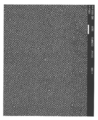
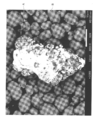
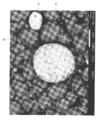
- (B) Segregation Particle Ratio In calculating the ratio of the segregation particles contained in the composite particles in the positive electrode active material, first, at an arbitrary voltage of 10 points in the positive electrode active material powder, an applied voltage of 5 kV was applied with a scanning electron microscope. The image was taken at a magnification of 100 times. That is, observation was performed in 10 fields of view. At this time, for example, a scanning electron micrograph as shown in FIG. 1 is obtained in one visual field. Then, the number of segregated particles that are white particles shown in the 10 SEM photographs was counted, and the ratio of the segregated particles in the composite particles included in the 10 SEM photographs was calculated. ..
- the segregated particles A can be observed as white particles, and the other composite particles B can be observed as gray particles.
- C Specific surface area The obtained specific surface area of the positive electrode active material was evaluated by a fully automatic specific surface area measuring device (Model: Macsorb HM model-1220 manufactured by Mountech Co., Ltd.). (Battery manufacturing and evaluation)
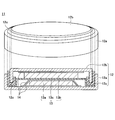
- A Manufacture of Battery To evaluate the positive electrode active material, a 2032 type coin battery 11 (hereinafter referred to as a coin type battery) shown in FIG. 4 was used.
- the coin-type battery 11 is composed of a case 12 and an electrode 13 housed in the case 12.
- the case 12 includes a positive electrode can 12a that is hollow and has one end opened, and a negative electrode can 12b that is arranged in the opening of the positive electrode can 12a.
- a negative electrode can 12b that is arranged in the opening of the positive electrode can 12a.
- a space for housing the electrode 13 is formed between the negative electrode can 12b and the positive electrode can 12a.
- the electrode 13 includes a positive electrode 13a, a separator 13c, and a negative electrode 13b, which are stacked in this order.
- the positive electrode 13a contacts the inner surface of the positive electrode can 12a through a current collector 14, and the negative electrode 13b is the negative electrode. It is housed in the case 12 so as to come into contact with the inner surface of the can 12 b via the current collector 14.
- the current collector 14 is also arranged between the positive electrode 13a and the separator 13c.
- the case 12 is provided with a gasket 12c, and the gasket 12c fixes relative movement so that the positive electrode can 12a and the negative electrode can 12b are kept in non-contact with each other.
- the gasket 12c also has a function of hermetically sealing the gap between the positive electrode can 12a and the negative electrode can 12b so as to hermetically and liquid-tightly shield the inside and the outside of the case 12.
- the coin-type battery 11 shown in FIG. 4 was manufactured as follows.
- the positive electrode active material for a lithium ion secondary battery 52.5 mg of the positive electrode active material for a lithium ion secondary battery, 15 mg of acetylene black, and 7.5 mg of polytetrafluoroethylene resin (PTFE) produced in each of Examples and Comparative Examples were mixed, and a diameter of 11 mm at a pressure of 100 MPa,
- the positive electrode 13a was produced by press molding to a thickness of 100 ⁇ m.
- the produced positive electrode 13a was dried in a vacuum dryer at 120° C. for 12 hours.
- the coin-type battery 11 described above was manufactured in a glove box in an Ar atmosphere with a dew point controlled at -80°C.
- the negative electrode 13b a pellet-shaped metallic lithium negative electrode punched into a disk shape having a diameter of 14 mm was used.
- a polyethylene porous film having a thickness of 25 ⁇ m was used for the separator 13c.
- an electrolytic solution a mixed solution (manufactured by Toyama Pharmaceutical Co., Ltd.) of ethylene carbonate (EC) and diethyl carbonate (DEC) using 1M LiClO 4 as a supporting electrolyte was used.
- B1 Initial discharge capacity After the coin-type battery 11 was manufactured, the initial discharge capacity was left for about 24 hours, and after the open circuit voltage OCV (Open Circuit Voltage) was stabilized, the current density to the positive electrode was 0.1 mA/cm 2.
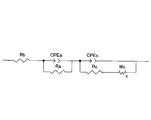
- the battery reaction at the electrode consists of a resistance component due to charge transfer and a capacitance component due to the electric double layer. When expressed as an electric circuit, it becomes a parallel circuit of resistance and capacity. As a whole battery, the solution resistance and the negative electrode and the positive electrode are connected in parallel. It is represented by an equivalent circuit in which circuits are connected in series.
- each sample of the reagent special grade manufactured by Wako Pure Chemical Industries, Ltd. was used for manufacturing the positive electrode active material and the secondary battery unless otherwise specified.
- a positive electrode active material and a lithium ion secondary battery were produced and evaluated.
- Li-nickel which is a layered compound represented by Li 1.025 Ni 0.91 Co 0.06 Al 0.03 O 2 obtained by a known technique using an oxide containing Ni as a main component and lithium hydroxide
- the powder of the composite oxide particles was used as the base material.
- the lithium nickel composite oxide of the layered compound is used as the base material also in the other examples and comparative examples below.
- the washing cake is put into a paddle type mixing device (Pam Apex Mixer WB-75 type manufactured by Taiheiyo Kiko Co., Ltd.), and a tungsten mixture is added to the total number of Ni, Co and Al atoms of the base material contained in the washing cake.
- Tungsten oxide (WO 3 ) was put on the wash cake so that the amount of tungsten, which is the ratio of the number of tungsten atoms contained in, was 0.15 atom %, and mixed at 60° C. for 30 minutes to obtain a tungsten mixture. It was (Heat treatment process) Then, it heat-processed at 200 degreeC for 120 minutes using the steam tube type drier, and cooled the furnace after that.
- a positive electrode active material having particles of lithium tungstate on the surface of the primary particles of the lithium nickel composite oxide was obtained by crushing with a sieve having an opening of 38 ⁇ m.
- the composition of the obtained positive electrode active material was analyzed to calculate the ratio of the amount of contained tungsten to the total number of atoms of Ni and the element M. The result was 0.15 atom%, which is the same as the amount of tungsten in the mixing step. I was able to confirm that Further, the ratio of segregated particles was calculated.
- the battery characteristics of the coin-type battery 11 shown in FIG. 4 having a positive electrode manufactured by using the obtained positive electrode active material were evaluated.
- the positive electrode resistance was evaluated as a relative value with Example 1 being 1.00.
- Table 1 shows the test conditions and the evaluation results.
- Example 2 In the mixing step, a positive electrode active material and a secondary battery were produced and evaluated in the same manner as in Example 1 except that WO 3 was added onto the wash cake so that the amount of tungsten was 0.05 atomic %. ..
- Table 1 shows the test conditions and the evaluation results.
- Example 3 In the mixing step, a positive electrode active material and a secondary battery were prepared and evaluated in the same manner as in Example 1 except that WO 3 was put on the wash cake so that the amount of tungsten was 0.30 atomic %. ..
- Example 4 A positive electrode active material and a secondary battery were prepared and evaluated in the same manner as in Example 1 except that the mixing temperature in the mixing step was changed to 30°C.
- Example 5 A positive electrode active material and a secondary battery were prepared and evaluated in the same manner as in Example 1 except that the mixing temperature in the mixing step was changed to 70°C.
- Table 1 shows the test conditions and the evaluation results.
- Example 6 A positive electrode active material and a secondary battery were prepared and evaluated in the same manner as in Example 1 except that the mixing time in the mixing step was changed to 10 minutes.
- Example 7 Li-nickel that is a layered compound represented by Li 1.025 Ni 0.88 Co 0.09 Al 0.03 O 2 obtained by a known technique using an oxide containing Ni as a main component and lithium hydroxide A positive electrode active material and a secondary battery were prepared and evaluated in the same manner as in Example 1 except that the powder of the composite oxide particles was used as the base material.
- Example 8 Li-nickel, which is a layered compound represented by Li 1.025 Ni 0.82 Co 0.15 Al 0.03 O 2 obtained by a known technique using an oxide containing Ni as a main component and lithium hydroxide A positive electrode active material and a secondary battery were prepared and evaluated in the same manner as in Example 1 except that the powder of the composite oxide particles was used as the base material.
- Table 1 shows the test conditions and the evaluation results.
- Table 1 shows the test conditions and the evaluation results.
- Comparative Example 2 In the mixing step, a positive electrode active material and a secondary battery were prepared and evaluated in the same manner as in Example 1 except that WO 3 was put on the wash cake so that the amount of tungsten was 0.04 atomic %. ..
- Table 1 shows the test conditions and the evaluation results.
- Comparative Example 3 A positive electrode active material and a secondary battery were prepared and evaluated in the same manner as in Example 1 except that the mixing temperature in the mixing step was changed to 25°C.
- Table 1 shows the test conditions and the evaluation results.
- Comparative Example 4 A positive electrode active material and a secondary battery were prepared and evaluated in the same manner as in Example 1 except that the mixing temperature in the mixing step was changed to 80°C.
- Table 1 shows the test conditions and the evaluation results.
- Comparative Example 5 A positive electrode active material and a secondary battery were prepared and evaluated in the same manner as in Example 1 except that the water content of the wash cake obtained after the water washing step was 2.5% by mass.
- Table 1 shows the test conditions and the evaluation results.
- Comparative Example 6 Lithium nickel that is a layered compound represented by Li 0.98 Ni 0.88 Co 0.09 Al 0.03 O 2 obtained by a known technique using an oxide containing Ni as a main component and lithium hydroxide A positive electrode active material and a secondary battery were prepared and evaluated in the same manner as in Comparative Example 1 except that the powder of the composite oxide particles was used as the base material.
- Table 1 shows the test conditions and the evaluation results.
- Comparative Example 7 Lithium nickel that is a layered compound represented by Li 0.98 Ni 0.82 Co 0.15 Al 0.03 O 2 obtained by a known technique using an oxide containing Ni as a main component and lithium hydroxide A positive electrode active material and a secondary battery were prepared and evaluated in the same manner as in Comparative Example 1 except that the powder of the composite oxide particles was used as the base material.
- Table 1 shows the test conditions and evaluation results.
- the secondary batteries using the positive electrode active materials of Examples 1 to 6 as the material of the positive electrode had a positive electrode resistance of 1.70 or less and a low initial discharge capacity of 200 mAh/g. It was confirmed that it was sufficiently high. Therefore, it was confirmed that the positive electrode active materials of Examples 1 to 6 were positive electrode active materials capable of obtaining high capacity and high output when used for the positive electrode of the lithium ion secondary battery. ..
- the desired positive electrode active material can be manufactured by the washing step, the mixing step, and the heat treatment step without the need of sealing the container in an aluminum container or the like in the manufacturing process. It was For this reason, it was possible to obtain a positive electrode active material with high output and low capacity at low cost.
- the secondary batteries using the positive electrode active materials of Comparative Examples 1 to 5 as the material of the positive electrode have a positive electrode resistance of more than 1.70 or an initial discharge capacity of less than 200 mAh/g, and have a high capacity. It was not possible to make a secondary battery that was compatible with high output.
- the specific surface area of the positive electrode active material indirectly indicates the degree of dispersion of lithium tungstate on the particle surface, and the more uniformly coated the primary particles, the smaller the specific surface area tends to be.
- lithium tungstate itself is a compound with low conductivity, if the surface of the positive electrode active material is covered too much, the initial discharge capacity of the battery will decrease, and the energy density will tend to decrease.
- lithium tungstate has a high ionic conductivity and has an effect of lowering the resistance of Li insertion and desorption reactions. Therefore, the positive electrode resistance can be reduced by increasing the addition amount or by uniformly coating.
- Comparative Example 3 having the lowest mixing temperature of 25° C. has a very high positive electrode resistance of 1.97, and when the mixing temperature in the mixing step is less than 30° C., the reaction and dispersion of the tungsten compound are insufficient. It was confirmed that the positive electrode resistance was high.
- both low resistance and high capacity can be achieved by setting the mixing temperature to 30°C or higher and 70°C or lower.
- Example 1 Comparative Example 5
- the positive electrode resistance increased when the moisture content of the cake was 2.5% by mass, which was too low. It is considered that this is because the reaction between the tungsten compound and the lithium component was insufficient, and the formation of the compound containing tungsten and lithium was insufficient.
Landscapes
- Chemical & Material Sciences (AREA)
- Chemical Kinetics & Catalysis (AREA)
- Electrochemistry (AREA)
- General Chemical & Material Sciences (AREA)
- Engineering & Computer Science (AREA)
- Manufacturing & Machinery (AREA)
- Inorganic Chemistry (AREA)
- Composite Materials (AREA)
- Organic Chemistry (AREA)
- Materials Engineering (AREA)
- Physics & Mathematics (AREA)
- Thermal Sciences (AREA)
- Battery Electrode And Active Subsutance (AREA)
- Inorganic Compounds Of Heavy Metals (AREA)
Abstract
Liと、Niと、元素Mと、を含有するリチウムニッケル複合酸化物を、水により洗浄、濾過し、洗浄ケーキとする水洗工程と、 洗浄ケーキと、リチウムを含有しないタングステン化合物と、を加熱しながら混合してタングステン混合物を得る混合工程と、 タングステン混合物を熱処理する熱処理工程と、を有し、 洗浄ケーキの水分率が3.0質量%以上10.0質量%以下であり、 リチウムニッケル複合酸化物に含まれるNi、および元素Mの原子数の合計に対する、タングステン混合物に含まれるタングステンの原子数の割合が0.05原子%以上3.00原子%以下であり、 混合工程の温度が30℃以上70℃以下であるリチウムイオン二次電池用正極活物質の製造方法。
Description
本発明は、リチウムイオン二次電池用正極活物質の製造方法に関するものである。
近年、携帯電話やノート型パソコンなどの携帯電子機器の普及に伴い、高いエネルギー密度を有する小型で軽量な二次電池の開発が強く望まれている。また、ハイブリット自動車を始めとする電気自動車用の電池として高出力の二次電池の開発も強く望まれている。
このような要求を満たす二次電池として、リチウムイオン二次電池がある。このリチウムイオン二次電池は、負極と正極と電解質等で構成され、負極および正極の活物質は、リチウムを脱離および挿入することの可能な材料が用いられている。
このようなリチウムイオン二次電池は、現在研究、開発が盛んに行われているところであるが、中でも、層状またはスピネル型のリチウムニッケル複合酸化物を正極材料に用いたリチウムイオン二次電池は、4V級の高い電圧が得られるため、高いエネルギー密度を有する電池として実用化が進んでいる。
これまで主に提案されている材料としては、合成が比較的容易なリチウムコバルト複合酸化物(LiCoO2)や、コバルトよりも安価なニッケルを用いたリチウムニッケル複合酸化物(LiNiO2)、リチウムニッケルコバルトマンガン複合酸化物(LiNi1/3Co1/3Mn1/3O2)、マンガンを用いたリチウムマンガン複合酸化物(LiMn2O4)などを挙げることができる。
このうちリチウムニッケル複合酸化物は、サイクル特性が良く、低抵抗で高出力が得られる材料として注目されている。そして、リチウムイオン二次電池用正極活物質に関して、近年ではリチウムイオン二次電池とした際の高出力化に必要な低抵抗化が重要視されている。
上記低抵抗化を実現する方法として異元素の添加が用いられており、とりわけW、Mo、Nb、Ta、Reなどの高価数をとることができる遷移金属が有用とされている。
例えば、特許文献1には、所定の組成式を満たし、Mo、W、Nb、TaおよびReから選ばれる1種以上の元素が、上記組成式におけるMn、Ni及びCoの合計モル量に対して0.1モル%以上、5モル%以下の割合で含有されているリチウム二次電池正極材料用リチウム遷移金属系化合物粉体が提案されている。また、特許文献1では、炭酸リチウムと、Ni化合物、Mn化合物、Co化合物と、Mo、W、Nb、Ta及びReから選ばれる少なくとも1種以上の元素を含む金属化合物とを、液体媒体中で粉砕し、これらを均一に分散させたスラリーを噴霧乾燥する噴霧乾燥工程と、得られた噴霧乾燥体を焼成する焼成工程とを含むリチウム二次電池正極材料用リチウム遷移金属系化合物粉体の製造方法が開示されている。
特許文献1によれば、リチウム二次電池正極材料用リチウム遷移金属系化合物粉体の低コスト化および高安全性化と高負荷特性、粉体取り扱い性向上の両立を図ることができるとされている。
しかし、特許文献1に開示された上記製造方法によれば、上記リチウム遷移金属系化合物粉体は、原料を液体媒体中で粉砕し、これらを均一に分散させたスラリーを噴霧乾燥し、得られた噴霧乾燥体を焼成することで得ている。そのため、Mo、W、Nb、TaおよびReなどの異元素の一部が層状に配置されているNiと置換してしまい、電池の容量やサイクル特性などの電池特性が低下してしまう問題があった。
また、特許文献2には、少なくとも層状構造のリチウム遷移金属複合酸化物を有する非水電解質二次電池用正極活物質であって、そのリチウム遷移金属複合酸化物は、一次粒子及びその凝集体である二次粒子の一方または両方からなる粒子の形態で存在し、その粒子の少なくとも表面に、モリブデン、バナジウム、タングステン、ホウ素およびフッ素からなる群から選ばれる少なくとも1種を備える化合物を有する非水電解質二次電池用正極活物質が提案されている。また、特許文献2には、上記非水電解質二次電池用正極活物質の製造方法として、モリブデン化合物等の添加元素の化合物と、リチウム化合物と、コバルト等を共沈させた後熱処理して得られた化合物との混合物である原料混合物を焼成、粉砕する方法が開示されている。
特許文献2に開示された非水系電解質二次電池用正極活物質によれば、特に、粒子の表面にモリブデン、バナジウム、タングステン、ホウ素およびフッ素からなる群から選ばれる少なくとも1種を有する化合物を有することにより、熱安定性、負荷特性および出力特性の向上を損なうことなく、初期特性が向上するとされている。
しかしながら、特許文献2においては、モリブデン、バナジウム、タングステン、ホウ素およびフッ素からなる群から選ばれる少なくとも1種の添加元素による効果は、初期特性、すなわち初期放電容量および初期効率の向上にあるとされ、出力特性を向上させるものではなかった。また、特許文献2に開示された製造方法によれば、モリブデン化合物等の添加元素の化合物と、リチウム化合物と、コバルト等を共沈させた後熱処理して得られた化合物との混合物である原料混合物を焼成するため、添加元素の一部が層状に配置されているニッケルと置換してしまい電池特性の低下を招く問題があった。
また、特許文献3には、所定の組成を有する複合酸化物粒子にタングステン酸化合物を被着させて加熱処理を行ったもので、炭酸イオンの含有量が0.15質量%以下である正極活物質が提案されている。また、特許文献3には、リチウム(Li)と、ニッケル(Ni)とを含む複合酸化物粒子に、タングステン酸化合物を被着させる被着工程と、上記タングステン酸化合物を被着させた上記複合酸化物粒子を加熱処理する加熱工程とを有する正極活物質の製造方法が開示されている。
特許文献3によれば、非水電解液等の分解によるガス発生を抑制することができるとされている。または、正極活物質中自身からのガス発生を抑制することができるとされている。しかしながら、出力特性を向上させるものではなかった。
また、リチウムニッケル複合酸化物の高出力化に関する改善も行われている。
例えば特許文献4には、一次粒子および、その一次粒子が凝集して構成された二次粒子からなるリチウム金属複合酸化物であって、そのリチウム金属複合酸化物の表面に、Li2WO4、Li4WO5、Li6W2O9のいずれかで表されるタングステン酸リチウムを含む微粒子を有する非水系電解質二次電池用正極活物質が提案され、高容量とともに高出力が得られるとされている。
しかしながら、高容量が維持されながら高出力化されているものの、更なる高容量化が要求されている。
特許文献5には、リチウムニッケル複合酸化物粒子と、リチウムを含有しないタングステン化合物粉末および水を混合してタングステン混合物を得る混合工程と、前記タングステン混合物を熱処理する熱処理工程を有し、前記熱処理工程が、前記タングステン混合物を熱処理することにより、リチウムニッケル複合酸化物粒子の一次粒子表面に存在するリチウム化合物とタングステン化合物粒子を反応させて前記タングステン化合物粒子を溶解して、一次粒子表面にタングステンを分散させたリチウムニッケル複合酸化物粒子を形成する第1熱処理工程と、前記第1熱処理工程の次に行う前記第1熱処理工程より高い温度で熱処理することにより、前記リチウムニッケル複合酸化物粒子の一次粒子表面にタングステンおよびリチウムを含む化合物を設けたリチウムニッケル複合酸化物粒子を形成する第2熱処理工程を有する非水系電解質二次電池用正極活物質の製造方法が開示されている。
しかしながら、特許文献5の実施例においては、第1熱処理工程でタングステン混合物の混合粉末をアルミ製袋に入れ窒素ガスパージをした例が開示されているのみであり、係る方法を量産に適用した場合に非常に高コストになるという問題がある。
特許文献5では、混合工程、第1熱処理工程、第2熱処理工程が必要で有り、工程数が多く、この点も製造コストを引き上げてしまう。さらに、アルミ製袋や真空乾燥機を使用することで、混合、熱処理の連続処理ができず、この点からもコスト面で不利である。
そこで上記従来技術が有する問題に鑑み、本発明の一側面では、低コストで、リチウムイオン二次電池の正極に用いられた場合に、高容量とともに高出力が得られるリチウムイオン二次電池用正極活物質の製造方法を提供することを目的とする。
上記課題を解決するため本発明の一態様によれば、
リチウム(Li)と、ニッケル(Ni)と、元素M(M)と、を含有するリチウムニッケル複合酸化物(ただし、前記元素MはMn、V、Mg、Mo、Nb、Ti、Co及びAlから選ばれる少なくとも1種の元素)を、水により洗浄、濾過し、洗浄ケーキとする水洗工程と、
前記洗浄ケーキと、リチウムを含有しないタングステン化合物と、を加熱しながら混合してタングステン混合物を得る混合工程と、
前記タングステン混合物を熱処理する熱処理工程と、を有し、
前記洗浄ケーキの水分率が、3.0質量%以上10.0質量%以下であり、
前記リチウムニッケル複合酸化物に含まれるニッケル、および前記元素Mの原子数の合計に対する、前記タングステン混合物に含まれるタングステンの原子数の割合が0.05原子%以上3.00原子%以下であり、
前記混合工程の温度が30℃以上70℃以下であるリチウムイオン二次電池用正極活物質の製造方法を提供する。
本発明の一態様によれば、低コストで、リチウムイオン二次電池の正極に用いられた場合に、高容量とともに高出力が得られるリチウムイオン二次電池用正極活物質の製造方法を提供することができる。
以下、本発明を実施するための形態について図面を参照して説明するが、本発明は、下記の実施形態に制限されることはなく、本発明の範囲を逸脱することなく、下記の実施形態に種々の変形および置換を加えることができる。
[リチウムイオン二次電池用正極活物質の製造方法]
本実施形態のリチウムイオン二次電池用正極活物質の製造方法(以下、単に「正極活物質の製造方法」とも記載する)は、以下の工程を有することができる。
[リチウムイオン二次電池用正極活物質の製造方法]
本実施形態のリチウムイオン二次電池用正極活物質の製造方法(以下、単に「正極活物質の製造方法」とも記載する)は、以下の工程を有することができる。
リチウム(Li)と、ニッケル(Ni)と、元素M(M)と、を含有するリチウムニッケル複合酸化物(ただし、元素MはMn、V、Mg、Mo、Nb、Ti、Co及びAlから選ばれる少なくとも1種の元素)を、水により洗浄、濾過し、洗浄ケーキとする水洗工程。
洗浄ケーキと、リチウムを含有しないタングステン化合物(以下、単に「タングステン化合物」とも記載する)と、を加熱しながら混合してタングステン混合物を得る混合工程。
タングステン混合物を熱処理する熱処理工程。
そして、洗浄ケーキの水分率は、3.0質量%以上10.0質量%以下であることが好ましい。また、リチウムニッケル複合酸化物に含まれるニッケル、および元素Mの原子数の合計に対する、タングステン混合物に含まれるタングステンの原子数の割合が0.05原子%以上3.00原子%以下であることが好ましい。
洗浄ケーキと、リチウムを含有しないタングステン化合物(以下、単に「タングステン化合物」とも記載する)と、を加熱しながら混合してタングステン混合物を得る混合工程。
タングステン混合物を熱処理する熱処理工程。
そして、洗浄ケーキの水分率は、3.0質量%以上10.0質量%以下であることが好ましい。また、リチウムニッケル複合酸化物に含まれるニッケル、および元素Mの原子数の合計に対する、タングステン混合物に含まれるタングステンの原子数の割合が0.05原子%以上3.00原子%以下であることが好ましい。
混合工程の温度は30℃以上70℃以下とすることができる。
以下、本実施形態のリチウムイオン二次電池用正極活物質の製造方法を工程ごとに詳細に説明する。
(水洗工程)
水洗工程では、リチウムニッケル複合酸化物を、水により洗浄、濾過し、洗浄ケーキとすることができる。
(水洗工程)
水洗工程では、リチウムニッケル複合酸化物を、水により洗浄、濾過し、洗浄ケーキとすることができる。
水洗工程において、リチウムニッケル複合酸化物を水により洗浄することで、リチウムニッケル複合酸化物から電池特性を劣化させる、粒子の表面に付着した余剰のリチウム成分である余剰リチウムや不純物元素を低減、除去することができる。また、水洗工程後の脱水の程度を調整することで、後述する混合工程でのリチウムニッケル複合酸化物の一次粒子の表面に存在するリチウム化合物とタングステン化合物との反応を促進させるために必要な水分をリチウムニッケル複合酸化物に付与することができる。
水洗工程では、例えばリチウムニッケル複合酸化物を水に添加してスラリーとし、該スラリーを撹拌することでリチウムニッケル複合酸化物の洗浄(水洗)を実施することができる。水により洗浄を行った後は、濾過することで、洗浄ケーキであるリチウムニッケル複合酸化物と、濾液とに分離することができる。
水洗工程に供するリチウムニッケル複合酸化物は、リチウム(Li)と、ニッケル(Ni)と、元素M(M)と、を物質量の比でLi:Ni:M=y:1-x:xの割合で含有することができる。なお、x、yは、0≦x≦0.70、0.95≦y≦1.20を満たすことが好ましい。また、元素MはMn、V、Mg、Mo、Nb、Ti、Co及びAlから選ばれる少なくとも1種の元素とすることができる。そして、リチウムニッケル複合酸化物は層状構造を有する化合物、すなわち層状化合物であることが好ましい。
リチウムニッケル複合酸化物は、例えば一般式LiyNi1-xMxO2+αで表すことができる。なお、x、y、及び元素Mについては既に説明したため、ここでは説明を省略する。αは、例えば-0.2≦α≦0.2であることが好ましい。
リチウムニッケル複合酸化物は、例えば一次粒子と、一次粒子が凝集した二次粒子とを有する粉末の形態を有することができる。
水洗工程で用いる水については特に限定されないが、不純物の混入を防ぐために純水であることが好ましく、特にリチウムニッケル複合酸化物への不純物の付着による電池特性の低下を防ぐ観点から、電導度が10μS/cm未満の水がより好ましく、1μS/cm以下の水がさらに好ましい。
なお、スラリー濃度を低くしてスラリーのハンドリング性を良くしつつ、電池特性への悪影響を防ぐために、スラリーを形成するために使用する水に水酸化リチウムを添加しておくこともできる。スラリーを形成するために使用する水に水酸化リチウムを添加しておく場合、水洗工程で得られる濾液の電導度が40mS/cm以上80mS/cm以下となるようにその添加量を調整しておくことが好ましい。
水洗工程における、リチウムニッケル複合酸化物の水洗の程度は特に限定されないが、例えば水洗工程で濾過後に得られる、濾液の電導度が40mS/cm以上80mS/cm以下となるように水洗条件、すなわち、洗浄の条件を選択することが好ましい。なお、ここでの洗浄の条件とは、例えばリチウムニッケル複合酸化物を水に添加して得られるスラリーの濃度や、撹拌時間、用いる水の温度等が挙げられる。濾液の電導度が40mS/cm以上となるように水洗することで、リチウムニッケル複合酸化物の粒子表面から、リチウム化合物が過剰に洗い流されることを抑制することができる。このため、水洗工程後のリチウムニッケル複合酸化物の粒子の表面には、タングステン化合物との反応に必要なリチウム化合物が配置され、後述する混合工程で、タングステンおよびリチウムを含む化合物を十分に形成することができ、特に出力特性を向上させることができるからである。
また、濾液の電導度が80mS/cm以下となるように水洗することで、リチウムニッケル複合酸化物の粒子表面から、タングステンおよびリチウムを含む化合物を形成するための必要量よりも多い、余剰のリチウム成分を適切に除去し、電池特性を高めることができる。
水洗を行う際に、リチウムニッケル複合酸化物を水に分散させたスラリーのスラリー濃度は特に限定されないが、スラリー濃度が薄いほど濾液の電導度が小さくなり易く、例えば該スラリー濃度は750g/L以上1500g/L以下であることが好ましい。
また、水洗を行う際の温度、すなわちスラリー温度についても特に限定されないが、温度が低いほど濾液の電導度が小さくなり易く、例えば20℃以上30℃以下とすることが好ましい。
水洗時間、すなわちスラリーを撹拌する時間についても特に限定されないが、5分間以上60分間以下程度とすることが好ましい。水洗時間を5分間以上とすることで、リチウムニッケル複合酸化物の粉末表面の余剰のリチウム成分や、不純物を十分に除去することができる。一方、水洗時間を長くしても洗浄効果の改善はなく、生産性が低下する。このため、上述のように水洗時間は60分間以下とすることが好ましい。
スラリーを所定時間撹拌して洗浄した後、上述のようにスラリーを濾過して、洗浄ケーキであるリチウムニッケル複合酸化物と、濾液とに分離することができる。濾過の際、必要に応じて洗浄ケーキの水分率を調整するため、脱水処理をあわせて行うこともできる。
洗浄後に得られる洗浄ケーキの水分率は特に限定されないが、3.0質量%以上10.0質量%以下であることが好ましく、3.0質量%以上7.0質量%以下であることがより好ましく、4.0質量%以上6.0質量%以下であることがさらに好ましい。
これは、洗浄ケーキの水分率を3.0質量%以上とすることで、後述する混合工程において、リチウムニッケル複合酸化物の一次粒子の表面に存在するリチウム化合物と、タングステン化合物との反応を特に促進することができるからである。リチウム化合物と、タングステン化合物との反応を促進することで、リチウムニッケル複合酸化物の一次粒子の表面にタングステンおよびリチウムを含む化合物の粒子を十分に形成し、リチウムイオン二次電池の正極に用いた場合に、その出力特性を特に高めることができる。
一方、水分率を10.0質量%以下とすることで、リチウムニッケル複合酸化物の洗浄ケーキの粘度が高くなることを抑制し、後述する混合工程等において、タングステン化合物とを特に均一に混合し、混合時間等を抑制することができる。
(混合工程)
混合工程では、洗浄ケーキと、リチウムを含有しないタングステン化合物とを加熱しながら混合し、水分を含んだリチウムニッケル複合酸化物とリチウムを含有しないタングステン化合物との混合物であるタングステン混合物を得られる。なお、後述するように、混合工程においてタングステン化合物の少なくとも一部は、リチウムニッケル複合酸化物の一次粒子表面に存在する余剰のリチウム化合物と反応し、タングステンおよびリチウムを含む化合物を生成すると考えられる。このため、タングステン混合物は、タングステン化合物に替えて、もしくはタングステン化合物に加えてさらに、タングステンおよびリチウムを含む化合物を含むこともできる。
混合工程はアルミニウムパウチ等の閉鎖された容器内に入れることなく実施することが好ましい。
混合工程において混合した際に、リチウムニッケル複合酸化物の一次粒子表面に存在する余剰のリチウム化合物が水に溶出する。このため、水溶性あるいはアルカリ性溶液において溶解可能なタングステン化合物を用いた場合には、混合工程においてタングステン化合物の溶解とタングステン成分の分散を進行させることができる。
また、洗浄ケーキと、タングステン化合物とを加熱しながら混合することで、リチウムニッケル複合酸化物の一次粒子表面に存在する余剰のリチウム化合物とタングステン化合物とを反応させることができる。そして、リチウムニッケル複合酸化物の一次粒子表面に存在する余剰のリチウム化合物とタングステン化合物とを反応させて得られたタングステンおよびリチウムを含む化合物を水に溶解させ、リチウムニッケル複合酸化物の一次粒子表面にタングステンおよびリチウムを含む化合物を分散させることができる。
使用するタングステン化合物は、リチウムニッケル複合酸化物の二次粒子内部の一次粒子表面まで浸透させるため、タングステン混合物に含有される水分に溶解する水溶性であることが好ましい。また、タングステン混合物中の水分はリチウムの溶出によってアルカリ性となるため、タングステン化合物は、アルカリ性において溶解可能な化合物であってもよい。また、タングステン混合物は、混合工程で加熱されるため、タングステン化合物は、常温では水に溶解させることが困難であっても、混合工程時の加温で水に溶解する、もしくはリチウムニッケル複合酸化物の粒子表面のリチウム化合物と反応してタングステンおよびリチウムを含む化合物を形成して水に溶解するものであれば好適に用いることができる。
さらに、溶解したタングステン化合物は、リチウムニッケル複合酸化物の二次粒子内部の一次粒子表面まで浸透できる量があればよいため、例えばタングステン化合物を過剰に添加した場合等には、混合後、さらには加熱後に一部は固体の状態となっていてもよい。
このように、タングステン化合物は、リチウムを含まず、かつ混合工程等の加熱の際に、水に溶解可能な状態となっていることが好ましい。混合工程に供するリチウムを含有しないタングステン化合物としては特に限定されないが、例えば酸化タングステン、タングステン酸、タングステン酸アンモニウム、タングステン酸ナトリウム等から選択された1種類以上が好ましく、不純物混入の可能性が低い酸化タングステン(WO3)、およびタングステン酸(WO3・H2O)から選択された1種類以上をより好ましく用いることができる。
タングステン混合物中に含まれるタングステン量は特に限定されないが、リチウムニッケル複合酸化物に含まれるニッケル、および元素Mの原子数の合計に対して、タングステン混合物に含まれるタングステンの原子数が0.05原子%以上3.00原子%以下となるようにタングステン化合物を添加することが好ましく、0.05原子%以上2.00原子%以下となるように添加することがより好ましく、0.10原子%以上1.00原子%以下となるように添加することがさらに好ましく、0.10原子%以上0.50原子%以下となるように添加することが特に好ましい。
タングステン混合物中のタングステン量を上記範囲とすることで、得られる正極活物質中におけるリチウムニッケル複合酸化物の粒子表面に形成された、タングステンおよびリチウムを含む化合物に含まれるタングステン量を好ましい範囲とすることができる。このため、正極活物質をリチウムイオン二次電池の正極の材料に用いた場合に充放電容量と出力特性とを特に向上し、かつ両立することができる。
なお、熱処理工程の後において得られる正極活物質に含まれるニッケル、および元素Mの原子数の合計に対するタングステンの原子数の割合は変化しない。このため、熱処理工程後に得られる正極活物質中のニッケル、および元素Mの原子数の合計に対するタングステンの原子数の割合についても上記タングステン混合物の場合と同じ範囲を充足することが好ましい。
混合工程では、既述の様にリチウムニッケル複合酸化物の一次粒子表面に存在する余剰のリチウム化合物とタングステン化合物とを反応させるため、加熱しながら混合することが好ましい。なお、加熱しながら混合することで、リチウムニッケル複合酸化物の一次粒子表面にタングステン化合物や、タングステンおよびリチウムを含む化合物を十分に分散させることもできる。
混合工程において加熱する温度、すなわち混合温度は特に限定されない。混合工程の温度である混合温度は例えば30℃以上70℃以下とすることが好ましく、30℃以上60℃以下とすることがより好ましい。
混合中のリチウムニッケル複合酸化物の粒子表面に存在するリチウム化合物とタングステン化合物との反応により、タングステン混合物の温度が若干上昇することがあるが、混合温度を70℃以下とすることで、混合工程の間のタングステン混合物中の水分量の減少を抑制しながら、タングステン化合物をリチウムニッケル複合酸化物の粒子中に均一に分散できる。また、タングステン化合物を均一に分散することで、リチウムニッケル複合酸化物の一次粒子の表面に存在する余剰のリチウム化合物をタングステン化合物と十分に反応させることができる。ただし、混合温度を70℃を超える温度とすると、タングステン混合物の乾燥により、リチウム化合物とタングステン化合物との反応を促進させるために必要な水分量が得られないことがある。
混合温度を30℃以上とすることで、タングステン化合物の分散を特に促進することができ、タングステン化合物と余剰のリチウム化合物の反応も特に促進することができる。
混合工程を実施する時間は特に限定されず、混合温度等に応じて任意に選択することができ、5分以上30分以下が好ましい。混合時間を5分以上とすることで、タングステン化合物の分散や、タングステン化合物と余剰のリチウム化合物との反応を特に促進することができる。また、混合時間を過度に長くしてもタングステン化合物の分散や、タングステン化合物と余剰のリチウム化合物との反応の程度には大きな差異はないため、生産性を高め、コストを低減する観点から、混合時間は30分以下とすることが好ましい。
混合工程の雰囲気は特に限定されないが、雰囲気中の二酸化炭素とリチウムニッケル複合酸化物粒子表面のリチウム成分との反応を避けるため、混合工程の雰囲気は、脱炭酸空気、不活性ガスのいずれかであることが好ましい。なお、脱炭酸空気とは、空気中の炭酸、すなわち二酸化炭素を低減した空気による雰囲気を意味する。不活性ガスとは、希ガス、窒素ガスから選択された1種類以上のガスによる雰囲気を意味する。
リチウムニッケル複合酸化物とリチウムを含まないタングステン化合物との混合には、一般的な混合機を用いることができる。例えば、シェーカーミキサーやレーディゲミキサー、ジュリアミキサー、Vブレンダーなどを用いてリチウムニッケル複合酸化物の形骸が破壊されない程度で十分に混合すればよい。
(熱処理工程)
熱処理工程では、タングステン混合物を熱処理することができる。熱処理工程では、タングステン混合物中の水分を十分に蒸発させ、リチウムニッケル複合酸化物粒子の一次粒子表面にタングステンおよびリチウムを含む化合物を定着、すなわち固定することができる。
(熱処理工程)
熱処理工程では、タングステン混合物を熱処理することができる。熱処理工程では、タングステン混合物中の水分を十分に蒸発させ、リチウムニッケル複合酸化物粒子の一次粒子表面にタングステンおよびリチウムを含む化合物を定着、すなわち固定することができる。
熱処理工程における熱処理温度は特に限定されないが、100℃以上200℃以下であることが好ましい。これは、熱処理温度を100℃以上とすることで、タングステン混合物中の水分を十分蒸発させることができ、タングステンおよびリチウムを含む化合物を、リチウムニッケル複合酸化物の粒子表面に十分に定着することができるからである。
また、熱処理温度を200℃以下とすることで、タングステンおよびリチウムを含む化合物を介してリチウムニッケル複合酸化物の粒子同士がネッキングを形成したり、リチウムニッケル複合酸化物の粒子の比表面積が過度に低下することを抑制できる。このため、得られた正極活物質をリチウムイオン二次電池の正極の材料に用いた場合に、電池特性を特に高めることができる。
熱処理工程の熱処理時間は、特に限定されないが、水分を十分に蒸発させてタングステンおよびリチウムを含む化合物を定着させるために1時間以上5時間以下とすることが好ましい。また、生産性を向上させるためには減率乾燥時間を長くとるために、昇温速度を2℃/分以上の速度にすることが好ましい。
熱処理工程における雰囲気は、雰囲気中の二酸化炭素と、リチウムニッケル複合酸化物の粒子表面のリチウムとの反応を避けるため、脱炭酸空気、不活性ガスのいずれかであることが好ましい。
熱処理工程を実施することで、リチウムニッケル複合酸化物粒子の表面に、タングステンおよびリチウムを含む化合物、具体的には例えばタングステン酸リチウムを形成することができる。
以上に説明した本実施形態の正極活物質の製造方法によれば、水洗工程において得られた洗浄ケーキを、混合工程においてリチウムを含有しないタングステン化合物と加熱しながら混合を行うことで、タングステン化合物をリチウムニッケル複合酸化物の粒子中に均一に分散できる。また、リチウムニッケル複合酸化物の粒子表面に存在する余剰のリチウム化合物とタングステン化合物とを反応させ、タングステンおよびリチウムを含む化合物を形成し、均一に分散できる。そして、熱処理工程において、水分を十分に蒸発させることで、リチウムニッケル複合酸化物の粒子の表面にタングステンおよびリチウムを含む化合物、例えばタングステン酸リチウムを均一に定着させることができる。従って、リチウムニッケル複合酸化物の粒子の表面に他の粒子よりもタングステンおよびリチウムを含む化合物が多く析出した偏析粒子の割合を抑制できる。偏析粒子の割合を抑制することで、サイクル特性を高め、正極抵抗を抑制することができる。
また、混合工程で形成するタングステン混合物中のタングステン量を所定の範囲とすることで、得られる正極活物質中におけるリチウムニッケル複合酸化物の粒子表面に形成された、タングステンおよびリチウムを含む化合物に含まれるタングステン量を好ましい範囲とすることができる。このため、本実施形態の正極活物質の製造方法により得られた正極活物質をリチウムイオン二次電池の正極の材料に用いた場合に充放電容量と出力特性とを特に向上し、かつ両立することができる。すなわち高容量とともに高出力が得られる。
さらに、本実施形態の正極活物質の製造方法によれば、アルミ製の容器等に密封する等の作業を要することなく、既述の水洗工程と混合工程と熱処理工程により所望の正極活物質を製造できる。このため、低コストで、既述の様に高容量とともに高出力の正極活物質を得ることができる。
[リチウムイオン二次電池用正極活物質]
次に、本実施形態のリチウムイオン二次電池用正極活物質(以下、「正極活物質」とも記載する)の構成例について説明する。なお、本実施形態のリチウムイオン二次電池用正極活物質は、例えば既述の正極活物質の製造方法により製造することができるため、既に説明した事項の一部は説明を省略する。
[リチウムイオン二次電池用正極活物質]
次に、本実施形態のリチウムイオン二次電池用正極活物質(以下、「正極活物質」とも記載する)の構成例について説明する。なお、本実施形態のリチウムイオン二次電池用正極活物質は、例えば既述の正極活物質の製造方法により製造することができるため、既に説明した事項の一部は説明を省略する。
本実施形態のリチウムイオン二次電池用正極活物質は、リチウム(Li)と、ニッケル(Ni)と、元素M(M)と、を物質量の比でLi:Ni:M=y:1-x:xの割合で含有するリチウムニッケル複合酸化物の粒子と、係るリチウムニッケル複合酸化物の粒子の表面に配置されたタングステンおよびリチウムを含む化合物とを有する複合粒子を複数個含むことができる。
なお、上記x、yは、0≦x≦0.70、0.95≦y≦1.20を満たすことが好ましい、また、元素MはMn、V、Mg、Mo、Nb、Ti、Co及びAlから選ばれる少なくとも1種の元素とすることができる。
そして、複数の複合粒子のうち、リチウムニッケル複合酸化物の粒子の表面にタングステンおよびリチウムを含む化合物が、他の複合粒子よりも多く配置された偏析粒子の割合を個数割合で0.1%以下とすることができる。また、リチウムニッケル複合酸化物に含まれるニッケル、および元素Mの原子数の合計に対する、タングステンおよびリチウムを含む化合物に含まれるタングステンの原子数の割合が、0.05原子%以上3.0原子%以下であることが好ましい。
本実施形態の正極活物質は、上述のリチウムニッケル複合酸化物の粒子と、係るリチウムニッケル複合酸化物の粒子の表面に配置されたタングステンおよびリチウムを含む化合物とを有する複合粒子を複数個有することができる。なお、本実施形態の正極活物質は上記複合粒子から構成することもできる。
リチウムニッケル複合酸化物は、例えば一般式LiyNi1-xMxO2+αで表すことができる。x、y、及び元素Mについては既に説明したたため、ここでは説明を省略する。αは、例えば-0.2≦α≦0.2であることが好ましい。リチウムニッケル複合酸化物は例えば層状構造を有することができる。すなわち層状化合物とすることができる。
また、リチウムニッケル複合酸化物の粒子は、一次粒子、及び該一次粒子が凝集した二次粒子を有することができる。
係るリチウムニッケル複合酸化物を用いることにより高い充放電容量を得ることができる。
そして、リチウムニッケル複合酸化物の粒子表面に、上述のようにタングステンおよびリチウムを含む化合物、例えばタングステン酸リチウムを配置した構成を有することができる。
一般的に、正極活物質の表面が異種化合物により完全に被覆されてしまうと、リチウムイオンの移動(インターカレーション)が大きく制限されるため、結果的にリチウムニッケル複合酸化物のもつ高容量という長所が消されてしまうとも考えられる。しかしながら、本実施形態の正極活物質においては、リチウムニッケル複合酸化物の粒子の表面にタングステンおよびリチウムを含む化合物を形成させているが、係るタングステンおよびリチウムを含む化合物は、リチウムイオン伝導性に優れ、リチウムイオンの移動を促す効果がある。このため、リチウムニッケル複合酸化物の粒子の表面にタングステンおよびリチウムを含む化合物を配置することで、電解質との界面でリチウムの伝導パスを形成でき、正極活物質の反応抵抗(以下、「正極抵抗」と記載する場合もある)を低減して出力特性を向上させることができる。
すなわち、正極抵抗が低減されることで、電池内で損失される電圧が減少し、実際に負荷側に印加される電圧が相対的に高くなるため、高出力が得られる。また、負荷側への印加電圧が高くなることで、正極でのリチウムの挿抜が十分に行われるため、電池容量も向上するものである。さらに、反応抵抗の低減により、充放電時における活物質の負荷も低減することから、サイクル特性も向上させることができる。
このようなタングステンおよびリチウムを含む化合物は、タングステンおよびリチウムを含むことで、リチウムイオン伝導性に優れ、リチウムイオンの移動を促す効果を有することができ、その具体的な組成は特に限定されない。ただし、タングステン酸リチウムであることが好ましく、例えば原子数の割合において、このタングステンおよびリチウムを含む化合物中に含有されるタングステンの50%以上が、Li4WO5の形態で存在することが好ましい。
これは、Li4WO5は、タングステンおよびリチウムを含む化合物の中でもリチウムイオンの導電パスが多く、リチウムイオンの移動を促す効果が高いため、原子数割合でWの50%以上がLi4WO5の形態で存在することで、さらに高い反応抵抗の低減効果が得られる。
ここで、電解質とリチウムニッケル複合酸化物との接触は、リチウムニッケル複合酸化物の一次粒子表面で起こるため、リチウムニッケル複合酸化物の一次粒子表面に、タングステンおよびリチウムを含む化合物が形成されていることが好ましい。
本実施形態におけるリチウムニッケル複合酸化物の一次粒子表面とは、リチウムニッケル複合酸化物の二次粒子の外面で露出している上記一次粒子表面と上記二次粒子外部と通じて電解質が浸透可能な上記二次粒子の表面近傍および内部の空隙に露出している上記一次粒子表面を含むものである。さらに、上記一次粒子間の粒界であっても上記一次粒子の結合が不完全で電解質が浸透可能な状態となっていれば上記一次粒子表面に含まれるものである。
すなわち、リチウムニッケル複合酸化物と電解質との接触は、リチウムニッケル複合酸化物の一次粒子が凝集して構成された二次粒子の外面のみでなく、上記二次粒子の表面近傍および内部の空隙、さらには上記不完全な粒界でも生じる。このため、上記一次粒子表面にもタングステンおよびリチウムを含む化合物を形成、配置させ、リチウムイオンの移動を促すことが好ましい。
したがって、電解質との接触が可能なリチウムニッケル複合酸化物の一次粒子表面の多くにタングステンおよびリチウムを含む化合物を形成させることで、リチウムニッケル複合酸化物粒子の反応抵抗をより一層低減させることが可能となる。
ここで、タングステンおよびリチウムを含む化合物は完全に電解質との接触が可能な一次粒子の全表面において形成されている必要はなく、部分的に被覆した状態や点在している状態でもよい。部分的に被覆や点在の状態でも、電解質との接触が可能な一次粒子表面にタングステンおよびリチウムを含む化合物が形成されていれば、正極抵抗の低減効果が得られる。
本実施形態の正極活物質に含まれるリチウムニッケル複合酸化物の粒子は、その表面に均一にタングステンおよびリチウムを含む化合物が形成されていることが好ましい。
ここで、正極活物質は、リチウムニッケル複合酸化物の粒子と、リチウムニッケル複合酸化物の粒子の表面に配置されたタングステンおよびリチウムを含む化合物とを有する複合粒子を複数個含んでいる。なお、リチウムニッケル複合酸化物の粒子としては、リチウムニッケル複合酸化物を含む一次粒子や、該一次粒子が凝集した二次粒子を有することができる。
そして、上記複合粒子間でリチウムニッケル複合酸化物の粒子表面に不均一にタングステンおよびリチウムを含む化合物が形成された場合は、複合粒子間でのリチウムイオンの移動が不均一となるため、特定の複合粒子に負荷がかかり、長期におけるサイクル特性の悪化や正極抵抗の上昇を招く恐れがある。
本実施形態の正極活物質が、偏析粒子を含む場合、正極活物質を走査型電子顕微鏡(SEM:Scanning Electron Microscope)で観察した場合、他の複合粒子は灰色(グレー色)であるのに対して、係る偏析粒子は白色となる。なお、偏析粒子とは、リチウムニッケル複合酸化物の粒子表面に、他の複合粒子よりも多く、偏ってタングステンおよびリチウムを含む化合物が析出、配置された粒子を意味する。
このため、本実施形態の正極活物質を走査型電子顕微鏡で観察することで、偏析粒子の有無や、偏析粒子の個数割合等を算出することができる。
そして、本実施形態の正極活物質では既述の様に、複数の複合粒子のうち、リチウムニッケル複合酸化物の粒子の表面にタングステンおよびリチウムを含む化合物が他の複合粒子よりも多く配置された偏析粒子の割合が個数割合で0.1%以下であることが好ましく、0.01%以下であることがより好ましい。複数の複合粒子のうちの偏析粒子の割合を0.1%以下とすることで、サイクル特性を高め、正極抵抗を抑制できる。
複数の複合粒子のうち、偏析粒子の割合の下限値は特に限定されないが、偏析粒子は存在しないことが好ましいことから、0%以上とすることができる。
本実施形態の正極活物質が有する複数の複合粒子のうちの、偏析粒子の割合の算出方法は特に限定されないが、例えば走査型電子顕微鏡により、正極活物質を10倍以上1000倍以下の倍率で、3視野以上20視野以下観察し、得られた複数の視野での画像内の複合粒子のうちの偏析粒子の割合を算出できる。走査型電子顕微鏡の観察条件は特に限定されないが、例えば加速電圧を1kV以上20kV以下とすることが好ましい。
得られた複合粒子におけるタングステンおよびリチウムを含む化合物の均一性は、例えば、正極活物質から複数回、複合粒子をサンプリングしてタングステン含有量を分析した際のタングステン含有量の変動によって評価、確認することもできる。
また、リチウムニッケル複合酸化物に含まれるニッケル、および元素Mの原子数の合計に対する、タングステンおよびリチウムを含む化合物に含まれるタングステンの原子数の割合(以下、「タングステン量」とも記載する)は、0.05原子%以上3.00原子%以下とすることが好ましく、0.05原子%以上2.00原子%以下とすることがより好ましく、0.10原子%以上1.00原子%以下とすることがさらに好ましく、0.10原子%以上0.50原子%以下とすることが特に好ましい。上記タングステン量を上記範囲とすることにより、正極活物質をリチウムイオン二次電池の正極材料に用いた場合に、高い充放電容量と出力特性を両立することができる。
なお、本実施形態の正極活物質においては、例えばタングステンはリチウムニッケル複合酸化物の粒子表面に配置したタングステンおよびリチウムを含む化合物に、ニッケル、元素Mはリチウムニッケル複合酸化物に由来する。このため、上記タングステン量に関して、本実施形態の正極活物質が含有する、ニッケルおよび元素Mの原子数の合計に対する、タングステンの原子数の割合が、上述のように0.05原子%以上3.00原子%以下であることが好ましいと言い換えることもできる。
上述のタングステン量を0.05原子%以上とすることで、出力特性を特に高めることができるため好ましい。
また、上述のタングステン量を3.00原子%以下とすることで、偏析粒子の発生を特に抑制できる。そして、タングステン量を3.00原子%以下とすることで、リチウムニッケル複合酸化物と電解質との間のリチウム伝導性を高め、充放電容量を高めることができる。
リチウムニッケル複合酸化物の粒子の表面に配置されたタングステンおよびリチウムを含む化合物の形態は特に限定されない。ただし、リチウムニッケル複合酸化物の粒子の表面をタングステンおよびリチウムを含む化合物の厚膜である層状物で被覆した場合には、リチウムニッケル複合酸化物の粒子の粒界に係る厚膜が充填され、比表面積の大幅な低下が起こる恐れがある。また、タングステンおよびリチウムを含む化合物の厚膜である層状物を形成した場合、係るタングステンおよびリチウムを含む化合物が、特定のリチウムニッケル複合酸化物の粒子表面に集中して形成され、他の多くのリチウムニッケル複合酸化物の粒子表面に形成されない場合がある。このため、タングステンおよびリチウムを含む化合物を介した、リチウムニッケル複合酸化物と電解質との接触面積が小さくなる恐れがある。
したがって、より高い効果を得るため、タングステンおよびリチウムを含む化合物は、粒子径が1nm以上300nm以下の粒子としてリチウムニッケル複合酸化物の粒子の表面に存在することが好ましい。
タングステンおよびリチウムを含む化合物の粒子径を1nm以上とすることで、特に十分なリチウムイオン伝導性を発揮することができる。また、タングステンおよびリチウムを含む化合物の粒子径を300nm以下とすることで、リチウムニッケル複合酸化物の粒子の表面にタングステンおよびリチウムを含む化合物の粒子を特に均一に形成することができ、反応抵抗を特に低減することができる。
タングステンおよびリチウムを含む化合物の粒子が上記形態を採ることにより、電解質との接触面積を十分なものとして、リチウムイオン伝導性を効果的に向上できるため、充放電容量を特に向上させるとともに反応抵抗をより効果的に低減させることができる。
ただし、タングステンおよびリチウムを含む化合物の粒子は、全てが粒子径1nm以上300nm以下の粒子として存在する必要はない。例えば、リチウムニッケル複合酸化物の粒子表面に形成されたタングステンおよびリチウムを含む化合物の粒子の個数で50%以上が、上記範囲を満たしていることが、特に高い効果を得る観点から好ましい。
一方、リチウムニッケル複合酸化物の粒子表面をタングステンおよびリチウムを含む化合物の薄膜で被覆すると、比表面積が過度に低下することを抑制しながら、電解質との界面でLiの伝導パスを形成させることができ、より高い充放電容量の向上、反応抵抗の低減という効果が得られる。このような薄膜状のタングステンおよびリチウムを含む化合物により一次粒子表面を被覆する場合、タングステンおよびリチウムを含む化合物は、膜厚1nm以上200nm以下の被膜としてリチウムニッケル複合酸化物の一次粒子表面に存在することが好ましい。
タングステンおよびリチウムを含む化合物の薄膜の膜厚を1nm以上とすることで、該薄膜が特に十分なリチウムイオン伝導性を有することができる。また、タングステンおよびリチウムを含む化合物の薄膜の膜厚を200nm以下とすることで、リチウムイオン伝導性を特に高め、反応抵抗を特に低減することができるため、好ましい。
タングステンおよびリチウムを含む化合物の薄膜は、リチウムニッケル複合酸化物の粒子全体に形成されている必要はなく、例えばリチウムニッケル複合酸化物の粒子表面上で部分的に形成されていてもよく、全ての被膜の膜厚範囲が1nm以上200nm以下でなくてもよい。一次粒子表面に少なくとも部分的に膜厚が1nm以上200nm以下のタングステンおよびリチウムを含む化合物の薄膜が形成されていれば、上述の高い効果が得られる。なお、例えば被膜としてタングステンおよびリチウムを含む化合物が形成される場合には、該化合物中に含有されるタングステン量を既述の範囲に制御することで、効果を得るために十分な量の膜厚1nm以上200nm以下の被膜を形成することもできる。
さらに、粒子形態と薄膜の形態が混在してリチウムニッケル複合酸化物の粒子表面にタングステンおよびリチウムを含む化合物が形成されている場合にも、電池特性に関して高い効果が得られる。
また、正極活物質全体のリチウム量は特に限定されないが、正極活物質中のニッケルおよび元素Mの原子数の和(Me)とリチウムの原子数(Li)との比「Li/Me」が、0.95以上1.20以下であることが好ましく、0.97以上1.15以下であることがより好ましい。
Li/Meを0.95以上とすることで、得られた正極活物質をリチウムイオン二次電池の正極の材料に用いた場合に、特に正極の反応抵抗を抑制し、電池の出力を高めることができるからである。また、Li/Meを1.20以下とすることで、リチウムニッケル複合酸化物の粒子表面の余剰リチウム成分を抑制することができるため、正極活物質をリチウムイオン二次電池の正極の材料に用いた場合に、特に初期放電容量を高め、かつ正極の反応抵抗を抑制することができる。
なお、タングステンおよびリチウムを含む化合物に含まれるリチウム分は、母材となるリチウムニッケル複合酸化物から供給されるため、タングステンおよびリチウムを含む化合物の形成前後において正極活物質全体のリチウム量は変化しない。
すなわち、タングステンおよびリチウムを含む化合物の形成後において、母材(芯材)としてのリチウムニッケル複合酸化物粒子のLi/Meは、形成前より減少する。このため、上述のLi/Meを0.97以上とすることで、より良好な充放電容量と反応抵抗を得ることができる。
したがって、正極活物質全体のLi/Meは、0.97以上1.15以下であることがより好ましい。
本実施形態の正極活物質の粉体特性は特に限定されないが、例えば比表面積は0.65m2/g以上1.30m2/g以下であることが好ましい。正極活物質の比表面積を上記範囲とすることで、係る正極活物質をリチウムイオン二次電池の正極の材料に用いた場合に、特に初期放電容量を高め、かつ正極の反応抵抗を抑制することができる。
本実施形態の正極活物質は、リチウムニッケル複合酸化物粒子の二次粒子の表面および一次粒子表面にタングステンおよびリチウムを含む化合物を設け、出力特性およびサイクル特性を改善するもので、正極活物質としての粒径、タップ密度などの粉体特性は、特に限定されず、例えば通常用いられる正極活物質の範囲内であればよい。
また、リチウムニッケル複合酸化物の二次粒子の表面および一次粒子表面に、タングステンおよびリチウムを含む化合物を設けることによる効果は、例えば、リチウムコバルト系複合酸化物、リチウムマンガン系複合酸化物、リチウムニッケルコバルトマンガン系複合酸化物などの粉末、さらに本発明で掲げた正極活物質だけでなく一般的に使用されるリチウム二次電池用正極活物質にも適用できる。
[リチウムイオン二次電池]
本実施形態のリチウムイオン二次電池(以下、「二次電池」ともいう。)は、既述の正極活物質を含む正極を有することができる。
[リチウムイオン二次電池]
本実施形態のリチウムイオン二次電池(以下、「二次電池」ともいう。)は、既述の正極活物質を含む正極を有することができる。
以下、本実施形態の二次電池の一構成例について、構成要素ごとにそれぞれ説明する。本実施形態の二次電池は、例えば正極、負極及び非水系電解質を含み、一般のリチウムイオン二次電池と同様の構成要素から構成される。なお、以下で説明する実施形態は例示に過ぎず、本実施形態のリチウムイオン二次電池は、下記実施形態をはじめとして、当業者の知識に基づいて種々の変更、改良を施した形態で実施することができる。また、二次電池は、その用途を特に限定するものではない。
(正極)
本実施形態の二次電池が有する正極は、既述の正極活物質を含むことができる。
(正極)
本実施形態の二次電池が有する正極は、既述の正極活物質を含むことができる。
以下に正極の製造方法の一例を説明する。まず、既述の正極活物質(粉末状)、導電材および結着剤(バインダー)を混合して正極合材とし、さらに必要に応じて活性炭や、粘度調整などの目的の溶剤を添加し、これを混練して正極合材ペーストを作製することができる。
正極合材中のそれぞれの材料の混合比は、リチウムイオン二次電池の性能を決定する要素となるため、用途に応じて、調整することができる。材料の混合比は、公知のリチウムイオン二次電池の正極と同様とすることができ、例えば、溶剤を除いた正極合材の固形分の全質量を100質量%とした場合、正極活物質を60質量%以上95質量%以下、導電材を1質量%以上20質量%以下、結着剤を1質量%以上20質量%以下の割合で含有することができる。
得られた正極合材ペーストを、例えば、アルミニウム箔製の集電体の表面に塗布し、乾燥して溶剤を飛散させ、シート状の正極が作製される。必要に応じ、電極密度を高めるべくロールプレス等により加圧することもできる。このようにして得られたシート状の正極は、目的とする電池に応じて適当な大きさに裁断等し、電池の作製に供することができる。
導電材としては、例えば、黒鉛(天然黒鉛、人造黒鉛および膨張黒鉛など)や、アセチレンブラックやケッチェンブラック(登録商標)などのカーボンブラック系材料などを用いることができる。
結着剤(バインダー)としては、活物質粒子をつなぎ止める役割を果たすもので、例えば、ポリフッ化ビニリデン(PVDF)、ポリテトラフルオロエチレン(PTFE)、フッ素ゴム、エチレンプロピレンジエンゴム、スチレンブタジエン、セルロース系樹脂およびポリアクリル酸等から選択された1種類以上を用いることができる。
必要に応じ、正極活物質、導電材等を分散させて、結着剤を溶解する溶剤を正極合材に添加することもできる。溶剤としては、具体的には、N-メチル-2-ピロリドンなどの有機溶剤を用いることができる。また、正極合材には、電気二重層容量を増加させるために、活性炭を添加することもできる。
正極の作製方法は、上述した例示のものに限られることなく、他の方法によってもよい。例えば正極合材をプレス成形した後、真空雰囲気下で乾燥することで製造することもできる。
(負極)
負極は、金属リチウム、リチウム合金等を用いることができる。また、負極は、リチウムイオンを吸蔵・脱離できる負極活物質に結着剤を混合し、適当な溶剤を加えてペースト状にした負極合材を、銅等の金属箔集電体の表面に塗布、乾燥し、必要に応じて電極密度を高めるべく圧縮して形成したものを用いてもよい。
(負極)
負極は、金属リチウム、リチウム合金等を用いることができる。また、負極は、リチウムイオンを吸蔵・脱離できる負極活物質に結着剤を混合し、適当な溶剤を加えてペースト状にした負極合材を、銅等の金属箔集電体の表面に塗布、乾燥し、必要に応じて電極密度を高めるべく圧縮して形成したものを用いてもよい。
負極活物質としては、例えば、天然黒鉛、人造黒鉛およびフェノール樹脂などの有機化合物焼成体、およびコークスなどの炭素物質の粉状体を用いることができる。この場合、負極結着剤としては、正極同様、PVDFなどの含フッ素樹脂を用いることができ、これらの活物質および結着剤を分散させる溶剤としては、N-メチル-2-ピロリドンなどの有機溶剤を用いることができる。
(セパレータ)
正極と負極との間には、必要に応じてセパレータを挟み込んで配置することができる。セパレータは、正極と負極とを分離し、電解質を保持するものであり、公知のものを用いることができ、例えば、ポリエチレンやポリプロピレンなどの薄い膜で、微少な孔を多数有する膜を用いることができる。
(非水系電解質)
非水系電解質としては、例えば非水系電解液を用いることができる。
(セパレータ)
正極と負極との間には、必要に応じてセパレータを挟み込んで配置することができる。セパレータは、正極と負極とを分離し、電解質を保持するものであり、公知のものを用いることができ、例えば、ポリエチレンやポリプロピレンなどの薄い膜で、微少な孔を多数有する膜を用いることができる。
(非水系電解質)
非水系電解質としては、例えば非水系電解液を用いることができる。
非水系電解液としては、例えば支持塩としてのリチウム塩を有機溶媒に溶解したものを用いることができる。また、非水系電解液として、イオン液体にリチウム塩が溶解したものを用いてもよい。なお、イオン液体とは、リチウムイオン以外のカチオンおよびアニオンから構成され、常温でも液体状の塩をいう。
有機溶媒としては、エチレンカーボネート、プロピレンカーボネート、ブチレンカーボネートおよびトリフルオロプロピレンカーボネートなどの環状カーボネートや、ジエチルカーボネート、ジメチルカーボネート、エチルメチルカーボネートおよびジプロピルカーボネートなどの鎖状カーボネート、さらにテトラヒドロフラン、2-メチルテトラヒドロフランおよびジメトキシエタンなどのエーテル化合物、エチルメチルスルホン、ブタンスルトンなどの硫黄化合物、リン酸トリエチル、リン酸トリオクチルなどのリン化合物等から選ばれる1種類を単独で用いてもよく、2種類以上を混合して用いることもできる。
支持塩としては、LiPF6、LiBF4、LiClO4、LiAsF6、LiN(CF3SO2)2、およびそれらの複合塩などを用いることができる。さらに、非水系電解液は、ラジカル捕捉剤、界面活性剤および難燃剤などを含んでいてもよい。
また、非水系電解質としては、固体電解質を用いてもよい。固体電解質は、高電圧に耐えうる性質を有する。固体電解質としては、無機固体電解質、有機固体電解質が挙げられる。
無機固体電解質としては、酸化物系固体電解質、硫化物系固体電解質等が挙げられる。
酸化物系固体電解質としては、特に限定されず、例えば酸素(O)を含有し、かつリチウムイオン伝導性と電子絶縁性とを有するものを好適に用いることができる。酸化物系固体電解質としては、例えば、リン酸リチウム(Li3PO4)、Li3PO4NX、LiBO2NX、LiNbO3、LiTaO3、Li2SiO3、Li4SiO4-Li3PO4、Li4SiO4-Li3VO4、Li2O-B2O3-P2O5、Li2O-SiO2、Li2O-B2O3-ZnO、Li1+XAlXTi2-X(PO4)3(0≦X≦1)、Li1+XAlXGe2-X(PO4)3(0≦X≦1)、LiTi2(PO4)3、Li3XLa2/3-XTiO3(0≦X≦2/3)、Li5La3Ta2O12、Li7La3Zr2O12、Li6BaLa2Ta2O12、Li3.6Si0.6P0.4O4等から選択された1種類以上を用いることができる。
硫化物系固体電解質としては、特に限定されず、例えば硫黄(S)を含有し、かつリチウムイオン伝導性と電子絶縁性とを有するものを好適に用いることができる。硫化物系固体電解質としては、例えば、Li2S-P2S5、Li2S-SiS2、LiI-Li2S-SiS2、LiI-Li2S-P2S5、LiI-Li2S-B2S3、Li3PO4-Li2S-Si2S、Li3PO4-Li2S-SiS2、LiPO4-Li2S-SiS、LiI-Li2S-P2O5、LiI-Li3PO4-P2S5等から選択された1種類以上を用いることができる。
なお、無機固体電解質としては、上記以外のものを用いてよく、例えば、Li3N、LiI、Li3N-LiI-LiOH等を用いてもよい。
有機固体電解質としては、イオン伝導性を示す高分子化合物であれば、特に限定されず、例えば、ポリエチレンオキシド、ポリプロピレンオキシド、これらの共重合体などを用いることができる。また、有機固体電解質は、支持塩(リチウム塩)を含んでいてもよい。
(二次電池の形状、構成)
以上のように説明してきた本実施形態のリチウムイオン二次電池は、円筒形や積層形など、種々の形状にすることができる。いずれの形状を採る場合であっても、本実施形態の二次電池が非水系電解質として非水系電解液を用いる場合であれば、正極および負極を、セパレータを介して積層させて電極体とし、得られた電極体に、非水系電解液を含浸させ、正極集電体と外部に通ずる正極端子との間、および、負極集電体と外部に通ずる負極端子との間を、集電用リードなどを用いて接続し、電池ケースに密閉した構造とすることができる。
(二次電池の形状、構成)
以上のように説明してきた本実施形態のリチウムイオン二次電池は、円筒形や積層形など、種々の形状にすることができる。いずれの形状を採る場合であっても、本実施形態の二次電池が非水系電解質として非水系電解液を用いる場合であれば、正極および負極を、セパレータを介して積層させて電極体とし、得られた電極体に、非水系電解液を含浸させ、正極集電体と外部に通ずる正極端子との間、および、負極集電体と外部に通ずる負極端子との間を、集電用リードなどを用いて接続し、電池ケースに密閉した構造とすることができる。
なお、既述の様に本実施形態の二次電池は非水系電解質として非水系電解液を用いた形態に限定されるものではなく、例えば固体の非水系電解質を用いた二次電池、すなわち全固体電池とすることもできる。全固体電池とする場合、正極活物質以外の構成は必要に応じて変更することができる。
本実施形態の二次電池では、正極の材料として、既述の正極活物質を用いているため、高容量で高出力となる。
特に、既述の正極活物質を用いたリチウムイオン二次電池は、例えば、2032型コイン電池の正極に用いた場合、200mAh/g以上の高い初期放電容量、すなわち高容量と低い正極抵抗が得られ、さらに高出力である。また、熱安定性が高く、安全性においても優れているといえる。
そして、本実施形態の二次電池は、各種用途に用いることができるが、高容量、高出力な二次電池とすることができるため、例えば常に高容量を要求される小型携帯電子機器(ノート型パーソナルコンピュータや携帯電話端末など)の電源に好適であり、高出力が要求される電気自動車用電源にも好適である。
また、本実施形態の二次電池は、小型化、高出力化が可能であることから、搭載スペースに制約を受ける電気自動車用電源として好適である。なお、本実施形態の二次電池は、純粋に電気エネルギーで駆動する電気自動車用の電源のみならず、ガソリンエンジンやディーゼルエンジンなどの燃焼機関と併用するいわゆるハイブリッド車用の電源としても用いることができる。
以下に、実施例及び比較例によって本発明をさらに詳細に説明するが、本発明は、これらの実施例によってなんら限定されるものではない。なお、実施例及び比較例における正極活物質及び電池の各種評価方法は、以下の通りである。
(正極活物質の評価)
(a)タングステン量の評価
得られた正極活物質の組成をICP発光分光分析装置(島津製作所製 型式:ICPS8100)を用いて評価した。そして、正極活物質のNiおよび元素Mの原子数の合計に対するWの原子数の割合であるタングステン量を算出した。
(正極活物質の評価)
(a)タングステン量の評価
得られた正極活物質の組成をICP発光分光分析装置(島津製作所製 型式:ICPS8100)を用いて評価した。そして、正極活物質のNiおよび元素Mの原子数の合計に対するWの原子数の割合であるタングステン量を算出した。
以下の各実施例、比較例において得られた正極活物質について、Ni、Co、Alの原子数の合計に対する、Wの原子数の割合であるタングステン量を上述のようにICP発光分光分析装置を用いて評価した。その結果、得られた正極活物質のタングステン量は、混合工程に供した母材であるリチウムニッケル複合酸化物に含まれるNi、Co、Alの原子数の合計に対する、タングステン混合物に含まれるWの原子数の割合と等しくなることが確認できた。
(b)偏析粒子割合
正極活物質中の複合粒子に含まれる偏析粒子の割合を算出するに当って、まず正極活物質の粉末の任意の10か所を走査型電子顕微鏡にて印加電圧5kV、倍率100倍で撮像した。すなわち10視野で観察を行った。この際、1つの視野において、例えば図1に示すような走査型電子顕微鏡写真が得られる。そして、その10枚のSEM写真に写っている白色の粒子である偏析粒子の数をカウントし、10枚のSEM写真に含まれる複合粒子の内、偏析粒子の割合を算出するという方法で測定した。
(b)偏析粒子割合
正極活物質中の複合粒子に含まれる偏析粒子の割合を算出するに当って、まず正極活物質の粉末の任意の10か所を走査型電子顕微鏡にて印加電圧5kV、倍率100倍で撮像した。すなわち10視野で観察を行った。この際、1つの視野において、例えば図1に示すような走査型電子顕微鏡写真が得られる。そして、その10枚のSEM写真に写っている白色の粒子である偏析粒子の数をカウントし、10枚のSEM写真に含まれる複合粒子の内、偏析粒子の割合を算出するという方法で測定した。
なお、図2、図3に示すように偏析粒子Aは白色の粒子として観察でき、他の複合粒子Bは灰色の粒子として観察できる。
(c)比表面積
得られた正極活物質比表面積を全自動比表面積測定装置(マウンテック社製 型式:Macsorb HM model-1220により評価した。
(電池の製造及び評価)
(a)電池の製造
正極活物質の評価には、図4に示す2032型コイン電池11(以下、コイン型電池と称す)を使用した。
(c)比表面積
得られた正極活物質比表面積を全自動比表面積測定装置(マウンテック社製 型式:Macsorb HM model-1220により評価した。
(電池の製造及び評価)
(a)電池の製造
正極活物質の評価には、図4に示す2032型コイン電池11(以下、コイン型電池と称す)を使用した。
図4に示すように、コイン型電池11は、ケース12と、このケース12内に収容された電極13とから構成されている。
ケース12は、中空かつ一端が開口された正極缶12aと、この正極缶12aの開口部に配置される負極缶12bとを有しており、負極缶12bを正極缶12aの開口部に配置すると、負極缶12bと正極缶12aとの間に電極13を収容する空間が形成されるように構成されている。
電極13は、正極13a、セパレータ13c及び負極13bとからなり、この順で並ぶように積層されており、正極13aが正極缶12aの内面に集電体14を介して接触し、負極13bが負極缶12bの内面に集電体14を介して接触するようにケース12に収容されている。正極13aとセパレータ13cとの間にも集電体14が配置されている。
なお、ケース12はガスケット12cを備えており、このガスケット12cによって、正極缶12aと負極缶12bとの間が非接触の状態を維持するように相対的な移動が固定されている。また、ガスケット12cは、正極缶12aと負極缶12bとの隙間を密封してケース12内と外部との間を気密液密に遮断する機能も有している。
上記の図4に示すコイン型電池11は、以下のようにして製作した。
まず、各実施例、比較例で作製したリチウムイオン二次電池用正極活物質52.5mg、アセチレンブラック15mg、及びポリテトラフッ化エチレン樹脂(PTFE)7.5mgを混合し、100MPaの圧力で直径11mm、厚さ100μmにプレス成形して、正極13aを作製した。作製した正極13aを真空乾燥機中120℃で12時間乾燥した。
この正極13aと、負極13b、セパレータ13c及び電解液とを用いて、上述したコイン型電池11を、露点が-80℃に管理されたAr雰囲気のグローブボックス内で作製した。
なお、負極13bには、直径14mmの円盤状に打ち抜かれたペレット状の金属リチウム負極を用いた。
セパレータ13cには膜厚25μmのポリエチレン多孔膜を用いた。電解液には、1MのLiClO4を支持電解質とするエチレンカーボネート(EC)とジエチルカーボネート(DEC)の等量混合液(富山薬品工業株式会社製)を用いた。
(b)評価
製造したコイン型電池11の性能を示す初期放電容量、正極抵抗は、以下のように評価した。
(b1)初期放電容量
初期放電容量は、コイン型電池11を製作してから24時間程度放置し、開回路電圧OCV(Open Circuit Voltage)が安定した後、正極に対する電流密度を0.1mA/cm2としてカットオフ電圧4.3Vまで充電し、1時間の休止後、カットオフ電圧3.0Vまで放電したときの容量を初期放電容量とした。
(b2)正極抵抗
正極抵抗は、コイン型電池11を充電電位4.1Vで充電して、周波数応答アナライザ及びポテンショガルバノスタット(ソーラトロン製、1255B)を使用して交流インピーダンス法により測定すると、図5(A)に示すナイキストプロットが得られる。
このナイキストプロットは、溶液抵抗、負極抵抗とその容量、及び、正極抵抗とその容量を示す特性曲線の和として表している。
電極における電池反応は、電荷移動に伴う抵抗成分と電気二重層による容量成分とからなり、これらを電気回路で表すと抵抗と容量の並列回路となり、電池全体としては溶液抵抗と負極、正極の並列回路を直列に接続した等価回路で表される。
このため、図5(A)に示したナイキストプロットに基づき図5(B)に示した等価回路を用いてフィッティング計算を行い、正極抵抗の値を算出した。
なお、本実施例では、正極活物質及び二次電池の作製には、特に断らない限り和光純薬工業株式会社製試薬特級の各試料を使用した。
[実施例1]
以下の手順に従い、正極活物質、リチウムイオン二次電池を作製し、評価を行った。
(水洗工程)
Niを主成分とする酸化物と水酸化リチウムを用いて公知技術で得られたLi1.025Ni0.91Co0.06Al0.03O2で表される、層状化合物であるリチウムニッケル複合酸化物粒子の粉末を母材とした。なお、以下の他の実施例、比較例でも母材として層状化合物のリチウムニッケル複合酸化物を用いている。
[実施例1]
以下の手順に従い、正極活物質、リチウムイオン二次電池を作製し、評価を行った。
(水洗工程)
Niを主成分とする酸化物と水酸化リチウムを用いて公知技術で得られたLi1.025Ni0.91Co0.06Al0.03O2で表される、層状化合物であるリチウムニッケル複合酸化物粒子の粉末を母材とした。なお、以下の他の実施例、比較例でも母材として層状化合物のリチウムニッケル複合酸化物を用いている。
そして、6000gの母材に25℃の純水を6000mL添加してスラリーとし、15分間該スラリーを撹拌することで水洗を行った。水洗後はフィルタープレスを用いて濾過することで固液分離した。濾過後に得られた濾液の電導度を横河電気株式会社製SCメーターSC72により測定したところ、56mS/cmであった。また、洗浄ケーキの水分率は4.5質量%であった。
(混合工程)
洗浄ケーキをパドル型混合装置(太平洋機工株式会社製、パムアペックスミキサWB-75型)に投入し、洗浄ケーキ中に含まれる母材のNi、Co、Alの原子数の合計に対してタングステン混合物に含まれるタングステンの原子数の割合であるタングステン量が0.15原子%になるように酸化タングステン(WO3)を洗浄ケーキ上に投入して、60℃で30分混合してタングステン混合物を得た。
(熱処理工程)
その後、スチームチューブ式乾燥機を用いて200℃で120分熱処理をし、その後炉冷した。
(混合工程)
洗浄ケーキをパドル型混合装置(太平洋機工株式会社製、パムアペックスミキサWB-75型)に投入し、洗浄ケーキ中に含まれる母材のNi、Co、Alの原子数の合計に対してタングステン混合物に含まれるタングステンの原子数の割合であるタングステン量が0.15原子%になるように酸化タングステン(WO3)を洗浄ケーキ上に投入して、60℃で30分混合してタングステン混合物を得た。
(熱処理工程)
その後、スチームチューブ式乾燥機を用いて200℃で120分熱処理をし、その後炉冷した。
なお、混合工程および熱処理工程の雰囲気は脱炭酸空気とした。
最後に目開き38μmの篩にかけ解砕することにより、リチウムニッケル複合酸化物の一次粒子表面にタングステン酸リチウムの粒子を有する正極活物質を得た。
得られた正極活物質について、組成分析を行い、含有するタングステン量の、Ni、および元素Mの原子数の合計に対する割合を算出したところ、混合工程におけるタングステン量と同じ0.15原子%になっていることを確認できた。また、偏析粒子の割合を算出した。
また、得られた正極活物質を使用して作製された正極を有する図4に示すコイン型電池11の電池特性を評価した。なお、正極抵抗は実施例1を1.00とした相対値を評価値とした。
試験条件と評価結果を表1に示す。
[実施例2]
混合工程において、タングステン量が0.05原子%になるようにWO3を洗浄ケーキ上に投入した点以外は実施例1と同様にして正極活物質、二次電池を作製し、評価を行った。
[実施例2]
混合工程において、タングステン量が0.05原子%になるようにWO3を洗浄ケーキ上に投入した点以外は実施例1と同様にして正極活物質、二次電池を作製し、評価を行った。
試験条件と評価結果を表1に示す。
[実施例3]
混合工程において、タングステン量が0.30原子%になるようにWO3を洗浄ケーキ上に投入した点以外は実施例1と同様にして正極活物質、二次電池を作製し、評価を行った。
[実施例3]
混合工程において、タングステン量が0.30原子%になるようにWO3を洗浄ケーキ上に投入した点以外は実施例1と同様にして正極活物質、二次電池を作製し、評価を行った。
試験条件と評価結果を表1に示す。
[実施例4]
混合工程における混合温度を30℃に変更した点以外は実施例1と同様にして正極活物質、二次電池を作製し、評価を行った。
[実施例4]
混合工程における混合温度を30℃に変更した点以外は実施例1と同様にして正極活物質、二次電池を作製し、評価を行った。
試験条件と評価結果を表1に示す。
[実施例5]
混合工程における混合温度を70℃に変更した点以外は実施例1と同様にして正極活物質、二次電池を作製し、評価を行った。
[実施例5]
混合工程における混合温度を70℃に変更した点以外は実施例1と同様にして正極活物質、二次電池を作製し、評価を行った。
試験条件と評価結果を表1に示す。
[実施例6]
混合工程における混合時間を10分に変更した点以外は実施例1と同様にして正極活物質、二次電池を作製し、評価を行った。
[実施例6]
混合工程における混合時間を10分に変更した点以外は実施例1と同様にして正極活物質、二次電池を作製し、評価を行った。
試験条件と評価結果を表1に示す。
[実施例7]
Niを主成分とする酸化物と水酸化リチウムを用いて公知技術で得られたLi1.025Ni0.88Co0.09Al0.03O2で表される、層状化合物であるリチウムニッケル複合酸化物粒子の粉末を母材としたこと以外は、実施例1と同様にして正極活物質、二次電池を作製し、評価を行った。
[実施例7]
Niを主成分とする酸化物と水酸化リチウムを用いて公知技術で得られたLi1.025Ni0.88Co0.09Al0.03O2で表される、層状化合物であるリチウムニッケル複合酸化物粒子の粉末を母材としたこと以外は、実施例1と同様にして正極活物質、二次電池を作製し、評価を行った。
試験条件と評価結果を表1に示す。
[実施例8]
Niを主成分とする酸化物と水酸化リチウムを用いて公知技術で得られたLi1.025Ni0.82Co0.15Al0.03O2で表される、層状化合物であるリチウムニッケル複合酸化物粒子の粉末を母材としたこと以外は、実施例1と同様にして正極活物質、二次電池を作製し、評価を行った。
[実施例8]
Niを主成分とする酸化物と水酸化リチウムを用いて公知技術で得られたLi1.025Ni0.82Co0.15Al0.03O2で表される、層状化合物であるリチウムニッケル複合酸化物粒子の粉末を母材としたこと以外は、実施例1と同様にして正極活物質、二次電池を作製し、評価を行った。
試験条件と評価結果を表1に示す。
[比較例1]
洗浄工程後、タングステン化合物の添加を行わず、すなわち混合工程を行わず、洗浄ケーキを熱処理工程に供した点以外は実施例1と同様にして正極活物質、二次電池を作製し、評価を行った。
[比較例1]
洗浄工程後、タングステン化合物の添加を行わず、すなわち混合工程を行わず、洗浄ケーキを熱処理工程に供した点以外は実施例1と同様にして正極活物質、二次電池を作製し、評価を行った。
試験条件と評価結果を表1に示す。
[比較例2]
混合工程において、タングステン量が0.04原子%になるようにWO3を洗浄ケーキ上に投入した点以外は実施例1と同様にして正極活物質、二次電池を作製し、評価を行った。
[比較例2]
混合工程において、タングステン量が0.04原子%になるようにWO3を洗浄ケーキ上に投入した点以外は実施例1と同様にして正極活物質、二次電池を作製し、評価を行った。
試験条件と評価結果を表1に示す。
[比較例3]
混合工程における混合温度を25℃に変更した点以外は実施例1と同様にして正極活物質、二次電池を作製し、評価を行った。
[比較例3]
混合工程における混合温度を25℃に変更した点以外は実施例1と同様にして正極活物質、二次電池を作製し、評価を行った。
試験条件と評価結果を表1に示す。
[比較例4]
混合工程における混合温度を80℃に変更した点以外は実施例1と同様にして正極活物質、二次電池を作製し、評価を行った。
[比較例4]
混合工程における混合温度を80℃に変更した点以外は実施例1と同様にして正極活物質、二次電池を作製し、評価を行った。
試験条件と評価結果を表1に示す。
[比較例5]
水洗工程後に得られる洗浄ケーキの水分率を2.5質量%とした点以外は実施例1と同様にして正極活物質、二次電池を作製し、評価を行った。
[比較例5]
水洗工程後に得られる洗浄ケーキの水分率を2.5質量%とした点以外は実施例1と同様にして正極活物質、二次電池を作製し、評価を行った。
試験条件と評価結果を表1に示す。
[比較例6]
Niを主成分とする酸化物と水酸化リチウムを用いて公知技術で得られたLi0.98Ni0.88Co0.09Al0.03O2で表される、層状化合物であるリチウムニッケル複合酸化物粒子の粉末を母材としたこと以外は、比較例1と同様にして正極活物質、二次電池を作製し、評価を行った。
[比較例6]
Niを主成分とする酸化物と水酸化リチウムを用いて公知技術で得られたLi0.98Ni0.88Co0.09Al0.03O2で表される、層状化合物であるリチウムニッケル複合酸化物粒子の粉末を母材としたこと以外は、比較例1と同様にして正極活物質、二次電池を作製し、評価を行った。
試験条件と評価結果を表1に示す。
[比較例7]
Niを主成分とする酸化物と水酸化リチウムを用いて公知技術で得られたLi0.98Ni0.82Co0.15Al0.03O2で表される、層状化合物であるリチウムニッケル複合酸化物粒子の粉末を母材としたこと以外は、比較例1と同様にして正極活物質、二次電池を作製し、評価を行った。
[比較例7]
Niを主成分とする酸化物と水酸化リチウムを用いて公知技術で得られたLi0.98Ni0.82Co0.15Al0.03O2で表される、層状化合物であるリチウムニッケル複合酸化物粒子の粉末を母材としたこと以外は、比較例1と同様にして正極活物質、二次電池を作製し、評価を行った。
試験条件と評価結果を表1に示す。
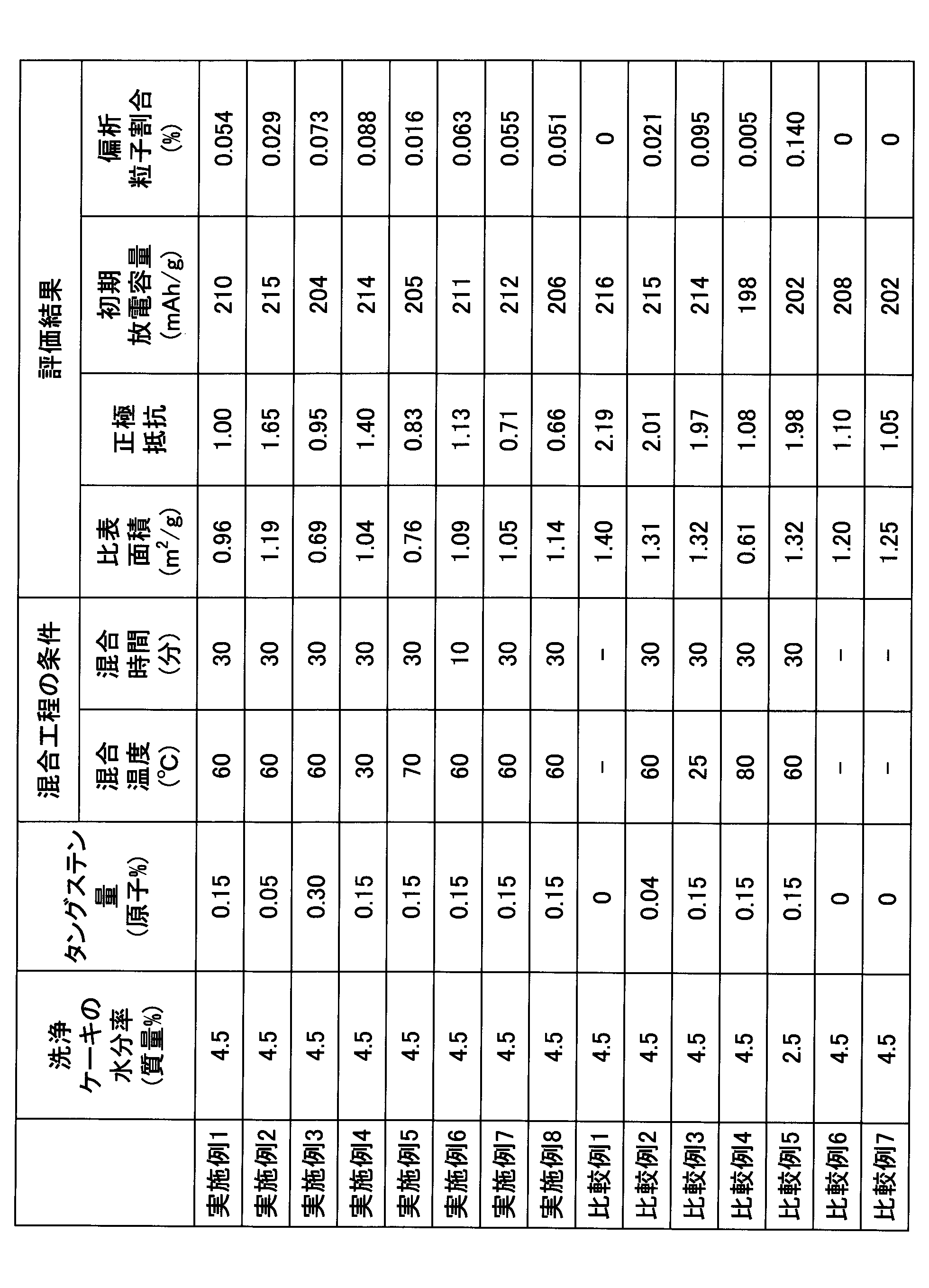
表1から明らかなように、実施例1~実施例6の正極活物質を正極の材料に用いた二次電池は、正極抵抗は1.70以下と十分に低く、初期放電容量も200mAh/g以上と十分に高くなることを確認できた。このため、実施例1~実施例6の正極活物質は、リチウムイオン二次電池の正極に用いられた場合に、高容量とともに高出力が得られる正極活物質となっていることを確認できた。また、実施例1~実施例6においては、その製造工程において、アルミ製の容器等に密封する等の作業を要することなく、水洗工程と混合工程と熱処理工程により所望の正極活物質を製造できた。このため、低コストで、高容量とともに高出力の正極活物質を得ることができた。
一方、比較例1~比較例5の正極活物質を正極の材料に用いた二次電池は、正極抵抗が1.70を超えているか、初期放電容量が200mAh/g未満であり、高容量と高出力を両立した二次電池とすることはできなかった。
正極活物質の比表面積は、タングステン酸リチウムが粒子表面に分散している度合いを間接的に示しており、一次粒子上に均一にコートされるほど比表面積は小さくなる傾向を示す。
タングステン酸リチウム自身は導電性の低い化合物であるため、正極活物質表面を覆いすぎてしまうと、電池の初期放電容量が小さくなり、エネルギー密度が低下する傾向を示す。ただし、タングステン酸リチウムは、イオン導電率が高く、Liの挿入脱離反応の抵抗を下げる効果を有する。このため、添加量を増やしたり、均一にコートすることで正極抵抗を下げることができる。
実施例1、4、5、比較例3、4の結果から、混合時の温度が低いほど、比表面積が高くなり易いことが確認できた。中でも混合温度が25℃と最も低い比較例3は、正極抵抗が1.97と非常に高くなっており、混合工程での混合温度が30℃未満の場合、タングステン化合物の反応、分散が不十分であり、正極抵抗が高くなることを確認できた。
一方、混合時の温度が70℃を超えて高くなると、比較例4の様に、初期放電容量が大幅に低くなることが確認できた。
これらの結果から、混合温度を30℃以上70℃以下とすることで、低抵抗と、高容量とを両立できることが分かる。
また、実施例1~3と、比較例1、2との比較から、リチウムニッケル複合酸化物に含まれるニッケルおよび元素Mの原子数の合計に対する、タングステン混合物に含まれるタングステンの原子数の割合であるタングステン量が0.05原子%以上3.00原子%以下となるようにタングステン化合物を添加することで、正極抵抗を大きく低減し、初期放電容量を高く維持できることを確認できた。
さらに、実施例1と比較例5との比較から、ケーキの水分率が2.5質量%と低すぎる場合、正極抵抗が高くなることを確認できた。これは、タングステン化合物とリチウム成分との反応が不十分であり、タングステンとリチウムとを含有する化合物の生成が不十分であったためと考えられる。
実施例1、7、8と比較例1、6、7との比較からリチウムニッケル複合酸化物に含まれるニッケルとコバルトの比率が変わっても、タングステン化合物は同様に反応、分散させることができ、低抵抗と高容量を両立できることが分かる。
以上にリチウムイオン二次電池用正極活物質の製造方法を、実施形態および実施例等で説明したが、本発明は上記実施形態および実施例等に限定されない。特許請求の範囲に記載された本発明の要旨の範囲内において、種々の変形、変更が可能である。
本出願は、2019年2月21日に日本国特許庁に出願された特願2019-029871号に基づく優先権を主張するものであり、特願2019-029871号の全内容を本国際出願に援用する。
Claims (8)
- リチウム(Li)と、ニッケル(Ni)と、元素M(M)と、を含有するリチウムニッケル複合酸化物(ただし、前記元素MはMn、V、Mg、Mo、Nb、Ti、Co及びAlから選ばれる少なくとも1種の元素)を、水により洗浄、濾過し、洗浄ケーキとする水洗工程と、
前記洗浄ケーキと、リチウムを含有しないタングステン化合物と、を加熱しながら混合してタングステン混合物を得る混合工程と、
前記タングステン混合物を熱処理する熱処理工程と、を有し、
前記洗浄ケーキの水分率が、3.0質量%以上10.0質量%以下であり、
前記リチウムニッケル複合酸化物に含まれるニッケル、および前記元素Mの原子数の合計に対する、前記タングステン混合物に含まれるタングステンの原子数の割合が0.05原子%以上3.00原子%以下であり、
前記混合工程の温度が30℃以上70℃以下であるリチウムイオン二次電池用正極活物質の製造方法。 - 前記リチウムニッケル複合酸化物は、リチウム(Li)と、ニッケル(Ni)と、前記元素M(M)と、を物質量の比でLi:Ni:M=y:1-x:x(ただし、0≦x≦0.70、0.95≦y≦1.20)の割合で含有する層状化合物である請求項1に記載のリチウムイオン二次電池用正極活物質の製造方法。
- 前記水洗工程において、前記濾過後に得られる濾液の電導度が40mS/cm以上80mS/cm以下となるように、前記洗浄の条件を選択する請求項1または請求項2に記載のリチウムイオン二次電池用正極活物質の製造方法。
- 前記洗浄ケーキの水分率が4.0質量%以上6.0質量%以下である請求項1~請求項3のいずれか1項に記載のリチウムイオン二次電池用正極活物質の製造方法。
- 前記リチウムを含有しないタングステン化合物が、酸化タングステン(WO3)およびタングステン酸(WO3・H2O)から選択された1種類以上である請求項1~請求項4のいずれか1項に記載のリチウムイオン二次電池用正極活物質の製造方法。
- 前記混合工程の温度が30℃以上60℃以下である請求項1~請求項5のいずれか1項に記載のリチウムイオン二次電池用正極活物質の製造方法。
- 前記熱処理工程の雰囲気が、脱炭酸空気、不活性ガスのいずれかである請求項1~請求項6のいずれか1項に記載のリチウムイオン二次電池用正極活物質の製造方法。
- 前記熱処理工程の熱処理温度が、100℃以上200℃以下である請求項1~請求項7のいずれか1項に記載のリチウムイオン二次電池用正極活物質の製造方法。
Priority Applications (3)
| Application Number | Priority Date | Filing Date | Title |
|---|---|---|---|
| CN202080015220.5A CN113454029B (zh) | 2019-02-21 | 2020-02-18 | 锂离子二次电池用正极活性物质的制造方法 |
| US17/310,690 US12170368B2 (en) | 2019-02-21 | 2020-02-18 | Method of manufacturing positive electrode active material for lithium ion secondary battery |
| JP2021502054A JP7457689B2 (ja) | 2019-02-21 | 2020-02-18 | リチウムイオン二次電池用正極活物質の製造方法 |
Applications Claiming Priority (2)
| Application Number | Priority Date | Filing Date | Title |
|---|---|---|---|
| JP2019029871 | 2019-02-21 | ||
| JP2019-029871 | 2019-02-21 |
Publications (1)
| Publication Number | Publication Date |
|---|---|
| WO2020171093A1 true WO2020171093A1 (ja) | 2020-08-27 |
Family
ID=72143358
Family Applications (1)
| Application Number | Title | Priority Date | Filing Date |
|---|---|---|---|
| PCT/JP2020/006368 Ceased WO2020171093A1 (ja) | 2019-02-21 | 2020-02-18 | リチウムイオン二次電池用正極活物質の製造方法 |
Country Status (5)
| Country | Link |
|---|---|
| US (1) | US12170368B2 (ja) |
| JP (1) | JP7457689B2 (ja) |
| CN (1) | CN113454029B (ja) |
| TW (1) | TWI822958B (ja) |
| WO (1) | WO2020171093A1 (ja) |
Cited By (1)
| Publication number | Priority date | Publication date | Assignee | Title |
|---|---|---|---|---|
| WO2024142695A1 (ja) * | 2022-12-28 | 2024-07-04 | パナソニックエナジー株式会社 | 非水電解質二次電池用正極活物質の製造方法 |
Families Citing this family (1)
| Publication number | Priority date | Publication date | Assignee | Title |
|---|---|---|---|---|
| AU2022203323B2 (en) * | 2021-05-17 | 2023-08-24 | ESKP3 Pty Ltd | Improved Button Battery |
Citations (5)
| Publication number | Priority date | Publication date | Assignee | Title |
|---|---|---|---|---|
| JPH1116566A (ja) * | 1997-06-20 | 1999-01-22 | Hitachi Ltd | 電 池 |
| JP2016183090A (ja) * | 2015-03-25 | 2016-10-20 | 住友金属鉱山株式会社 | タングステン酸リチウムの製造方法、およびタングステン酸リチウムを用いた非水系電解質二次電池用正極活物質の製造方法 |
| JP2017084628A (ja) * | 2015-10-28 | 2017-05-18 | 住友金属鉱山株式会社 | 非水系電解質二次電池用正極活物質とその製造方法、及び非水系電解質二次電池 |
| JP2017117766A (ja) * | 2015-12-25 | 2017-06-29 | 住友金属鉱山株式会社 | 非水系電解質二次電池用正極活物質とその製造方法、及び非水系電解質二次電池 |
| JP2017117700A (ja) * | 2015-12-25 | 2017-06-29 | 住友金属鉱山株式会社 | 非水系電解質二次電池用正極活物質の製造方法 |
Family Cites Families (10)
| Publication number | Priority date | Publication date | Assignee | Title |
|---|---|---|---|---|
| JP2005251716A (ja) | 2004-02-05 | 2005-09-15 | Nichia Chem Ind Ltd | 非水電解質二次電池用正極活物質、非水電解質二次電池用正極合剤および非水電解質二次電池 |
| CN102769130A (zh) | 2007-09-04 | 2012-11-07 | 三菱化学株式会社 | 锂过渡金属类化合物粉末 |
| JP5359140B2 (ja) | 2008-05-01 | 2013-12-04 | 三菱化学株式会社 | リチウム遷移金属系化合物粉体、その製造方法並びに、それを用いたリチウム二次電池用正極及びリチウム二次電池 |
| JP2010040383A (ja) | 2008-08-06 | 2010-02-18 | Sony Corp | 正極活物質の製造方法および正極活物質 |
| JP5894388B2 (ja) * | 2011-07-26 | 2016-03-30 | 住友金属鉱山株式会社 | 非水電解質二次電池用正極活物質、その製造方法及びそれを用いた非水電解質二次電池 |
| JP5822708B2 (ja) | 2011-12-16 | 2015-11-24 | 住友金属鉱山株式会社 | 非水系電解質二次電池用正極活物質とその製造方法、および該正極活物質を用いた非水系電解質二次電池 |
| JP6090609B2 (ja) * | 2014-11-28 | 2017-03-08 | 住友金属鉱山株式会社 | 非水系電解質二次電池用正極活物質とその製造方法、および該正極活物質を用いた非水系電解質二次電池 |
| JP6090608B2 (ja) * | 2014-11-28 | 2017-03-08 | 住友金属鉱山株式会社 | 非水系電解質二次電池用正極活物質とその製造方法、および該正極活物質を用いた非水系電解質二次電池 |
| JP6210439B2 (ja) | 2014-12-26 | 2017-10-11 | 住友金属鉱山株式会社 | 非水系電解質二次電池用正極活物質とその製造方法、及び該正極活物質を用いた非水系電解質二次電池 |
| JP7055587B2 (ja) | 2015-09-25 | 2022-04-18 | 住友金属鉱山株式会社 | 非水系電解質二次電池用正極活物質の製造方法 |
-
2020
- 2020-02-18 US US17/310,690 patent/US12170368B2/en active Active
- 2020-02-18 JP JP2021502054A patent/JP7457689B2/ja active Active
- 2020-02-18 WO PCT/JP2020/006368 patent/WO2020171093A1/ja not_active Ceased
- 2020-02-18 CN CN202080015220.5A patent/CN113454029B/zh active Active
- 2020-02-20 TW TW109105443A patent/TWI822958B/zh active
Patent Citations (5)
| Publication number | Priority date | Publication date | Assignee | Title |
|---|---|---|---|---|
| JPH1116566A (ja) * | 1997-06-20 | 1999-01-22 | Hitachi Ltd | 電 池 |
| JP2016183090A (ja) * | 2015-03-25 | 2016-10-20 | 住友金属鉱山株式会社 | タングステン酸リチウムの製造方法、およびタングステン酸リチウムを用いた非水系電解質二次電池用正極活物質の製造方法 |
| JP2017084628A (ja) * | 2015-10-28 | 2017-05-18 | 住友金属鉱山株式会社 | 非水系電解質二次電池用正極活物質とその製造方法、及び非水系電解質二次電池 |
| JP2017117766A (ja) * | 2015-12-25 | 2017-06-29 | 住友金属鉱山株式会社 | 非水系電解質二次電池用正極活物質とその製造方法、及び非水系電解質二次電池 |
| JP2017117700A (ja) * | 2015-12-25 | 2017-06-29 | 住友金属鉱山株式会社 | 非水系電解質二次電池用正極活物質の製造方法 |
Cited By (1)
| Publication number | Priority date | Publication date | Assignee | Title |
|---|---|---|---|---|
| WO2024142695A1 (ja) * | 2022-12-28 | 2024-07-04 | パナソニックエナジー株式会社 | 非水電解質二次電池用正極活物質の製造方法 |
Also Published As
| Publication number | Publication date |
|---|---|
| US20220123295A1 (en) | 2022-04-21 |
| TW202042429A (zh) | 2020-11-16 |
| CN113454029A (zh) | 2021-09-28 |
| JPWO2020171093A1 (ja) | 2021-12-16 |
| JP7457689B2 (ja) | 2024-03-28 |
| US12170368B2 (en) | 2024-12-17 |
| CN113454029B (zh) | 2023-07-25 |
| TWI822958B (zh) | 2023-11-21 |
Similar Documents
| Publication | Publication Date | Title |
|---|---|---|
| US11108043B2 (en) | Method for producing positive electrode active material for nonaqueous electrolyte secondary battery | |
| JP6818225B2 (ja) | 非水系電解質二次電池用正極活物質の製造方法 | |
| JP6978182B2 (ja) | 非水系電解質二次電池用正極活物質とその製造方法、および該正極活物質を用いた非水系電解質二次電池 | |
| JP6724361B2 (ja) | 非水系電解質二次電池用正極活物質とその製造方法、及び非水系電解質二次電池 | |
| KR20170125074A (ko) | 비수계 전해질 이차 전지용 정극 활물질 및 그의 제조 방법 | |
| JP7028073B2 (ja) | 非水系電解質二次電池用正極活物質、非水系電解質二次電池 | |
| JP7055587B2 (ja) | 非水系電解質二次電池用正極活物質の製造方法 | |
| EP3993102A1 (en) | Positive electrode active material for lithium ion secondary batteries, method for producing same, and lithium ion secondary battery | |
| US20250145491A1 (en) | Positive electrode active material for lithium ion secondary battery and lithium ion secondary battery | |
| JPWO2019087558A1 (ja) | 非水系電解質二次電池用正極活物質、非水系電解質二次電池用正極活物質の製造方法、リチウム金属複合酸化物粉末の評価方法 | |
| JP7276323B2 (ja) | 非水系電解質二次電池用正極活物質 | |
| JP2020004506A (ja) | リチウムイオン二次電池用の正極活物質とその製造方法、およびチウムイオン二次電池 | |
| WO2016104305A1 (ja) | 非水系電解質二次電池用正極活物質とその製造方法、及び該正極活物質を用いた非水系電解質二次電池 | |
| JP7457689B2 (ja) | リチウムイオン二次電池用正極活物質の製造方法 | |
| JP2020129499A (ja) | リチウムイオン二次電池用正極活物質の製造方法、リチウムイオン二次電池用正極活物質、リチウムイオン二次電池 | |
| JP2020129498A (ja) | リチウムイオン二次電池用正極活物質の製造方法、リチウムイオン二次電池用正極活物質、リチウムイオン二次電池 | |
| JP7271891B2 (ja) | リチウムイオン二次電池用正極活物質、リチウムイオン二次電池用正極活物質の製造方法 | |
| JP2020140778A (ja) | リチウムイオン二次電池用正極活物質の製造方法、リチウムイオン二次電池用正極活物質、およびリチウムイオン二次電池 | |
| JP7457688B2 (ja) | リチウムイオン二次電池用正極活物質の製造方法 | |
| JP2020004587A (ja) | リチウムイオン二次電池用正極活物質とその製造方法、リチウムイオン二次電池用正極、及び、リチウムイオン二次電池 | |
| JP2020202193A (ja) | 非水系電解質二次電池用正極活物質及び該正極活物質を用いた非水系電解質二次電池 |
Legal Events
| Date | Code | Title | Description |
|---|---|---|---|
| 121 | Ep: the epo has been informed by wipo that ep was designated in this application |
Ref document number: 20759609 Country of ref document: EP Kind code of ref document: A1 |
|
| ENP | Entry into the national phase |
Ref document number: 2021502054 Country of ref document: JP Kind code of ref document: A |
|
| NENP | Non-entry into the national phase |
Ref country code: DE |
|
| 122 | Ep: pct application non-entry in european phase |
Ref document number: 20759609 Country of ref document: EP Kind code of ref document: A1 |