WO2020162080A1 - ゴム組成物、加硫物及び成形品 - Google Patents
ゴム組成物、加硫物及び成形品 Download PDFInfo
- Publication number
- WO2020162080A1 WO2020162080A1 PCT/JP2019/051315 JP2019051315W WO2020162080A1 WO 2020162080 A1 WO2020162080 A1 WO 2020162080A1 JP 2019051315 W JP2019051315 W JP 2019051315W WO 2020162080 A1 WO2020162080 A1 WO 2020162080A1
- Authority
- WO
- WIPO (PCT)
- Prior art keywords
- chloroprene
- mass
- parts
- rubber
- rubber composition
- Prior art date
- Legal status (The legal status is an assumption and is not a legal conclusion. Google has not performed a legal analysis and makes no representation as to the accuracy of the status listed.)
- Ceased
Links
Classifications
-
- C—CHEMISTRY; METALLURGY
- C08—ORGANIC MACROMOLECULAR COMPOUNDS; THEIR PREPARATION OR CHEMICAL WORKING-UP; COMPOSITIONS BASED THEREON
- C08K—Use of inorganic or non-macromolecular organic substances as compounding ingredients
- C08K3/00—Use of inorganic substances as compounding ingredients
- C08K3/18—Oxygen-containing compounds, e.g. metal carbonyls
- C08K3/20—Oxides; Hydroxides
- C08K3/22—Oxides; Hydroxides of metals
-
- C—CHEMISTRY; METALLURGY
- C08—ORGANIC MACROMOLECULAR COMPOUNDS; THEIR PREPARATION OR CHEMICAL WORKING-UP; COMPOSITIONS BASED THEREON
- C08L—COMPOSITIONS OF MACROMOLECULAR COMPOUNDS
- C08L11/00—Compositions of homopolymers or copolymers of chloroprene
Definitions
- the present invention relates to a rubber composition containing chloroprene rubber and a specific hydrotalcite compound, and a vulcanized product and a molded product of this rubber composition.
- Chloroprene rubber is widely used as a material for industrial rubber products because of its excellent mechanical properties and flame retardancy, and various improvements have been made.
- Patent Document 1 discloses a technique of chloroprene rubber having improved oil resistance.
- Patent Documents 2 to 7 disclose techniques of chloroprene rubber having improved cold resistance, ozone resistance, heat resistance, vibration damping characteristics, and the like.
- Japanese Patent Publication No. 2018-520221 Japanese Patent Laid-Open No. 2001-343072 JP 2001-343049 A Japanese Patent Laid-Open No. 11-323020 JP, 2001-131341, A JP, 2005-60581, A Japanese Patent No. 5412010
- Patent Documents 1 to 7 described above have poor versatility because they use a chloroprene rubber having a special structure, or a technique for simultaneously improving the heat resistance and oil resistance of the chloroprene rubber. is not.
- the present invention provides a rubber composition capable of simultaneously improving the oil resistance and heat resistance of the obtained vulcanizate, the vulcanizate of the rubber composition (vulcanizate obtained by vulcanizing the rubber composition). Another object is to provide a molded article containing the vulcanized product.
- One aspect of the present invention is a rubber composition containing 100 parts by mass of chloroprene rubber and 2 to 16 parts by mass of a hydrotalcite compound represented by the following chemical formula (1).
- M (1-x) Al x O 3.83x (1) (In the formula, M represents a divalent metal ion containing at least one selected from Mg and Zn, and x represents a numerical value (coefficient value) in the range of 0.2 to 0.5.)
- the chloroprene rubber contains at least one selected from a homopolymer of 2-chloro-1,3-butadiene and a copolymer of 2-chloro-1,3-butadiene.
- the copolymer of 2-chloro-1,3-butadiene is 2-chloro-1,3-butadiene and at least one monomer selected from 2,3-dichloro-1,3-butadiene and acrylonitrile. It is preferable to include a copolymer of
- the present invention also provides a vulcanized product of the above rubber composition.
- the present invention further provides a molded article containing the above-mentioned vulcanized product.
- a rubber composition capable of simultaneously improving heat resistance and oil resistance of the obtained vulcanized product, and a vulcanized product obtained by vulcanizing the rubber composition and the vulcanized product. It is possible to provide a molded article containing the same.
- the numerical range indicated by using “to” indicates the range including the numerical values before and after “to” as the minimum value and the maximum value, respectively.
- the upper limit value or the lower limit value of the numerical range of a certain stage can be arbitrarily combined with the upper limit value or the lower limit value of the numerical range of another stage.
- the upper limit value or the lower limit value of the numerical range may be replaced with the value shown in the examples.
- the materials exemplified in the present specification can be used alone or in combination of two or more kinds.
- the content of each component in the composition means the total amount of the plurality of substances present in the composition, unless a plurality of substances corresponding to each component are present in the composition, unless otherwise specified.
- the rubber composition according to the present embodiment contains 100 parts by mass of chloroprene rubber and 2 to 16 parts by mass of a hydrotalcite compound represented by the following chemical formula (1).
- a hydrotalcite compound represented by the following chemical formula (1).
- M (1-x) Al x O 3.83x (1)
- M represents a divalent metal ion containing at least one selected from Mg and Zn, and x represents a numerical value in the range of 0.2 to 0.5.
- Chloroprene rubber is a chloroprene polymer having structural units derived from chloroprene (2-chloro-1,3-butadiene).
- the chloroprene polymer is a chloroprene homopolymer, a chloroprene copolymer (a copolymer of chloroprene and a monomer copolymerizable with chloroprene), or a mixture of these polymers.
- Examples of the monomer copolymerizable with chloroprene include alkyl acrylates such as methyl acrylate, butyl acrylate and 2-ethylhexyl acrylate; methyl methacrylate, butyl methacrylate, 2-ethylhexyl methacrylate and the like.
- Methacrylic acid alkyl esters such as 2-hydroxyethyl (meth)acrylate, 2-hydroxymethyl (meth)acrylate, 2-hydroxypropyl (meth)acrylate; 2,3-dichloro-1,3 -Butadiene; 1-chloro-1,3-butadiene; butadiene; isoprene; ethylene; styrene; acrylonitrile and the like.
- the monomers copolymerizable with chloroprene can be used alone or in combination of two or more.
- the chloroprene rubber may contain, for example, a polymer obtained by copolymerizing three or more kinds of monomers containing chloroprene. Also, the polymer structure of the polymer is not particularly limited.
- the chloroprene rubber includes a chloroprene homopolymer, and at least one selected from a chloroprene copolymer, and the chloroprene copolymer is It is preferable to contain a copolymer of chloroprene and at least one monomer selected from 2,3-dichloro-1,3-butadiene and acrylonitrile.
- chloroprene rubber is a homopolymer of chloroprene, a copolymer of chloroprene and 2,3-dichloro-1,3-butadiene, a copolymer of chloroprene and acrylonitrile, and chloroprene and 2,3-dichloro- It is preferable to contain at least one selected from the group consisting of a copolymer of 1,3-butadiene and acrylonitrile.
- Chloroprene rubber from the viewpoint of further improving the heat resistance of the vulcanizate, preferably contains a homopolymer of chloroprene, from the viewpoint of further improving the oil resistance of the vulcanizate, a copolymer of chloroprene and acrylonitrile It is preferable to include.
- Chloroprene rubber may contain a structure derived from a molecular weight modifier (chain transfer agent, etc.) used in the polymerization step.
- examples of such chloroprene rubber include mercaptan-modified chloroprene rubber, xanthogen-modified chloroprene rubber, sulfur-modified chloroprene rubber, dithiocarbonate-based chloroprene rubber, trithiocarbonate-based chloroprene rubber, and carbamate-based chloroprene rubber.
- the inclusion of a structural unit derived from chloroprene is preferably in the following range with respect to 100 parts by mass of chloroprene rubber.
- the content of the structural unit derived from chloroprene is preferably 50 parts by mass or more, more preferably 70 parts by mass or more, further preferably 80 parts by mass or more, particularly preferably 90 parts by mass or more.
- the content of the structural unit derived from chloroprene is less than 100 parts by mass, and may be 99 parts by mass or less or 95 parts by mass or less.
- the content (copolymerization amount) of the structural unit derived from the monomer copolymerizable with chloroprene is preferably in the following range with respect to 100 parts by mass of the chloroprene rubber.
- the content of the structural unit derived from the monomer copolymerizable with chloroprene is preferably 50 parts by mass or less, more preferably 30 parts by mass or less, further preferably 20 parts by mass or less, particularly preferably 10 parts by mass or less. is there.
- the content of the structural unit derived from the monomer copolymerizable with chloroprene may exceed 0 parts by mass, and may be 1 part by mass or more or 5 parts by mass or more.
- Chloroprene rubber can be produced by a method including a polymerization step of polymerizing a raw material monomer containing chloroprene.
- Chloroprene rubber is, for example, a raw material monomer containing chloroprene (for example, chloroprene as a main component in the presence of a catalyst for polymerization reaction, a catalyst activator, a polymerization initiator, a chain transfer agent, etc., using an emulsifying dispersant. It can be obtained by emulsion polymerization of the starting material monomer).
- an alkali metal salt of a saturated or unsaturated fatty acid having 6 to 22 carbon atoms, rosin acid or an alkali metal salt of disproportionated rosin acid (eg potassium rosinate), formalin of ⁇ -naphthalenesulfonic acid examples thereof include alkali metal salts (for example, sodium salts) of the condensate.
- the catalyst for the polymerization reaction examples include inorganic peroxides such as potassium sulfate; organic peroxides such as ketone peroxides, peroxyketals, hydroperoxides, dialkyl peroxides, diacyl peroxides and the like. Can be mentioned.
- catalyst activator examples include sodium sulfite, potassium sulfite, iron(II) oxide, anthraquinone, sodium ⁇ -sulfonate, formamidine sulfonic acid and L-ascorbic acid.
- the polymerization initiator is not particularly limited, and known polymerization initiators generally used for emulsion polymerization of chloroprene monomer can be used.
- known polymerization initiators generally used for emulsion polymerization of chloroprene monomer can be used.
- potassium persulfate, ammonium persulfate, sodium persulfate, hydrogen peroxide, t -Butyl hydroperoxide and the like can be mentioned.
- the chain transfer agent is also not particularly limited, and a chain transfer agent used in ordinary emulsion polymerization of chloroprene can be used.
- Specific examples of the chain transfer agent include long-chain alkyl mercaptans such as n-dodecyl mercaptan, t-dodecyl mercaptan and n-octyl mercaptan; xanthogen compounds such as diisopropylxanthogen disulfide and diethylxanthogen disulfide; iodoform; benzyl 1-pyrroledithio.
- the polymerization temperature of the raw material monomer containing chloroprene is not particularly limited and may be a temperature at which emulsion polymerization is generally performed.
- the temperature at which emulsion polymerization is carried out is preferably 0 to 50°C, more preferably 20 to 50°C.
- the final polymerization rate of the chloroprene rubber obtained in the above-mentioned polymerization step is not particularly limited, but it is preferably adjusted within the range of 30 to 100%.
- the polymerization can be terminated by adding a polymerization terminator that terminates the polymerization reaction when the desired polymerization rate (conversion rate) is reached.
- the polymerization terminator is not particularly limited, and a commonly used polymerization terminator can be used.
- Specific examples of the polymerization terminator include phenothiazine (thiodiphenylamine), 4-tert-butylcatechol, 2,2-methylenebis-4-methyl-6-tert-butylphenol and the like.
- unreacted monomers may be removed from the polymerization liquid obtained in the polymerization step.
- the method for removing the unreacted monomer is not particularly limited, and examples thereof include a steam stripping method. After removing the unreacted monomer, the pH of the polymerization solution is adjusted, and the chloroprene rubber can be obtained through processes such as freeze-coagulation, washing with water, and drying with hot air in a usual manner.
- the hydrotalcite compound is a hydrotalcite compound represented by the following chemical formula (1) and is used as an acid acceptor when vulcanizing a rubber composition.
- M represents a divalent metal ion containing at least one selected from Mg and Zn
- x represents a numerical value in the range of 0.2 to 0.5.
- x is preferably 0.25 to 0.45, more preferably 0.25 to 0.4, and 0.25 to More preferably, it is 0.35.
- the acid acceptor generally, a hydrotalcite compound to which H 2 O represented by the following chemical formula (2) is bound and magnesium oxide are known.
- a hydrotalcite compound represented by the following chemical formula (2) when a hydrotalcite compound represented by the following chemical formula (2) is used, the hydrotalcite compound has a poor chlorine-trapping ability, so that the tensile properties (eg tensile strength) and heat resistance of the vulcanized product are impaired.
- the oil resistance of the vulcanizate may be impaired because magnesium chloride produced by the reaction of magnesium oxide with chlorine takes in oil.
- the rubber composition according to the present embodiment contains the specific hydrotalcite compound represented by the above chemical formula (1) in a specific amount described below, thereby simultaneously improving the heat resistance and oil resistance of the vulcanized product.
- the rubber composition according to the present embodiment can contribute to the improvement of the tensile strength of the vulcanized product by containing the hydrotalcite compound represented by the chemical formula (1) described above in a specific amount.
- M represents a divalent metal ion containing at least one selected from Mg and Zn
- x′ is 3 to 7
- y is 1 to 3
- z is 7 to 20
- m is 2 to.
- the numerical value (coefficient value) in the range of 7 is shown.
- Specific examples of the hydrotalcite compound represented by the formula (2) include, for example, Mg 4.3 Al 2 (OH) 12.6 CO 3 .mH 2 O (manufactured by Kyowa Chemical Industry Co., Ltd., trade name: DHT). -4A).
- the content of the hydrotalcite compound is 2 to 16 parts by mass with respect to 100 parts by mass of chloroprene rubber.
- the content of the hydrotalcite compound is 2 parts by mass or more with respect to 100 parts by mass of the chloroprene rubber, it is possible to prevent the chlorine scavenging ability from being poor and the heat resistance of the vulcanized product to be impaired.
- the content of the site compound is 16 parts by mass or less with respect to 100 parts by mass of chloroprene rubber, vulcanization inhibition is caused and bubbles are generated on the surface of the vulcanized product, so that the vulcanized product has tensile breaking strength (tensile strength) and heat.
- the content of the hydrotalcite compound is preferably 2 parts by mass to 14 parts by mass, more preferably 2 parts by mass with respect to 100 parts by mass of the chloroprene rubber from the viewpoint of further improving the heat resistance and oil resistance of the vulcanized product.
- the content of the hydrotalcite compound is preferably 2 parts by mass to 14 parts by mass, more preferably 2 parts by mass with respect to 100 parts by mass of the chloroprene rubber from the viewpoint of further improving the heat resistance and oil resistance of the vulcanized product.
- To 12 parts by mass more preferably 2 to 10 parts by mass, even more preferably 2 to 8 parts by mass, particularly preferably 3 to 8 parts by mass, very preferably 4 to 8 parts by mass. is there.
- hydrotalcite compound examples include, for example, Mg 0.7 Al 0.3 O 1.15 (trade name: KW-2000, manufactured by Kyowa Chemical Industry Co., Ltd.), (Mg 0.75 Zn 0.25 ). 0.7 Al 0.3 O 1.15, and the like.
- a filler or a reinforcing agent, a plasticizer, a vulcanizing agent, a vulcanization accelerator, a processing aid, an antioxidant, etc. are added within a range that does not impair the effects of the present invention. May be.
- filler or reinforcing agent examples include carbon black, silica, clay, talc, calcium carbonate and the like.
- Each of the filler and the reinforcing agent may be used alone or in combination of two or more.
- the content of the filler or the reinforcing agent may be, for example, 5 parts by mass or more and 100 parts by mass or less based on 100 parts by mass of the chloroprene rubber.
- the plasticizer is not particularly limited as long as it is compatible with chloroprene rubber, and vegetable oil (rapeseed oil etc.), phthalate plasticizer, DOS, DOA, ester plasticizer, ether/ester plasticizer, thioether Examples include plasticizers, aromatic oils, naphthene oils, and the like.
- the plasticizer may be used alone or in combination of two or more, depending on the properties required for the rubber composition.
- the content of the plasticizer may be, for example, 5 parts by mass or more and 50 parts by mass or less with respect to 100 parts by mass of the chloroprene rubber.
- the vulcanizing agent is not particularly limited, but a metal oxide is preferable.
- the metal oxide include zinc oxide, lead oxide, trilead tetraoxide, iron trioxide, titanium dioxide, calcium oxide and the like.
- the vulcanizing agents may be used alone or in combination of two or more.
- the content of the vulcanizing agent may be, for example, 1 part by mass or more and 50 parts by mass or less with respect to 100 parts by mass of the chloroprene rubber.
- vulcanization accelerators include trimethylthiourea compounds.
- the content of the vulcanization accelerator may be, for example, 0.1 parts by mass or more and 10 parts by mass or less with respect to 100 parts by mass of the chloroprene rubber.
- processing aids include fatty acids such as stearic acid; paraffinic processing aids such as polyethylene; fatty acid amides.
- the processing aids may be used alone or in combination of two or more.
- the content of the processing aid may be, for example, 0.1 parts by mass or more and 5 parts by mass or less with respect to 100 parts by mass of the chloroprene rubber.
- antiaging agents examples include ozone anti-aging agents and heat resistance anti-aging agents.
- ozone anti-aging agents include N-phenyl-N'-(1,3-dimethylbutyl)-p-phenylenediamine.
- heat antiaging agent examples include 4,4'-bis( ⁇ , ⁇ -dimethylbenzyl)diphenylamine and octylated diphenylamine.
- the antioxidants can be used alone or in combination of two or more. The content of the antioxidant may be, for example, 1 part by mass or more and 50 parts by mass or less based on 100 parts by mass of the chloroprene rubber.
- the rubber composition according to the present embodiment is obtained by kneading the above-mentioned chloroprene rubber, the hydrotalcite compound represented by the chemical formula (1), and other compounds added as necessary at a temperature below the vulcanization temperature.
- kneading device examples include a mixer, a Banbury mixer, a kneader mixer, and a two-roll mill.
- the vulcanized product according to the present embodiment is a vulcanized product of the above rubber composition, and can be obtained by vulcanizing the above rubber composition.
- the molded product according to the present embodiment contains the above-mentioned vulcanized product, and can be obtained by vulcanizing and molding the above-mentioned rubber composition.
- the molded article according to the present embodiment is obtained by, for example, a method of molding the above rubber composition into various desired shapes and then vulcanizing it, or a method of vulcanizing the above rubber composition and then molding into various shapes. be able to.
- a method for molding a molded product from the rubber composition a method such as press molding, extrusion molding or calender molding can be used.
- the temperature for vulcanizing the rubber composition may be appropriately set according to the composition of the rubber composition, and is usually 140 to 220° C., preferably 150 to 180° C.
- the time for vulcanization may be appropriately set depending on the composition of the rubber composition and the shape of the molded product, and is usually in the range of 10 minutes to 60 minutes.
- the molded product according to the present embodiment is obtained by vulcanizing and molding the above rubber composition, and has improved heat resistance and oil resistance.
- the molded product according to this embodiment can also be expected to have improved properties such as compression set, vulcanization rate, and scorch resistance.
- the polymerization rate of the chloroprene-acrylonitrile copolymer latex was calculated from the dry mass of the chloroprene-acrylonitrile copolymer latex air-dried. Specifically, it was calculated by the following formula (I).
- the solid content concentration means the concentration of the solid content obtained by heating 2 g of the sampled chloroprene-acrylonitrile copolymer latex at 130° C. and removing volatile components such as solvent (water), volatile chemicals and raw materials [mass %].
- the total amount charged is the total amount of raw materials, reagents and solvent (water) charged in a polymerization vessel from the start of polymerization until a certain time.
- the evaporation residue is the mass of the chemicals and raw materials charged from the start of the polymerization to a certain time and remaining as a solid content together with the polymer without being volatilized under the condition of 130°C.
- the monomer charging amount is the sum of the amount of the monomer initially charged in the polymerization vessel and the amount of the monomers added in a certain time from the start of polymerization.
- the "monomer” referred to here is the total amount of the chloroprene monomer and the acrylonitrile monomer.
- Polymerization rate [%] ⁇ (total charged amount [g] ⁇ solid content concentration [mass %]/100) ⁇ (evaporation residue [g]) ⁇ /monomer charged amount [g] ⁇ 100 ( I)
- the obtained chloroprene-acrylonitrile copolymer latex was adjusted to pH 7.0 and freeze-coagulated on a metal plate cooled to ⁇ 20° C. to emulsify and destroy it to obtain a sheet.
- the obtained sheet was washed with water and then dried at 130° C. for 15 minutes to obtain a solid chloroprene-acrylonitrile copolymer.
- the number average molecular weight Mn, the weight average molecular weight Mw, and the molecular weight distribution (Mw/Mn) of the chloroprene-acrylonitrile copolymer were measured by dissolving the chloroprene-acrylonitrile copolymer in THF (tetrahydrofuran) to obtain a sample having a concentration of 0.1% by mass. After preparing the solution, it was measured by a high speed GPC device (TOSOH HLC-8320GPC: manufactured by Tosoh Corporation) (standard polystyrene conversion).
- TSK guard column HHR-H was used as a pre-column
- three HSKgel GMHHR-H were used as an analytical column
- the sample pump pressure was 8.0 to 9.5 MPa
- the flow rate was 1 mL/min
- the flow rate was 40°C. It was detected by a refractometer.
- the molecular weight was obtained by using a calibration curve prepared by measuring a total of 9 standard polystyrene samples having known molecular weights listed below.
- Mw 8.42 ⁇ 10 6 , 1.09 ⁇ 10 6 , 7.06 ⁇ 10 5 , 4.27 ⁇ 10 5 , 1.90 ⁇ 10 5 , 9.64 ⁇ 10 4 , 3.79 ⁇ 10 4. 1,74 ⁇ 10 4 , 2.63 ⁇ 10 3
- the content of structural units derived from the acrylonitrile monomer (unsaturated nitrile monomer unit) contained in the chloroprene-acrylonitrile copolymer was calculated from the content of nitrogen atoms in the chloroprene-acrylonitrile copolymer. Specifically, for 100 mg of the chloroprene-acrylonitrile copolymer, the nitrogen atom content was measured using an elemental analyzer (Sumigraph 220F, manufactured by Sumika Chemical Analysis Service Co., Ltd.), and the structural unit derived from the acrylonitrile monomer was measured. The content of was calculated.
- the measurement conditions for elemental analysis were as follows. The electric furnace temperature was set to 900° C. in the reaction furnace, 600° C.
- the calibration curve was prepared by using aspartic acid having a known nitrogen content (nitrogen content: 10.52% by mass) as a standard substance.
- the chloroprene-acrylonitrile copolymer had a number average molecular weight (Mn) of 138 ⁇ 10 3 g/mol, a weight average molecular weight (Mw) of 473 ⁇ 10 3 g/mol, and a molecular weight distribution (Mw/Mn).
- Mn number average molecular weight
- Mw weight average molecular weight
- Mw/Mn molecular weight distribution
- Table 1 or 2 manufactured by DENKA CORPORATION, mercaptan-modified chloroprene rubber, raw rubber Mooney viscosity ML1+4
- Talcite C Korean Chemical Industry Co., Ltd., trade name: DHT-4A (registered trademark), chemical composition: Mg 4.3 Al 2 (OH) 12.6 CO 3 mH 2 O), Table 1 and Table 2, magnesium oxide (Kyowa Chemical Industry Co., Ltd., product name: Kyowamag (registered trademark) 150), stearic acid (New Nippon Rika Co., Ltd., product name: stearic acid 50S) 0.5 parts by mass, and carbon Black (manufactured by Tokai Carbon Co., Ltd., trade name: SIST (registered trademark) SO FEF carbon) 50 parts by mass, and plasticizer (manufactured by ADEKA Co., Ltd., product name: RS-700, polyether ester type) 10 parts by mass, 1 part by weight of TMU (manufactured by Ouchi Shinko Chemical Co., Ltd., product name: NOXCELLER (registered trademark) TMU, trimethylthiourea), and heat-resistant antioxidant
- Vulcanized product The obtained rubber composition was press-vulcanized under the conditions of 170° C. for 20 minutes to prepare a sheet-shaped vulcanized product (molded product) having a thickness of 2 mm. The following evaluation was performed on the obtained vulcanized product. The evaluation results are shown in Tables 1 and 2.
- A represents the elongation value at break (average value of 5 sheets) of the measurement sample before heat treatment
- B represents the elongation value at break (average value of 5 sheets) of the measurement sample after heat treatment.
- the rate of change in elongation at break (%) showed a value of -20% or more and 0% or less.
- the vulcanized product has these properties, it has excellent productivity and can be suitably used as a molded product such as a rubber member for automobile (sealing material), a hose (hose material), a rubber mold, a gasket and the like.
Landscapes
- Chemical & Material Sciences (AREA)
- Health & Medical Sciences (AREA)
- Chemical Kinetics & Catalysis (AREA)
- Medicinal Chemistry (AREA)
- Polymers & Plastics (AREA)
- Organic Chemistry (AREA)
- Compositions Of Macromolecular Compounds (AREA)
Abstract
本発明の一側面は、クロロプレンゴム100質量部と、下記化学式(1)で表されるハイドロタルサイト化合物2~16質量部と、を含有する、ゴム組成物を提供する。
M(1-x)AlxO3.83x (1)
(式中、Mは、Mg及びZnから選ばれる少なくとも1種を含む2価金属イオンを示し、xは、0.2~0.5の範囲の数値を示す。)
Description
本発明は、クロロプレンゴムと特定のハイドロタルサイト化合物とを含有するゴム組成物、並びにこのゴム組成物の加硫物及び成形品に関する。
クロロプレンゴムは、機械特性、難燃性などに優れているため、工業用ゴム製品の材料として広く用いられており、様々な改良がなされている。例えば、特許文献1には、耐油性を向上させたクロロプレンゴムの技術が開示されている。特許文献2~7には、耐寒性、耐オゾン性、耐熱性、防振特性等を向上させたクロロプレンゴムの技術が開示されている。
しかしながら、前述した特許文献1~7に記載されている従来のクロロプレンゴムは、特殊な構造のクロロプレンゴムを使用するため汎用性が乏しいか、あるいはクロロプレンゴムの耐熱性と耐油性を同時に改良する技術ではない。
本発明は、得られる加硫物の耐油性及び耐熱性を同時に向上させることができるゴム組成物、当該ゴム組成物の加硫物(当該ゴム組成物を加硫して得た加硫物)及び当該加硫物を含む成形品を提供することを課題とする。
本発明の一側面は、クロロプレンゴム100質量部と、下記化学式(1)で表されるハイドロタルサイト化合物2~16質量部とを含有するゴム組成物である。
M(1-x)AlxO3.83x (1)
(式中、Mは、Mg及びZnから選ばれる少なくとも1種を含む2価金属イオンを示し、xは、0.2~0.5の範囲の数値(係数値)を示す。)
M(1-x)AlxO3.83x (1)
(式中、Mは、Mg及びZnから選ばれる少なくとも1種を含む2価金属イオンを示し、xは、0.2~0.5の範囲の数値(係数値)を示す。)
本発明に係るゴム組成物において、クロロプレンゴムは、2-クロロ-1,3-ブタジエンの単独重合体、及び、2-クロロ-1,3-ブタジエンの共重合体から選ばれる少なくとも1種を含み、2-クロロ-1,3-ブタジエンの共重合体は、2-クロロ-1,3-ブタジエンと、2,3-ジクロロ-1,3-ブタジエン及びアクリロニトリルから選ばれる少なくとも1種の単量体との共重合体を含むことが好ましい。
本発明は、また、上述のゴム組成物の加硫物を提供する。本発明は、さらに、上述の加硫物を含む成形品を提供する。
本発明によれば、得られる加硫物の耐熱性及び耐油性を同時に向上させることができるゴム組成物、並びに、当該ゴム組成物を加硫して得た加硫物及び当該加硫物を含む成形品を提供することができる。
以下、本発明を実施するための形態について、詳細に説明する。なお、本発明は、以下に説明する実施形態に限定されるものではない。
本明細書において、「~」を用いて示された数値範囲は、「~」の前後に記載される数値をそれぞれ最小値及び最大値として含む範囲を示す。本明細書に段階的に記載されている数値範囲において、ある段階の数値範囲の上限値又は下限値は、他の段階の数値範囲の上限値又は下限値と任意に組み合わせることができる。本明細書に記載されている数値範囲において、その数値範囲の上限値又は下限値は、実施例に示されている値に置き換えてもよい。本明細書に例示する材料は、特に断らない限り、1種を単独で又は2種以上を組み合わせて用いることができる。組成物中の各成分の含有量は、組成物中に各成分に該当する物質が複数存在する場合、特に断らない限り、組成物中に存在する当該複数の物質の合計量を意味する。
[ゴム組成物]
本実施形態に係るゴム組成物は、クロロプレンゴム100質量部と、下記化学式(1)で表されるハイドロタルサイト化合物2~16質量部とを含有する。以下、各成分について説明する。
M(1-x)AlxO3.83x (1)
(式中、Mは、Mg及びZnから選ばれる少なくとも1種を含む2価金属イオンを示し、xは、0.2~0.5の範囲の数値を示す。)
本実施形態に係るゴム組成物は、クロロプレンゴム100質量部と、下記化学式(1)で表されるハイドロタルサイト化合物2~16質量部とを含有する。以下、各成分について説明する。
M(1-x)AlxO3.83x (1)
(式中、Mは、Mg及びZnから選ばれる少なくとも1種を含む2価金属イオンを示し、xは、0.2~0.5の範囲の数値を示す。)
<クロロプレンゴム>
クロロプレンゴムは、クロロプレン(2-クロロ-1,3-ブタジエン)に由来する構造単位を有するクロロプレン重合体である。クロロプレン重合体は、クロロプレンの単独重合体、クロロプレンの共重合体(クロロプレンと、クロロプレンと共重合可能な単量体と、の共重合体)、又は、これら重合体の混合物である。
クロロプレンゴムは、クロロプレン(2-クロロ-1,3-ブタジエン)に由来する構造単位を有するクロロプレン重合体である。クロロプレン重合体は、クロロプレンの単独重合体、クロロプレンの共重合体(クロロプレンと、クロロプレンと共重合可能な単量体と、の共重合体)、又は、これら重合体の混合物である。
クロロプレンと共重合可能な単量体としては、例えば、アクリル酸メチル、アクリル酸ブチル、アクリル酸2-エチルヘキシル等のアクリル酸アルキルエステル類;メタクリル酸メチル、メタクリル酸ブチル、メタクリル酸2-エチルヘキシル等のメタクリル酸アルキルエステル類;2-ヒドロキシエチル(メタ)アクリレート、2-ヒドロキシメチル(メタ)アクリレート、2-ヒドロキシプロピル(メタ)アクリレート等のヒドロキシ(メタ)アクリレート類;2,3-ジクロロ-1,3-ブタジエン;1-クロロ-1,3-ブタジエン;ブタジエン;イソプレン;エチレン;スチレン;アクリロニトリルなどが挙げられる。
クロロプレンと共重合可能な単量体は、1種を単独で又は2種以上を組み合わせて用いることができる。クロロプレンゴムは、例えば、クロロプレンを含む3種以上の単量体を共重合して得られる重合体を含有してもよい。また、重合体のポリマー構造も、特に限定されるものではない。
加硫物の耐熱性及び耐油性をより向上させる観点から、クロロプレンゴムは、クロロプレンの単独重合体、及び、クロロプレンの共重合体から選ばれる少なくとも1種を含み、当該クロロプレンの共重合体は、クロロプレンと、2,3-ジクロロ-1,3-ブタジエン及びアクリロニトリルから選ばれる少なくとも1種の単量体との共重合体を含むことが好ましい。すなわち、クロロプレンゴムは、クロロプレンの単独重合体、クロロプレンと2,3-ジクロロ-1,3-ブタジエンとの共重合体、クロロプレンとアクリロニトリルとの共重合体、及び、クロロプレンと2,3-ジクロロ-1,3-ブタジエンとアクリロニトリルとの共重合体からなる群より選ばれる少なくとも1種を含むことが好ましい。
クロロプレンゴムは、加硫物の耐熱性を更に向上させる観点から、クロロプレンの単独重合体を含むことが好ましく、加硫物の耐油性を更に向上させる観点から、クロロプレンとアクリロニトリルとの共重合体を含むことが好ましい。
クロロプレンゴムは、重合工程の際に使用される分子量調整剤(連鎖移動剤等)に由来する構造を含んでいてもよい。このようなクロロプレンゴムとしては、例えば、メルカプタン変性クロロプレンゴム、キサントゲン変性クロロプレンゴム、硫黄変性クロロプレンゴム、ジチオカルボナート系クロロプレンゴム、トリチオカルボナート系クロロプレンゴム、及びカルバメート系クロロプレンゴムが挙げられる。
クロロプレンゴムとして、クロロプレンと、クロロプレンと共重合可能な単量体と、の共重合体を用いる場合、加硫物の耐熱性及び耐油性をより向上させる観点から、クロロプレンに由来する構造単位の含有量(共重合量)は、クロロプレンゴム100質量部に対して下記の範囲が好ましい。クロロプレンに由来する構造単位の含有量は、好ましくは50質量部以上、より好ましくは70質量部以上、更に好ましくは80質量部以上、特に好ましくは90質量部以上である。クロロプレンに由来する構造単位の含有量は、100質量部未満であり、99質量部以下又は95質量部以下であってもよい。
クロロプレンゴムとして、クロロプレンと、クロロプレンと共重合可能な単量体と、の共重合体を用いる場合、得られるゴム組成物の特性を損なわずに、これら単量体を共重合させたことによる効果を発現し易い観点から、クロロプレンと共重合可能な単量体に由来する構造単位の含有量(共重合量)は、クロロプレンゴム100質量部に対して下記の範囲が好ましい。クロロプレンと共重合可能な単量体に由来する構造単位の含有量は、好ましくは50質量部以下、より好ましくは30質量部以下、更に好ましくは20質量部以下、特に好ましくは10質量部以下である。クロロプレンと共重合可能な単量体に由来する構造単位の含有量は、0質量部を超え、1質量部以上又は5質量部以上であってもよい。
<クロロプレンゴムの製造方法>
クロロプレンゴムは、クロロプレンを含む原料単量体を重合させる重合工程を備える方法により製造することができる。クロロプレンゴムは、例えば、乳化分散剤を用いて、重合反応の触媒、触媒活性化剤、重合開始剤、連鎖移動剤等の存在下で、クロロプレンを含む原料単量体(例えば、クロロプレンを主成分とする原料単量体)を乳化重合することにより得ることができる。
クロロプレンゴムは、クロロプレンを含む原料単量体を重合させる重合工程を備える方法により製造することができる。クロロプレンゴムは、例えば、乳化分散剤を用いて、重合反応の触媒、触媒活性化剤、重合開始剤、連鎖移動剤等の存在下で、クロロプレンを含む原料単量体(例えば、クロロプレンを主成分とする原料単量体)を乳化重合することにより得ることができる。
乳化分散剤としては、炭素数が6~22の飽和又は不飽和の脂肪酸のアルカリ金属塩、ロジン酸又は不均化ロジン酸のアルカリ金属塩(例えばロジン酸カリウム)、β-ナフタレンスルホン酸のホルマリン縮合物のアルカリ金属塩(例えばナトリウム塩)等が挙げられる。
重合反応の触媒としては、例えば、硫酸カリウム等の無機過酸化物;ケトンパーオキサイド類、パーオキシケタール類、ハイドロパーオキサイド類、ジアルキルパーオキサイド類、ジアシルパーオキサイド類等の有機過酸化物などが挙げられる。
触媒活性化剤としては、亜硫酸ナトリウム、亜硫酸カリウム、酸化鉄(II)、アントラキノン、β-スルフォン酸ナトリウム、フォルムアミジンスルフォン酸、L-アスコルビン酸等が挙げられる。
重合開始剤としては、特に制限はなく、クロロプレン単量体の乳化重合に一般に用いられる公知の重合開始剤を用いることができ、例えば過硫酸カリウム、過硫酸アンモニウム、過硫酸ナトリウム、過酸化水素、t-ブチルハイドロパーオキサイド等が挙げられる。
連鎖移動剤も、特に限定されるものではなく、通常のクロロプレンの乳化重合に使用される連鎖移動剤を使用することができる。連鎖移動剤の具体例としては、n-ドデシルメルカプタン、t-ドデシルメルカプタン、n-オクチルメルカプタン等の長鎖アルキルメルカプタン類;ジイソプロピルキサントゲンジスルフィド、ジエチルキサントゲンジスルフィド等のキサントゲン化合物;ヨードホルム;ベンジル1-ピロールジチオカルバメート(別名ベンジル1-ピロールカルボジチオエート)、ベンジルフェニルカルボジチオエート、1-ベンジル-N,N-ジメチル-4-アミノジチオベンゾエート、1-ベンジル-4-メトキシジチオベンゾエート、1-フェニルエチルイミダゾールジチオカルバメート(別名1-フェニルエチルイミダゾールカルボジチオエート)、ベンジル-1-(2-ピロリジノン)ジチオカルバメート(別名ベンジル-1-(2-ピロリジノン)カルボジチオエート)、ベンジルフタルイミジルジチオカルバメート(別名ベンジルフタルイミジルカルボジチオエート)、2-シアノプロプ-2-イル-1-ピロールジチオカルバメート(別名2-シアノプロプ-2-イル-1-ピロールカルボジチオエート)、2-シアノブト-2-イル-1-ピロールジチオカルバメート(別名2-シアノブト-2-イル-1-ピロールカルボジチオエート)、ベンジル-1-イミダゾールジチオカルバメート(別名ベンジル-1-イミダゾールカルボジチオエート)、2-シアノプロプ-2-イル-N,N-ジメチルジチオカルバメート、ベンジル-N,N-ジエチルジチオカルバメート、シアノメチル-1-(2-ピロリドン)ジチオカルバメート、2-(エトキシカルボニルベンジル)プロプ-2-イル-N,N-ジエチルジチオカルバメート、1-フェニルエチルジチオベンゾエート、2-フェニルプロプ-2-イルジチオベンゾエート、1-酢酸-1-イル-エチルジチオベンゾエート、1-(4-メトキシフェニル)エチルジチオベンゾエート、ベンジルジチオアセテート、エトキシカルボニルメチルジチオアセタート、2-(エトキシカルボニル)プロプ-2-イルジチオベンゾエート、2-シアノプロプ-2-イルジチオベンゾエート、t-ブチルジチオベンゾエート、2,4,4-トリメチルペンタ-2-イルジチオベンゾエート、2-(4-クロロフェニル)-プロプ-2-イルジチオベンゾエート、3-ビニルベンジルジチオベンゾエート、4-ビニルベンジルジチオベンゾエート、ベンジルジエトキシホスフィニルジチオフォルマート、t-ブチルトリチオペルベンゾエート、2-フェニルプロプ-2-イル-4-クロロジチオベンゾエート、ナフタレン-1-カルボン酸-1-メチル-1-フェニル-エチルエステル、4-シアノ-4-メチル-4-チオベンジルスルファニル酪酸、ジベンジルテトラチオテレフタラート、カルボキシメチルジチオベンゾエート、ジチオベンゾエート末端基を持つポリ(酸化エチレン)、4-シアノ-4-メチル-4-チオベンジルスルファニル酪酸末端基を持つポリ(酸化エチレン)、2-[(2-フェニルエタンチオイル)スルファニル]プロパン酸、2-[(2-フェニルエタンチオイル)スルファニル]コハク酸、3,5-ジメチル-1H-ピラゾール-1-カルボジチオエートカリウム、シアノメチル-3,5-ジメチル-1H-ピラゾール-1-カルボジチオエート、シアノメチルメチル-(フェニル)ジチオカルバメート、ベンジル-4-クロロジチオベンゾエート、フェニルメチル-4-クロロジチオベンゾエート、4-ニトロベンジル-4-クロロジチオベンゾエート、フェニルプロプ-2-イル-4-クロロジチオベンゾエート、1-シアノ-1-メチルエチル-4-クロロジチオベンゾエート、3-クロロ-2-ブテニル-4-クロロジチオベンゾエート、2-クロロ-2-ブテニルジチオベンゾエート、ベンジルジチオアセテート、3-クロロ-2-ブテニル-1H-ピロール-1-ジチオカルボン酸、2-シアノブタン-2-イル-4-クロロ-3,5-ジメチル-1H-ピラゾール-1-カルボジチオエート、シアノメチルメチル(フェニル)カルバモジチオエート、2-シアノ-2-プロピルドデシルトリチオカルボナート、ジベンジルトリチオカルボナート、ブチルベンジルトリチオカルボナート、2-[[(ブチルチオ)チオキソメチル]チオ]プロピオン酸、2-[[(ドデシルチオ)チオキソメチル]チオ]プロピオン酸、2-[[(ブチルチオ)チオキソメチル]チオ]コハク酸、2-[[(ドデシルチオ)チオキソメチル]チオ]コハク酸、2-[[(ドデシルチオ)チオキソメチル]チオ]-2-メチルプロピオン酸、2,2’-[カルボノチオイルビス(チオ)]ビス[2-メチルプロピオン酸]、2-アミノ-1-メチル-2-オキソエチルブチルトリチオカルボナート、ベンジル-2-[(2-ヒドロキシエチル)アミノ]-1-メチル-2-オキソエチルトリチオカルボナート、3-[[[(t-ブチル)チオ]チオキソメチル]チオ]プロピオン酸、シアノメチルドデシルトリチオカルボナート、ジエチルアミノベンジルトリチオカルボナート、ジブチルアミノベンジルトリチオカルボナート等のチオカルボニル化合物などが挙げられる。
クロロプレンを含む原料単量体(例えばクロロプレンラテックス)の重合温度は、特に限定されるものではなく、一般に乳化重合が行われる温度でよい。乳化重合が行われる温度として、好ましくは0~50℃、より好ましくは20~50℃である。前述した重合工程で得られるクロロプレンゴムの最終重合率は、特に限定するものではないが、30~100%の範囲内で任意に調節することが好ましい。最終重合率を調整するためには、所望する重合率(転化率)になった時に、重合反応を停止させる重合停止剤を添加して重合を停止させることができる。
重合停止剤は、特に限定されるものではなく、通常用いられている重合停止剤を使用することができる。重合停止剤の具体例としては、フェノチアジン(チオジフェニルアミン)、4-ターシャリーブチルカテコール、2,2-メチレンビス-4-メチル-6-ターシャリーブチルフェノール等が挙げられる。
次に、重合工程により得られた重合液から、未反応単量体の除去を行ってもよい。未反応単量体の除去方法は、特に限定されるものではなく、例えば、スチームストリッピング法が挙げられる。未反応単量体を除去した後、重合液のpHを調整し、常法の凍結凝固、水洗、熱風乾燥等の工程を経てクロロプレンゴムを得ることができる。
<ハイドロタルサイト化合物>
ハイドロタルサイト化合物は、下記化学式(1)で表されるハイドロタルサイト化合物であり、ゴム組成物を加硫する際の受酸剤として用いられる。
M(1-x)AlxO3.83x (1)
ハイドロタルサイト化合物は、下記化学式(1)で表されるハイドロタルサイト化合物であり、ゴム組成物を加硫する際の受酸剤として用いられる。
M(1-x)AlxO3.83x (1)
式中、Mは、Mg及びZnから選ばれる少なくとも1種を含む2価金属イオンを示し、xは、0.2~0.5の範囲の数値を示す。加硫物の耐熱性及び耐油性をより向上させる観点から、xは、0.25~0.45であることが好ましく、0.25~0.4であることがより好ましく、0.25~0.35であることが更に好ましい。
受酸剤としては、一般的に下記化学式(2)で表されるH2Oが結合したハイドロタルサイト化合物及び酸化マグネシウムが知られている。しかしながら、下記化学式(2)で表されるハイドロタルサイト化合物を使用する場合、当該ハイドロタルサイト化合物の塩素捕捉能力が乏しいため、加硫物の引張物性(例えば引張強度)及び耐熱性が損なわれることがあり、酸化マグネシウムを使用する場合、酸化マグネシウムが塩素と反応して生成された塩化マグネシウムがオイルを取り込んでしまうため、加硫物の耐油性が損なわれることがある。本実施形態に係るゴム組成物は、上述の化学式(1)で表される特定のハイドロタルサイト化合物を後述する特定量含有することにより、加硫物の耐熱性及び耐油性を同時に向上させることができる。本実施形態に係るゴム組成物は、上述の化学式(1)で表されるハイドロタルサイト化合物を後述する特定量含有することにより、加硫物の引張強度の向上に寄与することもできる。
Mx’Aly(OH)zCO3・mH2O (2)
Mx’Aly(OH)zCO3・mH2O (2)
式(2)中、Mは、Mg及びZnから選ばれる少なくとも1種を含む2価金属イオンを示し、x’は3~7、yは1~3、zは7~20、mは2~7の範囲の数値(係数値)を示す。式(2)で表されるハイドロタルサイト化合物の具体例としては、例えば、Mg4.3Al2(OH)12.6CO3・mH2O(協和化学工業株式会社製、商品名:DHT-4A)が挙げられる。
ハイドロタルサイト化合物の含有量は、クロロプレンゴム100質量部に対して2質量部~16質量部である。ハイドロタルサイト化合物の含有量がクロロプレンゴム100質量部に対して2質量部以上であると、塩素捕捉能力が乏しく加硫物の耐熱性が損なわれてしまうことを抑制することができ、ハイドロタルサイト化合物の含有量がクロロプレンゴム100質量部に対して16質量部以下であると、加硫阻害を引き起こして加硫物表面に気泡が生じるため加硫物の引張破断強度(引張強度)及び熱老化後の破断時伸び(耐熱性)が低下することを抑制することができる。ハイドロタルサイト化合物の含有量は、加硫物の耐熱性及び耐油性をより向上させる観点から、クロロプレンゴム100質量部に対して、好ましくは2質量部~14質量部、より好ましくは2質量部~12質量部、更に好ましくは2質量部~10質量部、更により好ましくは2質量部~8質量部、特に好ましくは3質量部~8質量部、極めて好ましくは4質量部~8質量部である。
ハイドロタルサイト化合物の具体例としては、例えば、Mg0.7Al0.3O1.15(商品名:KW-2000、協和化学工業株式会社製)、(Mg0.75Zn0.25)0.7Al0.3O1.15が挙げられる。
<その他の化合物>
本実施形態に係るゴム組成物には、本発明の効果を阻害しない範囲で、充填剤又は補強剤;可塑剤;加硫剤;加硫促進剤;加工助剤;老化防止剤等を添加してもよい。
本実施形態に係るゴム組成物には、本発明の効果を阻害しない範囲で、充填剤又は補強剤;可塑剤;加硫剤;加硫促進剤;加工助剤;老化防止剤等を添加してもよい。
充填剤又は補強剤としては、カーボンブラック、シリカ、クレー、タルク、炭酸カルシウム等が挙げられる。充填剤及び補強剤のそれぞれとしては、1種を単独で又は2種以上を組み合わせて用いることができる。充填剤又は補強剤の含有量は、クロロプレンゴム100質量部に対して、例えば、5質量部以上であってもよく、100質量部以下であってもよい。
可塑剤としては、クロロプレンゴムと相溶性を有する可塑剤であれば特に制限はなく、植物油(菜種油等)、フタレート系可塑剤、DOS、DOA、エステル系可塑剤、エーテル・エステル系可塑剤、チオエーテル系可塑剤、アロマ系オイル、ナフテン系オイルなどが挙げられる。可塑剤は、ゴム組成物に要求される特性に合わせて、1種を単独で又は2種以上を組み合わせて用いることができる。可塑剤の含有量は、クロロプレンゴム100質量部に対して、例えば、5質量部以上であってもよく、50質量部以下であってもよい。
加硫剤としては、特に制限するものではないが金属酸化物が好ましい。金属酸化物の具体例としては、酸化亜鉛、酸化鉛、四酸化三鉛、三酸化鉄、二酸化チタン、酸化カルシウム等が挙げられる。加硫剤は、1種を単独で又は2種以上を組み合わせて用いることができる。加硫剤の含有量は、クロロプレンゴム100質量部に対して、例えば、1質量部以上であってもよく、50質量部以下であってもよい。
加硫促進剤としては、例えば、トリメチルチオ尿素化合物等が挙げられる。加硫促進剤の含有量は、クロロプレンゴム100質量部に対して、例えば、0.1質量部以上であってもよく、10質量部以下であってもよい。
加工助剤としては、ステアリン酸等の脂肪酸;ポリエチレン等のパラフィン系加工助剤;脂肪酸アミドなどが挙げられる。加工助剤は、1種を単独で又は2種以上を組み合わせて用いることができる。加工助剤の含有量は、クロロプレンゴム100質量部に対して、例えば、0.1質量部以上であってもよく、5質量部以下であってもよい。
老化防止剤としては、例えば、耐オゾン老化防止剤及び耐熱老化防止剤が挙げられる。耐オゾン老化防止剤としては、例えば、N-フェニル-N’-(1,3-ジメチルブチル)-p-フェニレンジアミン等が挙げられる。耐熱老化防止剤としては、例えば、4,4’-ビス(α,α-ジメチルベンジル)ジフェニルアミン、オクチル化ジフェニルアミン等が挙げられる。老化防止剤は、1種を単独で又は2種以上を組み合わせて用いることができる。老化防止剤の含有量は、クロロプレンゴム100質量部に対して、例えば、1質量部以上であってもよく、50質量部以下であってもよい。
本実施形態に係るゴム組成物は、上述のクロロプレンゴム、化学式(1)で表されるハイドロタルサイト化合物及び必要に応じて添加するその他の化合物をその加硫温度以下の温度で混練することで得ることができる。混練装置としては、ミキサー、バンバリーミキサー、ニーダーミキサー、二本ロール等が挙げられる。
[加硫物及び成形品]
本実施形態に係る加硫物は、上述のゴム組成物の加硫物であり、上述のゴム組成物を加硫して得ることができる。本実施形態に係る成形品は、上述の加硫物を含むものであり、上述のゴム組成物を加硫成形して得ることができる。本実施形態に係る成形品は、例えば、上述のゴム組成物を所望する各種の形状に成形した後に加硫する方法、上述のゴム組成物を加硫した後に各種の形状に成形する方法により得ることができる。ゴム組成物から成形品を成形する方法は、プレス成形、押出成形、カレンダー成形等の方法を用いることができる。
本実施形態に係る加硫物は、上述のゴム組成物の加硫物であり、上述のゴム組成物を加硫して得ることができる。本実施形態に係る成形品は、上述の加硫物を含むものであり、上述のゴム組成物を加硫成形して得ることができる。本実施形態に係る成形品は、例えば、上述のゴム組成物を所望する各種の形状に成形した後に加硫する方法、上述のゴム組成物を加硫した後に各種の形状に成形する方法により得ることができる。ゴム組成物から成形品を成形する方法は、プレス成形、押出成形、カレンダー成形等の方法を用いることができる。
ゴム組成物を加硫する温度は、ゴム組成物の組成に合わせて適宜設定すればよく、通常は140~220℃、好ましくは150~180℃の範囲で行われる。加硫する時間も、ゴム組成物の組成及び成形品の形状によって適宜設定すればよく、通常は10分~60分の範囲で行われる。
本実施形態に係る成形品は、上述のゴム組成物を加硫成形して得られるものであり、耐熱性及び耐油性を向上させたものである。本実施形態に係る成形品は、圧縮永久歪、加硫速度、耐スコーチ性等の特性の向上も期待できる。
以下、本発明の実施例を挙げて、本発明についてより具体的に説明する。なお、本発明はこれらの実施例により限定されるものではない。
1.クロロプレン-アクリロニトリル共重合体の製造
加熱冷却ジャケットと攪拌機とを備えた内容積3リットルの重合缶に、クロロプレン単量体24質量部、アクリロニトリル単量体24質量部、ジエチルキサントゲンジスルフィド0.5質量部、純水200質量部、ロジン酸カリウム(ハリマ化成グループ株式会社製)5.00質量部、水酸化ナトリウム0.40質量部、及び、β-ナフタレンスルホン酸ホルマリン縮合物のナトリウム塩(花王株式会社製)2.0質量部を添加した。次に、重合開始剤として過硫酸カリウム0.1質量部を添加し、重合温度40℃にて窒素気流下で乳化重合を行った。クロロプレン単量体の分添は、重合開始20秒後から開始し、重合開始からの10秒間の冷媒の熱量変化を元に分添流量を電磁弁で調整し、以降10秒毎に流量を再調節することで連続的に行った。クロロプレン単量体及びアクリロニトリル単量体の合計量に対する重合率が50%となった時点で、重合停止剤であるフェノチアジンを加えて重合を停止させた。その後、減圧下で反応溶液中の未反応単量体を除去することでクロロプレン-アクリロニトリル共重合体ラテックスを得た。
加熱冷却ジャケットと攪拌機とを備えた内容積3リットルの重合缶に、クロロプレン単量体24質量部、アクリロニトリル単量体24質量部、ジエチルキサントゲンジスルフィド0.5質量部、純水200質量部、ロジン酸カリウム(ハリマ化成グループ株式会社製)5.00質量部、水酸化ナトリウム0.40質量部、及び、β-ナフタレンスルホン酸ホルマリン縮合物のナトリウム塩(花王株式会社製)2.0質量部を添加した。次に、重合開始剤として過硫酸カリウム0.1質量部を添加し、重合温度40℃にて窒素気流下で乳化重合を行った。クロロプレン単量体の分添は、重合開始20秒後から開始し、重合開始からの10秒間の冷媒の熱量変化を元に分添流量を電磁弁で調整し、以降10秒毎に流量を再調節することで連続的に行った。クロロプレン単量体及びアクリロニトリル単量体の合計量に対する重合率が50%となった時点で、重合停止剤であるフェノチアジンを加えて重合を停止させた。その後、減圧下で反応溶液中の未反応単量体を除去することでクロロプレン-アクリロニトリル共重合体ラテックスを得た。
クロロプレン-アクリロニトリル共重合体ラテックスの重合率は、クロロプレン-アクリロニトリル共重合体ラテックスを風乾した乾燥質量から算出した。具体的には、下記式(I)より計算した。式中、固形分濃度とは、サンプリングしたクロロプレン-アクリロニトリル共重合体ラテックス2gを130℃で加熱して、溶媒(水)、揮発性薬品、原料等の揮発成分を除いた固形分の濃度[質量%]である。総仕込み量とは、重合開始から、ある時刻までに重合缶に仕込んだ原料、試薬及び溶媒(水)の総量である。蒸発残分とは、重合開始から、ある時刻までに仕込んだ薬品及び原料のうち、130℃の条件下で揮発せずにポリマーと共に固形分として残留する薬品の質量である。単量体仕込み量とは、重合缶に初期に仕込んだ単量体、及び、重合開始から、ある時刻までに分添した単量体の量の合計である。なお、ここでいう「単量体」とはクロロプレン単量体とアクリロニトリル単量体の合計量である。
重合率[%]={(総仕込み量[g]×固形分濃度[質量%]/100)-(蒸発残分[g])}/単量体仕込み量[g]×100 ・・・(I)
重合率[%]={(総仕込み量[g]×固形分濃度[質量%]/100)-(蒸発残分[g])}/単量体仕込み量[g]×100 ・・・(I)
得られたクロロプレン-アクリロニトリル共重合体ラテックスをpH7.0に調整し、-20℃に冷やした金属板上で凍結凝固させることで乳化破壊し、シートを得た。得られたシートを水洗した後、130℃で15分間乾燥させることにより、固形状のクロロプレン-アクリロニトリル共重合体を得た。
クロロプレン-アクリロニトリル共重合体の数平均分子量Mn、重量平均分子量Mw、及び分子量分布(Mw/Mn)は、クロロプレン-アクリロニトリル共重合体をTHF(テトラヒドロフラン)で溶解して濃度0.1質量%のサンプル溶液を調製した後、高速GPC装置(TOSOH HLC-8320GPC:東ソー株式会社製)により測定した(標準ポリスチレン換算)。その際、プレカラムとしてTSKガードカラムHHR-Hを使用し、分析カラムとしてHSKgelGMHHR-Hを3本使用し、サンプルポンプ圧8.0~9.5MPa、流量1mL/min、40℃で流出させ、示差屈折計で検出した。
分子量は、以下に挙げる分子量既知の標準ポリスチレンサンプル計9点を測定して作成した校正曲線を用いて得た。
Mw=8.42×10⁶、1.09×10⁶、7.06×10⁵、4.27×10⁵、1.90×10⁵、9.64×10⁴、3.79×10⁴、1.74×10⁴、2.63×10³
Mw=8.42×10⁶、1.09×10⁶、7.06×10⁵、4.27×10⁵、1.90×10⁵、9.64×10⁴、3.79×10⁴、1.74×10⁴、2.63×10³
クロロプレン-アクリロニトリル共重合体に含まれるアクリロニトリル単量体に由来する構造単位の含有量(不飽和ニトリル単量体単位量)は、クロロプレン-アクリロニトリル共重合体中の窒素原子の含有量から算出した。具体的には、100mgのクロロプレン-アクリロニトリル共重合体について、元素分析装置(スミグラフ220F、株式会社住化分析センター製)を用いて窒素原子含有量を測定し、アクリロニトリル単量体に由来する構造単位の含有量を算出した。元素分析の測定条件は次のとおりであった。電気炉温度として反応炉900℃、還元炉600℃、カラム温度70℃、検出器温度100℃に設定し、燃焼用ガスとして酸素を0.2mL/min、キャリアーガスとしてヘリウムを80mL/minフローした。検量線は窒素含有量が既知のアスパラギン酸(窒素含有量:10.52質量%)を標準物質に用いて作成した。
結果、クロロプレン-アクリロニトリル共重合体の数平均分子量(Mn)は138×103g/molであり、重量平均分子量(Mw)は473×103g/molであり、分子量分布(Mw/Mn)は3.4であった。クロロプレン-アクリロニトリル共重合体中のアクリロニトリル単量体に由来する構造単位の含有量(アクリロニトリル単量体単位量)は9.9質量%であった。
2.ゴム組成物
クロロプレンゴムとして表1又は表2に示す上述のクロロプレン-アクリロニトリル共重合体又はクロロプレン単独重合体(デンカ株式会社製、メルカプタン変性クロロプレンゴム、生ゴムムーニー粘度ML1+4(100℃)=48、製品名:デンカクロロプレンS-40V)と、表1及び表2に示すハイドロタルサイトA(協和化学工業株式会社製、商品名:KW-2000、化学組成:Mg0.7Al0.3O1.15)と、表1及び表2に示すハイドロタルサイトB(化学組成:(Mg0.75Zn0.25)0.7Al0.3O1.15)と、表1及び表2に示すハイドロタルサイトC(協和化学工業株式会社製、商品名:DHT-4A(登録商標)、化学組成:Mg4.3Al2(OH)12.6CO3・mH2O)と、表1及び表2に示す酸化マグネシウム(協和化学工業株式会社製、製品名:キョーワマグ(登録商標)150)と、ステアリン酸(新日本理化株式会社製、製品名:ステアリン酸50S)0.5質量部と、カーボンブラック(東海カーボン株式会社製、商品名:シースト(登録商標)SO FEFカーボン)50質量部と、可塑剤(株式会社ADEKA製、製品名:RS-700、ポリエーテルエステル系)10質量部と、TMU(大内新興化学工業株式会社製、製品名:ノクセラー(登録商標)TMU、トリメチルチオ尿素)1質量部と、耐熱老化防止剤(大内新興化学工業株式会社製、製品名:ノクラック(登録商標)CD、4,4’-ビス(α,α-ジメチルベンジル)ジフェニルアミン)3質量部と、酸化亜鉛(堺化学工業株式会社製、製品名:酸化亜鉛2種)5質量部と、耐オゾン老化防止剤(大内新興化学工業株式会社製、製品名:ノクラック(登録商標)6C、N-フェニル-N’-(1,3-ジメチルブチル)-p-フェニレンジアミン)1質量部とを、8インチロールを用いて混練することにより、実施例及び比較例のゴム組成物を得た。
クロロプレンゴムとして表1又は表2に示す上述のクロロプレン-アクリロニトリル共重合体又はクロロプレン単独重合体(デンカ株式会社製、メルカプタン変性クロロプレンゴム、生ゴムムーニー粘度ML1+4(100℃)=48、製品名:デンカクロロプレンS-40V)と、表1及び表2に示すハイドロタルサイトA(協和化学工業株式会社製、商品名:KW-2000、化学組成:Mg0.7Al0.3O1.15)と、表1及び表2に示すハイドロタルサイトB(化学組成:(Mg0.75Zn0.25)0.7Al0.3O1.15)と、表1及び表2に示すハイドロタルサイトC(協和化学工業株式会社製、商品名:DHT-4A(登録商標)、化学組成:Mg4.3Al2(OH)12.6CO3・mH2O)と、表1及び表2に示す酸化マグネシウム(協和化学工業株式会社製、製品名:キョーワマグ(登録商標)150)と、ステアリン酸(新日本理化株式会社製、製品名:ステアリン酸50S)0.5質量部と、カーボンブラック(東海カーボン株式会社製、商品名:シースト(登録商標)SO FEFカーボン)50質量部と、可塑剤(株式会社ADEKA製、製品名:RS-700、ポリエーテルエステル系)10質量部と、TMU(大内新興化学工業株式会社製、製品名:ノクセラー(登録商標)TMU、トリメチルチオ尿素)1質量部と、耐熱老化防止剤(大内新興化学工業株式会社製、製品名:ノクラック(登録商標)CD、4,4’-ビス(α,α-ジメチルベンジル)ジフェニルアミン)3質量部と、酸化亜鉛(堺化学工業株式会社製、製品名:酸化亜鉛2種)5質量部と、耐オゾン老化防止剤(大内新興化学工業株式会社製、製品名:ノクラック(登録商標)6C、N-フェニル-N’-(1,3-ジメチルブチル)-p-フェニレンジアミン)1質量部とを、8インチロールを用いて混練することにより、実施例及び比較例のゴム組成物を得た。
3.加硫物
得られたゴム組成物を、170℃×20分の条件でプレス加硫して、厚さ2mmのシート状の加硫物(成形品)を作製した。得られた加硫物について、以下の評価を行った。評価結果を表1及び表2に示す。
得られたゴム組成物を、170℃×20分の条件でプレス加硫して、厚さ2mmのシート状の加硫物(成形品)を作製した。得られた加硫物について、以下の評価を行った。評価結果を表1及び表2に示す。
4.加硫物の評価
(1)引張強度
JIS K 6251に準拠して、シート状の加硫物を厚さ2mmのダンベル状3号形試験片に成形した測定サンプルを5枚準備した。株式会社島津製作所製の加硫ゴム用長ストローク引張試験システムを用いて引張速度500mm/分で5枚の測定サンプルの破断時の引張強度(機械的強度)を測定し、平均値を算出した。5枚の測定サンプルの破断時の引張強度の平均値が20MPaを超えた例を合格とした。
(1)引張強度
JIS K 6251に準拠して、シート状の加硫物を厚さ2mmのダンベル状3号形試験片に成形した測定サンプルを5枚準備した。株式会社島津製作所製の加硫ゴム用長ストローク引張試験システムを用いて引張速度500mm/分で5枚の測定サンプルの破断時の引張強度(機械的強度)を測定し、平均値を算出した。5枚の測定サンプルの破断時の引張強度の平均値が20MPaを超えた例を合格とした。
(2)耐熱性
JIS K6251に準拠して、シート状の加硫物を厚さ2mmのダンベル状3号形試験片に成形した測定サンプルを10枚準備した。株式会社島津製作所製の加硫ゴム用長ストローク引張試験システムを用いて、10枚の測定サンプルのうちの5枚の測定サンプルの切断時伸び(引張伸び)を引張速度500mm/分で測定した。次いで、残りの5枚の測定サンプルを130℃で72時間熱処理した後、切断時伸びを上述の方法と同一の方法で測定した。熱処理後(熱老化後)の切断時伸びの値の変化率を以下の式IIによって算出した。式中、Aは熱処理前の測定サンプルの切断時伸びの値(5枚の平均値)を示し、Bは熱処理後の測定サンプルの切断時伸びの値(5枚の平均値)を示す。クロロプレンゴム(ポリマー)としてクロロプレン単独重合体を用いた例(実施例1~5及び比較例1~5)では、切断時伸びの変化率(%)が-20%以上0%以下の値を示した例を合格とし、クロロプレンゴム(ポリマー)としてクロロプレン-アクリロニトリル共重合体を用いた例(実施例6~10及び比較例6~10)では、切断時伸びの変化率(%)が-30%以上0%以下の値を示した例を合格とした。熱処理後の切断時伸びの変化率(%)の絶対値が低いほど、加硫物の耐熱性が高いことを意味する。
熱処理後の切断時伸びの変化率(%)=(B-A)/A×100・・・(II)
JIS K6251に準拠して、シート状の加硫物を厚さ2mmのダンベル状3号形試験片に成形した測定サンプルを10枚準備した。株式会社島津製作所製の加硫ゴム用長ストローク引張試験システムを用いて、10枚の測定サンプルのうちの5枚の測定サンプルの切断時伸び(引張伸び)を引張速度500mm/分で測定した。次いで、残りの5枚の測定サンプルを130℃で72時間熱処理した後、切断時伸びを上述の方法と同一の方法で測定した。熱処理後(熱老化後)の切断時伸びの値の変化率を以下の式IIによって算出した。式中、Aは熱処理前の測定サンプルの切断時伸びの値(5枚の平均値)を示し、Bは熱処理後の測定サンプルの切断時伸びの値(5枚の平均値)を示す。クロロプレンゴム(ポリマー)としてクロロプレン単独重合体を用いた例(実施例1~5及び比較例1~5)では、切断時伸びの変化率(%)が-20%以上0%以下の値を示した例を合格とし、クロロプレンゴム(ポリマー)としてクロロプレン-アクリロニトリル共重合体を用いた例(実施例6~10及び比較例6~10)では、切断時伸びの変化率(%)が-30%以上0%以下の値を示した例を合格とした。熱処理後の切断時伸びの変化率(%)の絶対値が低いほど、加硫物の耐熱性が高いことを意味する。
熱処理後の切断時伸びの変化率(%)=(B-A)/A×100・・・(II)
(3)耐油性
JIS K 6258に準じて、シート状の加硫物を縦15cm、横15cmとなるように成形した測定サンプルを準備し、体積を測定した。次に、測定サンプルを130℃のASTM No.3試験油(自動車用高潤滑油)中に72時間浸漬し、浸漬後の測定サンプルの体積を測定し、以下の式(III)によって体積膨潤率(体積変化率)を算出した。式中、Cは浸漬前の測定サンプルの体積を示し、Dは浸漬後の測定サンプルの体積を示す。クロロプレンゴムとしてクロロプレン単独重合体を用いた例(実施例1~5及び比較例1~5)では、0%以上50%以下の値を示した例を合格とし、クロロプレンゴムとしてクロロプレン-アクリロニトリル共重合体を用いた例(実施例6~10及び比較例6~10)では、0%以上20%以下の値を示した例を合格とした。体積膨潤率(%)の値が低いほど、加硫物の耐油性が高いことを意味する。
体積変化率(%)=(D-C)/C×100・・・(III)
JIS K 6258に準じて、シート状の加硫物を縦15cm、横15cmとなるように成形した測定サンプルを準備し、体積を測定した。次に、測定サンプルを130℃のASTM No.3試験油(自動車用高潤滑油)中に72時間浸漬し、浸漬後の測定サンプルの体積を測定し、以下の式(III)によって体積膨潤率(体積変化率)を算出した。式中、Cは浸漬前の測定サンプルの体積を示し、Dは浸漬後の測定サンプルの体積を示す。クロロプレンゴムとしてクロロプレン単独重合体を用いた例(実施例1~5及び比較例1~5)では、0%以上50%以下の値を示した例を合格とし、クロロプレンゴムとしてクロロプレン-アクリロニトリル共重合体を用いた例(実施例6~10及び比較例6~10)では、0%以上20%以下の値を示した例を合格とした。体積膨潤率(%)の値が低いほど、加硫物の耐油性が高いことを意味する。
体積変化率(%)=(D-C)/C×100・・・(III)

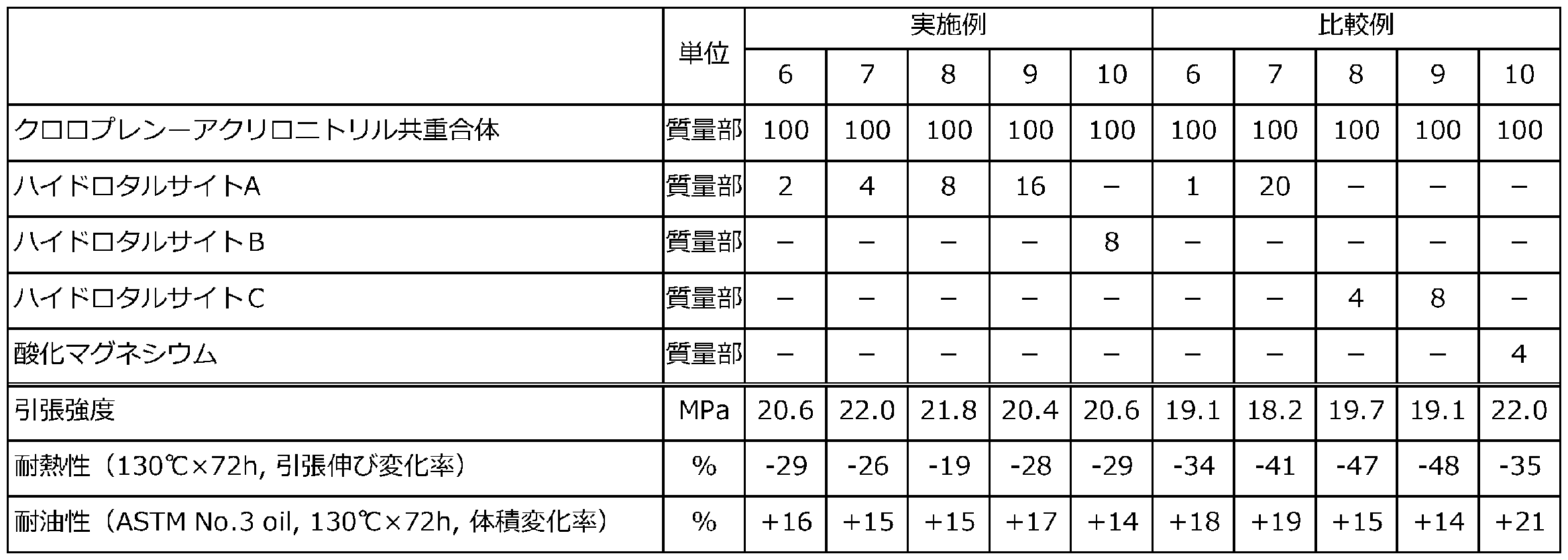
表1及び表2に示した結果から、実施例のゴム組成物を用いて加硫物を得た際に、加硫物の耐油性と耐熱性を同時に向上させることができることがわかった。当該加硫物は、これらの性質を有するため、生産性に優れ、かつ自動車用ゴム部材(シール材等)、ホース(ホース材)、ゴム型物、ガスケットなどの成形品として好適に使用できる。
Claims (4)
- クロロプレンゴム100質量部と、下記化学式(1)で表されるハイドロタルサイト化合物2~16質量部と、を含有する、ゴム組成物。
M(1-x)AlxO3.83x (1)
(式中、Mは、Mg及びZnから選ばれる少なくとも1種を含む2価金属イオンを示し、xは、0.2~0.5の範囲の数値を示す。) - 前記クロロプレンゴムが、2-クロロ-1,3-ブタジエンの単独重合体、及び、2-クロロ-1,3-ブタジエンの共重合体から選ばれる少なくとも1種を含み、
前記2-クロロ-1,3-ブタジエンの共重合体が、2-クロロ-1,3-ブタジエンと、2,3-ジクロロ-1,3-ブタジエン及びアクリロニトリルから選ばれる少なくとも1種の単量体との共重合体を含む、請求項1に記載のゴム組成物。 - 請求項1又は2に記載のゴム組成物の加硫物。
- 請求項3に記載の加硫物を含む成形品。
Applications Claiming Priority (2)
| Application Number | Priority Date | Filing Date | Title |
|---|---|---|---|
| JP2019-021162 | 2019-02-08 | ||
| JP2019021162A JP2022049722A (ja) | 2019-02-08 | 2019-02-08 | ゴム組成物、加硫物及び成形品 |
Publications (1)
| Publication Number | Publication Date |
|---|---|
| WO2020162080A1 true WO2020162080A1 (ja) | 2020-08-13 |
Family
ID=71947884
Family Applications (1)
| Application Number | Title | Priority Date | Filing Date |
|---|---|---|---|
| PCT/JP2019/051315 Ceased WO2020162080A1 (ja) | 2019-02-08 | 2019-12-26 | ゴム組成物、加硫物及び成形品 |
Country Status (2)
| Country | Link |
|---|---|
| JP (1) | JP2022049722A (ja) |
| WO (1) | WO2020162080A1 (ja) |
Families Citing this family (1)
| Publication number | Priority date | Publication date | Assignee | Title |
|---|---|---|---|---|
| JP7706404B2 (ja) * | 2022-03-25 | 2025-07-11 | 株式会社三共 | 遊技機 |
Citations (7)
| Publication number | Priority date | Publication date | Assignee | Title |
|---|---|---|---|---|
| JPH01268736A (ja) * | 1988-04-20 | 1989-10-26 | Toyoda Gosei Co Ltd | ゴム配合物 |
| JPH03268942A (ja) * | 1990-03-19 | 1991-11-29 | Tosoh Corp | 複合体 |
| JPH0586229A (ja) * | 1991-09-25 | 1993-04-06 | Kyowa Chem Ind Co Ltd | ハロゲン含有ゴム組成物 |
| JPH1112392A (ja) * | 1997-06-20 | 1999-01-19 | Toyo Tire & Rubber Co Ltd | クロロプレンゴム組成物 |
| JP2004263198A (ja) * | 2004-06-28 | 2004-09-24 | Tosoh Corp | クロロスルホン化エチレン−α−オレフィン共重合体 |
| JP2009024037A (ja) * | 2007-07-17 | 2009-02-05 | Toyo Tire & Rubber Co Ltd | ダイヤフラム用ゴム組成物及びダイヤフラム |
| JP2014009333A (ja) * | 2012-07-02 | 2014-01-20 | Yokohama Rubber Co Ltd:The | ゴム組成物それを用いた加硫ゴム製品及びホース |
-
2019
- 2019-02-08 JP JP2019021162A patent/JP2022049722A/ja active Pending
- 2019-12-26 WO PCT/JP2019/051315 patent/WO2020162080A1/ja not_active Ceased
Patent Citations (7)
| Publication number | Priority date | Publication date | Assignee | Title |
|---|---|---|---|---|
| JPH01268736A (ja) * | 1988-04-20 | 1989-10-26 | Toyoda Gosei Co Ltd | ゴム配合物 |
| JPH03268942A (ja) * | 1990-03-19 | 1991-11-29 | Tosoh Corp | 複合体 |
| JPH0586229A (ja) * | 1991-09-25 | 1993-04-06 | Kyowa Chem Ind Co Ltd | ハロゲン含有ゴム組成物 |
| JPH1112392A (ja) * | 1997-06-20 | 1999-01-19 | Toyo Tire & Rubber Co Ltd | クロロプレンゴム組成物 |
| JP2004263198A (ja) * | 2004-06-28 | 2004-09-24 | Tosoh Corp | クロロスルホン化エチレン−α−オレフィン共重合体 |
| JP2009024037A (ja) * | 2007-07-17 | 2009-02-05 | Toyo Tire & Rubber Co Ltd | ダイヤフラム用ゴム組成物及びダイヤフラム |
| JP2014009333A (ja) * | 2012-07-02 | 2014-01-20 | Yokohama Rubber Co Ltd:The | ゴム組成物それを用いた加硫ゴム製品及びホース |
Also Published As
| Publication number | Publication date |
|---|---|
| JP2022049722A (ja) | 2022-03-30 |
Similar Documents
| Publication | Publication Date | Title |
|---|---|---|
| JP7001062B2 (ja) | アクリル共重合体、およびその架橋物 | |
| JP7132783B2 (ja) | ゴム組成物、加硫ゴム及びその成形品 | |
| CN113891911B (zh) | 橡胶组合物、硫化物及硫化成型体 | |
| CN105026483A (zh) | 橡胶组合物和硫化成型体 | |
| JP6765629B2 (ja) | アクリルゴム、およびそのゴム架橋物 | |
| JP7365888B2 (ja) | ゴム組成物、該ゴム組成物の加硫成形体 | |
| JP7543428B2 (ja) | ゴム組成物、加硫物及び加硫成形体 | |
| US12624196B2 (en) | Rubber composition, vulcanized object obtained from said rubber composition, and vulcanized molded object obtained from said rubber composition | |
| JP2024141770A (ja) | ゴム組成物、加硫成形体、及びゴムロール | |
| CN115244093B (zh) | 丙烯酸酯橡胶、含丙烯酸酯橡胶的组合物和橡胶交联物 | |
| JP7543426B2 (ja) | ゴム組成物、加硫物及び加硫成形体 | |
| US20150099841A1 (en) | Method of production of nitrile copolymer rubber composition | |
| JP2022049722A (ja) | ゴム組成物、加硫物及び成形品 | |
| WO2020095961A1 (ja) | クロロプレンゴム組成物及び加硫成形体 | |
| US20230399497A1 (en) | Chloroprene-based rubber composition, vulcanized object obtained from said chloroprene-based rubber composition, and vulcanized molded object obtained from chloroprene-based rubber composition | |
| CN112955503B (zh) | 氯丁二烯橡胶组合物及硫化成型体 | |
| JP7600374B2 (ja) | クロロプレン重合体、クロロプレン重合体組成物、加硫成形体及びロール | |
| EP4029883B1 (en) | Method for producing acrylic rubber | |
| WO2022215411A1 (ja) | クロロプレン重合体、クロロプレン重合体組成物、加硫成形体及びロール | |
| EP4501991A1 (en) | Acrylic rubber, acrylic rubber-containing composition and crosslinked rubber product |
Legal Events
| Date | Code | Title | Description |
|---|---|---|---|
| 121 | Ep: the epo has been informed by wipo that ep was designated in this application |
Ref document number: 19914394 Country of ref document: EP Kind code of ref document: A1 |
|
| NENP | Non-entry into the national phase |
Ref country code: DE |
|
| 122 | Ep: pct application non-entry in european phase |
Ref document number: 19914394 Country of ref document: EP Kind code of ref document: A1 |
|
| NENP | Non-entry into the national phase |
Ref country code: JP |