WO2020137871A1 - ポリイミド系樹脂及びその製造方法 - Google Patents
ポリイミド系樹脂及びその製造方法 Download PDFInfo
- Publication number
- WO2020137871A1 WO2020137871A1 PCT/JP2019/050060 JP2019050060W WO2020137871A1 WO 2020137871 A1 WO2020137871 A1 WO 2020137871A1 JP 2019050060 W JP2019050060 W JP 2019050060W WO 2020137871 A1 WO2020137871 A1 WO 2020137871A1
- Authority
- WO
- WIPO (PCT)
- Prior art keywords
- formula
- polyimide resin
- group
- film
- compound
- Prior art date
- Legal status (The legal status is an assumption and is not a legal conclusion. Google has not performed a legal analysis and makes no representation as to the accuracy of the status listed.)
- Ceased
Links
Classifications
-
- C—CHEMISTRY; METALLURGY
- C08—ORGANIC MACROMOLECULAR COMPOUNDS; THEIR PREPARATION OR CHEMICAL WORKING-UP; COMPOSITIONS BASED THEREON
- C08G—MACROMOLECULAR COMPOUNDS OBTAINED OTHERWISE THAN BY REACTIONS ONLY INVOLVING UNSATURATED CARBON-TO-CARBON BONDS
- C08G73/00—Macromolecular compounds obtained by reactions forming a linkage containing nitrogen with or without oxygen or carbon in the main chain of the macromolecule, not provided for in groups C08G12/00 - C08G71/00
- C08G73/06—Polycondensates having nitrogen-containing heterocyclic rings in the main chain of the macromolecule
- C08G73/10—Polyimides; Polyester-imides; Polyamide-imides; Polyamide acids or similar polyimide precursors
Definitions
- the present invention relates to a polyimide resin used as a material for a flexible display device and the like and a method for manufacturing the same.
- Display devices such as liquid crystal display devices and organic EL display devices are widely used in various applications such as mobile phones and smart watches.
- glass has been used as a front plate of such a display device, it is difficult to use it as a front plate material of a flexible display device because glass is very rigid and easily broken.
- polyimide resin As one of the materials replacing the glass, and a film using the polyimide resin has been studied (Patent Document 1).
- the film When applying such a film to a flexible display device, the film is required to have bending resistance that can withstand breakage even when repeatedly bent.
- a film formed of a polyimide resin may not have sufficient flex resistance.
- an object of the present invention is to provide a polyimide resin capable of forming a film having excellent flex resistance and a method for producing the same.
- the present inventors have made extensive studies to solve the above problems, and as a result, in a polyimide resin, the above problems can be solved by adjusting the weight average molecular weight to 150,000 or more and the molecular weight distribution to 3.0 or less. Heading out, the present invention has been completed. That is, the present invention includes the following preferred modes.
- Mw/Mn molecular weight distribution
- Mw/Mn molecular weight distribution
- Mw/Mn molecular weight distribution
- Mw/Mn molecular weight distribution
- the step (II) is represented by the formula (1) dv/dt ⁇ 0 (1)
- dv/dt is the viscosity change (mPa ⁇ s/min) per unit time (min) when the time (t) is plotted on the X axis and the viscosity (v) of the reaction system is plotted on the Y axis.
- a method for producing a polyimide-based resin including a portion that satisfies the condition.
- the step (II) is represented by the formula (2) 0.98 ⁇ V fin /V int ⁇ 0.10 (2) [In the formula (2), V int represents the viscosity one hour after the completion of adding all the raw materials used for the production of the polyimide resin to the reaction system, and V fin stops the decomposition reaction in the step (II). Indicates the viscosity at the time when the treatment for The manufacturing method as described in [6] which satisfy
- step (I) further includes a step (B) of reacting a dicarboxylic acid compound after the step (A).
- step (II) is performed in the presence of an inorganic acid.
- step (II) includes a step of adding a base.
- step (II) includes a step of adjusting the temperature of the reaction system to 20° C. or lower.
- step (II) includes a step of adjusting the temperature of the reaction system to 20° C. or lower.
- the polyimide resin has a weight average molecular weight of 300,000 or more.
- the polyimide resin of the present invention can form a film having excellent flex resistance.
- the polyimide resin of the present invention has a weight average molecular weight of 150,000 or more and a molecular weight distribution (Mw/Mn) which is a ratio of the weight average molecular weight (Mw) and the number average molecular weight (Mn) of 3.0 or less.
- Mw/Mn molecular weight distribution
- Mw/Mn molecular weight distribution
- the polyimide resin of the present invention means a polyimide resin, a polyamide-imide resin, a polyimide resin precursor, or a polyamide-imide resin precursor.
- the polyimide resin precursor and the polyamide-imide resin precursor may be collectively referred to as a polyimide resin precursor.
- the polyimide resin is a polymer containing a repeating structural unit containing an imide group, and has, for example, a repeating structural unit derived from a diamine compound and three or more carbonyl groups such as a repeating structural unit derived from a tetracarboxylic acid compound. It is a resin containing a repeating structural unit derived from a carboxylic acid compound.
- Polyamideimide resin is a polymer containing both a repeating structural unit containing an imide group and a repeating structural unit containing an amide group, for example, a repeating structural unit derived from a diamine compound, and a repeating structural unit derived from a tricarboxylic acid compound, for example.
- the polyimide resin precursor indicates a precursor before producing a polyimide resin by imidization
- the polyamideimide resin precursor indicates a precursor before producing a polyamideimide resin by imidization.
- a "repeating structural unit” may be called a "structural unit.”
- the "derived structural unit” may be simply referred to as a “unit”, and for example, the “compound-derived structural unit” may be referred to as a “compound unit”.
- the structural unit derived from the diamine compound that constitutes the polyimide resin is, for example, the compound represented by the formula (1)
- diamine compound (1) unit a structural unit derived from the compound represented by (may be referred to as a diamine compound (1) unit).
- the polyimide-based resin may include two or more types of diamine compound (1) units in which X types are different from each other.
- X represents a divalent organic group, preferably a divalent organic group having 4 to 40 carbon atoms, and more preferably a divalent organic group having 4 to 40 carbon atoms and having a cyclic structure.
- the cyclic structure include an alicyclic structure, an aromatic ring structure, and a heterocyclic structure.
- the organic group, the hydrogen atom in the organic group may be substituted with a hydrocarbon group or a fluorine-substituted hydrocarbon group, in which case, the carbon number of the hydrocarbon group and the fluorine-substituted hydrocarbon group is preferably Is 1 to 8.
- X is represented by formula (10), formula (11), formula (12), formula (13), formula (14), formula (15), formula (16), formula (17) and formula (18).
- a chain hydrocarbon group is exemplified.
- * represents a bond, V 1, V 2 and V 3 independently of one another, a single bond, -O -, - S -, - CH 2 -, - CH 2 -CH 2 -, - CH (CH 3) -, - C (CH 3 ) 2 ⁇ , —C(CF 3 ) 2 —, —SO 2 —, —CO— or —N(Q)—.
- Q represents a monovalent hydrocarbon group having 1 to 12 carbon atoms which may be substituted with a halogen atom.
- V 1 and V 3 are single bonds, —O— or —S—
- V 2 is —CH 2 —, —C(CH 3 ) 2 —, —C(CF 3 ) 2 -Or-SO 2 -.
- the bonding position of each of V 1 and V 2 with respect to each ring and the bonding position of each of V 2 and V 3 with respect to each ring are preferably a meta position or a para position, and more preferably a para position with respect to each ring. Is.
- V 1 , V 2 and V 3 are preferably, independently of each other, preferably a single bond, from the viewpoint of easily improving the elastic modulus, flexibility, bending resistance and surface hardness of the film containing a polyimide resin. It is O- or -S-, more preferably a single bond or -O-.
- X in formula (1) is represented by formula (2):
- R 1 to R 8 each independently represent a hydrogen atom, an alkyl group having 1 to 6 carbon atoms, an alkoxy group having 1 to 6 carbon atoms, or an aryl group having 6 to 12 carbon atoms.
- the hydrogen atoms contained in R 1 to R 8 may be independently substituted with a halogen atom, and * represents a bond.
- a constitutional unit derived from a diamine compound when a constitutional unit derived from a compound in which X in the formula (1) is a group represented by the formula (2) is contained, a film containing a polyimide resin has a high elastic modulus, Bend resistance and optical characteristics are easily expressed.
- R 1 , R 2 , R 3 , R 4 , R 5 , R 6 , R 7 and R 8 are each independently a hydrogen atom, an alkyl group having 1 to 6 carbon atoms, or a carbon number 1 It represents an alkoxy group having 6 to 6 or an aryl group having 6 to 12 carbon atoms.
- Examples of the alkyl group having 1 to 6 carbon atoms include methyl group, ethyl group, n-propyl group, isopropyl group, n-butyl group, sec-butyl group, tert-butyl group, n-pentyl group and 2-methyl- group.
- Examples thereof include a butyl group, a 3-methylbutyl group, a 2-ethyl-propyl group, and an n-hexyl group.
- Examples of the alkoxy group having 1 to 6 carbon atoms include methoxy group, ethoxy group, propyloxy group, isopropyloxy group, butoxy group, isobutoxy group, tert-butoxy group, pentyloxy group, hexyloxy group and cyclohexyloxy group.
- Examples of the aryl group having 6 to 12 carbon atoms include phenyl group, tolyl group, xylyl group, naphthyl group and biphenyl group.
- R 1 to R 8 independently of each other preferably represent a hydrogen atom or an alkyl group having 1 to 6 carbon atoms, more preferably a hydrogen atom or an alkyl group having 1 to 3 carbon atoms, wherein R 1 to R 8
- the hydrogen atoms contained in R 8 may be independently substituted with a halogen atom.
- the halogen atom include a fluorine atom, a chlorine atom, a bromine atom and an iodine atom.
- R 1 to R 8 are, independently of each other, more preferably a hydrogen atom, a methyl group or a fluoro group from the viewpoint of easily improving the surface hardness, optical properties, elastic modulus and flex resistance of the film containing a polyimide resin.
- a chloro group or a trifluoromethyl group and even more preferably R 1 , R 2 , R 3 , R 4 , R 5 and R 6 are hydrogen atoms, R 7 and R 8 are hydrogen atoms, a methyl group and a fluoro group.
- R 7 and R 8 are hydrogen atoms, a methyl group and a fluoro group.
- a chloro group or a trifluoromethyl group, and particularly preferably R 7 and R 8 are a methyl group or a trifluoromethyl group.
- the formula (2) is the formula (2'):
- a constitutional unit derived from a diamine compound when a constitutional unit derived from a compound in which X in the formula (2) is a group represented by the formula (2′) is contained, a film containing a polyimide-based resin has a haze and a yellow color. It is easy to reduce the degree (hereinafter sometimes referred to as YI value) and improve the optical characteristics. Further, the skeleton containing the elemental fluorine improves the solubility of the polyimide resin in the solvent, and the viscosity of the resin varnish can be easily suppressed to a low level.
- examples of the aliphatic diamine constituting the diamine compound unit include acyclic aliphatic diamine such as hexamethylene diamine, 1,3-bis(aminomethyl)cyclohexane, and 1,4-bis(aminomethyl).
- acyclic aliphatic diamine such as hexamethylene diamine, 1,3-bis(aminomethyl)cyclohexane, and 1,4-bis(aminomethyl).
- Cyclohexane, norbornanediamine, and cycloaliphatic diamines such as 4,4′-diaminodicyclohexylmethane. These may be used alone or in combination of two or more.
- aromatic diamine constituting the diamine compound unit examples include p-phenylenediamine, m-phenylenediamine, 2,4-toluenediamine, m-xylylenediamine, p-xylylenediamine, 1,5-diaminonaphthalene, and 2 , 6-diaminonaphthalene and other aromatic diamines having one aromatic ring, 4,4'-diaminodiphenylmethane, 4,4'-diaminodiphenylpropane, 4,4'-diaminodiphenyl ether, 3,4'-diaminodiphenyl ether , 3,3′-diaminodiphenyl ether, 4,4′-diaminodiphenyl sulfone, 3,4′-diaminodiphenyl sulfone, 3,3′-diaminodiphenyl sulfone, 1,4-bis(4-aminophen
- the aromatic diamine constituting the diamine compound unit is preferably 4,4′-diaminodiphenylmethane, 4,4′-diaminodiphenylpropane, 4,4′-diaminodiphenyl ether, 3,3′-diaminodiphenyl ether, 4,4.
- biphenyl from the viewpoint of high surface hardness of a film containing a polyimide resin, high transparency, high elastic modulus, high flexibility, high bending resistance and low coloring property, biphenyl It is preferable to use at least one member selected from the group consisting of aromatic diamines having a structure, such as 2,2′-dimethylbenzidine, 2,2′-bis(trifluoromethyl)benzidine and 4,4′-bis(4 -Aminophenoxy)biphenyl and 4,4'-diaminodiphenyl ether are more preferably used, and 2,2'-bis(trifluoromethyl)-4,4'-diaminodiphenyl (TFMB ) Is more preferably used.
- aromatic diamines having a structure such as 2,2′-dimethylbenzidine, 2,2′-bis(trifluoromethyl)benzidine and 4,4′-bis(4 -Aminophenoxy)biphenyl and 4,4'-diaminodiphenyl
- X in the formula (1) is a group represented by the formula (2), for example, X in the formula (1) is a group represented by the formula (2′).
- the proportion of the diamine compound unit is preferably 30 mol% or more, more preferably 50 mol% or more, still more preferably 70 mol% or more, and particularly preferably, with respect to the total molar amount of the diamine compound units constituting the polyimide resin. It is 80 mol% or more, and preferably 100 mol% or less.
- the film containing the polyimide resin has a resin structure with a skeleton containing elemental fluorine.
- the solubility in a solvent can be improved, the viscosity of the resin varnish can be suppressed low, the YI value and haze of the film can be reduced, and the optical characteristics can be easily improved.
- the ratio of the diamine compound unit in which X in the formula (1) is a group represented by the formula (2) can be measured, for example, by 1 H-NMR, or calculated from the charging ratio of the raw materials. You can also do it.
- the carboxylic acid compound unit having three or more carbonyl groups constituting the polyimide resin of the present invention is preferably a tricarboxylic acid compound unit or a tetracarboxylic acid compound unit, more preferably a tetracarboxylic acid compound unit.
- the tetracarboxylic acid compound unit represents a tetracarboxylic acid unit or a tetracarboxylic acid derivative unit.
- the tetracarboxylic acid derivative include tetracarboxylic acid anhydrides and acid chlorides, and preferably tetracarboxylic acid dianhydrides.
- tetracarboxylic acid compound in the tetracarboxylic acid compound unit for example, aromatic tetracarboxylic acid and its anhydride, preferably aromatic tetracarboxylic acid compound such as its dianhydride; aliphatic tetracarboxylic acid and its anhydride, preferably Examples thereof include aliphatic tetracarboxylic acid compounds such as dianhydride.
- aromatic tetracarboxylic acid compound such as its dianhydride
- aliphatic tetracarboxylic acid and its anhydride preferably examples thereof include aliphatic tetracarboxylic acid compounds such as dianhydride.
- the structural unit derived from the tetracarboxylic acid compound that constitutes the polyimide resin is preferably a structural unit derived from tetracarboxylic dianhydride.
- the constitutional unit derived from tetracarboxylic dianhydride include compounds represented by the formula (3)
- tetracarboxylic acid compound (3) unit a structural unit derived from a compound represented by (hereinafter sometimes referred to as a tetracarboxylic acid compound (3) unit).
- the tetracarboxylic acid compound units can be used alone or in combination of two or more kinds.
- two or more kinds of tetracarboxylic acid compound (3) units having different Y types from each other can be used. It may have an acid compound unit.
- Y's each independently represent a tetravalent organic group, preferably a tetravalent organic group having 4 to 40 carbon atoms, and more preferably 4 to 40 carbon atoms having a cyclic structure.
- the cyclic structure include an alicyclic structure, an aromatic ring structure, and a heterocyclic structure.
- the organic group is an organic group in which a hydrogen atom in the organic group may be substituted with a hydrocarbon group or a fluorine-substituted hydrocarbon group, in which case, a hydrocarbon group and a fluorine-substituted hydrocarbon group
- the carbon number is preferably 1-8.
- W 1 represents a single bond, -O -, - CH 2 - , - CH 2 -CH 2 -, - CH (CH 3) -, - C (CH 3) 2 -, - C (CF 3) 2 -, -Ar -, - SO 2 -, - CO -, - O-Ar-O -, - Ar-O-Ar -, - Ar-CH 2 -Ar -, - Ar-C (CH 3) 2 -Ar- Alternatively, it represents —Ar—SO 2 —Ar—.
- Ar represents an arylene group having 6 to 20 carbon atoms in which a hydrogen atom may be replaced by a fluorine atom, and a specific example thereof is a phenylene group.
- W 1 is a single bond, —O—, —CH 2 —, —CH 2 —CH from the viewpoint of easily improving the elastic modulus, bending resistance and surface hardness of the optical film, and also easily improving the optical characteristics.
- a group represented by 2- , -CH(CH 3 )-, -C(CH 3 ) 2 -or -C(CF 3 ) 2- is preferable, and is a single bond, -O-, -CH 2 -, -CH.
- a group represented by (CH 3 )-, —C(CH 3 ) 2 — or —C(CF 3 ) 2 — is more preferable, and a single bond, —C(CH 3 ) 2 — or —C(CF 3 )
- a group represented by 2- is more preferable.
- Y in formula (3) is represented by formula (4)
- R 9 to R 16 each independently represent a hydrogen atom, an alkyl group having 1 to 6 carbon atoms, an alkoxy group having 1 to 6 carbon atoms, or an aryl group having 6 to 12 carbon atoms
- the hydrogen atoms contained in R 9 to R 16 may be independently substituted with a halogen atom, and * represents a bond.
- the tetracarboxylic acid compound unit contains a constitutional unit derived from a compound in which Y in the formula (3) is a group represented by the formula (4), the elastic modulus and optical characteristics of a film containing a polyimide resin, Easy to improve flex resistance and surface hardness. Further, the solubility of the resin in the solvent is improved, the viscosity of the resin varnish can be suppressed to a low level, and the film production becomes easy.
- alkyl group having 1 to 6 carbon atoms examples include the alkyl group having 1 to 6 carbon atoms and the alkyl group having 1 to 6 carbon atoms in the formula (2).
- alkoxy group or the aryl group having 6 to 12 carbon atoms those exemplified above can be mentioned.
- R 9 ⁇ R 16 are, independently of one another, preferably hydrogen atom or an alkyl group having 1 to 6 carbon atoms, more preferably represents a hydrogen atom or an alkyl group having 1 to 3 carbon atoms, wherein, R 9 ⁇
- the hydrogen atoms contained in R 16 may be independently substituted with a halogen atom.
- the halogen atom include a fluorine atom, a chlorine atom, a bromine atom and an iodine atom.
- R 9 to R 16 are, independently of each other, more preferably a hydrogen atom, a methyl group or a fluoro group, from the viewpoint of easily improving the elastic modulus, optical properties, flex resistance and surface hardness of the film containing a polyimide resin.
- a chloro group or a trifluoromethyl group, and particularly preferably R 15 and R 16 are a methyl group or a trifluoromethyl group.
- the formula (4) is the formula (4′):
- the film containing the polyimide resin has an elastic modulus and an optical property. It is easy to increase the characteristics, bending resistance and surface hardness. Further, the skeleton containing the elemental fluorine improves the solubility of the resin in the solvent, the viscosity of the resin varnish can be suppressed low, and the film production becomes easy.
- aromatic tetracarboxylic acid dianhydride constituting the tetracarboxylic acid compound unit
- a non-condensed polycyclic aromatic tetracarboxylic acid dianhydride a monocyclic aromatic tetracarboxylic acid dianhydride
- fused polycyclic aromatic tetracarboxylic dianhydrides a non-condensed polycyclic aromatic tetracarboxylic acid dianhydride
- monocyclic aromatic tetracarboxylic acid dianhydride a monocyclic aromatic tetracarboxylic acid dianhydride
- fused polycyclic aromatic tetracarboxylic dianhydrides fused polycyclic aromatic tetracarboxylic dianhydrides.
- non-condensed polycyclic aromatic tetracarboxylic acid dianhydride examples include 4,4′-oxydiphthalic acid dianhydride, 3,3′,4,4′-benzophenone tetracarboxylic acid dianhydride and 2,2 ',3,3'-Benzophenonetetracarboxylic dianhydride, 3,3',4,4'-biphenyltetracarboxylic dianhydride, 2,2',3,3'-biphenyltetracarboxylic dianhydride ,3,3',4,4'-diphenylsulfone tetracarboxylic acid dianhydride, 2,2-bis(3,4-dicarboxyphenyl)propane dianhydride, 2,2-bis(2,3-di) Carboxyphenyl)propane dianhydride, 2,2-bis(3,4-dicarboxyphenoxyphenyl)propane dianhydride, 4,4′-(hexafluor
- examples of the monocyclic aromatic tetracarboxylic dianhydride include 1,2,4,5-benzenetetracarboxylic dianhydride, and condensed polycyclic aromatic tetracarboxylic dianhydrides. Examples thereof include 2,3,6,7-naphthalenetetracarboxylic dianhydride.
- 4,4′-oxydiphthalic acid dianhydride, 3,3′,4,4′-benzophenone tetracarboxylic acid dianhydride and 2,2′,3,3′-benzophenone tetracarboxylic acid dianhydride are preferable.
- Examples of the aliphatic tetracarboxylic acid dianhydride constituting the tetracarboxylic acid compound unit include a cyclic or acyclic aliphatic tetracarboxylic acid dianhydride.
- the cycloaliphatic tetracarboxylic dianhydride is a tetracarboxylic dianhydride having an alicyclic hydrocarbon structure, and specific examples thereof include 1,2,4,5-cyclohexanetetracarboxylic dianhydride.
- cycloalkanetetracarboxylic dianhydrides such as 1,2,3,4-cyclobutanetetracarboxylic dianhydride, 1,2,3,4-cyclopentanetetracarboxylic dianhydride, bicyclo[2.2 .2] Oct-7-ene-2,3,5,6-tetracarboxylic dianhydride, dicyclohexyl-3,3',4,4'-tetracarboxylic dianhydride and positional isomers thereof.
- cycloalkanetetracarboxylic dianhydrides such as 1,2,3,4-cyclobutanetetracarboxylic dianhydride, 1,2,3,4-cyclopentanetetracarboxylic dianhydride, bicyclo[2.2 .2] Oct-7-ene-2,3,5,6-tetracarboxylic dianhydride, dicyclohexyl-3,3',4,4'-tetracarboxylic dianhydride and positional isomers
- acyclic aliphatic tetracarboxylic dianhydride examples include 1,2,3,4-butanetetracarboxylic dianhydride and 1,2,3,4-pentanetetracarboxylic dianhydride. These may be used alone or in combination of two or more. Moreover, you may use combining cycloaliphatic tetracarboxylic dianhydride and acyclic aliphatic tetracarboxylic dianhydride.
- 4,4′-oxydiphthalic acid dianhydride from the viewpoint of high surface hardness, high transparency, high flexibility, high elastic modulus, high bending resistance and low colorability of optical films.
- Y in formula (3) is a group represented by formula (4), for example, Y in formula (3) is represented by formula (4′).
- the ratio of the tetracarboxylic acid compound unit which is a group is preferably 30 mol% or more, more preferably 50 mol% or more, still more preferably the total molar amount of the tetracarboxylic acid compound unit constituting the polyimide resin. It is 70 mol% or more, particularly preferably 80 mol% or more, and preferably 100 mol% or less.
- the film containing the polyimide resin has a modulus of elasticity, an optical property, and a durability. Easy to increase flexibility and surface hardness. Further, the skeleton containing the elemental fluorine improves the solubility of the resin in the solvent, the viscosity of the resin varnish can be suppressed low, and the film production becomes easy.
- the ratio of the tetracarboxylic acid compound unit in which Y in the formula (3) is a group represented by the formula (4) can be measured by using, for example, 1 H-NMR, or the charging ratio of the raw materials can be changed. It can also be calculated from
- the tetracarboxylic acid compound unit constituting the polyimide resin is preferably a tetracarboxylic acid dianhydride unit, but may contain a tetracarboxylic acid monoanhydride unit.
- the tetracarboxylic acid monoanhydride unit has the formula (5)
- a structural unit derived from a compound represented by (hereinafter sometimes referred to as a tetracarboxylic acid compound (5) unit).
- the tetracarboxylic acid compound (5) units can be used alone or in combination of two or more, and when two or more tetracarboxylic acid compound (5) units are used, the Y 1 types of the tetracarboxylic acid compound (5) units are mutually different. It may contain two or more different tetracarboxylic acid compound (5) units.
- Y 1 is a tetravalent organic group, preferably an organic group in which a hydrogen atom in the organic group may be substituted with a hydrocarbon group or a fluorine-substituted hydrocarbon group.
- R 17 and R 18 are each independently —OH, —OMe, —OEt, —OPr, —OBu or —Cl, and preferably —Cl.
- the tricarboxylic acid compound unit represents a tricarboxylic acid unit or a tricarboxylic acid derivative unit, and examples of the tricarboxylic acid derivative unit include an acid chloride unit of tricarboxylic acid, an anhydride unit and an ester body unit.
- a structural unit derived from a compound represented by (hereinafter sometimes referred to as a tricarboxylic acid compound (8) unit) and the like.
- the tricarboxylic acid compound units may be used alone or in combination of two or more, and when two or more tricarboxylic acid compound units are used, the polyimide-based resin may be two or more different tricarboxylic acid compound (8) units having different Y 2 types.
- the tricarboxylic acid compound (8) unit may be included.
- R 34 is —OH, —OMe, —OEt, —OPr, —OBu or —Cl, and preferably —Cl.
- Y 2 is a trivalent organic group, preferably an organic group in which a hydrogen atom in the organic group may be substituted with a hydrocarbon group or a fluorine-substituted hydrocarbon group.
- formula (20), formula (21), formula (22), formula (23), formula (24), formula (25), formula (26), formula (27), formula (28) or Examples thereof include a group in which any one of the bonds of the group represented by the formula (29) is replaced with a hydrogen atom, and a trivalent chain hydrocarbon group having 6 or less carbon atoms.
- tricarboxylic acid compound constituting the tricarboxylic acid unit examples include aromatic tricarboxylic acids, aliphatic tricarboxylic acids and their derivatives (for example, acid chlorides, acid anhydrides, etc.), and specific examples thereof include 1,3,3.
- 5-benzenetricarboxylic acid and its acid chloride 1,2,4-benzenetricarboxylic acid anhydride; 2,3,6-naphthalenetricarboxylic acid-2,3-anhydride; phthalic anhydride and benzoic acid Examples thereof include a compound linked by a bond, —O—, —CH 2 —, —C(CH 3 ) 2 —, —C(CF 3 ) 2 —, —SO 2 — or a phenylene group.
- These tricarboxylic acid compounds can be used alone or in combination of two or more kinds.
- the dicarboxylic acid compound unit constituting the polyimide resin is, for example, the compound represented by the formula (6)
- the dicarboxylic acid compound units can be used alone or in combination of two or more kinds, and when two or more kinds of dicarboxylic acid compound units are used, the polyimide-based resin has two or more kinds of W of the dicarboxylic acid compound (6) unit different from each other. It may contain a dicarboxylic acid compound (6) unit.
- R 19 and R 20 independently of each other are —OH, —OMe, —OEt, —OPr, —OBu or —Cl, and preferably —Cl.
- W is a divalent organic group, preferably carbon which may be substituted with a hydrocarbon group having 1 to 8 carbon atoms or a fluorine-substituted hydrocarbon group having 1 to 8 carbon atoms. It is a divalent organic group having 4 to 40 carbon atoms, more preferably a cyclic structure which may be substituted with a hydrocarbon group having 1 to 8 carbon atoms or a fluorine-substituted hydrocarbon group having 1 to 8 carbon atoms. It is a divalent organic group having 4 to 40 carbon atoms.
- the cyclic structure include an alicyclic structure, an aromatic ring structure, and a heterocyclic structure.
- the bonds of the group represented by the formula (29) two groups which are not adjacent to each other are replaced by hydrogen atoms, and a divalent chain hydrocarbon group having 6 or less carbon atoms are exemplified.
- the groups represented by the formulas (20) to (27) are preferable.
- Examples of the organic group of W include formula (20′), formula (21′), formula (22′), formula (23′), formula (24′), formula (25′), formula (26′), and formula (26′) (27'), Equation (28') and Equation (29'):
- W 1 and * are as defined in the formulas (20) to (29)]
- a divalent organic group represented by is more preferable.
- the hydrogen atom on the ring in the formulas (20) to (29) and the formulas (20′) to (29′) is a hydrocarbon group having 1 to 8 carbon atoms or 1 to 8 carbon atoms substituted with fluorine. May be substituted with a hydrocarbon group of, a C 1-6 alkoxy group, or a fluorine-substituted C 1-6 alkoxy group.
- W in the formula (6) has a constitutional unit represented by any of the above formulas (20′) to (29′), the W in the formula (6) will be described later.
- the polyimide-based resin has a compound unit represented by the formula (6a)
- W in the formula (6) has the following formula (d1) in addition to the compound unit represented by the formula (6a):
- R c's each independently represent a hydrogen atom, an alkyl group having 1 to 6 carbon atoms, an alkoxy group having 1 to 6 carbon atoms, or an aryl group having 6 to 12 carbon atoms
- R d is , R c or —C( ⁇ O)R e
- each R e independently represents —OH, —OMe, —OEt, —OPr, —OBu or —Cl
- * represents a bond.
- the alkyl group having 1 to 6 carbon atoms, the alkoxy group having 1 to 6 carbon atoms, and the aryl group having 6 to 12 carbon atoms are, respectively, an alkyl group having 1 to 6 carbon atoms and a carbon atom in formula (2). Examples of the alkoxy group having 1 to 6 carbon atoms or the aryl group having 6 to 12 carbon atoms are given.
- the compound (d1) specifically, a compound in which R c and R d are both hydrogen atoms, a compound in which both R c are hydrogen atoms and R d is —C( ⁇ O)R e Etc.
- the polyimide resin of the present invention may include a plurality of types of W as W in the formula (6), and the plurality of types of W may be the same as or different from each other.
- W in the formula (6) is preferably the formula (6a): from the viewpoint of easily increasing the surface hardness, water resistance, optical properties, elastic modulus, yield point strain and bending resistance of the optical film.
- R a and R b independently represent a halogen atom, an alkyl group having 1 to 6 carbon atoms, an alkoxy group having 1 to 6 carbon atoms, or an aryl group having 6 to 12 carbon atoms. , R a and R b may each independently be substituted with a halogen atom, A and * are the same as A and * in the formula (7b), respectively, m is an integer from 0 to 4, t is an integer of 0 to 4, u is an integer from 0 to 4] And more preferably formula (7a);
- R 21 to R 24 each independently represent a hydrogen atom, an alkyl group having 1 to 6 carbon atoms, an alkoxy group having 1 to 6 carbon atoms, or an aryl group having 6 to 12 carbon atoms,
- the hydrogen atoms contained in R 21 to R 24 may be independently substituted with a halogen atom
- m2 is an integer of 1 to 4
- a dicarboxylic acid compound unit includes a structural unit derived from a compound in which W in the formula (6) is a group represented by the formula (7a) (hereinafter, may be referred to as a dicarboxylic acid compound (7a) unit), a polyimide A film containing a resin is likely to exhibit excellent elastic modulus, flex resistance and optical characteristics.
- a compound unit in which W in the formula (6) is a group represented by the formula (7a) and a compound unit in which W in the formula (6) is a group represented by the formula (6a) are respectively dicarboxylic acid. It may be referred to as a compound (7a) unit and a dicarboxylic acid compound (6a) unit.
- each benzene ring may be bonded to any of the ortho position, the meta position or the para position with respect to -A-, preferably the meta position or the para position.
- R a and R b each independently represent a halogen atom, an alkyl group having 1 to 6 carbon atoms, an alkoxy group having 1 to 6 carbon atoms, or an aryl group having 6 to 12 carbon atoms.
- t and u are preferably 0, but when t and/or u is 1 or more, R a and R b are independently of each other, preferably an alkyl group having 1 to 6 carbon atoms.
- R a and R b in the formula (6a) a halogen atom, an alkyl group having 1 to 6 carbon atoms, an alkoxy group having 1 to 6 carbon atoms and an aryl group having 6 to 12 carbon atoms are respectively represented by the formula (2 Examples of the halogen atom, the alkyl group having 1 to 6 carbon atoms, the alkoxy group having 1 to 6 carbon atoms or the aryl group having 6 to 12 carbon atoms in ).
- t and u are each independently an integer of 0 to 4, preferably an integer of 0 to 2, more preferably 0 or 1, and even more preferably 0.
- m is an integer in the range of 0 to 4, and when m is in this range, the flex resistance and elastic modulus of the film containing the polyimide resin are good.
- m is preferably an integer in the range of 0 to 3, more preferably an integer in the range of 0 to 2, still more preferably 0 or 1, and most preferably 0. When m is in this range, the flexural resistance and elastic modulus of the film containing the polyimide resin are good, and at the same time, the availability of the raw materials is relatively good.
- the compound unit represented by the formula (6a) in which m is 0 is, for example, a terephthalic acid unit, an isophthalic acid unit or a constitutional unit derived from a derivative thereof, and the compound unit has a m in the formula (6a) And a compound unit in which u is 0 is preferable.
- the dicarboxylic acid compound unit may contain one or more kinds of the compound unit in which W in the formula (6) is represented by the formula (6a), and the elastic modulus of the film containing the polyimide resin. Further, from the viewpoint of improving the bending resistance and reducing the YI value, two or more kinds of compound units having different values of m, preferably two kinds of compound units having different values of m may be contained.
- R 21 , R 22 , R 23 and R 24 are independently of each other a hydrogen atom, an alkyl group having 1 to 6 carbon atoms, an alkoxy group having 1 to 6 carbon atoms, or an alkyl group having 6 to 12 carbon atoms.
- the alkyl group having 1 to 6 carbon atoms, the alkoxy group having 1 to 6 carbon atoms or the aryl group having 6 to 12 carbon atoms include the alkyl group having 1 to 6 carbon atoms and the aryl group having 6 to 12 carbon atoms in the formula (2). Examples of the group include those exemplified above.
- R 21 to R 24 are independently of each other, preferably a hydrogen atom or an alkyl group having 1 to 6 carbon atoms. , More preferably a hydrogen atom or an alkyl group having 1 to 3 carbon atoms, and further preferably a hydrogen atom.
- the hydrogen atoms contained in R 21 to R 24 may be independently substituted with a halogen atom.
- m2 is preferably an integer of 1 to 3, more preferably 1 or 2, and even more preferably 1 from the viewpoint of easily increasing the bending resistance and elastic modulus of the film containing a polyimide resin. is there.
- R 21 to R 24 are hydrogen atoms, it is advantageous in terms of improving the elastic modulus and flex resistance of the film containing the polyimide resin.
- the dicarboxylic acid compound unit has two or more aromatic hydrocarbon rings each having a single bond or an aromatic group, from the viewpoint that a film containing a polyimide resin is likely to exhibit good bending resistance. It contains an aromatic dicarboxylic acid compound unit linked by a divalent group excluding a group.
- the aromatic hydrocarbon ring include a monocyclic hydrocarbon ring such as a benzene ring; a condensed bicyclic hydrocarbon ring such as naphthalene; and a polycyclic hydrocarbon ring such as a ring-assembled hydrocarbon ring such as biphenyl. , Preferably a benzene ring.
- W is represented by the formula ( 7b)
- R 25 to R 32 each independently represent a hydrogen atom, an alkyl group having 1 to 6 carbon atoms, an alkoxy group having 1 to 6 carbon atoms, or an aryl group having 6 to 12 carbon atoms
- the hydrogen atoms contained in R 25 to R 32 may be independently substituted with a halogen atom
- A represents a single bond, -O -, - CH 2 - , - CH 2 -CH 2 -, - CH (CH 3) -, - C (CH 3) 2 -, - C (CF 3) 2 -, - Represents SO 2 —, —S—, —CO— or —N(R 33 )—
- R 33 represents a hydrogen atom, a monovalent hydrocarbon group having 1 to 12 carbon atoms which may be substituted with a halogen atom
- m 1 is an integer of 1 to 4
- A is a single bond, -O -, - CH 2 - , - CH 2 -CH 2 -, - CH (CH 3) -, - C (CH 3) 2 - , -C(CF 3 ) 2 -, -SO 2 -, -S-, -CO- or -N(R 33 )-, and improves the elastic modulus and flex resistance of a film containing a polyimide resin. From the viewpoint of facilitation, it preferably represents —O— or —S—, more preferably —O—.
- Examples of the alkyl group having 1 to 6 carbon atoms, the alkoxy group having 1 to 6 carbon atoms or the aryl group having 6 to 12 carbon atoms include an alkyl group having 1 to 6 carbon atoms and an alkoxy group having 1 to 6 carbon atoms in the formula (2). Examples of the group or the aryl group having 6 to 12 carbon atoms include those exemplified above. From the viewpoint of easily improving the surface hardness, flexibility and bending resistance of a film containing a polyimide resin, R 25 to R 32 are each independently a hydrogen atom or an alkyl group having 1 to 6 carbon atoms.
- R 25 to R 32 may be independently substituted with a halogen atom.
- R 33 represents a hydrogen atom or a monovalent hydrocarbon group having 1 to 12 carbon atoms which may be substituted with a halogen atom.
- Examples of the monovalent hydrocarbon group having 1 to 12 carbon atoms include methyl group, ethyl group, n-propyl group, isopropyl group, n-butyl group, sec-butyl group, tert-butyl group, n-pentyl group, Examples include 2-methyl-butyl group, 3-methylbutyl group, 2-ethyl-propyl group, n-hexyl, n-heptyl group, n-octyl group, tert-octyl group, n-nonyl group and n-decyl group. And these may be substituted with a halogen atom.
- Examples of the halogen atom include a fluorine atom, a chlorine atom, a bromine atom and an iodine atom.
- A may be the same or different.
- m 1 is an integer of 1 to 4, and when m 1 is in this range, the flex resistance and elastic modulus of the film containing the polyimide resin are likely to be good. Further, in the formula (7b), m 1 is preferably an integer of 1 to 3, more preferably 1 or 2, and further preferably 1, and when m 1 is within this range, the flex resistance of the optical film is The elastic modulus tends to be good.
- the dicarboxylic acid compound unit contains a dicarboxylic acid compound (7a) unit or a (7b) unit. It is more preferable to use the acid compound (7a) unit and the dicarboxylic acid compound (7b) unit in combination.
- the formula (7a) is the formula (7a'):
- dicarboxylic acid compound unit a compound unit in which W in the formula (6) is a group represented by the formula (7a') or a compound unit represented by the formula (7b'), or both of them
- W in the formula (6) is a group represented by the formula (7a') or a compound unit represented by the formula (7b'), or both of them
- a film having a further improved elastic modulus and bending resistance can be easily obtained.
- dicarboxylic acid compound constituting the dicarboxylic acid compound unit include aromatic dicarboxylic acids, aliphatic dicarboxylic acids and their related acid chloride compounds, acid anhydrides, and the like. May be. More specifically, terephthalic acid; isophthalic acid; naphthalenedicarboxylic acid; 4,4'-biphenyldicarboxylic acid; 3,3'-biphenyldicarboxylic acid; a chain hydrocarbon having 8 or less carbon atoms, and a dicarboxylic acid compound and 2 A compound in which two benzoic acids are linked by a single bond, —CH 2 —, —C(CH 3 ) 2 —, —C(CF 3 ) 2 —, —SO 2 — or a phenylene group, and their acid chloride compounds are Can be mentioned.
- 4,4′-oxybisbenzoic acid, terephthalic acid or acid chlorides thereof are preferable from the viewpoint of easily improving the elastic modulus and flex resistance of the film containing a polyimide resin.
- 4,4′-oxybis(benzoyl chloride) and terephthaloyl chloride are more preferable, and it is further preferable to use 4,4′-oxybis(benzoyl chloride) and terephthaloyl chloride in combination.
- the content of the dicarboxylic acid compound unit constituting the polyimide resin can be appropriately selected according to the ratio of the constituent units of the desired polyimide resin, and all the carboxyl groups constituting the polyimide resin can be selected.
- the acid unit is 100 mol, preferably 5 mol or more, more preferably 20 mol or more, further preferably 30 mol or more, even more preferably 40 mol or more, particularly preferably 50 mol or more, and particularly preferably 60 mol.
- the amount is not less than 95 mol, preferably not more than 95 mol, more preferably not more than 90 mol, further preferably not more than 85 mol, particularly preferably not more than 80 mol.
- the content of the dicarboxylic acid compound unit is within the above range, it is easy to improve the elastic modulus and the flex resistance of the optical film containing the polyimide resin.
- the content of the dicarboxylic acid compound unit that constitutes the polyimide resin can be appropriately selected according to the ratio of the constituent units of the desired polyimide resin, and the diamine compound that constitutes the polyimide resin.
- the unit is 100 mol, preferably 5 mol or more, more preferably 20 mol or more, further preferably 30 mol or more, still more preferably 40 mol or more, particularly preferably 50 mol or more, and particularly more preferably 60 mol. It is at least 95 mol, preferably 90 mol or less, more preferably 85 mol or less, and most preferably 80 mol or less.
- the content of the dicarboxylic acid compound unit is within the above range, it is easy to improve the elastic modulus and the flex resistance of the optical film containing the polyimide resin.
- the content of the dicarboxylic acid compound (6a) unit is preferably 30 mol based on the total molar amount of the dicarboxylic acid compound unit. % Or more, more preferably 50 mol% or more, further preferably 70 mol% or more, particularly preferably 80 mol% or more, preferably 100 mol% or less.
- the film containing the polyimide resin is likely to have higher elastic modulus, optical characteristics, bending resistance and surface hardness.
- the skeleton containing the elemental fluorine improves the solubility of the resin in the solvent, the viscosity of the resin varnish can be suppressed low, and the film production becomes easy.
- the content of the dicarboxylic acid compound (6a) unit may be calculated from the charging ratio of the raw materials.
- the total content of the dicarboxylic acid compound (7a) unit and the (7b) unit is the total molar amount of the dicarboxylic acid compound unit.
- it is preferably 30 mol% or more, more preferably 50 mol% or more, further preferably 70 mol% or more, particularly preferably 80 mol% or more, and preferably 100 mol% or less.
- the total content of the dicarboxylic acid compound (7a) unit and the (7b) unit may be calculated from the raw material charging ratio.
- a dicarboxylic acid compound (7a) unit and a dicarboxylic acid compound (7b) unit in combination as the dicarboxylic acid compound unit constituting the polyimide resin.
- the content of the dicarboxylic acid compound (7b) unit is preferably 0.01 mol or more, more preferably 0.05 mol or more, still more preferably 0.1 mol or more with respect to 1 mol of the dicarboxylic acid compound (7a) unit. And preferably 20 mol or less, more preferably 15 mol or less, still more preferably 10 mol or less, even more preferably 1 mol or less, particularly preferably 0.5 mol or less, and most preferably 0.3 mol or less. is there.
- the content of the dicarboxylic acid compound (7b) unit is in the above range, the film after film formation tends to have both flex resistance and elastic modulus.
- the content of all carboxylic acid compound units constituting the polyimide resin is preferably 0.1 to 10 when the total diamine compound units constituting the polyimide resin is 1 mol. Mol, more preferably 0.5 to 5 mol, further preferably 0.8 to 1.2 mol, even more preferably 0.9 to 1.1 mol, particularly preferably 0.95 to 1.0 mol, and especially It is more preferably 0.97 to 0.99, and even more preferably 0.98 to 0.99.
- the content of all the carboxylic acid compound units is in the above range, the flex resistance of the film containing the polyimide resin is likely to be improved.
- the polyimide resin precursor contains a constitutional unit represented by the formula (A), and the polyamideimide resin precursor has a constitution represented by the formula (A).
- a unit and a constitutional unit represented by the formula (B) are included.
- the polyimide resin includes a constitutional unit represented by the formula (C)
- the polyamide-imide resin includes a constitutional unit represented by the formula (C) and a constitution represented by the formula (B).
- Each resin may contain two or more types of structural units represented by each formula.
- G 1 is the same as Y in the formula (3)
- G 2 is the same as W in formula (6)
- X 1 and X 2 are the same as X in the formula (1)
- X 1 and X 2 may be the same or different.
- the structural unit represented by the formula (A) can be obtained by reacting the diamine compound (1) with a tetracarboxylic acid (3) compound, and the structural unit represented by the formula (B) is a diamine compound ( 1) can be obtained by reacting a dicarboxylic acid compound (6), and the structural unit represented by the formula (C) is obtained by imidizing (ring-closing) the structural unit represented by the formula (A).
- a polyamide-imide resin as the polyimide-based resin from the viewpoint of easily improving the bending resistance.
- the polyamide-imide resin may contain one or more constitutional units represented by the formula (D) and/or the constitutional unit represented by the formula (E) as long as the various physical properties of the obtained film are not impaired.
- G 3 is the same as Y 2 in the formula (8)
- G 4 is the same as Y 1 in formula (5)
- X 3 and X 4 are the same as X in each formula (1)
- X 3 and X 4 may be the same or different
- R 18 is the formula (5)
- the constitutional unit represented by the formula (D) can be obtained by reacting the diamine compound (1) with the tricarboxylic acid compound (8), and the constitutional unit represented by the formula (E) is the diamine compound (1 ) And a tetracarboxylic acid compound (5) are reacted with each other.
- the weight average molecular weight (Mw) of the polyimide resin of the present invention is, in terms of standard polystyrene, 150,000 or more, preferably 200,000 or more, more preferably 250,000 or more, further preferably 300,000 or more, It is preferably 1,000,000 or less, more preferably 800,000 or less, further preferably 700,000 or less, and particularly preferably 500,000 or less.
- Mw weight average molecular weight
- the weight average molecular weight can be determined by, for example, GPC (gel permeation chromatography) measurement and standard polystyrene conversion, and can be determined, for example, by the method described in Examples.
- the molecular weight distribution (Mw/Mn), which is the ratio of the weight average molecular weight (Mw) to the number average molecular weight (Mn), is 3.0 or less, preferably 2.9 or less. , Preferably 1.5 or more.
- Mw/Mn the molecular weight distribution
- the molecular weight distribution can be determined, for example, by performing GPC (gel permeation chromatography) measurement and measuring Mw and Mn in terms of standard polystyrene, for example, by the method described in Examples.
- the polyimide resin of the present invention has a small molecular weight distribution (Mw/Mn), and therefore can have excellent flex resistance.
- the term “bending resistance” refers to a property capable of suppressing or preventing the occurrence of breakage or the like even when bending is repeated.
- the film formed from the polyimide resin of the present invention does not break even when repeatedly bent, for example, 150,000 times or more, preferably 180,000 times or more.
- the viscosity at 25° C. when the polyimide resin is dissolved in N,N-dimethylacetamide at a concentration of 10% by mass is preferably 1,500 mPa ⁇ s or more, more preferably 5,000 mPa ⁇ s or more, and further preferably 10 2,000 mPa ⁇ s or more, particularly preferably 20,000 mPa ⁇ s or more, preferably 70,000 mPa ⁇ s or less, more preferably 60,000 mPa ⁇ s or less, further preferably 50,000 mPa ⁇ s or less, even more preferably Is 40,000 mPa ⁇ s or less, particularly preferably 30,000 mPa ⁇ s or less.
- the viscosity of the polyimide-based resin is the above lower limit or more, the interaction between molecules becomes large, and it is easy to improve the bending resistance and mechanical strength, and when it is the above upper limit or less, the film forming property becomes good. , Easy to form a uniform film.
- the viscosity can be measured by a Brookfield viscometer, for example, by the method described in Examples.
- the method for producing the polyimide resin of the present invention is not particularly limited, but the following production method can be preferably used from the viewpoint of easily exhibiting the excellent flex resistance of the polyimide resin.
- the production method of the present invention comprises a step (I) of obtaining an intermediate (K) including a step (A) of reacting a diamine compound with a carboxylic acid compound having three or more carbonyl groups, and an intermediate (K).
- the method includes the step (II) of decomposing, and the step (II) comprises the formula (1) dv/dt ⁇ 0 (1)
- dv/dt represents a change in viscosity per unit time when time (t) is plotted on the X axis and viscosity (v) of the reaction system is plotted on the Y axis, and the unit time is at least 5 minutes.
- Indicate Including the part that satisfies.
- the present inventor obtains a polyimide resin having a high molecular weight and a low molecular weight distribution by including a step (II) of decomposing the intermediate (K) in the method for producing a polyimide resin, in addition to the step (I). It was found that such a polyimide-based resin can exhibit excellent flex resistance.
- Step (I) is a step of obtaining an intermediate (K) including a step (A) of reacting a diamine compound with a carboxylic acid compound having three or more carbonyl groups.
- Step A Examples of the diamine compound used in Step A include aliphatic diamines such as acyclic or cycloaliphatic diamines, aromatic diamines, and mixtures thereof.
- the “aromatic diamine” represents a diamine in which an amino group is directly bonded to an aromatic ring, and an aliphatic group or another substituent may be included in a part of its structure.
- the aromatic ring may be a single ring or a condensed ring, and examples thereof include a benzene ring, a naphthalene ring, an anthracene ring and a fluorene ring, but are not limited thereto.
- the "aliphatic diamine” represents a diamine in which an amino group is directly bonded to the aliphatic group, and may have an aromatic ring or other substituent in a part of its structure.
- the diamine compounds may be used alone or in combination of two or more.
- the diamine compound preferably contains, for example, a compound represented by the formula (1) (hereinafter sometimes referred to as the diamine compound (1)).
- the diamine compounds can be used alone or in combination of two or more kinds, and when two or more kinds of diamine compounds are used, two or more kinds of diamine compounds having different kinds of X in the diamine compound (1) may be used. Details and preferable groups of X in the diamine compound (1), and specific examples of the diamine compound are as described in the section of [Polyimide resin].
- a diamine compound in which X in formula (1) is a group represented by formula (2) for example, X in formula (1) is represented by formula (2′).
- the ratio of the diamine compound as a group is preferably 30 mol% or more, more preferably 50 mol% or more, further preferably 70 mol% or more, and particularly preferably, with respect to the total molar amount of the diamine compound used in Step A. It is 80 mol% or more, and preferably 100 mol% or less.
- the ratio of the diamine compound in which X in the formula (1) is a group represented by the formula (2) may be calculated from the charging ratio of the raw materials.
- the carboxylic acid compound having three or more carbonyl groups used in step A is preferably a tricarboxylic acid compound or a tetracarboxylic acid compound, and more preferably a tetracarboxylic acid compound.
- the tricarboxylic acid compound represents a tricarboxylic acid or a tricarboxylic acid derivative
- the tetracarboxylic acid compound represents a tetracarboxylic acid or a tetracarboxylic acid derivative.
- Examples of the tricarboxylic acid derivative and the tetracarboxylic acid derivative include tricarboxylic acid and tetracarboxylic acid anhydrides, acid chlorides, and the like, and among them, the tetracarboxylic acid compound dianhydride can be preferably used.
- Examples of the tetracarboxylic acid compound include aromatic tetracarboxylic acid and its anhydride, preferably aromatic tetracarboxylic acid compound such as its dianhydride; aliphatic tetracarboxylic acid and its anhydride, preferably its dianhydride and the like. And the like. These tetracarboxylic acid compounds may be used alone or in combination of two or more.
- the tetracarboxylic acid compound is preferably tetracarboxylic dianhydride.
- the tetracarboxylic acid dianhydride is preferably, for example, a compound represented by the formula (3) (hereinafter sometimes referred to as a tetracarboxylic acid compound (3)).
- the tetracarboxylic acid compounds can be used alone or in combination of two or more kinds. When two or more kinds of tetracarboxylic acid compounds are used, two or more kinds of tetracarboxylic acid compounds having different kinds of Y in the tetracarboxylic acid compound (3) are different from each other. You may use.
- the details and preferable groups of Y in the tetracarboxylic acid compound (3) and specific examples of the tetracarboxylic acid compound are as described in the section of [Polyimide resin].
- a tetracarboxylic acid compound in which Y in the formula (3) is a group represented by the formula (4) for example, a tetracarboxylic acid compound in the formula (3)
- the ratio of the tetracarboxylic acid compound in which Y is a group represented by the formula (4′) is preferably 30 mol% or more, more preferably 50 mol% based on the total molar amount of the tetracarboxylic acid compound used in Step A. It is at least mol%, more preferably at least 70 mol%, particularly preferably at least 80 mol%, preferably at most 100 mol%.
- the film containing the polyimide-based resin has elastic modulus, optical characteristics, and bending resistance. It is easy to increase the hardness and surface hardness. Further, the skeleton containing the elemental fluorine improves the solubility of the resin in the solvent, the viscosity of the resin varnish can be suppressed low, and the film production becomes easy.
- the ratio of the tetracarboxylic acid compound in which Y in the formula (3) is a group represented by the formula (4) may be calculated from the raw material charging ratio.
- the tetracarboxylic acid compound is preferably tetracarboxylic dianhydride, but tetracarboxylic acid monoanhydride may be used.
- examples of the tetracarboxylic acid monoanhydride include compounds represented by the formula (5) (hereinafter sometimes referred to as tetracarboxylic acid compound (5)).
- the tetracarboxylic acid compound (5) can be used alone or in combination of two or more kinds. When two or more kinds of the tetracarboxylic acid compound (5) are used, two kinds of the tetracarboxylic acid compound (5) in which Y 1 is different from each other are used. You may use the above tetracarboxylic acid compound (5). Details and preferable groups of Y 1 in the tetracarboxylic acid compound (5) are as described in the section of [Polyimide resin].
- the amount of the carboxylic acid compound having three or more carbonyl groups to be reacted in step (A) can be appropriately selected according to the ratio of the constituent units in the desired polyimide resin.
- the diamine compound reacted in (A) is 100 mol, it is preferably 1 mol or more, more preferably 5 mol or more, further preferably 10 mol or more, preferably 150 mol or less, more preferably 100 mol or less. It is more preferably 80 mol or less, particularly preferably 50 mol or less.
- the amount of the carboxylic acid compound having three or more carbonyl groups used is within the above range, the imide skeleton is appropriately introduced, and the flex resistance of the film after film formation is likely to be improved.
- the reaction in step (I) is preferably carried out in a solvent inert to the reaction.
- the solvent is not particularly limited as long as it does not affect the reaction, and for example, water, methanol, ethanol, ethylene glycol, isopropyl alcohol, propylene glycol, ethylene glycol methyl ether, ethylene glycol butyl ether, 1-methoxy-2-propanol, Alcohol solvents such as 2-butoxyethanol and propylene glycol monomethyl ether; ester solvents such as ethyl acetate, butyl acetate, ethylene glycol methyl ether acetate, ⁇ -butyrolactone, ⁇ -valerolactone, propylene glycol methyl ether acetate and ethyl lactate; Ketone solvents such as acetone, methyl ethyl ketone, cyclopentanone, cyclohexanone, 2-heptanone, methyl isobutyl ketone; aliphatic hydrocarbon
- the amount of the solvent used is preferably 0.5 to 30 parts by mass, more preferably 1 to 20 parts by mass, and further 1 part by mass of the total amount of the diamine compound and the carboxylic acid compound having three or more carbonyl groups. It is preferably 5 to 15 parts by mass.
- the content of the solvent is at least the above lower limit, it is advantageous from the viewpoint of suppressing an increase in the viscosity of the reaction system, and when it is at most the above upper limit, it is advantageous from the viewpoint of the polymerization reaction.
- one of the diamine compound and the carboxylic acid compound having three or more carbonyl groups may be added to the solution prepared by dissolving the solvent in the solvent, and the other may be reacted by stirring or the like.
- the diamine compound and the carboxylic acid compound having three or more carbonyl groups may be separately dissolved in a solvent to obtain a solution, and then the solutions may be mixed and stirred to react with each other.
- both may be reacted together by adding them together and stirring.
- the reaction temperature of step (A) is not particularly limited, but may be, for example, ⁇ 5 to 100° C., preferably 0 to 50° C., and more preferably 5 to 30° C.
- the reaction time may be, for example, 1 minute to 72 hours, preferably 10 minutes to 24 hours, more preferably 30 minutes to 10 hours.
- the reaction may be carried out in air or in an atmosphere of an inert gas such as nitrogen or argon with stirring, and may be carried out under normal pressure, under pressure or under reduced pressure. In a preferred embodiment, the treatment is carried out under normal pressure and/or the above-mentioned inert gas atmosphere while stirring.
- the obtained intermediate (K) has a constitutional unit derived from a diamine compound and a constitutional unit derived from a carboxylic acid compound having three or more carbonyl groups.
- the intermediate (K) contains a structural unit represented by the formula (A) obtained by reacting the diamine compound (1) and the tetracarboxylic acid compound (3).
- the intermediate (K) has two or more kinds of constitutional units represented by the formula (A).
- the intermediate (K) having a structural unit derived from a diamine compound and a structural unit derived from a tetracarboxylic acid compound may be referred to as an intermediate (K-1).
- the step (I) may include a step (B) of reacting a dicarboxylic acid compound after the step (A).
- the dicarboxylic acid compound used in step (B) represents a dicarboxylic acid or a dicarboxylic acid derivative, and examples of the dicarboxylic acid derivative include acid chlorides and ester forms of the dicarboxylic acid.
- the dicarboxylic acid compound is preferably, for example, a compound represented by the formula (6) (hereinafter sometimes referred to as the dicarboxylic acid compound (6)).
- the dicarboxylic acid compounds may be used alone or in combination of two or more kinds. When two or more kinds of dicarboxylic acid compounds are used, two or more kinds of dicarboxylic acid compounds (6) having different W types of dicarboxylic acid compounds (6) are used. You can The details and preferable groups of W in the dicarboxylic acid compound (6) and specific examples of the dicarboxylic acid compound are as described in the section of [Polyimide resin].
- the amount of the dicarboxylic acid compound to be reacted in step (B) can be appropriately selected according to the ratio of the constituent units of the desired polyimide resin, for example, in the step (I)
- the total amount of the diamine compound to be used is 100 mol, preferably 5 mol or more, more preferably 20 mol or more, even more preferably 30 mol or more, even more preferably 40 mol or more, particularly preferably 50 mol or more, especially more preferably It is preferably 60 mol or more, preferably 95 mol or less, more preferably 90 mol or less, further preferably 85 mol or less, and particularly preferably 80 mol or less.
- the amount of the dicarboxylic acid compound used is in the above range, the elastic modulus and flex resistance of the optical film containing the polyimide resin can be easily improved.
- the proportion of the dicarboxylic acid compound (6a) in the dicarboxylic acid compound used in step (B) is based on the total molar amount of the dicarboxylic acid compound used in step (B). It is preferably 30 mol% or more, more preferably 50 mol% or more, further preferably 70 mol% or more, particularly preferably 80 mol% or more, and preferably 100 mol% or less.
- the proportion of the dicarboxylic acid compound (6a) is in the above range, the film containing the polyimide resin tends to have higher elastic modulus, optical characteristics, bending resistance and surface hardness.
- the ratio of the dicarboxylic acid compound (6a) may be calculated from the charging ratio of raw materials.
- the total proportion of dicarboxylic acid compounds (7a) and (7b) is the total amount of dicarboxylic acid compounds used in step (B).
- the molar amount is preferably 30 mol% or more, more preferably 50 mol% or more, further preferably 70 mol% or more, particularly preferably 80 mol% or more, and preferably 100 mol% or less.
- the total ratio of the dicarboxylic acid compounds (7a) and (7b) may be calculated from the raw material charging ratio.
- the dicarboxylic acid compounds (7a) and (7b) together as the dicarboxylic acid compound.
- the amount of the dicarboxylic acid compound (7b) used is preferably 0.01 mol or more, more preferably 0.05 mol or more, still more preferably 0.1 mol or more, relative to 1 mol of the dicarboxylic acid compound (7a). It is preferably 20 mol or less, more preferably 15 mol or less, still more preferably 10 mol or less, still more preferably 1 mol or less, particularly preferably 0.5 mol or less, and particularly preferably 0.3 mol or less.
- the amount of the dicarboxylic acid compound (7b) used is in the above range, the film after film formation tends to have both flex resistance and high elastic modulus.
- a solvent may be further added in step (B).
- the solvent in step (B) it is possible to suppress a rapid increase in the viscosity of the reaction system and maintain a uniformly stirrable state for a long time. Therefore, the polymerization reaction can proceed sufficiently, and the molecular weight of the polyimide resin and the flex resistance of the obtained film can be easily improved.
- the solvent to be added include those exemplified in the section of (Step (A)), and these solvents can be used alone or in combination of two or more kinds.
- An amide solvent can be preferably used from the viewpoint of good solubility and easy improvement of the molecular weight of the polyimide resin and the flex resistance of the resulting film.
- the solvent added in step (B) may be different from the solvent used in step (A), but is preferably the same from the viewpoint of improving the molecular weight and flex resistance of the polyimide resin.
- the solvent may be added at once, or may be dividedly added in plural times.
- the amount of the solvent added in step (B) is preferably 1 part by mass or more, more preferably 5 parts by mass or more, and further preferably 10 parts by mass relative to 1 part by mass of the dicarboxylic acid compound used in step (B).
- the amount is at least parts by mass, particularly preferably at least 20 parts by mass, preferably at most 300 parts by mass, more preferably at most 200 parts by mass, further preferably at most 100 parts by mass, particularly preferably at most 50 parts by mass.
- the dicarboxylic acid compound may be added all at once or in portions.
- the polymerization reaction easily proceeds, and the molecular weight of the obtained polyimide resin and the bending resistance of the obtained film are easily improved.
- the number of divisions when the dicarboxylic acid compound is dividedly added can be appropriately selected depending on the reaction scale, the type of raw material, etc., and is preferably 2 to 20 times, more preferably 2 to 10 times, and further preferably 2 times. ⁇ 6 times. When the number of divisions is within the above range, it is easy to improve the molecular weight of the polyimide resin and the flex resistance of the resulting film.
- the dicarboxylic acid compound may be divided and added in an equal amount, or may be divided and added in an uneven amount.
- the time between each addition (hereinafter sometimes referred to as an addition interval) may be the same or different.
- the term “divided addition” means that the total amount of all dicarboxylic acid compounds is divided and added, and the method of dividing each dicarboxylic acid compound is not particularly limited. However, each dicarboxylic acid compound may be added separately or collectively or in a divided manner, each dicarboxylic acid compound may be added in a divided manner together, or a combination thereof may be used.
- the first dicarboxylic acid compound when there are two kinds of dicarboxylic acid compounds (referred to as a first dicarboxylic acid compound and a second dicarboxylic acid compound, respectively), for example, the first dicarboxylic acid compound is added all at once, and the second dicarboxylic acid compound is added.
- the compounds may be added all at once, the first dicarboxylic acid compound and the second dicarboxylic acid compound may be separately added separately, or the first dicarboxylic acid compound and the second dicarboxylic acid compound may be added together in divided addition. It is also possible to add them separately in portions and then add the rest separately or one of the remaining portions, or to add them separately in portions and then add the remaining portions together or one of the remaining portions.
- the first dicarboxylic acid compound and the second dicarboxylic acid compound are added in a divided manner together, or after the addition is made in a divided manner, the remaining one is It is preferable to add.
- the solvent when a solvent is further added, the solvent may be added together with the dicarboxylic acid compound, may be added separately from the dicarboxylic acid, or when the dicarboxylic acid is dividedly added. May be a combination of these.
- a diamine compound may be further added in step (B).
- the diamine compound may be further added after adding the dicarboxylic acid compound.
- the diamine compound may be further added.
- the diamine compound may be the same as or different from the diamine compound used in step (I), but is preferably the same.
- the proportion of the diamine compound used in step (B) is preferably 0.01 mol or more, and preferably 20 mol or less, when the total amount of the diamine compound used in step (I) is 100 mol.
- step (B) It is more preferably 15 mol or less, still more preferably 10 mol or less, even more preferably 5 mol or less, and particularly preferably 2 mol or less.
- the ratio of the diamine compound used in step (B) is in the above range, the bending resistance of the film containing the molecular weight of the intermediate (K) and the polyimide resin can be more easily improved.
- the reaction temperature of step (B) is not particularly limited, but may be, for example, -5 to 100°C, preferably 0 to 50°C, more preferably 5 to 30°C.
- the reaction time may be, for example, 1 minute to 72 hours, preferably 10 minutes to 24 hours, more preferably 30 minutes to 10 hours.
- the reaction may be carried out in air or in an atmosphere of an inert gas such as nitrogen or argon with stirring, and may be carried out under normal pressure, under pressure or under reduced pressure. In a preferred embodiment, it is carried out under normal pressure and/or the aforementioned inert gas atmosphere while stirring.
- step (B) the intermediate (K) is obtained by adding the dicarboxylic acid compound and then stirring and reacting for a predetermined time.
- the intermediate (K) is a structural unit derived from a diamine compound and a structural unit derived from a carboxylic acid compound having three or more carbonyl groups. And a structural unit derived from a dicarboxylic acid compound.
- the intermediate (K) comprises a structural unit represented by the formula (A) obtained by reacting a diamine compound (1) with a tetracarboxylic acid compound (3), and a diamine compound (1 ) And a dicarboxylic acid compound (6) are reacted with each other, and a structural unit represented by the formula (B).
- the intermediate (K) is a structural unit represented by the formula (A). And/or has two or more kinds of structural units represented by formula (B).
- the intermediate (K) having a structural unit derived from a diamine compound, a structural unit derived from a carboxylic acid compound having three or more carbonyl groups, and a dicarboxylic acid compound may be referred to as an intermediate (K-2). ..
- the intermediate (K) When a polyimide-based resin is produced, the intermediate (K) may be isolated and then subjected to the step (II) described below, but the viewpoint of the bending resistance of the film containing the polyimide-based resin and the production efficiency. From the viewpoint of, it is directly subjected to the step (II) without isolation.
- Step (II) is a step of decomposing the intermediate (K), and is represented by the formula (1) dv/dt ⁇ 0 (1) [In the formula (1), dv/dt is the viscosity change (mPa ⁇ s/min) per unit time (min) when the time (t) is plotted on the X axis and the viscosity (v) of the reaction system is plotted on the Y axis. ), and the unit time is at least 5 minutes] Including the part that satisfies.
- the molecular weight can be increased in the step (I), and the molecular weight distribution can be reduced by the decomposition of the intermediate (K) in the step (II).
- the reaction system refers to a phase in which a raw material, an intermediate, and the like are reacted, and when a solvent is included, a reaction solution is shown.
- Dv/dt in the equation (1) is obtained as follows. After starting the decomposition reaction of step (II), the change in viscosity of the reaction system is measured for a predetermined time using a viscometer. Next, the time (t) is plotted on the X-axis and the viscosity (v) of the reaction system is plotted on the Y-axis, and the change in viscosity (dv) per unit time (dt) of at least 5 minutes is calculated. The condition of the expression (1) is satisfied if the portion including at least a negative value of dv/dt indicating the viscosity change (dv) per unit time (dt) of 5 minutes is included.
- the change in the viscosity of the reaction system may be examined, for example, by taking a very small amount of liquid from the reaction solution at a predetermined time interval and measuring the viscosity of the liquid with a viscometer.
- dv/dt may be calculated from at least two points of the plots, and when calculated from a plurality of plots, it may be calculated from a linear approximation line by the least square method or the like. dv/dt can be calculated, for example, by the method described in the examples.
- the viscosity of the reaction system changes as the molecular weight of the intermediate (K) changes. For example, when the molecular weight of the intermediate (K) decreases, the viscosity of the reaction system also decreases.
- dv/dt indicates the degree of change in viscosity per unit time, that is, the degree of change in molecular weight, it can be said that dv/dt also indicates the decomposition rate of the intermediate (K).
- the viscosity of the reaction system can be measured at a constant temperature, and from the viewpoint of suppressing thermal decomposition of the resin during measurement and measuring an appropriate viscosity, it is preferable to measure at a low temperature, for example, 5 It is more preferable to measure at -20°C, preferably 5-15°C.
- the viscosity of the reaction system can be measured, for example, by the method described in Examples.
- dv/dt is preferably ⁇ 0.5 mPa ⁇ s/min or less, more preferably ⁇ 1.0 mPa ⁇ s/min or less, further preferably ⁇ 5.0 mPa ⁇ s/min or less. ..
- dv/dt is less than or equal to the above upper limit, the decomposition reaction of the reaction system can proceed rapidly, and the molecular weight distribution can be effectively reduced in the high molecular weight region, so that a polyimide resin having a high molecular weight and a low molecular weight distribution is formed. Cheap. Therefore, the bending resistance of the obtained film can be improved.
- the lower limit of dv/dt is preferably ⁇ 100 mPa ⁇ s/min or more, more preferably ⁇ 50 mPa ⁇ s/min or more.
- dv/dt is at least the above lower limit, a sharp decrease in molecular weight can be suppressed, so that a polyimide resin having a high molecular weight and a low molecular weight distribution can be easily formed.
- the unit time (dt) at this time is at least 5 minutes, preferably at least 10 minutes, more preferably at least 20 minutes, and further preferably at least 30 minutes.
- the upper limit of the unit time (dt) is preferably 20 hours or less, more preferably 10 hours or less, and further preferably 5 hours or less.
- the decomposition reaction in step (II) can be carried out by heating the reaction system.
- the heating temperature of the reaction system in step (II) is not particularly limited as long as it can be adjusted within the range of formula (1), but is preferably 30° C. or higher, more preferably 35° C. or higher, preferably 80° C. or lower, more preferably It is 60°C or lower.
- the heating temperature is at least the above lower limit, the decomposition reaction of the reaction system can be rapidly progressed, and the molecular weight distribution can be effectively reduced in the high molecular weight region, so that a high molecular weight and low molecular weight distribution polyimide resin can be easily formed. .. Therefore, the bending resistance of the obtained film can be improved.
- the heating time can be appropriately selected according to the heating temperature and the like, and may be, for example, 1 minute to 72 hours, preferably 10 minutes to 24 hours, and more preferably 30 minutes to 12 hours.
- the viscosity of the reaction system may increase for a predetermined time after the heating is started. Is decreasing.
- the decomposition reaction in step (II) is preferably performed in the presence of an inorganic acid.
- the inorganic acid include nitric acid, hydrochloric acid, sulfuric acid, phosphoric acid and the like, and among these, hydrochloric acid is preferable.
- the decomposition reaction of the intermediate (K) is likely to proceed rapidly and the molecular weight distribution can be effectively reduced in the high molecular weight region, so that a polyimide resin having a high molecular weight and a low molecular weight distribution is easily formed.
- the amount of the inorganic acid used is preferably 0.1 to 10 mol, more preferably 0.3 to 5 mol, and still more preferably 0.5 to 1 mol with respect to 1 mol of the amino group in the diamine compound.
- the amount of the inorganic acid used is within the above range, the decomposition reaction of the intermediate (K) is likely to proceed more rapidly, and the molecular weight distribution can be more effectively reduced in the high molecular weight region. Easier to form a polyimide resin.
- the method of causing the decomposition reaction in step (II) is not particularly limited, and may be, for example, a method of heating the reaction system, in other words, a method of thermally decomposing, or a method of using an inorganic acid in the reaction system. Or a combination thereof.
- the method for adjusting the range of the formula (1) is not particularly limited, but the range of the formula (1) is adjusted by adjusting the heating temperature, the type and the amount of the inorganic acid, or both. You can
- step (II) comprises the step of formula (2) 0.98 ⁇ V fin /V int ⁇ 0.10 (2)
- V int represents the viscosity one hour after the completion of adding all the raw materials used for the production of the polyimide resin to the reaction system, and V fin stops the decomposition reaction in the step (II). Indicates the viscosity at the time when the treatment for It is preferable to satisfy.
- the unit of V fin and V int is preferably [Pa ⁇ s].
- V fin /V int in the formula (2) is measured by using a viscometer and measuring the viscosity V int one hour after all the raw materials used for the production of the polyimide resin have been added to the reaction system, and then decomposed. It is determined by measuring the viscosity V fin at the time when the reaction is performed and the treatment for stopping the decomposition reaction in the step (II) is performed. V fin /V int is obtained by, for example, the method described in Examples. In order to adjust to the range of the formula (2), for example, after the decomposition reaction is started, the viscosity of the reaction system is measured at predetermined time intervals, and the decomposition is performed within the range where V fin /V int satisfies the formula (2). A treatment for stopping the reaction may be performed.
- the treatment for stopping the decomposition reaction in step (II) is not particularly limited, and examples thereof include a method of adding a base to the reaction system, a method of cooling the temperature of the reaction system, and a combination thereof.
- the time when the base is added to the reaction system is the time when the treatment for stopping the decomposition reaction is performed, and when the temperature of the reaction system is cooled, the time when cooling is started is It can be the time when the treatment for stopping the reaction is performed. If two or more treatments are performed to stop the decomposition reaction and the timings of the treatments are different, the processing for stopping the decomposition reaction should be the time when the treatment for stopping the decomposition reaction is first performed. It is the time when you go.
- step (II) comprises the step of adding a base.
- a base for example, when the decomposition reaction is carried out using an inorganic acid such as hydrochloric acid, the decomposition reaction can be stopped by neutralizing the hydrochloric acid.
- an organic base or an inorganic base can be used, and both may be used in combination. From the viewpoint of compatibility with the reaction system, amine is preferable.
- amine examples include primary amines such as methylamine, ethylamine, n-propylamine, isopropylamine, n-butylamine, tert-butylamine, n-octylamine, n-decylamine, aniline and ethylenediamine; dimethylamine and diethylamine.
- primary amines such as methylamine, ethylamine, n-propylamine, isopropylamine, n-butylamine, tert-butylamine, n-octylamine, n-decylamine, aniline and ethylenediamine; dimethylamine and diethylamine.
- Secondary amines such as di-n-propylamine, diisopropylamine, di-n-butylamine, di-tert-butylamine, di-n-octylamine, di-n-decylamine, pyrrolidine, hexamethyldisilazane, diphenylamine Trimethylamine, triethylamine, tri-n-propylamine, tri-n-butylamine, diisopropylethylamine, tri-n-octylamine, tri-n-decylamine, triphenylamine, N,N-dimethylaniline, N,N,N Examples include tertiary amines such as',N'-tetramethylethylenediamine, N-methylpyrrolidine, and 4-dimethylaminopyridine.
- tertiary amines such as diisopropylethylamine are preferred from the viewpoint of easily stopping the decomposition reaction effectively.
- Primary amines are preferred.
- the amines can be used alone or in combination of two or more.
- an alkali metal base an alkali metal base, an alkaline earth metal base, or the like can be used, and the alkali metal base is preferable from the viewpoint of solubility in a solvent.
- the alkali metal base include lithium hydroxide, lithium carbonate, lithium hydrogen carbonate, lithium methoxide, lithium ethoxide, lithium isopropoxide, lithium tert-butoxide, sodium hydroxide, sodium carbonate, sodium hydrogen carbonate, sodium methoxy.
- step (II) includes the step of adjusting the temperature of the reaction system to 20°C or lower.
- the decomposition reaction of the reaction system can be effectively stopped by adjusting the temperature of the reaction system to preferably 20° C. or lower, more preferably 15° C. or lower, further preferably 10° C. or lower.
- the time for lowering the temperature of the reaction system may be, for example, 1 minute to 72 hours, preferably 10 minutes to 24 hours, and more preferably 30 minutes to 12 hours.
- V fin /V int in the formula (2) is a value obtained by dividing the viscosity at the time of performing the treatment for stopping the decomposition reaction by the viscosity before starting the decomposition reaction, and the intermediate in the step (II). It serves as an index of the degree of decomposition of (K).
- V fin /V int in the formula (2) is preferably 0.10 or more, more preferably 0.20 or more, preferably 0.98 or less, more preferably 0.95 or less.
- the reaction may be carried out in air or in an atmosphere of an inert gas such as nitrogen or argon while stirring, and may be carried out under normal pressure, under pressure or under reduced pressure.
- the treatment is carried out under normal pressure and/or the above-mentioned inert gas atmosphere while stirring.
- a polyimide resin precursor or a polyamide-imide resin precursor is obtained. More specifically, the polyimide resin precursor is obtained by decomposing the intermediate (K-1) obtained in the step (A) in the step (I) and further decomposing the intermediate (K-1) in the step (II). To be Therefore, the polyimide resin precursor contains a structural unit derived from a diamine compound and a structural unit derived from a carboxylic acid compound having three or more carbonyl groups, and in a preferred embodiment, a structural unit represented by the formula (A). .. Further, the polyamide-imide precursor can be obtained by decomposing the intermediate (K-2) obtained in the step (B) in the step (I) by the step (II).
- the polyamide-imide resin contains a constitutional unit derived from a diamine compound, a constitutional unit derived from a carboxylic acid compound having three or more carbonyl groups, and a constitutional unit derived from a dicarboxylic acid compound, and in a preferred embodiment, is represented by the formula (A):
- the constitutional unit represented by the formula (B) is included.
- the polyimide resin precursor or the polyamide-imide precursor can be prepared by adding a large amount of water, methanol, or the like to a reaction solution containing the resin precursor to precipitate the resin precursor, and filtering, concentrating, drying, or the like. Can be separated.
- step (III) When producing a polyimide resin or a polyamide-imide resin, after isolating the polyimide resin precursor or the polyamide-imide resin precursor, it may be subjected to the step (III) described below, but from the viewpoint of production efficiency, without isolation It is preferable to directly provide the step (III).
- Step (III) is a step of imidizing the polyimide resin precursor in the presence of an imidization catalyst.
- the constitutional unit portion represented by the formula (A) is imidized (closed) to obtain the formula (A).
- a polyimide resin containing the structural unit represented by C) can be obtained.
- the constitution of the constitutional unit of the polyamideimide precursor can be improved. Among them, a polyamide-imide resin containing a constitutional unit represented by the formula (C) and a constitutional unit represented by the formula (B) in which the constitutional unit portion represented by the formula (A) is imidized (closed). Obtainable.
- imidization catalyst examples include aliphatic amines such as tripropylamine, diisopropylethylamine, dibutylpropylamine and ethyldibutylamine; N-ethylpiperidine, N-propylpiperidine, N-butylpyrrolidine, N-butylpiperidine, and N- Alicyclic amine (monocyclic) such as propylhexahydroazepine; azabicyclo[2.2.1]heptane, azabicyclo[3.2.1]octane, azabicyclo[2.2.2]octane, and azabicyclo[3 2.2.2] Alicyclic amine (polycyclic) such as nonane; and pyridine, 2-methylpyridine (2-picoline), 3-methylpyridine (3-picoline), 4-methylpyridine (4-picoline) , 2-ethylpyridine, 3-ethylpyridine, 4-ethylpyridine, 2,
- the imidization catalyst is used in an amount of preferably 0.1 to 10 mol, more preferably 1 to 5 mol, per 1 mol of the carboxylic acid compound having three or more carbonyl groups used in step (A). is there.
- an acid anhydride together with the imidization catalyst from the viewpoint of facilitating the imidization reaction.
- the acid anhydride include conventional acid anhydrides used in imidization reaction, and specific examples thereof include aliphatic acid anhydrides such as acetic anhydride, propionic anhydride, butyric anhydride, and aromatics such as phthalic acid. Examples thereof include acid anhydrides.
- the amount of the acid anhydride used is preferably 0.5 to 25 mol, more preferably 1 to 20 mol, relative to 1 mol of the carboxylic acid compound having three or more carbonyl groups. More preferably, it is 1 to 15 mol.
- the reaction temperature in step (III) is not particularly limited, but may be, for example, ⁇ 5 to 100° C., preferably 0 to 90° C., and more preferably 5 to 80° C.
- the reaction time may be, for example, 1 minute to 72 hours, preferably 10 minutes to 24 hours, more preferably 30 minutes to 10 hours.
- the reaction may be carried out in air or in an atmosphere of an inert gas such as nitrogen or argon with stirring, and may be carried out under normal pressure, under pressure or under reduced pressure. In a preferred embodiment, it is carried out under normal pressure and/or the aforementioned inert gas atmosphere while stirring.
- the polyimide resin obtained in the step (III) can be separated and purified by a conventional method, for example, separation means such as filtration, concentration, extraction, crystallization, recrystallization, column chromatography or a combination of these separation means. May be isolated, in a preferred embodiment, a reaction solution containing a polyimide resin, a large amount of water, methanol or the like is added to precipitate the polyimide resin, and the polyimide resin can be isolated by performing concentration, filtration, drying or the like. it can.
- separation means such as filtration, concentration, extraction, crystallization, recrystallization, column chromatography or a combination of these separation means.
- the polyimide resin obtained by the production method of the present invention can form a film having excellent flex resistance. Further, the polyimide resin obtained by the production method of the present invention is not particularly limited as long as it is obtained by the production method of the present invention, the weight average molecular weight and molecular weight distribution of the polyimide resin is the above [polyimide resin] It is preferable that the weight average molecular weight and the molecular weight distribution are the same as those described in the item [1], and the polyimide resin described in the above [Polyimide resin] is more preferable.
- the polyimide resin of the present invention can form a film having excellent flex resistance.
- the film is not particularly limited, for example, the following steps: (A) a step of preparing a liquid containing the polyimide resin (sometimes referred to as a resin varnish) (varnish preparation step), (B) a step of applying a resin varnish to a support material to form a coating film (application step), and (c) a step of drying the coating film to form a film (film forming step) Can be manufactured by a method including.
- the polyimide resin is dissolved in a solvent, and if necessary, additives are added and mixed by stirring to prepare.
- the additives include fillers, ultraviolet absorbers, bluing agents, antioxidants, release agents, stabilizers, flame retardants, pH adjusters, dispersants, lubricants, thickeners, and leveling agents. ..
- the solvent used for preparing the resin varnish is not particularly limited as long as it can dissolve the polyimide resin. Examples of such a solvent include the solvents exemplified in the section (step (A)). Among these solvents, an amide solvent or a lactone solvent can be preferably used. These solvents can be used alone or in combination of two or more.
- the solid content concentration of the resin varnish is preferably 1 to 25% by mass, more preferably 5 to 20% by mass.
- the solid content indicates a component obtained by removing the solvent from the resin varnish, and the solid content concentration indicates the mass of the solid content with respect to the mass of the resin varnish.
- a resin varnish is applied on the support material to form a coating film.
- the coating method include a wire bar coating method, a reverse coating method, a roll coating method such as gravure coating, a die coating method, a comma coating method, a lip coating method, a spin coating method, a screen coating method, a fountain coating method, a dipping method, and a spray method. , A spout molding method and the like.
- the film can be formed by drying the coating film and peeling it from the support material. You may perform the drying process which dries a film further after peeling.
- the coating film can be dried usually at a temperature of 50 to 350°C. If necessary, the coating film may be dried under an inert atmosphere or a reduced pressure condition.
- the support material examples include a metal belt such as SUS, and a resin film such as a PET film, a PEN film, another polyimide film, a polyamide film, and a polyamideimide film.
- a PET film, a PEN film, and the like are preferable from the viewpoint of excellent heat resistance, and a PET film is more preferable from the viewpoints of adhesion with the film during film formation, easy peeling property, and cost.
- the thickness of the film can be appropriately selected according to the application, and is preferably 25 ⁇ m or more, more preferably 30 ⁇ m or more, preferably 100 ⁇ m or less, more preferably 80 ⁇ m or less, still more preferably 60 ⁇ m or less.
- the thickness of the film can be measured using, for example, a micrometer.
- the film containing the polyimide resin in the present invention is preferably an optical film.
- the optical film has excellent optical characteristics in addition to bending resistance.
- the optical characteristics refer to characteristics that can be optically evaluated, including, for example, total light transmittance, YI value, and haze.
- the total light transmittance of the optical film having a thickness of 50 ⁇ m is preferably 80% or more, more preferably 85% or more, further preferably 88% or more, particularly preferably 90% or more, and usually 100% or less.
- the total light transmittance can be measured by using a haze computer in accordance with JIS K 7361-1:1997, for example.
- the haze of the optical film is preferably 3.0% or less, more preferably 2.0% or less, further preferably 1.0% or less, particularly preferably 0.5% or less, and usually 0.01% or more. is there.
- the haze of the optical film is less than or equal to the above upper limit, the transparency becomes good, and when used for a front plate of a display device, for example, it can contribute to high visibility.
- the haze can be measured using a haze computer according to JIS K 7136:2000.
- the YI value of the optical film is preferably 8 or less, more preferably 5 or less, further preferably 3 or less, particularly preferably 2 or less, usually -5 or more, and preferably -2 or more.
- the film is not particularly limited and may be used for various purposes.
- the film may be a single layer or a laminate, and the film may be used as it is, or may be used as a laminate with another film.
- all layers laminated on one side or both sides of the film are referred to as a film.
- the film When the film is a laminate, it is preferable to have one or more functional layers on at least one surface of the film.
- the functional layer include an ultraviolet absorbing layer, a hard coat layer, a primer layer, a gas barrier layer, an adhesive layer, a hue adjusting layer and a refractive index adjusting layer.
- the functional layers may be used alone or in combination of two or more.
- the ultraviolet absorbing layer is a layer having a function of absorbing ultraviolet rays, and for example, a main material selected from a transparent resin of an ultraviolet curable type, a transparent resin of an electron beam curable type, and a transparent resin of a thermosetting type, and the main material It is composed of dispersed ultraviolet absorbers.
- the adhesive layer is a layer having an adhesive function and has a function of adhering the film to other members.
- a commonly known material can be used as the material for forming the adhesive layer.
- a thermosetting resin composition or a photocurable resin composition can be used.
- the thermosetting resin composition or the photocurable resin composition can be polymerized and cured by supplying energy afterwards.
- the adhesive layer may be a layer called pressure sensitive adhesive (Pressure Sensitive Adhesive, PSA) that is attached to an object by pressing.
- PSA Pressure Sensitive Adhesive
- the pressure-sensitive adhesive may be an adhesive that is "a substance that has adhesiveness at room temperature and that adheres to an adherend with a light pressure" (JIS K 6800), or "a protective film (microcapsule) for specific components. ), and a capsule type adhesive which is an adhesive (JIS K6800) capable of maintaining stability until the coating is broken by an appropriate means (pressure, heat, etc.).
- the hue adjustment layer is a layer that has a hue adjustment function, and is a layer that can adjust the film to a desired hue.
- the hue adjustment layer is, for example, a layer containing a resin and a colorant.
- the colorant include titanium oxide, zinc oxide, rouge, titanium oxide-based calcined pigment, ultramarine blue, cobalt aluminate, and inorganic pigments such as carbon black; azo-based compounds, quinacridone-based compounds, anthraquinone-based compounds, Organic pigments such as perylene compounds, isoindolinone compounds, phthalocyanine compounds, quinophthalone compounds, slene compounds, and diketopyrrolopyrrole compounds; extender pigments such as barium sulfate and calcium carbonate; and basic dyes, Examples include acid dyes and mordant dyes.
- the refractive index adjusting layer is a layer having a refractive index adjusting function, and has a refractive index different from that of, for example, a single-layer film, and is a layer capable of imparting a predetermined refractive index to the film.
- the refractive index adjusting layer may be, for example, a resin layer containing an appropriately selected resin and optionally a pigment, or a metal thin film.
- the pigment for adjusting the refractive index include silicon oxide, aluminum oxide, antimony oxide, tin oxide, titanium oxide, zirconium oxide and tantalum oxide.
- the average primary particle diameter of the pigment may be 0.1 ⁇ m or less.
- the metal used for the refractive index adjusting layer include metals such as titanium oxide, tantalum oxide, zirconium oxide, zinc oxide, tin oxide, silicon oxide, indium oxide, titanium oxynitride, titanium nitride, silicon oxynitride, and silicon nitride. An oxide or a metal nitride is mentioned.
- the film may further include a protective layer (also referred to as a protective film).
- the protective layer may be laminated on one side or both sides of the film.
- the protective layer may be laminated on the surface on the film side or the surface on the functional layer side, or may be laminated on both the film side and the functional layer side.
- the protective layer may be laminated on one of the functional layer-side surfaces or on both functional layer-side surfaces.
- the protective layer is a layer for temporarily protecting the surface of the film or the functional layer, and is not particularly limited as long as it is a peelable layer capable of protecting the surface of the film or the functional layer.
- the protective layer examples include polyester resin films such as polyethylene terephthalate, polybutylene terephthalate, and polyethylene naphthalate; polyolefin resin films such as polyethylene and polypropylene films; acrylic resin films; polyolefin resin films, polyethylene terephthalate. It is preferably selected from the group consisting of an acrylic resin film and an acrylic resin film. When the film has two protective layers, each protective layer may be the same or different.
- the thickness of the protective layer is not particularly limited, but is usually 10 to 100 ⁇ m, preferably 10 to 80 ⁇ m, and more preferably 10 to 50 ⁇ m.
- the thickness of each protective layer may be the same or different.
- the film containing the polyimide resin obtained by the present invention has excellent flex resistance and optical characteristics, and is therefore suitable as a front plate (hereinafter sometimes referred to as a window film) of a display device, particularly a flexible display device.
- a front plate hereinafter sometimes referred to as a window film
- the front plate has a function of protecting the display element of the flexible display device.
- the display device include TVs, smartphones, mobile phones, car navigations, tablet PCs, portable game machines, electronic papers, indicators, bulletin boards, watches, and wearable devices such as smart watches.
- Examples of the flexible display include display devices having flexible characteristics, such as televisions, smartphones, mobile phones, and smart watches.
- the flexible display device includes a flexible display device laminate and an organic EL display panel.
- the flexible display device laminate is arranged on the viewing side of the organic EL display panel and is configured to be bendable.
- the laminate for a flexible display device may contain the window film, the polarizing plate, and the touch sensor, and the lamination order thereof is arbitrary, but from the viewing side, the window film, the polarizing plate, the touch sensor or the window film, It is preferable that the touch sensor and the polarizing plate are laminated in this order.
- the presence of the polarizing plate on the viewing side of the touch sensor is preferable because the pattern of the touch sensor is less visible and the visibility of the display image is improved.
- Each member can be laminated using an adhesive, a pressure-sensitive adhesive or the like. Further, a light-shielding pattern formed on at least one surface of any one of the window film, the polarizing plate, and the touch sensor may be provided.
- the window film is arranged on the viewing side of the flexible display device and plays a role of protecting the other constituent elements from external impacts or environmental changes such as temperature and humidity.
- glass has been used as such a protective layer, but the window film in the flexible display device is not rigid and rigid like glass, but has flexible characteristics.
- the window film may include a hard coat layer on at least one surface.
- a hard coat layer may be provided on at least one surface of the window film.
- the thickness of the hard coat layer is not particularly limited and may be, for example, 2 to 100 ⁇ m. When the thickness of the hard coat layer is within the above range, sufficient scratch resistance can be ensured, bending resistance is unlikely to decrease, and a problem of curling due to curing shrinkage tends not to occur. ..
- the hard coat layer can be formed by curing a hard coat composition containing a reactive material capable of forming a crosslinked structure by irradiation with active energy rays or application of heat energy, and irradiation with active energy rays is preferable.
- Active energy rays are defined as energy rays capable of decomposing compounds that generate active species to generate active species, such as visible light, ultraviolet rays, infrared rays, X-rays, ⁇ rays, ⁇ rays, ⁇ rays and electron rays. And the like, and preferably ultraviolet rays.
- the hard coat composition contains at least one polymer of a radically polymerizable compound and a cationically polymerizable compound.
- the radical polymerizable compound is a compound having a radical polymerizable group.
- the radical polymerizable group contained in the radical polymerizable compound may be any functional group capable of causing a radical polymerization reaction, and examples thereof include a group containing a carbon-carbon unsaturated double bond, and specifically, a vinyl group. And (meth)acryloyl group.
- the radical-polymerizable compound has two or more radical-polymerizable groups, these radical-polymerizable groups may be the same or different.
- the number of radically polymerizable groups contained in one molecule of the radically polymerizable compound is preferably 2 or more from the viewpoint of improving the hardness of the hard coat layer.
- the radically polymerizable compound is preferably a compound having a (meth)acryloyl group. Specifically, 2 to 6 (meth)acryloyl groups are included in one molecule.
- Thousands of oligomers may be mentioned, preferably one or more selected from epoxy (meth)acrylate, urethane (meth)acrylate and polyester (meth)acrylate.
- the cationically polymerizable compound is a compound having a cationically polymerizable group such as an epoxy group, an oxetanyl group and a vinyl ether group.
- the number of cationically polymerizable groups contained in one molecule of the cationically polymerizable compound is preferably 2 or more, and more preferably 3 or more, from the viewpoint of improving the hardness of the hard coat layer.
- a compound having at least one of an epoxy group and an oxetanyl group as a cationically polymerizable group is preferable.
- a cyclic ether group such as an epoxy group or an oxetanyl group is preferable from the viewpoint that the shrinkage accompanying the polymerization reaction is small.
- compounds having an epoxy group among cyclic ether groups are easily available as compounds having various structures, do not adversely affect the durability of the obtained hard coat layer, and easily control the compatibility with the radically polymerizable compound.
- the oxetanyl group of the cyclic ether group tends to have a higher degree of polymerization than the epoxy group, accelerates the network formation rate obtained from the cationically polymerizable compound of the obtained hard coat layer, and is mixed with the radically polymerizable compound.
- the cationically polymerizable compound having an epoxy group for example, a polyglycidyl ether of a polyhydric alcohol having an alicyclic ring or a cyclohexene ring, a cyclopentene ring-containing compound, hydrogen peroxide, with a suitable oxidizing agent such as peracid Alicyclic epoxy resin obtained by epoxidation; polyglycidyl ether of aliphatic polyhydric alcohol or alkylene oxide adduct thereof, polyglycidyl ester of aliphatic long-chain polybasic acid, homopolymer of glycidyl (meth)acrylate, Aliphatic epoxy resins such as copolymers; glycidyl ethers produced by the reaction of bisphenol A, bisphenol F, bisphenols such as hydrogenated bisphenol A, or derivatives thereof such as alkylene oxide a
- the hard coat composition may further include a polymerization initiator.
- the polymerization initiator include radical polymerization initiators, cationic polymerization initiators, radical and cationic polymerization initiators, etc., which are appropriately selected and used. These polymerization initiators are decomposed by at least one of irradiation with active energy rays and heating to generate radicals or cations to promote radical polymerization and cation polymerization.
- the radical polymerization initiator may be any one that can release a substance that initiates radical polymerization by at least one of irradiation with active energy rays and heating.
- thermal radical polymerization initiators examples include hydrogen peroxide, organic peroxides such as perbenzoic acid, and azo compounds such as azobisbutyronitrile.
- active energy ray radical polymerization initiator a Type 1 type radical polymerization initiator that produces a radical by decomposition of a molecule and a Type 2 type radical polymerization initiator that produces a radical by a hydrogen abstraction type reaction coexisting with a tertiary amine Yes, they are used alone or in combination. Any cationic polymerization initiator may be used as long as it can release a substance that initiates cationic polymerization by irradiation with active energy rays and/or heating.
- an aromatic iodonium salt an aromatic sulfonium salt, a cyclopentadienyl iron(II) complex or the like can be used. These can initiate cationic polymerization either by irradiation with active energy rays or by heating, or both, depending on the difference in structure.
- the polymerization initiator may preferably be contained in an amount of 0.1 to 10% by mass based on 100% by mass of the entire hard coat composition.
- content of the polymerization initiator is in the above range, curing can be sufficiently advanced, and the mechanical properties and adhesion of the finally obtained coating film can be set in a good range, and Poor adhesion due to curing shrinkage, cracking and curling tend to occur less easily.
- the hard coat composition may further include one or more selected from the group consisting of a solvent and an additive.
- the solvent is a solvent that can dissolve or disperse the polymerizable compound and the polymerization initiator, if the solvent is known as a solvent of the hard coat composition of the present technical field, does not impair the effects of the present invention Can be used in a range.
- the additive may further include inorganic particles, a leveling agent, a stabilizer, a surfactant, an antistatic agent, a lubricant, an antifouling agent, and the like.
- the flexible display device including the optical film of the present invention may further include a polarizing plate, and preferably a circularly polarizing plate.
- the circularly polarizing plate is a functional layer having a function of transmitting only the right circularly polarized light component or the left circularly polarized light component by laminating a ⁇ /4 retardation plate on a linearly polarizing plate. For example, by converting the external light into right circularly polarized light and blocking the external light reflected by the organic EL panel to become left circularly polarized light, and transmitting only the luminescent component of the organic EL, the influence of reflected light is suppressed and the image is displayed. It is used to make it easier to see.
- the absorption axis of the linear polarizing plate and the slow axis of the ⁇ /4 retardation plate are theoretically required to be 45°, but they are practically 45 ⁇ 10°.
- the linearly polarizing plate and the ⁇ /4 retardation plate are not necessarily required to be laminated adjacent to each other as long as the relationship between the absorption axis and the slow axis satisfies the above range. It is preferable to achieve perfect circularly polarized light at all wavelengths, but this is not necessary in practice, so the circularly polarizing plate in the present invention also includes an elliptically polarizing plate. It is also preferable to further laminate a ⁇ /4 retardation film on the visible side of the linearly polarizing plate to make the emitted light circularly polarized light to improve the visibility in the state of wearing polarized sunglasses.
- the linearly polarizing plate is a functional layer having a function of transmitting light oscillating in the transmission axis direction but blocking polarized light of an oscillating component perpendicular thereto.
- the linear polarizing plate may be configured to include a linear polarizer alone or a linear polarizer and a protective film attached to at least one surface thereof.
- the thickness of the linear polarizing plate may be 200 ⁇ m or less, preferably 0.5 to 100 ⁇ m. When the thickness is in the above range, the flexibility tends to be difficult to decrease.
- the linear polarizer may be a film-type polarizer manufactured by dyeing and stretching a polyvinyl alcohol (PVA) film.
- a dichroic dye such as iodine is adsorbed on a PVA-based film oriented by stretching or is stretched in a state of being adsorbed on PVA, whereby the dichroic dye is oriented and exhibits polarization performance.
- the production of the film-type polarizer may further include steps such as swelling, crosslinking with boric acid, washing with an aqueous solution, and drying.
- the stretching and dyeing steps may be performed on the PVA film alone, or may be performed in a state of being laminated with another film such as polyethylene terephthalate.
- the thickness of the PVA-based film used is preferably 10 to 100 ⁇ m, and the stretching ratio is preferably 2 to 10 times.
- a liquid crystal coating type polarizer formed by coating a liquid crystal polarizing composition may be used.
- the liquid crystal polarizing composition may include a liquid crystal compound and a dichroic dye compound.
- the liquid crystalline compound is only required to have a property of exhibiting a liquid crystal state, and it is preferable to have a higher order alignment state such as a smectic phase because high polarization performance can be exhibited. It is also preferable that the liquid crystal compound has a polymerizable functional group.
- the dichroic dye is a dye that is aligned with the liquid crystal compound and exhibits dichroism, and the dichroic dye itself may have liquid crystallinity or has a polymerizable functional group. You can also Any of the compounds in the liquid crystal polarizing composition has a polymerizable functional group.
- the liquid crystal polarizing composition may further include an initiator, a solvent, a dispersant, a leveling agent, a stabilizer, a surfactant, a cross-linking agent, a silane coupling agent and the like.
- the liquid crystal polarizing layer is manufactured by applying a liquid crystal polarizing composition on the alignment film to form a liquid crystal polarizing layer.
- the liquid crystal polarizing layer can be formed thinner than a film type polarizer.
- the thickness of the liquid crystal polarizing layer may be preferably 0.5 to 10 ⁇ m, more preferably 1 to 5 ⁇ m.
- the alignment film can be produced, for example, by applying the composition for forming an alignment film on a substrate and imparting the alignment property by rubbing, irradiation of polarized light, or the like.
- the composition for forming an alignment film may contain a solvent, a cross-linking agent, an initiator, a dispersant, a leveling agent, a silane coupling agent and the like in addition to the alignment agent.
- the alignment agent for example, polyvinyl alcohols, polyacrylates, polyamic acids, and polyimides can be used.
- an aligning agent containing a cinnamate group When photo-alignment is applied, it is preferable to use an aligning agent containing a cinnamate group.
- the weight average molecular weight of the polymer used as the aligning agent may be about 10,000 to 1,000,000.
- the thickness of the alignment film is preferably 5 to 10,000 nm, more preferably 10 to 500 nm, from the viewpoint of the alignment regulating force.
- the liquid crystal polarizing layer can be peeled from the base material and transferred to be laminated, or the base material can be laminated as it is. It is also preferable that the base material plays a role as a protective film, a retardation plate, or a window film.
- the protective film may be a transparent polymer film, and specifically, the polymer film used has a monomer unit containing polyethylene, polypropylene, polymethylpentene, norbornene or cycloolefin.
- Polyolefins such as cycloolefin derivatives, (modified)celluloses such as diacetylcellulose, triacetylcellulose, propionylcellulose, acrylics such as methylmethacrylate (co)polymers, polystyrenes such as styrene (co)polymers, acrylonitrile -Butadiene-styrene copolymers, acrylonitrile-styrene copolymers, ethylene-vinyl acetate copolymers, polyvinyl chlorides, polyvinylidene chlorides, polyethylene terephthalate, polybutylene terephthalate, polyethylene naphthalate, polycarbonate, poly Films such as polyesters such as arylate, polyamide
- polyamide, polyamideimide, polyimide, polyester, olefin, acrylic, or cellulose-based films are preferable in terms of excellent transparency and heat resistance.
- These polymers can be used alone or in admixture of two or more. These films are used as unstretched films or as uniaxially or biaxially stretched films.
- Cellulose type films, olefin type films, acrylic films and polyester type films are preferable. It may be a coating type protective film obtained by applying and curing a cationically curable composition such as an epoxy resin or a radical curable composition such as an acrylate.
- the thickness of the protective film may be 200 ⁇ m or less, preferably 1 to 100 ⁇ m. When the thickness of the protective film is within the above range, the flexibility of the protective film does not easily deteriorate.
- the ⁇ /4 retardation plate is a film that gives a ⁇ /4 retardation in the direction orthogonal to the traveling direction of incident light, in other words, in the in-plane direction of the film.
- the ⁇ /4 retardation plate may be a stretchable retardation plate produced by stretching a polymer film such as a cellulose-based film, an olefin-based film, or a polycarbonate-based film.
- a lubricant, a solvent, etc. may be contained.
- the thickness of the stretchable retardation plate may be 200 ⁇ m or less, preferably 1 to 100 ⁇ m. When the thickness is in the above range, the flexibility of the film tends to be less likely to decrease.
- another example of the ⁇ /4 retardation plate may be a liquid crystal coating type retardation plate formed by applying a liquid crystal composition.
- the liquid crystal composition contains a liquid crystal compound having a property of exhibiting a liquid crystal state such as nematic, cholesteric, or smectic. Any compound in the liquid crystal composition, including the liquid crystal compound, has a polymerizable functional group.
- the liquid crystal coated retardation plate may further contain an initiator, a solvent, a dispersant, a leveling agent, a stabilizer, a surfactant, a cross-linking agent, a silane coupling agent and the like.
- the liquid crystal coating type retardation plate can be manufactured by coating and curing the liquid crystal composition on the alignment film to form the liquid crystal retardation layer as in the case of the liquid crystal polarizing layer.
- the liquid crystal coating type retardation plate can be formed thinner than the stretched type retardation plate.
- the thickness of the liquid crystal polarizing layer may be usually 0.5 to 10 ⁇ m, preferably 1 to 5 ⁇ m.
- the liquid crystal coating type retardation plate can be peeled from the base material and transferred to be laminated, or the base material can be laminated as it is. It is also preferable that the base material plays a role as a protective film, a retardation plate, or a window film.
- phase difference of ⁇ /4 cannot be achieved in the entire visible light region, an in-plane phase difference of 100 to 180 nm, preferably 130, which is ⁇ /4 near 560 nm where the visibility is high. Often designed to be ⁇ 150 nm. It is preferable to use an inverse dispersion ⁇ /4 retardation plate using a material having a birefringence wavelength dispersion characteristic opposite to the usual one because the visibility can be improved.
- the materials described in JP-A-2007-232873 in the case of a stretched retardation plate and the JP-A-2010-30979 in the case of a liquid crystal coated retardation plate. ..
- a technique for obtaining a broadband ⁇ /4 retardation plate by combining it with a ⁇ /2 retardation plate Japanese Patent Laid-Open No. 10-90521.
- the ⁇ /2 retardation plate is also manufactured by the same material method as that of the ⁇ /4 retardation plate.
- the combination of the stretched retardation plate and the liquid crystal coating type retardation plate is arbitrary, but it is preferable to use the liquid crystal coating type retardation plate for both because the thickness can be reduced.
- the positive C plate may be a liquid crystal coating type retardation plate or a stretching type retardation plate.
- the retardation in the thickness direction is -200 to -20 nm, preferably -140 to -40 nm.
- the touch sensor is used as an input means.
- various types such as a resistance film type, a surface acoustic wave type, an infrared type, an electromagnetic induction type, and a capacitance type have been proposed, and any type may be used. Of these, the capacitance method is preferable.
- the capacitive touch sensor is divided into an active region and a non-active region located outside the active region.
- the active region is a region corresponding to the display unit where the screen is displayed on the display panel, a region where the user's touch is sensed, and the inactive region corresponds to the non-display unit where the screen is not displayed on the display device. Area.
- the touch sensor includes a substrate having flexible characteristics; a sensing pattern formed in an active region of the substrate; formed in an inactive region of the substrate and connected to an external driving circuit through the sensing pattern and a pad unit. Each sensing line can be included.
- the substrate having flexible characteristics the same material as the polymer film can be used.
- the toughness of the substrate of the touch sensor is preferably 2,000 MPa% or more from the viewpoint of suppressing cracks in the touch sensor. More preferably, the toughness may be 2,000 to 30,000 MPa%.
- the toughness is defined as the area under the curve to the breaking point in a stress (MPa)-strain (%) curve (Stress-strain curve) obtained through a tensile test of a polymer material.
- the sensing pattern may include a first pattern formed in the first direction and a second pattern formed in the second direction.
- the first pattern and the second pattern are arranged in different directions.
- the first pattern and the second pattern are formed on the same layer, and the respective patterns must be electrically connected in order to detect a touched point.
- the first pattern has a structure in which the unit patterns are connected to each other through a joint, but the second pattern has a structure in which the unit patterns are separated from each other in an island shape.
- a separate bridge electrode is required to make the connection.
- a known transparent electrode material can be applied to the sensing pattern.
- ITO indium tin oxide
- IZO indium zinc oxide
- ZnO zinc oxide
- IZTO indium zinc tin oxide
- IGZO indium gallium zinc oxide
- CTO cadmium tin oxide
- PEDOT poly(3,4-ethylenedioxythiophene)
- carbon nanotube carbon nanotube
- graphene metal wire, and the like, and these may be used alone or in combination of two or more.
- ITO can be used.
- the metal used for the metal wire is not particularly limited, and examples thereof include silver, gold, aluminum, copper, iron, nickel, titanium, selenium, and chromium. These may be used alone or in combination of two or more.
- the bridge electrode may be formed on the sensing layer via an insulating layer, and the bridge electrode may be formed on the substrate, and the insulating layer and the sensing pattern may be formed on the bridge electrode.
- the bridge electrode may be formed of the same material as the sensing pattern, and may be formed of a metal such as molybdenum, silver, aluminum, copper, palladium, gold, platinum, zinc, tin, titanium, or an alloy of two or more of these. You can also do it. Since the first pattern and the second pattern must be electrically insulated, an insulating layer is formed between the sensing pattern and the bridge electrode. The insulating layer may be formed only between the joint of the first pattern and the bridge electrode, or may be formed in the structure of the layer covering the sensing pattern.
- the bridge electrode can connect the second pattern through a contact hole formed in the insulating layer.
- the touch sensor has a difference in transmittance between a pattern area where a pattern is formed and a non-pattern area where a pattern is not formed, specifically, a light transmittance which is induced by a difference in refractive index in these areas.
- An optical adjustment layer may be further included between the substrate and the electrode as a means for appropriately compensating the difference, and the optical adjustment layer may include an inorganic insulating material or an organic insulating material.
- the optical adjustment layer may be formed by coating a photocurable composition containing a photocurable organic binder and a solvent on a substrate.
- the photocurable composition may further include inorganic particles.
- the inorganic particles may increase the refractive index of the optical adjustment layer.
- the photocurable organic binder may include, for example, a copolymer of each monomer such as an acrylate-based monomer, a styrene-based monomer, and a carboxylic acid-based monomer.
- the photocurable organic binder may be, for example, a copolymer containing different repeating units such as an epoxy group-containing repeating unit, an acrylate repeating unit, and a carboxylic acid repeating unit.
- the inorganic particles can include, for example, zirconia particles, titania particles, alumina particles, and the like.
- the photocurable composition may further include various additives such as a photopolymerization initiator, a polymerizable monomer, and a curing aid.
- Each layer such as a window film, a polarizing plate, and a touch sensor, which forms the laminate for a flexible display device, and a film member such as a linear polarizing plate and a ⁇ /4 retardation plate that constitutes each layer may be bonded with an adhesive. it can.
- a water-based adhesive As the adhesive, a water-based adhesive, an organic solvent-based adhesive, a solvent-free adhesive, a solid adhesive, a solvent volatilization adhesive, a moisture-curable adhesive, a heat-curable adhesive, an anaerobic-curable adhesive, active An energy ray curable adhesive, a curing agent-mixed adhesive, a hot-melt adhesive, a pressure-sensitive adhesive, a pressure-sensitive adhesive, a rewetting adhesive, and the like which are commonly used can be used. Of these, water-based solvent volatilizing adhesives, active energy ray-curing adhesives, and pressure-sensitive adhesives are often used.
- the thickness of the adhesive layer can be appropriately adjusted according to the required adhesive strength and the like, and is, for example, 0.01 to 500 ⁇ m, preferably 0.1 to 300 ⁇ m, and the adhesive layer is the laminate for a flexible display device. There may be a plurality of them, but the thickness of each and the type of adhesive used may be the same or different.
- polyvinyl alcohol-based polymer As the water-based water-based solvent volatilizing adhesive, polyvinyl alcohol-based polymer, water-soluble polymer such as starch, water-dispersed polymer such as ethylene-vinyl acetate emulsion and styrene-butadiene-based emulsion can be used as a main polymer.
- a cross-linking agent a silane compound, an ionic compound, a cross-linking catalyst, an antioxidant, a dye, a pigment, an inorganic filler, an organic solvent and the like may be added.
- the water-based water-based solvent volatilization type adhesive may be injected between the adhered layers to bond the adhered layers and then dried to impart adhesiveness.
- the thickness of the adhesive layer may be 0.01 to 10 ⁇ m, preferably 0.1 to 1 ⁇ m.
- the thickness of each layer and the type of the adhesive may be the same or different.
- the active energy ray-curable adhesive can be formed by curing an active energy ray-curable composition containing a reactive material that irradiates an active energy ray to form an adhesive layer.
- the active energy ray-curable composition can contain at least one polymer of a radically polymerizable compound and a cationically polymerizable compound similar to the hard coat composition.
- the radical-polymerizable compound is the same as the hard coat composition, and the same kind as the hard coat composition can be used.
- As the radically polymerizable compound used in the adhesive layer a compound having an acryloyl group is preferable. It is also preferable to include a monofunctional compound in order to reduce the viscosity of the adhesive composition.
- the cationically polymerizable compound is the same as that used in the hard coat composition, and the same kind as the hard coat composition can be used.
- An epoxy compound is preferable as the cationically polymerizable compound used in the active energy ray-curable composition. It is also preferable to include a monofunctional compound as a reactive diluent in order to reduce the viscosity of the adhesive composition.
- the active energy ray composition may further contain a polymerization initiator. Examples of the polymerization initiator include radical polymerization initiators, cationic polymerization initiators, radical and cationic polymerization initiators, etc., which can be appropriately selected and used.
- These polymerization initiators are decomposed by at least one of irradiation with active energy rays and heating to generate radicals or cations to promote radical polymerization and cation polymerization.
- an initiator capable of initiating radical polymerization and/or cationic polymerization by irradiation with active energy rays can be used.
- the active energy ray-curable composition is further an ion scavenger, an antioxidant, a chain transfer agent, an adhesion promoter, a thermoplastic resin, a filler, a flow viscosity modifier, a plasticizer, a defoaming agent solvent, an additive, a solvent. Can be included.
- the active energy ray-curable composition is applied to either or both of the adherend layers and then laminated, and activated through either adherent layer or both adherent layers. It can be adhered by irradiating it with an energy ray and curing it.
- the thickness of the adhesive layer when the active energy ray-curable adhesive is used may be 0.01 to 20 ⁇ m, preferably 0.1 to 10 ⁇ m.
- the thickness of each layer and the type of adhesive used may be the same or different.
- the pressure-sensitive adhesive may be classified into an acrylic pressure-sensitive adhesive, a urethane-based pressure-sensitive adhesive, a rubber-based pressure-sensitive adhesive, a silicone-based pressure-sensitive adhesive, etc. depending on the base polymer, and any of these may be used.
- the adhesive may contain a crosslinking agent, a silane compound, an ionic compound, a crosslinking catalyst, an antioxidant, a tackifier, a plasticizer, a dye, a pigment, an inorganic filler, and the like.
- the components constituting the pressure-sensitive adhesive are dissolved and dispersed in a solvent to obtain a pressure-sensitive adhesive composition, and the pressure-sensitive adhesive composition is applied onto a substrate and then dried to form a pressure-sensitive adhesive layer adhesive layer.
- the adhesive layer may be directly formed, or may be separately formed on a substrate and transferred. It is also preferable to use a release film to cover the adhesive surface before adhesion.
- the thickness of the adhesive layer may be 1 to 500 ⁇ m, preferably 2 to 300 ⁇ m.
- the thickness of each layer and the type of pressure-sensitive adhesive used may be the same or different.
- the light blocking pattern may be applied as at least a part of a bezel or a housing of the flexible display device.
- the visibility of the image is improved by hiding the wiring arranged at the peripheral portion of the flexible display device by the light-shielding pattern and making it difficult to see.
- the light-shielding pattern may be in the form of a single layer or multiple layers.
- the color of the light-shielding pattern is not particularly limited, and may have various colors such as black, white and metallic colors.
- the light-shielding pattern can be formed of a pigment for realizing color and a polymer such as acrylic resin, ester resin, epoxy resin, polyurethane, or silicone. These may be used alone or as a mixture of two or more kinds.
- the light-shielding pattern can be formed by various methods such as printing, lithography and inkjet.
- the thickness of the light-shielding pattern is usually 1 to 100 ⁇ m, preferably 2 to 50 ⁇ m. It is also preferable to give a shape such as an inclination in the thickness direction of the light pattern.
- Example 1 Synthesis of polyimide resin
- Nitrogen was introduced into a sufficiently dried reaction vessel equipped with a stirrer and a thermometer, and the inside of the vessel was replaced with nitrogen.
- the inside of the reaction vessel was cooled to 10°C, 1,907.2 parts of DMAc was put into the vessel, and 111.93 parts of 2,2'-bis(trifluoromethyl)benzidine (TFMB) and 4,4'-(hexafluoroisopropene) were added.
- TFMB 2,2'-bis(trifluoromethyl)benzidine
- 6FDA 4,4'-(hexafluoroisopropene
- step (I) 4.37 parts of 4,4′-oxybis(benzoyl chloride) (OBBC) and 38.54 parts of terephthaloyl chloride (TPC) were added and stirred. 1,907.2 parts of DMAc and 4.28 parts of TPC were added to the resulting reaction solution, and the mixture was further stirred at 10° C. for 1 hour (step (I)).
- This reaction solution was sampled and the viscosity at 10° C. was measured.
- Hydrochloric acid derived from TPC and OBBC is present in the solution, and the amount thereof is 17.94 parts.
- the temperature of the solution was set to 50°C. The solution was sampled every 20 minutes to 1 hour to measure the viscosity.
- Table 1 shows the change in viscosity and the change in viscosity per unit time (dv/dt).
- the time in Table 1 was shown with the time point (0 minutes) taken as the time when the addition of TPC, which is a constituent of the polyimide resin, was completed.
- 31.80 parts of diisopropylethylamine was added, and the temperature of the solution was set to 10°C (step (II)).
- step (II) After adding 75.32 parts of acetic anhydride and stirring for 30 minutes while maintaining the temperature at 10°C, 22.90 parts of 4-picoline was added, the temperature of the reaction vessel was raised to 75°C, and the mixture was further stirred for 3 hours to react.
- step (III) A liquid was obtained.
- the obtained reaction liquid was cooled, and when the temperature dropped to 40° C. or lower, 1,147.1 parts of methanol was added.
- Nitrogen was introduced into a reaction vessel equipped with a stirrer and a thermometer, and the inside of the vessel was replaced with nitrogen.
- the above reaction liquid was put into a reaction vessel while stirring at 20°C.
- 4,575.1 parts of methanol was added dropwise, and then 2,861.7 parts of ion-exchanged water was added dropwise to deposit a white solid.
- the deposited white solid was collected by centrifugal filtration and washed with methanol to obtain a wet cake containing a polyimide resin.
- the obtained wet cake was dried at 78° C. under reduced pressure to obtain a polyimide resin in powder form (step (III)).
- the step (II) includes a portion satisfying dv/dt ⁇ 0.
- Example 2 Nitrogen was introduced into a sufficiently dried reaction vessel equipped with a stirrer and a thermometer, and the inside of the vessel was replaced with nitrogen.
- the inside of the reaction container was cooled to 10° C., 1,907.2 parts of DMAc was put in the container, 111.60 parts of TFMB and 46.82 parts of 6FDA were added, and the mixture was stirred for 3 hours. Then, 10.37 parts of OBBC and 38.54 parts of TPC were added and stirred. DMAc (1,907.2 parts) and TPC (4.28 parts) were added to the resulting reaction solution, and the mixture was stirred at 10° C. for 1 hour.
- step (I) 0.224 part of TFMB was added, and the mixture was stirred at 10°C for 1 hour (step (I)).
- the reaction solution was sampled and the viscosity was measured. Hydrochloric acid derived from TPC and OBBC is present in the solution, and the amount thereof is 17.94 parts.
- the temperature of the solution was set to 40°C.
- the solution was sampled every 30 minutes or 1 hour, and the viscosity was measured.
- Table 2 shows the change in viscosity and the change in viscosity per unit time (dv/dt). In addition, the time in Table 2 is shown with the starting point of time (0 minutes) at the time when the addition of TFMB, which is a component of the polyimide resin, is completed.
- step (II) 31.80 parts of diisopropylethylamine was added, and the temperature of the solution was set to 10°C (step (II)).
- step (II) after adding 75.32 parts of acetic anhydride and stirring for 30 minutes while maintaining the temperature at 10°C, 22.90 parts of 4-picoline was added, the temperature of the reaction vessel was raised to 75°C, and the mixture was further stirred for 3 hours to react. A liquid was obtained.
- the reaction solution was cooled, and when the temperature dropped to 40° C. or lower, 1,147.1 parts of methanol was added. Nitrogen was introduced into a reaction vessel equipped with a stirrer and a thermometer, and the inside of the vessel was replaced with nitrogen.
- step (III) The above reaction liquid was put into a reaction vessel while stirring at 20°C. Next, 4,575.1 parts of methanol was added dropwise, and then 2,861.7 parts of ion-exchanged water was added dropwise to deposit a white solid. The deposited white solid was collected by centrifugal filtration and washed with methanol to obtain a wet cake containing a polyimide resin. The obtained wet cake was dried at 78° C. under reduced pressure to obtain a polyimide resin in powder form (step (III)). Moreover, as shown in Table 2, the step (II) includes a portion satisfying dv/dt ⁇ 0.
- hydrochloric acid derived from TPC and OBBC is present in the solution.
- 31.80 parts of diisopropylethylamine and 75.32 parts of acetic anhydride were added and stirred for 30 minutes while maintaining the temperature at 10°C, 22.90 parts of 4-picoline was added, and the temperature of the reaction vessel was raised to 75°C.
- the mixture was further stirred for 3 hours to obtain a reaction liquid.
- the obtained reaction liquid was cooled, and when the temperature dropped to 40° C. or lower, 1147.1 parts of methanol was added.
- Nitrogen was introduced into a reaction vessel equipped with a stirrer and a thermometer, and the inside of the vessel was replaced with nitrogen.
- the above reaction liquid was put into a reaction vessel while stirring at 20°C. Next, 4,575.1 parts of methanol was added dropwise, and then 2,861.7 parts of ion-exchanged water was added dropwise to deposit a white solid. The deposited white solid was collected by centrifugal filtration and washed with methanol to obtain a wet cake containing a polyimide resin. The obtained wet cake was dried at 78° C. under reduced pressure to obtain a polyimide resin in powder form.
- the polyimide resins prepared in Examples 1 to 6 and Comparative Examples 1 and 2 were dissolved in DMAc to obtain a polyimide resin varnish having a polyimide resin concentration of 10% by mass.
- the obtained polyimide resin varnish was applied on a smooth surface of a polyester substrate (manufactured by Toyobo Co., Ltd., trade name “A4100”) using an applicator so that the thickness of the self-supporting film was 55 ⁇ m, and at 50° C. After drying for 30 minutes and then at 140° C. for 15 minutes, the obtained coating film was peeled from the polyester base material to obtain a self-supporting film.
- the self-supporting film was fixed to a metal frame and further dried in the atmosphere at 200° C. for 40 minutes to obtain a polyimide resin film having a thickness of 50 ⁇ m.
- a flex resistance test was conducted on the obtained polyimide resin film.
Landscapes
- Chemical & Material Sciences (AREA)
- Health & Medical Sciences (AREA)
- Chemical Kinetics & Catalysis (AREA)
- Medicinal Chemistry (AREA)
- Polymers & Plastics (AREA)
- Organic Chemistry (AREA)
- Macromolecular Compounds Obtained By Forming Nitrogen-Containing Linkages In General (AREA)
Abstract
Description
[2]N,N-ジメチルアセトアミドに濃度10質量%で溶解させたときの25℃における粘度は、1,500mPa・s以上である、[1]に記載のポリイミド系樹脂。
[3]ポリアミドイミド樹脂である、[1]又は[2]に記載のポリイミド系樹脂。
[4]重量平均分子量は300,000以上である、[1]~[3]のいずれかに記載のポリイミド系樹脂。
[5][1]~[4]のいずれかに記載のポリイミド系樹脂を含むフィルム。
[6]ジアミン化合物と3つ以上のカルボニル基を有するカルボン酸化合物とを反応させるステップ(A)を含む中間体(K)を得る工程(I)、及び
中間体(K)を分解させる工程(II)を含み、
工程(II)は、式(1)
dv/dt<0 (1)
[式(1)中、dv/dtは、X軸に時間(t)、Y軸に反応系の粘度(v)をプロットしたときの単位時間(分)あたりの粘度変化(mPa・s/分)を示し、単位時間は少なくとも5分を示す]
を満たす部分を含む、ポリイミド系樹脂の製造方法。
[7]工程(II)は、式(2)
0.98≧Vfin/Vint≧0.10 (2)
[式(2)中、Vintは、反応系にポリイミド系樹脂の製造に用いる全ての原料を入れ終わった時点から1時間後の粘度を示し、Vfinは工程(II)における分解反応を停止するための処理を行った時点の粘度を示す]
を満たす、[6]に記載の製造方法。
[8]工程(I)は、ステップ(A)の後、さらにジカルボン酸化合物を反応させるステップ(B)を含む、[6]又は[7]に記載の製造方法。
[9]工程(II)を無機酸の存在下で行う、[6]~[8]のいずれかに記載の製造方法。
[10]工程(II)は、塩基を添加するステップを含む、[6]~[9]のいずれかに記載の製造方法。
[11]工程(II)は、反応系の温度を20℃以下に調整するステップを含む、[6]~[10]のいずれかに記載の製造方法。
[12]ポリイミド系樹脂の重量平均分子量は300,000以上である、[6]~[11]のいずれかに記載の製造方法。
本発明のポリイミド系樹脂は、重量平均分子量が150,000以上であり、かつ重量平均分子量(Mw)と数平均分子量(Mn)との比である分子量分布(Mw/Mn)が3.0以下である。本発明者は、ポリイミド系樹脂において、重量平均分子量が所定値以上、かつ分子量分布が所定値以下であると、該樹脂から形成されるフィルムの耐屈曲性を向上でき、優れた耐屈曲性を発現できることを見出した。
ポリイミド樹脂は、イミド基を含む繰り返し構造単位を含有する重合体であり、例えば、ジアミン化合物由来の繰り返し構造単位と、例えばテトラカルボン酸化合物由来の繰り返し構造単位等の3つ以上のカルボニル基を有するカルボン酸化合物由来の繰り返し構造単位とを含む樹脂である。ポリアミドイミド樹脂は、イミド基を含む繰り返し構造単位とアミド基を含む繰り返し構造単位の両方を含有する重合体であり、例えば、ジアミン化合物由来の繰り返し構造単位と、例えばトリカルボン酸化合物由来の繰り返し構造単位等の3つ以上のカルボニル基を有するカルボン酸化合物由来の繰り返し構造単位とを含む樹脂や、ジアミン化合物由来の繰り返し構造単位と、例えばテトラカルボン酸化合物由来の繰り返し構造単位等の3つ以上のカルボニル基を有するカルボン酸化合物由来の繰り返し構造単位と、ジカルボン酸化合物由来の繰り返し構造単位とを含む樹脂である。ポリイミド樹脂前駆体は、イミド化によりポリイミド樹脂を製造する前の前駆体を示し、ポリアミドイミド樹脂前駆体は、イミド化によりポリアミドイミド樹脂を製造する前の前駆体を示す。なお、本明細書において、「繰り返し構造単位」を「構成単位」ということがある。また、「由来の構成単位」を単に「単位」ということがあり、例えば「化合物由来の構成単位」を「化合物単位」などということがある。

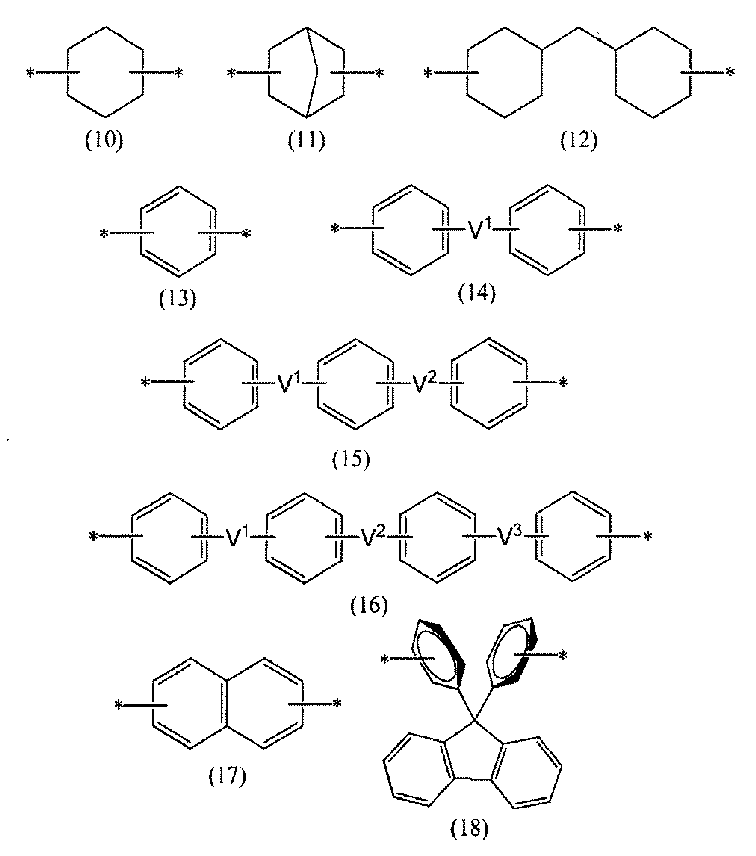
V1、V2及びV3は、互いに独立に、単結合、-O-、-S-、-CH2-、-CH2-CH2-、-CH(CH3)-、-C(CH3)2-、-C(CF3)2-、-SO2-、-CO-又は-N(Q)-を表す。ここで、Qはハロゲン原子で置換されていてもよい炭素数1~12の1価の炭化水素基を表す。
1つの例は、V1及びV3が単結合、-O-又は-S-であり、かつ、V2が-CH2-、-C(CH3)2-、-C(CF3)2-又は-SO2-である。V1とV2との各環に対する結合位置、及び、V2とV3との各環に対する結合位置は、それぞれ、各環に対して、好ましくはメタ位又はパラ位、より好ましくはパラ位である。
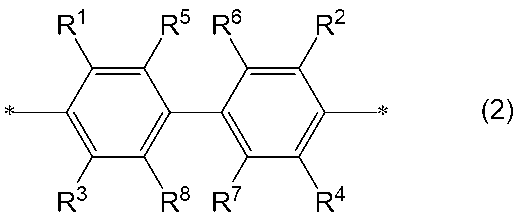
で表される基である。ジアミン化合物由来の構成単位として、式(1)中のXが式(2)で表される基である化合物由来の構成単位を含むと、ポリイミド系樹脂を含んでなるフィルムは、高い弾性率、耐屈曲性及び光学特性を発現しやすい。
炭素数1~6のアルキル基としては、例えばメチル基、エチル基、n-プロピル基、イソプロピル基、n-ブチル基、sec-ブチル基、tert-ブチル基、n-ペンチル基、2-メチル-ブチル基、3-メチルブチル基、2-エチル-プロピル基、n-ヘキシル基等が挙げられる。
炭素数1~6のアルコキシ基としては、例えばメトキシ基、エトキシ基、プロピルオキシ基、イソプロピルオキシ基、ブトキシ基、イソブトキシ基、tert-ブトキシ基、ペンチルオキシ基、ヘキシルオキシ基、シクロヘキシルオキシ基等が挙げられる。
炭素数6~12のアリール基としては、例えばフェニル基、トリル基、キシリル基、ナフチル基、ビフェニル基等が挙げられる。
R1~R8は、互いに独立に、好ましくは水素原子又は炭素数1~6のアルキル基を表し、より好ましくは水素原子又は炭素数1~3のアルキル基を表し、ここで、R1~R8に含まれる水素原子は、互いに独立に、ハロゲン原子で置換されていてもよい。ハロゲン原子としては、例えばフッ素原子、塩素原子、臭素原子、ヨウ素原子が挙げられる。R1~R8は、互いに独立に、ポリイミド系樹脂を含んでなるフィルムの表面硬度、光学特性、弾性率及び耐屈曲性を向上しやすい観点から、さらに好ましくは水素原子、メチル基、フルオロ基、クロロ基又はトリフルオロメチル基であり、さらにより好ましくはR1、R2、R3、R4、R5及びR6が水素原子、R7及びR8が水素原子、メチル基、フルオロ基、クロロ基又はトリフルオロメチル基であり、とりわけ好ましくはR7及びR8がメチル基又はトリフルオロメチル基である。
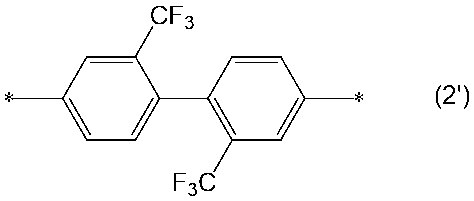
テトラカルボン酸化合物単位におけるテトラカルボン酸化合物としては、例えば芳香族テトラカルボン酸及びその無水物、好ましくはその二無水物等の芳香族テトラカルボン酸化合物;脂肪族テトラカルボン酸及びその無水物、好ましくはその二無水物等の脂肪族テトラカルボン酸化合物等が挙げられる。これらのテトラカルボン酸化合物は単独又は二種以上組合せて使用できる。
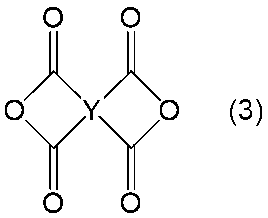
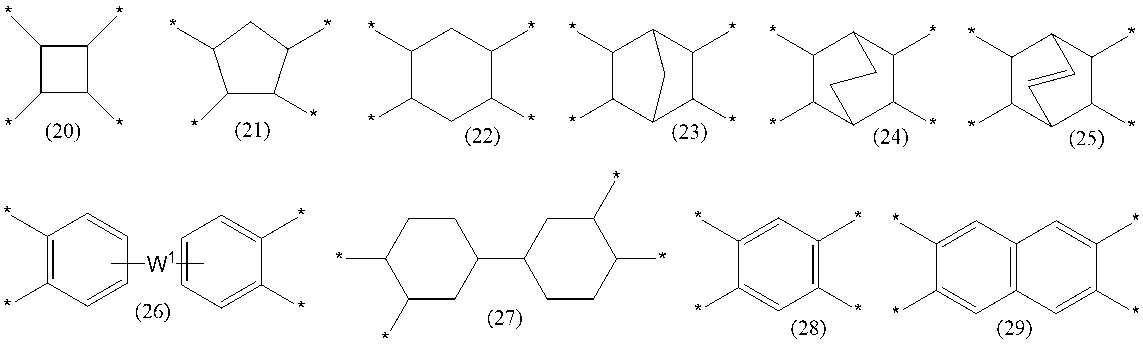
W1は、単結合、-O-、-CH2-、-CH2-CH2-、-CH(CH3)-、-C(CH3)2-、-C(CF3)2-、-Ar-、-SO2-、-CO-、-O-Ar-O-、-Ar-O-Ar-、-Ar-CH2-Ar-、-Ar-C(CH3)2-Ar-又は-Ar-SO2-Ar-を表す。
Arは、水素原子がフッ素原子で置換されていてもよい炭素数6~20のアリーレン基を表し、具体例としてはフェニレン基が挙げられる。

で表される基である。テトラカルボン酸化合物単位として、式(3)中のYが式(4)で表される基である化合物由来の構成単位を含むと、ポリイミド系樹脂を含んでなるフィルムの弾性率、光学特性、耐屈曲性及び表面硬度を向上しやすい。また、樹脂の溶媒への溶解性が向上され、樹脂ワニスの粘度を低く抑制することができ、フィルムの製造が容易となる。


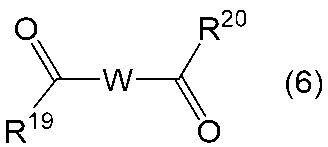
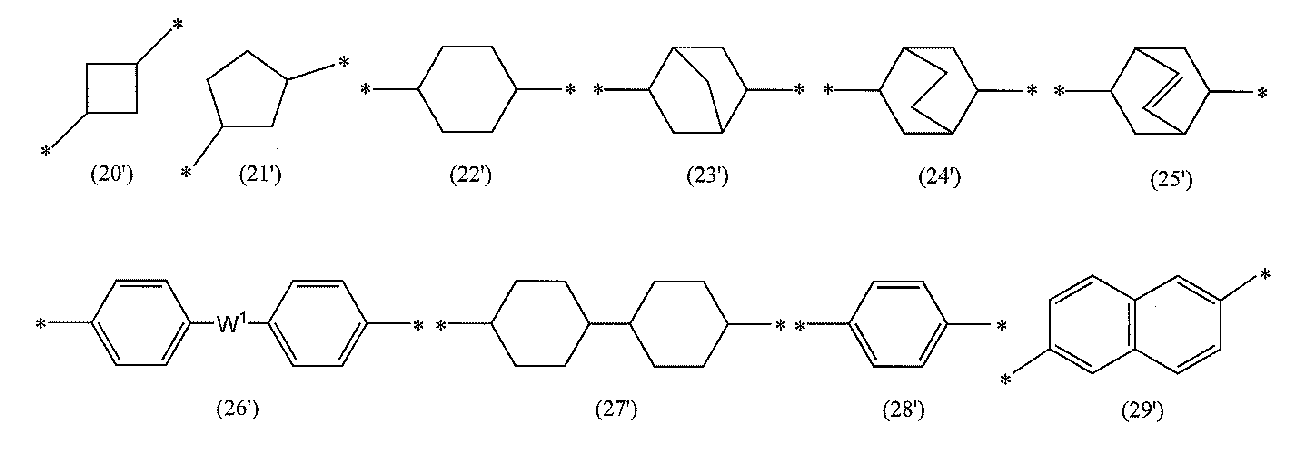
で表される2価の有機基がより好ましい。なお、式(20)~式(29)及び式(20’)~式(29’)における環上の水素原子は、炭素数1~8の炭化水素基又はフッ素置換された炭素数1~8の炭化水素基、炭素数1~6のアルコキシ基、又はフッ素置換された炭素数1~6のアルコキシ基で置換されていてもよい。
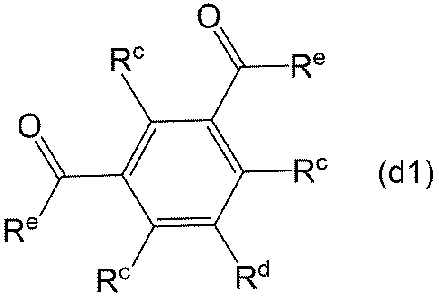
で表される化合物(以下、化合物(d1)ということがある)単位をさらに含むことが、ワニスの成膜性を高めやすく、ポリイミド系樹脂を含んでなるフィルムの均一性を高めやすい観点から好ましい。

A及び*は、それぞれ式(7b)中のA及び*と同じであり、
mは0~4の整数であり、
tは0~4の整数であり、
uは0~4の整数である]
で表され、より好ましくは式(7a);
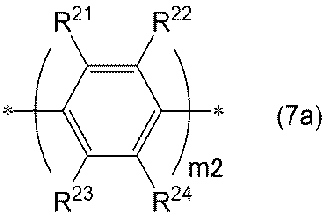
m2は1~4の整数であり、
*は結合手を表す]
で表される。ジカルボン酸化合物単位として、式(6)中のWが式(7a)で表される基である化合物由来の構成単位(以下、ジカルボン酸化合物(7a)単位ということがある)を含むと、ポリイミド系樹脂を含んでなるフィルムが優れた弾性率、耐屈曲性及び光学特性を発現しやすい。なお、式(6)中のWが式(7a)で表される基である化合物単位及び式(6)中のWが式(6a)で表される基である化合物単位を、それぞれジカルボン酸化合物(7a)単位及びジカルボン酸化合物(6a)単位ということがある。

Aは、単結合、-O-、-CH2-、-CH2-CH2-、-CH(CH3)-、-C(CH3)2-、-C(CF3)2-、-SO2-、-S-、-CO-又は-N(R33)-を表し、
R33は水素原子、ハロゲン原子で置換されていてもよい炭素数1~12の1価の炭化水素基を表し、
m1は1~4の整数であり、
*は結合手を表す]
で表される基である化合物由来の構成単位(ジカルボン酸化合物(7b)単位ということがある)である。ジカルボン酸化合物単位として、ジカルボン酸化合物(7b)単位を含むと、ポリイミド系樹脂を含んでなるフィルムが優れた弾性率、耐屈曲性及び光学特性を発現しやすい。
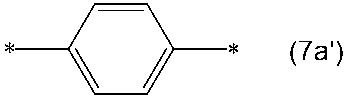

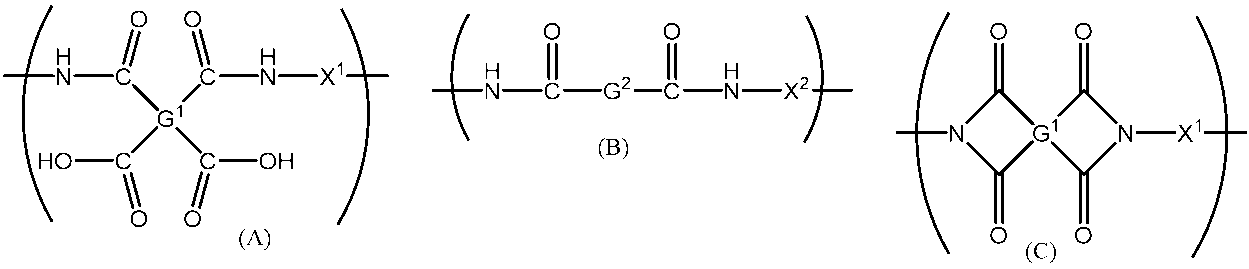
G2は式(6)中のWと同じであり、
X1及びX2は、それぞれ式(1)中のXと同じであり、X1及びX2は同一であってもよく、異なっていてもよい]

G4は、式(5)中のY1と同じであり、
X3及びX4は、それぞれ式(1)中のXと同じであり、X3及びX4は同一であってもよく、異なっていてもよく、R18は式(5)中のR18と同じである]
本発明の製造方法は、ジアミン化合物と3つ以上のカルボニル基を有するカルボン酸化合物とを反応させるステップ(A)を含む中間体(K)を得る工程(I)、及び中間体(K)を分解させる工程(II)を含み、工程(II)は、式(1)
dv/dt<0 (1)
[式(1)中、dv/dtは、X軸に時間(t)、Y軸に反応系の粘度(v)をプロットしたときの単位時間あたりの粘度変化を示し、単位時間は少なくとも5分を示す]
を満たす部分を含む。本発明者は、ポリイミド系樹脂の製造方法において、工程(I)に加え、中間体(K)を分解する工程(II)を含むと、高分子量かつ低分子量分布を有するポリイミド系樹脂を得ることができ、このようなポリイミド系樹脂が優れた耐屈曲性を発現できることを見出した。
工程(I)は、ジアミン化合物と3つ以上のカルボニル基を有するカルボン酸化合物とを反応させるステップ(A)を含む中間体(K)を得る工程である。
ステップAで使用するジアミン化合物としては、例えば、非環式又は環式脂肪族ジアミン等の脂肪族ジアミン、芳香族ジアミン、又はこれらの混合物が挙げられる。なお、本実施態様において「芳香族ジアミン」とは、アミノ基が芳香環に直接結合しているジアミンを表し、その構造の一部に脂肪族基又はその他の置換基を含んでいてもよい。この芳香環は単環でも縮合環でもよく、ベンゼン環、ナフタレン環、アントラセン環及びフルオレン環等が例示されるが、これらに限定されない。また「脂肪族ジアミン」とは、アミノ基が脂肪族基に直接結合しているジアミンを表し、その構造の一部に芳香環、又はその他の置換基を含んでいてもよい。ジアミン化合物は単独又は二種以上組合せて使用できる。
ステップ(B)で使用するジカルボン酸化合物は、ジカルボン酸又はジカルボン酸誘導体を示し、ジカルボン酸誘導体としては、例えば該ジカルボン酸の酸クロリドやエステル体などが挙げられる。本発明の一実施態様において、ジカルボン酸化合物としては、例えば、式(6)で表される化合物(以下、ジカルボン酸化合物(6)ということがある)であることが好ましい。ジカルボン酸化合物は単独又は二種以上組合せて使用でき、ジカルボン酸化合物を二種以上使用する場合、ジカルボン酸化合物(6)のWの種類が互いに異なる二種以上のジカルボン酸化合物(6)を用いてよい。なお、ジカルボン酸化合物(6)中のWの詳細や好ましい基、及びジカルボン酸化合物の具体例については[ポリイミド系樹脂]の項に示した通りである。
工程(II)は、中間体(K)を分解させる工程であり、式(1)
dv/dt<0 (1)
[式(1)中、dv/dtは、X軸に時間(t)、Y軸に反応系の粘度(v)をプロットしたときの単位時間(分)あたりの粘度変化(mPa・s/分)を示し、単位時間は少なくとも5分を示す]
を満たす部分を含む。本発明の製造方法では、工程(I)で分子量を大きくでき、さらに工程(II)における中間体(K)の分解により、分子量分布を小さくできるため、高分子量かつ低分子量分布のポリイミド系樹脂が得られる。そのため、本発明の製造方法により得られるポリイミド系樹脂を含んでなるフィルムは、優れた耐屈曲性を発現できる。なお、本明細書において、反応系とは、原料や中間体等を反応させている相をいい、溶媒を含む場合には反応溶液を示す。
反応系の粘度は、中間体(K)の分子量の変化に伴って変化する。例えば中間体(K)の分子量が低下すると反応系の粘度も低下する。そのため、dv/dtが負の値であることは、工程(II)で分解反応が生じていることを示唆している。また、dv/dtは、単位時間あたりの粘度変化の度合、すなわち、分子量変化の度合を示すことから中間体(K)の分解速度を示すともいえる。なお、反応系の粘度は、一定の温度で測定することができ、測定時における樹脂の熱分解を抑制し、適切な粘度を測定するという観点からは、低温で測定することが好ましく、例えば5~20℃、好ましくは5~15℃で測定することがより好ましい。反応系の粘度は、例えば実施例に記載の方法により測定できる。
加熱時間は、加熱温度等に応じて適宜選択でき、例えば1分~72時間、好ましくは10分~24時間、より好ましくは30分~12時間であってよい。
なお、工程(I)における原料モノマーが反応系に残存していた場合、加熱を開始してから、所定時間、反応系の粘度が増加することがあるが、その場合でも所定時間経過後、粘度は減少していく。
0.98≧Vfin/Vint≧0.10 (2)
[式(2)中、Vintは、反応系にポリイミド系樹脂の製造に用いる全ての原料を入れ終わった時点から1時間後の粘度を示し、Vfinは工程(II)における分解反応を停止するための処理を行った時点の粘度を示す]
を満たすことが好ましい。なお、Vfin及びVintの単位は好ましくは[Pa・s]である。
工程(III)は、イミド化触媒の存在下、ポリイミド系樹脂前駆体をイミド化する工程である。例えば、式(A)で表される構成単位を含むポリイミド樹脂前駆体を工程(III)に供することにより、式(A)で表される構成単位部分がイミド化され(閉環され)、式(C)で表される構成単位を含むポリイミド樹脂を得ることができる。また、例えば、式(A)で表される構成単位と式(B)で表される構成単位とを含むポリアミドイミド前駆体を工程(III)に供することにより、ポリアミドイミド前駆体の構成単位のうち、式(A)で表される構成単位部分がイミド化され(閉環され)、式(C)で表される構成単位と式(B)で表される構成単位とを含むポリアミドイミド樹脂を得ることができる。
本発明におけるポリイミド系樹脂は、耐屈曲性に優れたフィルムを形成することができる。フィルムは、特に限定されないが、例えば、以下の工程:
(a)前記ポリイミド系樹脂を含む液(樹脂ワニスと称することがある)を調製する工程(ワニス調製工程)、
(b)樹脂ワニスを支持材に塗布して塗膜を形成する工程(塗布工程)、及び
(c)塗膜を乾燥させて、フィルムを形成する工程(フィルム形成工程)
を含む方法によって製造することができる。
フレキシブル表示装置は、フレキシブル表示装置用積層体と、有機EL表示パネルとからなり、有機EL表示パネルに対して視認側にフレキシブル表示装置用積層体が配置され、折り曲げ可能に構成されている。フレキシブル表示装置用積層体としては、前記ウインドウフィルム、偏光板、タッチセンサを含有していてもよく、それらの積層順任意であるが、視認側からウインドウフィルム、偏光板、タッチセンサ又はウインドウフィルム、タッチセンサ、偏光板の順に積層されていることが好ましい。タッチセンサの視認側に偏光板が存在すると、タッチセンサのパターンが視認されにくくなり表示画像の視認性が良くなるので好ましい。それぞれの部材は接着剤、粘着剤等を用いて積層することができる。また、前記ウインドウフィルム、偏光板、タッチセンサのいずれかの層の少なくとも一面に形成された遮光パターンを具備することができる。
ウインドウフィルムは、フレキシブル表示装置の視認側に配置され、その他の構成要素を外部からの衝撃又は温湿度等の環境変化から保護する役割を担っている。従来このような保護層としてはガラスが使用されてきたが、フレキシブル表示装置におけるウインドウフィルムはガラスのようにリジッドで堅いものではなく、フレキシブルな特性を有する。前記ウインドウフィルムは、少なくとも一面にハードコート層を含んでいてもよい。
前記ウインドウフィルムには少なくとも一面にハードコート層が設けられていてもよい。ハードコート層の厚さは特に限定されず、例えば、2~100μmであってもよい。前記ハードコート層の厚さが前記の範囲にあると、十分な耐擦傷性を確保することができ、また耐屈曲性が低下しにくく、硬化収縮によるカール発生の問題が発生し難い傾向がある。
前記ハードコート層は、活性エネルギー線照射、あるいは熱エネルギー付与により架橋構造を形成し得る反応性材料を含むハードコート組成物を硬化させて形成することができ、活性エネルギー線照射によるものが好ましい。活性エネルギー線は、活性種を発生する化合物を分解して活性種を発生させることができるエネルギー線と定義され、可視光、紫外線、赤外線、X線、α線、β線、γ線及び電子線などが挙げられ、好ましくは紫外線が挙げられる。前記ハードコート組成物は、ラジカル重合性化合物及びカチオン重合性化合物の少なくとも1種の重合物を含有する。
また、前記カチオン重合性化合物としては、中でも、カチオン重合性基としてエポキシ基及びオキセタニル基の少なくとも1種を有する化合物が好ましい。エポキシ基、オキセタニル基等の環状エーテル基は、重合反応に伴う収縮が小さいという点から好ましい。また、環状エーテル基のうちエポキシ基を有する化合物は多様な構造の化合物が入手し易く、得られたハードコート層の耐久性に悪影響を与えず、ラジカル重合性化合物との相溶性もコントロールし易いという利点がある。また、環状エーテル基のうちオキセタニル基は、エポキシ基と比較して重合度が高くなりやすく、得られたハードコート層のカチオン重合性化合物から得られるネットワーク形成速度を早め、ラジカル重合性化合物と混在する領域でも未反応のモノマーを膜中に残さずに独立したネットワークを形成する等の利点がある。
エポキシ基を有するカチオン重合性化合物としては、例えば、脂環族環を有する多価アルコールのポリグリシジルエーテル又は、シクロヘキセン環、シクロペンテン環含有化合物を、過酸化水素、過酸等の適当な酸化剤でエポキシ化する事によって得られる脂環族エポキシ樹脂;脂肪族多価アルコール、又はそのアルキレンオキサイド付加物のポリグリシジルエーテル、脂肪族長鎖多塩基酸のポリグリシジルエステル、グリシジル(メタ)アクリレートのホモポリマー、コポリマーなどの脂肪族エポキシ樹脂;ビスフェノールA、ビスフェノールFや水添ビスフェノールA等のビスフェノール類、又はそれらのアルキレンオキサイド付加体、カプロラクトン付加体等の誘導体と、エピクロルヒドリンとの反応によって製造されるグリシジルエーテル、及びノボラックエポキシ樹脂等でありビスフェノール類から誘導されるグリシジルエーテル型エポキシ樹脂等が挙げられる。
ラジカル重合開始剤は、活性エネルギー線照射及び加熱の少なくともいずれかによりラジカル重合を開始させる物質を放出することが可能であればよい。例えば、熱ラジカル重合開始剤としては、過酸化水素、過安息香酸等の有機過酸化物、アゾビスブチロニトリル等のアゾ化合物等があげられる。
活性エネルギー線ラジカル重合開始剤としては、分子の分解でラジカルが生成されるType1型ラジカル重合開始剤と、3級アミンと共存して水素引き抜き型反応でラジカルを生成するType2型ラジカル重合開始剤があり、それらは単独で又は併用して使用される。
カチオン重合開始剤は、活性エネルギー線照射及び加熱の少なくともいずれかによりカチオン重合を開始させる物質を放出することが可能であればよい。カチオン重合開始剤としては、芳香族ヨードニウム塩、芳香族スルホニウム塩、シクロペンタジエニル鉄(II)錯体等が使用できる。これらは、構造の違いによって活性エネルギー線照射又は加熱のいずれか又はいずれでもカチオン重合を開始することができる。
前記溶剤は、前記重合性化合物及び重合開始剤を溶解又は分散させることができるもので、本技術分野のハードコート組成物の溶剤として知られている溶剤であれば、本発明の効果を阻害しない範囲で、使用することができる。
前記添加剤は、無機粒子、レベリング剤、安定剤、界面活性剤、帯電防止剤、潤滑剤、防汚剤などをさらに含むことができる。
本発明の光学フィルムを備えるフレキシブル表示装置は、偏光板、中でも好ましくは円偏光板をさらに備えていてもよい。円偏光板は、直線偏光板にλ/4位相差板を積層することにより右円偏光成分又は左円偏光成分のみを透過させる機能を有する機能層である。たとえば外光を右円偏光に変換して有機ELパネルで反射されて左円偏光となった外光を遮断し、有機ELの発光成分のみを透過させることで反射光の影響を抑制して画像を見やすくするために用いられる。円偏光機能を達成するためには、直線偏光板の吸収軸とλ/4位相差板の遅相軸は理論上45°である必要があるが、実用的には45±10°である。直線偏光板とλ/4位相差板とは必ずしも隣接して積層される必要はなく、吸収軸と遅相軸の関係が前述の範囲を満足していればよい。全波長において完全な円偏光を達成することが好ましいが実用上は必ずしもその必要はないので本発明における円偏光板は楕円偏光板をも包含する。直線偏光板の視認側にさらにλ/4位相差フィルムを積層して、出射光を円偏光とすることで偏光サングラスをかけた状態での視認性を向上させることも好ましい。
前記直線偏光子は、ポリビニルアルコール(PVA)系フィルムを染色、延伸することで製造されるフィルム型偏光子であってもよい。延伸によって配向したPVA系フィルムに、ヨウ素等の二色性色素が吸着、又はPVAに吸着した状態で延伸されることで二色性色素が配向し、偏光性能を発揮する。前記フィルム型偏光子の製造においては、他に膨潤、ホウ酸による架橋、水溶液による洗浄、乾燥等の工程を有していてもよい。延伸や染色工程はPVA系フィルム単独で行ってもよいし、ポリエチレンテレフタレートのような他のフィルムと積層された状態で行うこともできる。用いられるPVA系フィルムの厚さは好ましくは10~100μmであり、延伸倍率は好ましくは2~10倍である。
さらに前記偏光子の他の一例としては、液晶偏光組成物を塗布して形成する液晶塗布型偏光子であってもよい。前記液晶偏光組成物は、液晶性化合物及び二色性色素化合物を含むことができる。前記液晶性化合物は液晶状態を示す性質を有していればよく、スメクチック相等の高次の配向状態を有していると高い偏光性能を発揮することができるため好ましい。また、液晶性化合物は重合性官能基を有していることも好ましい。
前記液晶偏光組成物はさらに開始剤、溶剤、分散剤、レベリング剤、安定剤、界面活性剤、架橋剤、シランカップリング剤などを含むことができる。
前記液晶偏光層は、配向膜上に液晶偏光組成物を塗布して液晶偏光層を形成することにより製造される。
液晶偏光層は、フィルム型偏光子に比べて厚さを薄く形成することができる。前記液晶偏光層の厚さは好ましくは0.5~10μm、より好ましくは1~5μmであってもよい。
前記配向膜は、例えば基材上に配向膜形成組成物を塗布し、ラビング、偏光照射等により配向性を付与することで製造することができる。前記配向膜形成組成物は、配向剤の他に溶剤、架橋剤、開始剤、分散剤、レベリング剤、シランカップリング剤等を含んでいてもよい。前記配向剤としては、例えば、ポリビニルアルコール類、ポリアクリレート類、ポリアミック酸類、ポリイミド類を使用できる。光配向を適用する場合にはシンナメート基を含む配向剤を使用することが好ましい。前記配向剤として使用される高分子の重量平均分子量が10,000~1,000,000程度であってもよい。前記配向膜の厚さは、配向規制力の観点から、好ましくは5~10,000nm、より好ましは10~500nmである。前記液晶偏光層は基材から剥離して転写して積層することもできるし、前記基材をそのまま積層することもできる。前記基材が、保護フィルムや位相差板、ウインドウフィルムとしての役割を担うことも好ましい。
さらに前記λ/4位相差板の他の一例としては、液晶組成物を塗布して形成する液晶塗布型位相差板であってもよい。前記液晶組成物は、ネマチック、コレステリック、スメクチック等の液晶状態を示す性質を有する液晶性化合物を含む。液晶組成物の中の液晶性化合物を含むいずれかの化合物は重合性官能基を有している。前記液晶塗布型位相差板はさらに開始剤、溶剤、分散剤、レベリング剤、安定剤、界面活性剤、架橋剤、シランカップリング剤などを含むことができる。前記液晶塗布型位相差板は、前記液晶偏光層での記載と同様に配向膜上に液晶組成物を塗布硬化して液晶位相差層を形成することで製造することができる。液晶塗布型位相差板は、延伸型位相差板に比べて厚さを薄く形成することができる。前記液晶偏光層の厚さは、通常0.5~10μm、好ましくは1~5μmであってもよい。前記液晶塗布型位相差板は基材から剥離して転写して積層することもできるし、前記基材をそのまま積層することもできる。前記基材が、保護フィルムや位相差板、ウインドウフィルムとしての役割を担うことも好ましい。
また、他の方法としてはλ/2位相差板と組合せることで広帯域λ/4位相差板を得る技術も知られている(特開平10-90521号公報)。λ/2位相差板もλ/4位相差板と同様の材料方法で製造される。延伸型位相差板と液晶塗布型位相差板との組合せは任意であるが、どちらも液晶塗布型位相差板を用いることは厚さを薄くすることができるので好ましい。
前記円偏光板には斜め方向の視認性を高めるために、正のCプレートを積層する方法も知られている(特開2014-224837号公報)。正のCプレートも液晶塗布型位相差板であっても延伸型位相差板であってもよい。厚さ方向の位相差は-200~-20nm好ましくは-140~-40nmである。
タッチセンサは入力手段として用いられる。タッチセンサとしては、抵抗膜方式、表面弾性波方式、赤外線方式、電磁誘導方式、静電容量方式等様々な様式が提案されており、いずれの方式でも構わない。中でも静電容量方式が好ましい。静電容量方式タッチセンサは活性領域及び前記活性領域の外郭部に位置する非活性領域に区分される。活性領域は表示パネルで画面が表示される表示部に対応する領域であって、使用者のタッチが感知される領域であり、非活性領域は表示装置で画面が表示されない非表示部に対応する領域である。タッチセンサはフレキシブルな特性を有する基板と;前記基板の活性領域に形成された感知パターンと;前記基板の非活性領域に形成され、前記感知パターンとパッド部を介して外部の駆動回路と接続するための各センシングラインを含むことができる。フレキシブルな特性を有する基板としては、前記高分子フィルムと同様の材料が使用できる。タッチセンサの基板は、その靱性が2,000MPa%以上であるものがタッチセンサのクラック抑制の面から好ましい。より好ましくは靱性が2,000~30,000MPa%であってもよい。ここで、靭性は、高分子材料の引張実験を通じて得られる応力(MPa)-歪み(%)曲線(Stress-strain curve)で破壊点までの曲線の下部面積として定義される。
前記光硬化性有機バインダーは、例えば、アクリレート系単量体、スチレン系単量体、カルボン酸系単量体などの各単量体の共重合体を含むことができる。前記光硬化性有機バインダーは、例えば、エポキシ基含有繰り返し単位、アクリレート繰り返し単位、カルボン酸繰り返し単位などの互いに異なる各繰り返し単位を含む共重合体であってもよい。
前記無機粒子は、例えば、ジルコニア粒子、チタニア粒子、アルミナ粒子などを含むことができる。前記光硬化組成物は、光重合開始剤、重合性モノマー、硬化補助剤などの各添加剤をさらに含むこともできる。
前記フレキシブル表示装置用積層体を形成する、ウインドウフィルム、偏光板、やタッチセンサ等の各層並びに各層を構成する直線偏光板やλ/4位相差板等のフィルム部材は接着剤によって接着することができる。接着剤としては、水系接着剤、有機溶剤系接着剤、無溶剤系接着剤、固体接着剤、溶剤揮散型接着剤、湿気硬化型接着剤、加熱硬化型接着剤、嫌気硬化型接着剤、活性エネルギー線硬化型接着剤、硬化剤混合型接着剤、熱溶融型接着剤、感圧型接着剤、感圧性粘着剤、再湿型接着剤等汎用に使用されているものが使用できる。中でも水系溶剤揮散型接着剤、活性エネルギー線硬化型接着剤、粘着剤がよく用いられる。接着層の厚さは、求められる接着力等に応じて適宜調節することができ、例えば、0.01~500μm、好ましくは0.1~300μmであり、接着層は前記フレキシブル表示装置用積層体には複数存在してよいが、それぞれの厚さ及び用いられる接着剤の種類は同一であってもよいし、異なっていてもよい。
活性エネルギー線組成物には重合開始剤をさらに含むことができる。重合開始剤としては、ラジカル重合開始剤、カチオン重合開始剤、ラジカル及びカチオン重合開始剤等であり、適宜選択して用いることができる。これらの重合開始剤は、活性エネルギー線照射及び加熱の少なくとも一種により分解されて、ラジカル又はカチオンを発生してラジカル重合とカチオン重合を進行させるものである。ハードコート組成物の記載の中で活性エネルギー線照射によりラジカル重合又はカチオン重合の内の少なくともいずれか開始することができる開始剤を使用することができる。
前記遮光パターンは前期フレキシブル表示装置のベゼル又はハウジングの少なくとも一部として適用することができる。遮光パターンによって前記フレキシブル表示装置の辺縁部に配置される配線が隠されて視認されにくくすることで、画像の視認性が向上する。前記遮光パターンは単層又は複層の形態であってもよい。遮光パターンのカラーは特に制限されることはなく、黒色、白色、金属色などの多様なカラーを有することができる。遮光パターンはカラーを具現するための顔料と、アクリル系樹脂、エステル系樹脂、エポキシ系樹脂、ポリウレタン、シリコーンなどの高分子で形成することができる。これらの単独又は2種類以上の混合物で使用することもできる。前記遮光パターンは、印刷、リソグラフィ、インクジェットなど各種の方法にて形成することができる。遮光パターンの厚さは、通常1~100μm、好ましくは2~50μmである。また、光パターンの厚さ方向に傾斜等の形状を付与することも好ましい。
ゲル浸透クロマトグラフィー(GPC)を用いて測定を行った。測定試料の調製方法および測定条件は下記の通りである。
(1)試料調整方法
ポリイミド系樹脂を溶離液に完全に溶解させて0.1質量%溶液とした。その溶液をクロマトディスク(孔径0.45μm)にてろ過し、試料溶液とした。
(2)測定条件
装置:HLC-8020GPC
カラム:ガードカラム+TSKgelα-M(300mm×7.8mm径)×2本+α-2500(300mm×7.8mm径)×1本
溶離液:DMF(30mMの臭化リチウムおよび10mMのリン酸添加)
流量:1.0mL/分
検出器:RI検出器
カラム温度:40℃
注入量:100μL
分子量標準:標準ポリスチレン
(1)試料調整方法
N,N-ジメチルアセトアミド(以下、DMAcと称することがある)に10質量%となるようにポリイミド系樹脂を溶解させ、測定サンプルとした。
(2)測定条件
装置名 :LVDV-II+Pro(ブルックフィールド社製)
測定温度 :25℃
スピンドル :CPE-52
サンプル量 :0.6mL
ローター回転速度 :3.0rpm
(1)測定サンプル
工程(II)における反応溶液からサンプリングを行い、測定サンプルを以下の条件で測定した。
(2)測定条件
装置名 :LVDV-II+Pro(ブルックフィールド社製)
測定温度 :10℃
スピンドル :CPE-52
サンプル量 :0.6mL
ローター回転速度 :0.3rpm
実施例及び比較例で得られたポリイミド系樹脂フィルムを、ダンベルカッターを用いて10mm×100mmの大きさにカットした。カットしたフィルムをMIT耐折疲労試験機((株)東洋精機製作所製「MIT-DA」 形式:0530)本体にセットして、試験速度175cpm、折り曲げ角度135°、加重750g、折り曲げクランプのR 1.0mmの条件で、裏表両方向への折り曲げ試験を実施し、各フィルムの耐屈曲回数(破断せずに折り曲げ可能な回数)を測定した。
耐屈曲回数15万回以上の場合を良好として〇で表記し、15万回未満の場合を不良として×で表記した。なお、良好(○)は、裏表方向両方の屈曲回数が15万回以上であるものを示し、不良(×)は、裏表方向のいずれか、又は、両方が屈曲回数15万回未満であるものを示す。
十分に乾燥させた撹拌機と温度計を備える反応容器に、窒素を導通させ、容器内を窒素で置換した。反応容器内を10℃に冷却し、DMAc1,907.2部を容器に入れ、2,2’-ビス(トリフルオロメチル)ベンジジン(TFMB)111.93部と4,4’-(ヘキサフルオロイソプロピリデン)ジフタル酸二無水物(6FDA)46.82部を加え、3時間撹拌した。
次いで、4,4’-オキシビス(ベンゾイルクロリド)(OBBC)10.37部とテレフタロイルクロリド(TPC)38.54部を加え、撹拌した。生成した反応液にDMAcを1,907.2部、TPC4.28部を加え、更に10℃で1時間攪拌した(工程(I))。
この反応溶液をサンプリングし、10℃における粘度を測定した。また、溶液中にはTPC及びOBBCに由来する塩酸が存在しており、その量は17.94部である。
次に溶液の温度を50℃に設定した。溶液を20分~1時間ごとにサンプリングを行い、粘度を測定した。粘度変化、及び単位時間あたりの粘度変化(dv/dt)を表1に示す。なお、ポリイミド系樹脂の構成成分であるTPCを入れ終わった時点を時間の起点(0分)として、表1中の時間を示した。次いで、分解反応を停止するために、ジイソプロピルエチルアミン31.80部を添加し、溶液の温度を10℃に設定した(工程(II))。
次に無水酢酸75.32部を加え、10℃に保ったまま30分間撹拌した後、4-ピコリン22.90部を加え、反応容器を75℃に昇温し、さらに3時間撹拌し、反応液を得た。得られた反応液を冷却し、40℃以下に下がったところで、メタノール1,147.1部を加えた。
撹拌機と温度計を備える反応容器に、窒素を導通させ、容器内を窒素で置換した。20℃で攪拌しながら反応容器内に上記反応液を入れた。次いで、メタノールを4,575.1部滴下し、次いでイオン交換水を2,861.7部滴下し、白色固体を析出させた。析出した白色固体を遠心ろ過により捕集し、メタノールで洗浄することにより、ポリイミド系樹脂を含むウェットケーキを得た。得られたウェットケーキを減圧下、78℃で乾燥させることにより、粉体状のポリイミド系樹脂を得た(工程(III))。また、表1に示されるように、工程(II)は、dv/dt<0を満たす部分を含む。
十分に乾燥させた撹拌機と温度計を備える反応容器に、窒素を導通させ、容器内を窒素で置換した。反応容器内を10℃に冷却し、DMAc1,907.2部を容器に入れ、TFMB111.60部と6FDA46.82部を加え、3時間撹拌した。
次いで、OBBC10.37部とTPC38.54部を加え、撹拌した。生成した反応液にDMAcを1,907.2部、TPC4.28部を加え、10℃で1時間攪拌した。さらにTFMB0.224部加え、10℃で1時間攪拌した(工程(I))。
この反応溶液をサンプリングし、粘度を測定した。また、溶液中にはTPC及びOBBCに由来する塩酸が存在しており、その量は17.94部である。
次に溶液の温度を40℃に設定した。溶液を30分又は1時間ごとにサンプリングを行い、粘度を測定した。粘度変化、及び単位時間あたりの粘度変化(dv/dt)を表2に示す。なお、ポリイミド系樹脂の構成成分であるTFMBを入れ終わった時点を時間の起点(0分)として、表2中の時間を示した。次いで、分解反応を停止するために、ジイソプロピルエチルアミン31.80部を添加し、溶液の温度を10℃に設定した(工程(II))。
次に無水酢酸75.32部を加え、10℃に保ったまま30分間撹拌した後、4-ピコリン22.90部を加え、反応容器を75℃に昇温し、さらに3時間撹拌し、反応液を得た。反応液を冷却し、40℃以下に下がったところで、メタノール1,147.1部を加えた。
撹拌機と温度計を備える反応容器に、窒素を導通させ、容器内を窒素で置換した。20℃で攪拌しながら反応容器内に上記反応液を入れた。次いで、メタノールを4,575.1部滴下し、次いでイオン交換水を2,861.7部滴下し、白色固体を析出させた。析出した白色固体を遠心ろ過により捕集し、メタノールで洗浄することにより、ポリイミド系樹脂を含むウェットケーキを得た。得られたウェットケーキを減圧下、78℃で乾燥させることにより、粉体状のポリイミド系樹脂を得た(工程(III))。また、表2に示されるように、工程(II)は、dv/dt<0を満たす部分を含む。
十分に乾燥させた撹拌機と温度計を備える反応容器に、窒素を導通させ、容器内を窒素で置換した。反応容器内を10℃に冷却し、DMAc1,907.2部を容器に入れ、TFMB111.37部と6FDA46.82部を加え、3時間撹拌した。
次いで、OBBC10.37部とTPC38.54部を加え、撹拌した。生成した反応液にDMAcを1,907.2部、TPC4.28部を加え、更に10℃で1時間攪拌した。この溶液をサンプリングし、粘度を測定した。また、溶液中にはTPC及びOBBCに由来する塩酸が存在している。
次いで、ジイソプロピルエチルアミン31.80部、及び無水酢酸75.32部を加え、10℃に保ったまま30分間撹拌した後、4-ピコリン22.90部を加え、反応容器を75℃に昇温し、さらに3時間撹拌し、反応液を得た。得られた反応液を冷却し、40℃以下に下がったところで、メタノール1147.1部を加えた。
撹拌機と温度計を備える反応容器に、窒素を導通させ、容器内を窒素で置換した。20℃で攪拌しながら反応容器内に上記反応液を入れた。次いで、メタノールを4,575.1部滴下し、次いでイオン交換水を2,861.7部滴下し、白色固体を析出させた。析出した白色固体を遠心ろ過により捕集し、メタノールで洗浄することにより、ポリイミド系樹脂を含むウェットケーキを得た。得られたウェットケーキを減圧下、78℃で乾燥させることにより、粉体状のポリイミド系樹脂を得た。


実施例1~6及び比較例1、2で作製したポリイミド系樹脂をDMAcに溶解してポリイミド系樹脂の濃度が10質量%であるポリイミド系樹脂ワニスを得た。得られたポリイミド系樹脂ワニスをポリエステル基材(東洋紡(株)製、商品名「A4100」)の平滑面上に自立膜の厚さが55μmとなるようにアプリケーターを用いて塗布し、50℃で30分間、次いで140℃で15分間乾燥後、得られた塗膜をポリエステル基材から剥離して、自立膜を得た。自立膜を金枠に固定し、さらに大気下、200℃で40分間乾燥し、厚さ50μmのポリイミド系樹脂フィルムを得た。得られたポリイミド系樹脂フィルムの耐屈曲性試験を行った。

Claims (12)
- 重量平均分子量は150,000以上であり、重量平均分子量(Mw)と数平均分子量(Mn)との比である分子量分布(Mw/Mn)は3.0以下である、ポリイミド系樹脂。
- N,N-ジメチルアセトアミドに濃度10質量%で溶解させたときの25℃における粘度は、1,500mPa・s以上である、請求項1に記載のポリイミド系樹脂。
- ポリアミドイミド樹脂である、請求項1又は2に記載のポリイミド系樹脂。
- 重量平均分子量は300,000以上である、請求項1~3のいずれかに記載のポリイミド系樹脂。
- 請求項1~4のいずれかに記載のポリイミド系樹脂を含むフィルム。
- ジアミン化合物と3つ以上のカルボニル基を有するカルボン酸化合物とを反応させるステップ(A)を含む中間体(K)を得る工程(I)、及び
中間体(K)を分解させる工程(II)を含み、
工程(II)は、式(1)
dv/dt<0 (1)
[式(1)中、dv/dtは、X軸に時間(t)、Y軸に反応系の粘度(v)をプロットしたときの単位時間(分)あたりの粘度変化(mPa・s/分)を示し、単位時間は少なくとも5分を示す]
を満たす部分を含む、ポリイミド系樹脂の製造方法。 - 工程(II)は、式(2)
0.98≧Vfin/Vint≧0.10 (2)
[式(2)中、Vintは、反応系にポリイミド系樹脂の製造に用いる全ての原料を入れ終わった時点から1時間後の粘度を示し、Vfinは工程(II)における分解反応を停止するための処理を行った時点の粘度を示す]
を満たす、請求項6に記載の製造方法。 - 工程(I)は、ステップ(A)の後、さらにジカルボン酸化合物を反応させるステップ(B)を含む、請求項6又は7に記載の製造方法。
- 工程(II)を無機酸の存在下で行う、請求項6~8のいずれかに記載の製造方法。
- 工程(II)は、塩基を添加するステップを含む、請求項6~9のいずれかに記載の製造方法。
- 工程(II)は、反応系の温度を20℃以下に調整するステップを含む、請求項6~10のいずれかに記載の製造方法。
- ポリイミド系樹脂の重量平均分子量は300,000以上である、請求項6~11のいずれかに記載の製造方法。
Priority Applications (2)
| Application Number | Priority Date | Filing Date | Title |
|---|---|---|---|
| CN201980085776.9A CN113227205B (zh) | 2018-12-26 | 2019-12-20 | 聚酰亚胺系树脂及其制造方法 |
| KR1020217023013A KR20210107762A (ko) | 2018-12-26 | 2019-12-20 | 폴리이미드계 수지 및 그 제조 방법 |
Applications Claiming Priority (4)
| Application Number | Priority Date | Filing Date | Title |
|---|---|---|---|
| JP2018243553 | 2018-12-26 | ||
| JP2018-243553 | 2018-12-26 | ||
| JP2019-220595 | 2019-12-05 | ||
| JP2019220595A JP2020105497A (ja) | 2018-12-26 | 2019-12-05 | ポリイミド系樹脂及びその製造方法 |
Publications (1)
| Publication Number | Publication Date |
|---|---|
| WO2020137871A1 true WO2020137871A1 (ja) | 2020-07-02 |
Family
ID=71128235
Family Applications (1)
| Application Number | Title | Priority Date | Filing Date |
|---|---|---|---|
| PCT/JP2019/050060 Ceased WO2020137871A1 (ja) | 2018-12-26 | 2019-12-20 | ポリイミド系樹脂及びその製造方法 |
Country Status (1)
| Country | Link |
|---|---|
| WO (1) | WO2020137871A1 (ja) |
Citations (6)
| Publication number | Priority date | Publication date | Assignee | Title |
|---|---|---|---|---|
| JPS4714714B1 (ja) * | 1969-08-06 | 1972-05-02 | ||
| JPS57212230A (en) * | 1981-06-24 | 1982-12-27 | Hitachi Ltd | Novel polyimide resin molded article |
| JPH0770276A (ja) * | 1993-09-07 | 1995-03-14 | Toyobo Co Ltd | 耐熱性樹脂 |
| JPH0770277A (ja) * | 1993-09-07 | 1995-03-14 | Toyobo Co Ltd | 耐熱性樹脂の製造法 |
| JPH0859832A (ja) * | 1993-10-29 | 1996-03-05 | Hitachi Ltd | 水溶性ポリアミド酸塩とポリイミド前駆体ワニス及びポリイミドとその用途 |
| JPH11228694A (ja) * | 1998-02-19 | 1999-08-24 | Kanegafuchi Chem Ind Co Ltd | ポリイミド組成物 |
-
2019
- 2019-12-20 WO PCT/JP2019/050060 patent/WO2020137871A1/ja not_active Ceased
Patent Citations (6)
| Publication number | Priority date | Publication date | Assignee | Title |
|---|---|---|---|---|
| JPS4714714B1 (ja) * | 1969-08-06 | 1972-05-02 | ||
| JPS57212230A (en) * | 1981-06-24 | 1982-12-27 | Hitachi Ltd | Novel polyimide resin molded article |
| JPH0770276A (ja) * | 1993-09-07 | 1995-03-14 | Toyobo Co Ltd | 耐熱性樹脂 |
| JPH0770277A (ja) * | 1993-09-07 | 1995-03-14 | Toyobo Co Ltd | 耐熱性樹脂の製造法 |
| JPH0859832A (ja) * | 1993-10-29 | 1996-03-05 | Hitachi Ltd | 水溶性ポリアミド酸塩とポリイミド前駆体ワニス及びポリイミドとその用途 |
| JPH11228694A (ja) * | 1998-02-19 | 1999-08-24 | Kanegafuchi Chem Ind Co Ltd | ポリイミド組成物 |
Similar Documents
| Publication | Publication Date | Title |
|---|---|---|
| JP2020076067A (ja) | 光学フィルム | |
| KR20220095208A (ko) | 폴리아미드이미드 수지 | |
| KR20220007101A (ko) | 바니시, 광학 필름 및 광학 필름의 제조 방법 | |
| JP2020097710A (ja) | 光学フィルム、フレキシブル表示装置、及び樹脂組成物 | |
| JP6799182B2 (ja) | 光学フィルム、フレキシブル表示装置、及び樹脂組成物 | |
| KR102809554B1 (ko) | 폴리이미드계 수지의 제조 방법 | |
| KR20220142371A (ko) | 광학적층체 및 플렉시블 표시 장치 | |
| KR20220084342A (ko) | 폴리이미드계 수지 | |
| CN113227205B (zh) | 聚酰亚胺系树脂及其制造方法 | |
| WO2020138045A1 (ja) | 光学フィルム及びフレキシブル表示装置 | |
| JP2020094190A (ja) | 樹脂組成物 | |
| JP2020109155A (ja) | 光学フィルム、フレキシブル表示装置及びポリアミドイミド系樹脂 | |
| KR20210110646A (ko) | 광학 필름, 플렉시블 표시 장치 및 폴리아미드이미드계 수지 | |
| WO2020137871A1 (ja) | ポリイミド系樹脂及びその製造方法 | |
| JP7718806B2 (ja) | 光学フィルム | |
| KR20210110643A (ko) | 폴리아미드이미드계 수지, 광학 필름 및 플렉시블 표시 장치 | |
| WO2020138046A1 (ja) | 光学フィルム | |
| JP2020109160A (ja) | 光学フィルム | |
| WO2020137870A1 (ja) | ポリイミド系樹脂の製造方法 | |
| JP2022163714A (ja) | 光学積層体及びフレキシブル表示装置 | |
| JP2023132812A (ja) | 光学フィルム及び積層体、並びにその製造方法 | |
| JP2020100805A (ja) | 光学フィルム、フレキシブル表示装置、及び樹脂組成物 | |
| JP2021084941A (ja) | 光学フィルム及びフレキシブル表示装置 | |
| WO2020138044A1 (ja) | ポリアミド系樹脂、光学フィルム及びフレキシブル表示装置 | |
| KR20210110642A (ko) | 광학 필름 |
Legal Events
| Date | Code | Title | Description |
|---|---|---|---|
| 121 | Ep: the epo has been informed by wipo that ep was designated in this application |
Ref document number: 19904667 Country of ref document: EP Kind code of ref document: A1 |
|
| NENP | Non-entry into the national phase |
Ref country code: DE |
|
| ENP | Entry into the national phase |
Ref document number: 20217023013 Country of ref document: KR Kind code of ref document: A |
|
| 122 | Ep: pct application non-entry in european phase |
Ref document number: 19904667 Country of ref document: EP Kind code of ref document: A1 |
|
| WWR | Wipo information: refused in national office |
Ref document number: 1020217023013 Country of ref document: KR |