WO2020137239A1 - 皮革様シート - Google Patents
皮革様シート Download PDFInfo
- Publication number
- WO2020137239A1 WO2020137239A1 PCT/JP2019/044896 JP2019044896W WO2020137239A1 WO 2020137239 A1 WO2020137239 A1 WO 2020137239A1 JP 2019044896 W JP2019044896 W JP 2019044896W WO 2020137239 A1 WO2020137239 A1 WO 2020137239A1
- Authority
- WO
- WIPO (PCT)
- Prior art keywords
- light source
- leather
- value
- sheet
- color
- Prior art date
- Legal status (The legal status is an assumption and is not a legal conclusion. Google has not performed a legal analysis and makes no representation as to the accuracy of the status listed.)
- Ceased
Links
Images



Classifications
-
- D—TEXTILES; PAPER
- D06—TREATMENT OF TEXTILES OR THE LIKE; LAUNDERING; FLEXIBLE MATERIALS NOT OTHERWISE PROVIDED FOR
- D06N—WALL, FLOOR, OR LIKE COVERING MATERIALS, e.g. LINOLEUM, OILCLOTH, ARTIFICIAL LEATHER, ROOFING FELT, CONSISTING OF A FIBROUS WEB COATED WITH A LAYER OF MACROMOLECULAR MATERIAL; FLEXIBLE SHEET MATERIAL NOT OTHERWISE PROVIDED FOR
- D06N3/00—Artificial leather, oilcloth or other material obtained by covering fibrous webs with macromolecular material, e.g. resins, rubber or derivatives thereof
- D06N3/12—Artificial leather, oilcloth or other material obtained by covering fibrous webs with macromolecular material, e.g. resins, rubber or derivatives thereof with macromolecular compounds obtained otherwise than by reactions only involving carbon-to-carbon unsaturated bonds, e.g. gelatine proteins
- D06N3/14—Artificial leather, oilcloth or other material obtained by covering fibrous webs with macromolecular material, e.g. resins, rubber or derivatives thereof with macromolecular compounds obtained otherwise than by reactions only involving carbon-to-carbon unsaturated bonds, e.g. gelatine proteins with polyurethanes
-
- D—TEXTILES; PAPER
- D06—TREATMENT OF TEXTILES OR THE LIKE; LAUNDERING; FLEXIBLE MATERIALS NOT OTHERWISE PROVIDED FOR
- D06N—WALL, FLOOR, OR LIKE COVERING MATERIALS, e.g. LINOLEUM, OILCLOTH, ARTIFICIAL LEATHER, ROOFING FELT, CONSISTING OF A FIBROUS WEB COATED WITH A LAYER OF MACROMOLECULAR MATERIAL; FLEXIBLE SHEET MATERIAL NOT OTHERWISE PROVIDED FOR
- D06N3/00—Artificial leather, oilcloth or other material obtained by covering fibrous webs with macromolecular material, e.g. resins, rubber or derivatives thereof
- D06N3/0056—Artificial leather, oilcloth or other material obtained by covering fibrous webs with macromolecular material, e.g. resins, rubber or derivatives thereof characterised by the compounding ingredients of the macro-molecular coating
- D06N3/0065—Organic pigments, e.g. dyes, brighteners
-
- D—TEXTILES; PAPER
- D06—TREATMENT OF TEXTILES OR THE LIKE; LAUNDERING; FLEXIBLE MATERIALS NOT OTHERWISE PROVIDED FOR
- D06N—WALL, FLOOR, OR LIKE COVERING MATERIALS, e.g. LINOLEUM, OILCLOTH, ARTIFICIAL LEATHER, ROOFING FELT, CONSISTING OF A FIBROUS WEB COATED WITH A LAYER OF MACROMOLECULAR MATERIAL; FLEXIBLE SHEET MATERIAL NOT OTHERWISE PROVIDED FOR
- D06N2209/00—Properties of the materials
- D06N2209/08—Properties of the materials having optical properties
- D06N2209/0807—Coloured
-
- D—TEXTILES; PAPER
- D06—TREATMENT OF TEXTILES OR THE LIKE; LAUNDERING; FLEXIBLE MATERIALS NOT OTHERWISE PROVIDED FOR
- D06N—WALL, FLOOR, OR LIKE COVERING MATERIALS, e.g. LINOLEUM, OILCLOTH, ARTIFICIAL LEATHER, ROOFING FELT, CONSISTING OF A FIBROUS WEB COATED WITH A LAYER OF MACROMOLECULAR MATERIAL; FLEXIBLE SHEET MATERIAL NOT OTHERWISE PROVIDED FOR
- D06N2209/00—Properties of the materials
- D06N2209/08—Properties of the materials having optical properties
- D06N2209/0876—Reflective
Definitions
- the present invention relates to the appearance of a leather-like sheet. More specifically, the present invention relates to a leather-like sheet that is easily recognized in different colors when irradiated with light from a light source such as sunlight, a fluorescent lamp, and an incandescent lamp.
- a light source such as sunlight, a fluorescent lamp, and an incandescent lamp.
- leather-like sheets such as artificial leather resembling natural leather are known as skin materials for bags, clothing, shoes, etc.
- a silver-like leather-like sheet including a fiber base material and a resin layer laminated on the fiber base material, and a napped artificial leather having a napped surface obtained by napping the fibers of the surface layer of the fiber base material are known.
- color rendering is known as a characteristic in which the appearance of colors varies depending on the wavelength spectrum of the illuminating light.
- the color rendering property is, for example, a characteristic that even if the same white light source is used, a person perceives different colors when illuminated by sunlight and when illuminated by a white fluorescent lamp.
- an object that is less dependent on the type of light source that is, an object whose color recognized by a person is less likely to change even when the type of light source is changed is evaluated as having good color rendering properties.
- Patent Document 1 As a leather-like sheet having a good color rendering property, for example, the following Patent Document 1 has a suede-like nap formed of an ultrafine polyester fiber of 0.3 dtex or less on the surface and is dyed with five or more kinds of dyes. Disclosed is a suede-like artificial leather, which has a color difference ⁇ E of 1.2 or less between an F6 light source and a D65 light source, which is measured on the surface having raised suede-like naps. It is disclosed that such a suede-like artificial leather has a small difference in the appearance of colors seen under a standard light source (sun light source) and under a white fluorescent light source.
- Patent Document 2 discloses that a ceramic raw material containing fine particles of at least one rare earth element oxide selected from holmium, praseodymium, neodymium and erbium is formed into a predetermined shape and then fired. Disclosed is a color rendering ceramic product, which is characterized by being reversibly discolored according to the type of an external light source.
- Patent Document 1 which has excellent color rendering properties in which the color recognized by a person does not change even when the type of light source is changed, was known. On the other hand, there is no known leather-like sheet having a good design in which the color recognized by a person changes remarkably when the type of light source is changed. Further, with the technique disclosed in Patent Document 2, it was difficult to color the leather-like sheet.
- the present invention is a novel design in which, when the illumination of D65 light source that is in the image of sunlight and the illumination of F10 light source that is in the image of three-wavelength neutral white of a fluorescent lamp are used, they are recognized as significantly different colors.
- An object is to provide a leather-like sheet having properties.
- X indicates a red component (R)
- Y indicates a green component (G)
- Z indicates a blue component (B).
- the tristimulus value XYZ is a product of the color matching function (x( ⁇ ), y( ⁇ ), z( ⁇ )), the spectral distribution S( ⁇ ) of the illumination light and the spectral reflectance R( ⁇ ) of the object. Is obtained by integrating with respect to.
- the color matching function (x( ⁇ ), y( ⁇ ), z( ⁇ )) is the response characteristic (spectral response of the cone due to the red, green, and blue components of light when the human eye receives light). Degree).
- the International Commission on Illumination (CIE) has adopted color matching functions for 2° and 10° fields (see Fig. 4).
- the spectral distribution S( ⁇ ) of the illumination light is, for example, in addition to the standard light sources of standard light A and D65 in JIS Z 8720:2012 “Standard illuminant (standard light) and standard light source for color measurement”, Auxiliary illuminants such as F6, F8, and F10 are specified (see FIG. 5).
- D65 is a light source with an image of daylight color having a correlated color temperature of 6504K
- F10 is a light source with an image of correlated color temperature of 5000K, which is an image of a widely used three-wavelength daylight white of a fluorescent lamp, all of which are white light. ..
- F10 is a light source having a high color rendering property, and is a light source in which a color difference with the D65 light source is less likely to occur than the F6 light source.
- the present invention is a leather-like sheet which is recognized as a color significantly different from the color when the illumination of the D65 light source is used, even when the high color rendering light source F10 having a better color rendering property than the F6 light source is used.
- the product of the color matching function (x( ⁇ ), y( ⁇ ), z( ⁇ )) and the spectral distribution S( ⁇ ) of the illumination light is the weighting coefficient for the spectral reflectance R( ⁇ ) of the object. Is called.
- FIG. 2 shows the weighting factors of the D65 light source and the F10 light source.
- the product of the weighting coefficient and the spectral reflectance R( ⁇ ) of the color of each object is integrated with respect to the wavelength to determine the three
- the stimulation value XYZ is obtained. That is, by multiplying the weighting coefficient by the spectral reflectance R( ⁇ ) and further integrating with respect to the wavelength, the light reflected by the object surface is illuminated under the illumination light of the predetermined spectral distribution S( ⁇ ).
- the tristimulus values XYZ that represent the colors that enter and are perceived by a person are obtained.
- good color rendering properties mean that the color perceived by a person is unlikely to change regardless of the spectral distribution S( ⁇ ) of the illumination light.
- Poor color rendering properties mean that the spectral distribution of the illumination light is large.
- S( ⁇ ) it means a characteristic that a color perceived by a person is likely to change.
- the inventors examined the spectrum of the weighting coefficient, which is the product of the color matching function (x( ⁇ ), y( ⁇ ), z( ⁇ )) and the spectral distribution S( ⁇ ) of the illumination light, by adjusting the spectral reflectance R ( ⁇ ), the spectral distribution of the F10 light source spectral distribution S (lambda) D65 of D65 light source the image of a solar image of a three-band type daylight fluorescent lamp S (lambda)
- the inventors have found that when changing to F10 , the tristimulus values XYZ change, and a means for significantly changing the color recognized by a person is used.
- the L * value, the C * value, and the h value by the illumination of the D65 light source are L * D65 , C * D65, and hD65
- the L * value, the C * value, and the L * value by the illumination of the F10 light source are
- h values are L * F10 , C * F10 and hF10
- L * D65 is 30 to 95
- L * D65 is 30 ⁇ 95,
- the maximum reflectance is R max and the minimum reflectance is R min in each wavelength range of the spectral reflectance R( ⁇ ) of 520 to 540 nm, 550 to 570 nm, and 590 to 610 nm.
- the tristimulus value XYZ calculated from the integral value with respect to the wavelength of the product of the spectral reflectance R( ⁇ ) and the weighting coefficient is determined depending on whether the tristimulus value XYZ is illuminated by the D65 light source or the F10 light source.
- the leather-like sheet is a silver-like leather-like sheet having a surface resin layer, and by including a color filter dye in the surface resin layer, the silver-like leather-like sheet in which the color of the surface resin layer is changed as described above. are preferred because they are easily obtained.
- the surface is a napped leather-like sheet that has been napped and that contains a fiber base material.
- a color filter dye to the fiber base material, a napped leather-like sheet that has a napped surface and whose color changes can be obtained. It is preferable in that it is easily treated.
- FIG. 1 is a schematic cross-sectional view of the artificial leather with silver of the embodiment.
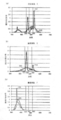
- FIG. 2 shows the weighting coefficient of the D65 light source and the F10 light source.
- FIG. 3 is an absorption spectrum of the coloring materials (FDB-001, FDG-005, and FDR-002 manufactured by Yamada Chemical Co., Ltd.) used in the examples.
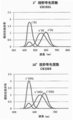
- FIG. 4 shows the color matching functions (x( ⁇ ), y( ⁇ ), z( ⁇ )) for the 2° field of view and the 10° field of view.
- FIG. 1 is a schematic cross-sectional view of the artificial leather with silver of the embodiment.
- FIG. 2 shows the weighting coefficient of the D65 light source and the F10 light source.
- FIG. 3 is an absorption spectrum of the coloring materials (FDB-001, FDG-005, and FDR-002 manufactured by Yamada Chemical Co., Ltd.) used in the examples.
- FIG. 4 shows the color matching functions (x( ⁇ ), y( ⁇ ), z( ⁇ )
- FIG. 5 is a spectral distribution S( ⁇ ) of standard light sources A and D65 and auxiliary light sources F6, F8, and F10 based on JIS Z 8720:2012 “Standard illuminant (standard light) and standard light source for color measurement”. ..
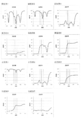
- FIG. 6 shows the spectral reflectance R( ⁇ ) of the surface of the artificial leather with silver obtained in Examples 1 to 6 and Comparative Examples 1 to 5.
- the L * value, C * value, and h value represent the lightness, saturation, and hue angle defined in JIS Z 8781-4:2013 “Measurement-Part 4: CIE1976 L * a * b * color space”, respectively. Values are defined as CIE1976 Lightness Index, CIELAB1976ab Chroma and CIELAB1976ab Hue Angle.
- the L * C * h color system is converted from the chromaticity (L * , a * , b * ) of the L * a * b * color system. Chromaticity by the L * a * b * color system can be measured by a spectrophotometer.
- Lightness L * value is a L * a * b * lightness L * value of color system.
- the lightness L * value is represented in the range of 0 (dark) to 99 (light).
- the saturation C * value is represented in the range of 0 (dull) to 99 (bright).
- the h value (hue angle) is represented in the range of 0 to 360°, for example, 0 to 59° is red to yellow, 60 to 119° is yellow to green, 120 to 179° is green to light blue, and 180 to 239° is light blue to blue, 240 to 299° is blue to purple, and 300 to 360° is purple to red.
- L * value, C * value and h value by illumination of the D65 light source are L * D65 , C * D65 and hD65, and L * value, C * value by illumination of the F10 light source and
- h values are L * F10 , C * F10 and hF10 , L * D65 is 30 to 95, and
- the chromaticity (L * , a * , b * ) of the object based on the L * a * b * color system changes depending on the spectral distribution S( ⁇ ) of the light source.
- a chromaticity (L * D65 , a * D65 , b * D65 ) according to the L * a * b * color system is selected by selecting a D65 light source showing a spectral distribution S( ⁇ ) D65.
- the color is measured, the F10 light source showing the spectral distribution S( ⁇ ) F10 is selected, and the chromaticity (L * F10 , a * F10 , b * F10 ) by the L * a * b * color coordinate system is measured. , (L * D65 , C * D65 , hD65 ) and (L * F10 , C * F10 , hF10 ) are converted into the L * C * h color system, L * D65 is 30 when calculated.
- the surface of the leather-like sheet of this embodiment has L * D65 of 30 to 95, 33 to 93, and further 35 to 90. With such a range of L * D65 , it becomes easy for a person to recognize a change in saturation or hue between when the D65 light source is selected and when the F10 light source is selected. When L * D65 exceeds 95, the surface becomes too bright and it becomes difficult for a person to notice the color change remarkably. On the other hand, when L * D65 is less than 30, the surface becomes too dark, and it becomes difficult for a person to notice the color change remarkably.
- the surface of the leather-like sheet of the present embodiment is such that
- the surface of the leather-like sheet of the present embodiment is such that
- the surface of the leather-like sheet of the present embodiment exhibits a relatively large color difference ⁇ E CMC by changing the tristimulus values XYZ in the case of the D65 light source and the F10 light source.
- ⁇ E CMC ⁇ 4 it is preferable that ⁇ E CMC ⁇ 4, further ⁇ E CMC ⁇ 5, and particularly ⁇ E CMC ⁇ 8.
- the leather-like sheet in the present invention is pseudo leather such as artificial leather or synthetic leather. Further, the surface thereof is a suede-like or nubuck-like shape in which the fibers of the surface of the fiber base material are raised even if the surface of the fiber base material is a silver-like leather-like sheet in which a surface resin layer having a silver surface tone is laminated. It may be a standing leather-like sheet.
- the leather-like sheet according to the present invention is a surface resin layer of a silver-like leather-like sheet, or in the coloring of the napped surface of a napped silver-like leather-like sheet, by incorporating a coloring material, the surface of the leather-like sheet is spectrally separated. The reflectance R( ⁇ ) is adjusted.
- L * D65 is 30-95, and,
- a leather-like sheet having a surface satisfying at least one selected from the conditions of ° is manufactured.
- FIG. 1 is a schematic cross-sectional view for explaining the layer structure of the artificial leather with silver 10, which is a leather-like sheet with silver.
- the artificial leather with silver 10 includes a fiber base material 1 and a resin layer 2 laminated on the fiber base material 1.
- the resin layer 2 has a spectral reflectance R( ⁇ ) of the surface adjusted by containing a coloring material as described later.
- the resin layer 2 may be a single layer or a layer composed of a plurality of layers including a resin skin layer, a resin intermediate layer, and an adhesive layer.
- the thickness of the resin layer 2 is not particularly limited, but is preferably about 10 to 300 ⁇ m, and more preferably about 30 to 200 ⁇ m.
- the resin layer 2 may be foamable, non-foamable, or a combination thereof.
- resins such as various polymer elastic bodies such as polyurethane, which are conventionally known for forming the silver surface of artificial leather or synthetic leather, are used without particular limitation. To be
- the fiber base material 1 a non-woven fabric, a woven fabric, a knitted fabric, or a base material obtained by impregnating them with a polymer elastic material such as polyurethane, or the like, which is conventionally known, is used for artificial leather or synthetic leather.
- the base material is used without particular limitation.
- the thickness of the fiber base material is not particularly limited, but is preferably about 300 to 3000 ⁇ m, more preferably about 500 to 1500 ⁇ m.
- the type of fibers forming the fiber base material is not particularly limited, and examples thereof include nylon fibers, polyester fibers, polyolefin fibers, polyurethane fibers, and the like. Further, the fineness of the fibers forming the fiber base material is not particularly limited.
- the weighting coefficient (X, Y, Z) and the spectral reflectance R( are selected depending on whether the D65 light source is selected or the F10 light source is selected.
- L * D65 is 30 to 95, and
- the D65 light source has broad continuous peaks at about 400 to 490 nm and at about 520 to 690 nm, respectively. ..
- the F10 light source has one peak having a peak top at about 450 nm and four discontinuous peaks having peak tops at about 540 nm, about 580 nm, about 590 nm and about 620 nm, respectively.
- the D65 light source has one broad continuous peak at about 430 to 680 nm.
- the F10 light source has one peak having a peak top at about 485 nm in the first region and four discontinuous peaks having peak tops at about 540 nm, about 580 nm, about 590 nm and about 620 nm, respectively.
- the D65 light source has a broad continuous peak with a maximum at about 460 nm.
- the F10 light source has a peak top at about 450 nm and a peak with a shoulder at about 460 nm.
- the tristimulus values XYZ are obtained by integrating the product of the weighting coefficient (X, Y, Z) and the spectral reflectance R( ⁇ ) with respect to the wavelength. Therefore, if the spectral reflectance R( ⁇ ) multiplied by each peak of the weighting coefficient (X, Y, Z) changes, the weighting coefficient (X, Y, Z) and the spectral reflectance R( ⁇ ) The integral value for the wavelength of the product of changes.
- the weighting coefficient X and the weighting coefficient Y are different from the weighting coefficient Z in the spectral shapes of the D65 light source and the F10 light source, so that the spectral reflectance R( ⁇ By adjusting the peak shape and the peak wavelength of ), the contribution of each peak of the weighting coefficient X and the weighting coefficient Y can be remarkably changed. As a result, the integral value of the product of the weighting coefficient (X, Y) and the spectral reflectance R( ⁇ ) with respect to the wavelength can be changed significantly.
- the weighting coefficient X of the D65 light source and the weighting coefficient X of the F10 light source are compared.
- the peak top of the F10 light source which overlaps the broad continuous peaks of the D65 light source, is around 530 nm, which is near the peak start of the peak of 540 nm, the peak top is near 560 nm, which is near the peak end of the peak of 540 nm, or the peak and peak top at 590 nm.
- the relative spectral distribution of D65 is significantly larger than the relative spectral distribution of F10.
- the weighting coefficient X by the D65 light source is adjusted.
- the integrated value with respect to the wavelength of the product of and the spectral reflectance R( ⁇ ) tends to be larger than the integrated value with respect to the wavelength of the product of the weighting coefficient X by the F10 light source and the spectral reflectance R( ⁇ ).
- the tristimulus value X which is an integral value with respect to the wavelength of the product of the weighting coefficient X and the spectral reflectance R( ⁇ ), changes significantly.
- the weighting coefficient Y of the D65 light source and the weighting coefficient Y of the F10 light source are compared.
- the peak top of the F10 light source which overlaps the broad continuous peaks of the D65 light source, is around 530 nm, which is near the peak start of the peak of 540 nm, the peak top is near 560 nm, which is near the peak end of the peak of 540 nm, or the peak and peak top at 590 nm.
- the relative spectral distribution of D65 is significantly larger than the relative spectral intensity of F10.
- the weighting coefficient Y by the D65 light source is adjusted.
- the integrated value with respect to the wavelength of the product of and the spectral reflectance R( ⁇ ) tends to be larger than the integrated value with respect to the wavelength of the product of the weighting coefficient Y by the F10 light source and the spectral reflectance R( ⁇ ).
- the tristimulus value Y which is the integral value with respect to the wavelength of the product of the weighting coefficient Y and the spectral reflectance R( ⁇ ), changes greatly.
- L * D65 is 30 to 95
- Toning can be performed so as to satisfy at least one selected from the conditions of ⁇ 7 and
- Such spectral reflectance R( ⁇ ) is about 530 nm (520 to 540 nm) which is near the peak start of the peak top of 540 nm of the F10 light source, and 560 nm which is near the peak end of the peak top of 540 nm of the F10 light source.
- the maximum reflectance is R max and the minimum reflectance is R min in the vicinity (550 to 570 nm) and in each wavelength range around 600 nm (590 to 610 nm), which is a trough between the peak of peak 590 nm and the peak of peak 620 nm.
- the integrated value with respect to the wavelength of the product obtained by multiplying the weighting coefficient by the spectral reflectance R( ⁇ ) is easily changed between the D65 light source and the F10 light source.
- the maximum absorption wavelength peak of the absorbance is in the range of 380 to 780 nm.
- a coloring material containing at least one dye (hereinafter, also referred to as a color filter dye) that occupies a peak area of 50% or more of the integrated value and has a peak with a small full width at half maximum (preferably having a full width at half maximum of 70 nm or less). Is preferred.
- color filter dyes include, for example, FDB-001 (maximum absorption wavelength 420 nm), FDB-002 (maximum absorption wavelength 431 nm), FDB-003 (maximum absorption wavelength 437 nm, manufactured by Yamada Chemical Industry Co., Ltd.). ), FDB-004 (maximum absorption wavelength 445 nm), FDB-005 (maximum absorption wavelength 452 nm), FDB-006 (maximum absorption wavelength 473 nm), FDB-0017 (maximum absorption wavelength 496 nm), and other blue wavelengths around 380 to 500 nm.
- FDB-001 maximum absorption wavelength 420 nm
- FDB-002 maximum absorption wavelength 431 nm
- FDB-003 maximum absorption wavelength 437 nm, manufactured by Yamada Chemical Industry Co., Ltd.
- FDB-004 maximum absorption wavelength 445 nm
- FDB-005 maximum absorption wavelength 452 n
- FDG-001 maximum absorption wavelength 503 nm
- FDG-002 maximum absorption wavelength 525 nm
- FDG-003 maximum absorption wavelength 547 nm
- FDG-004 maximum absorption wavelength 578 nm
- FDG-005 A dye that absorbs green light around a wavelength of 500 to 600 nm, such as maximum absorption wavelength 583 nm
- FDG-006 maximum absorption wavelength 585 nm
- FDG-007 maximum absorption wavelength 594 nm
- FDR-001 maximum absorption wavelength 609 nm
- FDR-002 maximum absorption wavelength 680 nm
- FDR-003 maximum absorption wavelength 695 nm
- FDR-004 maximum absorption wavelength 716 nm
- FDR-005 maximum absorption wavelength 725 nm
- L * D65 is 30-95, and,
- Other dyes other than the color filter dyes may be blended as necessary as long as a surface satisfying at least one selected from the condition of 7° is obtained.
- the above color filter dyes and other dyes may be used alone or in combination of two or more kinds.
- the blending ratio thereof is appropriately adjusted according to the intended color, but it is preferably 0.001 to 0 as a ratio to the resin contained in the resin layer. 0.8, more preferably 0.005 to 0.6, and particularly preferably 0.01 to 0.5.
- the artificial leather with silver which is a leather-like sheet with silver
- the leather-like sheet according to the present invention is not limited to the silver-like leather-like sheet, and may be a suede-like or nubuck-like standing leather-like sheet in which fibers on the surface of the fiber base material are raised.
- L * D65 is 30-95, and,
- the surface satisfies at least one selected from the condition of D65
- Such a surface can be adjusted by fixing the above-mentioned coloring material to the fiber base material with a binder such as a polymeric elastic body.
- the above-described leather-like sheet of this embodiment is preferably used as a skin material for bags, clothing, shoes, and the like.
- FDB-001 maximum absorption wavelength 420 nm, half-value width 25 ⁇ m color filter dye, red dissolved color, manufactured by Yamada Chemical Industry Co., Ltd.
- FDG-005 maximum absorption wavelength 583 nm, color filter dye with a half-value width of 18 ⁇ m, dissolved color purple, manufactured by Yamada Chemical Industry Co., Ltd.
- FDR-002 color filter dye with maximum absorption wavelength of 680 nm, full width at half maximum of 27 ⁇ m, dissolved blue, manufactured by Yamada Chemical Industry Co., Ltd.
- ⁇ PBk-7 carbon black, manufactured by Dainichiseika Kogyo Co., Ltd.
- ⁇ PY-73 CI Pigment Yellow 73
- PY-42 CI Pigment Yellow 42
- PY-3 CI Pigment Yellow 3)
- PG-7 CI Pigment Green 7
- ⁇ Visual evaluation> A 10 cm square test piece was cut out from the artificial leather with silver. Then, the test piece was visually observed under a D65 standard light source and an F10 light source three-wavelength neutral white fluorescent lamp in a standard light source box (GretagMacbeth SpetraLight III manufactured by x-lite), and judged according to the following criteria. Grade 3: Hue and saturation changed significantly under two light sources. Grade 2: The difference in hue and saturation changed under the two light sources to such an extent that it could be visually recognized. First grade: almost unchanged.
- Example 1 A 0.6 mm-thick fiber base material was prepared by impregnating a non-woven fabric of PET long fibers having a fineness of 0.08 decitex with polyurethane so that the mass ratio of polyurethane/long fibers was 12/88. Then, a resin layer having a silver surface tone was laminated on the fiber base material as described below.
- a 30% by mass polyurethane DMF/MEK (1:1) solution containing a non-yellowing polycarbonate-based polyurethane was dispersed at a ratio shown in Table 1 with a mixture of the dyes FDB-001, FDG-005 and FDR-002.
- a resin solution was prepared. In the solid content of the resin liquid, the pigment was blended in a mass ratio of 0.1 of the pigment to 1 of the polyurethane.
- a resin solution for forming the prepared polyurethane layer was applied on a release paper and then dried at 120° C. for 2 minutes to form a polyurethane skin layer having a thickness of 30 ⁇ m.
- a polyurethane solution for forming an adhesive layer was applied to the surface of the film of the polyurethane layer formed on the release paper in an amount corresponding to a dry thickness of 60 ⁇ m, and then dried at 80° C. for 1 minute to make a semi-dry state.
- the thus-formed semi-dry adhesive layer on the release paper was placed in contact with the slice surface of the fiber base material, and pressure-bonded with a roll. Then, after aging at 50° C. for 3 days, the release paper was peeled off to obtain a blue-colored artificial leather with silver.
- FIG. 6 shows the spectral reflectance R( ⁇ ) of the surface of the obtained artificial leather with silver.
- Examples 2 to 6, Comparative Examples 1 to 4 An artificial leather with silver was obtained and evaluated in the same manner as in Example 1 except that the composition of the dye was changed as shown in Table 1. The results are shown in Table 1. Further, FIG. 6 shows the spectral reflectance R( ⁇ ) of the surface of the obtained artificial leather with silver.
- a fiber base material with a thickness of 0.6 mm and a basis weight of 330 g/cm 3 is obtained by impregnating a non-woven fabric of PET long fibers with a fineness of 0.08 decitex with polyurethane so that the mass ratio of polyurethane/long fibers is 12/88.
- a base fabric of suede-like artificial leather containing and napped surface was prepared. Then, the base cloth is boiled in hot water of 80° C. for 20 minutes so that the cloth is relaxed and the cloth is relaxed. Then, a high-pressure jet dyeing machine (circular dyeing machine of Hisaka Seisakusho Co., Ltd.) is used. It was dyed in gray under the following conditions. Thus, a dyed suede-like artificial leather was obtained. Then, the suede-like artificial leather was evaluated in the same manner as in Example 1. The results are shown in Table 1.
- L * D65 according to the present invention is 30 to 95, and,
- L * D65 are Comparative Examples 1 and L * D65 comparative Example 2 of less than 30 greater than 95,
- 0.23,
- 0.44,
Landscapes
- Engineering & Computer Science (AREA)
- Textile Engineering (AREA)
- Chemical & Material Sciences (AREA)
- Chemical Kinetics & Catalysis (AREA)
- Dispersion Chemistry (AREA)
- Synthetic Leather, Interior Materials Or Flexible Sheet Materials (AREA)
Abstract
D65光源の照明によるL*値,C*値及びh値をL*
D65
,C*
D65及びhD65とし、F10光源の照明によるL*値,C*値及びh値をL*
F10
,C*
F10及びhF10とした場合、L*
D65が30~95であり、且つ、|ΔC|=|C*
F10-C*
D65| ≧7、及び|Δh°|=|hF10-hD65|≧7°の条件から選ばれる少なくとも一方を満たす表面を有する皮革様シートである。
Description
本発明は、皮革様シートの外観に関する。詳しくは、太陽光,蛍光灯,白熱電球等の光源から光を照射した場合に、それぞれ異なった色に認識されやすい皮革様シートに関する。
鞄や衣料や靴等の表皮材として、天然皮革に似せた人工皮革等の皮革様シートが知られている。具体的には、例えば、繊維基材と、繊維基材に積層された樹脂層を含む銀付皮革様シートや、繊維基材の表層の繊維を立毛処理した立毛面を有する立毛人工皮革が知られている。
同じ物体であっても、照明する光の波長スペクトルにより色の見え方が異なる特性として、演色性が知られている。演色性は、例えば、同じ白色光源であっても、太陽光に照明されたときと、白色蛍光灯に照明されたときでは、人に色が異なるように認識される特性である。一般的に、光源の種類による依存性が低い、すなわち、光源の種類を変更しても、人に認識される色が変化しにくい物体は、演色性が良いと評価される。
演色性の良い皮革様シートとして、例えば、下記特許文献1は、表面に0.3dtex以下の極細ポリエステル繊維からなるスエード調の立毛を有し、かつ5種類以上の染料を用いて染色されたスエード調人工皮革であり、該スエード調の立毛を有する面で測定されるF6光源とD65光源での色差ΔEが1.2以下であることを特徴とするスエード調人工皮革を開示する。そして、このようなスエード調人工皮革は、標準光源(太陽光源)下と、白色蛍光灯光源下で見える色の見え方の差が小さいことを開示する。
また、色変化する物体として、例えば、下記特許文献2は、ホルミウム、プラセオジム、ネオジム及びエルビウムから選ばれる少なくとも1種の希土類元素酸化物の微粒子を含有するセラミック原料を、所定形状に形成した後に焼成することによって製造され、外部光源の種類に応じて可逆的に変色することを特徴とする演色性セラミック製品を開示する。
特許文献1に開示された、光源の種類を変更しても人に認識される色が変化しにくい演色性に優れた皮革様シートは知られていた。一方、光源の種類を変更した場合に人に認識される色が顕著に変化する、意匠性に優れた皮革様シートは知られていなかった。また、特許文献2に開示された技術では、皮革様シートを着色することは困難であった。
本発明は、太陽光をイメージしたD65光源の照明と蛍光灯の三波長型昼白色をイメージしたF10光源の照明とを用いた場合に、互いに顕著に異なった色に認識される、新規な意匠性を有する皮革様シートを提供することを目的とする。
物体の色の表色手法として、光の三原色(RGB)の混色理論に基づく、国際照明委員会(CIE)において定められた三刺激値XYZが広く採用されている。Xは赤成分(R)を示し、Yは緑成分(G)を示し、Zは青成分(B)を示す。各成分が大きいほど、その混色量が大きいことを意味する。三刺激値XYZは、等色関数(x(λ),y(λ),z(λ))と照明光の分光分布S(λ)と物体の分光反射率R(λ)との積を波長に対して積分することにより求められる。等色関数(x(λ),y(λ),z(λ))は、人の眼が光を受けた場合に光の、赤,緑,青の成分による錐体の応答特性(分光応答度)を表す。国際照明委員会(CIE)においては、等色関数は2°視野の場合と10°視野の場合が採用されている(図4参照)。
また、照明光の分光分布S(λ)は、例えば、JIS Z 8720:2012「測色用の標準イルミナント(標準の光)及び標準光源」において、標準の光AとD65の標準光源の他、F6,F8,F10等の補助イルミナントが規定されている(図5参照)。D65は相関色温度が6504Kの昼光色をイメージした光源であり、F10は広く用いられている蛍光灯の三波長型昼白色をイメージした相関色温度が5000Kの光源であり、何れも白色光である。一般に、F10は高演色性光源とされ、F6光源に比べてD65光源との色差が出にくい光源である。本発明は、F6光源よりも演色性の良い高演色性光源F10を使用した場合においても、D65光源の照明を使用したときの色と顕著に異なった色として認識される皮革様シートである。
また、等色関数(x(λ),y(λ),z(λ))と照明光の分光分布S(λ)との積は、物体の分光反射率R(λ)に対する重価係数と称される。図2にD65光源及びF10光源の重価係数を示す。
所定の照明光の分光分布S(λ)を用いたとき、その重価係数と各物体の色の分光反射率R(λ)との積を波長に対して積分することにより物体の色の三刺激値XYZが求められる。すなわち、重価係数に分光反射率R(λ)を乗じてさらに波長に対して積分することにより、所定の分光分布S(λ)の照明光の下において、物体表面で反射された光が目に入って人に認知される色を表現する、三刺激値XYZが求められる。一般的に演色性が良いとは、照明光の分光分布S(λ)によらず、人に認知される色が変化しにくい特性を意味し、演色性がわるいとは、照明光の分光分布S(λ)により、人に認知される色が変化しやすい特性を意味する。
本発明者らは、等色関数(x(λ),y(λ),z(λ))と照明光の分光分布S(λ)との積である重価係数のスペクトルを検討し、物体の分光反射率R(λ)を調整することにより、太陽光をイメージしたD65光源の分光分布S(λ)D65を蛍光灯の三波長型昼白色をイメージしたF10光源の分光分布S(λ)F10に変えたときに、三刺激値XYZが変化して、人に認識させる色を顕著に変化させる手段の利用を見出した。
すなわち、本発明の一局面は、D65光源の照明によるL*値,C*値及びh値をL*
D65
,C*
D65及びhD65とし、F10光源の照明によるL*値,C*値及びh値をL*
F10
,C*
F10及びhF10とした場合、L*
D65が30~95であり、且つ、|ΔC|=|C*
F10-C*
D65|≧7、及び|Δh°|=|hF10-hD65|≧7°の条件から選ばれる少なくとも一方を満たす表面を有する皮革様シートである。L*
D65が30~95であり、|ΔC|=|C*
F10-C*
D65|≧7、及び|Δh°|=|hF10-hD65|≧7°の条件から選ばれる少なくとも一方を満たす表面を有する場合には、光源を変更したときに皮革様シートの色の変化が明確に識別できる。
また、皮革様シートは、分光反射率R(λ)の520~540nm,550~570nm,及び590~610nmの各波長範囲のそれぞれにおいて、最大反射率をRmax、最小反射率をRminとしたとき、少なくとも1つの波長範囲で、(1-Rmax)/(1-Rmin)≦0.8を満たす表面を有することが好ましい。このような場合、分光反射率R(λ)と重価係数との積の波長に対する積分値から算出される三刺激値XYZが、D65光源により照明された場合とF10光源により照明された場合とで変化し、|ΔC|=|C*
F10-C*
D65|≧7、及び|Δh°|=|hF10-hD65|≧7°の条件から選ばれる少なくとも一方を満たす表面が得られやすくなる点から好ましい。
また、皮革様シートは、表面樹脂層を備える銀付皮革様シートであり、表面樹脂層にカラーフィルター色素を含ませることにより、上述したような表面樹脂層の色が変化する銀付皮革様シートが得られやすくなる点から好ましい。
また、表面が立毛処理された、繊維基材を含む立毛皮革様シートであり、繊維基材にカラーフィルター色素を含ませることにより、立毛処理された表面の色が変化する立毛皮革様シートが得られやすくなる点から好ましい。
本発明によれば、太陽光をイメージしたD65光源の照明と蛍光灯の三波長型昼白色をイメージしたF10光源の照明とを用いた場合に、互いに顕著に異なった色に認識される、新規な意匠性を有する皮革様シートが得られる。
はじめに、L*値,C*値及びh値について説明する。L*値,C*値及びh値はそれぞれ、JIS Z 8781-4:2013「測色-第4部:CIE1976L*a*b*色空間」に規定される明度,彩度,色相角度を表す値であり、CIE1976明度指数,CIELAB1976abクロマおよびCIELAB1976ab色相角として定義される。L*C*h表色系は、L*a*b*表色系の色度(L*,a*,b*)から変換される。L*a*b*表色系による色度は、分光光度計により測定することができる。
明度L*値は、L*a*b*表色系の明度L*値である。また、彩度C*値は、L*a*b*表色系のa*とb*の値から、C*=[(a*)2+(b*)2]1/2、の式から求められる。また、色相角度h値は、h=tan-1[(b*)/(a*)]、の式から求められる。
明度L*値は、0(暗)~99(明)の範囲で表される。彩度C*値は、0(くすんだ)~99(鮮やか)の範囲で表される。また、h値(色相角度)は0~360°の範囲で表され、例えば、0~59°は赤~黄色、60~119°は黄色~緑、120~179°は緑~水色、180~239°は水色~青、240~299°は青~紫、300~360°は紫~赤の範囲を表す。
本実施形態の皮革様シートは、D65光源の照明によるL*値,C*値及びh値をL*
D65,C*
D65及びhD65とし、F10光源の照明によるL*値,C*値及びh値をL*
F10
,C*
F10及びhF10とした場合、L*
D65が30~95であり、且つ、|ΔC|=|C*
F10-C*
D65|≧7、及び|Δh°|=|hF10-hD65|≧7°の条件から選ばれる少なくとも一方を満たす表面を有する。
物体のL*a*b*表色系による色度(L*,a*,b*)は、光源の分光分布S(λ)により変化する。本実施形態の皮革様シートは、分光分布S(λ)D65を示すD65光源を選択してL*a*b*表色系による色度(L*
D65,a*
D65,b*
D65)を測色し、分光分布S(λ)F10を示すF10光源を選択してL*a*b*表色系による色度(L*
F10,a*
F10,b*
F10)を測色し、それぞれ、L*C*h表色系に換算して、(L*
D65,C*
D65,hD65)、(L*
F10,C*
F10,hF10)を算出したときに、L*
D65が30~95であり、且つ、|ΔC|=|C*
F10-C*
D65|≧7、及び|Δh°|=|hF10-hD65|≧7°の条件から選ばれる少なくとも一方を満たすような表面を得るように調整されたものである。このような表面を有する皮革様シートによれば、太陽光下で見た場合と、白色蛍光灯下で見た場合とにおいて、人に認識される色が顕著に変化する皮革様シートが得られる。
本実施形態の皮革様シートの表面は、L*
D65は30~95であり、33~93、さらには、35~90、である。このようなL*
D65の範囲であることにより、D65光源を選択した場合とF10光源を選択した場合とにおいて、彩度や色相の変化が人に認識されやすくなる。L*
D65が95を超える場合には、表面が明るくなりすぎて人が色の変化を顕著に認識することが困難になる。また、L*
D65が30未満の場合には、表面が暗くなりすぎて人が色の変化を顕著に認識することが困難になる。
また、本実施形態の皮革様シートの表面は、|ΔC|=|C*
F10-C*
D65|≧7の場合、さらには、|ΔC|≧10、とくには、|ΔC|≧12、であることが好ましい。このような|ΔC|の範囲であることにより、D65光源を選択した場合と、F10光源を選択した場合とにおいて、彩度が変化することにより、人に色の変化を顕著に認識させることができる。
また、本実施形態の皮革様シートの表面は、|Δh°|= |hF10-hD65|≧7°の場合、さらには、|Δh°|≧10°、とくには、|Δh°|≧12°、であることが好ましい。このような|Δh°|の範囲であることにより、D65光源を選択した場合と、F10光源を選択した場合とにおいて、色相が変化することにより、人に色の変化を顕著に認識させることができる。
また、本実施形態の皮革様シートの表面は、D65光源とF10光源との場合において、三刺激値XYZが変化することにより、比較的大きい色差ΔECMCを示すことが好ましい。具体的には、例えば、ΔECMC≧4、さらには、ΔECMC≧5、とくには、ΔECMC≧8であることが好ましい。なお、色差ΔECMCは、JIS Z 8730:2009「色の表示方法-物体色の色差」付属書A A.2に記載のCMC(l:c)色差式によって表され、l=c=1である。
本発明における、皮革様シートとは、人工皮革や合成皮革のような疑似皮革である。また、それらの表面は、繊維基材の表面に銀面調の表面樹脂層を積層した銀付皮革様シートであっても、繊維基材の表面の繊維を起毛したスエード調やヌバック調である立毛皮革様シートであってもよい。そして、本発明に係る皮革様シートは、銀付皮革様シートの表面樹脂層や、立毛銀付皮革様シートの立毛面の着色において、色材を含有させることにより、皮革様シートの表面の分光反射率R(λ)が調整されている。そして、上述したような、L*
D65が30~95であり、且つ、|ΔC|=|C*
F10-C*
D65|≧7、及び|Δh°|=|hF10-hD65|≧7°の条件から選ばれる少なくとも一方を満たす表面を有する皮革様シートを製造する。
一例として、図1は、銀付皮革様シートである銀付人工皮革10の層構成を説明する模式断面図である。銀付人工皮革10は、繊維基材1と、繊維基材1に積層された樹脂層2とを備える。
樹脂層2は、後述するような色材を含有させることにより、表面の分光反射率R(λ)が調整されている。樹脂層2は、単層であっても、樹脂表皮層,樹脂中間層,及び接着層を含むような複数層から構成される層であってもよい。樹脂層2の厚さは、特に限定されないが、例えば、10~300μm、さらには30~200μm程度であることが好ましい。また、樹脂層2は、発泡性であっても、非発泡性であっても、それらの組み合わせであってもよい。樹脂層2を形成するための樹脂としては、従来知られた、人工皮革や合成皮革の銀面を形成するために用いられているポリウレタン等の各種高分子弾性体等の樹脂が特に限定なく用いられる。
また、繊維基材1としては、不織布,織物,編物,またはそれらにポリウレタン等の高分子弾性体を含浸付与された基材等、従来知られた、人工皮革や合成皮革に用いられている繊維基材が特に限定なく用いられる。繊維基材の厚さも特に限定されないが、例えば、300~3000μm、さらには500~1500μm程度であることが好ましい。また、繊維基材を形成する繊維の種類も特に限定されず、例えば、ナイロン系繊維,ポリエステル系繊維,ポリオレフィン系繊維,ポリウレタン系繊維等,とくに限定されない。また、繊維基材を形成する繊維の繊度も特に限定されない。
分光反射率R(λ)を調整するための色材としては、D65光源を選択した場合と、F10光源を選択した場合とにおいて、重価係数(X,Y,Z)と分光反射率R(λ)との積の波長に対する積分値から求められる三刺激値XYZを変化させることにより、L*
D65が30~95であり、且つ、|ΔC|=|C*
F10-C*
D65|≧7、及び|Δh°|=|hF10-hD65|≧7°の条件から選ばれる少なくとも一方を満たす表面に調色できるものが選択される。以下、図2を参照して、詳しく説明する。
三刺激値XYZの赤みXに影響を与える、図2(a)の重価係数Xにおいては、D65光源は約400~490nmと、約520~690nmにそれぞれ、一つずつブロードな連続ピークを有する。一方、F10光源は約450nmにピークトップを有する1つのピークと、約540nm,約580nm,約590nm及び約620nmにそれぞれピークトップを有する不連続ピークを4つ有する。
また、三刺激値XYZの緑みYに影響を与える、図2(b)の重価係数Yにおいては、D65光源は約430~680nmに一つのブロードな連続ピークを有する。一方、F10光源は第1領域の約485nmにピークトップを有する1つのピークと、約540nm、約580nm、約590nm及び約620nmにそれぞれピークトップを有する不連続ピークを4つ有する。
また、三刺激値XYZの青みZに影響を与える、図2(c)の重価係数Zにおいては、D65光源は約460nmを極大とするブロードな連続ピークを有する。一方、F10光源は約450nmにピークトップを有し、約460nmにショルダを有するピークを有する。
上述したように、三刺激値XYZは、重価係数(X,Y,Z)と分光反射率R(λ)との積を波長に対して積分することにより求められる。そのために、重価係数(X,Y,Z)の各ピークに乗じられる分光反射率R(λ)が変化すれば、重価係数(X,Y,Z)と分光反射率R(λ)との積の波長に対する積分値が変化する。とくに、重価係数X及び重価係数Yは、重価係数Zに比べて、D65光源とF10光源との場合において、スペクトル形状が大きく異なるために、各ピークに乗じられる分光反射率R(λ)のピーク形状やピーク波長を調整することにより、重価係数X及び重価係数Yの各ピークの寄与度を顕著に変化させることができる。その結果、重価係数(X,Y)と分光反射率R(λ)との積の波長に対する積分値を大きく変化させることができる。
具体的には、図2(a)を参照して、D65光源の重価係数XとF10光源の重価係数Xとを比較する。D65光源のブロードな連続ピークに重なる、F10光源のピークトップ540nmのピークのピークスタート付近である530nm付近、ピークトップ540nmのピークのピークエンド付近である560nm付近、またはピークトップ590nmのピークとピークトップ620nmのピークの谷である600nm付近においては、D65の相対分光分布がF10の相対分光分布よりも顕著に大きい。そのために、D65の相対分光分布がF10の相対分光分布よりも顕著に大きいこれらの波長領域において、乗じられる分光反射率R(λ)を大きくするように調整した場合、D65光源による重価係数Xと分光反射率R(λ)との積の波長に対する積算値は、F10光源による重価係数Xと分光反射率R(λ)との積の波長に対する積算値に対して大きくなりやすくなる。その結果、D65光源とF10光源とを切り替えた場合において、重価係数Xと分光反射率R(λ)との積の波長に対する積分値である、三刺激値のXが大きく変化する。
同様に、図2(b)を参照して、D65光源の重価係数YとF10光源の重価係数Yとを比較する。D65光源のブロードな連続ピークに重なる、F10光源のピークトップ540nmのピークのピークスタート付近である530nm付近、ピークトップ540nmのピークのピークエンド付近である560nm付近、またはピークトップ590nmのピークとピークトップ620nmのピークの谷である600nm付近の波長においては、D65の相対分光分布がF10の相対分光強度よりも顕著に大きい。そのために、D65の相対分光分布がF10の相対分光分布よりも顕著に大きいこれらの波長領域において、乗じられる分光反射率R(λ)を大きくするように調整した場合、D65光源による重価係数Yと分光反射率R(λ)との積の波長に対する積算値は、F10光源による重価係数Yと分光反射率R(λ)との積の波長に対する積算値に対して大きくなりやすくなる。その結果、D65光源とF10光源とを切り替えた場合において、重価係数Yと分光反射率R(λ)との積の波長に対する積分値である、三刺激値のYが大きく変化する。
上述のように、樹脂層の表面の分光反射率R(λ)を調整することによれば、L*
D65が30~95であり、且つ、|ΔC|=|C*
F10-C*
D65|≧7、及び|Δh°|=|hF10-hD65|≧7°の条件から選ばれる少なくとも一方を満たすように調色できる。
このような分光反射率R(λ)としては、F10光源のピークトップ540nmのピークのピークスタート付近である530nm付近(520~540nm),F10光源のピークトップ540nmのピークのピークエンド付近である560nm付近(550~570nm),及びピークトップ590nmのピークとピークトップ620nmのピークの谷である600nm付近(590~610nm)の各波長範囲における最大反射率をRmax、最小反射率をRminとしたとき、少なくとも1つの波長範囲で、(1-Rmax)/(1-Rmin)≦0.8,さらには、(1-Rmax)/(1-Rmin)≦0.7を満たす表面を有するように調整することにより、分光反射率R(λ)を重価係数に乗じた積の波長に対する積分値が、D65光源とF10光源とで大きく変化させやすい点から好ましい。
上述のような分光反射率R(λ)を調整するために用いられる色材としては、例えば、380~780nmの可視光域において、吸光度の極大吸収波長ピークであって、380~780nmの範囲の積分値の50%以上のピーク面積を占め、半値幅が小さい(好ましくは、半値幅が70nm以下)ピークを有する色素(以下、カラーフィルター色素とも称する)を少なくとも1種含有する色材であることが好ましい。
カラーフィルター色素の具体例としては、例えば、何れも山田化学工業(株)製の、FDB-001(極大吸収波長420nm),FDB-002(極大吸収波長431nm),FDB-003(極大吸収波長437nm),FDB-004(極大吸収波長445nm),FDB-005(極大吸収波長452nm),FDB-006(極大吸収波長473nm),FDB-0017(極大吸収波長496nm)等の波長380~500nm付近の青色光を吸収する色素;FDG-001(極大吸収波長503nm),FDG-002(極大吸収波長525nm),FDG-003(極大吸収波長547nm),FDG-004(極大吸収波長578nm),FDG-005(極大吸収波長583nm),FDG-006(極大吸収波長585nm),FDG-007(極大吸収波長594nm)等の波長500~600nm付近の緑色光を吸収する色素;FDR-001(極大吸収波長609nm),FDR-002(極大吸収波長680nm),FDR-003(極大吸収波長695nm),FDR-004(極大吸収波長716nm),FDR-005(極大吸収波長725nm)等の波長600~780nm付近の赤色光を吸収する色素等が挙げられる。一例として、図3に、FDB-001,FDG-005,FDR-002のそれぞれの、クロロホルム中での吸光度のスペクトルを示す。
また、色材中には、L*
D65が30~95であり、且つ、|ΔC|=|C*
F10-C*
D65|≧7、及び|Δh°|=|hF10-hD65|≧7°の条件から選ばれる少なくとも一方を満たす表面が得られる限り、カラーフィルター色素以外のその他の色素を必要に応じて配合してもよい。
上記カラーフィルター色素及びその他の色素は、それぞれ単独で用いても、2種以上を組み合わせて用いてもよい。
樹脂層に色材を配合する場合、その配合比は、目的とする色に応じて、適宜調整されるが、好ましくは、樹脂層中に含有される樹脂に対する比率としては、0.001~0.8、さらには、0.005~0.6、とくには、0.01~0.5であることが好ましい。
以上、本発明に係る皮革様シートとして、銀付皮革様シートである銀付人工皮革を例示して詳しく説明した。本発明に係る皮革様シートは、銀付皮革様シートに限られず、繊維基材の表面の繊維を起毛したスエード調やヌバック調である立毛皮革様シートであってもよい。立毛皮革様シートの場合、立毛面が、L*
D65が30~95であり、且つ、|ΔC|=|C*
F10-C*
D65|≧7、及び|Δh°|=|hF10-hD65|≧7°の条件から選ばれる少なくとも一方を満たす表面になる。このような表面は、繊維基材に上述した色材を高分子弾性体等のバインダで固定したりすることにより調整することができる。
以上説明した、本実施形態の皮革様シートは、鞄や衣料や靴等の表皮材として好ましく用いられる
以下、実施例により本発明をさらに具体的に説明する。なお、本発明の範囲はこれらの実施例に何ら限定されるものではない。
はじめに、本実施例で用いた色素について以下にまとめて示す。
・FDB-001(極大吸収波長420nm、半値幅25μmのカラーフィルター色素、溶解色赤、山田化学工業(株)製)
・FDG-005(極大吸収波長583nm、半値幅18μmのカラーフィルター色素、溶解色紫、山田化学工業(株)製)
・FDR-002(極大吸収波長680nm、半値幅27μmのカラーフィルター色素、溶解色青、山田化学工業(株)製)
・PBk-7(カーボンブラック、大日精化工業(株)製)
・PY-73(C.I. Pigment Yellow 73)
・PY-42(C.I. Pigment Yellow 42)
・PY-3(C.I. Pigment Yellow 3)
・PG-7(C.I. Pigment Green 7)
・FDB-001(極大吸収波長420nm、半値幅25μmのカラーフィルター色素、溶解色赤、山田化学工業(株)製)
・FDG-005(極大吸収波長583nm、半値幅18μmのカラーフィルター色素、溶解色紫、山田化学工業(株)製)
・FDR-002(極大吸収波長680nm、半値幅27μmのカラーフィルター色素、溶解色青、山田化学工業(株)製)
・PBk-7(カーボンブラック、大日精化工業(株)製)
・PY-73(C.I. Pigment Yellow 73)
・PY-42(C.I. Pigment Yellow 42)
・PY-3(C.I. Pigment Yellow 3)
・PG-7(C.I. Pigment Green 7)
また、実施例で用いた評価方法を以下にまとめて示す。
〈測色〉
分光光度計((株)日立ハイテクノロジーズ製:U-3010)を用いて、銀付人工皮革の表面の反射スペクトルを測定した。そして、得られた反射スペクトルからJISZ 8781に準拠して、視野角10°での2種類の光源(D65,F10)におけるL*a*b*表色系の座標値をそれぞれ算出した。そして、明度L*値(L* D65,L* F10),彩度C*値(C* D65,C* F10),色相角度h値(hD65,hF10),及びそれらの色差成分である、|ΔC|,|Δh°|,ΔECMC(l=c=1)を求めた。なお、値は、試験片から平均的な位置を万遍なく選択して測定された3点の平均値である。
分光光度計((株)日立ハイテクノロジーズ製:U-3010)を用いて、銀付人工皮革の表面の反射スペクトルを測定した。そして、得られた反射スペクトルからJISZ 8781に準拠して、視野角10°での2種類の光源(D65,F10)におけるL*a*b*表色系の座標値をそれぞれ算出した。そして、明度L*値(L* D65,L* F10),彩度C*値(C* D65,C* F10),色相角度h値(hD65,hF10),及びそれらの色差成分である、|ΔC|,|Δh°|,ΔECMC(l=c=1)を求めた。なお、値は、試験片から平均的な位置を万遍なく選択して測定された3点の平均値である。
〈視覚評価〉
銀付人工皮革から10cm角の試験片を切り出した。そして、試験片を標準光源ボックス(x-lite社製 GretagMacbeth SpetraLight III)内のD65標準光源下及びF10光源三波長型昼白色蛍光灯下でそれぞれ目視で観察し、以下の基準で判定した。
3級:2つの光源下で色相や彩度が大きく変化した。
2級:2つの光源下で色相や彩度の差が視認できる程度に変化した。
1級:ほとんど変わらなかった。
銀付人工皮革から10cm角の試験片を切り出した。そして、試験片を標準光源ボックス(x-lite社製 GretagMacbeth SpetraLight III)内のD65標準光源下及びF10光源三波長型昼白色蛍光灯下でそれぞれ目視で観察し、以下の基準で判定した。
3級:2つの光源下で色相や彩度が大きく変化した。
2級:2つの光源下で色相や彩度の差が視認できる程度に変化した。
1級:ほとんど変わらなかった。
[実施例1]
繊度0.08デシテックスのPET系の長繊維の不織布にポリウレタン/長繊維の質量比が12/88になるようにポリウレタンを含浸させた、厚み0.6mmの繊維基材を準備した。そして、繊維基材に以下に説明するようにして、銀面調の樹脂層を積層した。
繊度0.08デシテックスのPET系の長繊維の不織布にポリウレタン/長繊維の質量比が12/88になるようにポリウレタンを含浸させた、厚み0.6mmの繊維基材を準備した。そして、繊維基材に以下に説明するようにして、銀面調の樹脂層を積層した。
無黄変ポリカーボネート系ポリウレタンを含有する30質量%ポリウレタンDMF/MEK(1:1)溶液に、表1に示す割合で、色素FDB-001,FDG-005及びFDR-002を混合した色素を分散させた樹脂液を調製した。なお、樹脂液の固形分中には、色素がポリウレタン1に対して色素0.1になる質量比で配合されていた。剥離紙上に、調製されたポリウレタン層を形成する樹脂液を塗布した後、120℃で2分間乾燥することにより、厚さ30μmのポリウレタン表皮層を形成した。
次に、剥離紙上に形成された表皮ポリウレタン層の表面に上述したものと同じポリウレタンDMF/MEK(1:1)溶液を塗布した後、120℃で2分間乾燥することにより、厚さ30μmのポリウレタン中間層の皮膜を形成した。
そして、剥離紙上に形成されたポリウレタン層の皮膜の表面に接着層形成用のポリウレタン溶液をDry厚さ60μm相当の量で塗布した後、80℃で1分間乾燥することにより半乾燥状態とした。
このようにして形成された、離型紙上の半乾燥状態の接着層を繊維基材のスライス面に接触させて載置し、ロールで圧着した。そして、50℃で3日間熟成した後、剥離紙を剥離することにより青色系の銀付人工皮革が得られた。
そして、青色系の銀付人工皮革の表面を上述した方法により評価した。結果を下記表1に示す。また、図6に、得られた銀付人工皮革の表面の分光反射率R(λ)を示す。

[実施例2~6,比較例1~4]
実施例1において、色素の配合組成を表1に示したように変更した以外は同様にして銀付人工皮革を得、評価した。結果を表1に示す。また、図6に、得られた銀付人工皮革の表面の分光反射率R(λ)を示す。
実施例1において、色素の配合組成を表1に示したように変更した以外は同様にして銀付人工皮革を得、評価した。結果を表1に示す。また、図6に、得られた銀付人工皮革の表面の分光反射率R(λ)を示す。
[比較例5]
繊度0.08デシテックスのPET系の長繊維の不織布にポリウレタン/長繊維の質量比が12/88になるようにポリウレタンを含浸させた、厚み0.6mm、目付330g/cm3の繊維基材を含み、表面が立毛処理されたスエード調人工皮革の基布を準備した。そして、その基布を、80℃の熱水中に20分間湯通しして熱水になじませると共に生地をリラックスさせた後、高圧液流染色機((株)日阪製作所サーキュラー染色機))を用いて下記条件でグレーに染色した。このようにして、染色されたスエード調人工皮革を得た。そして、実施例1と同様にしてスエード調人工皮革を評価した。結果を表1に示す。
繊度0.08デシテックスのPET系の長繊維の不織布にポリウレタン/長繊維の質量比が12/88になるようにポリウレタンを含浸させた、厚み0.6mm、目付330g/cm3の繊維基材を含み、表面が立毛処理されたスエード調人工皮革の基布を準備した。そして、その基布を、80℃の熱水中に20分間湯通しして熱水になじませると共に生地をリラックスさせた後、高圧液流染色機((株)日阪製作所サーキュラー染色機))を用いて下記条件でグレーに染色した。このようにして、染色されたスエード調人工皮革を得た。そして、実施例1と同様にしてスエード調人工皮革を評価した。結果を表1に示す。
(染色条件)
染料液:
・Disperse Yellow 163(分散染料)2.55%owf
・Disperse Red 86(分散染料)1.50%owf
・Disperse BLUE 60(分散染料)1.92%owf
・「AL」(均染剤)(日本化薬(株)製)2.0g/dm3
・「ニューバッファーK」(pH調節剤)(ミテジマ化学(株)製)1.8g/dm3
・「H867」(金属イオン封鎖剤)(一方社油脂工業(株)製)0.5g/dm3
染色温度:120℃
染色時間:40分間
浴比:1:20
染料液:
・Disperse Yellow 163(分散染料)2.55%owf
・Disperse Red 86(分散染料)1.50%owf
・Disperse BLUE 60(分散染料)1.92%owf
・「AL」(均染剤)(日本化薬(株)製)2.0g/dm3
・「ニューバッファーK」(pH調節剤)(ミテジマ化学(株)製)1.8g/dm3
・「H867」(金属イオン封鎖剤)(一方社油脂工業(株)製)0.5g/dm3
染色温度:120℃
染色時間:40分間
浴比:1:20
表1を参照すれば、本発明に係るL*
D65が30~95であり、且つ、|ΔC|=|C*
F10-C*
D65| ≧7、及び|Δh°|=|hF10-hD65|≧7°の条件から選ばれる少なくとも一方を満たす表面を有する実施例1~6で得られた銀付人工皮革は、何れも視覚評価において、人に色相や彩度の変化を認識させた。一方、L*
D65が95を超える比較例1及びL*
D65が30未満の比較例2、|ΔC|<7及び|Δh°|<7°である比較例3及び比較例4は、何れも視覚評価において、人に色相や彩度の変化を認識させなかった。
また、比較例5で得られたスエード調人工皮革は、L*
D65=42.70、|ΔC|=0.23、|Δh°|=5.59°、ΔECMC=0.54であった。そして、視覚評価において、人に色相や彩度の変化を認識させなかった。また、D65光源とF10光源に比べて低演色性光源であるF6光源との色差を測定したところ、それぞれ|ΔCF6-D65|=|C*
F6-C*
D65|=0.44、|Δh°F6-D65|=|hF6-hD65|=28.35、ΔECMC F6-D65=2.48であった。
1 繊維基材
2 表面樹脂層
10 銀付皮革様シート
2 表面樹脂層
10 銀付皮革様シート
Claims (4)
- D65光源の照明によるL*値,C*値及びh値をL* D65 ,C* D65及びhD65とし、F10光源の照明によるL*値,C*値及びh値をL* F10 ,C* F10及びhF10とした場合、
L* D65が30~95であり、且つ、
|ΔC|=|C* F10-C* D65|≧7、及び|Δh°|=|hF10-hD65|≧7°の条件から選ばれる少なくとも一方を満たす表面を有することを特徴とする皮革様シート。 - 分光反射率R(λ)の520~540nm,550~570nm,及び590~610nmの各波長範囲における最大反射率をRmax、最小反射率をRminとしたとき、少なくとも1つの前記波長範囲で、
(1-Rmax)/(1-Rmin)≦0.8
を満たす前記表面を有する、請求項1に記載の皮革様シート。 - 表面樹脂層を備える銀付皮革様シートであり、
前記表面樹脂層が、380~780nmの可視光域において、吸光度の極大吸収波長ピークであって、380~780nmの範囲の積分値の50%以上のピーク面積を占め、半値幅が70nm以下のピークを有するカラーフィルター色素を含む請求項1または2に記載の皮革様シート。 - 表面が立毛処理された、繊維基材を含む立毛皮革様シートであり、
前記繊維基材は、380~780nmの可視光域において、吸光度の極大吸収波長ピークであって、380~780nmの範囲の積分値の50%以上のピーク面積を占め、半値幅が70nm以下のピークを有するカラーフィルター色素を含む、請求項1または2に記載の皮革様シート。
Priority Applications (2)
| Application Number | Priority Date | Filing Date | Title |
|---|---|---|---|
| US17/414,975 US11926960B2 (en) | 2018-12-27 | 2019-11-15 | Leather-like sheet |
| JP2020562912A JP7261821B2 (ja) | 2018-12-27 | 2019-11-15 | 皮革様シート |
Applications Claiming Priority (2)
| Application Number | Priority Date | Filing Date | Title |
|---|---|---|---|
| JP2018244105 | 2018-12-27 | ||
| JP2018-244105 | 2018-12-27 |
Publications (1)
| Publication Number | Publication Date |
|---|---|
| WO2020137239A1 true WO2020137239A1 (ja) | 2020-07-02 |
Family
ID=71126483
Family Applications (1)
| Application Number | Title | Priority Date | Filing Date |
|---|---|---|---|
| PCT/JP2019/044896 Ceased WO2020137239A1 (ja) | 2018-12-27 | 2019-11-15 | 皮革様シート |
Country Status (4)
| Country | Link |
|---|---|
| US (1) | US11926960B2 (ja) |
| JP (1) | JP7261821B2 (ja) |
| TW (1) | TWI828819B (ja) |
| WO (1) | WO2020137239A1 (ja) |
Families Citing this family (2)
| Publication number | Priority date | Publication date | Assignee | Title |
|---|---|---|---|---|
| JP7806498B2 (ja) * | 2020-09-29 | 2026-01-27 | 東レ株式会社 | 光透過デバイス |
| US11829145B2 (en) | 2021-03-24 | 2023-11-28 | Fresenius Medical Care Holdings, Inc. | Home dialysis supplies delivery robot, network, and method |
Citations (5)
| Publication number | Priority date | Publication date | Assignee | Title |
|---|---|---|---|---|
| JP2008525181A (ja) * | 2004-12-23 | 2008-07-17 | ピーピージー インダストリーズ オハイオ, インコーポレイテッド | 異なる基材材料を含む製品のための色調和コーティング |
| US20110177352A1 (en) * | 2010-01-15 | 2011-07-21 | Ppg Industries Ohio, Inc. | One-component, ambient curable waterborne coating compositions, related methods and coated substrates |
| WO2015151873A1 (ja) * | 2014-03-31 | 2015-10-08 | 東レ株式会社 | 染色人工皮革およびその製造方法 |
| US20170260660A1 (en) * | 2016-03-14 | 2017-09-14 | Kuo-Ching Chiang | Method of Manufacturing a Color Changeable Fiber |
| JP2017193115A (ja) * | 2016-04-21 | 2017-10-26 | パイロットインキ株式会社 | 光変色性積層体 |
Family Cites Families (5)
| Publication number | Priority date | Publication date | Assignee | Title |
|---|---|---|---|---|
| JP4900745B2 (ja) | 2001-02-28 | 2012-03-21 | 岐阜県 | 演色性セラミック製品及び着色材 |
| JP4419669B2 (ja) | 2004-05-07 | 2010-02-24 | 東レ株式会社 | 皮革様シート状物ならびにその製造方法 |
| JP4339837B2 (ja) * | 2005-10-14 | 2009-10-07 | セーレン株式会社 | 着色シート材 |
| JP2007239111A (ja) | 2006-03-06 | 2007-09-20 | Sakai Ovex Co Ltd | スエード調人工皮革 |
| JP5101435B2 (ja) * | 2008-08-26 | 2012-12-19 | 東レ株式会社 | 濃染色人工皮革およびその製造方法 |
-
2019
- 2019-11-15 WO PCT/JP2019/044896 patent/WO2020137239A1/ja not_active Ceased
- 2019-11-15 JP JP2020562912A patent/JP7261821B2/ja active Active
- 2019-11-15 US US17/414,975 patent/US11926960B2/en active Active
- 2019-12-12 TW TW108145458A patent/TWI828819B/zh active
Patent Citations (5)
| Publication number | Priority date | Publication date | Assignee | Title |
|---|---|---|---|---|
| JP2008525181A (ja) * | 2004-12-23 | 2008-07-17 | ピーピージー インダストリーズ オハイオ, インコーポレイテッド | 異なる基材材料を含む製品のための色調和コーティング |
| US20110177352A1 (en) * | 2010-01-15 | 2011-07-21 | Ppg Industries Ohio, Inc. | One-component, ambient curable waterborne coating compositions, related methods and coated substrates |
| WO2015151873A1 (ja) * | 2014-03-31 | 2015-10-08 | 東レ株式会社 | 染色人工皮革およびその製造方法 |
| US20170260660A1 (en) * | 2016-03-14 | 2017-09-14 | Kuo-Ching Chiang | Method of Manufacturing a Color Changeable Fiber |
| JP2017193115A (ja) * | 2016-04-21 | 2017-10-26 | パイロットインキ株式会社 | 光変色性積層体 |
Also Published As
| Publication number | Publication date |
|---|---|
| TW202028566A (zh) | 2020-08-01 |
| JP7261821B2 (ja) | 2023-04-20 |
| JPWO2020137239A1 (ja) | 2021-11-04 |
| US11926960B2 (en) | 2024-03-12 |
| US20220064852A1 (en) | 2022-03-03 |
| TWI828819B (zh) | 2024-01-11 |
Similar Documents
| Publication | Publication Date | Title |
|---|---|---|
| KR101860619B1 (ko) | 리버서블 위장 소재 | |
| CN101326421B (zh) | 近红外抑制服装制品、掩蔽物或保护性覆盖物 | |
| EP3176836B1 (en) | White light emitting device, lighting system, and dental lighting system | |
| Ikeda et al. | Equivalent lightness of colored objects of equal Munsell chroma and of equal Munsell value at various illuminances | |
| JP7261821B2 (ja) | 皮革様シート | |
| EP2755613B1 (en) | A human waste collection bag | |
| US6933023B2 (en) | Camouflage material for the temperate environment | |
| US20070087199A1 (en) | Colored sheet material | |
| JP4032715B2 (ja) | 赤外線偽装シート | |
| JP3911046B2 (ja) | 波長選択性を有する光学部材 | |
| KR101525618B1 (ko) | 적외선 차단 재료 | |
| Granville | Colors do look different after a lens implant! | |
| Powers et al. | Parameters that affect the color of denture resins | |
| JP2007239111A (ja) | スエード調人工皮革 | |
| Ikeda | ENHANCED EFFECT OF SIMULTANEOUS COLOR CONTRAST WITH TISSUE PAPER | |
| Pridmore | Theory of primary colors and invariant hues | |
| Centore | Consistent shadow values for painters | |
| Tashiro et al. | Relationship between the brightness perception and macular pigment density | |
| Eda et al. | perception in different visual environments | |
| Fryer | Complementarity | |
| Petrulis et al. | Metameric Light Sources: A Recent Paradigm for Functional Lighting | |
| Logvinenko et al. | One blue colour channel or two? | |
| KR830002624B1 (ko) | 적외선 가피(可避) 위장용 복지의 제조방법 | |
| Hunt | The challenge of our known unknowns | |
| Grancaric et al. | From White to Magenta |
Legal Events
| Date | Code | Title | Description |
|---|---|---|---|
| 121 | Ep: the epo has been informed by wipo that ep was designated in this application |
Ref document number: 19903226 Country of ref document: EP Kind code of ref document: A1 |
|
| ENP | Entry into the national phase |
Ref document number: 2020562912 Country of ref document: JP Kind code of ref document: A |
|
| NENP | Non-entry into the national phase |
Ref country code: DE |
|
| 122 | Ep: pct application non-entry in european phase |
Ref document number: 19903226 Country of ref document: EP Kind code of ref document: A1 |