WO2020116646A1 - 有機無機複合材料 - Google Patents
有機無機複合材料 Download PDFInfo
- Publication number
- WO2020116646A1 WO2020116646A1 PCT/JP2019/047935 JP2019047935W WO2020116646A1 WO 2020116646 A1 WO2020116646 A1 WO 2020116646A1 JP 2019047935 W JP2019047935 W JP 2019047935W WO 2020116646 A1 WO2020116646 A1 WO 2020116646A1
- Authority
- WO
- WIPO (PCT)
- Prior art keywords
- group
- organic
- polycarbonate resin
- composite material
- fine particles
- Prior art date
- Legal status (The legal status is an assumption and is not a legal conclusion. Google has not performed a legal analysis and makes no representation as to the accuracy of the status listed.)
- Ceased
Links
- 0 *(c1ccccc1)c1ccccc1 Chemical compound *(c1ccccc1)c1ccccc1 0.000 description 1
Images

Classifications
-
- C—CHEMISTRY; METALLURGY
- C08—ORGANIC MACROMOLECULAR COMPOUNDS; THEIR PREPARATION OR CHEMICAL WORKING-UP; COMPOSITIONS BASED THEREON
- C08G—MACROMOLECULAR COMPOUNDS OBTAINED OTHERWISE THAN BY REACTIONS ONLY INVOLVING UNSATURATED CARBON-TO-CARBON BONDS
- C08G64/00—Macromolecular compounds obtained by reactions forming a carbonic ester link in the main chain of the macromolecule
- C08G64/04—Aromatic polycarbonates
-
- C—CHEMISTRY; METALLURGY
- C08—ORGANIC MACROMOLECULAR COMPOUNDS; THEIR PREPARATION OR CHEMICAL WORKING-UP; COMPOSITIONS BASED THEREON
- C08K—Use of inorganic or non-macromolecular organic substances as compounding ingredients
- C08K3/00—Use of inorganic substances as compounding ingredients
- C08K3/18—Oxygen-containing compounds, e.g. metal carbonyls
- C08K3/20—Oxides; Hydroxides
- C08K3/22—Oxides; Hydroxides of metals
-
- C—CHEMISTRY; METALLURGY
- C08—ORGANIC MACROMOLECULAR COMPOUNDS; THEIR PREPARATION OR CHEMICAL WORKING-UP; COMPOSITIONS BASED THEREON
- C08K—Use of inorganic or non-macromolecular organic substances as compounding ingredients
- C08K3/00—Use of inorganic substances as compounding ingredients
- C08K3/34—Silicon-containing compounds
- C08K3/36—Silica
-
- C—CHEMISTRY; METALLURGY
- C08—ORGANIC MACROMOLECULAR COMPOUNDS; THEIR PREPARATION OR CHEMICAL WORKING-UP; COMPOSITIONS BASED THEREON
- C08K—Use of inorganic or non-macromolecular organic substances as compounding ingredients
- C08K9/00—Use of pretreated ingredients
-
- C—CHEMISTRY; METALLURGY
- C08—ORGANIC MACROMOLECULAR COMPOUNDS; THEIR PREPARATION OR CHEMICAL WORKING-UP; COMPOSITIONS BASED THEREON
- C08L—COMPOSITIONS OF MACROMOLECULAR COMPOUNDS
- C08L69/00—Compositions of polycarbonates; Compositions of derivatives of polycarbonates
Definitions
- the present disclosure relates to an organic-inorganic composite material in which inorganic fine particles are uniformly dispersed in a polycarbonate resin.
- optical materials have been actively developed, and in the field of optical lens materials, materials having high refractive index, high Abbe number, heat resistance and transparency are required.
- Conventionally used glass is capable of achieving various required optical characteristics and is excellent in environmental resistance, but has a problem of poor workability.
- a resin which is cheaper than a glass material and is excellent in workability, has been used for an optical component.
- the resin since the resin generally has a lower refractive index than glass, it is required to increase the refractive index of the material itself in order to reduce the thickness of the optical component.
- a method of increasing the refractive index a method of designing the molecular structure of a polymer to improve the electron density is generally used.
- a method of uniformly dispersing fine particles of an inorganic oxide such as titanium oxide or zirconium oxide in a resin is known.
- Patent Document 2 Another method is to mix fine particles modified with a reactive surface modifier and a monomer, and then polymerize them to integrate the fine particles with the matrix resin.
- Patent Documents 3 and 4 Non-Patent Document 3
- this method has a problem that the polymerized polymer needs to be modified in a subsequent step, which requires time and effort for production.
- Patent Document 5 and Non-Patent Document 4 describe a method of dispersing inorganic fine particles using a polymer containing a carboxyl group.
- Patent Document 4 describes a method of dispersing inorganic fine particles using a polar functional group-containing graft polymer.
- Patent Documents 6 and 7 describe that a polycarbonate resin may be mixed with an inorganic filler or the like.
- Patent Document 8 describes a polycarbonate resin pellet with a reduced miscut amount and a method for producing the same.
- Patent Document 5 and Non-Patent Document 4 When the methods described in Patent Document 5 and Non-Patent Document 4 are applied to a polymer obtained by a polycondensation reaction such as polycarbonate, the carboxyl group reacts during the polymerization, so that a large amount of the carboxyl group is introduced into the polymer. Can not. Therefore, it is difficult to sufficiently disperse the inorganic fine particles in the polycarbonate resin material.
- an object of the present disclosure is to provide, according to the first invention, an organic-inorganic composite material in which inorganic fine particles are uniformly dispersed in a polycarbonate resin, which can be practically used as an optical resin even after molding. It is in.
- an organic-inorganic composite material having improved dispersibility of inorganic fine particles in a polycarbonate resin is provided.
- the present inventors have found that the inclusion of a specific structural unit or a specific group in a polycarbonate resin can significantly improve the dispersibility with inorganic fine particles, and completed the present invention. Came to do.
- R 1 and R 2 may be independent or the same, and are each a hydrogen atom, a halogen atom, an alkyl group, an alkoxy group, a cycloalkyl group, a cycloalkoxy group, an alkenyl group, an aryl group, an aryloxy group.
- R 3 represents at least one group selected from the group consisting of a hydrogen atom, an alkyl group, an aryl group and an aralkyl group
- R 4 comprises a single bond, an alkylene group, an arylene group, an aralkylene group and an ester group.
- R 1 and R 2 each independently represent a group selected from the group consisting of an alkylene group, an aralkylene group, an arylene group, and a cycloalkylene group, and the hydrogen atom of R 2 may be substituted with a carboxyl group.
- R 3 represents at least one group selected from the group consisting of a hydrogen atom, an alkyl group, an aryl group and an aralkyl group
- R 4 comprises a single bond, an alkylene group, an arylene group, an aralkylene group and an ester group. Represents at least one group selected from the group.
- ⁇ Aspect 3> The organic-inorganic composite material according to aspect 1 or 2, wherein the molar ratio of the structural unit represented by Formula 1 is 0.5 mol% or more and 20 mol% or less based on 100 mol% of all carbonate repeating units.
- ⁇ Aspect 4> The organic-inorganic composite material according to aspect 1, comprising a polycarbonate resin having a group represented by the following formula 3 and inorganic fine particles:
- R 1 and R 2 each independently represent a group selected from the group consisting of an alkylene group, an aralkylene group, an arylene group, and a cycloalkylene group, and the hydrogen atom of R 2 may be substituted with a carboxyl group.
- R 3 and R 4 represent a group represented by the above formula 3
- a and b are each independently an integer of 0 to 4 that satisfies a+b ⁇ 1
- R 5 and R 6 are each independently a halogen atom, an alkyl group, an alkoxy group, a cycloalkyl group, a cycloalkoxy group, an alkenyl group, an aryl group, an aryloxy group, an aralkyl group, an aralkyloxy group, a nitro group, an aldehyde group.
- a group selected from the group consisting of cyano groups, c and d are each independently an integer of 0 to 4 that satisfies c ⁇ 4-a and d ⁇ 4-b
- X represents a single bond, an alkylene group, an aralkylene group, an arylene group, a cycloalkylene group, a sulfur atom, or an oxygen atom.
- the acidic functional group is at least one acidic functional group selected from the group consisting of a sulfonic acid group, a phosphonic acid group, a phosphinic acid group, and a carboxylic acid group.
- ⁇ Aspect 14> A method for producing an organic-inorganic composite material according to any one of aspects 2, 3 and 7 to 12, wherein the polycarbonate is obtained by reacting a diol compound which provides the structural unit represented by the formula 1 with a carbonate precursor.
- a method comprising: obtaining a resin; and dispersing the inorganic fine particles modified with the surface modifier into the polycarbonate resin.
- ⁇ Aspect 15> Preparing a polycarbonate resin having a group represented by the formula 3 by reacting a polycarbonate resin having a carbon-carbon double bond and a thiol compound having a carboxyl group, 13.
- the post-process can be simplified, and the organic-inorganic composite material can be provided with high productivity.
- an organic-inorganic composite material having improved dispersibility of inorganic fine particles in a polycarbonate resin.
- the photograph in FIG. 1 shows the appearance of the organic-inorganic composite material produced in Example 17.
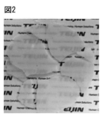
- the photograph in FIG. 2 shows the appearance of the organic-inorganic composite material produced in Comparative Example 7.
- the polycarbonate resin used in the first invention is characterized by having a structural unit represented by the following formula 1, wherein 100% by mole of all carbonate repeating units in the resin represents the structural unit represented by the above formula 1.
- the molar ratio is preferably 0.1 to 20 mol%, more preferably 0.5 to 20 mol%, and further preferably 1 to 20 mol%. If it is 0.1 mol% or more, the effect of improving the dispersibility with the inorganic fine particles is likely to be exhibited, and if it is 20 mol% or less, the fluidity is easily maintained, which is preferable.
- the molar ratio can be calculated and measured by proton NMR of JNM-AL400 manufactured by JEOL Ltd.
- R 1 and R 2 may be each independently or the same, and may be a hydrogen atom, a halogen atom, an alkyl group, an alkoxy group, a cycloalkyl group, a cycloalkoxy group, an alkenyl group, an aryl group, an aryloxy group.
- a group, an aralkyl group, an aralkyloxy group, a nitro group, an aldehyde group and a cyano group, and at least one group, a and b are each an integer of 1 to 4, and W is represented by the following formula 2.
- At least one bonding group selected from the group consisting of:
- R 3 represents at least one group selected from the group consisting of a hydrogen atom, an alkyl group, an aryl group and an aralkyl group
- R 4 represents a single bond, an alkylene group, an arylene group, and an aralkylene group. Represents at least one group selected.
- the present inventors have found that by introducing a carboxylic acid group into a polycarbonate resin, the surface-modified inorganic fine particles can be dispersed in a matrix, and the refractive index of the material can be improved while maintaining the transparency and the like of the resin. It was
- R 1 and R 2 in Formula 1 may be each independently or the same, and may be a hydrogen atom or a halogen atom.
- R 1 and R 2 which may be independent or the same, are a hydrogen atom, an alkyl group having 1 to 6 carbon atoms, a cycloalkyl group having 6 to 20 carbon atoms, or a carbon atom. It is an aryl group of the number 6 to 10.
- a and b in formula 1 are each an integer of 1 to 2, and more preferably a and b are each an integer of 1.
- R 3 in Formula 2 is a hydrogen atom, an alkyl group having 1 to 10 carbon atoms, an aryl group having 6 to 10 carbon atoms, or an aralkyl group having 7 to 20 carbon atoms, and more preferably A hydrogen atom, an alkyl group having 1 to 6 carbon atoms, an aryl group having 6 to 10 carbon atoms, or an aralkyl group having 7 to 12 carbon atoms.
- R 4 in Formula 2 is a single bond, an alkylene group having 1 to 10 carbon atoms, an arylene group having 6 to 10 carbon atoms, or an aralkylene group having 7 to 20 carbon atoms, and more preferably A single bond, an alkylene group having 1 to 6 carbon atoms, an arylene group having 6 to 10 carbon atoms, or an aralkylene group having 7 to 12 carbon atoms.
- R 4 in Formula 2 is particularly preferably an alkylene group having 1 to 6 carbon atoms.
- the hydrolysis resistance of the polycarbonate resin usually tends to decrease, which may cause a problem as an optical resin.
- the carboxylic acid group bonded to the alkylene group is low in acidity, particularly compared with the carboxylic acid group directly bonded to the aromatic group, so that the hydrolysis resistance of the polycarbonate resin is substantially reduced. Does not decrease. Therefore, the organic-inorganic composite material using such a polycarbonate resin is very advantageous in practical use.
- diol compound having a carboxyl group represented by Formulas 1 and 2 above examples include 2,2′bis(4-hydroxyphenyl)pentanoic acid (usually referred to as “diphenolic acid”), 4-(. 2-hydroxyphenyl)-4-(4-hydroxyphenyl)pentanoic acid and the like can be mentioned.
- diphenolic acid which is inexpensively available, is particularly preferable. These may be used alone or in combination of two or more.
- the diol compound may be any of an aromatic diol compound, an aliphatic diol compound, and an alicyclic diol compound, and the diol compounds described in Patent Documents 6 and 7 and diethylene glycol, triethylene glycol, tetraethylene glycol, polyethylene. Examples thereof include oxyalkylene glycols such as glycol. These may be used alone or in combination of two or more. Typical specific examples of the diol component are shown below, but the other components of the first invention are not limited thereto.
- aromatic diol compound examples include 4,4′-biphenol, 3,3′,5,5′-tetrafluoro-4,4′-biphenol, ⁇ , ⁇ ′-bis(4- Hydroxyphenyl)-o-diisopropylbenzene, ⁇ , ⁇ ′-bis(4-hydroxyphenyl)-m-diisopropylbenzene (usually referred to as “bisphenol M”), ⁇ , ⁇ ′-bis(4-hydroxyphenyl) )-P-Diisopropylbenzene, ⁇ , ⁇ ′-bis(4-hydroxyphenyl)-m-bis(1,1,1,3,3,3-hexafluoroisopropyl)benzene, 1,1-bis(4- Hydroxyphenyl)cyclohexane, 1,1-bis(4-hydroxyphenyl)-3,3,5-trimethylcyclohexane, 1,1-bis(4-hydroxyphenyl)-4-isopropylcyclohexane
- bisphenol M 1,1-bis(4-hydroxyphenyl)cyclohexane, 1,1-bis(4-hydroxyphenyl)-3,3,5-trimethylcyclohexane, 3,3′-dimethyl-4, 4'-dihydroxydiphenyl sulfide, bisphenol A, bisphenol C, bisphenol AF, 6,6'-dihydroxy-3,3,3',3'-tetramethyl-1,1'-spirobiindane and 1,1-bis(4 -Hydroxyphenyl)decane is preferred. Furthermore, bisphenol A, which is available at low cost, is particularly preferable.
- Examples of the aliphatic diol compound include 1,3-propanediol, 1,4-butanediol, 1,5-pentanediol, 1,6-hexanediol, 1,8-octanediol and 1,9-nonanediol.
- Examples of the alicyclic diol compound include cyclohexanedimethanol, tricyclodecanedimethanol, adamantanediol, pentacyclopentadecanedimethanol, 2,2,4,4-tetramethyl-1,3-cyclobutanediol, and isosorbide (1 , 4; 3,6-dianhydro-D-sorbitol) and the like.
- the polycarbonate resin used in the first invention is produced by a reaction method known per se for producing an ordinary polycarbonate resin, for example, a method of reacting a diol component as described above with a carbonate precursor such as a carbonic acid diester.
- a reaction method known per se for producing an ordinary polycarbonate resin for example, a method of reacting a diol component as described above with a carbonate precursor such as a carbonic acid diester.
- the transesterification reaction using a carbonic acid diester as a carbonate precursor is performed by a method of distilling the alcohol or phenol to be produced by stirring a predetermined ratio of the diol component with the carbonic acid diester in an inert gas atmosphere while heating.
- the reaction temperature will differ depending on the boiling point of the alcohol or phenol to be produced, but is usually in the range of 120 to 300°C.
- the reaction is completed by depressurizing from the initial stage while distilling the produced alcohol or phenols. Further, a terminal terminator, an antioxidant and the like may be added if necessary.
- Examples of the carbonic acid diester used in the transesterification reaction include an ester such as an aryl group having 6 to 12 carbon atoms and an aralkyl group which may be substituted.
- Specific examples include diphenyl carbonate, ditolyl carbonate, bis(chlorophenyl)carbonate and m-cresyl carbonate. Of these, diphenyl carbonate is particularly preferable.
- the amount of diphenyl carbonate used is preferably 0.97 to 1.10 mol, and more preferably 1.00 to 1.06 mol, based on 1 mol of the total amount of dihydroxy compounds.
- a polymerization catalyst in order to accelerate the polymerization rate, and examples of such a polymerization catalyst include an alkali metal compound, an alkaline earth metal compound, a nitrogen-containing compound and a metal compound.
- organic acid salts, inorganic salts, oxides, hydroxides, hydrides, alkoxides, quaternary ammonium hydroxides and the like of alkali metals and alkaline earth metals are preferably used, and these compounds are They can be used alone or in combination.
- Examples include dilithium oxyhydrogen, disodium phenylphosphate, bisphenol A disodium salt, 2 potassium salt, 2 cesium salt, 2 lithium salt, phenol sodium salt, potassium salt, cesium salt, and lithium salt.
- examples include barium and barium stearate.
- nitrogen-containing compounds include quaternary ammonium hydroxides having alkyl or aryl groups such as tetramethylammonium hydroxide, tetraethylammonium hydroxide, tetrapropylammonium hydroxide, tetrabutylammonium hydroxide and trimethylbenzylammonium hydroxide. Can be mentioned. Further, tertiary amines such as triethylamine, dimethylbenzylamine and triphenylamine, and imidazoles such as 2-methylimidazole, 2-phenylimidazole and benzimidazole can be mentioned.
- bases or basic salts such as ammonia, tetramethylammonium borohydride, tetrabutylammonium borohydride, tetrabutylammonium tetraphenylborate, tetraphenylammonium tetraphenylborate, etc. are exemplified.
- metal compounds include zinc aluminum compounds, germanium compounds, organic tin compounds, antimony compounds, manganese compounds, titanium compounds, zirconium compounds, and the like. These compounds may be used alone or in combination of two or more.
- the amount of these polymerization catalysts used is preferably 1 ⁇ 10 ⁇ 9 to 1 ⁇ 10 ⁇ 2 equivalents, preferably 1 ⁇ 10 ⁇ 8 to 1 ⁇ 10 ⁇ 5 equivalents, and more preferably 1 equivalent to 1 mol of the diol component. It is selected in the range of x10 -7 to 1x10 -3 equivalent.
- a catalyst deactivator can be added in the latter stage of the reaction.
- known catalyst deactivators are effectively used, and among these, ammonium salts and phosphonium salts of sulfonic acid are preferable.
- salts of dodecylbenzenesulfonic acid such as tetrabutylphosphonium salt of dodecylbenzenesulfonic acid and salts of paratoluenesulfonic acid such as tetrabutylammonium salt of paratoluenesulfonic acid are preferable.
- esters of sulfonic acid methyl benzene sulfonate, ethyl benzene sulfonate, butyl benzene sulfonate, octyl benzene sulfonate, phenyl benzene sulfonate, methyl paratoluene sulfonate, ethyl paratoluene sulfonate, butyl paratoluene sulfonate, Octyl paratoluenesulfonate, phenyl paratoluenesulfonate and the like are preferably used. Among them, dodecylbenzenesulfonic acid tetrabutylphosphonium salt is most preferably used.
- the amount of these catalyst deactivators used is preferably 0.5 to 50 per mol of the catalyst. It can be used in a molar ratio, more preferably 0.5 to 10 mol, and further preferably 0.8 to 5 mol.
- the polycarbonate resin used in the first invention may contain additives such as a release agent, a heat stabilizer, an ultraviolet absorber, a bluing agent, an antistatic agent, a flame retardant, a plasticizer, and a filler, if necessary. It can be used by appropriately adding.
- esters of alcohols and fatty acids include esters of monohydric alcohols and fatty acids and/or partial or total esters of polyhydric alcohols and fatty acids.
- the ester of monohydric alcohol and fatty acid is preferably an ester of monohydric alcohol having 1 to 20 carbon atoms and saturated fatty acid having 10 to 30 carbon atoms.
- the partial or total ester of polyhydric alcohol and fatty acid is preferably partial ester or total ester of polyhydric alcohol having 1 to 25 carbon atoms and saturated fatty acid having 10 to 30 carbon atoms.
- ester of monohydric alcohol and saturated fatty acid examples include stearyl stearate, palmityl palmitate, butyl stearate, methyl laurate, isopropyl palmitate, and the like, and stearyl stearate is preferable.
- partial or total ester of polyhydric alcohol and saturated fatty acid include stearic acid monoglyceride, stearic acid diglyceride, stearic acid triglyceride, stearic acid monosorbate, behenic acid monoglyceride, pentaerythritol monostearate, pentaerythritol tetraglyceride.
- full or partial ester of dipentaerythritol such as stearate, pentaerythritol tetrapelargonate, propylene glycol monostearate, biphenyl biphenate, sorbitan monostearate, 2-ethylhexyl stearate, dipentaerythritol hexastearate.
- esters stearic acid monoglyceride, stearic acid triglyceride, pentaerythritol tetrastearate, and a mixture of stearic acid triglyceride and stearyl stearate are preferably used.
- the amount of the ester in the release agent is preferably 90% by weight or more, more preferably 95% by weight or more, based on 100% by weight of the release agent.
- the content of the release agent is preferably 0.005 to 2.0 parts by mass, more preferably 0.01 to 0.6 parts by mass, and 0.02 to 100 parts by mass of the polycarbonate resin.
- the range of 0.5 parts by mass is more preferable.
- the heat stabilizers include phosphorus heat stabilizers, sulfur heat stabilizers and hindered phenol heat stabilizers.
- phosphorus-based heat stabilizers include phosphorous acid, phosphoric acid, phosphonous acid, phosphonic acid and their esters. Specifically, triphenyl phosphite, tris(nonylphenyl)phosphite, tris(2,4-di-tert-butylphenyl)phosphite, tris(2,6-di-tert-butylphenyl)phosphite, Tridecyl phosphite, trioctyl phosphite, trioctadecyl phosphite, didecyl monophenyl phosphite, dioctyl monophenyl phosphite, diisopropyl monophenyl phosphite, monobutyl diphenyl phosphite, monodecyl diphenyl phosphite, monooctyl diphenyl phosphite Fight
- bis(2,6-di-tert-butyl-4-methylphenyl)pentaerythritol diphosphite tris(2,4-di-tert-butylphenyl)phosphite, tris(2,6-di- tert-butylphenyl)phosphite, tetrakis(2,4-di-t-butylphenyl)-4,4'-biphenylene diphosphonite, tetrakis(2,4-di-t-butylphenyl)-4,3' -Biphenylenediphosphonite, tetrakis(2,4-di-t-butylphenyl)-3,3'-biphenylenediphosphonite, bis(2,4-di-tert-butylphenyl)-4-phenyl-phenylphospho Knight and bis(2,4-di-tert-butylphenyl)-3-phenyl
- tris(2,4-di-tert-butylphenyl)phosphite bis(2,6-di-tert-butyl-4-methylphenyl)pentaerythritol diphosphite, tetrakis(2,4-di-).
- tert-Butylphenyl)-4,4'-biphenylene diphosphonite is used.
- the content of the phosphorus-based heat stabilizer is preferably 0.001 to 0.2 parts by mass with respect to 100 parts by mass of the polycarbonate resin.
- pentaerythritol-tetrakis(3-laurylthiopropionate), pentaerythritol-tetrakis(3-myristylthiopropionate), pentaerythritol-tetrakis(3-stearylthiopropionate), Dilauryl-3,3'-thiodipropionate, dimyristyl-3,3'-thiodipropionate, distearyl-3,3'-thiodipropionate and the like can be mentioned.
- pentaerythritol-tetrakis(3-laurylthiopropionate), pentaerythritol-tetrakis(3-myristylthiopropionate), dilauryl-3,3'-thiodipropionate, dimyristyl-3,3'-thio Dipropionate is preferred.
- pentaerythritol-tetrakis(3-laurylthiopropionate) is particularly preferred.
- the content of the sulfur-based heat stabilizer is preferably 0.001 to 0.2 parts by mass with respect to 100 parts by mass of the polycarbonate resin.
- hindered phenol heat stabilizer examples include triethylene glycol-bis[3-(3-tert-butyl-5-methyl-4-hydroxyphenyl)propionate] and 1,6-hexanediol-bis[3-(3 ,5-Di-tert-butyl-4-hydroxyphenyl)propionate], pentaerythritol-tetrakis[3-(3,5-di-tert-butyl-4-hydroxyphenyl)propionate], octadecyl-3-(3,3 5-di-tert-butyl-4-hydroxyphenyl)propionate, 1,3,5-trimethyl-2,4,6-tris(3,5-di-tert-butyl-4-hydroxybenzyl)benzene, N, N-hexamethylene bis(3,5-di-tert-butyl-4-hydroxy-hydrocinnamide), 3,5-di-tert-butyl-4-hydroxy-benzylphosphonate
- octadecyl-3-(3,5-di-tert-butyl-4-hydroxyphenyl)propionate pentaerythritol-tetrakis[3-(3,5-di-tert-butyl-4-hydroxyphenyl)propionate] are particularly preferably used.
- the content of the hindered phenolic heat stabilizer is preferably 0.001 to 0.3 parts by mass with respect to 100 parts by mass of the polycarbonate resin.
- Phosphorus heat stabilizer and hindered phenol heat stabilizer can be used together.
- UV absorber at least one UV absorber selected from the group consisting of benzotriazole UV absorbers, benzophenone UV absorbers, triazine UV absorbers, cyclic iminoester UV absorbers and cyanoacrylate UV absorbers. Is preferred.
- benzotriazole type ultraviolet absorbers more preferable are 2-(2-hydroxy-5-tert-octylphenyl)benzotriazole and 2,2′-methylenebis[4-(1,1,3,3-tetramethylbutyl). )-6-(2H-Benzotriazol-2-yl)phenol].
- benzophenone-based UV absorber examples include 2-hydroxy-4-n-dodecyloxybenzophenone and 2-hydroxy-4-methoxy-2'-carboxybenzophenone.
- triazine-based UV absorber examples include 2-(4,6-diphenyl-1,3,5-triazin-2-yl)-5-[(hexyl)oxy]-phenol and 2-(4,6-bis( 2.4-Dimethylphenyl)-1,3,5-triazin-2-yl)-5-[(octyl)oxy]-phenol and the like can be mentioned.
- cyclic iminoester-based ultraviolet absorber 2,2'-p-phenylenebis(3,1-benzoxazin-4-one) is particularly preferable.
- cyanoacrylate-based ultraviolet absorber examples include 1,3-bis-[(2'-cyano-3',3'-diphenylacryloyl)oxy]-2,2-bis[(2-cyano-3,3-diphenyl Examples thereof include acryloyl)oxy]methyl)propane and 1,3-bis-[(2-cyano-3,3-diphenylacryloyl)oxy]benzene.
- the blending amount of the ultraviolet absorber is preferably 0.01 to 3.0 parts by mass with respect to 100 parts by mass of the polycarbonate resin. If the blending amount range is within this range, it is sufficient for a thermoplastic resin molded product depending on the application. It is possible to impart excellent weather resistance.
- the bluing agent examples include Macrolex Violet B and Macrolex Blue RR manufactured by Bayer, and Polycinthremble-RLS manufactured by Clariant.
- the bluing agent is effective for eliminating the yellow tint of the thermoplastic resin.
- a thermoplastic resin composition imparted with weather resistance since a certain amount of an ultraviolet absorber is blended, there is a reality that the resin composition tends to be yellowish due to the action and color of the ultraviolet absorber.
- the addition of a bluing agent is very effective for imparting a natural transparency to the.
- the blending amount of the bluing agent is preferably 0.05 to 1.5 ppm, more preferably 0.1 to 1.2 ppm, relative to 100 parts by mass of the polycarbonate resin.
- the specific viscosity ( ⁇ SP ) of the polycarbonate resin of the first invention is preferably 0.2 to 1.5.
- the specific viscosity is at least the lower limit, the strength and the like will be improved, and when it is at most the upper limit, the molding characteristics will be excellent. It is more preferably 0.2 or more and 1.2 or less, still more preferably 0.2 or more and 1.0 or less, and particularly preferably 0.2 or more and 0.5 or less.
- the specific viscosity was obtained from a solution of 0.7 g of polycarbonate resin dissolved in 100 ml of methylene chloride at 20° C. using an Ostwald viscometer.
- Specific viscosity ( ⁇ SP ) (t ⁇ t 0 )/t 0 [T 0 is the number of seconds of methylene chloride drop, t is the number of seconds of drop of sample solution]
- the specific specific viscosity can be measured, for example, as follows. First, the polycarbonate resin is dissolved in 20 to 30 times its weight of methylene chloride, and the soluble matter is collected by filtration through Celite, and then the solution is removed and sufficiently dried to obtain a solid matter of the methylene chloride-soluble matter. The specific viscosity at 20° C. of a solution prepared by dissolving 0.7 g of this solid in 100 ml of methylene chloride is determined using an Ostwald viscometer.
- the number average molecular weight (Mn) of the polycarbonate resin of the first invention is 5,000 or more, 8,000 or more, 10,000 or more, 15,000 or more, or 20,000 or more. It may be 100,000 or less, 80,000 or less, 50,000 or less, 30,000 or less, or 20,000 or less.
- the range of Mn is 5,000 or more and 100,000 or less, or 10,000 or more and 30,000 or less.
- the weight average molecular weight (Mw) of the polycarbonate resin of the first invention may be 8,000 or more, 10,000 or more, 15,000 or more, 20,000 or more, or 30,000 or more, It may be 200,000 or less, 150,000 or less, 100,000 or less, 80,000 or less, 50,000 or less, or 30,000 or less.
- Mw weight average molecular weight
- the range of Mw is 8,000 or more and 200,000 or less, or 10,000 or more and 50,000 or less.
- the molecular weight distribution (Mw/Mn) of the polycarbonate resin of the first invention is 2.0 or more, 2.25 or more, 2.5 or more, 3.0 or more, 4.0 or more, or 5.0 or more. It may be 10.0 or less, 8.0 or less, 6.0 or less, or 5.0 or less. For example, if the Mw/Mn range is 2.0 or more and 10.0 or less, or 3.0 or more and 6.0 or less, manufacturing is possible.
- the glass transition temperature (Tg) of the polycarbonate resin of the first invention is preferably 90 to 160°C, more preferably 100 to 150°C. When the Tg is within the above range, heat resistance stability and moldability are good when used as an optical molded product, which is preferable.
- the glass transition temperature (Tg) is measured by using a 2910 type DSC manufactured by TA Instruments Japan Co., Ltd. at a temperature rising rate of 20° C./min.
- the inorganic fine particles modified with the surface modifier used in the first invention have an average particle size in the nanoscale range of preferably 20 nm or less, and are modified with a surface modifier having an acidic functional group. Can be preferably used.
- Examples of the types of inorganic fine particles include ZrO 2 (zirconium oxide), TiO 2 (titanium oxide), SnO 2 (tin oxide), SiO 2 (silicon oxide), and Al 2 O 3 (aluminum oxide). You can Among them, in the first invention, ZrO 2 and TiO 2 are preferable, and ZrO 2 is particularly preferable, from the viewpoint of use as an optical member or an optical component.
- the average particle size of the inorganic fine particles was measured by dynamic light scattering measurement (DLS).
- the average particle size of the inorganic fine particles is preferably in the range of 1 to 20 nm. The reason is that if the particle size is less than 1 nm, the crystallinity becomes poor and it becomes difficult to express the particle properties such as the refractive index, while if the average particle size exceeds 20 nm, the dispersion or resin composite is used. This is because the transparency is reduced.
- the surface modifier for the inorganic fine particles in the first invention is not particularly limited as long as the dispersibility of the inorganic fine particles can be ensured in the polycarbonate resin to be composited, but is not limited to a sulfonic acid group, a phosphonic acid group, a phosphinic acid group, a carboxylic acid group. It is preferable to have any one of the acidic functional groups of the acid groups because the dispersibility and the effect of improving the refractive index are excellent. Typical specific examples of the surface modifier are shown below, but the surface modifier of the first invention is not limited thereto. They may be used alone or as a mixture of plural kinds. In particular, when the inorganic fine particles after the surface modification treatment are dispersed in the resin, it is desirable to appropriately select and use a surface modifier that easily improves the affinity with the resin according to the type of the resin.
- Examples of the surface modifier having a sulfonic acid group include alkylsulfonic acids such as butanesulfonic acid, hexanesulfonic acid and dodecanesulfonic acid, and arylsulfonic acids such as benzenesulfonic acid, methylbenzenesulfonic acid and dodecylbenzenesulfonic acid. Of these, arylsulfonic acid is preferable in view of dispersibility in resin and the effect of improving the refractive index.
- Examples of the surface modifier having a phosphonic acid group include alkylphosphonic acid such as propanephosphonic acid and arylphosphonic acid such as benzenephosphonic acid. Among them, arylphosphonic acid is preferable in view of dispersibility in resin and the effect of improving the refractive index.
- Examples of the surface modifier having a phosphinic acid group include alkylphosphinic acids such as dimethylphosphinic acid, diethylphosphinic acid and di(2-ethylhexyl)phosphinic acid, and arylphosphinic acids such as phenylphosphinic acid and diphenylphosphinic acid. .. Further, by using thiophosphinic acid or dithiophosphinic acid in which oxygen atoms constituting the phosphinic acid group are substituted with sulfur atoms, it is possible to obtain inorganic fine particles having a higher refractive index than when phosphinic acid is used.
- arylphosphinic acid is preferable, phenylphosphinic acid and diphenylphosphinic acid are more preferable, and diphenylphosphinic acid is particularly preferable, in view of dispersibility in the resin and the effect of improving the refractive index.
- Examples of the surface modifier having a carboxylic acid group include butanoic acid, isobutanoic acid, methacrylic acid, hexanoic acid, octanoic acid, oleic acid, linoleic acid, lauric acid, and other alkylcarboxylic acids, benzoic acid, hydroxybenzoic acid, and phenoxybenzoic acid.
- Aryl carboxylic acids such as acids can be mentioned.
- thiocarboxylic acid or dithiocarboxylic acid in which the oxygen atom constituting the carboxyl group of carboxylic acid is replaced with a sulfur atom it is possible to obtain inorganic fine particles having a higher refractive index than the case of using carboxylic acid.
- arylcarboxylic acids are preferable, phenoxybenzoic acid having a phenoxy group at the ortho or meta or para position is more preferable, and paraphenoxybenzoic acid is particularly preferable, from the viewpoint of dispersibility in the resin and the effect of improving the refractive index.
- the surface modification of the inorganic fine particles in the first invention is performed, for example, by the following steps. That is, a surface modifier having an acidic functional group is added to a mixture of a transparent aqueous dispersion in which hydrophilic inorganic fine particles having an average particle diameter of about 20 nm or less are dispersed, and methanol, and then water and methanol are azeotropically distilled. And the solvent is replaced with toluene or dichloromethane to prepare a toluene dispersion liquid or a dichloromethane dispersion liquid in which the surface-modified inorganic fine particles are dispersed. Then, the solvent is distilled off to obtain white powder of the surface-modified inorganic fine particles.
- the content of the surface modifier in the inorganic fine particles modified with the surface modifier is preferably 1 to 30% by mass based on the inorganic fine particles in view of dispersibility in a resin and a refractive index improving effect. It is more preferably 3 to 25% by mass, and particularly preferably 5 to 20% by mass. From the viewpoint of dispersibility in the resin composite, the higher the content of the surface modifier, the better, and from the viewpoint of the effect of improving the refractive index, the lower the content of the surface modifier, the better. It is desirable to appropriately adjust the content of the surface modifier according to the dispersibility and the refractive index.
- the organic-inorganic composite material of the first invention preferably has a refractive index (hereinafter, may be abbreviated as “nD”) at a wavelength of 589 nm measured at 25° C. of 1.500 to 1.800.
- nD refractive index
- the refractive index is equal to or higher than the lower limit, the spherical aberration of the lens can be reduced and the focal length of the lens can be shortened.
- the organic-inorganic composite material of the first invention preferably has a high transmittance.
- the molded product having a thickness of 100 ⁇ m preferably has a D-ray transmittance of 70% or more, more preferably 80% or more. By satisfying such characteristics, it can be suitably used for optical lens applications and optical film applications.
- the method for producing an organic-inorganic composite material according to the first aspect of the present invention comprises reacting a diol component that provides a structural unit represented by Formula 1 with a carbonate precursor to obtain a polycarbonate resin, and modifying the surface with a surface modifier. Dispersing the inorganic fine particles in the polycarbonate resin.
- a method is preferable because it is much simpler than a method of modifying a polymerized polymer in a subsequent step and introducing a carboxylic acid group into the polymer.
- the steps for obtaining the polycarbonate resin are as described above regarding the method for producing the polycarbonate resin.
- the process of dispersing the inorganic fine particles in the polycarbonate resin is not particularly limited. Specific examples include a method of mixing a polycarbonate resin solution and an inorganic fine particle dispersion, a method of melting and mixing a polycarbonate resin powder and an inorganic fine particle powder, and any of these methods may be used.
- the polycarbonate resin solution and the inorganic fine particle dispersion may be mixed at once, or the polycarbonate resin solution may be gradually dropped and mixed into the inorganic fine particle dispersion. May be.
- a plasticizer may be present, and such a plasticizer may be added to the resin solution or the inorganic fine particle dispersion liquid in advance, or may be added at the time of mixing the resin solution and the inorganic fine particle dispersion liquid. ..
- the content of the inorganic fine particles in the organic-inorganic composite material of the first invention is preferably 1 to 95% by mass, more preferably 1 to 65% by mass, and further preferably 1 to 40% by mass, It is particularly preferably 1 to 35% by mass, and most preferably 5 to 30% by mass or 10 to 30% by mass. This is because when the content of the surface-modified inorganic fine particles is less than 1% by mass, it is difficult to obtain the effect of containing the inorganic fine particles, and when it exceeds 95% by mass, the strength of the organic-inorganic composite decreases.
- Molding method As a method for molding the organic-inorganic composite material in the first invention, a general polycarbonate resin molding method such as injection molding, extrusion molding, compression molding, or solution casting method can be adopted. From the viewpoint of fluidity of the organic-inorganic composite material, compression molding and cast molding are preferable in the first invention.
- the organic-inorganic composite material of the first invention is excellent in transparency and high refractive index, it can be used as various molded products.
- It can be advantageously used as a molded article suitable for automobile applications such as automobile headlamps and windows, or functional material applications, and is particularly suitable for optical lenses and optical films.
- the organic-inorganic composite material of one embodiment of the second invention is an organic-inorganic composite material containing a polycarbonate resin having a group represented by the following formula 3 and inorganic fine particles:
- R 1 and R 2 each independently represent a group selected from the group consisting of an alkylene group, an aralkylene group, an arylene group, and a cycloalkylene group, and the hydrogen atom of R 2 is substituted with a carboxyl group. Good.
- the organic-inorganic composite material of the second invention of the present disclosure is excellent in dispersibility of inorganic fine particles in a polycarbonate resin, particularly under high temperature conditions.
- the working principle of the organic-inorganic composite material of the second invention of the present disclosure is considered to be as follows.
- the polycarbonate resin in the organic-inorganic composite material of the second invention of the present disclosure introduces a carboxyl group into the polycarbonate resin in parallel with the production of the polycarbonate resin during the polycondensation reaction. Instead, after generating a polycarbonate resin by a polycondensation reaction, a group represented by the above formula 3 containing a carboxyl group is introduced into the polycarbonate resin by an addition reaction such as an enethiol reaction.
- the group represented by the above formula 3 contains a sulfur atom, and it is considered that the heat resistance is improved as compared with a system containing no sulfur atom.
- the organic-inorganic composite material of the second invention of the present disclosure can improve the dispersibility of the inorganic fine particles in a high temperature environment, for example, during heat molding.
- Organic-inorganic composite material of the second invention of the present disclosure is excellent in dispersibility of the inorganic fine particles, and therefore can exhibit the following performance, for example.
- the organic-inorganic composite material of the second invention of the present disclosure can exhibit excellent transparency.
- the transmittance of such a sheet can be 80% or more, 83% or more, or 85% or more.
- the upper limit value is not particularly limited, but may be, for example, 99% or less, 97% or less, or 95% or less.
- the transmittance means the light transmittance at a wavelength of 589 nm measured at 25° C. using a spectrophotometer.
- the film obtained from the organic-inorganic composite material is not particularly limited in its production method, and can be obtained by a known method such as a melt extrusion method or a solution casting method (casting method).
- the organic-inorganic composite material of the second invention of the present disclosure can exhibit a high refractive index.
- the refractive index of such a sheet can be 1.585 or more, 1.590 or more, or 1.595 or more.
- the upper limit value is not particularly limited, but can be set to, for example, 1.900 or less, 1.850 or less, or 1.800 or less.
- the refractive index means a value measured at 25° C. and a wavelength of 589 nm using an Abbe refractometer according to ASTM D542.
- the polycarbonate resin used in the organic-inorganic composite material of the second invention of the present disclosure has a group represented by the following formula 3:
- R 1 and R 2 may be the same or different and each is independently selected from the group consisting of an alkylene group (alkanediyl group), an aralkylene group, an arylene group, and a cycloalkylene group. Represents a group represented by The hydrogen atom of R 2 may be substituted with a carboxyl group.
- R 1 and R 2 are preferably an alkylene group having 1 to 10 carbon atoms, an arylene group having 6 to 10 carbon atoms, or an aralkylene group having 7 to 20 carbon atoms. And more preferably an alkylene group having 1 to 6 carbon atoms, an arylene group having 6 to 10 carbon atoms, or an aralkylene group having 7 to 12 carbon atoms.
- the polycarbonate resin of the second invention preferably contains a structural unit represented by the following formula 4 from the viewpoint of dispersibility of the inorganic fine particles:
- R 3 and R 4 represent the group represented by Formula 3, a and b are each independently an integer of 0 to 4 that satisfies a+b ⁇ 1, and R 5 and R 6 are The same or different, each independently, a halogen atom, an alkyl group, an alkoxy group, a cycloalkyl group, a cycloalkoxy group, an alkenyl group, an aryl group, an aryloxy group, an aralkyl group, an aralkyloxy group, Represents a group selected from the group consisting of a nitro group, an aldehyde group, and a cyano group, c and d are each independently an integer of 0 to 4 satisfying c ⁇ 4-a and d ⁇ 4-b, and X is , A single bond, an alkylene group (alkanediyl group), an aralkylene group, an arylene group, a cycloalkylene group, a sulfur atom, or
- R 5 and R 6 are preferably each independently a halogen atom, an alkyl group having 1 to 10 carbon atoms, an alkoxy group having 1 to 10 carbon atoms, or 5 carbon atoms.
- cycloalkyl group having 20 to 20 carbon atoms cycloalkoxy group having 6 to 20 carbon atoms, alkenyl group having 2 to 10 carbon atoms, aryl group having 6 to 10 carbon atoms, aryloxy group having 6 to 10 carbon atoms, carbon An aralkyl group having 7 to 20 atoms or an aralkyloxy group having 7 to 20 carbon atoms.
- R 5 and R 6 are each independently an alkyl group having 1 to 6 carbon atoms, a cycloalkyl group having 6 to 20 carbon atoms, or an aryl group having 6 to 10 carbon atoms.
- a and b in the above formula 4 are each independently an integer of 0 to 2 provided that a+b ⁇ 1, and more preferably each is an integer of 1.
- c and d in the formula 4 are each independently an integer of 0 to 2 provided that c ⁇ 4-a and d ⁇ 4-b, and more preferably 0 to 1 respectively. It is an integer.
- X in the above formula 4 is a single bond, an alkylene group having 1 to 10 carbon atoms, an arylene group having 6 to 10 carbon atoms, or an aralkylene group having 7 to 20 carbon atoms, a sulfur atom, or oxygen. More preferably, it is a single bond, an alkylene group having 1 to 6 carbon atoms, an arylene group having 6 to 10 carbon atoms, or an aralkylene group having 7 to 12 carbon atoms.
- the polycarbonate resin can have the following carboxyl group content and various performances.
- the amount of carboxyl groups of the polycarbonate resin of the second invention is, for example, 1 eq/ton-polycarbonate (hereinafter, referred to as “eq/ton” in consideration of dispersibility of the inorganic fine particles, performance of the obtained molded product (eg mechanical performance), etc.). ) Or more, 50 eq/ton or more, 100 eq/ton or more, or 150 eq/ton or more, and 2,000 eq/ton or less, 1,700 eq/ton or less, 1,500 eq/ton or less. , Or 1,000 eq/ton or less.
- the amount of carboxyl group can be calculated, for example, by dissolving a polycarbonate resin in benzyl alcohol under a nitrogen atmosphere, titrating phenol red with a benzyl alcohol solution of sodium hydroxide as an indicator, and calculating the amount dropped.
- the glass transition temperature of the polycarbonate resin of the second invention is preferably 90 to 160° C., more preferably 100 to 150° C., from the viewpoint of heat resistance stability, moldability and the like.
- the glass transition temperature is determined using a differential scanning calorimeter (DSC) device under a nitrogen atmosphere (nitrogen flow rate: 40 mL/min) and a heating rate: 20° C./min in accordance with JIS K7121. can do.
- DSC differential scanning calorimeter
- the viscosity average molecular weight (Mv) of the polycarbonate resin of the second invention is preferably 15,000 to 40,000, and more preferably 16 from the viewpoint of impact resistance, melt flowability, moldability and the like. It is 8,000 to 35,000, and more preferably 18,000 to 30,000.
- the viscosity average molecular weight of the polycarbonate resin of the second invention is calculated by the following equation 5 using a Ostwald viscometer using a solution of 0.7 g of polycarbonate resin dissolved in 100 mL of methylene chloride at 20° C. as a sample solution.
- t 0 is the number of seconds of methylene chloride drop
- t is the number of seconds of drop of the sample solution
- [ ⁇ ] in Formulas 6 and 7 is the intrinsic viscosity
- c is 0.7.
- the method for producing the polycarbonate resin having the group represented by Formula 3 is not particularly limited, and for example, the step i for producing a polycarbonate resin having a carbon-carbon double bond and the polycarbonate resin obtained in the step i It can be produced by the step ii in which a thiol compound having a carboxyl group is reacted with.
- the polycarbonate resin having a carbon-carbon double bond can be produced by using a diol compound having at least one carbon-carbon double bond in a known reaction for producing an ordinary polycarbonate resin.
- reaction method examples include an interfacial polycondensation method, a melt transesterification method, and a solid-state transesterification method of a carbonate prepolymer.
- interfacial polycondensation a terminal stopper of a monohydric phenol compound is usually used.
- the polycarbonate resin having a carbon-carbon double bond may be, for example, a copolycarbonate obtained by further copolymerizing an aliphatic dicarboxylic acid or an aromatic dicarboxylic acid, and/or a vinyl monomer.
- the polycarbonate resin having a carbon-carbon double bond may be, for example, a branched polycarbonate resin obtained by copolymerizing a trifunctional component.
- diol compound having a carbon-carbon double bond examples include 2,2-bis(3-allyl-4-hydroxyphenyl)propane and 2,2-bis(3-allyl-4-hydroxy-5-methylphenyl) Examples thereof include propane, 2-(3-allyl-4-hydroxyphenyl)-2-(4'-hydroxyphenyl)propane and 2,2-bis(3,5-diallyl-4-hydroxyphenyl)propane. These may be used alone or in combination of two or more.
- diol compounds other than the diol compound having a carbon-carbon double bond can be used in combination.
- diol compounds include aromatic diol compounds, aliphatic diol compounds, and alicyclic diol compounds.
- Specific examples include diol compounds described in Patent Documents 6 and 7, and oxyalkylene glycol compounds such as diethylene glycol, triethylene glycol, tetraethylene glycol, and polyethylene glycol. These may be used alone or in combination of two or more. Typical specific examples of such diol compounds are shown below, but the invention is not limited thereto.
- aromatic diol compound for example, the compound described in the first invention can be similarly used, and 9,9-bis(4-(2-hydroxyethoxy)phenyl)fluorene and the like can also be used. it can.
- bisphenol M 1,1-bis(4-hydroxyphenyl)cyclohexane, 1,1-bis(4-hydroxyphenyl)-3,3,5-trimethylcyclohexane, 3,3′-dimethyl-4,4′ -Dihydroxydiphenyl sulfide, bisphenol A, bisphenol C, bisphenol AF, 6,6'-dihydroxy-3,3,3',3'-tetramethyl-1,1'-spirobiindane, 9,9-bis(4-( 2-Hydroxyethoxy)phenyl)fluorene and 1,1-bis(4-hydroxyphenyl)decane are preferred.
- Bisphenol A which is inexpensively available, is particularly preferable.
- the compounds described in the first invention can be similarly used.
- the reaction is usually performed in the presence of an acid binder and a solvent.
- the acid binder for example, alkali metal hydroxides such as sodium hydroxide and potassium hydroxide, or amine compounds such as pyridine are used.
- the solvent for example, a halogenated hydrocarbon such as methylene chloride or chlorobenzene is used.
- a catalyst such as a tertiary amine or a quaternary ammonium salt may be used to accelerate the reaction.
- the reaction temperature is usually 0 to 40° C., and the reaction time is usually 1 minute to 5 hours.
- a transesterification reaction using, for example, a carbonic acid diester as a carbonate precursor is carried out by a method of distilling a generated alcohol or phenol compound by stirring a predetermined ratio of a diol compound with a carbonic acid diester in an inert gas atmosphere while heating. Be seen.
- the reaction temperature is usually in the range of 120 to 300°C, although it varies depending on the boiling point of the alcohol or phenol compound produced. From the initial stage of the reaction, the reaction is completed while distilling the alcohol or phenol compound produced by reducing the pressure. Conventional catalysts used in transesterification reactions can also be used to accelerate the reaction.
- Examples of the carbonic acid diester used in the transesterification reaction include diphenyl carbonate, dinaphthyl carbonate, bis(diphenyl)carbonate, dimethyl carbonate, diethyl carbonate, dibutyl carbonate and the like. Of these, diphenyl carbonate is particularly preferable.
- a terminal stopper can be used in the production of the polycarbonate resin of the second invention.
- a monofunctional phenol compound can be used.
- monofunctional phenolic compounds are commonly used as molecular terminators for molecular weight control.
- the polycarbonate resin thus obtained has the terminal blocked with a group derived from a monofunctional phenol compound, so that the thermal stability can be further improved.
- the monofunctional phenol compound include, for example, phenol, m-methylphenol, p-methylphenol, m-propylphenol, p-propylphenol, 1-phenylphenol, 2-phenylphenol, p-tert-butylphenol, Examples thereof include p-cumylphenol, isooctylphenol, p-long chain alkylphenol and the like.
- the fatty acid may be copolymerized with the polycarbonate resin of the second invention of the present disclosure, if necessary.
- fatty acids include adipic acid (hexanedioic acid), dodecanedioic acid, isophthalic acid (1,3-benzenedicarboxylic acid), terephthalic acid (1,4-benzenedicarboxylic acid), and 2,6-naphthalene. Included are dicarboxylic acids, 3-hydroxybenzoic acid, and 4-hydroxybenzoic acid.
- the polycarbonate resin of the second invention of the present disclosure can include a polyester carbonate resin obtained by copolymerizing an aromatic or aliphatic (including alicyclic) dicarboxylic acid.
- the aliphatic dicarboxylic acid is preferably ⁇ , ⁇ -dicarboxylic acid. More specifically, examples of the aliphatic dicarboxylic acid include adipic acid (hexanedioic acid), sebacic acid (decanedioic acid), dodecanedioic acid, tetradecanedioic acid, octadecanedioic acid, and icosanedioic acid.
- Preferred examples include chain saturated aliphatic dicarboxylic acids, and alicyclic dicarboxylic acids such as cyclohexanedicarboxylic acid.
- Preferred examples of the aromatic dicarboxylic acid include isophthalic acid (1,3-benzenedicarboxylic acid), terephthalic acid (1,4-benzenedicarboxylic acid), and 2,6-naphthalenedicarboxylic acid.
- the polycarbonate resin of the second invention of the present disclosure can be copolymerized with a constitutional unit containing a polyorganosiloxane unit, if necessary.
- the polycarbonate resin of the second invention of the present disclosure can be made into a branched polycarbonate resin by copolymerizing a constituent unit containing a trifunctional or higher polyfunctional aromatic compound, if necessary.
- the trifunctional or higher-functional polyfunctional aromatic compound used in the branched polycarbonate resin include, for example, 4,6-dimethyl-2,4,6-tris(4-hydrodiphenyl)heptene-2,2,4.
- the proportion of structural units derived from a polyfunctional aromatic compound is preferably, for example, based on a total of 100 mol% together with structural units from other divalent components. Is 0.03 to 1.5 mol %, more preferably 0.1 to 1.2 mol %, and particularly preferably 0.2 to 1.0 mol %.
- the ratio of the branched structural unit can be calculated by, for example, 1 H-NMR measurement.
- the branched structural unit is derived not only from a polyfunctional aromatic compound but also without using a polyfunctional aromatic compound, for example, by a side reaction that occurs during the polymerization reaction by the melt transesterification method. It may be one.
- a polycarbonate resin having a group represented by Formula 3 is produced by reacting the polycarbonate resin having a carbon-carbon double bond produced in step i with a thiol compound having a carboxyl group (for example, an enethiol reaction). can do.
- the enethiol reaction is a reaction in which a carbon-carbon double bond and a thiol group are added one to one. That is, when a thiol is irradiated with light or a radical generator is added, a thiyl radical is easily generated and added to a carbon-carbon double bond. The carbon radical generated thereby abstracts hydrogen from the thiol group to generate a one-to-one adduct. The thiol group from which hydrogen has been removed becomes a thiyl radical, so that the reaction proceeds in a chain.
- the enethiol reaction it is possible to produce a polycarbonate resin having a group represented by Formula 3 quantitatively and in high yield.
- Examples of the thiol compound having a carboxyl group include 3-mercaptopropanoic acid, 3-mercapto-2-methylpropanoic acid, mercaptosuccinic acid, 2-mercaptobenzoic acid and 1-(mercaptomethyl)cyclopropaneacetic acid. ..
- the enethiol reaction may be a radical reaction by irradiating light (for example, ultraviolet light).
- the radical generator include azo compounds and organic peroxides, and any of those which generate a radical by heat and those which generate a radical by light irradiation can be preferably used.
- azo compounds include azobisisobutyronitrile (AIBN), 1,1'-azobis(cyclohexanecarbonitrile) (ABCN) and the like.
- organic peroxides include di-tert-butyl peroxide, benzoyl peroxide and the like.
- the enethiol reaction is performed by dissolving a polycarbonate resin having a carbon-carbon double bond, a thiol compound having a carboxyl group, and a radical generator in an organic solvent, and maintaining the radical-generating condition. It can be done by The reaction temperature is not particularly limited, but is preferably 50 to 120°C.
- the enethiol reaction may be performed in an atmosphere of an inert gas such as nitrogen gas or argon gas.
- organic solvent examples include alcohols (alkyl alcohols such as ethanol, propanol and isopropanol, glycols such as ethylene glycol and propylene glycol), hydrocarbons (aliphatic hydrocarbons such as hexane, alicyclic hydrocarbons such as cyclohexane), Aromatic hydrocarbons such as toluene and xylene), halogenated hydrocarbons (methylene chloride, chloroform, etc.), ethers (chain ethers such as dimethyl ether and diethyl ether, cyclic ethers such as dioxane and tetrahydrofuran), esters (methyl acetate) , Ethyl acetate, butyl acetate, ethyl lactate, ethyl butyrate, etc.), ketones (acetone, ethyl methyl ketone, methyl isobutyl ketone, cyclohexanone, N-methyl-2-pyrrolidon
- the inorganic fine particles used in the organic-inorganic composite material of the second invention of the present disclosure are not particularly limited, and, for example, the inorganic fine particles described in the first invention can be similarly used. Among them, from the viewpoint of use as an optical member or an optical component, inorganic fine particles having a refractive index of 1.80 or more or 2.00 or more are preferable, ZrO 2 and TiO 2 are more preferable, and ZrO 2 is particularly preferable.
- the inorganic fine particles may be used alone or in combination of two or more kinds.
- the average particle size of the inorganic fine particles is not particularly limited, and for example, from the viewpoint of refractive index, transparency, etc., the range of 1 to 20 nm is preferable, and the range of 1 to 10 nm is more preferable.
- the average particle size of the inorganic fine particles can be measured, for example, by the dynamic light scattering method (DLS).
- the content of the inorganic fine particles in the organic-inorganic composite material of the second invention of the present disclosure may be appropriately adjusted according to the intended use and the like, and is not particularly limited, but, for example, the effect of adding the inorganic fine particles, deterioration of mechanical properties, etc. In consideration of the above, it can be 1% by mass or more, 3% by mass or more, 5% by mass or more, or 10% by mass or more, and 95% by mass or less, 65% by mass or less, 45% by mass with respect to the polycarbonate resin. % Or less, 35% by mass or less, or 30% by mass or less.
- the surface of the inorganic fine particles may be modified with a surface modifier in order to improve the dispersibility.
- the surface modifiers can be used alone or in combination of two or more kinds. As the surface modifier, it is desirable to appropriately select and use a surface modifier that easily improves the affinity with the polycarbonate resin used.
- the surface modifier is not particularly limited as long as it can ensure the dispersibility of the inorganic fine particles in the polycarbonate resin to be composited, and for example, a surface modifier having an acidic functional group can be used.
- a surface modifier having at least one acidic functional group selected from the group consisting of a sulfonic acid group, a phosphonic acid group, a phosphinic acid group, and a carboxylic acid group is preferable.
- Such a surface modifier can further improve the dispersibility or refractive index of the inorganic fine particles.
- Examples of the surface modifier having a sulfonic acid group, the surface modifier having a phosphonic acid group, the surface modifier having a phosphinic acid group, and the surface modifier having a carboxylic acid group include, for example, the surface modifier described in the first invention. Can be used as well.
- the method for modifying the surface of the inorganic fine particles is not particularly limited, but for example, the following method is used.
- a surface modifier is added to a mixed solution of methanol mixed with an aqueous dispersion in which hydrophilic inorganic fine particles are dispersed, and then water and methanol are removed by an azeotropic operation, and the solvent is replaced with toluene or methylene chloride.
- a dispersion liquid in which the surface-modified inorganic fine particles are dispersed can be prepared.
- the solvent is then further distilled off to obtain the surface-modified inorganic fine particles.
- the amount of the surface modifier used is not particularly limited, but for example, from the viewpoint of dispersibility in the polycarbonate resin and the effect of improving the refractive index, it is preferably 1 to 30% by mass with respect to the inorganic fine particles. It is more preferably 3 to 25% by mass, and particularly preferably 5 to 20% by mass.
- the organic-inorganic composite material of the second invention of the present disclosure is, for example, a release agent, a heat stabilizer, an antioxidant, an ultraviolet absorber, a flow modifier, an antistatic agent, as long as the effect of the present disclosure is not impaired.
- Well-known functional additives such as These can be used alone or in combination of two or more. Although some optional components are described in detail below, the optional components that can be added are not limited thereto.
- release agent examples include fatty acid esters, polyolefin waxes (including those modified with functional group-containing compounds such as polyethylene wax and 1-alkene polymers such as acid modification), fluorine compounds (polyfluoroalkyl ethers). Fluorine oil such as), paraffin wax, beeswax and the like.
- fatty acid esters are preferable from the viewpoints of easy availability, mold release property and transparency.
- the compounding amount of the release agent is preferably 0.005 to 0.5 part by mass, more preferably 0.007 to 0.4 part by mass, and further preferably 0.01 to 0, based on 100 parts by mass of the polycarbonate resin. 0.3 parts by mass.
- the content is more than the lower limit of the above range, the effect of improving the releasability is clearly exhibited, and when it is less than the upper limit, adverse effects such as mold contamination during molding can be reduced.
- a fatty acid ester is an ester of an aliphatic alcohol and an aliphatic carboxylic acid.
- the aliphatic alcohol may be a monohydric alcohol or a dihydric or higher polyhydric alcohol.
- the number of carbon atoms of the aliphatic alcohol is preferably 3 to 32, more preferably 5 to 30.
- monohydric alcohols include dodecanol, tetradecanol, hexadecanol, octadecanol, eicosanol, tetracosanol, ceryl alcohol, and triacontanol.
- polyhydric alcohols examples include pentaerythritol, dipentaerythritol, tripentaerythritol, polyglycerol (triglycerol to hexaglycerol), ditrimethylolpropane, xylitol, sorbitol, and mannitol. More preferably, the fatty acid ester is a polyhydric alcohol.
- the number of carbon atoms of the aliphatic carboxylic acid is preferably 3 to 32, more preferably 10 to 22, and further preferably 14 to 20.
- the aliphatic carboxylic acid include decanoic acid, undecanoic acid, dodecanoic acid, tridecanoic acid, tetradecanoic acid, pentadecanoic acid, hexadecanoic acid (palmitic acid), heptadecanoic acid, octadecanoic acid (stearic acid), nonadecanoic acid, icosanoic acid,
- saturated aliphatic carboxylic acids such as docosanoic acid (behenic acid)
- unsaturated aliphatic carboxylic acids such as palmitoleic acid, oleic acid, linoleic acid, linolenic acid, eicosenoic acid, eicosapentaenoic acid and cetoleic acid.
- the aliphatic carboxylic acid is preferably a saturated aliphatic carboxylic acid.
- Aliphatic carboxylic acids are usually produced from natural fats and oils such as animal fats (beef tallow, lard etc.) and vegetable fats (palm oil etc.). Such an aliphatic carboxylic acid derived from natural fats and oils is usually a mixture containing two or more carboxylic acids having different numbers of carbon atoms.
- the acid value of the fatty acid ester is preferably 20 or less (substantially 0).
- the fatty acid ester is a whole ester (full ester)
- it preferably contains a small amount of free fatty acid in order to improve releasability
- the acid value of the fatty acid full ester is preferably 3 to 15.
- the iodine value of the fatty acid ester is preferably 10 or less (substantially 0).
- the acid value and iodine value of the fatty acid ester can be determined by the method specified in JIS K 0070:1992.
- the fatty acid ester may be either a partial ester or a full ester, but a partial ester is preferable, and glycerin monoester is particularly preferable, from the viewpoint of better mold release property and durability.
- Glycerin monoester is a monoester of glycerin and fatty acid as a main component, and preferred fatty acids include lauric acid, stearic acid, palmitic acid, behenic acid, arachidic acid, saturated fatty acids such as montanic acid, and oleic acid, linoleic acid.
- unsaturated fatty acids such as sorbic acid, and those containing glycerin monoester of stearic acid, palmitic acid, or behenic acid as a main component are particularly preferable.
- the fatty acid may be produced from natural fats and oils, and in this case, the fatty acid is a mixture containing two or more kinds of carboxylic acids having different carbon atoms as described above. Even when the fatty acid is derived from natural fats and oils, the proportion of glycerin monoester in the fatty acid ester is preferably 60% by mass or more.
- the partial ester is often inferior to the full ester in terms of thermal stability.
- the sodium metal content of the partial ester is preferably less than 20 ppm, more preferably less than 5 ppm, even more preferably less than 1 ppm.
- the fatty acid partial ester having a sodium metal content of less than 1 ppm can be produced by producing the fatty acid partial ester by an ordinary method and then purifying it by molecular distillation or the like.
- glycerin is used with a falling film type distillation device at a distillation temperature of 120 to 150° C. and a vacuum degree of 0.01 to 0.03 kPa.
- other polyhydric alcohol components are removed, and a high-purity fatty acid partial ester is distilled off using a centrifugal molecular distillation apparatus under the conditions of a distillation temperature of 160 to 230° C. and a vacuum degree of 0.01 to 0.2 Torr.
- sodium metal can be removed as a distillation residue.
- fatty acid partial ester having a lower sodium metal content. It is also important to thoroughly wash the inside of the molecular distillation apparatus by an appropriate method in advance to prevent the mixing of the sodium metal component from the external environment by increasing the airtightness.
- fatty acid ester is available from a specialist (for example, Riken Vitamin Co., Ltd.).
- the organic-inorganic composite material of the second invention of the present disclosure is preferably further blended with various phosphorus-based stabilizers mainly for the purpose of improving the thermal stability during the molding process.
- phosphorus-based stabilizers include phosphorous acid, phosphoric acid, phosphonous acid, phosphonic acid and their esters, and tertiary phosphines.
- Examples of the phosphite compound include triphenylphosphite, tris(nonylphenyl)phosphite, tridecylphosphite, trioctylphosphite, trioctadecylphosphite, didecylmonophenylphosphite, dioctylmonophenylphosphite, diisopropyl.
- phosphite compound one having a cyclic structure formed by reacting with a dihydric phenol compound can also be used.
- phosphite compounds include 2,2-methylenebis(4,6-di-tert-butylphenyl)octylphosphite and 2,2′-methylenebis(4,6-di-tert-butylphenyl) (2,4-di-tert-butylphenyl)phosphite, 2,2′-methylenebis(4,6-di-tert-butylphenyl)(2-tert-butyl-4-methylphenyl)phosphite, 2, 2'-methylenebis(4-methyl-6-tert-butylphenyl)(2-tert-butyl-4-methylphenyl)phosphite, and 2,2'-ethylidenebis(4-methyl-6-tert-butylphenyl) ) (2-tert-Butyl-4
- phosphate compound examples include tributyl phosphate, trimethyl phosphate, tricresyl phosphate, triphenyl phosphate, trichlorophenyl phosphate, triethyl phosphate, diphenyl cresyl phosphate, diphenyl monoorthoxenyl phosphate, tris(butoxyethyl) phosphate, dibutyl phosphate. , Dioctyl phosphate, and diisopropyl phosphate, and preferably triphenyl phosphate and trimethyl phosphate.
- Examples of the phosphonite compound include tetrakis(2,4-di-tert-butylphenyl)-4,4′-biphenylene diphosphonite and tetrakis(2,4-di-tert-butylphenyl)-4,3′- Biphenylenediphosphonite, tetrakis(2,4-di-tert-butylphenyl)-3,3'-biphenylenediphosphonite, tetrakis(2,6-di-tert-butylphenyl)-4,4'-biphenylenedi Phosphonite, tetrakis(2,6-di-tert-butylphenyl)-4,3'-biphenylenediphosphonite, tetrakis(2,6-di-tert-butylphenyl)-3,3'-biphenylenediphosphonite , Bis(2,4-di-tert-butylphenyl
- Examples of the phosphonate compound include dimethyl benzenephosphonate, diethyl benzenephosphonate, and dipropyl benzenephosphonate.
- tertiary phosphine examples include triethylphosphine, tripropylphosphine, tributylphosphine, trioctylphosphine, triamylphosphine, dimethylphenylphosphine, dibutylphenylphosphine, diphenylmethylphosphine, diphenyloctylphosphine, triphenylphosphine, tri-p- -Tolylphosphine, trinaphthylphosphine, and diphenylbenzylphosphine.
- the tertiary phosphine is preferably triphenylphosphine.
- the phosphorus stabilizers can be used alone or in combination of two or more kinds.
- the phosphorus-based stabilizer is preferably a phosphite compound or a phosphonite compound.
- a phosphite compound or a phosphonite compound tris(2,4-di-tert-butylphenyl)phosphite, tetrakis(2,4-di-tert-butylphenyl)-4,4'-biphenylenediphosphonite and bis(2,4- Di-tert-butylphenyl)-phenyl-phenylphosphonite is preferred.
- a combined use of a phosphite compound or a phosphonite compound and a phosphate compound is also preferable.
- the organic-inorganic composite material of the second invention of the present disclosure can be blended with a hindered phenol-based stabilizer mainly for the purpose of improving the thermal stability during molding and heat aging resistance.
- hindered phenol-based stabilizers include ⁇ -tocopherol, butylhydroxytoluene, sinapyl alcohol, vitamin E, n-octadecyl- ⁇ -(4′-hydroxy-3′,5′-di-tert-butyl).
- Phenyl) propionate 2-tert-butyl-6-(3'-tert-butyl-5'-methyl-2'-hydroxybenzyl)-4-methylphenyl acrylate, 2,6-di-tert-butyl-4- (N,N-dimethylaminomethyl)phenol, 3,5-di-tert-butyl-4-hydroxybenzylphosphonate diethyl ester, 2,2′-methylenebis(4-methyl-6-tert-butylphenol), 2,2 '-Methylenebis(4-ethyl-6-tert-butylphenol), 4,4'-methylenebis(2,6-di-tert-butylphenol), 2,2'-methylenebis(4-methyl-6-cyclohexylphenol), 2,2′-dimethylene-bis(6- ⁇ -methyl-benzyl-p-cresol), 2,2′-ethylidene-bis(4,6-di-tert-butylphenol), 2,2′-butyliden
- the amount of each of the phosphorus-based stabilizer and the hindered phenol-based antioxidant is preferably 0.0001 to 1 part by mass, more preferably 0.001 to 0.5 part by mass, and further 100% by mass of the polycarbonate resin. It is preferably 0.005 to 0.1 parts by mass.
- the amounts of the phosphorus-based stabilizer and the hindered phenol-based antioxidant are at least the lower limit of the above range, a good stabilizing effect can be obtained, and when the amounts are at most the upper limit of the above range, the physical properties of the material are deteriorated and at the time of molding. The mold contamination can be suppressed.
- an antioxidant other than the above hindered phenol-based antioxidant can be appropriately used.
- Such other antioxidants include, for example, pentaerythritol tetrakis(3-mercaptopropionate), pentaerythritol tetrakis(3-lauryl thiopropionate), and glycerol-3-stearyl thiopropionate.
- the amount of these other antioxidants used is preferably 0.001 to 0.05 parts by mass with respect to 100 parts by mass of the polycarbonate resin.
- the organic-inorganic composite material of the second invention of the present disclosure can contain an ultraviolet absorber.
- an ultraviolet absorber include benzophenone-based compounds such as 2,4-dihydroxybenzophenone, 2-hydroxy-4-methoxybenzophenone, 2-hydroxy-4-octoxybenzophenone, 2-hydroxy-4-benzyloxybenzophenone, and 2-hydroxy-4-octoxybenzophenone.
- ultraviolet absorber examples include benzotriazole-based compounds such as 2-(2-hydroxy-5-methylphenyl)benzotriazole, 2-(2-hydroxy-5-tert-octylphenyl)benzotriazole, and 2-(2- Hydroxy-3,5-dicumylphenyl)benzotriazole, 2-(2-hydroxy-3-tert-butyl-5-methylphenyl)-5-chlorobenzotriazole, 2,2′-methylenebis[4-(1, 1,3,3-Tetramethylbutyl)-6-(2H-benzotriazol-2-yl)phenol], 2-(2-hydroxy-3,5-di-tert-butylphenyl)benzotriazole, 2-( 2-hydroxy-3,5-di-tert-butylphenyl)-5-chlorobenzotriazole, 2-(2-hydroxy-3,5-di-tert-amylphenyl)benzotriazole, 2-(2-hydroxy- 5-tert-octylphen
- Examples of the ultraviolet absorber include hydroxyphenyl triazine-based compounds such as 2-(4,6-diphenyl-1,3,5-triazin-2-yl)-5-hexyloxyphenol and 2-(4,6-diphenyl).
- hydroxyphenyl triazine-based compounds such as 2-(4,6-diphenyl-1,3,5-triazin-2-yl)-5-hexyloxyphenol and 2-(4,6-diphenyl).
- -1,3,5-Triazin-2-yl)-5-methyloxyphenol 2-(4,6-diphenyl-1,3,5-triazin-2-yl)-5-ethyloxyphenol, 2- (4,6-Diphenyl-1,3,5-triazin-2-yl)-5-propyloxyphenol, and 2-(4,6-diphenyl-1,3,5-triazin-2-yl)-5 -Butyloxyphenol and 2-(4,6-bis(2,4-dimethylphenyl)-1,3,
- UV absorber examples include, for example, 2,2′-p-phenylene bis(3,1-benzoxazin-4-one) and 2,2′-(4,4′-diphenylene)bis in the case of cyclic imino ester type. (3,1-benzoxazin-4-one), and 2,2′-(2,6-naphthalene)bis(3,1-benzoxazin-4-one).
- the ultraviolet absorber for example, 1,3-bis-[(2′-cyano-3′,3′-diphenylacryloyl)oxy]-2,2-bis[(2-cyano-3) can be used in the cyanoacrylate type. , 3-diphenylacryloyl)oxy]methyl)propane, and 1,3-bis-[(2-cyano-3,3-diphenylacryloyl)oxy]benzene.
- the UV absorber may be a polymer-type UV absorber obtained by copolymerizing a UV-absorbing monomer having a radically polymerizable group with a monomer such as an alkyl (meth)acrylate.
- Suitable ultraviolet absorbing monomers include, for example, compounds containing a benzophenone skeleton, a benzotriazole skeleton, a hydroxyphenyltriazine skeleton, a cyclic iminoester skeleton, or a cyanoacrylate skeleton in the ester substituent of a (meth)acrylic acid ester. Is mentioned.
- the ultraviolet absorber is preferably a benzotriazole type and a hydroxyphenyl triazine type from the viewpoint of ultraviolet absorbing ability, and is preferably a cyclic imino ester type and a cyanoacrylate type from the viewpoint of heat resistance and hue.
- the ultraviolet absorbers can be used alone or in combination of two or more.
- the amount of the ultraviolet absorber is generally 0.01 to 2 parts by mass, preferably 0.03 to 2 parts by mass, more preferably 0.04 to 1 part by mass, still more preferably 0. It is from 05 to 0.5 parts by mass.
- the organic-inorganic composite material of the second invention of the present disclosure can include a flow modifier within a range that does not impair the effects of the present disclosure.
- flow modifiers include styrene-based oligomers, polycarbonate oligomers (including highly branched type, hyperbranched type and cyclic oligomer type), polyalkylene terephthalate oligomers (highly branched type, hyperbranched type and cyclic oligomer type). ), highly branched and hyperbranched aliphatic polyester oligomers, terpene resins, and polycaprolactone.
- the amount of the flow modifier is preferably 0.1 to 30 parts by mass, more preferably 1 to 20 parts by mass, and further preferably 2 to 15 parts by mass with respect to 100 parts by mass of the polycarbonate resin.
- the flow modifier is preferably polycaprolactone, and the amount of polycaprolactone is preferably 2 to 7 parts by mass with respect to 100 parts by mass of the polycarbonate resin.
- the number average molecular weight of polycaprolactone is generally 1,000 to 70,000, preferably 1,500 to 40,000, more preferably 2,000 to 30,000, and even more preferably 2,500 to 15,000.
- the number average molecular weight is a value determined by gel permeation chromatography (GPC) using standard polystyrene.
- An antistatic agent can be added to the organic-inorganic composite material of the present disclosure mainly for the purpose of improving antistatic properties.
- the antistatic agent include phosphonium sulfonate, phosphite ester, and caprolactone-based polymer, and phosphonium sulfonate is preferable.
- Examples of the phosphonium sulfonate include tetrabutylphosphonium dodecylsulfonate, tetrabutylphosphonium dodecylbenzenesulfonate, tributyloctylphosphonium dodecylbenzenesulfonate, tetraoctylphosphonium dodecylbenzenesulfonate, tetraethylphosphonium octadecylbenzenesulfonate, and dibutylbenzenesulfone.
- Tetrabutylphosphonium dodecylbenzene sulfonate is preferable in terms of compatibility with polycarbonate and easy availability.
- the amount of the antistatic agent is preferably 0.1 to 5.0 parts by mass, more preferably 0.2 to 3.0 parts by mass, and further preferably 0.3 to 2.
- the amount is 0 parts by mass, particularly preferably 0.5 to 1.8 parts by mass. If the amount of the antistatic agent is 0.1 parts by mass or more with respect to 100 parts by mass of the polycarbonate resin, the antistatic effect can be obtained, and if it is 5.0 parts by mass or less, the transparency or the mechanical strength can be increased. It is possible to obtain a molded product excellent in heat resistance, and it is possible to suppress the occurrence of appearance defects such as silver or peeling on the surface of the molded product.
- the organic-inorganic composite material of the second invention of the present disclosure may further contain various additives such as a bluing agent, a fluorescent dye, a flame retardant, and a dye/pigment. These can be appropriately selected and used as long as the effects of the present disclosure are not impaired.
- the bluing agent is preferably contained in the organic-inorganic composite material in an amount of 0.05 to 3.0 ppm (mass ratio) based on the polycarbonate resin.
- the bluing agent for example, the agent described in the first invention can be similarly used.
- fluorescent dyes include coumarin-based fluorescent dyes, benzopyran-based fluorescent dyes, perylene-based fluorescent dyes, anthraquinone-based fluorescent dyes, thioindigo-based fluorescent dyes, xanthene-based fluorescent dyes, and xanthone-based fluorescent dyes. , Thioxanthene-based fluorescent dyes, thioxanthone-based fluorescent dyes, thiazine-based fluorescent dyes, and diaminostilbene-based fluorescent dyes.
- the amount of the fluorescent dye (including the fluorescent whitening agent) is preferably 0.0001 to 0.1 part by mass based on 100 parts by mass of the polycarbonate resin.
- the flame retardant examples include metal sulfonate flame retardants, halogen-containing compound flame retardants, phosphorus-containing compound flame retardants, and silicon-containing compound flame retardants. Among these, sulfonic acid metal salt-based flame retardants are preferable.
- the amount of the flame retardant is preferably 0.01 to 1 part by mass, more preferably 0.05 to 1 part by mass with respect to 100 parts by mass of the polycarbonate resin.
- the organic-inorganic composite material of the second invention of the present disclosure may appropriately contain other components other than those described above as long as the effect of the present disclosure is not significantly impaired.
- the other component include resins other than polycarbonate resin.
- the other components can be used alone or in any combination of two or more kinds and ratios.
- thermoplastic polyester resins such as polyethylene terephthalate resin (PET resin), polytrimethylene terephthalate (PTT resin), and polybutylene terephthalate resin (PBT resin); polystyrene resin (PS resin), high Impact polystyrene resin (HIPS), acrylonitrile-styrene copolymer (AS resin), acrylonitrile-butadiene-styrene copolymer (ABS resin), acrylonitrile-styrene-acrylic rubber copolymer (ASA resin), acrylonitrile-ethylene propylene Styrene resins such as rubber-styrene copolymer (AES resin); polyethylene resin (PE resin), polypropylene resin (PP resin), cyclic cycloolefin resin (COP resin), cyclic cycloolefin copolymer (COP) resin, etc.
- PET resin polyethylene terephthalate resin
- PTT resin polytrimethylene terephthalate
- Polyolefin resin Polyamide resin (PA resin); Polyimide resin (PI resin); Polyetherimide resin (PEI resin); Polyurethane resin (PU resin); Polyphenylene ether resin (PPE resin); Polyphenylene sulfide resin (PPS resin); Examples thereof include polysulfone resin (PSU resin); and polymethacrylate resin (PMMA resin).
- PA resin Polyamide resin
- PI resin Polyimide resin
- PEI resin Polyetherimide resin
- PU resin Polyurethane resin
- PPE resin Polyphenylene ether resin
- PPS resin Polyphenylene sulfide resin
- PSU resin polysulfone resin
- PMMA resin polymethacrylate resin
- the method of adding the additive to the organic-inorganic composite material of the second invention of the present disclosure is not particularly limited, and a known method can be used.
- the most common method is to premix the polycarbonate resin and additives, then put them into an extruder to melt-knead, cool the extruded threads, and cut them with a pelletizer to produce pelletized molding materials. There is a method of doing.
- twin-screw extruder As the extruder in the above method, either a single-screw extruder or a twin-screw extruder can be used, but the twin-screw extruder is preferable from the viewpoint of productivity and kneading property.
- a typical example of the twin-screw extruder is ZSK (trade name, manufactured by Werner & Pfleiderer).
- Specific examples of similar types include TEX (manufactured by Japan Steel Works, trade name), TEM (manufactured by Toshiba Machine Co., trade name), KTX (Kobe Steel Works, trade name) and the like. it can.
- one having a vent capable of degassing water in the raw material or volatile gas generated from the melt-kneaded resin can be preferably used.
- a vacuum pump for efficiently discharging the generated moisture or volatile gas from the vent to the outside of the extruder is preferably installed.
- a screen for removing foreign substances and the like mixed in the extrusion raw material may be installed in a zone in front of the extruder die part to remove the foreign substances from the resin composition. Examples of the screen include a wire mesh, a screen changer, and a sintered metal plate (disk filter or the like).
- the additive can be supplied to the extruder independently of the polycarbonate resin, but it is preferable to premix it with the polycarbonate resin as described above.
- means for premixing include a Nauta mixer, a V-type blender, a Henschel mixer, a mechanochemical device, and an extrusion mixer.
- a more preferable method is to prepare a master agent by mixing a part of the polycarbonate resin and an additive with a high-speed stirrer such as a Henschel mixer, and then prepare the master agent with the remaining polycarbonate resin and a high-speed mixer such as a Nauta mixer. It is a method of mixing with a stirrer.
- the resin extruded from the extruder is directly cut into pellets, or after forming a strand, the strand is cut with a pelletizer to be pelletized.
- a pelletizer to be pelletized.
- various methods already proposed for polycarbonate resins for optical discs are used to narrow the shape distribution of pellets, further reduce miscuts, and reduce fine powder generated during transportation or transportation. It is preferable to reduce the number of bubbles (vacuum bubbles) generated inside the strands or pellets.
- thermocontrol of threads when cutting with a pelletizer In order to reduce miscuts, temperature control of threads when cutting with a pelletizer, spraying of ionic wind during cutting, optimization of rake angle of pelletizer, and proper blending of release agent, and cutting Examples include a method of separating a pellet from water and a miscut product by filtering a mixture of the pellet and water. As an example of the method, there is a method disclosed in Patent Document 8. In this way, molding can be performed in a high cycle and occurrence of defects such as silver can be reduced.
- the amount of miscuts in the molding material is preferably 10 ppm or less, more preferably 5 ppm or less.
- the miscut material means a finer particle than a pellet of a desired size that passes through a JIS standard sieve having an opening of 1.0 mm.
- the shape of the pellet may be a general shape such as a cylinder, a prism, and a sphere, and is preferably a cylinder (including an elliptic cylinder), and the diameter of such a cylinder is preferably 1.5 to 4 mm, more preferably It is 2 to 3.5 mm.
- the ratio of the minor axis to the major axis is preferably 60% or more, more preferably 65% or more.
- the length of the cylinder is preferably 2 to 4 mm, more preferably 2.5 to 3.5 mm.
- the method for producing an organic-inorganic composite material according to the second aspect of the present disclosure includes obtaining a polycarbonate resin having a group represented by Formula 3, and dispersing inorganic fine particles in the polycarbonate resin.
- the step of obtaining the polycarbonate resin having the group represented by Formula 3 is as described above regarding the method for producing the polycarbonate resin.
- the step described in the first invention can be similarly used.
- the organic-inorganic composite material of the second invention of the present disclosure can be used as various molded bodies, for example, the molded body described in the first invention can be similarly used.
- part in an Example means a “mass part.”
- the polycarbonate resin, the inorganic fine particles and each evaluation method used in the examples are as follows.
- the refractive index (wavelength: 589 nm) of the formed film at 25° C. was measured using a DR-M2 Abbe refractometer manufactured by ATAGO.
- Average particle diameter It is a value obtained by dynamic light scattering measurement (DLS) of a dichloromethane (methylene chloride) dispersion liquid of inorganic fine particles.
- DLS dynamic light scattering measurement
- Amount of carboxyl group A sample of the organic-inorganic composite material was dissolved in benzyl alcohol under a nitrogen atmosphere, and phenol red was titrated with a benzyl alcohol solution of sodium hydroxide as an indicator for calculation.
- ⁇ Polycarbonate Resin of First Invention> Metal of manufacturing PC1 2,2-bis(4-hydroxyphenyl)propane (hereinafter BPA) 50.0 parts, diphenolic acid (hereinafter BPAacid) 0.6 parts, diphenyl carbonate (hereinafter DPC) 49.3 parts and sodium hydroxide as a catalyst 1.3 ⁇ 10 ⁇ 5 parts and 2.0 ⁇ 10 ⁇ 3 parts of tetramethylammonium hydroxide were heated and melted at 200° C. in a nitrogen atmosphere. Then, the temperature was raised to 220° C.
- BPA 2,2-bis(4-hydroxyphenyl)propane
- BPAacid diphenolic acid
- DPC diphenyl carbonate
- ⁇ Organic-inorganic composite material of the first invention> (Cast film manufacturing method) The dichloromethane solution of the polycarbonate resin was added dropwise to the dichloromethane dispersion liquid of the surface-modified zirconia fine particles over 5 minutes, and this was stirred for 30 minutes. This dispersion was cast on a glass petri dish, sufficiently dried at room temperature, and then dried at a temperature of 100° C. or lower for 12 hours to prepare a film having a thickness of about 100 ⁇ m. Various evaluations were performed on the produced film, and the results are shown in Table 3. The types of surface modifiers used and the amounts added as inorganic components are shown in Table 3.
- Example 17 A dichloromethane dispersion of surface-modified zirconia fine particles and polycarbonate prepared in the same manner as in Example 14 was dried at 80° C. for 4 hours to remove dichloromethane to obtain flakes of an organic-inorganic composite.
- the flakes were press-molded with a vacuum hot press machine (compression molding machine: SFV-10, vacuum pump unit: GXD-360 manufactured by Shindo Metal Industry Co., Ltd.) to obtain a molded plate having a thickness of about 1 mm.
- the press molding conditions were a mold temperature of 220° C., a primary pressure: 1 MPa (30 seconds), and a secondary pressure: 1.5 MPa (5 minutes).
- the molded plate obtained was transparent (Fig. 1).
- Example 7 A molded plate having a thickness of about 1 mm was obtained in the same manner as in Example 17, except that PC3 was used as the polycarbonate resin.
- the molded plate obtained was cloudy and opaque (Fig. 2).
- the solution was added, and 40.0 parts of phosgene was blown thereinto at 15 to 25° C. over about 70 minutes while stirring. After the completion of blowing phosgene, 12.8 parts of 48% sodium hydroxide aqueous solution and 1.9 parts of p-tert-butylphenol were added, and the stirring was restarted. After emulsification, 0.1 part of triethylamine was added, and further at 25 to 35°C. The reaction was completed by stirring for 1 hour.
- the product is diluted with methylene chloride and washed with water, and then acidified by adding hydrochloric acid and washed with water, and the washing with water is repeated until the conductivity of the aqueous phase becomes almost the same as that of ion-exchanged water.
- the polycarbonate resin flakes were obtained by distillation (PC4). Various evaluations were performed on the obtained flakes. The results are shown in Table 4.
- the organic-inorganic composite material of the first invention and the second invention is excellent in high refractive index and transmittance (transparency), and the characteristics such as refractive index can be arbitrarily adjusted by the content of the inorganic fine particles. You can Therefore, molded articles (for example, films and sheets) obtained by using the organic-inorganic composite material of the first invention and the second invention can be used in various fields.
- ⁇ Aspect 1> Organic-inorganic composite material in which inorganic fine particles modified with a surface modifier are dispersed in a polycarbonate resin containing a structural unit represented by the following formula 1:
- R 1 and R 2 may be independent or the same, and each of them may be a hydrogen atom, a halogen atom, an alkyl group, an alkoxy group, a cycloalkyl group, a cycloalkoxy group, an alkenyl group, an aryl group, an aryl group.
- R 3 represents at least one group selected from the group consisting of a hydrogen atom, an alkyl group, an aryl group and an aralkyl group
- R 4 represents a single bond, an alkylene group, an arylene group, an aralkylene group and an ester group.
- ⁇ Aspect 5> 5 The organic-inorganic composite material according to any one of aspects 1 to 4, wherein the content of the surface modifier is 1 to 30 mass% with respect to the inorganic fine particles.
- ⁇ Aspect 1> An organic-inorganic composite material containing a polycarbonate resin having a group represented by the following formula 3 and inorganic fine particles:
- R 1 and R 2 each independently represent a group selected from the group consisting of an alkylene group, an aralkylene group, an arylene group, and a cycloalkylene group, and the hydrogen atom of R 2 may be substituted with a carboxyl group.
- a group selected from the group consisting of cyano groups, c and d are each independently an integer of 0 to 4 that satisfies c ⁇ 4-a and d ⁇ 4-b
- X represents a single bond, an alkylene group, an aralkylene group, an arylene group, a cycloalkylene group, a sulfur atom, or an oxygen atom.
- the acidic functional group is at least one acidic functional group selected from the group consisting of a sulfonic acid group, a phosphonic acid group, a phosphinic acid group, and a carboxylic acid group.
- ⁇ Aspect 10> A molded article obtained by using the organic-inorganic composite material according to any one of aspects 1 to 9.
- ⁇ Aspect 11> Preparing a polycarbonate resin having a group represented by the formula 3 by reacting a polycarbonate resin having a carbon-carbon double bond and a thiol compound having a carboxyl group, 10.
Landscapes
- Chemical & Material Sciences (AREA)
- Health & Medical Sciences (AREA)
- Chemical Kinetics & Catalysis (AREA)
- Medicinal Chemistry (AREA)
- Polymers & Plastics (AREA)
- Organic Chemistry (AREA)
- Polyesters Or Polycarbonates (AREA)
- Compositions Of Macromolecular Compounds (AREA)
Abstract
無機微粒子がポリカーボネート樹脂中に均一に分散した有機無機複合材料を提供する。 本開示の有機無機複合材料は、特定の構造単位を含むポリカーボネート樹脂又は特定の基を有するポリカーボネート樹脂、及び無機微粒子を含む。
Description
本開示は、無機微粒子がポリカーボネート樹脂中に均一に分散した有機無機複合材料に関する。
近年、光学材料の開発が盛んに行われており、光学レンズ材料の分野においては、高屈折率、高アッベ数、耐熱性、透明性に優れた材料が求められている。従来用いられていたガラスは要求される様々な光学特性を実現することが可能であると共に、環境耐性に優れているが、加工性が悪いという問題があった。これに対し、ガラス材料に比べて安価であると共に加工性に優れる樹脂が光学部品に用いられてきている。しかし、樹脂はガラスに比べて一般的に屈折率が低いため、光学部品を薄肉化するには素材自体を高屈折率化することが求められている。
高屈折率化する方法として、ポリマーの分子構造を設計して電子密度を向上させる方法が一般的に用いられている。また、他の方法として、酸化チタン、酸化ジルコニウム等の無機酸化物の微粒子を樹脂に均一分散させる方法が知られている。
しかしながら、微粒子は、粒子表面エネルギーが大きいため、マトリクス樹脂に均一に分散させることは困難であり、これまで様々な検討がなされている。
微粒子を樹脂に均一に分散させる手法として、粒子表面を表面修飾剤で化学修飾する手法がある。特定の化学構造で修飾した粒子と樹脂とを混合してマスターバッチを作製し、その後、このマスターバッチと熱可塑性樹脂とを溶融混錬し、透明な樹脂組成物を得る方法が公開されているが、無機粒子の含有量が少なく、高屈折率化の点から十分なものでないという課題を有する(特許文献1)。
別の方法として、反応性の表面修飾剤を修飾した微粒子とモノマーとを混合した後、重合することで、微粒子とマトリクス樹脂と一体化する手法がある。(特許文献2、非特許文献1、2)しかし、マトリクス樹脂に応じて、適切な表面修飾剤を選択する必要があるという問題がある。
その他の方法として、官能基を有するポリマーを用いる手法が公開されている。(特許文献3、4、非特許文献3)。しかし、この手法は、重合したポリマーを後工程にて変性させる必要があり、製造に手間がかかるという問題がある。
さらに他の方法として、極性官能基を有するポリマーを用いる手法がある。例えば、特許文献5及び非特許文献4には、カルボキシル基を含有するポリマーを用いて、無機微粒子を分散させる方法が記載されている。また、特許文献4には、極性官能基含有グラフトポリマーを用いて、無機微粒子を分散させる方法が記載されている。
特許文献6及び7には、ポリカーボネート樹脂に無機フィラー等を配合し得ることが記載されている。特許文献8には、ミスカット量が低減されたポリカーボネート樹脂ペレット及びその製造方法が記載されている。
"Macromolecules",2017年,第50巻,p.9713~9725.
"ACS Appl. Mater. Interfaces",2018年,第10巻,p.13985~13998.
"European Polymer Journal", 2009年,第45巻,p.630~638.
"FUJIFILM RESEARCH & DEVELOPMENT",2013年,第58巻,p.48~51.
ポリカーボネート樹脂を高屈折率化するために、ポリマーの分子構造を設計して電子密度を向上させる方法が一般的に用いられているものの、微粒子を樹脂に均一分散させて高屈折率化する方法は、実用上はほぼ用いられていない。これは、上述のように微粒子が均一に分散した樹脂組成物を得ることが難しいことに加えて、そのような樹脂組成物が得られたとしても、その樹脂組成物を成形した場合には、微粒子の分散状態が変化して、微粒子が凝集する場合があったことに起因する。
特許文献1に記載される方法によって得られる樹脂組成物は、無機微粒子の含有割合が少ないため、樹脂材料を十分に高屈折率化させることは困難であった。
特許文献5及び非特許文献4に記載される方法を、ポリカーボネートのような重縮合反応によって得られるポリマーに適用した場合、重合中にカルボキシル基が反応することから、ポリマーに多量のカルボキシル基を導入できない。そのため、ポリカーボネート樹脂材料中に無機微粒子を十分に分散させることは困難であった。
特許文献4に記載される方法は、ラジカル重合によって極性官能基を有するグラフト鎖を導入しているため、主鎖と極性官能基を結ぶ側鎖連結鎖長が制御できず、有機無機複合材料とした場合に、流動性、無機微粒子の分散安定性などが影響されるおそれがあった。
そこで、本開示の目的は、第1の発明によれば、成形後であっても光学樹脂として実用上利用可能な、無機微粒子がポリカーボネート樹脂中に均一に分散した有機無機複合材料を提供することにある。
第2の発明によれば、無機微粒子のポリカーボネート樹脂への分散性を向上させた有機無機複合材料を提供することにある。
本発明者らは、鋭意研究を重ねた結果、ポリカーボネート樹脂中に特定の構造単位又は特定の基を含有することにより、無機微粒子との分散性が大幅に改善できることを究明し、本発明を完成するに至った。
すなわち、本開示によれば、上記の目的は、下記の実施態様により達成される。
〈態様1〉
下記式1で表される構造単位を含むポリカーボネート樹脂、又は、下記式3で表される基を有するポリカーボネート樹脂、及び無機微粒子を含む、有機無機複合材料:
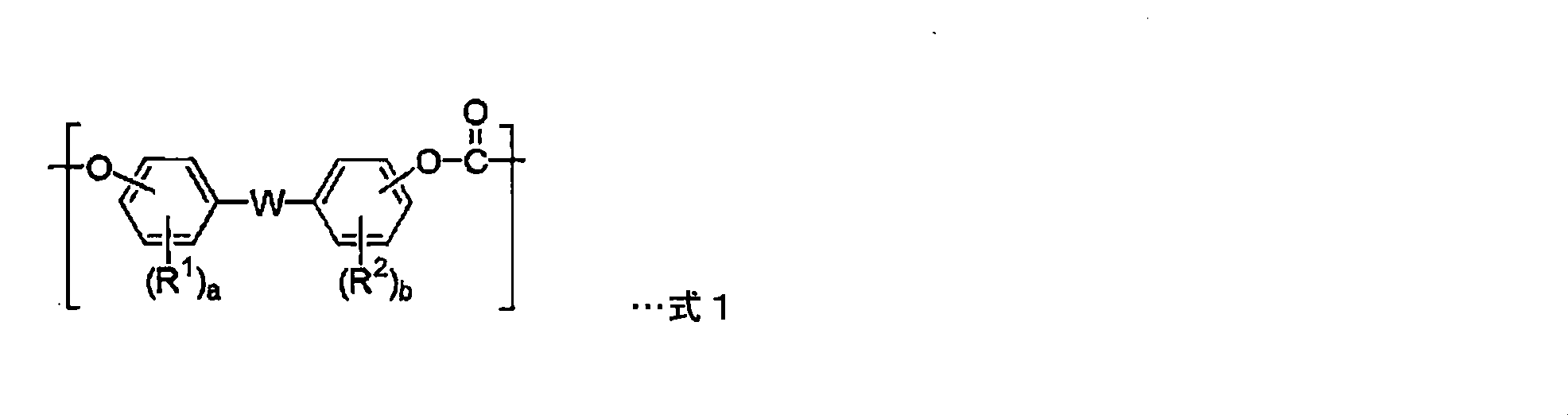
式1において、R1およびR2はそれぞれ独立しても同一であってもよく、水素原子、ハロゲン原子、アルキル基、アルコキシ基、シクロアルキル基、シクロアルコキシ基、アルケニル基、アリール基、アリールオキシ基、アラルキル基、アラルキルオキシ基、ニトロ基、アルデヒド基およびシアノ基からなる群から選ばれる少なくとも1つの基を表し、aおよびbはそれぞれ1~4の整数であり、Wは下記式2で表される結合基からなる群より選ばれる少なくとも1つの結合基であり、

式2において、R3は水素原子、アルキル基、アリール基およびアラルキル基からなる群から選ばれる少なくとも1つの基を表し、R4は単結合、アルキレン基、アリーレン基、アラルキレン基およびエステル基からなる群から選ばれる少なくとも1つの基を表し、

式3中、
R1及びR2は、それぞれ独立に、アルキレン基、アラルキレン基、アリーレン基、及びシクロアルキレン基からなる群から選ばれる基を表し、R2の水素原子はカルボキシル基で置換されてもよい。
〈態様2〉
下記式1で表される構造単位を含むポリカーボネート樹脂に、表面修飾剤により修飾されている無機微粒子が分散した、態様1に記載の有機無機複合材料:
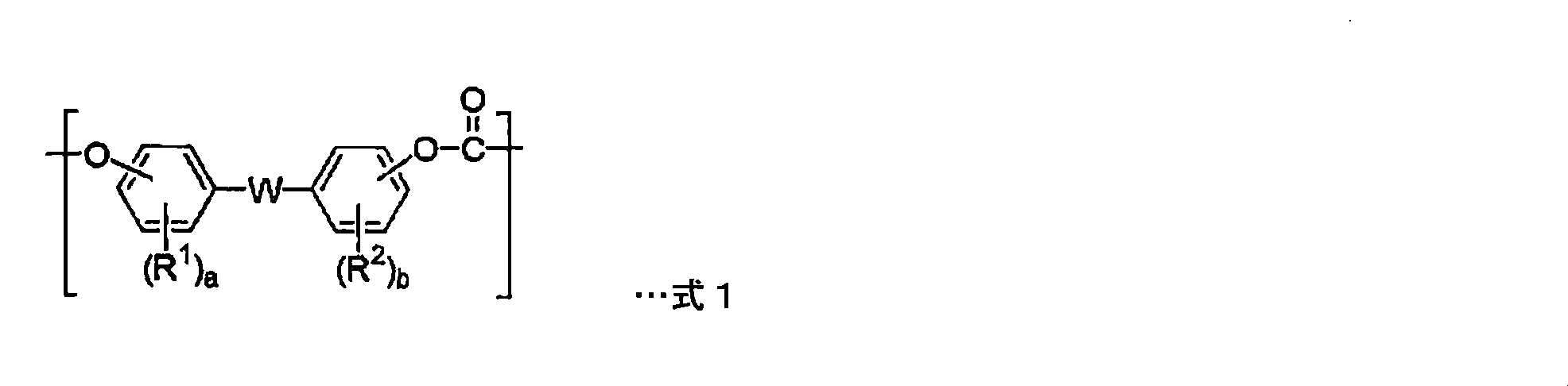
式1において、R1およびR2はそれぞれ独立しても同一であってもよく、水素原子、ハロゲン原子、アルキル基、アルコキシ基、シクロアルキル基、シクロアルコキシ基、アルケニル基、アリール基、アリールオキシ基、アラルキル基、アラルキルオキシ基、ニトロ基、アルデヒド基およびシアノ基からなる群から選ばれる少なくとも1つの基を表し、aおよびbはそれぞれ1~4の整数であり、Wは下記式2で表される結合基からなる群より選ばれる少なくとも1つの結合基であり、
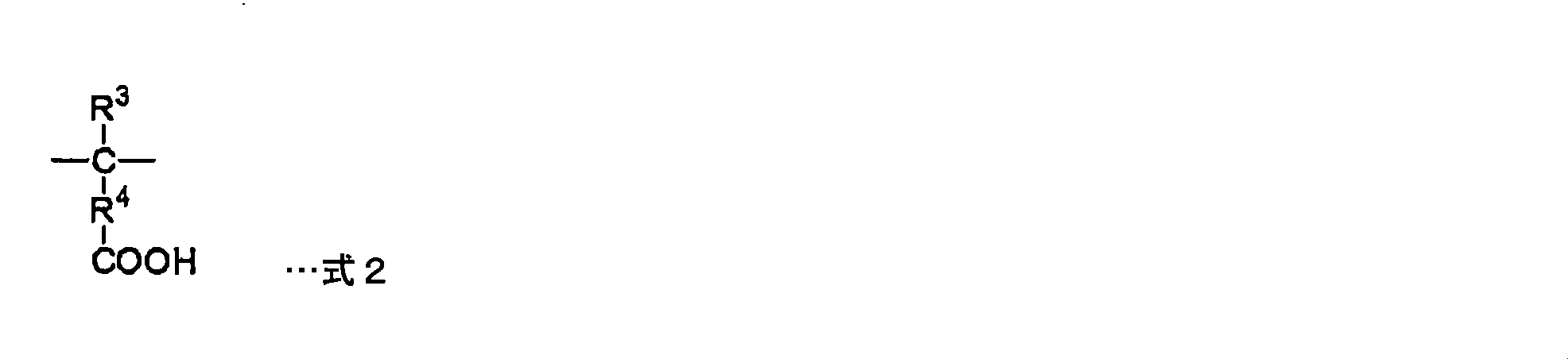
式2において、R3は水素原子、アルキル基、アリール基およびアラルキル基からなる群から選ばれる少なくとも1つの基を表し、R4は単結合、アルキレン基、アリーレン基、アラルキレン基およびエステル基からなる群から選ばれる少なくとも1つの基を表す。
〈態様3〉
式1で表される構造単位のモル比が、全カーボネート繰り返し単位100モル%に対して、0.5モル%以上20モル%以下である、態様1又は2に記載の有機無機複合材料。
〈態様4〉
下記式3で表される基を有するポリカーボネート樹脂、及び無機微粒子を含む、態様1に記載の有機無機複合材料:

式3中、
R1及びR2は、それぞれ独立に、アルキレン基、アラルキレン基、アリーレン基、及びシクロアルキレン基からなる群から選ばれる基を表し、R2の水素原子はカルボキシル基で置換されてもよい。
〈態様5〉
前記ポリカーボネート樹脂が、下記式4で表される構造単位を含む、態様4に記載の有機無機複合材料:

式4中、
R3及びR4は、前記式3で表される基を表し、
a及びbは、それぞれ独立に、a+b≧1を満たす0~4の整数であり、
R5及びR6は、それぞれ独立に、ハロゲン原子、アルキル基、アルコキシ基、シクロアルキル基、シクロアルコキシ基、アルケニル基、アリール基、アリールオキシ基、アラルキル基、アラルキルオキシ基、ニトロ基、アルデヒド基、及びシアノ基からなる群から選ばれる基を表し、
c及びdは、それぞれ独立に、c≦4-a及びd≦4-bを満たす0~4の整数であり、
Xは、単結合、アルキレン基、アラルキレン基、アリーレン基、シクロアルキレン基、硫黄原子、又は酸素原子を表す。
〈態様6〉
前記無機微粒子の表面が、表面修飾剤により修飾されている、態様4又は5に記載の有機無機複合材料。
〈態様7〉
前記表面修飾剤が、酸性官能基を有する、態様2、3、又は6に記載の有機無機複合材料。
〈態様8〉
前記酸性官能基が、スルホン酸基、ホスホン酸基、ホスフィン酸基、及びカルボン酸基からなる群より選ばれる少なくとも1つの酸性官能基である、態様7に記載の有機無機複合材料。
〈態様9〉
前記無機微粒子の表面が、前記無機微粒子に対して1~30質量%の前記表面修飾剤により修飾されている、態様2、3、6~8のいずれかに記載の有機無機複合材料。
〈態様10〉
前記無機微粒子の平均粒子径が、1~20nmである、態様1~9のいずれかに記載の有機無機複合材料。
〈態様11〉
前記無機微粒子の含有量が、前記ポリカーボネート樹脂に対して1~95質量%である、態様1~10のいずれかに記載の有機無機複合材料。
〈態様12〉
前記無機微粒子が、酸化ジルコニウム、酸化チタン、酸化スズ、酸化ケイ素、及び酸化アルミニウムからなる群より選ばれる少なくとも一種である、態様1~11のいずれかに記載の有機無機複合材料。
〈態様13〉
態様1~12のいずれかに記載の有機無機複合材料を用いて得られる成形品。
〈態様14〉
態様2、3、7~12のいずれかに記載の有機無機複合材料の製造方法であって、前記式1で表される構造単位をもたらすジオール化合物と、カーボネート前駆物質とを反応させて前記ポリカーボネート樹脂を得ること、及び前記表面修飾剤により修飾されている無機微粒子を前記ポリカーボネート樹脂に分散させることを含む、方法。
〈態様15〉
炭素-炭素二重結合を有するポリカーボネート樹脂、及びカルボキシル基を有するチオール化合物を反応させて、前記式3で表される基を有するポリカーボネート樹脂を調製することと、
前記式3で表される基を有するポリカーボネート樹脂、及び無機微粒子を混合することと
を含む、態様4~12のいずれかに記載の有機無機複合材料の製造方法。
下記式1で表される構造単位を含むポリカーボネート樹脂、又は、下記式3で表される基を有するポリカーボネート樹脂、及び無機微粒子を含む、有機無機複合材料:
R1及びR2は、それぞれ独立に、アルキレン基、アラルキレン基、アリーレン基、及びシクロアルキレン基からなる群から選ばれる基を表し、R2の水素原子はカルボキシル基で置換されてもよい。
〈態様2〉
下記式1で表される構造単位を含むポリカーボネート樹脂に、表面修飾剤により修飾されている無機微粒子が分散した、態様1に記載の有機無機複合材料:
〈態様3〉
式1で表される構造単位のモル比が、全カーボネート繰り返し単位100モル%に対して、0.5モル%以上20モル%以下である、態様1又は2に記載の有機無機複合材料。
〈態様4〉
下記式3で表される基を有するポリカーボネート樹脂、及び無機微粒子を含む、態様1に記載の有機無機複合材料:
R1及びR2は、それぞれ独立に、アルキレン基、アラルキレン基、アリーレン基、及びシクロアルキレン基からなる群から選ばれる基を表し、R2の水素原子はカルボキシル基で置換されてもよい。
〈態様5〉
前記ポリカーボネート樹脂が、下記式4で表される構造単位を含む、態様4に記載の有機無機複合材料:
R3及びR4は、前記式3で表される基を表し、
a及びbは、それぞれ独立に、a+b≧1を満たす0~4の整数であり、
R5及びR6は、それぞれ独立に、ハロゲン原子、アルキル基、アルコキシ基、シクロアルキル基、シクロアルコキシ基、アルケニル基、アリール基、アリールオキシ基、アラルキル基、アラルキルオキシ基、ニトロ基、アルデヒド基、及びシアノ基からなる群から選ばれる基を表し、
c及びdは、それぞれ独立に、c≦4-a及びd≦4-bを満たす0~4の整数であり、
Xは、単結合、アルキレン基、アラルキレン基、アリーレン基、シクロアルキレン基、硫黄原子、又は酸素原子を表す。
〈態様6〉
前記無機微粒子の表面が、表面修飾剤により修飾されている、態様4又は5に記載の有機無機複合材料。
〈態様7〉
前記表面修飾剤が、酸性官能基を有する、態様2、3、又は6に記載の有機無機複合材料。
〈態様8〉
前記酸性官能基が、スルホン酸基、ホスホン酸基、ホスフィン酸基、及びカルボン酸基からなる群より選ばれる少なくとも1つの酸性官能基である、態様7に記載の有機無機複合材料。
〈態様9〉
前記無機微粒子の表面が、前記無機微粒子に対して1~30質量%の前記表面修飾剤により修飾されている、態様2、3、6~8のいずれかに記載の有機無機複合材料。
〈態様10〉
前記無機微粒子の平均粒子径が、1~20nmである、態様1~9のいずれかに記載の有機無機複合材料。
〈態様11〉
前記無機微粒子の含有量が、前記ポリカーボネート樹脂に対して1~95質量%である、態様1~10のいずれかに記載の有機無機複合材料。
〈態様12〉
前記無機微粒子が、酸化ジルコニウム、酸化チタン、酸化スズ、酸化ケイ素、及び酸化アルミニウムからなる群より選ばれる少なくとも一種である、態様1~11のいずれかに記載の有機無機複合材料。
〈態様13〉
態様1~12のいずれかに記載の有機無機複合材料を用いて得られる成形品。
〈態様14〉
態様2、3、7~12のいずれかに記載の有機無機複合材料の製造方法であって、前記式1で表される構造単位をもたらすジオール化合物と、カーボネート前駆物質とを反応させて前記ポリカーボネート樹脂を得ること、及び前記表面修飾剤により修飾されている無機微粒子を前記ポリカーボネート樹脂に分散させることを含む、方法。
〈態様15〉
炭素-炭素二重結合を有するポリカーボネート樹脂、及びカルボキシル基を有するチオール化合物を反応させて、前記式3で表される基を有するポリカーボネート樹脂を調製することと、
前記式3で表される基を有するポリカーボネート樹脂、及び無機微粒子を混合することと
を含む、態様4~12のいずれかに記載の有機無機複合材料の製造方法。
第1の発明によれば、特定の構造単位を有するポリカーボネート樹脂を用いることで、無機微粒子の表面修飾剤の構造に依存することなく、無機微粒子をポリカーボネート樹脂に均一分散させた有機無機複合材料を提供することができる。また、第1の発明によれば、特定の構造単位を有するポリカーボネート樹脂を用いることで、後工程を簡略化でき、生産性良く、有機無機複合材料を提供することができる。
第2の発明によれば、無機微粒子のポリカーボネート樹脂への分散性を向上させた有機無機複合材料を提供することができる。
まず、第1の発明について詳細に説明する。
《有機無機複合材料》
〈ポリカーボネート樹脂〉
第1の発明で用いるポリカーボネート樹脂は、下記式1で表される構造単位を有することを特徴とし、樹脂中の全カーボネート繰り返し単位100モル%に対して、前記式1で表される構造単位のモル比は、好ましくは0.1~20モル%、より好ましくは0.5~20モル%、さらに好ましくは1~20モル%である。0.1モル%以上であれば無機微粒子との分散性向上効果を発現しやすく、20モル%以下であれば流動性を維持しやすく好ましい。モル比は、日本電子社製JNM-AL400のプロトンNMRにて測定して算出することができる。
《有機無機複合材料》
〈ポリカーボネート樹脂〉
第1の発明で用いるポリカーボネート樹脂は、下記式1で表される構造単位を有することを特徴とし、樹脂中の全カーボネート繰り返し単位100モル%に対して、前記式1で表される構造単位のモル比は、好ましくは0.1~20モル%、より好ましくは0.5~20モル%、さらに好ましくは1~20モル%である。0.1モル%以上であれば無機微粒子との分散性向上効果を発現しやすく、20モル%以下であれば流動性を維持しやすく好ましい。モル比は、日本電子社製JNM-AL400のプロトンNMRにて測定して算出することができる。

式1において、R1およびR2はそれぞれ独立しても同一であってもよく、水素原子、ハロゲン原子、アルキル基、アルコキシ基、シクロアルキル基、シクロアルコキシ基、アルケニル基、アリール基、アリールオキシ基、アラルキル基、アラルキルオキシ基、ニトロ基、アルデヒド基およびシアノ基からなる群から選ばれる少なくとも1つの基を表し、aおよびbはそれぞれ1~4の整数であり、Wは下記式2で表される結合基からなる群より選ばれる少なくとも1つの結合基である。

式2において、R3は水素原子、アルキル基、アリール基およびアラルキル基からなる群から選ばれる少なくとも1つの基を表し、R4は単結合、アルキレン基、アリーレン基、およびアラルキレン基からなる群から選ばれる少なくとも1つの基を表す。
(式1および式2について)
(式1および式2について)
本発明者らは、ポリカーボネート樹脂にカルボン酸基を導入することによって、表面修飾した無機微粒子をマトリクス中に分散でき、樹脂の透明性等を維持しながら、その材料の屈折率を向上できることを見出した。
前記式1および式2で表される、カルボキシル基を有するジオール化合物において、好ましくは、式1中のR1およびR2は、それぞれ独立しても同一であってもよく、水素原子、ハロゲン原子、炭素原子数1~10のアルキル基、炭素原子数1~10のアルコキシ基、炭素原子数5~20のシクロアルキル基、炭素原子数6~20のシクロアルコキシ基、炭素原子数1~10のアルケニル基、炭素原子数6~10のアリール基、炭素原子数6~10のアリールオキシ基、炭素原子数7~20のアラルキル基、または炭素原子数7~20のアラルキルオキシ基である。より好ましくは、R1およびR2は、それぞれ独立しても同一であってもよく、水素原子、炭素原子数1~6のアルキル基、炭素原子数6~20のシクロアルキル基、または炭素原子数6~10のアリール基である。
また、好ましくは、式1中のaおよびbはそれぞれ1~2の整数であり、より好ましくは、aおよびbはそれぞれ1の整数である。
好ましくは、式2中のR3は、水素原子、炭素原子数1~10のアルキル基、炭素原子数6~10のアリール基、または炭素原子数7~20のアラルキル基であり、より好ましくは、水素原子、炭素原子数1~6のアルキル基、炭素原子数6~10のアリール基、または炭素原子数7~12のアラルキル基である。
好ましくは、式2中のR4は、単結合、炭素原子数1~10のアルキレン基、炭素原子数6~10のアリーレン基、または炭素原子数7~20のアラルキレン基であり、より好ましくは、単結合、炭素原子数1~6のアルキレン基、炭素原子数6~10のアリーレン基、または炭素原子数7~12のアラルキレン基である。
式2中のR4は、特に好ましくは炭素原子数1~6のアルキレン基である。ポリカーボネート樹脂にカルボン酸基を導入すると、通常は、ポリカーボネート樹脂の加水分解耐性が低下する傾向にあり、これは光学用の樹脂として問題となる場合がある。それに対して、アルキレン基に結合しているカルボン酸基は、特に芳香族基に直接結合しているカルボン酸基等と比較して、酸性度が低いため、そのポリカーボネート樹脂の加水分解耐性が実質的には低下しない。そのため、そのようなポリカーボネート樹脂を用いた有機無機複合材料は、実用上、非常に有利である。ポリカーボネート樹脂にカルボン酸基を比較的多く導入することによって、無機微粒子の分散性をさらに高めることが可能になるが、それと引き換えに、複合材料の他の物性が低下する場合があるため、加水分解耐性を低下させない位置にカルボン酸基を導入することは非常に有利である。
前記式1および2で表される、カルボキシル基を有するジオール化合物を例示すると、2,2’ビス(4-ヒドロキシフェニル)ペンタン酸(通常「ジフェノール酸」と称される。)、4-(2-ヒドロキシフェニル)-4-(4-ヒドロキシフェニル)ペンタン酸等が挙げられる。上記の中でも、安価に入手可能であるジフェノール酸が特に好ましい。これらは単独で使用してもよく、または二種以上組み合わせて用いてもよい。
(その他の単位)
一般式1以外のその他の単位としては、各種ジオール化合物が挙げられる。かかるジオール化合物としては、芳香族ジオール化合物、脂肪族ジオール化合物、脂環式ジオール化合物のいずれでも良く、特許文献6、特許文献7に記載のジオール化合物やジエチレングリコール、トリエチレングリコール、テトラエチレングリコール、ポリエチレングリコールなどのオキシアルキレングリコール類が挙げられる。これらは単独で使用してもよく、または二種以上組み合わせて用いてもよい。以下にジオール成分の代表的具体例を示すが、第1の発明のその他の成分は、それらによって限定されるものではない。
一般式1以外のその他の単位としては、各種ジオール化合物が挙げられる。かかるジオール化合物としては、芳香族ジオール化合物、脂肪族ジオール化合物、脂環式ジオール化合物のいずれでも良く、特許文献6、特許文献7に記載のジオール化合物やジエチレングリコール、トリエチレングリコール、テトラエチレングリコール、ポリエチレングリコールなどのオキシアルキレングリコール類が挙げられる。これらは単独で使用してもよく、または二種以上組み合わせて用いてもよい。以下にジオール成分の代表的具体例を示すが、第1の発明のその他の成分は、それらによって限定されるものではない。
芳香族ジオール化合物としては、具体的には、例えば、4,4’-ビフェノール、3,3’,5,5’-テトラフルオロ-4,4’-ビフェノール、α,α’-ビス(4-ヒドロキシフェニル)-o-ジイソプロピルベンゼン、α,α’-ビス(4-ヒドロキシフェニル)-m-ジイソプロピルベンゼン(通常「ビスフェノールM」と称される。)、α,α’-ビス(4-ヒドロキシフェニル)-p-ジイソプロピルベンゼン、α,α’-ビス(4-ヒドロキシフェニル)-m-ビス(1,1,1,3,3,3-ヘキサフルオロイソプロピル)ベンゼン、1,1-ビス(4-ヒドロキシフェニル)シクロヘキサン、1,1-ビス(4-ヒドロキシフェニル)-3,3,5-トリメチルシクロヘキサン、1,1-ビス(4-ヒドロキシフェニル)-4-イソプロピルシクロヘキサン、1,1-ビス(3-シクロヘキシル-4-ヒドロキシフェニル)シクロヘキサン、1,1-ビス(4-ヒドロキシフェニル)シクロペンタン、1,1-ビス(3-フルオロ-4-ヒドロキシフェニル)シクロヘキサン、1,1-ビス(4-ヒドロキシフェニル)パーフルオロシクロヘキサン、4,4’-ジヒドロキシジフェニルエーテル、4,4’-ジヒドロキシ-3,3’-ジメチルジフェニルエーテル、4,4’-ジヒドロキシジフェニルスルホン、4,4’-ジヒドロキシジフェニルスルホキシド、4,4’-ジヒドロキシジフェニルスルフィド、3,3’-ジメチル-4,4’-ジヒドロキシジフェニルスルフィド、3,3’-ジメチル-4,4’-ジヒドロキシジフェニルスルホン、4,4’-ジヒドロキシ-3,3’-ジフェニルスルフィド、4,4’-ジヒドロキシ-3,3’-ジフェニルスルホキシド、4,4’-ジヒドロキシ-3,3’-ジフェニルスルホン、1,1-ビス(4-ヒドロキシフェニル)メタン(通常「ビスフェノールF」と称される。)、1,1-ビス(4-ヒドロキシフェニル)エタン、2,2-ビス(4-ヒドロキシフェニル)プロパン(通常「ビスフェノールA」と称される。)、1,1-ビス(4-ヒドロキシフェニル)-1-フェニルエタン、2,2-ビス(4-ヒドロキシ-3-メチルフェニル)プロパン(通常「ビスフェノールC」と称される。)、2,2-ビス(4-ヒドロキシフェニル)ブタン、2,2-ビス(4-ヒドロキシフェニル)ペンタン、2,2-ビス(4-ヒドロキシ-3-フェニルフェニル)プロパン、2,2-ビス(3-イソプロピル-4-ヒドロキシフェニル)プロパン、2,2-ビス(3-t-ブチル-4-ヒドロキシフェニル)プロパン、4,4-ビス(4-ヒドロキシフェニル)ヘプタン、2,2-ビス(4-ヒドロキシフェニル)オクタン、1,1-ビス(4-ヒドロキシフェニル)デカン、1,1-ビス(3-メチル-4-ヒドロキシフェニル)デカン、1,1-ビス(2,3-ジメチル-4-ヒドロキシフェニル)デカン、2,2-ビス(3-ブロモ-4-ヒドロキシフェニル)プロパン、ビス(4-ヒドロキシフェニル)ジフェニルメタン、1,1-ビス(4-ヒドロキシフェニル)-4-イソプロピルシクロヘキサン、2,2-ビス(4-ヒドロキシフェニル)-1,1,1,3,3,3-ヘキサフルオロプロパン(通常「ビスフェノールAF」と称される。)、6,6’-ジヒドロキシ-3,3,3’,3’-テトラメチル-1,1’-スピロビインダン、7,7’-ジメチル-6,6’-ジヒドロキシ-3,3,3’,3’-テトラメチル-1,1’-スピロビインダン、7,7’-ジフェニル-6,6’-ジヒドロキシ-3,3,3’,3’-テトラメチル-1,1’-スピロビインダン、2,2-ビス(4-ヒドロキシ-3-メチルフェニル)-1,1,1,3,3,3-ヘキサフルオロプロパン、2,2-ビス(3,5-ジメチル-4-ヒドロキシフェニル)-1,1,1,3,3,3-ヘキサフルオロプロパン、2,2-ビス(3-フルオロ-4-ヒドロキシフェニル)-1,1,1,3,3,3-ヘキサフルオロプロパン、および2,2-ビス(3,5-ジフルオロ-4-ヒドロキシフェニル)-1,1,1,3,3,3-ヘキサフルオロプロパン、2,2-ビス(3,5-ジブロモ-4-ヒドロキシフェニル)プロパン、2,2-ビス(3,5-ジクロロ-4-ヒドロキシフェニル)プロパン、2,2-ビス(3,5-ジメチル-4-ヒドロキシフェニル)プロパン、および2,2-ビス(3-シクロヘキシル-4-ヒドロキシフェニル)プロパンなどが挙げられる。
上記の中でも、ビスフェノールM、1,1-ビス(4-ヒドロキシフェニル)シクロヘキサン、1,1-ビス(4-ヒドロキシフェニル)-3,3,5-トリメチルシクロヘキサン、3,3’-ジメチル-4,4’-ジヒドロキシジフェニルスルフィド、ビスフェノールA、ビスフェノールC、ビスフェノールAF、6,6’-ジヒドロキシ-3,3,3’,3’-テトラメチル-1,1’-スピロビインダンおよび1,1-ビス(4-ヒドロキシフェニル)デカンが好ましい。さらには、安価に入手可能であるビスフェノールAが特に好ましい。
脂肪族ジオール化合物としては、例えば、1,3-プロパンジオール、1,4-ブタンジオール、1,5-ペンタンジオール、1,6-ヘキサンジオール、1,8-オクタンジオール、1,9-ノナンジオール、1,10-デカンジオール、1,12-ドデカンジオール、2-メチル-1,3-プロパンジオール、ネオペンチルグリコール、3-メチル-1,5-ペンタンジオール、2-n-ブチル-2-エチル-1,3-プロパンジオール、2,2-ジエチル-1,3-プロパンジオール、2,4-ジエチル-1,5-ペンタンジオール、1,2-ヘキサングリコール、1,2-オクタングリコール、2-エチル-1,3-ヘキサンジオール、2,2-ジイソブチル-1,3-プロパンジオール、2,2-ジイソアミル-1,3-プロパンジオール、2-メチル-2-プロピル-1,3-プロパンジオールなどが挙げられる。
脂環式ジオール化合物としては、例えば、シクロヘキサンジメタノール、トリシクロデカンジメタノール、アダマンタンジオール、ペンタシクロペンタデカンジメタノール、2,2,4,4-テトラメチル-1,3-シクロブタンジオール、イソソルビド(1,4;3,6-ジアンヒドロ-D-ソルビトール)などが挙げられる。
(ポリカーボネート樹脂の製造方法)
第1の発明で用いられるポリカーボネート樹脂は、通常のポリカーボネート樹脂を製造するそれ自体公知の反応手段、例えば上記のようなジオール成分に炭酸ジエステルなどのカーボネート前駆物質を反応させる方法により製造される。ジオール成分と、カーボネート前駆物質とを反応させてポリカーボネート樹脂を得る工程について、基本的な手段を簡単に説明する。
第1の発明で用いられるポリカーボネート樹脂は、通常のポリカーボネート樹脂を製造するそれ自体公知の反応手段、例えば上記のようなジオール成分に炭酸ジエステルなどのカーボネート前駆物質を反応させる方法により製造される。ジオール成分と、カーボネート前駆物質とを反応させてポリカーボネート樹脂を得る工程について、基本的な手段を簡単に説明する。
カーボネート前駆物質として炭酸ジエステルを用いるエステル交換反応は、不活性ガス雰囲気下、所定割合のジオール成分を炭酸ジエステルと加熱しながら撹拌して、生成するアルコールまたはフェノール類を留出させる方法により行われる。反応温度は生成するアルコールまたはフェノール類の沸点などにより異なるが、通常120~300℃の範囲である。反応はその初期から減圧にして生成するアルコールまたはフェノール類を留出させながら反応を完結させる。また、必要に応じて末端停止剤、酸化防止剤等を加えてもよい。
前記エステル交換反応に使用される炭酸ジエステルとしては、置換されてもよい炭素原子数6~12のアリール基、アラルキル基等のエステルが挙げられる。具体的には、ジフェニルカーボネート、ジトリールカーボネート、ビス(クロロフェニル)カーボネートおよびm-クレジルカーボネート等が例示される。なかでもジフェニルカーボネートが特に好ましい。ジフェニルカーボネートの使用量は、ジヒドロキシ化合物の合計1モルに対して、好ましくは0.97~1.10モル、より好ましくは1.00~1.06モルである。
また溶融重合法においては重合速度を速めるために、重合触媒を用いることができ、かかる重合触媒としては、アルカリ金属化合物、アルカリ土類金属化合物、含窒素化合物、金属化合物等が挙げられる。
このような化合物としては、アルカリ金属やアルカリ土類金属の、有機酸塩、無機塩、酸化物、水酸化物、水素化物、アルコキシド、4級アンモニウムヒドロキシド等が好ましく用いられ、これらの化合物は単独もしくは組み合わせて用いることができる。
アルカリ金属化合物としては、水酸化ナトリウム、水酸化カリウム、水酸化セシウム、水酸化リチウム、炭酸水素ナトリウム、炭酸ナトリウム、炭酸カリウム、炭酸セシウム、炭酸リチウム、酢酸ナトリウム、酢酸カリウム、酢酸セシウム、酢酸リチウム、ステアリン酸ナトリウム、ステアリン酸カリウム、ステアリン酸セシウム、ステアリン酸リチウム、水素化ホウ素ナトリウム、安息香酸ナトリウム、安息香酸カリウム、安息香酸セシウム、安息香酸リチウム、リン酸水素2ナトリウム、リン酸水素2カリウム、リン酸水素2リチウム、フェニルリン酸2ナトリウム、ビスフェノールAの2ナトリウム塩、2カリウム塩、2セシウム塩、2リチウム塩、フェノールのナトリウム塩、カリウム塩、セシウム塩、リチウム塩等が例示される。
アルカリ土類金属化合物としては、水酸化マグネシウム、水酸化カルシウム、水酸化ストロンチウム、水酸化バリウム、炭酸マグネシウム、炭酸カルシウム、炭酸ストロンチウム、炭酸バリウム、二酢酸マグネシウム、二酢酸カルシウム、二酢酸ストロンチウム、二酢酸バリウム、ステアリン酸バリウム等が例示される。
含窒素化合物としては、テトラメチルアンモニウムヒドロキシド、テトラエチルアンモニウムヒドロキシド、テトラプロピルアンモニウムヒドロキシド、テトラブチルアンモニウムヒドロキシド、トリメチルベンジルアンモニウムヒドロキシド等のアルキル、アリール基等を有する4級アンモニウムヒドロキシド類が挙げられる。また、トリエチルアミン、ジメチルベンジルアミン、トリフェニルアミン等の3級アミン類、2-メチルイミダゾール、2-フェニルイミダゾール、ベンゾイミダゾール等のイミダゾール類が挙げられる。また、アンモニア、テトラメチルアンモニウムボロハイドライド、テトラブチルアンモニウムボロハイドライド、テトラブチルアンモニウムテトラフェニルボレート、テトラフェニルアンモニウムテトラフェニルボレート等の塩基あるいは塩基性塩等が例示される。
金属化合物としては、亜鉛アルミニウム化合物、ゲルマニウム化合物、有機スズ化合物、アンチモン化合物、マンガン化合物、チタン化合物、ジルコニウム化合物等が例示される。これらの化合物は1種または2種以上併用してもよい。
これらの重合触媒の使用量は、ジオール成分1モルに対し、好ましくは1×10⁻⁹~1×10⁻²当量、好ましくは1×10⁻⁸~1×10⁻⁵当量、より好ましくは1×10⁻⁷~1×10⁻³当量の範囲で選ばれる。
また、反応後期に触媒失活剤を添加することもできる。使用する触媒失活剤としては、公知の触媒失活剤が有効に使用されるが、この中でもスルホン酸のアンモニウム塩、ホスホニウム塩が好ましい。更にドデシルベンゼンスルホン酸テトラブチルホスホニウム塩等のドデシルベンゼンスルホン酸の塩類、パラトルエンスルホン酸テトラブチルアンモニウム塩等のパラトルエンスルホン酸の塩類が好ましい。
またスルホン酸のエステルとして、ベンゼンスルホン酸メチル、ベンゼンスルホン酸エチル、ベンゼンスルホン酸ブチル、ベンゼンスルホン酸オクチル、ベンゼンスルホン酸フェニル、パラトルエンスルホン酸メチル、パラトルエンスルホン酸エチル、パラトルエンスルホン酸ブチル、パラトルエンスルホン酸オクチル、パラトルエンスルホン酸フェニル等が好ましく用いられる。なかでも、ドデシルベンゼンスルホン酸テトラブチルホスホニウム塩が最も好ましく使用される。
これらの触媒失活剤の使用量は、アルカリ金属化合物および/またはアルカリ土類金属化合物より選ばれた少なくとも1種の重合触媒を用いた場合、その触媒1モル当たり、好ましくは0.5~50モルの割合で、より好ましくは0.5~10モルの割合で、更に好ましくは0.8~5モルの割合で使用することができる。
(添加剤)
第1の発明で用いられるポリカーボネート樹脂には、必要に応じて、離型剤、熱安定剤、紫外線吸収剤、ブルーイング剤、帯電防止剤、難燃剤、可塑剤、充填剤などの添加剤を適宜添加して用いることができる。
第1の発明で用いられるポリカーボネート樹脂には、必要に応じて、離型剤、熱安定剤、紫外線吸収剤、ブルーイング剤、帯電防止剤、難燃剤、可塑剤、充填剤などの添加剤を適宜添加して用いることができる。
離型剤としては、その90質量%以上がアルコールと脂肪酸のエステルからなるものが好ましい。アルコールと脂肪酸のエステルとしては、具体的には一価アルコールと脂肪酸のエステルおよび/または多価アルコールと脂肪酸との部分エステルあるいは全エステルが挙げられる。前記一価アルコールと脂肪酸のエステルとは、炭素原子数1~20の一価アルコールと炭素原子数10~30の飽和脂肪酸とのエステルが好ましい。また、多価アルコールと脂肪酸との部分エステルあるいは全エステルとは、炭素原子数1~25の多価アルコールと炭素原子数10~30の飽和脂肪酸との部分エステルまたは全エステルが好ましい。具体的に一価アルコールと飽和脂肪酸とのエステルとしては、ステアリルステアレート、パルミチルパルミテート、ブチルステアレート、メチルラウレート、イソプロピルパルミテート等があげられ、ステアリルステアレートが好ましい。
具体的に多価アルコールと飽和脂肪酸との部分エステルまたは全エステルとしては、ステアリン酸モノグリセリド、ステアリン酸ジグリセリド、ステアリン酸トリグリセリド、ステアリン酸モノソルビテート、ベヘニン酸モノグリセリド、ペンタエリスリトールモノステアレート、ペンタエリスリトールテトラステアレート、ペンタエリスリトールテトラペラルゴネート、プロピレングリコールモノステアレート、ビフェニルビフェネート、ソルビタンモノステアレート、2-エチルヘキシルステアレート、ジペンタエリスリトールヘキサステアレート等のジペンタエリスルトールの全エステルまたは部分エステル等が挙げられる。これらのエステルのなかでも、ステアリン酸モノグリセリド、ステアリン酸トリグリセリド、ペンタエリスリトールテトラステアレート、ステアリン酸トリグリセリドとステアリルステアレートの混合物が好ましく用いられる。
離型剤中の前記エステルの量は、離型剤を100質量%とした時、90質量%以上が好ましく、95質量%以上がより好ましい。
離型剤の含有量としては、ポリカーボネート樹脂100質量部に対して0.005~2.0質量部の範囲が好ましく、0.01~0.6質量部の範囲がより好ましく、0.02~0.5質量部の範囲がさらに好ましい。
熱安定剤としては、リン系熱安定剤、硫黄系熱安定剤およびヒンダードフェノール系熱安定剤が挙げられる。
リン系熱安定剤としては、亜リン酸、リン酸、亜ホスホン酸、ホスホン酸およびこれらのエステル等が挙げられる。具体的には、トリフェニルホスファイト、トリス(ノニルフェニル)ホスファイト、トリス(2,4-ジ-tert-ブチルフェニル)ホスファイト、トリス(2,6-ジ-tert-ブチルフェニル)ホスファイト、トリデシルホスファイト、トリオクチルホスファイト、トリオクタデシルホスファイト、ジデシルモノフェニルホスファイト、ジオクチルモノフェニルホスファイト、ジイソプロピルモノフェニルホスファイト、モノブチルジフェニルホスファイト、モノデシルジフェニルホスファイト、モノオクチルジフェニルホスファイト、ビス(2,6-ジ-tert-ブチル-4-メチルフェニル)ペンタエリスリトールジホスファイト、2,2-メチレンビス(4,6-ジ-tert-ブチルフェニル)オクチルホスファイト、ビス(ノニルフェニル)ペンタエリスリトールジホスファイト、ビス(2,4-ジクミルフェニル)ペンタエリスリトールジホスファイト、ビス(2,4-ジ-tert-ブチルフェニル)ペンタエリスリトールジホスファイト、ジステアリルペンタエリスリトールジホスファイト、トリブチルホスフェート、トリエチルホスフェート、トリメチルホスフェート、トリフェニルホスフェート、ジフェニルモノオルソキセニルホスフェート、ジブチルホスフェート、ジオクチルホスフェート、ジイソプロピルホスフェート、ベンゼンホスホン酸ジメチル、ベンゼンホスホン酸ジエチル、ベンゼンホスホン酸ジプロピル、テトラキス(2,4-ジ-t-ブチルフェニル)-4,4’-ビフェニレンジホスホナイト、テトラキス(2,4-ジ-t-ブチルフェニル)-4,3’-ビフェニレンジホスホナイト、テトラキス(2,4-ジ-t-ブチルフェニル)-3,3’-ビフェニレンジホスホナイト、ビス(2,4-ジ-tert-ブチルフェニル)-4-フェニル-フェニルホスホナイトおよびビス(2,4-ジ-tert-ブチルフェニル)-3-フェニル-フェニルホスホナイト等が挙げられる。
なかでも、ビス(2,6-ジ-tert-ブチル-4-メチルフェニル)ペンタエリスリトールジホスファイト、トリス(2,4-ジ-tert-ブチルフェニル)ホスファイト、トリス(2,6-ジ-tert-ブチルフェニル)ホスファイト、テトラキス(2,4-ジ-t-ブチルフェニル)-4,4’-ビフェニレンジホスホナイト、テトラキス(2,4-ジ-t-ブチルフェニル)-4,3’-ビフェニレンジホスホナイト、テトラキス(2,4-ジ-t-ブチルフェニル)-3,3’-ビフェニレンジホスホナイト、ビス(2,4-ジ-tert-ブチルフェニル)-4-フェニル-フェニルホスホナイトおよびビス(2,4-ジ-tert-ブチルフェニル)-3-フェニル-フェニルホスホナイトが好ましく使用される。特に好ましくはトリス(2,4-ジ-tert-ブチルフェニル)ホスファイト、ビス(2,6-ジ-tert-ブチル-4-メチルフェニル)ペンタエリスリトールジホスファイト、テトラキス(2,4-ジ-tert-ブチルフェニル)-4,4’-ビフェニレンジホスホナイトが使用される。
リン系熱安定剤の含有量としては、ポリカーボネート樹脂100質量部に対して0.001~0.2質量部が好ましい。
硫黄系熱安定剤としては、ペンタエリスリトール-テトラキス(3-ラウリルチオプロピオネート)、ペンタエリスリトール-テトラキス(3-ミリスチルチオプロピオネート)、ペンタエリスリトール-テトラキス(3-ステアリルチオプロピオネート)、ジラウリル-3、3’-チオジプロピオネート、ジミリスチル-3、3’-チオジプロピオネート、ジステアリル-3、3’-チオジプロピオネート等が挙げられる。なかでもペンタエリスリトール-テトラキス(3-ラウリルチオプロピオネート)、ペンタエリスリトール-テトラキス(3-ミリスチルチオプロピオネート)、ジラウリル-3、3’-チオジプロピオネート、ジミリスチル-3、3’-チオジプロピオネートが好ましい。特に好ましくはペンタエリスリトール-テトラキス(3-ラウリルチオプロピオネート)である。
硫黄系熱安定剤の含有量としては、ポリカーボネート樹脂100質量部に対して0.001~0.2質量部が好ましい。
ヒンダードフェノール系熱安定剤としては、トリエチレングリコール-ビス[3-(3-tert-ブチル-5-メチル-4-ヒドロキシフェニル)プロピオネート]、1,6-ヘキサンジオール-ビス[3-(3,5-ジ-tert-ブチル-4-ヒドロキシフェニル)プロピオネート]、ペンタエリスリトール-テトラキス[3-(3,5-ジ-tert-ブチル-4-ヒドロキシフェニル)プロピオネート]、オクタデシル-3-(3,5-ジ-tert-ブチル-4-ヒドロキシフェニル)プロピオネート、1,3,5-トリメチル-2,4,6-トリス(3,5-ジ-tert-ブチル-4-ヒドロキシベンジル)ベンゼン、N,N-ヘキサメチレンビス(3,5-ジ-tert-ブチル-4-ヒドロキシ-ヒドロシンナマイド)、3,5-ジ-tert-ブチル-4-ヒドロキシ-ベンジルホスホネート-ジエチルエステル、トリス(3,5-ジ-tert-ブチル-4-ヒドロキシベンジル)イソシアヌレートおよび3,9-ビス{1,1-ジメチル-2-[β-(3-tert-ブチル-4-ヒドロキシ-5-メチルフェニル)プロピオニルオキシ]エチル}-2,4,8,10-テトラオキサスピロ(5,5)ウンデカンなどが挙げられる。なかでも、オクタデシル-3-(3,5-ジ-tert-ブチル-4-ヒドロキシフェニル)プロピオネート、ペンタエリスリトール-テトラキス[3-(3,5-ジ-tert-ブチル-4-ヒドロキシフェニル)プロピオネート]が特に好ましく用いられる。
ヒンダードフェノール系熱安定剤の含有量としては、ポリカーボネート樹脂100質量部に対して0.001~0.3質量部が好ましい。
リン系熱安定剤とヒンダードフェノール系熱安定剤は、併用することもできる。
紫外線吸収剤としては、ベンゾトリアゾール系紫外線吸収剤、ベンゾフェノン系紫外線吸収剤、トリアジン系紫外線吸収剤、環状イミノエステル系紫外線吸収剤およびシアノアクリレート系からなる群より選ばれた少なくとも1種の紫外線吸収剤が好ましい。
ベンゾトリアゾール系紫外線吸収剤において、より好ましくは、2-(2-ヒドロキシ-5-tert-オクチルフェニル)ベンゾトリアゾール、2,2’-メチレンビス[4-(1,1,3,3-テトラメチルブチル)-6-(2H-ベンゾトリアゾール-2-イル)フェノール]である。
ベンゾフェノン系紫外線吸収剤としては、2-ヒドロキシ-4-n-ドデシルオキシベンソフェノン、2-ヒドロキシ-4-メトキシ-2’-カルボキシベンゾフェノンが挙げられる。
トリアジン系紫外線吸収剤としては、2-(4,6-ジフェニル-1,3,5-トリアジン-2-イル)-5-[(ヘキシル)オキシ]-フェノール、2-(4,6-ビス(2.4-ジメチルフェニル)-1,3,5-トリアジン-2-イル)-5-[(オクチル)オキシ]-フェノール等が挙げられる。
環状イミノエステル系紫外線吸収剤としては、特に2,2’-p-フェニレンビス(3,1-ベンゾオキサジン-4-オン)が好適である。
シアノアクリレート系紫外線吸収剤としては、1,3-ビス-[(2’-シアノ-3’,3’-ジフェニルアクリロイル)オキシ]-2,2-ビス[(2-シアノ-3,3-ジフェニルアクリロイル)オキシ]メチル)プロパン、および1,3-ビス-[(2-シアノ-3,3-ジフェニルアクリロイル)オキシ]ベンゼン等が挙げられる。
紫外線吸収剤の配合量は、ポリカーボネート樹脂100質量部に対して好ましくは0.01~3.0質量部であり、かかる配合量の範囲であれば、用途に応じ、熱可塑性樹脂成形品に十分な耐候性を付与することが可能である。
ブルーイング剤としては、バイエル社のマクロレックスバイオレットBおよびマクロレックスブルーRR並びにクラリアント社のポリシンスレンブル-RLS等が挙げられる。ブルーイング剤は、熱可塑性樹脂の黄色味を消すために有効である。特に耐候性を付与した熱可塑性樹脂組成物の場合は、一定量の紫外線吸収剤が配合されているため、紫外線吸収剤の作用や色によって樹脂組成物が黄色味を帯びやすい現実があり、レンズに自然な透明感を付与するためにはブルーイング剤の配合は非常に有効である。
ブルーイング剤の配合量は、ポリカーボネート樹脂100質量部に対して好ましくは0.05~1.5ppmであり、より好ましくは0.1~1.2ppmである。
(比粘度:ηSP)
第1の発明のポリカーボネート樹脂の比粘度(ηSP)は、0.2~1.5が好ましい。比粘度が下限以上では強度等が向上し、上限以下では成形加工特性が優れる。より好ましくは、0.2以上1.2以下であり、さらに好ましくは、0.2以上1.0以下、特に好ましくは、0.2以上0.5以下である。なお、第1の発明の効果を損なわない範囲で他の樹脂と併用してよい。
第1の発明のポリカーボネート樹脂の比粘度(ηSP)は、0.2~1.5が好ましい。比粘度が下限以上では強度等が向上し、上限以下では成形加工特性が優れる。より好ましくは、0.2以上1.2以下であり、さらに好ましくは、0.2以上1.0以下、特に好ましくは、0.2以上0.5以下である。なお、第1の発明の効果を損なわない範囲で他の樹脂と併用してよい。
比粘度は、20℃で塩化メチレン100mlにポリカーボネート樹脂0.7gを溶解した溶液からオストワルド粘度計を用いて求めた。
比粘度(ηSP)=(t-t0)/t0
[t0は塩化メチレンの落下秒数、tは試料溶液の落下秒数]
比粘度(ηSP)=(t-t0)/t0
[t0は塩化メチレンの落下秒数、tは試料溶液の落下秒数]
なお、具体的な比粘度の測定としては、例えば次の要領で行うことができる。まず、ポリカーボネート樹脂をその20~30倍重量の塩化メチレンに溶解し、可溶分をセライト濾過により採取した後、溶液を除去して十分に乾燥し、塩化メチレン可溶分の固体を得る。かかる固体0.7gを塩化メチレン100mlに溶解した溶液から20℃における比粘度を、オストワルド粘度計を用いて求める。
(分子量)
製造可能であるという観点から、第1の発明のポリカーボネート樹脂の個数平均分子量(Mn)は、5,000以上、8,000以上、10,000以上、15,000以上、又は20,000以上であってもよく、100,000以下、80,000以下、50,000以下、30,000以下、又は20,000以下であってもよい。例えば、Mnの範囲は、5,000以上100,000以下、又は10,000以上30,000以下の範囲である。
製造可能であるという観点から、第1の発明のポリカーボネート樹脂の個数平均分子量(Mn)は、5,000以上、8,000以上、10,000以上、15,000以上、又は20,000以上であってもよく、100,000以下、80,000以下、50,000以下、30,000以下、又は20,000以下であってもよい。例えば、Mnの範囲は、5,000以上100,000以下、又は10,000以上30,000以下の範囲である。
同様に、第1の発明のポリカーボネート樹脂の重量平均分子量(Mw)は、8,000以上、10,000以上、15,000以上、20,000以上、又は30,000以上であってもよく、200,000以下、150,000以下、100,000以下、80,000以下、50,000以下、又は30,000以下であってもよい。例えば、Mwの範囲は、8,000以上200,000以下、又は10,000以上50,000以下の範囲である。
第1の発明のポリカーボネート樹脂の分子量分布(Mw/Mn)は、2.0以上、2.25以上、2.5以上、3.0以上、4.0以上、又は5.0以上であってもよく、10.0以下、8.0以下、6.0以下、又は5.0以下であってもよい。例えば、Mw/Mnの範囲は、2.0以上10.0以下、又は3.0以上6.0以下の範囲であれば、製造が可能である。
(ガラス転移温度:Tg)
第1の発明のポリカーボネート樹脂のガラス転移温度(Tg)は、好ましくは90~160℃、より好ましくは100~150℃である。Tgが上記範囲内であると、光学成形体として使用した際に、耐熱安定性及び成形性が良好であり好ましい。ガラス転移温度(Tg)はティー・エイ・インスツルメント・ジャパン(株)製2910型DSCを使用し、昇温速度20℃/minにて測定する。
第1の発明のポリカーボネート樹脂のガラス転移温度(Tg)は、好ましくは90~160℃、より好ましくは100~150℃である。Tgが上記範囲内であると、光学成形体として使用した際に、耐熱安定性及び成形性が良好であり好ましい。ガラス転移温度(Tg)はティー・エイ・インスツルメント・ジャパン(株)製2910型DSCを使用し、昇温速度20℃/minにて測定する。
〈表面修飾無機微粒子〉
第1の発明で用いられる表面修飾剤により修飾されている無機微粒子は、その平均粒子径が好ましくは20nm以下のナノスケールの範囲にあり、酸性官能基を有する表面修飾剤で修飾されているものが好ましく使用できる。
第1の発明で用いられる表面修飾剤により修飾されている無機微粒子は、その平均粒子径が好ましくは20nm以下のナノスケールの範囲にあり、酸性官能基を有する表面修飾剤で修飾されているものが好ましく使用できる。
無機微粒子の種類としては、ZrO2(酸化ジルコニウム)、TiO2(酸化チタン)、SnO2(酸化スズ)、SiO2(酸化ケイ素)、Al2O3(酸化アルミニウム)等のものを例示することができる。中でも、第1の発明においては、光学部材、光学部品としての利用の観点からZrO2やTiO2が好ましく、ZrO2が特に好ましい。
ここで、無機微粒子の平均粒子径は、動的光散乱測定(DLS)にて測定した。無機微粒子の平均粒子径は1~20nmの範囲が好ましい。その理由は、粒子径が1nm未満では、結晶性が乏しくなり、屈折率などの粒子特性を発現することが難しくなる一方、平均粒子径が20nmを超えると、分散液や樹脂複合体とした場合に透明性が低下するからである。
第1の発明での無機微粒子の表面修飾剤は、複合化するポリカーボネート樹脂などに対し、無機微粒子の分散性を確保できれば特に制限はないけれども、スルホン酸基、ホスホン酸基、ホスフィン酸基、カルボン酸基のいずれかの酸性官能基を有することが分散性や屈折率向上効果に優れるため好ましい。以下に表面修飾剤の代表的具体例を示すが、第1の発明の表面修飾剤は、それらによって限定されるものではない。それらは単一で用いられても良く、また、複数種のものを混合して用いてもよい。特に、表面修飾処理後の無機微粒子を樹脂の分散する際に、樹脂の種類に応じて、当該樹脂との親和性を向上しやすい表面修飾剤を適宜選択して用いることが望ましい。
スルホン酸基を有する表面修飾剤としては、ブタンスルホン酸、ヘキサンスルホン酸、ドデカンスルホン酸等のアルキルスルホン酸やベンゼンスルホン酸、メチルベンゼンスルホン酸、ドデシルベンゼンスルホン酸等のアリールスルホン酸が挙げられる。中でも、樹脂への分散性、および屈折率向上効果を鑑みて、アリールスルホン酸が好ましい。
ホスホン酸基を有する表面修飾剤としては、プロパンホスホン酸等のアルキルホスホン酸、ベンゼンホスホン酸等のアリールホスホン酸が挙げられる。中でも、樹脂への分散性、および屈折率向上効果を鑑みて、アリールホスホン酸が好ましい。
ホスフィン酸基を有する表面修飾剤としては、ジメチルホスフィン酸、ジエチルホスフィン酸、ジ(2-エチルへキシル)ホスフィン酸等のアルキルホスフィン酸、フェニルホスフィン酸、ジフェニルホスフィン酸等のアリールホスフィン酸が挙げられる。また、ホスフィン酸基を構成する酸素原子を硫黄原子で置換したチオホスフィン酸、ジチオホスフィン酸を用いることで、ホスフィン酸を用いる場合より屈折率の高い無機微粒子を得ることができる。中でも、樹脂への分散性、および屈折率向上効果を鑑みて、アリールホスフィン酸が好ましく、フェニルホスフィン酸、ジフェニルホスフィン酸がさらに好ましく、ジフェニルホスフィン酸が特に好ましい。
カルボン酸基を有する表面修飾剤としては、ブタン酸、イソブタン酸、メタクリル酸、ヘキサン酸、オクタン酸、オレイン酸、リノール酸、ラウリル酸等のアルキルカルボン酸や、安息香酸、ヒドロキシ安息香酸、フェノキシ安息香酸等のアリールカルボン酸が挙げられる。また、カルボン酸のカルボキシル基を構成する酸素原子を硫黄原子で置換したチオカルボン酸、ジチオカルボン酸を用いることで、カルボン酸を用いる場合より屈折率の高い無機微粒子を得ることができる。中でも、樹脂への分散性、および屈折率向上効果を鑑みて、アリールカルボン酸が好ましく、オルトまたはメタまたはパラ位にフェノキシ基を有するフェノキシ安息香酸がさらに好ましく、パラフェノキシ安息香酸が特に好ましい。
第1の発明における無機微粒子の表面修飾は、例えば以下のような工程により行われる。すなわち、平均粒子径20nm程度以下の親水性の無機微粒子が分散した透明の水分散液、およびメタノールの混合液に、酸性官能基を有する表面修飾剤を添加し、その後、水とメタノールを共沸により除去して、トルエンやジクロロメタンに溶媒置換することで表面修飾無機微粒子が分散した、トルエン分散液あるいはジクロロメタン分散液を調整できる。その後、溶媒留去することで表面修飾無機微粒子の白色粉末が得られる。
表面修飾剤で修飾された無機微粒子における、表面修飾剤の含有量は、樹脂への分散性、および屈折率向上効果を鑑みて、無機微粒子に対して1~30質量%であることが好ましく、3~25質量%であることがより好ましく、5~20質量%であることが特に好ましい。樹脂複合体への分散性の観点からは、表面修飾剤の含有率は高いほど良く、屈折率の向上効果の観点からは、表面修飾剤の含有率は低いほど良い。表面修飾剤の含有率は、分散性および屈折率に応じて適宜調整することが望ましい。
〈物性〉
(屈折率)
第1の発明の有機無機複合材料の25℃で測定した波長589nmの屈折率(以下「nD」と略すことがある。)は、1.500~1.800であることが好ましい。屈折率が下限以上の場合、レンズの球面収差を低減でき、さらにレンズの焦点距離を短くすることができる。
(屈折率)
第1の発明の有機無機複合材料の25℃で測定した波長589nmの屈折率(以下「nD」と略すことがある。)は、1.500~1.800であることが好ましい。屈折率が下限以上の場合、レンズの球面収差を低減でき、さらにレンズの焦点距離を短くすることができる。
(透過率)
第1の発明の有機無機複合材料は透過率が高いことが好ましい。100μm厚の成形体のD線透過率70%以上であることが好ましく、D線透過率80%以上であることがより好ましい。かかる特性を満足することで光学レンズ用途や光学フィルム用途に好適に用いることができる。
第1の発明の有機無機複合材料は透過率が高いことが好ましい。100μm厚の成形体のD線透過率70%以上であることが好ましく、D線透過率80%以上であることがより好ましい。かかる特性を満足することで光学レンズ用途や光学フィルム用途に好適に用いることができる。
《有機無機複合材料の製造方法》
第1の発明の有機無機複合材料の製造方法は、式1で表される構造単位をもたらすジオール成分と、カーボネート前駆物質とを反応させてポリカーボネート樹脂を得ること、及び表面修飾剤で表面修飾された無機微粒子をそのポリカーボネート樹脂に分散させることを含む。このような方法は、重合したポリマーを後工程において変性させて、そのポリマーにカルボン酸基を導入する方法よりも、非常に簡易であるため好ましい。
第1の発明の有機無機複合材料の製造方法は、式1で表される構造単位をもたらすジオール成分と、カーボネート前駆物質とを反応させてポリカーボネート樹脂を得ること、及び表面修飾剤で表面修飾された無機微粒子をそのポリカーボネート樹脂に分散させることを含む。このような方法は、重合したポリマーを後工程において変性させて、そのポリマーにカルボン酸基を導入する方法よりも、非常に簡易であるため好ましい。
ポリカーボネート樹脂を得る工程については、ポリカーボネート樹脂の製造方法に関して上述したとおりである。
無機微粒子をそのポリカーボネート樹脂に分散させる工程については、特に限定されるものではない。具体的には、ポリカーボネート樹脂溶液と、無機微粒子分散液を混合する方法、ポリカーボネート樹脂紛体と無機微粒子紛体を溶融混合する方法等を挙げることができ、これらのいずれの方法で作製してもよい。
例えば、ポリカーボネート樹脂溶液と無機微粒子分散液を混合する方法では、ポリカーボネート樹脂溶液と、無機微粒子分散液を一気に混合してもよいし、ポリカーボネート樹脂溶液を、無機微粒子分散液に徐々に滴下し混合してもよい。また、可塑剤を存在させてもよく、このような可塑剤は樹脂溶液や無機微粒子分散液に予め添加しておいてもよいし、樹脂溶液と無機微粒子分散液の混合時に添加してもよい。
第1の発明の有機無機複合材料における、無機微粒子の含有量は、好ましくは1~95質量%であり、より好ましくは1~65質量%であり、さらに好ましくは1~40質量%であり、特に好ましくは1~35質量%であり、もっとも好ましくは5~30質量%又は10~30質量%である。表面修飾無機微粒子が1質量%未満の場合は、無機微粒子を含有する効果が得られにくく、95質量%を超えると有機無機複合体の強度が低くなるためである。
(成形方法)
第1の発明における有機無機複合材料の成形方法としては、射出成形、押出成形、圧縮成形、溶液キャスト法等、一般のポリカーボネート樹脂の成形法を採用することができる。有機無機複合材料の流動性の観点から、第1の発明では、圧縮成形およびキャスト成形することが好ましい。
第1の発明における有機無機複合材料の成形方法としては、射出成形、押出成形、圧縮成形、溶液キャスト法等、一般のポリカーボネート樹脂の成形法を採用することができる。有機無機複合材料の流動性の観点から、第1の発明では、圧縮成形およびキャスト成形することが好ましい。
第1の発明の有機無機複合材料は、透明性、高屈折率に優れているので種々の成形体として利用することができる。殊に光学レンズ、光学ディスク、液晶パネル、光カード、シート、フィルム、光ファイバー、コネクター、蒸着プラスチック反射鏡、ディスプレイなどの光学部品の構造材料、パソコンや携帯電話の外装や前面板などの電気電子部品、自動車のヘッドランプや窓などの自動車用途、または機能材料用途に適した成形体として有利に使用することができ、特に光学レンズや光学フィルムに好適である。
続いて、本開示の第2の発明の実施の形態について以下に詳述する。本開示の第2の発明は、以下の実施の形態に限定されるものではなく、発明の本旨の範囲内で種々変形して実施できる。
第2の発明の一実施態様の有機無機複合材料は、下記式3で表される基を有するポリカーボネート樹脂、及び無機微粒子を含む有機無機複合材料である:

式3中、R1及びR2は、それぞれ独立に、アルキレン基、アラルキレン基、アリーレン基、及びシクロアルキレン基からなる群から選ばれる基を表し、R2の水素原子はカルボキシル基で置換されてもよい。
本開示の第2の発明の有機無機複合材料は、ポリカーボネート樹脂に対する無機微粒子の分散性、特に、高温条件下での分散性に優れている。原理によって限定されるものではないが、本開示の第2の発明の有機無機複合材料の作用原理は、以下のとおりであると考えられる。
本開示の第2の発明の有機無機複合材料中のポリカーボネート樹脂は、特許文献5に記載されるように、重縮合反応中にポリカーボネート樹脂の生成と並行してポリカーボネート樹脂にカルボキシル基を導入するのではなく、重縮合反応によりポリカーボネート樹脂を生成した後、エンチオール反応などの付加反応によって、カルボキシル基を含む上記式3で表される基がポリカーボネート樹脂に導入される。その結果、特許文献5のようなポリカーボネート樹脂重合時のカルボキシル基の反応に関する問題を回避することができ、かつ、カルボキシル基を定量的にポリカーボネート樹脂に導入できるため、従来に比べて無機微粒子の分散性を向上することができると考えられる。
また、上記式3で表される基には硫黄原子が含まれており、硫黄原子を含まない系に比べて耐熱性が向上するものと考えられる。その結果、本開示の第2の発明の有機無機複合材料は、高温環境下、例えば、加熱成形時における無機微粒子の分散性を向上させ得るものと考えられる。
《有機無機複合材料》
本開示の第2の発明の有機無機複合材料は、無機微粒子の分散性に優れるため、例えば、以下に示す性能を呈することができる。
本開示の第2の発明の有機無機複合材料は、無機微粒子の分散性に優れるため、例えば、以下に示す性能を呈することができる。
〈透明性〉
本開示の第2の発明の有機無機複合材料は、優れた透明性を呈することができる。例えば、有機無機複合材料から得られる厚さ100μmのフィルムを使用した場合、かかるシートにおける透過率は、80%以上、83%以上、又は85%以上とすることができる。この上限値については特に制限はないが、例えば、99%以下、97%以下、又は95%以下とすることができる。透過率とは、分光光度計を用いて25℃で測定された波長589nmの光線透過率を意味する。有機無機複合材料から得られるフィルムは、その製法には特に限定はなく、例えば、溶融押出法、溶液キャスティング法(流延法)等の公知の方法により得ることができる。
本開示の第2の発明の有機無機複合材料は、優れた透明性を呈することができる。例えば、有機無機複合材料から得られる厚さ100μmのフィルムを使用した場合、かかるシートにおける透過率は、80%以上、83%以上、又は85%以上とすることができる。この上限値については特に制限はないが、例えば、99%以下、97%以下、又は95%以下とすることができる。透過率とは、分光光度計を用いて25℃で測定された波長589nmの光線透過率を意味する。有機無機複合材料から得られるフィルムは、その製法には特に限定はなく、例えば、溶融押出法、溶液キャスティング法(流延法)等の公知の方法により得ることができる。
〈屈折率〉
本開示の第2の発明の有機無機複合材料は、高い屈折率を呈することができる。例えば、有機無機複合材料から得られる厚さ100μmのフィルムを使用した場合、かかるシートにおける屈折率は、1.585以上、1.590以上、又は1.595以上とすることができる。この上限値については特に制限はないが、例えば、1.900以下、1.850以下、又は1.800以下とすることができる。屈折率とは、ASTM D542に準拠してアッベ屈折計を用いて25℃、波長589nmで測定された値を意味する。
本開示の第2の発明の有機無機複合材料は、高い屈折率を呈することができる。例えば、有機無機複合材料から得られる厚さ100μmのフィルムを使用した場合、かかるシートにおける屈折率は、1.585以上、1.590以上、又は1.595以上とすることができる。この上限値については特に制限はないが、例えば、1.900以下、1.850以下、又は1.800以下とすることができる。屈折率とは、ASTM D542に準拠してアッベ屈折計を用いて25℃、波長589nmで測定された値を意味する。
〈ポリカーボネート樹脂〉
本開示の第2の発明の有機無機複合材料に使用されるポリカーボネート樹脂は、下記式3で表される基を有している:

本開示の第2の発明の有機無機複合材料に使用されるポリカーボネート樹脂は、下記式3で表される基を有している:
式3において、R1及びR2は、同一であっても或いは異なっていてもよく、それぞれ独立に、アルキレン基(アルカンジイル基)、アラルキレン基、アリーレン基、及びシクロアルキレン基からなる群から選ばれる基を表す。R2の水素原子はカルボキシル基で置換されてもよい。
無機微粒子の分散性の観点から、好ましくは、R1及びR2は、炭素原子数1~10のアルキレン基、炭素原子数6~10のアリーレン基、又は炭素原子数7~20のアラルキレン基であり、より好ましくは、炭素原子数1~6のアルキレン基、炭素原子数6~10のアリーレン基、又は炭素原子数7~12のアラルキレン基である。
第2の発明のポリカーボネート樹脂は、無機微粒子の分散性の観点から、下記式4で表される構造単位を含むことが好ましい:
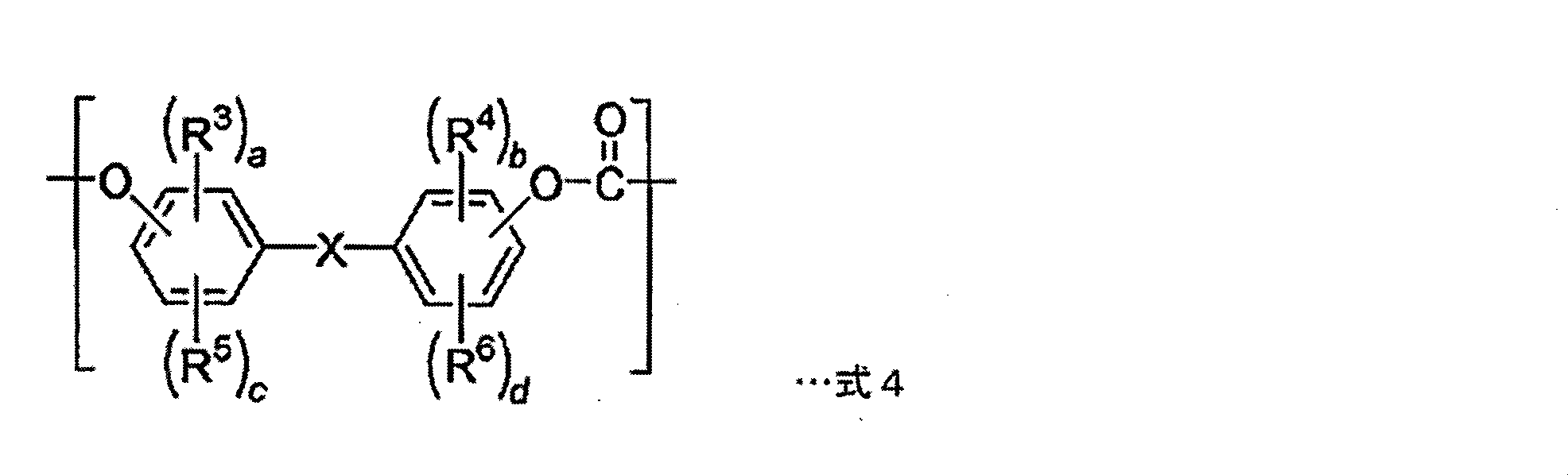
式4において、R3及びR4は、前記式3で表される基を表し、a及びbはそれぞれ独立に、a+b≧1を満たす0~4の整数であり、R5及びR6は、同一であっても或いは異なっていてもよく、それぞれ独立に、ハロゲン原子、アルキル基、アルコキシ基、シクロアルキル基、シクロアルコキシ基、アルケニル基、アリール基、アリールオキシ基、アラルキル基、アラルキルオキシ基、ニトロ基、アルデヒド基、及びシアノ基からなる群から選ばれる基を表し、c及びdはそれぞれ独立に、c≦4-a及びd≦4-bを満たす0~4の整数であり、Xは、単結合、アルキレン基(アルカンジイル基)、アラルキレン基、アリーレン基、シクロアルキレン基、硫黄原子、又は酸素原子を示す。
無機微粒子の分散性の観点から、好ましくは、R5及びR6は、それぞれ独立に、ハロゲン原子、炭素原子数1~10のアルキル基、炭素原子数1~10のアルコキシ基、炭素原子数5~20のシクロアルキル基、炭素原子数6~20のシクロアルコキシ基、炭素原子数2~10のアルケニル基、炭素原子数6~10のアリール基、炭素原子数6~10のアリールオキシ基、炭素原子数7~20のアラルキル基、又は炭素原子数7~20のアラルキルオキシ基である。より好ましくは、R5及びR6は、それぞれ独立に、炭素原子数1~6のアルキル基、炭素原子数6~20のシクロアルキル基、又は炭素原子数6~10のアリール基である。
好ましくは、前記式4中のa及びbは、a+b≧1であることを条件としてそれぞれ独立に0~2の整数であり、より好ましくは、それぞれ1の整数である。
好ましくは、前記式4中のc及びdは、c≦4-a及びd≦4-bであることを条件としてそれぞれ独立に0~2の整数であり、より好ましくは、それぞれ0~1の整数である。
好ましくは、前記式4中のXは、単結合、炭素原子数1~10のアルキレン基、炭素原子数6~10のアリーレン基、又は炭素原子数7~20のアラルキレン基、硫黄原子、又は酸素原子であり、より好ましくは、単結合、炭素原子数1~6のアルキレン基、炭素原子数6~10のアリーレン基、又は炭素原子数7~12のアラルキレン基である。
ポリカーボネート樹脂は、以下のようなカルボキシル基量、及び各種性能を有することができる。
(カルボキシル基量)
第2の発明のポリカーボネート樹脂のカルボキシル基量は、例えば、無機微粒子の分散性、得られる成形品の性能(例えば機械的性能)などを考慮し、1eq/ton-ポリカーボネート(以下、「eq/ton」ともいう。)以上、50eq/ton以上、100eq/ton以上、又は150eq/ton以上とすることができ、また、2,000eq/ton以下、1,700eq/ton以下、1,500eq/ton以下、又は1,000eq/ton以下とすることができる。
第2の発明のポリカーボネート樹脂のカルボキシル基量は、例えば、無機微粒子の分散性、得られる成形品の性能(例えば機械的性能)などを考慮し、1eq/ton-ポリカーボネート(以下、「eq/ton」ともいう。)以上、50eq/ton以上、100eq/ton以上、又は150eq/ton以上とすることができ、また、2,000eq/ton以下、1,700eq/ton以下、1,500eq/ton以下、又は1,000eq/ton以下とすることができる。
カルボキシル基量は、例えば、ポリカーボネート樹脂を窒素雰囲気下でベンジルアルコールに溶解させ、水酸化ナトリウムのベンジルアルコール溶液でフェノールレッドを指示薬として滴定し、その滴下量から算出することができる。
(ガラス転移温度:Tg)
第2の発明のポリカーボネート樹脂のガラス転移温度は、例えば、耐熱安定性、成形性等の観点から、好ましくは90~160℃であり、より好ましくは100~150℃である。
第2の発明のポリカーボネート樹脂のガラス転移温度は、例えば、耐熱安定性、成形性等の観点から、好ましくは90~160℃であり、より好ましくは100~150℃である。
ガラス転移温度は、JIS K7121に準拠して、窒素雰囲気下(窒素流量:40mL/min)、昇温速度:20℃/minの条件下で、示差走査熱量測定(DSC)装置を使用して決定することができる。
(粘度平均分子量:Mv)
第2の発明のポリカーボネート樹脂の粘度平均分子量(Mv)は、例えば、耐衝撃性、溶融流動性、成形加工性等の観点から、好ましくは15,000~40,000であり、より好ましくは16,000~35,000であり、さらに好ましくは18,000~30,000である。
第2の発明のポリカーボネート樹脂の粘度平均分子量(Mv)は、例えば、耐衝撃性、溶融流動性、成形加工性等の観点から、好ましくは15,000~40,000であり、より好ましくは16,000~35,000であり、さらに好ましくは18,000~30,000である。
第2の発明のポリカーボネート樹脂の粘度平均分子量は、例えば、20℃で塩化メチレン100mLにポリカーボネート樹脂0.7gを溶解した溶液を試料溶液とし、オストワルド粘度計を使用して以下の式5にて算出した比粘度(ηSP)を用い、以下の式6及び式7から算出することができる:
比粘度(ηSP)=(t-t0)/t0 …式5
ηSP/c=[η]+0.45×[η]2c …式6
[η]=1.23×10⁻⁴Mv0.83 …式7
ここで、式5中の、t0は、塩化メチレンの落下秒数であり、tは、試料溶液の落下秒数であり、式6及び式7中の[η]は、極限粘度であり、cは、0.7である。
比粘度(ηSP)=(t-t0)/t0 …式5
ηSP/c=[η]+0.45×[η]2c …式6
[η]=1.23×10⁻⁴Mv0.83 …式7
ここで、式5中の、t0は、塩化メチレンの落下秒数であり、tは、試料溶液の落下秒数であり、式6及び式7中の[η]は、極限粘度であり、cは、0.7である。
〈前記式3で表される基を有するポリカーボネート樹脂の製造方法〉
前記式3で表される基を有するポリカーボネート樹脂の製造方法としては、特に制限はなく、例えば、炭素-炭素二重結合を有するポリカーボネート樹脂を製造する工程i、及び工程iで得られたポリカーボネート樹脂とカルボキシル基を有するチオール化合物を反応させる工程iiにより製造することができる。
前記式3で表される基を有するポリカーボネート樹脂の製造方法としては、特に制限はなく、例えば、炭素-炭素二重結合を有するポリカーボネート樹脂を製造する工程i、及び工程iで得られたポリカーボネート樹脂とカルボキシル基を有するチオール化合物を反応させる工程iiにより製造することができる。
(工程i)
炭素-炭素二重結合を有するポリカーボネート樹脂は、通常のポリカーボネート樹脂を製造する公知の反応において、少なくとも一つの炭素-炭素二重結合を有するジオール化合物を用いることで製造することができる。
炭素-炭素二重結合を有するポリカーボネート樹脂は、通常のポリカーボネート樹脂を製造する公知の反応において、少なくとも一つの炭素-炭素二重結合を有するジオール化合物を用いることで製造することができる。
反応の方法としては、例えば、界面重縮合法、溶融エステル交換法、及びカーボネートプレポリマーの固相エステル交換法を挙げることができる。ここで、界面重縮合の場合は、通常一価フェノール化合物の末端停止剤が使用される。
炭素-炭素二重結合を有するポリカーボネート樹脂は、例えば、脂肪族ジカルボン酸若しくは芳香族ジカルボン酸、及び/又はビニル系単量体を更に共重合させた共重合ポリカーボネートであってもよい。炭素-炭素二重結合を有するポリカーボネート樹脂は、例えば、三官能成分を共重合させた分岐型のポリカーボネート樹脂であってもよい。
炭素-炭素二重結合を有するジオール化合物として、例えば、2,2-ビス(3-アリル-4-ヒドロキシフェニル)プロパン、2,2-ビス(3-アリル-4-ヒドロキシ-5-メチルフェニル)プロパン、2-(3-アリル-4-ヒドロキシフェニル)-2-(4’-ヒドロキシフェニル)プロパン、2,2-ビス(3,5-ジアリル-4-ヒドロキシフェニル)プロパン等が挙げられる。これらは単独で使用してもよく、又は二種以上組み合わせて用いてもよい。
炭素-炭素二重結合を有するポリカーボネート樹脂の製造において、炭素-炭素二重結合を有するジオール化合物以外にその他の各種ジオール化合物を併用することができる。かかるジオール化合物としては、例えば、芳香族ジオール化合物、脂肪族ジオール化合物、及び脂環式ジオール化合物を挙げることができる。具体的には、例えば、特許文献6及び7に記載のジオール化合物、及びジエチレングリコール、トリエチレングリコール、テトラエチレングリコール、ポリエチレングリコールなどのオキシアルキレングリコール化合物が挙げられる。これらは単独で使用してもよく、又は二種以上組み合わせて用いてもよい。以下にかかるジオール化合物の代表的な具体例を示すが、それらによって限定されるものではない。
芳香族ジオール化合物としては、例えば、第1の発明で記載した化合物を同様に使用することができるとともに、9,9-ビス(4-(2-ヒドロキシエトキシ)フェニル)フルオレンなども使用することができる。
中でも、ビスフェノールM、1,1-ビス(4-ヒドロキシフェニル)シクロヘキサン、1,1-ビス(4-ヒドロキシフェニル)-3,3,5-トリメチルシクロヘキサン、3,3’-ジメチル-4,4’-ジヒドロキシジフェニルスルフィド、ビスフェノールA、ビスフェノールC、ビスフェノールAF、6,6’-ジヒドロキシ-3,3,3’,3’-テトラメチル-1,1’-スピロビインダン、9,9-ビス(4-(2-ヒドロキシエトキシ)フェニル)フルオレン、及び1,1-ビス(4-ヒドロキシフェニル)デカンが好ましい。安価に入手可能であるビスフェノールAが特に好ましい。
脂肪族ジオール化合物及び脂環式ジオール化合物としては、例えば、第1の発明で記載した化合物を同様に使用することができる。
第2の発明のポリカーボネート樹脂の製造においては、カーボネート前駆体を用いる方法を採用することができる。
カーボネート前駆体として、例えばホスゲンを使用する反応では、通常酸結合剤及び溶媒の存在下で反応を行う。
酸結合剤としては、例えば、水酸化ナトリウム、水酸化カリウム等のアルカリ金属水酸化物又はピリジン等のアミン化合物が用いられる。溶媒としては、例えば、塩化メチレン、クロロベンゼン等のハロゲン化炭化水素が用いられる。反応促進のために、例えば、第三級アミン又は第四級アンモニウム塩等の触媒を用いることもできる。
反応温度は、通常0~40℃であり、反応時間は、通常1分~5時間である。
カーボネート前駆体として、例えば炭酸ジエステルを用いるエステル交換反応は、不活性ガス雰囲気下、所定割合のジオール化合物を炭酸ジエステルと加熱しながら撹拌して、生成するアルコール又はフェノール化合物を留出させる方法により行われる。
反応温度は、生成するアルコール又はフェノール化合物の沸点等により異なるが、通常120~300℃の範囲である。反応はその初期から減圧にして生成するアルコール又はフェノール化合物を留出させながら反応を完結させる。反応を促進するために、エステル交換反応に使用される通常の触媒を使用することもできる。
エステル交換反応に使用される炭酸ジエステルとしては、例えば、ジフェニルカーボネート、ジナフチルカーボネート、ビス(ジフェニル)カーボネート、ジメチルカーボネート、ジエチルカーボネート、ジブチルカーボネート等が挙げられる。これらのうち特にジフェニルカーボネートが好ましい。
第2の発明のポリカーボネート樹脂の製造においては、末端停止剤を使用することができる。末端停止剤としては、例えば、単官能フェノール化合物を使用することができる。カーボネート前駆体としてホスゲンを使用する反応の場合、単官能フェノール化合物は末端停止剤として分子量調節のために一般的に使用される。このようにして得られたポリカーボネート樹脂は、末端が単官能フェノール化合物に由来する基によって封鎖されているので、熱安定性をより向上させることができる。
単官能フェノール化合物の具体例としては、例えば、フェノール、m-メチルフェノール、p-メチルフェノール、m-プロピルフェノール、p-プロピルフェノール、1-フェニルフェノール、2-フェニルフェノール、p-tert-ブチルフェノール、p-クミルフェノール、イソオクチルフェノール、p-長鎖アルキルフェノール等が挙げられる。
本開示の第2の発明のポリカーボネート樹脂には、必要に応じて脂肪酸を共重合させることができる。このような脂肪酸としては、例えば、アジピン酸(ヘキサン二酸)、ドデカン二酸、イソフタル酸(1,3-ベンゼンジカルボン酸)、テレフタル酸(1,4-ベンゼンジカルボン酸)、2,6-ナフタレンジカルボン酸、3-ヒドロキシ安息香酸、及び4-ヒドロキシ安息香酸が挙げられる。
本開示の第2の発明のポリカーボネート樹脂は、芳香族又は脂肪族(脂環式を含む)のジカルボン酸を共重合させたポリエステルカーボネート樹脂を包含することができる。脂肪族ジカルボン酸は、α,ω-ジカルボン酸が好ましい。より具体的には、脂肪族ジカルボン酸としては、例えば、アジピン酸(ヘキサン二酸)、セバシン酸(デカン二酸)、ドデカン二酸、テトラデカン二酸、オクタデカン二酸、及びイコサン二酸などの直鎖飽和脂肪族ジカルボン酸、並びにシクロヘキサンジカルボン酸などの脂環式ジカルボン酸が好ましく挙げられる。芳香族ジカルボン酸としては、イソフタル酸(1,3-ベンゼンジカルボン酸)、テレフタル酸(1,4-ベンゼンジカルボン酸)、及び2,6-ナフタレンジカルボン酸が好ましく挙げられる。
本開示の第2の発明のポリカーボネート樹脂は、必要に応じてポリオルガノシロキサン単位を含有する構成単位を共重合させることもできる。
本開示の第2の発明のポリカーボネート樹脂は、必要に応じて三官能以上の多官能性芳香族化合物を含有する構成単位を共重合させて、分岐型のポリカーボネート樹脂とすることもできる。分岐型のポリカーボネート樹脂に使用される三官能以上の多官能性芳香族化合物としては、例えば、4,6-ジメチル-2,4,6-トリス(4-ヒドロキジフェニル)ヘプテン-2、2,4,6-トリメチル-2,4,6-トリス(4-ヒドロキシフェニル)ヘプタン、1,3,5-トリス(4-ヒドロキシフェニル)ベンゼン、1,1,1-トリス(4-ヒドロキシフェニル)エタン、1,1,1-トリス(3,5-ジメチル-4-ヒドロキシフェニル)エタン、2,6-ビス(2-ヒドロキシ-5-メチルベンジル)-4-メチルフェノール、及び4-{4-[1,1-ビス(4-ヒドロキシフェニル)エチル]ベンゼン}-α,α-ジメチルベンジルフェノール等のトリスフェノールが好適に例示される。中でも1,1,1-トリス(4-ヒドロキシフェニル)エタンが好ましい。
多官能性芳香族化合物から誘導される構成単位(以下、「分岐構造単位」ともいう。)の割合は、例えば、他の二価成分からの構成単位との合計100モル%を基準として、好ましくは0.03~1.5モル%、より好ましくは0.1~1.2モル%、特に好ましくは0.2~1.0モル%である。分岐構造単位の割合については、例えば、1H-NMR測定により算出することが可能である。
分岐構造単位は、多官能性芳香族化合物から誘導されるだけでなく、多官能性芳香族化合物を用いることなく誘導されるもの、例えば、溶融エステル交換法による重合反応時に生じる副反応によって誘導されるものであってもよい。
(工程ii)
工程iにて製造した炭素-炭素二重結合を有するポリカーボネート樹脂と、カルボキシル基を有するチオール化合物とを反応(例えばエンチオール反応)させることにより、前記式3で表される基を有するポリカーボネート樹脂を製造することができる。
工程iにて製造した炭素-炭素二重結合を有するポリカーボネート樹脂と、カルボキシル基を有するチオール化合物とを反応(例えばエンチオール反応)させることにより、前記式3で表される基を有するポリカーボネート樹脂を製造することができる。
エンチオール反応とは、炭素-炭素二重結合とチオール基が1対1で付加する反応である。すなわち、チオールに光照射をするか、又はラジカル発生剤を加えると、容易にチイルラジカルが発生し、炭素-炭素二重結合に付加する。それにより生成した炭素ラジカルがチオール基から水素を引き抜くことで1対1の付加体が生成する。水素を引き抜かれたチオール基はチイルラジカルになるので、連鎖的に反応が進行する。このように、エンチオール反応を用いることにより、定量的かつ高収率にて、式3で表される基を有するポリカーボネート樹脂を製造することができる。
カルボキシル基を有するチオール化合物としては、例えば、3-メルカプトプロパン酸、3-メルカプト-2-メチルプロパン酸、メルカプトコハク酸、2-メルカプト安息香酸、1-(メルカプトメチル)シクロプロパン酢酸等が挙げられる。
エンチオール反応においては、ラジカル発生剤を用いることが好ましい。エンチオール反応は、光(例えば紫外線)を照射することによるラジカル反応であってもよい。ラジカル発生剤としては、アゾ化合物、有機過酸化物等が挙げられ、熱によりラジカルが発生するもの、光照射によりラジカルが発生するもののいずれも好適に用いることができる。アゾ化合物の例としては、アゾビスイソブチロニトリル(AIBN)、1,1’-アゾビス(シクロヘキサンカルボニトリル)(ABCN)等が挙げられる。有機過酸化物の例としては、ジ-tert-ブチルペルオキシド、過酸化ベンゾイル等が挙げられる。
エンチオール反応は、より詳細には、炭素-炭素二重結合を有するポリカーボネート樹脂と、カルボキシル基を有するチオール化合物と、ラジカル発生剤とを、有機溶媒に溶解させ、ラジカルが発生する条件下に保持することにより行うことができる。反応温度は、特に限定するものではないが、50~120℃であることが好ましい。エンチオール反応は、窒素ガス、アルゴンガスなどの不活性ガス雰囲気下で行ってもよい。
有機溶媒としては、例えば、アルコール(エタノール、プロパノール、イソプロパノールなどのアルキルアルコール、エチレングリコール、プロピレングリコールなどのグリコールなど)、炭化水素(ヘキサンなどの脂肪族炭化水素、シクロヘキサンなどの脂環式炭化水素、トルエン、キシレンなどの芳香族炭化水素など)、ハロゲン化炭化水素(塩化メチレン、クロロホルムなど)、エーテル(ジメチルエーテル、ジエチルエーテルなどの鎖状エーテル、ジオキサン、テトラヒドロフランなどの環状エーテルなど)、エステル(酢酸メチル、酢酸エチル、酢酸ブチル、乳酸エチル、酪酸エチルなど)、ケトン(アセトン、エチルメチルケトン、メチルイソブチルケトン、シクロヘキサノン、N-メチル-2-ピロリドンなど)、セロソルブ(メチルセロソルブ、エチルセロソルブ、ブチルセロソルブなど)、カルビトール(メチルカルビトール、エチルカルビトール、ブチルカルビトールなど)、プロピレングリコールモノアルキルエーテル(プロピレングリコールモノメチルエーテル、プロピレングリコールモノエチルエーテル、プロピレングリコールモノn-ブチルエーテルなど)、グリコールエーテルエステル(エチレングリコールモノメチルエーテルアセテート、プロピレングリコールモノメチルエーテルアセテートなど)、アミド(N,N-ジメチルホルムアミド、N,N-ジメチルアセトアミドなど)、スルホキシド(ジメチルスルホキシドなど)、ニトリル(アセトニトリル、ベンゾニトリルなど)、N-メチルピロリドンなどの有機溶媒が挙げられる。有機溶媒は、単独で使用してもよく、又は二種以上組み合わせて用いてもよい。
〈無機微粒子〉
本開示の第2の発明の有機無機複合材料で使用される無機微粒子としては特に制限はなく、例えば、第1の発明で記載した無機微粒子を同様に使用することができる。中でも、光学部材又は光学部品としての利用の観点から、屈折率が1.80以上又は2.00以上の無機微粒子が好ましく、ZrO2及びTiO2がより好ましく、ZrO2が特に好ましい。無機微粒子は単独で使用してもよく、又は二種以上組み合わせて用いてもよい。
本開示の第2の発明の有機無機複合材料で使用される無機微粒子としては特に制限はなく、例えば、第1の発明で記載した無機微粒子を同様に使用することができる。中でも、光学部材又は光学部品としての利用の観点から、屈折率が1.80以上又は2.00以上の無機微粒子が好ましく、ZrO2及びTiO2がより好ましく、ZrO2が特に好ましい。無機微粒子は単独で使用してもよく、又は二種以上組み合わせて用いてもよい。
無機微粒子の平均粒子径としては特に制限はなく、例えば、屈折率、透明性等の観点から、1~20nmの範囲が好ましく、1~10nmの範囲がより好ましい。無機微粒子の平均粒子径は、例えば、動的光散乱法(DLS)によって測定することができる。
本開示の第2の発明の有機無機複合材料における無機微粒子の含有量は、使用用途などに応じて適宜調整すればよく特に制限はないが、例えば、無機微粒子の添加効果、機械物性の低下などを考慮し、ポリカーボネート樹脂に対して、1質量%以上、3質量%以上、5質量%以上、又は10質量%以上とすることができ、また、95質量%以下、65質量%以下、45質量%以下、35質量%以下、又は30質量%以下とすることができる。
(表面修飾剤)
無機微粒子は、分散性をより向上させるために、その表面が表面修飾剤によって修飾されていてもよい。表面修飾剤は、単独で又は二種以上組み合わせて使用することができる。表面修飾剤は、使用するポリカーボネート樹脂との親和性を向上させやすい表面修飾剤を適宜選択して用いることが望ましい。
無機微粒子は、分散性をより向上させるために、その表面が表面修飾剤によって修飾されていてもよい。表面修飾剤は、単独で又は二種以上組み合わせて使用することができる。表面修飾剤は、使用するポリカーボネート樹脂との親和性を向上させやすい表面修飾剤を適宜選択して用いることが望ましい。
表面修飾剤としては、複合化するポリカーボネート樹脂に対する無機微粒子の分散性を確保できるものであれば特に制限はなく、例えば、酸性官能基を有する表面修飾剤を使用することができる。中でも、スルホン酸基、ホスホン酸基、ホスフィン酸基、及びカルボン酸基からなる群より選ばれる少なくとも1つの酸性官能基を有する表面修飾剤が好ましい。このような表面修飾剤は、無機微粒子の分散性又は屈折率をより向上させることができる。
スルホン酸基を有する表面修飾剤、ホスホン酸基を有する表面修飾剤、ホスフィン酸基を有する表面修飾剤、カルボン酸基を有する表面修飾剤としては、例えば、第1の発明で記載した表面修飾剤を同様に使用することができる。
無機微粒子の表面修飾の方法としては特に制限はないが、例えば、以下のような方法により行われる。
親水性の無機微粒子を分散させた水分散液にメタノールを混合した混合液に、表面修飾剤を添加し、その後、水とメタノールを共沸操作によって除去し、トルエン又は塩化メチレンに溶媒置換することによって、表面修飾された無機微粒子が分散した分散液を調製することができる。任意に、その後さらに溶媒留去することによって、表面修飾された無機微粒子を得ることができる。
表面修飾剤の使用量としては、特に制限はないが、例えば、ポリカーボネート樹脂への分散性、及び屈折率の向上効果の観点から、無機微粒子に対して、1~30質量%であることが好ましく、3~25質量%であることがより好ましく、5~20質量%であることが特に好ましい。
〈任意成分〉
本開示の第2の発明の有機無機複合材料は、本開示の効果を損なわない範囲で、例えば、離型剤、熱安定剤、酸化防止剤、紫外線吸収剤、流動改質剤、帯電防止剤などの公知の機能性添加剤を含有することができる。これらは単独で又は二種以上組み合わせて使用することができる。以下に、いくつかの任意成分について詳細に記載するが、添加し得る任意成分はこれらに限定されない。
本開示の第2の発明の有機無機複合材料は、本開示の効果を損なわない範囲で、例えば、離型剤、熱安定剤、酸化防止剤、紫外線吸収剤、流動改質剤、帯電防止剤などの公知の機能性添加剤を含有することができる。これらは単独で又は二種以上組み合わせて使用することができる。以下に、いくつかの任意成分について詳細に記載するが、添加し得る任意成分はこれらに限定されない。
(離型剤)
離型剤としては、例えば、脂肪酸エステル、ポリオレフィン系ワックス(ポリエチレンワックス、1-アルケン重合体など、酸変性など官能基含有化合物で変性されているものも含む。)、フッ素化合物(ポリフルオロアルキルエーテルなどのフッ素オイルなど)、パラフィンワックス、蜜蝋などを挙げることができる。これらの中でも入手の容易さ、離型性及び透明性の点から脂肪酸エステルが好ましい。
離型剤としては、例えば、脂肪酸エステル、ポリオレフィン系ワックス(ポリエチレンワックス、1-アルケン重合体など、酸変性など官能基含有化合物で変性されているものも含む。)、フッ素化合物(ポリフルオロアルキルエーテルなどのフッ素オイルなど)、パラフィンワックス、蜜蝋などを挙げることができる。これらの中でも入手の容易さ、離型性及び透明性の点から脂肪酸エステルが好ましい。
離型剤の配合量は、ポリカーボネート樹脂100質量部に対して、好ましくは0.005~0.5質量部、より好ましくは0.007~0.4質量部、更に好ましくは0.01~0.3質量部である。配合量が上記範囲の下限以上では、離型性の改良効果が明確に発揮され、上限以下の場合、成形時の金型汚染などの悪影響を低減することができる。
上記の中でも好ましい離型剤として用いられる脂肪酸エステルについて、さらに詳述する。脂肪酸エステルは、脂肪族アルコールと脂肪族カルボン酸とのエステルである。脂肪族アルコールは1価アルコールであっても2価以上の多価アルコールであってもよい。脂肪族アルコールの炭素原子数は、3~32であることが好ましく、5~30であることがより好ましい。1価アルコールとしては、例えば、ドデカノール、テトラデカノール、ヘキサデカノール、オクタデカノール、エイコサノール、テトラコサノール、セリルアルコール、及びトリアコンタノールが挙げられる。多価アルコールとしては、例えば、ペンタエリスリトール、ジペンタエリスリトール、トリペンタエリスリトール、ポリグリセロール(トリグリセロールからヘキサグリセロール)、ジトリメチロールプロパン、キシリトール、ソルビトール、及びマンニトールが挙げられる。脂肪酸エステルは多価アルコールであることがより好ましい。
脂肪族カルボン酸の炭素原子数は、3~32であることが好ましく、10~22であることがより好ましく、14~20であることがさらに好ましい。脂肪族カルボン酸としては、例えば、デカン酸、ウンデカン酸、ドデカン酸、トリデカン酸、テトラデカン酸、ペンタデカン酸、ヘキサデカン酸(パルミチン酸)、ヘプタデカン酸、オクタデカン酸(ステアリン酸)、ノナデカン酸、イコサン酸、ドコサン酸(ベヘン酸)等の飽和脂肪族カルボン酸、及びパルミトレイン酸、オレイン酸、リノール酸、リノレン酸、エイコセン酸、エイコサペンタエン酸、セトレイン酸等の不飽和脂肪族カルボン酸を挙げることができる。脂肪族カルボン酸は、飽和脂肪族カルボン酸であることが好ましい。脂肪族カルボン酸は通常、動物性油脂(牛脂、豚脂など)、植物性油脂(パーム油など)などの天然油脂から製造される。このような天然油脂由来の脂肪族カルボン酸は、通常炭素原子数の異なる2種以上のカルボン酸を含む混合物である。
脂肪酸エステルの酸価は、20以下(実質的に0を取り得る。)であることが好ましい。脂肪酸エステルが全エステル(フルエステル)の場合には、離型性を向上させるため、少量の遊離の脂肪酸を含有することが好ましく、脂肪酸フルエステルの酸価は3~15であることが好ましい。脂肪酸エステルのヨウ素価は、10以下(実質的に0を取り得る。)であることが好ましい。脂肪酸エステルの酸価及びヨウ素価はJIS K 0070:1992に規定された方法により決定することができる。
脂肪酸エステルは、部分エステル及びフルエステルのいずれであってもよいが、より良好な離型性及び耐久性の点で部分エステルが好ましく、特にグリセリンモノエステルが好ましい。グリセリンモノエステルは、グリセリンと脂肪酸のモノエステルが主成分であり、好適な脂肪酸としてはラウリン酸、ステアリン酸、パルミチン酸、ベヘン酸、アラキン酸、モンタン酸等の飽和脂肪酸、及びオレイン酸、リノール酸、及びソルビン酸等の不飽和脂肪酸が挙げられ、特にステアリン酸、パルミチン酸、又はベヘン酸のグリセリンモノエステルを主成分としたものが好ましい。脂肪酸は、天然油脂から製造されたものであってもよく、この場合、脂肪酸は上述のとおり炭素原子数の異なる2種以上のカルボン酸を含む混合物である。脂肪酸が天然油脂由来の場合でも、脂肪酸エステル中のグリセリンモノエステルの割合は60質量%以上であることが好ましい。
部分エステルは、熱安定性の点ではフルエステルに対して劣る場合が多い。部分エステルの熱安定性を向上させるため、部分エステルのナトリウム金属含有量は、好ましくは20ppm未満、より好ましくは5ppm未満、更に好ましくは1ppm未満とすることが好ましい。ナトリウム金属含有量が1ppm未満の脂肪酸部分エステルは、脂肪酸部分エステルを通常の方法で製造した後、分子蒸留などにより精製して製造することができる。
具体的には、スプレーノズル式脱ガス装置によりガス分及び低沸点物質を除去した後に流下膜式蒸留装置を用い蒸留温度120~150℃、真空度0.01~0.03kPaの条件にてグリセリン等の多価アルコール分を除去し、更に遠心式分子蒸留装置を用いて、蒸留温度160~230℃、真空度0.01~0.2Torrの条件にて高純度の脂肪酸部分エステルを留出分として得る方法などがあり、ナトリウム金属は蒸留残渣として除去できる。得られた留出分に対し、繰り返し分子蒸留を行うことにより、更に純度を上げ、ナトリウム金属含有量の更に少ない脂肪酸部分エステルを得ることもできる。前もって適切な方法にて分子蒸留装置内を十分に洗浄し、気密性を高めるなどにより外部環境からのナトリウム金属成分の混入を防ぐことも肝要である。かかる脂肪酸エステルは、専門業者(例えば理研ビタミン株式会社)から入手可能である。
(リン系安定剤:熱安定剤)
本開示の第2の発明の有機無機複合材料には、その成形加工時の熱安定性を向上させることを主たる目的として各種のリン系安定剤が更に配合されることが好ましい。かかるリン系安定剤としては、例えば、亜リン酸、リン酸、亜ホスホン酸、ホスホン酸及びこれらのエステル、並びに第三級ホスフィンが挙げられる。
本開示の第2の発明の有機無機複合材料には、その成形加工時の熱安定性を向上させることを主たる目的として各種のリン系安定剤が更に配合されることが好ましい。かかるリン系安定剤としては、例えば、亜リン酸、リン酸、亜ホスホン酸、ホスホン酸及びこれらのエステル、並びに第三級ホスフィンが挙げられる。
ホスファイト化合物としては、例えば、トリフェニルホスファイト、トリス(ノニルフェニル)ホスファイト、トリデシルホスファイト、トリオクチルホスファイト、トリオクタデシルホスファイト、ジデシルモノフェニルホスファイト、ジオクチルモノフェニルホスファイト、ジイソプロピルモノフェニルホスファイト、モノブチルジフェニルホスファイト、モノデシルジフェニルホスファイト、モノオクチルジフェニルホスファイト、トリス(ジエチルフェニル)ホスファイト、トリス(ジ-iso-プロピルフェニル)ホスファイト、トリス(ジ-n-ブチルフェニル)ホスファイト、トリス(2,4-ジ-tert-ブチルフェニル)ホスファイト、トリス(2,6-ジ-tert-ブチルフェニル)ホスファイト、ジステアリルペンタエリスリトールジホスファイト、ビス(2,4-ジ-tert-ブチルフェニル)ペンタエリスリトールジホスファイト、ビス(2,6-ジ-tert-ブチル-4-メチルフェニル)ペンタエリスリトールジホスファイト、ビス(2,6-ジ-tert-ブチル-4-エチルフェニル)ペンタエリスリトールジホスファイト、フェニルビスフェノールAペンタエリスリトールジホスファイト、ビス(ノニルフェニル)ペンタエリスリトールジホスファイト、及びジシクロヘキシルペンタエリスリトールジホスファイトが挙げられる。
ホスファイト化合物として、二価フェノール化合物と反応して形成された環状構造を有するものも使用できる。そのようなホスファイト化合物としては、例えば、2,2-メチレンビス(4,6-ジ-tert-ブチルフェニル)オクチルホスファイト、2,2’-メチレンビス(4,6-ジ-tert-ブチルフェニル)(2,4-ジ-tert-ブチルフェニル)ホスファイト、2,2’-メチレンビス(4,6-ジ-tert-ブチルフェニル)(2-tert-ブチル-4-メチルフェニル)ホスファイト、2,2’-メチレンビス(4-メチル-6-tert-ブチルフェニル)(2-tert-ブチル-4-メチルフェニル)ホスファイト、及び2,2’-エチリデンビス(4-メチル-6-tert-ブチルフェニル)(2-tert-ブチル-4-メチルフェニル)ホスファイトが挙げられる。
ホスフェート化合物としては、例えば、トリブチルホスフェート、トリメチルホスフェート、トリクレジルホスフェート、トリフェニルホスフェート、トリクロルフェニルホスフェート、トリエチルホスフェート、ジフェニルクレジルホスフェート、ジフェニルモノオルソキセニルホスフェート、トリス(ブトキシエチル)ホスフェート、ジブチルホスフェート、ジオクチルホスフェート、及びジイソプロピルホスフェートが挙げられ、好ましくはトリフェニルホスフェート、及びトリメチルホスフェートである。
ホスホナイト化合物としては、例えば、テトラキス(2,4-ジ-tert-ブチルフェニル)-4,4’-ビフェニレンジホスホナイト、テトラキス(2,4-ジ-tert-ブチルフェニル)-4,3’-ビフェニレンジホスホナイト、テトラキス(2,4-ジ-tert-ブチルフェニル)-3,3’-ビフェニレンジホスホナイト、テトラキス(2,6-ジ-tert-ブチルフェニル)-4,4’-ビフェニレンジホスホナイト、テトラキス(2,6-ジ-tert-ブチルフェニル)-4,3’-ビフェニレンジホスホナイト、テトラキス(2,6-ジ-tert-ブチルフェニル)-3,3’-ビフェニレンジホスホナイト、ビス(2,4-ジ-tert-ブチルフェニル)-4-フェニル-フェニルホスホナイト、ビス(2,4-ジ-tert-ブチルフェニル)-3-フェニル-フェニルホスホナイト、ビス(2,6-ジ-n-ブチルフェニル)-3-フェニル-フェニルホスホナイト、ビス(2,6-ジ-tert-ブチルフェニル)-4-フェニル-フェニルホスホナイト、及びビス(2,6-ジ-tert-ブチルフェニル)-3-フェニル-フェニルホスホナイトが挙げられ、テトラキス(ジ-tert-ブチルフェニル)-ビフェニレンジホスホナイト、及びビス(ジ-tert-ブチルフェニル)-フェニル-フェニルホスホナイトが好ましく、テトラキス(2,4-ジ-tert-ブチルフェニル)-ビフェニレンジホスホナイト、及びビス(2,4-ジ-tert-ブチルフェニル)-フェニル-フェニルホスホナイトがより好ましい。ホスホナイト化合物は、上記アルキル基で2以上置換されたアリール基を有するホスファイト化合物と併用することができ好ましい。
ホスホネート化合物としては、例えば、ベンゼンホスホン酸ジメチル、ベンゼンホスホン酸ジエチル、及びベンゼンホスホン酸ジプロピルが挙げられる。
第三級ホスフィンとしては、例えば、トリエチルホスフィン、トリプロピルホスフィン、トリブチルホスフィン、トリオクチルホスフィン、トリアミルホスフィン、ジメチルフェニルホスフィン、ジブチルフェニルホスフィン、ジフェニルメチルホスフィン、ジフェニルオクチルホスフィン、トリフェニルホスフィン、トリ-p-トリルホスフィン、トリナフチルホスフィン、及びジフェニルベンジルホスフィンが挙げられる。第三級ホスフィンは、好ましくはトリフェニルホスフィンである。
リン系安定剤は、単独で又は2種以上を組み合わせて使用することができる。リン系安定剤は、ホスファイト化合物又はホスホナイト化合物であることが好ましい。これらの中でも、トリス(2,4-ジ-tert-ブチルフェニル)ホスファイト、テトラキス(2,4-ジ-tert-ブチルフェニル)-4,4’-ビフェニレンジホスホナイト及びビス(2,4-ジ-tert-ブチルフェニル)-フェニル-フェニルホスホナイトが好ましい。ホスファイト化合物又はホスホナイト化合物とホスフェート化合物との併用も好ましい。
(ヒンダードフェノール系安定剤:酸化防止剤)
本開示の第2の発明の有機無機複合材料には、その成形加工時の熱安定性、及び耐熱老化性を向上させることを主たる目的としてヒンダードフェノール系安定剤を配合することができる。かかるヒンダードフェノール系安定剤としては、例えば、α-トコフェロール、ブチルヒドロキシトルエン、シナピルアルコール、ビタミンE、n-オクタデシル-β-(4’-ヒドロキシ-3’,5’-ジ-tert-ブチルフェニル)プロピオネート、2-tert-ブチル-6-(3’-tert-ブチル-5’-メチル-2’-ヒドロキシベンジル)-4-メチルフェニルアクリレート、2,6-ジ-tert-ブチル-4-(N,N-ジメチルアミノメチル)フェノール、3,5-ジ-tert-ブチル-4-ヒドロキシベンジルホスホネートジエチルエステル、2,2’-メチレンビス(4-メチル-6-tert-ブチルフェノール)、2,2’-メチレンビス(4-エチル-6-tert-ブチルフェノール)、4,4’-メチレンビス(2,6-ジ-tert-ブチルフェノール)、2,2’-メチレンビス(4-メチル-6-シクロヘキシルフェノール)、2,2’-ジメチレン-ビス(6-α-メチル-ベンジル-p-クレゾール)、2,2’-エチリデン-ビス(4,6-ジ-tert-ブチルフェノール)、2,2’-ブチリデン-ビス(4-メチル-6-tert-ブチルフェノール)、4,4’-ブチリデンビス(3-メチル-6-tert-ブチルフェノール)、トリエチレングリコールビス-3-(3-tert-ブチル-4-ヒドロキシ-5-メチルフェニル)プロピオネート、1,6-へキサンジオールビス[3-(3,5-ジ-tert-ブチル-4-ヒドロキシフェニル)プロピオネート]、ビス[2-tert-ブチル-4-メチル-6-(3-tert-ブチル-5-メチル-2-ヒドロキシベンジル)フェニル]テレフタレート、3,9-ビス{2-[3-(3-tert-ブチル-4-ヒドロキシ-5-メチルフェニル)プロピオニルオキシ]-1,1,-ジメチルエチル}-2,4,8,10-テトラオキサスピロ[5,5]ウンデカン、4,4’-チオビス(6-tert-ブチル-m-クレゾール)、4,4’-チオビス(3-メチル-6-tert-ブチルフェノール)、2,2’-チオビス(4-メチル-6-tert-ブチルフェノール)、ビス(3,5-ジ-tert-ブチル-4-ヒドロキシベンジル)スルフィド、4,4’-ジチオビス(2,6-ジ-tert-ブチルフェノール)、4,4’-トリチオビス(2,6-ジ-tert-ブチルフェノール)、2,2’-チオジエチレンビス-[3-(3,5-ジ-tert-ブチル-4-ヒドロキシフェニル)プロピオネート]、2,4-ビス(n-オクチルチオ)-6-(4-ヒドロキシ-3’,5’-ジ-tert-ブチルアニリノ)-1,3,5-トリアジン、N,N’-ヘキサメチレンビス-(3,5-ジ-tert-ブチル-4-ヒドロキシヒドロシンナミド)、N,N’-ビス[3-(3,5-ジ-tert-ブチル-4-ヒドロキシフェニル)プロピオニル]ヒドラジン、1,1,3-トリス(2-メチル-4-ヒドロキシ-5-tert-ブチルフェニル)ブタン、1,3,5-トリメチル-2,4,6-トリス(3,5-ジ-tert-ブチル-4-ヒドロキシベンジル)ベンゼン、トリス(3,5-ジ-tert-ブチル-4-ヒドロキシフェニル)イソシアヌレート、トリス(3,5-ジ-tert-ブチル-4-ヒドロキシベンジル)イソシアヌレート、1,3,5-トリス(4-tert-ブチル-3-ヒドロキシ-2,6-ジメチルベンジル)イソシアヌレート、1,3,5-トリス[2-[3-(3,5-ジ-tert-ブチル-4-ヒドロキシフェニル)プロピオニルオキシ]エチル]イソシアヌレート、及びテトラキス[メチレン-3-(3’,5’-ジ-tert-ブチル-4-ヒドロキシフェニル)プロピオネート]メタンが挙げられる。これらはいずれも入手容易である。ヒンダードフェノール系酸化防止剤は、単独で又は2種以上を組み合わせて使用することができる。
本開示の第2の発明の有機無機複合材料には、その成形加工時の熱安定性、及び耐熱老化性を向上させることを主たる目的としてヒンダードフェノール系安定剤を配合することができる。かかるヒンダードフェノール系安定剤としては、例えば、α-トコフェロール、ブチルヒドロキシトルエン、シナピルアルコール、ビタミンE、n-オクタデシル-β-(4’-ヒドロキシ-3’,5’-ジ-tert-ブチルフェニル)プロピオネート、2-tert-ブチル-6-(3’-tert-ブチル-5’-メチル-2’-ヒドロキシベンジル)-4-メチルフェニルアクリレート、2,6-ジ-tert-ブチル-4-(N,N-ジメチルアミノメチル)フェノール、3,5-ジ-tert-ブチル-4-ヒドロキシベンジルホスホネートジエチルエステル、2,2’-メチレンビス(4-メチル-6-tert-ブチルフェノール)、2,2’-メチレンビス(4-エチル-6-tert-ブチルフェノール)、4,4’-メチレンビス(2,6-ジ-tert-ブチルフェノール)、2,2’-メチレンビス(4-メチル-6-シクロヘキシルフェノール)、2,2’-ジメチレン-ビス(6-α-メチル-ベンジル-p-クレゾール)、2,2’-エチリデン-ビス(4,6-ジ-tert-ブチルフェノール)、2,2’-ブチリデン-ビス(4-メチル-6-tert-ブチルフェノール)、4,4’-ブチリデンビス(3-メチル-6-tert-ブチルフェノール)、トリエチレングリコールビス-3-(3-tert-ブチル-4-ヒドロキシ-5-メチルフェニル)プロピオネート、1,6-へキサンジオールビス[3-(3,5-ジ-tert-ブチル-4-ヒドロキシフェニル)プロピオネート]、ビス[2-tert-ブチル-4-メチル-6-(3-tert-ブチル-5-メチル-2-ヒドロキシベンジル)フェニル]テレフタレート、3,9-ビス{2-[3-(3-tert-ブチル-4-ヒドロキシ-5-メチルフェニル)プロピオニルオキシ]-1,1,-ジメチルエチル}-2,4,8,10-テトラオキサスピロ[5,5]ウンデカン、4,4’-チオビス(6-tert-ブチル-m-クレゾール)、4,4’-チオビス(3-メチル-6-tert-ブチルフェノール)、2,2’-チオビス(4-メチル-6-tert-ブチルフェノール)、ビス(3,5-ジ-tert-ブチル-4-ヒドロキシベンジル)スルフィド、4,4’-ジチオビス(2,6-ジ-tert-ブチルフェノール)、4,4’-トリチオビス(2,6-ジ-tert-ブチルフェノール)、2,2’-チオジエチレンビス-[3-(3,5-ジ-tert-ブチル-4-ヒドロキシフェニル)プロピオネート]、2,4-ビス(n-オクチルチオ)-6-(4-ヒドロキシ-3’,5’-ジ-tert-ブチルアニリノ)-1,3,5-トリアジン、N,N’-ヘキサメチレンビス-(3,5-ジ-tert-ブチル-4-ヒドロキシヒドロシンナミド)、N,N’-ビス[3-(3,5-ジ-tert-ブチル-4-ヒドロキシフェニル)プロピオニル]ヒドラジン、1,1,3-トリス(2-メチル-4-ヒドロキシ-5-tert-ブチルフェニル)ブタン、1,3,5-トリメチル-2,4,6-トリス(3,5-ジ-tert-ブチル-4-ヒドロキシベンジル)ベンゼン、トリス(3,5-ジ-tert-ブチル-4-ヒドロキシフェニル)イソシアヌレート、トリス(3,5-ジ-tert-ブチル-4-ヒドロキシベンジル)イソシアヌレート、1,3,5-トリス(4-tert-ブチル-3-ヒドロキシ-2,6-ジメチルベンジル)イソシアヌレート、1,3,5-トリス[2-[3-(3,5-ジ-tert-ブチル-4-ヒドロキシフェニル)プロピオニルオキシ]エチル]イソシアヌレート、及びテトラキス[メチレン-3-(3’,5’-ジ-tert-ブチル-4-ヒドロキシフェニル)プロピオネート]メタンが挙げられる。これらはいずれも入手容易である。ヒンダードフェノール系酸化防止剤は、単独で又は2種以上を組み合わせて使用することができる。
リン系安定剤及びヒンダードフェノール系酸化防止剤の量はそれぞれ、ポリカーボネート樹脂100質量部に対して、好ましくは0.0001~1質量部、より好ましくは0.001~0.5質量部、さらに好ましくは0.005~0.1質量部である。リン系安定剤及びヒンダードフェノール系酸化防止剤の量が上記範囲の下限以上であれば良好な安定化効果を得ることができ、上記範囲の上限以下であれば、材料の物性低下及び成形時の金型汚染を抑制することができる。
本開示の第2の発明の有機無機複合材料には、適宜上記ヒンダードフェノール系酸化防止剤以外の他の酸化防止剤を使用することもできる。かかる他の酸化防止剤としては、例えば、ペンタエリスリトールテトラキス(3-メルカプトプロピオネート)、ペンタエリスリトールテトラキス(3-ラウリルチオプロピオネート)、及びグリセロール-3-ステアリルチオプロピオネートが挙げられる。これら他の酸化防止剤の使用量は、ポリカーボネート樹脂100質量部に対して0.001~0.05質量部であることが好ましい。
(紫外線吸収剤)
本開示の第2の発明の有機無機複合材料は紫外線吸収剤を含有することができる。かかる紫外線吸収剤としては、ベンゾフェノン系では、例えば、2,4-ジヒドロキシベンゾフェノン、2-ヒドロキシ-4-メトキシベンゾフェノン、2-ヒドロキシ-4-オクトキシベンゾフェノン、2-ヒドロキシ-4-ベンジロキシベンゾフェノン、2-ヒドロキシ-4-メトキシ-5-スルホキシベンゾフェノン、2-ヒドロキシ-4-メトキシベンゾフェノン-5-スルホキシレートハイドライト、2,2’-ジヒドロキシ-4-メトキシベンゾフェノン、2,2’,4,4’-テトラヒドロキシベンゾフェノン、2,2’-ジヒドロキシ-4,4’-ジメトキシベンゾフェノン、2,2’-ジヒドロキシ-4,4’-ジメトキシベンゾフェノン-5-スルホン酸ナトリウム、ビス(5-ベンゾイル-4-ヒドロキシ-2-メトキシフェニル)メタン、2-ヒドロキシ-4-n-ドデシルオキシベンソフェノン、及び2-ヒドロキシ-4-メトキシ-2’-カルボキシベンゾフェノンが挙げられる。
本開示の第2の発明の有機無機複合材料は紫外線吸収剤を含有することができる。かかる紫外線吸収剤としては、ベンゾフェノン系では、例えば、2,4-ジヒドロキシベンゾフェノン、2-ヒドロキシ-4-メトキシベンゾフェノン、2-ヒドロキシ-4-オクトキシベンゾフェノン、2-ヒドロキシ-4-ベンジロキシベンゾフェノン、2-ヒドロキシ-4-メトキシ-5-スルホキシベンゾフェノン、2-ヒドロキシ-4-メトキシベンゾフェノン-5-スルホキシレートハイドライト、2,2’-ジヒドロキシ-4-メトキシベンゾフェノン、2,2’,4,4’-テトラヒドロキシベンゾフェノン、2,2’-ジヒドロキシ-4,4’-ジメトキシベンゾフェノン、2,2’-ジヒドロキシ-4,4’-ジメトキシベンゾフェノン-5-スルホン酸ナトリウム、ビス(5-ベンゾイル-4-ヒドロキシ-2-メトキシフェニル)メタン、2-ヒドロキシ-4-n-ドデシルオキシベンソフェノン、及び2-ヒドロキシ-4-メトキシ-2’-カルボキシベンゾフェノンが挙げられる。
紫外線吸収剤としては、ベンゾトリアゾール系では、例えば、2-(2-ヒドロキシ-5-メチルフェニル)ベンゾトリアゾール、2-(2-ヒドロキシ-5-tert-オクチルフェニル)ベンゾトリアゾール、2-(2-ヒドロキシ-3,5-ジクミルフェニル)ベンゾトリアゾール、2-(2-ヒドロキシ-3-tert-ブチル-5-メチルフェニル)-5-クロロベンゾトリアゾール、2,2’-メチレンビス[4-(1,1,3,3-テトラメチルブチル)-6-(2H-ベンゾトリアゾール-2-イル)フェノール]、2-(2-ヒドロキシ-3,5-ジ-tert-ブチルフェニル)ベンゾトリアゾール、2-(2-ヒドロキシ-3,5-ジ-tert-ブチルフェニル)-5-クロロベンゾトリアゾール、2-(2-ヒドロキシ-3,5-ジ-tert-アミルフェニル)ベンゾトリアゾール、2-(2-ヒドロキシ-5-tert-オクチルフェニル)ベンゾトリアゾール、2-(2-ヒドロキシ-5-tert-ブチルフェニル)ベンゾトリアゾール、2-(2-ヒドロキシ-4-オクトキシフェニル)ベンゾトリアゾール、2,2’-メチレンビス(4-クミル-6-ベンゾトリアゾールフェニル)、2,2’-p-フェニレンビス(1,3-ベンゾオキサジン-4-オン)、及び2-[2-ヒドロキシ-3-(3,4,5,6-テトラヒドロフタルイミドメチル)-5-メチルフェニル]ベンゾトリアゾール、並びに2-(2’-ヒドロキシ-5’-メタクリロキシエチルフェニル)-2H-ベンゾトリアゾールと、該ベンゾトリアゾールモノマーと共重合可能なビニル系モノマーとの共重合体、2-(2’-ヒドロキシ-5’-アクリロキシエチルフェニル)-2H-ベンゾトリアゾールと、該ベンゾトリアゾールモノマーと共重合可能なビニル系モノマーとの共重合体などの2-ヒドロキシフェニル-2H-ベンゾトリアゾール骨格を有する重合体が挙げられる。
紫外線吸収剤としては、ヒドロキシフェニルトリアジン系では、例えば、2-(4,6-ジフェニル-1,3,5-トリアジン-2-イル)-5-ヘキシルオキシフェノール、2-(4,6-ジフェニル-1,3,5-トリアジン-2-イル)-5-メチルオキシフェノール、2-(4,6-ジフェニル-1,3,5-トリアジン-2-イル)-5-エチルオキシフェノール、2-(4,6-ジフェニル-1,3,5-トリアジン-2-イル)-5-プロピルオキシフェノール、及び2-(4,6-ジフェニル-1,3,5-トリアジン-2-イル)-5-ブチルオキシフェノール、並びに2-(4,6-ビス(2,4-ジメチルフェニル)-1,3,5-トリアジン-2-イル)-5-ヘキシルオキシフェノールなど、上記化合物のフェニル基が2,4-ジメチルフェニル基に置換された化合物が挙げられる。
紫外線吸収剤としては、環状イミノエステル系では、例えば、2,2’-p-フェニレンビス(3,1-ベンゾオキサジン-4-オン)、2,2’-(4,4’-ジフェニレン)ビス(3,1-ベンゾオキサジン-4-オン)、及び2,2’-(2,6-ナフタレン)ビス(3,1-ベンゾオキサジン-4-オン)が挙げられる。
紫外線吸収剤としては、シアノアクリレート系では、例えば、1,3-ビス-[(2’-シアノ-3’,3’-ジフェニルアクリロイル)オキシ]-2,2-ビス[(2-シアノ-3,3-ジフェニルアクリロイル)オキシ]メチル)プロパン、及び1,3-ビス-[(2-シアノ-3,3-ジフェニルアクリロイル)オキシ]ベンゼンが挙げられる。
紫外線吸収剤は、ラジカル重合性基を有する紫外線吸収性単量体と、アルキル(メタ)アクリレートなどの単量体とを共重合したポリマー型の紫外線吸収剤であってもよい。好適な紫外線吸収性単量体としては、例えば、(メタ)アクリル酸エステルのエステル置換基中にベンゾフェノン骨格、ベンゾトリアゾール骨格、ヒドロキシフェニルトリアジン骨格、環状イミノエステル骨格、又はシアノアクリレート骨格を含有する化合物が挙げられる。
紫外線吸収剤は、紫外線吸収能の観点からは、ベンゾトリアゾール系及びヒドロキシフェニルトリアジン系が好ましく、耐熱性及び色相の観点からは、環状イミノエステル系及びシアノアクリレート系が好ましい。紫外線吸収剤は、単独で又は2種以上を組み合わせて使用することができる。
紫外線吸収剤の量は、ポリカーボネート樹脂100質量部に対して一般に0.01~2質量部、好ましくは0.03~2質量部、より好ましくは0.04~1質量部、更に好ましくは0.05~0.5質量部である。
(流動改質剤)
本開示の第2の発明の有機無機複合材料は、本開示の効果を損なわない範囲で、流動改質剤を含むことができる。かかる流動改質剤としては、例えば、スチレン系オリゴマー、ポリカーボネートオリゴマー(高度分岐型、ハイパーブランチ型及び環状オリゴマー型を含む。)、ポリアルキレンテレフタレートオリゴマー(高度分岐型、ハイパーブランチ型及び環状オリゴマー型を含む。)、高度分岐型及びハイパーブランチ型の脂肪族ポリエステルオリゴマー、テルペン樹脂、並びにポリカプロラクトンが好適なものとして挙げられる。
本開示の第2の発明の有機無機複合材料は、本開示の効果を損なわない範囲で、流動改質剤を含むことができる。かかる流動改質剤としては、例えば、スチレン系オリゴマー、ポリカーボネートオリゴマー(高度分岐型、ハイパーブランチ型及び環状オリゴマー型を含む。)、ポリアルキレンテレフタレートオリゴマー(高度分岐型、ハイパーブランチ型及び環状オリゴマー型を含む。)、高度分岐型及びハイパーブランチ型の脂肪族ポリエステルオリゴマー、テルペン樹脂、並びにポリカプロラクトンが好適なものとして挙げられる。
流動改質剤の量は、ポリカーボネート樹脂100質量部に対して、好ましくは0.1~30質量部、より好ましくは1~20質量部、さらに好ましくは2~15質量部である。流動改質剤としてポリカプロラクトンが好ましく、ポリカプロラクトンの量は、ポリカーボネート樹脂100質量部に対して、好ましくは2~7質量部である。
ポリカプロラクトンの数平均分子量は一般に1,000~70,000であり、1,500~40,000が好ましく、2,000~30,000がより好ましく、2,500~15,000が更に好ましい。数平均分子量は標準ポリスチレンを用いてゲルパーミエーションクロマトグラフィ(GPC)で決定される値である。
(帯電防止剤)
本開示の有機無機複合材料には、帯電防止性を向上させることを主たる目的として帯電防止剤を配合することができる。帯電防止剤としては、例えば、スルホン酸ホスホニウム塩、亜リン酸エステル、及びカプロラクトン系重合体が挙げられ、スルホン酸ホスホニウム塩が好ましい。スルホン酸ホスホニウム塩としては、例えば、ドデシルスルホン酸テトラブチルホスホニウム、ドデシルベンゼンスルホン酸テトラブチルホスホニウム、ドデシルベンゼンスルホン酸トリブチルオクチルホスホニウム、ドデシルベンゼンスルホン酸テトラオクチルホスホニウム、オクタデシルベンゼンスルホン酸テトラエチルホスホニウム、ジブチルベンゼンスルホン酸トリブチルメチルホスホニウム、ジブチルナフタレンスルホン酸トリフェニルメチルホスホニウム、及びジイソプロピルナフタレンスルホン酸トリオクチルメチルホスホニウムが挙げられる。ポリカーボネートとの相溶性及び入手が容易な点で、ドデシルベンゼンスルホン酸テトラブチルホスホニウムが好ましい。
本開示の有機無機複合材料には、帯電防止性を向上させることを主たる目的として帯電防止剤を配合することができる。帯電防止剤としては、例えば、スルホン酸ホスホニウム塩、亜リン酸エステル、及びカプロラクトン系重合体が挙げられ、スルホン酸ホスホニウム塩が好ましい。スルホン酸ホスホニウム塩としては、例えば、ドデシルスルホン酸テトラブチルホスホニウム、ドデシルベンゼンスルホン酸テトラブチルホスホニウム、ドデシルベンゼンスルホン酸トリブチルオクチルホスホニウム、ドデシルベンゼンスルホン酸テトラオクチルホスホニウム、オクタデシルベンゼンスルホン酸テトラエチルホスホニウム、ジブチルベンゼンスルホン酸トリブチルメチルホスホニウム、ジブチルナフタレンスルホン酸トリフェニルメチルホスホニウム、及びジイソプロピルナフタレンスルホン酸トリオクチルメチルホスホニウムが挙げられる。ポリカーボネートとの相溶性及び入手が容易な点で、ドデシルベンゼンスルホン酸テトラブチルホスホニウムが好ましい。
帯電防止剤の量は、ポリカーボネート樹脂100質量部に対して、好ましくは0.1~5.0質量部、より好ましくは0.2~3.0質量部、さらに好ましくは0.3~2.0質量部、特に好ましくは0.5~1.8質量部である。帯電防止剤の量がポリカーボネート樹脂100質量部に対して0.1質量部以上であれば、帯電防止の効果を得ることができ、5.0質量部以下であれば、透明性又は機械的強度に優れた成形品を得ることができ、成形品表面におけるシルバー又は剥離などの外観不良の発生を抑制することができる。
本開示の第2の発明の有機無機複合材料は、ブルーイング剤、蛍光染料、難燃剤、及び染顔料などの各種の添加剤をさらに含有してもよい。これらは、本開示の効果を損なわない範囲で、適宜選択して使用することができる。
ブルーイング剤は、ポリカーボネート樹脂を基準として有機無機複合材料に0.05~3.0ppm(質量割合)含むことが好ましい。ブルーイング剤としては、例えば、第1の発明で記載した剤を同様に使用することができる。
蛍光染料(蛍光増白剤を含む)としては、例えば、クマリン系蛍光染料、ベンゾピラン系蛍光染料、ペリレン系蛍光染料、アンスラキノン系蛍光染料、チオインジゴ系蛍光染料、キサンテン系蛍光染料、キサントン系蛍光染料、チオキサンテン系蛍光染料、チオキサントン系蛍光染料、チアジン系蛍光染料、及びジアミノスチルベン系蛍光染料が挙げられる。蛍光染料(蛍光増白剤を含む)の量は、ポリカーボネート樹脂100質量部に対して0.0001~0.1質量部が好ましい。
難燃剤としては、例えば、スルホン酸金属塩系難燃剤、ハロゲン含有化合物系難燃剤、リン含有化合物系難燃剤、及びケイ素含有化合物系難燃剤が挙げられる。これらの中でも、スルホン酸金属塩系難燃剤が好ましい。難燃剤の量は、ポリカーボネート樹脂100質量部に対して、0.01~1質量部が好ましく、0.05~1質量部がより好ましい。
本開示の第2の発明の有機無機複合材料は、本開示の効果を著しく損なわない限り、適宜、上述したもの以外にその他の成分を含有していてもよい。その他の成分としては、例えば、ポリカーボネート樹脂以外の樹脂が挙げられる。その他の成分は、単独で又は2種以上の任意の組み合わせ及び比率で使用することができる。ポリカーボネート樹脂以外の樹脂としては、例えば、ポリエチレンテレフタレート樹脂(PET樹脂)、ポリトリメチレンテレフタレート(PTT樹脂)、ポリブチレンテレフタレート樹脂(PBT樹脂)等の熱可塑性ポリエステル樹脂;ポリスチレン樹脂(PS樹脂)、高衝撃ポリスチレン樹脂(HIPS)、アクリロニトリル-スチレン共重合体(AS樹脂)、アクリロニトリル-ブタジエン-スチレン共重合体(ABS樹脂)、アクリロニトリル-スチレン-アクリルゴム共重合体(ASA樹脂)、アクリロニトリル-エチレンプロピレン系ゴム-スチレン共重合体(AES樹脂)等のスチレン系樹脂;ポリエチレン樹脂(PE樹脂)、ポリプロピレン樹脂(PP樹脂)、環状シクロオレフィン樹脂(COP樹脂)、環状シクロオレフィン共重合体(COP)樹脂等のポリオレフィン樹脂;ポリアミド樹脂(PA樹脂);ポリイミド樹脂(PI樹脂);ポリエーテルイミド樹脂(PEI樹脂);ポリウレタン樹脂(PU樹脂);ポリフェニレンエーテル樹脂(PPE樹脂);ポリフェニレンサルファイド樹脂(PPS樹脂);ポリスルホン樹脂(PSU樹脂);及びポリメタクリレート樹脂(PMMA樹脂)が挙げられる。
本開示の第2の発明の有機無機複合材料に添加剤を配合させる方法は、特に限定されるものではなく公知の方法を利用できる。最も一般的な方法として、ポリカーボネート樹脂及び添加剤を予備混合した後、押出機に投入して溶融混練を行い、押出されたスレッドを冷却し、ペレタイザーにより切断して、ペレット状の成形材料を製造する方法が挙げられる。
上記方法における押出機は単軸押出機、及び二軸押出機のいずれもが利用できるが、生産性及び混練性の観点からは二軸押出機が好ましい。二軸押出機の代表的な例としては、ZSK(Werner&Pfleiderer社製、商品名)を挙げることができる。同様のタイプの具体例としてはTEX(株式会社日本製鋼所製、商品名)、TEM(東芝機械株式会社製、商品名)、KTX(株式会社神戸製鋼所製、商品名)などを挙げることができる。押出機としては、原料中の水分、又は溶融混練樹脂から発生する揮発ガスを脱気できるベントを有するものが好ましく使用できる。発生した水分又は揮発ガスを効率よくベントから押出機外部へ排出するための真空ポンプが好ましく設置される。押出原料中に混入した異物などを除去するためのスクリーンを押出機ダイス部手前のゾーンに設置し、異物を樹脂組成物から取り除いてもよい。スクリーンとしては、例えば、金網、スクリーンチェンジャー、及び焼結金属プレート(ディスクフィルターなど)を挙げることができる。
添加剤は、ポリカーボネート樹脂とは独立して押出機に供給することもできるが、前述のとおりポリカーボネート樹脂と予備混合することが好ましい。予備混合の手段としては、例えば、ナウターミキサー、V型ブレンダー、ヘンシェルミキサー、メカノケミカル装置、及び押出混合機が挙げられる。より好適な方法は、例えばポリカーボネート樹脂の一部と添加剤とをヘンシェルミキサーなどの高速撹拌機で混合してマスター剤を作成した後、かかるマスター剤を残りのポリカーボネート樹脂とナウターミキサーなどの高速でない撹拌機で混合する方法である。
押出機より押出された樹脂は、直接切断してペレット化するか、又はストランドを形成した後にかかるストランドをペレタイザーで切断してペレット化される。外部の埃などの影響を低減する必要がある場合には、押出機周囲の雰囲気を清浄化することが好ましい。ペレットの製造においては、光学ディスク用ポリカーボネート樹脂において既に提案されている様々な方法を用いて、ペレットの形状分布の狭小化、ミスカット物の更なる低減、運送又は輸送時に発生する微小粉の更なる低減、並びにストランド又はペレット内部に発生する気泡(真空気泡)の低減を行うことが好ましい。ミスカット物の低減には、ペレタイザーでの切断時のスレッドの温度管理、切断時のイオン風の吹き付け、ペレタイザーのすくい角の適正化、及び離型剤の適切な配合などの手段、並びに切断されたペレットと水との混合物を濾過してペレットと水及びミスカット物とを分離する方法などが挙げられる。その方法の一例としては、例えば、特許文献8に開示された方法が挙げられる。このようにして、成形をハイサイクル化し、シルバーなどの不良発生を低減することができる。
成形材料(ペレット)におけるミスカット物の量は、好ましくは10ppm以下、より好ましくは5ppm以下である。ここで、ミスカット物とは、目開き1.0mmのJIS標準篩を通過する所望の大きさのペレットより細かい粉粒体を意味する。ペレットの形状は、円柱、角柱、及び球状など一般的な形状であってよく、好適には円柱(楕円柱を含む)であり、かかる円柱の直径は好ましくは1.5~4mm、より好ましくは2~3.5mmである。楕円柱において長径に対する短径の割合は、好ましくは60%以上、より好ましくは65%以上である。円柱の長さは好ましくは2~4mm、より好ましくは2.5~3.5mmである。
〈有機無機複合材料の製造方法〉
本開示の第2の発明の有機無機複合材料の製造方法は、式3で表される基を有するポリカーボネート樹脂を得ること、及び無機微粒子をそのポリカーボネート樹脂に分散させることを含む。式3で表される基を有するポリカーボネート樹脂を得る工程については、ポリカーボネート樹脂の製造方法に関して上述したとおりである。
本開示の第2の発明の有機無機複合材料の製造方法は、式3で表される基を有するポリカーボネート樹脂を得ること、及び無機微粒子をそのポリカーボネート樹脂に分散させることを含む。式3で表される基を有するポリカーボネート樹脂を得る工程については、ポリカーボネート樹脂の製造方法に関して上述したとおりである。
無機微粒子をポリカーボネート樹脂に分散させる工程については、例えば、第1の発明で記載した工程を同様に使用することができる。
〈有機無機複合材料の成形方法〉
本開示の第2の発明の有機無機複合材料の成形方法としては、例えば、第1の発明で記載した方法を同様に使用することができる。
本開示の第2の発明の有機無機複合材料の成形方法としては、例えば、第1の発明で記載した方法を同様に使用することができる。
本開示の第2の発明の有機無機複合材料は、種々の成形体として利用することができ、例えば、第1の発明で記載した成形体として同様に利用することができる。
以下、実施例により本発明を詳細に説明するが、本発明はこれに限定されるものではない。なお、実施例中「部」とは「質量部」を意味する。実施例において使用したポリカーボネート樹脂、無機微粒子および各評価方法は以下のとおりである。
《評価方法》
1.ポリマー組成比(NMR)
日本電子社製JNM-AL400のプロトンNMRにて各繰り返し単位を測定し、ポリマー組成比(モル比)を算出した。
1.ポリマー組成比(NMR)
日本電子社製JNM-AL400のプロトンNMRにて各繰り返し単位を測定し、ポリマー組成比(モル比)を算出した。
2.比粘度
20℃で塩化メチレン100mlにポリカーボネート樹脂0.7gを溶解した溶液からオストワルド粘度計を用いて求めた。
比粘度(ηSP)=(t-t0)/t0
[t0は塩化メチレンの落下秒数、tは試料溶液の落下秒数]
20℃で塩化メチレン100mlにポリカーボネート樹脂0.7gを溶解した溶液からオストワルド粘度計を用いて求めた。
比粘度(ηSP)=(t-t0)/t0
[t0は塩化メチレンの落下秒数、tは試料溶液の落下秒数]
3.ガラス転移温度(Tg)
試料8mgを用いてティー・エイ・インスツルメント株式会社製の熱分析システム DSC-2910を使用して、JIS K7121に準拠して窒素雰囲気下(窒素流量:40ml/min)、昇温速度:20℃/minの条件下で測定した。
試料8mgを用いてティー・エイ・インスツルメント株式会社製の熱分析システム DSC-2910を使用して、JIS K7121に準拠して窒素雰囲気下(窒素流量:40ml/min)、昇温速度:20℃/minの条件下で測定した。
4.透過率
形成したフィルムの25℃における波長589nmの光線透過率を、日立製作所株式会社製分光光度計U-3310を用いて測定した。
形成したフィルムの25℃における波長589nmの光線透過率を、日立製作所株式会社製分光光度計U-3310を用いて測定した。
5.屈折率
形成したフィルムの25℃における屈折率(波長:589nm)を、ATAGO製DR-M2アッベ屈折計を用いて測定した。
形成したフィルムの25℃における屈折率(波長:589nm)を、ATAGO製DR-M2アッベ屈折計を用いて測定した。
6.透明性
目視により、白濁がない場合を透明性〇、白濁がある場合を透明性×として評価した。
目視により、白濁がない場合を透明性〇、白濁がある場合を透明性×として評価した。
7.平均粒子径
無機微粒子のジクロロメタン(塩化メチレン)分散液を、動的光散乱測定(DLS)した値である。
8.カルボキシル基量
有機無機複合材料の試料を窒素雰囲気下でベンジルアルコールに溶解させ、水酸化ナトリウムのベンジルアルコール溶液でフェノールレッドを指示薬に滴定し算出した。
無機微粒子のジクロロメタン(塩化メチレン)分散液を、動的光散乱測定(DLS)した値である。
8.カルボキシル基量
有機無機複合材料の試料を窒素雰囲気下でベンジルアルコールに溶解させ、水酸化ナトリウムのベンジルアルコール溶液でフェノールレッドを指示薬に滴定し算出した。
《第1の発明の有機無機複合材料に関する実施例1~17及び比較例1~7》
〈第1の発明のポリカーボネート樹脂〉
(PC1の製造方法)
2,2-ビス(4-ヒドロキシフェニル)プロパン(以下BPA)50.0部、ジフェノール酸(以下BPAcid)0.6部、ジフェニルカーボネート(以下DPC)49.3部および触媒として、水酸化ナトリウム1.3×10⁻⁵部とテトラメチルアンモニウムヒドロキシド2.0×10⁻³部を、窒素雰囲気下200℃で加熱し溶融させた。その後、20分かけて220℃へ昇温し、減圧度を13.7kPaに調整した。その後、さらに40分かけて260℃へ昇温し、減圧度を1kPaに調整した。10分間その温度で保持した後、減圧度を133Pa以下とした。反応終了後、反応槽の底より窒素加圧下吐出し、水槽で冷却しながら、ペレタイザーでカットしてペレットを得た(PC1)。得られたペレットについて各種評価を行った。評価結果を表1に記載した。
〈第1の発明のポリカーボネート樹脂〉
(PC1の製造方法)
2,2-ビス(4-ヒドロキシフェニル)プロパン(以下BPA)50.0部、ジフェノール酸(以下BPAcid)0.6部、ジフェニルカーボネート(以下DPC)49.3部および触媒として、水酸化ナトリウム1.3×10⁻⁵部とテトラメチルアンモニウムヒドロキシド2.0×10⁻³部を、窒素雰囲気下200℃で加熱し溶融させた。その後、20分かけて220℃へ昇温し、減圧度を13.7kPaに調整した。その後、さらに40分かけて260℃へ昇温し、減圧度を1kPaに調整した。10分間その温度で保持した後、減圧度を133Pa以下とした。反応終了後、反応槽の底より窒素加圧下吐出し、水槽で冷却しながら、ペレタイザーでカットしてペレットを得た(PC1)。得られたペレットについて各種評価を行った。評価結果を表1に記載した。
(PC2の製造方法)
BPA47.8部、BPAcid3.2部、DPC49.1部を原料として用いた他は、PC1の製造方法と同様の操作を行い、同様の評価を行った。その結果を表1に記載した。
BPA47.8部、BPAcid3.2部、DPC49.1部を原料として用いた他は、PC1の製造方法と同様の操作を行い、同様の評価を行った。その結果を表1に記載した。
(PC3の製造方法)
BPA50.6部、DPC49.4部を原料として用いた他は、PC1の製造方法と全く同様の操作を行い、同様の評価を行った。その結果を表1に記載した。
BPA50.6部、DPC49.4部を原料として用いた他は、PC1の製造方法と全く同様の操作を行い、同様の評価を行った。その結果を表1に記載した。
〈ジルコニア微粒子の表面修飾〉
スターラーチップをセットした100mLナスフラスコに、ZrO2に対し10~30質量%に相当する量の表面修飾剤をとり、メタノール10gおよびトルエン15gに溶解させた溶液に、ZrO2水分散液(堺化学工業製:SZR-W、メジアン径:3nm)を滴下し混合した。混合液を1時間室温で撹拌した後、ロータリーエバポレーターにより3~5mL程度になるまで溶媒を留去した。留去は液相内で突沸が生じない程度の圧力に減圧することにより行った。
スターラーチップをセットした100mLナスフラスコに、ZrO2に対し10~30質量%に相当する量の表面修飾剤をとり、メタノール10gおよびトルエン15gに溶解させた溶液に、ZrO2水分散液(堺化学工業製:SZR-W、メジアン径:3nm)を滴下し混合した。混合液を1時間室温で撹拌した後、ロータリーエバポレーターにより3~5mL程度になるまで溶媒を留去した。留去は液相内で突沸が生じない程度の圧力に減圧することにより行った。
その混合液に、さらにメタノール10g、トルエン15gを加えて再び界面がない透明な分散液とし、再度3~5mL程度になるまで溶媒を留去した。この操作を数回重ねることにより、水/メタノール/トルエン混合溶媒からジクロロメタンのみの溶媒に置換してZrO2微粒子のジクロロメタン分散液を得た。さらに、このジクロロメタン分散液を室温で24時間真空乾燥させて、ジクロロメタンを除去し、表面修飾ZrO2の粉末を得た。結果を表2に示した。
〈第1の発明の有機無機複合材料〉
(キャストフィルムの製造方法)
前記表面修飾ジルコニア微粒子のジクロロメタン分散液に、前記ポリカーボネート樹脂のジクロロメタン溶液を5分かけて滴下し、これを30分撹拌した。この分散液をガラスシャーレ上にキャストし、室温で十分に乾燥させた後、100℃以下の温度にて12時間乾燥して、厚さ約100μmのフィルムを作製した。製造したフィルムの各種評価を行い、その結果を表3に記載した。使用した表面修飾剤の種類と無機成分としての添加量は、表3に示す通りとした。
(キャストフィルムの製造方法)
前記表面修飾ジルコニア微粒子のジクロロメタン分散液に、前記ポリカーボネート樹脂のジクロロメタン溶液を5分かけて滴下し、これを30分撹拌した。この分散液をガラスシャーレ上にキャストし、室温で十分に乾燥させた後、100℃以下の温度にて12時間乾燥して、厚さ約100μmのフィルムを作製した。製造したフィルムの各種評価を行い、その結果を表3に記載した。使用した表面修飾剤の種類と無機成分としての添加量は、表3に示す通りとした。

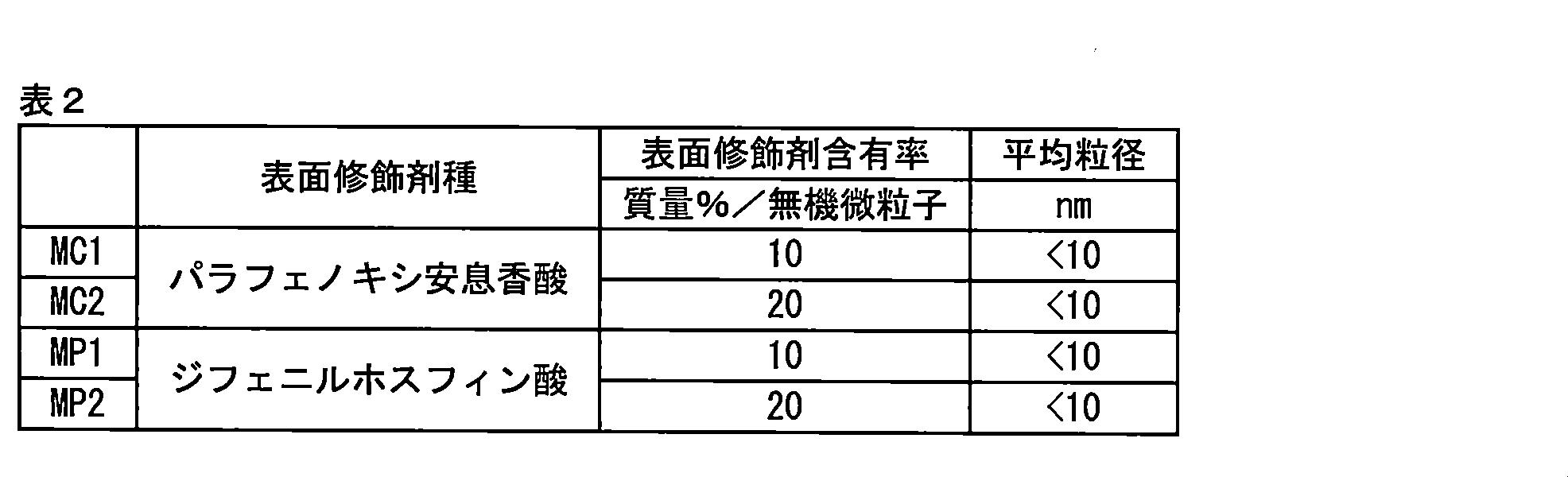
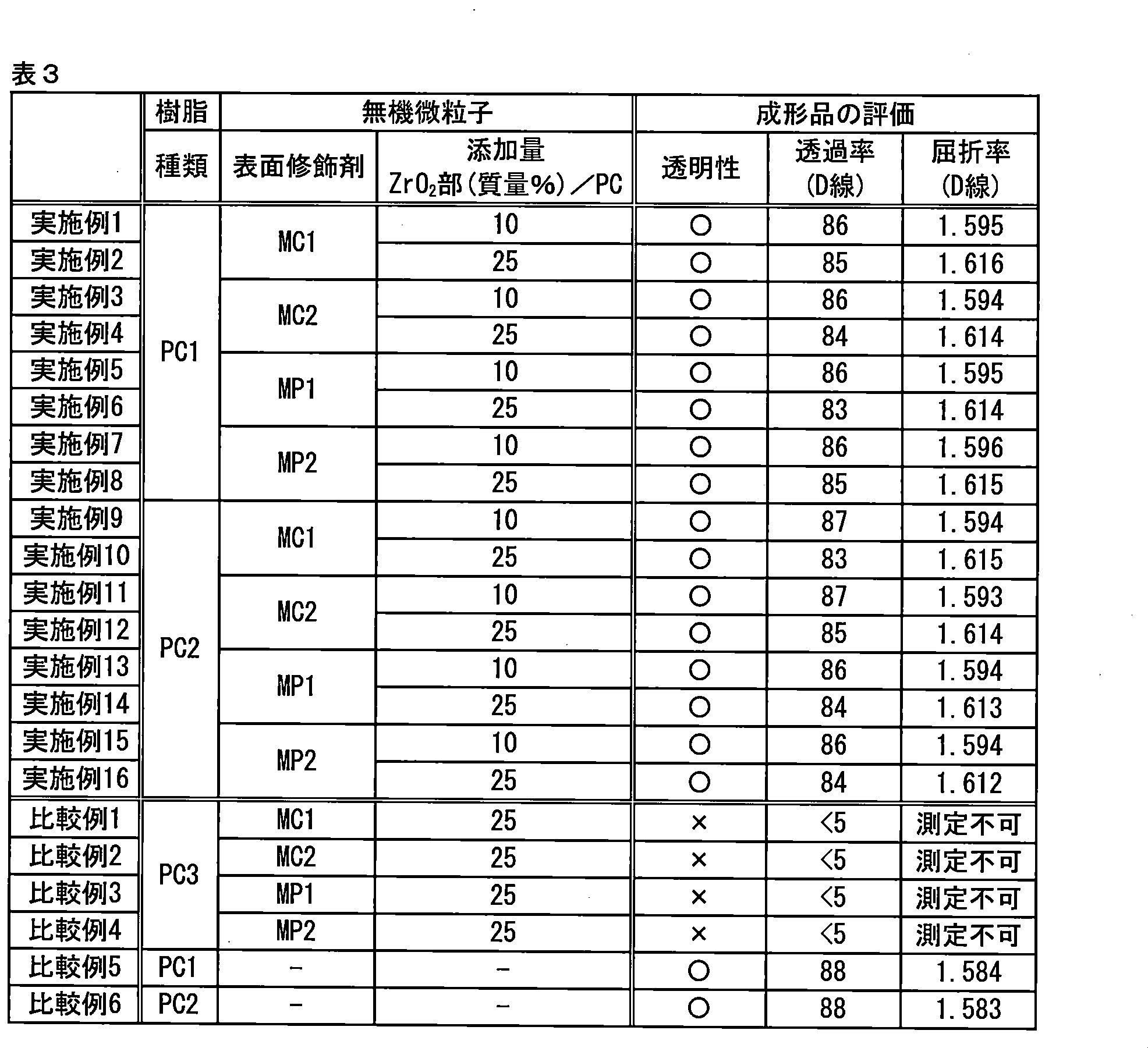
比較例1~4のように、一般式1を含まないビスフェノールA型のポリカーボネート樹脂を用いた場合には、透過率が低く、アッベ屈折率計での屈折率測定が行えなかった。
(実施例17)
実施例14と同様に作製した、表面修飾ジルコニア微粒子とポリカーボネートのジクロロメタン分散液を、80℃4時間乾燥してジクロロメタンを除去し、有機無機複合体のフレークを得た。このフレークを、真空熱プレス装置(神藤金属工業所株式会社製 圧縮成形機:SFV-10、真空ポンプユニット:GXD-360)でプレス成形し、厚さ約1mmの成形板を得た。プレス成形条件は、金型温度220℃、1次圧:1MPa(30秒)、2次圧:1.5MPa(5分)とした。
実施例14と同様に作製した、表面修飾ジルコニア微粒子とポリカーボネートのジクロロメタン分散液を、80℃4時間乾燥してジクロロメタンを除去し、有機無機複合体のフレークを得た。このフレークを、真空熱プレス装置(神藤金属工業所株式会社製 圧縮成形機:SFV-10、真空ポンプユニット:GXD-360)でプレス成形し、厚さ約1mmの成形板を得た。プレス成形条件は、金型温度220℃、1次圧:1MPa(30秒)、2次圧:1.5MPa(5分)とした。
得られた成形板は、透明であった(図1)。
(比較例7)
ポリカーボネート樹脂としてPC3を用いた以外は、実施例17と同様の方法で、厚さ約1mmの成形板を得た。
ポリカーボネート樹脂としてPC3を用いた以外は、実施例17と同様の方法で、厚さ約1mmの成形板を得た。
得られた成形板は白濁し不透明であった(図2)。
《第2の発明に関する実施例18~26及び比較例8~11》
〈第2の発明のポリカーボネート樹脂〉
(PC4の製造方法)
温度計及び撹拌機の付いた反応器に、48%水酸化ナトリウム水溶液89.7部及びイオン交換水448部を仕込み、これにハイドロサルファイト0.1部、及び2,2-ビス(4-ヒドロキシフェニル)プロパン(以下BPA)63.9部を溶解した後、2,2-ビス(3-アリル-4-ヒドロキシフェニル)プロパン(以下BPDAL)9.6部を塩化メチレン264部に溶解させた溶液を加え、撹拌下、15~25℃でホスゲン40.0部を約70分かけて吹き込んだ。ホスゲンの吹き込み終了後、48%水酸化ナトリウム水溶液12.8部及びp-tert-ブチルフェノール1.9部を加え、撹拌を再開、乳化後、トリエチルアミン0.1部を加え、さらに25~35℃で1時間撹拌して反応を終了した。
〈第2の発明のポリカーボネート樹脂〉
(PC4の製造方法)
温度計及び撹拌機の付いた反応器に、48%水酸化ナトリウム水溶液89.7部及びイオン交換水448部を仕込み、これにハイドロサルファイト0.1部、及び2,2-ビス(4-ヒドロキシフェニル)プロパン(以下BPA)63.9部を溶解した後、2,2-ビス(3-アリル-4-ヒドロキシフェニル)プロパン(以下BPDAL)9.6部を塩化メチレン264部に溶解させた溶液を加え、撹拌下、15~25℃でホスゲン40.0部を約70分かけて吹き込んだ。ホスゲンの吹き込み終了後、48%水酸化ナトリウム水溶液12.8部及びp-tert-ブチルフェノール1.9部を加え、撹拌を再開、乳化後、トリエチルアミン0.1部を加え、さらに25~35℃で1時間撹拌して反応を終了した。
反応終了後、生成物を塩化メチレンで希釈して水洗した後、塩酸を加え、酸性にして水洗し、さらに水相の導電率がイオン交換水とほぼ同じになるまで水洗を繰り返し、塩化メチレンを留去してポリカーボネート樹脂のフレークを得た(PC4)。得られたフレークについて各種評価を行った。その結果を表4に記載する。
(PC5の製造方法)
スターラーチップをセットしたフラスコに、PC4のフレーク30.0部、アゾビスイソブチロニトリル(以下AIBN)7.0部、及び3-メルカプトプロパン酸9.0部を仕込み、トルエン105部及びクロロホルム178部を加え溶解した後、窒素雰囲気下70℃に加熱し、4時間反応させた。
スターラーチップをセットしたフラスコに、PC4のフレーク30.0部、アゾビスイソブチロニトリル(以下AIBN)7.0部、及び3-メルカプトプロパン酸9.0部を仕込み、トルエン105部及びクロロホルム178部を加え溶解した後、窒素雰囲気下70℃に加熱し、4時間反応させた。
反応終了後、反応溶液をメタノールに添加し、ポリカーボネート樹脂を沈殿させた後、減圧ろ過で沈殿物を回収した。次いで、得られた沈殿物を塩化メチレンに溶解させた後に、ヘキサンに添加し、ポリカーボネート樹脂を沈殿させた。得られた沈殿物を減圧ろ過で回収し、乾燥してポリカーボネート樹脂のパウダーを得た(PC5)。得られたパウダーについて同様の評価を行った。その結果を表4に記載する。
(PC6の製造方法)
BPA67.4部、BPDAL4.8部を原料として用いた以外はPC4の製造方法と同様の操作を行った。得られたフレークについて同様の評価を行った。その結果を表4に記載する。
BPA67.4部、BPDAL4.8部を原料として用いた以外はPC4の製造方法と同様の操作を行った。得られたフレークについて同様の評価を行った。その結果を表4に記載する。
(PC7の製造方法)
PC4の代わりにPC6のフレーク30.0部を原料として用い、AIBN3.5部、3-メルカプトプロパン酸4.5部とした以外はPC5の製造方法と同様の操作を行った。得られたパウダーについて同様の評価を行った。その結果を表4に記載する。
PC4の代わりにPC6のフレーク30.0部を原料として用い、AIBN3.5部、3-メルカプトプロパン酸4.5部とした以外はPC5の製造方法と同様の操作を行った。得られたパウダーについて同様の評価を行った。その結果を表4に記載する。
(PC8の製造方法)
9,9-ビス(4-(2-ヒドロキシエトキシ)フェニル)フルオレン(以下BPEF)30.0部、BPDAL1.1部、ジフェニルカーボネート(以下DPC)15.4部及び触媒として、水酸化ナトリウム2.9×10⁻⁶部とテトラメチルアンモニウムヒドロキシド6.7×10⁻⁴部を、窒素雰囲気下180℃で加熱し溶融させた。その後、20分かけて220℃へ昇温し、減圧度を13.7kPaに調整した。その後、さらに40分かけて260℃へ昇温し、減圧度を1kPaに調整した。10分間その温度で保持した後、減圧度を133Pa以下とした。反応終了後、反応槽の底より窒素加圧下吐出し、水槽で冷却しながら、ペレタイザーでカットしてペレットを得た(PC8)。得られたペレットについて各種評価を行った。その結果を表4に記載する。
9,9-ビス(4-(2-ヒドロキシエトキシ)フェニル)フルオレン(以下BPEF)30.0部、BPDAL1.1部、ジフェニルカーボネート(以下DPC)15.4部及び触媒として、水酸化ナトリウム2.9×10⁻⁶部とテトラメチルアンモニウムヒドロキシド6.7×10⁻⁴部を、窒素雰囲気下180℃で加熱し溶融させた。その後、20分かけて220℃へ昇温し、減圧度を13.7kPaに調整した。その後、さらに40分かけて260℃へ昇温し、減圧度を1kPaに調整した。10分間その温度で保持した後、減圧度を133Pa以下とした。反応終了後、反応槽の底より窒素加圧下吐出し、水槽で冷却しながら、ペレタイザーでカットしてペレットを得た(PC8)。得られたペレットについて各種評価を行った。その結果を表4に記載する。
(PC9の製造方法)
PC4の代わりにPC8のペレット30.0部を原料として用い、AIBN2.0部、3-メルカプトプロパン酸2.6部とした以外はPC5の製造方法と同様の操作を行った。得られたパウダーについて同様の評価を行った。その結果を表4に記載する。
PC4の代わりにPC8のペレット30.0部を原料として用い、AIBN2.0部、3-メルカプトプロパン酸2.6部とした以外はPC5の製造方法と同様の操作を行った。得られたパウダーについて同様の評価を行った。その結果を表4に記載する。
(PC10の製造方法)
BPEF30.5部、2,4-ジヒドロキシ安息香酸(以下DHBA)0.1部、DPC14.8部、及び触媒として酸化亜鉛4.5×10⁻³部を窒素雰囲気下180℃で加熱し溶融させた。その後、200℃まで昇温し、減圧度を20kPaに調整した。その後、さらに240℃まで昇温し、減圧度を1kPaに調整し、1時間反応させた。その後、270℃へ昇温し、減圧度を200Pa以下とした。反応終了後、反応槽の底より窒素加圧下吐出し、水槽で冷却しながら、ペレタイザーでカットしてペレットを得た(PC10)。得られたペレットについて同様の評価を行った。その結果を表4に記載する。
BPEF30.5部、2,4-ジヒドロキシ安息香酸(以下DHBA)0.1部、DPC14.8部、及び触媒として酸化亜鉛4.5×10⁻³部を窒素雰囲気下180℃で加熱し溶融させた。その後、200℃まで昇温し、減圧度を20kPaに調整した。その後、さらに240℃まで昇温し、減圧度を1kPaに調整し、1時間反応させた。その後、270℃へ昇温し、減圧度を200Pa以下とした。反応終了後、反応槽の底より窒素加圧下吐出し、水槽で冷却しながら、ペレタイザーでカットしてペレットを得た(PC10)。得られたペレットについて同様の評価を行った。その結果を表4に記載する。
(PC11の製造方法)
BPEF28.1部、DHBA1.4部、DPC15.6部を原料として用いた以外はPC10の製造方法と同様の操作を行った。得られたポリカーボネートは塩化メチレンに溶解せず、均一なペレットが製造できなかった。
BPEF28.1部、DHBA1.4部、DPC15.6部を原料として用いた以外はPC10の製造方法と同様の操作を行った。得られたポリカーボネートは塩化メチレンに溶解せず、均一なペレットが製造できなかった。
〈ジルコニア微粒子の表面修飾〉
ジルコニア微粒子の表面修飾は、第1の発明と同様の方法で実施した。結果は表2に示すとおりである。
ジルコニア微粒子の表面修飾は、第1の発明と同様の方法で実施した。結果は表2に示すとおりである。
〈第2の発明の有機無機複合材料〉
(キャストフィルムの製造方法)
キャストフィルムの製造は、第1の発明と同様の方法で実施した。その結果を表5に記載する。使用した表面修飾剤の種類と無機成分としての添加量は、表5に示すとおりとした。
(キャストフィルムの製造方法)
キャストフィルムの製造は、第1の発明と同様の方法で実施した。その結果を表5に記載する。使用した表面修飾剤の種類と無機成分としての添加量は、表5に示すとおりとした。
(成形品の製造方法)
キャストフィルムの製造方法と同様に作製した、表面修飾ZrO2微粒子及びポリカーボネート樹脂を含む塩化メチレン分散液を用い、実施例17と同様の方法で厚さ約1mmの成形板を得た。プレス成形条件は、金型温度240℃、1次圧:1MPa(30秒)、2次圧:1.5MPa(5分)とした。製造した成形板の透明性評価を行った。その結果を表5に記載する。使用した表面修飾剤の種類と無機成分としての添加量は、表5に示すとおりとした。
キャストフィルムの製造方法と同様に作製した、表面修飾ZrO2微粒子及びポリカーボネート樹脂を含む塩化メチレン分散液を用い、実施例17と同様の方法で厚さ約1mmの成形板を得た。プレス成形条件は、金型温度240℃、1次圧:1MPa(30秒)、2次圧:1.5MPa(5分)とした。製造した成形板の透明性評価を行った。その結果を表5に記載する。使用した表面修飾剤の種類と無機成分としての添加量は、表5に示すとおりとした。
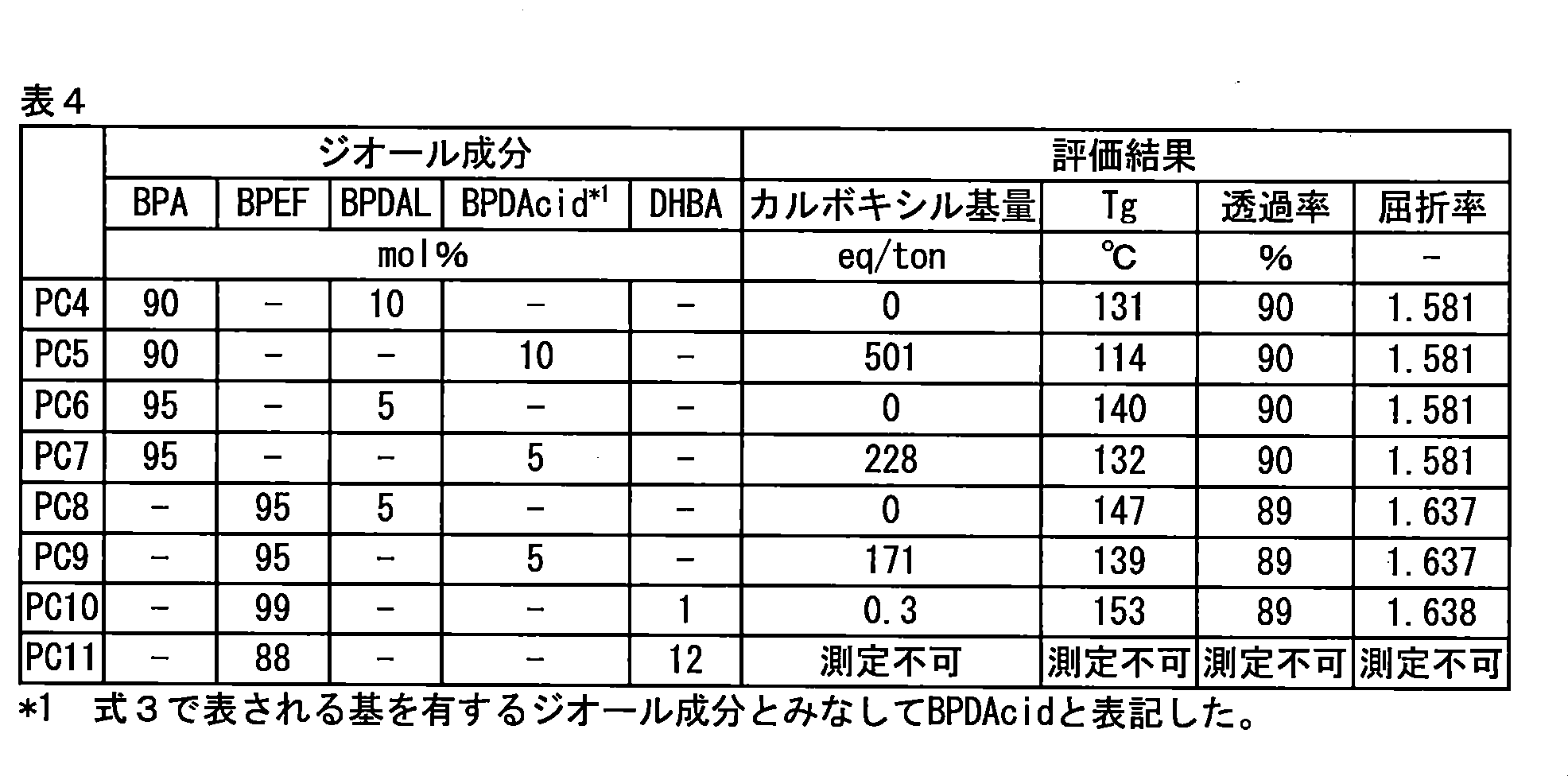
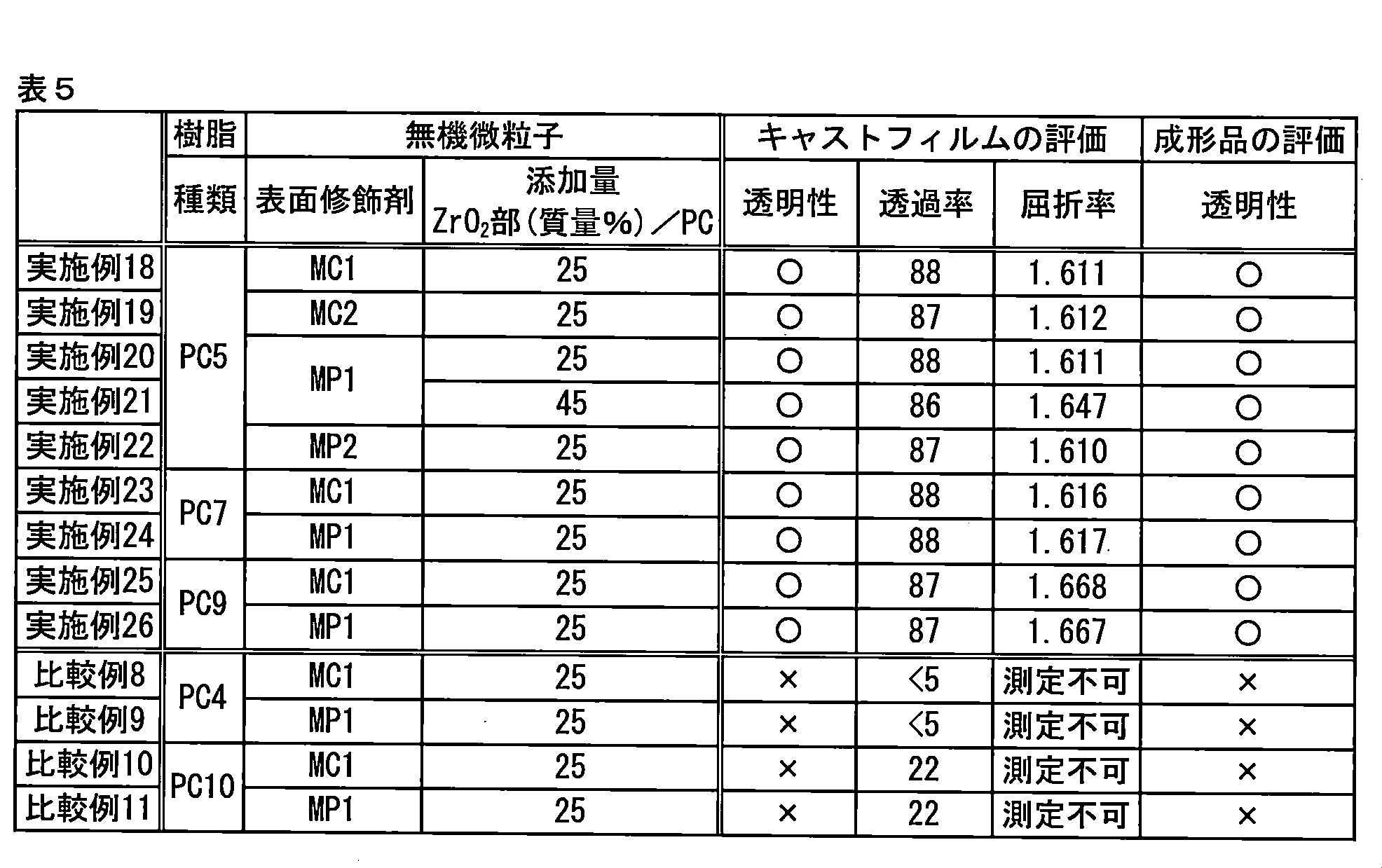
〈結果〉
表5から明らかなように、実施例18~26では屈折率が向上し、透明性を有する有機無機複合材料を提供することができた。比較例8及び9のようにカルボキシル基を有しないポリカーボネート樹脂を用いた場合には、無機微粒子を均一に分散することができず、微粒子の凝集により透過率が低いため、アッベ屈折率計での屈折率測定が行えなかった。
表5から明らかなように、実施例18~26では屈折率が向上し、透明性を有する有機無機複合材料を提供することができた。比較例8及び9のようにカルボキシル基を有しないポリカーボネート樹脂を用いた場合には、無機微粒子を均一に分散することができず、微粒子の凝集により透過率が低いため、アッベ屈折率計での屈折率測定が行えなかった。
また、表4及び5から明らかなように、比較例10及び11のようにカルボキシル基を有するジオールを共重合して得たポリカーボネート樹脂を用いた場合には、多量のカルボキシル基をポリカーボネート樹脂に導入することができず、成形品では均一な分散状態を維持できなかった。
第1の発明及び第2の発明の有機無機複合材料は、高屈折率、透過率(透明性)に優れており、また、無機微粒子の含有量により屈折率等の特性を任意に調整することができる。このため、第1の発明及び第2の発明の有機無機複合材料を用いて得られる成形品(例えばフィルム、およびシート)は各種分野に利用可能である。
本発明の一実施態様を、以下の〈態様1〉-〈態様10〉に記載する。
〈態様1〉
下記式1で表される構造単位を含むポリカーボネート樹脂に、表面修飾剤により修飾されている無機微粒子が分散した有機無機複合材料:
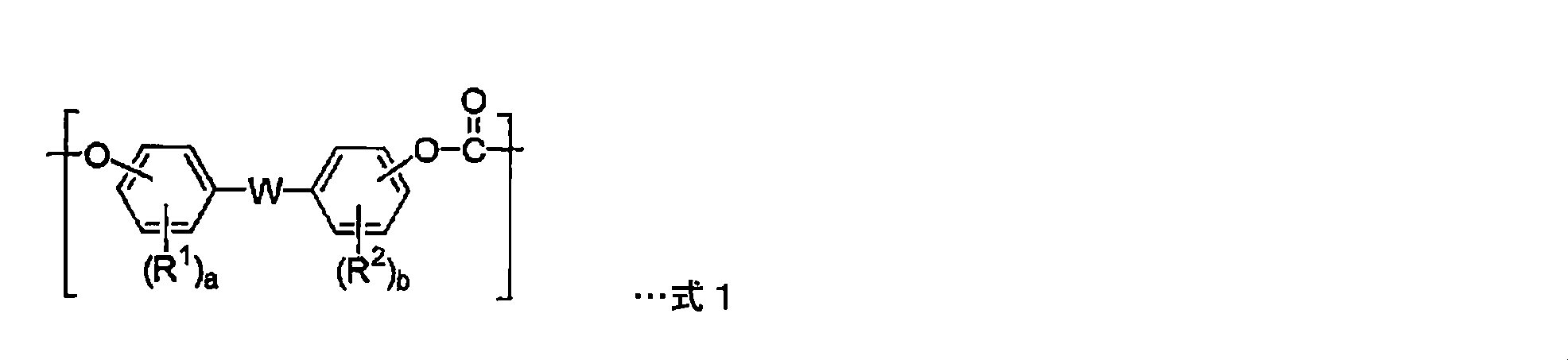
(式1において、R1およびR2はそれぞれ独立しても同一であってもよく、水素原子、ハロゲン原子、アルキル基、アルコキシ基、シクロアルキル基、シクロアルコキシ基、アルケニル基、アリール基、アリールオキシ基、アラルキル基、アラルキルオキシ基、ニトロ基、アルデヒド基およびシアノ基からなる群から選ばれる少なくとも1つの基を表し、aおよびbはそれぞれ1~4の整数であり、Wは下記式2で表される結合基からなる群より選ばれる少なくとも1つの結合基である。
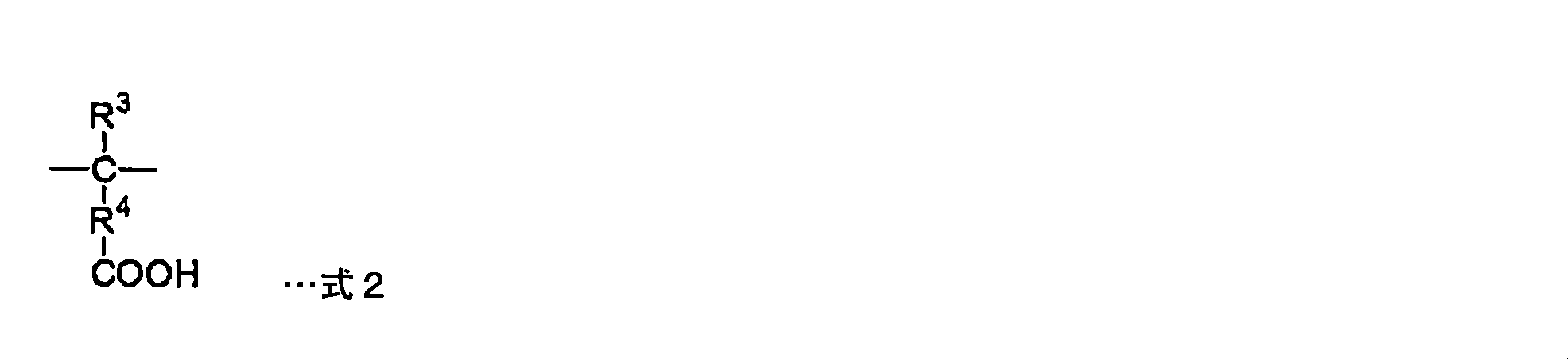
(式2において、R3は水素原子、アルキル基、アリール基およびアラルキル基からなる群から選ばれる少なくとも1つの基を表し、R4は単結合、アルキレン基、アリーレン基、アラルキレン基およびエステル基からなる群から選ばれる少なくとも1つの基を表す。)
〈態様2〉
式1で表される構造単位のモル比が、全カーボネート繰り返し単位100モル%に対して、0.5モル%以上20モル%以下である、態様1に記載の有機無機複合材料。
〈態様3〉
表面修飾剤が、酸性官能基を有する態様1または2に記載の有機無機複合材料。
〈態様4〉
酸性官能基が、スルホン酸基、ホスホン酸基、ホスフィン酸基およびカルボン酸基からなる群より選ばれる少なくとも1つの酸性官能基である態様3に記載の有機無機複合材料。
〈態様5〉
表面修飾剤の含有量が、無機微粒子に対して1~30質量%である態様1~4のいずれかに記載の有機無機複合材料。
〈態様6〉
無機微粒子の平均粒子径が1~20nmである態様1~5のいずれかに記載の有機無機複合材料。
〈態様7〉
無機微粒子の含有量が、ポリカーボネート樹脂に対して1~95質量%である態様1~6のいずれかに記載の有機無機複合材料。
〈態様8〉
無機微粒子が、ZrO2(酸化ジルコニウム)、TiO2(酸化チタン)、SnO2(酸化スズ)、SiO2(酸化ケイ素)、またはAl2O3(酸化アルミニウム)である態様1~7のいずれかに記載の有機無機複合材料。
〈態様9〉
態様1~8のいずれかに記載の有機無機複合材料を用いて得られる成形品、フィルムまたはシート。
〈態様10〉
態様1~8のいずれかに記載の有機無機複合材料の製造方法であって、前記式1で表される構造単位をもたらすジオール化合物と、カーボネート前駆物質とを反応させて前記ポリカーボネート樹脂を得ること、及び前記表面修飾剤により修飾されている無機微粒子を前記ポリカーボネート樹脂に分散させることを含む、方法。
〈態様1〉
下記式1で表される構造単位を含むポリカーボネート樹脂に、表面修飾剤により修飾されている無機微粒子が分散した有機無機複合材料:
〈態様2〉
式1で表される構造単位のモル比が、全カーボネート繰り返し単位100モル%に対して、0.5モル%以上20モル%以下である、態様1に記載の有機無機複合材料。
〈態様3〉
表面修飾剤が、酸性官能基を有する態様1または2に記載の有機無機複合材料。
〈態様4〉
酸性官能基が、スルホン酸基、ホスホン酸基、ホスフィン酸基およびカルボン酸基からなる群より選ばれる少なくとも1つの酸性官能基である態様3に記載の有機無機複合材料。
〈態様5〉
表面修飾剤の含有量が、無機微粒子に対して1~30質量%である態様1~4のいずれかに記載の有機無機複合材料。
〈態様6〉
無機微粒子の平均粒子径が1~20nmである態様1~5のいずれかに記載の有機無機複合材料。
〈態様7〉
無機微粒子の含有量が、ポリカーボネート樹脂に対して1~95質量%である態様1~6のいずれかに記載の有機無機複合材料。
〈態様8〉
無機微粒子が、ZrO2(酸化ジルコニウム)、TiO2(酸化チタン)、SnO2(酸化スズ)、SiO2(酸化ケイ素)、またはAl2O3(酸化アルミニウム)である態様1~7のいずれかに記載の有機無機複合材料。
〈態様9〉
態様1~8のいずれかに記載の有機無機複合材料を用いて得られる成形品、フィルムまたはシート。
〈態様10〉
態様1~8のいずれかに記載の有機無機複合材料の製造方法であって、前記式1で表される構造単位をもたらすジオール化合物と、カーボネート前駆物質とを反応させて前記ポリカーボネート樹脂を得ること、及び前記表面修飾剤により修飾されている無機微粒子を前記ポリカーボネート樹脂に分散させることを含む、方法。
本発明の別の実施態様を、以下の〈態様1〉-〈態様11〉に記載する。
〈態様1〉
下記式3で表される基を有するポリカーボネート樹脂、及び無機微粒子を含む、有機無機複合材料:

式3中、
R1及びR2は、それぞれ独立に、アルキレン基、アラルキレン基、アリーレン基、及びシクロアルキレン基からなる群から選ばれる基を表し、R2の水素原子はカルボキシル基で置換されてもよい。
〈態様2〉
前記ポリカーボネート樹脂が、下記式4で表される構造単位を含む、態様1に記載の有機無機複合材料:
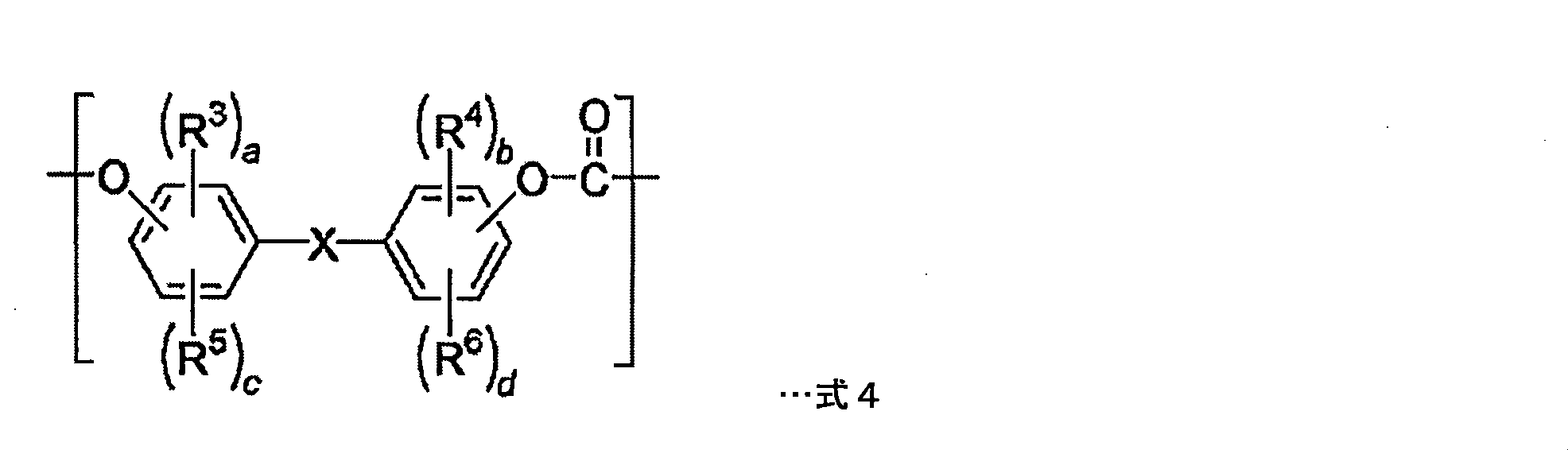
式4中、
R3及びR4は、前記式3で表される基を表し、
a及びbは、それぞれ独立に、a+b≧1を満たす0~4の整数であり、
R5及びR6は、それぞれ独立に、ハロゲン原子、アルキル基、アルコキシ基、シクロアルキル基、シクロアルコキシ基、アルケニル基、アリール基、アリールオキシ基、アラルキル基、アラルキルオキシ基、ニトロ基、アルデヒド基、及びシアノ基からなる群から選ばれる基を表し、
c及びdは、それぞれ独立に、c≦4-a及びd≦4-bを満たす0~4の整数であり、
Xは、単結合、アルキレン基、アラルキレン基、アリーレン基、シクロアルキレン基、硫黄原子、又は酸素原子を表す。
〈態様3〉
前記無機微粒子の表面が、表面修飾剤により修飾されている、態様1又は2に記載の有機無機複合材料。
〈態様4〉
前記表面修飾剤が、酸性官能基を有する、態様3に記載の有機無機複合材料。
〈態様5〉
前記酸性官能基が、スルホン酸基、ホスホン酸基、ホスフィン酸基、及びカルボン酸基からなる群より選ばれる少なくとも1つの酸性官能基である、態様4に記載の有機無機複合材料。
〈態様6〉
前記無機微粒子の表面が、前記無機微粒子に対して1~30質量%の前記表面修飾剤により修飾されている、態様3~5のいずれかに記載の有機無機複合材料。
〈態様7〉
前記無機微粒子の平均粒子径が、1~20nmである、態様1~6のいずれかに記載の有機無機複合材料。
〈態様8〉
前記無機微粒子の含有量が、前記ポリカーボネート樹脂に対して1~95質量%である、態様1~7のいずれかに記載の有機無機複合材料。
〈態様9〉
前記無機微粒子が、酸化ジルコニウム、酸化チタン、酸化スズ、酸化ケイ素、及び酸化アルミニウムからなる群より選ばれる少なくとも一種である、態様1~8のいずれかに記載の有機無機複合材料。
〈態様10〉
態様1~9のいずれかに記載の有機無機複合材料を用いて得られる成形品。
〈態様11〉
炭素-炭素二重結合を有するポリカーボネート樹脂、及びカルボキシル基を有するチオール化合物を反応させて、前記式3で表される基を有するポリカーボネート樹脂を調製することと、
前記式3で表される基を有するポリカーボネート樹脂、及び無機微粒子を混合することと
を含む、態様1~9のいずれかに記載の有機無機複合材料の製造方法。
〈態様1〉
下記式3で表される基を有するポリカーボネート樹脂、及び無機微粒子を含む、有機無機複合材料:
R1及びR2は、それぞれ独立に、アルキレン基、アラルキレン基、アリーレン基、及びシクロアルキレン基からなる群から選ばれる基を表し、R2の水素原子はカルボキシル基で置換されてもよい。
〈態様2〉
前記ポリカーボネート樹脂が、下記式4で表される構造単位を含む、態様1に記載の有機無機複合材料:
R3及びR4は、前記式3で表される基を表し、
a及びbは、それぞれ独立に、a+b≧1を満たす0~4の整数であり、
R5及びR6は、それぞれ独立に、ハロゲン原子、アルキル基、アルコキシ基、シクロアルキル基、シクロアルコキシ基、アルケニル基、アリール基、アリールオキシ基、アラルキル基、アラルキルオキシ基、ニトロ基、アルデヒド基、及びシアノ基からなる群から選ばれる基を表し、
c及びdは、それぞれ独立に、c≦4-a及びd≦4-bを満たす0~4の整数であり、
Xは、単結合、アルキレン基、アラルキレン基、アリーレン基、シクロアルキレン基、硫黄原子、又は酸素原子を表す。
〈態様3〉
前記無機微粒子の表面が、表面修飾剤により修飾されている、態様1又は2に記載の有機無機複合材料。
〈態様4〉
前記表面修飾剤が、酸性官能基を有する、態様3に記載の有機無機複合材料。
〈態様5〉
前記酸性官能基が、スルホン酸基、ホスホン酸基、ホスフィン酸基、及びカルボン酸基からなる群より選ばれる少なくとも1つの酸性官能基である、態様4に記載の有機無機複合材料。
〈態様6〉
前記無機微粒子の表面が、前記無機微粒子に対して1~30質量%の前記表面修飾剤により修飾されている、態様3~5のいずれかに記載の有機無機複合材料。
〈態様7〉
前記無機微粒子の平均粒子径が、1~20nmである、態様1~6のいずれかに記載の有機無機複合材料。
〈態様8〉
前記無機微粒子の含有量が、前記ポリカーボネート樹脂に対して1~95質量%である、態様1~7のいずれかに記載の有機無機複合材料。
〈態様9〉
前記無機微粒子が、酸化ジルコニウム、酸化チタン、酸化スズ、酸化ケイ素、及び酸化アルミニウムからなる群より選ばれる少なくとも一種である、態様1~8のいずれかに記載の有機無機複合材料。
〈態様10〉
態様1~9のいずれかに記載の有機無機複合材料を用いて得られる成形品。
〈態様11〉
炭素-炭素二重結合を有するポリカーボネート樹脂、及びカルボキシル基を有するチオール化合物を反応させて、前記式3で表される基を有するポリカーボネート樹脂を調製することと、
前記式3で表される基を有するポリカーボネート樹脂、及び無機微粒子を混合することと
を含む、態様1~9のいずれかに記載の有機無機複合材料の製造方法。
Claims (15)
- 下記式1で表される構造単位を含むポリカーボネート樹脂、又は、下記式3で表される基を有するポリカーボネート樹脂、及び無機微粒子を含む、有機無機複合材料:
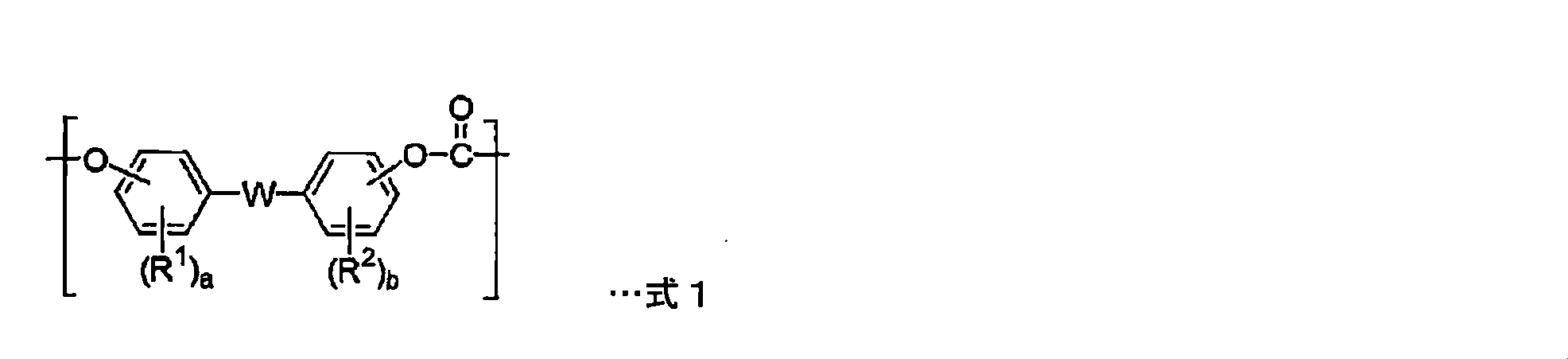


R1及びR2は、それぞれ独立に、アルキレン基、アラルキレン基、アリーレン基、及びシクロアルキレン基からなる群から選ばれる基を表し、R2の水素原子はカルボキシル基で置換されてもよい。 - 下記式1で表される構造単位を含むポリカーボネート樹脂に、表面修飾剤により修飾されている無機微粒子が分散した、請求項1に記載の有機無機複合材料:

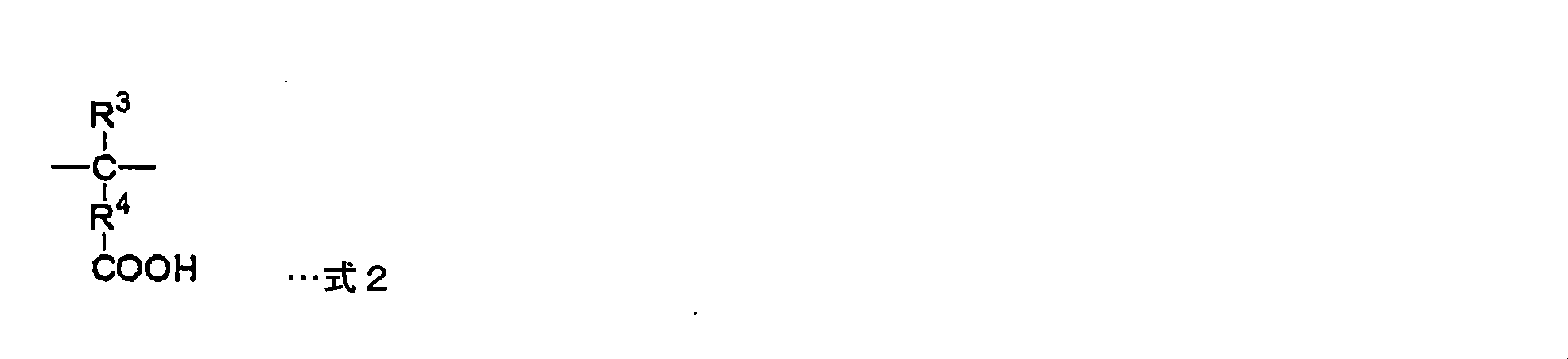
- 式1で表される構造単位のモル比が、全カーボネート繰り返し単位100モル%に対して、0.5モル%以上20モル%以下である、請求項1又は2に記載の有機無機複合材料。
- 下記式3で表される基を有するポリカーボネート樹脂、及び無機微粒子を含む、請求項1に記載の有機無機複合材料:

R1及びR2は、それぞれ独立に、アルキレン基、アラルキレン基、アリーレン基、及びシクロアルキレン基からなる群から選ばれる基を表し、R2の水素原子はカルボキシル基で置換されてもよい。 - 前記ポリカーボネート樹脂が、下記式4で表される構造単位を含む、請求項4に記載の有機無機複合材料:

R3及びR4は、前記式3で表される基を表し、
a及びbは、それぞれ独立に、a+b≧1を満たす0~4の整数であり、
R5及びR6は、それぞれ独立に、ハロゲン原子、アルキル基、アルコキシ基、シクロアルキル基、シクロアルコキシ基、アルケニル基、アリール基、アリールオキシ基、アラルキル基、アラルキルオキシ基、ニトロ基、アルデヒド基、及びシアノ基からなる群から選ばれる基を表し、
c及びdは、それぞれ独立に、c≦4-a及びd≦4-bを満たす0~4の整数であり、
Xは、単結合、アルキレン基、アラルキレン基、アリーレン基、シクロアルキレン基、硫黄原子、又は酸素原子を表す。 - 前記無機微粒子の表面が、表面修飾剤により修飾されている、請求項4又は5に記載の有機無機複合材料。
- 前記表面修飾剤が、酸性官能基を有する、請求項2、3、又は6に記載の有機無機複合材料。
- 前記酸性官能基が、スルホン酸基、ホスホン酸基、ホスフィン酸基、及びカルボン酸基からなる群より選ばれる少なくとも1つの酸性官能基である、請求項7に記載の有機無機複合材料。
- 前記無機微粒子の表面が、前記無機微粒子に対して1~30質量%の前記表面修飾剤により修飾されている、請求項2、3、6~8のいずれか一項に記載の有機無機複合材料。
- 前記無機微粒子の平均粒子径が、1~20nmである、請求項1~9のいずれか一項に記載の有機無機複合材料。
- 前記無機微粒子の含有量が、前記ポリカーボネート樹脂に対して1~95質量%である、請求項1~10のいずれか一項に記載の有機無機複合材料。
- 前記無機微粒子が、酸化ジルコニウム、酸化チタン、酸化スズ、酸化ケイ素、及び酸化アルミニウムからなる群より選ばれる少なくとも一種である、請求項1~11のいずれか一項に記載の有機無機複合材料。
- 請求項1~12のいずれか一項に記載の有機無機複合材料を用いて得られる成形品。
- 請求項2、3、7~12のいずれか一項に記載の有機無機複合材料の製造方法であって、前記式1で表される構造単位をもたらすジオール化合物と、カーボネート前駆物質とを反応させて前記ポリカーボネート樹脂を得ること、及び前記表面修飾剤により修飾されている無機微粒子を前記ポリカーボネート樹脂に分散させることを含む、方法。
- 炭素-炭素二重結合を有するポリカーボネート樹脂、及びカルボキシル基を有するチオール化合物を反応させて、前記式3で表される基を有するポリカーボネート樹脂を調製することと、
前記式3で表される基を有するポリカーボネート樹脂、及び無機微粒子を混合することと
を含む、請求項4~12のいずれか一項に記載の有機無機複合材料の製造方法。
Applications Claiming Priority (4)
| Application Number | Priority Date | Filing Date | Title |
|---|---|---|---|
| JP2018-230139 | 2018-12-07 | ||
| JP2018230139A JP7160272B2 (ja) | 2018-12-07 | 2018-12-07 | 有機無機複合材料 |
| JP2019-044980 | 2019-03-12 | ||
| JP2019044980A JP7186642B2 (ja) | 2019-03-12 | 2019-03-12 | 有機無機複合材料 |
Publications (1)
| Publication Number | Publication Date |
|---|---|
| WO2020116646A1 true WO2020116646A1 (ja) | 2020-06-11 |
Family
ID=70973750
Family Applications (1)
| Application Number | Title | Priority Date | Filing Date |
|---|---|---|---|
| PCT/JP2019/047935 Ceased WO2020116646A1 (ja) | 2018-12-07 | 2019-12-06 | 有機無機複合材料 |
Country Status (1)
| Country | Link |
|---|---|
| WO (1) | WO2020116646A1 (ja) |
Citations (3)
| Publication number | Priority date | Publication date | Assignee | Title |
|---|---|---|---|---|
| JPH02219818A (ja) * | 1988-12-07 | 1990-09-03 | General Electric Co <Ge> | 樹脂の架橋方法 |
| JP2010235658A (ja) * | 2009-03-30 | 2010-10-21 | Fujifilm Corp | 有機無機複合組成物、成形体、光学部品および耐湿熱性改善剤 |
| JP2018138626A (ja) * | 2017-02-24 | 2018-09-06 | 三星電子株式会社Samsung Electronics Co.,Ltd. | 有機無機複合組成物、ならびにこれを含む成形品および光学部品 |
-
2019
- 2019-12-06 WO PCT/JP2019/047935 patent/WO2020116646A1/ja not_active Ceased
Patent Citations (3)
| Publication number | Priority date | Publication date | Assignee | Title |
|---|---|---|---|---|
| JPH02219818A (ja) * | 1988-12-07 | 1990-09-03 | General Electric Co <Ge> | 樹脂の架橋方法 |
| JP2010235658A (ja) * | 2009-03-30 | 2010-10-21 | Fujifilm Corp | 有機無機複合組成物、成形体、光学部品および耐湿熱性改善剤 |
| JP2018138626A (ja) * | 2017-02-24 | 2018-09-06 | 三星電子株式会社Samsung Electronics Co.,Ltd. | 有機無機複合組成物、ならびにこれを含む成形品および光学部品 |
Non-Patent Citations (1)
| Title |
|---|
| ZHANG, R. F. ET AL.: "Synthesis, characterization and properties of polycarbonate containing carboxyl side groups", MACROMOLECULAR SYMPOSIA, vol. 199, 6 October 2003 (2003-10-06), pages 375 - 390, XP055716474 * |
Similar Documents
| Publication | Publication Date | Title |
|---|---|---|
| CN108350260B (zh) | 热塑性树脂组合物及其成型体 | |
| JP5301811B2 (ja) | ポリカーボネート樹脂組成物 | |
| CN101434750B (zh) | 聚碳酸酯树脂组合物 | |
| JP5927299B2 (ja) | 樹脂組成物およびそれからの成形品 | |
| JP2006249292A (ja) | ポリカーボネート樹脂組成物 | |
| JPWO2018181157A1 (ja) | ポリカーボネート樹脂組成物及びそれを用いた光学レンズ | |
| JP2006249288A (ja) | 光拡散性芳香族ポリカーボネート樹脂組成物 | |
| CN101300286B (zh) | 光学元件以及色差补正透镜 | |
| JP2015137307A (ja) | 難燃性ポリカーボネート樹脂組成物 | |
| JP7179040B2 (ja) | ポリカーボネート共重合体 | |
| JP7211705B2 (ja) | 樹脂組成物ならびにそれを含む光学レンズ、シートおよびフィルム | |
| JP7535939B2 (ja) | ポリカーボネート樹脂及び製造方法 | |
| US8436129B2 (en) | Polycarbonate resin having ultraviolet absorbing capability, resin composition and optical material | |
| JP7160272B2 (ja) | 有機無機複合材料 | |
| JP7332786B2 (ja) | 樹脂組成物および未延伸光学フィルム | |
| JP7186642B2 (ja) | 有機無機複合材料 | |
| WO2020116646A1 (ja) | 有機無機複合材料 | |
| JP4817678B2 (ja) | 光高反射性芳香族ポリカーボネート樹脂組成物 | |
| JP7495288B2 (ja) | ポリカーボネート樹脂組成物および成形品 | |
| JP7633016B2 (ja) | 有機無機複合組成物 | |
| JP6918536B2 (ja) | ポリカーボネート樹脂組成物 | |
| JP5616470B2 (ja) | ポリカーボネート樹脂組成物 | |
| JP2013127075A (ja) | ポリカーボネート樹脂組成物 | |
| JP7335369B2 (ja) | ポリカーボネート樹脂およびポリカーボネート樹脂の製造方法 | |
| JP2014164238A (ja) | レンズ鏡筒用絞り機構部材 |
Legal Events
| Date | Code | Title | Description |
|---|---|---|---|
| 121 | Ep: the epo has been informed by wipo that ep was designated in this application |
Ref document number: 19892750 Country of ref document: EP Kind code of ref document: A1 |
|
| NENP | Non-entry into the national phase |
Ref country code: DE |
|
| 122 | Ep: pct application non-entry in european phase |
Ref document number: 19892750 Country of ref document: EP Kind code of ref document: A1 |