WO2020115916A1 - 使い捨ておむつ - Google Patents
使い捨ておむつ Download PDFInfo
- Publication number
- WO2020115916A1 WO2020115916A1 PCT/JP2018/045194 JP2018045194W WO2020115916A1 WO 2020115916 A1 WO2020115916 A1 WO 2020115916A1 JP 2018045194 W JP2018045194 W JP 2018045194W WO 2020115916 A1 WO2020115916 A1 WO 2020115916A1
- Authority
- WO
- WIPO (PCT)
- Prior art keywords
- design
- disposable diaper
- skin
- main body
- facing surface
- Prior art date
- Legal status (The legal status is an assumption and is not a legal conclusion. Google has not performed a legal analysis and makes no representation as to the accuracy of the status listed.)
- Ceased
Links
Images



Classifications
-
- A—HUMAN NECESSITIES
- A61—MEDICAL OR VETERINARY SCIENCE; HYGIENE
- A61F—FILTERS IMPLANTABLE INTO BLOOD VESSELS; PROSTHESES; DEVICES PROVIDING PATENCY TO, OR PREVENTING COLLAPSING OF, TUBULAR STRUCTURES OF THE BODY, e.g. STENTS; ORTHOPAEDIC, NURSING OR CONTRACEPTIVE DEVICES; FOMENTATION; TREATMENT OR PROTECTION OF EYES OR EARS; BANDAGES, DRESSINGS OR ABSORBENT PADS; FIRST-AID KITS
- A61F13/00—Bandages or dressings; Absorbent pads
- A61F13/15—Absorbent pads, e.g. sanitary towels, swabs or tampons for external or internal application to the body; Supporting or fastening means therefor; Tampon applicators
- A61F13/45—Absorbent pads, e.g. sanitary towels, swabs or tampons for external or internal application to the body; Supporting or fastening means therefor; Tampon applicators characterised by the shape
- A61F13/49—Absorbent pads, e.g. sanitary towels, swabs or tampons for external or internal application to the body; Supporting or fastening means therefor; Tampon applicators characterised by the shape specially adapted to be worn around the waist, e.g. diapers or nappies
- A61F13/496—Absorbent pads, e.g. sanitary towels, swabs or tampons for external or internal application to the body; Supporting or fastening means therefor; Tampon applicators characterised by the shape specially adapted to be worn around the waist, e.g. diapers or nappies in the form of pants or briefs
-
- A—HUMAN NECESSITIES
- A61—MEDICAL OR VETERINARY SCIENCE; HYGIENE
- A61F—FILTERS IMPLANTABLE INTO BLOOD VESSELS; PROSTHESES; DEVICES PROVIDING PATENCY TO, OR PREVENTING COLLAPSING OF, TUBULAR STRUCTURES OF THE BODY, e.g. STENTS; ORTHOPAEDIC, NURSING OR CONTRACEPTIVE DEVICES; FOMENTATION; TREATMENT OR PROTECTION OF EYES OR EARS; BANDAGES, DRESSINGS OR ABSORBENT PADS; FIRST-AID KITS
- A61F13/00—Bandages or dressings; Absorbent pads
- A61F13/15—Absorbent pads, e.g. sanitary towels, swabs or tampons for external or internal application to the body; Supporting or fastening means therefor; Tampon applicators
- A61F13/45—Absorbent pads, e.g. sanitary towels, swabs or tampons for external or internal application to the body; Supporting or fastening means therefor; Tampon applicators characterised by the shape
- A61F13/49—Absorbent pads, e.g. sanitary towels, swabs or tampons for external or internal application to the body; Supporting or fastening means therefor; Tampon applicators characterised by the shape specially adapted to be worn around the waist, e.g. diapers or nappies
- A61F13/494—Absorbent pads, e.g. sanitary towels, swabs or tampons for external or internal application to the body; Supporting or fastening means therefor; Tampon applicators characterised by the shape specially adapted to be worn around the waist, e.g. diapers or nappies characterised by edge leakage prevention means
- A61F13/49406—Absorbent pads, e.g. sanitary towels, swabs or tampons for external or internal application to the body; Supporting or fastening means therefor; Tampon applicators characterised by the shape specially adapted to be worn around the waist, e.g. diapers or nappies characterised by edge leakage prevention means the edge leakage prevention means being at the crotch region
- A61F13/49413—Absorbent pads, e.g. sanitary towels, swabs or tampons for external or internal application to the body; Supporting or fastening means therefor; Tampon applicators characterised by the shape specially adapted to be worn around the waist, e.g. diapers or nappies characterised by edge leakage prevention means the edge leakage prevention means being at the crotch region the edge leakage prevention means being an upstanding barrier
-
- A—HUMAN NECESSITIES
- A61—MEDICAL OR VETERINARY SCIENCE; HYGIENE
- A61F—FILTERS IMPLANTABLE INTO BLOOD VESSELS; PROSTHESES; DEVICES PROVIDING PATENCY TO, OR PREVENTING COLLAPSING OF, TUBULAR STRUCTURES OF THE BODY, e.g. STENTS; ORTHOPAEDIC, NURSING OR CONTRACEPTIVE DEVICES; FOMENTATION; TREATMENT OR PROTECTION OF EYES OR EARS; BANDAGES, DRESSINGS OR ABSORBENT PADS; FIRST-AID KITS
- A61F13/00—Bandages or dressings; Absorbent pads
- A61F13/15—Absorbent pads, e.g. sanitary towels, swabs or tampons for external or internal application to the body; Supporting or fastening means therefor; Tampon applicators
- A61F13/45—Absorbent pads, e.g. sanitary towels, swabs or tampons for external or internal application to the body; Supporting or fastening means therefor; Tampon applicators characterised by the shape
- A61F13/49—Absorbent pads, e.g. sanitary towels, swabs or tampons for external or internal application to the body; Supporting or fastening means therefor; Tampon applicators characterised by the shape specially adapted to be worn around the waist, e.g. diapers or nappies
- A61F13/494—Absorbent pads, e.g. sanitary towels, swabs or tampons for external or internal application to the body; Supporting or fastening means therefor; Tampon applicators characterised by the shape specially adapted to be worn around the waist, e.g. diapers or nappies characterised by edge leakage prevention means
- A61F13/49466—Absorbent pads, e.g. sanitary towels, swabs or tampons for external or internal application to the body; Supporting or fastening means therefor; Tampon applicators characterised by the shape specially adapted to be worn around the waist, e.g. diapers or nappies characterised by edge leakage prevention means the edge leakage prevention means being at the waist region
-
- A—HUMAN NECESSITIES
- A61—MEDICAL OR VETERINARY SCIENCE; HYGIENE
- A61F—FILTERS IMPLANTABLE INTO BLOOD VESSELS; PROSTHESES; DEVICES PROVIDING PATENCY TO, OR PREVENTING COLLAPSING OF, TUBULAR STRUCTURES OF THE BODY, e.g. STENTS; ORTHOPAEDIC, NURSING OR CONTRACEPTIVE DEVICES; FOMENTATION; TREATMENT OR PROTECTION OF EYES OR EARS; BANDAGES, DRESSINGS OR ABSORBENT PADS; FIRST-AID KITS
- A61F13/00—Bandages or dressings; Absorbent pads
- A61F13/15—Absorbent pads, e.g. sanitary towels, swabs or tampons for external or internal application to the body; Supporting or fastening means therefor; Tampon applicators
- A61F13/45—Absorbent pads, e.g. sanitary towels, swabs or tampons for external or internal application to the body; Supporting or fastening means therefor; Tampon applicators characterised by the shape
- A61F13/49—Absorbent pads, e.g. sanitary towels, swabs or tampons for external or internal application to the body; Supporting or fastening means therefor; Tampon applicators characterised by the shape specially adapted to be worn around the waist, e.g. diapers or nappies
- A61F13/495—Absorbent pads, e.g. sanitary towels, swabs or tampons for external or internal application to the body; Supporting or fastening means therefor; Tampon applicators characterised by the shape specially adapted to be worn around the waist, e.g. diapers or nappies with faecal cavity
-
- A—HUMAN NECESSITIES
- A61—MEDICAL OR VETERINARY SCIENCE; HYGIENE
- A61F—FILTERS IMPLANTABLE INTO BLOOD VESSELS; PROSTHESES; DEVICES PROVIDING PATENCY TO, OR PREVENTING COLLAPSING OF, TUBULAR STRUCTURES OF THE BODY, e.g. STENTS; ORTHOPAEDIC, NURSING OR CONTRACEPTIVE DEVICES; FOMENTATION; TREATMENT OR PROTECTION OF EYES OR EARS; BANDAGES, DRESSINGS OR ABSORBENT PADS; FIRST-AID KITS
- A61F13/00—Bandages or dressings; Absorbent pads
- A61F13/15—Absorbent pads, e.g. sanitary towels, swabs or tampons for external or internal application to the body; Supporting or fastening means therefor; Tampon applicators
- A61F13/45—Absorbent pads, e.g. sanitary towels, swabs or tampons for external or internal application to the body; Supporting or fastening means therefor; Tampon applicators characterised by the shape
- A61F13/49—Absorbent pads, e.g. sanitary towels, swabs or tampons for external or internal application to the body; Supporting or fastening means therefor; Tampon applicators characterised by the shape specially adapted to be worn around the waist, e.g. diapers or nappies
- A61F13/494—Absorbent pads, e.g. sanitary towels, swabs or tampons for external or internal application to the body; Supporting or fastening means therefor; Tampon applicators characterised by the shape specially adapted to be worn around the waist, e.g. diapers or nappies characterised by edge leakage prevention means
- A61F13/49406—Absorbent pads, e.g. sanitary towels, swabs or tampons for external or internal application to the body; Supporting or fastening means therefor; Tampon applicators characterised by the shape specially adapted to be worn around the waist, e.g. diapers or nappies characterised by edge leakage prevention means the edge leakage prevention means being at the crotch region
- A61F13/49413—Absorbent pads, e.g. sanitary towels, swabs or tampons for external or internal application to the body; Supporting or fastening means therefor; Tampon applicators characterised by the shape specially adapted to be worn around the waist, e.g. diapers or nappies characterised by edge leakage prevention means the edge leakage prevention means being at the crotch region the edge leakage prevention means being an upstanding barrier
- A61F2013/4944—Absorbent pads, e.g. sanitary towels, swabs or tampons for external or internal application to the body; Supporting or fastening means therefor; Tampon applicators characterised by the shape specially adapted to be worn around the waist, e.g. diapers or nappies characterised by edge leakage prevention means the edge leakage prevention means being at the crotch region the edge leakage prevention means being an upstanding barrier having multiple barriers
-
- A—HUMAN NECESSITIES
- A61—MEDICAL OR VETERINARY SCIENCE; HYGIENE
- A61F—FILTERS IMPLANTABLE INTO BLOOD VESSELS; PROSTHESES; DEVICES PROVIDING PATENCY TO, OR PREVENTING COLLAPSING OF, TUBULAR STRUCTURES OF THE BODY, e.g. STENTS; ORTHOPAEDIC, NURSING OR CONTRACEPTIVE DEVICES; FOMENTATION; TREATMENT OR PROTECTION OF EYES OR EARS; BANDAGES, DRESSINGS OR ABSORBENT PADS; FIRST-AID KITS
- A61F13/00—Bandages or dressings; Absorbent pads
- A61F13/15—Absorbent pads, e.g. sanitary towels, swabs or tampons for external or internal application to the body; Supporting or fastening means therefor; Tampon applicators
- A61F13/45—Absorbent pads, e.g. sanitary towels, swabs or tampons for external or internal application to the body; Supporting or fastening means therefor; Tampon applicators characterised by the shape
- A61F13/49—Absorbent pads, e.g. sanitary towels, swabs or tampons for external or internal application to the body; Supporting or fastening means therefor; Tampon applicators characterised by the shape specially adapted to be worn around the waist, e.g. diapers or nappies
- A61F13/494—Absorbent pads, e.g. sanitary towels, swabs or tampons for external or internal application to the body; Supporting or fastening means therefor; Tampon applicators characterised by the shape specially adapted to be worn around the waist, e.g. diapers or nappies characterised by edge leakage prevention means
- A61F2013/4948—Absorbent pads, e.g. sanitary towels, swabs or tampons for external or internal application to the body; Supporting or fastening means therefor; Tampon applicators characterised by the shape specially adapted to be worn around the waist, e.g. diapers or nappies characterised by edge leakage prevention means the edge leakage prevention means being elastic
Definitions
- the present invention relates to a disposable diaper.
- a disposable diaper having a waist band arranged in the back waist region is known (for example, refer to Patent Document 1).
- the waist band has a joint portion joined to the main body portion formed of a member arranged on the non-skin facing surface side of the waist band, and a non-joint portion not joined to the main body portion. There is.
- the waist band can block the movement of the excrement toward the waist opening side, and the excrement can be prevented from leaking from the waist opening.
- General disposable diapers that do not have a waistband are more widely known than disposable diapers that have a waistband. Therefore, the wearer sometimes causes the wearer to wear the disposable diaper without recognizing the waistband, as in a general disposable diaper. Since the waistband is bonded to the main body part that is arranged on the non-skin facing surface side of the waistband, at least a part of the waistband is in the thickness direction with the main body part on the skin facing surface side of the main body part. overlapping. Therefore, when the disposable diaper is worn, when the disposable diaper is visually recognized from the non-skin facing surface side of the wearer's back side, the waist band is easily integrated with the main body portion and is difficult to recognize. .. Therefore, even though the wearer wears the disposable diaper having a waistband, the wearer feels anxiety about leakage from the waist opening, like a general disposable diaper, while still having the waistband. May continue to use.
- a wearer wearing a disposable diaper may take a forward bending posture where the line on the back side of the body becomes C-shaped. In this posture, the wearer's skin is separated from the waist opening on the back side, and thus the wearer is likely to feel anxiety about leakage from the waist opening.
- the disposable diaper which concerns on one aspect has the front-back direction and width direction which mutually orthogonally cross, a thickness direction, a front waistline region and a back waistline region, and a crotch region arrange
- the waistband has a joint portion joined to the body portion and a non-joint portion not joined to the body portion.
- the waistband is provided with a design that is visible from the non-skin facing side of the wearer's back when wearing the disposable diaper.
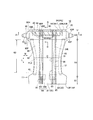
- FIG. 1 is a schematic plan view (No. 1) of the disposable diaper according to the embodiment seen from the skin facing surface side.
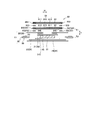
- FIG. 2 is a schematic cross-sectional view taken along the line AA shown in FIG.
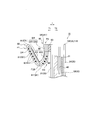
- FIG. 3 is a schematic cross-sectional view taken along the line BB shown in FIG. 1 in the expanded state.
- FIG. 4 is a schematic cross-sectional view taken along the line BB shown in FIG. 1 in a natural state.
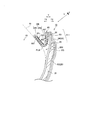
- FIG. 5: is the figure which showed typically the wearing state in the cross section on the basis of FIG.
- FIG. 6 is a diagram schematically showing a view taken in the direction of arrow V in FIG.
- FIG. 7 is a figure for demonstrating the disposable diaper 10 which concerns on the example 1 of a change.
- FIG. 8 is a schematic cross-sectional view of the disposable diaper 10 according to the modified examples 2 to 4.
- the disposable diaper which concerns on one aspect has the front-back direction and width direction which mutually orthogonally cross, a thickness direction, a front waistline region and a back waistline region, and a crotch region arrange
- the waistband has a joint portion joined to the body portion and a non-joint portion not joined to the body portion.
- the waistband is provided with a design that is visible from the non-skin facing side of the wearer's back when wearing the disposable diaper.
- the wearer visually recognizes the wearer wearing the disposable diaper from the non-skin facing surface side of the wearer's back side, it becomes easy to pay attention to the design provided on the waistband. Therefore, the visibility of the waistband can be emphasized by the design.
- the wearer's skin (back) is separated from the waist opening (main body) on the back side, so that the design of the waist band can be more visually recognized. Therefore, the visibility of the waist band can be improved in a scene where it is easy to feel anxiety about leakage from the waist opening. Since the wearer can recognize the waistband by visually recognizing the waistband, it is possible to reduce the anxiety about leakage of excrement from the waist opening and give the wearer a sense of security for the leakage anxiety.
- the main body is located closer to the non-skin facing side than the waistband. Therefore, when the disposable diaper is worn, the waistband is arranged between the wearer's skin (back) and the main body, so that the wearer may see the waistband as an inner-wearing diaper. .. In this case, the wearer appears to the wearer to wear two disposable diapers. As a result, anxiety about leakage of excrement from the waist opening is reduced, so that the wearer can be given a sense of security regarding leakage anxiety.
- a space that opens toward the crotch region side may be formed.
- the waist band may be arranged at least on the skin-facing surface side of the space. Accordingly, the space opening toward the crotch region side functions as a space for accommodating the excrement moving to the waist opening side, and the excrement can be prevented from leaking from the waist opening.
- the non-bonded portion may be folded by a band fold extending in the width direction.
- the non-bonded portion may include a skin contact portion having a skin contact surface that contacts the wearer's skin, and an upright portion that stands upright with respect to the main body portion.
- the upright portion may include an elastic member that expands and contracts in the width direction. With this, the elastic member improves the uprightness of the upright portion, and thus the waistband is more easily separated from the main body portion.
- the design provided on the waistband is less likely to be blocked by the body, further improving the visibility of the waistband.
- the disposable diaper includes a first portion extending toward a rear side from a predetermined position on the front side of the rear end edge of the main body portion in the non-joined portion, and the non-bonded portion on the first portion.
- a space that opens rearward may be formed between the first portion and the second portion.
- the design may be provided on at least the first part. Since a space opening toward the rear side is formed between the first portion and the second portion, the first portion moves from the second portion to the skin facing surface side T1 when the wearer bends forward. It is possible to leave.
- the rear end edge of the waistband may overlap the main body portion in the rear waistline region in the thickness direction.
- the waistband is It is possible to reduce the portion exposed from the rear edge of the portion to the outside in the front-rear direction. Accordingly, it is possible to suppress the force that directly acts on the waist band during the transportation of the disposable diaper, and it is possible to protect the waist band before using the disposable diaper.
- the waistband overlaps with the main body in many areas, it is difficult to see the waistband in a disposable diaper before wearing it and when wearing it with the back stretched.
- the wearer can easily see the design provided in the first portion from the non-skin facing surface side of the wearer's back side when wearing the disposable diaper. Therefore, by improving the visibility of the waistband in a forward bending scene where the wearer is likely to feel anxiety about leakage of excrement, the waistband is protected before use, while giving the wearer a sense of worry about leakage anxiety. be able to.
- the design includes a first design provided on the first portion and a second design provided on the second portion and of a different type from the first design. You may have. Since the first design and the second design are of different types, the first part provided with the first design is more likely to look like a diaper for indoor shoes, and the first part faces the non-skin facing surface side to the second design. The second portion provided with is likely to look like a disposable diaper actually worn by the wearer. Therefore, it is easy for the wearer to look like they are wearing two disposable diapers, and the anxiety about leakage of excrement from the waist opening is reduced. You can
- the non-bonding portion may have a band stretchable region that stretches in the width direction by an elastic member that stretches in the width direction.
- the design may be provided in the band stretch region. Since the band contracting portion is provided with the design, the wearer can easily pay attention to the design and easily understand the band expansion/contraction region in which the design is provided.
- the band elastic region expands and contracts according to the wearer's body. Since the design expands and contracts in accordance with this expansion and contraction, it becomes easy to visually grasp that the waist band fits the wearer. As a result, anxiety about leakage of excrement from the waist opening is reduced, so that the wearer can be given a sense of security regarding leakage anxiety.
- the non-bonded portion may be folded by a band fold extending in the width direction.
- the non-joint portion extends toward the rear side from the band fold, and has a skin contact portion having a skin contact surface that contacts the wearer's skin, and the non-skin facing portion than the skin contact portion.
- a standing portion that extends from the band fold toward the rear side on the surface side and stands up with respect to the main body portion.
- the skin contact portion may be provided with the design. Since the upright portion raises the distance between the skin contact portion and the main body portion, the wearer can easily see the design provided on the skin contact portion.
- the design may be provided on the non-skin facing surface side of the skin contact portion.
- the non-skin-facing surface side that is, the back side of the skin-contacting portion when wearing the disposable diaper.
- the wearer can easily see the design clearly. Therefore, the wearer can easily pay attention to the design, and can easily grasp the waistband provided with the design.
- the non-joint portion is folded by the band fold extending in the width direction, the non-joint portion extends from the band fold toward the front side, and to the wearer's skin.
- a skin contact portion having a skin contact surface that abuts, and an upright position that extends from the band fold toward the front side on the non-skin facing surface side with respect to the skin contact portion and that stands upright with respect to the main body portion. May have parts.
- the space may be formed by being sandwiched between the skin contact portion and the upright portion.
- the upright portion may be provided with the design.
- the standing portion extending on the non-skin surface side of the skin contact portion is located on the non-skin facing surface side of the space opening to the crotch region side. Therefore, due to the design provided on the upright portion, the excrement contained in the space becomes inconspicuous, and it becomes easier for the wearer to feel more secure about the fear of leakage of excrement from the waist opening.
- the design may be provided on the non-skin facing surface side of the standing portion.
- the design is applied to the non-skin-facing surface side (that is, the back side) of the standing portion when wearing the disposable diaper. Since it is provided, the wearer can easily see the design clearly. Therefore, the wearer can easily pay attention to the design, and can easily grasp the waistband provided with the design.
- the main body portion has a main body overlapping portion that overlaps the waist band in the thickness direction in the rear waistline region, and from the rear end edge of the main body portion to the front end edge of the main body overlapping portion.
- a body design that is visible from the non-skin facing surface side of the wearer's back side when the disposable diaper is worn is provided, and the waist band
- the maximum color difference between the design and white may be greater than the maximum color difference between the body design and white. Since the disposable diaper is generally white, it is easy for the wearer to pay attention to a design having a large maximum color difference from white, and to easily grasp the waistband provided with the design.
- the design is composed of a plurality of drawings that are separated from each other, and the main body portion has a main body overlapping portion that overlaps the waist band in the thickness direction in the rear waistline region.
- the non-skin facing surface side of the main body region from the rear end edge of the main body portion to the front end edge of the main body overlapping portion is the non-skin facing surface side of the wearer's back side when the disposable diaper is worn.
- the waistband design in which the average distance between the two figures is short, is more compact than the main body design, so that the wearer can easily notice the design and easily grasp the waistband in which the design is provided. ..
- the main body portion may have a main body overlapping portion that overlaps the waist band in the thickness direction in the rear waistline region.
- a body design that is visible may be provided on the non-skin facing surface side of the main body region from the rear end edge of the main body portion to the front end edge of the main body overlapping portion, from the non-skin facing surface side of the wearer's back side when the disposable diaper is worn.
- a body design that is visible may be provided.
- the total area of the waistband design may be greater than the total area of the body design. Larger areas are easier to focus on than smaller areas, so it is easier for the wearer to focus on the design of a waistband with a larger total area, and it is easier to grasp which waistband has that design. Become.
- the main body portion has a main body overlapping portion that overlaps the waist band in the thickness direction in the rear waistline region, and from the rear end edge of the main body portion to the front end edge of the main body overlapping portion.
- the design may not be provided on the non-skin-facing surface side of the main body region. Since no design is provided even when visually observing the non-skin facing surface side of the body region, the wearer can easily notice the design provided on the waistband and grasp the waistband provided with the design. Easier to do.
- the non-bonding portion may include a sheet member that expands and contracts in the width direction, and the design may be provided on the non-skin facing surface side of the sheet member. Since the design is provided on the non-skin facing surface side of the sheet member, the wearer can easily see the design clearly as compared to the case where the design is provided on the skin facing surface side of the sheet member. Therefore, the wearer can easily pay attention to the design, and can easily grasp the waistband provided with the design.
- the non-bonded portion has an elastic member that expands and contracts in the width direction, and the non-bonded portion is a nonwoven fabric layer provided with the design or a film layer provided with the design.
- the non-woven fabric layer provided with the design or the film layer provided with the design is overlapped with the elastic member in the thickness direction, and more than the elastic member It may be arranged on the non-skin facing surface side. Since the non-woven fabric layer provided with the design or the film layer provided with the design is arranged on the non-skin facing surface side of the elastic member, the wearer can see the design without being blocked by the elastic member. It is possible to see the design clearly and easily. Therefore, the wearer can easily pay attention to the design, and can easily grasp the waistband provided with the design.
- FIG. 1 is a schematic plan view of the disposable diaper 10 according to the embodiment viewed from the skin facing surface side.
- FIG. 2 is a schematic cross-sectional view taken along the line AA of the disposable diaper shown in FIG.
- the respective members are shown separated in the thickness direction T for convenience of description, but they are in contact with each other in the thickness direction T in an actual product.
- 1 and 2 show the disposable diaper in an extended state.
- the stretched state in the present invention is a state in which the disposable diaper 10 is stretched to a state in which wrinkles are not formed.
- the natural state in the present invention means, in the case of the disposable diaper 10 housed in the package, the disposable diaper 10 is taken out from the package, and the atmosphere is kept at 20° C. ⁇ 2° C. and a relative humidity of 60% ⁇ 5% RH. It is in a state of being left for 24 hours.
- FIG. 3 is a schematic cross-sectional view taken along the line BB shown in FIG. 1 in the expanded state.
- FIG. 4 is a schematic cross-sectional view taken along the line BB shown in FIG. 1 in a natural state.
- FIG. 5 is a figure which shows the wearing state on the basis of the cross section shown in FIG. BL shown in FIG. 5 has shown the line of a wearer's body.
- FIG. 3 is a schematic cross-sectional view taken along the line BB shown in FIG. 1 in the expanded state.
- FIG. 4 is a schematic cross-sectional view taken along the line BB shown in FIG. 1 in a natural state.
- FIG. 5 is a figure which shows the wearing
- FIG. 6 is a diagram schematically showing a view taken in the direction of arrow V in FIG. Specifically, FIG. 6 is a schematic diagram of the disposable diaper 10 viewed from the non-skin facing surface side T2 on the back side of the wearer.
- FIG. 6A shows a state in which the main body overlapping portion and the waist band are not folded back to the non-skin facing surface side (see FIG. 5 ), and
- FIG. 6B shows the main body overlapping portion and the waist band are folded back to the non-skin facing surface side. It is in a state of being.
- the disposable diaper 10 has a front-back direction L and a width direction W orthogonal to each other.
- the front-back direction L is defined by the direction extending to the front side of the body and the back side of the body.
- the front-rear direction L is a direction extending in the front-rear direction in the deployed disposable diaper 10.
- the disposable diaper 10 has a thickness direction T orthogonal to both the front-rear direction L and the width direction W.
- the thickness direction T extends to a skin facing surface side T1 facing the wearer side and a non-skin facing surface side T2 opposite to the skin facing surface side.
- the disposable diaper 10 has a front waistline region S1, a back waistline region S2, and a crotch region S3.
- the front waistline region S1 is a region facing the front waistline (abdomen) of the wearer.
- the back waistline region S2 is a region facing the back waistline (back part) of the wearer, and includes a region on which the body (buttock) is placed when worn.
- the crotch region S3 is a region which is located at the crotch of the wearer and is arranged between the front waistline region S1 and the rear waistline region S2. Therefore, the crotch region S3 is arranged between the two waist regions including the front waist region S1 and the back waist region S2.
- the crotch region S3 is a region in which leg openings 65 are arranged around the legs of the wearer.
- the leg openings 65 are portions that are recessed inward in the width direction from the outer edges of the disposable diaper 10.
- the disposable diaper 10 includes a main body 11 and a waist band 80 described later.
- the main body portion 11 is composed of a member arranged on the non-skin facing surface side T2 with respect to the waist band 80. Therefore, the main body 11 is composed of the members constituting the disposable diaper 10 excluding the waist band 80.
- the main body 11 includes an absorption core 31 described later.
- the main body 11 includes a front edge 11F, which is an outer edge located outside (front side) in the front-rear direction L in the front waistline region S1, and an outer end located outside (rear side) in the front-rear direction L in the rear waistline region S2. And a rear edge 11R which is an edge.
- the disposable diaper 10 includes an absorbent core 31 containing an absorbent material.
- the absorbent core 31 comprises an absorbent material such as ground pulp or super absorbent polymer (SAP), or a mixture thereof.
- SAP super absorbent polymer
- the absorbent core 31 may be covered with a core wrap (not shown).
- the absorbent core 31 and the core wrap may form an absorbent body.
- the core wrap is made of a tissue or SMS non-woven fabric and may be arranged on the skin facing surface side T1 of the absorbent core 31 and the non-skin facing surface side T2 of the absorbent core 31.
- the disposable diaper 10 has a skin-side sheet 20 located on the skin-facing surface side T1 with respect to the absorbent core 31.
- the skin-side sheet 20 covers the absorbent core 31 and is arranged over the entire disposable diaper 10.
- the skin side sheet 20 of the present embodiment includes a top sheet 21 and a pair of side sheets 22.
- the skin surface side sheet 20 is a sheet positioned on the skin facing surface side T1 with respect to the core wrap.
- the topsheet 21 may be disposed across the center of the absorbent core 31 in the width direction W.
- the pair of side sheets 22 may be arranged so as to cover both outer side portions of the top sheet 21.
- the topsheet 21 and the sidesheets 22 may be made of a liquid-permeable sheet such as a nonwoven fabric or a perforated plastic film.
- the inside of the side seat 22 may be folded back and overlapped.
- a leak-proof elastic member 61 extending in the front-rear direction L may be provided between the overlapping side seats 22.
- the leak-proof elastic member 61 expands and contracts in the front-rear direction L.
- the leak-proof elastic member 61 may be made of rubber thread that expands and contracts in the front-rear direction L.
- the side sheet 22 stands up on the skin-facing surface side T1 due to the contraction of the leak-proof elastic member 61.
- the pair of side sheets 22 constitutes a leak preventive gather 60.
- the leak-proof gather 60 has a contracting portion 63 that stands up due to the contraction of the leak-proof elastic member 61.
- the leak preventive gather 60 has a leak preventive base end edge 64 that serves as a fulcrum of the contraction portion 63.
- the leakproof base edge 64 has a first leakproof base edge 641 and a second leakproof base edge 642.
- the first leak-proof base end edge 641 serves as an upright fulcrum of the contracted portion 63 outside the contracted portion 63 in the width direction W.
- the first leak-proof base edge 641 is an inner edge of a region where the side sheet 22 and the surface sheet 21 are joined to each other outside the contracting portion 63 in the width direction.
- the second leak-proof base end edge 642 serves as an upright fulcrum of the contracted portion 63 on both outer sides in the front-rear direction L with respect to the contracted portion 63.
- the second leak-proof base edge 642 is an inner edge of a region where the side sheet 22 and the top sheet 21 are joined to each other on both outer sides in the front-rear direction L with respect to the contracting portion 63.
- the contracting portion 63 is a portion in which the side sheet 22 is not joined to the topsheet 21 and can be contracted by the leakproof elastic member 61, and does not include a portion in which the nonextending leakproof elastic member 61 is arranged.
- the range of the contracting portion 63 in the front-rear direction is shown in FIG.
- the outer side portion in the present invention is a portion occupying a certain range in the width direction W including the outer side edge in the width direction W, and the outer side edge is the outer side edge in the width direction W.
- the inner portion is a portion that occupies a certain range in the width direction W, including the inner edge in the width direction W, and the inner edge is the inner edge in the width direction W.
- the disposable diaper 10 has a non-skin surface side sheet 25 located on the non-skin facing surface side T2 with respect to the absorbent core 31.
- the non-skin side sheet 25 covers the absorbent core 31 and is arranged over the entire disposable diaper 10.
- the non-skin side sheet 25 of this embodiment includes a back sheet 23 and an exterior sheet 24.
- the non-skin surface side sheet 25 is a sheet located closer to the non-skin facing surface side T2 than the core wrap.
- the back sheet 23 is a liquid impermeable sheet, and a breathable resin film is bonded to a nonwoven fabric such as a polyethylene sheet, a polypropylene-based laminated nonwoven fabric, a breathable resin film, spunbond, or spunlace.
- the exterior sheet 24 may be provided on the non-skin facing surface side T2 of the back sheet 23.
- the exterior sheet 24 may be made of a liquid-permeable nonwoven fabric.
- the length of the back sheet 23 in the width direction W is shorter than the length of the exterior sheet 24 in the width direction W, and the length of the back sheet 23 in the front-rear direction L is shorter than the length of the exterior sheet 24 in the front-rear direction L. Good.
- the fastening tape 90 is provided in the rear waistline area S2.
- the fastening tape 90 has a base portion 92 and a locking portion 93. At least a part of the base portion 92 is joined between the skin-side sheet 20 and the non-skin-side sheet 25, and extends from the skin-side sheet 20 and the non-skin-side sheet 25 to the outside in the width direction W. ..
- the locking portion 93 is provided on the base portion 92 and is detachably fixed to the target portion 95 (see FIG. 1).
- the fastening tape 90 extends along the width direction W in the back waistline region S2 and is fixed to the target portion 95 to hold the disposable diaper 10 on the wearer's body.
- the target portions 95 are arranged in the front waistline region S1 and are configured such that the fastening tapes 90 are respectively attached thereto.
- the disposable diaper 10 has a waist band 80 arranged in at least the rear waistline area S2 of the two waistline areas (front waistline area S1 and rear waistline area S2).
- the waist band 80 is arranged in the back waistline region S2, and is not arranged in the front waistline region S1.
- the waist band 80 is arranged on the skin-facing surface side T1 of the main body 11.
- the waist band 80 is arranged on the skin facing surface side T1 of the skin surface side sheet 20.
- the waist band 80 floats up from the skin-side sheet 20 when worn. As a result, a space (housing space AS in FIGS. 4 and 5) that opens toward the crotch region S3 side is formed.
- a waist band 80 is arranged at least on the skin-facing surface side T1 of the accommodation space AS.
- the waist band 80 is arranged on the skin-facing surface side T1 of the accommodation space AS, and the main body 11 (skin-side sheet 20) is arranged on the non-skin-facing surface side T2 of the accommodation space AS. ..
- the accommodation space AS functions as a pocket for accommodating the excrement moving to the waist opening 66 side. This can prevent excrement from leaking from the waist opening 66.
- the configuration of the waist band 80 will be described in detail later.
- the waist opening 66 is composed of a rear end edge 10R and a front end edge 10F of the disposable diaper 10 and is a portion surrounding the waist in a state where the fastening tape 90 is fixed to the target portion 95.
- a leg elastic member 42 extending in the front-rear direction L may be provided between the side sheet 22 and the back sheet 23 or between the side sheet 22 and the exterior sheet 24.
- the leg elastic members 42 may be configured by a belt-shaped elastic sheet that expands and contracts in the front-rear direction L. Due to the contraction of the leg elastic members 42, the disposable diaper 10 fits around the legs when worn.
- the leg elastic members 42 are arranged outside the absorbent core 31 in the width direction W along the leg openings 65 at least in the crotch region S3.
- a waist elastic member 45 extending in the width direction W may be provided between the side sheet 22 and the back sheet 23 and between the side sheet 22 and the exterior sheet 24.
- the waist elastic member 45 may be configured by a substantially rectangular elastic sheet that expands and contracts in the width direction W.
- the waist elastic member 45 is joined between the skin-side sheet 20 and the non-skin-side sheet 25. More specifically, as shown in FIG. 2, the waist elastic member 45 is stretched in the width direction W between the absorbent core 31 and the non-skin side sheet 25, or between the skin side sheet 20 and the non-skin side sheet 20. It is joined between the face side sheets 25. Due to the contraction of the waist elastic member 45, the disposable diaper 10 fits around the waist when worn.
- the waist elastic members 45 are arranged at least in the rear waistline region S2.
- the waist elastic member 45 overlaps the absorbent core 31 in the thickness direction T. Therefore, the front end edge 45F of the waist elastic member 45 is located in front of the rear end edge of the absorbent core 31, and the rear end edge 45R of the waist elastic member 45 is located rearward of the front end edge of the absorbent core 31. Located on the side.
- the disposable diaper 10 has a side flap 16 extending outward in the width direction W from the outer edge 31E of the absorbent core 31.
- the side flap 16 includes a fastening tape 90.
- the rear end edge 80R of the waist band 80 may be arranged rearward of the rear end edge 93R of the locking portion 93, or the fastening tape 90. It may be arranged on the rear side of the rear edge 90R.
- the waistband 80 is arranged on the side of the waist opening 66, so that the visibility of the waistband 80 can be improved.
- the rear end edge 80R of the waist band 80 may be arranged rearward of the rear end edge of the absorbent core 31. Accordingly, when the absorbent core 31 cannot completely absorb the excrement, the excrement that moves rearward of the rear end edge of the absorbent core 31 can be accommodated in the accommodation space AS.
- the front end edge 80F of the waist band 80 may be arranged rearward of the front end edge 90F of the fastening tape 90 or rearward of the front end edge 93F of the engaging portion 93. It may be arranged.
- the waist band 80 does not become unnecessarily long and it is possible to suppress an increase in material costs.
- the front end edge 80F of the waist band 80 may be arranged on the front side of the rear end edge of the absorbent core 31.
- the beginning of the storage space AS is located on the front side of the rear end edge of the absorbent core, and thus excrements moving to the rear side of the rear end edge of the absorbent core 31 can be stored in the storage space AS.
- the rear end edge 80R of the waist band 80 may overlap the main body portion 11 in the rear waistline region S2 in the thickness direction T. Therefore, the rear end edge 80R of the waist band 80 may be arranged on the front side (inseam region S3) of the rear end edge 11R of the main body portion 11, and the rear end edge 80R of the waist band 80 and the rear end of the main body portion 11 may be arranged. The edge 11R may overlap in the thickness direction T. Thereby, the force directly acting on the waist band 80 can be suppressed during the transportation of the disposable diaper 10, and the waist band 80 can be protected before the use of the disposable diaper 10.
- the waist band 80 may include a sheet layer 81 in which a plurality of sheets are stacked, and a band elastic member 82 joined to the sheet layer 81.
- the sheet layer 81 of the waistband 80 of the present embodiment includes a first nonwoven fabric layer 811, a second nonwoven fabric layer 812, and a film layer 813 arranged between the first nonwoven fabric layer 811 and the second nonwoven fabric layer 812. May be included.
- the first nonwoven fabric layer 811 and the second nonwoven fabric layer 812 are made of the same nonwoven fabric by folding back the same nonwoven fabric.
- the first nonwoven fabric layer 811 is located closest to the skin side sheet 20 in the waist band 80.
- the band elastic member 82 expands and contracts in the width direction W.
- the band elastic member 82 is composed of a thread-shaped or band-shaped elastic member, and is fixed to the sheet layer 81 in a state of being stretched in the width direction W.
- the band elastic member 82 is fixed between the first nonwoven fabric layer 811 and the liquid impermeable film layer 813.
- a plurality of band elastic members 82 are arranged at intervals in the front-rear direction L.
- a plurality of band elastic members 82 may be arranged in each of a skin contact portion 851 and a standing portion 852 described later.
- the waistband 80 is configured to be stretchable in the width direction W.
- the waist band 80 may be configured to expand and contract in the width direction by the band elastic member 82, or may be configured to expand and contract in the width direction due to the sheet layer 81 having elasticity.
- the waist band 80 has a band stretch region BSR that stretches in the width direction W (see FIG. 3).
- the band stretch region BSR is a region of the waist band 80 that stretches in the width direction W.
- the waist band 80 may be arranged near the waist opening 66 in the back waistline region S2.
- the outer edge 80E of the waist band 80 may be located on the outer side in the width direction W than the outer edge 31E of the absorbent core 31, and may be located on the inner side in the width direction W than the inner edge of the fastening tape 90.
- the front edge 80F of the waist band 80 may be located rearward of the front edge 90F of the fastening tape 90.
- the waistband 80 is provided with a design that is visible from the non-skin facing surface T2 side of the wearer's back side when the disposable diaper 10 is worn (see FIG. 6). Therefore, the waistband 80 has the design region DR in which the design is provided. ..
- the wearer visually recognizes the wearer wearing the disposable diaper 10 from the non-skin facing surface side T2 of the wearer's back side, it becomes easy to pay attention to the design provided on the waist band 80. Therefore, the visibility of the waistband 80 can be emphasized by the design.
- the wearer's skin (back) is separated from the waist opening 66 (main body 11) on the back side, so that the design of the waist band 80 can be more visually recognized. Therefore, the visibility of the waist band 80 can be improved in a scene where it is easy to feel anxiety about leakage from the waist opening 66. Since the wearer can recognize the waistband 80 by visually recognizing the waistband 80, it is possible to reduce anxiety about leakage of excrement from the waist opening 66 and give the wearer a sense of security for leakage anxiety. it can.
- the main body 11 is arranged closer to the non-skin facing surface side T2 than the waist band 80. Therefore, when the disposable diaper 10 is worn, the waist band 80 is disposed between the wearer's skin (back) and the main body 11, so that the wearer can wear the waist band 80 as an inner-wearing diaper. May be visible. In this case, the wearer appears to the wearer to wear two disposable diapers. As a result, anxiety about leakage of excrement from the waist opening 66 is reduced, so that the wearer can feel reassured about leakage anxiety.
- the design may be visible in the stretched state or in the natural state from the non-skin facing surface side T2 of the disposable diaper 10.
- visible in the present invention means a distance of about 30 to 50 cm in a room (standard: 500 to 750 lx) that is brightly illuminated by neutral white (color temperature standard 4600 to 5400 K (Kelvin)). Therefore, it means that a subject having good eyesight (1.0 or more) in both eyes can visually recognize the subject.
- the design is composed of patterns (combinations of figures and colors).
- the design may be configured by vertical stripes extending in the front-rear direction L as shown in FIG. Accordingly, when the waist band 80 is configured to be stretchable in the width direction W, the waist band 80 extends in the width direction W, so that the vertical stripes also extend and the length of the vertical stripe in the width direction changes. As a result, the wearer can feel the fit of the waistband to the body, and thus the anxiety about leakage of excrement from the waist opening 66 can be reduced, and the wearer can feel secure about the leakage anxiety. it can.
- the design may be composed of at least one of horizontal stripes extending in the width direction W, a round shape, a star shape, a heart shape, and the like.
- the design may be provided by being printed on a member (nonwoven fabric, film, or the like) forming the waistband 80. Further, the design may be provided by a colored member (nonwoven fabric, film, etc.) that constitutes the waistband 80. The colored parts may make up the design. Further, the design may be provided by joining a heat seal having a heart-shaped, star-shaped, or the like design to the waist band 80, for example. The design may be provided by shaping the waistband 80. By the shaping process, for example, a pattern or a figure may be drawn on the waist band 80 by a wavy line or a dot line.
- the rear end edge of the design region DR may be arranged rearward of the rear end edge 93R of the locking portion 93, and may be rearward of the rear end edge 90R of the fastening tape 90. It may be located on the side.
- the design region DR is arranged on the waist opening 66 side, so that the visibility of the waist band 80 can be improved.
- the waist band 80 is joined to the main body 11 (more specifically, the skin-side sheet 20).
- a joining member such as a hot melt adhesive (HMA), sonic seal, heat seal, or the like is used.
- the waist band 80 is joined by the joining member 83.
- the joining member 83 has a first joining member 831 and a second joining member 832.
- the first joining member 831 is arranged at the end portion of the waistband 80 in the front-rear direction L and extends in the width direction W (see FIG. 3 ).
- the second joining member 832 is arranged at an end portion of the waistband 80 in the width direction W and extends in the front-rear direction L (see FIG. 2 ).
- the waist band 80 has a joint portion 84 that is joined to the main body portion 11 and a non-joint portion 85 that is not joined to the main body portion 11.
- the joint portion 84 is a portion in contact with the joint member 83, and is directly fixed to the main body portion 11.
- the joint portion 84 has a first joint portion 841 and a second joint portion 842.
- the first joint portion 841 is arranged at an end portion of the waistband 80 in the front-rear direction L and extends in the width direction W.
- the first joint portion 841 is arranged on the rear side of the non-joint portion 85 (specifically, the standing portion 852).
- the first joint portion 841 is a portion in contact with the first joint member 831.
- the second joint portions 842 are a pair of side joint portions that are located at both ends of the waist band 80 in the width direction W and are joined to the main body portion 11.
- the second joint portion 842 extends in the front-rear direction L.
- the second joint portion 842 is arranged outside the non-joint portion 85 in the width direction W (see FIG. 2 ).
- the second joint portion 842 is a portion in contact with the second joint member 832.
- the non-joining portion 85 is a portion that is not in contact with the joining member 83, and the distance from the main body portion 11 can be changed.
- the non-bonded portion 85 has a skin contact portion 851 that has a skin contact surface 851S that contacts the wearer's skin.
- the non-bonded portion 85 may have a band stretchable region BSR.
- a design may be provided in the band stretch region BSR. This makes it easier for the wearer to pay attention to the design and to easily understand the band stretch region BSR in which the design is provided.
- the band stretch region BSR stretches according to the wearer's body. Since the design expands and contracts in accordance with this expansion and contraction, it becomes easy to visually recognize that the waist band 80 fits the wearer. As a result, anxiety about leakage of excrement from the waist opening 66 is reduced, so that the wearer can feel reassured about leakage anxiety.
- the accommodation space AS sandwiched by the non-bonding portion 85 of the waist band 80 and the skin-side sheet 20 forms a pocket opening toward the front side.
- the skin contact portion 851 is arranged on the skin facing surface side T1 of the accommodation space AS.
- the non-bonded portion 85 may have a rising portion 852 that stands up with respect to the main body portion 11 (more specifically, the skin side sheet 20).
- the non-bonding portion 85 is folded by the band fold line FLB extending in the width direction W.
- the non-bonding portion 85 is folded back outward in the front-rear direction L with the band fold line FLB as a base point.
- the skin contact portion 851 is configured by a portion (folded portion) where the waist band 80 is folded along the band fold line FLB along the width direction W.
- the skin contact portion (folded portion) 851 extends from the band fold FLB toward the outer side (rear side) in the front-rear direction L and is located closer to the skin-facing surface side T1 than the upright portion 852.
- the upright portion 852 is composed of a portion where the waist band 80 is not folded back by the band fold line FLB.
- the upright portion 852 extends from the joint portion 84 to the band fold FLB and is configured to be upright.
- the standing portion 852 extends rearward from the band fold FLB on the non-skin facing surface side T2 with respect to the skin contact portion 851.
- the skin contact portion 851 has a design region DR, and the skin contact portion 851 is provided with a design. Since the standing portion 852 stands up, the distance between the skin contact portion 851 and the main body portion 11 is increased, so that the wearer can easily see the design provided on the skin contact portion 851. In addition, it becomes easy to visually recognize that the waist band fits the wearer.
- the standing portion 852 is a portion of the non-joined portion 85 that does not come into contact with the wearer's skin. Note that, as shown in FIGS. 3 to 5, the area in contact with the wearer's skin changes depending on the movement of the wearer and/or the standing condition of the standing portion 852. Therefore, the length of the skin contact portion 851 in the front-rear direction L and the length of the standing portion 852 in the front-rear direction L may change.
- the design may be provided not only on the skin contact portion 851 but also on the standing portion 852.
- the upright portion 852 may have a design area.
- a design region that is, a design may be provided on the non-skin facing surface side T2 of the skin contact portion 851.
- the non-skin-facing surface side T2( of the skin-contacting portion 851 is worn when the disposable diaper is worn. That is, since the design is provided on the back side), the wearer can easily see the design from the non-skin facing surface T2 side on the back side of the wearer. Therefore, the wearer can easily pay attention to the design, and can easily grasp the waistband 80 provided with the design.
- the non-bonded portion 85 may also have a second non-woven fabric layer 812 provided with a design.
- the second nonwoven fabric layer 812 may overlap the band elastic member 82 in the thickness direction T, and may be disposed on the non-skin facing surface side T2 with respect to the band elastic member 82.
- the second non-woven fabric layer 812 is arranged closer to the non-skin facing surface side T2 than the band elastic member 82 in the skin contact portion 851. Since the second non-woven fabric layer 812 is arranged on the non-skin facing surface side T2 of the band elastic member 82, the wearer can visually recognize the design without being blocked by the band elastic member 82. It becomes clear and easy to see. Therefore, the wearer can easily pay attention to the design, and can easily grasp the waistband 80 provided with the design.
- the non-bonded portion 85 may include a band elastic member 82.
- the uprightness of the upright portion 852 is improved by the band elastic member 82, so that the waist band 80 becomes easier to separate from the main body portion 11.
- the design provided on the waist band 80 is less likely to be blocked by the main body portion 11, and the visibility of the waist band 80 can be further improved.
- the band elastic member 82 in the upright portion 852 does not obstruct the design, so that the band elastic member 82 in the upright portion 852 is less than the second nonwoven fabric layer 812. It may be arranged on the non-skin facing surface side T2.
- the disposable diaper 10 includes a first portion P1 that extends rearward from a predetermined position on the front side of the rear end edge 11R of the main body portion 11 of the non-joining portion 85, and a non-skin facing surface side T2 on the first portion P1. You may have the 2nd part P2 which opposes and extends toward a back side from a predetermined position. A space that opens rearward may be formed between the first portion P1 and the second portion P2.
- the first portion P1 may have a design area DR. That is, the first portion P1 may be provided with a design. Since a space that opens toward the rear side is formed between the first portion P1 and the second portion P2, when the wearer bends forward, the first portion P1 is removed from the second portion P2 to the skin. It is possible to separate to the opposing surface side T1. This makes it easier for the wearer to visually recognize the design provided on the first portion P1 from the non-skin facing surface side T2 on the back side of the wearer when wearing the disposable diaper, and further improves the visibility of the waist band 80. Can be improved. In addition, the wearer can easily see the first portion P1 as an inner diaper and the second portion P2 as an outer diaper. Therefore, the wearer can easily see that the wearer wears two disposable diapers 10. As a result, anxiety about leakage of excrement from the waist opening 66 is reduced, so that the wearer can feel reassured about leakage anxiety.
- the waist band 80 is The area that overlaps with the main body 11 increases. Therefore, in the disposable diaper 10 before use and the disposable diaper 10 when worn with the back muscles stretched, the waist band 80 is less visible.
- the wearer in a forward bending scene, the wearer can easily recognize the design provided on the first portion P1 from the non-skin facing surface side T2 on the back side of the wearer when wearing the disposable diaper 10. Become. Therefore, by improving the visibility of the waistband 80 in a forward bending scene in which the wearer is likely to feel anxiety about leakage of excrement, the waistband 80 is protected before use, and the wearer feels secure about the fear of leakage. Can be given.
- the predetermined position is the band fold FLB.
- the portion extending rearward from the band fold FLB on the skin facing surface side T1 is the first portion P1, and the band fold on the non-skin facing surface side T2.
- the portion extending from the FLB toward the rear side is the second portion P2.
- the first portion P1 is the skin contact portion 851.
- the second portion P2 is the rising portion 852 and the joint portion 84.
- the first portion P1 has a first design area DR1 and the second portion P2 has a second design area DR2.
- the first design area DR1 is a design area provided in the first portion.
- the second design region DR2 is a design provided in the second portion P2.
- the design provided on the waistband 80 may have a first design and a second design.
- the first portion P1 may be provided with a first design (vertical stripes in FIG. 6), and the second portion P2 may be provided with a second design (star in FIG. 6) of a different type from the first design. You may.
- the wearer Since the space that opens rearward is formed between the first portion P1 and the second portion P2, the wearer uses the first design and the second design as a non-skin-facing member on the back side of the wearer. It can be seen from the surface side T2.
- the first design and the second design are of different types, the first portion P1 provided with the first design is more likely to look like a diaper for indoor shoes, and the first portion P1 has a non-skin facing surface side T2.
- the second portion P2 facing each other and provided with the second design easily looks like a disposable diaper actually worn by the wearer. Therefore, as shown in FIG. 6, the wearer can easily see that the wearer wears two disposable diapers, and the anxiety about leakage of excrement from the waist opening 66 can be reduced. It is possible to give a sense of security against anxiety about leakage.
- the main body portion 11 may have a main body overlapping portion 111 that overlaps the waist band 80 in the thickness direction T in the rear waistline region S2.
- No design may be provided on the non-skin facing surface side T2 of the body region BR on the non-skin facing surface side T2 from the rear end edge 11R of the main body portion 11 to the main body overlapping portion 111 (see FIG. 6A). Since the design is not provided even when the non-skin facing surface side T2 of the body region BR is visually recognized, the wearer can easily pay attention to the design provided on the waist band 80 and the waist provided with the design. It becomes easy to grasp the band 80.
- a design may be provided in a region on the front side (inseam side) of the body region BR. Since the design is separated from the rear edge 11R of the main body 11, it is difficult to confuse it with the design of the waistband 80. Therefore, the wearer can easily grasp the waistband 80 having the design.
- the design may not be provided in the region on the front side (inseam side) of the body region BR.
- the waist band 80 is arranged up to the rear end edge 11R of the main body portion 11, so the main body overlapping portion 111 and the main body region BR coincide with each other.
- the rear end edge 80R of the waist band 80 is arranged on the front side of the rear end edge 11R of the main body portion 11, in the region from the rear end edge 11R of the main body portion 11 to the rear end edge of the main body overlapping portion 111.
- the body region BR is larger than the body overlapping portion by the amount.
- the upright portion 852 has a liquid-impermeable film layer 813.
- the standing portion 852 is arranged on the skin-facing surface side T1 of the accommodation space AS. Since the upright portion 852 having the liquid impermeable film layer 813 is arranged on the skin-facing surface side T1 of the accommodation space AS, the excrement accommodated in the accommodation space AS functioning as a pocket is disposed in the film layer 813. It is possible to suppress bleeding from the exposed skin facing surface side T1. By suppressing the exudation of excrement after use, it becomes easier for the wearer to feel more secure about anxiety about leakage.
- the waist band 80 may have a base end edge that serves as an upright fulcrum of the upright portion 852.
- the base end edge has a first base end edge located closer to the waist opening 66 than the upright portion 852, and a second base end edge located outside the absorbent core 31 in the width direction W.
- the 1st base end edge is constituted by front end edge 84F of junction part 84 (1st junction part 841).
- the joint portion 84 extends in the front-rear direction L from the first base end edge.
- the second base end edge is configured by the side end edge 84E of the joint portion 84 (second joint portion 842).
- the side end portions of the waistband 80 in the width direction W may be joined by the side joining member 833 which is the joining member 83.
- the non-bonding portion 85 may include a pair of skin contact bonding portions 853 arranged on the skin facing surface side T1 of the side bonding member 833.
- the non-skin facing surface sides T2 of the pair of skin contact joining portions 853 are joined to the second joining portion 842 by the side joining members 833.
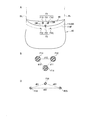
- FIG. 7 is a figure for demonstrating the disposable diaper 10 which concerns on the example 1 of a change. Similar to FIG. 6, FIG. 7A is a schematic diagram of the disposable diaper 10 according to the first modification as viewed from the non-skin facing surface side T2 on the back side of the wearer. FIG. 7B is a diagram for explaining the design of the waist band 80. FIG. 7C is a diagram for explaining a main body design described later. FIG. 8 is a schematic cross-sectional view of the disposable diaper 10 according to the modified examples 2 to 4. FIG. 8 is a schematic cross-sectional view at the same location as the cross-sectional view along the line BB in FIG.
- FIG. 8A is a schematic cross-sectional view of the disposable diaper 10 according to the second modification
- FIG. 8B is a schematic cross-sectional view of the disposable diaper 10 according to the third modification
- FIG. 8C is a disposable diaper 10 according to the fourth modification.
- FIG. The description of the same parts as those in the above-described embodiment will be omitted.
- the disposable diaper 10 according to the first modification will be described with reference to FIG. 7.
- the waistband design is indicated by F1 (FIGS. F11, F12 and F13), and the main body design is indicated by F2 (FIGS. F21, F22 and F23).
- the main body region BR may be provided with a main body design F2 that is visible from the non-skin facing surface of the wearer's back when the disposable diaper 10 is worn.
- the maximum value of the color difference between the waistband 80 design F1 and white may be larger than the maximum value of the body design F2 and white color difference. Since the disposable diaper 10 is generally white, the wearer can easily pay attention to a design having a large maximum color difference from white. Therefore, the wearer can easily grasp the waistband 80 provided with the design F1.
- the color difference with respect to white can be obtained by the following method using a color difference meter (for example, color-color difference meter CR-300 manufactured by Konica Minolta).
- a color difference meter for example, color-color difference meter CR-300 manufactured by Konica Minolta.
- the white reference area and each target area are measured, and the measurement result (L* value, L* value, a* value, b* value).
- the design in one target area has multiple colors, measure the part that includes the color with the maximum color difference from white. Further, the white area of the disposable diaper 10 can be used as a white reference area, and the color measured in the reference area can be the white color of the present invention.
- the color difference ⁇ E*ab with respect to the white reference region (for example, 10K) is acquired for each target region.
- the color difference ⁇ E*ab can be calculated by the following formula based on the difference ( ⁇ L*, ⁇ a*, ⁇ b*) between the measurement result of the target region and the measurement result of the reference region.
- ⁇ E*ab [( ⁇ L*)2+( ⁇ a*)2+( ⁇ b*)2]1/2
- the design F1 may be composed of a plurality of figures (FIGS. F11 to F13) that are separated from each other.
- the body design F2 may be composed of a plurality of figures (FIGS. F21 to F23) that are separated from each other.
- the average distance between two figures of the plurality of figures of the design F1 may be shorter than the average distance between two figures of the plurality of figures of the main body design F2.
- the waistband design F1 with a shorter average distance between the two figures is more dense than the main body design F2, so it is easier for the wearer to pay attention to the design F1. It becomes easier to grasp.
- D11 is the shortest distance from FIG. F11 to F12
- d12 is the shortest distance from F12 to F13
- d13 is the shortest distance from F13 to F11.
- d21 is the shortest distance from FIG. F21 to F22
- d22 is the shortest distance from F22 to F23
- d23 is the shortest distance from F23 to F21.
- the number of colors used in the design F1 of the waist band 80 may be larger than the number of colors used in the main body design F2. Designs that use many colors are more noticeable than designs that use fewer colors. Therefore, the wearer can easily grasp the waistband 80 provided with the designs of many colors.
- the total area of the waistband 80 design F1 may be larger than the total area of the main body design F2.
- the total area of the design F1 is the total area of FIGS. F11 to F13.
- the total area of the main body design F2 is the total area of FIGS. F21 to F23. A region having a large area is more easily noticed than a region having a small area. Therefore, the wearer is more likely to notice the design F1 of the waist band 80 having a large total area, and wears the waist band 80 provided with the design F1. It becomes easier to grasp.
- image data is acquired by photographing the stretched waistband 80 from the non-skin facing surface side T2, and the acquired image data is subjected to image analysis software (for example, “UNAnalyzer” manufactured by Unique Co., Ltd.). ), the area of the design region DR obtained by image processing is measured.
- image data acquired by capturing the expanded body 11 from the non-skin facing surface side T2 is acquired, and the acquired image data is subjected to image processing with image analysis software.
- the area of the area where the body design is provided is measured. If there are a plurality of design regions DR (a plurality of main body design regions), the total area of the design (main body design) can be calculated by summing the areas of the respective design regions DR (main body design regions).
- the non-bonding portion 85 may have a plurality of band folds (first band fold FLB1 and second band fold FLB2). Specifically, the non-bonding portion 85 may have a first band fold FLB1 near the bonding portion 84 and a second band fold FLB2 far from the bonding portion 84. The non-bonded portion 85 is folded by a plurality of band folds FLB.
- the standing portion 852 extends from the front end side of the joint portion 84, but as in the second modification, the standing portion 852 may extend from the rear end side of the joint portion 84.
- the non-bonded portion 85 may have a film layer 813 provided with a design.
- the film layer 813 may overlap the band elastic member 82 in the thickness direction T and may be arranged on the non-skin facing surface side T2 with respect to the band elastic member 82. Since the film layer 813 is arranged on the non-skin facing surface side T2 of the band elastic member 82, the wearer can visually recognize the design without being blocked by the band elastic member 82, and the design can be made clear. Easy to see. Therefore, the wearer can easily pay attention to the design, and can easily grasp the waistband 80 provided with the design.
- the skin contact portion 851 is the first portion P1
- the upright portion 852 is the second portion P2
- the predetermined position is the second band fold FLB2. Since the type of the first design provided in the first portion P1 and the type of the second design provided in the second portion P2 are different, it is easy for the wearer to look like wearing two disposable diapers. May be.
- the non-bonding portion 85 may have a plurality of band folds (first band fold FLB1 and second band fold FLB2).
- the non-bonded portion 85 is folded by a plurality of band folds FLB.
- the skin contact portion 851 extends from the second band fold line FLB2 toward the front side and has the skin contact surface 851S.
- the upright portion 852 extends toward the front side from the second band fold FLB2 on the non-skin facing surface side T2 with respect to the skin contact portion 851, and stands upright with respect to the main body portion 11.
- the accommodation space AS may be formed by being sandwiched between the skin contact portion 851 and the standing portion 852.
- a design may be provided on the standing portion 852. That is, the standing portion 852 may have the design region DR.
- the upright portion 852 is located on the non-skin facing surface side T2 of the accommodation space AS that opens toward the crotch region S3. Therefore, due to the design provided on the upright portion 852, the excrement accommodated in the accommodating space AS becomes less noticeable, and the wearer can easily feel more secure about leakage of the excrement from the waist opening 66.
- the design may be provided on the non-skin facing surface side T2 of the upright portion 852.
- the non-skin-facing surface side T2 that is, the back side of the standing portion 852 is worn when the disposable diaper is worn.
- the wearer can easily see the design clearly. Therefore, the wearer can easily pay attention to the design, and can easily grasp the waistband 80 provided with the design.
- the upright portion 852 on the skin-facing surface side T1 with the first band fold FLB1 as the boundary is the first portion P1
- the upright portion on the non-skin facing surface side T2 with the first band fold FLB1 as the boundary. 852 and the joining portion 84 are the second portion P2
- the predetermined position is the first band fold FLB1. Since the type of the first design provided in the first portion P1 and the type of the second design provided in the second portion P2 are different, it is easy for the wearer to look like wearing two disposable diapers. May be.
- the rising portion 852 may extend from the rear end side of the joint portion 84.
- the waist band 80 may have one band fold FLB.
- the skin contact portion 851 extends from the band fold FLB toward the front side and has a skin contact surface 851S.
- the standing portion 852 extends toward the front side from the band fold FLB on the non-skin facing surface side T2 with respect to the skin contact portion 851, and stands upright with respect to the body portion 11.
- the accommodation space AS is formed by being sandwiched between the skin contact portion 851 and the upright portion 852. Therefore, due to the design provided on the upright portion 852, the excrement accommodated in the accommodating space AS becomes less noticeable, and the wearer can easily feel more secure about leakage of the excrement from the waist opening 66.
- the upright portion 852 is the first portion P1
- the portion of the main body portion 11 located on the rear side of the joint portion 84 is the second portion P2
- the predetermined position is the first band fold. It is FLB1.
- a design main body design region DR3
- the second portion P2 of the main body 11 specifically, the topsheet 21
- the waist band 80 may include, as the band elastic member 82, a sheet member that expands and contracts in the width direction W.
- the design may be provided on the non-skin facing surface side T2 of the sheet member. Since the design is provided on the non-skin facing surface side T2 of the sheet member, the wearer can easily see the design clearly as compared with the case where the design is provided on the skin facing surface side T1 of the sheet member. Therefore, the wearer can easily pay attention to the design, and can easily grasp the waistband provided with the design.
- first non-woven fabric layer 811 and the second non-woven fabric layer 812 were made of the same non-woven fabric, but they may be made of different non-woven fabrics.
- the design may be provided only in one of the non-woven fabric layer (the first non-woven fabric layer 811 and/or the second non-woven fabric layer 812) and the film layer 813, or in both the non-woven fabric layer and the film layer 813. May be provided.
- the band elastic member 82 may not be arranged on the waist band 80, the band elastic member 82 may be arranged on one of the skin contact portion 851 and the upright portion 852, or the skin contact portion. It may be arranged on both the 851 and the upright portion 852.
- the band elastic member 82 is arranged in the skin contact portion 851
- the waist band 80 fits the body, so that the leakage of excrement from the waist opening 66 can be suppressed.
- the band elastic member 82 is arranged in the upright portion 852
- the uprightness of the waist band 80 is improved, so that the waist band 80 approaches the body and leakage of excrement from the waist opening 66 can be suppressed. ..
- the member in which the design region DR is arranged (for example, the first nonwoven fabric layer 811, the film layer 813, etc.). ) Is arranged closer to the non-skin facing surface side T2 than the band elastic member 82, but is not limited to this.
- the member in which the design region DR is arranged may be arranged closer to the skin-facing surface side T1 than the band elastic member 82.
- a design may be provided on the skin contact portion 851.
- the member provided with the design may be arranged closer to the skin facing surface side T1 than the band elastic member 82. Accordingly, when the disposable diaper 10 is worn, the waist band 80 of the skin contact portion 851 is generally easily visible when the disposable diaper 10 is viewed from the skin facing surface side T1. The wearer can easily grasp the waistband by visually recognizing the design provided on the skin contact portion 851.
- the outer edge of the design region DR in the front-rear direction L may extend to the outer edge of the waistband 80 (rear edge 11R). This allows the design to be provided as close as possible to the outer edge of the waist band 80, which makes it easier for the wearer to see the design from the wearer's back side.
- the rear end edge of the design region DR may be separated from the rear end edge 11R of the waistband 80 to the front side.
- the disposable diaper 10 in the extended state of the disposable diaper 10, the disposable diaper 10 may be located on the front side of the rear end edge 11R of the main body 11.
- the design region DR is also cut by cutting the waist band 80 together with the continuous sheet.
- the waistband 80 is provided with an incomplete design.
- the rear end edge of the design region DR may be separated from the rear end edge 11R of the waist band 80 to the front side so that the waist band 80 is not provided with an incomplete design.
- the waist band 80 when the disposable diaper 10 is folded in two with the fold line FL1 extending in the width direction W as the base point, a part of the waist band 80 is partially covered by the main body portion 11 in a plan view from the rear waistline region S2 side. It may be exposed from the rear edge. Further, in the two-folded natural state, the design provided on the waist band 80 may be exposed from the rear end edge of the main body 11. Thereby, the wearer may be able to visually recognize the design provided on the waistband 80.
- the disposable diaper 10 is a tape-type disposable diaper, but the invention is not limited to this.
- the disposable diaper 10 may be a pants-type disposable diaper.
- a disposable diaper provided with a waistband, which reduces anxiety about leakage of excrement from the waist opening and easily gives the wearer a sense of security.
- Disposable diaper 11 Body part 16: Side flap 20: Skin side sheet 21: Top sheet 22: Side sheet 23: Back sheet 24: Exterior sheet 25: Non-skin side sheet 31: Absorption core 42: Leg circumference elasticity Member 45: waist elastic member 60: leak-proof gather 61: leak-proof elastic member 63: contraction part 64: leak-proof base end edge 65: leg opening 66: waist opening 80: waist band 81: seat layer 82: band Elastic member 83: Joining member 84: Joining part 85: Non-joining part 90: Fastening tape 92: Base part 93: Locking part 95: Target part 111: Main body overlapping part 641: First leak-proof base edge 642: Second Leak-proof base edge 811: First non-woven fabric layer 812: Second non-woven fabric layer 813: Film layer 831: First joining member 832: Second joining member 833: Side joining member 841: First joining portion 842: Second joining portion 851: Skin contact portion 851S: Skin contact surface 852: Standing portion 853:
Landscapes
- Health & Medical Sciences (AREA)
- Epidemiology (AREA)
- Engineering & Computer Science (AREA)
- Biomedical Technology (AREA)
- Heart & Thoracic Surgery (AREA)
- Vascular Medicine (AREA)
- Life Sciences & Earth Sciences (AREA)
- Animal Behavior & Ethology (AREA)
- General Health & Medical Sciences (AREA)
- Public Health (AREA)
- Veterinary Medicine (AREA)
- Absorbent Articles And Supports Therefor (AREA)
Abstract
使い捨ておむつ10は、吸収コア31と、後胴回り域S2に配置されているウエストバンド80と、吸収コア31を含み、かつウエストバンド80よりも非肌対向面側T2に配置されている部材により構成されている本体部11と、を有する。ウエストバンド80は、本体部11に接合された接合部84と、本体部11に接合されていない非接合部85と、を有する。ウエストバンド80には、使い捨ておむつ10の着用時において着用者の背中側の非肌対向面側から視認可能であるデザインが設けられている。
Description
本発明は、使い捨ておむつに関する。
従来、後胴回り域に配置されているウエストバンドを有する使い捨ておむつが知られている(例えば、特許文献1参照)。ウエストバンドは、ウエストバンドよりも非肌対向面側に配置されている部材により構成されている本体部に接合された接合部と、本体部に接合されていない非接合部と、を有している。ウエストバンドの非接合部によって、ウエスト開口側への排泄物の移動をウエストバンドが塞き止めることができ、ウエスト開口から排泄物が漏れることを抑制できる。
ウエストバンドを有さない一般的な使い捨ておむつの方が、ウエストバンドを有する使い捨ておむつに比べて、広く知られている。このため、装着者は、一般的な使い捨ておむつと同じように、ウエストバンドを認識することなく着用者に使い捨ておむつを装着させることがあった。ウエストバンドは、ウエストバンドよりも非肌対向面側に配置されている本体部に接合されているため、ウエストバンドの少なくとも一部は、本体部の肌対向面側で本体部と厚さ方向に重なっている。このため、使い捨ておむつの着用時において、着用者の背中側の非肌対向面側から使い捨ておむつを視認した場合に、ウエストバンドが本体部と一体化して見え易く、ウエストバンドそのものを認識し難かった。このため、装着者は、着用者に装着させた使い捨ておむつがウエストバンドを有するにもかかわらず、一般的な使い捨ておむつと同じように、ウエスト開口からの漏れに対する不安感を抱えたまま、使い捨ておむつを使用し続ける虞がある。
使い捨ておむつを着用した着用者は、身体の背中側のラインがC字状となる前屈みの姿勢を取ることがある。この姿勢では、着用者の肌が、背中側のウエスト開口から離れるため、装着者が、ウエスト開口からの漏れに対する不安を感じ易かった。
そこで、ウエストバンドを有する使い捨ておむつであって、ウエスト開口からの排泄物の漏れに対する不安感を低減し、装着者に安心感を与え易い使い捨ておむつが望まれる。
一態様に係る使い捨ておむつは、互いに直交する前後方向及び幅方向と、厚さ方向と、前胴回り域及び後胴回り域と、前記前胴回り域と前記後胴回り域との間に配置された股下域と、吸収コアと、前記後胴回り域に配置されているウエストバンドと、前記吸収コアを含み、かつ前記ウエストバンドよりも非肌対向面側に配置されている部材により構成されている本体部と、を有する。前記ウエストバンドは、前記本体部に接合された接合部と、前記本体部に接合されていない非接合部と、を有する。前記ウエストバンドには、前記使い捨ておむつの着用時において着用者の背中側の非肌対向面側から視認可能であるデザインが設けられている。
(1)実施形態の概要
本明細書及び添付図面の記載により、少なくとも以下の事項が明らかとなる。
本明細書及び添付図面の記載により、少なくとも以下の事項が明らかとなる。
一態様に係る使い捨ておむつは、互いに直交する前後方向及び幅方向と、厚さ方向と、前胴回り域及び後胴回り域と、前記前胴回り域と前記後胴回り域との間に配置された股下域と、吸収コアと、前記後胴回り域に配置されているウエストバンドと、前記吸収コアを含み、かつ前記ウエストバンドよりも非肌対向面側に配置されている部材により構成されている本体部と、を有する。前記ウエストバンドは、前記本体部に接合された接合部と、前記本体部に接合されていない非接合部と、を有する。前記ウエストバンドには、前記使い捨ておむつの着用時において着用者の背中側の非肌対向面側から視認可能であるデザインが設けられている。
本態様によれば、装着者が、使い捨ておむつを着用した着用者を、着用者の背中側の非肌対向面側から視認する際に、ウエストバンドに設けられたデザインに注目し易くなる。従って、デザインによってウエストバンドの視認性を強調することができる。特に、前屈みの姿勢では、着用者の肌(背中)が、背中側のウエスト開口(本体部)から離れるため、ウエストバンドのデザインをより視認することができる。従って、ウエスト開口からの漏れに対する不安を感じ易いシーンで、ウエストバンドの視認性を向上させることができる。装着者が、ウエストバンドの視認によって、ウエストバンドを認識することができるため、ウエスト開口からの排泄物の漏れに対する不安感を低減でき、装着者に漏れ不安に対する安心感を与えることができる。
また、本体部は、ウエストバンドよりも非肌対向面側に配置されている。従って、使い捨ておむつの着用時において、ウエストバンドは、着用者の肌(背中)と本体部との間に配置されているため、装着者には、ウエストバンドが内履きのおむつに見えることがある。この場合、装着者には、着用者が使い捨ておむつを2枚履きしているように見える。これにより、ウエスト開口からの排泄物の漏れに対する不安が低減するため、装着者に漏れ不安に対する安心感を与えることができる。
好ましい一態様によれば、股下域側に向かって開口する空間が形成されてよい。前記空間の少なくとも肌対向面側には、前記ウエストバンドが配置されてよい。これにより、股下域側に向かって開口する空間が、ウエスト開口側に移動する排泄物を収容する空間として機能して、ウエスト開口から排泄物が漏れることを抑制できる。
好ましい一態様によれば、前記非接合部は、前記幅方向に延びるバンド折り目によって折られてよい。前記非接合部は、着用者の肌に当接する肌当接面を有する肌当接部と、前記本体部に対して起立する起立部と、を有してよい。前記起立部は、前記幅方向に伸縮する弾性部材を有してよい。これにより、弾性部材によって起立部の起立性が向上するため、ウエストバンドが本体部からさらに離れ易くなる。ウエストバンドに設けられたデザインが本体部に遮られ難くなり、ウエストバンドの視認性をさらに向上できる。
好ましい一態様によれば、前記使い捨ておむつは、前記非接合部のうち前記本体部の後端縁よりも前側の所定位置から後側に向かって延びる第1部分と、前記第1部分に前記非肌対向面側から対向し、かつ前記所定位置から後側に向かって延びる第2部分と、を有してよい。前記第1部分と前記第2部分との間において後側に向かって開口する空間が形成されてよい。前記デザインは、少なくとも前記第1部分に設けられてよい。第1部分と第2部分との間において後側に向かって開口する空間が形成されるため、着用者が前屈みになった場合などに、第1部分は、第2部分から肌対向面側T1に離れることが可能である。これにより、装着者は、使い捨ておむつの着用時において着用者の背中側の非肌対向面側から第1部分に設けられているデザインを視認し易くなり、ウエストバンドの視認性をさらに向上できる。加えて、装着者には、第1部分が内履きのおむつに見え易くなり、本体部が外履きのおむつに見え易くなる。従って、装着者には、着用者が使い捨ておむつを2枚履きしているように見え易くなる。これにより、ウエスト開口からの排泄物の漏れに対する不安が低減するため、装着者に漏れ不安に対する安心感を与えることができる。
好ましい一態様によれば、前記使い捨ておむつの伸長状態において、前記ウエストバンドの後端縁は、前記後胴回り域における前記本体部と前記厚さ方向おいて重なってよい。これにより、伸長状態においてウエストバンドが本体部と厚さ方向において重ならない場合(すなわち、ウエストバンドが本体部の後端縁から前後方向の外側へ露出する場合)と比べると、ウエストバンドが、本体部の後端縁から前後方向の外側へ露出する部分を低減できる。これにより、使い捨ておむつの搬送中に、ウエストバンドに直に働く力を抑制でき、使い捨ておむつの使用前においてウエストバンドを保護することができる。
一方で、ウエストバンドが本体部と重なる領域が多くなるため、着用前の使い捨ておむつ、及び背筋を伸ばした状態での着用時の使い捨ておむつでは、ウエストバンドが視認し難くなる。しかしながら、前屈みのシーンでは、装着者は、使い捨ておむつの着用時において着用者の背中側の非肌対向面側から第1部分に設けられているデザインを視認し易くなる。従って、排泄物の漏れに対する不安を装着者が感じ易い前屈みのシーンにおいてウエストバンドの視認性を向上することで、使用前にウエストバンドを保護しつつも、装着者に漏れ不安に対する安心感を与えることができる。
好ましい一態様によれば、前記デザインは、前記第1部分に設けられている第1デザインと、前記第2部分に設けられており、かつ前記第1デザインと種類が異なる第2デザインと、を有してよい。第1デザインと第2デザインとは種類が異なるため、第1デザインが設けられている第1部分は、内履きのおむつに見え易く、第1部分に非肌対向面側から対向し第2デザインが設けられている第2部分は、着用者が実際に着用している使い捨ておむつに見え易い。従って、装着者には、着用者が使い捨ておむつを2枚履きしているように見え易く、ウエスト開口からの排泄物の漏れに対する不安が低減するため、装着者に漏れ不安に対する安心感を与えることができる。
好ましい一態様によれば、前記非接合部は、前記幅方向に伸縮する弾性部材によって前記幅方向に伸縮するバンド伸縮領域を有してよい。前記バンド伸縮領域に前記デザインが設けられてよい。バンド収縮部には、デザインが設けられているため、着用者は、デザインに注目し易く、当該デザインが設けられているバンド伸縮領域を把握し易くなる。加えて、着用者の身体に合わせてバンド伸縮領域が伸縮する。この伸縮に合わせてデザインも伸縮するため、ウエストバンドが着用者にフィットしていることを視覚的に把握し易くなる。これにより、ウエスト開口からの排泄物の漏れに対する不安が低減するため、装着者に漏れ不安に対する安心感を与えることができる。
好ましい一態様によれば、前記非接合部は、前記幅方向に延びるバンド折り目によって折られてよい。前記非接合部は、前記バンド折り目から後側に向かって延びており、かつ着用者の肌に当接する肌当接面を有する肌当接部と、前記肌当接部よりも前記非肌対向面側において前記バンド折り目から後側に向かって延びており、かつ前記本体部に対して起立する起立部と、を有してよい。前記肌当接部には、前記デザインが設けられてよい。起立部が起立することによって肌当接部と本体部との距離が遠くなるため、装着者が、肌当接部に設けられているデザインを視認し易くなる。
好ましい一態様によれば、前記デザインは、前記肌当接部の前記非肌対向面側に設けられてよい。デザインが、肌当接部の肌対向面側(すなわち、腹側)に設けられている場合と比べて、使い捨ておむつの着用時において、肌当接部の非肌対向面側(すなわち、背中側)にデザインを設けられているため、装着者は、当該デザインを明瞭に見やすくなる。従って、装着者は、デザインに注目し易くなり、当該デザインが設けられているウエストバンドを把握し易くなる。
好ましい一態様によれば、前記非接合部は、前記幅方向に延びるバンド折り目によって折られており、前記非接合部は、前記バンド折り目から前側に向かって延びており、かつ着用者の肌に当接する肌当接面を有する肌当接部と、前記肌当接部よりも前記非肌対向面側において前記バンド折り目から前側に向かって延びており、かつ前記本体部に対して起立する起立部を有してよい。前記空間は、前記肌当接部と前記起立部とに挟まれることによって形成されてよい。前記起立部には、前記デザインが設けられてよい。これにより、肌当接部よりも非肌面側で延びている起立部は、股下域側に開口する空間の非肌対向面側に位置する。従って、起立部に設けられたデザインによって、当該空間に収容された排泄物が目立ち難くなり、ウエスト開口からの排泄物の漏れに対する漏れ不安に対する安心感を装着者にさらに与え易くなる。
好ましい一態様によれば、前記デザインは、前記起立部の前記非肌対向面側に設けられてよい。デザインが、起立部の肌対向面側(すなわち、腹側)に設けられている場合と比べて、使い捨ておむつの着用時において、起立部の非肌対向面側(すなわち、背中側)にデザインを設けられているため、装着者は、当該デザインを明瞭に見やすくなる。従って、装着者は、デザインに注目し易くなり、当該デザインが設けられているウエストバンドを把握し易くなる。
好ましい一態様によれば、前記本体部は、前記後胴回り域において前記ウエストバンドと前記厚さ方向に重なる本体重複部を有し、前記本体部の後端縁から前記本体重複部の前端縁までの本体領域の前記非肌対向面側には、前記使い捨ておむつの着用時において前記着用者の背中側の前記非肌対向面側から視認可能である本体デザインが設けられており、前記ウエストバンドの前記デザインと白色との色差の最大値は、前記本体デザインと前記白色との色差の最大値よりも大きくてよい。使い捨ておむつは、一般的に白色であるため、装着者は、白色との色差の最大値が大きいデザインに注目し易くなり、当該デザインが設けられているウエストバンドを把握し易くなる。
好ましい一態様によれば、前記デザインは、互いに離れている複数の図により構成されており、前記本体部は、前記後胴回り域において前記ウエストバンドと前記厚さ方向に重なる本体重複部を有し、前記本体部の後端縁から前記本体重複部の前端縁までの本体領域の前記非肌対向面側には、前記使い捨ておむつの着用時において前記着用者の背中側の前記非肌対向面側から視認可能である本体デザインが設けられており、前記本体デザインは、互いに離れている複数の図により構成されており、前記デザインの前記複数の図のうちの2つの図間の平均距離は、前記本体デザインの前記複数の図のうちの2つの図間の平均距離よりも短くてよい。2つの図間の平均距離が短いウエストバンドのデザインは、本体デザインよりも密集しているため、装着者は、デザインに注目し易くなり、当該デザインが設けられているウエストバンドを把握し易くなる。
好ましい一態様によれば、前記本体部は、前記後胴回り域において前記ウエストバンドと前記厚さ方向に重なる本体重複部を有してよい。前記本体部の後端縁から前記本体重複部の前端縁までの本体領域の前記非肌対向面側には、前記使い捨ておむつの着用時において前記着用者の背中側の前記非肌対向面側から視認可能である本体デザインが設けられてよい。前記ウエストバンドの前記デザインの総面積は、前記本体デザインの総面積よりも大きくてよい。面積が大きい領域は、面積が少ない領域に比べて注目し易くなるため、装着者は、総面積の大きいウエストバンドのデザインに注目し易くなり、当該デザインが設けられているウエストバンドを把握し易くなる。
好ましい一態様によれば、前記本体部は、前記後胴回り域において前記ウエストバンドと前記厚さ方向に重なる本体重複部を有し、前記本体部の後端縁から前記本体重複部の前端縁までの本体領域の前記非肌対向面側には、デザインが設けられていなくてよい。本体領域の非肌対向面側を視認してもデザインが設けられていないため、装着者は、ウエストバンドに設けられているデザインに注目し易くなり、当該デザインが設けられているウエストバンドを把握し易くなる。
好ましい一態様によれば、前記非接合部は、前記幅方向に伸縮するシート部材を有しており、前記デザインは、前記シート部材の前記非肌対向面側に設けられてよい。デザインが、シート部材の非肌対向面側に設けられているため、シート部材の肌対向面側に設けられている場合と比べて、装着者は、当該デザインを明瞭に見やすくなる。従って、装着者は、デザインに注目し易くなり、当該デザインが設けられているウエストバンドを把握し易くなる。
好ましい一態様によれば、前記非接合部は、前記幅方向に伸縮する弾性部材を有し、前記非接合部は、前記デザインが設けられている不織布層又は前記デザインが設けられているフィルム層の少なくとも一方の層を有し、前記デザインが設けられている不織布層又は前記デザインが設けられているフィルム層は、前記厚さ方向において前記弾性部材と重なっており、かつ前記弾性部材よりも前記非肌対向面側に配置されてよい。デザインが設けられている不織布層又はデザインが設けられているフィルム層が、弾性部材よりも非肌対向面側に配置されているため、装着者は、弾性部材に遮られずに、デザインを視認することができ、デザインを明瞭に見やすくなる。従って、装着者は、デザインに注目し易くなり、当該デザインが設けられているウエストバンドを把握し易くなる。
(2)使い捨ておむつの全体概略構成
以下、図面を参照して、実施形態に係る使い捨ておむつについて説明する。なお、以下の図面の記載において、同一又は類似の部分には、同一又は類似の符号を付している。ただし、図面は模式的なものであり、各寸法の比率等は現実のものとは異なることに留意すべきである。したがって、具体的な寸法等は、以下の説明を参酌して判断すべきである。また、図面相互間においても互いの寸法の関係や比率が異なる部分が含まれ得る。
以下、図面を参照して、実施形態に係る使い捨ておむつについて説明する。なお、以下の図面の記載において、同一又は類似の部分には、同一又は類似の符号を付している。ただし、図面は模式的なものであり、各寸法の比率等は現実のものとは異なることに留意すべきである。したがって、具体的な寸法等は、以下の説明を参酌して判断すべきである。また、図面相互間においても互いの寸法の関係や比率が異なる部分が含まれ得る。
使い捨ておむつは、テープ型の使い捨ておむつである。図1は、実施形態に係る使い捨ておむつ10の肌対向面側から見た模式平面図である。図2は、図1に示す使い捨ておむつのA-A断面に沿った模式断面図である。図2に示す模式断面図では、説明の便宜上、各部材を厚さ方向Tにおいて離間して示しているが、実際の製品においては厚さ方向Tに接している。図1及び図2は、伸長状態の使い捨ておむつを示している。なお、本発明における伸長状態とは、使い捨ておむつ10を皺が形成されない状態まで伸長させた状態である。また、本発明における自然状態とは、パッケージに収容されている使い捨ておむつ10にあっては、パッケージから使い捨ておむつ10を取り出し、20℃±2℃、相対湿度60%±5%RHの雰囲気下において24時間放置した状態である。図3は、伸長状態における図1に示すB-B線に沿った模式断面図である。図4は、自然状態における図1に示すB-B線に沿った模式断面図である。図5は、図4に示す断面を基準とした着用状態を示す図である。図5に示すBLは、着用者の身体のラインを示している。図6は、図5のV矢視図を模式的に示した図である。具体的には、図6は、使い捨ておむつ10を、着用者の背中側の非肌対向面側T2から見た模式図である。図6Aは、本体重複部及びウエストバンドが非肌対向面側へ折り返されていない状態であり(図5参照)、図6Bは、本体重複部及びウエストバンドが非肌対向面側へ折り返されている状態である。
使い捨ておむつ10は、互いに直交する前後方向L及び幅方向Wを有する。前後方向Lは、身体前側と身体後側とに延びる方向によって規定される。言い換えると、前後方向Lは、展開された使い捨ておむつ10において前後に延びる方向である。また、使い捨ておむつ10は、前後方向Lと幅方向Wの両方の直交する厚さ方向Tを有する。厚さ方向Tは、着用者側に向かう肌対向面側T1と、肌対向面側と反対側の非肌対向面側T2と、に延びる。
使い捨ておむつ10は、前胴回り域S1と、後胴回り域S2と、股下域S3と、を有する。前胴回り域S1は、着用者の前胴回り(腹部)に対向する領域である。後胴回り域S2は、着用者の後胴回り(背部)に対向する領域であり、装着時に身体(臀部)が載せられる領域を含む。股下域S3は、着用者の股下に位置し、前胴回り域S1と後胴回り域S2との間に配置された領域である。従って、股下域S3は、前胴回り域S1及び後胴回り域S2からなる2つの胴回り域の間に配置されている。股下域S3は、着用者の脚回りに配置される脚回り開口部65が設けられた領域である。脚回り開口部65は、使い捨ておむつ10の外側縁から幅方向の内側に凹む部分である。
使い捨ておむつ10は、本体部11と後述するウエストバンド80とからなる。図2に示すように、本体部11は、ウエストバンド80よりも非肌対向面側T2に配置されている部材により構成される。従って、本体部11は、使い捨ておむつ10を構成する部材のうち、ウエストバンド80を除いた部材により構成されている。本体部11は、後述する吸収コア31を含んでいる。
本体部11は、前胴回り域S1において前後方向Lの外側(前側)に位置する外端縁である前端縁11Fと、後胴回り域S2において前後方向Lの外側(後側)に位置する外端縁である後端縁11Rと、を有する。
使い捨ておむつ10は、吸収材料を含む吸収コア31を含む。吸収コア31は、粉砕パルプもしくは高吸収性ポリマー(SAP)、又はこれらの混合物等の吸収材料を含む。吸収コア31は、図示しないコアラップによって覆われてよい。吸収コア31とコアラップによって吸収体が構成されてよい。コアラップは、テッシュ又はSMS不織布によって構成され、吸収コア31の肌対向面側T1と吸収コア31の非肌対向面側T2に配置されてよい。
図2に示すように、使い捨ておむつ10は、吸収コア31よりも肌対向面側T1に位置する肌面側シート20を有する。肌面側シート20は、吸収コア31を覆い、かつ使い捨ておむつ10の全体に亘って配置されている。本実施形態の肌面側シート20は、表面シート21と一対のサイドシート22を含む。なお、コアラップを有する使い捨ておむつにあっては、肌面側シート20は、コアラップよりも肌対向面側T1に位置するシートである。表面シート21は、吸収コア31の幅方向Wの中心を跨いで配置されてよい。一対のサイドシート22は、表面シート21の両外側部を覆うように配置されてよい。表面シート21及びサイドシート22は、例えば不織布や開孔プラスチックフィルムのような透液性シートによって構成されていてよい。
サイドシート22の内側部は、折り返されて重なってよい。重なったサイドシート22間には、前後方向Lに延びる防漏弾性部材61が設けられてよい。防漏弾性部材61は、前後方向Lに伸縮する。防漏弾性部材61は、前後方向Lに伸縮する糸ゴムによって構成されてよい。サイドシート22は、防漏弾性部材61の収縮によって肌対向面側T1に起立する。一対のサイドシート22は、防漏ギャザー60を構成する。防漏ギャザー60は、防漏弾性部材61の収縮によって起立する収縮部63を有する。防漏ギャザー60は、収縮部63の起立支点となる防漏基端縁64を有する。防漏基端縁64は、第1防漏基端縁641と第2防漏基端縁642とを有する。
第1防漏基端縁641は、収縮部63よりも幅方向Wの外側において収縮部63の起立支点となる。第1防漏基端縁641は、収縮部63よりも幅方向の外側においてサイドシート22と表面シート21が接合された領域の内側縁である。第2防漏基端縁642は、収縮部63よりも前後方向Lの両外側において収縮部63の起立支点となる。第2防漏基端縁642は、収縮部63よりも前後方向Lの両外側においてサイドシート22と表面シート21が接合された領域の内端縁である。
収縮部63は、サイドシート22が表面シート21に接合されてなく、防漏弾性部材61によって収縮可能な部分であり、非伸長状態の防漏弾性部材61が配置された部分を含まない。収縮部63の前後方向の範囲を図1に示す。
ここで、本発明における外側部とは、幅方向Wにおける外側の縁を含む幅方向Wに一定の範囲を占める部分であり、外側縁とは、幅方向Wにおける外側の縁である。また、内側部とは、幅方向Wにおける内側の縁を含む幅方向Wに一定の範囲を占める部分であり、内側縁とは、幅方向Wにおける内側の縁である。
使い捨ておむつ10は、吸収コア31よりも非肌対向面側T2に位置する非肌面側シート25を有する。非肌面側シート25は、吸収コア31を覆い、かつ使い捨ておむつ10の全体に亘って配置されている。本実施形態の非肌面側シート25は、裏面シート23と外装シート24を含む。なお、コアラップを有する使い捨ておむつにあっては、非肌面側シート25は、コアラップよりも非肌対向面側T2に位置するシートである。裏面シート23は、液不透過性のシートであり、ポリエチレンシート、ポリプロピレン等を主体としたラミネート不織布、通気性の樹脂フィルム、スパンボンド、又はスパンレース等の不織布に通気性の樹脂フィルムが接合されたシートなどを用いることができる。外装シート24は、裏面シート23の非肌対向面側T2に設けられてよい。外装シート24は、液透過性の不織布によって構成されてよい。裏面シート23の幅方向Wの長さは、外装シート24の幅方向Wの長さよりも短く、裏面シート23の前後方向Lの長さは、外装シート24の前後方向Lの長さよりも短くてよい。
後胴回り域S2には、ファスニングテープ90が設けられている。ファスニングテープ90は、ベース部92と係止部93を有する。ベース部92の少なくとも一部は、肌面側シート20と非肌面側シート25の間に接合され、かつ肌面側シート20と非肌面側シート25から幅方向Wの外側に延出する。係止部93は、ベース部92上に設けられ、ターゲット部95(図1参照)に着脱可能に止着される。ファスニングテープ90は、後胴回り域S2において幅方向Wに沿って延び、ターゲット部95に止着されることにより、使い捨ておむつ10を着用者の身体に保持する。ターゲット部95は、前胴回り域S1に配置されており、ファスニングテープ90がそれぞれ止着するように構成されている。
使い捨ておむつ10は、2つの胴回り域(前胴回り域S1及び後胴回り域S2)の少なくとも後胴回り域S2に配置されているウエストバンド80を有する。本実施の形態では、ウエストバンド80は、後胴回り域S2に配置されており、前胴回り域S1に配置されていない。ウエストバンド80は、本体部11の肌対向面側T1に配置されている。ウエストバンド80は、肌面側シート20の肌対向面側T1に配置されている。ウエストバンド80は、着用時に肌面側シート20から浮き上がる。これにより、股下域S3側に向かって開口する空間(図4及び図5の収容空間AS)が形成される。収容空間ASの少なくとも肌対向面側T1には、ウエストバンド80が配置されている。本実施形態では、収容空間ASの肌対向面側T1にウエストバンド80が配置されており、収容空間ASの非肌対向面側T2に本体部11(肌面側シート20)が配置されている。収容空間ASは、ウエスト開口66側に移動する排泄物を収容するポケットとして機能する。これにより、ウエスト開口66から排泄物が漏れることを抑制できる。ウエストバンド80の構成については、後述にて詳細に説明する。ウエスト開口66は、使い捨ておむつ10の後端縁10Rと前端縁10Fによって構成され、ファスニングテープ90がターゲット部95に止着した状態で腰回りを囲む部分である。
図1に示すように、サイドシート22と裏面シート23との間、又はサイドシート22と外装シート24との間には、前後方向Lに延びる脚回り弾性部材42が設けられてよい。脚回り弾性部材42は、前後方向Lに伸縮する帯状の伸縮シートによって構成されてよい。脚回り弾性部材42の収縮によって、着用時に使い捨ておむつ10が脚回りにフィットする。脚回り弾性部材42は、吸収コア31よりも幅方向Wの外側において、少なくとも股下域S3において脚回り開口部65に沿って配置されている。
サイドシート22と裏面シート23との間、及びサイドシート22と外装シート24との間には、幅方向Wに延びる腰回り弾性部材45が設けられてよい。腰回り弾性部材45は、幅方向Wに伸縮する略矩形の伸縮シートによって構成されてよい。腰回り弾性部材45は、肌面側シート20と非肌面側シート25の間に接合されている。より詳細には、図2に示すように、腰回り弾性部材45は、幅方向Wに伸長した状態で、吸収コア31と非肌面側シート25の間、又は肌面側シート20と非肌面側シート25の間に接合されている。腰回り弾性部材45の収縮によって、着用時に使い捨ておむつ10が腰回りにフィットする。腰回り弾性部材45は、少なくとも後胴回り域S2に配置されている。本実施形態において、腰回り弾性部材45は、厚さ方向Tおいて吸収コア31と重なっている。従って、腰回り弾性部材45の前端縁45Fは、吸収コア31の後端縁よりも前側に位置しており、腰回り弾性部材45の後端縁45Rは、吸収コア31の前端縁よりも後側に位置している。
使い捨ておむつ10は、吸収コア31の外側縁31Eよりも幅方向Wの外側に延びるサイドフラップ16を有する。サイドフラップ16は、ファスニングテープ90を含む。
なお、図1に示すように、使い捨ておむつ10の伸長状態において、ウエストバンド80の後端縁80Rは、係止部93の後端縁93Rよりも後側に配置されてよいし、ファスニングテープ90の後端縁90Rよりも後側に配置されてよい。これにより、ウエストバンド80がウエスト開口66側に配置されるため、ウエストバンド80の視認性を向上させることができる。また、ウエストバンド80の後端縁80Rは、吸収コア31の後端縁よりも後側に配置されてよい。これにより、吸収コア31が排泄物を吸収しきれない場合に、吸収コア31の後端縁よりも後側へ移動する排泄物を収容空間ASに収容することができる。
また、使い捨ておむつ10の伸長状態において、ウエストバンド80の前端縁80Fは、ファスニングテープ90の前端縁90Fよりも後側に配置されてよいし、係止部93の前端縁93Fよりも後側に配置されてよい。これにより、ウエストバンド80が必要以上に長くなりすぎず、資材コストが増加することを抑制できる。また、ウエストバンド80の前端縁80Fは、吸収コア31の後端縁よりも前側に配置されてよい。これにより、収容空間ASの始まりが吸収コアの後端縁よりも前側に位置するため、吸収コア31の後端縁よりも後側へ移動する排泄物を収容空間ASに収容することができる。
また、使い捨ておむつ10の伸長状態において、ウエストバンド80の後端縁80Rは、後胴回り域S2における本体部11と厚さ方向Tおいて重なってよい。従って、ウエストバンド80の後端縁80Rは、本体部11の後端縁11Rよりも前側(股下域側S3)に配置されてよく、ウエストバンド80の後端縁80Rと本体部11の後端縁11Rとが厚さ方向Tおいて重なってよい。これにより、使い捨ておむつ10の搬送中に、ウエストバンド80に直に働く力を抑制でき、使い捨ておむつ10の使用前においてウエストバンド80を保護することができる。
(3)ウエストバンドの構成
次いで、ウエストバンド80の構成について詳細に説明する。ウエストバンド80は、複数のシートが積層されたシート層81と、シート層81に接合されたバンド弾性部材82と、を有してよい。本実施形態のウエストバンド80のシート層81は、第1不織布層811と、第2不織布層812と、第1不織布層811と第2不織布層812の間に配置されたフィルム層813と、を含んでよい。第1不織布層811と第2不織布層812は、同一の不織布が折り返されることによって、同一の不織布により構成されている。第1不織布層811は、ウエストバンド80において最も肌面側シート20側に位置している。
次いで、ウエストバンド80の構成について詳細に説明する。ウエストバンド80は、複数のシートが積層されたシート層81と、シート層81に接合されたバンド弾性部材82と、を有してよい。本実施形態のウエストバンド80のシート層81は、第1不織布層811と、第2不織布層812と、第1不織布層811と第2不織布層812の間に配置されたフィルム層813と、を含んでよい。第1不織布層811と第2不織布層812は、同一の不織布が折り返されることによって、同一の不織布により構成されている。第1不織布層811は、ウエストバンド80において最も肌面側シート20側に位置している。
バンド弾性部材82は、幅方向Wに伸縮する。バンド弾性部材82は、糸状又は帯状の弾性部材によって構成され、幅方向Wに伸長した状態で、シート層81に固定されている。バンド弾性部材82は、第1不織布層811と液不透過性のフィルム層813との間に固定されている。バンド弾性部材82は、前後方向Lに間隔を空けて複数配置されている。バンド弾性部材82は、後述する肌当接部851と起立部852とにおいて、それぞれ複数配置されてよい。
ウエストバンド80は、幅方向Wに伸縮可能に構成されている。ウエストバンド80は、バンド弾性部材82によって幅方向に伸縮するように構成されていてもよいし、シート層81が伸縮性を有することによって幅方向に伸縮するように構成されていてもよい。
ウエストバンド80は、幅方向Wに伸縮するバンド伸縮領域BSRを有する(図3参照)。バンド伸縮領域BSRは、ウエストバンド80のうち幅方向Wに伸縮する領域である。
ウエストバンド80は、後胴回り域S2においてウエスト開口66の近傍に配置されてよい。ウエストバンド80の外側縁80Eは、吸収コア31の外側縁31Eよりも幅方向Wの外側に位置してよく、ファスニングテープ90の内側縁よりも幅方向Wの内側に位置してもよい。ウエストバンド80の前端縁80Fは、ファスニングテープ90の前端縁90Fよりも後側に位置してよい。
ウエストバンド80には、使い捨ておむつ10の着用時において着用者の背中側の非肌対向面T2側から視認可能であるデザインが設けられている(図6参照)。従って、ウエストバンド80は、デザインが設けられるデザイン領域DRを有する。。
装着者が、使い捨ておむつ10を着用した着用者を、着用者の背中側の非肌対向面側T2から視認する際に、ウエストバンド80に設けられたデザインに注目し易くなる。従って、デザインによってウエストバンド80の視認性を強調することができる。特に、前屈みの姿勢では、着用者の肌(背中)が、背中側のウエスト開口66(本体部11)から離れるため、ウエストバンド80のデザインをより視認することができる。従って、ウエスト開口66からの漏れに対する不安を感じ易いシーンで、ウエストバンド80の視認性を向上させることができる。装着者が、ウエストバンド80の視認によって、ウエストバンド80を認識することができるため、ウエスト開口66からの排泄物の漏れに対する不安感を低減でき、装着者に漏れ不安に対する安心感を与えることができる。
また、本体部11は、ウエストバンド80よりも非肌対向面側T2に配置されている。従って、使い捨ておむつ10の着用時において、ウエストバンド80は、着用者の肌(背中)と本体部11との間に配置されているため、装着者には、ウエストバンド80が内履きのおむつに見えることがある。この場合、装着者には、着用者が使い捨ておむつを2枚履きしているように見える。これにより、ウエスト開口66からの排泄物の漏れに対する不安が低減するため、装着者に漏れ不安に対する安心感を与えることができる。
デザインは、使い捨ておむつ10の非肌対向面側T2から、伸長状態において視認可能であってよいし、自然状態において視認可能であってよい。
なお、本発明における「視認可能」とは、昼白色(色温度目安 4600~5400 K(ケルビン))で明るく照明された室内(目安:500~750 lx(ルクス))で約30~50cmの距離で、良好な視力(1.0以上)を両眼に有する被験者が対象物を見たときに視認できる事を意味している。
デザインは、模様(図形及び色の組み合わせ)によって構成される。例えば、デザインは、図6に示すように、前後方向Lに延びる縦縞により構成されてよい。これにより、ウエストバンド80が幅方向Wに伸縮可能に構成されている場合、ウエストバンド80が幅方向Wに伸長することによって、縦縞も伸長し、縦縞の幅方向の長さが変化する。これにより、装着者が、ウエストバンドの身体へのフィット性を感じることができるため、ウエスト開口66からの排泄物の漏れに対する不安感を低減でき、装着者に漏れ不安に対する安心感を与えることができる。
デザインは、幅方向Wに延びる横縞、丸形、星型、ハート型などの少なくともいずれかにより構成されてよい。
デザインは、ウエストバンド80を構成する部材(不織布、又はフィルムなど)に印刷されることによって設けられてよい。また、デザインは、ウエストバンド80を構成する有色の部材(不織布、フィルムなど)によって設けられてよい。有色の部分がデザインを構成してよい。また、デザインは、例えば、ハート型、星型等のデザイン性を有するヒートシールをウエストバンド80へ接合することによって設けられてよい。デザインは、ウエストバンド80を賦形加工することによって設けられてよい。賦形加工によって、例えば、波線、ドット線により模様や図形がウエストバンド80に描かれてよい。
なお、使い捨ておむつ10の伸長状態において、デザイン領域DRの後端縁は、係止部93の後端縁93Rよりも後側に配置されてよいし、ファスニングテープ90の後端縁90Rよりも後側に配置されてよい。これにより、デザイン領域DRがウエスト開口66側に配置されるため、ウエストバンド80の視認性を向上させることができる。
図3から図5に示すように、ウエストバンド80は、本体部11(より具体的には、肌面側シート20)に接合されている。ウエストバンド80の接合方法として、例えば、ホットメルト型接着剤(HMA)等の接合部材、ソニックシール、ヒートシールなどが用いられる。本実施形態では、ウエストバンド80は、接合部材83によって接合されている。
接合部材83は、第1接合部材831と、第2接合部材832と、を有する。第1接合部材831は、ウエストバンド80の前後方向Lの端部に配置されており、幅方向Wに延びている(図3参照)。第2接合部材832は、ウエストバンド80の幅方向Wの端部に配置されており、前後方向Lに延びている(図2参照)。
ウエストバンド80は、本体部11に接合された接合部84と、本体部11に接合されていない非接合部85と、を有する。
接合部84は、接合部材83に当接している部分であり、本体部11と直接的に固定されている。接合部84は、第1接合部841と、第2接合部842と、を有する。第1接合部841は、ウエストバンド80の前後方向Lの端部に配置されており、幅方向Wに延びている。本実施形態では、第1接合部841は、非接合部85(詳細には、起立部852)よりも後側に配置されている。第1接合部841は、第1接合部材831に当接している部分である。第2接合部842は、ウエストバンド80の幅方向Wの両端部に位置し、本体部11に接合されている一対のサイド接合部である。第2接合部842は、前後方向Lに延びている。第2接合部842は、非接合部85よりも幅方向Wの外側に配置されている(図2参照)。第2接合部842は、第2接合部材832に当接している部分である。
非接合部85は、接合部材83に接していない部分であり、本体部11との距離を変更可能である。非接合部85は、着用者の肌に当接する肌当接面851Sを有する肌当接部851を有している。
非接合部85は、バンド伸縮領域BSRを有してよい。バンド伸縮領域BSRには、デザインが設けられてよい。これにより、着用者は、デザインに注目し易く、当該デザインが設けられているバンド伸縮領域BSRを把握し易くなる。加えて、着用者の身体に合わせてバンド伸縮領域BSRが伸縮する。この伸縮に合わせてデザインも伸縮するため、ウエストバンド80が着用者にフィットしていることを視覚的に把握し易くなる。これにより、ウエスト開口66からの排泄物の漏れに対する不安が低減するため、装着者に漏れ不安に対する安心感を与えることができる。
図4及び図5に示すように、本実施形態では、ウエストバンド80の非接合部85と肌面側シート20とによって挟まれた収容空間ASによって、前側に向かって開口するポケットが形成されている。肌当接部851は、収容空間ASの肌対向面側T1に配置されている。
非接合部85は、本体部11(より具体的には、肌面側シート20)に対して起立する起立部852を有してよい。本実施形態において、非接合部85は、幅方向Wに延びるバンド折り目FLBによって折られている。具体的には、非接合部85は、バンド折り目FLBを基点として前後方向Lの外側に折り返されている。肌当接部851は、幅方向Wに沿ったバンド折り目FLBによってウエストバンド80が折り返されている部分(折り返し部)により構成されている。肌当接部(折り返し部)851は、バンド折り目FLBから前後方向Lの外側(後側)に向かって延びており、起立部852よりも肌対向面側T1に位置している。
起立部852は、バンド折り目FLBによってウエストバンド80が折り返されていない部分により構成されている。起立部852は、接合部84からバンド折り目FLBまで延びており、かつ起立可能に構成されている。本実施形態において、起立部852は、肌当接部851よりも非肌対向面側T2においてバンド折り目FLBから後側に向かって延びている。図3から図6に示すように、肌当接部851は、デザイン領域DRを有し、肌当接部851には、デザインが設けられている。起立部852が起立することによって肌当接部851と本体部11との距離が遠くなるため、装着者が、肌当接部851に設けられているデザインを視認し易くなる。また、ウエストバンドが着用者にフィットしていることを視覚的に把握し易くなる。
なお、図5に示すように、着用者が前屈みになった場合に、肌当接部851と本体部11との距離がより遠くなるため、装着者が、肌当接部851に設けられているデザインをさらに視認し易くなる。
本明細書において、起立部852は、非接合部85のうち着用者の肌に当接しない部分である。なお、図3から図5に示すように、着用者の動き及び/又は起立部852の起立具合によって、着用者の肌と当接する領域が変化する。従って、肌当接部851の前後方向Lの長さと起立部852の前後方向Lの長さは、変化してもよい。
なお、図6に示すように、デザインは、肌当接部851だけでなく、起立部852に設けられてよい。起立部852は、デザイン領域を有してよい。
図3から図5に示すように、肌当接部851の非肌対向面側T2にデザイン領域、すなわちデザインが設けられてよい。デザインが、肌当接部851の肌対向面側T1(すなわち、腹側)に設けられている場合と比べて、使い捨ておむつの着用時において、肌当接部851の非肌対向面側T2(すなわち、背中側)にデザインを設けられているため、装着者は、着用者の背中側の非肌対向面T2側から当該デザインを明瞭に見やすくなる。従って、装着者は、デザインに注目し易くなり、当該デザインが設けられているウエストバンド80を把握し易くなる。
また、非接合部85は、デザインが設けられている第2不織布層812を有してよい。第2不織布層812は、厚さ方向Tにおいてバンド弾性部材82と重なっており、かつバンド弾性部材82よりも非肌対向面側T2に配置されてよい。図3において、第2不織布層812は、肌当接部851におけるバンド弾性部材82よりも非肌対向面側T2に配置されている。第2不織布層812が、バンド弾性部材82よりも非肌対向面側T2に配置されているため、装着者は、バンド弾性部材82に遮られずに、デザインを視認することができ、デザインを明瞭に見やすくなる。従って、装着者は、デザインに注目し易くなり、当該デザインが設けられているウエストバンド80を把握し易くなる。
図3から図5に示すように、非接合部85は、バンド弾性部材82を有してよい。これにより、バンド弾性部材82によって起立部852の起立性が向上するため、ウエストバンド80が本体部11からさらに離れ易くなる。ウエストバンド80に設けられたデザインが本体部11に遮られ難くなり、ウエストバンド80の視認性をさらに向上できる。
なお、着用者の背中側から第2不織布層812を見る場合、起立部852におけるバンド弾性部材82によりデザインが遮られないため、起立部852におけるバンド弾性部材82は、第2不織布層812よりも非肌対向面側T2に配置されてよい。
使い捨ておむつ10は、非接合部85のうち本体部11の後端縁11Rよりも前側の所定位置から後側に向かって延びる第1部分P1と、第1部分P1に非肌対向面側T2から対向し、かつ所定位置から後側に向かって延びる第2部分P2と、有してよい。第1部分P1と第2部分P2との間において後側に向かって開口する空間が形成されてよい。
第1部分P1は、デザイン領域DRを有してよい。すなわち、第1部分P1には、デザインが設けられてよい。第1部分P1と第2部分P2との間において後側に向かって開口する空間が形成されるため、着用者が前屈みになった場合などに、第1部分P1は、第2部分P2から肌対向面側T1に離れることが可能である。これにより、装着者が、使い捨ておむつの着用時において着用者の背中側の非肌対向面側T2から第1部分P1に設けられているデザインを視認し易くなり、ウエストバンド80の視認性をさらに向上できる。加えて、装着者には、第1部分P1が内履きのおむつに見え易くなり、第2部分P2が外履きのおむつに見え易くなる。従って、装着者には、着用者が使い捨ておむつ10を2枚履きしているように見え易くなる。これにより、ウエスト開口66からの排泄物の漏れに対する不安が低減するため、装着者に漏れ不安に対する安心感を与えることができる。
本実施形態のように、使い捨ておむつ10の伸長状態において、ウエストバンド80の後端縁80Rは、後胴回り域S2における本体部11と厚さ方向Tおいて重なっているケースでは、ウエストバンド80が本体部11と重なる領域が多くなる。従って、使用前の使い捨ておむつ10、及び背筋を伸ばした状態での着用時の使い捨ておむつ10では、ウエストバンド80が視認し難くなる。しかしながら、本実施形態では、前屈みのシーンにおいて、装着者は、使い捨ておむつ10の着用時において着用者の背中側の非肌対向面側T2から第1部分P1に設けられているデザインを視認し易くなる。従って、排泄物の漏れに対する不安を装着者が感じ易い前屈みのシーンにおいてウエストバンド80の視認性を向上することで、使用前にウエストバンド80を保護しつつも、装着者に漏れ不安に対する安心感を与えることができる。
本実施形態では、所定位置がバンド折り目FLBである。図4及び図5に示すように、ウエストバンド80のうち、肌対向面側T1でバンド折り目FLBから後側に向かって延びる部分が第1部分P1であり、非肌対向面側T2でバンド折り目FLBから後側に向かって延びる部分が第2部分P2である。本実施形態において、第1部分P1は、肌当接部851である。第2部分P2は、起立部852及び接合部84である。
図4から図6に示すように、第1部分P1は、第1デザイン領域DR1を有し、第2部分P2は、第2デザイン領域DR2を有する。第1デザイン領域DR1は、第1部分に設けられるデザイン領域である。第2デザイン領域DR2は、第2部分P2に設けられるデザインである。ウエストバンド80に設けられるデザインは、第1デザインと第2デザインとを有してよい。例えば、第1部分P1には、第1デザイン(図6の縦縞)が設けられてよく、第2部分P2には、第1デザインと種類が異なる第2デザイン(図6の星)が設けられてよい。
第1部分P1と第2部分P2との間において後側に向かって開口する空間が形成されるため、着用者は、第1デザインと第2デザインとを、着用者の背中側の非肌対向面側T2から視認することができる。ここで、第1デザインと第2デザインとは種類が異なるため、第1デザインが設けられている第1部分P1は、内履きのおむつに見え易く、第1部分P1に非肌対向面側T2から対向し第2デザインが設けられている第2部分P2は、着用者が実際に着用している使い捨ておむつに見え易い。従って、図6に示すように、装着者には、着用者が使い捨ておむつを2枚履きしているように見え易く、ウエスト開口66からの排泄物の漏れに対する不安が低減するため、装着者に漏れ不安に対する安心感を与えることができる。
なお、デザインの種類が異なるとは、第1デザイン領域DR1と第2デザイン領域DR2とに同じデザインが描かれていないことを意味する。従って、第1デザインと第2デザインとは、形状及び色の少なくともいずれかが異なっている場合、デザインの種類が異なる。
図3及び図6に示すように、本体部11は、後胴回り域S2においてウエストバンド80と厚さ方向Tに重なる本体重複部111を有してよい。本体部11の後端縁11Rから本体重複部111までの非肌対向面側T2の本体領域BRの非肌対向面側T2には、デザインが設けられてなくてよい(図6A参照)。本体領域BRの非肌対向面側T2を視認してもデザインが設けられていないため、装着者は、ウエストバンド80に設けられているデザインに注目し易くなり、当該デザインが設けられているウエストバンド80を把握し易くなる。
なお、本体領域BRよりも前側(股下側)の領域には、デザインが設けられていてもよい。当該デザインは、本体部11の後端縁11Rから離れているため、ウエストバンド80のデザインと混同し難い。このため、装着者が、デザインが設けられているウエストバンド80を把握し易くなる。本体領域BRよりも前側(股下側)の領域には、デザインが設けられなくてもよい。
なお、本実施形態では、ウエストバンド80は、本体部11の後端縁11Rにまで配置されているため、本体重複部111と本体領域BRとが一致する。ウエストバンド80の後端縁80Rが、本体部11の後端縁11Rよりも前側に配置される場合には、本体部11の後端縁11Rから本体重複部111の後端縁までの領域の分だけ、本体領域BRが本体重複部よりも大きい。
起立部852は、液不透過性のフィルム層813を有する。本実施形態において、起立部852は、収容空間ASの肌対向面側T1に配置されている。液不透過性のフィルム層813を有する起立部852が収容空間ASの肌対向面側T1に配置されているため、ポケットとして機能する収容空間ASに収容された排泄物が、フィルム層813が配置されている肌対向面側T1から滲み出すことを抑制することができる。使用後の排泄物の滲み出しを抑制することで、装着者に漏れ不安に対する安心感をさらに与え易くなる。
ウエストバンド80は、起立部852の起立支点となる基端縁を有してよい。基端縁は、起立部852よりもウエスト開口66側に位置する第1基端縁と、吸収コア31よりも幅方向Wの外側に位置する第2基端縁と、を有する。第1基端縁は、接合部84(第1接合部841)の前端縁84Fによって構成されている。接合部84は、第1基端縁から前後方向Lに延びている。第2基端縁は、接合部84(第2接合部842)の側端縁84Eによって構成されている。
なお、図2に示すように、ウエストバンド80の幅方向Wの側端部どうしは、接合部材83であるサイド接合部材833により接合されてよい。非接合部85は、サイド接合部材833の肌対向面側T1に配置されている一対の肌当接接合部853を有してよい。一対の肌当接接合部853の非肌対向面側T2は、サイド接合部材833により第2接合部842と接合されている。
(4)変更例
次に、各変更例について、図7及び図8を用いて説明する。図7は、変更例1に係る使い捨ておむつ10を説明するための図である。図6と同様に、図7Aは、変更例1に係る使い捨ておむつ10を、着用者の背中側の非肌対向面側T2から見た模式図である。図7Bは、ウエストバンド80のデザインを説明するための図である。図7Cは、後述する本体デザインを説明するための図である。図8は、変更例2から4に係る使い捨ておむつ10の模式断面図である。図8は、図4のB-B線に沿った断面図と同様の箇所における模式断面図である。図8Aは、変更例2に係る使い捨ておむつ10の模式断面図であり、図8Bは、変更例3に係る使い捨ておむつ10の模式断面図であり、図8Cは、変更例4に係る使い捨ておむつ10の模式断面図である。なお、上述の実施形態と同様の部分は、説明を省略する。
次に、各変更例について、図7及び図8を用いて説明する。図7は、変更例1に係る使い捨ておむつ10を説明するための図である。図6と同様に、図7Aは、変更例1に係る使い捨ておむつ10を、着用者の背中側の非肌対向面側T2から見た模式図である。図7Bは、ウエストバンド80のデザインを説明するための図である。図7Cは、後述する本体デザインを説明するための図である。図8は、変更例2から4に係る使い捨ておむつ10の模式断面図である。図8は、図4のB-B線に沿った断面図と同様の箇所における模式断面図である。図8Aは、変更例2に係る使い捨ておむつ10の模式断面図であり、図8Bは、変更例3に係る使い捨ておむつ10の模式断面図であり、図8Cは、変更例4に係る使い捨ておむつ10の模式断面図である。なお、上述の実施形態と同様の部分は、説明を省略する。
変更例1に係る使い捨ておむつ10を、図7を用いて説明する。なお、図7において、ウエストバンドのデザインをF1(図F11,図F12,図F13)で示し、本体デザインをF2(図F21,図F22,図F23)で示す。
図7に示すように、本体領域BRには、使い捨ておむつ10の着用時において着用者の背中側の非肌対向面側から視認可能である本体デザインF2が設けられてよい。
ウエストバンド80のデザインF1と白色の色差の最大値は、本体デザインF2と白色の色差の最大値よりも大きくてよい。使い捨ておむつ10は、一般的に白色であるため、装着者は、白色との色差の最大値が大きいデザインに注目し易い。従って、装着者は、デザインF1が設けられているウエストバンド80を把握し易くなる。
白色に対する色差は、色差計(例えば、コニカミノルタ社製の色彩色差計CR-300)を用いて以下の方法にて取得できる。
色差計を用いて、白色の基準領域、及び各対象領域(デザインF1が設けられている領域、本体デザインF2が設けられている領域)の測定を行い、各領域の測定結果(L*値、a*値、b*値)を取得する。
なお、1つの対象領域におけるデザインが複数の色を有する場合には、白色との色差が最大となる色が含まれる部分を測定対象とする。また、使い捨ておむつ10のうち白色の領域を白色の基準領域とし、当該基準領域で測定した色を本発明の白色にできる。
そして、対象領域ごとに、白色の基準領域(例えば10K)に対する色差ΔE*abを取得する。色差ΔE*abは、対象領域の測定結果と、基準領域の測定結果との差(ΔL*、Δa*、Δb*)に基づき、次の式にて算出できる。
ΔE*ab=[(ΔL*)2+(Δa*)2+(Δb*)2]1/2
ΔE*ab=[(ΔL*)2+(Δa*)2+(Δb*)2]1/2
色差ΔE*abが大きい領域ほど、白色に対する色差が大きい領域である。領域ごとに、同じ箇所を複数回測定した結果の平均値や、異なる複数の箇所の測定結果の平均値に基づき、色差ΔE*abを取得することが好ましい。
図7に示すように、デザインF1は、互いに離れている複数の図(図F11~図F13)により構成されてよい。同様に、本体デザインF2は、互いに離れている複数の図(図F21~図F23)により構成されてよい。この場合、デザインF1の複数の図のうちの2つの図間の平均距離が、本体デザインF2の複数の図のうちの2つの図間の平均距離よりも短くてよい。2つの図間の平均距離が短いウエストバンドのデザインF1は、本体デザインF2よりも密集しているため、装着者は、デザインF1に注目し易くなり、デザインF1が設けられているウエストバンド80を把握し易くなる。
具体的には、図7に示すように、デザインF1は、3つの図F11~図F13により構成されており、本体デザインF2は、3つの図F21~図F23により構成されているケースでは、以下の計算式により平均距離を算出できる。
デザインF1における平均距離=(d11+d12+d13)/3
本体デザインF2における平均距離=(d21+d22+d23)/3
デザインF1における平均距離=(d11+d12+d13)/3
本体デザインF2における平均距離=(d21+d22+d23)/3
d11は、図F11から図F12までの最短距離であり、d12は、図F12から図F13までの最短距離であり、d13は、図F13から図F11までの最短距離である。d21は、図F21から図F22までの最短距離であり、d22は、図F22から図F23までの最短距離であり、d23は、図F23から図F21までの最短距離である。
ウエストバンド80のデザインF1に用いられている色の数が、本体デザインF2に用いられている色の数よりも多くてもよい。多くの色が用いられているデザインの方が、少ない色が用いられているデザインに比べて注目され易い。従って、装着者は、多くの色のデザインが設けられているウエストバンド80を把握し易くなる。
また、ウエストバンド80のデザインF1の総面積は、本体デザインF2の総面積よりも大きくてよい。本実施形態では、デザインF1の総面積は、図F11~F13の合計の面積である。本体デザインF2の総面積は、図F21~F23の合計の面積である。面積が大きい領域は、面積が少ない領域に比べて注目し易くなるため、装着者は、総面積の大きいウエストバンド80のデザインF1に注目し易くなり、デザインF1が設けられているウエストバンド80を把握し易くなる。
デザインの総面積は、例えば、伸長状態のウエストバンド80を非肌対向面側T2から撮影することによって画像データを取得し、取得した画像データを画像解析ソフト(例えば、株式会社ユニーク製「UNAnalyzer」)で画像処理することにより得られたデザイン領域DRの面積を測定する。同様に、伸長状態の本体部11を非肌対向面側T2から撮影することによって取得した画像データを取得し、取得した画像データを画像解析ソフトで画像処理することにより得られた本体デザイン領域(本体デザインが設けられた領域)の面積を測定する。なお、複数のデザイン領域DR(複数の本体デザイン領域)が存在する場合には、各デザイン領域DR(本体デザイン領域)の面積を合計することにより、デザイン(本体デザイン)の総面積を算出できる。
次に、変更例2に係る使い捨ておむつ10を、図8Aを用いて説明する。図8Aに示すように、非接合部85は、複数のバンド折り目(第1バンド折り目FLB1と第2バンド折り目FLB2)を有してよい。具体的には、非接合部85は、接合部84に近い第1バンド折り目FLB1と接合部84から遠い第2バンド折り目FLB2とを有してよい。非接合部85は、複数のバンド折り目FLBによって折られている。
上述の実施形態では、起立部852は、接合部84の前端側から延びていたが、変更例2のように、起立部852は、接合部84の後端側から延びてよい。
非接合部85は、デザインが設けられているフィルム層813を有してよい。フィルム層813は、厚さ方向Tおいてバンド弾性部材82と重なっておりかつバンド弾性部材82よりも非肌対向面側T2に配置されてよい。フィルム層813が、バンド弾性部材82よりも非肌対向面側T2に配置されているため、装着者は、バンド弾性部材82に遮られずに、デザインを視認することができ、デザインを明瞭に見やすくなる。従って、装着者は、デザインに注目し易くなり、当該デザインが設けられているウエストバンド80を把握し易くなる。
なお、本変更例2では、肌当接部851が第1部分P1であり、起立部852が第2部分P2であり、所定位置が第2バンド折り目FLB2である。第1部分P1に設けられている第1デザインと第2部分P2に設けられている第2デザインとの種類が異なることにより、着用者が使い捨ておむつを2枚履きしているように見え易くしてもよい。
次に、変更例3に係る使い捨ておむつ10を、図8Bを用いて説明する。図8Bに示すように、非接合部85は、複数のバンド折り目(第1バンド折り目FLB1と第2バンド折り目FLB2)を有してよい。非接合部85は、複数のバンド折り目FLBによって折られている。
本変更例では、肌当接部851は、第2バンド折り目FLB2から前側に向かって延びており、肌当接面851Sを有する。起立部852は、肌当接部851よりも非肌対向面側T2において第2バンド折り目FLB2から前側に向かって延びており、本体部11に対して起立する。収容空間ASは、肌当接部851と起立部852とに挟まれることによって形成されてよい。
起立部852には、デザインが設けられてよい。すなわち、起立部852は、デザイン領域DRを有してよい。起立部852は、股下域S3側に開口する収容空間ASの非肌対向面側T2に位置する。従って、起立部852に設けられたデザインによって、収容空間ASに収容された排泄物が目立ち難くなり、ウエスト開口66からの排泄物の漏れに対する安心感を装着者にさらに与え易くなる。
また、図8Bに示すように、デザインは、起立部852の非肌対向面側T2に設けられてよい。デザインが、起立部852の肌対向面側T1(すなわち、腹側)に設けられている場合と比べて、使い捨ておむつの着用時において、起立部852の非肌対向面側T2(すなわち、背中側)にデザインを設けられているため、装着者は、当該デザインを明瞭に見やすくなる。従って、装着者は、デザインに注目し易くなり、当該デザインが設けられているウエストバンド80を把握し易くなる。
なお、本変更例3では、第1バンド折り目FLB1を境界として肌対向面側T1の起立部852が第1部分P1であり、第1バンド折り目FLB1を境界として非肌対向面側T2の起立部852と接合部84とが第2部分P2であり、所定位置が第1バンド折り目FLB1である。第1部分P1に設けられている第1デザインと第2部分P2に設けられている第2デザインとの種類が異なることにより、着用者が使い捨ておむつを2枚履きしているように見え易くしてもよい。
次に、変更例4に係る使い捨ておむつ10を、図8Cを用いて説明する。図8Cに示すように、起立部852は、接合部84の後端側から延びてよい。また、ウエストバンド80は、1つのバンド折り目FLBを有してよい。肌当接部851は、バンド折り目FLBから前側に向かって延びており、肌当接面851Sを有する。起立部852は、肌当接部851よりも非肌対向面側T2においてバンド折り目FLBから前側に向かって延びており、体部11に対して起立する。
変更例3と同様に、収容空間ASは、肌当接部851と起立部852とに挟まれることによって形成されている。従って、起立部852に設けられたデザインによって、収容空間ASに収容された排泄物が目立ち難くなり、ウエスト開口66からの排泄物の漏れに対する安心感を装着者にさらに与え易くなる。
なお、本変更例4では、起立部852が第1部分P1であり、本体部11のうち接合部84よりも後側に位置する部分が第2部分P2であり、所定位置が第1バンド折り目FLB1である。図8Cに示すように、本体部11(具体的には、表面シート21)の第2部分P2にはデザイン(本体デザイン領域DR3)が設けられてよい。第1部分P1に設けられている第1デザインと第2部分P2に設けられているデザインとの種類が異なることにより、着用者が使い捨ておむつを2枚履きしているように見え易くしてもよい。
図8Cに示すように、ウエストバンド80は、バンド弾性部材82として、幅方向Wに伸縮するシート部材を有してよい。デザインが、シート部材の非肌対向面側T2に設けられてよい。デザインが、シート部材の非肌対向面側T2に設けられているため、シート部材の肌対向面側T1に設けられている場合と比べて、装着者は、当該デザインを明瞭に見やすくなる。従って、装着者は、デザインに注目し易くなり、当該デザインが設けられているウエストバンドを把握し易くなる。
(5)その他実施形態
以上、上述の実施形態を用いて本発明について詳細に説明したが、当業者にとっては、本発明が本明細書中に説明した実施形態に限定されるものではないということは明らかである。本発明は、特許請求の範囲の記載により定まる本発明の趣旨及び範囲を逸脱することなく修正及び変更態様として実施することができる。したがって、本明細書の記載は、例示説明を目的とするものであり、本発明に対して何ら制限的な意味を有するものではない。
以上、上述の実施形態を用いて本発明について詳細に説明したが、当業者にとっては、本発明が本明細書中に説明した実施形態に限定されるものではないということは明らかである。本発明は、特許請求の範囲の記載により定まる本発明の趣旨及び範囲を逸脱することなく修正及び変更態様として実施することができる。したがって、本明細書の記載は、例示説明を目的とするものであり、本発明に対して何ら制限的な意味を有するものではない。
上述において、第1不織布層811と第2不織布層812とは、同一の不織布により構成されていたが、別々の不織布により構成されてよい。
上述において、デザインは、不織布層(第1不織布層811及び/又は第2不織布層812)とフィルム層813との一方の層にのみ設けられてよいし、不織布層とフィルム層813との両方に設けられてよい。
上述において、バンド弾性部材82は、ウエストバンド80に配置されなくてもよいし、バンド弾性部材82は、肌当接部851と起立部852との一方に配置されてよいし、肌当接部851と起立部852の両方に配置されてよい。バンド弾性部材82が肌当接部851に配置されている場合には、ウエストバンド80が身体にフィットするため、ウエスト開口66からの排泄物の漏れを抑制できる。また、バンド弾性部材82が起立部852に配置されている場合には、ウエストバンド80の起立性が向上するため、ウエストバンド80が身体に近づき、ウエスト開口66からの排泄物の漏れを抑制できる。
上述の実施形態及び変更例2,3では、第1部分P1(肌当接部851又は起立部852)において、デザイン領域DRが配置される部材(例えば、第1不織布層811、フィルム層813など)は、バンド弾性部材82よりも非肌対向面側T2に配置されていたが、これに限られない。デザイン領域DRが配置される部材は、バンド弾性部材82よりも肌対向面側T1に配置されてよい。
また、図3及び図8等に示すように、肌当接部851にデザインが設けられてよい。加えて、図8Bに示すように、肌当接部851において、デザインが設けられている部材は、バンド弾性部材82よりも肌対向面側T1に配置されてよい。これにより、使い捨ておむつ10を装着する際に、使い捨ておむつ10を肌対向面側T1から見て、一般的に肌当接部851のウエストバンド80が視認され易い。装着者が、肌当接部851に設けられたデザインを視認することで、ウエストバンドを把握し易くなる。
上述において、デザイン領域DRの前後方向Lの外端縁(具体的には、後端縁)は、ウエストバンド80の外端縁(後端縁11R)にまで延びていてもよい。これにより、デザインをウエストバンド80外端縁のぎりぎりにまで設けることが可能であり、装着者が、着用者の背中側からデザインを見易くなる。
また、デザイン領域DRの後端縁は、ウエストバンド80の後端縁11Rから前側に離れていてもよい。例えば、使い捨ておむつ10の伸長状態において、本体部11の後端縁11Rよりも前側に位置してよい。ここで、ウエストバンド80が連続シートに配置された後に、連続シートを切断することによって使い捨ておむつ10を製造するケースでは、連続シートと共にウエストバンド80が切断されることで、デザイン領域DRも切断されることがある。この場合、ウエストバンド80には、不完全なデザインが設けられる。デザイン領域DRの後端縁は、ウエストバンド80の後端縁11Rから前側に離すことにより、ウエストバンド80には、不完全なデザインが設けられないようにしてもよい。
上述において、使い捨ておむつ10が幅方向Wに延びる折り目FL1を基点として折られている二つ折りの自然状態において、後胴回り域S2側からの平面視において、ウエストバンド80の一部が、本体部11の後端縁から露出していてもよい。また、二つ折りの自然状態において、ウエストバンド80に設けられたデザインが、本体部11の後端縁から露出していてもよい。これにより、装着者が、ウエストバンド80に設けられたデザインを視認可能であってもよい。
上述の実施形態では、使い捨ておむつ10は、テープ型の使い捨ておむつであったが、これに限られない。使い捨ておむつ10は、パンツ型の使い捨ておむつであってもよい。
上述の実施形態、各変更例及びその他実施形態に係る使い捨ておむつ10に係る構成は、適宜組み合わせることが可能であることに留意すべきである。
本発明によれば、ウエストバンドを備える使い捨ておむつであって、ウエスト開口からの排泄物の漏れに対する不安感を低減し、装着者に安心感を与え易い使い捨ておむつを提供できる。
10 :使い捨ておむつ
11 :本体部
16 :サイドフラップ
20 :肌面側シート
21 :表面シート
22 :サイドシート
23 :裏面シート
24 :外装シート
25 :非肌面側シート
31 :吸収コア
42 :脚回り弾性部材
45 :腰回り弾性部材
60 :防漏ギャザー
61 :防漏弾性部材
63 :収縮部
64 :防漏基端縁
65 :脚回り開口部
66 :ウエスト開口
80 :ウエストバンド
81 :シート層
82 :バンド弾性部材
83 :接合部材
84 :接合部
85 :非接合部
90 :ファスニングテープ
92 :ベース部
93 :係止部
95 :ターゲット部
111 :本体重複部
641 :第1防漏基端縁
642 :第2防漏基端縁
811 :第1不織布層
812 :第2不織布層
813 :フィルム層
831 :第1接合部材
832 :第2接合部材
833 :サイド接合部材
841 :第1接合部
842 :第2接合部
851 :肌当接部
851S :肌当接面
852 :起立部
853 :肌当接接合部
AS :収容空間
BR :本体領域
BSR :バンド伸縮領域
DR :デザイン領域
DR1 :第1デザイン領域
DR2 :第2デザイン領域
DR3 :本体デザイン領域
F1 :デザイン
F2 :本体デザイン
FL1 :折り目
FLB :バンド折り目
FLB1 :第1バンド折り目
FLB2 :第2バンド折り目
P1 :第1部分
P2 :第2部分
S1 :前胴回り域
S2 :後胴回り域
S3 :股下域
Claims (17)
- 互いに直交する前後方向及び幅方向と、厚さ方向と、
前胴回り域及び後胴回り域と、前記前胴回り域と前記後胴回り域との間に配置された股下域と、
吸収コアと、
前記後胴回り域に配置されているウエストバンドと、
前記吸収コアを含み、かつ前記ウエストバンドよりも非肌対向面側に配置されている部材により構成されている本体部と、を有し、
前記ウエストバンドは、前記本体部に接合された接合部と、前記本体部に接合されていない非接合部を有する使い捨ておむつであって、
前記ウエストバンドには、前記使い捨ておむつの着用時において着用者の背中側の非肌対向面側から視認可能であるデザインが設けられている、使い捨ておむつ。 - 股下域側に向かって開口する空間が形成され、
前記空間の少なくとも肌対向面側には、前記ウエストバンドが配置されている請求項1に記載の使い捨ておむつ。 - 前記非接合部は、前記幅方向に延びるバンド折り目によって折られており、
前記非接合部は、着用者の肌に当接する肌当接面を有する肌当接部と、前記本体部に対して起立する起立部と、を有し、
前記起立部は、前記幅方向に伸縮する弾性部材を有する請求項1又は2に記載の使い捨ておむつ。 - 前記非接合部のうち前記本体部の後端縁よりも前側の所定位置から後側に向かって延びる第1部分と、
前記第1部分に前記非肌対向面側から対向し、かつ前記所定位置から後側に向かって延びる第2部分と、を有し、
前記第1部分と前記第2部分との間において後側に向かって開口する空間が形成され、
前記デザインは、少なくとも前記第1部分に設けられている請求項1から3のいずれか1項に記載の使い捨ておむつ。 - 前記使い捨ておむつの伸長状態において、前記ウエストバンドの後端縁は、前記後胴回り域における前記本体部と前記厚さ方向おいて重なっている請求項4に記載の使い捨ておむつ。
- 前記デザインは、
前記第1部分に設けられている第1デザインと、
前記第2部分に設けられており、かつ前記第1デザインと種類が異なる第2デザインと、を有する請求項4又は5に記載の使い捨ておむつ。 - 前記非接合部は、前記幅方向に伸縮する弾性部材によって前記幅方向に伸縮するバンド伸縮領域を有し、
前記バンド伸縮領域に前記デザインが設けられている請求項1から6のいずれか1項に記載の使い捨ておむつ。 - 前記非接合部は、前記幅方向に延びるバンド折り目によって折られており、
前記非接合部は、
前記バンド折り目から後側に向かって延びており、かつ着用者の肌に当接する肌当接面を有する肌当接部と、
前記肌当接部よりも前記非肌対向面側において前記バンド折り目から後側に向かって延びており、かつ前記本体部に対して起立する起立部と、を有し、
前記肌当接部には、前記デザインが設けられている請求項1から7のいずれか1項に記載の使い捨ておむつ。 - 前記デザインは、前記肌当接部の前記非肌対向面側に設けられている請求項8に記載の使い捨ておむつ。
- 前記非接合部は、前記幅方向に延びるバンド折り目によって折られており、
前記非接合部は、
前記バンド折り目から前側に向かって延びており、かつ着用者の肌に当接する肌当接面を有する肌当接部と、
前記肌当接部よりも前記非肌対向面側において前記バンド折り目から前側に向かって延びており、かつ前記本体部に対して起立する起立部を有し、
前記空間は、前記肌当接部と前記起立部とに挟まれることによって形成されており、
前記起立部には、前記デザインが設けられている請求項2から7のいずれか1項に記載の使い捨ておむつ。 - 前記デザインは、前記起立部の前記非肌対向面側に設けられている請求項10に記載の使い捨ておむつ。
- 前記本体部は、前記後胴回り域において前記ウエストバンドと前記厚さ方向に重なる本体重複部を有し、
前記本体部の後端縁から前記本体重複部の前端縁までの本体領域の前記非肌対向面側には、前記使い捨ておむつの着用時において前記着用者の背中側の前記非肌対向面側から視認可能である本体デザインが設けられており、
前記ウエストバンドの前記デザインと白色との色差の最大値は、前記本体デザインと前記白色との色差の最大値よりも大きい請求項1から11のいずれか1項に記載の使い捨ておむつ。 - 前記デザインは、互いに離れている複数の図により構成されており、
前記本体部は、前記後胴回り域において前記ウエストバンドと前記厚さ方向に重なる本体重複部を有し、
前記本体部の後端縁から前記本体重複部の前端縁までの本体領域の前記非肌対向面側には、前記使い捨ておむつの着用時において前記着用者の背中側の前記非肌対向面側から視認可能である本体デザインが設けられており、
前記本体デザインは、互いに離れている複数の図により構成されており、
前記デザインの前記複数の図のうちの2つの図間の平均距離は、前記本体デザインの前記複数の図のうちの2つの図間の平均距離よりも短い請求項1から12のいずれか1項に記載の使い捨ておむつ。 - 前記本体部は、前記後胴回り域において前記ウエストバンドと前記厚さ方向に重なる本体重複部を有し、
前記本体部の後端縁から前記本体重複部の前端縁までの本体領域の前記非肌対向面側には、前記使い捨ておむつの着用時において前記着用者の背中側の前記非肌対向面側から視認可能である本体デザインが設けられており、
前記ウエストバンドの前記デザインの総面積は、前記本体デザインの総面積よりも大きい請求項1から13のいずれか1項に記載の使い捨ておむつ。 - 前記本体部は、前記後胴回り域において前記ウエストバンドと前記厚さ方向に重なる本体重複部を有し、
前記本体部の後端縁から前記本体重複部の前端縁までの本体領域の前記非肌対向面側には、デザインが設けられていない請求項1から11のいずれか1項に記載の使い捨ておむつ。 - 前記非接合部は、前記幅方向に伸縮するシート部材を有しており、
前記デザインは、前記シート部材の前記非肌対向面側に設けられている請求項1から15のいずれか1項に記載の使い捨ておむつ。 - 前記非接合部は、前記幅方向に伸縮する弾性部材を有し、
前記非接合部は、前記デザインが設けられている不織布層又は前記デザインが設けられているフィルム層の少なくとも一方の層を有し、
前記デザインが設けられている不織布層又は前記デザインが設けられているフィルム層は、前記厚さ方向において前記弾性部材と重なっており、かつ前記弾性部材よりも前記非肌対向面側に配置されている請求項1から16のいずれか1項に記載の使い捨ておむつ。
Priority Applications (3)
| Application Number | Priority Date | Filing Date | Title |
|---|---|---|---|
| PCT/JP2018/045194 WO2020115916A1 (ja) | 2018-12-07 | 2018-12-07 | 使い捨ておむつ |
| CN201911241427.XA CN111281670B (zh) | 2018-12-07 | 2019-12-06 | 一次性尿布 |
| CN201922168854.1U CN211633927U (zh) | 2018-12-07 | 2019-12-06 | 一次性尿布 |
Applications Claiming Priority (1)
| Application Number | Priority Date | Filing Date | Title |
|---|---|---|---|
| PCT/JP2018/045194 WO2020115916A1 (ja) | 2018-12-07 | 2018-12-07 | 使い捨ておむつ |
Publications (1)
| Publication Number | Publication Date |
|---|---|
| WO2020115916A1 true WO2020115916A1 (ja) | 2020-06-11 |
Family
ID=70974221
Family Applications (1)
| Application Number | Title | Priority Date | Filing Date |
|---|---|---|---|
| PCT/JP2018/045194 Ceased WO2020115916A1 (ja) | 2018-12-07 | 2018-12-07 | 使い捨ておむつ |
Country Status (2)
| Country | Link |
|---|---|
| CN (2) | CN211633927U (ja) |
| WO (1) | WO2020115916A1 (ja) |
Cited By (4)
| Publication number | Priority date | Publication date | Assignee | Title |
|---|---|---|---|---|
| US20200375815A1 (en) * | 2019-05-31 | 2020-12-03 | The Procter & Gamble Company | Absorbent article having a waist gasketing element |
| US11931233B2 (en) | 2020-05-05 | 2024-03-19 | The Procter & Gamble Company | Absorbent articles including improved elastic panels |
| US12121426B2 (en) | 2019-11-04 | 2024-10-22 | The Procter & Gamble Company | Method and apparatus for bonding elastic parts under tension to an advancing carrier |
| US12364628B2 (en) | 2020-05-05 | 2025-07-22 | The Procter & Gamble Company | Absorbent articles including front and back waist panels with different stretch characteristics |
Families Citing this family (1)
| Publication number | Priority date | Publication date | Assignee | Title |
|---|---|---|---|---|
| WO2020115916A1 (ja) * | 2018-12-07 | 2020-06-11 | ユニ・チャーム株式会社 | 使い捨ておむつ |
Citations (5)
| Publication number | Priority date | Publication date | Assignee | Title |
|---|---|---|---|---|
| JP2013094420A (ja) * | 2011-10-31 | 2013-05-20 | Unicharm Corp | 使い捨て着用物品 |
| JP2016067958A (ja) * | 2015-12-17 | 2016-05-09 | ユニ・チャーム株式会社 | 使い捨ておむつ |
| JP2016187510A (ja) * | 2015-03-30 | 2016-11-04 | ユニ・チャーム株式会社 | 開放型の使い捨て着用物品 |
| JP2016187511A (ja) * | 2015-03-30 | 2016-11-04 | ユニ・チャーム株式会社 | 使い捨ての着用物品 |
| JP2017000789A (ja) * | 2012-05-15 | 2017-01-05 | ザ プロクター アンド ギャンブル カンパニー | 背景パターン及びマクロパターンを形成するテクスチャー区域を有する吸収性物品 |
Family Cites Families (1)
| Publication number | Priority date | Publication date | Assignee | Title |
|---|---|---|---|---|
| WO2020115916A1 (ja) * | 2018-12-07 | 2020-06-11 | ユニ・チャーム株式会社 | 使い捨ておむつ |
-
2018
- 2018-12-07 WO PCT/JP2018/045194 patent/WO2020115916A1/ja not_active Ceased
-
2019
- 2019-12-06 CN CN201922168854.1U patent/CN211633927U/zh active Active
- 2019-12-06 CN CN201911241427.XA patent/CN111281670B/zh active Active
Patent Citations (5)
| Publication number | Priority date | Publication date | Assignee | Title |
|---|---|---|---|---|
| JP2013094420A (ja) * | 2011-10-31 | 2013-05-20 | Unicharm Corp | 使い捨て着用物品 |
| JP2017000789A (ja) * | 2012-05-15 | 2017-01-05 | ザ プロクター アンド ギャンブル カンパニー | 背景パターン及びマクロパターンを形成するテクスチャー区域を有する吸収性物品 |
| JP2016187510A (ja) * | 2015-03-30 | 2016-11-04 | ユニ・チャーム株式会社 | 開放型の使い捨て着用物品 |
| JP2016187511A (ja) * | 2015-03-30 | 2016-11-04 | ユニ・チャーム株式会社 | 使い捨ての着用物品 |
| JP2016067958A (ja) * | 2015-12-17 | 2016-05-09 | ユニ・チャーム株式会社 | 使い捨ておむつ |
Cited By (10)
| Publication number | Priority date | Publication date | Assignee | Title |
|---|---|---|---|---|
| US20200375815A1 (en) * | 2019-05-31 | 2020-12-03 | The Procter & Gamble Company | Absorbent article having a waist gasketing element |
| US11801169B2 (en) | 2019-05-31 | 2023-10-31 | The Procter & Gamble Company | Absorbent article having a waist gasketing element |
| US11938004B2 (en) | 2019-05-31 | 2024-03-26 | The Procter & Gamble Company | Absorbent article having a waist gasketing element |
| US12115042B2 (en) | 2019-05-31 | 2024-10-15 | The Procter & Gamble Company | Method and apparatus for bonding elastic parts under tension to an advancing carrier |
| US12496232B2 (en) | 2019-05-31 | 2025-12-16 | The Procter & Gamble Company | Absorbent article having a waist gasketing element |
| US12582557B2 (en) | 2019-05-31 | 2026-03-24 | The Procter & Gamble Company | Method and apparatus for bonding elastic parts under tension to an advancing carrier |
| US12121426B2 (en) | 2019-11-04 | 2024-10-22 | The Procter & Gamble Company | Method and apparatus for bonding elastic parts under tension to an advancing carrier |
| US12642711B2 (en) | 2019-11-04 | 2026-06-02 | The Procter & Gamble Company | Method and apparatus for bonding elastic parts under tension to an advancing carrier |
| US11931233B2 (en) | 2020-05-05 | 2024-03-19 | The Procter & Gamble Company | Absorbent articles including improved elastic panels |
| US12364628B2 (en) | 2020-05-05 | 2025-07-22 | The Procter & Gamble Company | Absorbent articles including front and back waist panels with different stretch characteristics |
Also Published As
| Publication number | Publication date |
|---|---|
| CN111281670B (zh) | 2022-11-29 |
| CN211633927U (zh) | 2020-10-09 |
| CN111281670A (zh) | 2020-06-16 |
Similar Documents
| Publication | Publication Date | Title |
|---|---|---|
| EP0873738B1 (en) | Disposable absorbent article | |
| JP6364213B2 (ja) | 吸収性物品 | |
| CN111281670B (zh) | 一次性尿布 | |
| US12324730B2 (en) | Disposable diaper | |
| JP5632261B2 (ja) | パンツタイプ使い捨ておむつ | |
| JP7268994B2 (ja) | 使い捨ておむつ | |
| JP5784851B1 (ja) | 吸収性物品 | |
| JP6192046B2 (ja) | 使い捨ておむつ | |
| JP6297437B2 (ja) | 使い捨て着用品 | |
| JP6741848B2 (ja) | パンツ型使い捨ておむつ | |
| JP5745576B2 (ja) | 吸収性物品 | |
| JP6297438B2 (ja) | 使い捨て着用品 | |
| TWI572341B (zh) | Dispose of items with disposable dessert | |
| JP5329178B2 (ja) | 使い捨ておむつ | |
| WO2020137711A1 (ja) | パンツ型使い捨ておむつ | |
| JP6192045B2 (ja) | 使い捨ておむつ | |
| JP2021006246A (ja) | 吸収体及び吸収性物品 | |
| JP6838205B2 (ja) | 使い捨ておむつ | |
| JP7409985B2 (ja) | 吸収性物品 | |
| JP6183807B2 (ja) | 使い捨ておむつ | |
| JP7661775B2 (ja) | おむつ | |
| JP7093719B2 (ja) | 使い捨ておむつ | |
| JP6461237B2 (ja) | スカート付き使い捨ておむつ | |
| JP6676422B2 (ja) | 使い捨ておむつ | |
| JP4961032B2 (ja) | 着用物品 |
Legal Events
| Date | Code | Title | Description |
|---|---|---|---|
| 121 | Ep: the epo has been informed by wipo that ep was designated in this application |
Ref document number: 18942371 Country of ref document: EP Kind code of ref document: A1 |
|
| NENP | Non-entry into the national phase |
Ref country code: DE |
|
| 122 | Ep: pct application non-entry in european phase |
Ref document number: 18942371 Country of ref document: EP Kind code of ref document: A1 |
|
| NENP | Non-entry into the national phase |
Ref country code: JP |