WO2020111501A1 - Aeg-1 s298d을 유효성분으로 포함하는 파킨슨 질환 예방 또는 치료용 조성물 - Google Patents
Aeg-1 s298d을 유효성분으로 포함하는 파킨슨 질환 예방 또는 치료용 조성물 Download PDFInfo
- Publication number
- WO2020111501A1 WO2020111501A1 PCT/KR2019/013284 KR2019013284W WO2020111501A1 WO 2020111501 A1 WO2020111501 A1 WO 2020111501A1 KR 2019013284 W KR2019013284 W KR 2019013284W WO 2020111501 A1 WO2020111501 A1 WO 2020111501A1
- Authority
- WO
- WIPO (PCT)
- Prior art keywords
- aeg
- disease
- gene
- parkinson
- preventing
- Prior art date
- Legal status (The legal status is an assumption and is not a legal conclusion. Google has not performed a legal analysis and makes no representation as to the accuracy of the status listed.)
- Ceased
Links
Images


Classifications
-
- C—CHEMISTRY; METALLURGY
- C07—ORGANIC CHEMISTRY
- C07K—PEPTIDES
- C07K14/00—Peptides having more than 20 amino acids; Gastrins; Somatostatins; Melanotropins; Derivatives thereof
- C07K14/435—Peptides having more than 20 amino acids; Gastrins; Somatostatins; Melanotropins; Derivatives thereof from animals; from humans
- C07K14/705—Receptors; Cell surface antigens; Cell surface determinants
-
- A—HUMAN NECESSITIES
- A23—FOODS OR FOODSTUFFS; TREATMENT THEREOF, NOT COVERED BY OTHER CLASSES
- A23L—FOODS, FOODSTUFFS OR NON-ALCOHOLIC BEVERAGES, NOT OTHERWISE PROVIDED FOR; PREPARATION OR TREATMENT THEREOF
- A23L33/00—Modifying nutritive qualities of foods; Dietetic products; Preparation or treatment thereof
- A23L33/10—Modifying nutritive qualities of foods; Dietetic products; Preparation or treatment thereof using additives
- A23L33/17—Amino acids, peptides or proteins
- A23L33/18—Peptides; Protein hydrolysates
-
- A—HUMAN NECESSITIES
- A61—MEDICAL OR VETERINARY SCIENCE; HYGIENE
- A61K—PREPARATIONS FOR MEDICAL, DENTAL OR TOILETRY PURPOSES
- A61K48/00—Medicinal preparations containing genetic material which is inserted into cells of the living body to treat genetic diseases; Gene therapy
- A61K48/005—Medicinal preparations containing genetic material which is inserted into cells of the living body to treat genetic diseases; Gene therapy characterised by an aspect of the 'active' part of the composition delivered, i.e. the nucleic acid delivered
-
- A—HUMAN NECESSITIES
- A61—MEDICAL OR VETERINARY SCIENCE; HYGIENE
- A61K—PREPARATIONS FOR MEDICAL, DENTAL OR TOILETRY PURPOSES
- A61K48/00—Medicinal preparations containing genetic material which is inserted into cells of the living body to treat genetic diseases; Gene therapy
- A61K48/0075—Medicinal preparations containing genetic material which is inserted into cells of the living body to treat genetic diseases; Gene therapy characterised by an aspect of the delivery route, e.g. oral, subcutaneous
-
- A—HUMAN NECESSITIES
- A61—MEDICAL OR VETERINARY SCIENCE; HYGIENE
- A61P—SPECIFIC THERAPEUTIC ACTIVITY OF CHEMICAL COMPOUNDS OR MEDICINAL PREPARATIONS
- A61P25/00—Drugs for disorders of the nervous system
- A61P25/14—Drugs for disorders of the nervous system for treating abnormal movements, e.g. chorea, dyskinesia
- A61P25/16—Anti-Parkinson drugs
-
- C—CHEMISTRY; METALLURGY
- C07—ORGANIC CHEMISTRY
- C07K—PEPTIDES
- C07K14/00—Peptides having more than 20 amino acids; Gastrins; Somatostatins; Melanotropins; Derivatives thereof
- C07K14/435—Peptides having more than 20 amino acids; Gastrins; Somatostatins; Melanotropins; Derivatives thereof from animals; from humans
- C07K14/46—Peptides having more than 20 amino acids; Gastrins; Somatostatins; Melanotropins; Derivatives thereof from animals; from humans from vertebrates
- C07K14/47—Peptides having more than 20 amino acids; Gastrins; Somatostatins; Melanotropins; Derivatives thereof from animals; from humans from vertebrates from mammals
- C07K14/4701—Peptides having more than 20 amino acids; Gastrins; Somatostatins; Melanotropins; Derivatives thereof from animals; from humans from vertebrates from mammals not used
- C07K14/4702—Regulators; Modulating activity
-
- C—CHEMISTRY; METALLURGY
- C12—BIOCHEMISTRY; BEER; SPIRITS; WINE; VINEGAR; MICROBIOLOGY; ENZYMOLOGY; MUTATION OR GENETIC ENGINEERING
- C12N—MICROORGANISMS OR ENZYMES; COMPOSITIONS THEREOF; PROPAGATING, PRESERVING, OR MAINTAINING MICROORGANISMS; MUTATION OR GENETIC ENGINEERING; CULTURE MEDIA
- C12N15/00—Mutation or genetic engineering; DNA or RNA concerning genetic engineering, vectors, e.g. plasmids, or their isolation, preparation or purification; Use of hosts therefor
- C12N15/09—Recombinant DNA-technology
- C12N15/63—Introduction of foreign genetic material using vectors; Vectors; Use of hosts therefor; Regulation of expression
- C12N15/79—Vectors or expression systems specially adapted for eukaryotic hosts
- C12N15/85—Vectors or expression systems specially adapted for eukaryotic hosts for animal cells
- C12N15/86—Viral vectors
-
- A—HUMAN NECESSITIES
- A01—AGRICULTURE; FORESTRY; ANIMAL HUSBANDRY; HUNTING; TRAPPING; FISHING
- A01K—ANIMAL HUSBANDRY; AVICULTURE; APICULTURE; PISCICULTURE; FISHING; REARING OR BREEDING ANIMALS, NOT OTHERWISE PROVIDED FOR; NEW BREEDS OF ANIMALS
- A01K2207/00—Modified animals
- A01K2207/20—Animals treated with compounds which are neither proteins nor nucleic acids
-
- A—HUMAN NECESSITIES
- A01—AGRICULTURE; FORESTRY; ANIMAL HUSBANDRY; HUNTING; TRAPPING; FISHING
- A01K—ANIMAL HUSBANDRY; AVICULTURE; APICULTURE; PISCICULTURE; FISHING; REARING OR BREEDING ANIMALS, NOT OTHERWISE PROVIDED FOR; NEW BREEDS OF ANIMALS
- A01K2227/00—Animals characterised by species
- A01K2227/10—Mammal
- A01K2227/105—Murine
-
- A—HUMAN NECESSITIES
- A01—AGRICULTURE; FORESTRY; ANIMAL HUSBANDRY; HUNTING; TRAPPING; FISHING
- A01K—ANIMAL HUSBANDRY; AVICULTURE; APICULTURE; PISCICULTURE; FISHING; REARING OR BREEDING ANIMALS, NOT OTHERWISE PROVIDED FOR; NEW BREEDS OF ANIMALS
- A01K2267/00—Animals characterised by purpose
- A01K2267/03—Animal model, e.g. for test or diseases
- A01K2267/0306—Animal model for genetic diseases
- A01K2267/0318—Animal model for neurodegenerative disease, e.g. non- Alzheimer's
-
- A—HUMAN NECESSITIES
- A23—FOODS OR FOODSTUFFS; TREATMENT THEREOF, NOT COVERED BY OTHER CLASSES
- A23V—INDEXING SCHEME RELATING TO FOODS, FOODSTUFFS OR NON-ALCOHOLIC BEVERAGES AND LACTIC OR PROPIONIC ACID BACTERIA USED IN FOODSTUFFS OR FOOD PREPARATION
- A23V2002/00—Food compositions, function of food ingredients or processes for food or foodstuffs
-
- A—HUMAN NECESSITIES
- A23—FOODS OR FOODSTUFFS; TREATMENT THEREOF, NOT COVERED BY OTHER CLASSES
- A23V—INDEXING SCHEME RELATING TO FOODS, FOODSTUFFS OR NON-ALCOHOLIC BEVERAGES AND LACTIC OR PROPIONIC ACID BACTERIA USED IN FOODSTUFFS OR FOOD PREPARATION
- A23V2200/00—Function of food ingredients
- A23V2200/30—Foods, ingredients or supplements having a functional effect on health
- A23V2200/322—Foods, ingredients or supplements having a functional effect on health having an effect on the health of the nervous system or on mental function
-
- A—HUMAN NECESSITIES
- A61—MEDICAL OR VETERINARY SCIENCE; HYGIENE
- A61K—PREPARATIONS FOR MEDICAL, DENTAL OR TOILETRY PURPOSES
- A61K38/00—Medicinal preparations containing peptides
-
- C—CHEMISTRY; METALLURGY
- C12—BIOCHEMISTRY; BEER; SPIRITS; WINE; VINEGAR; MICROBIOLOGY; ENZYMOLOGY; MUTATION OR GENETIC ENGINEERING
- C12N—MICROORGANISMS OR ENZYMES; COMPOSITIONS THEREOF; PROPAGATING, PRESERVING, OR MAINTAINING MICROORGANISMS; MUTATION OR GENETIC ENGINEERING; CULTURE MEDIA
- C12N2750/00—MICROORGANISMS OR ENZYMES; COMPOSITIONS THEREOF; PROPAGATING, PRESERVING, OR MAINTAINING MICROORGANISMS; MUTATION OR GENETIC ENGINEERING; CULTURE MEDIA ssDNA viruses
- C12N2750/00011—Details
- C12N2750/14011—Parvoviridae
- C12N2750/14111—Dependovirus, e.g. adenoassociated viruses
- C12N2750/14141—Use of virus, viral particle or viral elements as a vector
-
- C—CHEMISTRY; METALLURGY
- C12—BIOCHEMISTRY; BEER; SPIRITS; WINE; VINEGAR; MICROBIOLOGY; ENZYMOLOGY; MUTATION OR GENETIC ENGINEERING
- C12N—MICROORGANISMS OR ENZYMES; COMPOSITIONS THEREOF; PROPAGATING, PRESERVING, OR MAINTAINING MICROORGANISMS; MUTATION OR GENETIC ENGINEERING; CULTURE MEDIA
- C12N2750/00—MICROORGANISMS OR ENZYMES; COMPOSITIONS THEREOF; PROPAGATING, PRESERVING, OR MAINTAINING MICROORGANISMS; MUTATION OR GENETIC ENGINEERING; CULTURE MEDIA ssDNA viruses
- C12N2750/00011—Details
- C12N2750/14011—Parvoviridae
- C12N2750/14111—Dependovirus, e.g. adenoassociated viruses
- C12N2750/14141—Use of virus, viral particle or viral elements as a vector
- C12N2750/14143—Use of virus, viral particle or viral elements as a vector viral genome or elements thereof as genetic vector
Definitions
- the present invention relates to a composition for preventing or treating Parkinson's disease comprising AEG-1 (astrocyte elevated gene-1) (S298D) as an active ingredient.
- AEG-1 astrocyte elevated gene-1) (S298D) as an active ingredient.
- Parkinson's disease is one of the typical degenerative neurological diseases that develops in the old age along with Alzheimer's dementia, and it is known that the incidence rate increases with age of about 1% in the 65-year-old population. Parkinson's disease exhibits mobility disorders, such as tremor at rest, rigidity, bradykinesia, and postural instability. In addition, Parkinson's disease includes microgliosis, astrogliosis, progressive degeneration of dopaminergic neurons, the presence of Lewy bodies in dopamine neurons, and substantia nigra pars compacta. ) Is characterized by the accumulation of alpha-synuclein.
- Parkinson's disease The exact cause of Parkinson's disease is not yet known, but it is believed that environmental factors, genetic factors, mitochondrial dysfunction, and aging caused by neurotoxins such as pesticides are related. Genetic factors are known to be associated with gene mutations such as alpha-synuclein, Parkin, PINK-1, UCH-L1, and DJ-1. Currently, there are a number of drugs that alleviate the symptoms of Parkinson's disease, but no drugs have been reported that can prevent the progression of the disease, and chronic use of the drug has a high risk of causing side effects that weaken the mind and body.
- Drugs for the treatment of Parkinson's disease include L-dopa preparations, dopamine receptor agonists, anticholinergics, and eldepryl.
- L-dopa preparations dopamine receptor agonists
- anticholinergics drugs for the treatment of Parkinson's disease
- eldepryl drugs for the treatment of Parkinson's disease.
- drugs are not causative treatments, but rather serve to control symptoms and require continuous use of drugs.
- Long-term administration of these drugs causes problems of drug side effects.
- anticholinergic drugs may have autonomic nervous system abnormalities or mental dysfunction, and thus there is a limit to continuous administration to elderly patients.
- the L-dopa formulation the effect gradually decreases with long-term use, and side effects such as an abnormal movement in which the body is twisted or the hands and feet move spontaneously.
- surgical treatment such as neurostimulation using high frequency, that is, radiofrequency destruction or deep brain stimulation, is also performed, there is a problem in that it requires an invasive operation and is expensive
- Parkinson's disease As the pathogenesis of Parkinson's disease is not exactly known, treatment methods mainly for improving symptoms are used rather than the fundamental treatment. Therefore, the development of new effective treatments for the prevention and treatment of Parkinson's disease is urgent.
- An object of the present invention is to provide an AEG-1 S298D mutant protein, a gene encoding it, and an expression vector containing the gene.
- Another object of the present invention is to provide a pharmaceutical composition for preventing or treating Parkinson's disease.
- Another object of the present invention is to provide a health food composition for preventing or improving Parkinson's disease.
- the present invention is a sequence in which the 298th serine (S) from the N terminus is substituted with aspartic acid (D) in the entire amino acid sequence of the AEG-1 (astrocyte elevated gene-1) protein.
- AEG-1 S298D mutant protein represented by number 1 is provided.
- the present invention provides a gene encoding the AEG-1 S298D mutant protein.
- the present invention provides an expression vector containing the gene.
- the present invention provides a pharmaceutical composition for preventing or treating Parkinson's disease comprising the protein, gene, or expression vector as an active ingredient.
- the present invention provides a health food composition for preventing or improving Parkinson's disease comprising the protein, gene, or expression vector as an active ingredient.
- AEG-1 point mutation
- AAV-AEG-1 S298D
- AEG-1 is useful as a composition for preventing or treating Parkinson's disease, a health food composition for preventing or improving Parkinson's disease, etc. Can be utilized.
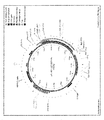
- 1 shows a vector map of pBL-AEG-1(S298D)-HA.
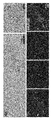
- FIG. 2 is 3 weeks after AAV-AEG-1(S298D)-HA(HA-tag) administration to C57BL/6 mouse black matter, brain tissue is HA-tag stained (left Scale bar, 500 ⁇ m; right Scale bar, 50 ⁇ m) ) Or HA-tag and dopamine neurons (TH) (Scale bar, 50 ⁇ m) double fluorescence staining results.
- AAV-AEG-1 (S298D) administration to C57BL/6 mouse black matter, 6-OHDA is administered to induce Parkinson's disease, and the neuroprotective effect by AEG-1 (S298D) is TH stained and cre Results confirmed by real violet staining
- D AAV -Metal cerebral black matter of 6-OHDA administered mice 3 weeks after AEG-1(WT) administration
- E Middle cerebral black matter of mice administered 6-OHDA 3 weeks after AAV-AEG-1(S298D) administration
- a Control group Cerebral striatum
- d 3 weeks after administration of AAV-AEG-1(WT) Cere
- FIG. 4 shows that after 3 weeks of AAV-AEG-1 (S298D) administration to C57BL/6 mouse black matter, 6-OHDA was administered to induce Parkinson's disease, and the balance and exercise learning ability by AEG-1 (S298D) were Rota. It is the result confirmed by -rod test (unit: second).
- FIG. 5 is a simultaneous administration of AAV/DJ- ⁇ -Synuclein (A53T) and AAV-AEG-1 (S298D) to the right middle cerebral black matter of the SD rat, and after 12 weeks, the exercise test ability by AEG-1 (S298D) cylinder test It is the result confirmed by (unit: number of times).
- A53T AAV/DJ- ⁇ -Synuclein
- S298D AAV-AEG-1
- the inventors of the present invention induced a constitutive active form AEG-1 (S298D) by introducing a point mutation into AEG-1, and produced AAV-AEG-1 (S298D) and applied it to an animal model of Parkinson's disease.
- the present invention was completed while confirming that the nerve cells and dopamine nerve fibers were preserved, and the balance and motor learning ability and motor activity were improved.
- the 298th serine (serine, S) from the N terminus is represented by SEQ ID NO: 1 substituted with aspartic acid (D).
- AEG-1 S298D mutant protein is provided.
- the present invention provides a gene encoding the AEG-1 S298D mutant protein.
- the AEG-1 astrocyte elevated gene-1 induces late SV40 factor (LSF/TFCP2), a tumor gene involved in thymidylate synthase (TS) induction and DNA biosynthesis, and the LSF/TFCP2 is Alzheimer's , Inflammation, allergic reactions, and anti-cancer resistance are known to play multiple roles.
- LSF/TFCP2 late SV40 factor
- TS thymidylate synthase
- AEG-1 (constitutively active) form in which the 298 th serine (serine, S) is substituted with aspartic acid (D) by introducing a point mutation in the AEG-1 gene S298D) was induced, and using this, AAV-AEG-1 (S298D) was prepared and then administered to C57BL/6 mouse black matter, and it was confirmed that it was expressed in the black matter region and dopamine neurons.
- AAV-AEG-1 S298D
- 6-OHDA 6-OHDA was administered to induce an animal model of Parkinson's disease.
- the AAV-AEG-1 (S298D) was dopamine neurons and It was confirmed that preserving dopamine nerve fibers and improving balance and motor learning ability.
- point mutation used in the present invention refers to a mutation in which one nucleotide is transformed, and refers to blocking or modifying the production of a specific protein in the DNA transcription step. It is most often caused by the wrong transcription of the same purine family of adenine and guanine, or of the same pyrimidine family of cytosine and thymine, and this point mutation is known to destroy or modify codon information.
- the present invention provides an expression vector containing the gene.
- the expression vector may be an adeno-associated virus vector, but is not limited thereto.
- the present invention provides a pharmaceutical composition for preventing or treating Parkinson's disease comprising the protein, gene, or expression vector as an active ingredient.
- the composition can prevent or treat Parkinson's disease by preserving dopamine neurons and dopamine nerve fibers and improving balance and motor learning ability.
- composition of the present invention when it is a pharmaceutical composition, for administration, it may include a pharmaceutically acceptable carrier, excipient, or diluent in addition to the active ingredients described above.
- the carrier, excipients and diluents include lactose, dextrose, sucrose, sorbitol, mannitol, xylitol, erythritol, maltitol, starch, acacia rubber, alginate, gelatin, calcium phosphate, calcium silicate, cellulose, methyl cellulose, microcrystalline cellulose, Polyvinylpyrrolidone, water, methylhydroxybenzoate, propylhydroxybenzoate, talc, magnesium stearate and mineral oil.
- the pharmaceutical composition of the present invention can be formulated and used in the form of oral dosage forms, external preparations, suppositories, or sterile injectable solutions, such as powders, granules, tablets, capsules, suspensions, emulsions, syrups, aerosols, etc., according to a conventional method. .
- it may be prepared using diluents or excipients such as fillers, weights, binders, wetting agents, disintegrating agents, surfactants, etc., which are commonly used.
- Solid preparations for oral administration include, but are not limited to, tablets, pills, powders, granules, capsules, and the like.
- Such a solid preparation may be prepared by mixing at least one excipient in addition to the active ingredient, for example, starch, calcium carbonate, sucrose, lactose, gelatin, and the like.
- lubricants such as magnesium stearate and talc may be used in addition to simple excipients.
- various excipients such as wetting agents, sweeteners, fragrances, and preservatives, may be added to prepare.
- Formulations for parenteral administration include sterile aqueous solutions, non-aqueous solvents, suspensions, emulsions, lyophilized preparations and challenges.
- Non-aqueous solvents and suspensions may include propylene glycol, polyethylene glycol, vegetable oils such as olive oil, and injectable esters such as ethyl oleate.
- injectable esters such as ethyl oleate.
- a base for suppositories witepsol, macrosol, tween 61, cacao butter, laurin butter, and glycerogelatin may be used.
- the suitable dosage of the pharmaceutical composition of the present invention depends on the patient's condition and body weight, the degree of disease, the drug form, and the time, but may be appropriately selected by a person skilled in the art, and the daily dosage of the composition is preferably It is 0.001 mg/kg to 50 mg/kg, and can be divided and administered once to several times per day as needed.
- the present invention provides a health food composition for preventing or improving Parkinson's disease comprising the protein, gene, or expression vector as an active ingredient.
- composition of the present invention is a health food composition
- it may contain flesh for the manufacture of natural fruit juices, synthetic fruit juices and vegetable drinks. These ingredients can be used independently or in combination.
- the health food composition may be in the form of any one of meat, sausage, bread, chocolate, candy, snacks, confectionery, pizza, ramen, gum, ice cream, soup, beverage, tea, functional water, drink, alcohol and vitamin complex Can be.
- the health food composition may further include a food additive, and whether or not it is suitable as a food additive is related to the item according to the general rules and general test methods of the Food Additives Code approved by the Ministry of Food and Drug Safety unless otherwise specified. Judging by standards and standards.
- Chemical additives such as ketones, glycine, potassium citrate, nicotinic acid, cinnamon acid, natural additives such as chromochromate, licorice extract, crystalline cellulose, high cooling pigment, guar gum, and L-glutamic acid.
- mixed preparations such as sodium preparations, alkali addition agents for noodles, preservative preparations, and tar color preparations.
- composition according to the present invention is added to the food in the process of manufacturing a health food composition can appropriately adjust the content as necessary.
- the pBL-AEG-1 (S298D) recombinant vector into which the AEG-1 (S298D) gene was introduced was prepared by introducing the AEG-1 (astrocyte elevate gene-1) (S298D) gene into the pBL plasmid (HA-tag), The vector map thereof is shown in FIG. 1.
- AAV (adeno-associated virus)-AEG-1 (S298D) was commissioned by the University of North Carolina Vector Core, and the genetic titer was 3.7 ⁇ 10 12 viral genomes/ml.
- the green viral backbone (GFP) or wild-type AEG-1 activated on the same virus backbone was subcloned and used as a control.
- Example 2 Analysis of the effect of AEG-1 (S298D) in Parkinson's disease animal model
- mice or SD rats Eight week old male C57BL/6 mice or SD rats (Sprague-Dawley rats) were purchased from Daehan Biolink (Eumseong, Korea). Each mouse or rat was anesthetized by intraperitoneal (IP) administration of a mixture of ketamine (ketamine, 115 mg/kg, Yuhan) and rumpun (rompun, 23 mg/kg, Bayer Korea Ltd.), followed by stereotaxic frame ( stereotaxic frame, David Kopf Instrument, Tujunga, CA, USA).
- IP intraperitoneal
- stereotaxic frame stereotaxic frame, David Kopf Instrument, Tujunga, CA, USA.
- Immunohistochemical staining was performed by modifying known experimental methods (Kim et al., 2011; Kim et al., 2012; Leem et al., 2018). After percutaneous perfusion was performed on each mouse, the tissue was fixed, and brain tissue was sectioned to a thickness of 30 ⁇ m. The tissue sections were washed with PBS and then incubated with primary antibody for 48 hours at room temperature. As a primary antibody, rabbit anti-tyrosine hydroxylase (TH, 1:2000; Pel-Freez, Brown Beer, WI) and mouse anti-HA (1:100; Cell-signaling, Beverly, MA) were used.
- TH rabbit anti-tyrosine hydroxylase
- WI Pel-Freez, Brown Beer, WI
- mouse anti-HA (1:100; Cell-signaling, Beverly, MA
- tissue sections were washed again with PBS and then incubated with secondary antibody, and treated with avidin-biotin complex kit (Vector Laboratories, Burlingame, CA) reagent.
- the tissue section was 0.1 M phosphate buffer (PB, containing 0.003% H 2 O 2 ) containing 0.5 mg/ml 3,3'-diaminobenzidine (Sigma, St. Louis, MO).
- PB phosphate buffer
- the signal was detected by incubation.
- the stained samples were analyzed using a bright-field microscope (Carl Zeiss, G ⁇ ttingen, Germany).
- tissue sections were washed with PBS and then incubated with primary antibody overnight.
- rabbit anti-tyrosine hydroxylase TH, 1:2000; Pel-Freez, Brown Beer, WI
- mouse anti-HA 1:100; Cell-signaling, Beverly, MA
- tissue sections were washed again with PBS and then with Texas Red conjugated anti-rabbit IgG (1:400; Vector Laboratories) and FITC-conjugated anti-rabbit IgG (1:200; Jackson ImmunoResearch, West Grove, PA). Incubated for 1 hour and washed again. It was mounted with Vectashield mounting medium (Vector Laboratories).
- the stained samples were analyzed using a fluorescence microscope (LSM700, Carl Zeiss, Germany).
- FIG. 2 it was confirmed through HA-tag staining that AAV-AEG-1 (S298D) was expressed in the black matter region (SNpc) to which AAV-AEG-1 (S298D) was administered (FIG. 2), it was confirmed that the AEG-1 (S298D) gene (HA-tag, green) was expressed in dopamine neurons (tyrosine hydroxylase (TH)-positive cells, red) (FIG. 2). Down).
- Example 2-1 3 weeks after AAV-AEG-1 (S298D) was administered to each mouse black matter, 6-hydroxydopamine (6-Hydroxydopamine; 6-OHDA) was prevented from being absorbed.
- Desipramine desipramine, 25 mg/kg, Sigma, St. Louis, MO.
- Each mouse was anesthetized by intraperitoneal (i.p) administration of a mixture of ketamine (115 mg/kg) and rumpoon (23 mg/kg), and then placed in a stereotech frame.
- Parkinson's disease was induced by administering a solution of 6-OHDA (5.0 ⁇ g/ ⁇ l in 0.9% NaCl/0.02% ascorbate) at a concentration of 15 ⁇ g/3 ⁇ l at a rate of 0.5 ⁇ l/min using a microliter syringe.
- Administration was performed on the right striatum (AP: +0.09 cm; ML: +0.22 cm; DV: 0.25 cm relative to bregma). After dosing, the needle was held for an additional 5 minutes before slowly recovering.
- TH staining was performed in the same manner as in Example 2-2.
- the SN tissue sample was mounted on a gelatin coated slide, and then stained with 0.5% cresyl violet (Sigma). Then, it was analyzed using a bright field microscope.
- the mouse (B) administered only 6-OHDA, a neurotoxic substance, or the mouse (C) administered 6-OHDA or 3 weeks after AEG-1 (WT) administration 3 weeks after GFP administration Compared to the 6-OHDA-treated mice (D), it was confirmed that more dopamine neurons (brown) remained in the 6-OHDA-treated mice (E) after 3 weeks of AEG-1 (S298D) administration. It was confirmed that the size of the remaining dopamine neurons is also preserved.
- mice (b) only administered with the neurotoxic substance 6-OHDA or a mouse administered with 6-OHDA 3 weeks after administration of GFP (c) or a mouse administered with 6-OHDA 3 weeks after administration of AEG-1 (WT) Compared to (d), it was confirmed that relatively more dopamine nerve fibers (brown) remained in mice (e) administered 6-OHDA 3 weeks after AEG-1 (S298D) administration.
- Rota-rod test was performed by modifying a known experimental method (Kim et al., 2016; Leem et al., 2018). Each mouse was trained for 10 minutes once a day to adapt to a rotating shaft at a rate of 10 rpm from 3 days before administration of 6-OHDA. Each mouse was placed on an axis accelerated at 4-40 rpm for 5 minutes twice a day from the 5th to the 7th day of administration of 6-OHDA, and the time point of falling off the axis was measured to evaluate the performance of each mouse. The values obtained through experiments performed for a total of 3 days were used to obtain the average value of the time each mouse fell off the axis, and the average time that each mouse fell off the axis was used to find the average time of departure from each group.
- the mouse was administered only 6-OHDA, a neurotoxic substance, or the mouse was administered 6-OHDA 3 weeks after GFP administration, or the 6-OHDA was administered 3 weeks after AEG-1(WT) administration.
- 6-OHDA mice were found to stay on the axis longer.
- the time that the 6-OHDA-injected mice stayed on the axis was similar to the time that the normal control mice stayed on the axis.
- AAV/DJ- ⁇ -Synuclein (A53T) was injected into the right midbrain black matter of each rat in the same manner as in Example 2-1.
- AAV/DJ-EGFP was used as a virus control.
- Cylinder test was performed by modifying the known experimental method (Won et al., 2016). After 12 weeks of virus injection, the rats were placed in a cylindrical transparent glass tube with a diameter of 30 cm and a height of 50 cm, and the movement activity of the left and right forefoot was evaluated for 5 minutes. When the total sum of the number of contact of the left and right forefoot glass walls was 20, the ratio of the number of right forefoot contact and the number of left forefoot contact was calculated by the following equation.
Landscapes
- Health & Medical Sciences (AREA)
- Life Sciences & Earth Sciences (AREA)
- Chemical & Material Sciences (AREA)
- Engineering & Computer Science (AREA)
- Genetics & Genomics (AREA)
- Organic Chemistry (AREA)
- Molecular Biology (AREA)
- General Health & Medical Sciences (AREA)
- Bioinformatics & Cheminformatics (AREA)
- Biomedical Technology (AREA)
- Zoology (AREA)
- Medicinal Chemistry (AREA)
- Proteomics, Peptides & Aminoacids (AREA)
- Biotechnology (AREA)
- Biochemistry (AREA)
- Biophysics (AREA)
- Wood Science & Technology (AREA)
- General Engineering & Computer Science (AREA)
- Animal Behavior & Ethology (AREA)
- Public Health (AREA)
- Neurosurgery (AREA)
- Toxicology (AREA)
- Gastroenterology & Hepatology (AREA)
- Neurology (AREA)
- Pharmacology & Pharmacy (AREA)
- Veterinary Medicine (AREA)
- Polymers & Plastics (AREA)
- Food Science & Technology (AREA)
- Nutrition Science (AREA)
- Mycology (AREA)
- Plant Pathology (AREA)
- Microbiology (AREA)
- Physics & Mathematics (AREA)
- Virology (AREA)
- Epidemiology (AREA)
- Psychology (AREA)
- Chemical Kinetics & Catalysis (AREA)
- General Chemical & Material Sciences (AREA)
- Nuclear Medicine, Radiotherapy & Molecular Imaging (AREA)
- Immunology (AREA)
Abstract
본 발명은 AEG-1(S298D)을 유효성분으로 포함하는 파킨슨 질환 예방 또는 치료용 조성물에 관한 것으로, 본 발명에서는 AEG-1에 점 돌연변이(point mutation)를 도입하여 구성적 활성(constitutively active) 형태인 AEG-1(S298D)을 유도하고, AAV-AEG-1(S298D)을 제조하여 파킨슨 질환 동물모델에 적용시킨 결과, 도파민 신경세포 및 도파민 신경섬유를 보존함으로써 뇌 조직 보호 효과를 나타내는 것을 확인한 바, AEG-1은 파킨슨 질환 예방 또는 치료용 조성물, 파킨슨 질환 예방 또는 개선용 건강식품 조성물 등으로 유용하게 활용될 수 있다.
Description
본 발명은 AEG-1(astrocyte elevated gene-1)(S298D)을 유효성분으로 포함하는 파킨슨 질환 예방 또는 치료용 조성물에 관한 것이다.
파킨슨 질환(parkinson’s disease; PD)은 알츠하이머 치매와 더불어 노년기에 나타나는 대표적인 퇴행성 신경질환의 하나로 65세 인구에서 약 1% 정도가 발병하며 나이가 들수록 그 발병률이 증가하는 것으로 알려져 있다. 파킨슨 질환은 운동성 장애를 나타내는데, 안정시 떨림증(tremor), 경직(rigidity), 운동완서(bradykinesia), 자세의 불안정(postural instability) 등이 대표적인 증상이다. 또한, 파킨슨 질환은 미세아교세포증(microgliosis), 성상교세포증(astrogliosis), 도파민성 뉴런의 진행적인 퇴화, 도파민성 뉴런에서 루이 소체(Lewy bodies)의 존재, 및 뇌흑질 치밀부(substantia nigra pars compacta)에서 알파-시누클레인(α-synuclein)이 축적되는 특징을 가진다.
파킨슨 질환의 정확한 원인은 아직까지 명확하게 알려지지 않았으나, 농약 등과 같은 신경독소들에 의한 환경적 요인, 유전적 요인, 미토콘드리아의 기능 장애, 노화 등이 관련되어 있는 것으로 파악된다. 유전적 요인으로는 알파-시누클레인, 파킨(Parkin), PINK-1, UCH-L1, DJ-1 등과 같은 유전자 돌연변이와 연관되어 있다고 알려져 있다. 현재 파킨슨 질환의 증상을 경감시키는 약물이 다수 존재하나, 병의 진행을 막을 수 있는 약물은 아직까지 보고된 바 없으며, 약물의 만성적인 사용은 심신을 약화시키는 부작용을 초래할 위험성이 크다.
파킨슨 질환의 치료를 위한 약물로는 엘-도파(L-dopa) 제제, 도파민 수용체 작용제, 항콜린 약제, 엘데프릴(Eldepryl) 등이 있다. 그러나, 이들 약물들 대부분은 원인적인 치료가 아니라 증상을 조절하는 역할을 하는 것으로 지속적인 약물의 복용을 필요로 한다. 이러한 약물들의 장기 투여는 약물 부작용의 문제점을 야기하게 된다. 예를 들어, 항콜린 약제들은 자율 신경계 이상이나 정신기능의 이상 등이 나타날 수 있어 고령의 환자들에게 지속적으로 투여하는 것에 한계가 있다. 또한, 엘-도파 제제의 경우, 장기간 동안의 복용에 따라 점차적으로 효과가 떨어지고, 몸이 뒤틀리거나 손, 발이 저절로 움직이는 이상 운동이 생기는 등의 부작용이 발생하게 된다. 기타, 고주파를 이용한 신경자극술 즉, 고주파 파괴술 또는 심부 뇌자극술 등의 수술 치료도 행해지고 있으나, 침습적인 수술을 필요로 하고 많은 비용이 소모되는 문제점이 있다.
따라서, 파킨슨 질환은 그 병인이 정확히 알려져 있지 않아서 근본적인 치료보다 주로 증상 개선을 위한 치료방법들이 이용되고 있는 바, 파킨슨 질환의 예방 및 치료를 위해, 보다 효과적인 새로운 치료제의 개발이 시급한 실정이다.
본 발명의 목적은 AEG-1 S298D 돌연변이 단백질, 이를 코딩하는 유전자, 상기 유전자를 포함하는 발현 벡터를 제공하는 데에 있다.
본 발명의 다른 목적은 파킨슨 질환 예방 또는 치료용 약학 조성물을 제공하는 데에 있다.
본 발명의 또 다른 목적은 파킨슨 질환 예방 또는 개선용 건강식품 조성물을 제공하는 데에 있다.
상기 목적을 달성하기 위하여, 본 발명은 AEG-1(astrocyte elevated gene-1) 단백질의 전체 아미노산 서열에서 N 말단으로부터 298번째 세린(serine, S)이 아스파르트산(aspartic acid, D)으로 치환된 서열번호 1로 표시되는 AEG-1 S298D 돌연변이 단백질을 제공한다.
또한, 본 발명은 상기 AEG-1 S298D 돌연변이 단백질을 코딩하는 유전자를 제공한다.
또한, 본 발명은 상기 유전자를 포함하는 발현 벡터를 제공한다.
또한, 본 발명은 상기 단백질, 유전자, 또는 발현 벡터를 유효성분으로 포함하는 파킨슨 질환 예방 또는 치료용 약학 조성물을 제공한다.
또한, 본 발명은 상기 단백질, 유전자, 또는 발현 벡터를 유효성분으로 포함하는 파킨슨 질환 예방 또는 개선용 건강식품 조성물을 제공한다.
본 발명에서는 AEG-1에 점 돌연변이(point mutation)를 도입하여 구성적 활성(constitutively active) 형태인 AEG-1(S298D)을 유도하고, AAV-AEG-1(S298D)을 제조하여 파킨슨 질환 동물모델에 적용시킨 결과, 도파민 신경세포 및 도파민 신경섬유를 보존함으로써 뇌 조직 보호 효과를 나타내는 것을 확인한 바, AEG-1은 파킨슨 질환 예방 또는 치료용 조성물, 파킨슨 질환 예방 또는 개선용 건강식품 조성물 등으로 유용하게 활용될 수 있다.
도 1은 pBL-AEG-1(S298D)-HA의 벡터 맵을 도시하여 나타낸 것이다.
도 2는 C57BL/6 마우스 흑질에 AAV-AEG-1(S298D)-HA(HA-tag) 투여 3주 후, 뇌 조직을 HA-tag 염색(좌측 Scale bar, 500 μm; 우측 Scale bar, 50 μm) 또는 HA-tag 및 도파민 신경세포(TH)(Scale bar, 50 μm)로 이중 형광 염색한 결과이다.
도 3은 C57BL/6 마우스 흑질에 AAV-AEG-1(S298D) 투여 3주 후, 6-OHDA를 투여하여 파킨슨 질환을 유도하고, AEG-1(S298D)에 의한 신경 보호 효과를 TH 염색 및 크레실 바이올렛 염색으로 확인한 결과이다(A: 대조군 중뇌 흑질, B: 6-OHDA를 투여한 마우스의 중뇌 흑질, C: AAV-GFP 투여 3주 후 6-OHDA를 투여한 마우스의 중뇌 흑질, D: AAV-AEG-1(WT) 투여 3주 후 6-OHDA를 투여한 마우스의 중뇌 흑질, E: AAV-AEG-1(S298D) 투여 3주 후 6-OHDA를 투여한 마우스의 중뇌 흑질; a: 대조군 대뇌 선조체, b: 6-OHDA를 투여한 마우스의 대뇌 선조체, c: AAV-GFP 투여 3주 후 6-OHDA를 투여한 마우스의 대뇌 선조체, d: AAV-AEG-1(WT) 투여 3주 후 6-OHDA를 투여한 마우스의 대뇌 선조체, e: AAV-AEG-1(S298D) 투여 3주 후 6-OHDA를 투여한 마우스의 대뇌 선조체; 상단 Scale bar, 200 μm; 하단 Scale bar, 1000 μm).
도 4는 C57BL/6 마우스 흑질에 AAV-AEG-1(S298D) 투여 3주 후, 6-OHDA를 투여하여 파킨슨 질환을 유도하고, AEG-1(S298D)에 의한 균형감각 및 운동 학습 능력을 Rota-rod test로 확인한 결과이다(단위: 초).
도 5는 SD 랫드의 우측 중뇌 흑질에 AAV/DJ-α-Synuclein(A53T)와 AAV-AEG-1(S298D) 동시 투여하고, 12주 후 AEG-1(S298D)에 의한 운동 활동성 능력을 Cylinder test로 확인한 결과이다(단위: 회수).
본 발명의 발명자들은 AEG-1에 점 돌연변이를 도입하여 구성적 활성 형태인 AEG-1(S298D)을 유도하고, AAV-AEG-1(S298D)을 제작하여 파킨슨 질환 동물모델에 적용시킨 결과, 도파민 신경세포 및 도파민 신경섬유를 보존하고, 균형감각 및 운동 학습 능력, 운동 활동성을 향상시키는 것을 확인하며 본 발명을 완성하였다.
이에, 본 발명에서는 AEG-1(astrocyte elevated gene-1) 단백질의 전체 아미노산 서열에서 N 말단으로부터 298번째 세린(serine, S)이 아스파르트산(aspartic acid, D)으로 치환된 서열번호 1로 표시되는 AEG-1 S298D 돌연변이 단백질을 제공한다.
또한, 본 발명은 상기 AEG-1 S298D 돌연변이 단백질을 코딩하는 유전자를 제공한다.
상기 AEG-1(astrocyte elevated gene-1)은 티미딜산 합성효소(thymidylate synthase; TS) 유도 및 DNA 생합성에 관여하는 종양 유전자인 후기 SV40 인자(LSF/TFCP2)를 유도하고, 상기 LSF/TFCP2는 알츠하이머, 염증, 알러지 반응, 항암 내성에 다각적인 역할을 하는 것으로 알려져 있다.
본 발명에서는 AEG-1 유전자에 점 돌연변이(point mutation)를 도입하여 298번째 세린(serine, S)이 아스파르트산(aspartic acid, D)으로 치환된 구성적 활성(constitutively active) 형태인 AEG-1(S298D)을 유도하였으며, 이를 이용하여 AAV-AEG-1(S298D)을 제조한 후 C57BL/6 마우스 흑질에 투여한 결과, 흑질 부위 및 도파민 신경세포에서 발현되는 것을 확인하였다.
또한, C57BL/6 마우스 흑질에 AAV-AEG-1(S298D)을 투여한 후, 6-OHDA를 투여하여 파킨슨 질환 동물모델을 유도한 결과, 상기 AAV-AEG-1(S298D)이 도파민 신경세포 및 도파민 신경섬유를 보존하고, 균형감각 및 운동 학습 능력을 향상시키는 것을 확인하였다.
또한, SD 랫드의 우측 중뇌에 AAV/DJ-α-Synuclein(A53T)와 AAV-AEG-1(S298D)를 동시 투여한 결과, 상기 AAV-AEG-1(S298D)이 손상된 도파민 신경 시스템에 작용하여 운동 활동성을 향상시킬 수 있음을 확인하였다.
본 발명에서 사용된 용어 “점 돌연변이”란 하나의 뉴클레오타이드가 변환되어 나타나는 돌연변이로 DNA 전사 단계에서 특정 단백질의 생성을 막거나 변형시키는 것을 의미한다. 대부분 같은 푸린 계열인 아데닌과 구아닌의 잘못된 전사, 또는 같은 피리미딘 계열인 시토신과 티민의 잘못된 전사로 인해 일어나며, 이러한 점 돌연변이는 코돈의 정보를 파괴하거나 변형시키는 것으로 알려져 있다.
또한, 본 발명은 상기 유전자를 포함하는 발현 벡터를 제공한다.
상기 발현 벡터는 아데노 부속 바이러스 벡터일 수 있으나, 이에 제한되는 것은 아님을 명시한다.
또한, 본 발명은 상기 단백질, 유전자, 또는 발현 벡터를 유효성분으로 포함하는 파킨슨 질환 예방 또는 치료용 약학 조성물을 제공한다.
상기 조성물은 도파민 신경세포 및 도파민 신경섬유를 보존하고, 균형감각 및 운동 학습 능력을 향상시켜 파킨슨 질환을 예방 또는 치료할 수 있다.
본 발명의 조성물이 약학 조성물인 경우, 투여를 위하여, 상기 기재한 유효성분 이외에 약학적으로 허용 가능한 담체, 부형제 또는 희석제를 포함할 수 있다. 상기 담체, 부형제 및 희석제로는 락토오스, 덱스트로오스, 수크로오스, 소르비톨, 만니톨, 자일리톨, 에리스리톨, 말티톨, 전분, 아카시아 고무, 알지네이트, 젤라틴, 칼슘 포스페이트, 칼슘 실리케이트, 셀룰로오스, 메틸 셀룰로오스, 미정질 셀룰로오스, 폴리비닐피롤리돈, 물, 메틸히드록시벤조에이트, 프로필히드록시벤조에이트, 탈크, 마그네슘 스테아레이트 및 광물유를 들 수 있다.
본 발명의 약학 조성물은 각각 통상의 방법에 따라 산제, 과립제, 정제, 캡슐제, 현탁액, 에멀젼, 시럽, 에어로졸 등의 경구형 제형, 외용제, 좌제 또는 멸균 주사용액의 형태로 제형화하여 사용할 수 있다. 상세하게는 제형화할 경우 통상 사용하는 충진제, 중량제, 결합제, 습윤제, 붕해제, 계면활성제 등의 희석제 또는 부형제를 사용하여 조제될 수 있다. 경구투여를 위한 고형 제제로는 정제, 환제, 산제, 과립제, 캡슐제 등을 포함하나, 이에 한정되는 것은 아니다. 이러한 고형 제제는 상기 유효성분 외에 적어도 하나 이상의 부형제, 예를 들면, 전분, 칼슘 카보네이트, 수크로오스, 락토오스, 젤라틴 등을 섞어 조제될 수 있다. 또한, 단순한 부형제 이외에 마그네슘 스테아레이트, 탈크 같은 윤활제들도 사용될 수 있다. 경구를 위한 액상물, 리퀴드 파라핀 이외에 여러 가지 부형제, 예를 들면 습윤제, 감미제, 방향제, 보존제 등을 첨가하여 조제될 수 있다. 비경구 투여를 위한 제제는 멸균된 수용액, 비수성 용제, 현탁제, 유제, 동결건조 제제 및 과제를 포함한다. 비수성 용제 및 현탁제로는 프로필렌글리콜, 폴리에틸렌글리콜, 올리브 오일과 같은 식물성 오일, 에틸올레이트와 같은 주사 가능한 에스테르 등이 사용될 수 있다. 좌제의 기제로는 위텝솔, 마크로솔, 트윈 61, 카카오지, 라우린지, 글리세로젤라틴 등이 사용될 수 있다.
본 발명의 약학 조성물의 적합한 투여량은 환자의 상태 및 체중, 질병의 정도, 약물형태, 시간에 따라 다르지만, 당 업자에 의해 적절하게 선택될 수 있는 바, 상기 조성물의 일일 투여량은 바람직하게는 0.001 mg/kg 내지 50 mg/kg이며, 필요에 따라 일일 1회 내지 수회로 나누어 투여할 수 있다.
또한, 본 발명은 상기 단백질, 유전자, 또는 발현 벡터를 유효성분으로 포함하는 파킨슨 질환 예방 또는 개선용 건강식품 조성물을 제공한다.
본 발명의 조성물이 건강식품 조성물인 경우, 여러 가지 영양제, 비타민, 광물(전해질), 합성 풍미제 및 천연 풍미제 등의 풍미제, 착색제 및 중진제(치즈, 초콜릿 등), 펙트산 및 그의 염, 알긴산 및 그의 염, 유기산, 보호성 콜로이드 증점제, pH 조절제, 안정화제, 방부제, 글리세린, 알코올, 탄산음료에 사용되는 탄산화제 등을 함유할 수 있다. 그 밖에 천연 과일 주스, 합성 과일 주스 및 야채 음료의 제조를 위한 과육을 함유할 수 있다. 이러한 성분은 독립적으로 또는 조합하여 사용할 수 있다. 또한, 건강식품 조성물은 육류, 소세지, 빵, 초콜릿, 캔디류, 스넥류, 과자류, 피자, 라면, 껌류, 아이스크림류, 스프, 음료수, 차, 기능수, 드링크제, 알코올 및 비타민 복합제 중 어느 하나의 형태일 수 있다.
또한, 상기 건강식품 조성물은 식품첨가물을 추가로 포함할 수 있으며, 식품첨가물로서의 적합 여부는 다른 규정이 없는 한 식품의약품안전처에 승인된 식품첨가물공전의 총칙 및 일반 시험법 등에 따라 해당 품목에 관한 규격 및 기준에 의하여 판정한다.
상기 식품첨가물공전에 수재된 품목으로 예를 들어, 케톤류, 글리신, 구연산 칼륨, 니코틴산, 계피산 등의 화학적 합성품, 감색소, 감초추출물, 결정셀룰로오스, 고랭색소, 구아검 등의 천연첨가물, L-글루타민산나트륨 제제, 면류 첨가 알칼리제, 보존료제제, 타르색소 제제 등의 혼합 제제류 등을 들 수 있다.
이때, 건강식품 조성물을 제조하는 과정에서 식품에 첨가되는 본 발명에 따른 조성물은 필요에 따라 그 함량을 적절히 가감할 수 있다.
이하에서는 실시예를 통하여 본 발명을 더욱 상세히 설명하고자 한다. 이들 실시예는 오로지 본 발명을 보다 구체적으로 설명하기 위한 것으로, 본 발명의 요지에 따라 본 발명의 범위가 이들 실시예에 의해 제한되지 않는다는 것은 당업계에서 통상의 지식을 가진 자에 있어서 자명할 것이다.
실시예 1: AAV-AEG-1(S298D)의 제조
1-1. pBL-AEG-1(S298D) 재조합 벡터 제조
pBL 플라스미드(HA-tag)에 AEG-1(astrocyte elevate gene-1)(S298D) 유전자를 도입하여, AEG-1(S298D) 유전자가 도입된 pBL-AEG-1(S298D) 재조합 벡터를 제조하였으며, 이의 벡터 맵은 도 1에 나타내었다.
1-2. AAV-AEG-1(S298D)의 제조
AAV(adeno-associated virus)-AEG-1(S298D)은 University of North Carolina Vector Core에 의뢰하여 제작하였으며, 유전적 역가는 3.7 Х 1012 viral genomes/ml이었다. 동일한 바이러스 백본(backbone)에 활성화된 GFP(greenfluorescent protein) 또는 야생형 AEG-1을 서브클로닝하여 대조군으로 사용하였다.
실시예 2: 파킨슨 질환 동물 모델에서 AEG-1(S298D)의 효과 분석
2-1. 실험 동물 및 AAV-AEG-1(S298D) 투여
8주령의 수컷 C57BL/6 마우스 또는 SD 랫드(Sprague-Dawley rat)는 Daehan Biolink(Eumseong, Korea)에서 구입하였다. 각 마우스 또는 랫드에 케타민(ketamine, 115 mg/kg, Yuhan) 및 럼푼(rompun, 23 mg/kg, Bayer Korea Ltd.) 혼합물을 복강 내(intraperitoneal; IP) 투여하여 마취시킨 후, 스테레오텍식 프레임(stereotaxic frame, David Kopf Instrument, Tujunga, CA, USA)에 위치시켰다. 공지된 실험 방법(Paxinos and Watson, 1998)에 따라, 시린지 펌프(KD Scientific, NewHope, PA)가 붙어있는 10 μl 해밀턴 시린지(Hamilton syringe, 30S needle)를 이용하여 각 마우스의 중뇌 흑질(substantia nigra; SN) 오른쪽 부위[AP(anterior-posterior): 0.35 cm; ML(medial-lateral): +0.11 cm; DV(dorsal-ventral): 0.37 cm, relative to bregma] 또는 랫드의 중뇌 흑질[AP: -0.60 cm; ML: -0.23 cm; DV: -0.76 cm, relative to bregma]에 AAV-AEG-1(S298D)을 주사하였다. 투여 후, 바늘을 천천히 회수하기 전에 추가적으로 5분간 유지시켰다. 이 때 2 μl의 바이러스 벡터 현탁액을 0.1 μl/분의 속도로 20분 간 투여하였다.
2-2. 면역조직화학 염색(Immunohistochemical staining)
공지된 실험 방법(Kim et al., 2011; Kim et al., 2012; Leem et al., 2018)을 변형하여 면역조직화학 염색을 수행하였다. 각 마우스에 경심관류를 수행한 후, 조직을 고정시키고, 30 μm 두께로 뇌 조직을 섹션(section)하였다. 조직 섹션을 PBS로 세척한 후, 1차 항체와 함께 48시간 동안 상온에서 배양하였다. 1차 항체로는 rabbit anti-tyrosine hydroxylase(TH, 1:2000; Pel-Freez, Brown Beer, WI) 및 mouse anti-HA(1:100; Cell-signaling, Beverly, MA)를 사용하였다. 배양 후, 조직 섹션을 PBS로 다시 세척한 다음 2차 항체와 함께 배양하고, avidin-biotin complex kit(Vector Laboratories, Burlingame, CA) 시약을 처리하였다. 상기 조직 섹션을 0.5 mg/ml 3,3'-다이아미노벤지딘(diaminobenzidine)(Sigma, St. Louis, MO)이 포함된 0.1 M 인산완충액(phosphate buffer; PB, 0.003% H2O2가 포함)과 배양하여 신호를 검출하였다. 염색된 시료는 명시야 현미경(bright-field microscope, Carl Zeiss, GΦttingen, Germany)을 이용하여 분석하였다.
또한, 면역형광 라벨링(immunofluorescence labeling)을 위하여, 뇌 조직 섹션을 PBS로 세척한 후, 1차 항체와 밤새 배양하였다. 1차 항체로는 rabbit anti-tyrosine hydroxylase(TH, 1:2000; Pel-Freez, Brown Beer, WI) 및 mouse anti-HA(1:100; Cell-signaling, Beverly, MA)를 사용하였다. 다음 날, 조직 섹션을 PBS로 다시 세척한 다음 Texas Red conjugated anti-rabbit IgG(1:400; Vector Laboratories) 및 FITC-conjugated anti-rabbit IgG(1:200; Jackson ImmunoResearch, West Grove, PA)와 함께 1시간 동안 배양하고, 다시 세척하였다. 이를 Vectashield mounting medium(Vector Laboratories)으로 마운트하였다. 염색된 시료는 형광 현미경(LSM700, Carl Zeiss, Germany)을 이용하여 분석하였다.
그 결과, 도 2에 나타낸 바와 같이, AAV-AEG-1(S298D)이 투여된 흑질 부위(SNpc)에 AAV-AEG-1(S298D)이 발현되고 있음을 HA-tag 염색을 통해 확인하였으며(도 2의 위), 도파민 신경세포[티로신 하이드록실라제(tyrosine hydroxylase; TH)-양성세포, 적색]에서 AEG-1(S298D) 유전자(HA-tag, 녹색)가 발현됨을 확인할 수 있었다(도 2의 아래).
2-3. 6-OHDA 병변(lesion)
상기 실시예 2-1과 같이, 각 마우스 흑질에 AAV-AEG-1(S298D)을 투여하고 3주 후, 6-하이드록시도파민(6-Hydroxydopamine; 6-OHDA)의 비 특이적인 흡수를 막기 위해 데시프라민(desipramine, 25 mg/kg, Sigma, St. Louis, MO.)을 전처리하였다. 각 마우스에 케타민(115 mg/kg) 및 럼푼(23 mg/kg) 혼합물을 복강 내(i.p) 투여하여 마취시킨 후, 스테레오텍식 프레임에 위치시켰다. 이후, 마이크로리터 시린지를 이용하여 0.5 μl/분의 속도로 15 μg/3 μl 농도의 6-OHDA(5.0 μg/μl in 0.9% NaCl/0.02% ascorbate) 용액을 투여하여 파킨슨 질환을 유도하였다. 투여은 오른쪽 선조체(striatum)에 수행되었다(AP: +0.09 cm; ML: +0.22 cm; DV: 0.25 cm relative to bregma). 투여 후, 바늘을 천천히 회수하기 전에 추가적으로 5분간 유지시켰다. 각 마우스에서 뇌 조직을 분리한 후, 상기 실시예 2-2와 동일한 방법으로 TH 염색을 수행하였다. 또한, 니슬(Nissl) 염색을 위하여, SN 조직 시료를 젤라틴 코팅된 슬라이드에 마운트한 후, 0.5% 크레실 바이올렛(cresyl violet, Sigma)으로 염색하였다. 그 후, 명시야 현미경을 이용하여 분석하였다.
그 결과, 도 3에 나타낸 바와 같이, 신경독성 물질인 6-OHDA만 투여된 마우스(B) 또는 GFP 투여 3주 후 6-OHDA가 투여된 마우스(C) 또는 AEG-1(WT) 투여 3주 후 6-OHDA가 투여된 마우스(D)에 비하여, AEG-1(S298D) 투여 3주 후 6-OHDA가 투여된 마우스(E)에서 상대적으로 더 많은 도파민 신경세포(갈색)가 남아있는 것을 확인하였으며, 남아있는 도파민 신경세포의 크기도 보존되어 있는 것을 확인하였다.
또한, 신경독성 물질인 6-OHDA만 투여된 마우스(b) 또는 GFP 투여 3주 후 6-OHDA가 투여된 마우스(c) 또는 AEG-1(WT) 투여 3주 후 6-OHDA가 투여된 마우스(d)에 비하여, AEG-1(S298D) 투여 3주 후 6-OHDA가 투여된 마우스(e)에서 상대적으로 더 많은 도파민 신경섬유(갈색)가 남아있는 것을 확인하였다.
2-4. Rota-rod test
공지된 실험 방법(Kim et al., 2016; Leem et al., 2018)을 변형하여 Rota-rod test를 수행하였다. 각 마우스는 6-OHDA 투여 3일 전부터 10 rpm의 속도로 회전하는 축에 적응하는 훈련을 하루 1회 10분간 수행하였다. 각 마우스는 6-OHDA 투여 5일차부터 7일차까지 하루 2회씩 5분간 4-40 rpm으로 가속화되는 축 위에 놓고, 축에서 떨어지는 시점을 측정하여 각 마우스의 운동 수행 능력을 평가하였다. 총 3일간 수행된 실험을 통해 얻어진 값은 각 마우스가 축에서 떨어지는 시간의 평균값을 구하는 것에 활용되었고, 각 마우스가 축에서 떨어지는 평균 시간은 각 군에서 이탈하는 평균 시간을 구하는 것에 활용되었다.
그 결과, 도 4에 나타낸 바와 같이, 신경독성 물질인 6-OHDA만 투여된 마우스 또는 GFP 투여 3주 후 6-OHDA가 투여된 마우스 또는 AEG-1(WT) 투여 3주 후 6-OHDA가 투여된 마우스에 비하여, AEG-1(S298D) 투여 3주 후 6-OHDA가 투여된 마우스가 더 오래 축 위에 머물러있는 것을 확인하였다. AEG-1(S298D) 투여 3주 후 6-OHDA가 주입된 마우스가 축 위에 머무른 시간은 정상 대조군 마우스가 축 위에 머무른 시간과 유사한 수준이었다.
2-5. α-Synuclein 병변(lesion)
동물모델에서 α-Synuclein의 축적은 운동 활동성 감퇴를 유도하는 바, 우측 뇌 내에 α-Synuclein의 축적은 좌측 전구의 운동성을 감퇴시켜 비대칭적인 운동성을 나타낸다.
이에, 파킨슨 질환 동물모델에서 운동 활동성을 분석하기 위해, 상기 실시예 2-1과 같은 방법으로 AAV/DJ-α-Synuclein(A53T)를 각 랫드의 우측 중뇌 흑질에 주사하였다. 바이러스 대조군으로는 AAV/DJ-EGFP를 사용하였다.
2-6. Cylinder test
공지된 실험 방법(Won et al., 2016)를 변형하여 Cylinder test를 수행하였다. 바이러스 주입 12주 후, 랫드를 직경 30cm, 높이 50cm의 원통형 투명한 유리관에 넣고 5분 동안 좌측과 우측 앞발의 운동 활동성을 평가하였다. 좌측과 우측 앞발의 유리벽 접촉수의 총 합이 20회가 될 때 우측 앞발 접촉수와 좌측 앞발 접촉수의 비율을 하기 식으로 계산하였다.
[계산식 1]
((우측 앞발 접촉수 백분율)-(좌측 앞발 접촉수 백분율))/((우측 앞발 접촉수 백분율)+(좌측 앞발 접촉수 백분율)) X 100
그 결과, 도 5에 나타낸 바와 같이, 정상 대조군(CON) 랫드에서는 좌측과 우측 앞발의 운동 활동성이 비슷하여 비대칭성이 현저히 낮았으나, α-Synuclein(A53T)이 단독 투여된 랫드에서는 좌측 앞발의 활동성이 감퇴하여 우측 앞발의 활동성이 집중됨에 따라 비대칭성이 매우 높게 관찰되었다. 또한 α-Synuclein(A53T)과 AEG-1(S298D)가 같이 투여된 랫드에서는 좌측 앞발과 우측 앞발의 활동성이 비슷하여 대칭에 근접한 운동성을 나타내는 것을 확인하였다. 바이러스 대조군으로 EGFP가 투여된 랫드에서도 좌측과 우측 앞발의 운동 활동성이 대칭에 가까운 것을 확인하였다.
이상으로 본 발명의 특정한 부분을 상세히 기술한 바, 당업계의 통상의 지식을 가진 자에게 있어서 이러한 구체적인 기술은 단지 바람직한 구현 예일 뿐이며, 이에 본 발명의 범위가 제한되는 것이 아닌 점은 명백하다. 따라서, 본 발명의 실질적인 범위는 첨부된 청구항과 그의 등가물에 의하여 정의된다고 할 것이다.
본 발명의 범위는 후술하는 특허청구범위에 의하여 나타내어지며, 특허청구범위의 의미 및 범위 그리고 그 균등 개념으로부터 도출되는 모든 변경 또는 변형된 형태가 본 발명의 범위에 포함되는 것으로 해석되어야 한다.
Claims (8)
- AEG-1(astrocyte elevated gene-1) 단백질의 전체 아미노산 서열에서 N 말단으로부터 298번째 세린(serine, S)이 아스파르트산(aspartic acid, D)으로 치환된 서열번호 1로 표시되는 AEG-1 S298D 돌연변이 단백질.
- 제 1항의 AEG-1 S298D 돌연변이 단백질을 코딩하는 유전자.
- 제 2항에 있어서, 상기 유전자는 서열번호 2로 표시되는 것을 특징으로 하는 유전자.
- 제 2항 또는 제 3항의 유전자를 포함하는 발현 벡터.
- 제 4항에 있어서, 상기 발현 벡터는 아데노 부속 바이러스 벡터인 것을 특징으로 하는 발현 벡터.
- 제 1항의 단백질, 제 2항 또는 제 3항의 유전자, 또는 제 4항의 발현 벡터를 유효성분으로 포함하는 파킨슨 질환 예방 또는 치료용 약학 조성물.
- 제 6항에 있어서, 상기 조성물은 도파민 신경세포 및 도파민 신경섬유를 보존하고, 균형감각 및 운동 학습 능력을 향상시키는 것을 특징으로 하는 파킨슨 질환 예방 또는 치료용 약학 조성물.
- 제 1항의 단백질, 제 2항 또는 제 3항의 유전자, 또는 제 4항의 발현 벡터를 유효성분으로 포함하는 파킨슨 질환 예방 또는 개선용 건강식품 조성물.
Priority Applications (1)
| Application Number | Priority Date | Filing Date | Title |
|---|---|---|---|
| US17/291,616 US12297242B2 (en) | 2018-11-28 | 2019-10-10 | Composition for preventing or treating Parkinson's disease, comprising AEG-1 S298D as active ingredient |
Applications Claiming Priority (2)
| Application Number | Priority Date | Filing Date | Title |
|---|---|---|---|
| KR1020180149639A KR102176014B1 (ko) | 2018-11-28 | 2018-11-28 | Aeg-1 s298d을 유효성분으로 포함하는 파킨슨 질환 예방 또는 치료용 조성물 |
| KR10-2018-0149639 | 2018-11-28 |
Publications (1)
| Publication Number | Publication Date |
|---|---|
| WO2020111501A1 true WO2020111501A1 (ko) | 2020-06-04 |
Family
ID=70852396
Family Applications (1)
| Application Number | Title | Priority Date | Filing Date |
|---|---|---|---|
| PCT/KR2019/013284 Ceased WO2020111501A1 (ko) | 2018-11-28 | 2019-10-10 | Aeg-1 s298d을 유효성분으로 포함하는 파킨슨 질환 예방 또는 치료용 조성물 |
Country Status (3)
| Country | Link |
|---|---|
| US (1) | US12297242B2 (ko) |
| KR (1) | KR102176014B1 (ko) |
| WO (1) | WO2020111501A1 (ko) |
Citations (2)
| Publication number | Priority date | Publication date | Assignee | Title |
|---|---|---|---|---|
| KR101639198B1 (ko) * | 2014-05-26 | 2016-07-13 | 경북대학교 산학협력단 | Aeg-1을 유효성분으로 포함하는 파킨슨병의 예방 또는 치료용 조성물 |
| KR20180082084A (ko) * | 2017-01-10 | 2018-07-18 | 경희대학교 산학협력단 | Aeg-1을 유효성분으로 포함하는 허혈성 뇌질환의 예방 또는 치료용 조성물 |
Family Cites Families (2)
| Publication number | Priority date | Publication date | Assignee | Title |
|---|---|---|---|---|
| WO2004016732A2 (en) * | 2002-04-29 | 2004-02-26 | The Trustees Of Columbia University In The City Of New York | Astrocyte modulated genes and uses thereof |
| KR101118371B1 (ko) | 2010-04-30 | 2012-03-09 | 성균관대학교산학협력단 | 로가닌 및 약학적으로 허용되는 이의 염을 포함하는 파킨슨씨 질환, 스트레스, 노화, 뇌졸중 및 헌팅톤 질환의 예방 및 치료용 약학 조성물 |
-
2018
- 2018-11-28 KR KR1020180149639A patent/KR102176014B1/ko active Active
-
2019
- 2019-10-10 WO PCT/KR2019/013284 patent/WO2020111501A1/ko not_active Ceased
- 2019-10-10 US US17/291,616 patent/US12297242B2/en active Active
Patent Citations (2)
| Publication number | Priority date | Publication date | Assignee | Title |
|---|---|---|---|---|
| KR101639198B1 (ko) * | 2014-05-26 | 2016-07-13 | 경북대학교 산학협력단 | Aeg-1을 유효성분으로 포함하는 파킨슨병의 예방 또는 치료용 조성물 |
| KR20180082084A (ko) * | 2017-01-10 | 2018-07-18 | 경희대학교 산학협력단 | Aeg-1을 유효성분으로 포함하는 허혈성 뇌질환의 예방 또는 치료용 조성물 |
Non-Patent Citations (3)
| Title |
|---|
| KRISHNAN, R. K .: "Quantitative analysis of the TNF-α-induced phosphoproteome reveals AEG-1/MTDH/LYRIC as an IKKβ substrate", NATURE COMMUNICATIONS, vol. 6, 2015, pages 6658, XP055713320 * |
| LEEM, E. ET AL.: "Upregulation of neuronal astrocyte elevated gene -1 protects nigral dopaminergic neurons in vivo", CELL DEATH & DISEASE, vol. 9, no. 5, 18 April 2018 (2018-04-18), pages 449, XP055713330 * |
| NOCH, E. ET AL: "The role of AEG-1/MTDH/LYRIC in the pathogenesis of central nervous system disease", ADVANCES IN CANCER RESEARCH, vol. 120, 2013, pages 159 - 192 * |
Also Published As
| Publication number | Publication date |
|---|---|
| KR20200063658A (ko) | 2020-06-05 |
| US20220017582A1 (en) | 2022-01-20 |
| KR102176014B1 (ko) | 2020-11-09 |
| US12297242B2 (en) | 2025-05-13 |
Similar Documents
| Publication | Publication Date | Title |
|---|---|---|
| Gozes et al. | Protection against developmental retardation in apolipoprotein E‐deficient mice by a fatty neuropeptide: Implications for early treatment of Alzheimer's disease | |
| US20220339218A1 (en) | Composition for preventing or treating menopause, containing lactobacillus intestinalis | |
| US20170258810A1 (en) | Agents, compositions and methods for enhancing neurological function | |
| WO2021091316A1 (ko) | Tmem176b, 이의 발현 또는 활성 조절제를 유효성분으로 포함하는 퇴행성 뇌질환 예방 또는 치료용 조성물 | |
| KR102421601B1 (ko) | 퇴행성 신경질환의 예방 또는 치료용 약학 조성물 | |
| JP7143402B2 (ja) | ニコチンアミドリボシドを使用する運動ニューロン疾患の治療及び予防 | |
| US20130316966A1 (en) | Use of albiflorin and metabolites thereof | |
| US12297242B2 (en) | Composition for preventing or treating Parkinson's disease, comprising AEG-1 S298D as active ingredient | |
| KR102634982B1 (ko) | 오스모틴 단백질을 유효성분으로 함유하는 파킨슨병의 예방, 개선 또는 치료용 조성물 | |
| CN117959281A (zh) | 芒柄花黄素在制备预防和/或治疗中枢神经系统炎性脱髓鞘疾病的药物中的应用 | |
| WO2023171969A1 (ko) | 팥꽃나무 꽃봉오리 추출물을 유효성분으로 함유하는 신경 염증의 예방 또는 치료용 조성물 | |
| WO2020130172A1 (ko) | 오배자 추출물 및 프락신을 유효성분으로 포함하는 인지력 개선, 치매 및 과잉행동장애 예방 또는 치료용 조성물 | |
| JPH06128165A (ja) | 脳機能改善剤 | |
| CN116473980A (zh) | 环黄芪醇在治疗或预防帕金森病药物中的应用 | |
| WO2012138034A1 (ko) | 팥꽃나무 추출물 또는 이로부터 분리된 화합물을 포함하는 신경퇴행성 질환 예방 또는 치료용 약학적 조성물 | |
| KR20220087969A (ko) | 도라지 추출물을 유효성분으로 포함하는 퇴행성 뇌질환 예방 또는 치료용 조성물 | |
| KR101639198B1 (ko) | Aeg-1을 유효성분으로 포함하는 파킨슨병의 예방 또는 치료용 조성물 | |
| WO2021251710A1 (ko) | 약물 재창출에 의한 항바이러스용 조성물 | |
| KR102740503B1 (ko) | 유청단백질 가수분해물 또는 유청단백질 가수분해물 유래 펩타이드를 포함하는 퇴행성 신경 질환 치료용 조성물 | |
| EP4306124A1 (en) | Composition for preventing or treating degenerative brain diseases | |
| KR20250081218A (ko) | Rheb(S16H) 단백질 또는 이를 코딩하는 유전자를 유효성분으로 포함하는 소뇌실조증 예방 또는 치료용 약학 조성물 | |
| WO2024038934A1 (ko) | 오스모틴 단백질을 유효성분으로 함유하는 파킨슨병의 예방, 개선 또는 치료용 조성물 | |
| WO2022102801A1 (ko) | 오배자 추출물 및 암피실린을 유효성분으로 포함하는 인지력 개선, 치매 및 과잉행동장애 예방 및 치료용 조성물 | |
| WO2023210882A1 (ko) | O-사이클릭 피토스핑고신-1-포스페이트 유도체를 유효성분으로 포함하는 면역증진 및 파킨슨병의 예방, 개선 또는 치료용 조성물 | |
| KR20250126226A (ko) | 고들빼기 추출물을 유효성분으로 포함하는 근육질환의 예방 또는 치료용 조성물 |
Legal Events
| Date | Code | Title | Description |
|---|---|---|---|
| 121 | Ep: the epo has been informed by wipo that ep was designated in this application |
Ref document number: 19888543 Country of ref document: EP Kind code of ref document: A1 |
|
| NENP | Non-entry into the national phase |
Ref country code: DE |
|
| 122 | Ep: pct application non-entry in european phase |
Ref document number: 19888543 Country of ref document: EP Kind code of ref document: A1 |
|
| WWG | Wipo information: grant in national office |
Ref document number: 17291616 Country of ref document: US |