WO2020105448A1 - リチウム二次電池 - Google Patents
リチウム二次電池Info
- Publication number
- WO2020105448A1 WO2020105448A1 PCT/JP2019/043649 JP2019043649W WO2020105448A1 WO 2020105448 A1 WO2020105448 A1 WO 2020105448A1 JP 2019043649 W JP2019043649 W JP 2019043649W WO 2020105448 A1 WO2020105448 A1 WO 2020105448A1
- Authority
- WO
- WIPO (PCT)
- Prior art keywords
- electrolyte
- secondary battery
- lithium secondary
- lithium
- metal
- Prior art date
- Legal status (The legal status is an assumption and is not a legal conclusion. Google has not performed a legal analysis and makes no representation as to the accuracy of the status listed.)
- Ceased
Links
Images

Classifications
-
- H—ELECTRICITY
- H01—ELECTRIC ELEMENTS
- H01M—PROCESSES OR MEANS, e.g. BATTERIES, FOR THE DIRECT CONVERSION OF CHEMICAL ENERGY INTO ELECTRICAL ENERGY
- H01M10/00—Secondary cells; Manufacture thereof
- H01M10/05—Accumulators with non-aqueous electrolyte
- H01M10/056—Accumulators with non-aqueous electrolyte characterised by the materials used as electrolytes, e.g. mixed inorganic/organic electrolytes
- H01M10/0564—Accumulators with non-aqueous electrolyte characterised by the materials used as electrolytes, e.g. mixed inorganic/organic electrolytes the electrolyte being constituted of organic materials only
- H01M10/0566—Liquid materials
- H01M10/0567—Liquid materials characterised by the additives
-
- H—ELECTRICITY
- H01—ELECTRIC ELEMENTS
- H01M—PROCESSES OR MEANS, e.g. BATTERIES, FOR THE DIRECT CONVERSION OF CHEMICAL ENERGY INTO ELECTRICAL ENERGY
- H01M10/00—Secondary cells; Manufacture thereof
- H01M10/05—Accumulators with non-aqueous electrolyte
- H01M10/052—Li-accumulators
- H01M10/0525—Rocking-chair batteries, i.e. batteries with lithium insertion or intercalation in both electrodes; Lithium-ion batteries
-
- H—ELECTRICITY
- H01—ELECTRIC ELEMENTS
- H01M—PROCESSES OR MEANS, e.g. BATTERIES, FOR THE DIRECT CONVERSION OF CHEMICAL ENERGY INTO ELECTRICAL ENERGY
- H01M10/00—Secondary cells; Manufacture thereof
- H01M10/05—Accumulators with non-aqueous electrolyte
- H01M10/056—Accumulators with non-aqueous electrolyte characterised by the materials used as electrolytes, e.g. mixed inorganic/organic electrolytes
- H01M10/0561—Accumulators with non-aqueous electrolyte characterised by the materials used as electrolytes, e.g. mixed inorganic/organic electrolytes the electrolyte being constituted of inorganic materials only
- H01M10/0562—Solid materials
-
- H—ELECTRICITY
- H01—ELECTRIC ELEMENTS
- H01M—PROCESSES OR MEANS, e.g. BATTERIES, FOR THE DIRECT CONVERSION OF CHEMICAL ENERGY INTO ELECTRICAL ENERGY
- H01M10/00—Secondary cells; Manufacture thereof
- H01M10/05—Accumulators with non-aqueous electrolyte
- H01M10/056—Accumulators with non-aqueous electrolyte characterised by the materials used as electrolytes, e.g. mixed inorganic/organic electrolytes
- H01M10/0564—Accumulators with non-aqueous electrolyte characterised by the materials used as electrolytes, e.g. mixed inorganic/organic electrolytes the electrolyte being constituted of organic materials only
- H01M10/0565—Polymeric materials, e.g. gel-type or solid-type
-
- H—ELECTRICITY
- H01—ELECTRIC ELEMENTS
- H01M—PROCESSES OR MEANS, e.g. BATTERIES, FOR THE DIRECT CONVERSION OF CHEMICAL ENERGY INTO ELECTRICAL ENERGY
- H01M2300/00—Electrolytes
- H01M2300/0017—Non-aqueous electrolytes
- H01M2300/0025—Organic electrolyte
- H01M2300/0028—Organic electrolyte characterised by the solvent
- H01M2300/0037—Mixture of solvents
-
- H—ELECTRICITY
- H01—ELECTRIC ELEMENTS
- H01M—PROCESSES OR MEANS, e.g. BATTERIES, FOR THE DIRECT CONVERSION OF CHEMICAL ENERGY INTO ELECTRICAL ENERGY
- H01M2300/00—Electrolytes
- H01M2300/0017—Non-aqueous electrolytes
- H01M2300/0065—Solid electrolytes
- H01M2300/0068—Solid electrolytes inorganic
-
- H—ELECTRICITY
- H01—ELECTRIC ELEMENTS
- H01M—PROCESSES OR MEANS, e.g. BATTERIES, FOR THE DIRECT CONVERSION OF CHEMICAL ENERGY INTO ELECTRICAL ENERGY
- H01M2300/00—Electrolytes
- H01M2300/0017—Non-aqueous electrolytes
- H01M2300/0065—Solid electrolytes
- H01M2300/0082—Organic polymers
-
- H—ELECTRICITY
- H01—ELECTRIC ELEMENTS
- H01M—PROCESSES OR MEANS, e.g. BATTERIES, FOR THE DIRECT CONVERSION OF CHEMICAL ENERGY INTO ELECTRICAL ENERGY
- H01M2300/00—Electrolytes
- H01M2300/0085—Immobilising or gelification of electrolyte
-
- Y—GENERAL TAGGING OF NEW TECHNOLOGICAL DEVELOPMENTS; GENERAL TAGGING OF CROSS-SECTIONAL TECHNOLOGIES SPANNING OVER SEVERAL SECTIONS OF THE IPC; TECHNICAL SUBJECTS COVERED BY FORMER USPC CROSS-REFERENCE ART COLLECTIONS [XRACs] AND DIGESTS
- Y02—TECHNOLOGIES OR APPLICATIONS FOR MITIGATION OR ADAPTATION AGAINST CLIMATE CHANGE
- Y02E—REDUCTION OF GREENHOUSE GAS [GHG] EMISSIONS, RELATED TO ENERGY GENERATION, TRANSMISSION OR DISTRIBUTION
- Y02E60/00—Enabling technologies; Technologies with a potential or indirect contribution to GHG emissions mitigation
- Y02E60/10—Energy storage using batteries
Definitions
- the present invention relates to a lithium secondary battery.
- a lithium secondary battery has a large energy density and is excellent in cycle characteristics of charge / discharge, as compared with other secondary batteries such as a nickel-cadmium secondary battery and a nickel-hydrogen secondary battery, and thus has a small size, It is widely used as a power source for mobile electronic devices such as smart phones, tablet devices, and notebook computers that are becoming thinner.
- the current lithium secondary battery is attempted to be thin and lightweight by using various forms of electrolyte such as organic electrolyte, aqueous electrolyte, gel polymer electrolyte, solid electrolyte.
- electrolyte such as organic electrolyte, aqueous electrolyte, gel polymer electrolyte, solid electrolyte.
- Non-Patent Document 1 uses 1 mmol / l LiPF 6 EC / DMC / EMC based on an organic solvent as an electrolyte, LiFePO 4 as a positive electrode, and Li as a counter electrode to obtain a current density of 15 mA / It shows a capacity of about 135 mAh / g under the condition of g.
- Non-Patent Document 2 uses a gel polymer electrolyte based on a hydroxyethyl cellulose film as an electrolyte, LiFePO 4 as a positive electrode, and Li as a counter electrode, so that a current density of about 50 mA / g is obtained. It shows a capacity of 110 mAh / g.
- Non-Patent Document 3 uses a solid electrolyte that is a NASICON-type LiZr 2 (PO 4 ) 3 as an electrolyte, LiFePO 4 as a positive electrode, and Li as a counter electrode, and a current of 80 ° C. is obtained. It shows a capacity of about 120 mAh / g under the condition of a density of 100 uA / cm 2 .
- Non-Patent Documents 1-3 since the resistance at the positive electrode / electrolyte interface is large, the capacity is smaller than the theoretical capacity of the positive electrode active material, 169 mAh / g. There are challenges. For practical use, it is necessary to reduce the resistance and further improve the performance.
- the present invention has been made in view of the above problems, and an object thereof is to provide a lithium secondary battery having a high capacity and a long life.
- a lithium secondary battery is a positive electrode including a material capable of inserting and releasing lithium ions, a lithium ion conductive electrolyte, and a material capable of inserting and extracting lithium metal or lithium ions.
- a negative electrode containing, the electrolyte contains a metal complex of metal 6,6′-bis (benzoylamino) -2,2′-bipyridine (babp).
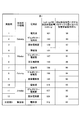
- FIG. 3 is a diagram showing charge / discharge characteristics of lithium secondary batteries of Example 1 and Comparative Example. 5 is a table showing initial discharge capacities and discharge capacity maintenance ratios of Examples and Comparative Examples.
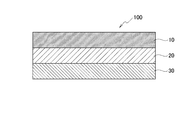
- FIG. 1 is a sectional view schematically showing a basic schematic configuration of a lithium secondary battery 100 according to this embodiment.
- the lithium secondary battery 100 includes at least a positive electrode 10, an electrolyte 20, and a negative electrode 30.
- the electrolyte 20 is arranged between the positive electrode 10 and the negative electrode 30.
- the lithium secondary battery 100 of the present embodiment is characterized in that the electrolyte 20 contains, as an additive, a metal 6,6′-bis (benzoylamino) -2,2′-bipyridine (babp) complex, which is a metal complex. To do.
- a metal 6,6′-bis (benzoylamino) -2,2′-bipyridine (babp) complex which is a metal complex.
- the positive electrode 10 may include a catalyst and a conductive material as constituent elements.
- the conductive material is a material capable of inserting and releasing lithium ions.
- the positive electrode 10 also contains a binder for integrating the conductive material.
- the negative electrode 30 can include lithium metal or a material capable of releasing and absorbing (storing) lithium ions (for example, a substance such as a lithium-containing alloy, carbon, or oxide) as a constituent element.
- a material capable of releasing and absorbing (storing) lithium ions for example, a substance such as a lithium-containing alloy, carbon, or oxide
- the lithium secondary battery 100 of the present embodiment has a structure in which the electrolyte 20 is sandwiched between the positive electrode 10 and the negative electrode 30 and laminated.
- Electrolyte The electrolyte 20 of the lithium secondary battery 100 of the present embodiment exhibits lithium ion conductivity and contains at least a metal babp complex as an additive.
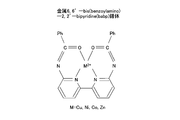
- the metal babp complex is a metal complex having the structure shown in FIG.
- the metal of the metal babp complex is preferably selected from any one of Cu, Ni, Co and Zn.
- the metal babp complex of the present embodiment may use one kind of metal babp complex among Cu, Ni, Co and Zn, or two or more kinds of metal babp complex among Cu, Ni, Co and Zn. You may mix and use. When two or more kinds of metal babp complexes are mixed, the mixing ratio is not particularly limited and may be any ratio.
- the electrolyte 20 contains a Li salt together with the above metal babp complex.
- the Li salt is supplied from a metal salt containing lithium.
- the metal salt include, for example, lithium hexafluorophosphate (LiPF 6 ), lithium perchlorate (LiClO 4 ), lithium trifluoromethanesulfonylamide (LiTFSA) [(CF 3 SO 2 ) 2 NLi], lithium bis (pentafluoroethanesulfonyl) imide (LiBETI), and the like.
- the electrolyte 20 may include a solvent.
- the solvent is a lithium ion conductive organic electrolytic solution.
- examples of the solvent include dimethyl carbonate (DMC), methyl ethyl carbonate (MEC), methyl propyl carbonate (MPC), methyl isopropyl carbonate (MIPC), methyl butyl carbonate (MBC), diethyl carbonate (DEC), ethyl propyl carbonate (EPC).
- EIPC Ethyl isopropyl carbonate
- EBC ethyl butyl carbonate
- DPC dipropyl carbonate
- DIPC diisopropyl carbonate
- EC ethylene carbonate
- PC propylene carbonate
- Carbonic acid ester solvents such as (1,2-BC)
- ether solvents such as 1,2-dimethoxyethane (DME), diethylene glycol dimethyl ether, triethylene glycol dimethyl ether, tetraethylene glycol dimethyl ether, ⁇ -butyrotactone (GBL), etc.
- the metal babp complex of the present embodiment is added at a rate of 1.0 to 50 mmol / l based on the volume of the organic electrolyte solution.
- the electrolyte 20 may include a gel polymer (lithium ion conductive gel polymer electrolyte).
- a gel polymer lithium ion conductive gel polymer electrolyte
- the gel polymer for example, one of polyvinylidene fluoride (PVdF), polyacrylonitrile (PAN), polyethylene oxide (PEO) -based gel polymer, or a mixed gel polymer in which two or more kinds are mixed is used. Good.
- the mixing ratio when using the mixed gel polymer is not particularly limited.
- the metal babp complex of the present embodiment is added at a ratio of 1.0 to 30 wt% based on the weight of the gel polymer electrolyte.
- the electrolyte 20 may include a solid electrolyte (lithium ion conductive solid electrolyte).
- the solid electrolyte is, for example, beta-eucryptite structure LiAlSiO 4, ramsdellite structure of Li 2 Ti 3 O 7, triple rutile structure of LiNb 0.75 Ta 0.25 WO 6, Li 14 ZnGe 4 O 16, Li 3 .6 Ge 0.6 V 0.4 O 4 ⁇ -Li 3 PO 4 structure, Li 5.5 Fe 0.5 Zn 0.5 O 4 inverted fluorite structure, Li 1.3 Ti 1.7 NASICON type of Al 0.3 (PO 4 ) 3 , ⁇ -Fe 2 (SO 4 ) 3 structure of Li 3 Sc 0.9 Zr 0.1 (PO 4 ) 3 , La 2 / 3-x Li 3x TiO 3 An oxide solid electrolyte having a perovskite structure of (x ⁇ 0.1) or a garnet structure of Li 7 La 3 Zr 2 O 12 , Li 4 GeS 4 , Li 4-
- the metal babp complex of this embodiment is added at a ratio of 1.0 to 30 wt% based on the weight of the solid electrolyte.
- the positive electrode 10 of the present embodiment contains at least a conductive material capable of inserting and releasing lithium ions.
- the positive electrode 10 may include an active material (catalyst) and / or a binder and the like, if necessary.
- the conductive material contained in the positive electrode 10 is preferably carbon.
- examples of the conductive material of the present embodiment include Ketjen black, carbon blacks such as acetylene black, activated carbons, graphites, carbon fibers, carbon sheets, carbon cloth and the like. it can. These carbons can be obtained, for example, as commercial products or by synthesis.
- active material of the positive electrode 10 examples include layered rock salt type materials such as LiCoO 2 and LiNiO 2 , spinel type materials such as LiMn 2 O 4 , and olivine type materials such as LiFePO 4 . Note that the known positive electrode active material is not limited to the above.
- the positive electrode 10 may include a binder.
- the binder is not particularly limited, but examples thereof include polytetrafluoroethylene (PTFE), polyvinylidene fluoride (PVDF), and polybutadiene rubber. These binders can be used as a powder or as a dispersion liquid.
- the content of the conductive material in the positive electrode 10 is preferably more than 0 and less than 100% by weight based on the weight of the positive electrode 10.
- the ratios of other components are the same as those in the conventional lithium secondary battery.
- the positive electrode 10 can be produced as follows.
- a positive electrode 10 is formed by mixing a predetermined amount of active material oxide powder, carbon powder, and binder powder such as polyvinylidene fluoride (PVDF), and pressing the mixture onto a current collector.
- the positive electrode 10 may be formed by dispersing the above-described mixture in a solvent such as an organic solvent to form a slurry, applying the mixture on a current collector, and drying the mixture.
- a solvent such as an organic solvent
- not only cold pressing but hot pressing may be applied. Thereby, the positive electrode 10 having more excellent stability can be manufactured.
- the positive electrode 10 may be manufactured by depositing an active material on a current collector using a film forming method such as RF (Radio Frequency) sputtering.
- RF Radio Frequency
- Examples of the current collector include metal such as metal foil and metal mesh, carbon such as carbon cloth and carbon sheet, ITO (indium tin oxide) in which tin oxide is added to indium oxide, and ATO in which tin oxide is doped with antimony.
- ITO indium tin oxide
- ATO in which tin oxide is doped with antimony.
- An oxide film such as (Sb-doped tin oxide) is included.
- the negative electrode 30 contains a negative electrode active material.
- the negative electrode active material is not particularly limited as long as it is a material that can be used as a negative electrode material of a lithium secondary battery.
- metallic lithium can be mentioned.
- the lithium-containing substance an alloy of lithium and silicon or tin, which is a substance capable of releasing and occluding lithium ions, or a lithium nitride such as Li 2.6 Co 0.4 N is given as an example. be able to.
- the negative electrode 30 can be formed by a known method.
- the negative electrode 30 when the negative electrode 30 is made of lithium metal, the negative electrode 30 may be manufactured by stacking a plurality of metallic lithium foils and molding them into a predetermined shape.
- the lithium secondary battery 100 of the present embodiment requires the separator, the battery case, the structural members such as the metal mesh (for example, titanium mesh), and other lithium secondary batteries in addition to the above-described constituent elements. Can be included in the element. Known materials can be used as these.
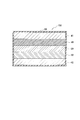
- FIG. 3 is a cross-sectional view schematically showing the configuration of the lithium secondary battery 100 of this embodiment. A method for manufacturing the lithium secondary battery 100 will be described with reference to FIG.
- the lithium secondary battery 100 of the present embodiment includes at least the positive electrode 10, the negative electrode 30, and the electrolyte 20, and as shown in FIG. 3, an electrolyte containing a metal babp complex between the positive electrode 10 and the negative electrode 30. It is configured to hold 20.
- the lithium secondary battery having such a structure is produced as follows, for example.
- the positive electrode 10 is fixed to the current collector 41. Further, the negative electrode 30 is fixed to the current collector 42. Next, the positive electrode 10 fixed to the current collector 41 is arranged and fixed so as to be in contact with the electrolyte 20. Similarly, the negative electrode 30 fixed to the current collector 42 is arranged and fixed so as to be in contact with the electrolyte 20.
- the electrolyte 20 containing the metal babp complex is arranged between the positive electrode 10 and the negative electrode 30 (inside the lithium secondary battery 100). Then, the structure shown in FIG. 3 sandwiched between the current collector 41 and the current collector 42 is sealed with the housing 50.
- a lithium secondary battery is manufactured by enclosing the positive electrode 10, the negative electrode 30, and the electrolyte 20 in an inert atmosphere in a casing 50 such as a laminate so as not to come into contact with the air.
- the lithium secondary battery 100 may be provided with a member such as a separator between the positive electrode 10 and the negative electrode 30. Further, other insulating members, fixtures, etc. may be appropriately arranged to manufacture the lithium secondary battery 100 according to the application.
- the lithium secondary battery 100 of the present embodiment manufactured in this manner can be expected to significantly drive a mobile device such as an electric vehicle or a smart phone for a long time.
- Battery cycle test For the battery cycle test, a charge / discharge measurement system (manufactured by Bio Logic) was used to apply a current density of 1 mA / cm 2 per area of the positive electrode 10 to increase the battery voltage from an open circuit voltage to 4.0 V. Until then, the charging voltage was measured. Further, in the battery discharge test, the discharge voltage was measured at the same current density as during charging until the voltage dropped to 2.5V. The battery charge / discharge test was performed in a normal living environment. The charge / discharge capacity was expressed as a value (mA / cm 2 ) per area of the positive electrode active material.
- Example 1 [Preparation of electrolyte containing Cubabp]
- the electrolyte 20 of the lithium secondary battery 100 of Example 1 is an electrolyte containing Cubabp in which Cu is used as the metal of the metal babp complex (hereinafter, “Cubabp-containing electrolyte”).
- Cubabp-containing electrolyte an electrolyte containing Cubabp in which Cu is used as the metal of the metal babp complex
- a Cubabp-containing electroelectrolyte was produced by the following procedure.
- Benzoyl chloride (Tokyo Kasei Kogyo Co., Ltd.) was added to commercially available 2,2′-bipyridine-6,6′-diamine (Tokyo Kasei Kogyo Co., Ltd.) to obtain babpH 2 by Schotten-Baumann reaction.
- the obtained babpH 2 and copper (II) acetate monohydrate (manufactured by Tokyo Kasei Kogyo Co., Ltd.) were subjected to a complex formation reaction in methanol and recrystallized in benzene to obtain Cubabp.
- the obtained Cubabp was mixed in the electrolytic solution at 50 mmol / l.
- a Cubabp-containing electrolyte was obtained by using LiPF 6 dissolved in an organic solvent EC: DMC (volume ratio 1: 1) at a concentration of 1 mol / l as an electrolytic solution.
- Example 1 lithium secondary battery cell having the cross-sectional structure shown in FIG. 3 was produced by the procedure described in the above-mentioned “(V) Production of lithium secondary battery”.
- the lithium secondary battery cell was assembled in dry air having a dew point of ⁇ 60 ° C. or lower.
- Comparative Example 1 In Comparative Example 1 to be compared with Example 1, a lithium secondary battery was produced in the same manner as in Example 1, using 1 mol / l LiPF6 / EC: DMC (volume ratio 1: 1) as the electrolyte solution of the electrolyte. The conditions for producing the lithium secondary battery and the conditions for the cycle test are the same as in Example 1.
- FIG. 4 shows the charge / discharge characteristics of the lithium secondary batteries of Example 1 and Comparative Example 1. That is, FIG. 4 shows the initial discharge and charge curves when a current density of 1 mA / cm 2 was applied.
- the horizontal axis of FIG. 4 is the capacity (mAh / g), and the vertical axis is the battery voltage (V).
- FIG. 5 shows the initial discharge capacities of a plurality of Examples and Comparative Example 1, and the discharge capacity retention ratio (performance) at the 100th cycle with respect to the initial discharge capacities.
- Example 1 using the Cubabp-containing electrolyte, the initial discharge capacity at a current density of 1 mA / cm 2 was 181 mA / g. It was found that the lithium secondary battery of Example 1 had an initial discharge capacity higher than that reported in Non-Patent Document 1 and a high discharge capacity retention ratio at the 100th cycle of 96%. ..
- Comparative Example 1 As shown in FIGS. 4 and 5, the initial discharge capacity at a current density of 1 mA / cm 2 was 112 mAh / g. In Comparative Example 1, the discharge capacity retention rate was 62%, which was low.
- Example 2 The electrolyte 20 of the lithium secondary battery 100 of Example 2 was prepared by mixing Cubabp obtained by the same procedure as in Example 1 with a gel polymer electrolyte at a ratio of 30 wt% (electrolyte weight basis).
- the gel polymer film was prepared by dissolving commercially available hydroxyethyl cellulose (manufactured by Aldrich) in water, heating and vacuum drying.
- the Cubabp-containing electrolyte of Example 2 was prepared by impregnating the gel polymer film with the same electrolytic solution as in Example 1.
- FIG. 5 shows the measurement results of Example 2 measured in the same procedure as Example 1. As shown in FIG. 5, even when the gel polymer electrolyte was used, it was confirmed that the initial discharge capacity was 163 mAh / g and the discharge capacity retention rate was 90%, which could improve the battery characteristics.
- Example 3 The electrolyte 20 of the lithium secondary battery 100 of Example 3 was produced by mixing Cubabp obtained by the same procedure as in Example 1 with a solid electrolyte at a ratio of 30 wt% (electrolyte weight basis).
- a solid electrolyte As the solid electrolyte, commercially available Li 2 S (manufactured by Wako Pure Chemical Industries, Ltd.), GeS 2 (manufactured by Wako Pure Chemical Industries, Ltd.), P 2 S 5 (manufactured by Aldrich Corporation) were mixed in a glove box, and 700 ° C., 8 It was manufactured by performing heat treatment for a time.
- the solid electrolyte and Cubabp were mixed and molded to prepare a Cubabp-containing electrolyte of Example 3.
- FIG. 5 shows the measurement results of Example 3 measured in the same procedure as in Example 1. As shown in FIG. 5, even when the solid electrolyte was used, the initial discharge capacity was 139 mAh / g and the discharge capacity retention rate was 87%, confirming that the battery characteristics could be improved.
- Example 4 [Preparation of electrolyte containing Nibabp]
- the electrolyte 20 of the lithium secondary battery 100 of Example 4 is an electrolyte containing Nibabp in which Ni is used as the metal of the metal babp complex (hereinafter, “Nibabp-containing electrolyte”).
- Nibabp was obtained by carrying out a complex formation reaction between babpH 2 obtained in the same manner as in Example 1 and nickel (II) acetate tetrahydrate (manufactured by Wako Pure Chemical Industries, Ltd.). Then, the Nibabp-containing electrolyte of Example 4 was prepared by mixing the obtained Nibabp with the electrolytic solution at a ratio of 50 mmol / l (based on the electrolytic solution volume).
- FIG. 5 shows the measurement results of Example 4 in which Nibabp was mixed with the electrolyte in the same procedure as in Example 1. As shown in FIG. 5, it was confirmed that the initial discharge capacity was 184 mAh / g and the discharge capacity retention rate was 98%, which could improve the battery characteristics.
- Example 5 The electrolyte 20 of the lithium secondary battery 100 of Example 5 was produced by mixing the gel polymer electrolyte with Nibabp obtained by the same procedure as in Example 4 at a ratio of 30 wt% (electrolyte weight basis).
- FIG. 5 shows the measurement results of Example 5 in which Nibabp was mixed with the electrolyte in the same procedure as in Example 2. As shown in FIG. 5, even when the gel polymer electrolyte was used, the initial discharge capacity was 167 mAh / g and the discharge capacity retention rate was 91%, confirming that the battery characteristics could be improved.
- Example 6 The electrolyte 20 of the lithium secondary battery 100 of Example 6 was produced by mixing the solid electrolyte with Nibabp obtained by the same procedure as in Example 4 at a ratio of 30 wt% (electrolyte weight basis).
- FIG. 5 shows the measurement results of Example 6 in which Nibabp was mixed with the electrolyte in the same procedure as in Example 3. As shown in FIG. 5, even when the solid electrolyte was used, the initial discharge capacity was 143 mAh / g and the discharge capacity retention rate was 88%, confirming that the battery characteristics could be improved.
- Example 7 [Preparation of Electrolytic Solution Containing Cobabp]
- the electrolyte 20 of the lithium secondary battery 100 of Example 7 is an electrolyte containing Cobabp in which Co is used as the metal of the metal babp complex (hereinafter, “Cobabp-containing electrolyte”).
- Bab pH 2 obtained in the same manner as in Example 1, nickel (II) acetate tetrahydrate (manufactured by Wako Pure Chemical Industries, Ltd.), and potassium hydroxide (manufactured by Kanto Chemical Co., Inc.) are added to carry out a complex formation reaction.
- the Cobabp-containing electrolyte of Example 7 was produced by mixing the obtained Cobabp with the electrolytic solution at a ratio of 50 mmol / l (based on the electrolytic solution volume).
- FIG. 5 shows the measurement results of Example 7 in which Cobabp was mixed with the electrolyte in the same procedure as in Example 1. As shown in FIG. 5, it was confirmed that the initial discharge capacity was 186 mAh / g and the discharge capacity retention rate was 99%, which could improve the battery characteristics.
- Example 8 The electrolyte 20 of the lithium secondary battery 100 of Example 8 was produced by mixing the gel polymer electrolyte with Cobabp obtained by the same procedure as in Example 7 at a ratio of 30 wt% (electrolyte weight basis).
- FIG. 5 shows the measurement results of Example 8 in which Cobabp was mixed with the electrolyte in the same procedure as in Example 2. As shown in FIG. 5, even when the gel polymer electrolyte was used, it was confirmed that the initial discharge capacity was 168 mAh / g and the discharge capacity retention rate was 94%, which could improve the battery characteristics.
- Example 9 The electrolyte 20 of the lithium secondary battery 100 of Example 9 was produced by mixing Cobabp obtained by the same procedure as in Example 7 with a solid electrolyte at a ratio of 30 wt% (electrolyte weight basis).
- FIG. 5 shows the measurement results of Example 9 in which Cobabp was mixed with the electrolyte in the same procedure as in Example 3. As shown in FIG. 5, even when the solid electrolyte was used, it was confirmed that the initial discharge capacity was 149 mAh / g and the discharge capacity retention rate was 89%, which could improve the battery characteristics.
- Example 10 [Preparation of electrolyte containing Znbabp]
- the electrolyte 20 of the lithium secondary battery 100 of Example 10 is an electrolyte containing Znbabp in which Zn is used as the metal of the metal babp complex (hereinafter, “Znbabp-containing electrolyte”).
- Zn (babpH 2 ) (OAc) was obtained by subjecting babpH 2 obtained in the same manner as in Example 1 and zinc (II) acetate dihydrate (manufactured by Wako Pure Chemical Industries, Ltd.) to a complex formation reaction in tetrahydrofuran. Got 2 .
- Znbabp was obtained by heating the obtained Zn (babpH 2 ) (OAc) 2 to 280 ° C. in a reduced pressure environment. Then, the Znbabp-containing electrolyte of Example 10 was prepared by mixing the obtained Znbabp with the organic electrolytic solution at a ratio of 50 mmol / l (based on the electrolytic solution volume).
- FIG. 5 shows the measurement results of Example 10 in which Znbabp was mixed with the electrolyte in the same procedure as in Example 1. As shown in FIG. 5, it was confirmed that the initial discharge capacity was 176 mAh / g and the discharge capacity retention rate was 95%, which could improve the battery characteristics.
- Example 11 The electrolyte 20 of the lithium secondary battery 100 of Example 11 was produced by mixing the gel polymer electrolyte with Znbabp obtained by the same procedure as in Example 10 at a ratio of 30 wt% (electrolyte weight basis).
- FIG. 5 shows the measurement results of Example 11 in which Znbabp was mixed with the electrolyte in the same procedure as in Example 2. As shown in FIG. 5, even when the gel polymer electrolyte was used, it was confirmed that the initial discharge capacity was 157 mAh / g and the discharge capacity retention rate was 90%, which could improve the battery characteristics.
- Example 12 The electrolyte 20 of the lithium secondary battery 100 of Example 12 was produced by mixing Znbabp obtained by the same procedure as in Example 10 with a solid electrolyte at a ratio of 30 wt% (electrolyte weight basis).
- FIG. 5 shows the measurement results of Example 12 in which Znbabp was mixed with the electrolyte in the same procedure as in Example 3. As shown in FIG. 5, it was confirmed that the initial discharge capacity was 136 mAh / g and the discharge capacity retention rate was 86%, which could improve the battery characteristics.
- the electrolyte 20 of the lithium secondary battery 100 of the present embodiment described above is an electrolyte containing a metal babp complex.
- the metal of the metal babp complex is selected from Cu, Ni, Co and Zn.
- the electrolyte 20 includes a lithium ion conductive organic electrolytic solution, a gel polymer electrolyte, or a solid electrolyte.
- the lithium secondary battery 100 of the present embodiment using the electrolyte to which the metal babp complex is added is superior to known materials in terms of capacity and life, and the metal babp complex is It was confirmed to be effective as an electrolyte additive for lithium secondary batteries.
- the use of the metal babp complex acts as a charge transport mediator in the electrolytic solution, reduces the interface resistance between the positive electrode (electrode) and the electrolyte, and improves the charge / discharge capacity and charge / discharge efficiency. ..
- the configuration of the lithium secondary battery of the present embodiment it becomes possible to provide a lithium secondary battery of high capacity and long life.
- a metal babp complex as an electrolyte additive, a high-capacity, long-life lithium secondary battery can be produced and can be effectively used as a drive source for various electronic devices and automobiles.
Landscapes
- Chemical & Material Sciences (AREA)
- Engineering & Computer Science (AREA)
- Manufacturing & Machinery (AREA)
- Chemical Kinetics & Catalysis (AREA)
- Electrochemistry (AREA)
- General Chemical & Material Sciences (AREA)
- General Physics & Mathematics (AREA)
- Inorganic Chemistry (AREA)
- Condensed Matter Physics & Semiconductors (AREA)
- Physics & Mathematics (AREA)
- Dispersion Chemistry (AREA)
- Materials Engineering (AREA)
- Secondary Cells (AREA)
- Battery Electrode And Active Subsutance (AREA)
Abstract
高容量化、および長寿命化したリチウム二次電池を提供する。リチウムイオンの挿入及び脱離が可能な材料を含む正極10と、リチウムイオン導電性の電解質20と、リチウム金属又はリチウムイオンの吸蔵及び放出が可能な材料を含む負極30とを備え、前記電解質20は、金属錯体である金属6,6'-bis(benzoylamino)-2,2'-bipyridine(babp)錯体を含む。
Description
本発明は、リチウム二次電池に関する。
従来、リチウム二次電池は、ニッケルカドミウム二次電池やニッケル水素二次電池など他の二次電池と比較して、エネルギー密度が大きく、充放電のサイクル特性に優れていることから、小型化、薄型化が進むスマートフォン、タブレット機器、ノート型パソコンなどのモバイル電子機器の電源として広く用いられている。
これらの電子デバイス等は用途が多様化しており、さらなる薄型化・小型化も進められていることから、搭載されるバッテリーとしてリチウム二次電池も薄型化・小型化の開発が進められている。例えば、ICカードや医療用小型デバイス等に搭載可能な薄型・小型のリチウム二次電池の開発が進められている。今後も薄型化・軽量化が求められることが予想される。
現行のリチウム二次電池は、有機系電解液、水系電解液、ゲルポリマー電解質、固体電解質と様々な形態の電解質を用いることで薄型化・軽量化が試みられている。
非特許文献1に記載のリチウム二次電池は、電解質に有機溶媒をベースとした1mmol/l LiPF6 EC/DMC/EMCを、正極にLiFePO4、対極にLiを使用することで電流密度15mA/gの条件下で約135mAh/gの容量を示している。
非特許文献2に記載のリチウム二次電池は、電解質にヒドロキシエチルセルロース膜をベースとしたゲルポリマー電解質、正極にLiFePO4、対極にLiを使用することで、電流密度50mA/gの条件下で約110mAh/gの容量を示している。
また、非特許文献3に記載のリチウム二次電池は、電解質にNASICON型のLiZr2(PO4)3である固体電解質、正極にLiFePO4、対極にLiを使用することで、80℃、電流密度100uA/cm2の条件下で約120mAh/gの容量を示している。
H.C. Shin, et al., "Electrochemical properties of the carbon-coated LiFePO4 as a cathode material for lithium-ion secondary batteries", J. Power Sources, 159, 1383-1388, (2006).
M. X. Li, et al., "A dense cellulose-based membrane as a renewable host for gel polymer electrolyte of lithium ion batteries", J. Membr. Sci., 476, 112-118, (2015).
Y. Li, et al., "Mastering the interface for advanced all-solid-state lithium rechargeable batteries", Proc. Natl. Acad. Sci. USA, 113, 13313-13317 (2016).
しかしながら、非特許文献1-3に開示されたリチウム二次電池は、いずれも、正極/電解質界面における抵抗が大きいため、正極活物質の理論容量である169mAh/gと比較して容量が小さいという課題がある。実用化のためには、前記抵抗を低減し、さらなる高性能化が必要である。
本発明は、上記課題に鑑みてなされたものであり、高容量化、および長寿命化したリチウム二次電池を提供することを目的とする。
本発明の一態様に係るリチウム二次電池は、リチウムイオンの挿入及び脱離が可能な材料を含む正極と、リチウムイオン導電性の電解質と、リチウム金属又はリチウムイオンの吸蔵及び放出が可能な材料を含む負極と、を備え、前記電解質は、金属錯体である金属6,6’-bis(benzoylamino)-2,2’-bipyridine(babp)錯体を含む。
本発明によれば、高容量化、および長寿命化したリチウム二次電池を提供することができる。
以下に、図面を参照しつつ、本発明の実施形態に係るリチウム二次電池を説明する。
[リチウム二次電池の構成]
図1は、本実施形態に係るリチウム二次電池100の基本的な概略構成を模式的に示す断面図である。図示するように、リチウム二次電池100は、正極10、電解質20、及び負極30を少なくとも含む。電解質20は、正極10と負極30の間に配置される。
図1は、本実施形態に係るリチウム二次電池100の基本的な概略構成を模式的に示す断面図である。図示するように、リチウム二次電池100は、正極10、電解質20、及び負極30を少なくとも含む。電解質20は、正極10と負極30の間に配置される。
本実施形態のリチウム二次電池100は、電解質20に、添加剤として、金属錯体である金属6,6’-bis(benzoylamino)-2,2’-bipyridine(babp)錯体を含むことを特徴とする。
正極10は、触媒及び導電性材料を構成要素に含むことができる。導電性材料は、リチウムイオンの挿入及び脱離が可能な材料である。また、また、正極10には、導電性材料を一体化するための結着剤を含むことが好ましい。
負極30は、リチウム金属、又はリチウムイオンを放出及び吸収(吸蔵)することができる材料(例えば、リチウム含有合金、炭素、酸化物などの物質)を構成要素に含むことができる。
本実施形態リチウム二次電池100は、電解質20が、正極10および負極30に挟まれて積層された構成である。
(I)電解質
本実施形態のリチウム二次電池100の電解質20は、リチウムイオン導電性を示し、添加剤として金属babp錯体を少なくとも含む。
本実施形態のリチウム二次電池100の電解質20は、リチウムイオン導電性を示し、添加剤として金属babp錯体を少なくとも含む。
金属babp錯体は、図2に示す構造を有する金属錯体である。本実施形態では、金属babp錯体の金属は、Cu,Ni,Co,Znのいずれか1つの金属から選択されることが好ましい。
本実施形態の金属babp錯体は、Cu,Ni,Co,Znの内の1種類の金属babp錯体を用いてもよく、または、Cu,Ni,Co,Znの内の2種類以上の金属babp錯体を混合して用いてもよい。金属babp錯体を2種以上混合する場合の、混合割合は特に限定されず、どのような割合であってもよい。
電解質20は、上記金属babp錯体と共に、Li塩を含む。Li塩は、リチウムを含む金属塩から供給される。金属塩の具体例は、例えば、溶質の金属塩には、六フッ化リン酸リチウム(LiPF6)、過塩素酸リチウム(LiClO4)、リチウムトリフルオロメタンスルホニルアミド(LiTFSA)[(CF3SO2)2NLi]、リチウムビス(ペンタフルオロエタンスルホニル)イミド(LiBETI)などを挙げることができる。
また、電解質20は、溶媒を含んでもよい。溶媒は、リチウムイオン導電性の有機電解液である。溶媒は、例えば、炭酸ジメチル(DMC)、炭酸メチルエチル(MEC)、炭酸メチルプロピル(MPC)、炭酸メチルイソプロピル(MIPC)、炭酸メチルブチル(MBC)、炭酸ジエチル(DEC)、炭酸エチルプロピル(EPC)、炭酸エチルイソプロピル(EIPC)、炭酸エチルブチル(EBC)、炭酸ジプロピル(DPC)、炭酸ジイソプロピル(DIPC)、炭酸ジブチル(DBC)、炭酸エチレン(EC)、炭酸プロピレン(PC)、炭酸1,2-ブチレン(1,2-BC)などの炭酸エステル系溶媒、1,2-ジメトキシエタン(DME)、ジエチレングリコールジメチルエーテル、トリエチレングリコールジメチルエーテル、テトラエチレングリコールジメチルエーテル、などのエーテル系溶媒、γ-ブチロタクトン(GBL)などのラクトン系溶媒、水、或いはこれらの中から二種類以上を混合した溶媒を挙げることができる。本実施形態では、混合溶媒を用いる場合の混合割合は、特に限定されない。
本実施形態の金属babp錯体は、有機電解液の体積基準で1.0~50mmol/lの割合で添加される。電解質20の中での金属babp錯体の添加量が多い程、優れた電池特性が得られるため、金属babp錯体は、50mmol/lの割合で添加されていることが好ましい。
また、電解質20は、ゲルポリマー(リチウムイオン導電性のゲルポリマー電解質)を含んでもよい。ゲルポリマーは、例えば、ポリフッ化ビニリデン(PVdF)、ポリアクリロニトリル(PAN)、ポリエチレンオキシド(PEO)系ゲルポリマーの中の一つ、或いはこれらの中から二種類以上を混合した混合ゲルポリマーを用いてもよい。本実施形態では、混合ゲルポリマーを用いる場合の混合割合は、特に限定されない。
本実施形態の金属babp錯体は、ゲルポリマー電解質の重量基準で1.0~30wt%の割合で添加される。電解質20の中での金属babp錯体の添加量が多い程、優れた電池特性が得られるため、金属babp錯体が30wt%の割合で添加されていることが好ましい。
また、電解質20は、固体電解質(リチウムイオン導電性の固体電解質)を含んでもよい。固体電解質は、例えば、LiAlSiO4のβユークリプタイト構造、Li2Ti3O7のラムスデライト構造、LiNb0.75Ta0.25WO6の三重ルチル構造、Li14ZnGe4O16、Li3.6Ge0.6V0.4O4のγ-Li3PO4構造、Li5.5Fe0.5Zn0.5O4の逆蛍石型構造、Li1.3Ti1.7Al0.3(PO4)3のNASICON型、Li3Sc0.9Zr0.1(PO4)3のβ-Fe2(SO4)3構造、La2/3-xLi3xTiO3(x≒0.1)のペロブスカイト構造、またはLi7La3Zr2O12のガーネット構造を有する酸化物固体電解質、Li4GeS4、Li4-xGe1-xPxS4、Li4-3xAlxGeS4、Li3+5xP1-xS4のチオリシコン物質群を有する硫化物固体電解質が挙げられる。
本実施形態の金属babp錯体は、固体電解質の重量基準で1.0~30wt%の割合で添加される。電解質20の中での金属babp錯体の添加量が多い程、優れた電池特性が得られるため、金属babp錯体が30wt%での割合で添加されていることが好ましい。
(II)正極
本実施形態の正極10は、リチウムイオンの挿入及び脱離が可能な導電性材料を少なくとも含む。また、正極10は、必要に応じて活物質(触媒)及び/又は結着剤等を含むことができる。
本実施形態の正極10は、リチウムイオンの挿入及び脱離が可能な導電性材料を少なくとも含む。また、正極10は、必要に応じて活物質(触媒)及び/又は結着剤等を含むことができる。
(II-1)導電性材料
正極10に含まれる導電性材料は、カーボンであることが好ましい。以下のものに限定されないが、本実施形態の導電性材料としては、ケッチェンブラック、アセチレンブラックなどのカーボンブラック類、活性炭類、グラファイト類、カーボンファイバー類、カーボンシート、カーボンクロス等を挙げることができる。これらのカーボンは、例えば市販品として、又は合成により入手することが可能である。
正極10に含まれる導電性材料は、カーボンであることが好ましい。以下のものに限定されないが、本実施形態の導電性材料としては、ケッチェンブラック、アセチレンブラックなどのカーボンブラック類、活性炭類、グラファイト類、カーボンファイバー類、カーボンシート、カーボンクロス等を挙げることができる。これらのカーボンは、例えば市販品として、又は合成により入手することが可能である。
(II-2)活物質
正極10の活物質は、LiCoO2、LiNiO2等の層状岩塩型材料、LiMn2O4等のスピネル型材料、LiFePO4等のオリビン型材料等を挙げることができる。なお、公知の正極活物質であれば、上記のものに限定されない。
正極10の活物質は、LiCoO2、LiNiO2等の層状岩塩型材料、LiMn2O4等のスピネル型材料、LiFePO4等のオリビン型材料等を挙げることができる。なお、公知の正極活物質であれば、上記のものに限定されない。
具体的には、LiNi(CoAl)O2、LiNi1/3Mn1/3Co1/3O2、LiNi0.5Mn0.5O2、Li2MnO3-LiMO2(M=Co、Ni、Mn)、Li1+xMn2-xO4、Li(MnAl)2O4、LiMn1.5Ni0.5O4、LiMnPO4、Li2MSiO4、Li2MPO4Fなどを用いることができる。これらの活物質は、固相法や液相法などの公知のプロセスを用いて合成することができる。
(II-3)結着剤(バインダー)
正極10は、結着剤(バインダー)を含むことができる。この結着剤は、特に限定されないが、ポリテトラフルオロエチレン(PTFE)、ポリフッ化ビニリデン(PVDF)、ポリブタジエンゴムなどを例として挙げることができる。これらの結着剤は、粉末として又は分散液として用いることができる。
正極10は、結着剤(バインダー)を含むことができる。この結着剤は、特に限定されないが、ポリテトラフルオロエチレン(PTFE)、ポリフッ化ビニリデン(PVDF)、ポリブタジエンゴムなどを例として挙げることができる。これらの結着剤は、粉末として又は分散液として用いることができる。
本実施形態のリチウム二次電池において、正極10中での導電性材料の含有量は、正極10の重量を基準に、例えば0を越え、100重量%未満であることが望ましい。その他の成分の割合は,従来のリチウム二次電池と同様である。
(II-4)正極の作製
正極10は、以下のように作製することができる。活物質である酸化物粉末、カーボン粉末、及びポリフッ化ビニリデン(PVDF)のようなバインダー粉末を所定量混合し、この混合物を集電体上に圧着することにより、正極10を成形する。また、前述の混合物を有機溶剤等の溶媒中に分散してスラリー状にし、集電体上に塗布して乾燥することによって、正極10を形成してもよい。なお、電極の強度を高め電解液の漏洩を防止するために、冷間プレスだけでなく、ホットプレスを適用いてもよい。これにより、より安定性に優れた正極10を作製することができる。
正極10は、以下のように作製することができる。活物質である酸化物粉末、カーボン粉末、及びポリフッ化ビニリデン(PVDF)のようなバインダー粉末を所定量混合し、この混合物を集電体上に圧着することにより、正極10を成形する。また、前述の混合物を有機溶剤等の溶媒中に分散してスラリー状にし、集電体上に塗布して乾燥することによって、正極10を形成してもよい。なお、電極の強度を高め電解液の漏洩を防止するために、冷間プレスだけでなく、ホットプレスを適用いてもよい。これにより、より安定性に優れた正極10を作製することができる。
また、RF(Radio Frequency)スパッタなどの成膜法を用いて、活物質を集電体上に蒸着することにより正極10を作製してもよい。
集電体には、例えば、金属箔や金属メッシュなどの金属、カーボンクロスやカーボンシートなどのカーボン、酸化物インジウムに酸化スズを添加したITO(indium tin oxide)や酸化スズにアンチモンをドープしたATO(Sb-doped tin oxide)などの酸化物膜が挙げられる。
(III)負極
本実施形態のリチウム二次電池は、負極30に負極活物質を含む。この負極活物質は、リチウム二次電池の負極材料として用いることができる材料であれば特に限定されない。例えば、金属リチウムを挙げることができる。或いは、リチウム含有物質として、リチウムイオンを放出及び吸蔵することができる物質である、リチウムと、シリコン又はスズとの合金、或いはLi2.6Co0.4Nなどのリチウム窒化物を例として挙げることができる。
本実施形態のリチウム二次電池は、負極30に負極活物質を含む。この負極活物質は、リチウム二次電池の負極材料として用いることができる材料であれば特に限定されない。例えば、金属リチウムを挙げることができる。或いは、リチウム含有物質として、リチウムイオンを放出及び吸蔵することができる物質である、リチウムと、シリコン又はスズとの合金、或いはLi2.6Co0.4Nなどのリチウム窒化物を例として挙げることができる。
負極30は、公知の方法で形成することができる。例えば、リチウム金属を負極30とする場合には、複数枚の金属リチウム箔を重ねて所定の形状に成形することで、負極30を作製すればよい。
(IV)他の要素
本実施形態のリチウム二次電池100は、上記の構成要素に加え、セパレータ、電池ケース、金属メッシュ(例えばチタンメッシュ)などの構造部材、及びその他のリチウム二次電池に要求される要素を含むことができる。これらは、公知のものを使用することができる。
本実施形態のリチウム二次電池100は、上記の構成要素に加え、セパレータ、電池ケース、金属メッシュ(例えばチタンメッシュ)などの構造部材、及びその他のリチウム二次電池に要求される要素を含むことができる。これらは、公知のものを使用することができる。
(V)リチウム二次電池の作製
図3は、本実施形態のリチウム二次電池100の構成を模式的に示す断面図である。図3を参照してリチウム二次電池100の作製方法について説明する。
図3は、本実施形態のリチウム二次電池100の構成を模式的に示す断面図である。図3を参照してリチウム二次電池100の作製方法について説明する。
本実施形態のリチウム二次電池100は、上述した通り、少なくとも正極10、負極30及び電解質20を含み、図3に示すように、正極10と負極30の間に、金属babp錯体を含有する電解質20を狭持するように構成される。このような構成のリチウム二次電池は、例えば以下のように作製する。
まず、集電体41に正極10を固定する。また、集電体42に負極30を固定する。次に、集電体41に固定された正極10を、電解質20に接するように配置して固定する。同様に、集電体42に固定された負極30を、電解質20に接するように配置して固定する。
これにより、正極10と負極30の間(リチウム二次電池100の内部)に、金属babp錯体を含有した電解質20が配置される。そして、集電体41と集電体42で挟んだ図3に示す構成を筐体50で封止する。大気と触れないようにラミネートなどの筐体50で不活性雰囲気中に正極10、負極30及び電解質20を囲うことでリチウム二次電池を作製する。
なお、上記構成に加え、リチウム二次電池100は、正極10と負極30の間に、セパレータ等の部材を配置してもよい。また、その他の絶縁部材、固定具などを適宜配置して、用途に合わせたリチウム二次電池100を作製してもよい。
このように作製した本実施形態のリチウム二次電池100は、電気自動車やスマートフォン等のモバイル機器の駆動を大幅に長時間化することが期待できる。
[実施例]
以上述べた本実施形態のリチウム二次電池100の効果を確認する目的で、電解質20の組成を変えた複数の実施例のリチウム二次電池100を作製し、その特性を評価する実験(試験)を行った。電解質20の組成を変えたリチウム二次電池100の特性は、電池のサイクル試験で評価した。
以上述べた本実施形態のリチウム二次電池100の効果を確認する目的で、電解質20の組成を変えた複数の実施例のリチウム二次電池100を作製し、その特性を評価する実験(試験)を行った。電解質20の組成を変えたリチウム二次電池100の特性は、電池のサイクル試験で評価した。
(電池のサイクル試験)
電池のサイクル試験は、充放電測定システム(Bio Logic社製)を用いて、正極10の面積当たりの電流密度で1mA/cm2を通電し、開回路電圧から電池電圧が、4.0Vに上昇するまで充電電圧の測定を行った。また、電池の放電試験は、充電時と同じ電流密度で、2.5Vに低下するまで放電電圧の測定を行った。電池の充放電試験は、通常の生活環境下で行った。充放電容量は正極活物質の面積当たりの値(mA/cm2)で表した。
電池のサイクル試験は、充放電測定システム(Bio Logic社製)を用いて、正極10の面積当たりの電流密度で1mA/cm2を通電し、開回路電圧から電池電圧が、4.0Vに上昇するまで充電電圧の測定を行った。また、電池の放電試験は、充電時と同じ電流密度で、2.5Vに低下するまで放電電圧の測定を行った。電池の充放電試験は、通常の生活環境下で行った。充放電容量は正極活物質の面積当たりの値(mA/cm2)で表した。
(実施例1)
[Cubabpを含む電解質の作製]
実施例1のリチウム二次電池100の電解質20は、金属babp錯体の金属にCuを用いたCubabpを含む電解質(以下、「Cubabp含有電解質」)である。実施例1では、Cubabp含有電電解質を、以下の手順で作製した。
[Cubabpを含む電解質の作製]
実施例1のリチウム二次電池100の電解質20は、金属babp錯体の金属にCuを用いたCubabpを含む電解質(以下、「Cubabp含有電解質」)である。実施例1では、Cubabp含有電電解質を、以下の手順で作製した。
市販の2,2’-ビピリジン-6,6’-ジアミン(東京化成工業社製)に塩化ベンゾイル(東京化成工業)を加え、ショッテン・バウマン反応によりbabpH2を得た。得られたbabpH2と酢酸銅(II)一水和物(東京化成工業社製)をメタノール中にて錯体形成反応させ、ベンゼン中にて再結晶化させることでCubabpを得た。得られたCubabpを電解液に50mmol/l混合した。
混合する際、超音波洗浄機を用いて最大出力で10分間の分散を行った。また、電解液は、LiPF6を有機溶媒EC:DMC(体積比1:1)に1mol/lの濃度で溶解したものを用いて、Cubabp含有電解質を得た。
そして、前述の「(V)リチウム二次電池の作製」で説明した手順により、図3に示す断面構造を有する、実施例1のリチウム二次電池セル(リチウム二次電池)を、作製した。なお、実施例1では、LiFePO4:アセチレンブラック:PVdF=85:10:5(重量比)をスラリー化し、Al箔上に塗布、乾燥させることで正極10を得た。リチウム二次電池セルは、露点が-60℃以下の乾燥空気中で組み立てた。
(比較例1)
実施例1と比較する比較例1では、電解質の電解液として1mol/lのLiPF6/EC:DMC(体積比1:1)を用いて、実施例1と同様にリチウム二次電池を作製した。リチウム二次電池の作製条件及びサイクル試験の条件は、実施例1と同様である。
実施例1と比較する比較例1では、電解質の電解液として1mol/lのLiPF6/EC:DMC(体積比1:1)を用いて、実施例1と同様にリチウム二次電池を作製した。リチウム二次電池の作製条件及びサイクル試験の条件は、実施例1と同様である。
(充放電特性)
図4に、実施例1と比較例1のリチウム二次電池の充放電特性を示す。すなわち、図4は、電流密度1mA/cm2を通電した場合の初回の放電及び充電曲線を示す。図4の横軸は容量(mAh/g)、縦軸は電池電圧(V)である。
図4に、実施例1と比較例1のリチウム二次電池の充放電特性を示す。すなわち、図4は、電流密度1mA/cm2を通電した場合の初回の放電及び充電曲線を示す。図4の横軸は容量(mAh/g)、縦軸は電池電圧(V)である。
また、図5に、複数の実施例および比較例1の初回放電容量、及び初回放電容量に対する100サイクル目における放電容量維持率(性能)を示す。
図4及び図5に示すように、Cubabp含有電解質を用いた実施例1では、電流密度1mA/cm2時の初回放電容量は、181mA/gであった。この実施例1のリチウム二次電池は、非特許文献1で報告されたものよりも初回放電容量がそれ以上であり、且つ、100サイクル目における放電容量維持率が96%と高いことがわかった。
一方、比較例1では、図4及び図5に示すように、電流密度1mA/cm2時の初回放電容量は、112mAh/gを示した。また、比較例1では、放電容量維持率は62%と低い維持率を示した。
このように、Cubabp含有電解質を使用したリチウム二次電池は、電池特性を向上させることが確認できた。以下、他の実施例を説明する。
(実施例2)
実施例2のリチウム二次電池100の電解質20は、ゲルポリマー電解質に、30wt%(電解質重量基準)の割合で、実施例1と同様の手順で得たCubabpを混合させて作製した。ゲルポリマーの膜は、市販のヒドロキシエチルセルロース(アルドリッチ社製)を水に溶かし、加熱、真空乾燥処理を経て作製した。このゲルポリマーの膜に実施例1と同様の電解液を含浸させることにより、実施例2のCubabp含有電解質を作製した。
実施例2のリチウム二次電池100の電解質20は、ゲルポリマー電解質に、30wt%(電解質重量基準)の割合で、実施例1と同様の手順で得たCubabpを混合させて作製した。ゲルポリマーの膜は、市販のヒドロキシエチルセルロース(アルドリッチ社製)を水に溶かし、加熱、真空乾燥処理を経て作製した。このゲルポリマーの膜に実施例1と同様の電解液を含浸させることにより、実施例2のCubabp含有電解質を作製した。
実施例1と同様の手順で測定した実施例2の測定結果を図5に示す。図5に示すように、ゲルポリマー電解質を用いた場合においても、初回放電容量が163mAh/g、放電容量維持率が90%と、電池特性を向上できることを確認した。
(実施例3)
実施例3のリチウム二次電池100の電解質20は、固体電解質に、30wt%(電解質重量基準)の割合で、実施例1と同様の手順で得たCubabpを混合させて作製した。固体電解質は、市販のLi2S(和光純薬工業社製)、GeS2(和光純薬工業社製)、P2S5(アルドリッチ社製)をグローブボックス内で混合し、700℃、8時間加熱処理をすることで作製した。この固体電解質とCubabpを混合、成形することにより、実施例3のCubabp含有電解質を作製した。
実施例3のリチウム二次電池100の電解質20は、固体電解質に、30wt%(電解質重量基準)の割合で、実施例1と同様の手順で得たCubabpを混合させて作製した。固体電解質は、市販のLi2S(和光純薬工業社製)、GeS2(和光純薬工業社製)、P2S5(アルドリッチ社製)をグローブボックス内で混合し、700℃、8時間加熱処理をすることで作製した。この固体電解質とCubabpを混合、成形することにより、実施例3のCubabp含有電解質を作製した。
実施例1と同様の手順で測定した実施例3の測定結果を、図5に示す。図5に示すように、固体電解質を用いた場合においても、初回放電容量が139mAh/g、放電容量維持率が87%と、電池特性を向上できることを確認した。
(実施例4)
[Nibabpを含む電解質の作製]
実施例4のリチウム二次電池100の電解質20は、金属babp錯体の金属にNiを用いたNibabpを含む電解質(以下、「Nibabp含有電解質」)である。実施例1と同様にして得られたbabpH2と酢酸ニッケル(II)四水和物(和光純薬工業社製)を、錯体形成反応させることでNibabpを得た。そして、得られたNibabpを、電解液に50mmol/l(電解液体積基準)の割合で混合することで、実施例4のNibabp含有電解質を作製した。
[Nibabpを含む電解質の作製]
実施例4のリチウム二次電池100の電解質20は、金属babp錯体の金属にNiを用いたNibabpを含む電解質(以下、「Nibabp含有電解質」)である。実施例1と同様にして得られたbabpH2と酢酸ニッケル(II)四水和物(和光純薬工業社製)を、錯体形成反応させることでNibabpを得た。そして、得られたNibabpを、電解液に50mmol/l(電解液体積基準)の割合で混合することで、実施例4のNibabp含有電解質を作製した。
実施例1と同様の手順で、電解質にNibabpを混合した実施例4の測定結果を図5に示す。図5に示すように、初回放電容量が184mAh/g、放電容量維持率が98%と、電池特性を向上できることを確認した。
(実施例5)
実施例5のリチウム二次電池100の電解質20は、ゲルポリマー電解質に、30wt%(電解質重量基準)の割合で、実施例4と同様の手順で得たNibabpを混合させて作製した。
実施例5のリチウム二次電池100の電解質20は、ゲルポリマー電解質に、30wt%(電解質重量基準)の割合で、実施例4と同様の手順で得たNibabpを混合させて作製した。
実施例2と同様の手順で、電解質にNibabpを混合した実施例5の測定結果を図5に示す。図5に示すように、ゲルポリマー電解質を用いた場合においても、初回放電容量が167mAh/g、放電容量維持率が91%と、電池特性を向上できることを確認した。
(実施例6)
実施例6のリチウム二次電池100の電解質20は、固体電解質に、30wt%(電解質重量基準)の割合で、実施例4と同様の手順で得たNibabpを混合させて作製した。
実施例6のリチウム二次電池100の電解質20は、固体電解質に、30wt%(電解質重量基準)の割合で、実施例4と同様の手順で得たNibabpを混合させて作製した。
実施例3と同様の手順で、電解質にNibabpを混合した実施例6の測定結果を図5に示す。図5に示すように、固体電解質を用いた場合においても、初回放電容量が143mAh/g、放電容量維持率が88%と、電池特性を向上できることを確認した。
(実施例7)
[Cobabpを含む電解液の作製]
実施例7のリチウム二次電池100の電解質20は、金属babp錯体の金属にCoを用いたCobabpを含む電解質(以下、「Cobabp含有電解質」)である。実施例1と同様にして得られたbabpH2と酢酸ニッケル(II)四水和物(和光純薬工業社製)、さらに、水酸化カリウム(関東化学社製)を加え、錯体形成反応させることでCobabpを得た。そして、得られたCobabpを、電解液に50mmol/l(電解液体積基準)の割合で混合することで、実施例7のCobabp含有電解質を作製した。
[Cobabpを含む電解液の作製]
実施例7のリチウム二次電池100の電解質20は、金属babp錯体の金属にCoを用いたCobabpを含む電解質(以下、「Cobabp含有電解質」)である。実施例1と同様にして得られたbabpH2と酢酸ニッケル(II)四水和物(和光純薬工業社製)、さらに、水酸化カリウム(関東化学社製)を加え、錯体形成反応させることでCobabpを得た。そして、得られたCobabpを、電解液に50mmol/l(電解液体積基準)の割合で混合することで、実施例7のCobabp含有電解質を作製した。
実施例1と同様の手順で、電解質にCobabpを混合した実施例7の測定結果を図5に示す。図5に示すように、初回放電容量が186mAh/g、放電容量維持率が99%と電池特性を向上できることを確認した。
(実施例8)
実施例8のリチウム二次電池100の電解質20は、ゲルポリマー電解質に、30wt%(電解質重量基準)の割合で、実施例7と同様の手順で得たCobabpを混合させて作製した。
実施例8のリチウム二次電池100の電解質20は、ゲルポリマー電解質に、30wt%(電解質重量基準)の割合で、実施例7と同様の手順で得たCobabpを混合させて作製した。
実施例2と同様の手順で、電解質にCobabpを混合した実施例8の測定結果を図5に示す。図5に示すように、ゲルポリマー電解質を用いた場合においても、初回放電容量が168mAh/g、放電容量維持率が94%と電池特性を向上できることを確認した。
(実施例9)
実施例9のリチウム二次電池100の電解質20は、固体電解質に、30wt%(電解質重量基準)の割合で、実施例7と同様の手順で得たCobabpを混合させて作製した。
実施例9のリチウム二次電池100の電解質20は、固体電解質に、30wt%(電解質重量基準)の割合で、実施例7と同様の手順で得たCobabpを混合させて作製した。
実施例3と同様の手順で、電解質にCobabpを混合した実施例9の測定結果を図5に示す。図5に示すように、固体電解質を用いた場合においても、初回放電容量が149mAh/g、放電容量維持率が89%と電池特性を向上できることを確認した。
(実施例10)
[Znbabpを含む電解液の作製]
実施例10のリチウム二次電池100の電解質20は、金属babp錯体の金属にZnを用いたZnbabpを含む電解質(以下、「Znbabp含有電解質」)である。実施例1と同様にして得られたbabpH2と酢酸亜鉛(II)二水和物(和光純薬工業社製)を、テトラヒドロフラン中にて錯体形成反応させることでZn(babpH2)(OAc)2を得た。得られたZn(babpH2)(OAc)2を減圧環境中で280℃に加熱することでZnbabpを得た。そして、得られたZnbabpを、有機電解液に50mmol/l(電解液体積基準)の割合で混合することで、実施例10のZnbabp含有電解質を作製した。
[Znbabpを含む電解液の作製]
実施例10のリチウム二次電池100の電解質20は、金属babp錯体の金属にZnを用いたZnbabpを含む電解質(以下、「Znbabp含有電解質」)である。実施例1と同様にして得られたbabpH2と酢酸亜鉛(II)二水和物(和光純薬工業社製)を、テトラヒドロフラン中にて錯体形成反応させることでZn(babpH2)(OAc)2を得た。得られたZn(babpH2)(OAc)2を減圧環境中で280℃に加熱することでZnbabpを得た。そして、得られたZnbabpを、有機電解液に50mmol/l(電解液体積基準)の割合で混合することで、実施例10のZnbabp含有電解質を作製した。
実施例1と同様の手順で、電解質にZnbabpを混合した実施例10の測定結果を図5に示す。図5に示すように、初回放電容量が176mAh/g、放電容量維持率が95%と電池特性を向上できることを確認した。
(実施例11)
実施例11のリチウム二次電池100の電解質20は、ゲルポリマー電解質に、30wt%(電解質重量基準)の割合で、実施例10と同様の手順で得たZnbabpを混合させて作製した。
実施例11のリチウム二次電池100の電解質20は、ゲルポリマー電解質に、30wt%(電解質重量基準)の割合で、実施例10と同様の手順で得たZnbabpを混合させて作製した。
実施例2と同様の手順で、電解質にZnbabpを混合した実施例11の測定結果を図5に示す。図5に示すように、ゲルポリマー電解質を用いた場合においても、初回放電容量が157mAh/g、放電容量維持率が90%と電池特性を向上できることを確認した。
(実施例12)
実施例12のリチウム二次電池100の電解質20は、固体電解質に、30wt%(電解質重量基準)の割合で、実施例10と同様の手順で得たZnbabpを、混合させて作製した。
実施例12のリチウム二次電池100の電解質20は、固体電解質に、30wt%(電解質重量基準)の割合で、実施例10と同様の手順で得たZnbabpを、混合させて作製した。
実施例3と同様の手順で、電解質にZnbabpを混合した実施例12の測定結果を図5に示す。図5に示すように、初回放電容量が136mAh/g、放電容量維持率が86%と電池特性を向上できることを確認した。
以上説明した本実施形態のリチウム二次電池100の電解質20は、金属babp錯体を含む電解質である。金属babp錯体の金属は、Cu,Ni,Co,Znから選択される。また、電解質20は、リチウムイオン導電性の有機電解液、ゲルポリマー電解質、又は、固体電解質を含む。
このように金属babp錯体を添加した電解質を使用した本実施形態のリチウム二次電池100は、図5に示すように、公知の材料よりも、容量、寿命に関して優れており、金属babp錯体は、リチウム二次電池用電解質添加剤として有効であることが確認された。
これは、金属babp錯体を使用することで、電解液中で電荷輸送メディエーターとして作用し、正極(電極)/電解質の界面抵抗を低減させ、充放電容量、充放電効率が向上したものと考えられる。
すなわち、リチウムイオンを吸蔵可能な金属錯体を使用することで、正極/電解質界面におけるリチウムイオンの移動が促進され、充電反応電圧が低減し、放電電圧が上昇することで、電池特性の改善を達成することができる。
したがって、本実施形態のリチウム二次電池の構成を採用することによって、高容量、長寿命のリチウム二次電池を提供することが可能となる。
なお、本発明は上記実施形態に限定されるものではなく、その要旨の範囲内で数々の変形が可能である。
電解質の添加剤として金属babp錯体を用いることにより、高容量、長寿命なリチウム二次電池を作製することができ、様々な電子機器や自動車等の駆動源として有効利用することができる。
10:正極
20:電解質
30:負極
41、42:集電体
50:筐体
100:リチウム二次電池
20:電解質
30:負極
41、42:集電体
50:筐体
100:リチウム二次電池
Claims (5)
- リチウムイオンの挿入及び脱離が可能な材料を含む正極と、
リチウムイオン導電性の電解質と、
リチウム金属又はリチウムイオンの吸蔵及び放出が可能な材料を含む負極と、を備え、
前記電解質は、金属錯体である金属6,6’-bis(benzoylamino)-2,2’-bipyridine(babp)錯体を含むこと
を特徴とするリチウム二次電池。 - 前記金属錯体の金属は、Cu,Ni,Co,Znから選択されること
を特徴とする請求項1に記載のリチウム二次電池。 - 前記電解質は、リチウムイオン導電性の電解液を含むこと
を特徴とする請求項1又は2に記載のリチウム二次電池。 - 前記電解質は、リチウムイオン導電性のゲルポリマー電解質を含むこと
を特徴とする請求項1又は2に記載のリチウム二次電池。 - 前記電解質は、リチウムイオン導電性の固体電解質を含むこと
を特徴とする請求項1又は2に記載のリチウム二次電池。
Priority Applications (1)
| Application Number | Priority Date | Filing Date | Title |
|---|---|---|---|
| US17/288,835 US12074288B2 (en) | 2018-11-21 | 2019-11-07 | Lithium secondary battery |
Applications Claiming Priority (2)
| Application Number | Priority Date | Filing Date | Title |
|---|---|---|---|
| JP2018-218080 | 2018-11-21 | ||
| JP2018218080A JP7116310B2 (ja) | 2018-11-21 | 2018-11-21 | リチウム二次電池 |
Publications (1)
| Publication Number | Publication Date |
|---|---|
| WO2020105448A1 true WO2020105448A1 (ja) | 2020-05-28 |
Family
ID=70773062
Family Applications (1)
| Application Number | Title | Priority Date | Filing Date |
|---|---|---|---|
| PCT/JP2019/043649 Ceased WO2020105448A1 (ja) | 2018-11-21 | 2019-11-07 | リチウム二次電池 |
Country Status (3)
| Country | Link |
|---|---|
| US (1) | US12074288B2 (ja) |
| JP (1) | JP7116310B2 (ja) |
| WO (1) | WO2020105448A1 (ja) |
Citations (4)
| Publication number | Priority date | Publication date | Assignee | Title |
|---|---|---|---|---|
| JPH04337258A (ja) * | 1991-05-15 | 1992-11-25 | Sanyo Electric Co Ltd | 非水系電解液電池 |
| US20040091772A1 (en) * | 2002-06-20 | 2004-05-13 | Boris Ravdel | Lithium-ion battery electrolytes with improved thermal stability |
| JP2005255428A (ja) * | 2004-03-10 | 2005-09-22 | Toyota Central Res & Dev Lab Inc | 錯体複合材料及びその製造方法 |
| WO2016143428A1 (ja) * | 2015-03-12 | 2016-09-15 | 富士フイルム株式会社 | 電解液および非水二次電池 |
Family Cites Families (4)
| Publication number | Priority date | Publication date | Assignee | Title |
|---|---|---|---|---|
| CN100449852C (zh) * | 2005-10-18 | 2009-01-07 | 比亚迪股份有限公司 | 一种混合添加剂及其配制的锂离子二次电池电解液 |
| WO2016095116A1 (en) * | 2014-12-17 | 2016-06-23 | Basf Corporation | Electrolyte compositions for rechargeable lithium ion batteries |
| EP3166164A1 (de) * | 2015-11-05 | 2017-05-10 | Lithium Energy and Power GmbH & Co. KG | Verfahren zur herstellung einer lithium-ionen-batterie und lithium-ionen-batterie |
| US10741812B2 (en) * | 2017-06-19 | 2020-08-11 | GM Global Technology Operations LLC | Acid-scavenging functional separators for power performance of lithium ion electrochemical cells |
-
2018
- 2018-11-21 JP JP2018218080A patent/JP7116310B2/ja active Active
-
2019
- 2019-11-07 WO PCT/JP2019/043649 patent/WO2020105448A1/ja not_active Ceased
- 2019-11-07 US US17/288,835 patent/US12074288B2/en active Active
Patent Citations (4)
| Publication number | Priority date | Publication date | Assignee | Title |
|---|---|---|---|---|
| JPH04337258A (ja) * | 1991-05-15 | 1992-11-25 | Sanyo Electric Co Ltd | 非水系電解液電池 |
| US20040091772A1 (en) * | 2002-06-20 | 2004-05-13 | Boris Ravdel | Lithium-ion battery electrolytes with improved thermal stability |
| JP2005255428A (ja) * | 2004-03-10 | 2005-09-22 | Toyota Central Res & Dev Lab Inc | 錯体複合材料及びその製造方法 |
| WO2016143428A1 (ja) * | 2015-03-12 | 2016-09-15 | 富士フイルム株式会社 | 電解液および非水二次電池 |
Non-Patent Citations (1)
| Title |
|---|
| PENG GUO ET AL: "Charge propagation in nickel 6, 6'-bis(2'- hydroxyphenyl)-2,2'-bipyridine polymer film doped with perchlorate anions", JOURNAL OF ELECTROANALYTICAL CHEMISTRY, vol. 498, no. 1-2, 16 February 2000 (2000-02-16), pages 142 - 151, XP055709915, ISSN: 1572-6657, DOI: 10.1016/S0022-0728(00)00347-8 * |
Also Published As
| Publication number | Publication date |
|---|---|
| JP7116310B2 (ja) | 2022-08-10 |
| US20210399342A1 (en) | 2021-12-23 |
| JP2020087620A (ja) | 2020-06-04 |
| US12074288B2 (en) | 2024-08-27 |
Similar Documents
| Publication | Publication Date | Title |
|---|---|---|
| KR101982790B1 (ko) | 다층 구조의 리튬 금속 산화물들을 포함하는 리튬 이차전지용 양극 활물질 및 그것을 포함하는 양극 | |
| KR101397022B1 (ko) | 리튬 이차 전지용 양극 활물질, 그 제조방법 및 이를 이용한 리튬 이차 전지 | |
| CN103443993A (zh) | 二次电池 | |
| JP6815381B2 (ja) | 電極アセンブリを構成する分離膜の気孔内にゲル化電解質成分を含む電池セル | |
| CN103456918B (zh) | 电池正极及其制备方法和使用该正极的锂离子电池 | |
| JP5403711B2 (ja) | リチウムイオン二次電池の製造方法 | |
| JP6365305B2 (ja) | リチウム二次電池 | |
| CN109786832B (zh) | 电解液添加剂、电解液及锂离子二次电池 | |
| KR20150020231A (ko) | 전기화학 장치용 전해액 및 전기화학 장치 | |
| WO2019221107A1 (ja) | リチウム二次電池 | |
| JP2011192561A (ja) | 非水電解液二次電池の製造方法 | |
| JP6933260B2 (ja) | リチウムイオン二次電池用非水電解液およびそれを用いたリチウムイオン二次電池 | |
| KR101666796B1 (ko) | 리튬 이차 전지용 양극 활물질, 이의 제조 방법, 및 이를 포함하는 리튬 이차 전지 | |
| JP5391832B2 (ja) | 二次電池及びその製造方法 | |
| JP6812827B2 (ja) | 非水電解液およびそれを用いた非水電解液電池 | |
| JP5312751B2 (ja) | 非水電解液二次電池の製造方法 | |
| JP2019061826A (ja) | リチウムイオン二次電池 | |
| JP2013186972A (ja) | 非水電解質二次電池 | |
| US12074288B2 (en) | Lithium secondary battery | |
| JP7011176B2 (ja) | リチウム二次電池 | |
| CN104124413A (zh) | 一种锂硫蓄电池 | |
| US11961960B2 (en) | Lithium secondary battery | |
| JP2019061827A (ja) | リチウムイオン二次電池 | |
| CN103915605B (zh) | 含硫负极及相应非水电解液二次电池 | |
| CN105529494A (zh) | 非水电解液及锂离子电池 |
Legal Events
| Date | Code | Title | Description |
|---|---|---|---|
| 121 | Ep: the epo has been informed by wipo that ep was designated in this application |
Ref document number: 19887553 Country of ref document: EP Kind code of ref document: A1 |
|
| NENP | Non-entry into the national phase |
Ref country code: DE |
|
| 122 | Ep: pct application non-entry in european phase |
Ref document number: 19887553 Country of ref document: EP Kind code of ref document: A1 |