WO2020071318A1 - 神経変性疾患治療剤 - Google Patents
神経変性疾患治療剤Info
- Publication number
- WO2020071318A1 WO2020071318A1 PCT/JP2019/038530 JP2019038530W WO2020071318A1 WO 2020071318 A1 WO2020071318 A1 WO 2020071318A1 JP 2019038530 W JP2019038530 W JP 2019038530W WO 2020071318 A1 WO2020071318 A1 WO 2020071318A1
- Authority
- WO
- WIPO (PCT)
- Prior art keywords
- aim
- disease
- fragment
- brain
- nucleic acid
- Prior art date
- Legal status (The legal status is an assumption and is not a legal conclusion. Google has not performed a legal analysis and makes no representation as to the accuracy of the status listed.)
- Ceased
Links
Images



Classifications
-
- C—CHEMISTRY; METALLURGY
- C07—ORGANIC CHEMISTRY
- C07K—PEPTIDES
- C07K14/00—Peptides having more than 20 amino acids; Gastrins; Somatostatins; Melanotropins; Derivatives thereof
- C07K14/435—Peptides having more than 20 amino acids; Gastrins; Somatostatins; Melanotropins; Derivatives thereof from animals; from humans
- C07K14/705—Receptors; Cell surface antigens; Cell surface determinants
- C07K14/7056—Lectin superfamily, e.g. CD23, CD72
-
- A—HUMAN NECESSITIES
- A61—MEDICAL OR VETERINARY SCIENCE; HYGIENE
- A61K—PREPARATIONS FOR MEDICAL, DENTAL OR TOILETRY PURPOSES
- A61K38/00—Medicinal preparations containing peptides
- A61K38/16—Peptides having more than 20 amino acids; Gastrins; Somatostatins; Melanotropins; Derivatives thereof
- A61K38/17—Peptides having more than 20 amino acids; Gastrins; Somatostatins; Melanotropins; Derivatives thereof from animals; from humans
- A61K38/1703—Peptides having more than 20 amino acids; Gastrins; Somatostatins; Melanotropins; Derivatives thereof from animals; from humans from vertebrates
- A61K38/1709—Peptides having more than 20 amino acids; Gastrins; Somatostatins; Melanotropins; Derivatives thereof from animals; from humans from vertebrates from mammals
- A61K38/1761—Apoptosis related proteins, e.g. Apoptotic protease-activating factor-1 (APAF-1), Bax, Bax-inhibitory protein(s)(BI; bax-I), Myeloid cell leukemia associated protein (MCL-1), Inhibitor of apoptosis [IAP] or Bcl-2
-
- A—HUMAN NECESSITIES
- A01—AGRICULTURE; FORESTRY; ANIMAL HUSBANDRY; HUNTING; TRAPPING; FISHING
- A01K—ANIMAL HUSBANDRY; AVICULTURE; APICULTURE; PISCICULTURE; FISHING; REARING OR BREEDING ANIMALS, NOT OTHERWISE PROVIDED FOR; NEW BREEDS OF ANIMALS
- A01K67/00—Rearing or breeding animals, not otherwise provided for; New or modified breeds of animals
- A01K67/027—New or modified breeds of vertebrates
- A01K67/0275—Genetically modified vertebrates, e.g. transgenic
-
- A—HUMAN NECESSITIES
- A61—MEDICAL OR VETERINARY SCIENCE; HYGIENE
- A61K—PREPARATIONS FOR MEDICAL, DENTAL OR TOILETRY PURPOSES
- A61K31/00—Medicinal preparations containing organic active ingredients
- A61K31/70—Carbohydrates; Sugars; Derivatives thereof
- A61K31/7088—Compounds having three or more nucleosides or nucleotides
-
- A—HUMAN NECESSITIES
- A61—MEDICAL OR VETERINARY SCIENCE; HYGIENE
- A61K—PREPARATIONS FOR MEDICAL, DENTAL OR TOILETRY PURPOSES
- A61K35/00—Medicinal preparations containing materials or reaction products thereof with undetermined constitution
- A61K35/66—Microorganisms or materials therefrom
- A61K35/76—Viruses; Subviral particles; Bacteriophages
- A61K35/761—Adenovirus
-
- A—HUMAN NECESSITIES
- A61—MEDICAL OR VETERINARY SCIENCE; HYGIENE
- A61K—PREPARATIONS FOR MEDICAL, DENTAL OR TOILETRY PURPOSES
- A61K38/00—Medicinal preparations containing peptides
- A61K38/02—Peptides of undefined number of amino acids; Derivatives thereof
-
- A—HUMAN NECESSITIES
- A61—MEDICAL OR VETERINARY SCIENCE; HYGIENE
- A61K—PREPARATIONS FOR MEDICAL, DENTAL OR TOILETRY PURPOSES
- A61K38/00—Medicinal preparations containing peptides
- A61K38/16—Peptides having more than 20 amino acids; Gastrins; Somatostatins; Melanotropins; Derivatives thereof
- A61K38/17—Peptides having more than 20 amino acids; Gastrins; Somatostatins; Melanotropins; Derivatives thereof from animals; from humans
- A61K38/1703—Peptides having more than 20 amino acids; Gastrins; Somatostatins; Melanotropins; Derivatives thereof from animals; from humans from vertebrates
- A61K38/1709—Peptides having more than 20 amino acids; Gastrins; Somatostatins; Melanotropins; Derivatives thereof from animals; from humans from vertebrates from mammals
-
- A—HUMAN NECESSITIES
- A61—MEDICAL OR VETERINARY SCIENCE; HYGIENE
- A61K—PREPARATIONS FOR MEDICAL, DENTAL OR TOILETRY PURPOSES
- A61K48/00—Medicinal preparations containing genetic material which is inserted into cells of the living body to treat genetic diseases; Gene therapy
- A61K48/005—Medicinal preparations containing genetic material which is inserted into cells of the living body to treat genetic diseases; Gene therapy characterised by an aspect of the 'active' part of the composition delivered, i.e. the nucleic acid delivered
- A61K48/0058—Nucleic acids adapted for tissue specific expression, e.g. having tissue specific promoters as part of a contruct
-
- A—HUMAN NECESSITIES
- A61—MEDICAL OR VETERINARY SCIENCE; HYGIENE
- A61P—SPECIFIC THERAPEUTIC ACTIVITY OF CHEMICAL COMPOUNDS OR MEDICINAL PREPARATIONS
- A61P25/00—Drugs for disorders of the nervous system
-
- A—HUMAN NECESSITIES
- A61—MEDICAL OR VETERINARY SCIENCE; HYGIENE
- A61P—SPECIFIC THERAPEUTIC ACTIVITY OF CHEMICAL COMPOUNDS OR MEDICINAL PREPARATIONS
- A61P25/00—Drugs for disorders of the nervous system
- A61P25/08—Antiepileptics; Anticonvulsants
-
- A—HUMAN NECESSITIES
- A61—MEDICAL OR VETERINARY SCIENCE; HYGIENE
- A61P—SPECIFIC THERAPEUTIC ACTIVITY OF CHEMICAL COMPOUNDS OR MEDICINAL PREPARATIONS
- A61P25/00—Drugs for disorders of the nervous system
- A61P25/14—Drugs for disorders of the nervous system for treating abnormal movements, e.g. chorea, dyskinesia
- A61P25/16—Anti-Parkinson drugs
-
- A—HUMAN NECESSITIES
- A61—MEDICAL OR VETERINARY SCIENCE; HYGIENE
- A61P—SPECIFIC THERAPEUTIC ACTIVITY OF CHEMICAL COMPOUNDS OR MEDICINAL PREPARATIONS
- A61P25/00—Drugs for disorders of the nervous system
- A61P25/28—Drugs for disorders of the nervous system for treating neurodegenerative disorders of the central nervous system, e.g. nootropic agents, cognition enhancers, drugs for treating Alzheimer's disease or other forms of dementia
-
- C—CHEMISTRY; METALLURGY
- C07—ORGANIC CHEMISTRY
- C07K—PEPTIDES
- C07K14/00—Peptides having more than 20 amino acids; Gastrins; Somatostatins; Melanotropins; Derivatives thereof
- C07K14/435—Peptides having more than 20 amino acids; Gastrins; Somatostatins; Melanotropins; Derivatives thereof from animals; from humans
- C07K14/46—Peptides having more than 20 amino acids; Gastrins; Somatostatins; Melanotropins; Derivatives thereof from animals; from humans from vertebrates
- C07K14/47—Peptides having more than 20 amino acids; Gastrins; Somatostatins; Melanotropins; Derivatives thereof from animals; from humans from vertebrates from mammals
- C07K14/4701—Peptides having more than 20 amino acids; Gastrins; Somatostatins; Melanotropins; Derivatives thereof from animals; from humans from vertebrates from mammals not used
- C07K14/4747—Apoptosis related proteins
-
- C—CHEMISTRY; METALLURGY
- C07—ORGANIC CHEMISTRY
- C07K—PEPTIDES
- C07K14/00—Peptides having more than 20 amino acids; Gastrins; Somatostatins; Melanotropins; Derivatives thereof
- C07K14/435—Peptides having more than 20 amino acids; Gastrins; Somatostatins; Melanotropins; Derivatives thereof from animals; from humans
- C07K14/705—Receptors; Cell surface antigens; Cell surface determinants
- C07K14/70596—Molecules with a "CD"-designation not provided for elsewhere
-
- C—CHEMISTRY; METALLURGY
- C12—BIOCHEMISTRY; BEER; SPIRITS; WINE; VINEGAR; MICROBIOLOGY; ENZYMOLOGY; MUTATION OR GENETIC ENGINEERING
- C12N—MICROORGANISMS OR ENZYMES; COMPOSITIONS THEREOF; PROPAGATING, PRESERVING, OR MAINTAINING MICROORGANISMS; MUTATION OR GENETIC ENGINEERING; CULTURE MEDIA
- C12N15/00—Mutation or genetic engineering; DNA or RNA concerning genetic engineering, vectors, e.g. plasmids, or their isolation, preparation or purification; Use of hosts therefor
- C12N15/09—Recombinant DNA-technology
- C12N15/63—Introduction of foreign genetic material using vectors; Vectors; Use of hosts therefor; Regulation of expression
- C12N15/79—Vectors or expression systems specially adapted for eukaryotic hosts
- C12N15/85—Vectors or expression systems specially adapted for eukaryotic hosts for animal cells
- C12N15/86—Viral vectors
-
- A—HUMAN NECESSITIES
- A01—AGRICULTURE; FORESTRY; ANIMAL HUSBANDRY; HUNTING; TRAPPING; FISHING
- A01K—ANIMAL HUSBANDRY; AVICULTURE; APICULTURE; PISCICULTURE; FISHING; REARING OR BREEDING ANIMALS, NOT OTHERWISE PROVIDED FOR; NEW BREEDS OF ANIMALS
- A01K2217/00—Genetically modified animals
- A01K2217/07—Animals genetically altered by homologous recombination
- A01K2217/072—Animals genetically altered by homologous recombination maintaining or altering function, i.e. knock in
-
- A—HUMAN NECESSITIES
- A01—AGRICULTURE; FORESTRY; ANIMAL HUSBANDRY; HUNTING; TRAPPING; FISHING
- A01K—ANIMAL HUSBANDRY; AVICULTURE; APICULTURE; PISCICULTURE; FISHING; REARING OR BREEDING ANIMALS, NOT OTHERWISE PROVIDED FOR; NEW BREEDS OF ANIMALS
- A01K2227/00—Animals characterised by species
- A01K2227/10—Mammal
- A01K2227/105—Murine
-
- A—HUMAN NECESSITIES
- A01—AGRICULTURE; FORESTRY; ANIMAL HUSBANDRY; HUNTING; TRAPPING; FISHING
- A01K—ANIMAL HUSBANDRY; AVICULTURE; APICULTURE; PISCICULTURE; FISHING; REARING OR BREEDING ANIMALS, NOT OTHERWISE PROVIDED FOR; NEW BREEDS OF ANIMALS
- A01K2267/00—Animals characterised by purpose
- A01K2267/03—Animal model, e.g. for test or diseases
- A01K2267/0306—Animal model for genetic diseases
- A01K2267/0312—Animal model for Alzheimer's disease
-
- A—HUMAN NECESSITIES
- A61—MEDICAL OR VETERINARY SCIENCE; HYGIENE
- A61K—PREPARATIONS FOR MEDICAL, DENTAL OR TOILETRY PURPOSES
- A61K48/00—Medicinal preparations containing genetic material which is inserted into cells of the living body to treat genetic diseases; Gene therapy
-
- A—HUMAN NECESSITIES
- A61—MEDICAL OR VETERINARY SCIENCE; HYGIENE
- A61K—PREPARATIONS FOR MEDICAL, DENTAL OR TOILETRY PURPOSES
- A61K48/00—Medicinal preparations containing genetic material which is inserted into cells of the living body to treat genetic diseases; Gene therapy
- A61K48/0075—Medicinal preparations containing genetic material which is inserted into cells of the living body to treat genetic diseases; Gene therapy characterised by an aspect of the delivery route, e.g. oral, subcutaneous
-
- C—CHEMISTRY; METALLURGY
- C12—BIOCHEMISTRY; BEER; SPIRITS; WINE; VINEGAR; MICROBIOLOGY; ENZYMOLOGY; MUTATION OR GENETIC ENGINEERING
- C12N—MICROORGANISMS OR ENZYMES; COMPOSITIONS THEREOF; PROPAGATING, PRESERVING, OR MAINTAINING MICROORGANISMS; MUTATION OR GENETIC ENGINEERING; CULTURE MEDIA
- C12N2750/00—MICROORGANISMS OR ENZYMES; COMPOSITIONS THEREOF; PROPAGATING, PRESERVING, OR MAINTAINING MICROORGANISMS; MUTATION OR GENETIC ENGINEERING; CULTURE MEDIA ssDNA viruses
- C12N2750/00011—Details
- C12N2750/14011—Parvoviridae
- C12N2750/14111—Dependovirus, e.g. adenoassociated viruses
- C12N2750/14141—Use of virus, viral particle or viral elements as a vector
- C12N2750/14143—Use of virus, viral particle or viral elements as a vector viral genome or elements thereof as genetic vector
Definitions
- the present invention relates to a therapeutic agent for a neurodegenerative disease, and more particularly to a therapeutic agent for a neurodegenerative disease containing Apoptosis inhibitor of macrophage as an active ingredient and a method for treating or preventing a neurodegenerative disease using the same.
- a neurodegenerative disease such as Alzheimer's disease and motor neuron disease is a disease in which a specific nerve is degenerated and lost, and causes progressive and intractable cognitive and motor dysfunction.
- various neurodegenerative diseases are known, a common pathological feature of such neurodegenerative diseases is the accumulation of abnormal proteins, and this accumulation is considered to be the central pathology of neurodegeneration. Therefore, as a treatment or prevention approach for a neurodegenerative disease, construction of a means for removing or suppressing the accumulation of such abnormal proteins has been studied.
- Alzheimer's disease is one of the typical diseases included in neurodegenerative diseases. It is known that amyloid ⁇ plaque formation occurs first in the brain of an Alzheimer's disease patient, followed by acetylation and aggregation of tau protein, loss of prolyl isomerase Pin1, and the like. Therefore, it is thought that treatment and / or prevention of Alzheimer's disease can be achieved by means for removing the accumulation of amyloid ⁇ in the early stage of the disease and / or means for suppressing the accumulation of the protein. Many substances have been reported as candidates for therapeutic agents for diseases (Patent Documents 1 to 3).
- AIM (also referred to as CD5L) is a factor that is specifically produced by macrophages identified by the present inventors and suppresses apoptosis of macrophages themselves (Non-Patent Document 1).
- the association has been suggested.
- AIM increases blood levels with obesity, is taken up by fat cells through CD36-mediated endocytosis, and induces the degradation (lipolysis) of accumulated neutral fat.
- Non-Patent Document 2 AIM also releases free fatty acids from fat cells by decomposing neutral fats, and the released fatty acids cause / maintain chronic inflammation in adipose tissue through stimulation of toll-like receptors.
- the metabolic syndrome is based on the acquisition of insulin resistance associated with obesity.
- Non-Patent Document 3 chronic inflammation in adipose tissue is important, and AIM is considered to be related to the metabolic syndrome.
- the present inventors have also shown that AIM suppresses the differentiation of preadipocytes into mature adipocytes, induces the breakdown of lipid droplets in adipocytes, and reported the possibility of applying AIM to obesity.
- Patent Document 4 Furthermore, the present inventors have revealed that obese AIM knockout ⁇ (KO) mice loaded with a high calorie diet show obesity, fatty liver, fibrosis of liver parenchyma, carcinogenesis similar to human NASH pathology, The possibility of applying AIM to liver disease was reported (Patent Document 5).
- the present inventors have developed acute renal failure in AIM KO mice that underwent bilateral transient renal ischemia reperfusion, the rapid progression of necrotic tubular cell accumulation and associated renal damage, He said that his general condition had worsened and that high-frequency deaths could be confirmed. Then, the present inventors showed that when AIM was administered to the AIM KO mouse, the BUN value was improved, a rapid improvement in renal function was observed, and the associated systemic symptoms and mortality were improved, The possibility of treating acute renal failure and preventing or treating chronic kidney disease by supplementing AIM was reported (Patent Document 6). However, there is no report on the relationship between AIM and neurodegenerative diseases.
- Patent No.5765857 Japanese Patent No.5692073 WO 00/24392 WO 2010/140531 International Publication 2013/162021 International Publication No. 2015/119253
- An object of the present invention is to provide a novel method for treating or preventing a neurodegenerative disease using an AIM protein.
- the present inventors have conducted intensive studies on the above-described problems, and as a result, (1) that microglia, which is a macrophage in the brain, does not produce AIM, (2) that AIM cannot penetrate the blood-brain barrier (BBB), 3)
- BBB blood-brain barrier
- a recombinant AIM protein is administered by microinjection into the brain of a disease model mouse (5XFAD mouse) of Alzheimer's disease, the AIM protein accumulates in amyloid plaque; (4) using an adeno-associated virus, Expression of AIM in the hippocampus region of 5XFAD mice significantly reduced amyloid plaques.
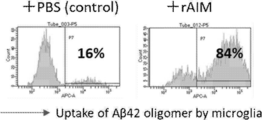
- (5) When recombinant AIM protein was bound to multimeric amyloid ⁇ in vitro, abundance by brain-derived microglia was increased.
- the present inventors have found that phagocytosis of amyloid ⁇ in the body is remarkably promoted, and completed the present invention by conducting further research based on such findings. I came to. That is, the present invention is as
- An agent for treating or preventing a neurodegenerative disease comprising an Apoptosis inhibitor of macrophage (AIM), an AIM fragment having AIM biological activity, or a nucleic acid encoding the AIM or the AIM fragment.
- AIM Apoptosis inhibitor of macrophage
- the nucleic acid encoding AIM or the AIM fragment is incorporated into a viral vector.
- the viral vector is a viral vector selected from the group consisting of an adeno-associated virus, an adenovirus, a lentivirus, and a Sendai virus.
- the adeno-associated virus is AAV serotype 5 (AAV5) or AAV serotype 9 (AAV9).
- the neurodegenerative disease is Alzheimer's disease, Parkinson's disease, Lewy body dementia, frontotemporal dementia, multiple system atrophy, Pick's disease, basal ganglia degeneration, progressive supranuclear palsy, muscle Amyotrophic lateral sclerosis, spinal and bulbar muscular atrophy, progressive spinal muscular atrophy, Huntington's disease, spinocerebellar degeneration, hippocampal sclerosis, progressive myoclonus epilepsy, and Louis dentate nucleus pallidum
- the therapeutic or prophylactic agent according to any one of [1] to [5], selected from the group consisting of atrophy.
- a method for treating or preventing a neurodegenerative disease comprising administering to a subject AIM, an AIM fragment having AIM biological activity, or a nucleic acid encoding the AIM or the AIM fragment.
- the method of [7], wherein the nucleic acid encoding AIM or the AIM fragment is incorporated into a viral vector.
- the viral vector is a viral vector selected from the group consisting of an adeno-associated virus, an adenovirus, a lentivirus, and a Sendai virus.
- AAV serotype 5 AAV5
- AAV serotype 9 AAV9
- the neurodegenerative disease is Alzheimer's disease, Parkinson's disease, Lewy body dementia, frontotemporal dementia, multiple system atrophy, Pick's disease, cortical basal ganglia degeneration, progressive supranuclear palsy, muscle Amyotrophic lateral sclerosis, spinal and bulbar muscular atrophy, progressive spinal muscular atrophy, Huntington's disease, spinocerebellar degeneration, hippocampal sclerosis, progressive myoclonus epilepsy, and Louis dentate nucleus pallidum
- Apoptosis inhibitor of macrophage AIM
- AIM fragment having AIM biological activity or a nucleic acid encoding the AIM or AIM fragment, for use in a method for treating or preventing a neurodegenerative disease.
- AIM apoptosis inhibitor of macrophage
- the viral vector is a viral vector selected from the group consisting of adeno-associated virus, adenovirus, lentivirus, and Sendai virus.
- the apoptosis inhibitor of macrophage according to [16], wherein the adeno-associated virus is AAV serotype 5 (AAV5) or AAV serotype 9 (AAV9), an AIM fragment having AIM biological activity, Or a nucleic acid encoding the AIM or AIM fragment.
- AIM apoptosis inhibitor of macrophage
- the neurodegenerative disease is Alzheimer's disease, Parkinson's disease, Lewy body dementia, frontotemporal dementia, multiple system atrophy, Pick's disease, cortical basal ganglia degeneration, progressive supranuclear palsy, muscle Amyotrophic lateral sclerosis, spinal and bulbar muscular atrophy, progressive spinal muscular atrophy, Huntington's disease, spinocerebellar degeneration, hippocampal sclerosis, progressive myoclonus epilepsy, and Louis dentate nucleus pallidum
- Apoptosis inhibitor of macrophage (AIM) according to any one of [13] to [17], which is selected from the group consisting of atrophy, an AIM fragment having AIM biological activity, or encodes the AIM or AIM fragment Nucleic acids.
- Apoptosis inhibitor of macrophage AIM
- an AIM fragment having AIM biological activity or a nucleic acid encoding the AIM or AIM fragment in the manufacture of a medicament for treating or preventing a neurodegenerative disease.
- the nucleic acid encoding AIM or the AIM fragment is incorporated into a viral vector;
- the viral vector is a viral vector selected from the group consisting of adeno-associated virus, adenovirus, lentivirus, and Sendai virus.
- AAV5 AAV serotype 5
- AAV9 AAV serotype 9
- the neurodegenerative disease is Alzheimer's disease, Parkinson's disease, Lewy body dementia, frontotemporal dementia, multiple system atrophy, Pick's disease, basal ganglia degeneration, progressive supranuclear palsy, muscle Amyotrophic lateral sclerosis, spinal and bulbar muscular atrophy, progressive spinal muscular atrophy, Huntington's disease, spinocerebellar degeneration, hippocampal sclerosis, progressive myoclonus epilepsy, and Louis dentate nucleus pallidum Use according to any of [19] to [23], selected from the group consisting of atrophy.
- the present invention it becomes possible to suppress the accumulation of abnormal proteins in the brain of a subject. As a result, it becomes possible to treat or prevent a neurodegenerative disease caused by accumulation of abnormal proteins such as Alzheimer's disease.
- AIM expression in the brain was examined by Western blotting using a lysate of the whole mouse brain.
- Brain lysates (20 ng / lane) of wild-type C57BL / 6 mice (Lane 1: Wild-type) and AIM-deficient mice (Lane 2: AIM-KO) and recombinant AIM protein (50 ng) were used as positive controls. Fractionation was performed by SDS-PAGE, and Western blotting was performed using an anti-AIM antibody. AIM expression was not observed in the brain of both wild-type mice and AIM-deficient mice. Confirmation of AIM expression in the brain was examined immunohistochemically.
- a brain tissue section (vertical section) of a wild-type C57BL / 6 mouse was subjected to immunostaining using an anti-AIM antibody. A detection of AIM was not detected by DAB coloration using a peroxidase reaction.
- AIM recombinant mouse AIM
- rAIM recombinant mouse AIM
- PBS 10 ⁇ L recombinant mouse AIM
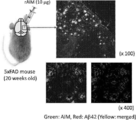
- brain tissue was isolated 3 hours later, sectioned, and AIM (green )
- an antibody against amyloid A ⁇ (red) were co-stained by immunostaining and observed with a fluorescence microscope.
- AIM and amyloid A ⁇ plaques were often co-localized (upper panel: red and green overlapped yellow, and red and green were visible at the same site).
- AAV Adeno-associated virus
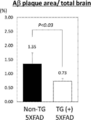
- FIG. 7 is a graph comparing the A ⁇ (amyloid) plaque area (%) with respect to the whole brain in a 7-week-old 5 ⁇ FAD mouse without a transgene and a TG (+) 5 ⁇ FAD mouse.
- FIG. 7 is a graph comparing the A ⁇ (amyloid) plaque area (%) with respect to the whole brain in a 7-week-old 5 ⁇ FAD mouse without a transgene and a TG (+) 5 ⁇ FAD mouse.
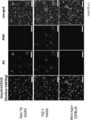
- FIG. 2 is a photograph showing the coexistence of AIM and A ⁇ plaque in the hippocampus region of a 7-week-old Non-TG ⁇ 5 ⁇ FAD mouse, TG (+) 5 ⁇ FAD mouse, and wild-type C57BL / 6 mouse.
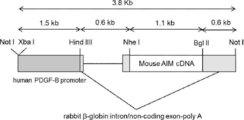
- FIG. 2 shows a map of a transgene that expresses mouse AIM in brain neurons under human PDGF-B promoter. The length of each fragment is indicated in Kb (kilo base).
- the present invention relates to a therapeutic or preventive agent for a neurodegenerative disease , comprising AIM, an AIM fragment having AIM biological activity, or a nucleic acid encoding the AIM or the AIM fragment (hereinafter, referred to as "AIM").
- AIM an AIM fragment having AIM biological activity
- AIM fragment having AIM biological activity
- nucleic acid encoding the AIM or the AIM fragment
- AIM used in the present invention is a protein having the same or substantially the same amino acid sequence as the amino acid sequence represented by SEQ ID NO: 1 (amino acid sequence of human-derived AIM protein).
- AIM is isolated and purified from, for example, macrophages, which are immune cells of warm-blooded animals (eg, human, mouse, rat, rabbit, sheep, pig, cow, horse, cat, dog, monkey, chimpanzee, bird, etc.). Protein.
- the protein may be a protein chemically synthesized or biochemically synthesized by a cell-free translation system, or may be a recombinant produced from a transformant into which a nucleic acid containing a base sequence encoding the above amino acid sequence has been introduced.
- the species from which the AIM used in the present invention is derived matches the species of the subject suffering from the neurodegenerative disease.
- the subject of the agent of the present invention is a human, it is preferable to use human AIM.
- amino acid sequence substantially the same as the amino acid sequence represented by SEQ ID NO: 1 about 60% or more, preferably about 70% or more, more preferably about 80% or more, Particularly preferred are amino acid sequences having about 90% or more, most preferably about 95% or more identity or similarity.
- identity refers to an optimal alignment (preferably, the algorithm uses a sequence algorithm for optimal alignment) when two amino acid sequences are aligned using a mathematical algorithm known in the art. (Which can take into account the introduction of gaps in one or both)), the percentage (%) of identical and similar amino acid residues to all overlapping amino acid residues.
- similarity means the ratio (%) of the number of positions where identical or similar amino acid residues are present in both sequences when two amino acid sequences are aligned to the total number of amino acid residues.
- similar amino acids means amino acids similar in physicochemical properties, for example, aromatic amino acids (Phe, Trp, Tyr), aliphatic amino acids (Ala, Leu, Ile, Val), polar amino acids (Gln, Asn ), Basic amino acids (Lys, Arg, His), acidic amino acids (Glu, Asp), amino acids having hydroxyl groups (Ser, Thr), and amino acids with small side chains (Gly, Ala, Ser, Thr, Met) Amino acids classified into groups are included.
- Other algorithms for determining the identity or similarity of amino acid sequences include, for example, the algorithm described in Karlin et al., Proc. Natl. Acad. Sci.
- NBLAST and XBLAST programs (version 2.0) (Altschul et al., Nucleic Acids Res., 25: 3389-3402 (1997)), Needleman et al., J. Mol. Biol., 48: 444-453 (1970) ) [The algorithm is incorporated in the GAP program in the GCG software package], and the algorithm described in Myers and Miller, CABIOS, 4: ⁇ 11-17 ⁇ (1988) [the algorithm is a CGC sequence alignment software package. The algorithm described in Pearson et al., Proc. Natl. Acad. Sci. USA, 85: 2444-2448 (1988) [The algorithm is a GCG software package.
- the amino acid sequence substantially identical to the amino acid sequence represented by SEQ ID NO: 1 is about 60% or more, preferably about 70% or more, more preferably about 70% or more, of the amino acid sequence represented by SEQ ID NO: 1.
- Examples of a protein containing an amino acid sequence substantially the same as the amino acid sequence represented by SEQ ID NO: 1 include, for example, an amino acid sequence substantially the same as the amino acid sequence represented by SEQ ID NO: 1, A protein having an activity substantially equivalent to the biological activity of the type of AIM is included.
- the biological activity of wild-type AIM includes, for example, endocytosis activity on macrophages (including microglia), apoptosis inhibitory activity of macrophages, atherosclerosis maintenance / acceleration activity, adipocyte differentiation inhibitory activity, fat Cell fat droplet melting activity, fat cell shrinking activity, CD36 binding activity, endocytosis activity to fat cells, FAS binding activity, FAS function inhibitory activity, anti-obesity activity, liver disease (fatty liver, NASH, cirrhosis, liver Prophylactic or therapeutic activity, renal disease (acute renal failure, chronic nephritis, chronic renal failure, nephrotic syndrome, diabetic nephropathy, renal sclerosis, IgA nephropathy, hypertensive nephropathy, nephropathy associated with collagen disease or Although the activity includes prevention or treatment of IgM nephropathy), in the present invention, an endocytic activity on macrophages in particular can be a preferable index.
- the activity can be confirmed using an in vitro macrophage (or microglia) phagocytosis test, which is described in detail in Examples of the present application, but is not limited thereto. Further, “substantially the same” as used herein indicates that their activities are qualitatively (eg, physiologically or pharmacologically) the same. Therefore, the activities are preferably equivalent, but quantitative factors such as the degree of these activities (for example, about 0.1 to about 10 times, preferably about 0.5 to about 2 times) and the molecular weight of the protein. May be different. The activity can be measured according to a method known per se.
- the AIM used in the present invention includes, for example, (1) one or two or more (preferably about 1 to 100, preferably about 1 to 50) of the amino acid sequence represented by SEQ ID NO: 1, More preferably, about 1 to 10, particularly preferably 1 to several (2, 3, 4 or 5) amino acids are deleted, (2) 1 or Two or more (preferably about 1 to 100, preferably about 1 to 50, more preferably about 1 to 10, and particularly preferably 1 to a few (2, 3, 4, or 5) amino acids 1 or 2 or more (preferably about 1 to 50, preferably about 1 to 10, more preferably 1 to a number (2, 3, 4 or 5) amino acids, and (4) one of the amino acid sequences represented by SEQ ID NO: 1 Is an amino acid in which two or more (preferably about 1 to 50, preferably about 1 to 10, and more preferably 1 to several (2, 3, 4, or 5) amino acids have been substituted with another amino acid) Sequences, or (5) proteins containing an amino acid sequence obtained by combining them, and the like are also included.
- the position of the insertion, deletion or substitution is determined by the position of the desired biological activity of the protein (eg, macrophages (including microglia)).
- the endocytosis activity is not particularly limited.
- the AIM of the present invention is preferably a human AIM protein having the amino acid sequence represented by SEQ ID NO: 1 (GenBank accession number: AAD01446) or a homolog thereof in another mammal [for example, GenBank accession number: AAD01445 And a human AIM protein having the amino acid sequence represented by SEQ ID NO: 1.
- proteins and peptides are described with the N-terminus (amino terminus) at the left end and the C-terminus (carboxyl terminus) at the right end according to the convention of peptide labeling.
- a protein comprising the amino acid sequence represented by SEQ ID NO: 1, AIM used in the present invention, C-terminal, carboxyl group (-COOH), a carboxylate (-COO-), an amide (-CONH 2) or It may be any of esters (-COOR).
- R in the ester for example, a C 1-6 alkyl group such as methyl, ethyl, n-propyl, isopropyl, and n-butyl; for example, a C 3-8 cycloalkyl group such as cyclopentyl and cyclohexyl; A C 6-12 aryl group such as ⁇ -naphthyl; for example, a phenyl-C 1-2 alkyl group such as benzyl and phenethyl; a C 7- such as ⁇ -naphthyl-C 1-2 alkyl group such as ⁇ -naphthylmethyl. 14 aralkyl groups; pivaloyloxymethyl groups and the like are used.
- the AIM used in the present invention has a carboxyl group (or carboxylate) other than the C-terminus
- those in which the carboxyl group is amidated or esterified are also included in the protein of the present invention.
- the ester in this case, for example, the above-mentioned C-terminal ester and the like are used.
- the amino group of the N-terminal amino acid residue is protected with a protecting group (for example, a C 1-6 acyl group such as a C 1-6 alkanoyl such as a formyl group or an acetyl group).
- a protecting group for example, a C 1-6 acyl group such as a C 1-6 alkanoyl such as a formyl group or an acetyl group.
- N-terminal glutamine residue which can be generated by cleavage in vivo, pyroglutamine oxidation, substituents on the side chains of amino acids in the molecule (eg, -OH, -SH, amino group, imidazole Group, an indole group, a guanidino group, etc.) protected with a suitable protecting group (eg, a C 1-6 acyl group such as a C 1-6 alkanoyl group such as a formyl group or an acetyl group), or a sugar chain Complex proteins, such as so-called glycoproteins, to which is bound.
- a suitable protecting group eg, a C 1-6 acyl group such as a C 1-6 alkanoyl group such as a formyl group or an acetyl group
- a sugar chain Complex proteins such as so-called glycoproteins, to which is bound.
- the term “AIM” is a concept including not only wild-type AIM but also a variant thereof having substantially the same or improved activity as the biological activity of wild-type AIM.
- substantially the same activity has the same meaning as described above.
- the “substantially the same activity” can be measured in the same manner as in the case of AIM.
- the mutant human AIM of the present invention preferably contains any one of the following amino acid sequences (1b) to (5b).
- AIM variant having a function equivalent to or improved from that of the wild-type recombinant AIM those disclosed in Japanese Patent Application No. 2017-220733 can be used.
- AIM As a component of the agent of the present invention, not only AIM but also an AIM fragment having AIM biological activity can be used. Whether the AIM fragment has the biological activity of wild-type AIM may be determined by the method described above.
- AIM fragment for example, since an intact AIM protein contains three SRCR (Scavenger-Receptor Cysteine-Rich) domains containing a large amount of cysteine, each SRCR domain is contained in a wild-type AIM Examples of the AIM fragment having substantially the same activity as the target activity can be mentioned.
- SRCR Senger-Receptor Cysteine-Rich
- the SRCR1 domain amino acids 24 to 125 of the amino acid sequence represented by SEQ ID NO: 1
- the SRCR2 domain represented by SEQ ID NO: 1
- the partial amino acid sequence containing the SRCR3 domain amino acids 244 to 346 of the amino acid sequence represented by SEQ ID NO: 1
- any combination of SRCR domains Those having a partial amino acid sequence can be used as AIM fragments.
- AIM fragment having substantially the same activity as the biological activity of wild-type AIM is not particularly limited in size as long as it contains the above-described functional domain, but preferably contains a partial amino acid sequence of 50 or more, More preferably, those containing a partial amino acid sequence of 100 or more, more preferably those containing a partial amino acid sequence of 200 or more.
- the partial amino acid sequence may be one continuous partial amino acid sequence, or may be a combination of a plurality of discontinuous partial amino acid sequences.
- the AIM fragment used in the present invention may have any one of a carboxyl group (—COOH), a carboxylate (—COO ⁇ ), an amide (—CONH 2 ), and an ester (—COOR) at the C-terminus.
- R in the ester those similar to those described above for AIM can be mentioned.
- the partial peptide of the present invention has a carboxyl group (or carboxylate) other than the C-terminal, those in which the carboxyl group is amidated or esterified are also included in the partial peptide of the present invention.
- the ester in this case, for example, those similar to the C-terminal ester are used.
- the AIM fragment used in the present invention includes, as in the case of AIM described above, those in which the amino group of the N-terminal amino acid residue is protected with a protecting group, and those in which the glutamine residue at the N-terminal is pyroglutamine-oxidized. And those in which a substituent on the side chain of an amino acid in the molecule is protected with an appropriate protecting group, or a complex peptide such as a so-called glycopeptide to which a sugar chain is bound.
- AAIM (including AIM fragment) used in the present invention may be in the form of a salt.
- salts with physiologically acceptable acids eg, inorganic acids and organic acids
- bases eg, alkali metal salts
- physiologically acceptable acid addition salts are particularly preferred.
- salts include salts with inorganic acids (eg, hydrochloric acid, phosphoric acid, hydrobromic acid, sulfuric acid) and organic acids (eg, acetic acid, formic acid, propionic acid, fumaric acid, maleic acid, succinic acid) Acid, tartaric acid, citric acid, malic acid, oxalic acid, benzoic acid, methanesulfonic acid, benzenesulfonic acid) and the like are used.
- inorganic acids eg, hydrochloric acid, phosphoric acid, hydrobromic acid, sulfuric acid
- organic acids eg, acetic acid, formic acid, propionic acid, fumaric acid, maleic acid, succinic acid
- Acid tartaric acid, citric acid, malic acid, oxalic acid, benzoic acid, methanesulfonic acid, benzenesulfonic acid
- AIM can be produced from the above-described mammalian macrophages by a protein purification method known per se. Specifically, after homogenizing mammalian macrophages and removing cell debris by low-speed centrifugation, the supernatant is centrifuged at high speed to precipitate a cell membrane-containing fraction, and the supernatant is subjected to reverse phase chromatography and ion exchange chromatography. AIM or a salt thereof can be prepared by subjecting the mixture to chromatography such as affinity chromatography.
- AIM (including the AIM fragment) can also be produced according to a known peptide synthesis method.
- the peptide synthesis method may be, for example, either a solid phase synthesis method or a liquid phase synthesis method.
- the target protein can be produced by condensing a partial peptide or amino acid capable of constituting AIM with the remaining portion and, when the product has a protecting group, removing the protecting group.
- the condensation and the elimination of the protecting group are performed according to a method known per se, for example, the methods described in the following (1) and (2).
- AIM can be purified and isolated by a known purification method.
- the purification method include solvent extraction, distillation, column chromatography, liquid chromatography, recrystallization, a combination thereof, and the like.
- the free form can be converted to an appropriate salt by a known method or a method analogous thereto, and conversely, when AIM is obtained as a salt, The salt can be converted into a free form or another salt by a known method or a method analogous thereto.
- AIM can also be produced by culturing a transformant containing a nucleic acid encoding the AIM and separating and purifying AIM from the resulting culture.
- the nucleic acid encoding AIM or AIM fragment may be DNA or RNA, or may be a DNA / RNA chimera. Preferably it is DNA.
- the nucleic acid may be double-stranded or single-stranded. In the case of double-stranded, it may be double-stranded DNA, double-stranded RNA or DNA: RNA hybrid. In the case of a single strand, it may be a sense strand (ie, a coding strand) or an antisense strand (ie, a non-coding strand).
- DNA encoding AIM examples include genomic DNA, warm-blooded animals (eg, human, cow, monkey, horse, pig, sheep, goat, dog, cat, guinea pig, rat, mouse, rabbit, hamster) , Birds, etc.) derived from macrophages and synthetic DNA.
- warm-blooded animals eg, human, cow, monkey, horse, pig, sheep, goat, dog, cat, guinea pig, rat, mouse, rabbit, hamster
- Birds etc.
- any cell of the animal eg, hepatocytes, splenocytes, nerve cells, glial cells, pancreatic ⁇ cells, bone marrow cells, mesangial cells, Langerhans cells, epidermal cells, epithelial cells Cells, goblet cells, endothelial cells, smooth muscle cells, fibroblasts, fibrocytes, muscle cells, adipocytes, immune cells (eg, macrophages, T cells, B cells, natural killer cells, mast cells, neutrophils, (Basophils, eosinophils, monocytes), megakaryocytes, synovial cells, chondrocytes, osteocytes, osteoblasts, osteoclasts, mammary cells, hepatocytes or stromal cells, or precursors or stem cells of these cells Or cancer cells] or any tissue in which those cells are present [eg, brain, each part of the brain (eg,
- genomic DNA and cDNA encoding AIM or a peptide fragment thereof can be obtained from a genomic DNA library and cDNA library prepared by inserting the above-mentioned genomic DNA and a fragment of total RNA or mRNA into an appropriate vector. Alternatively, they can also be cloned by plaque hybridization or PCR.
- the vector used for the library may be any of bacteriophage, plasmid, cosmid, phagemid and the like.
- AIM-encoding nucleic acids include, for example, nucleic acids containing the same or substantially the same nucleotide sequence as the nucleotide sequence represented by SEQ ID NO: 2.
- nucleic acid containing a nucleotide sequence substantially identical to the nucleotide sequence represented by SEQ ID NO: 2 for example, about 60% or more, preferably about 70% or more, more preferably about 70% or more of the nucleotide sequence represented by SEQ ID NO: 2
- a nucleic acid encoding a protein having a base sequence having about 80% or more, particularly preferably about 90% or more identity or similarity, and encoding a protein having substantially the same activity as AIM described above can be used.
- the nucleic acid comprising the nucleotide sequence substantially identical to the nucleotide sequence represented by SEQ ID NO: 2 is about 60% or more, preferably about 70% or more, more preferably the nucleotide sequence represented by SEQ ID NO: 2.
- the nucleic acid encoding AIM also includes a nucleic acid sequence or the like that has been subjected to codon optimization in order to increase the expression efficiency in an organism to be applied.
- NCBI BLAST National Center for Biotechnology Information Basic Basic Local Alignment Search Tool
- the nucleic acid encoding AIM is preferably a nucleic acid containing a nucleotide sequence encoding a human AIM protein represented by the nucleotide sequence represented by SEQ ID NO: 2 (GenBank accession number: AF011429) or a homolog thereof in another mammal [for example, Mouse homolog registered in GenBank as accession number: AF011428].
- nucleic acid encoding AIM or an AIM fragment having AIM biological activity can be used as a component of the agent of the present invention.
- the nucleic acid encoding AIM or AIM fragment used in the present invention may be a nucleic acid containing a nucleotide sequence encoding a peptide containing the same or substantially the same amino acid sequence as a part of the amino acid sequence represented by SEQ ID NO: 1. Any thing may be used.
- nucleic acid encoding the AIM fragment for example, (1) a nucleic acid containing a partial nucleotide sequence of the nucleotide sequence represented by SEQ ID NO: 2, or (2) a nucleic acid having a nucleotide sequence represented by SEQ ID NO: 2 AIM containing a base sequence having about 60% or more, preferably about 70% or more, more preferably about 80% or more, particularly preferably about 90% or more identity or similarity to a nucleic acid containing a partial base sequence, A nucleic acid encoding a protein having substantially the same activity as the above is used.
- AIM or a nucleic acid encoding an AIM fragment is amplified by a PCR method using a synthetic DNA primer having a part of the nucleotide sequence encoding the AIM or the AIM fragment, or a DNA incorporated into an appropriate expression vector is obtained by adding AIM Cloning can be performed by hybridizing with a labeled DNA fragment or synthetic DNA encoding a part or all of the region.
- Hybridization can be performed according to a method known per se or a method analogous thereto, for example, the method described in Molecular Cloning (Molecular Cloning) Second Edition (J. Sambrook et al., Cold Spring HarborLab.Press, 1989). it can. When a commercially available library is used, hybridization can be performed according to the method described in the attached instruction manual. Hybridization can be performed preferably under stringent conditions.
- High stringency conditions include, for example, a hybridization reaction at 45 ° C. in 6 ⁇ SSC (sodium chloride / sodium citrate) followed by one or more washes at 65 ° C. in 0.2 ⁇ SSC / 0.1% SDS. No. Those skilled in the art can appropriately change the salt concentration of the hybridization solution, the temperature of the hybridization reaction, the probe concentration, the length of the probe, the number of mismatches, the hybridization reaction time, the salt concentration of the washing solution, the washing temperature, etc. Thus, the desired stringency can be easily adjusted. When a commercially available library is used, hybridization can be performed according to the method described in the instruction manual attached to the library.
- ⁇ AIM or a nucleic acid encoding an AIM fragment may be operably linked to an expression vector having a brain-specific promoter.
- AIM or an AIM fragment By delivering an expression vector containing a nucleic acid encoding AIM or an AIM fragment into the brain, AIM or an AIM fragment can be expressed in a brain-specific manner.
- Brain-specific promoters include SCG10, GFAP promoter, synapsin 1 promoter, tubulin ⁇ 1 promoter, calcium / calmodulin-dependent protein kinase II promoter, neuron-specific enolase promoter, PDGF (platelet-derived growth factor beta) - ⁇ chain promoter Etc., but are not limited to these.
- a nucleic acid encoding AIM or an AIM fragment may be carried on a viral vector.
- Suitable viral vectors include, but are not limited to, adeno-associated virus, adenovirus, lentivirus, and Sendai virus.
- adeno-associated virus is preferred because it can express the transgene for a long period of time and is highly safe from non-pathogenic viruses.
- the serotype of the adeno-associated virus is not particularly limited as long as the desired effect of the present invention can be obtained, and serotypes 1, 2, 3, 4, 5, 6, 7, 8, 9, and 10 Any of these may be used.
- serotypes 1, 2, 5, 9, or 10 are preferable (for various serotypes of AAV, see WO2005 / 033321).
- serotype 9 (AAV9) is more preferable from the viewpoint that AAV5 has a property of efficiently penetrating the blood-brain barrier (Iwata Net et al, Sci Rep. 2013; 3: 1472).
- the virus vector used in the present invention also includes a derivative thereof.
- Derivatives of viral vectors include known capsid modifications.
- examples of AAV derivatives include, but are not limited to, those disclosed in WO2012 / 057363 and the like.
- a promoter that controls the expression of AIM or nucleic acid encoding AIM fragment is preferable to use a brain-specific promoter.
- brain-specific promoters SCG10, GFAP promoter, synapsin 1 promoter, tubulin ⁇ 1 promoter, calcium / calmodulin-dependent kinase II promoter, neuron-specific enolase promoter, PDGF (platelet-derived growth factor beta) - ⁇ chain Examples include, but are not limited to, promoters.
- a known sequence such as a PolyPoA addition signal, a Kozak consensus sequence, a tag sequence, a linker sequence, and NLS may be appropriately combined with a nucleic acid encoding AIM or an AIM fragment according to the purpose into a virus vector. May be mounted.
- a virus vector containing a nucleic acid encoding AIM or an AIM fragment can be prepared by a known method. Briefly, a plasmid vector for virus expression into which a nucleic acid encoding AIM or an AIM fragment and, if necessary, a nucleic acid having a desired function (eg, a brain-specific promoter, etc.) is inserted, is prepared and A host cell may be transfected, a viral vector containing the polynucleotide of the present invention may be transiently produced and recovered.
- a plasmid vector for virus expression into which a nucleic acid encoding AIM or an AIM fragment and, if necessary, a nucleic acid having a desired function (eg, a brain-specific promoter, etc.) is inserted, is prepared and A host cell may be transfected, a viral vector containing the polynucleotide of the present invention may be transiently produced and recovered.
- a nucleic acid encoding AIM or an AIM fragment Create the inserted vector plasmid.
- DNAs encoding Rep protein and capsid protein required for virus particle formation are inserted into another plasmid.
- a plasmid containing genes (E1A, E1B, E2A, VA, and E4orf6) responsible for the adenovirus helper function required for AAV growth is prepared as an adenovirus helper plasmid.
- recombinant AAV ie, AAV vector
- AAV vector a cell that can supply a part of the gene product (protein) of the gene responsible for the helper action (for example, 293 cells or the like) .
- a cell that can supply a part of the gene product (protein) of the gene responsible for the helper action (for example, 293 cells or the like) .
- the host cell is collected by freezing and thawing and separated and purified by density gradient ultracentrifugation or column method using cesium chloride to obtain the desired AAV vector.
- a vector is prepared.
- the route of administration is not particularly limited as long as AIM protein as an active ingredient can be delivered into the brain.
- the component contained in the agent of the present invention is an AIM protein
- the AIM protein considering that the AIM protein does not penetrate the blood-brain barrier (BBB), a pinhole is formed in the skull of the subject.
- the agent of the present invention may be directly introduced into brain tissue by a method known per se such as microinjection.
- the AIM protein can be delivered into the brain by encapsulating the AIM protein in a liposome modified so as to be able to penetrate the blood-brain barrier and administering it to a subject by intravenous administration or the like.
- the method of directly introducing the agent of the present invention from a pinhole provided in a skull of a subject, the method using the above-described liposome, and the like Can deliver the nucleic acid encoding the AIM protein into the brain.
- the component of the agent of the present invention is a virus vector carrying a nucleic acid encoding AIM
- a pinhole is provided in the skull of the subject, and the agent of the present invention is directly injected into brain tissue via the pinhole, such as microinjection. It can be directly introduced by a known method. Also, as described above, if AAV9 is used, without providing a pinhole in the skull of the subject, AIM can be specifically expressed in the brain of the subject only by injecting the agent of the present invention into the circulating blood. Very preferred.
- the agent of the present invention is administered parenterally, for example, intravenous administration, intraarterial administration, subcutaneous administration, intraperitoneal administration. can do.
- the agent of the present invention when formulated for parenteral administration, it can be formulated, for example, as injections, suppositories and the like.
- the injection may include dosage forms such as intravenous injection, subcutaneous injection, intradermal injection, intramuscular injection, and drip injection.
- Such an injection can be prepared according to a known method.
- AIM a nucleic acid encoding AIM
- / or a component such as a virus carrying a nucleic acid encoding AIM is dissolved in a sterile aqueous liquid or oily liquid commonly used for injection.
- aqueous liquid for injection for example, physiological saline, isotonic solution containing glucose and other auxiliary agents and the like are used, and a suitable solubilizing agent, for example, alcohol (eg, ethanol), polyalcohol (eg, Propylene glycol, polyethylene glycol), nonionic surfactants (eg, polysorbate 80, HCO-50 (polyoxyethylene (50 mol) adduct of hydrogenated castor oil)) and the like may be used in combination.
- alcohol eg, ethanol
- polyalcohol eg, Propylene glycol, polyethylene glycol
- nonionic surfactants eg, polysorbate 80, HCO-50 (polyoxyethylene (50 mol) adduct of hydrogenated castor oil)
- oily liquid for example, sesame oil, soybean oil, and the like are used, and benzyl benzoate, benzyl alcohol, and the like may be used in combination as a solubilizing agent.
- the prepared injection solution
- abnormal protein refers to a loss of the original biological function due to a change in tertiary structure caused by genetic mutation or chemical modification, etc. Includes proteins that can cause causation, and also includes protein aggregates that are abnormally aggregated or accumulated even if they are identical to a normal protein, resulting in an abnormal protein aggregate as a whole and consequently a disease .
- Neurodegenerative diseases that can be treated or prevented using the agents of the present invention include, for example, Alzheimer's disease, Parkinson's disease, Lewy body dementia, frontotemporal dementia, multiple system atrophy, Pick's disease, basal cerebral cortex Nuclear degeneration, progressive supranuclear palsy, amyotrophic lateral sclerosis, spinal and bulbar muscular atrophy, spinal progressive muscular atrophy, Huntington's disease, spinocerebellar degeneration, hippocampus sclerosis, progressive myoclonus epilepsy , And dentate nucleus red nucleus pallidus Louis body atrophy, but are not limited thereto.
- the disease to which the agent of the present invention is applied is Alzheimer's disease.
- the dose of the agent of the present invention to a subject is not particularly limited as long as it is a therapeutically and / or prophylactically effective amount, and depends on the type and form of the active ingredient, age and weight of the subject, administration schedule, administration method, and the like. What is necessary is just to optimize suitably.
- AIM or an AIM fragment is delivered into the brain of the subject or expressed in the brain of the subject.
- AIM or AIM fragments in the brain bind to abnormal proteins present in the brain and mark the proteins for removal.
- the marked abnormal protein is promptly removed from the brain by phagocytosis by microglia. As a result, it is possible to treat and / or prevent a neurodegenerative disease in a subject.
- treatment of a disease in the present specification may include not only cure of the disease but also remission of the disease and improvement of the degree of the disease.
- prevention ”of a disease in the present specification includes, in addition to preventing the onset of a disease, delaying the onset of the disease.
- prevention of a disease herein can include preventing the disease from recurring after treatment or delaying the disease from recurring after treatment.
- the present invention also provides a method for treating or preventing a neurodegenerative disease, which comprises administering to a subject an AIM, an AIM fragment having a biological activity of AIM, or a nucleic acid encoding the AIM or the AIM fragment.
- a method for treatment or prevention (hereinafter, may be referred to as “the method of the present invention”) is provided.
- the means of administration for each component such as AIM used as an active ingredient are the same as those described in “1. Agent for treating or preventing neurodegenerative disease”.
- the subject to which the method of the present invention is applied can include any organism that can suffer from a neurodegenerative disease, and specifically includes humans, cows, monkeys, horses, pigs, sheep, goats, dogs, cats, guinea pigs, Warm-blooded animals such as rats, mice, rabbits, hamsters and birds are exemplified.
- the subject of application and the origin of AIM or the like to be administered are matched.
- a viral vector carrying a nucleic acid encoding AIM can also be used.
- the virus vector and the like that can be used are the same as those described in “1. Agent for treating or preventing neurodegenerative disease”.
- neurodegenerative diseases treated or prevented by the method of the present invention are also the same as those described in “1. Agents for treating or preventing neurodegenerative diseases”.
- each component such as AIM in the method of the present invention is not particularly limited as long as it is a therapeutically and / or prophylactically effective amount, and the type and form of the active ingredient, the age and weight of the subject, the administration schedule, and What is necessary is just to optimize suitably according to an administration method etc.
- Example 1 Confirmation of AIM protein expression in the brain of wild-type mouse
- the whole brain of wild-type C57BL / 6 mouse (Lane 1: Wild-type) and AIM-deficient mouse (Lane 2: AIM-KO) was placed in Lysis Buffer.
- a lysate was prepared by homogenizing with, a protein content of 20 ng was fractionated on SDS-PAGE together with a positive control rAIM protein (50 ng), and then transferred to a polyvinyliden fluoride (PDVF) membrane and transferred to an anti-AIM antibody ( Western blotting was performed using a rabbit anti-mouse AIM antiserum.
- PDVF polyvinyliden fluoride
- Example 2 Immunostaining of the brain of a wild-type mouse
- the brain tissue of a wild-type C57BL / 6 mouse was fixed with 4% paraformaldehyde and paraffin-blocked, and then a 4 ⁇ m-thick section covering a major part of the brain was prepared. Produced. After deparaffinization, immunostaining was performed using an anti-AIM antibody (rabbit anti-mouse AIM antiserum: an antibody that has been used for immunostaining), and detection was attempted by DAB coloration using a peroxidase reaction. .
- an anti-AIM antibody rabbit anti-mouse AIM antiserum: an antibody that has been used for immunostaining
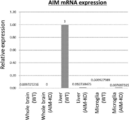
- Example 3 Confirmation of AIM mRNA in brain of wild-type mouse Whole brain of wild-type C57BL / 6 mouse (WT) (Lane 1), whole brain of AIM-deficient mouse (AIM-KO) (Lane 2), WT mouse Liver (positive control, Lane 3), AIM-KO mouse liver (Lane 4), microglia isolated from WT mouse neonatal brain (Lane 5), AIM-KO microglia (Lane 6), RNA was extracted from each and the expression of AIM was analyzed by quantitative RT-PCR. The expression in the liver was set to 1, and the expression in each sample was quantified as a relative expression.
- 5XFAD mouse a model mouse of Alzheimer's disease in which the parietal skull was exposed under the introduction of AIM into the brain and local anesthesia with amyloid plaque, was fixed with stereotaxic (or stereotaxic apparatus) Then, 10 ⁇ g of recombinant mouse AIM (rAIM, SEQ ID NO: 4) (dissolved in 10 ⁇ L of PBS) was microinjected into the hippocampus region of the right brain under a stereoscopic microscope. After 3 hours, the brain tissue was isolated and fixed with 4% paraformaldehyde, then frozen sections were prepared, and co-stained by immunostaining using antibodies against AIM (green) and amyloid beta (A ⁇ : red). Observation was performed using a fluorescence microscope.
- rAIM recombinant mouse AIM
- Example 7 Reduction of A ⁇ (amyloid) plaque area due to expression of AIM 5xFAD mouse was crossed with transgenic mouse (TG) expressing mouse AIM in brain neurons under human PDGF-B promoter to have a transgene A non- (Non-TG) 5xFAD mouse and a (TG (+)) 5xFAD mouse with a transgene were generated.
- FIG. 9 shows a map of a transgene used to prepare a transgenic mouse (TG) expressing mouse AIM in brain neurons under the human PDGF-B promoter.
- the human PDGF-B promoter sequence (Xba I-Hind III) (SEQ ID NO: 6) is described in ⁇ PDGF B-chain in neurons of the central nervous system, posterior pituitary, and in a transgenic model.Sasahara M, Fries JW, Raines EW, Gown AM, Westrum LE, Frosch MP, Bonthron DT, Ross R, Collins T. Cell. 1991 Jan 11; 64 (1): 217-227.).
- FIG. 7 shows the result. As shown in FIG. 7, a significant decrease in plaque was observed in TG (+) 5xFAD mice (T-test).
- Example 8 Co-localization of AIM and A ⁇ (amyloid) plaque in brain tissue Brain tissue of a 7-week-old Non-TG 5xFAD mouse, TG (+) 5xFAD mouse, and wild-type C57BL / 6 mouse was isolated. To make sections. AIM and A ⁇ were co-stained by immunostaining using antibodies against AIM (red) and A ⁇ (green), and the localization of these proteins was observed with a fluorescence microscope. FIG. 8 shows the results. As shown in FIG. 8, in the TG (+) 5xFAD mouse, AIM and A ⁇ plaque were co-localized in many parts (the upper part: the part where red and green overlapped and turned yellow, and Red and green are visible in the same part). The photograph shows the hippocampus region, but such co-localization of AIM and A ⁇ plaque was confirmed throughout the brain.
- neurodegenerative diseases such as Alzheimer's disease can be treated and / or prevented, they are extremely useful in the medical field.
Landscapes
- Health & Medical Sciences (AREA)
- Life Sciences & Earth Sciences (AREA)
- Chemical & Material Sciences (AREA)
- General Health & Medical Sciences (AREA)
- Engineering & Computer Science (AREA)
- Medicinal Chemistry (AREA)
- Animal Behavior & Ethology (AREA)
- Veterinary Medicine (AREA)
- Pharmacology & Pharmacy (AREA)
- Public Health (AREA)
- Bioinformatics & Cheminformatics (AREA)
- Organic Chemistry (AREA)
- Biomedical Technology (AREA)
- Epidemiology (AREA)
- Molecular Biology (AREA)
- Genetics & Genomics (AREA)
- Neurosurgery (AREA)
- Neurology (AREA)
- Zoology (AREA)
- Proteomics, Peptides & Aminoacids (AREA)
- Chemical Kinetics & Catalysis (AREA)
- General Chemical & Material Sciences (AREA)
- Nuclear Medicine, Radiotherapy & Molecular Imaging (AREA)
- Biotechnology (AREA)
- Immunology (AREA)
- Gastroenterology & Hepatology (AREA)
- Biochemistry (AREA)
- Virology (AREA)
- Biophysics (AREA)
- Microbiology (AREA)
- Marine Sciences & Fisheries (AREA)
- Toxicology (AREA)
- Mycology (AREA)
- Psychology (AREA)
- General Engineering & Computer Science (AREA)
- Environmental Sciences (AREA)
- Wood Science & Technology (AREA)
- Hematology (AREA)
- Oncology (AREA)
- Hospice & Palliative Care (AREA)
Priority Applications (9)
| Application Number | Priority Date | Filing Date | Title |
|---|---|---|---|
| CN201980065100.3A CN112752583A (zh) | 2018-10-01 | 2019-09-30 | 神经变性疾病治疗剂 |
| US17/280,157 US12268729B2 (en) | 2018-10-01 | 2019-09-30 | Therapeutic agent for neurodegenerative disease |
| CA3114869A CA3114869C (en) | 2018-10-01 | 2019-09-30 | Therapeutic agent for neurodegenerative disease |
| IL281869A IL281869B2 (en) | 2018-10-01 | 2019-09-30 | Medical cause for degenerative nerve disease |
| EP19869231.1A EP3862012A4 (en) | 2018-10-01 | 2019-09-30 | THERAPEUTIC FOR NEURODEGENERATIVE DISEASES |
| KR1020217012902A KR102821650B1 (ko) | 2018-10-01 | 2019-09-30 | 신경변성 질환 치료제 |
| JP2020550422A JP7289033B2 (ja) | 2018-10-01 | 2019-09-30 | 神経変性疾患治療剤 |
| SG11202103250UA SG11202103250UA (en) | 2018-10-01 | 2019-09-30 | Therapeutic agent for neurodegenerative disease |
| US19/076,595 US20250213651A1 (en) | 2018-10-01 | 2025-03-11 | Therapeutic agent for neurodegenerative disease |
Applications Claiming Priority (2)
| Application Number | Priority Date | Filing Date | Title |
|---|---|---|---|
| JP2018186759 | 2018-10-01 | ||
| JP2018-186759 | 2018-10-01 |
Related Child Applications (2)
| Application Number | Title | Priority Date | Filing Date |
|---|---|---|---|
| US17/280,157 A-371-Of-International US12268729B2 (en) | 2018-10-01 | 2019-09-30 | Therapeutic agent for neurodegenerative disease |
| US19/076,595 Division US20250213651A1 (en) | 2018-10-01 | 2025-03-11 | Therapeutic agent for neurodegenerative disease |
Publications (1)
| Publication Number | Publication Date |
|---|---|
| WO2020071318A1 true WO2020071318A1 (ja) | 2020-04-09 |
Family
ID=70054569
Family Applications (1)
| Application Number | Title | Priority Date | Filing Date |
|---|---|---|---|
| PCT/JP2019/038530 Ceased WO2020071318A1 (ja) | 2018-10-01 | 2019-09-30 | 神経変性疾患治療剤 |
Country Status (9)
| Country | Link |
|---|---|
| US (2) | US12268729B2 (cg-RX-API-DMAC7.html) |
| EP (1) | EP3862012A4 (cg-RX-API-DMAC7.html) |
| JP (1) | JP7289033B2 (cg-RX-API-DMAC7.html) |
| KR (1) | KR102821650B1 (cg-RX-API-DMAC7.html) |
| CN (1) | CN112752583A (cg-RX-API-DMAC7.html) |
| CA (1) | CA3114869C (cg-RX-API-DMAC7.html) |
| IL (1) | IL281869B2 (cg-RX-API-DMAC7.html) |
| SG (1) | SG11202103250UA (cg-RX-API-DMAC7.html) |
| WO (1) | WO2020071318A1 (cg-RX-API-DMAC7.html) |
Cited By (3)
| Publication number | Priority date | Publication date | Assignee | Title |
|---|---|---|---|---|
| WO2024014463A1 (ja) * | 2022-07-12 | 2024-01-18 | 徹 宮崎 | 腎臓結石の治療または予防剤 |
| KR20240157026A (ko) | 2022-02-01 | 2024-10-31 | 이나바 쇼쿠힝 가부시키가이샤 | 동물용의 의약 또는 식품 조성물 |
| JP2025508336A (ja) * | 2022-01-29 | 2025-03-26 | シャンハイ、レイジング、ファーマシューティカル、カンパニー、リミテッド | Tpkを発現する組換えウイルスおよびアルツハイマー病の処置におけるその使用 |
Families Citing this family (2)
| Publication number | Priority date | Publication date | Assignee | Title |
|---|---|---|---|---|
| CN111315880B (zh) | 2017-11-16 | 2023-10-31 | 宫崎彻 | 突变型aim |
| US20230358975A1 (en) | 2020-07-10 | 2023-11-09 | Niharika Kohli | Integrated optical microelectronic mechanical systems devices and methods |
Citations (11)
| Publication number | Priority date | Publication date | Assignee | Title |
|---|---|---|---|---|
| WO2000024392A1 (en) | 1998-10-26 | 2000-05-04 | Sumitomo Pharmaceuticals Company, Limited | β-AMYLOID FORMATION INHIBITORS |
| WO2005033321A2 (en) | 2003-09-30 | 2005-04-14 | The Trustees Of The University Of Pennsylvania | Adeno-associated virus (aav) clades, sequences, vectors containing same, and uses therefor |
| WO2010140531A1 (ja) | 2009-06-01 | 2010-12-09 | 国立大学法人東京大学 | 医薬組成物、飲食物及びこれらに関する方法 |
| WO2011145725A1 (ja) * | 2010-05-20 | 2011-11-24 | Miyazaki Toru | Aim関連疾患の診断方法及び診断用キット |
| WO2012057363A1 (ja) | 2010-10-27 | 2012-05-03 | 学校法人自治医科大学 | 神経系細胞への遺伝子導入のためのアデノ随伴ウイルスビリオン |
| WO2013162021A1 (ja) | 2012-04-27 | 2013-10-31 | 大日本住友製薬株式会社 | 肝疾患の予防または治療剤 |
| JP5692073B2 (ja) | 2009-08-07 | 2015-04-01 | 協和発酵キリン株式会社 | 抗アミロイドβオリゴマーヒト化抗体 |
| WO2015119253A1 (ja) | 2014-02-07 | 2015-08-13 | 宮崎 徹 | 腎疾患の予防または治療剤 |
| JP5765857B2 (ja) | 2008-02-08 | 2015-08-19 | イムナス・ファーマ株式会社 | Aβオリゴマーに特異的に結合する抗体およびその利用 |
| JP2017220733A (ja) | 2016-06-03 | 2017-12-14 | 株式会社制御システム研究所 | 特定パケット中継機能付きデータダイオード装置 |
| JP2018186759A (ja) | 2017-05-08 | 2018-11-29 | 月桂冠株式会社 | 有機酸生成酒酵母株の製造方法、清酒の製造方法、および変異pex22遺伝子 |
Family Cites Families (7)
| Publication number | Priority date | Publication date | Assignee | Title |
|---|---|---|---|---|
| JPS6324392A (ja) | 1986-07-15 | 1988-02-01 | 田中 浩 | カ−テン等設置用防犯装置 |
| AU2001247306A1 (en) | 2000-03-08 | 2001-09-17 | Human Genome Sciences, Inc. | Immune system-related polynucleotides, polypeptides, and antibodies |
| JP2010140531A (ja) | 2008-12-10 | 2010-06-24 | Elpida Memory Inc | 多i/oの半導体メモリの試験方法 |
| JP2013162021A (ja) | 2012-02-07 | 2013-08-19 | Seiko Epson Corp | 波長変換素子、光源装置、及びプロジェクター |
| JP2015119253A (ja) | 2013-12-17 | 2015-06-25 | 船井電機株式会社 | デジタルテレビ放送録画装置およびデジタルテレビ放送録画方法 |
| US20180078539A1 (en) * | 2016-03-23 | 2018-03-22 | Louis Habash | T-cell regulation in t-cell mediated diseases by reducing pathogenic function of th17 in a human subject through treatment with a nitroxide |
| WO2018189661A2 (en) * | 2017-04-10 | 2018-10-18 | Palti Yoram Prof | Methods and compounds for treating diabetes |
-
2019
- 2019-09-30 JP JP2020550422A patent/JP7289033B2/ja active Active
- 2019-09-30 CN CN201980065100.3A patent/CN112752583A/zh active Pending
- 2019-09-30 SG SG11202103250UA patent/SG11202103250UA/en unknown
- 2019-09-30 EP EP19869231.1A patent/EP3862012A4/en active Pending
- 2019-09-30 CA CA3114869A patent/CA3114869C/en active Active
- 2019-09-30 KR KR1020217012902A patent/KR102821650B1/ko active Active
- 2019-09-30 WO PCT/JP2019/038530 patent/WO2020071318A1/ja not_active Ceased
- 2019-09-30 US US17/280,157 patent/US12268729B2/en active Active
- 2019-09-30 IL IL281869A patent/IL281869B2/en unknown
-
2025
- 2025-03-11 US US19/076,595 patent/US20250213651A1/en active Pending
Patent Citations (11)
| Publication number | Priority date | Publication date | Assignee | Title |
|---|---|---|---|---|
| WO2000024392A1 (en) | 1998-10-26 | 2000-05-04 | Sumitomo Pharmaceuticals Company, Limited | β-AMYLOID FORMATION INHIBITORS |
| WO2005033321A2 (en) | 2003-09-30 | 2005-04-14 | The Trustees Of The University Of Pennsylvania | Adeno-associated virus (aav) clades, sequences, vectors containing same, and uses therefor |
| JP5765857B2 (ja) | 2008-02-08 | 2015-08-19 | イムナス・ファーマ株式会社 | Aβオリゴマーに特異的に結合する抗体およびその利用 |
| WO2010140531A1 (ja) | 2009-06-01 | 2010-12-09 | 国立大学法人東京大学 | 医薬組成物、飲食物及びこれらに関する方法 |
| JP5692073B2 (ja) | 2009-08-07 | 2015-04-01 | 協和発酵キリン株式会社 | 抗アミロイドβオリゴマーヒト化抗体 |
| WO2011145725A1 (ja) * | 2010-05-20 | 2011-11-24 | Miyazaki Toru | Aim関連疾患の診断方法及び診断用キット |
| WO2012057363A1 (ja) | 2010-10-27 | 2012-05-03 | 学校法人自治医科大学 | 神経系細胞への遺伝子導入のためのアデノ随伴ウイルスビリオン |
| WO2013162021A1 (ja) | 2012-04-27 | 2013-10-31 | 大日本住友製薬株式会社 | 肝疾患の予防または治療剤 |
| WO2015119253A1 (ja) | 2014-02-07 | 2015-08-13 | 宮崎 徹 | 腎疾患の予防または治療剤 |
| JP2017220733A (ja) | 2016-06-03 | 2017-12-14 | 株式会社制御システム研究所 | 特定パケット中継機能付きデータダイオード装置 |
| JP2018186759A (ja) | 2017-05-08 | 2018-11-29 | 月桂冠株式会社 | 有機酸生成酒酵母株の製造方法、清酒の製造方法、および変異pex22遺伝子 |
Non-Patent Citations (18)
| Title |
|---|
| "GenBank", Database accession no. AF011428 |
| ALTSCHUL ET AL., NUCLEIC ACIDS RES., vol. 25, 1997, pages 3389 - 3402 |
| ARAI S. ET AL.: "Apoptosis inhibitor of macrophage protein enhances intraluminal debris clearance and ameliorates acute kidney injury in mice", NAT. MED., vol. 22, no. 2, 2016, pages 183 - 193, XP055362476, DOI: 10.1038/nm.4012 * |
| BOWIE ET AL., SCIENCE, vol. 247, 1990, pages 1306 - 1310 |
| IWATA N ET AL., SCI REP, vol. 3, 2013, pages 1472 |
| J. SAMBROOK ET AL.: "Molecular Cloning", 1989, COLD SPRING HARBOR LAB. PRESS |
| KARLIN ET AL., PROC. NATL. ACAD. SCI. USA, vol. 90, 1993, pages 5873 - 5877 |
| KUROKAWA, CELL METAB, vol. 11, 2010, pages 479 - 492 |
| KUROKAWA, PNAS, vol. 108, 2011, pages 12072 - 12077 |
| M. BODANSZKYM.A. ONDETTI: "Peptide Synthesis", 1966, INTERSCIENCE PUBLISHERS |
| MIYAZAKI, J EXP MED, vol. 189, 1999, pages 413 - 422 |
| MIYAZAKI, TOHRU: "Apotosis Inhibitor of Macrophage", DOCTOR SALON LIBRARY, vol. 58, no. 6, 31 May 2014 (2014-05-31), JP, pages 33 (513) - 37 (517), XP009527294, ISSN: 0389-7303 * |
| MYERSMILLER, CABIOS, vol. 4, 1988, pages 11 - 17 |
| NEEDLEMAN ET AL., J. MOL. BIOL., vol. 48, 1970, pages 444 - 453 |
| PEARSON ET AL., PROC. NATL. ACAD. SCI. USA, vol. 85, 1988, pages 2444 - 2448 |
| SASAHARA MFRIES JWRAINES EWGOWN AMWESTRUM LEFROSCH MPBONTHRON DTROSS RCOLLINS T, CELL, vol. 64, no. 1, 11 January 1991 (1991-01-11), pages 217 - 227 |
| SCHROEDERLUEBKE: "The Peptide", 1965, ACADEMIC PRESS |
| WANG C. ET AL.: "CD 5L/AIM regulates lipid biosynthesis and restrains Thl7 cell pathogenicity", CELL, vol. 163, no. 6, 2015, pages 1413 - 1427, XP029332999, DOI: 10.1016/j.cell.2015.10.068 * |
Cited By (4)
| Publication number | Priority date | Publication date | Assignee | Title |
|---|---|---|---|---|
| JP2025508336A (ja) * | 2022-01-29 | 2025-03-26 | シャンハイ、レイジング、ファーマシューティカル、カンパニー、リミテッド | Tpkを発現する組換えウイルスおよびアルツハイマー病の処置におけるその使用 |
| JP7849078B2 (ja) | 2022-01-29 | 2026-04-21 | シャンハイ、レイジング、ファーマシューティカル、カンパニー、リミテッド | Tpkを発現する組換えウイルスおよびアルツハイマー病の処置におけるその使用 |
| KR20240157026A (ko) | 2022-02-01 | 2024-10-31 | 이나바 쇼쿠힝 가부시키가이샤 | 동물용의 의약 또는 식품 조성물 |
| WO2024014463A1 (ja) * | 2022-07-12 | 2024-01-18 | 徹 宮崎 | 腎臓結石の治療または予防剤 |
Also Published As
| Publication number | Publication date |
|---|---|
| KR20210068104A (ko) | 2021-06-08 |
| IL281869A (en) | 2021-05-31 |
| US12268729B2 (en) | 2025-04-08 |
| EP3862012A4 (en) | 2022-08-17 |
| EP3862012A1 (en) | 2021-08-11 |
| US20220000975A1 (en) | 2022-01-06 |
| IL281869B1 (en) | 2026-02-01 |
| US20250213651A1 (en) | 2025-07-03 |
| JPWO2020071318A1 (ja) | 2021-09-02 |
| CA3114869A1 (en) | 2020-04-09 |
| KR102821650B1 (ko) | 2025-06-16 |
| CA3114869C (en) | 2023-10-03 |
| JP7289033B2 (ja) | 2023-06-09 |
| IL281869B2 (en) | 2026-06-01 |
| CN112752583A (zh) | 2021-05-04 |
| SG11202103250UA (en) | 2021-04-29 |
Similar Documents
| Publication | Publication Date | Title |
|---|---|---|
| US20250213651A1 (en) | Therapeutic agent for neurodegenerative disease | |
| US12435109B2 (en) | Compositions and methods for dissolving protein aggregates | |
| CA3244143A1 (en) | Polypeptides, nucleic acid constructs and vectors and their use for treating, preventing or ameliorating diseases | |
| HK40052931A (en) | Therapeutic agent for neurodegenerative disease | |
| HK40044839A (en) | Therapeutic agent for neurodegenerative disease | |
| WO2024014463A1 (ja) | 腎臓結石の治療または予防剤 | |
| JP7504490B2 (ja) | 重度腎不全に罹患するネコ科動物における尿毒症の悪化を抑制するための剤 | |
| WO2025249541A1 (ja) | 酸化ストレス抑制剤 | |
| EP4378472A1 (en) | Therapeutic agent for ischemic disease | |
| HK40118718A (en) | Peptides for dissolving protein aggregates and methods thereof | |
| CN118900844A (zh) | 用于溶解蛋白质聚集体的肽和其方法 | |
| HK40089702A (en) | Compositions and methods for dissolving protein aggregates | |
| CN115515969A (zh) | FGF4和Fgfr1结合配体在糖尿病中的应用 |
Legal Events
| Date | Code | Title | Description |
|---|---|---|---|
| 121 | Ep: the epo has been informed by wipo that ep was designated in this application |
Ref document number: 19869231 Country of ref document: EP Kind code of ref document: A1 |
|
| ENP | Entry into the national phase |
Ref document number: 2020550422 Country of ref document: JP Kind code of ref document: A |
|
| ENP | Entry into the national phase |
Ref document number: 3114869 Country of ref document: CA |
|
| NENP | Non-entry into the national phase |
Ref country code: DE |
|
| ENP | Entry into the national phase |
Ref document number: 20217012902 Country of ref document: KR Kind code of ref document: A |
|
| ENP | Entry into the national phase |
Ref document number: 2019869231 Country of ref document: EP Effective date: 20210503 |
|
| WWC | Wipo information: continuation of processing after refusal or withdrawal |
Ref document number: 1020217012902 Country of ref document: KR |
|
| WWG | Wipo information: grant in national office |
Ref document number: 17280157 Country of ref document: US |
|
| WWG | Wipo information: grant in national office |
Ref document number: 281869 Country of ref document: IL |