WO2020045019A1 - 更新システム、電子制御装置 - Google Patents
更新システム、電子制御装置 Download PDFInfo
- Publication number
- WO2020045019A1 WO2020045019A1 PCT/JP2019/031267 JP2019031267W WO2020045019A1 WO 2020045019 A1 WO2020045019 A1 WO 2020045019A1 JP 2019031267 W JP2019031267 W JP 2019031267W WO 2020045019 A1 WO2020045019 A1 WO 2020045019A1
- Authority
- WO
- WIPO (PCT)
- Prior art keywords
- data
- user
- characteristic data
- personal characteristic
- driving
- Prior art date
- Legal status (The legal status is an assumption and is not a legal conclusion. Google has not performed a legal analysis and makes no representation as to the accuracy of the status listed.)
- Ceased
Links
Images




Classifications
-
- B—PERFORMING OPERATIONS; TRANSPORTING
- B60—VEHICLES IN GENERAL
- B60W—CONJOINT CONTROL OF VEHICLE SUB-UNITS OF DIFFERENT TYPE OR DIFFERENT FUNCTION; CONTROL SYSTEMS SPECIALLY ADAPTED FOR HYBRID VEHICLES; ROAD VEHICLE DRIVE CONTROL SYSTEMS FOR PURPOSES NOT RELATED TO THE CONTROL OF A PARTICULAR SUB-UNIT
- B60W40/00—Estimation or calculation of non-directly measurable driving parameters for road vehicle drive control systems not related to the control of a particular sub unit, e.g. by using mathematical models
- B60W40/08—Estimation or calculation of non-directly measurable driving parameters for road vehicle drive control systems not related to the control of a particular sub unit, e.g. by using mathematical models related to drivers or passengers
- B60W40/09—Driving style or behaviour
-
- B—PERFORMING OPERATIONS; TRANSPORTING
- B60—VEHICLES IN GENERAL
- B60W—CONJOINT CONTROL OF VEHICLE SUB-UNITS OF DIFFERENT TYPE OR DIFFERENT FUNCTION; CONTROL SYSTEMS SPECIALLY ADAPTED FOR HYBRID VEHICLES; ROAD VEHICLE DRIVE CONTROL SYSTEMS FOR PURPOSES NOT RELATED TO THE CONTROL OF A PARTICULAR SUB-UNIT
- B60W50/00—Details of control systems for road vehicle drive control not related to the control of a particular sub-unit, e.g. process diagnostic or vehicle driver interfaces
- B60W50/08—Interaction between the driver and the control system
-
- G—PHYSICS
- G05—CONTROLLING; REGULATING
- G05D—SYSTEMS FOR CONTROLLING OR REGULATING NON-ELECTRIC VARIABLES
- G05D1/00—Control of position, course, altitude or attitude of land, water, air or space vehicles, e.g. using automatic pilots
- G05D1/0088—Control of position, course, altitude or attitude of land, water, air or space vehicles, e.g. using automatic pilots characterized by the autonomous decision making process, e.g. artificial intelligence, predefined behaviours
-
- G—PHYSICS
- G07—CHECKING-DEVICES
- G07C—TIME OR ATTENDANCE REGISTERS; REGISTERING OR INDICATING THE WORKING OF MACHINES; GENERATING RANDOM NUMBERS; VOTING OR LOTTERY APPARATUS; ARRANGEMENTS, SYSTEMS OR APPARATUS FOR CHECKING NOT PROVIDED FOR ELSEWHERE
- G07C5/00—Registering or indicating the working of vehicles
- G07C5/008—Registering or indicating the working of vehicles communicating information to a remotely located station
-
- G—PHYSICS
- G07—CHECKING-DEVICES
- G07C—TIME OR ATTENDANCE REGISTERS; REGISTERING OR INDICATING THE WORKING OF MACHINES; GENERATING RANDOM NUMBERS; VOTING OR LOTTERY APPARATUS; ARRANGEMENTS, SYSTEMS OR APPARATUS FOR CHECKING NOT PROVIDED FOR ELSEWHERE
- G07C5/00—Registering or indicating the working of vehicles
- G07C5/02—Registering or indicating driving, working, idle, or waiting time only
-
- G—PHYSICS
- G08—SIGNALLING
- G08G—TRAFFIC CONTROL SYSTEMS
- G08G1/00—Traffic control systems for road vehicles
- G08G1/01—Detecting movement of traffic to be counted or controlled
- G08G1/0104—Measuring and analyzing of parameters relative to traffic conditions
- G08G1/0108—Measuring and analyzing of parameters relative to traffic conditions based on the source of data
- G08G1/0112—Measuring and analyzing of parameters relative to traffic conditions based on the source of data from the vehicle, e.g. floating car data [FCD]
-
- G—PHYSICS
- G08—SIGNALLING
- G08G—TRAFFIC CONTROL SYSTEMS
- G08G1/00—Traffic control systems for road vehicles
- G08G1/01—Detecting movement of traffic to be counted or controlled
- G08G1/0104—Measuring and analyzing of parameters relative to traffic conditions
- G08G1/0125—Traffic data processing
- G08G1/0129—Traffic data processing for creating historical data or processing based on historical data
-
- G—PHYSICS
- G08—SIGNALLING
- G08G—TRAFFIC CONTROL SYSTEMS
- G08G1/00—Traffic control systems for road vehicles
- G08G1/01—Detecting movement of traffic to be counted or controlled
- G08G1/0104—Measuring and analyzing of parameters relative to traffic conditions
- G08G1/0137—Measuring and analyzing of parameters relative to traffic conditions for specific applications
- G08G1/0141—Measuring and analyzing of parameters relative to traffic conditions for specific applications for traffic information dissemination
-
- G—PHYSICS
- G08—SIGNALLING
- G08G—TRAFFIC CONTROL SYSTEMS
- G08G1/00—Traffic control systems for road vehicles
- G08G1/09—Arrangements for giving variable traffic instructions
- G08G1/0962—Arrangements for giving variable traffic instructions having an indicator mounted inside the vehicle, e.g. giving voice messages
- G08G1/0967—Systems involving transmission of highway information, e.g. weather, speed limits
- G08G1/096708—Systems involving transmission of highway information, e.g. weather, speed limits where the received information might be used to generate an automatic action on the vehicle control
- G08G1/096716—Systems involving transmission of highway information, e.g. weather, speed limits where the received information might be used to generate an automatic action on the vehicle control where the received information does not generate an automatic action on the vehicle control
-
- G—PHYSICS
- G08—SIGNALLING
- G08G—TRAFFIC CONTROL SYSTEMS
- G08G1/00—Traffic control systems for road vehicles
- G08G1/09—Arrangements for giving variable traffic instructions
- G08G1/0962—Arrangements for giving variable traffic instructions having an indicator mounted inside the vehicle, e.g. giving voice messages
- G08G1/0967—Systems involving transmission of highway information, e.g. weather, speed limits
- G08G1/096733—Systems involving transmission of highway information, e.g. weather, speed limits where a selection of the information might take place
- G08G1/096741—Systems involving transmission of highway information, e.g. weather, speed limits where a selection of the information might take place where the source of the transmitted information selects which information to transmit to each vehicle
-
- G—PHYSICS
- G08—SIGNALLING
- G08G—TRAFFIC CONTROL SYSTEMS
- G08G1/00—Traffic control systems for road vehicles
- G08G1/09—Arrangements for giving variable traffic instructions
- G08G1/0962—Arrangements for giving variable traffic instructions having an indicator mounted inside the vehicle, e.g. giving voice messages
- G08G1/0967—Systems involving transmission of highway information, e.g. weather, speed limits
- G08G1/096766—Systems involving transmission of highway information, e.g. weather, speed limits where the system is characterised by the origin of the information transmission
- G08G1/096775—Systems involving transmission of highway information, e.g. weather, speed limits where the system is characterised by the origin of the information transmission where the origin of the information is a central station
-
- B—PERFORMING OPERATIONS; TRANSPORTING
- B60—VEHICLES IN GENERAL
- B60W—CONJOINT CONTROL OF VEHICLE SUB-UNITS OF DIFFERENT TYPE OR DIFFERENT FUNCTION; CONTROL SYSTEMS SPECIALLY ADAPTED FOR HYBRID VEHICLES; ROAD VEHICLE DRIVE CONTROL SYSTEMS FOR PURPOSES NOT RELATED TO THE CONTROL OF A PARTICULAR SUB-UNIT
- B60W2540/00—Input parameters relating to occupants
- B60W2540/043—Identity of occupants
-
- B—PERFORMING OPERATIONS; TRANSPORTING
- B60—VEHICLES IN GENERAL
- B60W—CONJOINT CONTROL OF VEHICLE SUB-UNITS OF DIFFERENT TYPE OR DIFFERENT FUNCTION; CONTROL SYSTEMS SPECIALLY ADAPTED FOR HYBRID VEHICLES; ROAD VEHICLE DRIVE CONTROL SYSTEMS FOR PURPOSES NOT RELATED TO THE CONTROL OF A PARTICULAR SUB-UNIT
- B60W2540/00—Input parameters relating to occupants
- B60W2540/30—Driving style
-
- B—PERFORMING OPERATIONS; TRANSPORTING
- B60—VEHICLES IN GENERAL
- B60W—CONJOINT CONTROL OF VEHICLE SUB-UNITS OF DIFFERENT TYPE OR DIFFERENT FUNCTION; CONTROL SYSTEMS SPECIALLY ADAPTED FOR HYBRID VEHICLES; ROAD VEHICLE DRIVE CONTROL SYSTEMS FOR PURPOSES NOT RELATED TO THE CONTROL OF A PARTICULAR SUB-UNIT
- B60W2552/00—Input parameters relating to infrastructure
- B60W2552/30—Road curve radius
-
- B—PERFORMING OPERATIONS; TRANSPORTING
- B60—VEHICLES IN GENERAL
- B60W—CONJOINT CONTROL OF VEHICLE SUB-UNITS OF DIFFERENT TYPE OR DIFFERENT FUNCTION; CONTROL SYSTEMS SPECIALLY ADAPTED FOR HYBRID VEHICLES; ROAD VEHICLE DRIVE CONTROL SYSTEMS FOR PURPOSES NOT RELATED TO THE CONTROL OF A PARTICULAR SUB-UNIT
- B60W2556/00—Input parameters relating to data
- B60W2556/45—External transmission of data to or from the vehicle
Definitions
- the present invention relates to an update system and an electronic control device.
- Parameters such as the driving characteristics of the car, such as the distance to the oncoming vehicle when turning left and right, the distance and relative speed to the preceding and following vehicles at the time of merging, the deceleration start timing when stopping at a traffic light, etc. It differs according to personality.
- the driving characteristics in the vehicle control logic of the self-driving vehicle an average value of all is adopted. Therefore, if the characteristics of the vehicle control logic of the self-driving vehicle match the characteristics of the driver, the driver feels comfortable driving. However, if the characteristics do not match the driver's own characteristics, it may cause anxiety and discomfort.
- a detecting means for detecting a running condition of an automobile, a running characteristic control means capable of controlling a running property of the automobile with a predetermined control gain, and a learning state of the running condition of the automobile are learned.
- the learning control vehicle is characterized in that it is configured to change the control gain of the running characteristic control means according to a learning program obtained by learning the vehicle.
- Patent Literature 1 it is not possible to control the vehicle according to the characteristics of the user on a road on which the user does not manually drive.
- An update system is an update system comprising: an electronic control device that stores an automatic driving logic; and a server, wherein the server includes a user ID for identifying a user and a position on a road.
- a storage unit capable of linking and storing personal characteristic data that is a part of the automatic driving logic based on the driving of the user and driving performance data that is a record of the driving of the user, and creating the personal characteristic data
- Individual characteristic creating unit that performs similarity to the individual characteristic data or the driving record data that is linked to the target ID at a plurality of positions for each user ID that is the user ID for which similarity is to be evaluated.
- a similar specifying unit that specifies a user ID associated with the personal characteristic data or the driving record data having a high level
- the personal characteristic creating unit An output unit that outputs the generated personal characteristic data to the electronic control device, wherein the personal characteristic creation unit is configured to output the first personal characteristic data associated with a first user ID and a first position.
- the first operation result data is used to generate the first operation result data. Is created, and when the first driving record data does not exist, it is associated with the user ID specified for the first user ID and the first position by the similarity evaluation unit.
- the first personal characteristic data is created using the driving result data or the personal characteristic data
- the electronic control unit uses the first personal characteristic data created by the personal characteristic creating unit.
- An electronic control device includes: a storage unit including an automatic driving logic that is created for each user and includes personal characteristic data created in association with a position on a road for a plurality of positions; An input unit to which the characteristic data is input from the server; a personal characteristic updating unit that updates the automatic driving logic using the personal characteristic data input to the input unit; and controlling the vehicle using the automatic driving logic.
- a vehicle control unit comprising: an output unit that outputs driving performance data including position information to the server together with information capable of identifying a user, which is a record of driving when the vehicle is driven by a user's operation, the server
- the personal characteristic data input from the user is the personal characteristic data for a position where the travel by the operation of the user is not performed.
- the personal characteristic data, or the operation record data is included the personal characteristic data created based on the personal characteristic data, or the operation record data of other users that are similar in a plurality of positions.
- the vehicle can be controlled in accordance with the characteristics of the user even on a road where the user does not manually drive.
- Block diagram showing the outline of the update system 2A is a diagram illustrating an example of the own vehicle traveling data 200 in the driving result data
- FIG. 2B is a diagram illustrating an example of the surrounding environment data 201 in the driving result data.
- FIG. 4A is a diagram illustrating an example of personal characteristic data at a certain point
- FIG. 4B is a diagram illustrating a point targeted by the personal characteristic data illustrated in FIG.
- FIG. 5A is a diagram illustrating an example of an automatic driving map
- FIG. 5B is a diagram illustrating an example of personal characteristic data of a plurality of users at a plurality of points.
- Flow chart showing the first stage of personal characteristic data creation Flow chart showing the second stage of personal characteristic data creation Flowchart showing processing of vehicle control based on personal characteristic data
- FIG. 1 is a block diagram showing an outline of the update system.
- the update system S includes a server 10 owned by the automatic driving function service provider and a plurality of electronic control units 20, and the server 10 and the electronic control unit 20 are connected by a network 40.
- Each electronic control device 20 is mounted on a different vehicle, and each electronic control device 20 communicates with the same server 10.
- the electronic control unit 20 is connected to the network 40 by the wireless communication device 30 via the wireless base station 31.
- the wireless communication device 30 may be built in the electronic control device 20.
- the server 10 stores in the data storage unit 11 the actual driving data of each vehicle at each time received from the electronic control unit 20.
- the driving result data is control operation information of the vehicle, and includes, for example, operations of a steering wheel, an accelerator, a brake, and the like, and a speed of the vehicle.
- the surrounding environment data is information including relative distance and speed information with respect to other nearby vehicles or objects, which is acquired from a sensor mounted on the vehicle.
- the server 10 includes a processor 17, a memory 18, an output unit 15, which is a network interface (hereinafter abbreviated as “IF”), a data storage unit 11, and a wide-area map storage unit 12.
- the memory 18 holds a plurality of programs.
- the functions realized by the processor 17 executing these programs include at least the personal characteristic creating unit 13 that processes the operation result data and the surrounding environment data. There is a similar identification unit 14.
- the processing realized by the processor 17 executing the program will be described later. In the following description, the processing executed by the personal characteristic creating unit 13 and the like is actually executed by the processor 17 according to the program of the personal characteristic creating unit 13 and the like.
- the data storage unit 11 and the wide area map storage unit 12 are storage devices such as a hard disk drive (HDD).
- the data storage unit 11 stores the operation result data obtained from each electronic control device 20.
- the driving performance data is composed of own vehicle data and surrounding environment data.
- the own vehicle data is the driving result data of each vehicle at each time and the control operation information of the vehicle.
- the vehicle data includes the position of the vehicle represented by latitude and longitude, a point on a map, and the like, a steering wheel, an accelerator, a brake operation state, a vehicle speed, an acceleration, and the like.
- the surrounding environment data is the situation around the vehicle obtained from sensors mounted on each vehicle.
- the position, distance, and speed of other vehicles, the type and position of road markings (road surface paint), the position of traffic lights, and the color of lights The position and speed of pedestrians and obstacles, the weather and sunshine, and the like.
- the data storage unit 11 further stores personal characteristic data which is driving characteristic data generated for each individual driver.
- the driving characteristics of the vehicle such as the distance to the oncoming vehicle when making a right turn, the distance and relative speed to the vehicle behind the vehicle at the time of merging, the timing of deceleration start when stopping at a signal, etc.
- Parameter values in which parameters in such automatic driving are adjusted to individual characteristics are individual characteristic data.
- the parameters are different for each point, lane, and traveling direction on the map, and are stored in association with the points and lanes on the automatic driving map data. Details of the personal characteristic data will be described later.
- the wide-area map storage unit 12 stores wide-area map information required for automatic driving, in which shapes and attributes are described with at least the level of detail of lanes.
- map information lane data and attribute information are stored in addition to link data of each link constituting a road on the map.
- the “lane” is a traveling area of the vehicle defined by a lane marking, and is also referred to as a “lane”.
- the lane data includes information such as lane interconnection information, lane width, lane centerline shape, and lane type.
- the automatic driving map data includes a coordinate value indicating a position and a shape of a structure on a map such as a road and a building.
- the map data storage unit 16 of the present embodiment stores, as map data, at least road data indicating the position, shape, connection relationship, and the like of a road, and lane data constituting the road.
- each vehicle is always driven by the same user, and that the electronic control unit 20 is always mounted on the same vehicle.
- Ie the user ID.
- the vehicle, the electronic control unit 20, and the driver are all matched combinations.
- the electronic control unit 20 may identify each driver and assign an individual ID to each driver.
- the driver of the vehicle is also referred to as “user”, and when the vehicle is automatically driven, the driver is also referred to as “driver” or “user”.
- the function of the server 10 may be realized by a plurality of computers.
- the data storage unit 11 and the wide area map storage unit 12 are storage devices of different computers connected to the network 40, respectively, and the processor 17 of another computer performs processing described below based on the data of those storage units. May be performed.
- the electronic control unit 20 is a computer mounted on the vehicle, performs various calculations according to a program, outputs operation commands to vehicle parts such as a steering wheel and an accelerator, and monitors the state of the vehicle parts such as a speed and a steering wheel. And so on. In addition, it is connected to a vehicle-mounted camera or radar through the external I / F 25, receives information on the surrounding environment such as an object recognized by the camera or radar, and performs vehicle control related to automatic driving and driving support based on the information. .
- a vehicle-mounted camera or radar through the external I / F 25
- receives information on the surrounding environment such as an object recognized by the camera or radar
- vehicle control related to automatic driving and driving support based on the information.
- the electronic control unit 20 includes a network IF 21 for connecting to a network 40, a memory 29, a processor 28, an external IF 25 connected to an in-vehicle sensor or the like and capable of receiving sensor recognition information, a GPS device 32, A storage device such as an HDD or a flash memory.
- the memory 29 stores a plurality of programs. The functions realized by executing these programs on a computer include at least a distribution request unit 22, an individual characteristic update unit 23, a vehicle control unit 24, and the like. There is.
- the storage device includes a local storage unit 26 and a local map storage unit 27.
- the local storage unit 26 stores vehicle control logic.
- the vehicle control logic is information necessary for automatically driving a vehicle on which the electronic control device 20 is mounted, and includes a large number of personal characteristic data created according to the characteristics of the user.
- the personal characteristic data describes the control content of the vehicle according to the situation created based on the past driving of the user.
- the personal characteristic data is created for each intersection, for example.
- the local map storage unit 27 holds map data of the level of detail at the lane level for automatic driving. However, since the local map storage unit 27 has a limited storage capacity, it stores only map data of a limited area, for example, a local area of 10 km square.
- the ⁇ GPS device 32 receives radio waves from a plurality of satellites constituting the satellite navigation system, and calculates the position of the own vehicle, that is, the latitude and longitude, by analyzing signals included in the radio waves.
- the GPS device 32 outputs the calculated latitude and longitude to the processor 28.
- the distribution requesting unit 22 requests the automatic driving map distribution center or the like for a necessary range of the automatic driving map data based on the position of the own vehicle at a predetermined timing and downloads the automatic driving map.
- the distribution request unit 22 may download the automatic driving map at regular time intervals or at a timing when it is determined that the own vehicle position may deviate from the range of the already downloaded automatic driving map.
- the distribution request unit 22 also downloads the personal characteristic data of the user included in the range of the map. Further, when making this request, the driving result data collected and accumulated by the own vehicle is transmitted to the server 10.
- the data transmitted at this time is stored in the data storage unit 11 of the server 10.
- the automatic driving map and the personal characteristic data need not be downloaded at the same time. It is also possible to download at different timings.
- the personal characteristic data holds information relating to data to be used at which position on the map based on the latitude / longitude, the unique identification number of the lane, and the like, and can be managed independently of the map data.
- the downloaded automatic driving map data is stored in the local map storage unit 27.
- the downloaded personal characteristic data is stored in the local storage unit 26.
- the personal characteristic updating unit 23 updates the vehicle control logic stored in the local storage unit 26 using the personal characteristic data received from the server 10. Specifically, the vehicle control logic is updated by adding or overwriting personal characteristic data corresponding to each point. As an example, the vehicle control logic stored in the local storage unit 26 already includes personal characteristic data for the intersection X, and when the personal characteristic data for the intersection X is newly received from the server 10, it is received. The vehicle control logic is updated by overwriting the previous information using the personal characteristic data.
- the vehicle control unit 24 operates only when the vehicle is set in the automatic driving mode, and does not operate in the manual driving mode in which the user controls the vehicle.
- the vehicle is controlled using the vehicle control logic stored in the local storage unit 26, the automatic driving map data stored in the local map storage unit 27, and the output of the GPS device 32.
- the server 10 stores the vehicle driving result data received from each electronic control device 20 in the data storage unit 11. There are many vehicles that transmit the driving result data, and the data storage unit 11 stores a large amount of data transmitted from a large number of different vehicles. Since the position of the vehicle is specified at the lane level with respect to these data, driving result data for each lane can be obtained even on the same road.
- the individual characteristic creating unit 13 of the server 10 analyzes the accumulated driving performance data and creates individual characteristic data for each individual driver.
- the personal characteristic data is data listing conditions and control contents of optimal vehicle control (operation) according to the surrounding situation in an arbitrary lane on the road. A method for creating personal characteristic data will be described later.
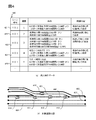
- FIG. 2 is a diagram illustrating an example of the operation results stored in the data storage unit 11.
- FIG. 2A is a diagram illustrating an example of the own vehicle traveling data 200 in the driving result data
- FIG. 2B is a diagram illustrating an example of the surrounding environment data 201 in the driving result data.
- One record of the own-vehicle traveling data 200 shown in FIG. 2A includes state information of the vehicle acquired by the electronic control unit 20 of one vehicle at a certain time. Specifically, each record includes the user ID, time, own vehicle position (latitude and longitude), lane position, steering wheel angle, accelerator opening, brake strength, own vehicle speed, own vehicle acceleration, weather, and brightness. Including.
- the user ID is information for uniquely identifying each electronic control device 20, and in the present embodiment, it also serves as a driver identification for convenience.
- a one-letter alphabet such as A, B, or C is used as the user ID.
- the user whose user ID is “A” is also referred to as “user A”.
- the time is a time at which each electronic control device 20 has acquired information.
- the own vehicle latitude / longitude is position information of the vehicle acquired by each electronic control device 20 at each time, that is, coordinate values.
- the steering wheel angle is an angle at which the steering wheel is rotated.
- the accelerator speed is a rate at which the accelerator is depressed, and 1.0 represents the maximum depression amount.
- the brake strength is a ratio of stepping on the brake, and 1.0 represents the maximum stepping amount.
- the own vehicle speed is a running speed of the vehicle.
- the host vehicle acceleration is a running acceleration of the vehicle.
- the weather is the weather at each time.
- the brightness is brightness at each time.
- the record 211 indicates that the latitude and longitude acquired by the electronic control device 20 identified by the user ID “A” at 12:35:40 on January 1, 2017 are 139.773337639 degrees and 35.66939367 degrees, respectively. Which indicates that.
- the steering wheel angle of the vehicle equipped with the electronic control device 20 at that time is 1.0 degree
- the accelerator opening is 0.48
- the brake strength is 0.0
- the own vehicle traveling speed is 38.5 km / h.
- the vehicle acceleration was 0.01 m / s2
- the weather was fine
- the brightness was 751 lux.
- One record of the surrounding environment data 201 shown in FIG. 2B includes surrounding environment information acquired and recognized by a sensor connected to the electronic control unit 20 of one vehicle at a certain time. Specifically, each record includes another object ID, time, another object type, another object position, another object speed, another object moving angle, and another object state.
- Other object ID is information for uniquely identifying a peripheral object recognized by the sensor. Objects recognized as the same have the same ID even if the time changes.
- the time is a time at which each electronic control device 20 has acquired information.
- the other object type is information indicating the type of the object recognized by the sensor.
- the other object position is a relative position from the own vehicle to another object.
- the other object speed is the moving speed of the other object.
- the other object moving angle is the moving direction of the moving object, and the traveling direction of the vehicle is 0 degrees.
- the other object state indicates the presence or absence of movement of a moving object, and the state of an object whose state changes, such as a traffic light.
- the record 212 is identified by the other object ID “901” recognized by the electronic control device 20 of the electronic control device 20 identified by the user ID “A” at 12:35:40 on January 1, 2017. This indicates that the other object is a passenger car, the relative position is 10.5 m in front, 8.3 m to the right, and moving at a speed of 45.3 km / h in the same direction as the vehicle traveling direction.
- FIG. 3 shows an example of a lane-level automatic driving map. This is an example of an automatic driving map at an intersection and a branch point of a road.
- Each lane is represented by a lane link 302 that represents the center line of the lane, and a lane node 301 that is a branch point or terminal point.
- all black circles including 301 indicate lane nodes, and dotted lines including 302 indicate lane links.
- lane links are set only in the direction in which traveling is possible.
- a solid line including 303 is a boundary of the road.
- the road in the vertical direction is a one-lane one-way road on the left.
- the road in the left-right direction is one-way with three lanes from left to right. As shown in the upper right of FIG. 3, the leftmost lane has a branch.
- FIG. 4A is a diagram showing an example of personal characteristic data at a certain point
- FIG. 4B is a diagram showing a point targeted by the personal characteristic data shown in FIG. 4A.
- dotted lines 401, 402, 403, and 404 are lane links
- black circles such as 405 are all lane nodes.
- the personal characteristic data 420 shown in FIG. 4A is associated with the lane link of the merging lane shown in FIG. 4B, and when the vehicle is controlled using this personal characteristic data 420, the lane in that lane is controlled.
- the optimum vehicle control (operation) conditions and control contents are described.
- one record of the personal characteristic data 420 records the lane number and serial number corresponding to the analysis data, the application condition of the control content, and the control content.
- the lane number indicates a position where the own vehicle exists.
- the serial number is a serial number for each lane number provided for convenience.
- the personal characteristic data of the lane 401 is applied.
- the own vehicle is a vehicle denoted by reference numeral 410
- a vehicle ahead of the main line is a vehicle denoted by reference numeral 412
- a vehicle immediately before the main line is a vehicle denoted by reference numeral 413
- a vehicle behind the main line is a vehicle denoted by reference numeral 411
- the vehicle behind is the vehicle indicated by reference numeral 412.
- the THW interval used in the condition is a value obtained by dividing the absolute value of the distance to the opponent by the absolute value of the own vehicle speed by a value in seconds called headway time (Time / Head / Way). This is a parameter that can be regarded as a temporal inter-vehicle distance.
- the record 421 of the personal characteristic data 420 indicates that, with respect to the own vehicle 410, the THW interval of the vehicle 412 ahead of the main line is between 0.87 seconds and 2.86 seconds, and the THW interval of the vehicle 411 behind the main line is 1.37 seconds. In the case of 2.39 seconds, an instruction to execute control for maintaining the speed and merging between the vehicles 411 and 412 on the main line is shown.
- the record 422 of the personal characteristic data 421 indicates that the THW interval of the vehicle 412 ahead of the main line is 0.87 seconds or less and the THW interval of the vehicle 413 just before the main line is 3.73 seconds or more with respect to the own vehicle 410. And an instruction to execute control for overtaking the main line vehicle 412 and merging.
- the record 423 of the personal characteristic data 420 indicates that the THW interval of the vehicle 412 ahead of the main line, the THW interval of the vehicle 413 just before the main line is 3.73 seconds or less, and the vehicle 411 behind the main line with respect to the own vehicle 410. If the THW interval of the vehicle behind the main line is 1.37 seconds or less and the THW interval of the vehicle 414 behind the main line vehicle is 3.76 seconds or more, an instruction to execute control to decelerate and join behind the rear main line vehicle 411 is issued. Show.
- the record 424 of the personal characteristic data 420 indicates that the vehicle 410 has a brightness of 100 lux or less, the THW interval of the vehicle 412 ahead of the main line between 1.87 seconds and 3.86 seconds, and the THW of the vehicle 411 behind the main line.
- the interval is between 2.37 seconds and 3.39 seconds, an instruction is given to execute control for maintaining the speed between the vehicles 411 and 412 on the main line and joining the vehicles.
- the record 425 of the personal characteristic data 420 indicates that the time is from 7:35 to 9:28 with respect to the own vehicle 410, the THW interval of the vehicle 412 ahead of the main line is from 0.57 seconds to 2.86 seconds, When the THW interval of the vehicle 411 behind the main line is between 0.97 seconds and 2.39 seconds, an instruction to execute control for maintaining the speed between the vehicles 411 and 412 on the main line and joining the vehicles is provided.
- the description given above with reference to FIG. 4 is an example of one piece of personal characteristic data at a certain point.
- the server 10 stores personal characteristic data of a plurality of users at a plurality of points.
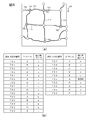
- FIG. 5 is a view for explaining personal characteristic data stored in the server 10.
- FIG. 5A is a diagram illustrating an example of an automatic driving map
- FIG. 5B is a diagram illustrating an example of personal characteristic data of a plurality of users at a plurality of points.
- the example shown in FIG. 5B shows the personal characteristic data at the stage when the first stage described later is completed, and the process at the second stage is not performed.
- black lines indicated by reference numerals 710, 711, 712, 713, 714, 715 indicate roads, and circles indicated by reference numerals 701, 702, 703, 704, 705 indicate intersections.
- the autonomous driving map has the level of detail at the lane level as shown in FIG. 3, but in FIG. 5A, the description will be made using a road level diagram for simplification of the description. Therefore, a black line road includes a plurality of lanes, and an intersection indicated by a circle includes a plurality of lanes within the intersection.
- Each lane is associated with individual characteristic data obtained by the analysis of the driving performance data described above.
- the road and the intersection in FIG. 5A also hold personal characteristic data of a plurality of drivers for each lane included therein. This linking is generally performed using a lane number and a user ID, but the present invention is not limited to this method alone.
- FIG. 5B shows an example of individual characteristic data at each intersection or road, that is, at each point.
- the states of the intersections 701, 702, 703, 704, 705 are shown.
- the personal characteristic data at each point a plurality of conditions and control contents are defined for each driver and for each lane as shown in FIG. 4 (a).
- Personal characteristic data is shown in lower case alphabets. The same character means the same personal characteristic data.
- Creation of personal characteristic data is divided into two stages. In the first stage, personal characteristic data is created using the operation result data collected for each user and each point. In this first stage, the driving result data of the point where each user is not driving manually is not created. In the second stage, the personal characteristic data of the point where the user to be processed is not traveling is created using the driving result data of another user. The process of the second stage is started after the process of the first stage is completely completed. It is desirable that these processes be performed in advance by batch processing at night or the like.
- the first-stage processing need not be performed if the number of times of traveling is less than a predetermined threshold. This is because, when the number of times of travel is small, patterns such as the positional relationship with other vehicles are also reduced, and it may not be possible to cope with all situations that may occur on the spot. In addition, it is desirable to change the reference number of times of travel at a difference in location, for example, at an intersection of a simple junction and a complex five-way road and six-way road.
- FIG. 6 is a flowchart showing a process of creating personal characteristic data using the operation result data accumulated by the personal characteristic creating unit 13.
- the execution subject of the processing described below is the personal characteristic creating unit 13.
- the individual characteristic creating unit 13 extracts driving performance data for each lane at each point from the accumulated driving performance data for each driver (step 1101).
- the extracted driving result data includes a record in the own vehicle data 200, which is a control (operation) content of the own vehicle obtained by traveling a plurality of times, and a surrounding indicating the situation of the surrounding objects and the like observed by the vehicle.
- the record in the environment data 201 is included.
- the personal characteristic creating unit 13 calculates the relevance of all of the own vehicle data items and all of the surrounding environment data items at that time for the control operation of the own vehicle in the driving with respect to the aforementioned data.
- Calculation of relevancy is performed as follows.
- a steering operation is one of the characteristic control operations of the own vehicle.
- the steering wheel angle is large as in the merging operation, and when the steering wheel angle is small as in the case of running along the main line, there is a difference (related) in the distribution of the values of the peripheral environment data items and the occurrence of the difference. Find out the conditions to do. This is performed for all items of the surrounding environment data and all items of the own vehicle data.
- the surrounding environment data and the own vehicle data having a difference in distribution are characteristic conditions when a steering operation, that is, a merging operation is performed. If the difference between the distributions is large, it can be determined that there is a strong relationship with the steering operation, that is, the merging operation. Therefore, the individual characteristic creating unit 13 adopts these as conditions for performing the merging operation and sets them as individual characteristic data (step 1103).
- the personal characteristic creation unit 13 calculates the strength of the relevance for all of the surrounding environment data items and the own vehicle data. Matter. For example, in the example of the merging in FIG. 4, there are many objects acquired as the surrounding environment data, and the relevance was calculated including information on road markings in addition to information on other vehicles. , The conditions described in FIG. 4 are adopted.
- the personal characteristic creating unit 13 ends this processing when the personal characteristic data has been generated for all points and lanes where the driving performance data is recorded, and returns to the processing of step 1101 if not generated (step 1104). ). Through the above processing, personal characteristic data as shown in FIG. 4A is obtained.
- FIG. 7 is a flowchart showing the creation of personal characteristic data at the second stage.
- the execution subject of the processing described below is the personal characteristic creating unit 13.
- the example shown in FIG. 5 is also used to facilitate understanding.
- FIG. 7 first, a combination of a user ID whose personal characteristic data has not been created and a position on the map is specified as a processing target (step 1201).
- a processing target is “A”
- the processing target position is “intersection 705”. If there are a plurality of processing targets, steps 1202 and subsequent steps are repeated by the number of processing targets.
- the individual characteristic creating unit 13 causes the similarity identifying unit 14 to execute the following processing (step 1202).
- the similarity specifying unit 14 generates a user ID group having the same personal identification data as the target user ID at all points where all the personal characteristic data associated with the user ID to be processed are created. Extract.
- the user B and D are extracted by referring to the individual characteristic data at the intersections 701 to 704.
- step 1202 only the ratio at which the personal characteristic data matches the predetermined ratio or more, for example, 80% or more, may be extracted.
- the users B and D have 100% matching because the personal characteristic data matches the user A in all of the reference numerals 701 to 704, and the user C has 75% matching because they match only in the reference numerals 701 to 703. Therefore, on condition that the match is 80% or more, only the users B and D are extracted.
- the individual characteristic creating unit 13 searches for individual characteristic data at the estimation target position linked to the user ID group extracted in step 1202 (step 1203).
- personal characteristic data y, y at the intersection 705 is extracted for the users B, D.
- the personal characteristic creating unit 13 sets the most characteristic among the personal characteristic data obtained by the search as the personal characteristic data to be processed (step 1204).
- the process illustrated in FIG. 7 ends.
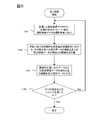
- FIG. 8 is a flowchart showing a vehicle control process based on personal characteristic data.
- the electronic control unit 20 downloads the downloaded autonomous driving map, the surrounding environment of other vehicles and pedestrians, road markings, signals, etc., recognized by a radar or a camera connected to the external I / F 25, and the vehicle control logic storage unit. Automatic driving and vehicle control are performed with reference to the obtained personal characteristic data.
- the subject of execution of each step of the flowchart described below is the vehicle control unit 24.
- the current position of the host vehicle at the lane level is calculated, and the state of the host vehicle (speed, accelerator / handle state, etc.) is recognized and calculated (step 1001).
- data on the surrounding environment of the own vehicle that is, data on the position and speed of the other vehicle is acquired (step 1003).
- the personal characteristic data corresponding to the lane where the vehicle is present is extracted from the local storage unit 26 (step 1004).
- step 1005 from the extracted personal characteristic data, the control contents corresponding to the conditions of the own vehicle such as the speed and the position on the lane and the application conditions matching the surrounding environment conditions such as the position and speed of the other vehicle are specified. I do.
- control operation of the host vehicle (steering wheel, accelerator operation, etc.) is performed according to the control content selected in step 1005 (step 1006).
- the processing of the vehicle control in step 1006 is repeatedly executed while the vehicle is in the automatic driving or driving assistance mode.
- the repetition interval (for example, 1 second, 100 milliseconds, etc.) is arbitrary, and is set based on the performance of the system and the required specifications.
- the update system S includes an electronic control device 20 that stores an automatic driving logic, and a server 10.
- the server 10 includes, for each combination of a user ID for identifying a user and a position on a road, personal characteristic data that is a part of the automatic driving logic based on the driving of the user, and driving record data that is a record of the driving of the user.
- the data storage unit 11 of the storage unit capable of storing the personal characteristics data, the personal characteristics generation unit 13 that generates the personal characteristics data, and the target ID that is the user ID for which the similarity is evaluated at a plurality of points.
- the personal property creating unit 13 creates personal property data that is associated with the user ID “A” and the intersection 705 and is “uncreated” in FIG. 5B, for example, as follows. That is, when there is driving record data associated with the user ID “A” and the intersection 705, as shown in the flowchart of FIG. 6, personal characteristic data is created using the driving record data of the user at that point. .
- the electronic control unit 20 includes a personal characteristic updating unit 23 that updates the automatic driving logic using the personal characteristic data created by the personal characteristic creating unit 13.
- the vehicle can be controlled according to the characteristics of the user.
- This makes it possible to perform appropriate vehicle control and automatic driving according to the place and the surrounding environment at that time, including differences in lanes, while reflecting individual driving characteristics.
- the personal characteristic creating unit 13 uses the personal characteristic data of another person, which is specified by the similar specifying unit 14 and is linked to the user ID whose characteristic is similar to that of the user A, to generate the personal characteristic data of the intersection 705 of the user A. Can be created.
- the similarity specifying unit 14 specifies a user ID in which the number of points to which personal characteristic data is similar exceeds a predetermined threshold (Step 1202 in FIG. 7). Therefore, the similarity specifying unit 14 can specify users with similar characteristics with high accuracy.
- the electronic control unit 20 includes a local storage unit 26 having an automatic driving logic including personal characteristic data created for each user and associated with a position on a road and including a plurality of positions.
- a network IF 21 input from the server 10, a personal characteristic update unit 23 that updates the automatic driving logic using the personal characteristic data input to the network IF 21, and a vehicle control unit 24 that controls the vehicle using the automatic driving logic.
- a network IF 21 that outputs driving performance data including position information, which is a record of driving when the vehicle is driven by a user's operation, to a server together with information capable of identifying the user.
- the personal characteristic data input from the server 10 is personal characteristic data of a point where the user does not travel by operation, and other personal characteristic data or driving result data similar to the user at a plurality of points. Includes personal characteristic data created based on the user's personal characteristic data or driving performance data. Therefore, the electronic control unit 20 can control the vehicle according to the characteristics of the user even on a road on which the user does not manually drive.
- the method of determining personal characteristic data in step 1204 of FIG. 8 is not limited to a simple majority decision.
- a new personal characteristic data may be created by calculating a numerical value serving as a threshold value by weighting based on a simple average or the number of times of travel.
- Modification 2 The criterion for determining that the individual characteristic data is the same in step 1202 in FIG.
- a similarity may be defined, and if it is within a certain similarity, it may be regarded as the same.
- the similarity as shown in FIG. 4, a plurality of conditions are set in the personal characteristic data even in one lane. Therefore, the number of matching conditions among a plurality of conditions can be defined as the similarity.
- the closeness of the threshold value included in each condition may be quantified, and a similarity based on the numerical value may be defined.
- the personal characteristic data does not have to be created for all roads and intersections. For example, in a place such as a straight road where a difference in vehicle operation between drivers is unlikely to occur, or in a place where it is difficult for the driver to feel uncomfortable even if the vehicle operation is different, the personal characteristic data need not be created. In this case, in a place where personal characteristic data is not created, the vehicle is controlled by a predetermined control method for any user. As a result, the processing load can be reduced.
- step 1204 of FIG. 8 personal characteristic data created in advance and considered to be standard may be selected. For example, if it is determined that the similarity between the individual characteristic data associated with the ID extracted in step 1202 and the individual characteristic data associated with the user ID to be processed is low, execute steps 1203 and 1204. Instead, it is also possible to select pre-created individual characteristic data that is considered standard.
- the electronic control unit 20 determines that the personal characteristic data set at that point is inappropriate for the driver and the server determines 10 may be notified to that effect.
- the server 10 specifies the personal characteristic data determined to be inappropriate, and determines the alternative personal characteristic data by performing the processing shown in FIG. 8 excluding the personal characteristic data.
- the personal characteristic data of another user is specified in step 1204 of FIG. 8, and the vehicle is controlled using the personal characteristic data as it is in step 1005 and subsequent steps of FIG.
- personal characteristic data may be newly created using the operation result data of the user specified in step 1204, and the created personal characteristic data may be used in step 1005 and subsequent steps in FIG.
- step 1204 of FIG. 8 If the user specified in step 1204 of FIG. 8 is only one, even if the method of the present modification is used, only the same personal characteristic data is created. However, when a plurality of users are specified in step 1204 of FIG. 8, there is a possibility that more appropriate personal characteristic data can be created by creating personal characteristic data again using the operation result data of the plurality of users. is there.
- driving result data of a road shape similar to the road structure at the point to be processed may be further considered.
- the similarity of the structure of the road is considered in consideration of the number of lanes, the road width, the presence or absence of a grade separation, and the like. If the structures of the roads are similar, it is assumed that not only the user to be processed, but also various people will perform the same driving, so by using personal characteristic data on roads with similar structures, , Personal characteristic data of a point with a small traffic volume can be created.
- the following processing is performed. That is, since the road structures are similar, the individual characteristic data at the intersection 705 for the users B to E is regarded as the same as the individual characteristic data at the intersection 704. Then, as described above, since the users B to D are extracted in step 1202, d, x, and d are specified as the personal characteristic data, and the largest d among the three is extracted in step 1204.
- the individual characteristic creating unit 13 when there is no driving record data associated with the user A and the intersection 705, the individual characteristic creating unit 13 further uses the individual characteristic data at a position where the road structure is similar to that of the intersection 705 to the user A. Create personal characteristic data. Therefore, personal characteristic data can be created using information on roads having similar shapes.
- the server 10 evaluates a difference in personal characteristic data for each user at each point, and specifies a point where the majority of users have substantially the same personal characteristic data as a similar behavior shape. For example, when 90% of the personal characteristic data of the user who travels at a certain intersection has a similarity degree equal to or higher than a predetermined threshold, the shape of the point is set as a similar behavior shape. Then, the personal characteristic data of the user who does not have the driving result data at the point is set as the personal characteristic data whose similarity is equal to or more than a predetermined threshold.
- the personal characteristic creating unit 13 sets the personal characteristic data of the user C as the personal characteristic data of the user B. This is because, when the majority of users perform the same action, the personal characteristic data of another new user, for example, the user C is likely to be the same as that of the majority of users.
- the individual characteristic creating unit 13 specifies a similar behavior shape that is a road shape in which the percentage of users whose similarity of the individual characteristic data is equal to or greater than a predetermined threshold is equal to or greater than a predetermined threshold, and the first position is determined.
- a similar behavior shape any personal characteristic data whose similarity is equal to or more than a predetermined threshold value is set as first personal characteristic data. Therefore, the operation of the personal characteristic data can be saved.
Landscapes
- Engineering & Computer Science (AREA)
- Physics & Mathematics (AREA)
- General Physics & Mathematics (AREA)
- Automation & Control Theory (AREA)
- Transportation (AREA)
- Mechanical Engineering (AREA)
- Chemical & Material Sciences (AREA)
- Life Sciences & Earth Sciences (AREA)
- Analytical Chemistry (AREA)
- Atmospheric Sciences (AREA)
- Mathematical Physics (AREA)
- Game Theory and Decision Science (AREA)
- Medical Informatics (AREA)
- Aviation & Aerospace Engineering (AREA)
- Radar, Positioning & Navigation (AREA)
- Remote Sensing (AREA)
- Business, Economics & Management (AREA)
- Evolutionary Computation (AREA)
- Artificial Intelligence (AREA)
- Health & Medical Sciences (AREA)
- Human Computer Interaction (AREA)
- Traffic Control Systems (AREA)
- Control Of Driving Devices And Active Controlling Of Vehicle (AREA)
- Navigation (AREA)
Abstract
更新システムは、自動運転ロジックを格納する電子制御装置、およびサーバと、を備える更新システムにおいて、サーバは、ユーザを識別するユーザIDと、道路上の位置との組み合わせごとに、ユーザの運転に基づく自動運転ロジックの一部である個人特性データ、およびユーザの運転の記録である運転実績データを紐付けて格納可能な記憶部と、個人特性データを作成する個人特性作成部と、類似を評価する対象となるユーザIDである対象IDごとに、複数の位置で対象IDに紐づけられる個人特性データまたは運転実績データに対して類似性の高い個人特性データまたは運転実績データと紐づけられるユーザIDを特定する類似特定部と、個人特性作成部が作成した個人特性データを電子制御装置に出力する出力部とを備え、個人特性作成部は、第1のユーザIDおよび第1の位置と紐づけられる第1の個人特性データの作成において、第1のユーザIDおよび第1の位置と紐づけられる運転実績データである第1の運転実績データが存在する場合は、第1の運転実績データを用いて第1の個人特性データを作成し、第1の運転実績データが存在しない場合は、類似評価部により第1のユーザIDに対して特定されたユーザIDおよび第1の位置と紐づけられた運転実績データまたは個人特性データを用いて第1の個人特性データを作成し、電子制御装置は、個人特性作成部が作成する第1の個人特性データを用いて自動運転ロジックを更新する個人特性更新部を備える。
Description
本発明は、更新システム、および電子制御装置に関する。
自動車の運転の特性、たとえば右左折時の対向車との距離、合流時の前後の車両との距離や相対速度、信号で停止するときの減速開始タイミングなどのパラメタは、運転者の熟練度や性格などにより異なっている。一方、自動運転車の車両制御ロジックにおける運転特性は、万人の平均的な値を採用する。そのため、自動運転車の車両制御ロジックの特性が運転者の特性と合致していれば運転者は心地のよい運転と感じるが、自分の特性と合わなければ不安や不快などの原因にもなる。すなわち、自動運転の制御ロジックの特性をその車の運転者個人の特性に合わせることは、自動運転車の安全・安心・快適性や付加価値の向上に大きく寄与する。特許文献1では、自動車の走行状況を検出する検出手段と、所定の制御ゲインで、自動車の走行特性を制御可能な走行特性制御手段と、自動車の走行状況を学習し、前記走行特性制御手段の前記制御ゲインを変更可能な制御手段とを備えた学習制御自動車において、特定のドライバーを識別するドライバー識別手段が設けられ、前記制御手段が、前記ドライバー識別手段の識別信号に基づき、少なくともドライバーの操作を学習して得た学習プログラムにしたがって、前記走行特性制御手段の前記制御ゲインを変更するように構成されたことを特徴とする学習制御自動車が開示されている。
特許文献1に記載されている発明では、ユーザが手動で運転していない道路ではユーザの特性にあわせた車両の制御ができない。
本発明の第1の態様による更新システムは、自動運転ロジックを格納する電子制御装置、およびサーバと、を備える更新システムにおいて、前記サーバは、ユーザを識別するユーザIDと、道路上の位置との組み合わせごとに、ユーザの運転に基づく前記自動運転ロジックの一部である個人特性データ、およびユーザの運転の記録である運転実績データを紐付けて格納可能な記憶部と、前記個人特性データを作成する個人特性作成部と、類似を評価する対象となる前記ユーザIDである対象IDごとに、複数の前記位置で前記対象IDに紐づけられる前記個人特性データまたは前記運転実績データに対して類似性の高い前記個人特性データまたは前記運転実績データと紐づけられるユーザIDを特定する類似特定部と、前記個人特性作成部が作成した前記個人特性データを前記電子制御装置に出力する出力部とを備え、前記個人特性作成部は、第1の前記ユーザIDおよび第1の位置と紐づけられる第1の前記個人特性データの作成において、前記第1のユーザIDおよび前記第1の位置と紐づけられる前記運転実績データである第1の運転実績データが存在する場合は、前記第1の運転実績データを用いて前記第1の個人特性データを作成し、前記第1の運転実績データが存在しない場合は、前記類似評価部により前記第1のユーザIDに対して特定されたユーザIDおよび前記第1の位置と紐づけられた前記運転実績データまたは前記個人特性データを用いて前記第1の個人特性データを作成し、前記電子制御装置は、前記個人特性作成部が作成する第1の個人特性データを用いて前記自動運転ロジックを更新する個人特性更新部を備える。
本発明の第2の態様による電子制御装置は、ユーザごとに作成され、道路上の位置と対応付けて作成される個人特性データを複数の位置について含む自動運転ロジックを備える記憶部と、前記個人特性データがサーバから入力される入力部と、前記入力部に入力された前記個人特性データを用いて前記自動運転ロジックを更新する個人特性更新部と、前記自動運転ロジックを用いて車両を制御する車両制御部と、前記車両がユーザの操作により走行した際の運転の記録であって位置情報を含む運転実績データをユーザを識別可能な情報とともに前記サーバに出力する出力部とを備え、前記サーバから入力される前記個人特性データには、前記ユーザの操作による走行が行われていない位置についての前記個人特性データであって、前記ユーザと複数の位置で前記個人特性データまたは前記運転実績データが類似する他のユーザの前記個人特性データまたは前記運転実績データに基づいて作成された前記個人特性データが含まれる。
本発明の第2の態様による電子制御装置は、ユーザごとに作成され、道路上の位置と対応付けて作成される個人特性データを複数の位置について含む自動運転ロジックを備える記憶部と、前記個人特性データがサーバから入力される入力部と、前記入力部に入力された前記個人特性データを用いて前記自動運転ロジックを更新する個人特性更新部と、前記自動運転ロジックを用いて車両を制御する車両制御部と、前記車両がユーザの操作により走行した際の運転の記録であって位置情報を含む運転実績データをユーザを識別可能な情報とともに前記サーバに出力する出力部とを備え、前記サーバから入力される前記個人特性データには、前記ユーザの操作による走行が行われていない位置についての前記個人特性データであって、前記ユーザと複数の位置で前記個人特性データまたは前記運転実績データが類似する他のユーザの前記個人特性データまたは前記運転実績データに基づいて作成された前記個人特性データが含まれる。
本発明によれば、ユーザが手動で運転していない道路においても、ユーザの特性に合わせた車両の制御ができる。
―実施の形態―
以下、図1~図8を参照して、更新システムの実施の形態を説明する。
以下、図1~図8を参照して、更新システムの実施の形態を説明する。
(システム構成)
図1は、更新システムの概略を示すブロック図である。更新システムSは、自動運転機能サービス提供者が保有するサーバ10と、複数の電子制御装置20とを備え、サーバ10と電子制御装置20とはネットワーク40により接続される。それぞれの電子制御装置20は異なる車両に搭載され、いずれの電子制御装置20も同一のサーバ10と通信を行う。電子制御装置20は、無線通信装置30によって無線基地局31を経由してネットワーク40に接続される。無線通信装置30は、電子制御装置20に内蔵されてもよい。
図1は、更新システムの概略を示すブロック図である。更新システムSは、自動運転機能サービス提供者が保有するサーバ10と、複数の電子制御装置20とを備え、サーバ10と電子制御装置20とはネットワーク40により接続される。それぞれの電子制御装置20は異なる車両に搭載され、いずれの電子制御装置20も同一のサーバ10と通信を行う。電子制御装置20は、無線通信装置30によって無線基地局31を経由してネットワーク40に接続される。無線通信装置30は、電子制御装置20に内蔵されてもよい。
サーバ10は、電子制御装置20から受信した各車両の各時刻における運転実績データを、データ蓄積部11に記憶する。運転実績データとは、車両の制御操作情報であり、たとえばハンドル、アクセル、ブレーキなどの操作や車両の速度等を含む。周辺環境データとは、車両に搭載するセンサから取得した、周辺の他車や物体との相対距離や速度情報を含む情報である。
サーバ10は、プロセッサ17と、メモリ18と、ネットワークインターフェース(以下、「IF」と略す)である出力部15と、データ蓄積部11と、広域地図記憶部12とを備える。メモリ18には、複数のプログラムが保持されており、これらのプログラムをプロセッサ17が実行することによって実現される機能として、少なくとも、運転実績データと周辺環境データを処理する個人特性作成部13と、類似特定部14とがある。プロセッサ17がプログラムを実行することによって実現される処理については後述する。以下の説明において個人特性作成部13等が実行する処理は、実際には、個人特性作成部13等のプログラムに従ってプロセッサ17が実行する。
データ蓄積部11および広域地図記憶部12は、たとえばハードディスクドライブ(HDD)のような記憶装置である。データ蓄積部11には、各電子制御装置20から取得された運転実績データが格納される。運転実績データは、自車データと周辺環境データとから構成される。自車データとは、各車両の各時刻における運転実績データおよび車両の制御操作情報である。自車データには、緯度経度や地図上の地点等で表現される車両の位置、ハンドル・アクセル・ブレーキ操作状態、車両速度や加速度等が含まれる。周辺環境データは、各車両に搭載されたセンサから得られた車両周辺の状況であり、他車両の位置・距離・速度や、道路標示(路面ペイント)の種類と位置、信号機の位置や灯色、歩行者や障害物の位置や速度、天候や日照、等が含まれる。
データ蓄積部11にはさらに、運転者の個人ごとに生成された運転の特性データである個人特性データが格納される。自動車の運転の特性、たとえば右折時実施時の対向車との距離、合流時の前車後車との距離や相対速度、信号で停止するときの減速開始タイミングなどのパラメタは、運転者の熟練度・性格等により異なっている。このような自動運転におけるパラメタを個人の特性に合わせたパラメタ値が個人特性データである。またこのパラメタは、地図上の地点やレーンおよび進行方向ごとに異なり、自動運転地図データ上の地点やレーンと関連付けられて記憶される。個人特性データの詳細については後述する。
広域地図記憶部12には、自動運転で必要となる、少なくともレーンのレベルの詳細度で形状や属性が記載された広域の地図情報が格納される。この地図情報には、地図上の道路を構成する各リンクのリンクデータに加えレーンのデータと属性情報が記憶されている。なおここでいう「レーン」とは車両区画線により規定される、車両の走行領域のことであり、「車線」とも言う。このレーンのデータには、レーンの相互接続情報、レーン幅、レーン中心線形状、レーンの種類等の情報が含まれる。自動運転地図データは、道路および建物などの地図上での構造物の位置および形状を示す座標値等を含む。本実施形態の地図データ記憶部16には、地図データとして、少なくとも、道路の位置、形状および接続関係等を示す道路データおよびその道路を構成するレーンデータが格納される。
なお本実施の形態では、説明を簡単にするために、それぞれの車両は常に同じユーザが運転し、電子制御装置20は常に同一の車両に搭載されると仮定し、電子制御装置のIDをユーザの識別情報、すなわちユーザIDとして使用している。すなわち、車両と、電子制御装置20と、運転者とは、すべて一致した組み合わせであると仮定している。ただし電子制御装置20がそれぞれの運転者を識別し、運転者ごとに個別のIDを割り当ててもよい。また本実施の形態では車両の運転者を「ユーザ」とも呼び、車両が自動運転されている場合にも同様に「運転者」や「ユーザ」と呼ぶ。
なお、サーバ10の機能は、複数の計算機によって実現されてもよい。たとえば、データ蓄積部11および広域地図記憶部12がそれぞれネットワーク40に接続された別の計算機の記憶装置であり、さらに別の計算機のプロセッサ17がそれらの記憶部のデータに基づいて後述する処理を実行してもよい。
電子制御装置20は、車両に搭載されるコンピュータであり、プログラムに従った様々な演算や、ハンドルやアクセル等の車両部品に対しての動作指令出力、速度やハンドル等の車両部品の状態のモニタリング等を行う。また、外部I/F25を通して車載カメラやレーダと接続され、カメラやレーダで認識した対象物等、周辺環境の情報を受け取ると共に、それらの情報に基づき、自動運転や運転支援に関わる車両制御を行う。以下では複数の電子制御装置20の一つの典型的な構成を説明する。他の電子制御装置20の構成も図1に示すものと同様であってよいため、それらに関する図示および説明は省略する。
電子制御装置20は、ネットワーク40に接続するためのネットワークIF21と、メモリ29と、プロセッサ28と、車載センサ等と接続されセンサの認識情報を受け取ることができる外部IF25と、GPS装置32と、たとえばHDDまたはフラッシュメモリのような記憶装置とを備える。メモリ29には、複数のプログラムが保持されており、これらのプログラムをコンピュータ上で実行することにより実現される機能として、少なくとも、配信要求部22と、個人特性更新部23と、車両制御部24とがある。
記憶装置には、ローカル記憶部26と、局所地図記憶部27とが含まれる。ローカル記憶部26には、車両制御ロジックが格納される。車両制御ロジックとは、電子制御装置20を搭載する車両を自動運転する際に必要となる情報であり、ユーザの特性に合わせて作成された個人特性データを多数含む。個人特性データは、ユーザの過去の運転に基づき作成された、状況に応じた車両の制御内容が記載されたものである。個人特性データは、たとえば交差点のそれぞれについて作成される。局所地図記憶部27には、自動運転のためのレーンレベルの詳細度の地図データが保持されている。ただし局所地図記憶部27は記憶容量が限られているため、限られた範囲、たとえば10km四方の局所領域の地図データのみを保持する。
GPS装置32は、衛星航法システムを構成する複数の衛星から電波を受信し、その電波に含まれる信号を解析することで自車両の位置、すなわち緯度と経度を算出する。GPS装置32は算出した緯度と経度をプロセッサ28に出力する。
配信要求部22は、所定のタイミングで自車の位置に基づき、必要な範囲の自動運転地図データを自動運転地図配信センタ等に要求し自動運転用の地図をダウンロードする。配信要求部22が自動運転地図をダウンロードするのは、一定時間ごとでもよいし、自車位置が既にダウンロードした自動運転地図の範囲から逸脱する可能性があると判断したタイミングでもよい。配信要求部22は、自動運転地図をダウンロードする際に、その地図の範囲に含まれるそのユーザの個人特性データもダウンロードする。また、この要求を行う際に、自車で収集し蓄積した運転実績データをサーバ10に送信する。
このとき送信されたデータは、サーバ10のデータ蓄積部11に格納される。自動運転地図と個人特性データは同時にダウンロードしなくてもよい。それぞれ別のタイミングでダウンロードする方式も可能である。個人特性データは、緯度経度やレーンが持つ固有識別番号等により、地図上のどの位置で使用するデータかの関連付情報を保持しており、地図データと独立した管理も可能である。ダウンロードした自動運転地図データは、局所地図記憶部27に格納される。ダウンロードした個人特性データは、ローカル記憶部26に格納される。
個人特性更新部23は、サーバ10から受信した個人特性データを用いてローカル記憶部26に格納される車両制御ロジックを更新する。具体的には、それぞれの地点に対応する個人特性データを追加、または上書きすることによって車両制御ロジックが更新される。一例を示すと、ローカル記憶部26に格納される車両制御ロジックに、すでに交差点Xについての個人特性データが含まれており、新たにサーバ10から交差点Xについての個人特性データを受信すると、受信した個人特性データを使って従前の情報を上書きすることで車両制御ロジックを更新する。
車両制御部24は、車両が自動運転モードに設定されている場合のみ動作し、ユーザが車両を制御する手動運転モードでは動作しない。ローカル記憶部26に格納される車両制御ロジック、局所地図記憶部27に格納される自動運転地図データ、およびGPS装置32の出力を用いて車両を制御する。
サーバ10は、各電子制御装置20から受信した車運転実績データをデータ蓄積部11に格納する。運転実績データを送信する車両は多数存在し、データ蓄積部11には、大量の多数の異なる車両から送信された大量のデータが蓄積される。これらのデータに対し車線レベルで車両の位置を特定するため、同一の道路であっても車線別の運転実績データが得られる。
サーバ10の個人特性作成部13は、蓄積した運転実績データを分析し、運転者個人ごとに個人特性データを作成する。個人特性データは道路上の任意のレーンにおける、周辺状況に応じた最適な車両制御(操作)の条件と制御内容を列挙したデータである。個人特性データの作成方法は後述する。
(運転実績データ)
図2は、データ蓄積部11に格納される運転実績の一例を示す図である。図2(a)は運転実績データのうち自車走行データ200の一例を示す図、図2(b)は運転実績データのうち周辺環境データ201の一例を示す図である。
図2は、データ蓄積部11に格納される運転実績の一例を示す図である。図2(a)は運転実績データのうち自車走行データ200の一例を示す図、図2(b)は運転実績データのうち周辺環境データ201の一例を示す図である。
図2(a)に示す自車走行データ200の一つのレコードは、ある時刻に一つの車両の電子制御装置20によって取得された当該車両の状態情報を含む。具体的には、各レコードは、ユーザID、時刻、自車位置(緯度経度)、レーン上位置、ハンドル角、アクセル開度、ブレーキ強度、自車速度、自車加速度、天候、および明るさを含む。
ユーザIDは、それぞれの電子制御装置20を一意に識別する情報であり、本実施の形態では便宜的に運転者の識別も兼ねている。本実施の形態では、ユーザIDはA、B、Cなどの1文字のアルファベットを使用する。以下では、ユーザIDが「A」であるユーザを「ユーザA」とも呼ぶ。時刻は、各電子制御装置20が情報を取得した時刻である。自車緯度経度は、各電子制御装置20が各時刻に取得した車両の位置情報、すなわち座標値である。ハンドル角は、ハンドルを回転させた角度である。アクセル速度は、アクセルを踏み込んだ割合であり、1.0が最大の踏込量を表す。ブレーキ強度はブレーキを踏み込んだ割合であり、1.0が最大の踏込量を表す。自車速度は、車両の走行速度である。自車加速度は、車両の走行加速度である。天候は、各時刻における天候である。明るさは、各時刻による明るさである。
図2(a)の記載を具体的に説明する。たとえば、レコード211は、ユーザID「A」によって識別される電子制御装置20が2017年1月1日12時35分40秒に取得した緯度経度がそれぞれ139.7337639度および35.66939167度でありることを示している。また、その時刻における当該電子制御装置20を搭載した車両の、ハンドル角が1.0度、アクセル開度が0.48、ブレーキ強度が0.0、自車走行速度が時速38.5km/h、自車加速度が0.01m/s2、天候が晴れ、明るさが751ルクスであったことを示している。
図2(b)に示す周辺環境データ201の一つのレコードは、ある時刻に一つの車両の電子制御装置20に接続されたセンサによって取得・認識された周辺の環境情報を含む。具体的には、各レコードは、他物体ID、時刻、他物体種別、他物体位置、他物体速度、他物体移動角度、他物体状態を含む。
他物体IDは、センサで認識された周辺の物体を一意に識別する情報である。同一と認識した物体は、時刻が変わってもIDは不変である。時刻は、各電子制御装置20が情報を取得した時刻である。他物体種別は、センサで認識した物体の種類を示す情報である。他物体位置は、自車から他物体までの相対位置である。他物体速度は、他物体の移動速度である。他物体移動角度は、移動物体の移動方向であり車両の進行方向を0度とする。他物体状態は、移動物体については移動の有無、信号機等状態が変化する物体についてはその状態を示す。
図2(b)の記載を具体的に説明する。たとえば、レコード212は、ユーザID「A」によって識別される電子制御装置20の電子制御装置20が2017年1月1日12時35分40秒に認識した、他物体ID「901」によって識別される他物体が、乗用車であり、相対位置が前方10.5m,右8.3mの位置にあり、速度45.3km/hで車両進行方向と同じ方向に移動していることを示している。
(レーンレベルの自動運転地図)
図3に、レーンレベルの自動運転地図の一例を示す。これは道路の交差点および分岐地点における自動運転地図の例である。各レーンは、レーンの中心線を表す車線リンク302と、その分岐点か終端点である車線ノード301で表現される。図3の中では、301をはじめ黒い丸印が全て車線ノード、302をはじめ点線が車線リンクである。交差点の中は進行が可能な方向にだけ車線リンクが設定される。また303をはじめとする実線が車道の境界線である。図3では上下方向の道路は、左側通行で片側1車線の道路である。左右方向の道路は、左から右への3車線で一方通行である。また図3の右上に示すように、最も左側のレーンは分岐が存在する。
図3に、レーンレベルの自動運転地図の一例を示す。これは道路の交差点および分岐地点における自動運転地図の例である。各レーンは、レーンの中心線を表す車線リンク302と、その分岐点か終端点である車線ノード301で表現される。図3の中では、301をはじめ黒い丸印が全て車線ノード、302をはじめ点線が車線リンクである。交差点の中は進行が可能な方向にだけ車線リンクが設定される。また303をはじめとする実線が車道の境界線である。図3では上下方向の道路は、左側通行で片側1車線の道路である。左右方向の道路は、左から右への3車線で一方通行である。また図3の右上に示すように、最も左側のレーンは分岐が存在する。
(個人特性データ)
図4(a)はある地点における個人特性データの一例を示す図であり、図4(b)は図4(a)に示される個人特性データが対象とする地点を示す図である。図4(b)では、符号401、402、403、404の点線が車線リンク、405などの黒い丸印が全て車線ノードである。
図4(a)はある地点における個人特性データの一例を示す図であり、図4(b)は図4(a)に示される個人特性データが対象とする地点を示す図である。図4(b)では、符号401、402、403、404の点線が車線リンク、405などの黒い丸印が全て車線ノードである。
図4(a)に示す個人特性データ420は、図4(b)に示す合流車線の車線リンクに対応付けられており、この個人特性データ420を用いて車両を制御する場合の、その車線における最適な車両制御(操作)の条件と制御内容が記載される。具体的には、個人特性データ420の一つのレコードは、その分析データが対応するレーン番号および通番、制御内容の適用条件、制御内容が記録される。レーン番号は、自車両の存在する位置を示す。通番は便宜的に設けたレーン番号ごとの通し番号である。
図4の合流レーンの例では、レーン401の個人特性データが適用される。この例では、自車は符号410で示す車両であり、本線前方車は符号412で示す車両、本線前々車は符号413で示す車両、本線後方車は符号411で示す車両、本線後方車の後ろの車は符号412で示す車両である。また、条件で使用されているTHW間隔は、車頭時間(Time Head Way)と呼ばれる秒単位の値で、相手までの距離の絶対値を自車速度の絶対値で割った値である。これは時間的な車間距離とみなす事ができるパラメタである。
個人特性データ420のレコード421は、自車410に対し、本線前方車412のTHW間隔が0.87秒から2.86秒の間で、かつ本線後方車411のTHW間隔が1.37秒から2.39秒の間の場合は、本線の車411と車412の間に速度を維持して合流する制御を実施する指示を示す。個人特性データ421のレコード422は、自車410に対し、本線前方車412のTHW間隔が0.87秒以下で、かつ本線前々車413のTHW間隔が3.73秒以上の間の場合は、本線車両412を追い越して合流する制御を実施する指示を示す。
個人特性データ420のレコード423は、自車410に対し、本線前方車412のTHW間隔が0.87秒以下、かつ本線前々車413のTHW間隔が3.73秒以下、かつ本線後方車411のTHW間隔が1.37秒以下、かつ本線後方車の後ろの車414のTHW間隔が3.76秒以上の場合は、減速して後方本線車両411の後ろに合流する制御を実施する指示を示す。
個人特性データ420のレコード424は、自車410に対し、明るさが100ルクス以下、本線前方車412のTHW間隔が1.87秒から3.86秒の間で、かつ本線後方車411のTHW間隔が2.37秒から3.39秒の間の場合は、本線の車411と412の間に速度維持して合流する制御を実施する指示を示す。個人特性データ420のレコード425は、自車410に対し、時刻が7時35分から9時28分までの間、本線前方車412のTHW間隔が0.57秒から2.86秒の間で、かつ本線後方車411のTHW間隔が0.97秒から2.39秒の間の場合は、本線の車411と412の間に速度維持して合流する制御を実施する指示を示す。
以上、図4を参照して説明したのは、ある地点におけるある1つの個人特性データの例である。サーバ10には、複数の地点についての複数のユーザの個人特性データが格納される。
図5は、サーバ10に格納される個人特性データを説明する図である。図5(a)は自動運転地図の一例を示す図であり、図5(b)は複数の地点についての複数のユーザの個人特性データの一例を示す図である。ただし図5(b)に示す例は、後述する第1段階が完了した段階の個人特性データを示しており、第2段階の処理は行われていない。
図5(a)において、符号710、711、712、713、714、715などで示す黒線は道路、符号701、702、703、704、705などで示す丸印は交差点を意味する。自動運転地図は、図3に示したように車線レベルの詳細度を持っているが、図5(a)では説明の簡略化のために道路レベルの図を使用して説明を行う。したがって、黒線の道路には複数の車線、丸印の交差点には交差点内の複数の車線を含んでいる。それぞれの車線には、前述の運転実績データの分析で得られた、個人特性データが紐づけられている。図5(a)の道路および交差点もそれが含む車線ごとに複数の運転者の個人特性データを保持している。この紐付けは一般には車線番号およびユーザIDでなされるが本発明ではその方法だけに限定しない。
図5(b)に、それぞれの交差点や道路、すなわち各地点における個人特性データの例を示す。ここでは、交差点701、702、703、704、705の状態だけを示している。各地点での個人特性データは、運転者ごとに、図4(a)に示すようにレーンごとに条件や制御内容が複数定義されるが、ここでは説明の簡略化のために、運転者に対する個人特性データを、アルファベット小文字で示す。同じ文字は同じ個人特性データを意味する。
図5(b)に示す例では、交差点701、702、703、704ではユーザA、B、C、D、Eの個人特性データが作成済み、交差点705ではユーザB、C、Dの個人特性データは作成済み、ユーザAの個人特性データは未作成である。交差点701、702、703、704では、ユーザA~Dの4人は個人特性データが同一である。交差点705では、前述のようにユーザAの個人特性データは未作成、ユーザBとユーザDは個人特性データが「y」で同一、ユーザCは個人特性データが「z」である。
(個人特性データの作成)
個人特性データの作成は2段階に分かれている。1段階目ではユーザごと、地点ごとに収集した運転実績データを用いて個人特性データを作成する。この1段階目では各ユーザが手動で運転していない地点の運転実績データは作成されない。2段階目では、他のユーザの運転実績データを用いて、処理対象のユーザが走行していない地点の個人特性データを作成する。2段階目の処理は、1段階目の処理が完全に終了してから開始する。これらの処理は、夜間のバッチ処理などによりあらかじめ実行しておくことが望ましい。
個人特性データの作成は2段階に分かれている。1段階目ではユーザごと、地点ごとに収集した運転実績データを用いて個人特性データを作成する。この1段階目では各ユーザが手動で運転していない地点の運転実績データは作成されない。2段階目では、他のユーザの運転実績データを用いて、処理対象のユーザが走行していない地点の個人特性データを作成する。2段階目の処理は、1段階目の処理が完全に終了してから開始する。これらの処理は、夜間のバッチ処理などによりあらかじめ実行しておくことが望ましい。
なお運転実績データが記録されている場合であっても、走行回数が所定の閾値未満の場合は第1段階の処理を行わなくてもよい。これは走行回数が少ない場合は、他車との位置関係等のパタンも少なくなり、その場で起る可能性がある全ての状況に対応出来ない可能性があるからである。また場所の違い、たとえば単純な合流と複雑な5差路6差路の交差点では、基準となる走行回数も変更するのが望ましい。
図6は、個人特性作成部13が蓄積した運転実績データを用いて個人特性データを作成する処理を示すフローチャートである。以下に説明する処理の実行主体は個人特性作成部13である。まず個人特性作成部13は、蓄積した運転実績データから、それぞれの地点のレーンごとの運転実績データを運転者ごとに抽出する(ステップ1101)。この抽出した運転実績データは、複数回の走行により得られた自車の制御(操作)内容である自車データ200中のレコードと、その車両が観測した、周辺のオブジェクト等の状況を示す周辺環境データ201中のレコードを含む。
続いて個人特性作成部13は、前述のデータに対し、運転における特徴的な自車の制御操作に対する、その時の全ての自車データの項目と全ての周辺環境データの項目との関連性を計算する(ステップ1102)。関連性の計算は次のように行う。たとえば合流動作においては、特徴的な自車の制御動作の1つとして、ハンドル操作がある。この場合、まず合流動作時のようにハンドル角度が大きい場合と、本線併走時のようにハンドル角度が小さい場合において、周辺環境データの項目の値の分布に差(関連)の有無および差の発生する条件を調べる。これを周辺環境データの全ての項目および自車データの全ての項目に対して行う。
この処理において、分布に差が認められた周辺環境データおよび自車データは、ハンドル操作すなわち合流動作を行う場合の特徴的な条件となる。分布の差が大きければ、ハンドル操作すなわち合流動作との関連性が強いと判断できる。したがって個人特性作成部13は、これらを合流動作実施の条件として採用し個人特性データとする(ステップ1103)。
個人特性作成部13は、関連性の強さを全ての周辺環境データ項目と自車データとに対して計算するが、その中で個人特性データとして採用するのは、関連性の最も強い上位数件となる。たとえば、図4の合流の例では、周辺環境データとして取得した対象物は多数存在し、他車両の情報の他、路面標示等の情報も含めて関連性を計算したが、関連性の強さが上位のものとして、図4に記載した条件を採用している。
個人特性作成部13は、運転実績データが記録されている全ての地点およびレーンについて個人特性データを生成した場合は、本処理を終了し、生成していなければステップ1101の処理へ戻る(ステップ1104)。以上の処理によって、図4(a)に示すような個人特性データが得られる。
図7は2段階目の個人特性データの作成を示すフローチャートである。以下に説明する処理の実行主体は個人特性作成部13である。図7の説明では、理解を容易にするために図5に示す例も併せて使用する。図7ではまず個人特性データが未作成のユーザIDと地図上の位置の組み合わせを処理対象として特定する(ステップ1201)。ここでは図5の例を用いて、処理対象のユーザIDは「A」、処理対象となる位置は「交差点705」として以下説明する。なお処理対象が複数存在する場合には、ステップ1202以下を処理対象の数だけ繰り返す。
つづいて個人特性作成部13は類似特定部14に以下の処理を実行させる(ステップ1202)。すなわち類似特定部14は、処理対象のユーザIDに紐づけられている全ての個人特性データが作成されている全ての地点において、対象となるユーザIDと同一の個人特定データを有するユーザID群を抽出する。図5の例では、符号701~704の交差点における個人特性データが参照され、ユーザB、Dが抽出される。ただしステップ1202において、個人特性データが一致する割合が所定の割合以上、たとえば80%以上のみを抽出してもよい。たとえばユーザB、Dは、符号701~704の全てでユーザAと個人特性データが一致するので100%の一致であり、ユーザCは符号701~703のみで一致するので75%の一致である。そのため80%以上の一致を条件にすると、ユーザBとDのみが抽出される。
次に個人特性作成部13は、ステップ1202において抽出したユーザID群に紐づけられた、推定対象位置における個人特性データを検索する(ステップ1203)。図5の例では、ユーザB、Dに対し、交差点705における個人特性データy、yが抽出される。最後に個人特性作成部13は、検索して得られた個人特性データの中で、最も多い特性を処理対象の個人特性データとする(ステップ1204)。図5の例では、交差点705において、個人特性データyが2名のため、ユーザAの交差点705における推定個人特性データはyとなる。以上で図7に示す処理を終了する。
(車両制御のフローチャート)
図8は、個人特性データに基づく車両制御の処理を示すフローチャートである。電子制御装置20は、ダウンロードした自動運転地図、外部I/F25に接続されたレーダやカメラ等によって認識した、他車や歩行者、路面標示、信号等の周辺環境、車両制御ロジック記憶部にダウンロードした個人特性データを参照して、自動運転や車両制御を実施する。以下に説明するフローチャートの各ステップの実行主体は車両制御部24である。
図8は、個人特性データに基づく車両制御の処理を示すフローチャートである。電子制御装置20は、ダウンロードした自動運転地図、外部I/F25に接続されたレーダやカメラ等によって認識した、他車や歩行者、路面標示、信号等の周辺環境、車両制御ロジック記憶部にダウンロードした個人特性データを参照して、自動運転や車両制御を実施する。以下に説明するフローチャートの各ステップの実行主体は車両制御部24である。
まず自車両のレーンレベルの現在位置を算出し、自車両の状態(速度やアクセル・ハンドル状態等)を認識・算出する(ステップ1001)。次に、自車両が自動運転地図のどのレーンの上に存在するかを算出する(ステップ1002)。さらに車載センサからの認識結果等を利用し、自車両の周辺環境、すなわち他車両の位置や速度等に関するデータを取得する(ステップ1003)。
続いて、現在、自車両が存在するレーンに対応する個人特性データをローカル記憶部26から抽出する(ステップ1004)。続くステップ1005では、抽出した個人特性データから、速度やレーン上の位置などの自車両の状態、および他車両の位置や速度などの周辺環境の条件に合致した適用条件に対応する制御内容を特定する。
そして、ステップ1005で選択した制御内容に従って、自車両の制御動作(ハンドルやアクセル操作等)を行う(ステップ1006)。ステップ1006における車両制御の処理は、自動運転や運転支援モードに入っている状態の間繰り返し実行する。繰り返しの間隔(たとえば、1秒、100ミリ秒等)は任意であり、システムの性能や要求される仕様に基づき設定する。
上述した第1の実施の形態によれば、次の作用効果が得られる。
(1)更新システムSは、自動運転ロジックを格納する電子制御装置20と、サーバ10と、を備える。サーバ10は、ユーザを識別するユーザIDと、道路上の位置との組み合わせごとに、ユーザの運転に基づく自動運転ロジックの一部である個人特性データ、およびユーザの運転の記録である運転実績データを紐付けて格納可能な記憶部のデータ蓄積部11と、個人特性データを作成する個人特性作成部13と、類似を評価する対象となるユーザIDである対象IDごとに、複数の地点で対象IDに紐づけられる個人特性データまたは運転実績データに対して類似性の高い個人特性データまたは運転実績データと紐づけられるユーザIDを特定する類似特定部14と、個人特性作成部13が作成した個人特性データを電子制御装置20に出力する出力部15とを備える。個人特性作成部13は、たとえばユーザID「A」および交差点705と紐づけられる、図5(b)において「未作成」とされている個人特性データの作成を以下のように行う。すなわち、ユーザID「A」および交差点705と紐づけられる運転実績データが存在する場合は、図6のフローチャートに示すように、そのユーザのその地点の運転実績データを用いて個人特性データを作成する。ユーザID「A」および交差点705と紐づけられる運転実績データが存在しない場合は、図7のフローチャートに示すように、類似特定部14によりユーザID「A」に対して特定されたユーザID「B~D」および交差点705と紐づけられた運転実績データを用いて個人特性データを作成する。電子制御装置20は、個人特性作成部13が作成する個人特性データを用いて自動運転ロジックを更新する個人特性更新部23を備える。
(1)更新システムSは、自動運転ロジックを格納する電子制御装置20と、サーバ10と、を備える。サーバ10は、ユーザを識別するユーザIDと、道路上の位置との組み合わせごとに、ユーザの運転に基づく自動運転ロジックの一部である個人特性データ、およびユーザの運転の記録である運転実績データを紐付けて格納可能な記憶部のデータ蓄積部11と、個人特性データを作成する個人特性作成部13と、類似を評価する対象となるユーザIDである対象IDごとに、複数の地点で対象IDに紐づけられる個人特性データまたは運転実績データに対して類似性の高い個人特性データまたは運転実績データと紐づけられるユーザIDを特定する類似特定部14と、個人特性作成部13が作成した個人特性データを電子制御装置20に出力する出力部15とを備える。個人特性作成部13は、たとえばユーザID「A」および交差点705と紐づけられる、図5(b)において「未作成」とされている個人特性データの作成を以下のように行う。すなわち、ユーザID「A」および交差点705と紐づけられる運転実績データが存在する場合は、図6のフローチャートに示すように、そのユーザのその地点の運転実績データを用いて個人特性データを作成する。ユーザID「A」および交差点705と紐づけられる運転実績データが存在しない場合は、図7のフローチャートに示すように、類似特定部14によりユーザID「A」に対して特定されたユーザID「B~D」および交差点705と紐づけられた運転実績データを用いて個人特性データを作成する。電子制御装置20は、個人特性作成部13が作成する個人特性データを用いて自動運転ロジックを更新する個人特性更新部23を備える。
そのため、ユーザが手動で運転していない道路においても、ユーザの特性に合わせた車両の制御ができる。これにより、レーンの違いも含め場所およびその時点の周辺環境に応じた適切な車両制御や自動運転を、個人の運転特性を反映して行うことができる。たとえば図5に示した例のように、ユーザAの交差点705についての運転実績データが存在しない場合に、仮に他のユーザの情報を用いない場合は、交差点705における個人特性データを作成できない。しかし個人特性作成部13は類似特定部14が特定する、ユーザAと特性が類似するユーザIDに紐づけられた他人の個人特性データを利用して、ユーザAの交差点705についての個人特性データを作成できる。
(2)類似特定部14は、個人特性データが類似する地点の数が所定の閾値を超えるユーザIDを特定する(図7のステップ1202)。そのため類似特定部14は、特性が似ているユーザを高い精度で特定できる。
(3)電子制御装置20は、ユーザごとに作成され、道路上の位置と対応付けて作成される個人特性データを複数の位置について含む自動運転ロジックを備えるローカル記憶部26と、個人特性データがサーバ10から入力されるネットワークIF21と、ネットワークIF21に入力された個人特性データを用いて自動運転ロジックを更新する個人特性更新部23と、自動運転ロジックを用いて車両を制御する車両制御部24と、車両がユーザの操作により走行した際の運転の記録であって位置情報を含む運転実績データをユーザを識別可能な情報とともにサーバに出力するネットワークIF21とを備える。サーバ10から入力される個人特性データには、ユーザの操作による走行が行われていない地点についての個人特性データであって、ユーザと複数の地点で個人特性データまたは運転実績データが類似する他のユーザの個人特性データまたは運転実績データに基づいて作成された個人特性データが含まれる。そのため電子制御装置20は、ユーザが手動で運転していない道路においても、ユーザの特性に合わせた車両の制御ができる。
(変形例1)
図8のステップ1204における個人特性データの決定方法は、単純な多数決だけには限定されない。単純平均や、走行回数等による重み付けにより閾値となる数値を演算し、新たな個人特性データを作成してもよい。
図8のステップ1204における個人特性データの決定方法は、単純な多数決だけには限定されない。単純平均や、走行回数等による重み付けにより閾値となる数値を演算し、新たな個人特性データを作成してもよい。
(変形例2)
図8のステップ1202において個人特性データを同一と判断する基準は、厳密な一致を求めなくてもよい。たとえば類似度を定義し、一定の類似度以内であれば同一とみなしてもよい。類似度の例としては、図4に示すように、個人特性データは、一つの車線においてでも複数の条件が設定される。したがって、複数の条件の中で一致した条件の数を類似度と定義することもできる。また個々の条件の含まれる閾値の近さを数値化し、それに基づいた類似度を定義してもよい。
図8のステップ1202において個人特性データを同一と判断する基準は、厳密な一致を求めなくてもよい。たとえば類似度を定義し、一定の類似度以内であれば同一とみなしてもよい。類似度の例としては、図4に示すように、個人特性データは、一つの車線においてでも複数の条件が設定される。したがって、複数の条件の中で一致した条件の数を類似度と定義することもできる。また個々の条件の含まれる閾値の近さを数値化し、それに基づいた類似度を定義してもよい。
(変形例3)
個人特性データは、全ての道路や交差点について作成しなくてもよい。たとえば直線道路など、運転者ごとの車両操作の違いが生じにくい場所や、仮に車両操作が異なっても違和感を感じにくい場所では個人特性データを作成しなくてもよい。この場合は、個人特性データを作成しない場所では、どのユーザに対してもあらかじめ定めた制御方法により車両を制御する。これにより処理負荷を軽減できる。
個人特性データは、全ての道路や交差点について作成しなくてもよい。たとえば直線道路など、運転者ごとの車両操作の違いが生じにくい場所や、仮に車両操作が異なっても違和感を感じにくい場所では個人特性データを作成しなくてもよい。この場合は、個人特性データを作成しない場所では、どのユーザに対してもあらかじめ定めた制御方法により車両を制御する。これにより処理負荷を軽減できる。
(変形例4)
図8のステップ1204において、あらかじめ作成された標準的と考えられる個人特性データを選択してもよい。たとえばステップ1202において抽出されたIDに紐づけられる個人特性データと、処理対象のユーザIDに紐づけられる個人特性データとの類似性が低いと判断される場合は、ステップ1203およびステップ1204を実行せずにあらかじめ作成された標準的と考えられる個人特性データを選択してもよい。
図8のステップ1204において、あらかじめ作成された標準的と考えられる個人特性データを選択してもよい。たとえばステップ1202において抽出されたIDに紐づけられる個人特性データと、処理対象のユーザIDに紐づけられる個人特性データとの類似性が低いと判断される場合は、ステップ1203およびステップ1204を実行せずにあらかじめ作成された標準的と考えられる個人特性データを選択してもよい。
(変形例5)
電子制御装置20は、自動運転を行っている際に運転者がハンドルやブレーキを操作した場合は、その運転者にとって現在設定されているその地点での個人特性データが不適切と判断し、サーバ10にその旨を通知してもよい。この場合にサーバ10は、不適切と判断された個人特性データを特定し、その個人特性データを除いて図8に示す処理を行うことで代替の個人特性データを決定する。
電子制御装置20は、自動運転を行っている際に運転者がハンドルやブレーキを操作した場合は、その運転者にとって現在設定されているその地点での個人特性データが不適切と判断し、サーバ10にその旨を通知してもよい。この場合にサーバ10は、不適切と判断された個人特性データを特定し、その個人特性データを除いて図8に示す処理を行うことで代替の個人特性データを決定する。
(変形例6)
上述した実施の形態では、図8のステップ1204において他のユーザの個人特性データを特定し、図7のステップ1005以下ではその個人特性データをそのまま使用して車両を制御した。しかし、ステップ1204で特定したユーザの運転実績データを用いて、改めて個人特性データを作成し、作成された個人特性データを図7のステップ1005以下で使用してもよい。
上述した実施の形態では、図8のステップ1204において他のユーザの個人特性データを特定し、図7のステップ1005以下ではその個人特性データをそのまま使用して車両を制御した。しかし、ステップ1204で特定したユーザの運転実績データを用いて、改めて個人特性データを作成し、作成された個人特性データを図7のステップ1005以下で使用してもよい。
仮に図8のステップ1204において特定されたユーザが一人だけの場合は、本変形例の手法を用いても同一の個人特性データが作成されるだけである。しかし図8のステップ1204において複数のユーザが特定された場合には、複数のユーザの運転実績データを用いて改めて個人特性データを作成することで、より適切な個人特性データが作成できる可能性がある。
(変形例7)
図8のステップ1203において、処理対象の地点における道路の構造と類似する道路形状の運転実績データをさらに考慮してもよい。道路の構造の類似性は、車線数、道路幅、および立体交差の有無などが考慮される。道路の構造が類似している場合には、処理対象のユーザだけでなく様々な人が同様の運転を行うと想定されるので、構造が類似している道路における個人特性データを利用することで、交通量が少ない地点の個人特性データを作成できる。
図8のステップ1203において、処理対象の地点における道路の構造と類似する道路形状の運転実績データをさらに考慮してもよい。道路の構造の類似性は、車線数、道路幅、および立体交差の有無などが考慮される。道路の構造が類似している場合には、処理対象のユーザだけでなく様々な人が同様の運転を行うと想定されるので、構造が類似している道路における個人特性データを利用することで、交通量が少ない地点の個人特性データを作成できる。
たとえば図5に示す例において交差点705の個人特性データが一切存在せず、交差点704の道路の構造と交差点705の地点の構造が類似する場合に次のように処理される。すなわち、道路の構造が類似しているので、ユーザB~Eについて交差点705における個人特性データが、交差点704における個人特性データと同一とみなされる。そして前述のようにステップ1202においてユーザB~Dが抽出されるので、個人特性データはd、x、dが特定され、この3つのうち最も多いdがステップ1204において抽出される。
以上説明した本変形例によれば次の作用効果が得られる。
(4)個人特性作成部13は、たとえばユーザAおよび交差点705と紐づけられる運転実績データが存在しない場合は、交差点705と道路の構造が類似する位置における個人特性データをさらに用いてユーザAの個人特性データを作成する。そのため、類似する形状の道路の情報を用いて個人特性データを作成できる。
(4)個人特性作成部13は、たとえばユーザAおよび交差点705と紐づけられる運転実績データが存在しない場合は、交差点705と道路の構造が類似する位置における個人特性データをさらに用いてユーザAの個人特性データを作成する。そのため、類似する形状の道路の情報を用いて個人特性データを作成できる。
(変形例8)
本変形例ではサーバ10は、それぞれの地点においてユーザごとの個人特性データの差を評価し、大多数のユーザが略同一の個人特性データを有する地点を類似行動形状として特定する。たとえば、ある交差点を走行するユーザの9割の個人特性データが所定の閾値以上の類似度を有する場合に、その地点の形状を類似行動形状とする。そして、その地点について運転実績データを有しないユーザの個人特性データを、類似度が所定の閾値以上である個人特性データとする。
本変形例ではサーバ10は、それぞれの地点においてユーザごとの個人特性データの差を評価し、大多数のユーザが略同一の個人特性データを有する地点を類似行動形状として特定する。たとえば、ある交差点を走行するユーザの9割の個人特性データが所定の閾値以上の類似度を有する場合に、その地点の形状を類似行動形状とする。そして、その地点について運転実績データを有しないユーザの個人特性データを、類似度が所定の閾値以上である個人特性データとする。
たとえばある地点Yにおける様々なユーザの個人特性データの9割が、ユーザBの個人特性データとの類似度が所定の閾値を超えている。そしてユーザCが地点Yの運転実績データを有しない場合に、個人特性作成部13はユーザCの個人特性データをユーザBの個人特性データとする。大多数のユーザが同一の行動を行う場合には、新たな別のユーザ、たとえばユーザCの個人特性データも、その大多数のユーザと同一である可能性が高いからである。
以上説明した本変形例によれば次の作用効果が得られる。
(5)個人特性作成部13は、個人特性データの類似度が所定の閾値以上となるユーザの割合が所定の閾値以上となる道路の形状である類似行動形状を特定し、第1の位置が類似行動形状に該当すると、類似度が所定の閾値以上であるいずれかの個人特性データを第1の個人特性データとする。そのため個人特性データの演算を省力化できる。
(5)個人特性作成部13は、個人特性データの類似度が所定の閾値以上となるユーザの割合が所定の閾値以上となる道路の形状である類似行動形状を特定し、第1の位置が類似行動形状に該当すると、類似度が所定の閾値以上であるいずれかの個人特性データを第1の個人特性データとする。そのため個人特性データの演算を省力化できる。
上述した変形例は、それぞれ組み合わせてもよい。上記では、種々の変形例を説明したが、本発明はこれらの内容に限定されるものではない。本発明の技術的思想の範囲内で考えられるその他の態様も本発明の範囲内に含まれる。
次の優先権基礎出願の開示内容は引用文としてここに組み込まれる。
日本国特許出願2018-158798(2018年8月27日出願)
日本国特許出願2018-158798(2018年8月27日出願)
10…サーバ
11…データ蓄積部
12…広域地図記憶部
13…個人特性作成部
14…類似特定部
15…出力部
16…地図データ記憶部
17…プロセッサ
18…メモリ
20…電子制御装置
21…ネットワークIF部
22…配信要求部
23…個人特性更新部
24…車両制御部
26…ローカル記憶部
27…局所地図記憶部
11…データ蓄積部
12…広域地図記憶部
13…個人特性作成部
14…類似特定部
15…出力部
16…地図データ記憶部
17…プロセッサ
18…メモリ
20…電子制御装置
21…ネットワークIF部
22…配信要求部
23…個人特性更新部
24…車両制御部
26…ローカル記憶部
27…局所地図記憶部
Claims (8)
- 自動運転ロジックを格納する電子制御装置、およびサーバと、を備える更新システムにおいて、
前記サーバは、
ユーザを識別するユーザIDと、道路上の位置との組み合わせごとに、ユーザの運転に基づく前記自動運転ロジックの一部である個人特性データ、およびユーザの運転の記録である運転実績データを紐付けて格納可能な記憶部と、
前記個人特性データを作成する個人特性作成部と、
類似を評価する対象となる前記ユーザIDである対象IDごとに、複数の前記位置で前記対象IDに紐づけられる前記個人特性データまたは前記運転実績データに対して類似性の高い前記個人特性データまたは前記運転実績データと紐づけられるユーザIDを特定する類似特定部と、
前記個人特性作成部が作成した前記個人特性データを前記電子制御装置に出力する出力部とを備え、
前記個人特性作成部は、第1の前記ユーザIDおよび第1の位置と紐づけられる第1の前記個人特性データの作成において、前記第1のユーザIDおよび前記第1の位置と紐づけられる前記運転実績データである第1の運転実績データが存在する場合は、前記第1の運転実績データを用いて前記第1の個人特性データを作成し、前記第1の運転実績データが存在しない場合は、前記類似特定部により前記第1のユーザIDに対して特定されたユーザIDおよび前記第1の位置と紐づけられた前記運転実績データまたは前記個人特性データを用いて前記第1の個人特性データを作成し、
前記電子制御装置は、前記個人特性作成部が作成する第1の個人特性データを用いて前記自動運転ロジックを更新する個人特性更新部を備える更新システム。 - 請求項1に記載の更新システムにおいて、
前記類似特定部は、前記個人特性データまたは前記運転実績データが類似する位置の数が所定の閾値を超えるユーザIDを特定する更新システム。 - 請求項1に記載の更新システムにおいて、
前記個人特性作成部は、前記第1のユーザIDおよび前記第1の位置と紐づけられる前記運転実績データである第1の運転実績データが存在しない場合は、前記第1の位置と道路の構造が類似する位置における前記運転実績データをさらに用いて前記第1の個人特性データを作成する更新システム。 - 請求項1に記載の更新システムにおいて、
前記個人特性作成部は、前記個人特性データの類似度が所定の閾値以上となるユーザの割合が所定の閾値以上となる道路の形状である類似行動形状を特定し、前記第1の位置が類似行動形状に該当すると、前記類似度が所定の閾値以上であるいずれかの前記個人特性データを前記第1の個人特性データとする更新システム。 - ユーザごとに作成され、道路上の位置と対応付けて作成される個人特性データを複数の位置について含む自動運転ロジックを備える記憶部と、
前記個人特性データがサーバから入力される入力部と、
前記入力部に入力された前記個人特性データを用いて前記自動運転ロジックを更新する個人特性更新部と、
前記自動運転ロジックを用いて車両を制御する車両制御部と、
前記車両がユーザの操作により走行した際の運転の記録であって位置情報を含む運転実績データをユーザを識別可能な情報とともに前記サーバに出力する出力部とを備え、
前記サーバから入力される前記個人特性データには、前記ユーザの操作による走行が行われていない位置についての前記個人特性データであって、前記ユーザと複数の位置で前記個人特性データまたは前記運転実績データが類似する他のユーザの前記個人特性データまたは前記運転実績データに基づいて作成された前記個人特性データが含まれる電子制御装置。 - 請求項5に記載の電子制御装置において、
前記サーバから入力される前記個人特性データは、前記個人特性データまたは前記運転実績データが類似する位置の数が所定の閾値を超えるユーザの前記個人特性データまたは前記運転実績データを用いて作成された電子制御装置。 - 請求項5に記載の電子制御装置において、
前記サーバから入力される前記個人特性データは、道路の構造が類似する他の位置における前記運転実績データを用いて作成された電子制御装置。 - 請求項5に記載の電子制御装置において、
前記サーバから入力される前記個人特性データは、前記個人特性データの類似度が所定の閾値以上となるユーザの割合が所定の閾値以上となる道路の形状を有する位置の前記個人特性データであり、前記類似度が所定の閾値以上である他のユーザのいずれかの前記個人特性データである電子制御装置。
Priority Applications (3)
| Application Number | Priority Date | Filing Date | Title |
|---|---|---|---|
| US17/267,055 US11753020B2 (en) | 2018-08-27 | 2019-08-07 | Update system and electronic control device |
| DE112019003680.7T DE112019003680T5 (de) | 2018-08-27 | 2019-08-07 | Aktualisierungssystem und elektronische steuervorrichtung |
| CN201980049460.4A CN112513950B (zh) | 2018-08-27 | 2019-08-07 | 更新系统和电子控制装置 |
Applications Claiming Priority (2)
| Application Number | Priority Date | Filing Date | Title |
|---|---|---|---|
| JP2018-158798 | 2018-08-27 | ||
| JP2018158798A JP6978992B2 (ja) | 2018-08-27 | 2018-08-27 | 更新システム、電子制御装置 |
Publications (1)
| Publication Number | Publication Date |
|---|---|
| WO2020045019A1 true WO2020045019A1 (ja) | 2020-03-05 |
Family
ID=69644936
Family Applications (1)
| Application Number | Title | Priority Date | Filing Date |
|---|---|---|---|
| PCT/JP2019/031267 Ceased WO2020045019A1 (ja) | 2018-08-27 | 2019-08-07 | 更新システム、電子制御装置 |
Country Status (5)
| Country | Link |
|---|---|
| US (1) | US11753020B2 (ja) |
| JP (1) | JP6978992B2 (ja) |
| CN (1) | CN112513950B (ja) |
| DE (1) | DE112019003680T5 (ja) |
| WO (1) | WO2020045019A1 (ja) |
Families Citing this family (4)
| Publication number | Priority date | Publication date | Assignee | Title |
|---|---|---|---|---|
| CA3231287A1 (en) * | 2021-09-14 | 2023-03-23 | Patrick DiGioacchino | Systems and methods of tracking farm vehicle performance |
| CN117173811A (zh) * | 2023-08-09 | 2023-12-05 | 武汉路特斯汽车有限公司 | 一种驾驶行为数据更新的方法、装置和计算机存储介质 |
| WO2026004918A1 (ja) * | 2024-06-28 | 2026-01-02 | 株式会社デンソー | データ管理システム、センタ、データ管理プログラムおよびデータ管理方法 |
| CN118519662B (zh) * | 2024-07-23 | 2024-10-01 | 海马云(天津)信息技术有限公司 | 虚拟位置信息生成方法与装置、电子设备及存储介质 |
Citations (2)
| Publication number | Priority date | Publication date | Assignee | Title |
|---|---|---|---|---|
| JP2009227196A (ja) * | 2008-03-25 | 2009-10-08 | Mazda Motor Corp | 車両の運転支援装置 |
| JP2017154725A (ja) * | 2015-04-21 | 2017-09-07 | パナソニックIpマネジメント株式会社 | 情報処理システム、情報処理方法、およびプログラム |
Family Cites Families (20)
| Publication number | Priority date | Publication date | Assignee | Title |
|---|---|---|---|---|
| JP3061662B2 (ja) | 1991-09-03 | 2000-07-10 | マツダ株式会社 | 学習制御自動車 |
| US5521823A (en) | 1991-09-03 | 1996-05-28 | Mazda Motor Corporation | Learning control vehicle |
| JP2008181315A (ja) * | 2007-01-24 | 2008-08-07 | Aisin Aw Co Ltd | 運転支援方法及び運転支援装置 |
| JP2011085431A (ja) * | 2009-10-14 | 2011-04-28 | Clarion Co Ltd | 走行特性データ生成装置,車載装置及び車載情報システム |
| JP2012123625A (ja) * | 2010-12-08 | 2012-06-28 | Toyota Central R&D Labs Inc | 車両運転推定システム |
| US9489644B2 (en) * | 2012-02-23 | 2016-11-08 | Ford Global Technologies, Llc | Vehicle drive matching system and method |
| JP2014046820A (ja) * | 2012-08-31 | 2014-03-17 | Nissan Motor Co Ltd | 運転者特性推定装置 |
| US9103688B2 (en) * | 2013-08-21 | 2015-08-11 | Continental Automotive Systems, Inc. | Adapting vehicle personality using analyzed driver performance metrics |
| MX356836B (es) * | 2013-12-11 | 2018-06-15 | Intel Corp | Asistencia computarizada adaptada de preferencias de conducción individuales o conducción autónoma de vehículos. |
| JP2015125724A (ja) * | 2013-12-27 | 2015-07-06 | 三菱電機株式会社 | 運転補助装置、運転特性管理サーバおよび運転補助システム |
| CN107207010B (zh) * | 2015-03-31 | 2019-10-18 | 日立汽车系统株式会社 | 自动驾驶控制装置 |
| WO2016170763A1 (ja) * | 2015-04-21 | 2016-10-27 | パナソニックIpマネジメント株式会社 | 運転支援方法およびそれを利用した運転支援装置、自動運転制御装置、車両、運転支援プログラム |
| JP6703465B2 (ja) * | 2016-09-21 | 2020-06-03 | 株式会社日立製作所 | 運転支援装置、センタ装置 |
| US11021165B2 (en) * | 2016-11-28 | 2021-06-01 | Honda Motor Co., Ltd. | Driving assistance device, driving assistance system, program, and control method for driving assistance device |
| JP6895634B2 (ja) * | 2016-12-16 | 2021-06-30 | パナソニックIpマネジメント株式会社 | 情報処理システム、情報処理方法、およびプログラム |
| US10421459B2 (en) * | 2016-12-20 | 2019-09-24 | GM Global Technology Operations LLC | Contextual-assessment vehicle systems |
| US20180170392A1 (en) * | 2016-12-20 | 2018-06-21 | Baidu Usa Llc | Method and System to Recognize Individual Driving Preference for Autonomous Vehicles |
| US10118628B2 (en) * | 2017-02-21 | 2018-11-06 | Allstate Insurance Company | Data processing system for guidance, control, and testing autonomous vehicle features and driver response |
| JP6575932B2 (ja) * | 2017-03-29 | 2019-09-18 | マツダ株式会社 | 車両運転支援システム |
| US11003183B2 (en) * | 2017-09-13 | 2021-05-11 | Baidu Usa Llc | Driving scene based path planning for autonomous driving vehicles |
-
2018
- 2018-08-27 JP JP2018158798A patent/JP6978992B2/ja active Active
-
2019
- 2019-08-07 WO PCT/JP2019/031267 patent/WO2020045019A1/ja not_active Ceased
- 2019-08-07 DE DE112019003680.7T patent/DE112019003680T5/de active Pending
- 2019-08-07 US US17/267,055 patent/US11753020B2/en active Active
- 2019-08-07 CN CN201980049460.4A patent/CN112513950B/zh active Active
Patent Citations (2)
| Publication number | Priority date | Publication date | Assignee | Title |
|---|---|---|---|---|
| JP2009227196A (ja) * | 2008-03-25 | 2009-10-08 | Mazda Motor Corp | 車両の運転支援装置 |
| JP2017154725A (ja) * | 2015-04-21 | 2017-09-07 | パナソニックIpマネジメント株式会社 | 情報処理システム、情報処理方法、およびプログラム |
Also Published As
| Publication number | Publication date |
|---|---|
| DE112019003680T5 (de) | 2021-05-06 |
| US11753020B2 (en) | 2023-09-12 |
| CN112513950B (zh) | 2022-09-30 |
| US20210291842A1 (en) | 2021-09-23 |
| JP2020032767A (ja) | 2020-03-05 |
| JP6978992B2 (ja) | 2021-12-08 |
| CN112513950A (zh) | 2021-03-16 |
Similar Documents
| Publication | Publication Date | Title |
|---|---|---|
| US12005897B1 (en) | Speed planning for autonomous vehicles | |
| JP7526795B2 (ja) | 自動運転装置、車両制御方法 | |
| US11945440B2 (en) | Data driven rule books | |
| CN114370883B (zh) | 用于操纵车辆的方法和系统 | |
| US10943133B2 (en) | Vehicle control device, vehicle control method, and storage medium | |
| EP3299921B1 (en) | Location specific assistance for an autonomous vehicle control system | |
| JP2022041923A (ja) | 接続されたデータ分析プラットフォームを用いた車両経路指定 | |
| JP7233299B2 (ja) | 運転挙動制御方法及び運転挙動制御装置 | |
| JP2019043495A (ja) | 自動運転調整装置、自動運転調整システム、及び自動運転調整方法 | |
| US11945433B1 (en) | Risk mitigation in speed planning | |
| US20210300415A1 (en) | Vehicle control method, vehicle control device, and storage medium | |
| KR102550039B1 (ko) | 차량 경로 계획 | |
| WO2020045019A1 (ja) | 更新システム、電子制御装置 | |
| CN114312850B (zh) | 将不适感用于自主车辆的速度规划 | |
| CN113306554A (zh) | 车辆让路决策 | |
| GB2578911A (en) | Vehicle control system and method | |
| US12467756B2 (en) | Driver scoring system and method with driving event context normalization using road quality information | |
| GB2579346A (en) | Vehicle control system and method | |
| JP2025186100A (ja) | 処理装置、処理方法、処理プログラム | |
| JP7736029B2 (ja) | 運転支援機能提案システム及び運転支援機能提案システムの提案方法 | |
| WO2018198824A1 (ja) | 車両制御装置および運転支援システム | |
| US20260077786A1 (en) | Trajectory planning systems for autonomous vehicles | |
| JP2025186099A (ja) | 処理装置、処理方法、処理プログラム | |
| JP6221619B2 (ja) | 支援地点管理システム、方法およびプログラム |
Legal Events
| Date | Code | Title | Description |
|---|---|---|---|
| 121 | Ep: the epo has been informed by wipo that ep was designated in this application |
Ref document number: 19855294 Country of ref document: EP Kind code of ref document: A1 |
|
| 122 | Ep: pct application non-entry in european phase |
Ref document number: 19855294 Country of ref document: EP Kind code of ref document: A1 |