WO2020027239A1 - Cdca1由来ペプチドおよびそれを含むワクチン - Google Patents
Cdca1由来ペプチドおよびそれを含むワクチン Download PDFInfo
- Publication number
- WO2020027239A1 WO2020027239A1 PCT/JP2019/030117 JP2019030117W WO2020027239A1 WO 2020027239 A1 WO2020027239 A1 WO 2020027239A1 JP 2019030117 W JP2019030117 W JP 2019030117W WO 2020027239 A1 WO2020027239 A1 WO 2020027239A1
- Authority
- WO
- WIPO (PCT)
- Prior art keywords
- peptide
- present
- ctl
- cancer
- apc
- Prior art date
- Legal status (The legal status is an assumption and is not a legal conclusion. Google has not performed a legal analysis and makes no representation as to the accuracy of the status listed.)
- Ceased
Links
Images

Classifications
-
- C—CHEMISTRY; METALLURGY
- C07—ORGANIC CHEMISTRY
- C07K—PEPTIDES
- C07K14/00—Peptides having more than 20 amino acids; Gastrins; Somatostatins; Melanotropins; Derivatives thereof
- C07K14/435—Peptides having more than 20 amino acids; Gastrins; Somatostatins; Melanotropins; Derivatives thereof from animals; from humans
- C07K14/46—Peptides having more than 20 amino acids; Gastrins; Somatostatins; Melanotropins; Derivatives thereof from animals; from humans from vertebrates
- C07K14/47—Peptides having more than 20 amino acids; Gastrins; Somatostatins; Melanotropins; Derivatives thereof from animals; from humans from vertebrates from mammals
- C07K14/4701—Peptides having more than 20 amino acids; Gastrins; Somatostatins; Melanotropins; Derivatives thereof from animals; from humans from vertebrates from mammals not used
- C07K14/4748—Tumour specific antigens; Tumour rejection antigen precursors [TRAP], e.g. MAGE
-
- A—HUMAN NECESSITIES
- A61—MEDICAL OR VETERINARY SCIENCE; HYGIENE
- A61K—PREPARATIONS FOR MEDICAL, DENTAL OR TOILETRY PURPOSES
- A61K35/00—Medicinal preparations containing materials or reaction products thereof with undetermined constitution
- A61K35/12—Materials from mammals; Compositions comprising non-specified tissues or cells; Compositions comprising non-embryonic stem cells; Genetically modified cells
- A61K35/14—Blood; Artificial blood
- A61K35/15—Cells of the myeloid line, e.g. granulocytes, basophils, eosinophils, neutrophils, leucocytes, monocytes, macrophages or mast cells; Myeloid precursor cells; Antigen-presenting cells, e.g. dendritic cells
-
- A—HUMAN NECESSITIES
- A61—MEDICAL OR VETERINARY SCIENCE; HYGIENE
- A61K—PREPARATIONS FOR MEDICAL, DENTAL OR TOILETRY PURPOSES
- A61K35/00—Medicinal preparations containing materials or reaction products thereof with undetermined constitution
- A61K35/12—Materials from mammals; Compositions comprising non-specified tissues or cells; Compositions comprising non-embryonic stem cells; Genetically modified cells
- A61K35/14—Blood; Artificial blood
- A61K35/17—Lymphocytes; B-cells; T-cells; Natural killer cells; Interferon-activated or cytokine-activated lymphocytes
-
- A—HUMAN NECESSITIES
- A61—MEDICAL OR VETERINARY SCIENCE; HYGIENE
- A61K—PREPARATIONS FOR MEDICAL, DENTAL OR TOILETRY PURPOSES
- A61K38/00—Medicinal preparations containing peptides
- A61K38/04—Peptides having up to 20 amino acids in a fully defined sequence; Derivatives thereof
- A61K38/08—Peptides having 5 to 11 amino acids
-
- A—HUMAN NECESSITIES
- A61—MEDICAL OR VETERINARY SCIENCE; HYGIENE
- A61K—PREPARATIONS FOR MEDICAL, DENTAL OR TOILETRY PURPOSES
- A61K39/00—Medicinal preparations containing antigens or antibodies
-
- A—HUMAN NECESSITIES
- A61—MEDICAL OR VETERINARY SCIENCE; HYGIENE
- A61K—PREPARATIONS FOR MEDICAL, DENTAL OR TOILETRY PURPOSES
- A61K39/00—Medicinal preparations containing antigens or antibodies
- A61K39/0005—Vertebrate antigens
- A61K39/0011—Cancer antigens
- A61K39/001148—Regulators of development
- A61K39/001149—Cell cycle regulated proteins, e.g. cyclin, CDC, CDK or INK-CCR
-
- A—HUMAN NECESSITIES
- A61—MEDICAL OR VETERINARY SCIENCE; HYGIENE
- A61K—PREPARATIONS FOR MEDICAL, DENTAL OR TOILETRY PURPOSES
- A61K39/00—Medicinal preparations containing antigens or antibodies
- A61K39/39—Medicinal preparations containing antigens or antibodies characterised by the immunostimulating additives, e.g. chemical adjuvants
-
- A—HUMAN NECESSITIES
- A61—MEDICAL OR VETERINARY SCIENCE; HYGIENE
- A61K—PREPARATIONS FOR MEDICAL, DENTAL OR TOILETRY PURPOSES
- A61K40/00—Cellular immunotherapy
- A61K40/10—Cellular immunotherapy characterised by the cell type used
- A61K40/11—T-cells, e.g. tumour infiltrating lymphocytes [TIL] or regulatory T [Treg] cells; Lymphokine-activated killer [LAK] cells
-
- A—HUMAN NECESSITIES
- A61—MEDICAL OR VETERINARY SCIENCE; HYGIENE
- A61K—PREPARATIONS FOR MEDICAL, DENTAL OR TOILETRY PURPOSES
- A61K40/00—Cellular immunotherapy
- A61K40/10—Cellular immunotherapy characterised by the cell type used
- A61K40/19—Dendritic cells
-
- A—HUMAN NECESSITIES
- A61—MEDICAL OR VETERINARY SCIENCE; HYGIENE
- A61K—PREPARATIONS FOR MEDICAL, DENTAL OR TOILETRY PURPOSES
- A61K40/00—Cellular immunotherapy
- A61K40/20—Cellular immunotherapy characterised by the effect or the function of the cells
- A61K40/24—Antigen-presenting cells [APC]
-
- A—HUMAN NECESSITIES
- A61—MEDICAL OR VETERINARY SCIENCE; HYGIENE
- A61K—PREPARATIONS FOR MEDICAL, DENTAL OR TOILETRY PURPOSES
- A61K40/00—Cellular immunotherapy
- A61K40/40—Cellular immunotherapy characterised by antigens that are targeted or presented by cells of the immune system
- A61K40/41—Vertebrate antigens
- A61K40/42—Cancer antigens
- A61K40/4238—Regulators of development
- A61K40/4239—Cell cycle regulated proteins, e.g. cyclin, CDC, CDK or INK-CCR
-
- A—HUMAN NECESSITIES
- A61—MEDICAL OR VETERINARY SCIENCE; HYGIENE
- A61K—PREPARATIONS FOR MEDICAL, DENTAL OR TOILETRY PURPOSES
- A61K48/00—Medicinal preparations containing genetic material which is inserted into cells of the living body to treat genetic diseases; Gene therapy
-
- A—HUMAN NECESSITIES
- A61—MEDICAL OR VETERINARY SCIENCE; HYGIENE
- A61P—SPECIFIC THERAPEUTIC ACTIVITY OF CHEMICAL COMPOUNDS OR MEDICINAL PREPARATIONS
- A61P1/00—Drugs for disorders of the alimentary tract or the digestive system
-
- A—HUMAN NECESSITIES
- A61—MEDICAL OR VETERINARY SCIENCE; HYGIENE
- A61P—SPECIFIC THERAPEUTIC ACTIVITY OF CHEMICAL COMPOUNDS OR MEDICINAL PREPARATIONS
- A61P1/00—Drugs for disorders of the alimentary tract or the digestive system
- A61P1/04—Drugs for disorders of the alimentary tract or the digestive system for ulcers, gastritis or reflux esophagitis, e.g. antacids, inhibitors of acid secretion, mucosal protectants
-
- A—HUMAN NECESSITIES
- A61—MEDICAL OR VETERINARY SCIENCE; HYGIENE
- A61P—SPECIFIC THERAPEUTIC ACTIVITY OF CHEMICAL COMPOUNDS OR MEDICINAL PREPARATIONS
- A61P1/00—Drugs for disorders of the alimentary tract or the digestive system
- A61P1/16—Drugs for disorders of the alimentary tract or the digestive system for liver or gallbladder disorders, e.g. hepatoprotective agents, cholagogues, litholytics
-
- A—HUMAN NECESSITIES
- A61—MEDICAL OR VETERINARY SCIENCE; HYGIENE
- A61P—SPECIFIC THERAPEUTIC ACTIVITY OF CHEMICAL COMPOUNDS OR MEDICINAL PREPARATIONS
- A61P11/00—Drugs for disorders of the respiratory system
-
- A—HUMAN NECESSITIES
- A61—MEDICAL OR VETERINARY SCIENCE; HYGIENE
- A61P—SPECIFIC THERAPEUTIC ACTIVITY OF CHEMICAL COMPOUNDS OR MEDICINAL PREPARATIONS
- A61P13/00—Drugs for disorders of the urinary system
- A61P13/08—Drugs for disorders of the urinary system of the prostate
-
- A—HUMAN NECESSITIES
- A61—MEDICAL OR VETERINARY SCIENCE; HYGIENE
- A61P—SPECIFIC THERAPEUTIC ACTIVITY OF CHEMICAL COMPOUNDS OR MEDICINAL PREPARATIONS
- A61P13/00—Drugs for disorders of the urinary system
- A61P13/10—Drugs for disorders of the urinary system of the bladder
-
- A—HUMAN NECESSITIES
- A61—MEDICAL OR VETERINARY SCIENCE; HYGIENE
- A61P—SPECIFIC THERAPEUTIC ACTIVITY OF CHEMICAL COMPOUNDS OR MEDICINAL PREPARATIONS
- A61P13/00—Drugs for disorders of the urinary system
- A61P13/12—Drugs for disorders of the urinary system of the kidneys
-
- A—HUMAN NECESSITIES
- A61—MEDICAL OR VETERINARY SCIENCE; HYGIENE
- A61P—SPECIFIC THERAPEUTIC ACTIVITY OF CHEMICAL COMPOUNDS OR MEDICINAL PREPARATIONS
- A61P15/00—Drugs for genital or sexual disorders; Contraceptives
-
- A—HUMAN NECESSITIES
- A61—MEDICAL OR VETERINARY SCIENCE; HYGIENE
- A61P—SPECIFIC THERAPEUTIC ACTIVITY OF CHEMICAL COMPOUNDS OR MEDICINAL PREPARATIONS
- A61P21/00—Drugs for disorders of the muscular or neuromuscular system
-
- A—HUMAN NECESSITIES
- A61—MEDICAL OR VETERINARY SCIENCE; HYGIENE
- A61P—SPECIFIC THERAPEUTIC ACTIVITY OF CHEMICAL COMPOUNDS OR MEDICINAL PREPARATIONS
- A61P35/00—Antineoplastic agents
-
- A—HUMAN NECESSITIES
- A61—MEDICAL OR VETERINARY SCIENCE; HYGIENE
- A61P—SPECIFIC THERAPEUTIC ACTIVITY OF CHEMICAL COMPOUNDS OR MEDICINAL PREPARATIONS
- A61P35/00—Antineoplastic agents
- A61P35/02—Antineoplastic agents specific for leukemia
-
- A—HUMAN NECESSITIES
- A61—MEDICAL OR VETERINARY SCIENCE; HYGIENE
- A61P—SPECIFIC THERAPEUTIC ACTIVITY OF CHEMICAL COMPOUNDS OR MEDICINAL PREPARATIONS
- A61P37/00—Drugs for immunological or allergic disorders
- A61P37/02—Immunomodulators
- A61P37/04—Immunostimulants
-
- A—HUMAN NECESSITIES
- A61—MEDICAL OR VETERINARY SCIENCE; HYGIENE
- A61P—SPECIFIC THERAPEUTIC ACTIVITY OF CHEMICAL COMPOUNDS OR MEDICINAL PREPARATIONS
- A61P43/00—Drugs for specific purposes, not provided for in groups A61P1/00-A61P41/00
-
- A—HUMAN NECESSITIES
- A61—MEDICAL OR VETERINARY SCIENCE; HYGIENE
- A61P—SPECIFIC THERAPEUTIC ACTIVITY OF CHEMICAL COMPOUNDS OR MEDICINAL PREPARATIONS
- A61P7/00—Drugs for disorders of the blood or the extracellular fluid
-
- C—CHEMISTRY; METALLURGY
- C07—ORGANIC CHEMISTRY
- C07K—PEPTIDES
- C07K14/00—Peptides having more than 20 amino acids; Gastrins; Somatostatins; Melanotropins; Derivatives thereof
- C07K14/435—Peptides having more than 20 amino acids; Gastrins; Somatostatins; Melanotropins; Derivatives thereof from animals; from humans
- C07K14/705—Receptors; Cell surface antigens; Cell surface determinants
- C07K14/70503—Immunoglobulin superfamily
- C07K14/70539—MHC-molecules, e.g. HLA-molecules
-
- C—CHEMISTRY; METALLURGY
- C07—ORGANIC CHEMISTRY
- C07K—PEPTIDES
- C07K16/00—Immunoglobulins [IG], e.g. monoclonal or polyclonal antibodies
-
- C—CHEMISTRY; METALLURGY
- C07—ORGANIC CHEMISTRY
- C07K—PEPTIDES
- C07K7/00—Peptides having 5 to 20 amino acids in a fully defined sequence; Derivatives thereof
- C07K7/04—Linear peptides containing only normal peptide links
- C07K7/06—Linear peptides containing only normal peptide links having 5 to 11 amino acids
-
- C—CHEMISTRY; METALLURGY
- C07—ORGANIC CHEMISTRY
- C07K—PEPTIDES
- C07K7/00—Peptides having 5 to 20 amino acids in a fully defined sequence; Derivatives thereof
- C07K7/04—Linear peptides containing only normal peptide links
- C07K7/08—Linear peptides containing only normal peptide links having 12 to 20 amino acids
-
- C—CHEMISTRY; METALLURGY
- C12—BIOCHEMISTRY; BEER; SPIRITS; WINE; VINEGAR; MICROBIOLOGY; ENZYMOLOGY; MUTATION OR GENETIC ENGINEERING
- C12N—MICROORGANISMS OR ENZYMES; COMPOSITIONS THEREOF; PROPAGATING, PRESERVING, OR MAINTAINING MICROORGANISMS; MUTATION OR GENETIC ENGINEERING; CULTURE MEDIA
- C12N5/00—Undifferentiated human, animal or plant cells, e.g. cell lines; Tissues; Cultivation or maintenance thereof; Culture media therefor
- C12N5/06—Animal cells or tissues; Human cells or tissues
- C12N5/0602—Vertebrate cells
- C12N5/0634—Cells from the blood or the immune system
- C12N5/0639—Dendritic cells, e.g. Langherhans cells in the epidermis
-
- C—CHEMISTRY; METALLURGY
- C12—BIOCHEMISTRY; BEER; SPIRITS; WINE; VINEGAR; MICROBIOLOGY; ENZYMOLOGY; MUTATION OR GENETIC ENGINEERING
- C12N—MICROORGANISMS OR ENZYMES; COMPOSITIONS THEREOF; PROPAGATING, PRESERVING, OR MAINTAINING MICROORGANISMS; MUTATION OR GENETIC ENGINEERING; CULTURE MEDIA
- C12N5/00—Undifferentiated human, animal or plant cells, e.g. cell lines; Tissues; Cultivation or maintenance thereof; Culture media therefor
- C12N5/10—Cells modified by introduction of foreign genetic material
-
- C—CHEMISTRY; METALLURGY
- C12—BIOCHEMISTRY; BEER; SPIRITS; WINE; VINEGAR; MICROBIOLOGY; ENZYMOLOGY; MUTATION OR GENETIC ENGINEERING
- C12Q—MEASURING OR TESTING PROCESSES INVOLVING ENZYMES, NUCLEIC ACIDS OR MICROORGANISMS; COMPOSITIONS OR TEST PAPERS THEREFOR; PROCESSES OF PREPARING SUCH COMPOSITIONS; CONDITION-RESPONSIVE CONTROL IN MICROBIOLOGICAL OR ENZYMOLOGICAL PROCESSES
- C12Q1/00—Measuring or testing processes involving enzymes, nucleic acids or microorganisms; Compositions therefor; Processes of preparing such compositions
- C12Q1/02—Measuring or testing processes involving enzymes, nucleic acids or microorganisms; Compositions therefor; Processes of preparing such compositions involving viable microorganisms
-
- G—PHYSICS
- G01—MEASURING; TESTING
- G01N—INVESTIGATING OR ANALYSING MATERIALS BY DETERMINING THEIR CHEMICAL OR PHYSICAL PROPERTIES
- G01N33/00—Investigating or analysing materials by specific methods not covered by groups G01N1/00 - G01N31/00
- G01N33/48—Biological material, e.g. blood, urine; Haemocytometers
- G01N33/50—Chemical analysis of biological material, e.g. blood, urine; Testing involving biospecific ligand binding methods; Immunological testing
- G01N33/5005—Chemical analysis of biological material, e.g. blood, urine; Testing involving biospecific ligand binding methods; Immunological testing involving human or animal cells
- G01N33/5008—Chemical analysis of biological material, e.g. blood, urine; Testing involving biospecific ligand binding methods; Immunological testing involving human or animal cells for testing or evaluating the effect of chemical or biological compounds, e.g. drugs, cosmetics
- G01N33/5044—Chemical analysis of biological material, e.g. blood, urine; Testing involving biospecific ligand binding methods; Immunological testing involving human or animal cells for testing or evaluating the effect of chemical or biological compounds, e.g. drugs, cosmetics involving specific cell types
- G01N33/5047—Cells of the immune system
- G01N33/505—Cells of the immune system involving T-cells
-
- A—HUMAN NECESSITIES
- A61—MEDICAL OR VETERINARY SCIENCE; HYGIENE
- A61K—PREPARATIONS FOR MEDICAL, DENTAL OR TOILETRY PURPOSES
- A61K38/00—Medicinal preparations containing peptides
-
- C—CHEMISTRY; METALLURGY
- C12—BIOCHEMISTRY; BEER; SPIRITS; WINE; VINEGAR; MICROBIOLOGY; ENZYMOLOGY; MUTATION OR GENETIC ENGINEERING
- C12N—MICROORGANISMS OR ENZYMES; COMPOSITIONS THEREOF; PROPAGATING, PRESERVING, OR MAINTAINING MICROORGANISMS; MUTATION OR GENETIC ENGINEERING; CULTURE MEDIA
- C12N2502/00—Coculture with; Conditioned medium produced by
- C12N2502/11—Coculture with; Conditioned medium produced by blood or immune system cells
- C12N2502/1114—T cells
-
- C—CHEMISTRY; METALLURGY
- C12—BIOCHEMISTRY; BEER; SPIRITS; WINE; VINEGAR; MICROBIOLOGY; ENZYMOLOGY; MUTATION OR GENETIC ENGINEERING
- C12N—MICROORGANISMS OR ENZYMES; COMPOSITIONS THEREOF; PROPAGATING, PRESERVING, OR MAINTAINING MICROORGANISMS; MUTATION OR GENETIC ENGINEERING; CULTURE MEDIA
- C12N2510/00—Genetically modified cells
Definitions
- the present invention relates to the field of biological science, more specifically, to the field of cancer treatment.
- the present invention relates to a novel peptide effective as a cancer vaccine, a method for treating and / or preventing cancer using the peptide, and a pharmaceutical composition containing the peptide.
- Cytotoxic T lymphocytes are tumor-associated antigens (tumor-associated antigens) that are presented on major histocompatibility complex (MHC) class I molecules expressed on tumor cell surfaces. It is known to recognize epitope peptides derived from TAA) and then kill tumor cells. To date, many TAAs, including the melanoma antigen (MAGE) family, have been discovered by an immunological approach (Non-Patent Document 1: Boon T, Int J Cancer 1993, 54 (2): 177-80; Non-Patent Document 2: Boon T & van der Bruggen P, J Exp Med Med 1996, 183 (3): 725-9). Immunotherapy targeting these TAAs is currently undergoing clinical development.
- MHC major histocompatibility complex
- Non-Patent Document 3 Harris CC, J Natl Cancer Inst 1996, 88 (20): 1442-55;
- Non-patent document 4 Butterfield LH et al., Cancer Res 1999, 59 (13): 3134-42;
- Non-patent document 5 Vissers JL et al., Cancer Res 1999, 59 (21
- Non-patent document 6 van der Burg SH et al., J Immunol 1996, 156 (9) 3308-14;
- Non-patent document 7 Tanaka F et al., Cancer Res 1997, 57 (20)
- Non Patent Literature 8 Fujie Tet et al., Int J Cancer 1999, 80 (2): 169-72;
- Non Patent Literature 9 Kikuchi Met al., Int J Cancer 1999, 81 (3)
- Non-Patent Document 10 Oiso M et al., In
- CDCA1 cell division cycle associated 1
- NUF2, NDC80 kinetochore complex component NUF2, NDC80 kinetochore complex component: Nuf2
- Reference sequence GeneBank accession number NM_145697 (SEQ ID NO: 44) or GeneBank accession number NM_031423 (SEQ ID NO: 46)
- CDC2 cyclin, topoisomerase II and other cell cycle genes
- CDCA1 has been found to be associated with the centromere of mitotic Hela cells and is considered to be a functional homolog of yeast Nuf2 (Non-Patent Document 15: Wigge PA et al., J Cell Biol 2001) , 152 (2): 349-60).
- CDCA1 was identified as a gene whose expression was enhanced in non-small cell lung cancer by a gene expression profile based on a genome wide cDNA microarray targeting 27,648 genes (Non-Patent Document 16: Hayama et al., Cancer ⁇ Res ⁇ 2006, @ 66 (21): 10339-48; Patent Document 1: WO2007 / 013480; Patent Document 2: WO2005 / 089735).
- Non-Patent Document 16 While expression of CDCA1 is observed in lung cancer tissues and lung cancer cell lines, almost no expression is observed in 22 normal tissues except testis (Non-Patent Document 16; Patent Document 1). Furthermore, suppression of CDCA1 expression by siRNA results in suppression of cell growth in a lung cancer cell line that expresses CDCA1 (Non-Patent Document 16; Patent Document 1-2). In addition, increased expression of CDCA1 has also been observed in various carcinomas such as cholangiocarcinoma, bladder cancer, and renal cell carcinoma (Non-Patent Document 17: Harao Met et al., Int J Cancer 2008, 123 (11): 2616-25).
- HLA-A02-restricted CTL epitope peptides derived from CDCA1 Non-patent document 17: Harao et al., Int J Cancer. 2008, 123 (11): 2616-25; Patent document 3: WO2009 / 025117), HLA -A24 restricted CTL epitope peptide (Patent Document 4: WO2009 / 153992), HLA-A11 restricted CTL epitope peptide (Patent Document 5: WO2016 / 021508), HLA-A33 restricted CTL epitope peptide (Patent Document 5: WO2016 / 021508) and an HLA-A03-restricted CTL epitope peptide (Patent Document 5: WO2016 / 021508).
- Therapeutic effects of these peptides can be expected in cancer patients with HLA-A02, HLA-A24, HLA-A11, HLA-A33 or HLA-A03, but have other HLA types In cancer patients, peptides corresponding to each HLA type are desired.
- the present invention relates to a peptide capable of inducing a cytotoxic T cell (CTL) that specifically reacts with a CDCA1-expressing cell.
- CTL cytotoxic T cell
- APCs antigen-presenting cells
- HLA human leukocyte antigen
- CD8-positive T cells they exhibit peptide-specific cytotoxic activity.
- the indicated CTL is induced.
- the CDCA1-derived peptides having CTL inducing ability identified so far are HLA-A02 restricted, HLA-A24 restricted, HLA-A11 restricted, HLA-A33 restricted or HLA-A03 restricted peptides. If the antigen-presenting cells do not express these HLA, CTL cannot be induced.
- HLA-A01 is an HLA allele frequently found in Caucasians (CaoCK et al., Hum Immunol 2001, 62 (9): 1009-30). It is desirable to administer HLA-A01-restricted peptides to HLA-A01-positive cancer patients. Therefore, the present invention relates to a peptide derived from CDCA1 restricted to HLA-A01 and capable of inducing CTL. The results disclosed herein demonstrate that the peptides of the invention are epitope peptides capable of inducing a strong and specific immune response against cancer cells expressing CDCA1 and HLA-A01.
- CDCA1-derived peptide capable of inducing CTL in an HLA-A01 restricted manner.
- These peptides can be used to induce CTL in vitro, ex vivo or in vivo, or can be used to administer to a subject for the purpose of inducing an immune response against cancer cells that express CDCA1.
- Preferred peptides are those comprising an amino acid sequence selected from SEQ ID NOs: 1, 8, 10, 13, 25, 33-35 and 37, more preferably nonapeptides or decapeptides, even more preferably SEQ ID NOs: It is a peptide having an amino acid sequence selected from among 1, 8, 10, 13, 25, 33 to 35 and 37.
- Peptides of the present invention are peptides in which one, two, or more amino acids have been substituted, deleted, inserted and / or added, as long as the resulting modified peptide retains the CTL inducibility of the original peptide. Is also included.
- the present invention also provides an isolated polynucleotide encoding any one of the peptides of the present invention. These polynucleotides, like the peptide of the present invention, can be used for inducing APC having CTL inducing ability, or administered to a subject to induce an immune response against a cancer cell expressing CDCA1. be able to.
- the invention also provides one or more peptides of the invention, one or more polynucleotides encoding one or more peptides of the invention, APCs of the invention, peptides of the invention.
- Compositions comprising exosomes and / or CTLs of the invention are provided.
- the composition of the present invention is preferably a pharmaceutical composition.
- the pharmaceutical composition of the present invention can be used for treating and / or preventing cancer and preventing its recurrence after surgery. It can also be used to induce an immune response to cancer.
- a peptide of the invention is displayed on the surface of an APC, thereby inducing a CTL targeting the peptide.
- compositions for inducing CTL comprising one or more peptides of the present invention, one or more polynucleotides encoding one or more peptides of the present invention. It is a further object of the present invention to provide compositions comprising APCs and / or exosomes displaying the peptides of the invention.
- a method for inducing APC having CTL inducibility comprising contacting APC with one or more peptides of the present invention, or introducing a polynucleotide encoding any one of the peptides of the present invention into APC. It is a further object of the present invention to provide a method comprising the steps of:
- the present invention also provides a step of co-culturing CD8-positive T cells with APC that presents a complex of the HLA antigen and the peptide of the present invention on its own surface.
- Co-culture with exosomes presenting their complex on their own surface, or of a T cell receptor (TCR) capable of binding to the peptide of the present invention presented by the HLA antigen on the cell surface Provided is a method for inducing CTL, comprising a step of introducing a vector containing a polynucleotide encoding each subunit into CD8-positive T cells.
- the present invention further provides an isolated CTL that targets the peptide of the present invention.
- a method for inducing an immune response against cancer in a subject comprising: a peptide of the present invention or a polynucleotide encoding the peptide, an APC of the present invention, an exosome presenting the peptide of the present invention, and / or a CTL of the present invention. It is another object of the present invention to provide a method comprising administering a composition comprising the composition to the subject.
- a method for treating and / or preventing cancer in a subject and preventing its recurrence after surgery comprising the steps of: encoding the peptide of the present invention, a polynucleotide encoding the peptide, the APC of the present invention, and the peptide of the present invention; It is another object of the present invention to provide a method comprising administering to a subject an exosome present and / or a CTL of the invention.
- FIG. 1 is composed of photographs (a) to (j) showing the results of an IFN- ⁇ enzyme-linked immunospot (ELISPOT) assay performed using cells induced with a peptide derived from CDCA1.
- ELISPOT enzyme-linked immunospot
- CDCA1-A01-10-66 (SEQ ID NO: 9) (j) is an example of typical negative data in which no peptide-specific IFN- ⁇ production was observed.
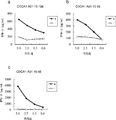
- FIG. 2 shows the limits after induction with CDCA1-A01-10-136 (SEQ ID NO: 8), CDCA1-A01-10-56 (SEQ ID NO: 10) or CDCA1-A01-10-48 (SEQ ID NO: 13). It consists of a series of line graphs (a) to (c) showing IFN- ⁇ production of the CTL clone established by the dilution method. These results indicate peptide-specific IFN- ⁇ production of the CTL clone. In the figure, “+” indicates IFN- ⁇ production of CTL clones against target cells pulsed with the target peptide, and “ ⁇ ” indicates IFN- ⁇ production of CTL clones on target cells not pulsed with any peptide. Is shown. The R / S ratio indicates the ratio of the number of CTL clones that are responding cells (Responder @ cells) to the number of target cells (Stimulator @ cells) that stimulate the cells.
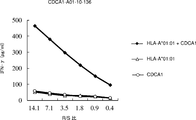
- FIG. 3 is a line graph showing IFN- ⁇ production of CTL clones against target cells expressing both CDCA1 and HLA-A * 01 : 01.
- COS7 cells expressing only either HLA-A * 01 : 01 or the full-length CDCA1 gene were used as negative controls.
- CTL clones established after induction with CDCA1-A01-10-136 SEQ ID NO: 8) showed IFN- ⁇ production on COS7 cells transfected with both CDCA1 and HLA-A * 01: 01 genes (Black rhombus).
- COS7 cells transfected with either HLA-A * 01 : 01 (triangle) or CDCA1 (open circle) did not show significant IFN- ⁇ production.
- the words “a”, “an” and “the” mean “at least one” unless otherwise specified.
- the terms “isolated” and “purified” when used in reference to a substance refer to at least one substance that the substance could otherwise contain in a natural source. Indicates that it is not substantially contained.
- an isolated or purified peptide refers to a peptide that is substantially free of other cellular material from the cell or tissue source from which the peptide was derived, such as carbohydrates, lipids, and other contaminating proteins.
- isolated or purified peptide refers to a peptide that is substantially free of precursors or other chemicals.
- substantially free of cellular material includes preparations of peptides in which the peptides have been separated from the cellular components of the cells from which they were isolated or recombinantly produced.
- a peptide substantially free of cellular material contains less than about 30%, 20%, 10%, or 5%, 3%, 2% or 1% (dry weight basis) of other cellular material. Preparations of peptides.
- the isolated or purified peptide is substantially free of culture medium, and the peptide substantially free of culture medium is the culture medium containing about 20% of the volume of the peptide preparation, Include preparations of peptides containing less than 10%, or 5%, 3%, 2% or 1% (dry weight basis).
- the isolated or purified peptide is substantially free of precursors and other chemicals, and the peptide substantially free of precursors and other chemicals is Preparations of peptides containing less than about 30%, 20%, 10%, 5%, 3%, 2% or 1% (dry weight basis) of precursor substances and other chemicals by volume of the peptide preparation Is included.
- the particular peptide preparation is an isolated or purified peptide, as indicated by the appearance of a single band after sodium dodecyl sulfate (SDS) -polyacrylamide gel electrophoresis and Coomassie brilliant blue staining of the gel, for example. You can check.
- the peptides and polynucleotides of the invention are isolated or purified.
- polypeptide refers to a polymer of amino acid residues.
- the term applies to non-naturally occurring amino acid polymers as well as non-naturally occurring amino acid polymers containing one or more non-naturally occurring amino acid residues.
- Unnatural amino acids include amino acid analogs and amino acid mimetics.
- amino acid refers to naturally occurring amino acids, as well as amino acid analogs and amino acid mimetics that function similarly to naturally occurring amino acids.
- Naturally occurring amino acids are those encoded by the genetic code, as well as those amino acids that are post-translationally modified in cells, such as hydroxyproline, ⁇ -carboxyglutamic acid, and O-phosphoserine.
- amino acid analog has the same basic chemical structure (hydrogen, carboxy, amino, and alpha carbon attached to the R group) as a natural amino acid, but has a modified R group or modified backbone Refers to compounds such as homoserine, norleucine, methionine sulfoxide and methionine methylsulfonium.
- amino acid mimetic refers to a compound that has a structure different from common amino acids, but that has a function similar to an amino acid.
- the amino acids may be either L-amino acids or D-amino acids, but the peptide of the present invention is preferably a polymer of L-amino acids.
- polynucleotide oligonucleotide
- nucleic acid refers to a polymer of nucleotides.
- composition is intended to include products that contain a specified amount of a particular component, and any products that result directly or indirectly from a combination of a particular amount of a particular component. You.
- composition refers to the product comprising the active and inactive ingredients, and the combination, complexation, or aggregation of any two or more ingredients It is intended to include any product that results directly or indirectly from the dissociation of one or more components or from other types of reactions or interactions of one or more components.
- the pharmaceutical compositions of the present invention include any composition made by mixing a compound or cells of the present invention with a pharmaceutically or physiologically acceptable carrier.
- the phrase "pharmaceutically acceptable carrier” or “physiologically acceptable carrier” includes liquid or solid fillers, diluents, excipients, solvents and encapsulating materials. Without limitation, it refers to a pharmaceutically or physiologically acceptable material, composition, substance, or medium.
- cancer refers to cancers that overexpress the CDCA1 gene, including bladder cancer, breast cancer, cervical cancer, cholangiocellular carcinoma, chronic myeloid leukemia (CML) ), Esophageal cancer, stomach cancer, non-small cell lung cancer, lymphoma, osteosarcoma, prostate cancer, kidney cancer, small cell lung cancer, head and neck cancer, soft tissue tumor, and colon cancer It is not limited to.
- the “cancer” is a cancer that expresses CDCA1 and HLA-A01.
- cytotoxic T lymphocyte cytotoxic T cell
- CTL cytotoxic T cell
- HLA-A01 (HLA-A1) refers to HLA-A * 01: 01, HLA-A * 01: 02, HLA-A * 01: 03, HLA-A * 01: 04, etc.
- HLA-A01 type including the subtype of
- the phrase "the subject (or patient) HLA antigen is HLA-A01” refers to a subject or patient whose MHC (major histocompatibility complex) class I refers to possessing the HLA-A01 antigen gene as a molecule homozygously or heterozygously, and expressing the HLA-A01 antigen as an HLA antigen in cells of a subject or patient.
- the treatment will be of clinical benefit, e.
- a treatment is considered “effective” if it results in delay, alleviation of clinical symptoms of cancer, prolonged survival, suppression of postoperative recurrence, and the like.
- Effective when the treatment is applied prophylactically, means that the treatment delays or prevents the formation of the cancer or prevents or alleviates the clinical symptoms of the cancer. Efficacy is determined in connection with any known method for diagnosing or treating a particular tumor type.
- prevention is used herein to refer to any function that reduces the burden of disease mortality or morbidity.
- Prevention can be at "primary, secondary, and tertiary levels of prevention". Primary prevention avoids disease outbreaks, whereas secondary and tertiary levels of prevention, in addition to preventing disease progression and the appearance of symptoms, restore function and reduce disease-related And work to reduce the adverse effects of pre-existing disease by reducing the complications of the disease.
- prevention may include a wide range of prophylactic treatments aimed at lessening the severity of the particular disorder, for example, reducing tumor growth and metastasis.
- the treatment and / or prevention of cancer and / or the prevention of its recurrence after surgery includes inhibiting the growth of cancer cells, regressing or regressing tumors, inducing remission and causing cancer development. Includes any of the following events: suppression, tumor regression, and reduction or inhibition of metastasis, suppression of postoperative recurrence of cancer, and prolongation of survival.
- Effective treatment and / or prevention of cancer reduces mortality, improves the prognosis of individuals with cancer, reduces levels of tumor markers in the blood, and detects detectable symptoms associated with cancer To relax. For example, alleviation or amelioration of a symptom constitutes effective treatment and / or prevention, including 10%, 20%, 30% or more reduction or stable symptoms.
- the term “antibody” refers to immunoglobulins and fragments thereof that specifically react with a specified protein or peptide thereof.
- Antibodies can include human antibodies, primatized antibodies, chimeric antibodies, bispecific antibodies, humanized antibodies, antibodies fused to other proteins or radiolabels, and antibody fragments.
- the term “antibody” is used in a broad sense herein, and specifically includes intact monoclonal antibodies, polyclonal antibodies, multispecific antibodies formed from two or more intact antibodies (eg, bispecific antibodies). And antibody fragments so long as they exhibit the desired biological activity.
- An “antibody” can be an antibody of any class (eg, IgA, IgD, IgE, IgG, and IgM).
- the peptide HLA-A01 is a common HLA allele in Caucasians (Cao et al., Hum Immunol 2001, 62 (9): 1009-30). Therefore, by providing a CDCA1-derived CTL-inducing peptide restricted by HLA-A01, many Caucasians can be provided with an effective treatment method for a CDCA1-expressing cancer. Thus, the present invention provides a CDCA1-derived peptide capable of inducing CTL in an HLA-A01 restricted manner.
- the peptide of the present invention is a peptide derived from CDCA1 that can induce CTL in an HLA-A01 restricted manner.
- Peptides capable of inducing CTL in an HLA-A01 restricted manner include peptides having an amino acid sequence selected from SEQ ID NOs: 1, 8, 10, 13, 25, 33-35 and 37.
- CTLs having cytotoxic activity specific to these peptides By in vitro stimulation of T cells by dendritic cells pulsed with these peptides, CTLs having cytotoxic activity specific to these peptides can be established. The established CTLs show specific cytotoxic activity against target cells pulsed with each peptide.
- the CDCA1 gene is found on cancer cells such as bladder cancer, breast cancer, cervical cancer, cholangiocellular carcinoma, chronic myelogenous leukemia (CML), esophageal cancer, stomach cancer, non-small cell lung cancer, lymphoma, osteosarcoma, It is overexpressed in cancer cells such as prostate, kidney, small cell lung, head and neck, soft tissue, and colorectal, but is not expressed in most normal organs.
- CML chronic myelogenous leukemia
- esophageal cancer esophageal cancer
- stomach cancer non-small cell lung cancer
- lymphoma lymphoma
- osteosarcoma esarcoma
- Preferred peptides are nonapeptides (peptides consisting of 9 amino acid residues) or decapeptides (peptides consisting of 10 amino acid residues), and those of SEQ ID NOs: 1, 8, 10, 13, 25, 33-35 and 37.
- a peptide consisting of an amino acid sequence selected from among them is more preferred.
- a peptide having the amino acid sequence of SEQ ID NO: 8 is suitable for inducing CTLs that exhibit specific cytotoxic activity against cells expressing HLA-A01 and CDCA1, Can be suitably used for immunotherapy of cancer in.
- the peptide of the present invention is a peptide consisting of the amino acid sequence of SEQ ID NO: 8.
- the peptide of the present invention can have additional amino acid residues adjacent to the amino acid sequence of the peptide of the present invention, as long as the resulting peptide retains the ability to induce the original peptide CTL.
- the additional amino acid residues can be composed of any type of amino acids, as long as they do not impair the CTL inducing ability of the original peptide. Therefore, the peptide of the present invention includes a peptide having an ability to induce CTL, comprising an amino acid sequence selected from SEQ ID NOs: 1, 8, 10, 13, 25, 33 to 35 and 37.
- Such peptides are, for example, less than about 40 amino acids, often less than about 20 amino acids, and usually less than about 15 amino acids.
- the peptide of the present invention includes a peptide having a length of 10 amino acids, or 11 to 40 amino acids generated by flanking an additional amino acid with the peptide if the original peptide is a nonapeptide. If the original peptide is a decapeptide, it includes peptides having a length of 11 to 40 amino acids. Such a peptide can be, for example, a peptide of 11-20 amino acids in length, and can be a peptide of 11-15 amino acids in length.
- Preferred examples of the additional amino acid residue are amino acid residues adjacent to the amino acid sequence of the peptide of the present invention in the full-length amino acid sequence of CDCA1 (for example, SEQ ID NO: 64).
- the peptide of the present invention is a peptide fragment of CDCA1 comprising an amino acid sequence selected from among SEQ ID NOs: 1, 8, 10, 13, 25, 33 to 35 and 37, and having a CTL-inducing ability. And peptides.
- modification of one, two or more amino acids in a peptide does not affect the function of the peptide, and may even enhance the desired function of the original peptide.
- the modified peptide ie, one, two, or several amino acid residues have been modified (ie, substituted, deleted, inserted and / or added) compared to the original reference sequence) Peptides composed of amino acid sequences
- Peptides composed of amino acid sequences are known to retain the biological activity of the original peptide (Mark et al., Proc Natl Acad Sci USA USA 1984, 81: 5662-6; Zoller and Smith, Nucleic Acids) Res 1982, 10: 6487-500; Dalbadie-McFarland et al., Proc Natl Acad Sci USA 1982, 79: 6409-13).
- the peptide of the invention comprises one, two or several amino acid sequences relative to an amino acid sequence selected from among SEQ ID NOs: 1, 8, 10, 13, 25, 33-35 and 37. May have a substitution, deletion, insertion and / or addition amino acid sequence, and may be a peptide capable of inducing CTL.
- Examples of properties of functionally similar amino acid side chains include, for example, hydrophobic amino acids (A, I, L, M, F, P, W, Y, V), hydrophilic amino acids (R, D, N, C, E, Q, G, H, K, S, T), as well as side chains having the following functional groups or features in common: aliphatic side chains (G, A, V, L, I, P); hydroxyl group-containing side chains (S, T, Y); sulfur atom-containing side chains (C, M); carboxylic acid and amide-containing side chains (D, N, E, Q); base-containing side chains (R, K, H); and aromatic containing side chains (H, F, Y, W).
- hydrophobic amino acids A, I, L, M, F, P, W, Y, V
- hydrophilic amino acids R, D, N, C, E, Q, G, H, K, S, T
- side chains having the following functional groups or features in common aliphatic side chains (G,
- the following eight groups each include amino acids that are recognized in the art as being conservative substitutions for one another: 1) Alanine (A), glycine (G); 2) aspartic acid (D), glutamic acid (E); 3) Asparagine (N), glutamine (Q); 4) Arginine (R), lysine (K); 5) isoleucine (I), leucine (L), methionine (M), valine (V); 6) phenylalanine (F), tyrosine (Y), tryptophan (W); 7) serine (S), threonine (T); and 8) Cysteine (C), methionine (M) (see, eg, Creighton, Proteins 1984).
- Such conservatively modified peptides are also included in the peptide of the present invention.
- the peptide of the present invention is not limited to these, and may include non-conservative modifications as long as the modified peptide retains the CTL-inducing ability of the original peptide.
- the modified peptides do not exclude polymorphic variants, interspecies homologs, and allele-derived CTL-inducible peptides of CDCA1.
- Alter eg, substitute, delete, insert and / or add
- a small number eg, one, two, or few
- a small percentage of amino acids as long as the original peptide retains the ability to induce CTL. can do.
- severe means 5 or less amino acids, such as 4 or 3 or less.
- the percentage of amino acids to be modified is preferably 20% or less, more preferably 15% or less, even more preferably 10% or less, or 1-5%.
- the peptides of the present invention are presented on the surface of cells or exosomes, preferably as a complex with an HLA antigen. Therefore, the peptide of the present invention preferably has a high binding affinity for HLA antigen. Therefore, the peptide may be modified by substitution, deletion, insertion and / or addition of amino acid residues to obtain a modified peptide having improved binding affinity.
- the second amino acid from the N-terminus and the amino acid at the C-terminus are often anchor residues involved in binding to HLA Class I (Rammensee HG et al.). ., Immunogenetics. 1995, 41 (4): 178-228.).
- anchor residues having high binding affinity to HLA-A01.
- HLA-A01 has an auxiliary anchor residue at the second position from the N-terminus, and that the second amino acid from the N-terminus is preferably threonine or serine.
- the second amino acid from the N-terminus is preferably threonine or serine.
- the second amino acid from the N-terminus may be replaced with threonine or serine. Therefore, in the amino acid sequence selected from SEQ ID NOs: 1, 8, 10, 13, 25, 33 to 35 and 37, the second amino acid from the N-terminus is substituted with threonine or serine.
- a peptide having an ability to induce CTL containing an amino acid sequence, wherein the third amino acid is substituted with aspartic acid or glutamic acid and / or the C-terminal amino acid is substituted with tyrosine is included in the peptide of the present invention. .
- the peptide of the present invention has an amino acid sequence selected from SEQ ID NOs: 1, 8, 10, 13, 25, 33 to 35 and 37, wherein the second amino acid from the N-terminal is threonine or serine. Substituted, the third amino acid from the N-terminus is substituted with aspartic acid or glutamic acid, and / or the C-terminal amino acid is substituted with tyrosine. obtain. That is, the peptide of the present invention is selected from the following (a) to (c) in the amino acid sequence selected from SEQ ID NOs: 1, 8, 10, 13, 25, 33 to 35 and 37.
- a peptide capable of inducing CTL comprising an amino acid sequence having one or more substitutions: (A) the second amino acid from the N-terminus is substituted with threonine or serine; (B) the third amino acid from the N-terminus has been replaced with aspartic acid or glutamic acid; (C) The C-terminal amino acid has been substituted with tyrosine.
- the peptide of the present invention comprises the amino acid sequence selected from SEQ ID NOs: 1, 8, 10, 13, 25, 33 to 35 and 37 in the above (a) to (c) It may be a peptide having an ability to induce CTL, which comprises an amino acid sequence in which one or more substitutions are selected.
- the preferred number of substitutions is one, two or three substitutions selected from the above (a) to (c).
- the third amino acid from the N-terminal is substituted with aspartic acid or glutamic acid.
- the third amino acid from the N-terminal is aspartic acid or glutamic acid.
- the peptide of the present invention has the following amino acid sequence (a) and (b) relative to an amino acid sequence selected from SEQ ID NOs: 1, 8, 10, 13, 25, 33 to 35 and 37. It may be a peptide capable of inducing CTL, comprising a selected amino acid sequence with one or more substitutions: (A) the third amino acid from the N-terminus is substituted with aspartic acid or glutamic acid; and (b) the C-terminal amino acid is substituted with tyrosine.
- the peptide of the present invention differs from the above (a) to (b) with respect to an amino acid sequence selected from SEQ ID NOs: 1, 8, 10, 13, 25, 33 to 35 and 37. It may be a peptide having an ability to induce CTL, which comprises an amino acid sequence in which one or more substitutions are selected.
- Substitutions can be introduced not only at the amino acid at the anchor site, but also at the potential T cell receptor (TCR) recognition site of the peptide.
- TCR T cell receptor
- Some studies have shown that peptides with amino acid substitutions, such as CAP1, p53 (264-272) , Her-2 / neu (369-377) , or gp100 (209-217) , have comparable activities to the original peptide. Or have better activity (Zaremba et al. Cancer Res. 1997, 57, 4570-7, TK Hoffmann et al. J Immunol. 2002, 168 (3): 1338- 47, SO Dionne et al. Cancer Immunol immunother. 2003, 52: 199-206, and SO Dionne et al. Cancer Immunology, Immunotherapy 2004, 53, 307-14).
- the present invention also relates to the N-terminal and / or C-terminal of the peptide of the present invention (eg, a peptide consisting of an amino acid sequence selected from among SEQ ID NOs: 1, 8, 10, 13, 25, 33 to 35 and 37). It is contemplated that one, two, or several amino acids can be added to the protein. Such modified peptides that retain the ability to induce CTL are also included in the present invention. For example, a peptide having one, two, or several amino acids added to the N-terminus and / or C-terminus of a peptide consisting of the amino acid sequence of SEQ ID NO: 8 is brought into APC when brought into contact with APC.
- the peptide of the present invention can be a peptide having one, two, or several amino acids added to either or both of the N-terminus and the C-terminus.
- the amino acid sequence referred to by each SEQ ID NO includes one, two, or several amino acid substitutions, and N-terminal and C-terminal of the substituted amino acid sequence , An amino acid sequence obtained by adding one, two, or several amino acids to either or both. If the peptide of the invention contains amino acid substitutions, the desired substitution positions are referred to, for example, by SEQ ID NOs: 1, 8, 10, 13, 25, 33-35 and 37, which are included in the peptides of the invention.
- the amino acid sequence may be one, two or three selected from the second from the N-terminal, the third from the N-terminal, and the C-terminal.
- the amino acid sequence of the peptide is identical to a portion of the amino acid sequence of an endogenous or exogenous protein having a different function, side effects such as autoimmune disorders and / or allergic symptoms to certain substances may be induced. There is. Therefore, in order to avoid situations where the amino acid sequence of the peptide matches the amino acid sequence of another protein, it is preferable to perform a homology search using available databases. If the homology search reveals that none of the peptides differ by one or two amino acids compared to the peptide of interest, HLA antigens can be used without the risk of such side effects.
- the subject peptide can be modified to increase its binding affinity and / or to increase its ability to induce CTL.
- peptide capable of inducing CTL refers to a peptide whose CTL is induced by APC stimulated with the peptide.
- “Induction of CTL” includes differentiation induction into CTL, induction of CTL activation, induction of CTL proliferation, induction of cytotoxic activity of CTL, induction of target cell lysis by CTL, and increase of CTL IFN- ⁇ production Induction is included.
- Confirmation of the CTL inducibility is achieved by inducing APCs (eg, B lymphocytes, macrophages, and dendritic cells) bearing HLA antigens, stimulating them with peptides, mixing with CD8-positive T cells, and then targeting target cells. On the other hand, it can be carried out by measuring IFN- ⁇ released by CTL.
- APCs eg, B lymphocytes, macrophages, and dendritic cells
- the APC preferably, dendritic cells derived from human peripheral blood mononuclear leukocytes can be used.
- a transgenic animal prepared to express the HLA antigen can also be used.
- target cells can be radiolabeled with 51 Cr or the like, and the cytotoxic activity of CTL induced by the peptide can be calculated from the radioactivity released from the target cells.
- the IFN- ⁇ produced and released by the CTL in the presence of APC stimulated with the peptide is measured, and the inhibition zone on the medium is visualized using an anti-IFN- ⁇ monoclonal antibody, so that the CTL inducibility can be improved. Can be evaluated.
- the peptides of the present invention can also be linked to other peptides as long as the resulting linking peptide retains CTL inducing ability.
- suitable peptides linked to the peptides of the present invention include CTL-inducing peptides derived from TAA.
- the peptides of the present invention can be linked to each other. Suitable linkers that can be used for linkage between peptides are known in the art, for example, AAY (P. M. Daftarian et al., J Trans Trans Med. 2007, 5:26), AAA, NKRK (SEQ ID NO: 48) ) (R. P. M. Sutmuller et al., J Immunol.
- the peptides can be linked in various configurations (eg, linked, overlapping, etc.), and three or more peptides can be linked.
- the peptide of the present invention can also be linked to other substances as long as the resulting linking peptide retains the ability to induce CTL.
- suitable substances to be linked to the peptide of the present invention include, for example, peptides, lipids, sugars or sugar chains, acetyl groups, and natural or synthetic polymers.
- the peptide of the present invention can be subjected to modifications such as glycosylation, side chain oxidation, or phosphorylation as long as the ability to induce CTL is not impaired. These types of modifications can be made to confer additional functions, such as targeting and delivery functions, or to stabilize the peptide.
- Peptide stability can be assayed in several ways. For example, stability can be tested using peptidases and various biological media, such as human plasma and serum (see, e.g., Verhoef et al., Eur J Drug Drug Metab Pharmacokin 1986, 11: 291-302). I want to.)
- the present invention also provides a method for screening or selecting a modified peptide having the same or higher activity compared to the original.
- the present invention provides a method of screening for a peptide capable of inducing CTL, comprising the following steps: (A) SEQ ID NO: 1, 2, or several amino acids with respect to the original amino acid sequence consisting of an amino acid sequence selected from among 1, 8, 10, 13, 25, 33 to 35 and 37 Creating a candidate sequence consisting of an amino acid sequence in which residues have been substituted, deleted, inserted, and / or added; (B) selecting from the candidate sequences created in (a) candidate sequences that do not have significant homology (sequence identity) with any known human gene product other than CDCA1; (C) contacting the peptide consisting of the candidate sequence selected in (b) with APC; (D) contacting the APC of (c) with CD8-positive T cells; and (e) selecting a peptide having a CTL inducing ability equal to or higher than that of the peptide having the original amino acid sequence.
- A SEQ ID NO: 1, 2, or several amino acids with respect to the original amino acid sequence consisting of an
- the peptides consisting of SEQ ID NOs: 1, 8, 10, 13, 25, 33 to 35 and 37 all have HLA-A01-restricted CTL-inducing activity. Therefore, in order to select a cell having the ability to induce CTL from those having modified amino acid sequences, the APC in the step (c) is preferably a cell having HLA-A01.
- the peptide of the present invention is also described as “CDCA1 peptide” or “CDCA1 polypeptide”.
- the peptides of the invention can be prepared using well-known techniques.
- the peptides of the invention can be prepared using recombinant DNA technology or chemical synthesis.
- the peptides of the present invention can be synthesized individually or as longer polypeptides comprising two or more peptides.
- the peptide of the invention can be isolated from the host cell or from a synthetic reaction after production in the host cell using recombinant DNA technology or after chemical synthesis. That is, the peptides of the invention can be purified or isolated to be substantially free of other host cell proteins and fragments thereof, or any other chemicals.
- ⁇ ⁇ ⁇ ⁇ Peptides of the present invention can include modifications such as glycosylation, side chain oxidation, or phosphorylation, as long as the modifications do not impair the biological activity of the original peptide.
- modifications include incorporation of D-amino acids or other amino acid mimetics that can be used, for example, to extend the serum half-life of the peptide.
- the peptide of the present invention can be obtained by chemical synthesis based on the selected amino acid sequence.
- Examples of conventional peptide synthesis methods that can be adapted for the synthesis include those described in the following literature: (I) Peptide Synthesis, Interscience, New York, 1966; (Ii) The Proteins, Vol.
- any of the known genetic engineering methods for producing peptides can be adapted to obtain the peptides of the invention (eg, Morrison J, J Bacteriology 1977, 132: 349-51; Clark-Curtiss & Curtiss, Wu et al. Methods in Enzymology 1983, 101: 347-62).
- an appropriate vector containing a polynucleotide encoding the peptide of the present invention in a form that allows expression thereof is prepared and transformed into an appropriate host cell.
- the host cell is cultured to produce the peptide of the present invention.
- the peptide of the present invention can be produced in vitro using an in vitro translation system.
- polynucleotides that encode any of the peptides of the invention. These include polynucleotides from the native CDCA1 gene (eg, GenBank accession number NM_145697 (SEQ ID NO: 44) or GenBank accession number NM_031423 (SEQ ID NO: 46)), and conservatively modified nucleotide sequences thereof. Polynucleotides. As used herein, the phrase "conservatively modified nucleotide sequence" refers to a sequence that encodes the same or essentially the same amino acid sequence. Due to the degeneracy of the genetic code, many functionally identical nucleic acids encode any particular protein.
- the codons GCA, GCC, GCG, and GCU all encode the amino acid alanine.
- the codon can be changed to any of the corresponding codons without changing the encoded polypeptide.
- Such nucleic acid mutations are "silent mutations" and are a type of conservatively modified mutation. Every nucleic acid sequence herein which encodes a peptide also describes every possible silent variation of the nucleic acid.
- each codon in a nucleic acid except AUG, which is usually the only codon for methionine, and TGG, which is usually the only codon for tryptophan
- TGG which is usually the only codon for tryptophan
- the polynucleotide of the present invention can be composed of DNA, RNA, and derivatives thereof.
- DNA is suitably composed of bases such as A, T, C, and G, and T is replaced by U in RNA.
- a polynucleotide of the invention may encode a plurality of peptides of the invention with or without intervening amino acid sequences.
- an intervening amino acid sequence can provide a cleavage site for a polynucleotide or translated peptide (eg, an enzyme recognition sequence).
- the polynucleotide may include any additional sequences to the coding sequence encoding the peptide of the invention.
- the polynucleotide may be a recombinant polynucleotide containing regulatory sequences required for expression of the peptide, or may be an expression vector (eg, a plasmid) having a marker gene or the like.
- such recombinant polynucleotides can be prepared by manipulating the polynucleotides by conventional recombination techniques, for example using polymerases and endonucleases.
- the polynucleotide of the present invention can be produced by any of the recombinant techniques and the chemical synthesis techniques.
- a polynucleotide can be made by inserting it into an appropriate vector, which can be expressed when transfected into competent cells.
- polynucleotides can be amplified using PCR techniques or expression in a suitable host (see, for example, Sambrook et al., Molecular Cloning: A Laboratory Laboratory Manual, Cold Spring Harbor Laboratory, New York, 1989).
- Beaucage SL & Iyer RP Tetrahedron 1992, 48: 2223-311; Matthes et al., EMBO J 1984, 3: 801-5, may be used to synthesize polynucleotides. it can.
- Exosomes The present invention further provides intracellular vesicles, called exosomes, that present the complex formed between the peptide of the invention and the HLA antigen on its own surface. Exosomes can be prepared, for example, using the methods detailed in JP-A-11-510507 and WO 99/03499, and prepared using APCs obtained from patients to be treated and / or prevented. can do. The exosomes of the invention can be vaccinated in the same manner as the peptides of the invention.
- HLA-A01 eg, HLA-A * 01: 01
- HLA-A * 01: 01 is an HLA allele frequently found in Caucasians, and this type of HLA antigen is considered suitable for treating Caucasian patients.
- antigens that have a high level of binding affinity for a particular HLA antigen or are mediated through a particular HLA antigen by pre-examining the type of HLA antigen in the patient in need of treatment Appropriate selection of a peptide having the ability to induce CTL by presentation is possible.
- the exosome of the present invention presents a complex of the peptide of the present invention and HLA-A01 on its surface.
- the peptide of the present invention is an amino acid selected from SEQ ID NOs: 1, 8, 10, 13, 25, 33 to 35 and 37. It is preferably a peptide having a sequence or a modified peptide thereof, and a peptide consisting of an amino acid sequence selected from SEQ ID NOs: 1, 8, 10, 13, 25, 33 to 35 and 37 or a modified peptide thereof Is more preferred.
- the present invention also provides an APC that displays on its surface a complex formed between an HLA antigen and a peptide of the present invention.
- the present invention provides an APC having on its cell surface a complex formed between an HLA antigen and a peptide of the present invention.
- the APC of the present invention can be an isolated APC.
- isolated refers to the cells being separated from other types of cells.
- the APC of the present invention may be derived from APC derived from a patient to be treated and / or prevented, and may be used alone or other drugs containing the peptide, exosome, or CTL of the present invention. Can be administered in combination with a vaccine.
- the APC of the present invention is not limited to a particular type of cell, but is a cell known to present proteinaceous antigens on its cell surface to be recognized by lymphocytes, such as dendritic cells : DC), Langerhans cells, macrophages, B cells, and activated T cells. Since DC is a representative APC having the strongest CTL-inducing action among APCs, DC can be preferably used as the APC of the present invention.
- APCs of the invention can be obtained, for example, by inducing DCs from peripheral blood monocytes and then stimulating them in vitro, ex vivo or in vivo with a peptide of the invention.
- APC presenting the peptide of the present invention is induced in the subject. Therefore, the APC of the present invention can be obtained by administering the peptide of the present invention to a subject and then collecting the APC from the subject.
- the APC of the present invention can be obtained by contacting APC recovered from a subject with the peptide of the present invention.
- Administering the APC of the present invention to a subject alone or in combination with another drug containing the peptide, exosome, or CTL of the present invention to induce an immune response against a CDCA1-expressing cancer cell in the subject can do.
- ex vivo administration may include the following steps: (A) recovering the APC from the first subject; (B) contacting the APC of step (a) with the peptide; and (c) administering the APC of step (b) to a second subject.
- the first subject and the second subject may be the same individual or different individuals.
- the HLA of the first subject and the second subject are preferably of the same type.
- the APC obtained by the above step (b) can be a vaccine for treating and / or preventing cancer.
- a The APC of the present invention obtained by the above method has CTL inducing ability.
- CTL inducibility refers to the ability of APC to induce CTL when contacted with CD8 positive T cells.
- the CTLs induced by the APC of the present invention are CDCA1-specific CTLs and exhibit specific cytotoxic activity against CDCA1-expressing cells.
- APC of the present invention can also be prepared by introducing a polynucleotide encoding the peptide of the present invention into APC in vitro in addition to the above-mentioned method.
- the polynucleotide to be introduced may be in the form of DNA or RNA.
- methods of introduction include, without limitation, various methods conventionally practiced in the art, such as lipofection, electroporation, and the calcium phosphate method. More specifically, Cancer Res. 1996, 56: 5672-7; J. Immunol 1998, 161: 5607-13; J. Exp. Med. 1996, 184: 465-72; and JP Patent Publication No. 2000-509281. Such a method can be used.
- the polynucleotide encoding the peptide of the present invention undergoes transcription, translation, and the like in the cell, and the resulting peptide is processed by MHC class I, and passed through the presentation pathway.
- the peptides of the invention are displayed on the cell surface of the APC.
- the APC of the present invention displays a complex formed between HLA-A01 (more preferably, HLA-A * 01: 01) and a peptide of the present invention on its cell surface.
- HLA-A01 more preferably, HLA-A * 01: 01
- the peptide of the present invention is an amino acid selected from SEQ ID NOs: 1, 8, 10, 13, 25, 33 to 35 and 37. It is preferably a peptide having a sequence or a modified peptide thereof, and more preferably a peptide consisting of an amino acid sequence selected from SEQ ID NOs: 1, 8, 10, 13, 25, 33 to 35 and 37.
- the APC of the present invention is preferably an APC derived by a method comprising the steps described in the following (a) or (b): (A) contacting an APC expressing HLA-A01 (more preferably HLA-A * 01: 01) with a peptide of the present invention; (B) a step of introducing a polynucleotide encoding the peptide of the present invention into APC expressing HLA-A01 (more preferably, HLA-A * 01: 01).
- the peptide of the present invention that is brought into contact with APC expressing HLA-A01 is a peptide having an amino acid sequence selected from SEQ ID NOs: 1, 8, 10, 13, 25, 33 to 35 and 37, or a modification thereof. It is preferably a peptide, and more preferably a peptide consisting of an amino acid sequence selected from SEQ ID NOs: 1, 8, 10, 13, 25, 33 to 35 and 37.
- the present invention there is also provided use of the peptide of the present invention for producing a pharmaceutical composition for inducing APC having CTL inducing ability.
- the present invention provides a method or a process for producing a pharmaceutical composition for inducing APC having CTL inducing ability.
- the present invention also provides the peptide of the present invention for inducing APC having CTL inducing ability.
- the CTL induced by the peptide of the present invention can be used as a vaccine in the same manner as the peptide of the present invention in order to enhance an immune response targeting a CDCA1-expressing cancer cell in vivo. Accordingly, the present invention provides a CTL induced or activated by the peptide of the present invention.
- the CTL of the present invention is a CTL targeting the peptide of the present invention, and is a CTL capable of binding to a complex of the peptide of the present invention and an HLA antigen. The binding of CTL to the complex is performed via a T cell receptor (TCR) present on the cell surface of CTL.
- TCR T cell receptor
- the CTL of the present invention can be an isolated CTL.
- the CTL of the present invention comprises (1) administering the peptide of the present invention to a subject, or (2) subjecting APC and CD8-positive T cells derived from the subject or peripheral blood mononuclear cells (PBMC) to PBMC. Stimulating in vitro with a peptide of the invention, or (3) contacting CD8 positive T cells or PBMCs in vitro with APCs or exosomes that present a complex of an HLA antigen and a peptide of the invention on its own surface Or (4) introducing into a CD8-positive T cell a vector containing a polynucleotide encoding each subunit of a T cell receptor (TCR) capable of binding to the peptide of the present invention presented by the HLA antigen on the cell surface Can be obtained by:
- the exosomes and APC used in the method (2) or (3) can be prepared by the methods described in the chapters “V. exosomes” and “VI. Antigen presenting cells (APC)”, respectively.
- the CTL of the present invention can be administered alone to a patient to be treated and / or prevented, or used in combination with another drug containing the peptide of the present invention, APC or exosome for the purpose of modulating the effect. Can be administered.
- the CTL of the present invention may be a CTL derived from CD8-positive T cells derived from a patient to which the CTL is administered.
- the CTL of the present invention acts specifically on target cells presenting the peptide of the present invention, for example, the same peptide used to induce the CTL of the present invention.
- the target cell may be a cell that expresses CDCA1 endogenously, such as a cancer cell, or a cell that has been transfected with the CDCA1 gene.
- Cells that present the peptide on the cell surface upon stimulation by the peptide of the present invention may also be targets for attack by the CTL of the present invention.
- the target cells of the CTL of the present invention are preferably HLA-A01 (more preferably, HLA-A * 01: 01) positive cells.
- the CTLs of the present invention specifically target cells expressing both HLA-A01 (more preferably, HLA-A * 01: 01) and CDCA1.
- HLA-A01 more preferably, HLA-A * 01: 01
- CDCA1 CDCA1.
- targeting a CTL with a cell means that the CTL recognizes a cell presenting a complex of HLA and the peptide of the present invention on the cell surface, and damages the cell. To show activity.
- specifically targeting means that CTL exhibits cytotoxic activity against the cell but does not exhibit cytotoxic activity against other cells.
- the term "recognize a cell” refers to a complex of HLA present on the cell surface and a peptide of the present invention that binds through its TCR and is specific for the cell. It indicates that it exhibits a high cytotoxic activity. Therefore, the CTL of the present invention preferably contains a TCR on the complex formed between HLA-A01 (more preferably HLA-A * 01: 01) displayed on the cell surface and the peptide of the present invention. Is a CTL that can bind through
- the CTL of the present invention is preferably a CTL induced by a method comprising the steps described in the following (a) or (b): (A) contacting CD8-positive T cells in vitro with an APC or exosome that presents a complex of HLA-A01 (more preferably HLA-A * 01: 01) and a peptide of the invention on its own surface ; (B) a polynucleotide encoding each subunit of the TCR capable of binding to the peptide of the present invention presented on the cell surface by HLA-A01 (more preferably HLA-A * 01: 01) on CD8-positive T cells The stage of introducing.
- T cell receptor The invention also provides compositions comprising a polynucleotide encoding each subunit of the TCR capable of binding to a peptide of the invention presented on a cell surface by an HLA antigen, and methods of using the same.
- the polynucleotide expresses a TCR capable of binding to the peptide of the present invention presented on the cell surface by an HLA antigen on the cell surface, thereby increasing the specificity for a CDCA1-expressing cancer cell to a CD8-positive T cell.
- Polynucleotides encoding ⁇ and ⁇ chains as TCR subunits of CTLs induced by the peptides of the invention can be identified using methods known in the art (WO2007 / 032255, and Morgan et al., J Immunol, 2003, 171, 3288).
- a PCR method is preferred for analyzing TCR.
- the PCR primers for the analysis include, for example, a 5′-R primer (5′-gtctaccaggcattcgcttcat-3 ′) (SEQ ID NO: 40) as a 5′-side primer and a TCR ⁇ chain C region as a 3′-side primer.
- 3-TRa-C primer (5'-tcagctggaccacagccgcagcgt-3 ') (SEQ ID NO: 41), 3-TRb-C1 primer (5'-tcagaaatcctttctctcttgac-3') specific to TCR ⁇ chain C1 region No. 42) or a 3-TRb-C2 primer (5′-ctagcctctggaatcctttctctttt-3 ′) specific to the TCR ⁇ chain C2 region (SEQ ID NO: 43), but is not limited thereto.
- a TCR formed by introducing the identified polynucleotide into a CD8-positive T cell can bind to a target cell presenting the peptide of the present invention with high avidity, and present the peptide of the present invention. Mediates efficient killing of target cells in vivo and in vitro.
- the polynucleotide encoding each subunit of the TCR can be incorporated into a suitable vector, for example, a retroviral vector. These vectors are well-known in the art.
- the polynucleotides or vectors containing them in a form capable of expressing them can be introduced into CD8-positive T cells, for example, CD8-positive T cells from a patient.
- the present invention provides a ready-made technology that allows the rapid and easy generation of modified T cells with superior cancer cell killing properties by rapid modification of the patient's own T cells (or T cells from another subject).
- a specific TCR specifically refers to a complex of the peptide of the present invention and the HLA antigen presented on the surface of a target cell when the TCR is present on the surface of a CD8-positive T cell. It is a TCR that can recognize and confer specific cytotoxic activity on target cells. Specific recognition of the complex can be confirmed by any known method, and preferred examples thereof include HLA multimer staining analysis using HLA molecules and the peptide of the present invention, and ELISPOT assay. By performing the ELISPOT assay, it can be confirmed that T cells into which the polynucleotide has been introduced specifically recognize target cells by TCR, and that signals are transmitted intracellularly.
- the TCR When the TCR is present on the surface of CD8-positive T cells, it is also confirmed by a known method that the TCR can impart target cell-specific cytotoxic activity to CD8-positive T cells. Can be. Preferred methods include, for example, measuring cytotoxic activity against target cells, such as by a chromium release assay.
- the present invention also relates to each subunit of TCR that binds to a peptide having an amino acid sequence selected from, for example, SEQ ID NOs: 1, 8, 10, 13, 25, 33 to 35, and 37 in the context of HLA-A01.
- CTLs prepared by transducing CD8-positive T cells with a polynucleotide encoding
- Transduced CTLs can home in vivo and can be grown by well known in vitro culture methods (eg, Kawakami et al., JmmImmunol., 1989, 142, 3452-61).
- the CTL of the present invention can be used to form an immunogenic composition useful for treating or preventing a disease in a patient in need of treatment or prevention, the contents of which are incorporated herein by reference. See WO2006 / 031221).
- compositions or a pharmaceutical composition comprising at least one active ingredient selected from: (A) the peptide of the present invention; (B) a polynucleotide encoding the peptide of the present invention in an expressible form; (C) APC of the present invention; (D) an exosome of the present invention; (E) CTL of the present invention.
- the pharmaceutical composition of the present invention may contain, in addition to the above-mentioned active ingredients, carriers, excipients, and the like usually used for pharmaceuticals, if necessary, without any particular limitation.
- carriers that can be used in the pharmaceutical composition of the present invention include sterilized water, physiological saline, phosphate buffer, culture solution and the like.
- the present invention also provides a pharmaceutical composition
- a pharmaceutical composition comprising at least one active ingredient selected from the following (a) to (e) and a pharmaceutically acceptable carrier: (A) the peptide of the present invention; (B) a polynucleotide encoding the peptide of the present invention in an expressible form; (C) APC of the present invention; (D) an exosome of the present invention; (E) CTL of the present invention.
- the pharmaceutical composition of the present invention may contain a stabilizer, a suspension, a preservative, a surfactant, a solubilizer, a pH adjuster, an aggregation inhibitor, and the like, if necessary.
- CDCA1 expression is significantly elevated in cancer cells as compared to normal tissues. Therefore, the peptide of the present invention or the polynucleotide encoding the peptide can be used for treating and / or preventing cancer and / or preventing its recurrence after surgery. Therefore, the present invention provides a pharmaceutical composition for treating and / or preventing cancer and / or preventing its recurrence after surgery, wherein one or more of the peptides or polynucleotides of the present invention are effective.
- a composition comprising as an ingredient is provided.
- a peptide of the invention can be displayed on the surface of an exosome or APC for use as a pharmaceutical composition.
- the CTL of the present invention which targets any one of the peptides of the present invention can also be used as an active ingredient of the pharmaceutical composition of the present invention.
- the pharmaceutical compositions of the invention may contain a therapeutically or pharmaceutically effective amount of the active ingredients.
- the pharmaceutical composition of the present invention can also be used as a vaccine.
- the phrase “vaccine” also referred to as “immunogenic composition” refers to a composition that has the function of inducing an immune response that, when inoculated into an animal, results in an antitumor effect. Point. Accordingly, the pharmaceutical compositions of the present invention can be used to induce an immune response that produces an anti-tumor effect.
- the immune response induced by the peptide, polynucleotide, APC, CTL and pharmaceutical composition of the present invention is not particularly limited as long as it is an immune response that produces an antitumor effect. CTL induction, and induction of cytotoxic activity specific to cancer cells.
- the pharmaceutical composition of the present invention can be used for treating and / or preventing cancer and / or preventing its recurrence after surgery in a human subject or patient.
- the pharmaceutical composition of the present invention can be preferably used for HLA-A01-positive subjects.
- the pharmaceutical composition of the present invention can be preferably used for treating and / or preventing cancer expressing HLA-A01 and CDCA1, and / or for preventing its recurrence after surgery.
- the present invention also provides the use of an active ingredient selected from the following in the manufacture of a pharmaceutical composition for treating or preventing HLA-A01 and CDCA1-expressing cancer: (A) the peptide of the present invention; (B) a polynucleotide encoding the peptide of the present invention in an expressible form; (C) an APC that presents the peptide of the invention on its own surface; (D) an exosome that presents the peptide of the present invention on its surface; and (e) a CTL of the present invention.
- an active ingredient selected from the following in the manufacture of a pharmaceutical composition for treating or preventing HLA-A01 and CDCA1-expressing cancer: (A) the peptide of the present invention; (B) a polynucleotide encoding the peptide of the present invention in an expressible form; (C) an APC that presents the peptide of the invention on its own surface; (D) an exosome that presents the peptide of the present invention on its surface; and
- the present invention further provides an active ingredient selected from the following for use in treating or preventing cancer expressing HLA-A01 and CDCA1: (A) the peptide of the present invention; (B) a polynucleotide encoding the peptide of the present invention in an expressible form; (C) an APC that presents the peptide of the invention on its own surface; (D) an exosome that presents the peptide of the present invention on its surface; and (e) a CTL of the present invention.
- the present invention further provides a method or step for producing a pharmaceutical composition for treating or preventing cancer expressing HLA-A01 and CDCA1, wherein at least one selected from the following:
- a method or process comprising formulating the active ingredient and a pharmaceutically or physiologically acceptable carrier: (A) the peptide of the present invention; (B) a polynucleotide encoding the peptide of the present invention in an expressible form; (C) an APC that presents the peptide of the invention on its own surface; (D) an exosome that presents the peptide of the present invention on its surface; and (e) a CTL of the present invention.
- the present invention is also a method or step for producing a pharmaceutical composition for treating or preventing cancer expressing HLA-A01 and CDCA1, wherein the method or step is selected from:
- a method or process comprising mixing the active ingredient with a pharmaceutically or physiologically acceptable carrier: (A) the peptide of the present invention; (B) a polynucleotide encoding the peptide of the present invention in an expressible form; (C) an APC that presents the peptide of the invention on its own surface; (D) an exosome that presents the peptide of the present invention on its surface; and (e) a CTL of the present invention.
- the present invention also provides a method for treating or preventing a cancer expressing HLA-A01 and CDCA1, comprising administering to a subject at least one active ingredient selected from the following: Provide a method that includes: (A) the peptide of the present invention; (B) a polynucleotide encoding the peptide of the present invention in an expressible form; (C) an APC that presents the peptide of the invention on its own surface; (D) an exosome that presents the peptide of the present invention on its surface; and (e) a CTL of the present invention.
- a peptide having an amino acid sequence selected from among SEQ ID NOs: 1, 8, 10, 13, 25, 33 to 35 and 37 is an HLA-A01-restricted peptide capable of inducing a strong and specific immune response.
- a pharmaceutical composition of the present invention comprising at least one of the peptides having an amino acid sequence selected from among SEQ ID NOs: 1, 8, 10, 13, 25, 33 to 35 and 37 has HLA as an HLA antigen Particularly suitable for administration to a subject having -A01 (eg, HLA-A * 01: 01).
- compositions comprising the targeted CTL (ie the CTL of the present invention). That is, a pharmaceutical composition comprising an active ingredient related to a peptide having an amino acid sequence selected from among SEQ ID NOs: 1, 8, 10, 13, 25, 33 to 35 and 37 is a subject having HLA-A01 (Ie, HLA-A01 positive subjects).
- the pharmaceutical composition of the present invention is a pharmaceutical composition comprising a peptide having the amino acid sequence of SEQ ID NO: 8.
- the cancer treated and / or prevented by the pharmaceutical composition of the present invention is not particularly limited as long as it expresses CDCA1, and various cancers, bladder cancer, breast cancer, cervical cancer, and bile duct cells are included.
- Cancer chronic myelogenous leukemia (CML), esophageal cancer, gastric cancer, non-small cell lung cancer, lymphoma, osteosarcoma, prostate cancer, renal cancer, small cell lung cancer, head and neck cancer, soft tissue tumor, and colon Including
- the pharmaceutical composition of the present invention comprises, in addition to the aforementioned active ingredients, other peptides having the ability to induce CTLs against cancer cells (eg, other TAA-derived peptides CTL-inducing peptides), It may include other polynucleotides encoding the peptide, other cells displaying the other peptide, and the like.
- other peptides having the ability to induce CTLs against cancer cells eg, other TAA-derived peptides CTL-inducing peptides
- It may include other polynucleotides encoding the peptide, other cells displaying the other peptide, and the like.
- the pharmaceutical composition of the present invention can also optionally contain other therapeutic substances as active ingredients, as long as the antitumor effect of the active ingredient such as the peptide of the present invention is not inhibited.
- a pharmaceutical composition of the present invention can optionally include an anti-inflammatory composition, an analgesic, a chemotherapeutic agent, and the like.
- the pharmaceutical composition of the present invention may be administered sequentially or simultaneously with one or more other pharmaceutical compositions. it can.
- the dosage of the pharmaceutical compositions of the present invention and other pharmaceutical compositions will depend, for example, on the type of pharmaceutical composition used, the disease to be treated, and the schedule and route of administration.
- compositions of the present invention may also include other components conventional in the art, given the type of formulation. Should.
- the present invention also provides a product or a kit containing the pharmaceutical composition of the present invention.
- the product or kit of the invention can include a container containing the pharmaceutical composition of the invention.
- suitable containers include, but are not limited to, bottles, vials, and test tubes.
- the container may be formed from various materials such as glass or plastic.
- a label may be attached to the container, and the label can describe a disease or disease state in which the pharmaceutical composition of the present invention is to be used.
- the label may also indicate directions for administration and the like.
- the product or kit of the present invention may further include, in addition to the container containing the pharmaceutical composition of the present invention, optionally, a second container containing a pharmaceutically acceptable diluent.
- the products or kits of the present invention may further include other materials desirable from a commercial and user standpoint, such as other buffers, diluents, filters, needles, syringes, and inserts with instructions for use. May be included.
- compositions of the present invention can be presented in a pack or dispenser device which can contain one or more unit dosage forms containing the active ingredient.
- the pack may for example comprise metal or plastic foil, such as a blister pack.
- the pack or dispenser device may be accompanied by instructions for administration.
- composition Containing Peptide as Active Ingredient can be formulated, if necessary, by a conventional formulation method.
- the pharmaceutical composition of the present invention may contain, in addition to the peptide of the present invention, carriers, excipients, and the like usually used for pharmaceuticals, if necessary, without any particular limitation.
- carriers that can be used in the pharmaceutical compositions of the present invention include sterile water (eg, water for injection), saline, phosphate buffer, phosphate buffered saline, Tris buffered saline, 0.3% Glycine, culture solution and the like can be mentioned.
- the pharmaceutical composition of the present invention may contain a stabilizer, a suspension, a preservative, a surfactant, a solubilizer, a pH adjuster, an aggregation inhibitor, and the like, if necessary. Since the pharmaceutical composition of the present invention can induce specific immunity against cancer cells expressing CDCA1, it can be used for the purpose of treating or preventing cancer.
- the pharmaceutical compositions of the present invention may be pharmaceutically or physiologically acceptable, such as sterile water (eg, water for injection), saline, phosphate buffer, phosphate buffered saline, Tris buffered saline, and the like.
- sterile water eg, water for injection
- saline phosphate buffer
- phosphate buffered saline Tris buffered saline
- the peptide solution is dissolved in a water-soluble carrier to be added, if necessary, after adding a stabilizer, a suspension, a preservative, a surfactant, a dissolution aid, a pH adjuster, an aggregation inhibitor, and the like. It can be prepared by sterilization.
- the method for sterilizing the peptide solution is not particularly limited, but is preferably performed by filtration sterilization.
- the filtration sterilization can be performed using, for example, a filtration sterilization filter having a pore size of 0.22 ⁇ m or less.
- the peptide solution after sterilization by filtration can be administered to a subject as, for example, but not limited to, an injection.
- the pharmaceutical composition of the present invention may be prepared as a freeze-dried preparation by freeze-drying the peptide solution.
- the lyophilized preparation is prepared by filling the peptide solution prepared as described above into an appropriate container such as an ampoule, a vial, or a plastic container, performing lyophilization, and after repressurization, enclosing the container with a sterilized and washed rubber stopper. Can be prepared.
- the lyophilized formulation is pharmaceutically or physiologically acceptable prior to administration, such as sterile water (eg, water for injection), saline, phosphate buffer, phosphate buffered saline, Tris buffered saline, and the like. After re-dissolving in a water-soluble carrier, it can be administered to a subject.
- Preferred examples of the pharmaceutical composition of the present invention include such an injection of a peptide solution sterilized by filtration and a lyophilized preparation obtained by freeze-drying the peptide solution.
- a kit containing such a lyophilized preparation and a reconstituted liquid is also included in the present invention.
- the present invention also includes a kit including a container containing a lyophilized preparation as a pharmaceutical composition of the present invention and a container containing a re-dissolved liquid thereof.
- the pharmaceutical composition of the present invention can also contain a combination of two or more of the peptides of the present invention.
- the combination of peptides may be in the form of a cocktail in which the peptides are mixed, or the peptides may be linked together using standard techniques.
- the peptides may be chemically linked or expressed as a single fusion polypeptide sequence.
- APCs eg, DCs
- APCs are removed from a subject and then stimulated with a peptide of the invention to obtain an APC that displays any of the peptides of the invention on its cell surface.
- APCs can be administered again to a subject to induce CTL in the subject and, as a result, increase the aggressiveness against cancer cells that express CDCA1.
- compositions of the present invention may also include adjuvants known to efficiently establish cellular immunity.
- An adjuvant refers to a compound that, when administered together (or sequentially) with an immunologically active antigen, enhances the immune response to the antigen.
- a known adjuvant described in a document such as Clin ⁇ Microbiol ⁇ Rev ⁇ 1994, # 7: ⁇ 277-89 can be used.
- Suitable adjuvants include aluminum salts (aluminum phosphate, aluminum hydroxide, aluminum oxyhydroxide, etc.), alum, cholera toxin, salmonella toxin, incomplete Freund's adjuvant (IFA), complete Freund's adjuvant (CFA), ISCOMatrix Lipopolysaccharides (MPL, RC529, etc.), GM-CSF and other immunostimulatory cytokines, oligodeoxynucleotides containing CpG motifs (such as CpG7909), oil-in-water emulsions, saponins or derivatives thereof (such as QS21), lipid A or derivatives thereof , GLA, E6020, etc.), lipopeptide, lactoferrin, flagellin, double-stranded RNA or derivatives thereof (poly IC, etc.), bacterial DNA, imidazoquinoline (imiquimod, R848, etc.), C-type lectin ligand (trehalose
- the adjuvants can be usually added to an antigen having immunological activity (that is, the peptide of the present invention) in an amount effective to enhance or enhance its immunogenicity.
- the adjuvant may be contained in a kit containing the pharmaceutical composition of the present invention in a separate container from the pharmaceutical composition containing the peptide of the present invention.
- the adjuvant and the pharmaceutical composition may be administered to the subject sequentially or may be mixed immediately prior to administration to the subject.
- a kit comprising such a pharmaceutical composition comprising the peptide of the present invention and an adjuvant is also provided by the present invention.
- the kit can further contain a reconstituted liquid.
- the present invention also provides a kit comprising a container containing the pharmaceutical composition of the present invention and a container containing an adjuvant.
- the kit may further include a container containing the re-dissolved solution, if necessary.
- the pharmaceutical composition of the present invention may be prepared as an emulsion.
- the emulsion can be prepared, for example, by mixing and stirring the peptide solution prepared as described above and an oily adjuvant.
- the peptide solution may be redissolved after lyophilization.
- the emulsion may be either a W / O emulsion or an O / W emulsion, but is preferably a W / O emulsion in order to obtain a high immune response enhancing effect.
- IFA can be preferably used as an oily adjuvant, but is not limited thereto.
- the preparation of the emulsion may be performed immediately before administration to the subject, in which case the pharmaceutical composition of the invention may be provided as a kit comprising the peptide solution of the invention and an oily adjuvant.
- the kit can further contain a reconstituted liquid.
- the pharmaceutical composition of the present invention is a liposome preparation encapsulating the peptide of the present invention, a granule preparation in which the peptide is bound to beads having a diameter of several micrometers, or a preparation in which the lipid is bound to the peptide. Is also good.
- the peptides of the invention may also be administered in the form of a pharmaceutically acceptable salt.
- the salt include salts with alkali metals (such as lithium, potassium and sodium), salts with alkaline earth metals (such as calcium and magnesium), and salts with other metals (such as copper, iron, zinc and manganese).
- a pharmaceutical composition comprising a pharmaceutically acceptable salt of the peptide of the present invention is also encompassed by the present invention.
- the “peptide of the present invention” includes not only a peptide in a free form but also a pharmaceutically acceptable salt thereof.
- the pharmaceutical compositions of the present invention may further include a component that stimulates CTL.
- Lipids have been identified as substances capable of stimulating CTL in vivo against viral antigens.
- a palmitic acid residue can be attached to the ⁇ -amino and ⁇ -amino groups of a lysine residue and then linked to a peptide of the invention.
- the lipidated peptide can then be administered directly in the form of micelles or particles, incorporated into liposomes, or emulsified in adjuvant.
- CTLs can be used to stimulate CTLs (see, for example, Deres et al., Nature 1989, 342: 561-4).
- P3CSS tripalmitoyl-S-glycerylcysteinyl-seryl-serine
- Examples of methods of administering the peptide or pharmaceutical composition of the present invention include oral, intradermal, subcutaneous, intramuscular, intraosseous, peritoneal and intravenous injection, and the like, as well as systemic administration or local administration near the target site. Including, but not limited to.
- a preferred method of administration includes subcutaneous injection near the lymph nodes, such as the axilla or inguinal region. Dosing can be performed by a single dose or can be boosted by multiple doses.
- the peptide of the present invention is a therapeutically or pharmaceutically effective amount for treating cancer or a therapeutically or pharmaceutically effective amount for inducing immunity (more specifically, CTL) against a CDCA1-expressing cancer cell. Can be administered to a subject.
- the dose of the peptide of the present invention can be appropriately adjusted depending on the disease to be treated, the age and weight of the patient, the administration method, etc., and is usually 0.001 mg to 1000 mg, for example, 0.01 mg for each peptide of the present invention. It can be 100100 mg, for example 0.1 mg to 30 mg, for example 0.1 mg to 10 mg, for example 0.5 mg to 5 mg.
- the administration interval can be once every several days to several months, for example, once a week. Those skilled in the art can appropriately select an appropriate dose.
- a pharmaceutical composition of the invention comprises a therapeutically effective amount of a peptide of the invention and a pharmaceutically or physiologically acceptable carrier.
- a pharmaceutical composition of the invention comprises a therapeutically effective amount of a peptide of the invention, a pharmaceutically or physiologically acceptable carrier, and an adjuvant.
- the pharmaceutical composition of the present invention contains 0.001 mg to 1000 mg, preferably 0.01 mg to 100 mg, more preferably 0.1 mg to 30 mg, still more preferably 0.1 mg to 10 mg, for example, 0.5 mg to 5 mg of the peptide of the present invention. Can be.
- the peptide of the present invention may contain the peptide of the present invention in an amount of 0.001 mg / ml to 1000 mg / ml, preferably 0.01 mg / ml to 100 mg / ml, more preferably 0.1 mg / ml. ml to 30 mg / ml, more preferably 0.1 mg / ml to 10 mg / ml, such as 0.5 mg / ml to 5 mg / ml.
- 0.1 to 5 ml preferably 0.5 ml to 2 ml of the pharmaceutical composition of the present invention can be administered to a subject by injection.
- the present invention comprises administering to a subject a therapeutically effective amount of a peptide of the present invention or a pharmaceutical composition of the present invention, for treating and / or preventing cancer, and / or post-surgical treatment thereof.
- Methods are provided for preventing recurrence.
- the peptide of the present invention is usually 0.001 mg to 1000 mg, for example, 0.01 mg to 100 mg, for example, 0.1 mg to 30 mg, for example, 0.1 mg to 10 mg, and for example, 0.5 mg to 5 mg is administered to a subject in one administration. can do.
- a peptide of the invention is administered to a subject with an adjuvant.
- the administration interval can be once every few days to several months, preferably once every few days to once a month, for example, once a week or once every two weeks. be able to.
- CDCA1 peptide of the present invention has an HLA-A01-restricted CTL-inducing action. That is, the therapeutic effect is also effective in HLA-A01-positive subjects. Therefore, in a preferred embodiment of the present invention, an HLA-A01-positive subject can be selected in advance before administration of the CDCA1 peptide of the present invention. Furthermore, since the therapeutic effect of CDCA1 of the present invention is CDCA1 specific, it is also a desirable condition that the subject cancer expresses CDCA1.
- the method for treating cancer of the present invention comprises, prior to the administration of the CDCA1 peptide, a step of selecting a subject that is HLA-A01 positive and a step of selecting a subject that has a cancer that expresses CDCA1. Can be included.
- composition containing a polynucleotide as an active ingredient may also contain a polynucleotide encoding the peptide of the present invention in an expressible form.
- the phrase "in an expressible form” means that when the polynucleotide is introduced into a cell, the peptide of the invention is expressed.
- the sequence of the polynucleotide of the present invention contains regulatory elements necessary for the expression of the peptide of the present invention.
- the polynucleotides of the present invention can be provided with sequences necessary to achieve stable insertion into the genome of the target cell (for a description of homologous recombination cassette vectors, see, for example, Thomas KR & Capecchi MR, Cell 1987, 51: 503-12). See, e.g., Wolff et al., Science 1990, 247: 1465-8; U.S. Patent Nos. 5,580,859; 5,589,466; 5,804,566; 5,739,118; 5,736,524; 5,679,647; and WO 98/04720. I want to be.
- DNA-based delivery technologies include “naked DNA”, enhanced (bupivacaine, polymer, peptide-mediated) delivery, cationic lipid complexes, and particle-mediated (“gene gun”) or pressure-mediated Delivery is included (see, eg, US Pat. No. 5,922,687).
- the peptide of the present invention can be expressed by a viral vector or a bacterial vector.
- expression vectors include attenuated virus hosts such as vaccinia virus or fowlpox virus.
- vaccinia virus can be used as a vector for expressing the peptide of the present invention.
- the recombinant vaccinia virus Upon introduction into a host, the recombinant vaccinia virus expresses an immunogenic peptide, thereby eliciting an immune response.
- Vaccinia vectors and methods useful for immunization protocols are described, for example, in US Pat. No. 4,722,848.
- Another vector is BCG (Bacillus Calmette-Guerin).
- the BCG vector is described in Stover et al., Nature 1991, 351: 456-60.
- Other vectors that are useful for therapeutic administration or immunization are evident, such as adenovirus and adeno-associated virus vectors, retroviral vectors, Salmonella typhi vectors, detoxified anthrax toxin vectors, and the like. . See, for example, Shata et al., Mol Med Today 2000, 6: 66-71; Shedlock et al., J Leukoc Biol 2000, 68: 793-806; Hippet al., In Vivo 2000, 14: 571-85. I want to be.
- Delivery of the polynucleotide of the present invention into a patient may be direct, in which case the patient can be directly exposed to the vector carrying the polynucleotide of the present invention.
- it may be indirect, in which case the cells are first transformed in vitro with a vector carrying the polynucleotide of the invention, and then the cells are transplanted into a patient.
- the method of administration may be oral, intradermal, subcutaneous, intravenous injection, etc., and systemic administration or local administration near the target site is used. Dosing can be performed by a single dose or can be boosted by multiple doses.
- the polynucleotide of the present invention may be a therapeutically or pharmaceutically effective amount for treating cancer or a therapeutically or pharmaceutically effective amount for inducing immunity (more specifically, CTL) against cancer cells expressing CDCA1.
- the amount can be administered to the subject.
- the dose of the polynucleotide in a suitable carrier, or the dose of the polynucleotide in cells transformed with the polynucleotide encoding the peptide of the present invention depends on the disease to be treated, the age, weight, administration method, etc. of the patient. It can be adjusted as appropriate, usually from 0.001 mg to 1000 mg, for example from 0.01 mg to 100 mg, for example from 0.1 mg to 30 mg, for example from 0.1 mg to 10 mg, for example from 0.5 mg to 5 mg.
- the dosing interval can be once every few days to once every few months, for example once a week. Those skilled in the art can appropriately select an appropriate dose.
- APCs and CTLs can be induced using the peptides and polynucleotides of the invention.
- CTLs can also be induced using the exosomes and APCs of the present invention.
- the peptide, polynucleotide, exosome, and APC of the present invention can be used in combination with any other compound as long as their CTL-inducing ability is not inhibited. Therefore, the CTL of the present invention can be induced using a pharmaceutical composition containing any of the peptide, polynucleotide, APC and exosome of the present invention.
- the APC of the present invention can be induced using a pharmaceutical composition containing the peptide or polynucleotide of the present invention.
- the present invention provides a method for inducing APC having CTL inducibility using the peptide or polynucleotide of the present invention.
- the method of the invention comprises contacting an APC with a peptide of the invention in vitro, ex vivo, or in vivo.
- a method of contacting an APC with the peptide ex vivo may include the following steps: (A) recovering APC from the subject; and (b) contacting the APC of step (a) with a peptide of the invention.
- the APC is not limited to a particular type of cells, DC, Langerhans cells, macrophages, B cells, and DCs that are known to present proteinaceous antigens on their cell surface as recognized by lymphocytes Activated T cells can be used. Since DC has the strongest CTL inducing ability among APCs, DC can be preferably used.
- Any peptide of the invention can be used alone or with other peptides of the invention. Further, the peptide of the present invention can be used in combination with another CTL-inducing peptide (for example, another TAA-derived CTL-inducing peptide).
- the method of the present invention may include administering a peptide of the present invention to a subject.
- the polynucleotide of the present invention is administered to a subject in an expressible form, the peptide of the present invention is expressed in vivo, which comes into contact with APC in vivo, and as a result, APC having high CTL inducing ability is obtained. Induced in the body of the subject.
- the present invention may also include the step of administering a polynucleotide of the present invention to a subject.
- the present invention may also include a step of introducing the polynucleotide of the present invention into APC to induce APC having CTL inducibility.
- the method may include the following steps: (A) recovering APC from the subject; and (b) introducing a polynucleotide encoding the peptide of the present invention into the APC of step (a).
- Step (b) can be performed as described above in the section "VI. Antigen Presenting Cells (APC)".
- the present invention provides a method for inducing APC capable of inducing CTL, comprising the following steps (a) or (b): (A) contacting APC with the peptide of the present invention; (B) a step of introducing a polynucleotide encoding the peptide of the present invention into APC.
- the present invention also provides a method for preparing APC having CTL inducing ability, comprising the following steps (a) or (b): (A) contacting APC with the peptide of the present invention; (B) a step of introducing a polynucleotide encoding the peptide of the present invention into APC.
- the above methods can be performed in vitro, ex vivo, or in vivo, but are preferably performed in vitro or ex vivo.
- the APC used in the above method may be from a subject for whom the administration of the induced APC is to be administered, or may be from a different subject.
- the HLA type of the subject and the donor must be the same.
- the HLA type of the subject and the donor is preferably HLA-A01 (more preferably, HLA-A * 01: 01).
- the APC used in the above method is preferably an APC expressing HLA-A01 (more preferably, HLA-A * 01: 01).
- APC can be prepared by separating PBMC from blood collected from a donor by specific gravity centrifugation or the like, and then using a known method from the PBMC.
- the present invention also provides a pharmaceutical composition for inducing APC capable of inducing CTL, comprising the peptide of the present invention or a polynucleotide encoding the peptide.
- the present invention further provides use of the peptide of the present invention or a polynucleotide encoding the peptide in the production of a pharmaceutical composition for inducing APC having CTL inducing ability.
- the present invention further provides a peptide of the present invention or a polynucleotide encoding the peptide for use in inducing APC having CTL inducing ability.
- the present invention further provides a method or process for producing a pharmaceutical composition for inducing APC, comprising the step of pharmaceutically or physiologically combining a peptide of the present invention or a polynucleotide encoding the peptide.
- a method or process is provided that comprises formulating an acceptable carrier.
- the present invention also relates to a method or a process for producing a pharmaceutical composition for inducing APC having CTL inducibility, comprising the steps of: providing a peptide of the present invention or a polynucleotide encoding the peptide; A method or process is provided that comprises mixing with a pharmaceutically or physiologically acceptable carrier.
- APC induced by the method of the present invention can induce CTL specific for CDCA1 (ie, the CTL of the present invention).
- the present invention also provides a method for inducing CTL using the peptide, polynucleotide, exosome, or APC of the present invention.
- a method of the invention can include administering a peptide, polynucleotide, APC, or exosome of the invention to a subject.
- CTLs can be induced by using them in vitro or ex vivo.
- the method of the invention may include the following steps: (A) collecting APCs from the subject; (B) contacting the APC of step (a) with the peptide of the present invention, and (c) co-culturing the APC of step (b) with CD8-positive T cells. The induced CTL may then be returned to the subject.
- the APC co-cultured with the CD8-positive T cell is obtained by introducing the polynucleotide encoding the peptide of the present invention into the APC as described above in the section “VI. Antigen presenting cell (APC)”. Can also be prepared.
- APC Antigen presenting cell
- the APC used in the method of the present invention is not limited to this, and any APC that presents a complex of the HLA antigen and the peptide of the present invention on its own surface can be used.
- an exosome that presents a complex of the HLA antigen and the peptide of the present invention on its own surface can be used instead of such APC. That is, the method of the present invention may include a step of co-culturing an exosome displaying a complex of the HLA antigen and the peptide of the present invention on its surface.
- exosomes can be prepared by the methods described above in the section “V. Exosomes”.
- CTL can be induced by introducing a vector containing a polynucleotide encoding each subunit of TCR capable of binding to the peptide of the present invention presented on the cell surface by the HLA antigen into CD8-positive T cells. it can. Such transduction can be performed as described above in the section "VIII. T cell receptor (TCR)".
- the present invention provides a method of inducing CTL, comprising the step selected from: (A) co-culturing CD8-positive T cells with APC that presents a complex of the HLA antigen and the peptide of the present invention on its own surface; (B) co-culturing CD8-positive T cells with exosomes that present a complex of the HLA antigen and the peptide of the invention on its surface; and (c) a book presented by the HLA antigen on the cell surface.
- the above methods can be performed in vitro, ex vivo, or in vivo, but are preferably performed in vitro or ex vivo.
- the APC or exosome used in the above method, and the CD8-positive T cells may be derived from a subject to whom the administration of the induced CTL is scheduled, or may be derived from a different subject. Good.
- the recipient and the donor must be of the same HLA type.
- the administration subject and the donor The HLA type is preferably HLA-A01 (more preferably HLA-A * 01: 01).
- the APC or exosome used in the above-mentioned method comprises HLA-A01 (more preferably HLA-A * 01: 01) and the peptide of the present invention (SEQ ID NOs: 1, 8, 10, 13, 25, 33 to 35).
- the induced CTLs show specific cytotoxic activity against cells presenting a complex of HLA-A01 and the peptide of the present invention (for example, HLA-A01-positive cells expressing CDCA1). .
- the present invention also provides a composition or a pharmaceutical composition for inducing CTL, comprising at least one active ingredient selected from: (A) the peptide of the present invention; (B) a polynucleotide encoding the peptide of the present invention in an expressible form; (C) an APC that presents the peptide of the present invention on its own surface; and (d) an exosome that presents the peptide of the present invention on its own surface.
- the present invention also provides the use of an active ingredient selected from among the following in the manufacture of a composition or a pharmaceutical composition for inducing CTL: (A) the peptide of the present invention; (B) a polynucleotide encoding the peptide of the present invention in an expressible form; (C) an APC that presents the peptide of the present invention on its own surface; and (d) an exosome that presents the peptide of the present invention on its own surface.
- an active ingredient selected from among the following in the manufacture of a composition or a pharmaceutical composition for inducing CTL: (A) the peptide of the present invention; (B) a polynucleotide encoding the peptide of the present invention in an expressible form; (C) an APC that presents the peptide of the present invention on its own surface; and (d) an exosome that presents the peptide of the present invention on its own surface.
- the present invention further provides an active ingredient selected from the following for use in inducing CTL: (A) the peptide of the present invention; (B) a polynucleotide encoding the peptide of the present invention in an expressible form; (C) an APC that presents the peptide of the present invention on its own surface; and (d) an exosome that presents the peptide of the present invention on its own surface.
- the present invention further provides a method or process for producing a composition or a pharmaceutical composition for inducing CTL, comprising the steps of: Provide a method or process comprising formulating with an acceptable carrier: (A) the peptide of the present invention; (B) a polynucleotide encoding the peptide of the present invention in an expressible form; (C) an APC that presents the peptide of the present invention on its own surface; and (d) an exosome that presents the peptide of the present invention on its own surface.
- the present invention also relates to a method or a process for producing a composition or a pharmaceutical composition for inducing CTL, wherein the active ingredient selected from the following is pharmaceutically or physiologically selected.
- the present invention further provides a method for inducing an immune response against a CDCA1-expressing cancer.
- Applicable cancers include bladder, breast, cervical, cholangiocellular, chronic myelogenous leukemia (CML), esophagus, gastric, non-small cell lung, lymphoma, osteosarcoma, and prostate Cancer, kidney cancer, small cell lung cancer, head and neck cancer, soft tissue tumor, colorectal cancer, and the like.
- the cancer expresses HLA-A01.
- the present invention also provides a method for inducing an immune response against a cancer cell expressing CDCA1.
- CDCA1 is found to be overexpressed in various cancers as described above. Therefore, when an immune response to a CDCA1-expressing cancer cell is induced, the proliferation of the cancer cell is consequently inhibited. Therefore, the present invention also provides a method for inhibiting the growth of a CDCA1-expressing cancer cell.
- the method of the present invention is particularly suitable for inhibiting the growth of cancer cells expressing CDCA1 and HLA-A01.
- the method of the invention may comprise the step of administering a composition comprising any of the peptides of the invention or a polynucleotide encoding them.
- the methods of the invention also contemplate the administration of exosomes or APCs displaying any of the peptides of the invention.
- exosomes and APCs that can be used in the methods of the invention to induce an immune response include the aforementioned “V. exosomes”, “VI. Antigen presenting cells (APCs)”, and “X. Methods Using Exosomes, APCs, and CTLs "in (1) and (2).
- the present invention also relates to a pharmaceutical composition or vaccine for inducing an immune response against a cancer expressing CDCA1 and HLA-A01, comprising an active ingredient selected from the following: Provide a pharmaceutical composition or vaccine: (A) the peptide of the present invention; (B) a polynucleotide encoding the peptide of the present invention in an expressible form; (C) an APC that presents the peptide of the invention on its own surface; (D) an exosome that presents the peptide of the present invention on its surface; and (e) a CTL of the present invention.
- a pharmaceutical composition or vaccine for inducing an immune response against a cancer expressing CDCA1 and HLA-A01, comprising an active ingredient selected from the following: Provide a pharmaceutical composition or vaccine: (A) the peptide of the present invention; (B) a polynucleotide encoding the peptide of the present invention in an expressible form; (C) an APC that presents the peptide of the invention
- the present invention further provides a pharmaceutical composition or vaccine for inducing an immune response against a cancer cell expressing CDCA1 and HLA-A01, which comprises an active ingredient selected from the following: Provide a composition or vaccine: (A) the peptide of the present invention; (B) a polynucleotide encoding the peptide of the present invention in an expressible form; (C) an APC that presents the peptide of the invention on its own surface; (D) an exosome that presents the peptide of the present invention on its surface; and (e) a CTL of the present invention.
- a composition or vaccine for inducing an immune response against a cancer cell expressing CDCA1 and HLA-A01, which comprises an active ingredient selected from the following: Provide a composition or vaccine: (A) the peptide of the present invention; (B) a polynucleotide encoding the peptide of the present invention in an expressible form; (C) an APC that presents the peptide of the invention on its own
- the present invention further provides a pharmaceutical composition or vaccine for inhibiting the growth of cancer cells expressing CDCA1 and HLA-A01, wherein the pharmaceutical composition comprises an active ingredient selected from the following: Providing goods or vaccines: (A) the peptide of the present invention; (B) a polynucleotide encoding the peptide of the present invention in an expressible form; (C) an APC that presents the peptide of the invention on its own surface; (D) an exosome that presents the peptide of the present invention on its surface; and (e) a CTL of the present invention.
- the pharmaceutical composition comprises an active ingredient selected from the following: Providing goods or vaccines: (A) the peptide of the present invention; (B) a polynucleotide encoding the peptide of the present invention in an expressible form; (C) an APC that presents the peptide of the invention on its own surface; (D) an exosome that presents the peptide of the present invention on its surface; and (e
- the present invention also relates to the use of an active ingredient selected from the following in the manufacture of a pharmaceutical composition or vaccine for inducing an immune response against a cancer expressing CDCA1 and HLA-A01.
- an active ingredient selected from the following in the manufacture of a pharmaceutical composition or vaccine for inducing an immune response against a cancer expressing CDCA1 and HLA-A01.
- the present invention further provides the use of an active ingredient selected from the following in the manufacture of a pharmaceutical composition or vaccine for inducing an immune response against a cancer cell expressing CDCA1 and HLA-A01. : (A) the peptide of the present invention; (B) a polynucleotide encoding the peptide of the present invention in an expressible form; (C) an APC that presents the peptide of the invention on its own surface; (D) an exosome that presents the peptide of the present invention on its surface; and (e) a CTL of the present invention.
- the present invention further provides the use of an active ingredient selected from the following in the manufacture of a pharmaceutical composition or vaccine for inhibiting the growth of cancer cells expressing CDCA1 and HLA-A01: (A) the peptide of the present invention; (B) a polynucleotide encoding the peptide of the present invention in an expressible form; (C) an APC that presents the peptide of the invention on its own surface; (D) an exosome that presents the peptide of the present invention on its surface; and (e) a CTL of the present invention.
- an active ingredient selected from the following in the manufacture of a pharmaceutical composition or vaccine for inhibiting the growth of cancer cells expressing CDCA1 and HLA-A01: (A) the peptide of the present invention; (B) a polynucleotide encoding the peptide of the present invention in an expressible form; (C) an APC that presents the peptide of the invention on its own surface; (D) an exosome that presents the peptide of
- the present invention also relates to a method or a process for producing a pharmaceutical composition for inducing an immune response against a cancer expressing CDCA1 and HLA-A01, wherein the peptide of the present invention is used together with a pharmaceutically acceptable carrier.
- Methods are provided that can include mixing or formulating.
- the present invention comprises administering to a subject a vaccine or a pharmaceutical composition comprising an active ingredient selected from the following, expressing CDCA1 and HLA-A01 at a disease site of a disease mediated by angiogenesis.
- a vaccine or a pharmaceutical composition comprising an active ingredient selected from the following, expressing CDCA1 and HLA-A01 at a disease site of a disease mediated by angiogenesis.
- cancer expressing CDCA1 and HLA-A01 can be treated by administering the peptide, polynucleotide, APC, exosome and / or CTL of the present invention.
- an immune response to a CDCA1-expressing cancer can be induced by administering the peptide, polynucleotide, APC, exosome and / or CTL of the present invention.
- cancers include bladder, breast, cervical, cholangiocellular, chronic myelogenous leukemia (CML), esophageal, gastric, non-small cell lung, lymphoma, osteosarcoma, Examples include, but are not limited to, prostate cancer, kidney cancer, small cell lung cancer, head and neck cancer, soft tissue tumor, and colon cancer.
- CML chronic myelogenous leukemia
- esophageal gastric, non-small cell lung, lymphoma, osteosarcoma
- gastric gastric
- non-small cell lung lymphoma
- osteosarcoma examples include, but are not limited to, prostate cancer, kidney cancer, small cell lung cancer, head and neck cancer, soft tissue tumor, and colon cancer.
- an immune response against cancer cells expressing CDCA1 and HLA-A01 can be induced.
- the expression level of CDCA1 at the disease site to be treated is enhanced before administering a vaccine or a pharmaceutical composition containing the above active ingredient.
- it is also desirable to confirm that the subject to be treated is HLA-A01 positive. That is, in a preferred embodiment of the present invention, a subject having HLA-A01-positive and CDCA1-expressing cancer can be selected, and the vaccine or pharmaceutical composition of the present invention can be administered to the selected subject.
- the invention provides a method of treating a cancer expressing CDCA1 and HLA-A01 in a patient in need thereof, such a method comprising the following steps: i) measuring the expression level of CDCA1 in a biological sample collected from a disease site of an HLA-A01-positive subject having cancer; ii) identifying a subject having a cancer that expresses CDCA1 based on the expression level of CDCA1 measured in i); and iii) at least selected from the group consisting of the above (a) to (e) Administering one component to a subject having a cancer that overexpresses CDCA1 compared to a normal control.
- the present invention also includes at least one active ingredient selected from the group consisting of the above (a) to (e) for administration to an HLA-A01-positive subject having a cancer expressing CDCA1.
- a vaccine or pharmaceutical composition is provided.
- the present invention further provides a method of identifying or selecting a subject to be treated with at least one active ingredient selected from the group consisting of the above (a) to (e), and such a method includes the following steps: : i) measuring the expression level of CDCA1 in a biological sample collected from a diseased site of a HLA-A01-positive subject having cancer; ii) identifying a subject having a CDCA1-expressing cancer based on the CDCA1 expression level measured in i); and iii) identifying or selecting the subject identified in ii) as a subject that can be treated with at least one active ingredient selected from the group consisting of (a) to (e) above.
- a biological sample collected from a subject for measuring the expression level of CDCA1 in the above method is not particularly limited, but, for example, a tissue sample containing cancer cells collected by a biopsy or the like can be preferably used.
- the expression level of CDCA1 in a biological sample can be measured by a known method, for example, a method of detecting a transcript of the CDCA1 gene by a probe or a PCR method (for example, cDNA microarray method, Northern blot method, RT-PCR method). And the like, and a method for detecting the translation product of the CDCA1 gene using an antibody or the like (for example, Western blotting, immunostaining, etc.) can be used.
- the biological sample may be a blood sample.
- the blood level of an antibody against CDCA1 may be measured, and the expression level of CDCA1 in a diseased site may be evaluated based on the blood level.
- Measurement of the blood level of the antibody against CDCA1 can be performed by a known method. For example, enzyme immunoassay (EIA) using CDCA1 protein or the peptide of the present invention as an antigen, enzyme-linked immunosorbent assay (ELISA) and radioimmunoassay (RIA) can be used.
- EIA enzyme immunoassay
- ELISA enzyme-linked immunosorbent assay
- RIA radioimmunoassay
- the expression level of CDCA1 at the disease site may be evaluated by detecting CTL specific for the peptide of the present invention.
- the measurement of the CTL level specific to the peptide of the present invention can be performed, for example, by separating PBMC from blood collected from a subject and measuring the cytotoxic activity on target cells pulsed with the peptide of the present invention. it can.
- the cytotoxic activity can be measured, for example, by the amount of interferon ⁇ released.
- a complex of the peptide of the present invention and HLA described below can also be used for measuring the CTL level.
- the determination as to whether or not the cancer of the subject expresses CDCA1 may be made by comparison with the measurement result of the same type of biomaterial collected from the subject without cancer.
- the level in a biological sample collected from a subject having cancer is increased as compared with the level of a measurement target in a biological material of the same type collected from a subject without cancer (normal control level). If so, it can be determined that the cancer of the subject having the cancer expresses CDCA1.
- an HLA-A01-positive subject is selected as an administration subject of an active ingredient related to a peptide having an amino acid sequence selected from SEQ ID NOs: 1, 8, 10, 13, 25, 33 to 35, and 37. Is preferred.
- the HLA of the subject can be confirmed by immunologically detecting the HLA on the cell surface collected from the subject using an HLA-A01-specific antibody.
- the HLA of the subject can be determined by analyzing the genetic information of genomic DNA and mRNA obtained from cells collected from the subject.
- an effective treatment can be expected if the subject is HLA-A01 positive. That is, a subject having HLA-A01 homozygously or heterozygously can be a subject of administration.
- the present invention also provides a complex of the peptide of the present invention and HLA.
- the complex of the present invention may be a monomer or a multimer.
- the number of polymerizations is not particularly limited, and the multimer having an arbitrary number of polymerizations can be used. Examples include, but are not limited to, tetramers, pentamers, hexamers, and the like. Also, dextramers (WO2002 / 072631) and streptamers (Knabel M et al., Nat Med. 2002; 8 (6): 631-7.) Are included in the multimer of the present invention.
- the complex of the peptide of the present invention and HLA can be prepared according to a known method (for example, Altman JD et al., Science. 1996, 274 (5284): 94-6, WO2002 / 072631, WO2009 / 003492). , Knabel M et al., Nat Med. 2002; 8 (6): 631-7.).
- the complex of the present invention can be used, for example, for quantification of CTL specific for the peptide of the present invention.
- a blood sample is collected from a subject to which the pharmaceutical composition of the present invention has been administered, CD4 negative cells are prepared after separating PBMCs, and the complex of the present invention bound with a fluorescent dye and the CD4 negative cells are separated. Make contact.
- the ratio of CTLs specific to the peptide of the present invention can be measured by analysis by flow cytometry.
- the effect of the pharmaceutical composition of the present invention to induce an immune response can be measured. Can be monitored.
- Antibodies The invention further provides antibodies that bind to a peptide of the invention.
- Preferred antibodies specifically bind to a peptide of the invention and do not bind (or bind weakly) to non-peptides of the invention.
- the binding specificity of the antibody can be confirmed by an inhibition test. That is, if the binding between the antibody to be analyzed and the full-length CDCA1 polypeptide is inhibited in the presence of the peptide of the present invention, this indicates that the antibody specifically binds to the peptide of the present invention.
- Antibodies against the peptides of the invention can be used in assays for the diagnosis and prognosis of disease, in selecting subjects for administration of the pharmaceutical compositions of the invention, and in monitoring the pharmaceutical compositions of the invention.
- the invention also provides various immunological assays for detecting and / or quantifying the peptide of the invention or fragments thereof.
- immunological assays include, but are not limited to, radioimmunoassay, immunochromatography, enzyme-linked immunosorbent assay (ELISA), enzyme-linked immunofluorescence assay (ELIFA), and the like. Performed within a variety of immunological assay formats well known in the art.
- the antibodies of the present invention can be used in immunological imaging methods that can detect diseases that express CDCA1, examples of which include radioscintigraphic imaging methods using the labeled antibodies of the present invention. , But is not limited to this.
- Such assays are used clinically in the detection, monitoring, and prognosis of CDCA1-expressing cancers, examples of which include bladder cancer, breast cancer, cervical cancer, bile duct cancer Cell carcinoma, chronic myeloid leukemia (CML), esophageal cancer, stomach cancer, non-small cell lung cancer, lymphoma, osteosarcoma, prostate cancer, renal cancer, small cell lung cancer, head and neck cancer, soft tissue tumor, and Includes, but is not limited to, colorectal cancer.
- CML chronic myeloid leukemia
- the antibody of the present invention can be used in any form such as a monoclonal antibody or a polyclonal antibody.
- Antiserum obtained by immunizing an animal such as a rabbit with the peptide of the present invention polyclonal antibodies of all classes, and monoclonal antibodies It may further include antibodies, human antibodies, and chimeric and humanized antibodies produced by genetic recombination.
- the peptide of the present invention or a fragment thereof used as an antigen for obtaining an antibody can be obtained by chemical synthesis or by genetic engineering based on the amino acid sequence disclosed herein.
- the peptide used as the immunizing antigen may be the peptide of the present invention or a fragment of the peptide of the present invention.
- the peptide may be bound or linked to a carrier to enhance immunogenicity.
- a carrier keyhole limpet hemocyanin (KLH) is well known. Methods for coupling KLH to peptides are also well known in the art.
- Any mammal can be immunized with the antigen, but it is preferable to consider the compatibility with the parent cell used for cell fusion when preparing a monoclonal antibody.
- rodent Rodentia
- lagomorph lagomorph
- Primate Prior animals
- Rodents include, for example, mice, rats, and hamsters.
- Lagomorpha include, for example, rabbits.
- Primates include, for example, monkeys from the Catarhini (Old World Monkey), such as cynomolgus monkeys (Macaca fascicularis), rhesus monkeys, baboons, and chimpanzees.
- ⁇ Methods for immunizing animals with an antigen are known in the art. Intraperitoneal or subcutaneous injection of antigen is a standard method for immunizing mammals. More specifically, the antigen is diluted and suspended with an appropriate amount of phosphate buffered saline (PBS), physiological saline or the like. If desired, the antigen suspension can be mixed with an appropriate amount of a standard adjuvant, such as Freund's complete adjuvant, emulsified and then administered to the mammal. Thereafter, it is preferable to administer the antigen mixed with an appropriate amount of Freund's incomplete adjuvant several times every 4 to 21 days. For immunization, a suitable carrier may be used. After immunization as described above, the sera can be tested for increasing amounts of the desired antibody by standard methods.
- PBS phosphate buffered saline
- physiological saline physiological saline
- the antigen suspension can be mixed with an appropriate amount of a standard adjuvant, such as Freund's complete adju
- a polyclonal antibody against the peptide of the present invention can be prepared by collecting blood from a mammal in which an increase in the desired antibody level in serum has been confirmed after immunization, and separating the serum from the blood by any conventional method. It can.
- the polyclonal antibody may be a serum containing the polyclonal antibody, or a fraction containing the polyclonal antibody may be isolated from the serum.
- the immunoglobulin G or M is separated from the fraction that recognizes only the peptide of the present invention, for example, by using an affinity column to which the peptide of the present invention is bound, and further separating this fraction using a protein A or protein G column. It can be purified and prepared.
- immune cells are collected from the mammal and subjected to cell fusion.
- the immune cells used for cell fusion can preferably be obtained from the spleen.
- a mammalian myeloma cell preferably a myeloma cell which has acquired characteristics for selecting a fused cell by a drug can be used.
- ⁇ Immune cells and myeloma cells can be fused according to a known method, for example, the method of Milstein et al. (Galfreand Milstein, Methods Enzymol 73: 1981, 3-46).
- Hybridomas obtained by cell fusion can be selected by culturing them in a standard selection medium such as HAT medium (medium containing hypoxanthine, aminopterin and thymidine). Cell culture typically continues in HAT medium for a period of time sufficient to kill all other cells (non-fused cells) except the desired hybridoma (eg, days to weeks). Thereafter, standard limiting dilutions can be performed to screen and clone hybridoma cells producing the desired antibody.
- HAT medium medium containing hypoxanthine, aminopterin and thymidine
- human lymphocytes such as lymphocytes infected with EB virus
- a peptide, cells expressing the peptide, or a lysate thereof Immunization can also be performed in vitro.
- the immunized lymphocytes are fused with an infinitely dividing human myeloma cell, such as U266, to obtain a hybridoma that produces a desired human antibody capable of binding to the peptide (Japanese Patent Application Laid-Open No. H10-163,837). 63-17688).
- the obtained hybridoma is transplanted into the peritoneal cavity of a mouse to extract ascites.
- the obtained monoclonal antibody can be purified by, for example, ammonium sulfate precipitation, a protein A or protein G column, DEAE ion exchange chromatography, or an affinity column to which the peptide of the present invention is bound.
- immune cells that produce antibodies can be immortalized with oncogenes and used to prepare monoclonal antibodies.
- the monoclonal antibodies thus obtained can also be prepared recombinantly using genetic engineering techniques (see, for example, Borrebaeck and Larrick, Therapeutic Monoclonal Antibodies, published in the UK by MacMillan Publishers LTD (1990). Want).
- a recombinant antibody is prepared by cloning DNA encoding the antibody from an immune cell such as an antibody-producing hybridoma or an immunized lymphocyte, inserting the clone into an appropriate vector, and introducing the clone into a host cell.
- an immune cell such as an antibody-producing hybridoma or an immunized lymphocyte
- the present invention also provides a recombinant antibody prepared as described above.
- the antibody of the present invention may be an antibody fragment or a modified antibody as long as it binds to the peptide of the present invention.
- the antibody fragment may be a Fab, F (ab ') 2 , Fv, or a single-chain Fv (scFv) in which Fv fragments from the heavy and light chains are linked by a suitable linker (Huston et al. al., Proc Natl Acad Sci USA 1988, 85: 5879-83). More specifically, an antibody fragment can be prepared by treating an antibody with an enzyme such as papain or pepsin.
- a gene encoding an antibody fragment can be constructed, inserted into an expression vector, and expressed in a suitable host cell (eg, Co et al., J Immunol 1994, 152: 2968-76; Better and Horwitz). , Methods Enzymol 1989, 178: 476-96; Pluckthun and Skerra, Methods Enzymol 1989, 178: 497-515; Lamoyi, Methods Enzymol 1986, 121: 652-63; Rousseaux et al., Methods Enzymol 1986, 121: 663-. 9; Bird and Walker, Trends Biotechnol 1991, 9: 132-7).
- a suitable host cell eg, Co et al., J Immunol 1994, 152: 2968-76; Better and Horwitz.
- Antibodies can be modified by conjugation with various molecules, such as polyethylene glycol (PEG).
- PEG polyethylene glycol
- the present invention provides such modified antibodies.
- a modified antibody can be obtained by chemically modifying an antibody. These modifications are routine in the art.
- the antibody of the present invention may be a chimeric antibody between a variable region derived from a non-human antibody and a constant region derived from a human antibody, or a complementarity-determining region (CDR) derived from a non-human antibody; Can be obtained as a humanized antibody containing a framework region (FR) and a constant region derived from E. coli.
- CDR complementarity-determining region
- Such antibodies can be prepared according to known techniques. Humanization can be accomplished by replacing the corresponding sequence of a human antibody with the CDR sequence of a non-human antibody (see, for example, Verhoeyen et al., ⁇ Science 1988, 239: 1534-6 ⁇ ). Accordingly, such humanized antibodies are chimeric antibodies in which substantially less than a human variable domain has been replaced by the corresponding sequence from a non-human species.
- Fully human antibodies containing human variable regions in addition to human framework and constant regions can also be used.
- Such antibodies can be made using various techniques known in the art. For example, in vitro methods include the use of recombinant libraries of human antibody fragments displayed on bacteriophage (e.g., Hoogenboom & Winter, J. Mol. Biol. 1991, 227: 381).
- human antibodies can be produced by introducing a human immunoglobulin locus into a transgenic animal, eg, a mouse, in which the endogenous immunoglobulin gene has been partially or completely inactivated. This approach is described, for example, in U.S. Patent Nos. 6,150,584, 5,545,807; 5,545,806; 5,569,825; 5,625,126; 5,633,425; 5,661,016.
- the antibody obtained as described above may be purified until it becomes homogeneous.
- antibody separation and purification can be performed according to separation and purification methods used for general proteins. For example, appropriately select and combine the use of column chromatography, such as, but not limited to, affinity chromatography, filters, ultrafiltration, salting out, dialysis, SDS polyacrylamide gel electrophoresis, and isoelectric focusing This allows the antibody to be separated and isolated (Antibodies: A Laboratory, Manual. Ed Harlow and David Lane, Cold Spring Harbor Laboratory (1988)).
- Protein A columns and protein G columns can be used as affinity columns.
- Exemplary Protein A columns to be used include, for example, Hyper ⁇ ⁇ ⁇ D, POROS, and Sepharose F.F. (Pharmacia).
- Exemplary chromatography includes, in addition to affinity chromatography, for example, ion exchange chromatography, hydrophobic chromatography, gel filtration, reverse phase chromatography, adsorption chromatography, and the like (Strategies for Protein Purification and Characterization: A Laboratory Course Manual. Ed. Daniel R. Marshak et al., Cold Spring Harbor Laboratory Press (1996). Chromatographic procedures can be performed by liquid phase chromatography such as HPLC and FPLC.
- ELISA enzyme-linked immunosorbent assay
- EIA enzyme-linked immunosorbent assay
- RIA radioimmunoassay
- IF immunofluorescence
- the antibody of the present invention is immobilized on a plate, the peptide of the present invention is added to the plate, and then a sample containing a desired antibody such as a culture supernatant of antibody-producing cells or a purified antibody is added. Next, a secondary antibody that recognizes the primary antibody and is labeled with an enzyme such as alkaline phosphatase is added, and the plate is incubated.
- a desired antibody such as a culture supernatant of antibody-producing cells or a purified antibody
- an enzyme substrate such as p-nitrophenyl phosphate is added to the plate, and the absorbance is measured to evaluate the antigen binding activity of the sample.
- an enzyme substrate such as p-nitrophenyl phosphate
- the absorbance is measured to evaluate the antigen binding activity of the sample.
- a fragment of a peptide such as a C-terminal or N-terminal fragment may be used as an antigen.
- BIAcore (Pharmacia) may be used to evaluate the activity of the antibody of the present invention.
- the method of the present invention can be performed as described above. Detection or measurement.
- an antibody of the invention can be used to detect a peptide of the invention present in a subject's blood sample (eg, a serum sample).
- a subject's blood sample eg, a serum sample
- an antibody of the present invention present in a subject's blood sample eg, a serum sample
- the result of measuring the peptide of the present invention or the antibody of the present invention in a blood sample of a subject may be useful for selecting a subject to be administered with the pharmaceutical composition of the present invention or monitoring the effect of the pharmaceutical composition of the present invention. it can.
- the present invention also provides a vector comprising a polynucleotide encoding the peptide of the present invention and a host cell into which the vector has been introduced.
- the vectors of the present invention can be used to maintain the polynucleotide of the present invention in a host cell, to express a peptide of the present invention in a host cell, or to administer the polynucleotide of the present invention for gene therapy. .
- Escherichia coli is a host cell and the vector is amplified in Escherichia coli (eg, JM109, DH5 ⁇ , HB101, or XL1-Blue) to produce large quantities
- the vector may be referred to as an “origin of replication” for amplification in E. coli.
- a marker gene for selecting transformed Escherichia coli for example, a drug resistance gene selected by a drug such as ampicillin, tetracycline, kanamycin, chloramphenicol, etc.
- M13-based vectors, pUC-based vectors, pBR322, pBluescript, pCR-Script, and the like can be used.
- an expression vector can be used.
- an expression vector to be expressed in E. coli needs to have the above characteristics in order to amplify in E. coli.
- Escherichia coli such as JM109, DH5 ⁇ , HB101, or XL1-Blue is used as a host cell
- the vector is a promoter capable of efficiently expressing a desired gene in Escherichia coli, for example, a lacZ promoter (Ward et al., Nature 1989).
- the vector may include a signal sequence for peptide secretion.
- An exemplary signal sequence that causes the peptide to be secreted into the periplasm of E. coli is the pelB signal sequence (Lei et al., J Bacteriol. 1987, 169: 4379).
- Means for introducing the vector into the target host cell include, for example, the calcium chloride method and the electroporation method.
- mammalian-derived expression vectors eg, pcDNA3 (Invitrogen), and pEGF-BOS (Nucleic Acids Res 1990, 18 (17): 5322), pEF, pCDM8), insect cell-derived expression vectors (Eg, “Bac-to-BAC baculovirus expression system” (GIBCO BRL), pBacPAK8), plant-derived expression vectors (eg, pMH1, pMH2), animal virus-derived expression vectors (eg, pHSV, pMV, pAdexLcw) , A retrovirus-derived expression vector (eg, pZIpneo), a yeast-derived expression vector (eg, “Pichia Expression Kit” (Invitrogen), pNV11, SP-Q01), and Bacillus subtilis-derived expression vector Vectors (eg, pPL608, pKTH50) can be used to produce the polypeptides of the invention
- the vector In order for the vector to be expressed in animal cells such as CHO, COS, or NIH3T3 cells, the vector must have a promoter required for expression in such cells, for example, the SV40 promoter (Mulligan et al., Nature 1979, 277: 108 ), The MMLV-LTR promoter, the EF1 ⁇ promoter (Mizushima et al., Nucleic Acids Res. 1990, 18: 5322), a CMV promoter and the like, and preferably a marker gene for selecting a transformant (eg, a drug (eg, Neomycin, a drug resistance gene selected by G418).
- a promoter required for expression in such cells, for example, the SV40 promoter (Mulligan et al., Nature 1979, 277: 108 ), The MMLV-LTR promoter, the EF1 ⁇ promoter (Mizushima et al., Nucleic Acids Res. 1990, 18: 5322),
- a peptide having an ability to induce cytotoxic T cells (CTL) of less than 15 amino acids comprising an amino acid sequence selected from the following group: (A) an amino acid sequence selected from the group consisting of SEQ ID NOs: 1, 8, 10, 13, 25, 33-35 and 37; and (b) SEQ ID NOs: 1, 8, 10, 13, 25, 33- An amino acid sequence in which one, two, three, or several amino acids have been substituted, deleted, inserted and / or added to an amino acid sequence selected from the group consisting of 35 and 37.
- [3] The peptide according to [1], comprising an amino acid sequence selected from the group consisting of SEQ ID NOs: 1, 8, 10, 13, 25, 33 to 35, and 37.
- [4] A polynucleotide that encodes the peptide according to any one of [1] to [3].
- a composition comprising a pharmaceutically acceptable carrier and at least one component selected from the group consisting of the following (a) to (e): (A) one or more peptides according to any one of [1] to [3]; (B) one or more polynucleotides encoding the peptide of any one of [1] to [3] in an expressible form; (C) an antigen-presenting cell (APC) that presents a complex of the peptide according to any one of [1] to [3] and an HLA antigen on its own cell surface; (D) an exosome that presents the complex of the peptide according to any one of [1] to [3] and the HLA antigen on its own cell surface; and (e) any of [1] to [3] A CTL targeting the peptide according to claim 1.
- APC antigen-presenting cell
- APC antigen presenting cell
- composition according to [5] which is a pharmaceutical composition.
- a pharmaceutical composition for one or more uses selected from the group consisting of (i) treating cancer, (ii) preventing cancer, and (iii) preventing postoperative recurrence of cancer.
- Cancer is bladder, breast, cervical, cholangiocellular, chronic myeloid leukemia (CML), esophageal, gastric, non-small cell lung, lymphoma, osteosarcoma, prostate [8] or the composition of [9], wherein the composition is selected from the group consisting of renal cancer, small cell lung cancer, head and neck cancer, soft tissue tumor, and colon cancer.
- CML chronic myeloid leukemia
- esophageal gastric
- non-small cell lung lymphoma
- osteosarcoma prostate
- the composition according to any one of [5] to [10], which is formulated for administration to an HLA-A01-positive subject.
- a method for inducing APC capable of inducing CTL comprising a step selected from the group consisting of: (A) contacting the APC with the peptide according to any one of [1] to [3] in vitro, ex vivo, or in vivo; and (b) any one of [1] to [3]. Introducing a polynucleotide encoding the peptide according to 1 into APC.
- a method for inducing CTL comprising a step selected from the group consisting of the following (a) to (c): (A) co-culturing CD8-positive T cells with APC that presents a complex of the HLA antigen and the peptide according to any one of [1] to [3] on its own surface, (B) co-culturing CD8-positive T cells with an exosome that presents a complex of the HLA antigen and the peptide according to any one of [1] to [3] on its surface, and (c) A) CD8-positive polynucleotide encoding each subunit of the T cell receptor (TCR) capable of binding to the peptide according to any one of [1] to [3] presented on the cell surface by an HLA antigen Introducing into T cells.
- TCR T cell receptor
- a method for inducing an immune response to cancer comprising the step of administering to a subject at least one component selected from the group consisting of the following (a) to (e): (A) one or more peptides according to any one of [1] to [3]; (B) one or more polynucleotides encoding the peptide of any one of [1] to [3] in an expressible form; (C) an antigen-presenting cell (APC) that presents a complex of the peptide according to any one of [1] to [3] and an HLA antigen on its own cell surface; (D) an exosome that presents the complex of the peptide according to any one of [1] to [3] and the HLA antigen on its own cell surface; and (e) any of [1] to [3] A CTL targeting the peptide according to claim 1.
- APC antigen-presenting cell
- D an exosome that presents the complex of the peptide according to any one of [1] to [3] and the
- APC antigen-presenting cell
- D an exosome that presents the complex of the peptide
- a method for screening a peptide capable of inducing CTL comprising the following steps: (A) SEQ ID NO: 1, 2, or several amino acids with respect to the original amino acid sequence consisting of an amino acid sequence selected from among 1, 8, 10, 13, 25, 33 to 35 and 37 Creating a candidate sequence consisting of an amino acid sequence in which residues have been substituted, deleted, inserted, and / or added; (B) selecting candidate sequences that do not have significant homology (sequence identity) with any known human gene product other than CDCA1 from the candidate sequences created in (a); (C) contacting the peptide consisting of the candidate sequence selected in (b) with APC; (D) contacting the APC of (c) with CD8-positive T cells; and (e) selecting a peptide having a CTL inducing ability equal to or higher than that of the peptide having the original amino acid sequence.
- [22] Use of at least one active ingredient selected from the group consisting of the following (a) to (e) in the manufacture of a composition for inducing an immune response against cancer: (A) one or more peptides according to any one of [1] to [3]; (B) one or more polynucleotides encoding the peptide of any one of [1] to [3] in an expressible form; (C) an antigen-presenting cell (APC) that presents a complex of the peptide according to any one of [1] to [3] and an HLA antigen on its own cell surface; (D) an exosome that presents the complex of the peptide according to any one of [1] to [3] and the HLA antigen on its own cell surface; and (e) any of [1] to [3] A CTL targeting the peptide according to claim 1.
- a CTL antigen-presenting cell
- a CTL targeting the peptide according to claim 1.
- [24] Use of at least one component selected from the group consisting of the following (a) to (e) to induce an immune response to cancer: (A) one or more peptides according to any one of [1] to [3]; (B) one or more polynucleotides encoding the peptide of any one of [1] to [3] in an expressible form; (C) an antigen-presenting cell (APC) that presents a complex of the peptide according to any one of [1] to [3] and an HLA antigen on its own cell surface; (D) an exosome that presents the complex of the peptide according to any one of [1] to [3] and the HLA antigen on its own cell surface; and (e) any of [1] to [3] A CTL targeting the peptide according to claim 1.
- a CTL antigen-presenting cell
- [25] Use of at least one component selected from the group consisting of (a) to (e) for treating and / or preventing cancer and / or preventing its recurrence after surgery: (A) one or more peptides according to any one of [1] to [3]; (B) one or more polynucleotides encoding the peptide of any one of [1] to [3] in an expressible form; (C) an antigen-presenting cell (APC) that presents a complex of the peptide according to any one of [1] to [3] and an HLA antigen on its own cell surface; (D) an exosome that presents a complex of the peptide according to any one of [1] to [3] and an HLA antigen on its own cell surface; and (e) any of [1] to [4] A CTL targeting the peptide according to claim 1.
- APC antigen-presenting cell
- D an exosome that presents a complex of the peptide according to any one of [1]
- a method for inducing cytotoxic activity against a CDCA1-expressing cell comprising a step of administering to a subject at least one component selected from the group consisting of the following (a) to (e): (A) one or more peptides according to any one of [1] to [3]; (B) one or more polynucleotides encoding the peptide of any one of [1] to [3] in an expressible form; (C) an antigen-presenting cell (APC) that presents a complex of the peptide according to any one of [1] to [3] and an HLA antigen on its own cell surface; (D) an exosome that presents the complex of the peptide according to any one of [1] to [3] and the HLA antigen on its own cell surface; and (e) any of [1] to [3] A CTL targeting the peptide according to claim 1.
- APC antigen-presenting cell
- D an exosome that presents the complex of the peptide according to any one of
- a lyophilized preparation comprising one or more peptides according to any one of [1] to [3].
- a pharmaceutical composition prepared by a method comprising dissolving one or more peptides according to any one of [1] to [3] in a water-soluble carrier and sterilizing by filtration. .
- An emulsion comprising one or more of the peptides according to any one of [1] to [3], a water-soluble carrier, and an oil-based adjuvant.
- a container containing a lyophilized preparation containing the peptide according to any one of [1] to [3], a container containing an adjuvant, and a reconstituted liquid for the lyophilized preparation are A kit that contains the stored containers.
- the kit of the present invention preferably further comprises an HLA-A01 detection reagent.
- C1R Materials and methods C1R, a cell line HLA-A and HLA-B negative human B lymphoblastoid cell line, and COS7, an African green monkey kidney cell line, were purchased from ATCC.
- HLA-A * 01:01 of constantly expressing target cells prepared HLA-A * 01:01 steady expressing C1R cells (C1R-A01) was used as a cell to stimulate CTL .
- the cDNA encoding the HLA-A * 01 : 01 gene was amplified by PCR and incorporated into an expression vector.
- C1R cells transfected with the HLA-A * 01: 01 gene expression vector were selectively cultured in a medium containing G418 (Invitrogen) for 2 weeks. After diluting the G418-resistant C1R cell suspension, the cells were seeded on a 96-well plate, and selectively cultured in a medium containing G418 for 30 days.
- the expression of HLA-A * 01: 01 in C1R cells was confirmed by flow cytometry analysis.
- CDCA1-derived peptides HLA-A * 01 The 8mer, 9mer and 10mer peptides derived from CDCA1 that are expected to bind to the binding prediction server ⁇ NetMHC 3.2 '' (www.cbs.dtu.dk/services/NetMHC -3.2 /) (Buus et al., Tissue Antigens. 2003, 62 (5): 378-84; Nielsen et al., Protein Sci.
- Peptide Synthesis Peptides were chemically synthesized by the American Peptide Company (Sunnyvale, CA) according to standard solid-phase synthesis methods and purified by reverse-phase high-performance liquid chromatography (HPLC). HPLC and mass spectroscopy guaranteed the quality of the peptide (> 90% purity). The peptide was dissolved in dimethylsulfoxide (final concentration: 20 mg / ml) and stored at -80 ° C.
- DCs Monocyte-derived dendritic cells
- CTLs cytotoxic T lymphocytes
- HLA human leukocyte antigen
- AIM-V medium Invitrogen
- MP Biomedicals 2% ABS / AIM-V medium
- DCs differentiated from monocytes by cytokines were pulsed with 20 ⁇ g / ml of each synthetic peptide (37 ° C., 3 hours). Peptide pulses were performed in AIM-V medium.
- CD8 positive T cells were further stimulated with peptide-pulsed DC.
- DC was prepared fresh before use by the same method as above.
- IFN- ⁇ production of CD8-positive T cells against peptide-pulsed C1R-A01 was confirmed by enzyme-linked immunospot (ELISPOT) assay (Tanaka H et al., Br).
- ELISPOT enzyme-linked immunospot
- CTL expansion procedure reported by Riddell et al. (Walter EA et al., N Engl J Med 1995, 333 (16): 1038-44; Riddell SR et al., Nat Med 1996, 2 (2): 216-23). CTLs were expanded using a method similar to In tissue culture flasks (FALCON), CTLs with two types of human B lymphoblastoid cell lines (5 ⁇ 10 6 each) treated with mitomycin C and anti-CD3 antibody (BD biosciences, final concentration: 40 ng / ml) was cultured in 5% ABS / AIM-V medium (culture volume 25 ml / flask).
- FALCON In tissue culture flasks
- IL-2 was added to the culture (IL-2 final concentration 120 IU / ml).
- the medium was replaced with a 5% ABS / AIM-V medium containing 60 IU / ml of IL-2 (final concentration of IL-2: 30 IU / ml)
- IL-2 final concentration 120 IU / ml final concentration of IL-2: 30 IU / ml
- CTLs were seeded at 1 / well or 10 / well in a 96-well round bottom microplate (Corning).
- CTLs were cultured in 5% ABS / AIM-V medium (culture volume 150 ⁇ l / well).
- IFN- ⁇ ELISPOT assay Confirmation of IFN- ⁇ production Confirmation of peptide-specific IFN- ⁇ production of CTL induced using the peptide was performed by IFN- ⁇ ELISPOT assay and IFN- ⁇ ELISA. C1R-A01 pulsed with peptide was prepared as target cells. IFN- ⁇ ELISPOT assay and IFN- ⁇ ELISA were performed according to the procedure recommended by the assay kit manufacturer.
- Table 1a derived from CDCA1, Table 1b and Table 1c are "NetMHC 3.2" by HLA-A * 01:01 bonds derived CDCA1 predicted to 8 mer, 9mer And 10-mer peptides are shown in descending order of binding affinity.
- Tables 2a and 2b show the 9mer and 10mer peptides from CDCA1 predicted to bind to HLA-A * 01: 01 by "BIMAS” in order of increasing binding score.
- Tables 3a and 3b show the 9mer and 10mer peptides derived from CDCA1 predicted to bind to HLA-A * 01: 01 by "SYFPEITHI" in order of decreasing binding score.
- the number of Start Position in each table indicates the number of the first amino acid of the peptide as counted from the N-terminus of the CDCA1 protein.
- a total of 39 peptides having the potential for HLA-A * 01 : 01 binding ability were selected as epitope peptide candidates.
- CDCA1-derived peptide-specific CTL were induced according to the protocol described in “Materials and Methods”. Peptide-specific IFN- ⁇ production was measured by IFN- ⁇ ELISPOT assay (FIG. 1).
- HLA-A * 01 01- restricted CDCA1-derived peptide-specific CTL clone IFN- ⁇ Well showing specific IFN- ⁇ production against CDCA1-A01-10-136 (SEQ ID NO: 8) in ELISPOT assay No. # 2 (FIG. 1g), well # 6 (FIG. 1h) and CDCA1-A01-10-48 (sequence) showing specific IFN- ⁇ production for CDCA1-A01-10-56 (SEQ ID NO: 10)
- a CTL clone was established by limiting dilution from the cells of well number # 6 (FIG. 1i) that showed specific IFN- ⁇ production for No. 13).
- CDCA1-A01-10-136 SEQ ID NO: 8
- CDCA1-A01-10-56 SEQ ID NO: 10
- CDCA1-A01-10-48 SEQ ID NO: 13
- COS7 cells expressing both CDCA1 and HLA-A * 01 : 01 were prepared as target cells.
- COS7 cells expressing either CDCA1 or HLA-A * 01 : 01 were prepared as negative control cells.
- the CDCA1-A01-10-136 (SEQ ID NO: 8) -specific CTL clone showed IFN- ⁇ production on COS7 cells that expressed both CDCA1 and HLA-A * 01: 01 (FIG.
- CDCA1-A01-10-136 (SEQ ID NO: 8) is a peptide generated by antigen processing, is presented on the cell surface together with the HLA-A01 molecule, and is recognized by CTL. Was done. This result suggests that CDCA1-A01-10-136 (SEQ ID NO: 8) is useful as a cancer vaccine for cancer patients with increased CDCA1 expression. .
- CDCA1-A01-8-138 Homology analysis of antigen peptides CDCA1-A01-8-138 (SEQ ID NO: 1), CDCA1-A01-9-290 (SEQ ID NO: 25), CDCA1-A01-9-130 (SEQ ID NO: 33), CDCA1- A01-9-246 (SEQ ID NO: 34), CDCA1-A01-9-268 (SEQ ID NO: 35), CDCA1-A01-9-288 (SEQ ID NO: 37), CDCA1-A01-10-136 (SEQ ID NO: : 8), CDCA1-A01-10-56 (SEQ ID NO: 10) and CDCA1-A01-10-48 (SEQ ID NO: 13) can induce CTLs that exhibit peptide-specific IFN- ⁇ production confirmed.
- CDCA1-A01-8-138 (SEQ ID NO: 1), CDCA1-A01-9-290 (SEQ ID NO: 25), CDCA1-A01-9-130 (SEQ ID NO: 33), CDCA1-A01-9- 246 (SEQ ID NO: 34), CDCA1-A01-9-268 (SEQ ID NO: 35), CDCA1-A01-9-288 (SEQ ID NO: 37), CDCA1-A01-10-136 (SEQ ID NO: 8),
- the BLAST algorithm http: // blast.ncbi.nlm.nih.gov/Blast.cgi was used to analyze the homology of the peptide sequences.
- CDCA1-A01-8-138 (SEQ ID NO: 1), CDCA1-A01-9-290 (SEQ ID NO: 25), CDCA1-A01-9-130 (SEQ ID NO: 33), CDCA1-A01-9 -246 (SEQ ID NO: 34), CDCA1-A01-9-268 (SEQ ID NO: 35), CDCA1-A01-9-288 (SEQ ID NO: 37), CDCA1-A01-10-136 (SEQ ID NO: 8) , CDCA1-A01-10-56 (SEQ ID NO: 10) and CDCA1-A01-10-48 (SEQ ID NO: 13) were found only in CDCA1.
- the present invention provides a novel HLA-A01-restricted epitope peptide derived from CDCA1, which induces a strong and specific anti-tumor immune response, and thus has applicability to a wide variety of cancer types.
- the peptides, compositions, APCs, and CTLs of the present invention may be used to express CDCA1-expressing cancers, such as bladder cancer, breast cancer, cervical cancer, cholangiocellular carcinoma, chronic myelogenous leukemia (CML), esophageal cancer , Gastric cancer, non-small cell lung cancer, lymphoma, osteosarcoma, prostate cancer, kidney cancer, small cell lung cancer, head and neck cancer, soft tissue tumor, and colon cancer.
- CDCA1-expressing cancers such as bladder cancer, breast cancer, cervical cancer, cholangiocellular carcinoma, chronic myelogenous leukemia (CML), esophageal cancer , Gastric cancer, non-small cell lung cancer, lymphoma, osteosarcoma, prostate
Landscapes
- Health & Medical Sciences (AREA)
- Life Sciences & Earth Sciences (AREA)
- Chemical & Material Sciences (AREA)
- General Health & Medical Sciences (AREA)
- Animal Behavior & Ethology (AREA)
- Public Health (AREA)
- Veterinary Medicine (AREA)
- Engineering & Computer Science (AREA)
- Organic Chemistry (AREA)
- Medicinal Chemistry (AREA)
- Immunology (AREA)
- Pharmacology & Pharmacy (AREA)
- Bioinformatics & Cheminformatics (AREA)
- Epidemiology (AREA)
- General Chemical & Material Sciences (AREA)
- Chemical Kinetics & Catalysis (AREA)
- Nuclear Medicine, Radiotherapy & Molecular Imaging (AREA)
- Cell Biology (AREA)
- Biomedical Technology (AREA)
- Zoology (AREA)
- Hematology (AREA)
- Genetics & Genomics (AREA)
- Biotechnology (AREA)
- Microbiology (AREA)
- Biochemistry (AREA)
- Proteomics, Peptides & Aminoacids (AREA)
- Molecular Biology (AREA)
- Wood Science & Technology (AREA)
- Biophysics (AREA)
- Mycology (AREA)
- Virology (AREA)
- Developmental Biology & Embryology (AREA)
- Urology & Nephrology (AREA)
- Oncology (AREA)
- General Engineering & Computer Science (AREA)
- Gastroenterology & Hepatology (AREA)
- Toxicology (AREA)
- Physics & Mathematics (AREA)
- Analytical Chemistry (AREA)
- Diabetes (AREA)
Priority Applications (12)
| Application Number | Priority Date | Filing Date | Title |
|---|---|---|---|
| US17/264,277 US20210371462A1 (en) | 2018-08-02 | 2019-08-01 | Cdca1-derived peptide and vaccine containing same |
| MX2021001357A MX2021001357A (es) | 2018-08-02 | 2019-08-01 | Peptido derivado de cdca1 y vacuna que lo contiene. |
| EP19844090.1A EP3831943A4 (en) | 2018-08-02 | 2019-08-01 | CDCA1-DERIVED PEPTIDE AND VACCINE THEREOF |
| BR112021001664-3A BR112021001664A2 (pt) | 2018-08-02 | 2019-08-01 | peptídeo derivado de cdca1 e vacina contendo o mesmo |
| KR1020217006095A KR20210040106A (ko) | 2018-08-02 | 2019-08-01 | Cdca1유래 펩타이드 및 이를 포함하는 백신 |
| AU2019313948A AU2019313948A1 (en) | 2018-08-02 | 2019-08-01 | CDCA1-derived peptide and vaccine containing same |
| SG11202101090RA SG11202101090RA (en) | 2018-08-02 | 2019-08-01 | Cdca1-derived peptide and vaccine containing same |
| CA3108403A CA3108403A1 (en) | 2018-08-02 | 2019-08-01 | Cdca1-derived peptide and vaccine containing same |
| JP2020534728A JP7448124B2 (ja) | 2018-08-02 | 2019-08-01 | Cdca1由来ペプチドおよびそれを含むワクチン |
| CN201980064092.0A CN112839950A (zh) | 2018-08-02 | 2019-08-01 | Cdca1衍生的肽和含有它们的疫苗 |
| IL280450A IL280450A (en) | 2018-08-02 | 2021-01-27 | Cdca1-derived peptide and vaccine containing same |
| US18/094,167 US12195559B2 (en) | 2018-08-02 | 2023-01-06 | CDCA1-derived peptide and vaccine containing same |
Applications Claiming Priority (2)
| Application Number | Priority Date | Filing Date | Title |
|---|---|---|---|
| JP2018145607 | 2018-08-02 | ||
| JP2018-145607 | 2018-08-02 |
Related Child Applications (2)
| Application Number | Title | Priority Date | Filing Date |
|---|---|---|---|
| US17/264,277 A-371-Of-International US20210371462A1 (en) | 2018-08-02 | 2019-08-01 | Cdca1-derived peptide and vaccine containing same |
| US18/094,167 Continuation US12195559B2 (en) | 2018-08-02 | 2023-01-06 | CDCA1-derived peptide and vaccine containing same |
Publications (1)
| Publication Number | Publication Date |
|---|---|
| WO2020027239A1 true WO2020027239A1 (ja) | 2020-02-06 |
Family
ID=69232532
Family Applications (1)
| Application Number | Title | Priority Date | Filing Date |
|---|---|---|---|
| PCT/JP2019/030117 Ceased WO2020027239A1 (ja) | 2018-08-02 | 2019-08-01 | Cdca1由来ペプチドおよびそれを含むワクチン |
Country Status (13)
| Country | Link |
|---|---|
| US (2) | US20210371462A1 (https=) |
| EP (1) | EP3831943A4 (https=) |
| JP (1) | JP7448124B2 (https=) |
| KR (1) | KR20210040106A (https=) |
| CN (1) | CN112839950A (https=) |
| AU (1) | AU2019313948A1 (https=) |
| BR (1) | BR112021001664A2 (https=) |
| CA (1) | CA3108403A1 (https=) |
| IL (1) | IL280450A (https=) |
| MX (1) | MX2021001357A (https=) |
| SG (1) | SG11202101090RA (https=) |
| TW (1) | TW202023581A (https=) |
| WO (1) | WO2020027239A1 (https=) |
Cited By (1)
| Publication number | Priority date | Publication date | Assignee | Title |
|---|---|---|---|---|
| CN111363009A (zh) * | 2020-03-18 | 2020-07-03 | 北京鼎成肽源生物技术有限公司 | 一种直肠癌靶标抗原、直肠癌靶标抗原刺激培养的ctl细胞及其应用 |
Families Citing this family (1)
| Publication number | Priority date | Publication date | Assignee | Title |
|---|---|---|---|---|
| CN118930633A (zh) * | 2023-05-12 | 2024-11-12 | 中国科学院深圳先进技术研究院 | 肿瘤相关抗原表位肽及其应用 |
Citations (32)
| Publication number | Priority date | Publication date | Assignee | Title |
|---|---|---|---|---|
| US4722848A (en) | 1982-12-08 | 1988-02-02 | Health Research, Incorporated | Method for immunizing animals with synthetically modified vaccinia virus |
| JPS6317688B2 (https=) | 1984-04-13 | 1988-04-14 | Nomura Sangyo Kk | |
| US5545807A (en) | 1988-10-12 | 1996-08-13 | The Babraham Institute | Production of antibodies from transgenic animals |
| US5545806A (en) | 1990-08-29 | 1996-08-13 | Genpharm International, Inc. | Ransgenic non-human animals for producing heterologous antibodies |
| US5569825A (en) | 1990-08-29 | 1996-10-29 | Genpharm International | Transgenic non-human animals capable of producing heterologous antibodies of various isotypes |
| US5580859A (en) | 1989-03-21 | 1996-12-03 | Vical Incorporated | Delivery of exogenous DNA sequences in a mammal |
| US5625126A (en) | 1990-08-29 | 1997-04-29 | Genpharm International, Inc. | Transgenic non-human animals for producing heterologous antibodies |
| US5633425A (en) | 1990-08-29 | 1997-05-27 | Genpharm International, Inc. | Transgenic non-human animals capable of producing heterologous antibodies |
| US5661016A (en) | 1990-08-29 | 1997-08-26 | Genpharm International Inc. | Transgenic non-human animals capable of producing heterologous antibodies of various isotypes |
| US5679647A (en) | 1993-08-26 | 1997-10-21 | The Regents Of The University Of California | Methods and devices for immunizing a host against tumor-associated antigens through administration of naked polynucleotides which encode tumor-associated antigenic peptides |
| WO1998004720A1 (en) | 1996-07-26 | 1998-02-05 | Sloan-Kettering Institute For Cancer Research | Method and reagents for genetic immunization |
| US5736524A (en) | 1994-11-14 | 1998-04-07 | Merck & Co.,. Inc. | Polynucleotide tuberculosis vaccine |
| US5739118A (en) | 1994-04-01 | 1998-04-14 | Apollon, Inc. | Compositions and methods for delivery of genetic material |
| US5804566A (en) | 1993-08-26 | 1998-09-08 | The Regents Of The University Of California | Methods and devices for immunizing a host through administration of naked polynucleotides with encode allergenic peptides |
| WO1999003499A1 (fr) | 1997-07-16 | 1999-01-28 | Institut National De La Sante Et De La Recherche Medicale | Vesicule cellulaire denommee ''exosome'', leur preparation et utilisation dans la stimulation d'une reponse immunitaire |
| US5922687A (en) | 1995-05-04 | 1999-07-13 | Board Of Trustees Of The Leland Stanford Junior University | Intracellular delivery of nucleic acids using pressure |
| WO1999067288A1 (en) | 1998-06-25 | 1999-12-29 | Sumitomo Pharmaceuticals Company, Limited | Tumor antigen peptides originating in cyclophilin b |
| JP2000509281A (ja) | 1996-04-30 | 2000-07-25 | デューク ユニバーシティ | Rnaを添加された抗原提示細胞を用いる癌および病原体感染の治療方法 |
| US6150584A (en) | 1990-01-12 | 2000-11-21 | Abgenix, Inc. | Human antibodies derived from immunized xenomice |
| WO2002072631A2 (en) | 2001-03-14 | 2002-09-19 | Dakocytomation Denmark A/S | Mhc molecule constructs and their usesfor diagnosis and therapy |
| WO2005089735A2 (en) | 2004-03-24 | 2005-09-29 | Oncotherapy Science, Inc. | Compositions and methods for treating lung cancer |
| WO2006031221A1 (en) | 2004-09-13 | 2006-03-23 | Government Of The United States Of America, Represented By The Secretary, Department Of Health And Human Services | Compositions comprising t cell receptors and methods of use thereof |
| WO2007013480A2 (en) | 2005-07-29 | 2007-02-01 | Oncotherapy Science, Inc. | Screening and therapeutic method for nsclc targeting cdca1-kntc2 complex |
| WO2007032255A1 (ja) | 2005-09-13 | 2007-03-22 | Mie University | T細胞レセプター及び該レセプターをコードする核酸 |
| WO2009003492A1 (en) | 2007-07-03 | 2009-01-08 | Dako Denmark A/S | Mhc multimers, methods for their generation, labeling and use |
| WO2009025117A1 (ja) | 2007-08-20 | 2009-02-26 | Oncotherapy Science, Inc. | Cdca1ペプチド及びこれを含む薬剤 |
| WO2009153992A1 (en) | 2008-06-19 | 2009-12-23 | Oncotherapy Science, Inc. | Cdca1 epitope peptides and vaccines containing the same |
| JP2015529629A (ja) * | 2012-07-10 | 2015-10-08 | オンコセラピー・サイエンス株式会社 | Th1細胞のCDCA1エピトープペプチドおよびこれを含有するワクチン |
| WO2016021506A1 (ja) * | 2014-08-04 | 2016-02-11 | オンコセラピー・サイエンス株式会社 | Koc1由来ペプチドおよびそれを含むワクチン |
| WO2016021508A1 (ja) | 2014-08-04 | 2016-02-11 | オンコセラピー・サイエンス株式会社 | Cdca1由来ペプチドおよびそれを含むワクチン |
| WO2017026503A1 (ja) * | 2015-08-12 | 2017-02-16 | オンコセラピー・サイエンス株式会社 | Depdc1由来ペプチドおよびそれを含むワクチン |
| WO2017061523A1 (ja) * | 2015-10-08 | 2017-04-13 | オンコセラピー・サイエンス株式会社 | Foxm1由来ペプチドおよびそれを含むワクチン |
Family Cites Families (27)
| Publication number | Priority date | Publication date | Assignee | Title |
|---|---|---|---|---|
| US6800744B1 (en) | 1997-07-02 | 2004-10-05 | Genome Therapeutics Corporation | Nucleic acid and amino acid sequences relating to Streptococcus pneumoniae for diagnostics and therapeutics |
| WO1999010378A1 (en) | 1997-08-25 | 1999-03-04 | Suntory Limited | Pompilid wasp-derived neuropeptides |
| US7157091B1 (en) | 1999-06-18 | 2007-01-02 | Ludwig Institute For Cancer Research | MAGE-A1 peptides presented by HLA class II molecules |
| US20030211510A1 (en) | 1999-06-30 | 2003-11-13 | Corixa Corporation | Compositions and methods for the therapy and diagnosis of lung cancer |
| US20030170255A1 (en) | 1999-06-30 | 2003-09-11 | Corixa Corporation | Compositions and methods for the therapy and diagnosis of lung cancer |
| US6858204B2 (en) | 1999-06-30 | 2005-02-22 | Corxia Corporation | Compositions and methods for the therapy and diagnosis of lung cancer |
| CA2384713A1 (en) | 1999-09-29 | 2001-04-05 | Human Genome Sciences, Inc. | Colon and colon cancer associated polynucleotides and polypeptides |
| US7026443B1 (en) | 1999-12-10 | 2006-04-11 | Epimmune Inc. | Inducing cellular immune responses to human Papillomavirus using peptide and nucleic acid compositions |
| WO2002004514A2 (en) | 2000-07-11 | 2002-01-17 | Corixa Corporation | Compositions and methods for the therapy and diagnosis of lung cancer |
| WO2002046416A2 (en) * | 2000-12-04 | 2002-06-13 | Argonex Pharmaceuticals | Cytotoxic t-lymphocyte-inducing immunogens for prevention, treatment, and diagnosis of cancer |
| US7214786B2 (en) | 2000-12-14 | 2007-05-08 | Kovalic David K | Nucleic acid molecules and other molecules associated with plants and uses thereof for plant improvement |
| US6867283B2 (en) | 2001-05-16 | 2005-03-15 | Technion Research & Development Foundation Ltd. | Peptides capable of binding to MHC molecules, cells presenting such peptides, and pharmaceutical compositions comprising such peptides and/or cells |
| WO2003025010A2 (en) | 2001-09-17 | 2003-03-27 | Eirx Therapeutics Limited | Human delta-n p73 molecules and uses thereof |
| US7892559B2 (en) | 2002-01-30 | 2011-02-22 | Survac Aps | Survivin-derived peptides and use thereof |
| DE60327786D1 (de) | 2002-09-12 | 2009-07-09 | Oncotherapy Science Inc | Kdr-peptide und diese enthaltende impfstoffe |
| TW200413725A (en) | 2002-09-30 | 2004-08-01 | Oncotherapy Science Inc | Method for diagnosing non-small cell lung cancers |
| CA2500521A1 (en) | 2002-10-02 | 2004-09-23 | Nuvelo, Inc. | Novel nucleic acids and polypeptides |
| WO2005019258A2 (en) | 2003-08-11 | 2005-03-03 | Genentech, Inc. | Compositions and methods for the treatment of immune related diseases |
| WO2005029067A2 (en) | 2003-09-24 | 2005-03-31 | Oncotherapy Science, Inc. | Method of diagnosing breast cancer |
| CN101175862A (zh) | 2005-02-10 | 2008-05-07 | 肿瘤疗法科学股份有限公司 | 诊断膀胱癌的方法 |
| EP2295570A1 (en) | 2005-07-27 | 2011-03-16 | Oncotherapy Science, Inc. | Method of diagnosing small cell lung cancer |
| EP2311985A1 (en) | 2005-07-27 | 2011-04-20 | Oncotherapy Science, Inc. | Sirna for treating esophageal cancer |
| US7776341B2 (en) | 2006-08-10 | 2010-08-17 | Colorado State University Research Foundation | Biomarkers of tuberculosis that distinguish disease categories: use as serodiagnostic antigens |
| EP2337795A2 (en) | 2008-10-01 | 2011-06-29 | Dako Denmark A/S | Mhc multimers in cancer vaccines and immune monitoring |
| TWI469791B (zh) | 2009-02-18 | 2015-01-21 | Oncotherapy Science Inc | Foxm1胜肽以及含此胜肽之疫苗 |
| GB201004575D0 (en) * | 2010-03-19 | 2010-05-05 | Immatics Biotechnologies Gmbh | Composition of tumor associated peptides and related anti cancer vaccine for the treatment of gastric cancer and other cancers |
| US9254311B2 (en) | 2012-04-02 | 2016-02-09 | Moderna Therapeutics, Inc. | Modified polynucleotides for the production of proteins |
-
2019
- 2019-07-31 TW TW108127154A patent/TW202023581A/zh unknown
- 2019-08-01 WO PCT/JP2019/030117 patent/WO2020027239A1/ja not_active Ceased
- 2019-08-01 MX MX2021001357A patent/MX2021001357A/es unknown
- 2019-08-01 AU AU2019313948A patent/AU2019313948A1/en not_active Withdrawn
- 2019-08-01 US US17/264,277 patent/US20210371462A1/en not_active Abandoned
- 2019-08-01 BR BR112021001664-3A patent/BR112021001664A2/pt not_active Application Discontinuation
- 2019-08-01 KR KR1020217006095A patent/KR20210040106A/ko not_active Withdrawn
- 2019-08-01 EP EP19844090.1A patent/EP3831943A4/en active Pending
- 2019-08-01 CA CA3108403A patent/CA3108403A1/en active Pending
- 2019-08-01 SG SG11202101090RA patent/SG11202101090RA/en unknown
- 2019-08-01 JP JP2020534728A patent/JP7448124B2/ja active Active
- 2019-08-01 CN CN201980064092.0A patent/CN112839950A/zh active Pending
-
2021
- 2021-01-27 IL IL280450A patent/IL280450A/en unknown
-
2023
- 2023-01-06 US US18/094,167 patent/US12195559B2/en active Active
Patent Citations (34)
| Publication number | Priority date | Publication date | Assignee | Title |
|---|---|---|---|---|
| US4722848A (en) | 1982-12-08 | 1988-02-02 | Health Research, Incorporated | Method for immunizing animals with synthetically modified vaccinia virus |
| JPS6317688B2 (https=) | 1984-04-13 | 1988-04-14 | Nomura Sangyo Kk | |
| US5545807A (en) | 1988-10-12 | 1996-08-13 | The Babraham Institute | Production of antibodies from transgenic animals |
| US5589466A (en) | 1989-03-21 | 1996-12-31 | Vical Incorporated | Induction of a protective immune response in a mammal by injecting a DNA sequence |
| US5580859A (en) | 1989-03-21 | 1996-12-03 | Vical Incorporated | Delivery of exogenous DNA sequences in a mammal |
| US6150584A (en) | 1990-01-12 | 2000-11-21 | Abgenix, Inc. | Human antibodies derived from immunized xenomice |
| US5545806A (en) | 1990-08-29 | 1996-08-13 | Genpharm International, Inc. | Ransgenic non-human animals for producing heterologous antibodies |
| US5625126A (en) | 1990-08-29 | 1997-04-29 | Genpharm International, Inc. | Transgenic non-human animals for producing heterologous antibodies |
| US5633425A (en) | 1990-08-29 | 1997-05-27 | Genpharm International, Inc. | Transgenic non-human animals capable of producing heterologous antibodies |
| US5661016A (en) | 1990-08-29 | 1997-08-26 | Genpharm International Inc. | Transgenic non-human animals capable of producing heterologous antibodies of various isotypes |
| US5569825A (en) | 1990-08-29 | 1996-10-29 | Genpharm International | Transgenic non-human animals capable of producing heterologous antibodies of various isotypes |
| US5679647A (en) | 1993-08-26 | 1997-10-21 | The Regents Of The University Of California | Methods and devices for immunizing a host against tumor-associated antigens through administration of naked polynucleotides which encode tumor-associated antigenic peptides |
| US5804566A (en) | 1993-08-26 | 1998-09-08 | The Regents Of The University Of California | Methods and devices for immunizing a host through administration of naked polynucleotides with encode allergenic peptides |
| US5739118A (en) | 1994-04-01 | 1998-04-14 | Apollon, Inc. | Compositions and methods for delivery of genetic material |
| US5736524A (en) | 1994-11-14 | 1998-04-07 | Merck & Co.,. Inc. | Polynucleotide tuberculosis vaccine |
| US5922687A (en) | 1995-05-04 | 1999-07-13 | Board Of Trustees Of The Leland Stanford Junior University | Intracellular delivery of nucleic acids using pressure |
| JP2000509281A (ja) | 1996-04-30 | 2000-07-25 | デューク ユニバーシティ | Rnaを添加された抗原提示細胞を用いる癌および病原体感染の治療方法 |
| WO1998004720A1 (en) | 1996-07-26 | 1998-02-05 | Sloan-Kettering Institute For Cancer Research | Method and reagents for genetic immunization |
| WO1999003499A1 (fr) | 1997-07-16 | 1999-01-28 | Institut National De La Sante Et De La Recherche Medicale | Vesicule cellulaire denommee ''exosome'', leur preparation et utilisation dans la stimulation d'une reponse immunitaire |
| WO1999067288A1 (en) | 1998-06-25 | 1999-12-29 | Sumitomo Pharmaceuticals Company, Limited | Tumor antigen peptides originating in cyclophilin b |
| WO2002072631A2 (en) | 2001-03-14 | 2002-09-19 | Dakocytomation Denmark A/S | Mhc molecule constructs and their usesfor diagnosis and therapy |
| WO2005089735A2 (en) | 2004-03-24 | 2005-09-29 | Oncotherapy Science, Inc. | Compositions and methods for treating lung cancer |
| WO2006031221A1 (en) | 2004-09-13 | 2006-03-23 | Government Of The United States Of America, Represented By The Secretary, Department Of Health And Human Services | Compositions comprising t cell receptors and methods of use thereof |
| WO2007013480A2 (en) | 2005-07-29 | 2007-02-01 | Oncotherapy Science, Inc. | Screening and therapeutic method for nsclc targeting cdca1-kntc2 complex |
| WO2007032255A1 (ja) | 2005-09-13 | 2007-03-22 | Mie University | T細胞レセプター及び該レセプターをコードする核酸 |
| WO2009003492A1 (en) | 2007-07-03 | 2009-01-08 | Dako Denmark A/S | Mhc multimers, methods for their generation, labeling and use |
| WO2009025117A1 (ja) | 2007-08-20 | 2009-02-26 | Oncotherapy Science, Inc. | Cdca1ペプチド及びこれを含む薬剤 |
| WO2009153992A1 (en) | 2008-06-19 | 2009-12-23 | Oncotherapy Science, Inc. | Cdca1 epitope peptides and vaccines containing the same |
| JP2011524737A (ja) * | 2008-06-19 | 2011-09-08 | オンコセラピー・サイエンス株式会社 | Cdca1エピトープペプチドおよびそれを含むワクチン |
| JP2015529629A (ja) * | 2012-07-10 | 2015-10-08 | オンコセラピー・サイエンス株式会社 | Th1細胞のCDCA1エピトープペプチドおよびこれを含有するワクチン |
| WO2016021506A1 (ja) * | 2014-08-04 | 2016-02-11 | オンコセラピー・サイエンス株式会社 | Koc1由来ペプチドおよびそれを含むワクチン |
| WO2016021508A1 (ja) | 2014-08-04 | 2016-02-11 | オンコセラピー・サイエンス株式会社 | Cdca1由来ペプチドおよびそれを含むワクチン |
| WO2017026503A1 (ja) * | 2015-08-12 | 2017-02-16 | オンコセラピー・サイエンス株式会社 | Depdc1由来ペプチドおよびそれを含むワクチン |
| WO2017061523A1 (ja) * | 2015-10-08 | 2017-04-13 | オンコセラピー・サイエンス株式会社 | Foxm1由来ペプチドおよびそれを含むワクチン |
Non-Patent Citations (89)
| Title |
|---|
| "Antibodies: A Laboratory Manual", 1988, COLD SPRING HARBOR LABORATORY |
| "Basics and Experiment of Peptide Synthesis'' (in Japanese", 1985, MARUZEN CO. |
| "Development of Pharmaceuticals'' (in Japanese", vol. 14, 1991, HIROKAWA, article "peptide synthesis" |
| "GenBank", Database accession no. NM_145697 |
| "GeneBank", Database accession no. NM_031423 |
| "Peptide Synthesis'' (in Japanese", 1975, MARUZEN CO. |
| "Peptide Synthesis", 1966, INTERSCIENCE |
| "The Proteins", vol. 2, 1976, ACADEMIC PRESS |
| ALTMAN JD ET AL., SCIENCE, vol. 274, no. 5284, 1996, pages 94 - 6 |
| AUSUBEL ET AL.: "Current Protocols in Molecular Biology", 1993, JOHN WILEY & SONS |
| BARANY G.MERRIFIELD R.B.: "Peptides", vol. 2, 1980, ACADEMIC PRESS, article "Solid Phase Peptide Synthesis", pages: 100 - 118 |
| BEAUCAGE SLIYER RP, TETRAHEDRON, vol. 48, 1992, pages 2223 - 311 |
| BELLI F ET AL., J CLIN ONCOL, vol. 20, no. 20, 2002, pages 4169 - 80 |
| BIRDWALKER, TRENDS BIOTECHNOL, vol. 9, 1991, pages 132 - 7 |
| BOON T, INT J CANCER, vol. 54, no. 2, 1993, pages 177 - 80 |
| BOON TVAN DER BRUGGEN P, J EXP MED, vol. 184, no. 3, 1996, pages 465 - 72 |
| BUTTERFIELD LH ET AL., CANCER RES, vol. 59, no. 21, 1999, pages 5554 - 42 |
| BUUS ET AL., TISSUE ANTIGENS, vol. 62, no. 5, 2003, pages 378 - 84 |
| CANCER RES, vol. 56, 1996, pages 5672 - 7 |
| CAO K ET AL., HUM IMMUNOL, vol. 62, no. 9, 2001, pages 1009 - 30 |
| CHUJOH ET AL., TISSUE ANTIGENS, vol. 52, 1998, pages 501 - 9 |
| CLARK-CURTISSCURTISS, WU ET AL., METHODS IN ENZYMOLOGY, vol. 101, 1983, pages 347 - 62 |
| CLIN MICROBIOL REV, vol. 7, 1994, pages 277 - 89 |
| COULIE PG ET AL., IMMUNOL REV, vol. 188, 2002, pages 33 - 42 |
| DALBADIE-MCFARLAND ET AL., PROC NATL ACAD SCI USA, vol. 79, 1982, pages 6409 - 13 |
| DERES ET AL., NATURE, vol. 341, 1989, pages 544 - 6 |
| FALK ET AL., IMMUNOGENETICS, vol. 40, 1994, pages 238 - 41 |
| FASEB J, vol. 6, 1989, pages 2422 - 7 |
| GALFREMILSTEIN, METHODS ENZYMOL, vol. 73, 1981, pages 3 - 46 |
| GAMBACORTI-PASSERINI, C, CLINICAL CANCER RESEARCH, vol. 3, 1997, pages 675 - 83 |
| GOLDSPIEL ET AL., CLINICAL PHARMACY, vol. 12, 1993, pages 488 - 505 |
| HARAO M ET AL., INT J CANCER, vol. 123, no. 11, 2008, pages 2616 - 25 |
| HARRIS CC, J NATL CANCER INST, vol. 88, no. 20, 1996, pages 1442 - 55 |
| HAYAMA ET AL., CANCER RES, vol. 66, no. 21, 2006, pages 10339 - 48 |
| HIPP ET AL., VIVO, vol. 14, 2000, pages 571 - 85 |
| HOOGENBOOMWINTER, J. MOL. BIOL., vol. 227, 1991, pages 381 |
| HUSTON ET AL., PROC NATL ACAD SCI USA, vol. 85, 1988, pages 5879 - 83 |
| J IMMUNOL, vol. 161, 1998, pages 5607 - 13 |
| K. S. KAWAMURA ET AL., J IMMUNOL, vol. 168, no. 3, 2002, pages 5709 - 15 |
| KAWAKAMI ET AL., J IMMUNOL., vol. 142, 1989, pages 3452 - 61 |
| KIKUCHI M ET AL., INT J CANCER, vol. 81, no. 3, 1999, pages 387 - 94 |
| KNABEL M ET AL., NAT MED, vol. 8, no. 6, 2002, pages 631 - 7 |
| KUBO, R.T, JOURNAL OF IMMUNOLOGY, vol. 152, 1994, pages 3913 - 24 |
| LEI ET AL., J BACTERIOL, vol. 169, 1987, pages 4379 |
| LUNDEGAARD C ET AL., BIOINFORMATICS, vol. 24, no. 11, 2008, pages 1397 - 98 |
| MARK ET AL., PROC NATL ACAD SCI USA, vol. 81, 1984, pages 5662 - 6 |
| MATTHES ET AL., EMBO J, vol. 3, 1984, pages 801 - 5 |
| MIZUSHIMA ET AL., NUCLEIC ACIDS RES, vol. 18, no. 17, 1990, pages 5322 |
| MORGAN ET AL., J IMMUNOL, vol. 171, 2003, pages 3288 |
| MORGANANDERSON, ANN REV BIOCHEM, vol. 62, 1993, pages 191 - 217 |
| MORRISON J, J BACTERIOLOGY, vol. 132, 1977, pages 349 - 51 |
| MULLIGAN ET AL., NATURE, vol. 277, 1979, pages 108 |
| MULLIGAN, SCIENCE, vol. 260, 1993, pages 926 - 32 |
| NAKAHARA S ET AL., CANCER RES, vol. 63, no. 14, 2003, pages 4112 - 8 |
| NIELSEN ET AL., PROTEIN SCI, vol. 12, no. 5, 2003, pages 1007 - 17 |
| P. M. DAFTARIAN ET AL., J TRANS MED, vol. 5, 2007, pages 26 |
| PARKER KC ET AL., J IMMUNOL, vol. 152, no. 1, 1994, pages 2968 - 75 |
| PLUCKTHUNSKERRA, METHODS ENZYMOL, vol. 178, 1989, pages 497 - 515 |
| R. P. M. SUTMULLER ET AL., J IMMUNOL, vol. 165, 2000, pages 7308 - 15 |
| RAMMENSEE HG ET AL., IMMUNOGENETICS, vol. 41, no. 4, 1995, pages 178 - 228 |
| RAMMENSEE HG ET AL., IMMUNOGENETICS, vol. 50, no. 3-4, 1999, pages 213 - 9 |
| RIDDELL SR ET AL., NAT MED, vol. 2, no. 2, 1996, pages 216 - 23 |
| ROSENBERG SA ET AL., NAT MED, vol. 10, no. 9, 2004, pages 909 - 15 |
| ROUSSEAUX ET AL., METHODS ENZYMOL, vol. 121, 1986, pages 663 - 63 |
| S. O. DIONNE ET AL., CANCER IMMUNOL IMMUNOTHER, vol. 52, 2003, pages 199 - 206 |
| S. O. DIONNE ET AL.: "Cancer Immunology", IMMUNOTHERAPY, vol. 53, 2004, pages 307 - 14 |
| S. OTA ET AL., CAN RES, vol. 62, 2002, pages 1471 - 6 |
| See also references of EP3831943A4 |
| SHATA ET AL., MOL MED TODAY, vol. 6, 2000, pages 66 - 71 |
| SHEDLOCK ET AL., J LEUKOC BIOL, vol. 68, 2000, pages 793 - 806 |
| STOVER ET AL., NATURE, vol. 351, 1991, pages 456 - 60 |
| SUDA T ET AL., CANCER SCI, vol. 97, no. 5, 2006, pages 411 - 9 |
| TAKIGUCHI ET AL., TISSUE ANTIGENS, vol. 55, 2000, pages 296 - 302 |
| TANAKA F ET AL., CANCER RES, vol. 57, no. 20, 1997, pages 4570 - 7 |
| TANAKA H ET AL., BR J CANCER, vol. 84, no. 8, 2001, pages 1052 - 7 |
| THOMAS KRCAPECCHI MR, CELL, vol. 51, 1987, pages 503 - 12 |
| TOLSTOSHEV, ANN REV PHARMACOL TOXICOL, vol. 33, 1993, pages 573 - 96 |
| TRENDS IN BIOTECHNOLOGY, vol. 11, no. 5, 1993, pages 155 - 215 |
| UCHIDA N ET AL., CLIN CANCER RES, vol. 10, no. 24, 2004, pages 8577 - 86 |
| VAN DER BURG SH ET AL., J IMMUNOL, vol. 156, no. 9, 1996, pages 3308 - 14 |
| VERHOEF ET AL., EUR J DRUG METAB PHARMACOKIN, vol. 11, 1986, pages 291 - 302 |
| VERHOEYEN ET AL., SCIENCE, vol. 240, 1988, pages 1041 - 3 |
| WALKER ET AL., CURR CANCER DRUG TARGETS, vol. 1, no. 1, 2001, pages 73 - 83 |
| WALTER EA ET AL., N ENGL J MED, vol. 333, no. 16, 1995, pages 1038 - 44 |
| WATANABE T ET AL., CANCER SCI, vol. 96, no. 8, 2005, pages 498 - 506 |
| WIGGE PA ET AL., J CELL BIOL, vol. 152, no. 2, 2001, pages 349 - 60 |
| WOLFF ET AL., SCIENCE, vol. 247, 1990, pages 1465 - 8 |
| WUWU, BIOTHERAPY, vol. 3, 1991, pages 87 - 95 |
| ZOLLERSMITH, NUCLEIC ACIDS RES, vol. 10, 1982, pages 6487 - 500 |
Cited By (2)
| Publication number | Priority date | Publication date | Assignee | Title |
|---|---|---|---|---|
| CN111363009A (zh) * | 2020-03-18 | 2020-07-03 | 北京鼎成肽源生物技术有限公司 | 一种直肠癌靶标抗原、直肠癌靶标抗原刺激培养的ctl细胞及其应用 |
| CN111363009B (zh) * | 2020-03-18 | 2020-10-30 | 北京鼎成肽源生物技术有限公司 | 一种直肠癌靶标抗原及其刺激培养的ctl细胞及其应用 |
Also Published As
| Publication number | Publication date |
|---|---|
| SG11202101090RA (en) | 2021-03-30 |
| CA3108403A1 (en) | 2020-02-06 |
| US20230159588A1 (en) | 2023-05-25 |
| JP7448124B2 (ja) | 2024-03-12 |
| CN112839950A (zh) | 2021-05-25 |
| US20210371462A1 (en) | 2021-12-02 |
| JPWO2020027239A1 (ja) | 2021-08-10 |
| IL280450A (en) | 2021-03-25 |
| AU2019313948A1 (en) | 2021-03-04 |
| EP3831943A4 (en) | 2022-12-21 |
| MX2021001357A (es) | 2021-06-23 |
| KR20210040106A (ko) | 2021-04-12 |
| TW202023581A (zh) | 2020-07-01 |
| BR112021001664A2 (pt) | 2021-05-04 |
| EP3831943A1 (en) | 2021-06-09 |
| US12195559B2 (en) | 2025-01-14 |
Similar Documents
| Publication | Publication Date | Title |
|---|---|---|
| JP7142276B2 (ja) | Foxm1由来ペプチドおよびそれを含むワクチン | |
| JP7070945B2 (ja) | Koc1由来ペプチドおよびそれを含むワクチン | |
| US12195559B2 (en) | CDCA1-derived peptide and vaccine containing same | |
| JP6934250B2 (ja) | Depdc1由来ペプチドおよびそれを含むワクチン | |
| JP7266318B2 (ja) | Cdca1由来ペプチドおよびそれを含むワクチン | |
| JP2020079285A (ja) | Urlc10由来ペプチドおよびそれを含むワクチン | |
| JP6857909B2 (ja) | Mphosph1由来ペプチドおよびそれを含むワクチン | |
| HK40044061A (en) | Cdca1-derived peptide and vaccine containing same |
Legal Events
| Date | Code | Title | Description |
|---|---|---|---|
| 121 | Ep: the epo has been informed by wipo that ep was designated in this application |
Ref document number: 19844090 Country of ref document: EP Kind code of ref document: A1 |
|
| ENP | Entry into the national phase |
Ref document number: 2020534728 Country of ref document: JP Kind code of ref document: A |
|
| ENP | Entry into the national phase |
Ref document number: 3108403 Country of ref document: CA |
|
| NENP | Non-entry into the national phase |
Ref country code: DE |
|
| REG | Reference to national code |
Ref country code: BR Ref legal event code: B01A Ref document number: 112021001664 Country of ref document: BR |
|
| ENP | Entry into the national phase |
Ref document number: 20217006095 Country of ref document: KR Kind code of ref document: A |
|
| ENP | Entry into the national phase |
Ref document number: 2019313948 Country of ref document: AU Date of ref document: 20190801 Kind code of ref document: A |
|
| ENP | Entry into the national phase |
Ref document number: 2019844090 Country of ref document: EP Effective date: 20210302 |
|
| ENP | Entry into the national phase |
Ref document number: 112021001664 Country of ref document: BR Kind code of ref document: A2 Effective date: 20210128 |